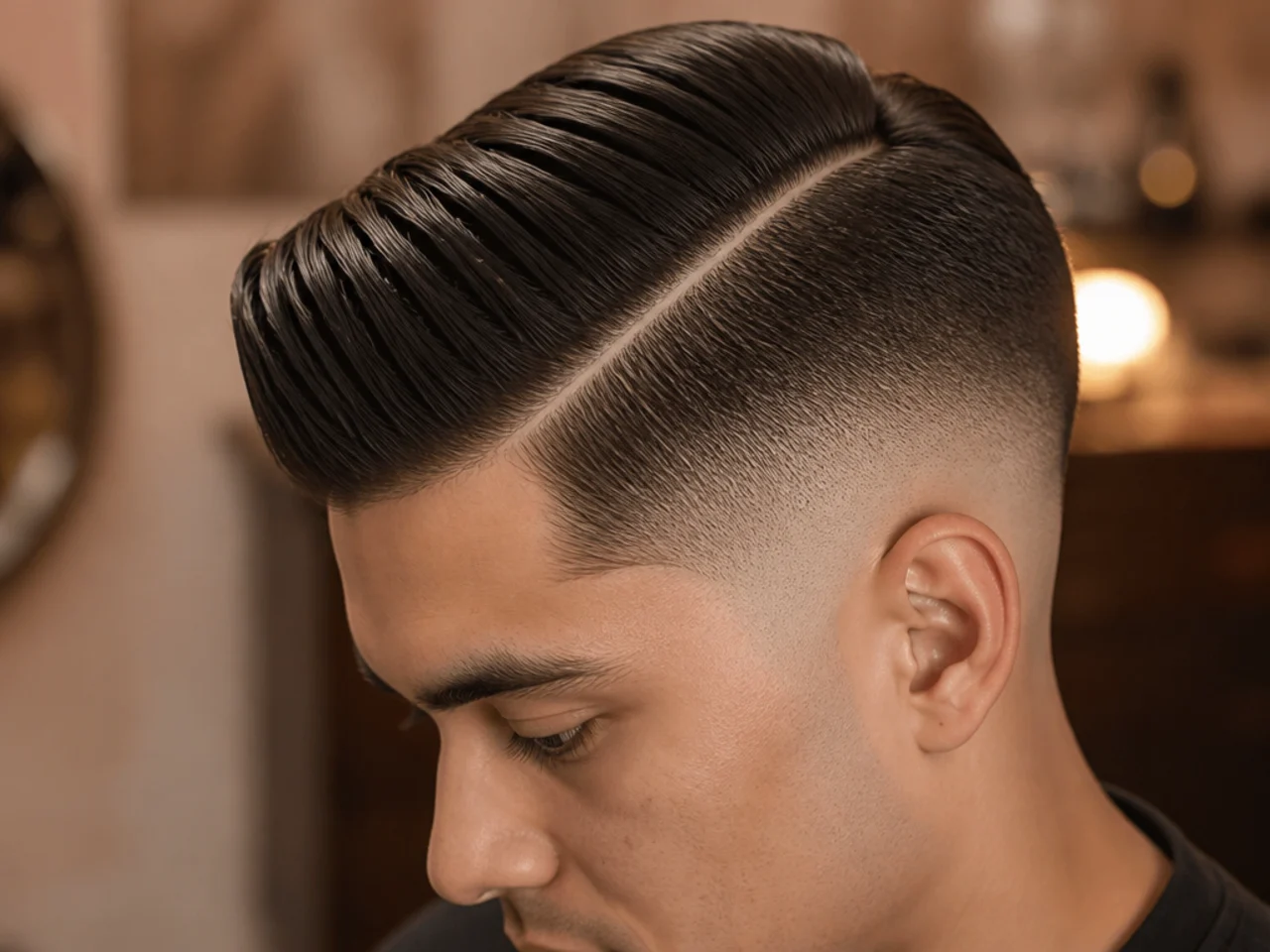
20 High Fade Haircut Ideas With a Comb Over
A natural part line runs out of hair at the parietal ridge, which is exactly where a high fade begins. So on this cut the part does not sit above the fade, it runs into it, and that has to be a decision rather than an accident.
In this article · 27
- Where the Part Runs Out
- How to Choose Yours
- The 20 High Fade Comb Over Ideas
- 1. Hard Part High Fade Comb Over
- 2. Natural Part High Fade Comb Over
- 3. High Skin Fade Comb Over
- 4. High Taper Comb Over
- 5. Deep Hard Part High Fade
- 6. High Fade Comb Over With a Line-Up
- 7. Textured High Fade Comb Over
- 8. Slick High Fade Comb Over
- 9. High-Volume High Fade Comb Over
- 10. Flat High Fade Comb Over
- 11. High Fade Comb Over With a Beard
- 12. Short High Fade Comb Over
- 13. Long High Fade Comb Over
- 14. High Fade Comb Over on Thick Hair
- 15. High Fade Comb Over on Fine Hair
- 16. High Fade Comb Over on Curly Hair
- 17. High Drop Fade Comb Over
- 18. Side-Swept High Fade Comb Over
- 19. High Fade Comb Over, Blow-Dried
- 20. High Fade Comb Over at Week Three
- Styling and Upkeep
- Mistakes to Avoid
- FAQ
- Final Thoughts
A comb over is built on a part, and a part is a line with hair leaning away from it on both sides.
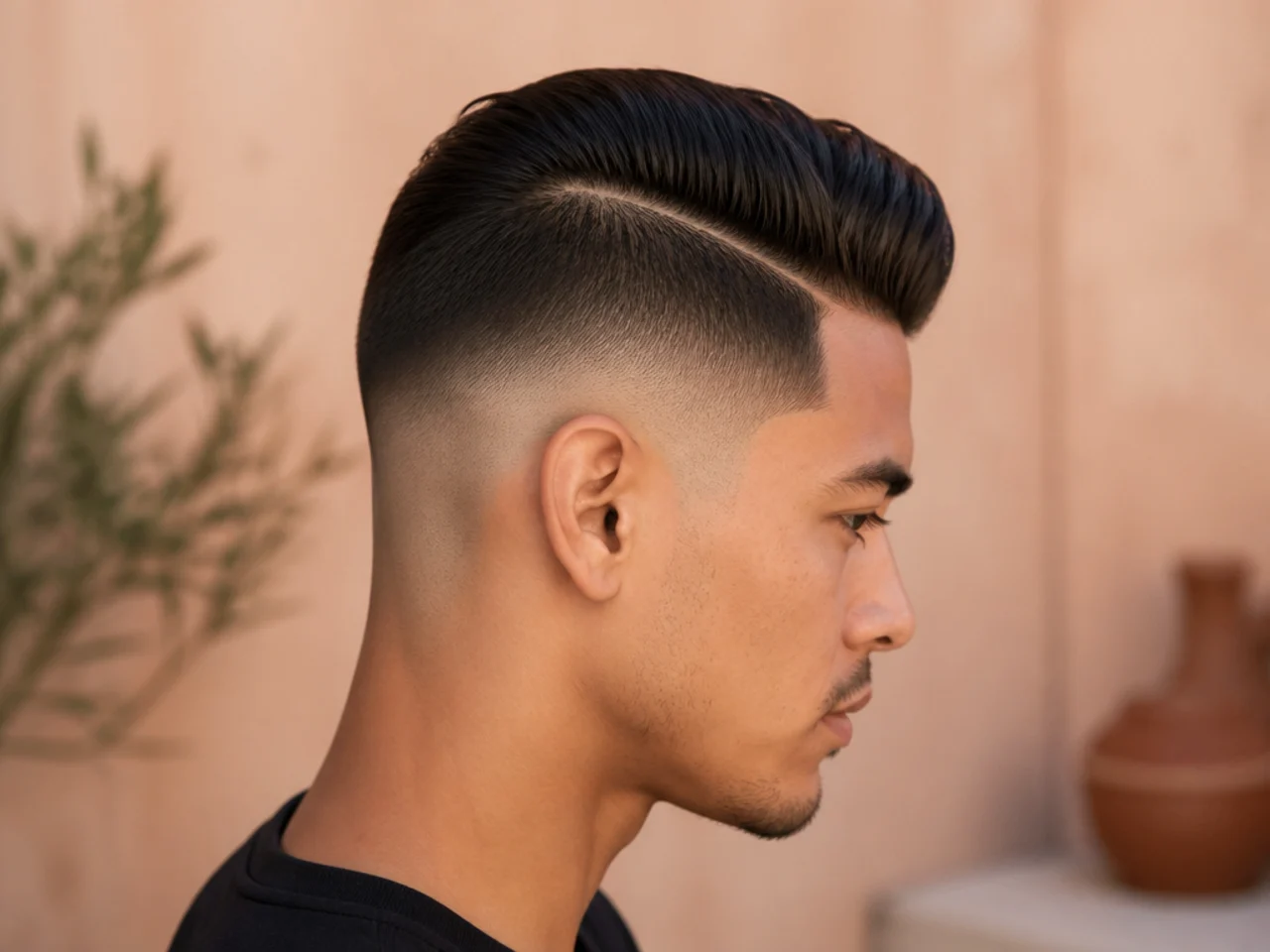
A natural part runs out of hair at the parietal ridge. Push a comb back from the temple corner and the split ends where the side of the head starts to curve down.
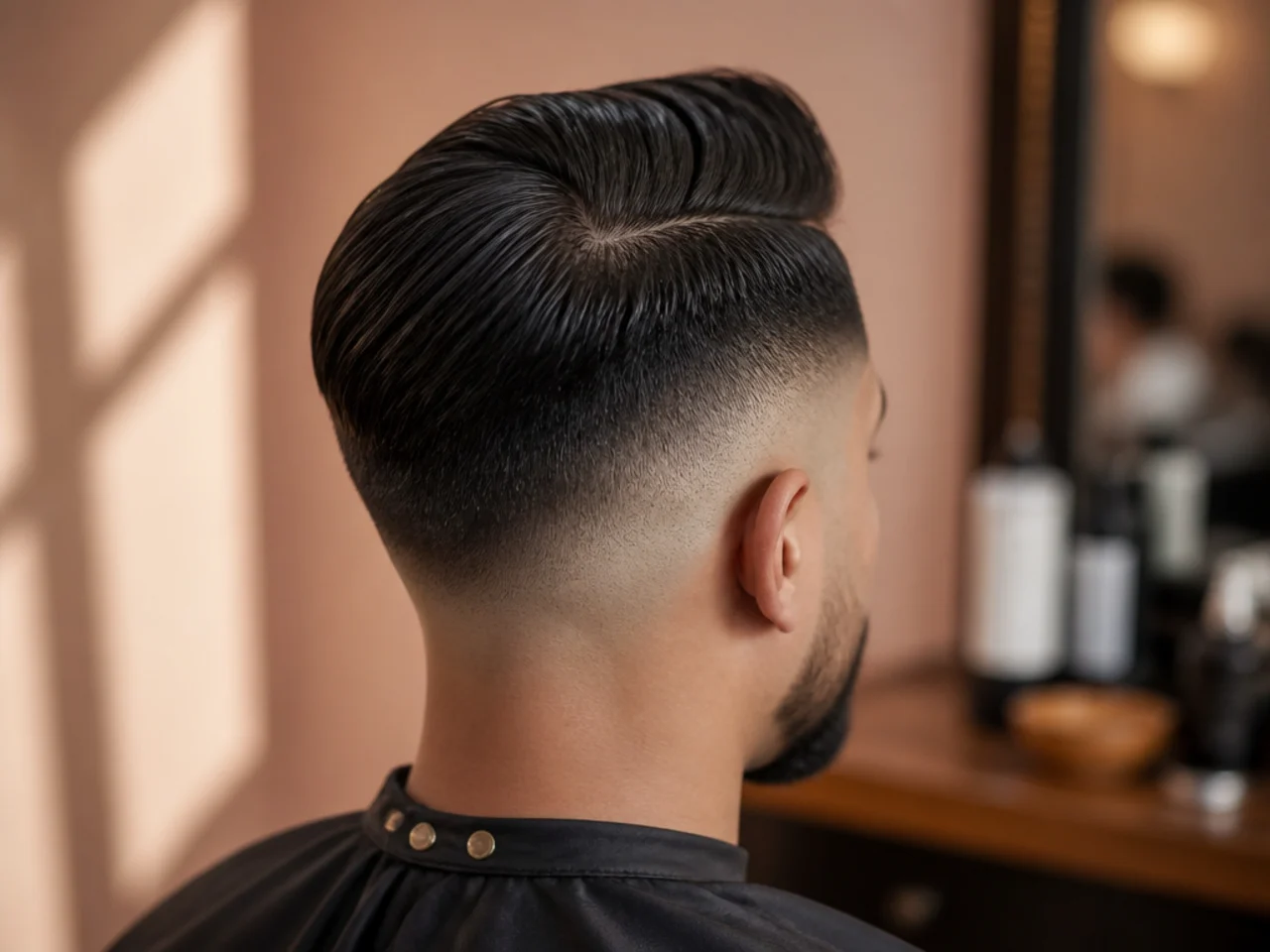
A high fade starts at or above that same point. So the part does not sit above the fade the way it does at other heights — it runs straight into it.
Where the Part Runs Out
A part needs hair on both sides. Remove one side and the line stops being a line.
The natural split ends at the ridge. Which is the widest point of the skull and the start of a high fade.
So a high fade eats the last of the part. There is no unfaded margin below it to sit in.
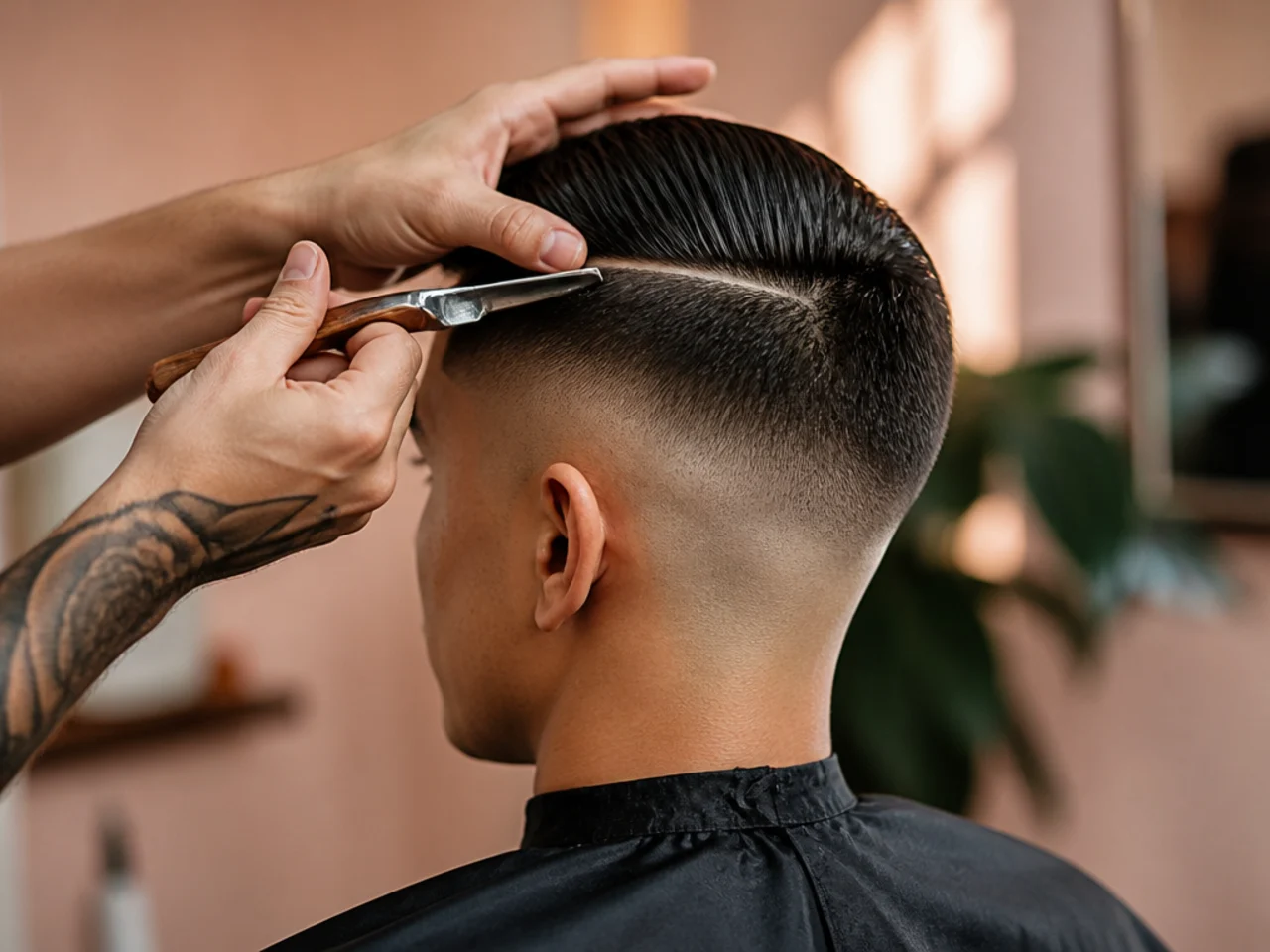
Which leaves two options. Razor the part so it continues as a cut line, or accept that it stops short.
How to Choose Yours
Decide razored or natural before the fade is cut. A razored part is cut into the blend and cannot be added afterwards.
Keep the sweep short if the part is natural. Without a razored line the comb over needs to hold itself, and length works against that.
Set the part on your own growth line. Fighting the direction hair grows in means restyling it every morning.
Choose the top length to balance the width you lost. A high fade narrows the head, and a flat comb over narrows it further.
The 20 High Fade Comb Over Ideas
1. Hard Part High Fade Comb Over
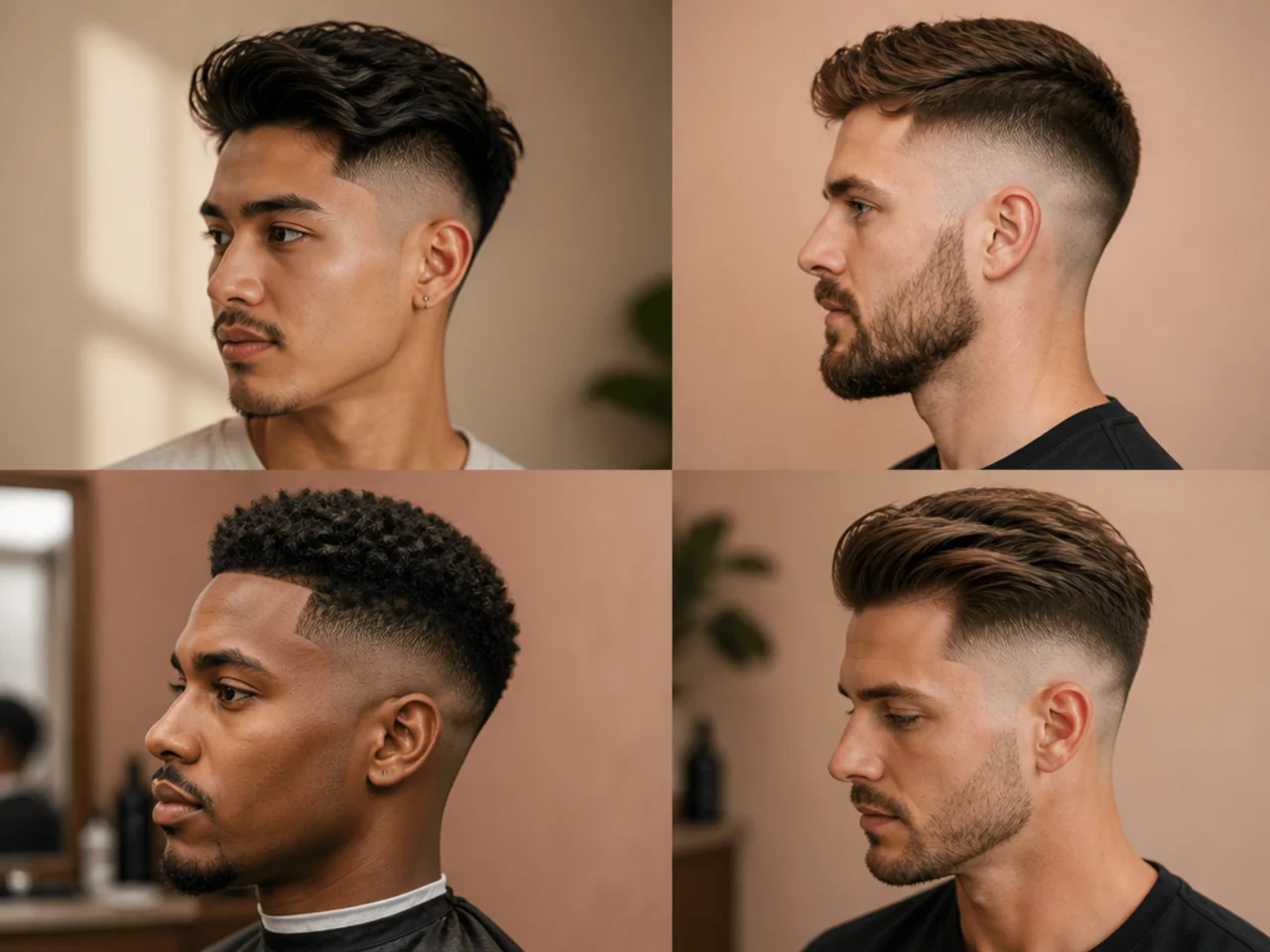
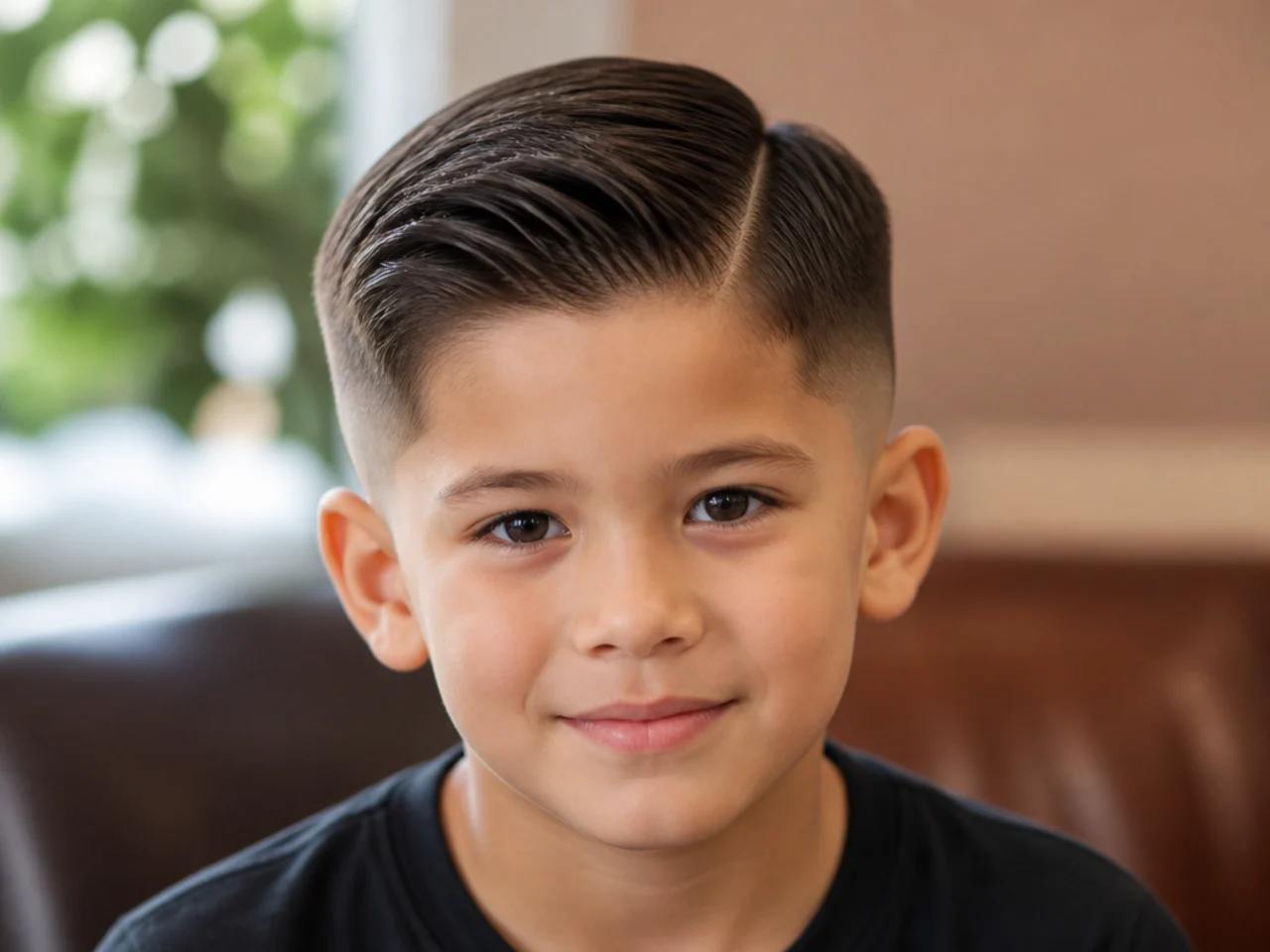
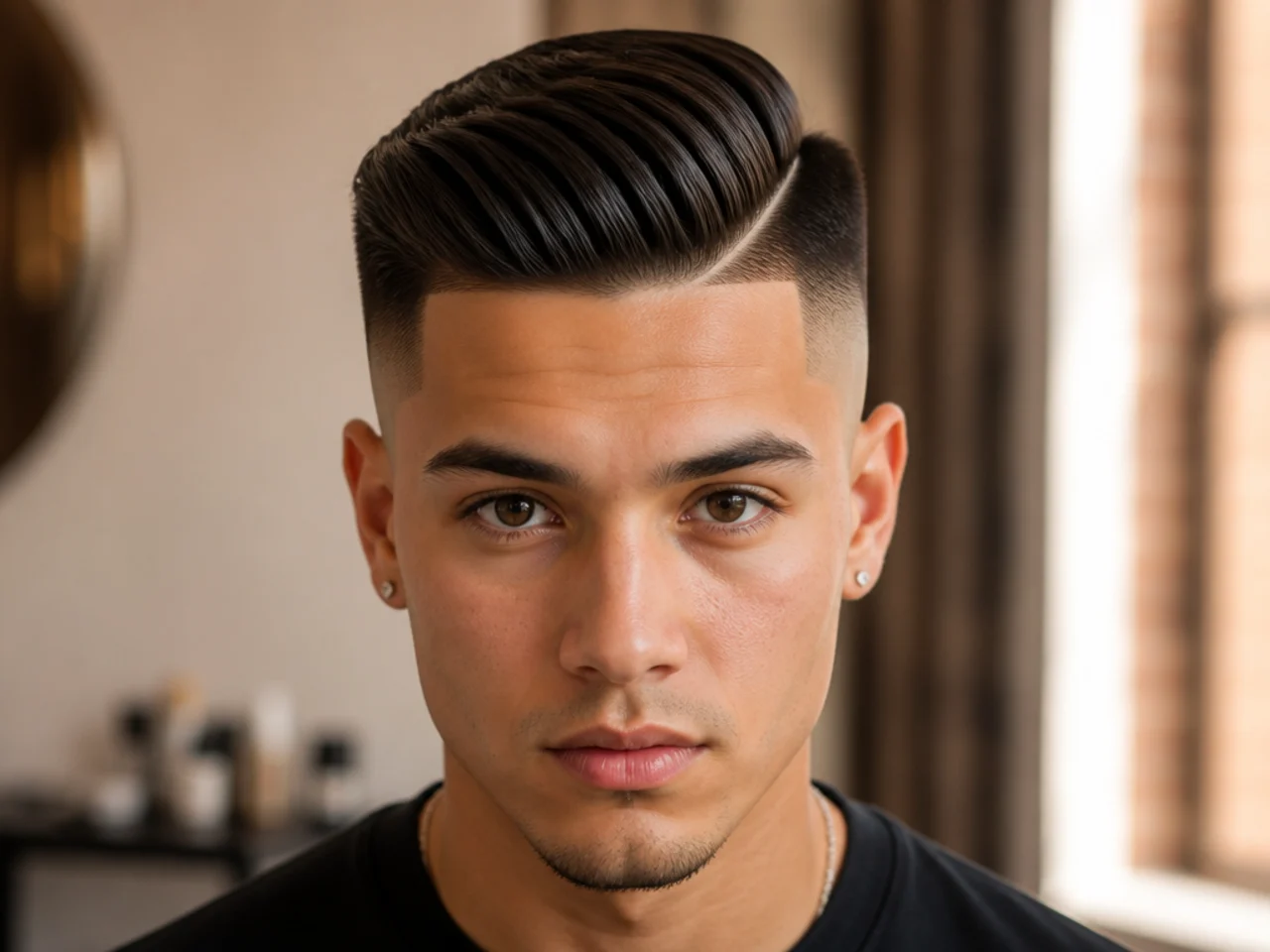
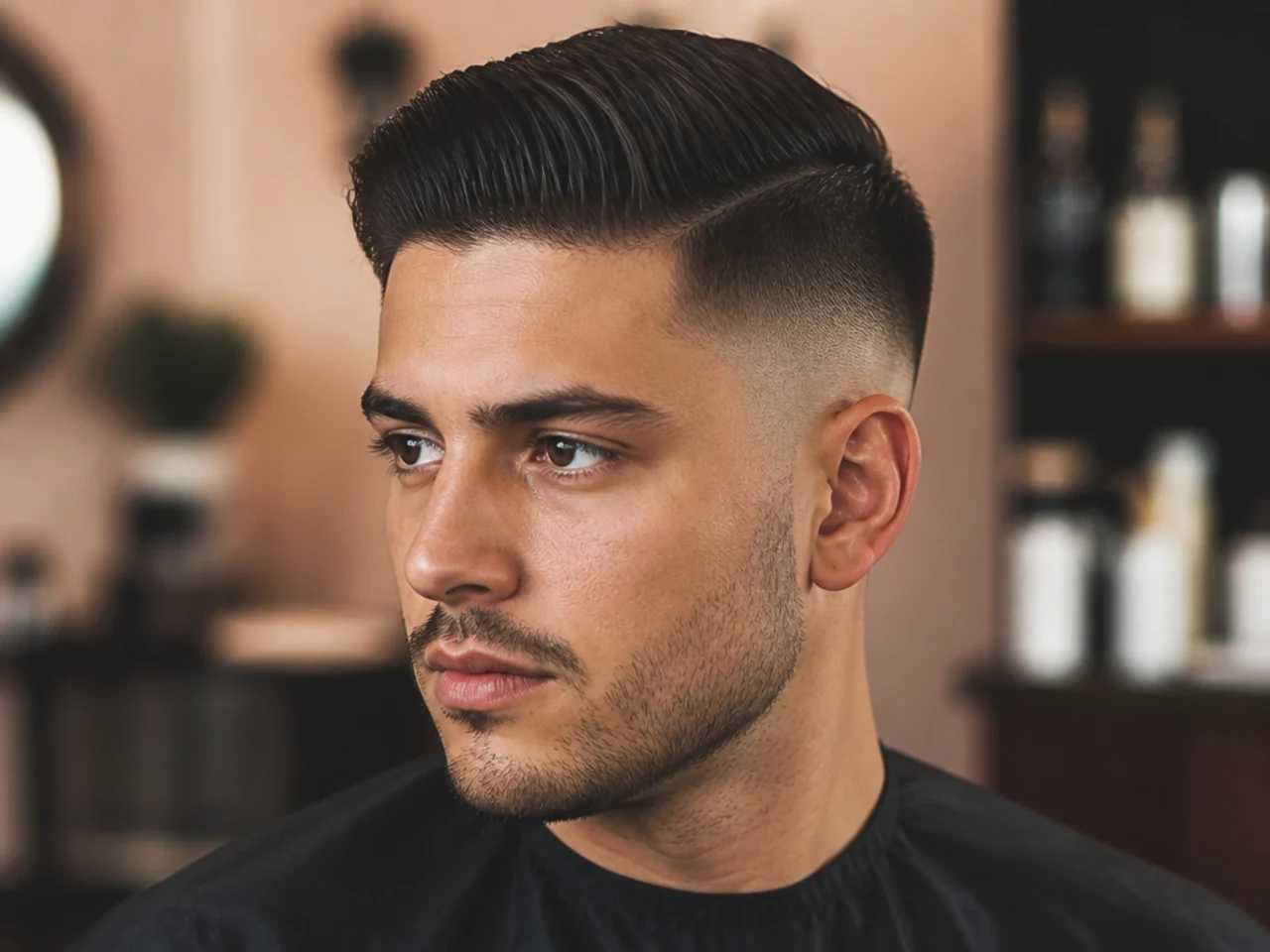
A razored line continuing from the top down into the blend. It is the default answer to this cut, because it replaces a part that has run out of hair with one that is cut in.
2. Natural Part High Fade Comb Over
No razoring, with the part simply ending at the top of the blend. It works on thick hair where the split holds itself, and rarely on anything finer.
3. High Skin Fade Comb Over
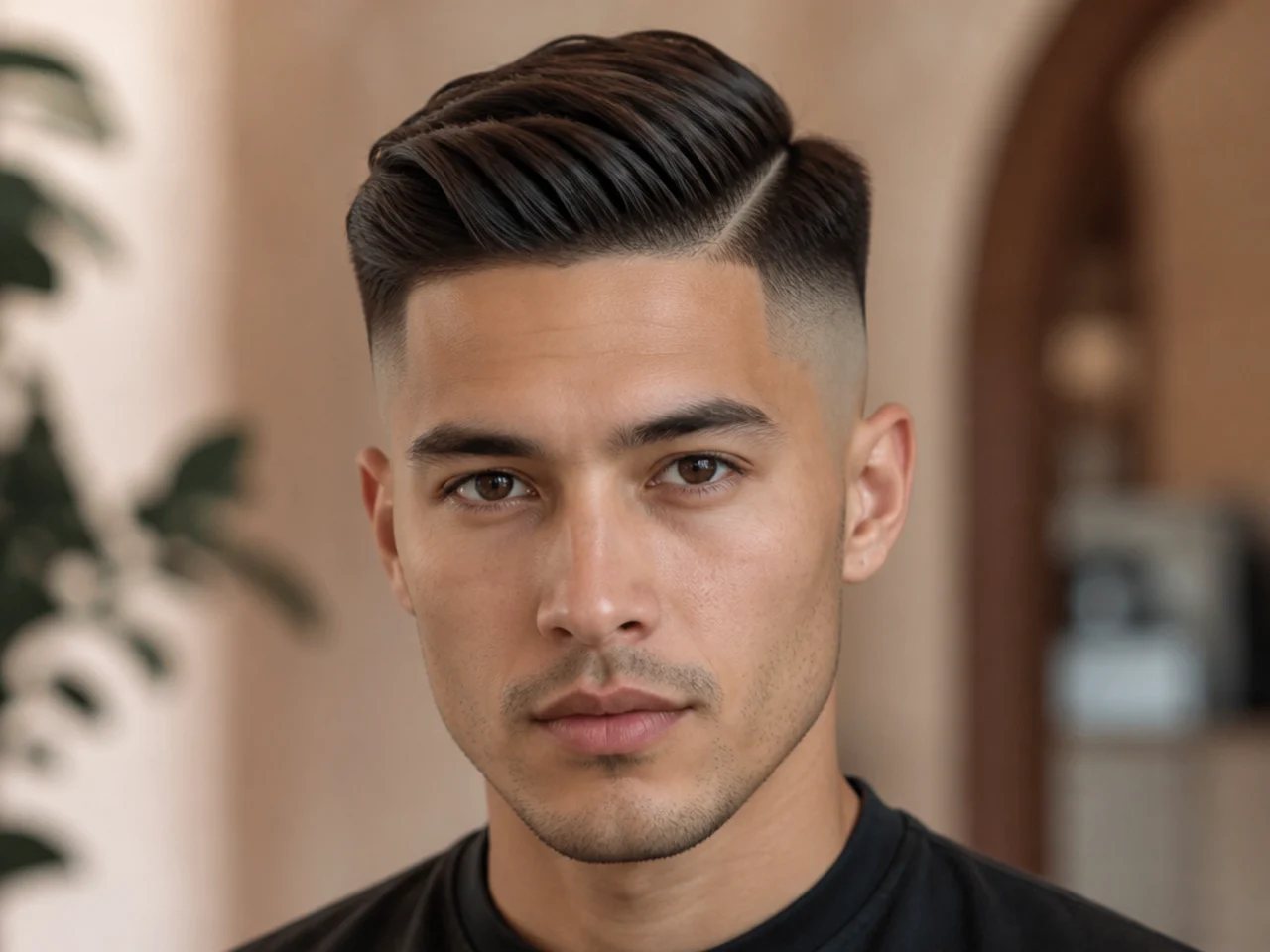
Bare skin from the ridge down. The most contrast this cut offers and the version where a razored part is essentially compulsory.
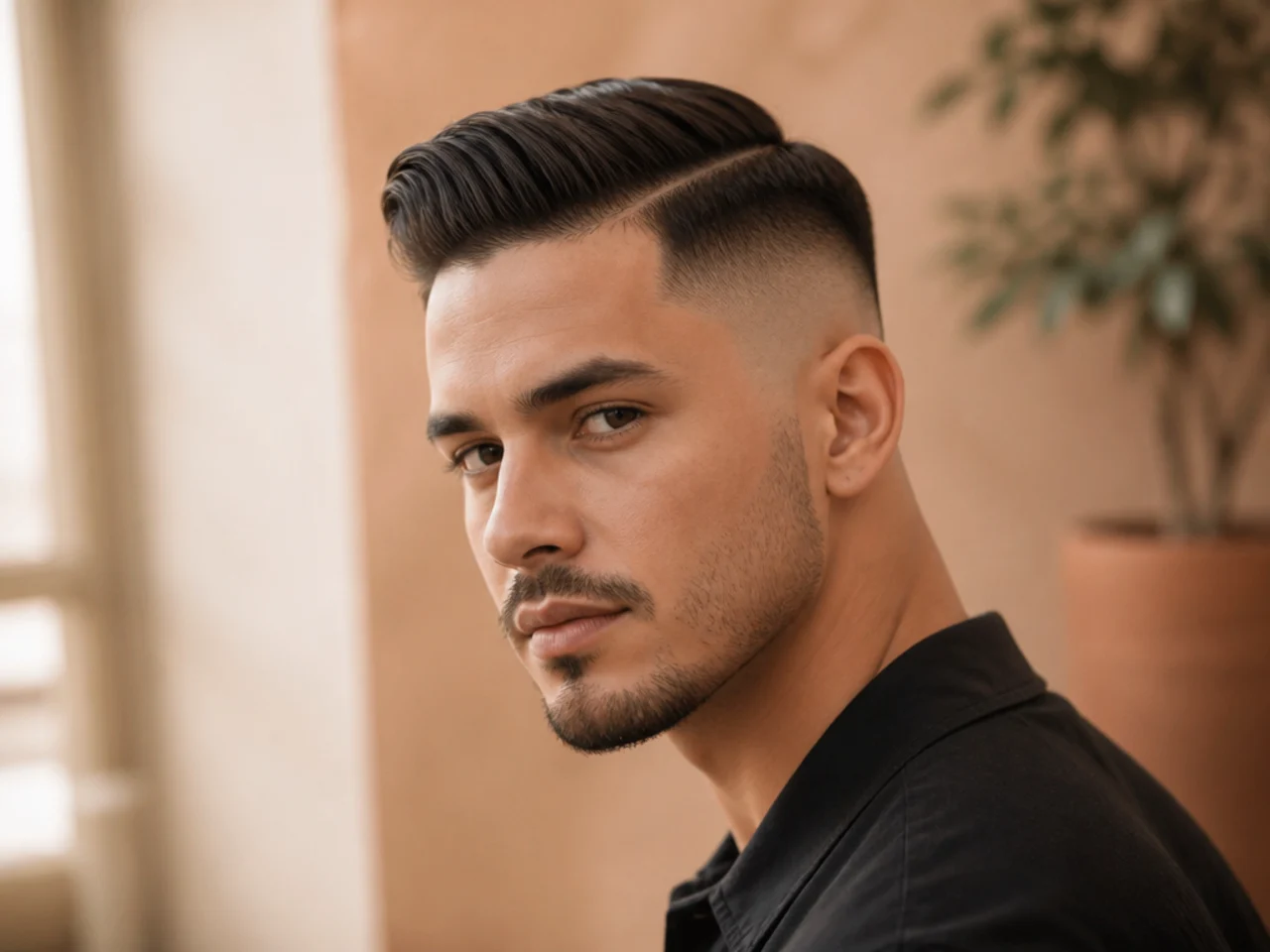
4. High Taper Comb Over
A #1 at 3mm floor. The 3mm shadow gives the part a faint surface to continue across, which softens the whole arrangement.
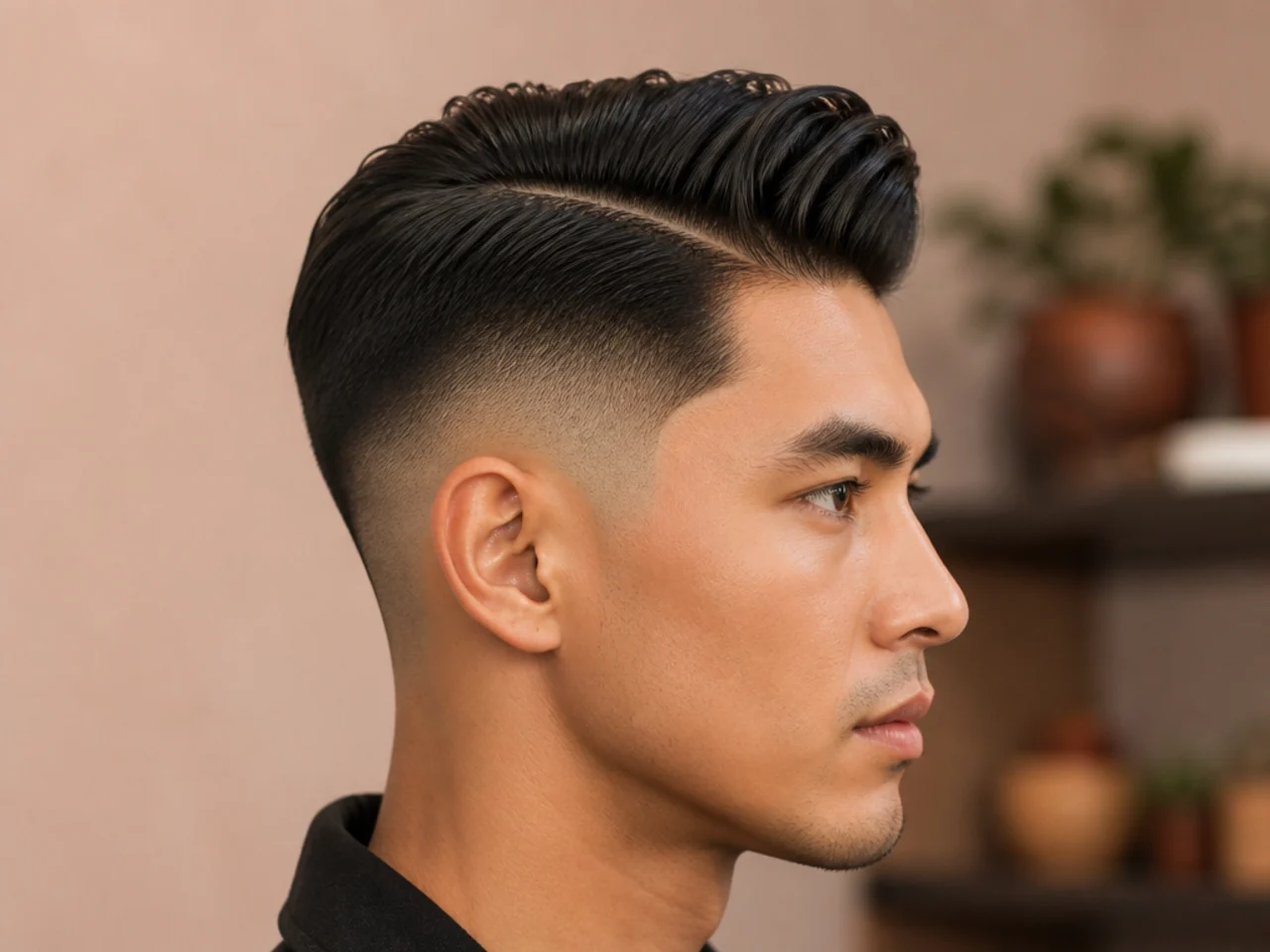
5. Deep Hard Part High Fade
The razored line cut wider than usual, two or three millimetres across. It survives longer as the fade grows, since a deep line closes more slowly than a shallow one.
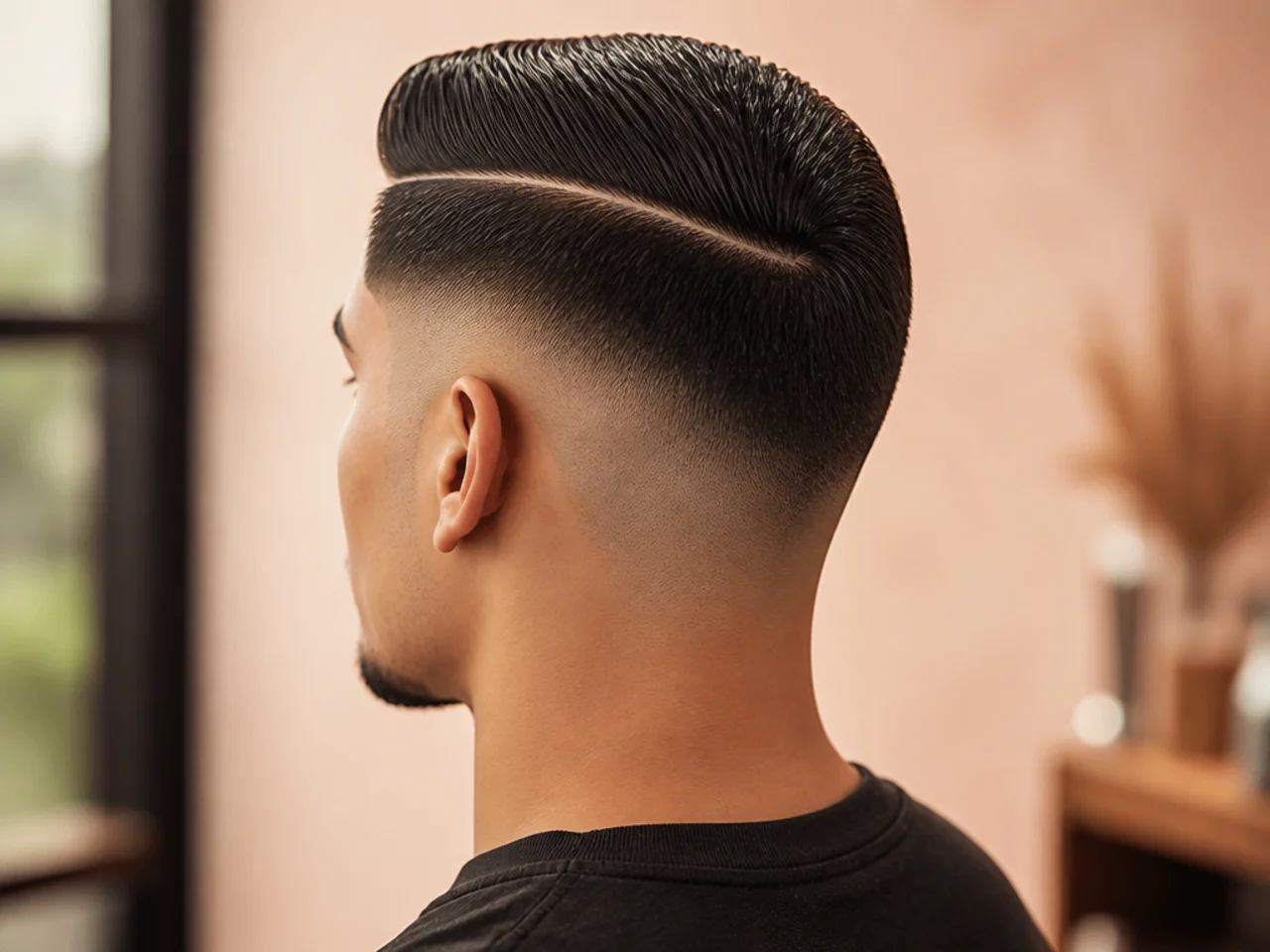
6. High Fade Comb Over With a Line-Up
A razored front hairline as well as a razored part. Two cut lines meeting at a corner, which needs to be square or the whole front looks off.
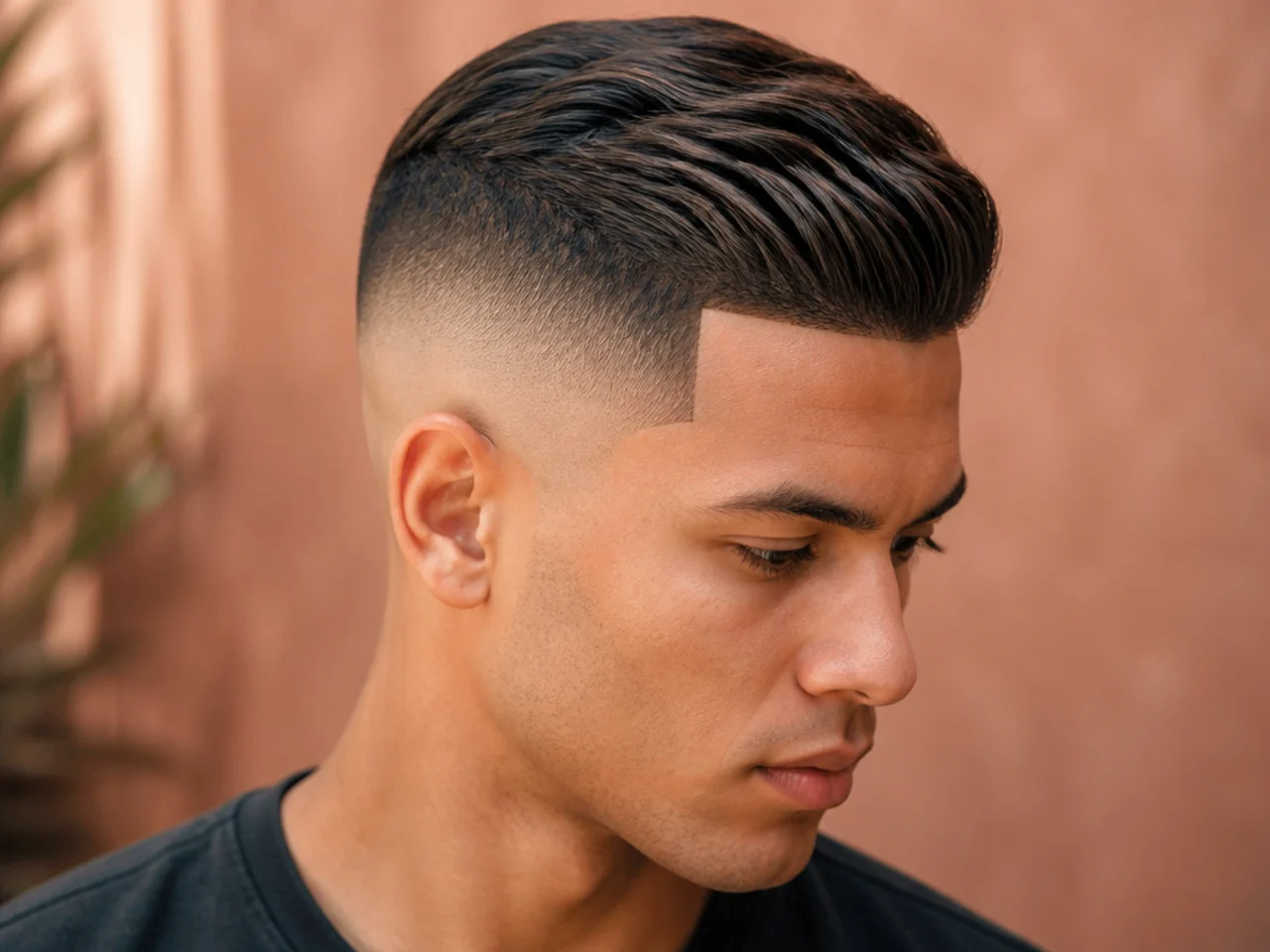
7. Textured High Fade Comb Over
Weight removed from the ends before the sweep, borrowing the point cutting used across textured haircuts for men. The separation keeps the top from reading as a solid slab above a bare side.
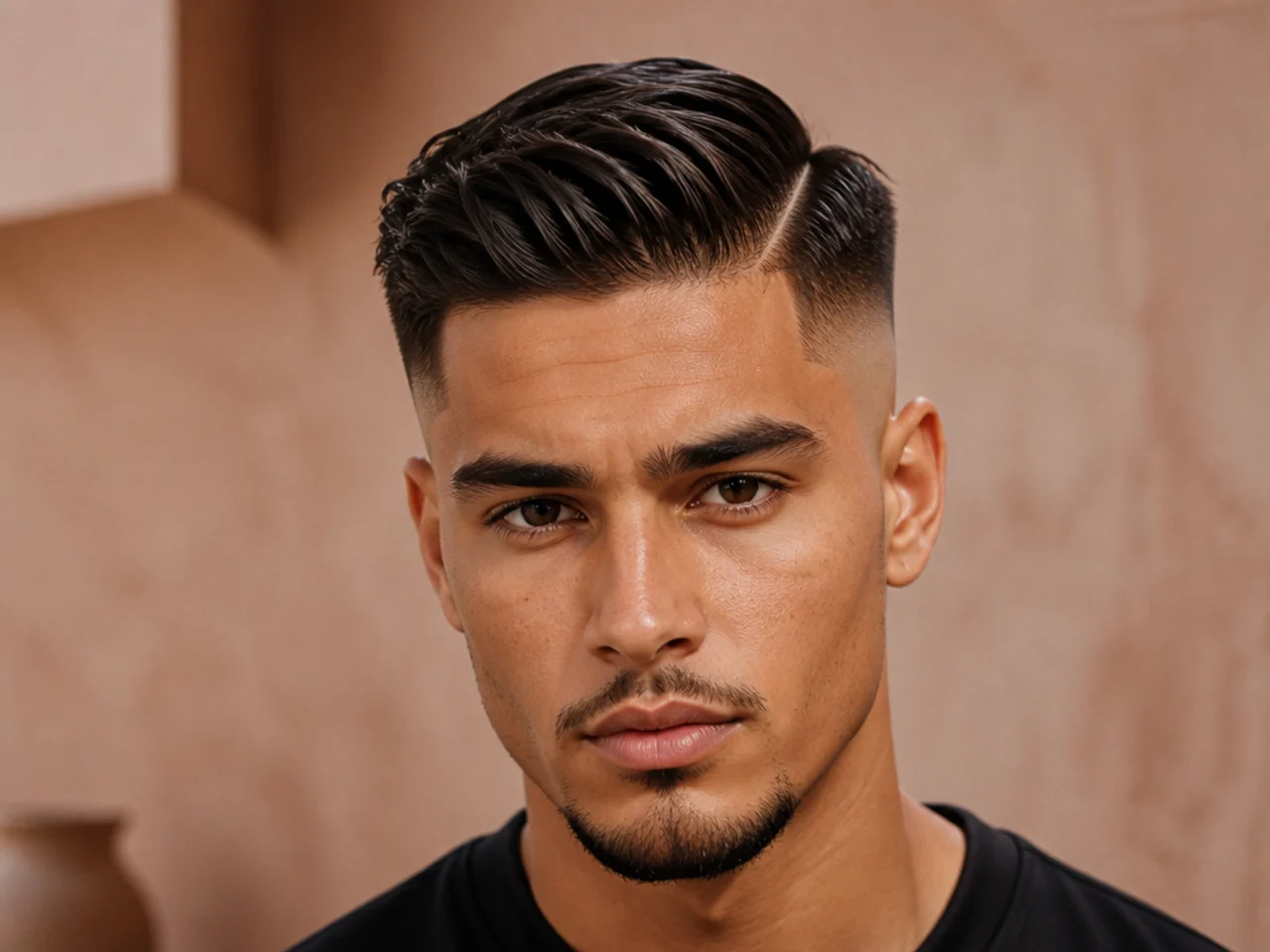
8. Slick High Fade Comb Over
Wet-look product with everything in one direction. Shine along the part makes a razored line read even harder, so this is the sharpest version available.
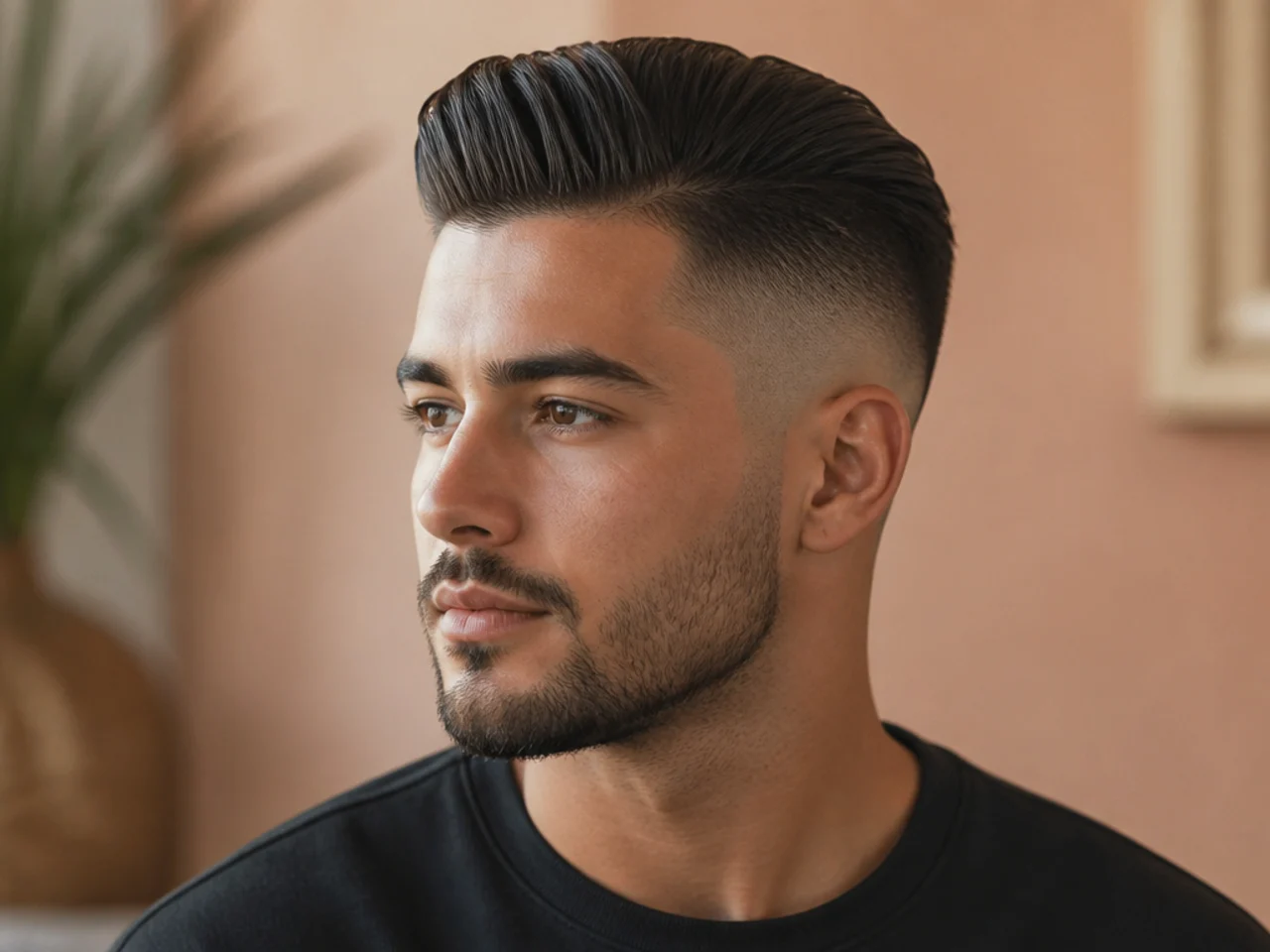
9. High-Volume High Fade Comb Over
Root lift at the part before the sweep. Height above a high fade lengthens the head further, so this suits a round face and works against a long one.
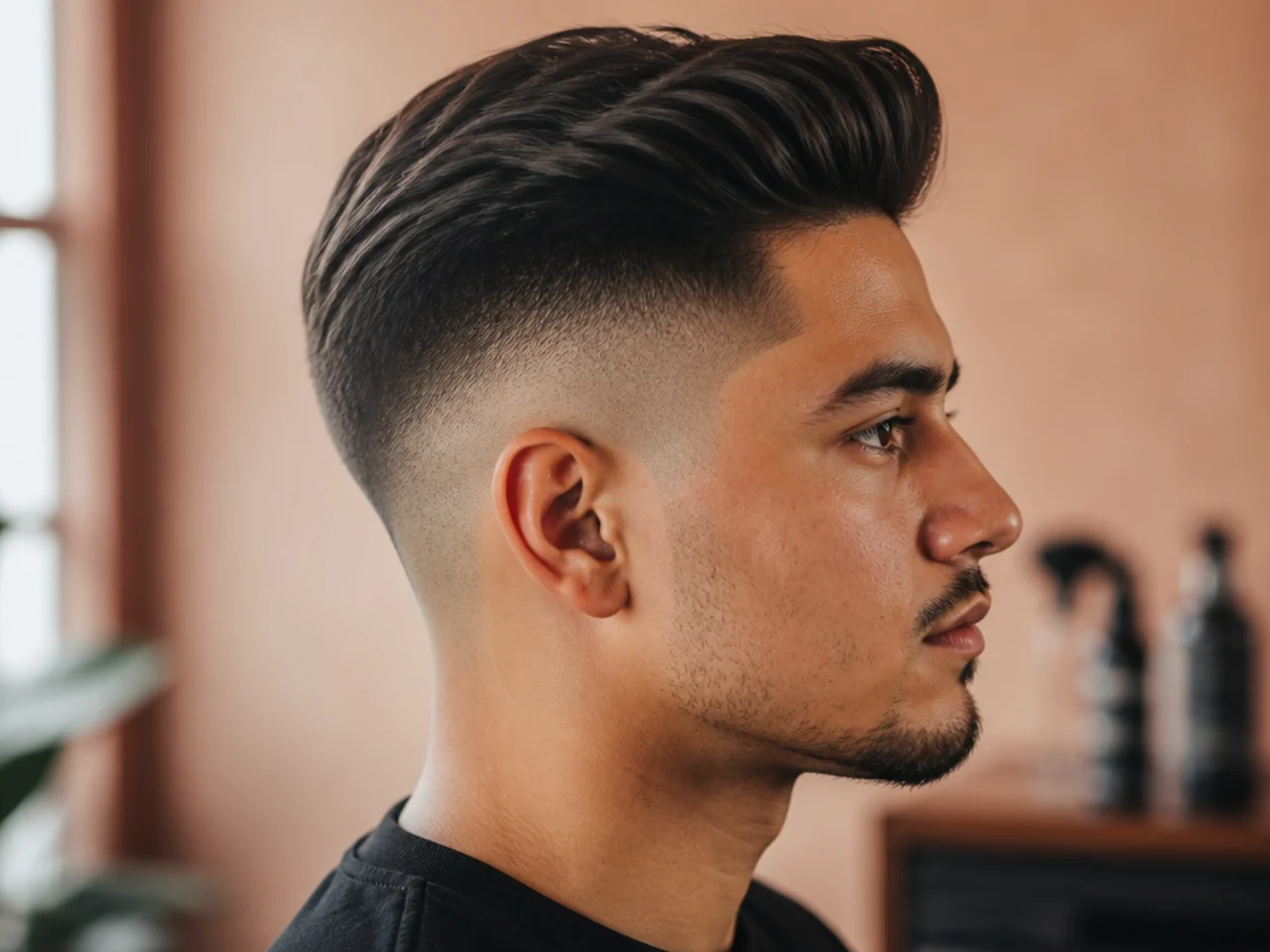
10. Flat High Fade Comb Over
The sweep kept low with no lift. It reads formal and it narrows the head, which is worth knowing before you ask for it.
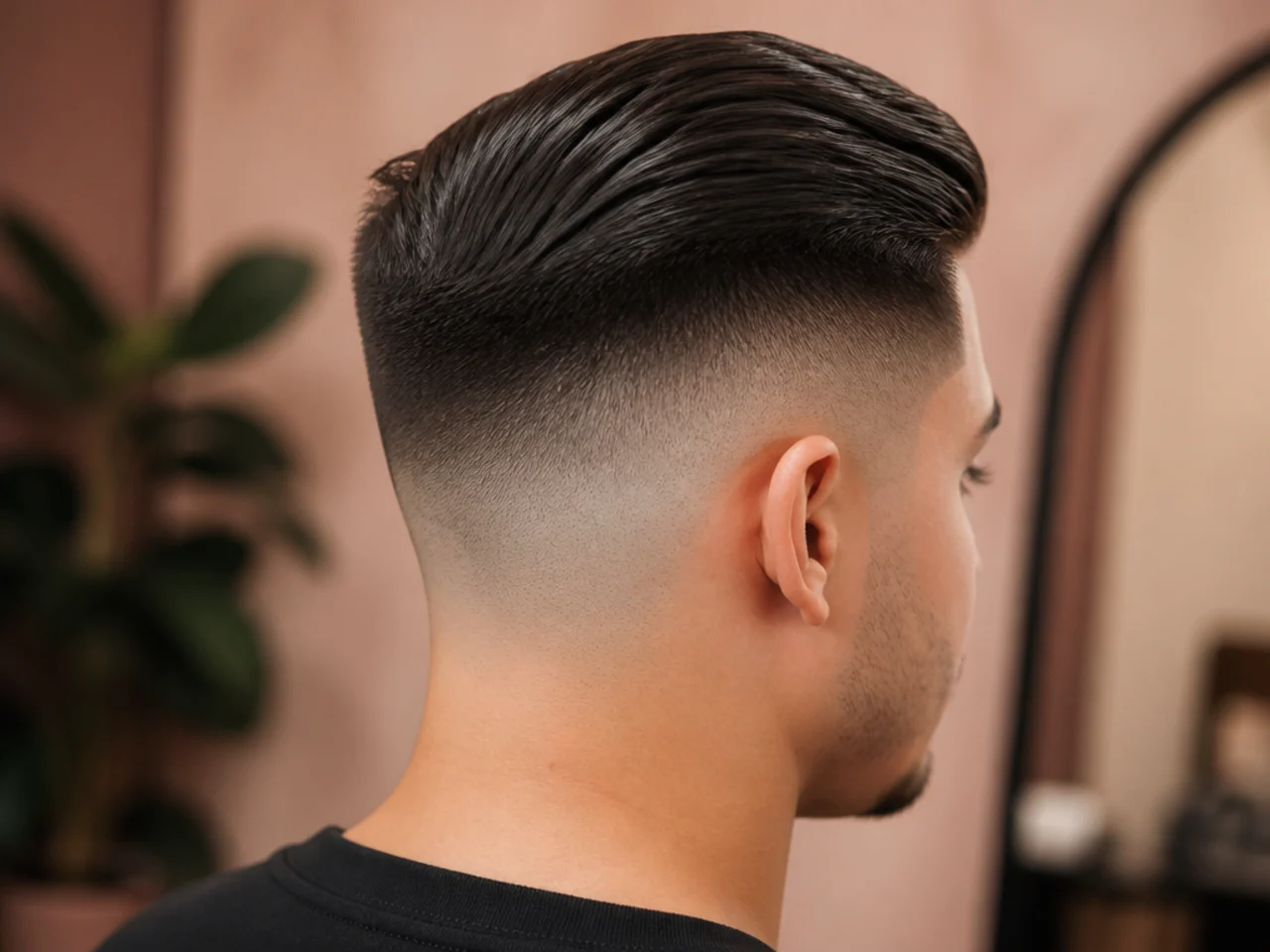
11. High Fade Comb Over With a Beard
Sweep above, bare band in the middle, beard below. The part is the only vertical in the arrangement, which is why it has to be razored to hold its own.
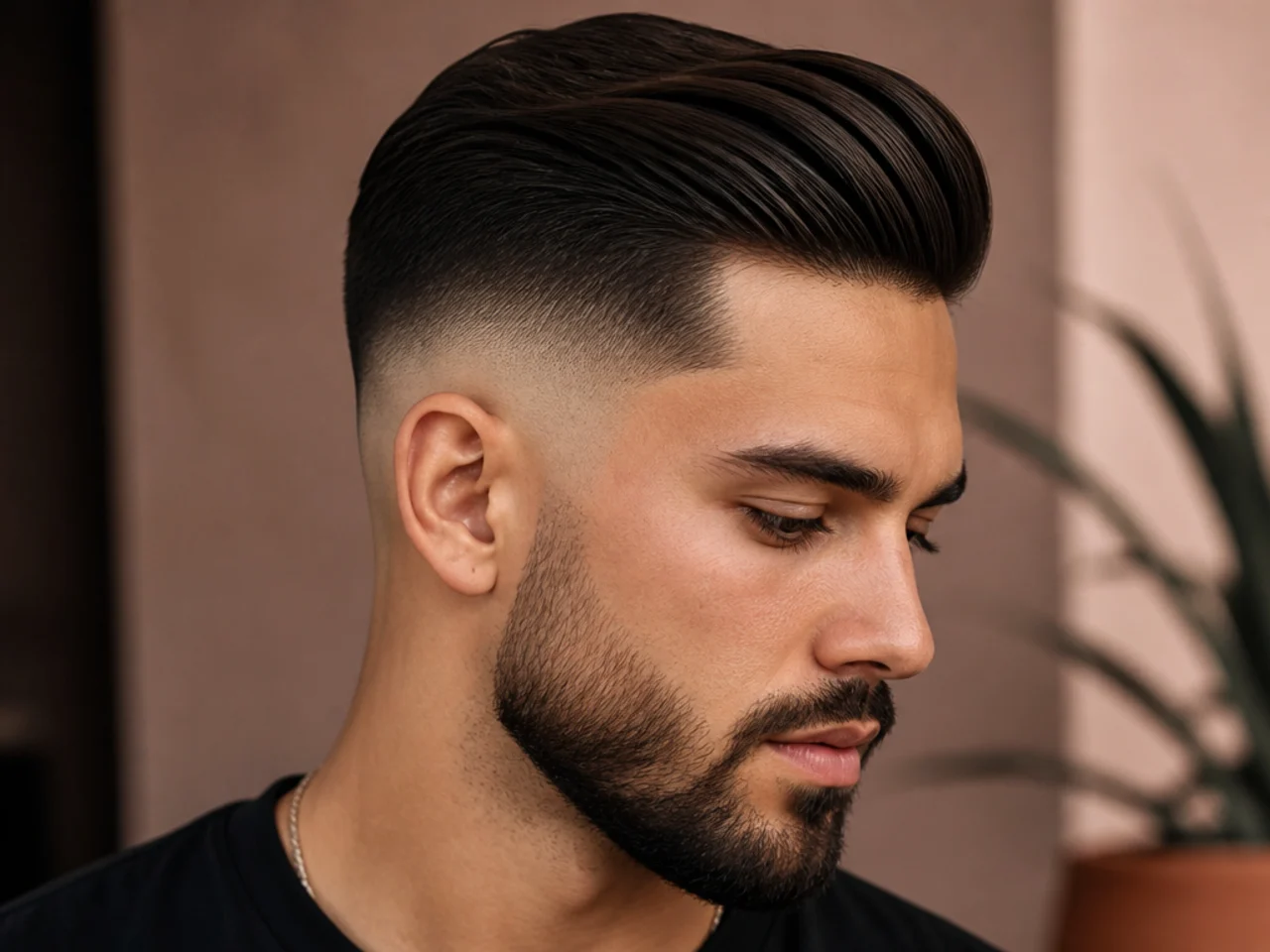
12. Short High Fade Comb Over
Around four centimetres on top. Short enough that the sweep never falls out of place, which suits a natural part better than a long version would.
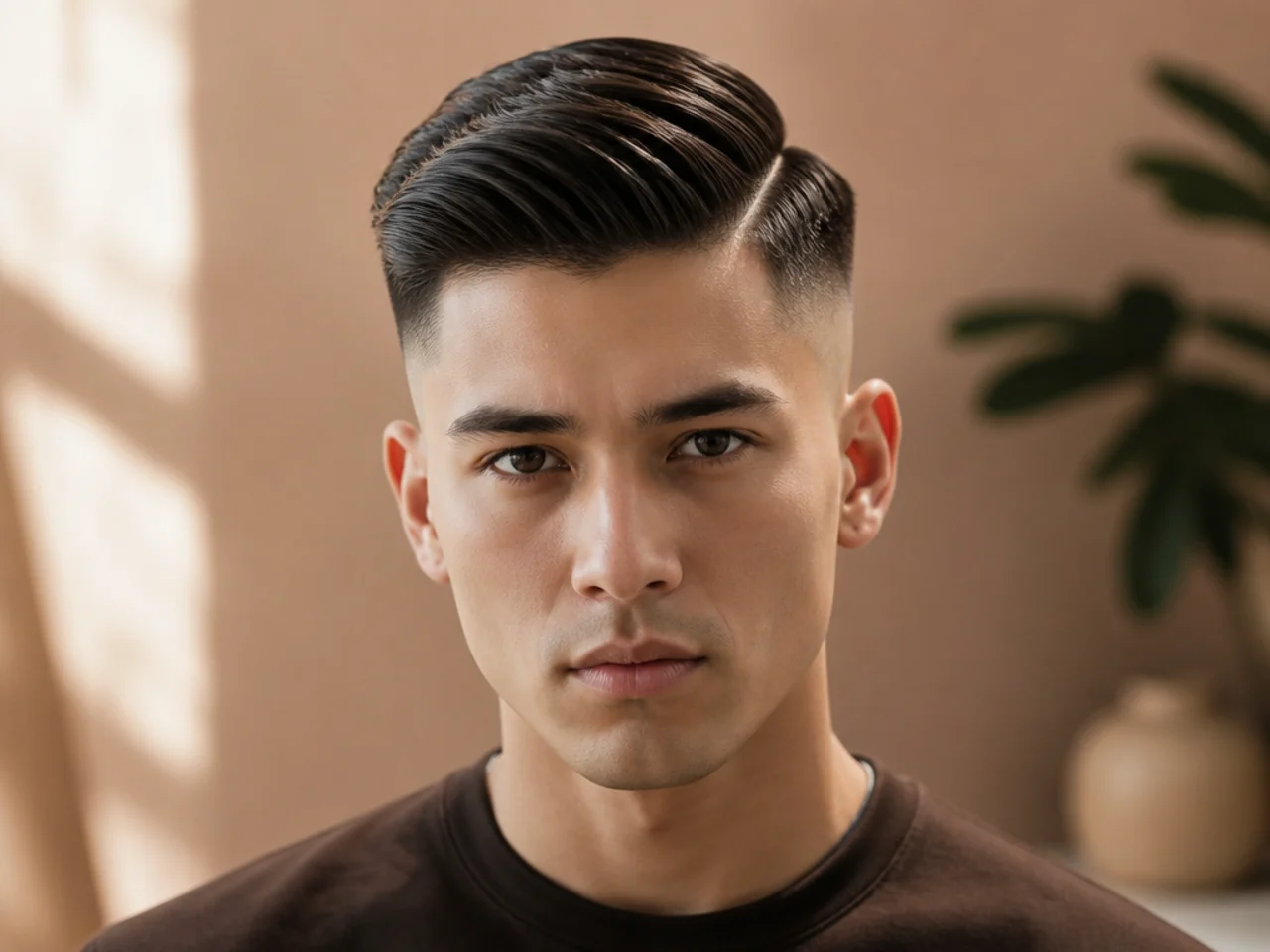
13. Long High Fade Comb Over
Eight centimetres or more crossing the whole top. The far side needs enough weight to land in, so the opposite temple has to be left longer than the fade suggests.
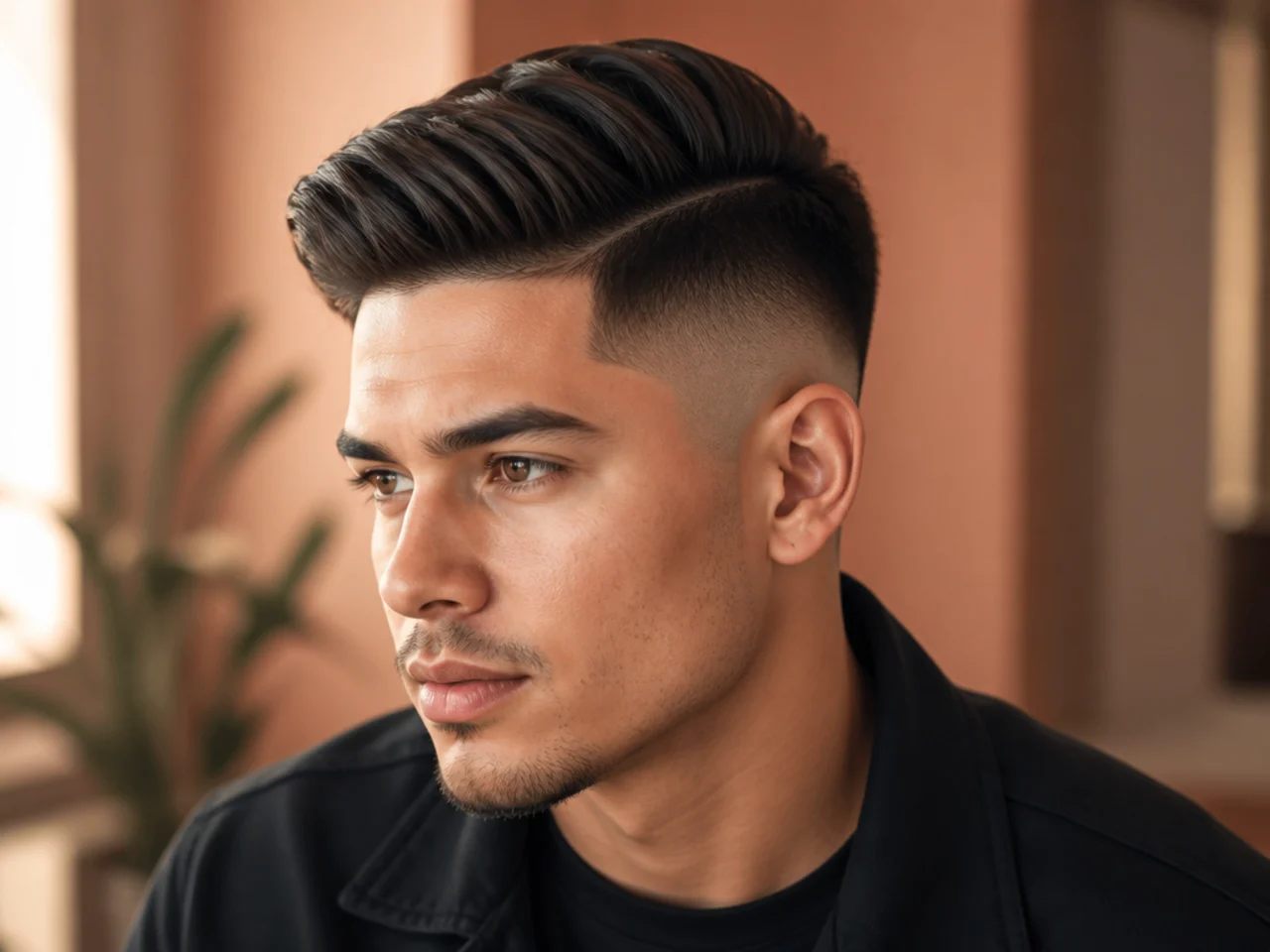
14. High Fade Comb Over on Thick Hair
Thick hair holds a natural part without razoring. It is the one texture where the harder option is genuinely optional. Density is what keeps the split open, because enough strands leaning away on either side hold the gap that a blade would otherwise have to cut.
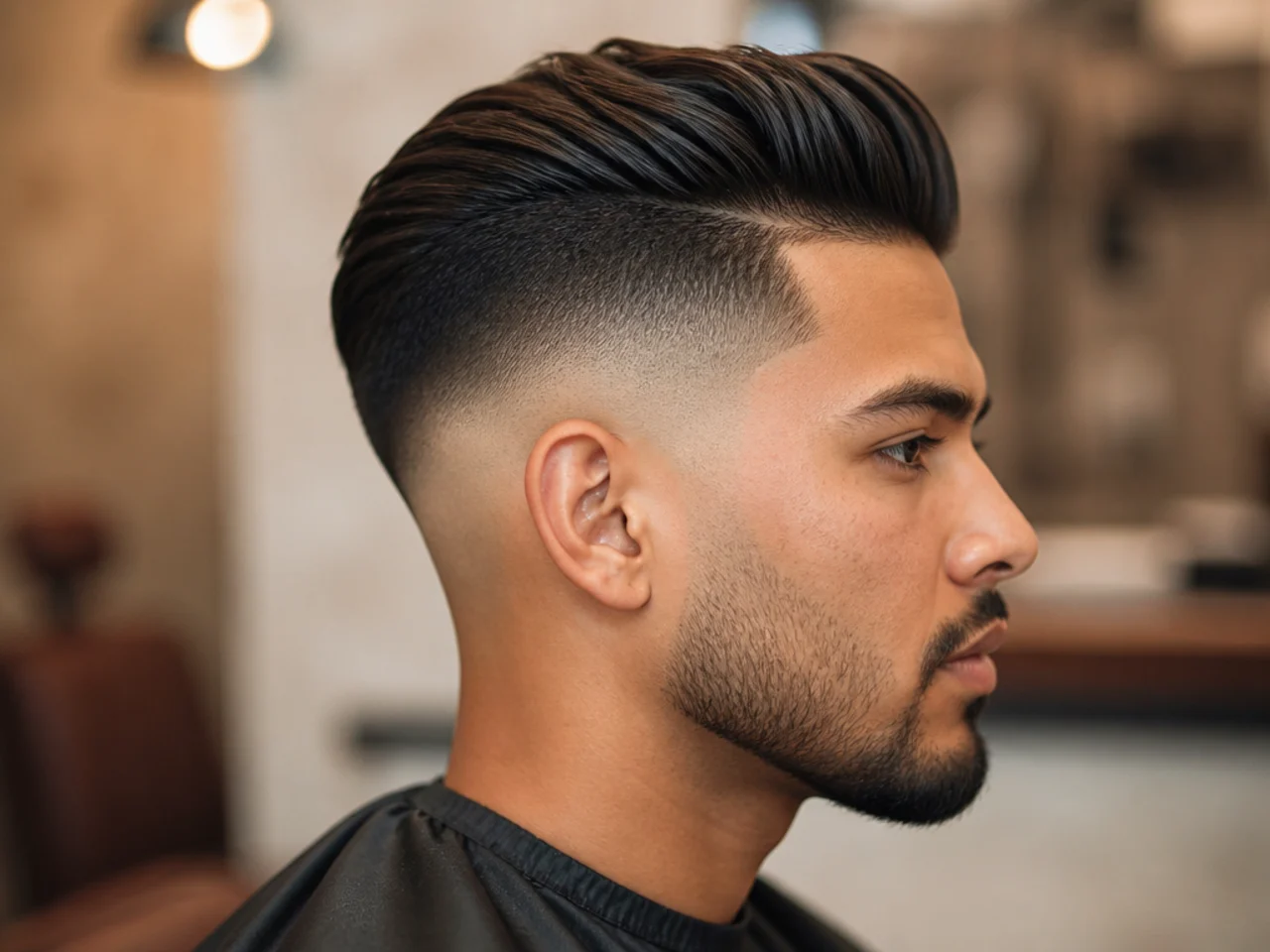
15. High Fade Comb Over on Fine Hair
Fine hair over a high fade shows scalp in two places at once. A razored part gives the eye a deliberate line to read instead of an accidental one.
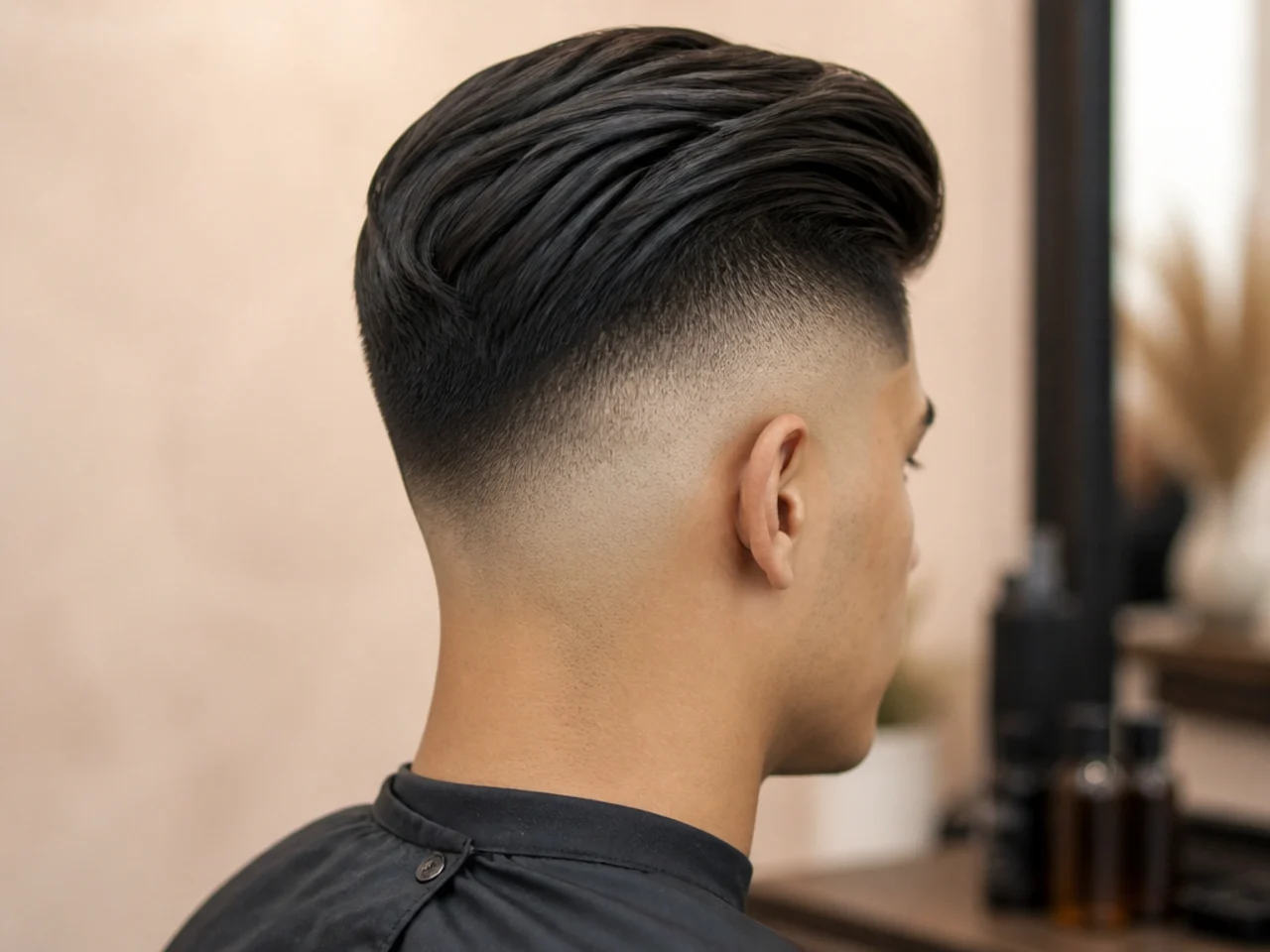
16. High Fade Comb Over on Curly Hair
Directed by hand instead of by comb, since teeth dragged through a curl break the clump and the pattern goes with it. The part has to be cut in, because curly hair does not split cleanly at any height.
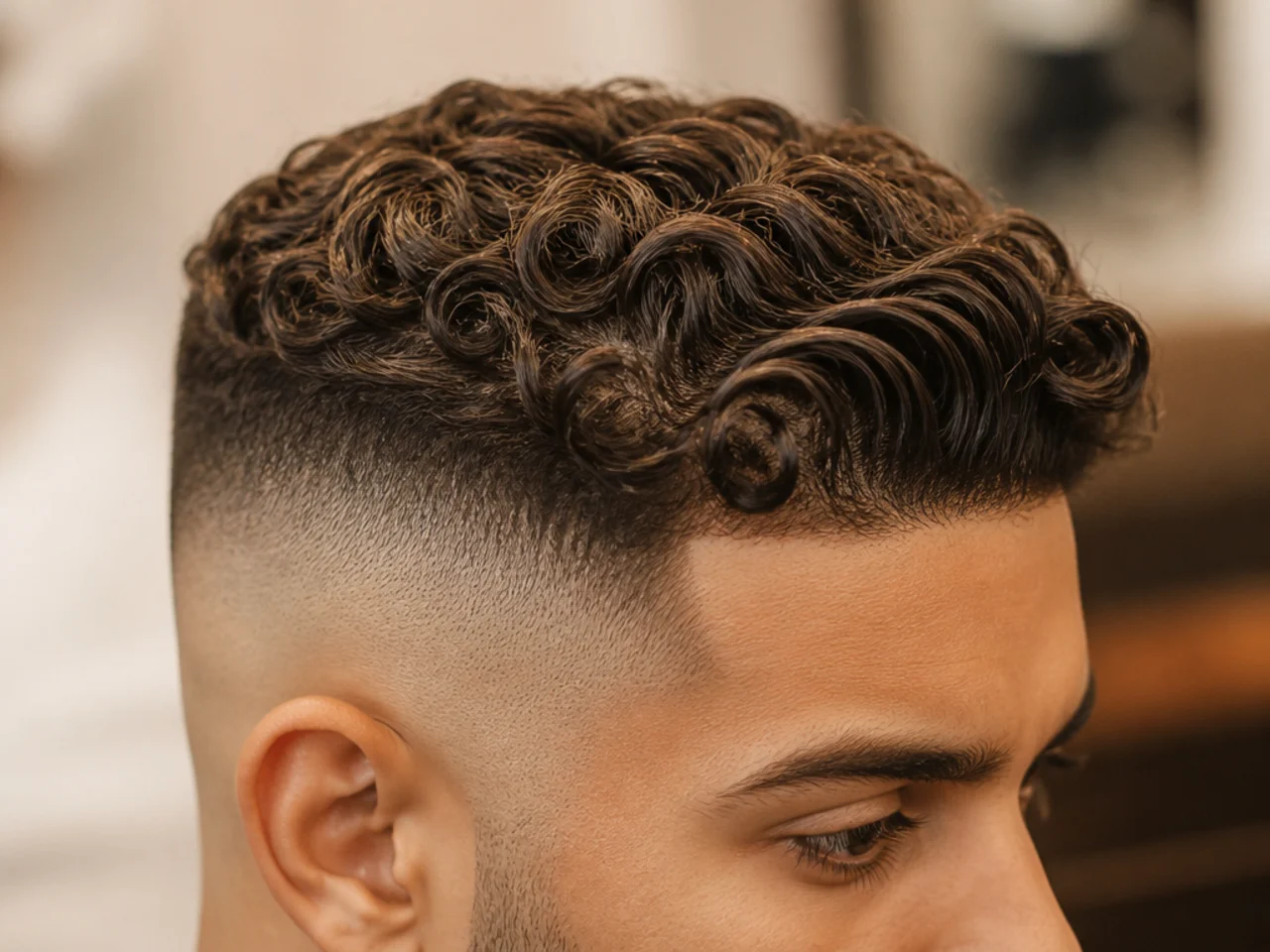
17. High Drop Fade Comb Over
The line dropping behind the ear, the curve that defines a drop fade at any height. The part is unaffected because it lives at the front, so this changes the back without touching the cut's main problem.
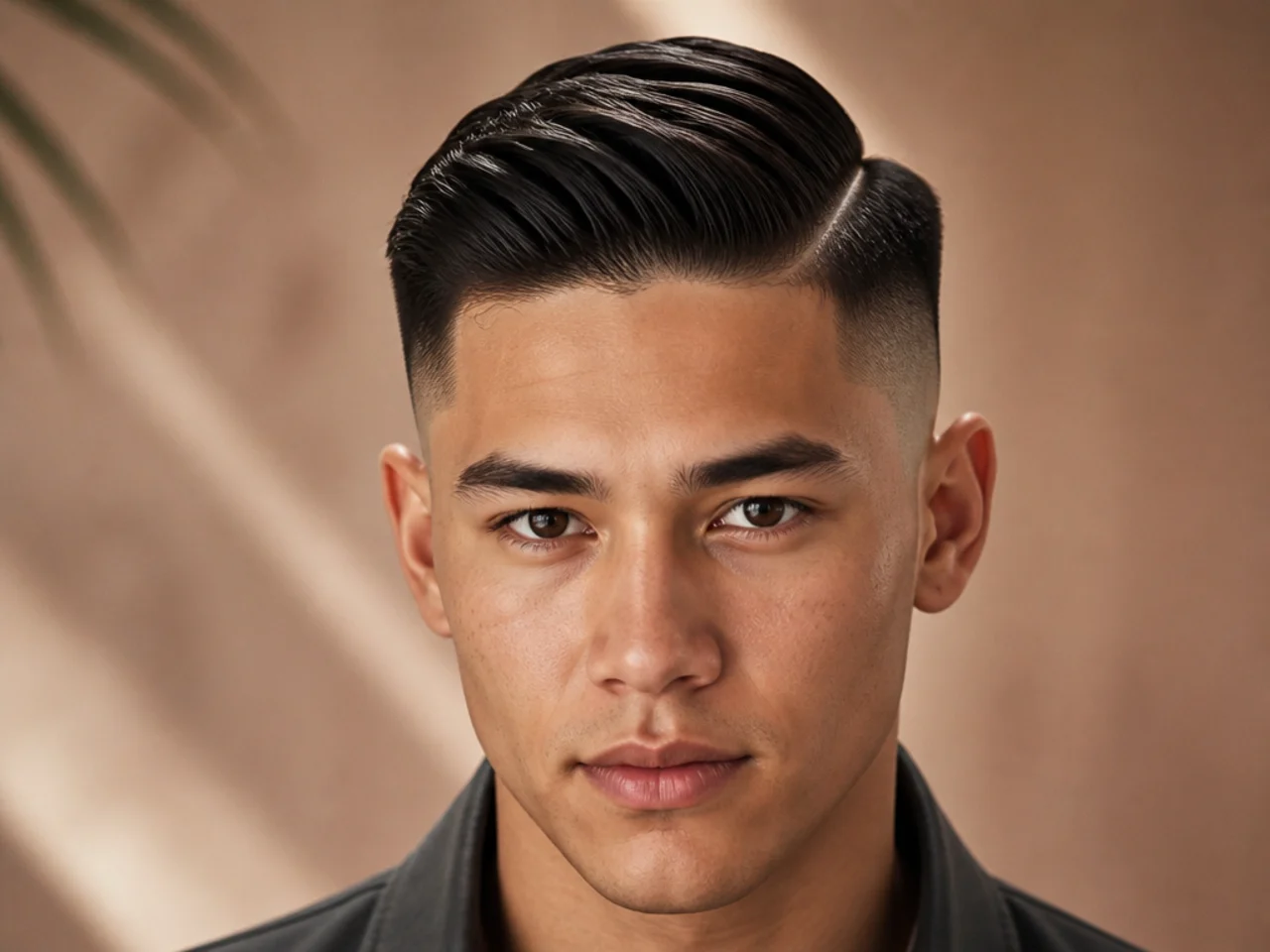
18. Side-Swept High Fade Comb Over
The direction turned toward the face, so the hair travels diagonally forward instead of straight over, closer to a side part than a true comb over. It shortens the apparent distance from part to brow, which counters the lengthening a high fade produces.
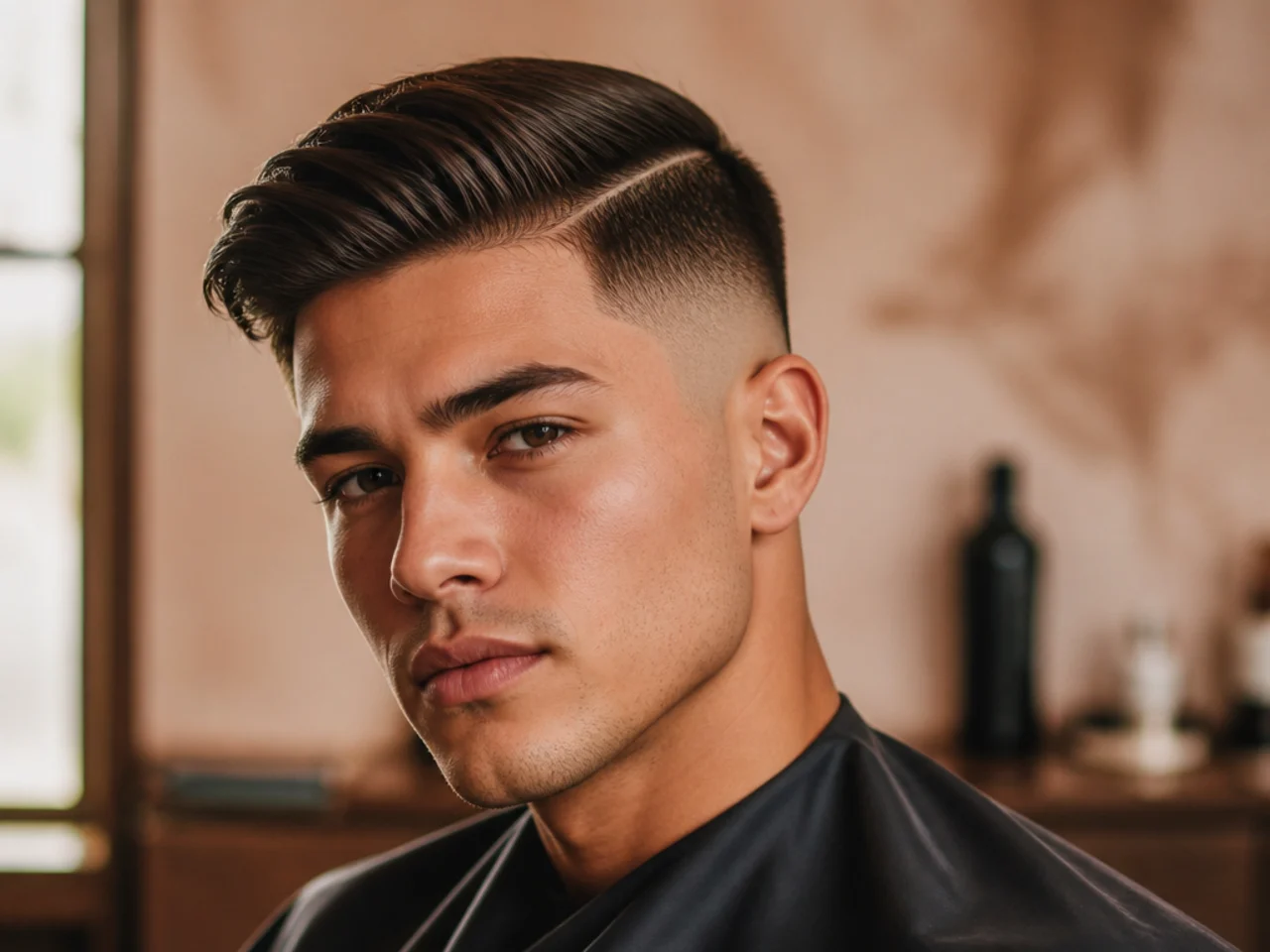
19. High Fade Comb Over, Blow-Dried
Directed with a dryer before any product. Drying it into position is what stops a high comb over collapsing by mid-afternoon. Above the ridge the sweep has no side length to lean against, so the root has to be dried standing or there is nothing holding it up.
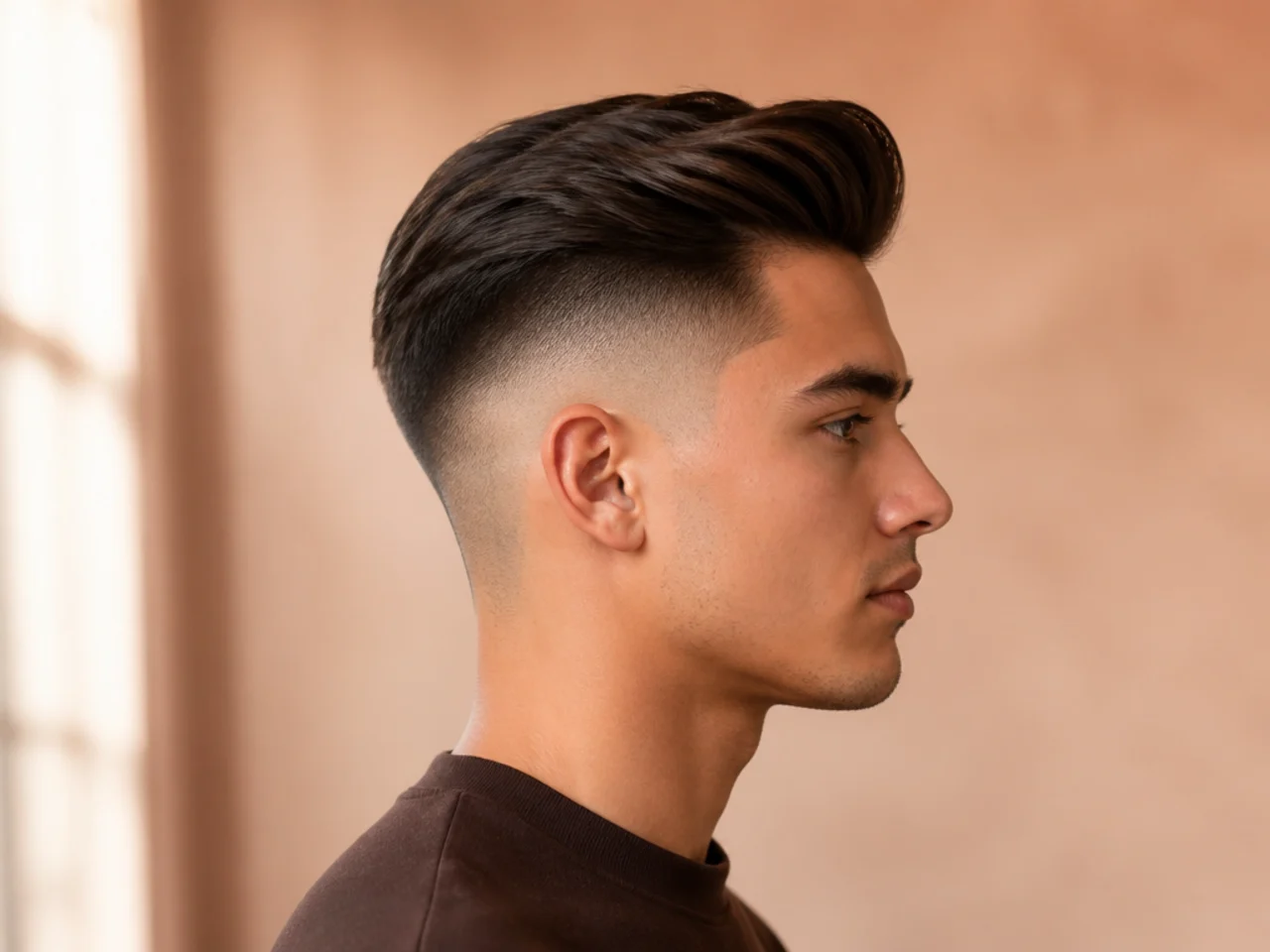
20. High Fade Comb Over at Week Three
The razored part has softened and the fade has grown down toward it. A hard part outlasts the fade's edge, which is the practical argument for cutting one.
Styling and Upkeep
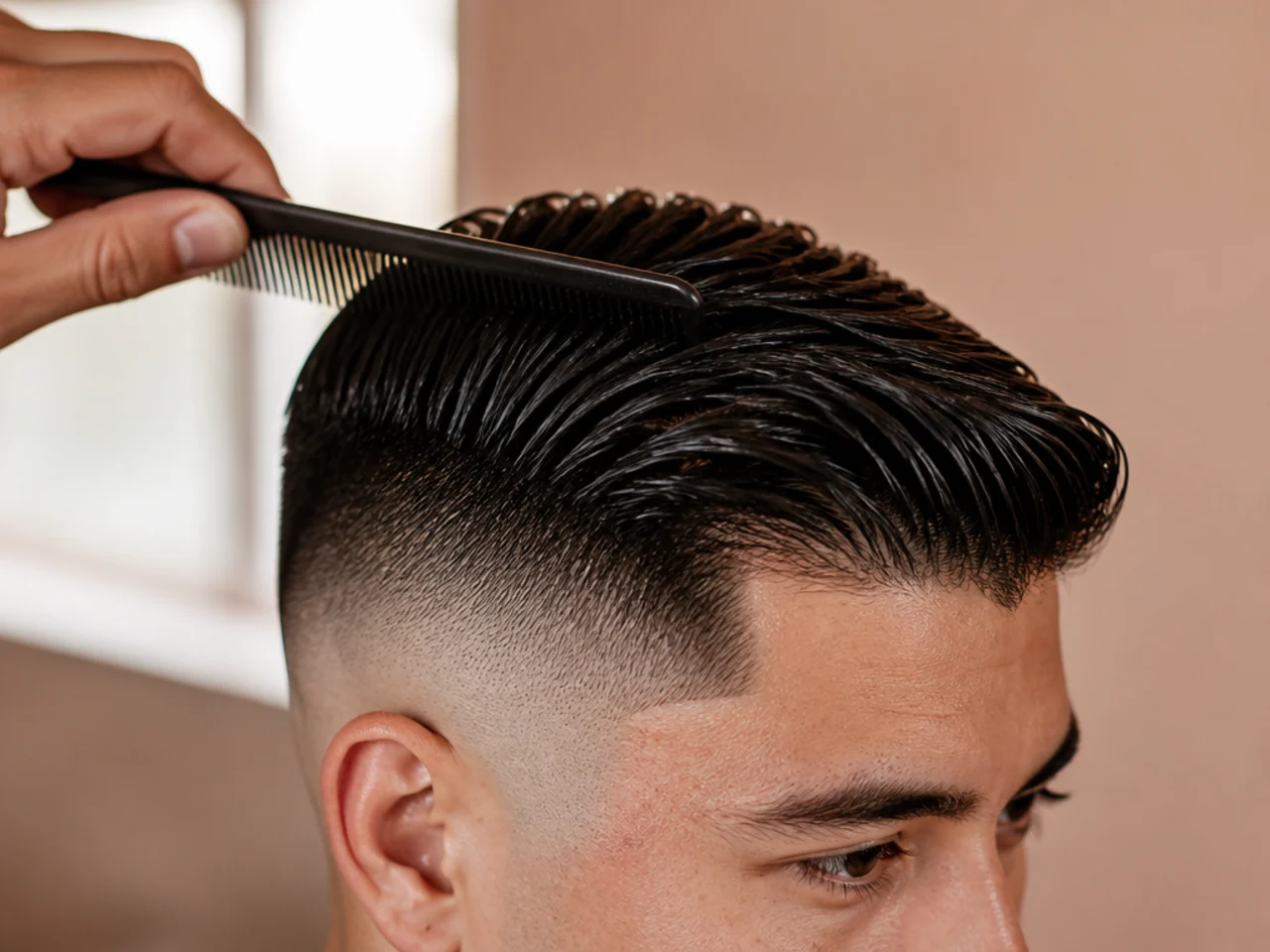
Comb the part in while the hair is damp. A part set wet holds direction all day and one set dry moves within an hour.
Blow-dry across the part, not along it. Airflow from the faded side lifts the root and gives the sweep its base.
Keep product off the razored line. Clay sits in the groove and fills it visually.
Rebook by finish. The razored part outlives the blend either way, but the blend it runs into is only sharp for one to two weeks on skin and three to four on a #1 taper.
Moisturise the exposed side. A high fade bares more skin than any other cut and dryness shows on it.
Mistakes to Avoid
Expecting a natural part to survive a high fade. It runs out of hair at the ridge.
Asking for the hard part after the fade is cut. It has to be razored into the blend as it is created.
Setting the part where the barber prefers. The follicles already lean one way, and a part cut against them has to be rebuilt from scratch every morning.
Combing a fine top flat over a high fade. Two exposed areas next to each other rather than one.
Using heavy pomade on a high comb over. Weight pulls the sweep down and closes the part.
FAQ
Can you comb over a high fade? Yes, but the part runs into the fade rather than sitting above it.
Do I need a hard part? In most cases yes, because the natural split runs out of hair.
Which height is easiest for a comb over? A mid fade, which leaves a margin for the part.
Final Thoughts
The choice here is made once, at the start of the appointment, and it cannot be revisited. Either the part gets razored into the blend as the fade is cut, or it stops where your natural split stops and the sweep has to hold itself. Say which one you want before the first clipper pass, because after that the answer has been chosen for you.
For every version of the sweep see the comb over haircut guide, and for the fade height itself see the high fade haircut. More in Fade Haircuts.