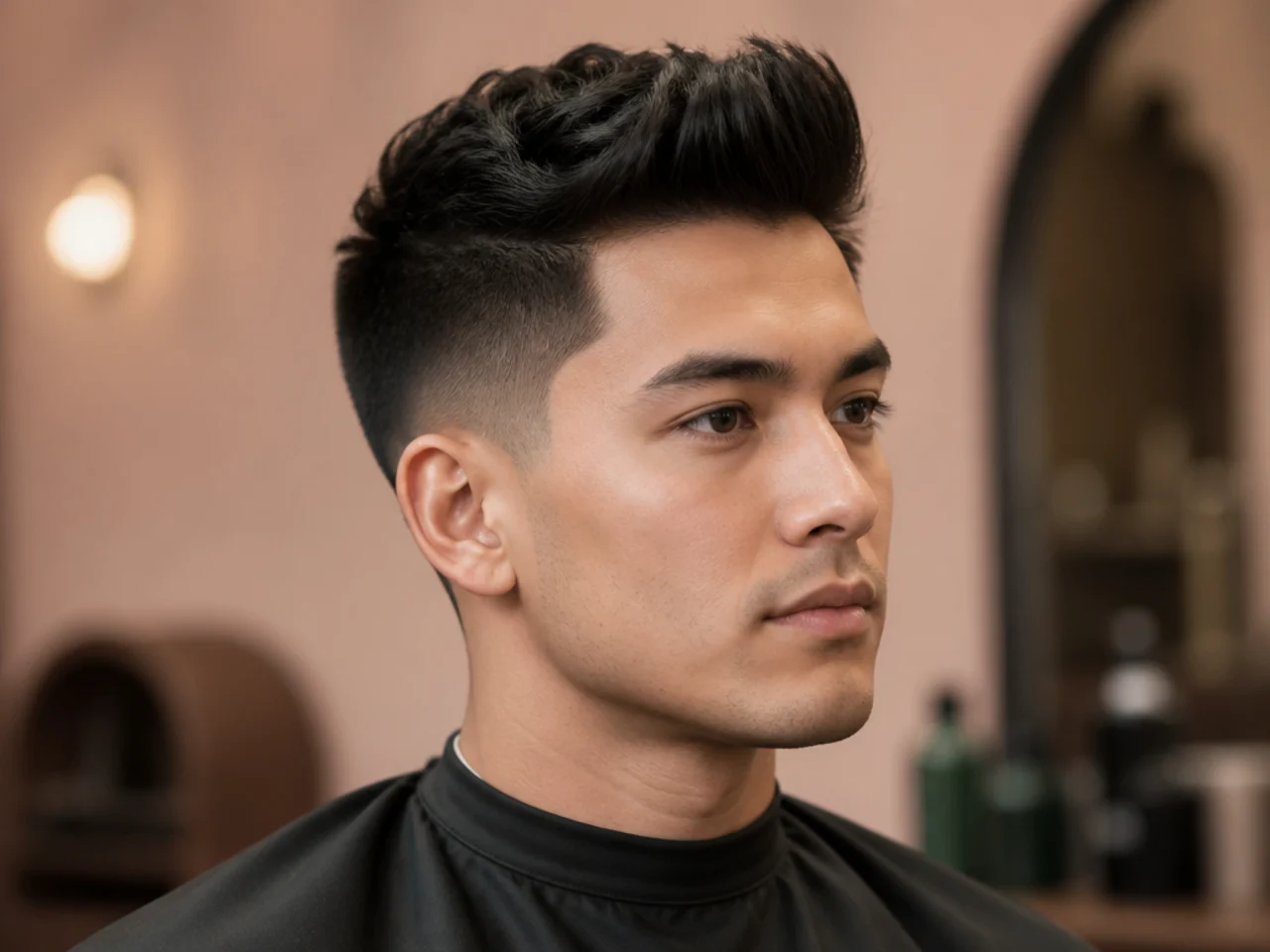
20 Short Quiff Hairstyles for Men
Twenty short quiff hairstyles men are asking for in 2026 — sharp, low-effort, and cut to hold shape with almost no product. Face-shape notes and the exact barber ask for each cut.
In this article · 32
- What Is a Short Quiff?
- How to Choose Your Short Quiff
- The 20 Short Quiff Variations
- 1. Classic Short Quiff
- 2. Textured Short Quiff
- 3. Short Spiky Quiff
- 4. Sleek Short Quiff
- 5. Messy Short Quiff
- 6. Short Quiff with Low Taper Fade
- 7. Short Quiff with Mid Fade
- 8. Short Quiff with High Skin Fade
- 9. Short Quiff with Burst Fade
- 10. Short Quiff with Drop Fade
- 11. Short Quiff Undercut
- 12. Short Quiff with Hard Part
- 13. Short Quiff with Scissor Blend
- 14. Short Wavy Quiff
- 15. Short Curly Quiff
- 16. Short Quiff for Fine Hair
- 17. Short Quiff for Thick Hair
- 18. Short Quiff with Beard
- 19. Short Side-Swept Quiff
- 20. Executive Short Quiff
- How to Ask Your Barber for a Short Quiff
- Styling and Upkeep for a Short Quiff
- FAQ
- Is the short quiff still trending in 2026?
- How is a short quiff different from a French crop or a textured crop?
- Can I get a short quiff with a receding hairline?
- Do I need a fade to make a short quiff work?
- How long does hair need to be for a short quiff?
- Is a short quiff workplace-appropriate?
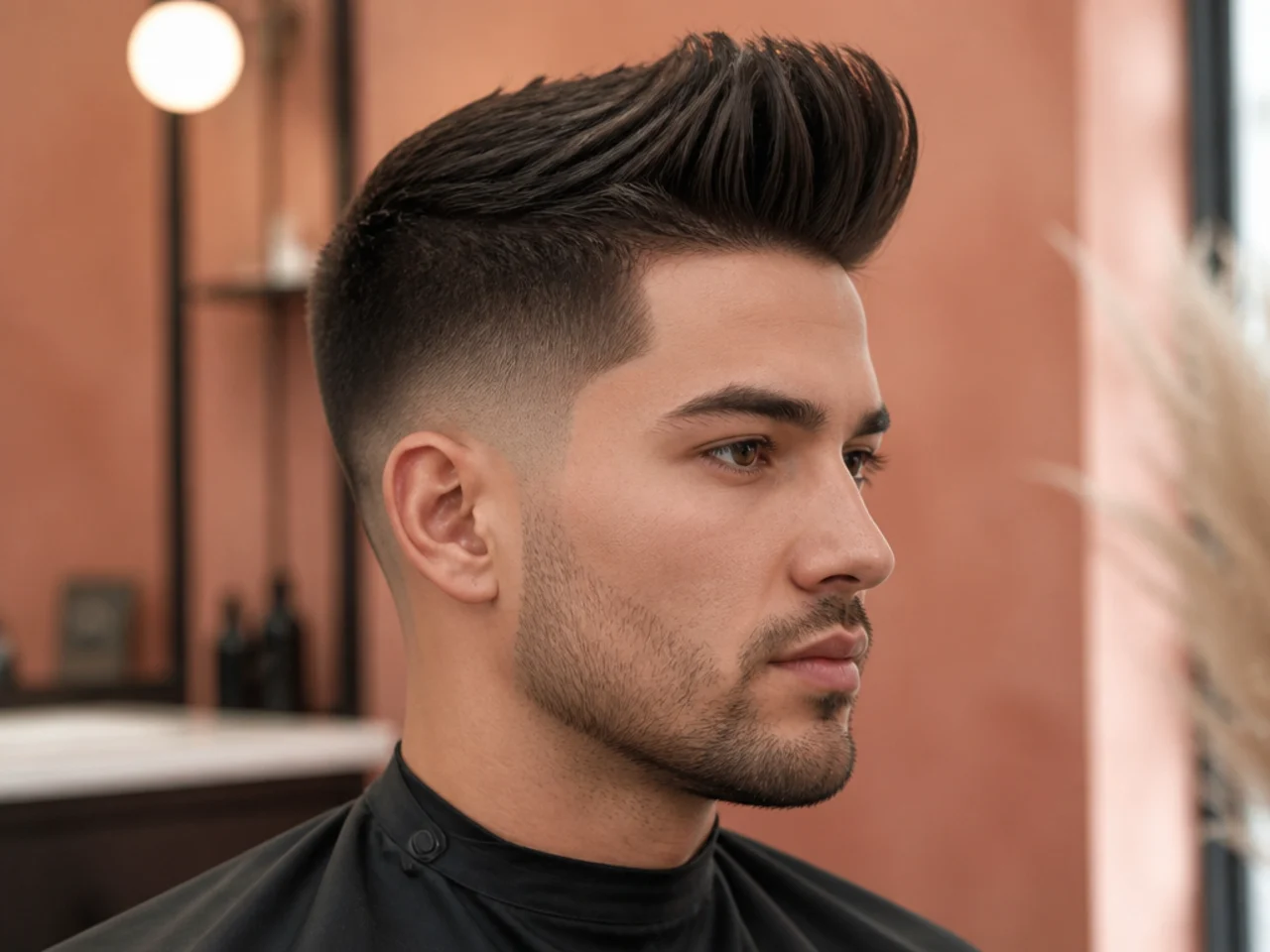
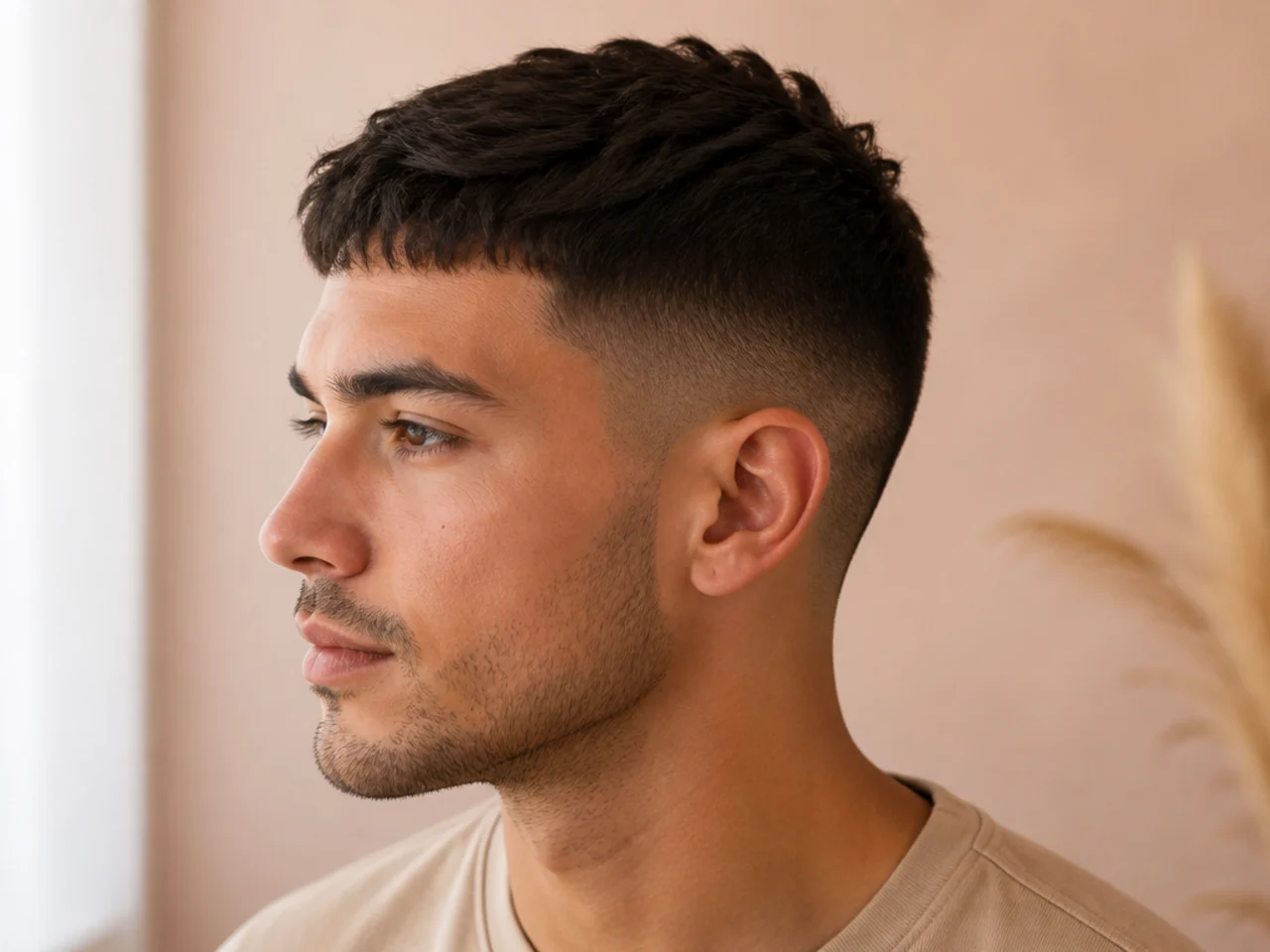
A short quiff is a quiff cut down to a length that holds shape without a blow-dryer. Two to three inches on top, sides faded or clipper-cut short, front lifted with your fingers and a pea of matte clay. It reads sharp for work, modern in photos, and low-effort seven days a week. Below are twenty short quiff hairstyles men are asking for in 2026, with the exact number to hand your barber and the face shape each one flatters. The wider quiff hairstyles library for men covers the longer, statement end of the family.
What Is a Short Quiff?
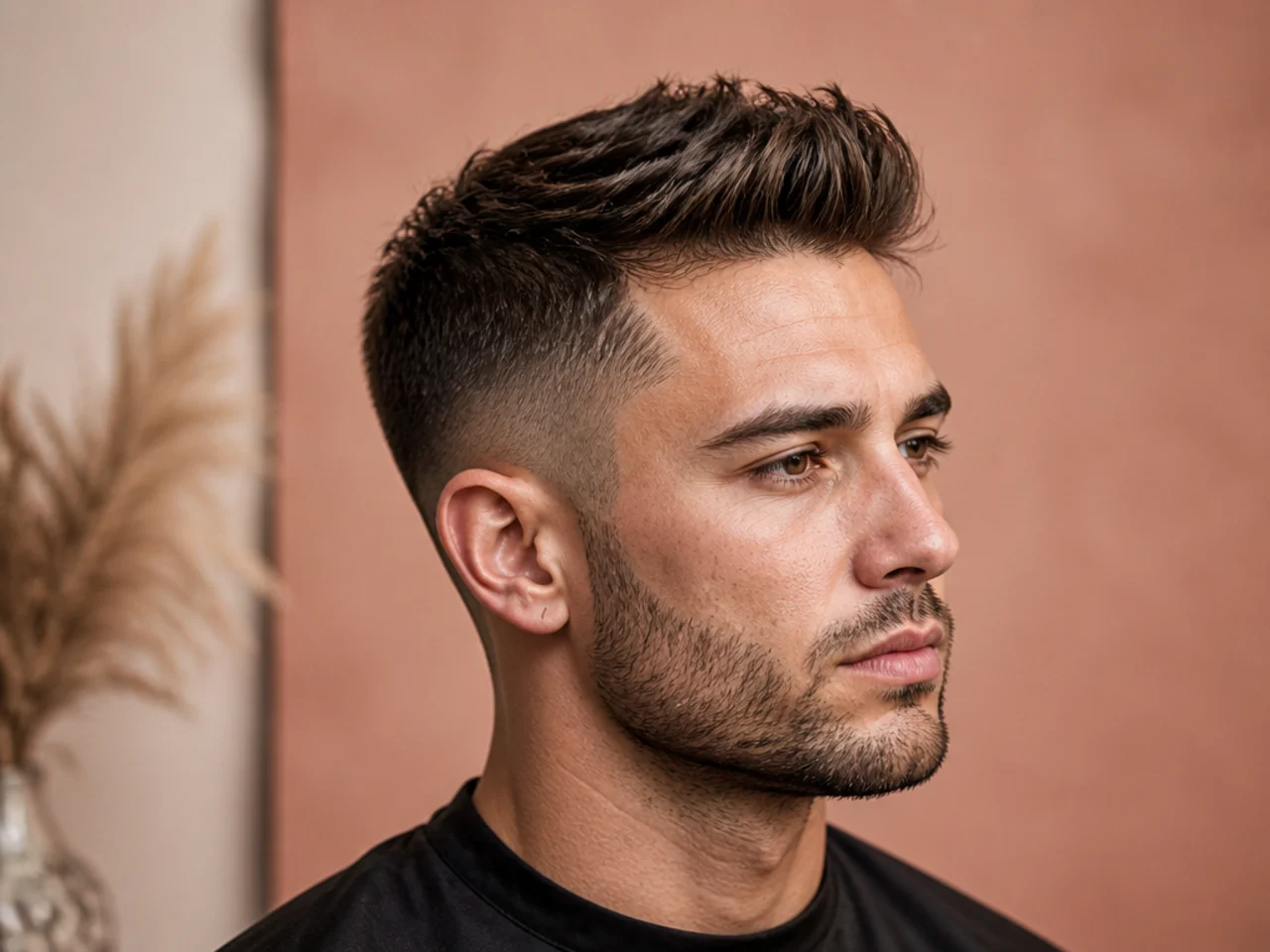
A short quiff is a men's haircut with two to three-and-a-half inches of length on top and short, faded, or tapered sides. The front is left just long enough to sweep up and slightly back with your fingers — enough lift to read as a quiff, not enough length to fall over your brow. The sides carry the contrast: skin fade, mid fade, low taper, or scissor blend, depending on how loud you want the shape.
Three details separate a short quiff from a crew cut with attitude. The front has to reach at least two inches so the sweep actually lifts. The internal cut needs a soft layer through the crown so the top doesn't sit flat behind the front. And the sides have to sit noticeably shorter than the top — no fade, no shape.
The short quiff earns its slot because it is the lowest-effort version of the quiff family. No round brush required most days, no styling for the office, no reset if you sleep on it. That trade-off — a little less drama for a lot less mirror time — is why barbers cut more short quiffs than any other version of the shape.
How to Choose Your Short Quiff
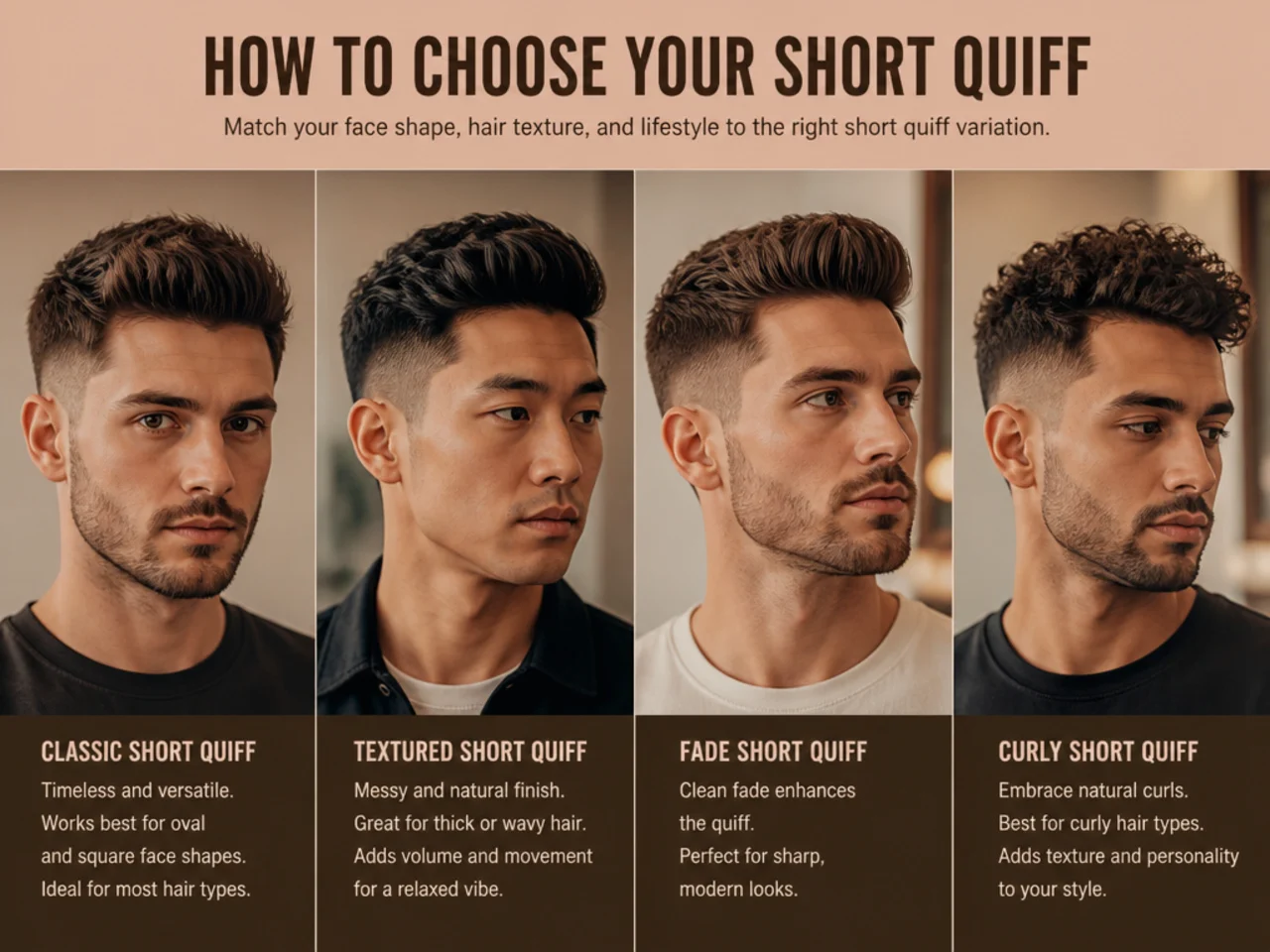
Face shape sets the shortlist. Oval faces suit almost every version on this list. Square jaws look sharper under a textured or spiky short quiff that echoes the angular bottom line. Round faces need vertical lift, so pair a taller front with a mid or high fade to elongate the frame. Long or rectangular faces do better with a slightly shorter front and a lower fade — height stacks length, and length stacks length. Heart-shaped faces balance under a wider short quiff that keeps the top from adding forehead.
Hair type sets the difficulty. Straight, medium-density hair is the easiest — a rough dry and a fingertip of clay does the whole job. Fine hair reads best under a heavily point-cut version where broken ends stack for visual density. Thick, coarse hair holds any version but needs internal weight removed so the top doesn't sit like a slab. Curly and wavy hair need a front longer than three inches when measured stretched, because shrinkage takes half of it back.
Lifestyle is the tiebreaker. If your job runs formal, pick the scissor-blended, sleek, or low-fade version — none of them read loud. If your morning is a shower and a towel-dry, pick a short quiff on a mid fade with matte clay — thirty seconds, out the door. Save the high skin fades and disconnected undercuts for weekends and photos.
The 20 Short Quiff Variations
1. Classic Short Quiff
The classic short quiff is the neutral shape every other version spins off. Three inches at the front, two through the crown, sides scissor-blended or dropped into a soft short taper. The finish sits low-shine, not matte-dry — a cream or a light paste, not clay. Nothing shouts.
Ask for three inches on top, a scissor blend or short low taper fade, and a soft blend at the parietal ridge. Tell your barber the front should be long enough to lift, not spike.
Blow-dry the front up and back with a vented brush for a minute, then work a pea of light cream through the ends. Best for oval and square face shapes on medium-density straight or lightly wavy hair. It reads as the grown-up default of the family.
2. Textured Short Quiff
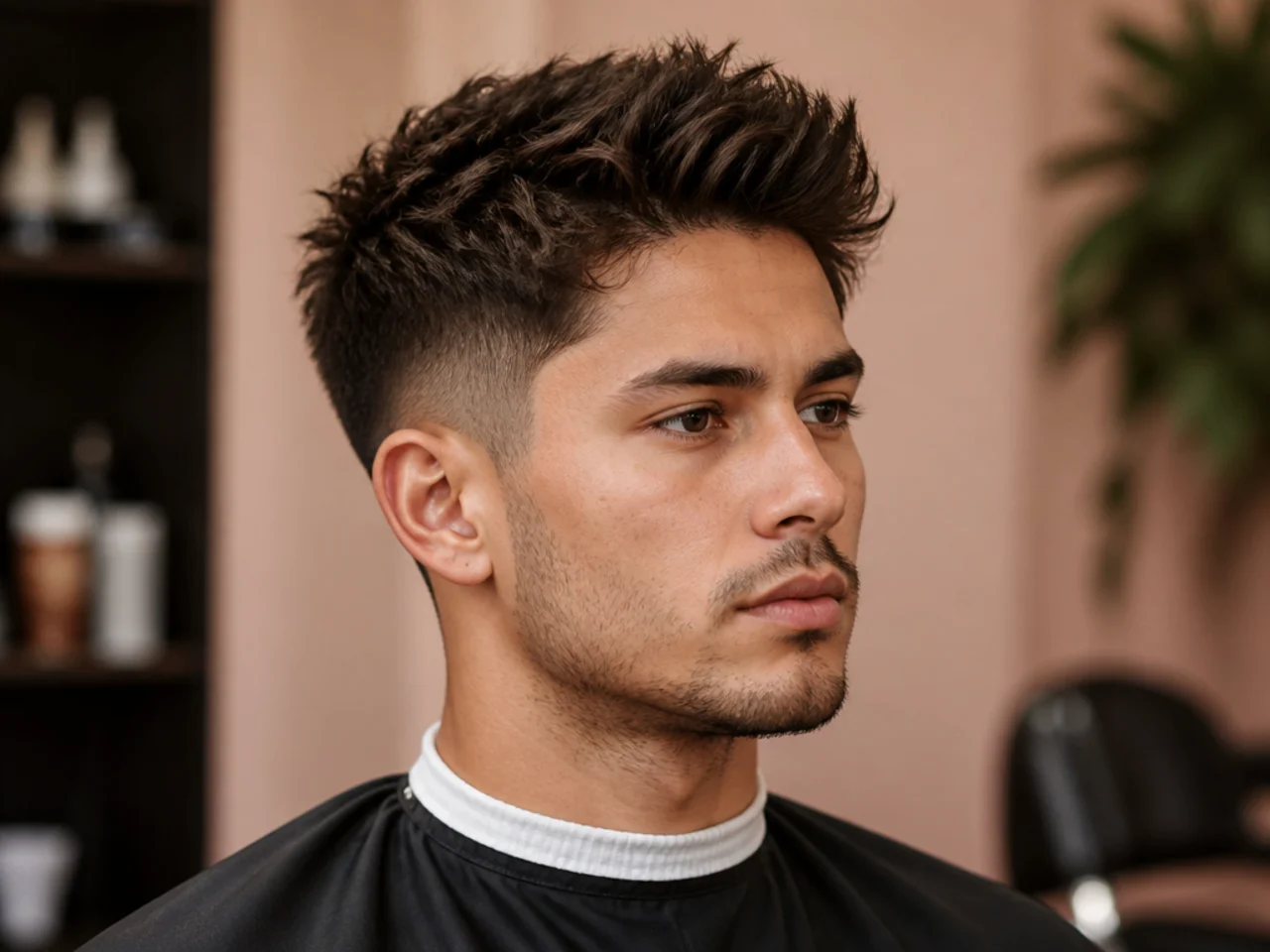
The textured version leans on point-cutting to give the short top visible piece separation. Layers are cut with a strong angle so strands sit at slightly different lengths, and the front breaks into pieces instead of falling as a block. It is the modern default when a client says "short quiff, but modern."
Ask for aggressive point-cut layers on top, a mid fade at the sides, and light thinning through the crown if your hair is dense. Say "no razor" so the ends stay chunky.
Sea-salt spray on damp hair, rough-dry with your fingers, then a rice-grain of matte clay pressed through the ends. Best for straight or lightly wavy hair on any face shape. See our wider guide to textured haircuts for men for closer variations of the technique.
3. Short Spiky Quiff
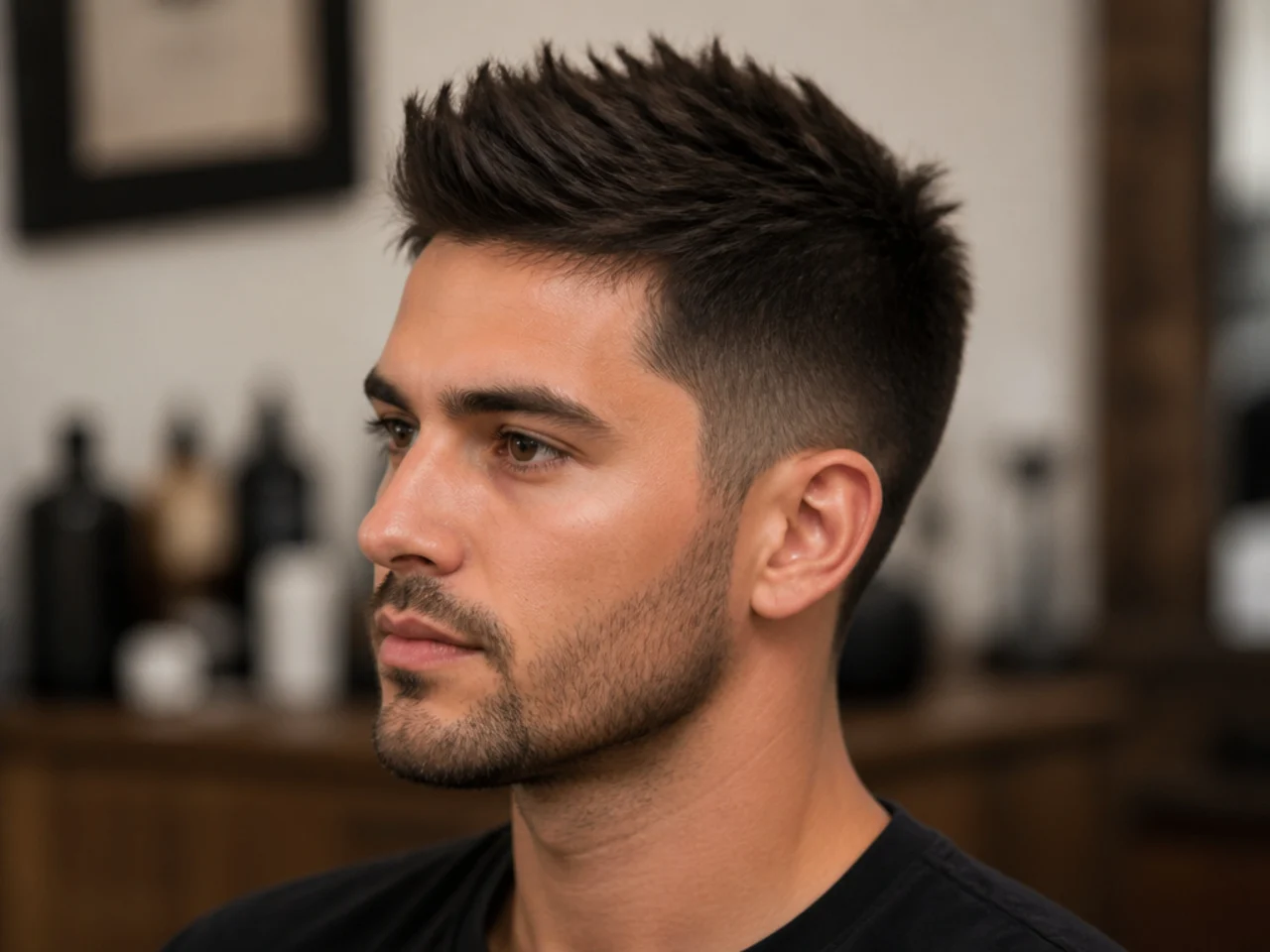
The short spiky quiff pushes the piece separation into visible spikes. The front lifts up and slightly forward rather than back, and the layers are cut so each piece stands on its own with a small amount of fiber. It reads younger and louder than a classic — good for guys in their early twenties, tricky over thirty-five.
Ask for two-and-a-half inches on top, aggressive point-cutting, a mid fade or high skin fade at the sides, and thinning through the crown.
Warm a pea of fiber or strong-hold paste between your palms until it disappears, then twist the front pieces upward with your fingertips. Best for fine to medium hair on square, oval, or diamond faces. Skip it if your hair is thick and coarse — the spikes clump.
4. Sleek Short Quiff
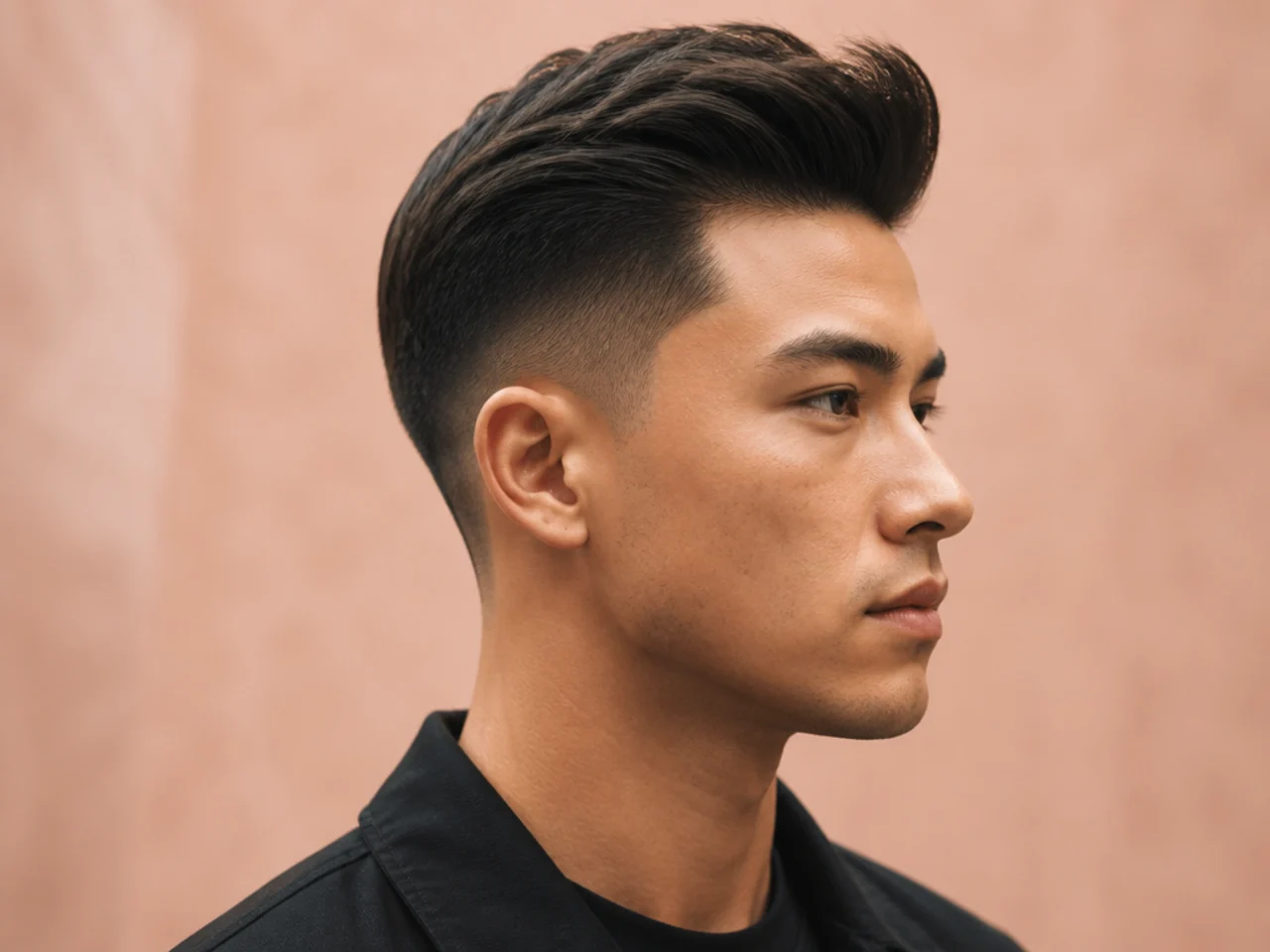
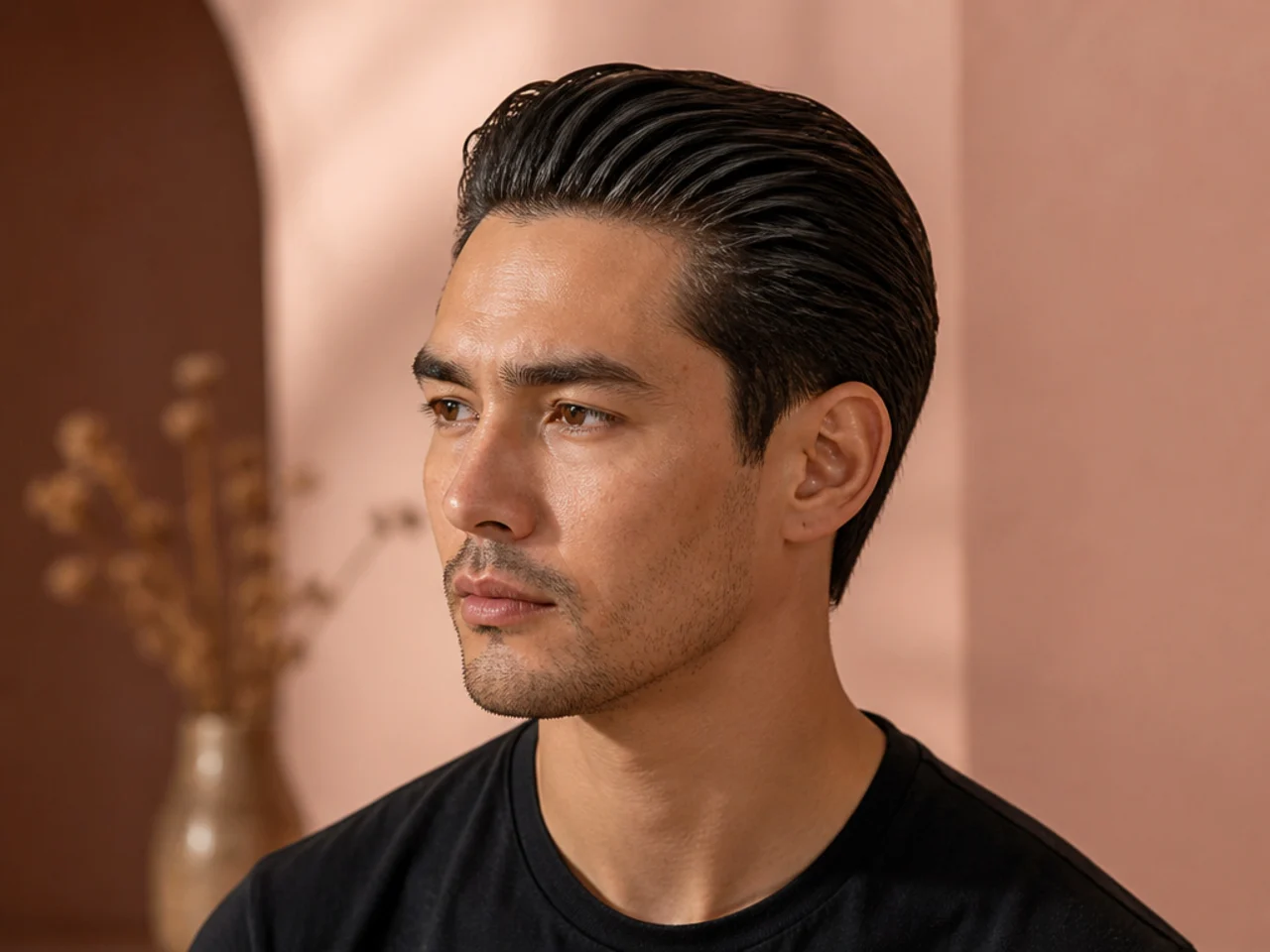
The sleek version is the 1950s-adjacent read — the front combed cleanly up and back, visible shine, no piece separation. It is the closest a short quiff gets to a pompadour without pushing into that length. It flatters formal wear more than any other version on this list.
Ask for three inches at the front, scissor layers with no aggressive thinning, and a mid fade or short low taper at the sides.
Prep with a blow-dry cream, round-brush the front up and back on medium heat, then work a coin of water-based pomade from root to tip and comb through. Best for weddings, offices, and straight hair that holds a shape. If you want the deeper polished-back look, the slick back haircut guide covers the closest neighbor.
5. Messy Short Quiff
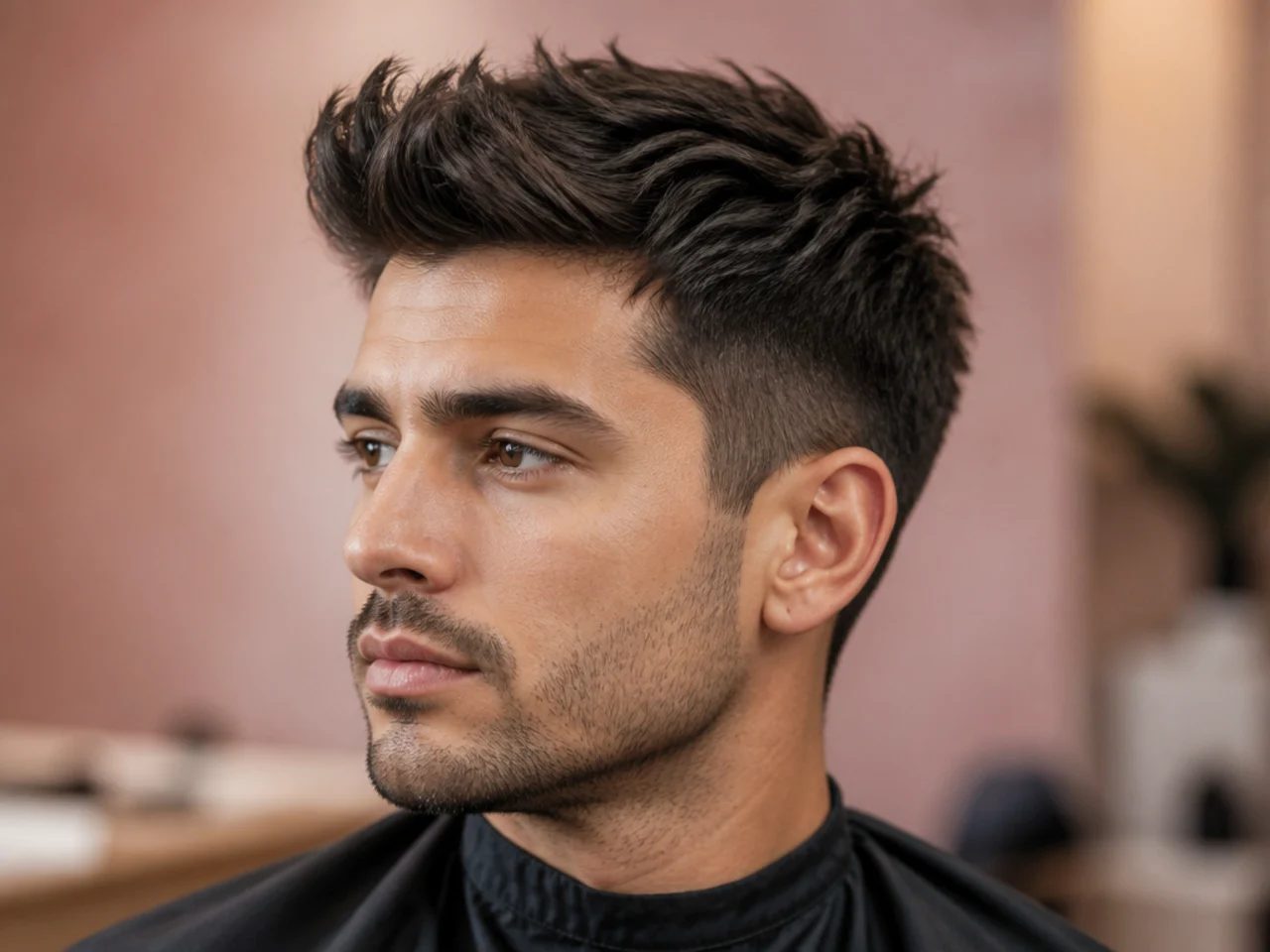
The messy short quiff keeps every measurement of the classic but breaks the finish. Front is lifted with the flat of your hand rather than combed, layers are point-cut, and the ends stay chunky and matte. It reads slept-in rather than styled.
Ask for a three-inch top, point-cut layers, and a low taper fade or scissor blend at the sides. Tell your barber "matte and tousled, not sleek."
Rough-dry the front with your fingers on high heat, then press a pea of matte clay through the ends. Ninety seconds, done. Best for guys with wavy or slightly cowlicked hair who want a haircut that looks better on day two. The wider messy quiff hairstyles for men roundup covers longer messy variations.
6. Short Quiff with Low Taper Fade
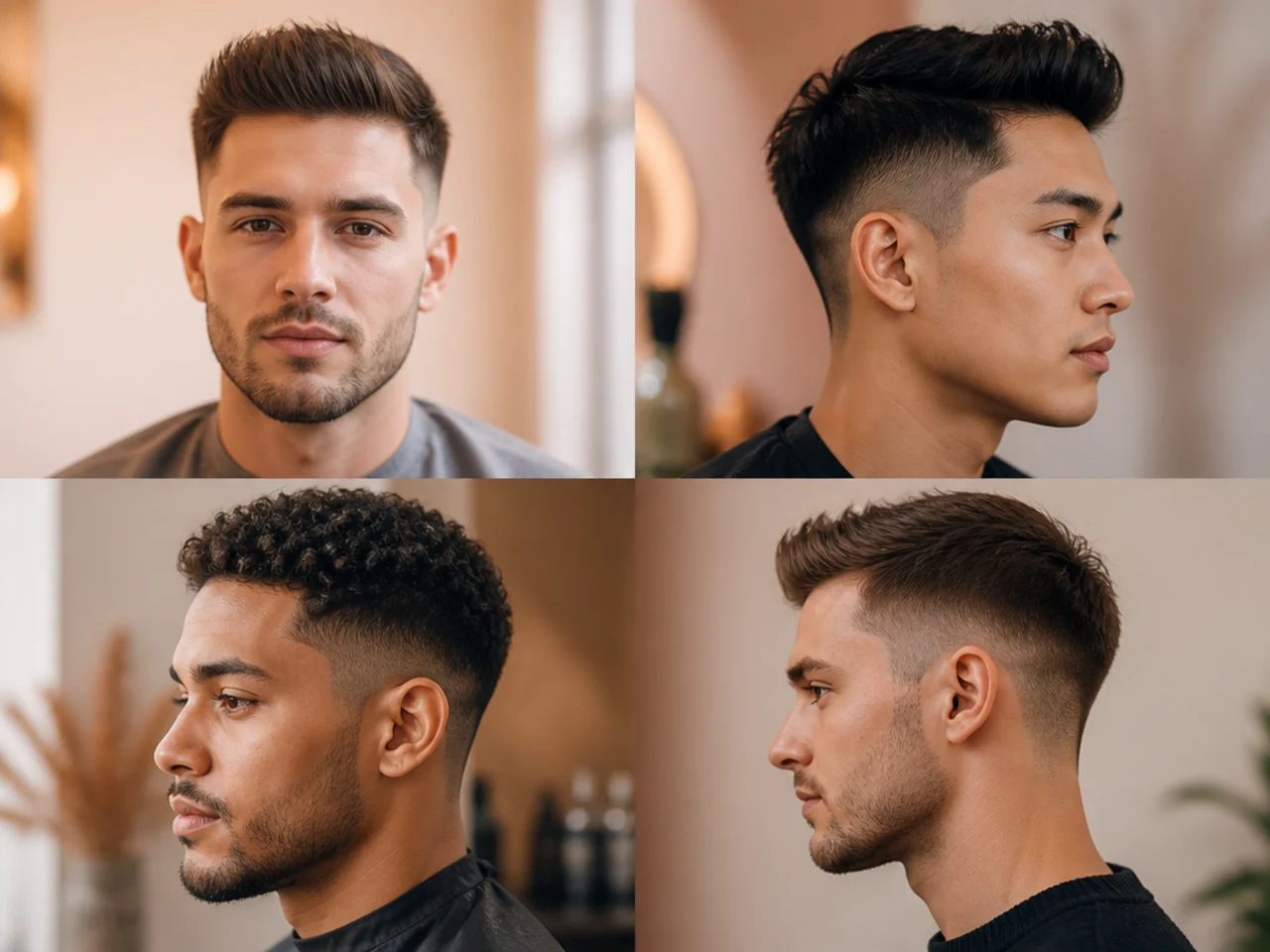
The low taper is the softest side treatment on the list. Instead of a fade climbing up the head, the sides drop into a gentle taper at the neckline and around the ears — the hair stays close to your natural sideburn line. It grows out kinder than any fade and reads pulled-together in every workplace.
Ask for a low taper fade, three inches on top with point-cut ends, and a soft scissor blend from the parietal ridge up.
Rough-dry, press a pea of matte clay through the front third. Best for oval and square face shapes, softer facial features, and guys whose office reads better without visible clipper lines. It is the safest possible entry point into the short quiff family.
7. Short Quiff with Mid Fade
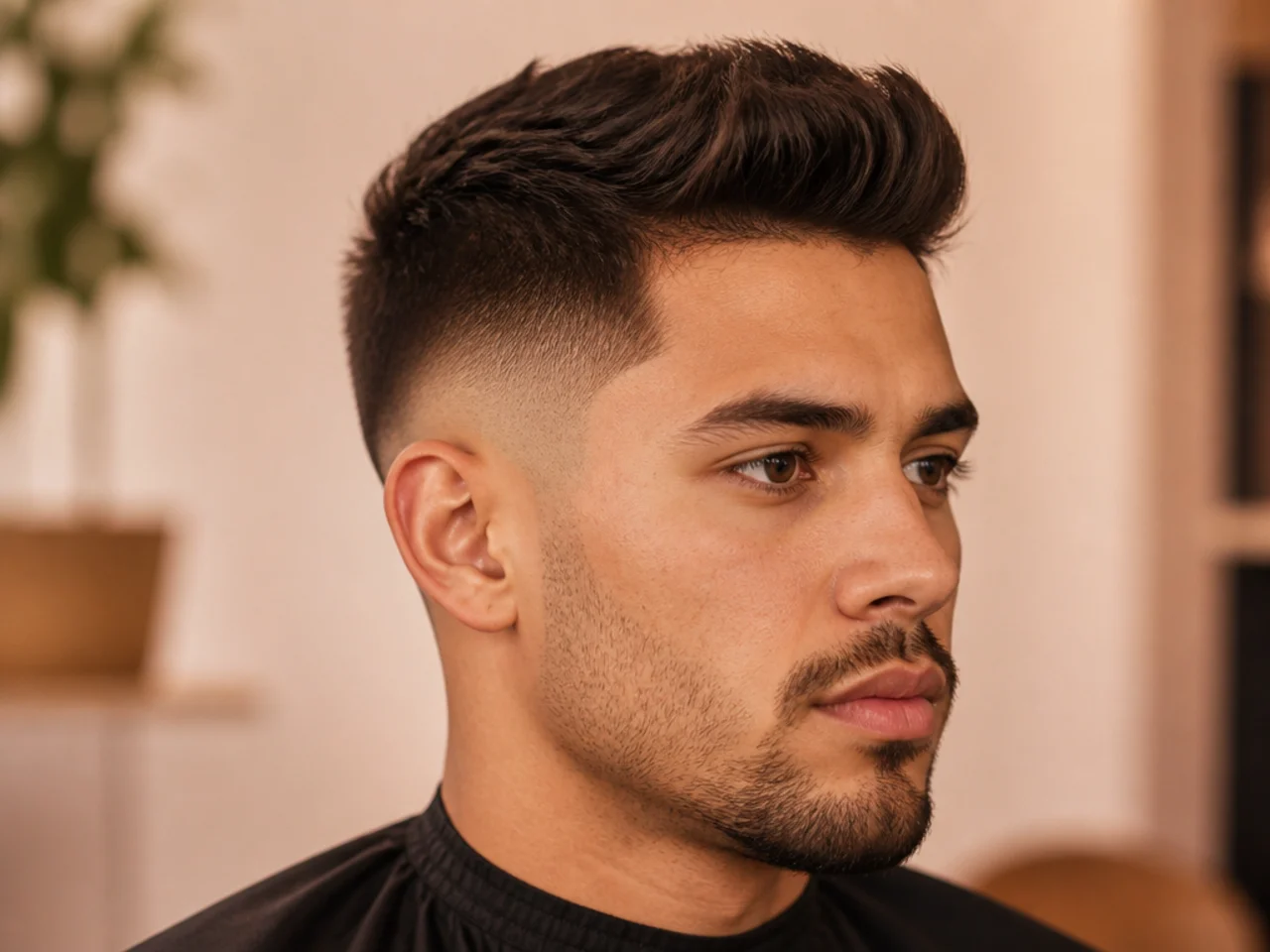
The mid fade sits at the temple and reads as the modern default pairing for a short quiff. It gives the top enough contrast to look like a proper style without pushing into shaved-sides territory. Most guys who want "a short quiff with a fade" mean this version.
Ask for a mid fade at the temple, three inches on top with point-cut layers, and a soft blend at the crown. Add "matte finish" to guard against a barber who defaults to shine.
Rough-dry, matte clay through the ends, push the front up with your fingertips. Best for almost any face shape under thirty-five — this pairing does the flattering, and it photographs better than either a lower or a higher fade on most guys.
8. Short Quiff with High Skin Fade
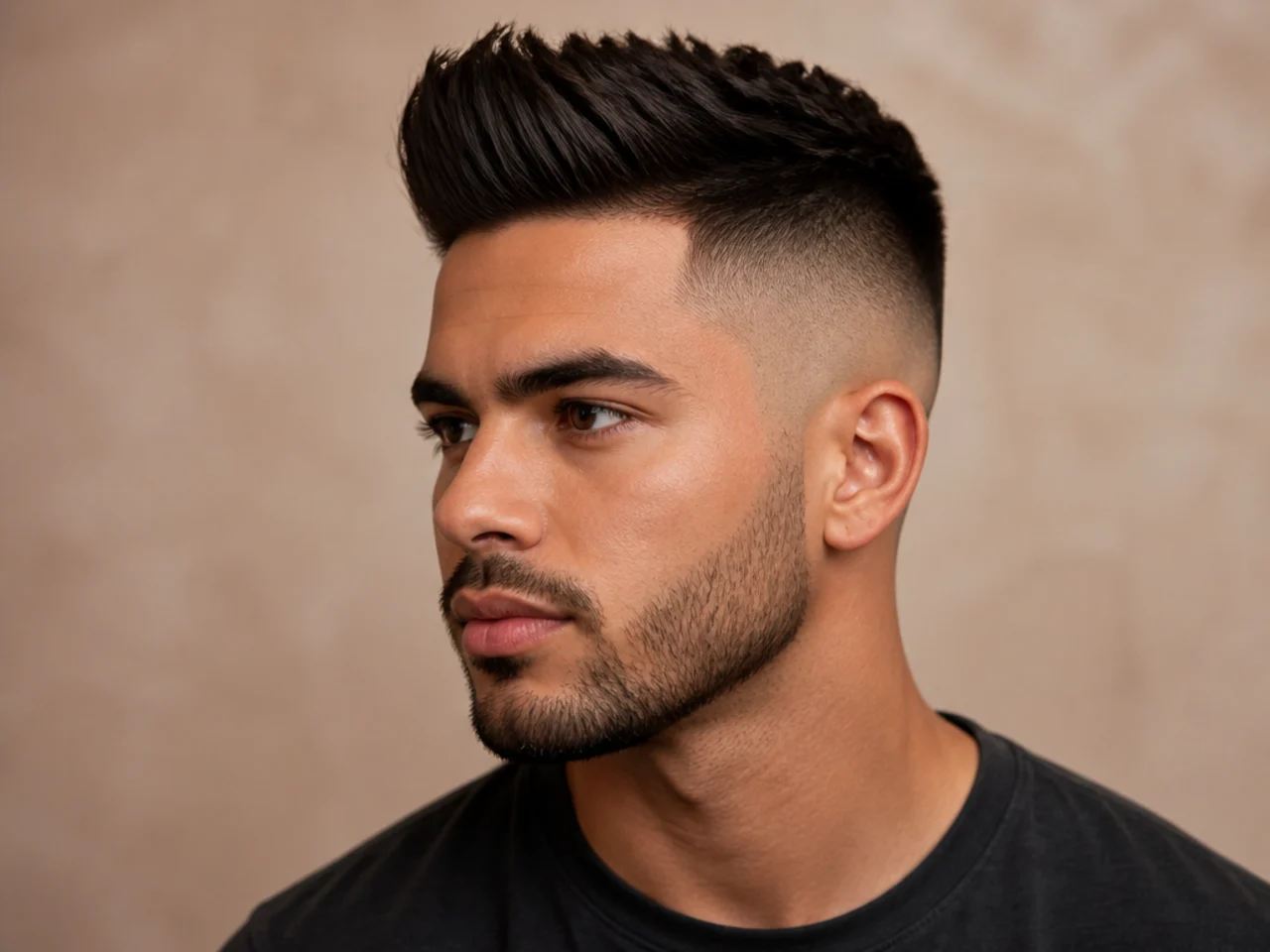
The high skin fade version is the statement pairing. Sides go to skin high on the head — usually mid-ear or above — and the short top sits in a hard-contrast quiff shape. The whole cut reads modern-editorial. It is the version guys post to Instagram, not the one for a business-formal Monday.
Ask for a high skin fade starting mid-ear or higher, three inches on top, and a soft disconnect where the top meets the fade. Say "matte, not sleek."
Rough-dry, matte paste through the ends, push the front up and back. Best for square, oval, and diamond faces with medium-to-thick straight or wavy hair. Book a mid-cycle line-up at two weeks — this fade grows out fastest.
9. Short Quiff with Burst Fade
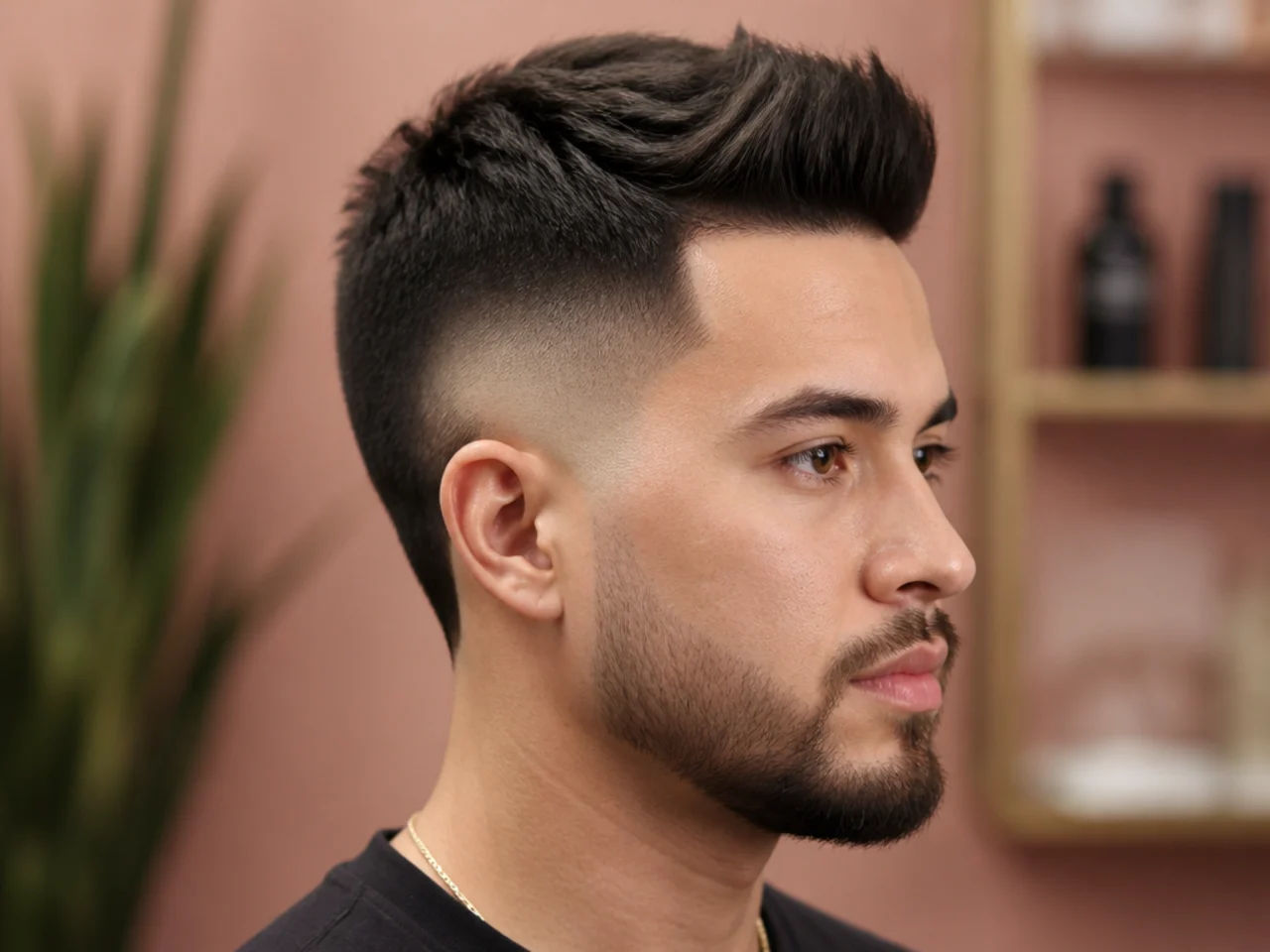
The burst fade curves around the ear in a semicircle instead of running flat up the head. It leaves a small tuft at the nape, keeps length above the ear, and reads softer than a straight-line fade. Paired with a short quiff, it makes the whole shape feel younger and more sculpted.
Ask for a burst fade around the ear, three inches on top with point-cut layers, and a soft blend into the crown.
Rough-dry, matte clay through the front third, push everything up. Best for oval and diamond faces on straight-to-wavy hair. It is the version most guys pick when they want a fade with a distinctive silhouette instead of the standard flat climb.
10. Short Quiff with Drop Fade
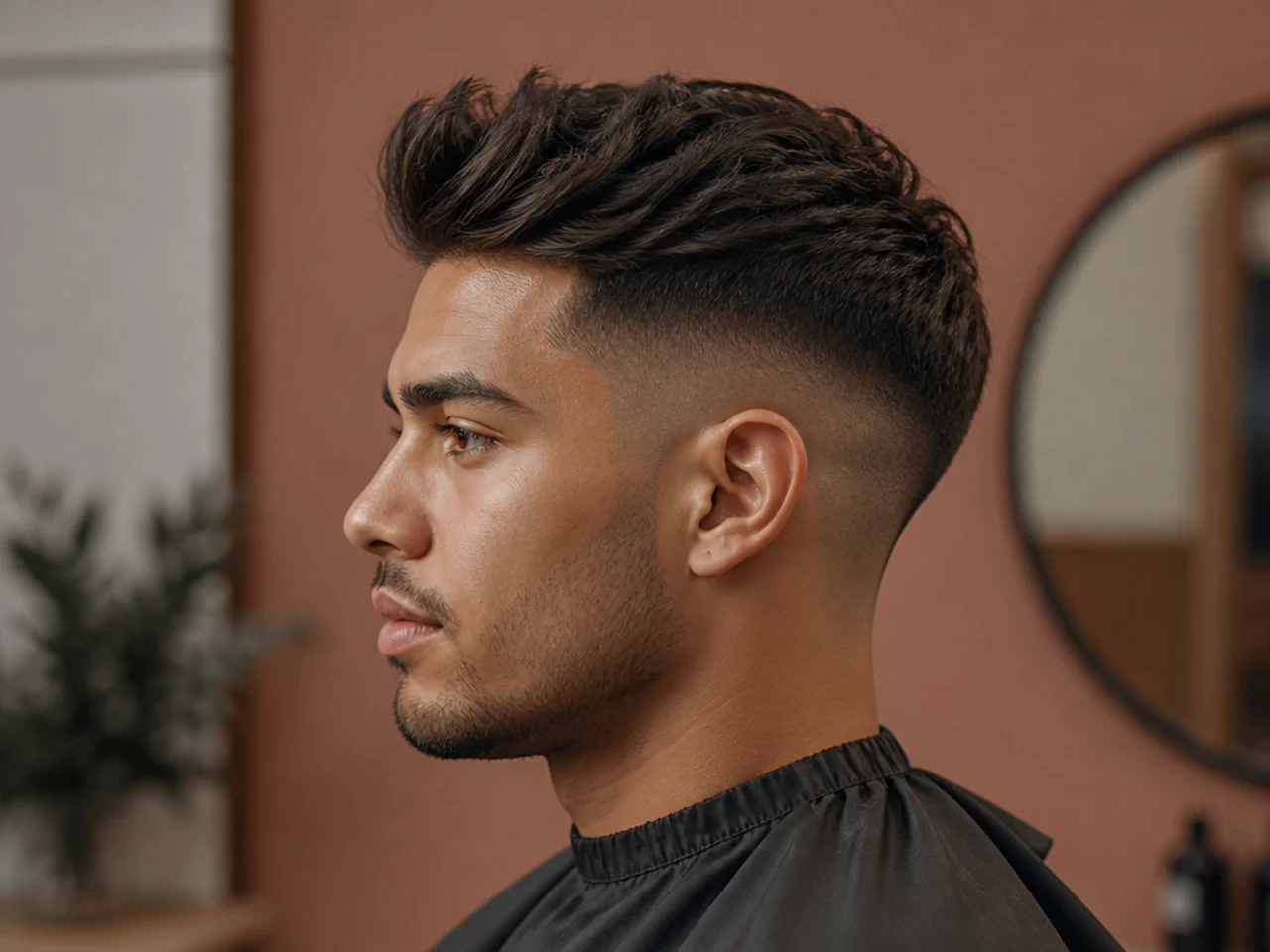
The drop fade curves down and around behind the ear rather than staying flat, which gives the sides a softer, sculpted read. Paired with a short quiff, it feels trendy without trying — the drop hides the transition, and the quiff carries the shape.
Ask for a drop fade — specify where you want it to bottom out behind the ear — and three inches on top with a soft scissor blend at the crown.
Rub matte paste between your palms, push the top up and slightly forward with your fingers, then rake through with light pressure. Skip anything shiny — matte is the whole point of the shape. Best for eighteen to thirty, oval to square face shapes, and medium-density straight or wavy hair.
11. Short Quiff Undercut
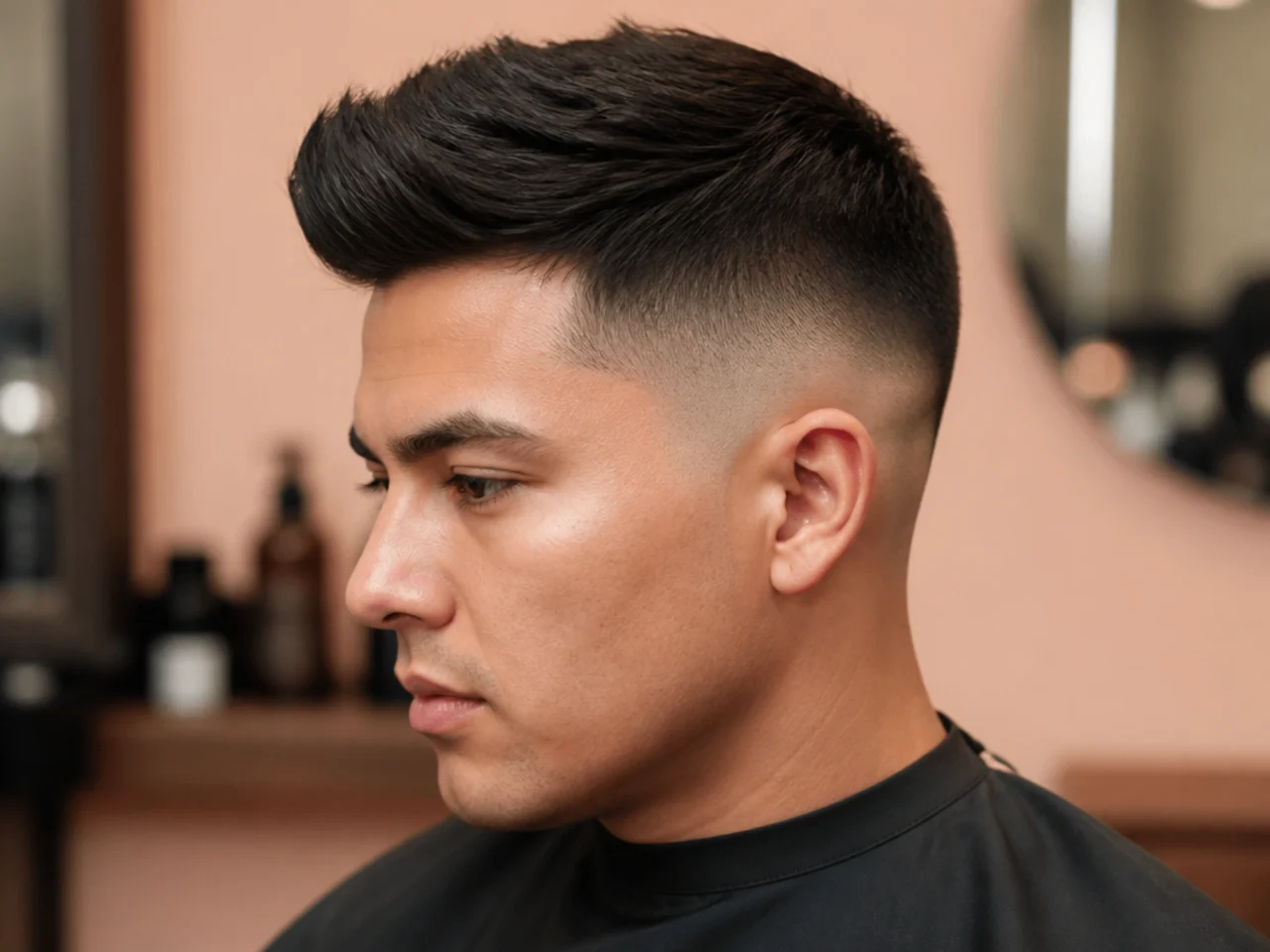
The undercut version disconnects the top from the sides entirely — no blend, just a clear break between clipper-cut sides and a short quiffed top. It is the sharpest silhouette on the list at this length and the one that reads loudest on a photo.
Ask for a disconnected undercut (specify a number one or number two guard), three inches on top, and a clean line where the disconnection sits. Say whether you want a soft or hard transition.
Style up and back with matte clay for everyday, or comb back with pomade for a formal shape — the disconnection lets you flip between finishes without recutting. Best for guys who don't mind attention, oval and square face shapes, and straight to lightly wavy hair.
12. Short Quiff with Hard Part
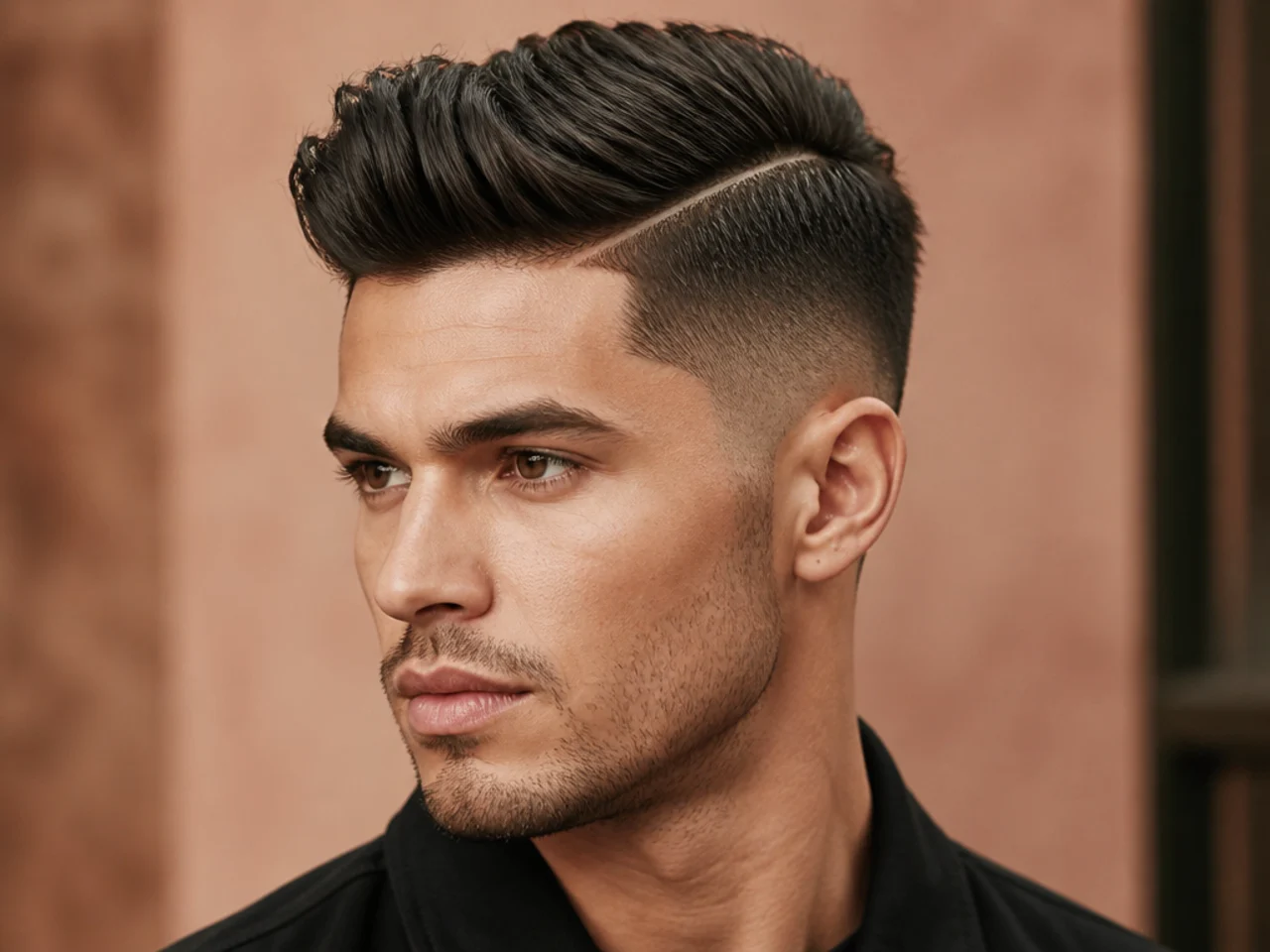
The hard part is a clean line cut into the side with a straight-razor or a zero guard — the barber-drawn part that stays visible for two to three weeks. Paired with a short quiff, it adds sharpness at the side without changing the top.
Ask for a clipper-cut hard part along your natural side part, then a mid fade or short low taper below it. Keep the top at three inches with point-cut ends.
Comb the front up and back with a pomade or light cream, letting the hard part frame the sweep. Best for square and diamond faces on straight hair. Book a re-line every two weeks — the hard part is the first detail to grow out.
13. Short Quiff with Scissor Blend
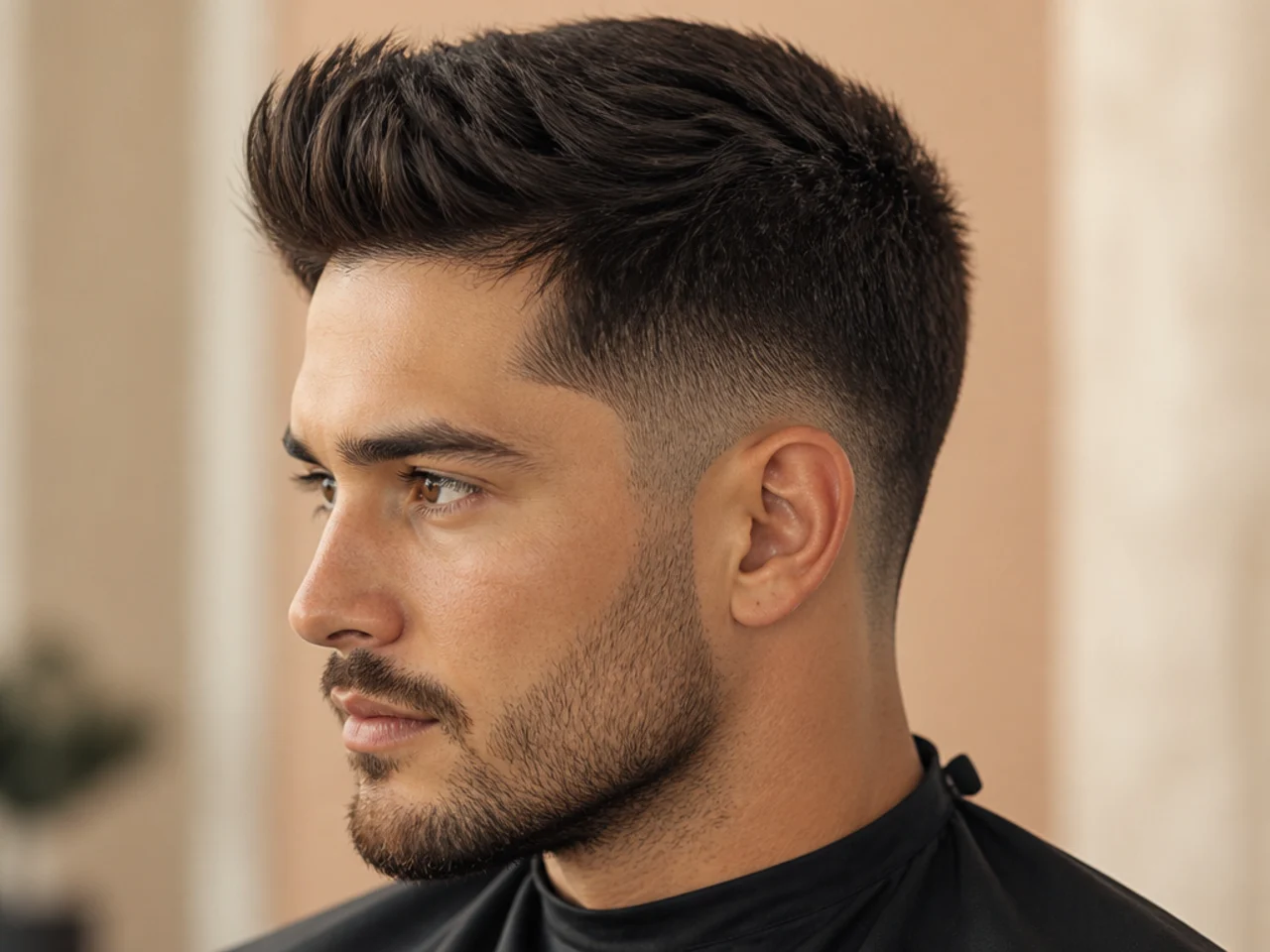
The scissor-blended version skips clippers entirely. The sides shorten with scissors-over-comb, the top runs into them with no visible transition, and the whole cut reads as the grown-up version of the short quiff — softer, closer to a classic barbering shape.
Ask for a full scissor cut, no clipper work, and tell your barber you want the sides "short but not tight." Add point-cut ends and a soft internal layer up top.
Rough-dry, work a light cream through the ends, comb the front up. Best for guys in formal workplaces, guys over forty, or anyone whose face reads better under a soft edge than a sharp fade. It is also the version to book if you're growing out of a shorter shape and want the interim to keep working.
14. Short Wavy Quiff
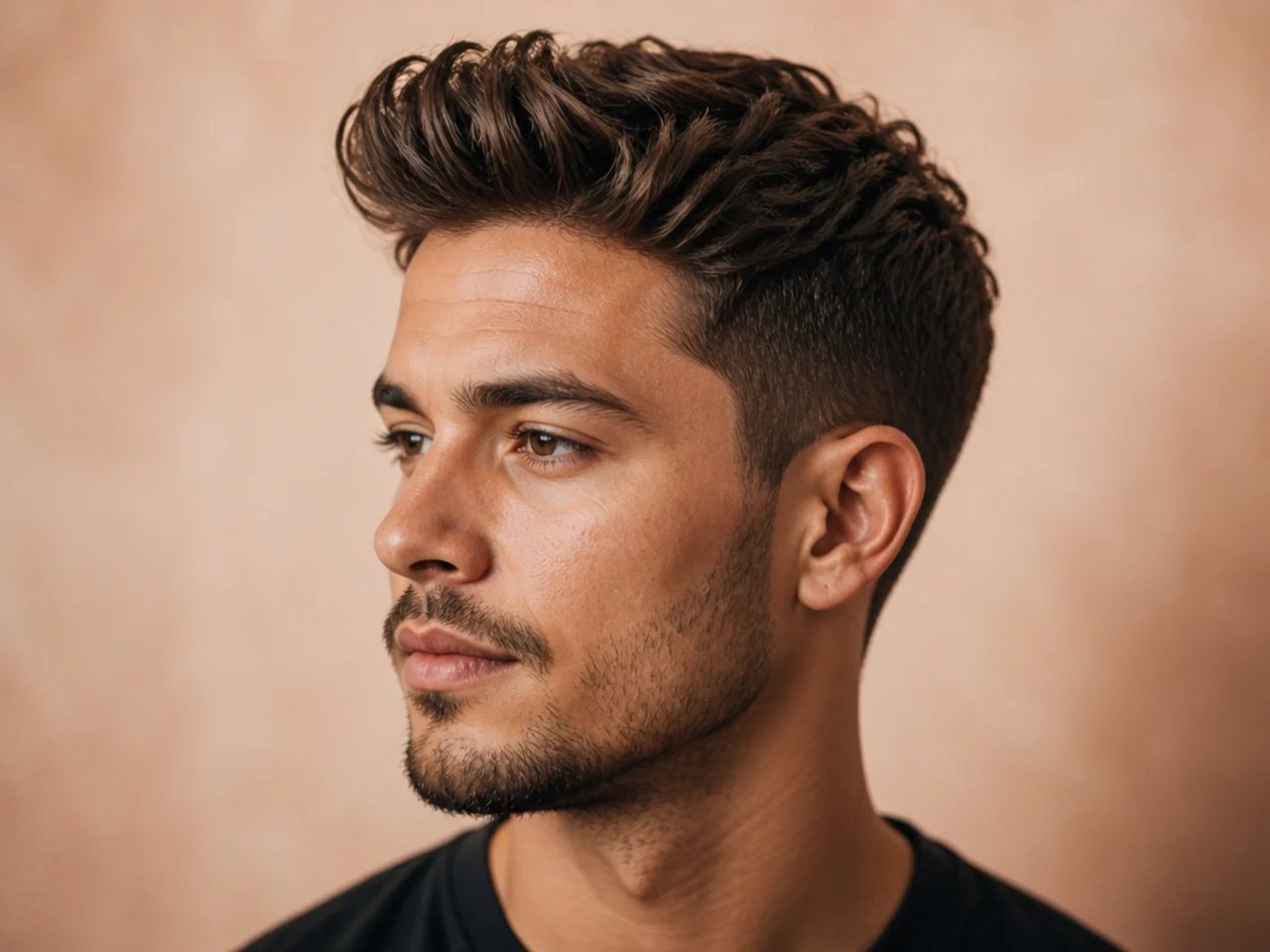
Wavy hair is the sweet spot for a short quiff. The natural bend gives you piece separation without any cutting help, and the front holds a soft lift once it dries. This version leans into the wave rather than fighting it flat.
Ask for a soft internal layer through the top, a low fade or low taper at the sides, and light thinning at the crown if the wave clumps. Point-cut ends, no razor.
Sea-salt spray while damp for grip, rough-dry with your fingers, then a pea of matte cream through the ends. Best for wavy hair on oval, square, and heart-shaped faces. It is the version most guys with a natural bend switch to once they stop fighting the wave flat.
15. Short Curly Quiff
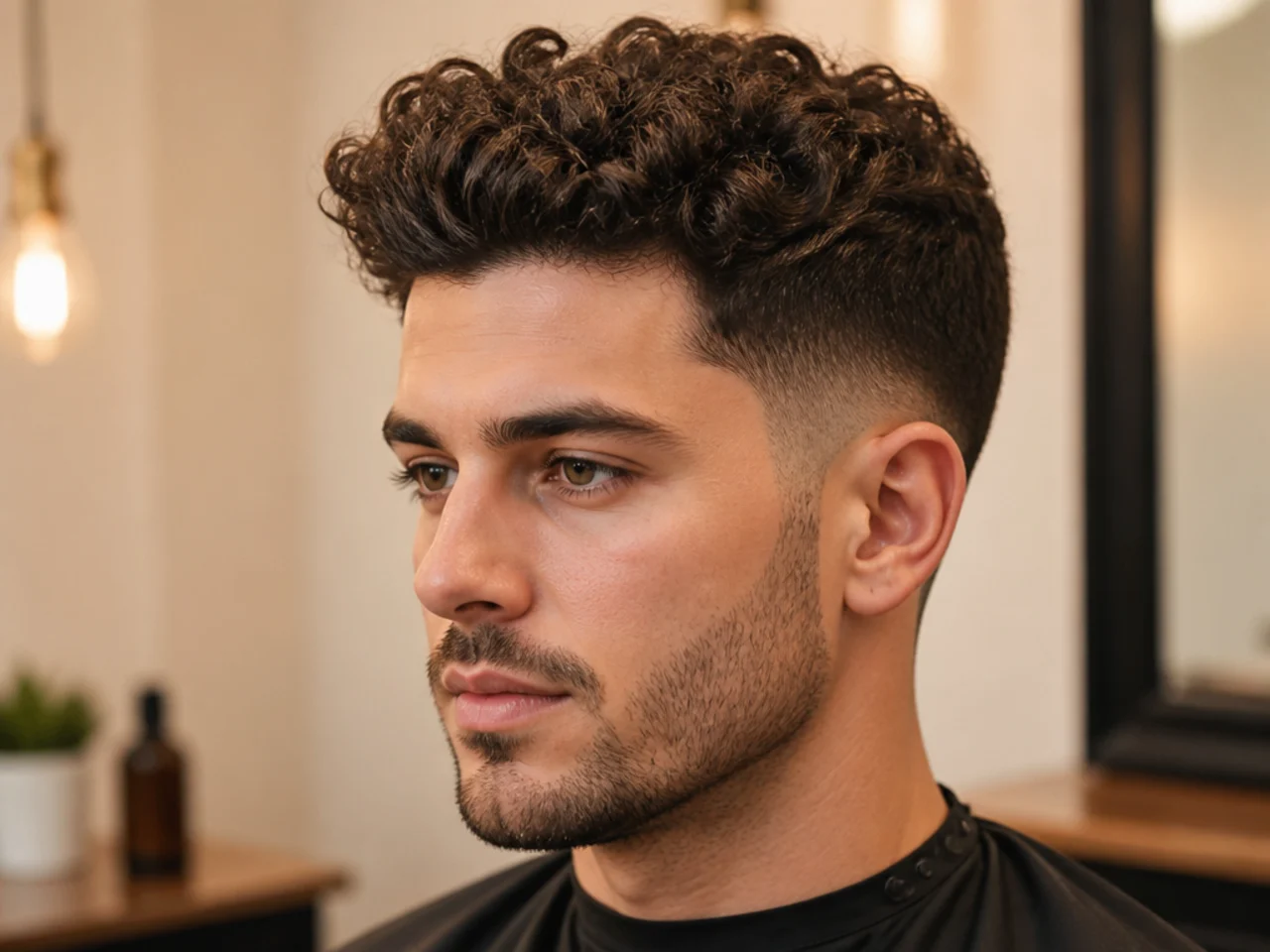
Curls make the short quiff read differently. Volume is built in, so your barber's job is to control the perimeter and give the front room to lift naturally. Length is measured stretched — shrinkage takes half of it back when the coil springs.
Ask for a dry cut so your barber can see where the coils actually fall, four to five inches at the front measured stretched, and a mid taper at the sides. Skip razor and thinning shears — both destroy curl pattern.
Curl cream on damp hair, diffuse on low or air-dry, then push the front up with your palm. Best for type 2 and 3 curls on any face shape. Type 4 hair works too but reads more Afro-quiff than short quiff — worth its own consultation with a barber who cuts textured hair every week.
16. Short Quiff for Fine Hair
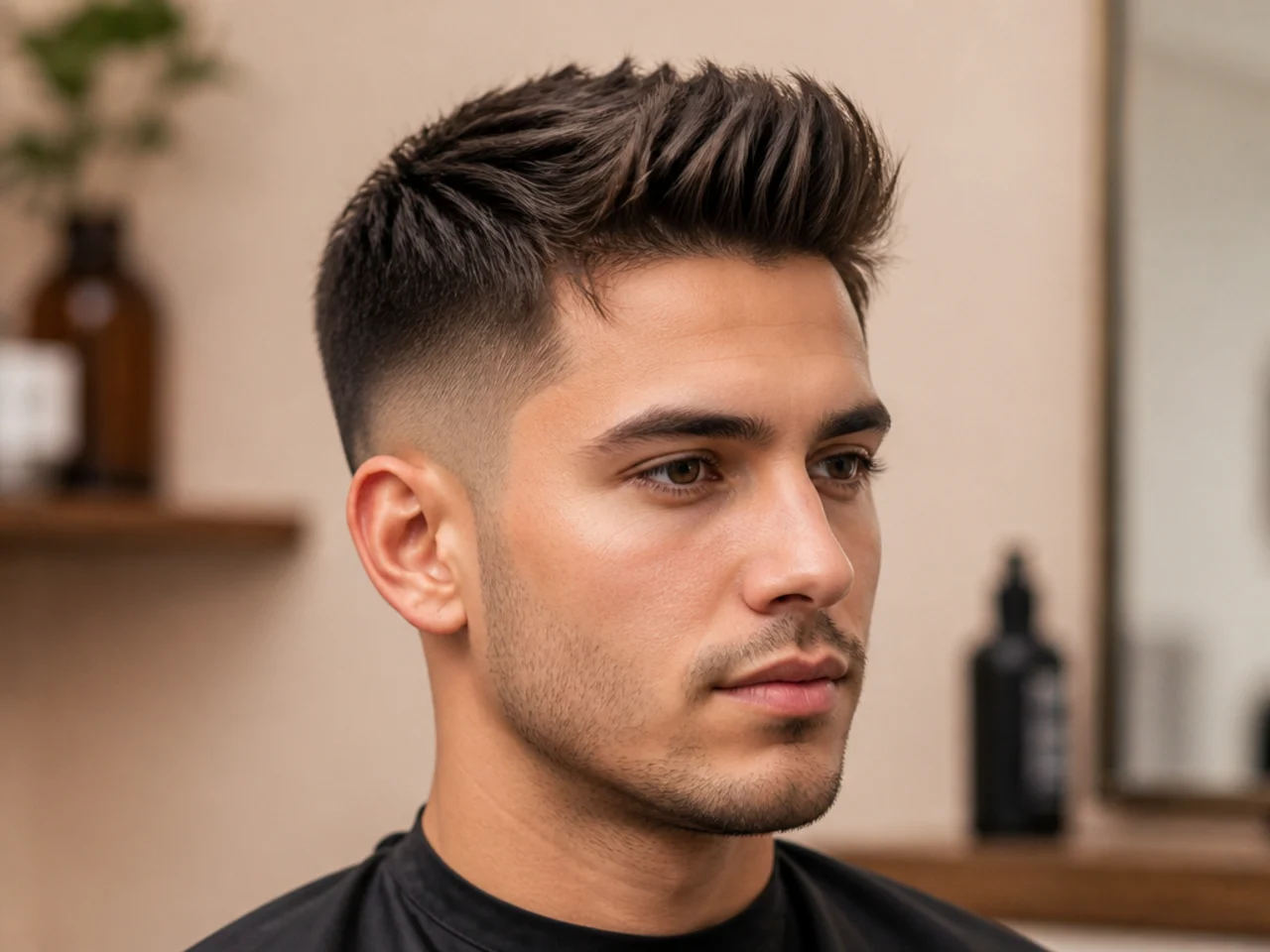
Fine hair is where the short quiff earns its keep. The heavy point-cutting stacks broken ends for visual density, the matte finish adds shadow lines that read as thickness, and the short length keeps the top from ever falling limp.
Ask for a two-to-three-inch top, heavy point-cutting, and a low or mid taper at the sides. Say "no thinning shears" — fine hair does not need less bulk, it needs shape.
Add a dusting of texture powder at the roots before styling — dust in, rub around, then a pea of matte paste through the ends. Best for straight fine hair on any face shape except very round. It is the version that finally makes fine hair look intentional rather than sparse.
17. Short Quiff for Thick Hair
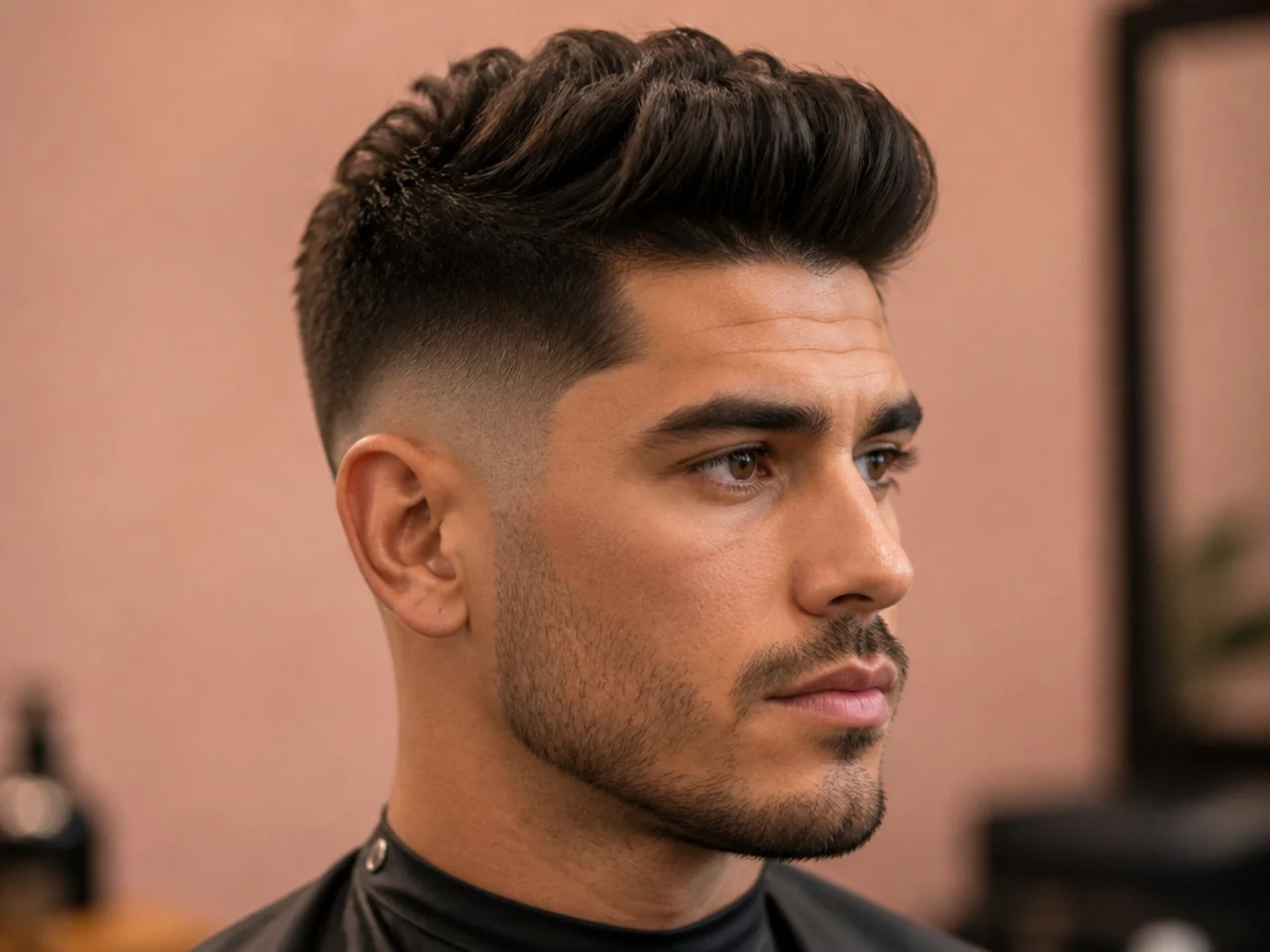
Thick, coarse hair is the hardest to keep short without turning into a helmet. The fix is internal weight removed at the cut, not more product at the finish — a proper barber will thin the top so the shape holds without bulking sideways.
Ask for three inches on top, heavy internal thinning, point-cut ends, and a mid fade or high skin fade at the sides.
Prep with a blow-dry cream to soften coarse strands, round-brush up and back for a minute, then work matte paste through the front. A short beard or shaped stubble balances the top-heavy shape. Best for Mediterranean, Middle Eastern, and Latin hair types on square and oval face shapes.
18. Short Quiff with Beard
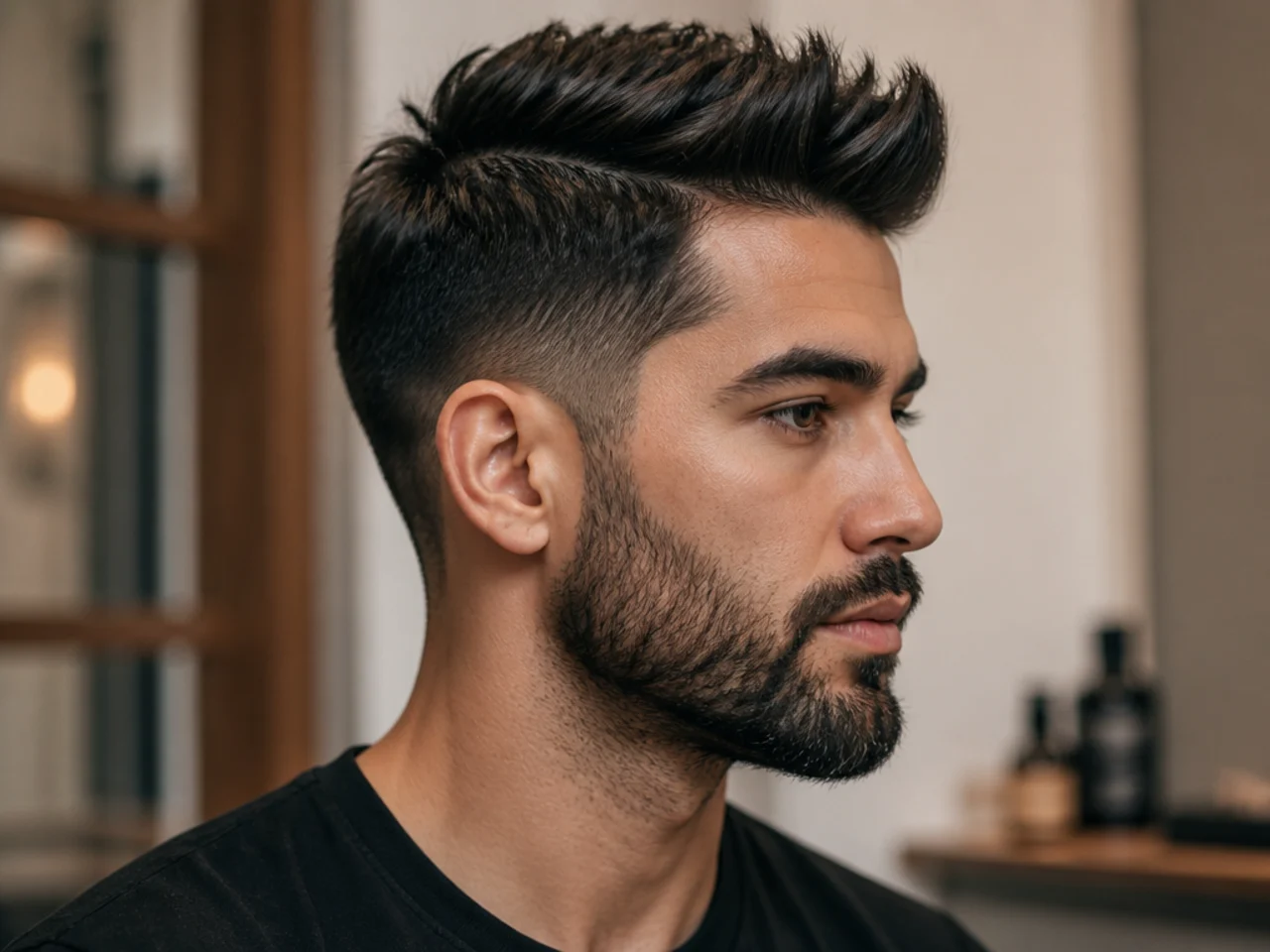
Pairing a short quiff with a beard is a balance question. The top adds height, the beard adds bottom-weight, and the two need to sit at proportional lengths or the face reads unbalanced. A short-to-medium beard suits every version on this list.
Ask for the short quiff you'd cut without a beard, plus a beard trim that matches the visual weight — half-inch to one-inch of beard pairs well with a three-inch quiff. Line up the cheek and neckline for definition, and ask your barber to blend the sideburn into the beard so no clipper line breaks the frame.
Style the quiff as usual, then a drop of beard oil combed through the beard. Best for square, oval, and heart-shaped faces on guys with mature jawlines. Skip the pairing if your beard is patchy.
19. Short Side-Swept Quiff
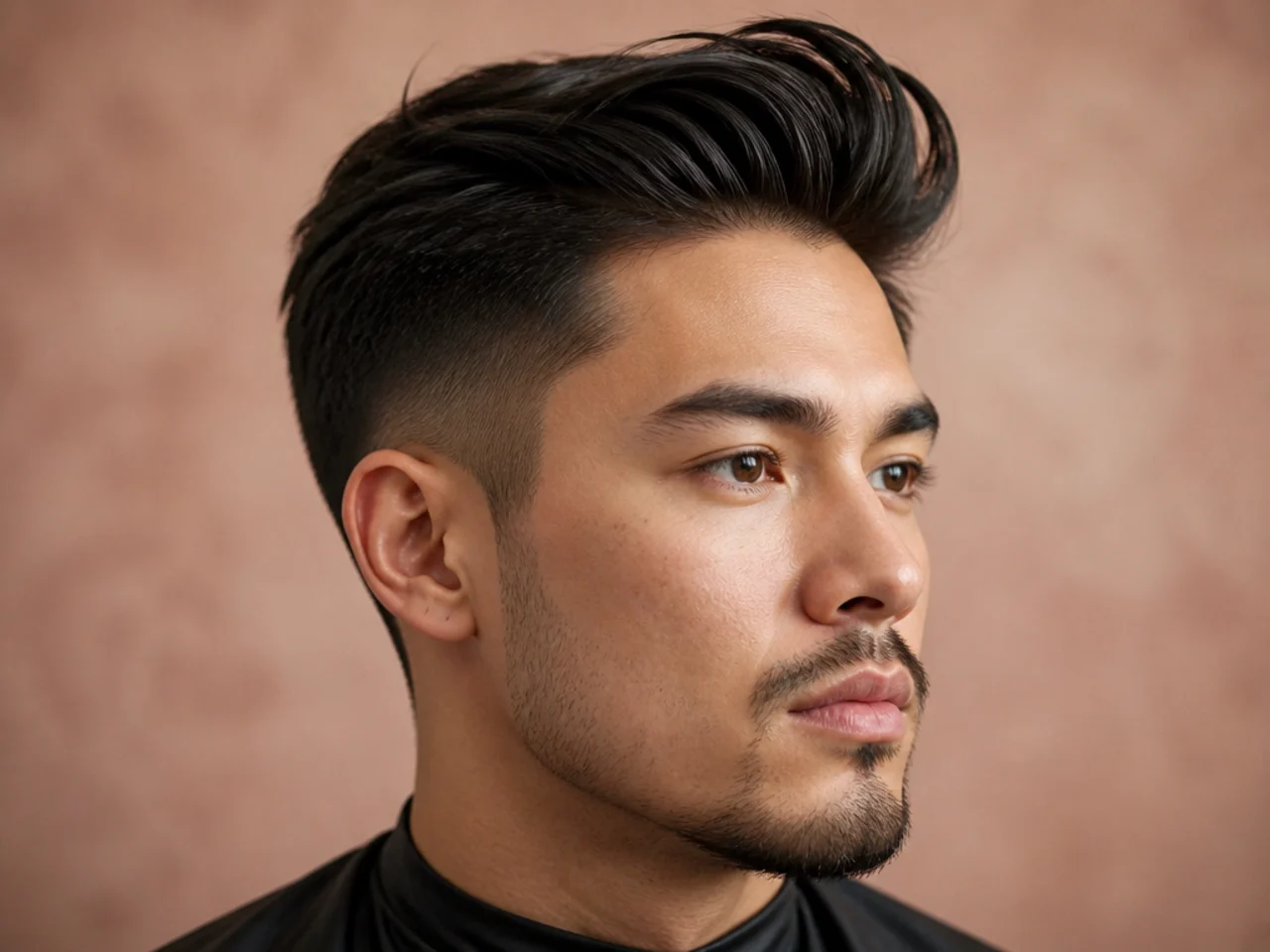
The side-swept version trades vertical lift for horizontal sweep. Same length up front, but instead of pushing it up and back, you push it diagonally across the forehead. The front piece breaks over one brow, and the crown still sits with soft height.
Ask for a three-inch front cut with the weight leaned to one side, and a mid fade or short low taper at the sides. Tell your barber which side you part on so the weight follows your natural fall.
Blow-dry the front to one side with a paddle brush, then work matte cream through the ends. Best for round face shapes — the diagonal line breaks the roundness and adds structure. Also for guys who want a short quiff that reads slightly more polished than the standard sweep-back.
20. Executive Short Quiff
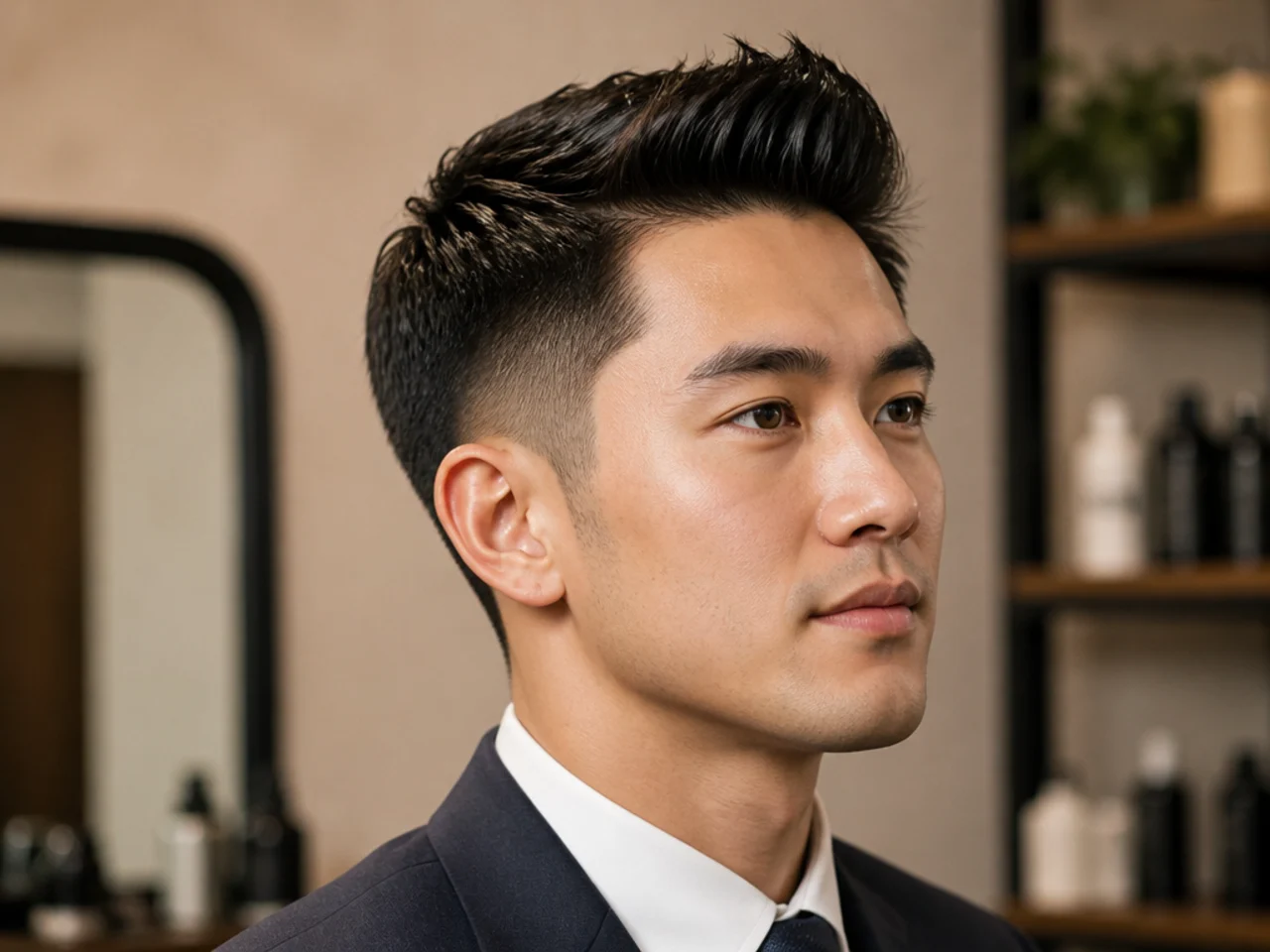
The executive version is the short quiff for the boardroom. Two-and-a-half inches at the front, scissor-blended sides, no clipper lines anywhere, and a soft comb-back finish that reads polished at every angle. It flatters silver and salted hair as well as it does dark.
Ask for a two-and-a-half-inch top, full scissor work, and a soft side taper at the natural hairline. Say "no visible fade line" — the shape has to look grown-up, not trendy.
Blow-dry the front up and back with a vented brush, then a coin of light cream combed through. Best for guys thirty-five and up, formal workplaces, and any face shape. If a cleaner, shorter alternative fits better, the short simple men's haircuts guide covers the sharper adjacent shapes. For the closest short-and-textured cousin, see the French crop haircut.
How to Ask Your Barber for a Short Quiff
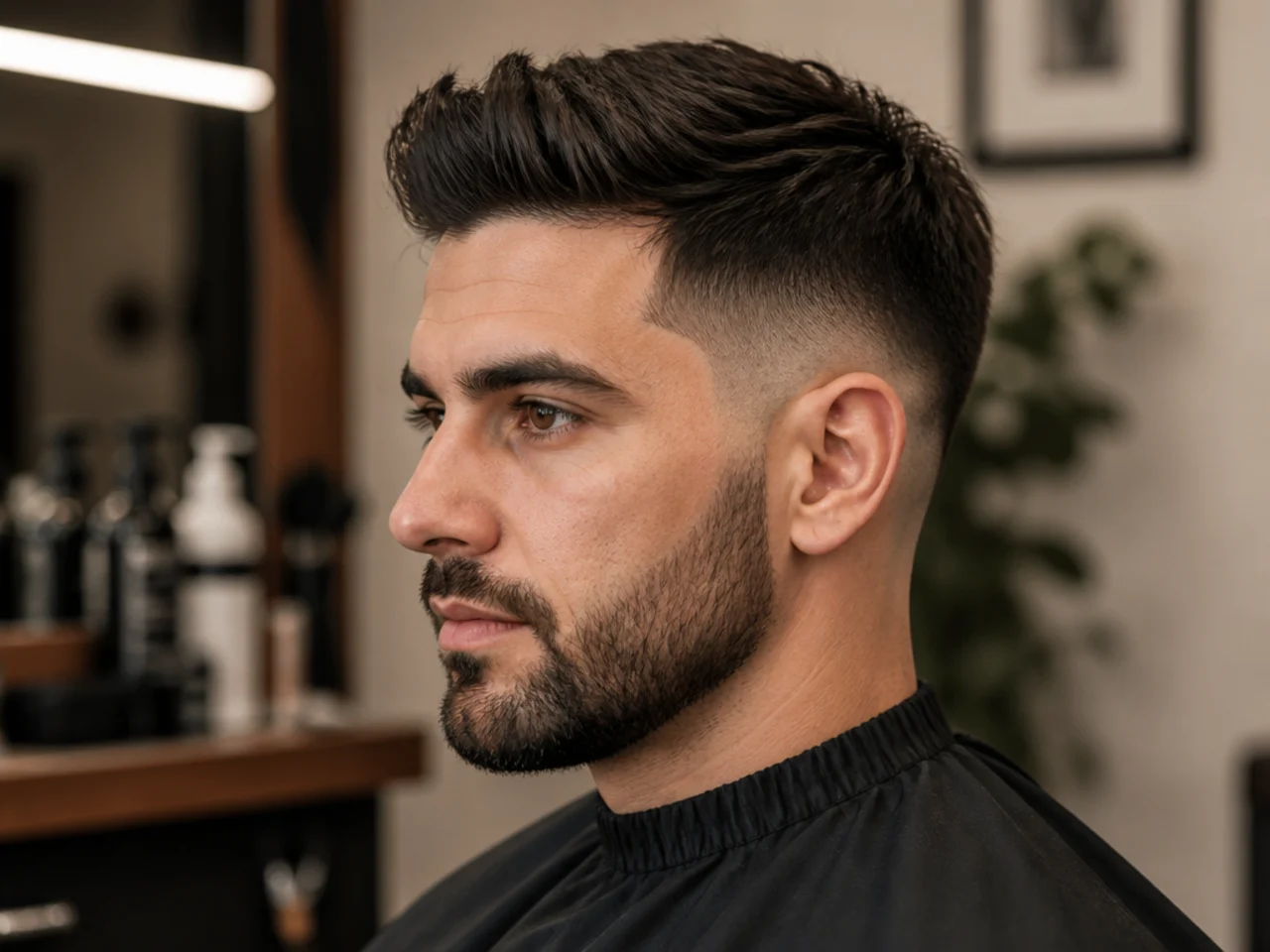
Barbers cut what they see, not what they hear. "Short quiff" reads a dozen different ways across a dozen chairs, so pair every request with a photo and specific numbers.
- Bring one saved photo. Not five, not a Pinterest screenshot — one clean reference of the exact short quiff you want. Face shape and hair type in the photo should match yours as closely as possible.
- Name the length on top in inches. Two-and-a-half to three inches is the standard short quiff range. Say the exact number rather than "short" or "medium" — a barber's "short" and yours may not match.
- Specify the side treatment. Choose one: low taper, mid fade, high skin fade, burst fade, drop fade, undercut, or scissor blend. Each one changes the whole read of the cut.
- Ask for point-cut ends. This is the technique that gives the short top piece separation. Say "no razor" if you want the ends chunky rather than wispy.
- State the finish out loud. "Matte" for textured versions, "low-shine cream" for classic, "shine" only for the sleek 1950s-adjacent version. Some barbers default to gloss on shorter cuts — head that off in the consult.
- Ask for a soft crown. The crown sits behind the front piece and should stay slightly tighter but still with movement — otherwise the back looks blocky from the side.
- Confirm the neckline and sideburns. A blocked neckline reads sharp; a natural one reads casual. Match it to the version you asked for.
Take a mirror check from every angle before you leave the chair. The front looks fine head-on almost always — the crown and the transition at the temple are what tell you if the cut lands. If either reads off, ask for it to be adjusted before you pay.
Styling and Upkeep for a Short Quiff
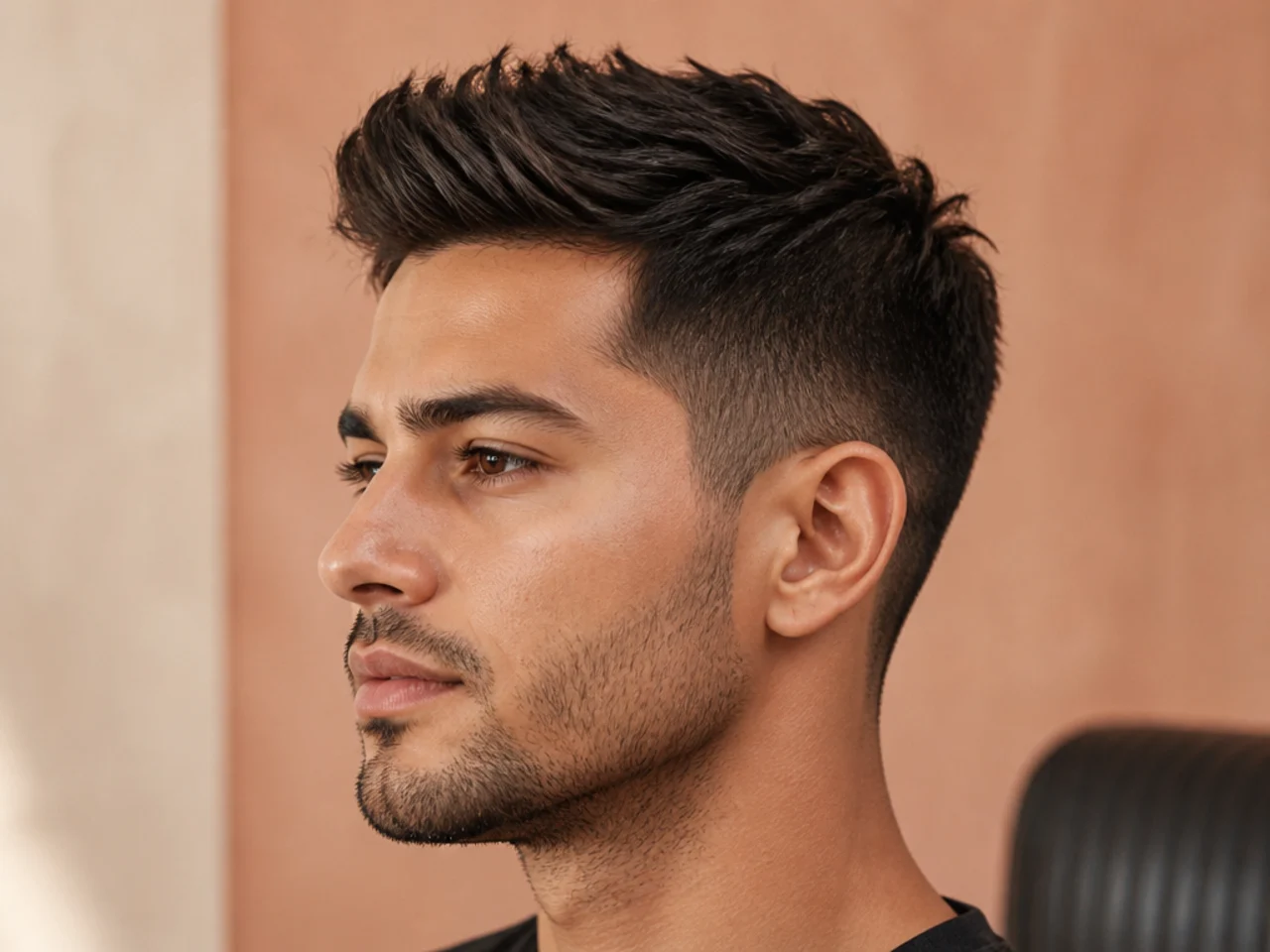
The short quiff is a one-product cut for most guys. A pea of matte clay or paste is enough for every textured version on this list, and a coin of light cream or water-based pomade covers the sleek and classic versions. Anything more than that is over-styling. Anything with a wet-look shine will drag a textured short quiff straight into greasy in one application.
Rough-dry the front with your fingers on high heat, aiming from the roots up. Skip the paddle brush unless you're doing the sleek or side-swept version — the dryer is what builds volume, the product is what holds it. Once the hair is dry, warm the product between your palms until it disappears. Visible product on your hands is far too much for the short top. Press it into the ends of the front third first, then work back through the crown. Never at the roots; that flattens everything you just lifted.
Wash cadence matters as much as product choice. A daily shampoo strips the natural oils that give a short quiff grip — cut it to every second or third day and use a sulfate-free formula. Rinse with cool water at the end to seal the cuticle; the hair sits sharper and holds shape longer.
Re-cut cadence is three to four weeks. Short quiffs live and die on the contrast between the tight sides and the lifted front, and the moment the sides grow past two weeks the whole shape softens. Faded versions benefit from a mid-cycle line-up at week two if you want the fade to look freshly cut in photos. Scissor-blended cuts stretch to five weeks — the softer edge grows out kinder. Book the next cut the day the front piece drops flat when unstyled, or the sides stop reading sharp in a mirror check.
FAQ
Is the short quiff still trending in 2026?
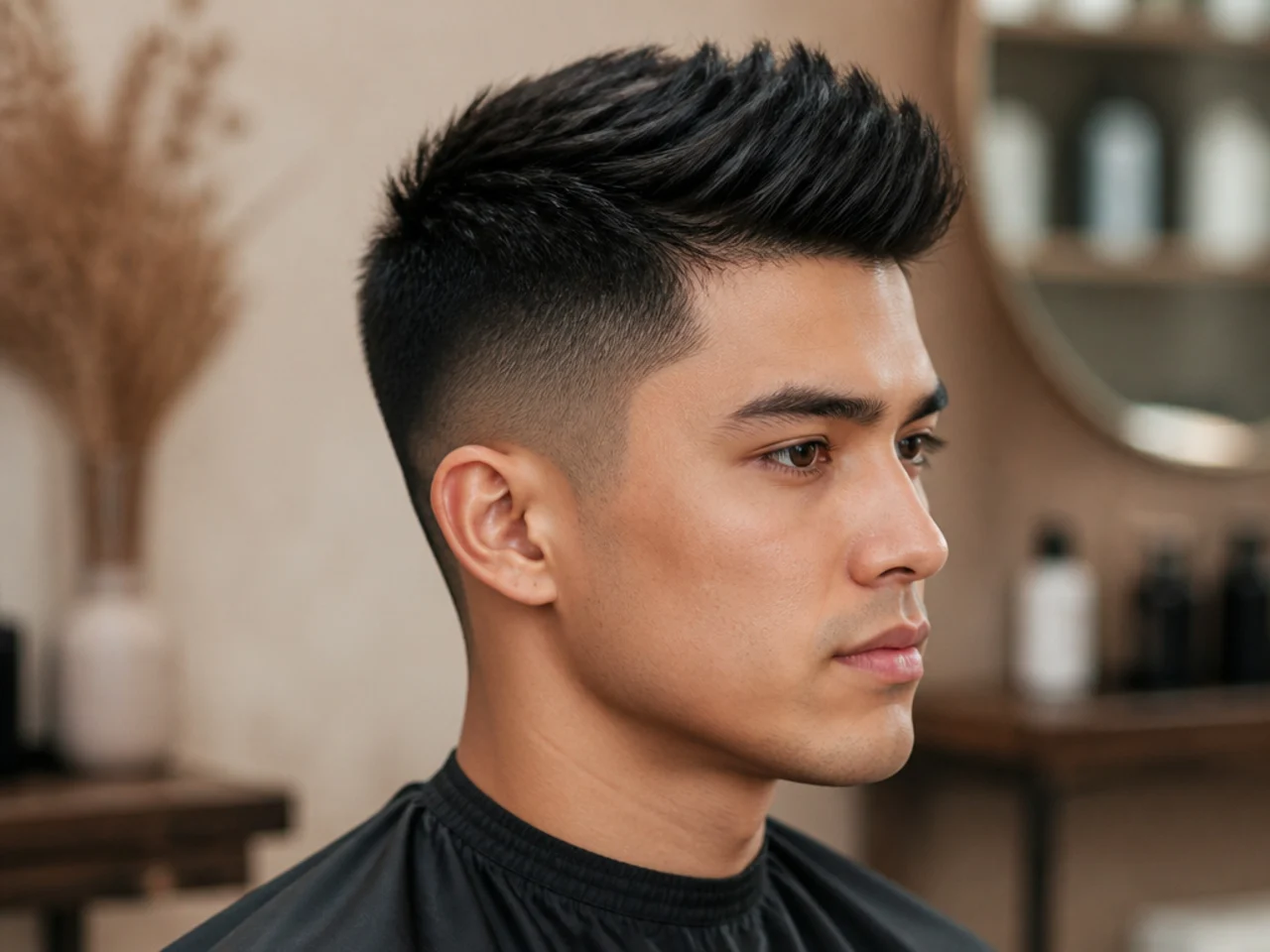
Yes. The short quiff is one of the most-requested medium-short shapes for men across every age group right now. The 2026 read is softer than the peak 2019 pompadour-heavy era — more matte finishes, fewer hard parts, and lower fades in place of the skin fades that defined the earlier wave.
How is a short quiff different from a French crop or a textured crop?
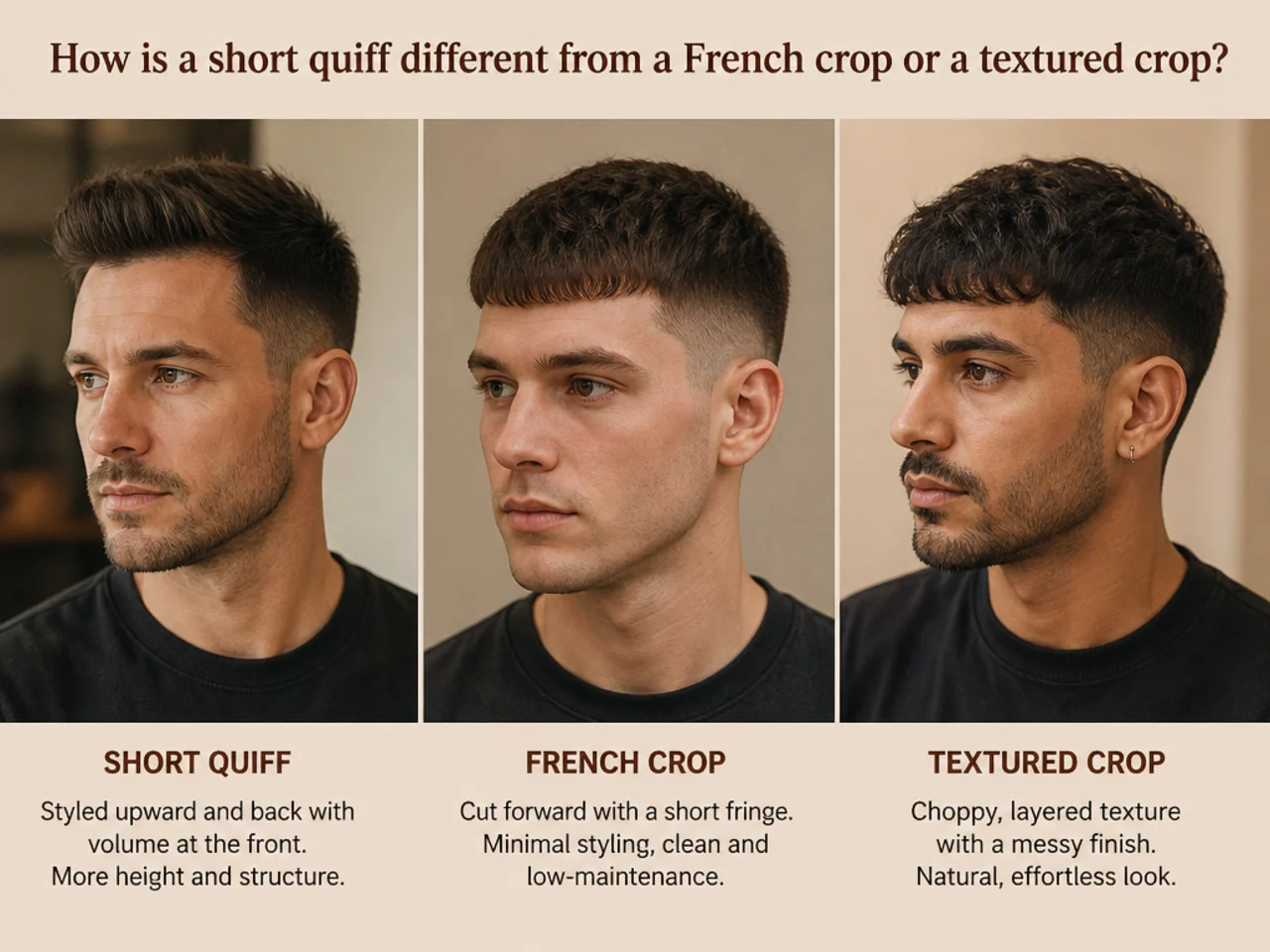
The shape is close but the front is different. A French crop drops the front straight down over the forehead as a fringe. A textured crop keeps the front short and forward. A short quiff lifts the front up and slightly back — same length, opposite direction. Same barber, three different asks.
Can I get a short quiff with a receding hairline?
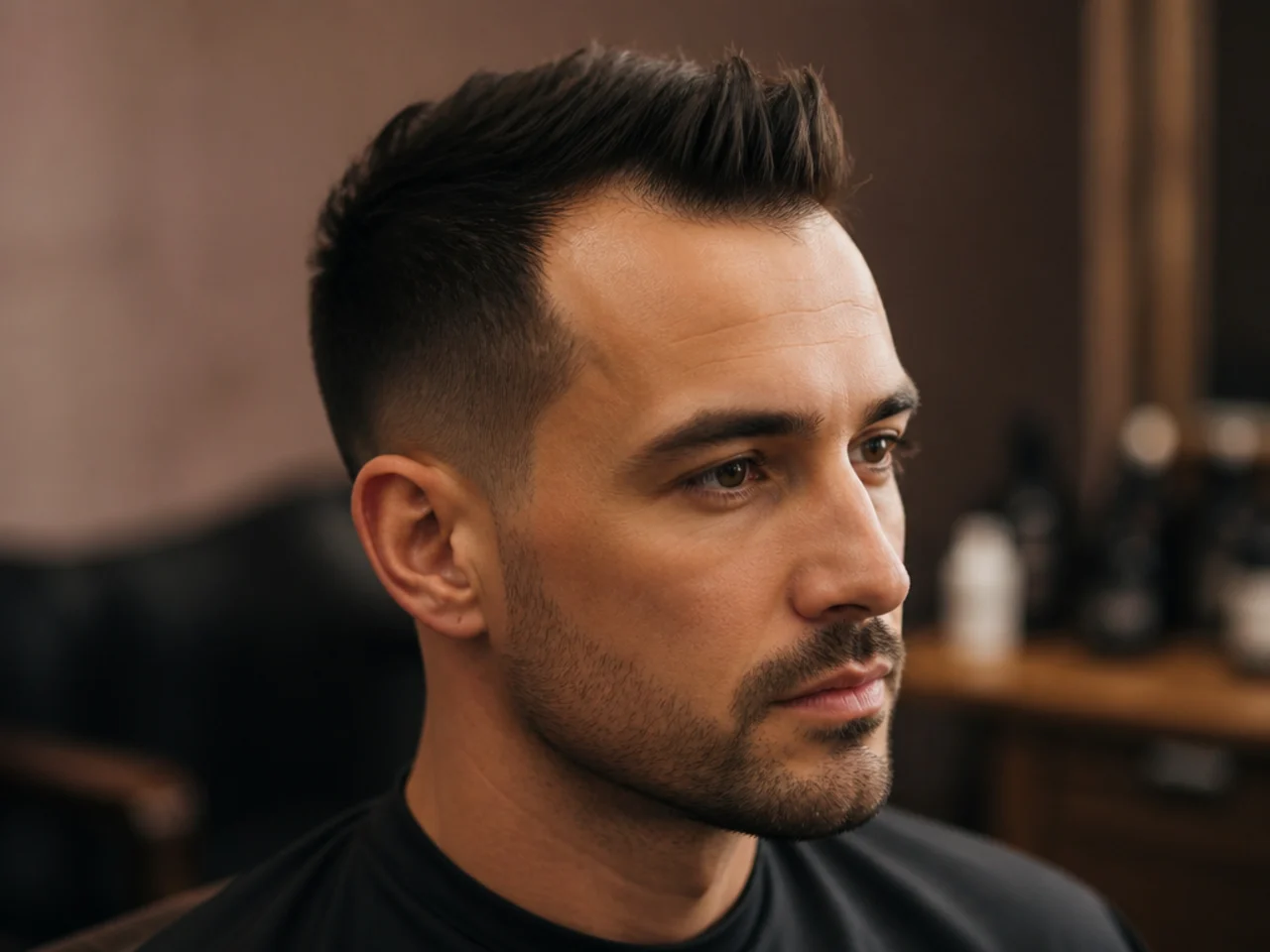
Yes, and it is often the smartest move. Ask for a two-inch top with heavy point-cutting and a low or mid fade at the sides — the lift disguises a soft hairline, and the fade shortens the visible top so the eye reads the shape, not the recession. Skip the sleek finish; matte is more forgiving.
Do I need a fade to make a short quiff work?
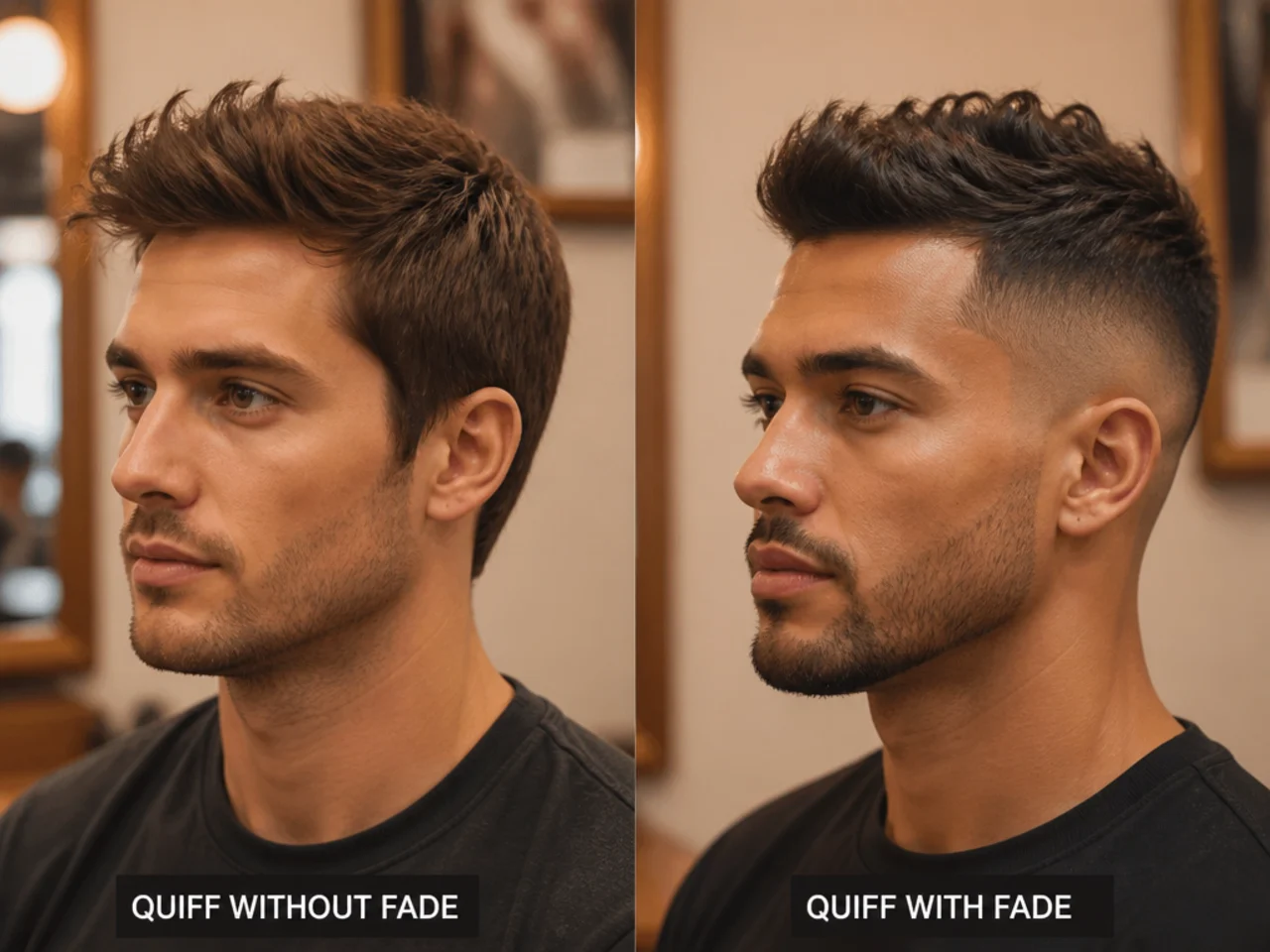
No. A scissor blend or a soft low taper carries the shape just as well and reads more grown-up. The fade adds contrast; the fade doesn't make the cut. If your workplace or your face shape reads better without visible clipper lines, skip the fade entirely.
How long does hair need to be for a short quiff?
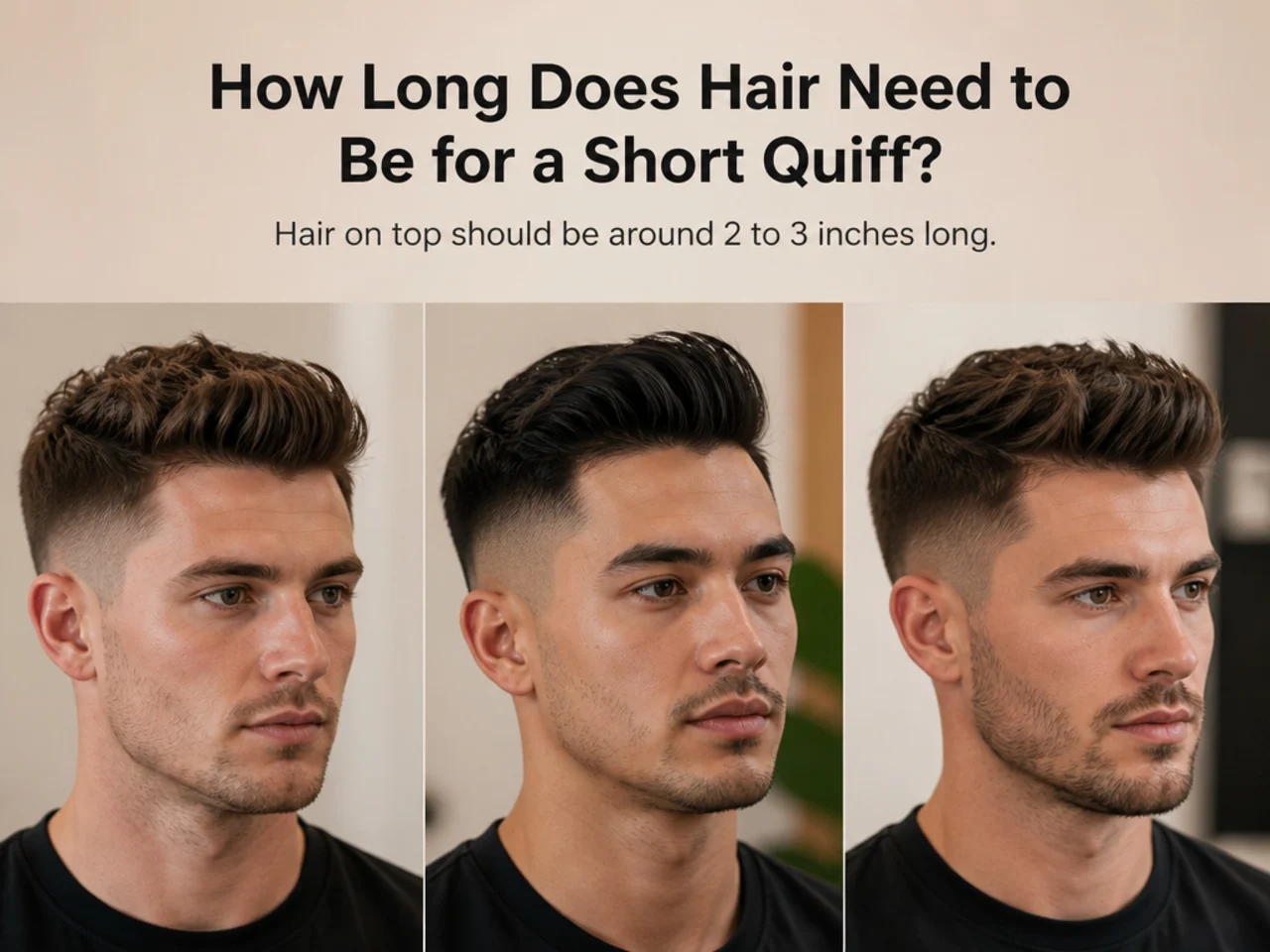
The front piece needs to reach at least two inches to sweep up with real lift. If you're growing from a buzz or a crew cut, budget six to eight weeks for the front alone. In the interim, ask your barber for a soft scissor blend at the sides every three weeks and leave the top untouched — the grow-out will look intentional if the sides stay clean.
Is a short quiff workplace-appropriate?
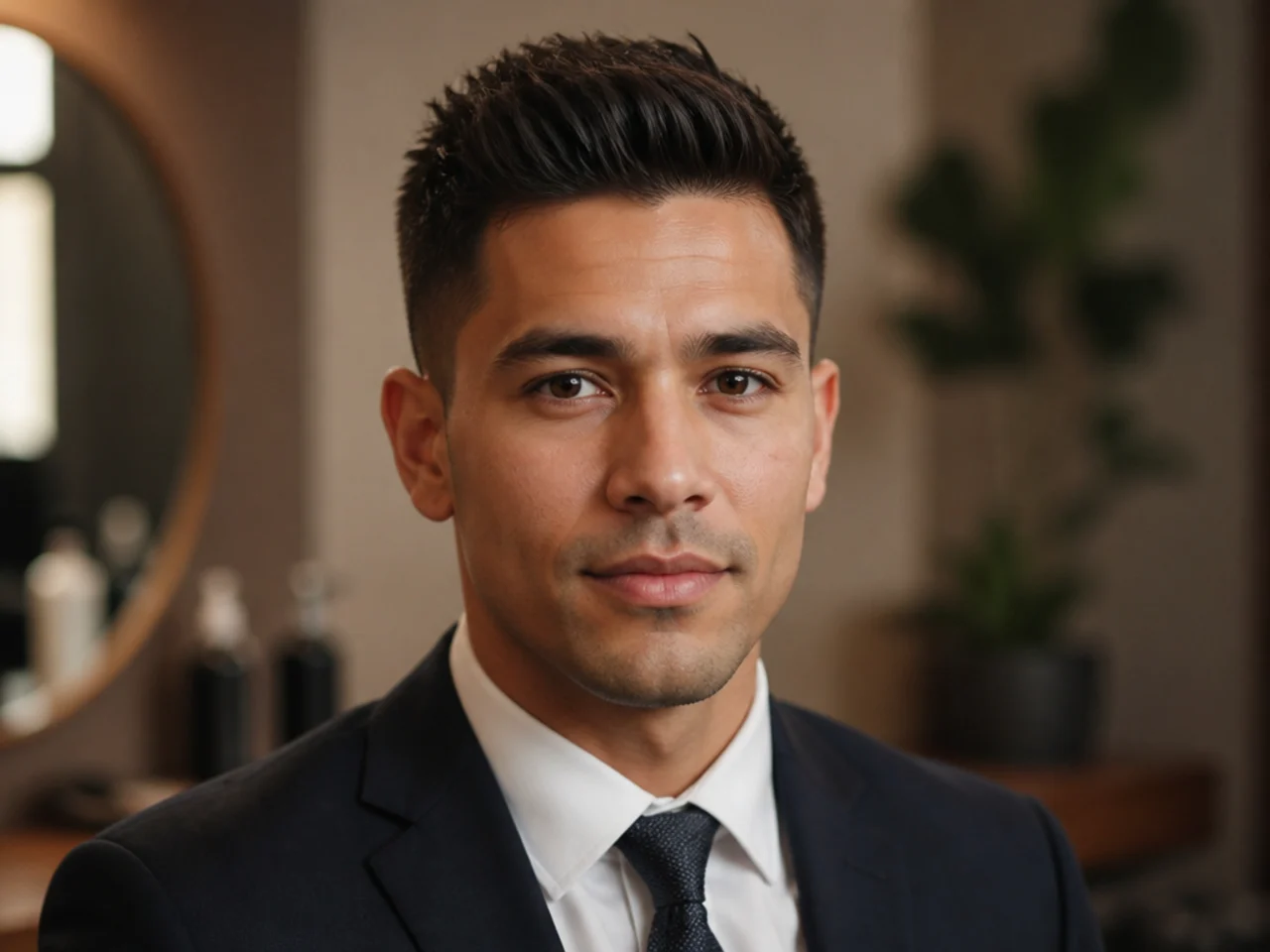
Most versions are. The classic, sleek, low-fade, low-taper, scissor-blended, and executive short quiffs all read pulled-together for professional settings. Skip the high skin fade, disconnected undercut, or spiky versions if your workplace leans conservative. When in doubt, ask for a scissor blend instead of a fade — it always reads more grown-up.