20 Fade Haircut Ideas for Men to Save
Choosing a fade is two separate decisions that get treated as one — how high the gradient starts, and how short it finishes. Height changes your face and depth changes your calendar, and confusing them is how men end up disappointed.
In this article · 27
- Height and Depth Are Different Questions
- How to Choose Yours
- The 20 Fade Combinations
- 1. Low Taper Fade
- 2. Low Skin Fade
- 3. Mid Taper Fade
- 4. Mid Skin Fade
- 5. High Skin Fade
- 6. High Taper Fade
- 7. Burst Fade
- 8. Drop Fade
- 9. Temple Fade
- 10. Shadow Fade
- 11. Blurry Fade
- 12. Fade With a Hard Part
- 13. Fade With a Longer Top
- 14. Fade With a Buzzed Top
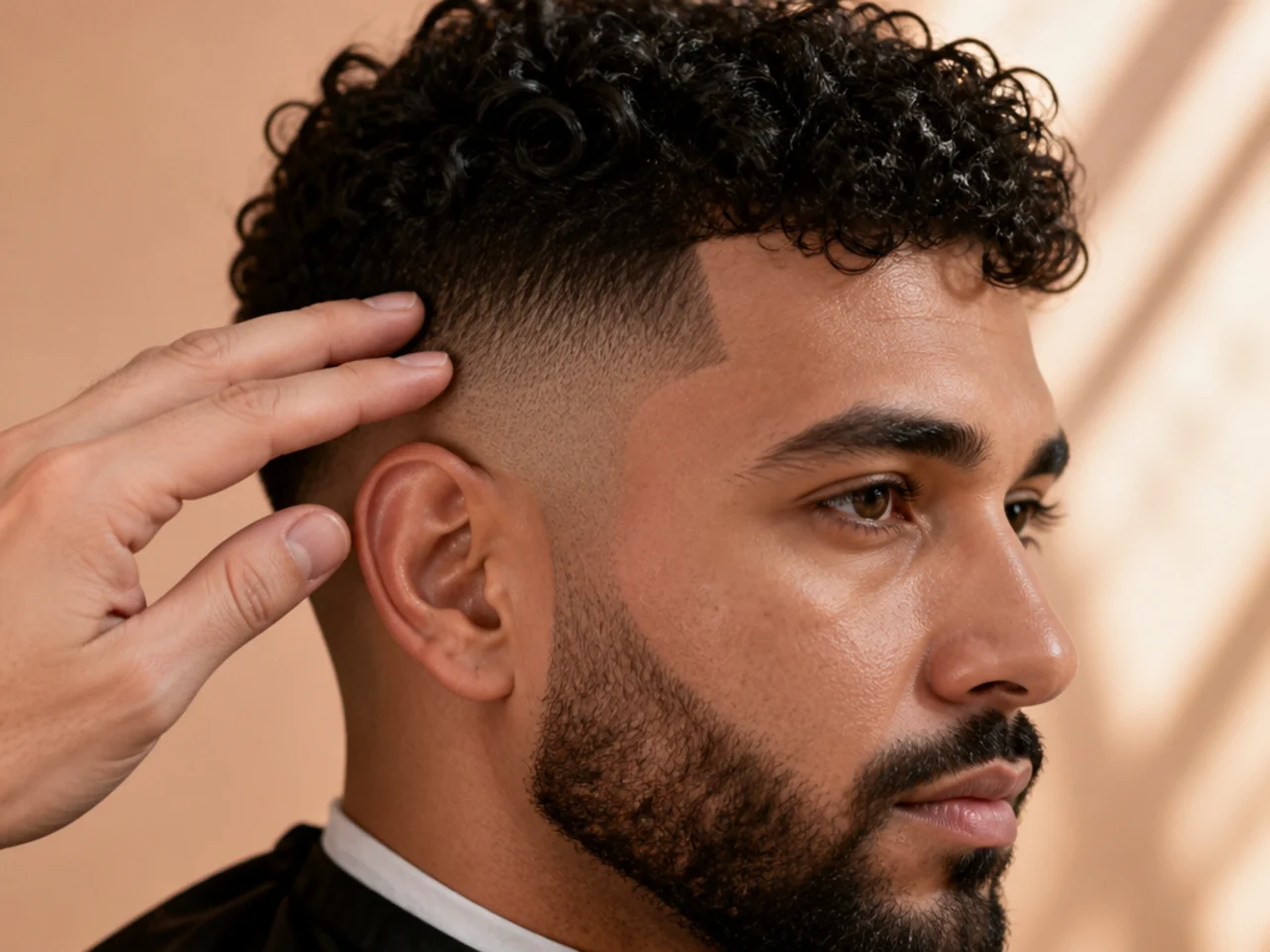
- 15. Fade on Curly Hair
- 16. Fade on a Receding Hairline
- 17. Fade Into a Beard
- 18. Fade With a Design
- 19. Fade at a #2 Only
- 20. The Week-Three Fade
- Styling and Upkeep
- Mistakes to Avoid
- FAQ
- Final Thoughts
Men book fades by showing a photograph, and photographs cannot separate the two decisions actually being made.
Fade height decides what happens to your face. Where the gradient starts changes the width of your head, and it is a permanent visual choice for the life of the cut.
Fade depth decides what happens to your calendar. How short it finishes at the bottom is what determines whether you are back in two weeks or four.
Height and Depth Are Different Questions
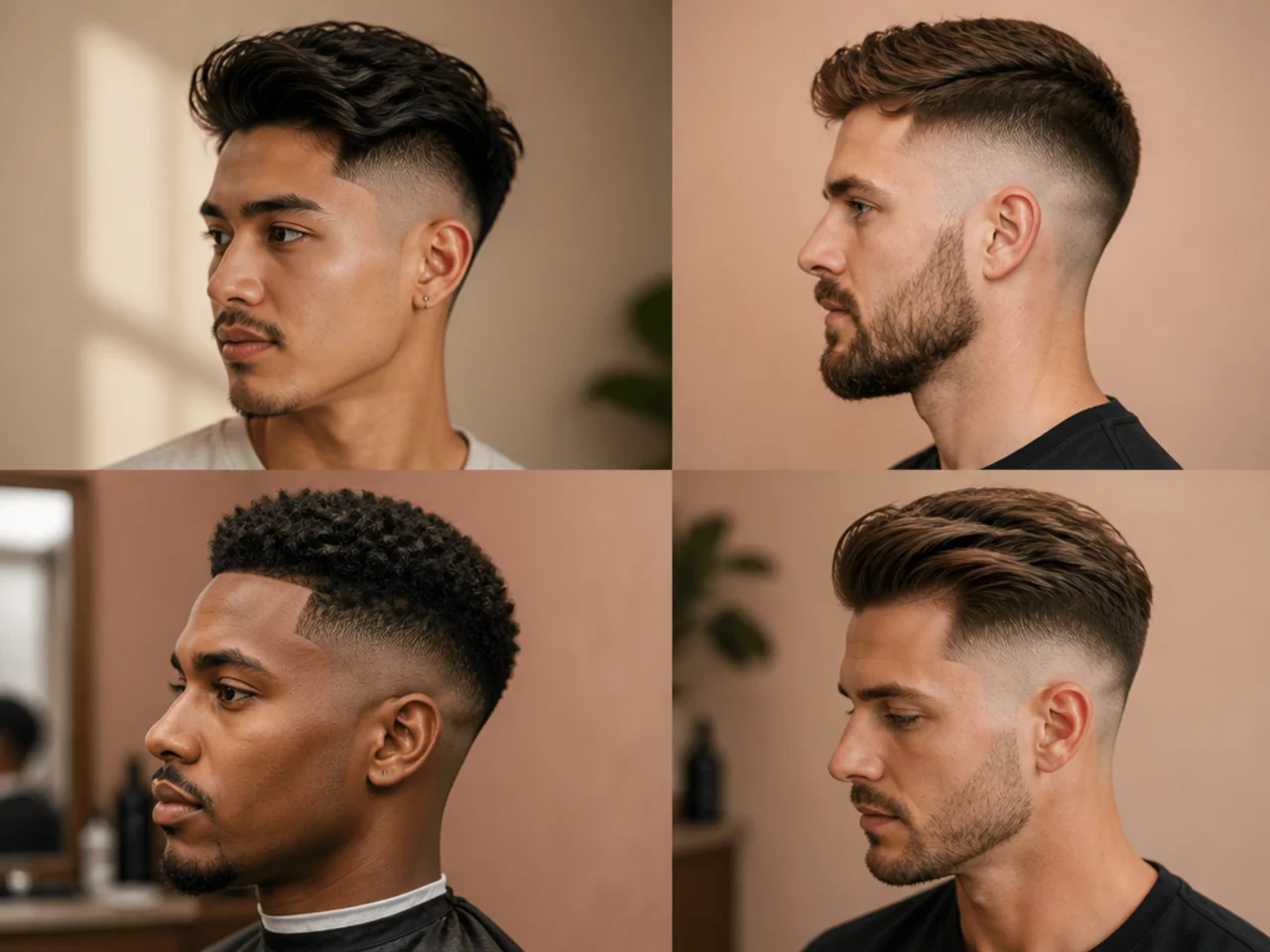
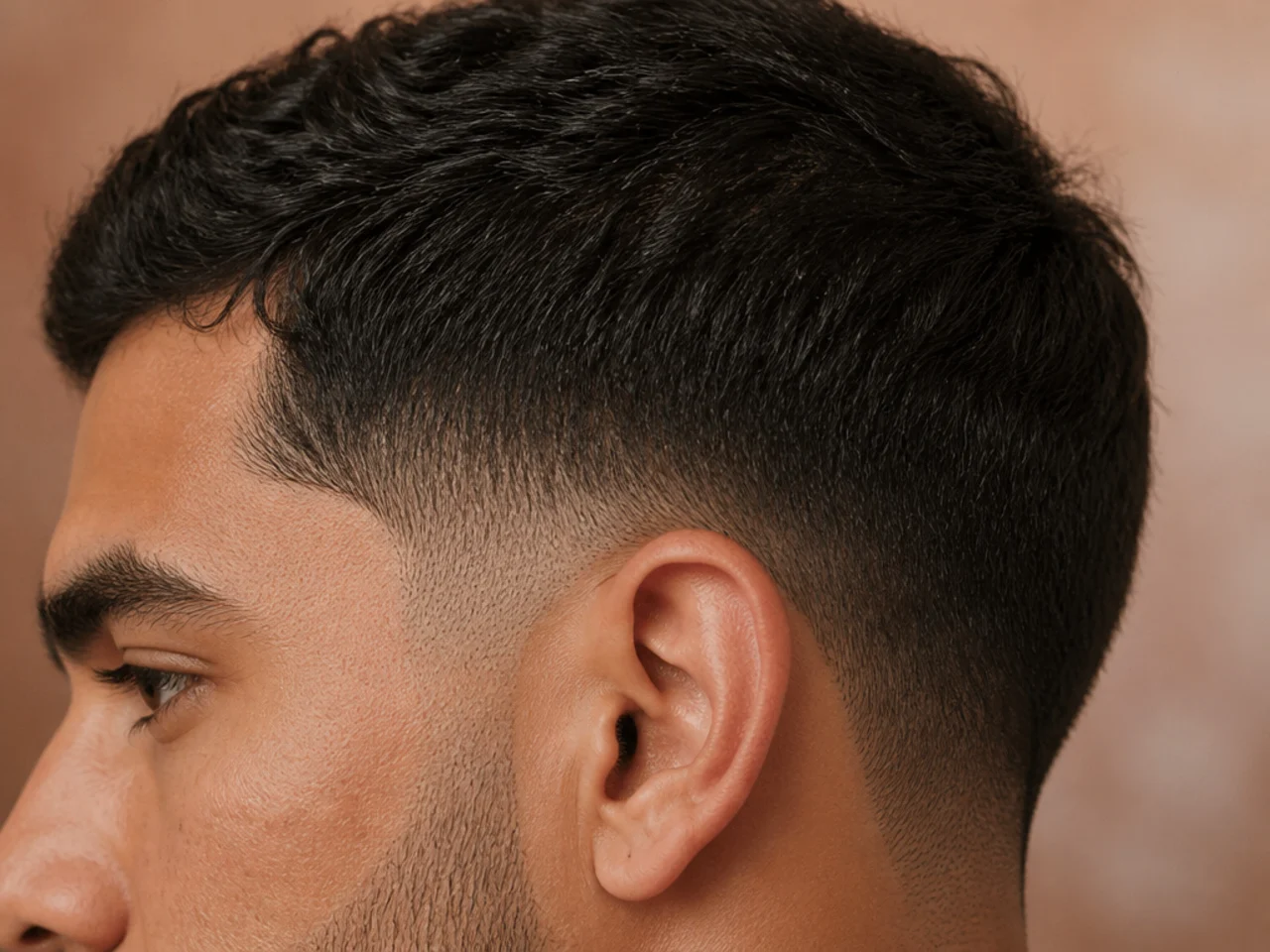
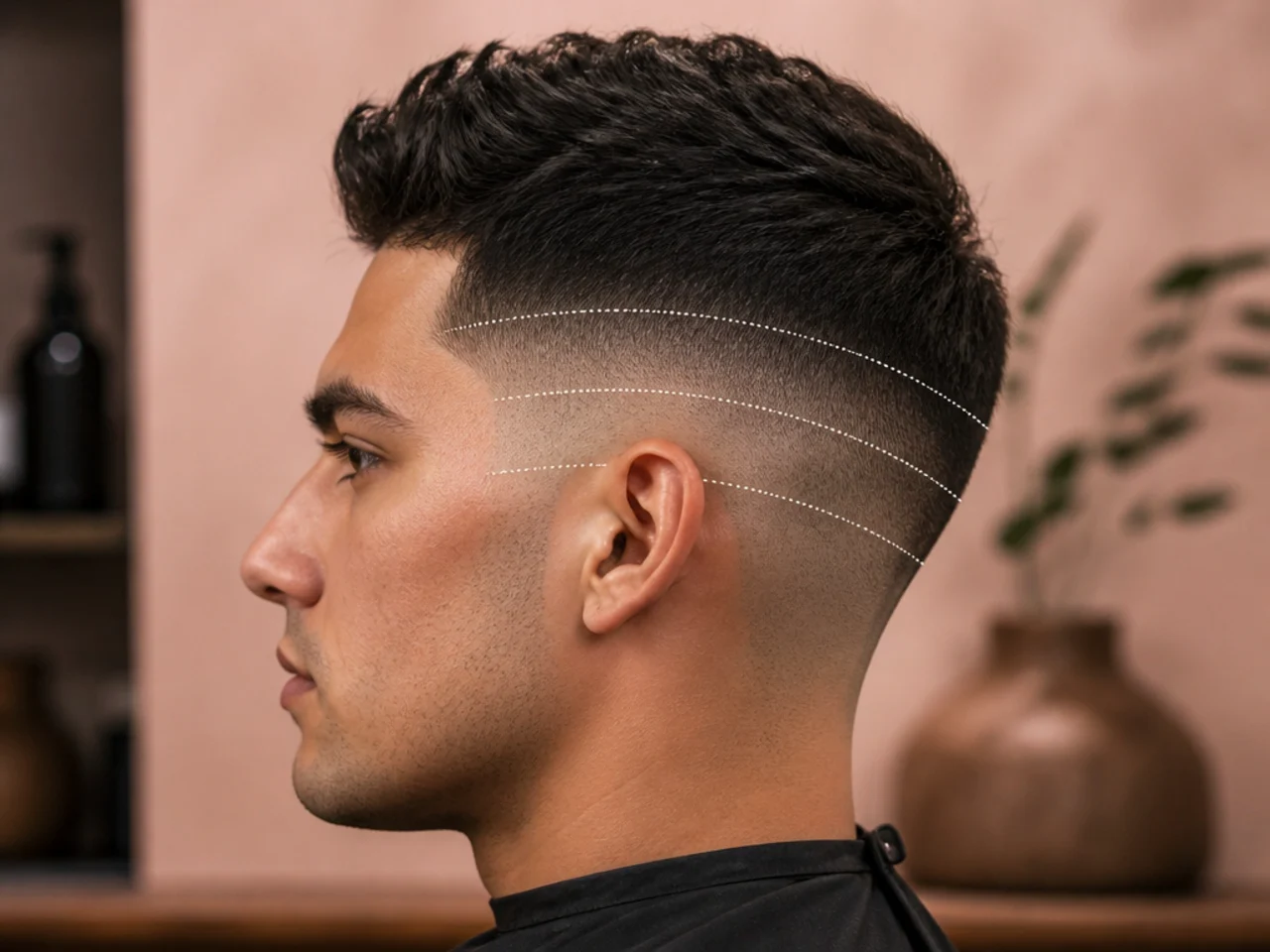
Low sits at or below the temple. Almost all the head's natural width is kept.
Mid sits between temple and parietal ridge. The safe middle, and the most common request for good reason.
High sits at or above the parietal ridge. The widest point of the skull is cut into, which visibly narrows the head.
Depth is separate. A taper leaves a #1 at 3mm and holds three to four weeks. A skin fade goes to bare scalp and blurs in one to two.
How to Choose Yours
Pick the height for your face width. Round or wide faces want it higher. Long or narrow faces want it lower.
Pick the depth for your booking habit. Fortnightly means skin is viable. Monthly means taper.
Say both numbers out loud. Height and depth in one sentence removes almost all the ambiguity.
Consider your hairline before going high. A high fade removes side weight and increases the contrast a receding front is already creating.
The 20 Fade Combinations
1. Low Taper Fade
Height at the temple, depth at a #1. It is the lowest-commitment fade there is, holds a full month, and grows out without ever showing a hard line.
2. Low Skin Fade
Same height, bare scalp at the bottom. Choose it only if you are back within a fortnight, because the regrowth against skin is what dates the cut.
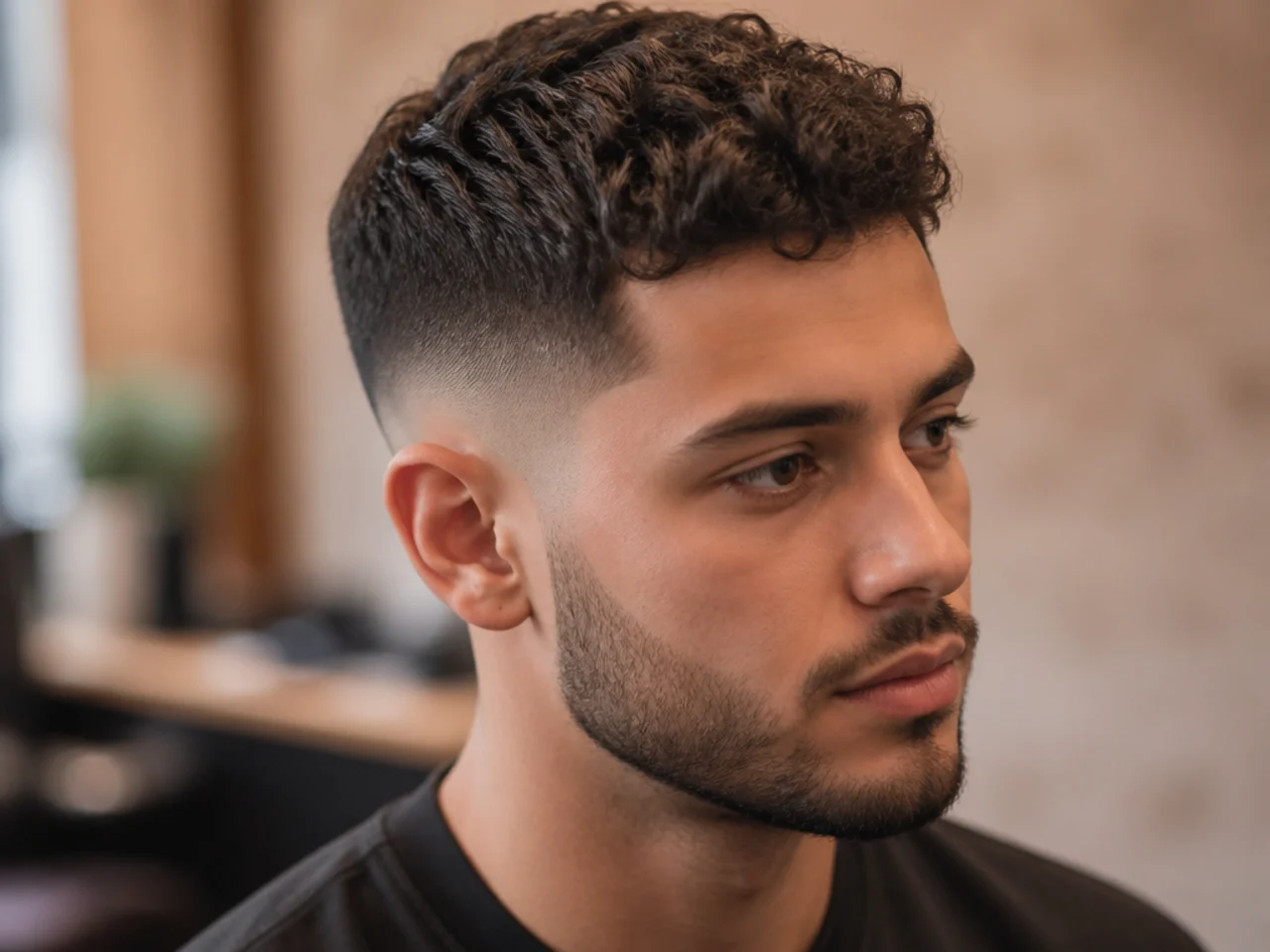
3. Mid Taper Fade
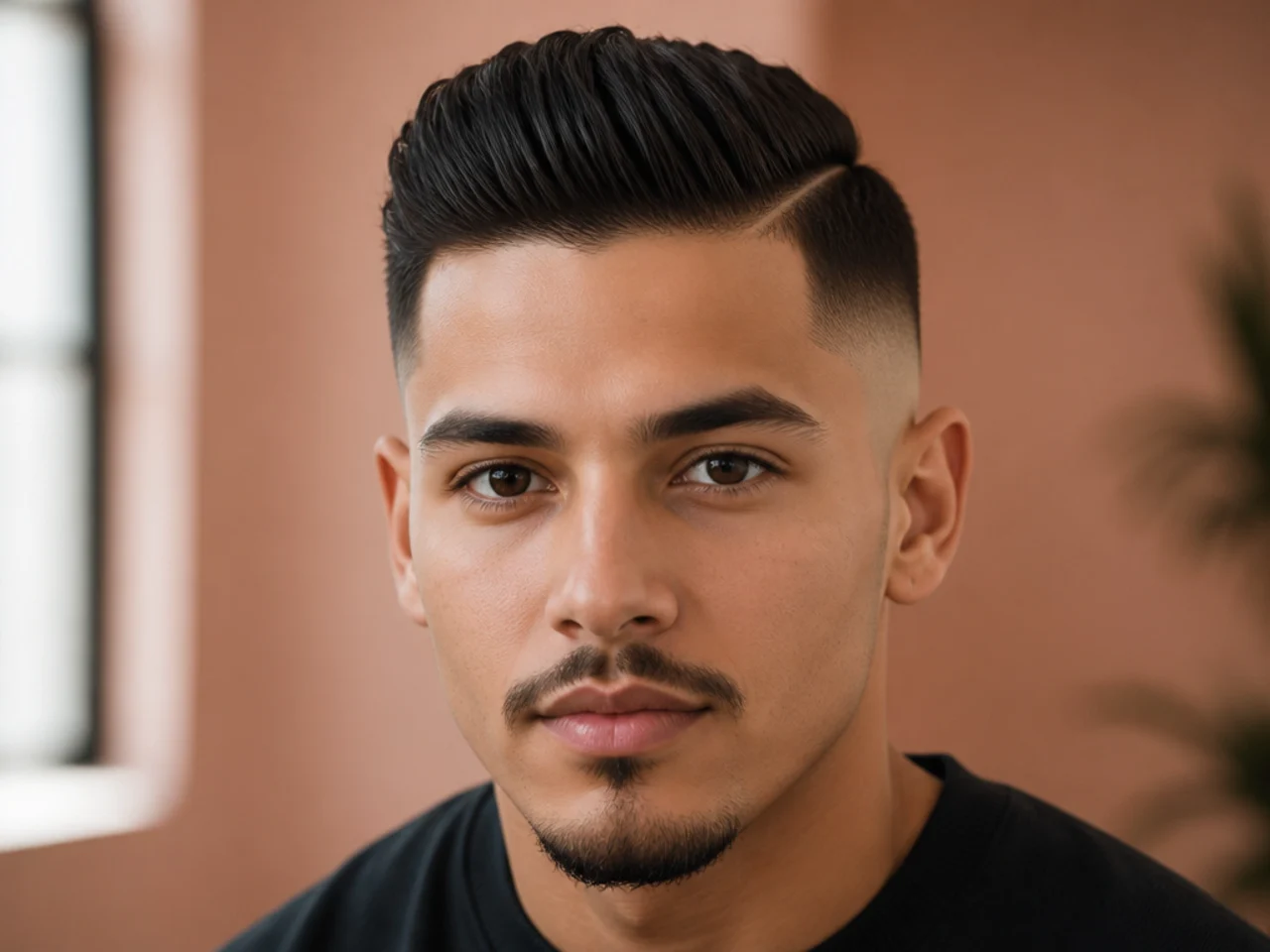
The most useful default on this page. Enough contrast to read as a fade, enough length at the bottom to hold three to four weeks.
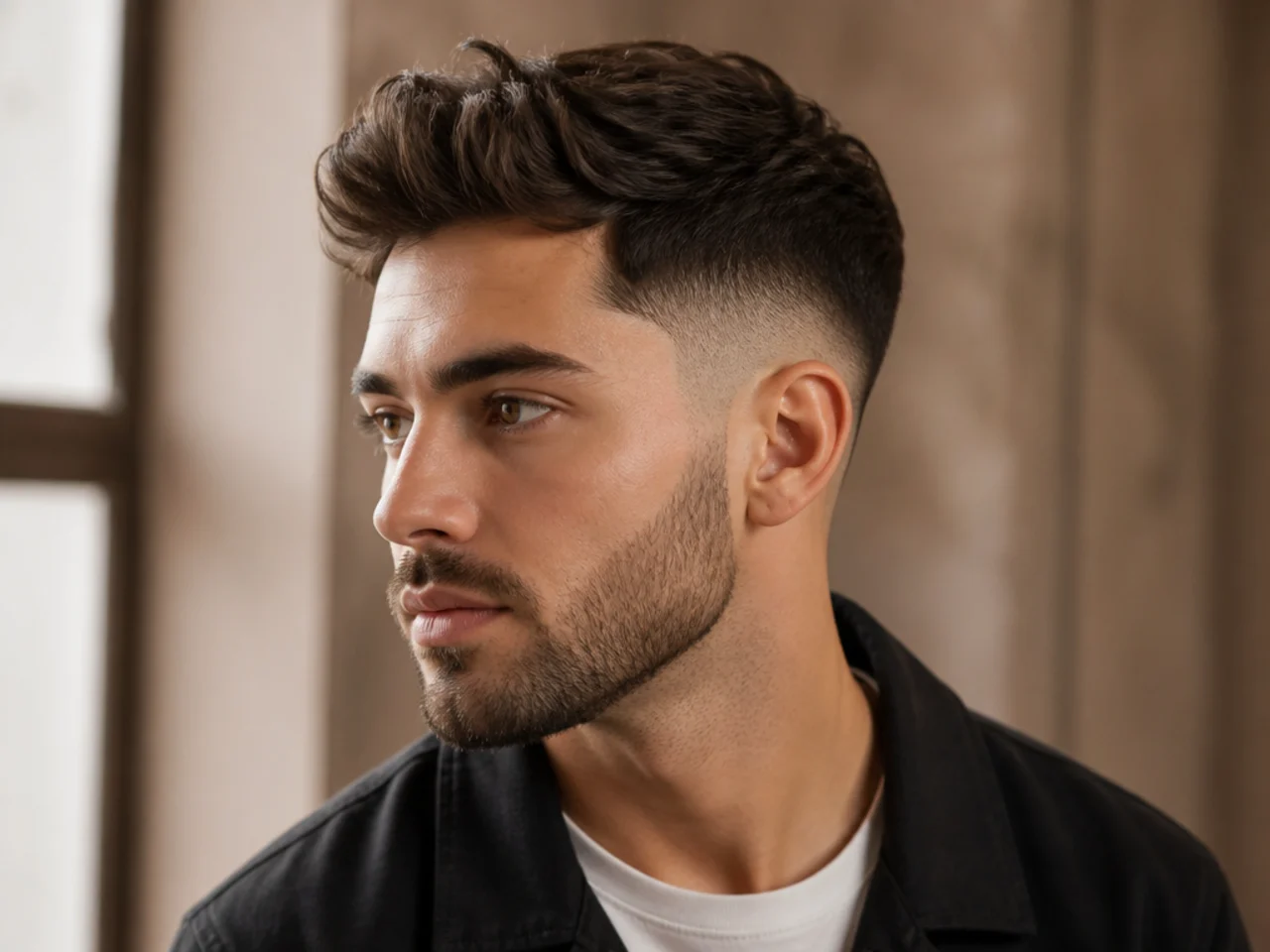
4. Mid Skin Fade
Choose this if you want the fade to be the visible feature. The gradient has room to travel between temple and ridge, which is where a skin fade shows its work best.
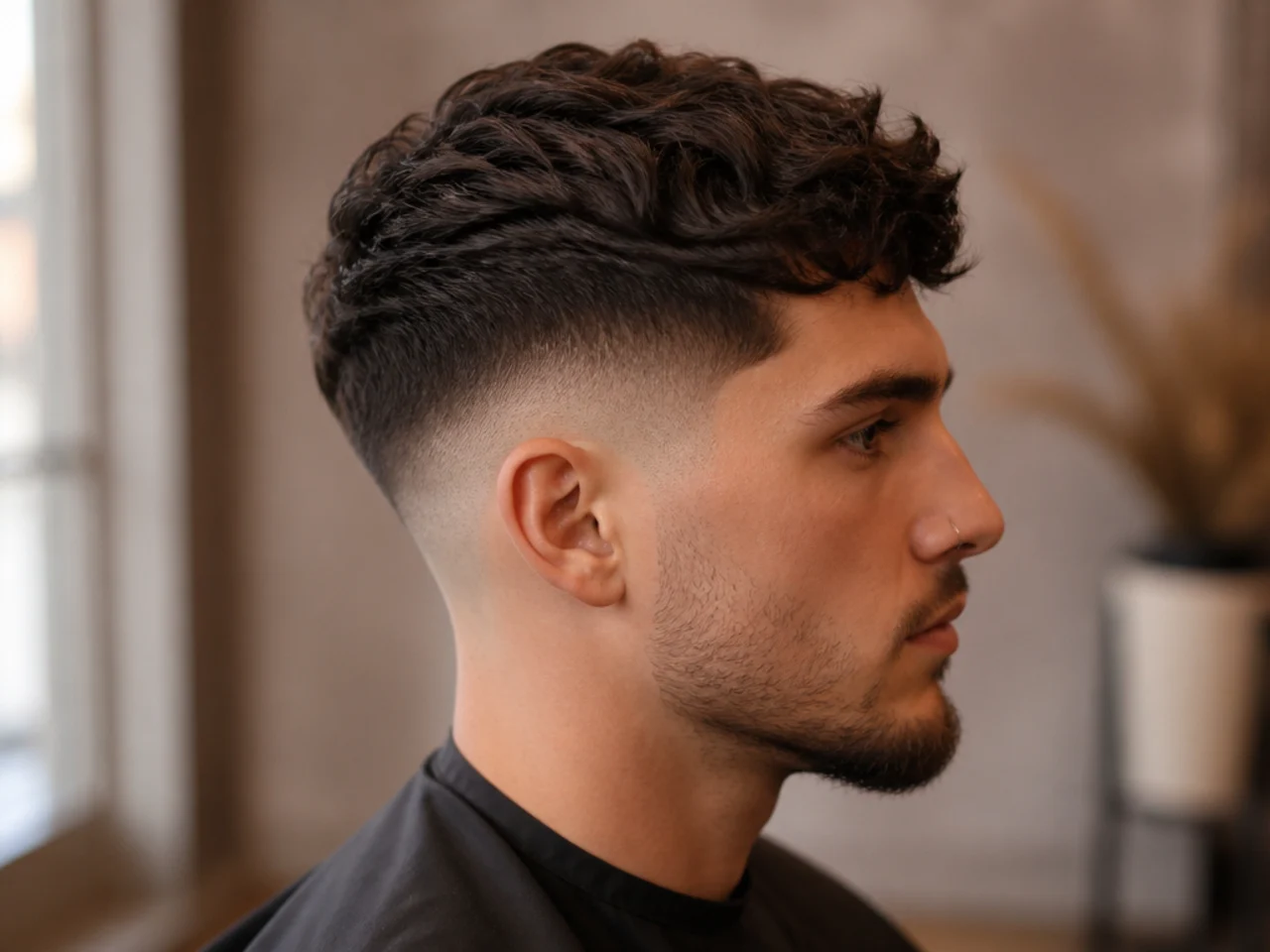
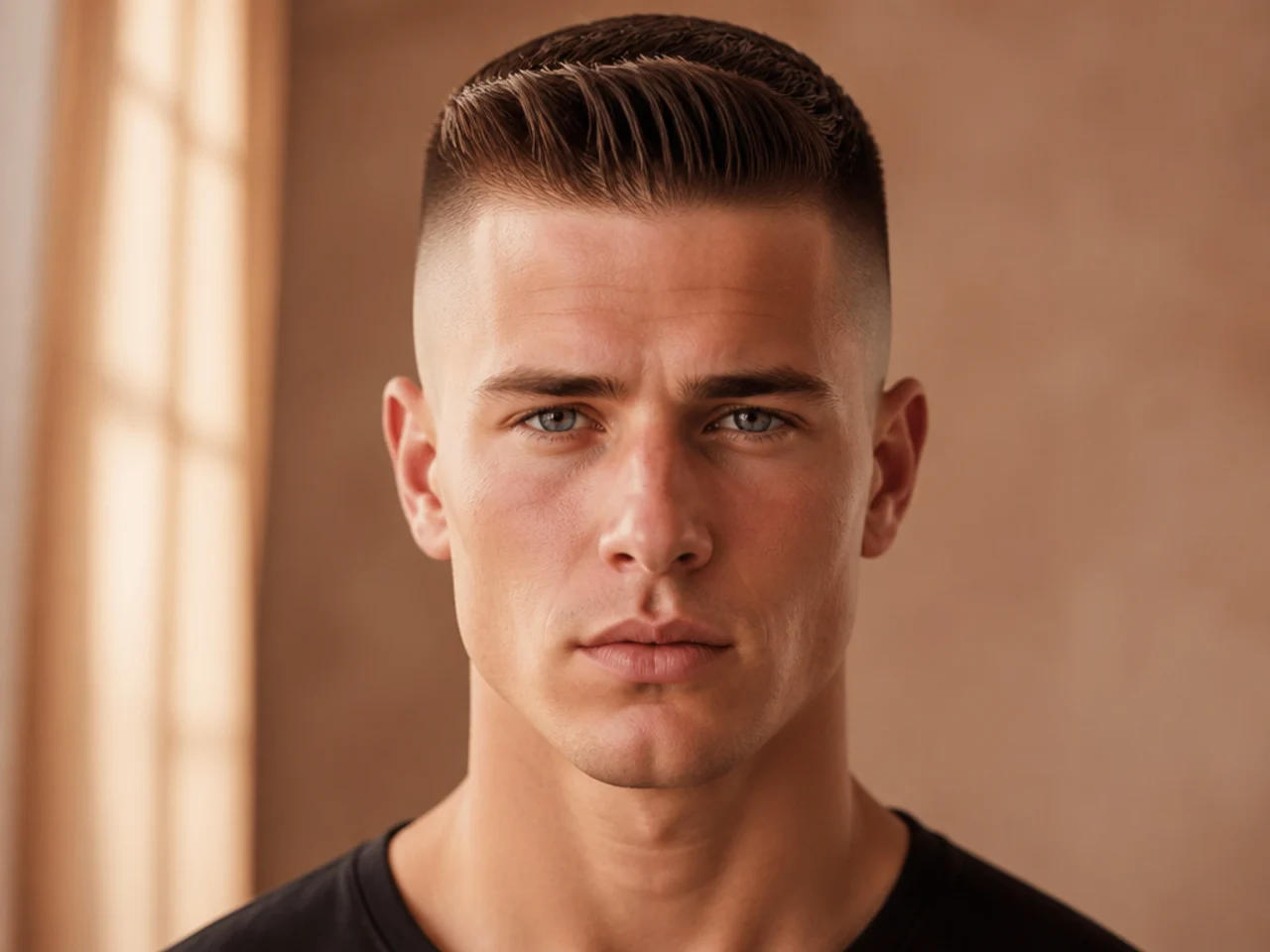
5. High Skin Fade
Choose this if your face is round or wide. Cutting into the parietal ridge narrows the head more effectively than any other single decision in men's hair.
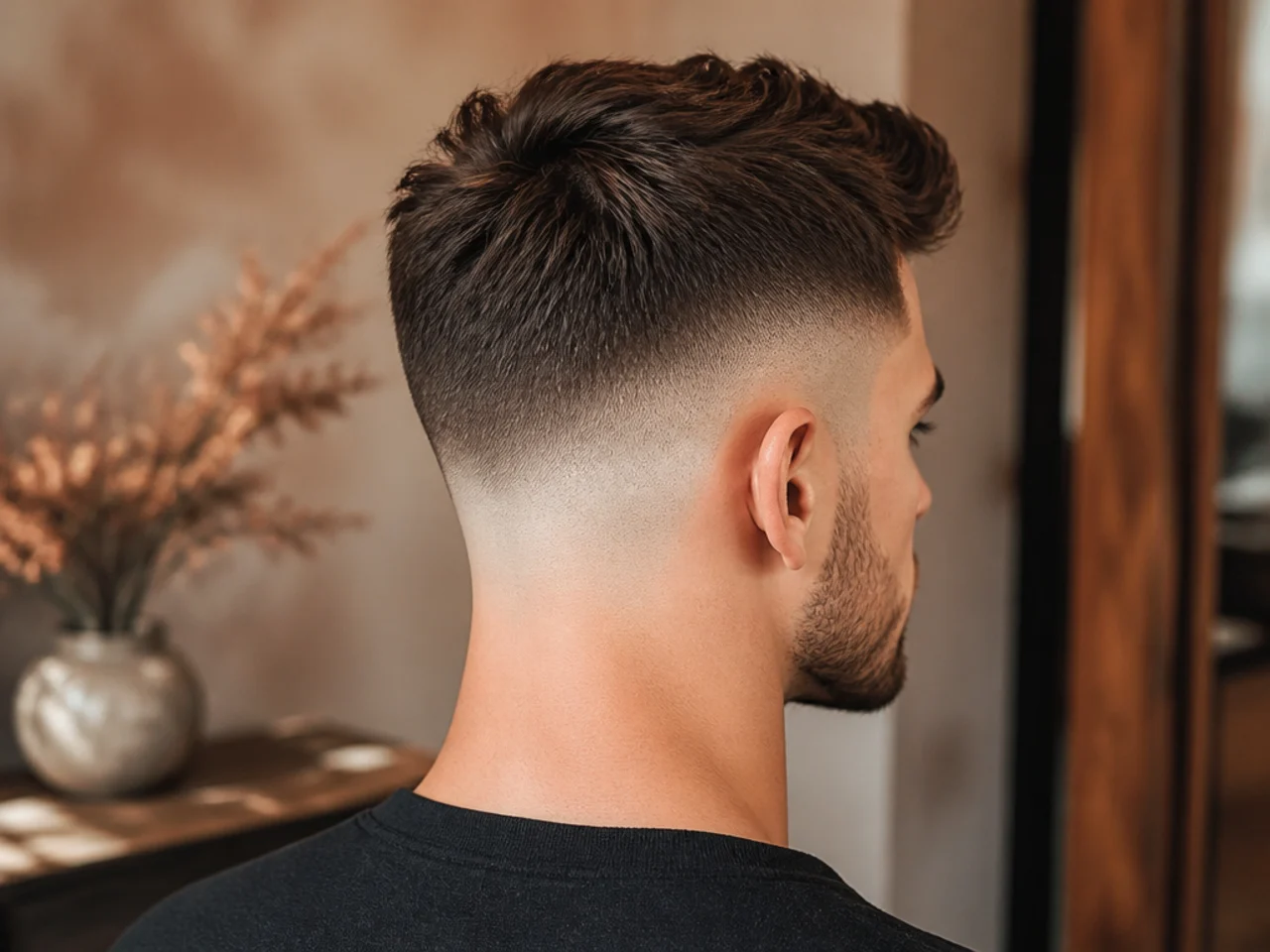
6. High Taper Fade
Choose this if you want the narrowing effect without the fortnightly appointment. Same height, but a #1 left at the bottom rather than skin.
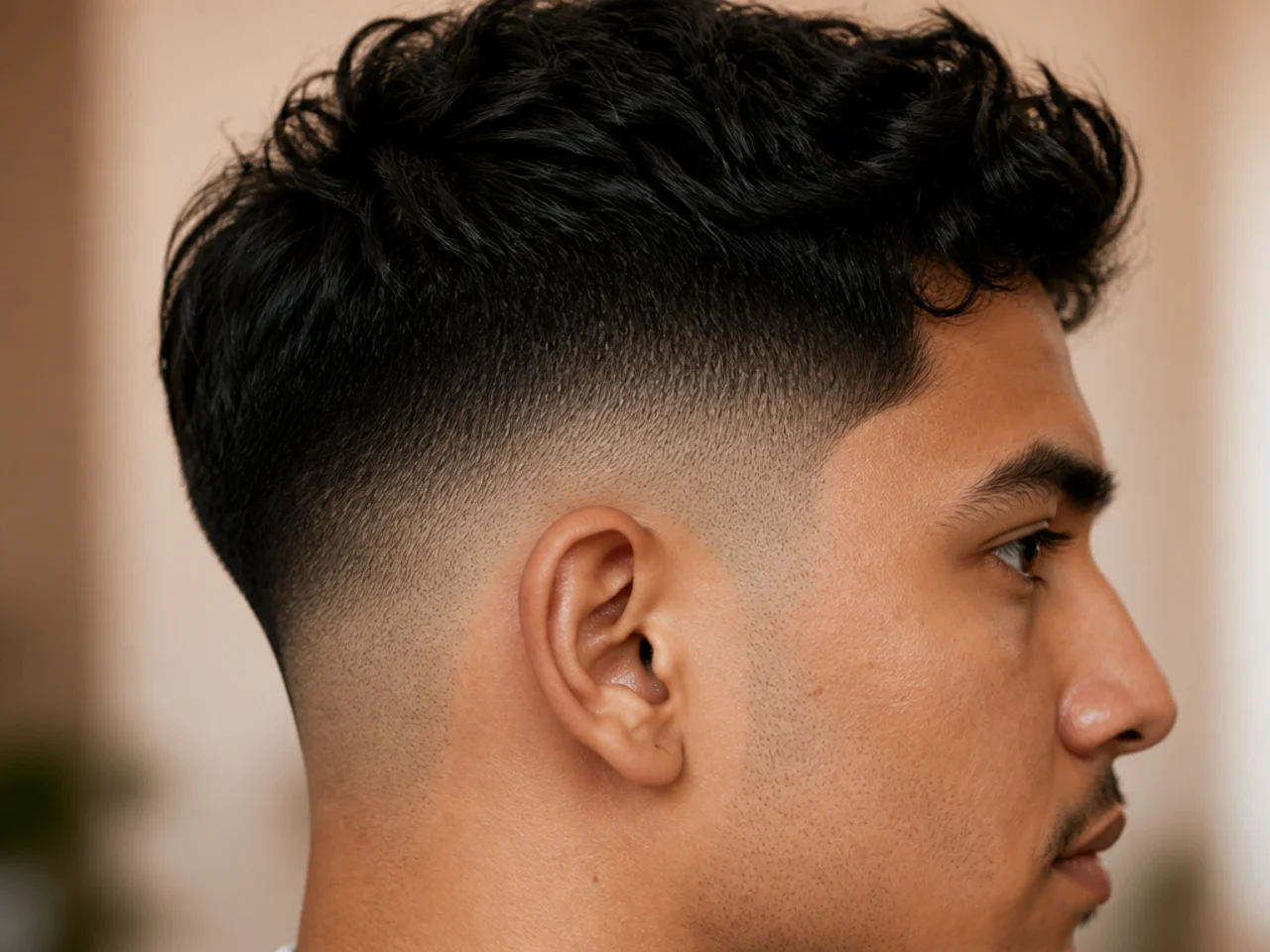
7. Burst Fade
The gradient arcs around the ear and leaves the back untouched. Choose the burst fade if you want short sides but do not want to lose the weight behind your head.
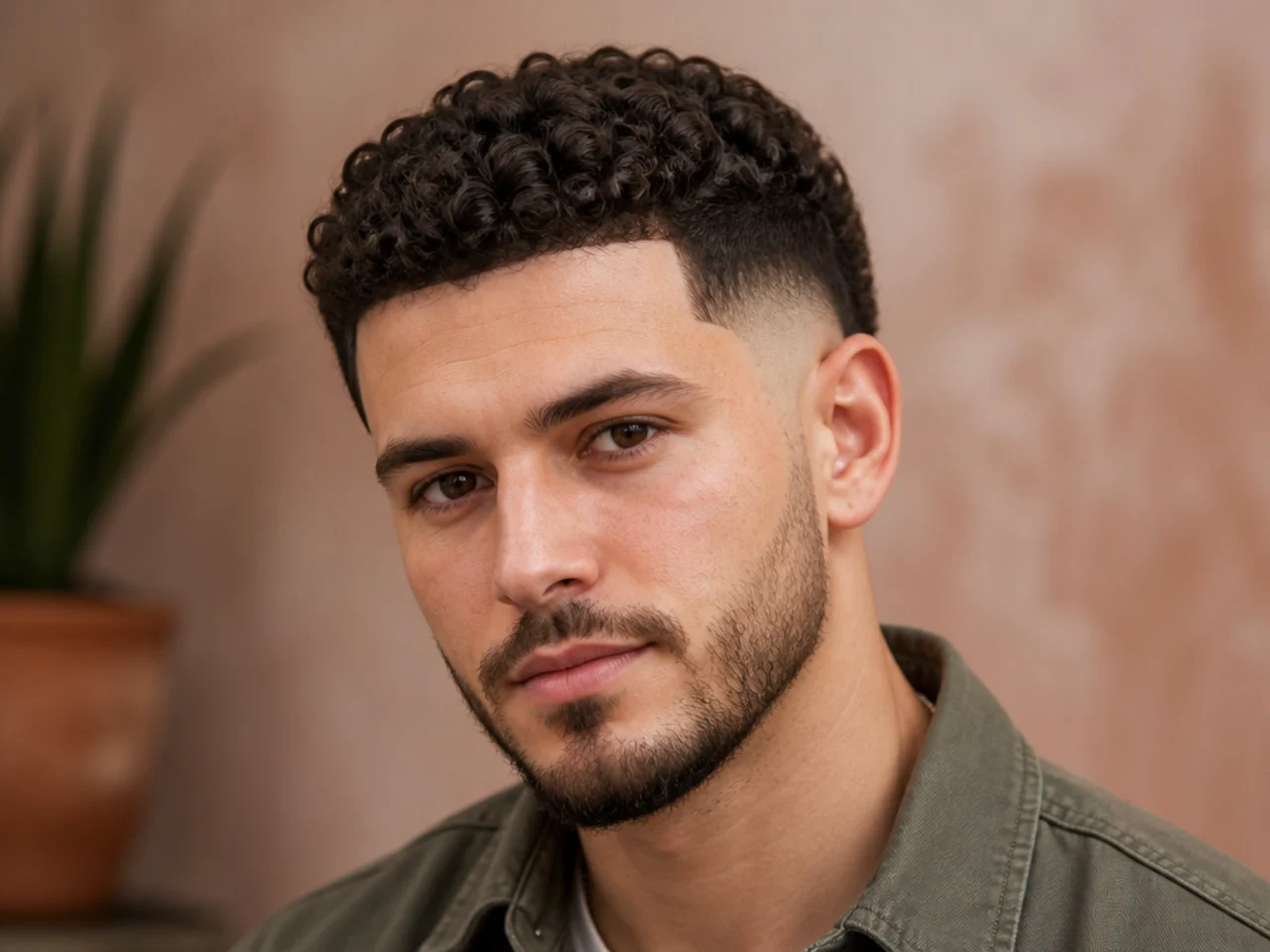
8. Drop Fade
The fade line curves downward behind the ear following the skull. Choose a low drop fade if a straight fade line looks harsh against your head shape.
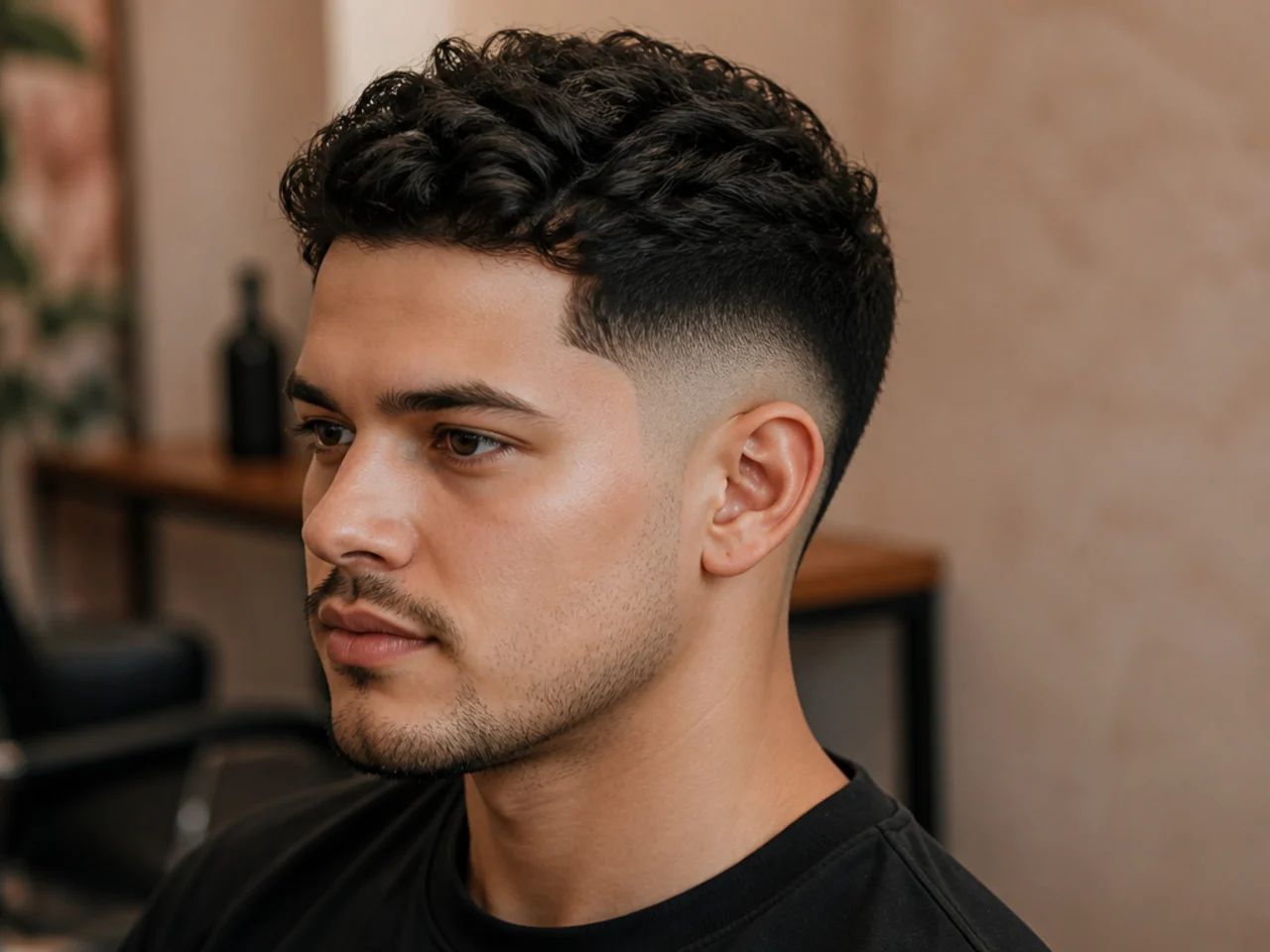
9. Temple Fade
Only the corners at the temples are taken short. Choose it if you want tidiness without changing the silhouette at all. Measure your own temple corners first — if they have already receded, the shaved corner and the bare corner merge into one shape rather than two.
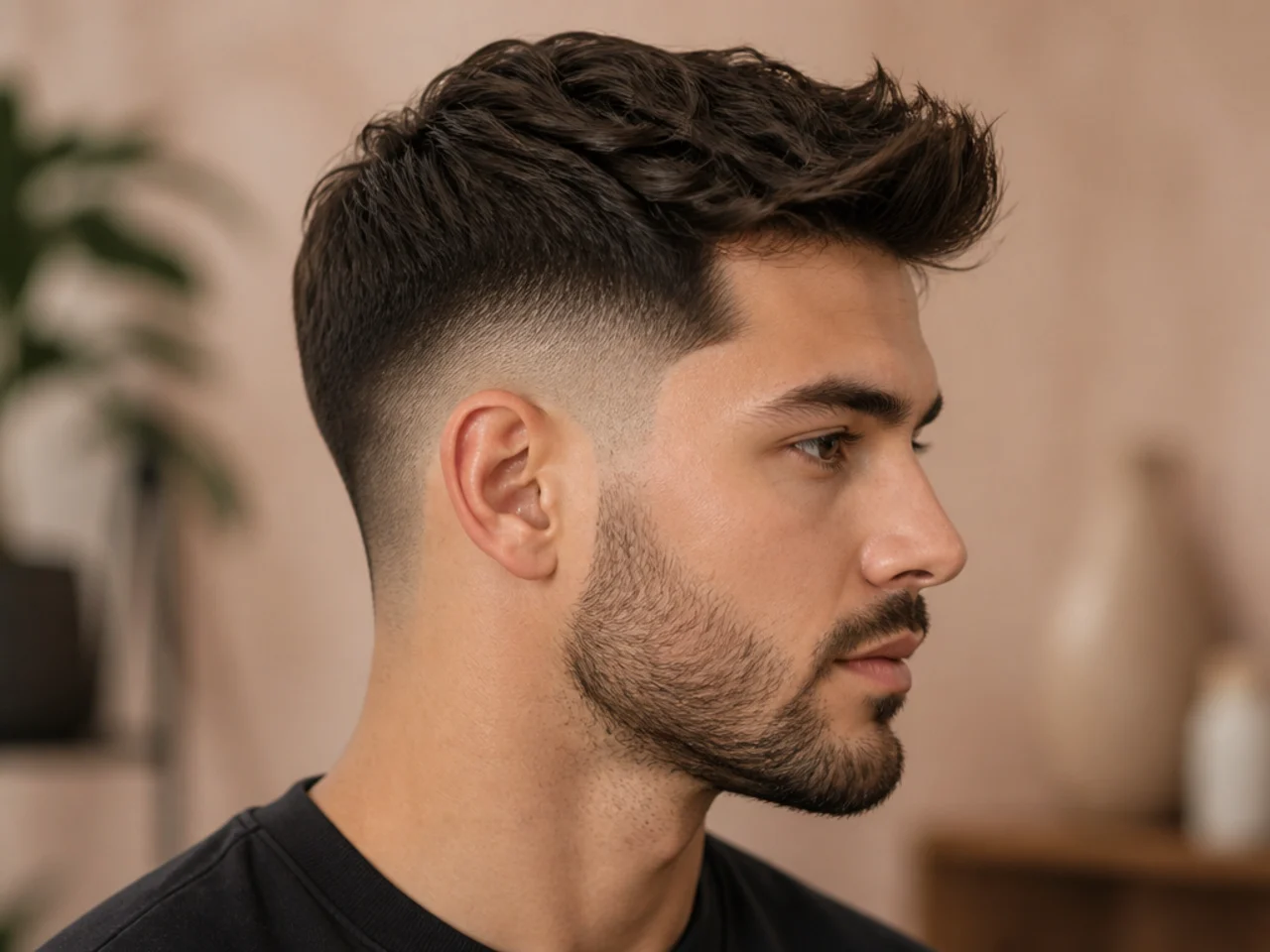
10. Shadow Fade
A fade that stops at a #1 across the whole gradient, leaving a shadow rather than skin. Choose it if you want the look of a skin fade on a taper's schedule.
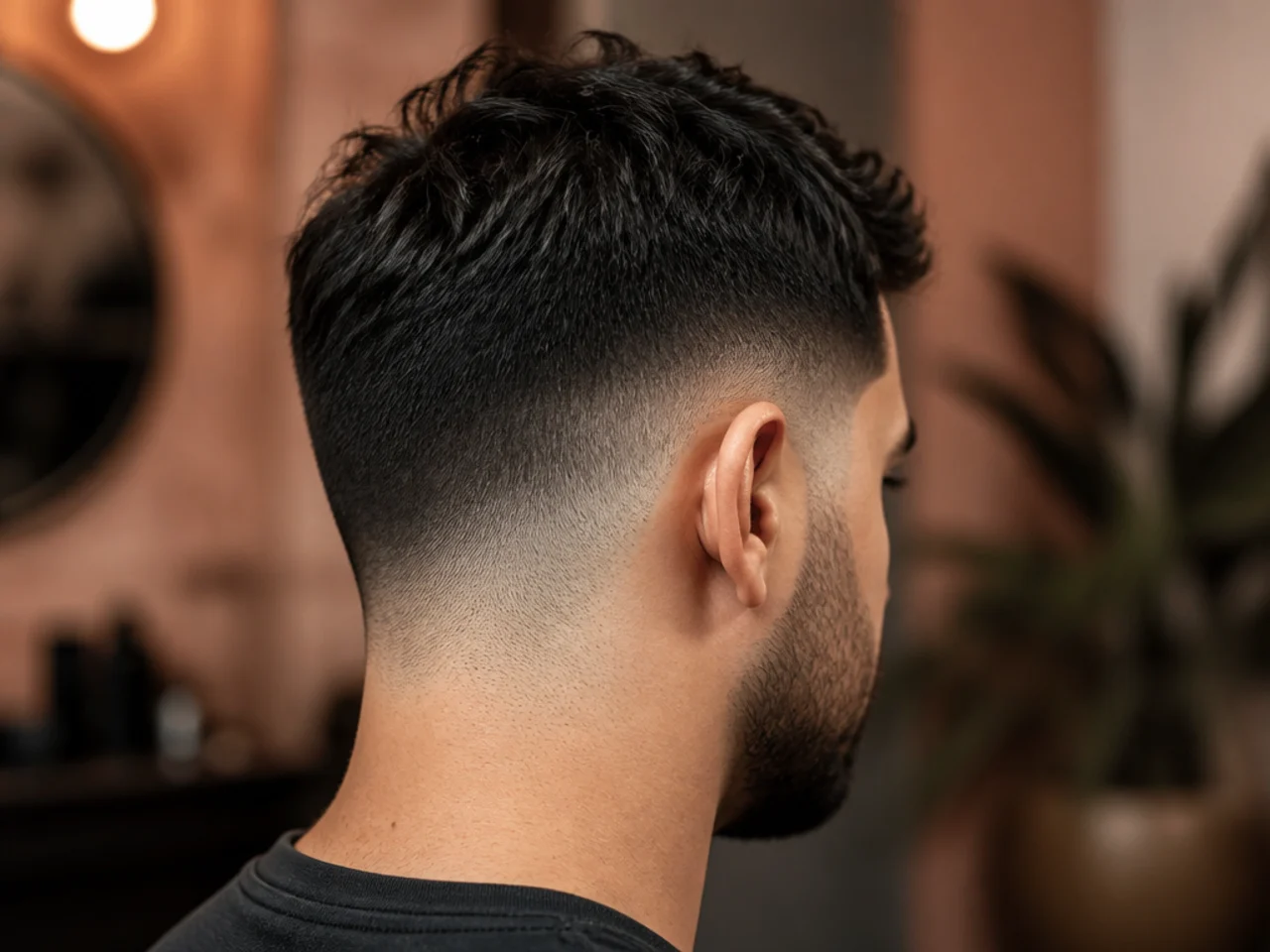
11. Blurry Fade
The gradient stretched over a longer distance so no start point is visible. Choose it if you book irregularly, because there is no line to grow out of place.
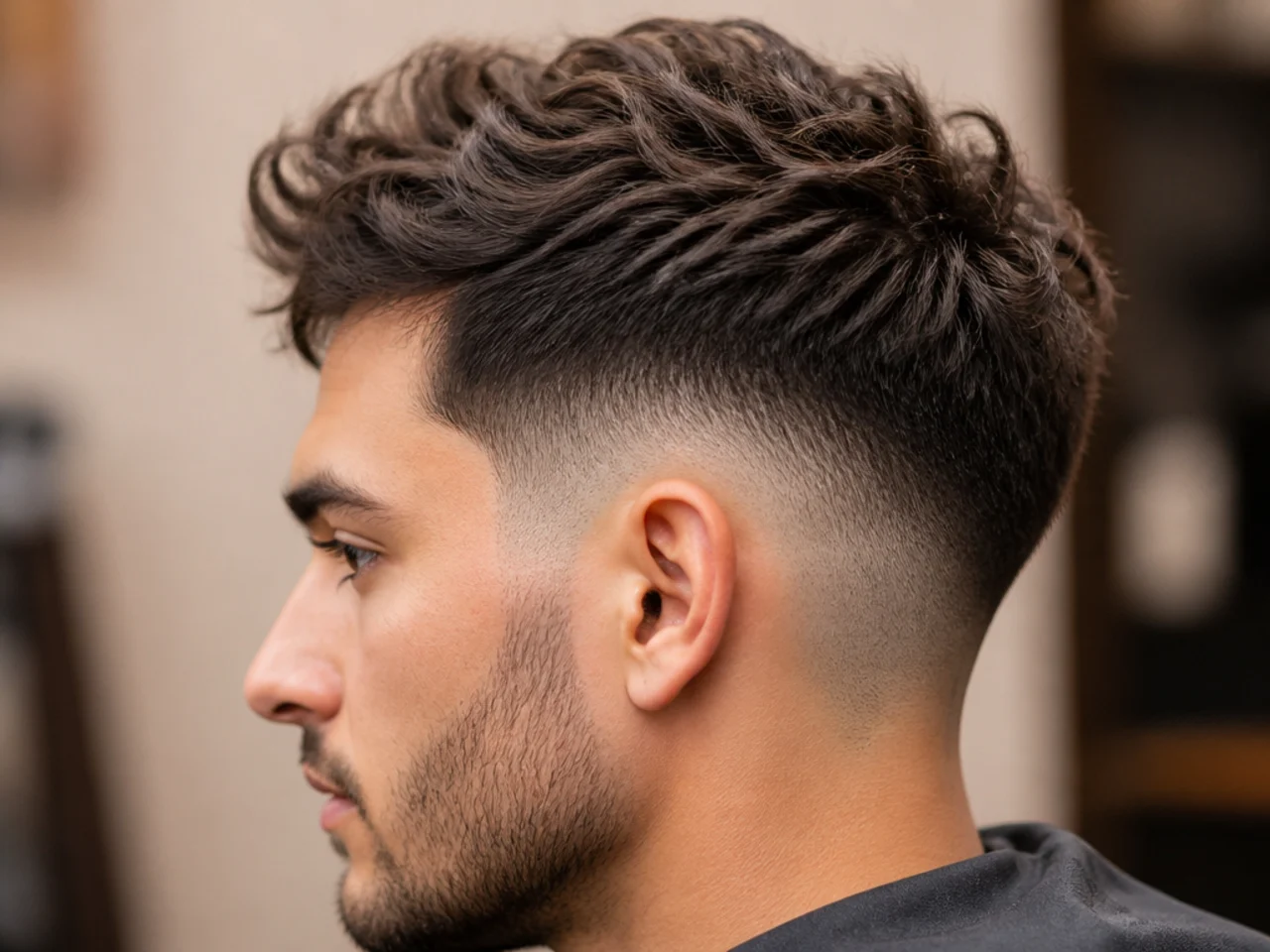
12. Fade With a Hard Part
A shaved line above the gradient. Choose it if the top and the sides are close in weight and need a boundary between them.
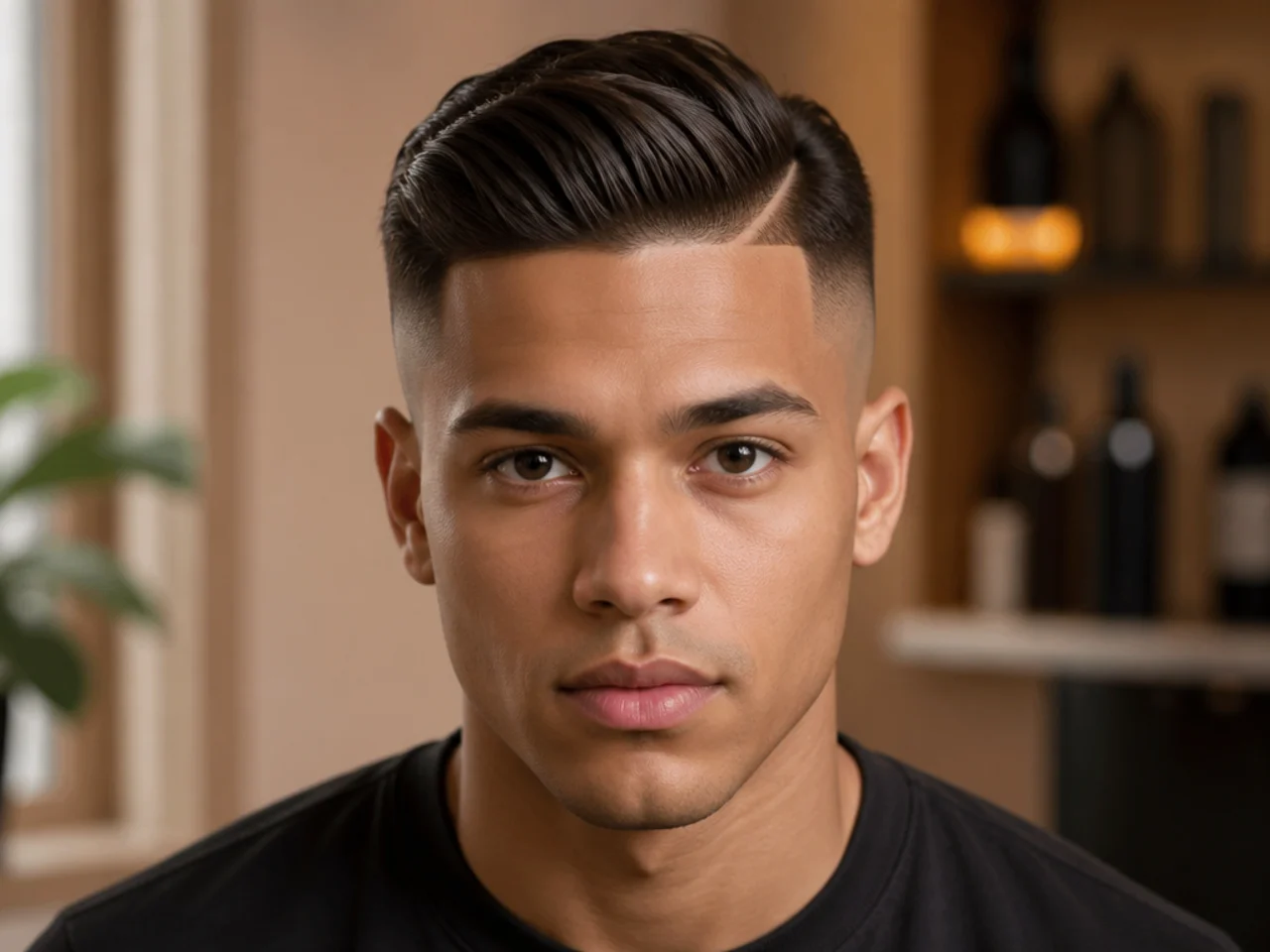
13. Fade With a Longer Top
Choose this if you have a long face. Keeping length above a low fade preserves the width that stops a long face reading longer.

14. Fade With a Buzzed Top
Choose this if you want one decision to cover the whole head. A #2 at 6mm on top over a mid fade is the simplest brief you can give.
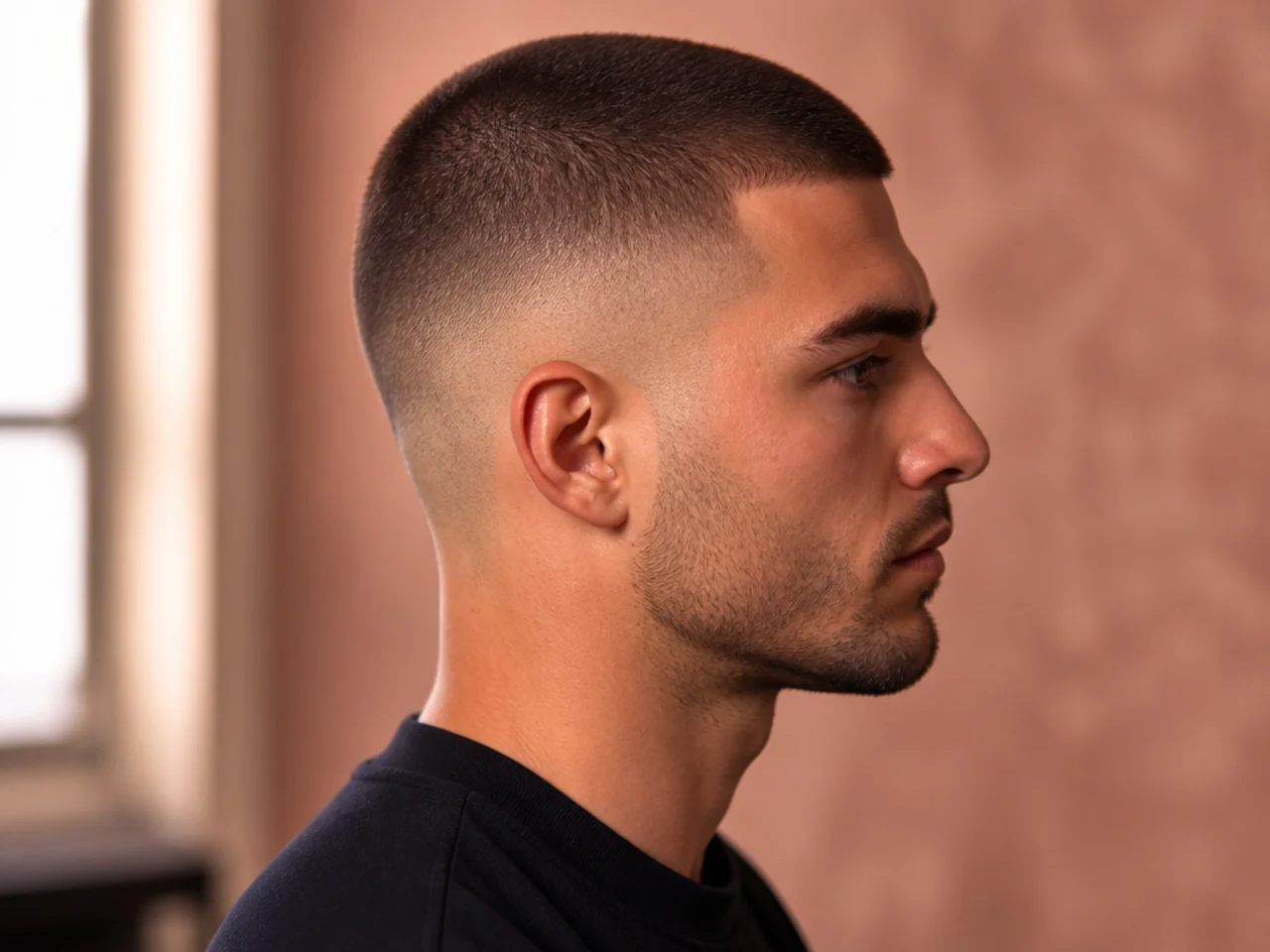
15. Fade on Curly Hair
Choose a lower height than you would on straight hair. Curl loses around a third of its length drying and adds width at the top, so the sides do not need to come in as far.
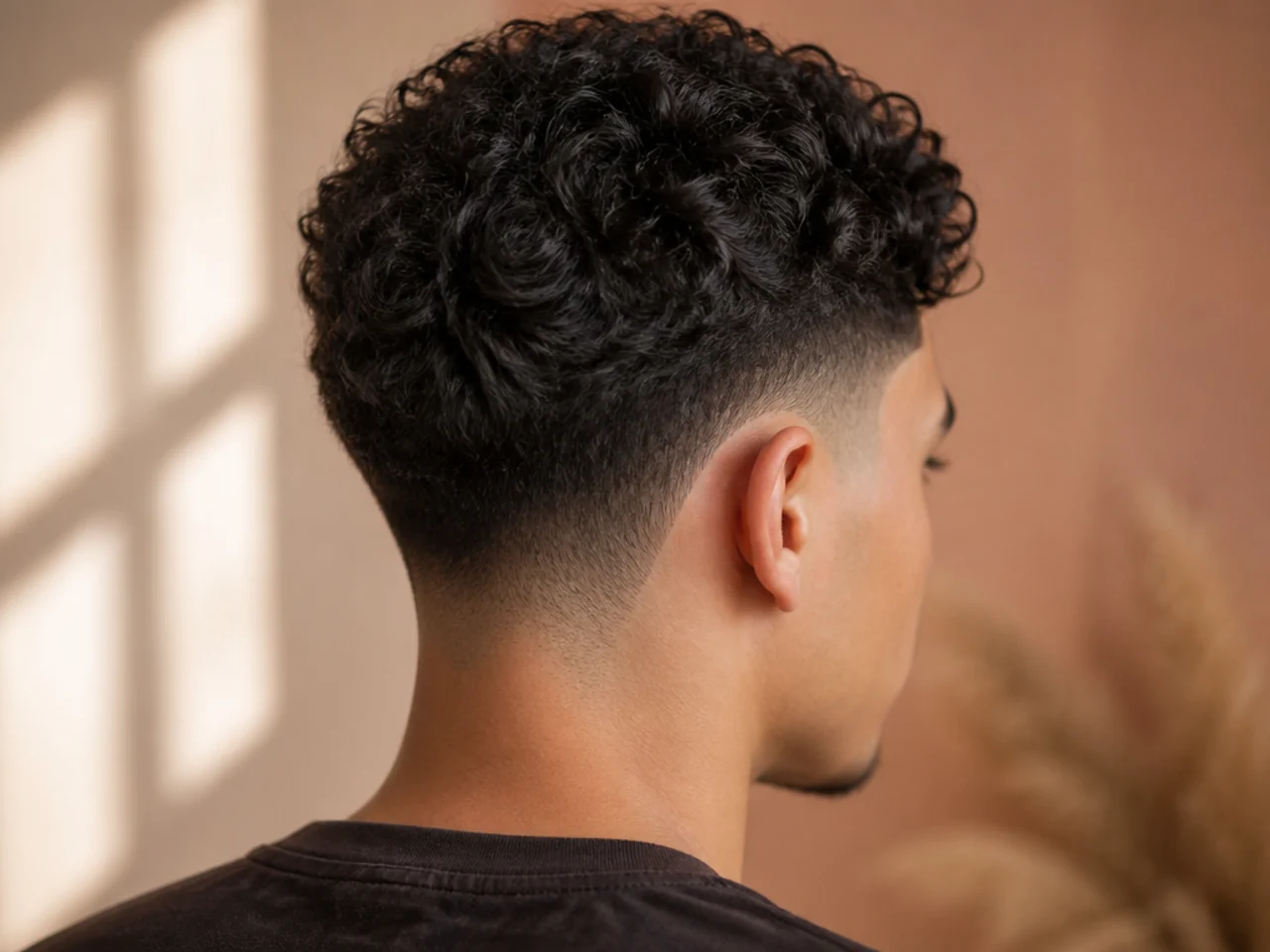
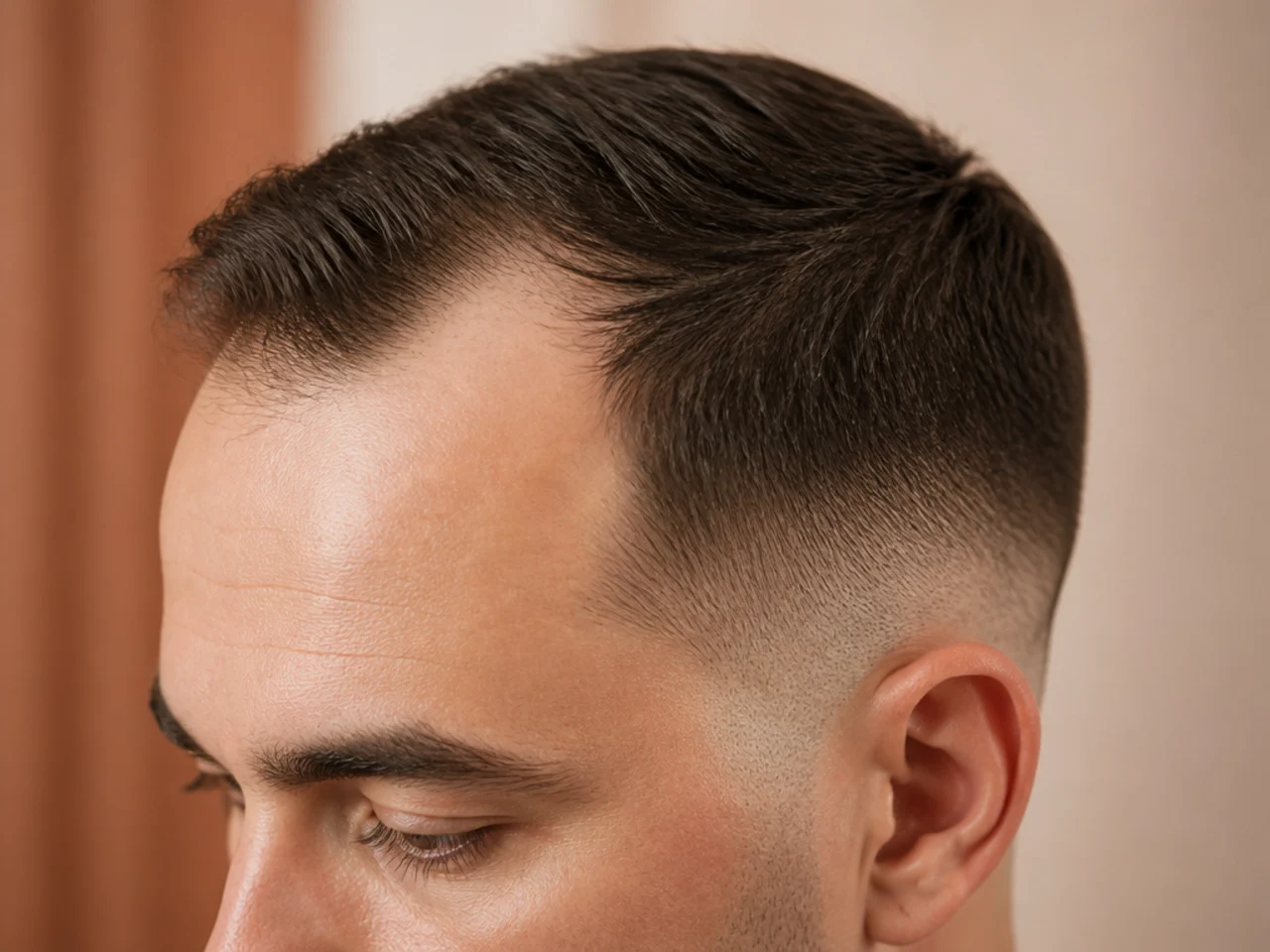
16. Fade on a Receding Hairline
Keep the weight high on the top and take the sides short, because the contrast between full sides and a thin front is what draws attention. A low taper does this without stripping the head.
17. Fade Into a Beard
Choose this if your beard is full. The gradient continues from the sides into the beard, which needs real beard density to land in rather than stubble.

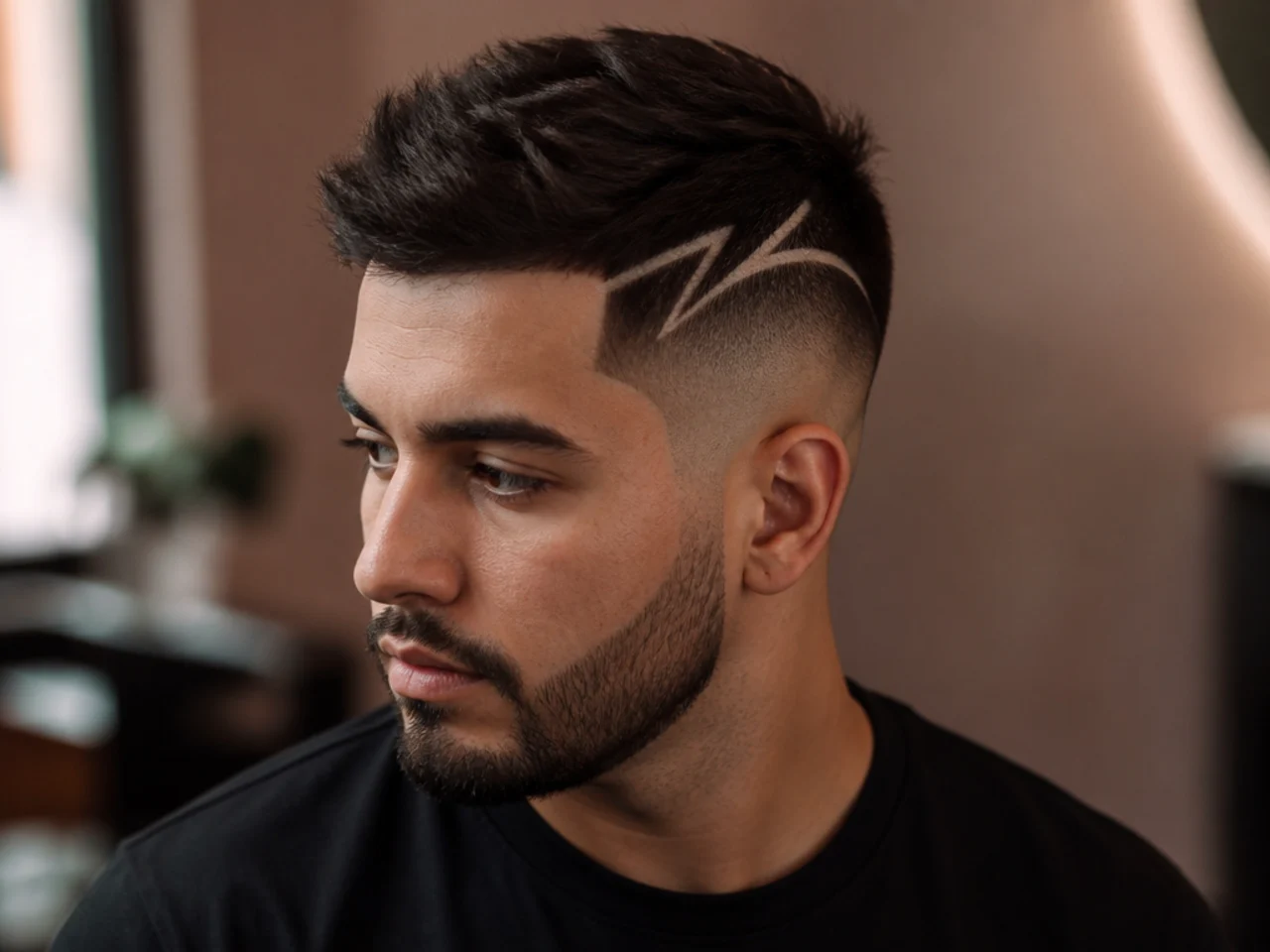
18. Fade With a Design
Choose this only if you are back within a fortnight. Shaved lines regrow as stubble within about a week and stop reading as lines.
19. Fade at a #2 Only
Not a gradient at all, just a uniform 6mm on the sides. Choose it if you want short sides with none of the maintenance a real fade carries.
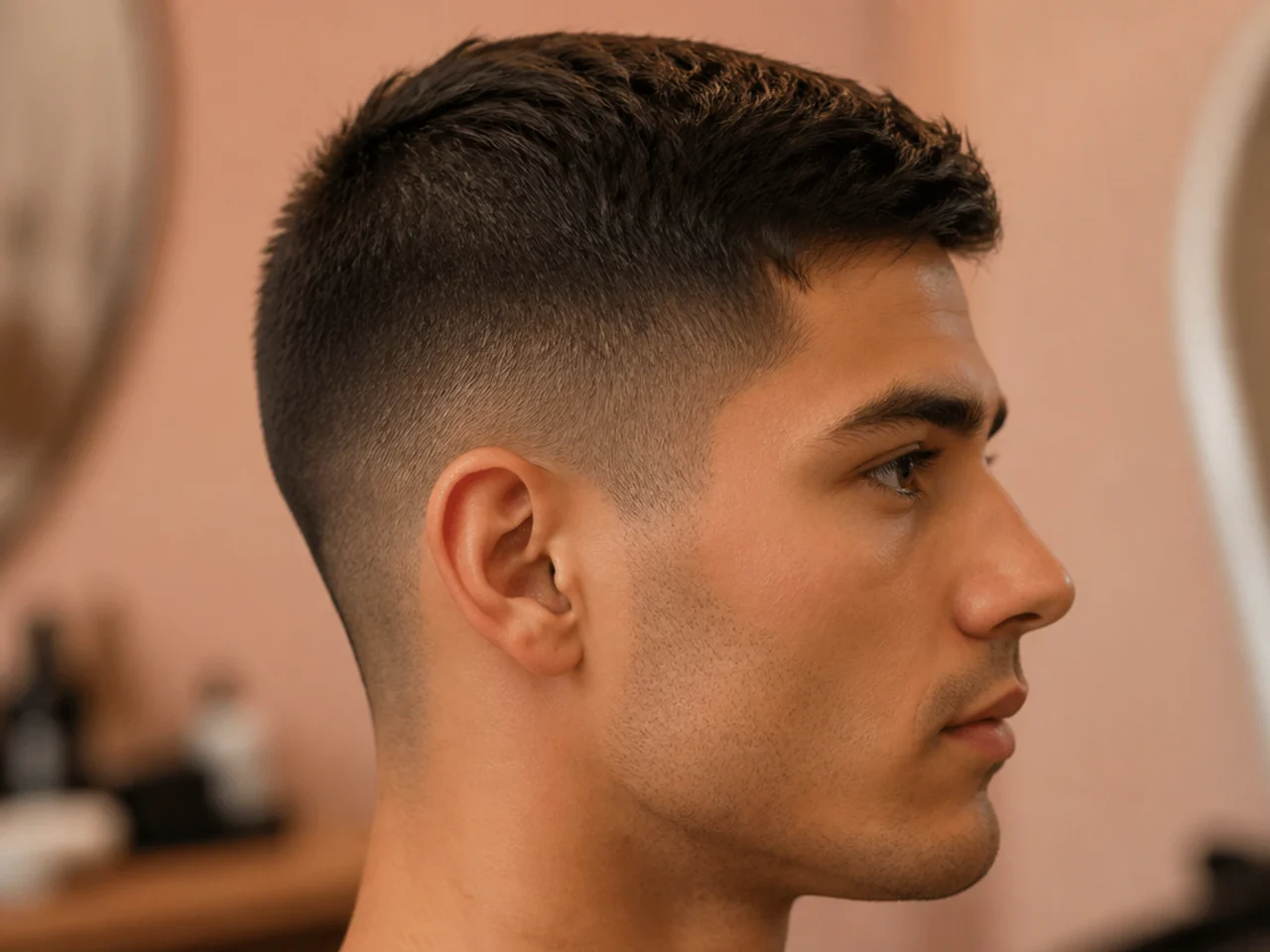
20. The Week-Three Fade
What your fade actually looks like for most of its life. Choose the version whose week three you can live with, rather than the version whose week one photographs best.
Styling and Upkeep
Book by depth, not by height. Skin means fortnightly and a #1 means monthly, whatever the height.
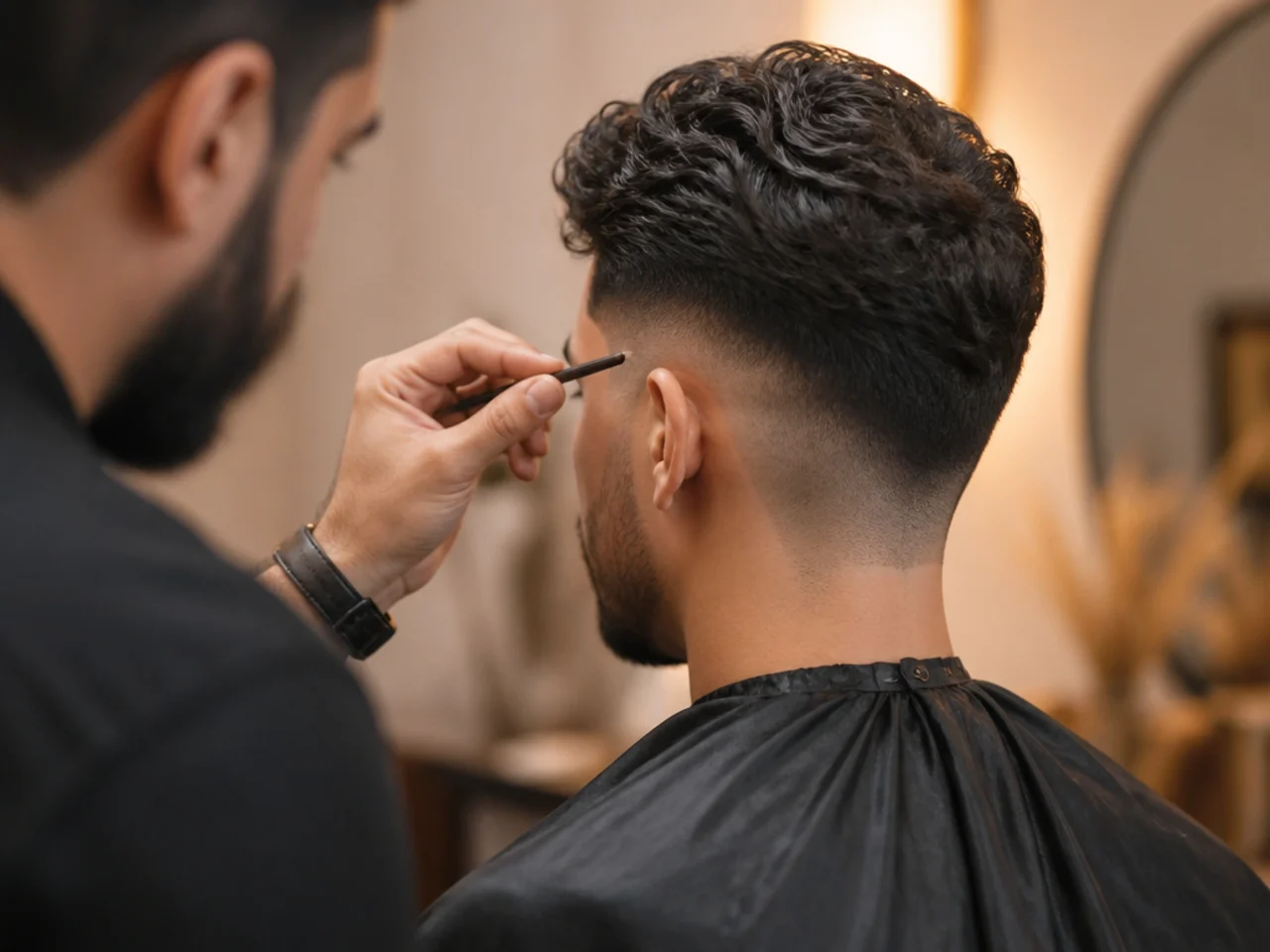
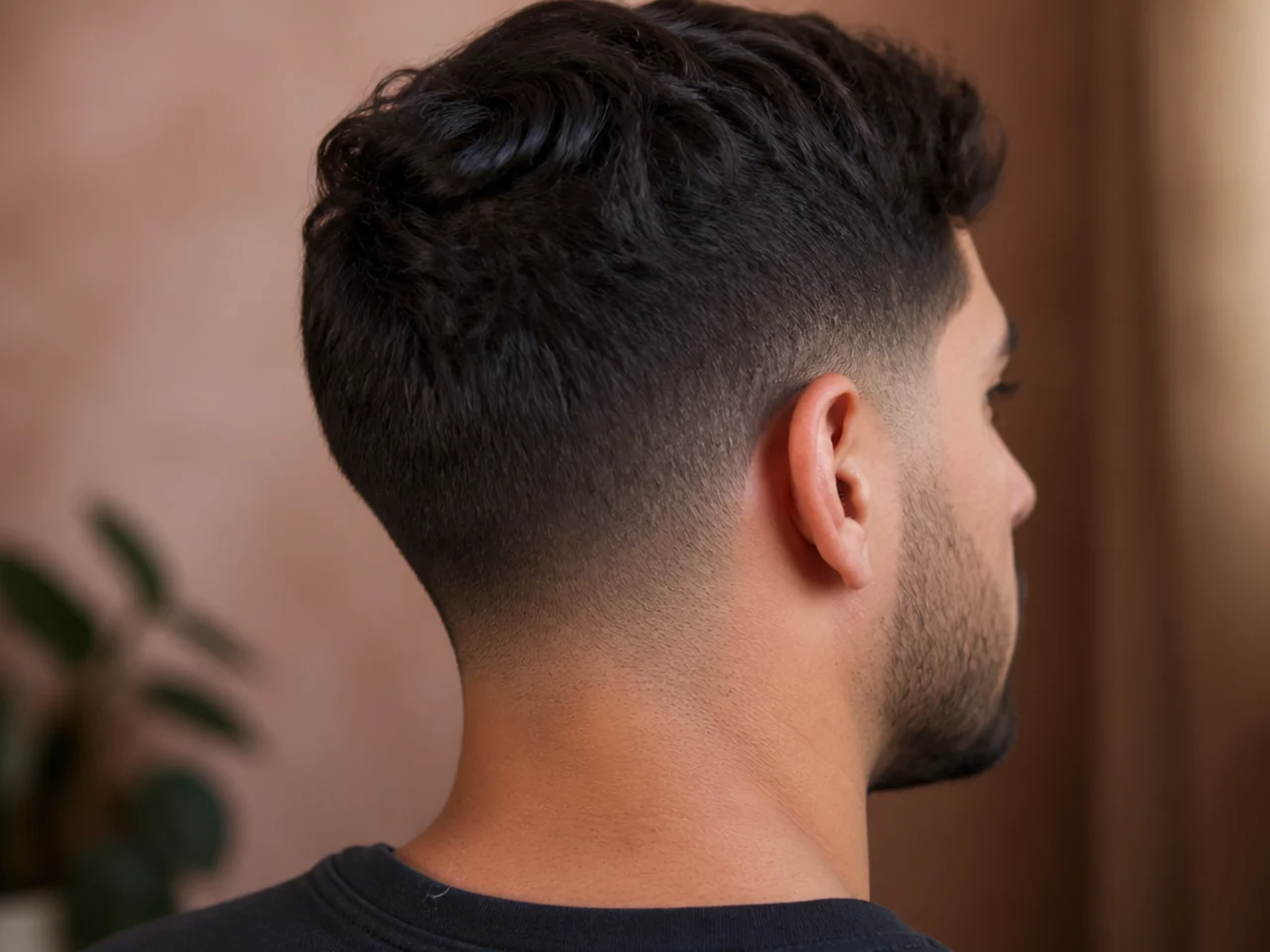
Check the blend under raking light. A band vanishes when light hits it straight on and jumps out the moment the head turns, which is why a front-on mirror never finds one.
Keep the neckline tidy between visits. Five minutes on the nape moves the whole cut back roughly a week in how recently it reads as cut.
Write down your height and depth. It is the only brief that transfers reliably to a new barber.
Photograph the side profile at week one. The fade lives where you cannot see it in a bathroom mirror.
Mistakes to Avoid
Choosing skin depth on a monthly schedule. It is blurred for three of the four weeks.
Going high on a long face. Narrowing an already narrow head makes it longer.
Bringing a photo without knowing the height. Half of all fade disappointment starts here.
Asking for a fade when you meant a taper. A fade goes to skin. A taper does not.
Judging it in a front-facing mirror. The gradient is on the side of your head.
FAQ
Height versus depth? Height is where it starts, depth is how short it finishes.
Which height suits my face? High for round and wide, low for long and narrow.
How often re-cut? Fortnightly for skin, monthly for a taper.
Final Thoughts
Give your barber two words instead of a photograph — a height and a depth — and you will get closer to what you wanted than any reference image will take you. Everything else about a fade is a variation on those two numbers.
For a fuller breakdown of the three heights see low fade vs mid fade vs high fade, and for the gentlest depth see the low taper fade. More in Fade Haircuts.