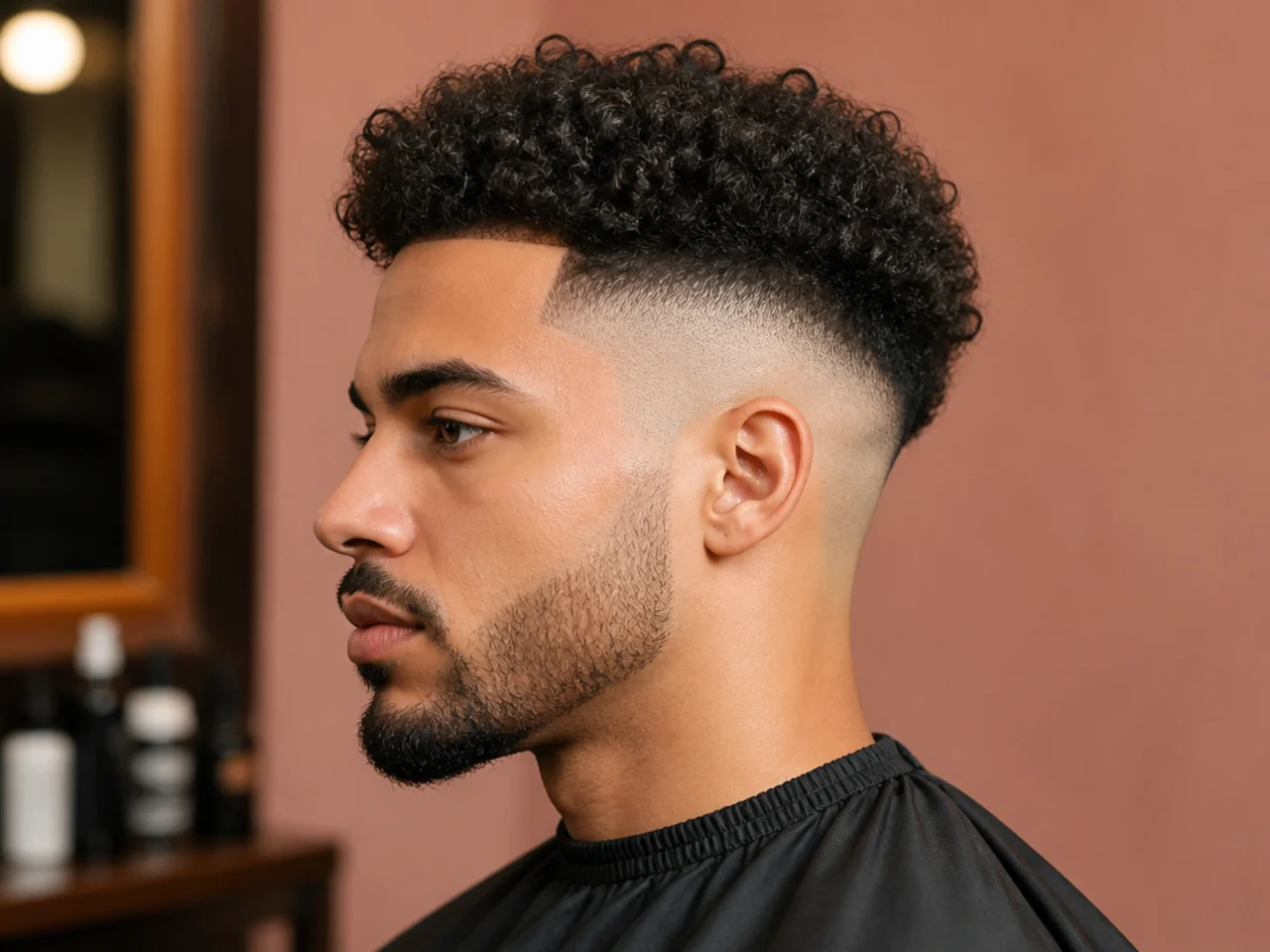
6 Low Fade Mistakes Guys Make at the Barber
A working barber breaks down the six low fade mistakes men make at the barber every week — going too high, wrong guard, weak reference, wrong top length — plus the exact language to fix each in the chair.
In this article · 18
- What Counts as a Low Fade
- How These Mistakes Happen
- The Six Low Fade Mistakes I Fix Most
- 1. Going Too High
- 2. Picking the Wrong Guard Number
- 3. Bringing No Reference — or the Wrong One
- 4. Mismatching the Top Length
- 5. Skipping the Maintenance Plan
- 6. Staying Silent in the Chair
- The Turning Point: Book the Cut Around the Grow-Out
- What to Do Next
- FAQ
- What's the most common low fade mistake men make at the barber?
- How do I stop my barber from cutting my low fade too high?
- What guard number is safest for a first low fade?
- Do I really need to bring a photo for a low fade?
- How often should I re-cut a low fade to keep it sharp?
- Can I fix a bad low fade at home?
I cut fades six days a week and the same six mistakes walk through my door on repeat. Not because guys don't know what they want — they usually do — but because the language between the chair and the client leaks. Below are the six low fade misorders I fix most, the client story behind each, and the exact sentence that would have saved the appointment. Read these before your next visit.
What Counts as a Low Fade
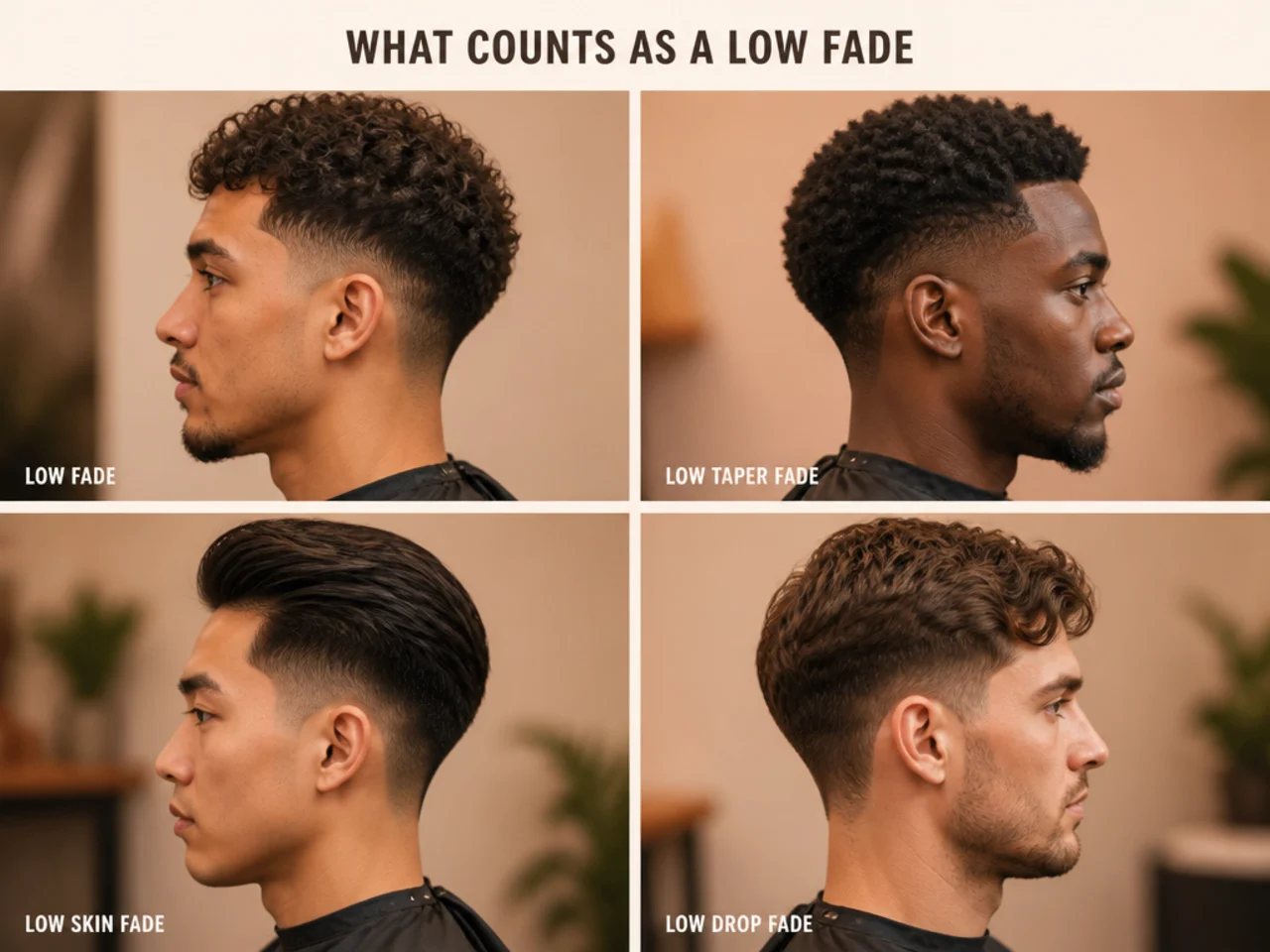
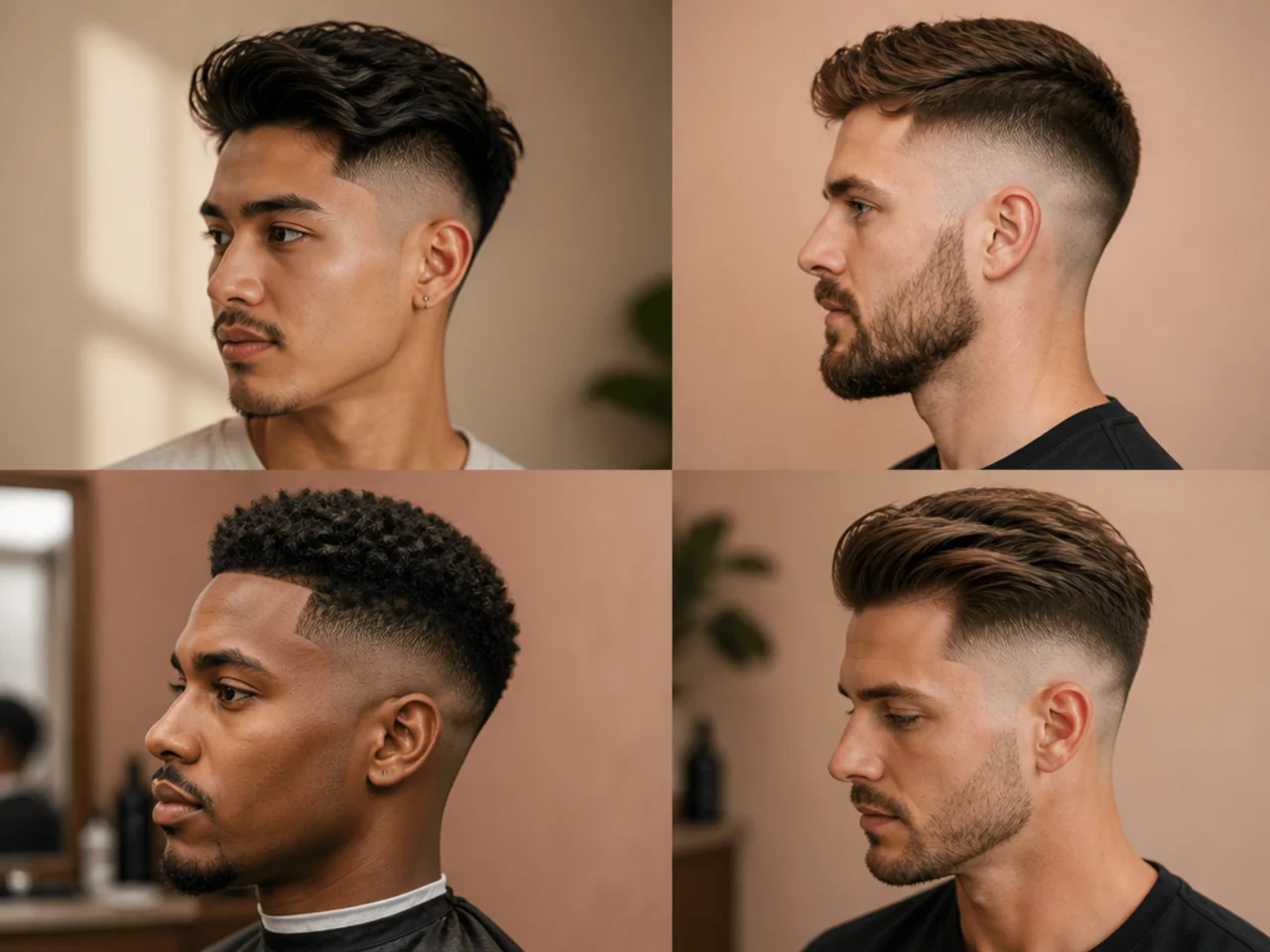
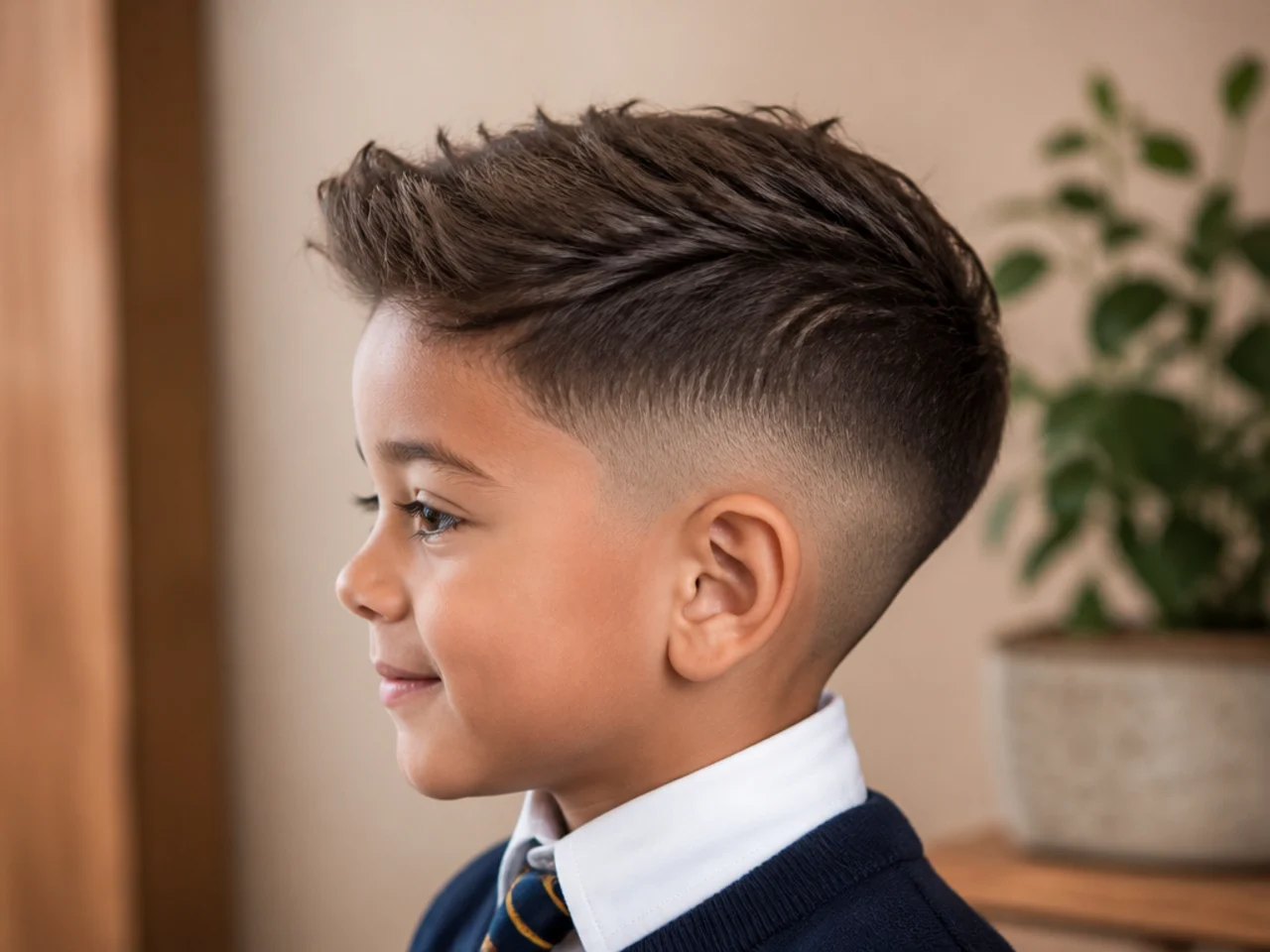
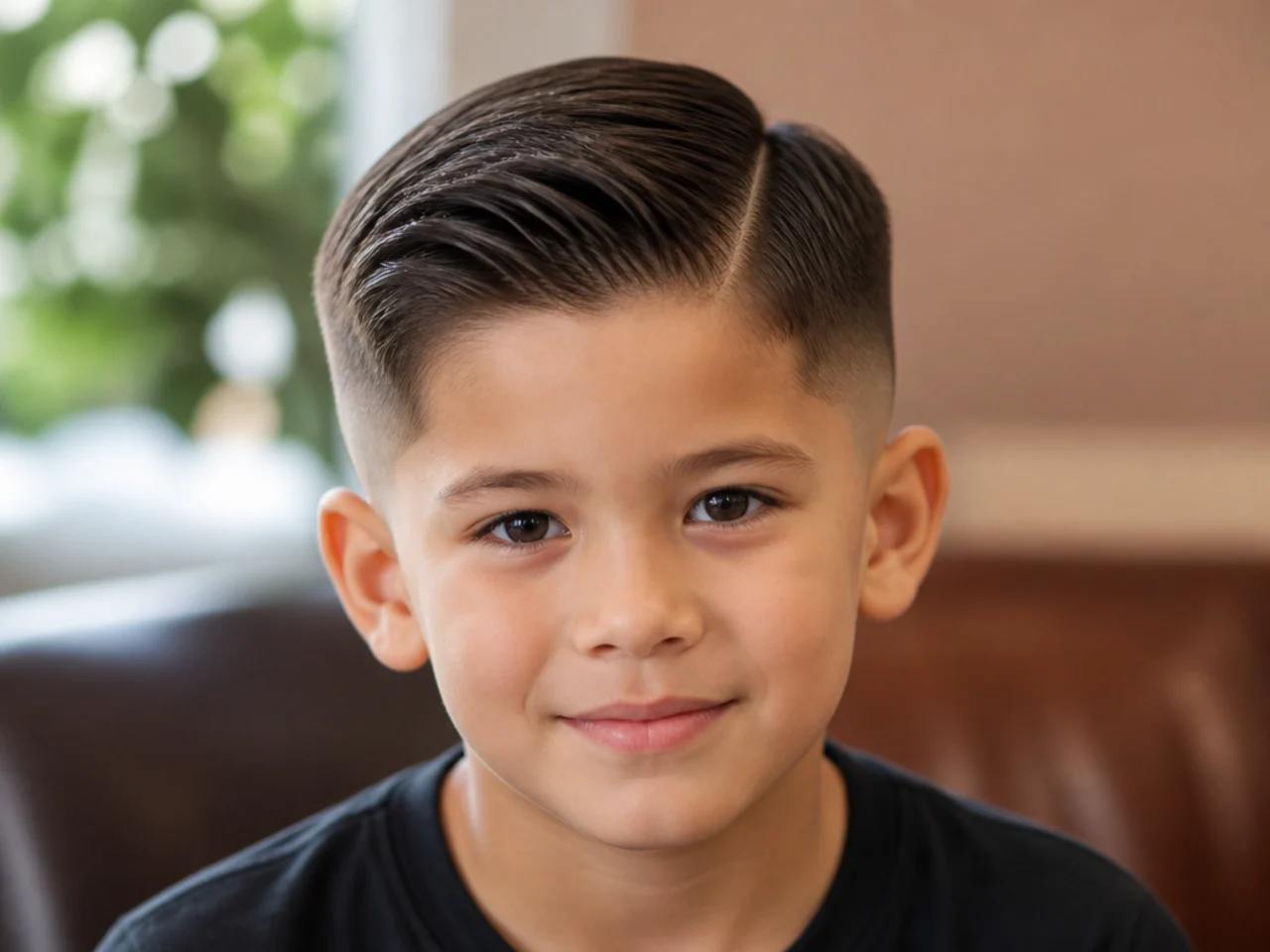
A low fade is a taper where the shortest point of the blend sits just above the top of the ear. That's the whole definition. Anything higher becomes a mid fade; anything that stops shy of the ear line becomes a plain taper haircut. The top can be any length — a two-inch crop, a four-inch pompadour, five inches of curls — the low fade doesn't care.
Because the shortest point sits low, a low fade is the most forgiving fade a barber can cut. It grows out into a softer shape, ages three weeks instead of two, and reads professional in almost every workplace. That forgiveness is also why guys under-brief it. They assume "low fade" is a simple enough phrase to trust the barber with. It isn't. Every mistake below starts with that assumption.
For the full family tree, the low fade haircut guide walks through thirty variations and the low fade vs mid fade vs high fade comparison shows how a millimeter of fade start changes the whole cut.
How These Mistakes Happen
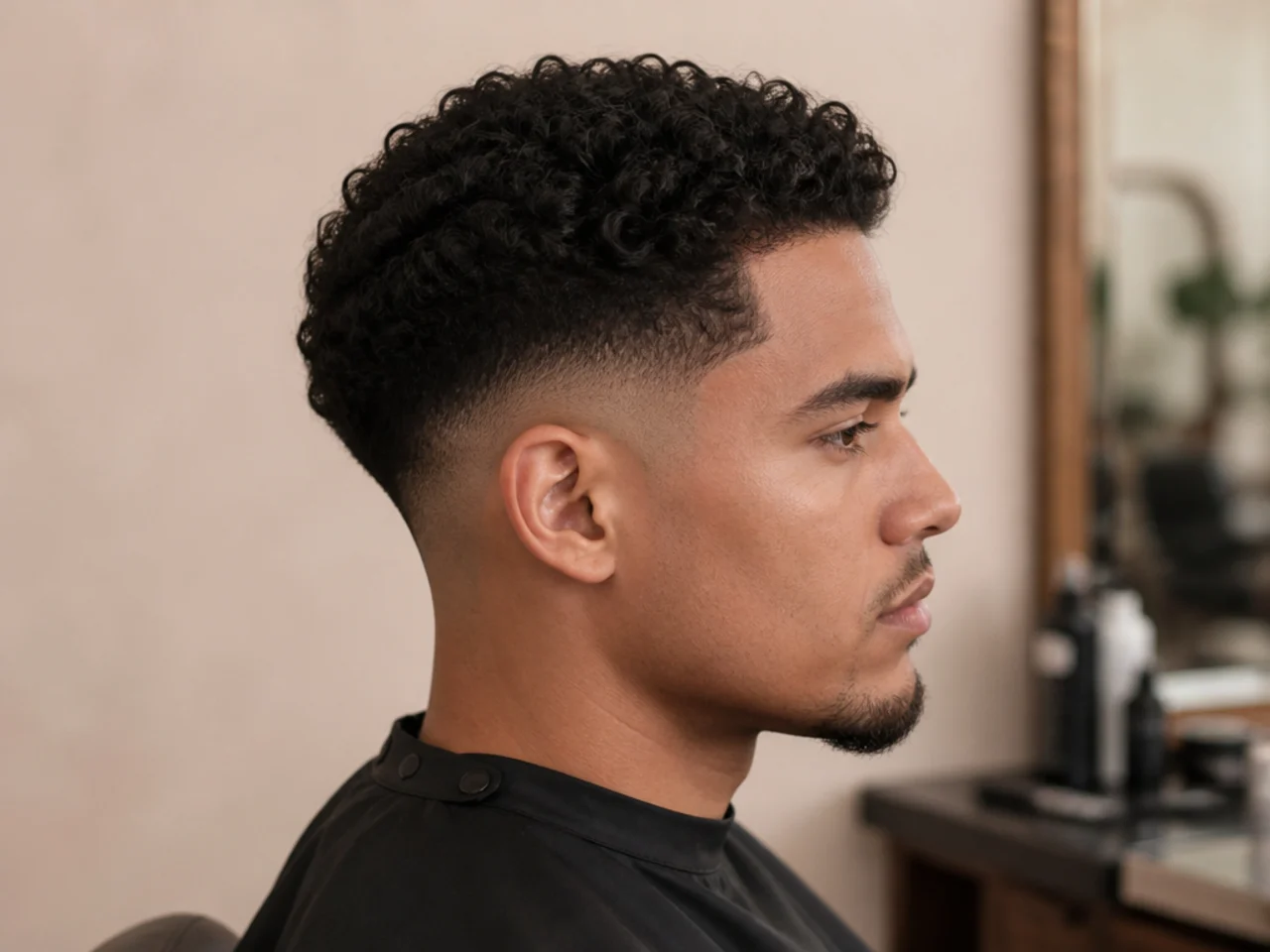
Most misorders don't happen because the barber is bad. They happen because the client hands over a vague brief and the barber fills in the gaps with muscle memory. A barber who cut ten low fades last week has ten different "defaults" living in their hands — start height, shortest guard, transition style, neckline shape. Without a specific ask, they land on whatever the last guy asked for. That guy might have very different hair than you.
The fix is language, not skill. Every one of these six mistakes disappears with one sentence spoken before the cape goes on. I've timed it — the whole brief takes ninety seconds. That's the trade for two to three weeks of walking around in a haircut you actually wanted.
The Six Low Fade Mistakes I Fix Most
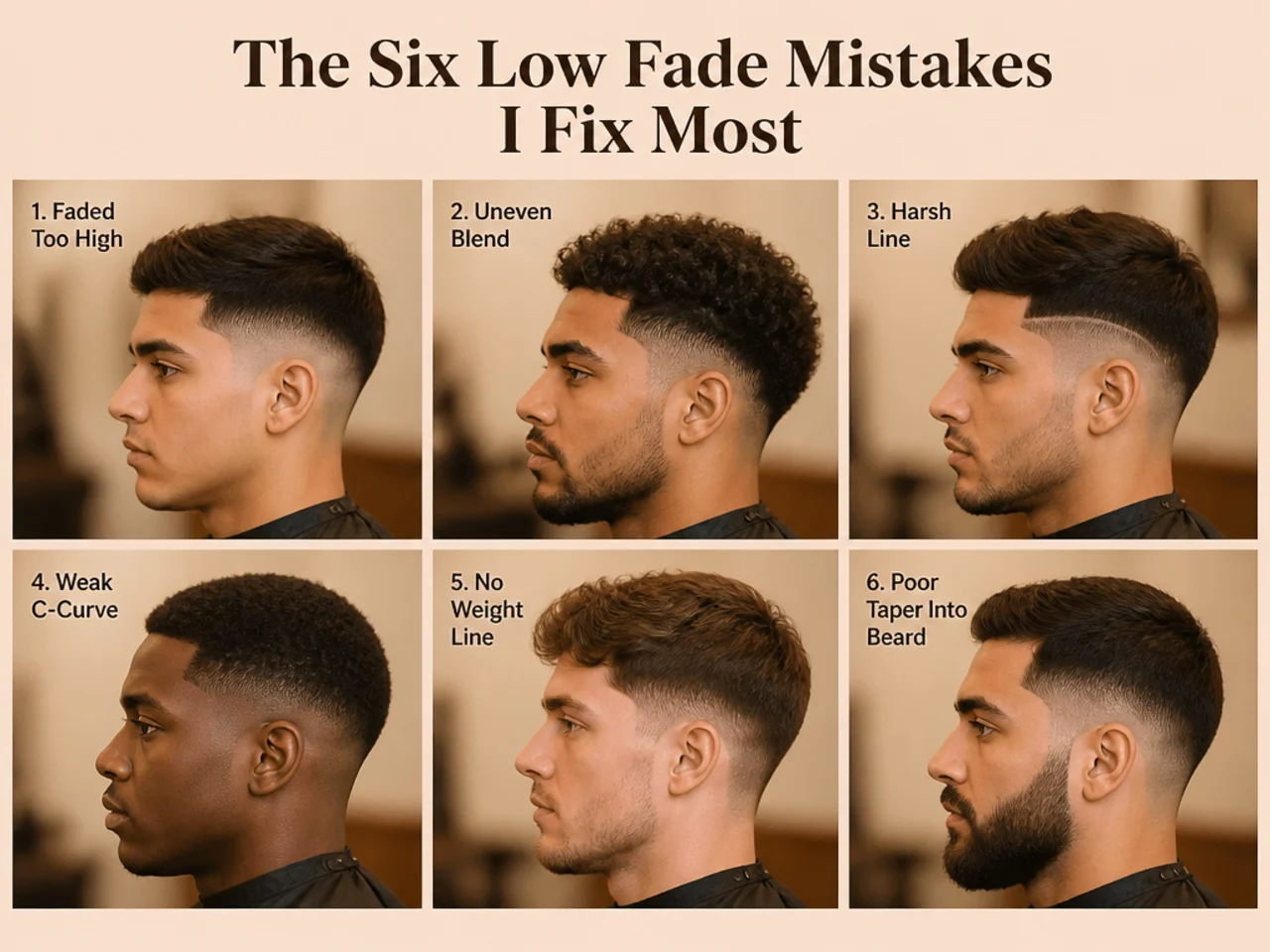
Read the one closest to your last chair conversation first, then borrow whatever fixes fit.
1. Going Too High
Marcus is a 29-year-old accountant who walks in every third Saturday and says "low fade, keep the top." Simple enough — except last November he came in three weeks after a chair-swap visit somewhere else, and the fade he was wearing was clearly a mid. It started a full two fingers above the top of his ear. The line ran across his temple. His barber that day had heard "low fade" and defaulted to what they cut most, which was the mid.
The fix takes one physical gesture. Before the clippers move, touch the spot just above the top of your ear with your finger and say "fade starts right here — nothing above this line." Pointing works because a barber's eye tracks your finger; verbal directions leave a two-inch margin of error.
Why it happens. Every barber has a house default fade height. Yours is only "low" in their hands if you name the start point. Say low fade and point.
What better looks like. The transition line sits below the top of your ear when you're looking straight ahead. From the front, you barely see the fade at all — that's the whole appeal. Marcus's next cut with me sat right, and it's stayed right for eight months of monthly visits.
2. Picking the Wrong Guard Number
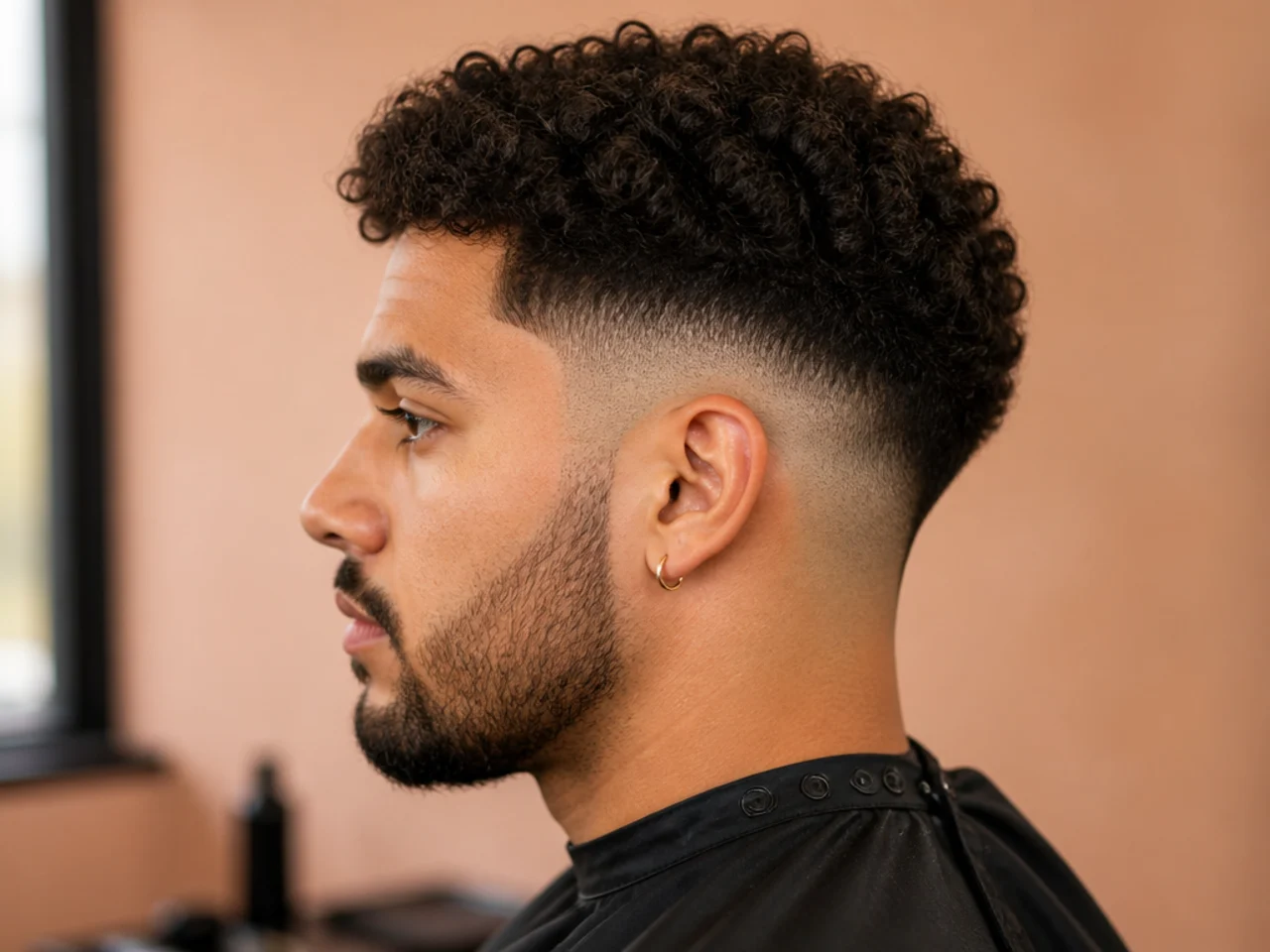
Jason is 22, first-year sales, and walked in last spring saying "I want a low fade — like, really faded, tight." I asked him what he meant by tight. He shrugged and said "you know, low." I set the shortest point to a #0.5 because "really faded, tight" reads shorter in most barbers' ears. Two weeks later Jason came back and said the sides had grown out patchy — his hair grows fast on one side and the shorter guard exposed the unevenness.
For his second cut we dropped to a #1 at the shortest. Softer edge, hides the growth pattern, adds a week of clean life. He's been on a #1 for six months and hasn't complained once.
Why it happens. Adjectives — tight, faded, sharp, clean — mean different guard numbers to different barbers. My "tight" might be a #0.5; the guy across the street calls a #2 tight. Numbers are the only shared language.
The safe defaults. For a first low fade, ask for a #1 at the shortest point. That reads soft, hides scalp, and gives the barber room to go a step shorter next visit if you want more contrast. A #0.5 reads sharper and grows out about a week faster. A #0 or skin puts you in a full low skin fade — a different, bolder cut you should choose deliberately, not by accident.
What better looks like. Say the number out loud: "Low fade, #1 at the shortest, blending up to a #3 above the ear." Two numbers, one sentence — enough to lock in the fade family without leaving anything to interpretation.
3. Bringing No Reference — or the Wrong One
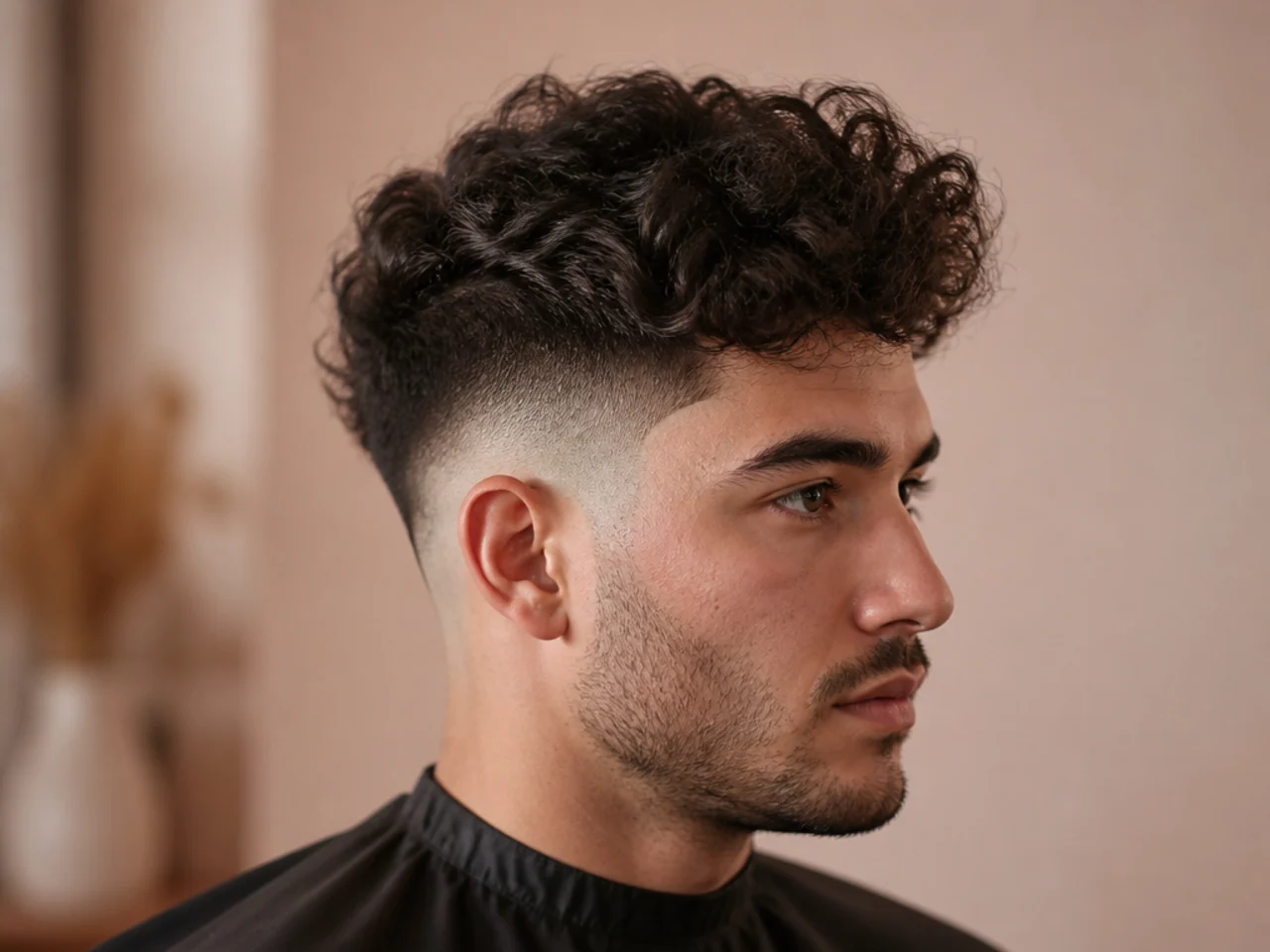
Devon is a 25-year-old grad student who came in with a screenshot of Michael B. Jordan's fade from a red-carpet photo. Beautiful cut. But the photo was three-quarter front, so the fade height wasn't visible. And Devon's 4a coily hair looked nothing like the pin-straight styling in the reference. I did my best. Devon came back frustrated because the shape didn't match the photo — the photo he'd brought hadn't actually shown the fade at all.
Why it happens. Guys grab the first cool haircut photo they find, usually from Instagram or Pinterest. Most of those photos are styled front shots that hide the sides. And most photos feature a hair type that isn't yours. The barber can't cut what they can't see, and they can't translate straight hair into coily hair without asking questions.
The fix. Bring two photos, saved to a folder in your phone before you leave the house.
- A three-quarter side shot that shows the fade line clearly from ear to nape.
- A front shot that shows the top length, texture, and fringe direction.
Then match your hair type when you can. Curly hair? Look for a reference with curly hair — the low taper fade curly hair roundup has photos sorted by curl type. If you can't find an exact hair-type match, say it out loud: "The shape, not the styling. My hair does its own thing on top."
What better looks like. The barber glances at two photos, nods, and starts the cut. If they ask clarifying questions, the photos gave them enough to know exactly what to ask about. When Devon came back with the right two shots we finally landed the cut he wanted — and now he sends the same two photos ahead of every appointment.
4. Mismatching the Top Length
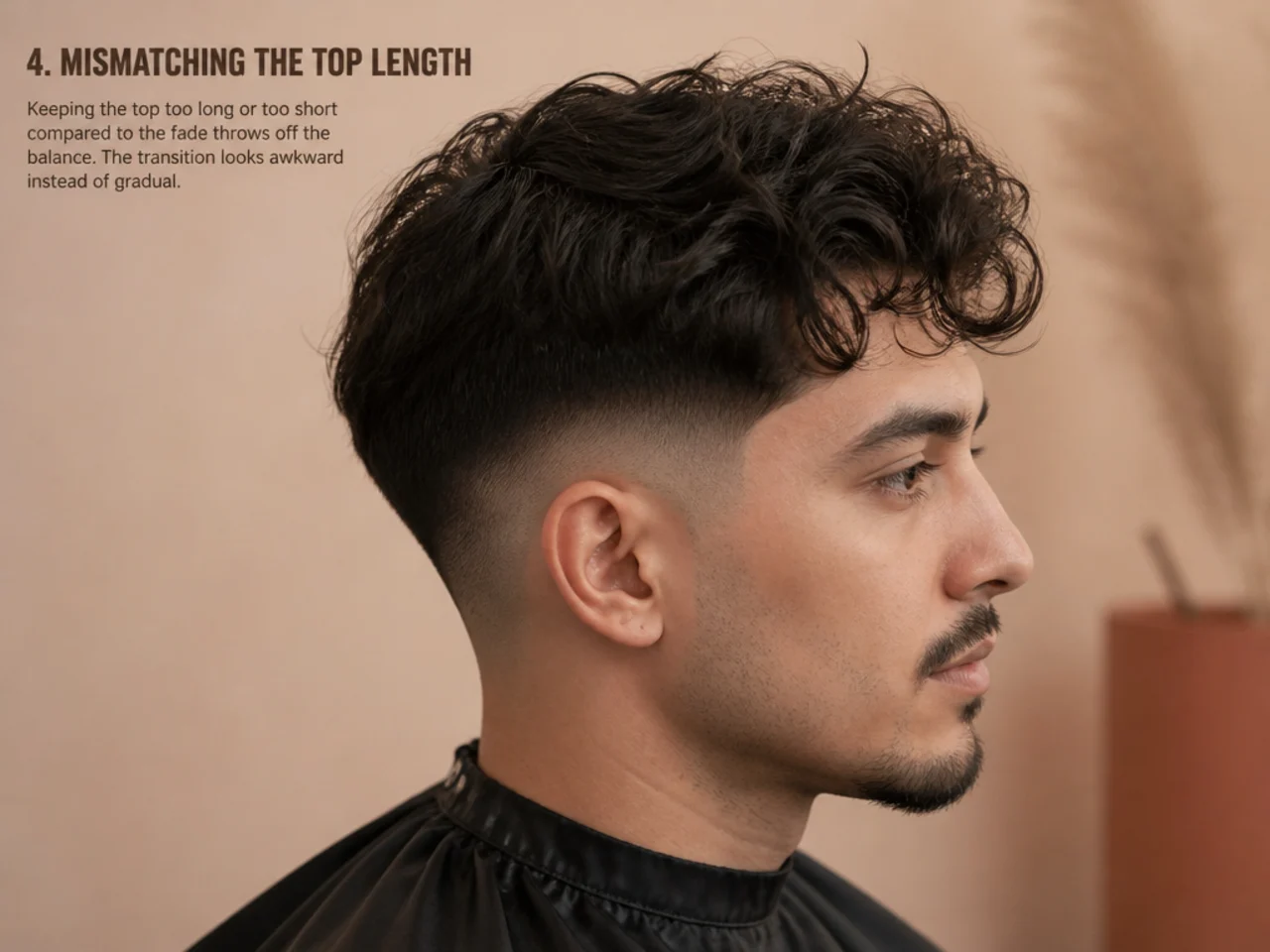
Ben, 34, works corporate and asked for "low fade with a shorter top than last time." He hadn't specified inches. I trimmed him a half-inch shorter on top than his usual — thinking that's what "shorter" meant — and he came out looking like he'd walked into the wrong appointment. His face is long and the shorter top exposed vertical proportion he'd been balancing for years with more length.
Why it happens. Adjectives kill low fade cuts. "Short," "medium," "longer" mean nothing consistent between chairs. And guys tend to under-specify the top because they think of a fade as a "sides" cut. But the low fade needs enough top length to balance the contrast, and the top length has to match your face shape.
The fix. Name the top in inches, and chain it with the finish direction.
- One inch or shorter — say the guard: "3 on top" is roughly three-eighths of an inch. Buzz territory.
- Two to three inches — the sweet spot for most low fades. Say it: "Two inches on top, textured, forward-flowing" or "three inches, side-parted."
- Four inches or more — pompadour, comb-over, or long fringe. Say it: "Four inches on top with an inch longer at the front for the fringe."
If your face is long or oblong, keep more length on top so the fade doesn't stretch your proportions. Round faces suit taller styling; square faces suit softer texture. Every variation in the low fade haircut guide is tagged for the face shape that flatters it.
What better looks like. Ben's next visit we set the top back to two and a half inches — half an inch longer than the disaster cut — and finished it with a matte paste worked forward. He looked like himself again. He now writes "2.5 inches on top, matte, forward" in his phone before every appointment.
5. Skipping the Maintenance Plan
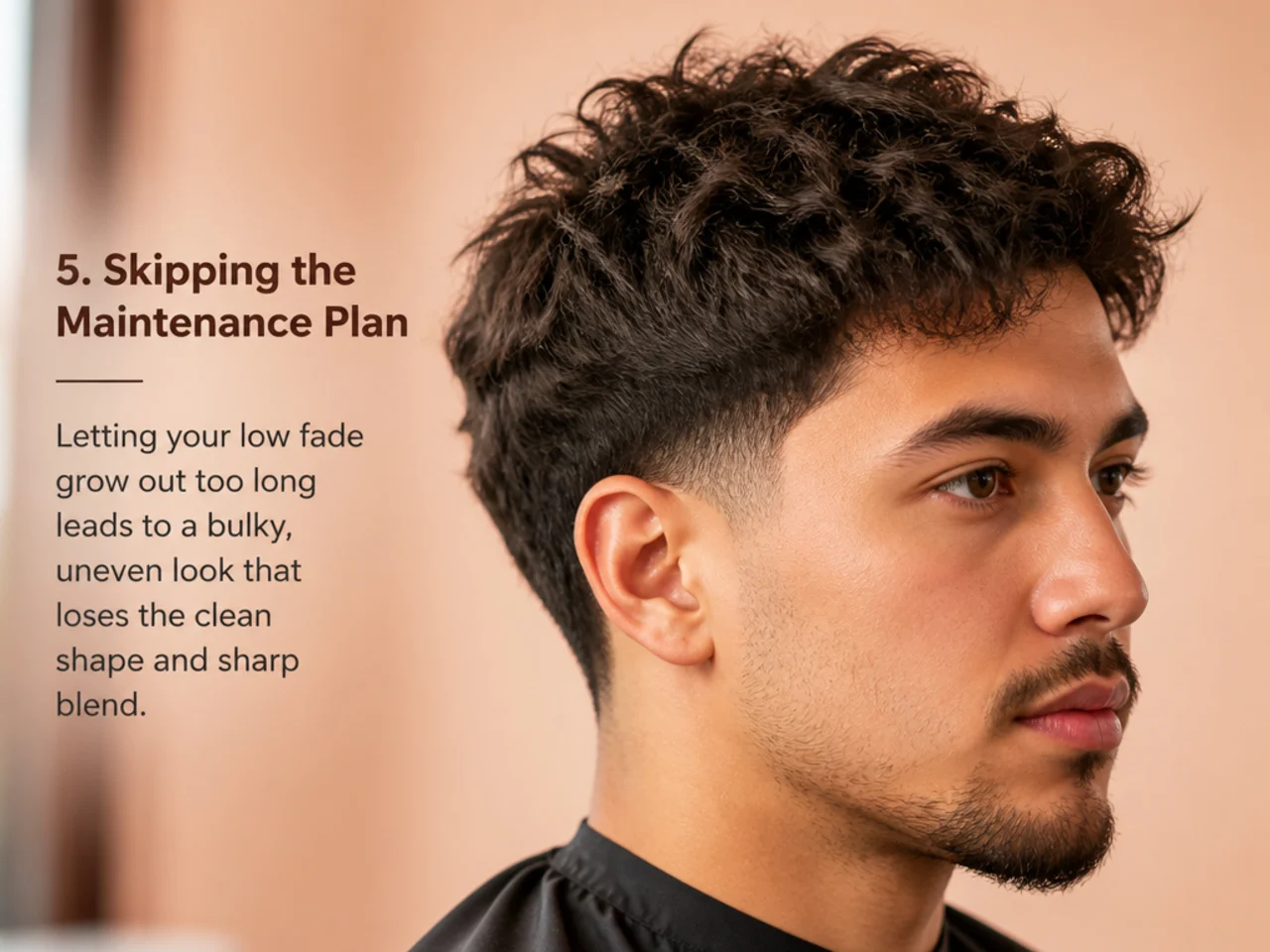
Alex, 27, works remote and only comes in when his hair "looks bad in Zoom." That's usually week five or six. By then the fade has grown into a shapeless side-mullet and his top has ballooned past what the shape was cut for. Every one of those cuts turns into a rebuild instead of a re-cut, and he ends up with something farther from the original than he wanted.
Why it happens. A low fade grows out more gracefully than a mid or high, which fools guys into thinking they can push the cadence. The transition line still blurs by day fourteen. By day twenty-eight the blend is basically gone. By week five the whole shape has migrated up your head.
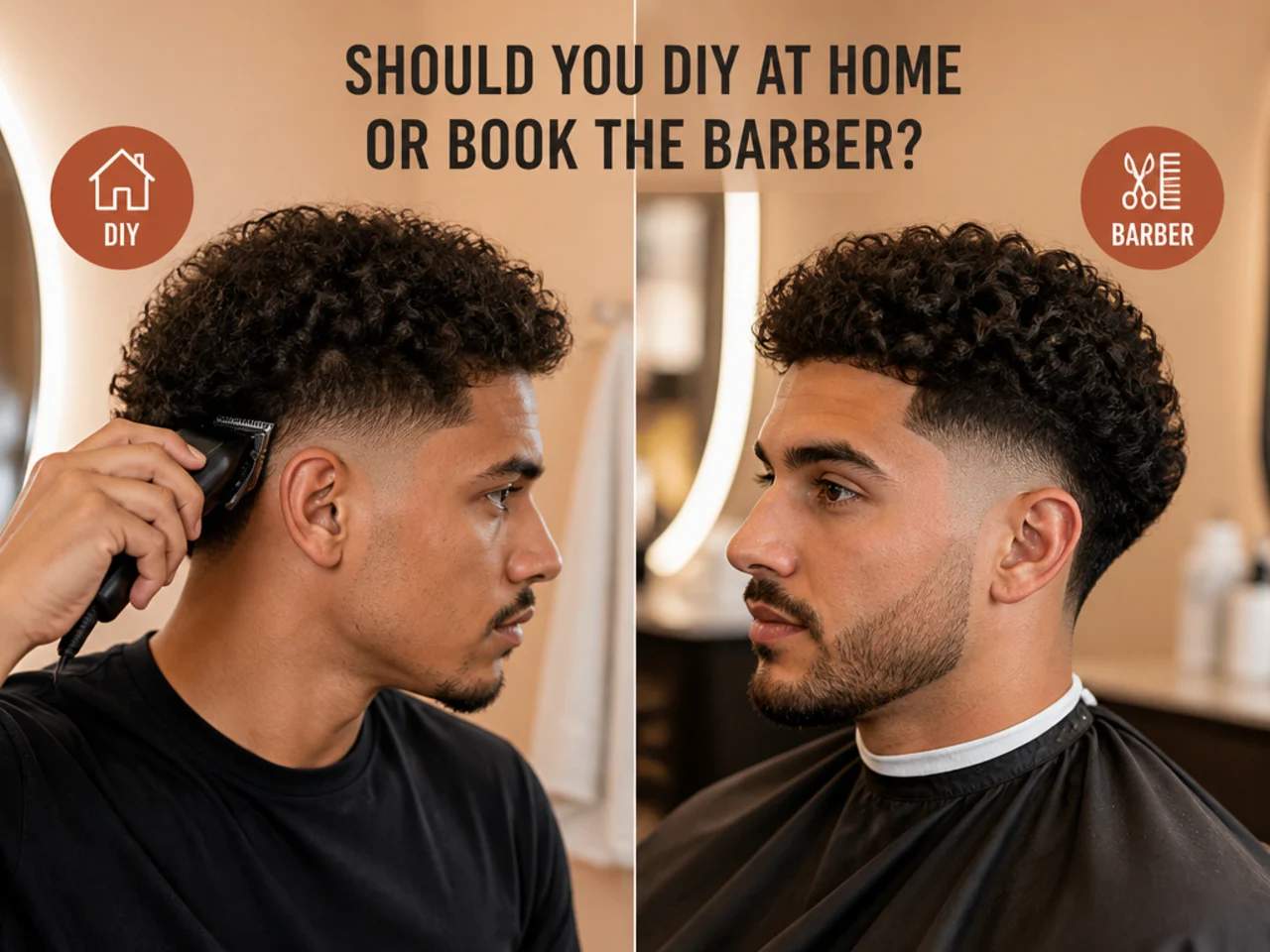
The fix. Book the next appointment before you leave the chair. Not "I'll call you next month" — actually put the appointment in the calendar at the register while the receipt prints.
- Every two weeks if you want the fade to look freshly-cut all the time.
- Every three weeks for a good balance of cost and cleanness.
- Every four weeks is the outer limit before the shape starts to lose its identity.
Most shops offer a fade-only touch-up between full cuts — fifteen minutes, cleans only the sides and back, runs about half the price of a full visit. Ask about it. It's the single best-kept secret of chair economics.
For deeper cadence math and the visible growth-out timeline, see how often should men get a haircut.
What better looks like. Alex now runs a standing three-week slot. Same day, same time, no calendar negotiation. His fade has looked the same in every video call for the last four months. He hasn't done a rebuild in a year.
6. Staying Silent in the Chair
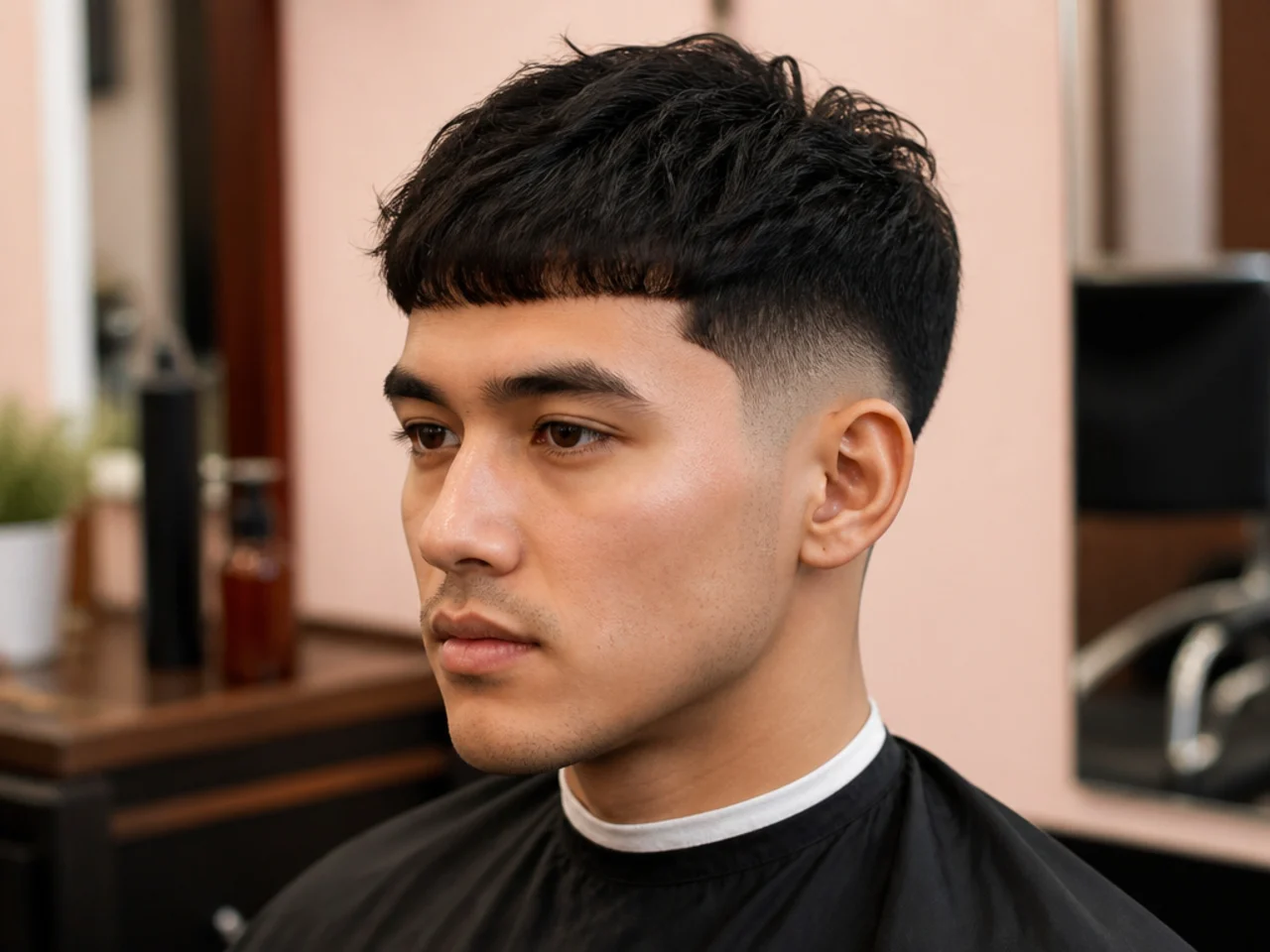
The last one is the mistake I hate the most because it's the easiest to prevent. Guys sit in the chair, watch the barber pull the clippers up too high, feel the fade coming out shorter than they asked for, and say nothing. Then at the end they nod through the mirror check and walk out with a cut they'll complain about for two weeks — never to the barber who cut it.
Chris did this to me twice before I called him on it. His third visit I asked mid-cut whether the fade start looked right in the mirror. He paused and said, "It's higher than I meant." We paused, dropped the transition back down, and finished the cut. He's spoken up on every visit since. That's a five-year regular now.
Why it happens. Guys don't want to seem picky. They read a barber's confidence as the cut being on track, even when their own eyes tell them it isn't. Also — the chair is a strange power dynamic. You're in a cape, the tools are moving, and the person cutting knows more about hair than you do. It feels rude to interrupt.
The fix. Speak in specifics, not complaints.
- Mid-cut: "Can we lower the fade start by about a finger? It's tracking a bit higher than the reference." Never "I don't like it."
- Mirror check: "The blend has a slight line at the transition — can you soften it with a #2 pass?" A barber can fix a hard line in thirty seconds while you're still in the chair. Not so much after.
- Top length concern: "Can you leave another half-inch on the crown? It's shorter than my usual." Barbers respect measurable feedback.
Every fix above takes less than a minute of chair time and saves you three weeks of wearing a haircut you're annoyed at.
What better looks like. Your barber genuinely appreciates the mid-cut check. It gives them a chance to correct in real time instead of learning about the mistake through your absence at the next appointment. I keep clients longer when they speak up. So does every good barber I know.
The Turning Point: Book the Cut Around the Grow-Out
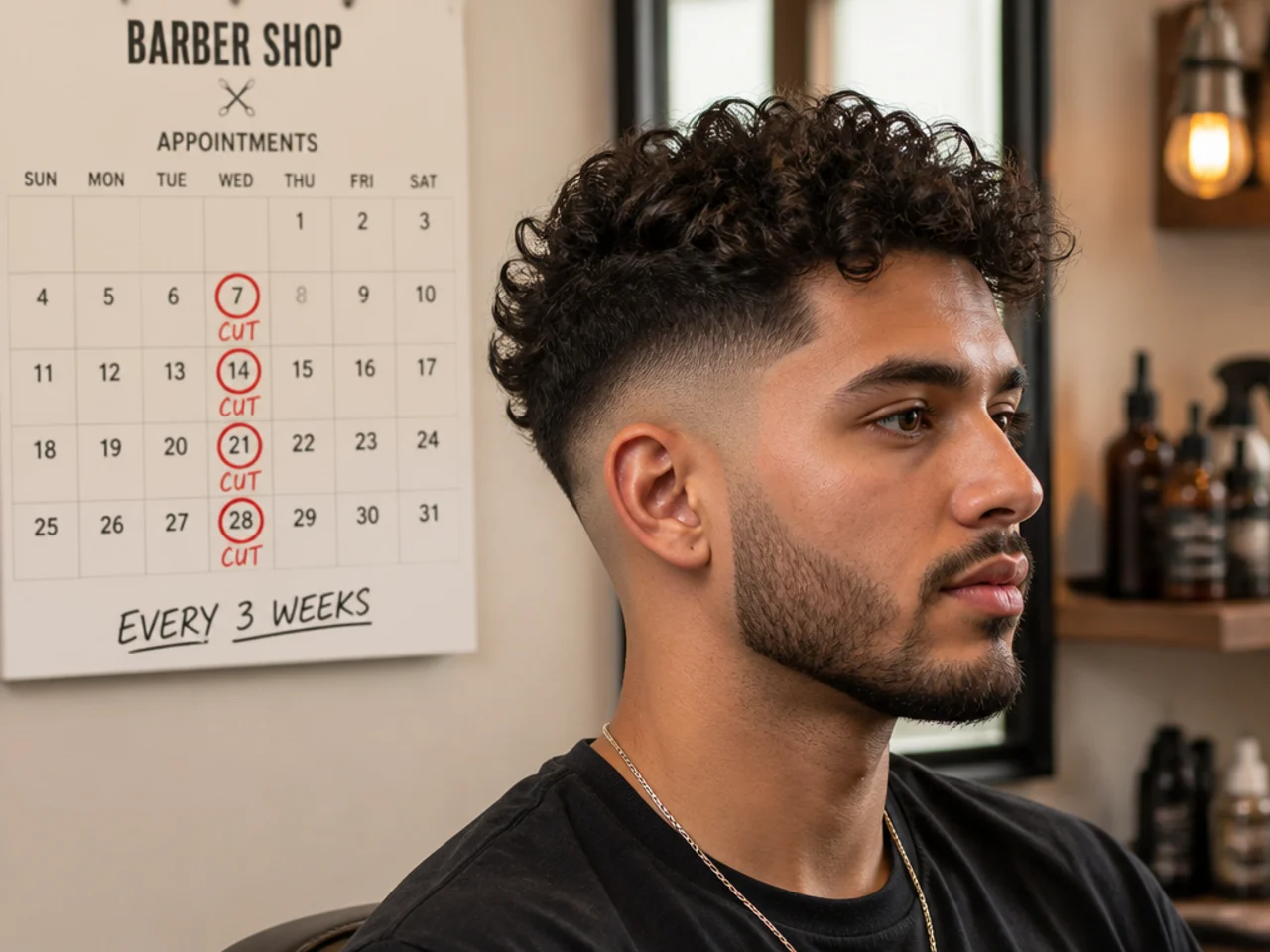
Every regular who stopped making these mistakes made the same single change. They stopped treating each haircut as a one-off booking and started running a standing appointment every two to three weeks. That one habit fixes almost everything above without conscious effort.
Here's why. When you're in the chair every three weeks, the barber's memory of what worked last time is still fresh. Your reference photos live in a folder that gets reviewed every visit. The guard number, the fade start, the top length — the whole brief becomes muscle memory for both of you. The cut gets better over time instead of drifting.
The other half of the habit is a phone folder. Three photos: your best reference, your fresh cut from the last visit, and a day-twelve photo of that same cut. That last one is gold — it shows the barber how the shape ages on your specific hair, which nothing else in the room can tell them. Every regular I have who owns this folder gets a better cut than the guy who doesn't.
The math on standing appointments works too. Two visits at three weeks apart cost the same as one full cut plus a fade-only touch-up at most shops, but the second option keeps the sides sharp for the whole six-week window. Ask about the touch-up option next visit — it's how the guys in my chair who look best week-in and week-out keep the fade fresh without the full-cut budget.
What to Do Next
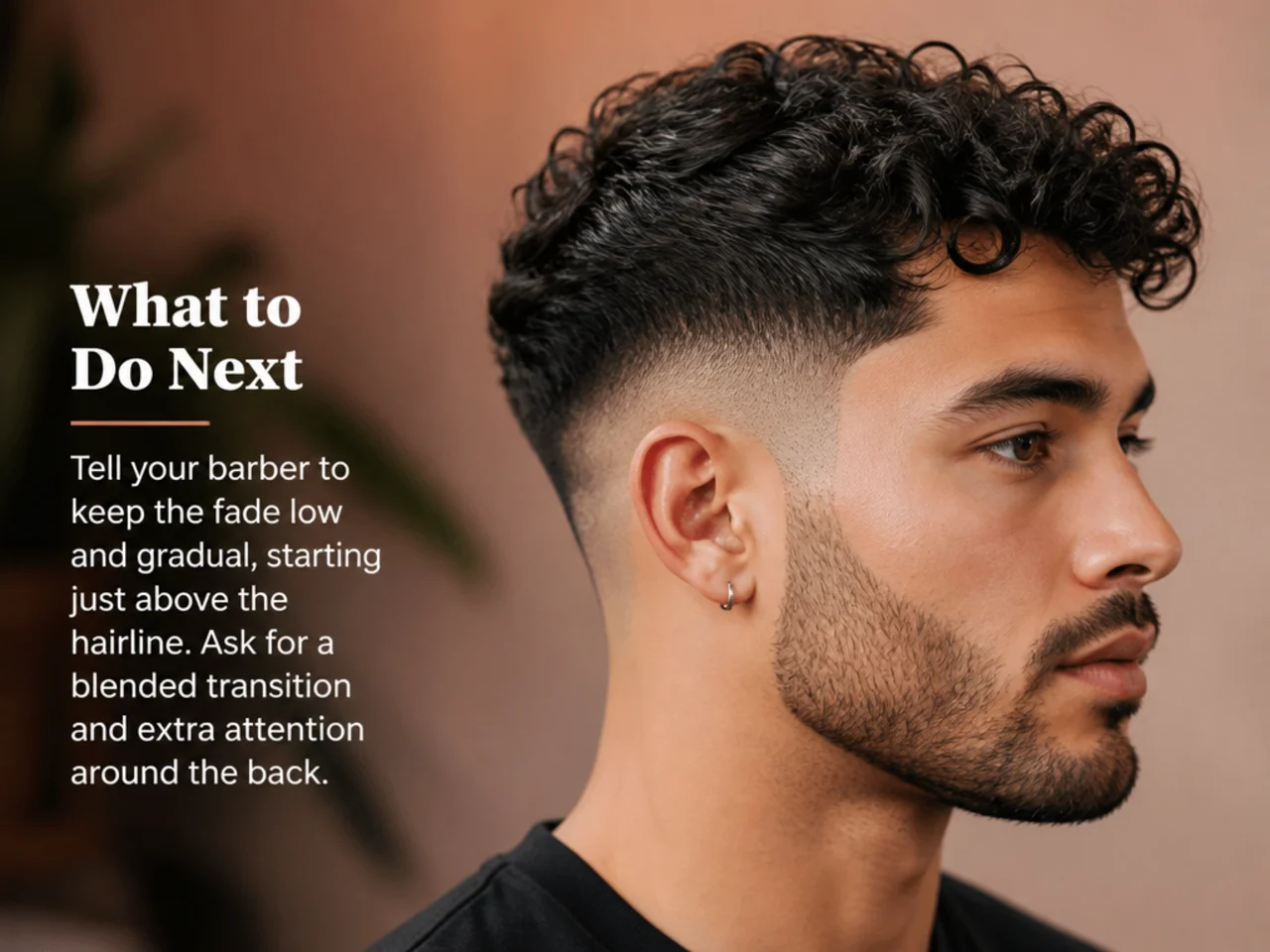
Read the six mistakes above one more time and mark the one that hit you hardest. That's the one to fix first. For most guys it's either mistake one (fade drifted high) or mistake five (waited too long between cuts) — those two account for maybe seventy percent of the "why does my fade look off" conversations I have.
Then build the ninety-second brief into your next visit. Save two reference photos. Write the exact ask — cut name, start point, guard number, top length, neckline — into a note on your phone. Read it out loud to the barber before you sit down. It sounds over-prepared until you see the difference in the cut.
If you're between fade heights and still not sure the low is right for you, the low fade vs mid fade vs high fade breakdown covers the trade-offs. If your last low fade felt too subtle, the pure low fade haircut men roundup shows thirty variations with clearer contrast. For a softer sibling with more forgiveness on the grow-out, look at the low taper fade or the six-step ordering brief in low taper fade men. The full fade haircut family tree sits above all of them.
Curly on top and worried the fade won't play with your texture? Curly hairstyles for men covers how the top length calls above change when the top is coily. If your job leans more polished, textured haircuts for men shows a range of workplace-safe tops that sit well over a low fade. And if you're thinking about clipping between shop visits, the best hair clippers for men roundup covers the tools that hold up past month three.
FAQ
What's the most common low fade mistake men make at the barber?
Asking for a low fade without naming where the fade should start. Barbers hear "low fade" all week and default to whatever they cut for the last guy — usually a hair too high. Point at the top of your ear and say "start the fade right here" before the clippers move.
How do I stop my barber from cutting my low fade too high?
Physical pointing beats verbal directions. Touch the spot just above your ear and say "fade starts here — nothing above this line." Repeat the sentence if the clippers drift up during the first pass. A barber can always take more off; they can never put it back.
What guard number is safest for a first low fade?
A #1 at the shortest point. It reads clean without exposing scalp, grows out gracefully for two to three weeks, and gives you room to go shorter next visit if you want more contrast. A #0.5 reads sharper but grows out faster; a #0 or skin puts you outside low-fade territory entirely.
Do I really need to bring a photo for a low fade?
Yes — two photos, actually. One three-quarter side shot showing the fade height, one front shot showing the top length. Verbal directions alone leave too much room for a barber to fill in blanks with their house default. Thirty seconds of pointing at photos removes ninety percent of the misorders I see.
How often should I re-cut a low fade to keep it sharp?
Every two to three weeks. The blend line blurs first, usually by day fourteen. Book the next appointment before you leave the chair — most shops offer a cheaper fade-only touch-up between full cuts that keeps the sides sharp for half the price of a full visit.
Can I fix a bad low fade at home?
Not really. You can clean the neckline with a beard trimmer and soften a rough sideburn edge, but you can't fix a fade that's too high or a hard transition line without a full re-blend. Go back to the shop, ask for a free touch-up if it's within a week, and re-brief the guard number and start height.