5 Middle Part Mistakes Guys Make Styling It
A working stylist breaks down the five mens middle part mistakes I fix every week — wrong length, no product, off-center part, no blow-dry direction, and fighting the cowlick — with the exact fix for each.
In this article · 16
- Why the Middle Part Is a Styling Problem
- The 5 Middle Part Styling Mistakes I See Every Week
- 1. Trying to Style It Before It's Long Enough
- 2. Skipping Product — or Reaching for the Wrong One
- 3. Parting Off-Center or Along Your Natural Side Split
- 4. Blow-Drying Up Instead of Forward
- 5. Fighting Your Cowlick Instead of Working With It
- The Turning Point: Train the Hair, Don't Fight It
- What to Do Next
- FAQ
- What is the biggest mens middle part mistake?
- What length of hair do I need for a proper middle part?
- What product should I use to style a middle part?
- How do I stop my middle part from splitting to the side?
- Do I need to blow-dry a middle part every day?
- Can I do a middle part if I have a cowlick?
I do middle parts on straight, wavy, and curly hair five days a week, and the same five styling mistakes walk through my door on repeat. The cut is usually fine. The styling is not. Guys treat the middle part like it styles itself the way a fade does — no product, no direction, no plan. Then it splits sideways by lunch. Below are the five mistakes I fix most, the client story behind each, and the exact fix I hand them before they leave.
Why the Middle Part Is a Styling Problem
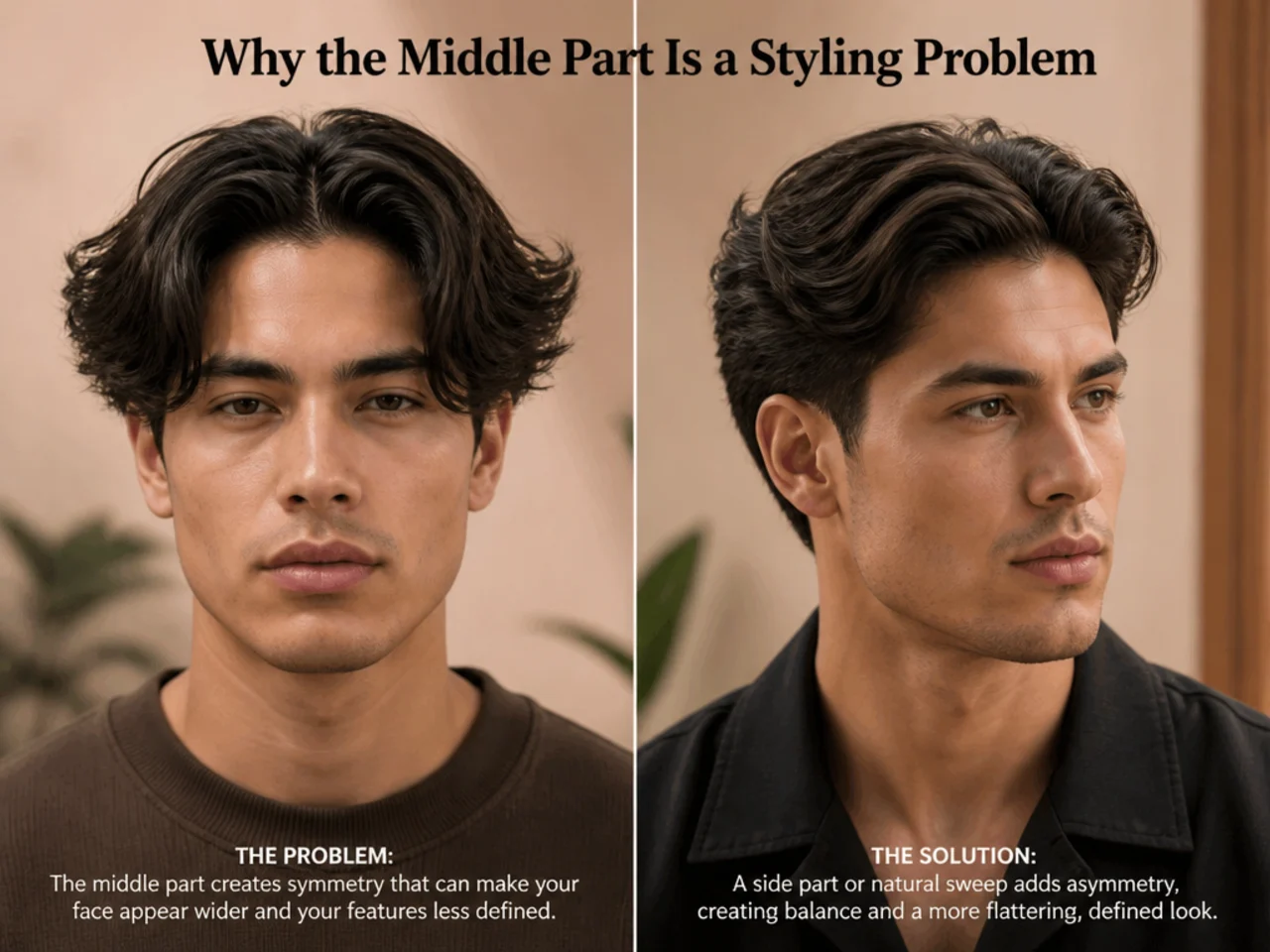
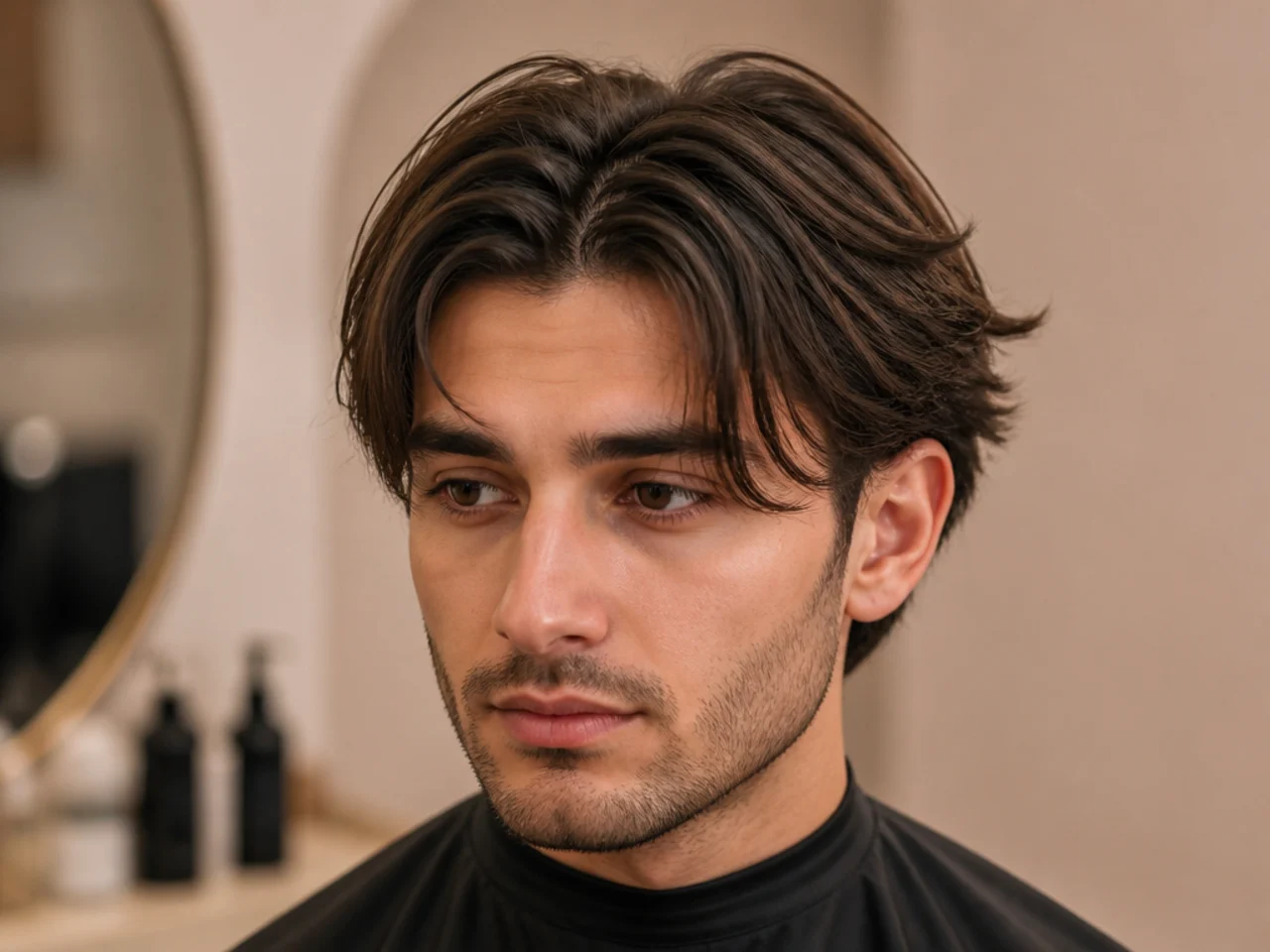
A middle part haircut is a styled shape, not a cut shape. Scissors give you the length and the layers. Everything the eye reads — the split down the center, the curtain drop, the way each side sits away from the face — happens in the ten minutes after you get out of the shower. Skip that window and the cut collapses back to whatever your hair wants to do on its own.
That gap is where every guy I fix gets stuck. They love the shape at the shop, then wake up on day two with a lopsided fringe and blame the barber. In almost every case the barber cut it clean. The client just never learned the routine — or picked up the wrong one off a thirty-second TikTok and is running it every morning.
The good news is that the styling side is small. Five moves, four products max, ten minutes total. Own them and the cut lasts the full six weeks it was designed for.
The 5 Middle Part Styling Mistakes I See Every Week
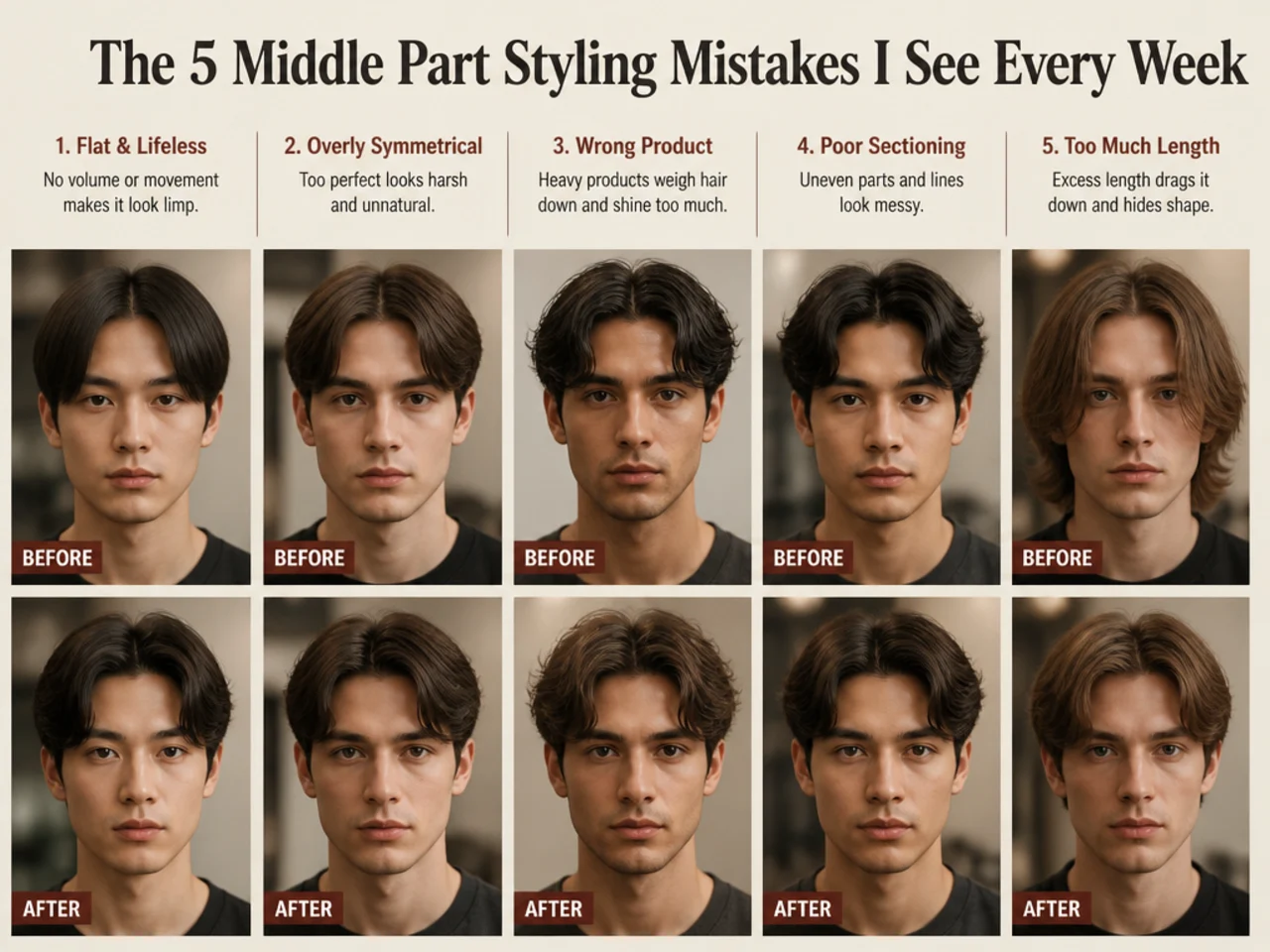
Read the one closest to your last mirror check, then borrow whatever fits. Most guys are doing two or three of these at once — fix the biggest one first and the others usually get easier.
1. Trying to Style It Before It's Long Enough
Danny is a 24-year-old med student who came in last February with a phone full of Timothée Chalamet reference photos and about three inches of length on top. I told him what I tell someone every other week: the shape in those photos needs at least an inch and a half more length than he had. He tried anyway. Three weeks later he came back angry because the split popped back up by 10 a.m. and he was tucking one side behind his ear all day.
Why it happens. A middle part needs weight to fall. Gravity holds the split — the curtains have to be heavy enough to drape past your temples on their own. Under four inches on top there is no weight, and the hair springs back up the second you take your hand off it. No product fixes this. It is a physics problem.
The fix. Grow the top to at least four inches measured straight up from the scalp with a comb before you commit. Four holds a short curtain. Five drapes to the cheekbones. Six gives you the full flowing look. In the grow-out window, book a shape-up every three weeks — no length off the top, just sides cleaned and the fringe kept out of your eyes. The awkward stage is what makes most guys quit.
What better looks like. Danny grew for another three months and came back at just under five inches. First blow-out with me the split fell in and held all appointment. He's worn the same shape for a year. If you want the fastest legal-length version, the short textured middle part in the middle part haircut men roundup works down to about three and a half inches with the right layering.
2. Skipping Product — or Reaching for the Wrong One
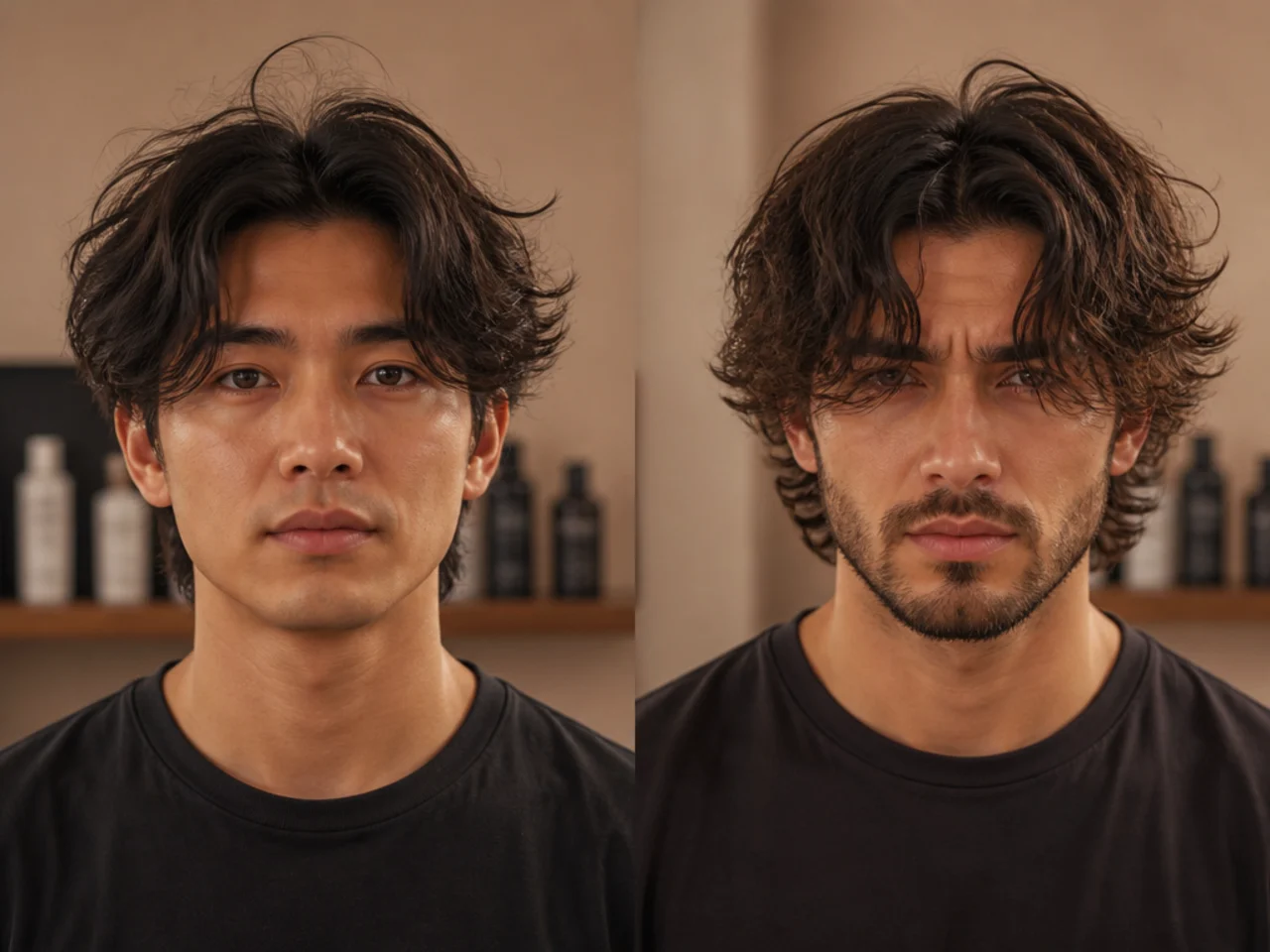
Miguel is 27, works in marketing, and walked in after a Zoom call where he said his hair "looked like a wet cat." He'd been styling his middle part with a shine pomade because his older brother uses it for a slick-back. On his brother's slick-back it looks sharp. On Miguel's middle part it flattened both curtains against his cheeks and dated the shape by about twenty years. The cut was clean. The product killed it.
Why it happens. Middle parts want texture, not shine. The appeal is a natural, lived-in drape — that reads modern. Gloss reads like a 1990s prom photo. Guys grab whatever product is in the bathroom, and if that product is a shine pomade, a gel, or an old-school wax, the shape flips from casual to costume overnight.
The fix. A pea-sized amount of matte styling clay or paste, warmed between your palms until it goes clear, then raked front-to-back through the ends only. Never at the roots. Roots stay clean so the shape can lift. Ends carry the product so the split holds. That is the whole product routine.
If your hair is fine and clay looks too heavy, swap to a cream or a light-hold paste. If it's thick or wavy, add a light sea-salt spray on damp hair before the clay — the salt gives the strands grit to hold the split before the clay locks it. Skip gels and anything that describes itself as "wet look." For wavy hair specifically, the best wavy hair products roundup covers the matte finishes that hold without going flat.
What better looks like. Miguel switched to a matte clay that afternoon. Next morning he sent me a photo — split holding, ends with movement, no shine anywhere. One product change fixed a cut he was ready to grow out.
3. Parting Off-Center or Along Your Natural Side Split
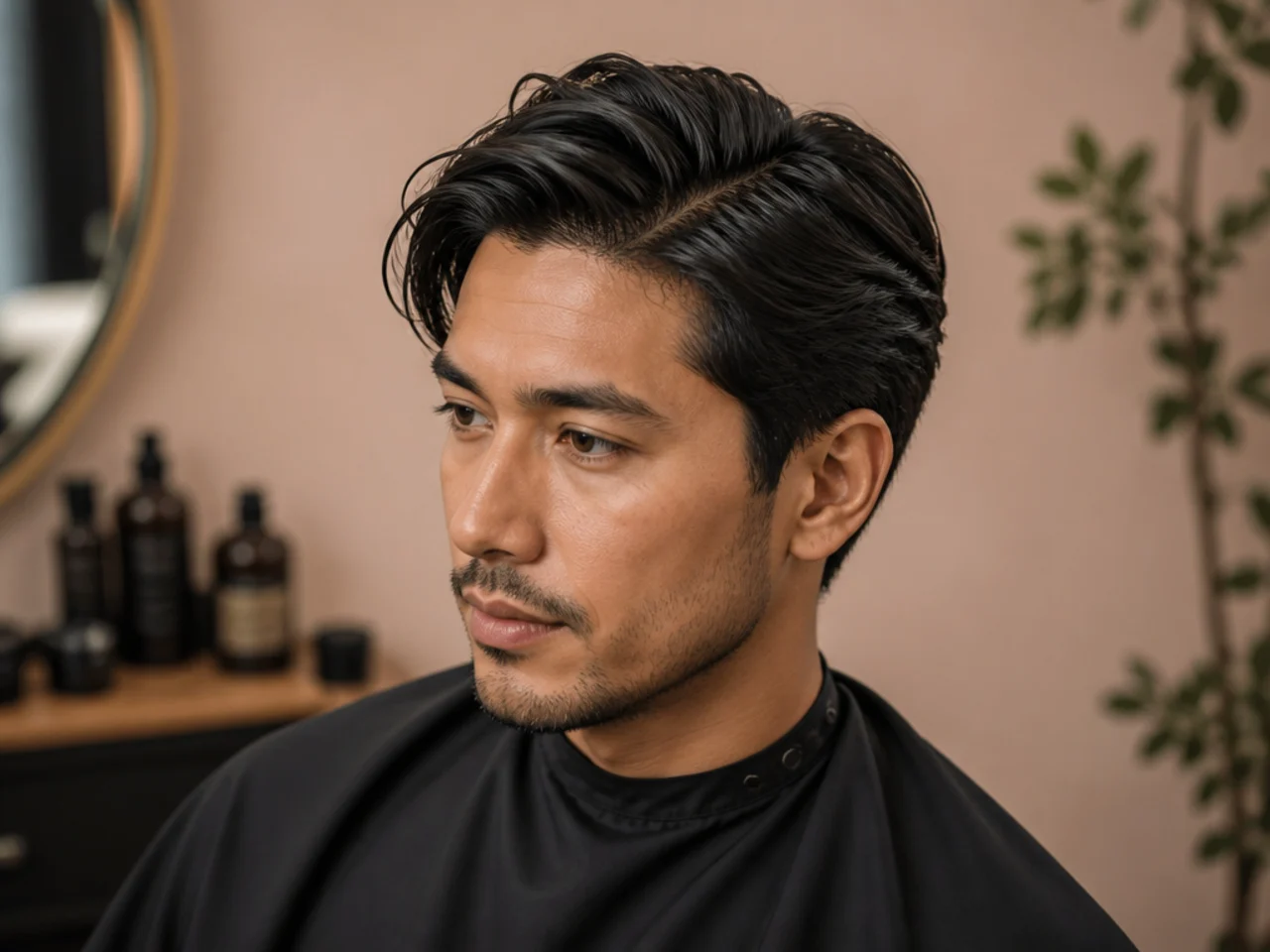
Ryan is 30, a graphic designer, and had been running his middle part slightly off to the left for months without realizing it. His natural side split sits about half an inch off center. Every morning he was dragging his fingers through and hitting the natural split, so the "middle" was actually a soft side part on repeat. By afternoon the hair had migrated the rest of the way over and the whole cut was reading as a lopsided flow. He blamed the barber for two months. It was the fingers.
Why it happens. Everyone has a natural split — a direction the hair falls in based on growth pattern from childhood. Use your fingers to part and the hair wants to fall along that split, not down the geometric center of your scalp. Most guys never check the part in a mirror head-on, either — they part by feel, and by the time they look up, the split has drifted.
The fix. Two moves. First, buy a rat-tail comb — the ones with a long pointed handle. Three-dollar tool that solves this forever. Second, use the middle of your nose as your landmark. Face the mirror head-on. Rest the tip of the comb on the bridge of your nose. Drag it straight back to the crown along that line. As long as the comb tracks with your nose bridge, the part sits center.
Do this while the hair is still damp from the shower. Damp hair holds a split; dry hair fights you. Once the part is set, lock it before it fully dries with a spritz of sea-salt spray or a smear of clay through the front of the split.
What better looks like. Ryan bought the comb, and the first morning his part sat dead center for the whole day. He now runs the routine every morning in about fifteen seconds. It is the single cheapest fix in this guide.
4. Blow-Drying Up Instead of Forward
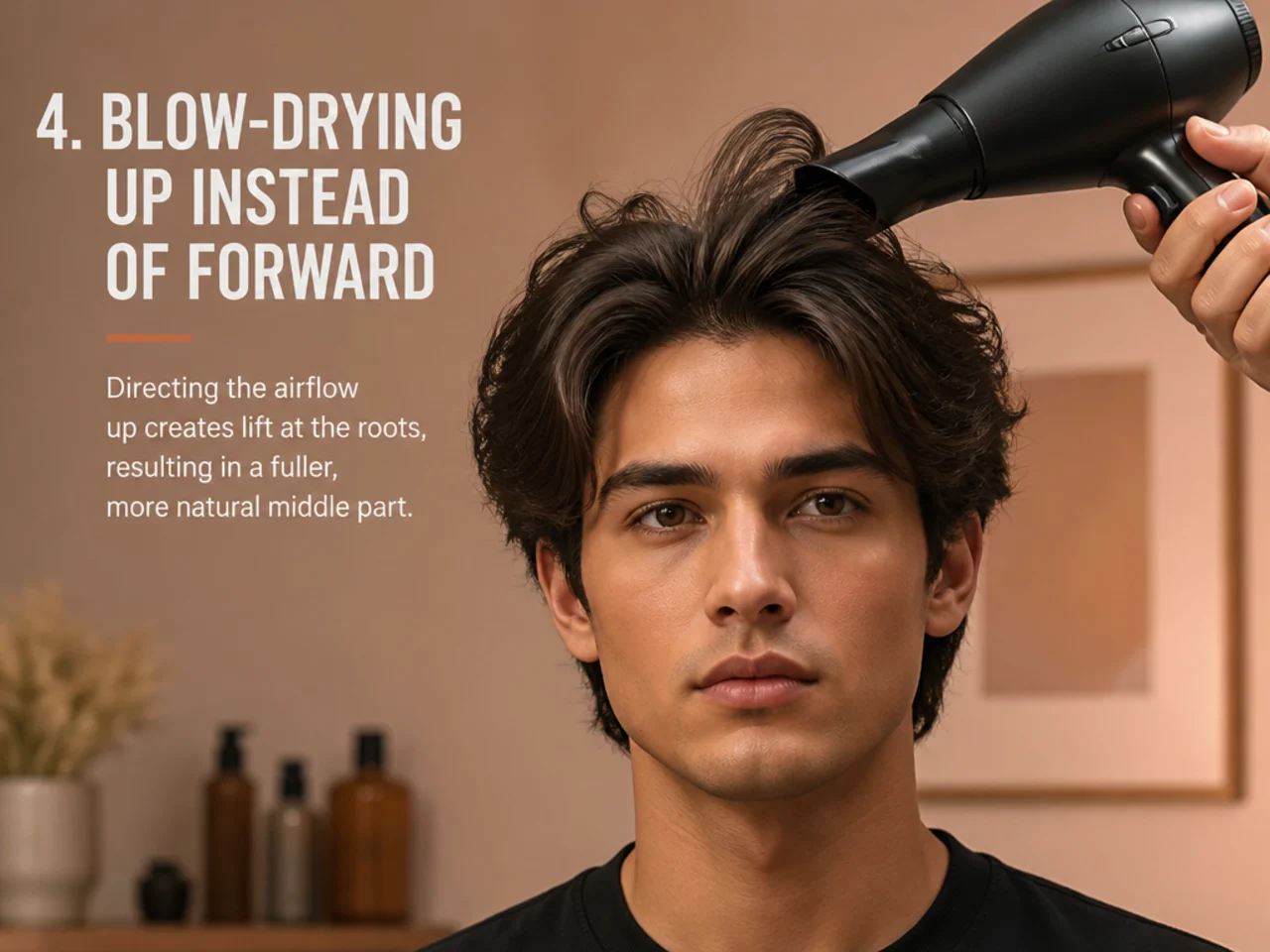
Aaron is 26, tech sales, and had been blow-drying his middle part like he was trying to build a quiff. Dryer angled up from underneath, no nozzle, roots blasted from below to add volume. Every morning he was manually undoing the drape a middle part is designed for. The result looked like a middle-part-shaped pompadour — puff at the crown, no fall to the sides, curtains pushed backward off his face instead of forward. He asked me if his hair was just "too puffy for the cut." His hair was fine. His dryer angle was wrong.
Why it happens. Middle parts need drape. Drape needs the hair to fall down and forward off the scalp. Angle a dryer up from below and you flip the fall pattern — every strand gets pushed against gravity, and the roots lift instead of settle. Right technique for a pompadour. Exact wrong technique for a middle part.
The fix. Three settings and one motion.
- Attach the nozzle. It concentrates the airflow so you can direct it. No nozzle equals no control.
- Set medium heat. High heat frizzes fine hair and dries ends too fast to shape. Cold air won't move the hair at all. Medium is the sweet spot.
- Point the nozzle down the shaft, angled forward. Roots to tips, top of your head to the front of your face. This trains the curtains to fall forward off the crown.
Tip your head forward while you dry. Gravity does half the work. Back first, then sides, then top. Never blast air up from below. That one habit change fixes about a third of the middle parts I retrain. The styling section of the middle part haircut men guide walks through the full routine with photos.
What better looks like. Aaron reversed the angle the next morning and sent me a photo before his 9 a.m. First drape he'd ever gotten. He now runs the same motion in about four minutes. His crown puff is gone.
5. Fighting Your Cowlick Instead of Working With It

James is 32, works in finance, and has a cowlick at the front of his crown that lifts a two-inch patch straight up no matter what he does. He came in last spring with a middle part that looked fine everywhere except the top-front corner — the cowlick was pushing the split half an inch off center and giving him a rooster tuft. He'd tried three different pomades. He was ready to grow it out. I asked him if he'd ever blow-dried against the cowlick. He had never even identified where it was.
Why it happens. A cowlick is a spiral in your hair growth — usually at the crown, sometimes at the front hairline, sometimes both. Hair from a cowlick refuses to lie in the same direction as the hair around it. Any styling that assumes uniform fall will fail at that spot. Most guys never know they have one until a middle part exposes it — a fade or buzz cut hides cowlicks entirely.
The fix. Three steps in order.
- Find it. Wet your hair and comb it straight back. Whatever section refuses to lie flat, or spirals up in a swirl at the crown, is your cowlick.
- Blow-dry against it while damp. With the nozzle attached, angle airflow opposite the cowlick's growth pattern. Spirals clockwise? Dry counter-clockwise. Lifts straight up? Aim the dryer down onto it and press the section flat with your fingers while the heat sets. Dry hair holds the wrong shape and won't retrain.
- Lock it with strong-hold matte clay. Not a light clay. A strong-hold matte product goes on the cowlick section specifically before you style the rest. A pea of it, worked in with your fingertip.
If the cowlick sits at the front and is pushing the part off center, part beside the cowlick rather than through it. A middle part that runs a quarter-inch to one side of the cowlick sits straighter than one that runs through the spiral. A fraction off is invisible to everyone else and much easier to hold.
Curly hair with a cowlick is a different fix — you can't blow-dry against a curl without frizzing the head. For that combo, curly hairstyles for men covers the diffuser and curl-cream routine that works with the spiral instead of forcing it flat.
What better looks like. James found his cowlick in the shower that night, blow-dried against it the next morning, and locked it with a strong-hold clay. The rooster tuft has not come back.
The Turning Point: Train the Hair, Don't Fight It

Every client who stopped making these mistakes made the same single change. They ran the eight-minute routine every morning for two or three weeks straight — through the days they didn't feel like it, through the weekends. After that window, the hair started falling into the shape on its own. Cowlicks stayed trained. The part stayed center. The drape held. Once the shape memorizes itself, the daily blow-dry drops to three or four times a week.
That training window is what most guys skip. They style hard for four days, get frustrated when it doesn't stick, and go back to the towel-and-run routine that dropped them here in the first place. Hair takes reps. Three weeks of morning consistency is the cheapest fix in this whole guide — no product, no tool, no barber visit. Just showing up.
A middle part is one of the few men's shapes that gets better between visits, not worse. First two weeks after a cut, ends are still finding their fall. By week three the drape sits perfect. Book a re-cut at six weeks — never sooner unless you're on a fade. If you're running a taper underneath, the low taper fade grows out gracefully in the same six-week window.
What to Do Next
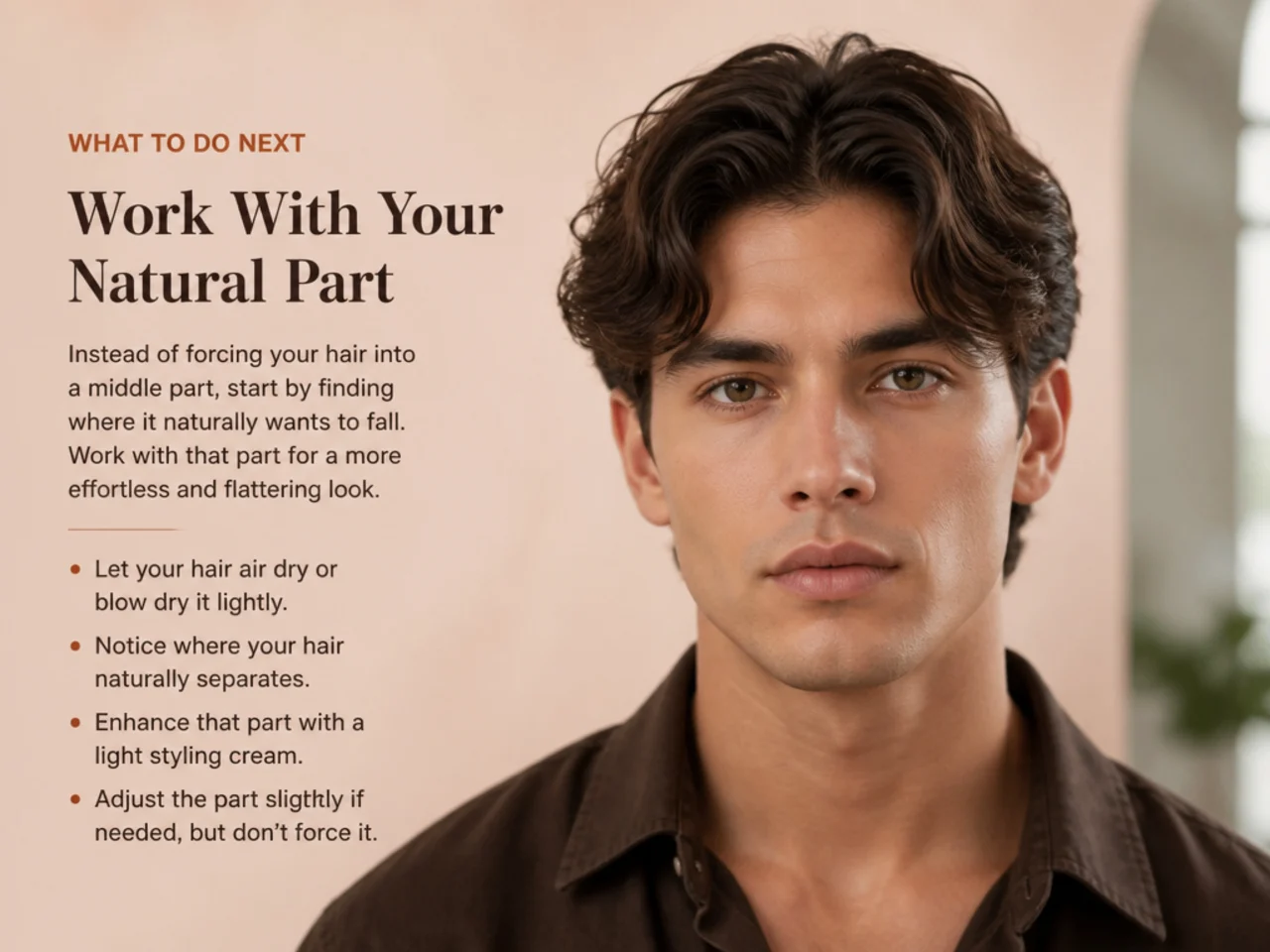
Pick the mistake closest to your last mirror check and fix that one first. For most guys it's mistake four (blow-drying wrong) or mistake two (wrong product) — those two alone account for maybe half the middle parts I retrain. If your top is still under four inches, none of the rest of this matters. Grow it out first.
If you're rethinking the cut, three siblings are worth a look. The middle part mens haircut guide shows how layering direction changes the fall pattern. The middle part flow haircut roundup covers the longer, more drape-forward versions that need less daily styling once trained. And the two block haircut — the Korean base structure — gives you the middle part shape with a shorter side that requires less morning work.
If your middle part is paired with a fade, the korean haircuts for men guide covers the middle-part-plus-taper pairings most K-pop looks are built on. Switching sides entirely? Side part hairstyles for men walks through when a side part is actually the better shape for your face and hair type.
FAQ
What is the biggest mens middle part mistake?
Trying to style a middle part before the top is long enough to hold one. Under four inches on top, the hair pops back up and the split collapses within an hour. Grow the top to at least four inches measured straight up from the scalp before you start expecting the shape to hold — no product or technique fixes a length problem.
What length of hair do I need for a proper middle part?
Four inches minimum on top. Four holds a short curtain; five drapes properly to the cheekbones; six gives you the full flowing curtain look. Anything under three inches is a fringe, not a middle part — the hair does not weigh enough to fall.
What product should I use to style a middle part?
A pea-sized amount of matte styling clay or paste, worked front to back through the ends only. Never at the roots. Shine pomades and gels turn a middle part into a wet-look helmet — matte finish is what makes the shape read modern rather than dated. For wavy hair, add a light sea-salt spray on damp hair before the clay.
How do I stop my middle part from splitting to the side?
Line the part with the middle of your nose using a rat-tail comb before blow-drying, and lock the split with clay before the hair fully dries. Most side-collapses happen because guys drag the comb through dry hair and there is no product holding the split. Damp hair holds a part; dry hair fights you.
Do I need to blow-dry a middle part every day?
Yes for the first two or three weeks after a fresh cut — the daily blow-dry trains the fall pattern. Once the hair remembers the shape, three or four times a week keeps the curtains falling correctly. Air-drying alone rarely gets the split to sit right, especially in the first month.
Can I do a middle part if I have a cowlick?
Yes, but you have to work with the cowlick, not against it. Blow-dry that section against its growth pattern while damp, then lock it with a strong-hold matte product before it fully dries. If the cowlick sits at the front, part a quarter-inch beside it rather than through it. Fighting a cowlick with product alone always loses by afternoon.