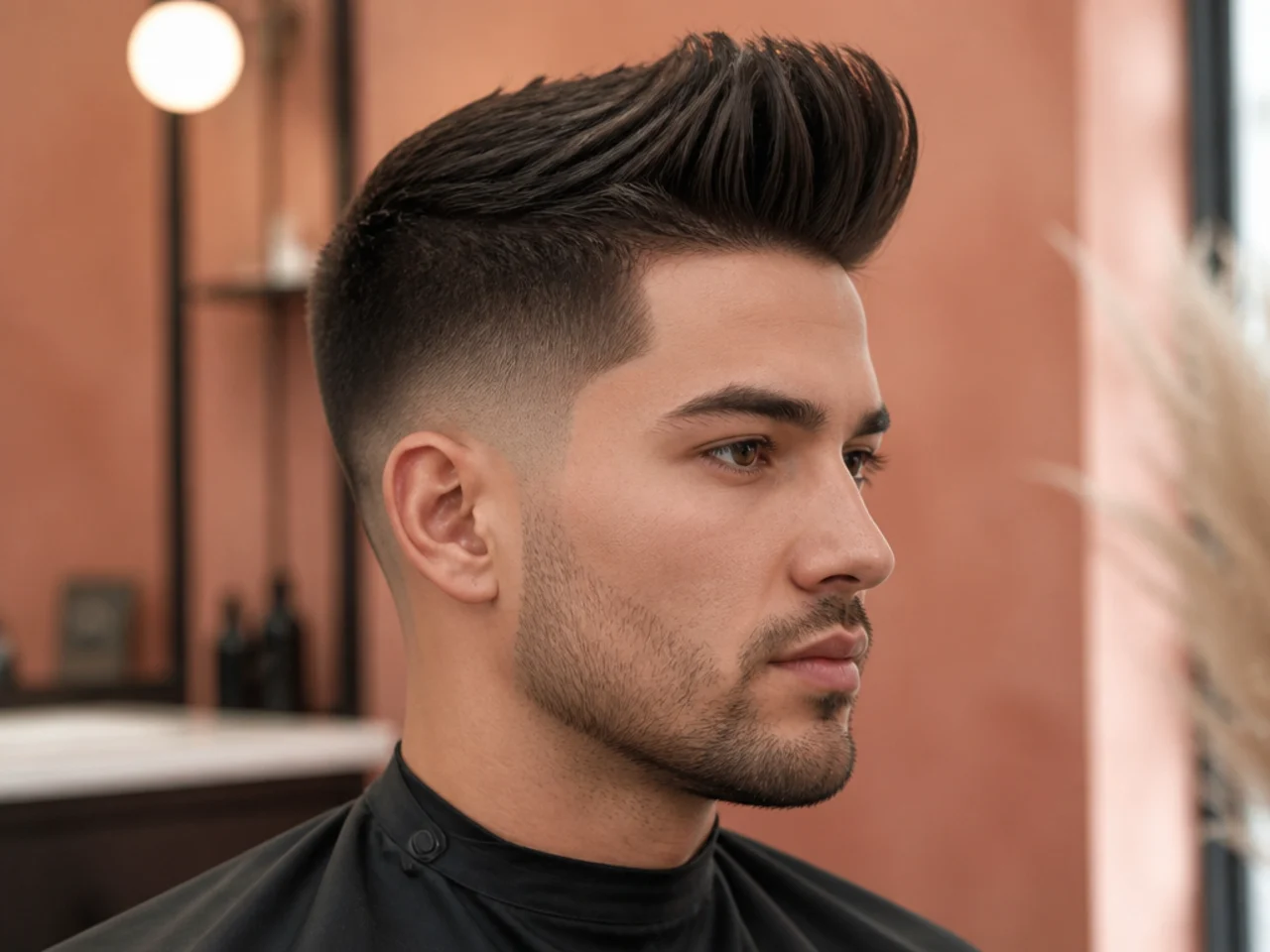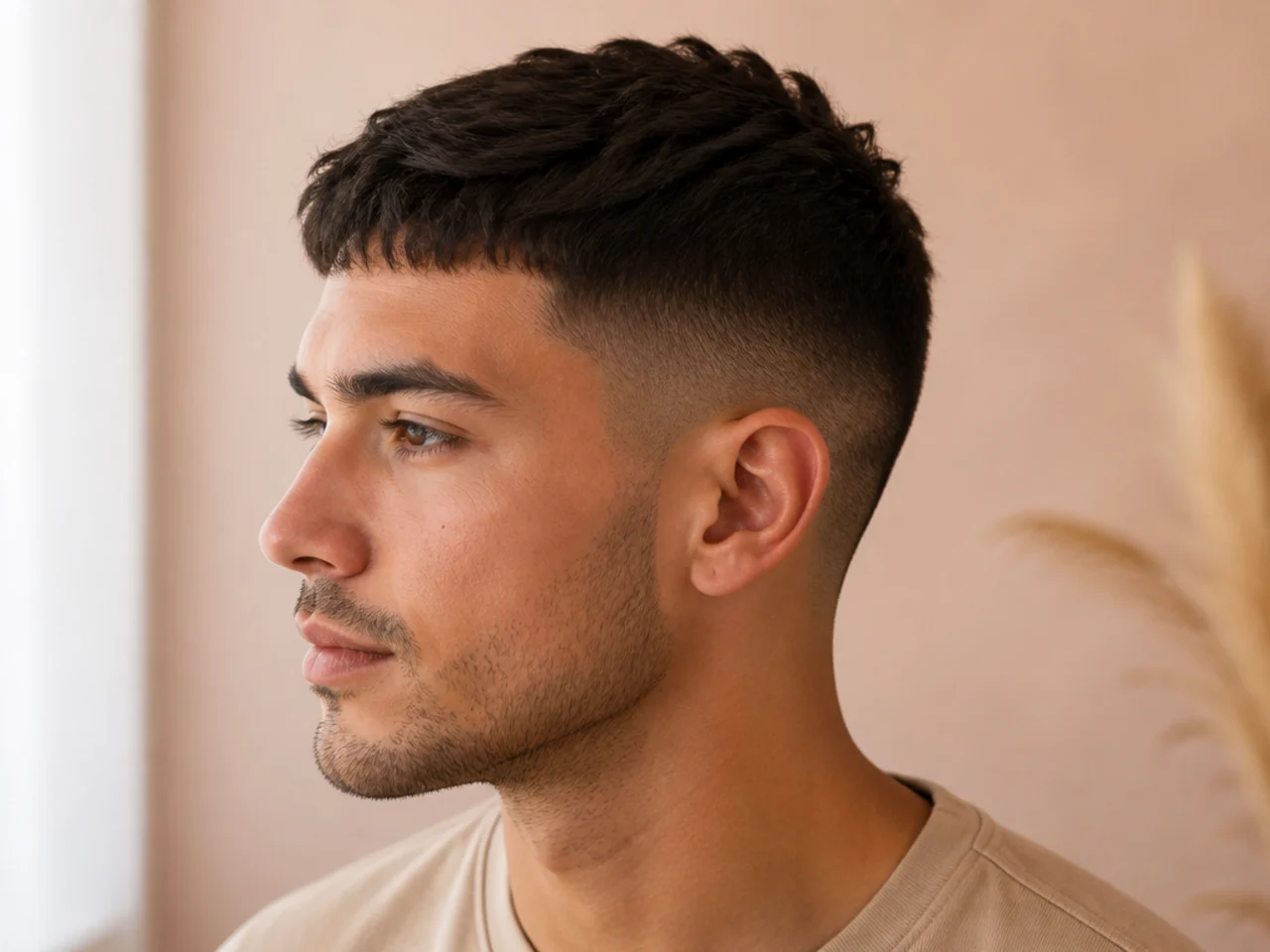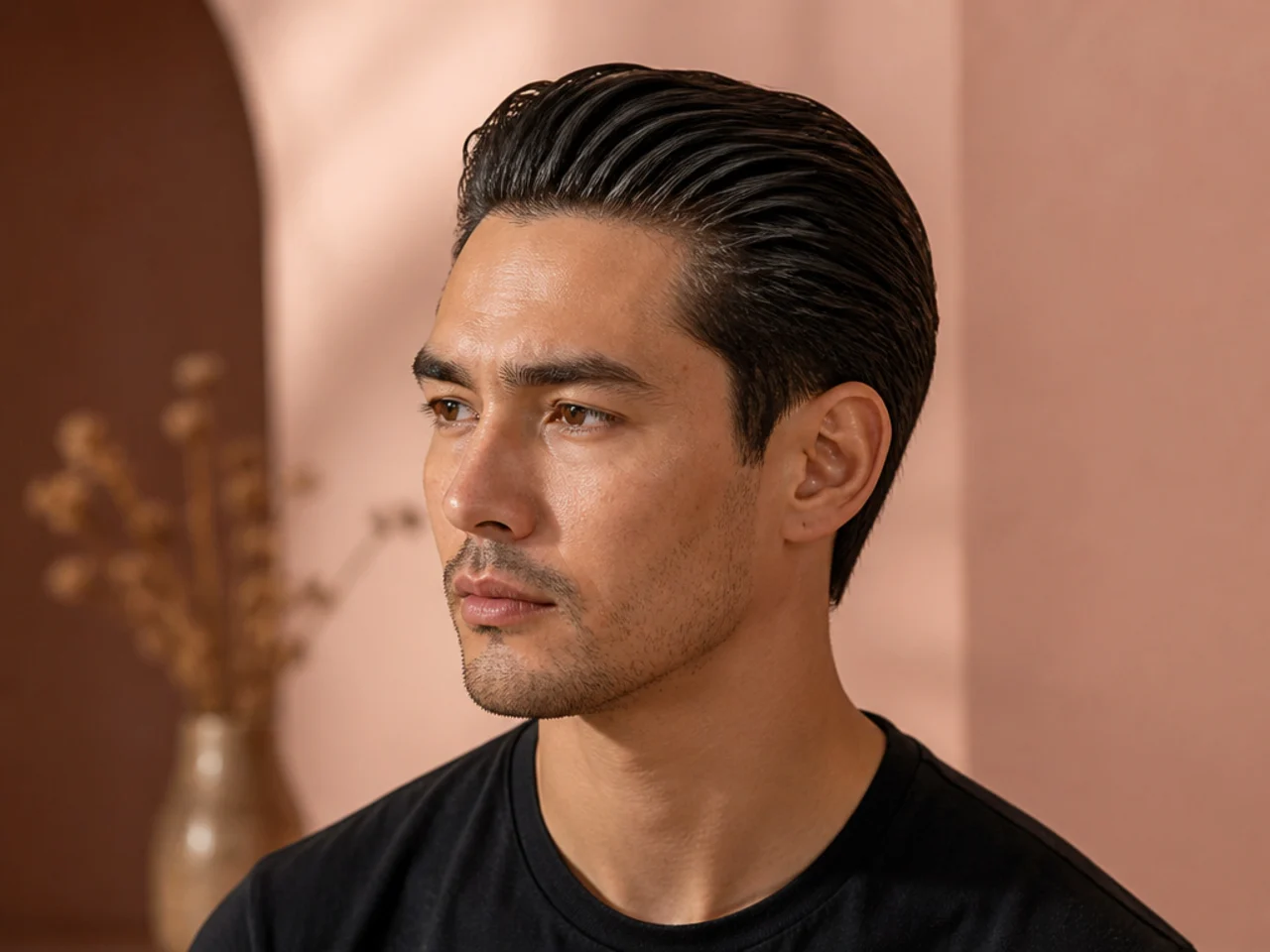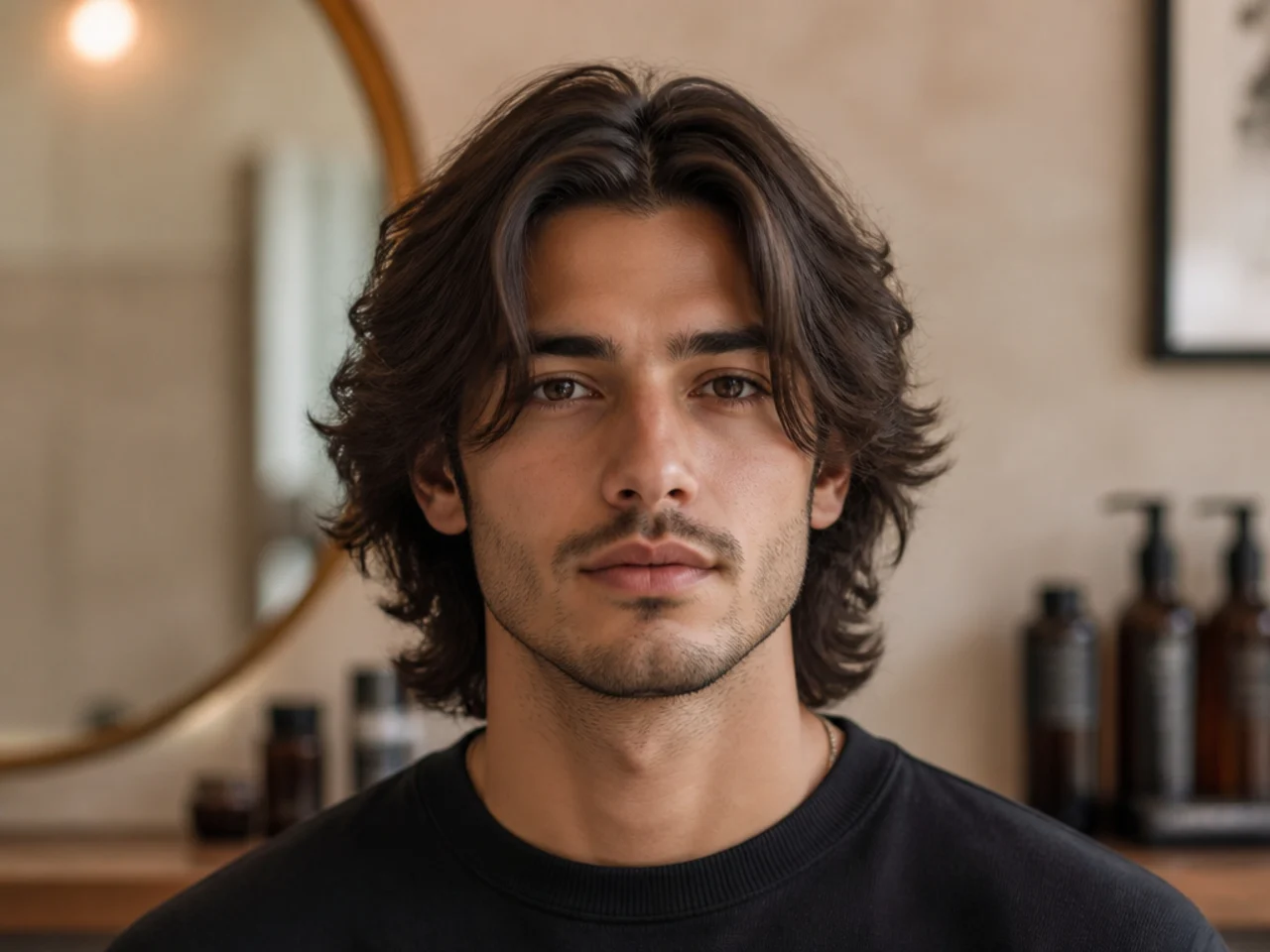
20 Middle Part Flow Haircuts for Men
20 middle part flow haircut ideas for men — curtains, longer flow, surfer flow, K-flow, and medium flow variations. Photos, face-shape notes, and the exact ask for your barber.
In this article · 34
- What Is a Middle Part Flow Haircut?
- How to Choose Your Middle Part Flow
- The 20 Middle Part Flow Variations
- 1. The Classic Middle Part Flow
- 2. The Long Flow with Curtains
- 3. The Surfer Middle Part Flow
- 4. The K-Flow (Korean Middle Part Flow)
- 5. The Medium Flow
- 6. The Middle Part Flow with Low Taper
- 7. The Middle Part Flow with Mid Fade
- 8. The Overgrown Middle Part Flow
- 9. The Short Middle Part Flow
- 10. The Middle Part Flow with Two Block
- 11. The Textured Middle Part Flow
- 12. The Messy Middle Part Flow
- 13. The Slick Middle Part Flow
- 14. The Curly Middle Part Flow
- 15. The Middle Part Flow with Undercut
- 16. The Straight Hair Middle Part Flow
- 17. The Wavy Middle Part Flow
- 18. The Middle Part Flow with Fringe
- 19. The Middle Part Flow with Highlights
- 20. The Middle Part Flow Grown Long
- How to Ask Your Barber for a Middle Part Flow
- Styling and Maintenance
- FAQ
- What is a middle part flow haircut?
- How long does hair need to be for a middle part flow?
- Does a middle part flow work on curly hair?
- What is the difference between a middle part flow and a curtain haircut?
- How often should I re-cut a middle part flow?
- What products should I use for a middle part flow?
- Is the middle part flow good for a round face?
- Can I wear a middle part flow to the office?
The middle part flow haircut is the cut every 4 out of 5 guys ask for on Pinterest right now. Long top split down the center, sides that sweep back behind the ear, and enough movement in the length that it reads flow instead of frozen. This guide runs 20 middle part flow haircut variations worth asking for by name — curtain versions, longer flow, surfer flow, K-flow, and medium flow — with the face shape notes, hair-type caveats, and the exact language for the barber that get you the shape you had in mind.
What Is a Middle Part Flow Haircut?
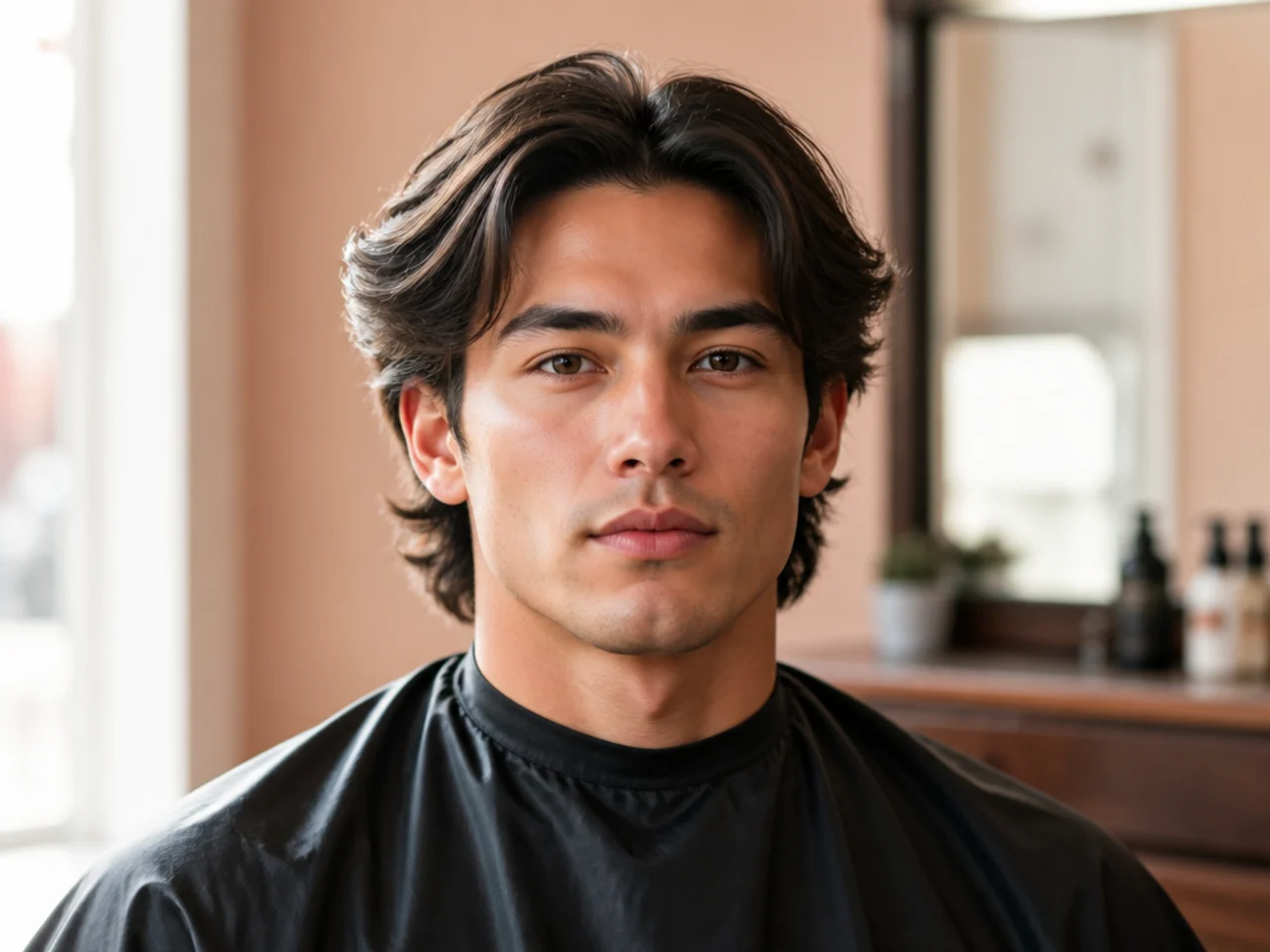
A middle part flow is a medium-length men's cut with three fixed traits. The top runs 4 to 6 inches minimum. The hair splits down the center of the scalp into two panels. And the sides are cut long enough — usually 3 to 4 inches at the temple — that they tuck behind the ears instead of stopping above them. Everything else is a variable stacked on that base.
The flow half of the name is the movement. A cut with a middle part but no flow reads as pure curtains — two panels falling straight forward, no back-sweep, no lift at the crown. A cut with flow but no middle part reads as pure back-swept flow — hockey player, no split. A middle part flow does both. You wear it forward as a curtain in the morning, rake it back as a flow in the afternoon, and both looks work off the same cut.
The reference the cut is pinned against right now is a mix of two lineages. Timothée Chalamet and Jacob Elordi carry the American read — softer, wavier, more editorial. The Korean read — glossier, straighter, K-drama-clean — comes from the middle part haircut tradition K-pop scaled worldwide. Both are the same base cut with a different styling finish.
How to Choose Your Middle Part Flow
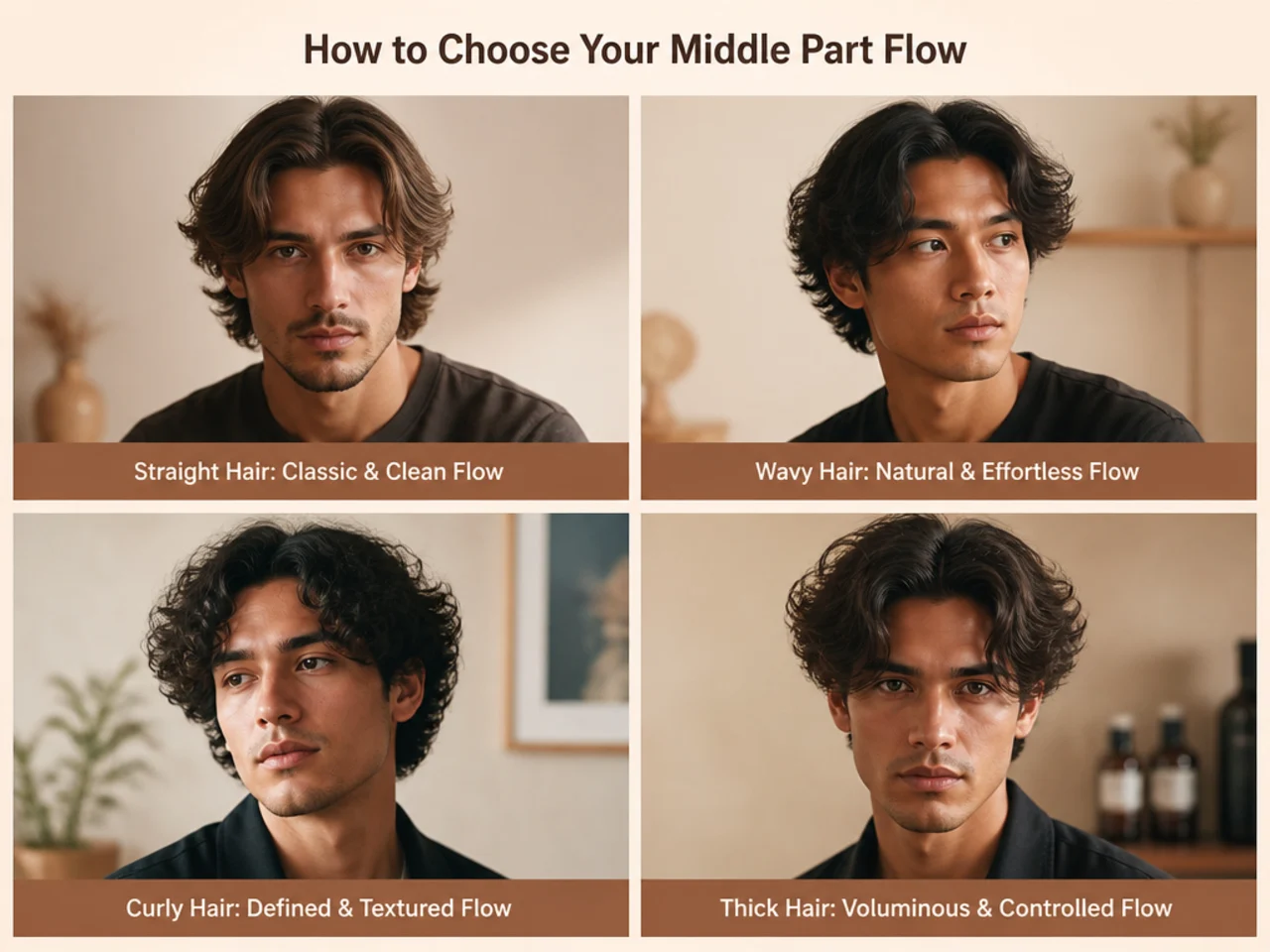
Start with your hair pattern. Straight to wavy hair (1A through 2C) sits inside the middle of this guide — most variations work with minor styling adjustments. Coarse or coily hair (3B and up) fights the split; the curly variations below lean into the density instead of forcing the drop, and a soft smoothing through the front third can bridge the gap for tighter patterns. Fine hair needs the shorter, more textured variations because long fine hair goes limp by noon.
Face shape steers the length on top. Oval, heart, and diamond faces get to pick anything — the center split reads symmetrical against balanced bone structure. Round and square faces want length (5 to 6 inches) and vertical volume at the crown so the shape reads taller, not wider. Long faces want the medium and shorter variations (4 to 5 inches) with heavier curtain drop at the sides — width around the cheek offsets vertical read.
Then the honest question about your morning routine. A K-flow or long flow with curtains wants five minutes with a round brush, a blow-dryer, and a matte cream. A surfer flow wants two minutes with sea-salt spray and no dryer at all. A messy medium flow wants 90 seconds with a rough-dry and a rake of clay. Pick the styling appetite you'll actually run — the cut that looks best at 8 a.m. is the cut you'll actually style.
The 20 Middle Part Flow Variations
Every version below shares the same base — center split, layered top, sides long enough to sweep back. What changes is length, side treatment, texture, and finish. Bring a photo of the exact number that matches your target.
1. The Classic Middle Part Flow
The starting-point cut and the one most guys mean when they say "middle part flow." Top runs a clean 5 inches, split down the center, layered so both sides carry forward movement without shelving. Sides are scissor-blended from the crown down to just above the ear — no clipper work, no undercut, no fade. The read is soft, editorial, and off-duty in a good way.
Best on straight to wavy hair with medium density. Oval, heart, and diamond faces.
Ask for: "Five inches on top, layered so it splits down the middle and falls forward, all-scissor sides tapered soft to just above the ear — no fade, no clipper work."
Styling tip: sea-salt spray on damp hair, comb the part in, then blow-dry with a nozzle pushing the front forward. A pea of matte cream through the mid-lengths locks the shape.
2. The Long Flow with Curtains
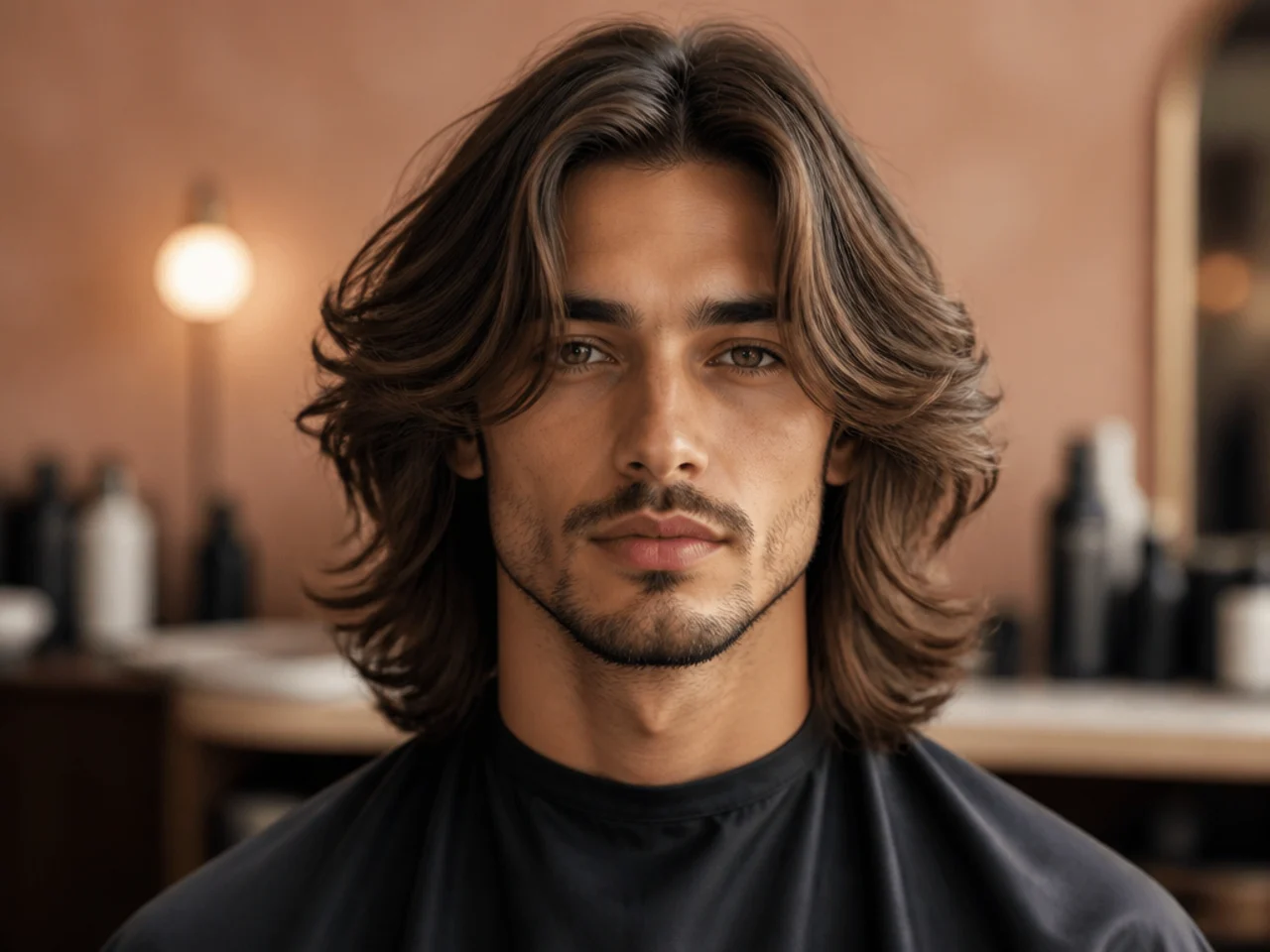
The full curtain drop. Top runs 6 inches minimum, cut in long uniform layers that fall past the cheekbone on both sides. Sides connect at the ear rather than tapering — the whole perimeter reads one length. Grown-out flow at its most photograph-ready.
Best on oval, heart, and diamond faces. Straight to wavy hair only — curls fight this drop.
Ask for: "Six inches on top, long soft layers, connected sides at the ear, no fade, no undercut, cut for a center part with both curtains falling past the cheekbone."
Styling tip: blow-dry with the head tipped forward using a nozzle, then flip both sides out with the fingers. A light-hold hairspray from 12 inches away sets the drape without stiffness.
3. The Surfer Middle Part Flow
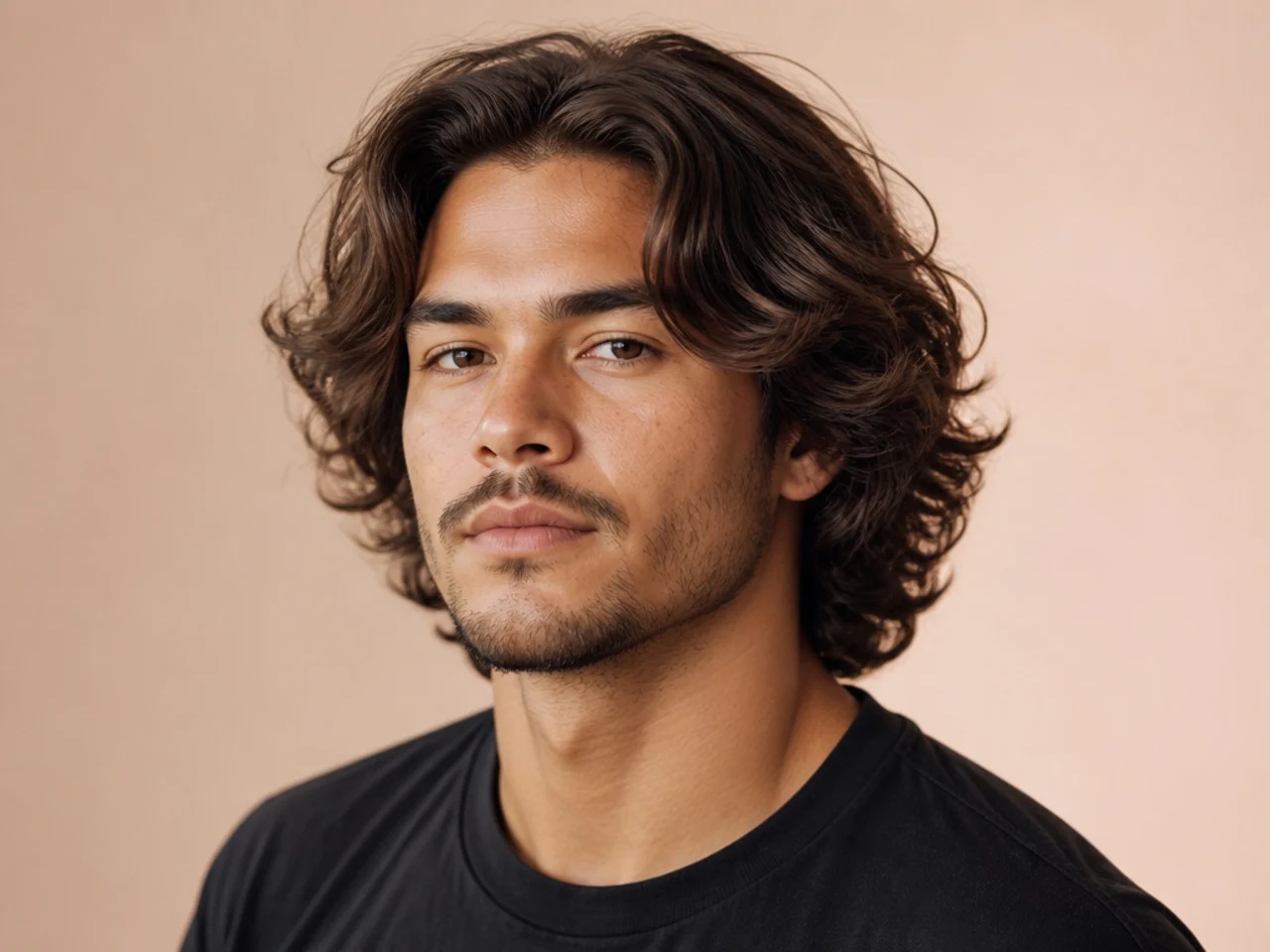
The surfer hairstyle cousin of the middle part flow. Same 5 to 6 inches on top, same center split, but styled with a wave-forward, air-dried finish instead of a blow-dry. Ends often sun-lightened or highlighted for the beach read. The whole thing looks like it dried in the wind on the drive home.
Best on wavy hair (2B or 2C). Oval, heart, and long faces.
Ask for: "Five to six inches on top, long soft layers, connected sides — cut so I can wear it split center forward or swept back. Point-cut through the ends for texture, no blunt line."
Styling tip: sea-salt spray on soaking-wet hair, scrunch upward, air-dry to 80 percent. Skip the dryer. Rake with fingers into the middle split once the hair is nearly dry.
4. The K-Flow (Korean Middle Part Flow)
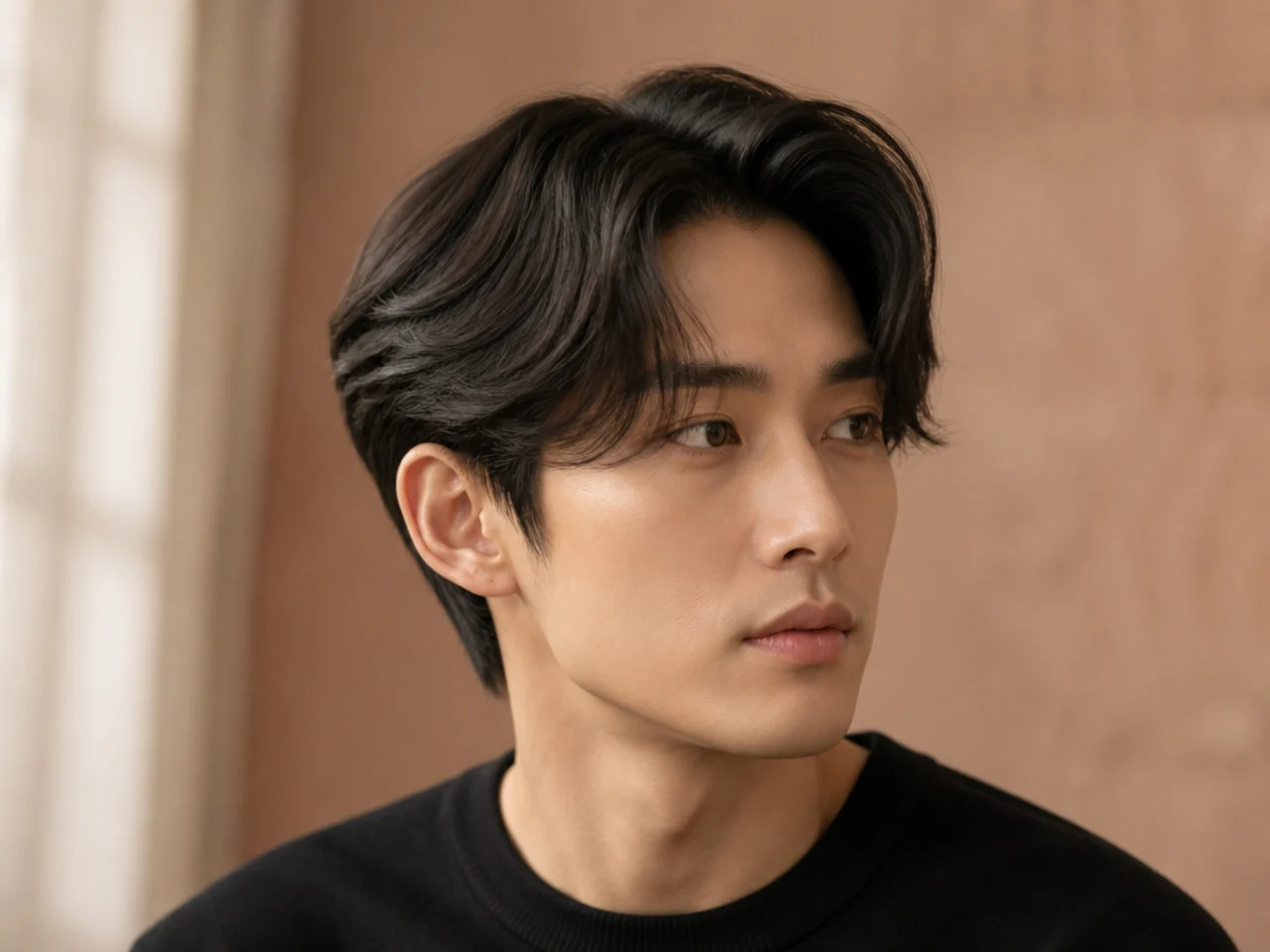
The Korean read of the middle part flow. Top runs 4 to 5 inches, straight center part, each side blow-dried forward and slightly out from center with a round brush for the K-drama sweep. Sides scissor-tapered clean above the ear — no fade — so the finish reads glossy and precise. NCT's Jaehyun runs this as his signature; every K-drama lead cycles through some version on camera.
Best on straight hair with medium density. Oval, square, and heart faces.
Ask for: "Korean middle part flow, 4 to 5 inches on top, scissor-tapered sides above the ear, layered so each side sweeps forward with a slight outward curve at the ends."
Styling tip: round-brush each side forward and slightly out from center on damp hair, cool blast to set. A light shine cream through the mid-lengths for the K-pop gloss. Recomb the part while damp, not dry.
5. The Medium Flow
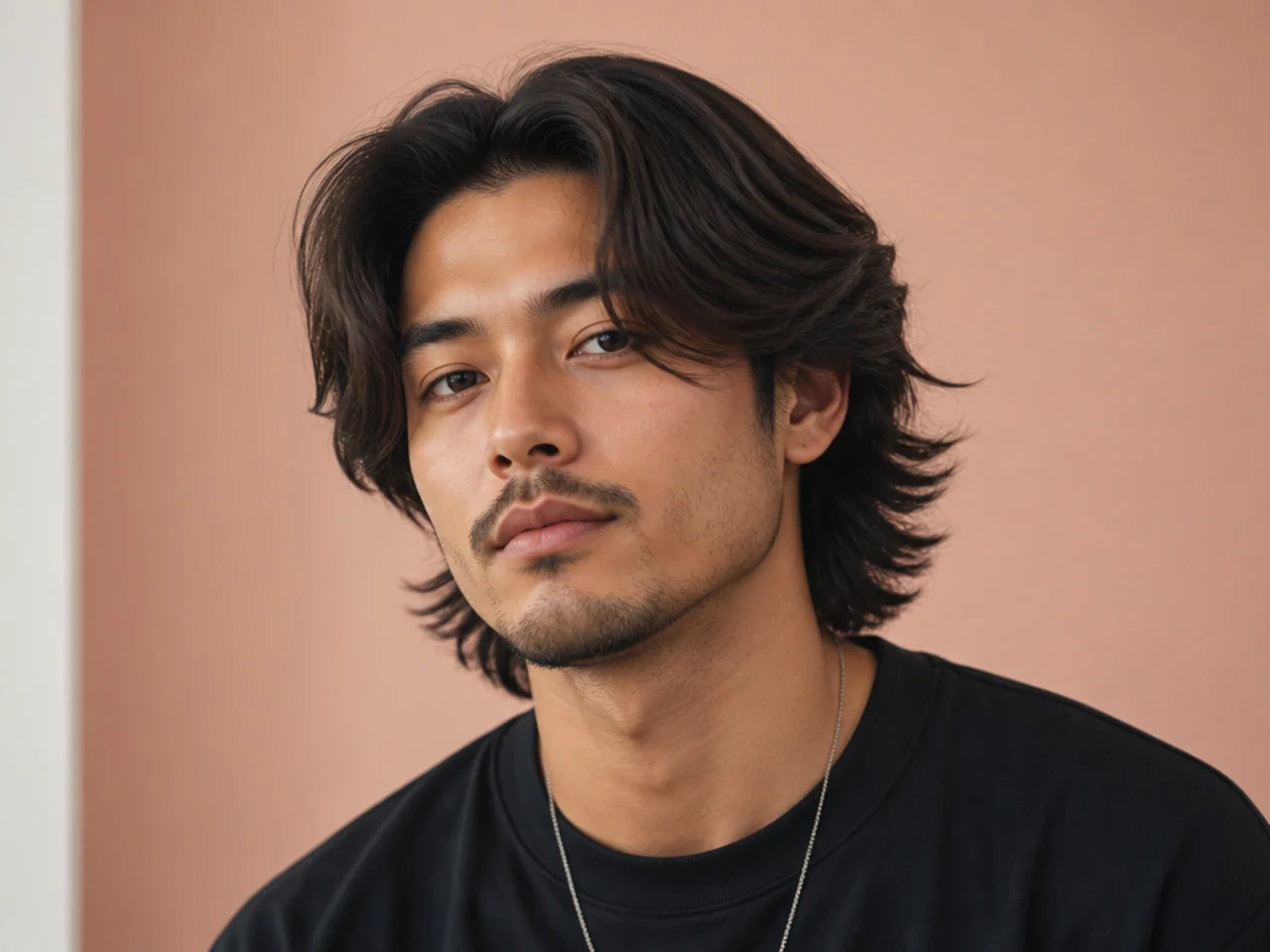
The middle of the road between short and long. Top runs 4 to 5 inches, soft internal layers, sides connected at the ear. Not as tidy as the classic, not as dramatic as the long flow with curtains. Any face shape, most hair types, easiest daily wear in the guide.
Best on every face shape. Straight to wavy hair.
Ask for: "Four to five inches on top, soft internal layers, sides connected at the ear, cut for a center part with movement."
Styling tip: sea-salt spray on damp hair, rough-dry with your fingers, split with a comb once 80 percent dry. Skip the cream unless you need extra hold — the salt spray does most of the shape work here.
6. The Middle Part Flow with Low Taper
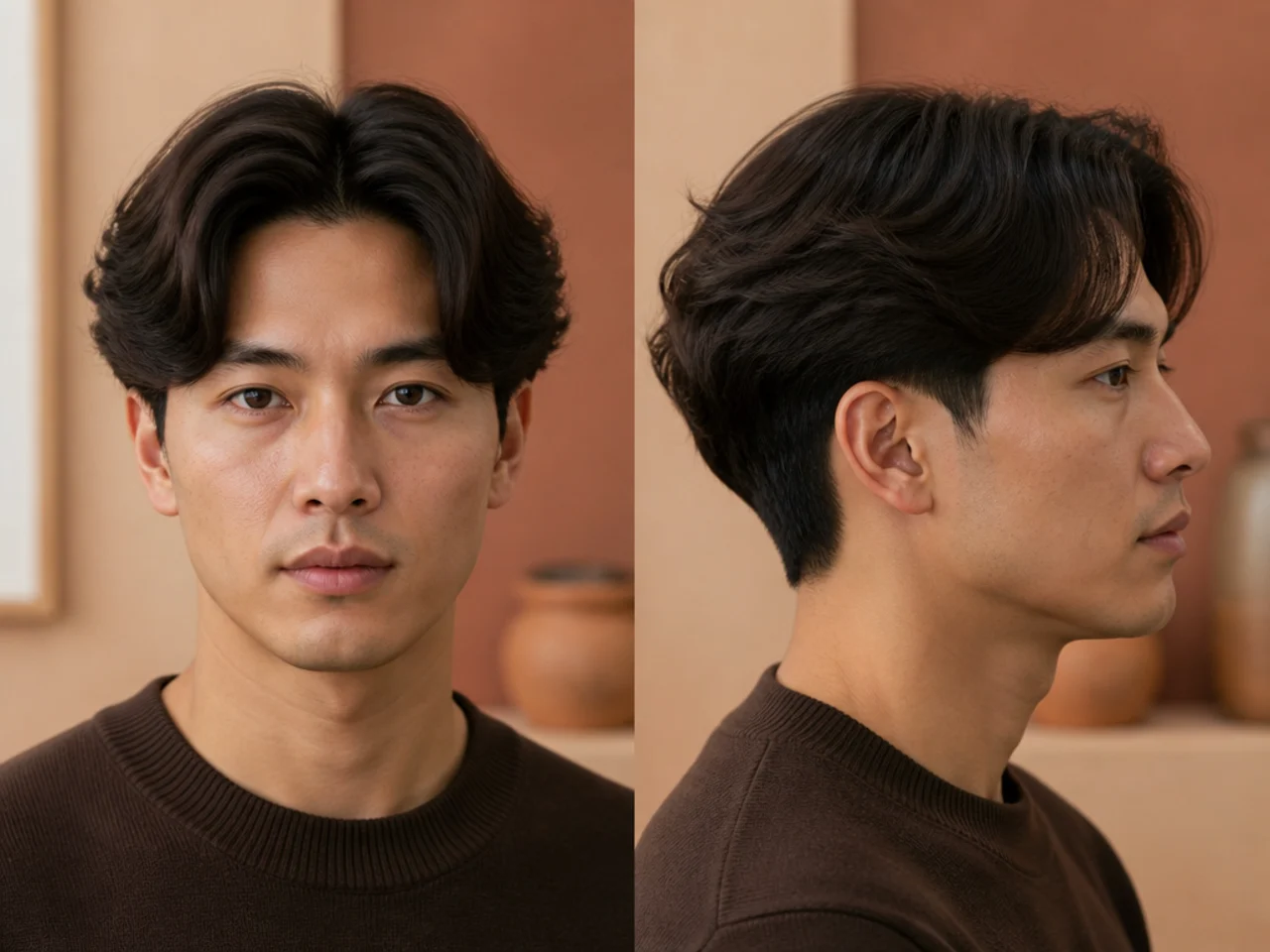
The low taper fade sharpens the perimeter without changing the long-top silhouette. Sides drop cleanly around the ear and nape, top stays 5 inches with the full curtain length, and the taper stops the sides from puffing when the length gets past four inches. Modern read for guys who want structure at the edges but keep the flow up top.
Best on square, oval, and diamond faces. Straight to wavy hair.
Ask for: "Low taper around the ears and nape only, 5 inches left on top layered for a middle part, curtains falling forward."
Styling tip: blow-dry the top with a round brush, angling the front strands forward and out. Matte paste with soft hold locks the split without freezing the movement. Book the taper every 3 weeks so the base line stays crisp.
7. The Middle Part Flow with Mid Fade
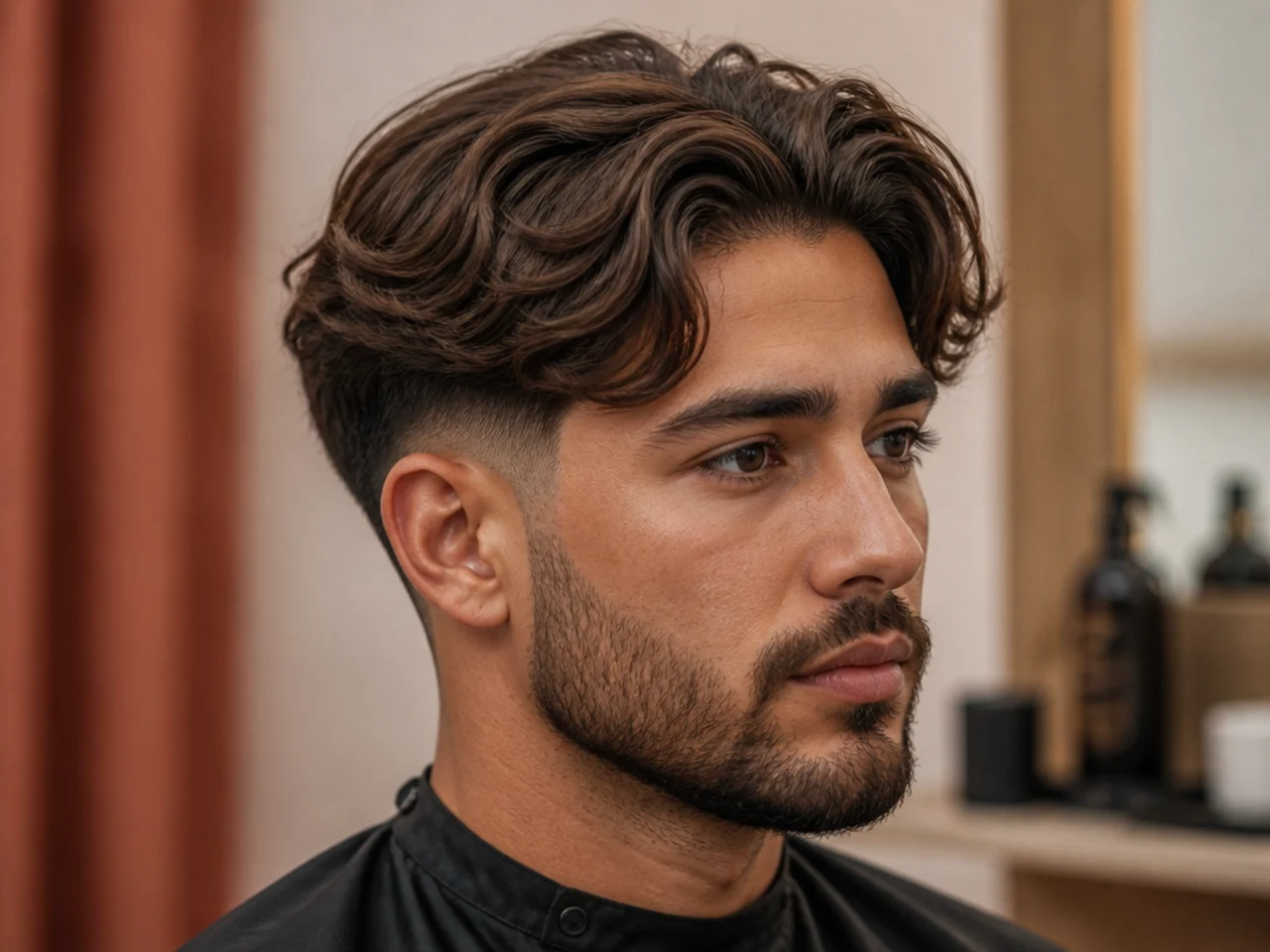
The mid fade sits at the temple, keeps the ears clean, and lets the 5-inch top carry the full curtain drop with no side puff. The strongest contrast option in the guide — long top over completely stripped sides. Runs the gym-and-office rotation with equal ease.
Best on oval, round, and square faces. The mid fade is the most face-shape-forgiving fade position.
Ask for: "Mid fade around the temple and back, 5 inches on top scissor-cut, split down the middle, layered for movement."
Styling tip: blow forward with a nozzle, part clean with a comb, then matte paste each side out. Book the fade every 2 weeks — mid fades blur fastest of the fade family.
8. The Overgrown Middle Part Flow
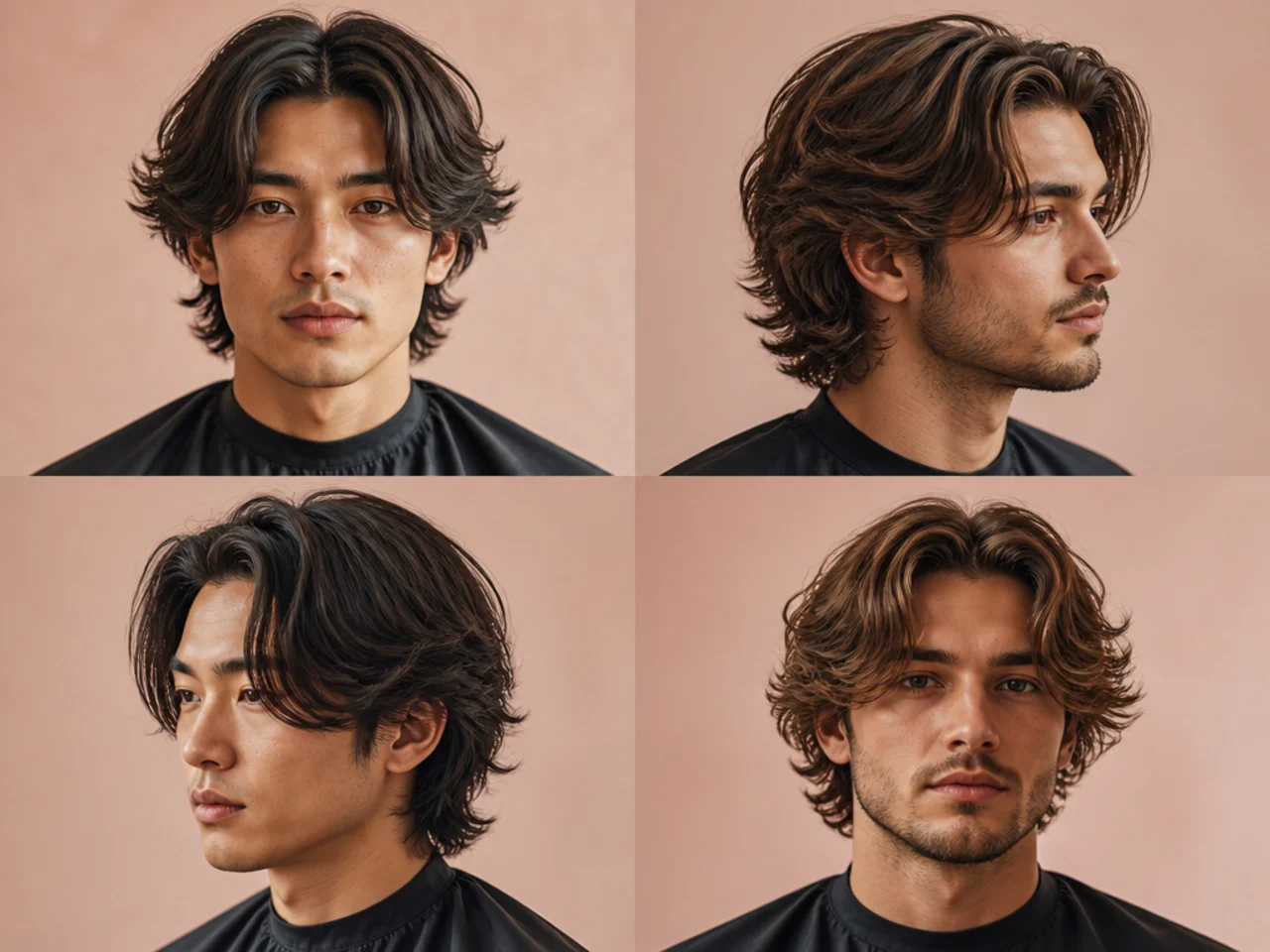
Past six months of grow-out. Top runs 7 inches minimum, sides reach the jawline, and the whole cut carries real weight and drape. Best on guys who want the flow to be the outfit — the length reads intentional and requires the perimeter shape to be clean or the whole cut turns into a shag.
Best on oval and long faces. Straight to wavy hair only.
Ask for: "Seven inches on top, sides reaching the jaw, long uniform layers, connected perimeter with a soft point-cut end. Cut for a center part with full drop."
Styling tip: leave-in conditioner from mid-lengths to ends, diffuse or air-dry, rake fingers into the split. A drop of hair oil on the last inch of the ends turns matte-dry length into healthy-looking length.
9. The Short Middle Part Flow
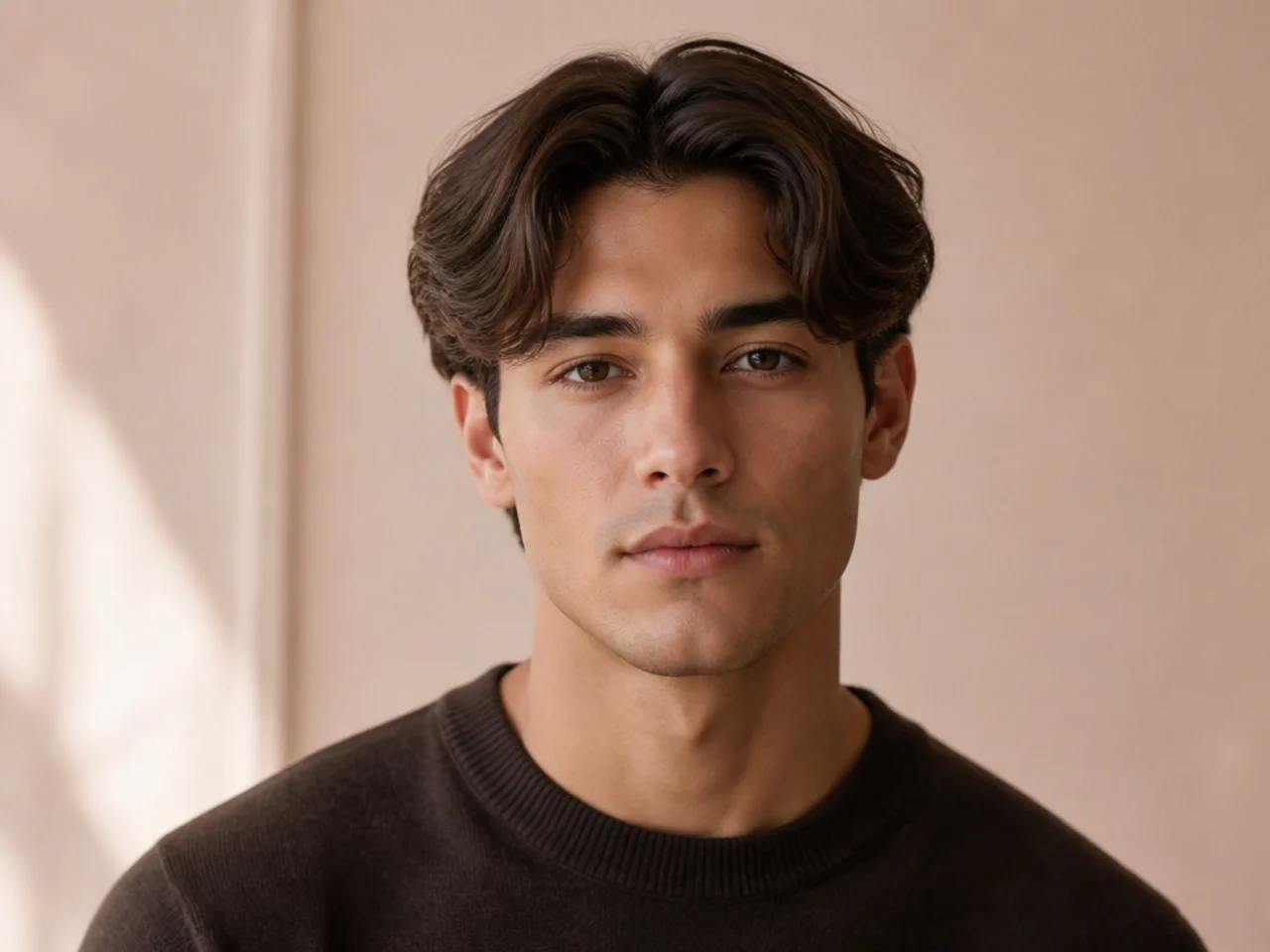
The office-legal cut. Top runs 3 to 4 inches — enough for a real split, short enough to sit flat without falling into your eyes. Pairs a scissor-cut top with a short taper on the sides so the shape holds without a fade. The lowest-maintenance middle part flow in the guide.
Best on round and square faces because the shorter top adds vertical height.
Ask for: "Three to four inches on top, tapered sides, layered so it splits center and falls forward without dropping into my eyes."
Styling tip: wide-tooth comb the split in on damp hair, hit both sides with a blow-dryer angled down the shaft, and set with a matte clay. Total styling: under two minutes.
10. The Middle Part Flow with Two Block
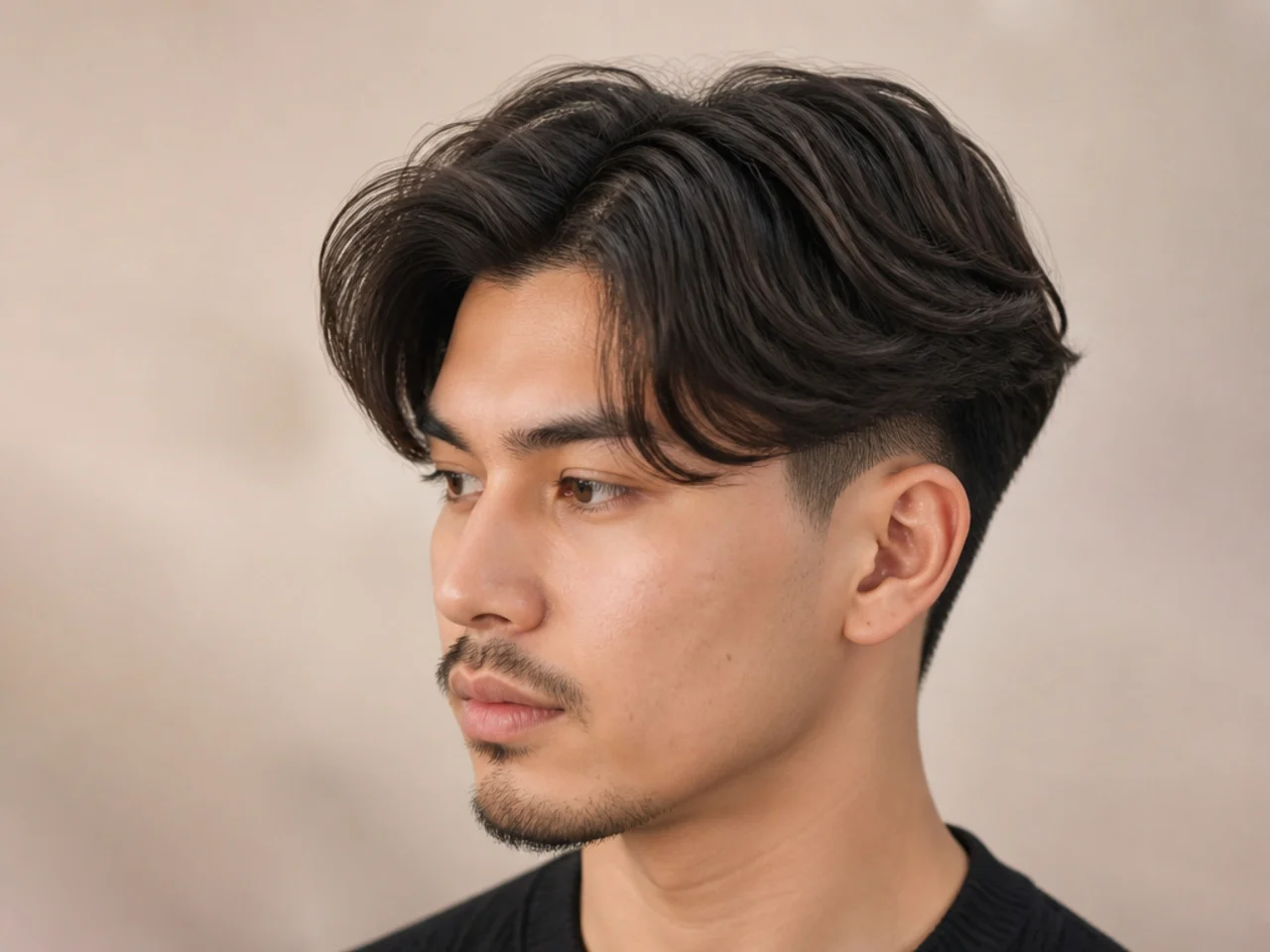
The Korean two block engineered for flow. Long 5 to 6 inch top runs over a hidden two block underlayer — clipper-buzzed sides sit at the horseshoe seam above the ears, hidden entirely when the hair is at rest. Move the top and the buzz appears. It gives you the K-drama silhouette on top with the pop-off contrast when the hair moves.
Best on oval, heart, and long faces; straight to gently wavy hair.
Ask for: "Two block cut, 5 to 6 inches on top, tapered sides and back to a number two under the horseshoe seam, layered for a middle part with length in the front."
Styling tip: blow-dry the top forward with a round brush, split it center, then push each side outward. Matte clay locks it — a shine product kills the K-pop finish.
11. The Textured Middle Part Flow
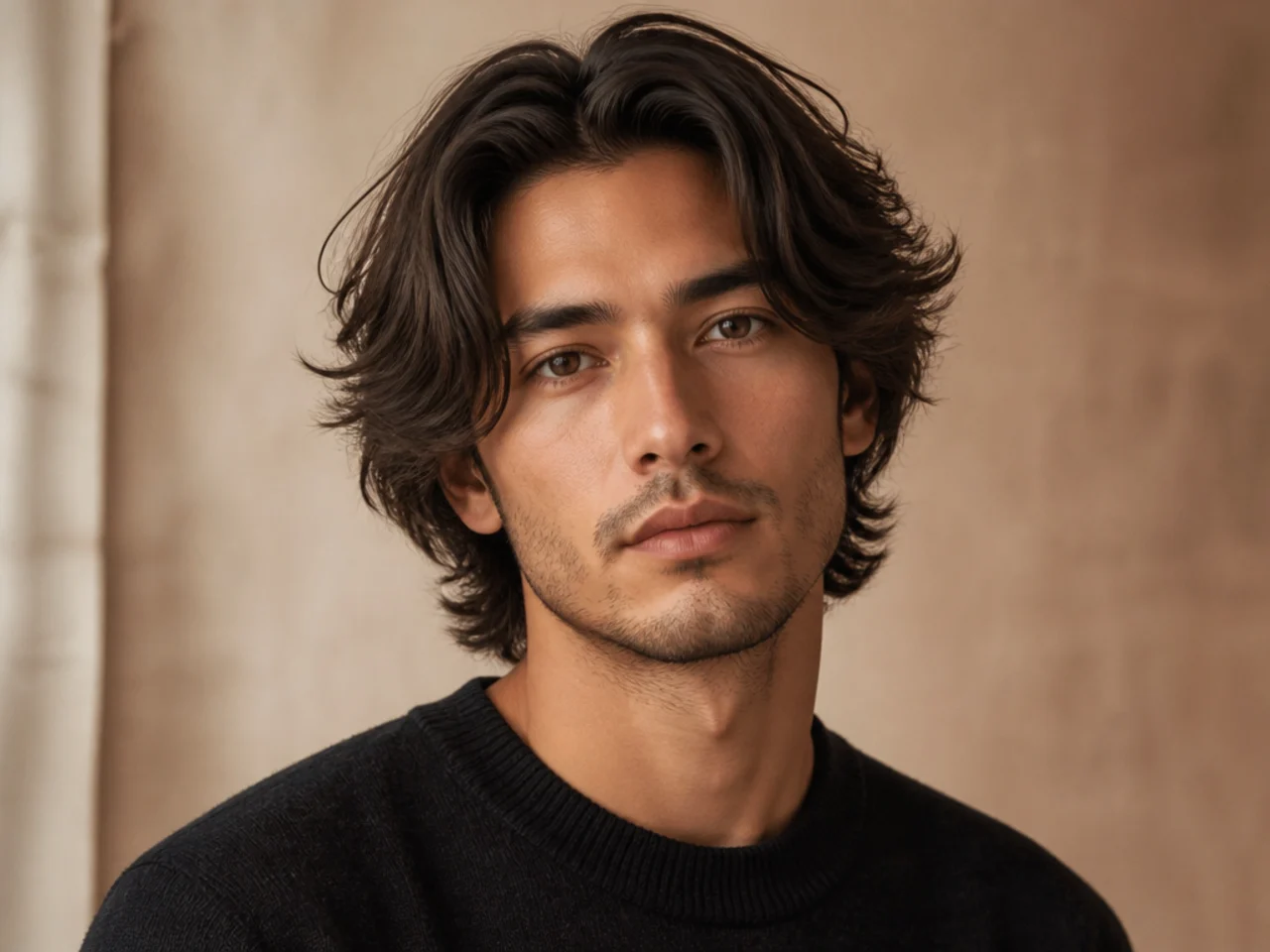
The everyday version for guys who want the flow to read undone rather than polished. Point-cut through the entire top with heavy internal texturizing, split center, sides scissor-blended. The layering does the visual work — no product does more than accent it.
Best on any face shape except very round. Medium-to-thick wavy hair is ideal — straight hair needs a texture spray to fake it.
Ask for: "Five inches on top, long internal layers with a razor or point-cut ends, no fade, no undercut, cut for a center part with movement."
Styling tip: rough-dry, work a wave cream through with your fingers on damp hair, scrunch upward under a diffuser on low. This should look like you didn't try — which means using less product, not more.
12. The Messy Middle Part Flow
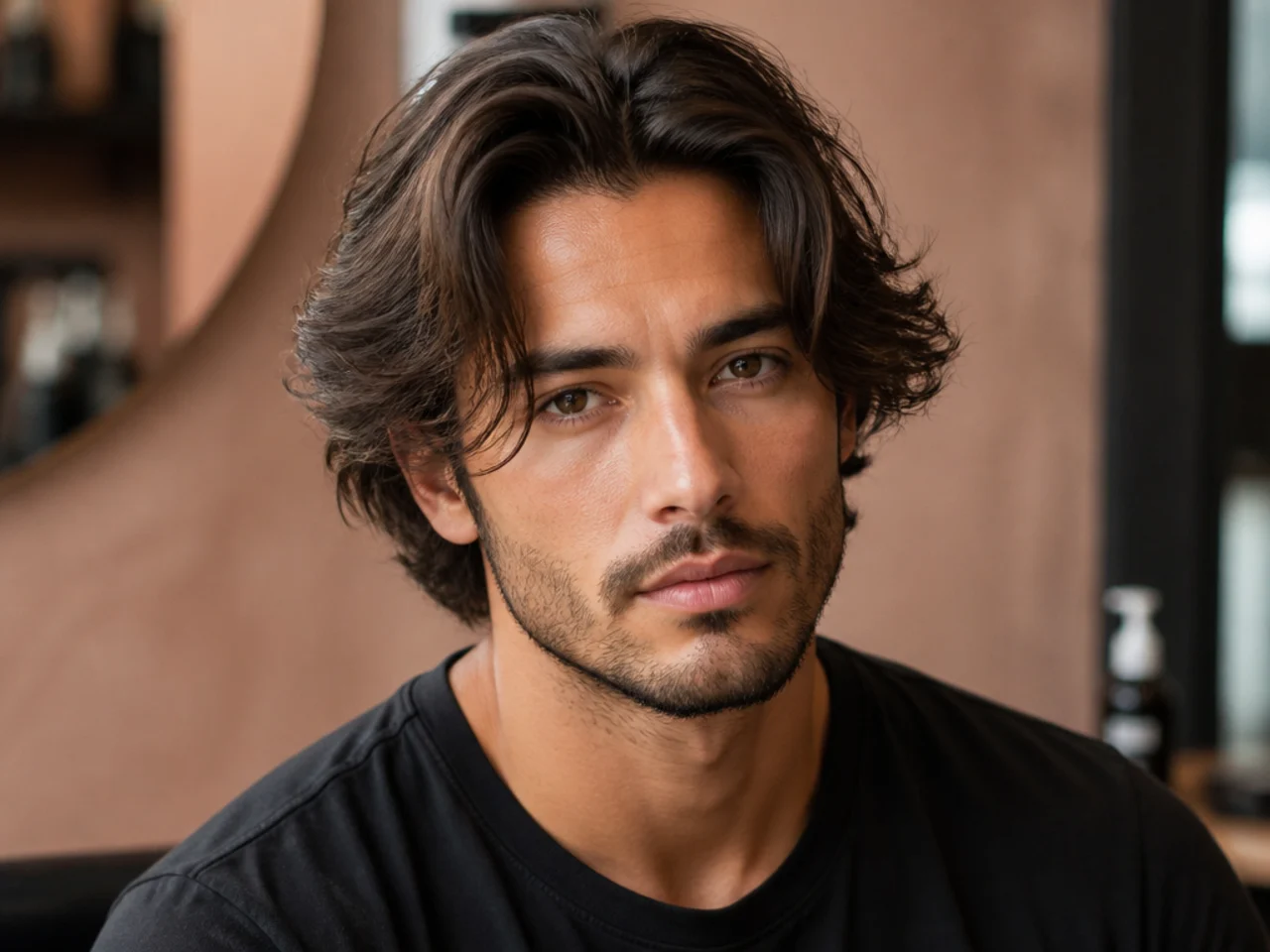
Same cut as the classic, styled deliberately loose. 4 to 5 inches on top, scissor-blended sides, but the split doesn't sit razor-straight. The whole read is post-shower, post-hand-rake, pre-out-the-door. Softens sharp lines on square or diamond faces because the asymmetry offsets the jaw.
Best on oval, square, and diamond faces. Any hair type from straight to wavy.
Ask for: "Point-cut top around 5 inches, choppy through the front, natural sides, cut so the middle part isn't rigid — I want it to look like I combed it once and moved on."
Styling tip: rough-dry, work matte paste between palms, push front-to-back with your fingers. Don't comb after. If it looks too neat, muss it with damp hands and reshape.
13. The Slick Middle Part Flow
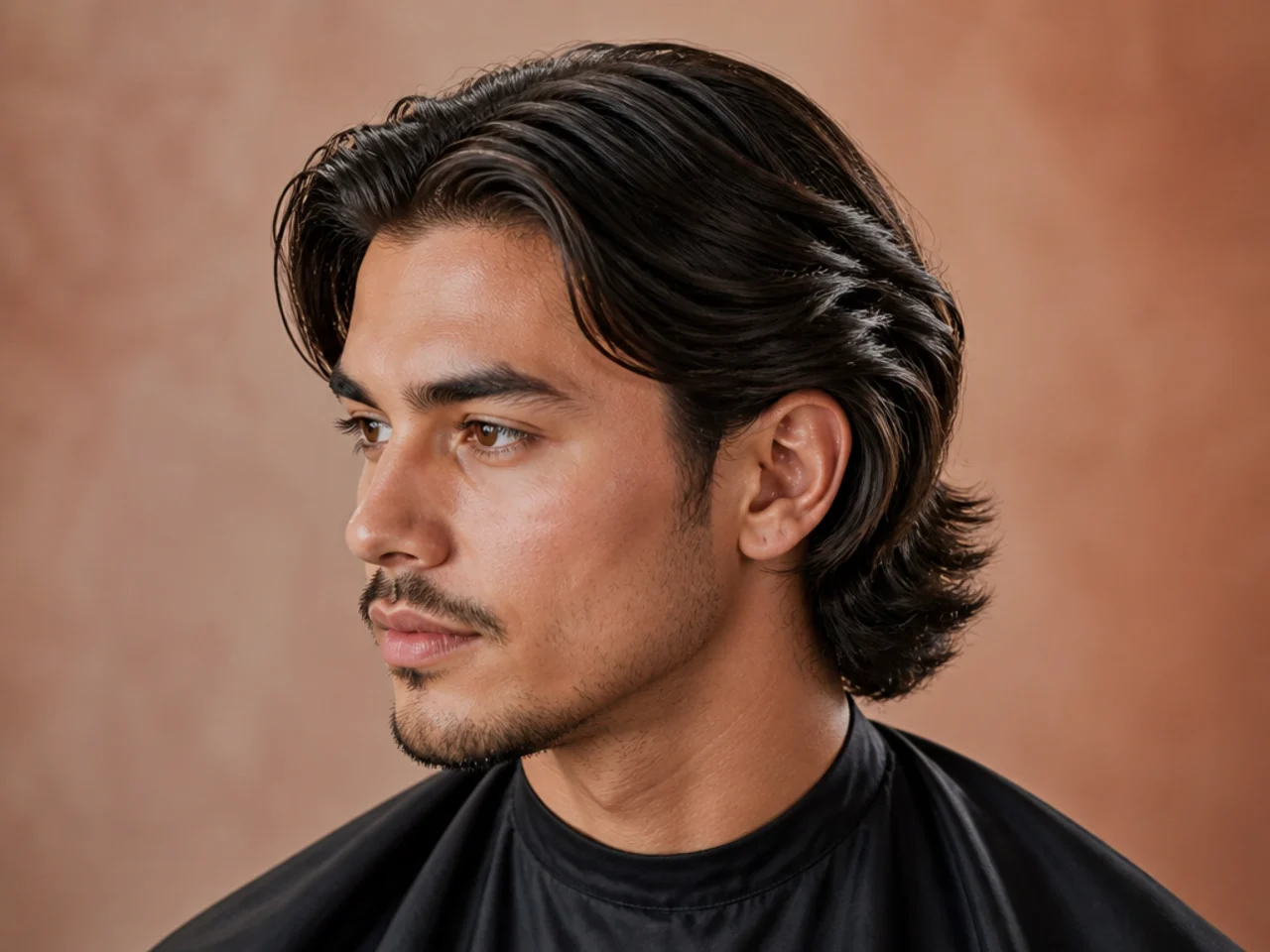
The dressed-up variant. Top at 4 to 5 inches combed cleanly off a razor-sharp center split, sides tapered short and blended clean. Best on fine-to-medium straight hair — thick hair puffs and ruins the smoothness. This is the one version in the guide where gloss beats matte and where a pomade earns its keep.
Best on oval and heart faces. Straight, fine-to-medium hair.
Ask for: "Four inches on top scissor-cut, tapered sides above the ear, split dead center, cut for a clean sweep on both sides."
Styling tip: blow it back and to the sides with a round brush on damp hair, then finish with a shine-forward pomade combed through with a fine-tooth comb. Every strand should show a comb line.
14. The Curly Middle Part Flow
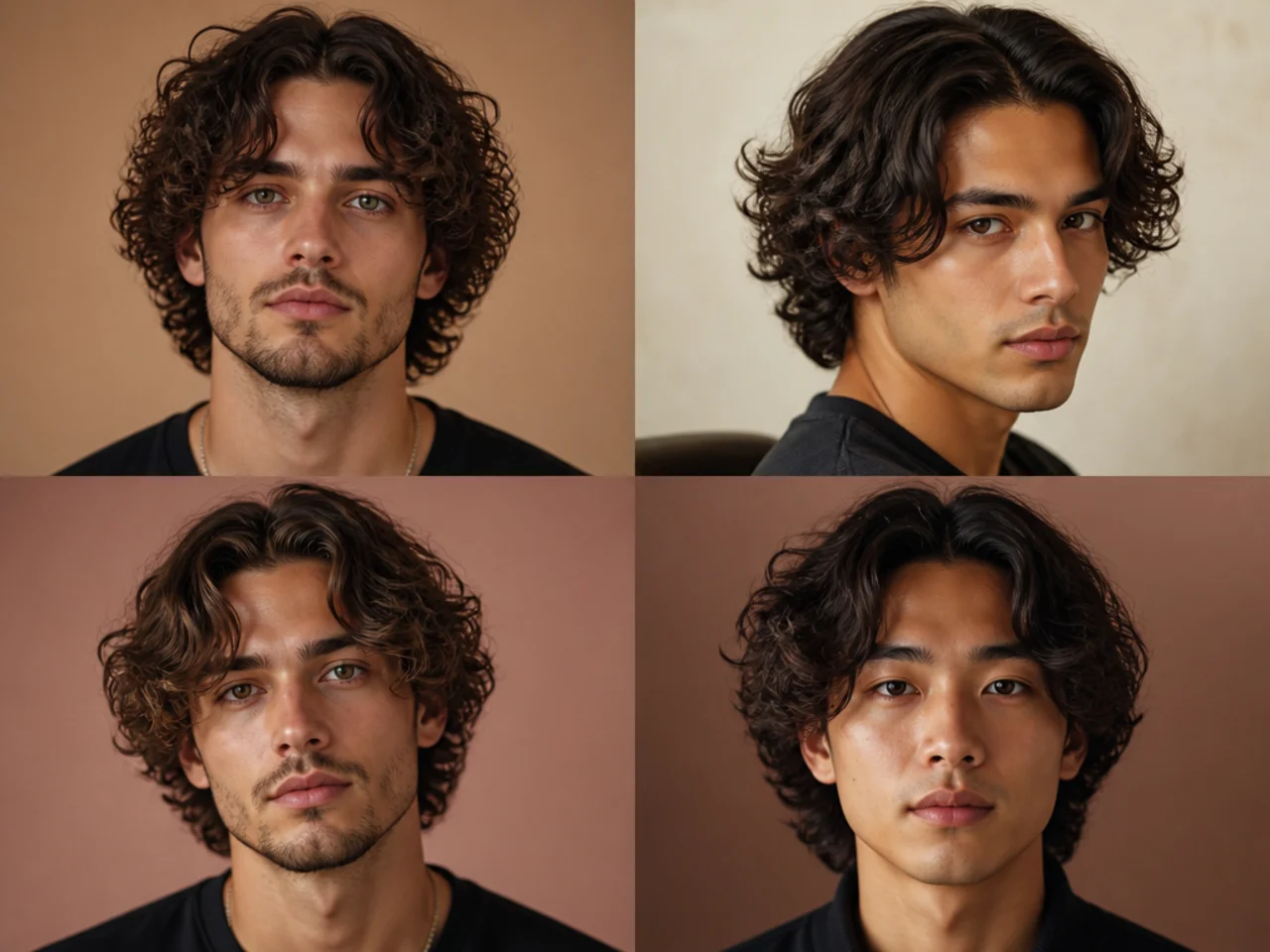
The version for guys with real curl. 4 to 5 inches on top, curls left dense and unthinned, sides tapered to keep the shape from ballooning. The middle part shows up on its own at this length — you just cut for it. Tightest curl pattern that carries the split is 3A; anything past 3B needs the smoothing treatment or a different cut entirely.
Best on oval and heart faces. Curl pattern 2C to 3A.
Ask for: "Four to five inches on top, keep the curl density, tapered sides to keep the shape from widening, cut to fall in a natural center split."
Styling tip: wash, condition heavily, apply curl cream on soaking hair, diffuse on low upside down. Do not brush after — use your fingers or a wide-tooth pick only. Brushing kills the pattern in one pass. The curly hairstyles for men guide covers the full curl kit if you need it.
15. The Middle Part Flow with Undercut
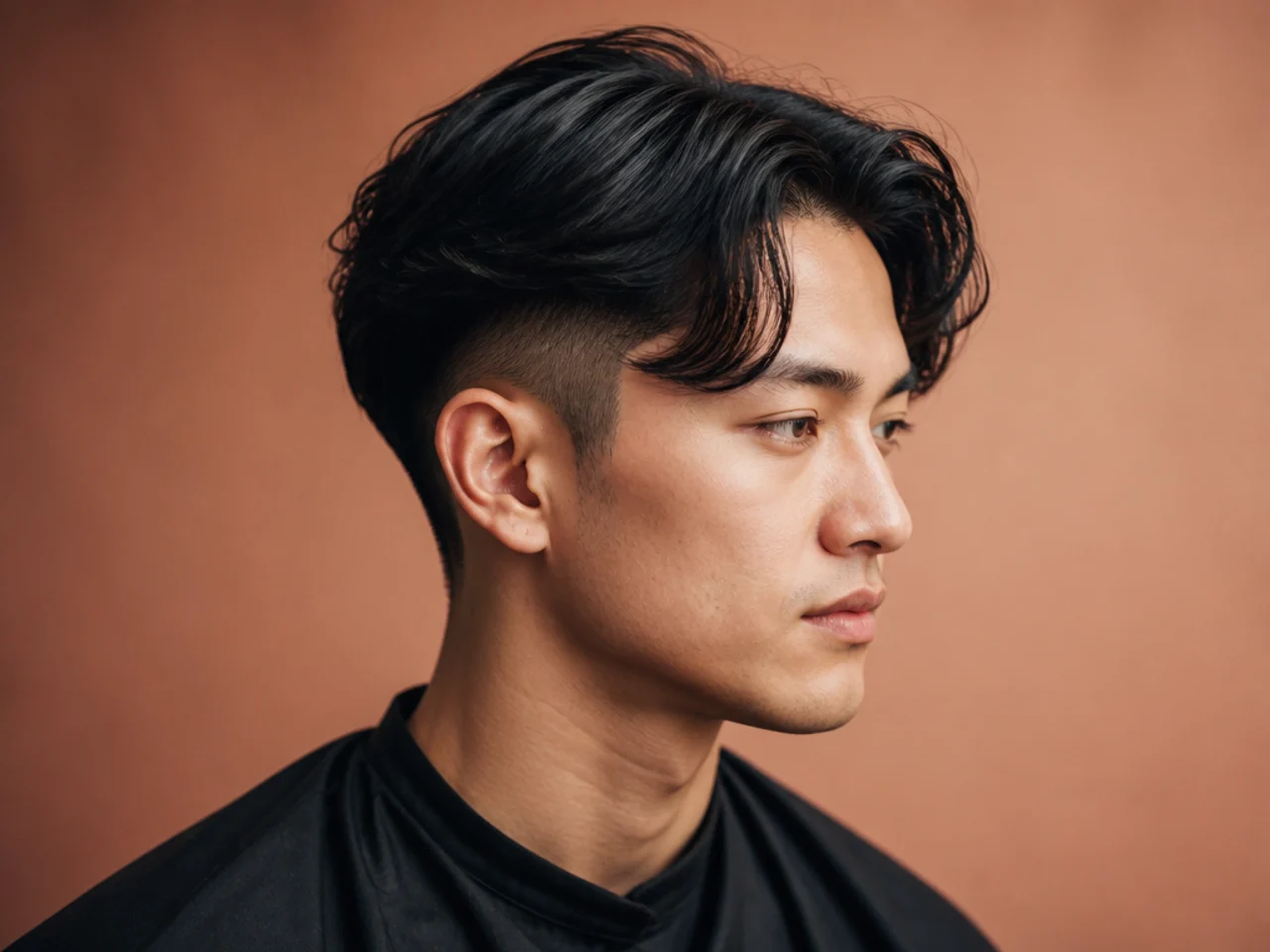
The most extreme contrast in the guide. Top runs 5 to 6 inches with a full curtain, undercut fade sits at a #1 or #2 clipper with a clean disconnected line at the temple. No blending anywhere. Suits square and diamond faces because the disconnect adds jaw definition.
Best on square and diamond faces. Any hair type.
Ask for: "Disconnected undercut at a number two, 5 to 6 inches on top, layered for a middle part, no blending — hard line at the temple."
Styling tip: blow forward with a nozzle to set the shape, split with a comb, and lock with a strong-hold matte paste. The disconnect is the whole point — don't try to soften it with your hair.
16. The Straight Hair Middle Part Flow
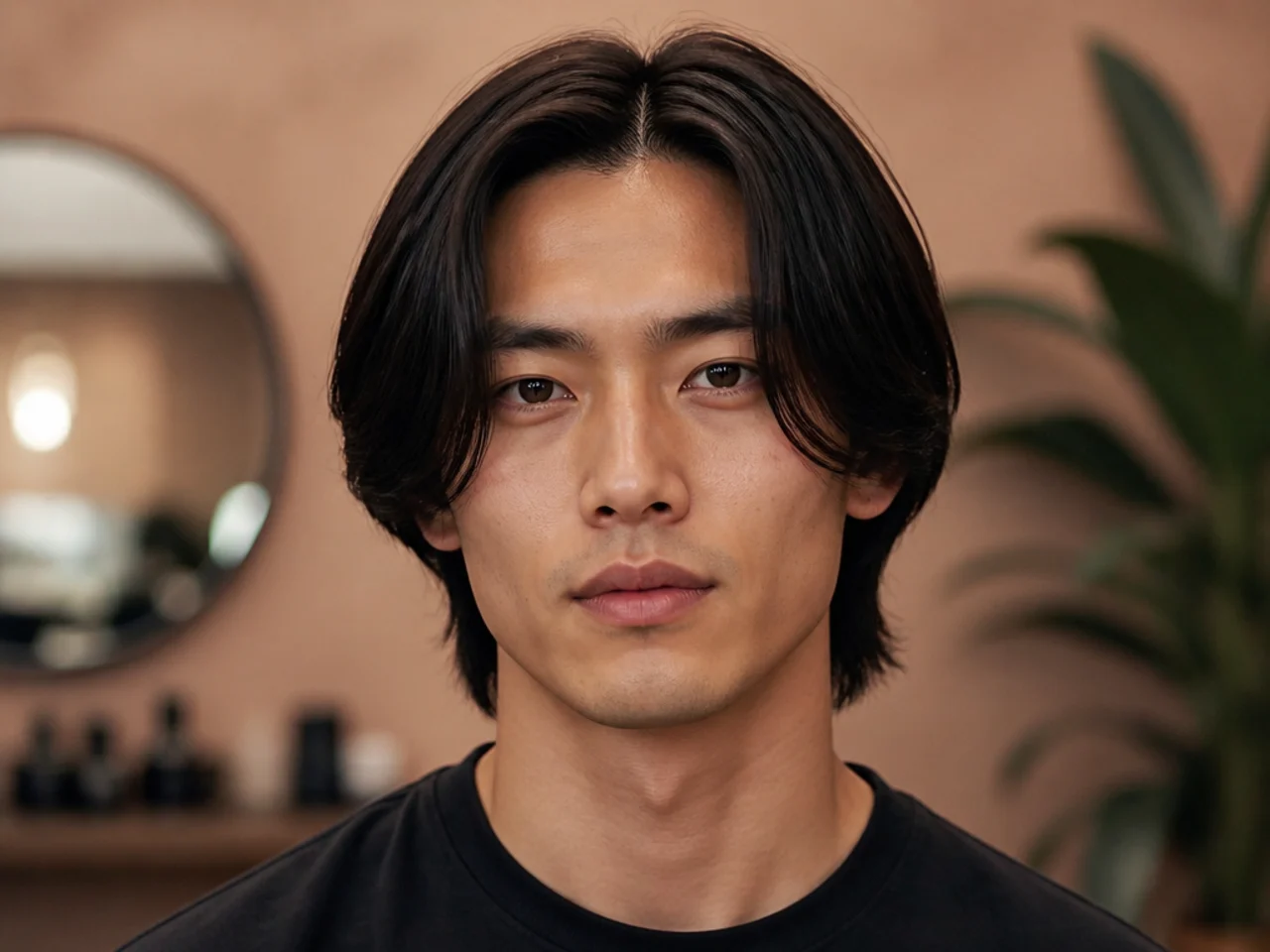
Straight hair fights flow. It falls flat, it falls forward, it never falls back on its own. This cut solves for that with heavy internal layering that lifts the crown, plus a slight forward-angled layering at the front so the curtains hold their shape without a perm. Top runs 5 inches; sides connect. Standard straight-hair problem, straightforward straight-hair solution.
Best on oval, long, and heart faces. Straight hair specifically.
Ask for: "Five inches on top, heavy internal layering through the crown for lift, slight forward-angled layers at the front, connected sides at the ear. Cut for a center part."
Styling tip: mousse at the roots on damp hair, round-brush the crown straight up before styling the front forward, cool blast to lock the lift. A dry texture spray at the finish holds volume all day.
17. The Wavy Middle Part Flow
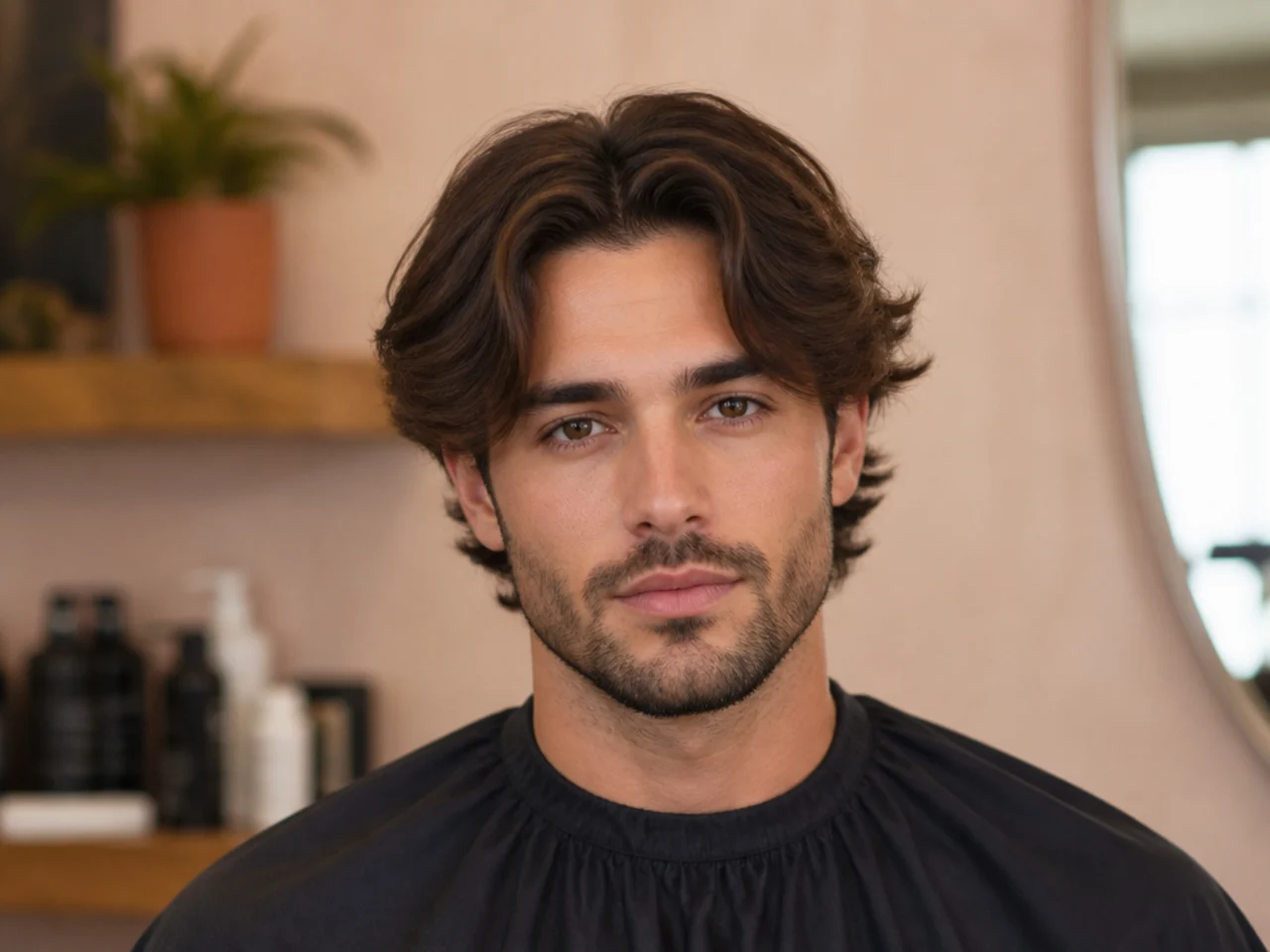
Built specifically for guys with natural waves (2A to 2C). Long soft layers, top around 5 to 6 inches, cut so the natural wave pattern falls into a center split. Straight hair can't fake this look — the wave is the whole point. Every strand carries its own bend, which gives the finished shape a piecey texture no straight-hair styling can match.
Best on oval, heart, and long faces. Wavy hair only.
Ask for: "Five to six inches on top, long internal layers cut with a razor, sides connected, no fade — cut to fall into a natural center split with my wave."
Styling tip: wash, apply a wave-defining cream in the shower, diffuse on low with an upward scrunch. That's it. No comb, no second product. The best wavy hair products roundup has the exact cream and diffuser picks.
18. The Middle Part Flow with Fringe
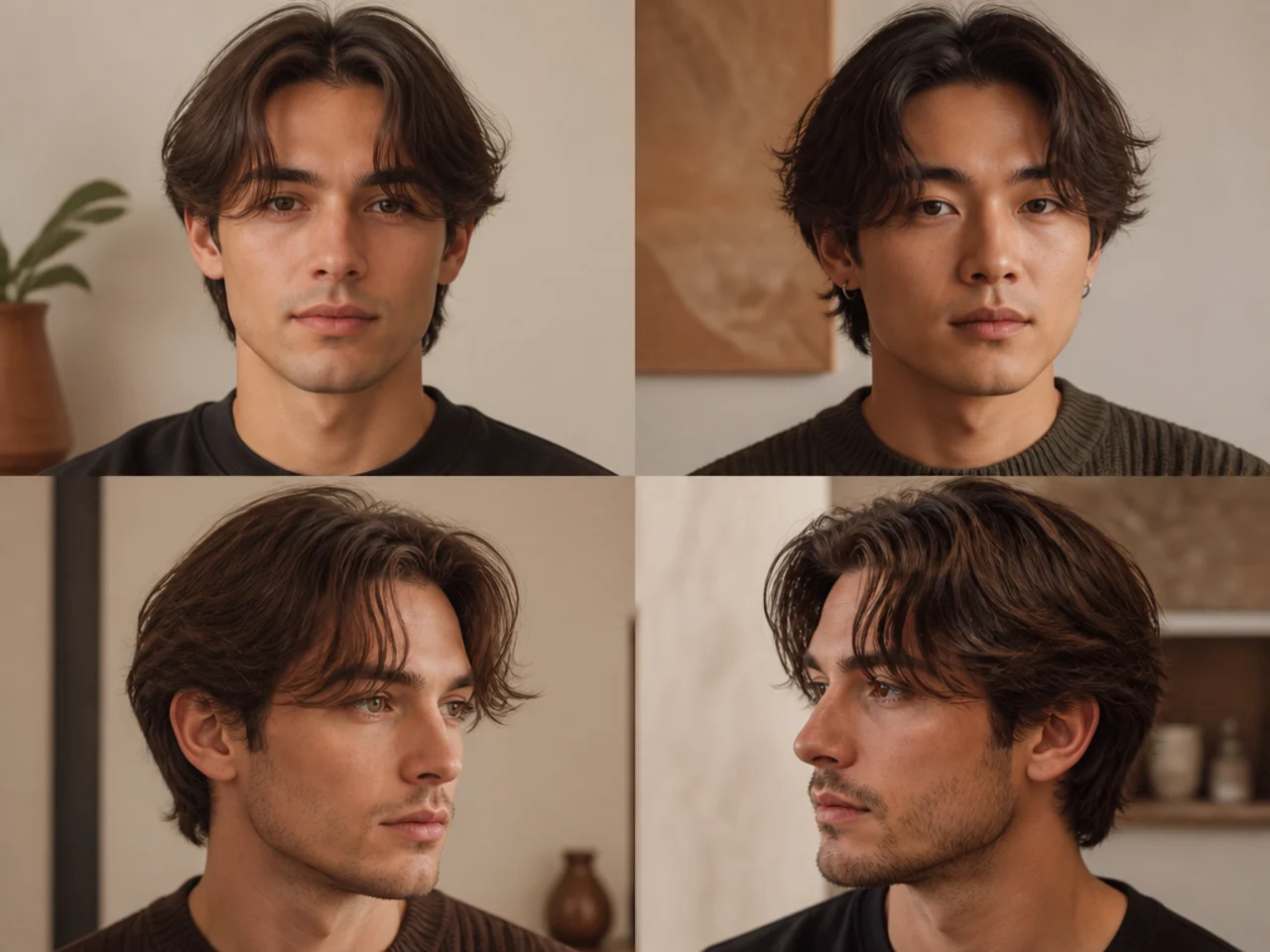
A shorter-front variant. The fringe haircut meets the middle part flow — front pieces cut to brow length, split off a center line, sides scissor-blended above the ear. The shorter front softens a tall forehead without giving up the flow at the back and sides. Reads soft and photograph-ready.
Best on oval, heart, and long faces. Straight to wavy fine-to-medium hair.
Ask for: "Curtain fringe at the brow, cut to part center, 5 inches at the crown, connected scissor sides above the ear, no fade."
Styling tip: blow-dry the fringe forward first with your fingers, then twist and split it. A light cream through the fringe ends holds the separation without weighing the shape down.
19. The Middle Part Flow with Highlights
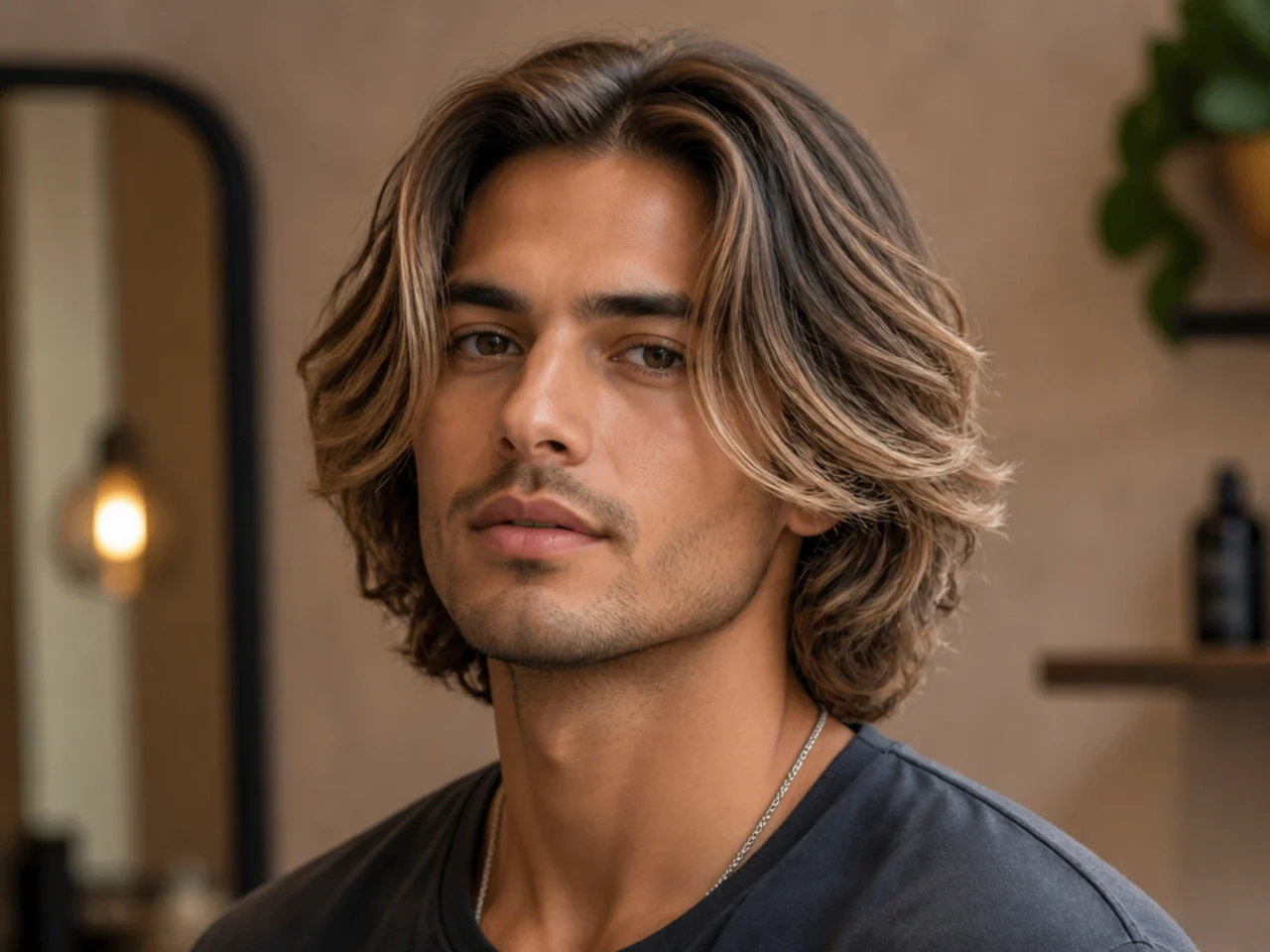
The color version. Same 5-inch top, center split, layered flow — with a set of face-framing highlights or a soft balayage running down the front third of each curtain. The lighter panels catch light along the split, which visually widens the flow and makes the curtains read more editorial. Chalamet has worn every version of this over the last three years.
Best on oval and heart faces. Straight to wavy medium-to-dark base hair.
Ask for: "Middle part flow, 5 inches on top, layered for movement — with face-framing balayage from the mid-shaft down on the front two panels only."
Styling tip: same salt-and-cream routine as the classic. Add a bond-repair mask once a week — highlights over medium length turn dry fast, and dry length reads more matted than styled.
20. The Middle Part Flow Grown Long
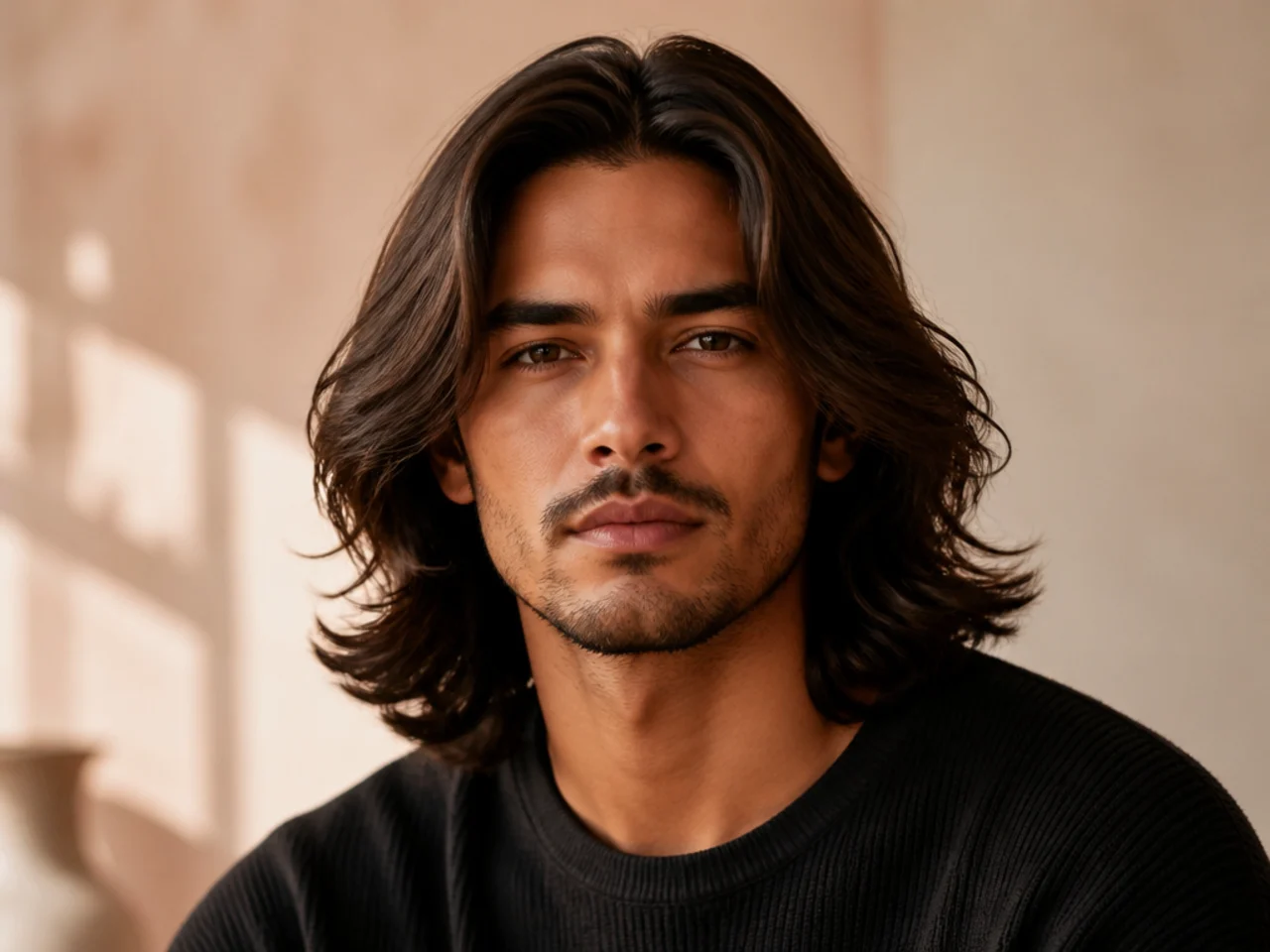
The final destination — the middle part flow taken past shoulder length. Length hits the collarbone, layers stay long and heavy, sides fully connected into the length. Suits oval and long faces because the length narrows the shape further. Straight to wavy hair only. This is a commitment — expect 12 to 18 months of grow-out from a short cut.
Best on oval and long faces. Straight to wavy hair.
Ask for: "Shoulder-length flow, long layers only through the last four inches, no fade, no undercut, cut for a center part with the full drop."
Styling tip: wash, deep-condition, air-dry to about 80 percent, then finish with a diffuser upside down. Sea-salt spray sets the movement; heavy creams weigh the length down. Consider a monthly deep mask past the six-month mark.
How to Ask Your Barber for a Middle Part Flow
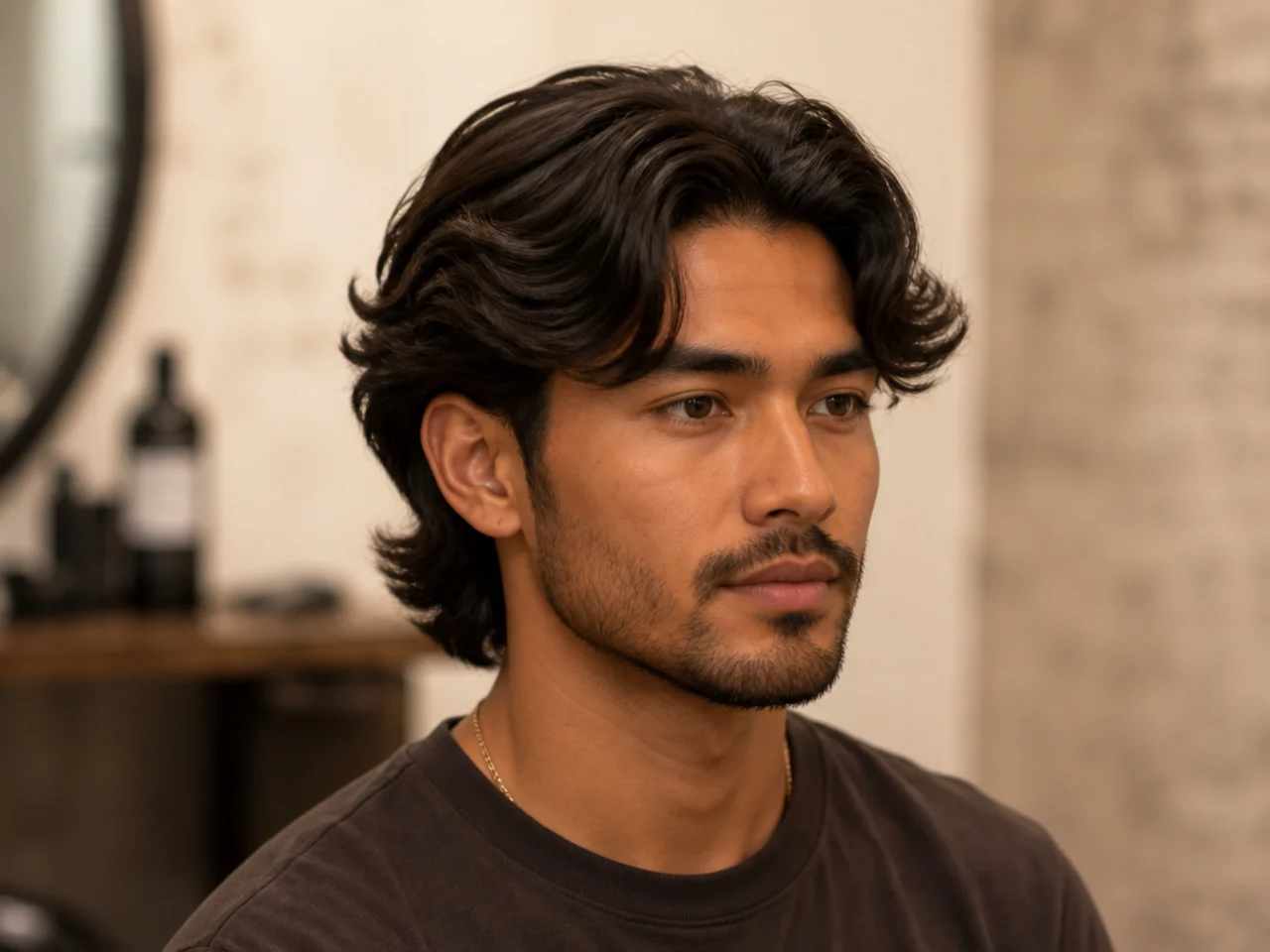
The word "flow" means fifteen different cuts to fifteen different barbers. This is the script that gets you the specific version above without the guesswork:
- Bring three photos. Front, three-quarter, and side of the exact variation number you picked. One photo lets a barber guess; three photos remove the guessing.
- Name the length in inches. "Five inches on top" is unambiguous. "Medium" is not. The medium-length men's hairstyles guide has the reference range if you're unsure where you sit.
- Pick your side treatment out loud. Connected (classic and long flow variations), scissor-tapered (medium flow and K-flow), low taper (variation 6), mid fade (variation 7), two block (variation 10), or undercut (variation 15). Say the exact one.
- Ask for the layers you want, by name. "Long internal layers for movement" is the flow version. "Point-cut ends only" is the classic. "Heavy internal texturizing" is the textured version. Use the exact phrase — barbers respect specific language.
- Point to the split. Touch the top of your scalp where you want the part to sit — dead center, or slightly off if that's your natural fall. Barbers respect a finger on the head more than a paragraph.
- Watch the first blow-dry. Ask your barber to show you the exact motion — head tipped forward, nozzle down the shaft, air pushed front-forward. Recreate it every morning for the next two weeks and the shape trains itself.
- Book the follow-up before you leave. Every 3 weeks for anything with a fade, every 5 to 6 weeks for scissor-blended and connected sides. The moment the temples flare forward is the moment to rebook.
Styling and Maintenance
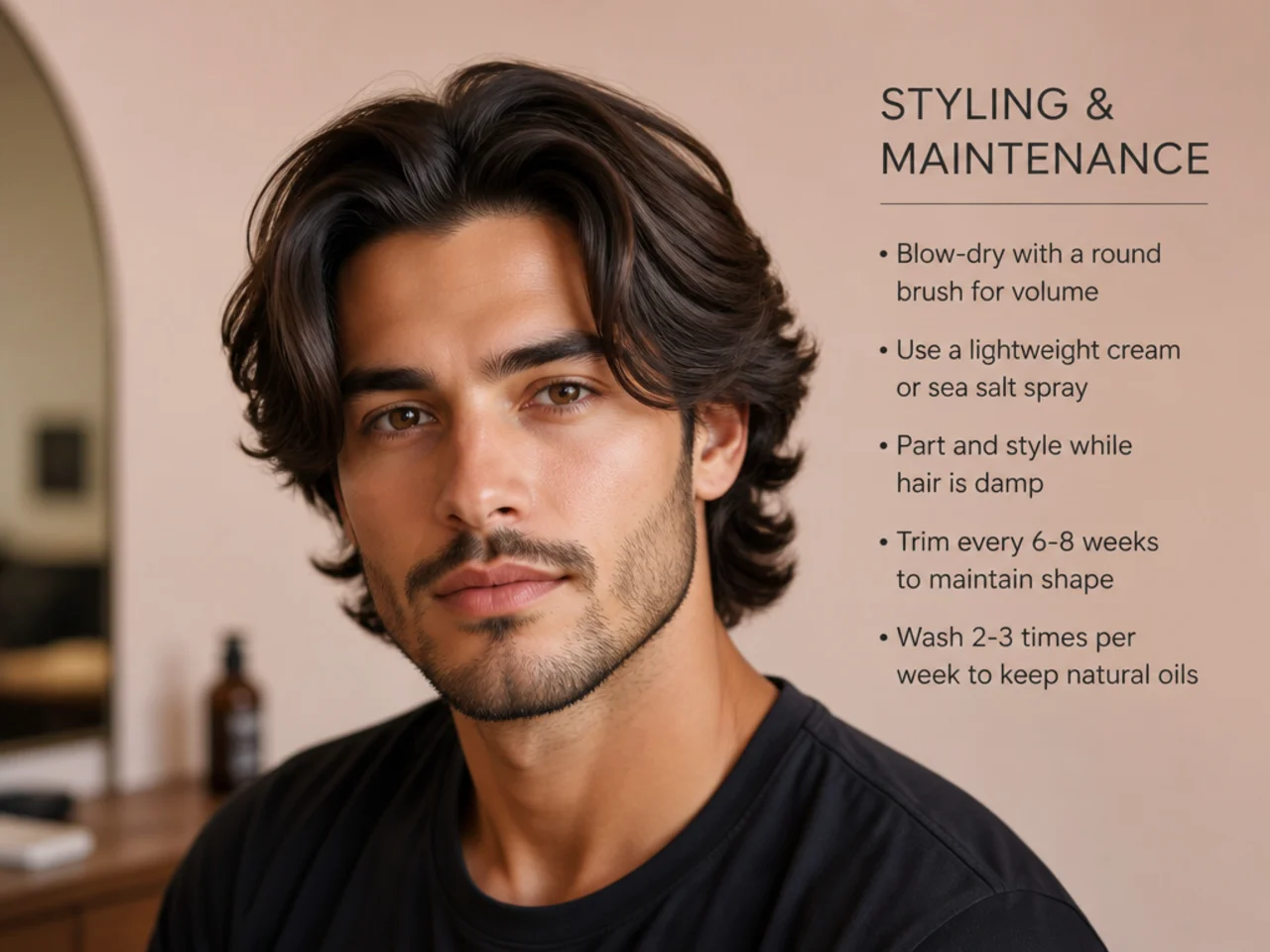
The middle part flow rewards structure. Get the routine right once and daily styling drops to under three minutes.
Wash smart. Sulfate-free shampoo every third day for oily scalps, twice a week for dry. On off-shower days, rinse with water and condition the mid-lengths to ends only. Skip conditioner at the roots — it flattens the crown by lunch. A medium-length men's hairstyle approach applies here: the length rewards care, but the roots need to breathe.
Sea-salt spray on damp, matte cream on dry. This is the pattern. Mist sea-salt spray from four inches away onto damp hair, focusing on the mid-lengths. Once the hair is 80 percent dry, work a nickel of matte cream between your palms and rake it front-to-back with your fingers. Don't use a brush — brushes flatten the volume you just built.
Direct the fall with a nozzle. The blow-dryer without a nozzle puffs. With a nozzle, it directs. Point the nozzle down the shaft, from root to tip, angled forward from the crown to the front hairline. That trains the curtains to fall correctly. Never blast hot air up from below the shape — that puffs the crown and kills the drape.
Rough-dry upside down for volume. Guys who want the taller crown lift should flip the head forward and rough-dry the roots for 30 seconds before styling. Flip back up and do the normal front-forward blow-dry. This is the trick the layered men's cut crowd uses to keep length looking lush instead of dragged down.
Match the finish to the variation. Matte clay for classic, textured, and messy versions. Light pomade for the slick middle part flow and K-flow. Curl cream for the curly variation and the wavy version. Sea-salt spray does the surfer flow on its own. One product, small amount — the goal is under-doing product every time. Hair that moves reads flow; hair that's locked reads slick-back.
Trim discipline. Book every 5 to 6 weeks for scissor-blended cuts, every 3 for anything with a fade. Ask for a quarter-inch dusting on the ends and a light reshape of the perimeter. Skip trims and you lose length faster to split ends than you would to scissors. The messy men's hairstyle approach still applies here — trim regularly, then let it grow loose.
Sleep on it right. A silk or satin pillowcase saves the round-brush work overnight and cuts down the morning restyling by half. Ties or a soft top-knot at bedtime also work for the long flow and long grown variations.
FAQ
What is a middle part flow haircut?
A middle part flow haircut is a men's cut with 4 to 6 inches on top, split down the center, and layered so both sides sweep forward and back like curtains that move when you turn your head. The flow is the movement; the middle part is the split that makes it symmetrical.
How long does hair need to be for a middle part flow?
Four inches on top is the minimum for a split that holds. Real flow with side movement lands at five to six inches. Sides need to reach the ear lobe — usually 3 to 4 inches at the temple — before they tuck back instead of flipping forward.
Does a middle part flow work on curly hair?
Wavy hair (2A to 2C) does it easily. Tight curls (3B and up) puff outward instead of falling forward and lose the split by lunch. Curly guys can ask for a soft keratin smoothing through the front third or pick the messy curly flow variation above and lean into the density.
What is the difference between a middle part flow and a curtain haircut?
The curtain is the shape at rest — two panels falling forward off a center split. The flow is the movement — the same shape swept back or side to side with wind or a hand rake. Most middle part flow cuts wear as curtains one day and swept-back flow the next.
How often should I re-cut a middle part flow?
Every 5 to 6 weeks for a scissor-blended flow, 3 to 4 weeks if you paired it with a fade. The moment the temples start flaring forward instead of tucking behind the ear is the moment to book.
What products should I use for a middle part flow?
A sea-salt spray on damp hair for grip, then a matte cream or light paste on 80 percent-dry hair for hold. Skip gels and pomades unless you picked the slick version — they turn flow into slick, which reads styled instead of natural.
Is the middle part flow good for a round face?
Yes — pick a longer top (5 to 6 inches) and add crown volume with a rough-dry upside down. Height on top adds vertical, which slims a round face. The middle part haircut family works for every face shape once you tune the length and side treatment.
Can I wear a middle part flow to the office?
Yes — pick variation 9 (short middle part flow), 6 (with low taper), or 13 (slick middle part flow). All three read as professional as any professional hairstyle for men with more current styling. Skip variation 15 (undercut) and 20 (grown long) unless your office runs creative-industry casual.