7 Tips to Style Medium Length Hair for Men
Seven barber-tested mid length men styling tips — moisture level, product order, brush choice, and finger-finish rules that make a medium haircut actually hold.
In this article · 16
- What You'll Need
- Tip 1 — Get The Cut Right Before You Blame The Product
- Tip 2 — Style At Sixty To Seventy Percent Dry
- Tip 3 — Build Grip Before You Reach For Your Styler
- Tip 4 — Match The Product To The Finish You Want
- Tip 5 — Apply Product To The Mid-Shaft, Never The Roots
- Tip 6 — Blow-Dry With Direction, Not Just For Dryness
- Tip 7 — Finger-Finish, Don't Re-Comb
- Troubleshooting Common Medium Length Style Fails
- FAQ
- What counts as medium length hair on a guy?
- How long should styling medium length hair take each morning?
- Should I blow-dry medium length hair every day?
- What product should I use on medium length hair?
- Why does my medium length hair look flat by lunchtime?
- How often should I get a medium length cut refreshed?
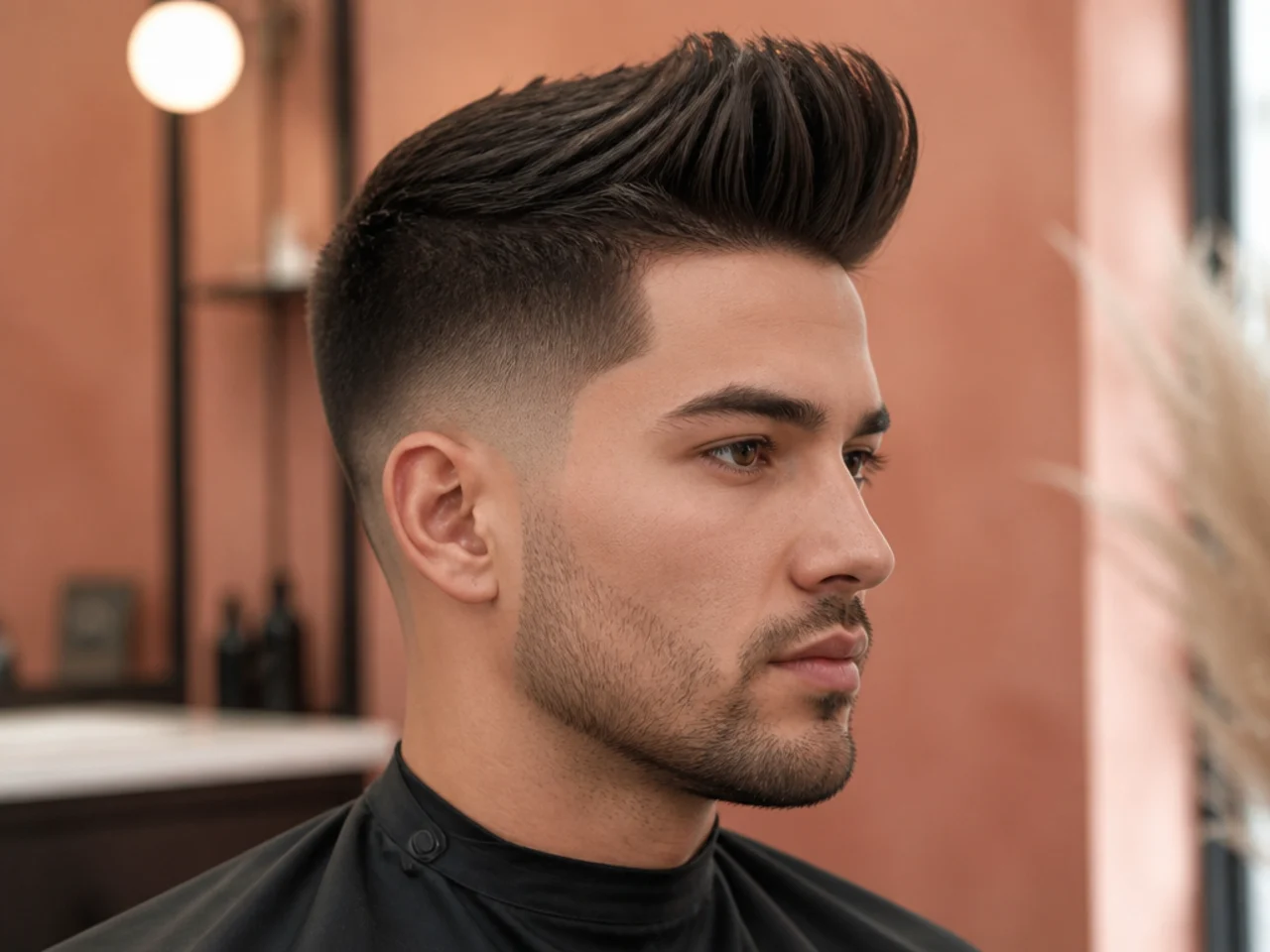
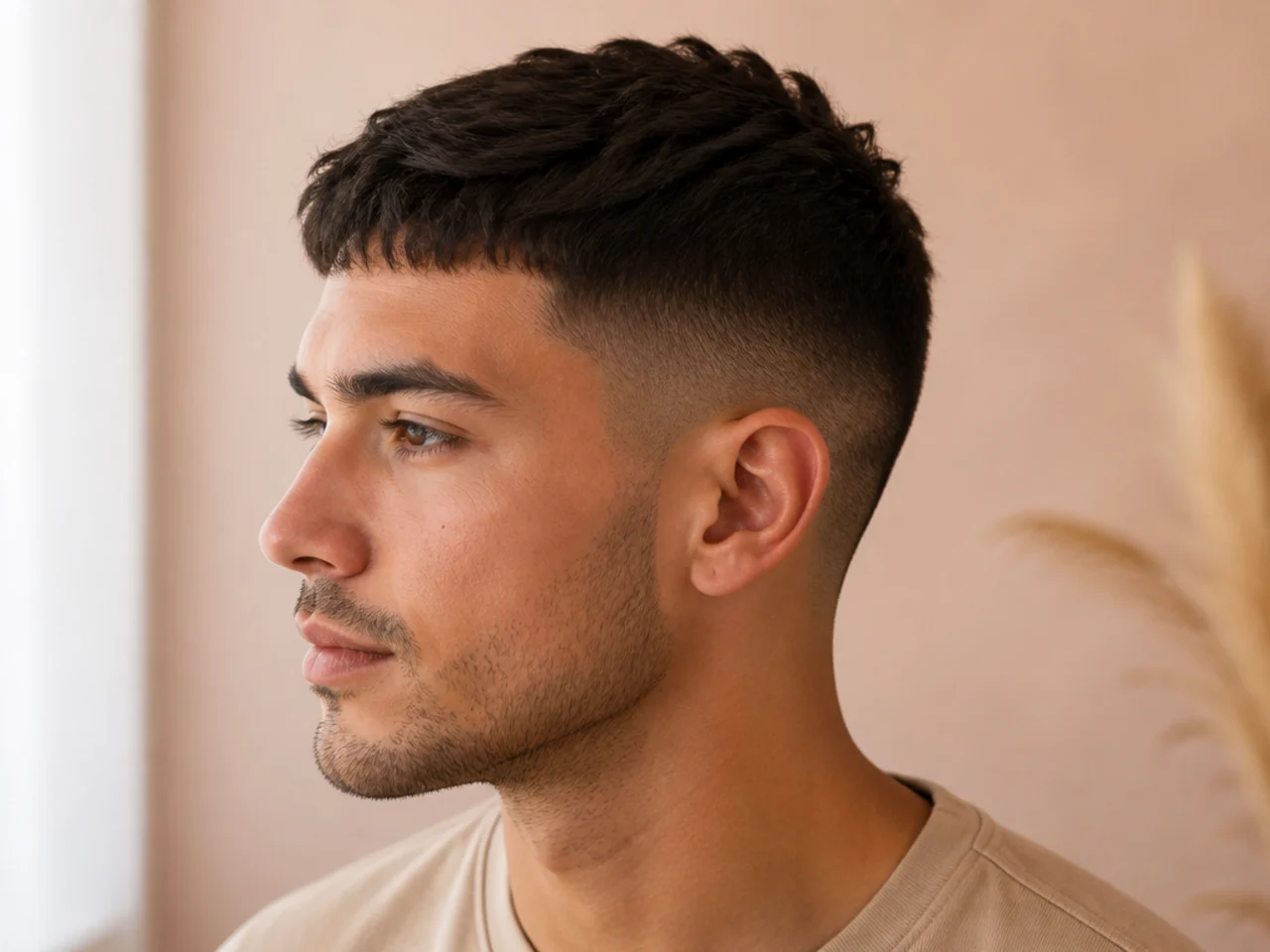
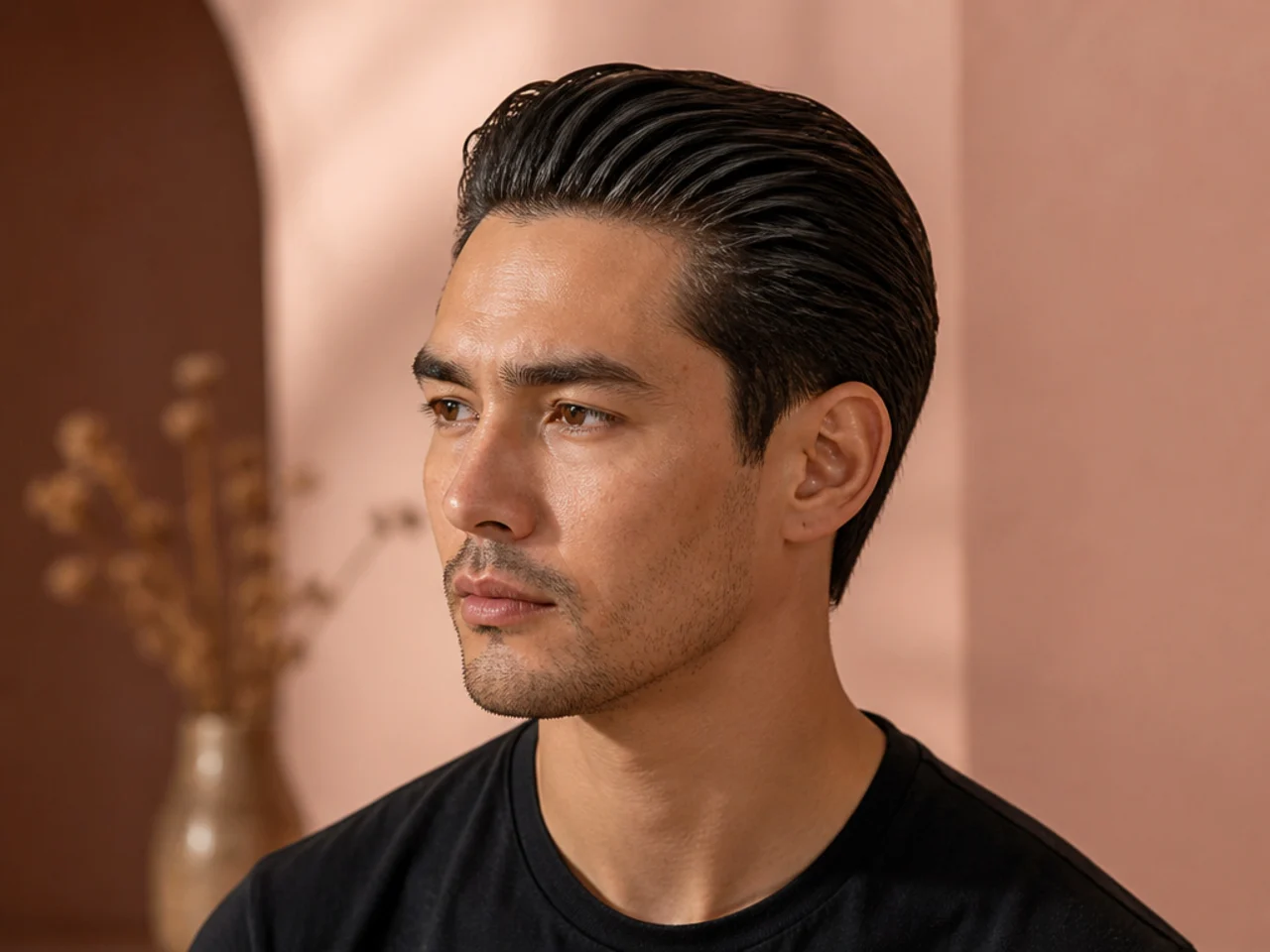
Most guys buy a jar of clay, rub it into dry hair, and blame the product when the shape falls flat by lunch. Medium length hair — 3 to 6 inches on top — rewards technique more than it rewards spending. Get the moisture level right, apply product to the right part of the shaft, and blow-dry with direction, and the same cut can read polished for a Monday meeting or tousled for a Friday bar. Seven tips below cover the routine end to end.
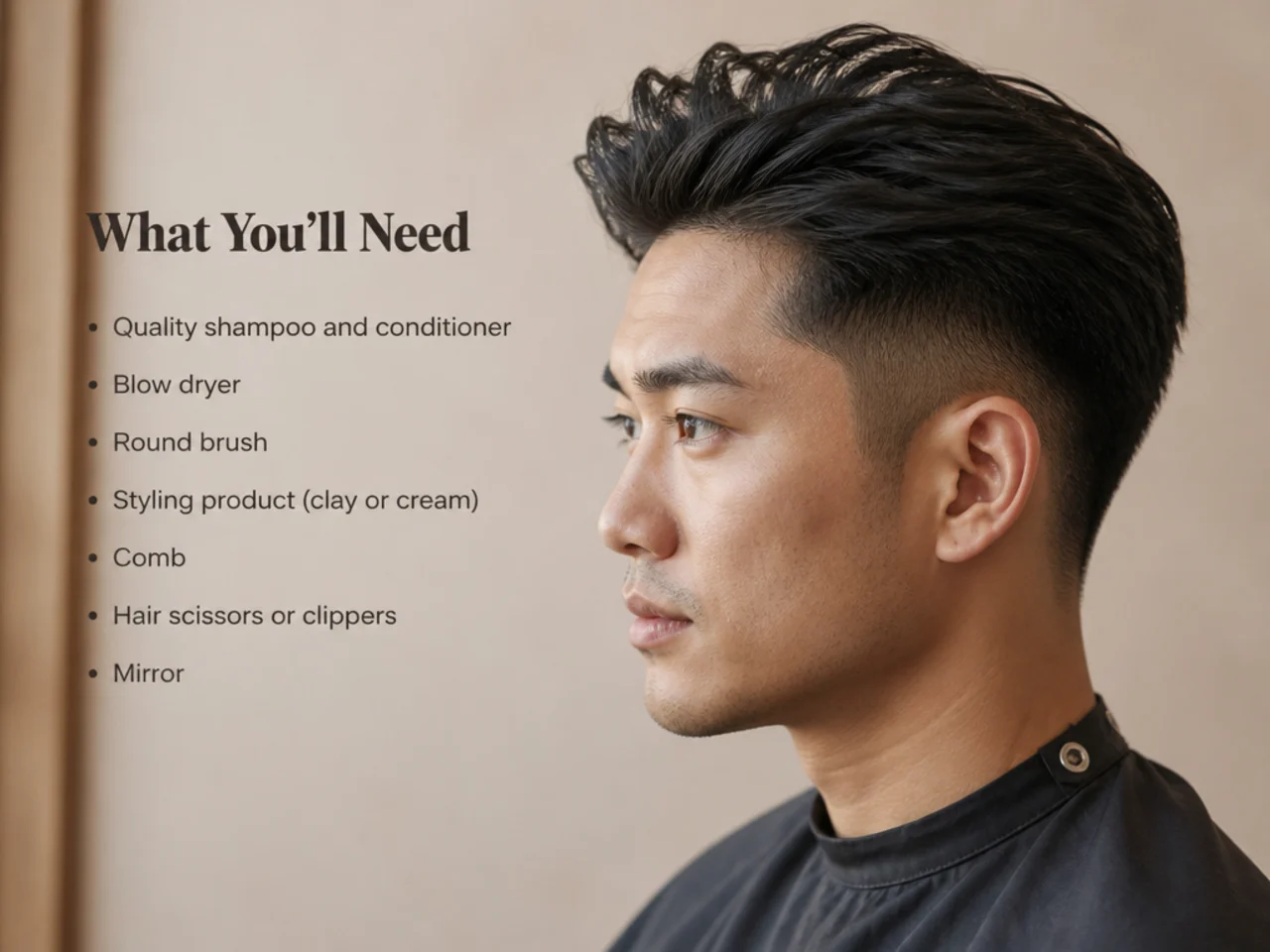
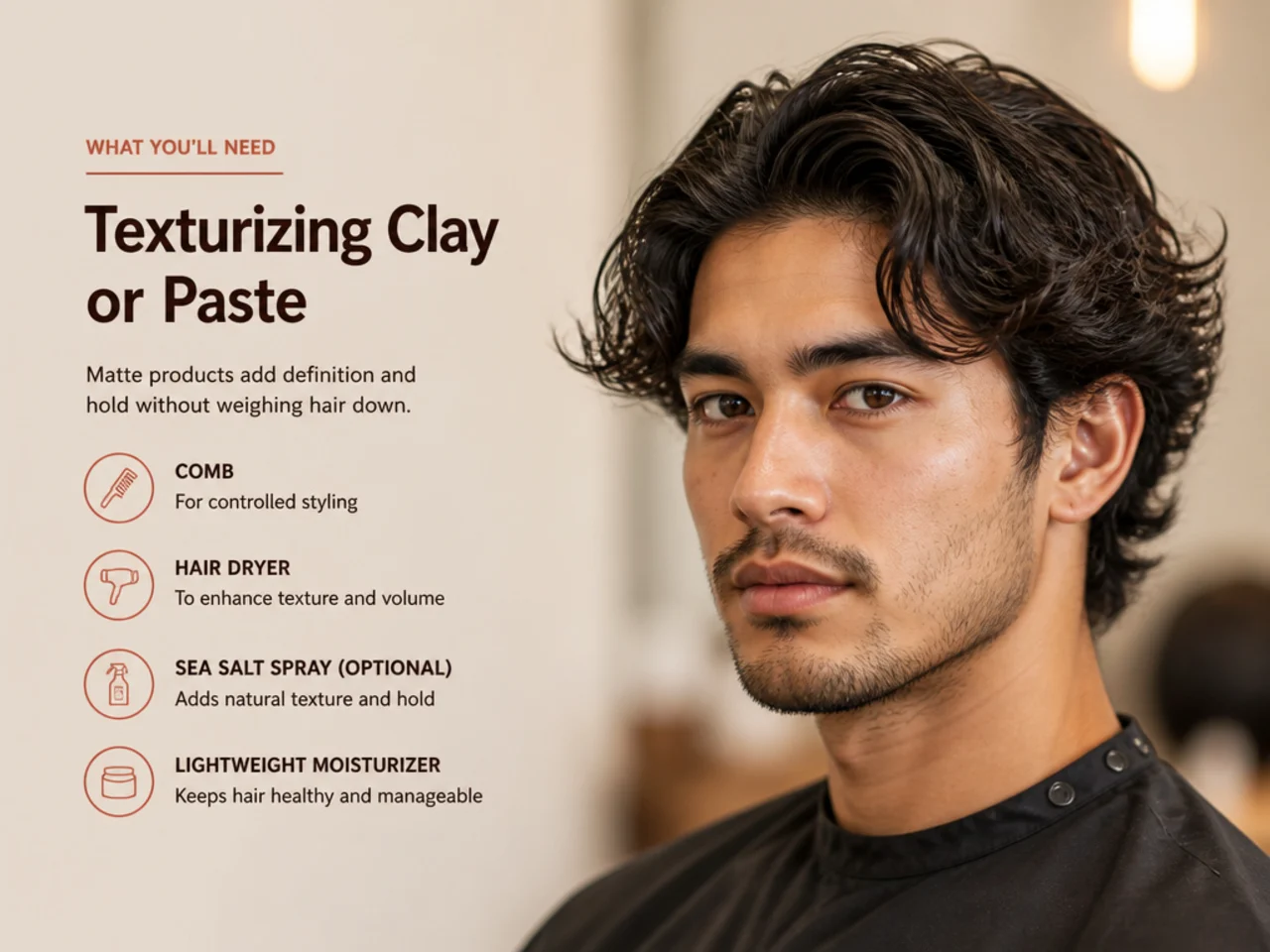
What You'll Need
Keep the kit lean. Seven items cover every mid length men styling tips routine below.
- Blow-dryer with a nozzle attachment — the nozzle concentrates airflow so you can direct where the hair sits.
- Round brush (small barrel, boar-bristle) — for lift and back-sweep on quiffs, brush-backs, and pompadours.
- Paddle brush — for smooth finishes on slick-backs, comb-overs, and long side parts.
- Wide-tooth comb — for parting hair and distributing product without breaking the wave pattern.
- Sea salt spray or texture powder — the grip layer that goes on before your styler.
- One styling product, picked by finish — matte clay or paste for texture, cream for touchable hold, pomade for shine and slick. Skip the trio; one is enough.
- Microfiber towel — replaces the terry towel that roughs the cuticle and starts frizz.
If you can only afford two things, buy a decent matte clay and a nozzle for your dryer. Everything else is optional. For product picks by category, our best wavy hair products guide covers formulations that carry from wavy through lightly curly.
Tip 1 — Get The Cut Right Before You Blame The Product
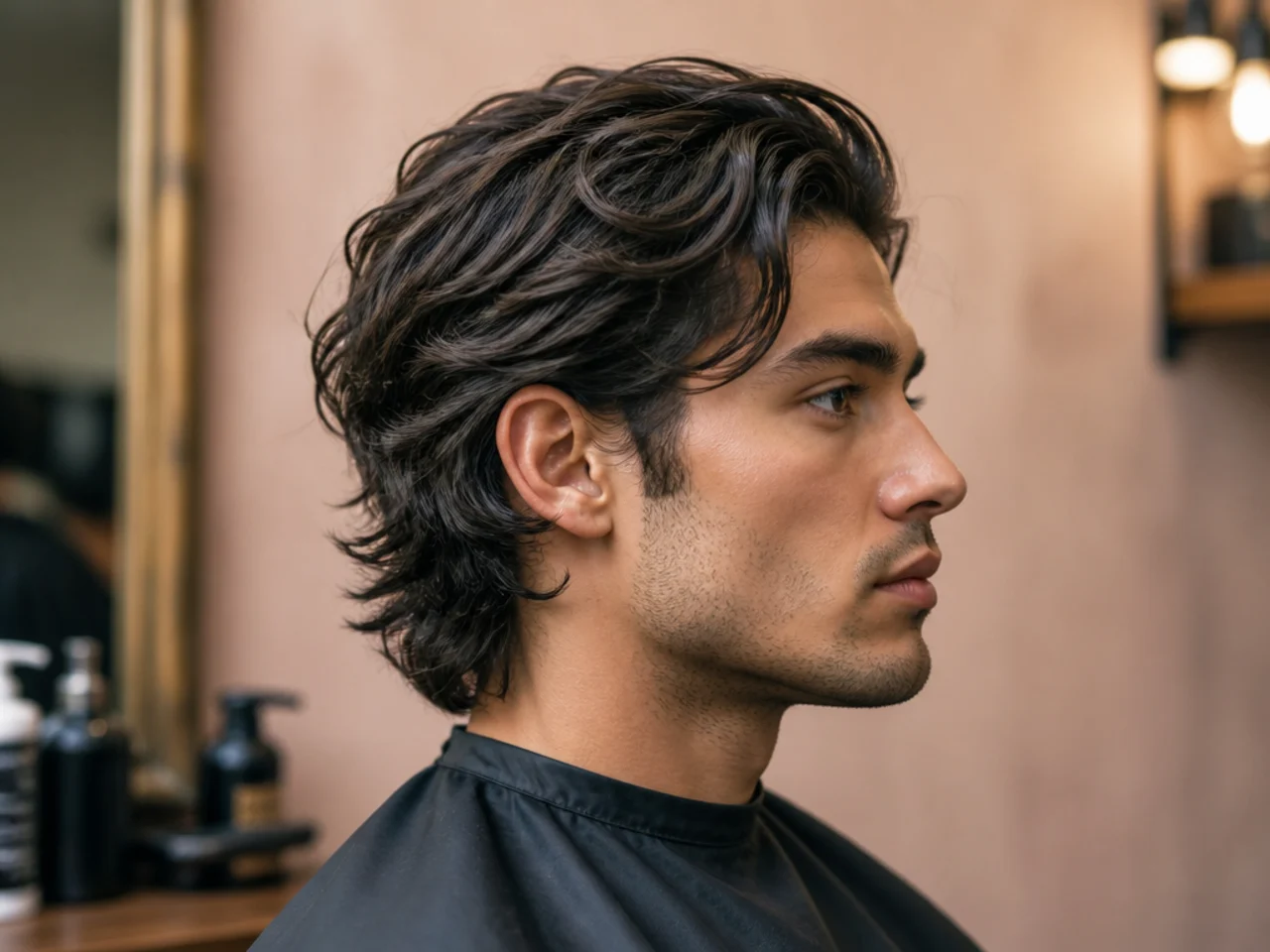
Eighty percent of the finish is decided in the barber's chair. If the top is one blunt length with no internal layering, no clay in the world will build movement into it. If the sides are too heavy, the top will always look flat compared to them. Fix the cut first, then talk about product.
Ask your barber for three things by name. Internal point-cut layers on top so the ends move instead of sitting like a helmet. A scissor-blended perimeter around the ears rather than a hard clipper line — clipper lines grow out awkwardly and force short chair intervals. Length in inches, not vague words: "four inches at the front, tapered to three at the crown" gives the barber a target that a photo alone does not.
Bring two reference photos — one of the styled finish you want and one of the length dry and unstyled. Barbers cut a lot of guys who show one photo and expect the other. If you are aiming for a brush-back or quiff, leave five inches at the front so the arch has room to form. For a flow or long side part, four inches is enough.
Common mistake: Asking for a short back and sides when you actually want a scissor-blended taper. The clipper line reads modern in the mirror on cut day and dated by week three when it starts to grow out. See 30 medium length haircuts for men for shape references, and 39 attractive medium length hairstyles for finish inspiration to bring to the chair.
Tip 2 — Style At Sixty To Seventy Percent Dry
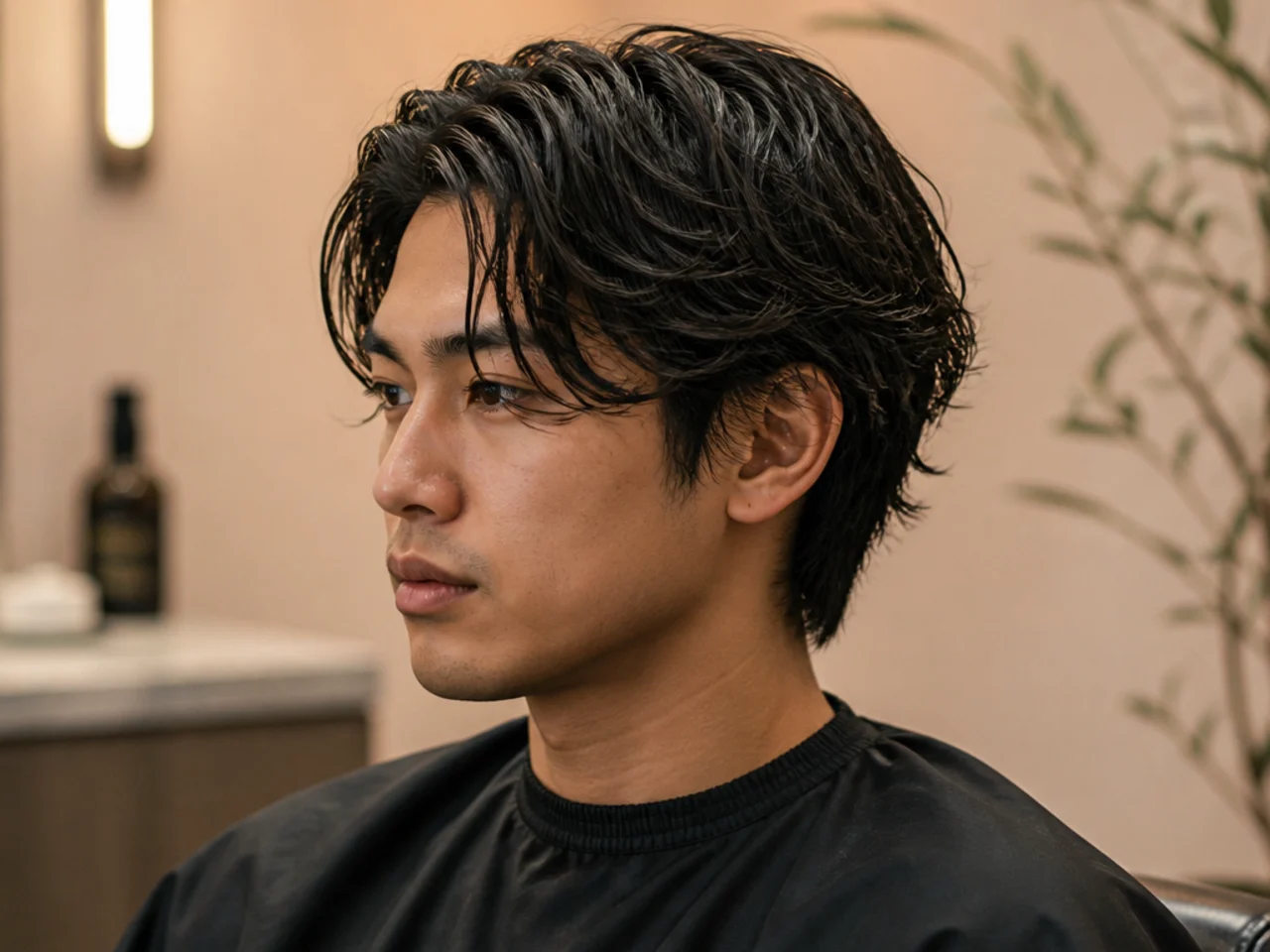
The single biggest mistake in men's medium length styling is the moisture level. Product applied to soaking-wet hair slides off before it can bind. Product applied to bone-dry hair sits on the surface in patches and never distributes. You want the middle — 60 to 70 percent dry, or damp to the touch without drips.
Get there by rough-drying with a microfiber towel first — squeeze water out in sections rather than rubbing. Then either air-dry for five minutes while you brush your teeth, or run a blow-dryer on medium heat with your fingers raking through until the hair is cool at the roots and just barely damp at the ends. When you can grip a section between your fingers and it does not leave a wet mark on your palm, you are at the right window.
Products behave differently at this moisture level. Clay warms and spreads instead of clumping. Cream absorbs into the shaft instead of coating the outside. Pomade combs through smoothly instead of dragging. The finish you get at 65 percent dry is not the finish you get at 100 percent dry with the same product — it is more even, holds longer, and reads less crispy.
Common mistake: Toweling until your hair is bone dry, then wetting a comb to "re-hydrate" it. Water added to dry hair sits on the surface and does not carry product in. Get the moisture right during the drying phase and leave it there.
Tip 3 — Build Grip Before You Reach For Your Styler

Medium hair is heavy enough to slide out of shape on its own. That is what a prep product fixes. Sea salt spray, mousse, or a shake of texture powder builds the microscopic grit your styler needs to bind to. Skip this step and your clay slips, your pomade goes flat, and your brush-back drops by mid-morning.
Sea salt spray is the default for wavy and straight hair. Mist damp roots and mid-lengths — six to eight sprays for most heads — then scrunch upward with your fingers to distribute. The salt roughs the cuticle just enough to grip. Skip the ends; salt is drying and does not need to be there. Guys with fine hair should substitute a marble-sized dollop of mousse instead of salt spray, because salt on fine hair reads dry.
Texture powder is the shortcut for guys who want visible root lift without wet product. Sprinkle it directly on damp or dry roots, rub in with fingertips, and forget it. It disappears into the hair and adds volume that clay alone cannot build.
Common mistake: Layering three prep products because "more is better." One is enough. Two — sea salt spray plus a marble of mousse on fine hair, or spray plus texture powder for extreme lift — is the maximum. Anything more weighs the finish down before you have added your actual styler.
Tip 4 — Match The Product To The Finish You Want
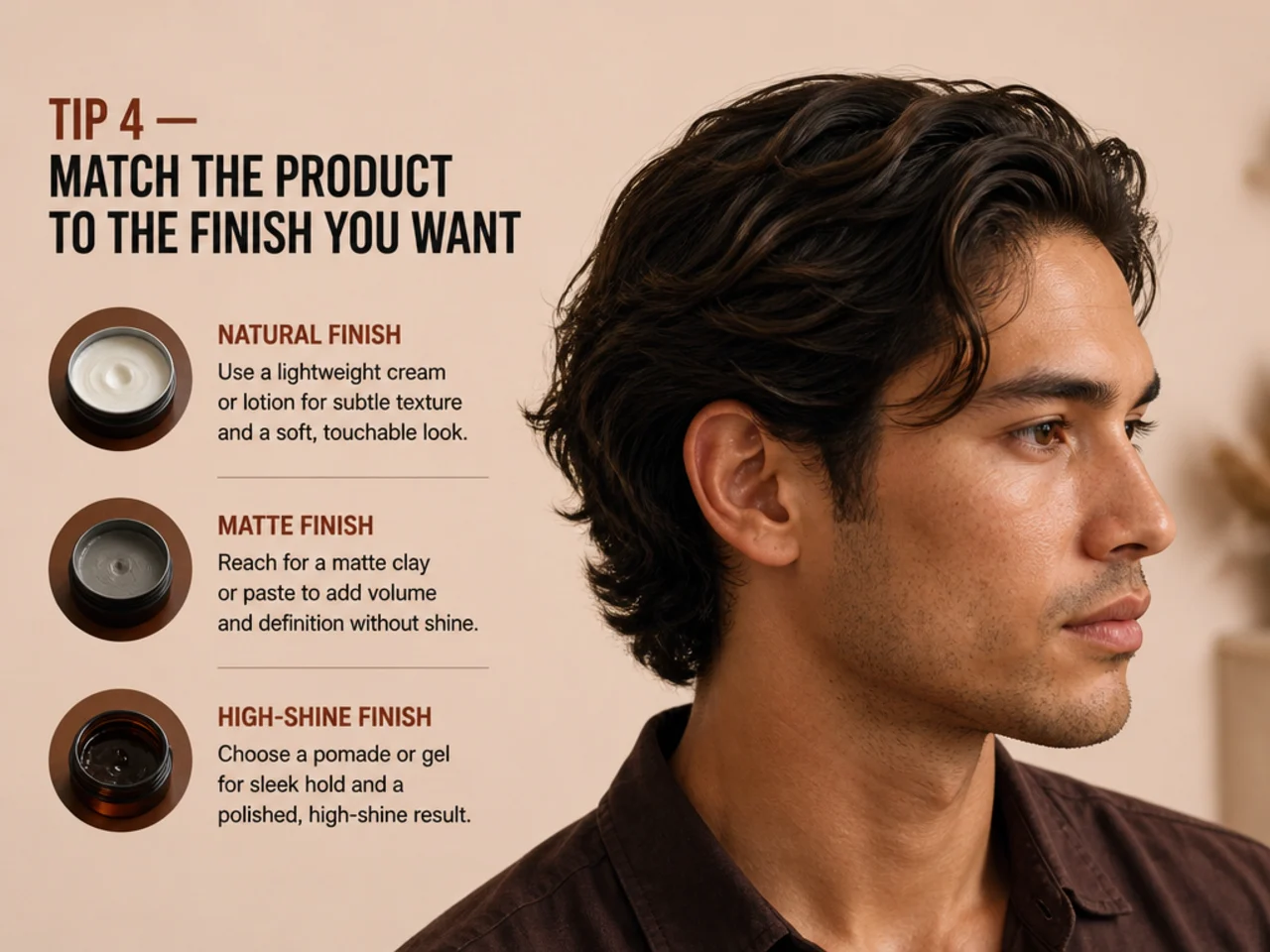
Every styling product on the shelf falls into one of three categories: matte, shiny, or touchable. Pick by the finish you want; the brand barely matters. This is the shortest section of the routine and the one that fixes the most problems.
Matte clay or paste. For textured tops, quiffs, messy sweeps, and any finish that should look styled rather than glossy. Warms between the palms into a smooth film, holds the shape without shine, and washes out clean. This is the default recommendation for eighty percent of medium length cuts.
Cream or lotion. For flow, curtains, tousled looks, and long side parts where you want movement more than hold. Coats the strand lightly, adds a soft sheen, and lets the hair keep its natural pattern. Good for guys who want a "did not really do anything" finish that still holds through the day.
Pomade — water-based, not oil. For slick-backs, sharp side parts, comb-overs, and any finish that should read polished and glossy. Combs through smoothly, sets with visible shine, and washes out with normal shampoo. Skip oil-based pomades unless you are aiming for a genuine 1950s look — they do not wash out and stain pillowcases.
Match the product to the mood: matte for weekday, cream for weekend, pomade for the meeting or the wedding. Common mistake: buying a "medium hold, medium shine" all-in-one and wondering why nothing looks intentional. Committed products commit to a finish. All-in-ones commit to nothing.
Tip 5 — Apply Product To The Mid-Shaft, Never The Roots
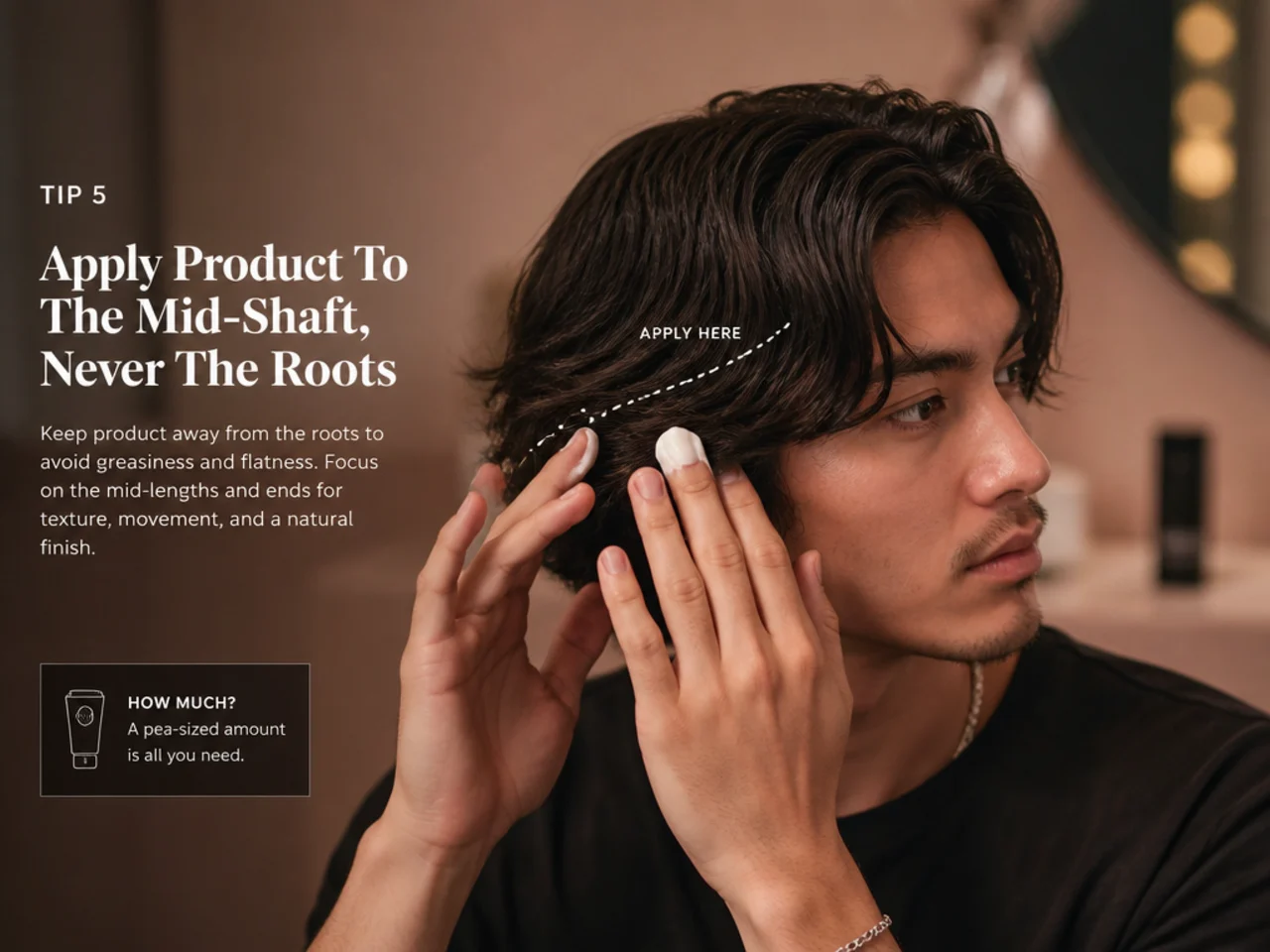
Where product lands on the strand decides whether it works. Product at the roots kills lift and makes fine hair look thin. Product at the very ends dries flyaway and stringy. The mid-shaft — from an inch above the scalp to two inches from the tips — is where hold, texture, and shape actually live.
Rub a nickel of clay or cream between your palms until it disappears into a thin film. If you can still see the product on your palms, you are about to over-apply. Work your hands through the mid-lengths first, palms parallel to the scalp rather than pressed against it. Then push the product forward, back, or wherever the shape needs to sit — but keep your hands off the roots. The last motion is a light fingertip rake through the ends to break any leftover clumps.
For volume-forward styles — quiffs, brush-backs, pompadours — leave the last inch at the roots product-free. The clay lifts the mid-shaft off the scalp when you dry, which is what gives you height. Product at the base flattens that lift before you have started.
Common mistake: Squeezing product straight from the jar onto the scalp and combing it out. That deposits ninety percent of the load at the root and forces you to over-apply to reach the ends. Warm it in the palms first, always.
Tip 6 — Blow-Dry With Direction, Not Just For Dryness
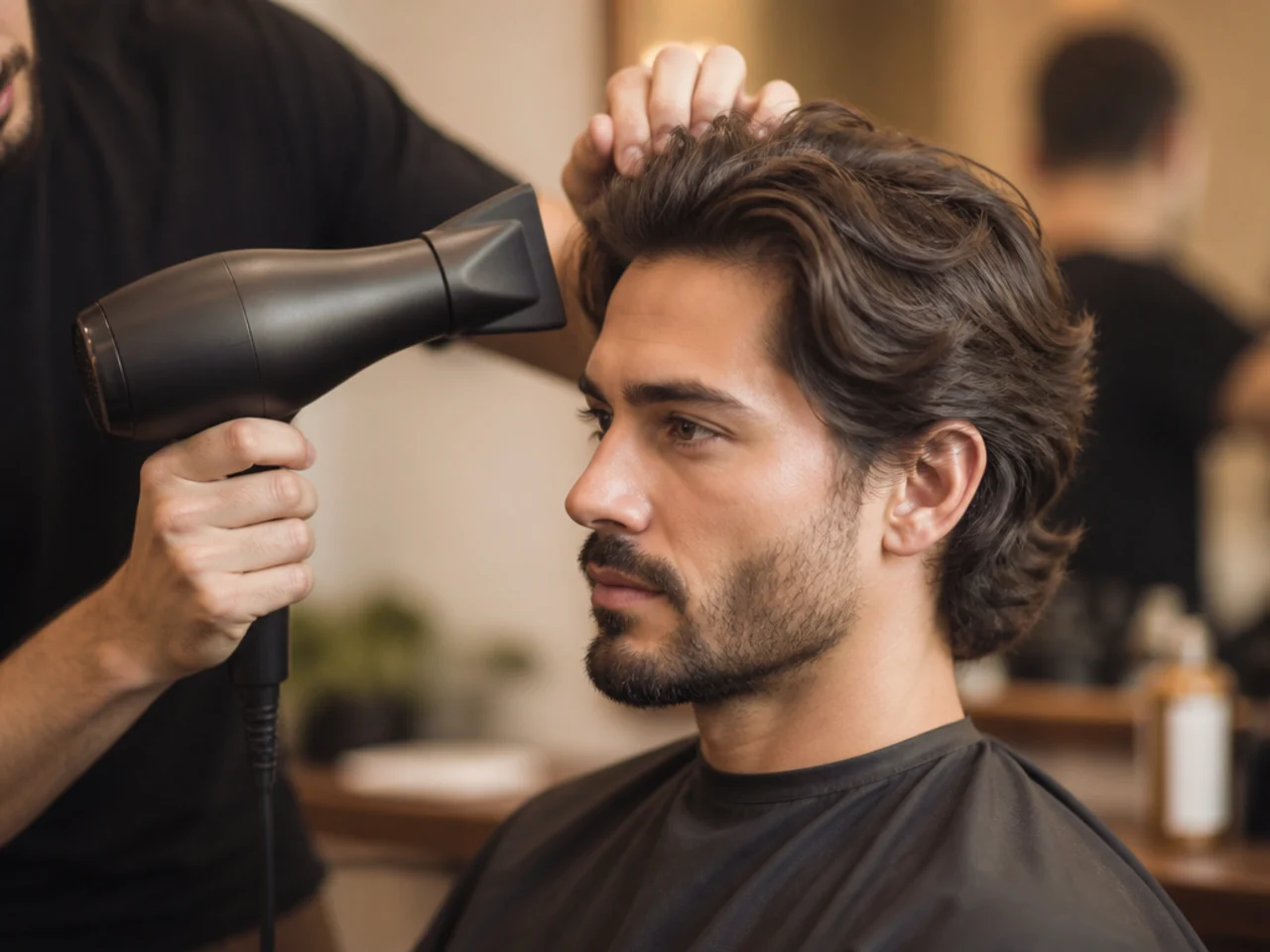
A blow-dryer sets the shape. Waving it randomly at your head dries the hair without giving it a direction to hold. Point the airflow along the shaft in the direction you want the hair to go, and the shape locks in as it dries. This is the technique that separates a professional finish from a home finish.
Fit the nozzle attachment first — no exceptions. The nozzle concentrates the airflow into a stream you can aim. Set the dryer to medium heat and medium speed for most styles; high heat is only for the last thirty seconds to set the shape. Point the nozzle down the shaft, from root toward tip, at whatever angle you want the hair to travel. For a brush-back, point it from the front hairline back toward the crown. For a side part, point it across the part in the direction of the sweep. For lift, point it up from underneath at the roots.
Match the tool to the finish. A round brush rolled from the roots upward gives lift and a smooth outer sweep — the standard tool for quiffs, brush-backs, and pompadours. A paddle brush pulled along the shaft gives a flat, glossy finish — the tool for slick-backs, side parts, and long comb-overs. Fingers only with a diffuser cupped at the roots gives texture and volume for wavy or curly hair — see our guide on curly hairstyles for men for the full diffuser technique. Match the brush to your finish, not your friend's.
Common mistake: Blow-drying with the nozzle six inches from your head and no direction. The airflow scatters, the hair dries in whatever shape it grew, and you spend the rest of the routine forcing it into position. Two minutes of directional drying saves five minutes of restyling.
Tip 7 — Finger-Finish, Don't Re-Comb
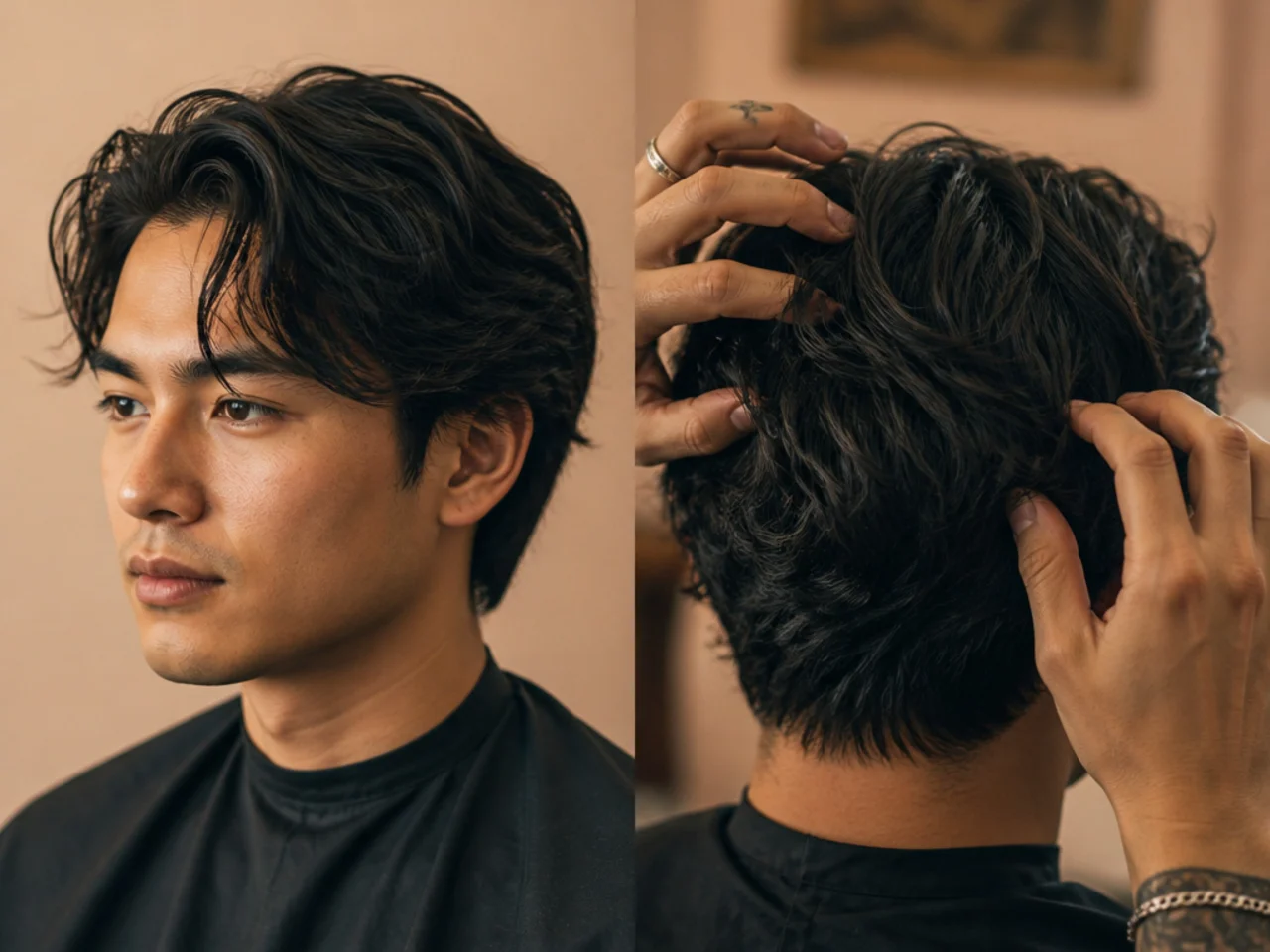
Once product is in and the hair is dry, put the comb down. Combing through a set style drags product from the mid-shaft down to the ends, flattens the height you just built, and turns textured pieces into smooth strands. The final step of any medium length routine is a fingertip touch-up, not a re-brush.
If you need to refine, rub half a fingertip of your styler between two fingers and press it only where the shape needs holding — a stray strand at the temple, a flat spot at the crown, a piece falling forward that should sit back. Never re-apply broad areas. The finish should look sharpened, not restarted.
For mid-day fixes, keep a mini bottle of dry texture spray in your bag rather than a jar of clay. Two spritzes from ten inches away plus a finger rake rebuilds body without adding product weight. If a piece has gone completely flat, wet only that section with fingertip of water — not a spray — and let it air-dry for two minutes. Water reactivates the product already in the hair without adding a fresh layer.
For guys who want a full styling reference by cut shape, 20 hairstyles for medium length hair walks through twenty different finishes from the same base cut with product picks for each. And if you are still landing on which shape to book, 30 medium length haircuts every guy should see covers the underlying cuts in detail.
Common mistake: Running a comb through a finished style "to tidy it up." That resets you back to zero and forces a second product application. A palm-press or a two-finger pinch is the only touch-up a set style should get.
Troubleshooting Common Medium Length Style Fails
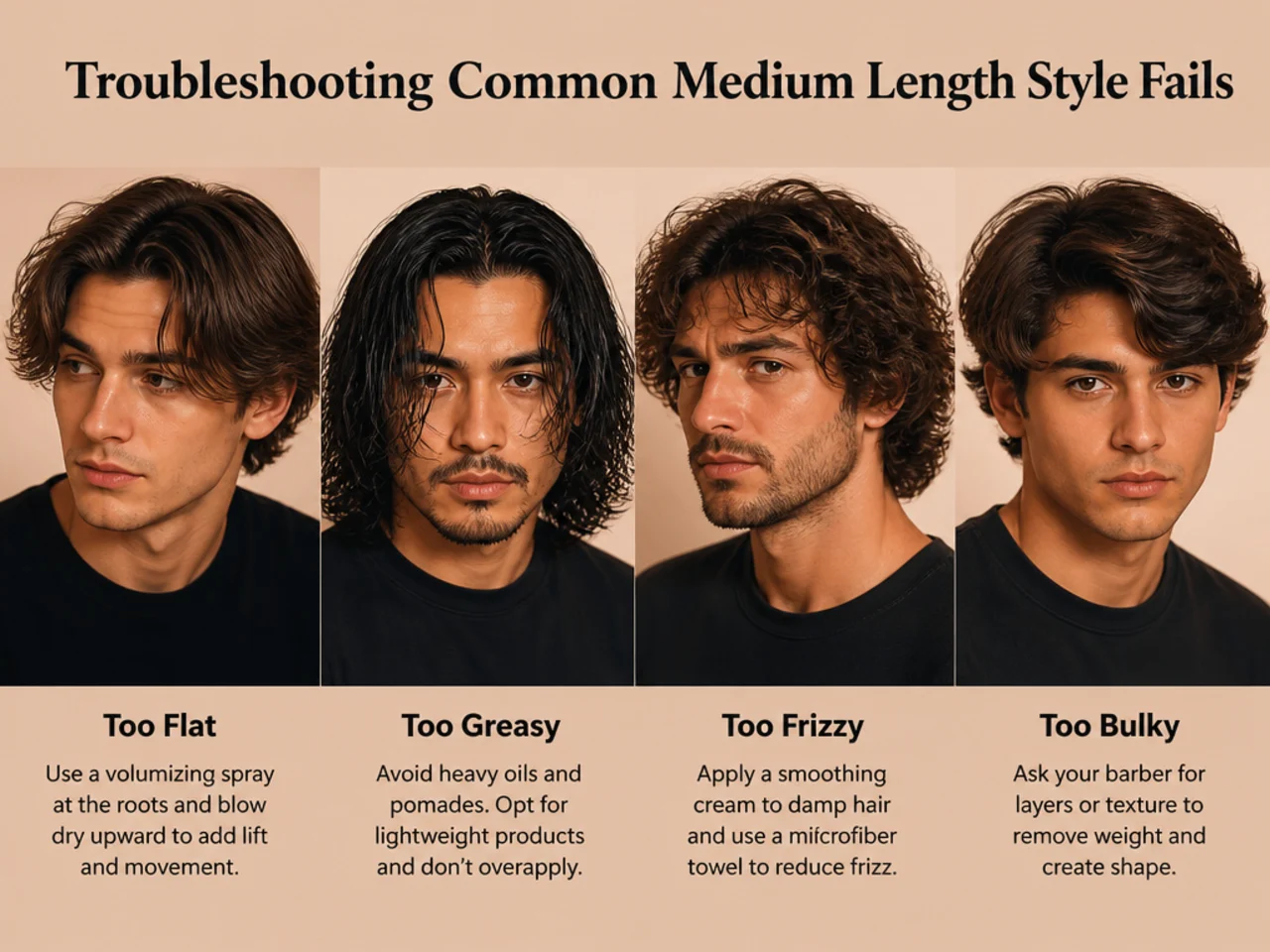
Match your symptom to the fix. Most problems track back to one of the seven tips above.
Hair looks flat by lunch. You applied product to the roots or styled with hair too wet. Redo tomorrow at 65 percent dry, keep product in the mid-shaft only, and finish with a spritz of texture spray at the crown.
Style feels crunchy or stiff. You over-applied. Rub a fingertip of cream between your palms and press it into the crunchy sections — the fresh product softens the set. Next wash, halve the amount and see if the hold still lands.
Front piece falls onto the forehead. Not enough hold or a cut that is too long for the finish. Try a heavier clay first. If the piece still drops, bring a photo to your next cut and ask for it shortened by half an inch — the front of a quiff or brush-back should sit an inch above the brow, not on it.
Shine when you wanted matte. Wrong product. Switch from cream or pomade to matte clay or paste. If you already applied and cannot wash it out, dust the roots with texture powder — it absorbs the shine and adds grit.
Sides puff out by afternoon. The cut has grown out past its window, or the sides were left too long relative to the top. Book a scissor-blend cleanup or a mid fade at the temples and the puff disappears. Between cuts, dampen the sides only and blow-dry down for thirty seconds.
Product residue by day two. Wash your styling tools weekly and swap to a clarifying shampoo once a month. Build-up on the brush transfers back into your hair, which reads as dullness even on freshly styled days.
FAQ
What counts as medium length hair on a guy?
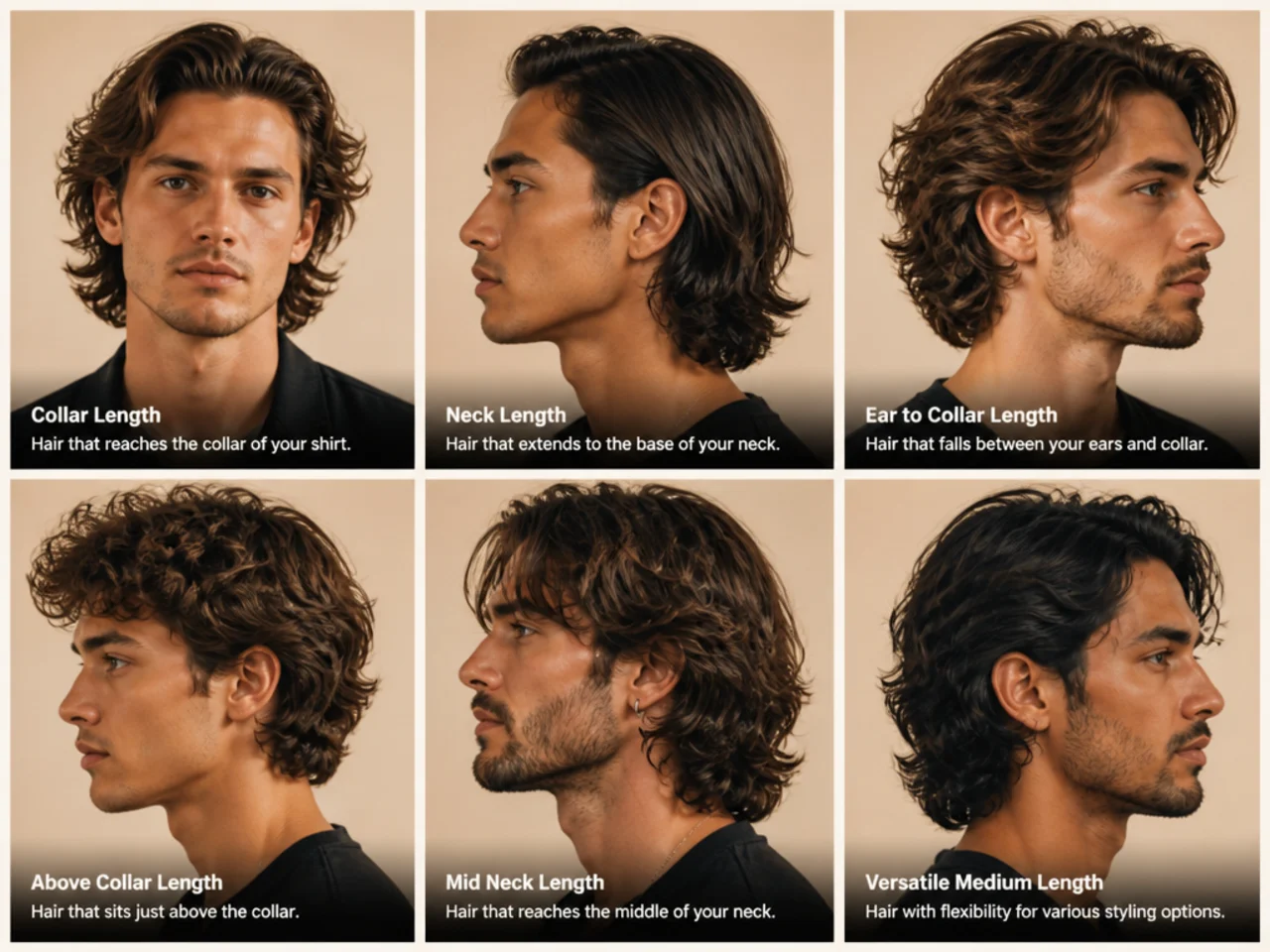
Anything from 3 to 6 inches on top, with sides long enough to touch the ear or fall past the temple. Below 3 inches you are in short-cut territory; past 6 inches you are heading into long-hair styling rules. The seven tips above assume you are sitting in that 3-to-6-inch band.
How long should styling medium length hair take each morning?

Three to five minutes once you have the routine down. Wash and prep happen the night before or in the shower; the morning work is moisture-check, product, ninety seconds of blow-dry, and a finger finish. If you are past ten minutes, you are re-styling instead of finishing.
Should I blow-dry medium length hair every day?
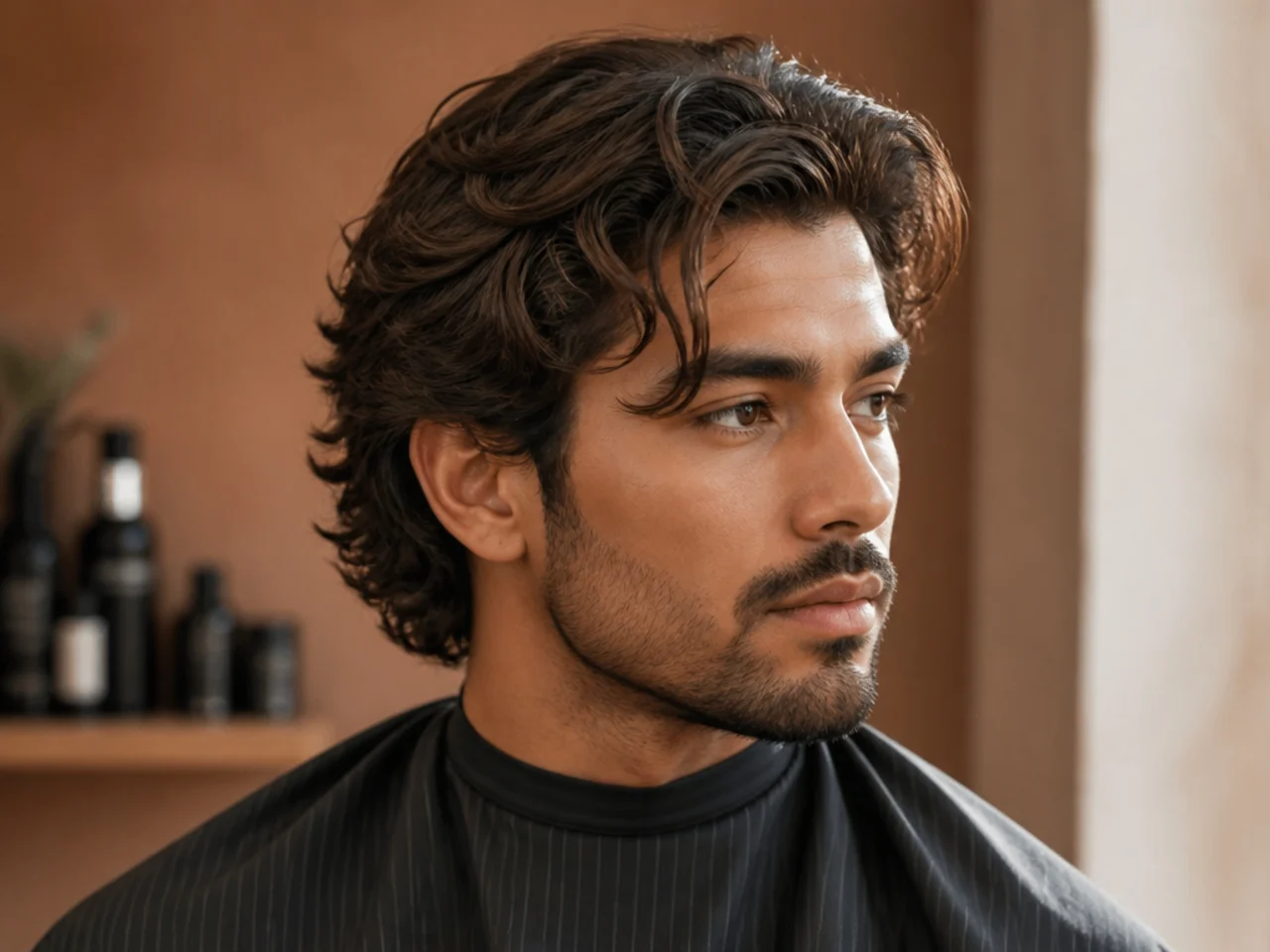
Only for volume-forward finishes — quiff, brush-back, pompadour, side part with lift. Loose flow, tousled, and messy styles set better with air-drying plus a fingertip of cream. Blow-drying is a tool, not a requirement. For a full breakdown of when to reach for the dryer, see our guide to textured haircuts for men.
What product should I use on medium length hair?

Match the product to the finish you want. Matte clay or paste for textured lift; cream for touchable movement; pomade for shine and hold. One product is enough for most styles — layering two only helps on humid days or with very fine hair.
Why does my medium length hair look flat by lunchtime?
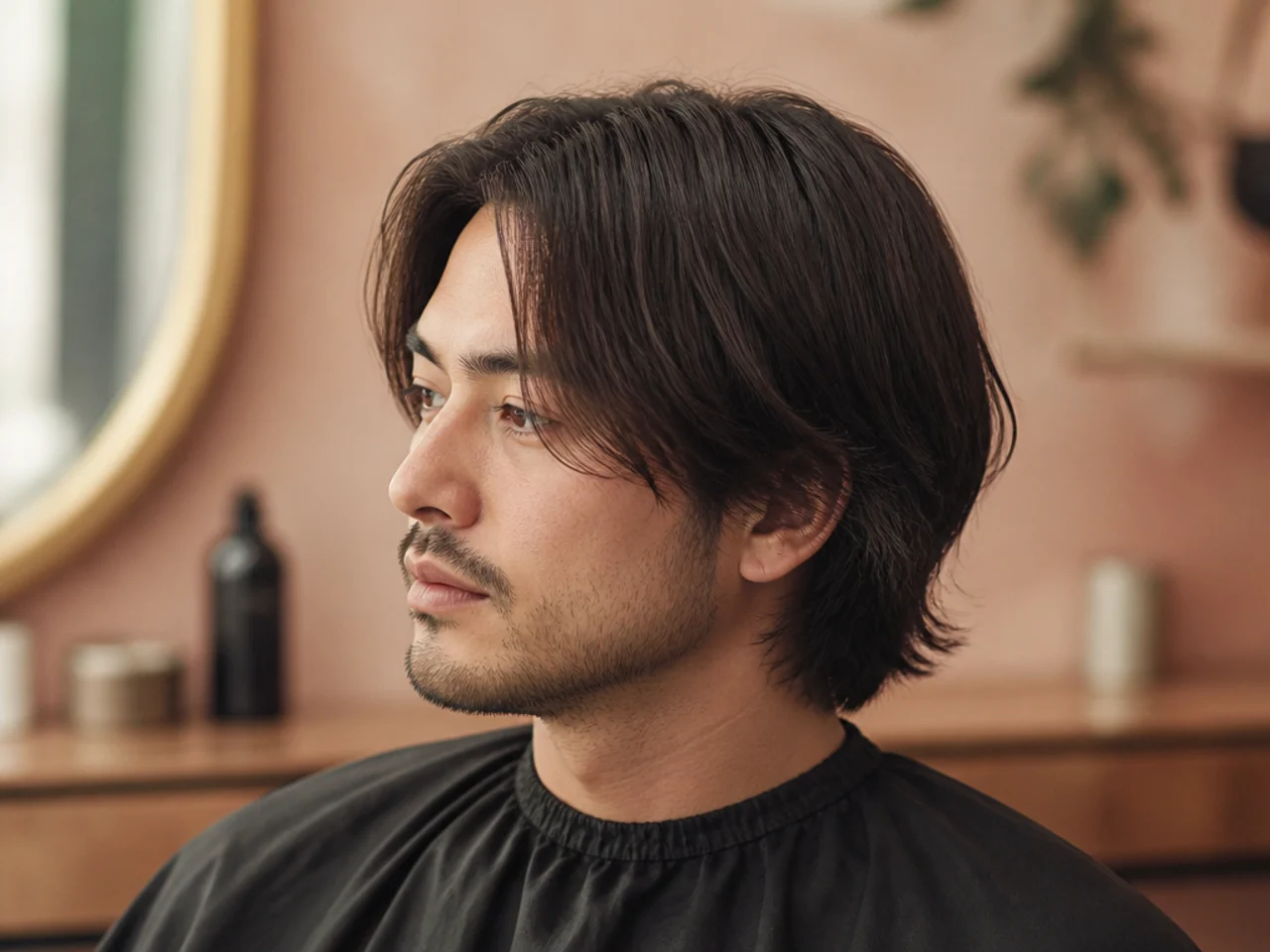
Usually one of three things — product applied to the roots instead of the mid-shaft, styled while too wet, or air-dried in the wrong direction. Fix any one of those and the shape usually holds through the workday. Guys with fine hair should also try texture powder at the roots for visible lift.
How often should I get a medium length cut refreshed?
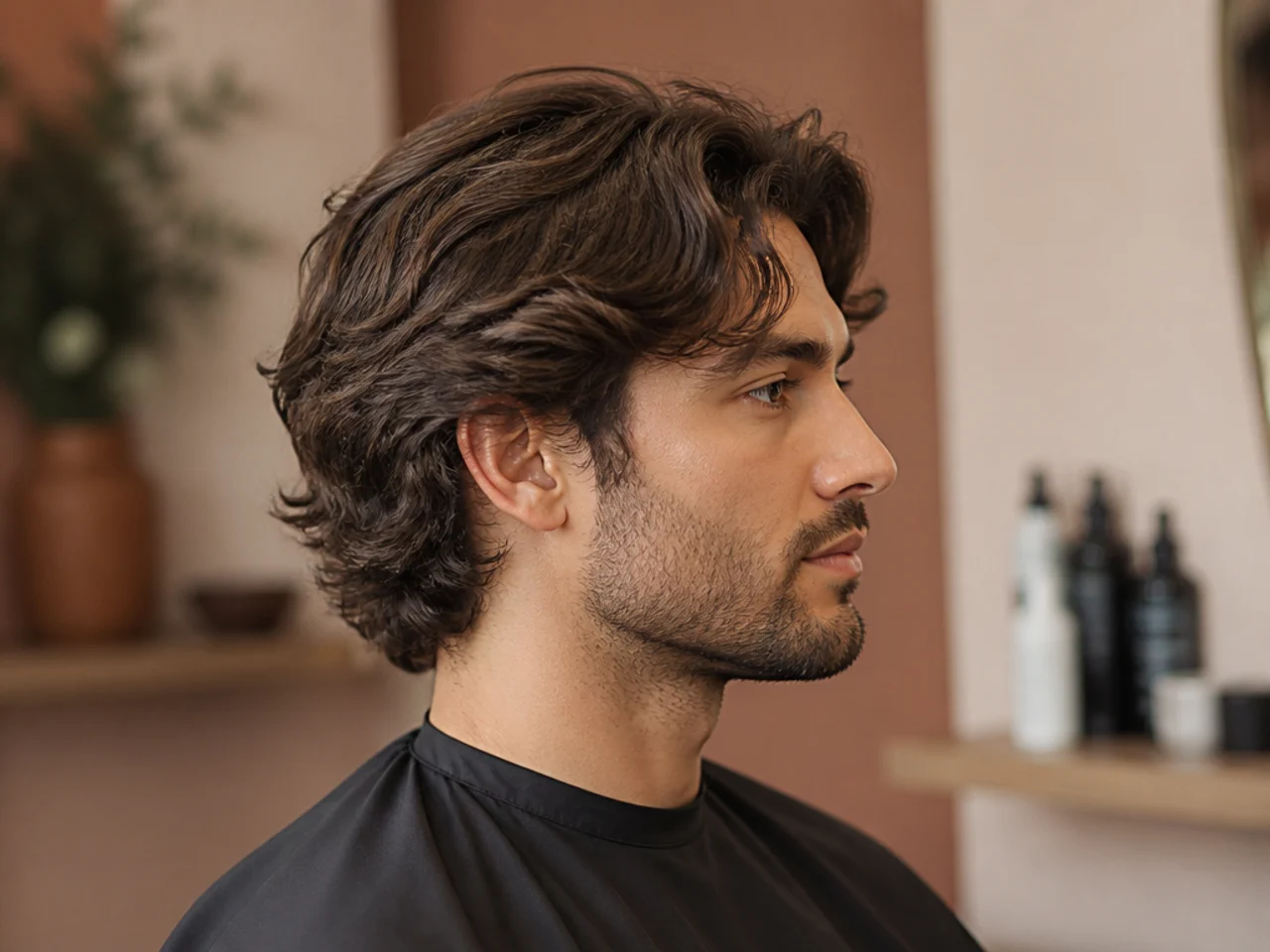
Every five to six weeks. Layers on medium hair collapse quickly once the shortest pieces catch up to the longest, and the shape starts fighting your product. Our how often should men get a haircut guide breaks the cadence down by cut type.