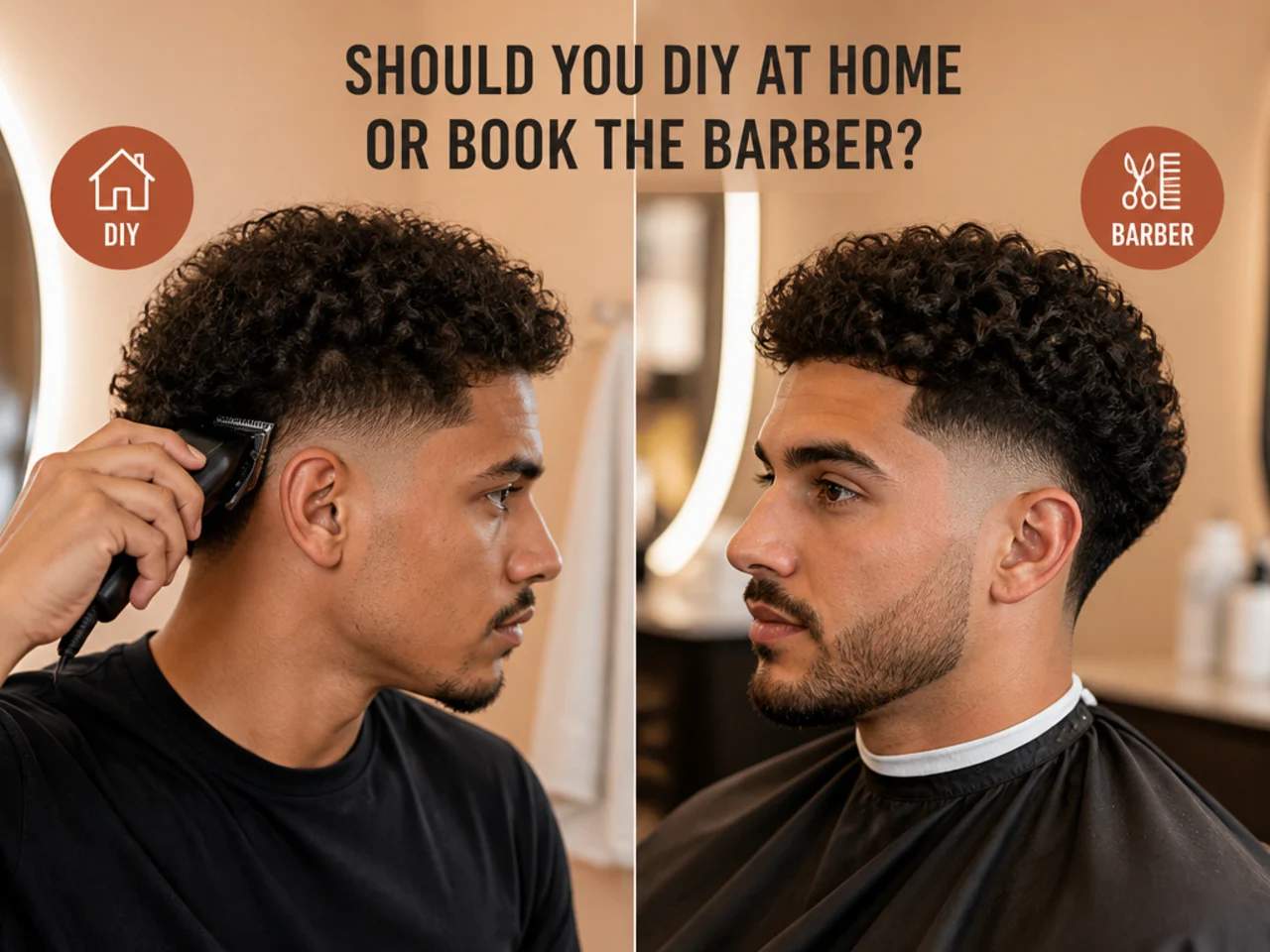
6 Steps to Ask for the Perfect Low Taper Fade
A six-step brief for how to ask your barber for the perfect low taper fade — the exact words, two photos, guard numbers, top length, and neckline that put the right cut on your head the first time.
In this article · 16
- What Is a Low Taper Fade?
- What You'll Need Before the Chair
- Step 1 — Say All Three Words: "Low Taper Fade"
- Step 2 — Show Two Photos, Not One
- Step 3 — Name the Fade Start and Shortest Guard
- Step 4 — Give the Top Length in Inches
- Step 5 — Describe the Blend and the Finish
- Step 6 — Lock in the Neckline and the Next Appointment
- Troubleshooting: When the Cut Doesn't Match the Ask
- FAQ
- What's the exact phrase to ask for a low taper fade?
- Should I bring a photo when I ask for a low taper fade?
- What guard number should I ask for at the shortest point?
- How do I tell my barber how long I want the top?
- What if my barber gives me the wrong cut anyway?
- How often should I re-cut a low taper fade?
Most low taper fades fail the same way. The barber cuts a low fade, or a plain taper, or a mid taper, because the ask was vague. The cut takes twenty minutes; the conversation takes two. This guide is the six-step brief that puts the right shape on your head the first time — the exact words, two photos, the numbers, the finish, and the neckline you name before the cape goes on.
What Is a Low Taper Fade?
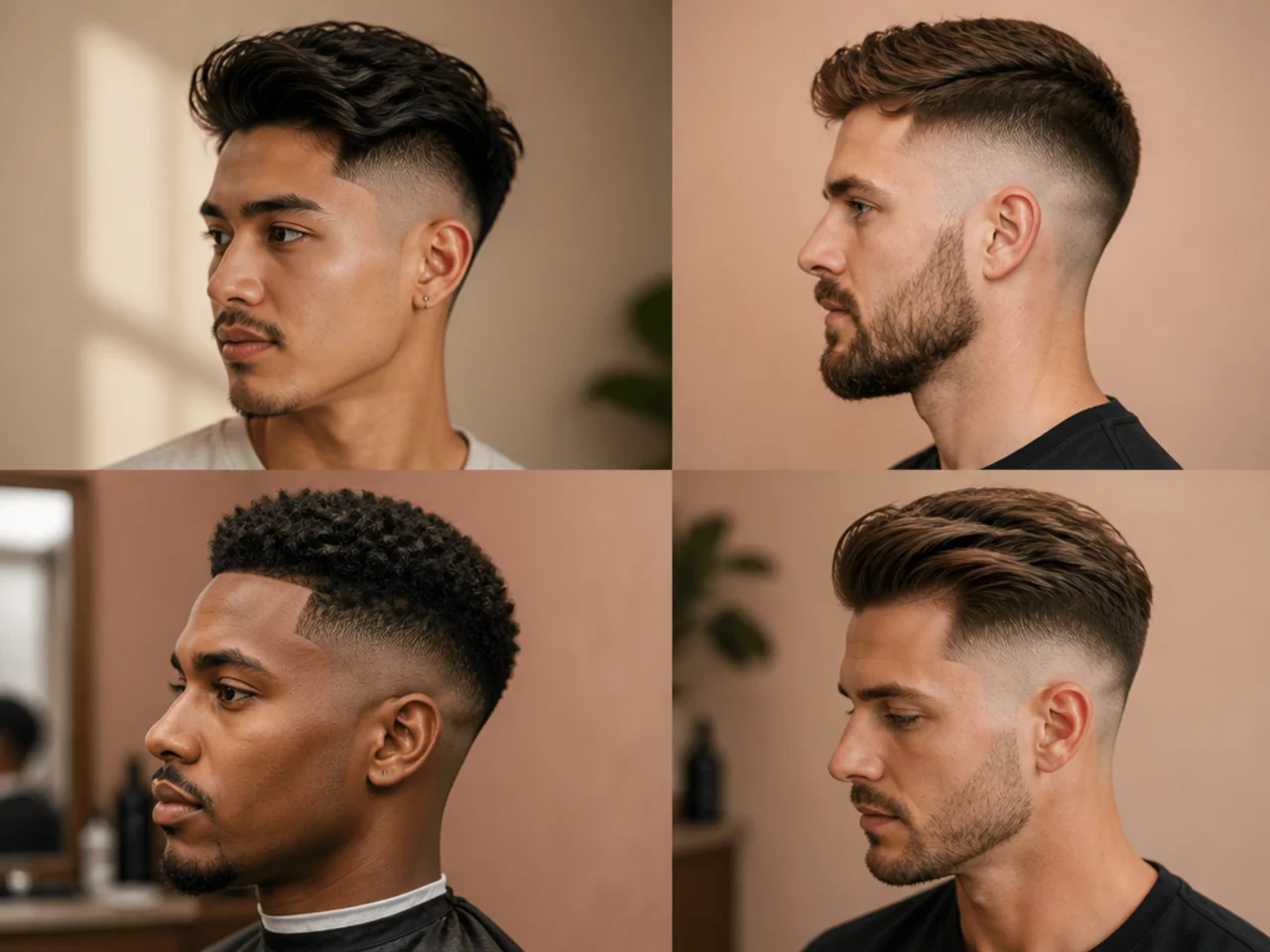
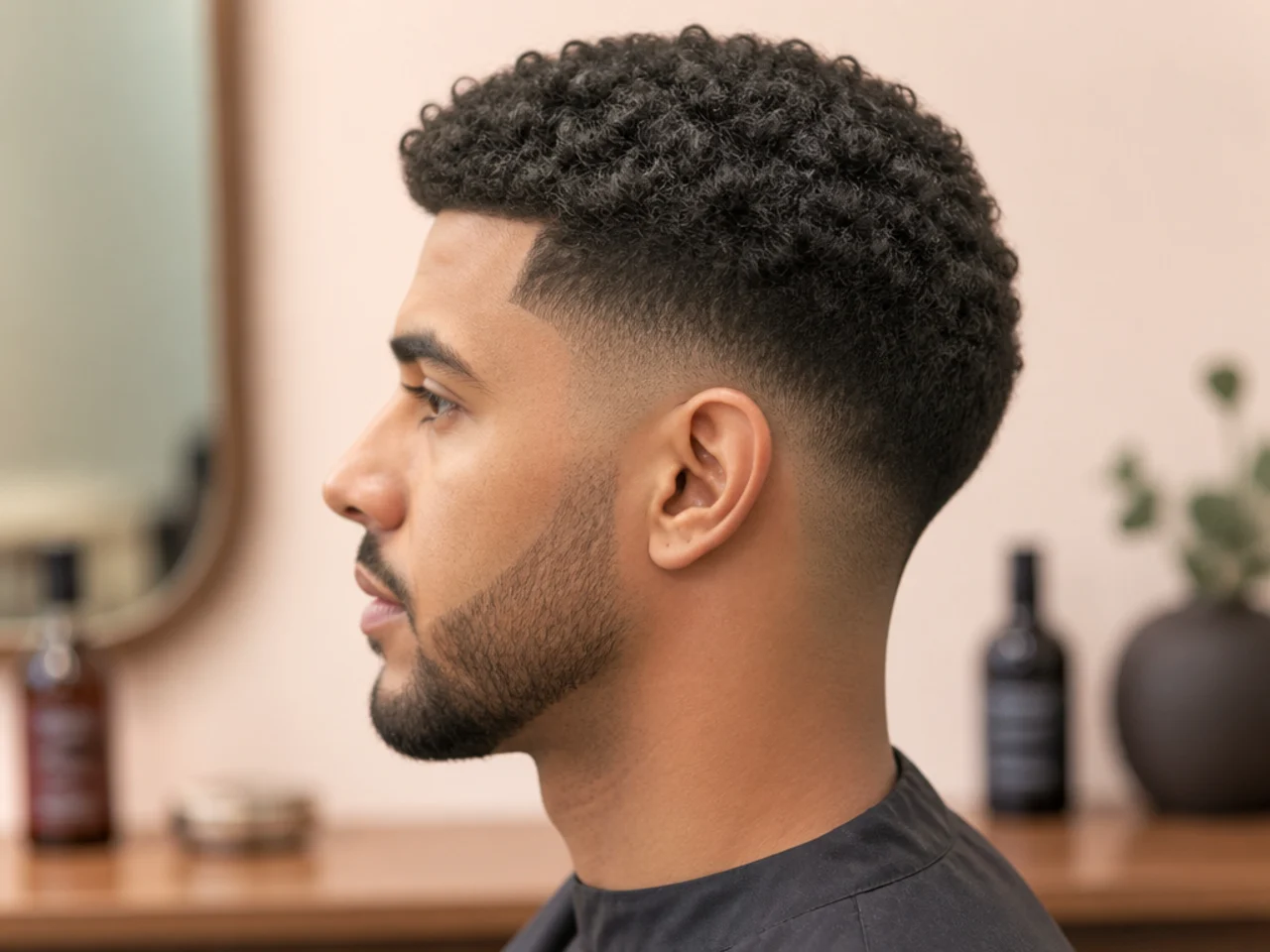
A low taper fade is a men's haircut where the sides stay mostly full, but the perimeter — behind the ear, at the sideburn, and along the nape — blends down through short clipper guards. The fade starts just above the ear, about a finger's width above the top of the earlobe, and stops at a #0.5 or #1. Skin never enters the picture. That's what makes it a taper, not a full fade.
The top stays whatever length you asked for. Two inches, four, six — it doesn't matter to the fade. The low taper is the frame; the top is the picture.
It's the most workplace-friendly cut in the fade haircut family, and it's also the most misordered. Barbers hear "low fade" and give you a full fade to skin. They hear "taper" and skip the fade work entirely. Getting the exact cut you want is a language problem, not a scissor-skill problem. The six steps below fix the language.
What You'll Need Before the Chair
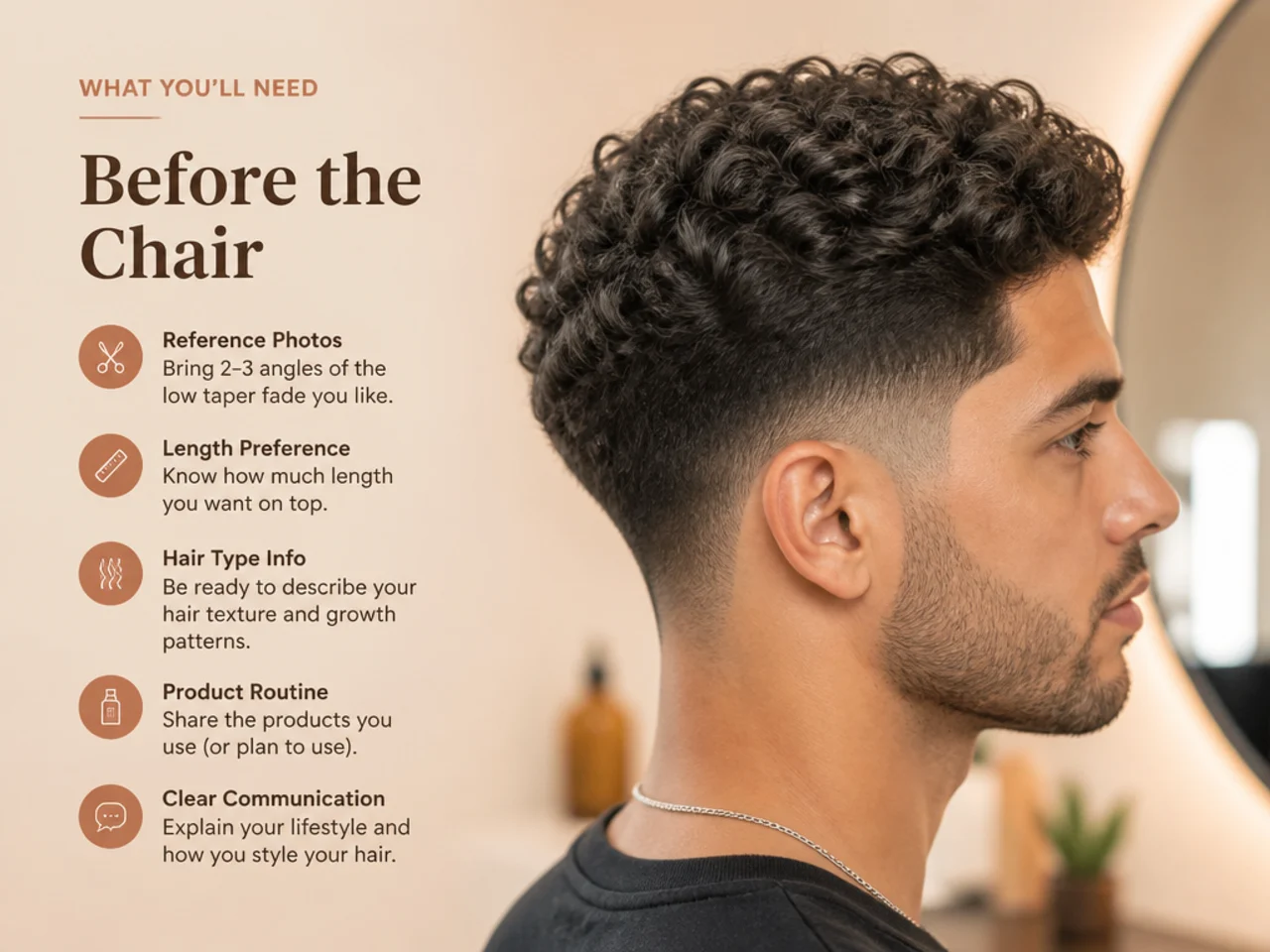
You don't need much, but each item matters.
- Two reference photos, saved to your phone. One three-quarter side profile showing the fade height and the blend. One front-facing shot showing the top length. Screenshots from Pinterest work. Save them before you leave the house — fumbling through your camera roll in the chair is when you settle for the wrong reference.
- Four numbers to say out loud. Fade start height, shortest guard, top length in inches, and finish. Every low taper fade lives inside those four variables.
- An honest read on your last cut. If your last fade came out too short, name the guard you don't want. If the sides puffed out because the taper started too high, say so. Barbers work faster with negative constraints than positive ones.
- Thirty seconds of the barber's attention. Wait until they've pumped the chair up. Turn the phone toward them. Point at the fade line and say the sentence in Step 1.
Skip any of the four and you're relying on the barber to guess. Some will guess right; most will default to what they cut yesterday.
Step 1 — Say All Three Words: "Low Taper Fade"
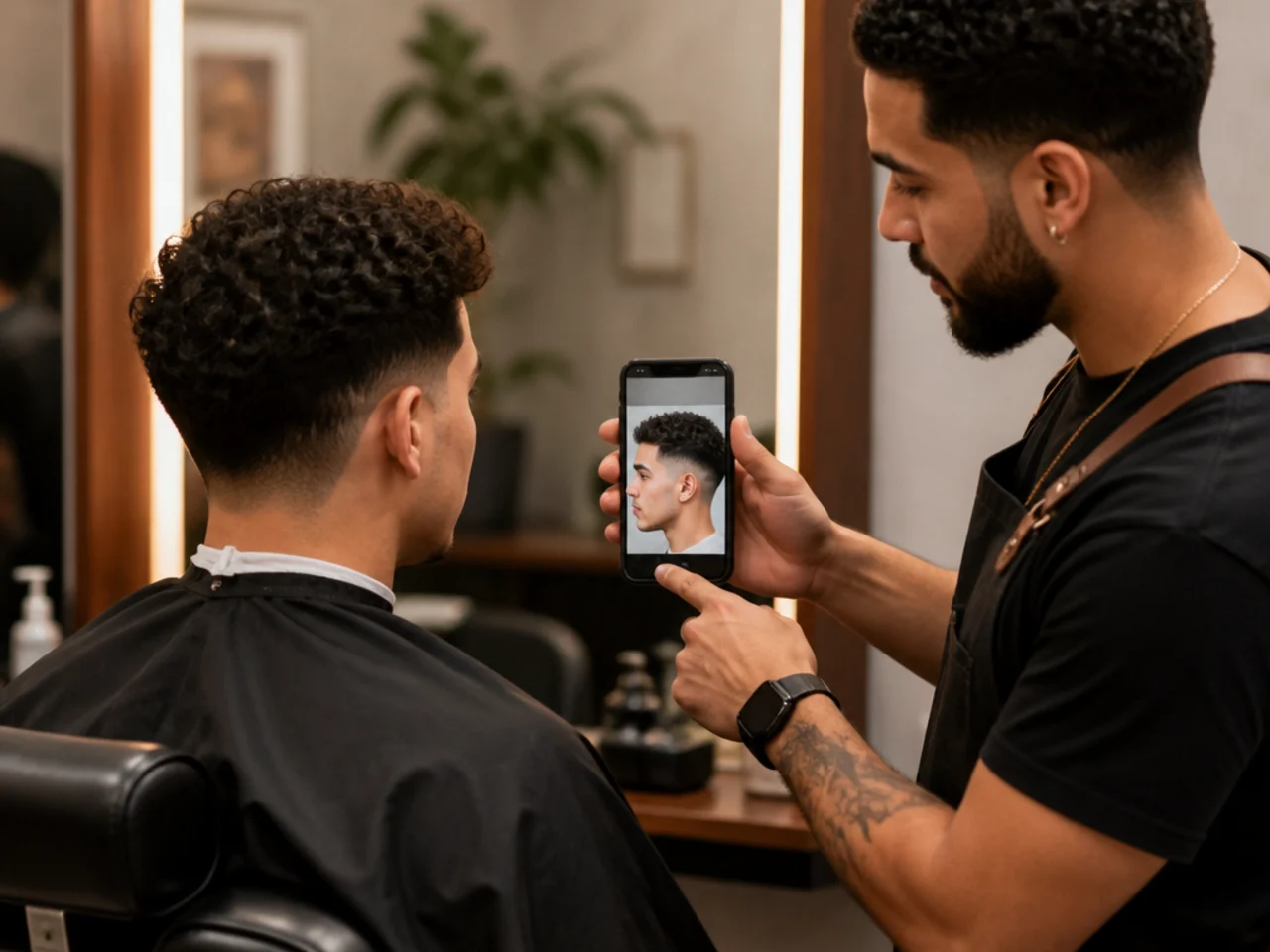
The single biggest ordering mistake is dropping a word. "Low fade" gets you a full low fade to skin. "Low taper" gets you a plain taper with no perimeter blend. The three words together — low taper fade — are what tells your barber to combine the low starting point with a soft-guard finish and a blended perimeter.
Say them together, in that order, once. Not "a low fade, but tapered," which sounds like a self-correction. Not "a taper that starts low," which is a description of a haircut, not the name of one. Just: "I want a low taper fade."
The reason the phrase matters is that barbers hear hundreds of asks a week, and they optimize for pattern-matching. "Low fade" and "taper" are two different templates in their head. "Low taper fade" is a third, and it triggers the right sequence — start low, blend through the #0.5/#1 range, keep length above the transition. Give them the correct label and their muscle memory does most of the work.
Common mistake: hedging the phrase with "sort of" or "kind of." Barbers read hedging as "you don't really know what you want, so pick something safe" — and safe usually means whatever they cut last for someone with your hair type. Say the phrase flat. Confidence is part of the ask.
Step 2 — Show Two Photos, Not One
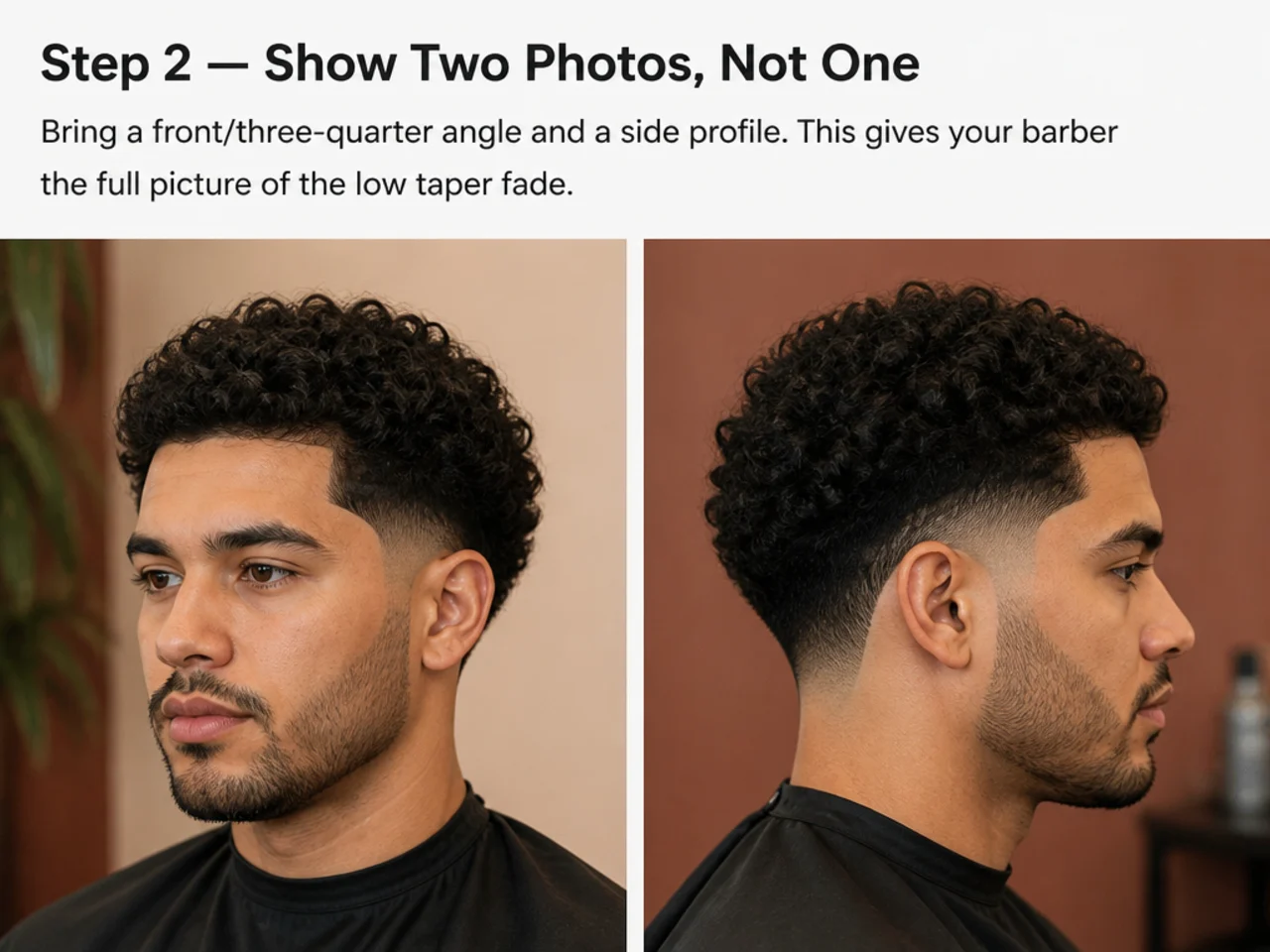
One photo hides half the cut. A pure front shot hides the fade height; a pure side shot hides the fringe and top length. Bring both and you eliminate the two most common misreads in the same thirty seconds.
When you hand the phone over, point once at the fade line in the side shot and say, "This height." Then swipe to the front and say, "This length and this texture on top." Two sentences, two photos, done.
Common mistake: picking a photo of a guy whose hair type is nothing like yours. A low taper on Type 4 coils doesn't translate onto pin-straight hair without adjustments. Match your hair type when you can — the low taper fade curly hair guide has reference photos sorted by texture if you're curly. If you can't find your exact hair type, tell the barber, "The shape, not the texture — I know my hair does its own thing on top."
Step 3 — Name the Fade Start and Shortest Guard
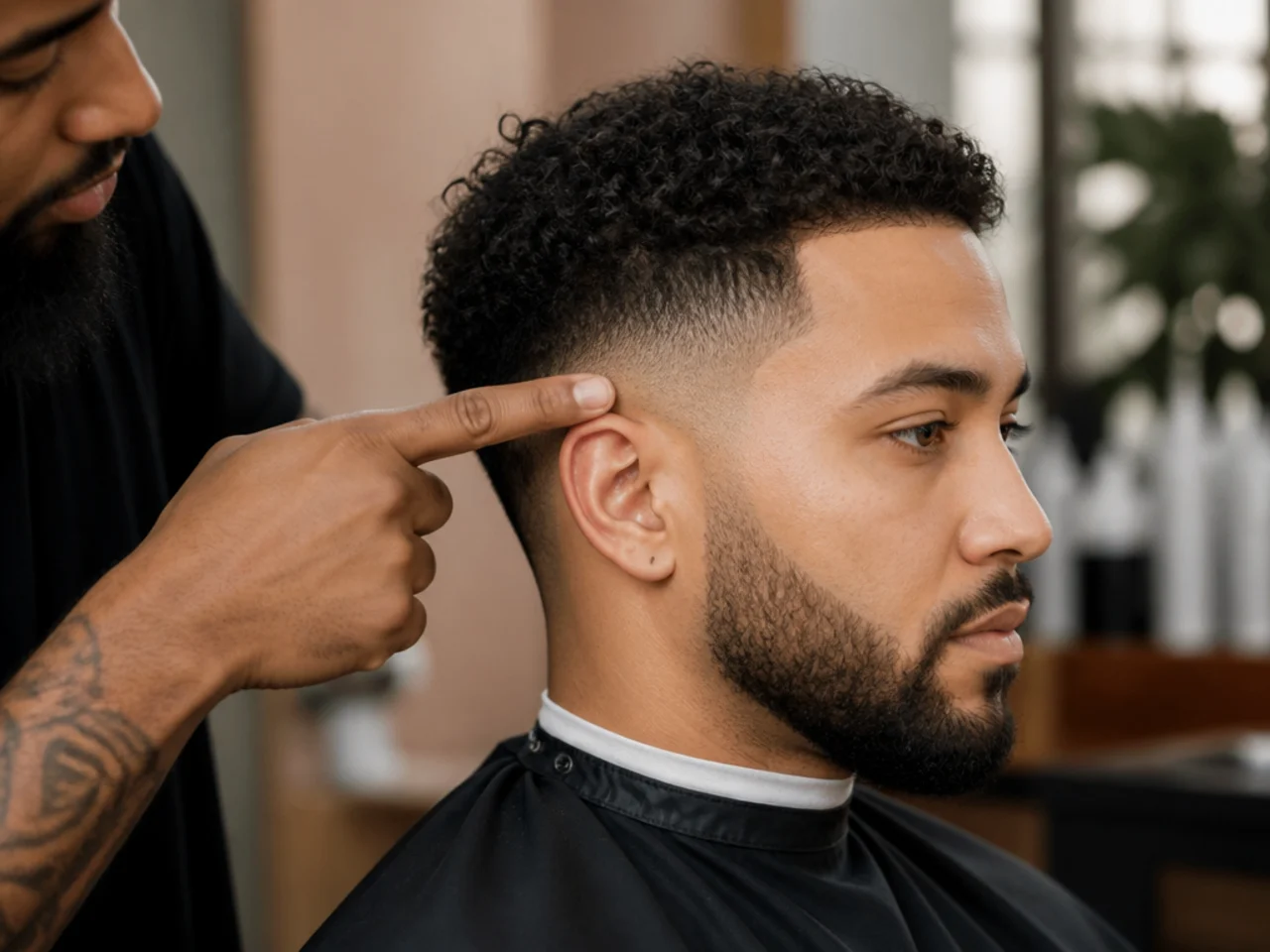
Two numbers do the heavy lifting: where the fade starts, and how short it goes.
Fade start. A low taper fade begins just above the top of the ear — about a finger's width up from where your ear meets your head. Anything below is a plain taper; anything above creeps into mid-fade territory. Point at your own head and say, "Start the fade right here." Physical pointing beats verbal directions every time.
Shortest guard. The shortest point of the blend — behind your ear and at the nape — should be a #0.5 or #1. A #1 reads soft and workplace-safe (the default for a first low taper fade). A #0.5 reads sharper and grows out faster. Anything shorter turns your taper into a full low fade haircut — a different cut entirely.
Say both in one breath: "Low taper fade, starting just above the ear, dropping to a #1 at the shortest." That sentence gives your barber the two constraints they need to set the clippers correctly.
Common mistake: letting the barber pick the guard. Left to default, most barbers go a size shorter than you'd want on the first cut. Naming the number keeps you inside your comfort zone.
Step 4 — Give the Top Length in Inches
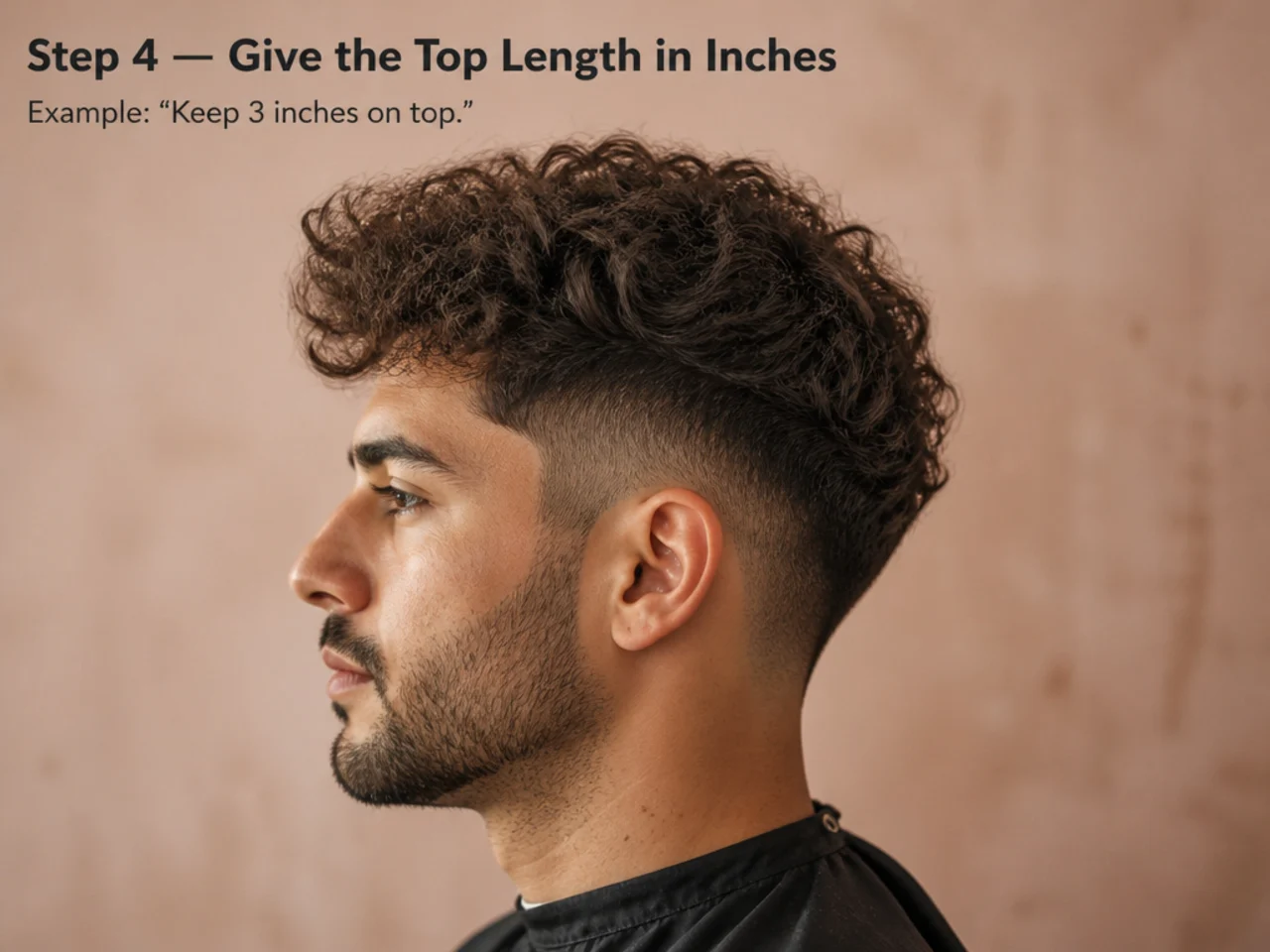
"Medium" is meaningless. It means five different things in five different chairs. Every good ask specifies the top length in inches, or — for very short cuts — in guard numbers.
- One inch or shorter — call the guard: "3 on top" is roughly three-eighths of an inch, "4 on top" is about half. Buzz-cut territory.
- Two to three inches — say the number: "Two inches on top with a matte finish" or "three inches, textured, forward-falling." The sweet spot for most low taper fade variations.
- Four inches or more — comb-over, pompadour, and long-top territory. "Four inches on top, keep the front an inch longer than the crown for a fringe drop."
If you don't know inches, hold up your fingers. One finger is about half an inch; two side by side is about an inch.
Tell your barber the length and what you'll do with it. "Two inches, tousled and messy" and "two inches, side-parted and combed" are the same length but different cuts — the barber will layer them differently.
Common mistake: naming the length without the finish. Length without finish gives you a cut that measures right but styles wrong. Chain them: "[Number] inches, [finish/direction]."
Step 5 — Describe the Blend and the Finish
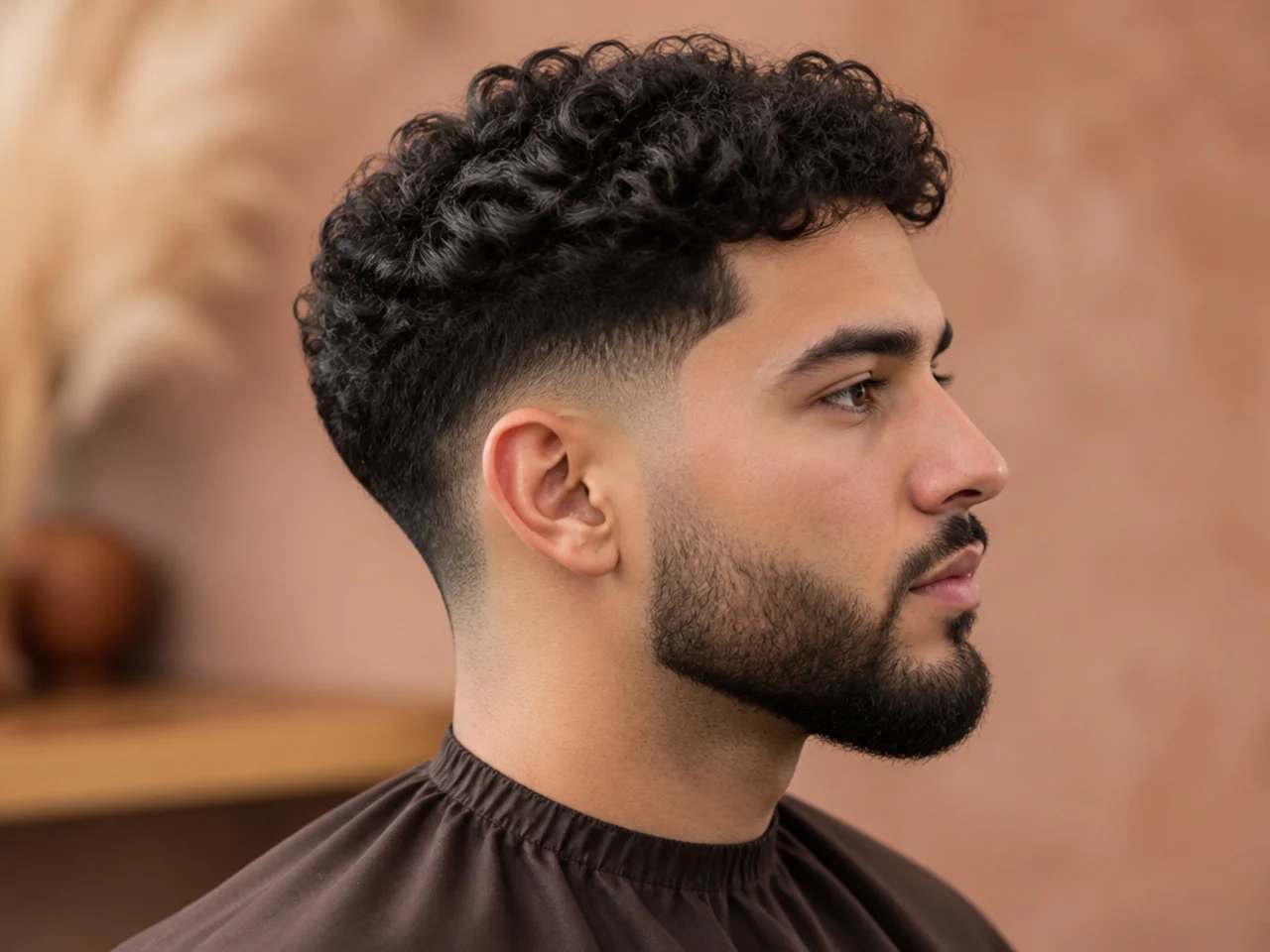
The blend is the transition between the length on top and the fade at the sides. Two options — pick one and say it out loud.
Soft blend. No visible line where the top meets the sides. The length grades down through a #2 or #3 before it hits the taper start. Polished, ages well, adds a week to the life of the cut. This is the classic pick.
Hard disconnect. A visible break — the top drops straight off onto the taper with no gradient. Faux-hawk and undercut territory, and it reads bolder. Ask for this only if you want the contrast to do the talking. Most low taper fades want the soft version.
Then name the finish. Matte for a natural, no-shine look styled with clay or paste. Low shine for a side part or Ivy League with cream pomade. High shine for a slick-back with shine pomade. Chain the whole thing: "Soft blend at the transition, matte finish on top."
Common mistake: letting the barber texturize your top with thinning shears. On straight or wavy hair they leave the top wispy in two weeks. Say it: "Scissor-cut the top, no thinning shears." Texture should come from point-cutting, not thinning.
Step 6 — Lock in the Neckline and the Next Appointment
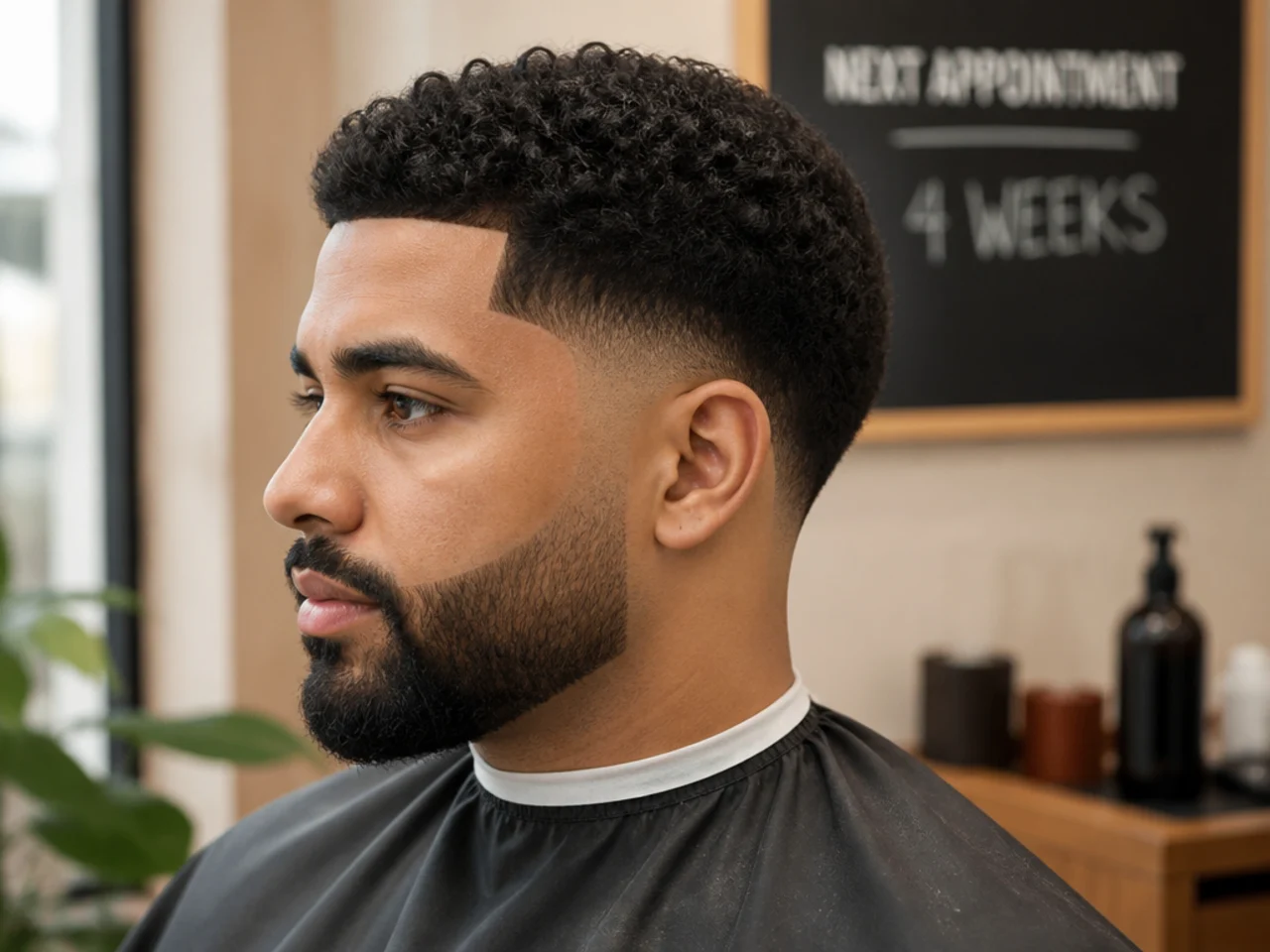
Two last details finish the ask.
Neckline shape. Two options: tapered (a soft blend that dies out into your natural hairline, no hard line) or blocked (a straight horizontal line cut across the nape). Tapered ages better between cuts — there's no line to grow out and get fuzzy. Blocked reads sharper on the day of the cut but softens within a week. For most low taper fades, ask for tapered.
Sideburn length. Line the bottom of the sideburn up with the top of your tragus (that small flap at the front of your ear canal) for a classic length, or a quarter-inch shorter for a modern look. Say it: "Sideburns at the top of the tragus, tapered neckline."
The next appointment. This is the step most guys skip and regret in two weeks. Book your touch-up before you leave the chair. Every two to three weeks keeps the low taper crisp; push it to four and the blend starts to blur. Some shops offer a cheap fade-only touch-up between full cuts — fifteen minutes, cleans just the sides and back for a fraction of the price. Ask about it while you're paying.
For a deeper dive on cut cadence and what happens when you push a fade past its expiration date, see the guide on how often should men get a haircut.
Common mistake: walking out without booking. The moment you're back in the world, life takes over and the appointment slides. Book it at the register while the receipt is printing.
Troubleshooting: When the Cut Doesn't Match the Ask
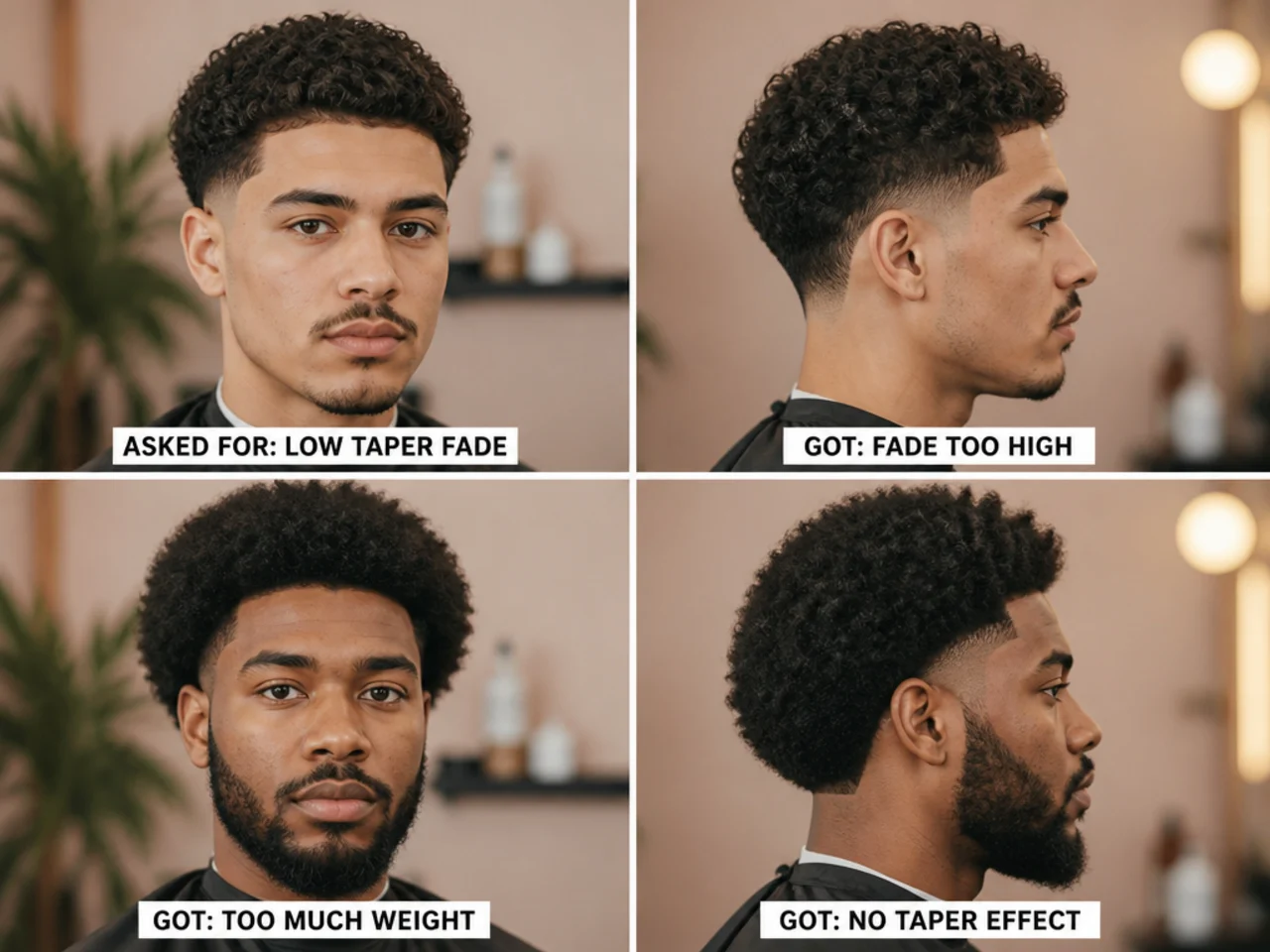
Even a perfect ask sometimes lands wrong. Read these before your next mirror check so you know exactly what to say.
- The sides came out too short (skin showing). Your barber went a full guard below what you asked for. Say it at the mirror check: "This is closer to a low fade than a low taper — can you note in the file that I want a #1 at the shortest next time?" It'll grow back in three weeks. Book the next appointment sooner than usual and re-brief the guard number.
- The fade started too high (mid-fade territory). The blend crossed above the top of the ear. Ask your barber to drop the transition on the next cut, and physically point to the correct height with your finger. If the fade is already too high on this cut, ask them to blend the top over the transition with the length on top so the mid-fade impression is softened — you can't put hair back, but you can hide the line.
- The blend has a visible clipper line at the transition. The barber didn't run a graduated blend through the guards. On the mirror check, ask them to "soften the blend with a #2 pass" — thirty seconds, and the line dissolves. Barbers can always fix a hard line while you're in the chair; they can't fix it once you're out the door.
- The top is way shorter than the inches you named. Barbers over-cut the top when the ask isn't specific — they interpret "two inches" as "no more than two inches." Next time, chain the ask: "Leave two inches on top — measured with fingers, that's about this much" (hold up two fingers). Physical demonstration prevents over-cutting.
- The neckline is a hard block when you asked for tapered. Some barbers default to blocked because it looks sharper on the day. Ask them to soften the corners with a trimmer — a quick pass will taper it out. Note it for next time.
- The overall shape looks like a helmet. The sides didn't get enough blend work, so the top sits on the sides instead of flowing into them. Either book a return visit for a re-blend, or grow it out for two weeks and start over with a barber who cuts more fades.
If two or more of these hit the same cut, that's the barber, not the ask. Try a different chair next time.
For more variations you can order once you've mastered the ask, see the low taper fade guide with 35+ styles, the sibling low taper fade haircut roundup, and the low fade vs mid fade vs high fade comparison. If you cut at home, the best hair clippers for men roundup covers the tools that don't die by month three. Pairing your low taper with a curly top? See curly hairstyles for men for how the top length calls in Step 4 change.
FAQ
What's the exact phrase to ask for a low taper fade?
Use all three words together — "low taper fade" — then chain the four numbers your barber needs: fade start (just above the ear), shortest guard (0.5 or 1), top length in inches, and blend type. That single sentence removes 90% of the ambiguity.
Should I bring a photo when I ask for a low taper fade?
Bring two. A three-quarter side shot shows the fade height; a front shot shows the top length. One photo hides half the cut. Two photos and thirty seconds of pointing get the barber and you on the same page before the cape goes on.
What guard number should I ask for at the shortest point?
A #1 reads soft and workplace-safe — the default for a first low taper fade. A #0.5 reads sharper but grows out faster. A #0 or skin turns the taper into a full fade, which is a different cut entirely.
How do I tell my barber how long I want the top?
Say the length in inches, not adjectives. "Medium" means five different things to five different barbers. "Two inches, textured" is a number. If you don't know inches, hold up your fingers — two side by side is roughly an inch.
What if my barber gives me the wrong cut anyway?
Speak up in the mirror check. Barbers can always take more off; they can never put it back. Note the guard number for next time and book the touch-up sooner than usual. Never fix a bad cut by cutting more.
How often should I re-cut a low taper fade?
Every two to three weeks. The blend line starts to blur by week four. Book your next appointment before you leave the chair — most shops offer a cheap fade-only touch-up between full cuts.