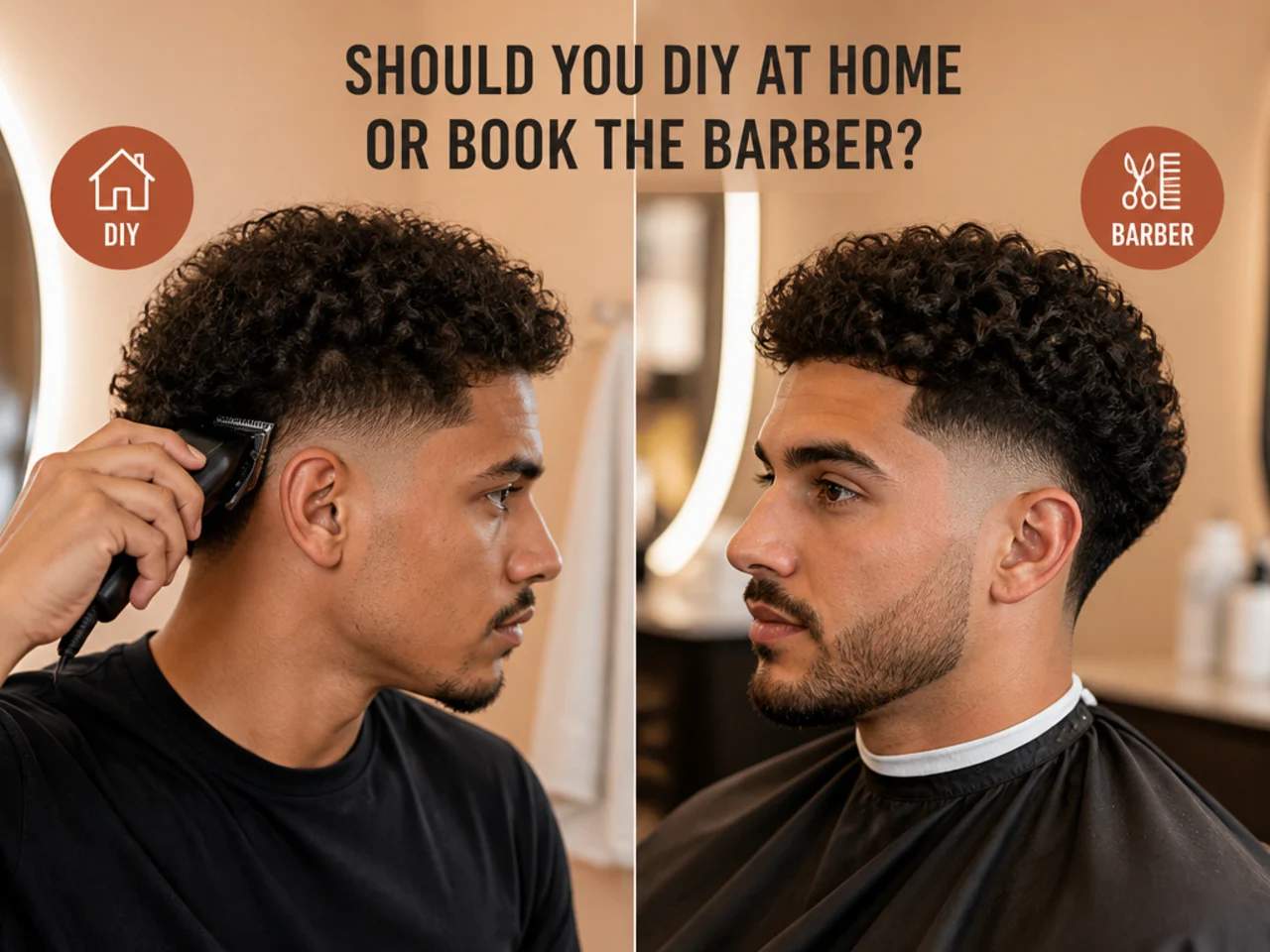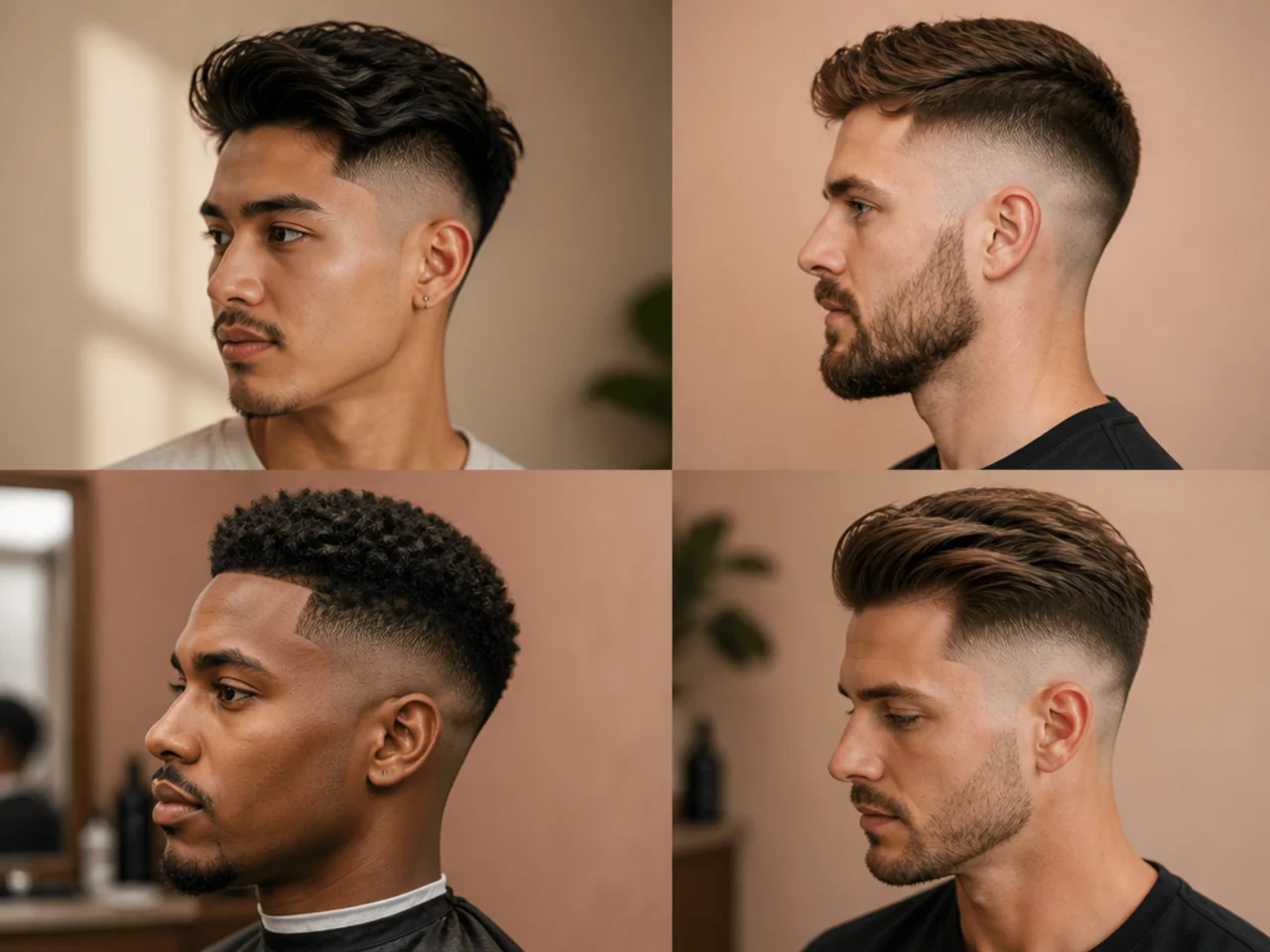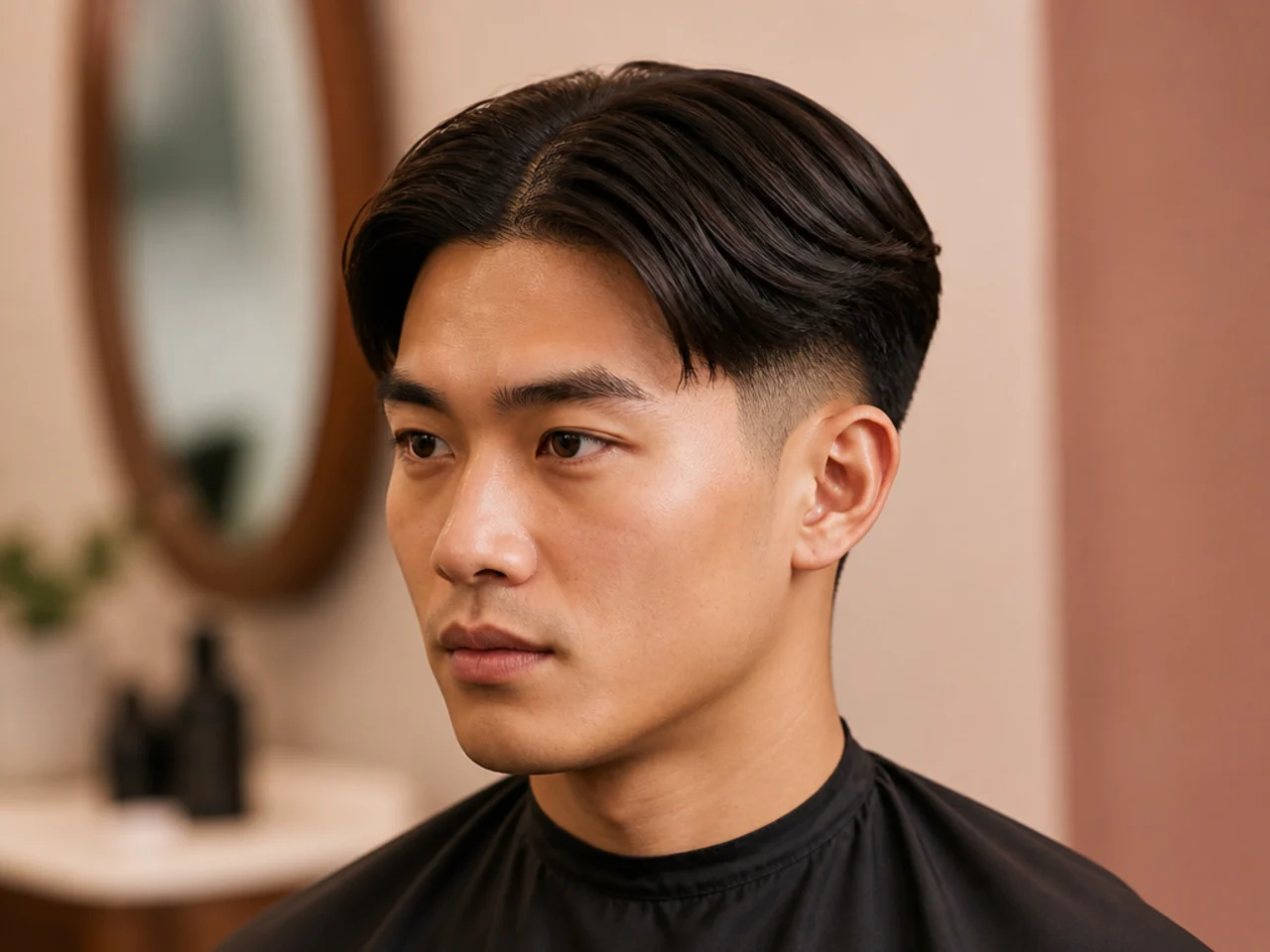
20 Low Taper Fade Middle Part Styles
Twenty low taper fade middle part variations for 2026 — K-pop curtains, curly middle parts, straight flow, and the exact wording to hand your barber. Photos and styling notes inside.
In this article · 26
- What Is a Low Taper Fade Middle Part?
- How to Choose Your Variation
- The 20 Variations
- 1\. Classic Straight Middle Part with Low Taper Fade
- 2\. K-Pop Curtain Middle Part Low Taper
- 3\. Wavy Middle Part Low Taper Fade
- 4\. Curly Middle Part with Low Taper Fade
- 5\. Low Drop Taper with Middle Part
- 6\. Middle Part with Textured Fringe and Low Taper
- 7\. Long Flow Middle Part Low Taper
- 8\. Short Middle Part Low Taper Fade
- 9\. Two Block Middle Part with Low Taper Fade
- 10\. Comma Hair Middle Part Low Taper
- 11\. Blowout Middle Part with Low Taper
- 12\. Middle Part Faux Mullet with Low Taper
- 13\. Slick Middle Part Low Taper Fade
- 14\. Middle Part with Line-Up and Low Taper
- 15\. Feathered Middle Part Low Taper
- 16\. Messy Middle Part with Low Taper Fade
- 17\. Middle Part with Beard and Low Taper
- 18\. High-Volume Middle Part Low Taper
- 19\. Middle Part Comb Down with Low Taper
- 20\. Middle Part Perm with Low Taper Fade
- How to Ask Your Barber for a Low Taper Fade Middle Part
- Styling and Maintenance for a Middle Part
- FAQ
The middle part is the axis of the most-requested cuts on Pinterest right now — K-pop curtains, comma hair, straight-hair flow. A low taper fade underneath is what turns it from bedroom hair into a barbershop cut. This guide covers twenty low taper fade middle part variations for 2026 — curly, straight, wavy, and K-pop influenced — with the exact ask for your barber and styling notes barbers actually use on the chair.
New to the shape? Start with the low taper fade pillar or the middle part haircut for men breakdown before you book.
What Is a Low Taper Fade Middle Part?
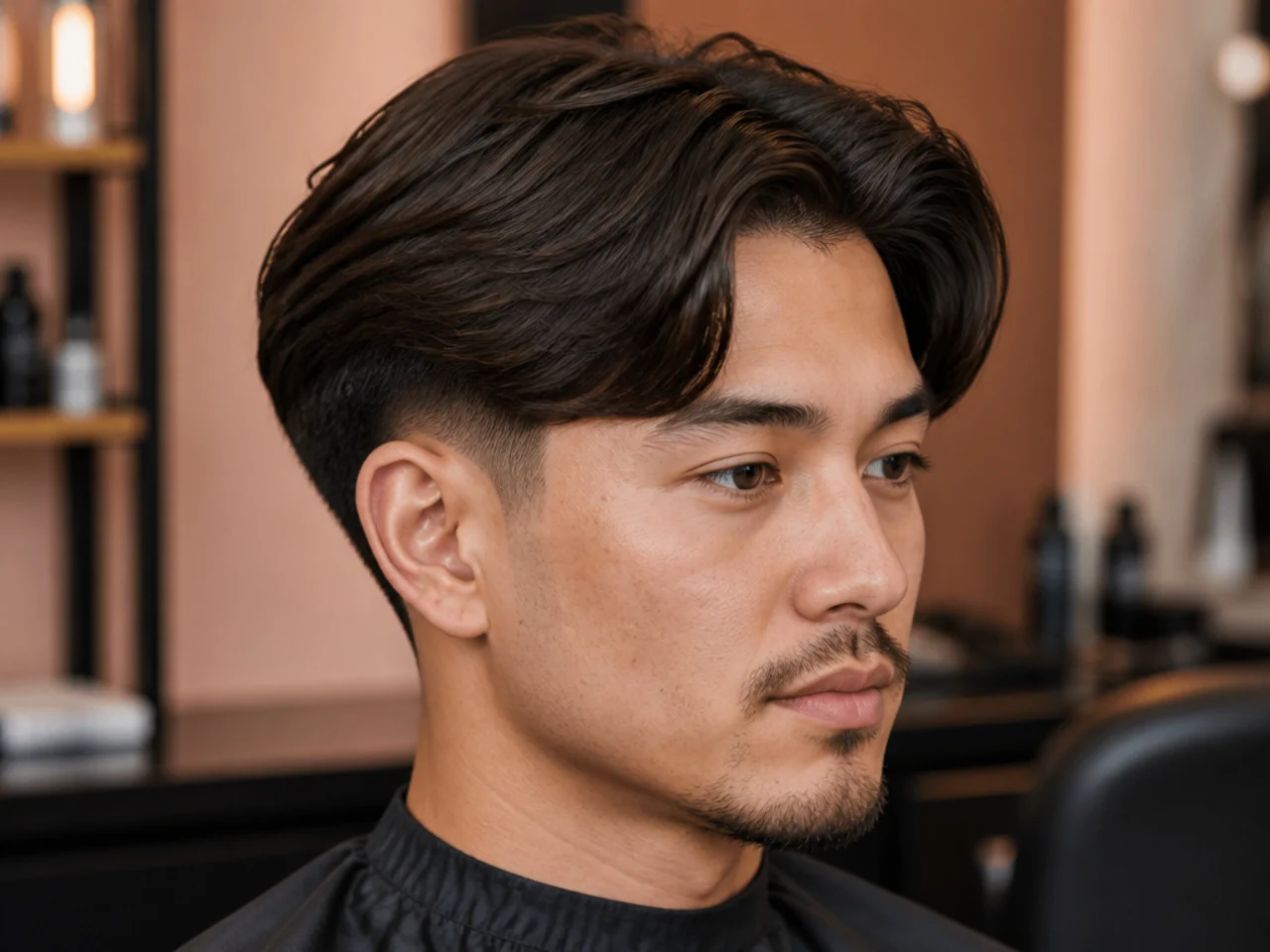
A low taper fade middle part is two cuts working together. The taper drops from your everyday length to a #0.5 or #1 guard just above the ear, then holds that length across the perimeter without ever running to bare skin. Up top, the hair is left long enough — four inches at least — to fall on either side of a natural center split.
The reason the combination works so well: the taper keeps the sides quiet so the eye reads the part, and the part gives the taper something to point at. A middle part with untouched, overgrown sides looks like unmade laundry. A low taper without the part reads like a haircut you got and then didn't style.
The version driving most of the search volume is the K-pop curtain — long, feathered pieces splitting at the exact center, low taper underneath, no line-up at the forehead. Straight-hair and wavy versions get lumped into the same conversation, but the ask, the cut recipe, and the styling are different for each texture. That's what the twenty variations below sort out.
How to Choose Your Variation
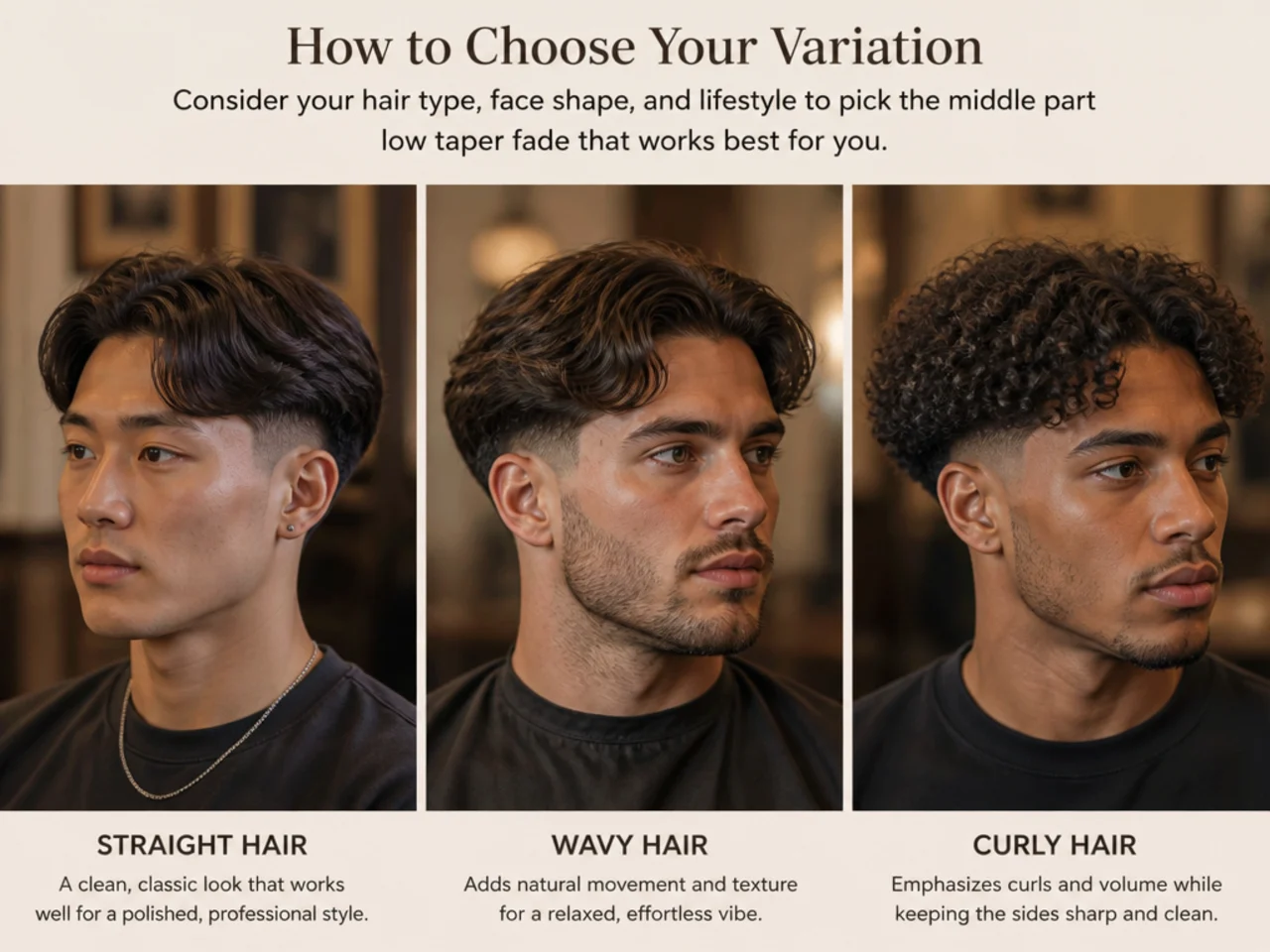
Three things decide the version for you: your hair type, your face shape, and how much styling time you actually have on a weekday morning.
Hair type. Straight 1A to 1C hair drops into a middle part cleanly but needs product to stop the natural side-lean creeping back in. Wavy 2A to 2C hair is the sweet spot — enough grip to hold the split, enough movement to look effortless. Curly 3A to 3B hair needs the top left at least five inches long or the coils fight the split. Coily 3C and above generally look better on a middle-part shape only if scissor-layered by a barber who cuts curly hair often. If you aren't sure where you sit, run the curl types breakdown first.
Face shape. Oval faces are unbeatable here. Square jaws pair well with the softer feathered versions to offset the angles. Diamond and heart faces take the K-pop and comma versions best — the split at the temple flatters. Round faces want vertical lift in the crown so the part doesn't widen the face. Long faces should keep the top under five inches so the length doesn't drag the face south.
Styling time. A short straight middle part is ten minutes with a blow-dryer and paste. A K-pop curtain wants twenty with a round brush, blow-dryer, and light hold spray. Curly middle parts are five with cream and a diffuser. Pick the version you'll actually run every morning, not the aspirational one.
The 20 Variations
Twenty low taper fade middle part recipes, sorted from clean-office to full statement. Each entry covers what makes the shape different, who it suits, how to ask for it, and one styling move worth stealing.
1. Classic Straight Middle Part with Low Taper Fade
The baseline. Four inches of straight 1A to 1C hair on top, split cleanly down the center, low taper fade dropping to a #1 at the temples. Reads sharp at every workplace and photographs cleanly from any angle. Best for oval and square faces and anyone new to the shape.
Ask for: "low taper fade, #1 at the shortest, four inches on top point-cut for movement, natural middle part."
Styling: blow-dry from wet with a paddle brush directing hair away from the center, then a pea of matte paste worked through the mids. Skip pomade — the shine kills the split.
2. K-Pop Curtain Middle Part Low Taper
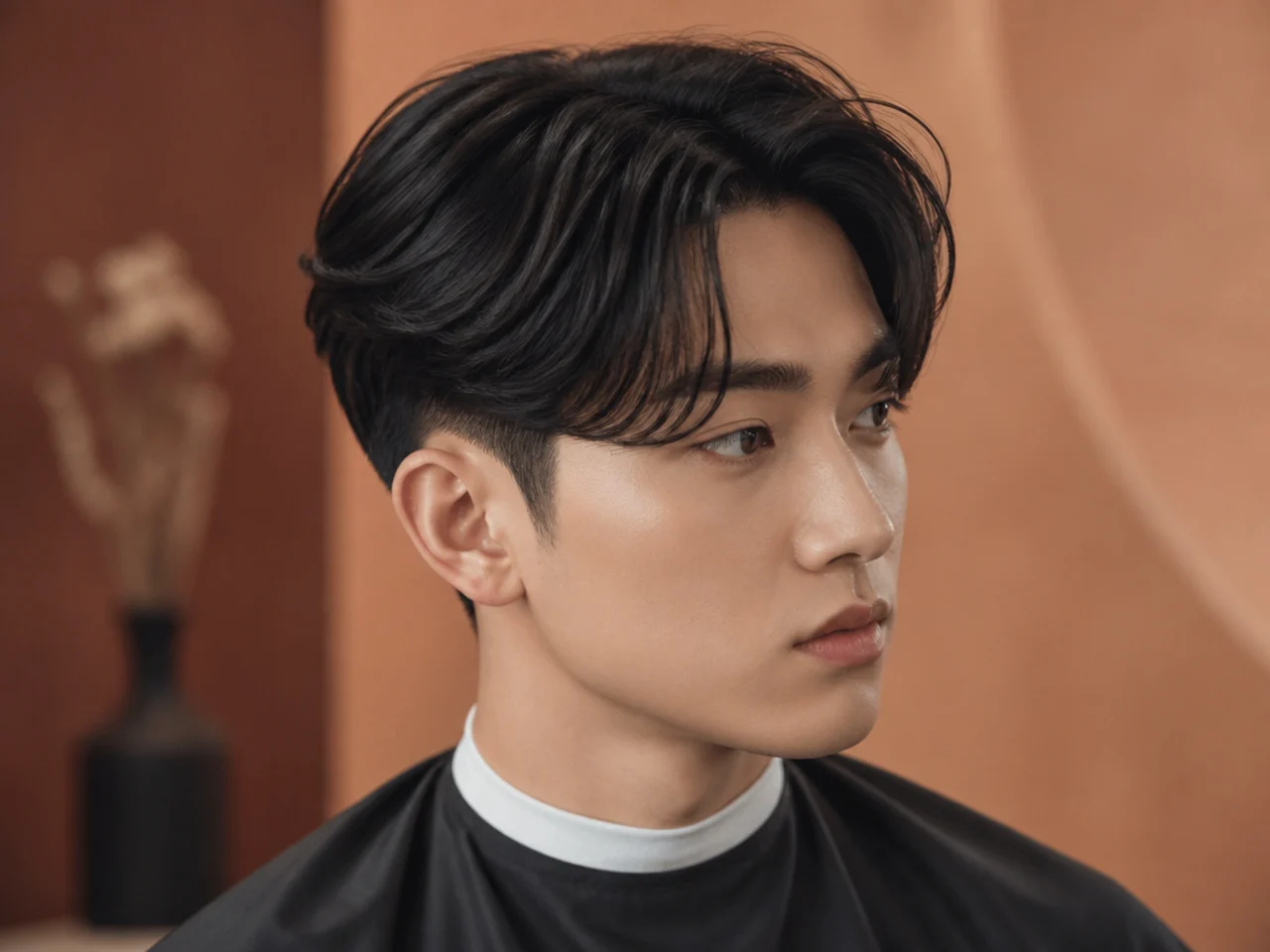
The version most guys are actually looking for. Five inches on top, front pieces feathered so they fall past the brows on either side of the part, low taper underneath. The soft curtains flanking the face are what make the shape read K-pop instead of just parted. Best for oval, diamond, and heart faces, and any Korean haircut for men style file.
Ask for: "low taper fade, #1 at the shortest, five inches on top with the front two inches point-cut so the pieces feather past my brows — K-pop curtain style."
Styling: mousse on damp hair, blow-dry with a round brush pulling the front pieces down and out from center, finish with a wisp of light-hold spray.
3. Wavy Middle Part Low Taper Fade
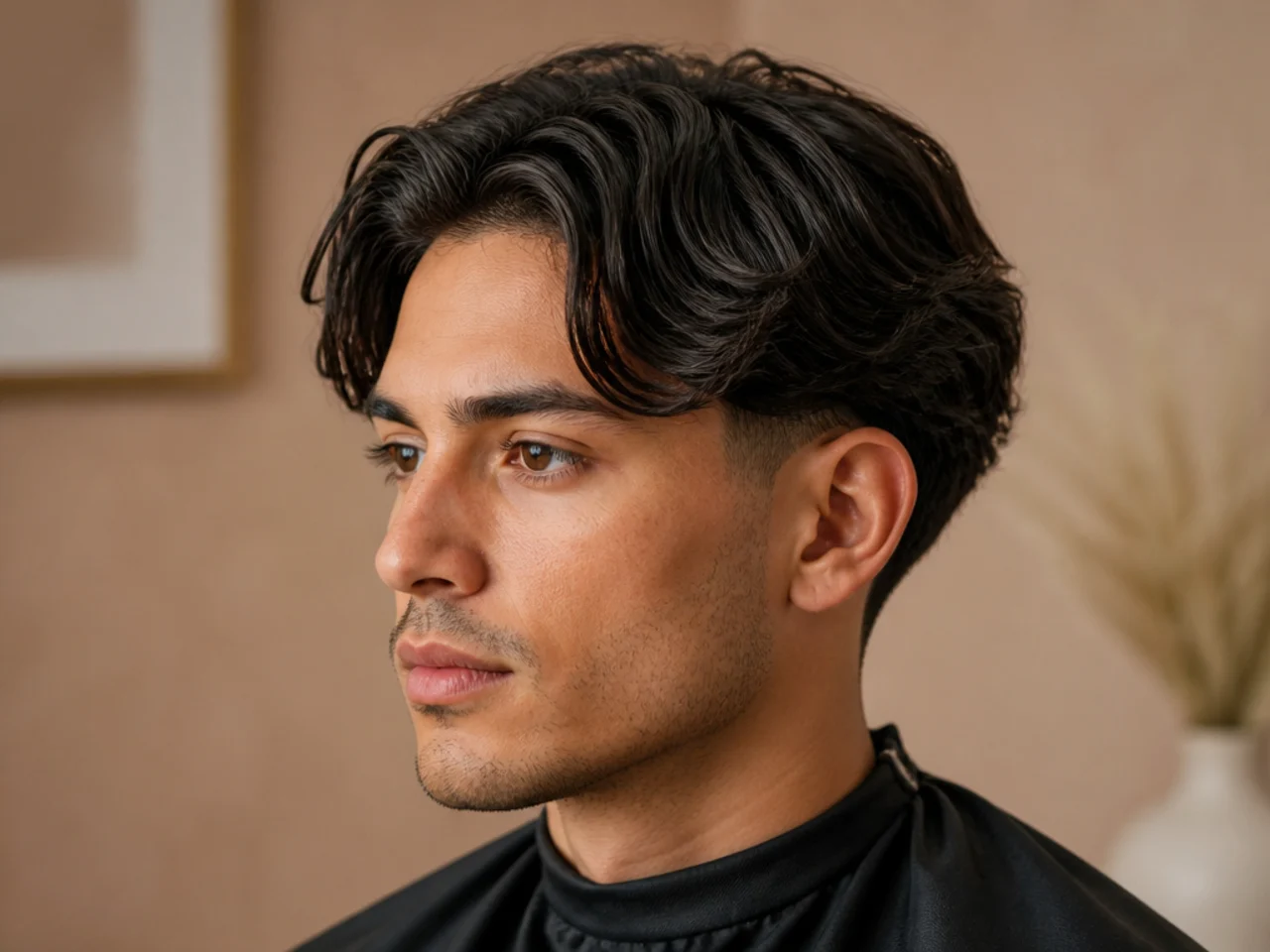
The sweet-spot texture. Four to five inches of 2A to 2C wave on top, natural split down the middle, low taper handling the sides. The waves do the work — you get effortless flow without wrestling straight hair into shape. Best for oval and square faces. Cousin to the low taper fade for straight hair family when your hair is somewhere in between.
Ask for: "low taper fade, #1 at the shortest, four to five inches on top point-cut to enhance my natural wave, split at center."
Styling: sea-salt spray on damp hair, scrunch, air-dry or diffuse on low. Matte cream through the mids only if the waves need extra hold.
4. Curly Middle Part with Low Taper Fade
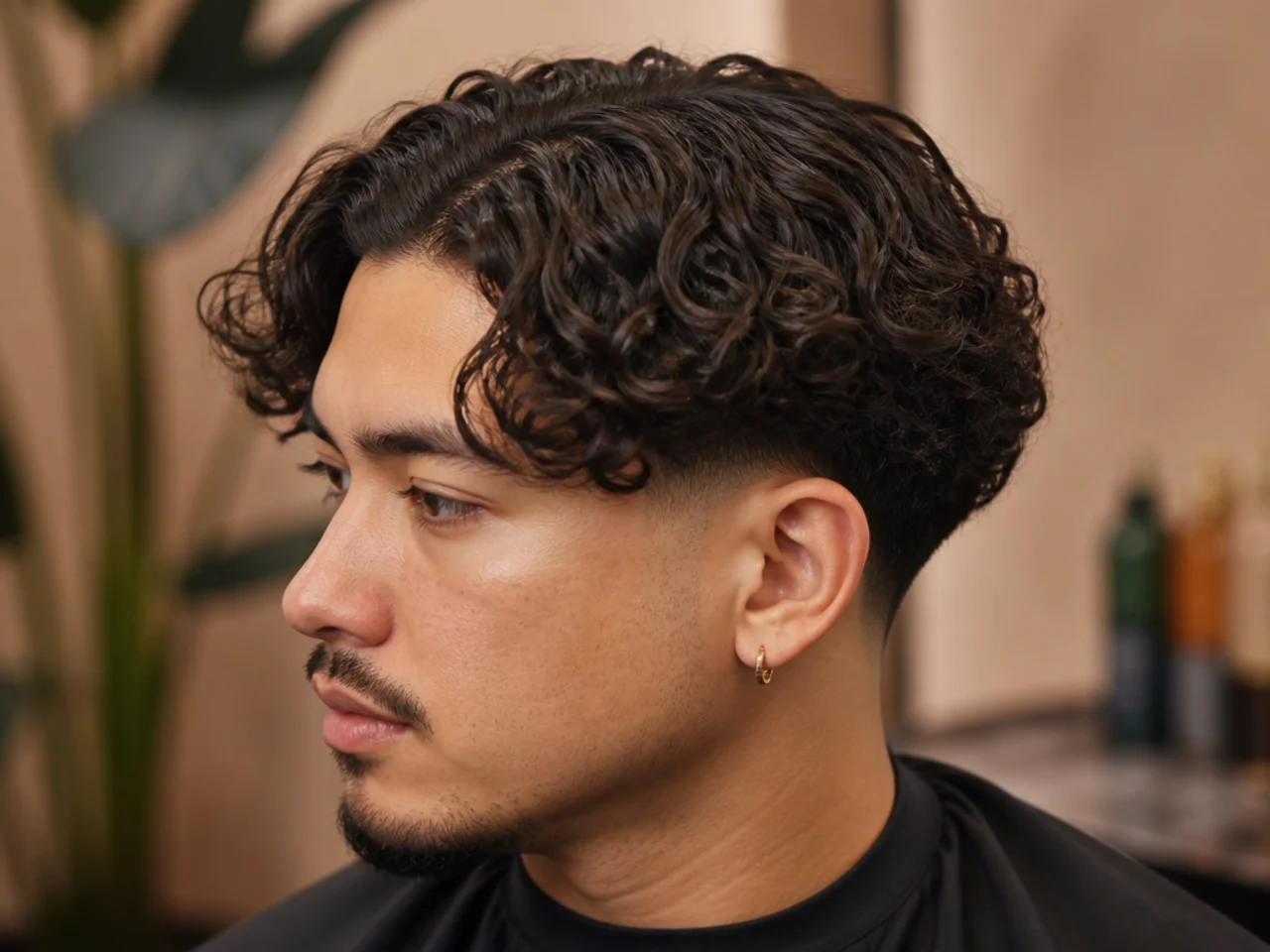
The curly take. Five to six inches of 3A curl on top, split down the center, low taper at the sides. The extra length is non-negotiable — curls shrink two to three inches when they dry, and the middle part needs weight to sit. Full recipe lives in the low taper fade curly hair guide. Best for oval and square faces, and 2C to 3B curl patterns.
Ask for: "low taper fade, #1 at the shortest, five to six inches of curl on top scissor-cut dry, natural middle part left long enough to fall past the cheekbone on each side."
Styling: leave-in on soaking-wet hair, curl cream over it, split down the center with your fingers, diffuse on low with the cup facing the ceiling.
5. Low Drop Taper with Middle Part
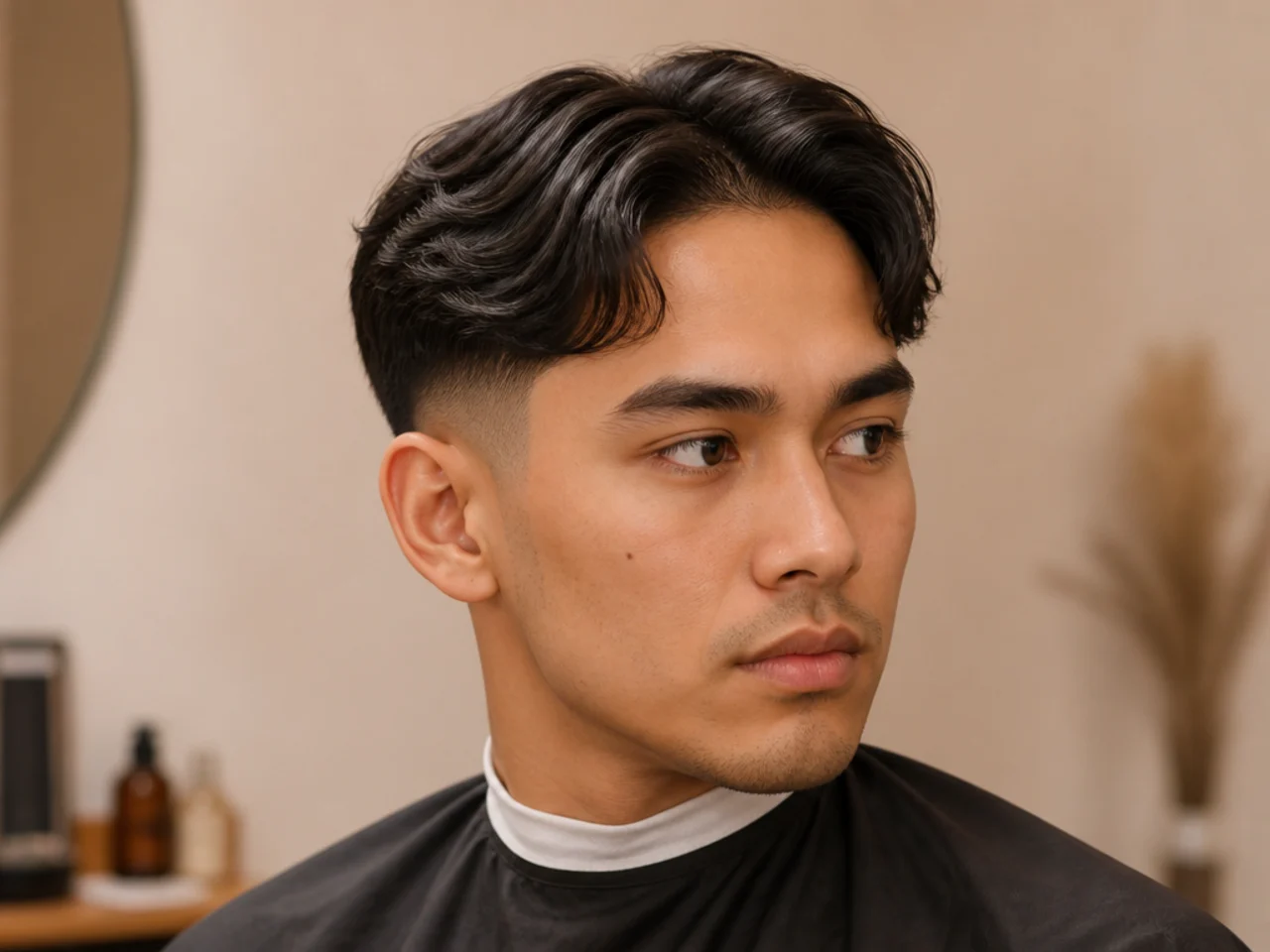
The drop shape curves the taper line down behind the ear instead of running horizontal. On a middle part, that curve visually points back to the split and makes the whole cut read more sculpted. Best for oval and diamond faces. Ask if your barber does drop shapes — not every shop offers it as a default.
Ask for: "low drop taper fade, #0.5 at the shortest, four inches on top point-cut with a natural middle part, curved drop behind the ear."
Styling: matte paste on towel-dried hair, part with a fine-tooth comb, blow-dry away from center on cool.
6. Middle Part with Textured Fringe and Low Taper
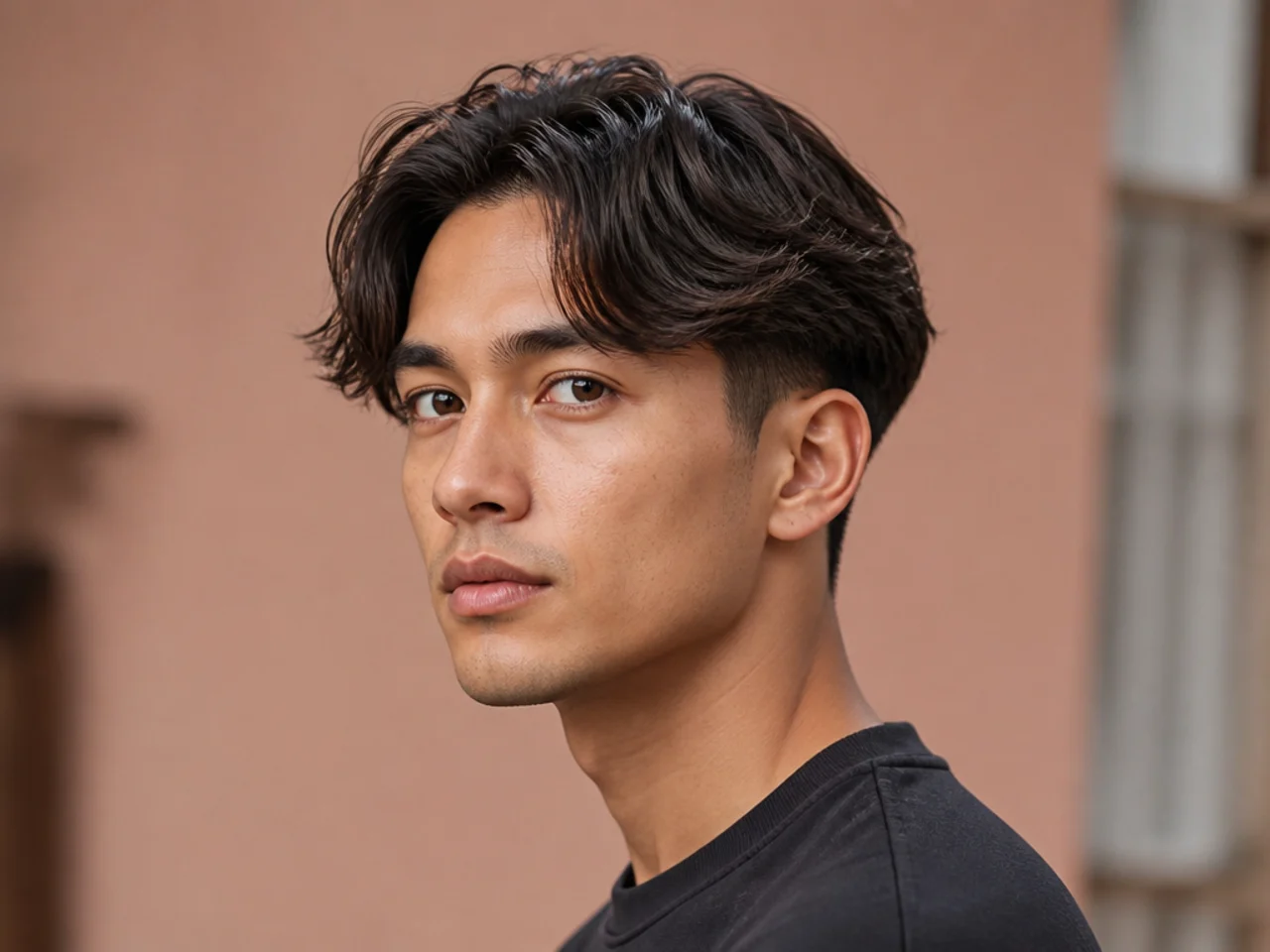
Texture-heavy version. The top is point-cut to piece-y ends and the fringe sections in front are chopped so they fall in separated wisps rather than a smooth sheet. Reads current, borderline messy, deliberately styled. Best for square and oval faces, wavy or straight hair.
Ask for: "low taper fade, #1 at the shortest, four inches on top with heavy point cutting, textured fringe pieces falling past the brows on either side of a middle part."
Styling: sea-salt spray on damp hair, blow-dry rough with fingers, matte clay pinched through the fringe pieces to separate them.
7. Long Flow Middle Part Low Taper
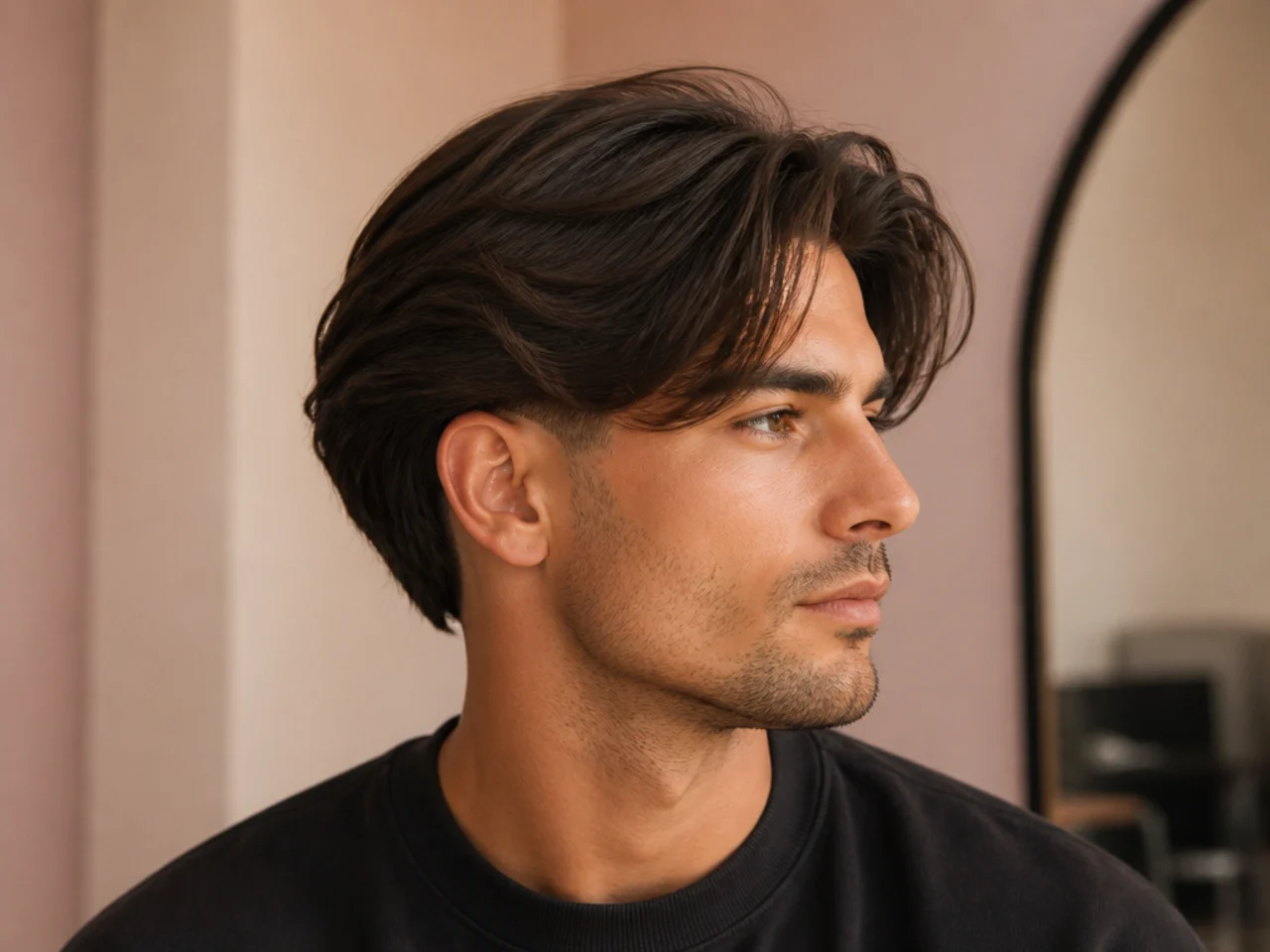
The surfer-adjacent flow version. Six to seven inches of wave or straight length on top, split at center, both sides sweeping back and out past the ear. Low taper underneath keeps the length from reading overgrown. Best for oval faces and 1B to 2B textures with enough weight to drape.
Ask for: "low taper fade, #0.5 at the shortest, six to seven inches on top with layered movement, natural middle part with the length flowing back."
Styling: sea-salt spray from wet, blow-dry with the head down and fingers raking back from center, cold shot to lock. Light-hold spray if you're outside.
8. Short Middle Part Low Taper Fade
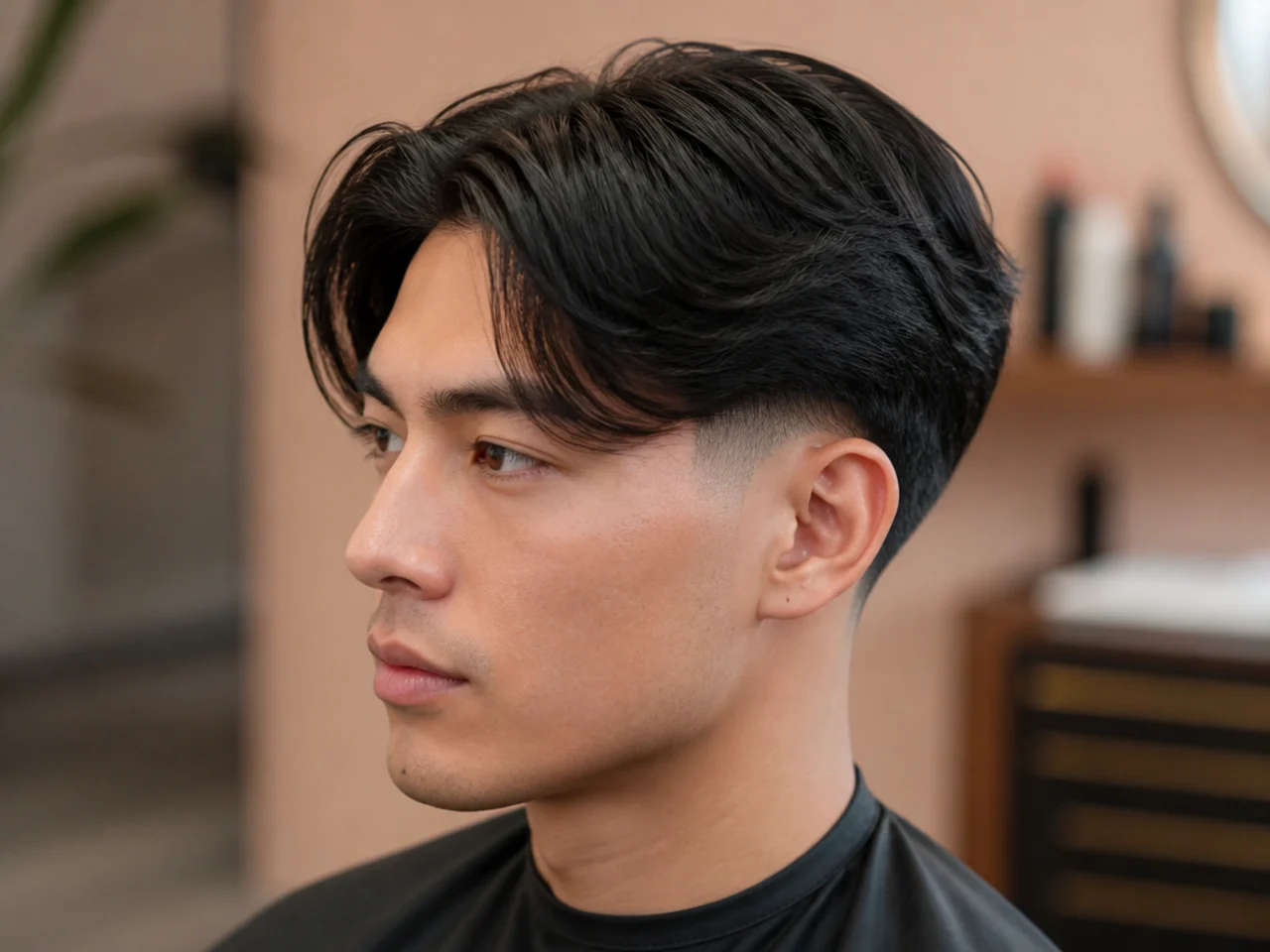
The office version. Three to three-and-a-half inches on top — the minimum length that still holds a middle part — with a tighter low taper at the sides. Reads professional without being boring. Best for square and oval faces, straight to slightly wavy hair. The workplace-friendly relative to the low taper fade haircut family.
Ask for: "low taper fade, #1 at the shortest, three inches on top point-cut, natural middle part combed clean."
Styling: blow-dry from wet with a paddle brush, part with a fine-tooth comb, matte cream through the mids for hold without shine.
9. Two Block Middle Part with Low Taper Fade
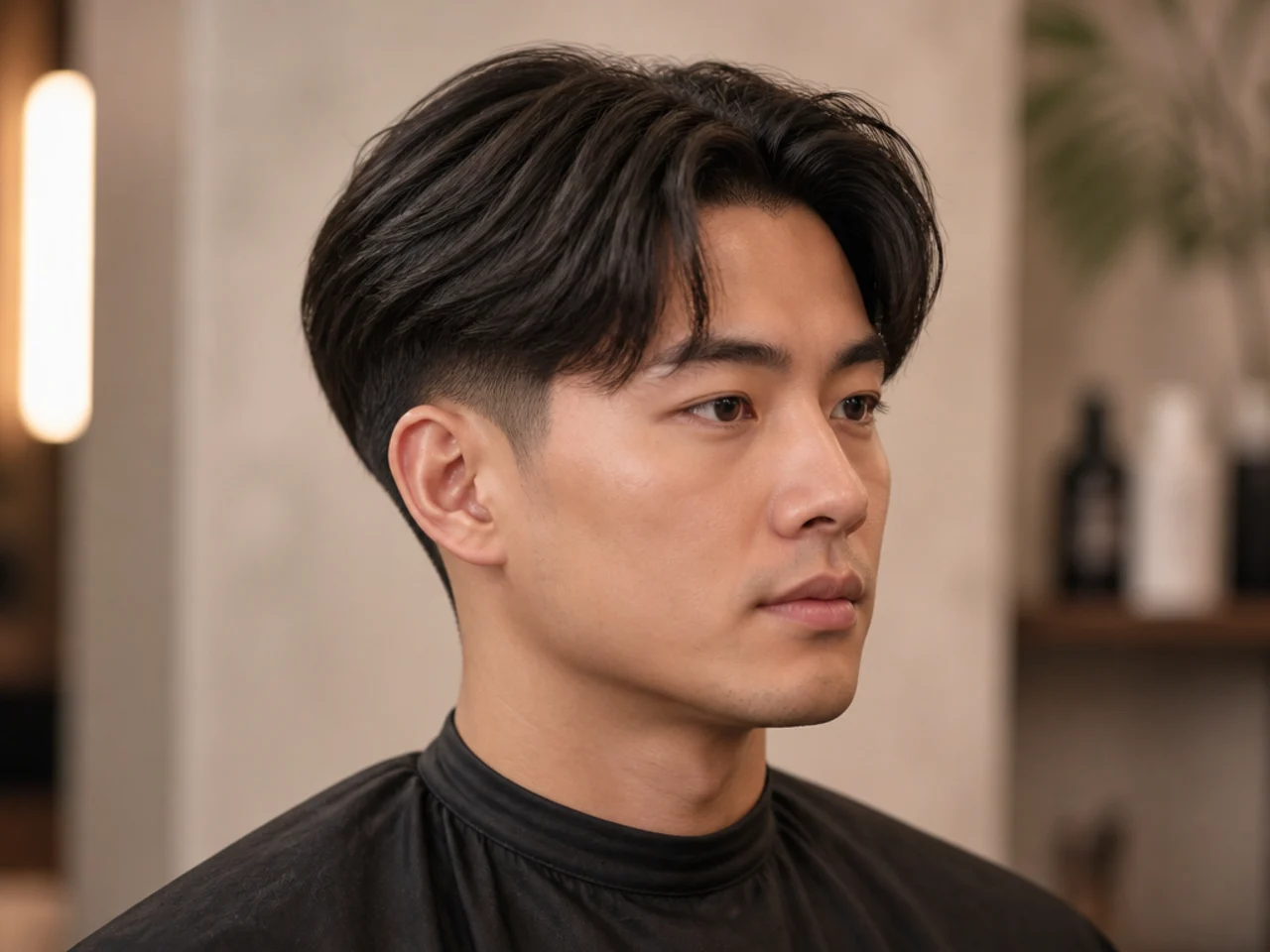
The K-pop two block haircut played through a middle part. Long top layer split at center falls over a hidden clippered under-layer, low taper fade finishing the perimeter. The disconnect between the top drape and the shorter hidden block is what gives the silhouette its lift. Best for oval faces and 1A to 2B hair with enough drape to cover the block.
Ask for: "two block with a low taper fade, #1 at the shortest, five inches of length on top parted at center falling over a hidden clippered under-layer at #1."
Styling: mousse on damp hair, blow-dry with a round brush pulling the top down and slightly outward, finish with a light spray so the drape holds.
10. Comma Hair Middle Part Low Taper
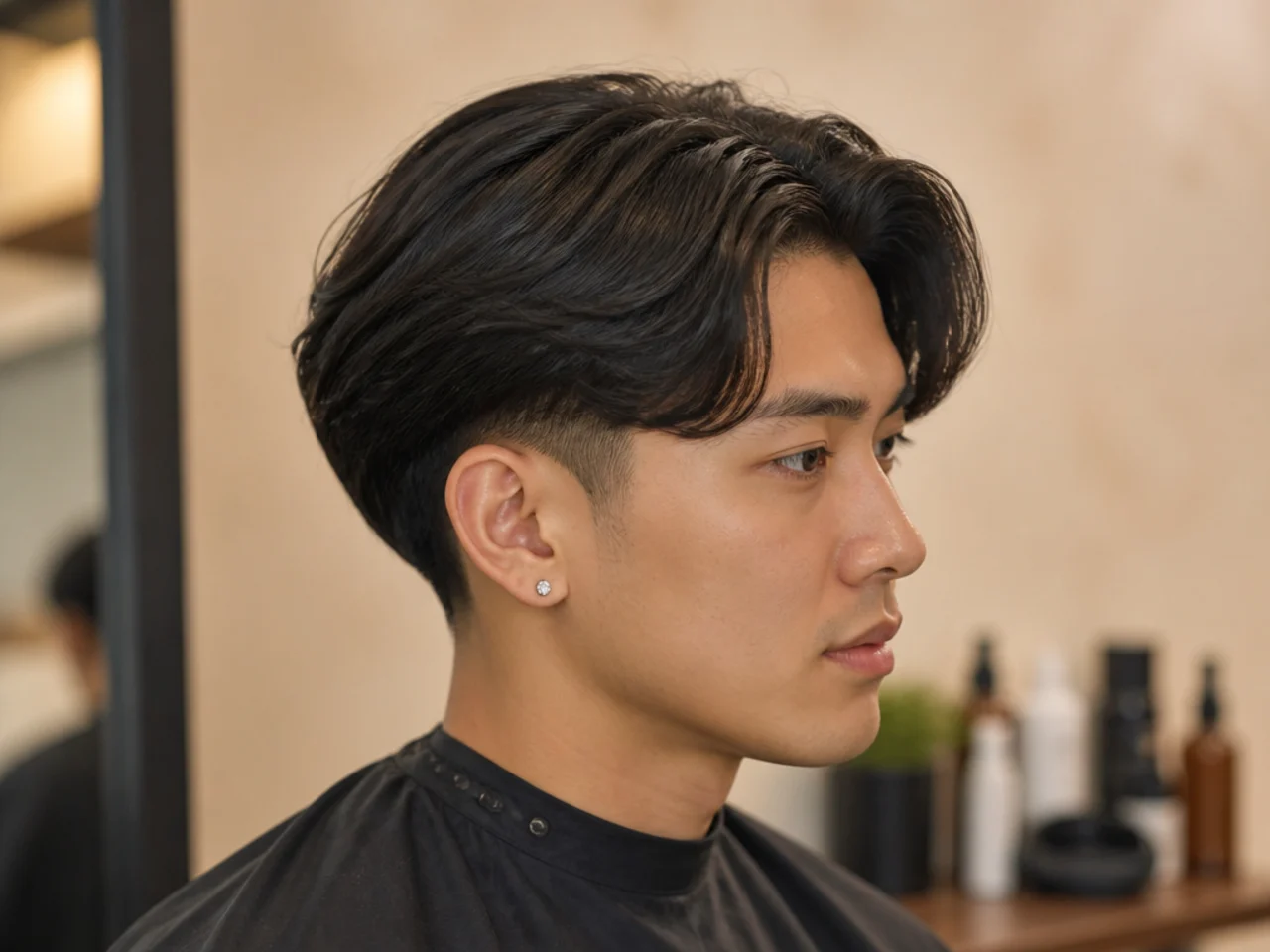
The comma haircut shape read through a middle part. Front pieces are point-cut and blown into curved comma hooks at the ends, resting under each brow on either side of the part. Low taper handles the sides. Best for oval, diamond, and heart faces, and any 1A to 2B texture.
Ask for: "low taper fade, #1 at the shortest, four to five inches on top with the front pieces cut to hang in a comma-shape hook — parted at center."
Styling: blow-dry with a small round brush rotating the front pieces inward and under toward the eye to form the comma, lock with light-hold spray.
11. Blowout Middle Part with Low Taper
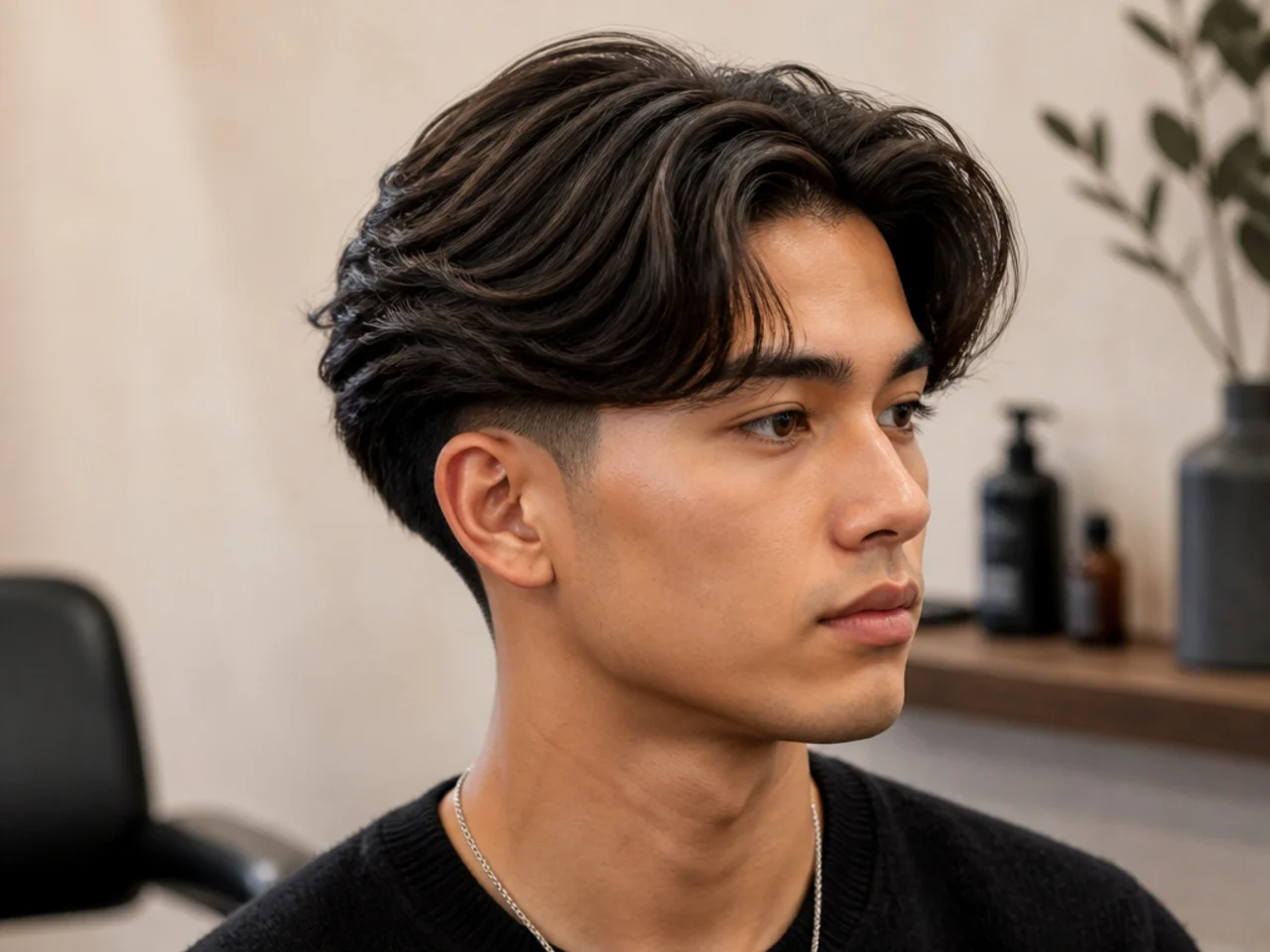
The blowout version pushes root volume high, then splits the volume down the center. The top reads big without spilling forward, low taper keeps the sides tight so the crown height doesn't turn into a helmet. Best for oval and round faces (the height slims round shapes visually), straight to wavy textures.
Ask for: "low taper fade, #1 at the shortest, five inches on top point-cut, blowout styling with a middle part."
Styling: volumizing mousse at the roots on damp hair, blow-dry with a round brush lifting from the roots upward, then split down the center with a comb. Light-hold spray to freeze.
12. Middle Part Faux Mullet with Low Taper
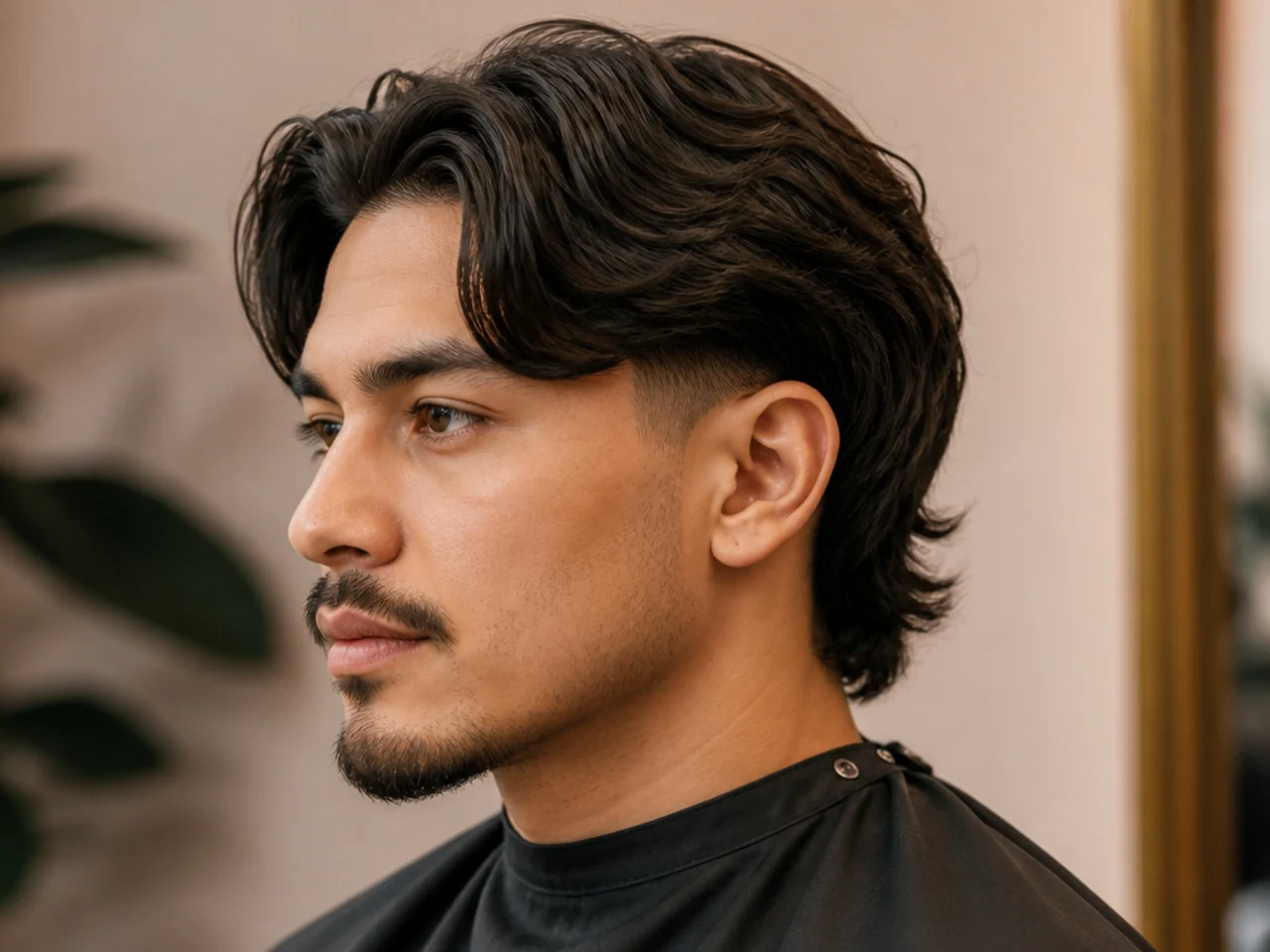
The mullet influence without the full commitment. Length is kept at the nape past the collar while the front stays parted at the center, low taper fades the sides in between. Related territory to the low taper fade mullet. Best for oval and square faces, and 1B to 2C textures.
Ask for: "low taper fade sides, five inches on top parted at center, length kept from the crown down to the collar for a soft mullet at the back."
Styling: sea-salt spray from wet, air-dry or diffuse, matte paste through the mids. The back is supposed to look a little wild — don't over-brush it.
13. Slick Middle Part Low Taper Fade
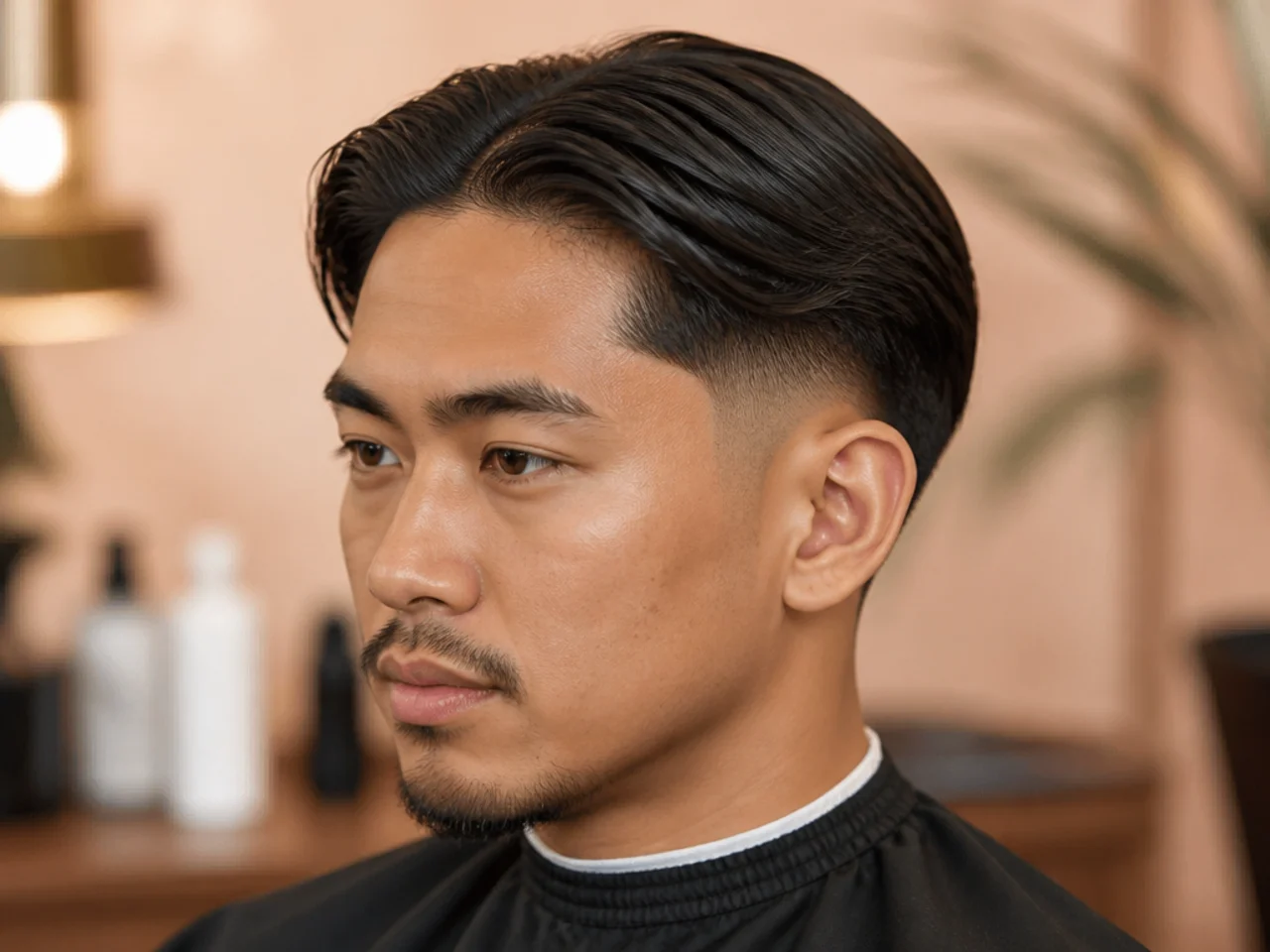
The old-money version. Four to five inches on top slicked flat away from a razored middle part, glossy finish, low taper at the sides. Reads sharp at boardrooms, weddings, and any event with a jacket. Best for oval and diamond faces, straight hair only — waves won't sit flat enough.
Ask for: "low taper fade, #1 at the shortest, four to five inches on top blunt cut for weight, razored middle part, slick styling."
Styling: wet-look cream or medium-hold pomade on damp hair, comb from center out with a fine-tooth comb, blow-dry with the comb pulling flat. Finish with a light shine spray.
14. Middle Part with Line-Up and Low Taper
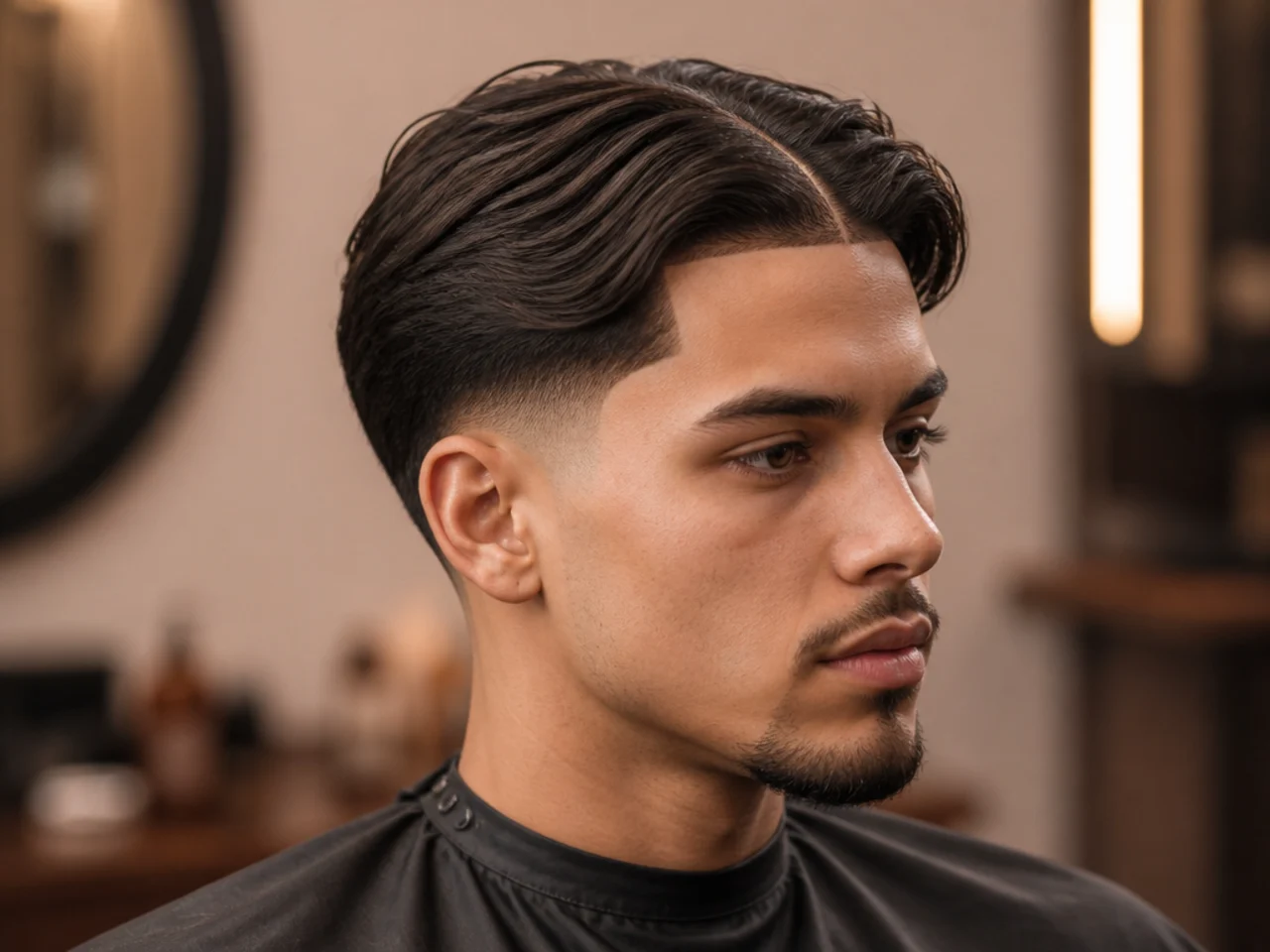
Adds a sharp razored line at the forehead to frame the top. On a middle part, the line-up makes the split read intentional instead of accidental — you can see the exact millimeter where the cut starts. Best for square, diamond, and oval faces, straight to wavy textures. Requires a barber who does clean razor work.
Ask for: "low taper fade, #0.5 at the shortest, four inches on top parted at center, sharp razored line-up at the forehead."
Styling: normal middle-part routine for your hair type. The line-up blurs faster than the fade — book a shape-up every ten to fourteen days.
15. Feathered Middle Part Low Taper
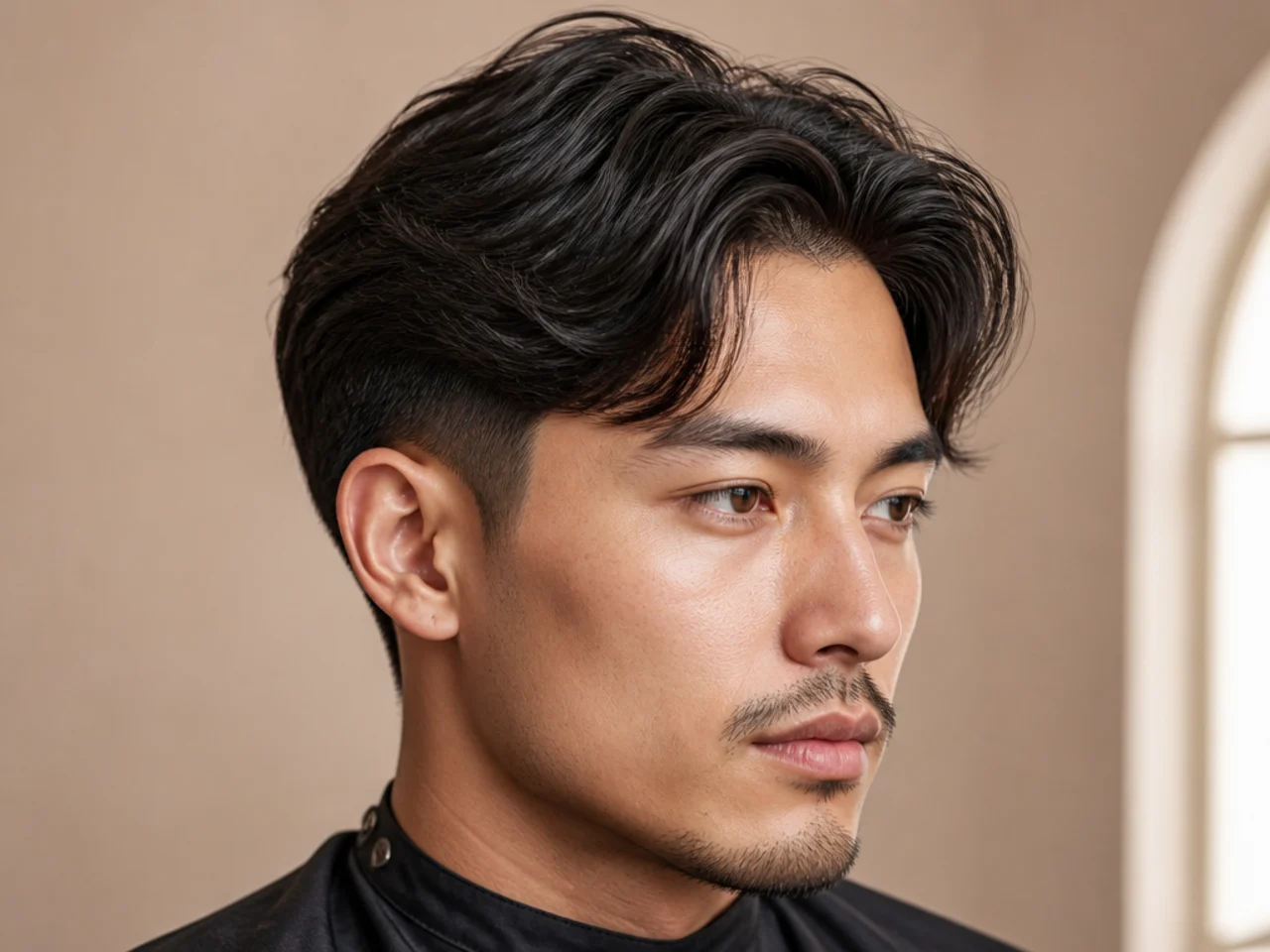
Layers are the story here. The top is scissor-cut into feathered layers so the ends taper into wispy points on either side of the middle part. Reads soft and current — the antidote to blunt-edge middle parts that read severe. Best for square and diamond faces (the softness offsets angles), wavy and lightly-curly textures.
Ask for: "low taper fade, #1 at the shortest, five inches on top with feathered layers throughout — the front should sit in wispy points at the cheekbone, parted at center."
Styling: sea-salt spray on damp hair, blow-dry with fingers rough-drying away from the part, matte cream through the ends to separate.
16. Messy Middle Part with Low Taper Fade
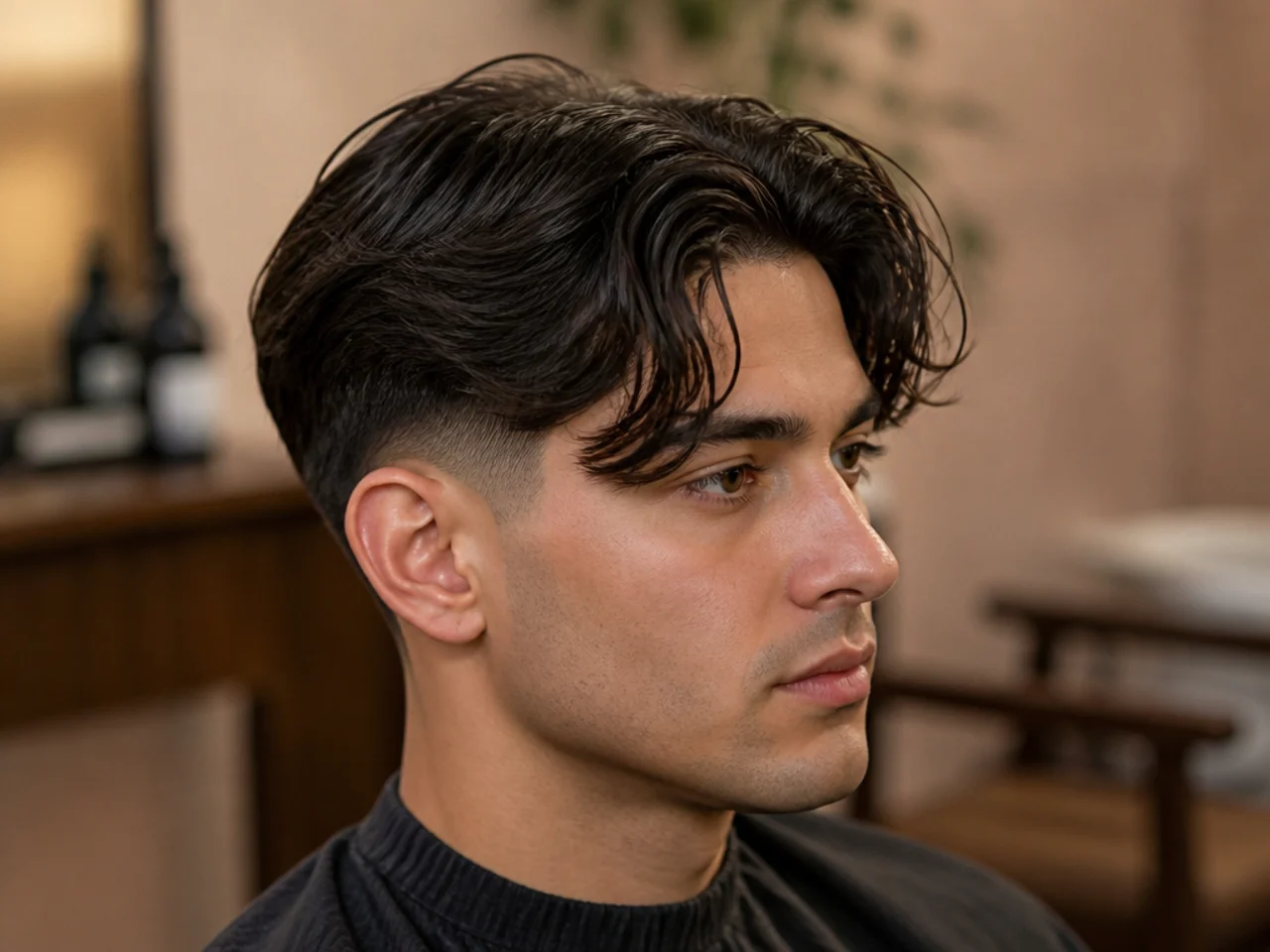
The undone version. Four to five inches on top with heavy internal texture, the middle part deliberately imperfect, low taper cleaning up the sides so the "mess" reads styled instead of woke-up-late. Best for oval and square faces, wavy and curly textures.
Ask for: "low taper fade, #1 at the shortest, four to five inches on top with heavy internal texture and point-cut ends, natural middle part left loose."
Styling: sea-salt spray on damp hair, blow-dry with fingers pushing in every direction, matte clay pinched through in small pieces. Don't comb it.
17. Middle Part with Beard and Low Taper
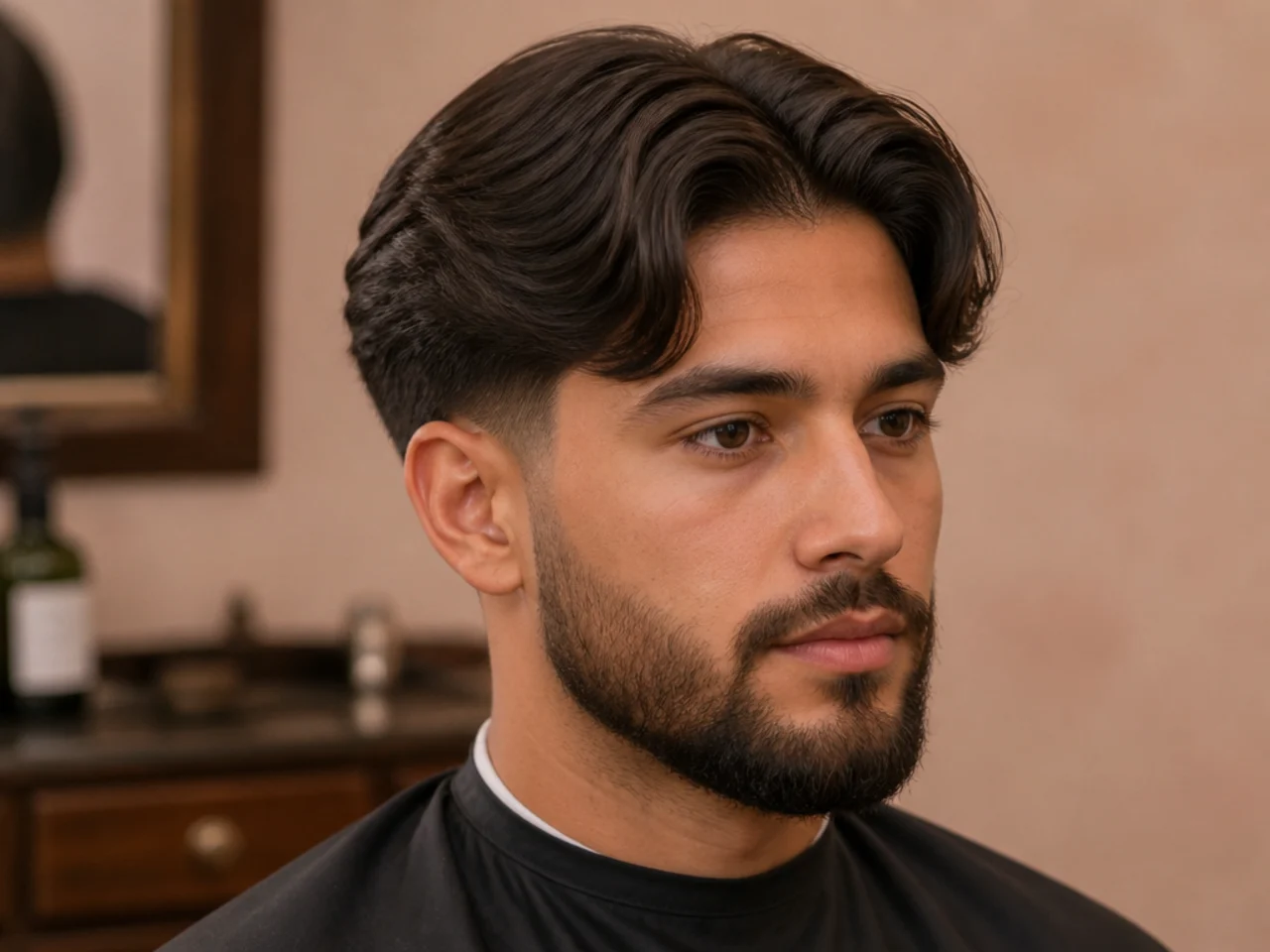
The bearded version. The sideburn drops into the low taper and continues down into a trimmed beard, making the whole side profile read as one connected shape. Best for square, oval, and diamond faces, medium-length top with a full or medium beard.
Ask for: "low taper fade blended into my beard line, #1 at the shortest, four to five inches on top parted at center — connect the sideburn into the taper into the beard."
Styling: beard oil daily, comb the beard down every morning, brush the top away from the middle part with a paddle brush and light paste.
18. High-Volume Middle Part Low Taper
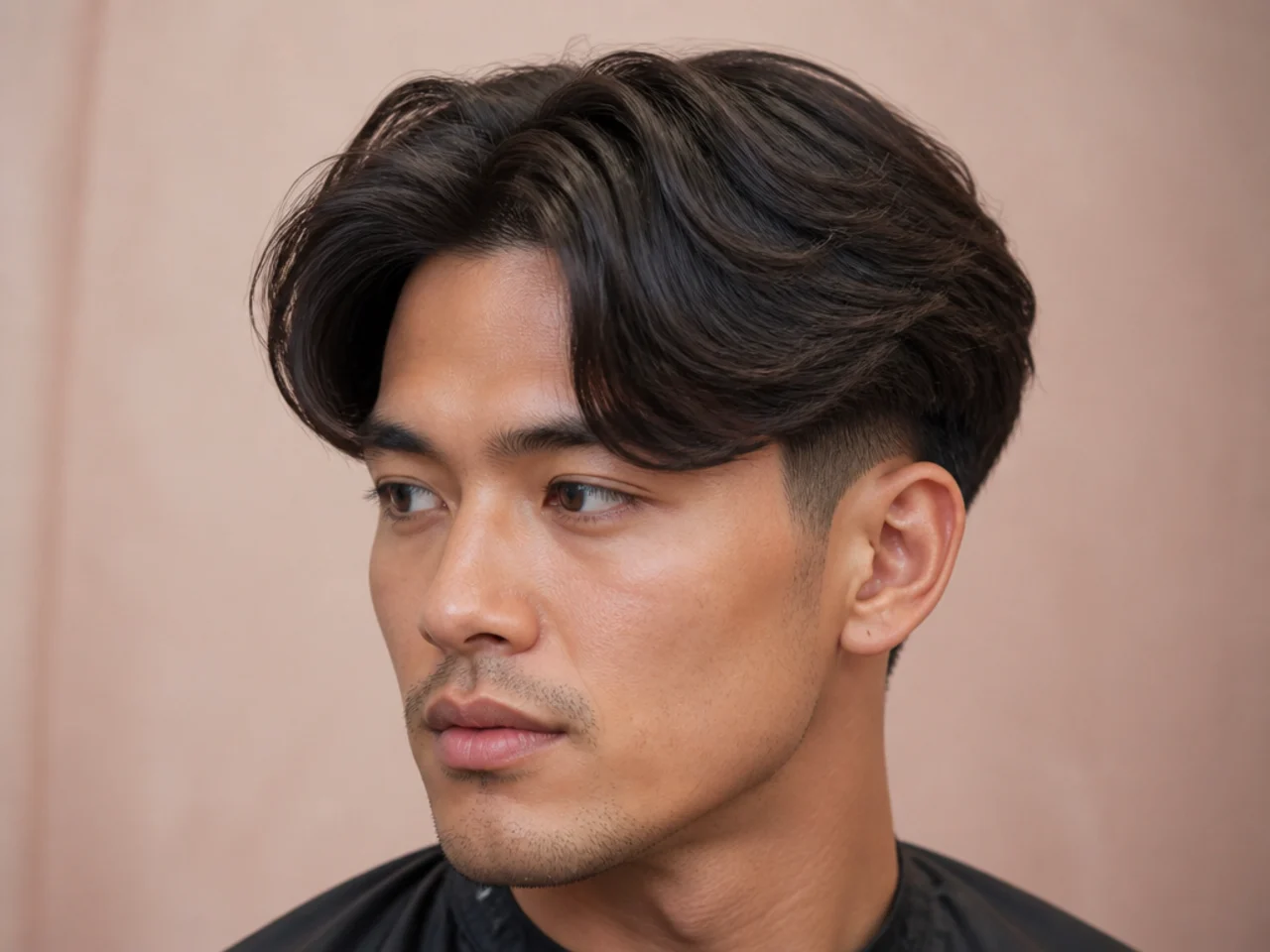
The dramatic take. Everything the blowout does plus another inch of length and more aggressive root lift, so the middle part sits at the top of a small dome of volume. Reads editorial, borderline runway. Best for oval and heart faces, straight to lightly wavy hair. Not for every workplace.
Ask for: "low taper fade, #0.5 at the shortest, six inches on top point-cut for movement, high-volume middle part with maximum root lift."
Styling: volumizing mousse and root-lift spray on damp hair, blow-dry upside down for two minutes, then flip and split with a comb. Medium-hold spray to lock.
19. Middle Part Comb Down with Low Taper
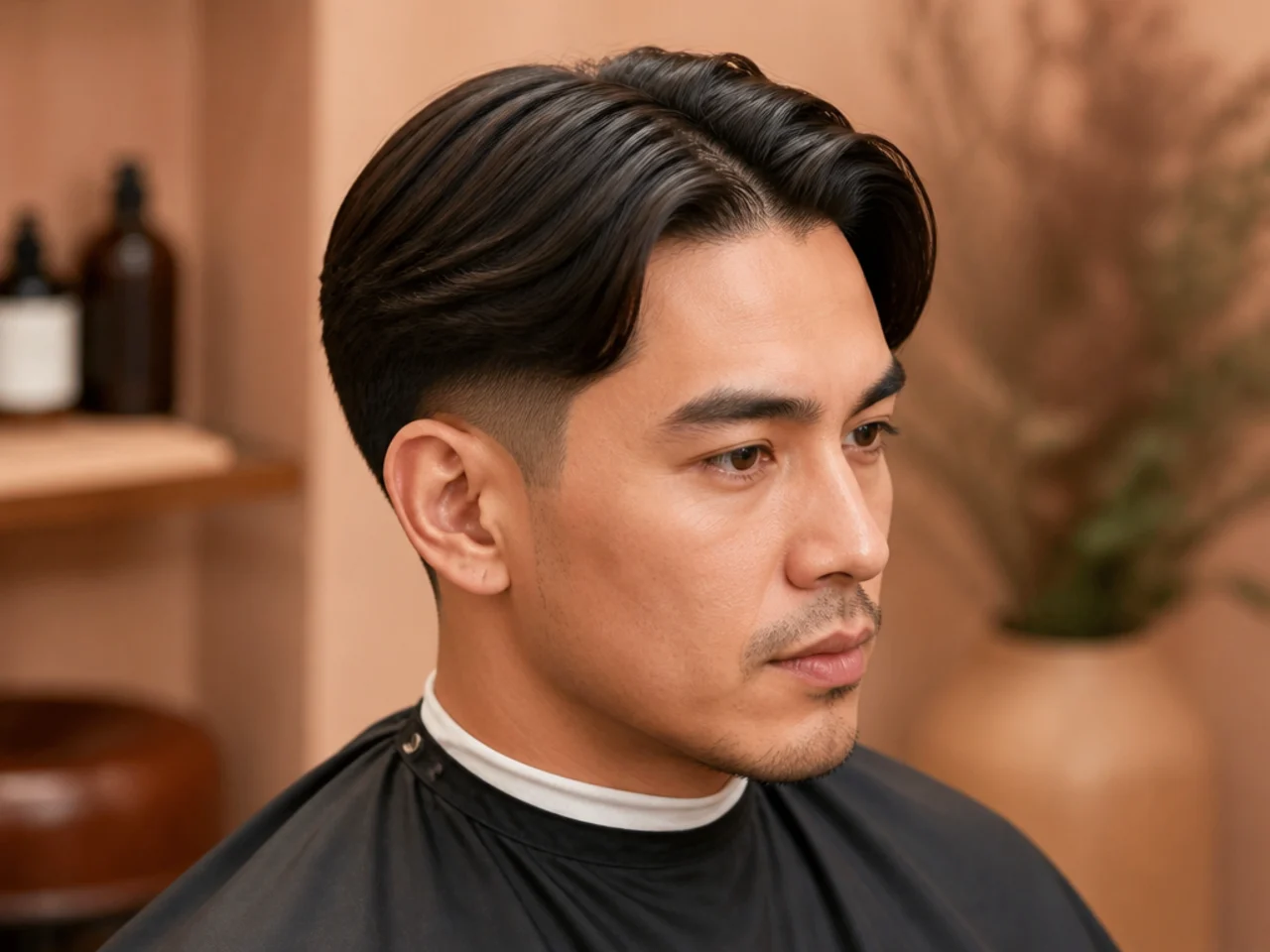
The lowest-effort version. Straight 1A to 1B hair combed flat straight down from the middle part, no product other than a light cream to keep flyaways in check. Low taper at the sides is what stops the cut from reading like an unfinished bowl. Best for oval and long faces (the vertical drop lengthens round shapes uncomfortably), fine straight hair.
Ask for: "low taper fade, #1 at the shortest, four inches on top blunt cut, combed flat down from a natural middle part."
Styling: blow-dry from wet with a paddle brush pulling straight down, a pea of anti-frizz cream through the mids, no other product.
20. Middle Part Perm with Low Taper Fade
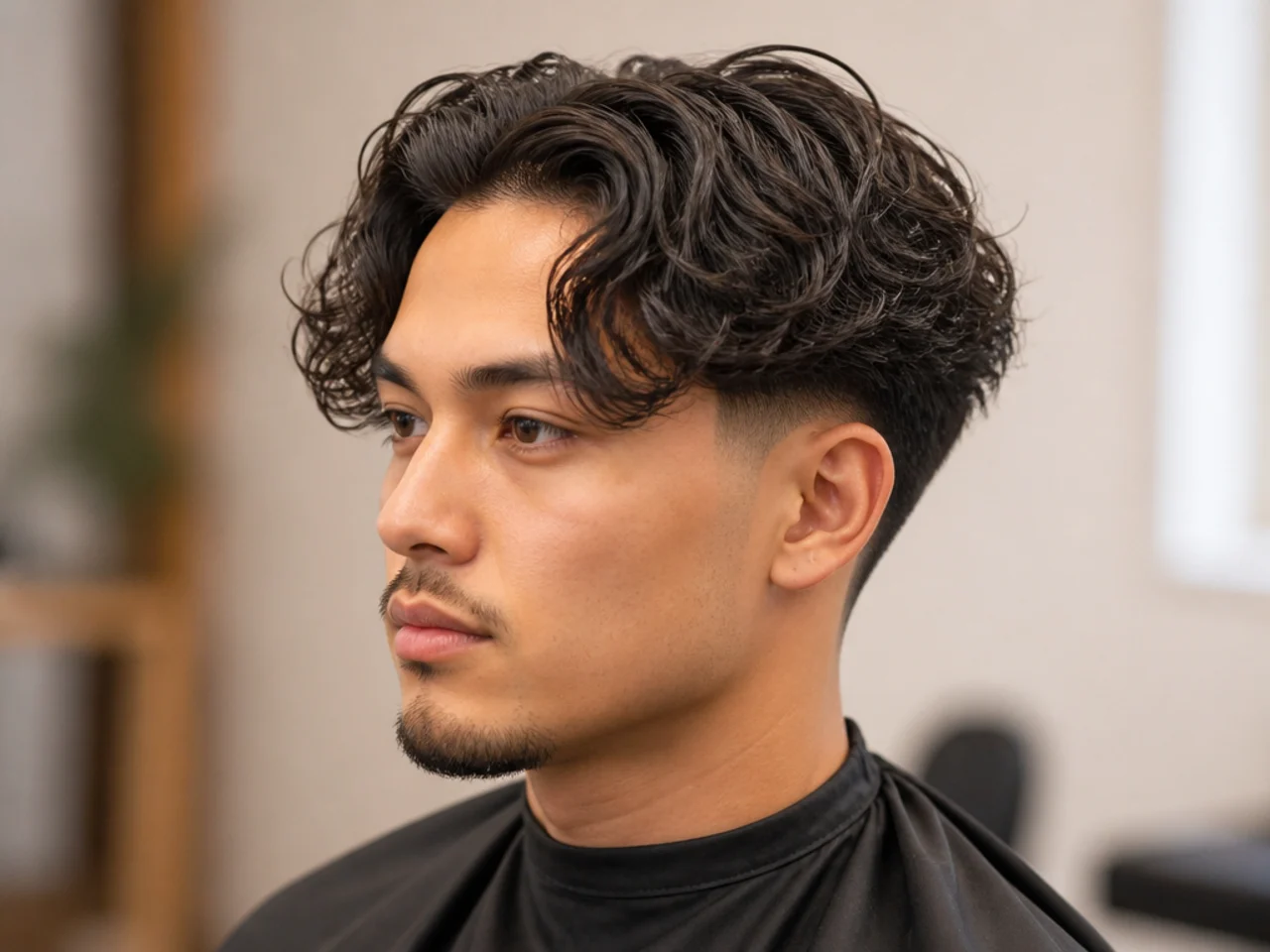
The made-wave version. For straight-haired guys who want the K-pop curtain movement without the round-brush routine every morning. Get the haircut first, wait two weeks, then get a loose C-curl or S-curl perm on the front two-thirds of the top. Low taper cleans the sides so the new wave reads intentional. Best for oval and square faces, Asian and straight-hair textures.
Ask for: haircut first — "low taper fade, #1 at the shortest, five inches on top point-cut, natural middle part." Book the perm at a separate appointment with a specialist.
Styling: leave-in on damp hair, light curl cream through the permed sections, scrunch and air-dry. Skip heat for the first ten days after the perm sets.
How to Ask Your Barber for a Low Taper Fade Middle Part
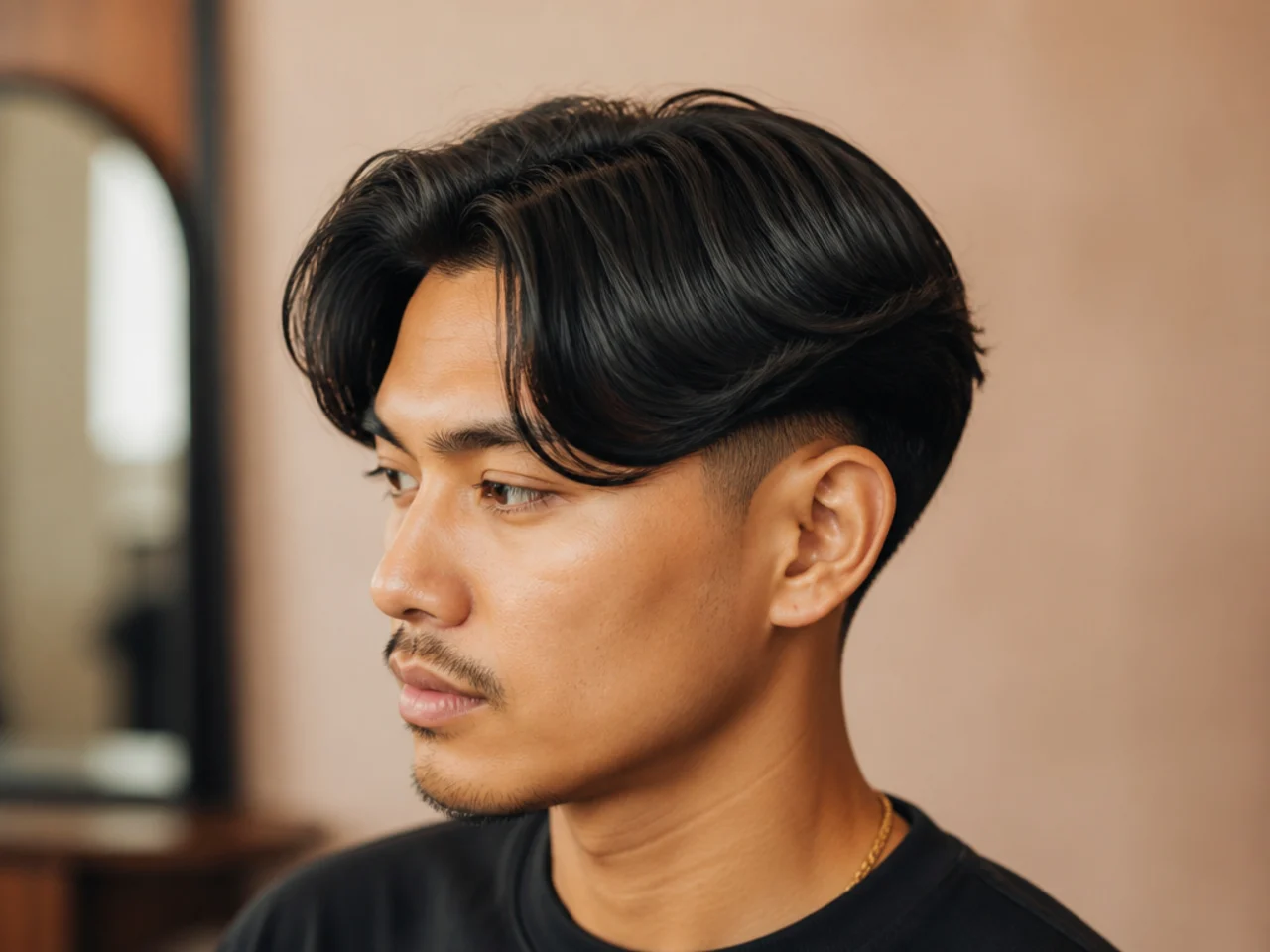
Seven lines cover the whole conversation. Nail these and you'll walk out with the version you had in mind — not the one your barber assumed from "trim and fade."
- Bring a reference photo — one, not five. Screenshot the exact variation you want. Bringing five photos guarantees your barber will average them, and the average of five middle parts is a mediocre middle part.
- Say the words "low taper fade." Not "low fade," not "taper." The two together tell your barber where to start (above the ear) and where to stop (#0.5 or #1, never skin). Compare against a full skin fade with the low fade vs mid fade vs high fade breakdown if you're unsure.
- Name the guard at the shortest point. #0.5 for sharper contrast, #1 for softer. #1 is the safer default for a middle part — you want the eye on the split, not on the fade.
- Specify the top length in inches on dry hair. Four inches minimum, five to six for K-pop and curtain versions. Barbers work off numbers, not names.
- Ask for point-cut layers on top. Blunt cuts leave the ends dead flat on either side of the part, and the split lies limp. Point cutting adds texture that helps the middle part hold shape.
- Say "middle part" and gesture where. Some clients want the split at the exact center; others want it a half inch off-center for a softer look. Show your barber which one before the cut, not after.
- Book your next appointment before you leave. The taper blurs at three to four weeks; the top will hold the middle-part shape for six to eight. Book two visits — a fade-only touch-up and a full cut — six weeks apart.
Styling and Maintenance for a Middle Part
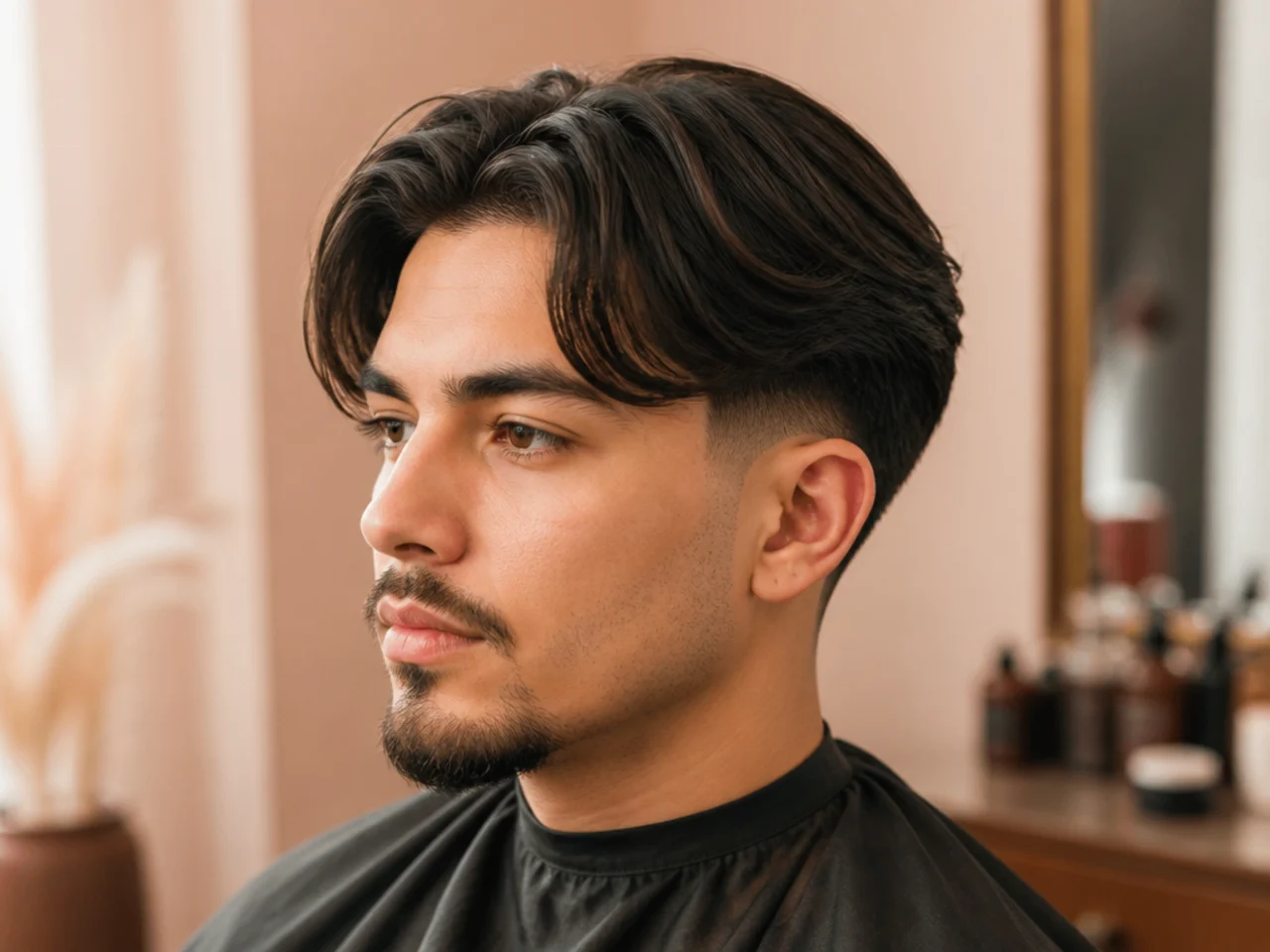
The routine is short. Water first, product second, direction third. Everything else is decoration.
Wash rhythm. Two to three times a week with a sulfate-free shampoo. Daily washing strips the natural oils that help the top hold weight against a middle part. Rinse-and-condition-only days between full washes keep the hair clean without over-stripping.
Product order. Damp hair first, then a volumizer or sea-salt spray at the roots, then blow-dry the direction you want the hair to fall. Finish with a pea of matte paste or clay through the mids to lock the shape. Never apply product to soaking-wet hair for a middle part — the water dilutes the hold and the split loosens by lunch.
Blow-drying direction. Away from center on both sides. Point the nozzle down the hair shaft, brush pulling out and slightly back, cool shot at the end to set. If your cowlick fights the part, blow-dry against the cowlick direction first for thirty seconds to reset it, then dry the rest of the top normally.
The right products. Matte paste or clay for casual, low-shine looks. Cream for a soft-hold flexible finish. Pomade only for the slick version — anything glossy on a textured middle part reads greasy. Sea-salt spray adds grit that helps the split hold on straight hair. If your hair is wavy or curly, add the routine notes from the best wavy hair products guide.
Overnight care. Silk or satin pillowcase saves the shape from cotton friction. In the morning, mist with water, run fingers through, comb the part back into place, add a whisper of paste to reset. That's it — thirty seconds saves you a full re-blow-dry.
Maintenance cadence. Fade line-up every three to four weeks. Full cut every six to eight weeks. Deep conditioner weekly if you use heat daily. Trim the ends at every visit even if you're growing out — the middle part relies on clean ends to lie neatly.
Between-visit cleanup. Keep the neckline sharp with a corded edger or the corner of your beard trimmer. Fifteen seconds twice a week is all it takes to keep the taper line reading fresh until your next visit.
FAQ
Does the low taper fade middle part work on Asian hair? Extremely well — it's the base of most K-pop-inspired looks. Straight, dense Asian hair holds the middle-part shape better than most textures because the ends carry more weight down the split. Ask for point-cut layers so the top doesn't sit like a helmet, and pair with a soft perm if you want the curtain to hold more curve.
Can I get a low taper fade middle part on thin or fine hair? Yes, with two adjustments. Ask for the top to be blunt-cut for the maximum amount of visible weight at the ends, and use a volumizing mousse at the roots plus a matte paste at the mids. Skip creams — they weigh fine hair down and flatten the crown, killing the illusion of thickness.
Is a low taper fade the same shape as a low fade with a middle part? Different at the shortest guard. The taper stops at a #0.5 or #1; the low fade drops to skin at the same height. On a middle part, both work, but the taper reads softer and forgives an extra week between visits. If you want the sharper contrast, look at the low fade haircut with the same top.
How much length do I need for a K-pop curtain middle part? Five inches minimum on dry hair — six is where it reads its best. Curtains that stop above the brow read like short bangs rather than curtains. If you're growing in, ask for the sides to be tapered and the top left alone until the front pieces reach the eye.
Can I still get a middle part fade if I have a cowlick? Yes. Blow-dry against the cowlick direction for the first thirty seconds to reset it, then style normally. Ask your barber to point-cut into the cowlick area during the cut so the hair sits at the direction you want rather than fighting the natural swirl. A pea of matte paste at the cowlick point holds it against the reset.
How much should I expect to pay? Standard low taper fade with a point-cut middle part at a mainstream barbershop: $35 to $65. Add a beard blend or razor line-up at a specialist shop: $70 to $130. Add a tip. A fade-only touch-up between full cuts is usually $15 to $25 and takes fifteen minutes.