20 Medium Length Styles for Straight Hair
Twenty medium length straight hair men styles — blowout quiffs, slick backs, curtains, side parts, executive polish — with clipper numbers, inches, and the exact ask for your barber.
In this article · 32
- What Is a Medium Length Straight Hair Cut?
- How to Choose Your Medium Length Straight Cut
- The 20 Cuts
- 1\. Classic Slick Back
- 2\. Modern Matte Slick Back
- 3\. Executive Comb Over
- 4\. Timeless Side Part
- 5\. Blowout Quiff
- 6\. Textured Pompadour
- 7\. Modern Brush Back
- 8\. Old Money Executive
- 9\. Grown-Out Ivy League
- 10\. Long Comb Over with Low Fade
- 11\. Two Block Haircut
- 12\. Sleek Middle Part with Low Fade
- 13\. 90s Curtain Sweep
- 14\. Middle Part with Face-Framing Layers
- 15\. Long French Crop
- 16\. Medium Peso Pluma Cut
- 17\. Medium Comma Hair
- 18\. Disconnected Slick Back with High Fade
- 19\. Peaky Blinders Cut
- 20\. Sleek Bro Flow
- How to Ask Your Barber
- Styling and Maintenance
- FAQ
- What's the best medium length cut for straight hair men?
- Why does straight hair go flat by lunch?
- Can straight hair carry a curtain cut or 90s middle part?
- Do I need a fade for a medium length straight hair cut?
- How do I add volume to straight hair without a blowout?
- What's the difference between a medium length straight hair cut and a long one?
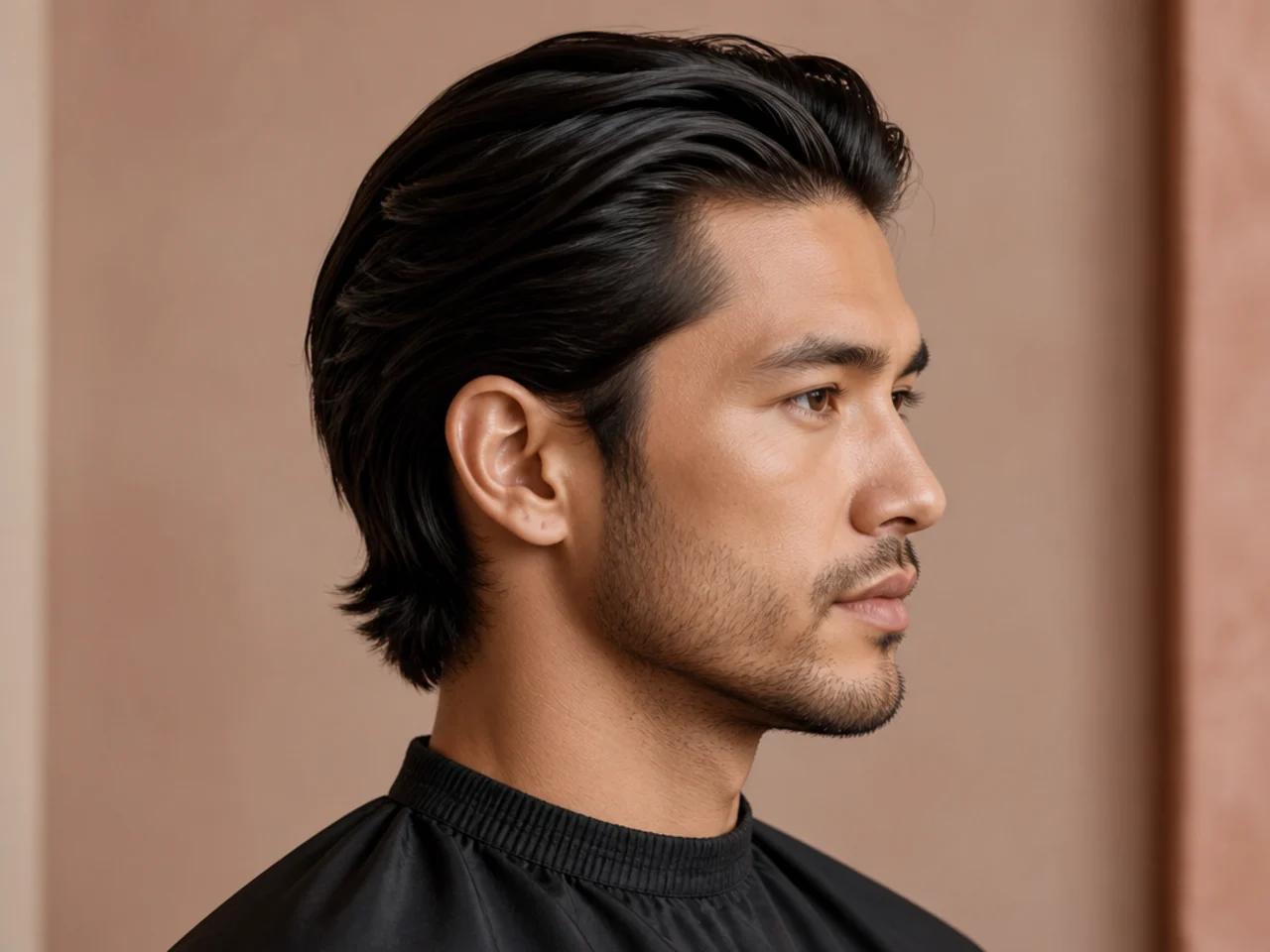
Straight hair is the medium-length category's best-kept secret. It drapes clean off the comb, holds a pomade slick better than any other texture, and takes a blow-dry into shapes curly hair could never keep. This guide runs the twenty medium length straight hair men styles worth walking into a barber shop for in 2026 — with photos, face-shape notes, and the exact clipper numbers, inches, and finish notes to hand over. For the full medium length haircut men catalog across every texture, start there.
What Is a Medium Length Straight Hair Cut?
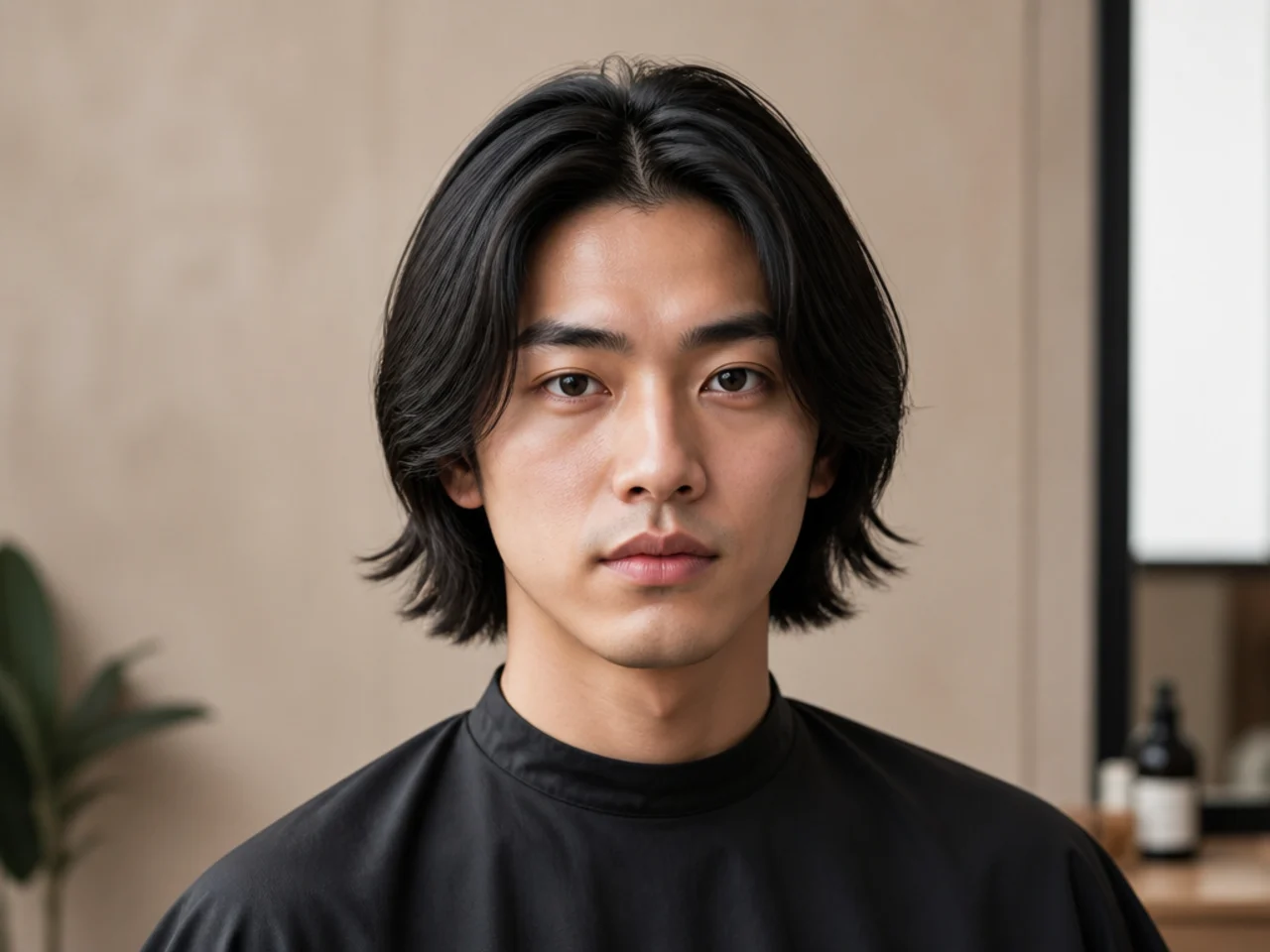
Medium length sits at 3 to 6 inches on top. Straight hair earns the naming here — it's the texture that holds a slick back, side part, quiff, pompadour, curtains, and top knot without fighting you. The strand lays flat against the head when combed, which is a gift for polished cuts and a challenge for volume-forward ones.
Sides can stay long and scissor-blended for a softer read, or drop to a low, mid, or high fade for a sharper outline. Straight hair takes both cleanly. See the medium length hairstyles men pillar for the styling-first cut across every length.
The trade-off you're working with: straight hair holds structure but loses volume by lunch. Every cut below either leans into that reality or fights it with a blowout.
How to Choose Your Medium Length Straight Cut
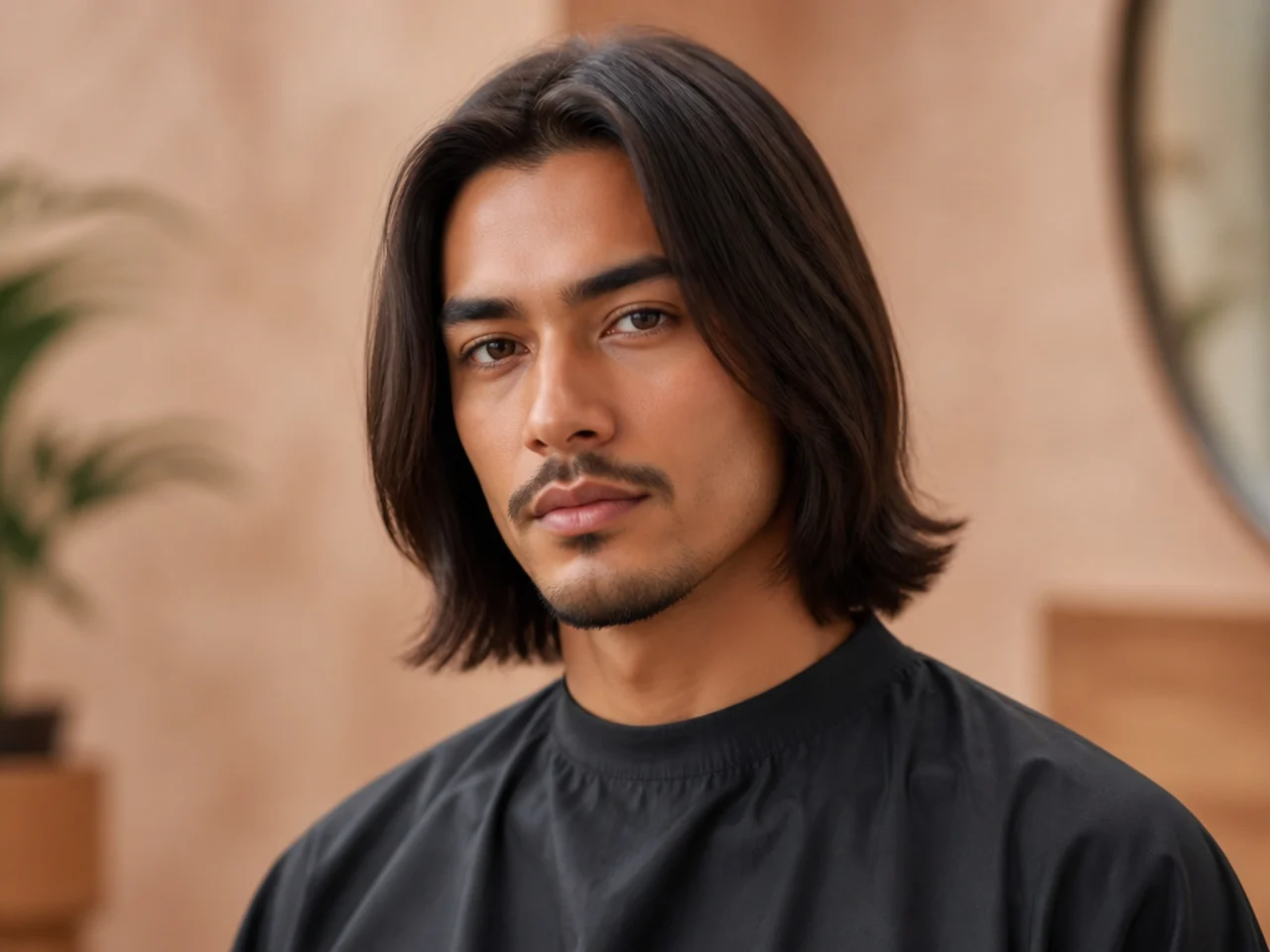
Three questions narrow the twenty fast. Face shape, density, and how much heat-styling you're willing to do.
Round faces want vertical lift — quiff, pompadour, blowout, faux hawk. The height stretches the frame. Long or oblong faces suit sweeping horizontal movement — curtains, side sweep, medium fringe. Square jaws pair with rounded tops that soften the line — mod cut, layered crown, brush back. Oval wears every version here. For the deeper face-shape framework across cuts, see haircuts for square faces.
Density matters more on straight hair than on wavy. Fine straight hair reads dense with texturized ends and a matte finish — French crop, textured pompadour, medium comma. Thick straight hair takes any structured cut and holds it — slick back, side part, comb over, Ivy League.
The 20 Cuts
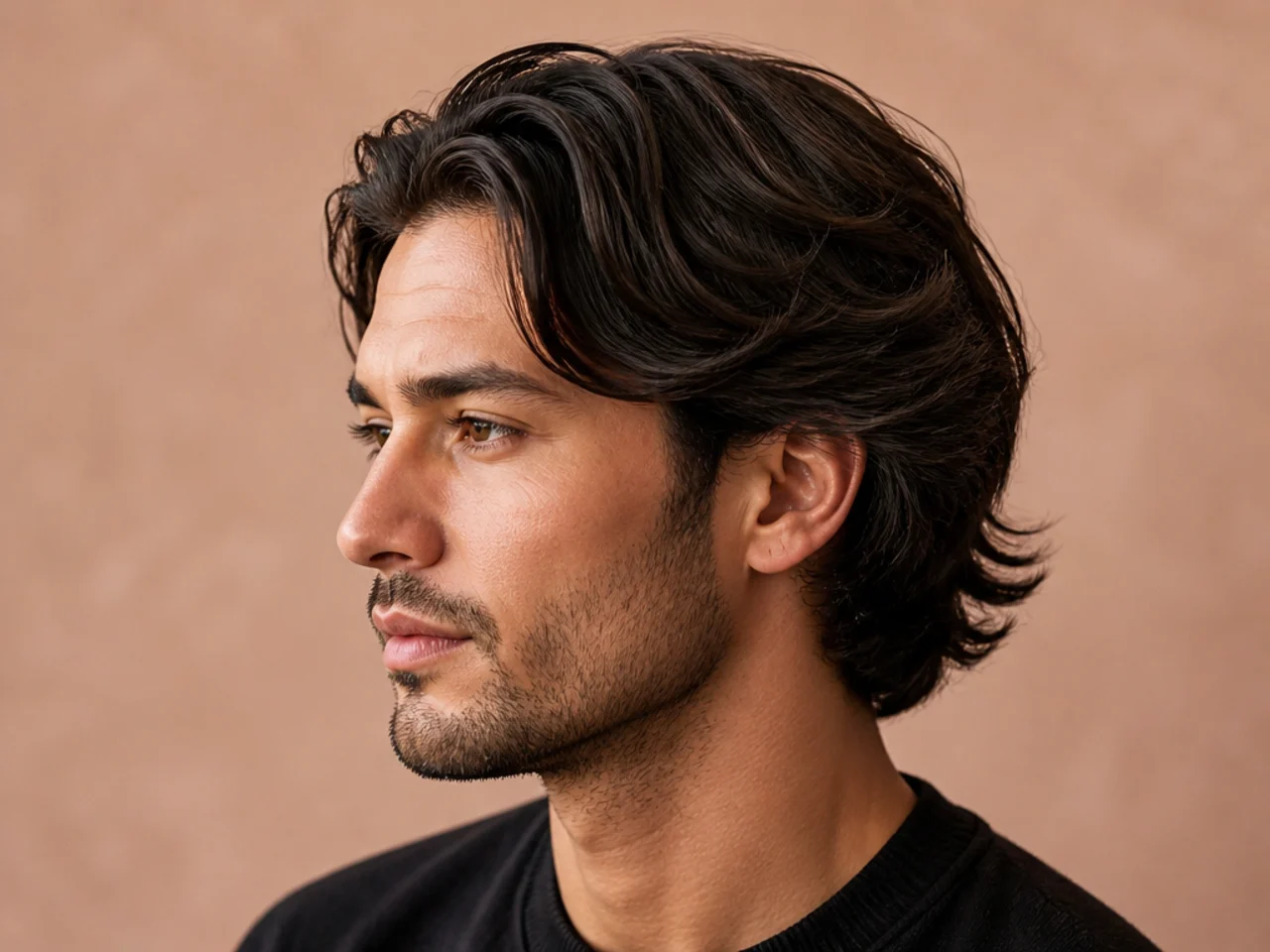
Twenty cuts, ordered clean-and-classic to modern-and-statement. Each block covers what makes the cut work on straight hair, who it suits, exactly how to ask, and the styling move to steal.
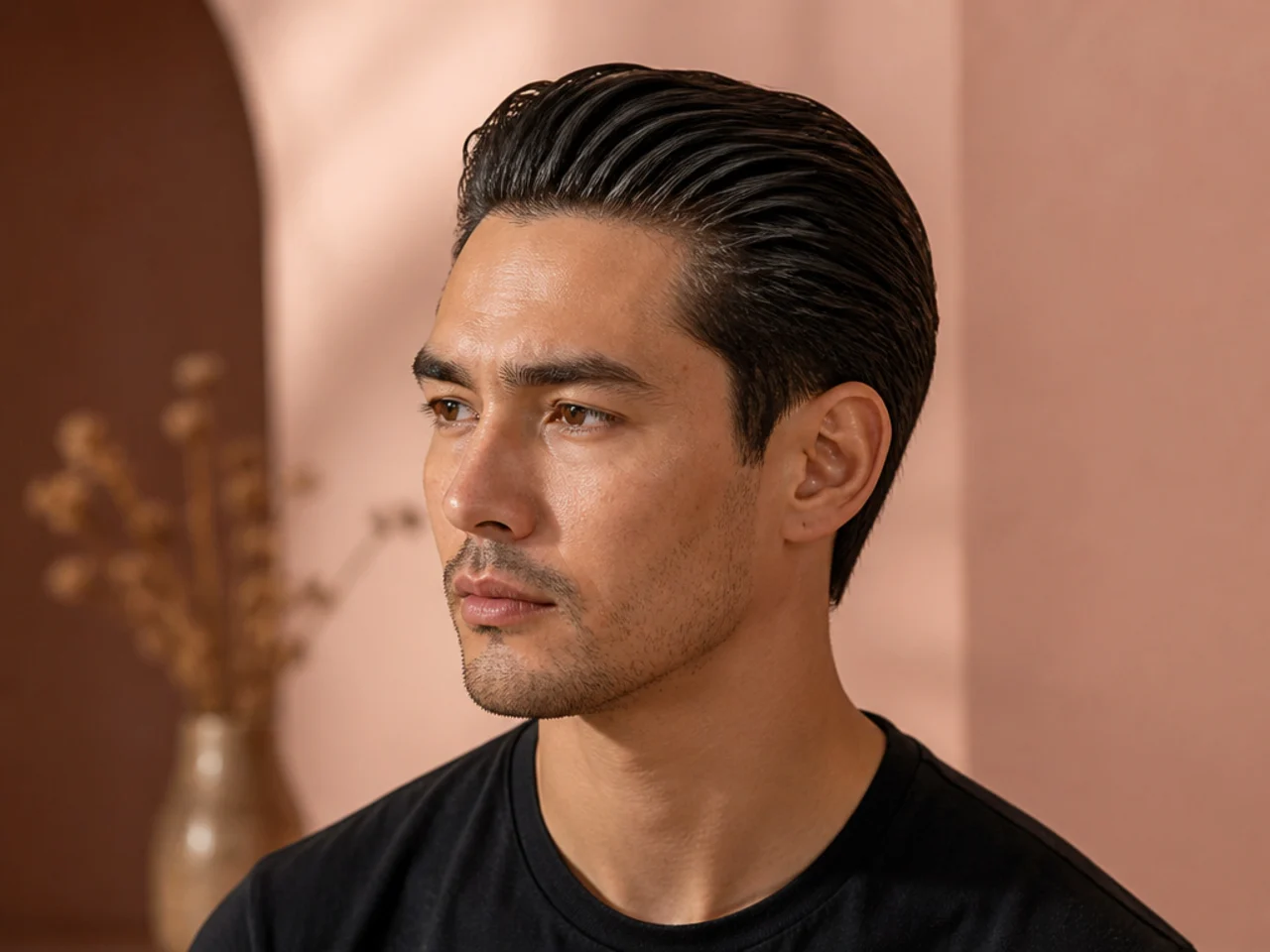
1. Classic Slick Back
The reference cut. Straight hair holds the combed-back shape without fighting the pomade. Top runs 5 to 6 inches, long enough to reach past the crown when combed. Sides stay scissor-cut and short — no fade for the true classic, just a hand-blended taper to the neckline. The finish is shiny, deliberate, and unmistakable.
Suits round, oval, and long faces because the visual weight sits on top. Best on thick to medium straight hair — fine hair will struggle to hold the flat drape without help.
Ask for: "classic slick back, 5 to 6 inches on top, scissor-blended short sides, natural taper at the neckline, no fade."
Styling: heavy oil-based pomade, warmed between the palms, worked root to tip on damp hair. Comb straight back once with a fine-tooth comb. Do not touch it again. For thirty more variations, see the slick back haircut guide.
2. Modern Matte Slick Back
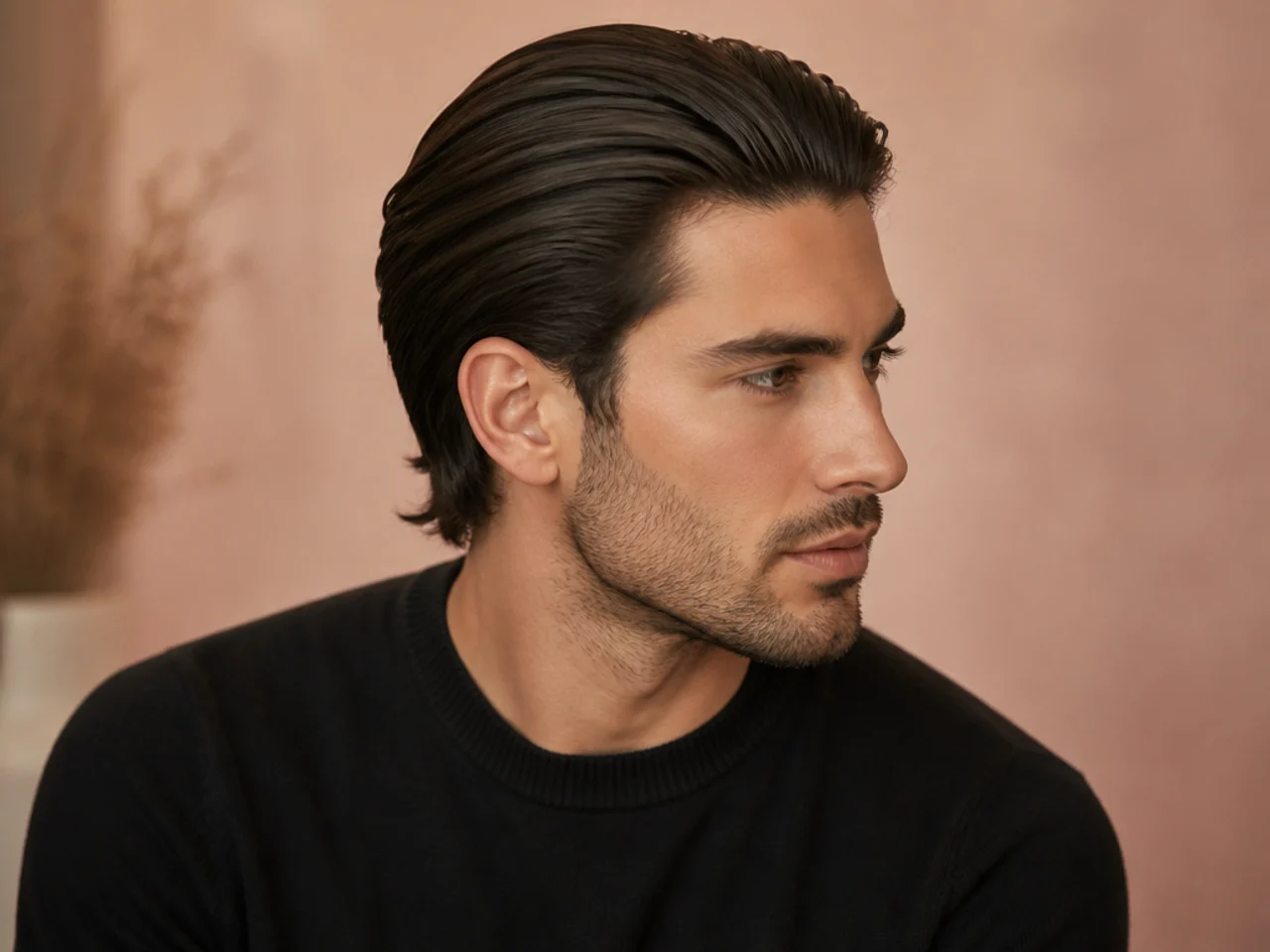
Same shape as the classic. No shine. This is the version most guys under 35 ask for now — polished without reading like a 1980s trader. Top runs 5 inches, combed back with a matte clay instead of pomade. Sides usually drop to a low or mid taper fade for a cleaner outline.
Straight hair takes the matte finish flawlessly because the texture doesn't need shine to show separation. Suits oval, square, and rectangular faces.
Ask for: "modern slick back, matte finish, 5 inches on top, low or mid taper fade on the sides."
Styling: matte clay through damp hair, comb straight back, then break up the surface with your fingertips so it reads lived-in.
3. Executive Comb Over
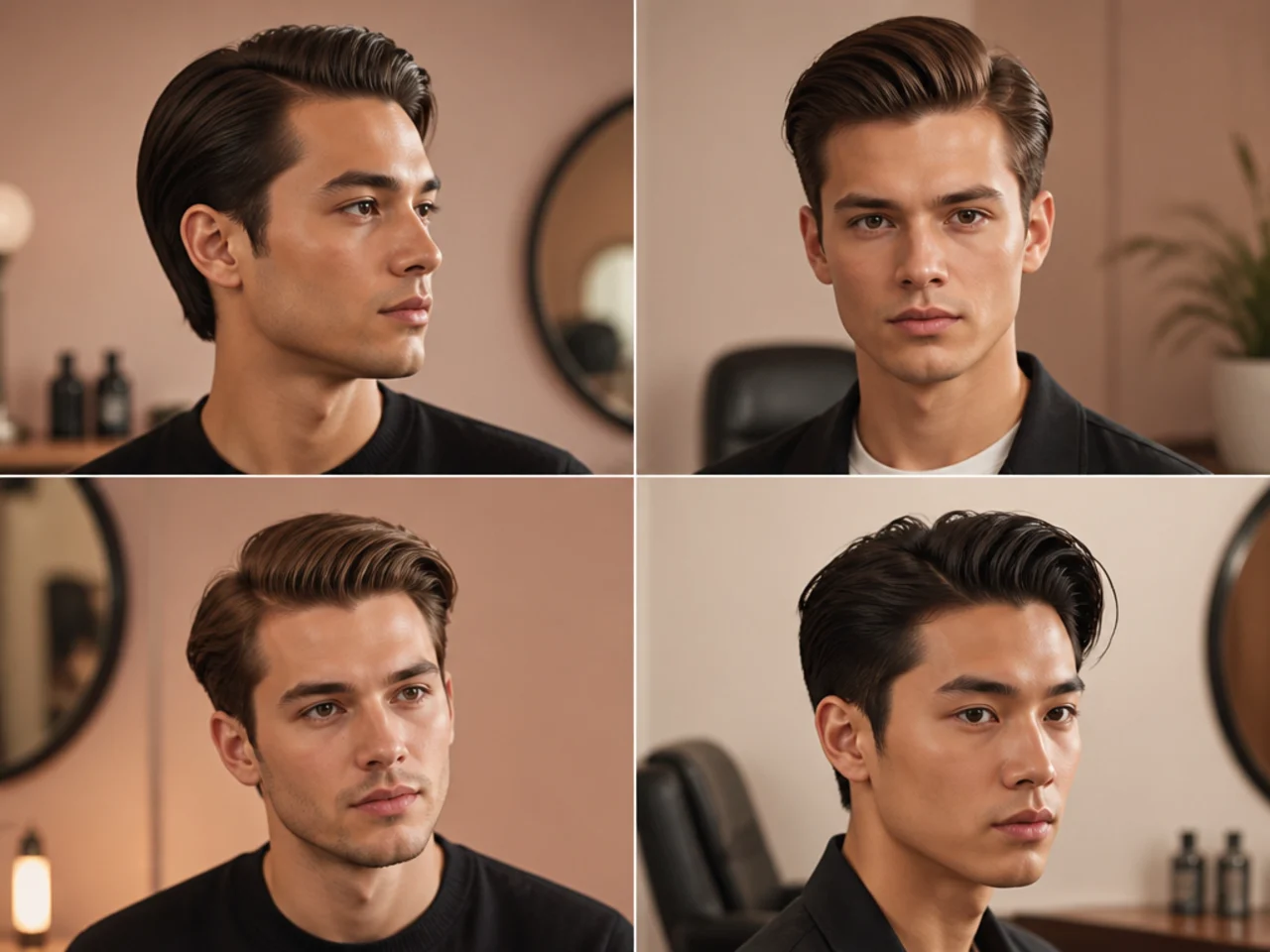
The boardroom cut. Top hits 4 to 5 inches with a razored hard part on your dominant side. Hair sweeps across the crown at a defined angle rather than back. Sides taper with scissors or drop to a low fade. Straight hair is the only texture that keeps the part looking clean past hour six.
Flatters oval, square, and rectangular faces. The part breaks symmetry and reads polished in any room where a jacket is required.
Ask for: "long executive comb over, 4 inches on top, hard side part on my dominant side, low scissor taper or clean low fade."
Styling: blow dry across the part with a small paddle brush. Cream or medium pomade combed once from the part outward. Do not re-comb once it sets.
4. Timeless Side Part
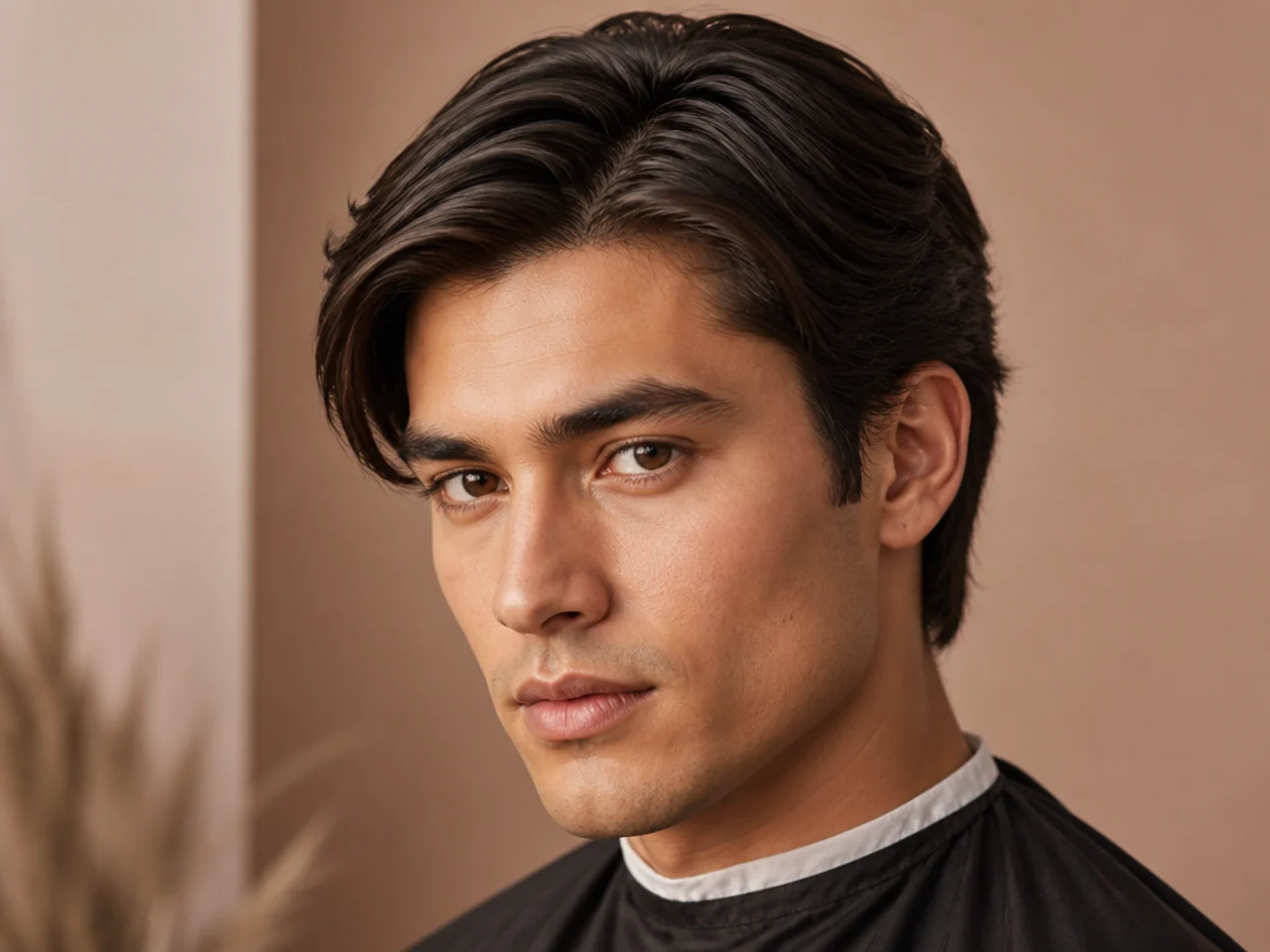
Different from the comb over. The side part flows in the direction of the part rather than sweeping across the crown. Top runs 3 to 4 inches with a line-cut hard part. Sides taper with scissors or drop to a low fade. Reads Cary Grant on straight hair.
Suits oval, square, and rectangular faces. Straight and lightly wavy hair only — curls fight the part.
Ask for: "classic side part, 3 to 4 inches on top, line-cut hard part, low taper fade or scissor blend on the sides."
Styling: cream or light pomade through damp hair. Comb from the part outward once. Blow dry with the airflow following the comb. Should read handsome — not slick.
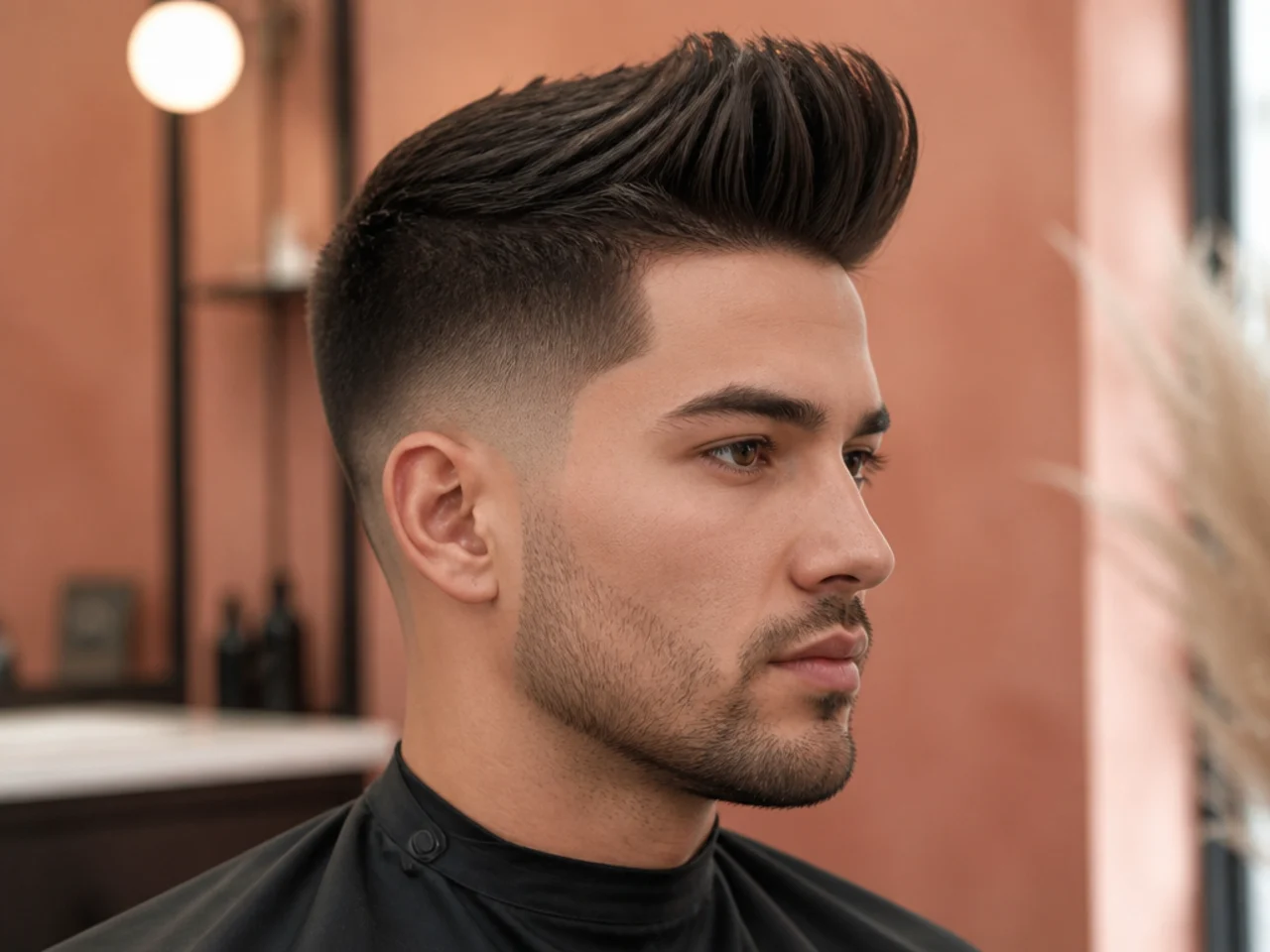
5. Blowout Quiff
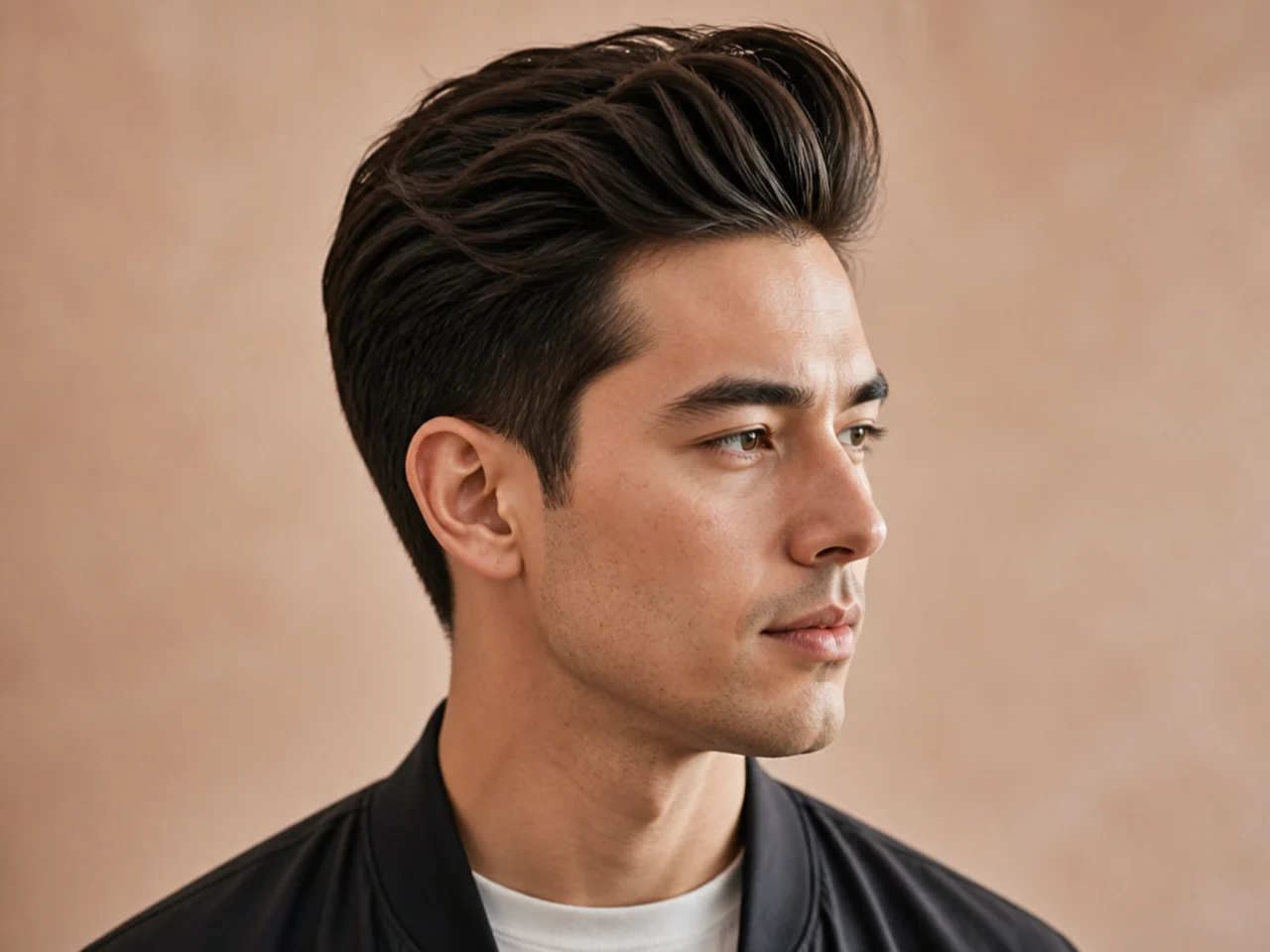
The volume machine for straight hair. Top runs 4 to 5 inches so the front arches back with height. Sides drop to a mid fade — not skin, just clean. Point-cut internal layers give the quiff separation so it doesn't sit as one flat wave. For thirty more angles, see the quiff hairstyles men guide.
Flatters round and square faces because the vertical lift stretches the frame. Straight hair holds the arch when properly blown out — skip the blow-dry and it collapses by noon.
Ask for: "medium quiff, 5 inches at the front, point-cut internal layers, mid fade on the sides — not skin, just a clean line."
Styling: blow dry the front up and back with a round brush, aiming heat at the roots. Matte clay through the front third only. Back should sit clean.
6. Textured Pompadour
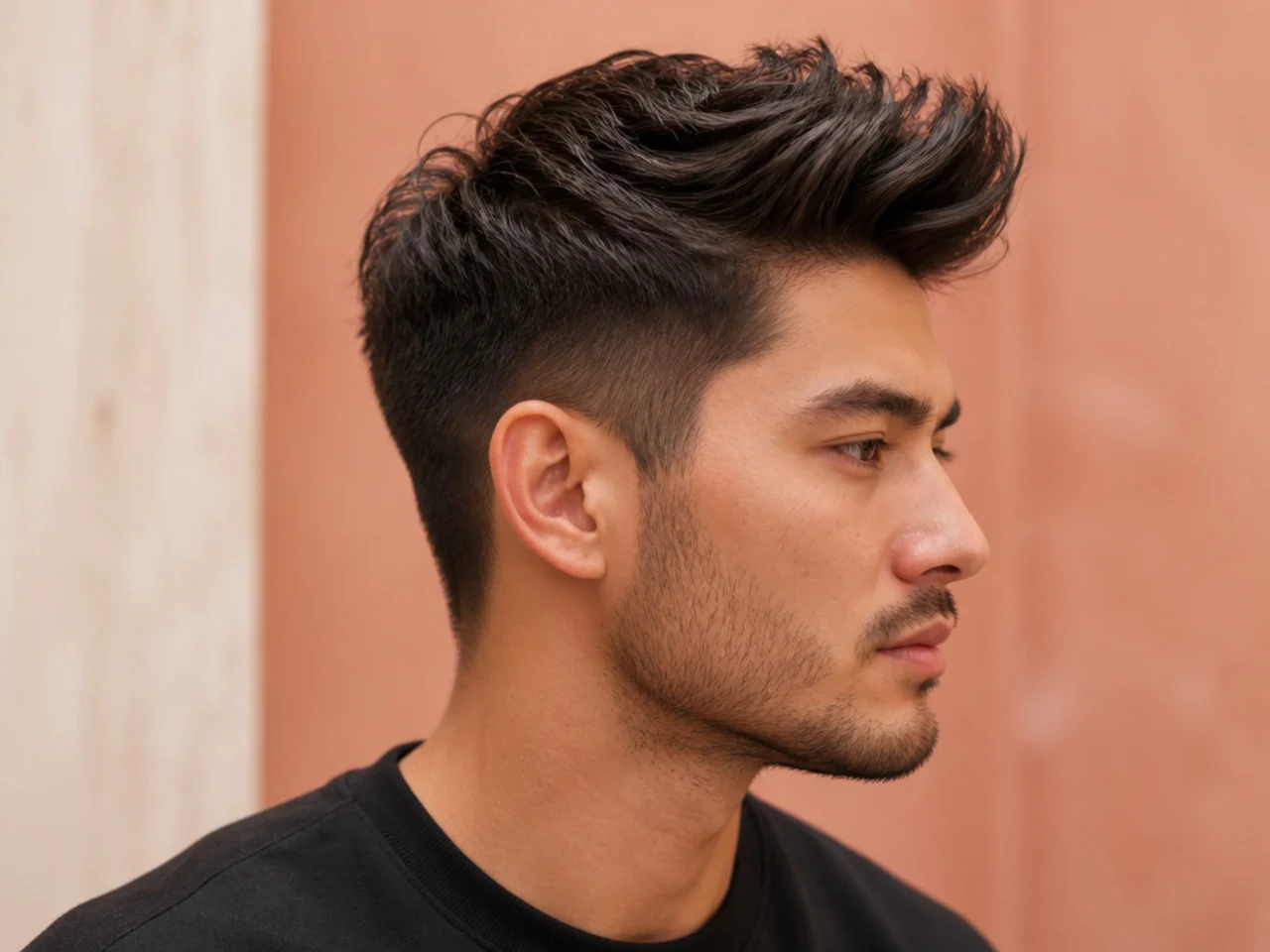
The matte layered lift. Top runs 5 to 6 inches at the front, tapering to 3 inches at the crown. Sides sit tight with a mid or high fade. Point-cut ends throughout so the pompadour has breathing room and doesn't read like a helmet. Fine straight hair benefits from a mousse base for scaffolding.
Suits oval and square faces. Medium-thickness straight hair holds the arch best — very thick hair reads heavy without careful internal thinning.
Ask for: "textured pompadour, 5 inches at the front, 3 at the crown, point-cut throughout, mid or high fade with a defined line."
Styling: blow dry up and back with a round brush. Strong-hold matte clay pressed into the base, shaped forward with the fingertips. Structured — never crispy.
7. Modern Brush Back
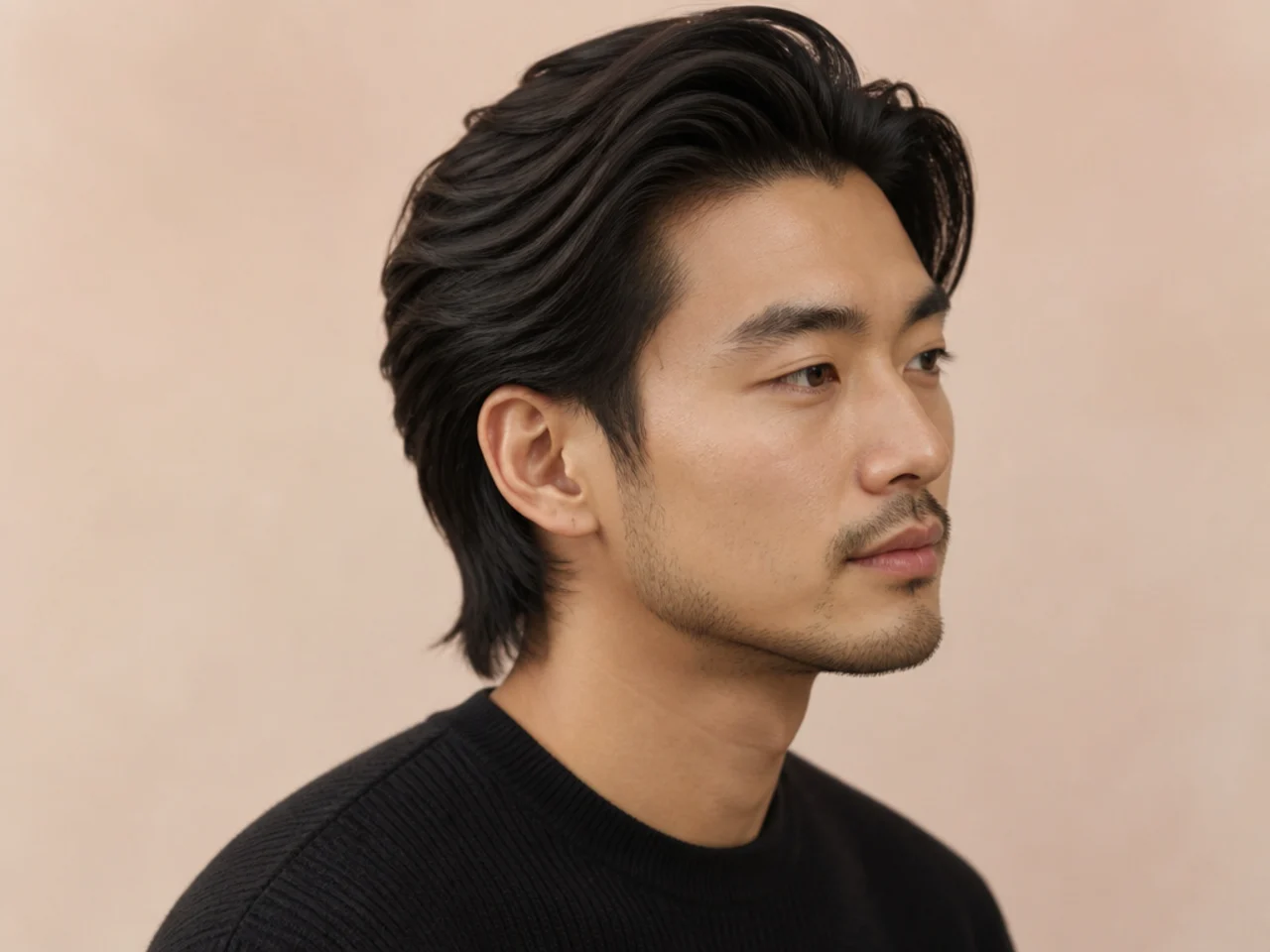
The slick back's cleaner, softer cousin. Top stays 3 to 4 inches, brushed straight back with fingers rather than a comb. Sides drop to a low taper fade that keeps visual weight above the temples. Point-cut layers so the volume sits soft, not slicked. Air-dries well on straight hair.
Suits oval, square, and long face shapes. Every density of straight hair holds the direction cleanly.
Ask for: "medium brush back, 4 inches on top, point-cut layers, low taper fade on the sides."
Styling: light cream through damp hair. Blow dry back with a paddle brush aiming lift at the roots. Finish with a pea of clay warmed between the palms.
8. Old Money Executive
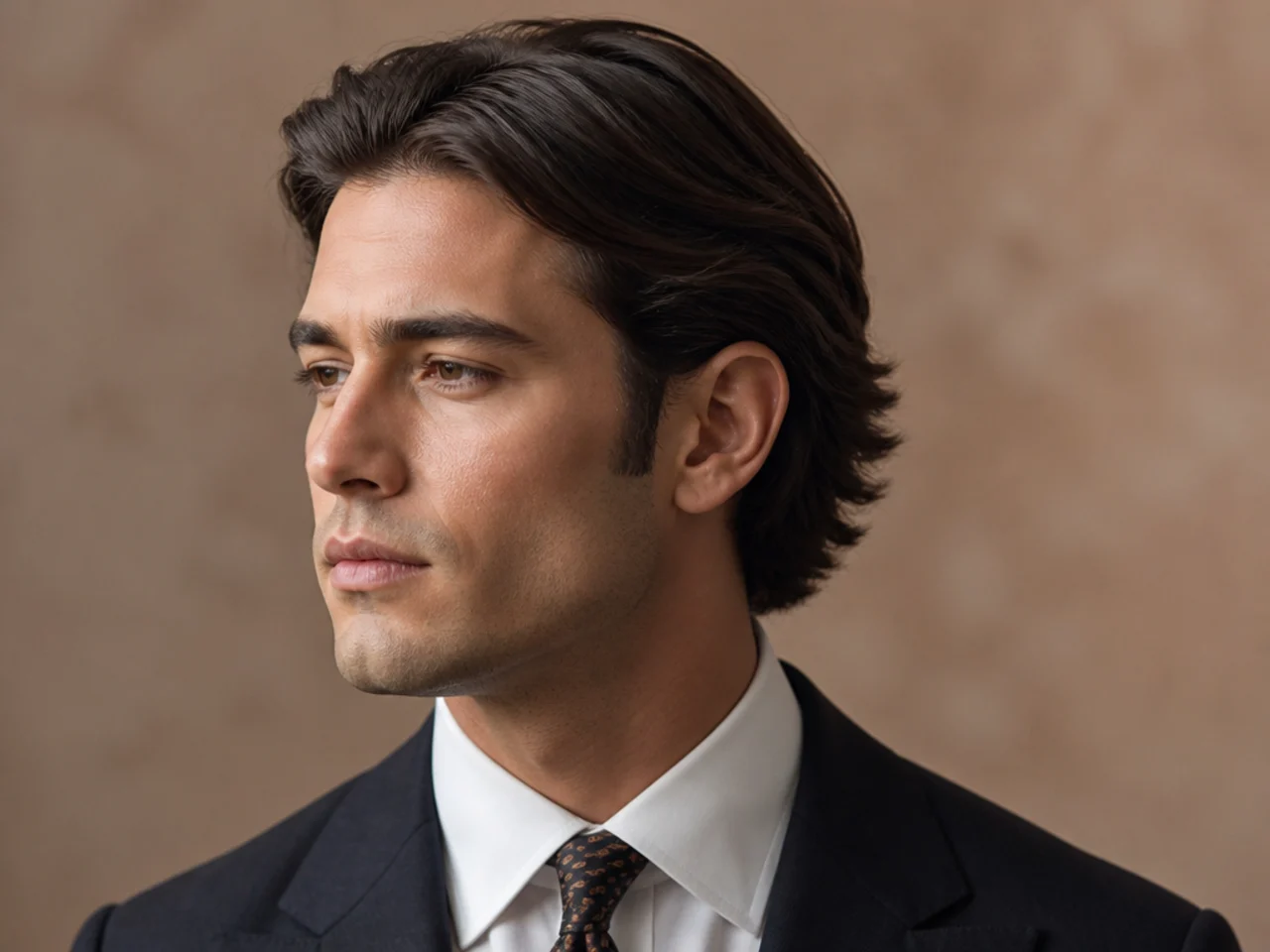
The old money haircut is the Kennedy-era prep silhouette pulled forward. Top runs 3 to 4 inches, side-parted and swept in the direction of the part with a soft rounded finish. Sides scissor-taper — clippers stay out of the chair. No fade, no skin, no sharp lines. Refined, understated, adult.
Suits every face shape except very round. Straight hair is essentially required — the shape depends on the drape.
Ask for: "old money cut, 4 inches on top, soft side part, scissor-tapered sides — no clippers, no fade — blended into a natural sideburn."
Styling: cream through damp hair, comb once with the part, blow dry lightly across. The finish should read like someone who has never asked what haircut is trending.
9. Grown-Out Ivy League
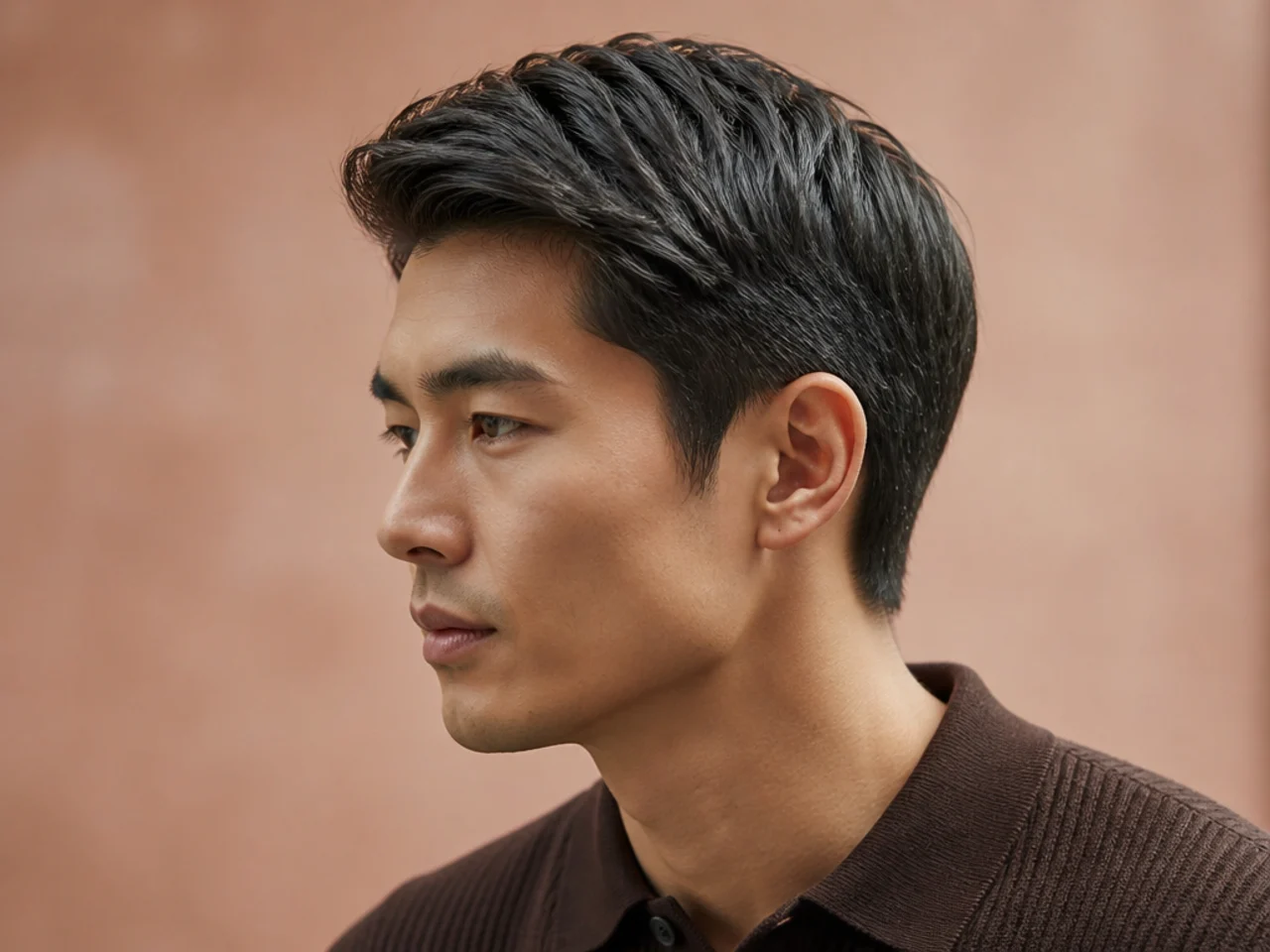
The Ivy League at medium length. Top reaches 3 to 4 inches with a soft side part that lets the front comb sideways or forward. Sides taper with scissors, never clippers. Classic, quiet, works in every office in the country.
Suits oval, square, and long face shapes. Straight and lightly wavy hair holds the part. Reads clean in a boardroom, a wedding, a Tuesday dinner.
Ask for: "grown-out Ivy League, 4 inches on top with a soft side part, scissor taper on the sides — no clippers, no fade — blended to a natural sideburn."
Styling: cream or light pomade through damp hair, comb once with the part, blow dry gently. Should sit like it was cut yesterday even on day five.
10. Long Comb Over with Low Fade
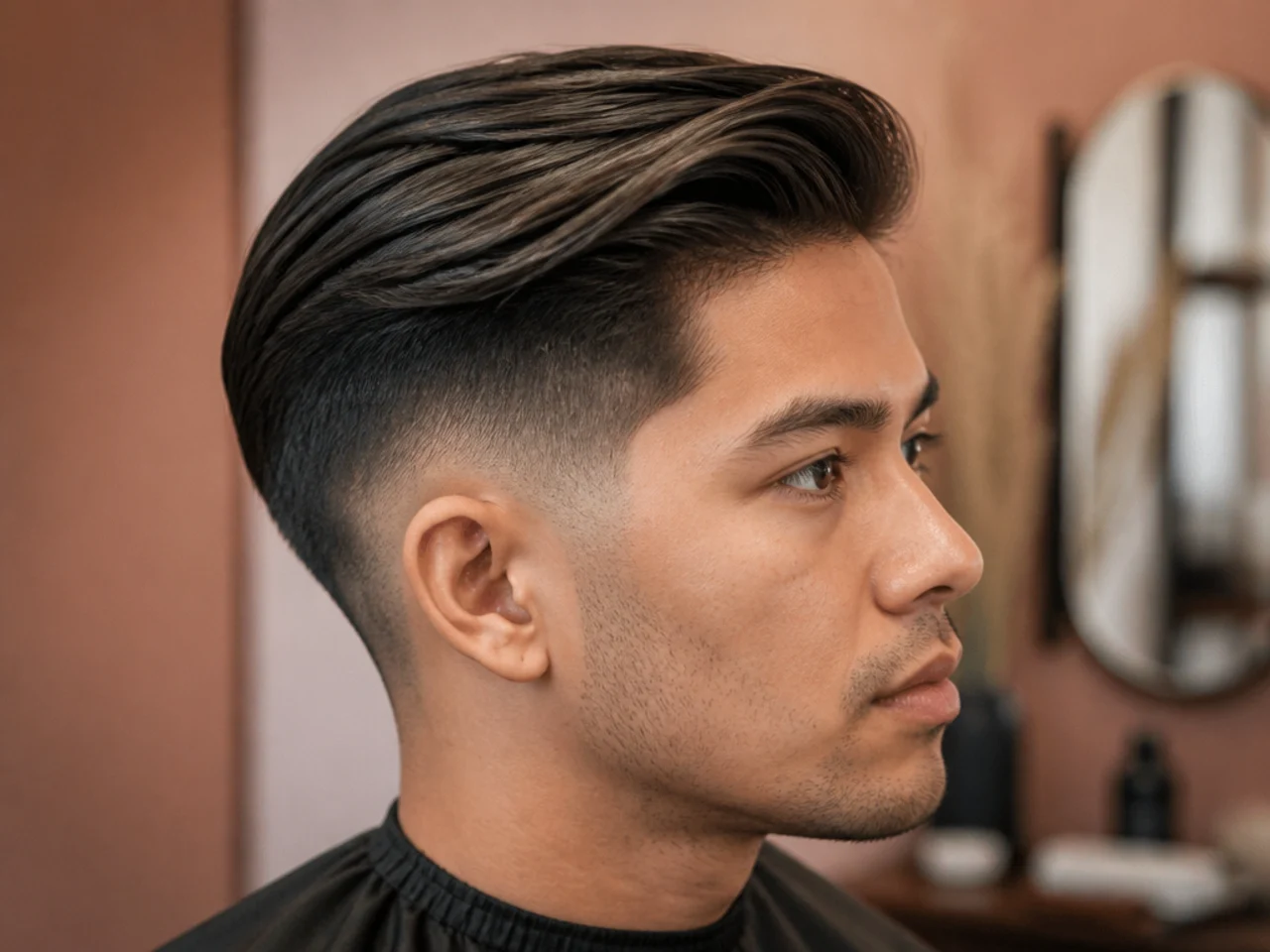
The comb over with a modernized side treatment. Top runs 4 to 5 inches, hard-parted and swept across. Sides drop to a low fade — the fade sharpens the part visually so the comb-over line reads deliberate rather than accidental. Straight hair holds the sweep for a full day.
Best for oval, square, and rectangular faces. Works across every industry — creative, corporate, or in between.
Ask for: "long comb over, 4 to 5 inches on top, hard side part, low fade on the sides — I want the part to show against the fade."
Styling: medium pomade through damp hair. Comb once from the part outward. Blow dry across the sweep with a paddle brush.
11. Two Block Haircut
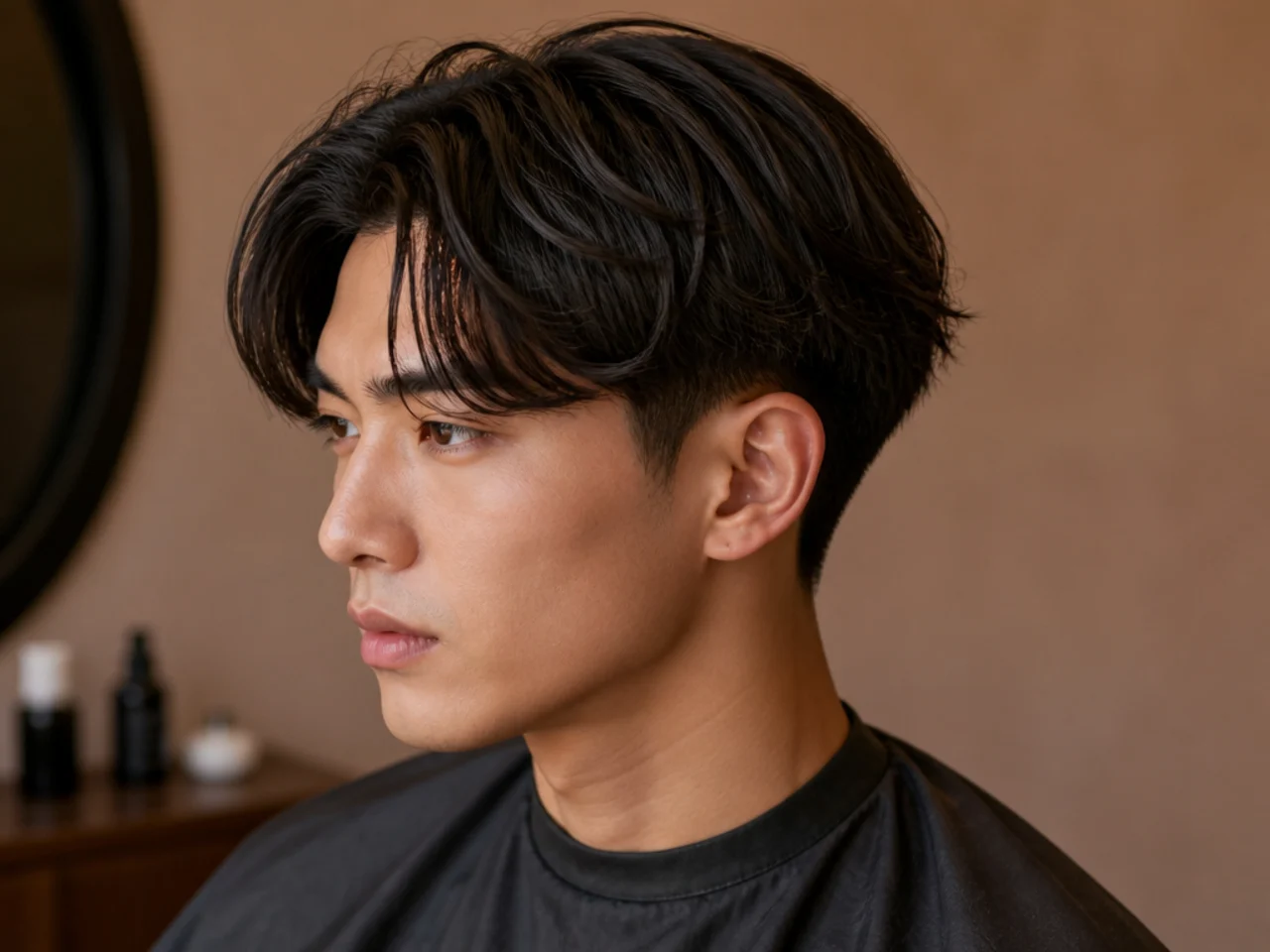
The K-pop favorite. Sharp contrast between a long layered top and short clipper-cut back and sides. Top runs 4 to 6 inches with weight built at the crown. The disconnection between top and sides is intentional and visible. Straight hair reads sharpest here — the layered drape needs a clean fall to work.
Suits round and square faces because the top adds vertical length and the tight sides sharpen the frame. Straight hair only — waves fight the flat drape.
Ask for: "two block, guard 2 on the sides and back with a disconnection, top at 5 inches, front layered forward."
Styling: air dry until damp, blow dry the top forward and slightly to one side. Sea-salt spray for grip. No shine.
12. Sleek Middle Part with Low Fade
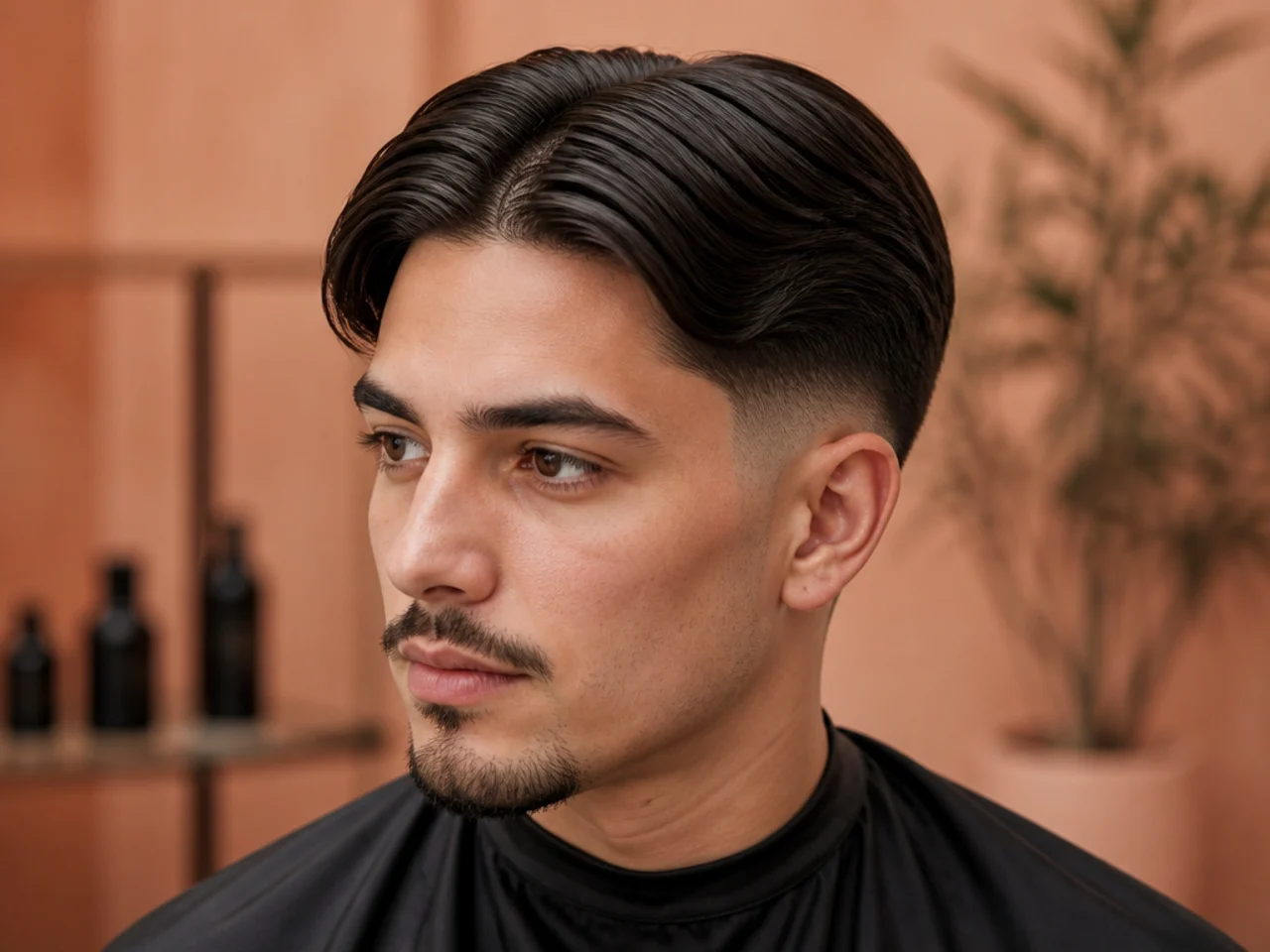
The middle part with a Korean-influenced polish. Top runs 4 to 5 inches, parted precisely down the center, and the fall drops to the cheekbones on either side. Sides get a low taper fade that stops well below the temples. Reads modern and clean on straight hair — the fall stays symmetrical instead of collapsing to one side.
Best on oval and long faces. Straight hair only — this cut asks for a mirror-symmetric drape.
Ask for: "sleek middle part, 5 inches on top, precise center part, face-framing layers, low taper fade on the sides."
Styling: cream through damp hair, blow dry the top forward with a paddle brush, then split with a comb along the crown. Fingertip of pomade at the ends.
13. 90s Curtain Sweep
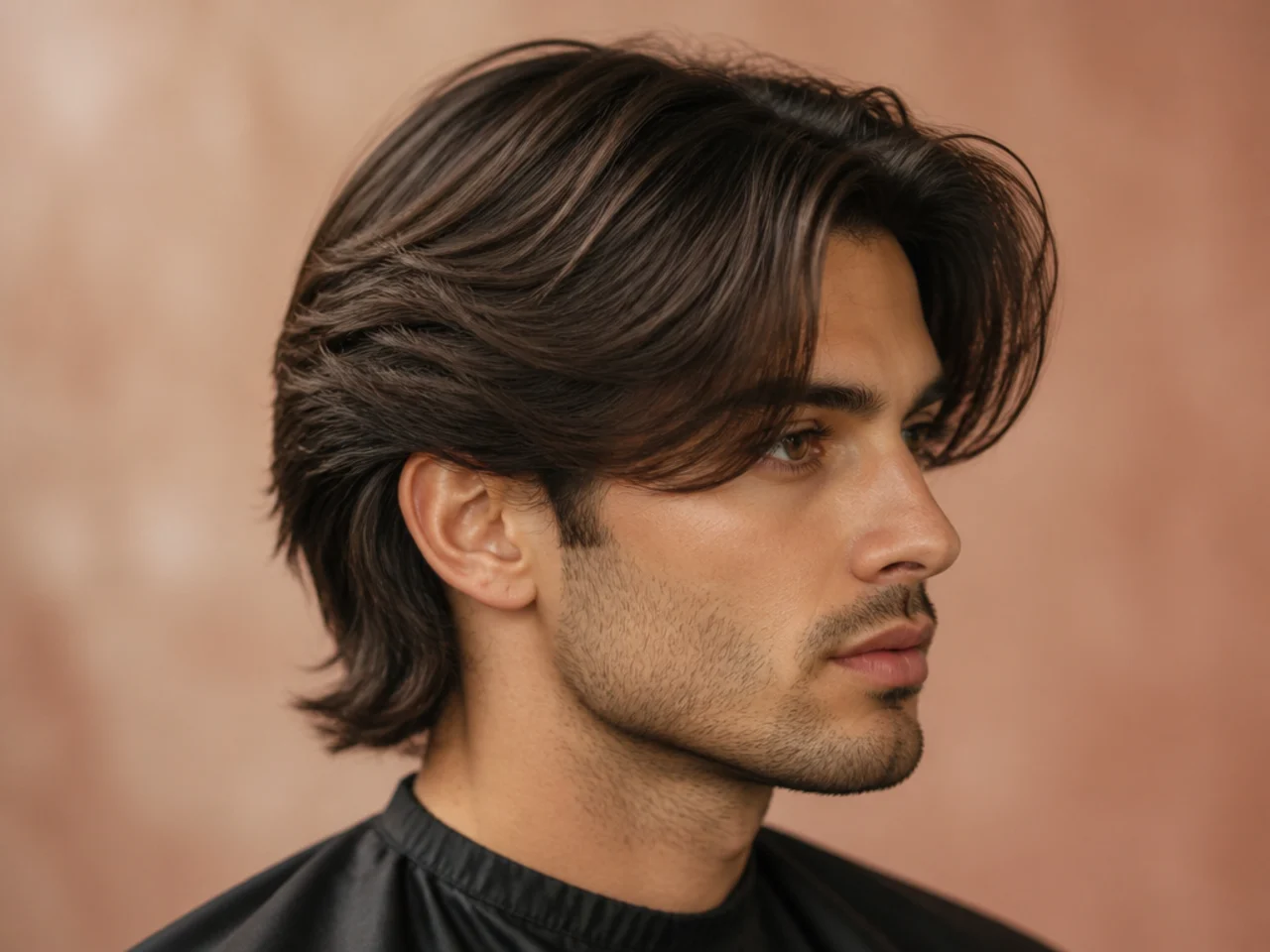
The 90s middle part with modern layering. Front pieces hit 5 to 6 inches and sweep to either side of a defined central part. Sides stay scissor-cut and long enough to blend the fringe cleanly. No fade. Straight hair drapes the curtains without collapsing, which is why every 90s teen idol with this cut had straight hair.
Best for oval, diamond, and heart-shaped faces. The parted fringe balances narrow foreheads.
Ask for: "90s curtain cut, 5 to 6 inches at the front, 4 inches at the crown, middle part, scissor-cut sides to the ears, light face-framing layers."
Styling: blow dry the fringe outward from the center part with a small round brush. Fingertip of cream through the ends. If the fringe wants to sit flat, mist sea-salt spray at the roots first.
14. Middle Part with Face-Framing Layers
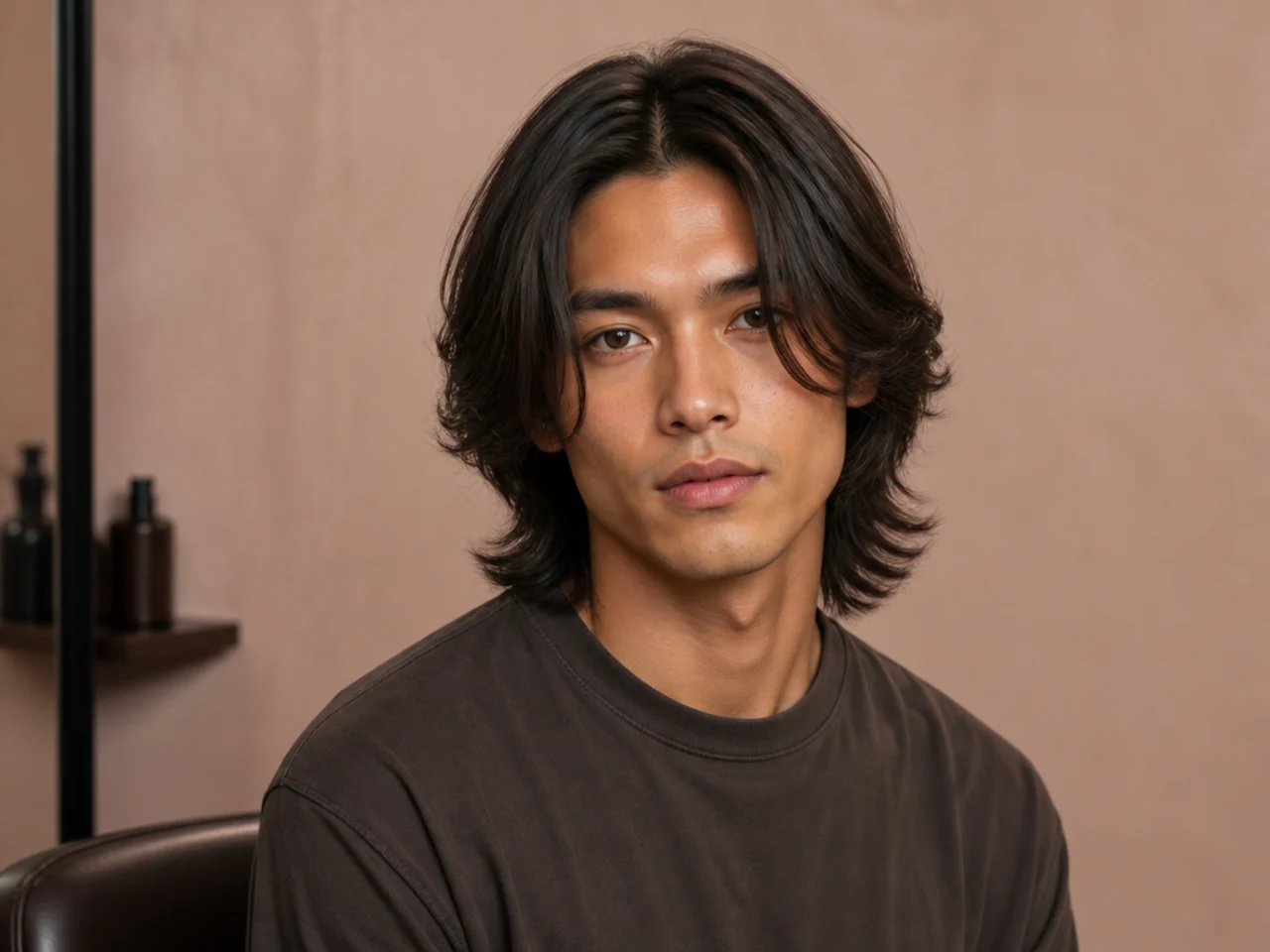
The modern middle part done longer and looser. Top runs 5 to 6 inches with heavy razored layers that frame the cheekbones and jaw. Sides can stay long and scissor-blended or drop to a soft low taper. Straight hair carries the parted drape with clean lines; wavy versions look shaggier by design.
Oval and long faces wear this best. Reads current across every age band from 20 to 40.
Ask for: "middle part cut, 5 to 6 inches on top, razored face-framing layers, scissor-blended sides or a soft low taper."
Styling: sea-salt spray on damp hair, rough-dry with fingers, then run a wide-tooth comb through the part to set the split clean. Fingertip of cream at the ends.
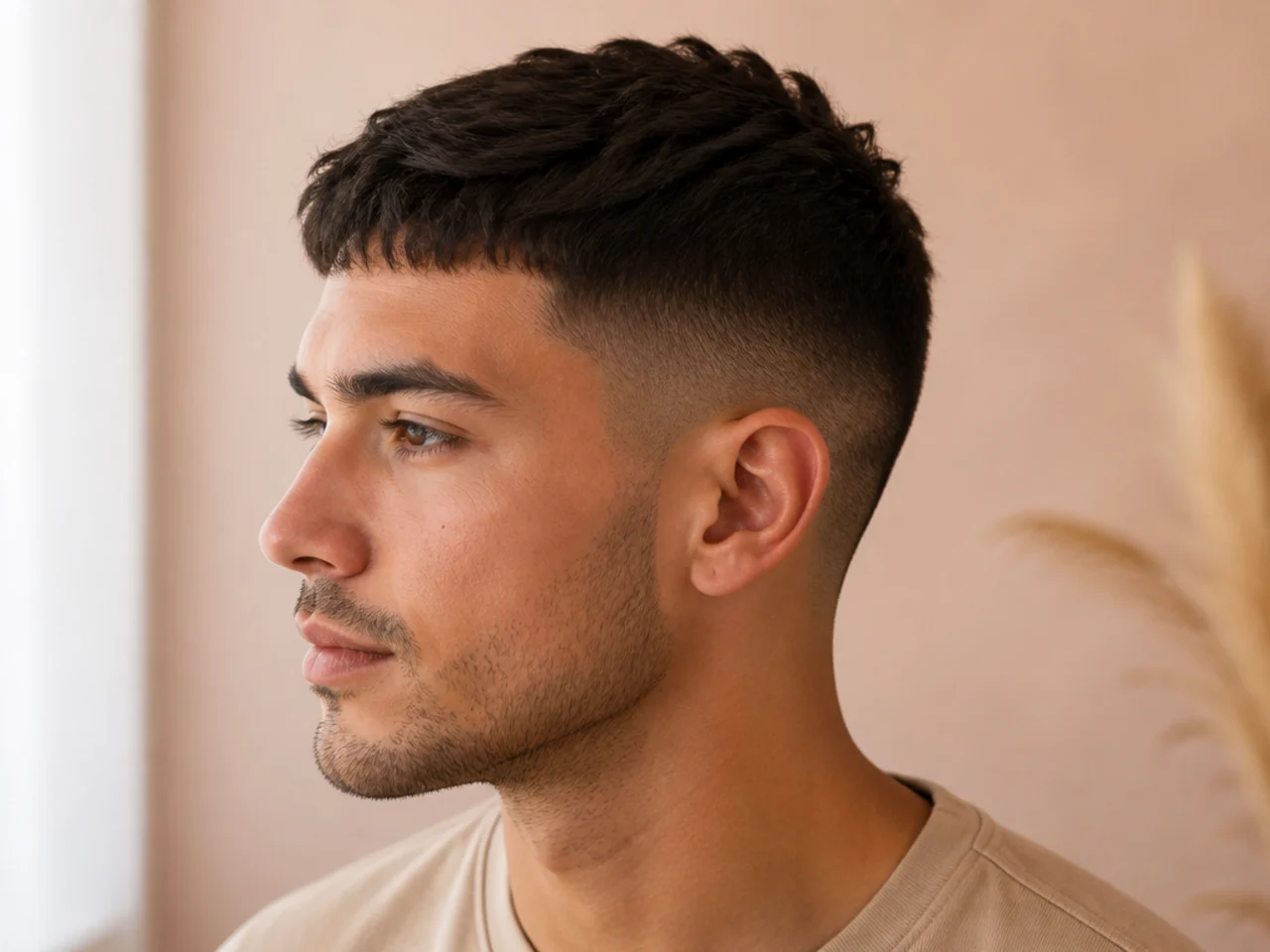
15. Long French Crop
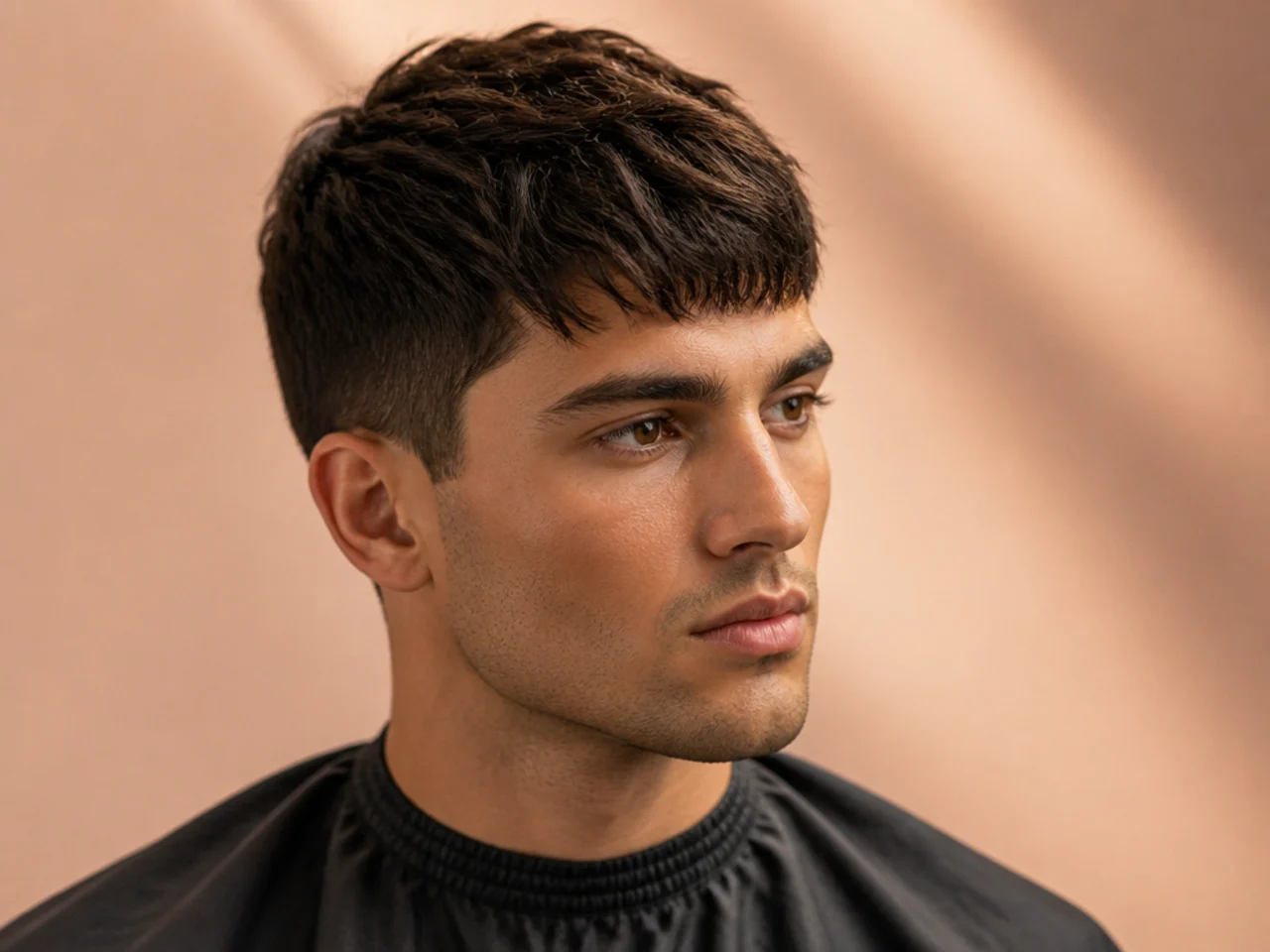
The French crop grown to medium territory. Top runs 3 inches, brushed forward and down into a fringe that stops just above the brow. The fringe is heavily point-cut so the edge feathers instead of sitting blunt. Sides drop to a mid taper fade. Straight hair holds the forward push cleanly — the fringe stays where the barber puts it.
Suits round, square, and oval faces. Fine to medium straight hair reads densest here because the shortness plus broken ends stacks visual weight.
Ask for: "long French crop, 3 inches on top brushed forward, point-cut fringe to the brow, mid taper fade on the sides."
Styling: pea of matte clay warmed between the palms, pushed forward and down from the crown. Air dry. Ninety-second morning.
16. Medium Peso Pluma Cut
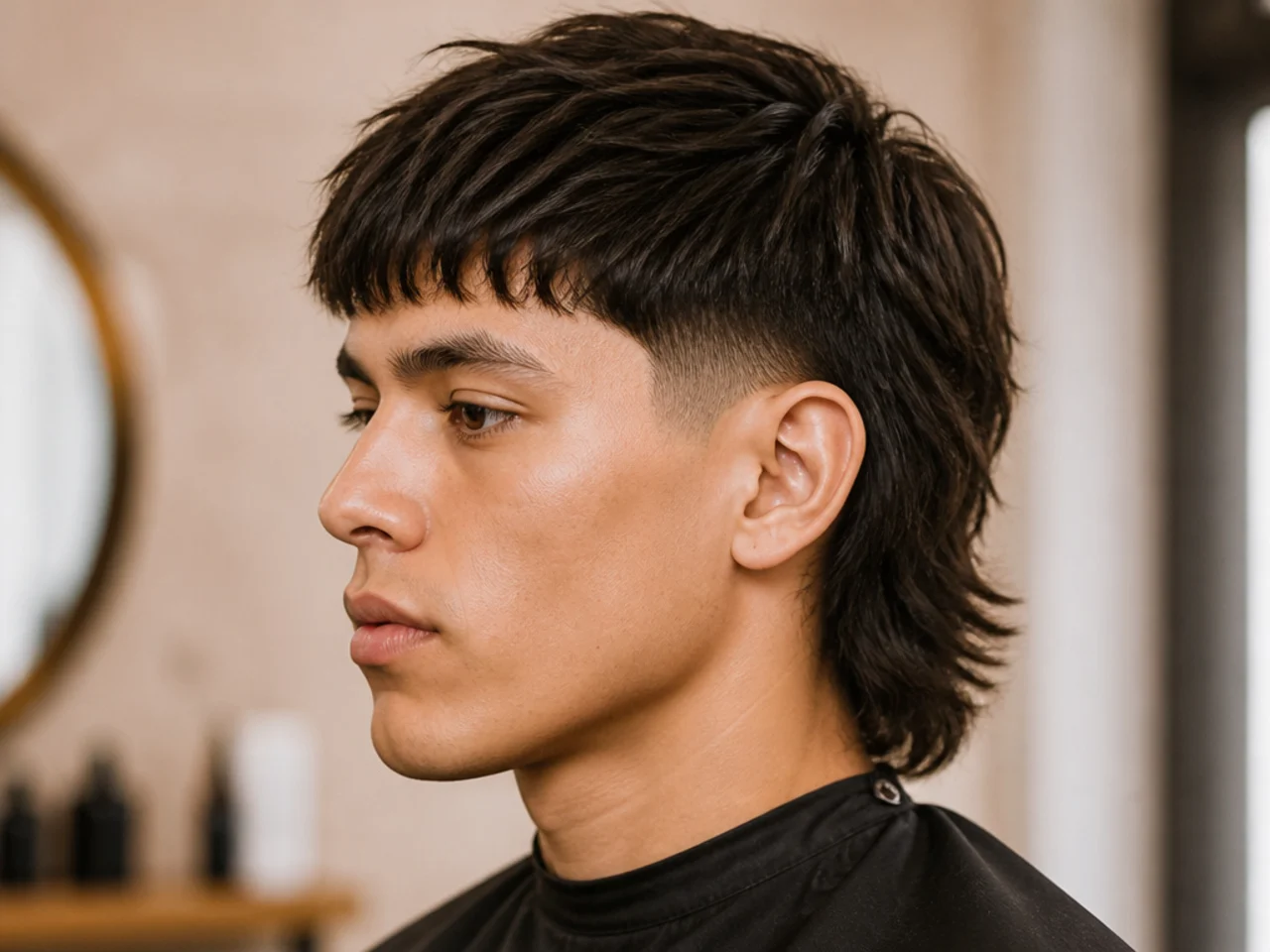
The Edgar's older brother, and one straight hair carries better than any other texture. Top stays 4 inches with a heavy blunt fringe that lands straight across the brow. Sides drop to a low taper fade that stops well below the temples. The fringe is the star — a straight blunt line requires straight hair to work.
Best for oval, square, and heart-shaped faces. Younger guys wear this loudest — often paired with a beard.
Ask for: "medium Peso Pluma, 4 inches on top, blunt fringe straight across at brow level, low taper fade on the sides."
Styling: pea of matte cream through the top, blow dry the fringe forward with a paddle brush, let the rest air dry. Blunt is the whole point — do not point-cut the fringe.
17. Medium Comma Hair
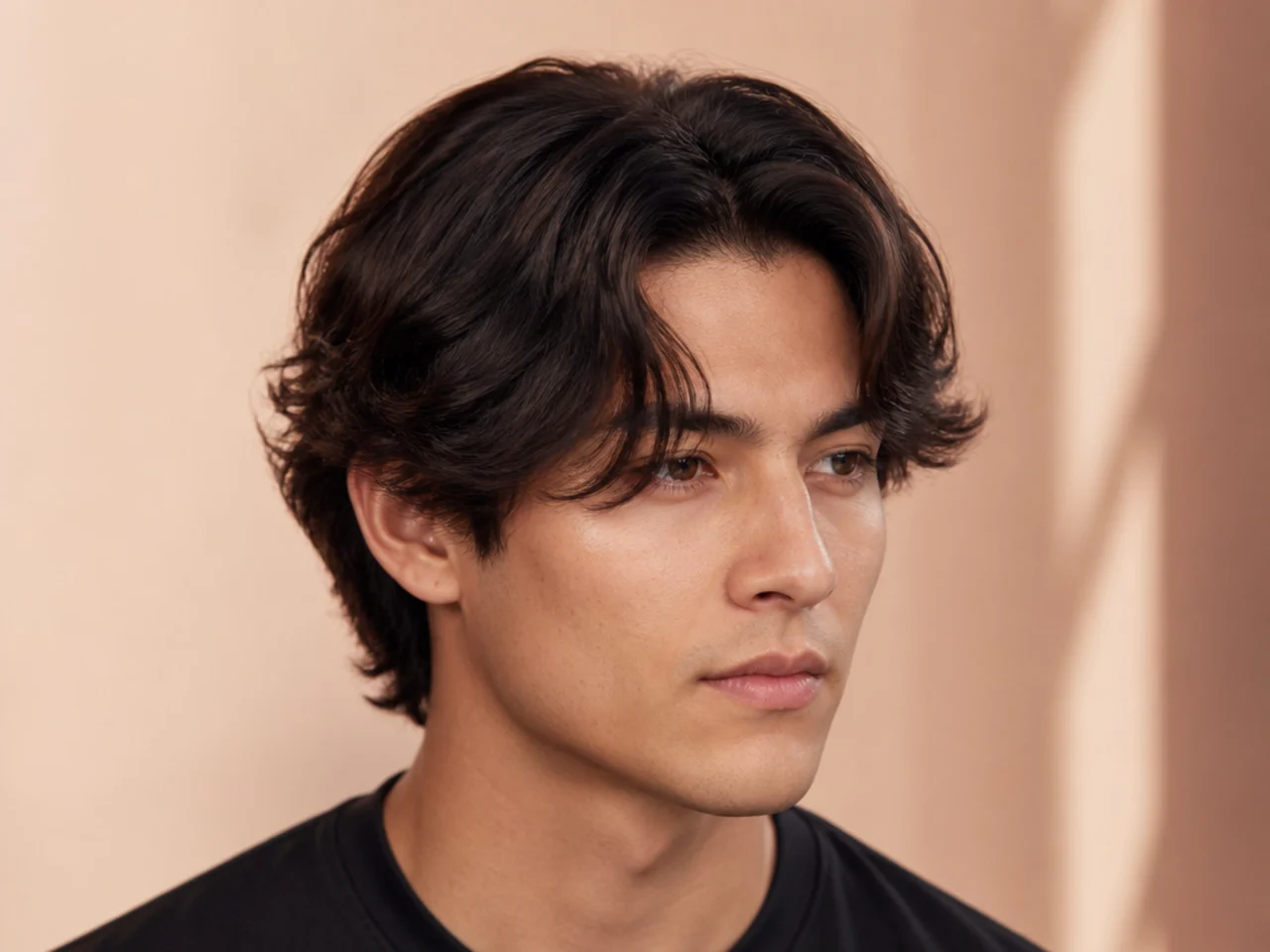
The Korean import that took over For You pages for two years. Top runs 3 to 4 inches, styled forward and slightly to one side so the front strands curl into two comma shapes on the forehead. Sides get a low or mid fade for the clean line. Straight hair reads best because the comma curve is created with a round brush — the base texture stays pliable, not curly.
Best for oval, round, and square faces. Straight hair with medium density carries the shape cleanest.
Ask for: "medium comma hair, 3 to 4 inches on top, layered forward, mid fade on the sides — I want the comma curl to sit on the forehead."
Styling: small amount of matte clay warmed between the palms, worked forward from the crown. Small round brush to curl the front strands under, one side at a time. Hairspray only if humidity fights you.
18. Disconnected Slick Back with High Fade
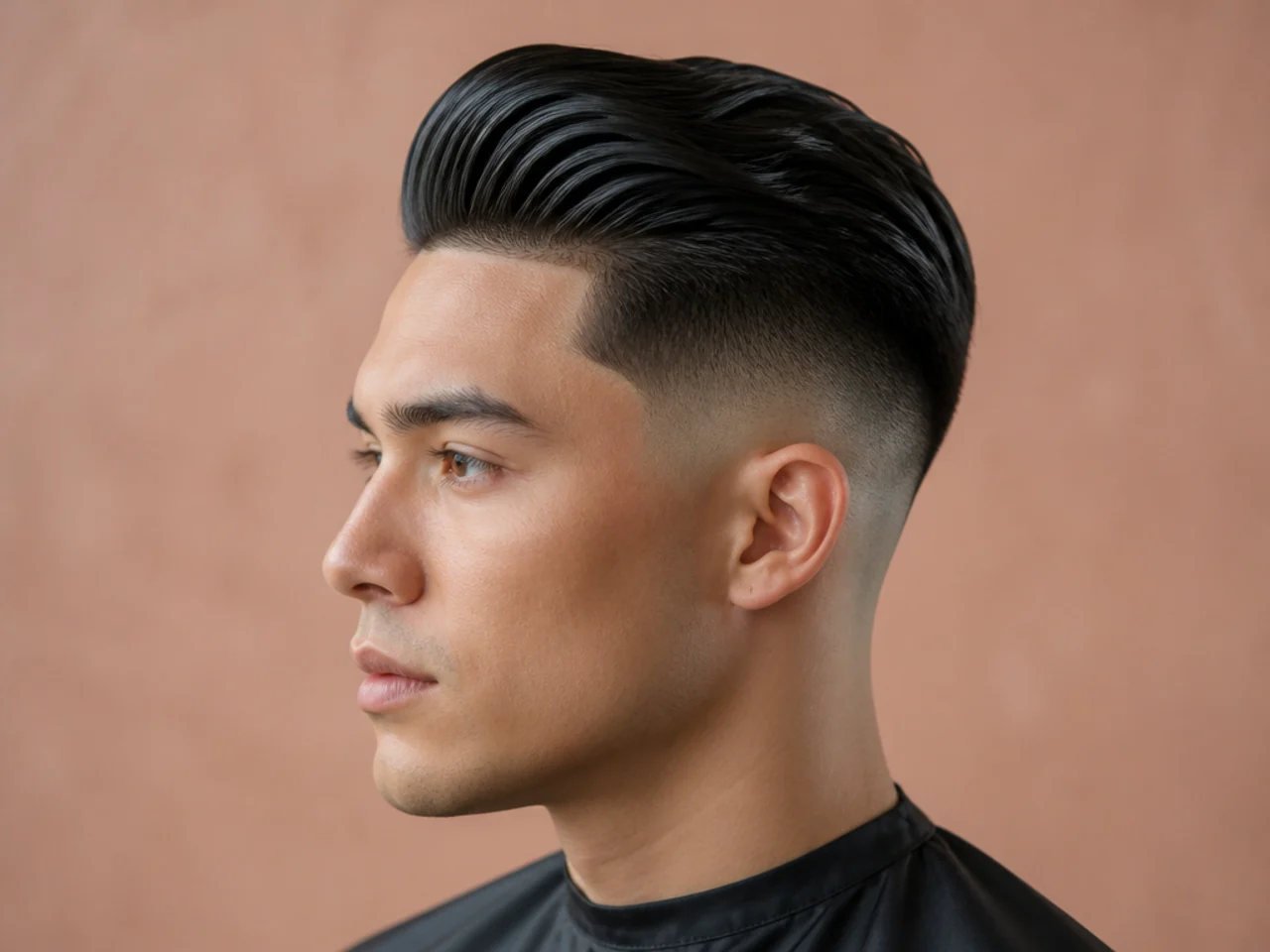
The slick back with volume moved to statement territory. Top runs 5 to 6 inches, combed straight back, over a high fade or high skin fade with a hard disconnection between top and sides. The contrast is the point — the length on top reads louder because the sides are shorter. Straight hair holds the slick without any texture fighting the drape.
Suits oval, square, and diamond faces. The vertical contrast stretches short foreheads and sharpens strong jaws.
Ask for: "disconnected slick back, 6 inches on top, high skin fade with a hard disconnection at the temple, straight-back sweep."
Styling: medium pomade or matte clay through damp hair, comb straight back once. Let the disconnection show — do not blend the top over the fade line.
19. Peaky Blinders Cut
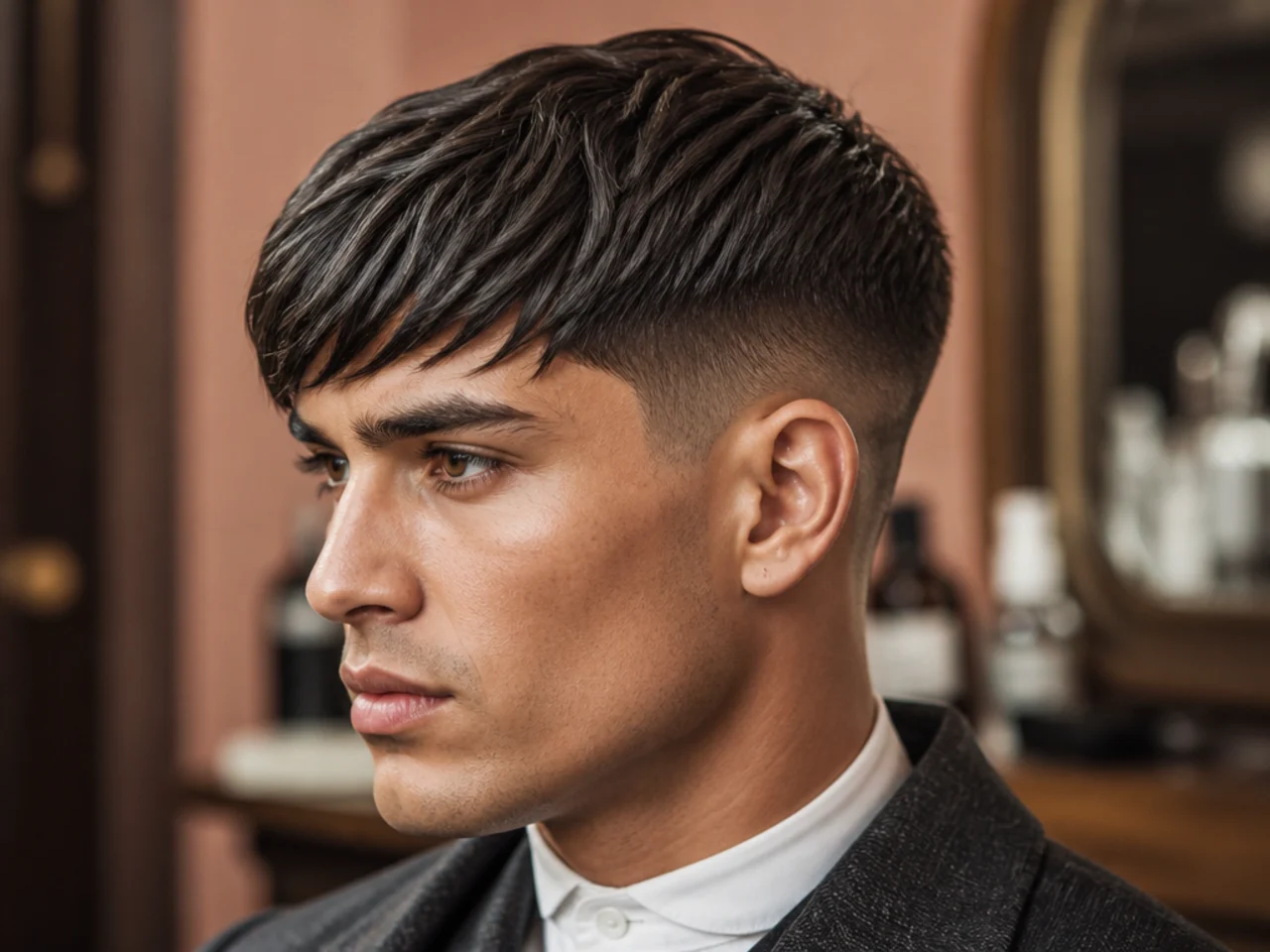
The undercut comb-over from the show that turned a 1920s cut into a modern favorite. Top runs 4 to 5 inches, hard-parted, and combed across with heavy pomade. Sides are a full undercut — clipper-shaved to guard 0 or 1 with no fade, just a hard disconnection above the ear. Straight hair holds the shine and the sweep without any softening.
Suits square and oval faces. Reads sharpest on darker straight hair.
Ask for: "Peaky Blinders cut, 5 inches on top with a hard side part, undercut at guard 1 with no fade, disconnected above the ears."
Styling: heavy pomade emulsified between the palms, worked root to tip on damp hair. Comb once from the part across. Old-school shine is the whole point.
20. Sleek Bro Flow
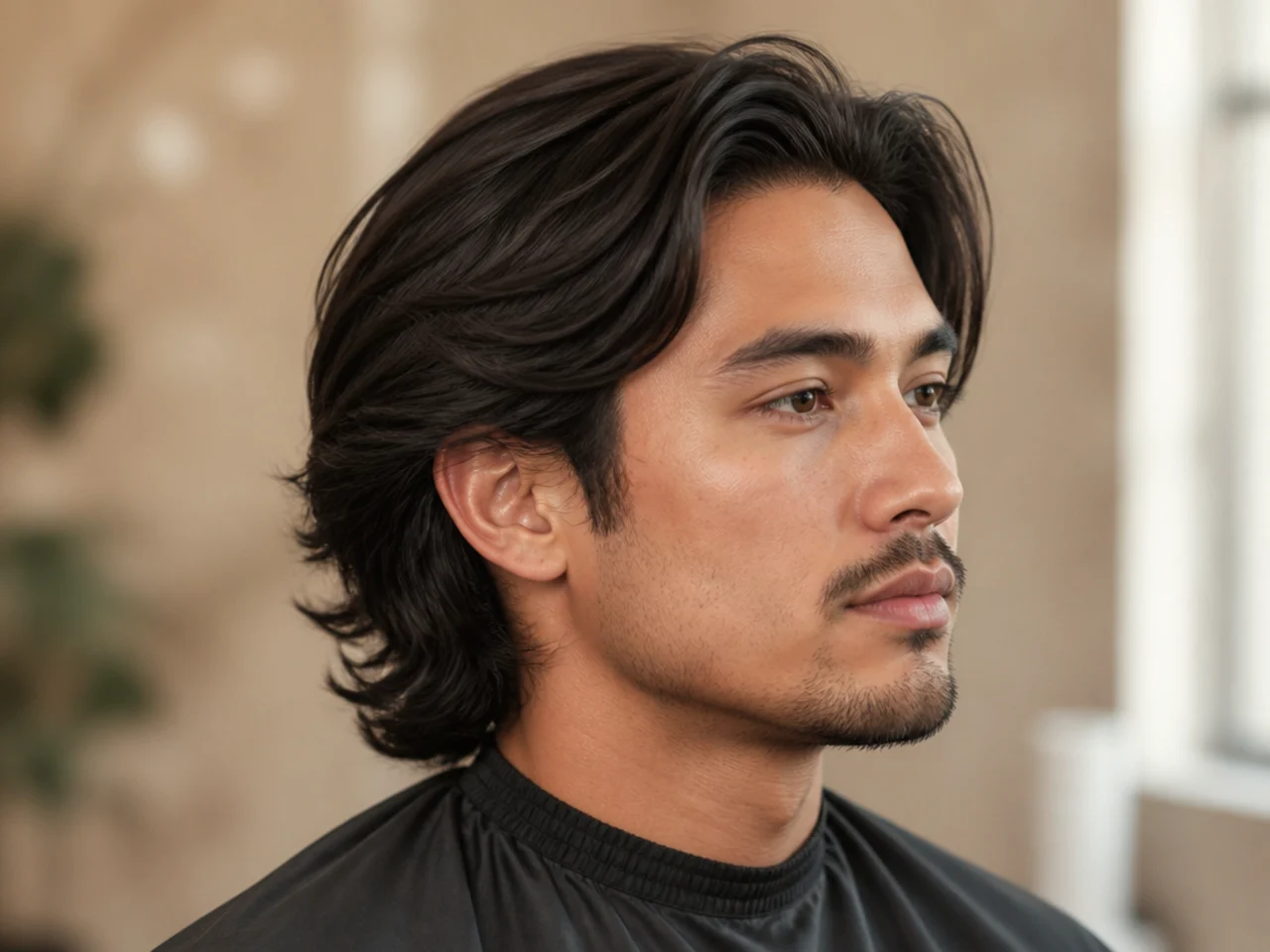
Flow at medium length with straight-hair polish. Hair reaches 4 to 5 inches on top and sides, sweeping straight back from the hairline without a fade or hard part. Scissor-cut only. Point-cut ends keep the sweep soft instead of blunt. Straight hair reads cleaner here than wavy — the flow lays instead of piling. For more variations across textures, see the flow haircut men guide.
Suits oval, oblong, and square faces. Every density of straight hair holds the sweep — thicker hair reads richer, finer hair reads casual.
Ask for: "sleek bro flow, 5 inches on top, scissor work only, no fade, point-cut ends, layered so the length falls back naturally."
Styling: walnut of cream through damp hair, finger-comb back from the hairline, let the flow set as it dries. Never a comb — the tracks kill the softness.
How to Ask Your Barber
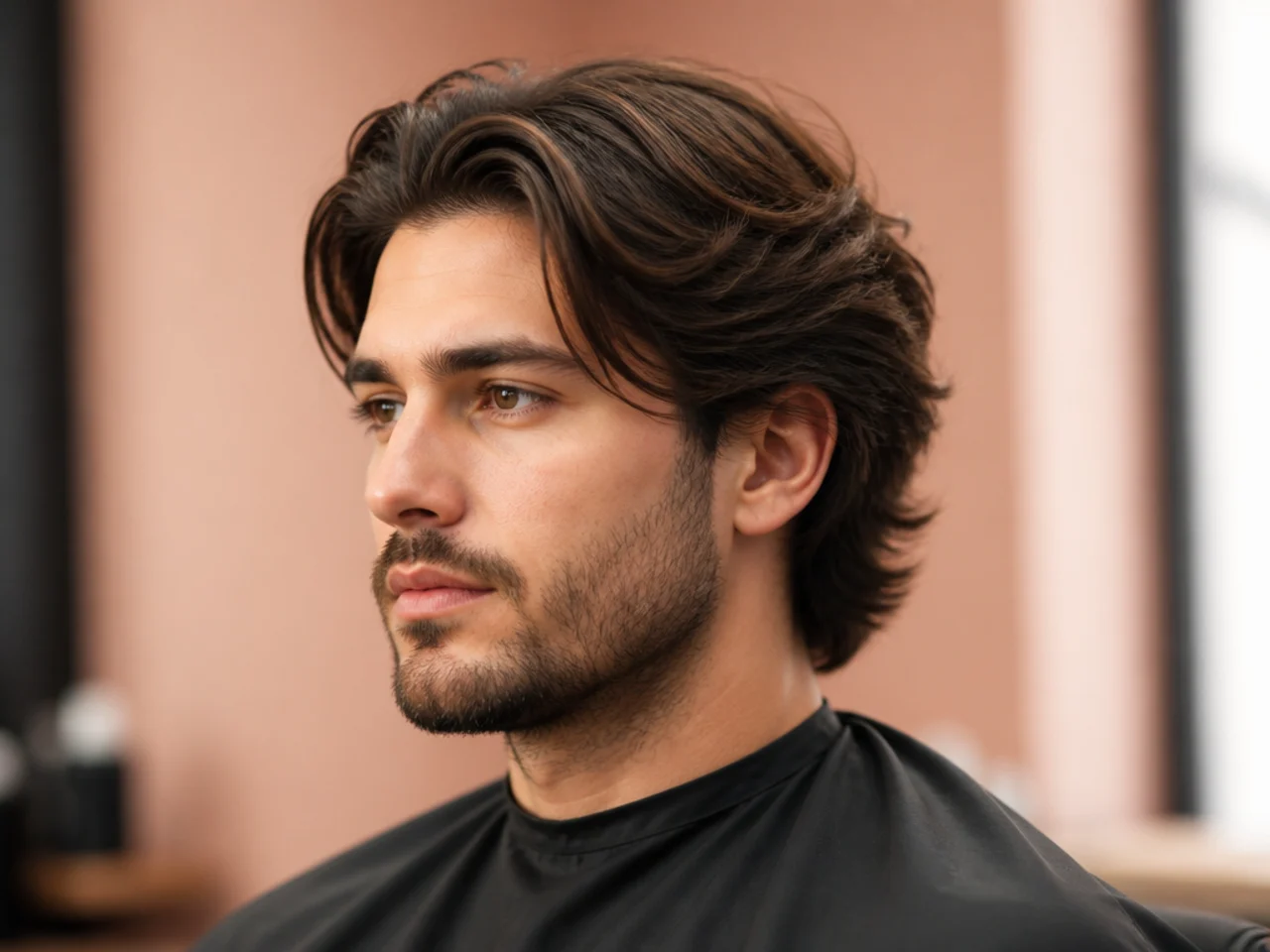
Barbers translate photos and numbers, not adjectives. Walk in with the following.
- A screenshot of the exact cut you want. From this guide, an Instagram feed, whatever. Names shift shop to shop; a picture doesn't.
- The length on top in inches. "Five inches" is universal. "A little longer" is not.
- The side treatment. Options: skin fade, low taper, mid taper, high fade, scissor blend, undercut, or long and scissor-cut. Say the height (low, mid, high) and the finish (skin, guard 0.5, guard 1, guard 2, or scissors).
- The fringe direction. Forward, back, side-swept, middle-parted, curtain, or blunt. Volunteer this or your barber will pick.
- The finish. Shiny (pomade) or matte (clay, cream). Product intent shapes the cut — a barber layers differently for a slick back than for a textured pompadour.
- How much blow-drying you'll do. Straight hair with zero heat = flat cuts only. Slick back, side part, brush back, curtains, and Ivy League work air-dried. Quiff, pompadour, faux hawk, and comma need a round brush.
- Your maintenance window. Skin fades soften in 10 days. Low tapers stretch to 4 weeks. Scissor blends last 5 to 6. Tell your barber what your calendar realistically allows.
Hand the photo. Read the seven answers. Let your barber work.
Styling and Maintenance
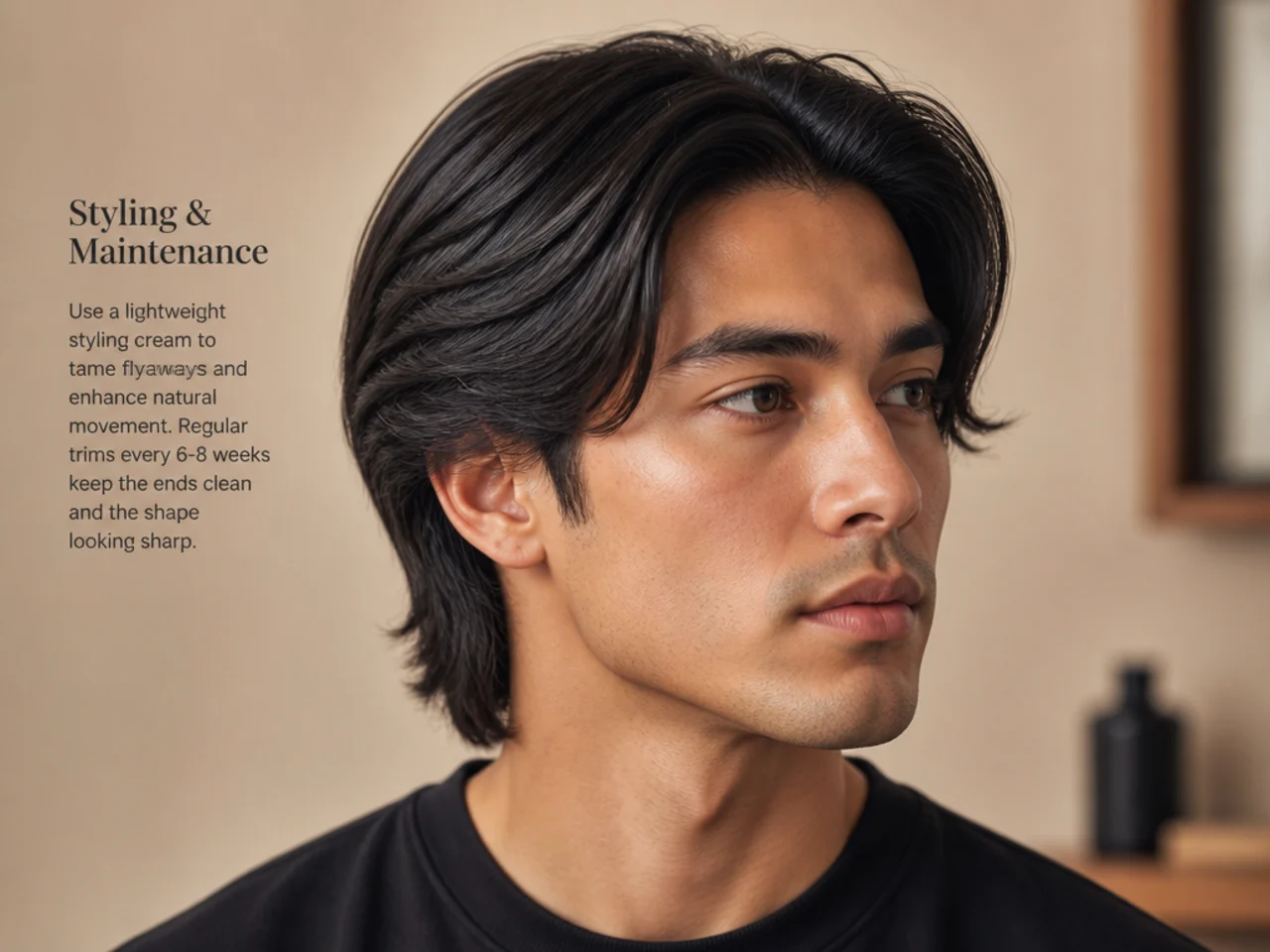
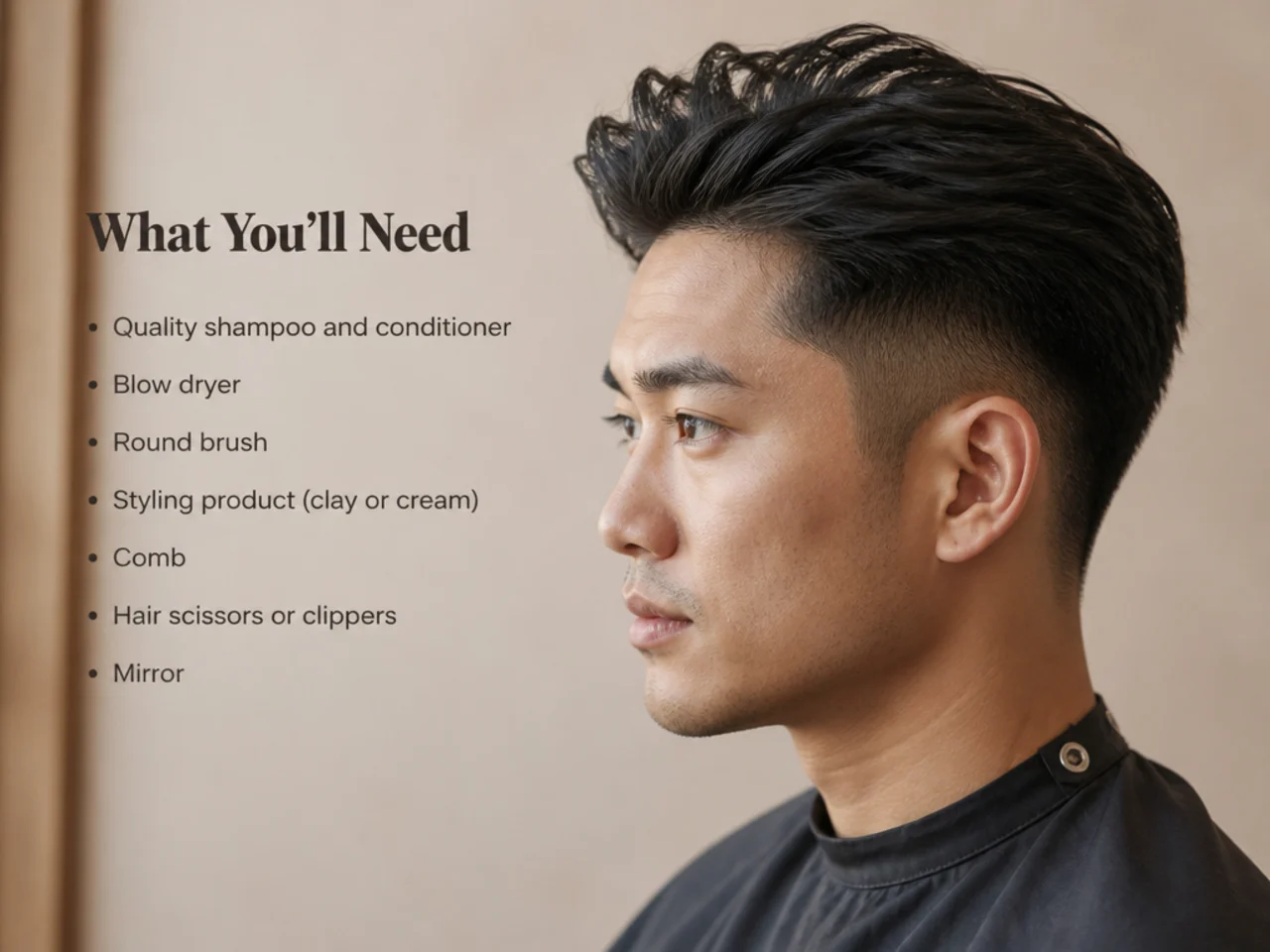
Straight hair rewards technique first, product second. Set the shape while it's damp, dry it in the direction you want the fall, and use product only to hold the finish.
The four-product shortlist for straight hair:
- Medium-hold pomade — for slick backs, comb overs, side parts, Peaky Blinders. Water-based for lightweight polish; oil-based for classic shine.
- Matte clay — for quiffs, pompadours, brush backs, comma hair, French crops. Zero shine, high grip.
- Cream — for flow, curtains, middle parts, Ivy League. Loose hold, touchable finish.
- Sea-salt spray — pre-styling grip and root lift. Straight hair collapses without this on volume-forward cuts.
Skip mousse unless the hair is very fine and needs scaffolding. Skip hairspray unless the humidity is punishing. One product plus the salt spray is enough for 90 percent of these cuts.
The three-minute routine:
- Wash, towel-dry until damp but not dripping.
- Mist sea-salt spray at the roots for lift, or work a small amount of cream through the mid-shaft for hold.
- Blow-dry in the direction of the finish. Round brush lifts the roots; paddle brush pulls the length smooth; fingers alone give tousled hold.
- Finish with a fingertip of your primary product only where the shape needs holding — front, crown, or part.
Cadence: book every 5 to 6 weeks for scissor-blended cuts and every 3 to 4 weeks for anything with a fade. Straight hair shows outline drift faster than curls do — the moment the shape softens is the moment to book. For the fade side of the equation, see low taper fade straight hair and blowout taper straight hair.
If your finish looks stiff, you used too much product. If your top is flat by lunch, you skipped the salt spray at the roots. Adjust one variable at a time.
FAQ
What's the best medium length cut for straight hair men?
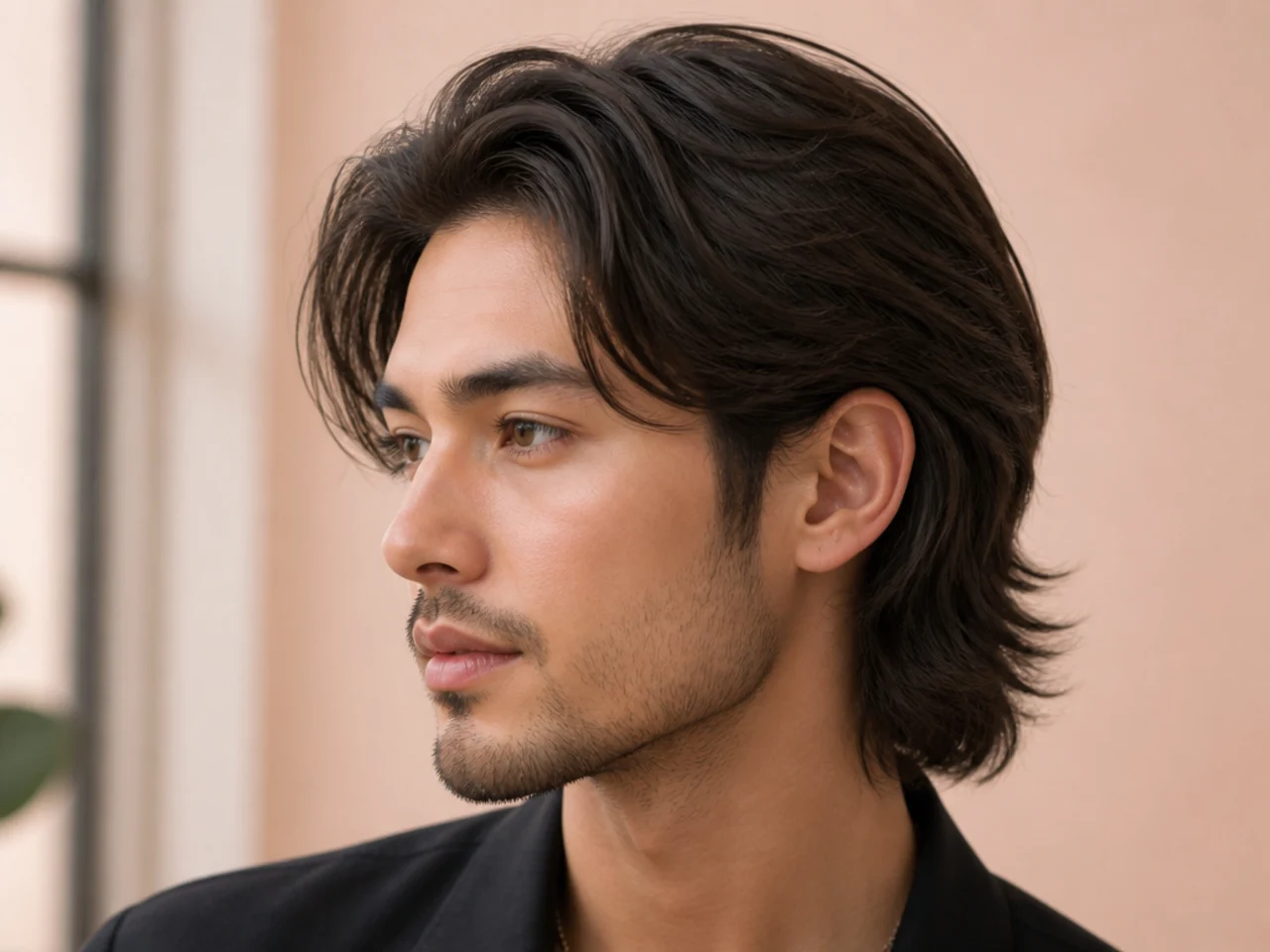
The classic slick back is the reference cut for straight hair — no other texture holds the combed-back drape as cleanly. If you want the same silhouette without shine, take a modern matte slick back at 5 inches with a low fade instead. Both take under three minutes to style.
Why does straight hair go flat by lunch?
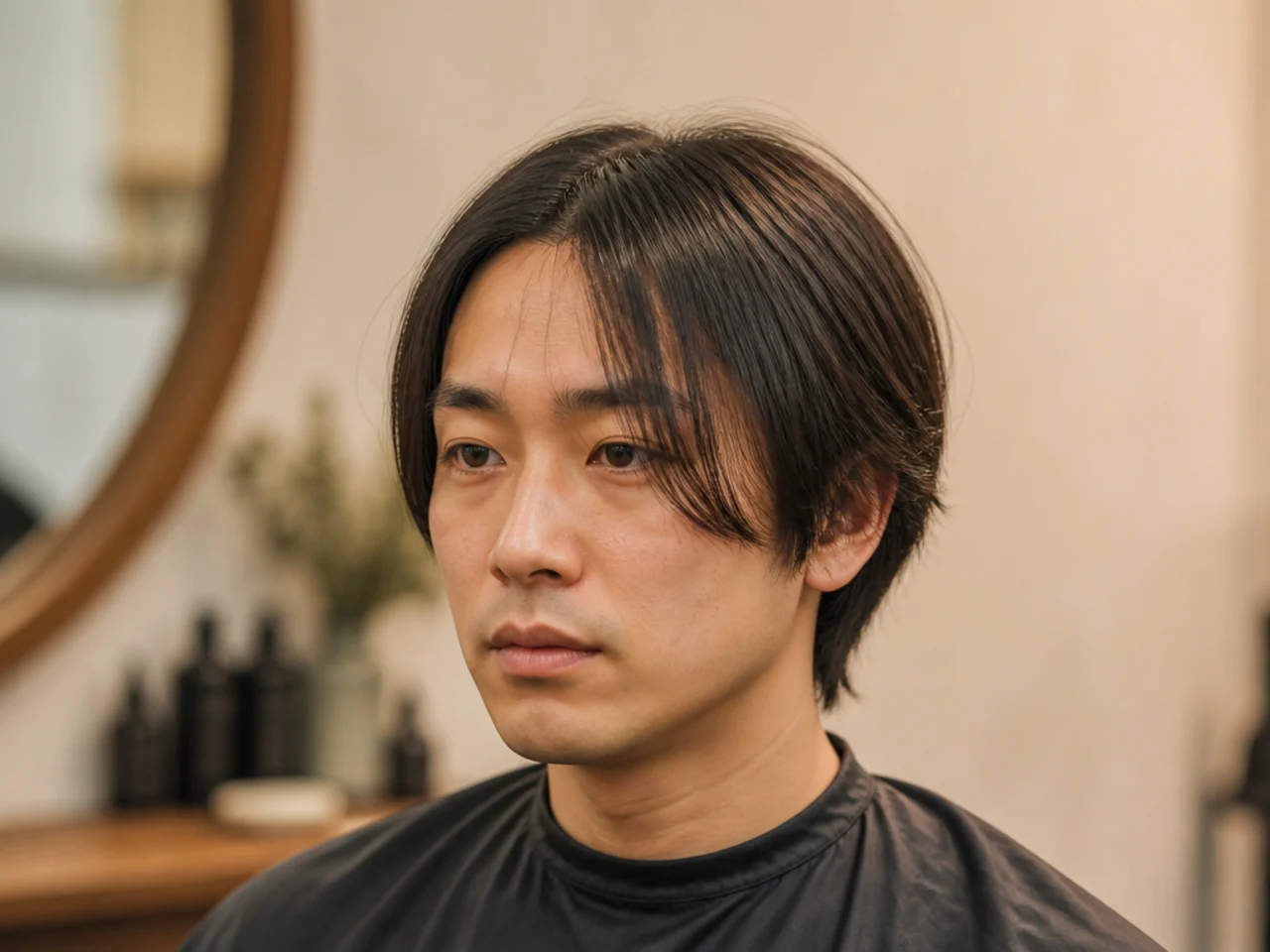
Straight strands hang instead of stacking. Without root lift, the length falls to gravity within a few hours. The fix is a mist of sea-salt spray at the roots before you blow-dry, plus a round brush pulling lift upward at the crown. Product alone will not hold volume that was never built in.
Can straight hair carry a curtain cut or 90s middle part?
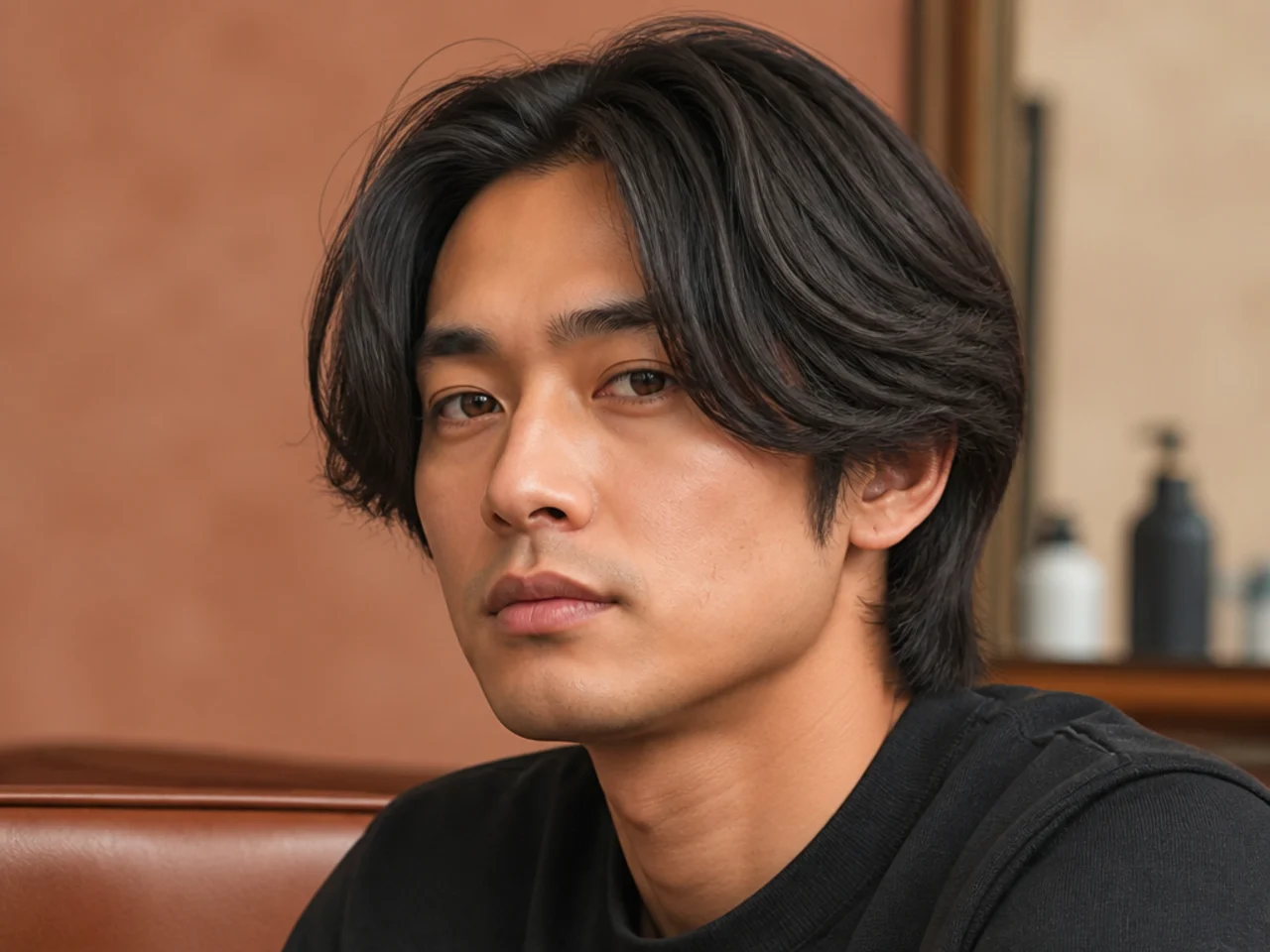
Yes — and it's the best texture for both. Curtains and middle parts depend on a clean symmetric drape that straight hair delivers naturally. Wavy versions look shaggy by design; curly versions won't part at all. Ask for a defined center part, 5 inches at the front, and light face-framing layers.
Do I need a fade for a medium length straight hair cut?
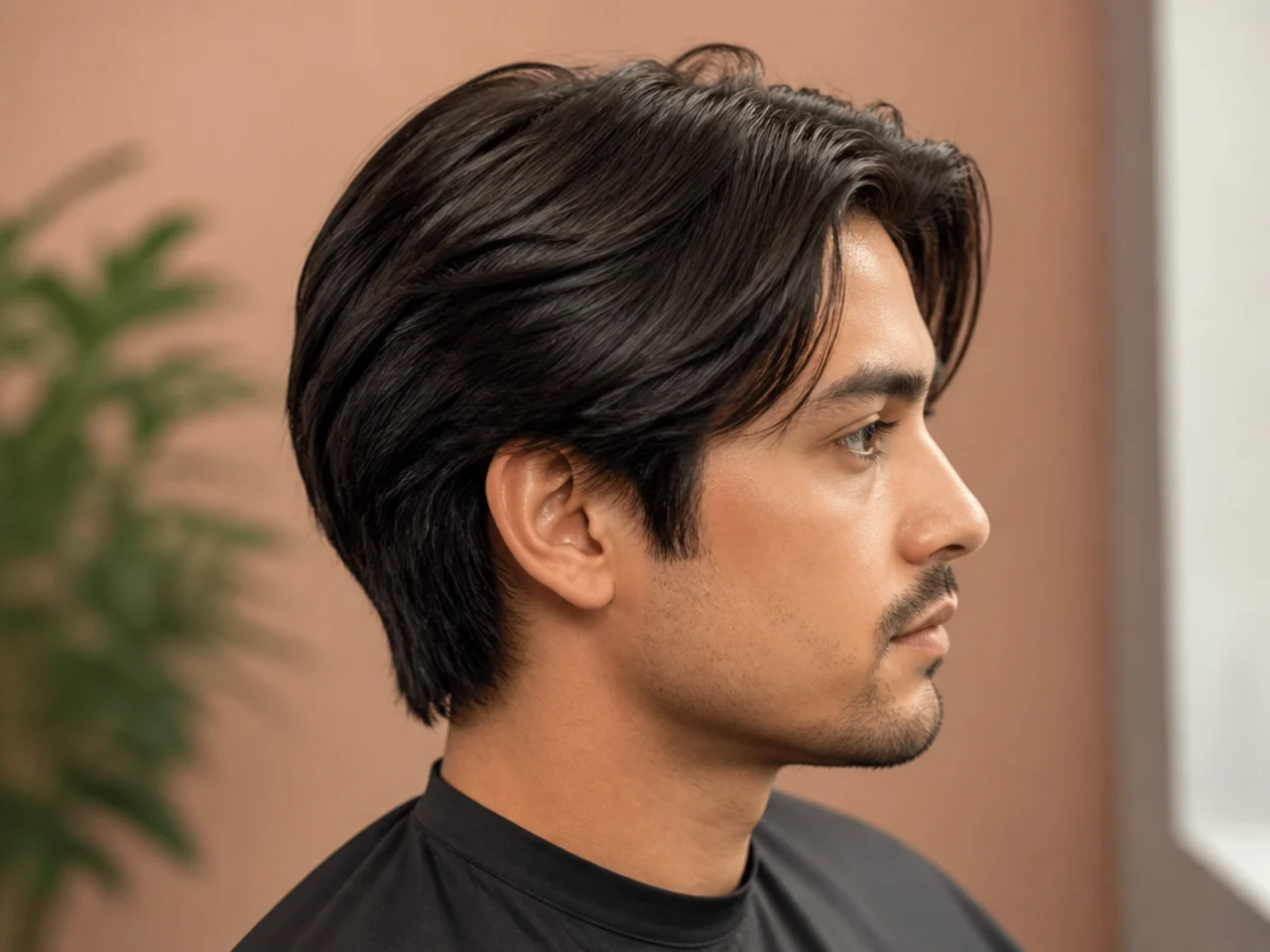
No. Half the cuts in this guide work with scissor-blended sides — Ivy League, old money, classic slick back, sleek bro flow, 90s curtains, comb over. Fades sharpen the outline and lower your maintenance window, but they aren't required. Match the side treatment to the vibe you want and the calendar you can keep.
How do I add volume to straight hair without a blowout?
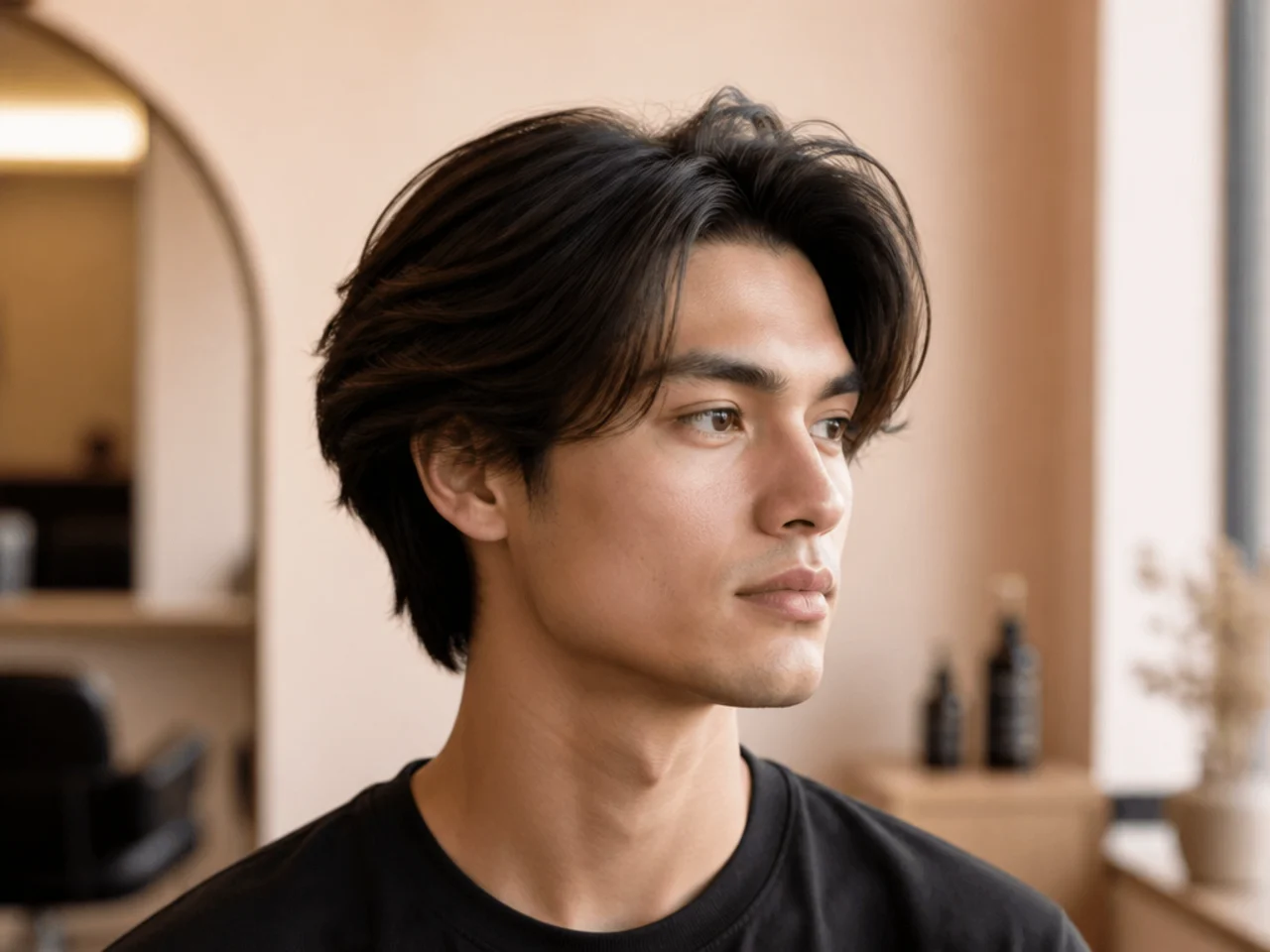
Ask your barber for point-cutting or light razoring on the ends — broken ends stack visually so density reads higher than actual thickness. Then pick a cut that doesn't need lift: side part, comb over, middle part, curtains, or bro flow. All hold shape without a round brush at the roots.
What's the difference between a medium length straight hair cut and a long one?
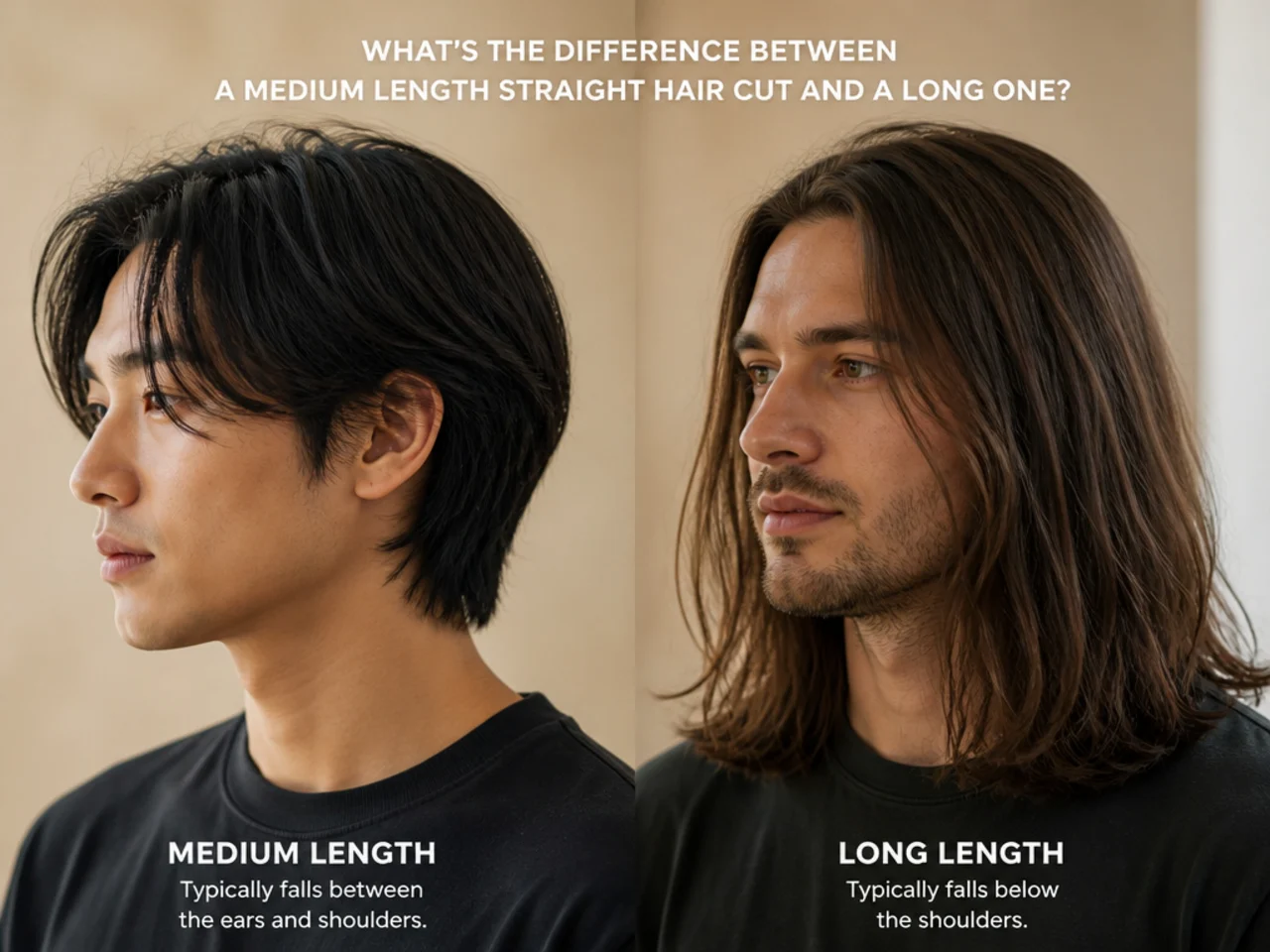
Medium runs 3 to 6 inches on top. Past 6 inches — reaching the shoulder — it reads long. Medium is where named cuts still carry structure: slick back, quiff, side part, curtains, Peaky Blinders. Long straight hair leans more on the length itself, styled with a knot, tie, or free flow rather than a specific silhouette. For a comprehensive breakdown of the medium category, see the medium length haircut men guide.