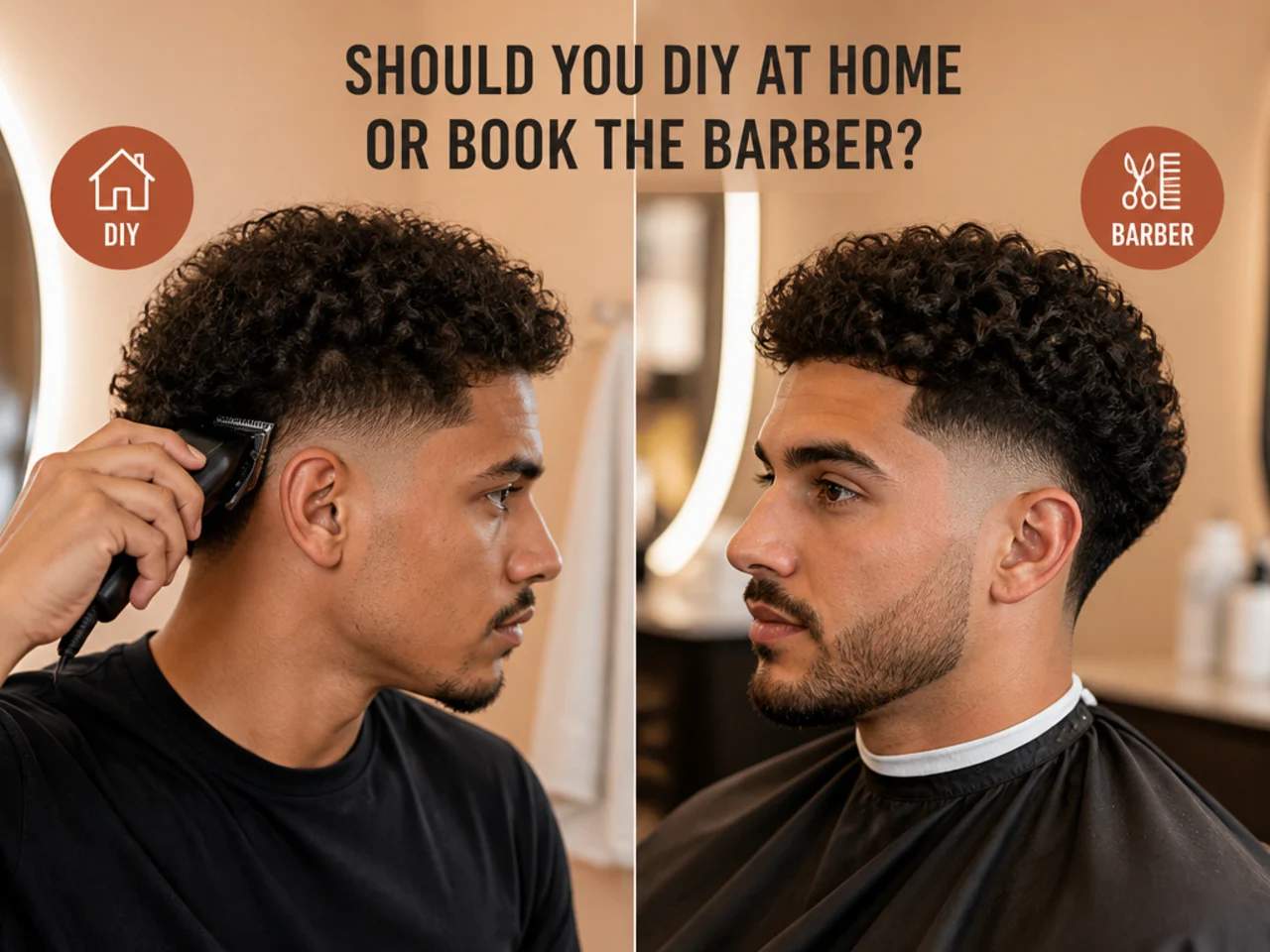
5 Steps to Ask Your Barber for a Low Fade
Low fade haircut how to ask, step by step — reference photos, guard numbers, taper start, top length, and maintenance cadence to leave with the cut you actually booked.
In this article · 16
- What You'll Need
- The 5 Steps to Ordering a Low Fade
- Step 1: Bring Reference Photos
- Step 2: Learn the Guard Numbers
- Step 3: Say Where the Taper Starts
- Step 4: Describe the Top Length and Finish
- Step 5: Discuss Maintenance and Rebook
- Troubleshooting Common Low Fade Miscommunications
- Walk Out With the Cut You Booked
- FAQ
- What is the exact wording to ask for a low fade at the barber?
- Do I really need to know clipper guard numbers to ask for a low fade?
- What if the barber does not understand the photo I brought?
- How long should I keep the top for a low fade?
- Should I ask for a low fade or a low taper?
- What if the fade my barber gave me is higher than I asked for?
Walking into the chair with "just a low fade" gets you the barber's default — which may not be the fade you saved on your phone. Learning how to ask for a low fade haircut is the difference between what you booked and what you get. This guide walks through the five details a barber actually needs: reference photos, guard numbers, where the taper starts, the top length, and the maintenance cadence. Nail all five and you leave with the exact cut you had in your head.
If you want the full family first, see the low fade haircut pillar for every variation. For a side-by-side on where each height starts, check low fade vs mid fade vs high fade.
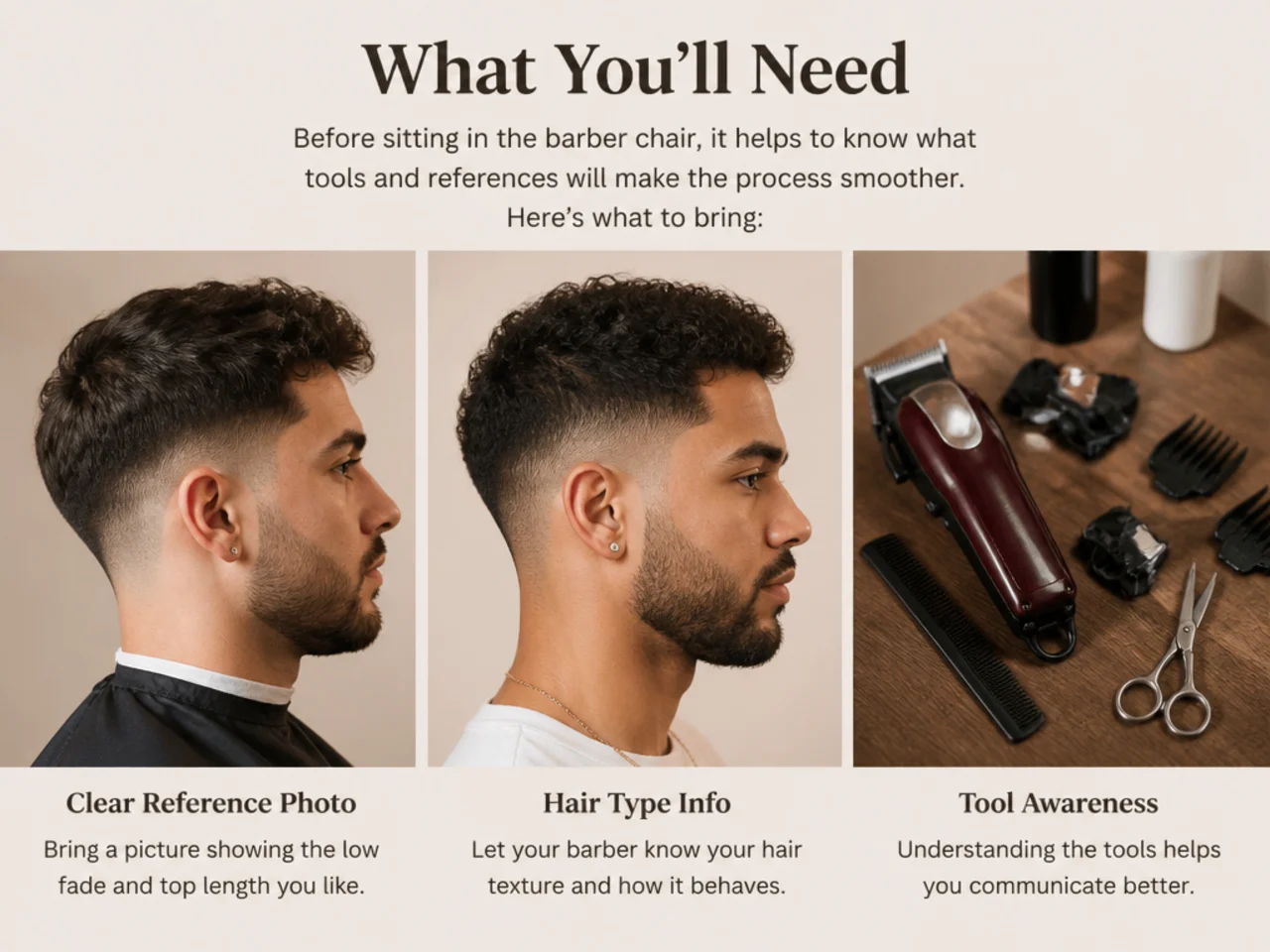
What You'll Need
You do not need a barber license to hand a barber a good brief. You need five things ready before the cape goes on:
- Two or three saved reference photos on your phone — side profile plus a three-quarter angle
- A rough number for the length of hair you currently carry on top (a ruler once tells you forever)
- A general sense of your face shape (oval, round, square, oblong, heart, diamond)
- Fifteen minutes of thinking time before the appointment to run through this five-step checklist
- Twelve dollars for tip if the barber nails it
Do this once, save your five-line brief in a note on your phone, and every future visit takes 30 seconds to reorder. Miss the prep and you are relying on the barber to read your mind — which is where most of the "he messed up my hair" stories start.
The 5 Steps to Ordering a Low Fade
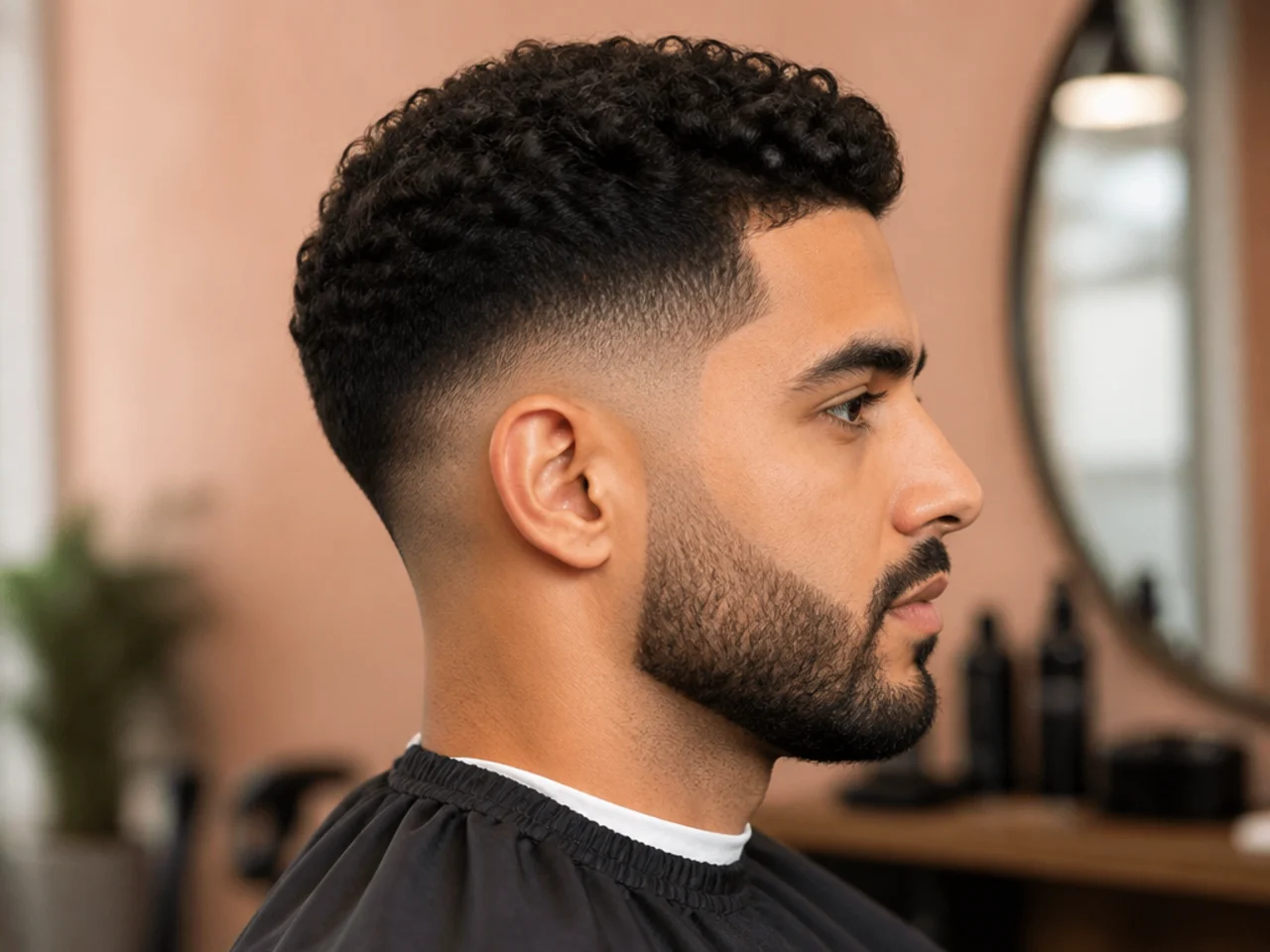
Follow the steps in order. Each one closes a gap the barber otherwise fills with a guess. Skip step three and the fade might land at your temple instead of your ear. Skip step four and the top gets shorter than you wanted. All five together is the full brief.
Step 1: Bring Reference Photos
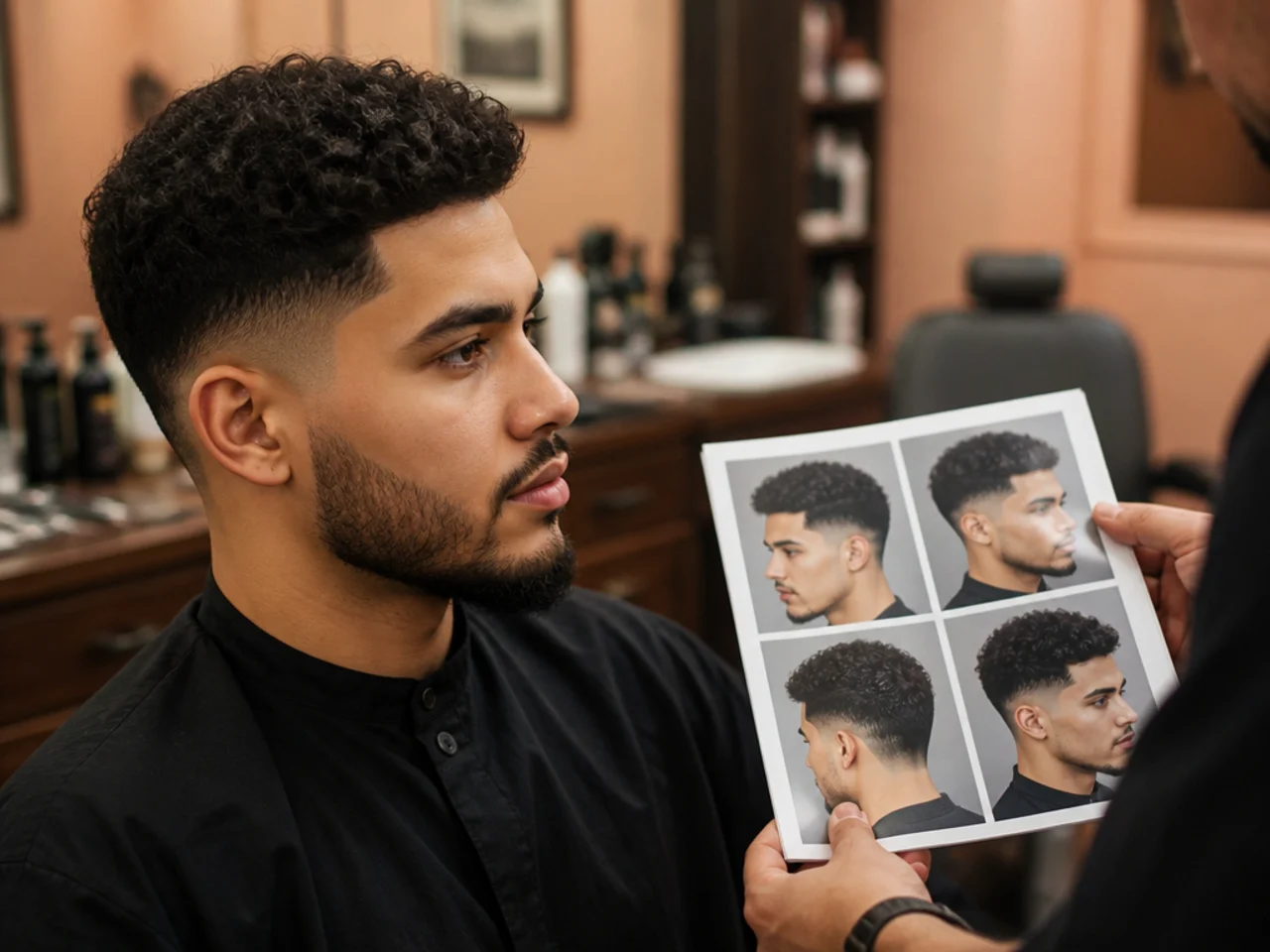
The single biggest upgrade to your barber brief is a photo. Words describe outcomes; photos describe positions. A photo shows exactly where the fade starts, how sharp the transition line is, and how the top sits above the sides. Every barber I've watched work asks for the phone first and the words second.
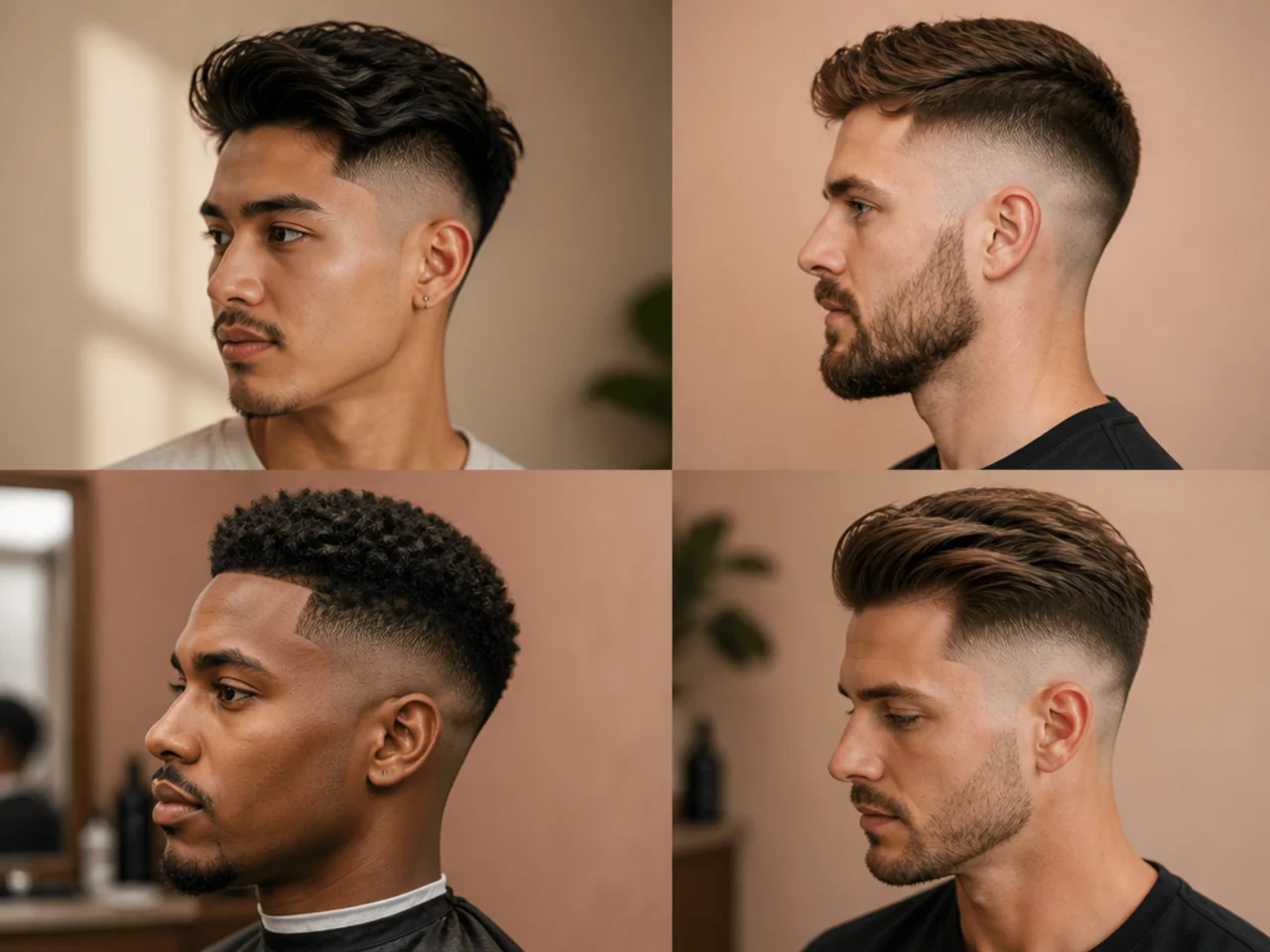
Save two or three shots, not one. A single photo hides what the fade looks like from the other side of the head, and your barber will fill that gap with a default. Grab a straight-on side profile that shows the ear and the taper line. Add a three-quarter front that shows how the fade meets your top length. If you can find a back shot, that closes the loop on the neckline shape.
Pinterest and Instagram are the two easiest hunting grounds. Search "low fade" plus your rough top style — "low fade crop," "low fade slick back," "low fade curly." Skip photos where the model's hair type is wildly different from yours; a razor-straight low fade on Asian hair will not translate onto tight coils, and vice versa. When possible, pick photos where the fade is fresh — day-one and day-two cuts show the barber's actual intention. Grown-out shots blur the line you want.
One trick: when you show the photos, do not just hand over the phone. Point at the photo, put your finger on the person's ear, and say "start it right here." Then point at the top and say "about this length." The physical gesture eliminates the interpretation problem that words alone create.
If you like more than one photo but cannot decide, tell the barber which detail you want from each. "The fade height from this one, the top length from that one, the neckline shape from the third." A good barber will assemble the composite in their head and confirm it back to you before starting.
Step 2: Learn the Guard Numbers
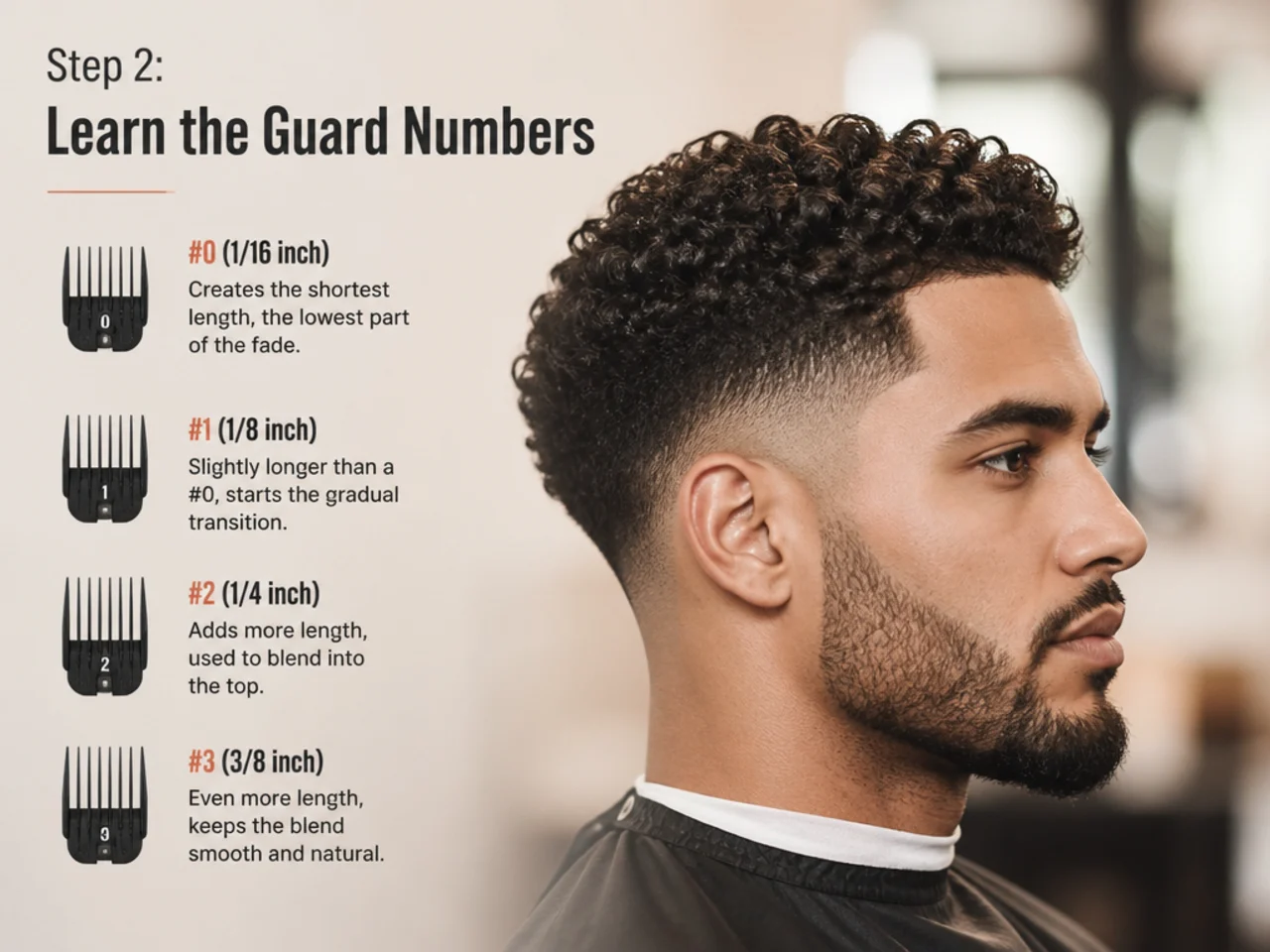
Clipper guards are the shared language between you and the chair. Every barber in the country knows what a "0.5 at the ear" means, and no barber can guess it if you don't say it. You do not need the whole chart — you need two numbers.
The chart, one time:
- 0 (bald) — no guard, straight to skin
- 0.5 — 1/16 inch, a whisper of hair, near-skin
- 1 — 1/8 inch, still very short but with visible color
- 2 — 1/4 inch, the low end of a taper
- 3 — 3/8 inch, still short but no longer a fade zone
- 4 — 1/2 inch, standard buzz cut territory
The two numbers you need to hand your barber are the shortest point — usually at the ear or the neckline for a low fade — and the top of the fade — where the fade blends into your top length. A common low fade request runs "0.5 at the ear, up to a 2 at the temple." That translates as: shave down almost to skin at the earline, step through the guards until you hit 1/4 inch at the temple, then blend that 2 into whatever length you left on top.
Three ranges tell you which fade you are ordering. A low skin fade takes the shortest point down to zero. A low fade stops at 0.5 or 1. A low taper stops at 1 or 2. The sharpness reads highest at zero and softens as the number climbs. See the low taper fade breakdown if you want the softer, corporate-friendly version, or the low drop fade if you want the arc-shaped variation.
Not sure which number matches your intent? Ask your barber to run one pass with the shorter guard on a small patch behind the ear before committing to the full fade. It takes 20 seconds and shows you exactly how the number reads on your skin tone. A 0.5 on very fair skin looks almost bald; on darker skin, it holds more visible hair. That preview kills the "I didn't realize it would look like this" moment.
Step 3: Say Where the Taper Starts
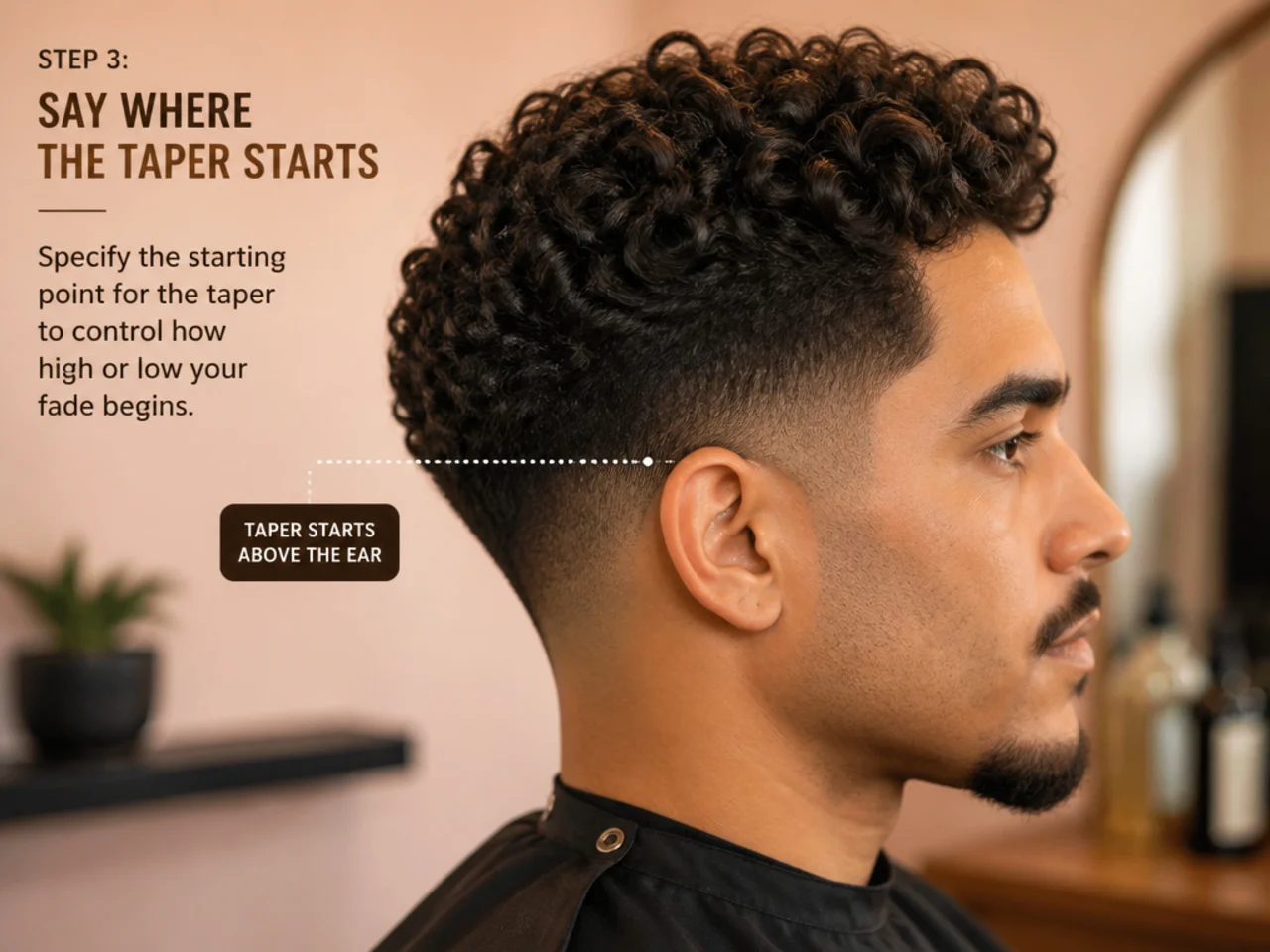
Barbers do not agree on the exact word "low." Some barbers start a low fade an inch above the ear. Others start it halfway up the temple. Others hug the earline and never go higher. That range is the reason two men can ask for a "low fade" at the same shop and walk out with different cuts. Naming the anatomical landmark closes the gap.
For a true low fade, the taper starts just above the top of the ear and dies into the neckline. Nothing above the temple gets clippered. Say it that way and the barber has no room to drift. If you want the softer version — a low taper that only touches the sideburn and nape — say "keep the fade below my earline, just clean the sideburn and neck."
If you want the arc-shaped variation, ask specifically for a low drop fade: "start it above the ear at the front, but drop the arc down behind the ear so it curves toward the nape." That drop is what separates a straight-line low fade from a designed one.
The wrong shape sits at the temple. That is a mid fade, not a low. If the barber's first pass lands anywhere near your temple bone, stop them. Say "too high — I want it back at the ear line." Once clippers pass, the height cannot come back down until the hair regrows in two to three weeks. See mid fade haircut for what a proper mid looks like — it is a fine cut, but it is not what you booked.
Your landmark language, memorized:
- Low fade — starts at the top of the ear, dies at the neckline
- Low taper — stays below the earline, cleans the sideburn and neck only
- Low drop fade — starts at the ear at the front, arcs down behind the ear
- Low skin fade — same start point as a low fade, taken to bald skin at the shortest
Name the fade type and the start landmark in one sentence. "I want a low fade, starting right above my ear, going to a 0.5." Twelve words, zero ambiguity.
Step 4: Describe the Top Length and Finish
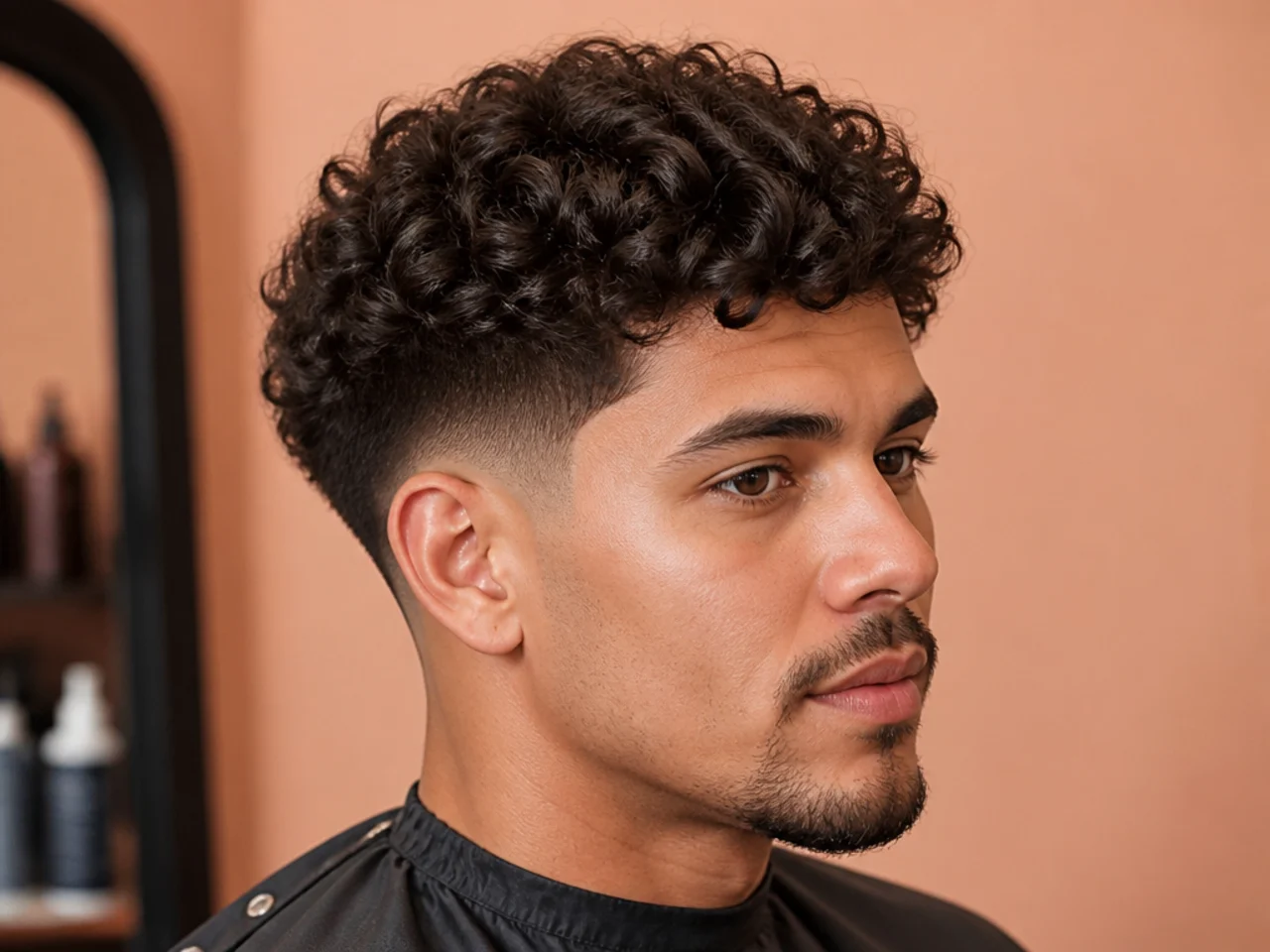
The fade is only half the cut. The top length decides which style your low fade actually is. A one-inch top with a low fade is a textured crop. A three-inch top with the same fade is a slick back. Same base, different haircut, different photograph.
Give the barber two things: the length in inches and the finish. Length by rough inch:
- Under 0.5 inch — buzzed top, no styling, reads military and clean
- 1 inch — short crop, minimal product, works on almost any face shape
- 1.5 to 2 inches — textured crop or French crop, needs a small dab of matte clay
- 2 to 3 inches — comb over, side part, or short quiff
- 3 to 4 inches — slick back, medium pompadour, brushed-back quiff
- 4 inches and up — flow, tall pompadour, full quiff, curtains
If the top has curl or wave, add the inch reading you want when the hair is stretched straight. Curly hair loses 40 to 60 percent of its visible length when it dries into pattern — the two inches you asked for reads as one inch of curl. Say "two inches stretched" and the barber will leave more length to compensate.
The finish tells the barber how to cut, not just how long to leave. Two common finishes:
- Matte and textured — point-cut the ends so they look broken instead of blunt, no shine when styled. Pairs with a matte clay or paste.
- Sleek and shiny — blunt-cut ends for weight, cut for a slick or side-part look. Pairs with a pomade or cream.
For a low fade with a crop, ask "point-cut for texture, matte finish." For a low fade with a side part or slick back, ask "blunt-cut for weight, sleek finish." Same clippers, different top game.
One more detail worth naming: how the fringe (front) sits. "Blunt fringe at the eyebrow" reads different from "point-cut fringe swept back." If you have a specific fall pattern you want — swept left, forward and down, brushed back — name it. If you are unsure, ask your barber which fall direction your hair naturally wants and cut to that instead of fighting it. That single question saves 20 minutes of styling every morning. See the clean haircut for men breakdown for finish combinations by style.
Step 5: Discuss Maintenance and Rebook
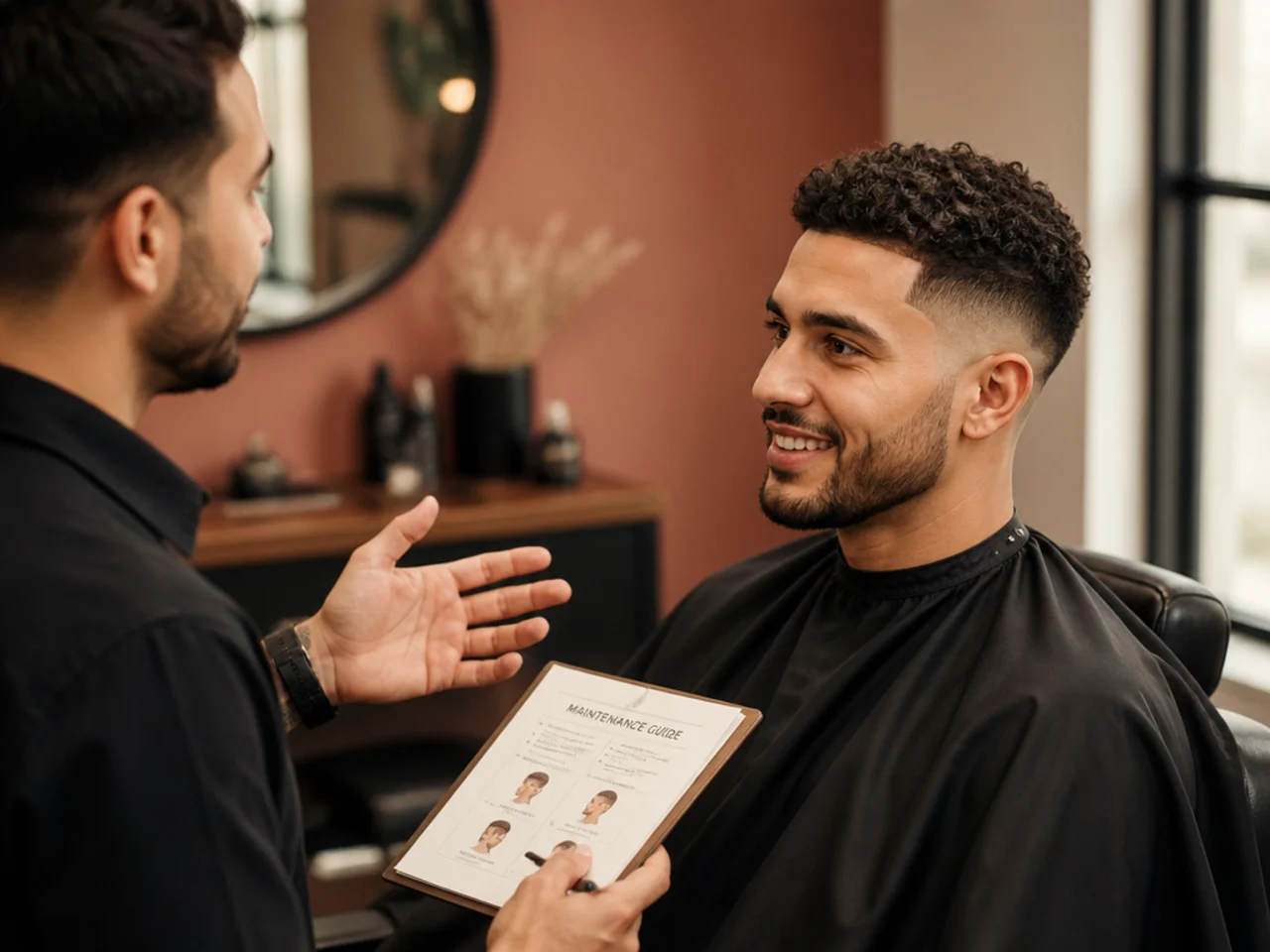
The step that most guys skip. The finished cut lasts as long as your booking cadence lets it. A low fade grown out four weeks looks fundamentally different from the one that walked out of the shop — the transition line blurs first, and once that blur sets in, the whole face-balancing effect softens with it.
Two questions to ask before the cape comes off:
"When should I come back?" The honest answer depends on your shortest guard. A low skin fade holds sharp for 10 to 14 days before the transition line blurs. A low fade with a 0.5 at the ear stretches to 2 to 3 weeks. A low taper with a 1 or 2 at the ear goes 3 to 4 weeks. Get your barber's number and book right then — the whole how often should men get a haircut guide breaks down cadence by cut.
"Can I book a fade cleanup between full cuts?" Most shops offer a mid-cycle appointment that just re-sharpens the sides, the neckline, and the lineup without touching the top. Runs 15 minutes and about half the price of a full cut. Book one at week two if your fade needs to look chair-fresh for a specific date — a wedding, a photoshoot, an important pitch.
Ask two bonus questions while you have the barber's attention: which product they'd recommend for your top and finish combo, and which brush or comb they used to style it after the cut. Both answers get you closer to the day-one finish at home. If your barber sells product, they will point to what they use — no shame in buying the same clay you just watched them apply.
Between visits, keep the maintenance simple. Use trimmers on the outline every three or four days if you own a pair — the best hair clippers for men guide covers what works. Do not touch the fade itself. Fade blending is a barber skill, and a home attempt turns the smooth gradient into stripes fast. Trim the sideburns, trim the neckline, brush the top with a boar-bristle brush before applying product — that is the full home routine.
Troubleshooting Common Low Fade Miscommunications
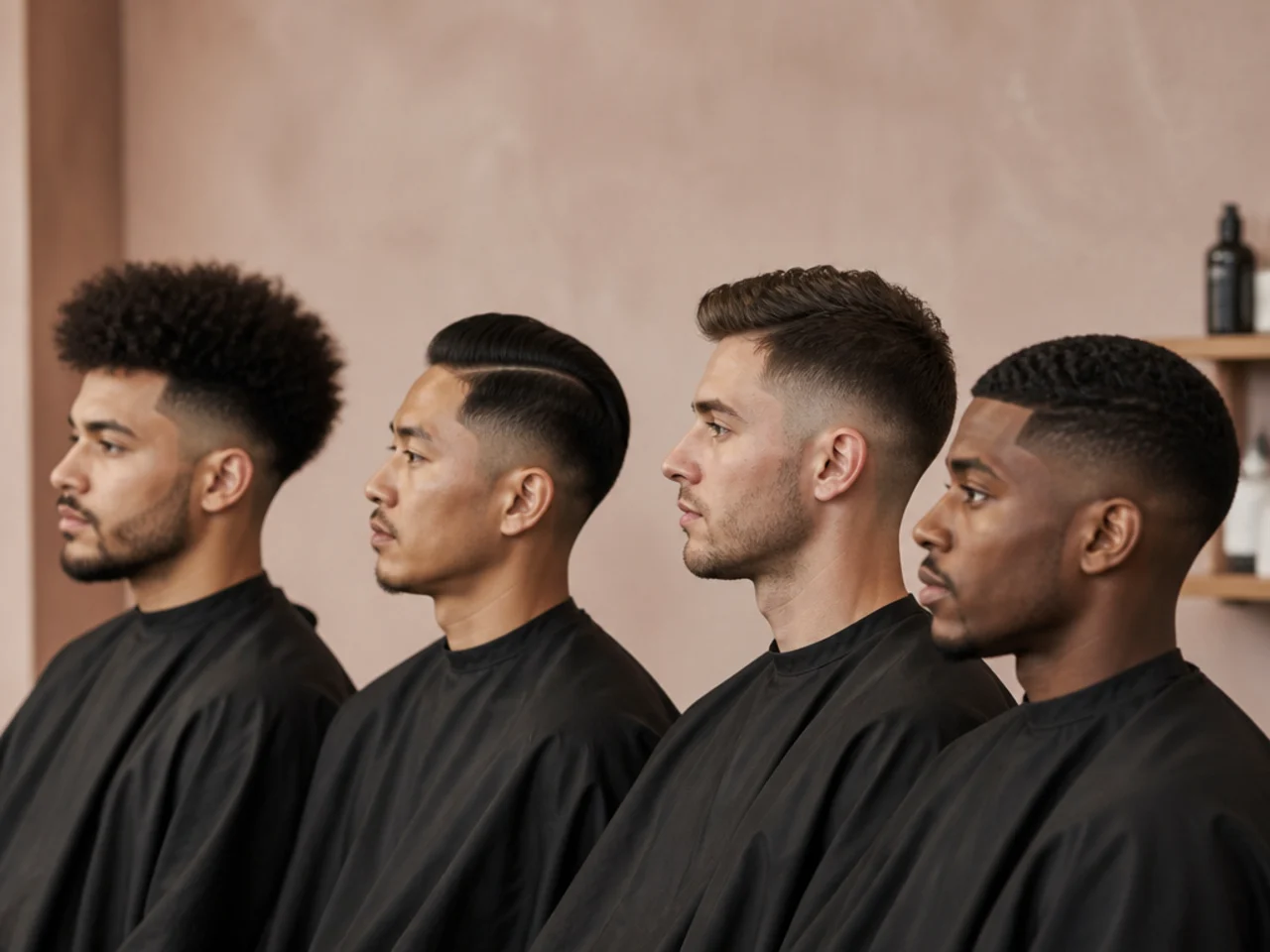
Even with a five-step brief, small misreads happen. Read this section before your appointment so you know what to say the moment something goes sideways.
- The fade started higher than I asked. Stop the barber before the second pass. Say "the fade needs to come back down to the earline." If the higher line is already blended in, it cannot come back without regrowth — but at least the barber knows to start lower on your next visit. Save a shot of the cut for next time so you can show them the exact height that was too high.
- The transition line looks striped instead of blended. Blending is the last step of a fade, and a rushed cut skips it. Politely ask "can you soften the transition between the guards a little more?" A good barber will nod and go back over the blend with a taper lever or an open guard. If the shop is running behind and the barber declines, that is your last visit there.
- The top ended up shorter than I asked. This one tells you the ruler math went wrong somewhere. If you asked for two inches and got one, ask the barber to measure your ask on your next visit — literally hold a ruler up to the hair before the first cut. Once cut, wait it out. Hair grows about half an inch per month, so two weeks buys you back the half inch of length.
- The neckline shape isn't what I wanted. Necklines have three standard shapes — natural (follow the hairline), rounded (curved corners), or squared (sharp corners). If you did not specify one, the barber picked their default. Say which shape you want on the next visit: "rounded neckline" or "squared neckline" or "leave it natural."
- The fade looks great from the side but weird from the front. The three-quarter angle is where a lot of fades fall apart because the taper reads asymmetric there. Ask your barber to check the three-quarter view in the mirror before finishing — that's the angle most people see you from every day.
Two calm sentences fix most miscommunications. Silence lets them harden. Say what you see, ask for a specific adjustment, and let the barber work.
Walk Out With the Cut You Booked
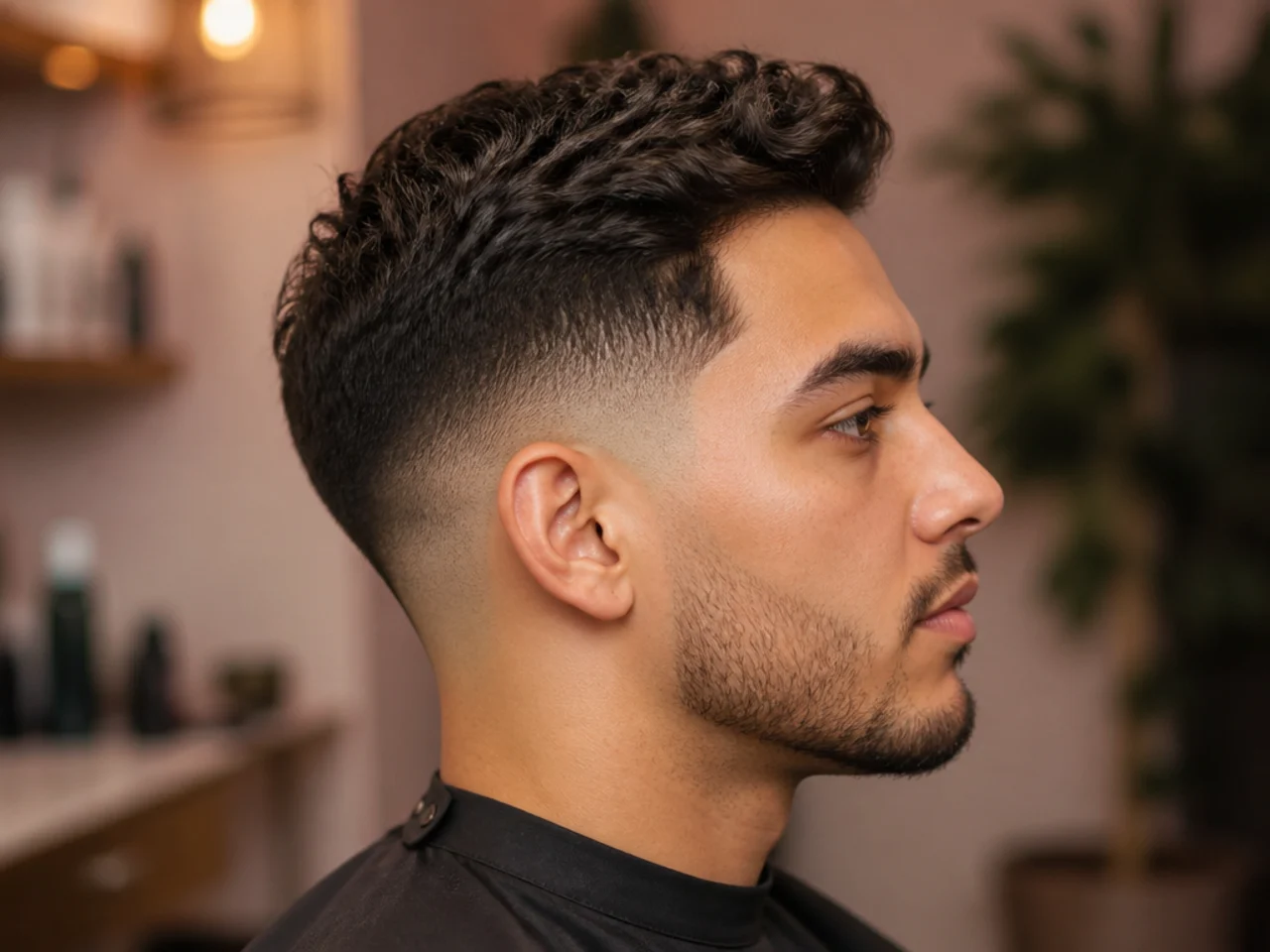
The five steps together are your brief: photos, guard numbers, taper start, top length and finish, maintenance cadence. Say them in that order and no barber in the country will guess wrong. Write your five lines in a phone note today and every future haircut becomes a 30-second reorder.
For style-specific variations — the twenty low fade haircut men are asking for right now — pick the exact top style you want first, then bring that reference photo into the chair with your five-step brief.
The best haircut is the one you asked for on purpose. Now you know how to ask.
FAQ
What is the exact wording to ask for a low fade at the barber?
Say it in five parts: "Low fade, starting just above my ear, dropping to a 0.5 at the shortest point and blending up to a 2, keep two inches on top, matte finish." That covers the height, the guard numbers, the top length, and the finish — everything a barber needs to build the cut without guessing.
Do I really need to know clipper guard numbers to ask for a low fade?
You do not need to memorize the whole chart, but you need at least two numbers — the shortest point and the top of the fade. A 0 is bald skin, a 0.5 leaves a whisper of hair, a 1 is 1/8 inch, and a 2 is 1/4 inch. Say the number you want at the ear and the number where the fade meets your top length, and your barber has 90% of the plan.
What if the barber does not understand the photo I brought?
Bring two or three photos, not one, so the barber can see the fade from more than one angle. If a photo is unclear, translate it out loud — point at the person's ear in the picture and say "start it right here" and point at the top and say "about this length." Photos plus your own words together beat either one alone.
How long should I keep the top for a low fade?
Anywhere from a buzzed half inch up to four inches works, and the length you pick decides the style. Under an inch reads clean-cut and needs no product. One to two inches carries a crop, comb over, or side part. Two to three inches supports a slick back or quiff. Above three inches gives you flow and pompadour territory.
Should I ask for a low fade or a low taper?
A low fade drops the sides to skin or near-zero at the shortest point. A low taper stops at a 1 or 2, so there is still hair there. The fade reads sharper but needs a barber every two weeks. The taper reads softer and stretches to three or four. Pick the fade if you are booking every other Saturday, the taper if you are booking monthly.
What if the fade my barber gave me is higher than I asked for?
Speak up before the razor comes out. Once the sides are cut, the height cannot be corrected until the hair grows back — usually two to three weeks. Ask to see the mirror after the first guard pass, name the landmark you wanted the fade to start at (top of the ear, earlobe), and let the barber adjust before the blending begins.