20 Steps to Ask for an Ivy League Haircut
Twenty things to say at the consultation, in the order to say them. The order is the point — each instruction narrows what the next one can mean, and saying the top length last is how people end up with a crew cut.
In this article · 27
- Why the Order Decides the Cut
- How to Choose Yours
- The 20 Steps, In Order
- 1. Name the Cut
- 2. Give the Top Length as a Minimum
- 3. Say Why You Need That Length
- 4. Say Wet or Dry
- 5. Point at Your Part Side
- 6. Say Whether the Part Is Combed or Cut In
- 7. Ask for Weight Out, Not Length Off
- 8. Say Taper or Fade
- 9. Give the Taper Height
- 10. Give the Bottom Guard
- 11. Give the Guard the Taper Blends Into
- 12. Say What the Neckline Should Do
- 13. Say What the Front Hairline Should Do
- 14. Say Where the Sideburns End
- 15. Say Whether It Connects to a Beard
- 16. Ask for Texture If You Want It
- 17. Ask Them to Comb the Part Before Drying
- 18. Check the Part in the Chair, Wet
- 19. Check the Sides in a Hand Mirror
- 20. Write the Numbers Down Afterwards
- Styling and Upkeep
- Mistakes to Avoid
- FAQ
- Final Thoughts
Most bad ivy leagues are consultation failures, not cutting failures. The barber did what was asked in the order it was asked.
A barber works down the head, and each decision narrows the next. Agree the sides first and the top gets cut to balance them, which almost always means taking it shorter than a part can survive.
So the top length goes first, as a minimum, in plain words. Everything after it has to work around that number rather than into it. The twenty steps below are in the order they should be said.
Why the Order Decides the Cut
Cutting runs top-down, so agreement should too. The top is sectioned and cut before the sides are blended into it.
The top length is the only fixed value. Roughly two finished inches, because that is what holds a part. Everything else is adjustable.
Adjectives get interpreted, numbers get measured. "Short" is a judgement; a number two is six millimetres.
Anything unsaid gets defaulted. Barbers have habits, and silence is an instruction to use them.
How to Choose Yours
Decide the top length before you sit down. It is the one thing you cannot change your mind about halfway through.
Pick a taper height and a bottom guard. Two numbers that describe the entire side of the head.
Know which side you part on. Switching sides costs weeks of the hair learning a new direction.
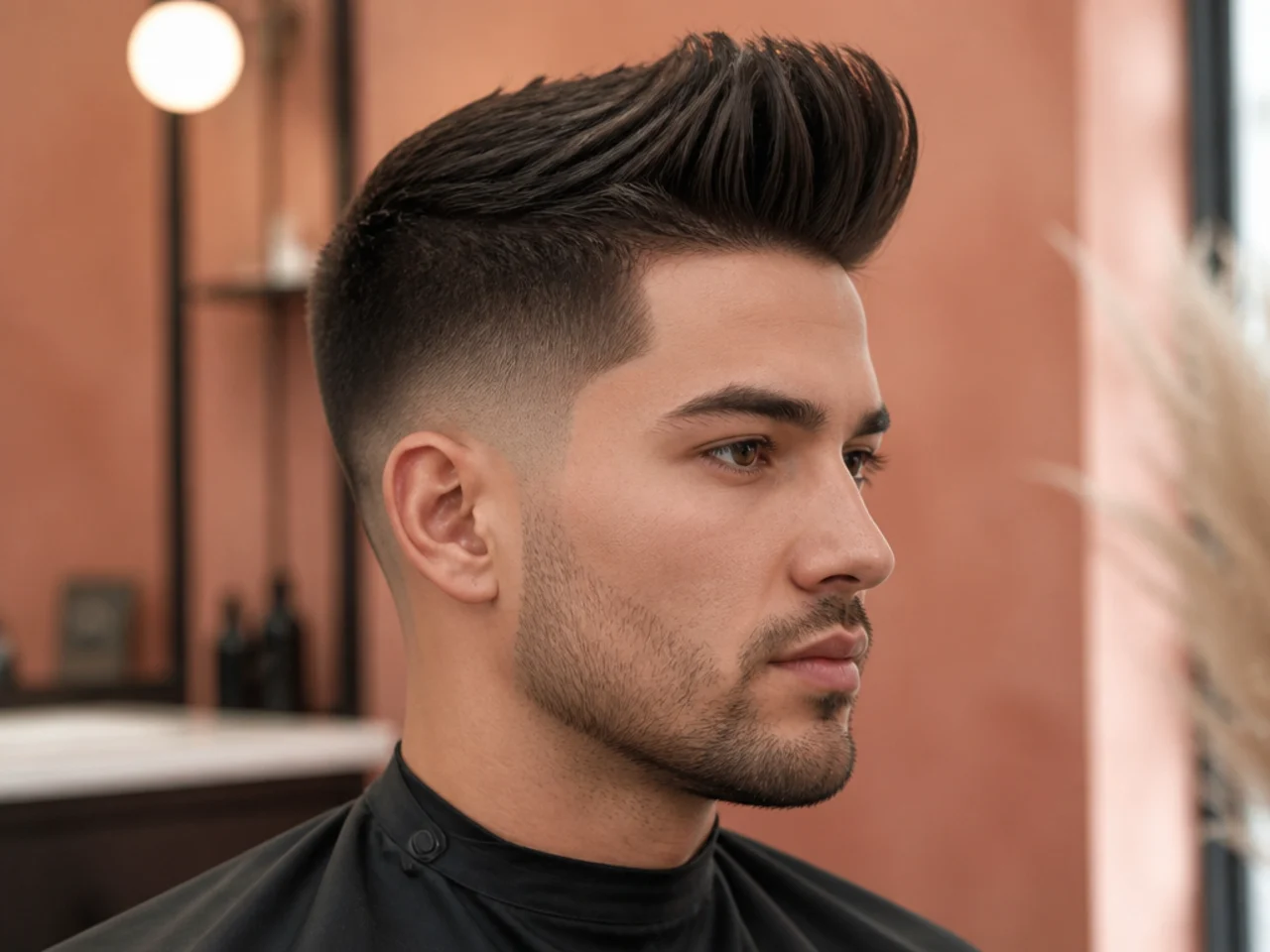
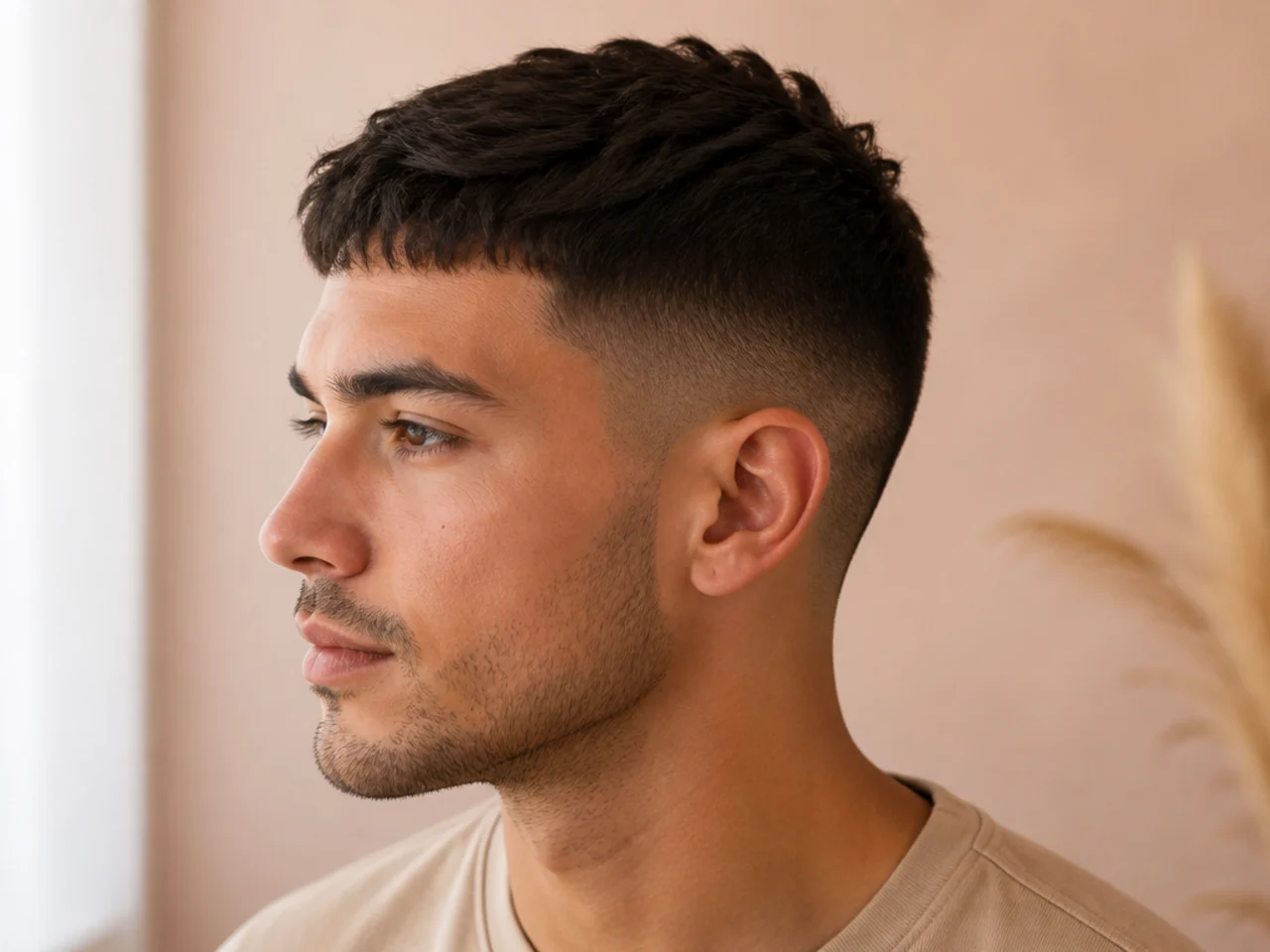
Have a photo from the side. Front-on shots do not show the part, which is the whole cut.

The 20 Steps, In Order
1. Name the Cut
Say "ivy league" first. It gives the barber a shape to hang everything else on, and it is a term every barber knows.
2. Give the Top Length as a Minimum
"At least two inches on top." Framing it as a floor rather than a target stops it being trimmed away during tidying up.
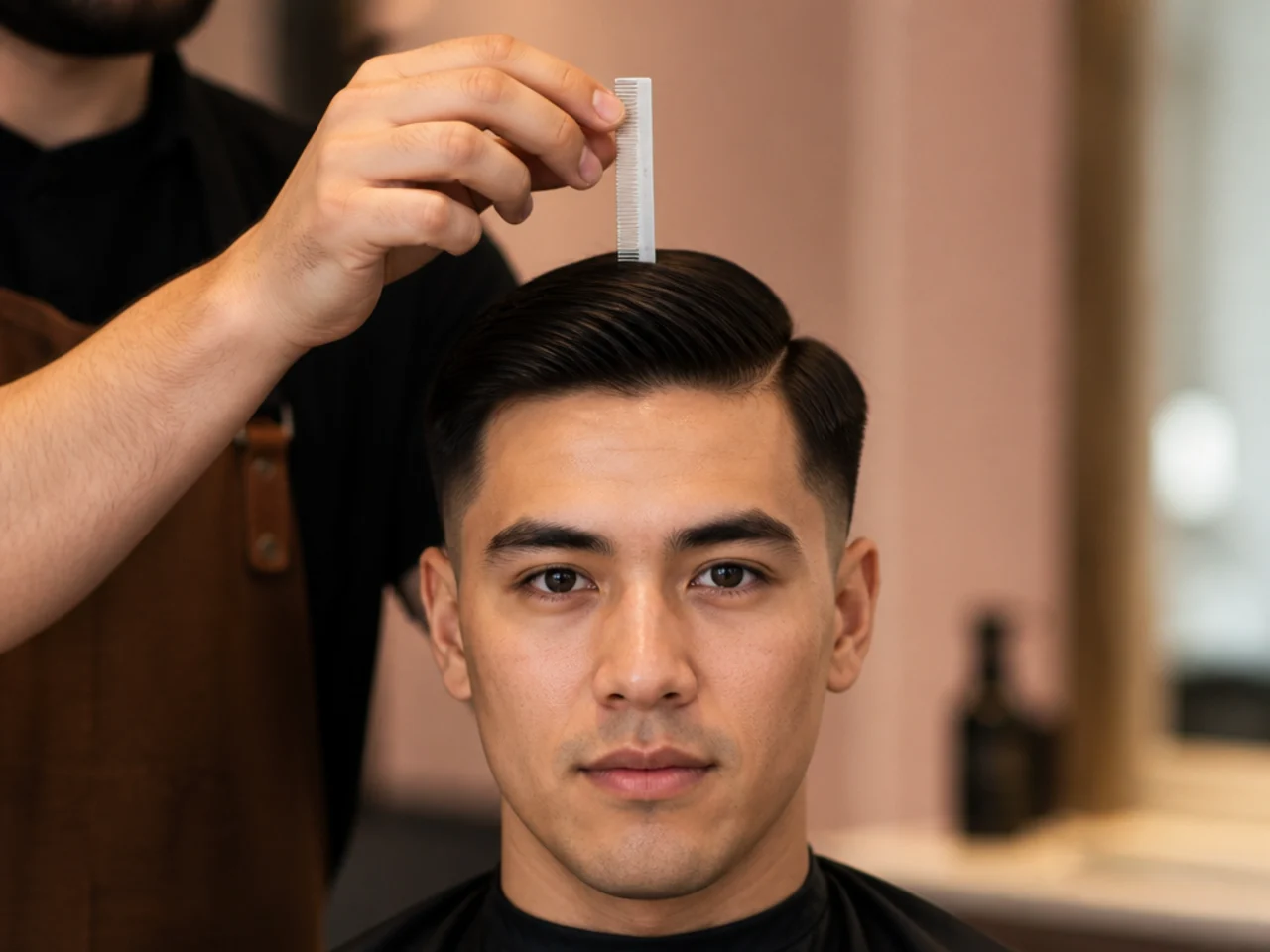
3. Say Why You Need That Length
"Enough to part it." One clause, and it turns a number the barber could round down into a function they have to preserve.
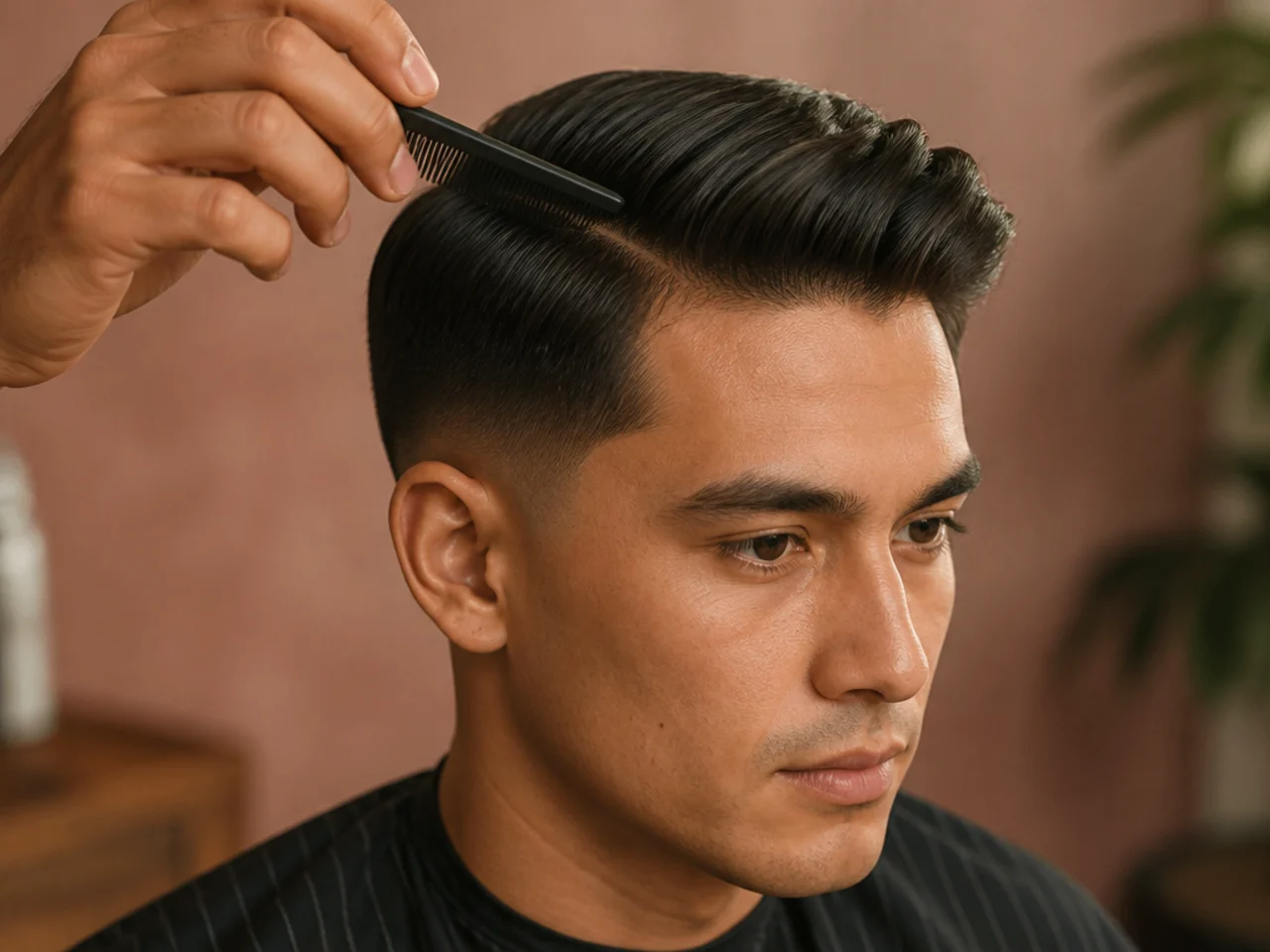
4. Say Wet or Dry
"Two inches dry." Barbers measure wet by default, and on anything but straight hair that costs you real length. Wet hair is stretched hair, so curl gives back about a third of it as it dries while a wave gives back very little.
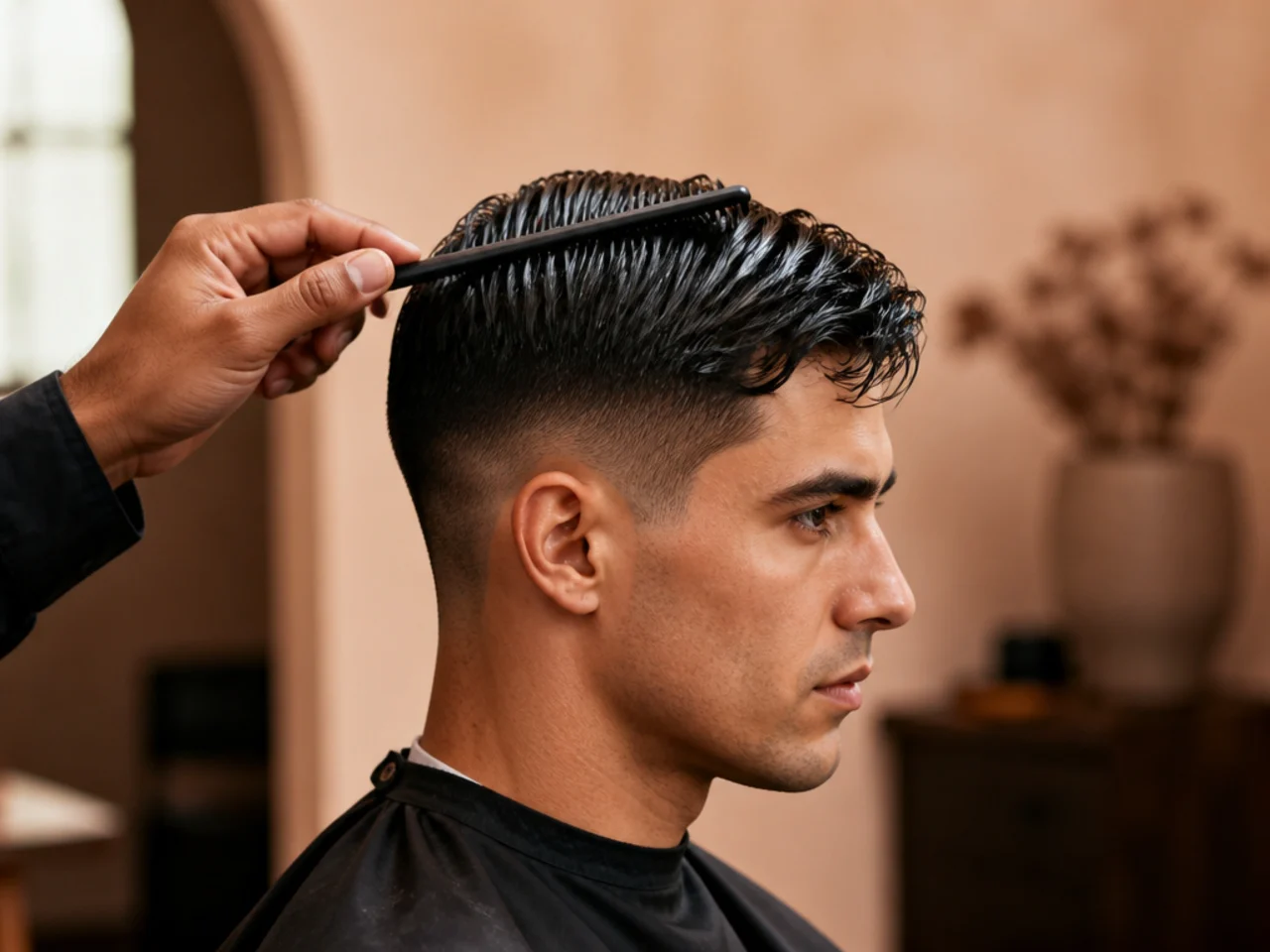
5. Point at Your Part Side
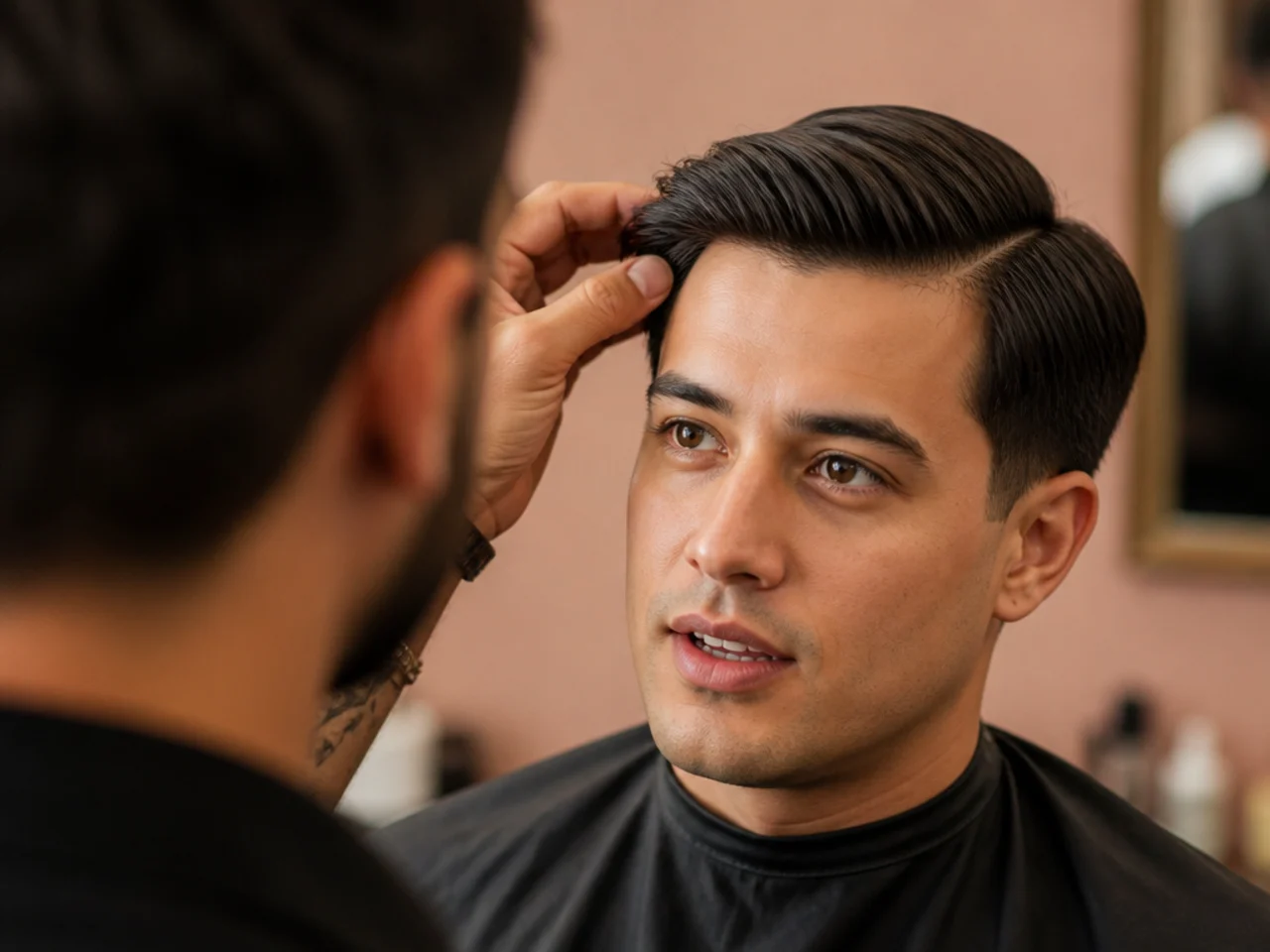
Show it rather than describe it. Left and right get mirrored in conversation and the barber is standing behind you, so a spoken instruction has a real chance of putting the part on the wrong side for the next six weeks.

6. Say Whether the Part Is Combed or Cut In
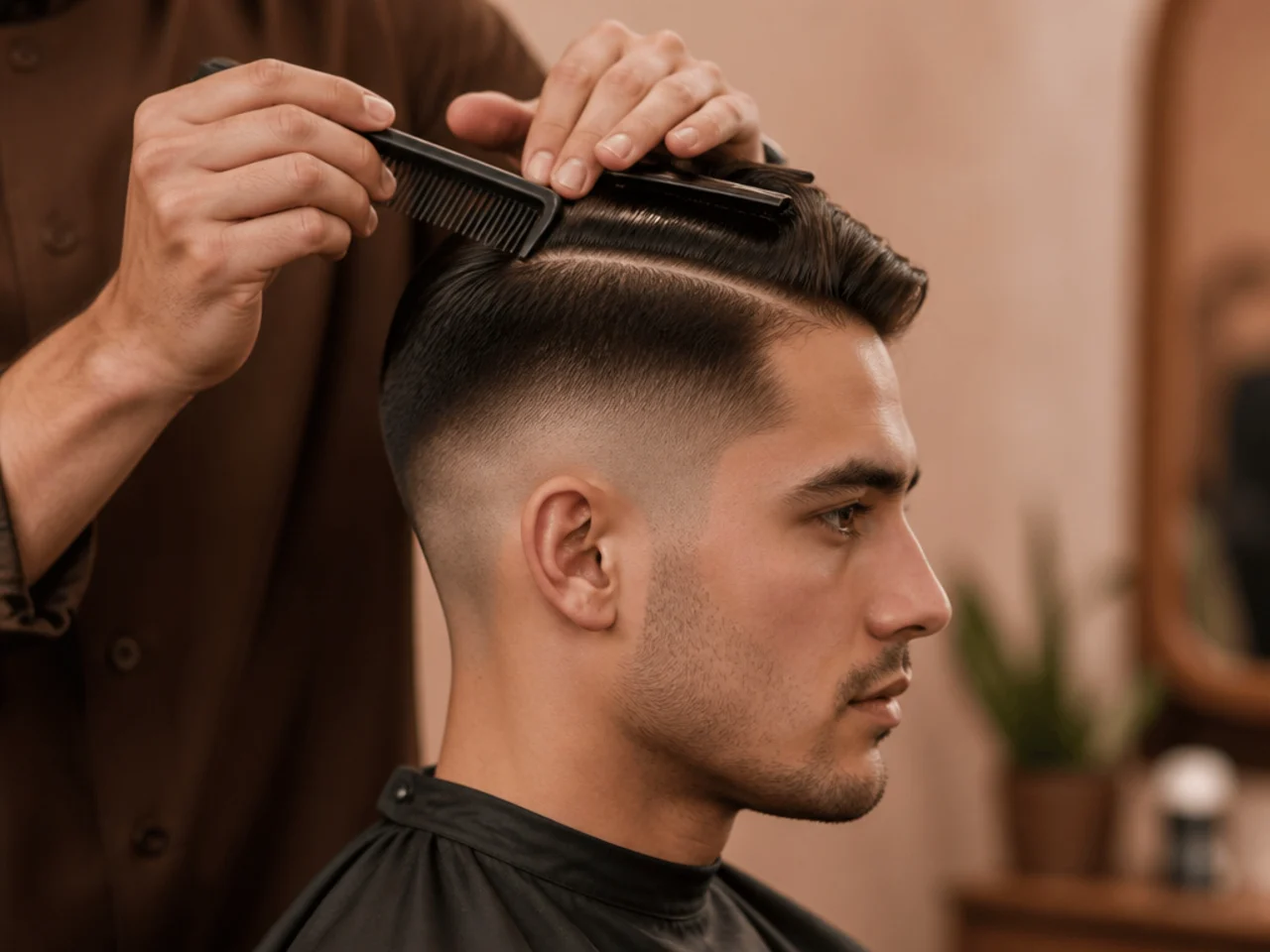
A hard part is a separate service with a trimmer. If you want one, it has to be asked for by name.
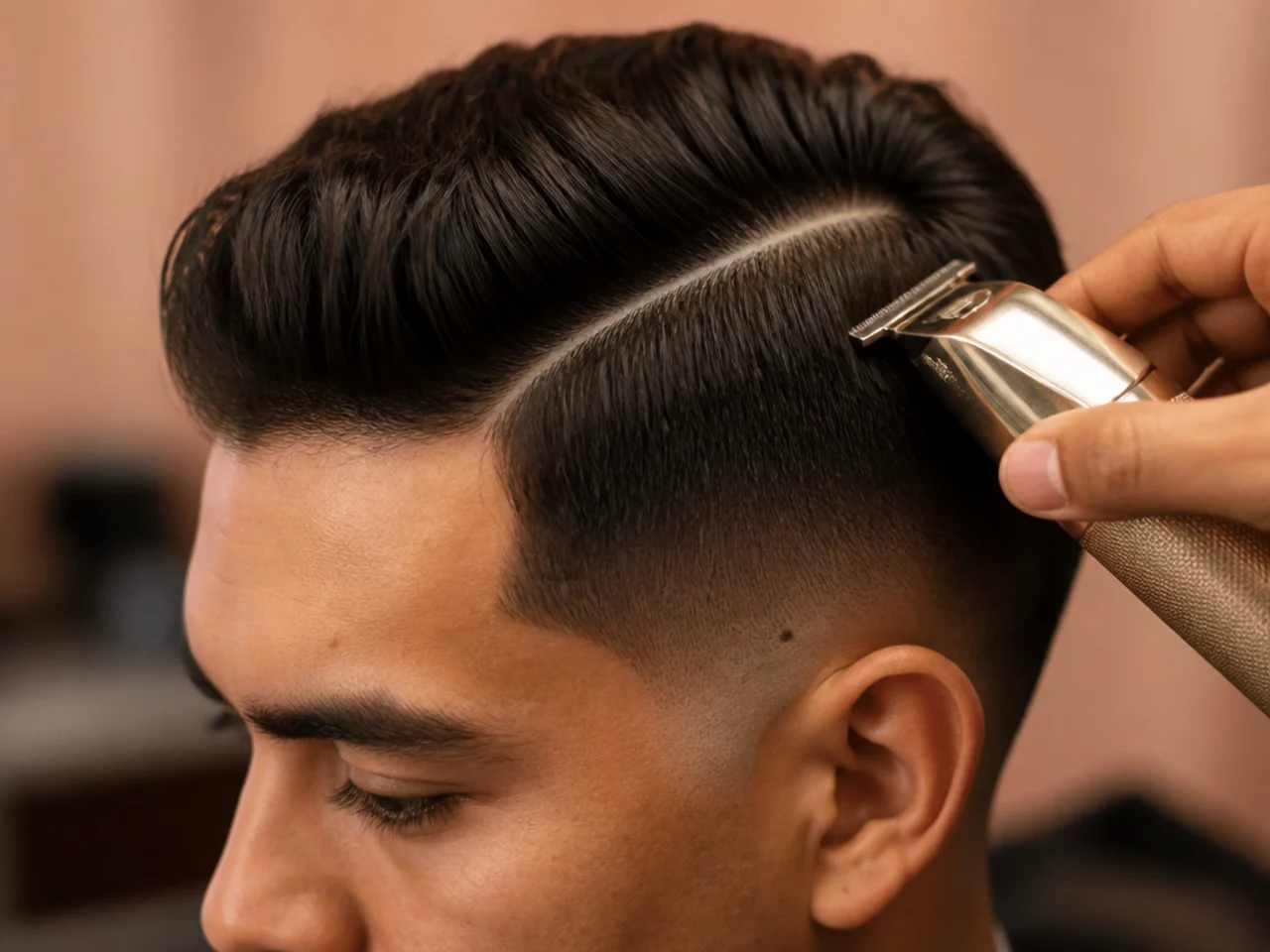
7. Ask for Weight Out, Not Length Off
If the top is dense, say "take weight out from underneath and keep the length." It separates the two variables that get confused.
8. Say Taper or Fade
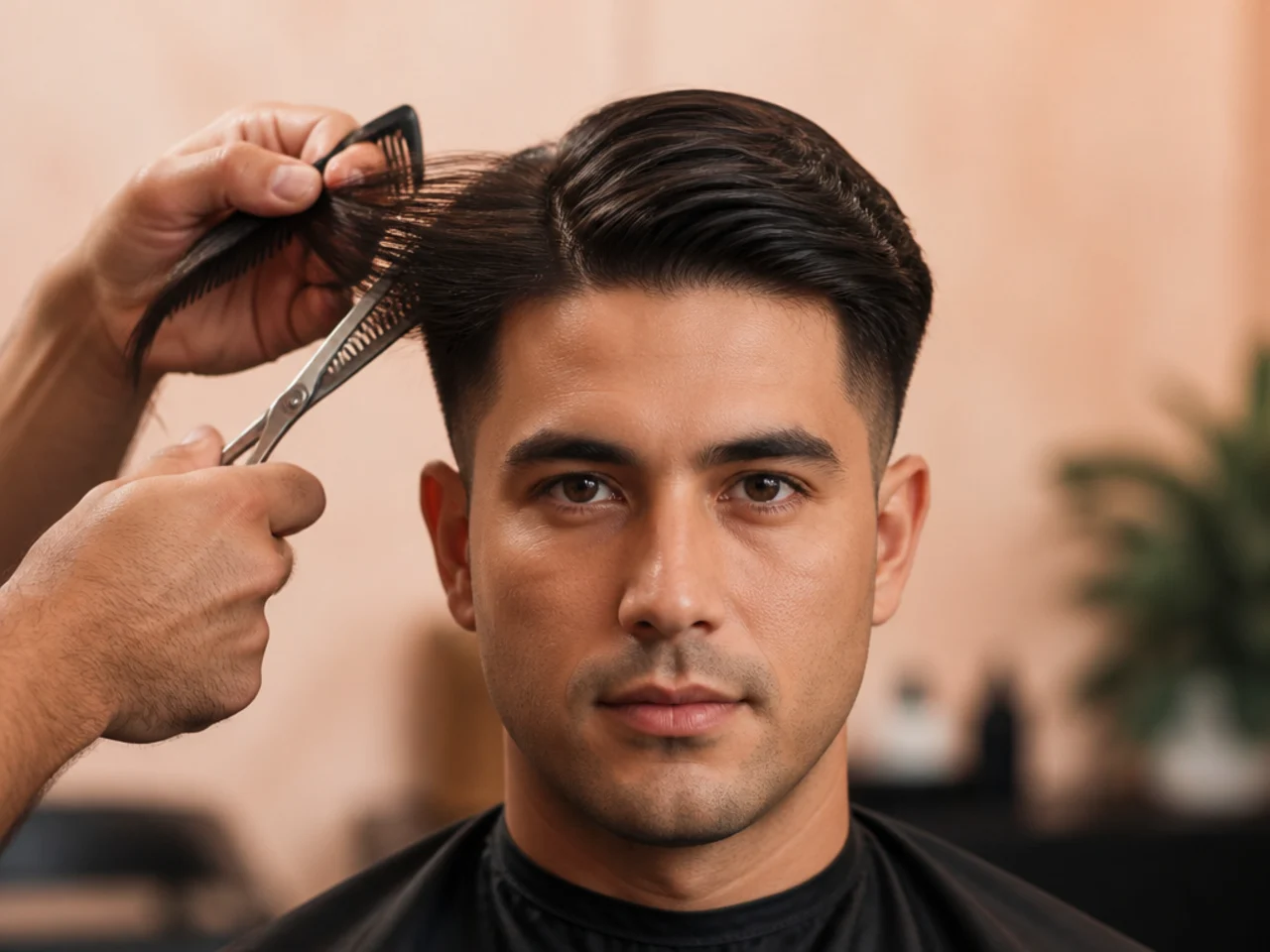
A taper leaves length at the bottom; a fade goes to skin. The words are used loosely, so state the finish rather than the label — the tapered version sets out what changes either way.
9. Give the Taper Height
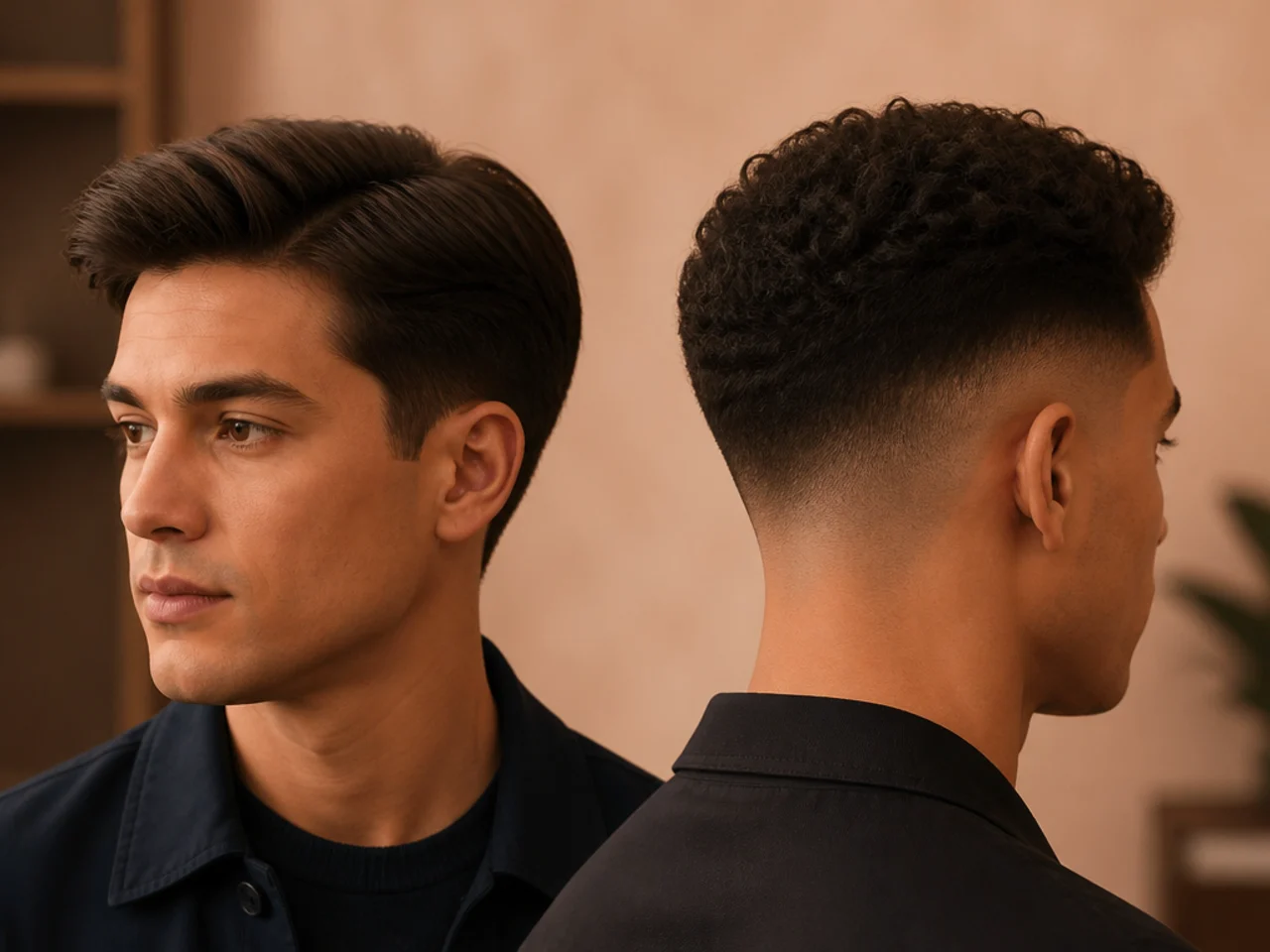
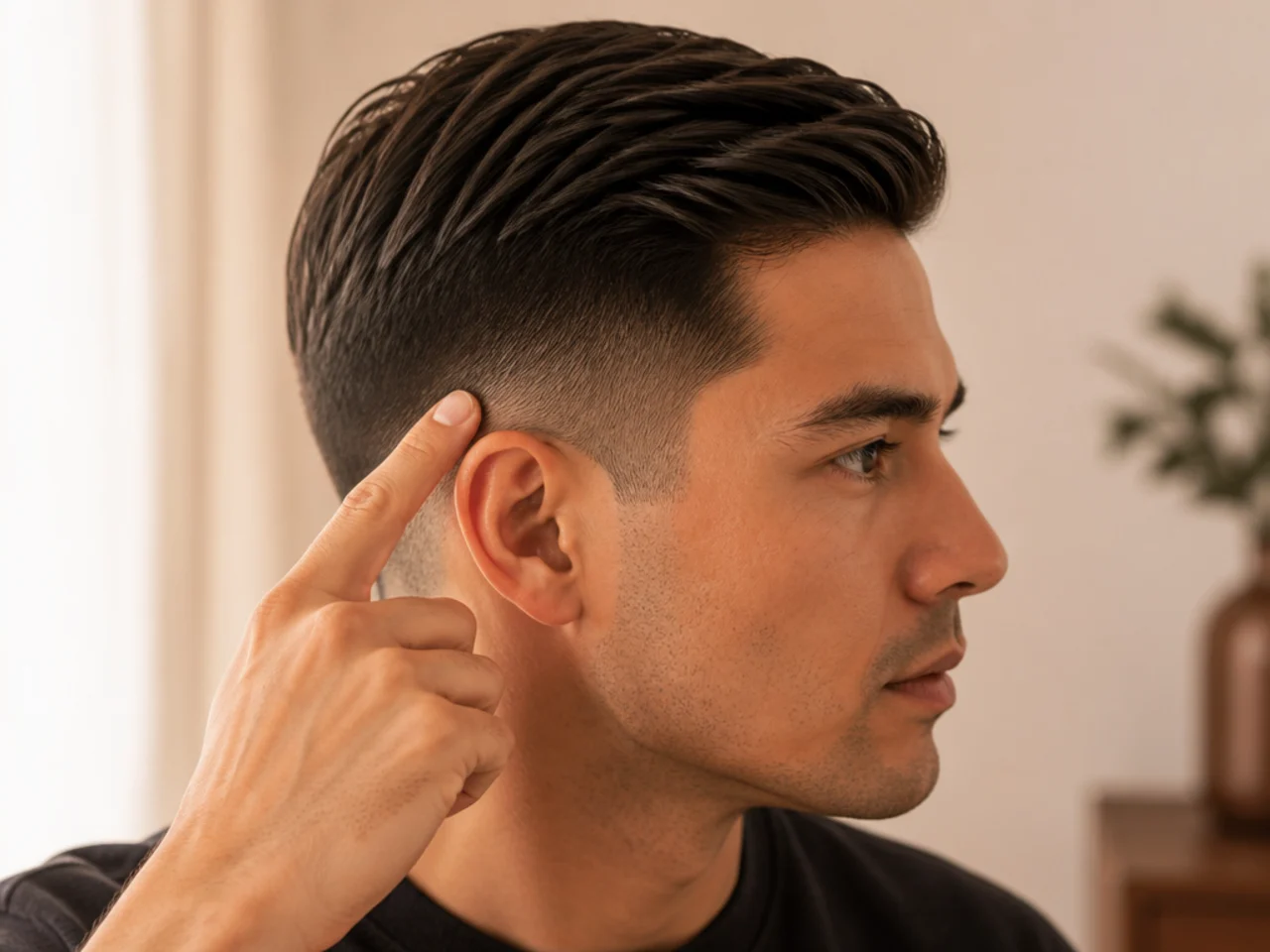
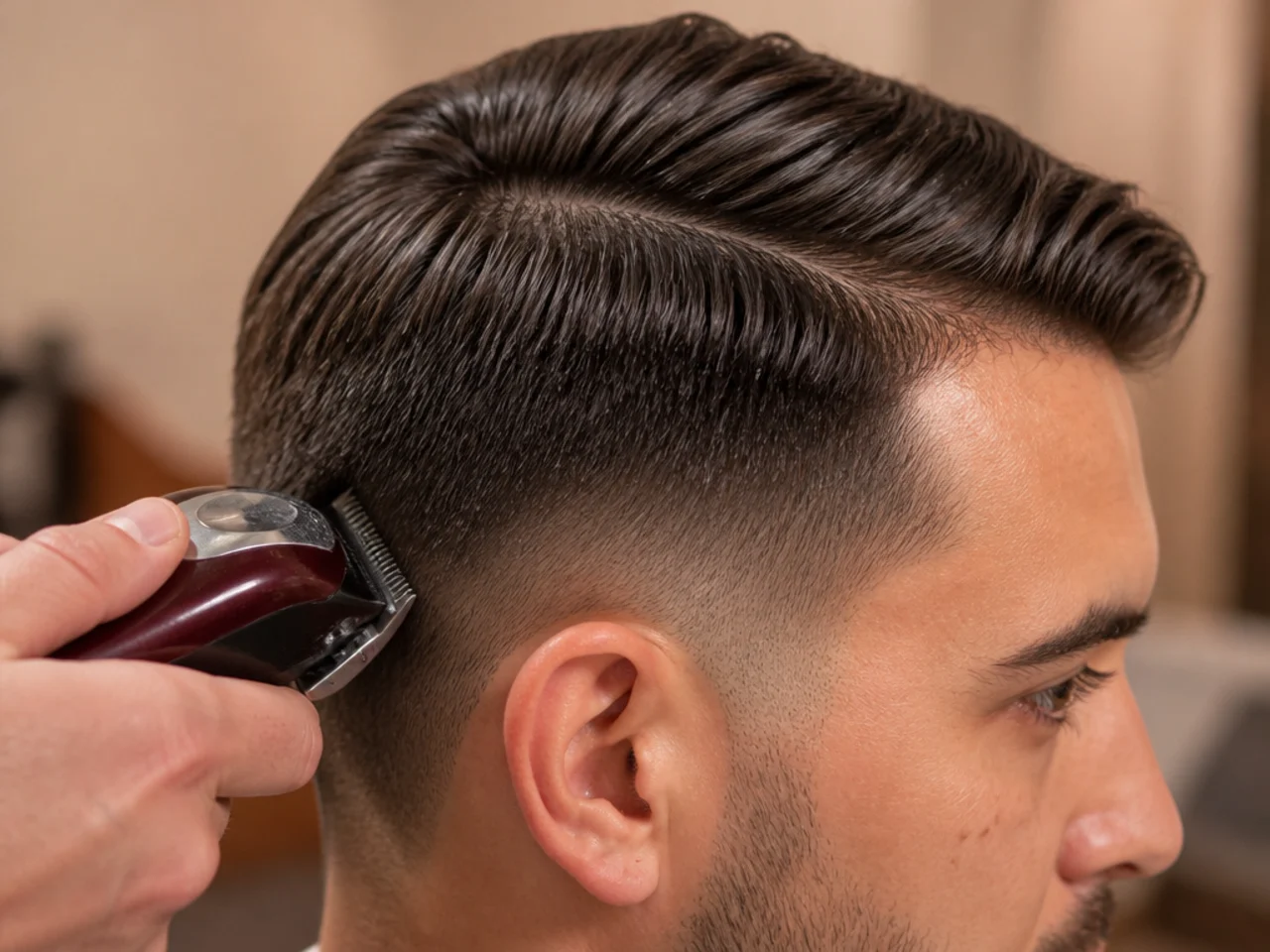
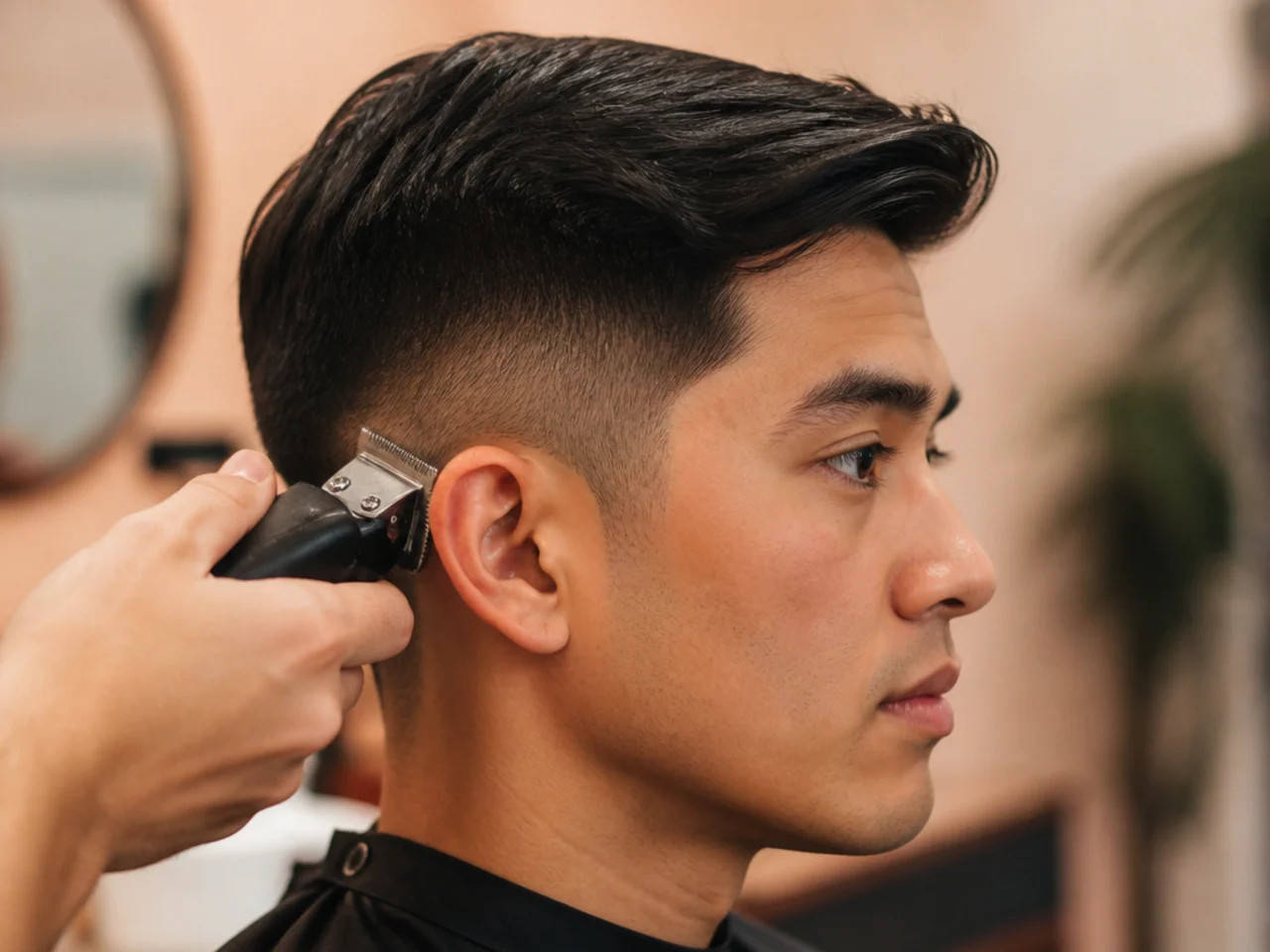
Low at the top of the ear, mid between temple and parietal ridge, high at or above the ridge, which is the same scale used for low against high tapers. Point at the spot as you say it.
10. Give the Bottom Guard
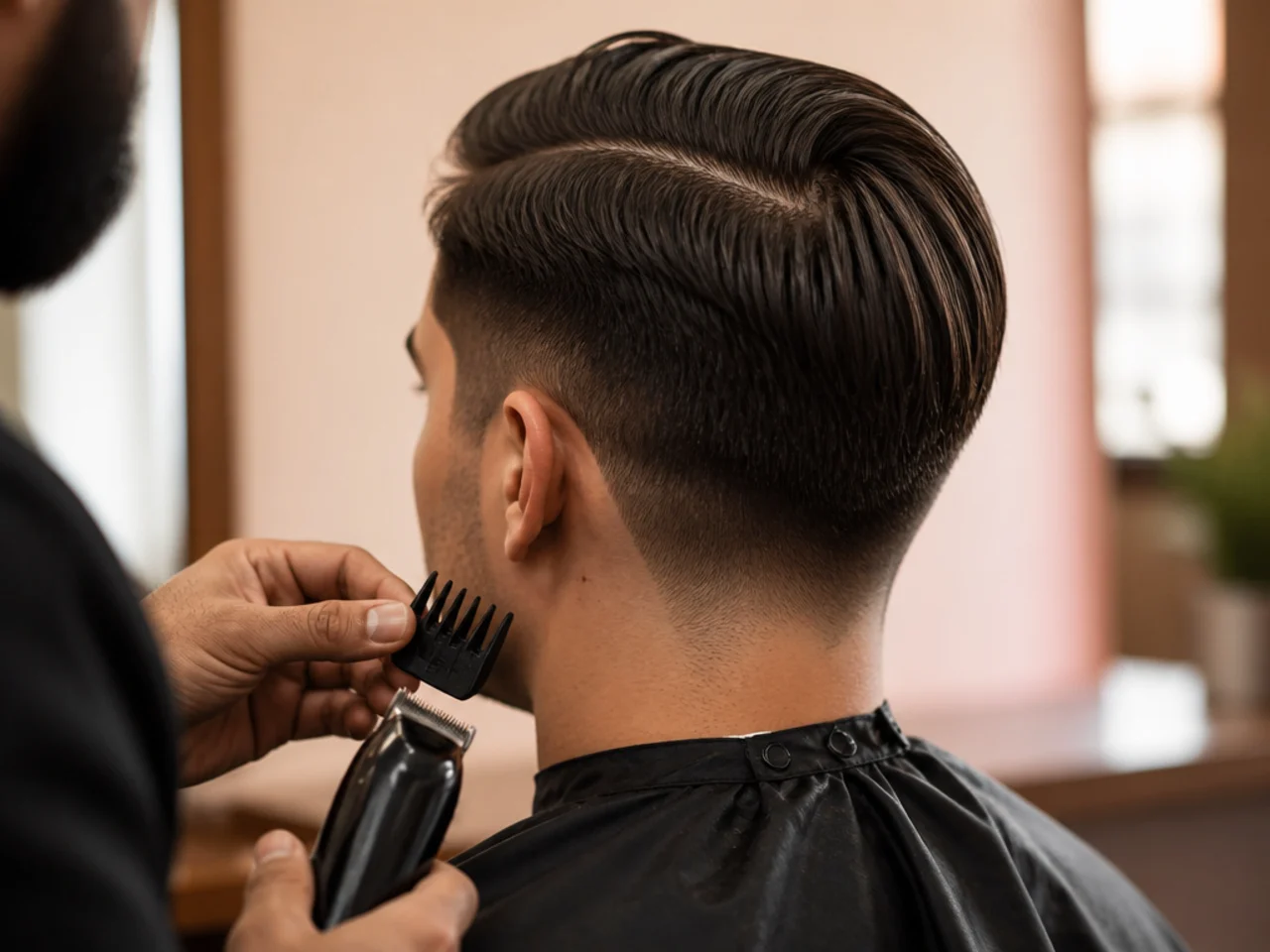
A number one is three millimetres, a two is six, a three is ten. Say the number rather than a length in words.
11. Give the Guard the Taper Blends Into
The top of the taper needs a number too. Naming both ends describes the whole gradient rather than half of it, because a gradient is defined by its two endpoints — a one at the bottom and a three at the top leaves nothing to interpret.
12. Say What the Neckline Should Do
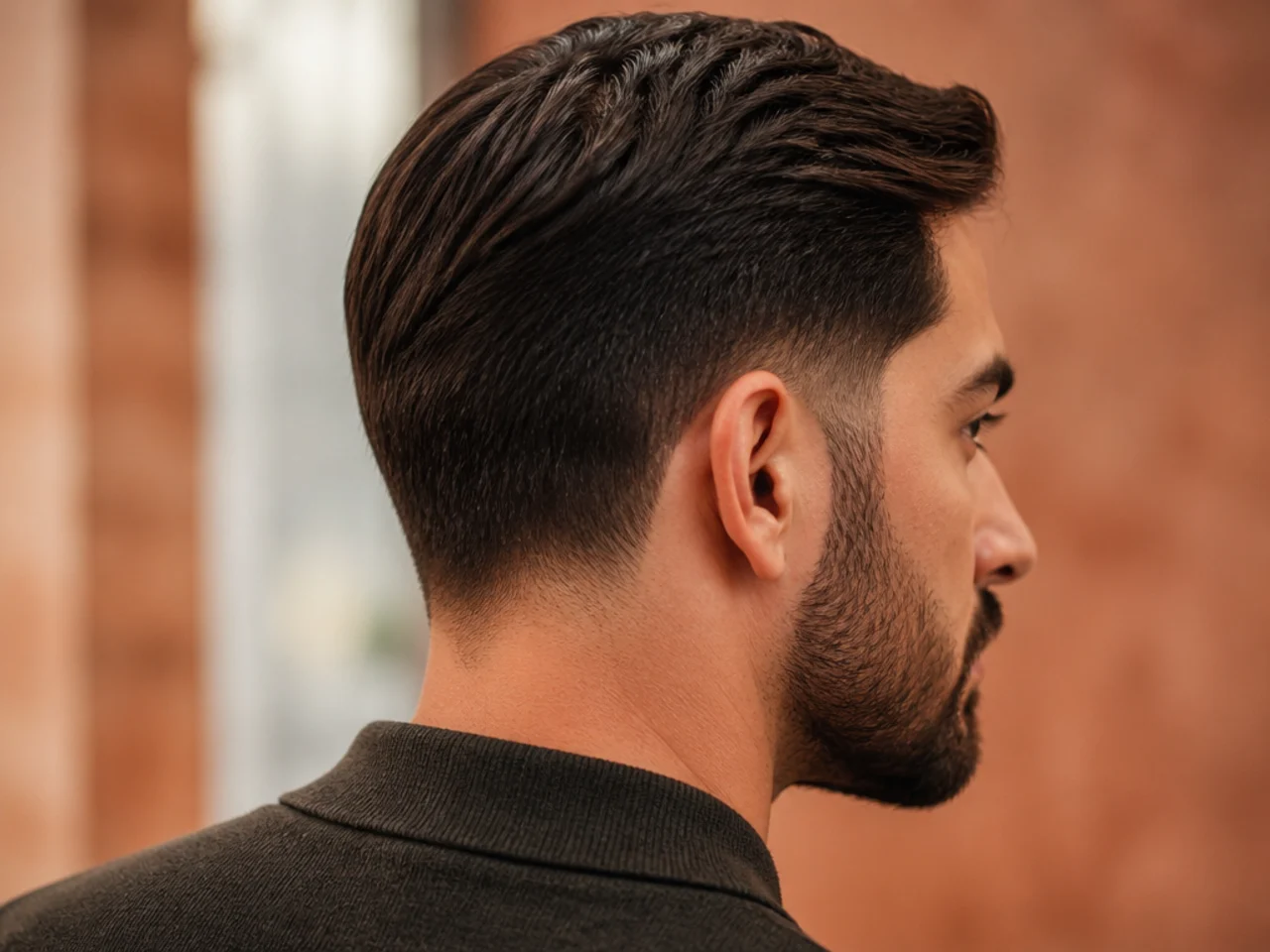
Blunt for a defined edge, tapered for one that grows out invisibly. It is the part of the cut you will never see and everyone behind you will.

13. Say What the Front Hairline Should Do
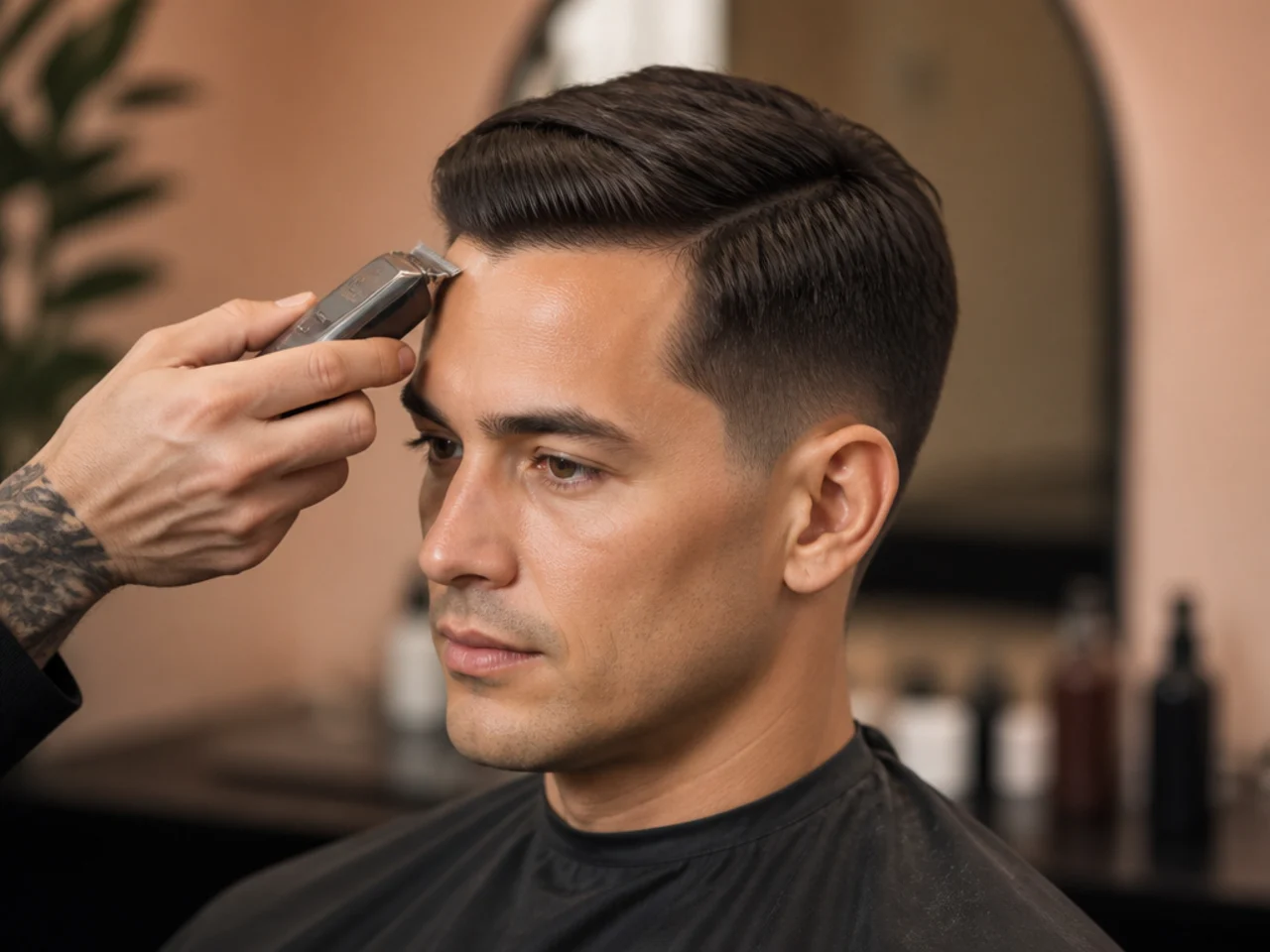
Squared for a sharp frame, left natural for a softer one. Squaring it is the fastest way to make a cut look shorter without losing top length.
14. Say Where the Sideburns End
Top of the ear, middle, or bottom. It changes the proportion of the face more than any guard number does, because the sideburn marks where the eye reads the side of the face as ending, and a centimetre either way lengthens or shortens the whole head.
15. Say Whether It Connects to a Beard
Connected into one gradient or clearly separate. A near-miss between the two lines is the most common way a haircut and a beard go wrong at the jaw.
16. Ask for Texture If You Want It
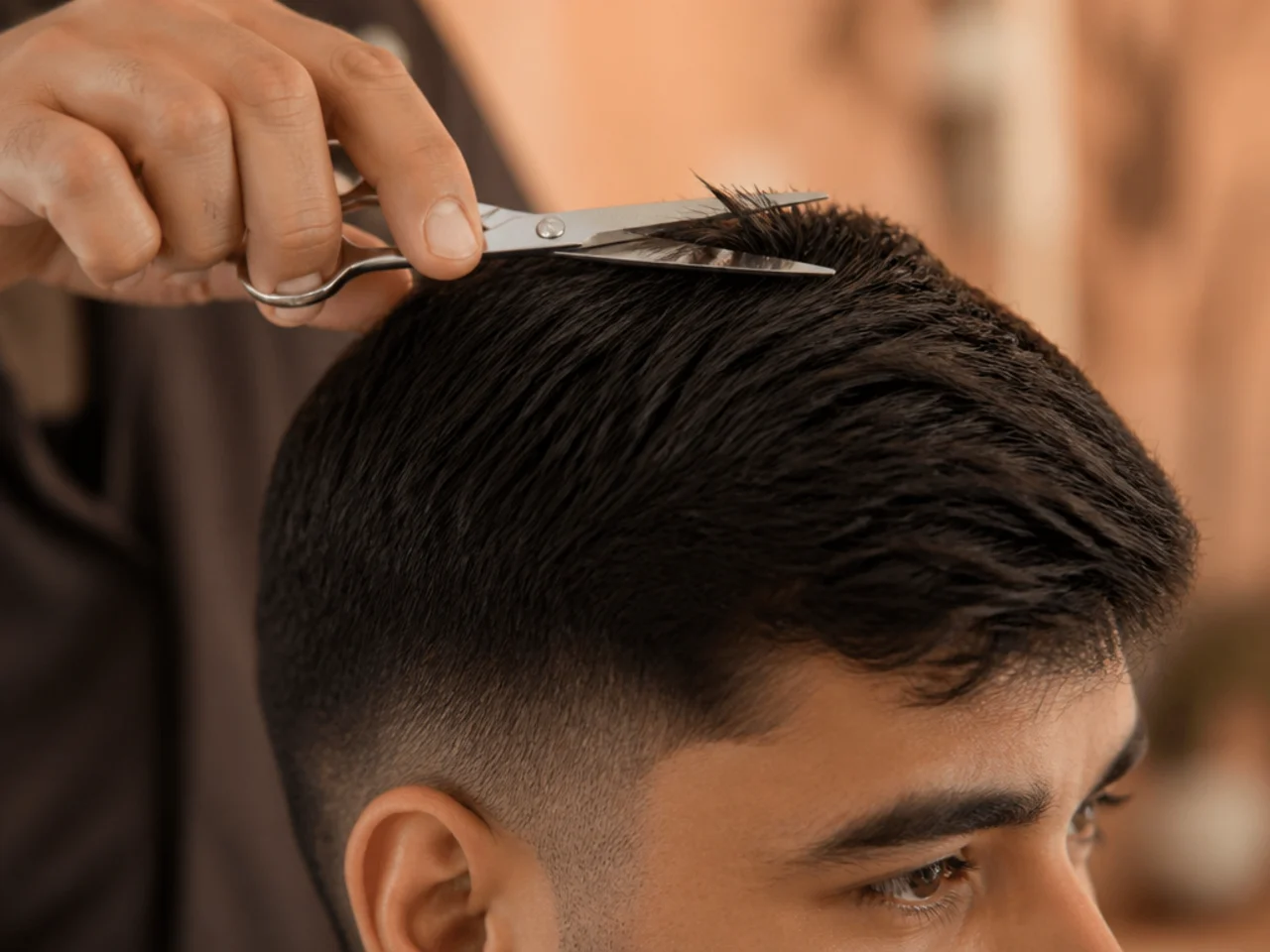
"Point cut the top." It removes weight without removing the length the part depends on, and it is a scissor technique the barber has to choose to use.
17. Ask Them to Comb the Part Before Drying
It is the only check that matters, and it has to happen while the hair is still damp enough to move. Once it dries in a direction it will not shift without rewetting, so a part that fails after the dryer cannot be corrected in that appointment.
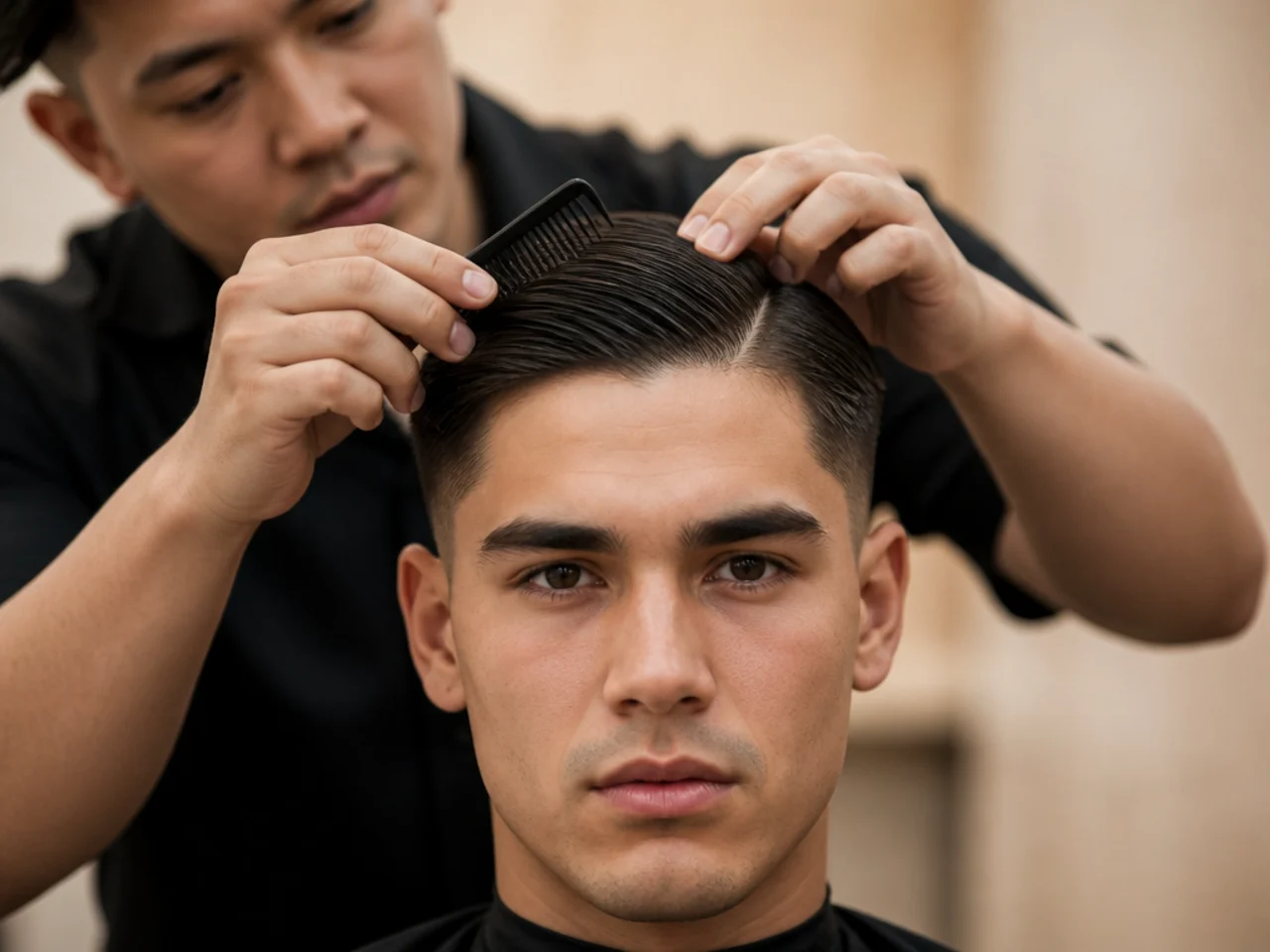
18. Check the Part in the Chair, Wet
If it will not sit at this stage it will not sit at home. This is the moment length can still be added back by cutting less elsewhere.

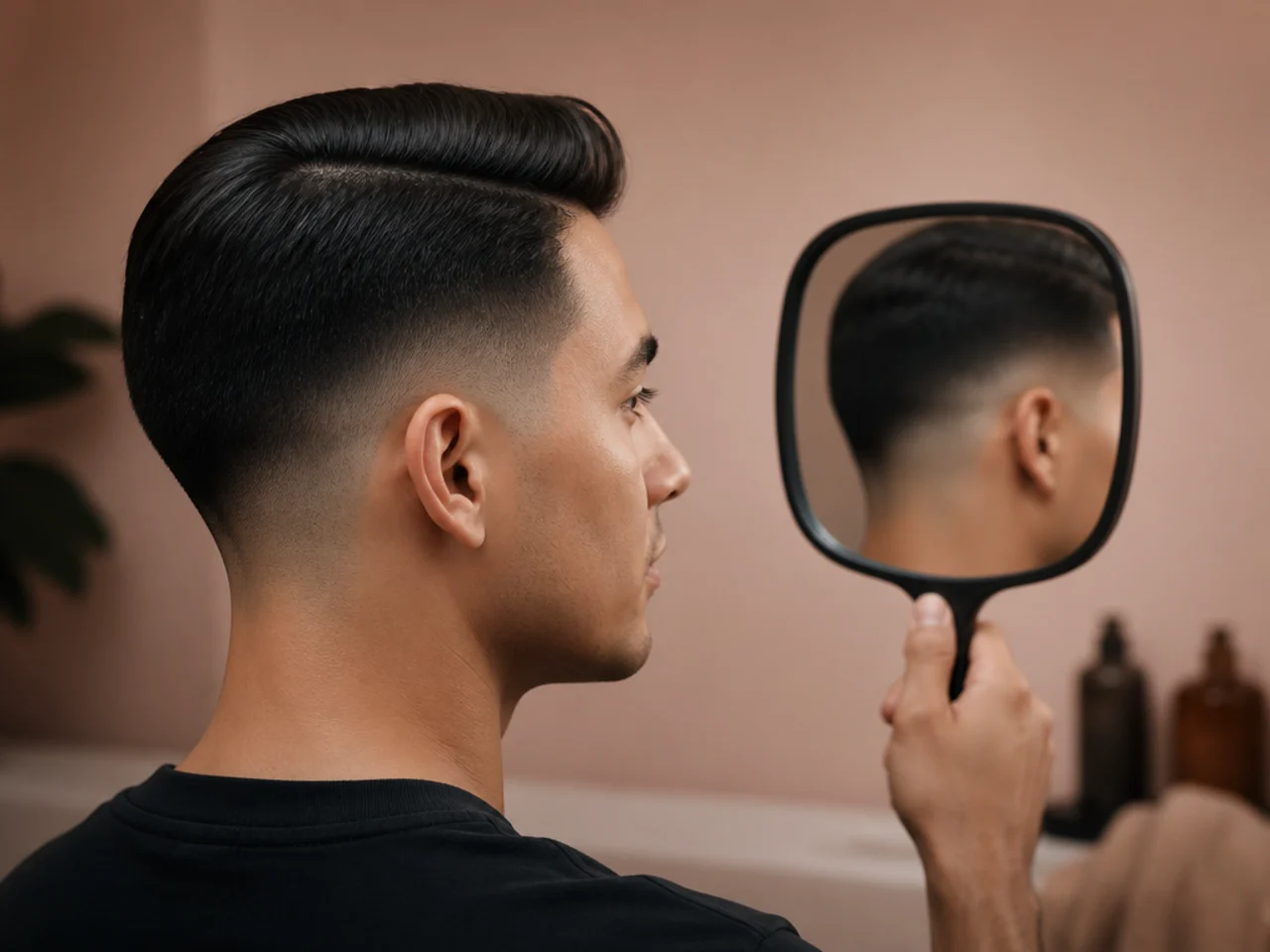
19. Check the Sides in a Hand Mirror
The taper height and the neckline both live where the front mirror does not reach. Both sit behind the ear, and you will not see either of them until you are at home and it is too late to say anything.
20. Write the Numbers Down Afterwards
Top length, taper height, both guards. Four values, and reading them out next time is what makes the cut repeatable. Barbers change, memories fade, and a cut described in four numbers survives both — where a cut described as "the same as last time" does not.

Styling and Upkeep
Read the four numbers out at every appointment. It removes the guesswork that makes each cut slightly different.
Book by the sides, not the top. The sides lose their shape first, and the top keeps improving until week five.
Ask for a sides-only clean-up at two weeks. Ten minutes, no risk to the top length.
Photograph the side profile at week one. It is the reference that carries the information a front-on shot cannot.
Keep the same part side. Hair learns a direction, and switching restarts the clock.

Mistakes to Avoid
Agreeing the sides before the top. The top then gets cut to balance them, and it loses.
Saying "short on top". It is the single instruction that will cost you the part.
Using adjectives instead of numbers. Tidy, neat and short all mean whatever the barber thinks they mean.
Bringing only a front-on photo. It shows nothing about the part or the taper height.
Leaving the neckline and hairline unmentioned. They get defaulted, and the default changes between barbers.
FAQ
What do I say first? The top length, as a minimum, and why you need it.
Why does order matter? Cutting runs top-down, and each decision constrains the next.
Which photo? A side profile — front-on shots hide the part entirely.

Final Thoughts
Say the top length first and frame it as a floor. Everything else on this list is detail that a good barber will handle sensibly, but the one instruction that cannot be recovered from is the one most people leave until last.
For the full range of the cut see the ivy league haircut guide, and for how often to repeat all this see how often should men get a haircut. More in Men's Haircuts.