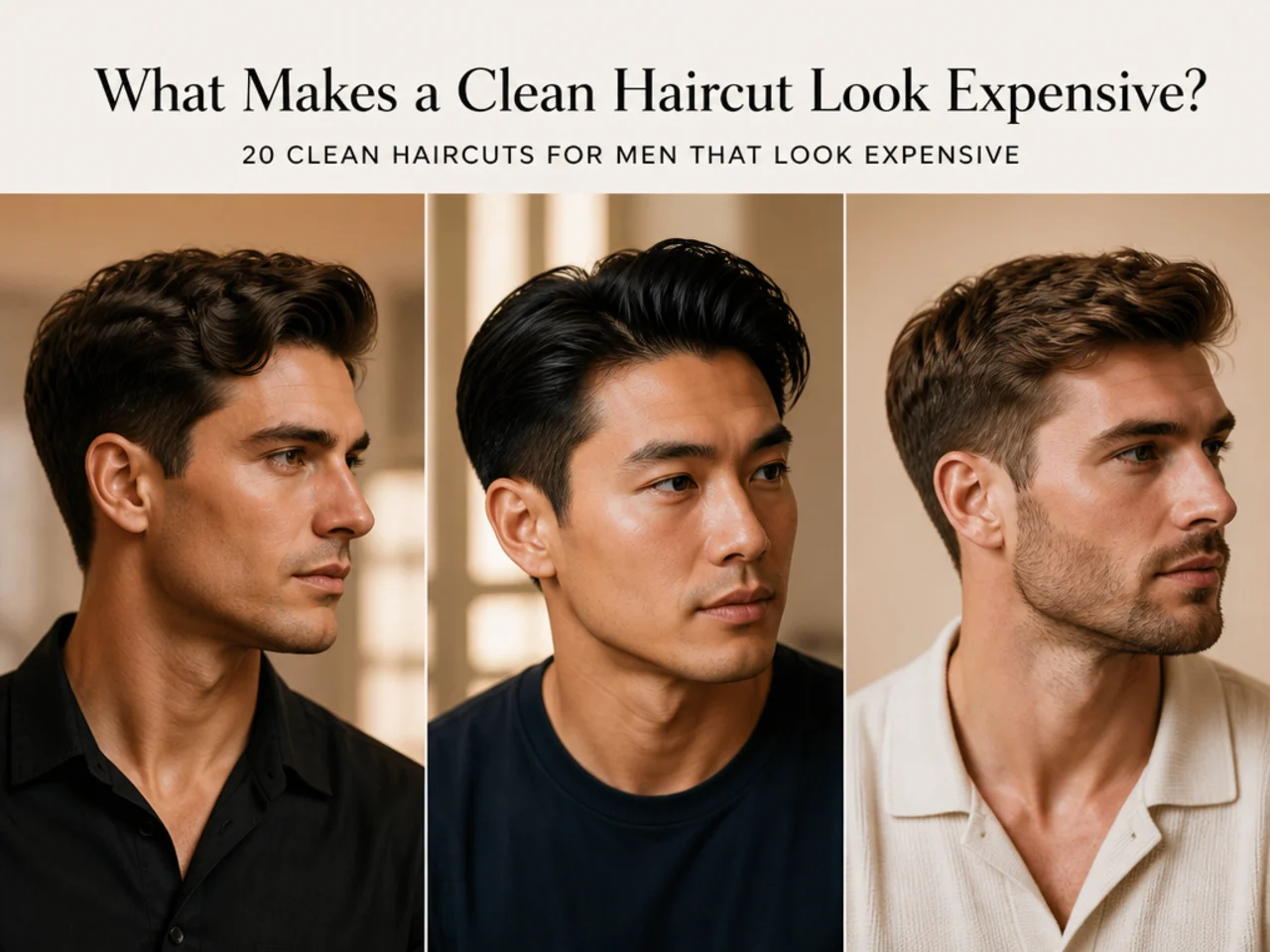
20 Clean Haircuts for Men That Look Expensive
The clean haircut for men is quiet luxury on your head — sharp lines, matte finish, tailored perimeter. Twenty expensive-looking cuts and how to ask.
In this article · 33
- What Makes a Clean Haircut Look Expensive?
- How to Choose Your Clean Haircut
- The Twenty Clean Haircuts
- Old Money Side Part
- Ivy League
- Tailored Slick Back
- Executive Contour
- Precision Crew
- Sharp Caesar
- Tapered Pomp
- Crisp French Crop
- Quiet Luxury Undercut
- Business-Safe Fade
- Banker Cut
- Minimalist Skin Fade
- Classic Taper
- Disconnected Clean
- Editorial Short
- Capsule Crop
- Prep-School Comma
- Low-Key Drop Fade
- Structured Buzz
- Sculpted Comb-Over
- How to Ask Your Barber
- Styling & Maintenance
- FAQ
- What is the cleanest haircut for men?
- Is a fade or a taper cleaner?
- Which clean haircut suits thin hair?
- Does a clean haircut for men work on curly hair?
- How much should a clean haircut cost?
- How often should I get a clean haircut?
- Final Thoughts
Clean doesn't mean short — it means tailored. Every cut in this guide shares the same quiet-luxury signals: matte finish, sharp perimeter, no visible mess. Nothing loud, nothing trendy, no gimmick. That's what expensive reads as on a head of hair. Below are twenty clean haircuts for men worth asking for, each with the length in inches, the sides in guard numbers, and the exact phrasing to hand your barber.
What Makes a Clean Haircut Look Expensive?
Three signals do most of the work.
The first is the finish. Matte reads considered. Shine reads dated unless it's paired with a formal cut on damp hair for a specific event. A dry clay, cream, or paste is what most of the variations below want. Save the pomade shelf for weddings.
The second is the perimeter. Every clean haircut has a defined edge — the sideburn line, the neckline, and the shape around the ear cut sharp. Skip the perimeter cleanup and a $200 cut looks like a home job by week two. Ask your barber to detail the neckline square or blocked, whichever suits your natural growth.
The third is restraint. One idea per cut. A slicked-back top with a discreet low taper reads sharper than the same cut with a bleached patch or a shaved design. The professional hairstyles for men that keep resurfacing on Pinterest all share this: one clean choice, executed properly. Nothing else asked of the cut.
Every variation below runs those three rules. Once you can spot them, you can spot a clean haircut in a crowd.
How to Choose Your Clean Haircut
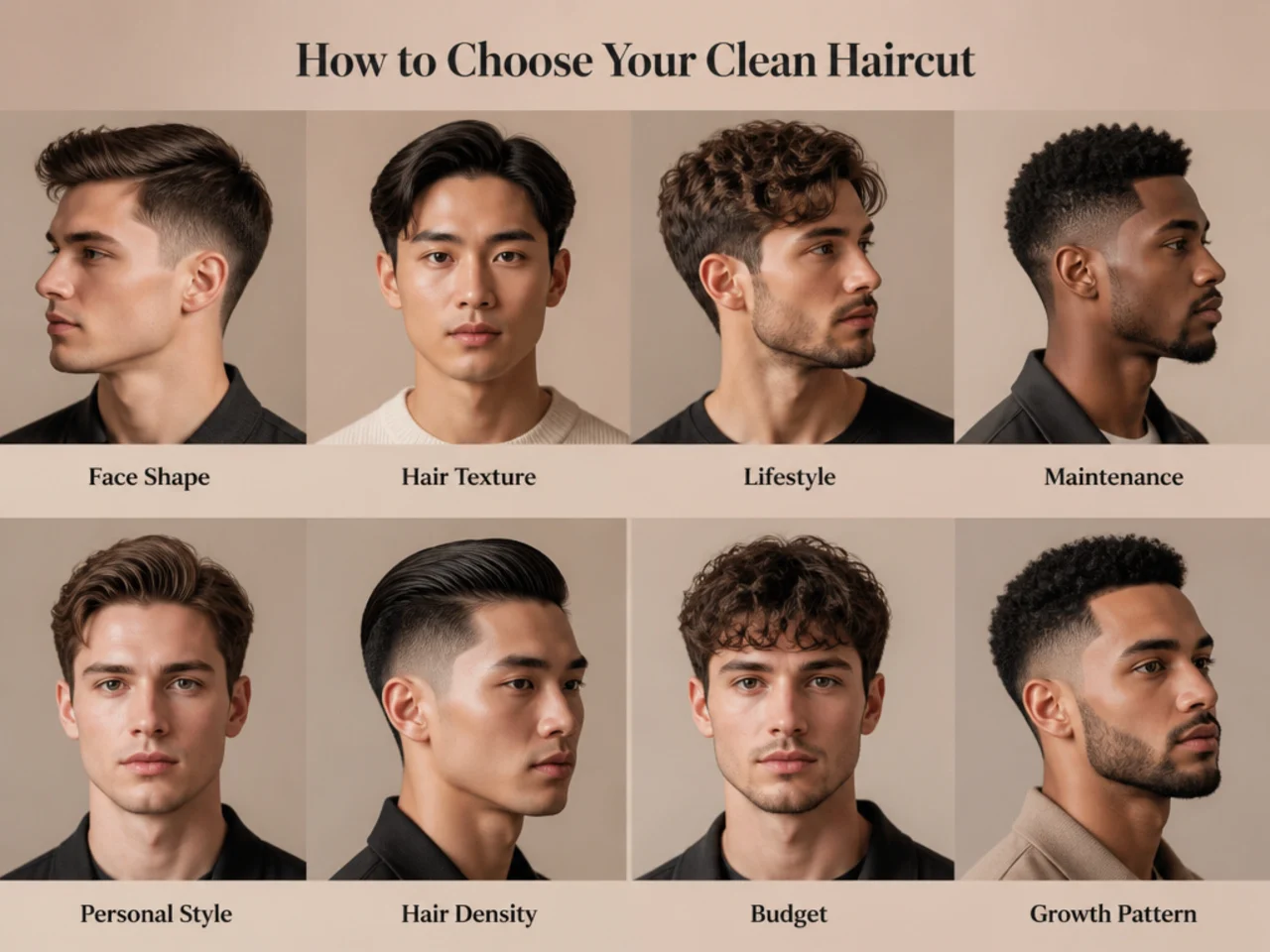
Three quick filters do the narrowing.
Face shape. Round and heart faces read cleaner with vertical lift on top — an old money side part, a tapered pomp, or a precision crew with a slight brush-up. Long faces want length restraint on top and fuller sides — a classic taper, banker cut, or capsule crop. Square and oval faces handle nearly every version here.
Hair type. Straight to loosely wavy hair (types 1 to 2B) suits every cut on the list. Thick or coarse hair prefers a tailored slick back, sculpted comb-over, or executive contour, where the natural weight does styling work for you. Fine hair wants a precision crew, sharp caesar, or crisp French crop — anything short enough to look full without extra product.
Dress code. A boardroom rewards a hard side part, banker cut, or scissor-blended taper — nothing above the ear should show skin. A creative or hybrid office takes a business-safe fade or minimalist skin fade without breaking the quiet-luxury read. Weekends handle a low-key drop fade or disconnected clean with no penalty.
Get all three right and the cut looks chosen for you, not off a page. Bring the mens-haircuts hub up on your phone in the chair for reference.
The Twenty Clean Haircuts
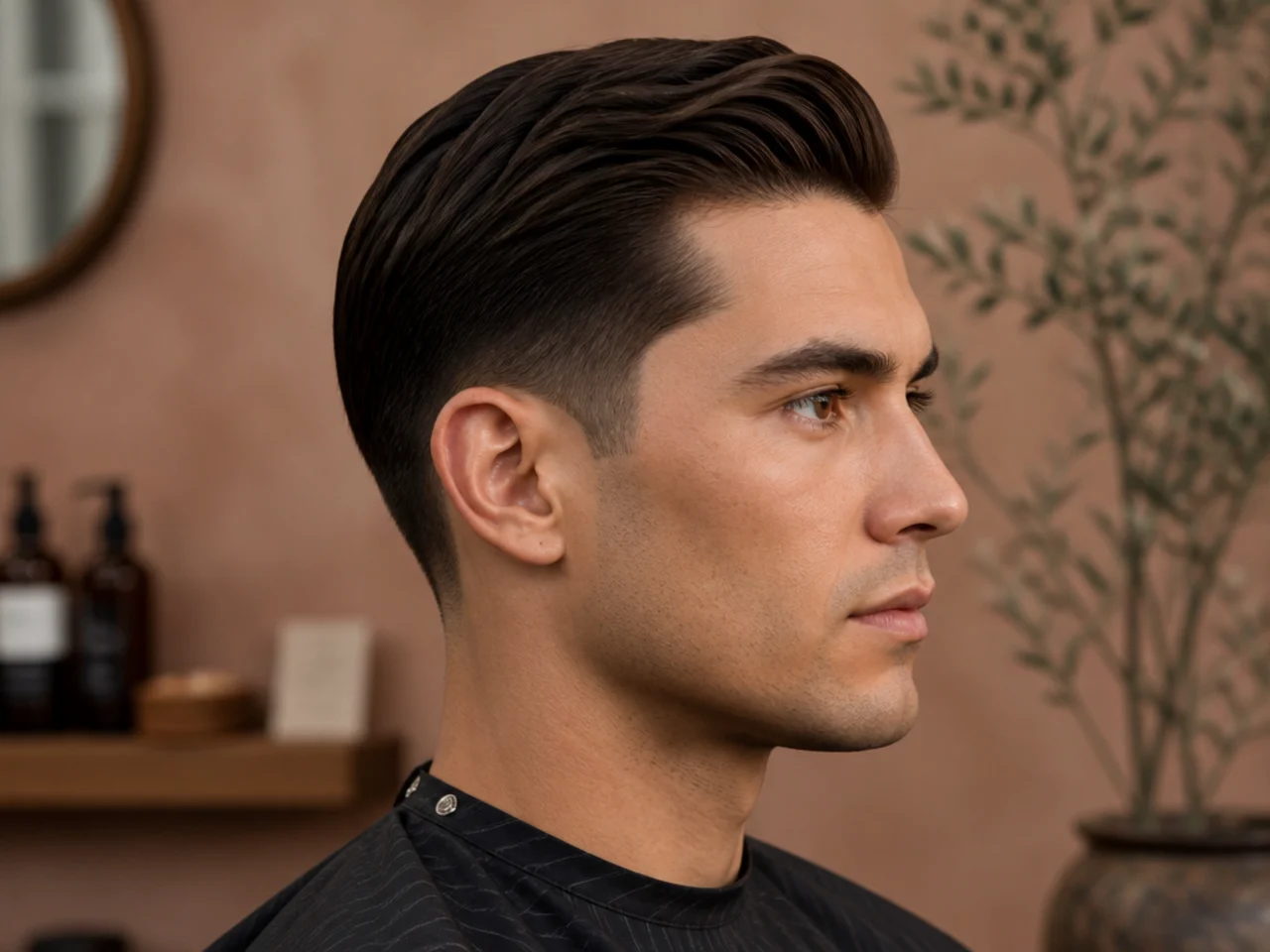
Every version below uses the same three rules — matte finish, sharp perimeter, one idea — and changes exactly one variable: the length on top, the side treatment, or the direction the hair moves. Pick the version that matches your face and hair. Bring the photo. Use the ask line.
Old Money Side Part
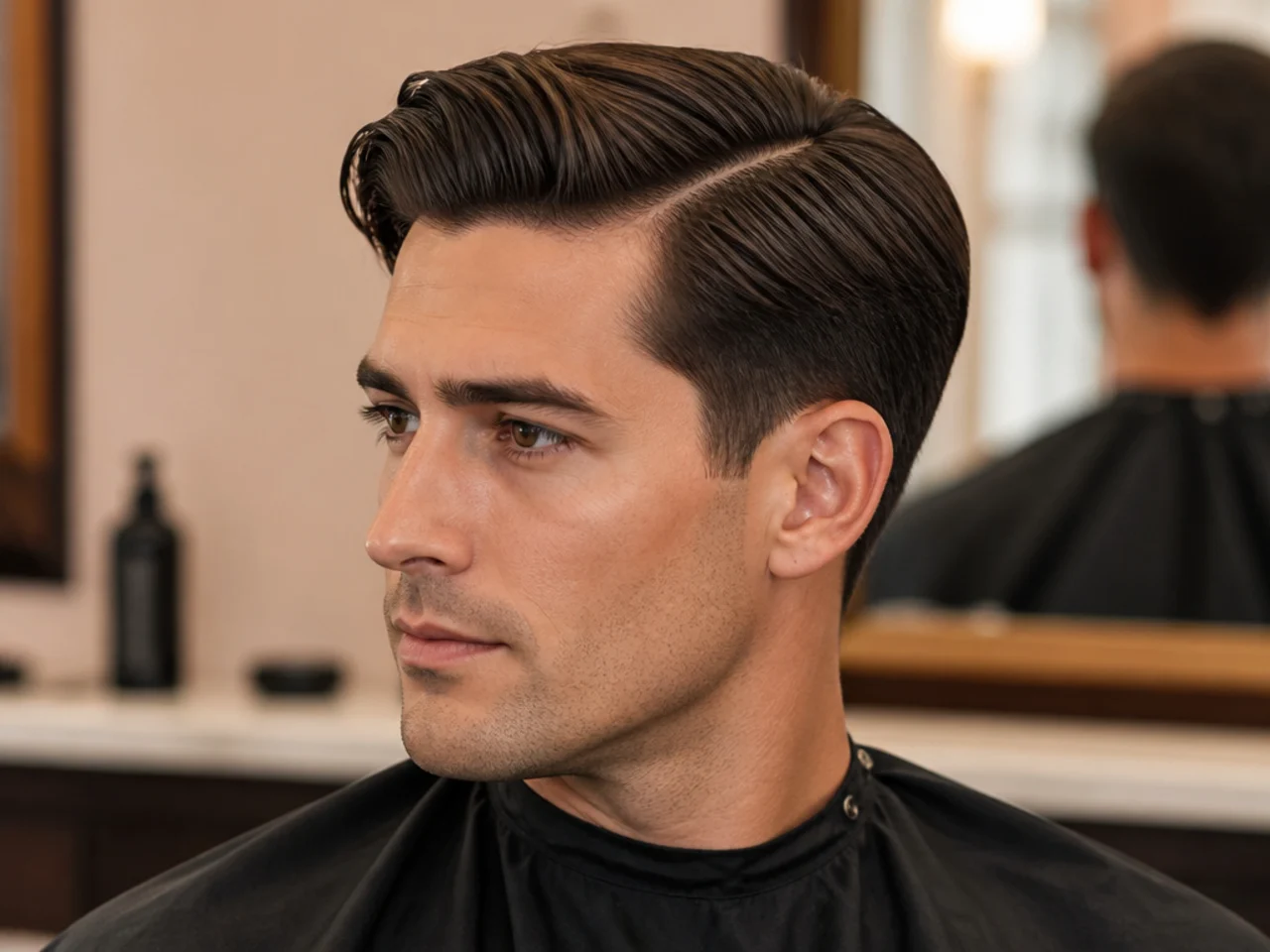
The reference cut for the entire quiet-luxury look. Two to three inches on top, deep natural side part, sides scissor-tapered past the ear. Nothing faded, nothing buzzed. Matte finish, combed once, then left alone. The whole hairstyle relies on the part sitting on your dominant break, not one drawn in with a comb.
It suits oval, square, and long face shapes — the deep part opens the forehead. Straight to lightly wavy hair (types 1 to 2A) holds it best; coarse hair needs a thinning pass.
Ask for a classic side part hairstyle for men, two and a half inches on top, scissor taper down to a #3 above the ear, and a natural side part. Style with a nickel of matte cream on damp hair, combed once from part to ear. No blow-dry.
Ivy League
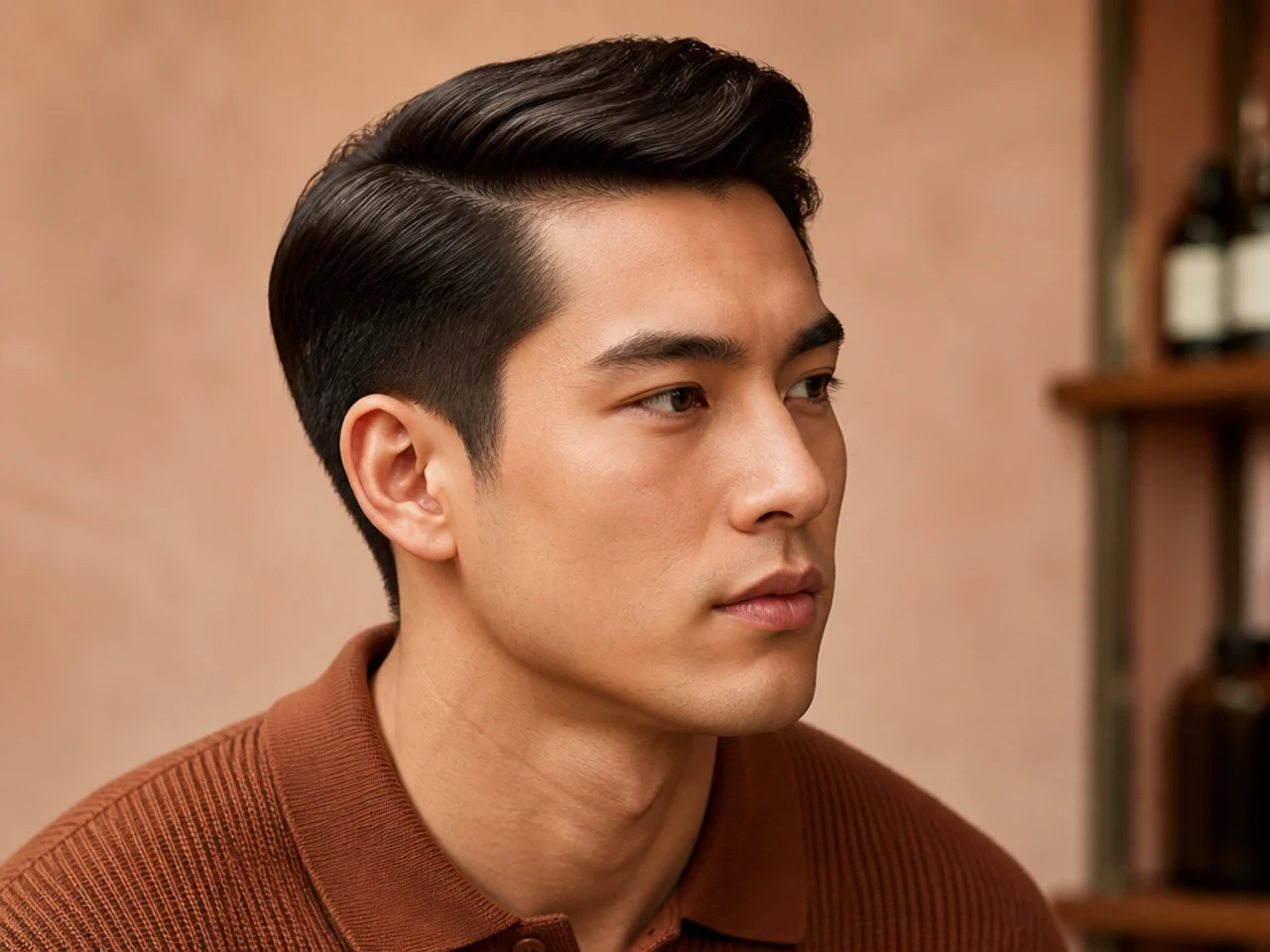
The long crew cut with a part built in. Two to two and a half inches on top — long enough to sweep to the side, short enough to skip a blow-dryer. Sides stay scissor-tapered rather than faded. The version that has gotten men jobs, second dates, and quiet compliments for seventy years.
It works on almost every face shape and every hair type from straight through 2C waves. Skip it if your hair is coarse and dense — the taper reads bulky.
Ask for an ivy league haircut, two and a half inches on top, scissor sides to a #2, and a shallow side part on your natural break. Style with a pea of matte pomade combed through damp hair. Total time: one minute.
Tailored Slick Back
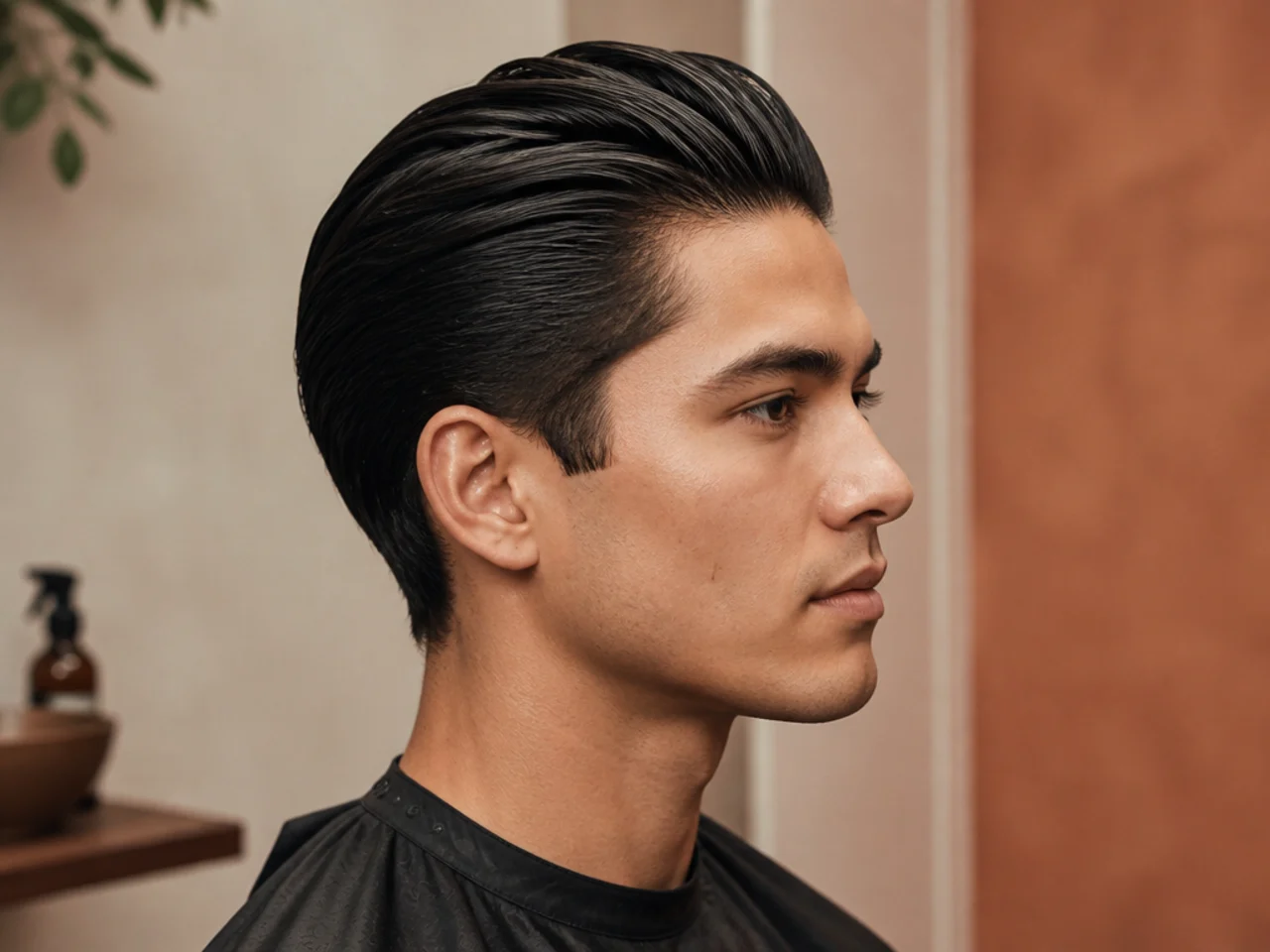
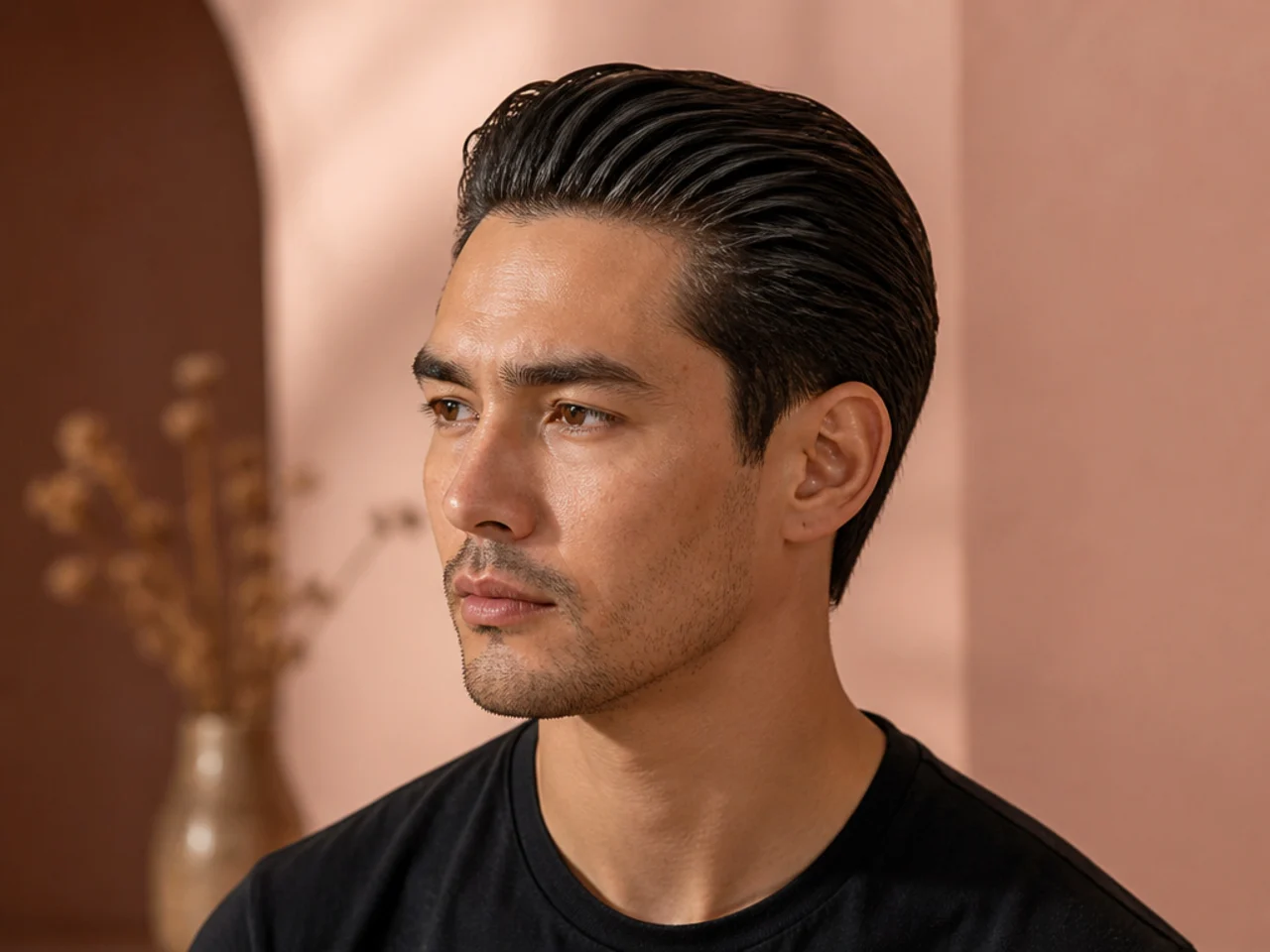
The slick back rebuilt for 2026 — matte finish, scissor-tapered sides, no oil-based pomade in sight. Four to five inches on top so the hair reaches the crown when combed back. The whole cut lives or dies on the side treatment: a scissor-blended taper keeps it quiet, a bright skin fade tips it into statement.
Suits oval, square, and long faces because volume sits on top rather than at the sides. Straight to type 2B waves hold the shape without a blow-dryer.
Ask for a modern slick back haircut, four inches on top, scissor sides no shorter than a #3, and a natural taper at the neckline. Style with a matte clay on towel-dried hair, combed back once with a wide-tooth comb. Finish with your fingers.
Executive Contour
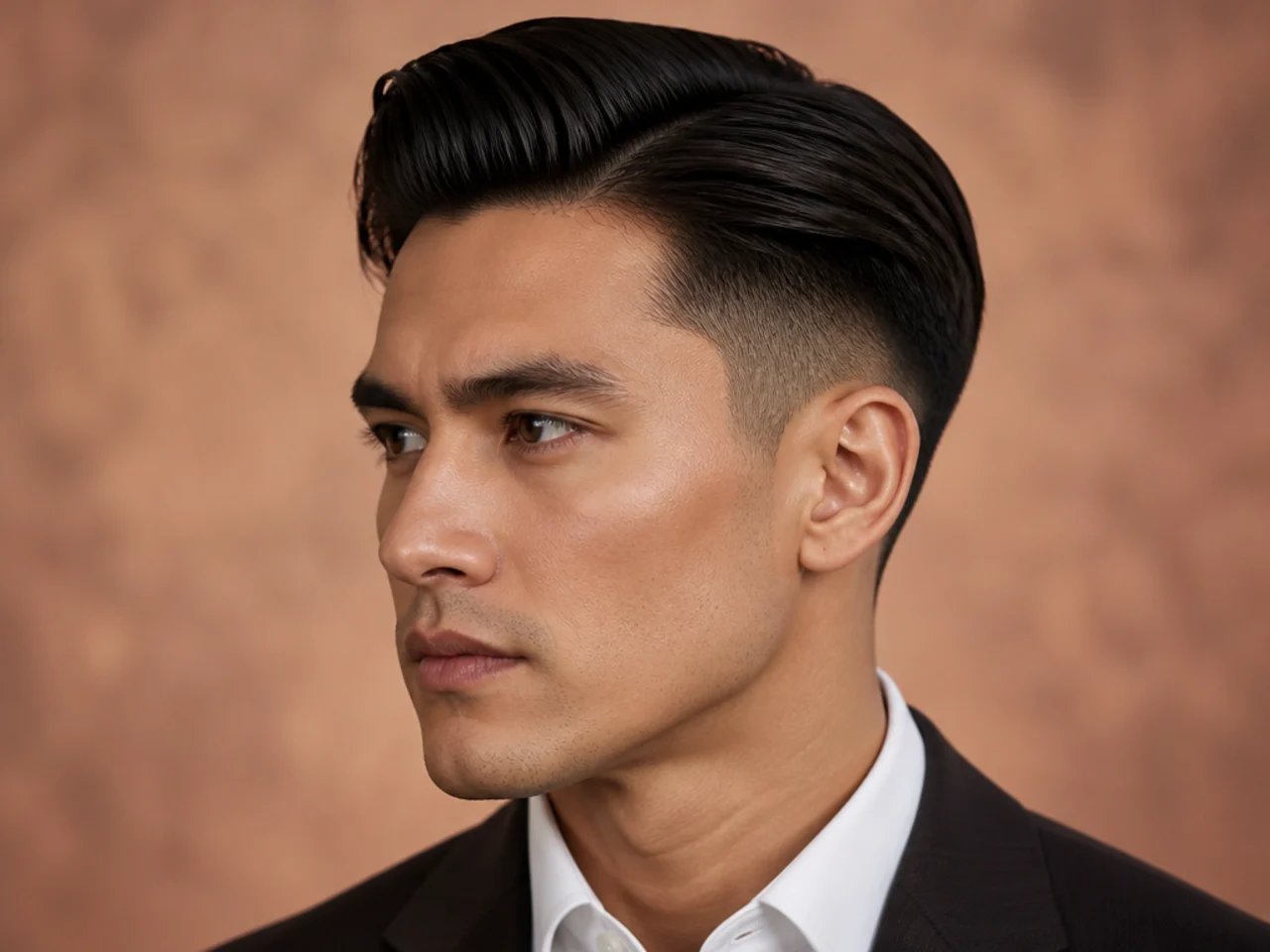
The scissor-sculpted contour is what expensive barbers charge extra for. Three inches on top, cut on the natural shape of your head rather than to a uniform length, so the crown, temples, and back all sit at slightly different lengths that read as one silhouette. No fade, no undercut, no visible transition.
Suits guys over 35 in traditional finance, law, or medicine. Best on straight to lightly wavy hair with enough density to hold a shape.
Ask for a scissor-cut contour, three inches on top blended into a longer scissor taper on the sides, and a soft neckline. Style with a light matte cream combed back or to the side, whichever your hair prefers. Book every three weeks — the shape drifts fast.
Precision Crew
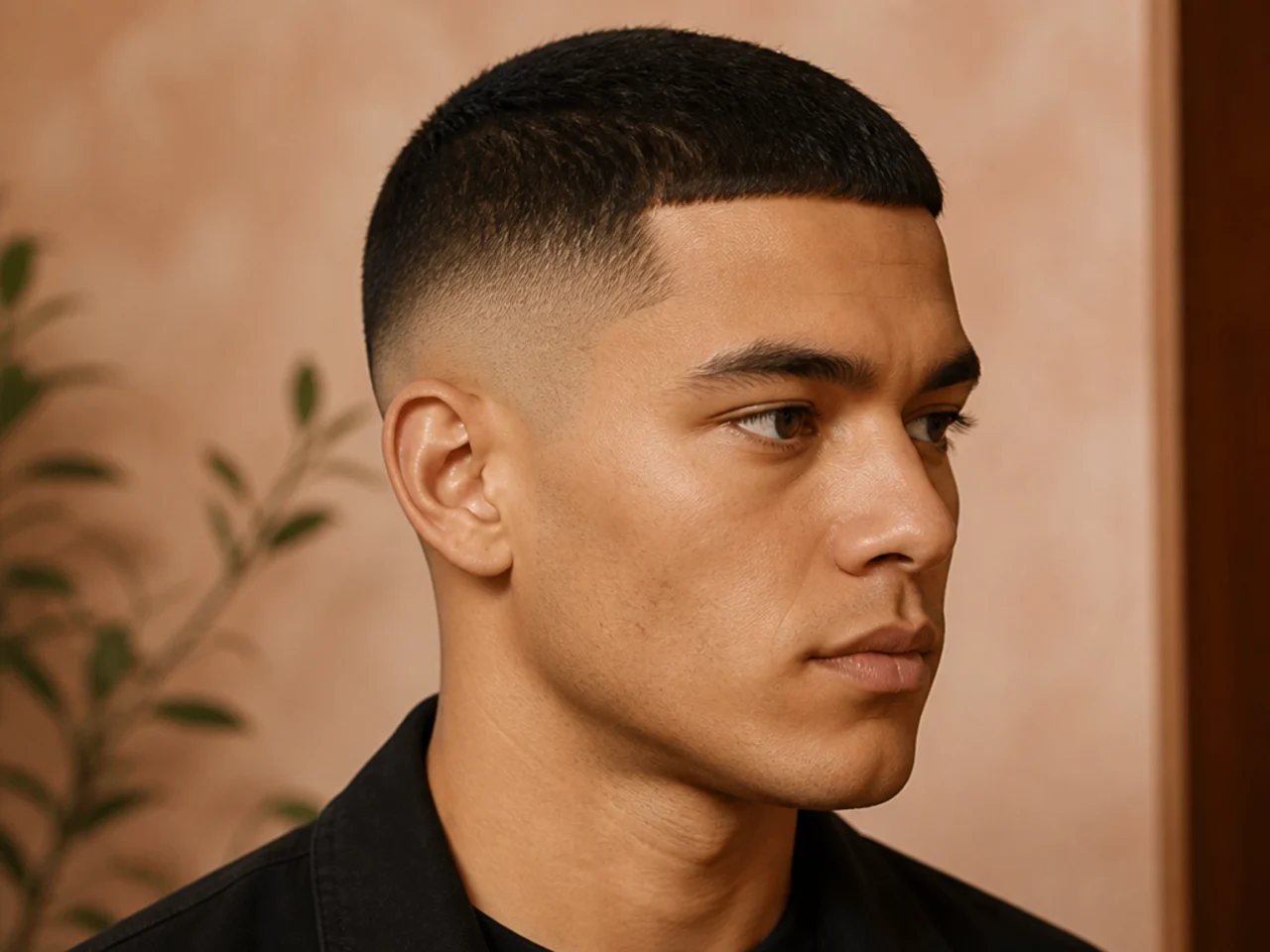
The whole cut is in the edge. Top runs a uniform inch to inch and a half, sides taper cleanly, and the neckline gets a razor-sharp square finish. No blur at the perimeter, no soft blend at the sideburn — everything sits at a right angle. That's what makes a $30 crew cut look like $80.
Suits every face shape and every hair type. Reads especially clean on strong jawlines and even hairlines.
Ask for a crew cut with an inch and a half on top, a scissor taper on the sides down to a #2, and a razor-squared neckline. Skip the fade — the sharpness comes from the edge, not the gradient. Style with a pea of matte paste rubbed through with your fingertips.
Sharp Caesar
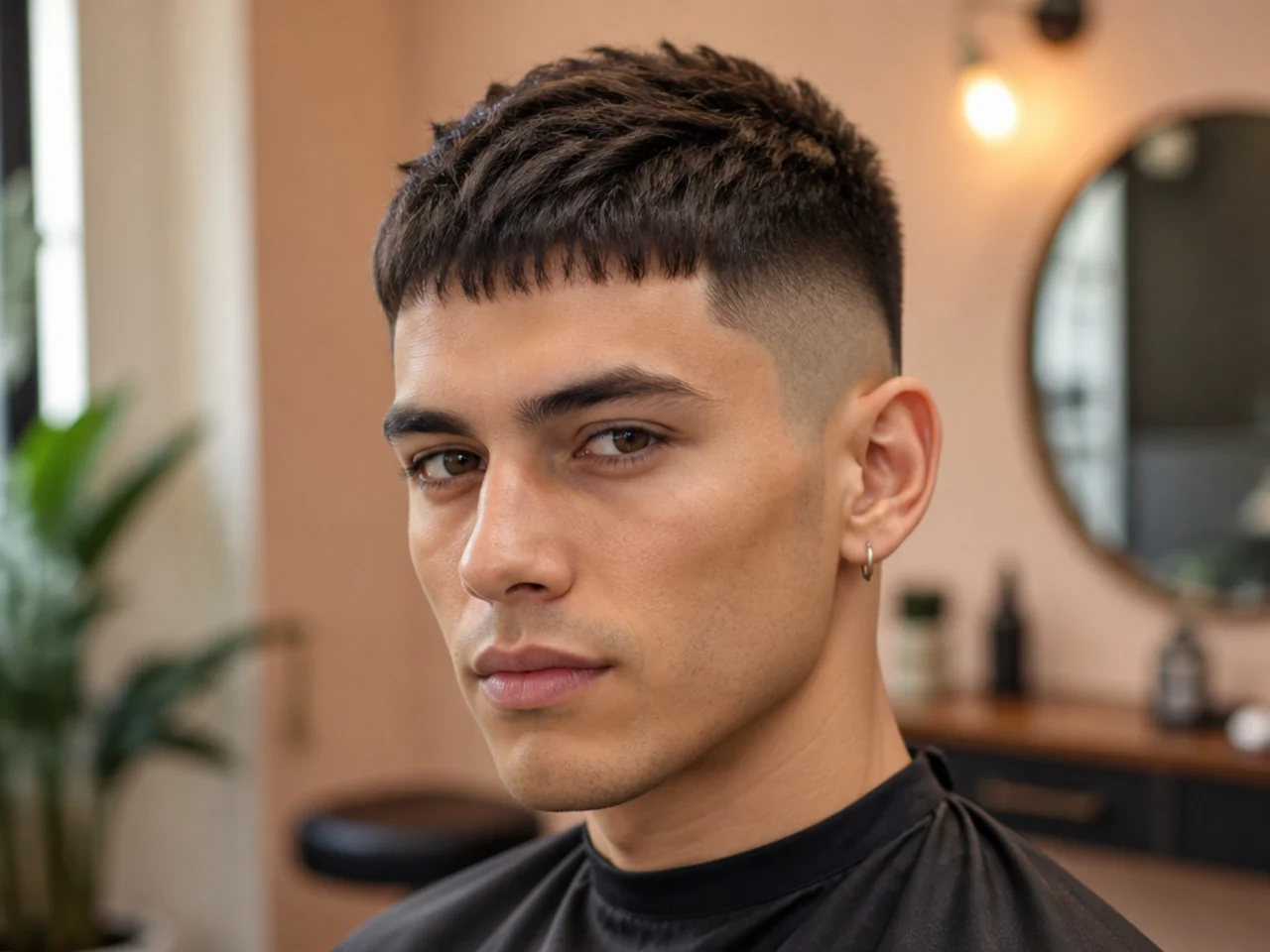
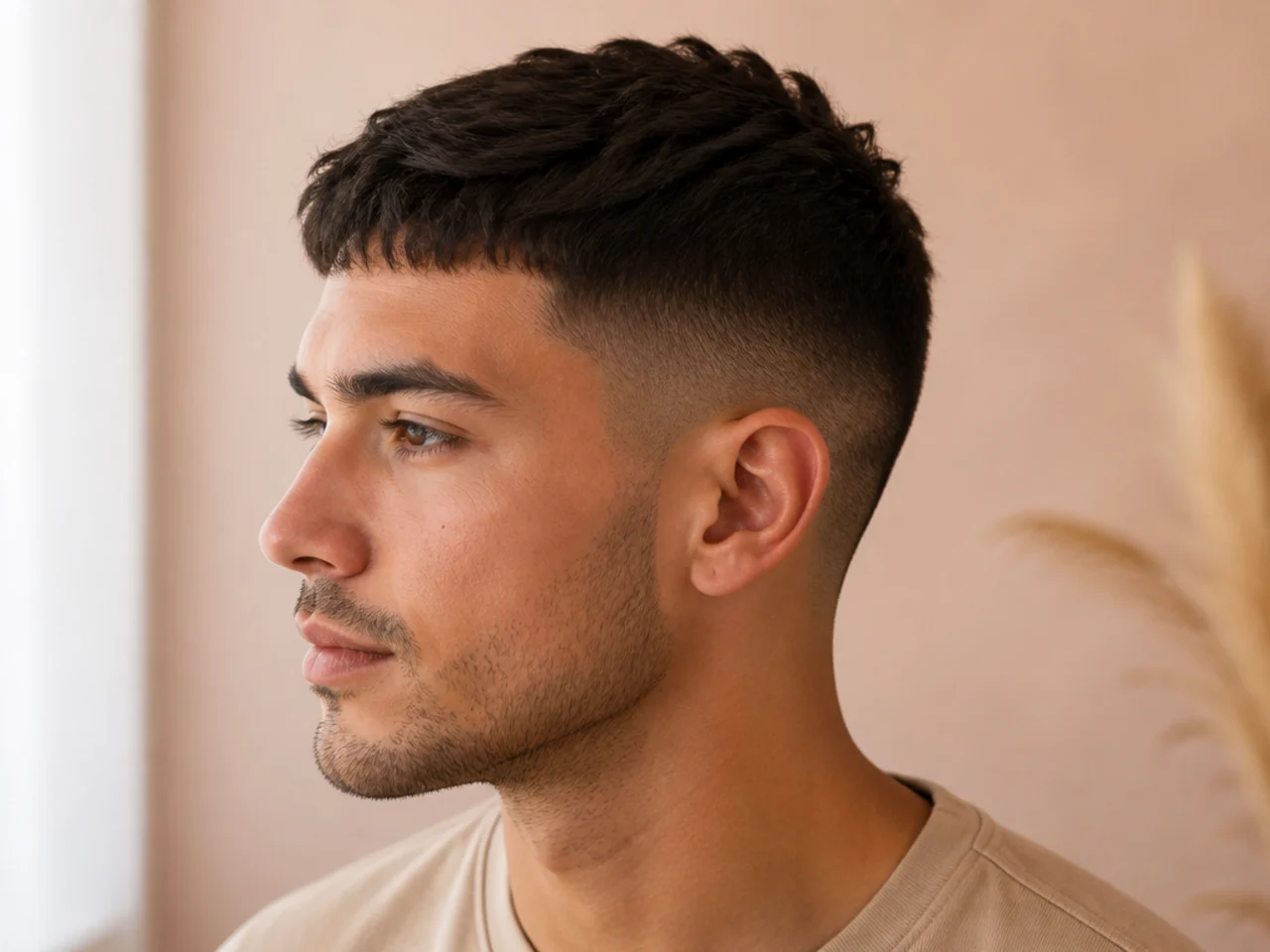
The caesar sits somewhere between the French crop haircut and the crew. A short blunt fringe cut across the brow, an inch to inch and a half of length on top, sides taken to a #1 or #2. What makes the clean version different from the meme version: no clipper-cut top, no visible product, no forward flick.
Suits round and oval faces, high hairlines, and receding fronts — the fringe covers honestly. Straight to lightly wavy hair carries the blunt line best.
Ask for a caesar cut with a blunt fringe half an inch above the brow, an inch on top, and scissor-tapered sides to a #2. Style with a fingertip of matte clay pressed forward with your palm. No comb, no blow-dryer.
Tapered Pomp
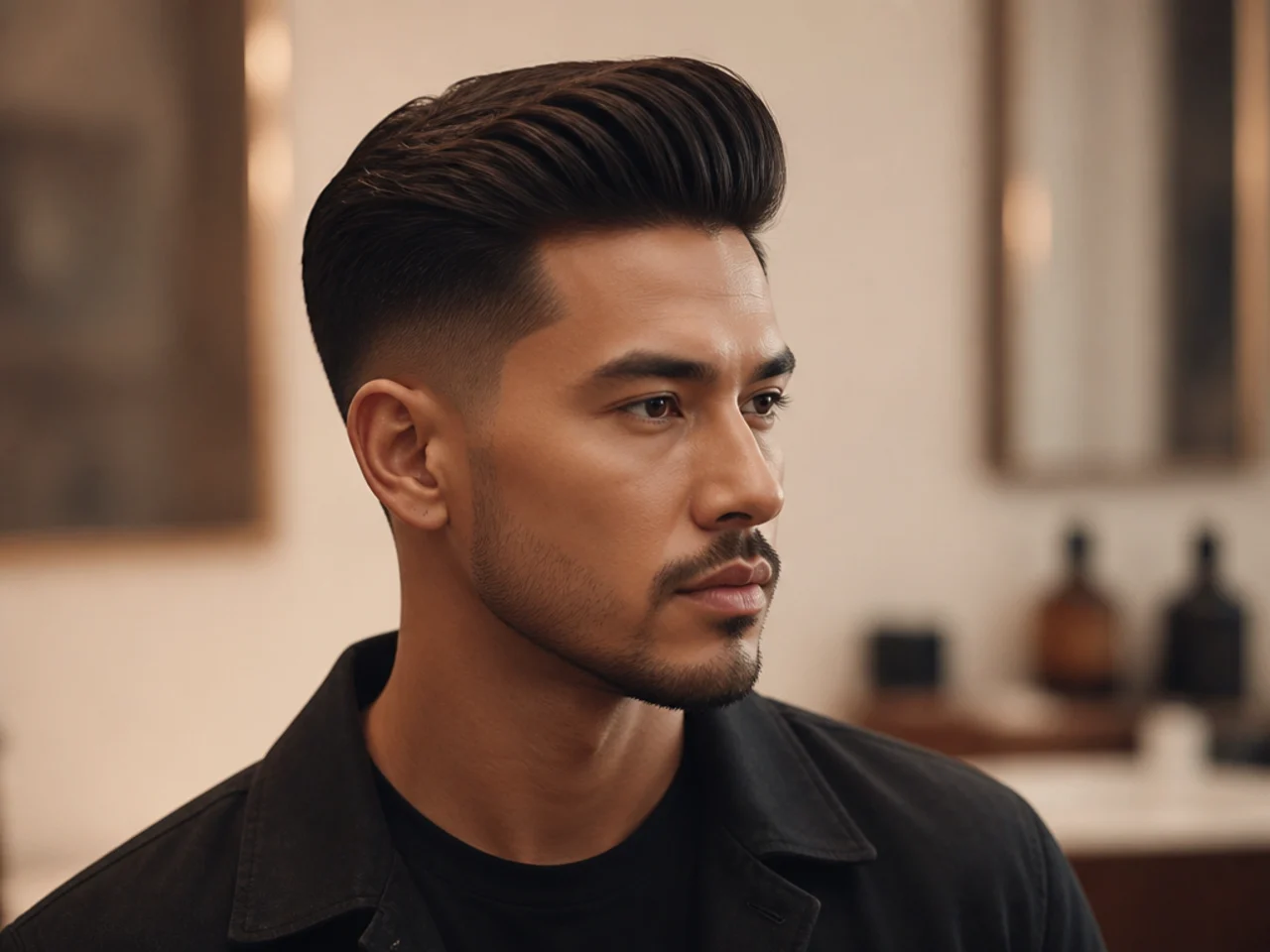
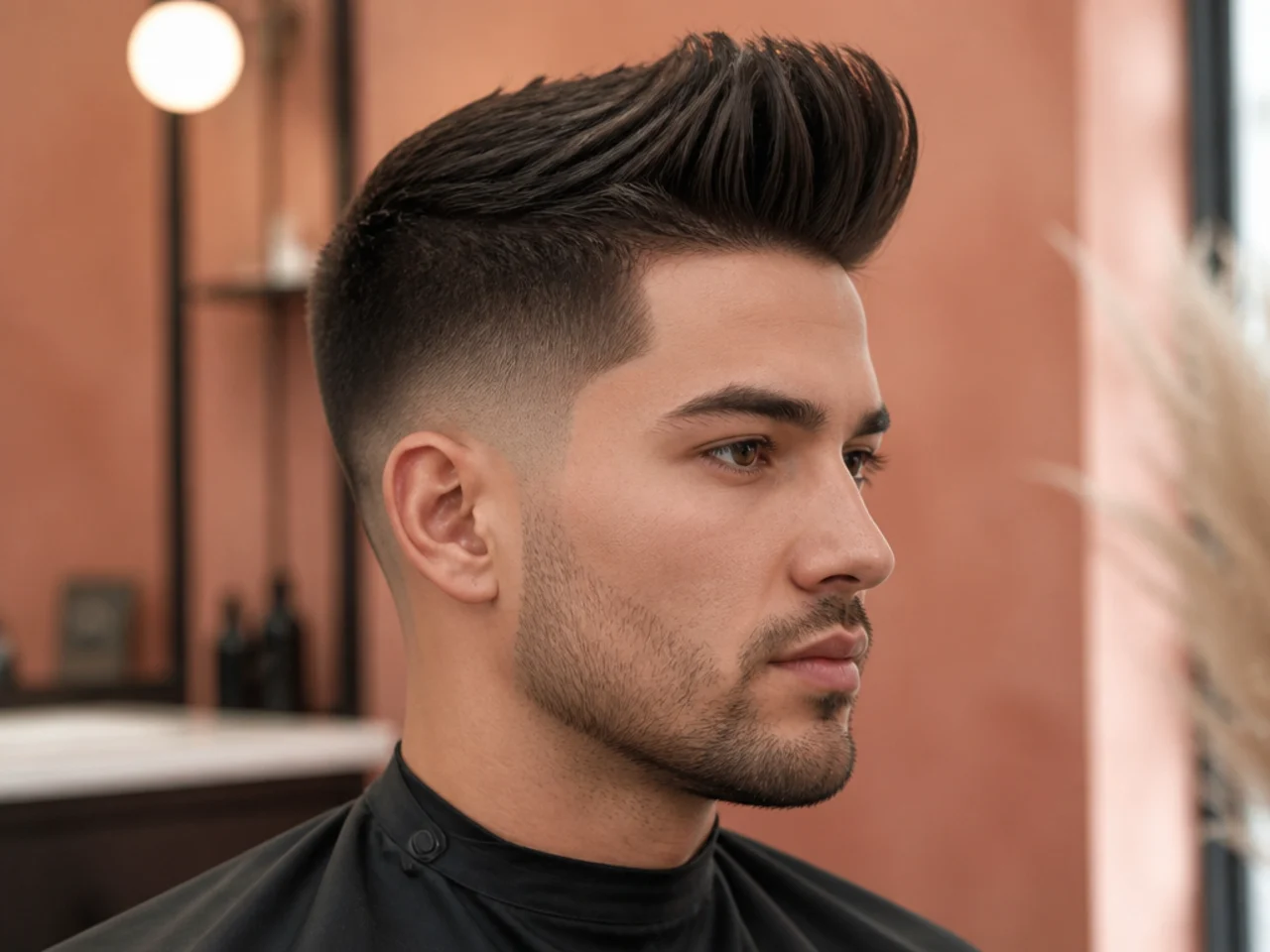
The pompadour rebuilt for men who work in offices. Three inches on top with a natural rise at the front, a scissor taper on the sides that stops well before the ear, and no shaved patch anywhere. The quiff hairstyles for men family runs bigger; this version is the tamer cousin.
Suits round and heart faces because the vertical lift adds length. Works on straight and wavy hair with a bit of natural body; fine hair needs help from a blow-dryer.
Ask for a tapered pomp, three inches on top, scissor taper on the sides to a #2, and a slight lift built into the front. Style with a matte cream on damp hair, blow-dry back and up with a small vent brush, and finish cool.
Crisp French Crop
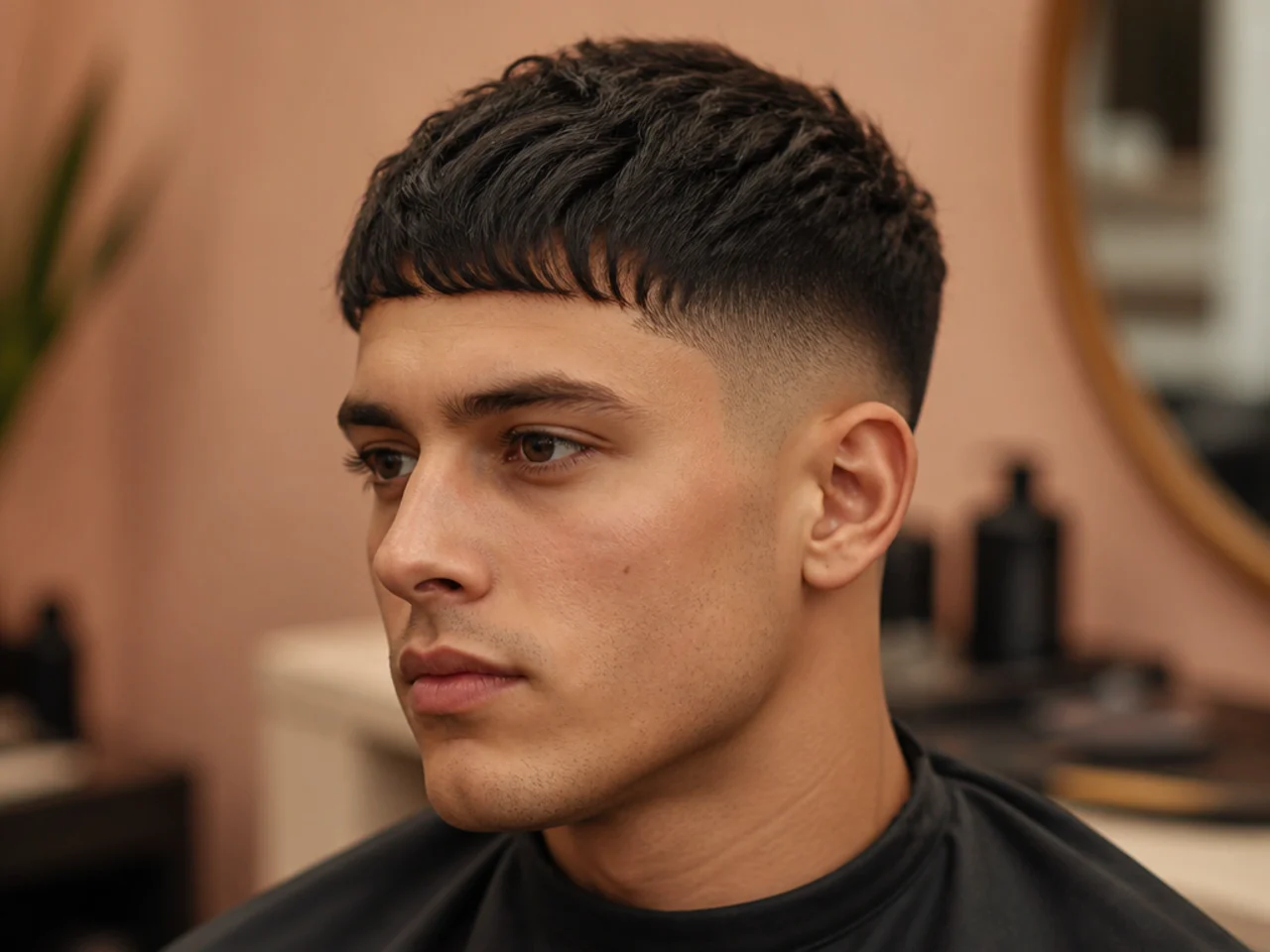
The French crop haircut is already tight; the clean version pulls the fringe an inch shorter and the sides a hair sharper. An inch and a half on top with a blunt fringe just above the brow, a low fade to a #0.5 at the sides, and nothing else. Matte finish always.
Suits high hairlines, receding fronts, and any face shape with a strong jaw. Works on straight, wavy, and lightly curly hair.
Ask for a crisp French crop, inch and a half on top with a blunt fringe half an inch above the brow, a low fade to skin at the low point, and a sharp neckline. Style with a fingertip of matte paste pushed forward with your palm.
Quiet Luxury Undercut
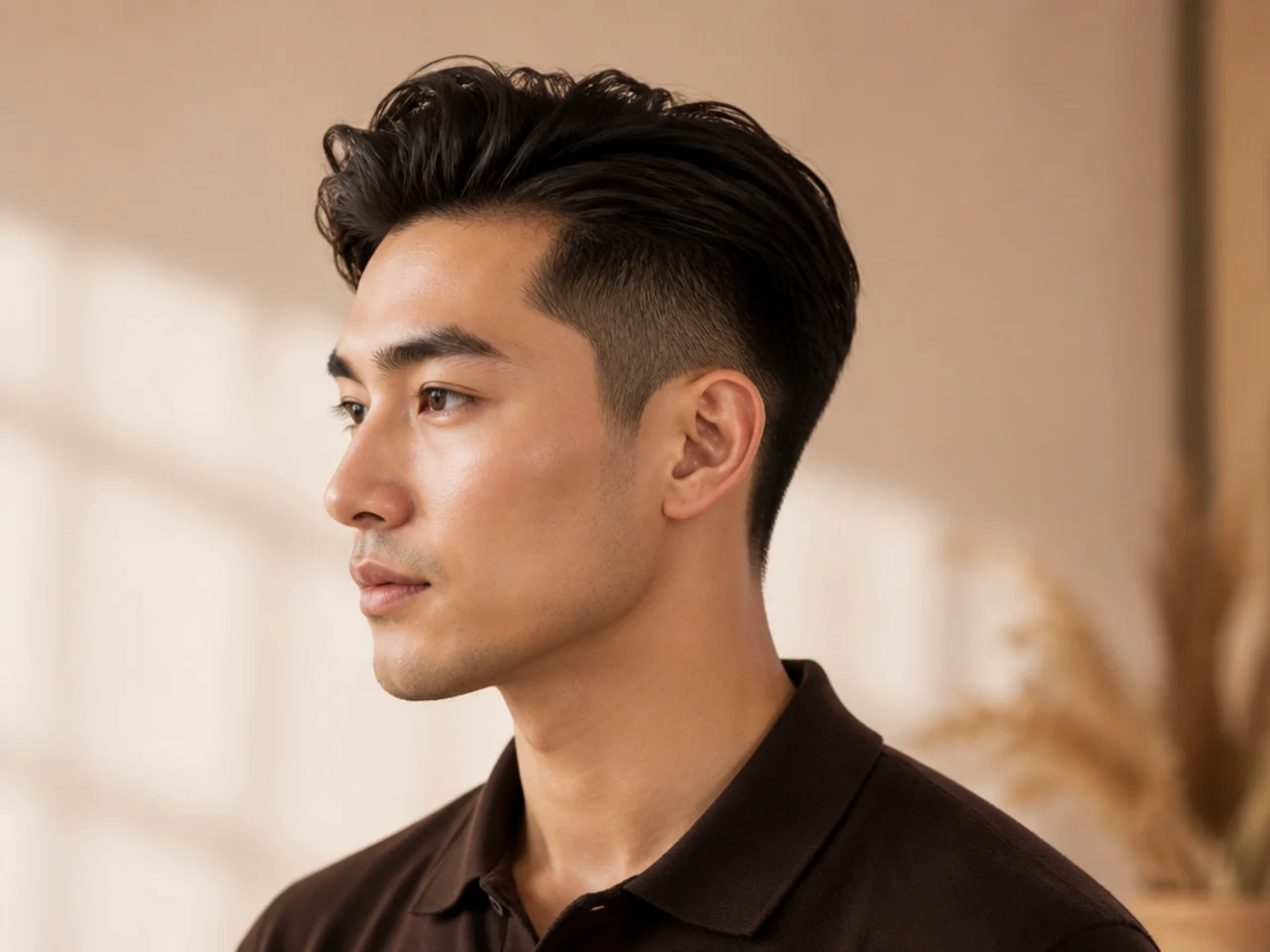
The undercut fade with the shaved-line drama removed. Four inches on top brushed back or to the side, sides cut to a uniform #2 with no gradient, and no hard part. The disconnect is there but soft — the eye reads it as a considered shape, not a statement piece.
Suits oval, square, and long faces. Best on straight to type 2A wavy hair with enough density to sit heavy.
Ask for a quiet luxury undercut, four inches on top, a uniform #2 on the sides all one length, and a scissor-blended transition at the crown. Style with matte cream combed back with a wide-tooth comb, then loosened up with your fingers.
Business-Safe Fade
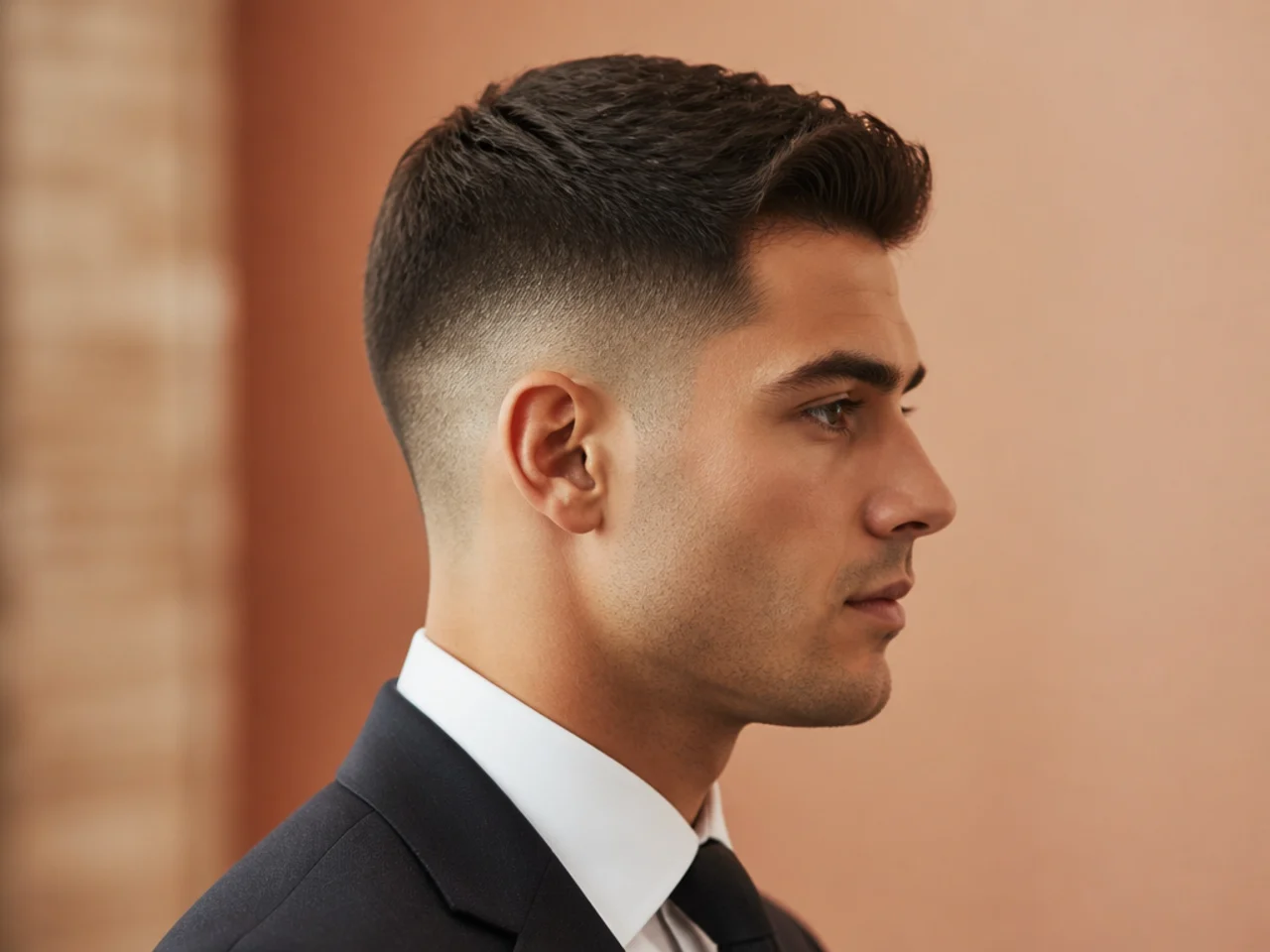
The fade that reads clean in every office in the country. A low fade that stops well below the temple, so from the front nothing shows skin above the ear. Two to three inches on top left long enough to comb, no line-up at the hairline, no design.
Suits every face shape. Works on straight, wavy, and lightly curly hair.
Ask for a business-safe low fade to a #1 at the low point, two and a half inches on top, no design work, and a natural neckline. Style with matte cream combed back or to the side. This is the safe answer when you can't decide — book it and adjust the top variation on the next visit.
Banker Cut
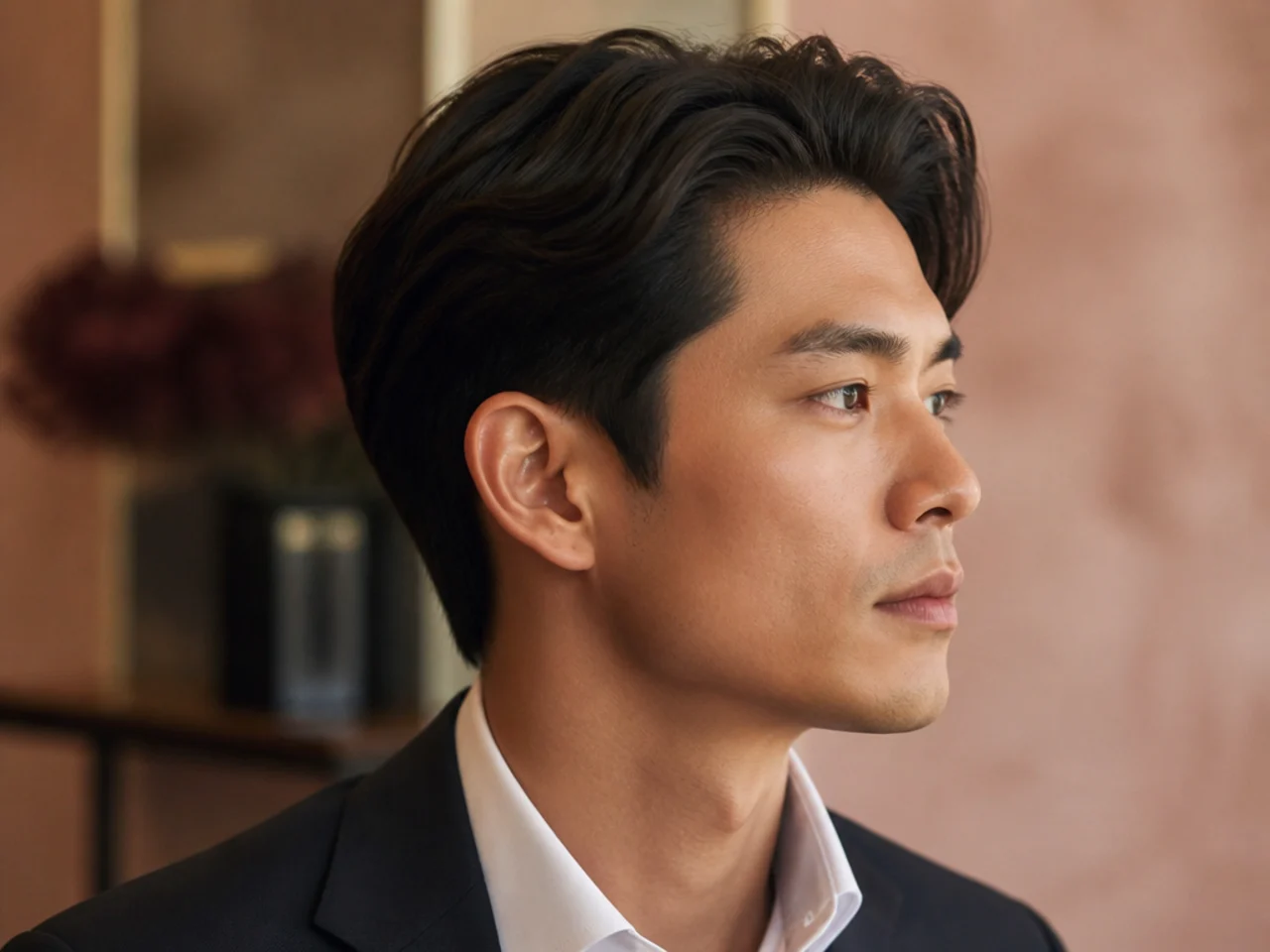
The hard-side-part version of the Ivy League. Three inches on top combed across a razor-defined part, sides scissor-blended shorter and tighter than a standard side part — closer to a #1.5. The hard part is a shaved line on your natural break, not a wide swath.
Suits square and oval faces. Straight hair holds the part cleanest; wavy hair works but needs a light blow-dry.
Ask for a banker cut with a hard part shaved in on the left (or your natural break), three inches on top, scissor-blended sides to a #1.5, and a squared neckline. Style with a light pomade combed across the part in one clean pass. This is the version that works under a suit and still reads modern.
Minimalist Skin Fade
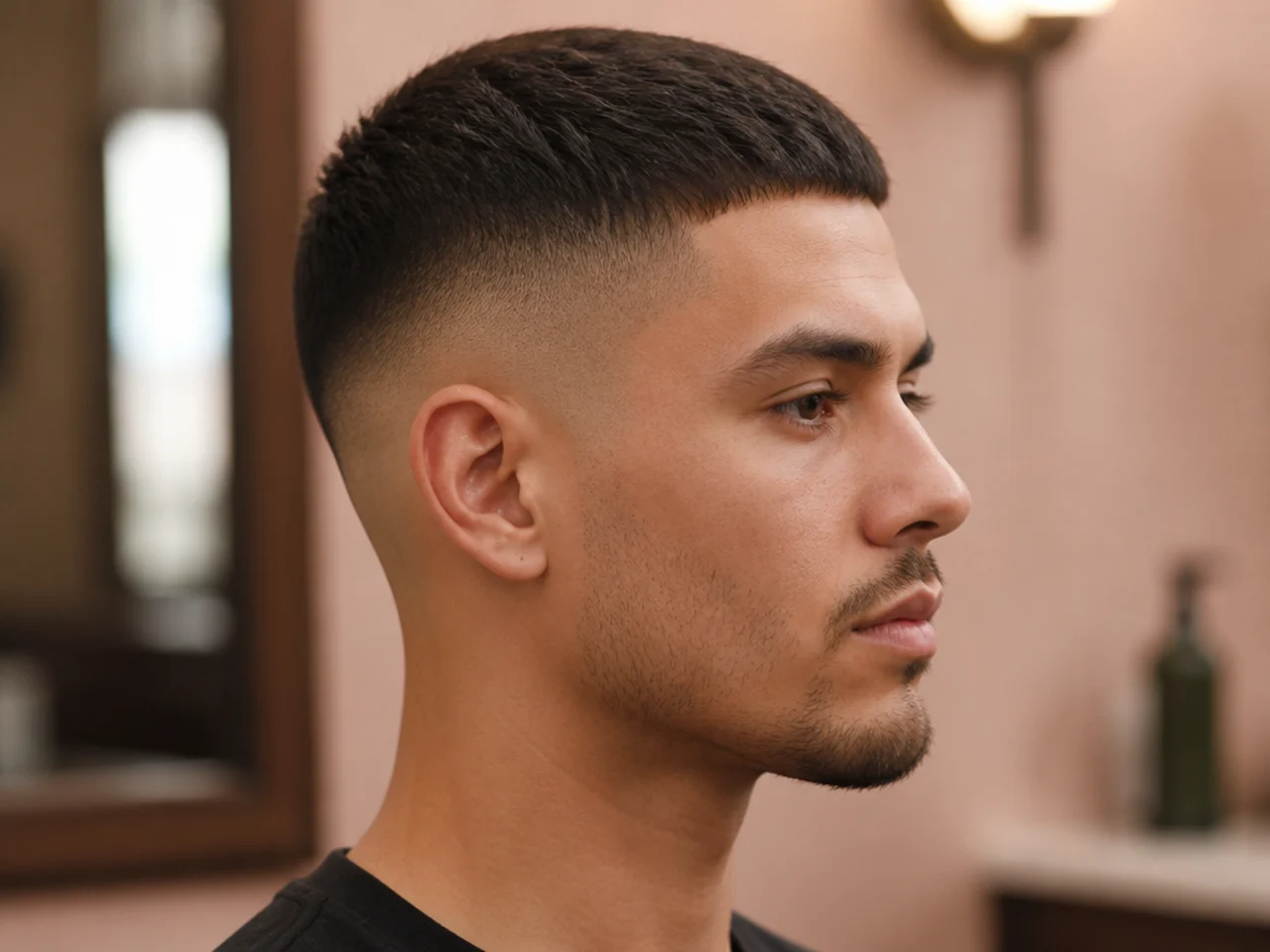
The skin fade stripped of every accessory. Mid or low fade to bare skin, three inches on top scissor-blended, no line-up at the hairline, no hard part, no shaved design. The whole visual read comes from the contrast between the smooth skin at the low point and the matte texture on top.
Suits oval, square, and heart faces. Works best on straight to type 2B waves; tight curls want a taper instead so the pattern still shows.
Ask for a minimalist mid fade to skin at the low point, three inches on top scissor-blended, no line-up, and a soft neckline. Style with matte clay worked through damp hair with your fingers.
Classic Taper
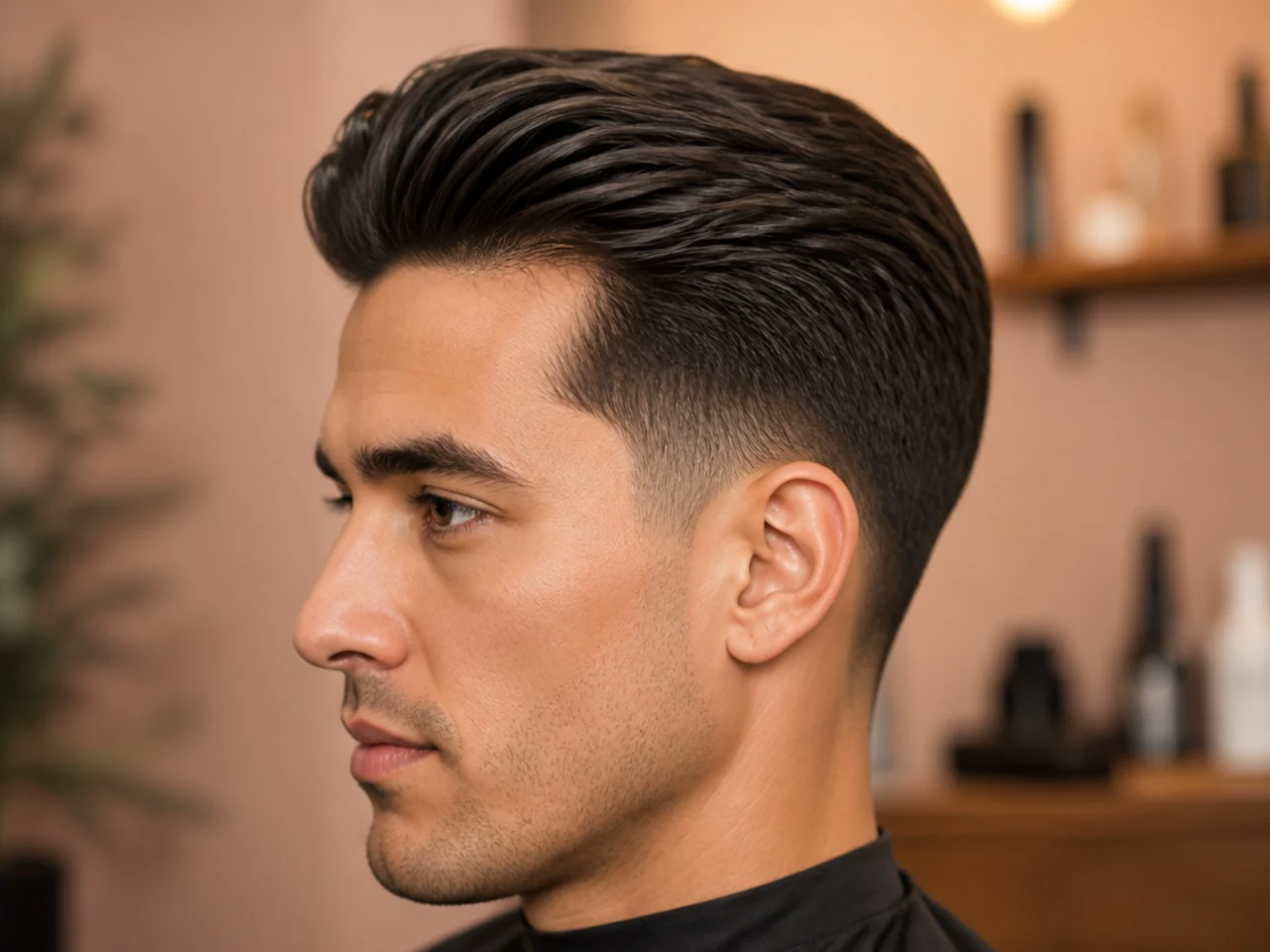
The taper haircut at its quietest. Sides stay long — a #4 or #5 up top blending down to a #2 above the ear — with no skin exposed anywhere. Top runs two and a half to three inches. Nothing about this cut telegraphs "fresh from the barber," which is exactly why older men in offices default to it.
Suits every face shape and every hair type. The cut that grows out with the most grace on the list.
Ask for a classic scissor taper — no clippers on the sides above the perimeter — two and a half inches on top, and a natural neckline. Style with a matte cream combed back or to the side. Book every four to five weeks; the shape drifts slower than any faded cut.
Disconnected Clean
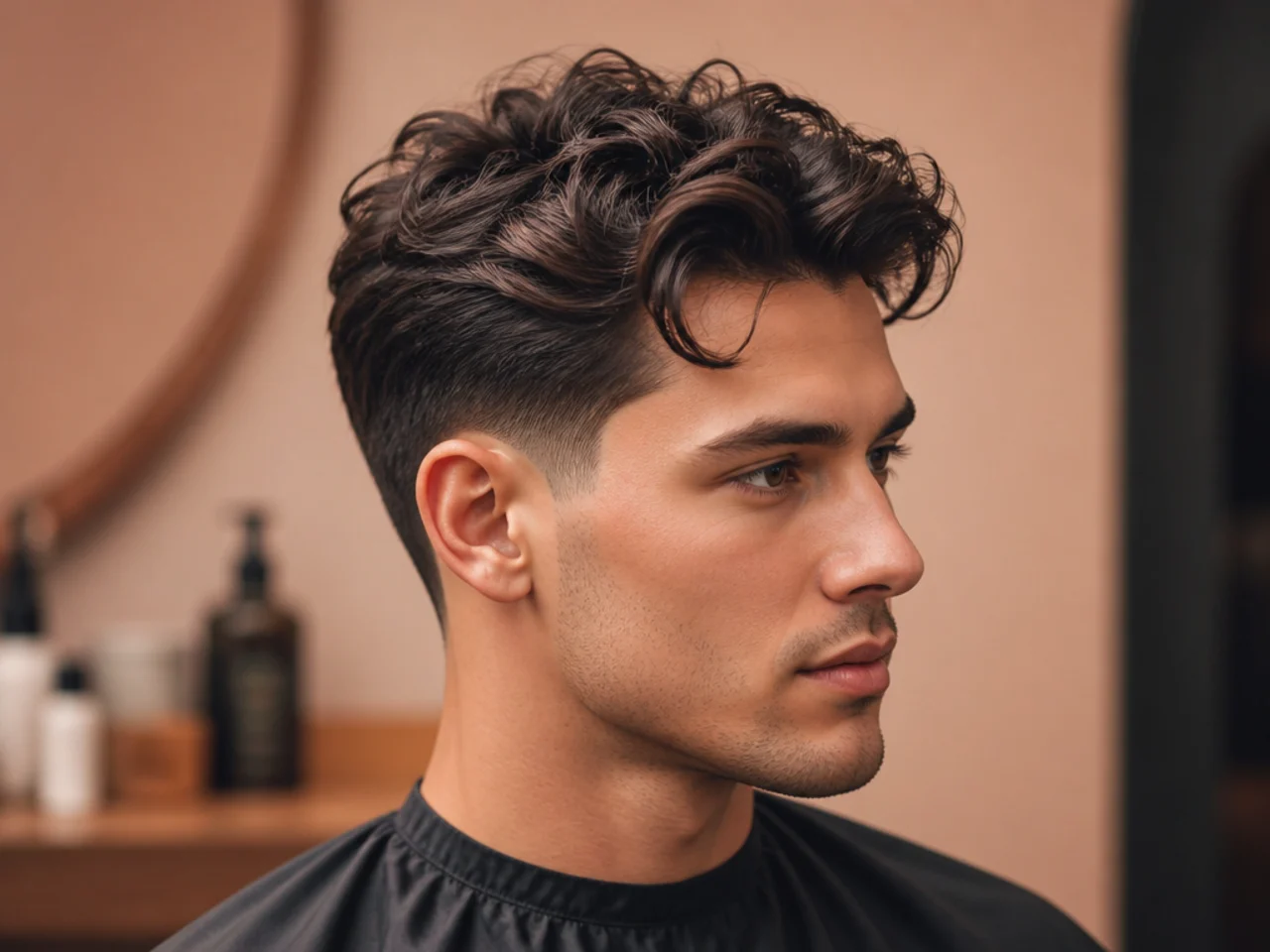
A cousin to the undercut with the harshness softened. Three inches on top, uniform #1.5 on the sides, and a soft scissor-blended transition instead of the traditional hard step. From ten feet the cut reads as one seamless silhouette; up close you see the tailoring.
Suits oval, square, and long faces. Works on straight through 2C waves — the disconnect keeps the top from looking bulky.
Ask for a disconnected clean, three inches on top, a #1.5 on the sides all one length, and a scissor-blended transition at the parietal ridge — no visible line. Style with a matte paste swept up and back with your fingers. Keep the beard tight and short.
Editorial Short
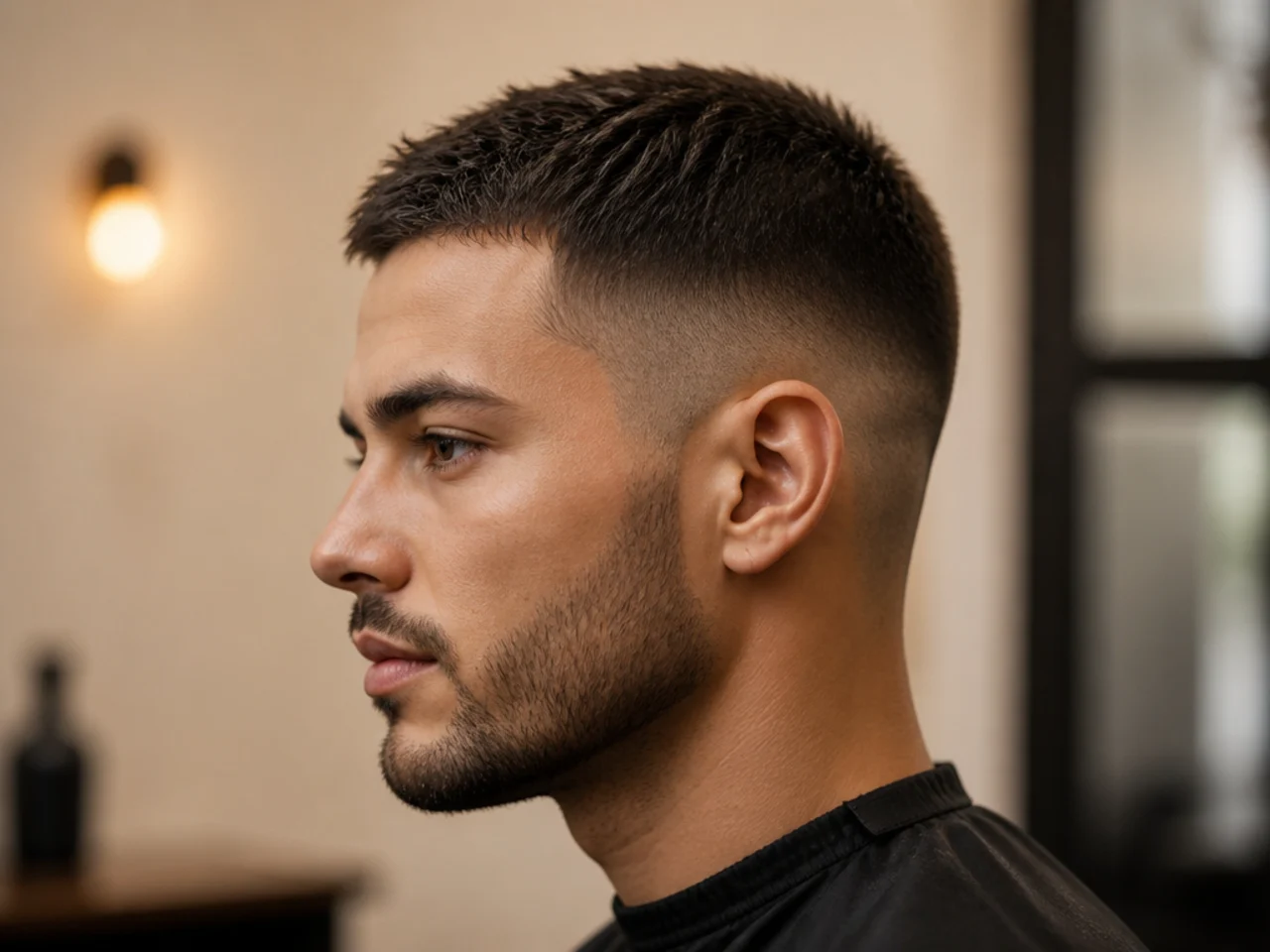
The magazine cover version. Two inches on top point-cut for movement so the ends sit piecey rather than blunt, sides tapered clean, and a slight forward push on the fringe. The mess on top only reads well because the sides are executed with zero softness. Precision under, softness over.
Suits guys under 40 with straight to type 2B wavy hair. Skip it for coarse hair — the point cut needs finer texture to show.
Ask for an editorial short cut, two inches on top point-cut for texture, a scissor taper on the sides to a #1.5, and a soft forward push at the front. Style with matte clay rubbed between your palms and pressed into dry hair. No comb, no blow-dryer.
Capsule Crop
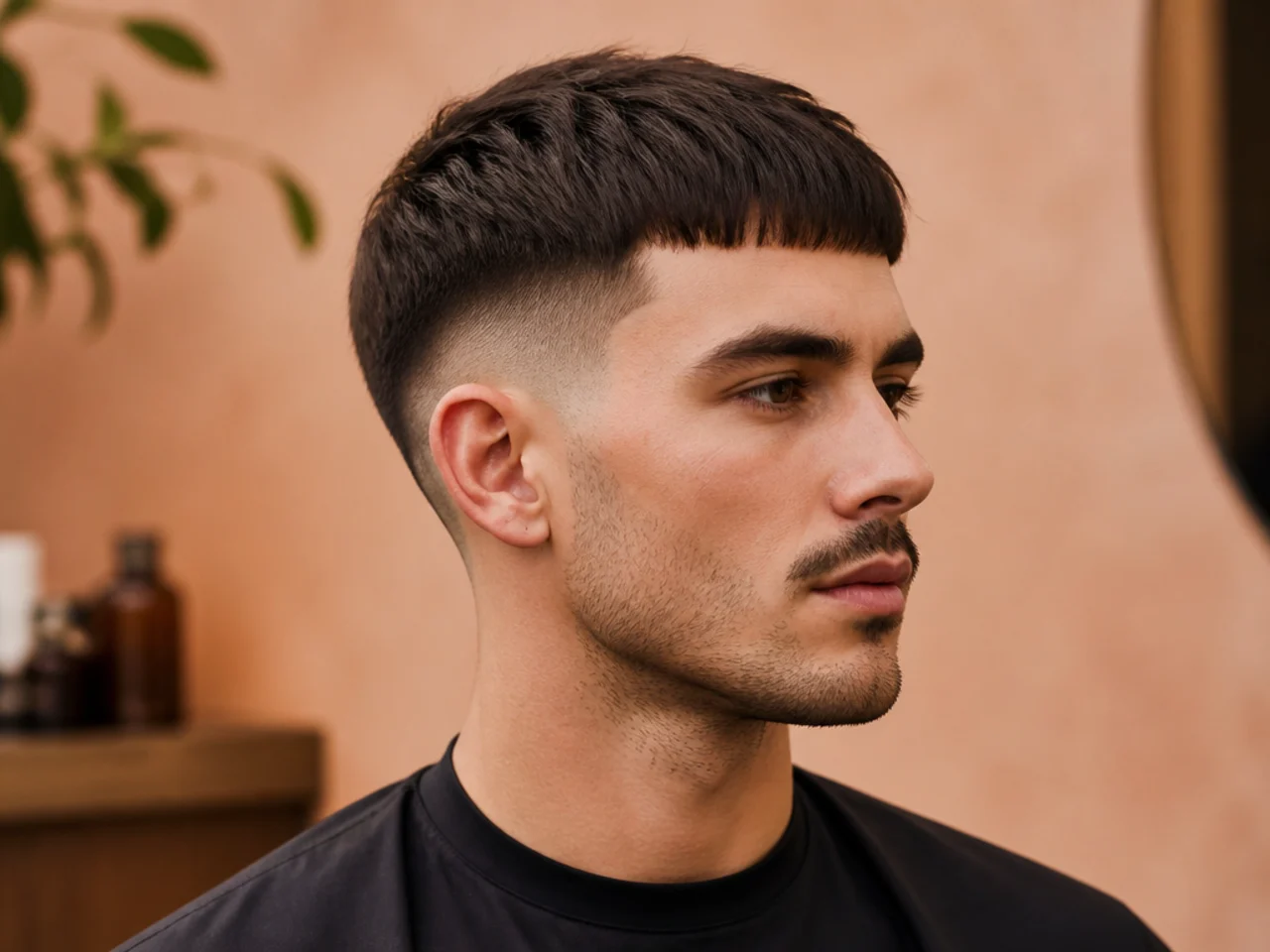
The capsule-wardrobe answer to a haircut. Under an inch on top all one length, a #1 on the sides scissor-blended into a natural neckline, no design work anywhere. The whole cut takes ten minutes in the chair and zero minutes at home. Reads clean because there's nothing to read wrong.
Suits guys with strong jaws, even hairlines, and any workplace that respects a short shape. Every face shape. Every hair type. Every age.
Ask for a capsule crop, three-quarters of an inch on top all one length, a #1 on the sides scissor-blended, and a squared neckline. Style with a splash of water. That's it. See our low maintenance men's haircuts shortlist for adjacent versions.
Prep-School Comma
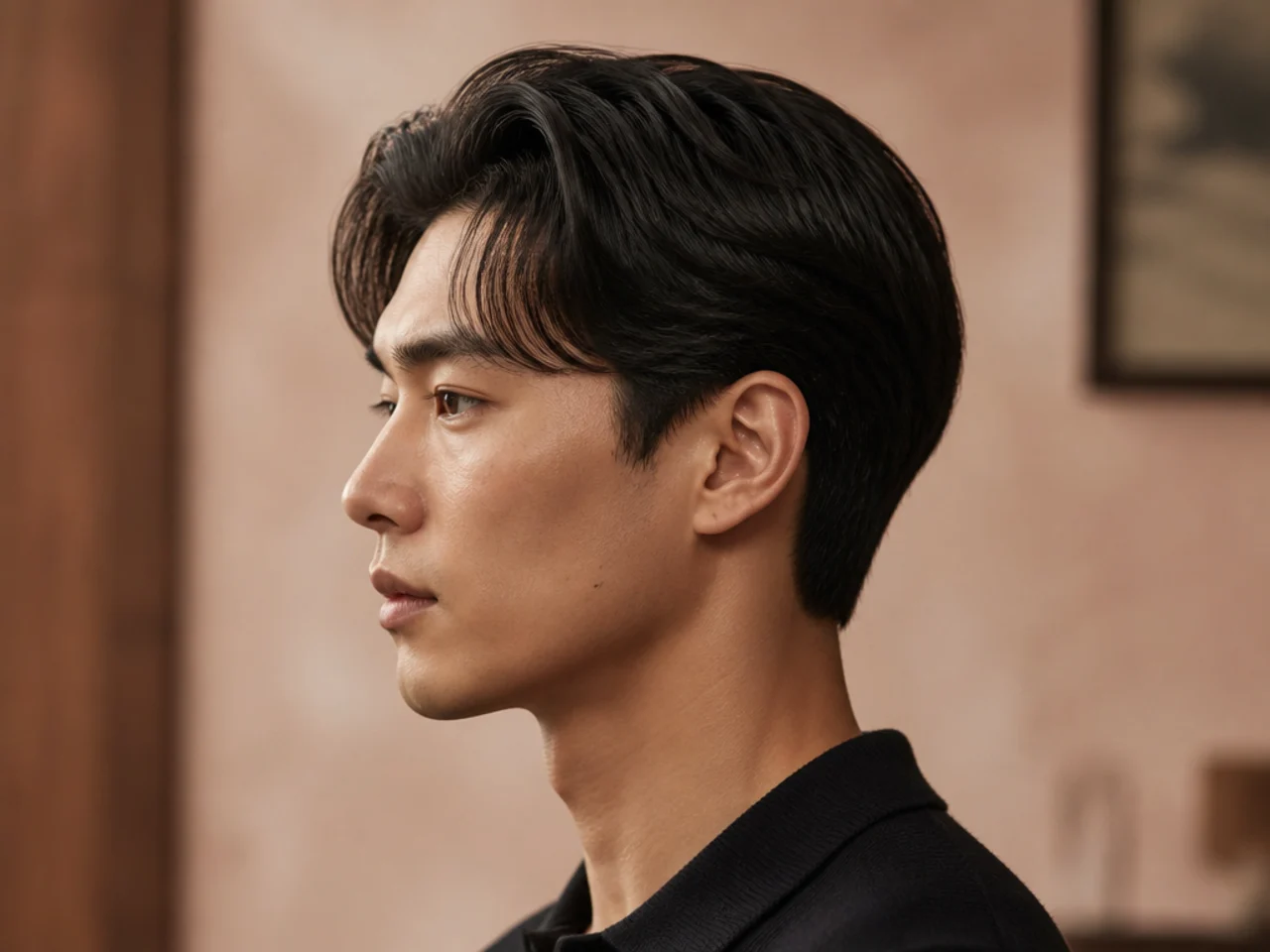
The Korean comma haircut styled clean. Three inches on top with a small comma at the front — the strand that curls back on itself under the ear — sides scissor-blended tight rather than faded, matte finish always. The korean haircut for men family runs bigger; this version is the tamer, more Western-office variant.
Suits oval, round, and heart faces. Works on straight to type 2A hair; too much wave and the comma won't hold.
Ask for a small-comma clean cut, three inches on top with a defined comma at the front, scissor-blended sides to a #2, and a soft neckline. Style with a matte cream on damp hair, then use a small round brush to curl the front piece under and back.
Low-Key Drop Fade
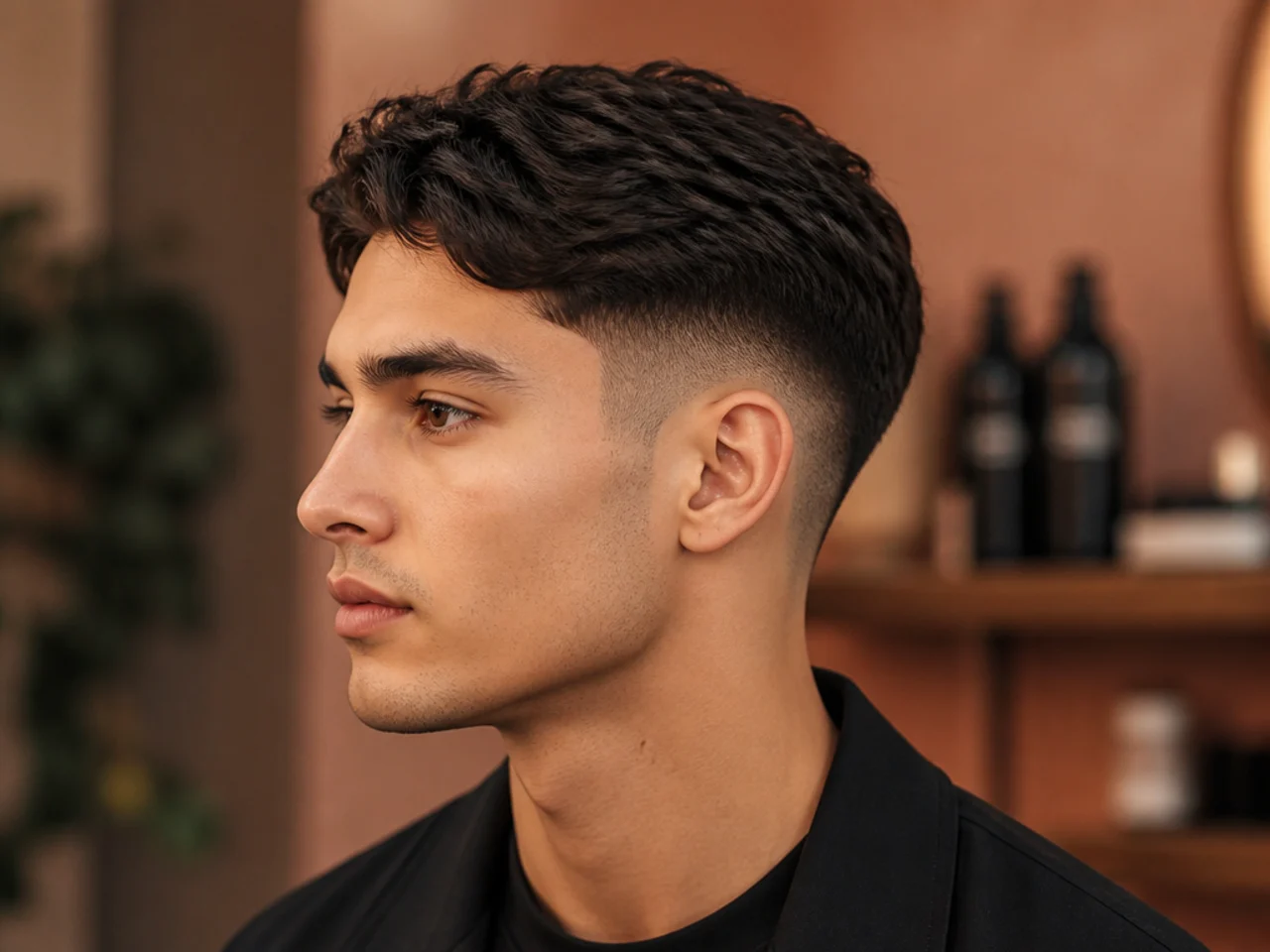
The drop fade minus the show. The fade drops behind the ear, but stays well below the crown so from the front it reads as a standard low fade. Two and a half inches on top scissor-blended, no line-up, and a soft neckline finish. This is the version guys book when they want a modern shape without announcing it.
Suits every face shape. Works on straight, wavy, and lightly curly hair.
Ask for a low-key drop fade to a #0.5 at the low point, two and a half inches on top, no line-up, and a natural neckline. Style with matte cream combed back or to the side. Keep any beard scissor-trimmed rather than clipper-lined so the whole look reads soft.
Structured Buzz
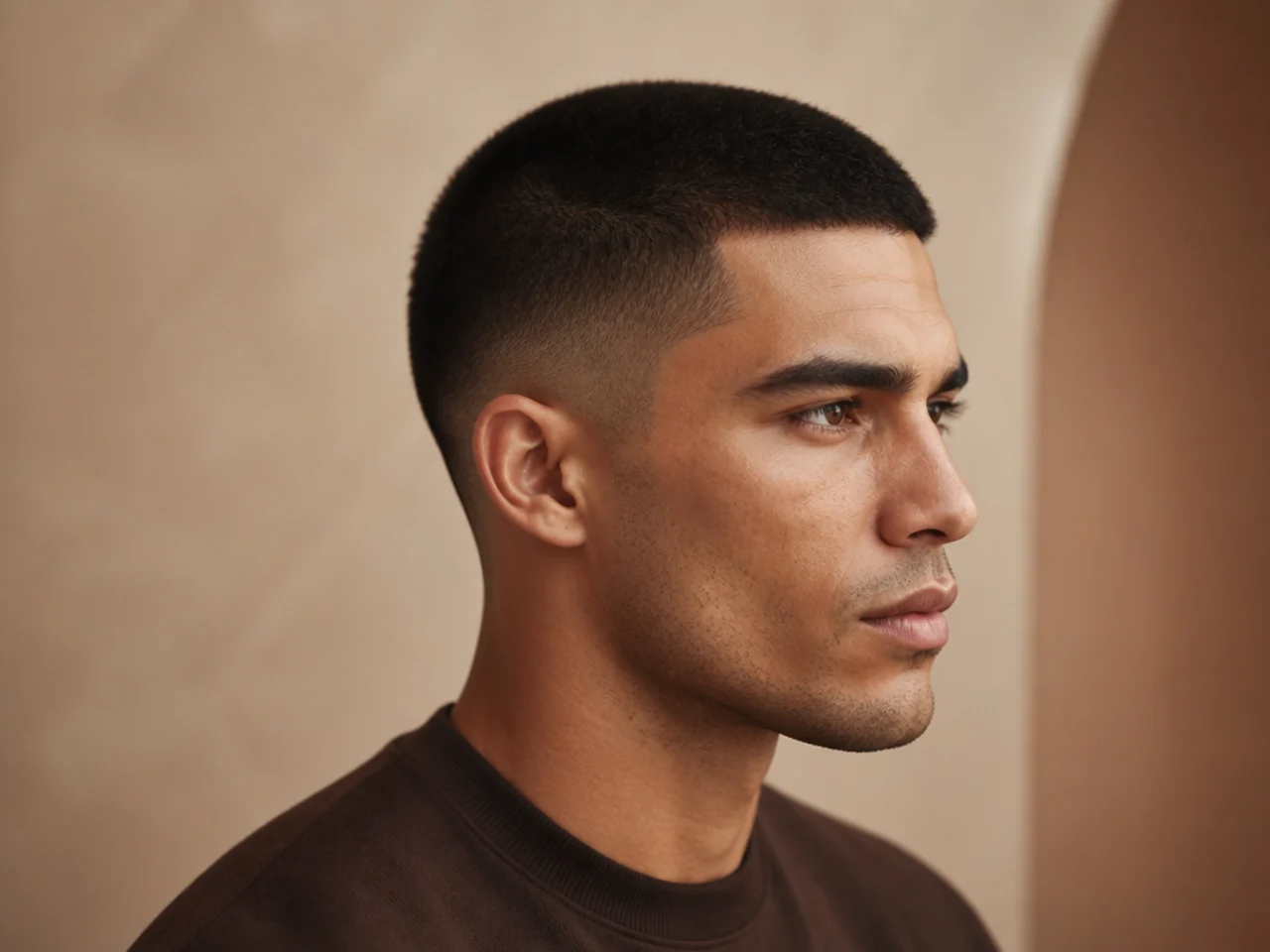
The buzz cut with a barber's finish. A #2 all over the top, a #1 on the sides, then every edge — sideburn, temple, neckline — treated like a suit hem. Line finished with a straight razor, the sideburn cut flush and level with your cheekbone, the neckline squared. The buzz you can wear to a wedding.
Suits every face shape, every hair type, every age. Especially clean on strong jaws and even hairlines.
Ask for a structured buzz, #2 on top, #1 on the sides, and a straight-razor finish on the sideburns, temples, and neckline. Style with nothing. Rebook every three weeks to keep the edges sharp — the moment they go fuzzy, the whole read collapses.
Sculpted Comb-Over
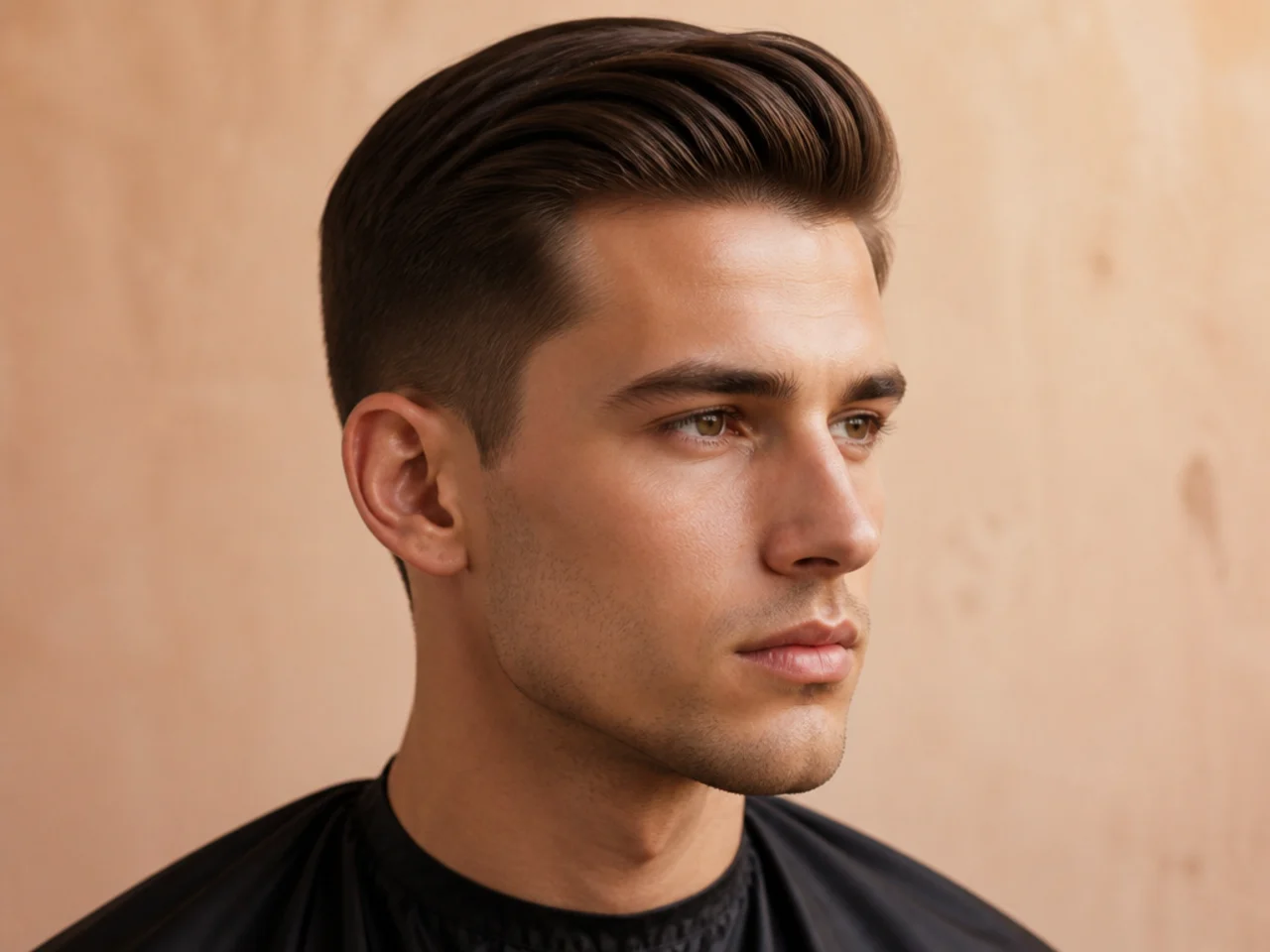
The comb over haircut at its most tailored. Four inches on top combed across a defined side part, sides scissor-blended down to a #2, and either a soft or a hard part depending on how much definition you want. Every strand goes in one direction; nothing falls forward or fights the shape.
Suits guys with straight to lightly wavy hair, and any face shape with a strong forehead. A great choice when the crown is thinning — the sweep of long hair covers honestly.
Ask for a sculpted comb-over, four inches on top, scissor-blended sides to a #2, a defined side part, and a squared neckline. Style with a medium-hold matte pomade combed across the part in one clean pass, then blow-dry against the growth for lift before it sets.
How to Ask Your Barber
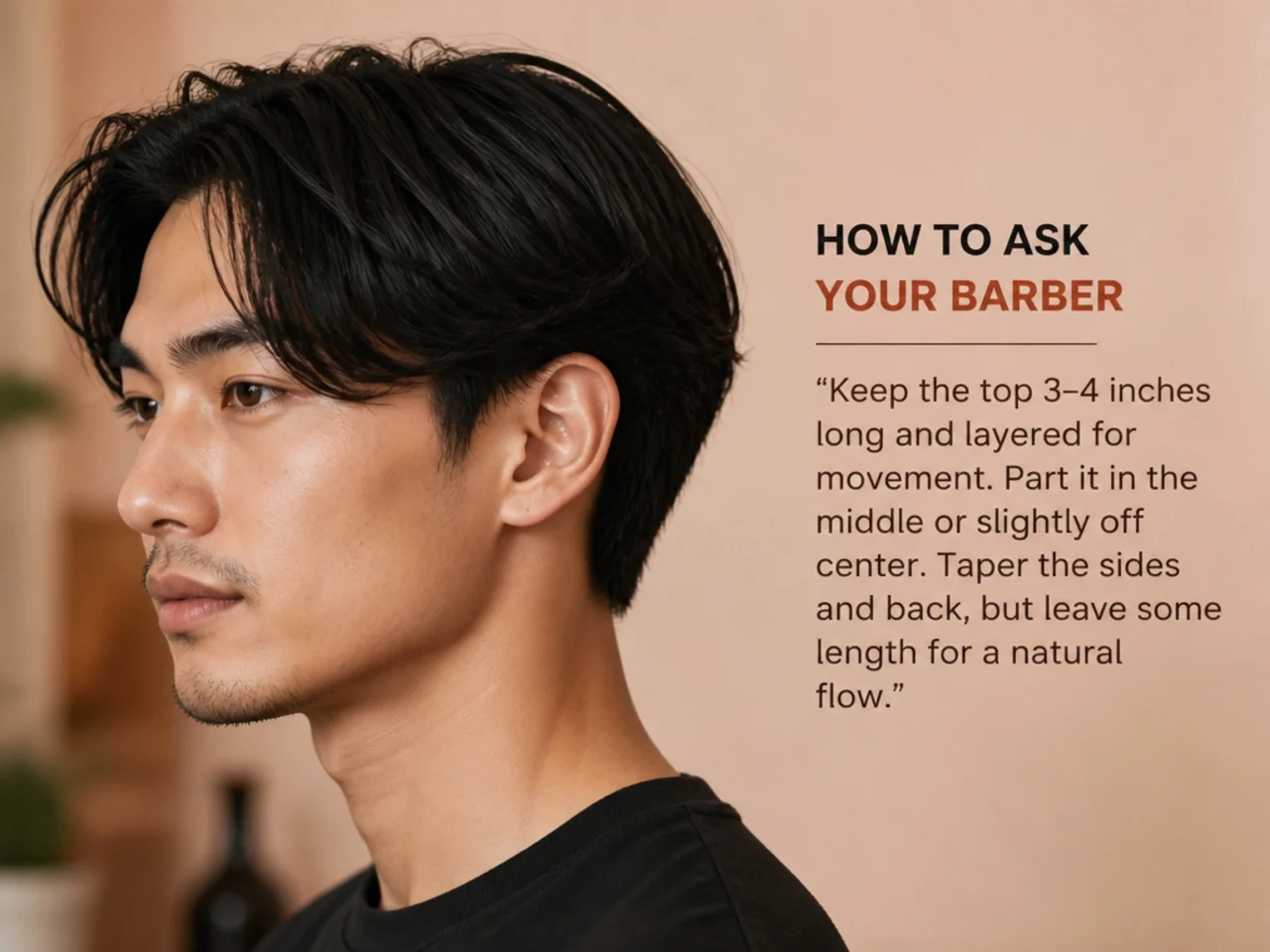
The specs above matter more than the label. Walk in with these six things ready:
- A photo of the exact version. Not the family — the specific variation. Screenshot the image above the cut you picked, or pull the guide up on your phone in the chair.
- The top length in inches. Two and a half is Ivy League. Four is slick-back. Half an inch either way changes the whole cut.
- The side treatment. "Scissor taper" for the quietest option. "Low fade" for the safest modern one. "Skin fade" only if you want the contrast to do the work.
- The finish. Say "matte" out loud. Most barbers default to shine-friendly products; matte is what reads expensive in 2026.
- The perimeter. Ask for the sideburn line detailed flush with the cheekbone, the edge around the ear cut clean, and the neckline squared or blocked. This is where most cuts fall apart in week two.
- The rebook. Book your next appointment before you leave the chair. Three to four weeks for anything short, four to five for anything above three inches on top.
That's the whole conversation. Sit down, hand over the photo, run the numbers, let the barber work.
Styling & Maintenance
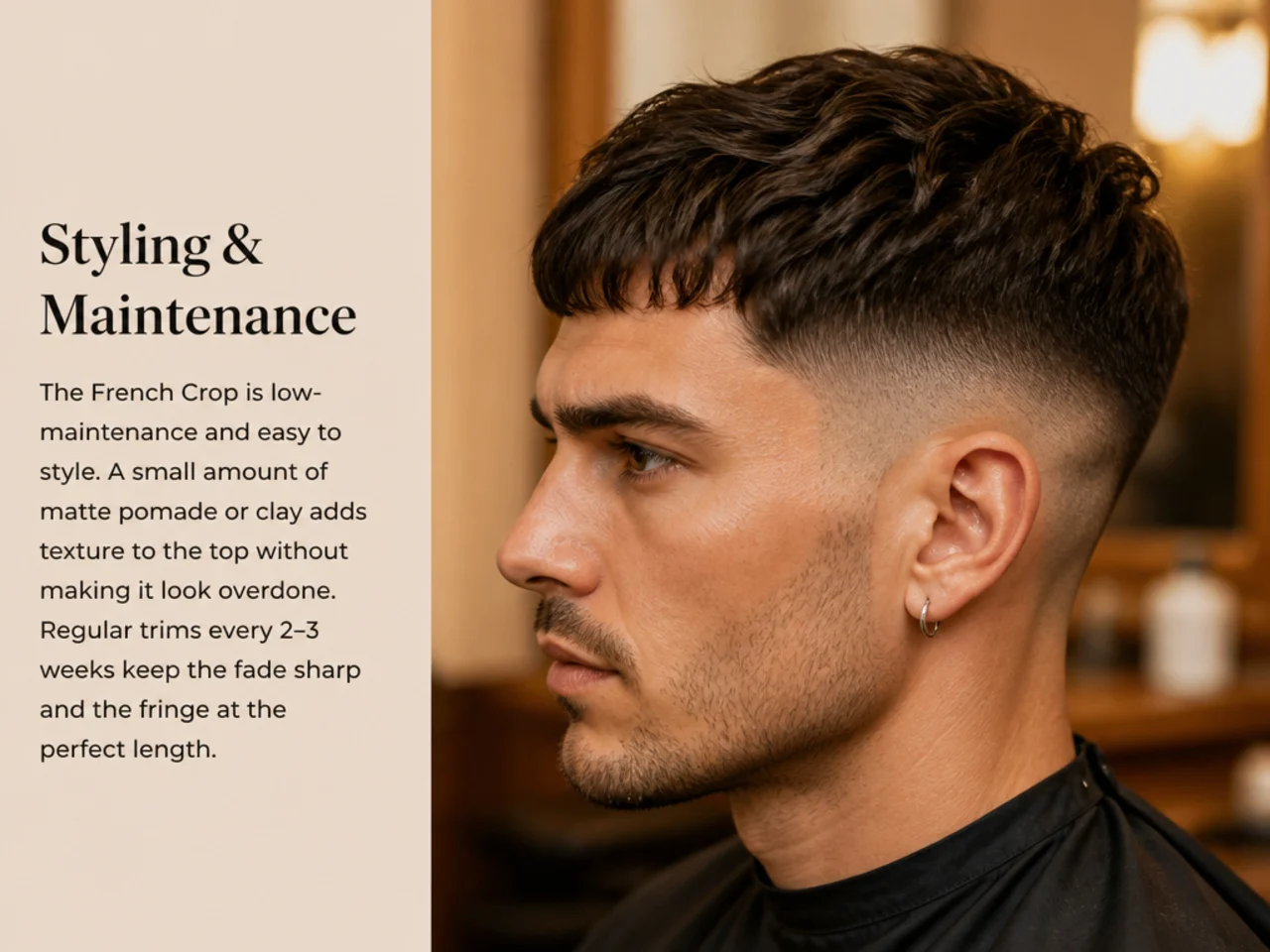
The whole routine takes under three minutes.
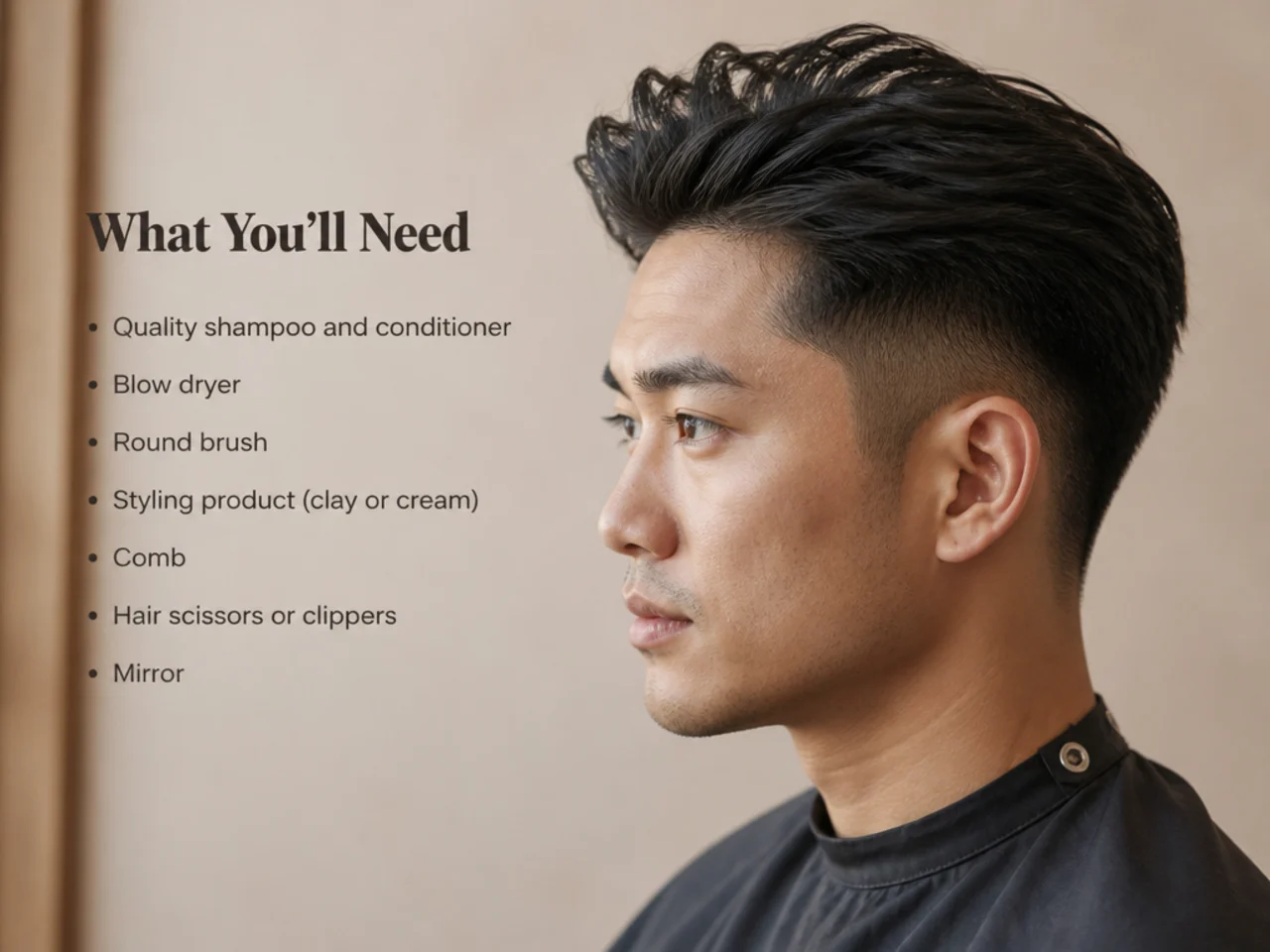
Wash with a sulfate-free shampoo two to three times a week — daily washing strips the oils that make the finish sit natural. Towel-dry until the hair is damp, not wet. A matte clay is the default product for short cuts, a matte cream for medium lengths, a light matte pomade for anything that needs to hold a defined part. One product, nickel-sized, warmed between your palms until it goes clear.
Skip the blow-dryer for anything under two inches. For the pomp, slick back, and comb-over, a small vent brush and thirty seconds of warm air followed by a cold shot locks the shape. Never blow-dry on high — heat kills the matte finish and adds unwanted shine.
Rebook by cadence, not by feel. Short cuts every three to four weeks; medium every four to five. The moment the perimeter goes fuzzy, the whole look collapses — a $200 cut that hasn't been rebooked in six weeks reads worse than a $30 crew that got detailed last Wednesday.
FAQ
What is the cleanest haircut for men?
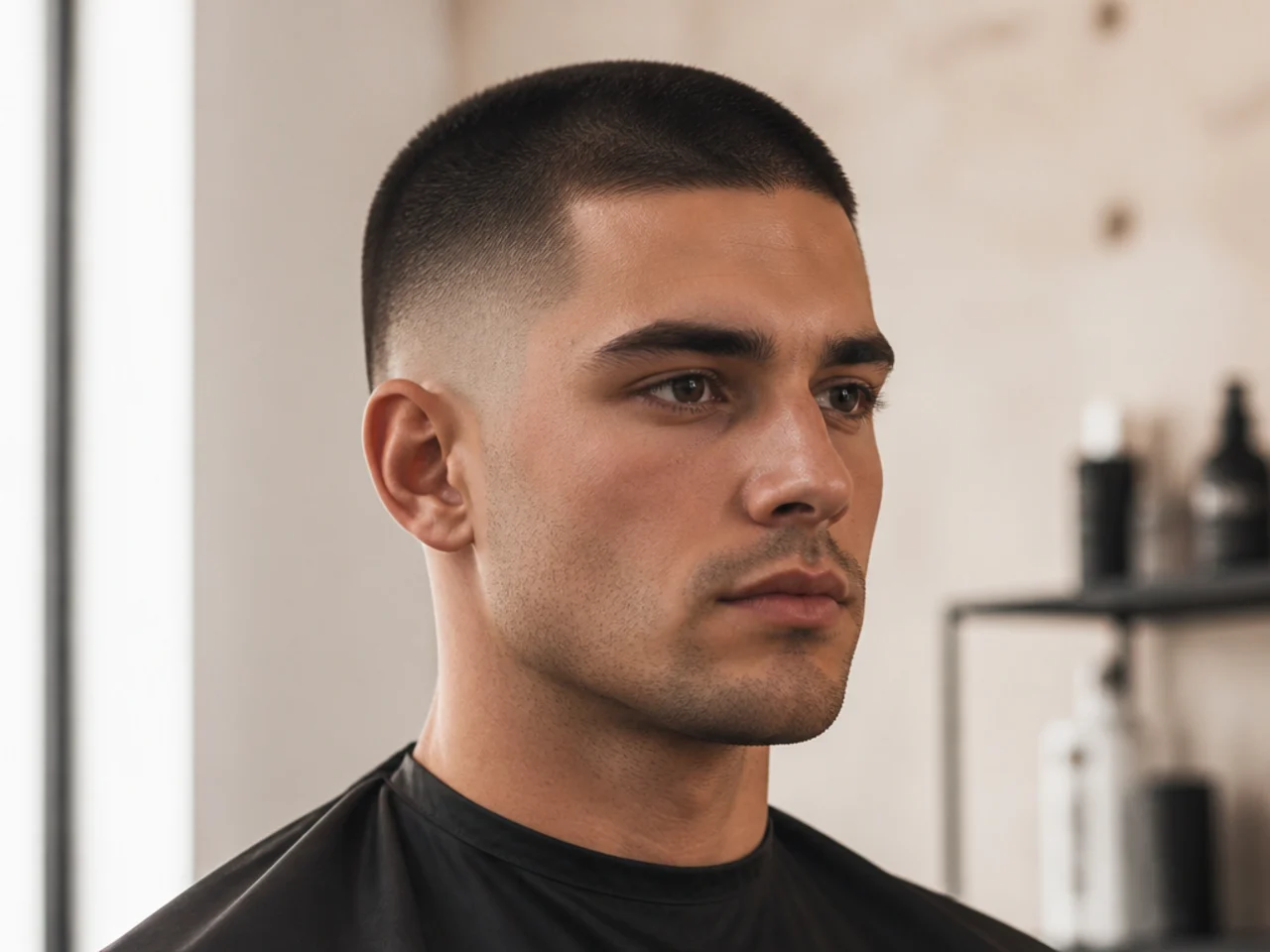
The Ivy League is the safest single answer. Two to two and a half inches on top with a scissor taper on the sides and a natural side part covers eighty percent of face shapes and nine of ten hair types. If you can only book one cut and can't decide, book that. Every other variation on this list is a small change from the same base.
Is a fade or a taper cleaner?
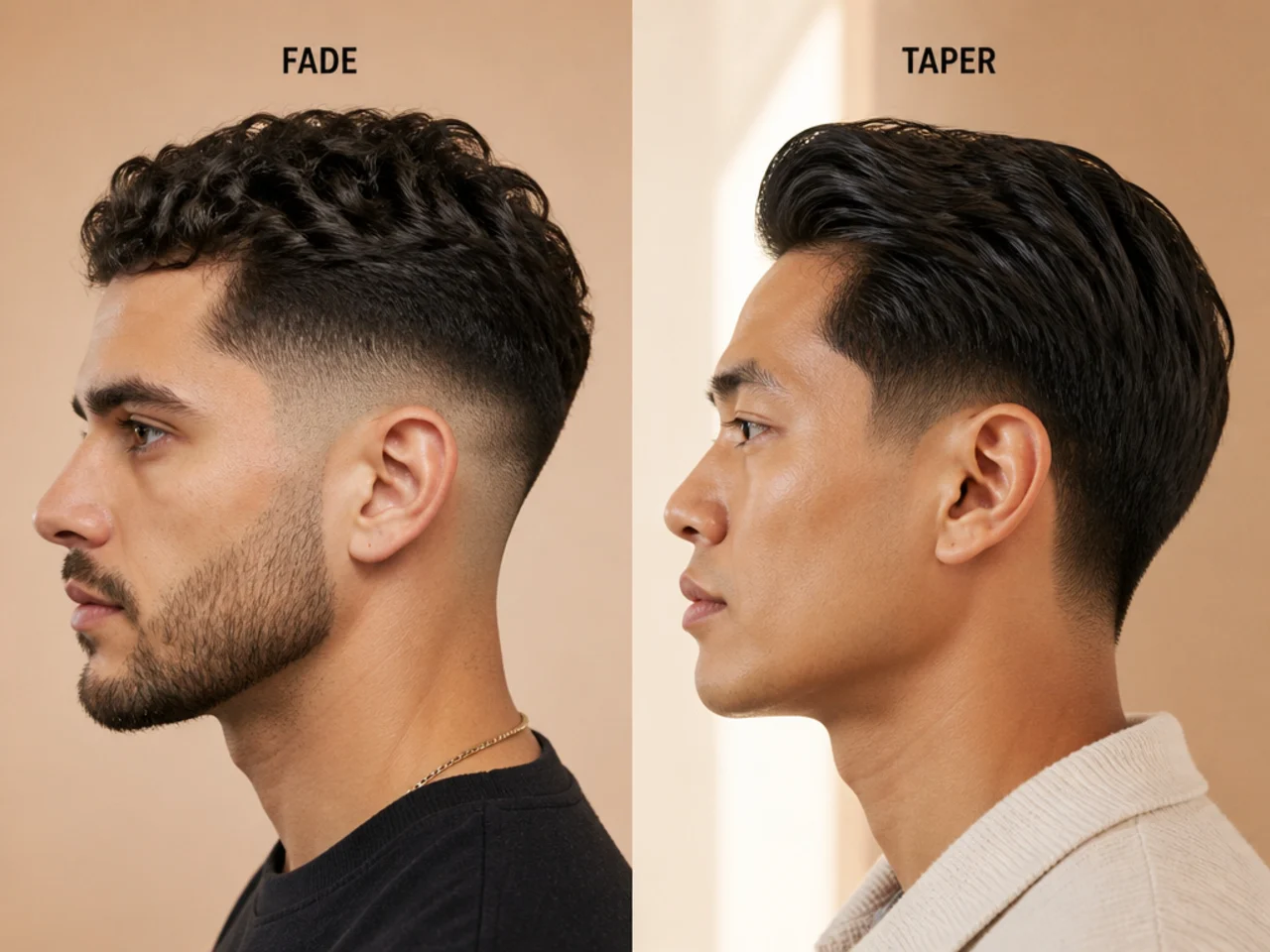
A scissor taper reads cleaner in traditional and formal offices because no skin shows above the ear. A low fade reads clean and modern in most creative and hybrid workplaces. Higher fades and skin fades tip toward statement rather than quiet — still sharp, but not the same register. If you want the safest option that still reads current, ask for a business-safe low fade.
Which clean haircut suits thin hair?
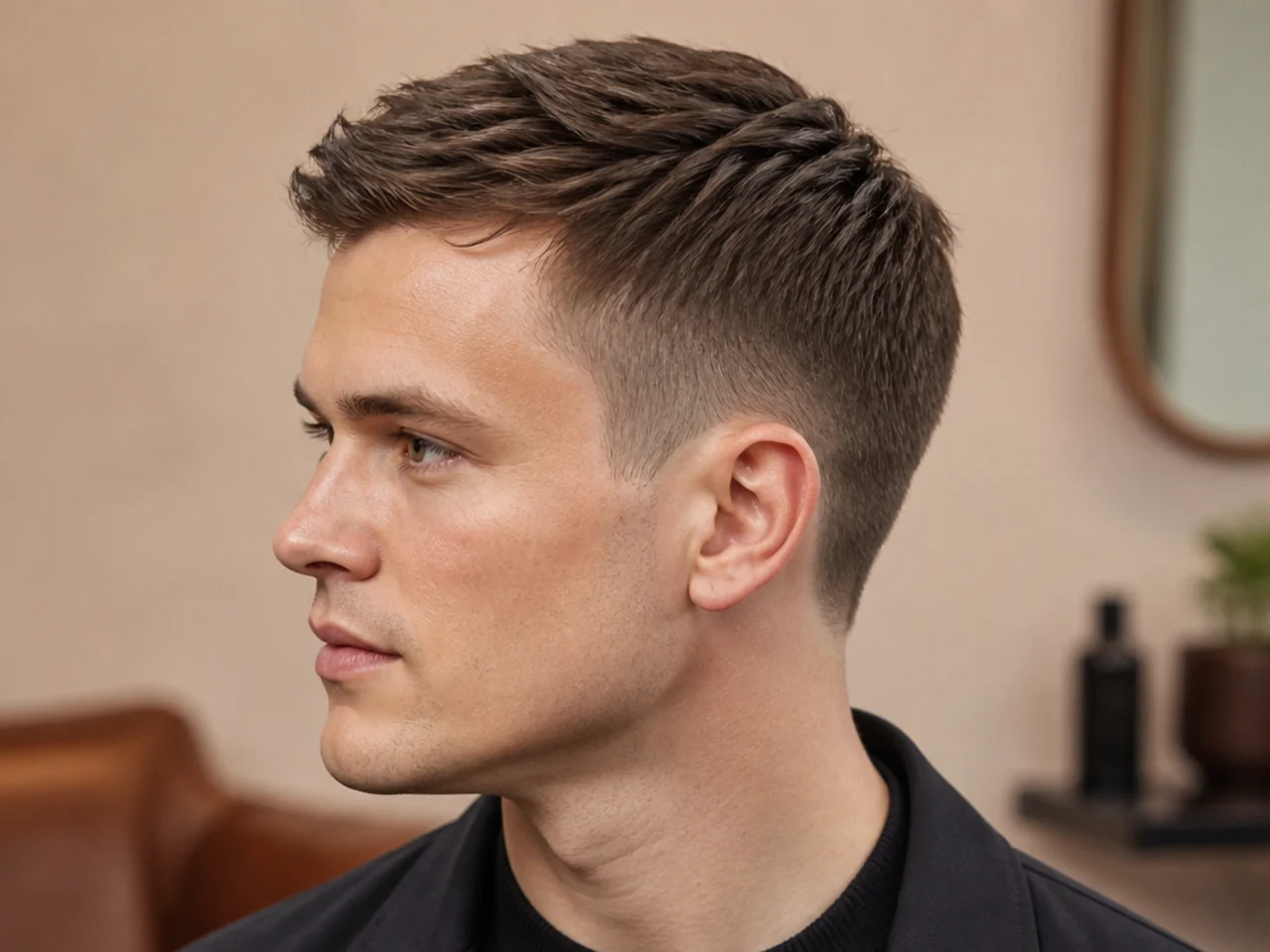
A precision crew, a sharp caesar, or a structured buzz. Thin hair looks thickest at short-to-medium lengths with a defined perimeter and a matte finish. The Ivy League also works if you have at least two inches of length that can hold a part. Skip long slick backs and heavy sculpted comb-overs — both show the scalp through the styling once the density drops.
Does a clean haircut for men work on curly hair?
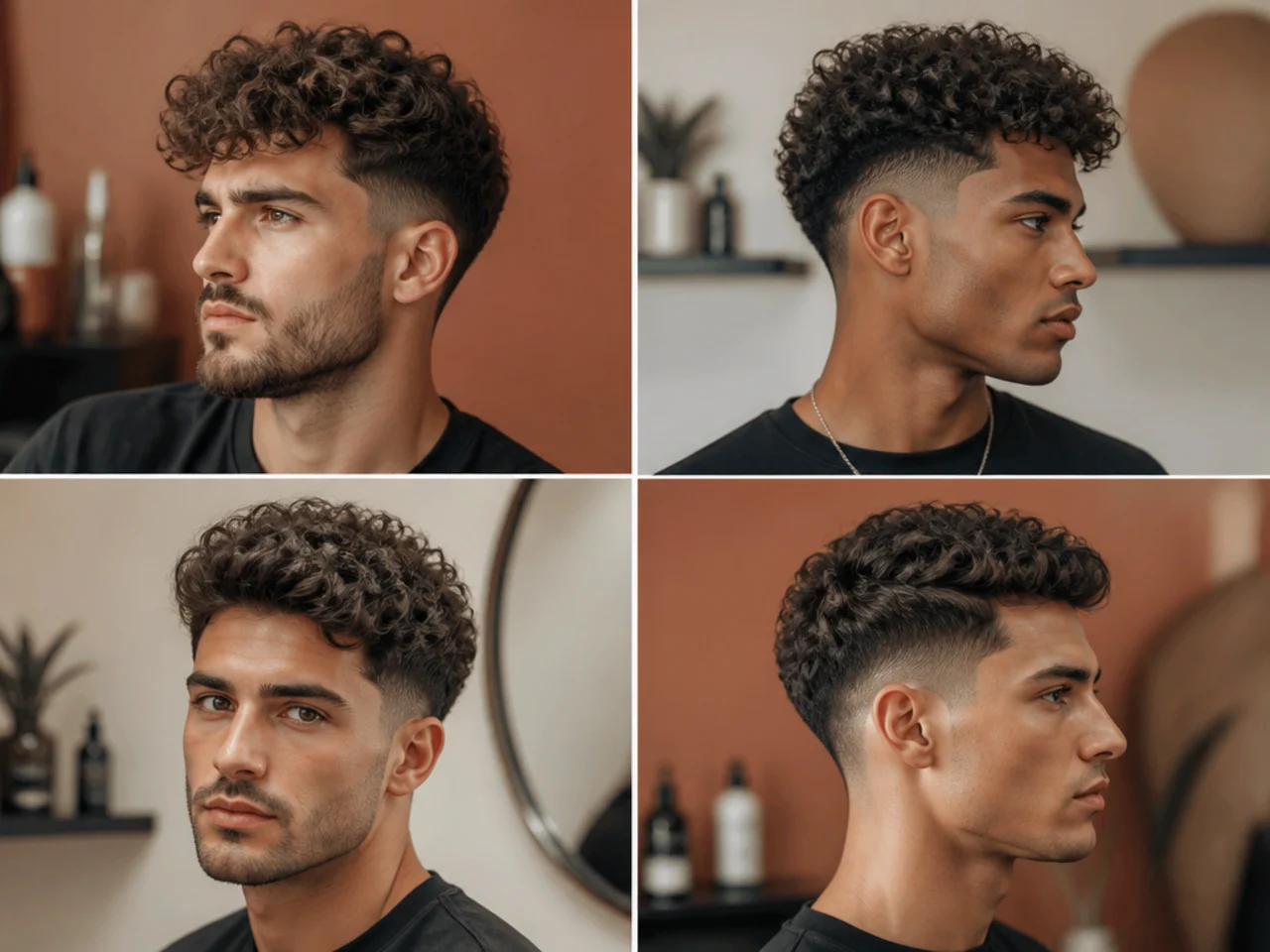
Yes — but the top has to be scissor-cut on damp hair, not clipper-cut. Types 2B through 3A carry a classic taper, a disconnected clean, or a sculpted comb-over well. Keep the sides tight, keep the perimeter square, and use a curl cream instead of a clay so the pattern still shows. See our full low taper fade breakdown for the safest side-treatment option on curls.
How much should a clean haircut cost?
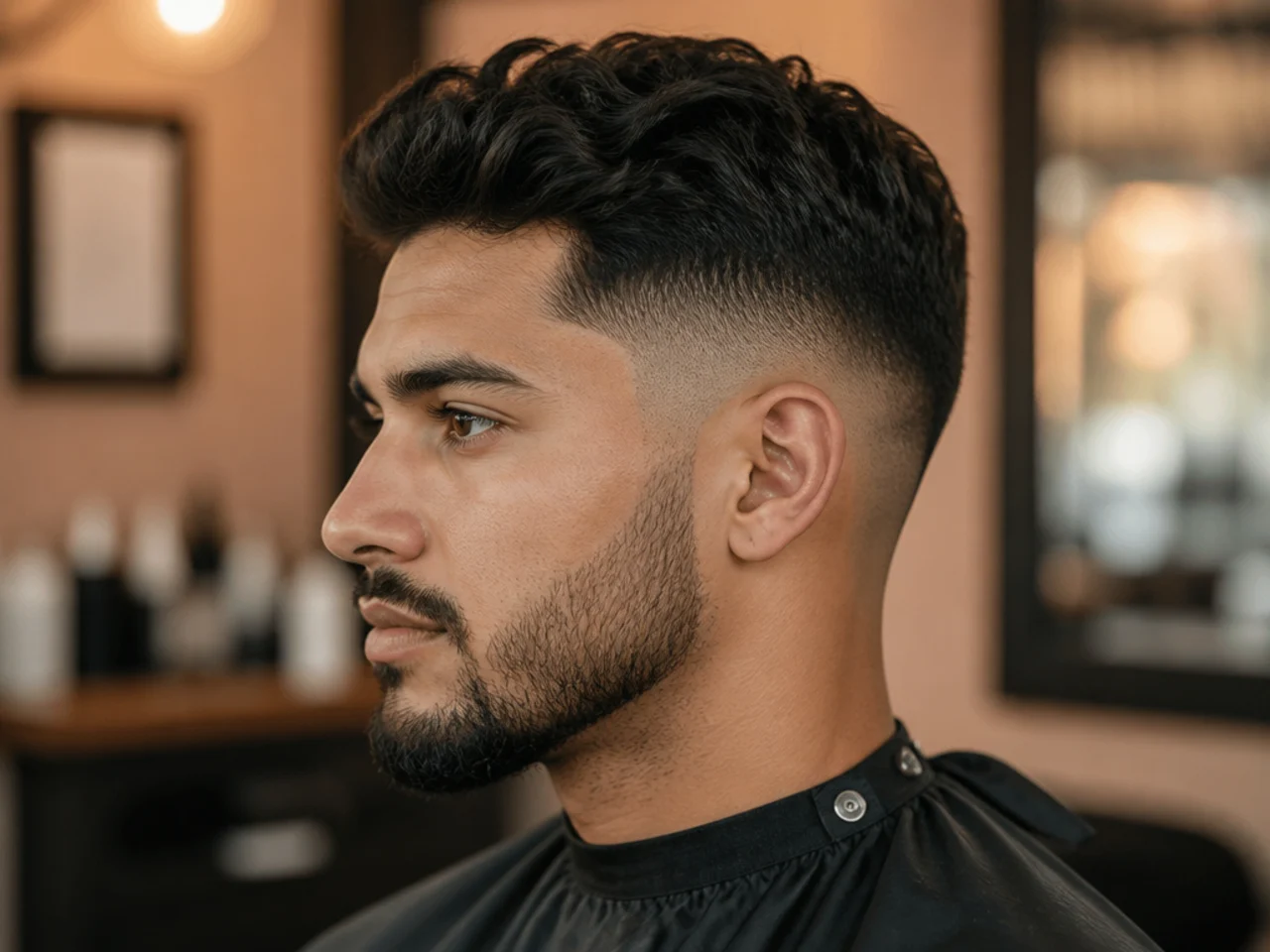
Anywhere from $30 at a good neighborhood barber to $200 at a hotel salon. The cut itself doesn't change much between the two price points; what you pay for at the higher end is time on the perimeter, a proper scissor blend, and a straight-razor finish on the edges. If your neighborhood barber will take an extra ten minutes on the perimeter and neckline, you can get the expensive look for the neighborhood price.
How often should I get a clean haircut?
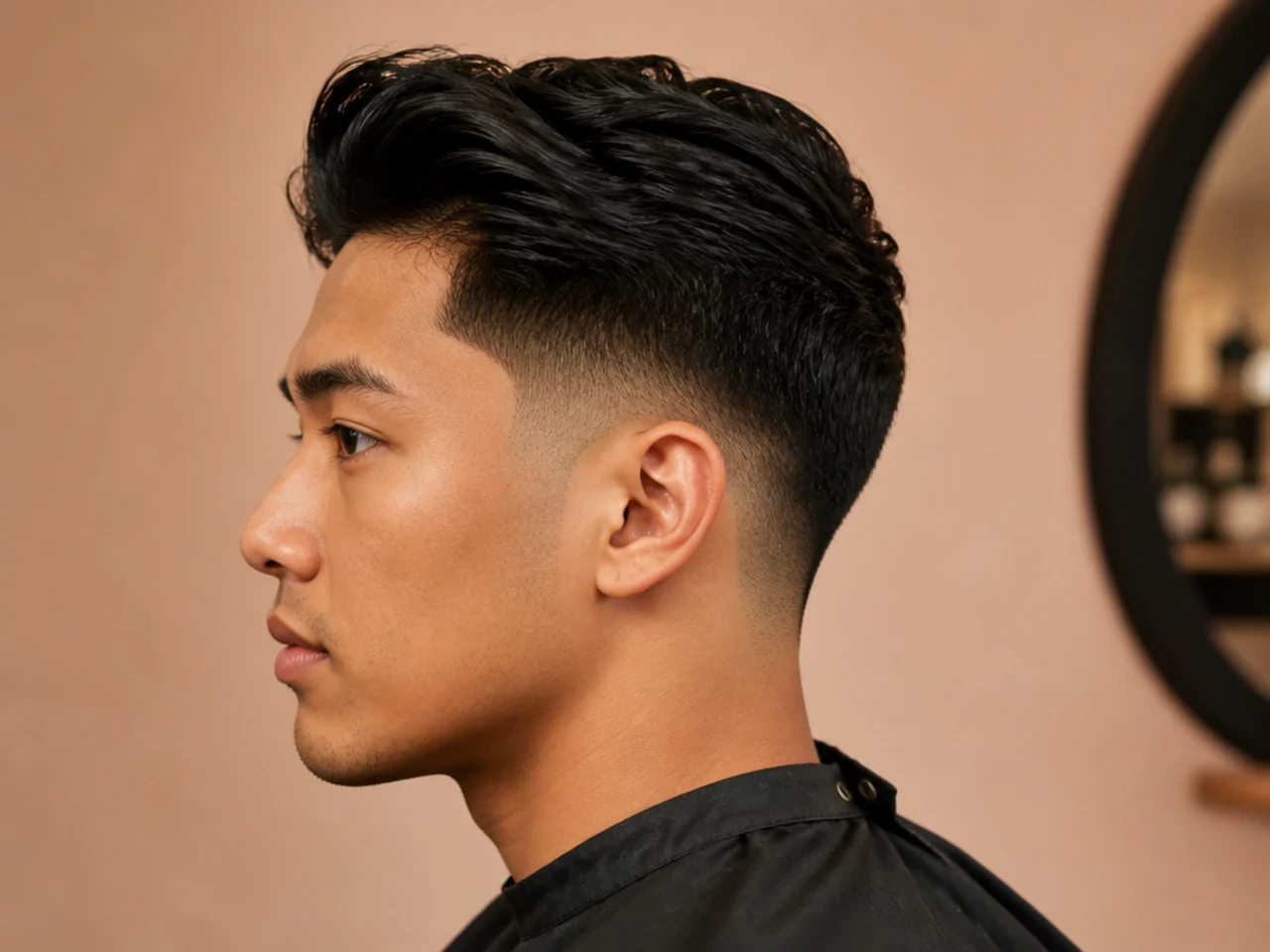
Every three to four weeks for anything under two inches on top, every four to five for anything above. The perimeter softens at the two-week mark and starts to look tired around week four. The cadence is what keeps the cut looking expensive, not the cut itself — a $30 crew rebooked on time reads sharper than a $200 cut booked on a whim. Ask for the short simple mens haircuts shortlist for options that stretch the calendar further.
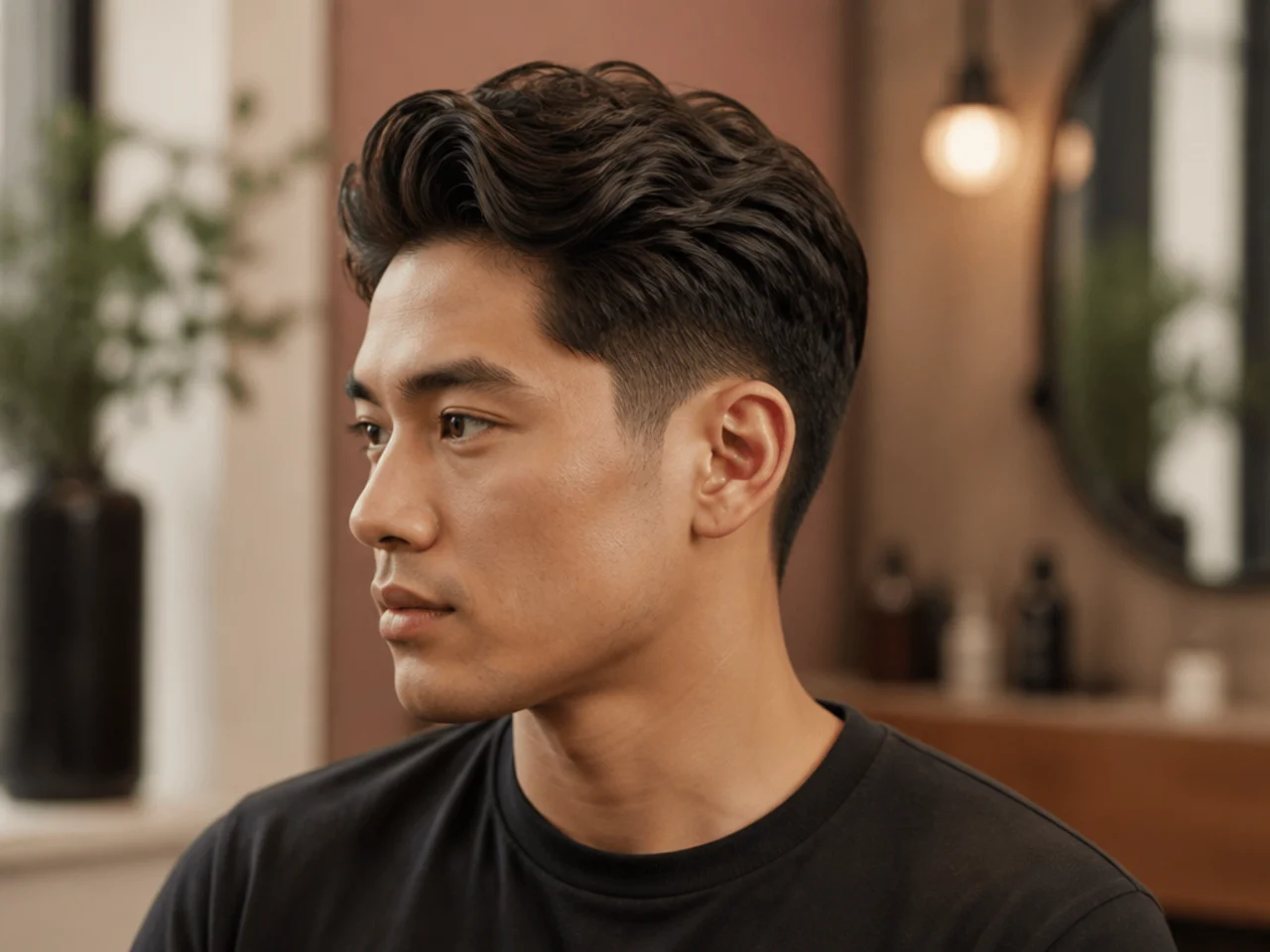
Final Thoughts
The clean look isn't a single haircut — it's a set of three habits. Matte finish. Sharp perimeter. One idea per cut. Get those three right and any of the twenty variations above will read expensive on the right head. Pick the version that fits your face, your hair, and your Monday morning. Bring the photo. Say the numbers. Rebook before you leave. That's the whole trick.