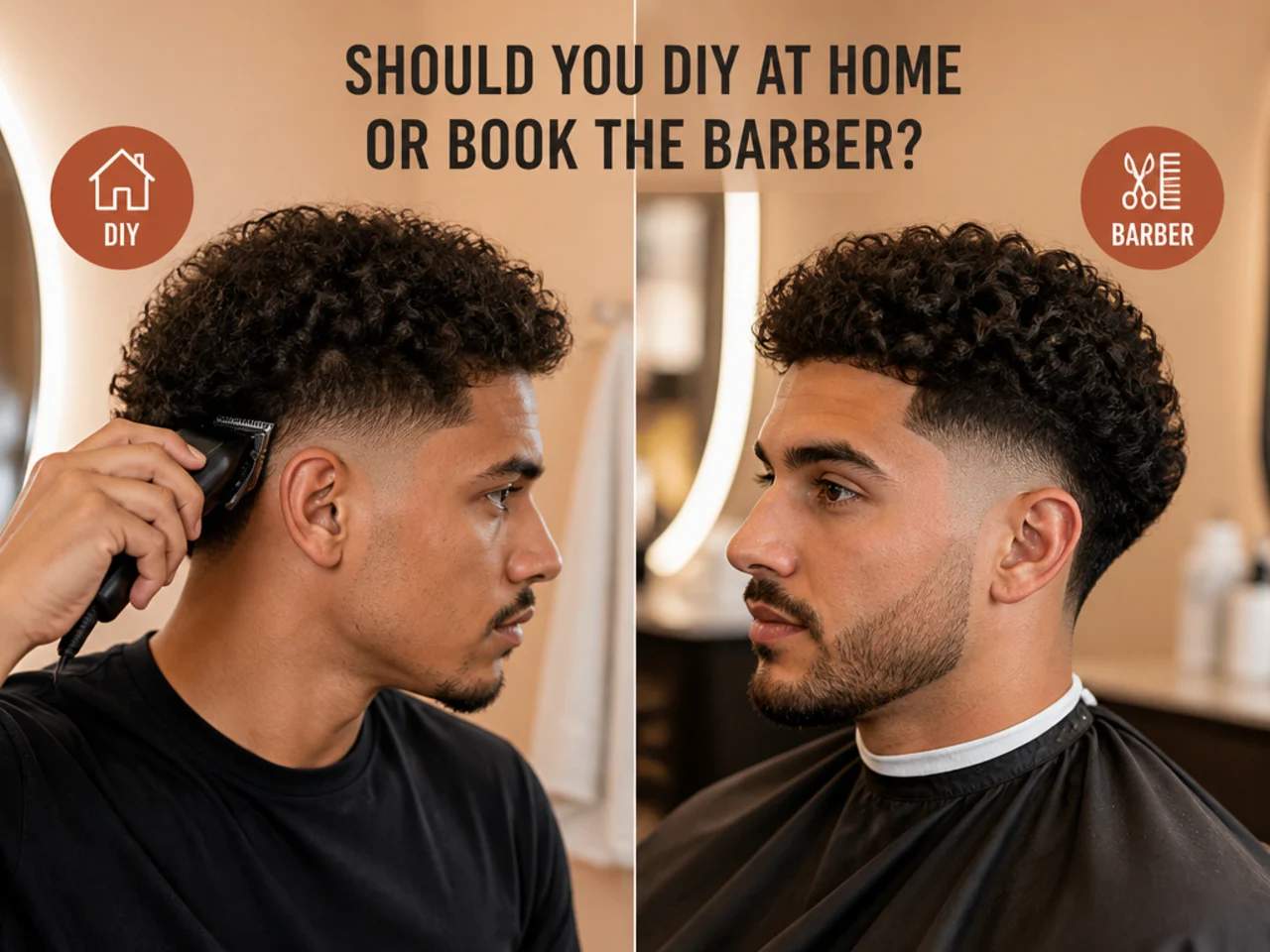
20 Steps to Ask for a Mid Fade Haircut
Mid is the vaguest word in the barbershop, because every barber has their own idea of where the middle of a head is. These twenty steps replace the word with two anatomical landmarks nobody can misread.
In this article · 27
- The Two Landmarks That Decide Everything
- How to Choose Yours
- The 20 Steps to Ask for a Mid Fade
- 1. Find Your Own Parietal Ridge First
- 2. Book Enough Time for a Blend
- 3. Arrive With Clean, Dry Hair
- 4. Bring One Photo Taken From the Side
- 5. Say the Word Fade or Taper Deliberately
- 6. Point at Where the Fade Should Start
- 7. Name the Bottom Guard
- 8. Name the Top Guard
- 9. Say What Happens on Top
- 10. Choose Straight, Drop or Burst
- 11. Decide the Neckline Shape
- 12. Ask For or Refuse a Line-Up
- 13. Mention Your Beard Before the Sides Are Cut
- 14. Flag Any Scars or Uneven Density
- 15. Ask for the Height to Be Checked Both Sides
- 16. Speak Up During the First Pass
- 17. Check the Back With a Hand Mirror
- 18. Photograph the Finished Sides
- 19. Rebook Before You Pay
- 20. Write Down What Worked
- Styling and Upkeep
- Mistakes to Avoid
- FAQ
- Final Thoughts
The word "mid" does almost no work in a barbershop. Every barber has a private sense of where the middle of a head is, and yours may sit a full centimetre from theirs.
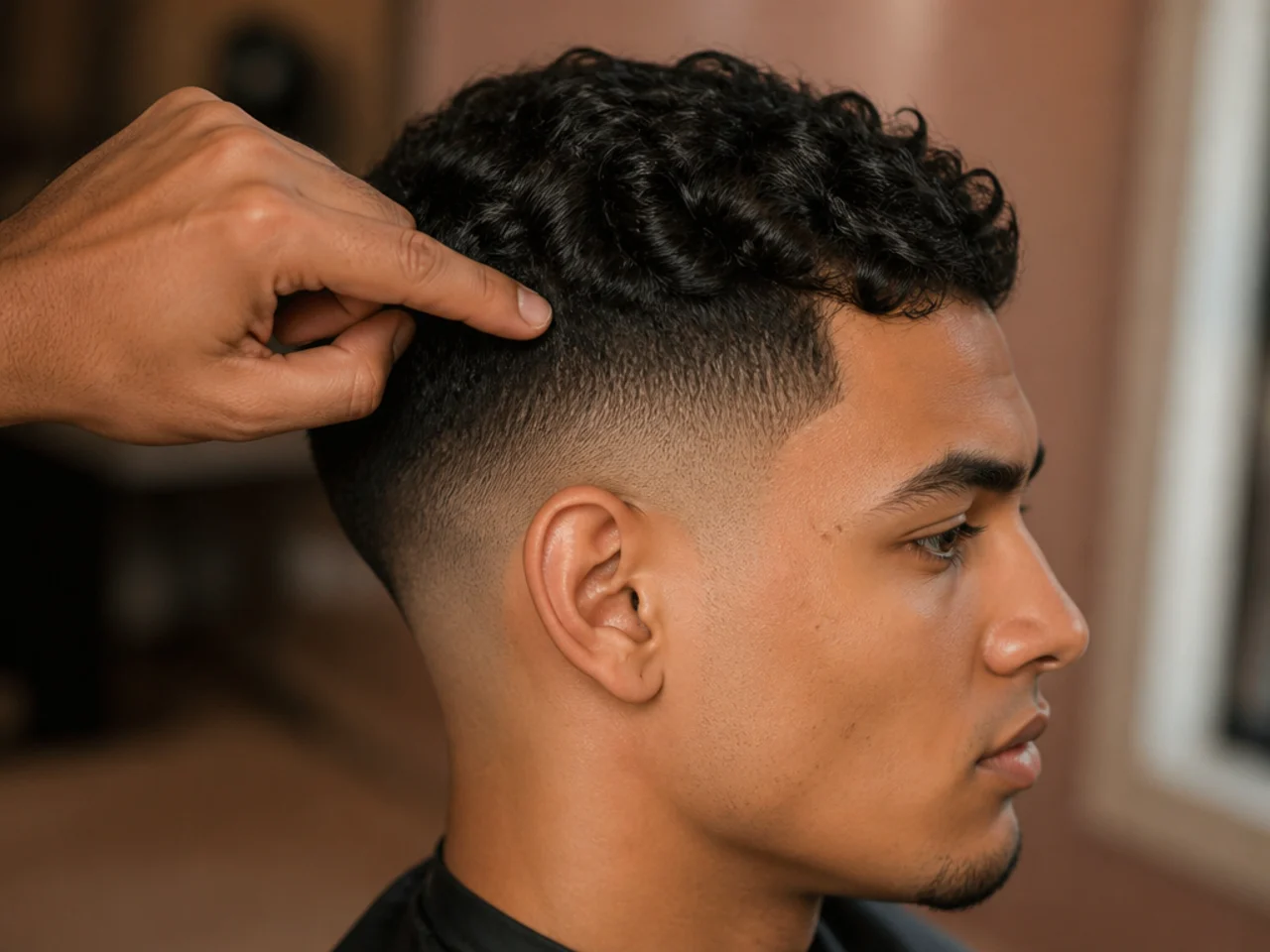
The fix is anatomy, not adjectives. Your temple and your parietal ridge are fixed points that both of you can find with a finger.
A mid fade starts between them. Say that sentence and the height stops being a matter of opinion, which is the entire purpose of the twenty steps below.
The Two Landmarks That Decide Everything
The temple is the flat spot beside your eye. A low fade starts at or below it.
The parietal ridge is the second landmark, and no part of your skull measures wider. Run a hand up the side and it is where the head stops going out and starts going up.
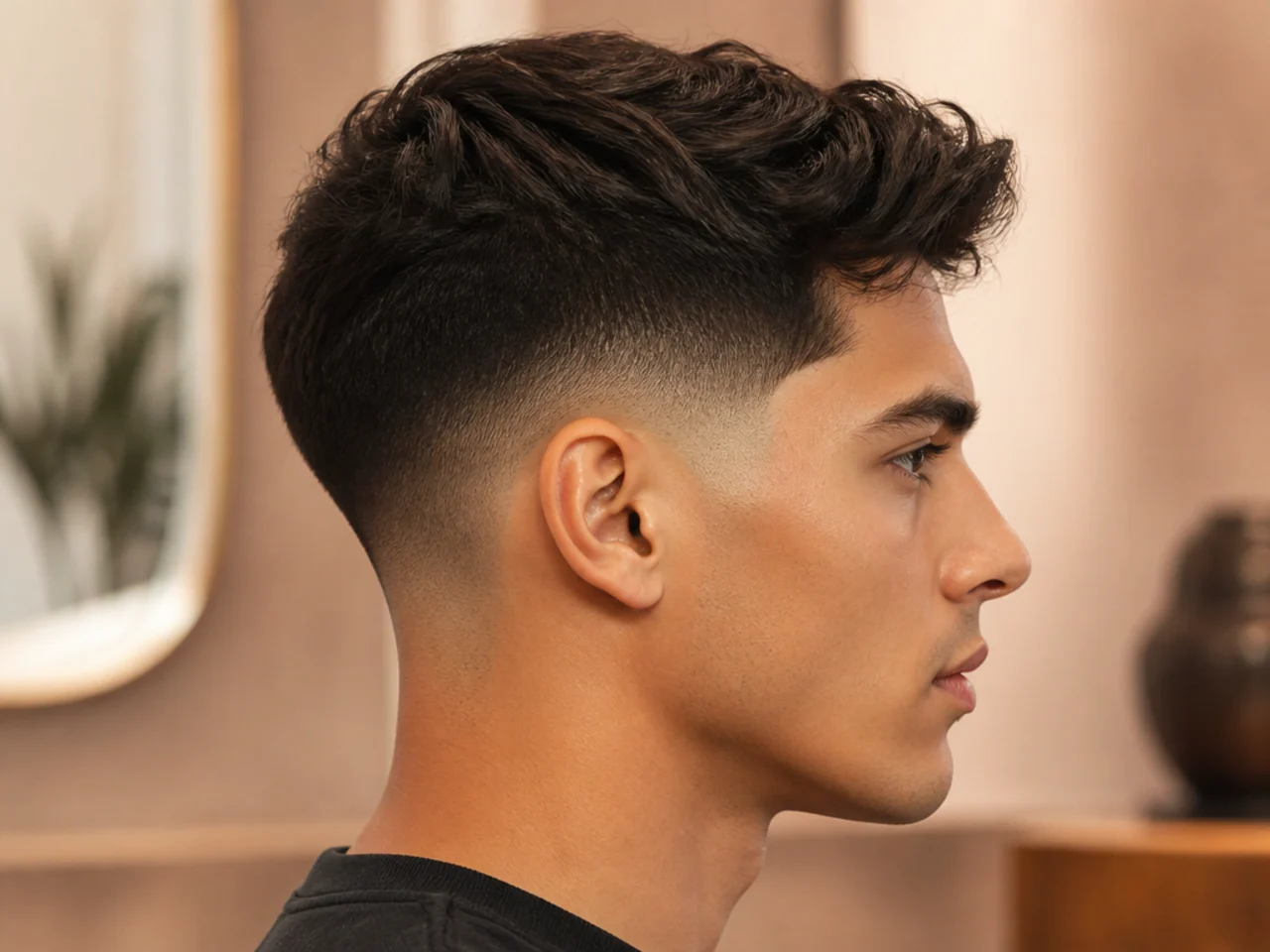
Mid means between the two. That is roughly a four-centimetre band on most heads.
Everything else is detail. Guards, finish and neckline all sit downstream of where that line begins.
How to Choose Yours
Choose the height by face shape. Mid neither lengthens nor shortens the face, which is why it suits more head shapes than either extreme.
Choose the finish by your rebooking habit. The two words are not interchangeable at the desk, because skin is a one-to-two-week commitment and a taper a three-to-four-week one.
Choose the top length before the sides. The contrast between top and fade is what people actually see.
Choose one reference photo, not five. Five photos average out into whatever the barber already does.
The 20 Steps to Ask for a Mid Fade
1. Find Your Own Parietal Ridge First
Run your palm up the side of your head until it stops going outward. Do this at home, because knowing where your own widest point sits is what lets you check the barber's placement afterwards.
2. Book Enough Time for a Blend
A fade is machine work in stages and it cannot be rushed into a fifteen-minute slot. Ask for the standard cut length rather than a trim appointment.
3. Arrive With Clean, Dry Hair
Product from yesterday makes clipper work drag and changes how the length reads. Clean hair also lets the barber see your growth pattern.
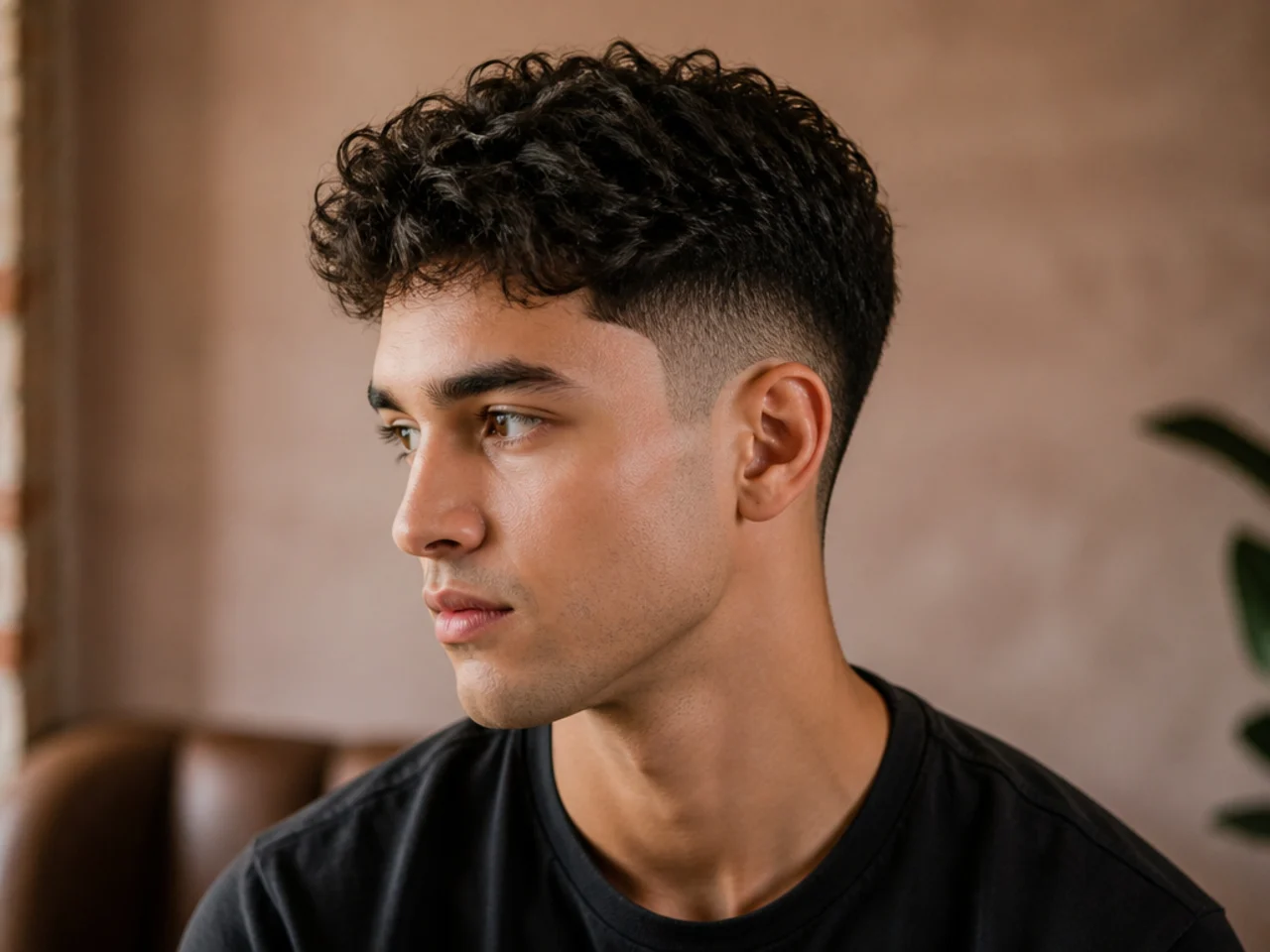
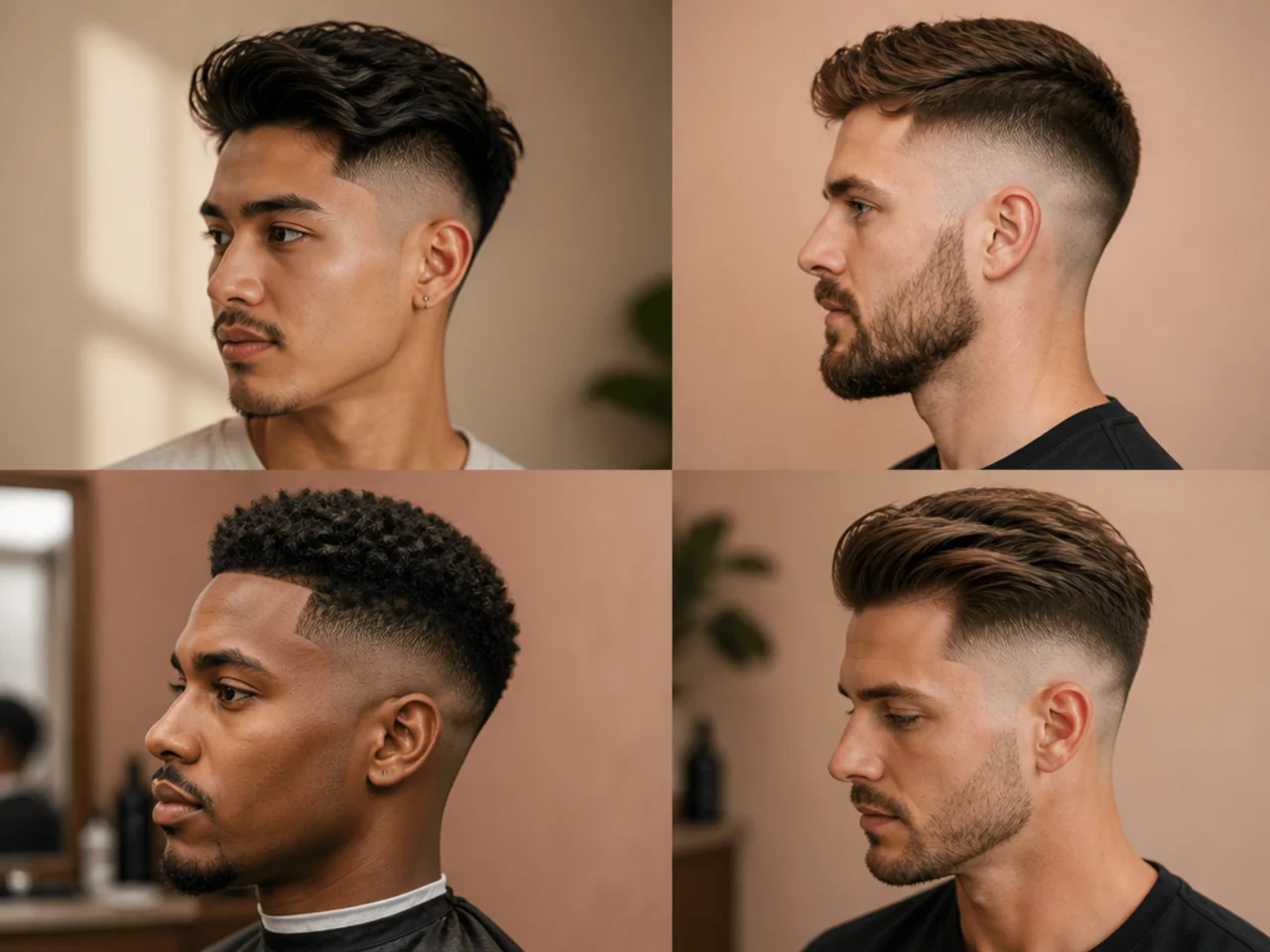
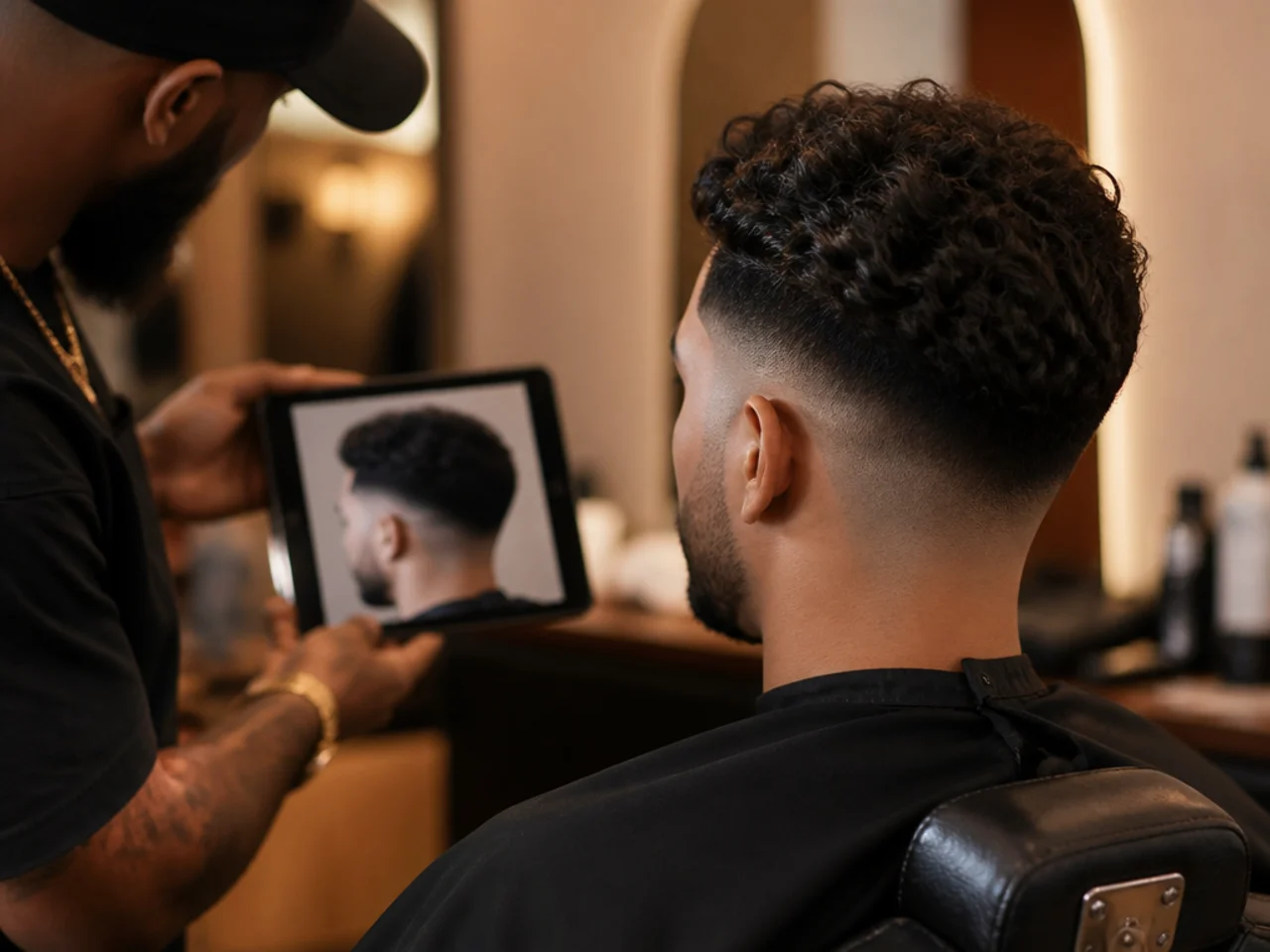
4. Bring One Photo Taken From the Side
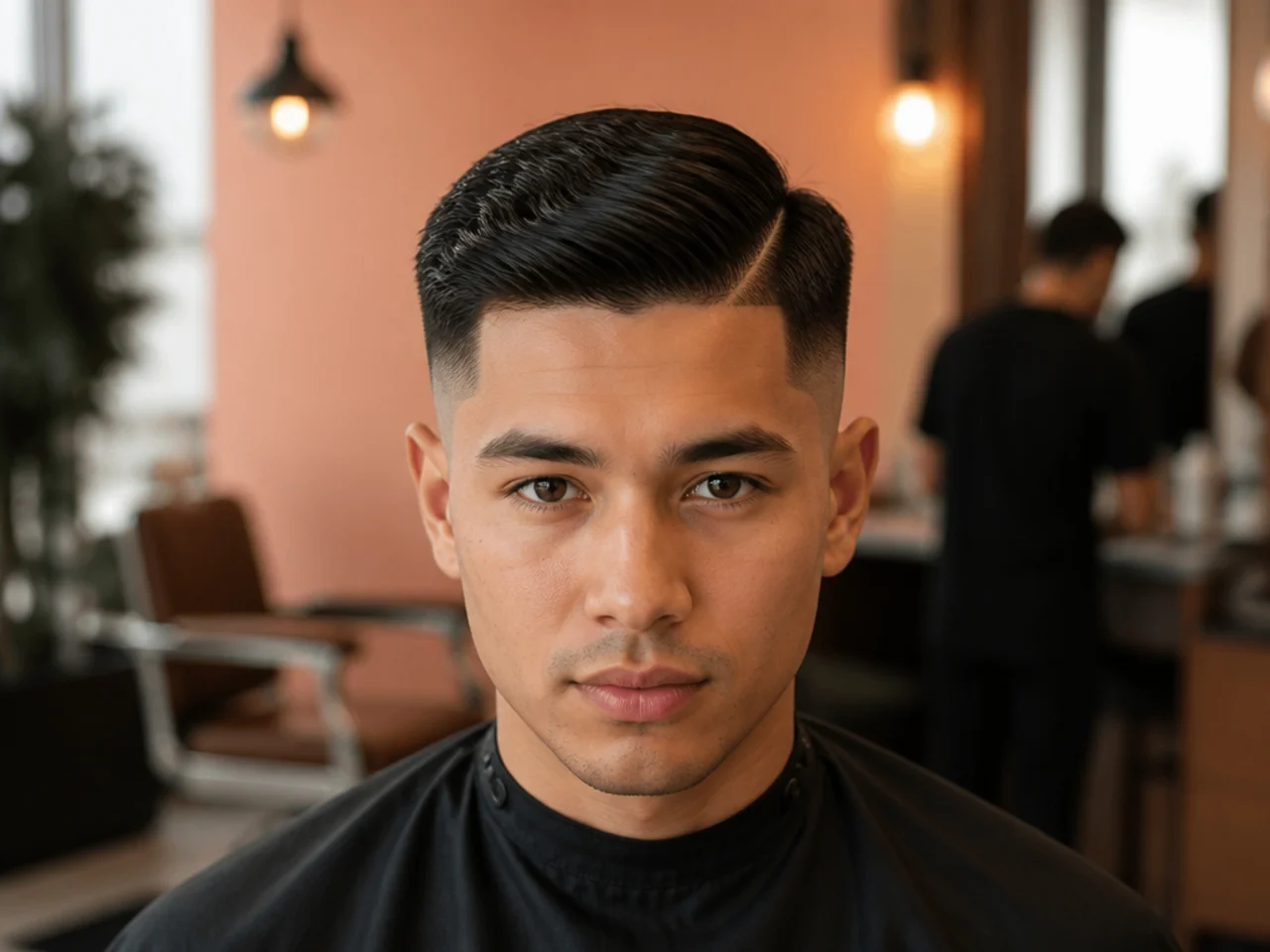
A mid fade lives on the side of the head, so a front-facing photo proves nothing about the height. Side or three-quarter only.
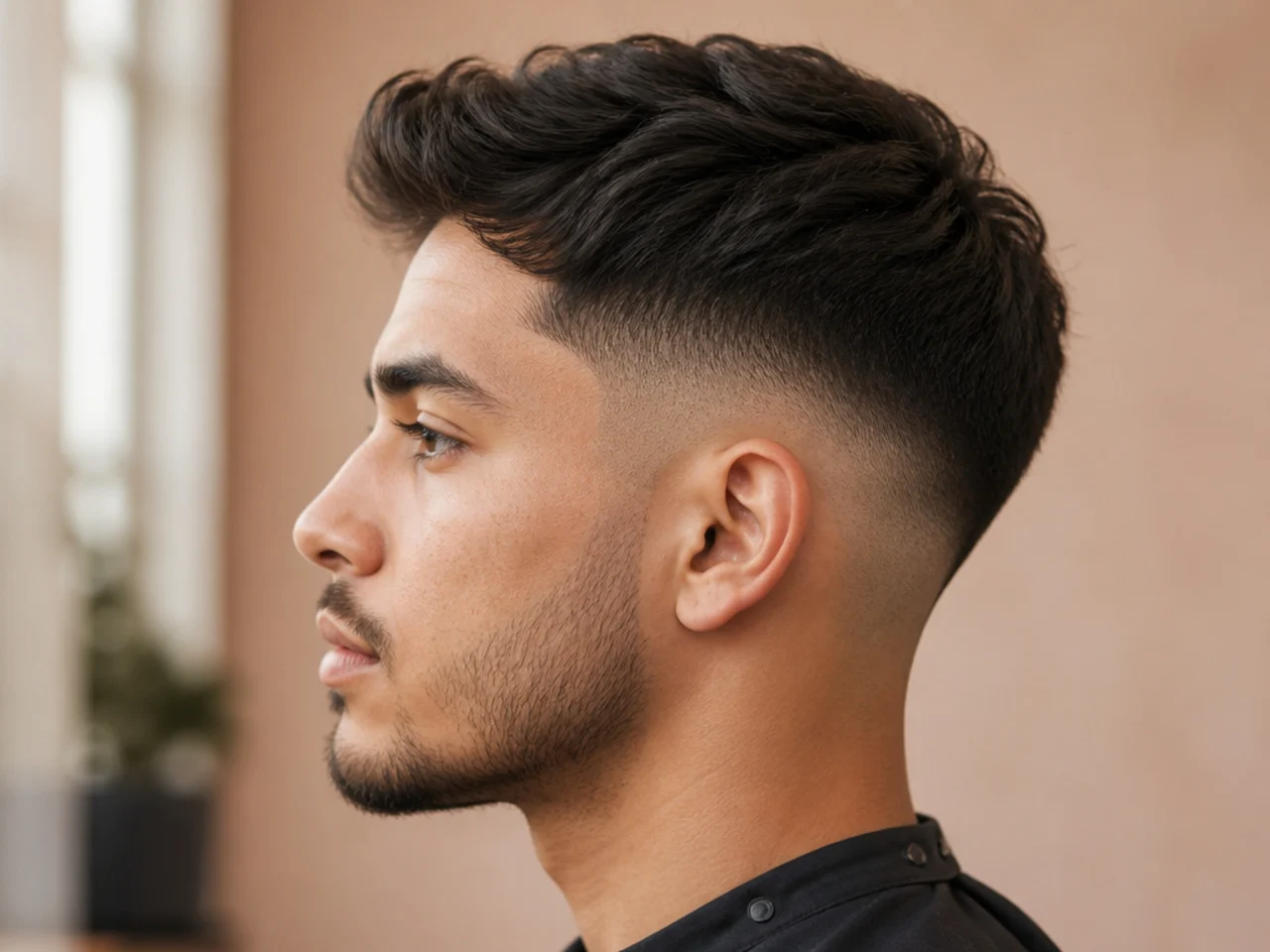
5. Say the Word Fade or Taper Deliberately
Say fade and you are asking to finish on bare scalp; say taper and you are asking for a 3mm floor to be left behind. Barbers hear these as two different services, so choose one.
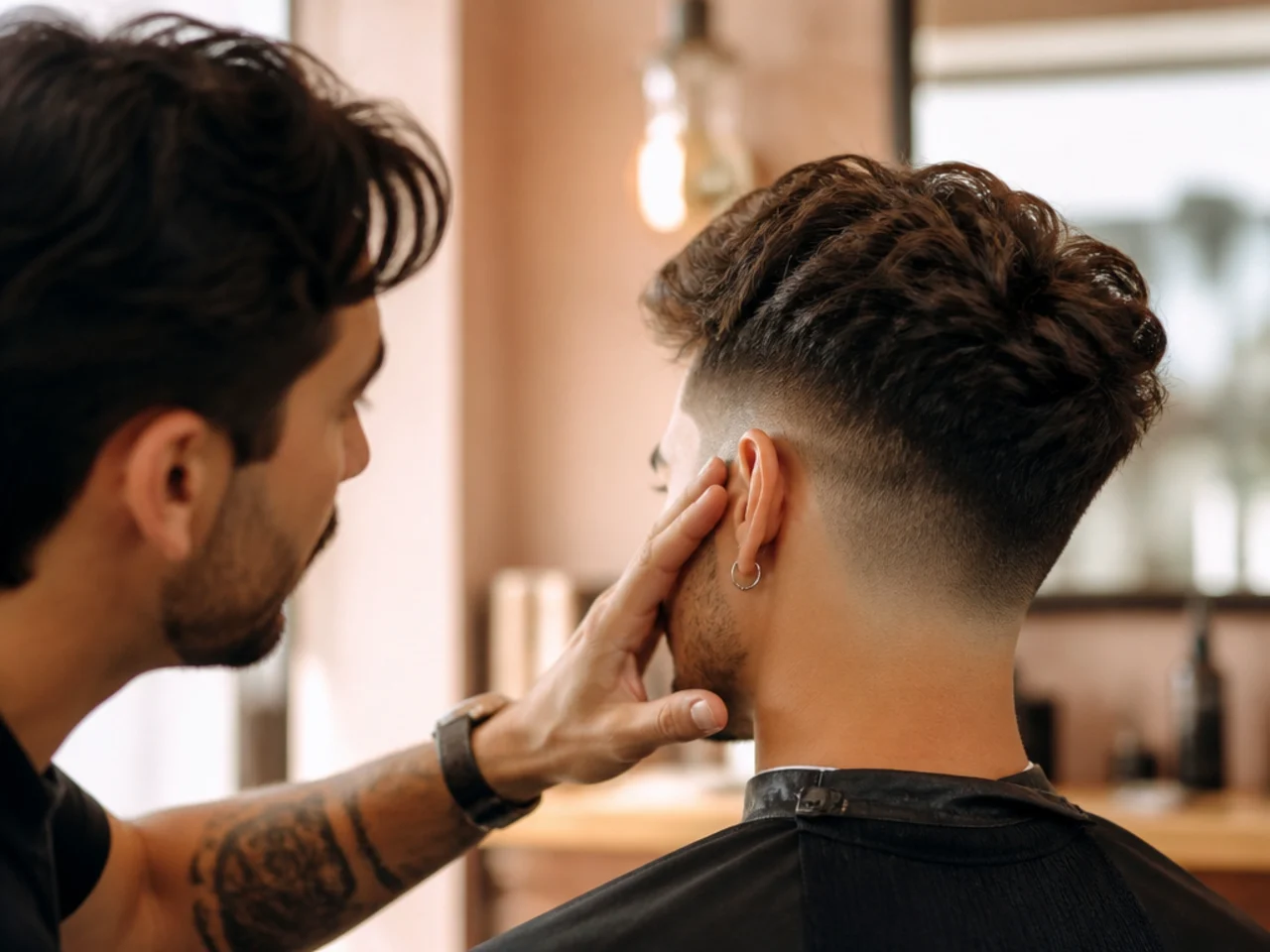
6. Point at Where the Fade Should Start
Put a finger on your own head between the temple and the ridge. It removes the entire argument about what mid means.
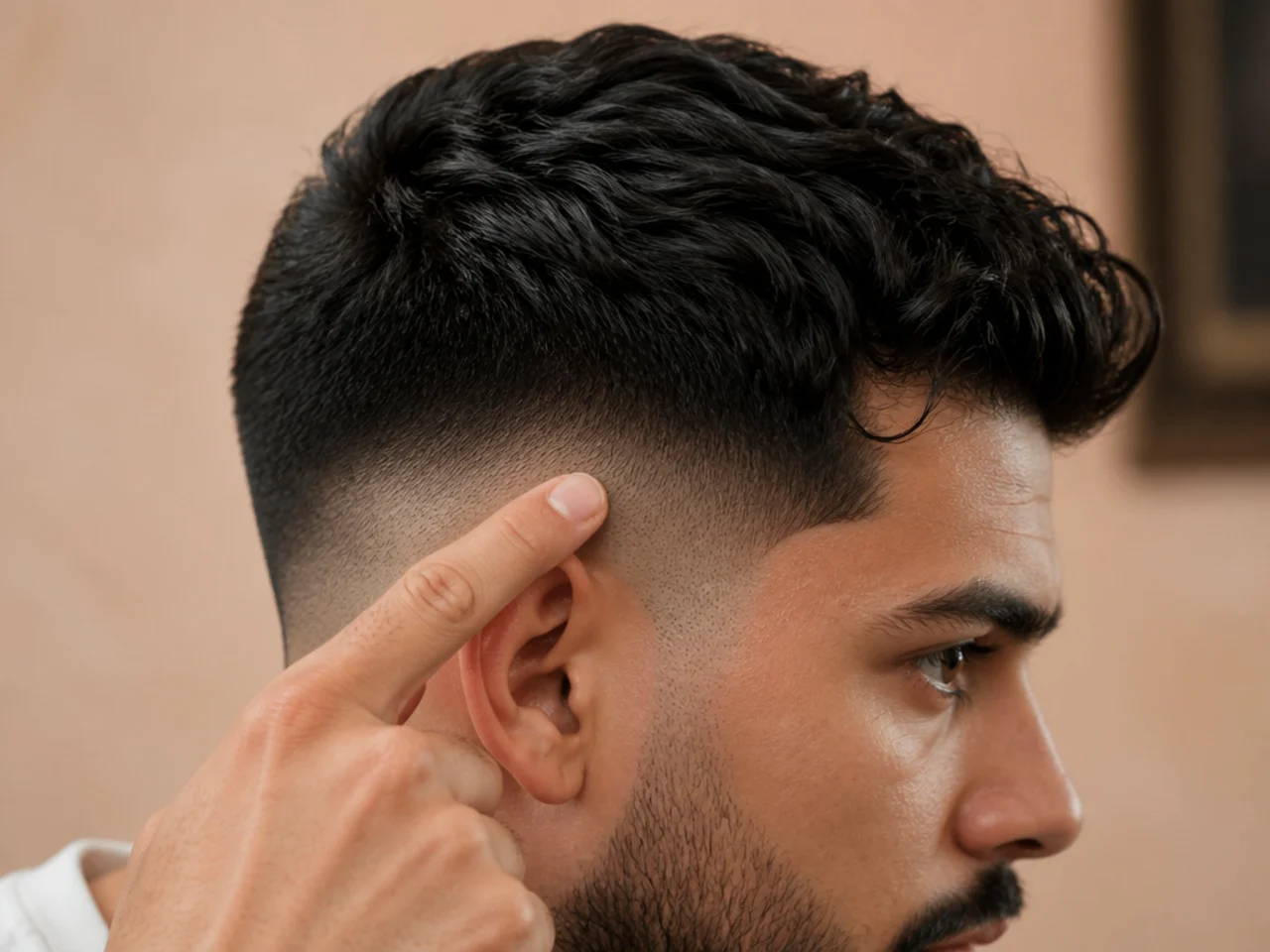
7. Name the Bottom Guard
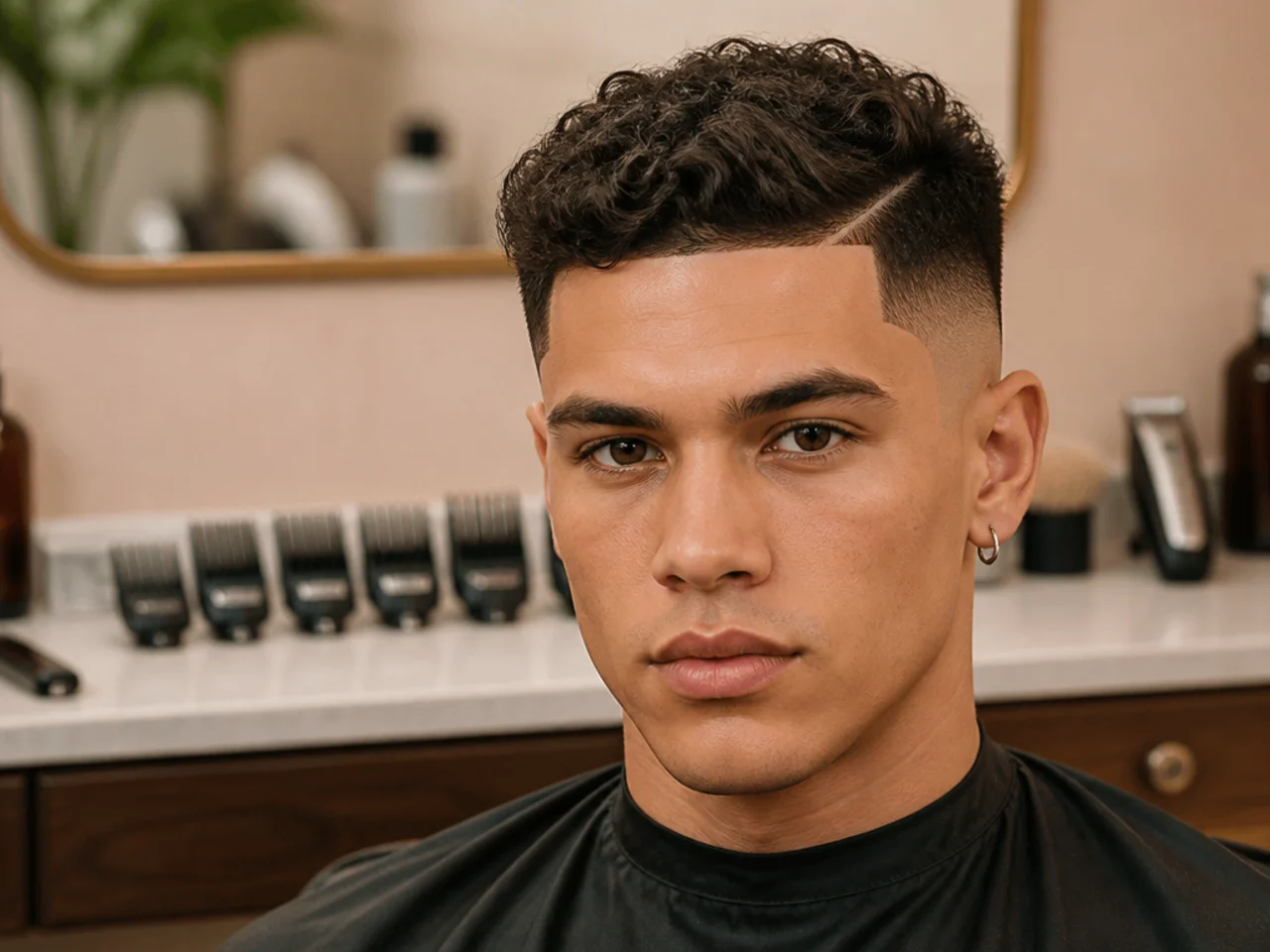
Skin, or a #1 at 3mm. This is the shortest point of the blend and it sets the contrast for everything above it.
8. Name the Top Guard
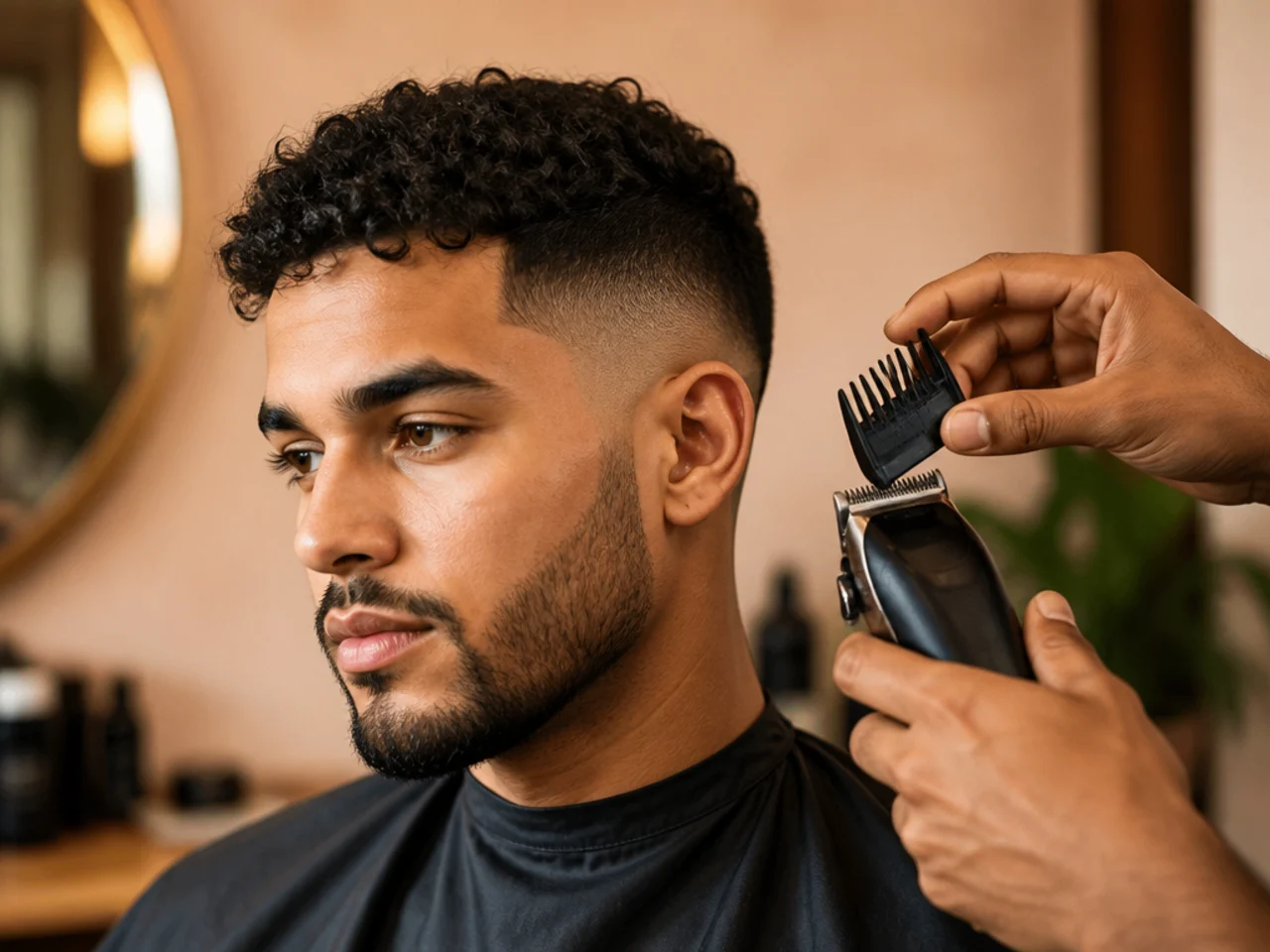
Where the blend finishes and the top begins, usually a #2 at 6mm or a #3 at 10mm. Without it the barber picks for you.
9. Say What Happens on Top
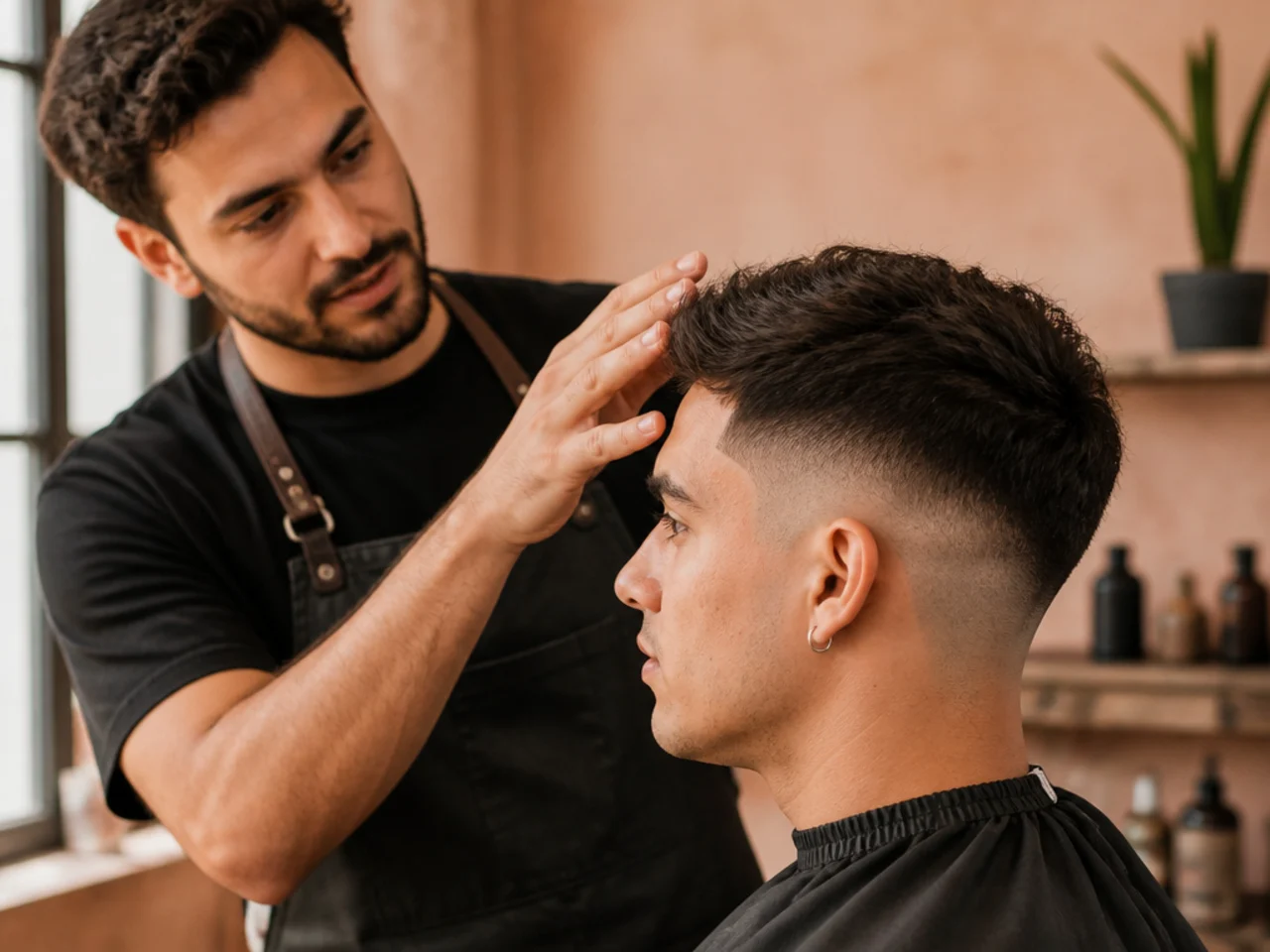
Scissor cut, clippered or left long. A mid fade is only the sides, and half of bad fades are actually a top that was never discussed.
10. Choose Straight, Drop or Burst
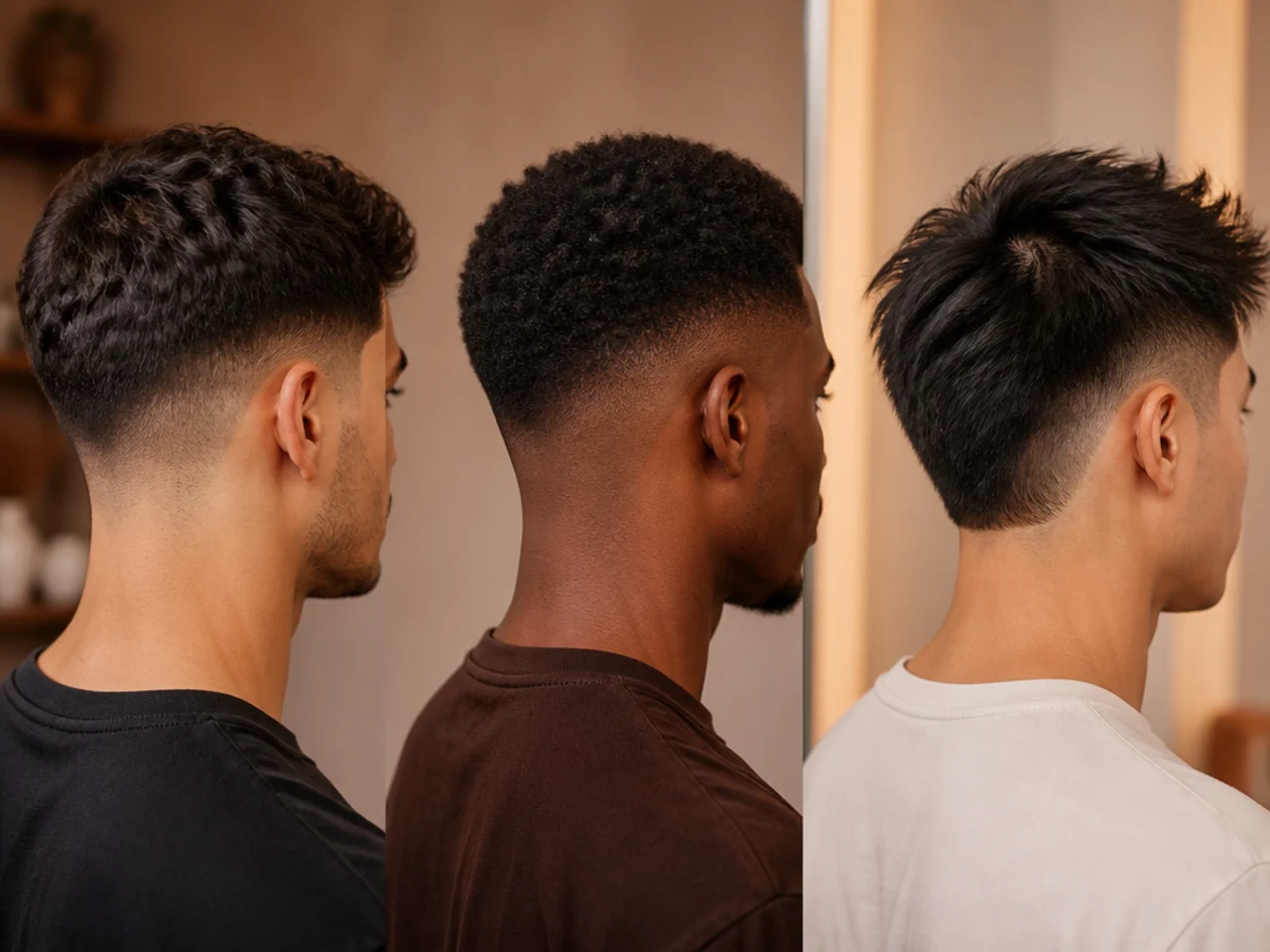
A straight mid line runs level around the head, a drop curves down behind the ear, and a burst arcs around it; the last two are set side by side in burst vs drop fade compared. They are three different cuts at the same height.
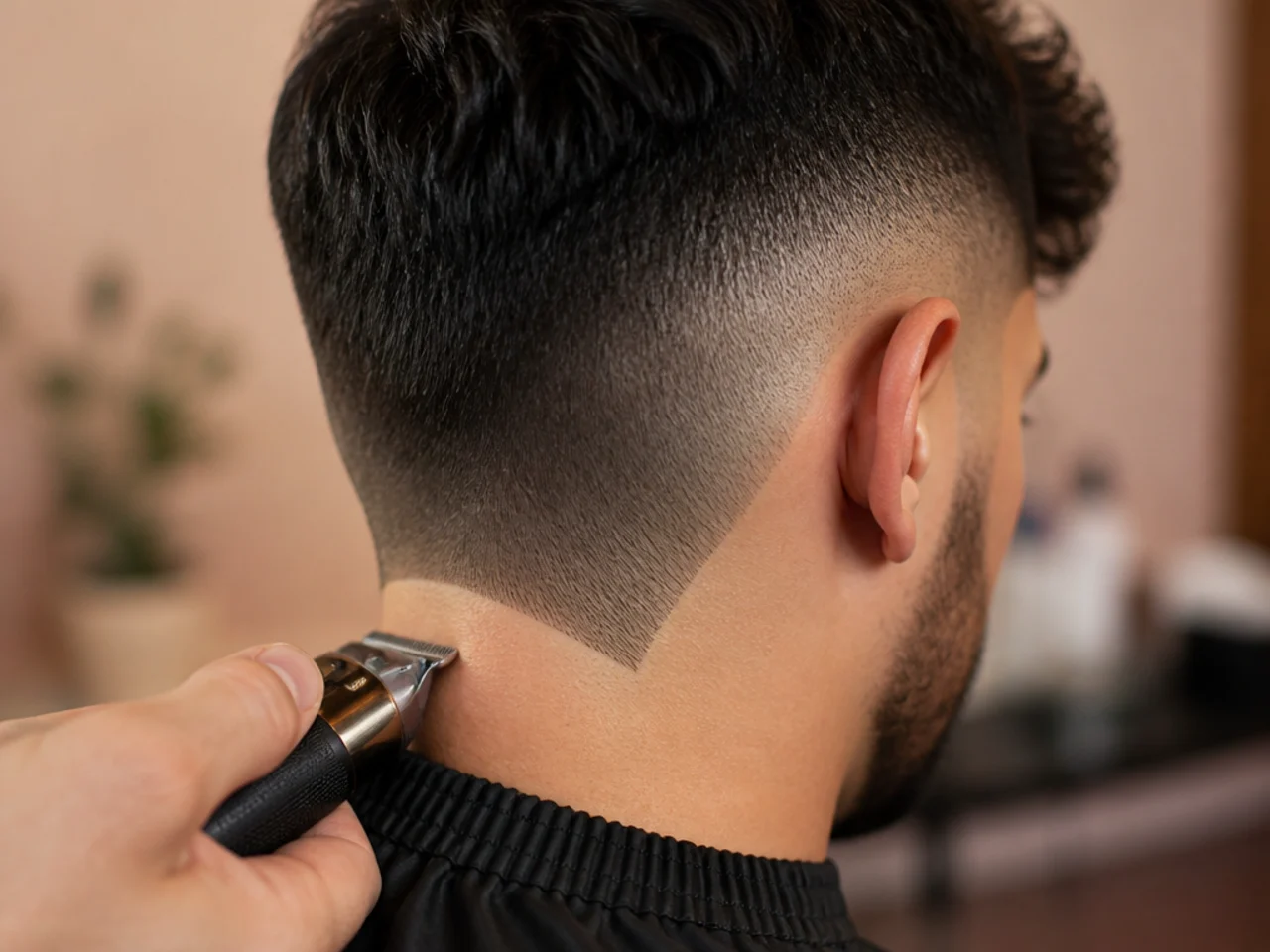
11. Decide the Neckline Shape
Blocked, rounded or tapered. Blocked looks sharpest for a week and grows out with a visible shelf, tapered stays tidy longer. The shelf forms because a squared line is cut across hair that keeps growing downward, so within a fortnight there is length hanging below the edge.
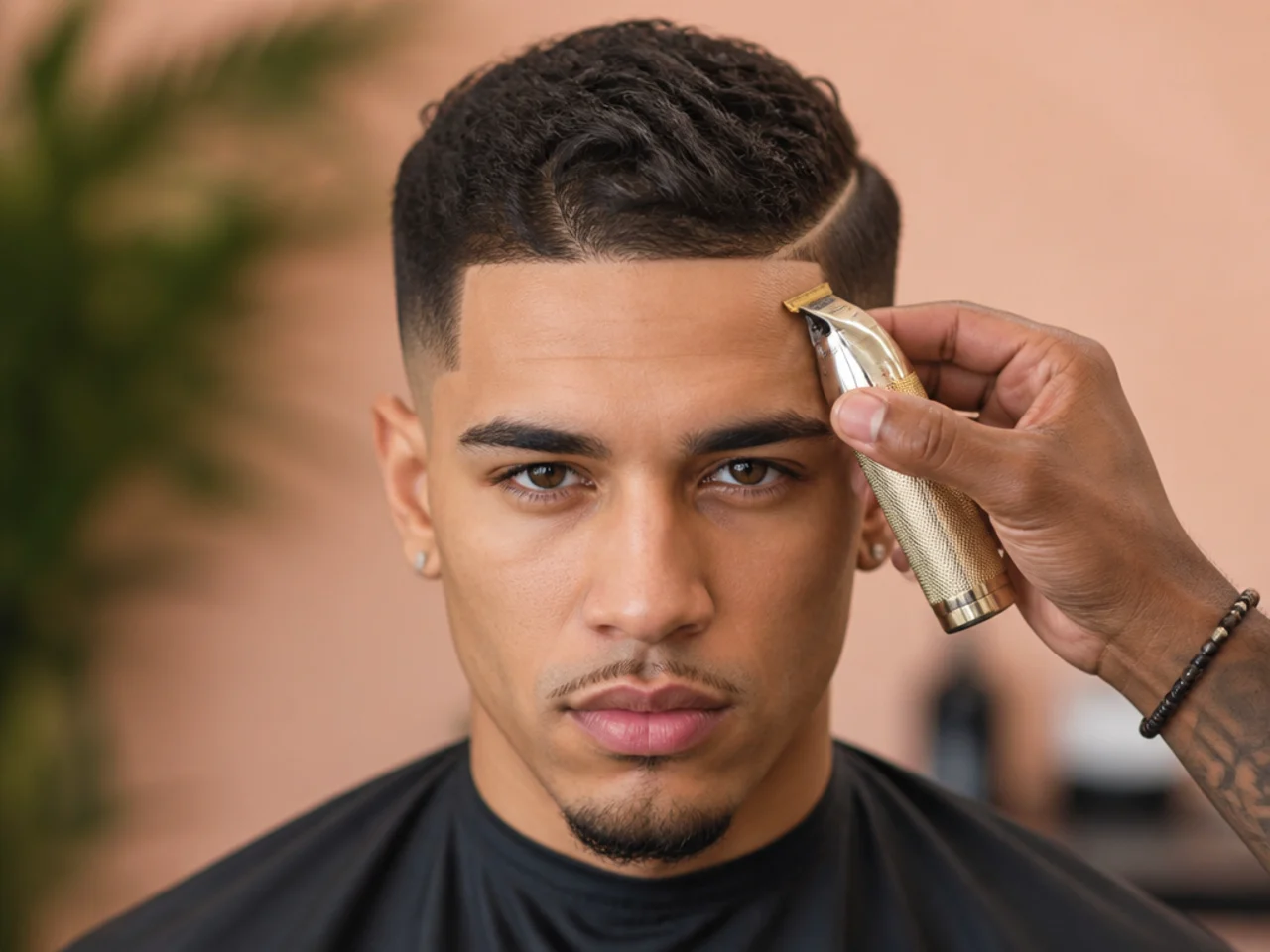
12. Ask For or Refuse a Line-Up
A razored hairline is a separate decision from the fade. It sharpens the front and it also moves your hairline back permanently if it is done too hard.
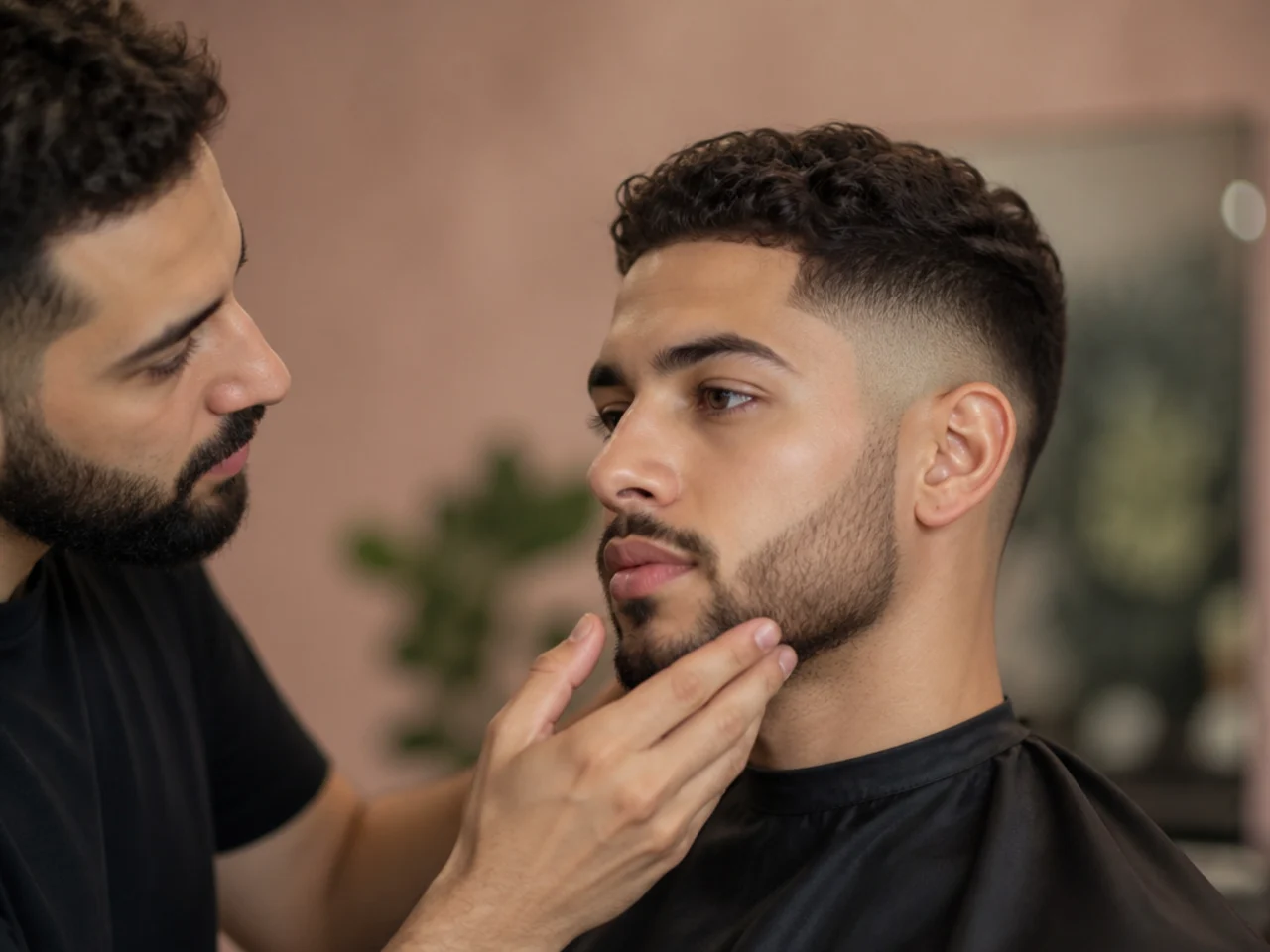
13. Mention Your Beard Before the Sides Are Cut
The fade and the beard meet about four centimetres apart, and the connection has to be planned before the blend is finished, which is the first rule of any men's haircut worn with a beard.
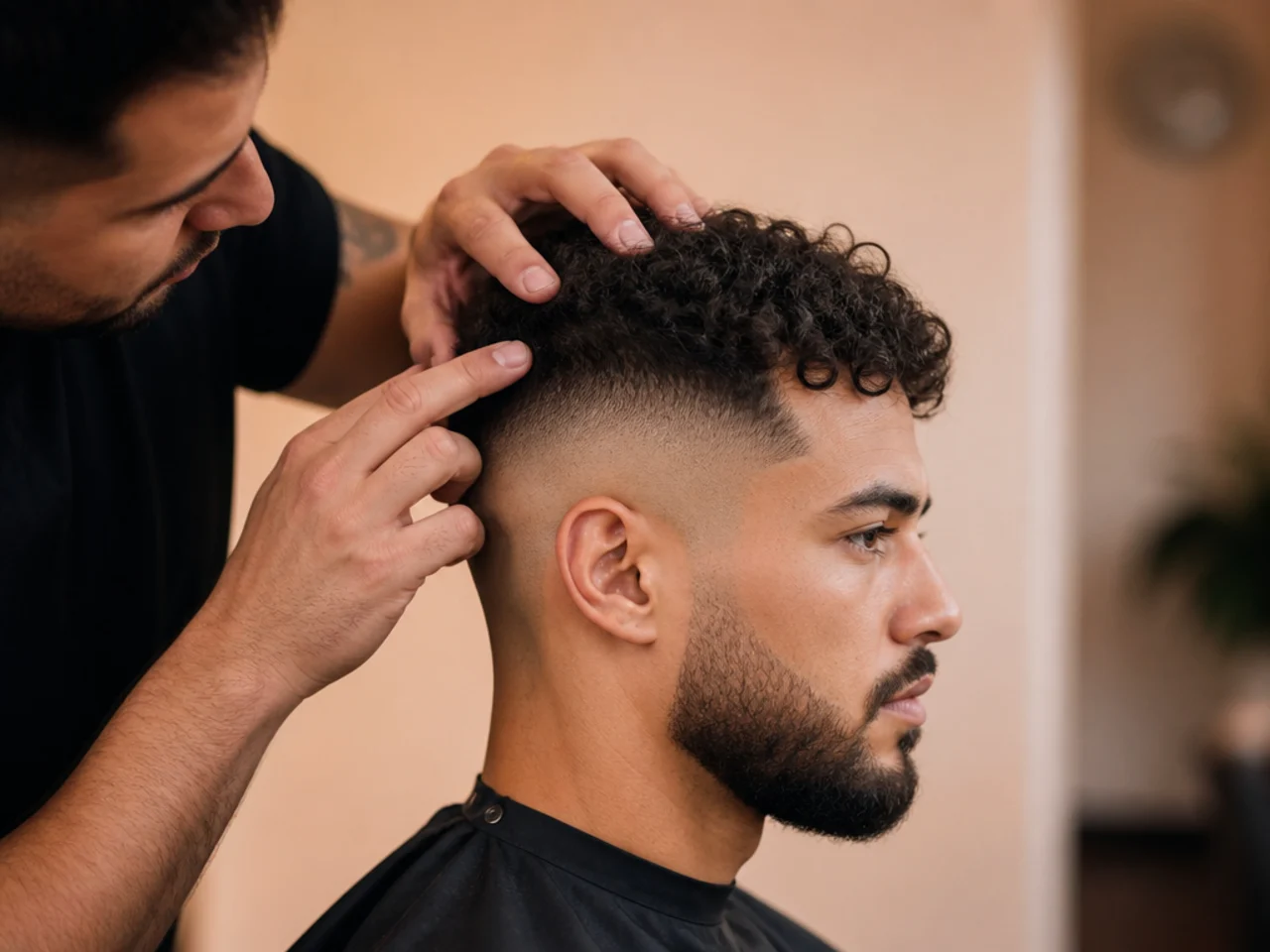
14. Flag Any Scars or Uneven Density
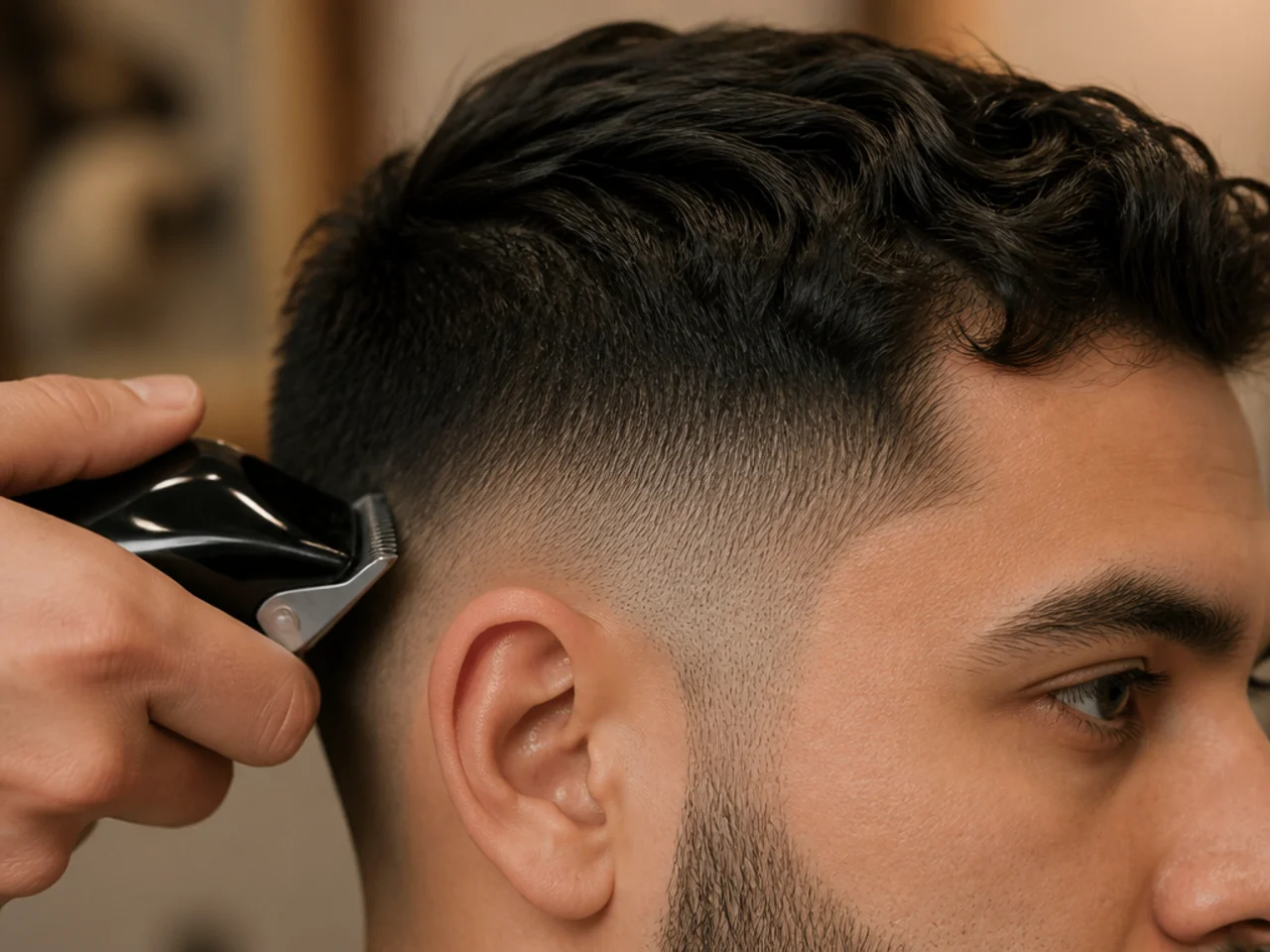
A mid fade exposes the panel above the ear. A barber who knows about a scar can leave a little more length over it.
15. Ask for the Height to Be Checked Both Sides
Fades drift upward on the barber's dominant side. Asking for an eye-level check on both is normal and takes ten seconds. The drift comes from reach: the working arm folds tighter on the barber's strong side, so the clipper lands a few millimetres high on every pass.
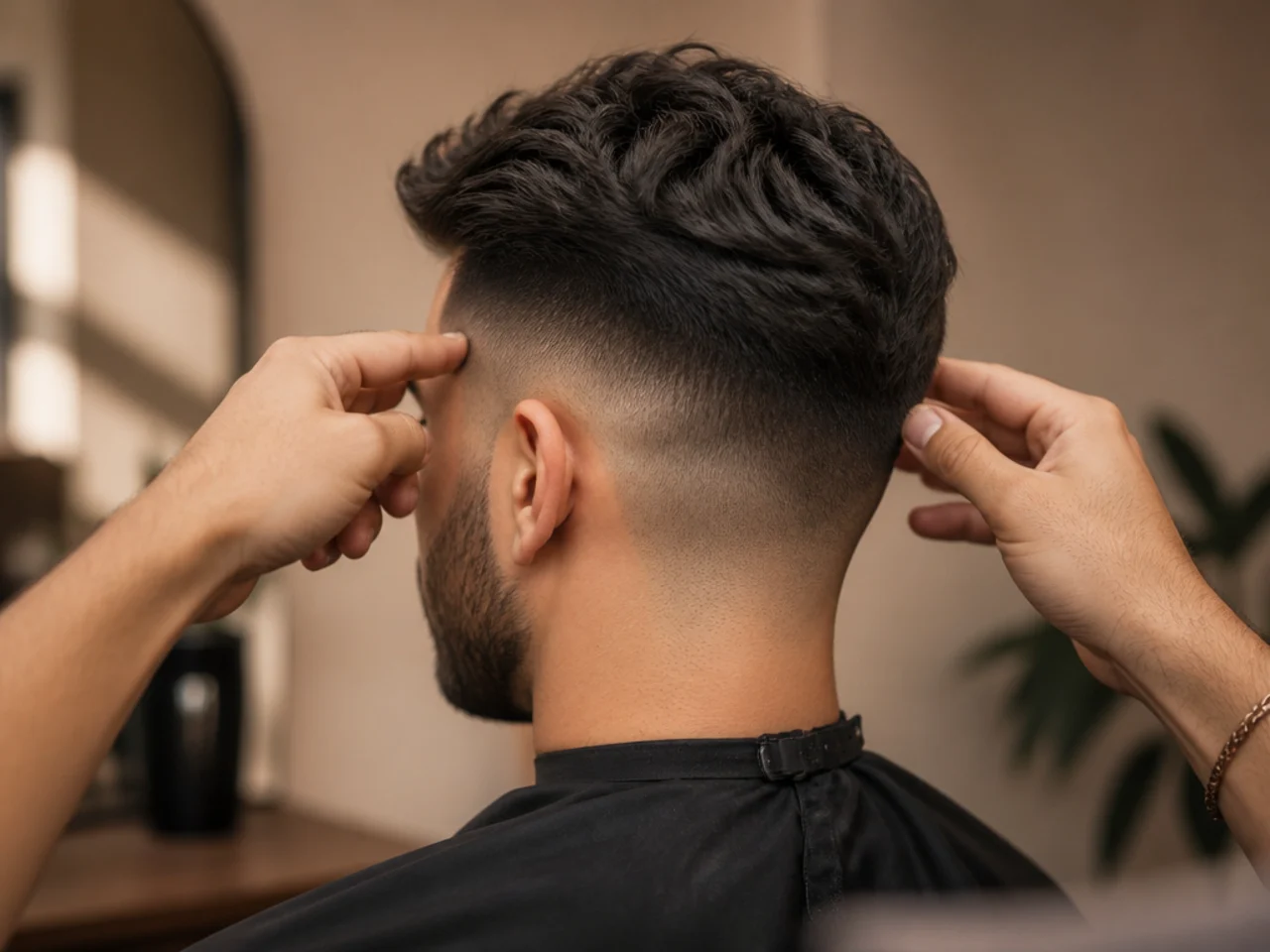
16. Speak Up During the First Pass
The first clipper pass sets the height and everything afterwards refines it. After that pass the height cannot be lowered, only raised.
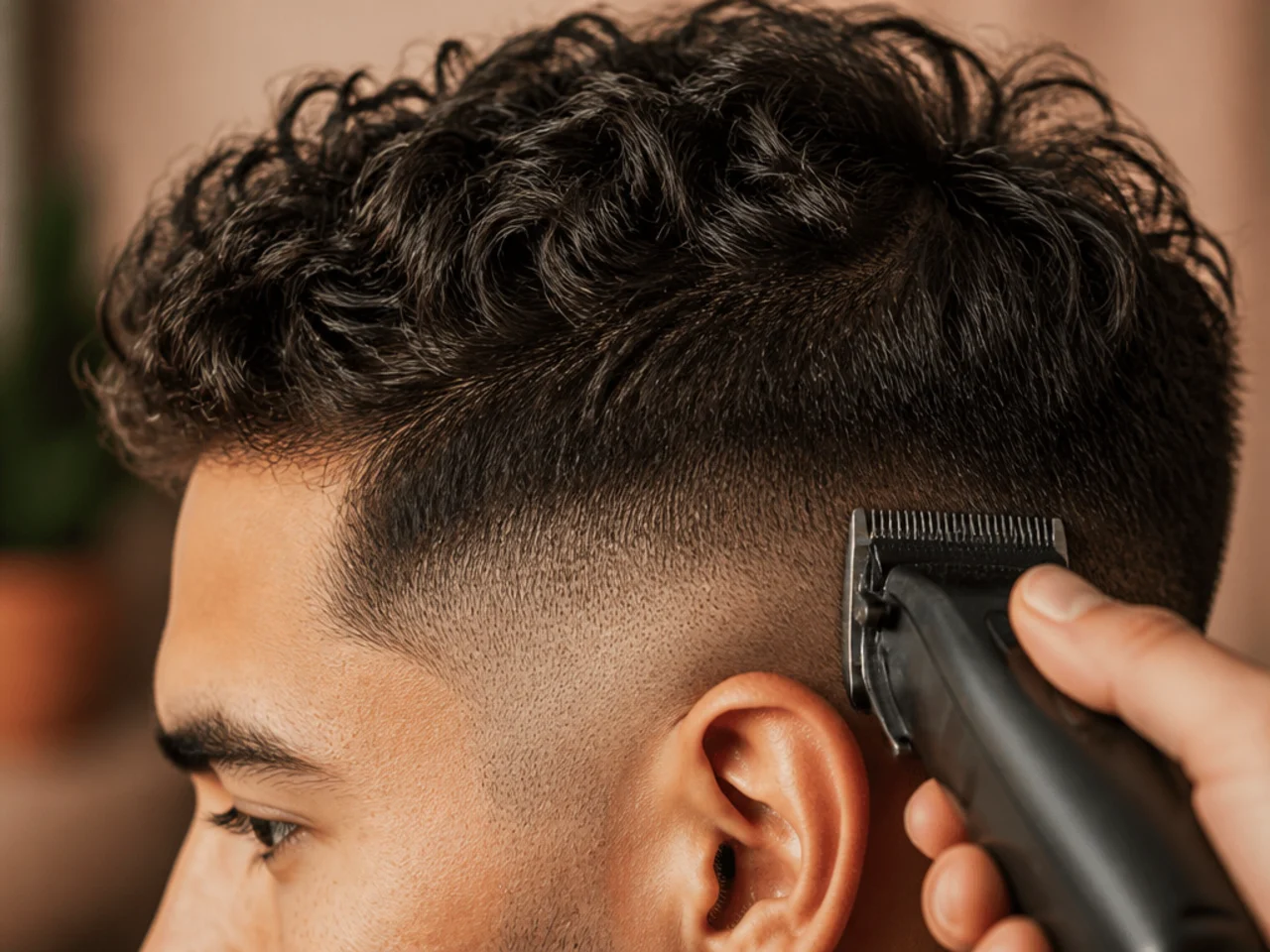
17. Check the Back With a Hand Mirror
The back of a mid fade is where the line most often runs uphill. It is also the part you will never see again until a photograph shows it.
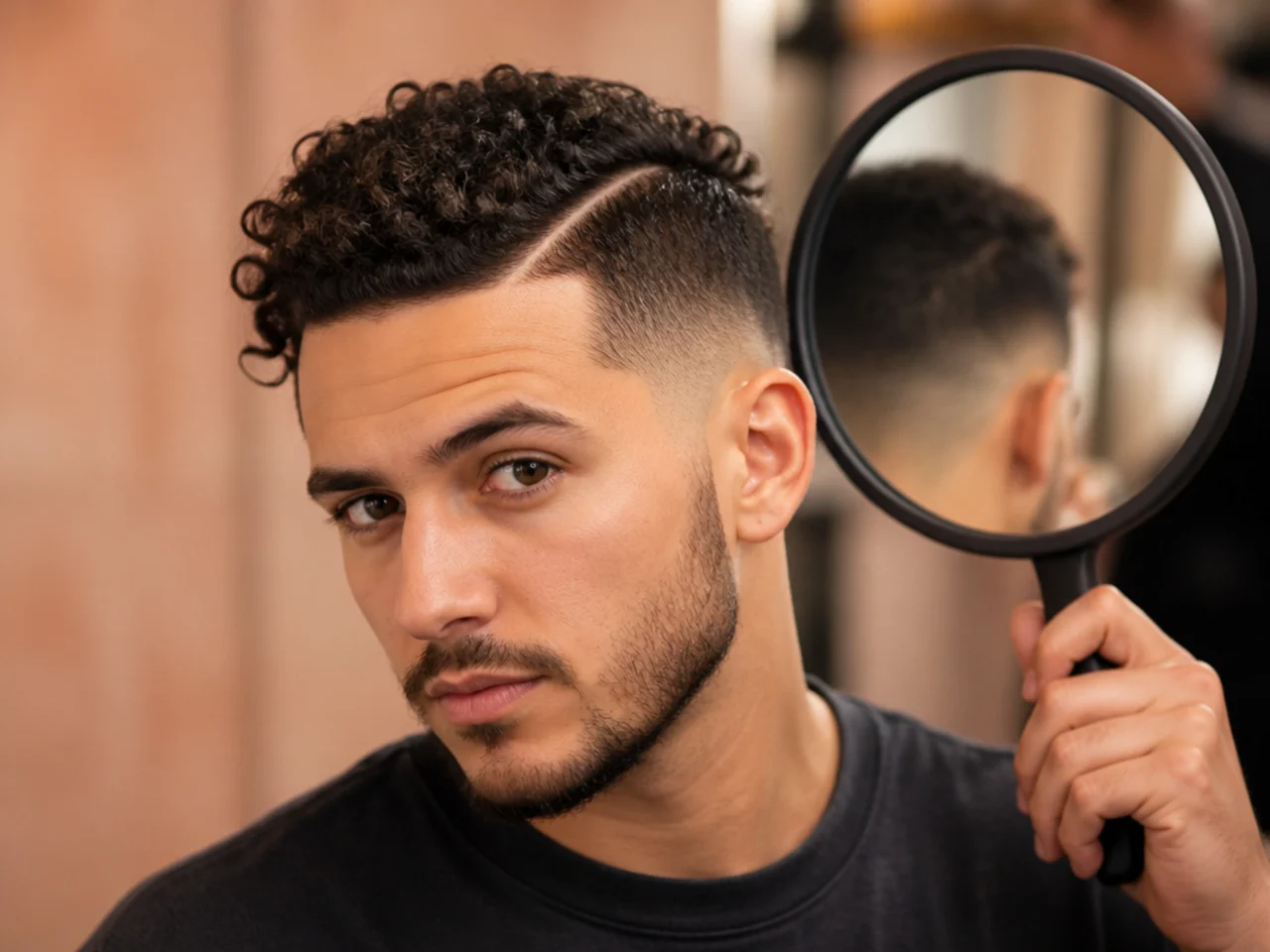
18. Photograph the Finished Sides
Two photos, one each side, taken in the chair. It is the reference for the next appointment and for any other barber you end up in front of.
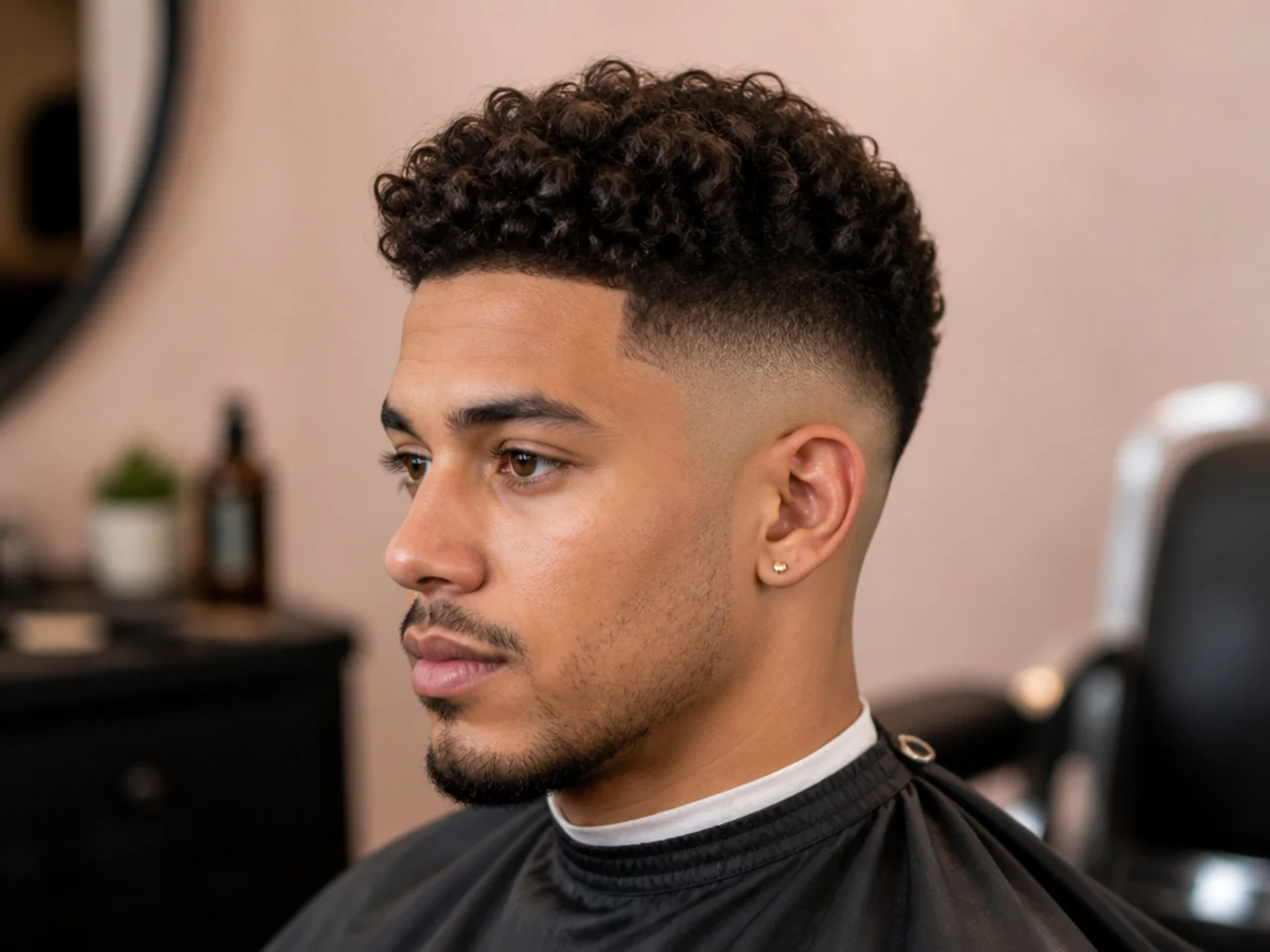
19. Rebook Before You Pay
A mid skin fade blurs in one to two weeks and a taper holds three to four. Book to that clock rather than to when you notice.
20. Write Down What Worked
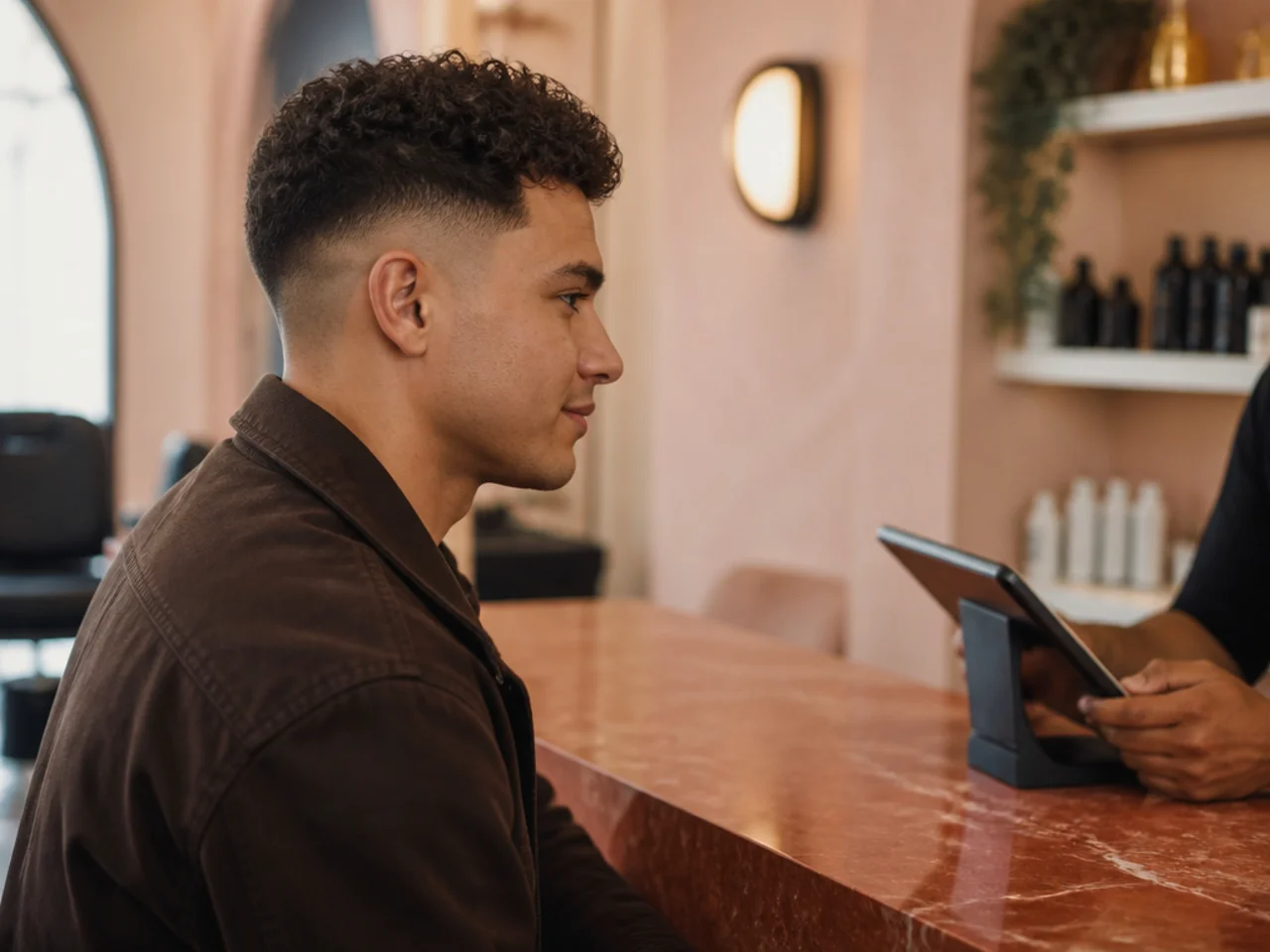
Guard numbers, the height, the neckline and the barber's name. Four lines in your phone turns a good haircut into a repeatable one.

Styling and Upkeep
Leave the fade alone between visits. Home touch-ups on a blend raise the line and shorten the gap to your next appointment.
Ask for a line-up mid-cycle. It restores most of the fresh look for a fraction of the time and cost.
Wash less often than you shave. A fade needs a clean scalp but daily washing dries the exposed skin below the line.
Keep product above the blend. The faded panel is too short to hold anything and only picks up shine.
Note how the height looked at week two. That is when you learn whether the line was set where you wanted it.
Mistakes to Avoid
Saying mid and nothing else. It is the least precise word available and it is the reason most mid fades come out high.
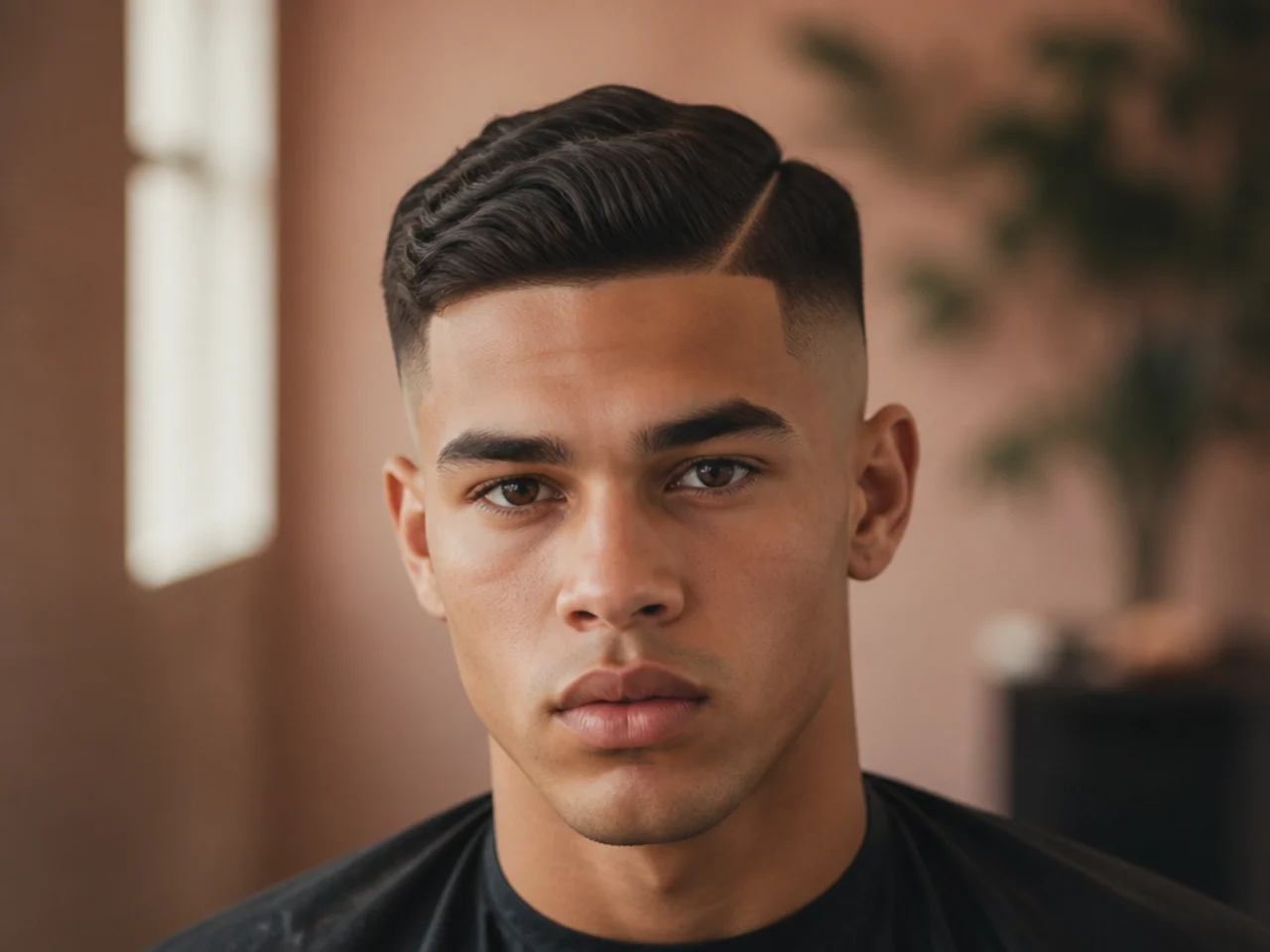
Bringing a front-facing reference photo. It shows none of the information the fade depends on.
Leaving the top undiscussed. The contrast between the top and the fade is what people actually notice.
Waiting until the second side to say something. By then both sides have to be raised to match.
Confusing a fade with a taper at booking. One goes to skin and one leaves 3mm, and the difference is two weeks of upkeep.
FAQ
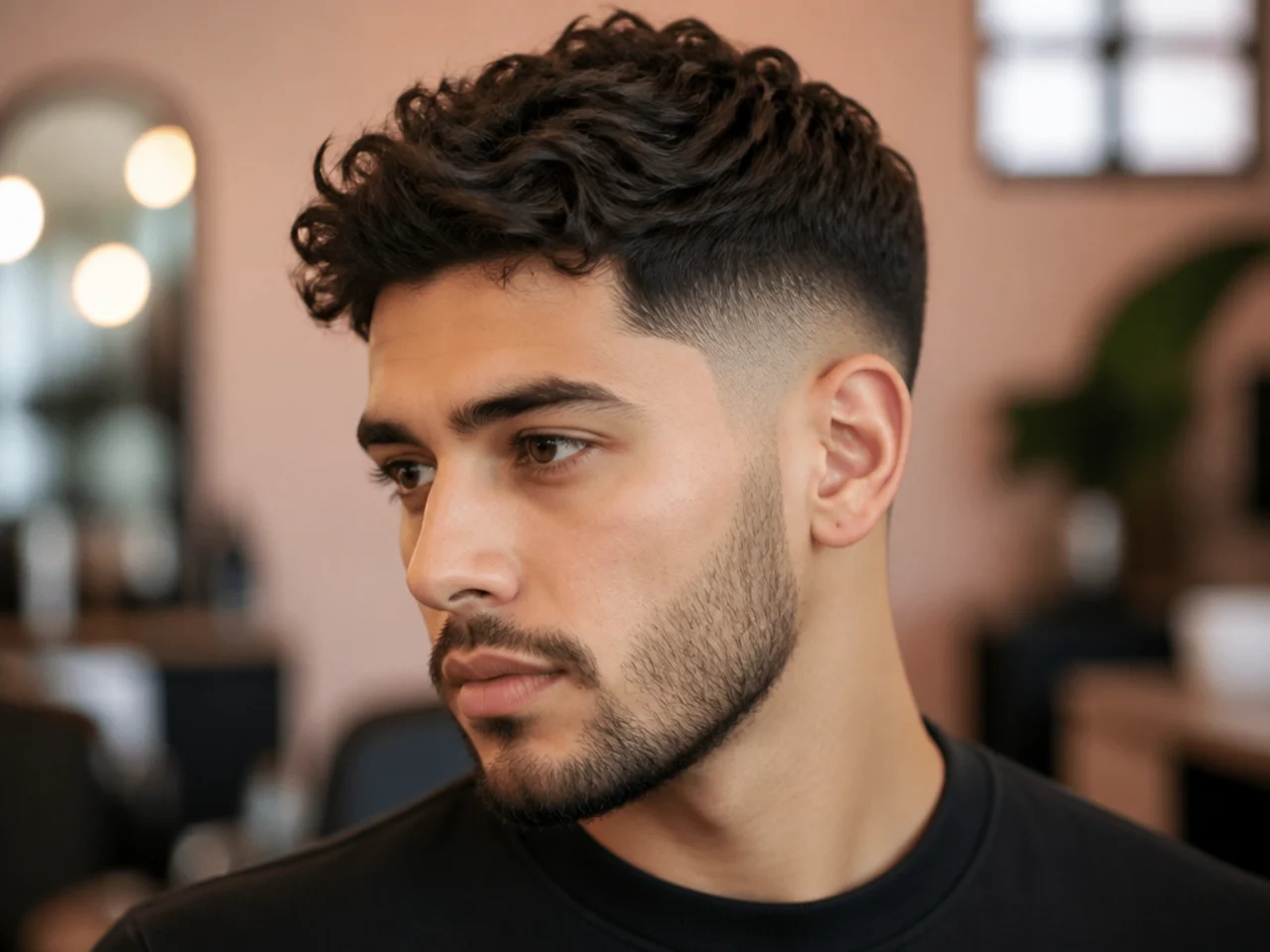
What is the sentence to use? Mid fade starting between the temple and the parietal ridge, skin up to a #2.
How do I stop it going too high? Point at the spot on your own head before the first pass.
Fade or taper? Fade for one to two weeks of sharpness, taper for three to four.
Final Thoughts
Two landmarks and three numbers is the whole consultation. Say where the line starts, say what it starts at, say what it finishes at and say what happens on top, and the only variable left is the barber's hand. That is a far better position than describing a haircut with the word mid and hoping.
For every variation of the cut see the mid fade haircut guide, and for the height comparison see low vs mid vs high fade. More in Fade Haircuts.