15 Trendy Little Boy Haircut Ideas to Save
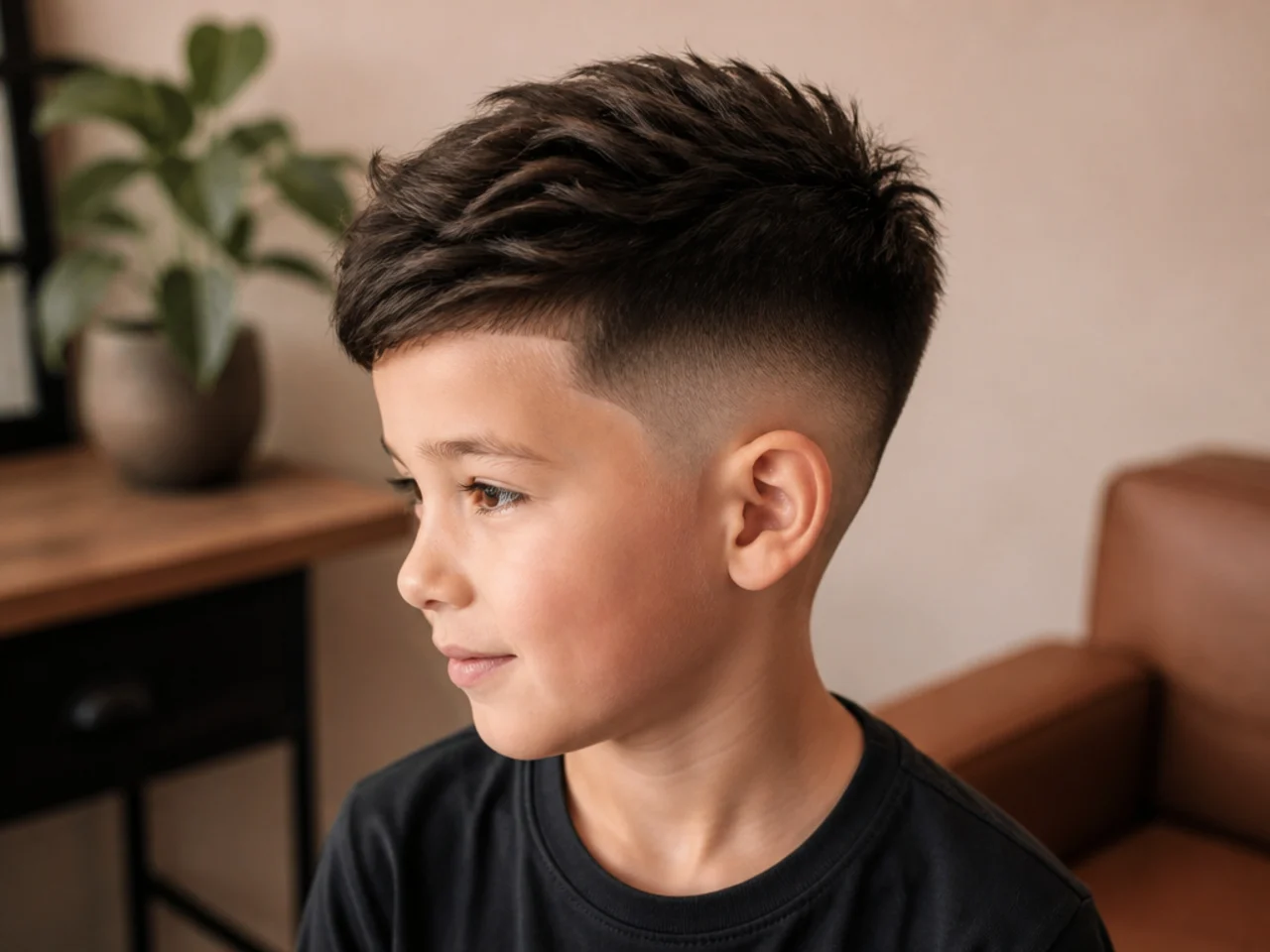
Four to seven is the age where a haircut has to answer to somebody other than the parent for the first time, because a school policy now applies to it and he has started having opinions. His hair is still changing underneath both.
In this article · 22
- The Age Where the Hair and the Rules Both Change
- How to Choose Yours
- The 15 Little Boy Haircuts
- 1. Number Three Sides With a Long Fringe
- 2. Soft Taper With No Hard Line
- 3. A Crop Cut to Fall Forward
- 4. Curtains That Clear the Eyebrow
- 5. Grown-Out Bowl With a Point-Cut Edge
- 6. A Low Taper Left at a Number Two
- 7. Number Four All Over
- 8. Short Back and Sides at a Number Three
- 9. A Cut-In Side Parting on Fine Hair
- 10. Scissor-Cut Sides With No Guard Number
- 11. Textured Top Over a Number Three
- 12. Fine Curls Left Long on Top
- 13. A Rounded Neckline Instead of a Squared One
- 14. Number Three Sides With the Cowlick Cut Around
- 15. The Same Cut on a Wednesday Morning
- Styling and Upkeep
- Mistakes to Avoid
- FAQ
- Final Thoughts
Somewhere between four and seven, a haircut stops being entirely your decision. Two other parties join in at almost the same time.
He has started school, so a grooming policy applies to his hair for the first time in his life. And he has started having opinions, which are almost always about the front.
Meanwhile his hair is only part-way from baby hair to child hair. It is still finer than it will be at nine, so it still shows scalp under a number two and still will not hold a very sharp line.
The Age Where the Hair and the Rules Both Change
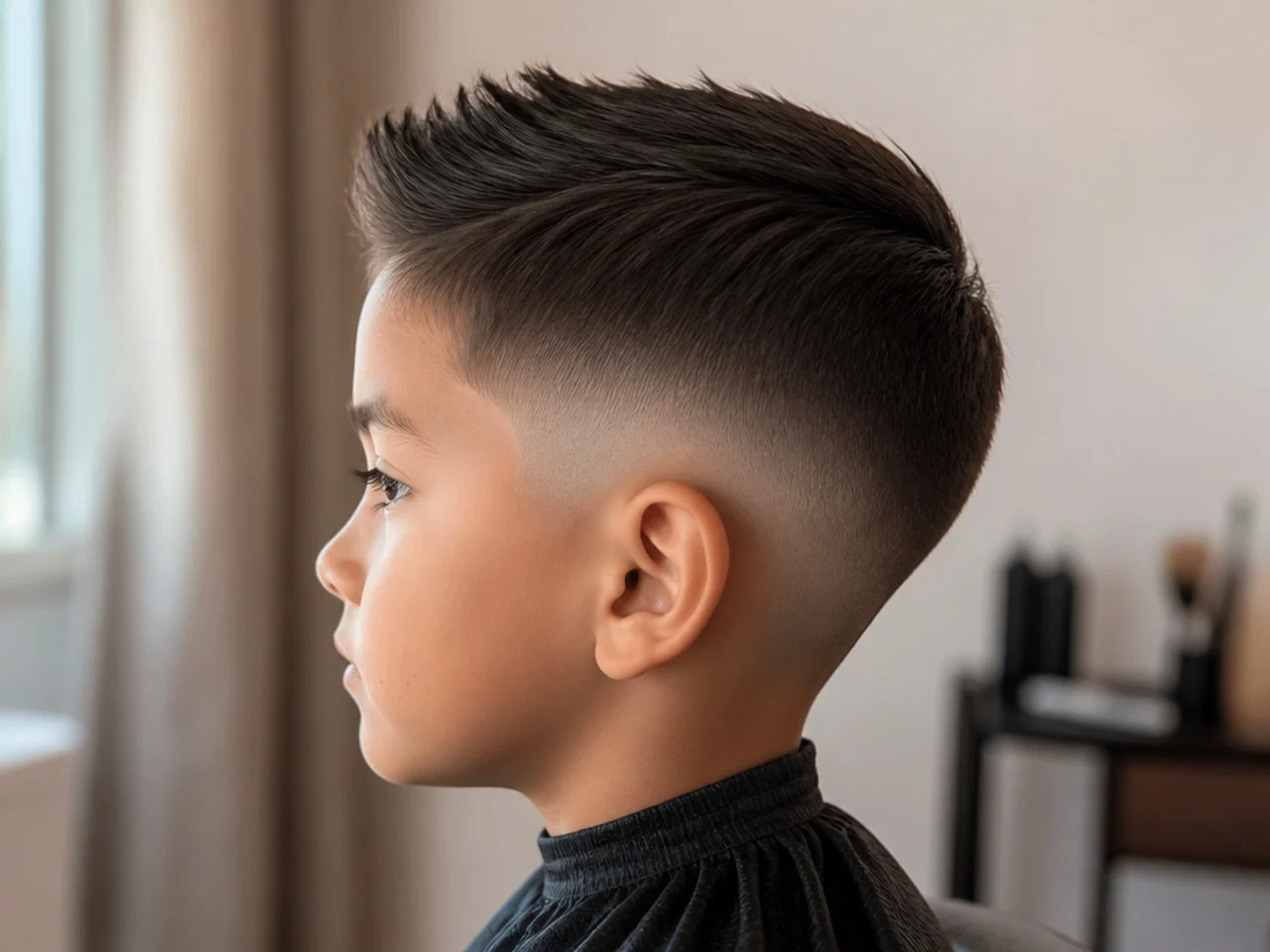
Density is still climbing, so the guard floor is a number three. Ten millimetres is where fine hair stops showing scalp, and a number two on a five-year-old often reads patchy rather than short.
A school policy now applies for the first time. Most name a minimum guard rather than a style, so the sides are the half with a rule attached and the top is not.
The hairline and the cowlick are still moving. A hard line-up cut into a boundary that has not settled looks wrong within a fortnight, so a soft edge is the better choice at this age.
It has to be school-ready five mornings a week with nothing done to it. A cut that needs product will not get product, so the shape has to be cut in rather than styled in.
How to Choose Yours
Start at a number three and only go shorter if the hair is genuinely dense. Fine hair at 6mm shows the scalp through it, which is not the look anyone asked for, and it is the same reason a toddler cut rarely drops below a number four.
Let him choose the front. The fringe is the only part he has an opinion about and it is also the part no policy mentions.
Ask for soft edges everywhere. Rounded corners and a scissored nape both age far better on a hairline that is still settling.
Work out where the cowlick sits before choosing a fringe. A crown or front cowlick decides which way the hair will fall, and cutting against it guarantees a morning fight you will lose.
The 15 Little Boy Haircuts
1. Number Three Sides With a Long Fringe
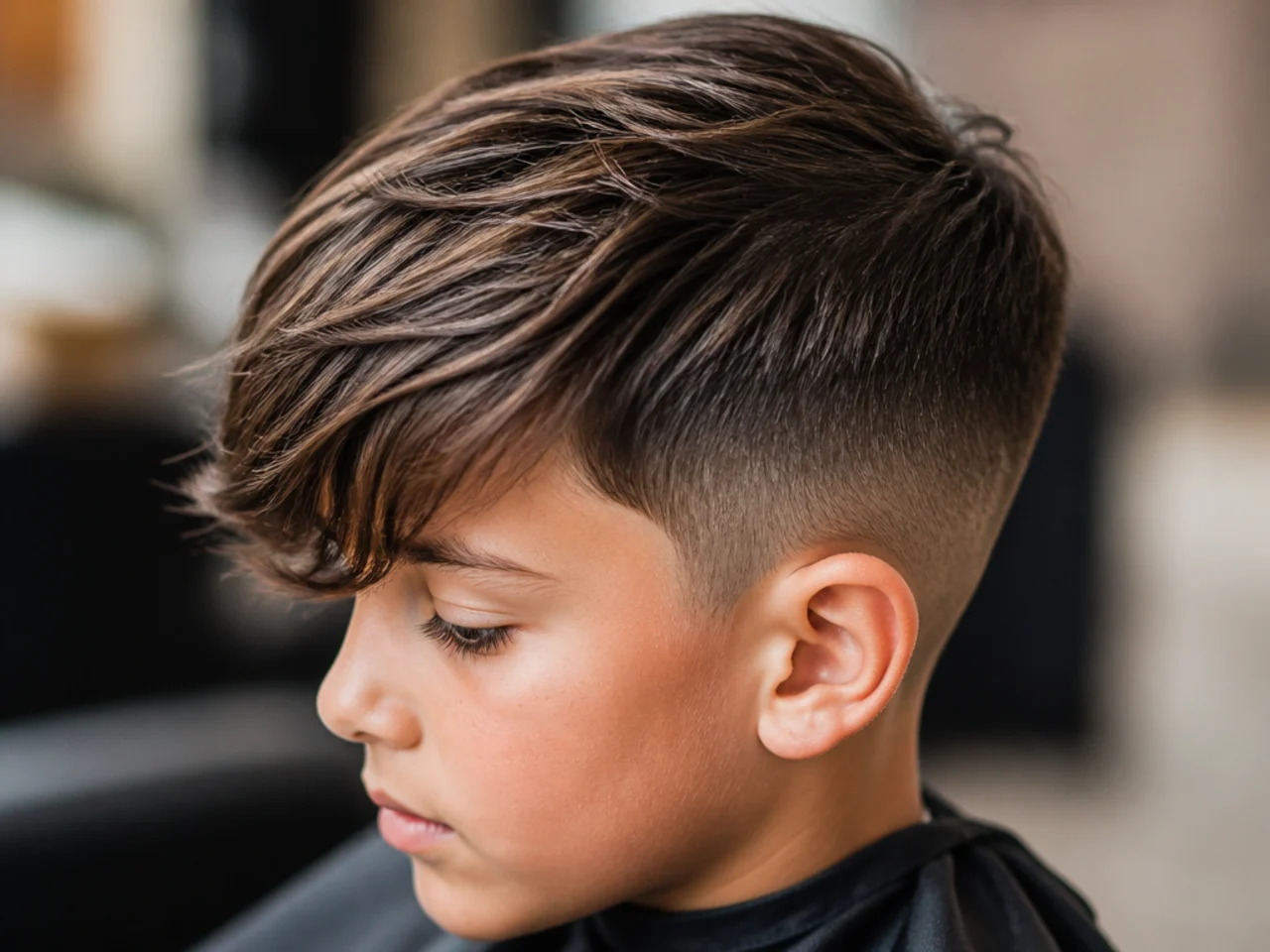
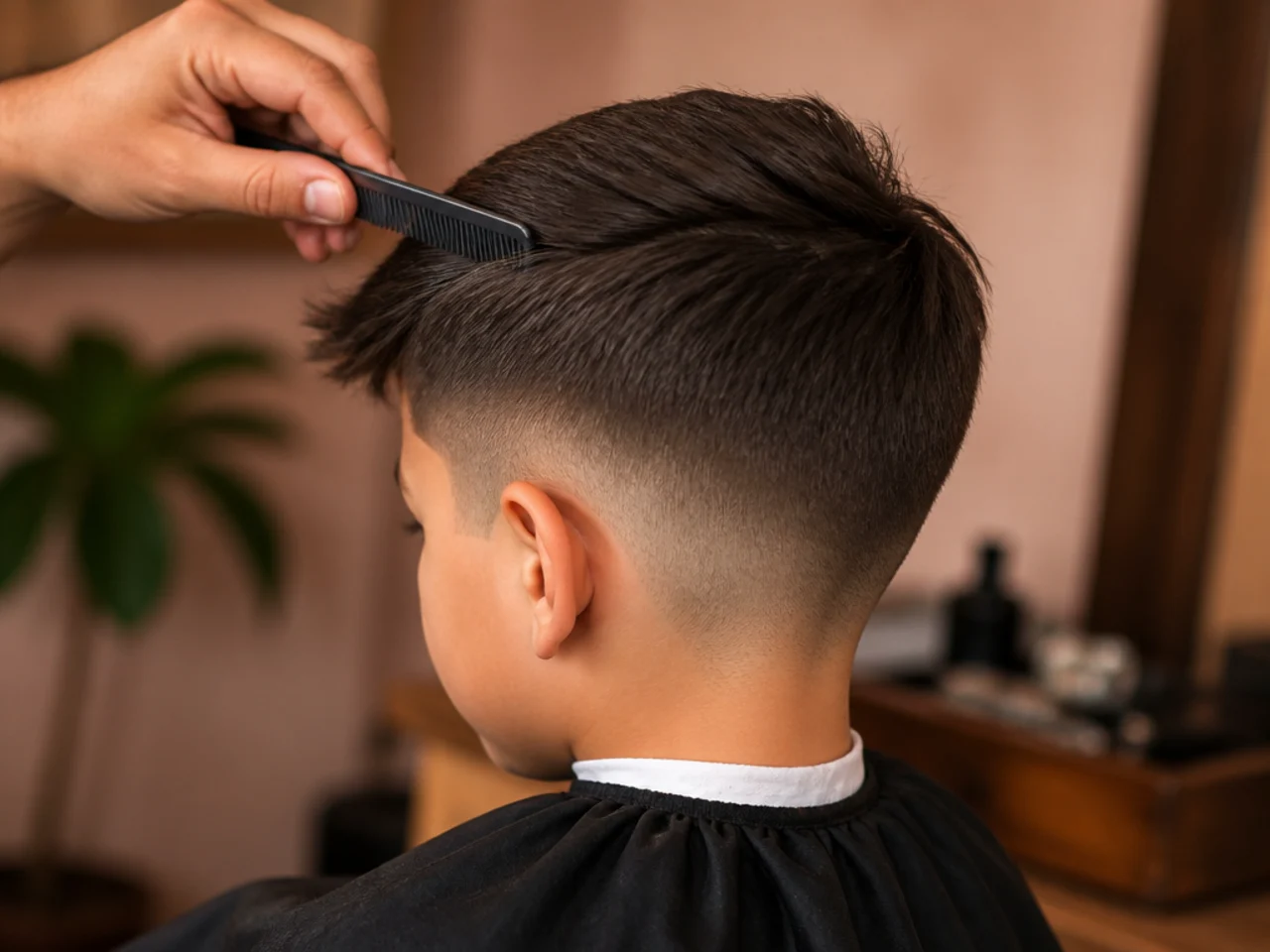
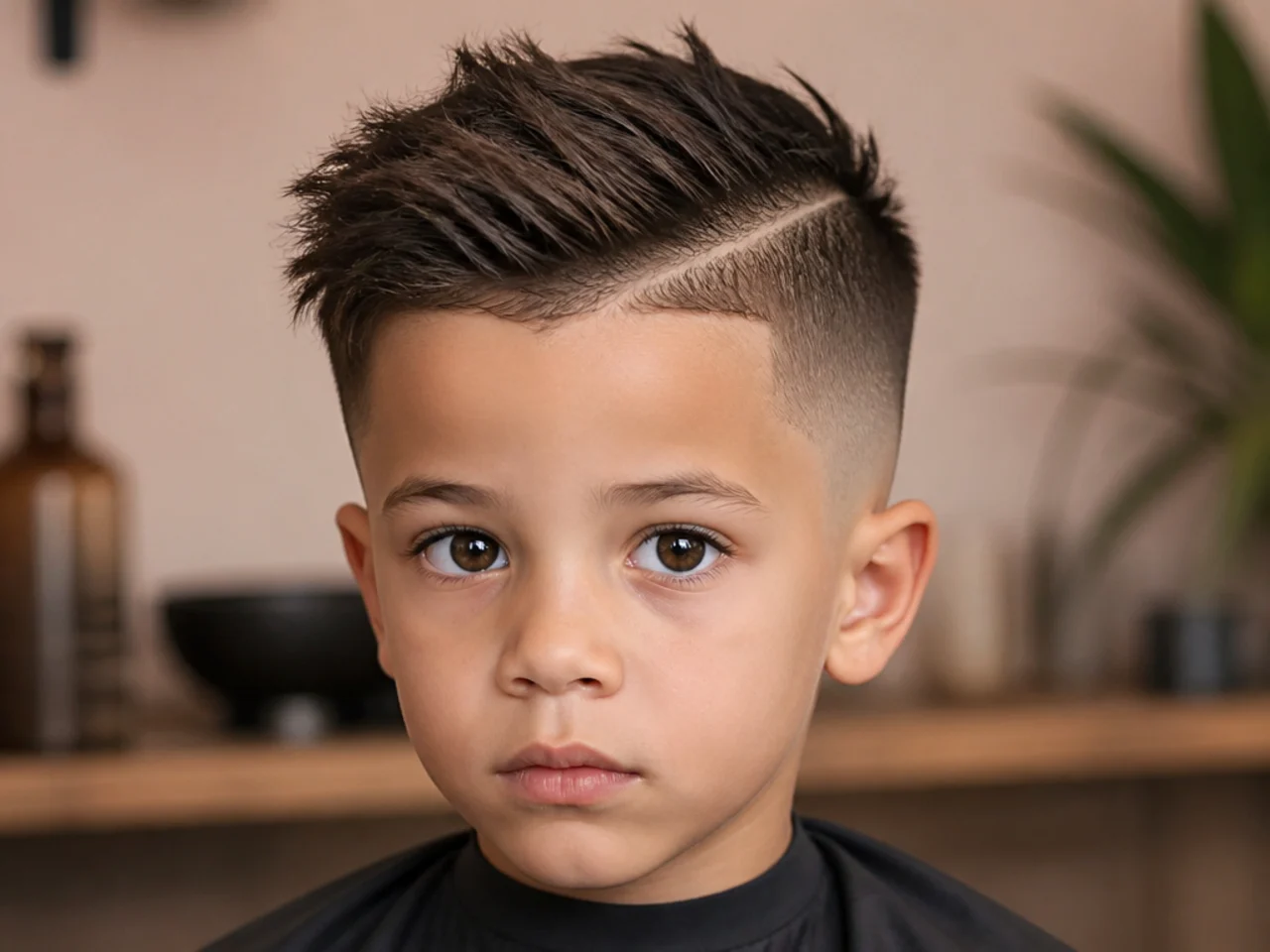
Sides at 10mm, which is the shortest guard that keeps fine hair looking like hair rather than showing scalp. The fringe is left long enough to sit on the eyebrow, giving him the part he cares about while the sides stay well above any policy minimum. Redo the sides every five weeks and trim the fringe halfway between.
2. Soft Taper With No Hard Line
The sides graduate down to a number two at the very bottom with no defined edge anywhere. Because there is no hard line, there is nothing to go blurry — the cut just gets slightly longer, which is exactly what you want on a hairline still finding its shape. Redo every four weeks, or leave it five if the nape is tidied at home.
3. A Crop Cut to Fall Forward
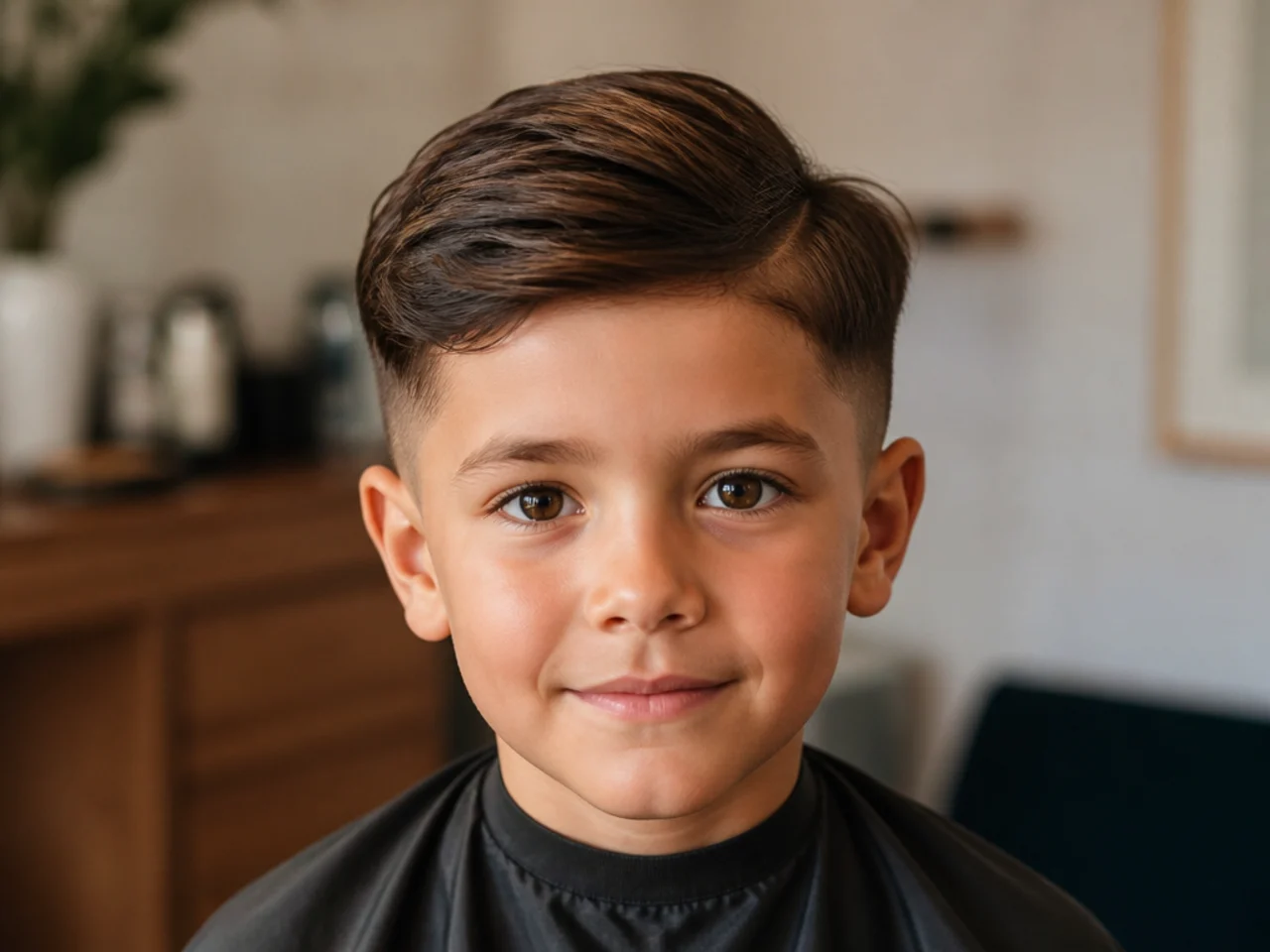
Sides at a number three with the top cut short enough that it drops forward on its own weight rather than needing to be pushed. Fine hair has very little weight to work with, so the length has to be kept modest or it lifts and separates in odd directions. Redo every four weeks, before the top gets heavy enough to sit flat.
4. Curtains That Clear the Eyebrow
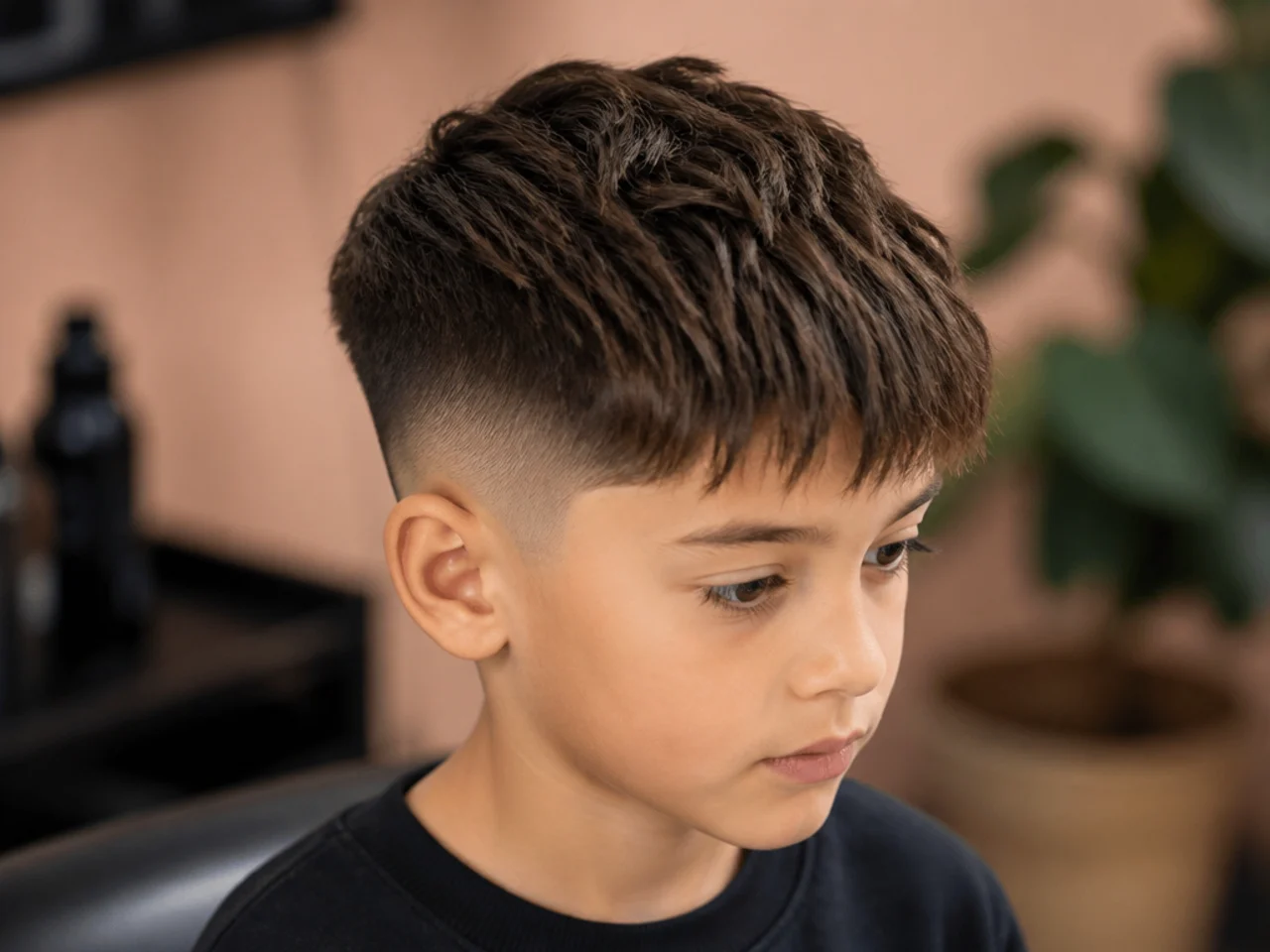
A centre split with the two front pieces cut to finish just above the brow, which answers the hair-in-the-eyes line most policies carry. The sides are left long and cut with scissors, so there is no guard number in this cut at all. Full cut every eight weeks with a fringe trim every four.
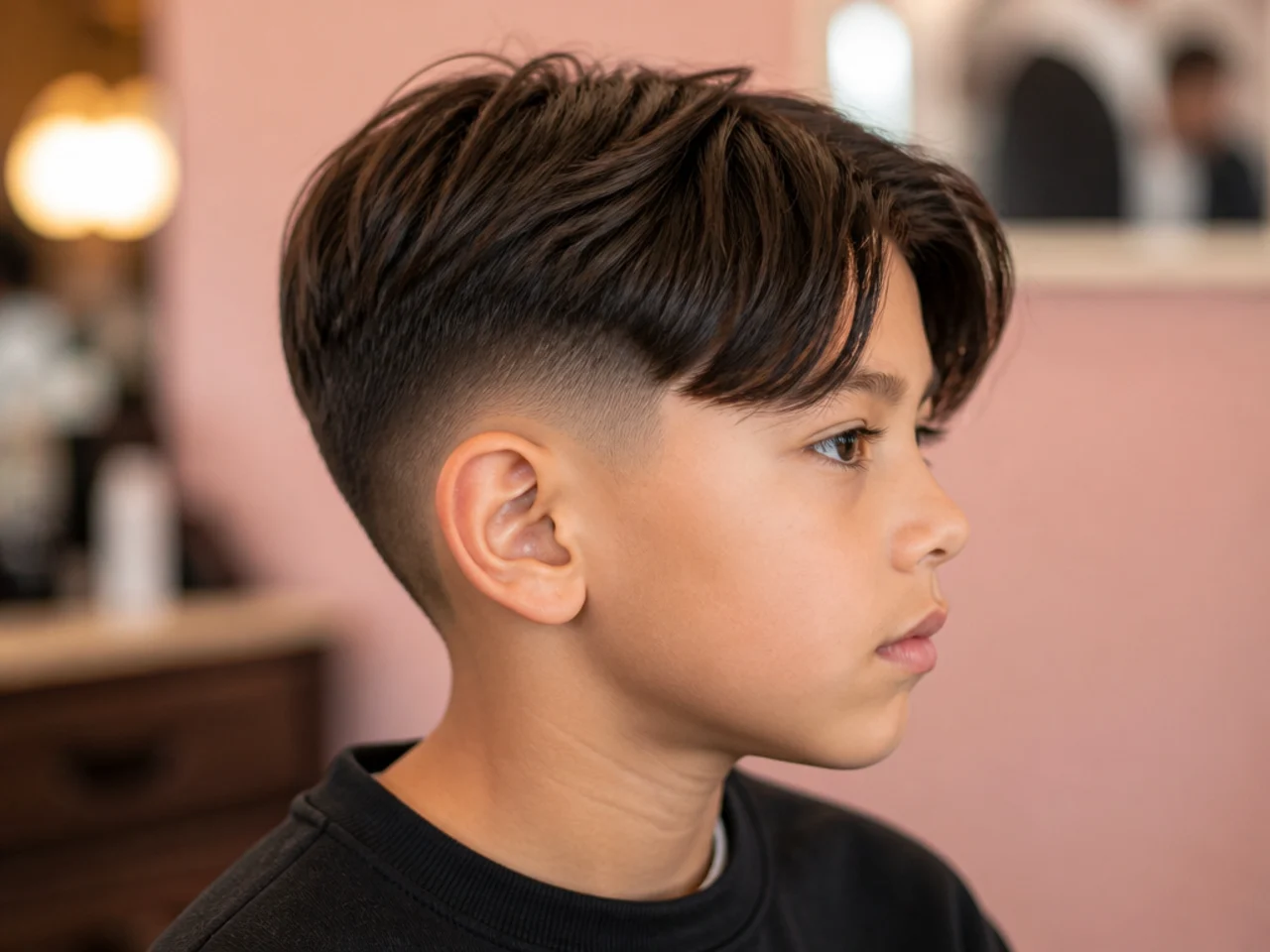
5. Grown-Out Bowl With a Point-Cut Edge
The bowl shape softened by point cutting the perimeter instead of leaving it as a solid line. A blunt edge on fine hair looks heavier than the hair actually is, while a point-cut edge breaks it up and grows out without a visible line dropping. Redo every six weeks, since there is no clipper work to age.
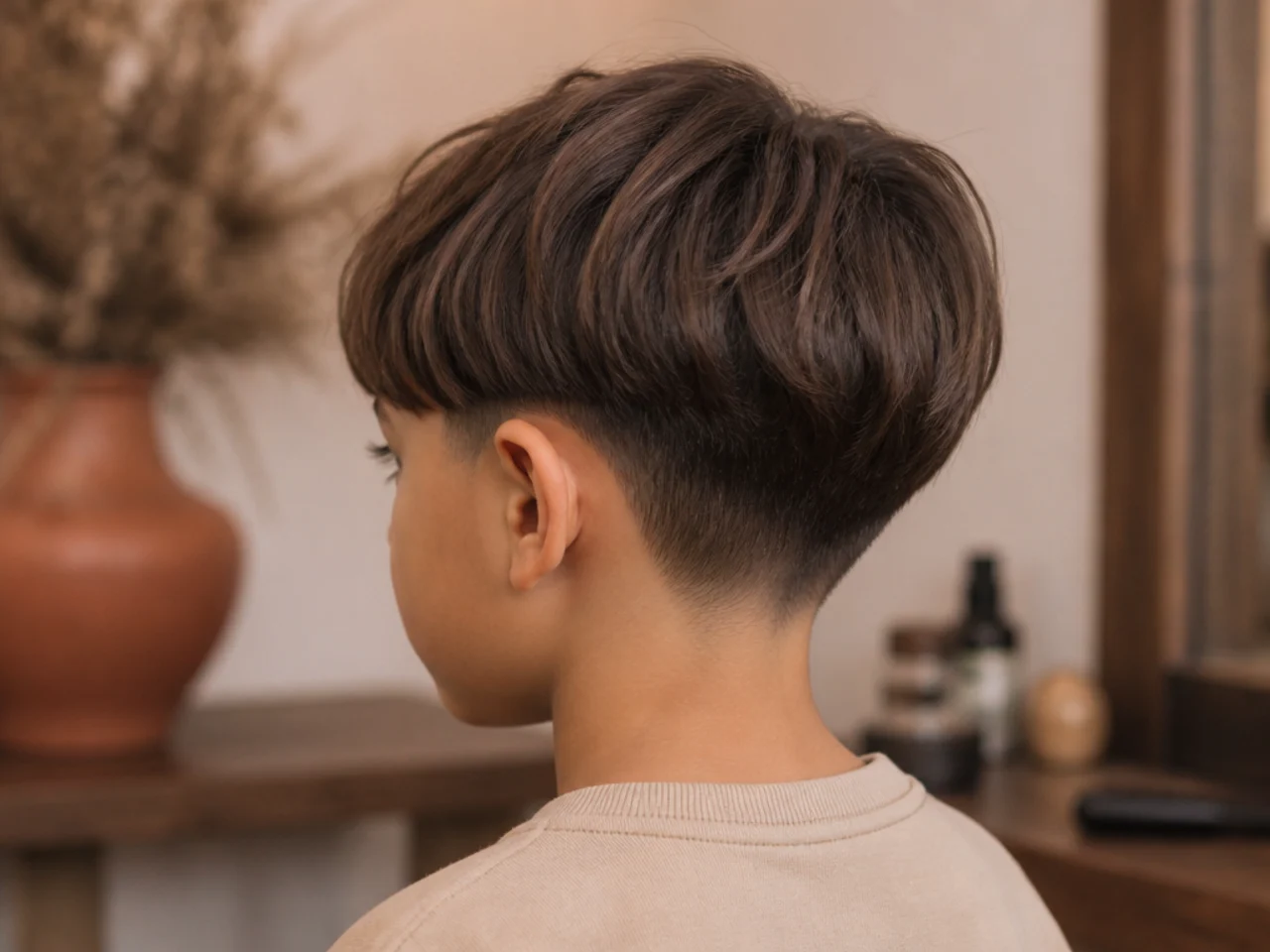
6. A Low Taper Left at a Number Two
The taper starts at or below the temple and finishes at a number two rather than dropping to skin. Leaving 6mm at the shortest point means the cut sits on the number most policies name as their minimum, so there is nothing to check. Redo every four weeks, which is when the taper stops reading as a gradient.
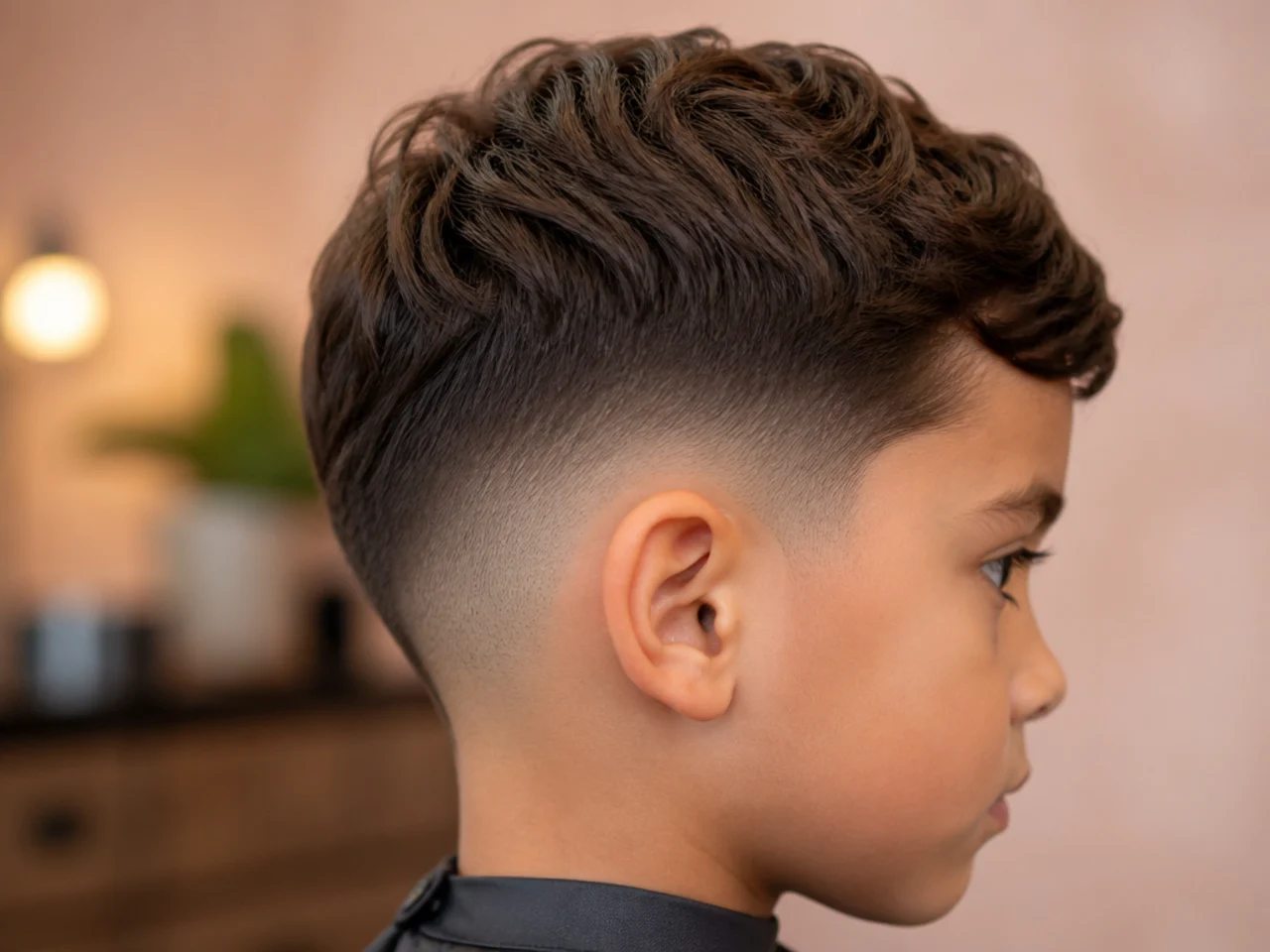
7. Number Four All Over
Thirteen millimetres everywhere, which is the most forgiving cut on this page for hair that is still fine. At that length the scalp never shows and the growth is invisible, because 13mm becoming 15mm is a change nobody can see. Redo every six weeks, and only because the ears and nape get untidy.

8. Short Back and Sides at a Number Three
The classic shape with the back and sides at 10mm and a little length left on top to comb or leave. It is the cut most likely to be described as smart in a school newsletter, and it never comes close to a minimum guard rule. Redo every five weeks, led by the neckline rather than the sides.
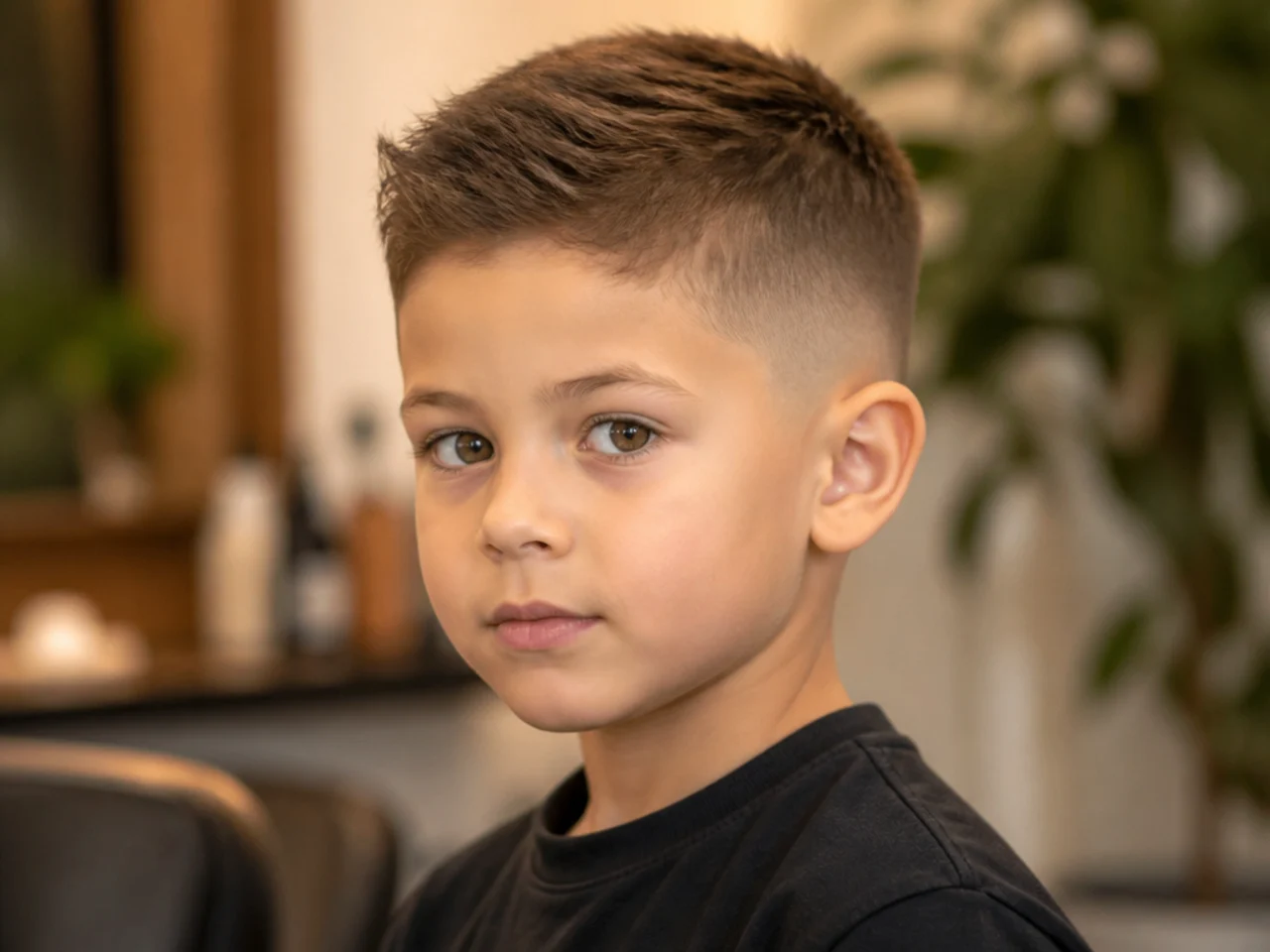
9. A Cut-In Side Parting on Fine Hair
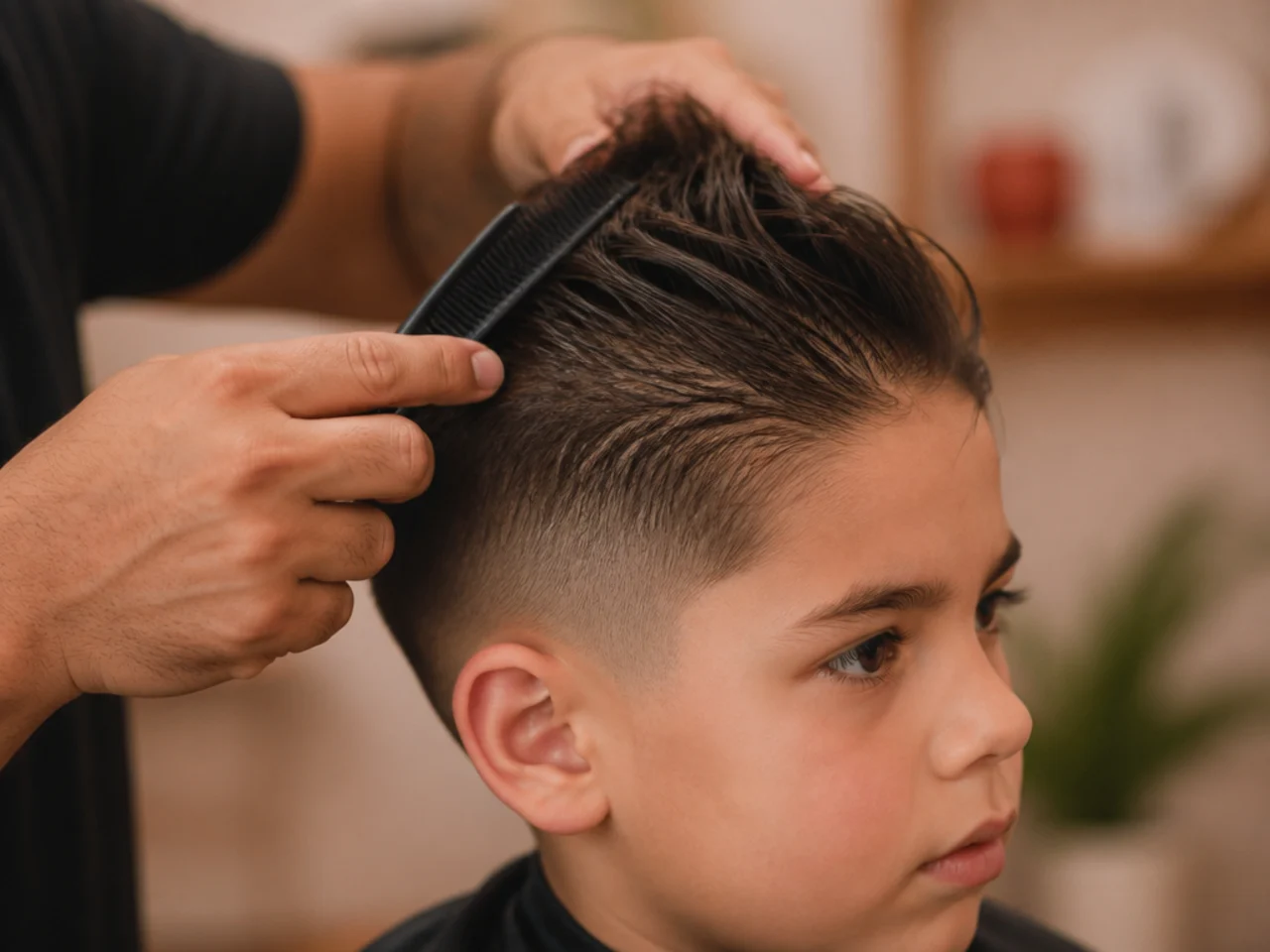
A shorter section either side of the split so the parting holds itself without a comb. Fine hair has no weight to keep a combed parting in place, so on a five-year-old this is the difference between a style that survives to lunchtime and one that does not. Redo every five weeks, and the parting will need re-cutting each time.
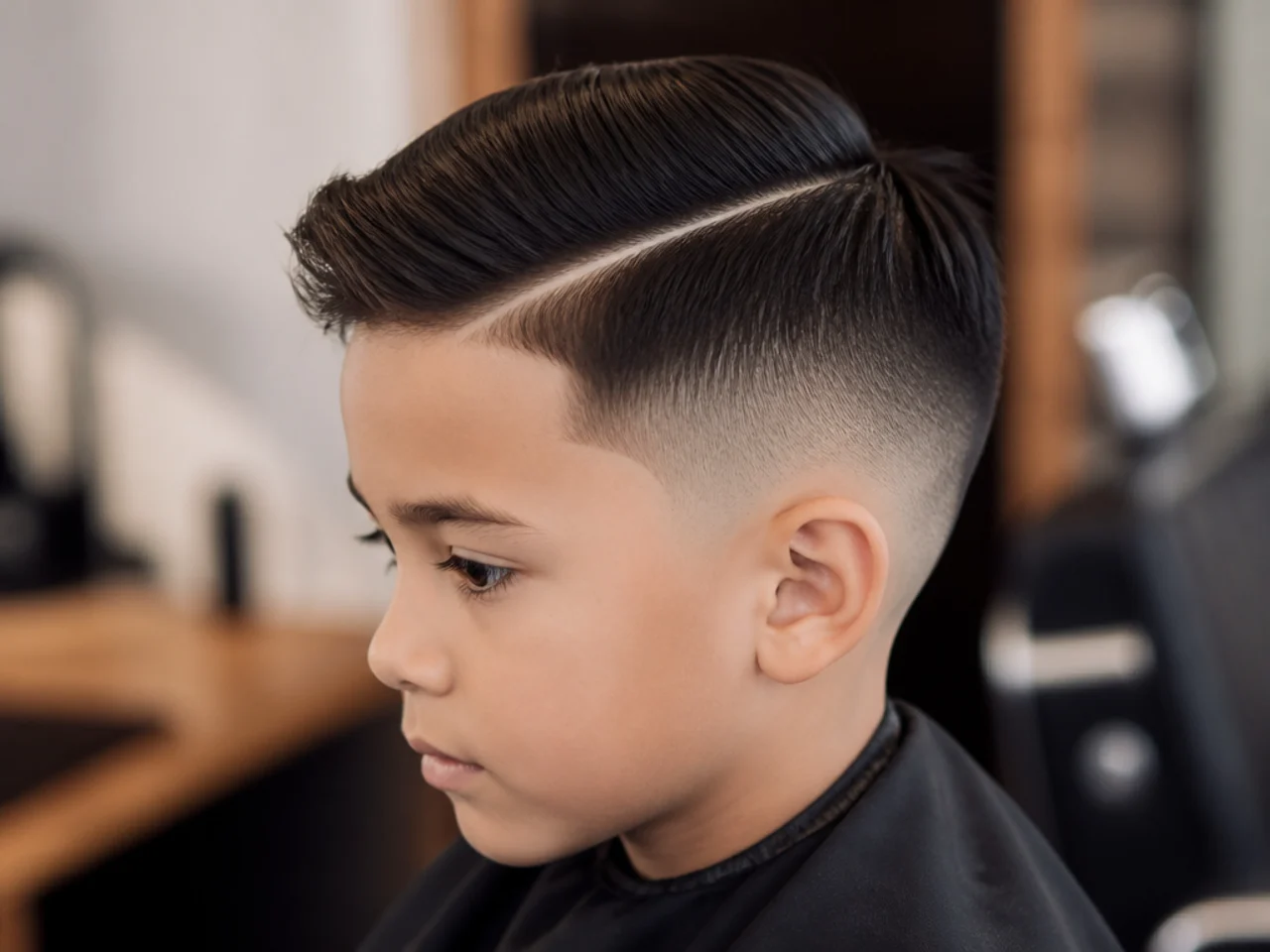
10. Scissor-Cut Sides With No Guard Number
Everything cut with scissors, which removes the guard conversation entirely and leaves nothing on the head that could be measured. It also suits fine hair better than clippers, because scissors take length without exposing the scalp underneath. Redo every seven weeks, which is the longest interval here.
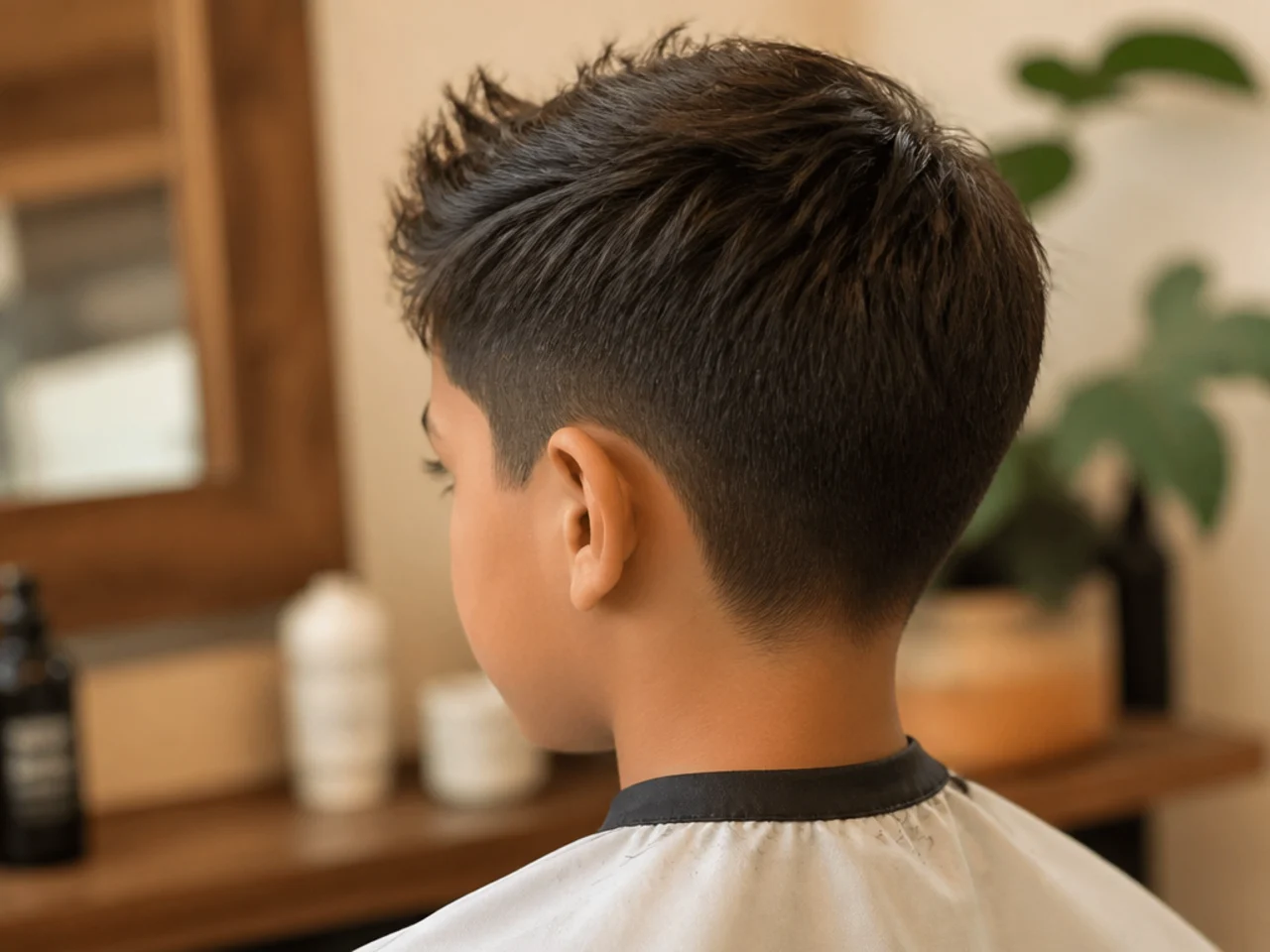
11. Textured Top Over a Number Three
Sides at 10mm with the top point cut so the ends separate rather than sitting as one flat piece. On fine hair the texture has to be cut lightly, because taking too much out leaves the top looking sparse instead of piecey. Redo every five weeks, when the separation has grown out and the top lies flat again.
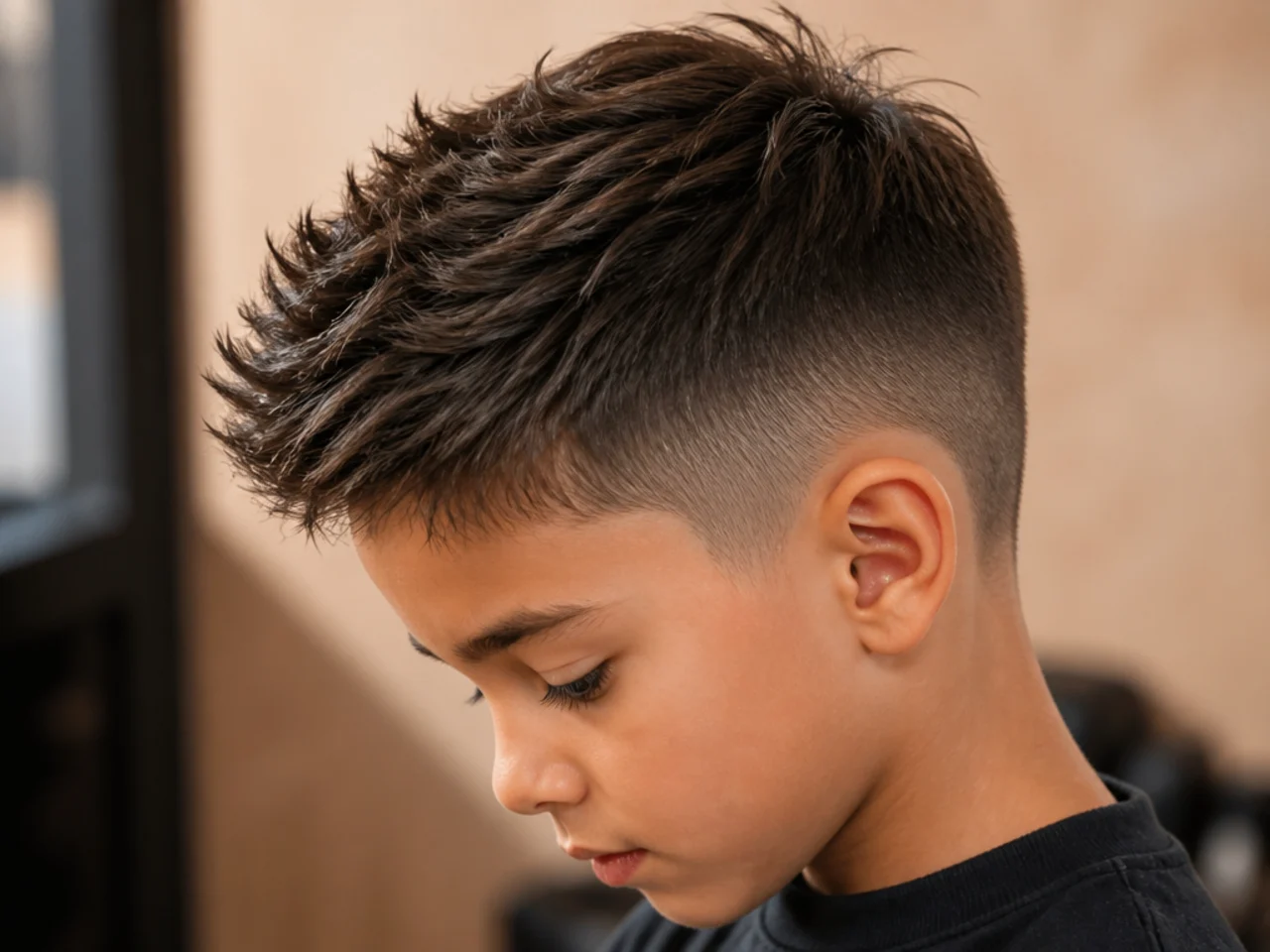
12. Fine Curls Left Long on Top
Young curl is softer and looser than it will be later, so it needs length to show any pattern at all. Cut short it reads as fluff, and cut long it reads as curls, which is why the top should be the last thing shortened. Redo every six weeks with the sides tidied and the top barely touched.

13. A Rounded Neckline Instead of a Squared One
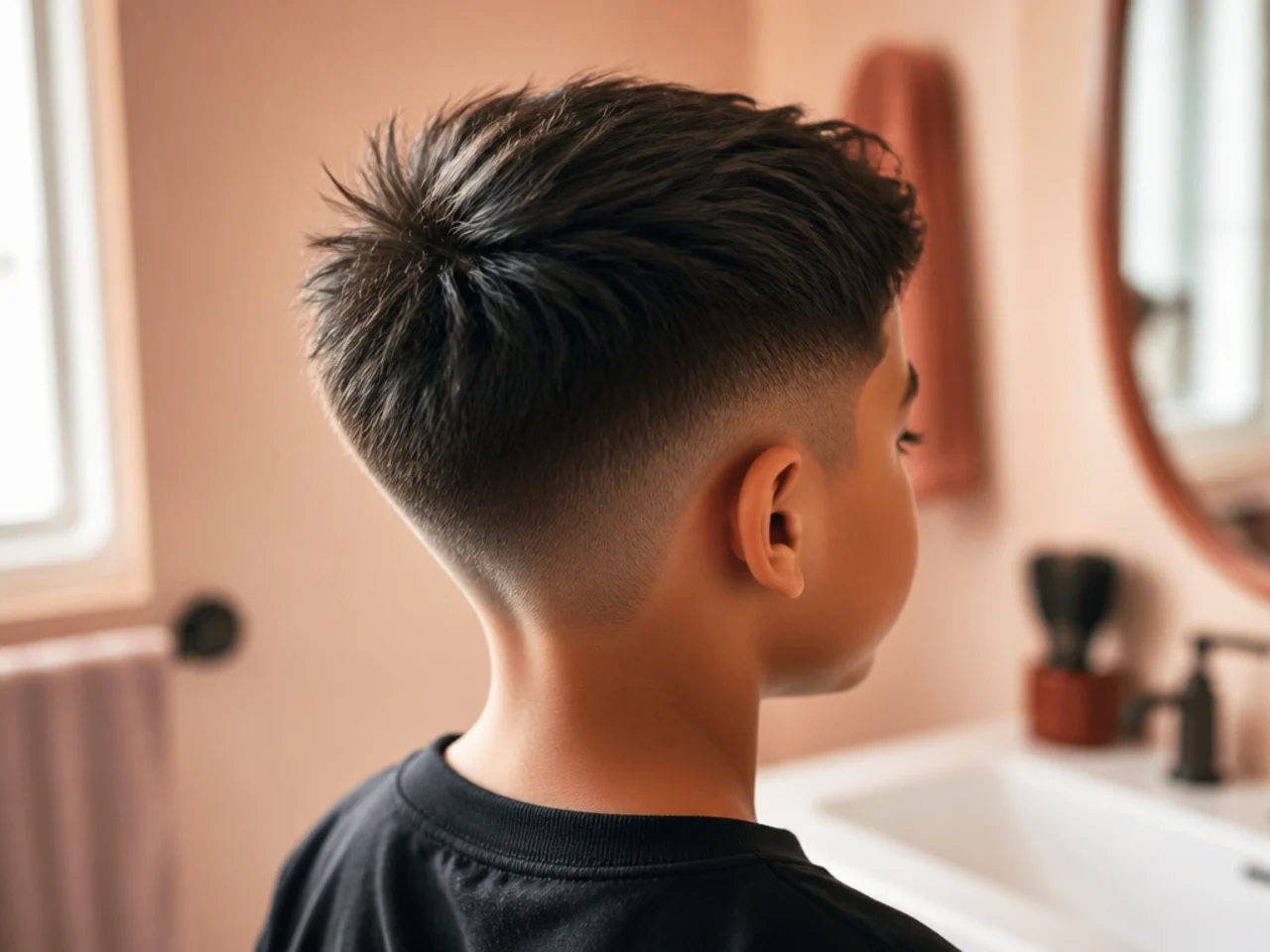
The nape cut as a soft curve rather than a straight horizontal across the neck. A squared nape looks sharp for about ten days and then has an obvious line of growth dropping below it, while a rounded one simply gets fuller. Redo every four weeks, or tidy it at home in between.
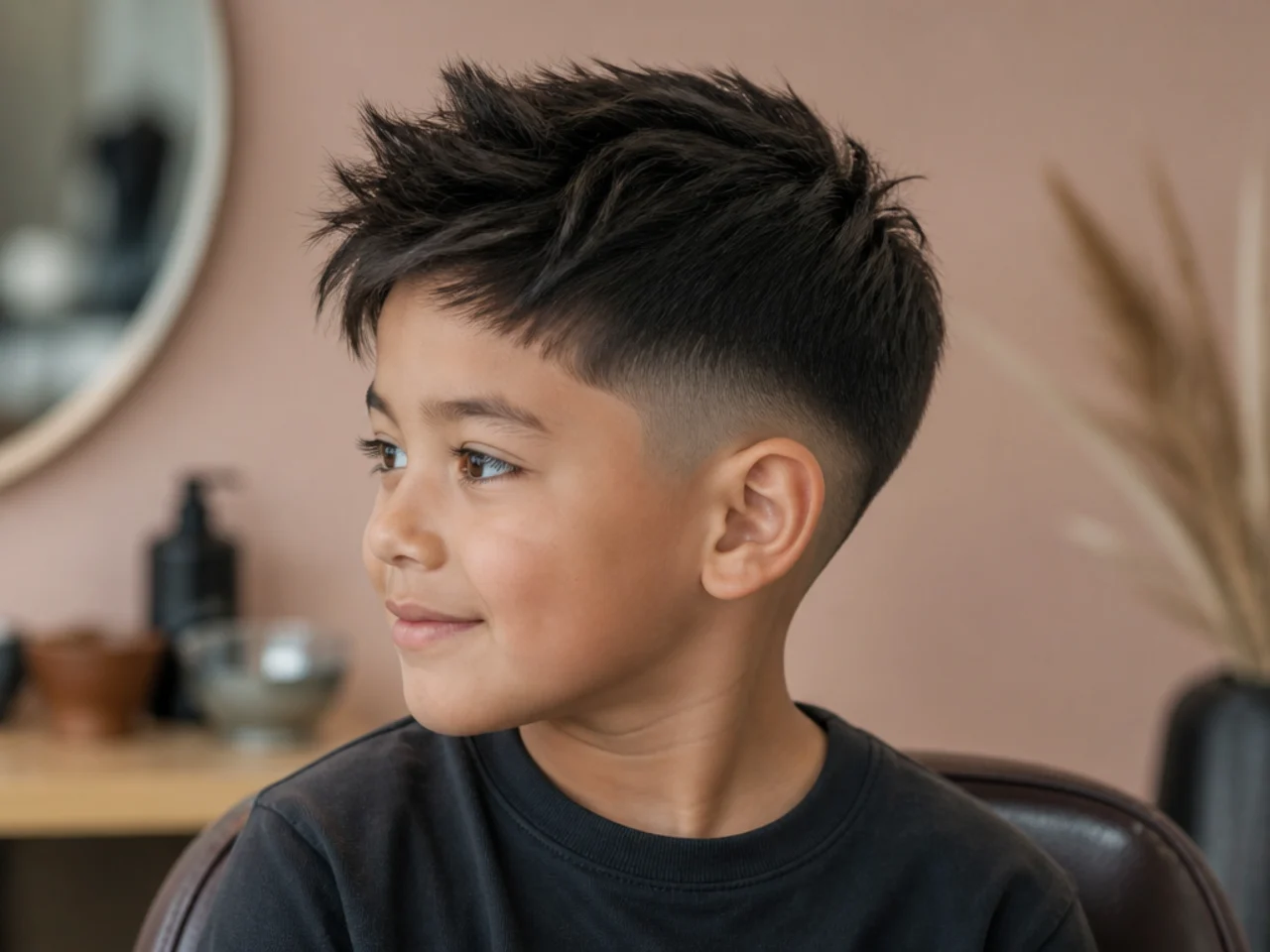
14. Number Three Sides With the Cowlick Cut Around
At this age a front or crown cowlick is still asserting itself, and the cut has to work with it rather than flatten it. Leaving that section slightly longer lets it fall in the direction it already wants to go, which removes the one bit of a morning that needs adult intervention. Redo every five weeks.
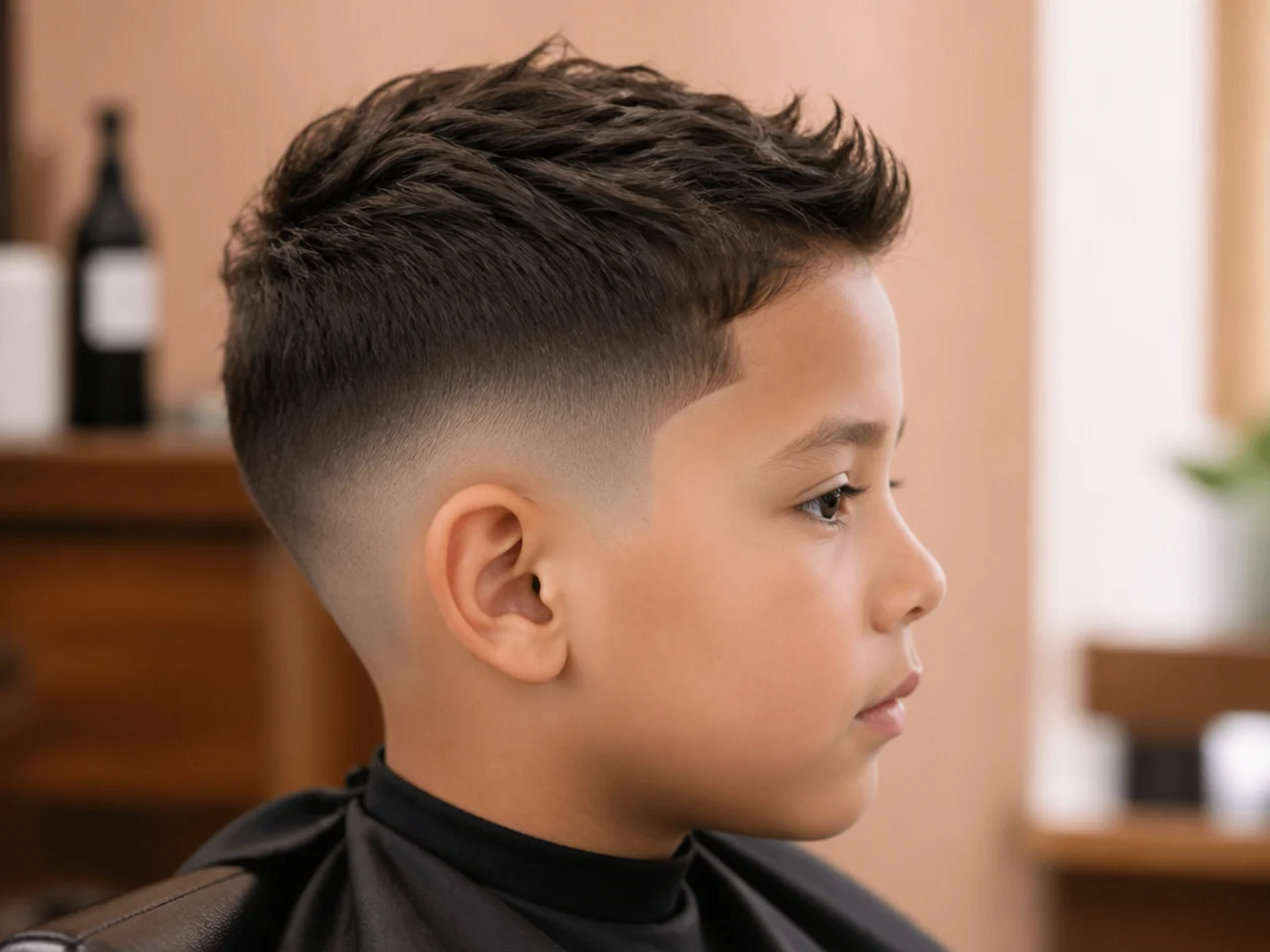
15. The Same Cut on a Wednesday Morning
Not a new style, but the only test that matters — the cut seen midweek, unwashed, unbrushed and about to leave for school. If it looks right in that state it is the correct cut, and if it only looked right in the barber's chair it was chosen on the wrong evidence.
Styling and Upkeep
Damp it down and comb it once. That is the entire routine a cut at this age should need, and anything beyond it will quietly stop happening by October.
Keep the guard number written down. At this age you may be changing it as density increases, and a record is what tells you whether the last one was too short.
Tidy the nape yourself between cuts. It grows fastest, needs no blending and takes five minutes, which turns a four-week interval into six.
Trim the fringe on its own. It reaches the eyes long before the sides need anything, and it is the only part a teacher is likely to mention.
Re-check the guard every six months. Hair that showed scalp at a number two last winter may carry it fine a year later.
Mistakes to Avoid
Going to a number two on genuinely fine hair. It shows scalp and reads patchy, which is the opposite of the clean look it was meant to give.
Asking for a sharp line-up. The hairline is still moving at this age, so a hard edge is cut against a boundary that will have shifted in a fortnight.
Cutting against the cowlick. It wins every time, and every morning.
Choosing a style he has no say in. He is old enough to have an opinion now, and the fringe is the cheapest place to give him one.
Assuming last year's cut still fits. Density, hairline and now a school policy have all changed since the last time it was chosen.
FAQ
What guard suits a five-year-old? A number three, 10mm, because fine hair still shows scalp under a number two.
How often does it need redoing? Four to six weeks depending on the guard, with the neckline tidied in between.
Should he have a line-up? Not at this age — the hairline is still settling and a hard edge stops looking right within two weeks.
Final Thoughts
At four to seven the cut has to satisfy three people at once, and the sensible split is that the school gets the sides, he gets the front, and you get the guard number. Keep the edges soft while the hairline settles, start at a number three, and judge every option on an ordinary Wednesday rather than in the chair.
For the curly version of the same ages see curly haircuts for boys, and if you are cutting it yourself read the taper fade at home. More in Men's Haircuts.