20 Little Curly Hair Boy Styles to Save
Between four and seven a boy will finally sit in the chair on his own but still will not style anything afterwards. His head is also large relative to his body, which changes what volume on top actually does to the shape.
In this article · 27
- Why Proportion Runs This Age Group
- How to Choose Yours
- The 20 Little Curly Hair Boy Styles
- 1. The First Solo Chair Cut
- 2. The Low-Volume Crop
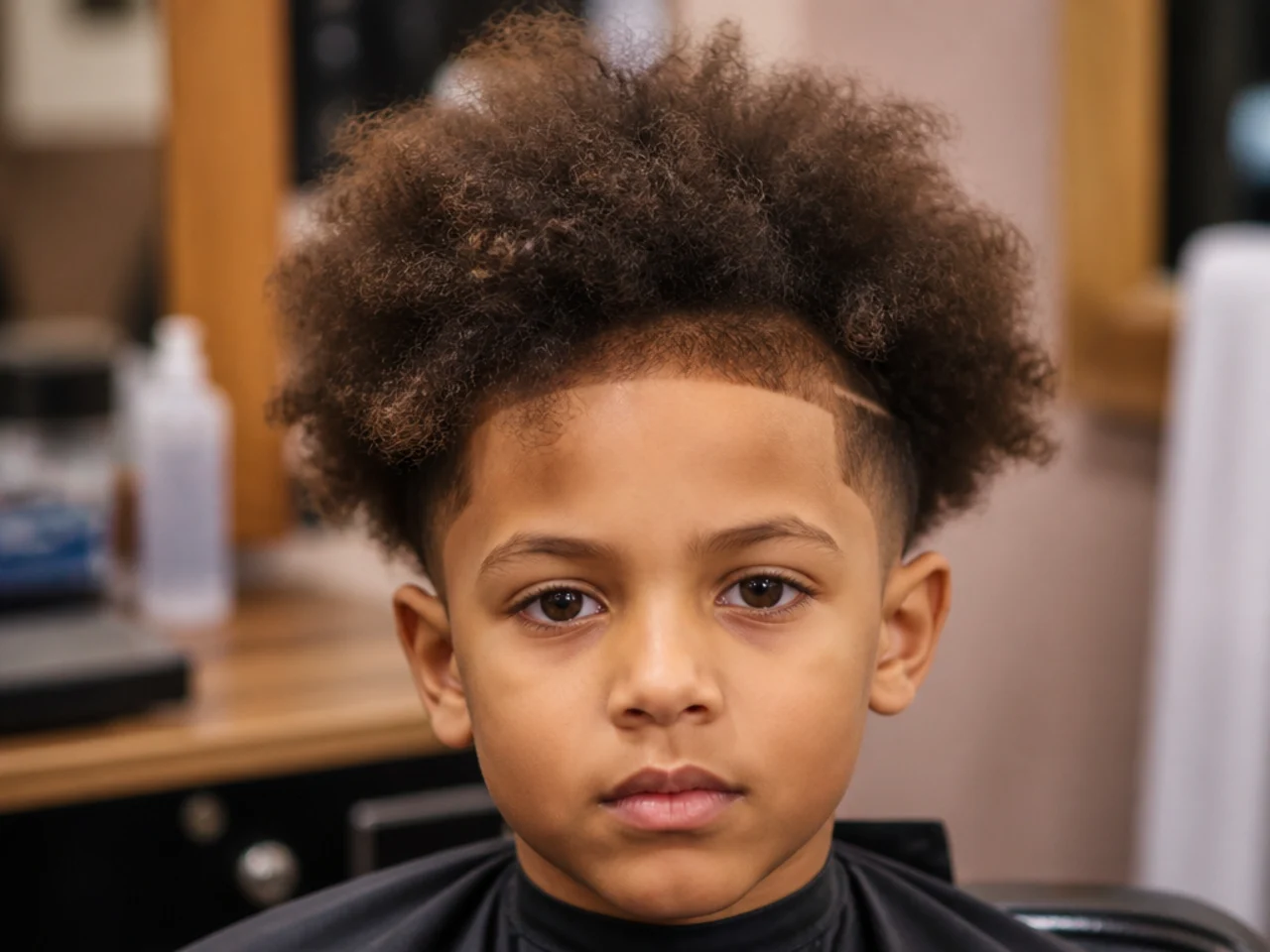
- 3. Width Removed at Ear Level
- 4. Curls Off the Forehead, Not Off the Face
- 5. The Rounded Shape for a Round Skull
- 6. The Side Part He Can Manage
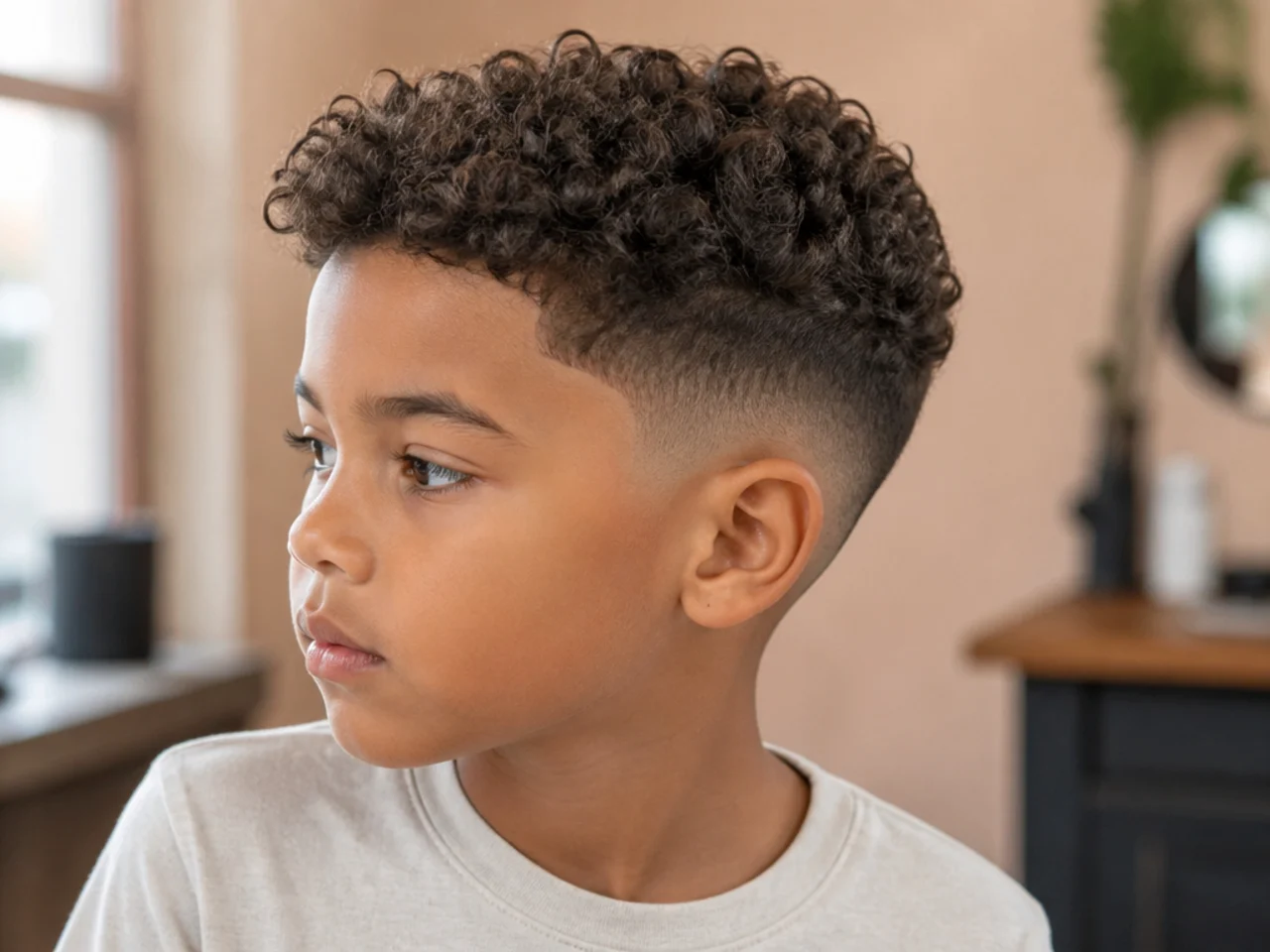
- 7. Short Sides With Low Curl on Top
- 8. Reshaping the Grown-Out Baby Cut
- 9. The Half-Fringe
- 10. His First Taper
- 11. Ears Left Showing
- 12. The Genuinely No-Product Cut
- 13. Fine Curls Left Longer
- 14. Thick Curls Thinned From Underneath
- 15. Shaped Around the Crown Whorl
- 16. The Helmet-Proof Cut
- 17. The Photo-Day Length
- 18. The Swimming-Lesson Cut
- 19. The Two-Minute Morning Shape
- 20. What Changes When He Turns Seven
- Styling and Upkeep
- Mistakes to Avoid
- FAQ
- Final Thoughts
Somewhere around four, a boy stops needing to be held for a haircut and starts sitting in the chair on his own. That is the only part of the job that gets easier.
He will still do nothing to it afterwards. No comb, no product, no arranging. Whatever the barber leaves is what walks into school every morning for the next two months.
And his head is still large relative to his body. Volume on top and width at the ears both read as much more than they would on an older child, so proportion decides more here than style does.
Why Proportion Runs This Age Group
The head is proportionally big. Height added on top exaggerates that, which is why a tall curly shape can overwhelm a small boy and suit a teenager.
Width at ear level is the real culprit. Curls pushing sideways at the widest point of the skull make the whole head read round and heavy.
The hair is finer than it will be. Density arrives later, so cutting it very short at this age shows scalp sooner than expected.
Nothing gets styled. The cut has to look right dry, unbrushed and slept on, because that is the only state it will ever be seen in.
How to Choose Yours
Take width out before you take height off. Narrowing the sides fixes most shapes without losing any of the curl on top.
Choose something that survives a pillow. If it needs rearranging in the morning, it will be worn wrong every day.
Keep the perimeter soft. Hard lines at this age look severe and grow out badly within a fortnight.
Ask for it dry. Curls lose around a third of their length as they dry, and a wet cut on a small head overshoots visibly.
The 20 Little Curly Hair Boy Styles
1. The First Solo Chair Cut
A simple shape done quickly while he is proud of sitting alone. Keep the first independent appointment short and uncomplicated, because the goal is that he wants to come back rather than that the cut is perfect.
2. The Low-Volume Crop
Curl kept close to the skull instead of standing up. On a head that is already large for the body, height is the dimension that tips the balance, and taking a centimetre off the top changes the whole silhouette.

3. Width Removed at Ear Level
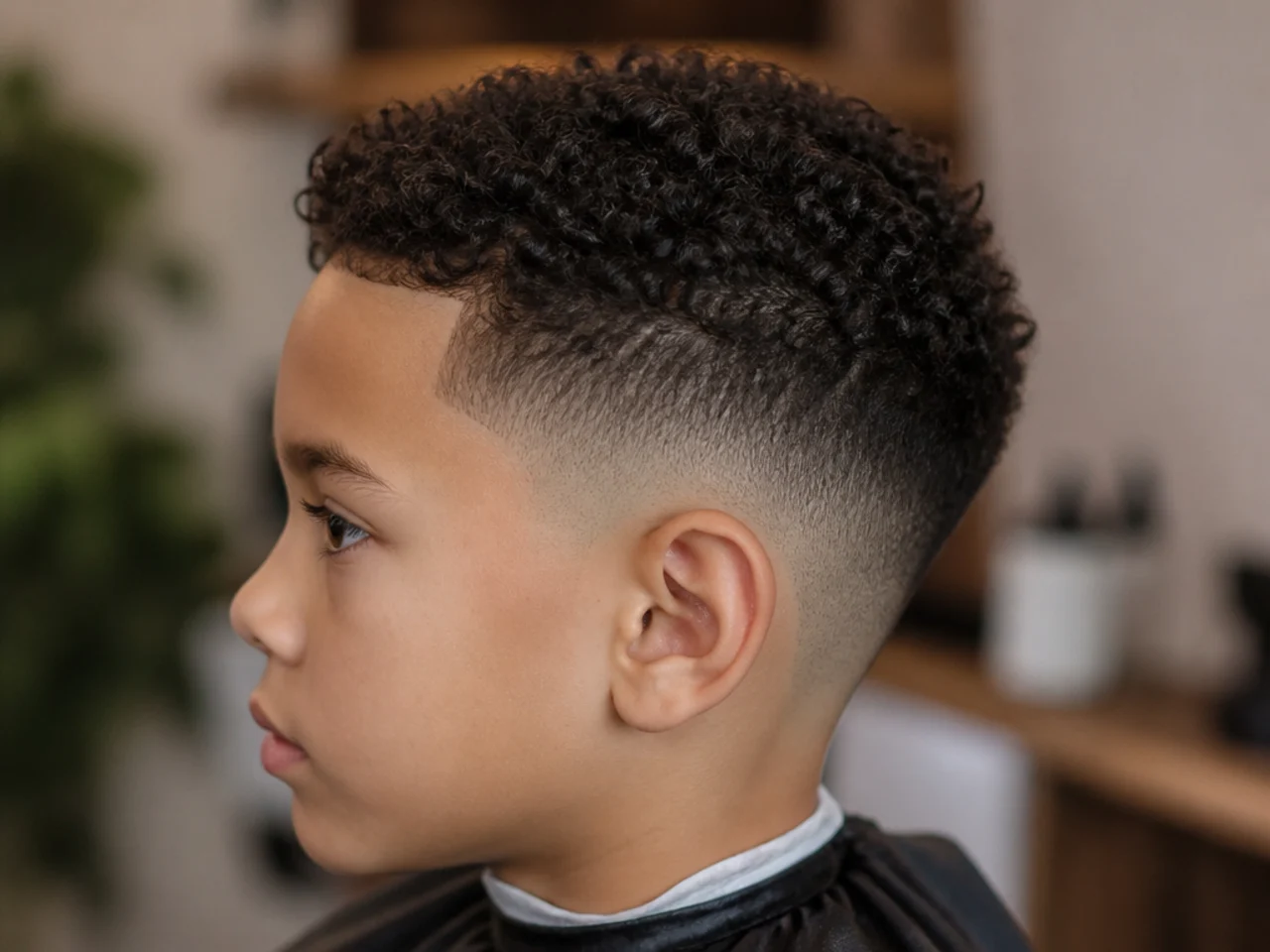
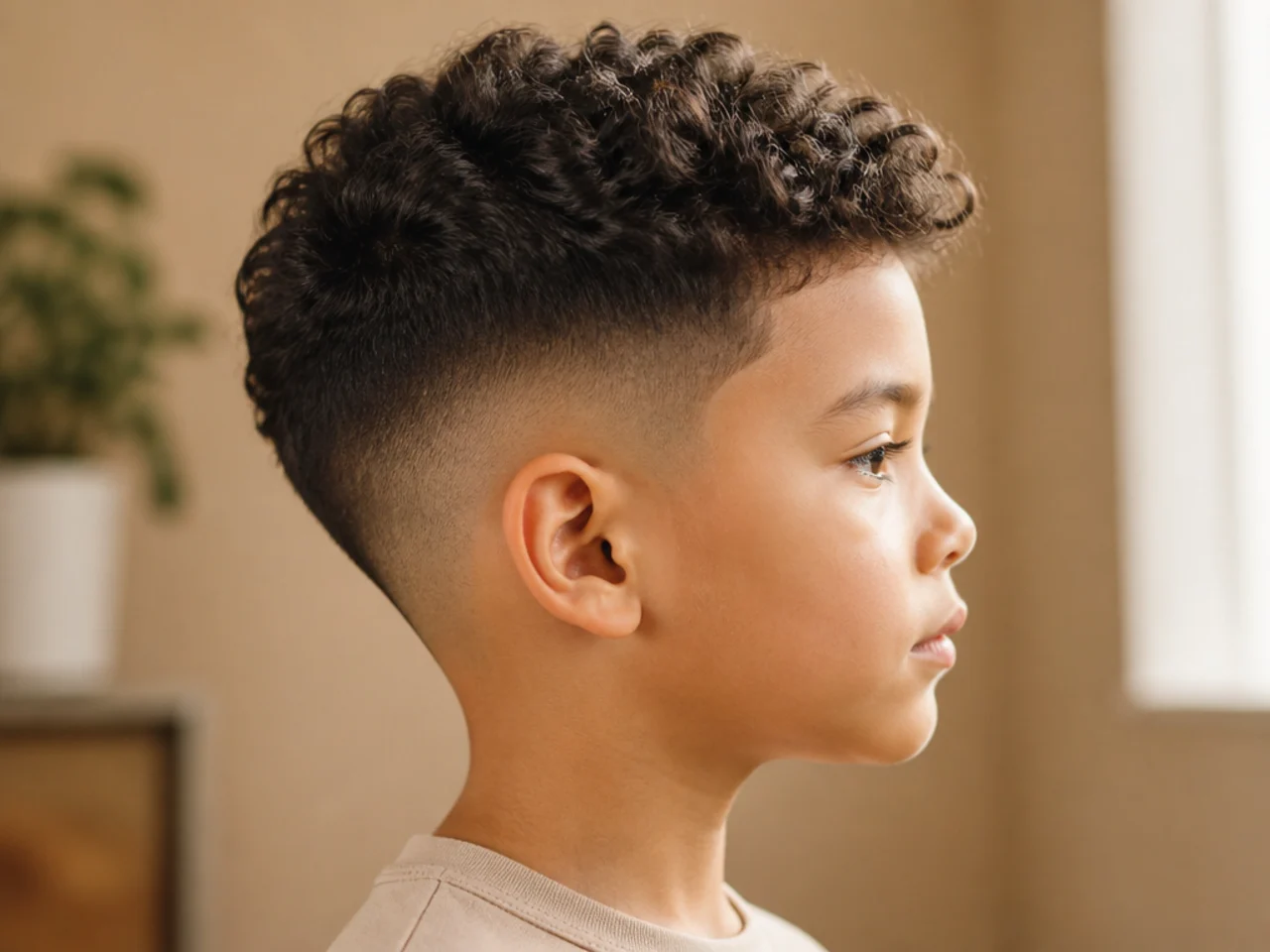
Weight taken out of the sides at the widest point of the head. This is the single most effective change on a young curly head, because it narrows the shape without removing any of the visible curl on top.
4. Curls Off the Forehead, Not Off the Face
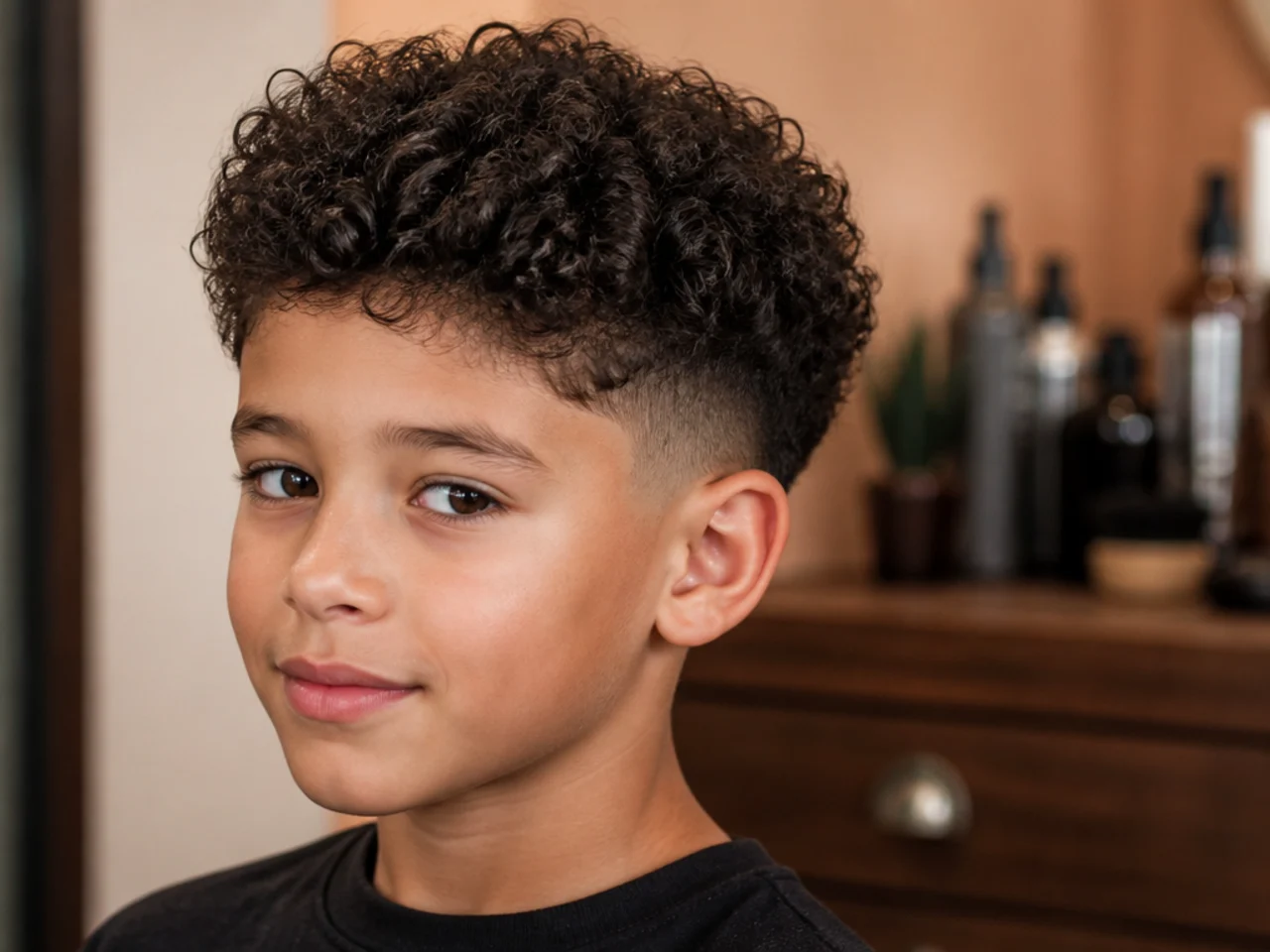
The front thinned from underneath so it stops falling into his eyes but keeps its length. Cutting a fringe short instead makes it stand upright, since there is no weight left to hold it down.
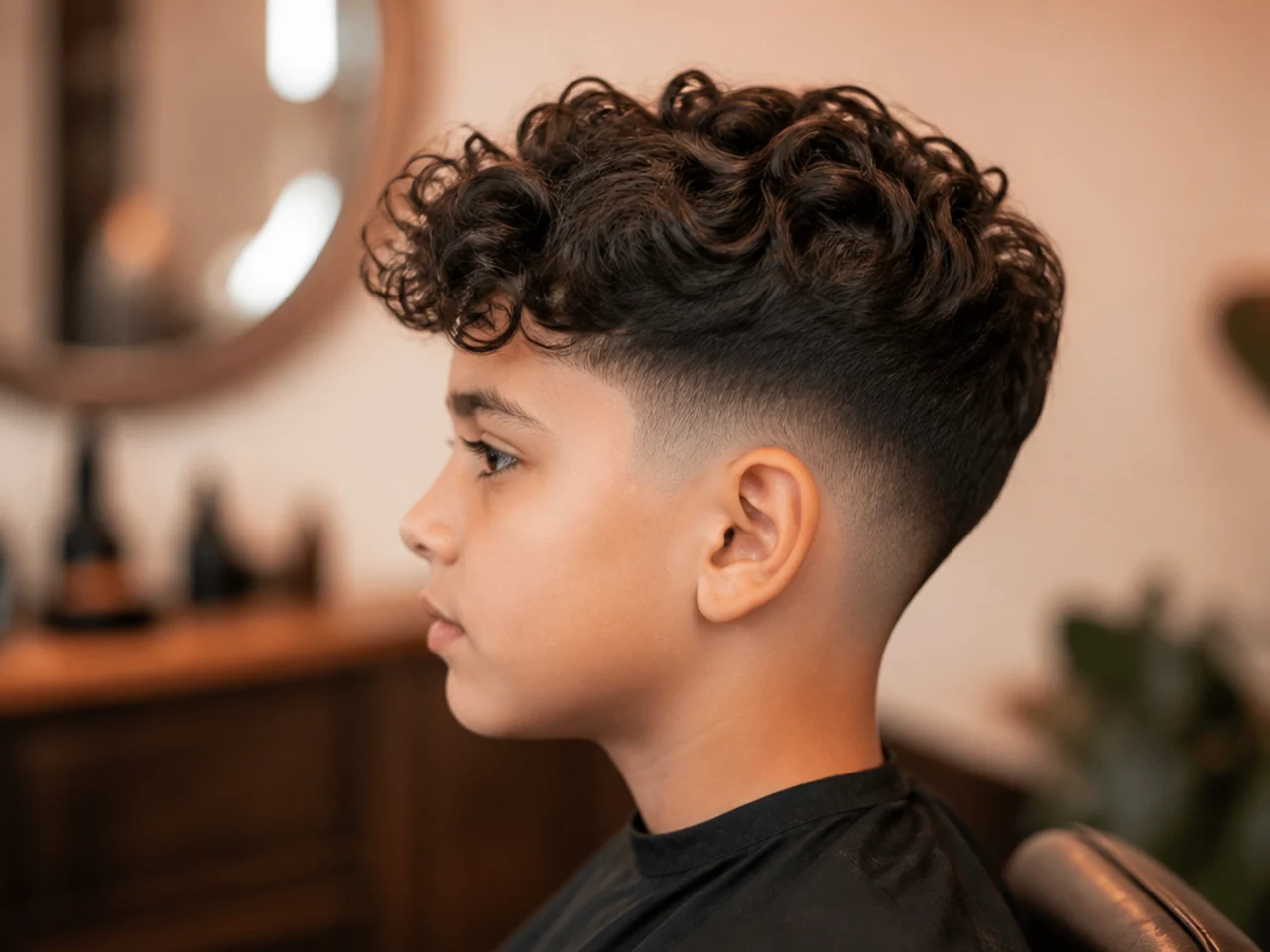
5. The Rounded Shape for a Round Skull
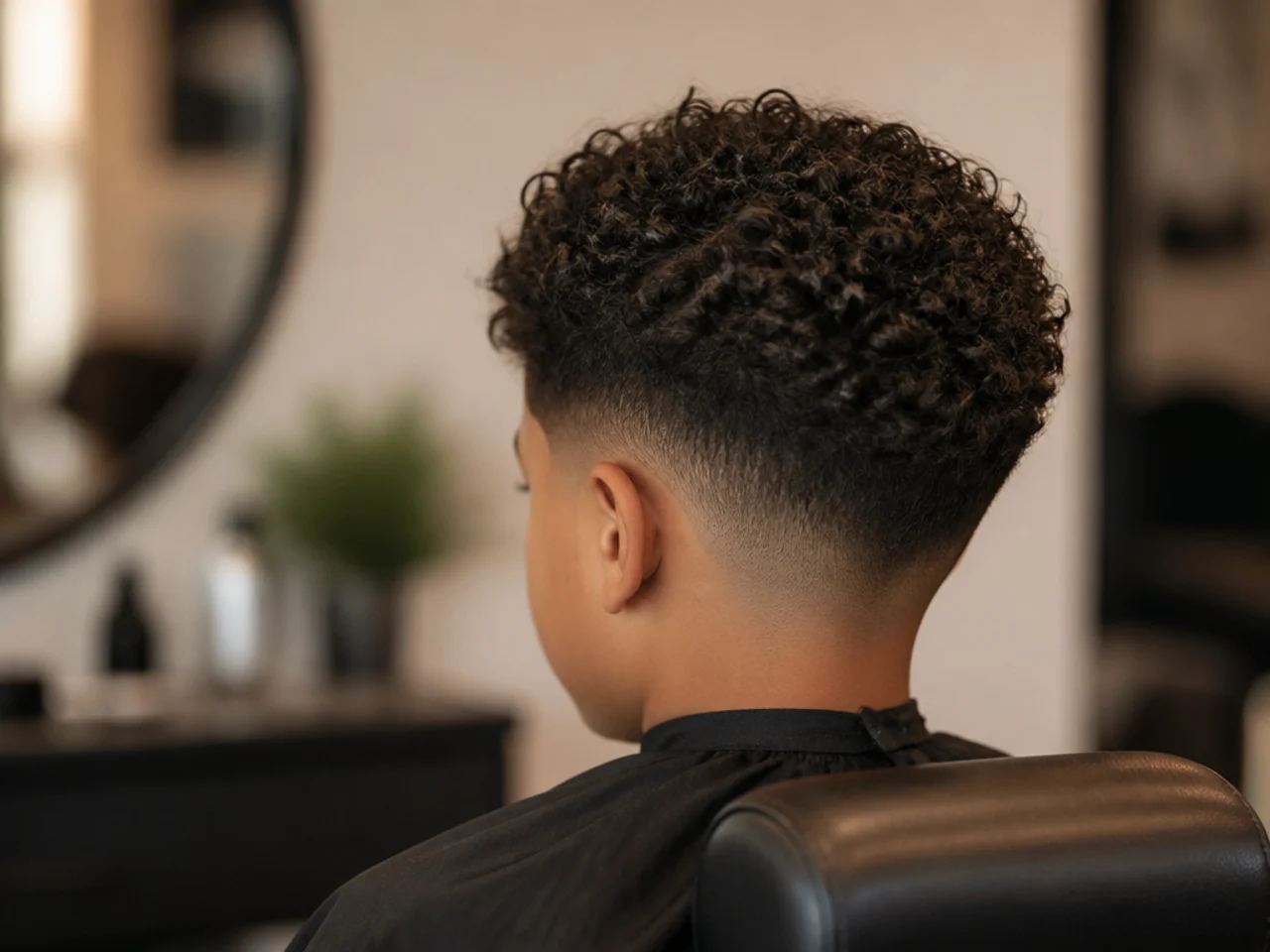
A perimeter that follows the head rather than cutting across it. Curl naturally builds a rounded outline, so working with it takes less cutting than fighting it into a square.
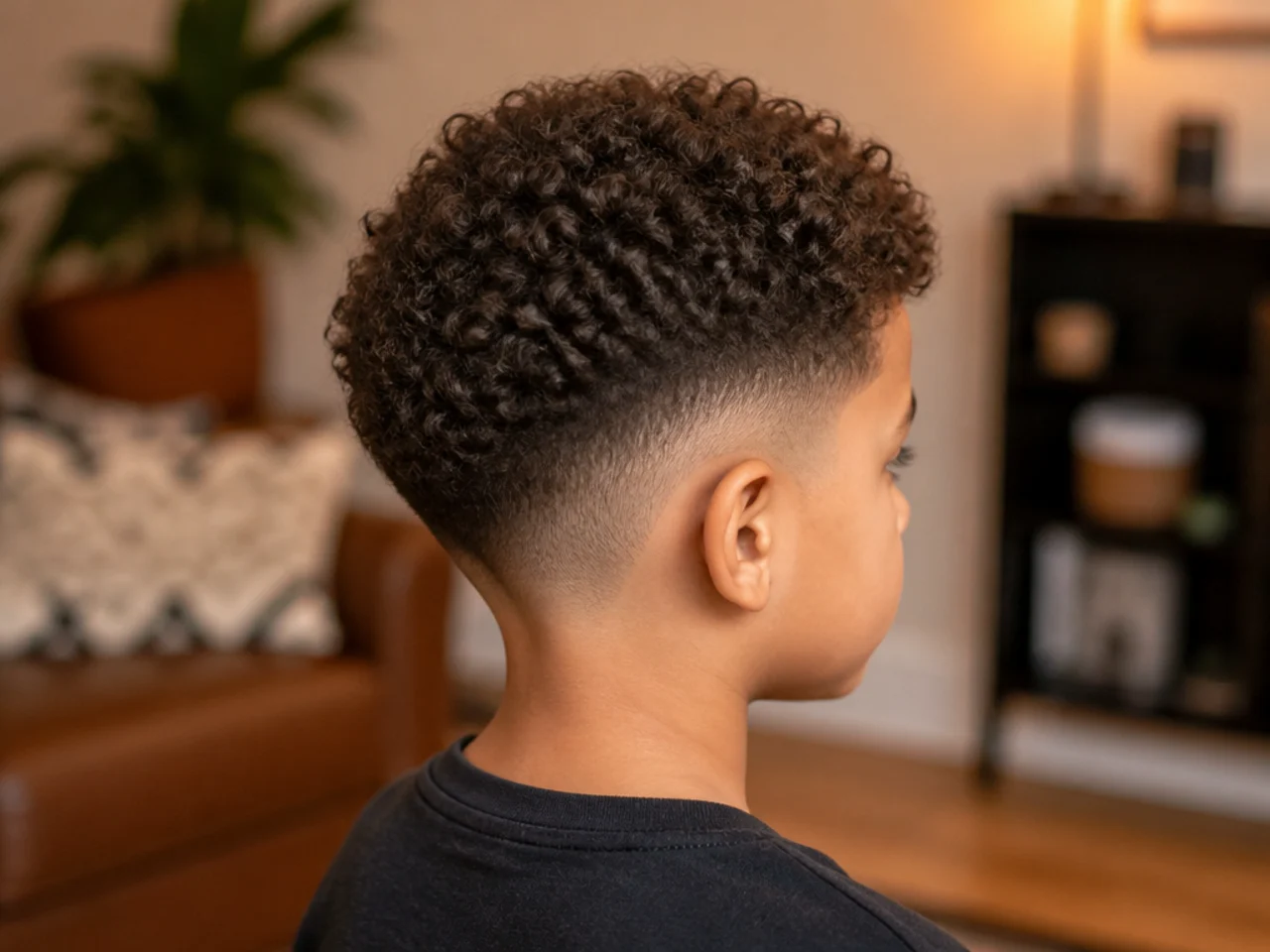
6. The Side Part He Can Manage
A parting placed where his hair already splits, not where it looks best in the photo. A five-year-old will not recreate a parting, so it has to be the one gravity makes on its own.
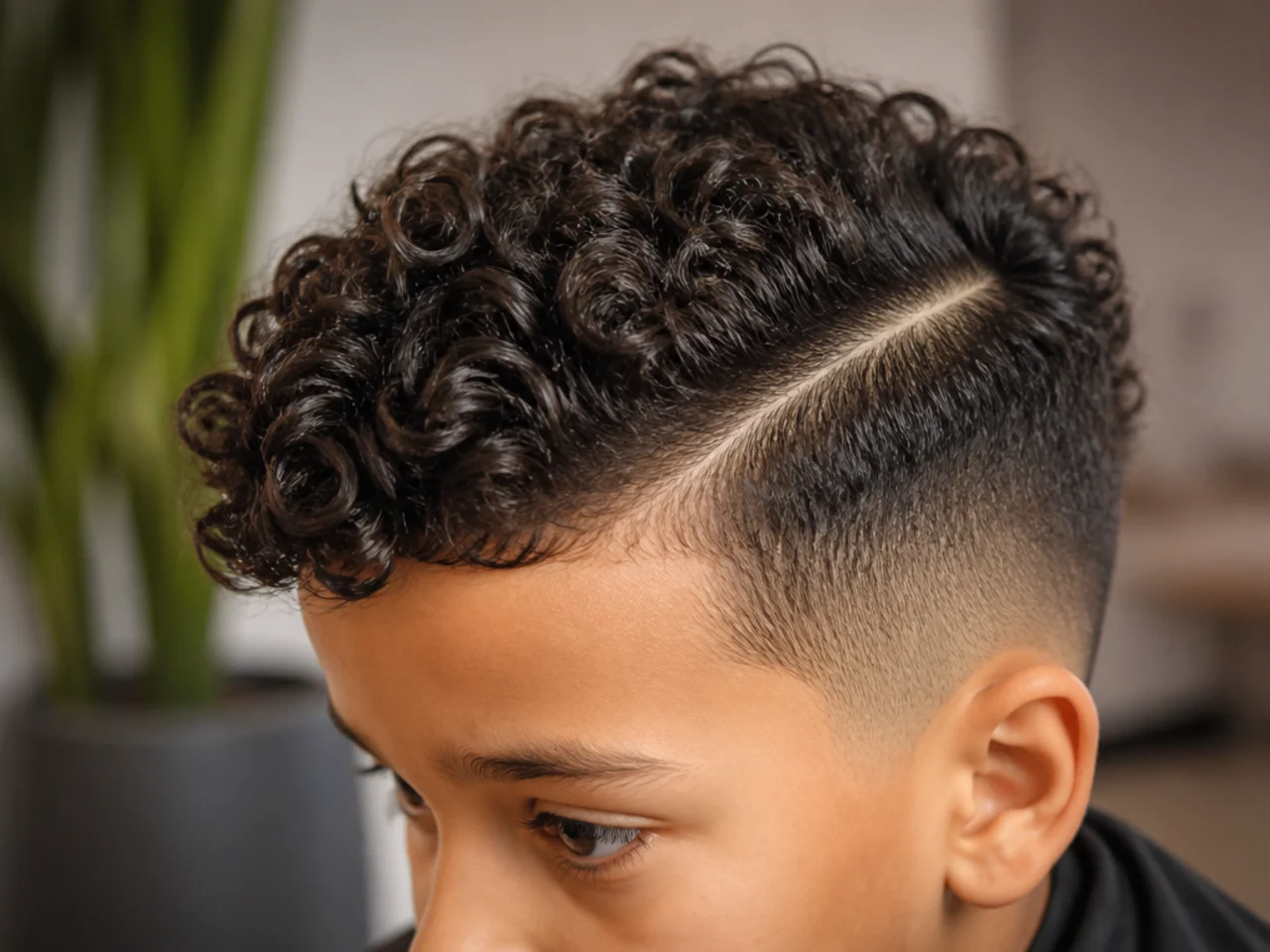
7. Short Sides With Low Curl on Top
Contrast built by narrowing the sides rather than by adding height. It gives a tidy, older-looking shape while keeping the top proportionate to a small head.
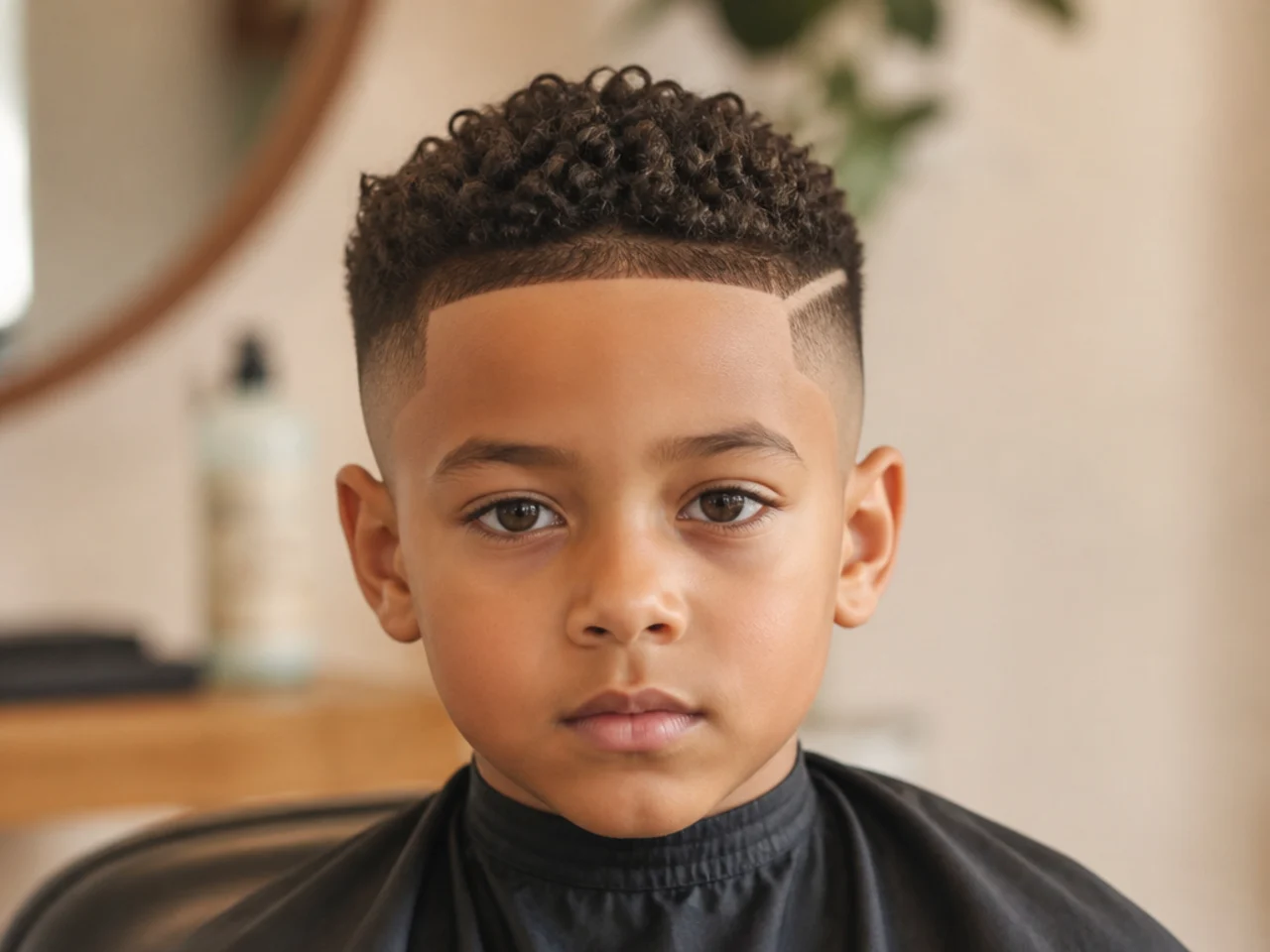
8. Reshaping the Grown-Out Baby Cut
The first cut that treats the hair as a shape rather than as length to remove, and the point at which the little boy shapes start being worth browsing. Around four or five the curl pattern has usually settled enough for a barber to build something around it.
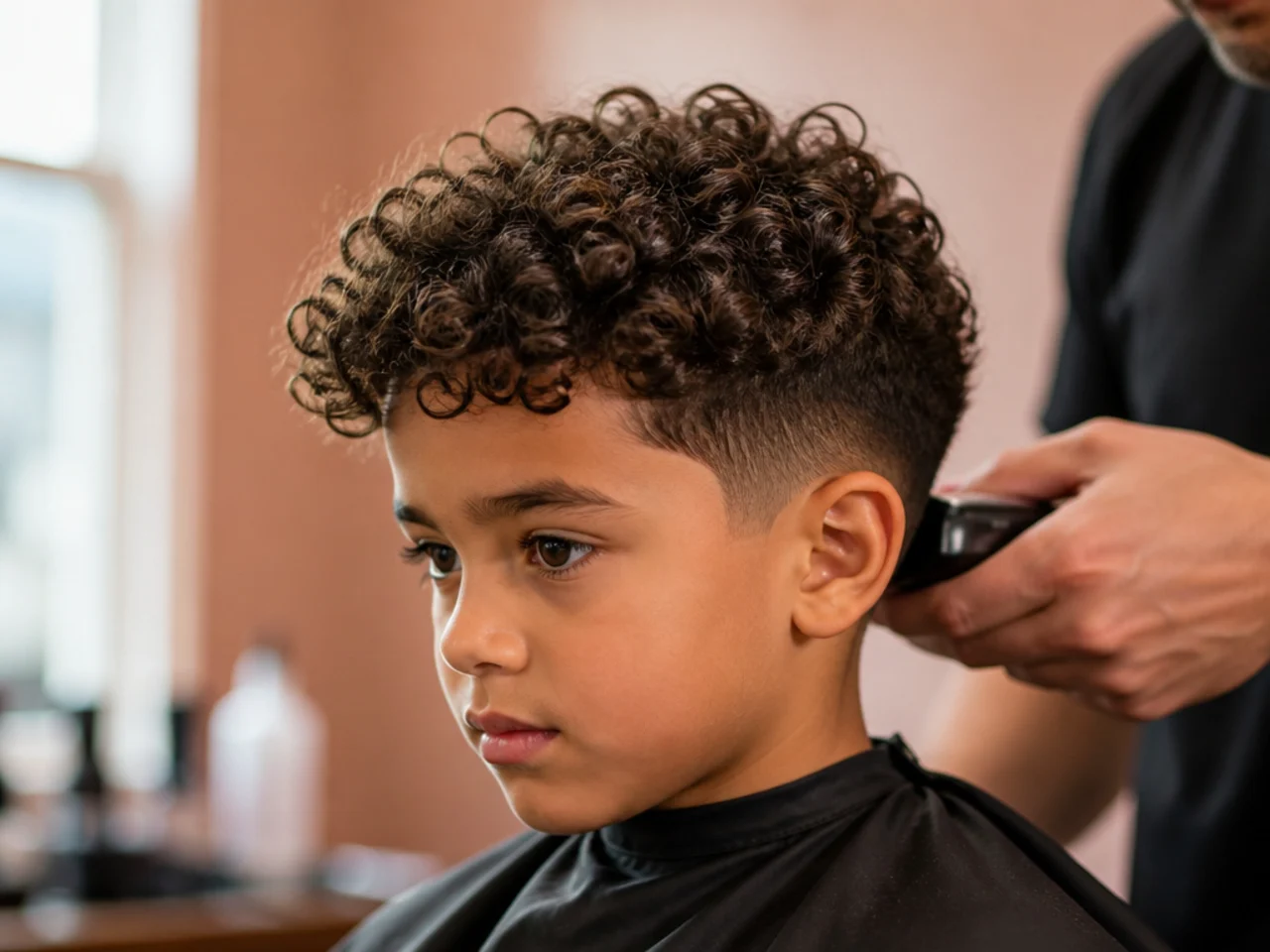
9. The Half-Fringe
Front length kept but split so it falls to either side. It clears his vision without ever needing a straight cut across curly hair, which dries uneven every time.
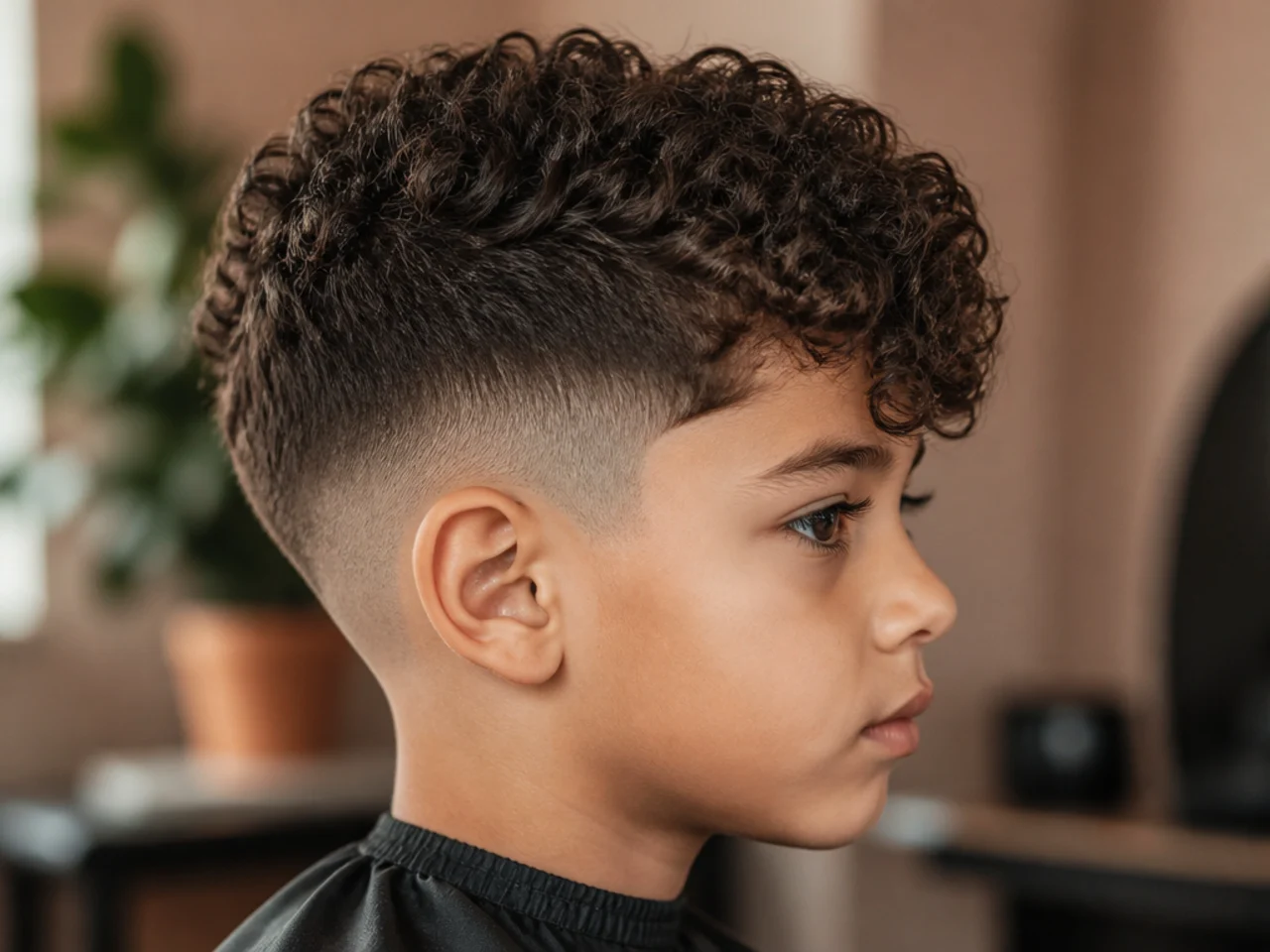
10. His First Taper
The perimeter graduated down to a #1 at 3mm, which is a low taper fade at child scale. A taper keeps its shape for three to four weeks, which fits a six-to-eight-week appointment habit far better than a fade does.
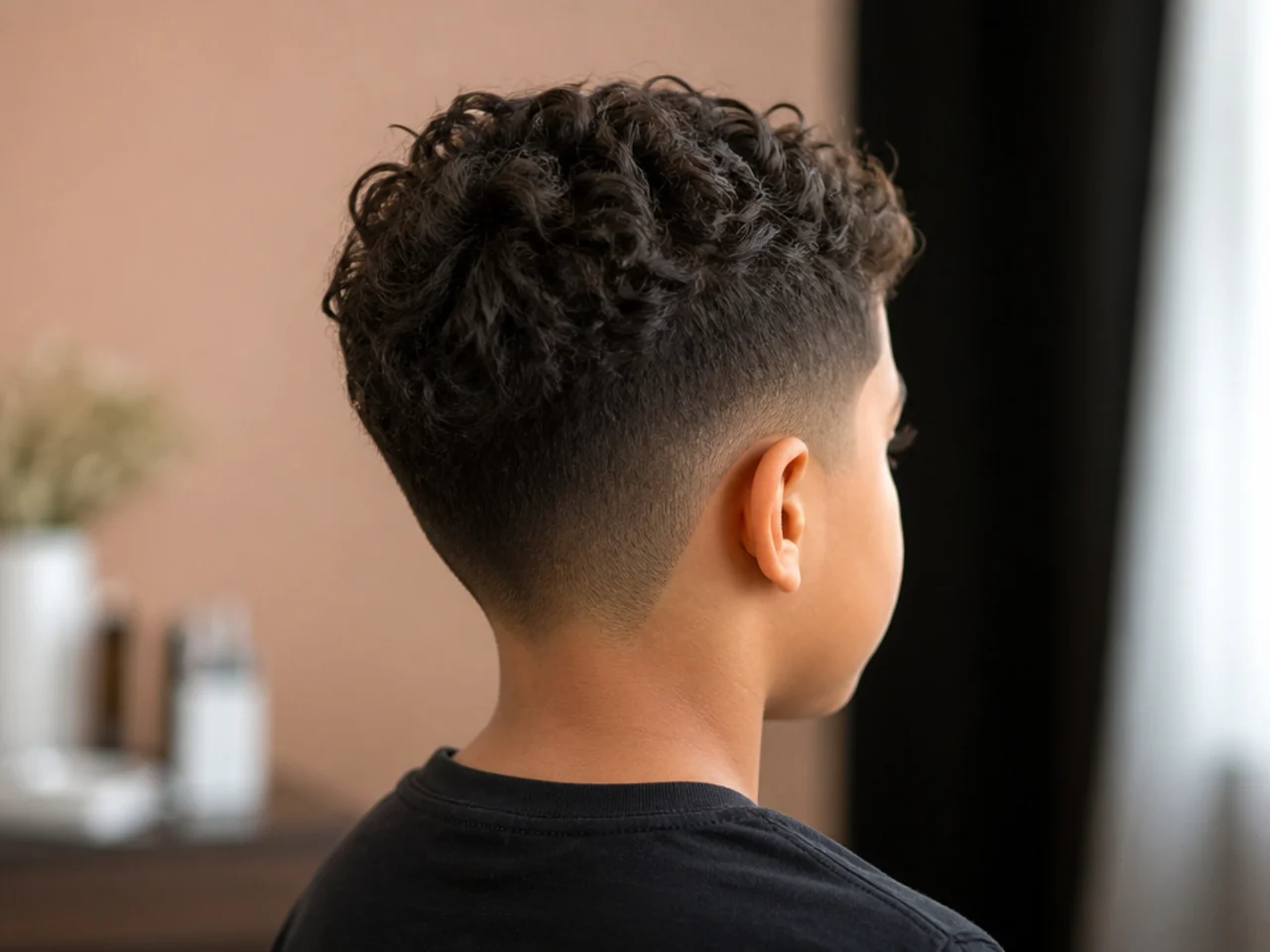
11. Ears Left Showing
A small scooped section removed above each ear. It reads as a deliberate, tidy shape and it stops the sideways push that makes a young head look wide.
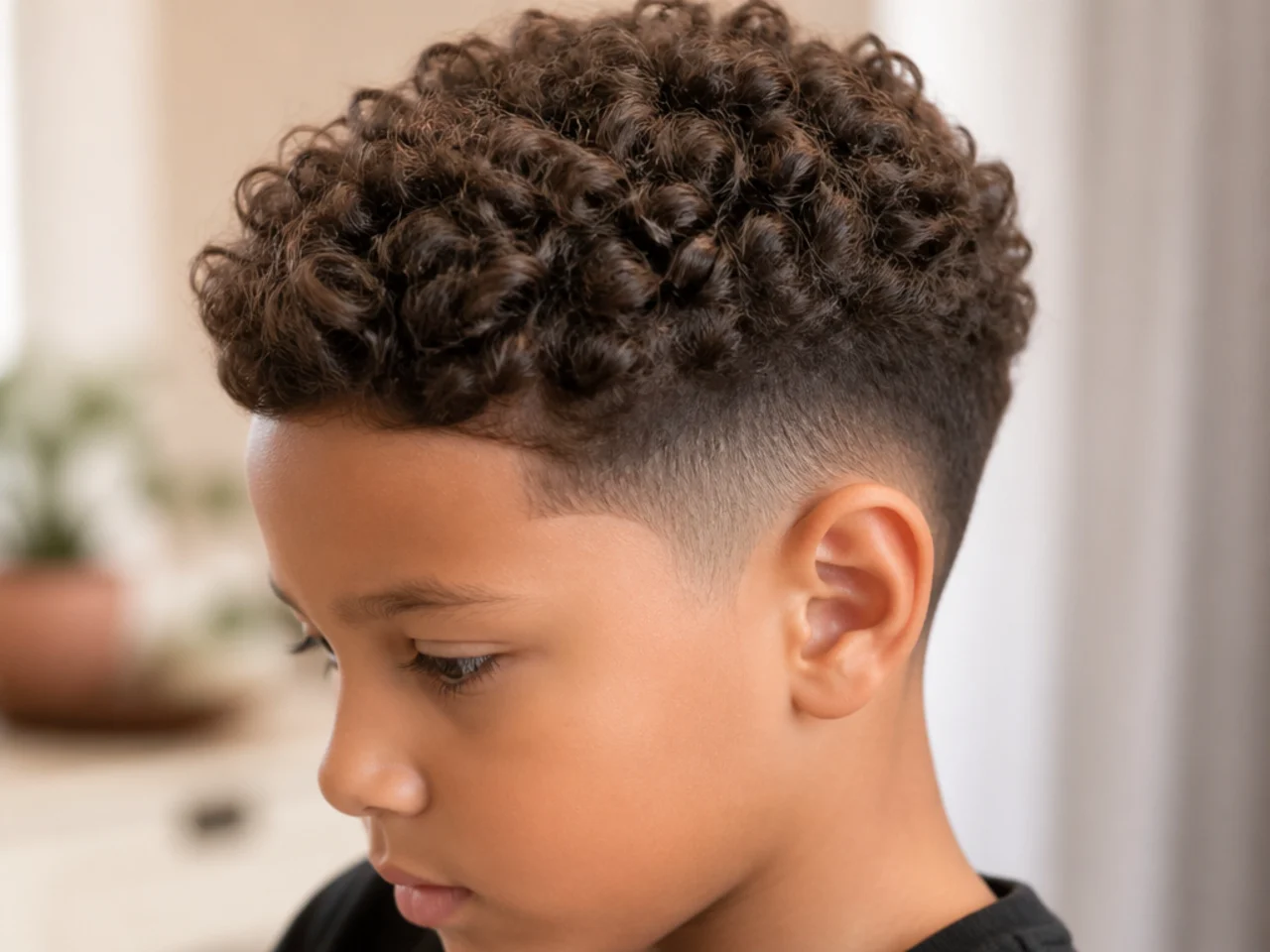
12. The Genuinely No-Product Cut
A shape chosen precisely because nothing will ever be applied to it. Curl clumps form on their own at this length, so water is the only step, and it takes about ten seconds.
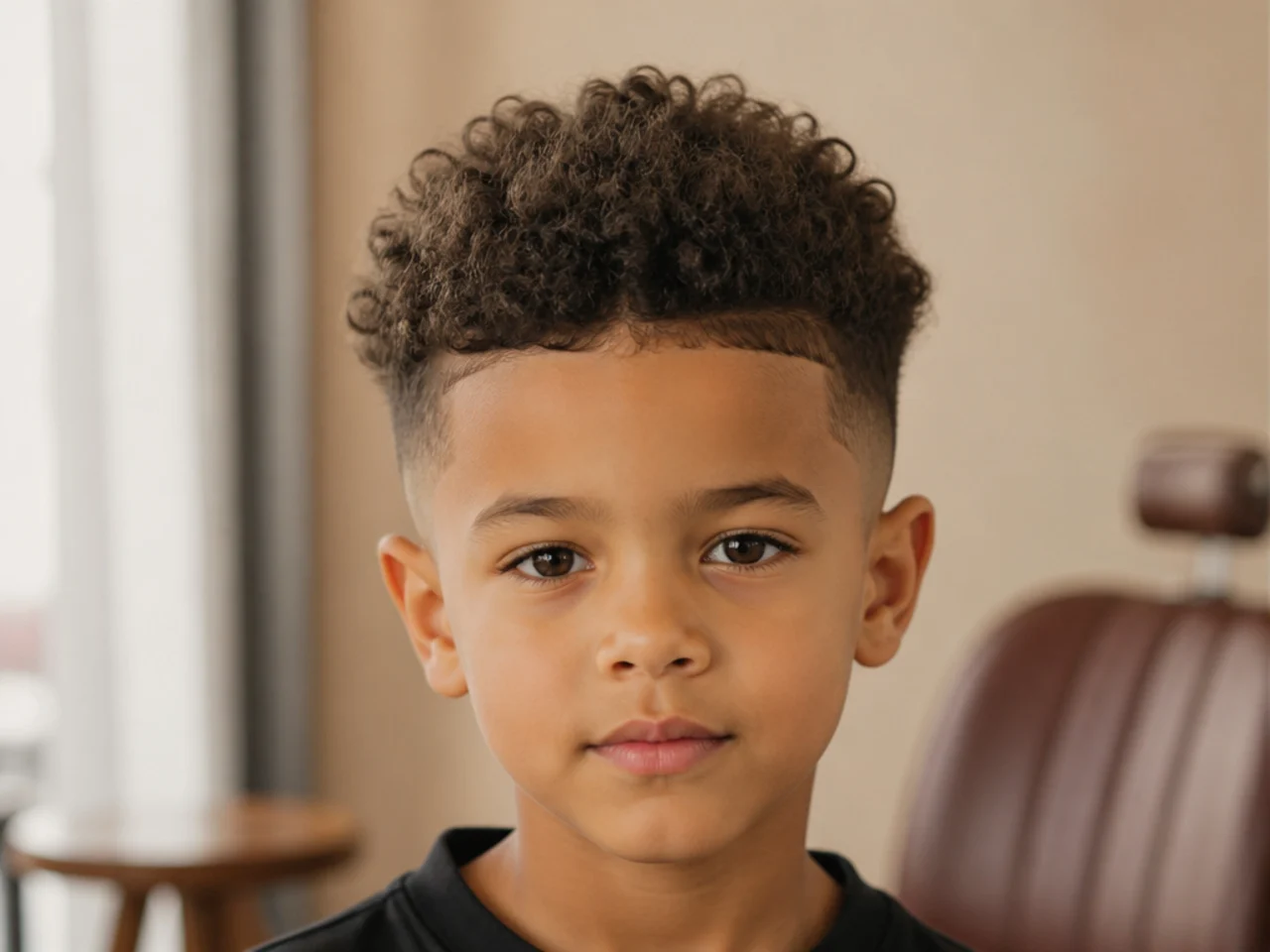
13. Fine Curls Left Longer
Fine hair at this age loses density fast when it is shortened. Leaving it around three centimetres keeps enough weight for the clumps to sit together rather than separating and showing scalp.
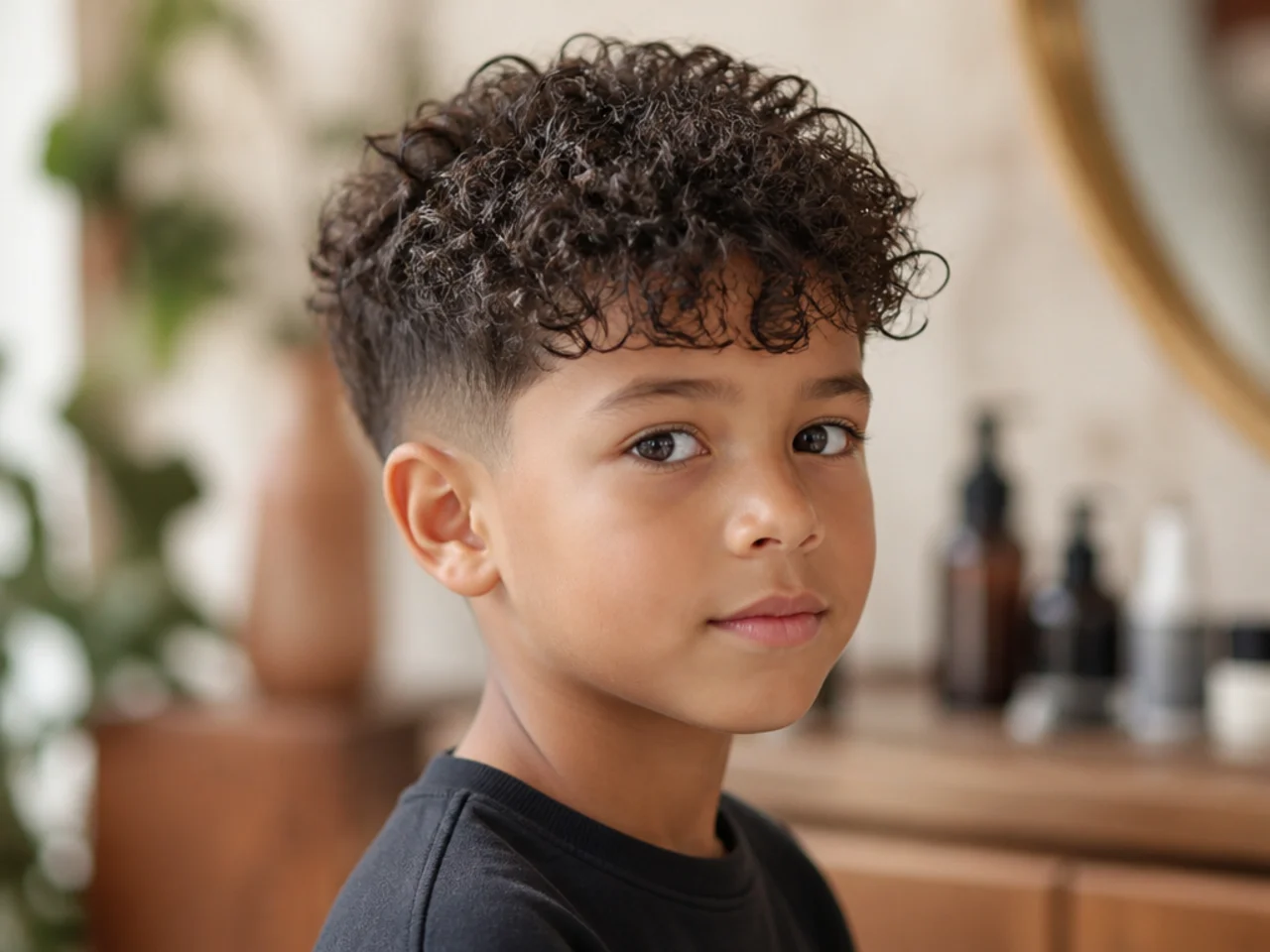
14. Thick Curls Thinned From Underneath
Internal weight removed while the surface length stays. Cutting the outside shorter on a dense head only makes it stand up more, whereas removing the interior lets the whole shape settle.
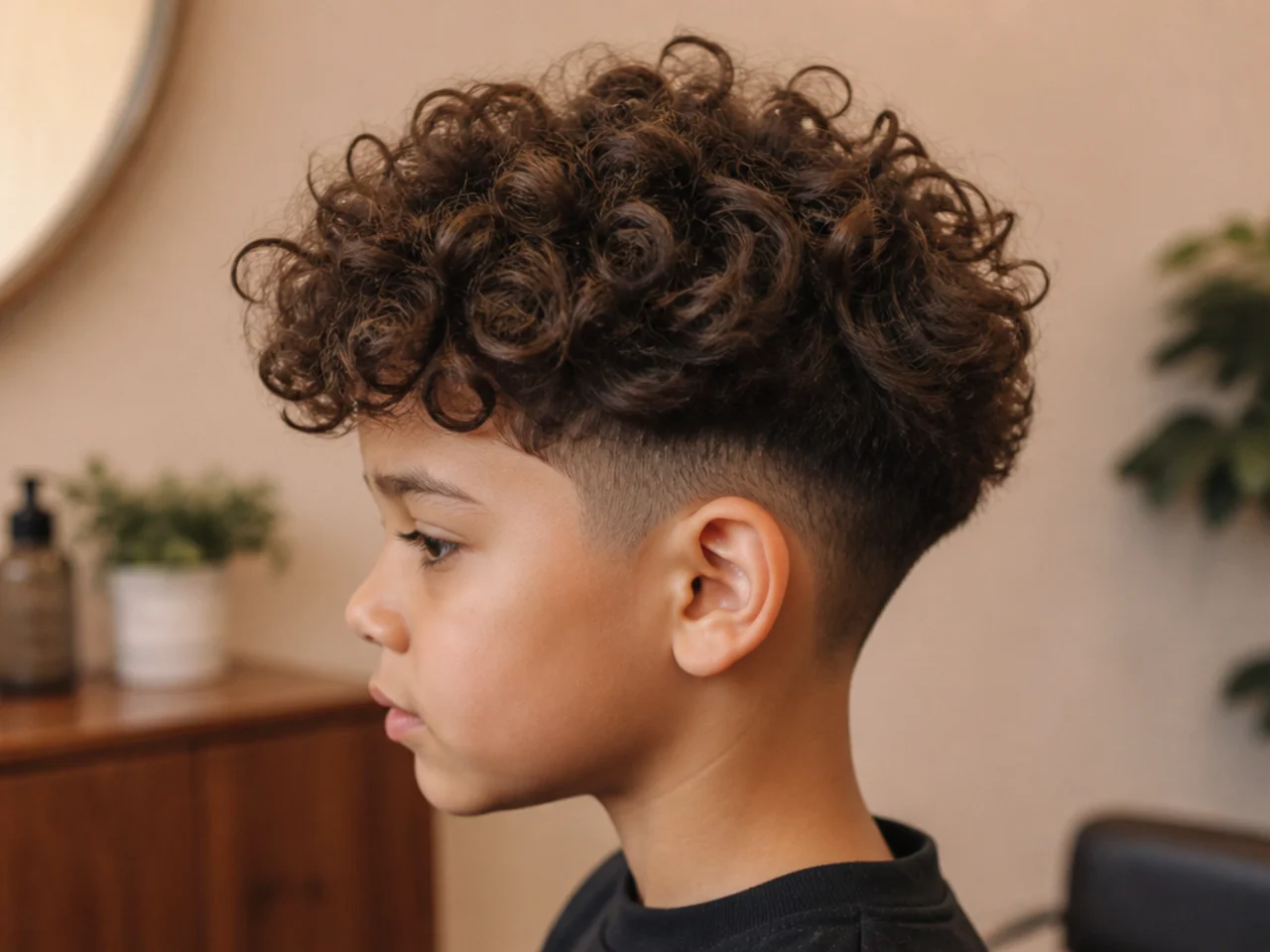
15. Shaped Around the Crown Whorl
The cut following the direction the crown already grows. A whorl cut against will stand upright at every length, and no amount of damping it down changes that.
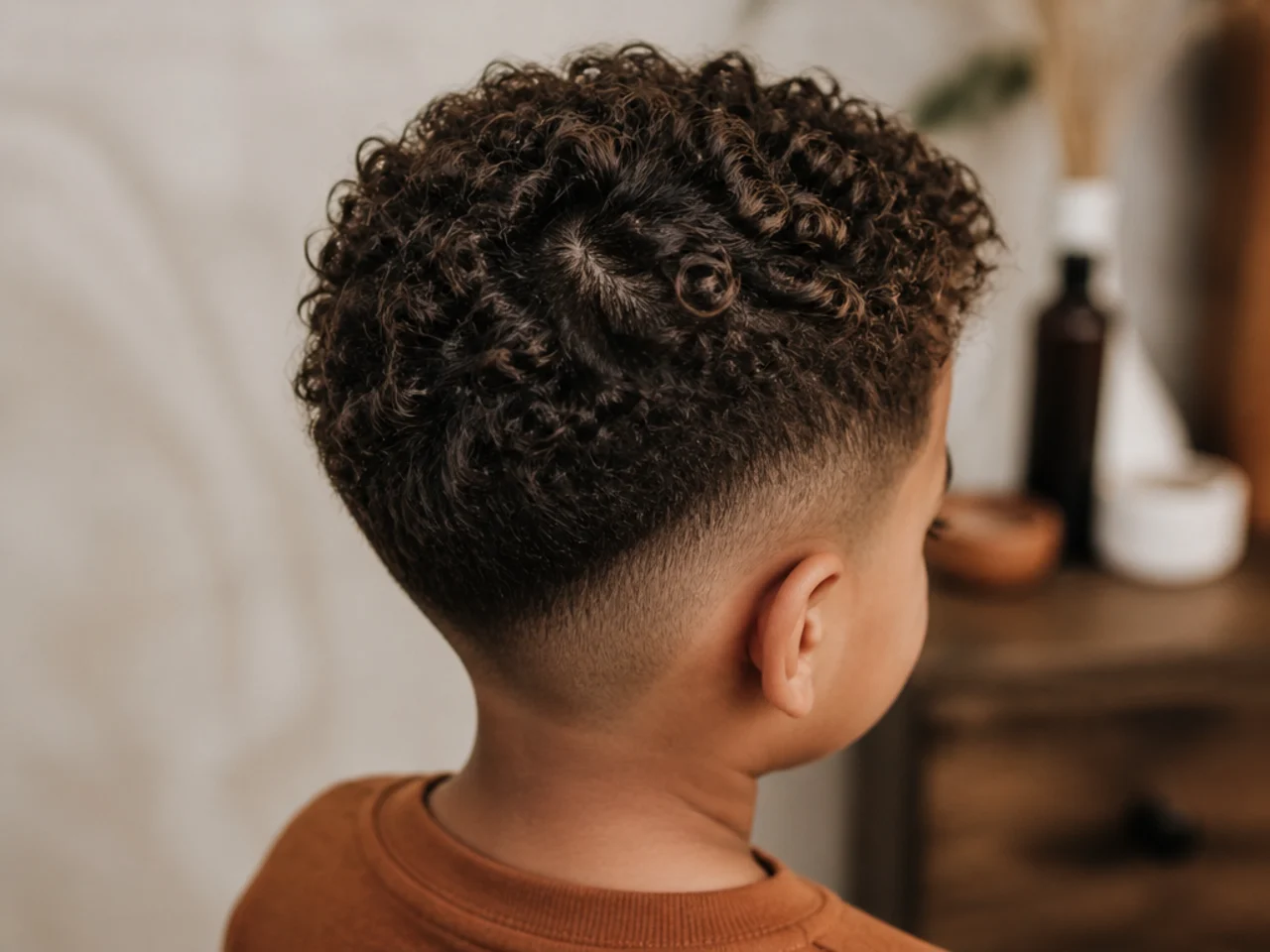
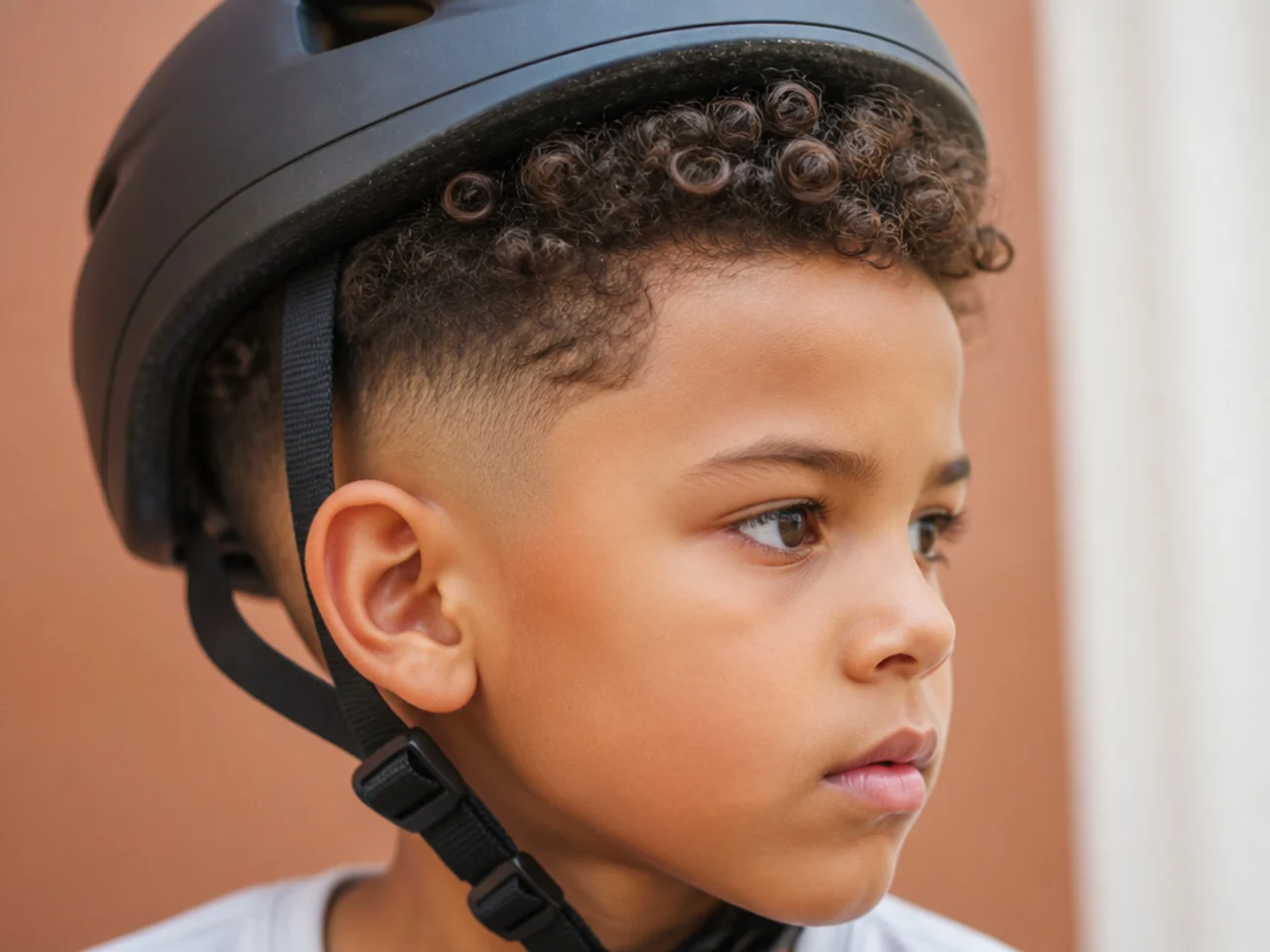
16. The Helmet-Proof Cut
Short enough that a bike helmet does not press a permanent dent into it. Anything under about two centimetres cannot hold an impression, which matters more than it sounds at this age.
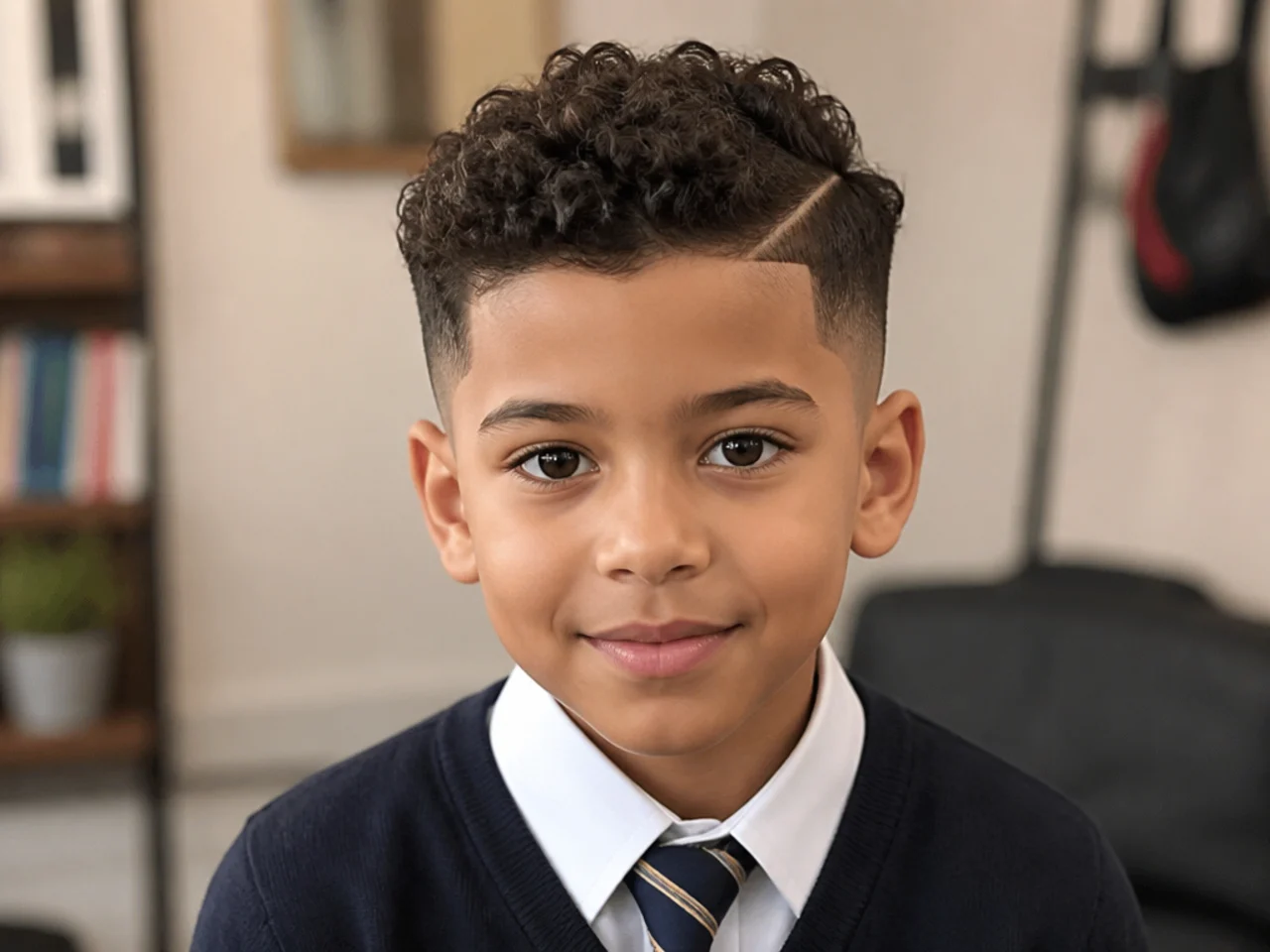
17. The Photo-Day Length
Booked around ten days ahead so the cut has softened. A haircut done the night before reads as too fresh, and curl in particular needs a few days to settle into its shape.
18. The Swimming-Lesson Cut
Short enough to dry before he is back in the car. Chlorine does most of its damage while it sits in wet hair, so drying time is the variable that actually matters.

19. The Two-Minute Morning Shape
A cut whose entire routine is a wet hand pushed through it. Anything that needs more than that will not survive a school run, however good it looks in the salon.
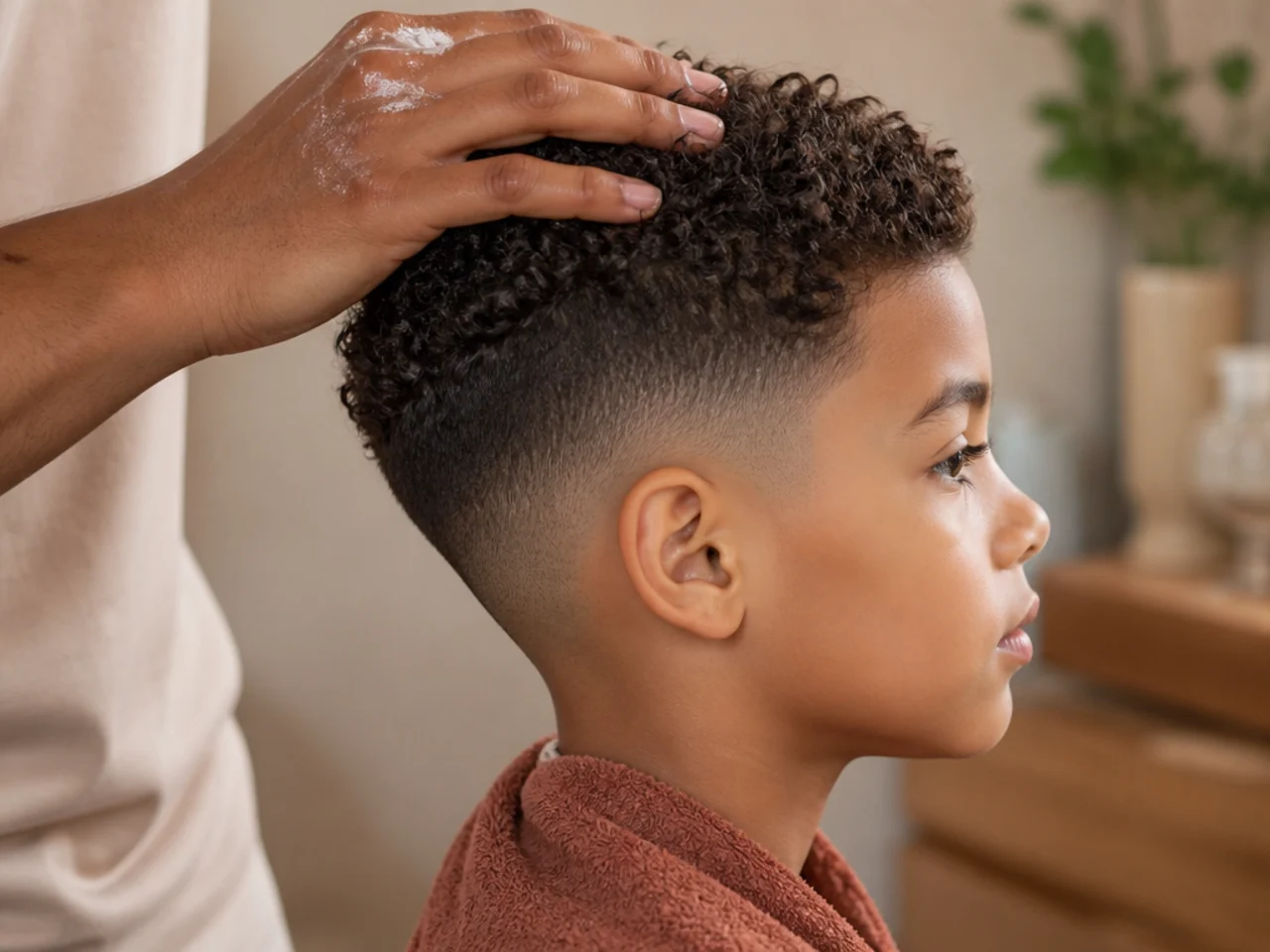
20. What Changes When He Turns Seven
Density increases, the head catches up with the body, and he starts having opinions. All three make taller and sharper shapes work, so it is worth revisiting the cut rather than repeating it — the shapes he will start asking for arrive not long after.

Styling and Upkeep
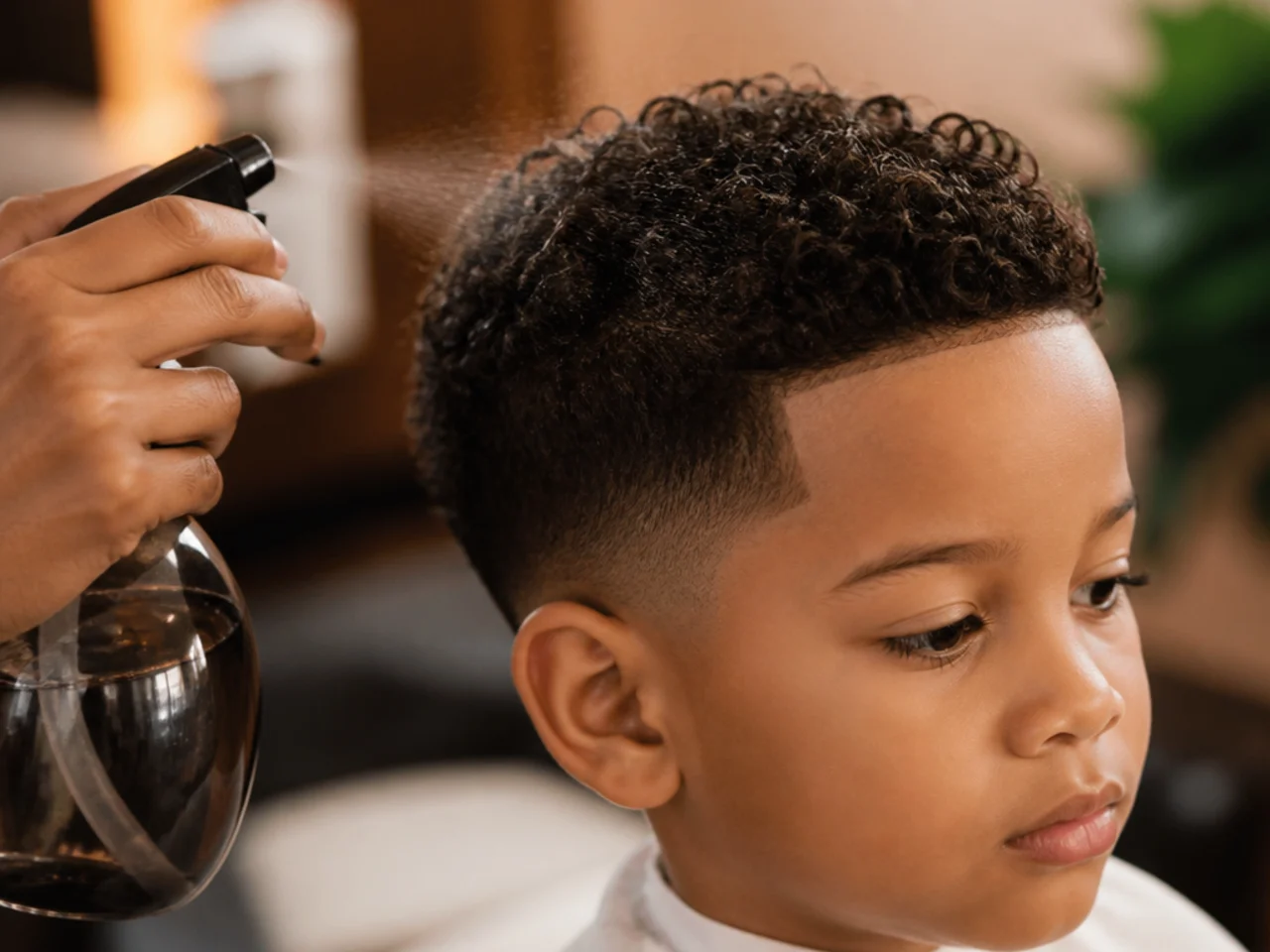
Keep a water spray by the front door. It resets a slept-on shape in ten seconds with nothing else involved.
Detangle in the bath with conditioner in. Slip is what lets a curl release, and dry detangling is what teaches children to dread it.
Press water out with a towel instead of rubbing. Rubbing creates friction frizz even on short hair.
Use a satin pillowcase. Cotton grips curl and builds the pad that forms at the nape overnight.
Book every six to eight weeks. Curly hair hides growth, so a shorter cycle rarely earns its cost.
Mistakes to Avoid
Adding height to a head that is already big for the body. Take the width out instead and the proportion fixes itself.
Cutting a fringe straight across. Each curl draws up by a different amount, so it dries uneven every single time.
Buying styling product for a five-year-old. It ends up on the sofa and makes the hair harder to detangle that evening.
Cutting fine hair very short. Density has not arrived yet, and short fine curl shows scalp between the clumps.
Brushing it before school. Brushing dry curls separates the clumps that create the shape and leaves frizz in their place.
FAQ
What is different at this age? Proportion, since a small body under a large head makes height and width read as more.
Does he need product? Almost never, because clumps form on their own and anything applied gets rubbed off.
How often should it be cut? Every six to eight weeks, since curl hides growth well.
Final Thoughts
At this age the winning move is almost always narrowing the sides rather than shortening the top, and choosing a shape that looks right with nothing done to it. He can sit still now, which is the only new tool you have, so spend it on a cut that needs no follow-up.
For the years just before this see curly hair toddler boy ideas, and for the full range of shapes read curly haircuts for boys. More in Men's Haircuts.