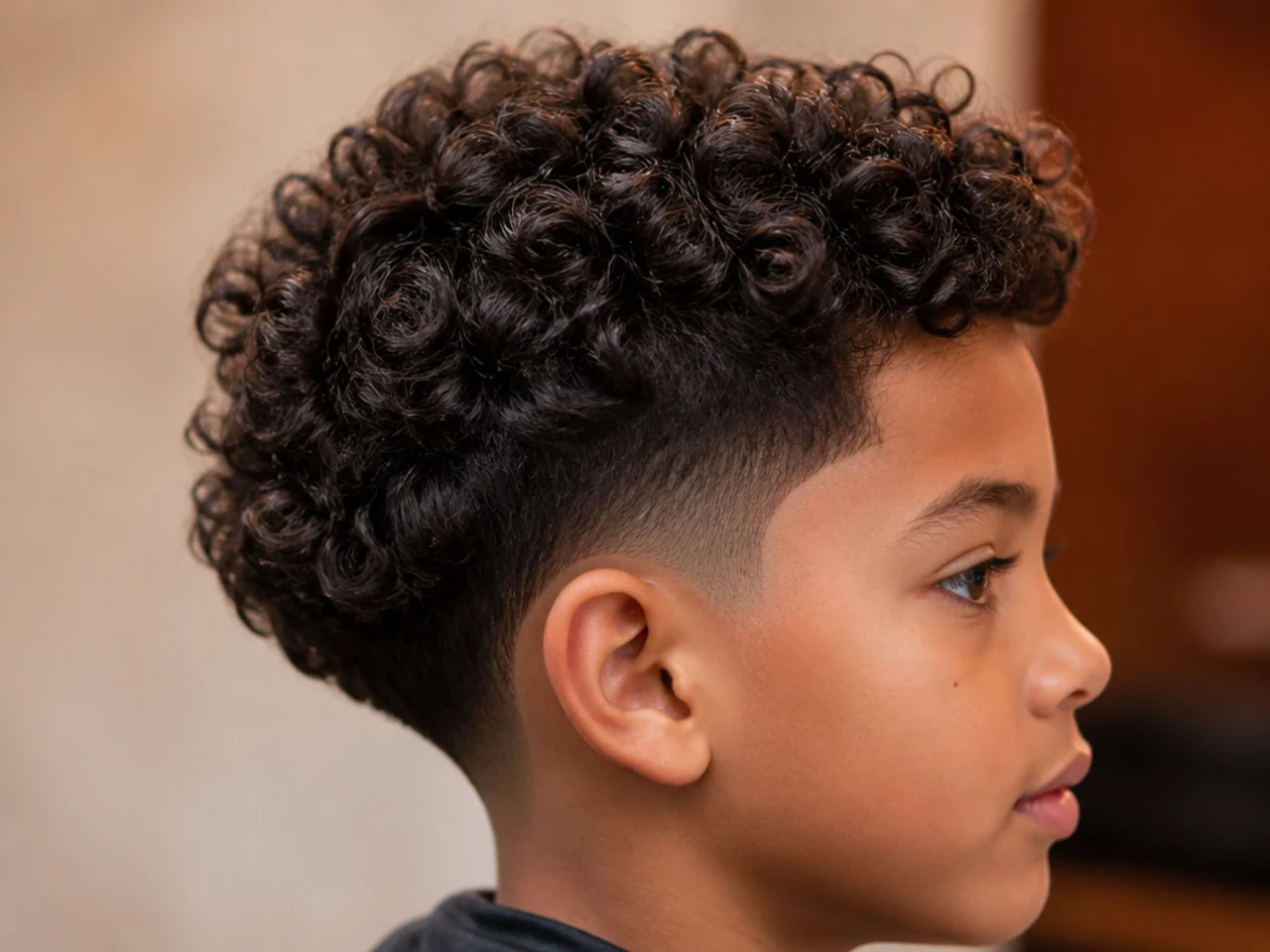
20 Curly Hair Boy Ideas With a Fade
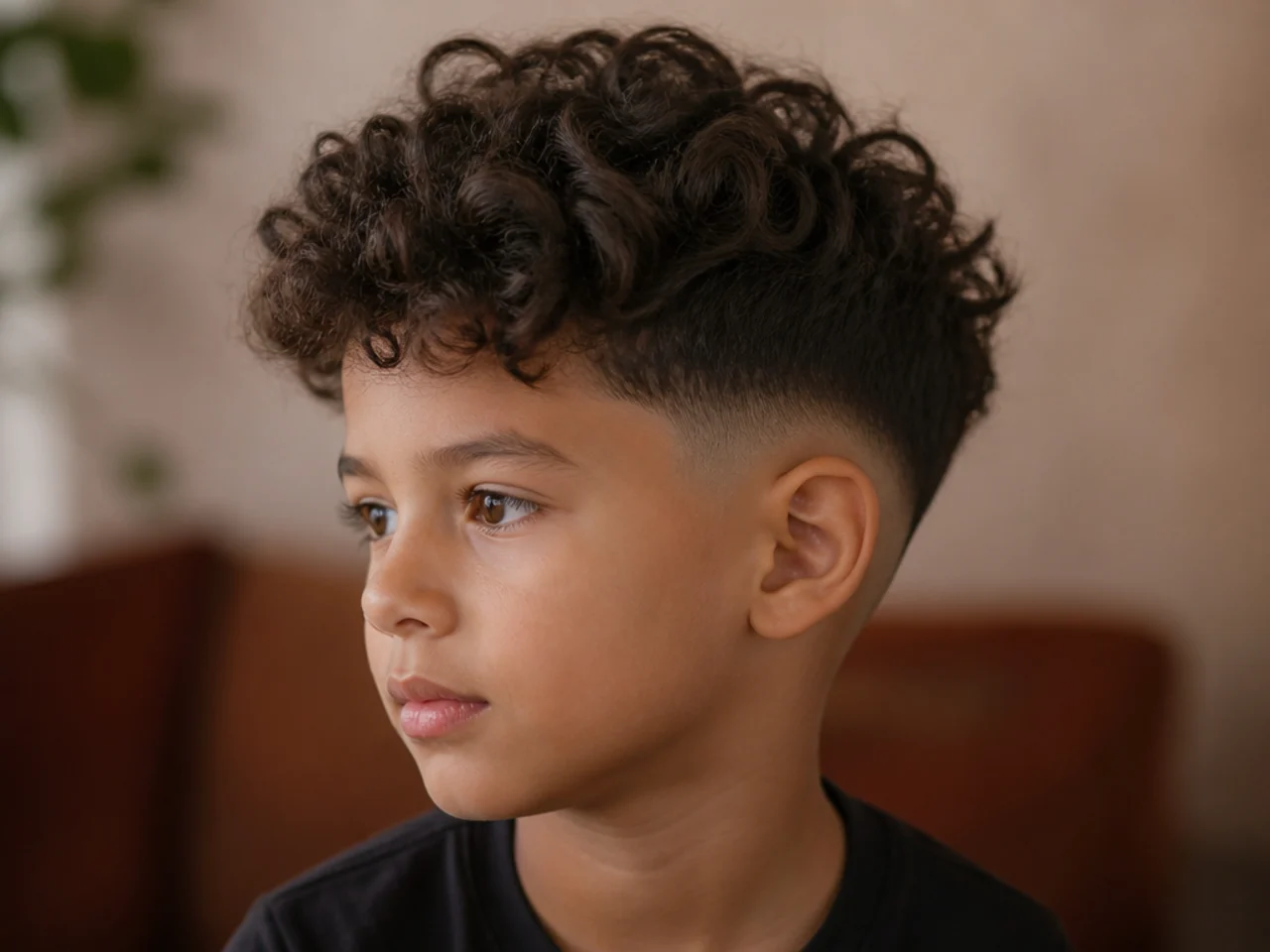
A fade on a child is not a haircut decision, it is a standing appointment you are agreeing to keep. The higher and tighter the fade, the shorter the gap before it stops looking deliberate.
In this article · 27
- What a Fade Actually Costs You
- How to Choose Yours
- The 20 Curly Boy Fade Ideas
- 1. Low Taper With Curls Left Long
- 2. Low Fade Bottoming Out at a #1
- 3. Mid Fade Under a Curly Top
- 4. High Fade on a Bigger Boy
- 5. Burst Fade Around the Ear
- 6. Drop Fade Following the Head Shape
- 7. Skin Fade, Eyes Open
- 8. The #2 to #4 Fade
- 9. Fade With a Light Hard Part
- 10. Fade With the Fringe Left Forward
- 11. Temple Fade Only
- 12. Fade Without a Line-Up
- 13. Photo-Day Fade With Length Kept On Top
- 14. Low Fade With an Extra-Short Nape
- 15. Fade on Tightly Coiled Hair
- 16. The Grow-Out-Friendly Fade
- 17. Faded Sides With a Curly Ridge
- 18. The Fade That Stops Below the Ear
- 19. The Scissor-Blended Version
- 20. What Week Three Looks Like
- Styling and Upkeep
- Mistakes to Avoid
- FAQ
- Final Thoughts
A fade on a curly-haired boy looks excellent for a fortnight and then quietly stops looking like anything at all.
The fade is an appointment schedule, not a haircut. Clipper work is measured in millimetres, and hair grows about a centimetre a month, so the shortest sections lose their definition first and fastest.
The parent signs that contract, not the child. Choose the fade that matches how often you can realistically sit him back down, and the rest of the decisions get much easier.
What a Fade Actually Costs You
The guard numbers are fixed. A #1 is 3mm, a #2 is 6mm, a #3 is 10mm and a #4 is 13mm, and every fade is described by the range it travels through.
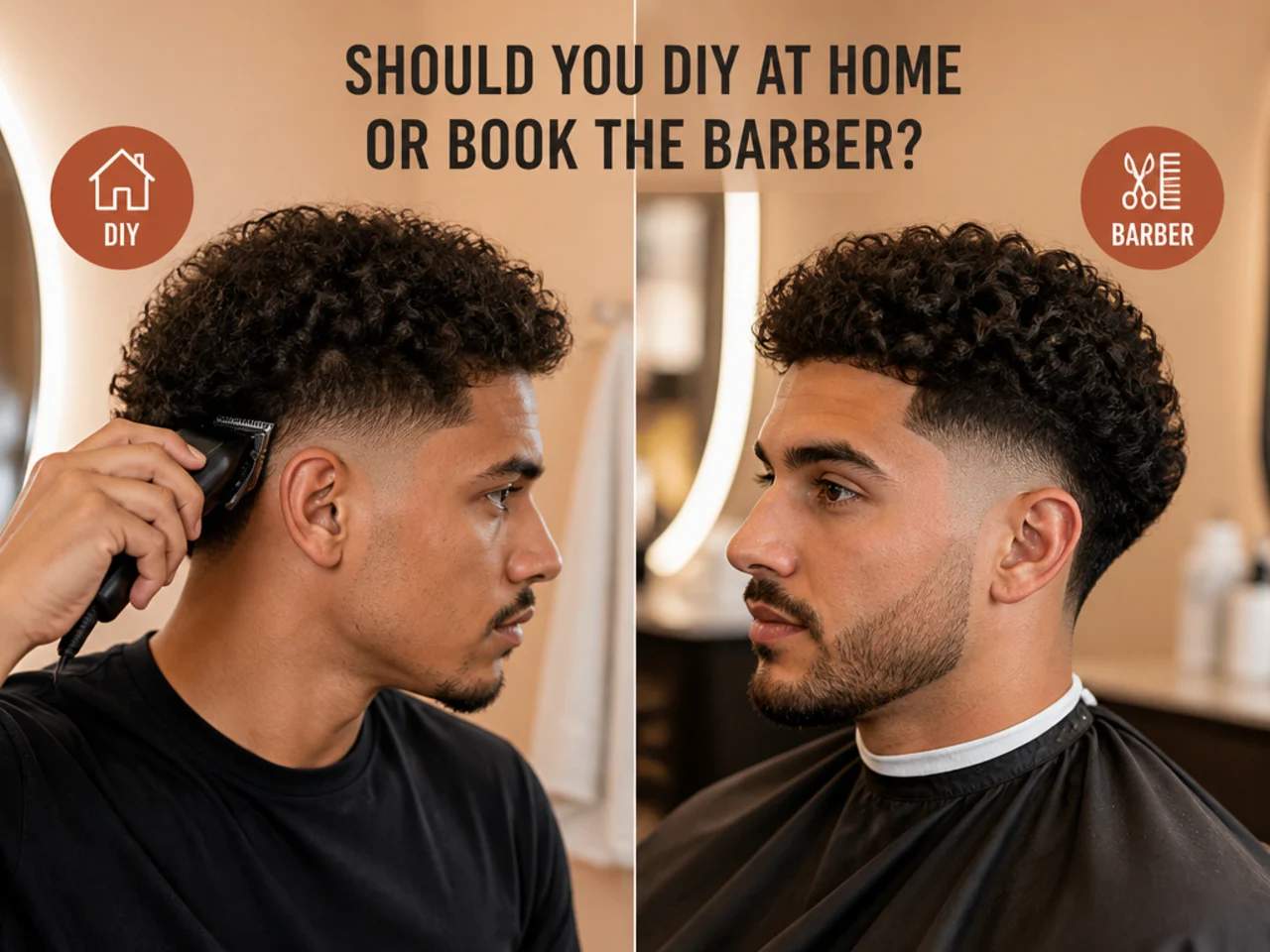
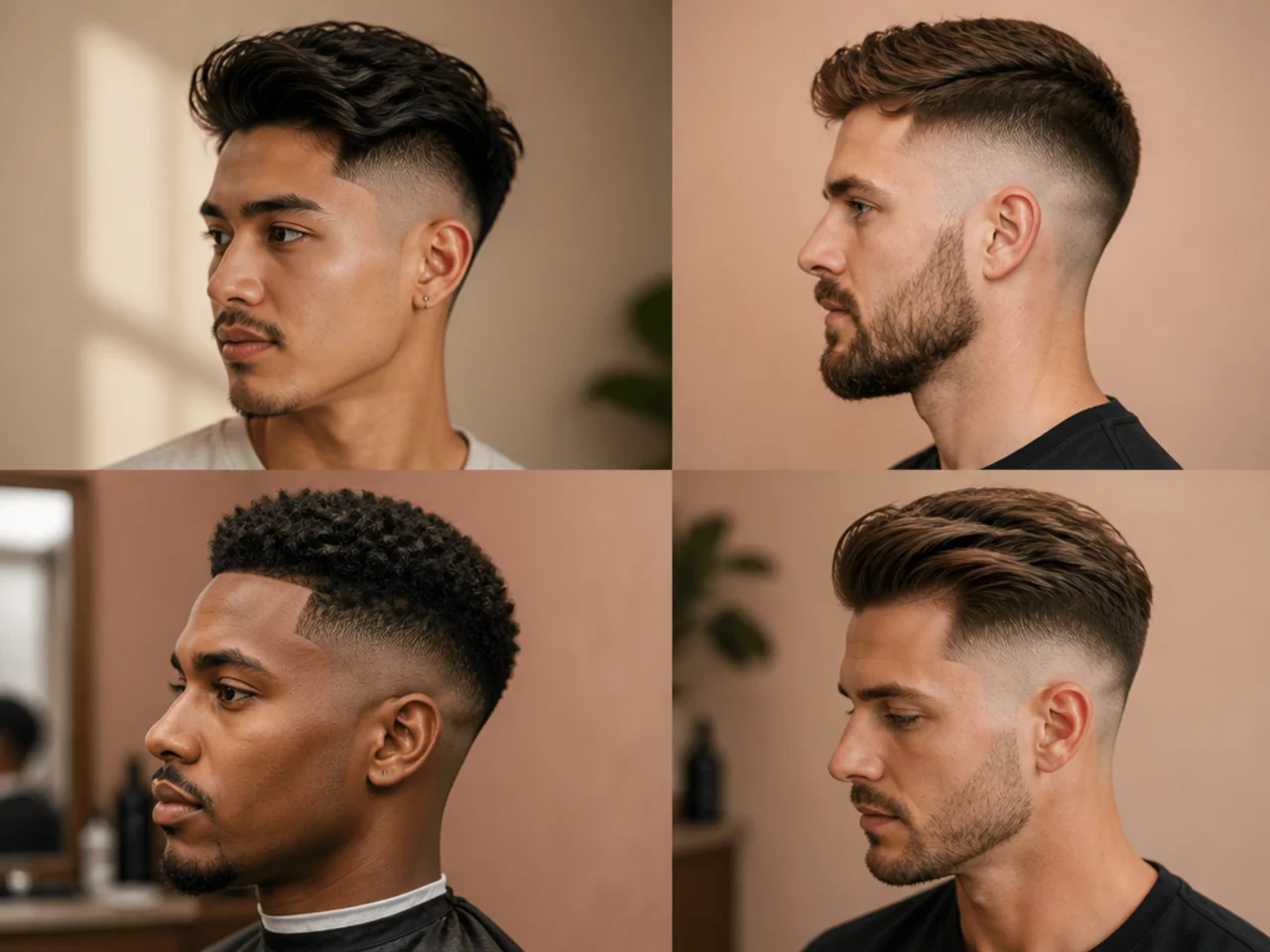
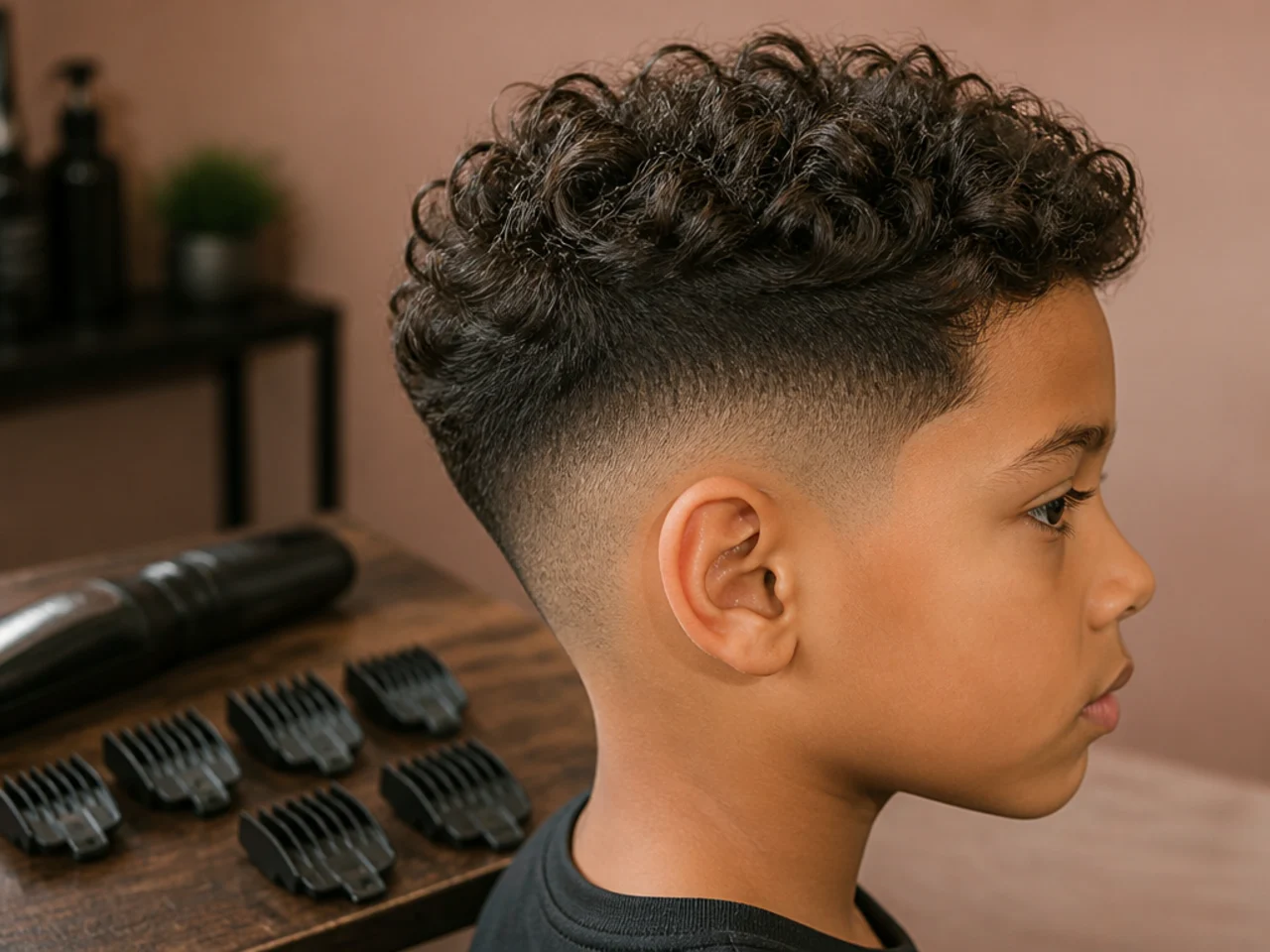
Height changes the look more than length does. Low keeps the line at or below the temple, mid runs it between the temple and the parietal ridge, and high starts it at or above that ridge — the three heights compared side by side if you want to see them. On a child that choice is really a calendar setting, because the higher the line, the more of his head is clipper-short and the sooner a month's centimetre of growth turns the whole side shaggy again.
A skin fade blurs in one to two weeks. A fade that bottoms out at a guard rather than bare skin stays presentable for three to four.
Curl exaggerates the contrast. Curly hair reads as volume, so the jump from faded side to curly top is visually larger than the same fade on straight hair.
How to Choose Yours
Start from your calendar. Three-week gaps mean a taper or a guard fade, and weekly touch-ups are the only thing that keeps a skin fade honest.
Match the height to the head. A high fade on a small head removes a lot of the visible hair and can make the skull read narrow.
Ask where the fade stops, not just where it starts. The top edge of a fade is the line that shows as it grows, so a softer top edge buys you time.
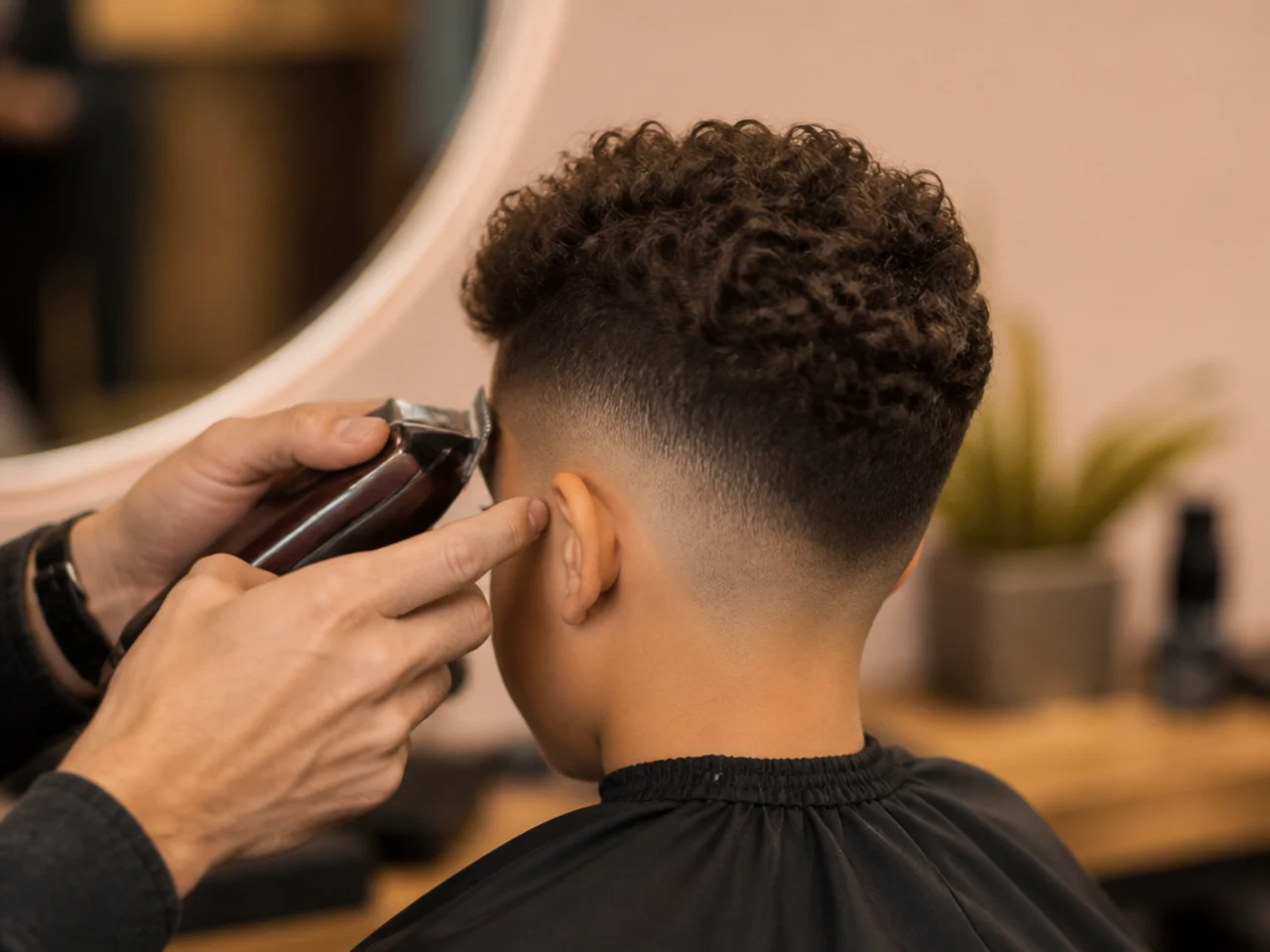
Consider whether he will sit for clippers at all. Some children tolerate the vibration and some do not, and a scissor-blended version gets you most of the shape without the machine.
The 20 Curly Boy Fade Ideas
1. Low Taper With Curls Left Long
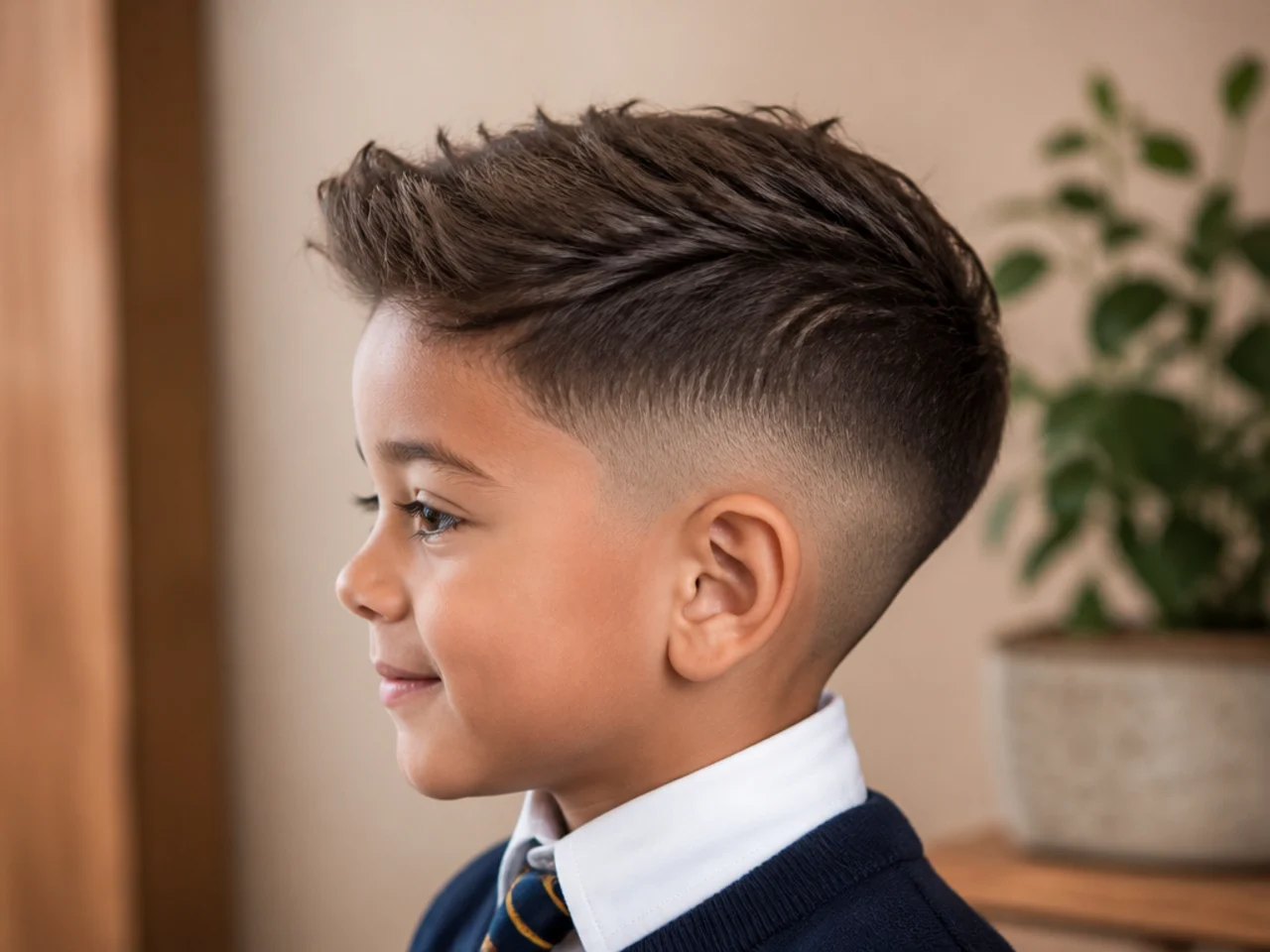
The clipper work stops at or below the temple and never goes to skin. It is the most forgiving version on this page because the shortest hair is still 3mm, so there is no bare patch to grow out unevenly.
2. Low Fade Bottoming Out at a #1
A true fade with a gradient, but the shortest point holds 3mm of hair. You keep the graduated look and lose the fortnightly deadline that comes with skin.
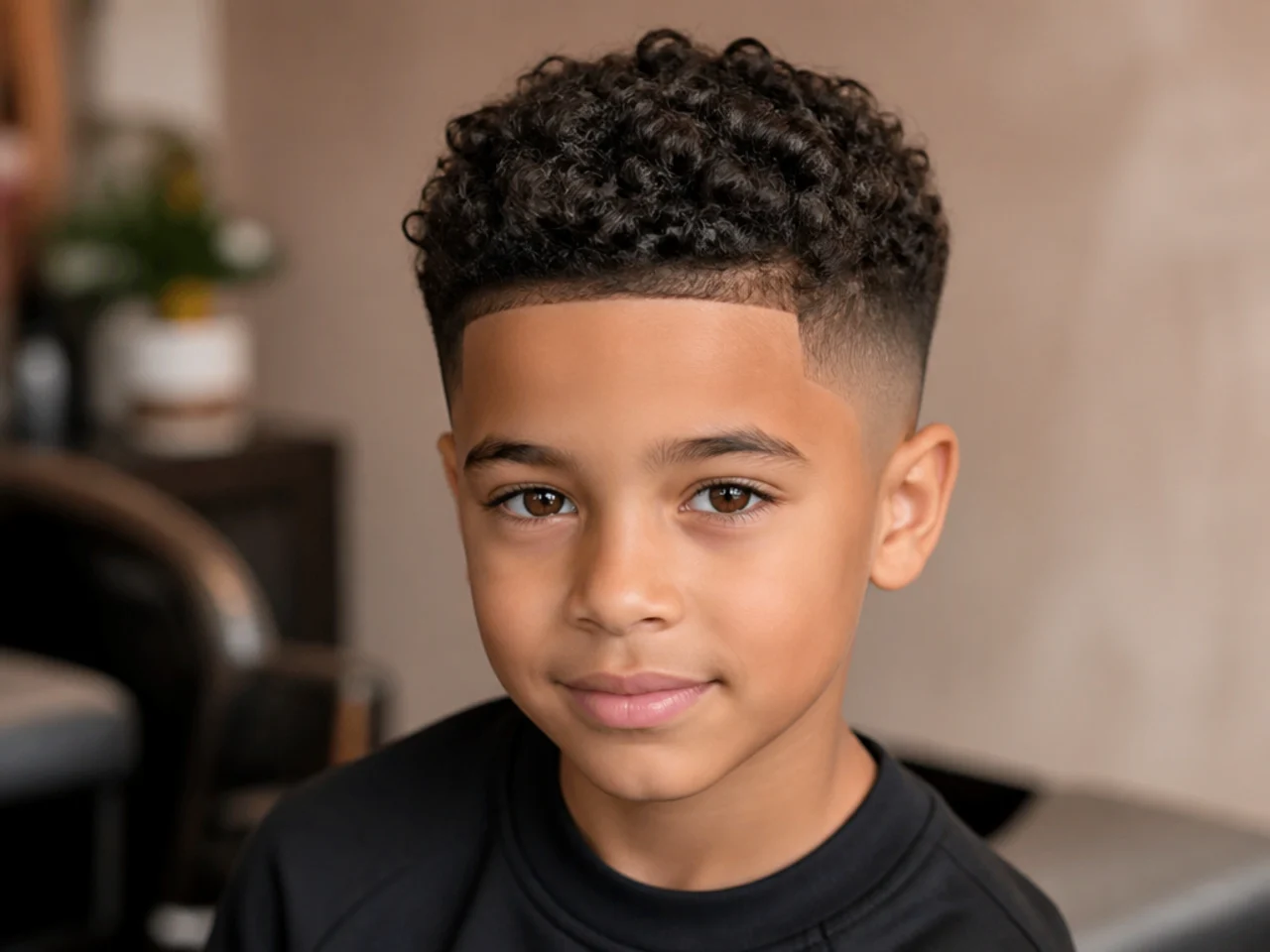
3. Mid Fade Under a Curly Top
The gradient begins between the temple and the parietal ridge, which puts the transition right where the curl volume starts. That alignment is why a mid fade reads tidier on curls than on straight hair.
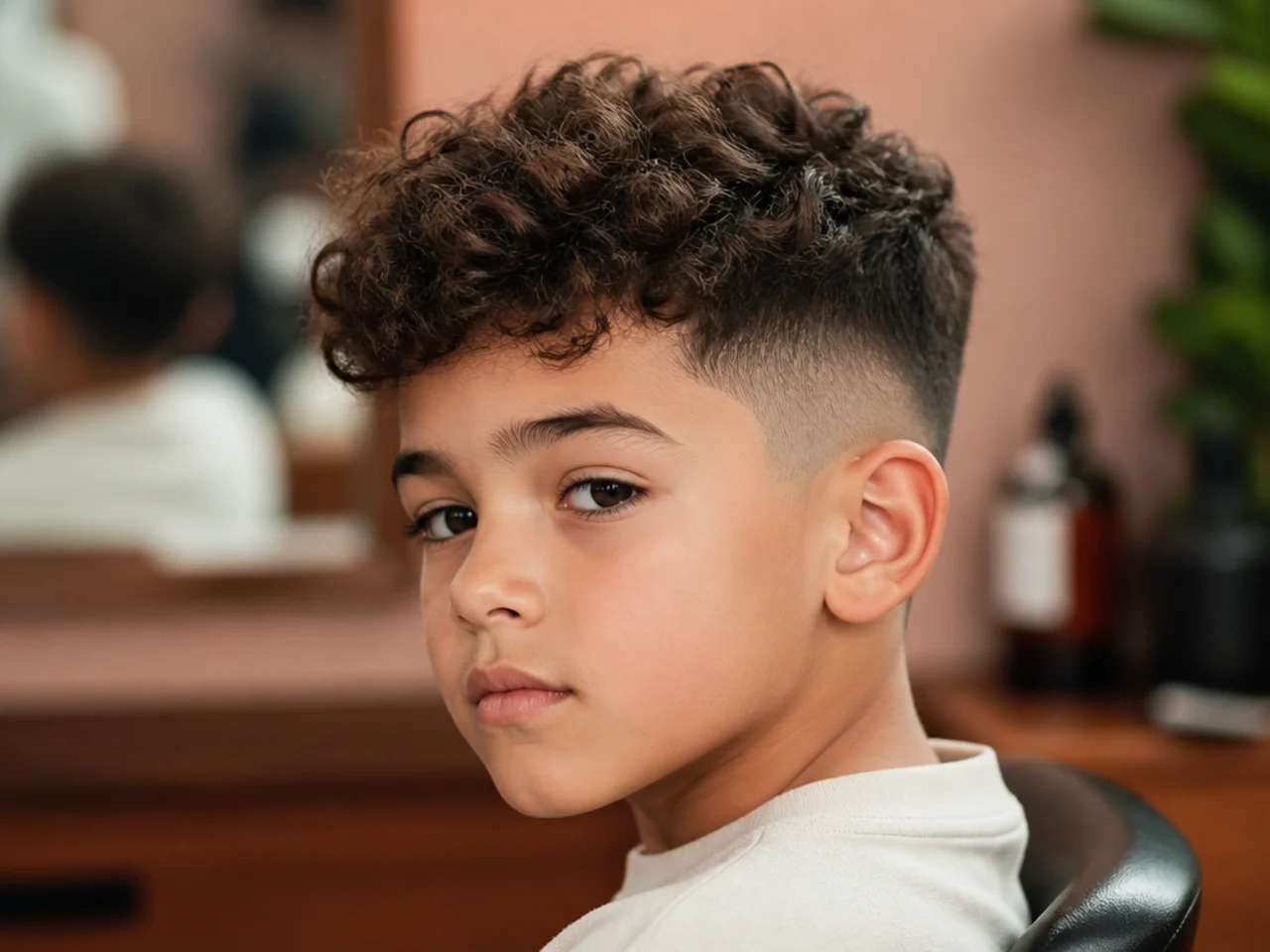
4. High Fade on a Bigger Boy
Starting at or above the parietal ridge strips the sides back almost entirely. It suits an older child with a fuller head shape, and it tends to overwhelm a younger one whose head is still large relative to his body — at that age a toddler fade kept low does the same job without the severity.
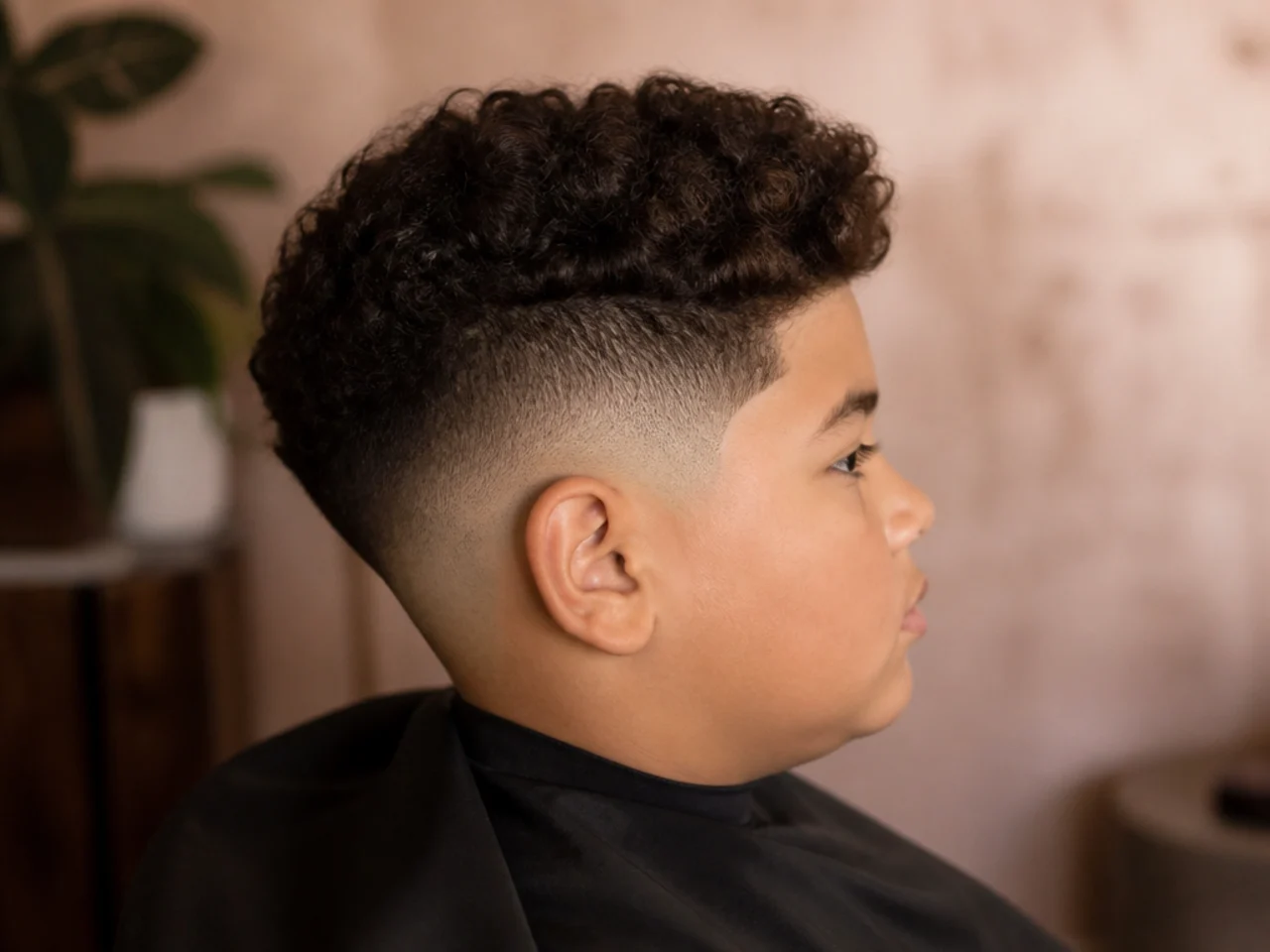
5. Burst Fade Around the Ear
The gradient radiates outward from behind the ear instead of running level around the head, in the same way a burst fade on curly hair works on an adult. There is no straight line anywhere in it, which is exactly why it grows out without a visible edge.
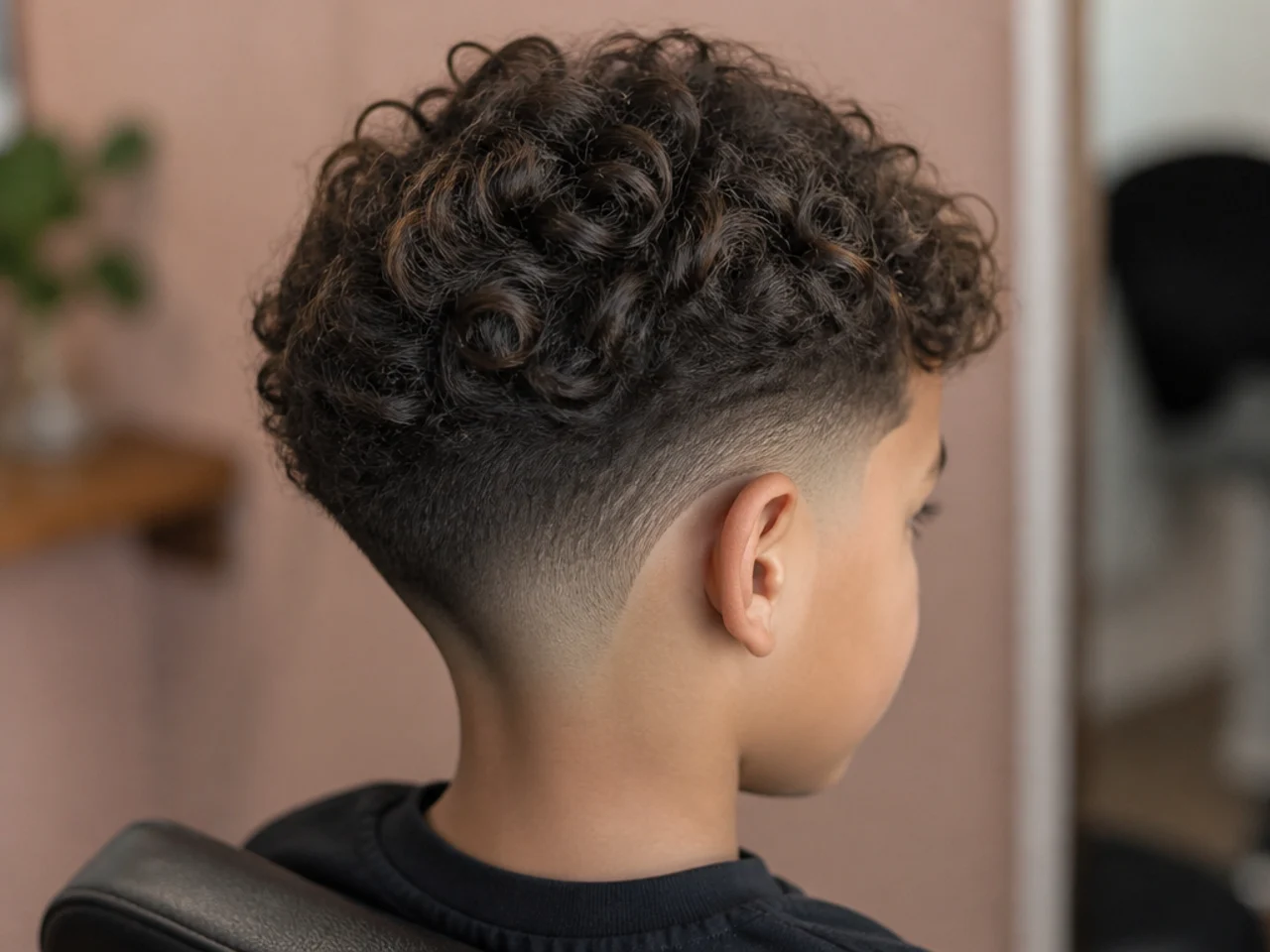
6. Drop Fade Following the Head Shape
The fade line curves down behind the ear rather than staying horizontal. It follows the skull instead of cutting across it, which flatters a small head far more than a level line does.
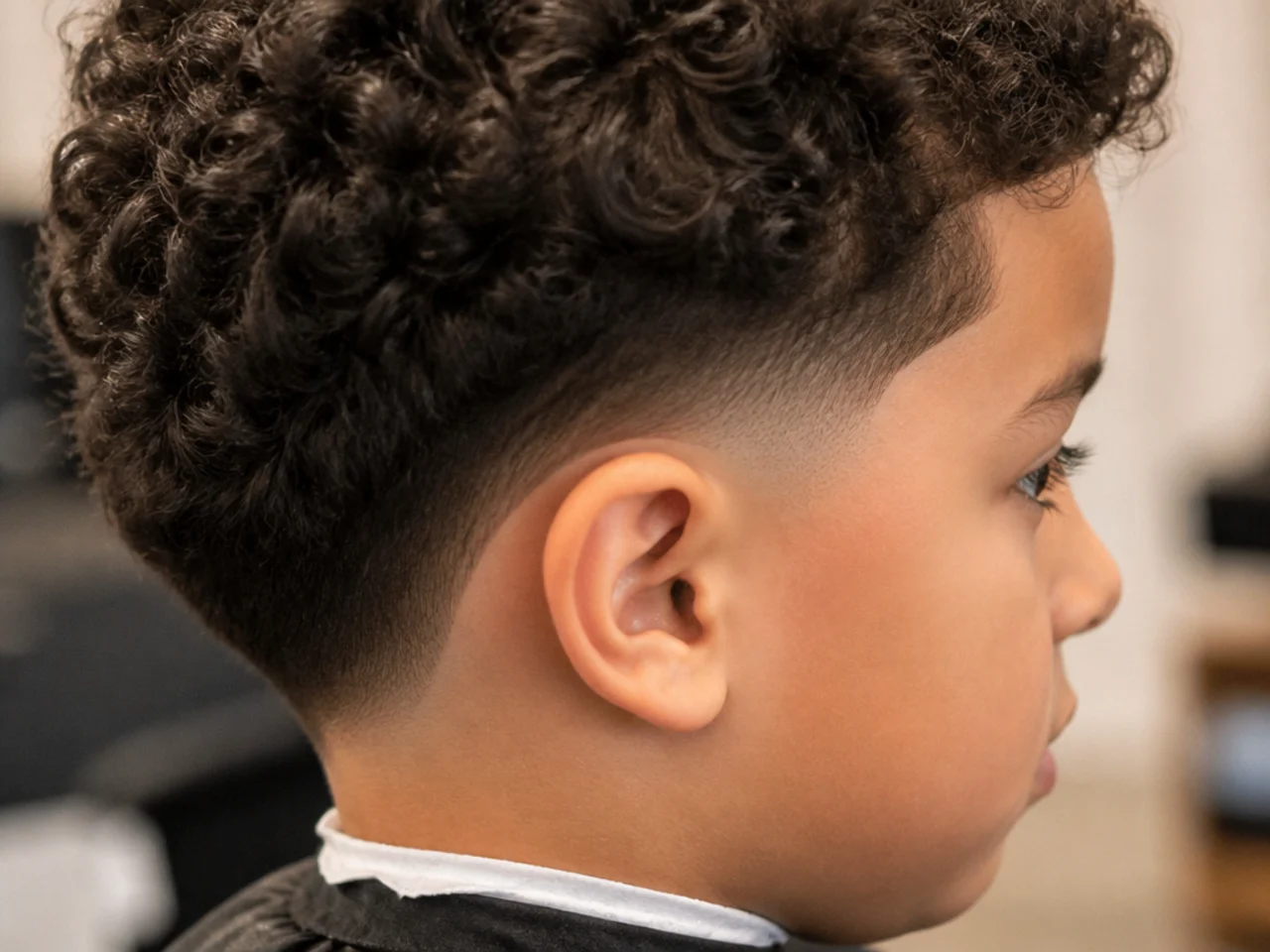
7. Skin Fade, Eyes Open
Bare scalp at the bottom and full curl on top, which is the sharpest contrast available. Two weeks is the honest window, and anyone promising otherwise is describing a different haircut.
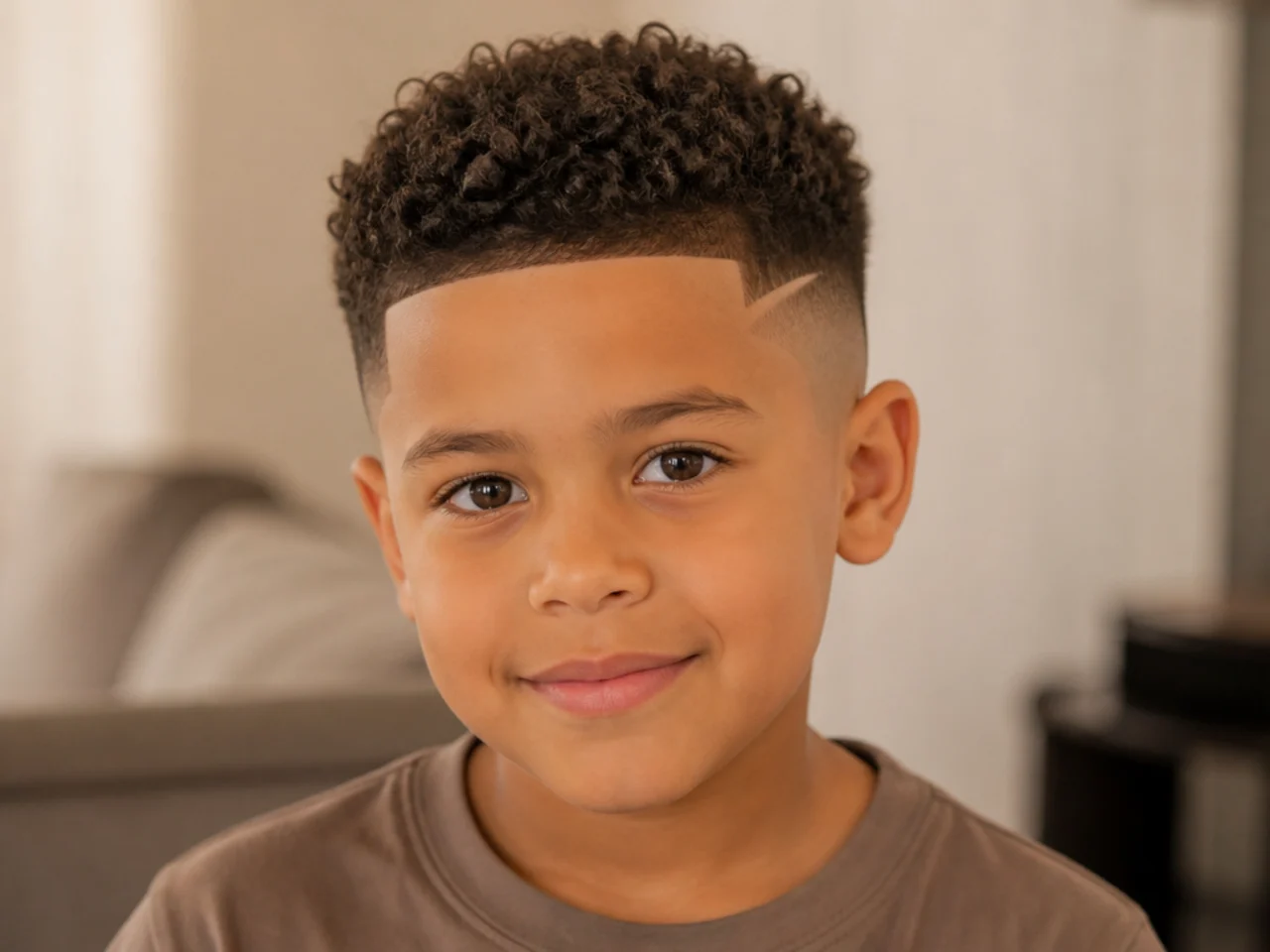
8. The #2 to #4 Fade
A short travel from 6mm up to 13mm with no dramatic jump. It is the version that looks almost identical in week one and week four, which is the entire argument for it.
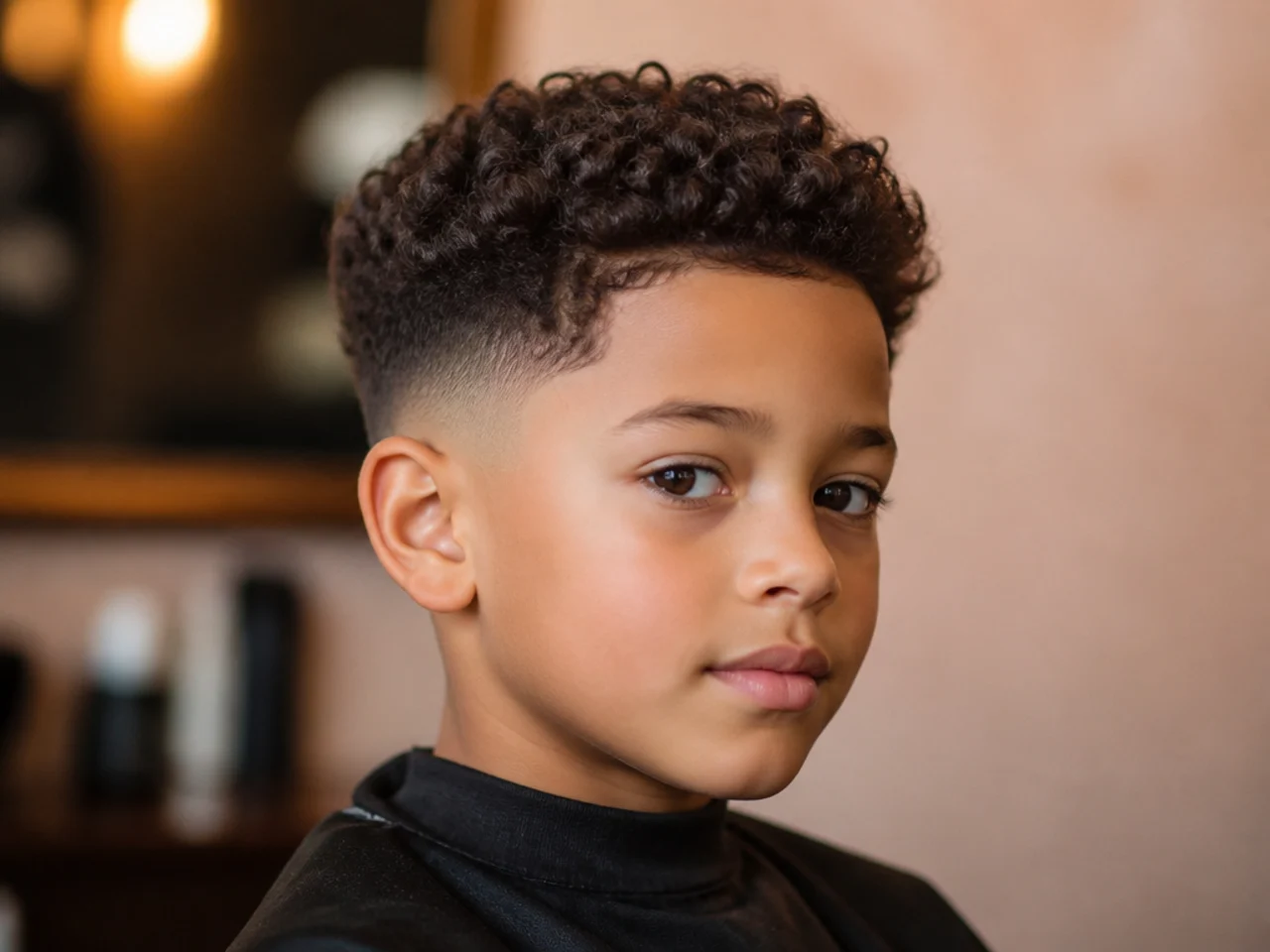
9. Fade With a Light Hard Part
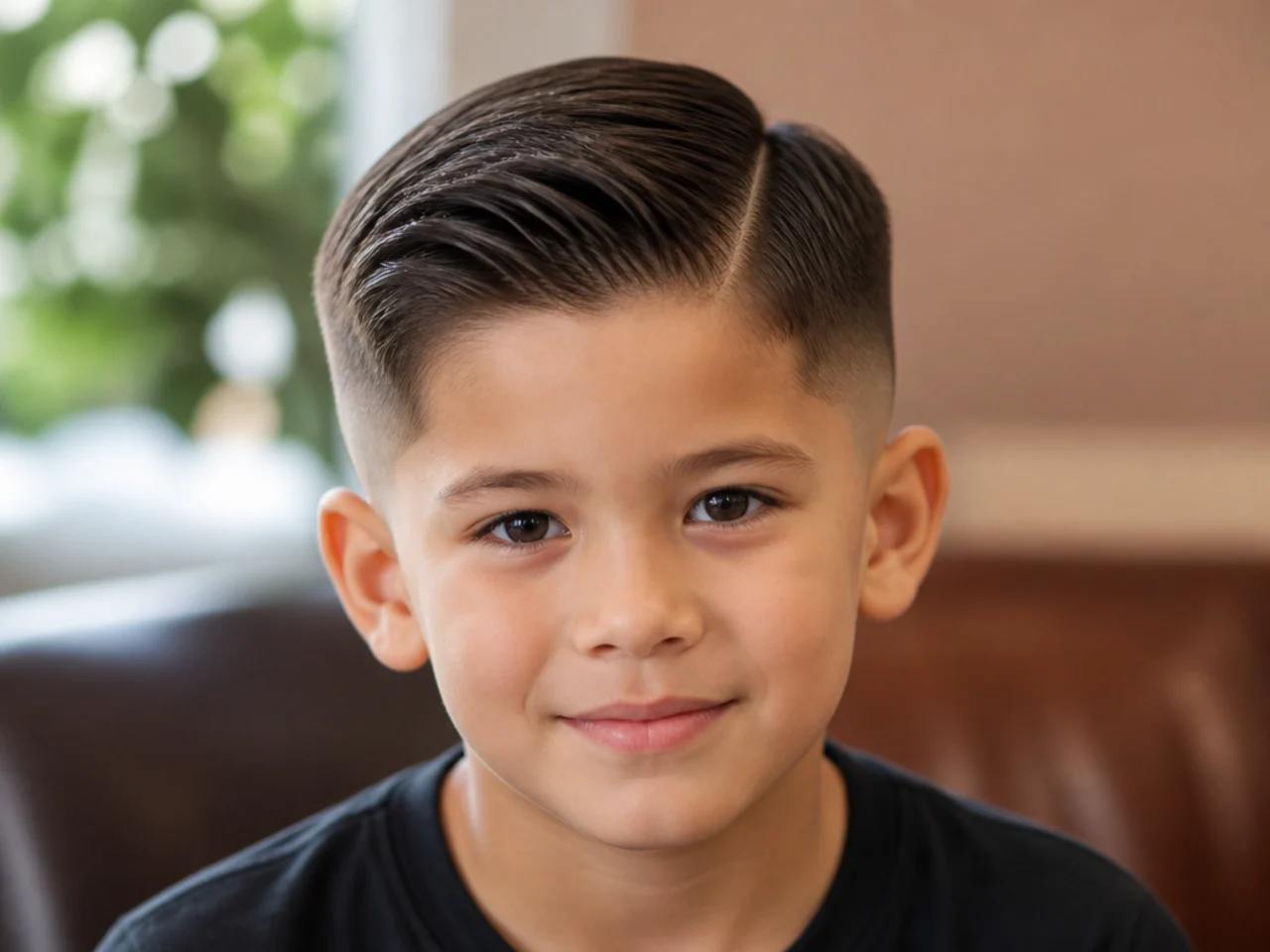
A single etched line above the fade, kept shallow. On a child it is worth keeping short rather than running the full length of the head, because a long hard part takes six weeks to disappear.
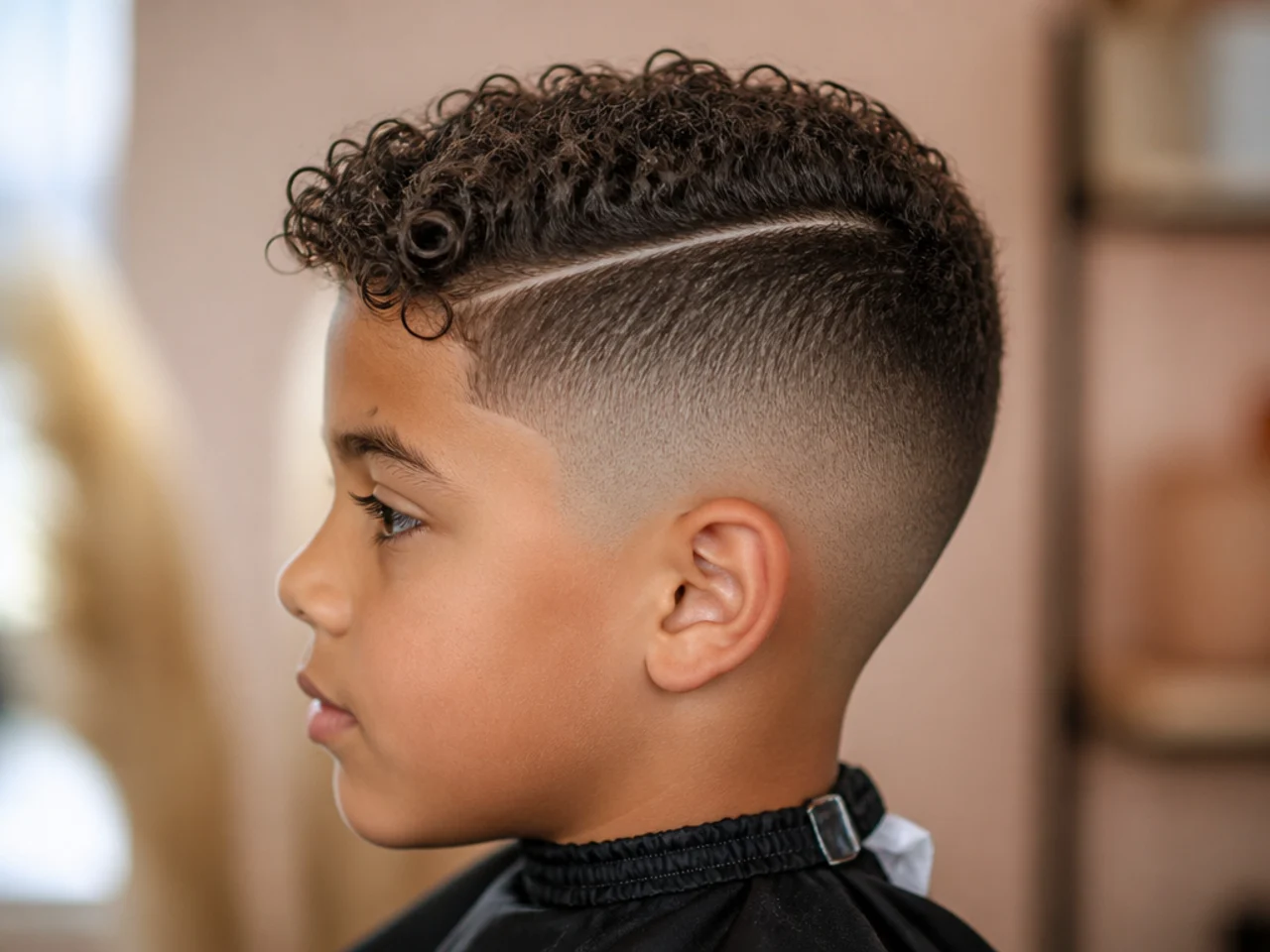
10. Fade With the Fringe Left Forward
Sides faded, front left long enough to fall over the forehead. The forward weight is what keeps a faded cut from looking severe on a young face.
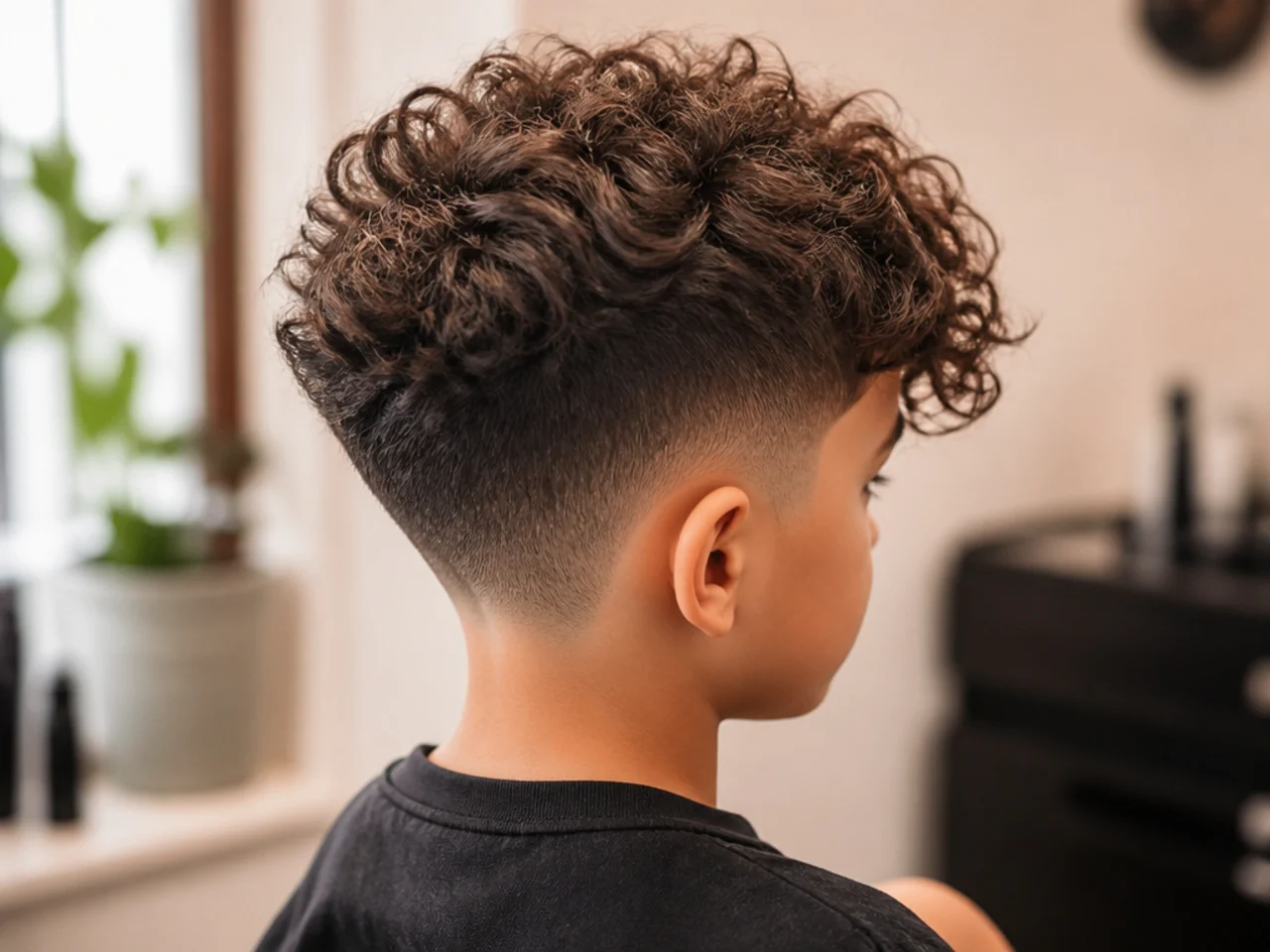
11. Temple Fade Only
Just the two corners at the temples taken down, with everything else left. It is the smallest amount of clipper work that still visibly cleans up a grown-out curly head.
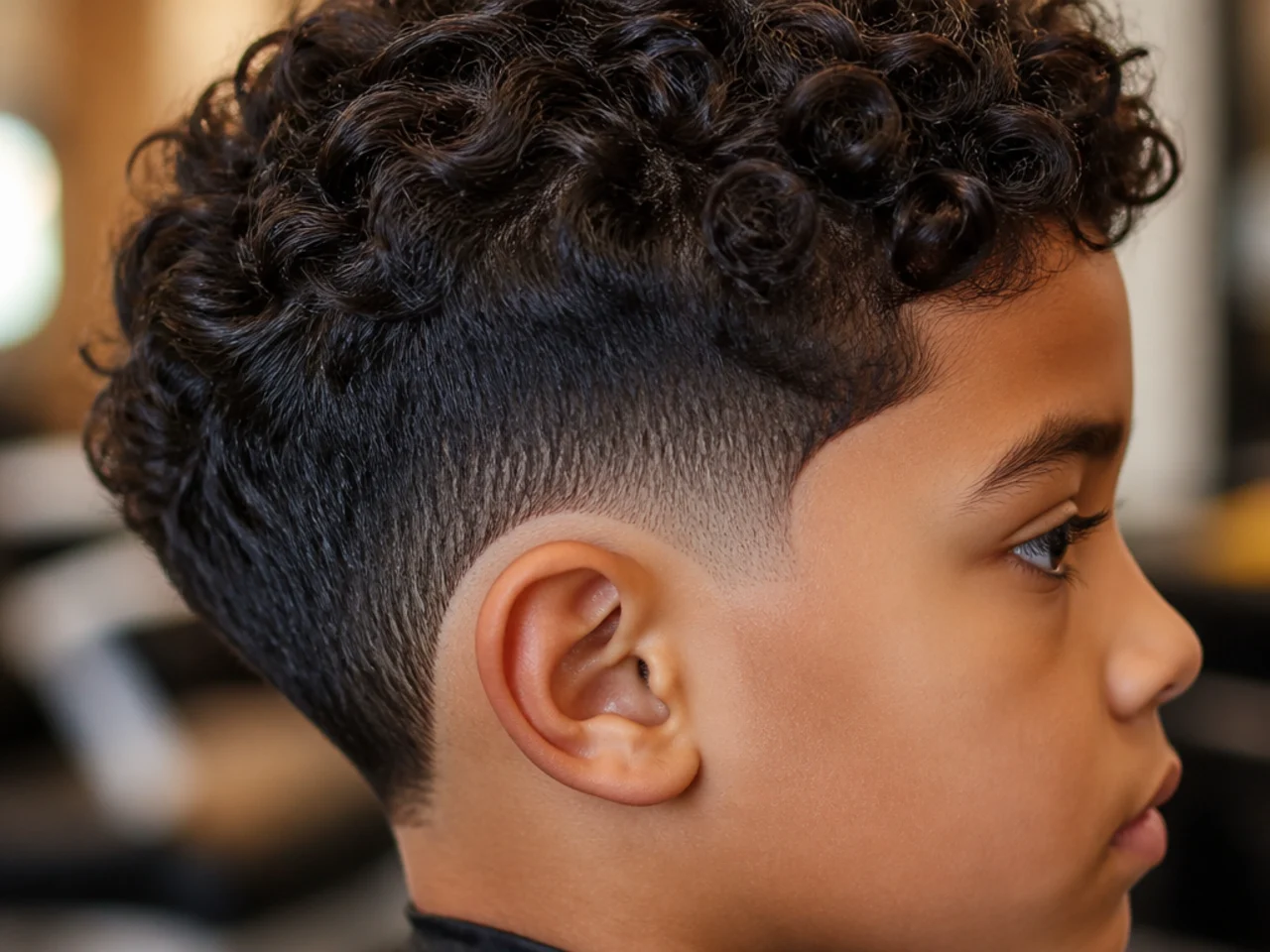
12. Fade Without a Line-Up
The hairline left where it naturally falls rather than squared off with a trimmer. A child's hairline is still soft and irregular, and a razored edge on it grows back as a scratchy line within days.
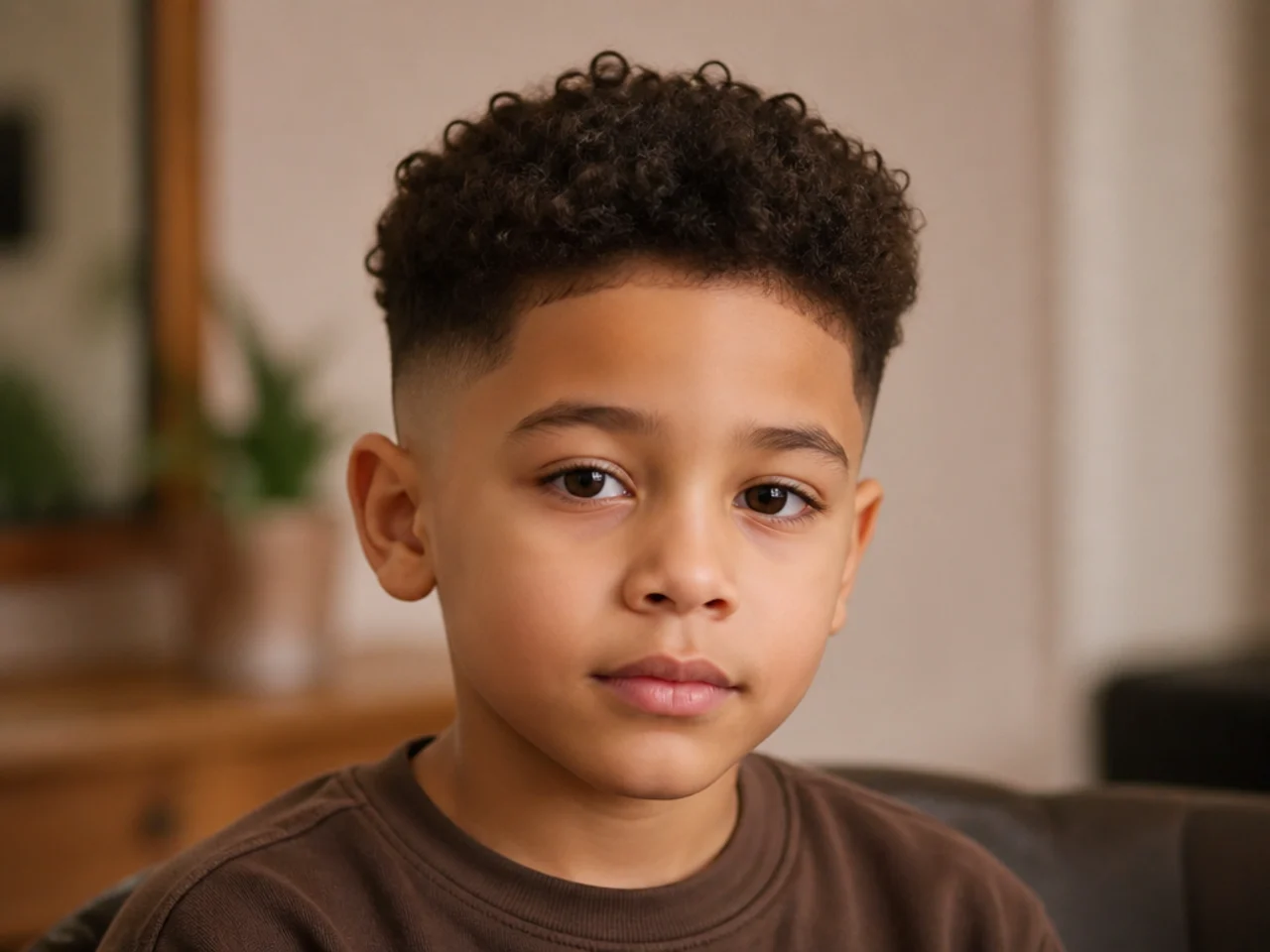
13. Photo-Day Fade With Length Kept On Top
Sides taken down properly, top barely touched. School photographs read better with visible hair on top, and the sides are what make the whole thing look intentional.
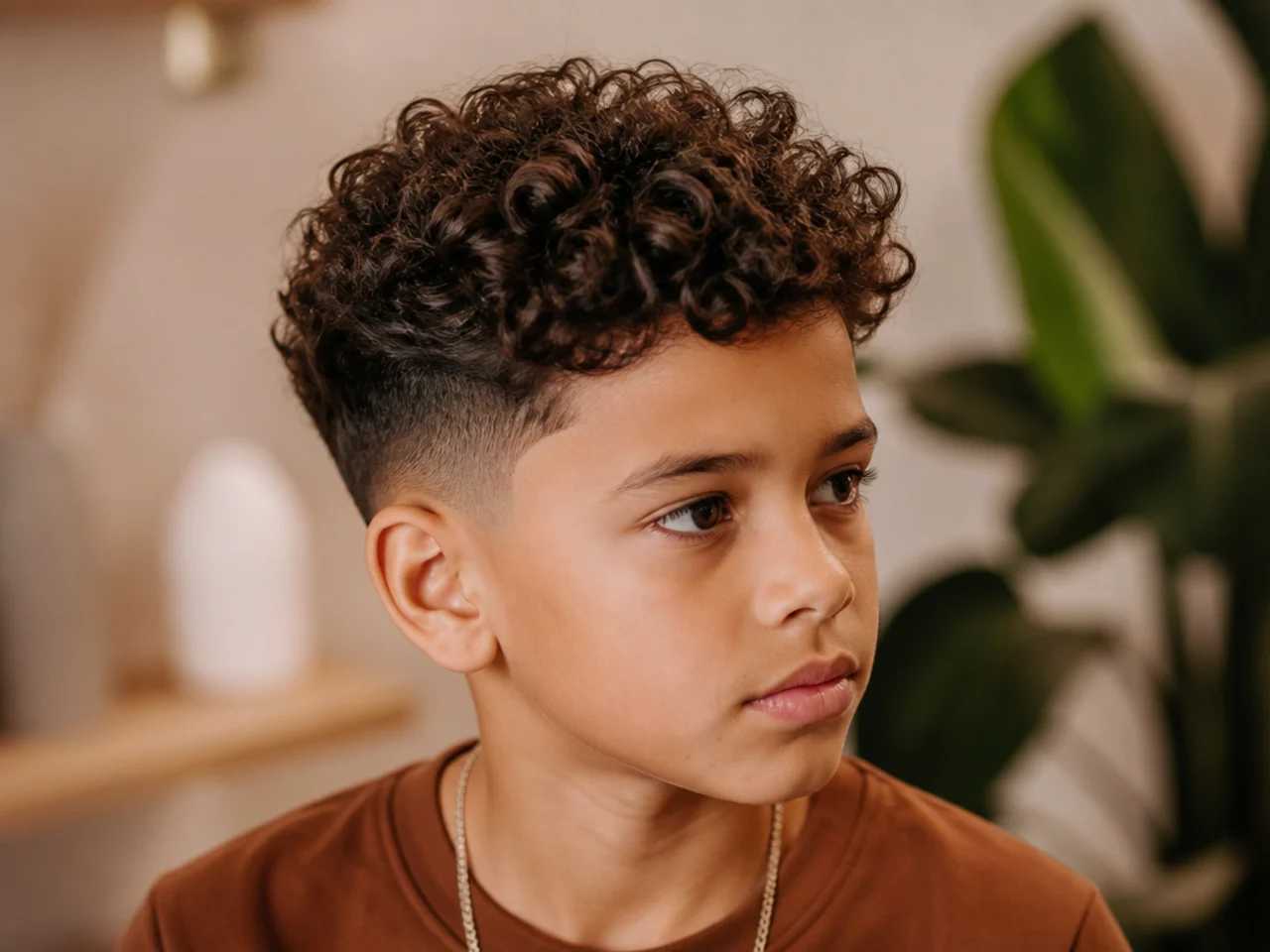
14. Low Fade With an Extra-Short Nape
Standard low fade, but the hair below the occipital bone taken shorter still. That patch is where car seats and pillows press curls into a mat, and shortening it removes the cause rather than the symptom.
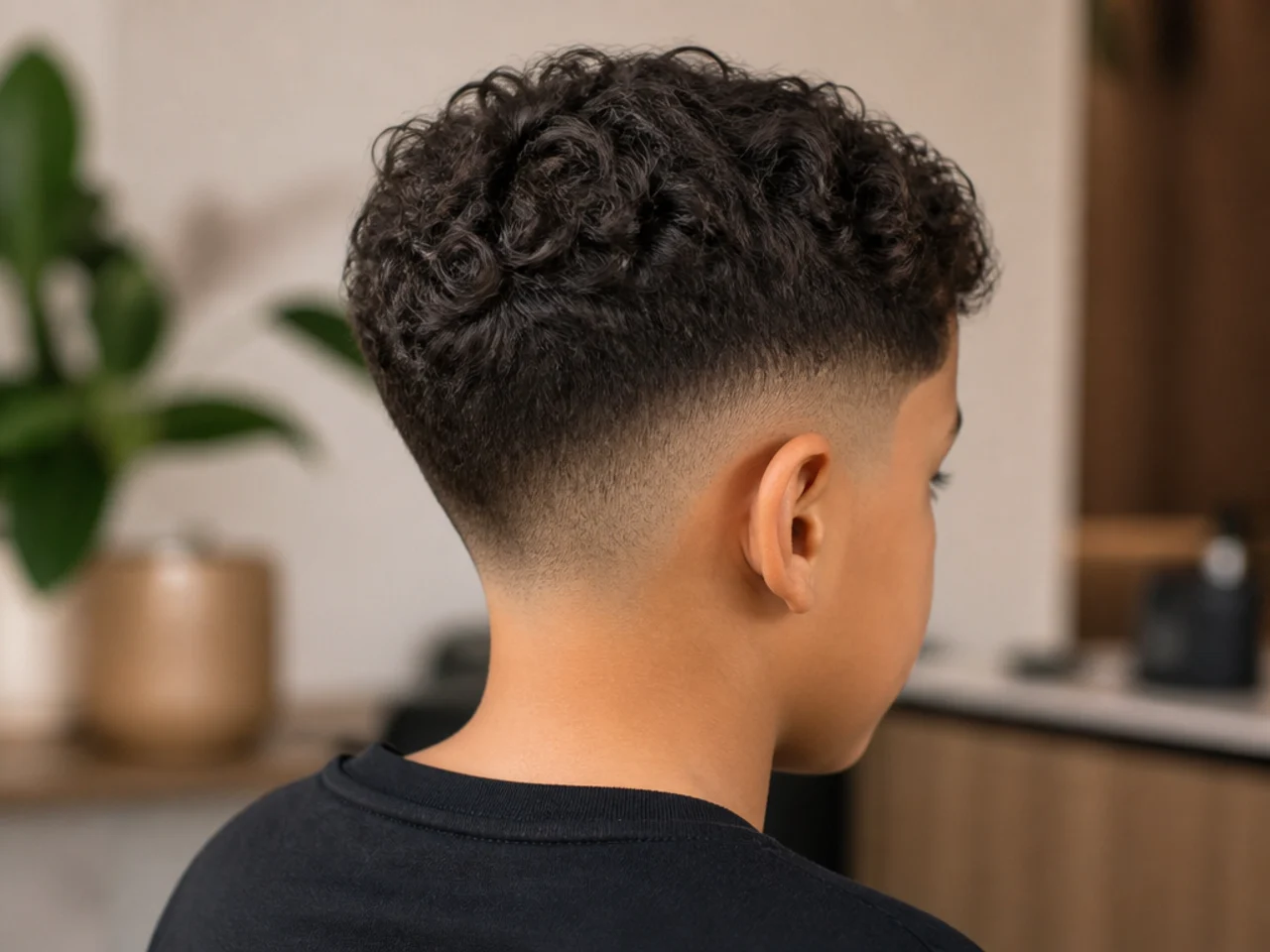
15. Fade on Tightly Coiled Hair
The contrast is at its strongest here because coils hold their volume against the skin. Expect the top to read much shorter than it measures, since tightly coiled hair can lose up to half its length to shrinkage.
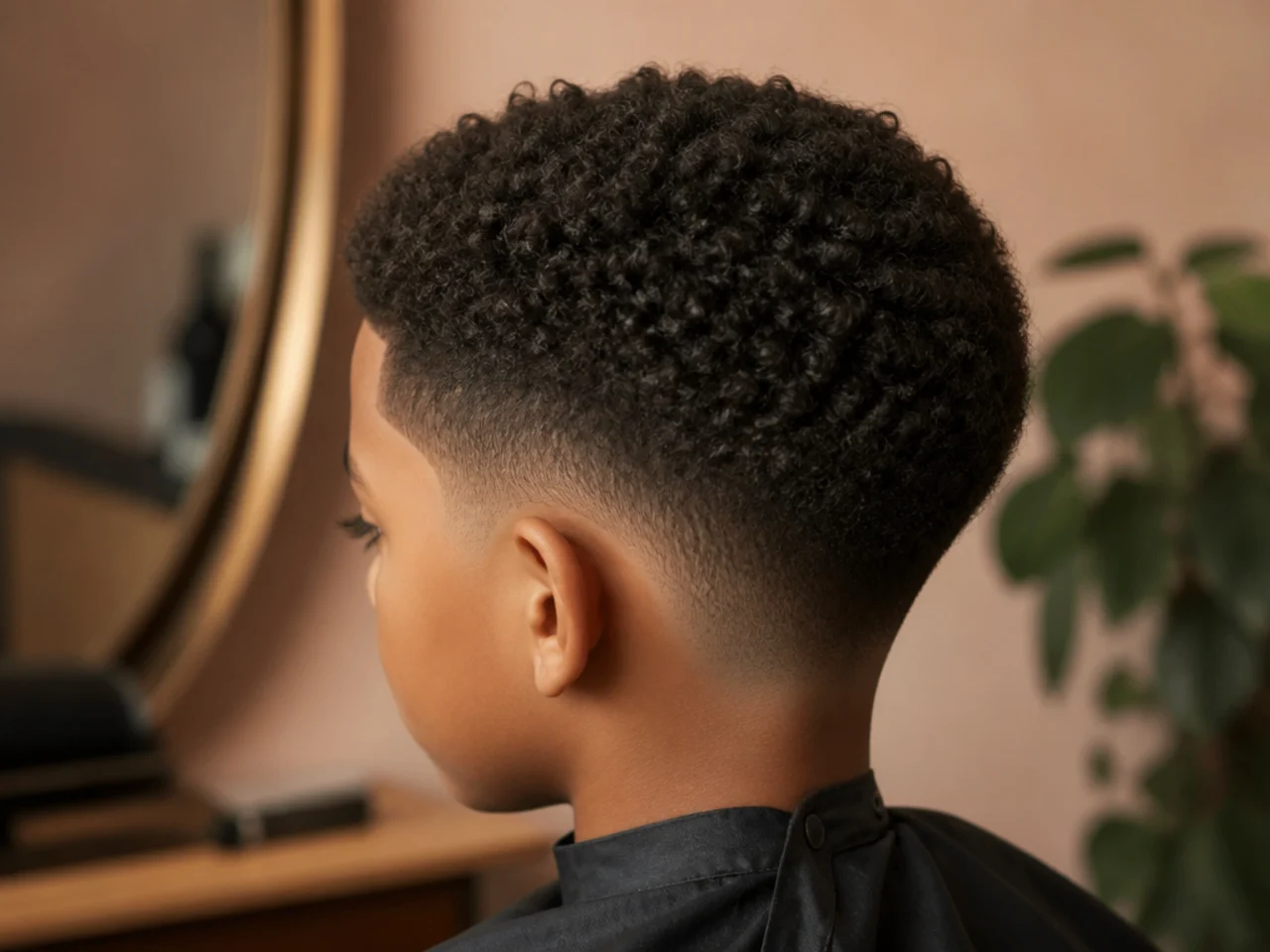
16. The Grow-Out-Friendly Fade
Every edge deliberately softened, no line anywhere on the head. Ask the barber to blur the top of the fade with a scissor, and the cut ages into a shape rather than into a mistake.
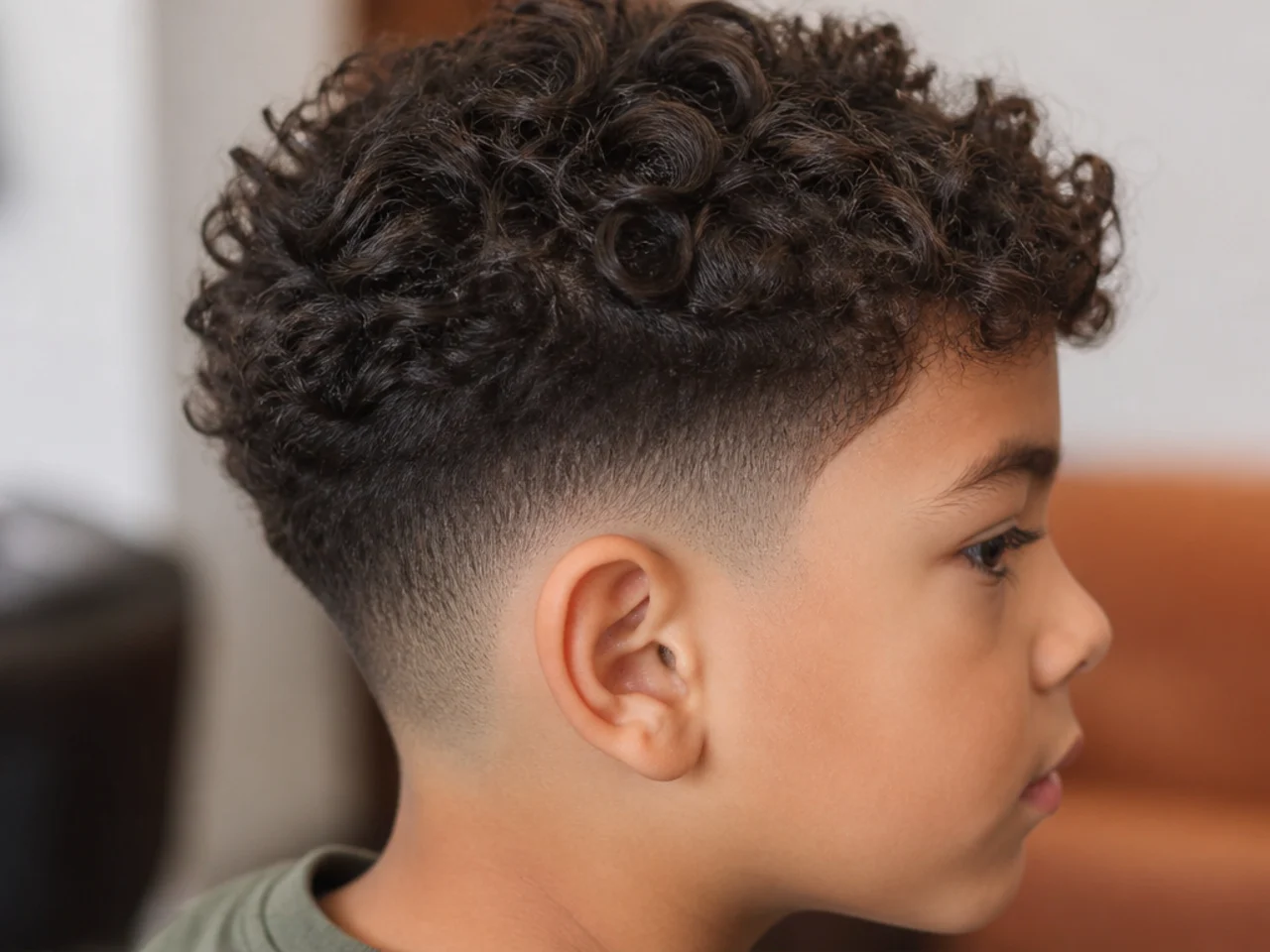
17. Faded Sides With a Curly Ridge
Sides down tight and a strip of curl left running front to back. The shape only works while the sides are genuinely short, so it belongs on the frequent-appointment end of this list.
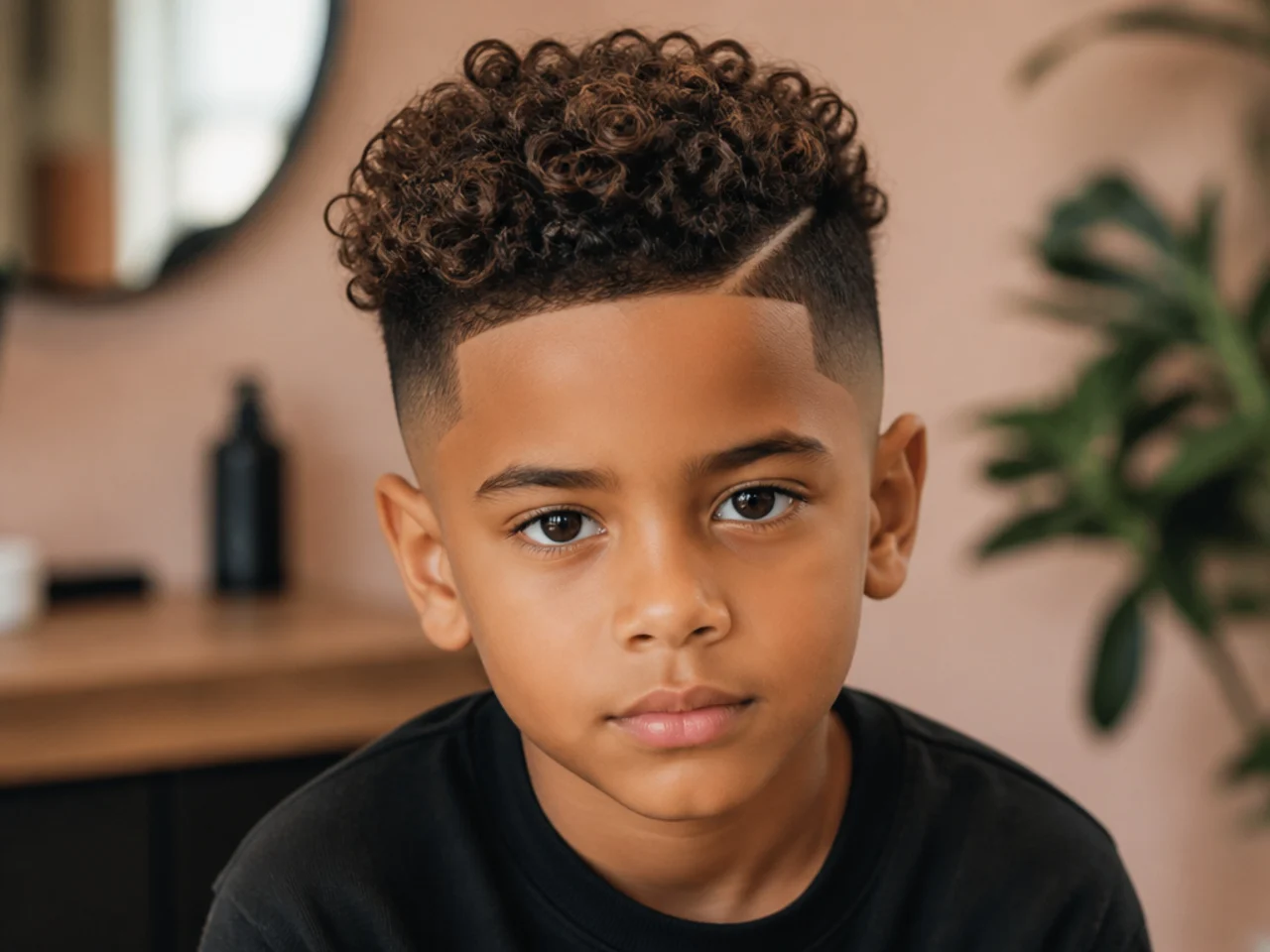
18. The Fade That Stops Below the Ear
All the gradient kept under the ear line, nothing above it. From the front it barely reads as a fade at all, which makes it the safest choice under a strict school grooming policy.
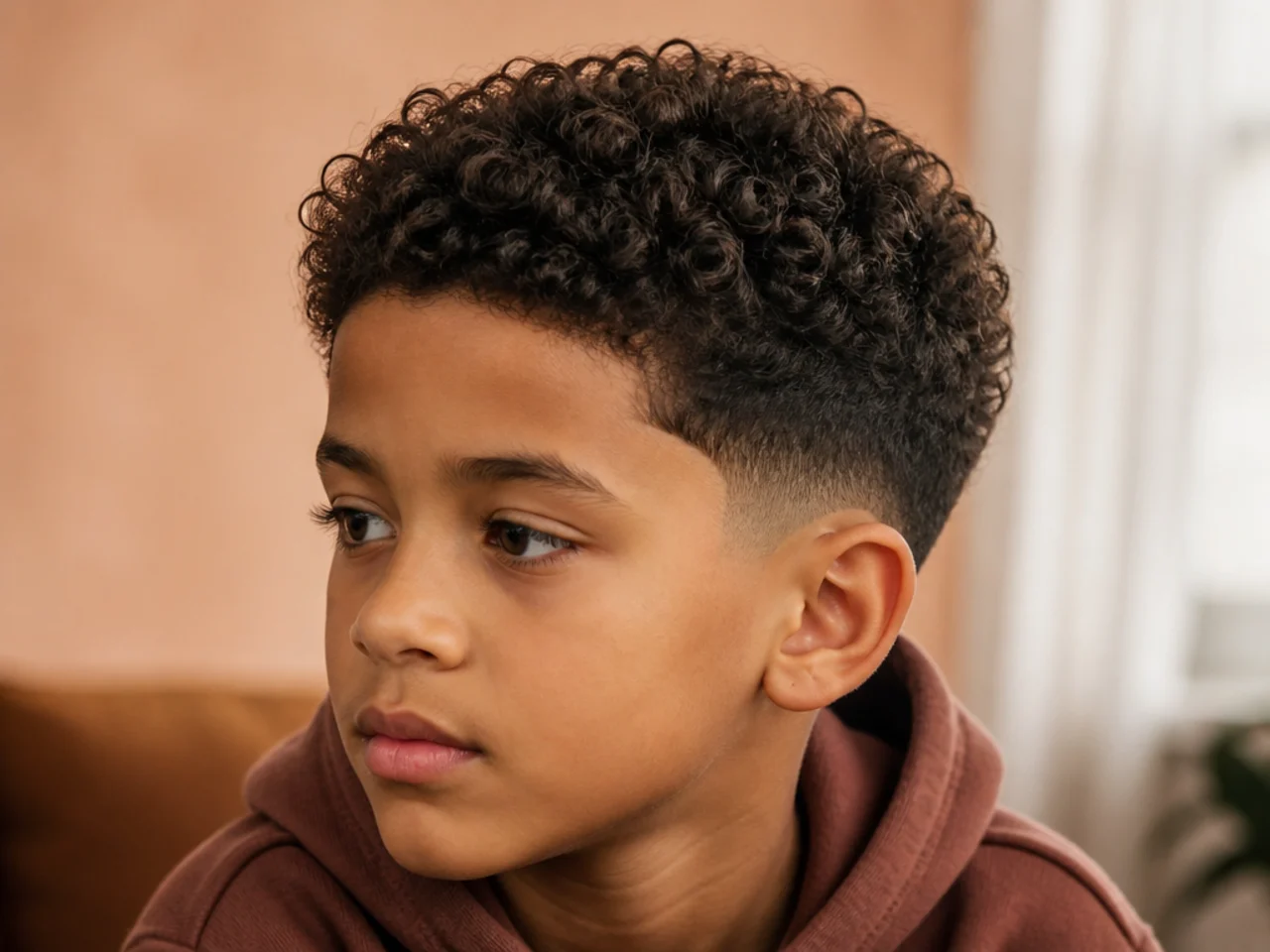
19. The Scissor-Blended Version
A fade shape cut entirely with scissors over a comb, so no machine ever comes near his head. It takes the barber longer, but a child who panics at clipper noise will sit through it, and that is worth more than a perfect gradient.
20. What Week Three Looks Like
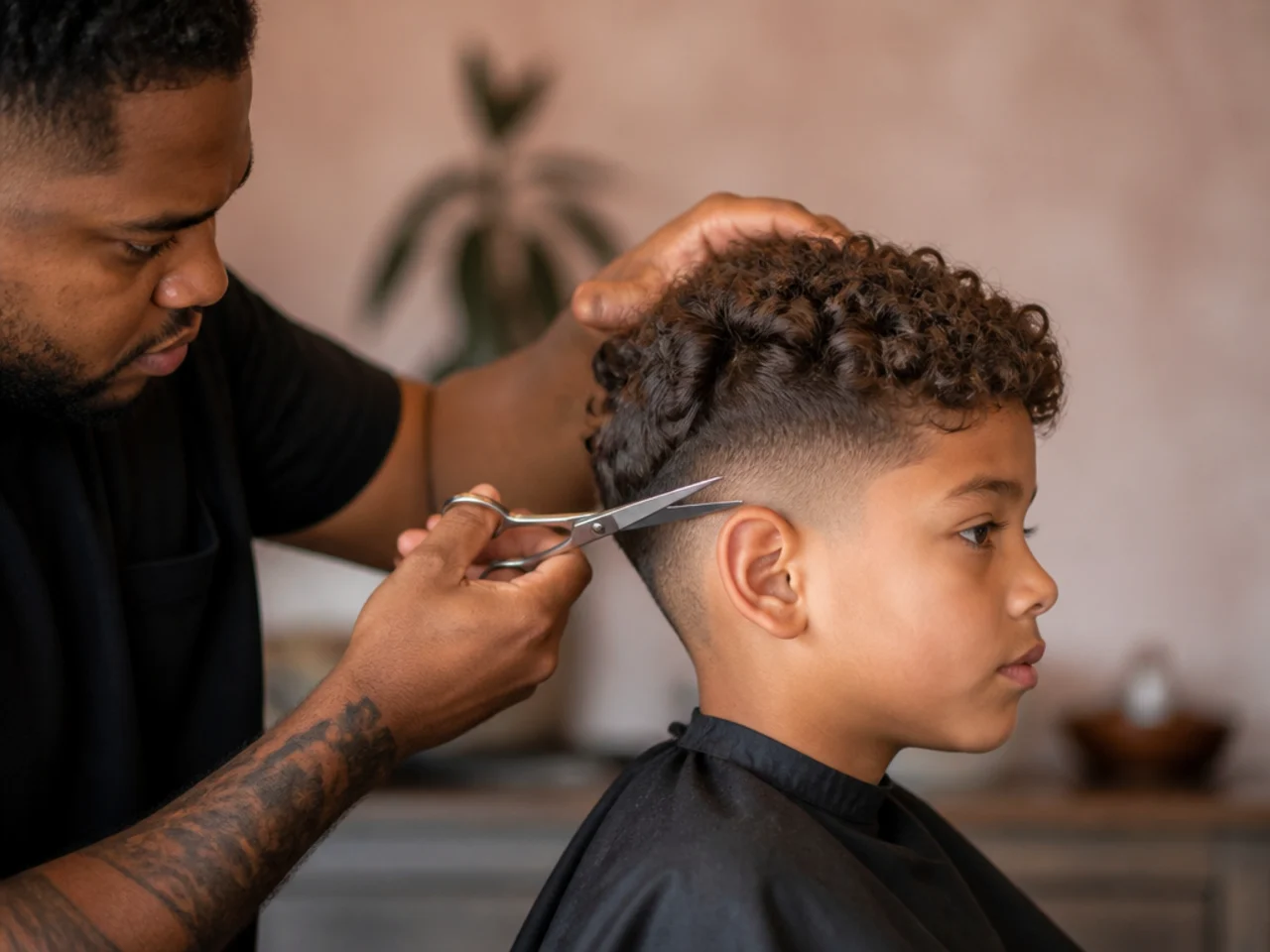
The same cut with three weeks of growth in it. This is the version your son wears most of the time, and it is worth choosing a fade you like in this state rather than only on the day it is cut.
Styling and Upkeep
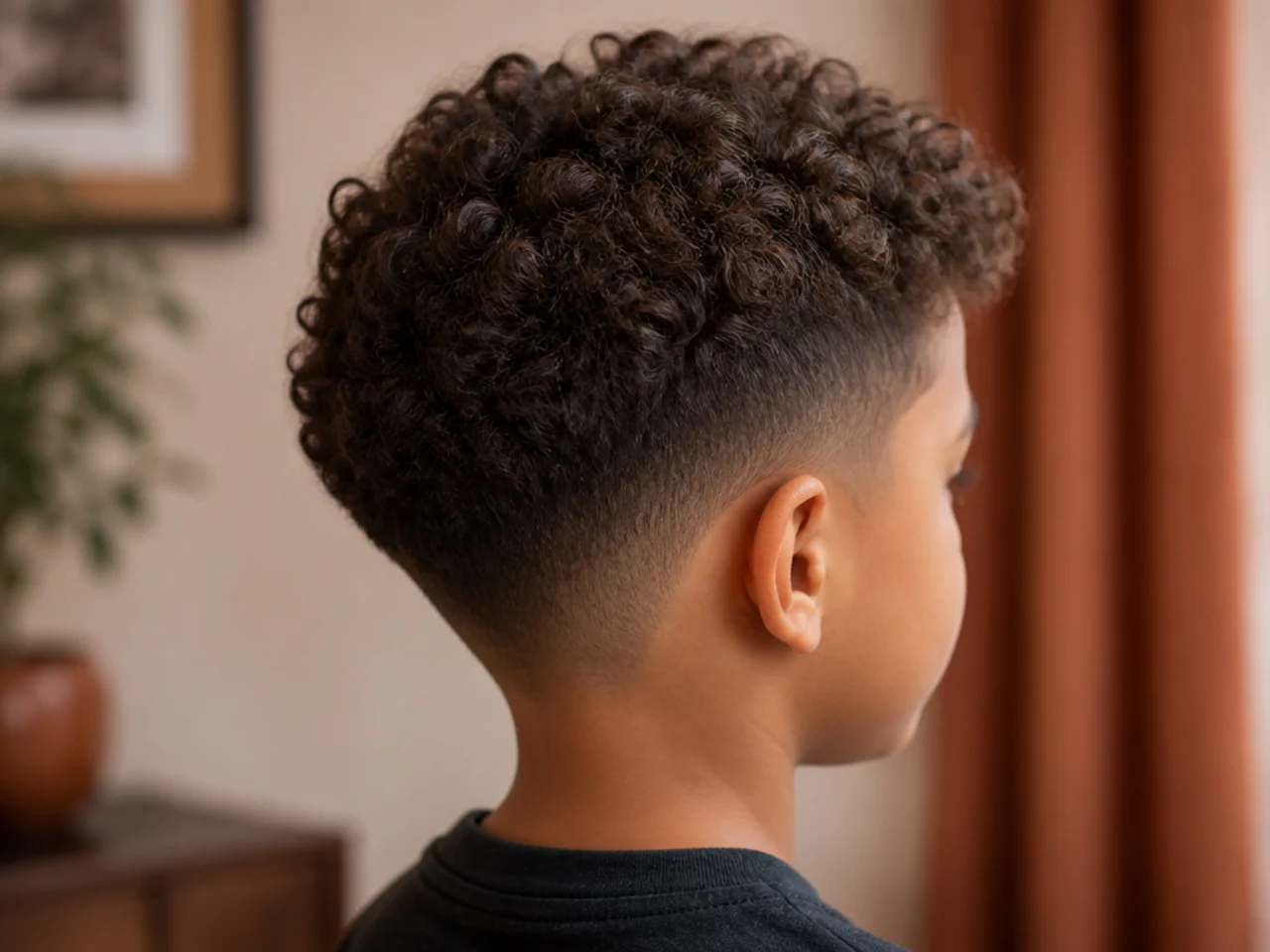
Book the next appointment before you leave. The fade decides the date, and a fade with no date attached becomes a shapeless haircut by default.
Do nothing to the faded sections. They are too short to hold product and it only collects at the scalp.
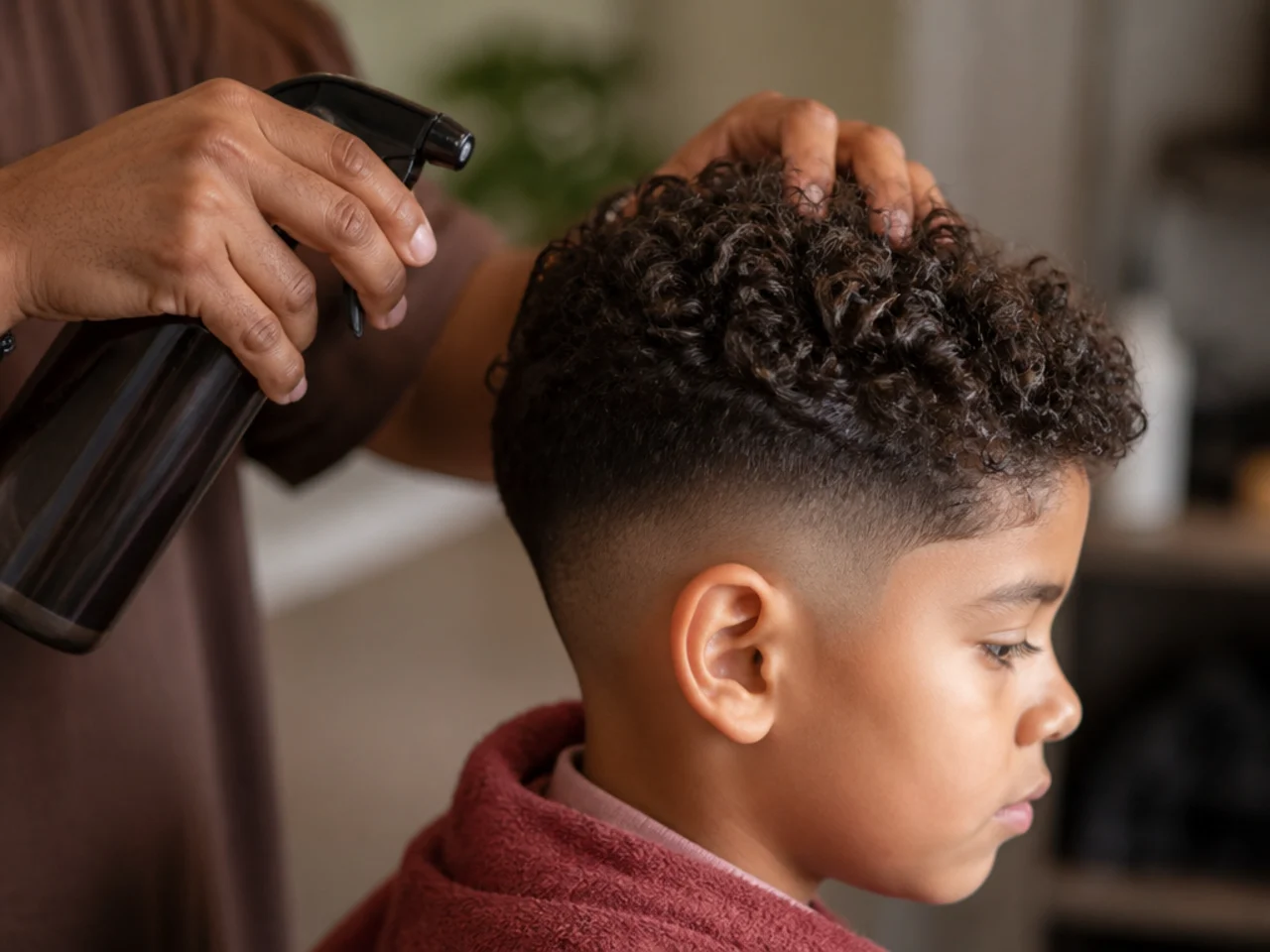
Damp the top and separate it with fingers. Ten seconds of water is enough to reset curl clumps that slept flat.
Watch the top edge of the fade, not the bottom. That upper line is what blurs first and it is the honest signal that the cut is due.
Keep the nape trimmed between visits. It is the one section you can safely tidy at home with a guard, and it is where matting begins.
Mistakes to Avoid
Asking for a skin fade on a three-week schedule. The two do not fit together and the second and third weeks look neglected.
Letting the barber fade the top wet. Curls draw up by around a third as they dry, so the blend point lands higher than intended.
Adding a hard line-up to a young hairline. A child's hairline is soft and uneven, and a razored edge makes that irregularity obvious as it returns.
Choosing the height from a photo of an adult. The same fade height removes proportionally more hair from a smaller head.
Brushing the curly top to neaten it. Brushing dry curls pulls apart the clumps that create definition and leaves frizz where the shape was.
FAQ
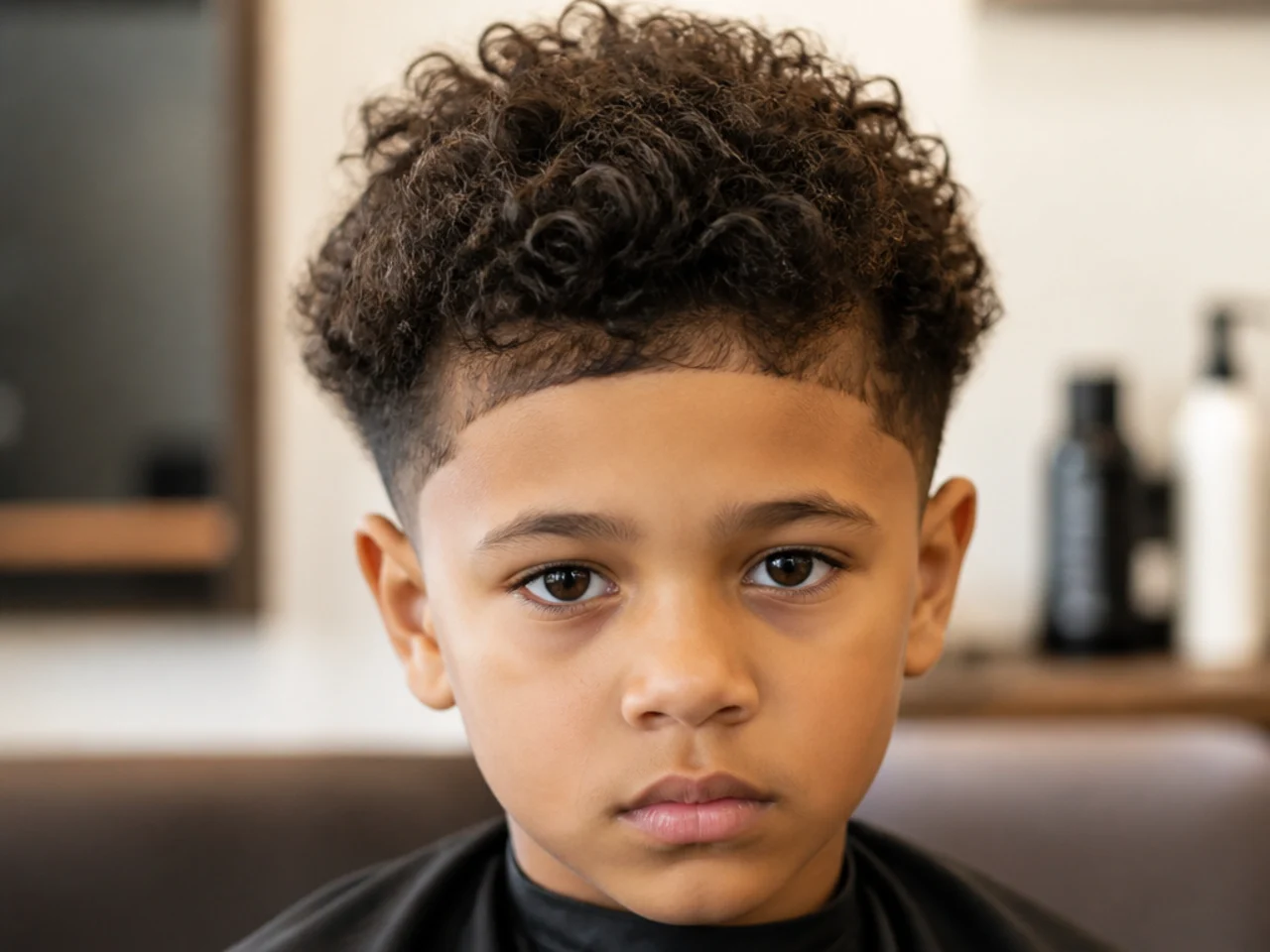
How often does it need redoing? One to two weeks for skin, three to four if the fade bottoms out at a guard.
Which guard should the barber start with? A #1 at 3mm at the shortest point keeps a fade sharp without going bare.
Does it suit tight coils? Very well, though expect up to half the length to disappear to shrinkage on top.
Final Thoughts
Pick the fade you are prepared to maintain rather than the one that photographs best on the day. Every version on this page is a good haircut in week one, and only some of them are still a good haircut in week four.
For softer options with no clipper involved see curly haircuts for boys, and for the youngest end of this age range read the toddler burst fade. More in Fade Haircuts.