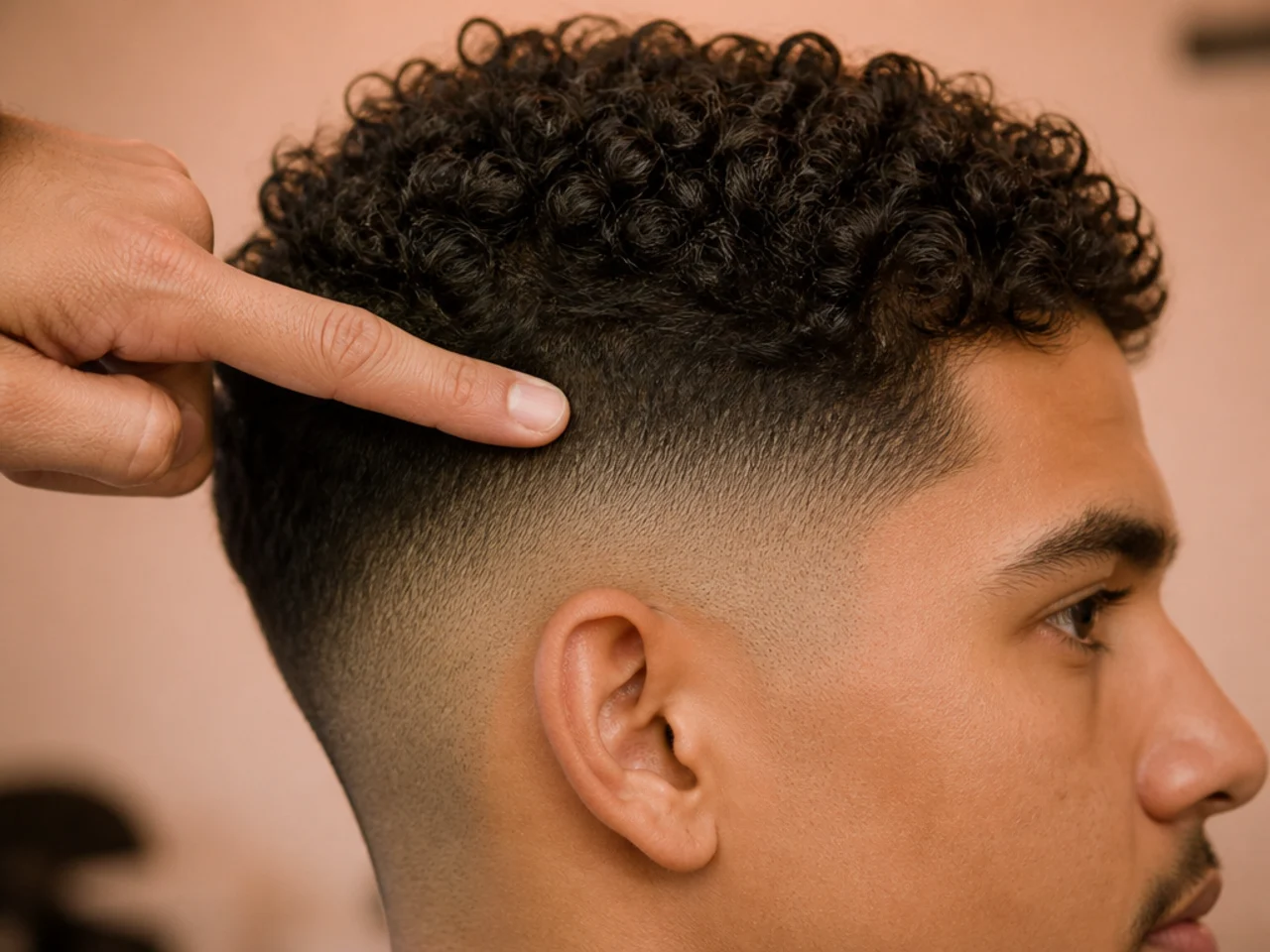
20 Steps to Ask for a High Fade Haircut
A high fade is the least reversible cut on the menu, because the sides take around six weeks to grow back to mid-fade length. Most of these twenty steps happen before anyone switches on a clipper.
In this article · 27
- What You Are Committing To
- How to Choose Yours
- The 20 Steps to Ask for a High Fade
- 1. Find Your Parietal Ridge
- 2. Look at Your Face in a Mirror First
- 3. Check Your Crown in Bright Light
- 4. Feel the Skin Above Your Ears
- 5. Bring One Photo Taken From the Side
- 6. Say High Fade, Then Say the Landmark
- 7. Choose Fade or Taper Deliberately
- 8. Name the Top of the Blend
- 9. Say How Long the Top Stays
- 10. Ask for the Release to Be Gradual
- 11. Choose Straight or Dropped
- 12. Decide the Neckline Shape
- 13. Discuss the Beard Before the Sides Are Cut
- 14. Point Out Anything You Want Left Alone
- 15. Ask for the Height to Be Checked Both Sides
- 16. Speak Up During the First Pass
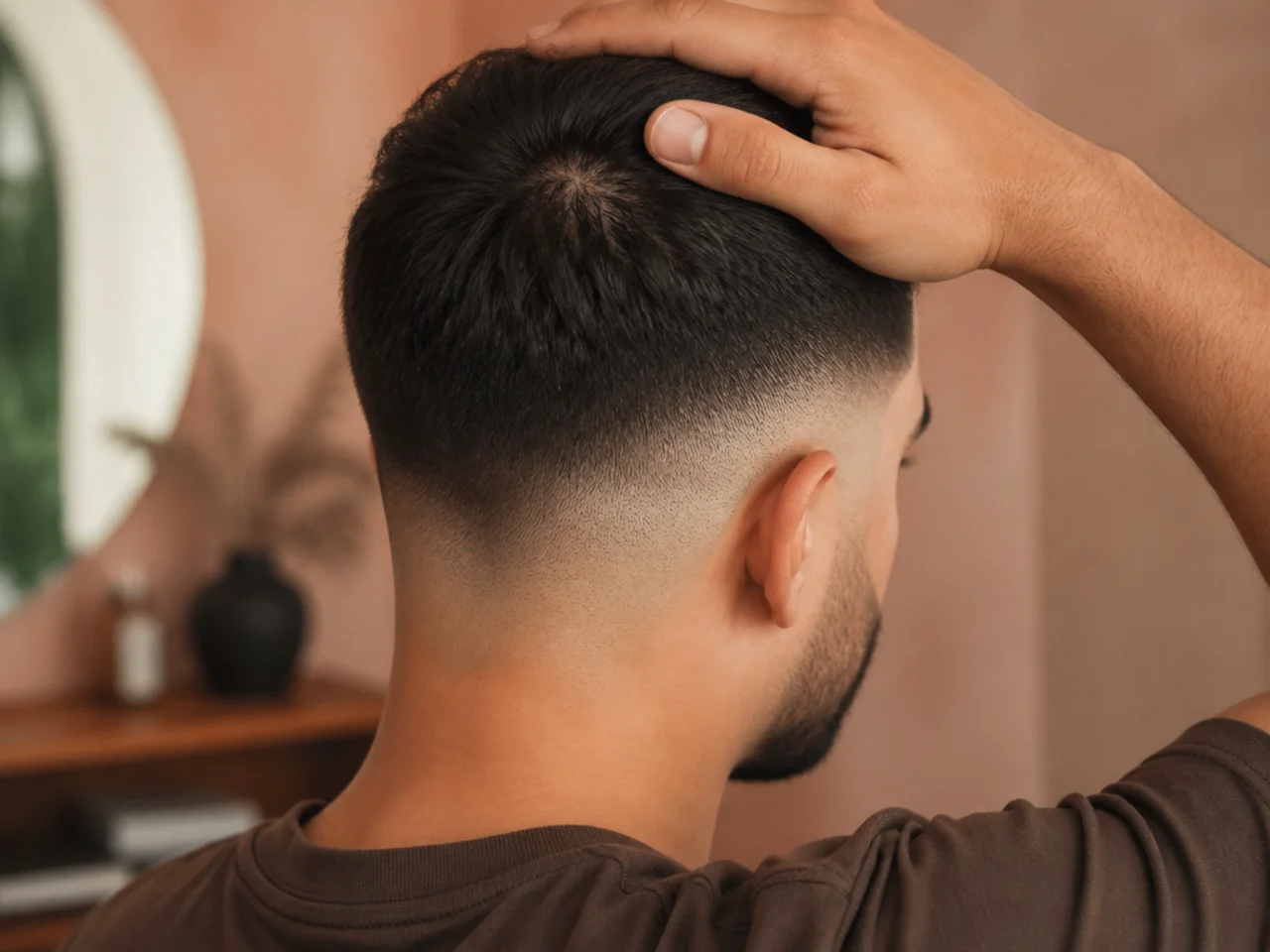
- 17. Check the Back With a Hand Mirror
- 18. Ask About Sun Protection Before You Leave
- 19. Rebook Before You Pay
- 20. Write Down the Height and the Guards
- Styling and Upkeep
- Mistakes to Avoid
- FAQ
- Final Thoughts
A low fade grows out in a fortnight and nobody notices. A high fade does not.
The sides take around six weeks to reach mid-fade length. Hair grows roughly a centimetre a month, and a high fade starts at the parietal ridge.
So this is the fade where the consultation matters most. Most of the twenty steps below happen before anyone picks up a clipper, because after the first pass there is nothing to discuss.
What You Are Committing To
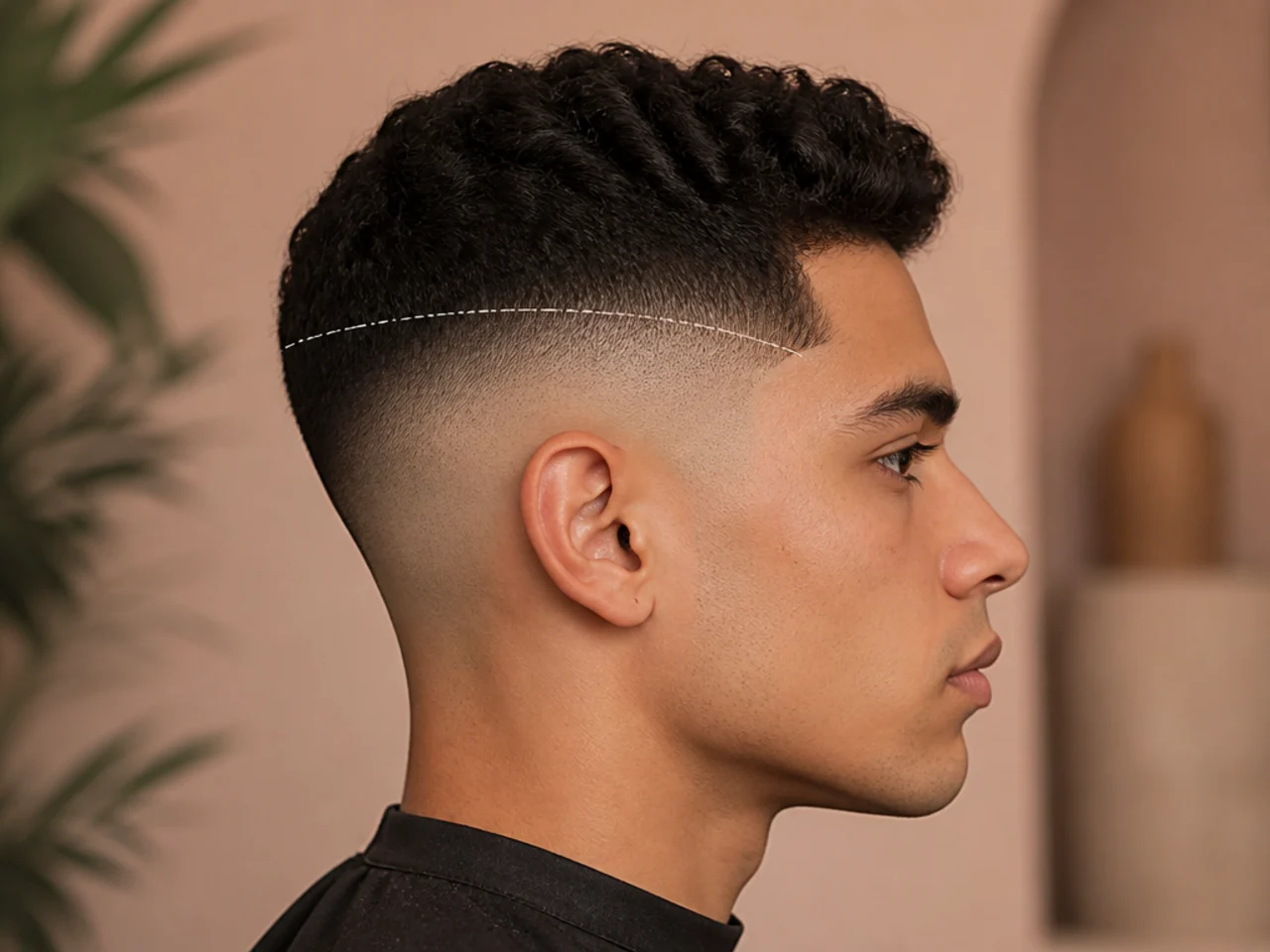
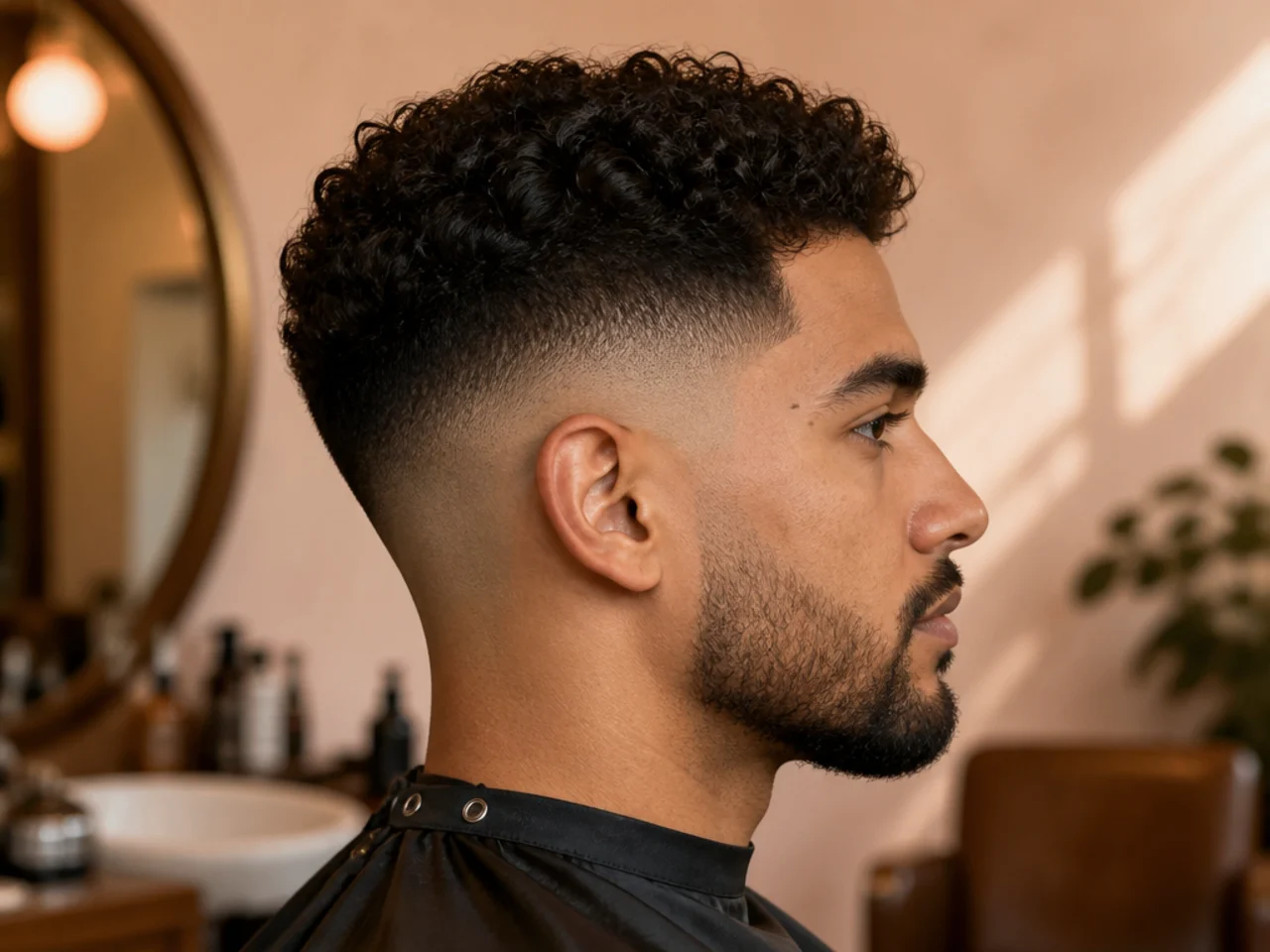
The parietal ridge, where your skull reaches its full width, is the landmark this entire cut is set against. A high fade starts at or above it.
It removes the head's width at its widest point. Which makes the face read longer and narrower.
It exposes the most scalp of any cut. Density, scars and scalp tone all become visible.
And it takes about six weeks to undo. Which is why the checks come before the cut.
How to Choose Yours
Check your face length first. A high fade lengthens, so a long face is the wrong candidate.
Check your crown density in bright light. All the remaining hair will be sitting up there alone.
Decide skin or taper. Skin blurs in one to two weeks and a #1 at 3mm holds three to four.
Consider a mid fade as a trial. It gets you most of the sharpness and it grows out in half the time.
The 20 Steps to Ask for a High Fade
1. Find Your Parietal Ridge
Run a palm up the side of your head until it stops going outward. Knowing where your own widest point sits is what lets you check the barber's placement afterwards.
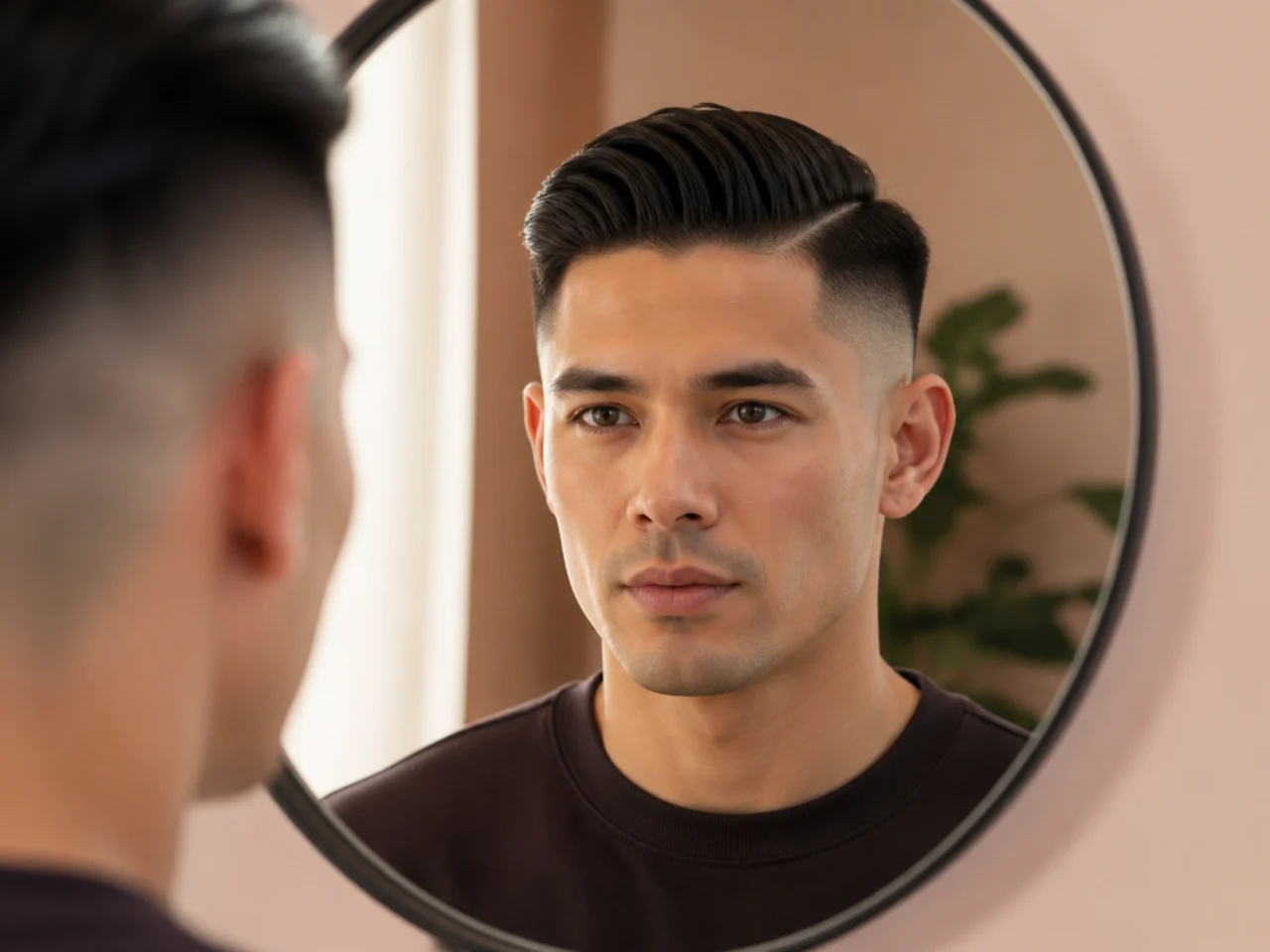
2. Look at Your Face in a Mirror First
A high fade lengthens the face. If yours is already long or narrow, this is the moment to reconsider rather than in three weeks.
3. Check Your Crown in Bright Light
Every hair you have left will be on top. Thinning that is invisible under side weight becomes obvious once the sides are gone, which is why most haircuts for thin hair keep some length low down.
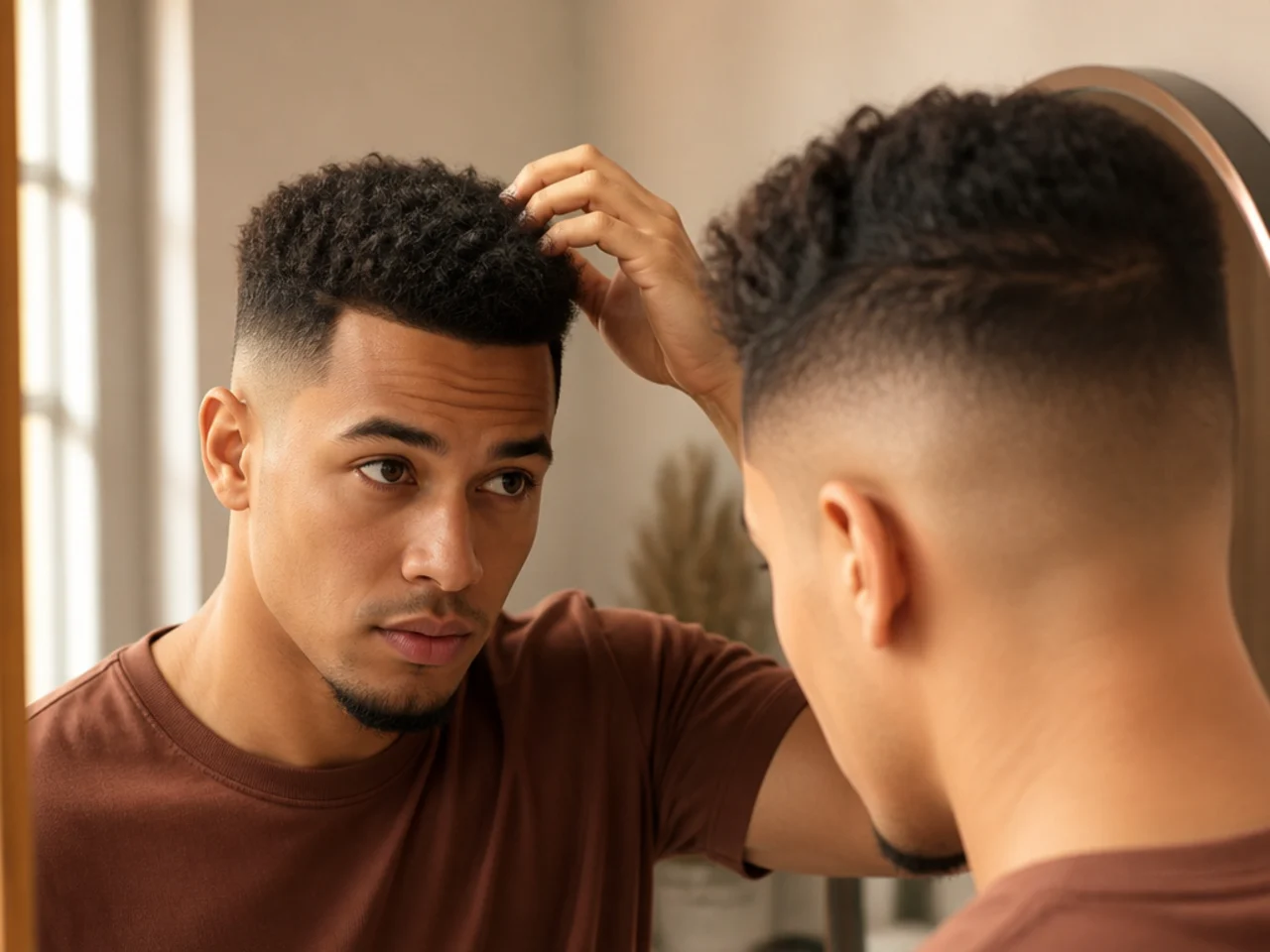
4. Feel the Skin Above Your Ears
Scars, moles and uneven tone have been under hair your whole life. A high fade uncovers all of it at once. Anything a fingertip finds up there will read at conversational distance on a bare panel, which makes this a decision better taken now than in the chair.
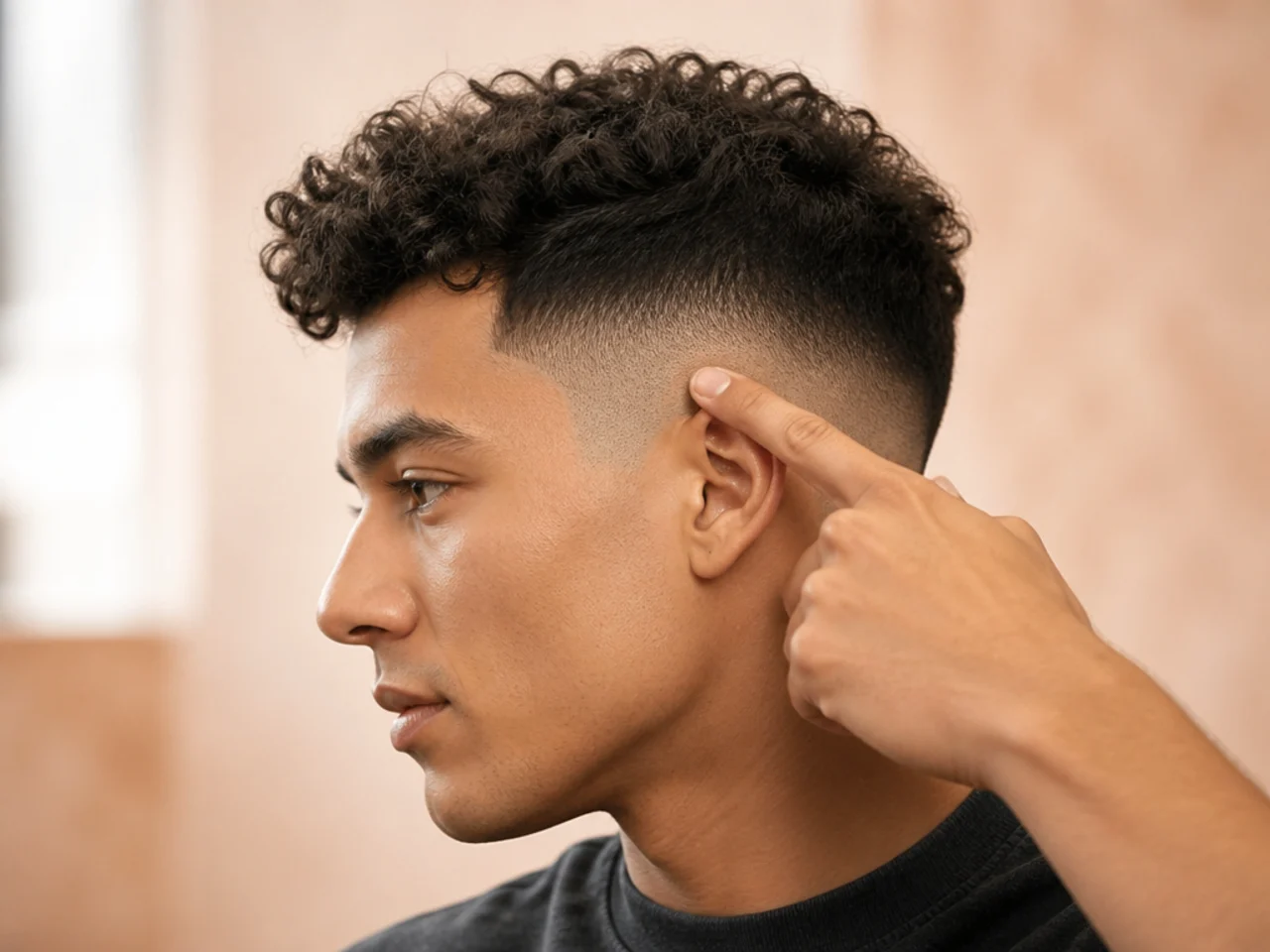
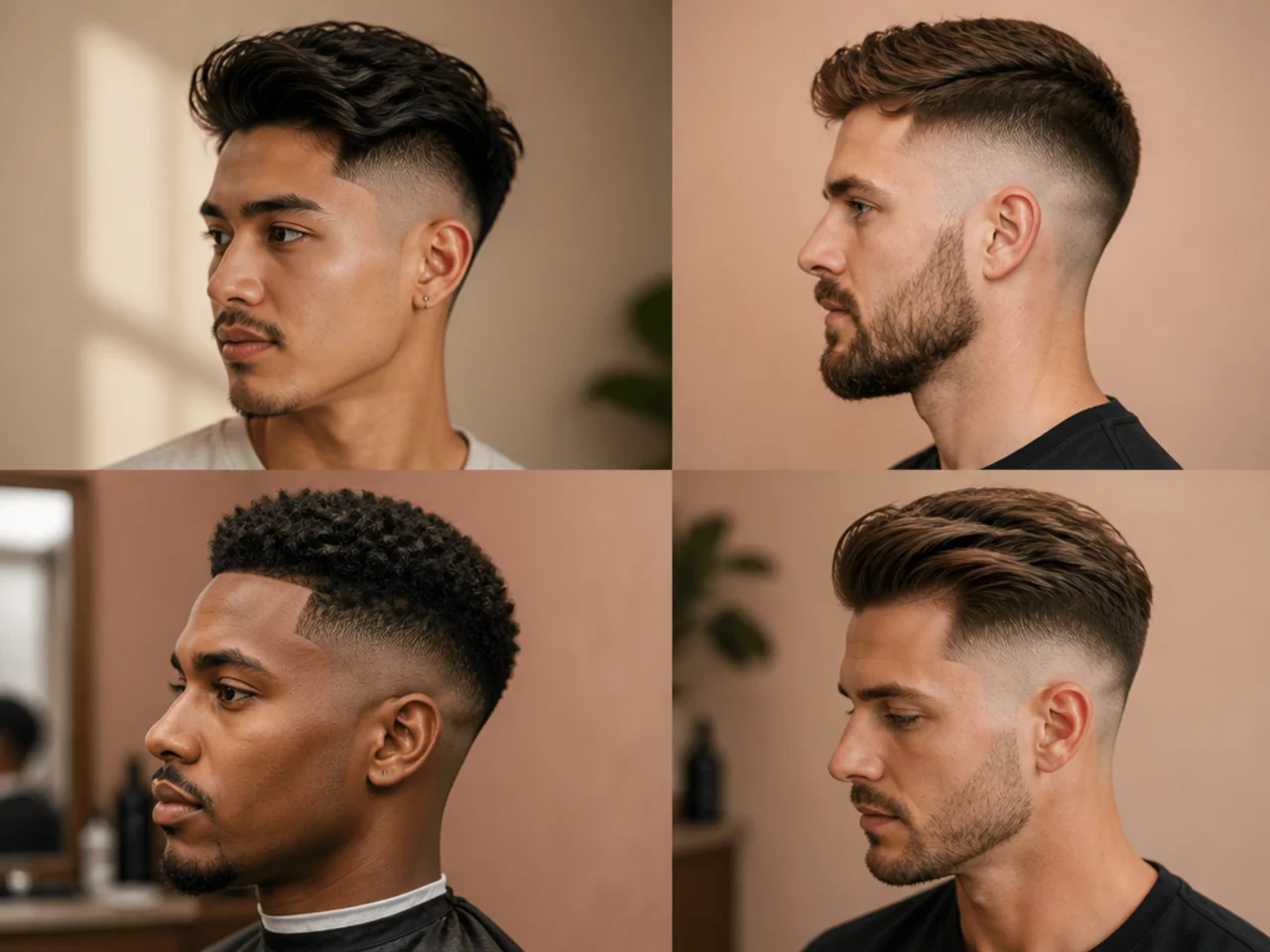
5. Bring One Photo Taken From the Side
A fade height is a side-of-head measurement. A front-facing photo carries none of the information the barber needs. Seen from the front the ridge sits behind the cheekbone, so the entire band the fade lives in is hidden by the face itself.
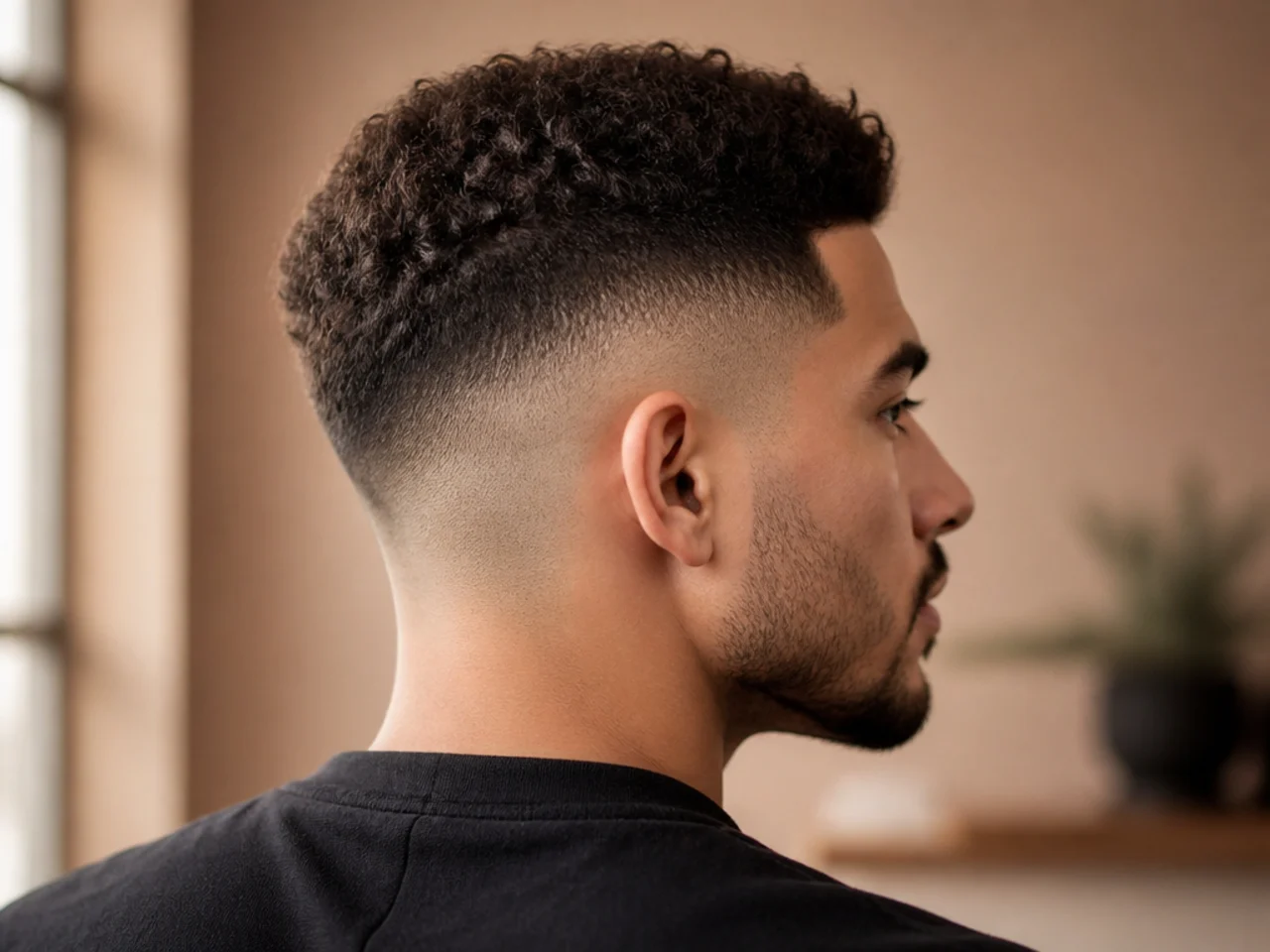
6. Say High Fade, Then Say the Landmark
At or above the parietal ridge. The word high means different things in different shops and the landmark does not. Between two shops that word can move the line two or three centimetres, which at this height is the difference between two separate haircuts.
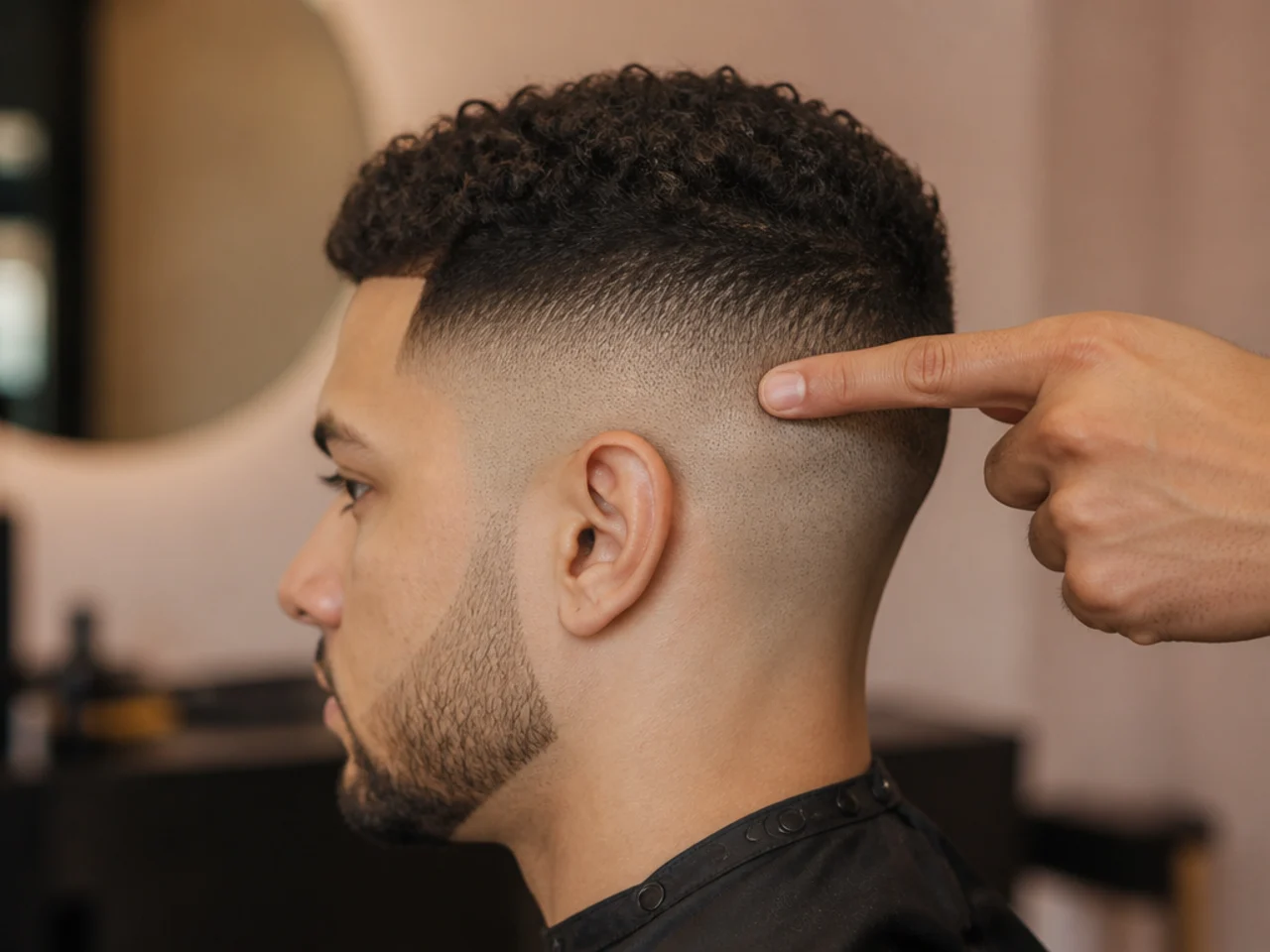
7. Choose Fade or Taper Deliberately
One of those words means finishing on bare scalp and the other means stopping at 3mm of stubble. At this height the difference is very visible.
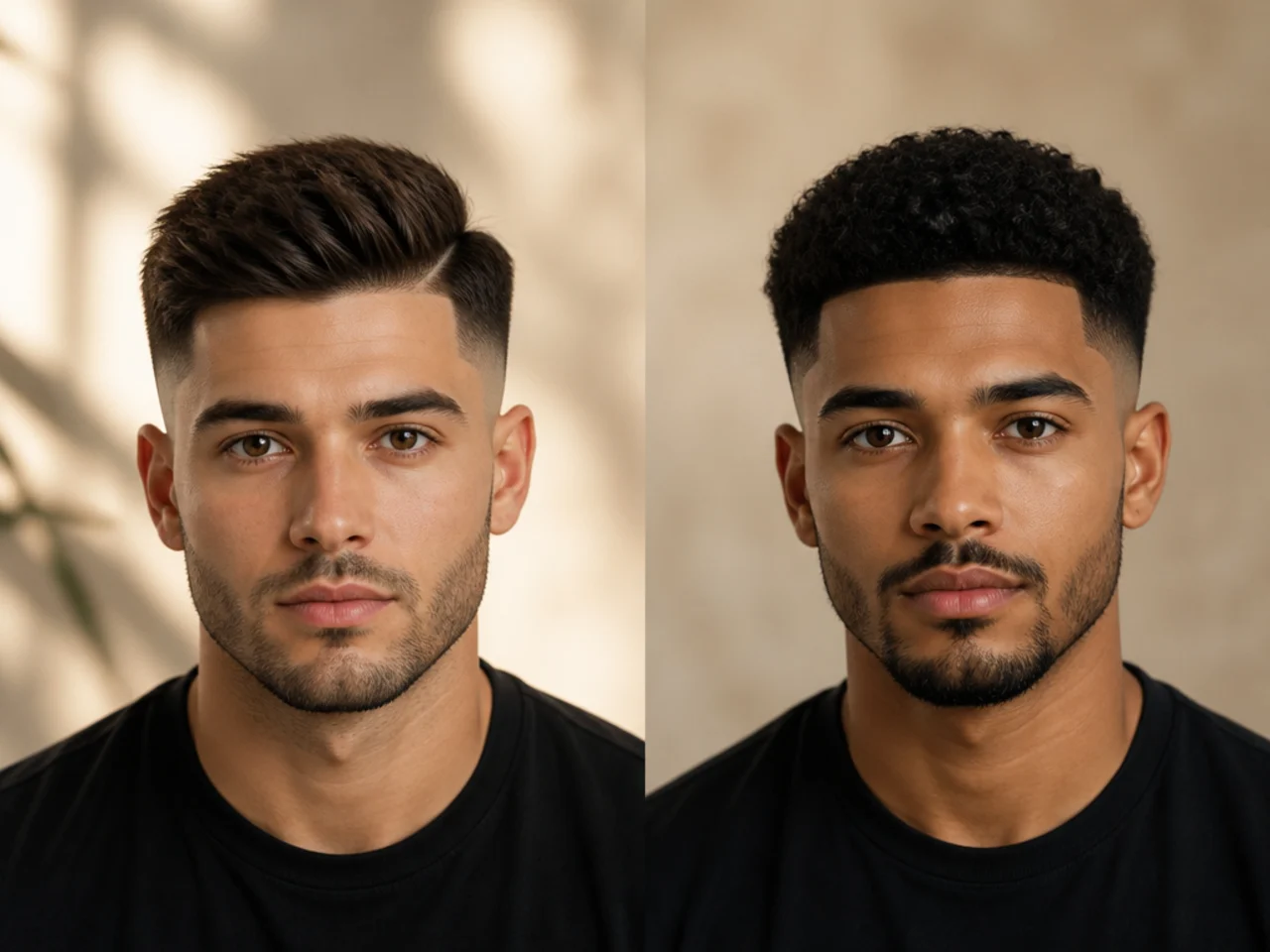
8. Name the Top of the Blend
Usually a #2 at 6mm or a #3 at 10mm. It sets how abruptly the fade releases into the top section. Two guard numbers below the top length reads as a gradient and four reads as a step, which is the whole difference between a blend and a disconnect.
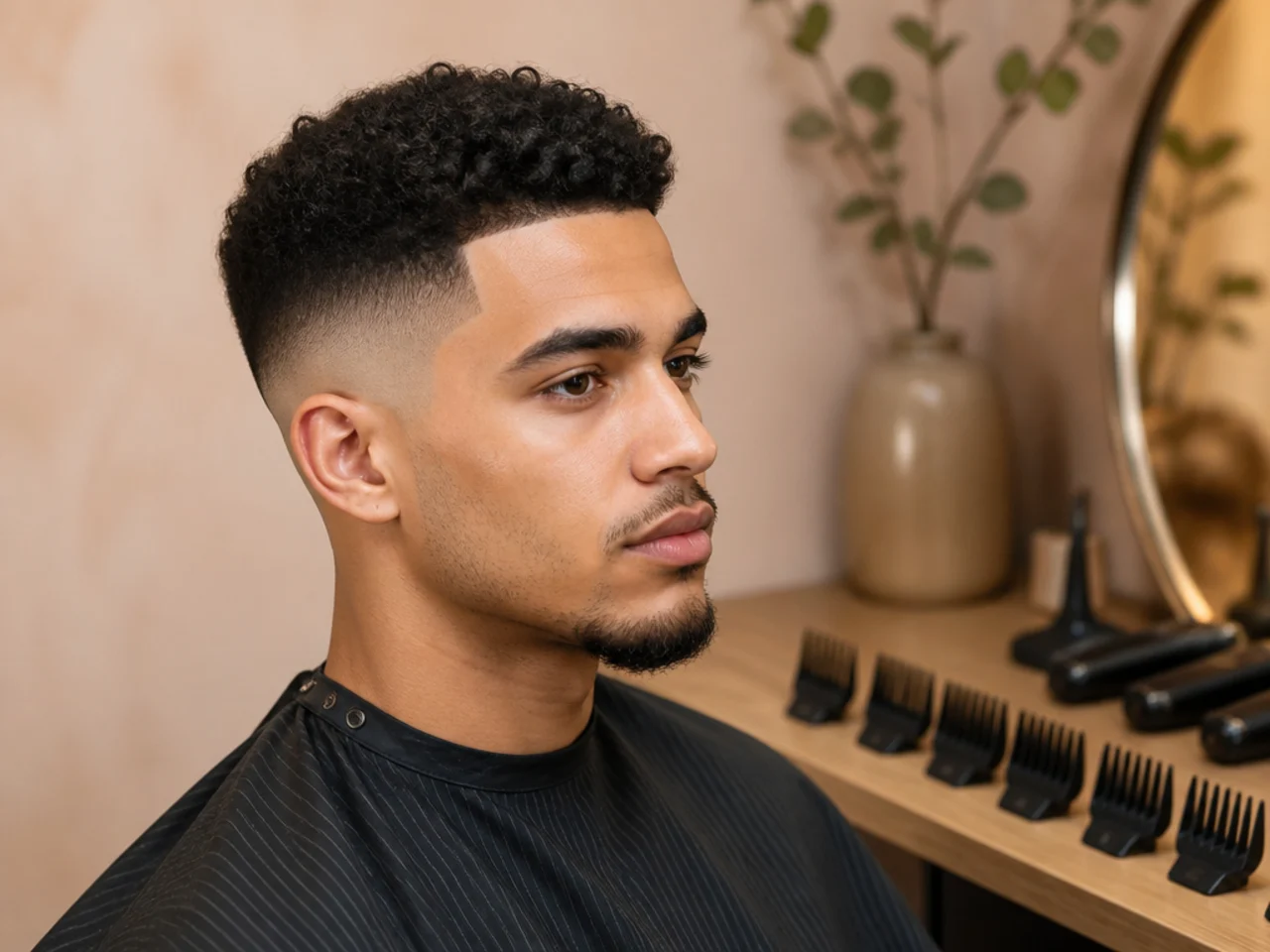
9. Say How Long the Top Stays
Longer than you would over a mid fade. With bare sides the top carries the entire silhouette. A centimetre or two extra is the usual figure, because there is no side weight left to balance a short crown against.
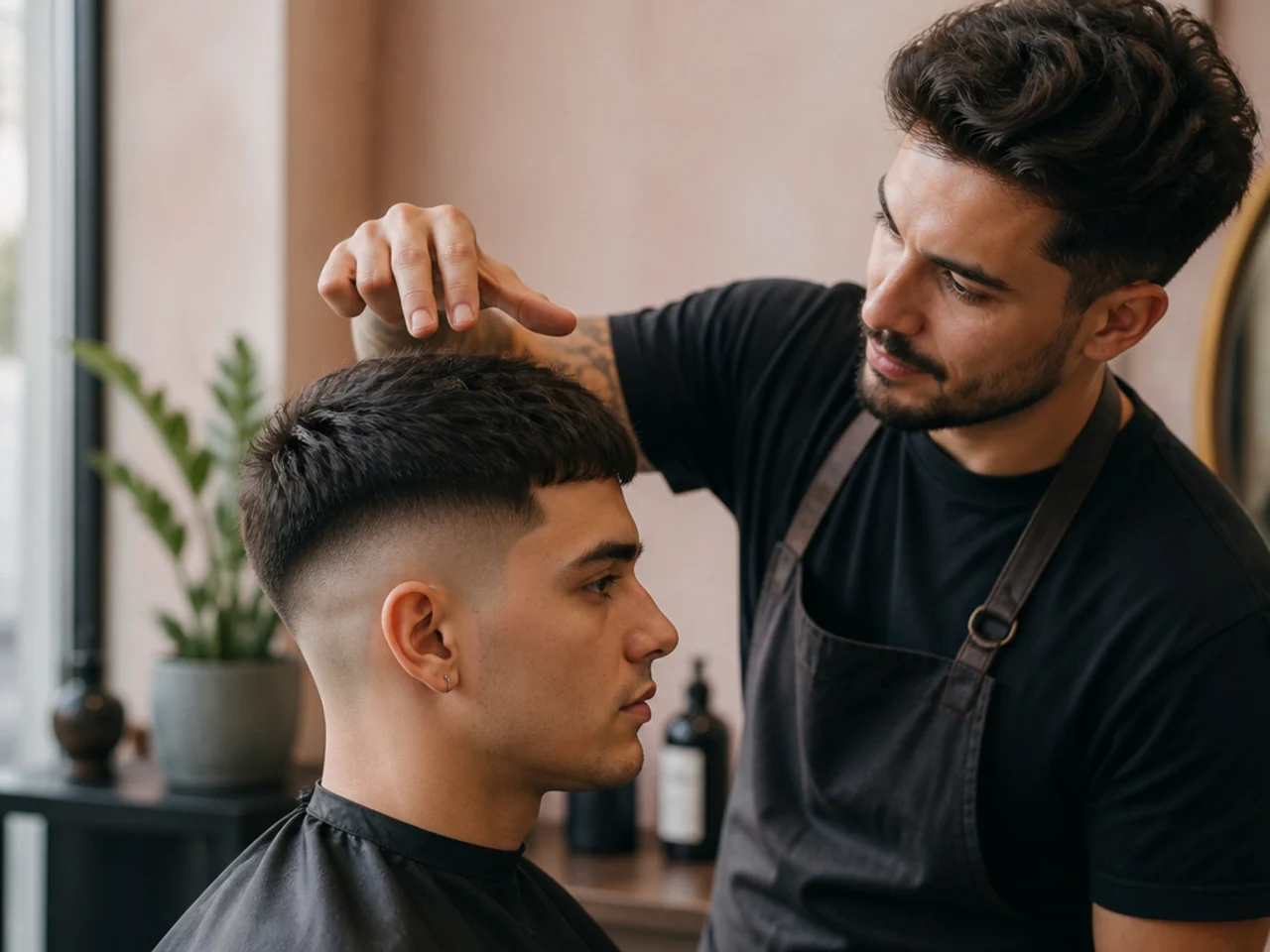
10. Ask for the Release to Be Gradual
A hard edge at the top of the blend reads as a step, especially on curly or coiled hair. Two or three centimetres of release fixes it.
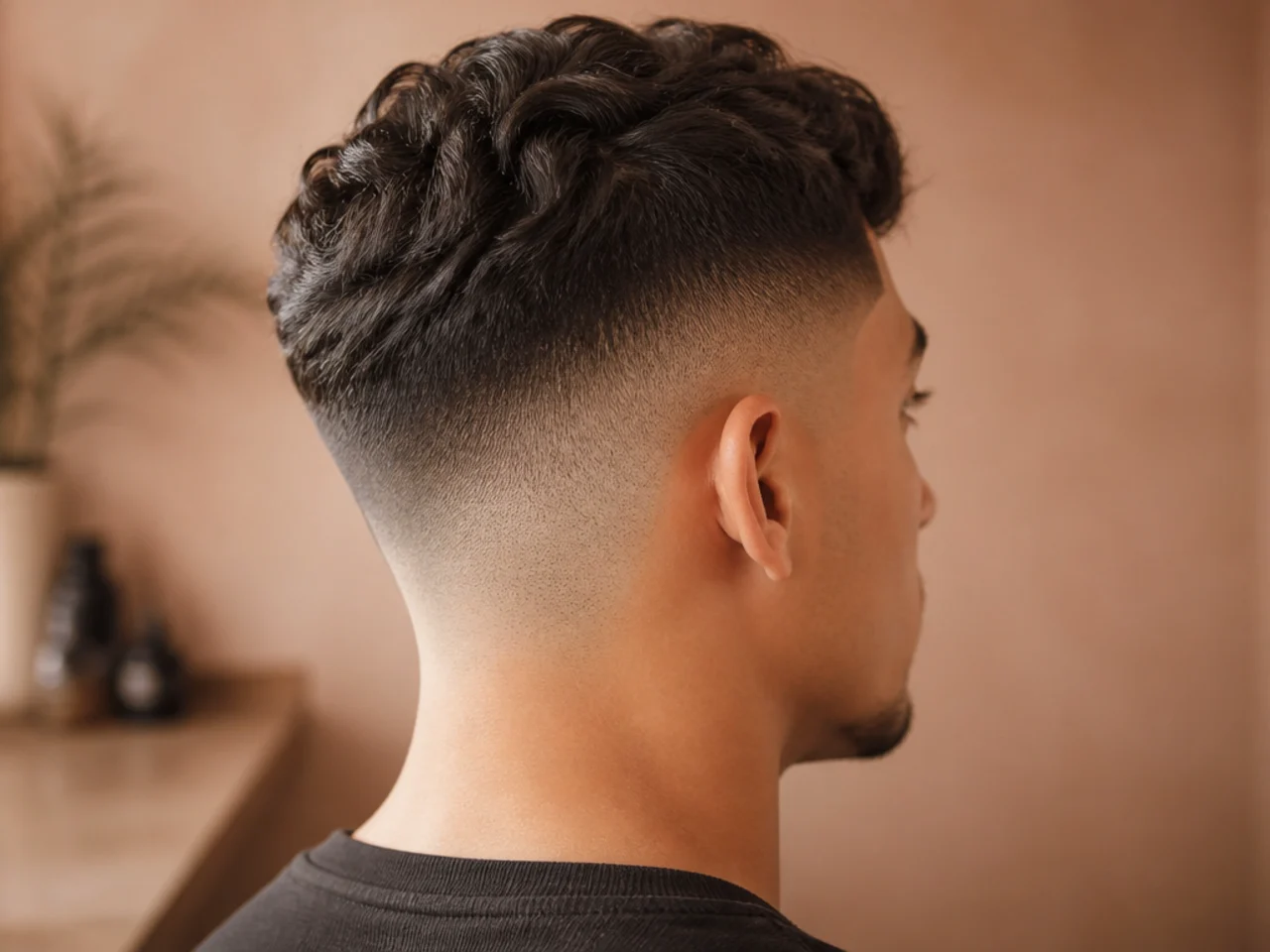
11. Choose Straight or Dropped
A straight high fade runs level around the head and a high drop curves down behind the ear in the way a low drop fade does further down. The drop softens the back without lowering the front.
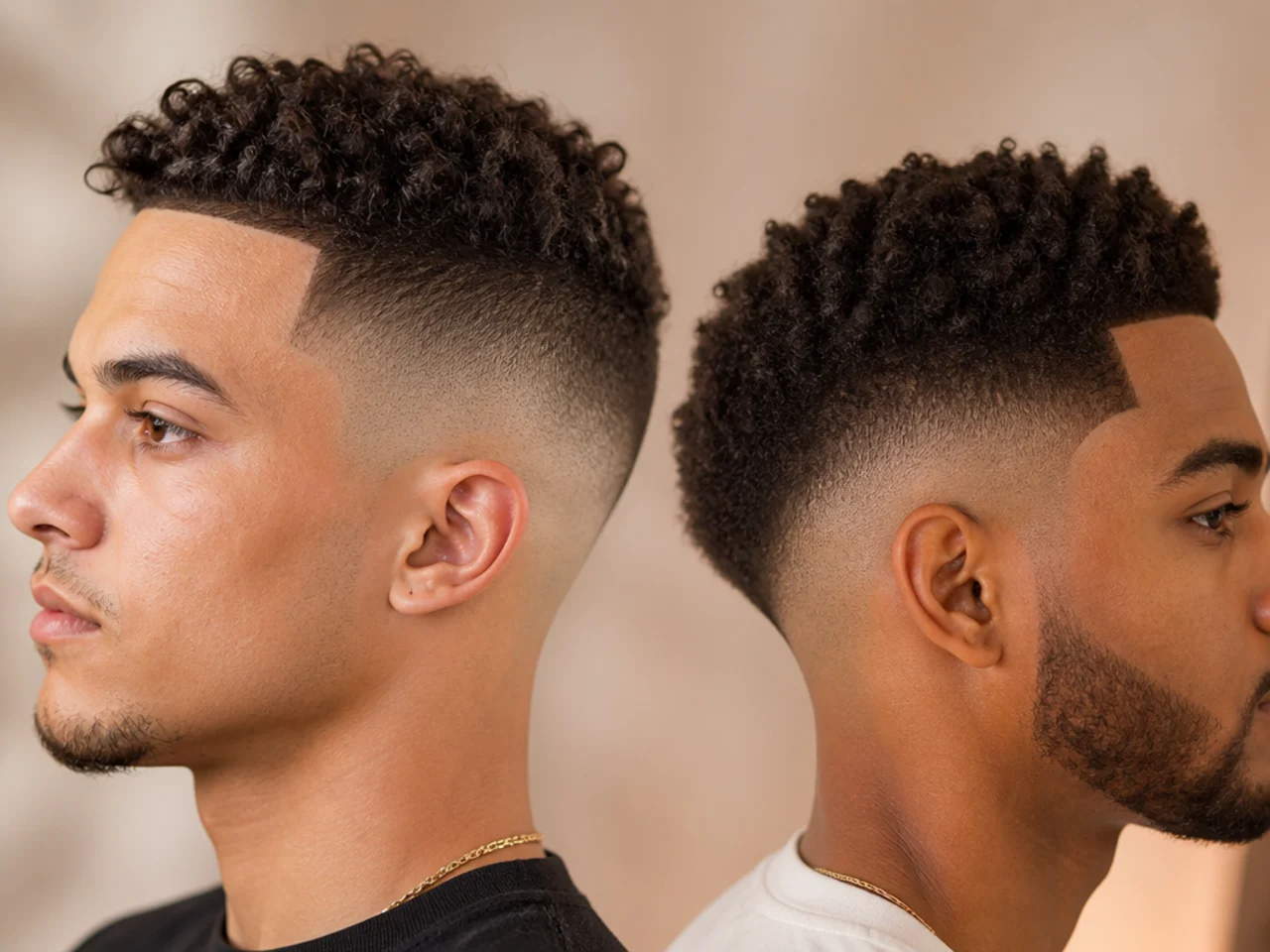
12. Decide the Neckline Shape
Blocked, rounded or tapered. At this height the neckline is fully visible, so the choice actually shows. A high fade clears everything above the nape, so the neckline is no longer a detail sitting hidden under length.
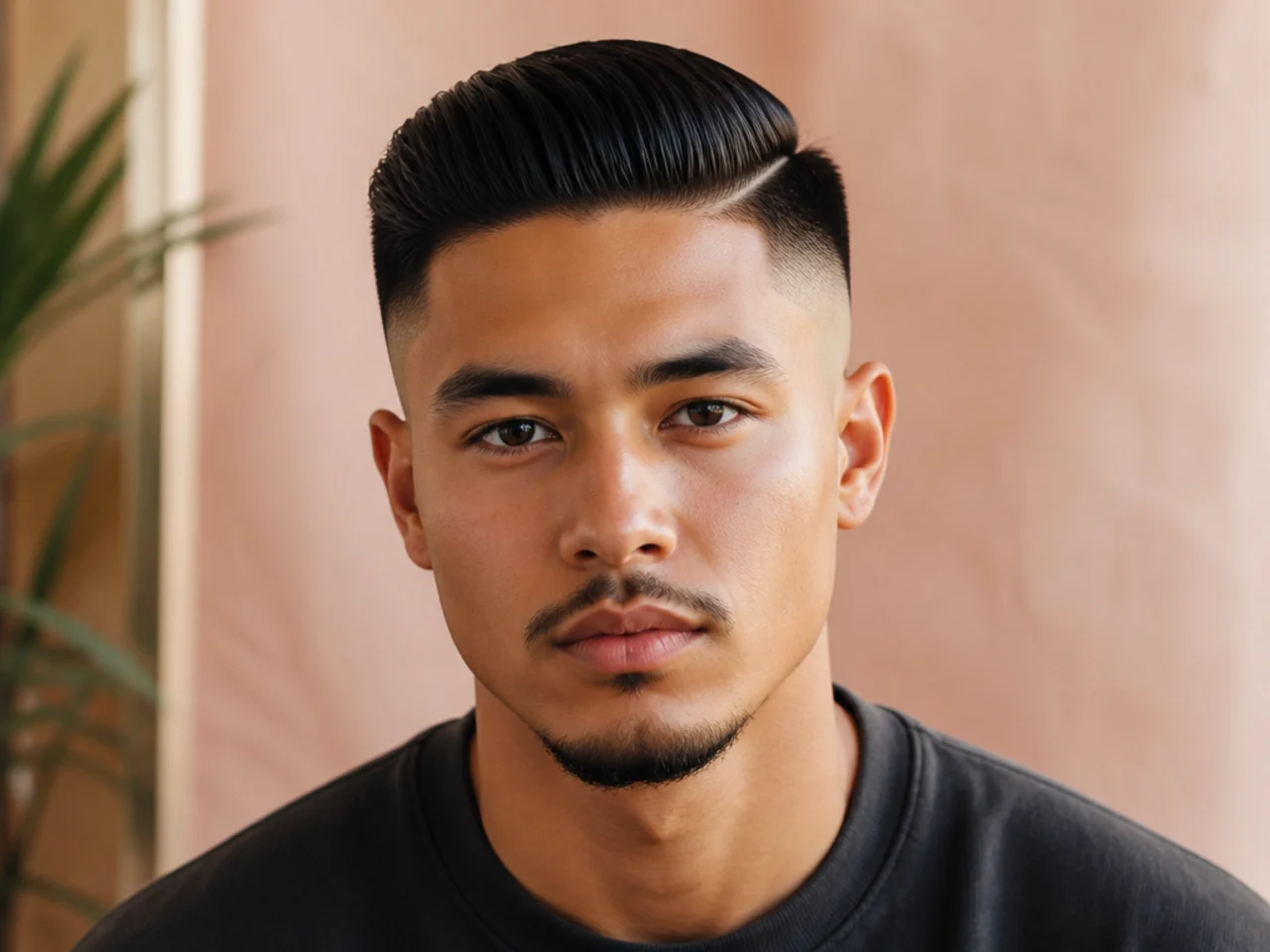
13. Discuss the Beard Before the Sides Are Cut
A high fade reaches skin well above the jaw, so a full beard needs fading too or the join is a hard step, as every pairing in high fade ideas with a beard demonstrates.
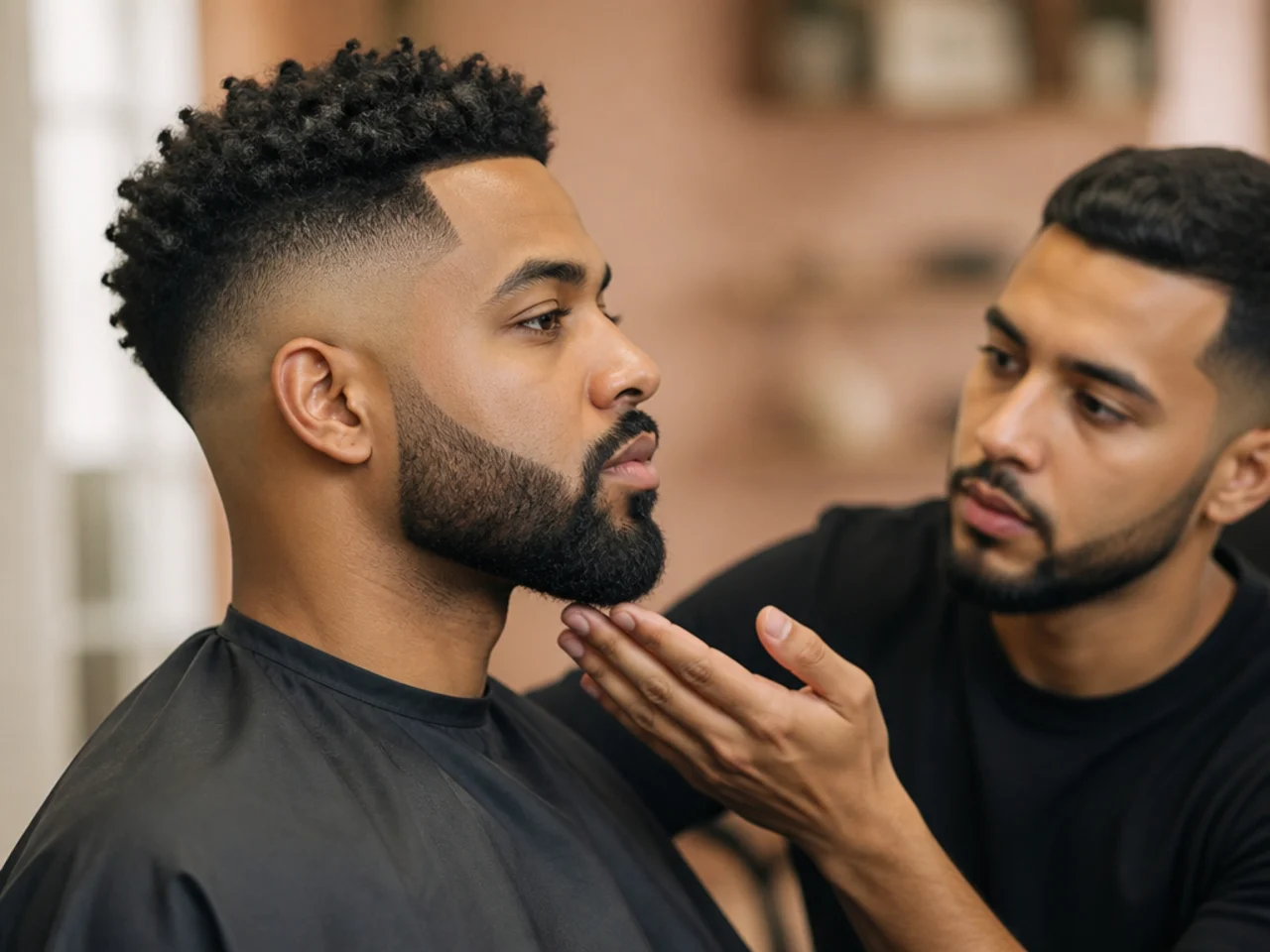
14. Point Out Anything You Want Left Alone
A scar, a birthmark, a thin patch. A barber who knows can leave a millimetre more length over it. A millimetre disappears inside the gradient and is enough to keep the mark shaded, but only if it is said before the first pass.
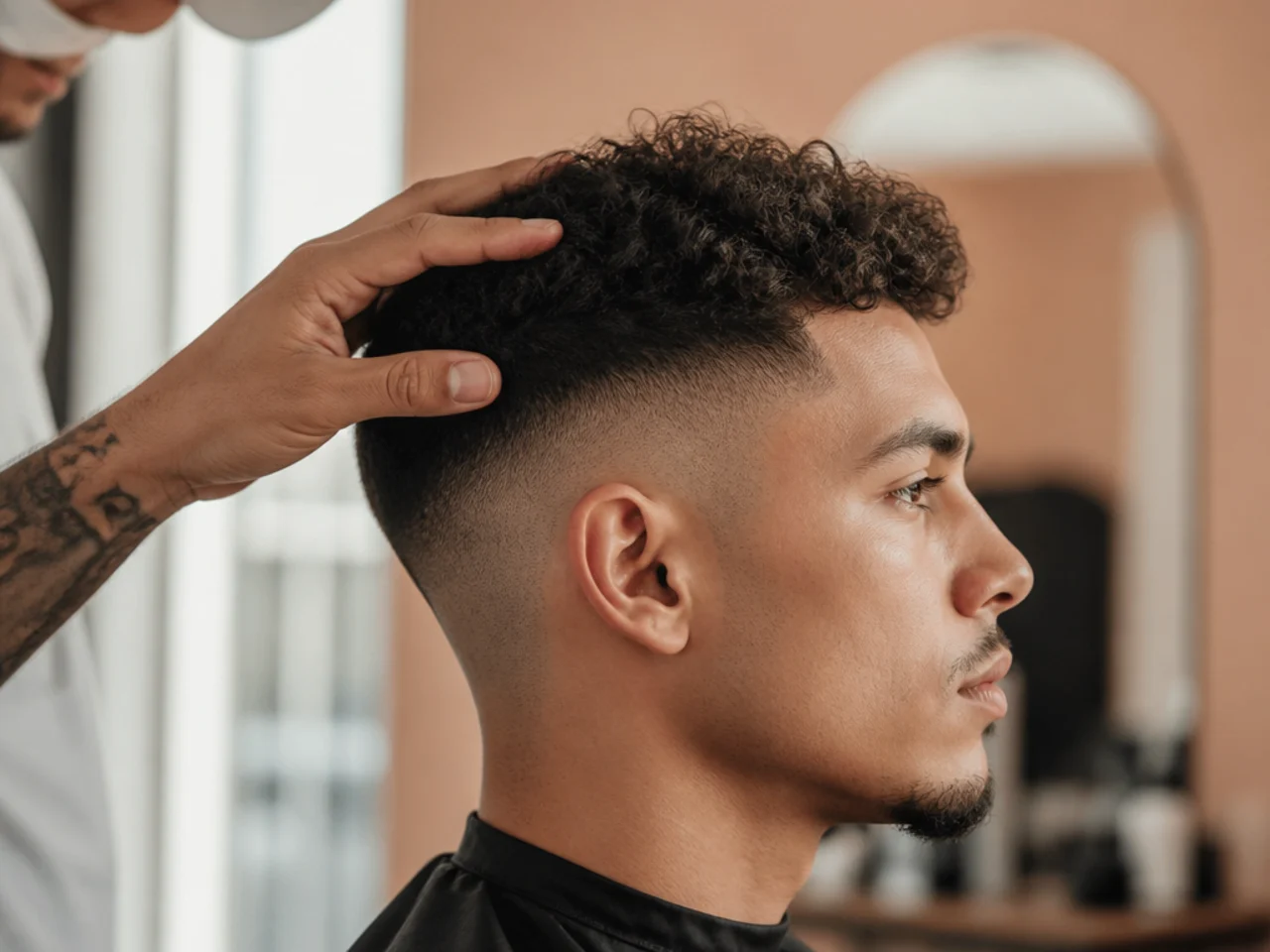
15. Ask for the Height to Be Checked Both Sides
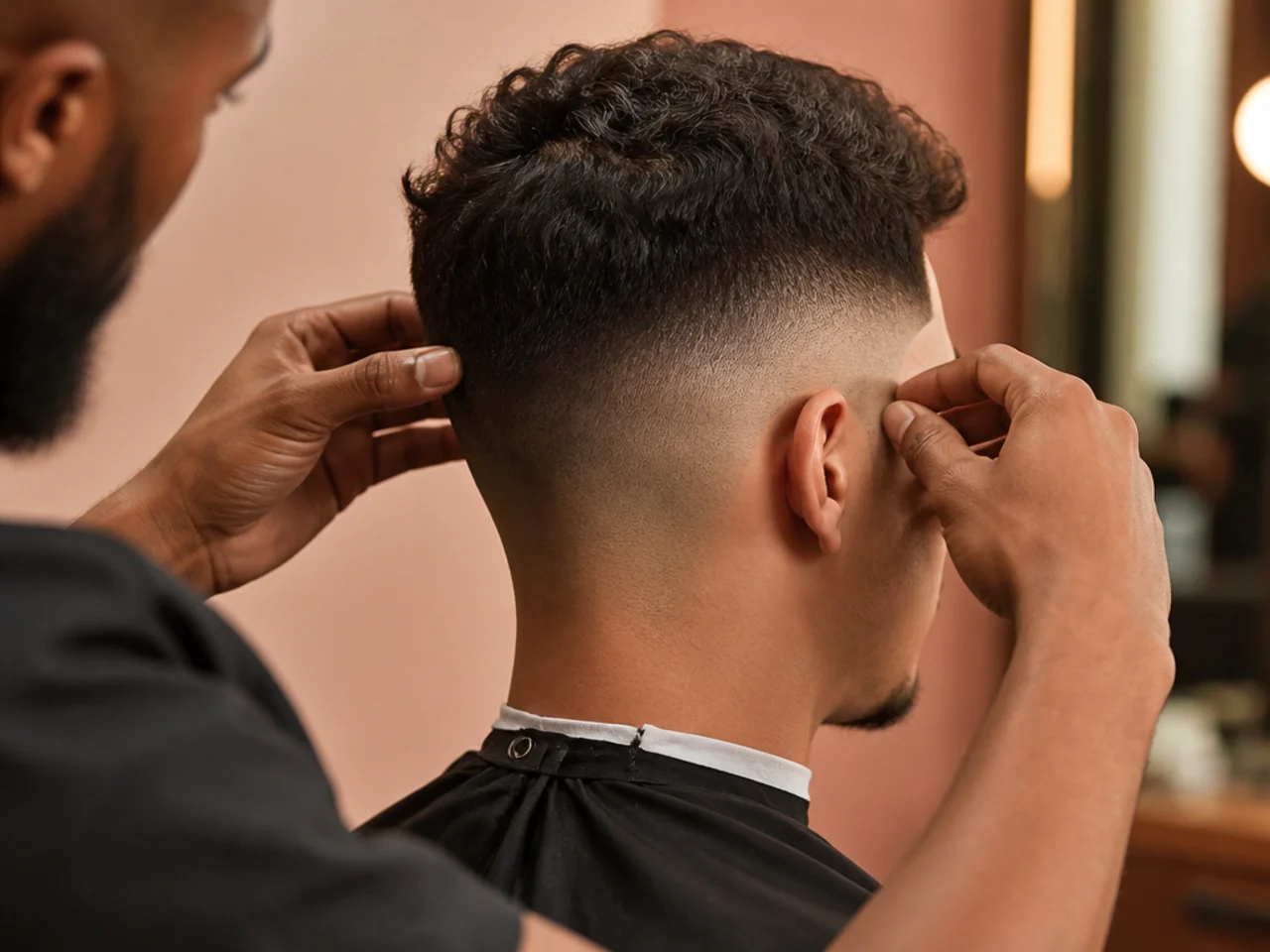
Fades drift upward on the barber's dominant side, and at this height a couple of millimetres is very visible. The line sits at eye level in every photograph taken of you, so a difference that would hide near the ear has nowhere to hide up here.
16. Speak Up During the First Pass
The first pass sets the height. After it the line can only go higher, never lower. Fixing it means raising both sides to match, so a correction made three minutes late costs a centimetre you never meant to give up.
17. Check the Back With a Hand Mirror
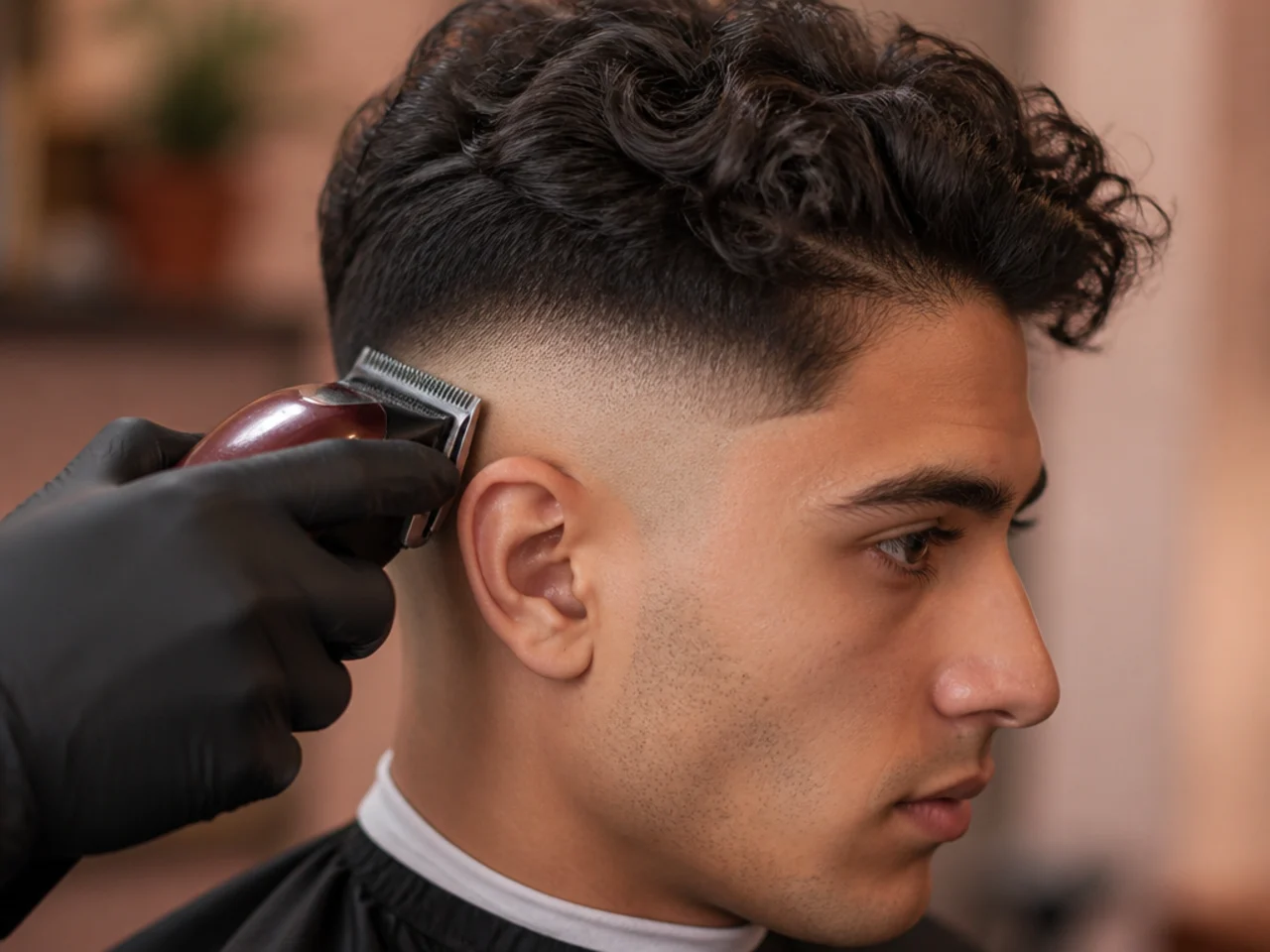
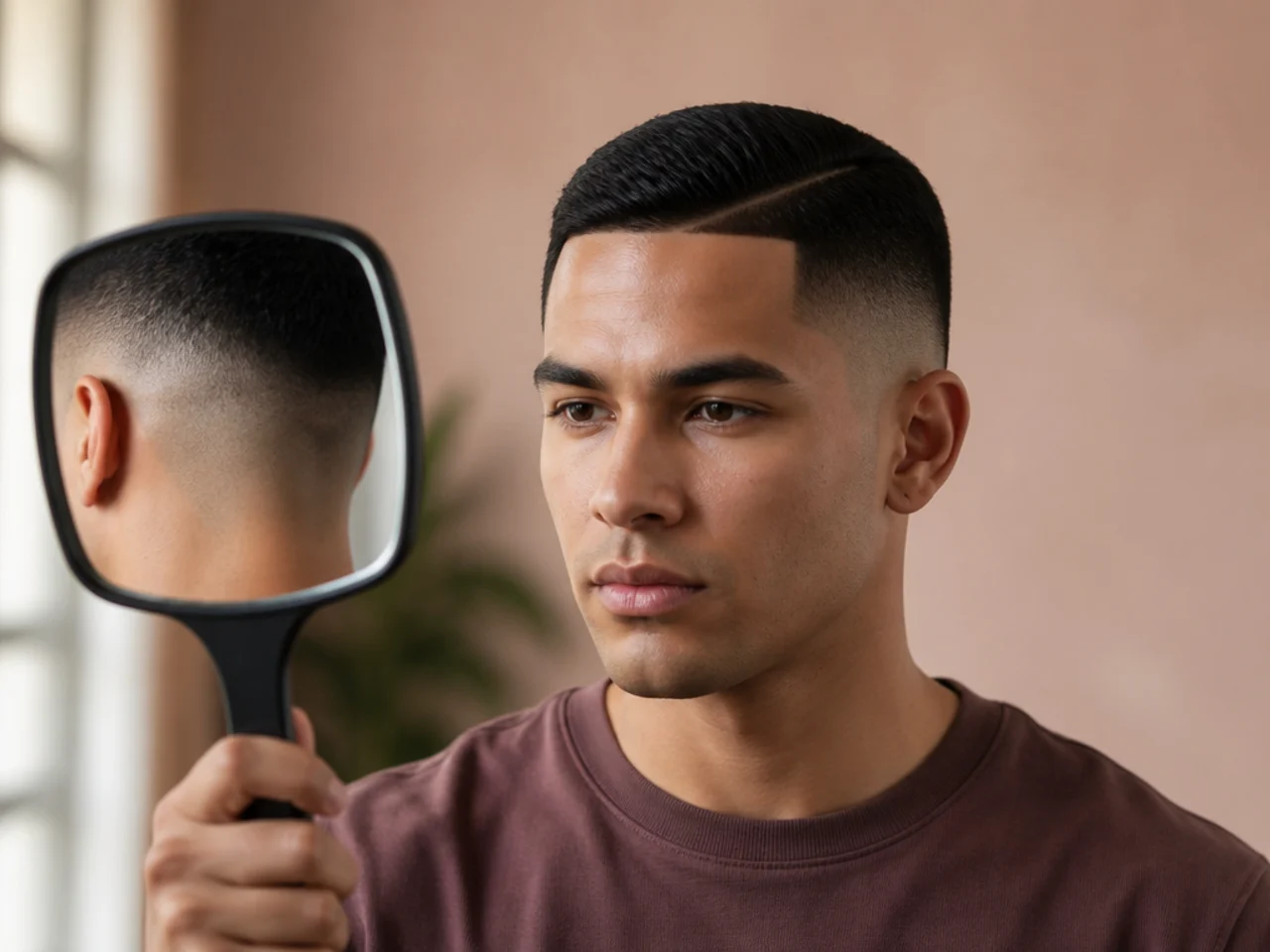
A high fade exposes the back of the head as well as the sides, which doubles the area you have never seen.
18. Ask About Sun Protection Before You Leave
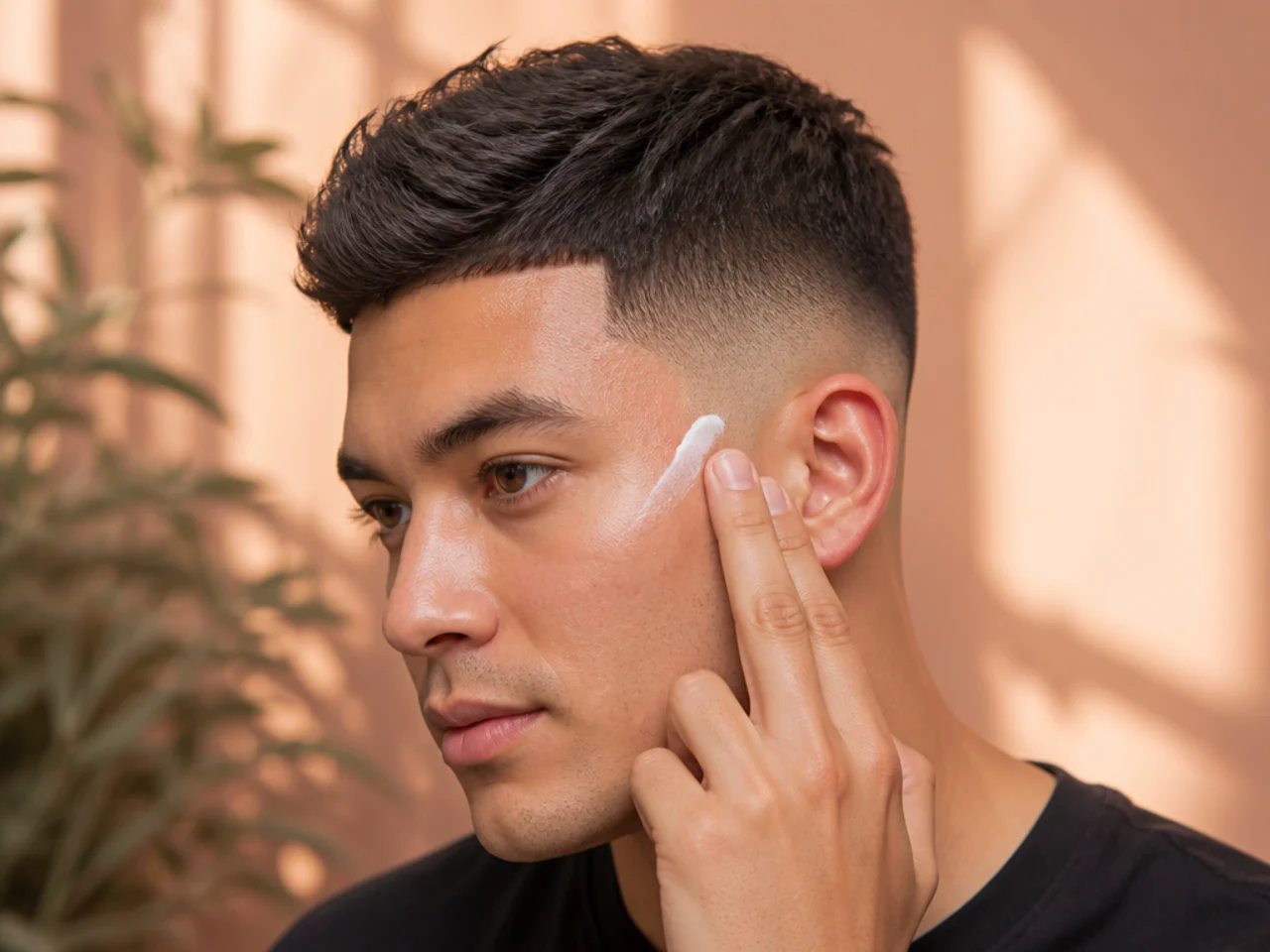
That skin has been under hair its whole life. It burns faster than any other part of your head. A burn across the faded panel peels in sheets that follow the gradient, which is considerably more visible than a burn anywhere else.
19. Rebook Before You Pay
The height you have just chosen comes with a calendar attached: one to two weeks on skin, three to four on a taper. Book to that clock, not to when it starts annoying you.
20. Write Down the Height and the Guards
Four lines in your phone. It is the difference between a good haircut and a repeatable one. No barber can measure last month's line on a head that has grown a centimetre since, so the numbers are the only record that survives.

Styling and Upkeep
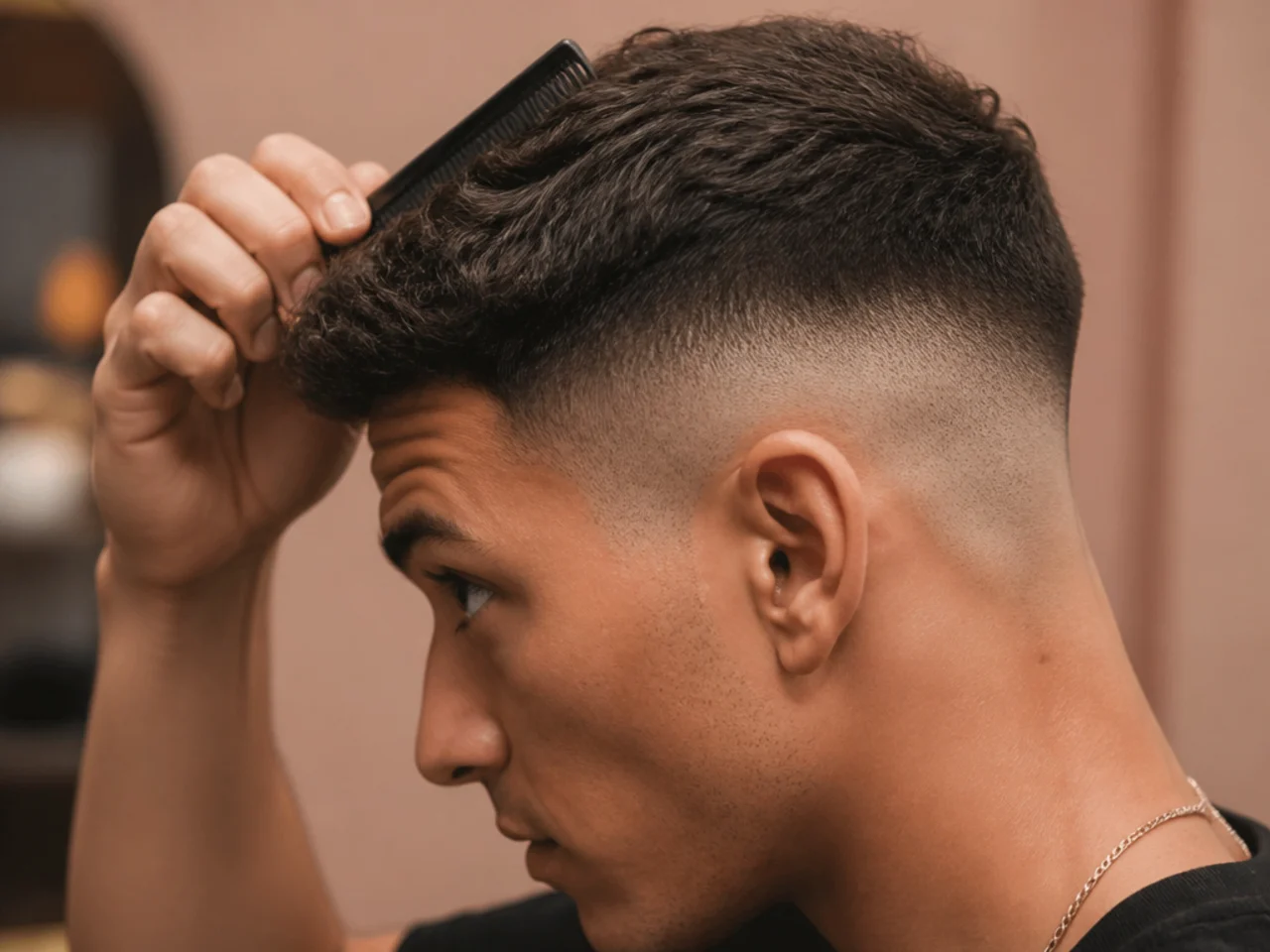
Moisturise the exposed skin daily. A high fade bares more scalp than any other cut and dryness shows on it.
Use sunscreen on the sides in summer. Scalp that has spent a lifetime under hair has no built-up tolerance, so it reddens far quicker than the rest of your face does.
Keep product above the ridge. Nothing under that line has enough shaft for a product to wrap around, so it simply sits on the skin.
Ask for a line-up between full cuts. It refreshes the front without recutting the whole blend.
Photograph both sides at week one. It is the record for the next appointment.
Mistakes to Avoid
Asking for a high fade with a long face. It lengthens further and there is no styling fix.
Ignoring a thinning crown. All the remaining density has to be convincing on its own.
Cutting the top short to match. Short over high leaves the head narrow from every angle.
Trying a high fade on impulse. It is six weeks of commitment, not two.
Judging the result before you have seen the back. Half the exposed area is behind you.
FAQ
What should I check first? Crown density, scalp condition and face length.
How long does it take to grow out? Around six weeks to reach mid-fade length.
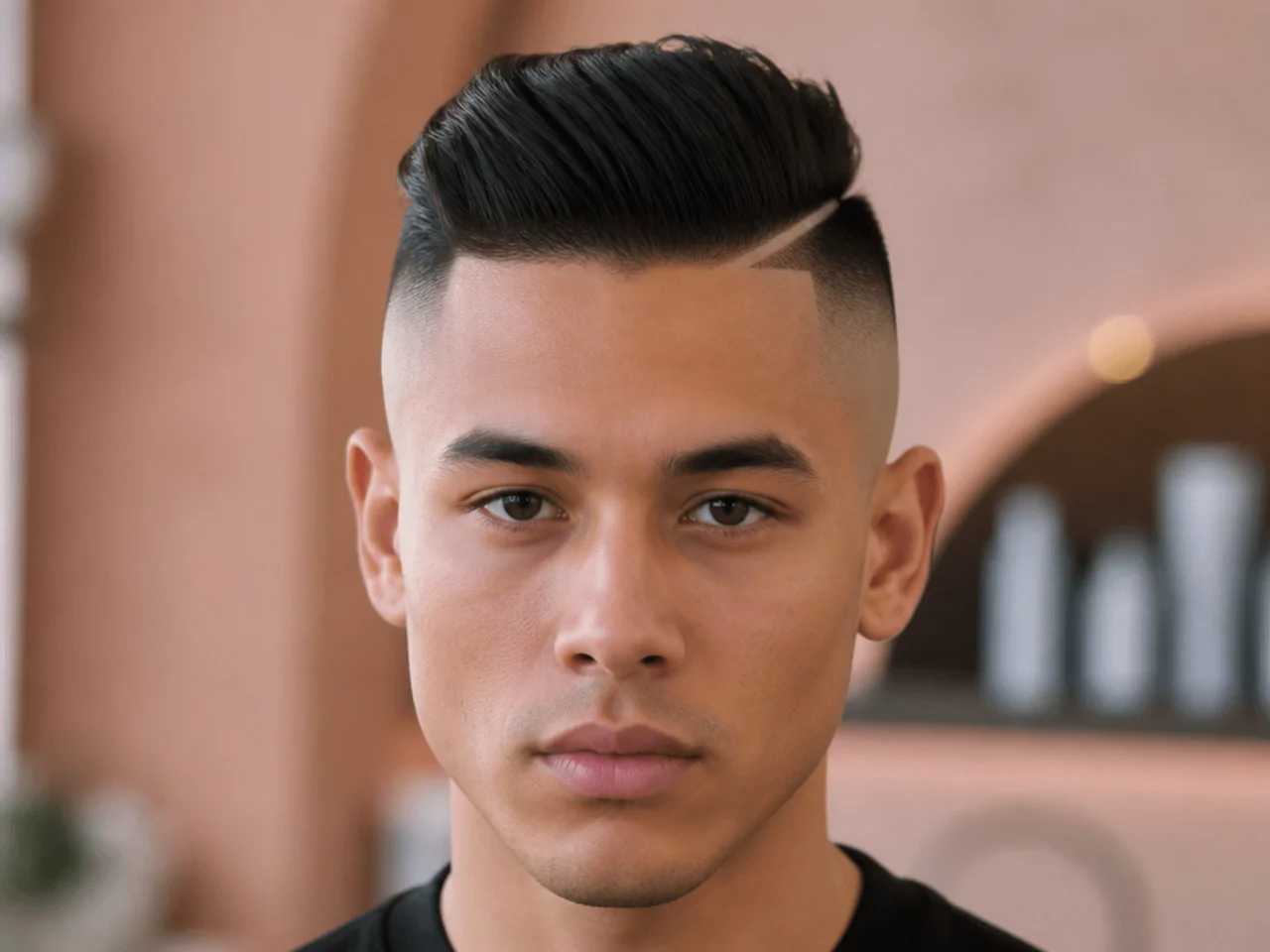
What is the sentence? High fade at the parietal ridge, skin up to a number two.
Final Thoughts
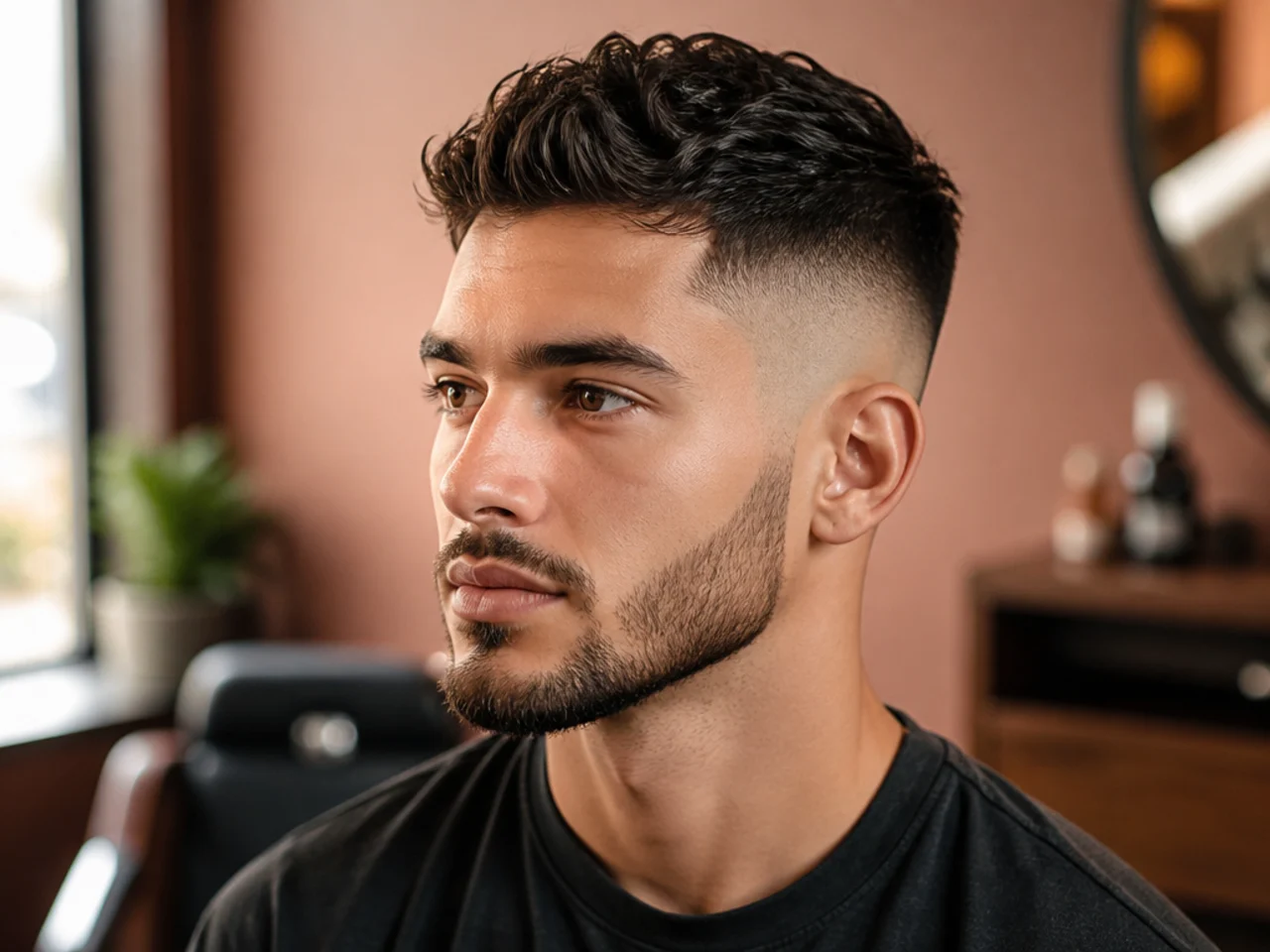
The reason this list is front-loaded with checks is that a high fade cannot be talked down mid-appointment. Look at your face length, your crown and your scalp before you say the words, and if any of the three gives you pause, ask for a mid fade instead and try again in six weeks.
For every variation of the cut see the high fade haircut guide, and for the height comparison see low vs mid vs high fade. More in Fade Haircuts.