6 Mullet Mistakes Guys Make and How to Fix Them
Six mullet mistakes I fix in the chair every week on a faded mullet haircut for men — length, fade blend, ratio, cowlick, product, and trim cadence.
In this article · 18
- What a Faded Mullet Actually Is
- Where Faded Mullets Actually Go Wrong
- The Six Mullet Mistakes I Fix Most Often
- 1. Going Too Long Too Fast
- 2. Skipping the Fade Blend
- 3. Getting the Front-to-Back Ratio Wrong
- 4. Fighting the Cowlick Instead of Cutting to It
- 5. Using the Wrong Product
- 6. Skipping the Six-Week Trim
- The Turning Point That Fixes Every Faded Mullet
- What to Do Next
- FAQ
- What is the most common mullet mistake?
- Is a mullet without a fade a mistake?
- What length should a mullet be at the back?
- How do I fix a mullet cowlick?
- What product works best for a faded mullet?
- How often should I trim a faded mullet?
I recut more faded mullets than any other shape in my chair, and it's almost always the same six mistakes. The reference photo looked sharp on Instagram. The client's version reads heavy, disconnected, or dated inside a week. This is the mullet mistakes fix guide I wish every guy walked in with — the six things I fix on repeat, why each one happens, and the exact chair-language that keeps them from happening again.
What a Faded Mullet Actually Is
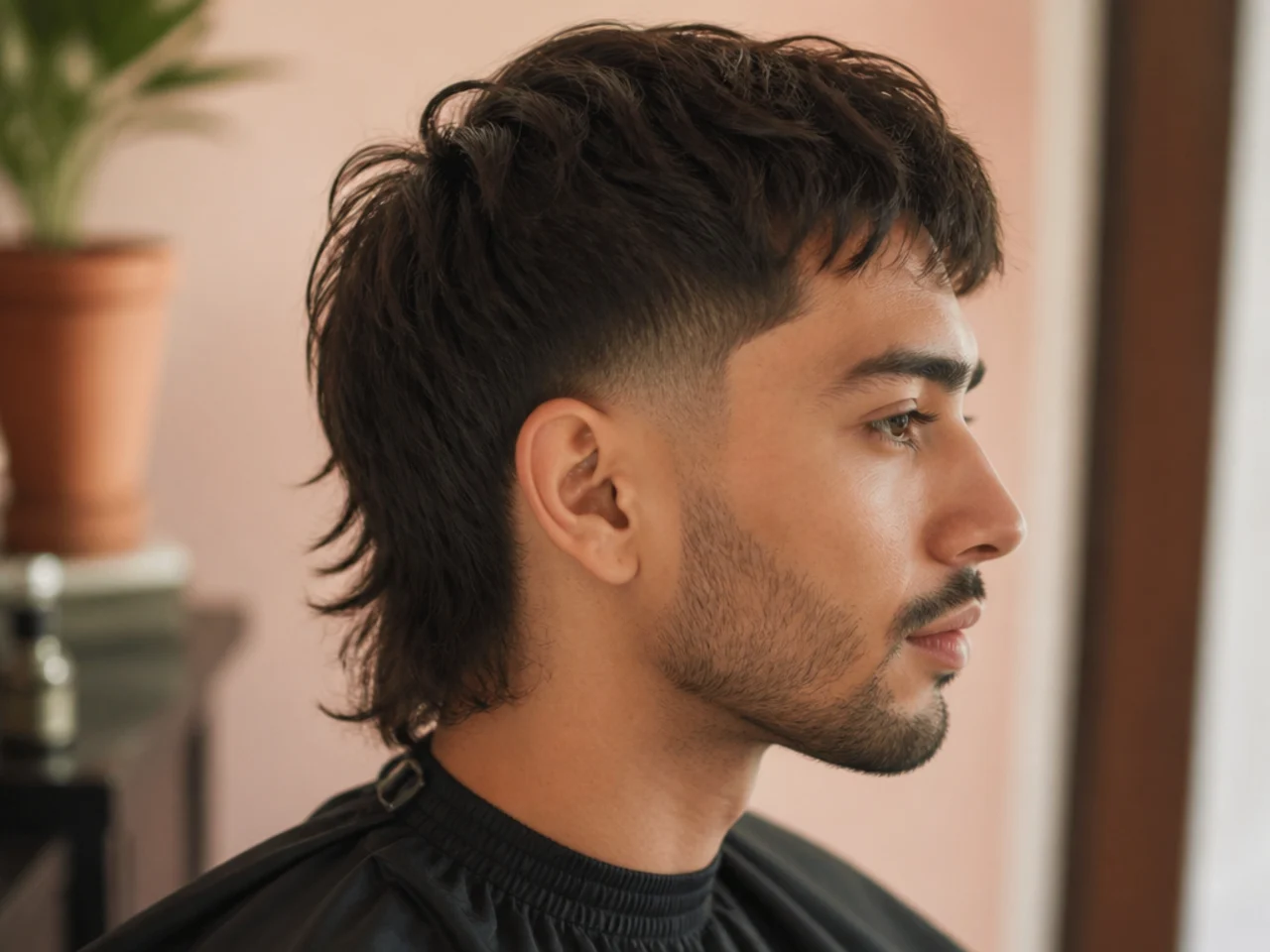
A faded mullet is a modern mullet with the sides taken down by clippers and blended into the top so nothing looks disconnected. The back sits between two and four inches with internal layers. The top runs one and a half to two and a half inches with a soft forward fringe or a natural side sweep. The fade sits low or drops behind the ear, and the transition into the longer back is scissor-blended so the length change reads intentional instead of stepped.
That's the whole shape. Different from an 80s mullet in three ways: the back is shorter, the layers move, and the fade replaces the harsh two-length break. Different from a modern mullet in one way — the sides get clippers instead of scissor blending only. When the fade is dialed in, the cut reads sharp from any angle. When it isn't, every mistake below shows up on day two.
Where Faded Mullets Actually Go Wrong
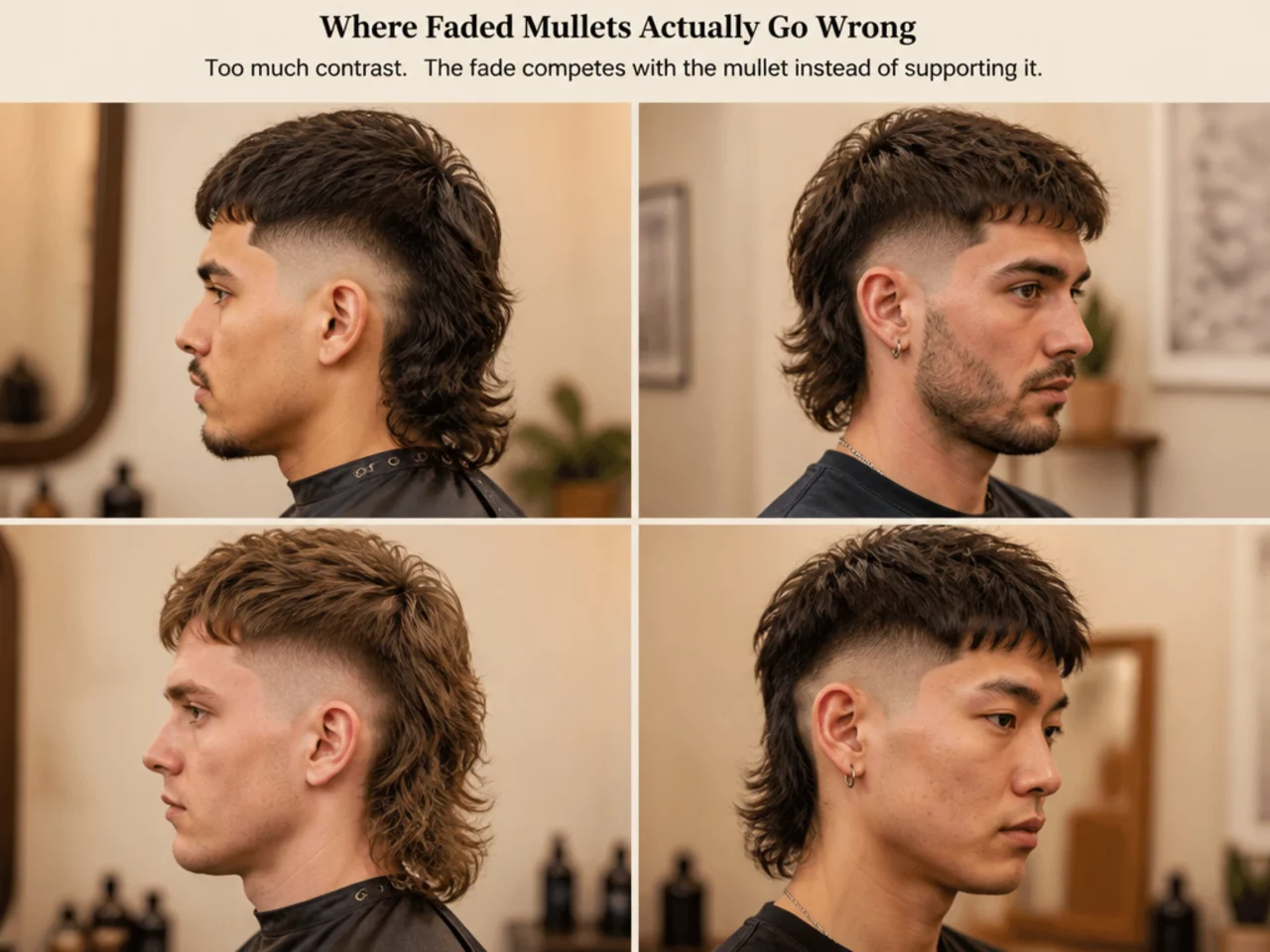
Almost every failed faded mullet I recut has the same tell — the back looks fine on its own, the fade looks fine on its own, and the transition between them doesn't work. Guys point at the back. I point at the connection. That gap between the fade line and the longer back length is where the mistake actually lives, and it's the part most stylists cut last and rush.
The six mistakes below are the ones I hand my clients on a laminated card at the first appointment. Each one traces back to a chair-language failure — the reference photo, the length asked for, the treatment on the sides, or the product routine at home. Naming the fix in the chair is the whole difference between a mullet that reads great for six weeks and one that gets buzzed off by Tuesday.
The Six Mullet Mistakes I Fix Most Often
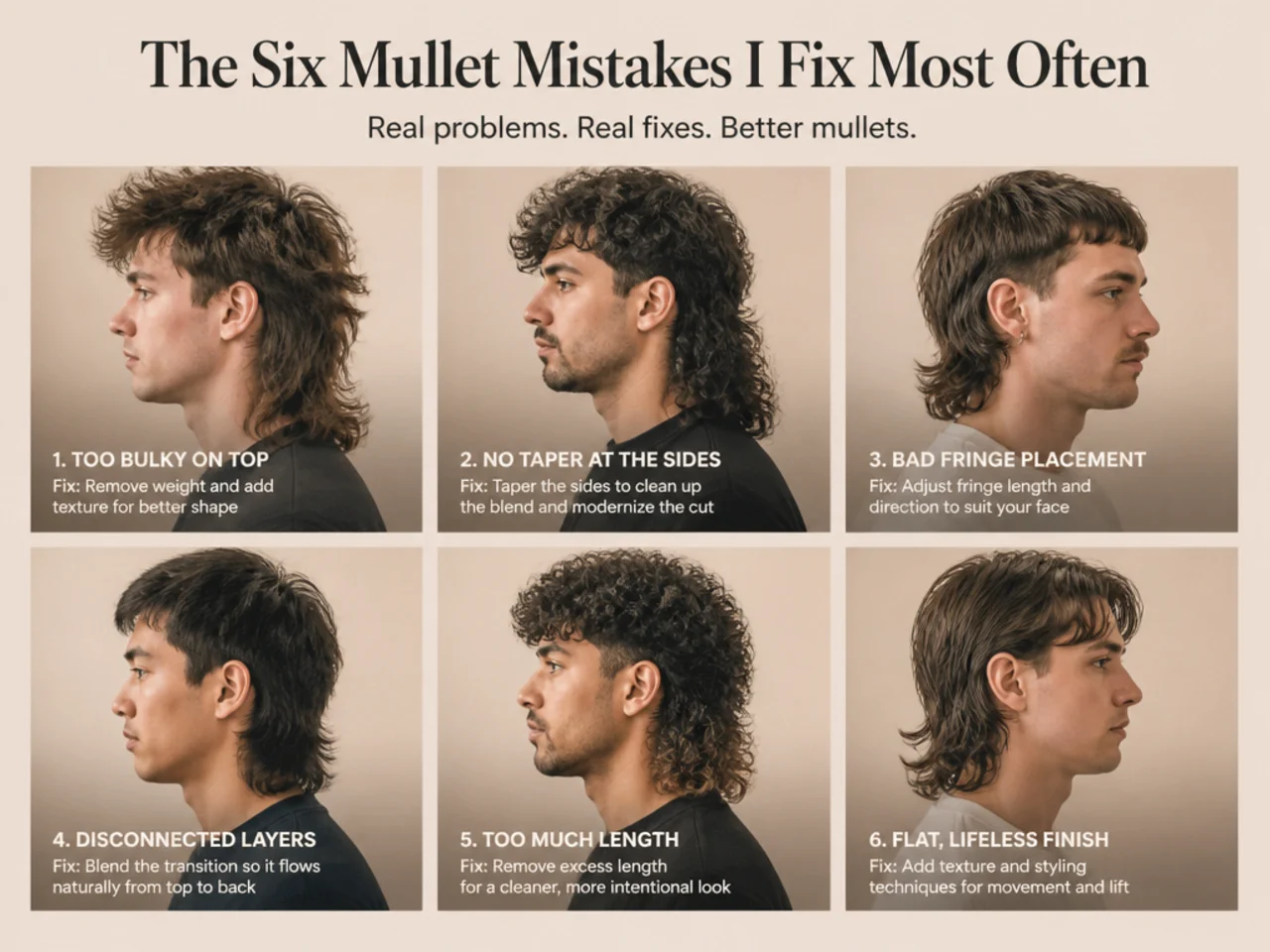
Six mistakes. Every one of them starts before the first snip and finishes on the wrong side of the mirror. Read the one that sounds like the version you're wearing now, and take the fix straight to your next appointment.
1. Going Too Long Too Fast
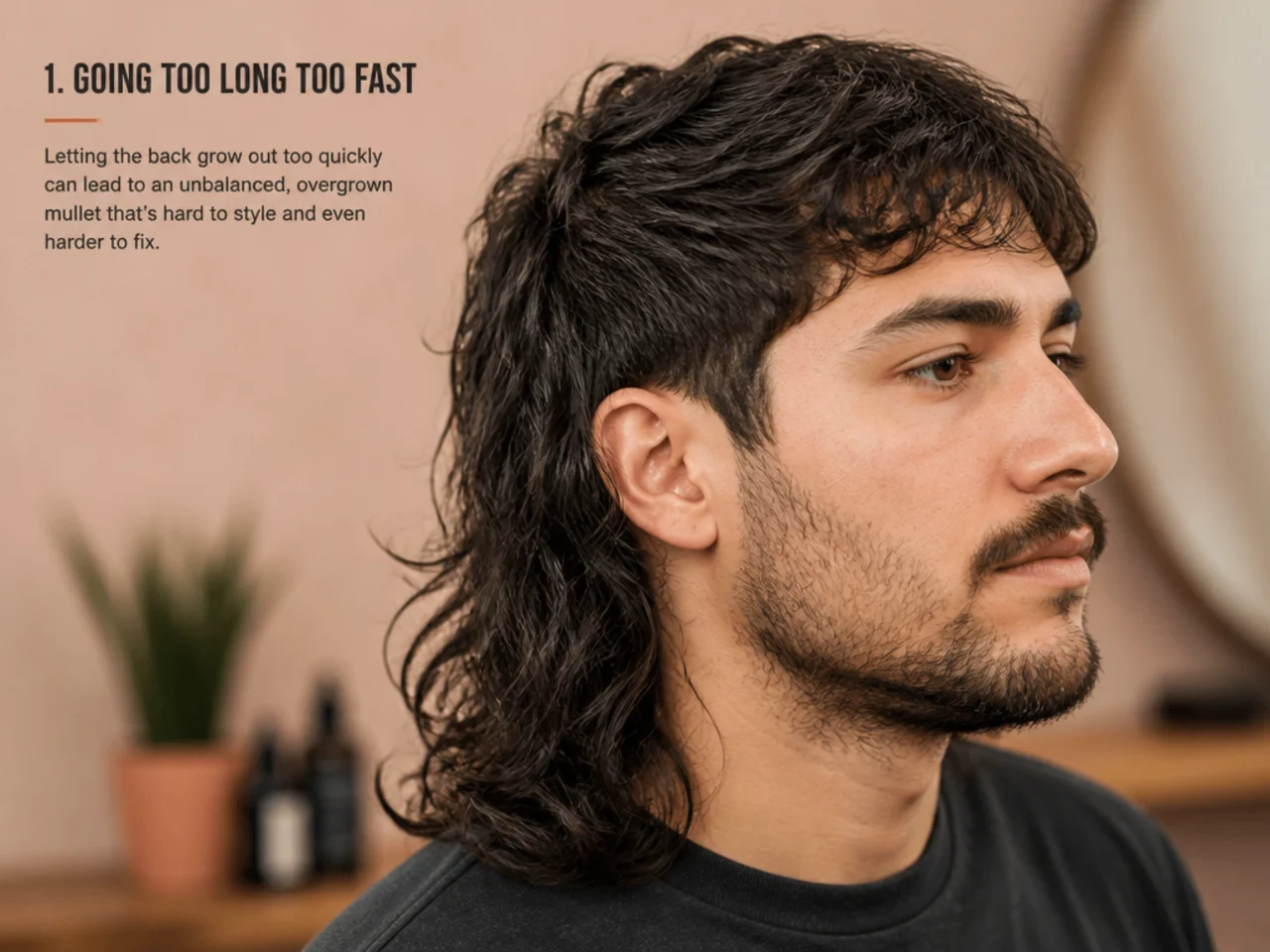
The reference photo shows a mullet at four or five inches with a mature grown-in shape, and guys ask for the finished version on visit one. What lands in the chair instead is a scraggly mid-length that hasn't set its layers yet and reads unfinished for the next eight weeks. I've watched the same client come back angry twice in a row because the barber gave them exactly what they asked for.
The mistake is skipping the growth stage. A mullet needs internal layers to swing correctly, and those layers only sit right after the length has trained around the head shape. Cut to the finished length on day one and every layer sits flat because the hair hasn't learned where to fall yet. The longer the back, the more this hurts — a five-inch back cut cold reads as a rat tail for the first month.
The fix is a phased grow-out. First appointment lands at two to two-and-a-half inches at the nape with soft internal layers. Second appointment at week six adds half an inch and reshapes the layers. Third appointment at week twelve hits three-and-a-half inches with the layers now moving on their own. If you want a genuinely long faded mullet, plan four appointments across five months, not one. The short mullet haircut men library is the reference for what visit one should actually look like.
2. Skipping the Fade Blend
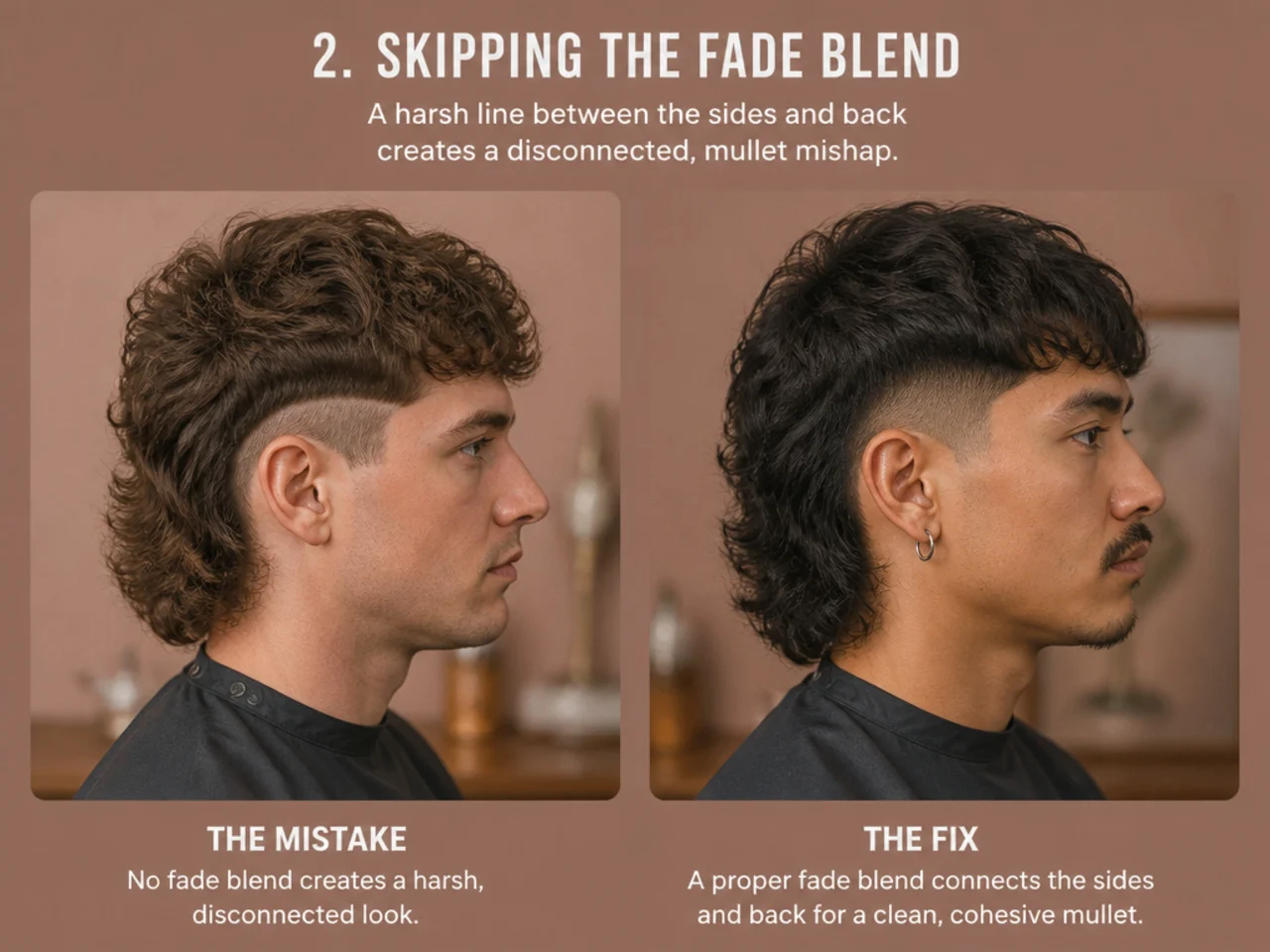
A mullet without a fade or a taper reads as two haircuts stitched together. The top is one length, the back drops off, and the ear sits inside a hard visual step. That step is the 80s original — and it's the reason plenty of workplaces still won't take the shape seriously. Every guy who tells me a mullet doesn't suit him is really telling me his sides weren't blended.
The mistake usually starts with the reference. A photo shot in soft light and a flattering three-quarter angle hides the disconnect. The client asks for "that cut," the barber cuts the top and back without a plan for the sides, and the transition never gets built. The stylists I trained under called this "leaving the cut halfway" — the shape is only finished when the join is finished.
The fix is naming the side treatment in the chair. Low taper for a soft, workplace-safe read. Low fade for a sharper edge. Mid drop fade when you want the fade to curve down behind the ear and disappear into the back length. Any of the three is fine — the mistake is not choosing. If you're not sure which one suits your face and hair, the low fade mullet haircut mens guide walks through the three variations and who each one flatters. Say the name out loud at the chair. The word "faded" alone is not specific enough.
3. Getting the Front-to-Back Ratio Wrong
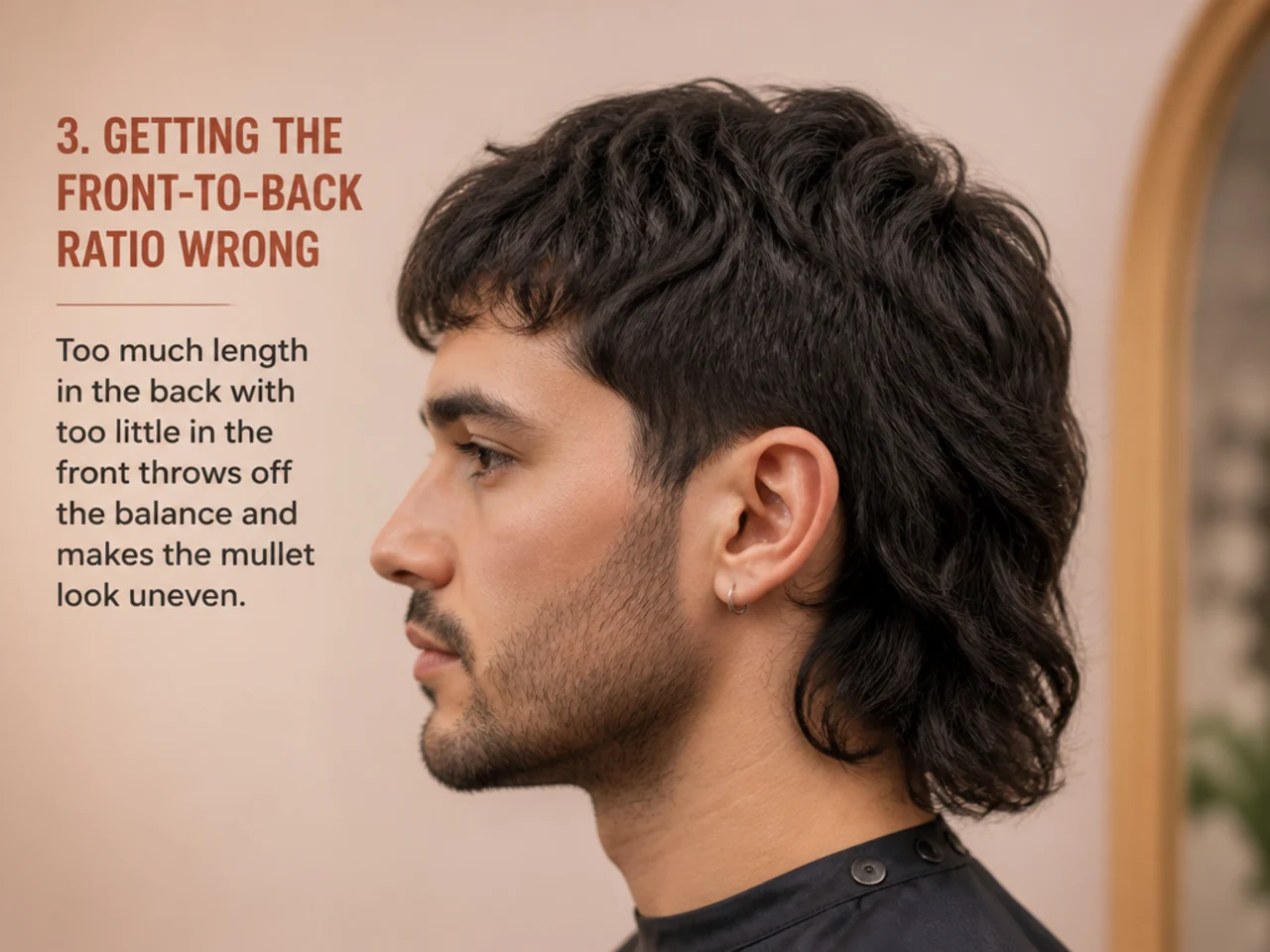
The mullet lives on the ratio between the shorter front and the longer back. Get it wrong and the shape reads mushroom, rat tail, or wedge. I see all three every month. Mushroom is when the top is too long relative to the back. Rat tail is when the back is too long relative to the top. Wedge is when the middle of the back is too heavy — no layering, no taper into the nape, just a block of hair sitting behind the ears.
The mistake is thinking a mullet is about the back only. It's a two-length cut, and the two lengths need to talk to each other. A two-inch top with a two-inch back reads as a shag, not a mullet. A one-inch top with a five-inch back reads as a rat tail. The finished shape sits at roughly a two-to-three ratio — top around one-and-a-half to two inches, back around two-and-a-half to three inches for a modern version.
The fix is to state both lengths in the chair. "Two inches on top, three inches at the nape, layered through the middle" is the phrasing that survives. If your cowlick or crown makes the top sit taller than you want, drop the top length by half an inch and shorten the back proportionally. The men haircut mullet fade guide covers the exact ratio for each face shape and shows what a balanced silhouette looks like before you sit down.
4. Fighting the Cowlick Instead of Cutting to It
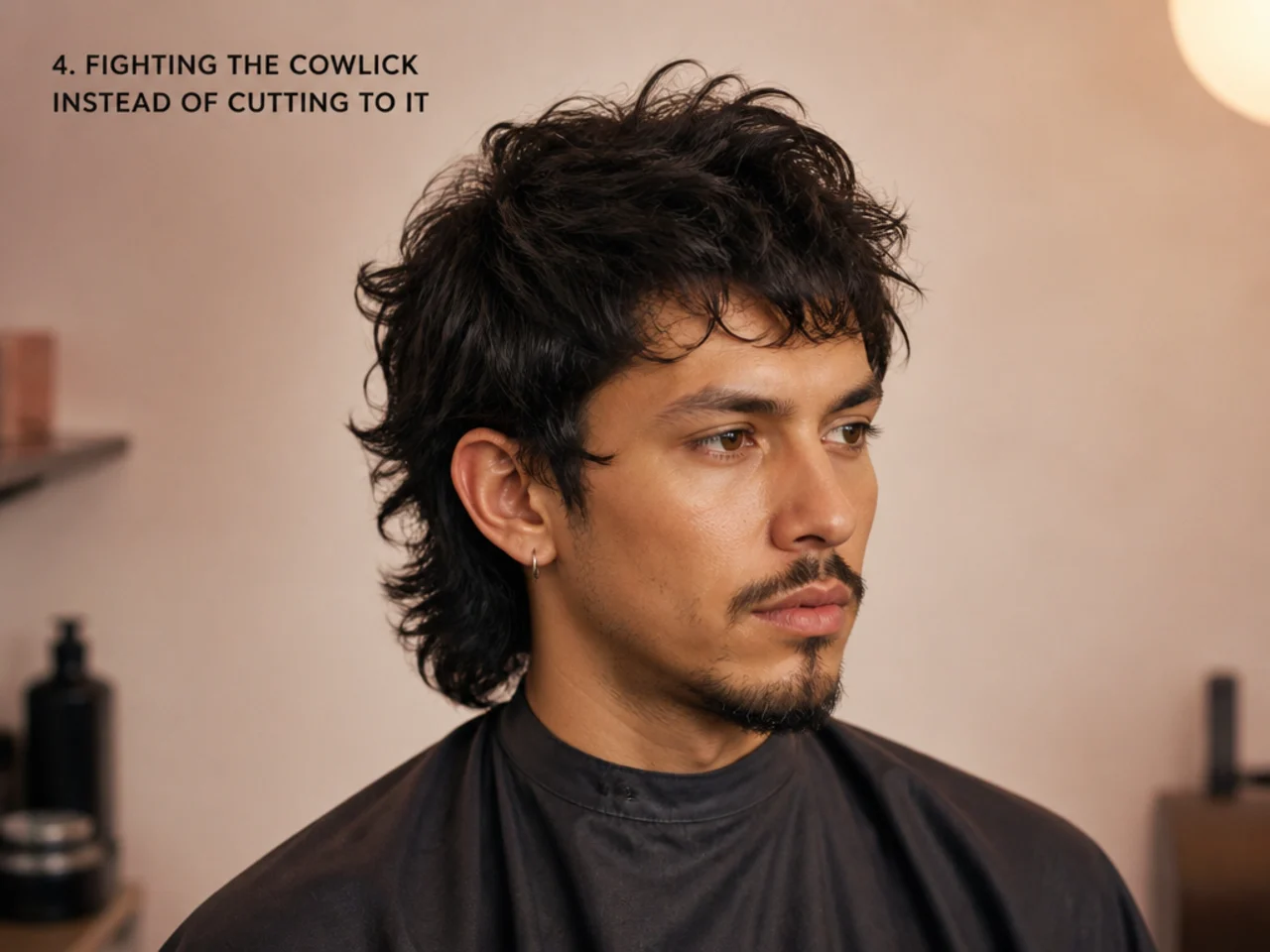
Almost every head has at least one cowlick — a swirl at the crown, a lift at the front hairline, or a stubborn piece at the back nape. Cut against it and the piece will spring off the head by day two no matter what product goes in. Cut with it and the layers fall exactly where the reference showed them. Guys blame the product. It's almost never the product.
The mistake is a wet consultation. The stylist washes the hair, combs it flat, cuts to what the comb shows, and the cowlick disappears under the water. Once the hair dries, the swirl reasserts itself and the layer sitting on top of it lifts straight up. I've recut mullets where the front pieces were flying at forty-five degrees because the fringe was cut against a hairline cowlick nobody mapped.
The fix is a dry consultation before scissors touch the head. The stylist runs their fingers through your dry hair, finds every cowlick and growth pattern, marks them mentally, and layers around them. If you have a strong front cowlick, the fringe gets slightly longer to fall over it. If you have a crown swirl, the top layer gets cut with the swirl direction so it sits down. Say "please dry-check my cowlicks before the wash" out loud. Any stylist worth sitting with will already do this — the ones who skip it are the ones cutting mullets that spring apart.
5. Using the Wrong Product
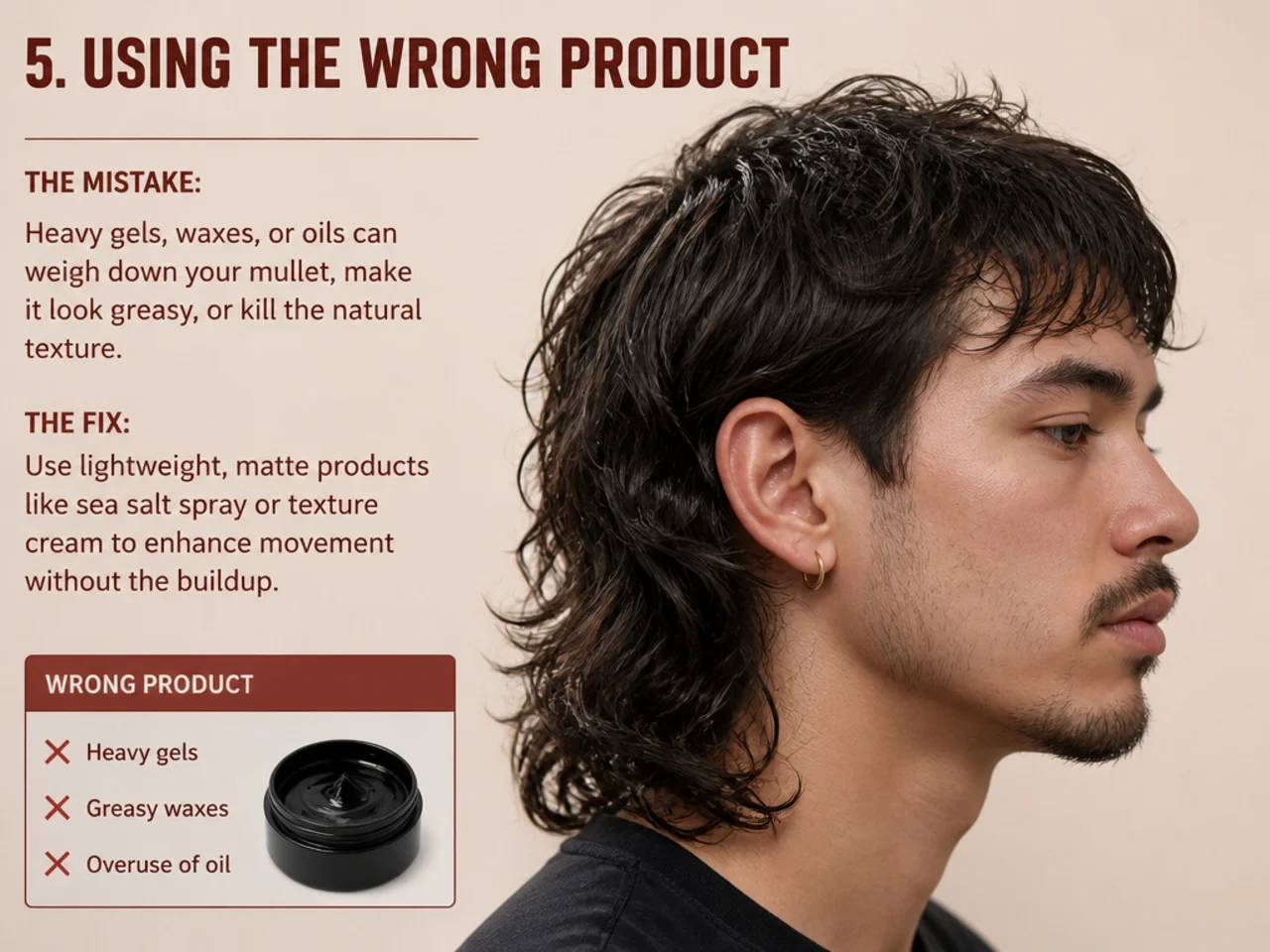
Guys walk out of the chair with a great faded mullet and ruin it at home with pomade. Or wax. Or a shiny gel that looks great on a slick back and turns a mullet into a helmet. The mullet is a movement cut. Every ounce of weight you put in the hair kills the layered swing the cut is designed to show. I hand every mullet client a two-product limit and half of them ignore it.
The mistake is treating a mullet like every other short haircut. Pomade, wax, and firm gel are engineered to hold shape against gravity — perfect for a side part, a slick back, or a pompadour. On a mullet those same products flatten the internal layers, weigh the fringe forward, and cause the back to sit in a solid block instead of a textured wave. I've watched a client apply an entire fingerful of wax and read as a wet Beatle by lunch.
The fix is a matte cream or a sea-salt spray on damp hair, applied with fingers, then air-dried or rough-dried with the hands. Nothing else. A pea-sized amount of matte cream through the top for texture. Two mists of sea-salt spray through the back for grip. Skip pomade, wax, and firm gel entirely on this shape. The best hair clippers for men guide covers home maintenance tools, but the product side is category-simple — matte cream or salt spray, one of the two, one time per day.
6. Skipping the Six-Week Trim
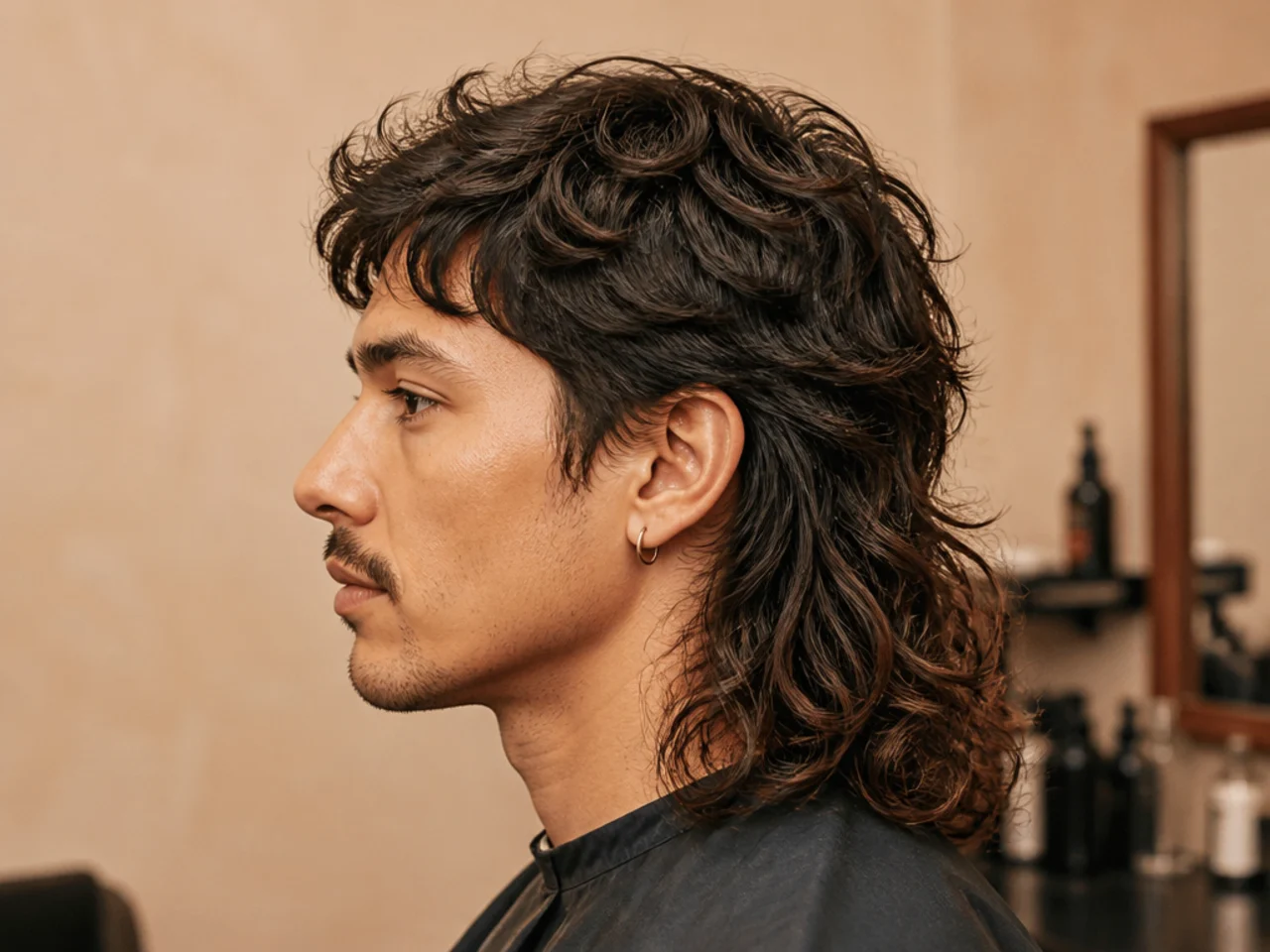
The mullet is a maintenance cut, not a low-maintenance one. Skip the six-week trim and two things happen in exactly this order. The fade grows out first — usually by week four — and the sides start blending back into the top on their own, but wrong. Then the internal layers on the back stack up and the whole silhouette reads heavy and undefined by week seven. Guys wait until month three to come back and I'm cutting the whole shape again.
The mistake is treating the mullet like a fade-only cut. A pure fade needs a mini touch-up every three weeks, and that's it. A mullet needs both — a mini touch-up at the taper at week three, and a full reshape of the internal layers and back length at week six. Two appointments per cycle. Guys book one and the shape drifts.
The fix is booking both appointments standing at the first visit. Week three is a fifteen-minute skin refresh of the fade line — no scissor work needed. Week six is the real reshape — internal layers refined, back length dusted back to spec, front pieces trimmed to match the cowlick. If your calendar can't hold both, drop the week-three touch-up and hold the six-week reshape as non-negotiable. The how often should men get a haircut guide covers the reasoning across cuts, and the mullet sits at the six-week end for exactly this reason.
The Turning Point That Fixes Every Faded Mullet
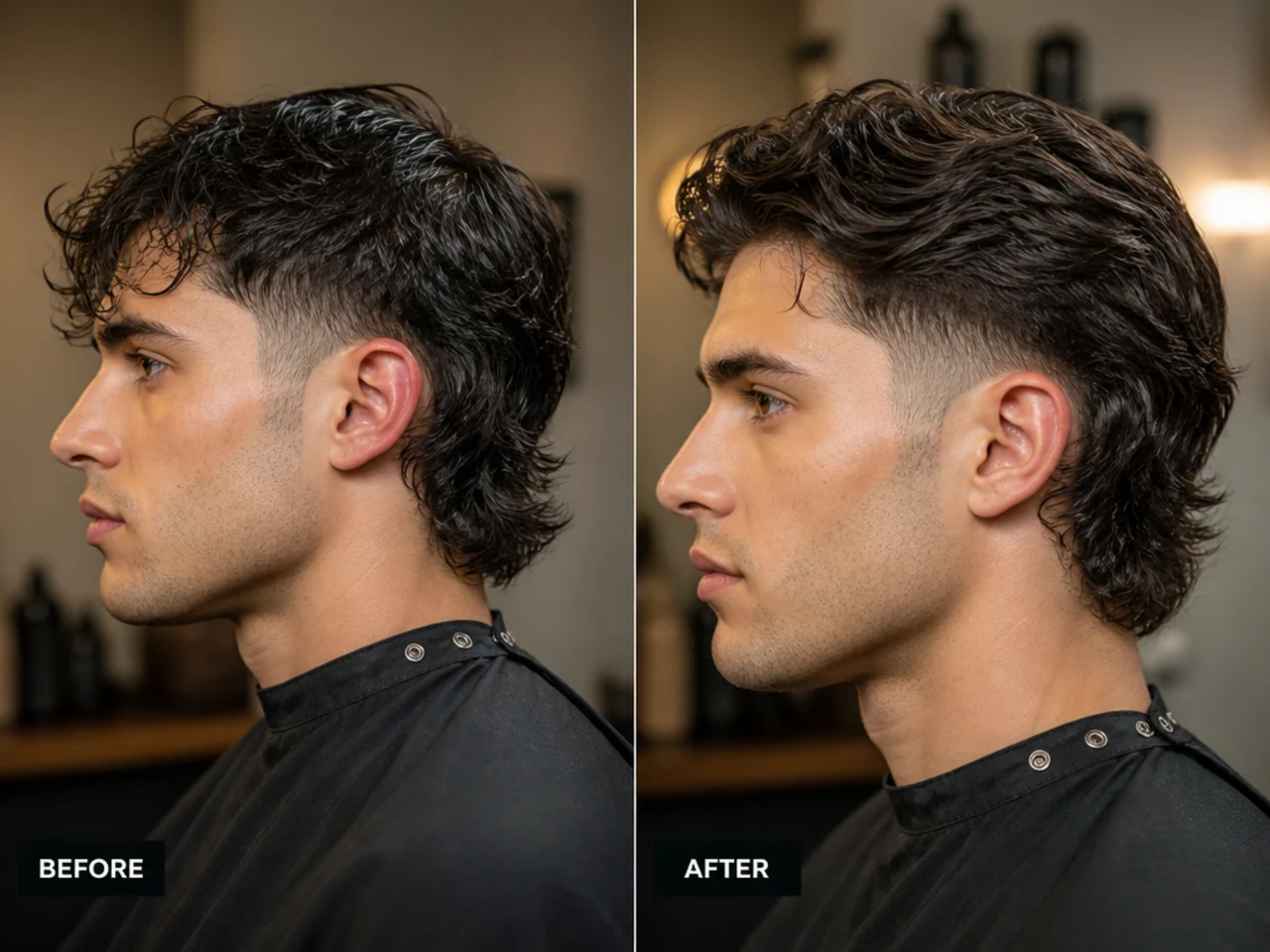
Every client I've walked through a successful faded mullet had the same recovery arc. A bad first cut somewhere, a recut with me to reset, and then one habit change that kept the shape holding across every appointment after that. It's not a product. It's not a specific salon. It's a photo folder.
They started bringing the same three reference photos to every visit. Not a new batch every time. The same three files — front, side, and back — of the finished silhouette they were growing toward. Held up next to their face at the start of every appointment, those photos gave every stylist the same target, and every cut moved the shape one step closer instead of drifting sideways. Mullets drift a full step per visit when the reference changes between appointments.
Reference photos plus standing appointments plus a two-product styling routine at home. That's it. No premium product line, no salon program, no protein treatment. The same photo, the same schedule, the same routine. Your faded mullet only reads sharp when your maintenance is boring — the cut cannot fix what your calendar and your bathroom shelf are undoing every week.
What to Do Next

Pick your finished silhouette first. If you haven't landed on the exact faded mullet you're growing toward, the mullet haircut for men library covers the full range — short, medium, and long — with reference frames and chair language for each. Cross-check with the modern mullet haircut men pillar to see how the family sits together, and pick the version closest to your hair type and workplace.
Then choose your side treatment. A low taper fade mullet reads clean and grows out gracefully — the safest first pick for guys new to the shape. A low taper fade on its own without a mullet back gives you a reference for what the taper should look like before it meets the longer length. If you want the finish softer, the soft mullet haircut men library shows scissor-blended sides instead of clipper work — a lower-maintenance version that skips the six-week fade line refresh.
Save your three reference photos to a dedicated album in your phone. Front, side, and back — the same three files you'll hand every stylist for the next twelve months. Book two appointments standing at the first visit. Cadence beats every other habit for keeping the shape holding.
FAQ
What is the most common mullet mistake?
Going too long at the back too fast. Most guys ask for four to five inches on the first appointment because the reference photo shows a fully grown-in version. Two to three inches for the first cut lets the shape hold while the internal layers set. Grow into the finished length across two or three trims instead of one visit, and every layer settles where it's supposed to.
Is a mullet without a fade a mistake?
Not always. A scissor-blended side works well on straight and wavy hair when the finish reads soft. A skipped blend on thicker, coarser, or curlier hair is what turns the cut into a wedge with two hard edges. If the sides look disconnected from the top when you check the mirror on day two, the fix is a low taper or a scissor blend — not more length on the back.
What length should a mullet be at the back?
Two to four inches for a modern faded mullet. Two inches reads clean and workplace-safe with a low taper on the sides. Three to three-and-a-half inches is the middle-of-the-road modern version most guys land at. Four inches reads mid-2020s rocker and swings with movement. Anything past five inches drifts into 1980s territory unless the internal layers are cut with real intention.
How do I fix a mullet cowlick?
Cut with the cowlick, not against it. A stylist who ignores the direction the hair naturally falls will point-cut layers that lift the wrong way and spring off the head by day two. Ask for a dry consultation, have the stylist mark every cowlick and growth pattern before scissors touch the head, and layer around them. The fringe grows slightly longer over a front cowlick; the top layer sits with the direction of a crown swirl.
What product works best for a faded mullet?
A matte cream or a sea-salt spray on damp hair, then air-dry or rough-dry with fingers. Skip pomade, wax, and heavy gel — they weigh the internal layers down and kill the movement the cut is designed to show. Pea-sized amount of matte cream through the top for texture, two mists of sea-salt spray through the back for grip, one product per wash. Read the ingredient list — matte finish only, no shine polymers.
How often should I trim a faded mullet?
Every five to seven weeks for the full reshape. The fade grows out first, then the internal layers stack up and the back reads heavy by week six. A short mini-trim to reset the taper at week three keeps the sides fresh between full cuts. Book both appointments standing at the first visit — a floating "when I remember" cadence is how faded mullets end up buzzed off out of frustration by month three.