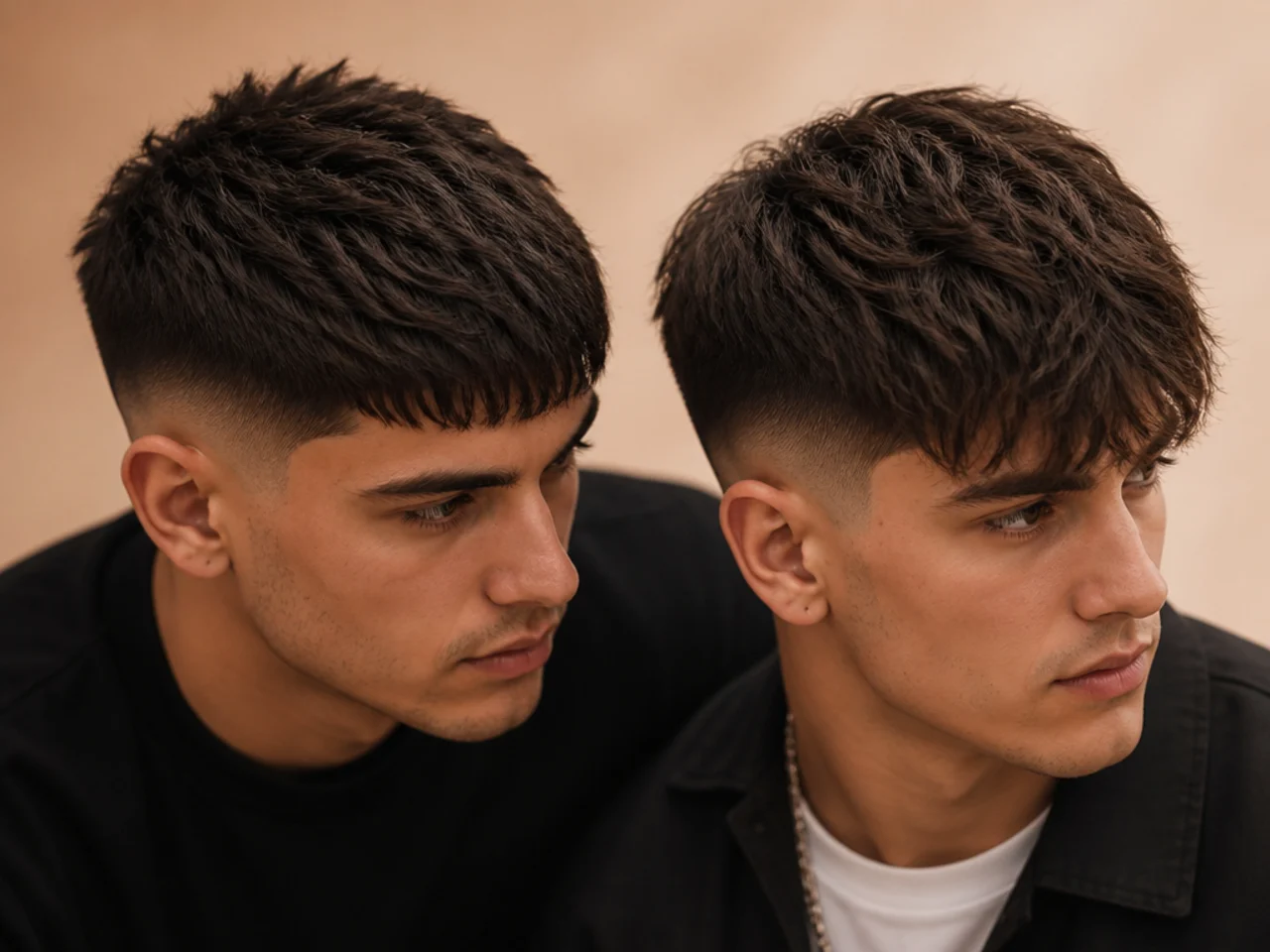
15 Fringe vs Crop Haircut Ideas for Men
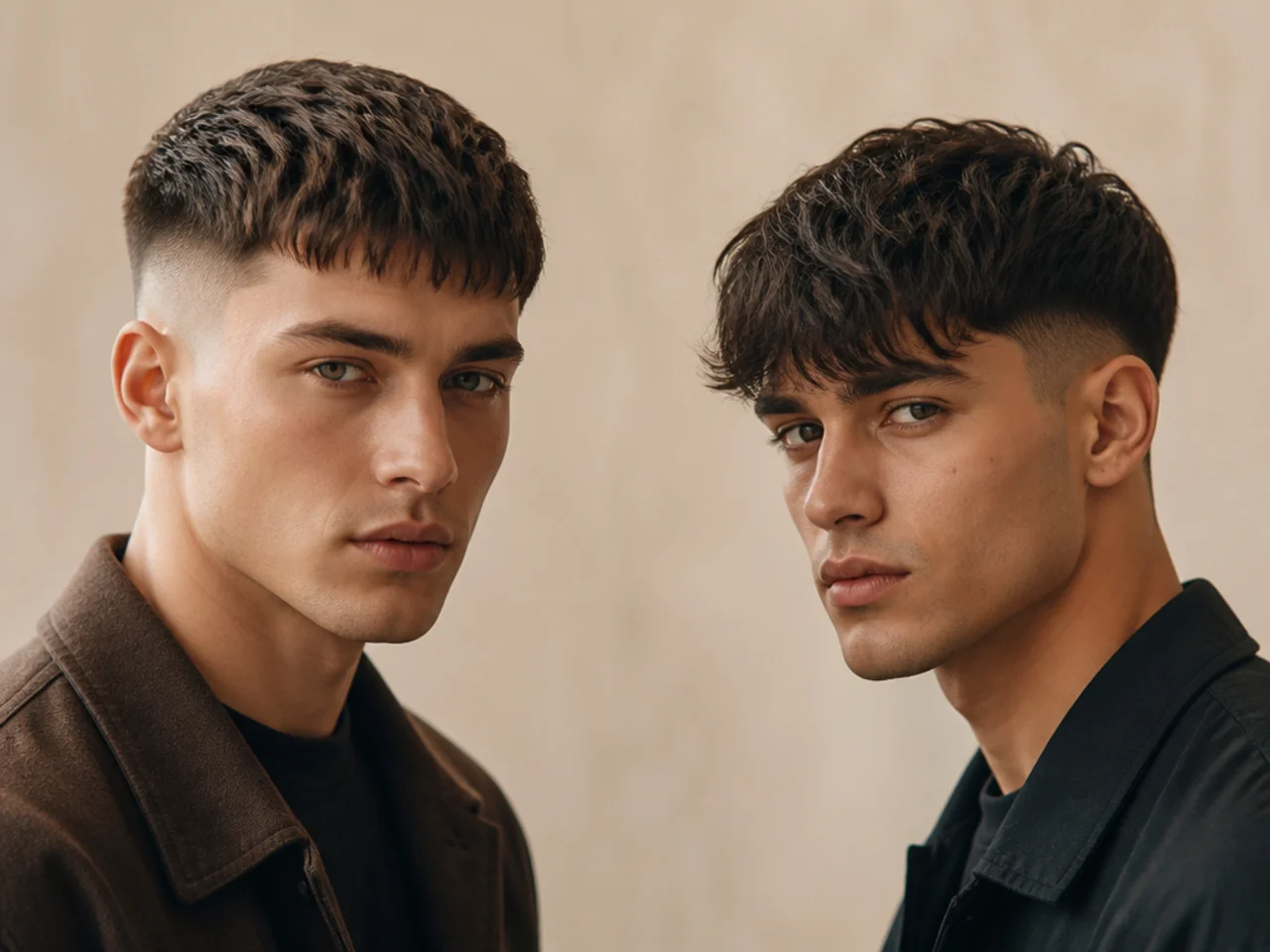
A fringe is a front edge that can be attached to almost any cut. A crop is a whole cut whose definition includes that edge, which is why asking for one gets you a haircut and asking for the other gets you a decision to make.
In this article · 22
- What Each Word Actually Specifies
- How to Choose Yours
- The 15 Fringe and Crop Comparisons
- 1. Weight at the Front
- 2. Upkeep Cycle
- 3. Forehead Coverage
- 4. Styling Time
- 5. Behaviour on Thick Hair
- 6. Behaviour on Fine Hair
- 7. Behaviour on Curly Hair
- 8. Pairing With a Fade
- 9. Pairing With a Beard
- 10. On a Receding Hairline
- 11. Growing One Into the Other
- 12. Office Suitability
- 13. Face Width
- 14. Cost Over a Year
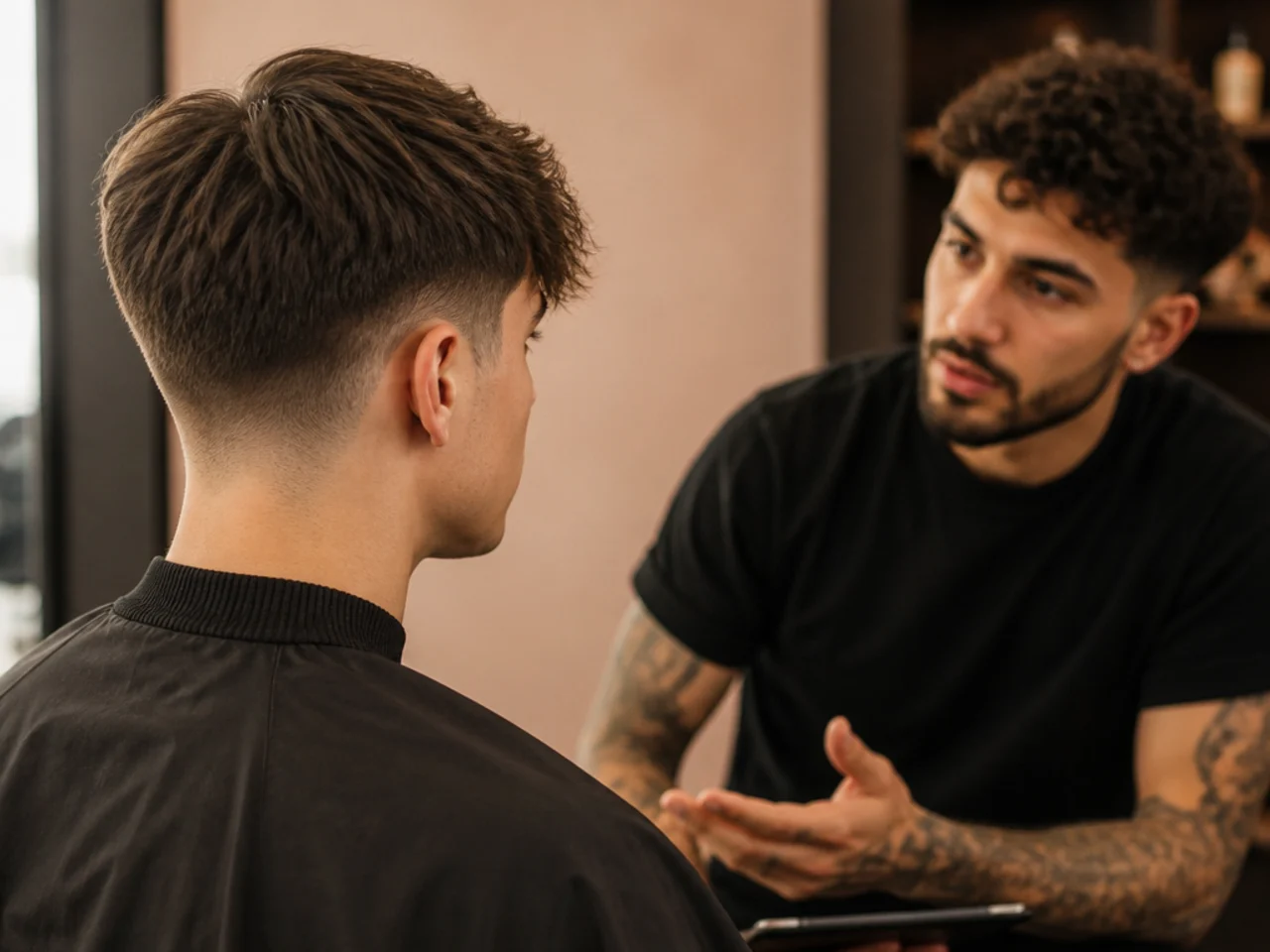
- 15. What to Say at the Consultation
- Styling and Upkeep
- Mistakes to Avoid
- FAQ
- Final Thoughts
These two words are used as though they were interchangeable, and the confusion costs people appointments. They are not the same kind of thing at all.
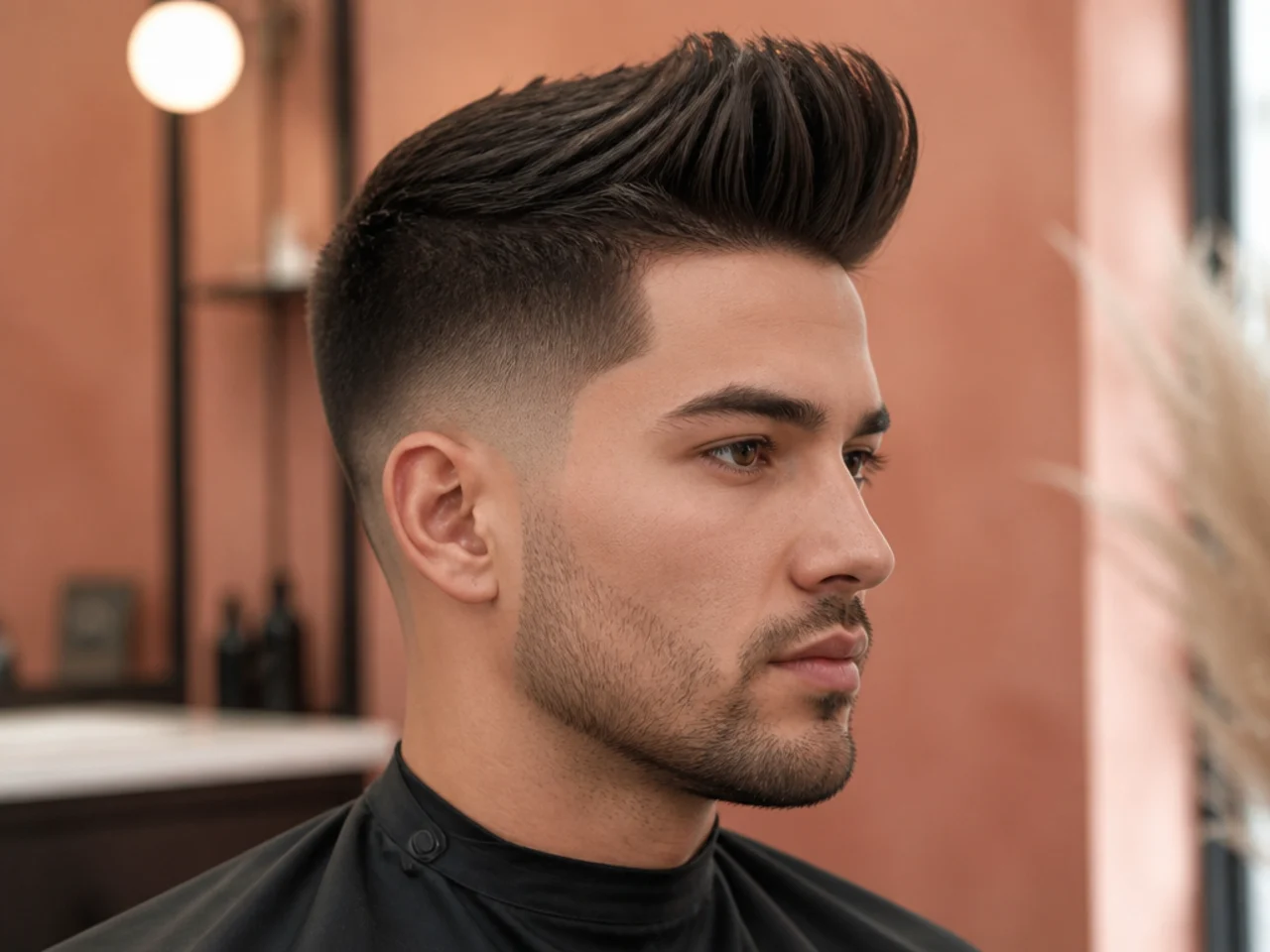
A fringe is a front edge, and it can be attached to almost any cut. Quiff, two-block, mullet, fade — all of them can take one, and it changes nothing else about the shape.
A crop is a complete haircut that includes that edge in its definition. Ask for a crop and four decisions are already settled. Ask for a fringe and you still have to make them.
What Each Word Actually Specifies
A fringe specifies one section. Length at the front, direction, and where the edge sits against the face.
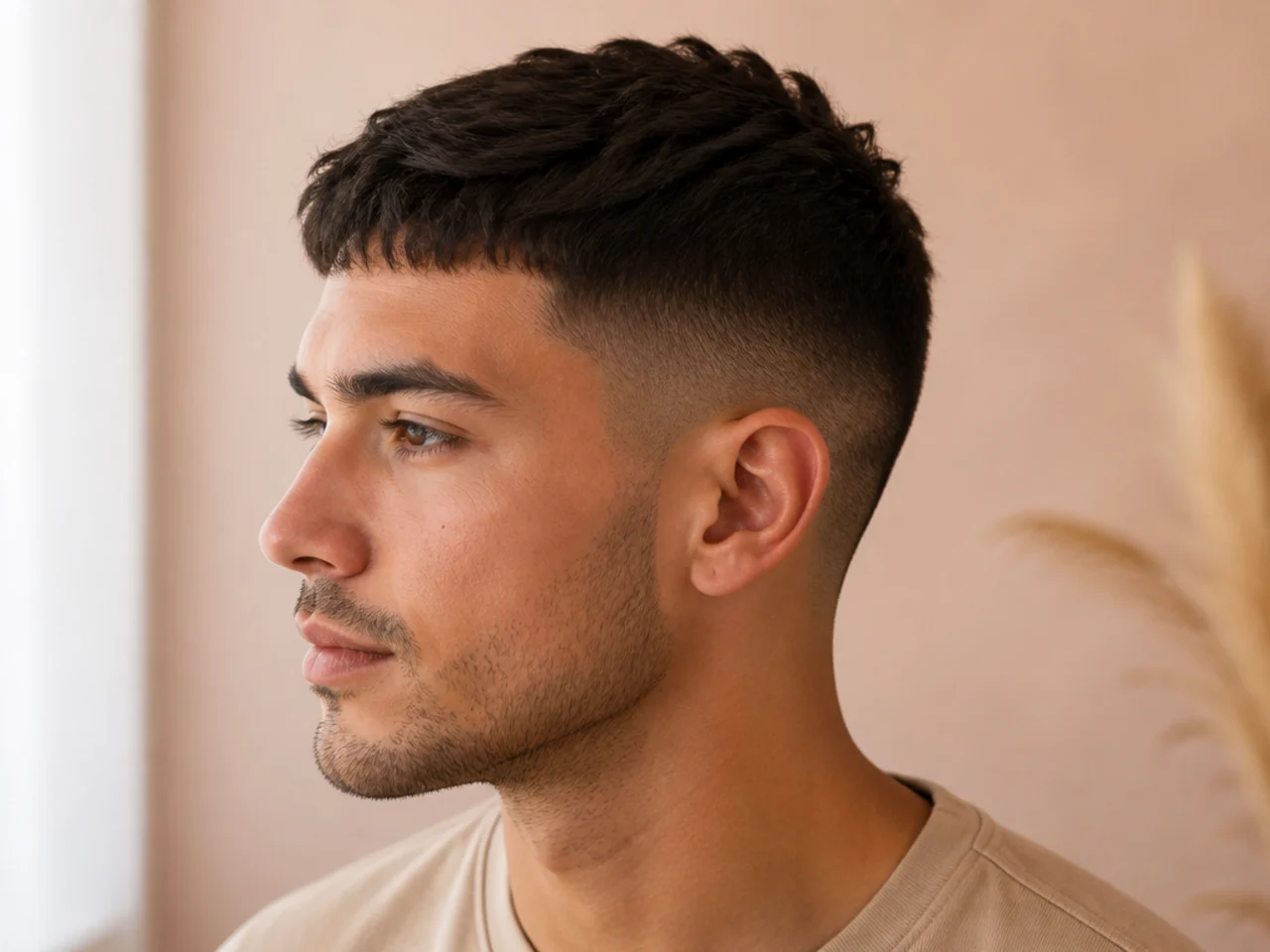
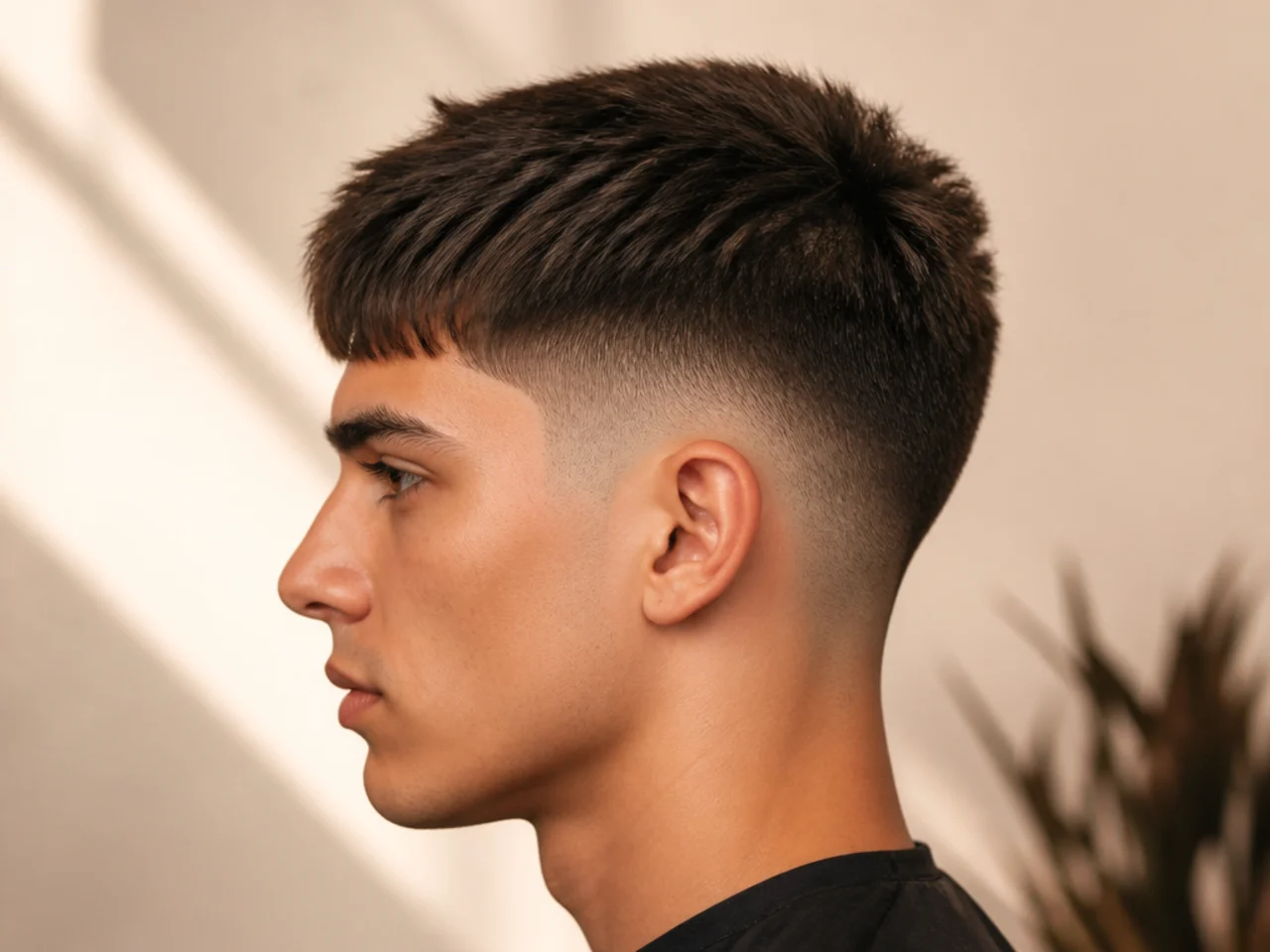
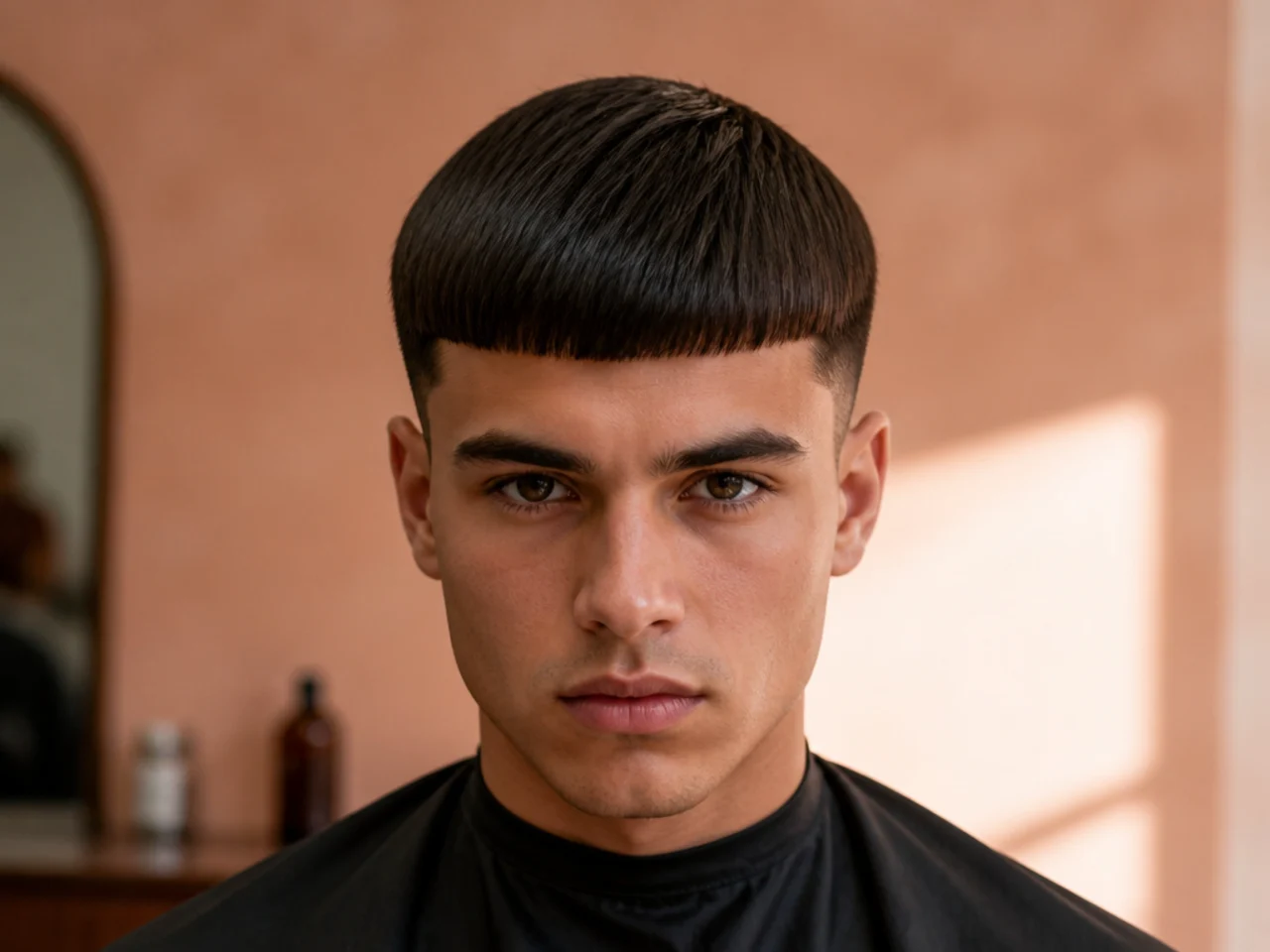
A crop specifies four things. Short forward front, short-to-medium top, short sides, and a hard relationship between them. The textured crop is the version most barbers will reach for by default.
A crop is always short at the front. Once the front passes the brow it is a fringe haircut, not a crop.
A fringe carries no upkeep rule. A crop does, because its shortness is what keeps it working as it grows.
How to Choose Yours
Pick the crop if you book monthly. It improves through weeks two and three instead of degrading.
Pick the fringe if you want length options. A fringe can be worn forward, swept or split. A crop can only be worn forward.
Consider your forehead height. A crop uncovers more of it. A fringe covers more of it.
Consider your texture. Curl loses around a third of its length drying, which pushes curly heads toward the crop by default.
The 15 Fringe and Crop Comparisons
1. Weight at the Front
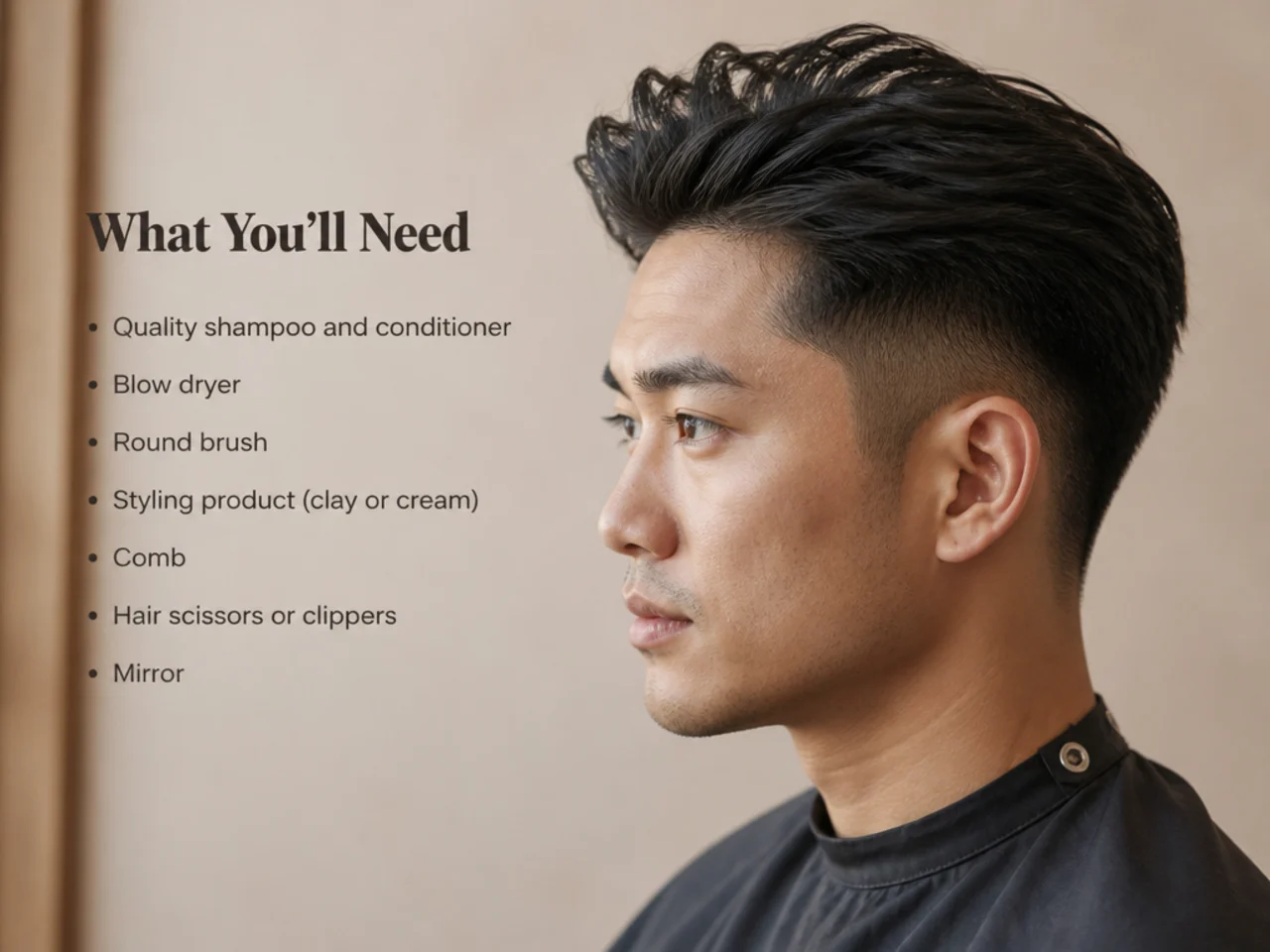
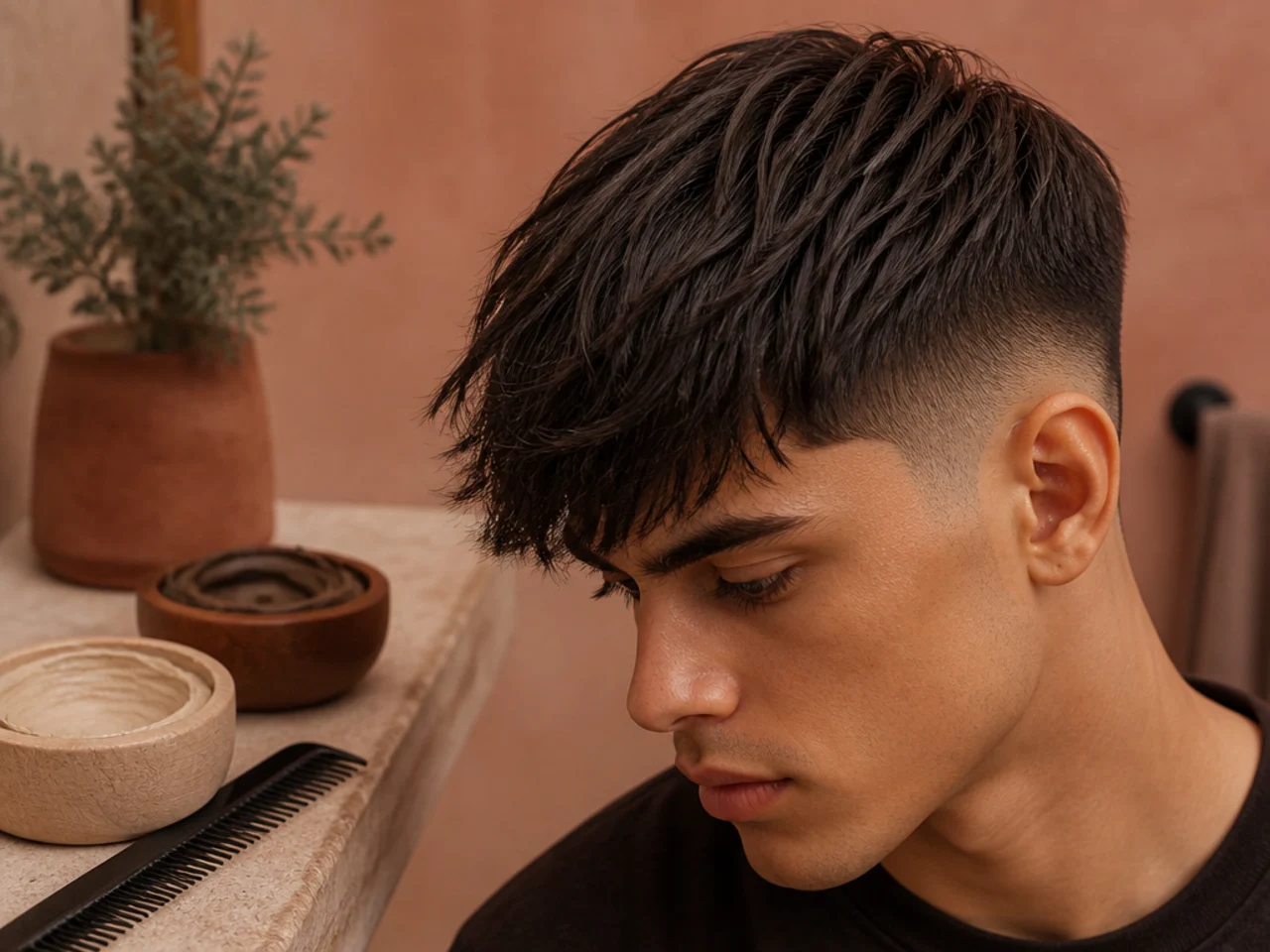
A crop keeps the front light and short so it stands where it is put. A fringe carries weight past the brow, which is what makes it hang, and hanging is the entire reason people want one.
2. Upkeep Cycle
A fringe hits the eyes at two to three weeks, before a taper has aged. A crop grows into its best length over the same period, which means the crop lets the sides set the schedule and the fringe does not.
3. Forehead Coverage
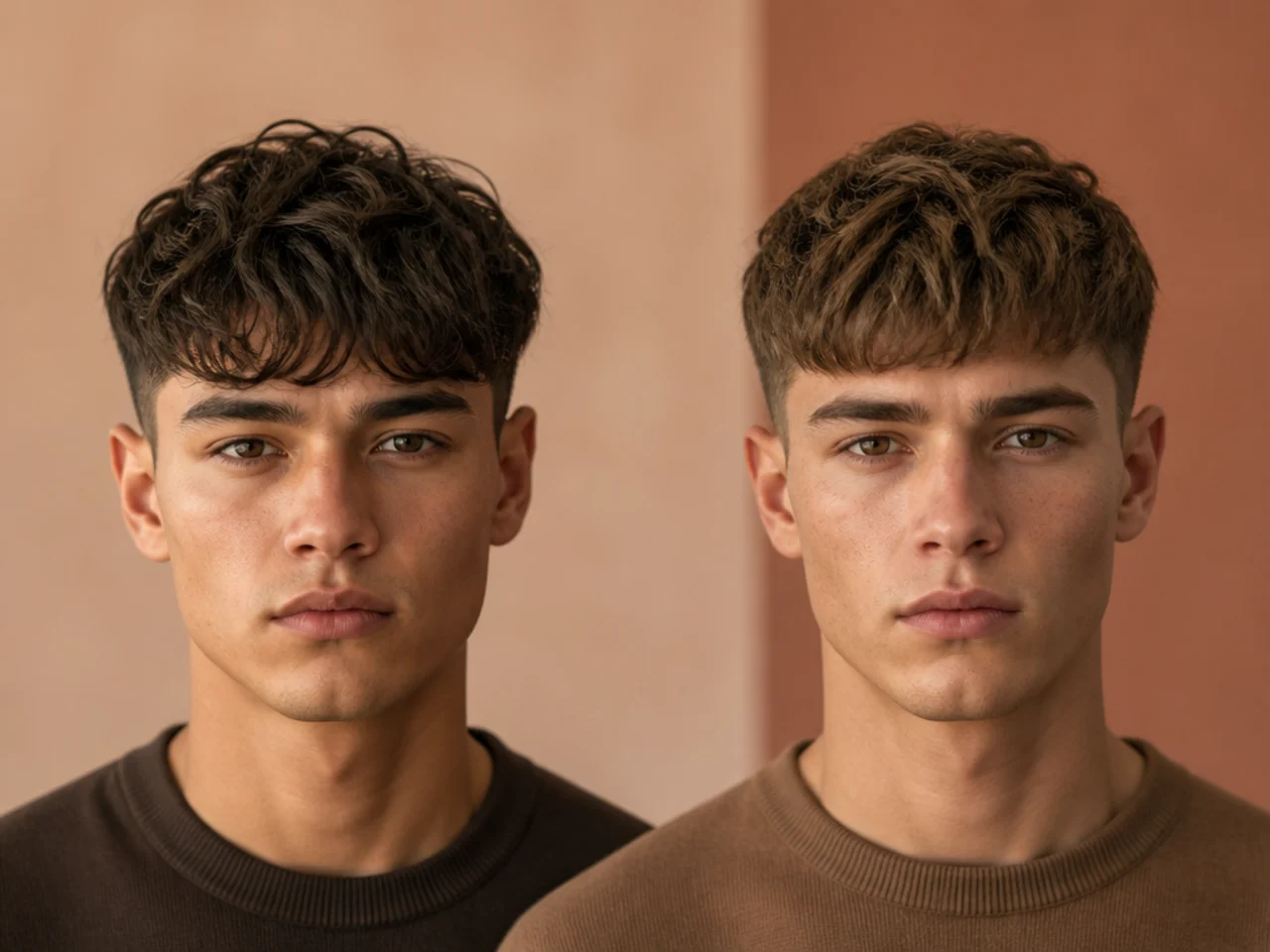
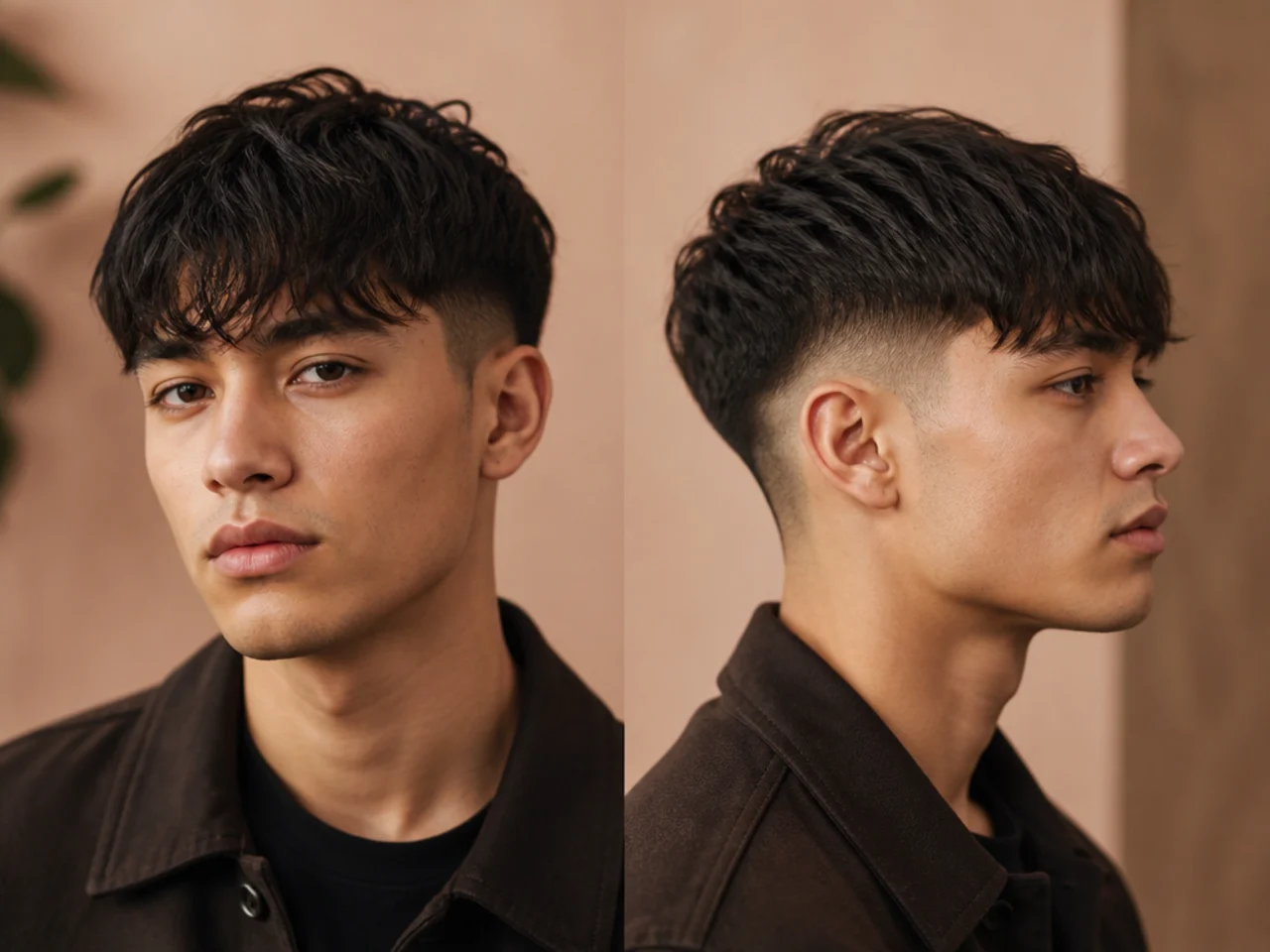
A fringe is the only men's haircut that reliably covers a tall forehead. A crop exposes it, which is why men with high hairlines are usually steered toward the longer option even when the crop suits their texture better.
4. Styling Time
A crop needs about ninety seconds and one product. A fringe needs the roots directed while damp and then cooled in place, which realistically doubles that, and it has to be repeated after rain or a gym session.
5. Behaviour on Thick Hair
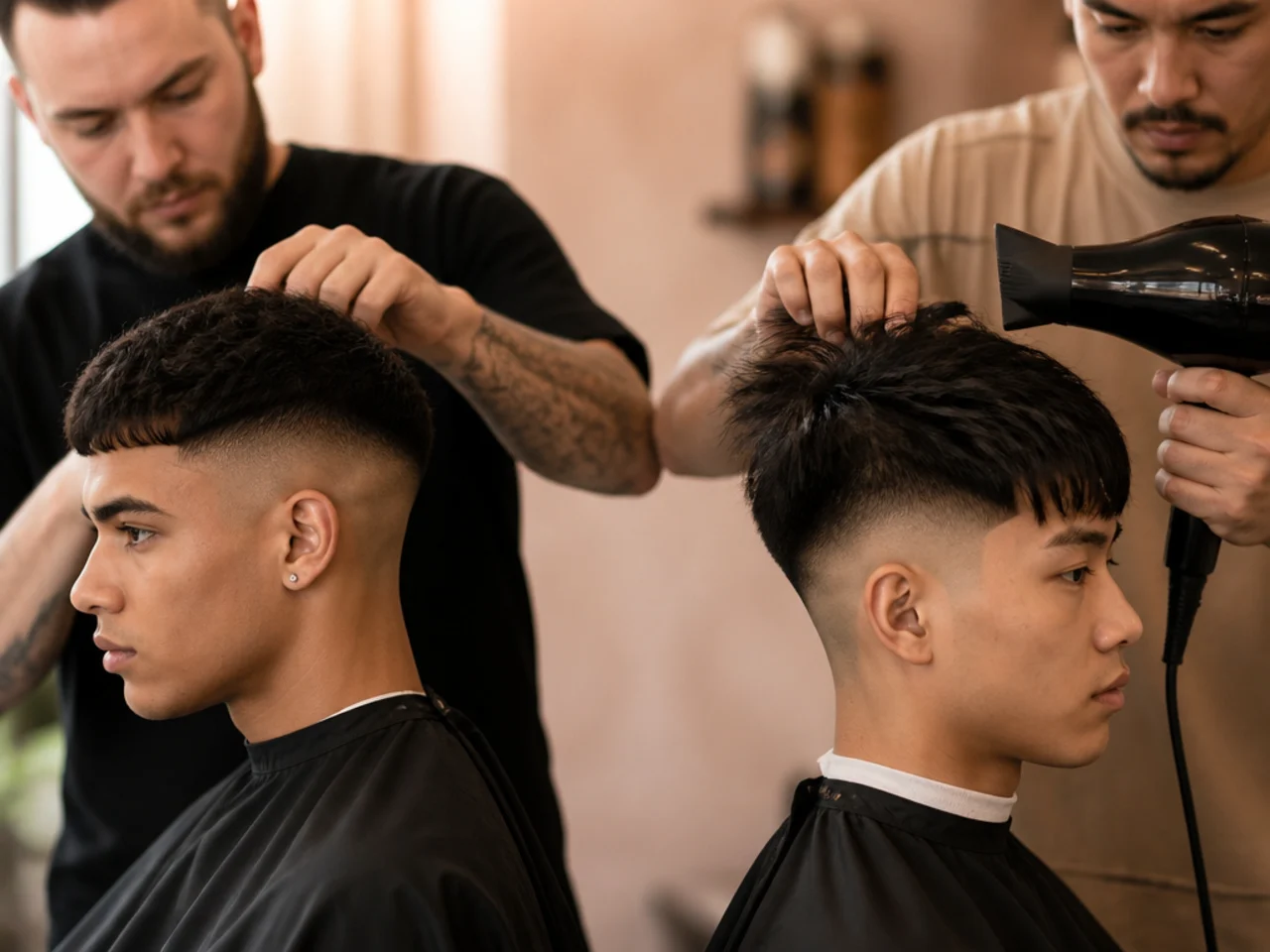
Thick hair at crop length stands up in a dense block, which is why crops on thick hair need internal weight removed. The same hair at fringe length is weighed down by its own mass and falls forward on its own.
6. Behaviour on Fine Hair
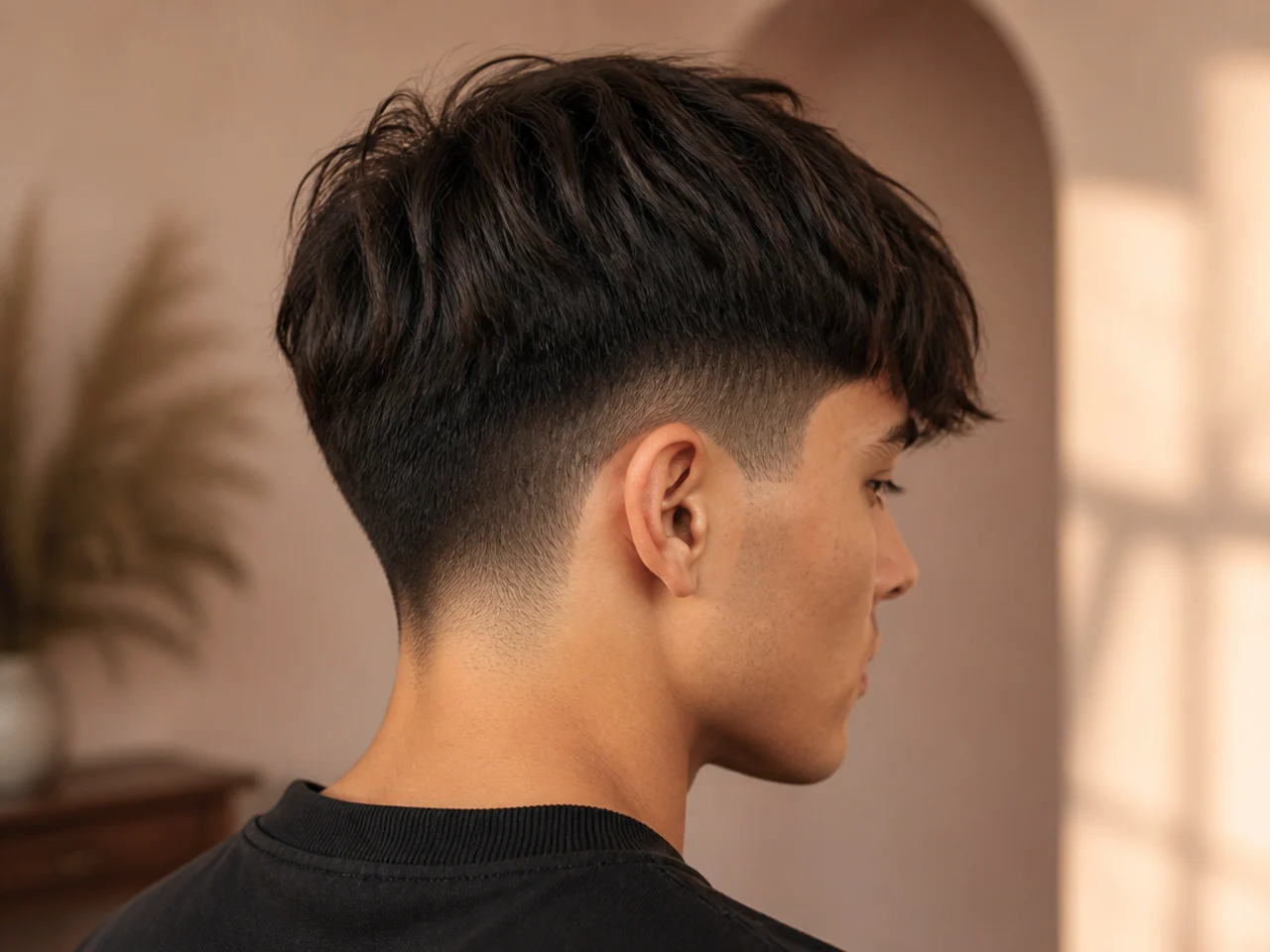
Fine hair is better served by the crop, because short blunt ends read as density. At fringe length the same hair goes translucent against the forehead and shows scalp through it.
7. Behaviour on Curly Hair
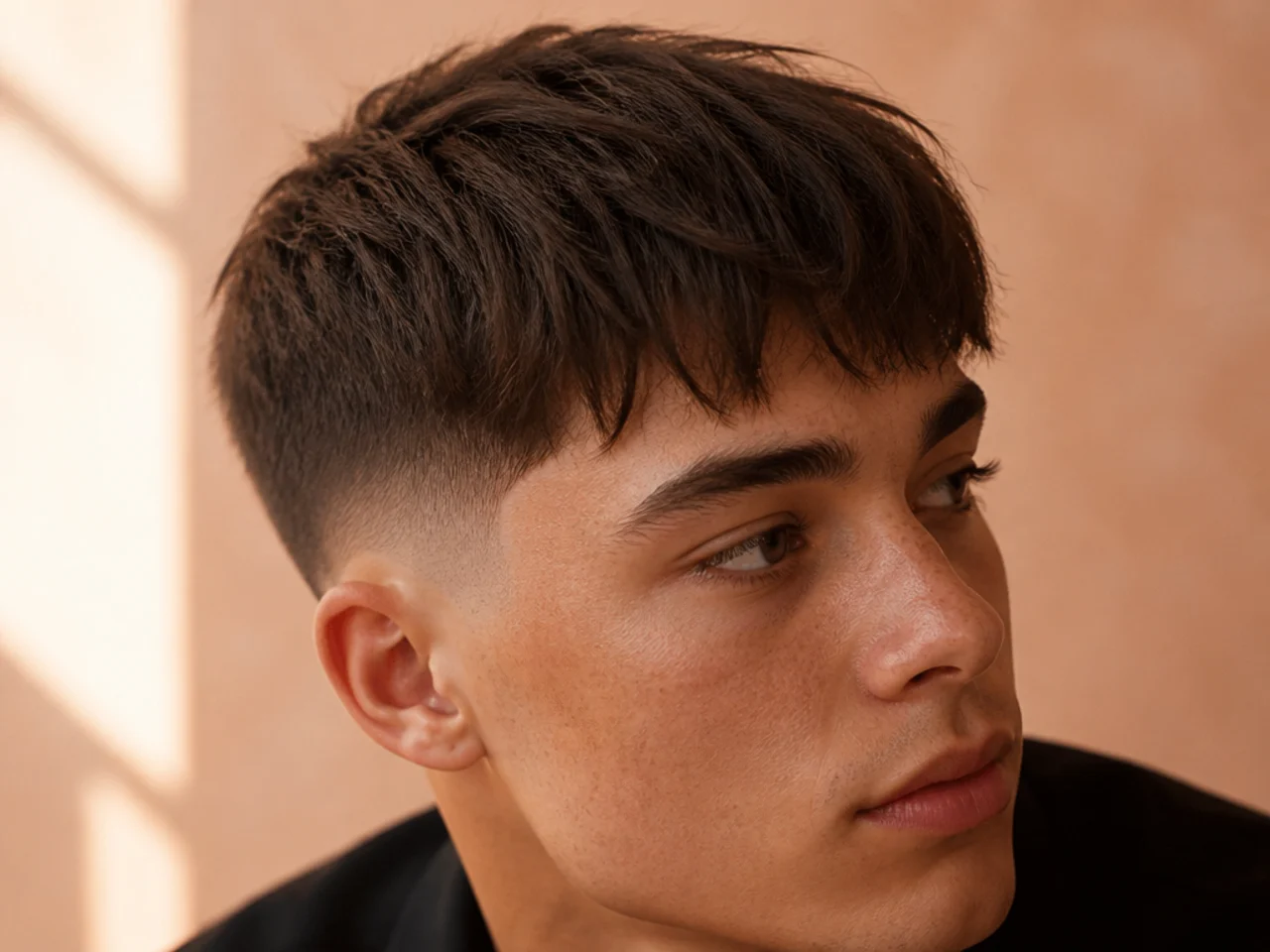
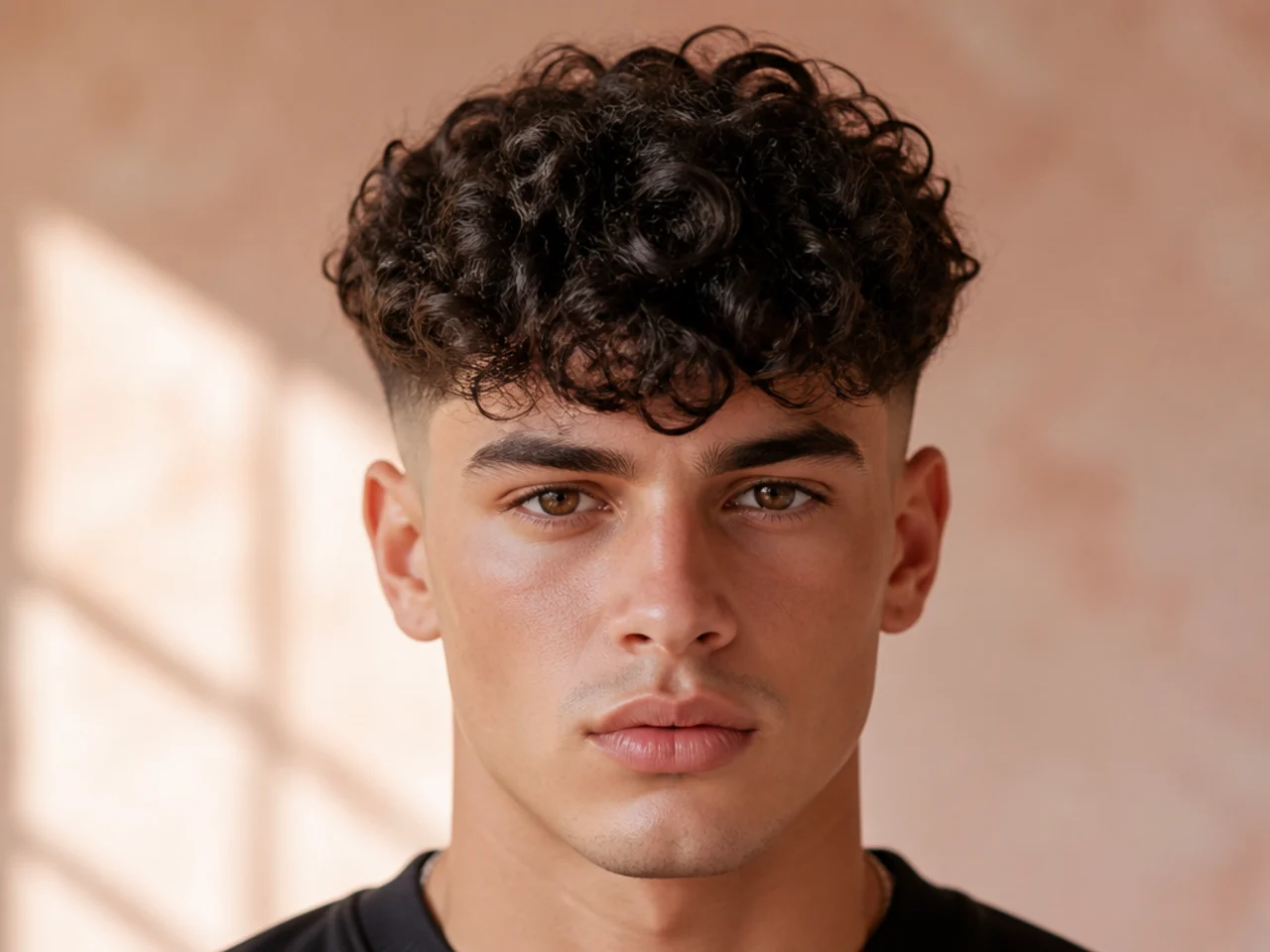
Curl shrinks around a third as it dries, so a curly crop is very short indeed. A curly fringe has to be cut generously long to land anywhere near the brow, which makes the fringe the harder cut to get right first time.
8. Pairing With a Fade
A crop takes a mid or high fade comfortably, because the short top does not need side weight to balance it. A heavy fringe over a high fade leaves nothing beside the front section and the head reads top-heavy.
9. Pairing With a Beard
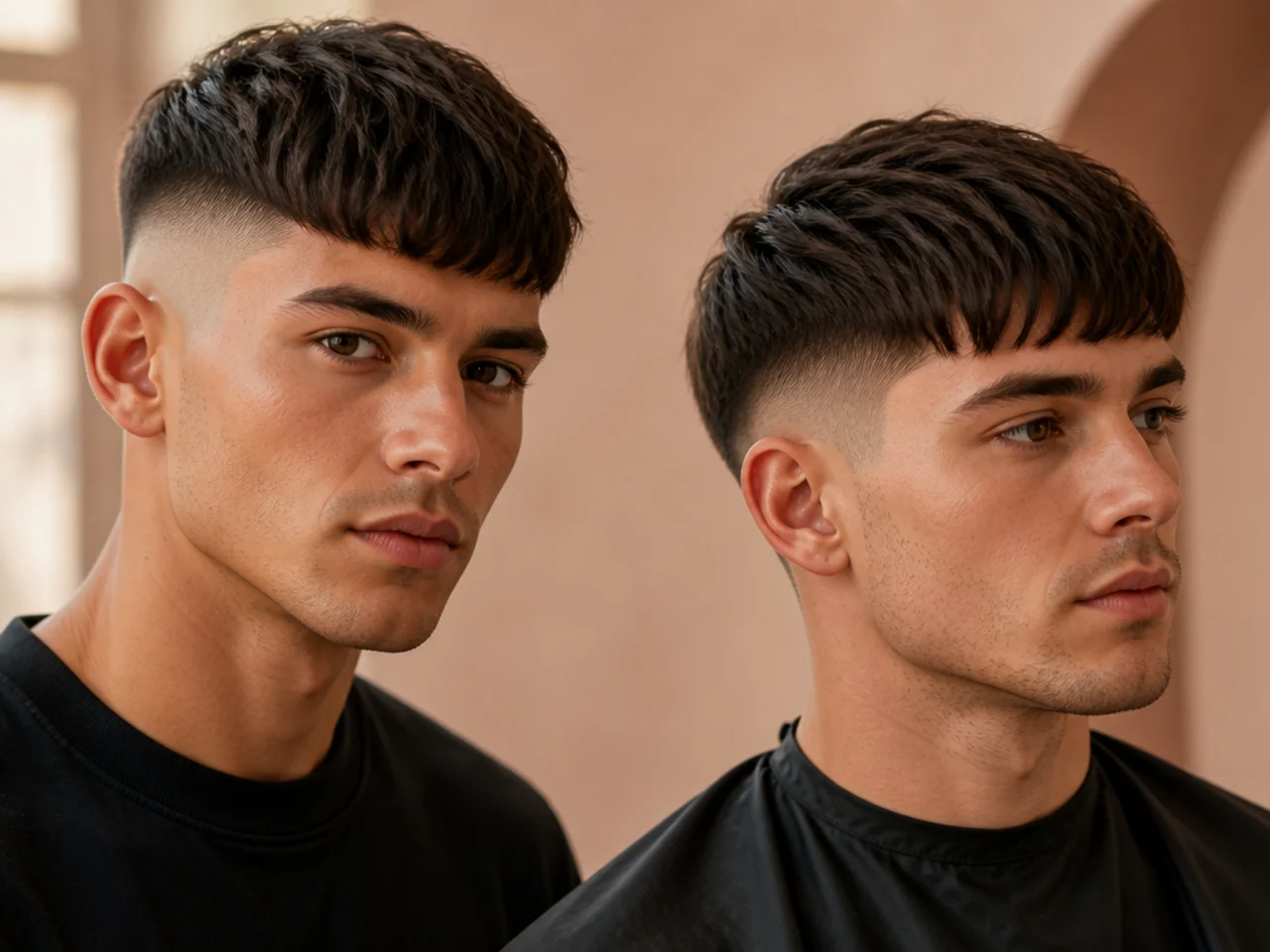
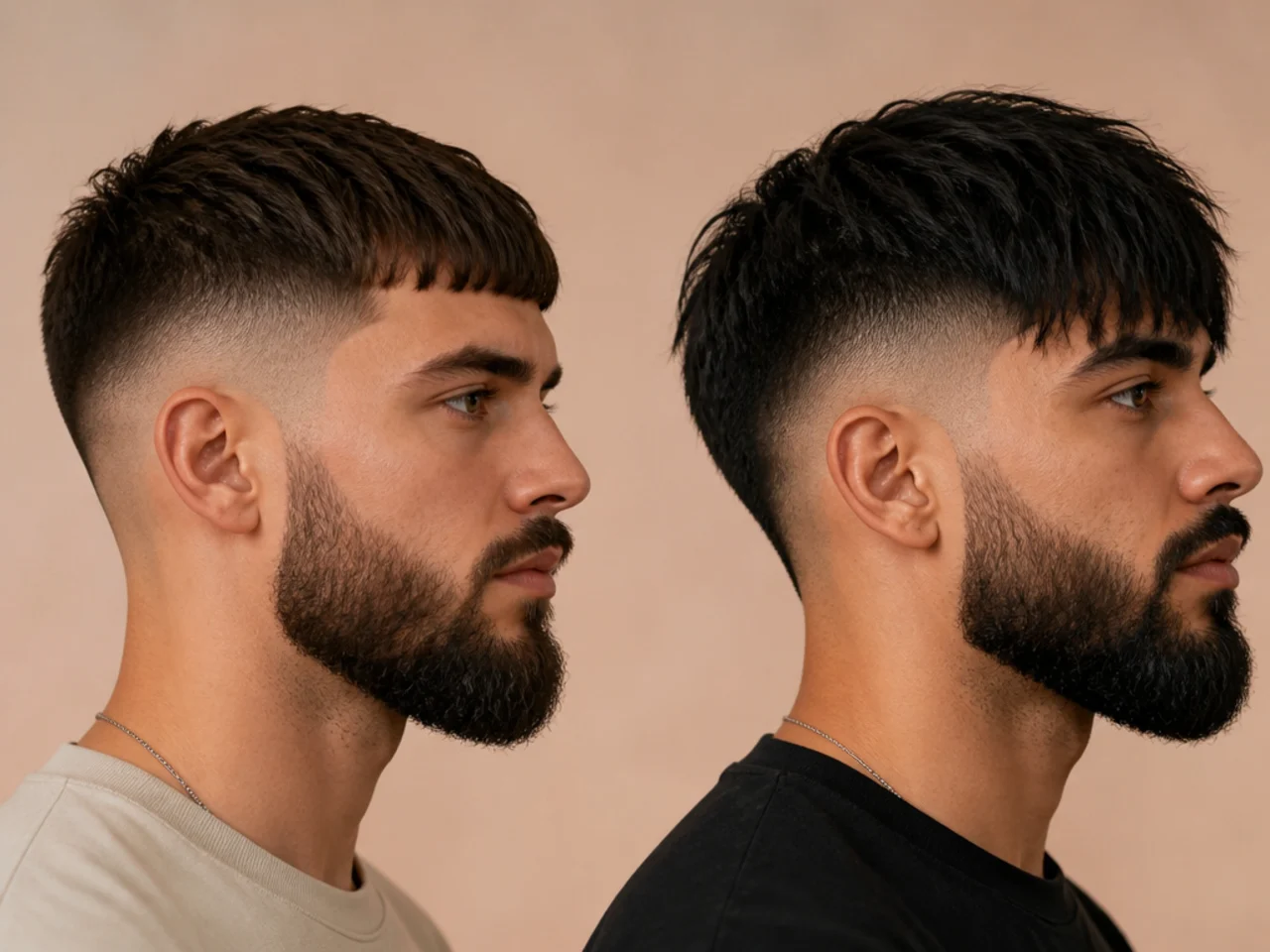
A crop and a full beard put all the visual weight at the jaw. A longer fringe puts weight back at the top of the head, which is why bearded men are usually happier with the fringe of the two.
10. On a Receding Hairline
Both work, for the same reason — keep weight high and the sides short so the contrast stops drawing the eye to the recession. The crop does it with texture and the fringe does it with coverage.
11. Growing One Into the Other
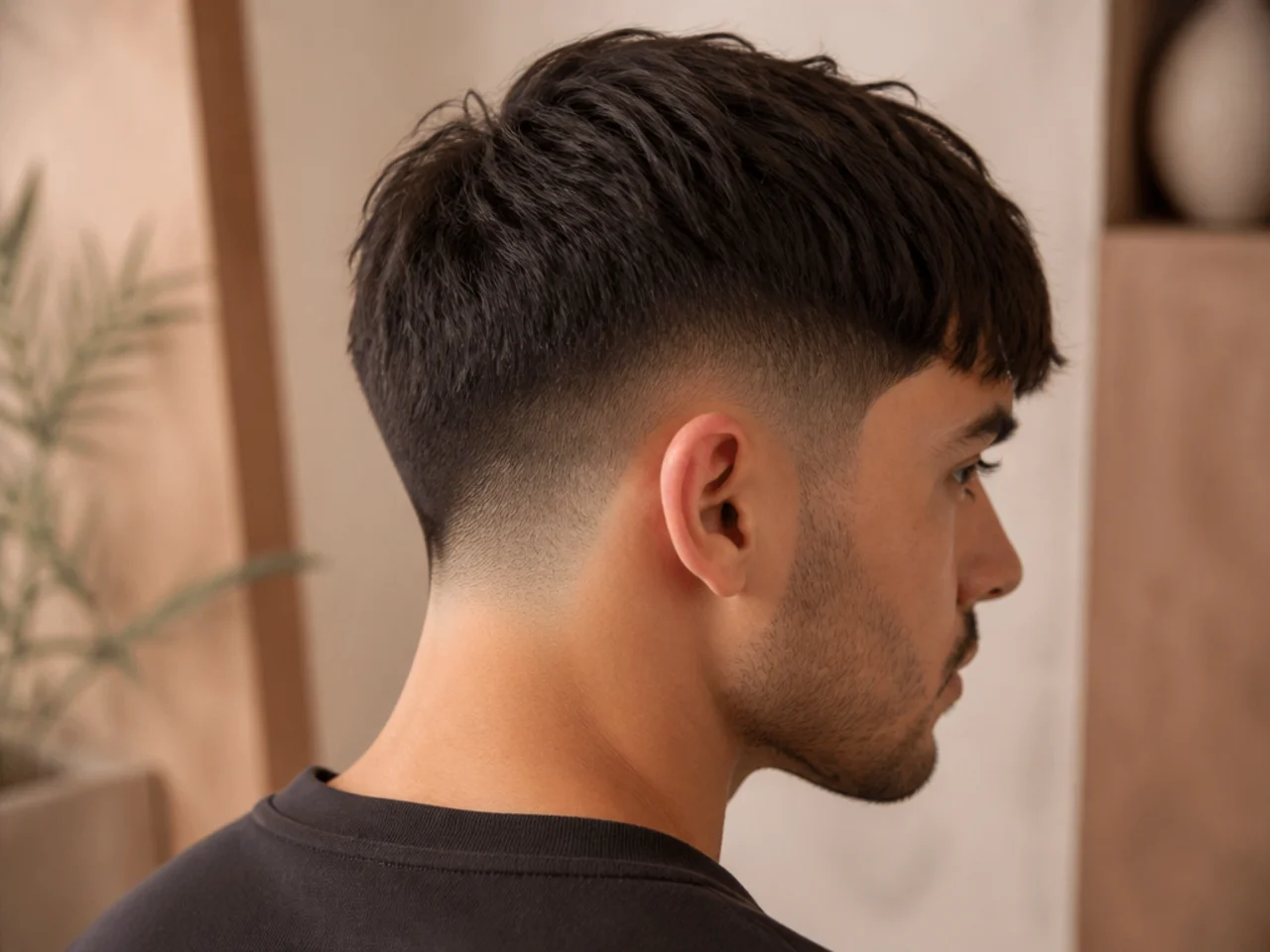
A crop grows into a fringe naturally, and it takes about six weeks. Going the other way means a single appointment and losing several centimetres, which is worth knowing if you are undecided.
12. Office Suitability
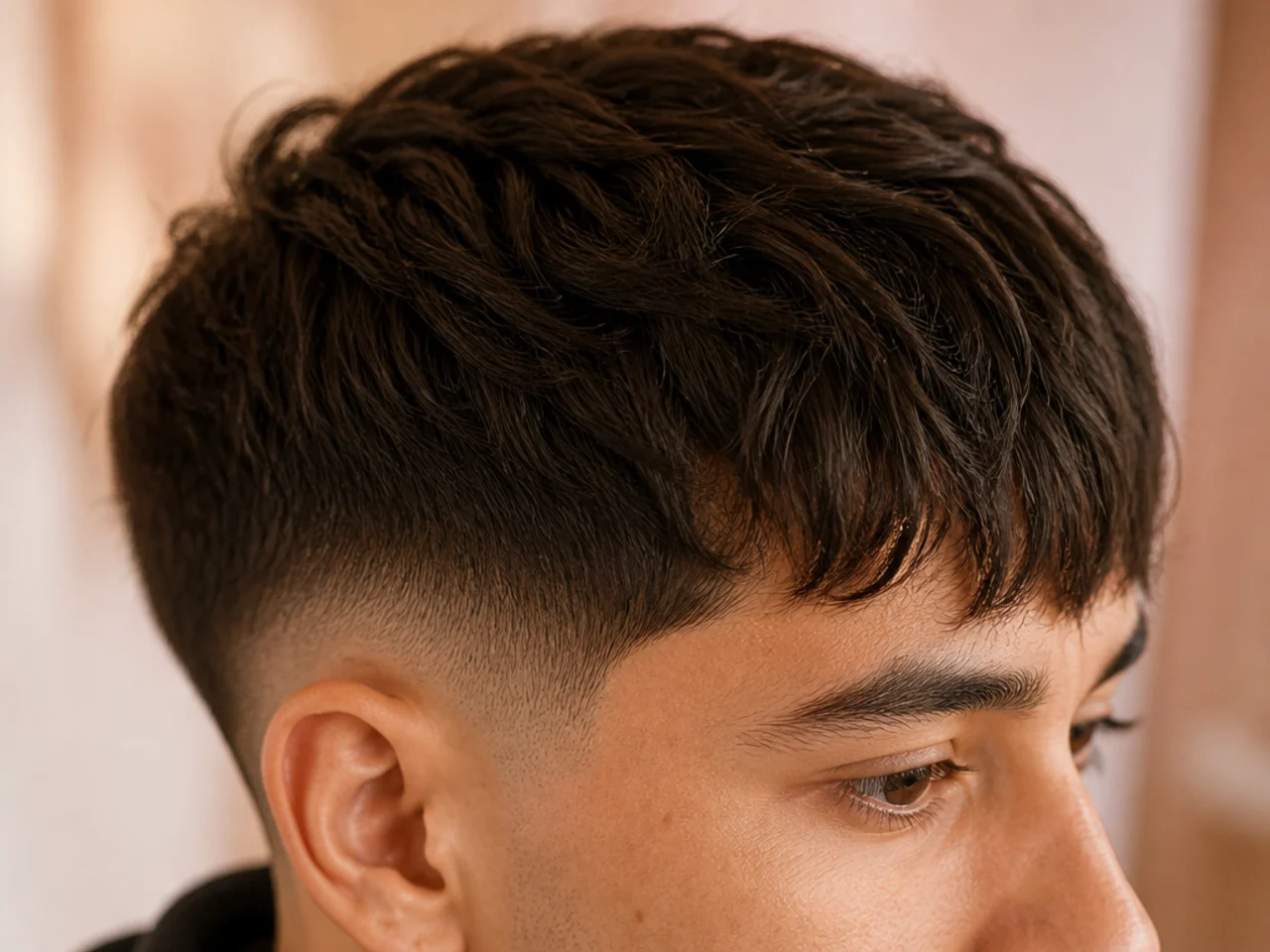
A crop reads as tidy at every stage of its growth. A fringe reads as tidy at week one and increasingly casual after that, which matters if your workplace notices. That keeps the crop inside the usual business hairstyles for men range and pushes a grown fringe out of it by week three.
13. Face Width
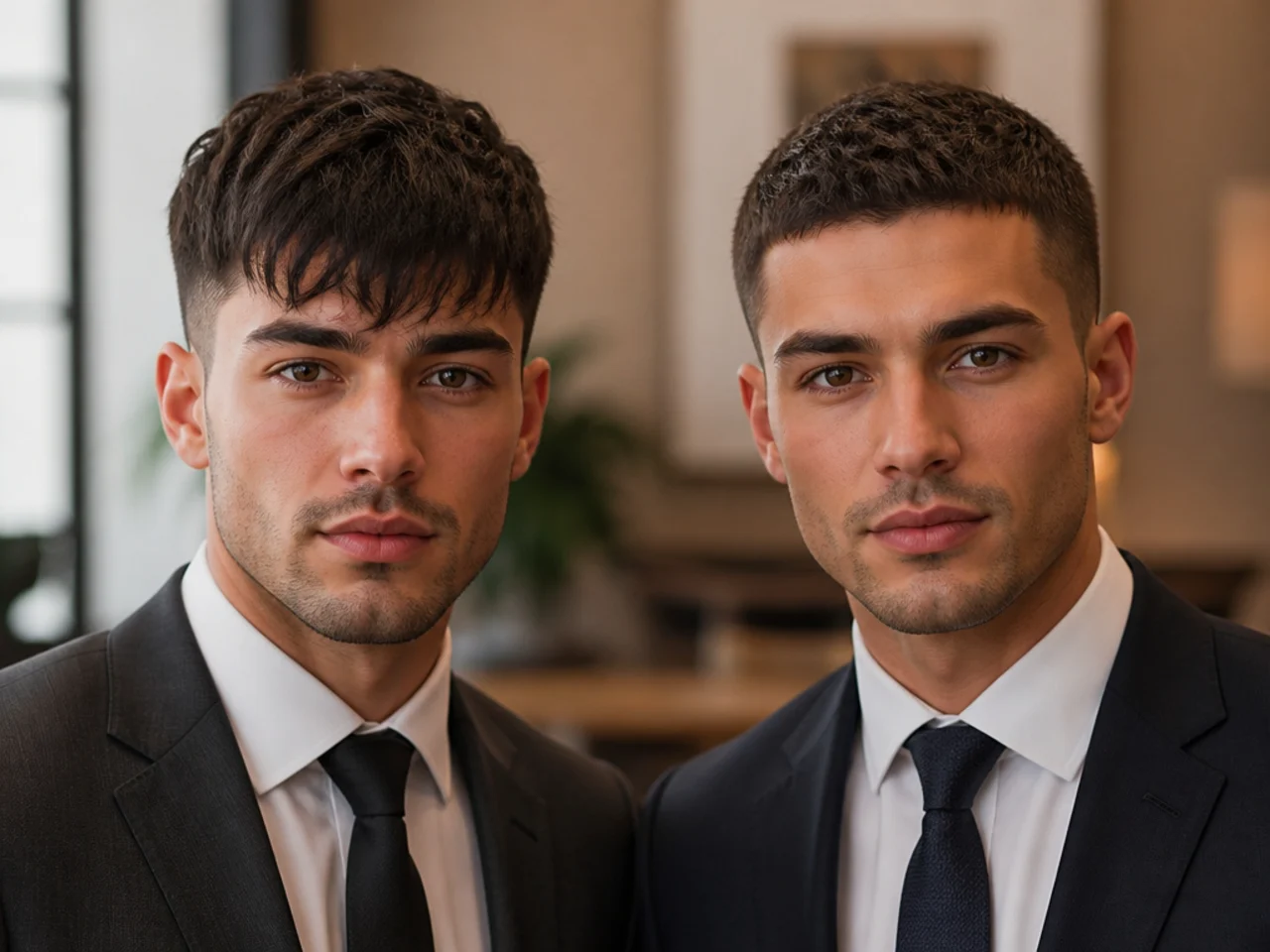
A crop leaves the temples visible and narrows the top of the face. A fringe fills the temples with hair and widens it, which is the correct choice on a long, narrow face and the wrong one on a round face.
14. Cost Over a Year
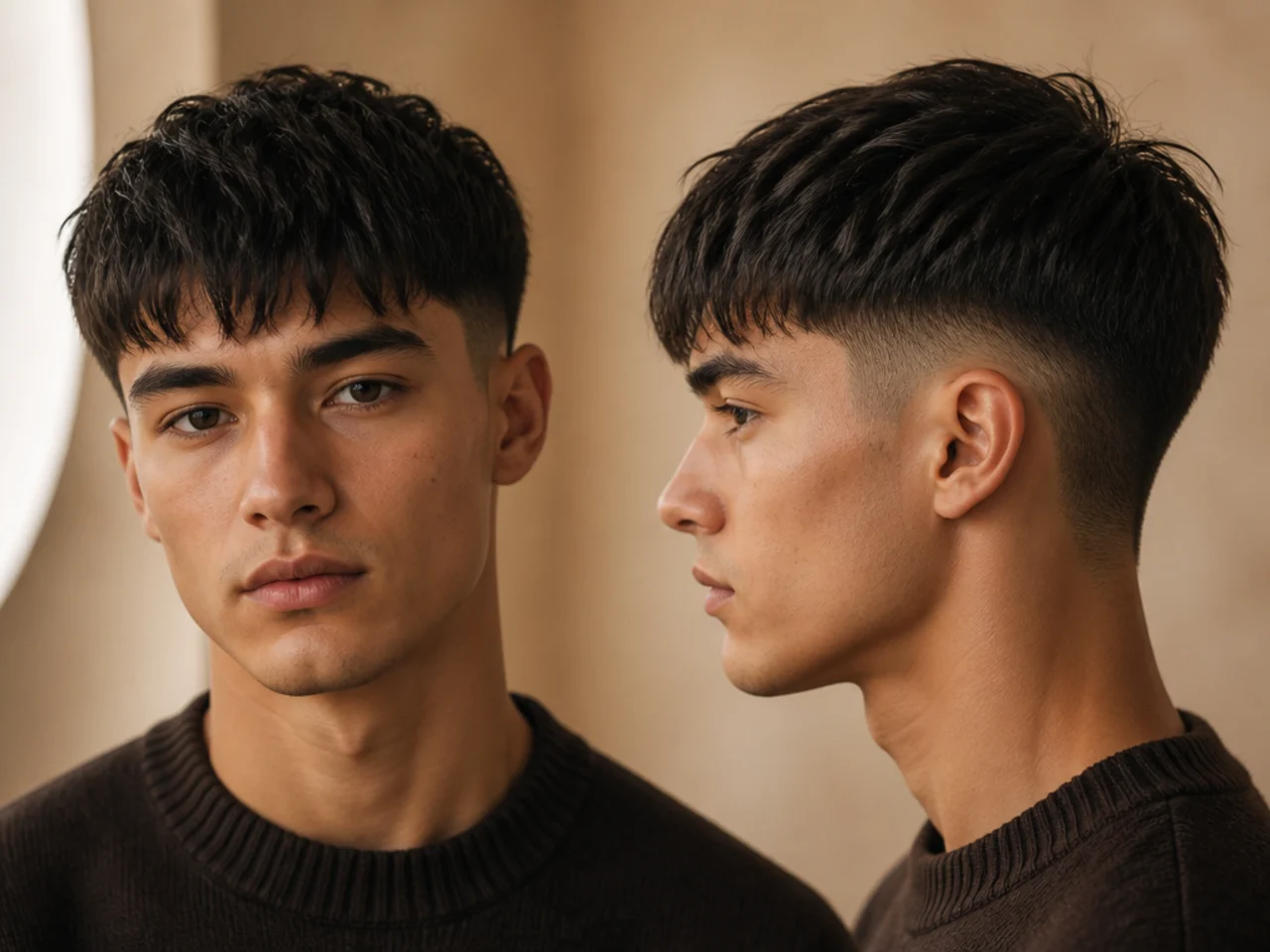
At four-week intervals a crop is thirteen appointments. A fringe kept sharp needs closer to eighteen, because the front ages faster than the sides and someone has to cut it. If those five extra visits decide it for you, start from the low-maintenance men's haircuts instead.
15. What to Say at the Consultation
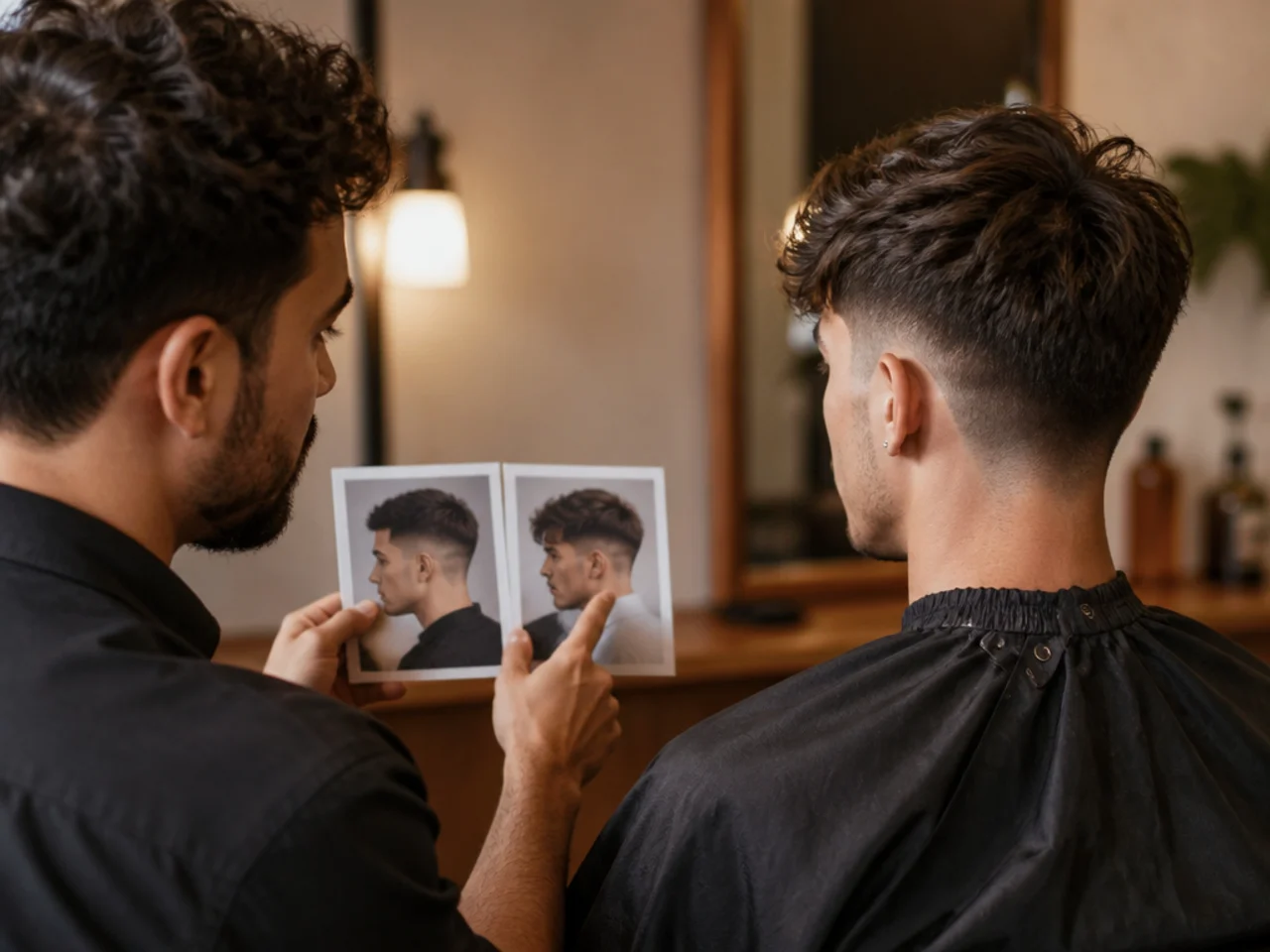
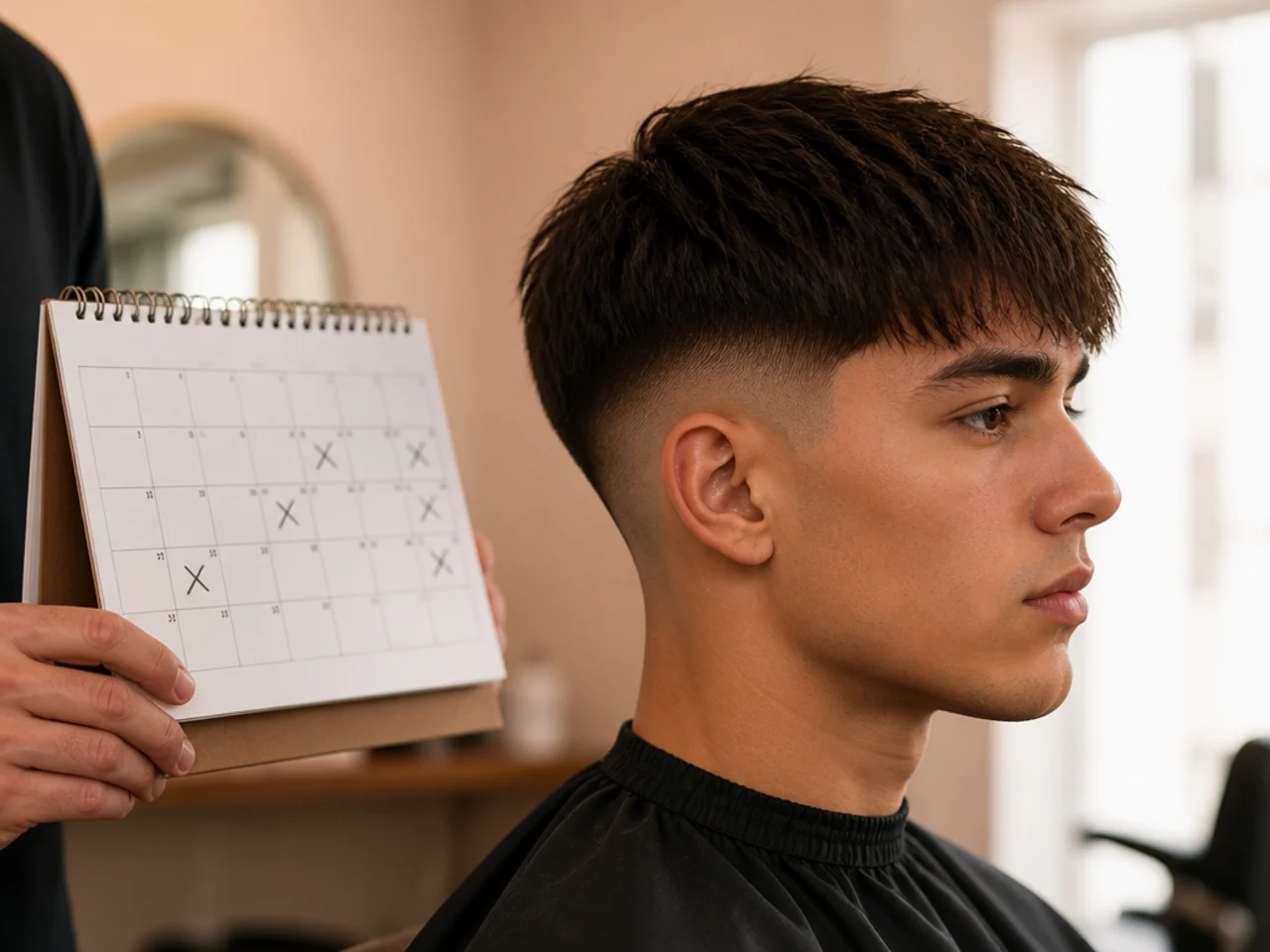
For a crop, name the cut and the fade height. For a fringe, name the length against your brow and the direction you wear it, because a fringe is a set of choices rather than a single named shape.
Styling and Upkeep
A crop takes clay, a fringe takes clay or cream. The fringe has to choose between lift and fall, and the crop never does.
Both are finger-dried, never combed. A comb aligns the strands and removes the separation both cuts rely on.
Book the crop on the sides. The front will not need attention first.
Book the fringe on the front. It reaches the eyes before the taper has softened.
Keep a photograph of the temple corner for either. It is the detail that decides whether the front reads as a shape or as an accident.
Mistakes to Avoid
Asking for a crop and expecting forehead coverage. A crop is short at the front by definition.
Asking for a fringe and expecting crop upkeep. The front will need cutting twice as often.
Pairing a heavy fringe with a high fade. The parietal ridge is cut into and nothing balances the front.
Combing a crop flat. The texture is the cut, and one comb pass removes it.
Cutting either to its wet length on curly hair. Around a third of it will disappear as it dries.
FAQ
What is the real difference? A fringe is one section, a crop is a whole haircut.
Which is lower maintenance? The crop, because growth improves it instead of ruining it.
Can a crop have no fringe? Not really — the forward front is part of the definition.
Final Thoughts
If you book every four weeks and want to think about your hair as little as possible, ask for a crop. If you want length you can wear three different ways and you are prepared to see your barber more often, ask for a fringe and specify where it should land against your brow.
For the crop itself see the French crop haircut, and for the fringe range see fringe haircuts for men. More in Men's Haircuts.