20 Business Hairstyles for Professional Men
Business hairstyles men actually get promoted in — 20 office-appropriate cuts with face-shape notes, barber-language scripts, and a two-minute morning routine.
In this article · 25
- What Are Business Hairstyles for Men?
- How to Choose Your Business Hairstyle
- The 20 Business Hairstyles for Professional Men
- 1. Classic Executive Side Part
- 2. Ivy League
- 3. Traditional Crew Cut
- 4. Business Textured Crop
- 5. Low-Fade Business Cut
- 6. Comb Over with Low Taper
- 7. Executive Pompadour
- 8. Businessman Undercut
- 9. Executive Slick Back
- 10. Modern Caesar
- 11. Business Quiff
- 12. Tapered Buzz Cut
- 13. French Crop for the Office
- 14. Brushed-Back Professional
- 15. Slick Side Part with Beard Blend
- 16. Editor's Cut
- 17. Curly Business Cut
- 18. Traditional Scissor Taper
- 19. Hard-Part Business Cut
- 20. Longer Grown-Out Executive
- How to Ask Your Barber
- Styling and Maintenance
A business hairstyle earns its keep in three places: the morning mirror, the client meeting, and the 6 PM Uber home. Every cut in this guide holds its shape through all three without asking more than two minutes of your day. The twenty variations below run from boardroom conservative to creative-office modern, with the exact language to hand your barber so you leave with the cut you had in mind.
What Are Business Hairstyles for Men?
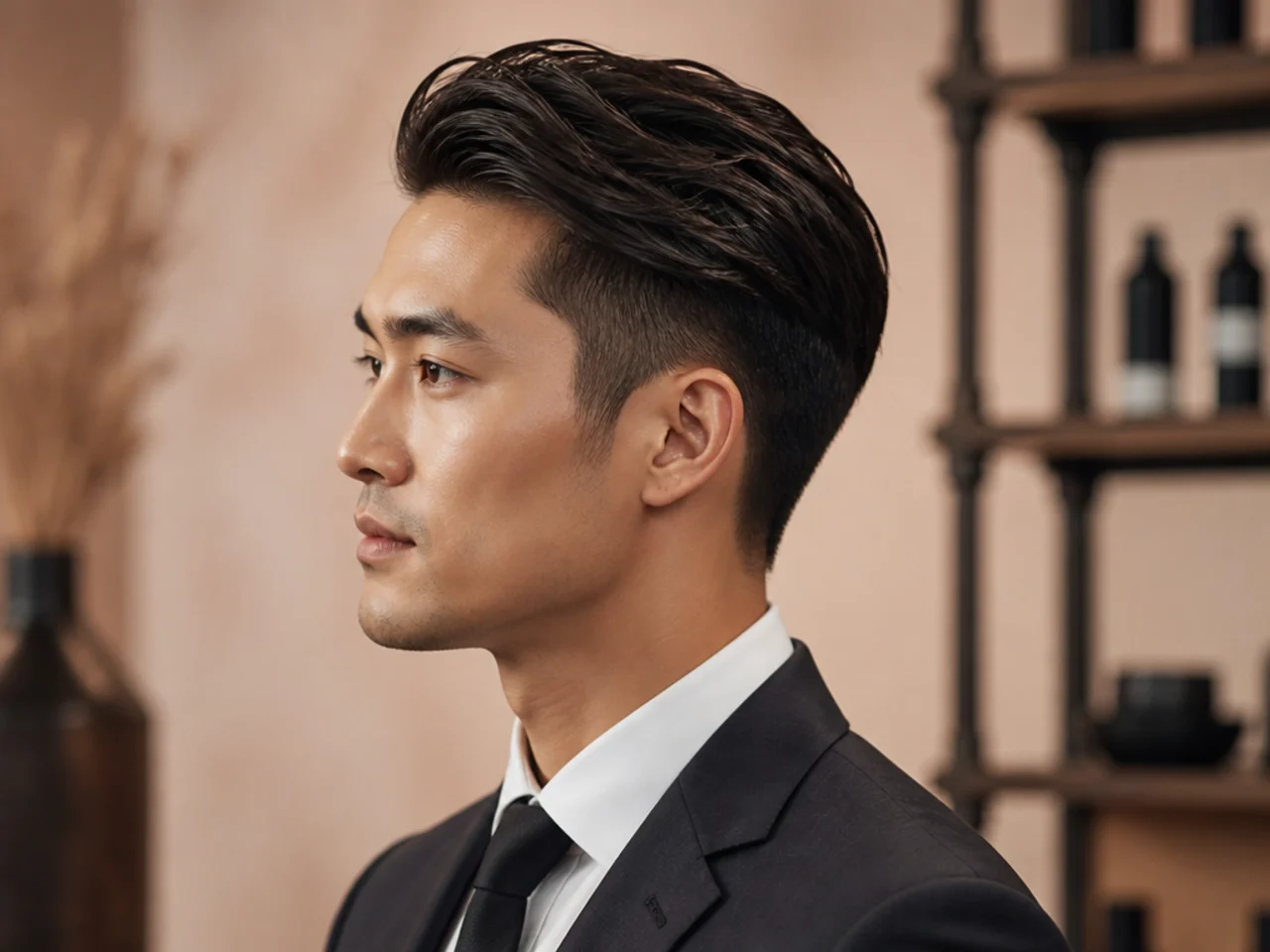
A business hairstyle is any cut with a shape that survives a full workday. That's the working definition. The sides sit close enough that they don't stray during a video call. The top holds a defined silhouette without begging for product touch-ups. The finish reads intentional at both 8 AM and 6 PM. Beyond that, the field is wide — a classic side part does the job, but so does a textured crop, a low-fade ivy league, or a well-kept buzz cut.
What business hairstyles are not: shaggy grow-outs, statement mullets, or anything with a hard fashion angle. The point is competence, not personality — you want the room to notice you, then forget your hair. See our full category of men's haircuts for adjacent shapes worth considering.
How to Choose Your Business Hairstyle
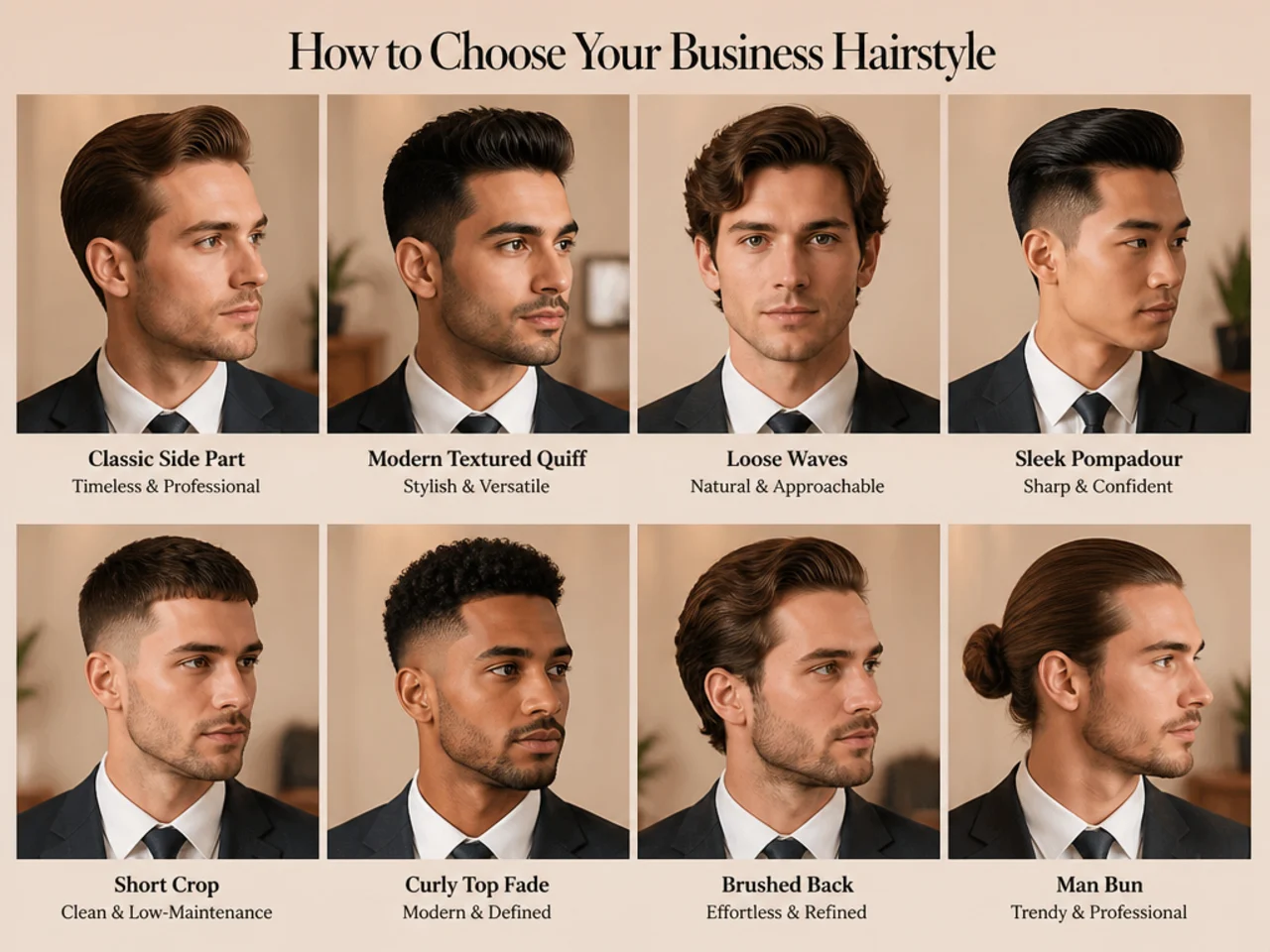
Start with your industry. Banking, law, government, and traditional consulting want conservative silhouettes — a side part, ivy league, or scissor-tapered classic sit right in the middle of the road. Tech, creative, hospitality, and client-facing sales tolerate more shape — a low fade, a modern quiff, a textured crop, or a tailored pompadour all pass the office test without looking loud.
Then look at your face. Oval faces work with anything in the guide. Round faces want vertical lift on top — a quiff, pompadour, or brushed-up side part. Long or narrow faces suit a Caesar, French crop, or short-topped crew that adds width. Square jaws pair well with softer edges — an ivy league, a scissor-tapered side part, or a longer editor cut. Finally, budget your morning. If you have ninety seconds, choose a matte-textured cut. If you have three minutes, a pomade shine style will out-photograph everything else.
The 20 Business Hairstyles for Professional Men
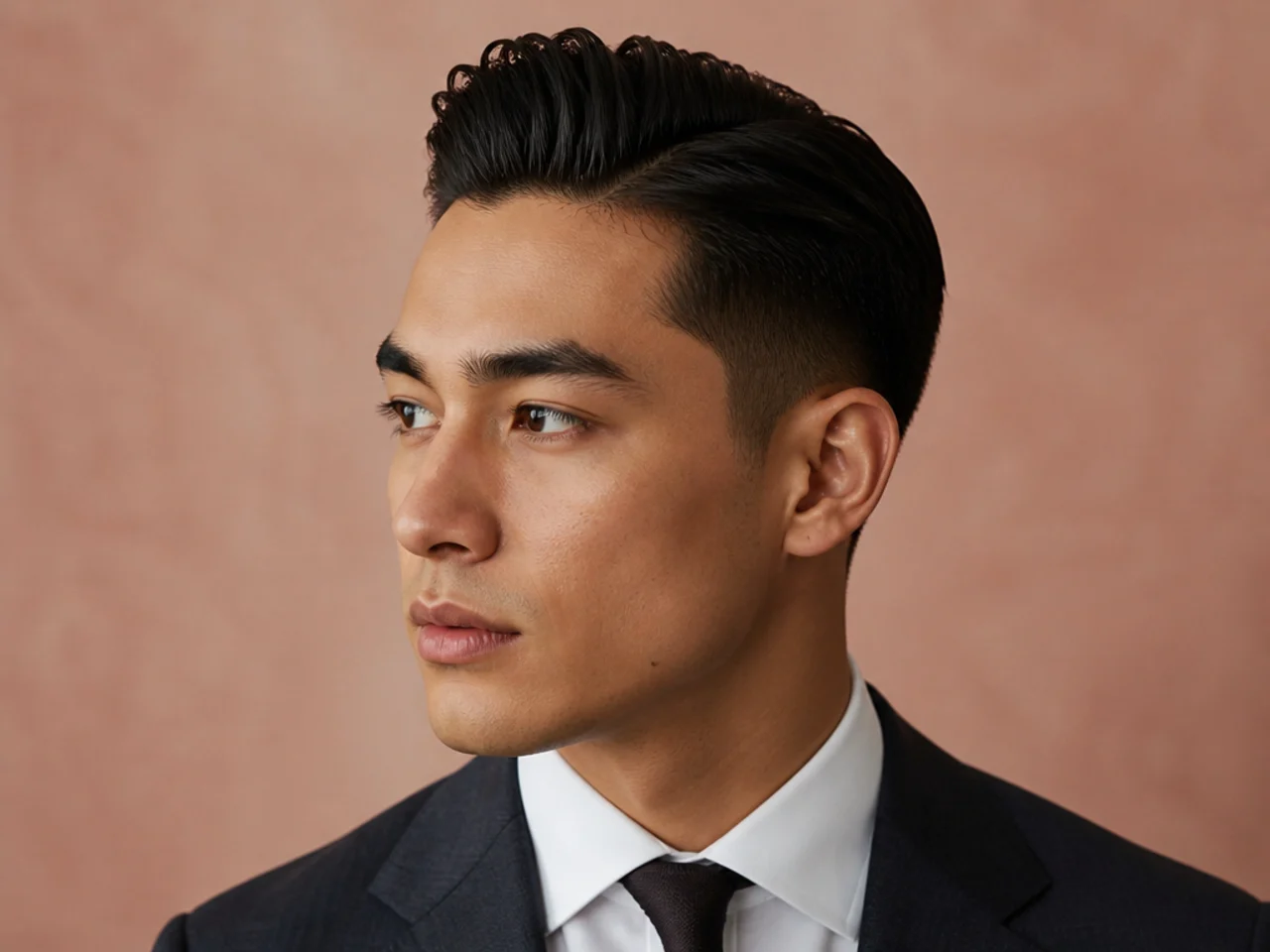
Twenty cuts below, one per photo. Each entry names the shape, tells you who it suits by face and hair type, gives the exact words to hand your barber, and one styling tip that actually matters.
1. Classic Executive Side Part
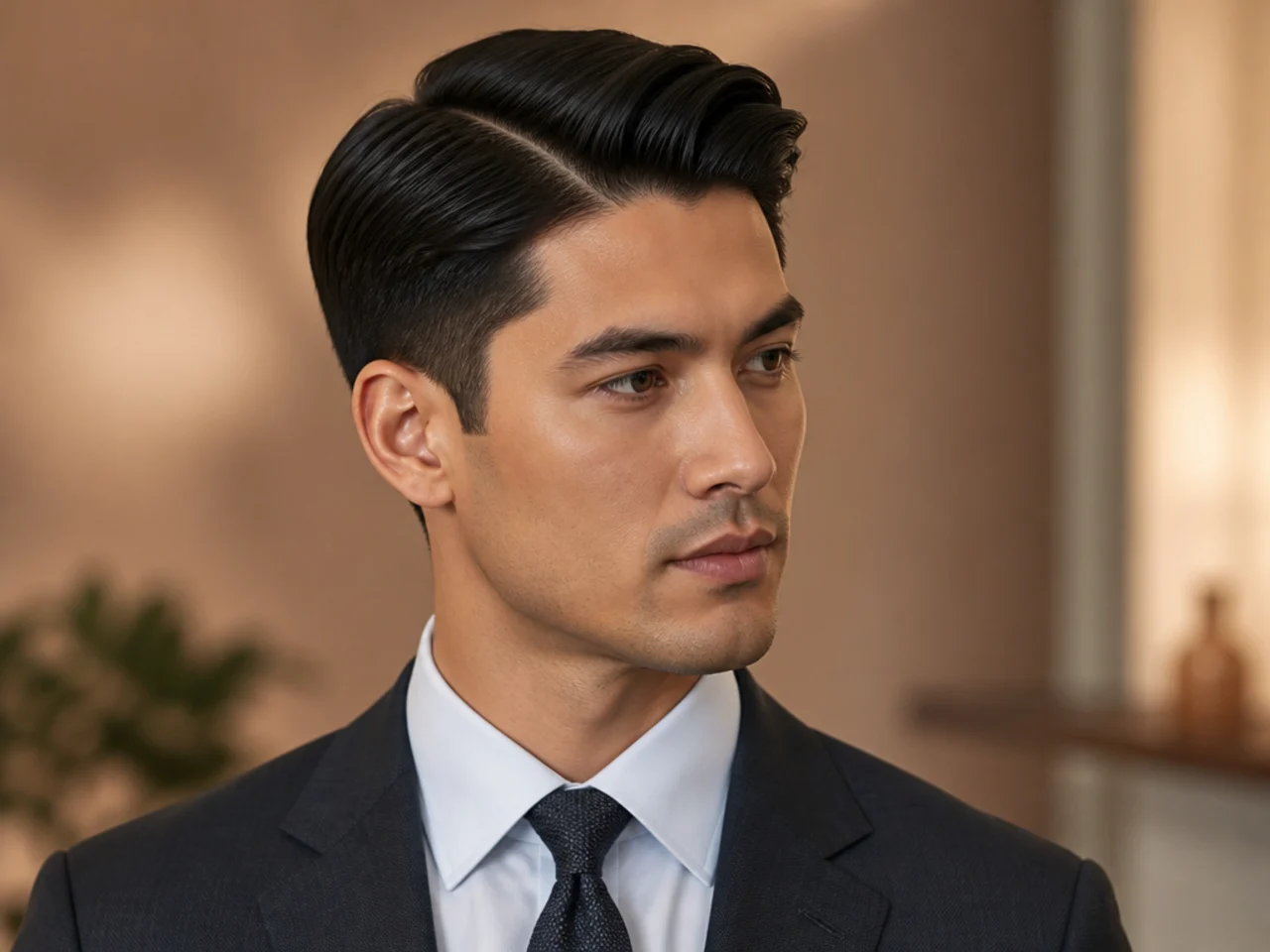
The default. If you can't decide, this is the cut. Two to three inches on top, scissor-tapered sides, hair combed cleanly along your natural break to one side. Suits every face shape and every industry — bankers, associates, government, healthcare admin, first-round interviews. Ask for a "classic executive side part, 2.5 inches on top, scissor taper down to a #2 on the sides, natural side part along my dominant cowlick." Style with a light pomade combed once with a fine-tooth comb. Total routine: ninety seconds from towel to door.
2. Ivy League
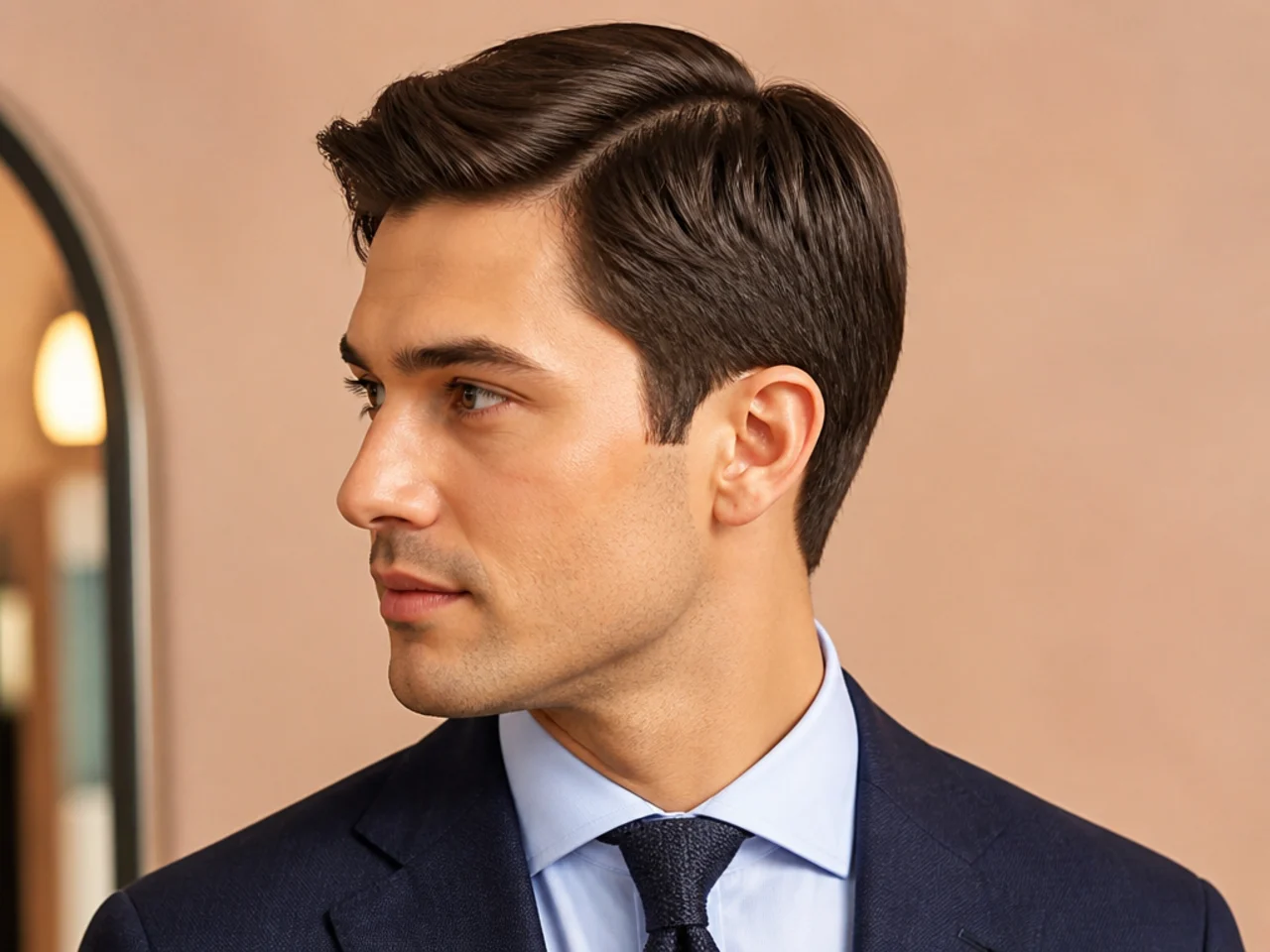
The Ivy League is a long crew cut — two to three inches on top, sides scissor-tapered close to the head. It came out of Yale and Princeton in the 1950s and never left. Reads formal enough for a wedding, casual enough for a beach house. Suits every face shape and every dress code from consulting to hospitality. Ask for "2.5 inches on top, scissor taper down to a #2 on the sides, natural side part." Style with a pea of light pomade through damp hair. The full ivy league haircut guide covers twenty variations of the same idea.
3. Traditional Crew Cut
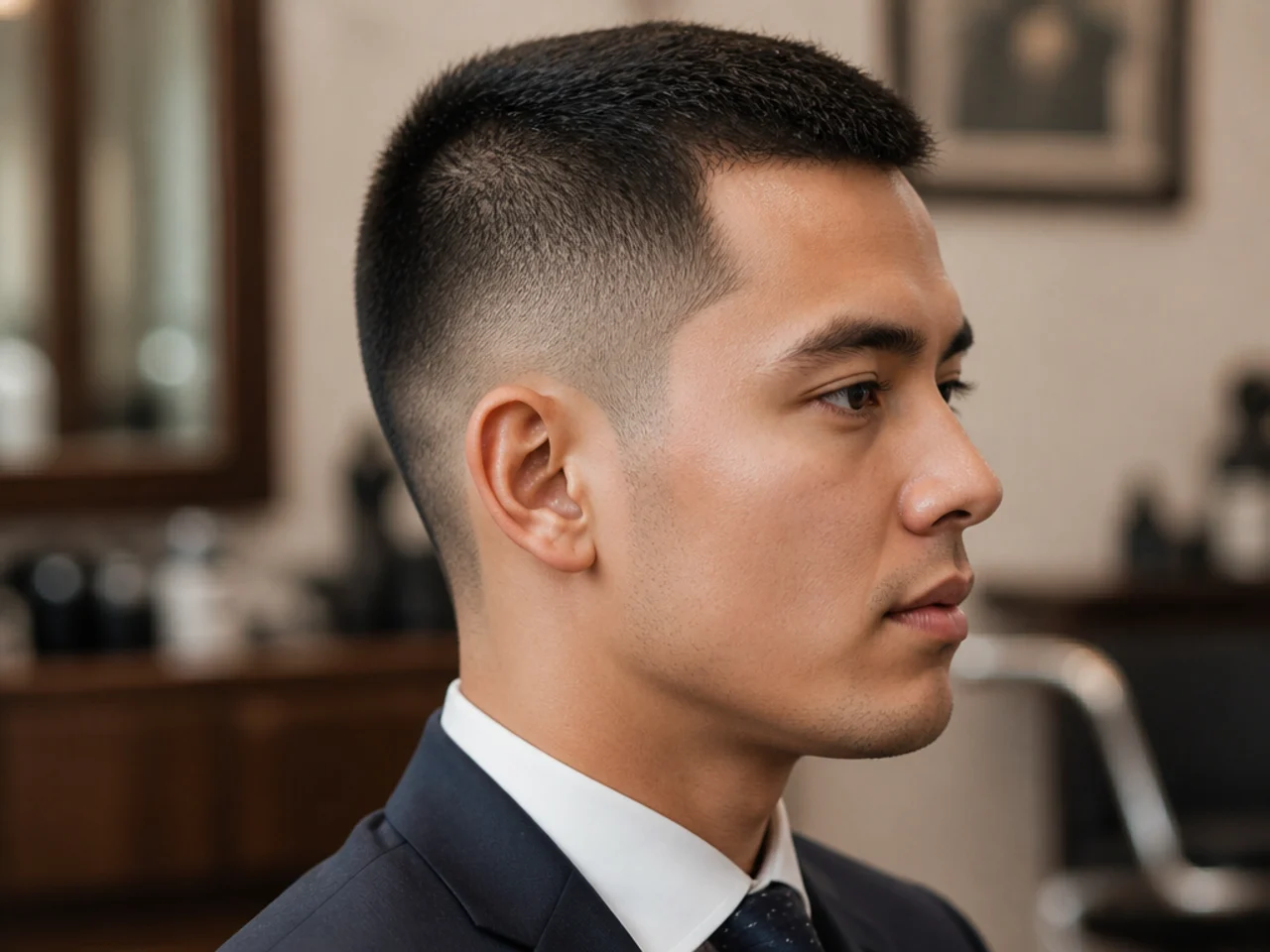
Half an inch to three-quarters on top, sides tapered from a #2 down to a #1 above the ear, and the front sits a hair longer than the back. That graduation is what separates a proper crew from a plain buzz. Suits oval, square, and diamond faces — the crew cut is the standard cut for engineers, doctors, first responders, military, and anyone in scrubs or PPE. Ask for "three-quarter inch on top graduated shorter to the back, #2 sides tapered to a #1, scissor blend at the top." Style with a pea of matte cream if your hair is fine. Skip product if it isn't.
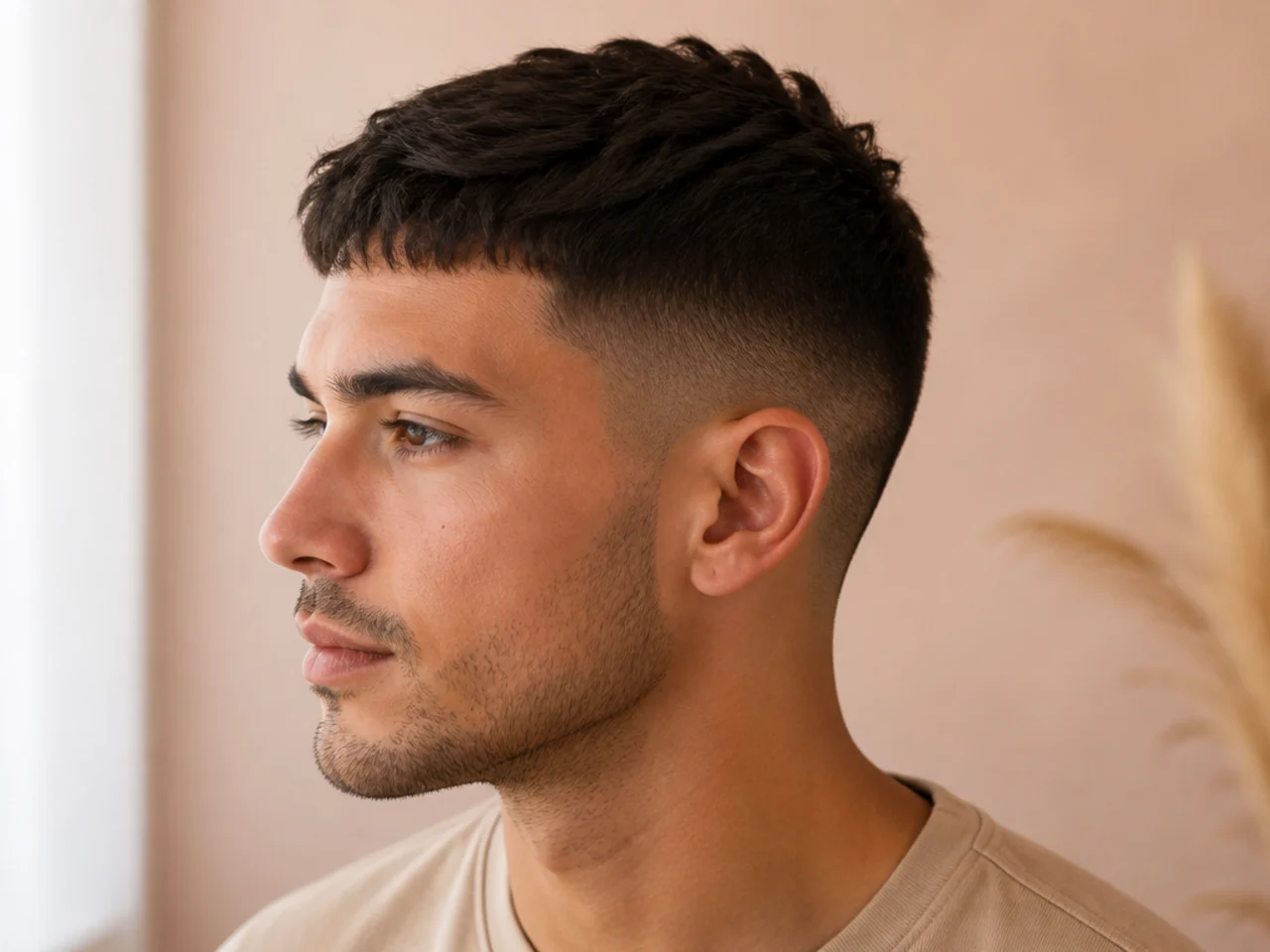
4. Business Textured Crop
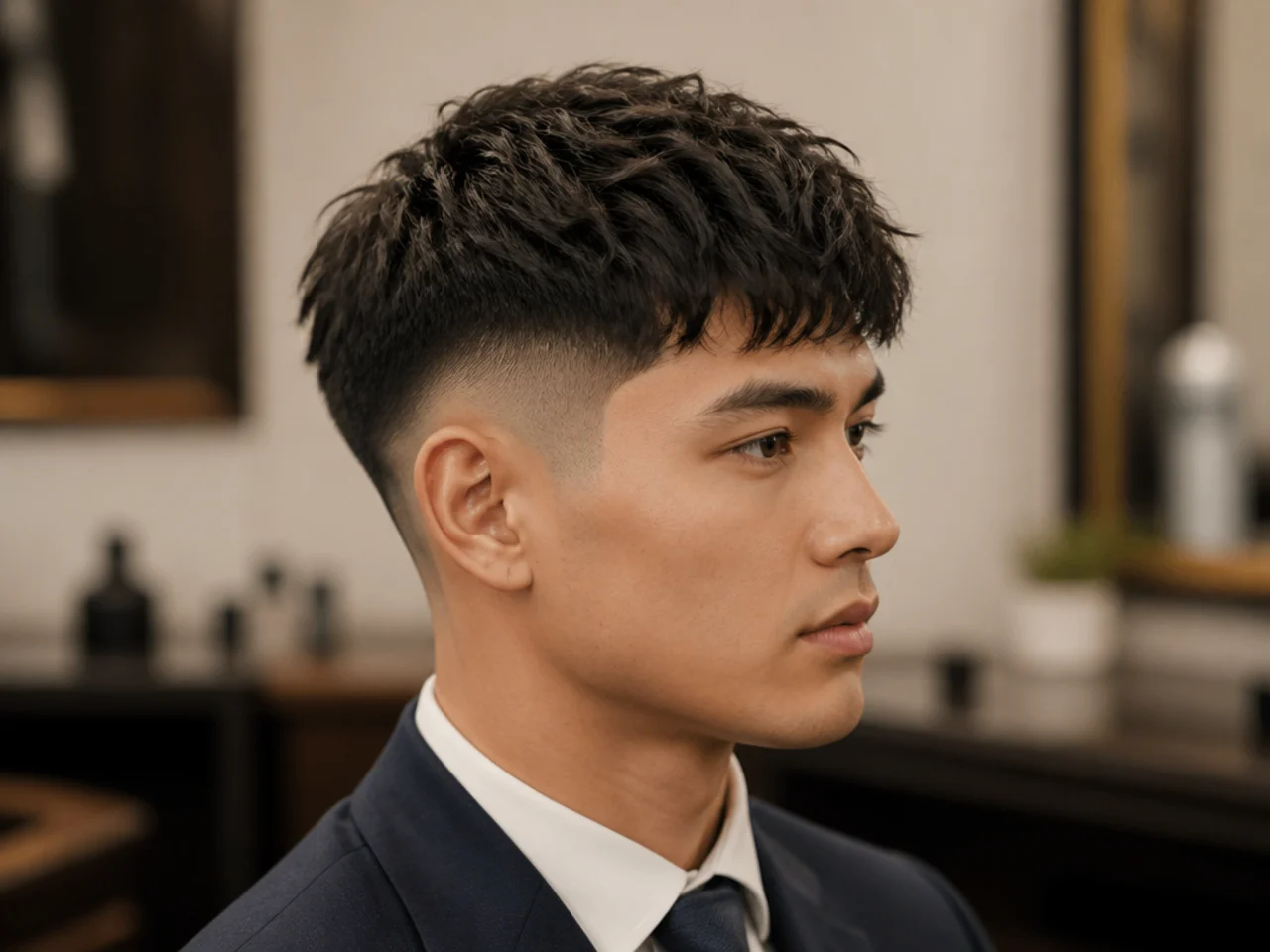
The textured crop is the modern-office answer to the crew cut. Two inches on top with point-cut ends, a soft fringe pushed forward, and a low fade on the sides. Reads current without reading trendy. Best on straight to wavy hair — coarse curls need more length to sit right. Suits tech, product, design, hospitality — anywhere between-cut appearance still matters. Ask for a "textured business crop, 2 inches on top point-cut for movement, soft fringe at the eyebrow, low fade on the sides." Style with a matte paste pressed forward through dry hair with your fingertips.
5. Low-Fade Business Cut
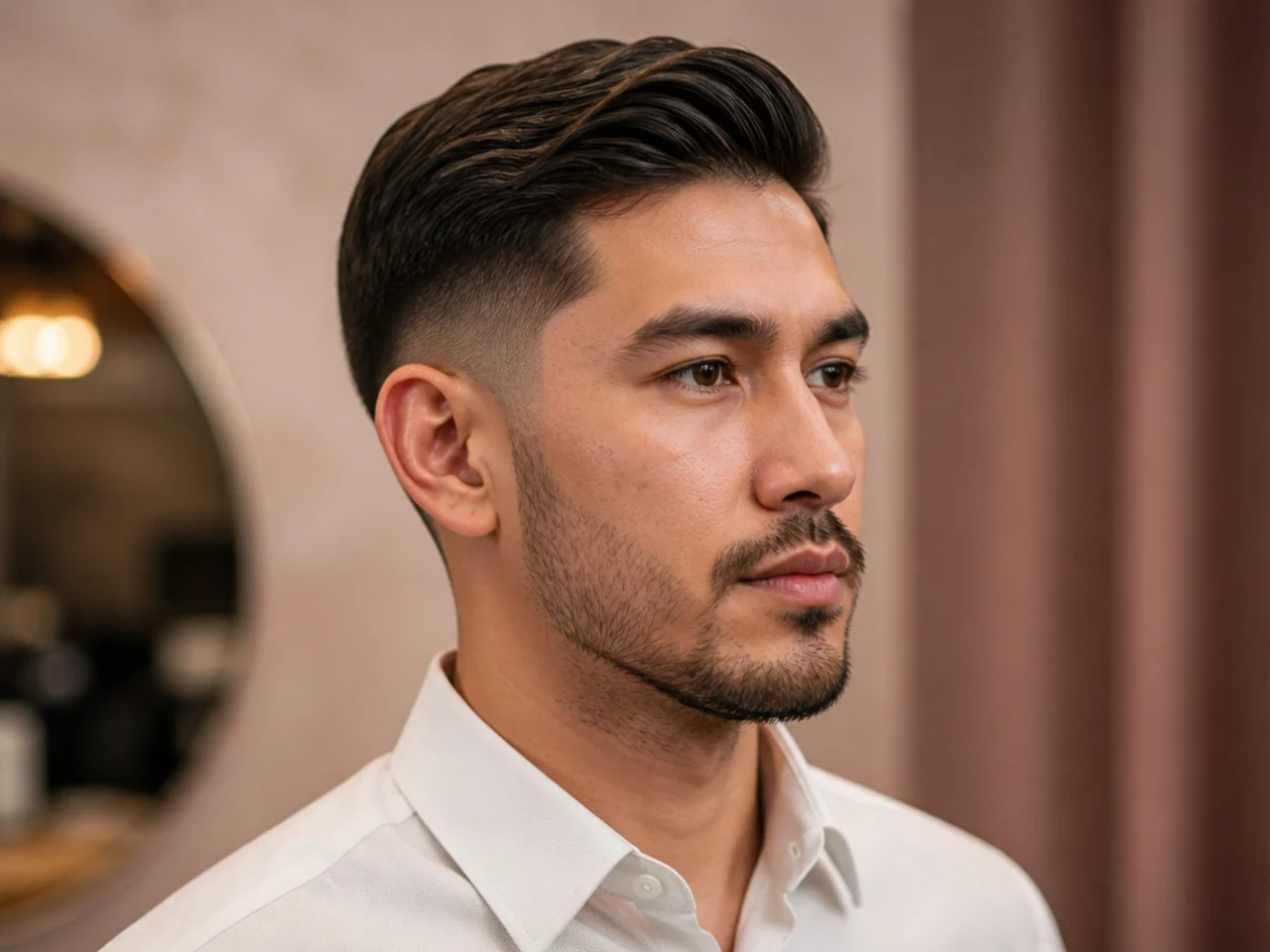
A conservative top on a modern base. Two to three inches on top styled to a soft side sweep, with a low fade that sits below the temple and drops to skin at the neckline. The fade stays invisible when you face the room — that's the whole point. Suits younger associates, sales, and anyone under 40 in an office that doesn't require a tie. Ask for a "low fade to skin at the neckline, 2.5 inches on top styled to the side, natural side part." Style with a medium-hold matte pomade combed once. Book every three weeks to keep the fade fresh.
6. Comb Over with Low Taper
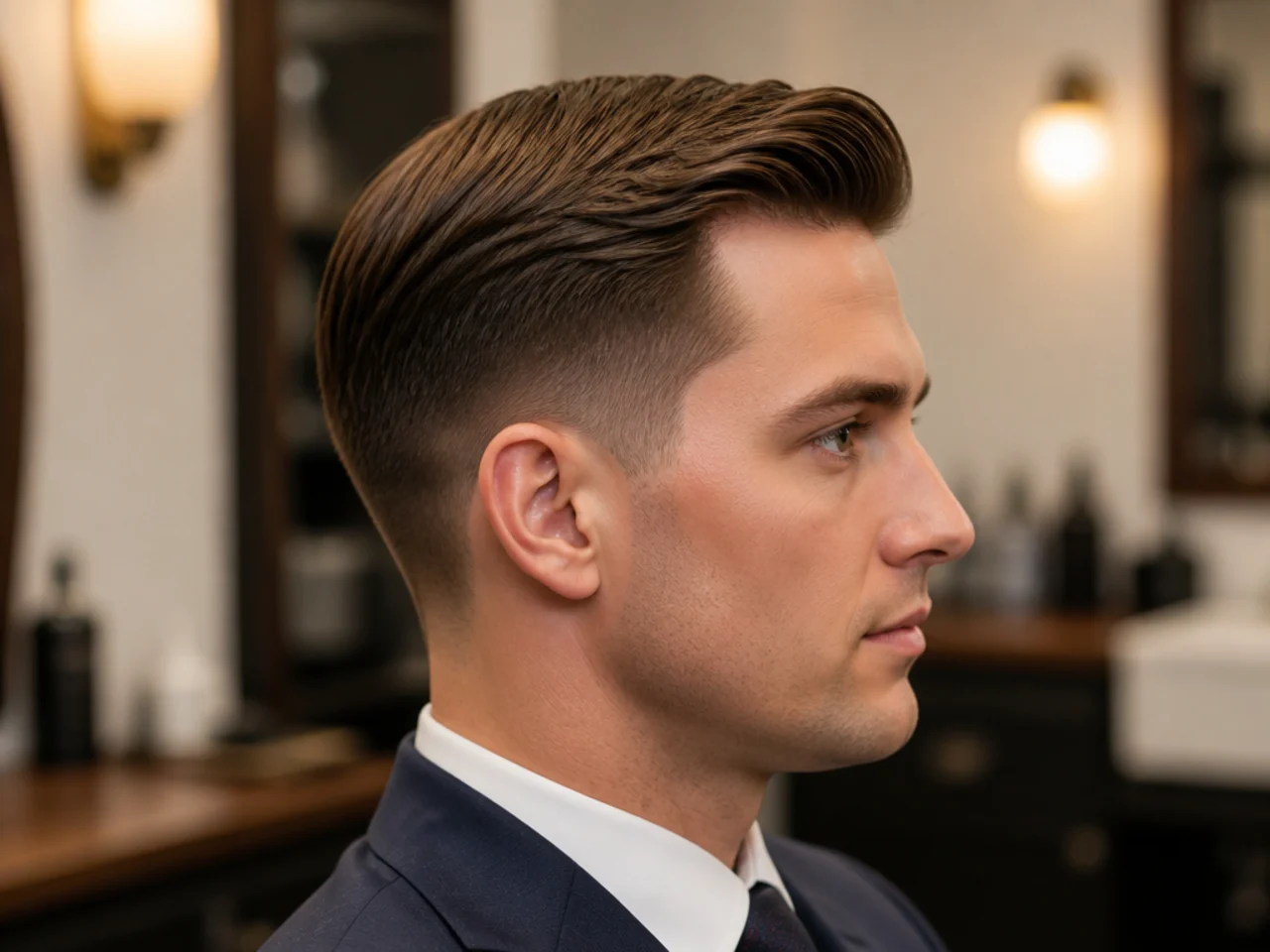
The traditional comb over — long top swept from a low defined part all the way across to the opposite side — paired with a soft low taper on the sides. Reads senior without reading dated. Suits oval, square, and heart-shaped faces; the diagonal sweep widens narrow foreheads and softens strong jaws. Ask for a "traditional side-part comb over, top left at 3 inches, low scissor taper on the sides, defined side part on the natural break." Style with a medium-hold pomade combed from the part outward, then blow-dry against the sweep for lift and set the direction with one comb pass.
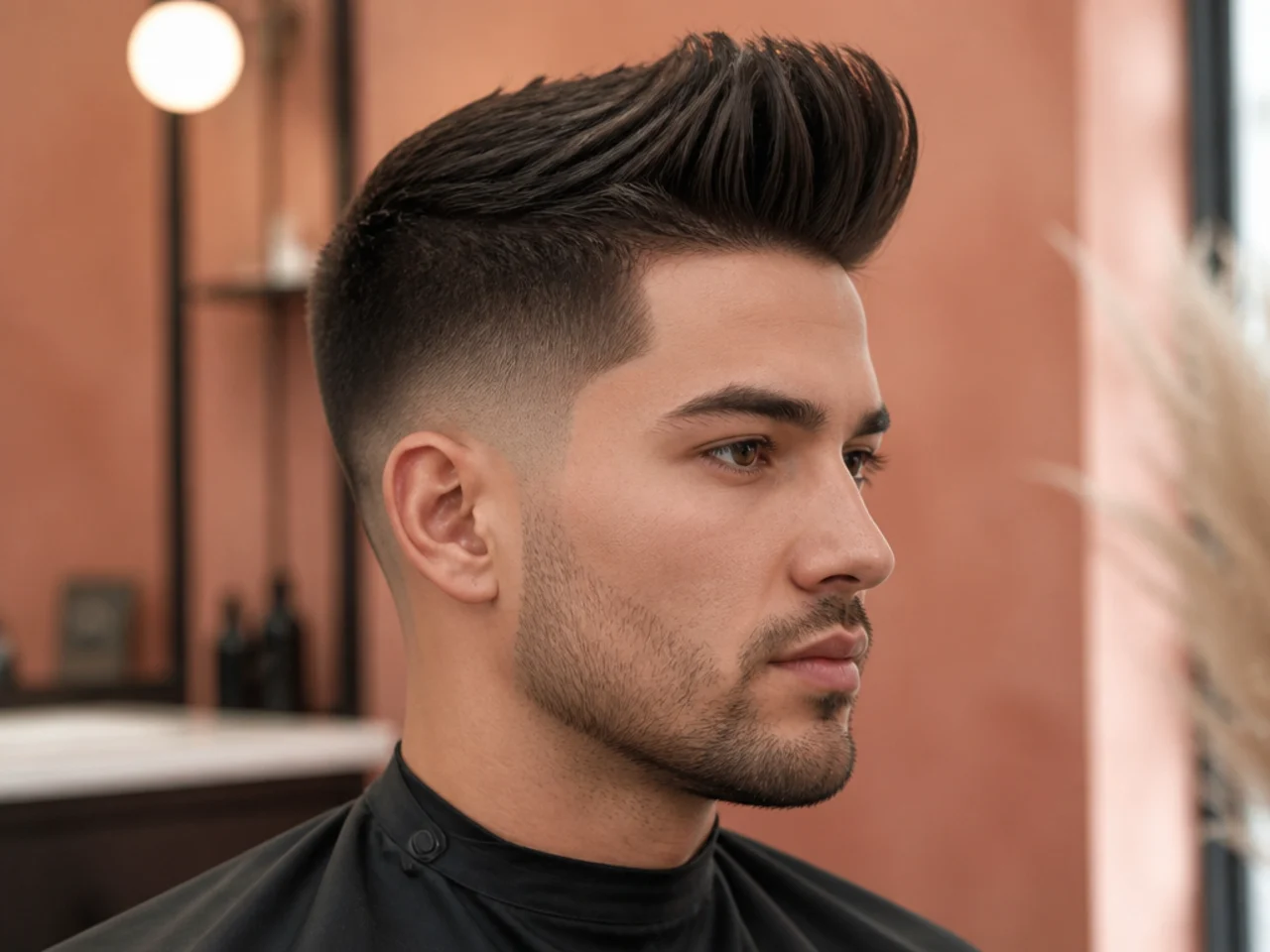
7. Executive Pompadour
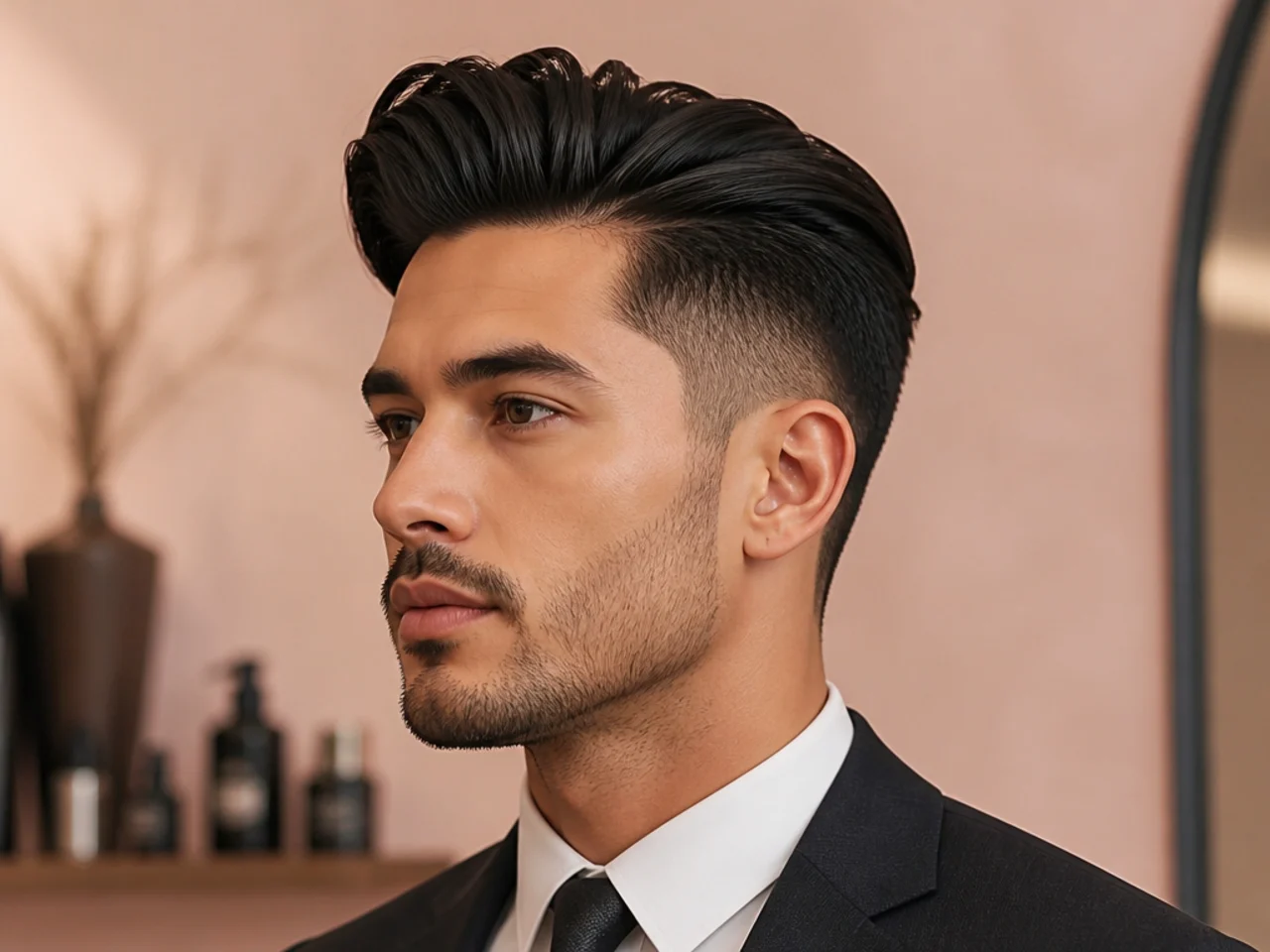
The pomp trades three minutes of morning time for real impact. Four to five inches on top, sides scissor-tapered no shorter than a #2, and volume swept up and back off the forehead in one clean sweep. Suits oval and diamond faces best — square jaws can compete with the top volume. Ask for a "classic pompadour, 4 inches on top scissor-cut, scissor-tapered sides down to a #2 above the ear, soft corner transition." Style with mousse on damp hair, round-brush up and back, then a firm-hold pomade — matte for office, shine for evening. Not for humid climates unless you're in air conditioning by 8:30 AM.
8. Businessman Undercut
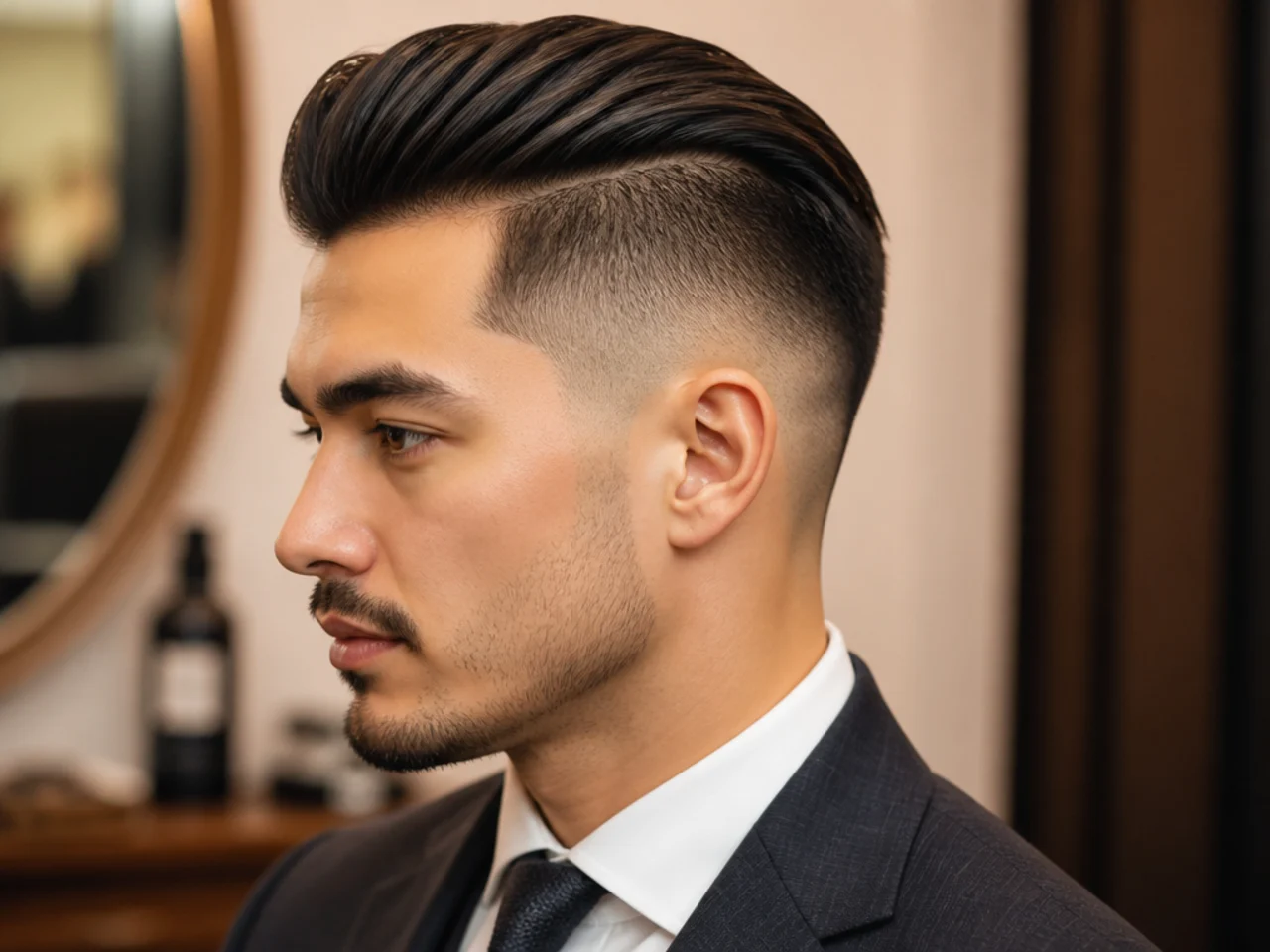
An undercut with the top styled conservatively. Disconnected #1 or #2 sides run against three to four inches on top, combed back or to one side. The contrast is what makes it office-ready — the sides never stray, the top does the styling. Suits finance, consulting, and legal for men under 45 who want structure with edge. Ask for a "disconnected undercut, #2 guard on the sides not blended, 3 inches on top, natural side part." Style with a nickel of matte paste through damp hair, comb back, air dry. Grows out gracefully — the undercut fade is a softer variation if disconnected feels too sharp.
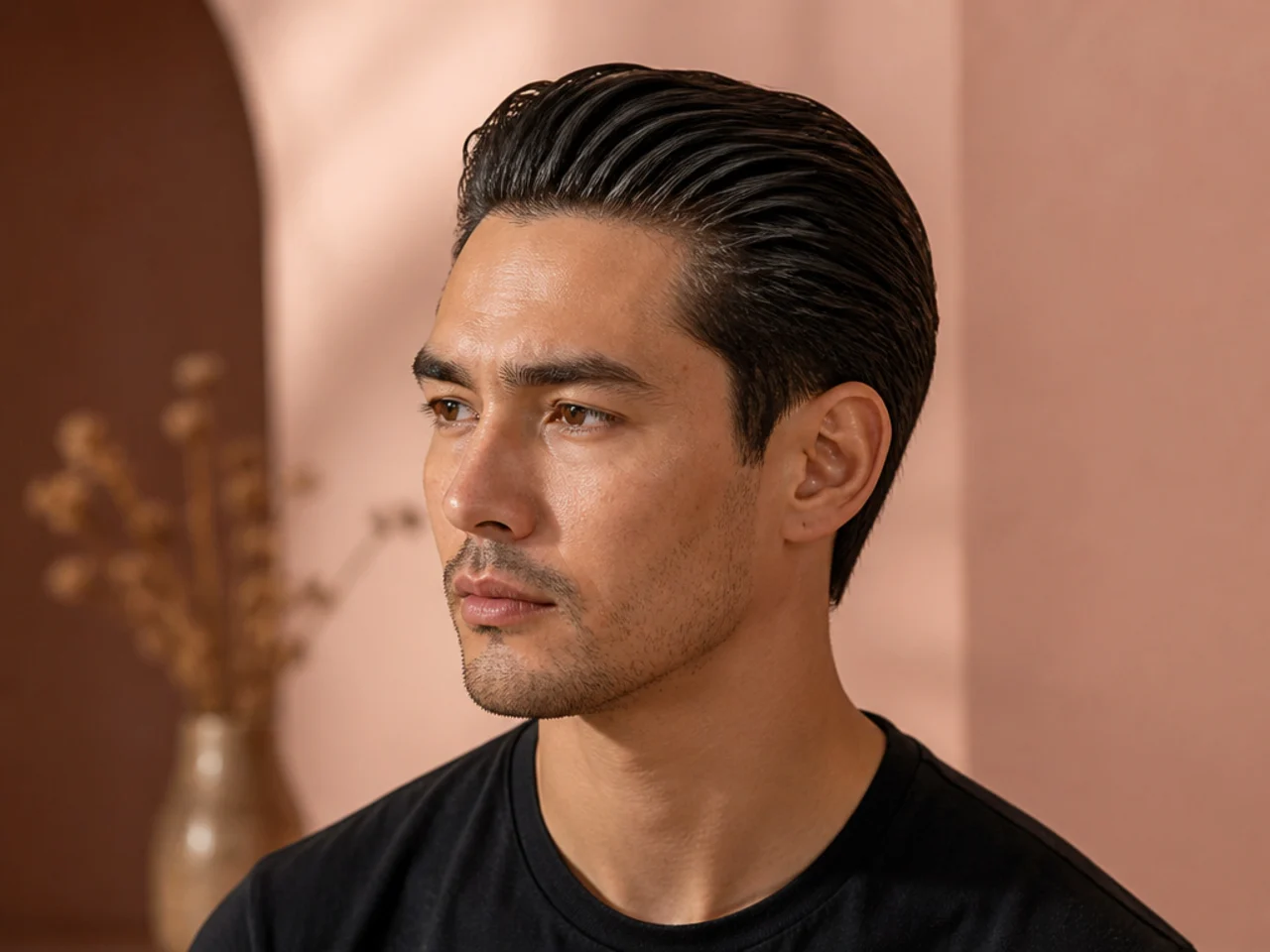
9. Executive Slick Back
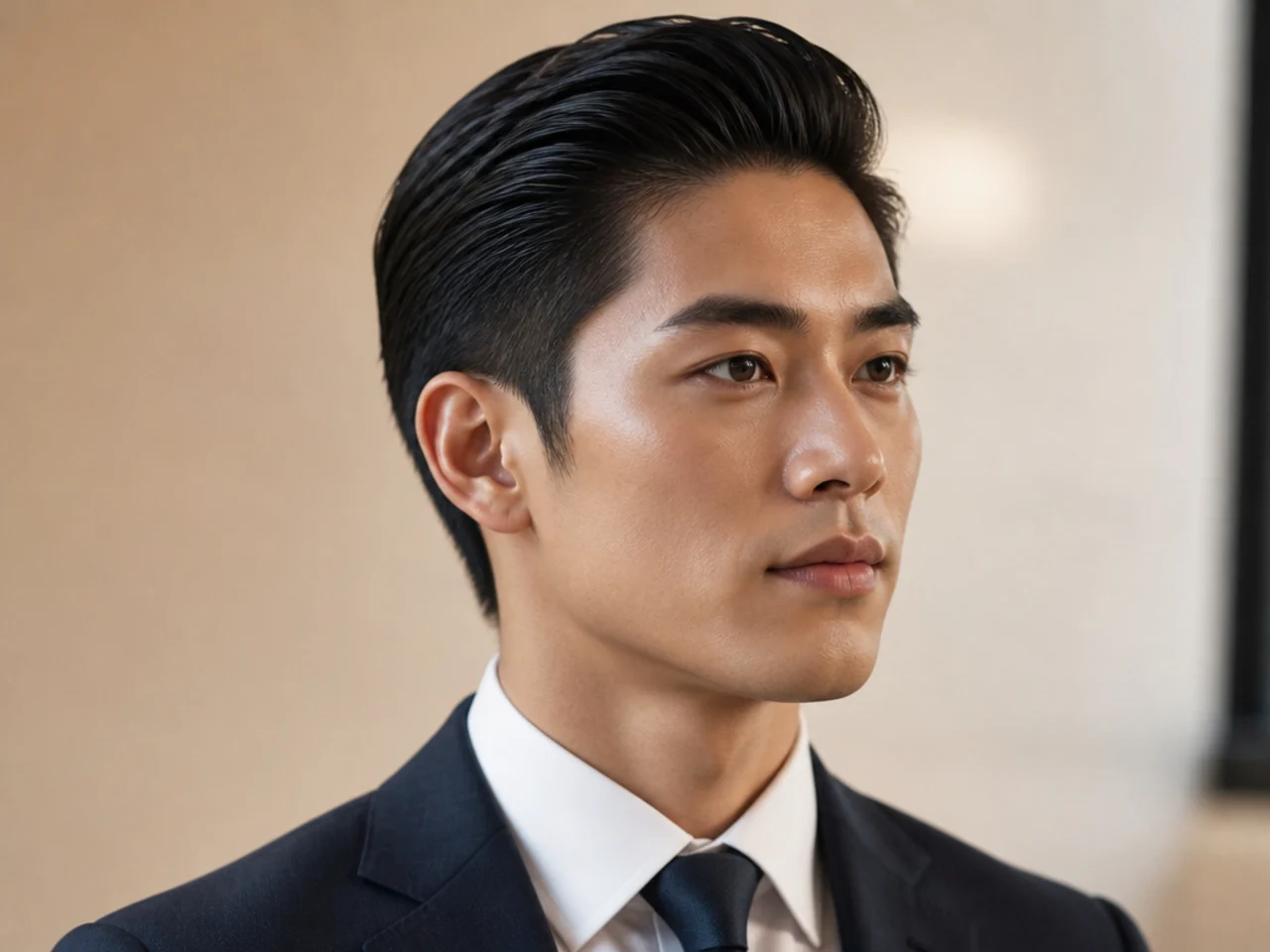
Everything combed straight back off the forehead — no part, no lift, no fringe. Higher shine, tight control, a shape you don't move once it sets. Suits oval and square faces with medium-to-thick hair; fine hair reads greasy under shine pomade. Best when you have at least four inches on top and cooperative growth patterns. Ask for a "slick back haircut with 4 inches on top, scissor-tapered sides to a #2, no defined part." Style with a medium- or firm-hold shine pomade on damp hair, comb straight back, then a low blow-dry to set. The cut for boardroom-facing roles and formal client dinners.
10. Modern Caesar
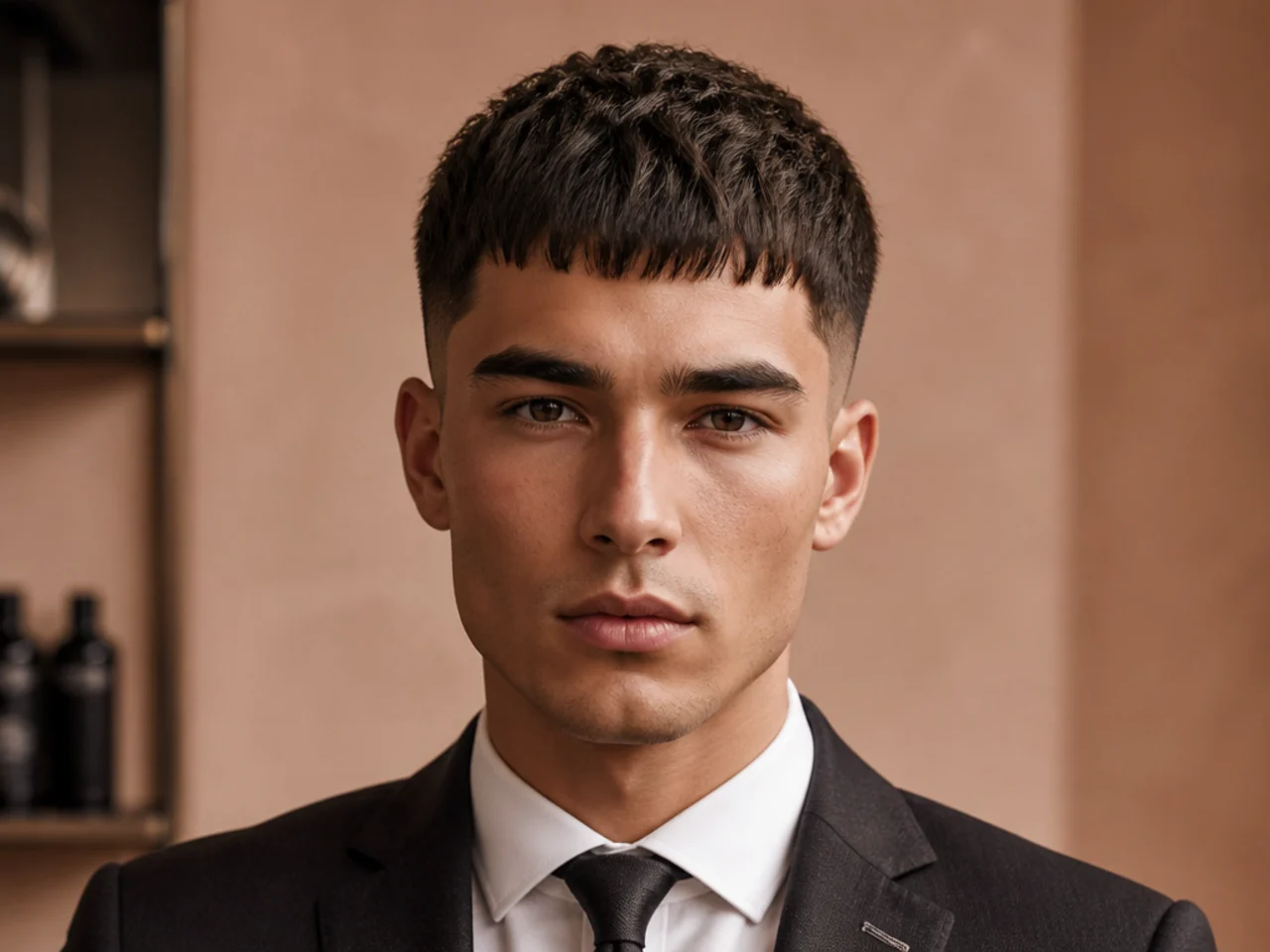
Short blunt fringe cut horizontally across the forehead, top around one to two inches, sides at the same length or a hair shorter. Named for the man on the coin — the shape hasn't changed in two thousand years. The forward-swept fringe shortens the visible face, which is why it works so well on long or oval faces and men with high foreheads. Ask for a "modern Caesar, 1.5 inches on top, straight fringe at the eyebrow line, low scissor taper on the sides." Style with matte paste rubbed between your palms and pressed forward through dry hair. No comb needed. Reads clean in scrubs, business casual, and a suit.
11. Business Quiff
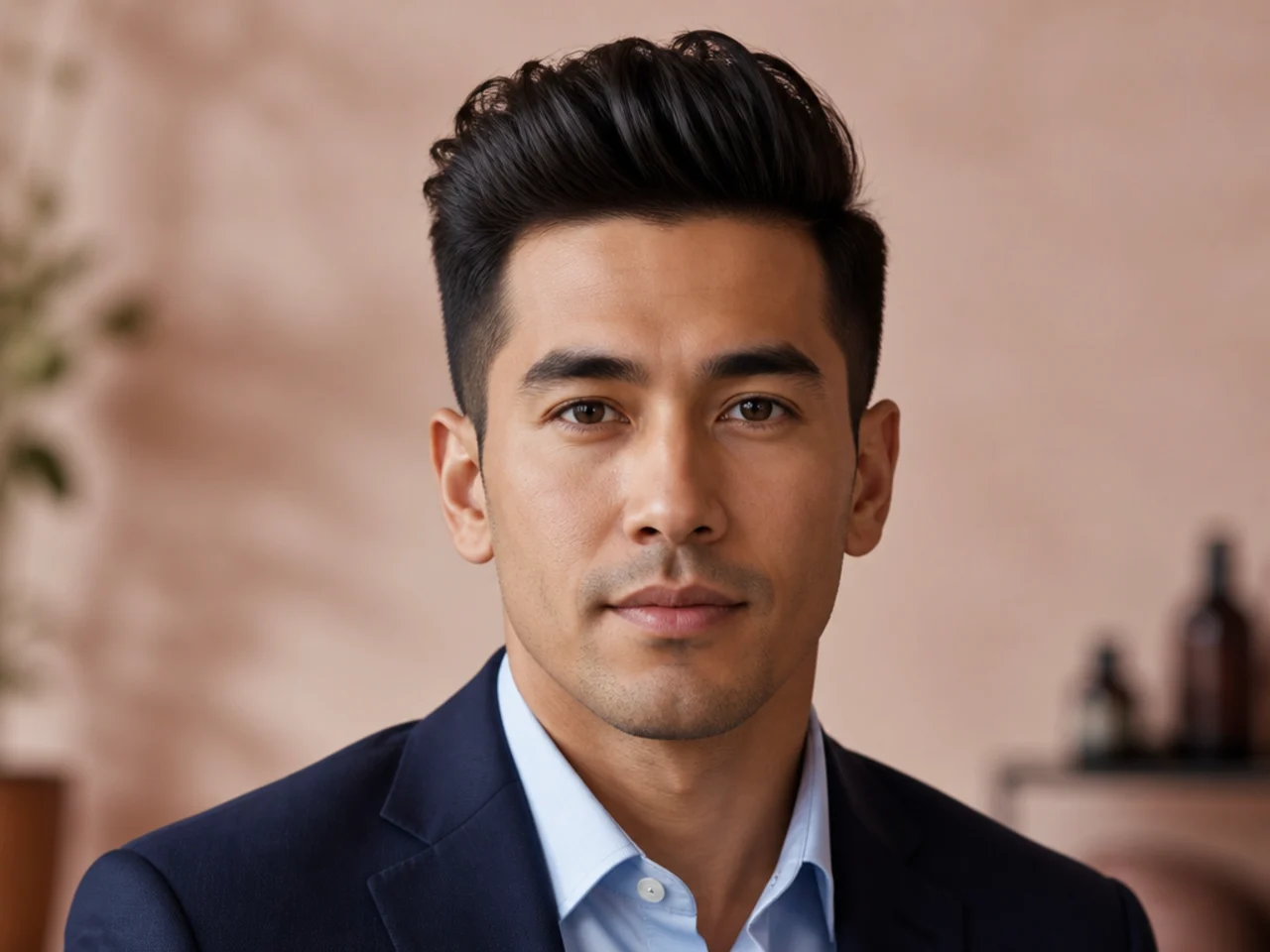
Volume concentrated at the very front, pushed back and slightly up, with less overall height than a pompadour and more shape than a brush-up. Sides stay short with a taper or a low fade. Suits round, oval, and square faces — the front lift lengthens the visible face and reads confident. Ask for a "quiff hairstyle, 3 to 4 inches at the front tapering shorter to the back, scissor-tapered sides, no defined part." Style with mousse on damp hair, blow-dry with a round brush lifting the front, then finish with matte clay. The office version of the classic pomp with half the styling time.
12. Tapered Buzz Cut
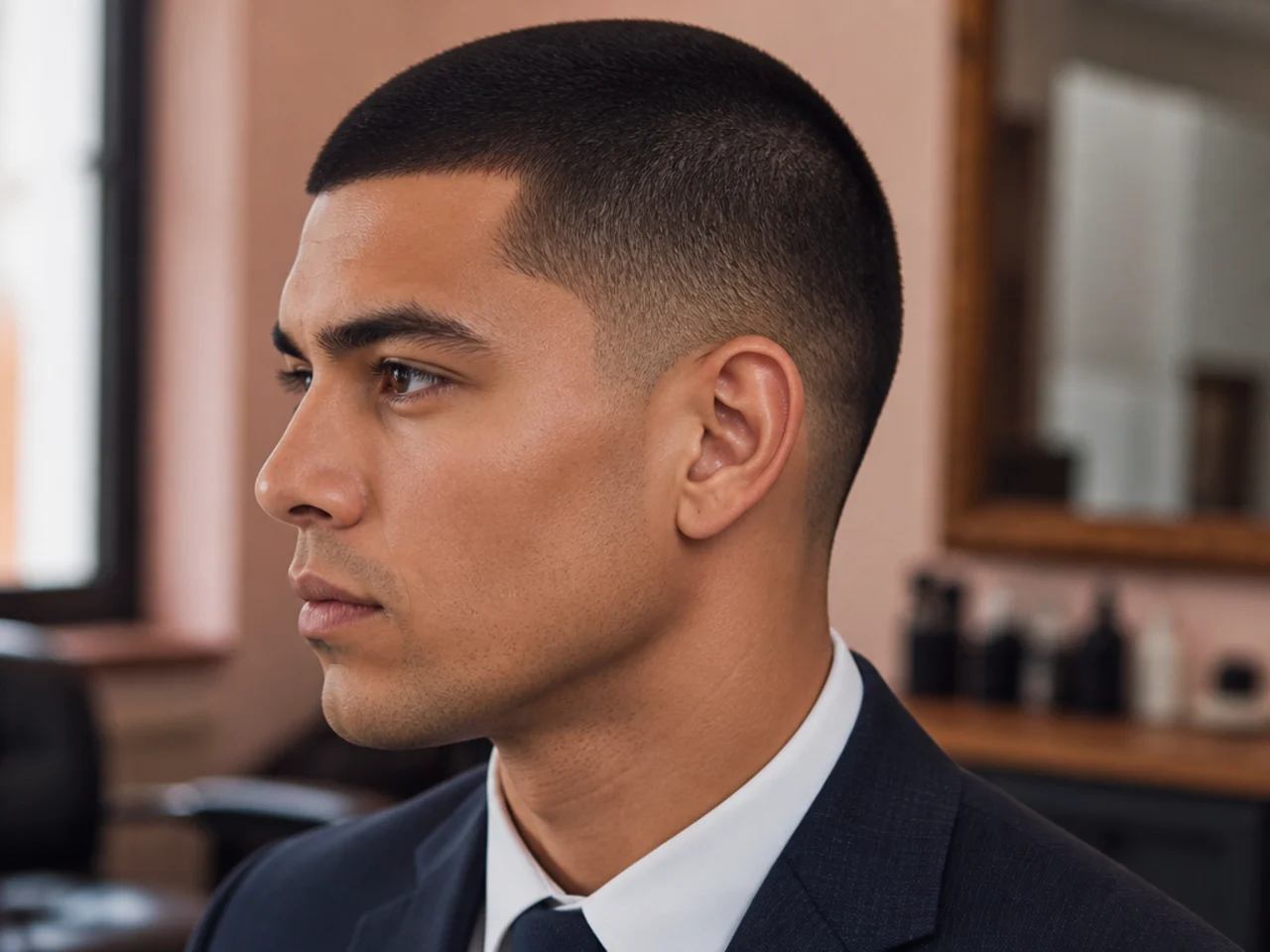
The shortest business option. One guard across the top — a #2 or #3 for a soft version, a #1 for the military look — with a light scissor taper around the ears and neckline. Suits every face shape and every industry, but especially strong for men with thinning hair. A well-kept buzz shifts the conversation from "losing hair" to "chose this on purpose." Ask for a "#2 all over the top, scissor blend around the ears, clean line above the ears, natural taper at the neckline." Skip product — a scalp moisturizer daily is the whole routine. Cut yourself between visits with a solid clipper set; the best hair clippers for men guide covers what to buy.
13. French Crop for the Office
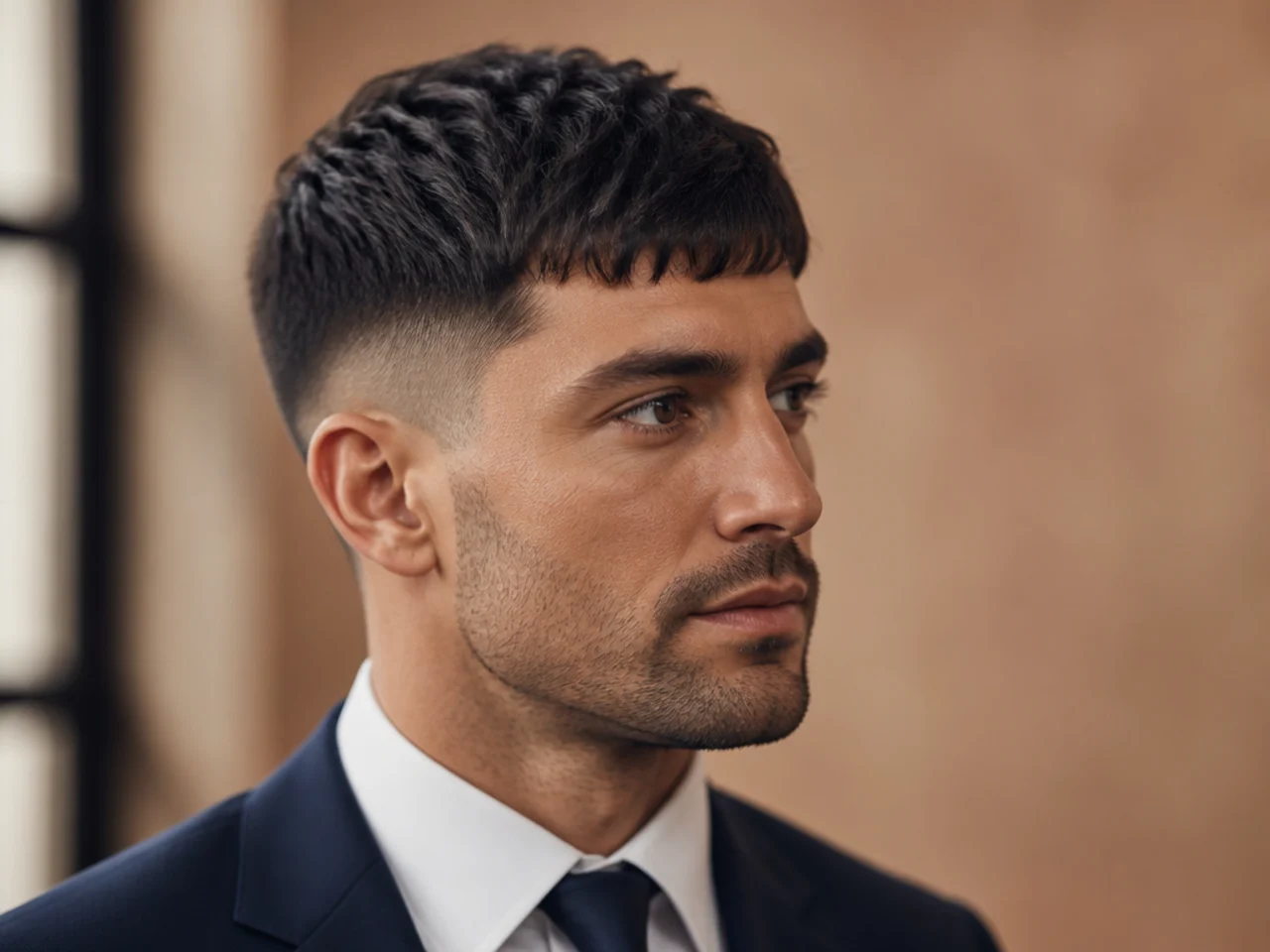
France's answer to the Caesar. Short fringe pushed forward and slightly down over the forehead, top textured with point-cut ends for movement, and sides kept tight with a short scissor taper or a low fade. Reads modern-classic in nearly any office. Suits round, oval, and long face shapes — the horizontal fringe shortens face length and adds width. Ask for a "french crop haircut, 2 inches on top point-cut, textured fringe at the eyebrow, low fade or short scissor taper on the sides." Style with matte paste pressed forward through dry hair. Works on straight and wavy hair; skip on tight coils.
14. Brushed-Back Professional
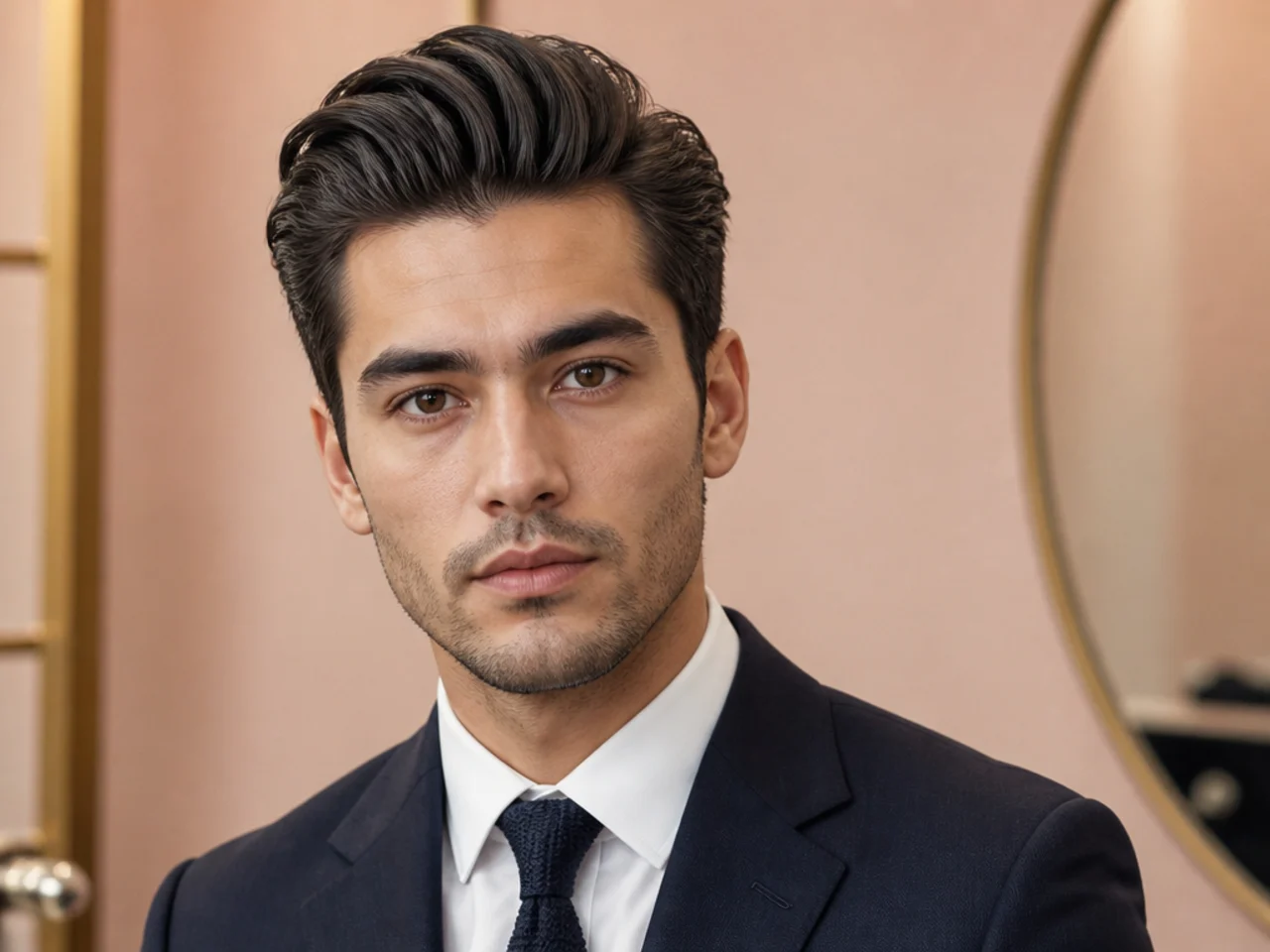
Everything blown back and off the forehead without a defined part — softer than a slick back, less product, more natural movement. Top sits at three inches. Suits oval, square, and diamond faces with straight to wavy hair on medium-to-thick density. Best in creative offices, tech, and hospitality where "considered" reads better than "corporate." Ask for a "brushed-back professional cut, 3 inches on top, scissor-tapered sides down to a #2, no part." Style with a matte clay worked through damp hair with your fingers, then blow-dry straight back with a paddle brush following the airflow with your other hand. The lack of a hard part is what keeps it modern.
15. Slick Side Part with Beard Blend
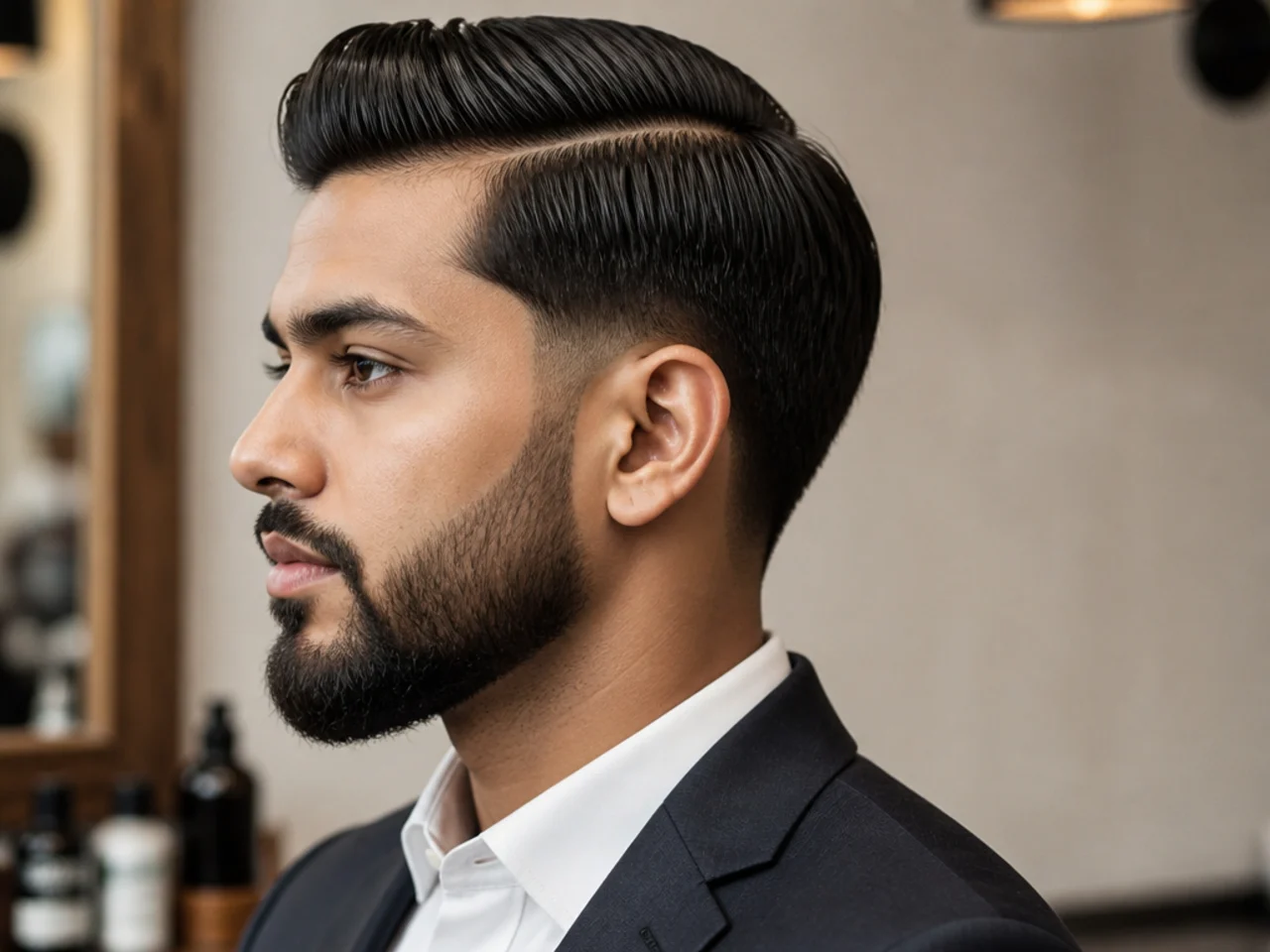
A slicked-and-parted top paired with a two-week or full beard is one of the most photographed modern-professional combinations of the decade. The top follows standard side-part rules — 2 to 3 inches, deep part, medium-shine pomade — while the beard adds weight to the lower face and balances the polish above. Suits oval and heart-shaped faces best. Ask for a "classic side part with the beard sideburn blended into the taper — no visible line between beard and hair." Style the top with a firm-hold shine pomade and comb once; brush the beard down with a boar-bristle brush and a light beard oil. Reads senior without reading stuffy.
16. Editor's Cut

Fashion-magazine masculine. Three inches on top with a soft side sweep and gently scissor-tapered sides that leave more length than an executive cut would. Reads considered rather than corporate — the cut for creative directors, senior designers, editors, architects, and men in creative-agency leadership. Best on oval and square faces with medium-to-thick hair. Ask for an "editor cut, 3 inches on top, longer soft scissor taper on the sides down to a #3, shallow side part." Style with a light cream pomade worked through damp hair with your fingers — no comb — then air-dry or blow-dry with your hands. See the full professional hairstyle for men guide for adjacent creative-office cuts.
17. Curly Business Cut
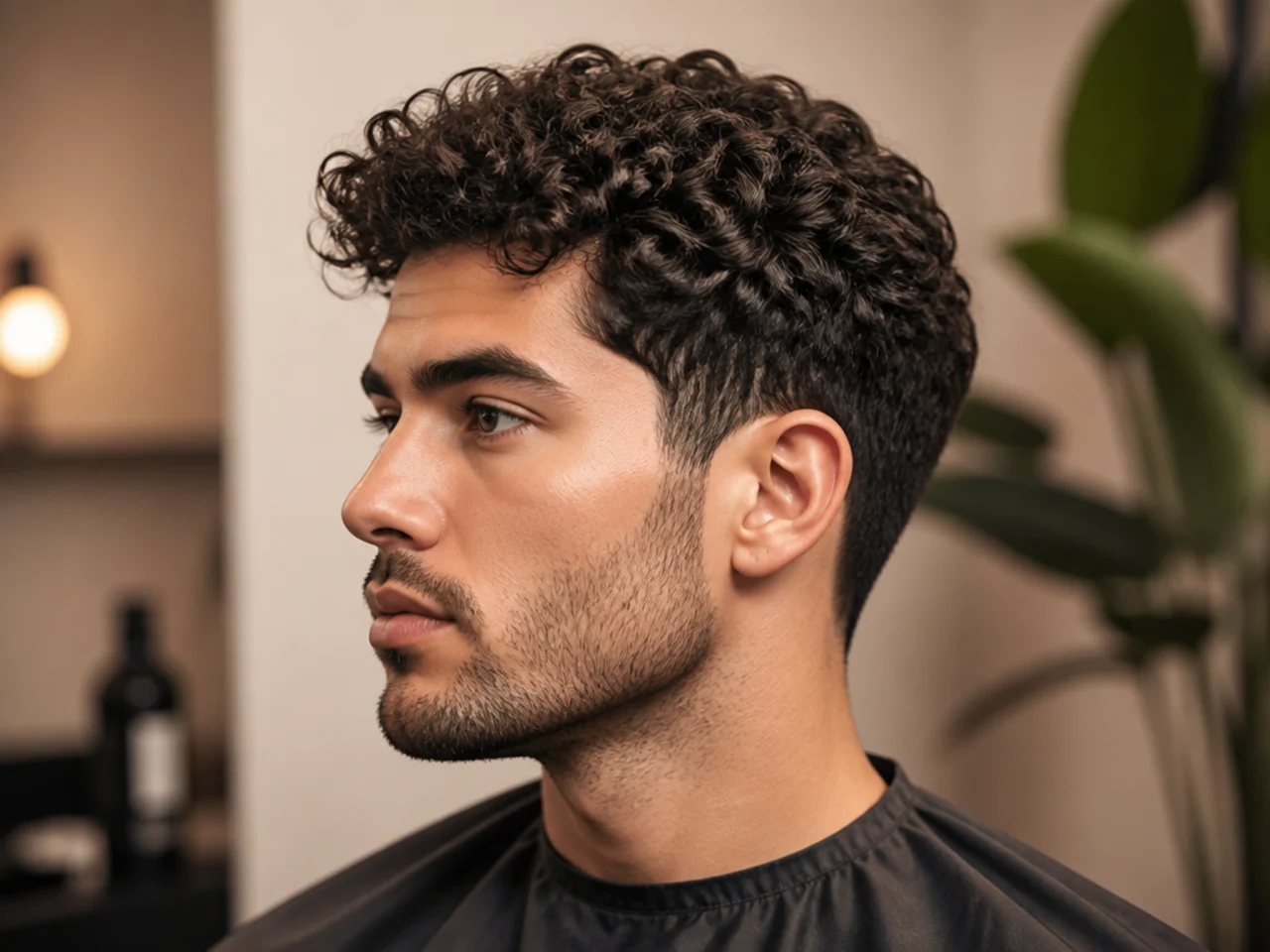
Natural curl reads professional when you frame it with structure. Two to three inches of curl on top, a soft low taper fade on the sides, and a scissor blend around the ears so nothing looks stubbly. Works for 2A through 3B patterns. Suits consultants, architects, agency creatives, doctors — anywhere personality is a plus but polish is required. Ask for a "curly business cut, 2.5 inches on top cut on the dry curl, low taper on the sides, scissor blend around the ears." Style with a dime of curl cream on damp hair worked through with your fingers. Skip pomade — it flattens the pattern.
18. Traditional Scissor Taper
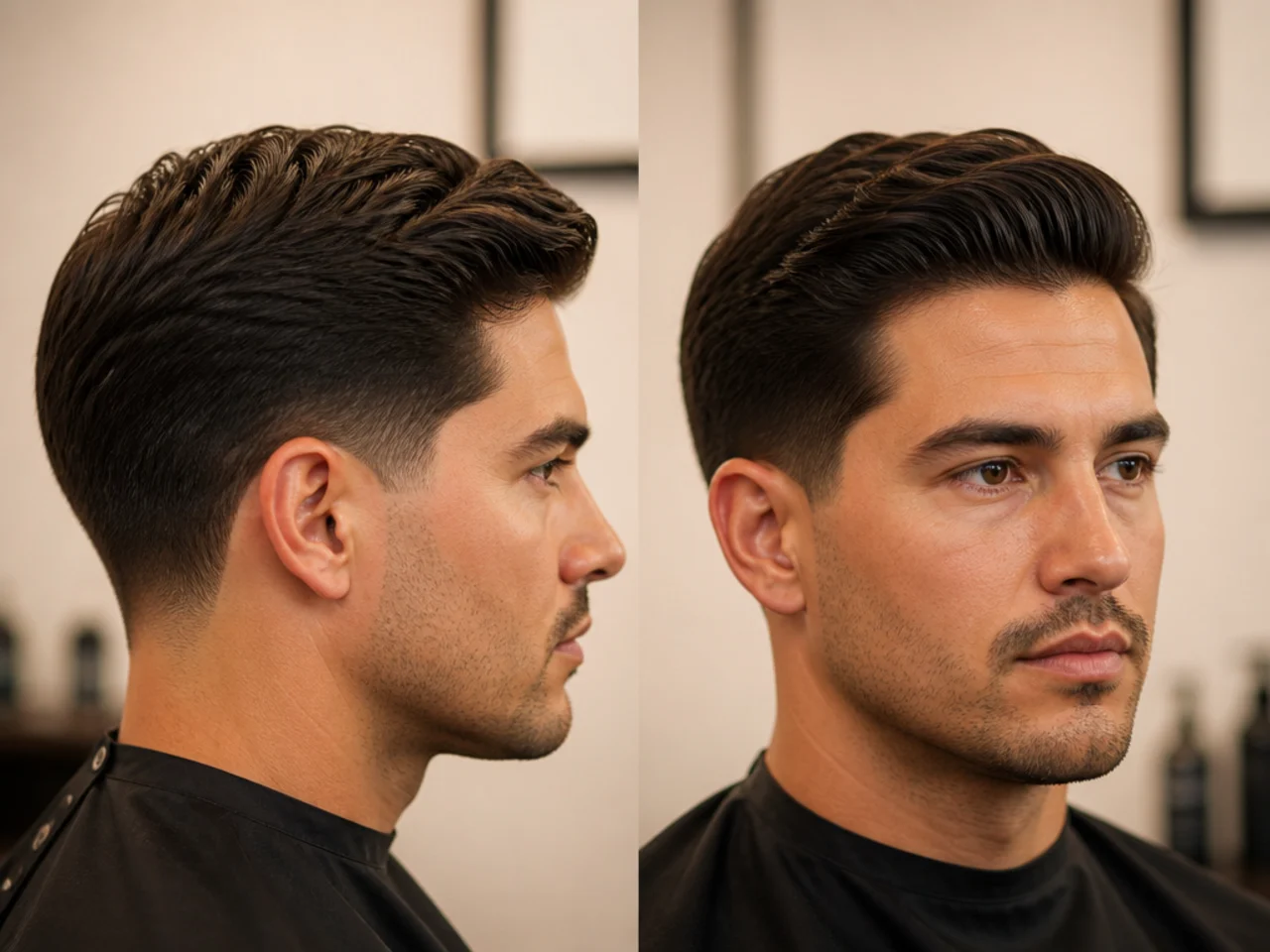
What a traditional barber cuts by default. Sides graduated from a longer length at the top of the head down to shorter above the ear, all done with scissor-over-comb rather than clippers on skin. Top at two inches. It's the safest, most flattering silhouette in the entire men's playbook — no fade, no clipper marks, no chance of miscommunication. Suits every face shape and every hair type. Ask for a "classic scissor taper haircut, 2 inches on top, tapered sides from a #4 down to a #2 above the ear, natural side part." Style with a matte cream worked through with your fingers, combed once. The most conservative cut on the list.
19. Hard-Part Business Cut
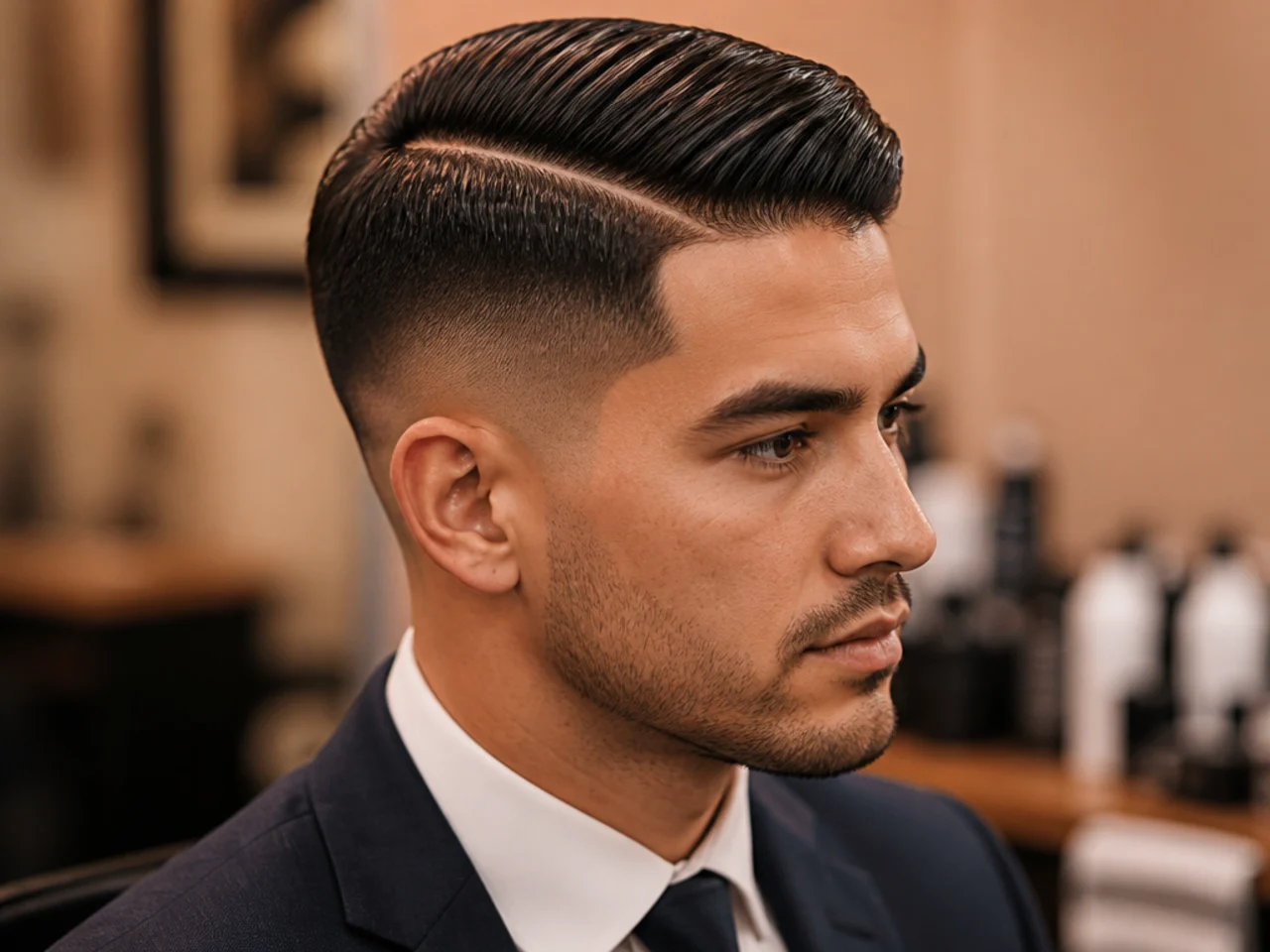
A modern precision take on the classic side part. Razor-drawn hard part line, high-precision low fade or clean taper on the sides, and a controlled 2- to 3-inch top combed away from the part. Every edge does work — the precision is the whole read. Suits every face shape but skews photogenic on square jaws and oval faces. Best in sales, tech, and any office where "sharp" reads better than "traditional." Ask for a "hard-part business cut, low fade to skin on the sides, 2.5 inches on top, razor-drawn hard part along the natural break." Style with a medium-hold pomade combed once with a fine-tooth comb. Book every three weeks — the razor line needs upkeep.
20. Longer Grown-Out Executive
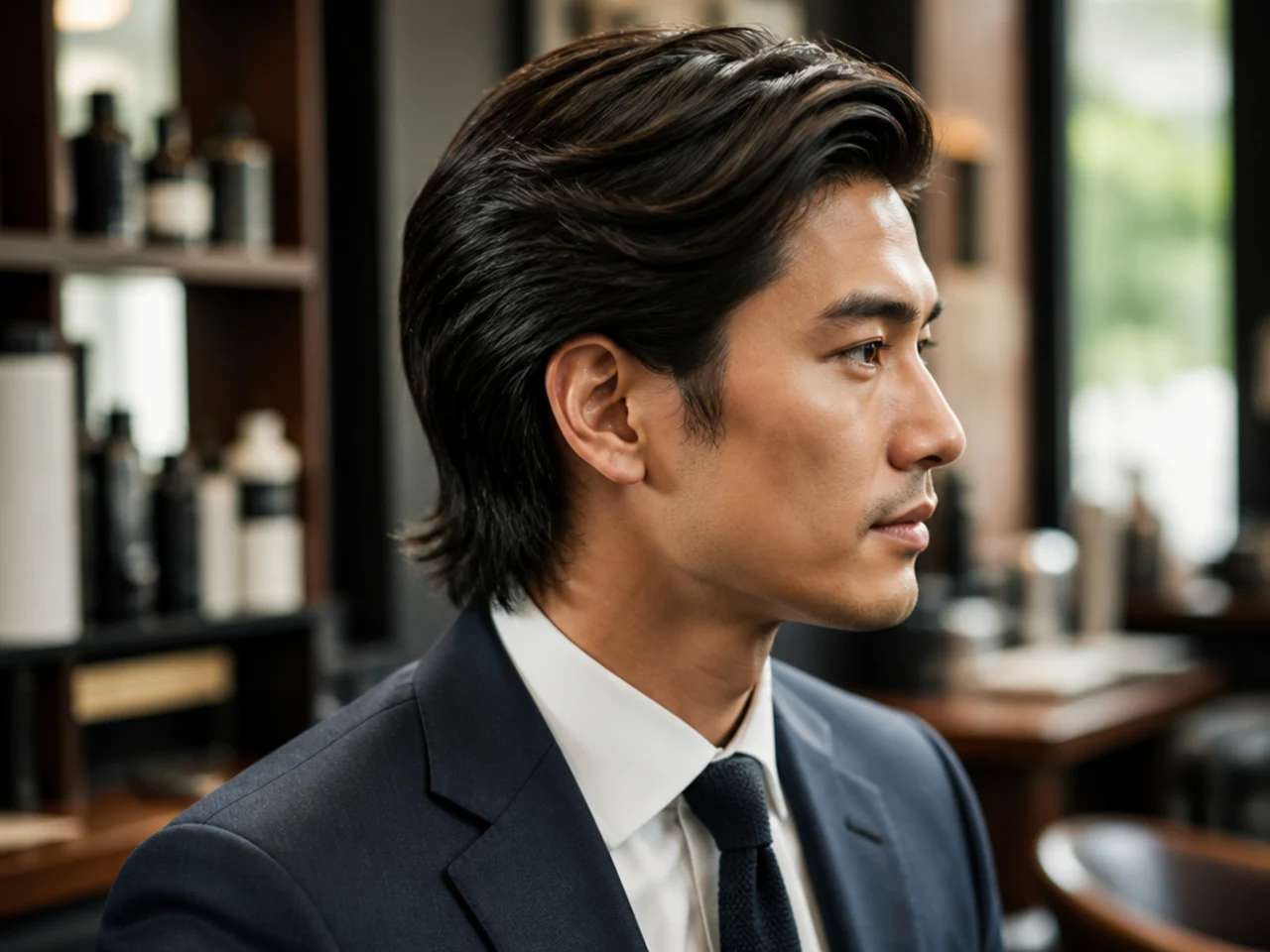
The longest silhouette that still qualifies. Four to five inches on top with a deep side part, longer scissor taper on the sides that tucks behind the ear, and a soft cream-pomade finish. Great for anyone growing out from a shorter cut who wants to stay presentable in the middle stage. Suits oval and square faces with thick, healthy hair. Best in creative offices, hospitality, senior consulting, and law-partner tier where personal style is currency. Ask for a "longer executive, 4 inches on top, longer scissor taper on the sides, deep side part." Style with a cream pomade on damp hair, comb back and to the side, then blow-dry with a paddle brush. The professional hairstyles for men guide covers other long-office variants.
How to Ask Your Barber
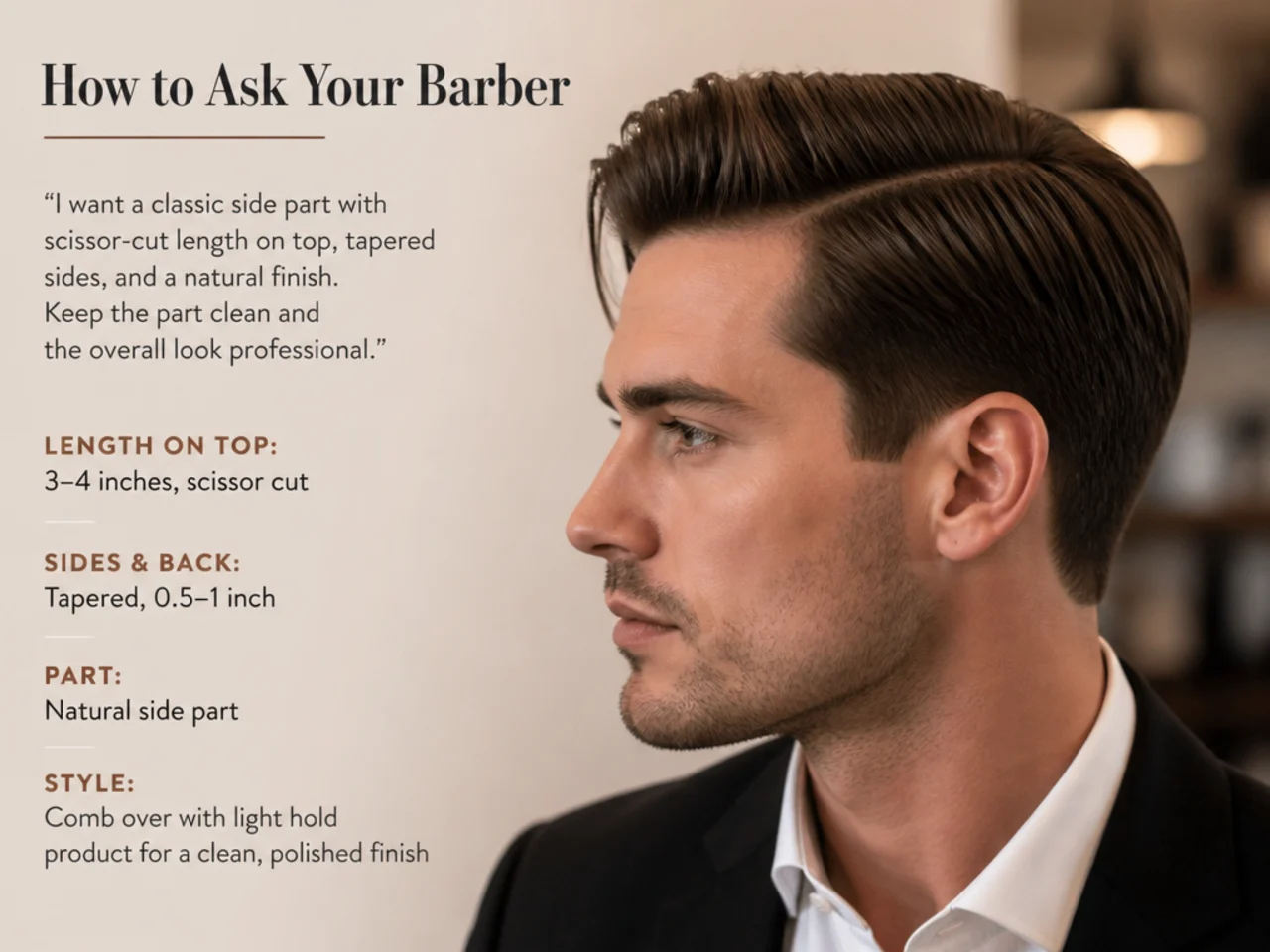
Bring one photo. Not five. Barbers work faster and more accurately from a single clear reference than from a mood board. Then read them these six specifics before they pick up the clippers or scissors:
- Name the cut. "Executive side part," "ivy league," "modern Caesar," "textured business crop." The name sets the mental picture — everything else refines it.
- Give the top length in inches. Say "2.5 inches on top" rather than "medium length." Inches remove ambiguity from the entire conversation.
- Name the side finish. Choose one of three: scissor taper (softest, most conservative), clipper taper (cleaner), or fade (sharpest). If you want a fade, give the height — low, mid, or high.
- Point to your part. Say "natural side part on the left" and tap the spot. Your natural cowlick decides the placement — fighting it wastes your morning. For a modern look, say "razor-drawn hard part along the natural break."
- State the finish. Matte or shine. This determines the product bracket — clay or paste for matte, pomade or cream for shine — and the entire read of the cut.
- Set the office context. One sentence: "I'm in a client-facing sales role and need it to look sharp on Zoom." Your barber will steer you away from anything that looks off on a webcam or grows out unevenly between visits.
For a shorter menu of proven business shapes to browse at the chair, the short simple men's haircuts guide is the fastest way to see the classics on real heads.
Styling and Maintenance
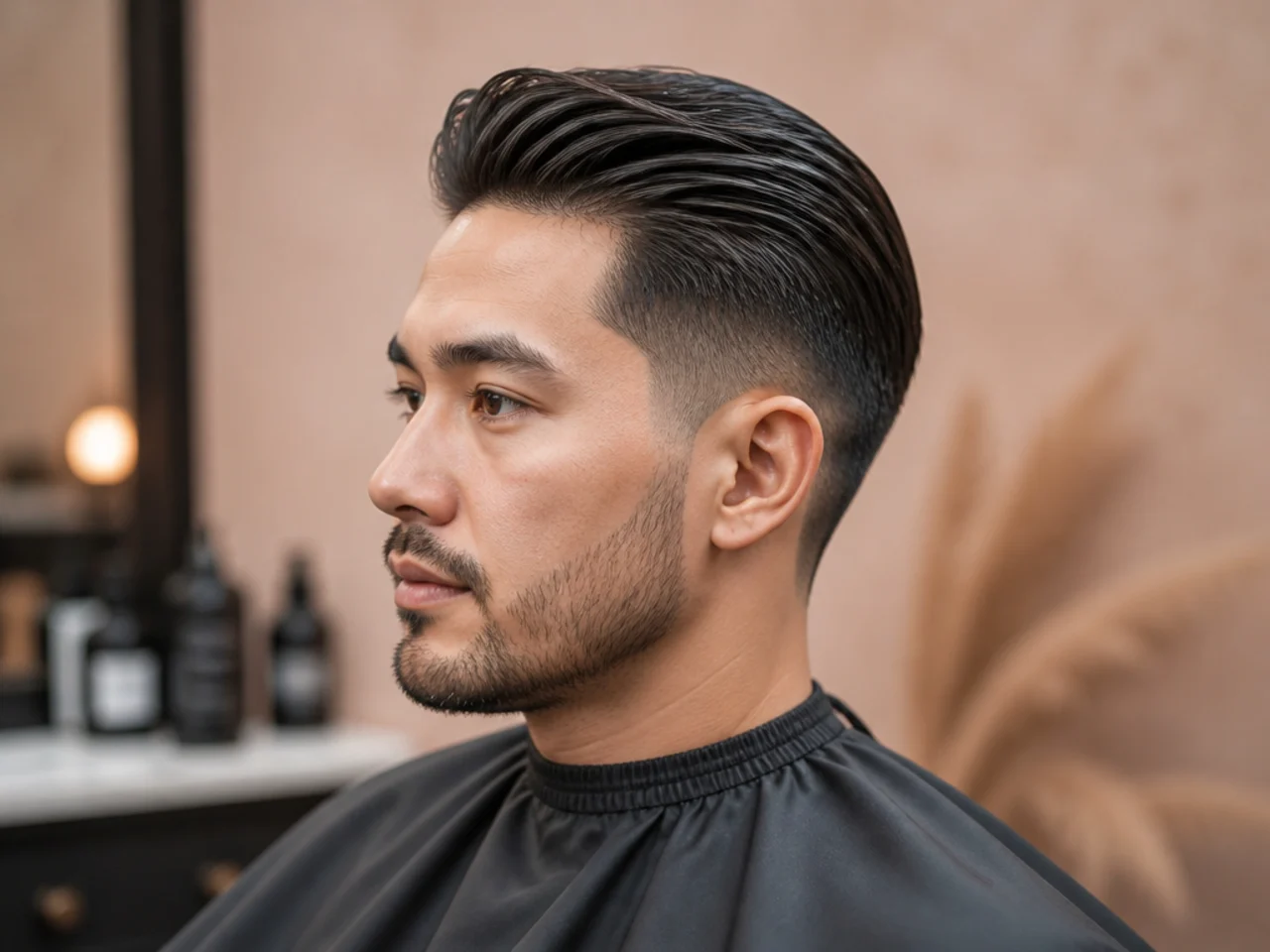
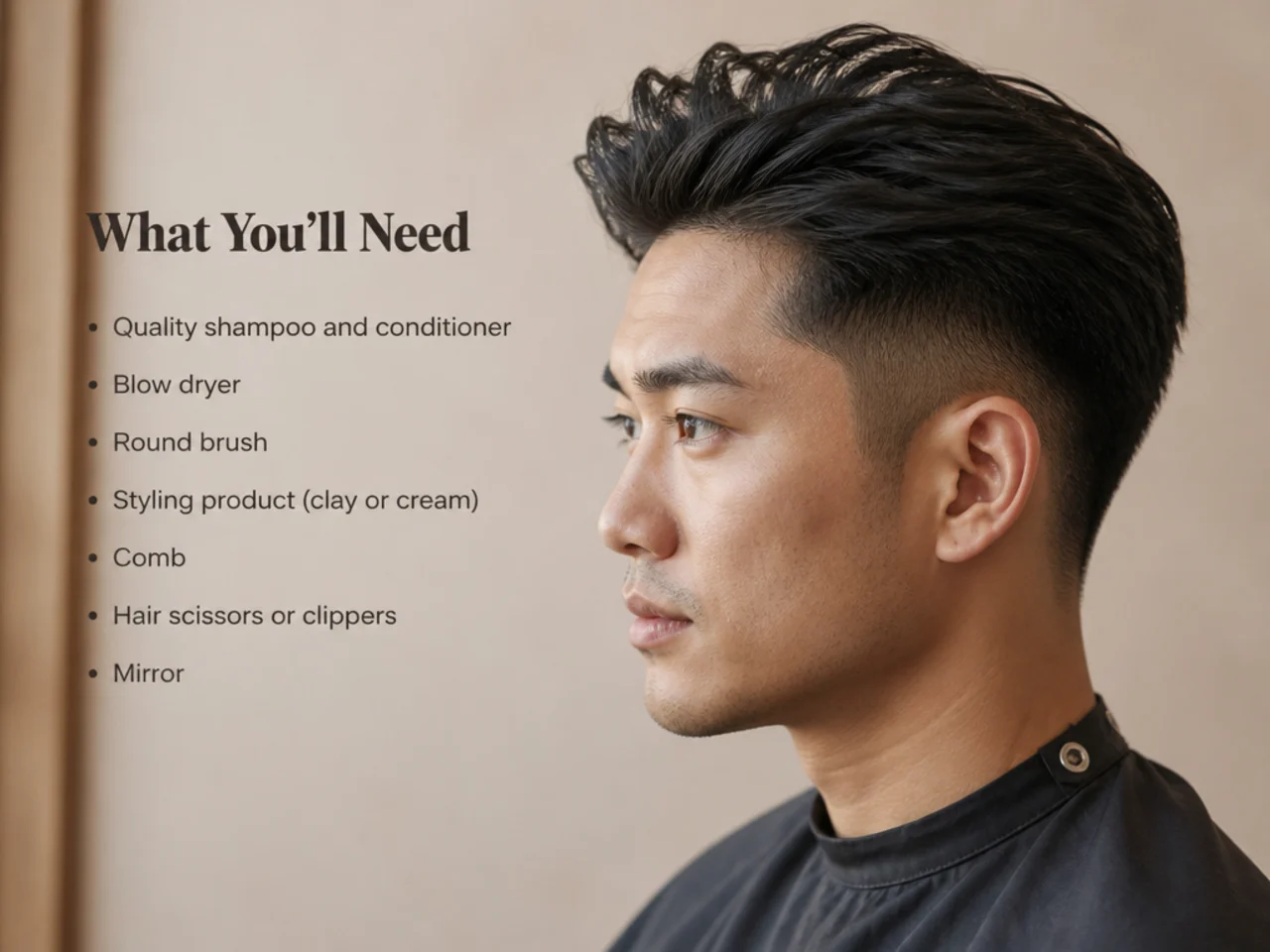
Every cut in this guide is a two-minute morning if you use the right product for the finish.
For shine styles (executive side part, slick back, pompadour, hard-part, comb over, longer executive): a nickel of medium-hold pomade to damp hair. Warm it in your palms until it goes clear, then rake it front to back with your fingers. Comb in the part with a fine-tooth comb. Blow-dry on low for twenty seconds if you want the shape to hold past lunch. Cool shot at the end locks it.
For matte styles (ivy league, textured crop, French crop, quiff, brushed-back, editor cut, undercut, tapered classic): a pea of matte clay or paste to dry hair. Rub it between your palms first, then press it into the roots with your fingertips before pulling to the ends. No comb. Push the shape into place with your palm.
For buzz and crew length (traditional crew, tapered buzz, modern Caesar): skip product entirely. A pea of matte cream at the front only if your hair is fine — that's the whole ceiling. Wash, towel-dry, walk out.
For curly cuts (curly business cut): a dime of curl cream on damp hair, worked through with your fingers, air-dried. No comb, no diffuser, no pomade — the pattern is the styling.
Cadence. Buzz, Caesar, and crew need re-cutting every two to three weeks. Side parts, ivy leagues, and comb overs hold four weeks. Pompadours, editor cuts, and longer executive styles stretch to five or six. Fades of any kind reset the clock — three weeks is the outside window before a fade starts to look shaggy at the ears. If your schedule can't sustain three-week visits, choose a scissor taper instead — it's the low-maintenance men's haircut that reads office without the calendar drama. For a broader look at cadence by style, see how often should men get a haircut.
Pick one cut from the twenty above, book the appointment, bring the photo, hand your barber the six specifics. The right business hairstyle for you is the one you can rebuild in ninety seconds on a Monday morning and still look sharp in on the last call of a Friday. Everything else is a preference. Choose the cut, own the appointment, and let the shape do the work in every room you walk into.