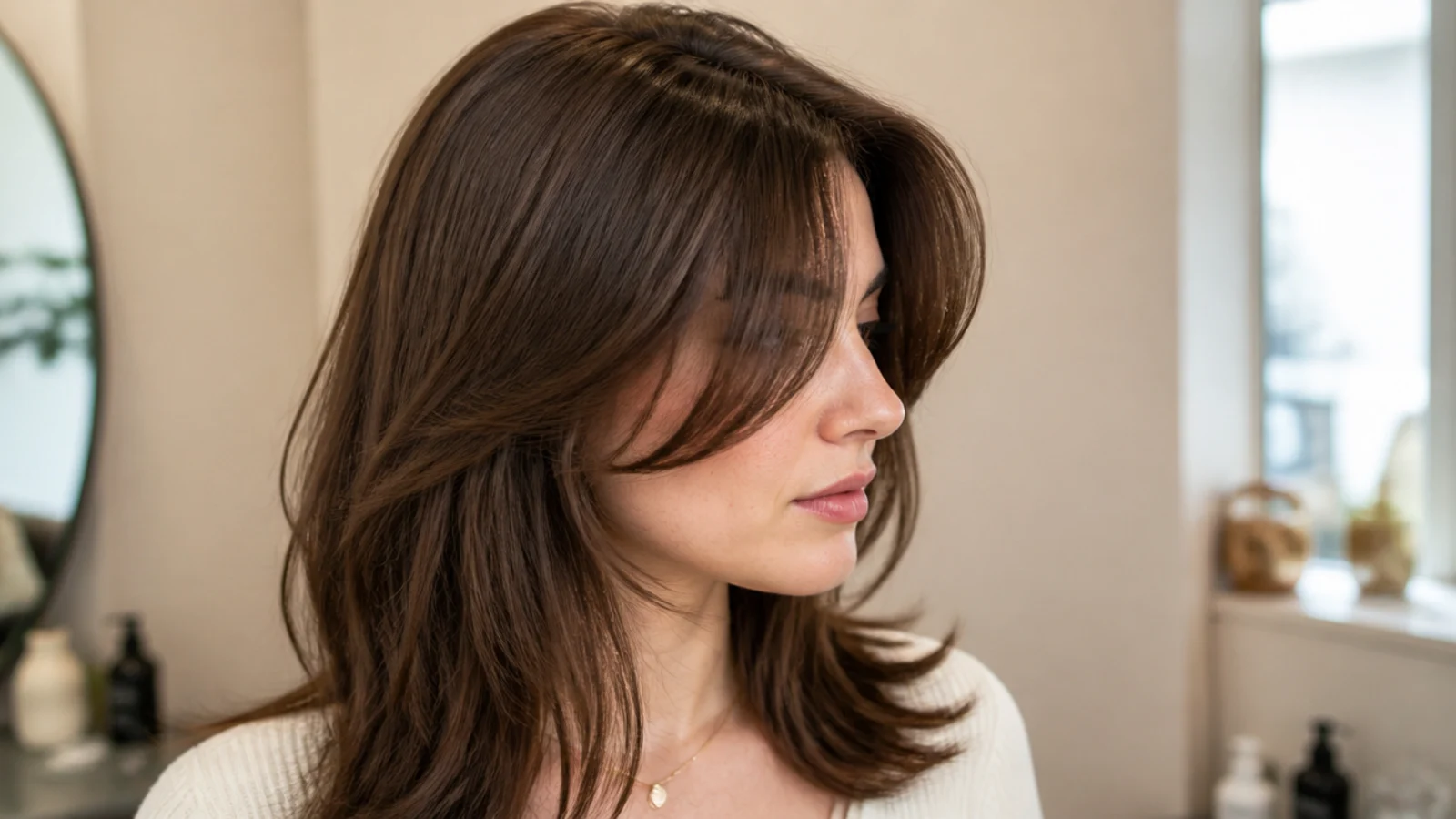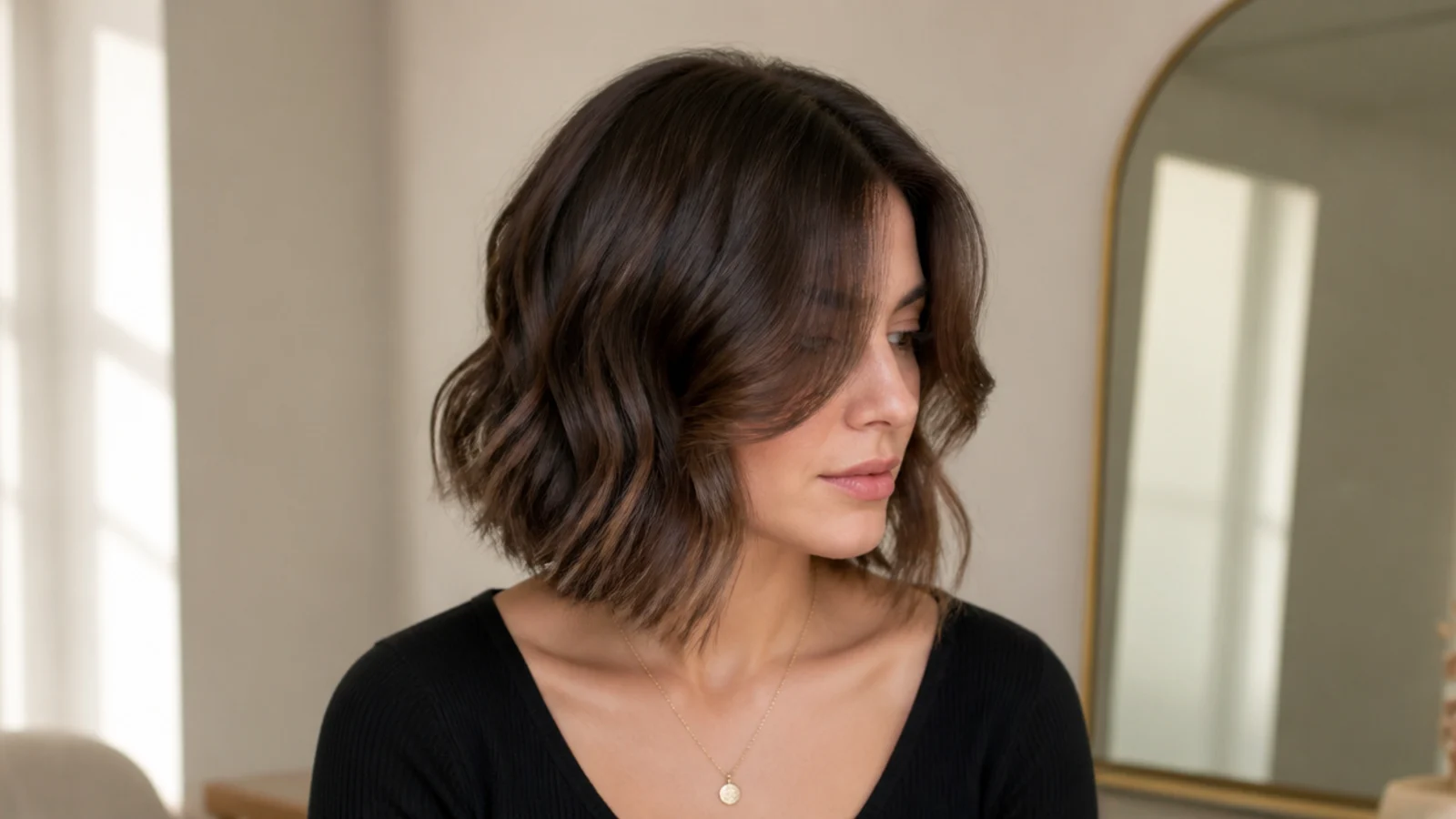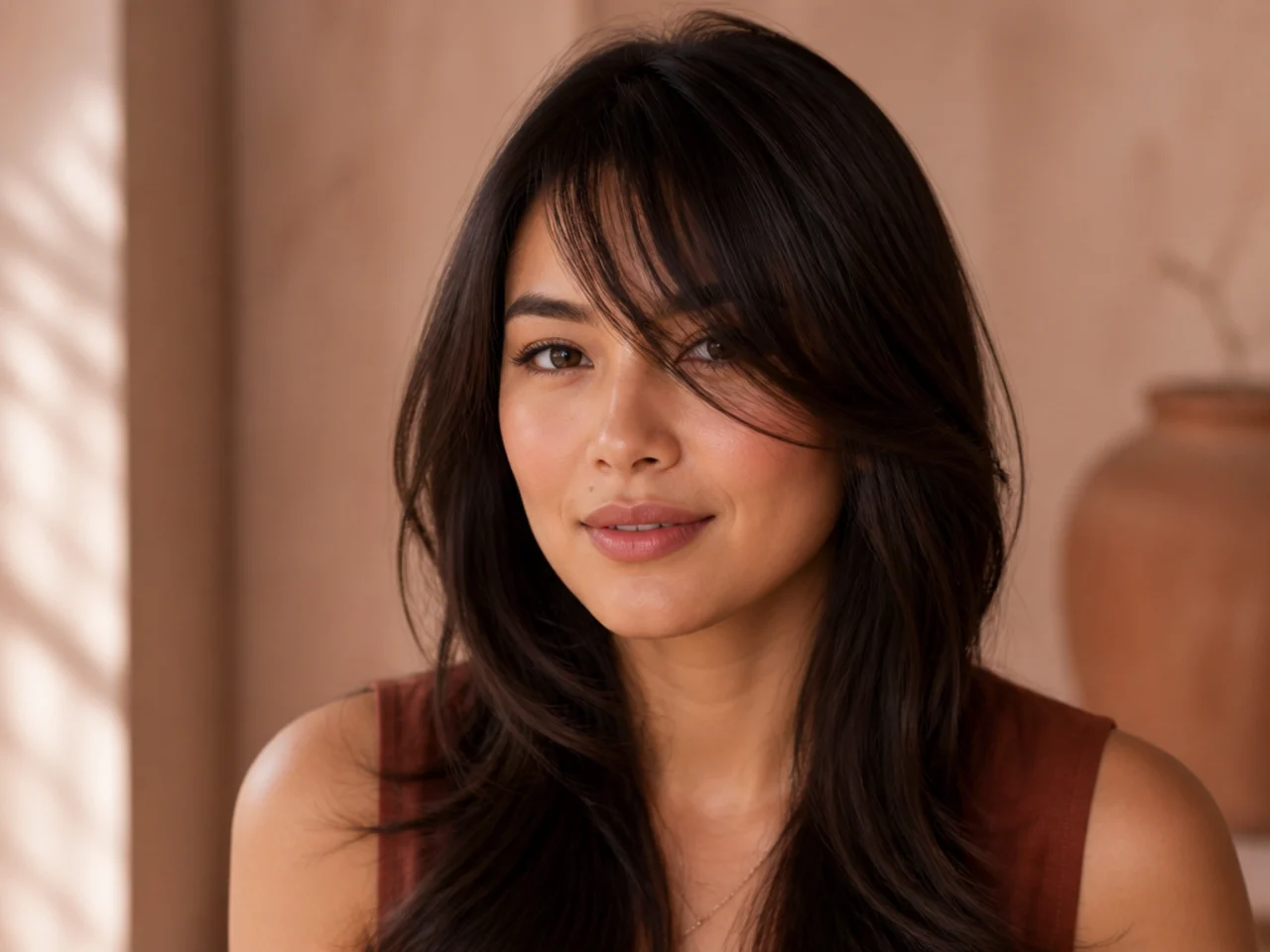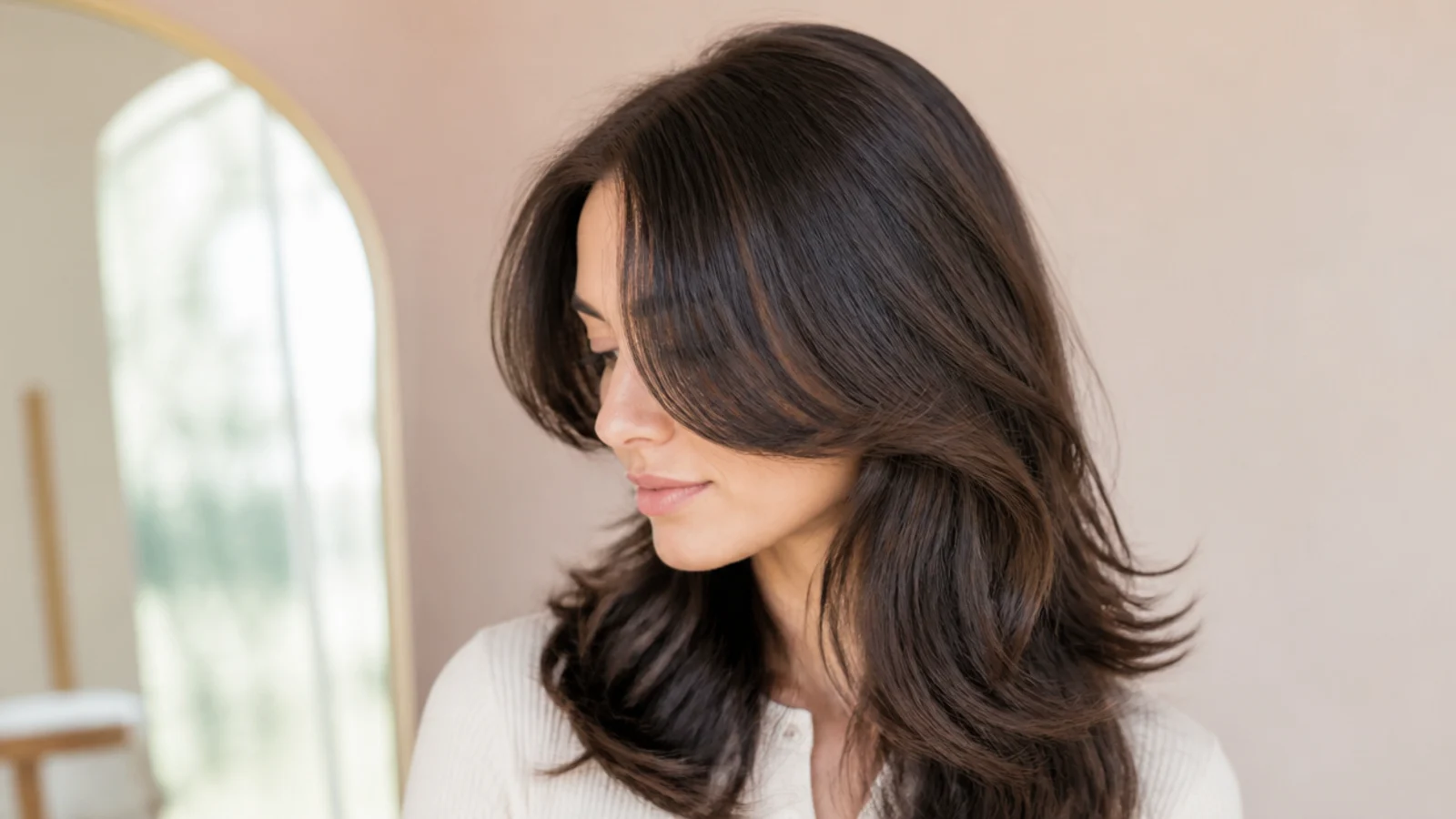
20 Soft Short Curtain Bangs Ideas Worth Asking For
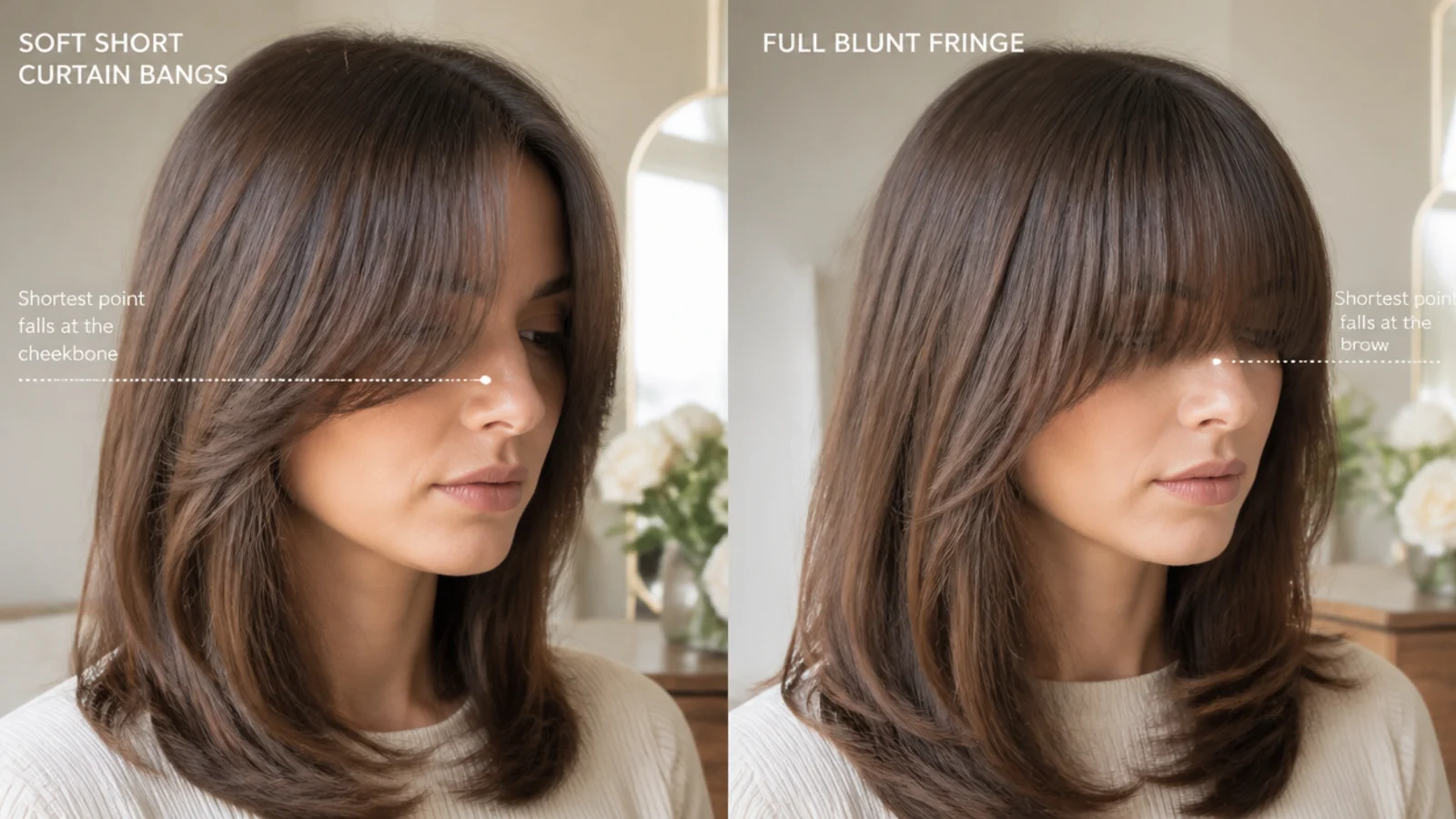
Twenty soft short curtain bangs, and the measurement that decides whether they work. The shortest point sits at the centre and every strand tapers longer toward the sides — cut level across and you have a fringe instead.
In this article · 28
- What Soft Short Curtain Bangs Are
- How Short Is Too Short
- Face Shapes
- Styling at Home
- Trim Cadence and Cost
- Growing Them Out
- The 20 Soft Short Curtain Bangs Ideas
- 1. Brow Grazing
- 2. Round Face
- 3. Fine Hair
- 4. Wavy Hair
- 5. Straight Hair
- 6. Curly Hair
- 7. With a Bob
- 8. Cheekbone Length
- 9. Baby Bangs Above the Brow
- 10. Thick Hair
- 11. Seventies Flick
- 12. Heart Face
- 13. Square Jaw
- 14. With Glasses
- 15. Grown Out
- 16. With a Shag
- 17. Side Part
- 18. Heatless
- 19. Face Framing Highlights
- 20. Cut at Home
- Final Thoughts
Most soft short curtain bangs that disappoint were cut level across, and level is the one thing a curtain bang is not.
The shortest point sits at the centre. From there every strand runs longer as it sweeps toward the sides, which is what makes the two halves fall open like a curtain instead of hanging as a panel.
Soft means point cut, not blunt. The ends are sliced into at an angle so each strand finishes at a slightly different depth, and that stagger is what stops the bang sitting on top of your length like a separate piece.
What Soft Short Curtain Bangs Are
A fringe is level, a curtain bang is graded. The two photographed side by side differ at the centre — one shortest point at the cheekbone with everything running longer outward, one flat line carried straight across the brow.
Short describes where the centre lands, not the whole thing. The shortest point can sit anywhere from above the brow to the cheekbone. The sides stay longer whichever height you pick, because they have to reach your face-framing length to blend.
The parting is part of the cut. A curtain bang needs a split to fall into. Cut one without deciding where that split sits and the hair chooses for itself, usually along an existing cowlick.
The blend outward is the difficult part. Any barber can cut a short line. The grade from centre to side is where a rushed cut shows, because a step in the middle of that run reads as a chunk rather than a sweep.
How Short Is Too Short
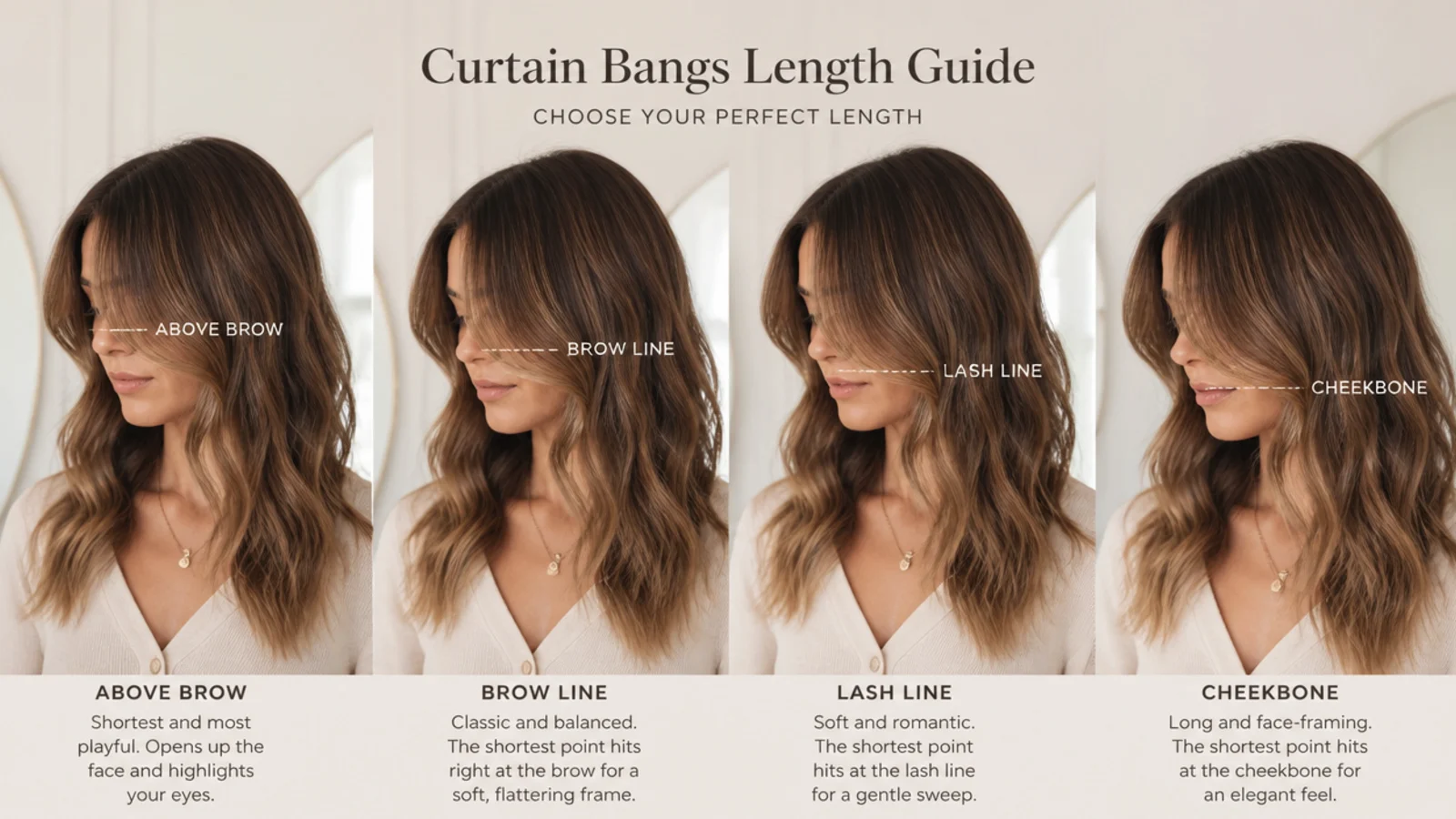
Above the brow is the shortest sensible point. It opens the whole forehead and puts all the emphasis on the eyes. It is also the version with the least margin — a millimetre out is visible because there is no length below to disguise it.
The brow line is the default. The shortest point lands right at the brow, which frames without covering, and it is the height most people picture when they ask for curtain bangs.
The lash line is the soft option. Long enough to sweep, short enough to still read as a bang rather than a face-framing layer.
The cheekbone is the longest that still counts. Below that the centre stops being noticeably shorter than the sides, and the cut turns into face-framing layers with no split to hold.
Face Shapes
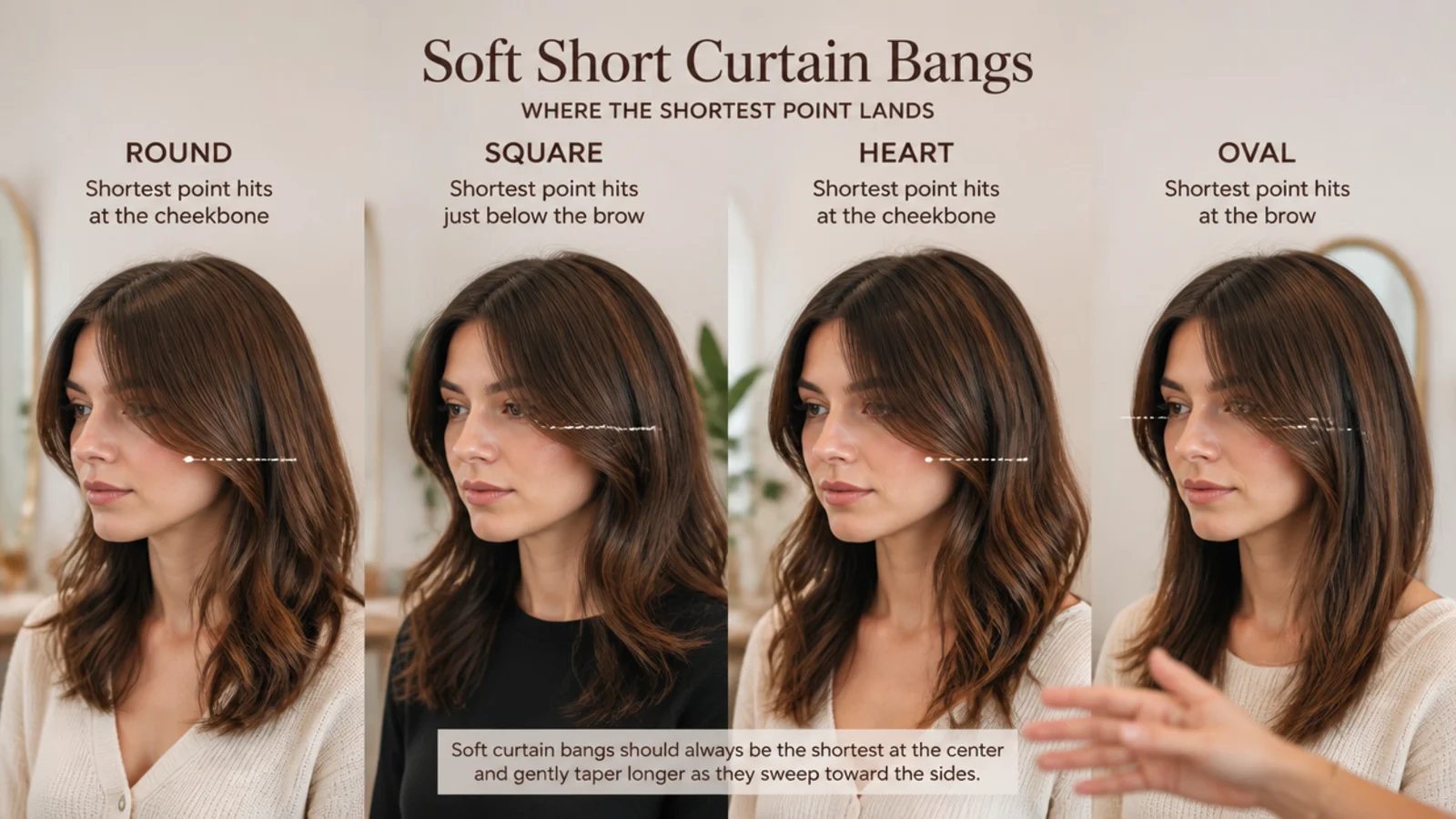
Round faces want the shortest point at the cheekbone. Length running vertically past the widest part of the face cuts the horizontal, which is the only reliable way a fringe narrows a round outline.
Square jaws want it just below the brow. Keeping the shortest point high leaves the sides long enough to fall over the corners of the jaw, so the sweep softens the angle rather than pointing at it.
Heart faces want the cheekbone too. A wider forehead needs covering and a narrower chin needs balancing, and length that arrives at cheek level does both in one pass.
Oval faces can take the brow. The proportions already balance, so the shortest point can sit at its highest without the cut having to compensate for anything.
Whatever the shape, the centre stays shortest. Soft curtain bangs taper longer as they sweep toward the sides — that grade is fixed, and only the height of the centre changes.
Styling at Home
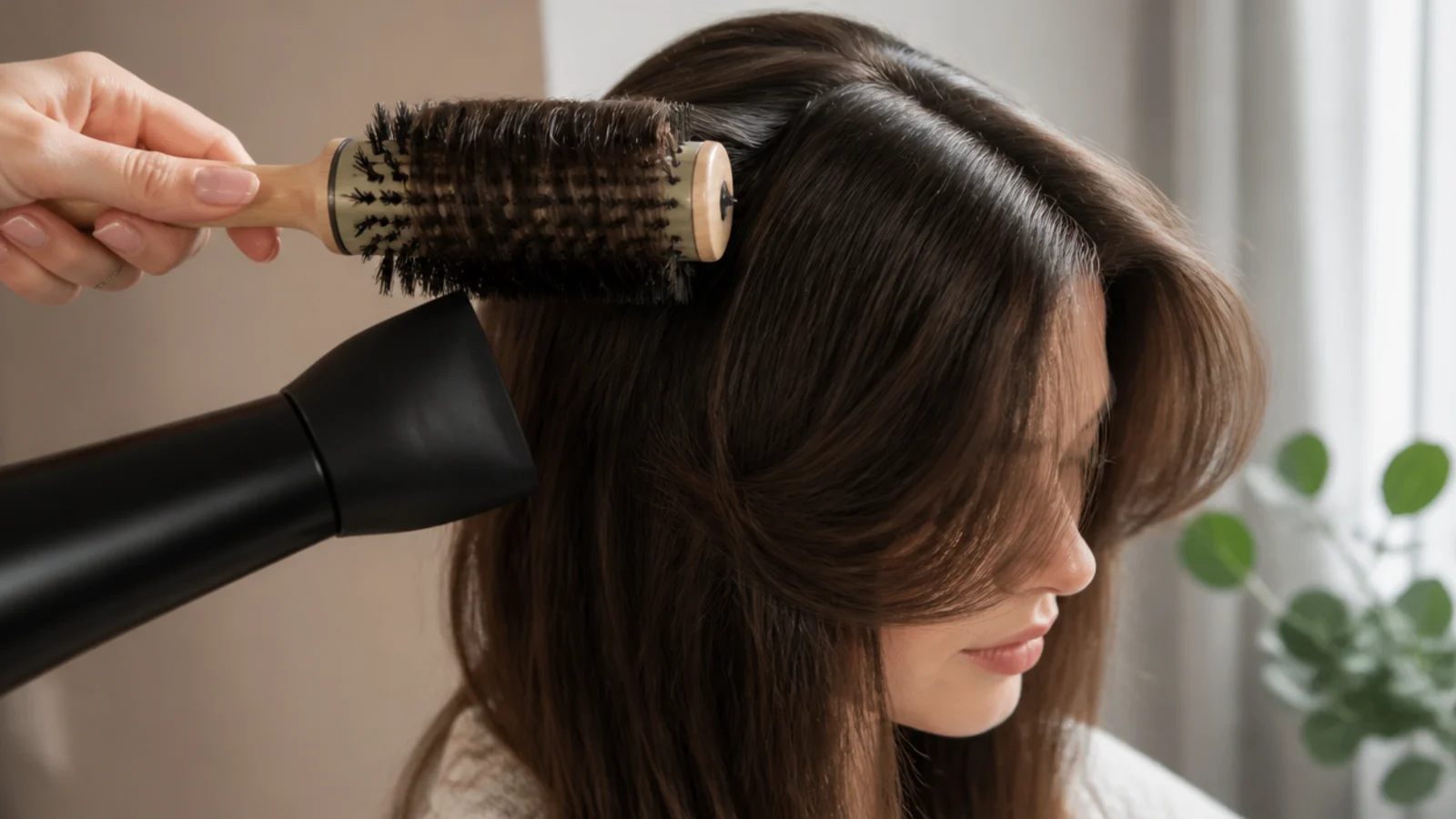
Dry the bang first, while it is soaking. The root sets in the direction it dries in, and once it has dried the wrong way no amount of brushing will move it without wetting it again.
Overdirect the root to the opposite side. Blow it across the parting, then let it fall back. The root ends up standing away from the scalp rather than lying flat, which is where the lift comes from.
Use a round brush and turn it once. Half a rotation at the ends puts the bend in. A full rotation puts in a curl you then have to flatten.
Finish on cold. Warm hair holds no shape at all — the bend only locks as the strand cools, so the cold shot is what turns a warm curve into one that lasts the day.
Trim Cadence and Cost
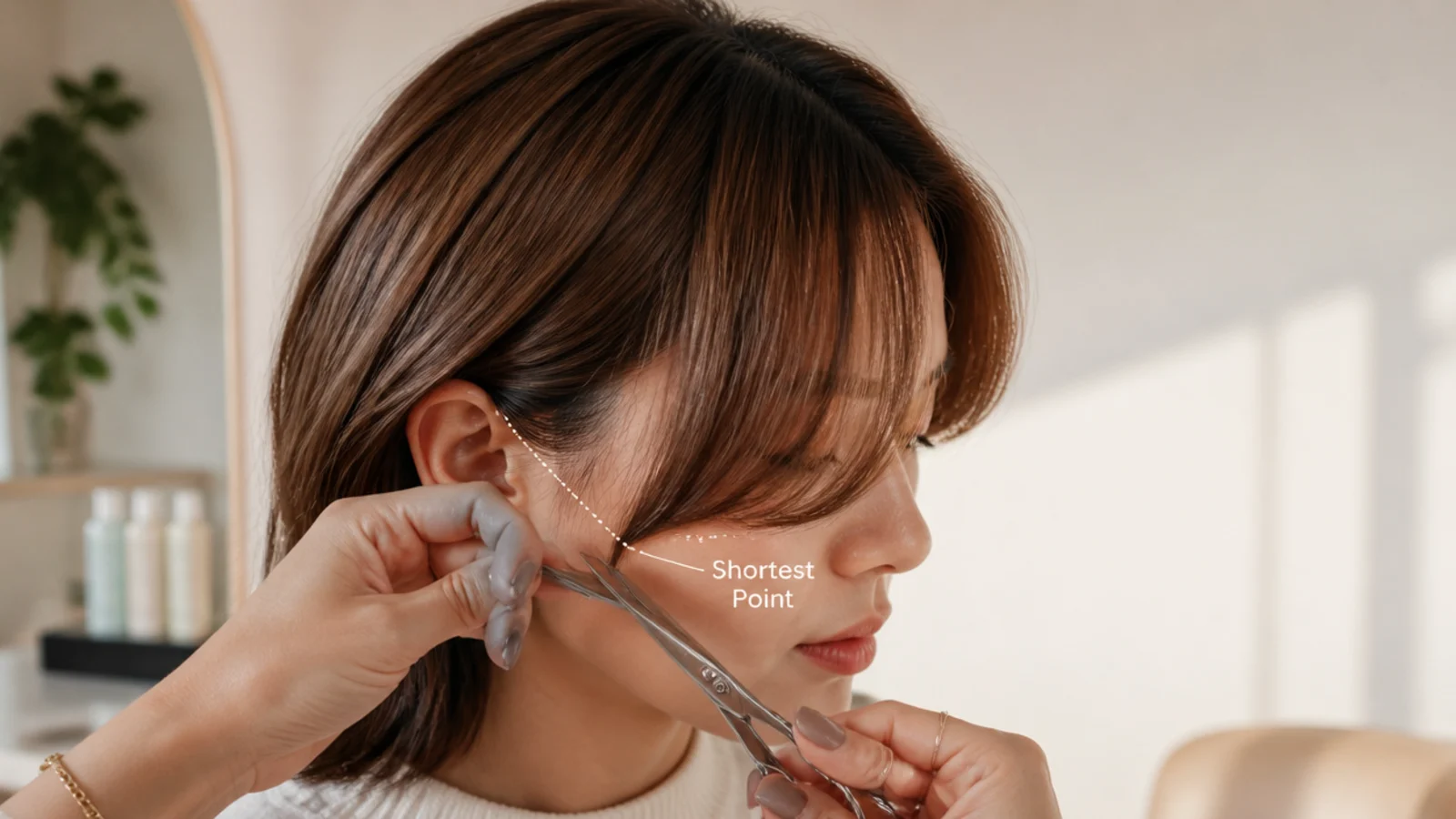
A micro trim every six to eight weeks is enough. You are resetting a few millimetres at the centre, not recutting the shape, so it takes minutes rather than a full appointment.
Book the trim against the shortest point, not the calendar. When the centre has dropped from where you asked for it to the next landmark down, it is due — that is roughly three weeks of growth at half an inch a month.
Say the landmark out loud each time. Brow, lash line or cheekbone. It is one word and it is the only measurement that has to survive between appointments.
Trimming dry costs less than correcting wet. Wet hair is stretched and lies flatter than it will when dry, so a centre cut wet almost always ends up shorter than intended.
Growing Them Out
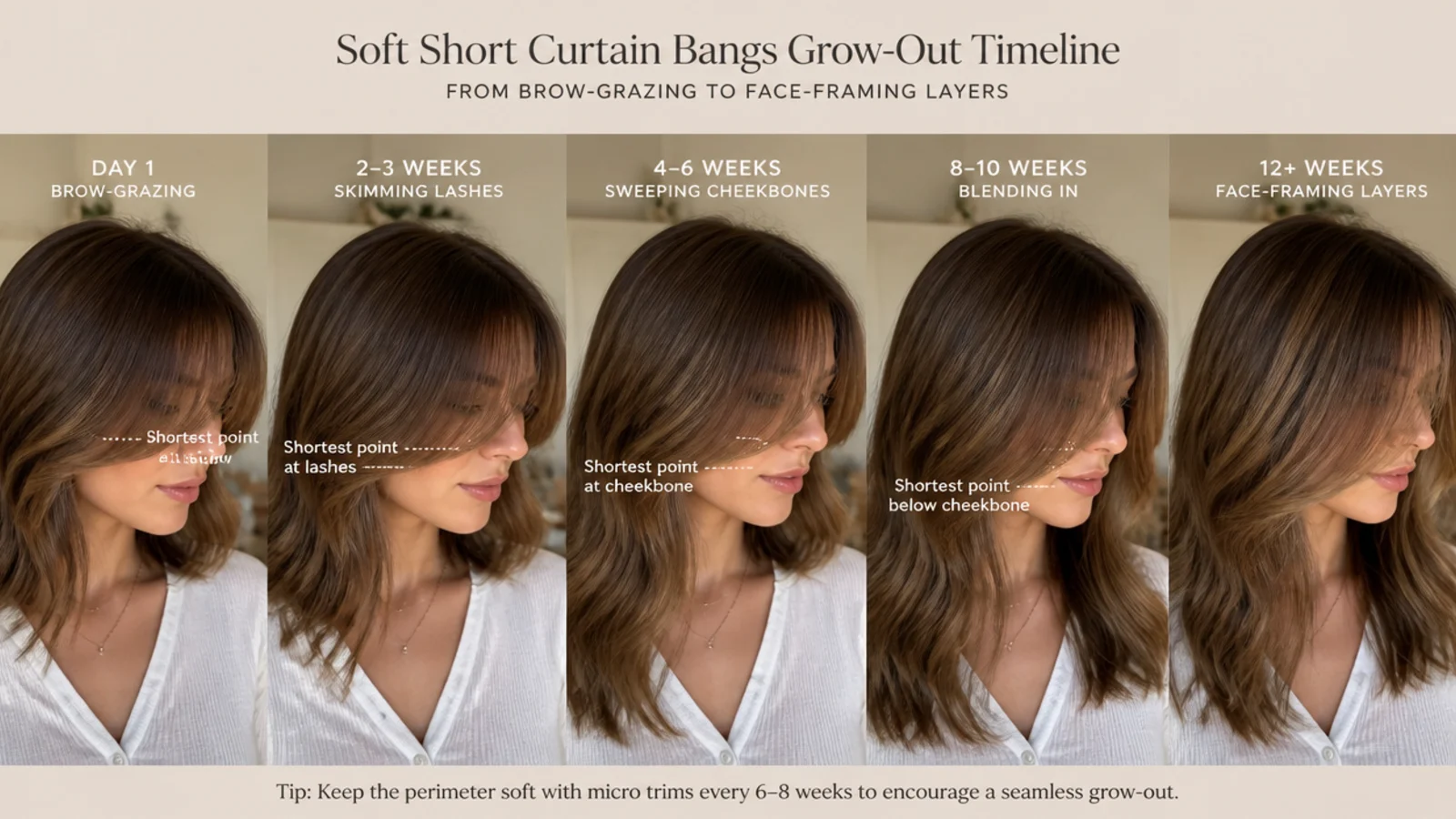
Day one is brow grazing. The shortest point sits right at the brow and the sides run longer from there.
Two to three weeks it skims the lashes. Roughly a quarter of an inch of growth, which is exactly the distance between those two landmarks.
Four to six weeks it sweeps the cheekbone. This is the stage most people like best, and the one where the bang starts doing the work of a face-framing layer.
Eight to ten weeks it blends in. The shortest point drops below the cheekbone and the split stops holding on its own.
Twelve weeks on it is a face-framing layer. Keep the perimeter soft with micro trims every six to eight weeks through the whole grow-out and the transition never has an awkward stage.
The 20 Soft Short Curtain Bangs Ideas
1. Brow Grazing
The shortest point stops just where the brow starts, which leaves the eyes fully open while still breaking up the forehead. It is the most copied version because it frames without asking you to look through anything, and it needs the least styling of any length here.
2. Round Face
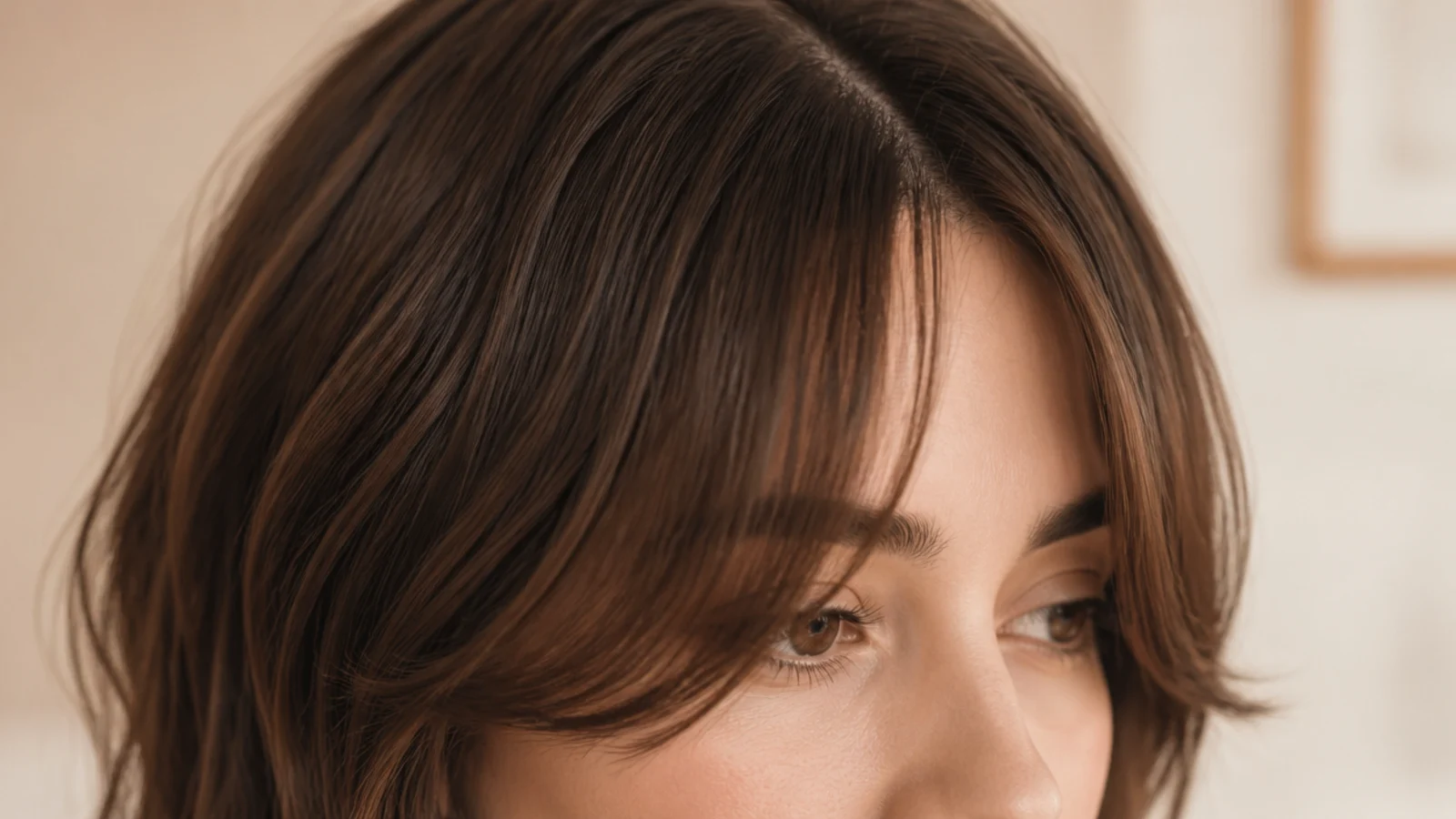
The shortest point drops to the cheekbone so the sweep runs vertically down the widest part of the face. Length travelling downward competes with width travelling across, and the eye reads whichever direction is longer, which is why this placement narrows a round outline.
3. Fine Hair
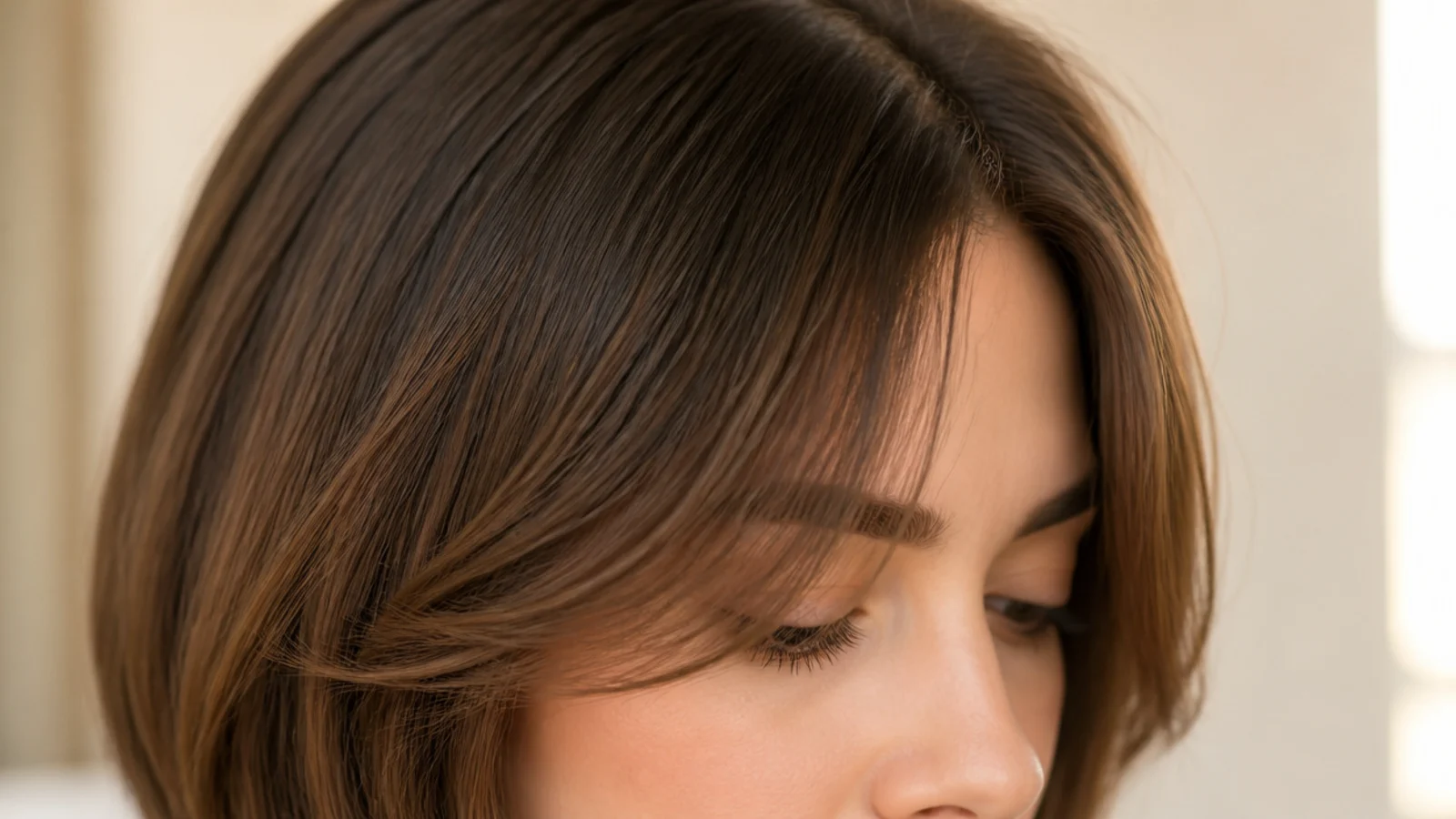
Take the bang from a shallow triangle rather than a deep one, so you borrow less from the top and leave the crown with something to cover it. Fine hair also holds a point-cut edge better than a blunt one, because a staggered perimeter looks like density where a flat line looks like a thin curtain.
4. Wavy Hair
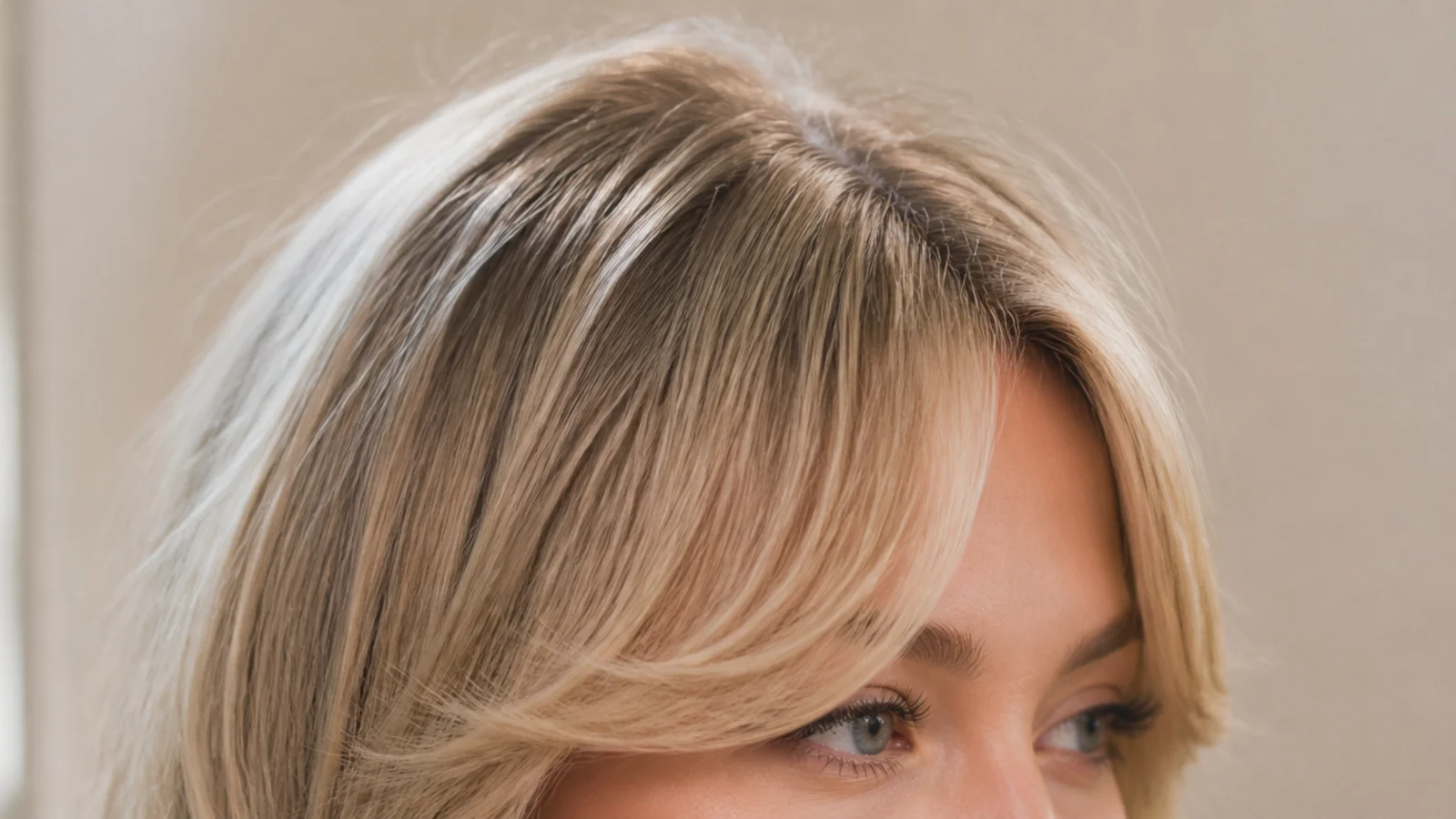
Cut this dry so the wave is already at its finished length when the scissors go in. Wet waves hang straight and stretch a good half inch longer than they sit, so a centre measured wet arrives far shorter than planned once it dries and springs back.
5. Straight Hair
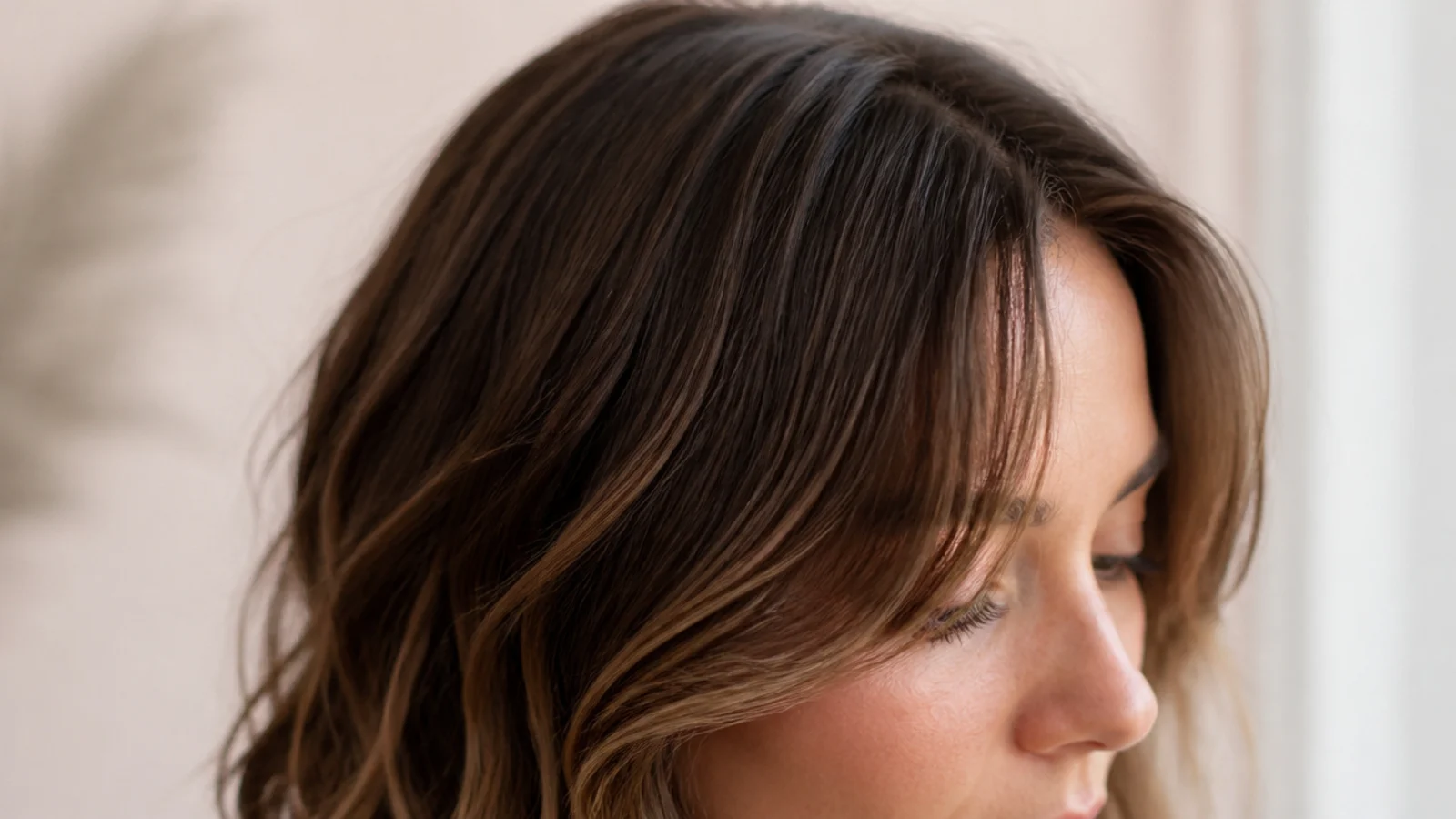
Straight hair shows the grade from centre to side with nothing to hide behind, so the blend has to be genuinely smooth. Every strand lies in one line without a bend to scatter light, which means a step in the taper reads as a step rather than as shadow.
6. Curly Hair
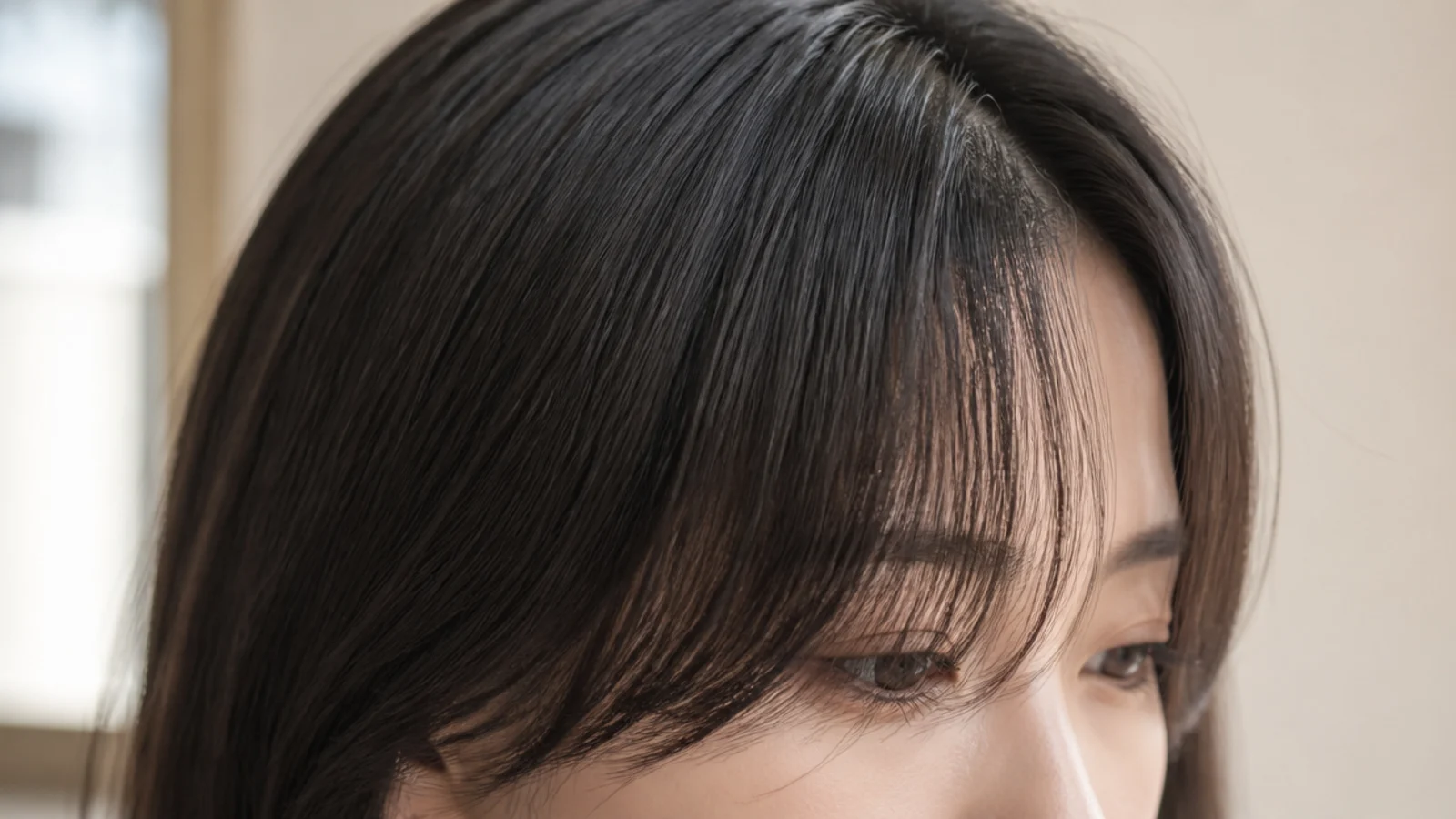
Cut curl by curl, dry, and take less than you think. A curl shortens toward its own root as it dries, so the shrinkage is far greater than on a wave and a centre cut at the brow can end up sitting above the hairline.
7. With a Bob
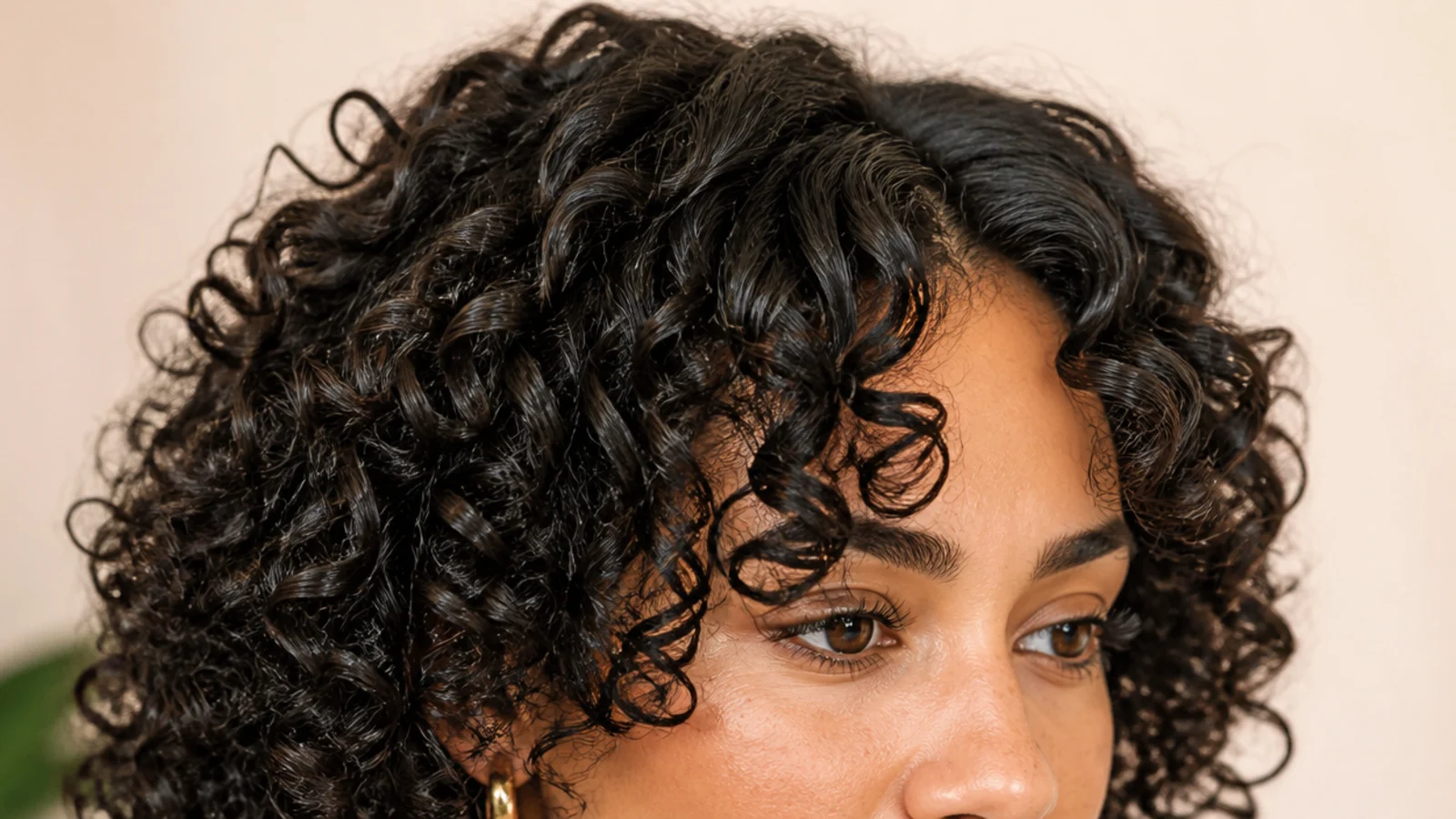
A bob has no length below the jaw for the sides to blend into, so the bang has to reach the bob line itself. Get that right and the two shapes read as one cut; get it short and the fringe sits as a separate tier above the perimeter.
8. Cheekbone Length
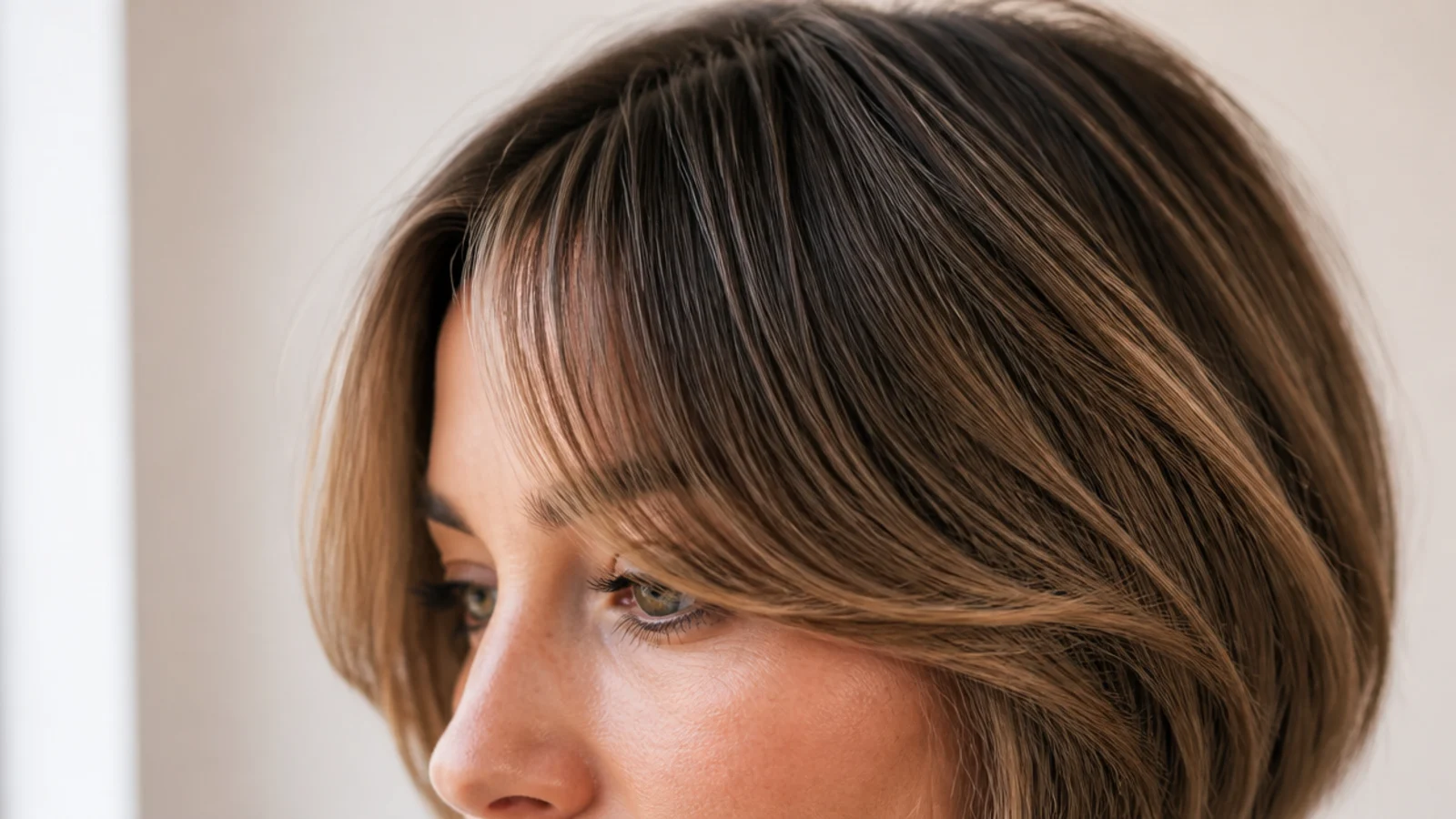
The longest placement that still reads as a bang rather than a layer. It gives the most sweep of any version here and the least maintenance, because a centre at the cheekbone has further to fall before it stops looking deliberate.
9. Baby Bangs Above the Brow
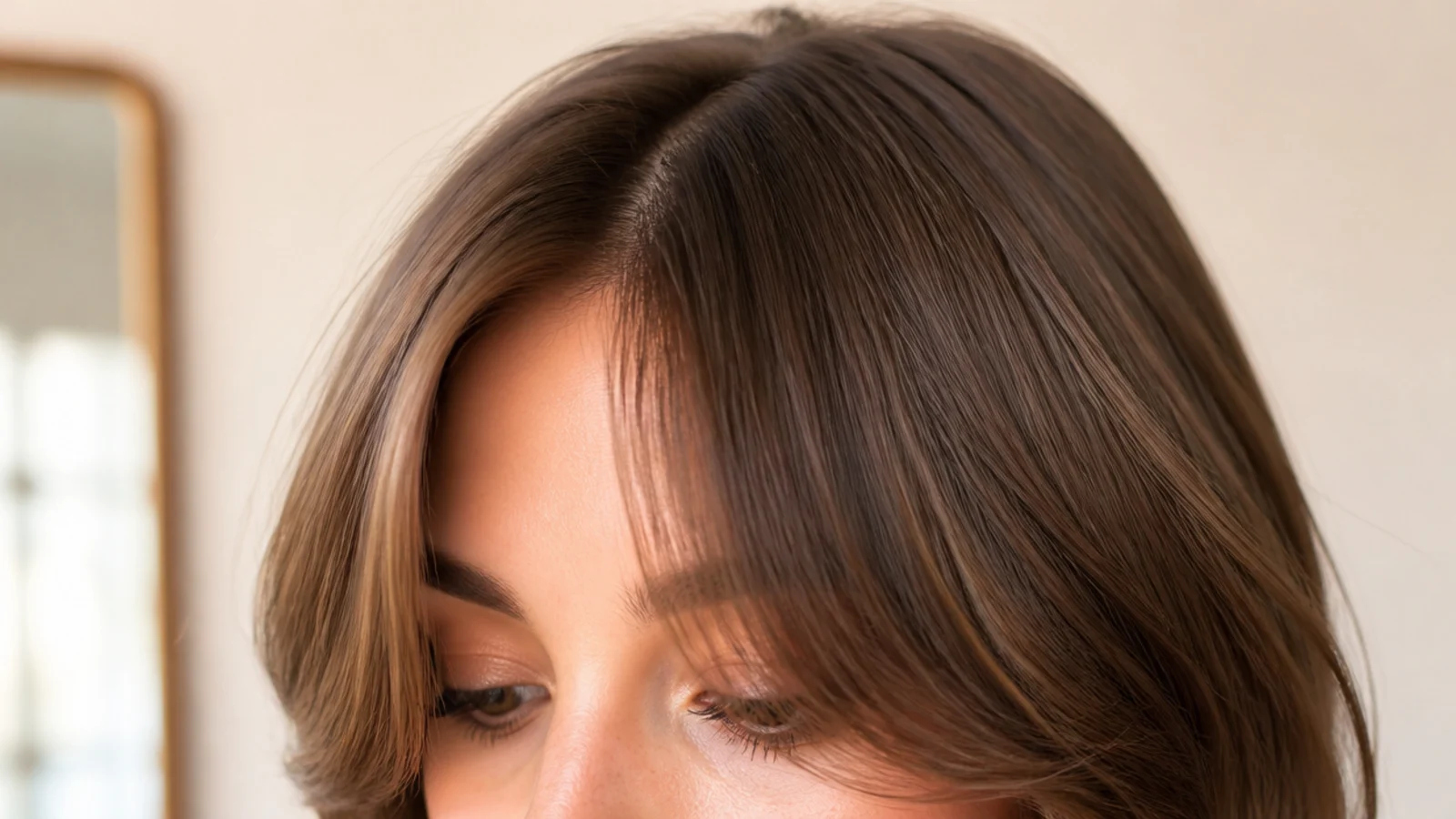
The shortest version, sitting above the brow with nothing below it. There is no length to disguise an uneven line, so this is the one to have cut in a chair rather than at a bathroom mirror, and the one that needs a trim soonest.
10. Thick Hair
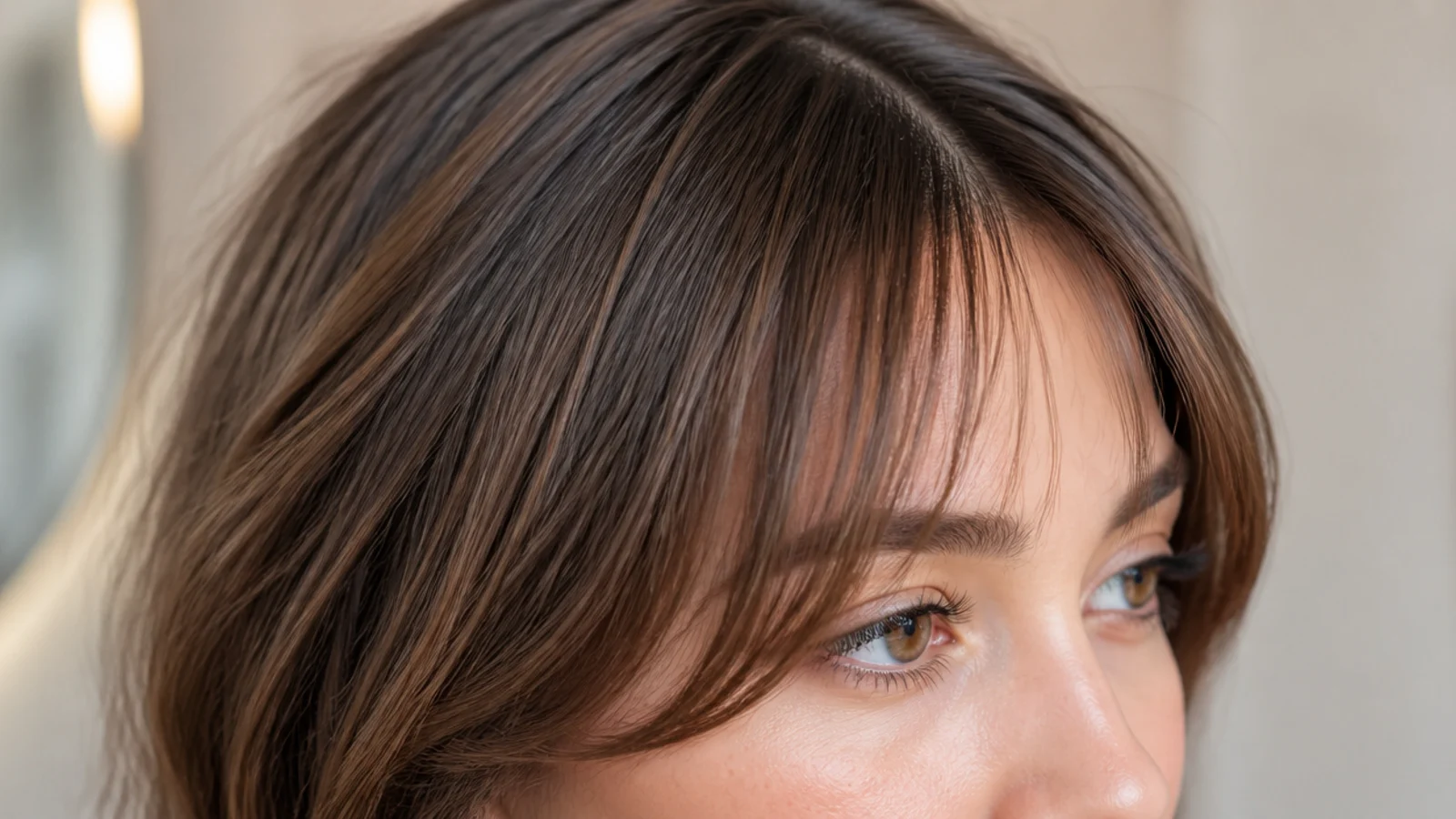
Thick hair needs weight taken out of the bang or the two halves refuse to split and hang as one block. Slide the scissors through the mid-lengths rather than shortening the ends, which removes bulk without moving the line you spent the appointment placing.
11. Seventies Flick
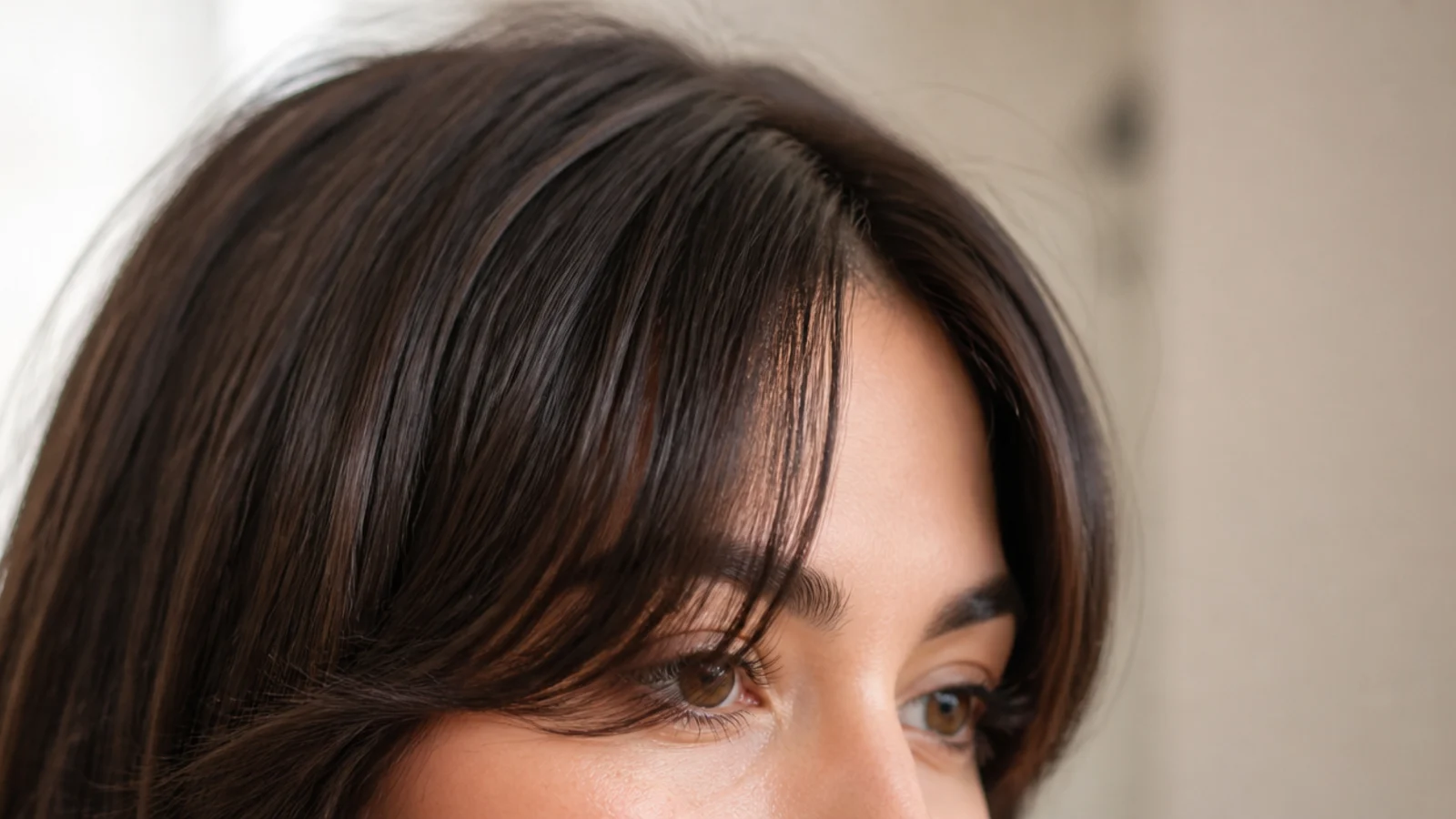
The ends are turned outward rather than left to fall, which sends the sweep away from the cheek instead of onto it. One turn of a round brush at the last inch is all it takes, and it is the difference between hair that frames the face and hair that covers it.
12. Heart Face
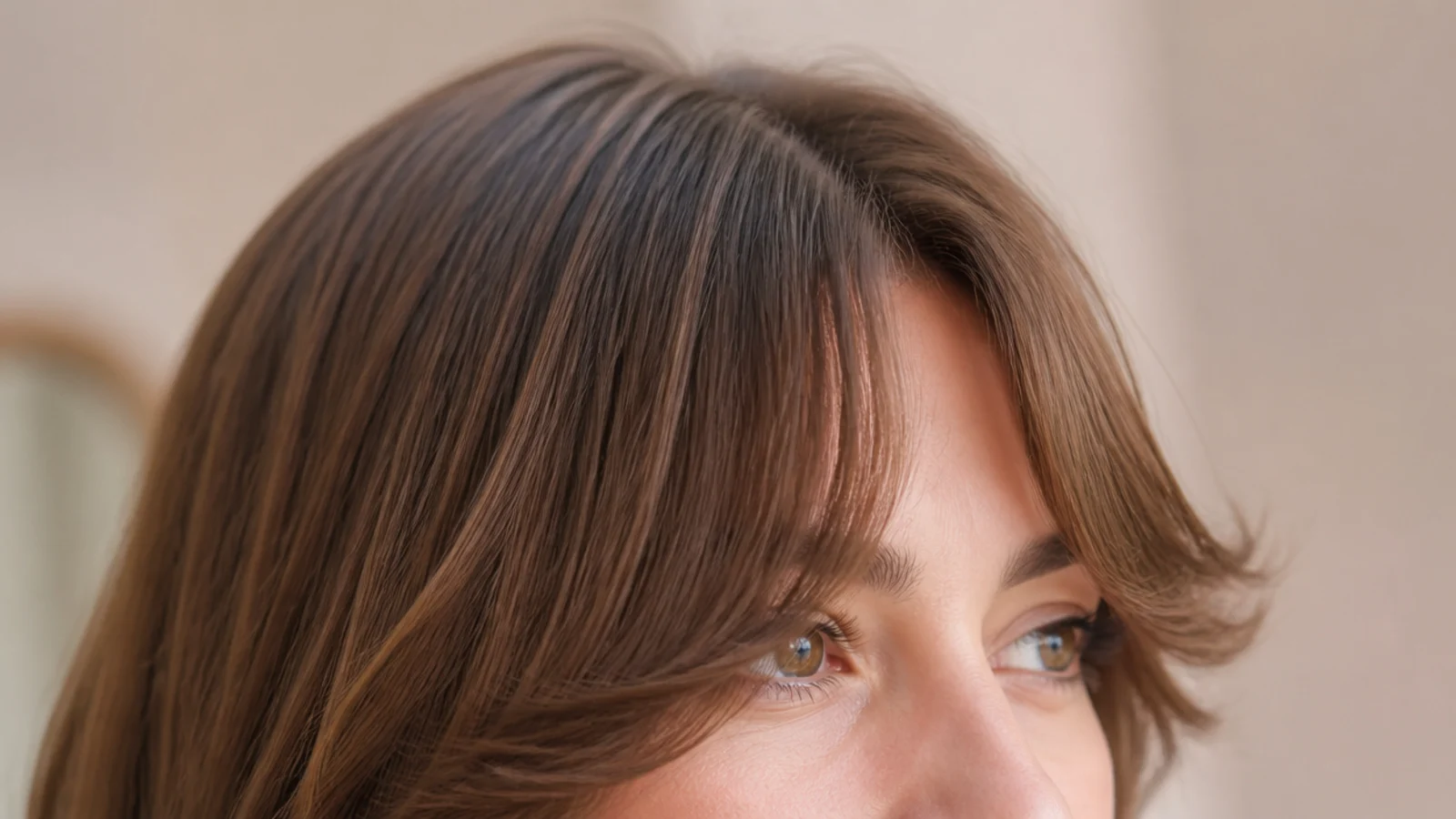
A wider forehead and a narrower chin are balanced from the same cut when the shortest point lands at the cheekbone. The bang covers width at the top while the sides carry visual weight down to where the face narrows, which evens the two halves out.
13. Square Jaw
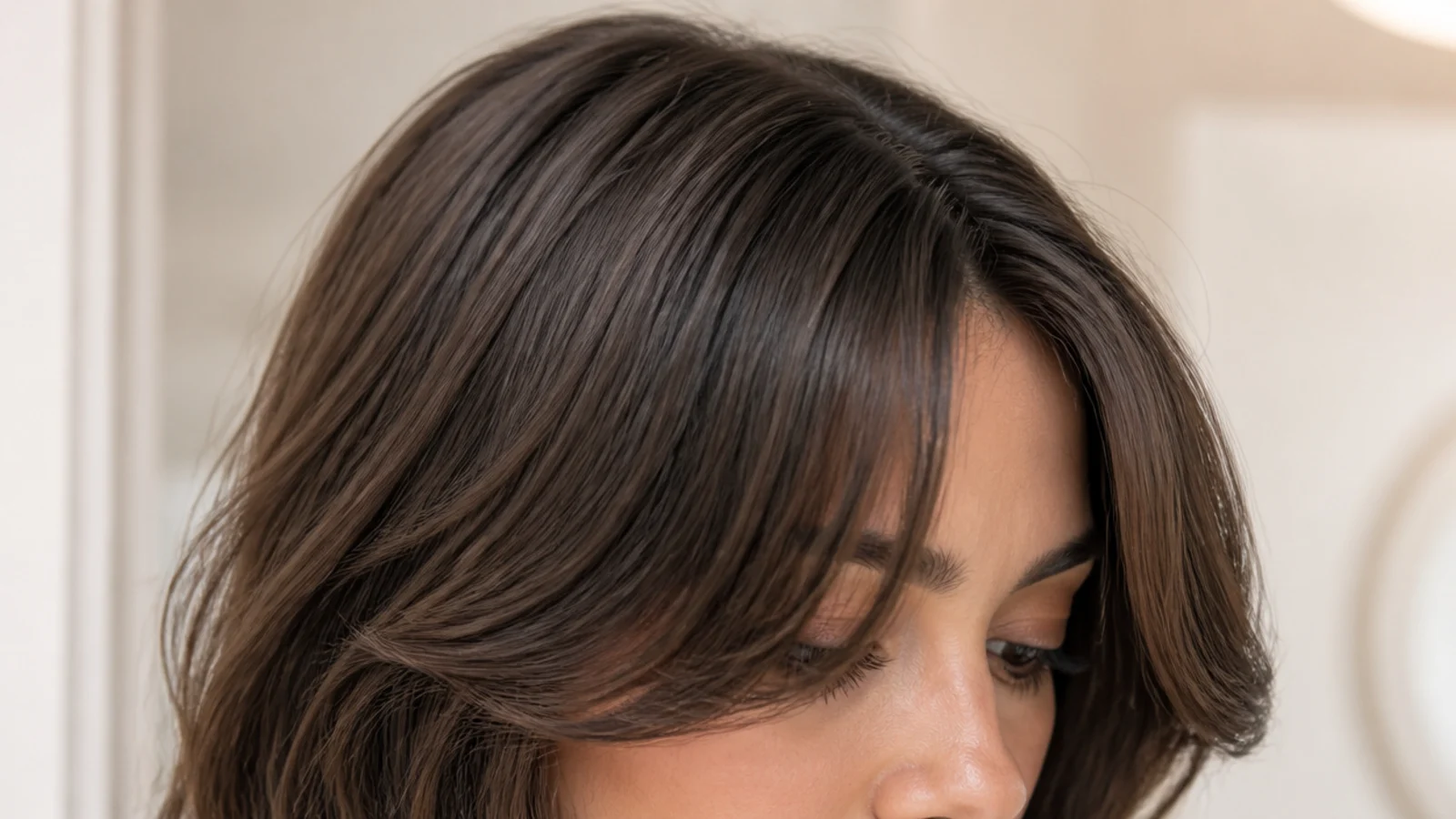
Keep the shortest point just below the brow so the sides stay long enough to fall over the jaw corners. Length that stops above the jaw draws a second horizontal across the widest part of the face, which is exactly the line you are trying to soften.
14. With Glasses
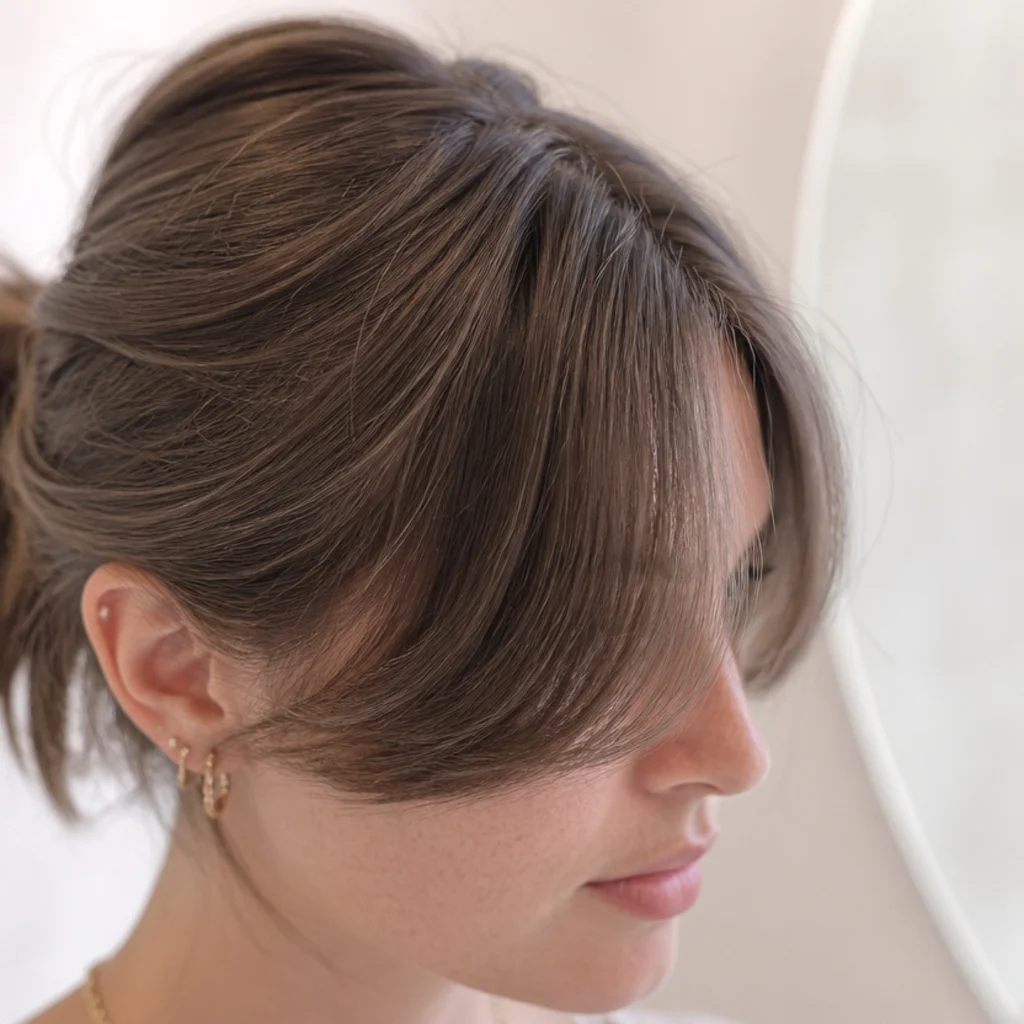
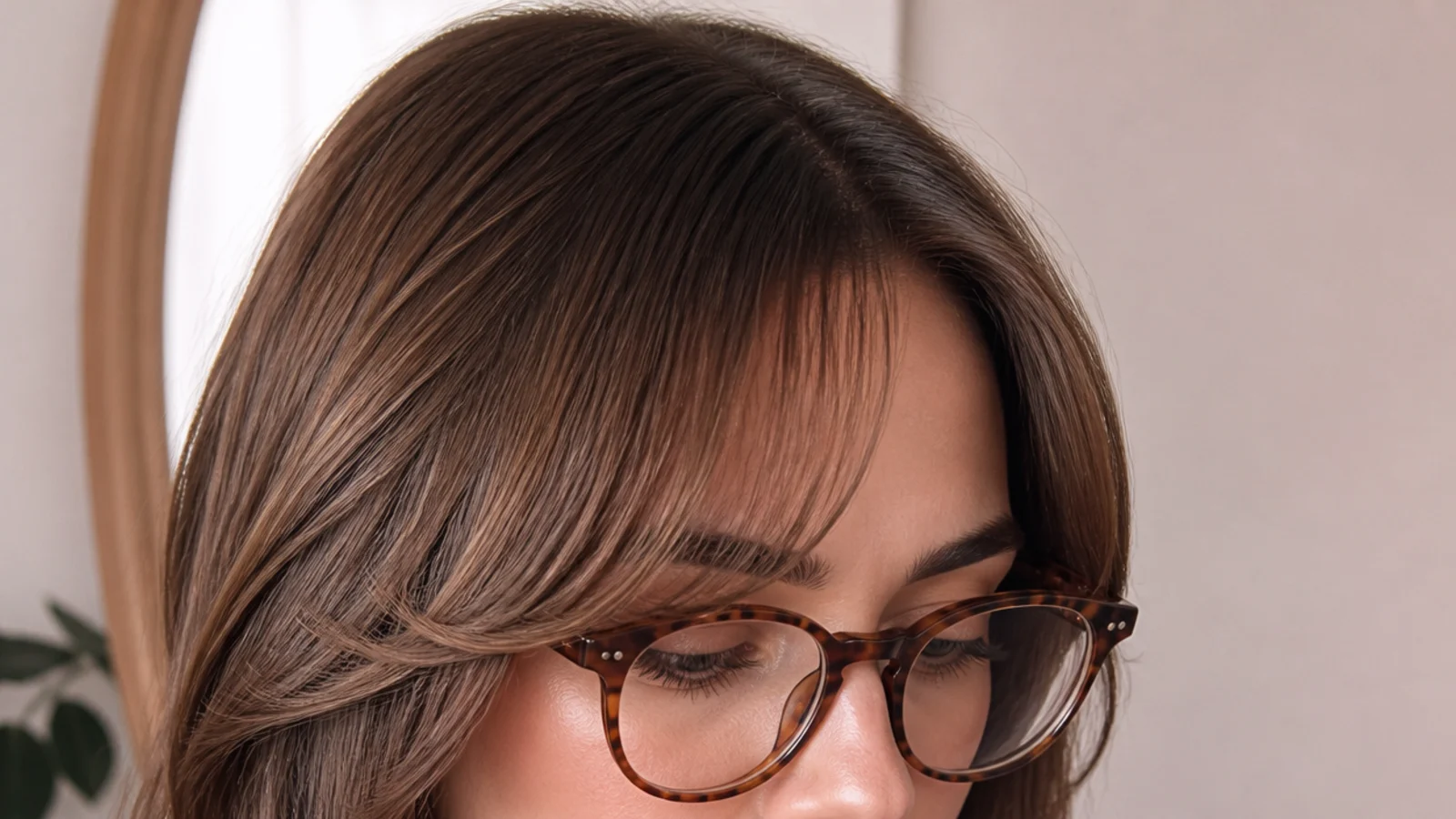
Set the shortest point above the frame line rather than at it. A bang that ends level with the top of a frame catches on it every time you push the glasses up, and hair trapped against a warm lens holds a bend you have to wet out.
15. Grown Out
Six weeks past the cut, with the shortest point at the cheekbone and the split holding loosely. This is the stage worth photographing, because it is the version most people actually want and it is easier to ask for than it is to grow into by accident.
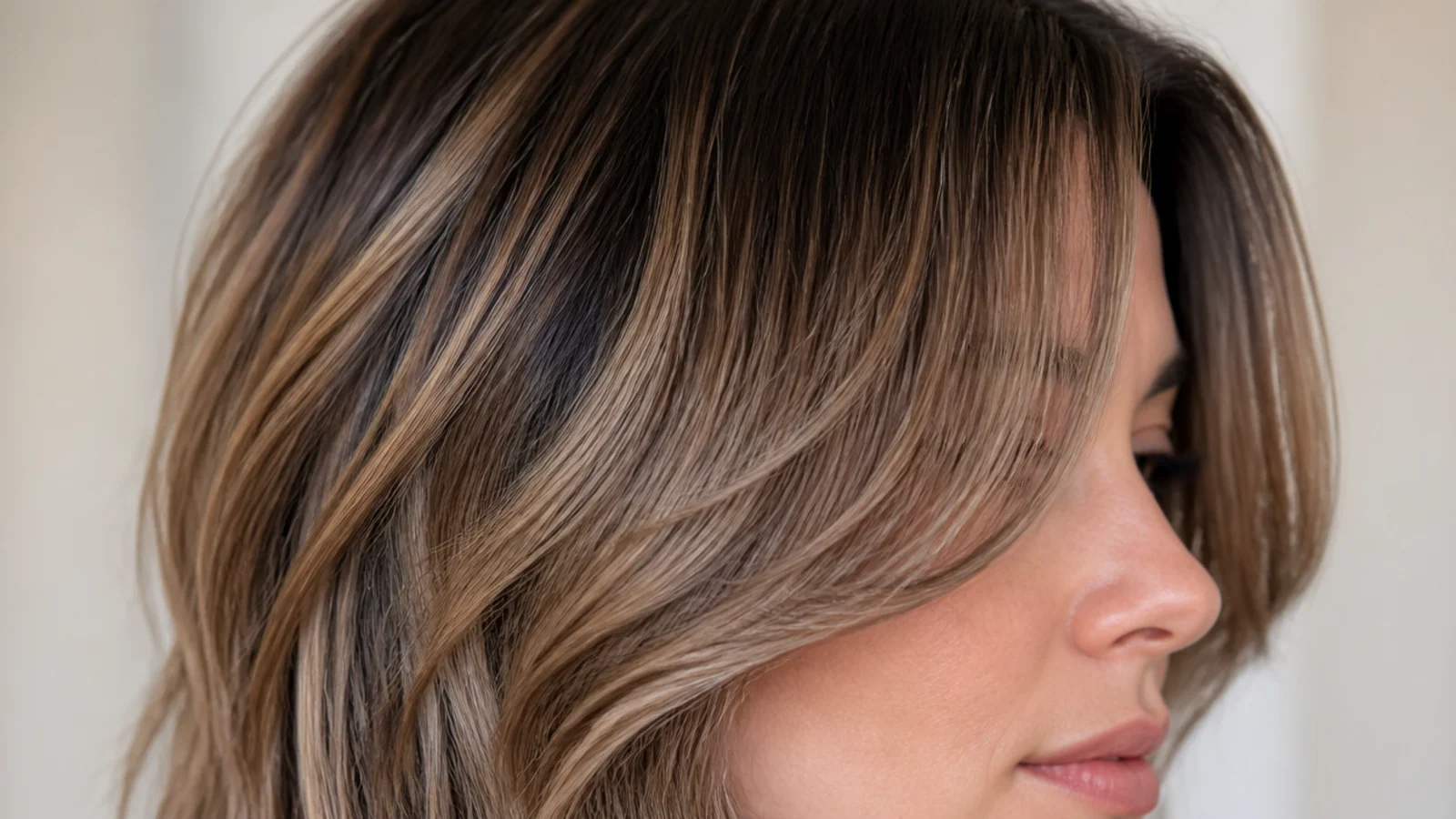
16. With a Shag
A shag is already built from short layers through the crown, so the bang has somewhere to disappear into rather than sitting on a flat surface. The two shapes share the same logic — shortest in the middle, longer outward — which is why they blend without a visible join.
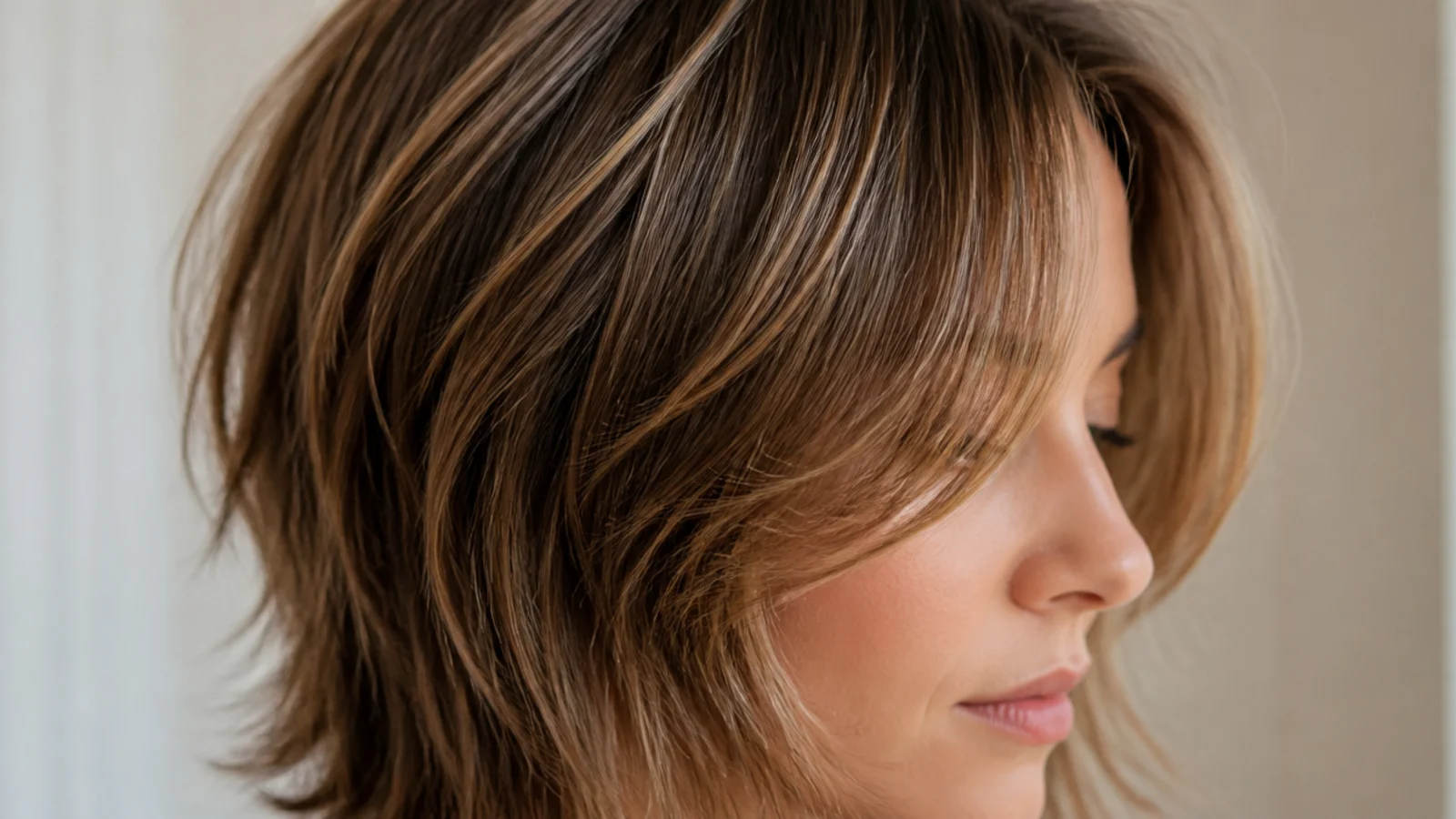
17. Side Part
Moving the split off centre makes one half short and one half long, which is a different cut wearing the same name. The heavier side needs enough weight to stay put, so ask for the split to be cut in rather than moved after the fact.
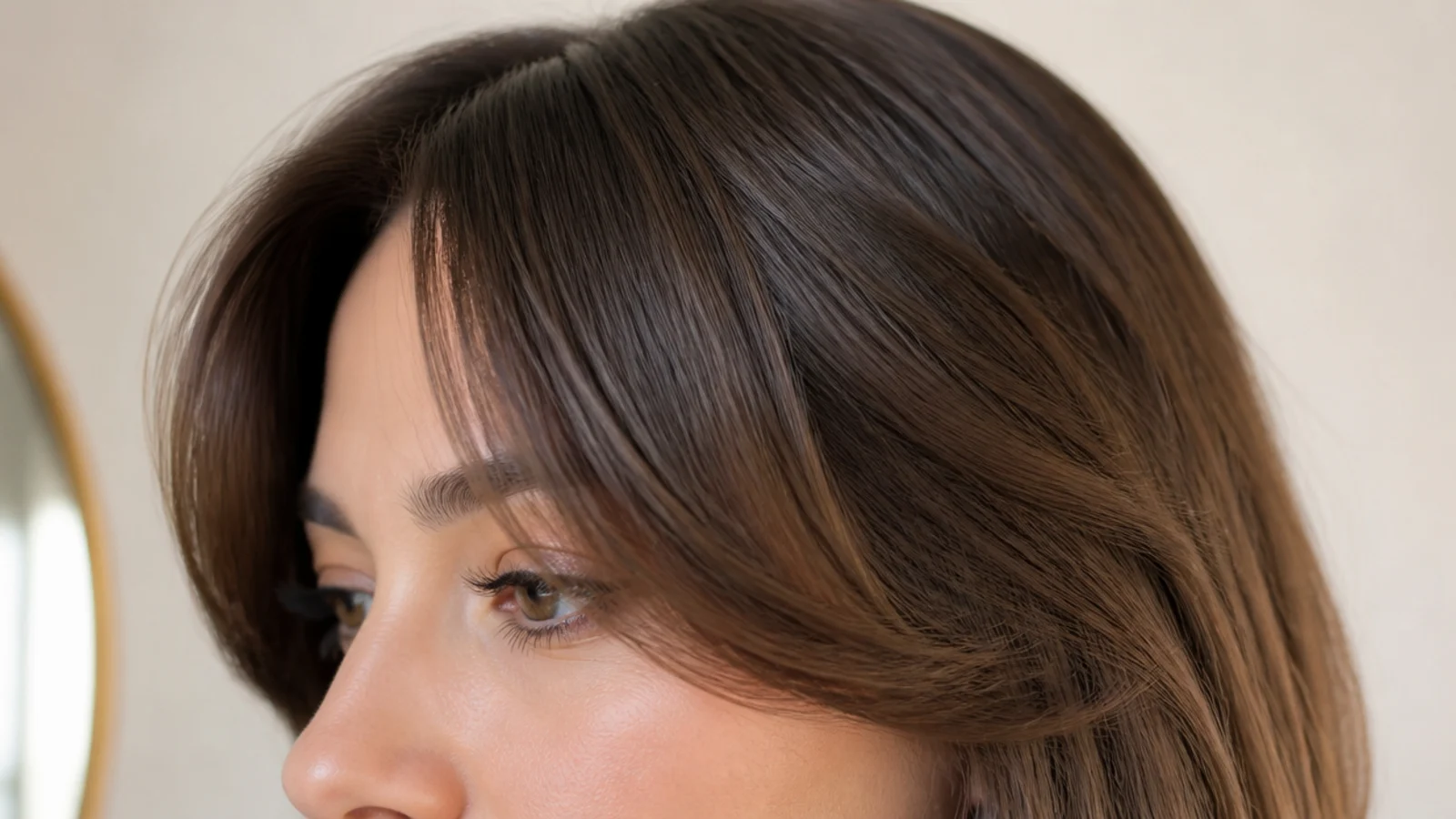
18. Heatless
Clip the damp bang in place across the head, in the opposite direction to how it will fall, and leave it while you do everything else. The root dries standing away from the scalp, which is the whole mechanism a round brush uses — the clips just do it without the heat.
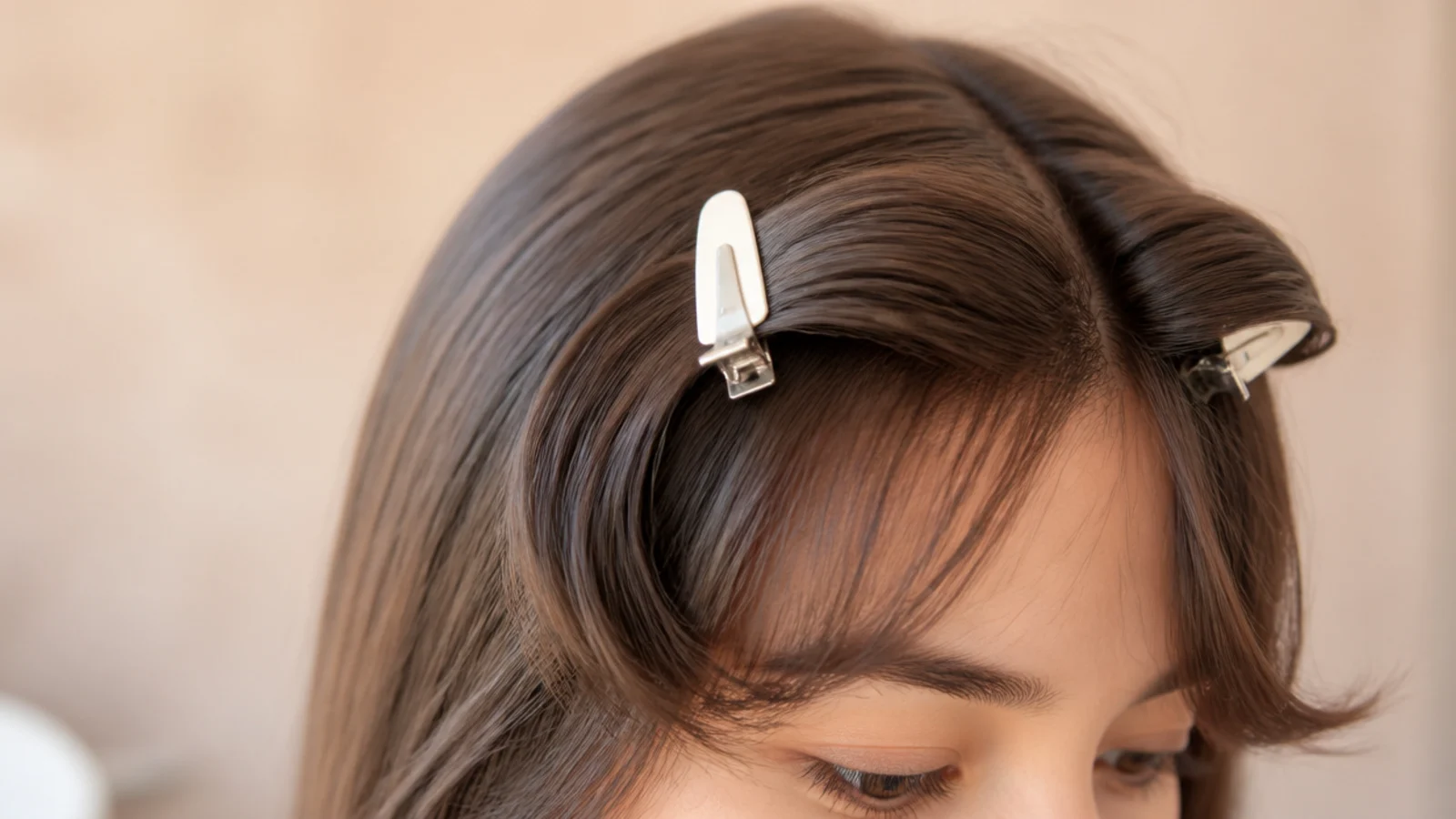
19. Face Framing Highlights
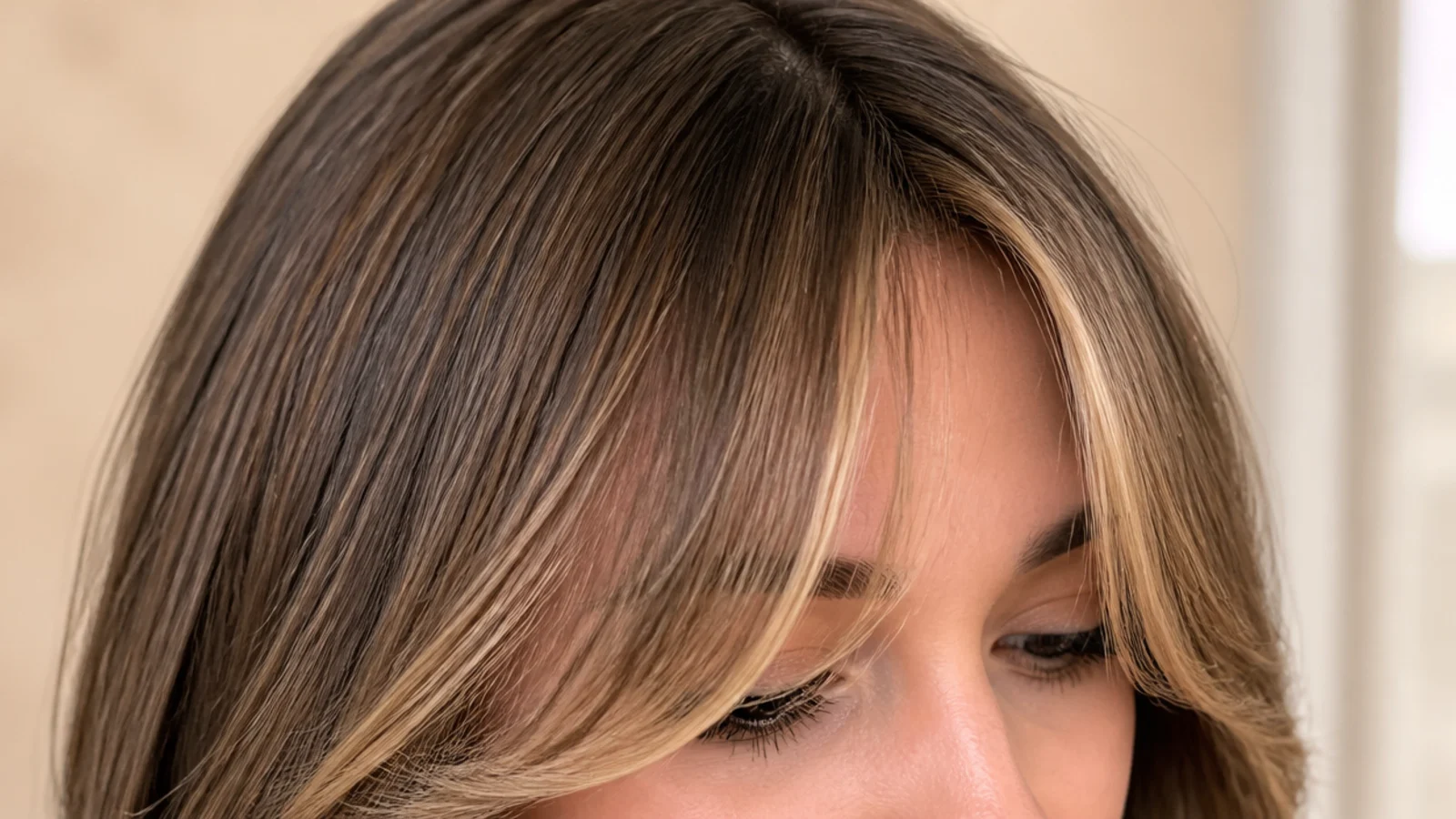
Lighter strands placed through the front pieces blur the edge of the bang, because tone contrast breaks up the perimeter before shape does. It is the cheapest way to make a slightly heavy fringe read as soft without cutting anything more off it.
20. Cut at Home
If you are doing it yourself, cut dry, cut vertically, and cut less. Holding the scissors upright into the ends removes a little from each strand instead of a lot from all of them, so a mistake is a millimetre rather than a line you have to live with.
Final Thoughts
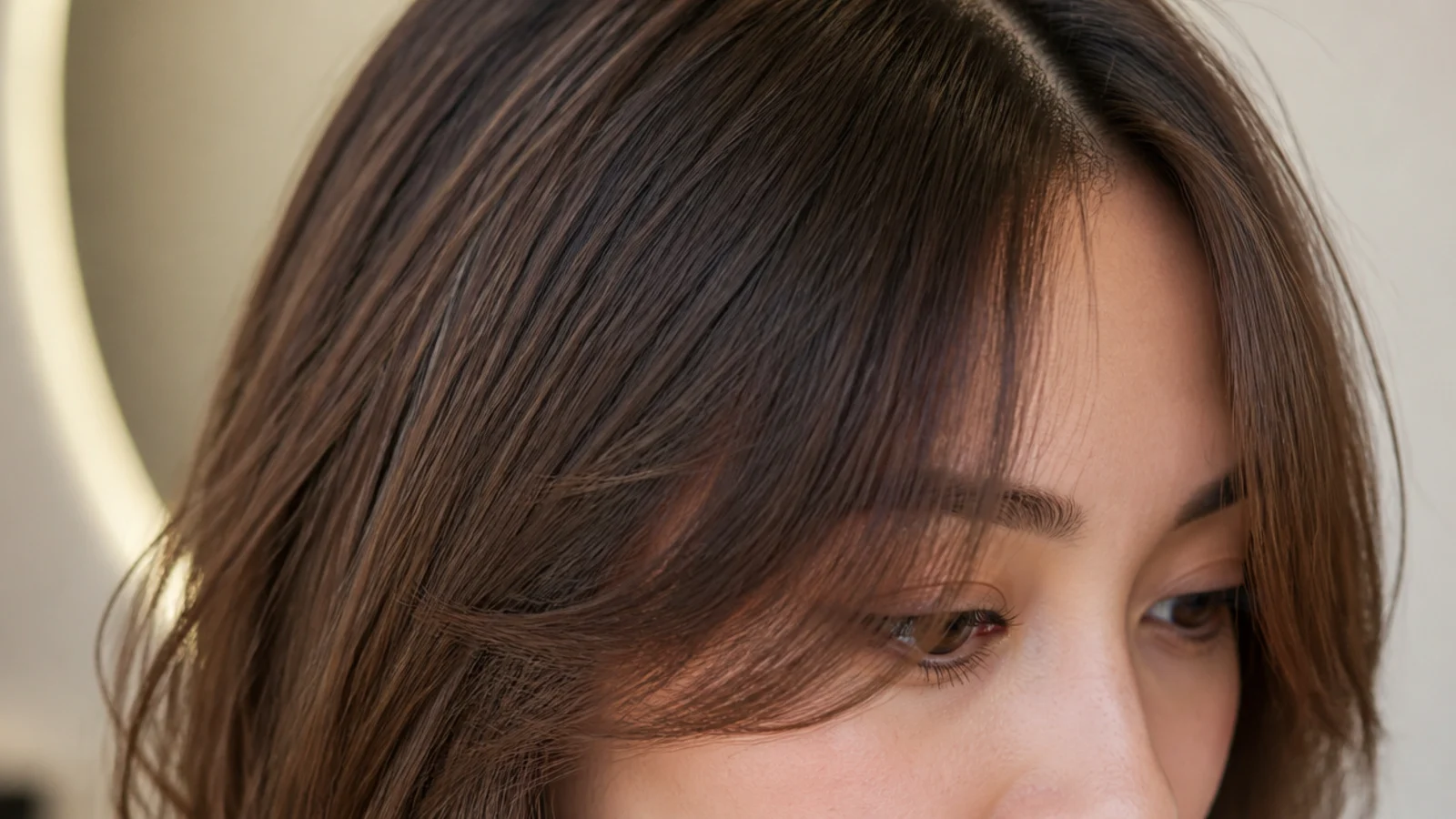
Name the landmark, not the length. "Shortest point at the lash line, tapering longer to the sides" is two facts a stylist can cut to, and it survives between appointments in a way that "a bit shorter than last time" never does.
For the same shape across other lengths see 20 easy short curtain bangs ideas, and for the softest cutting technique on fine hair see 15 soft french bangs for fine hair. More in Bangs and Fringe.