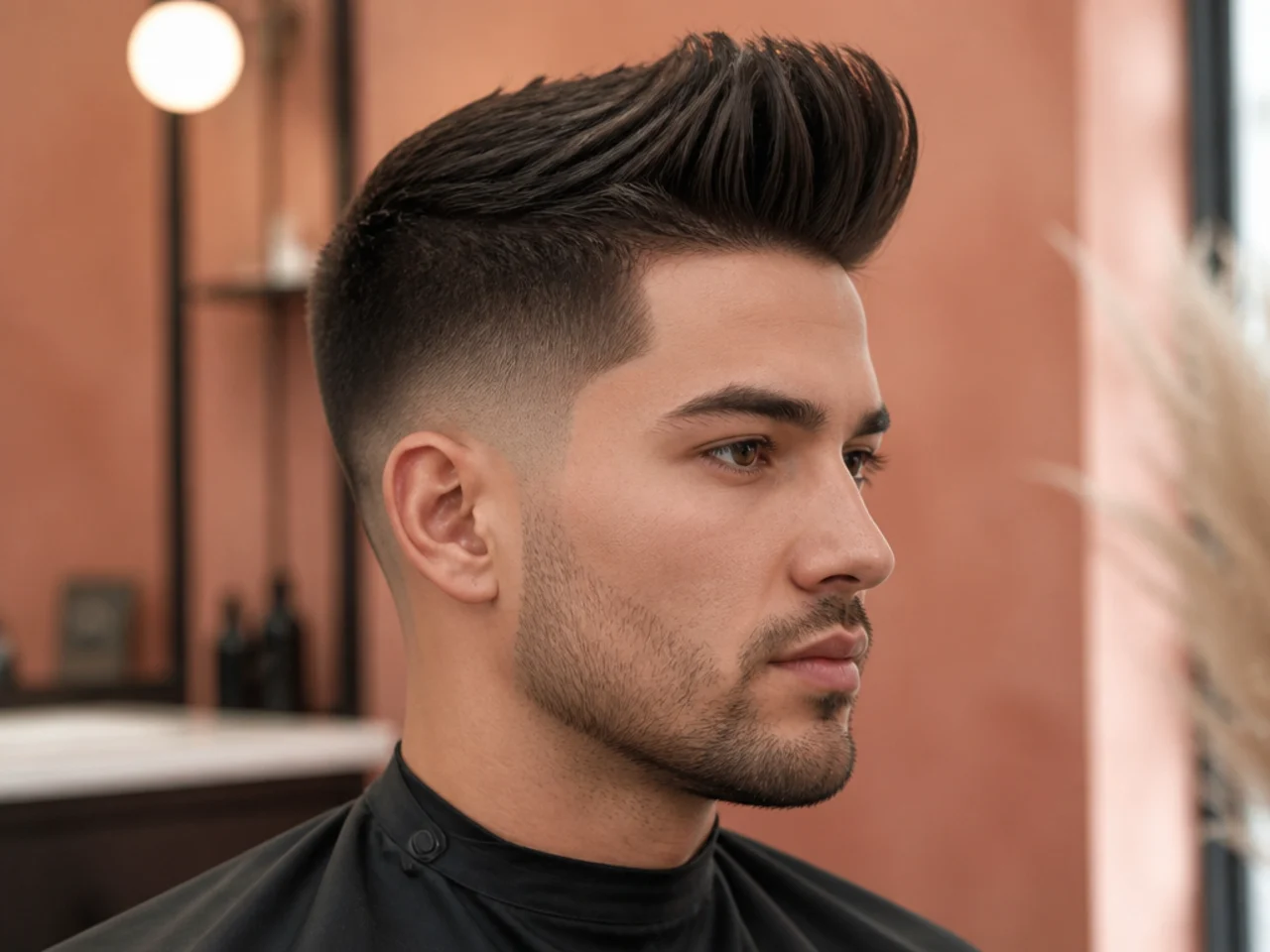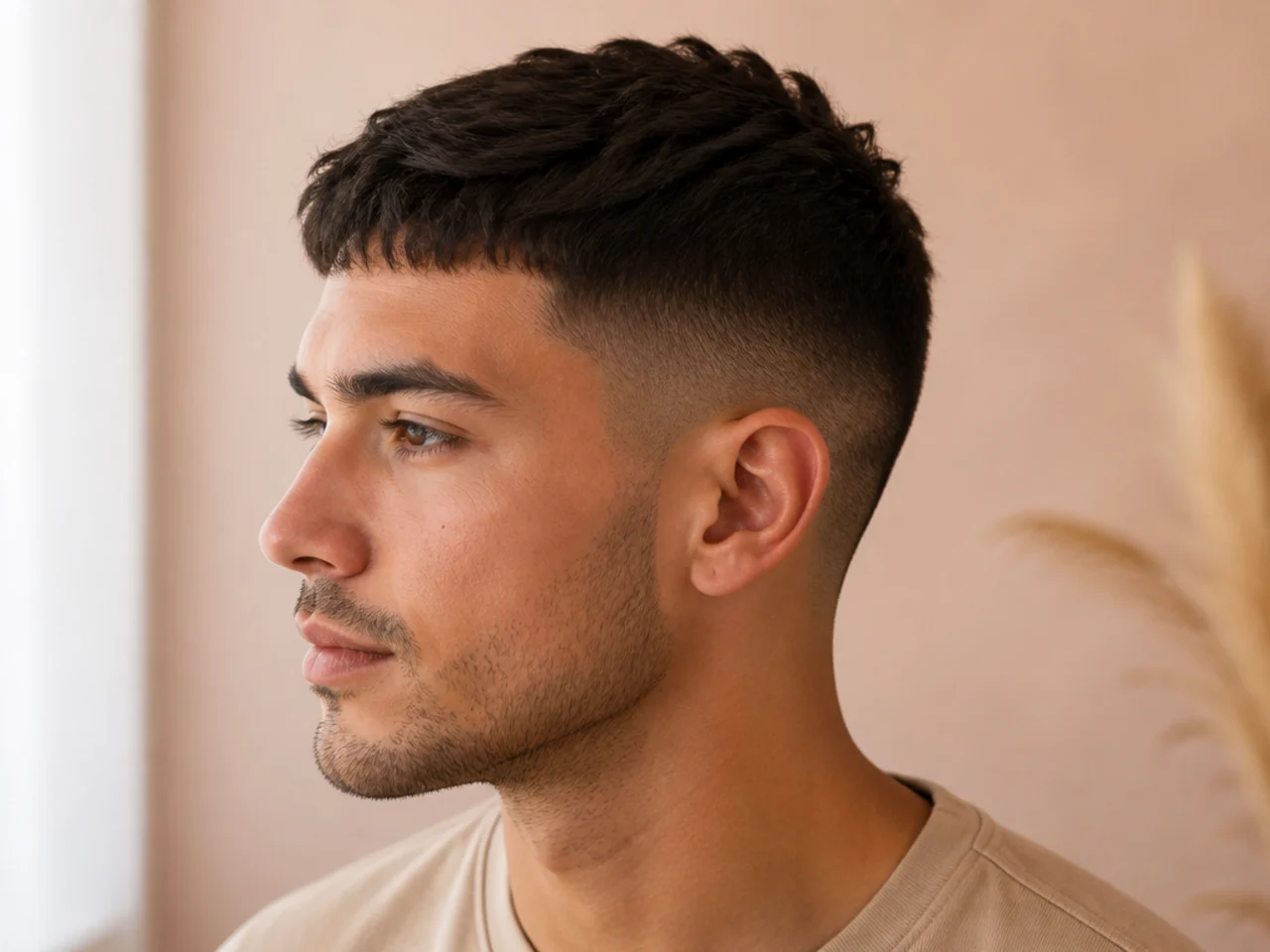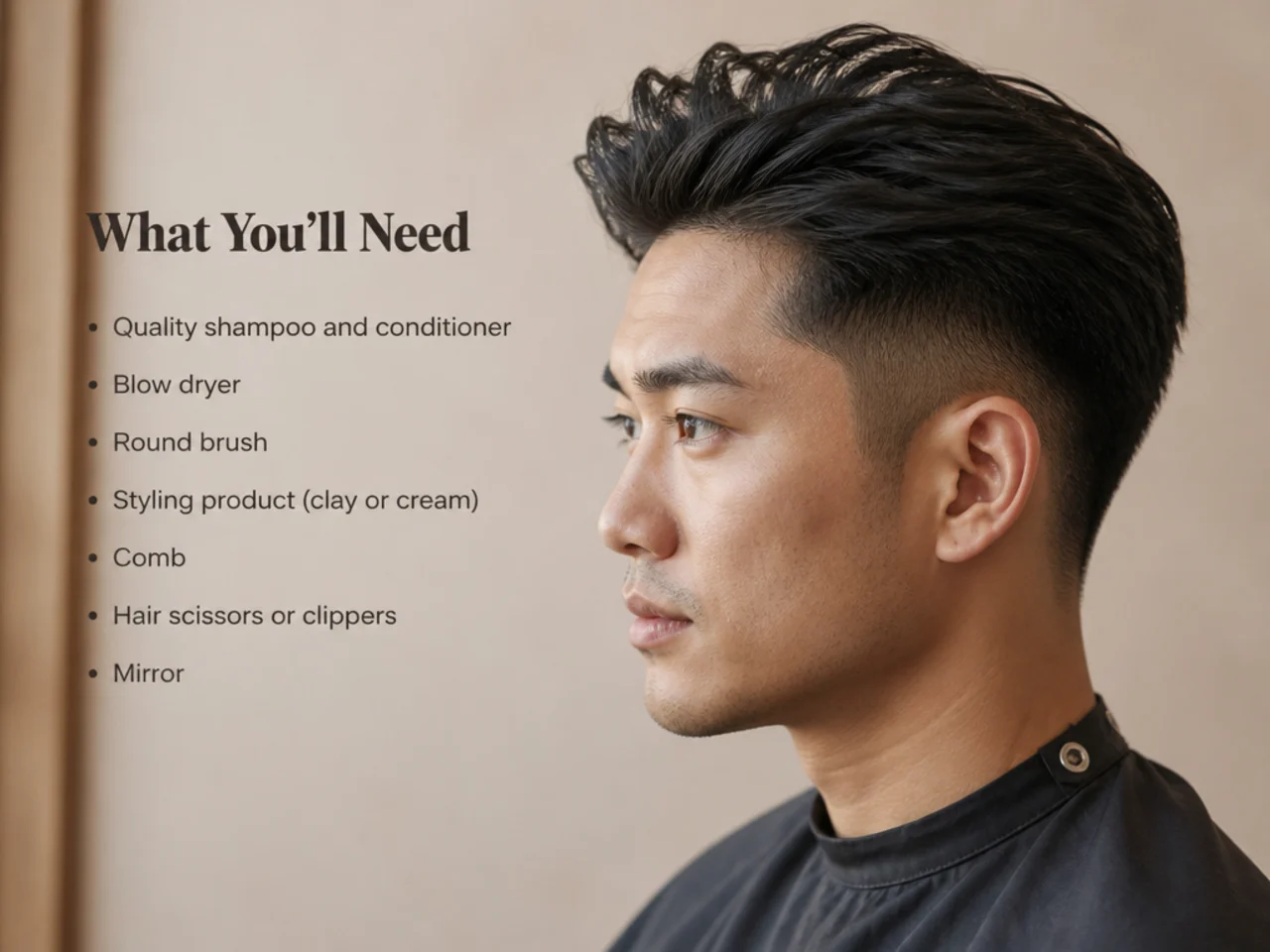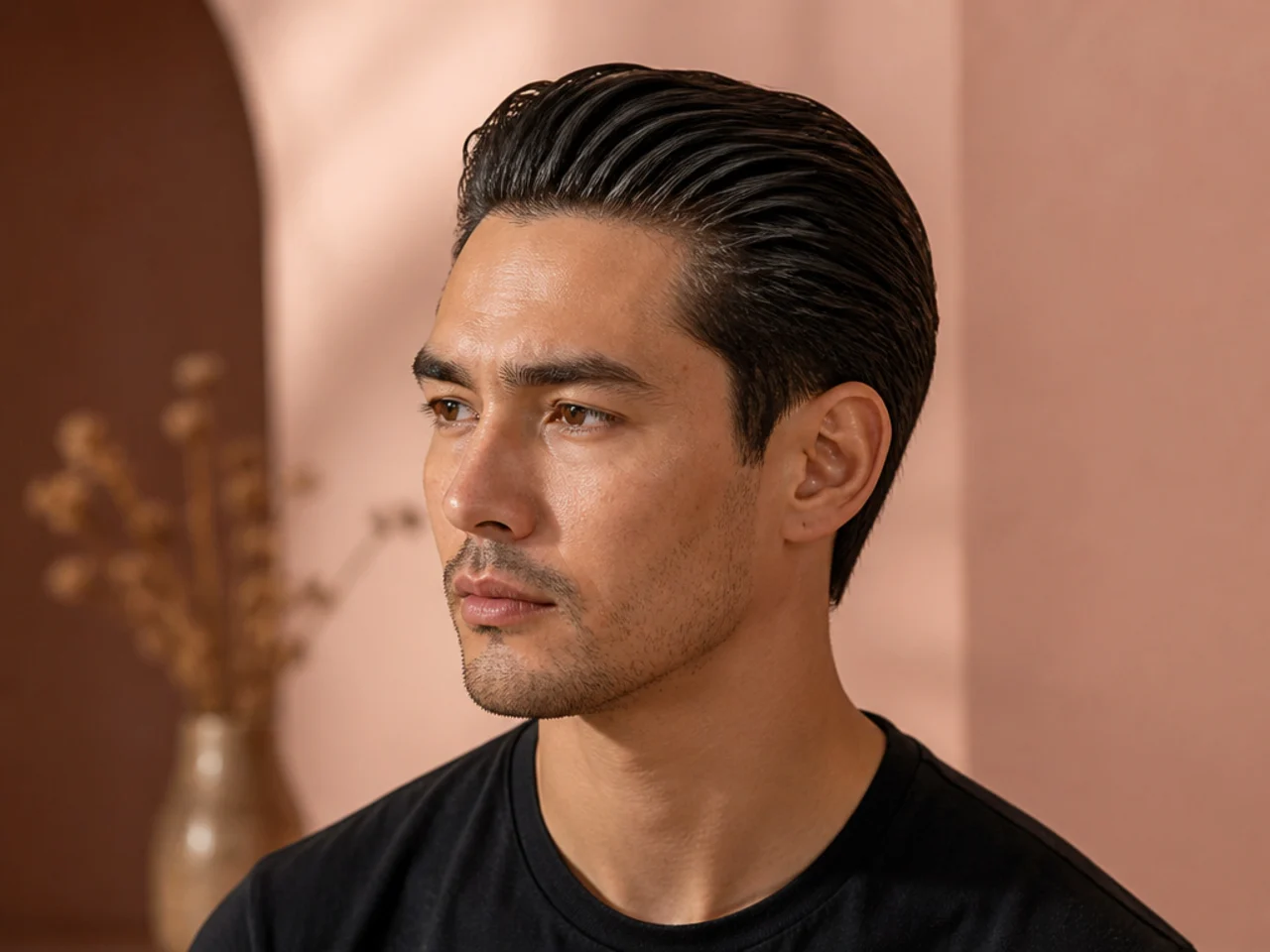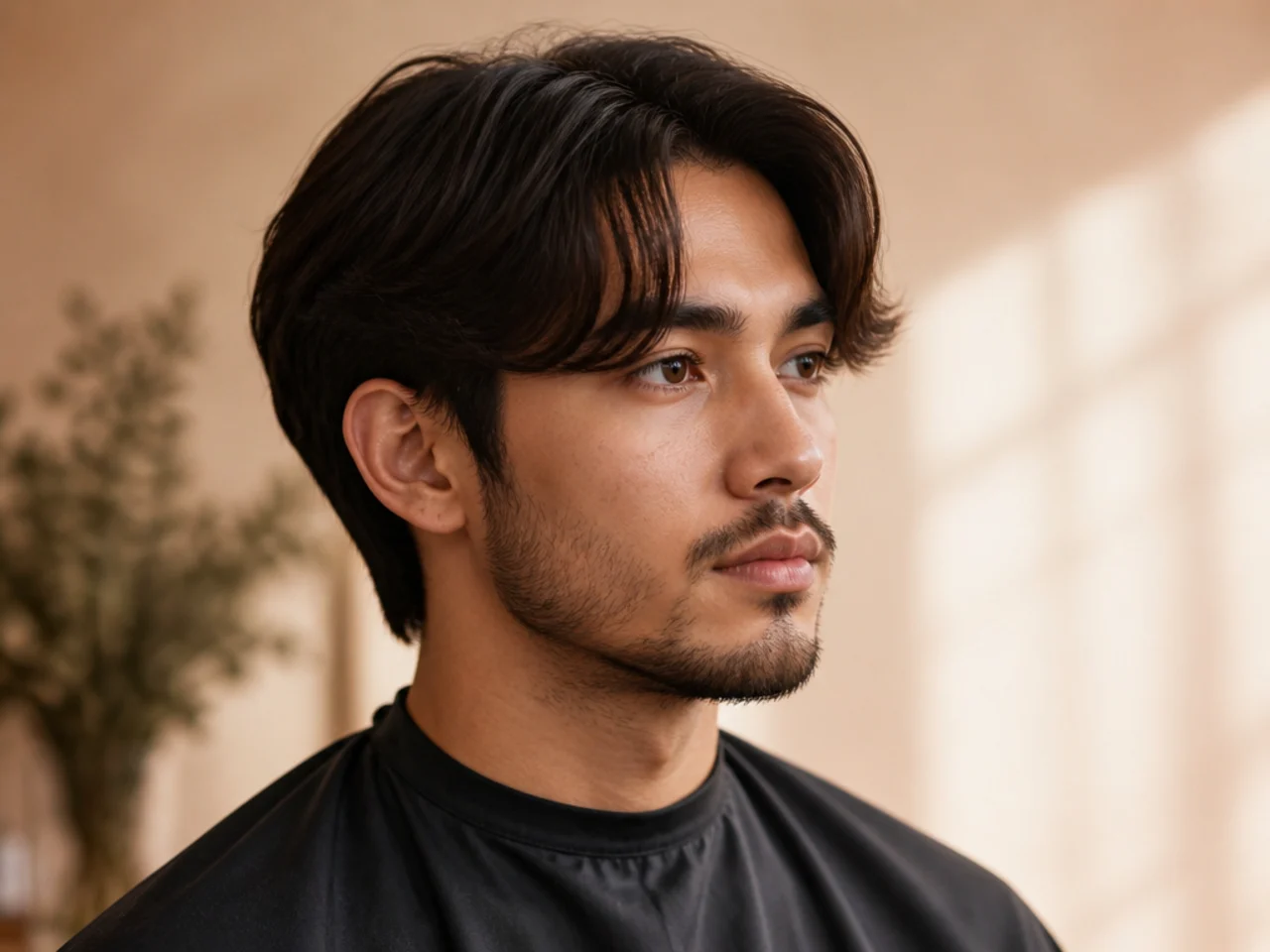
15 Curtain Bangs Styles That Suit Any Face
Fifteen curtain bangs any face men can wear — by oval, round, square, heart, long, and diamond — with front lengths and barber wording for each.
In this article · 26
- What Are Curtain Bangs?
- Read Your Face Shape First
- Best Curtain Bangs for Oval Faces
- 1. Classic Four-Inch Curtain Bangs
- 2. Flow-Cut Feathered Curtain Bangs
- 3. Grown-Out Long Curtain Bangs
- Best Curtain Bangs for Round Faces
- 4. Long Side-Swept Curtain Bangs
- 5. Layered Piecey Curtain Bangs
- 6. High-Volume Curtain Bangs with Low Fade
- Best Curtain Bangs for Square Faces
- 7. Wispy Razor-Cut Curtain Bangs
- 8. Soft-Feathered Curtain Bangs
- 9. Textured Choppy Curtain Bangs
- Best Curtain Bangs for Heart Faces
- 10. Full Cheek-Grazing Curtain Bangs
- 11. Piecey Chin-Length Curtain Bangs
- Best Curtain Bangs for Long Faces
- 12. Full-Density Curtain Bangs
- 13. Blunt-Ended Curtain Bangs
- Best Curtain Bangs for Diamond Faces
- 14. Airy Wispy Curtain Bangs
- 15. Feathered Wide-Set Curtain Bangs
- How to Ask Your Barber
- Styling and Maintenance
- FAQ
Curtain bangs are the fringe that adapts. The same two-panel technique — center-parted, tapered from shorter at the bridge of the nose to longer at the cheekbones — reads completely different on an oval face than on a round one. This guide organizes fifteen curtain bangs styles by face shape so oval, round, square, heart, long, and diamond can each walk in and ask for the exact version that frames the face they actually have.
What Are Curtain Bangs?
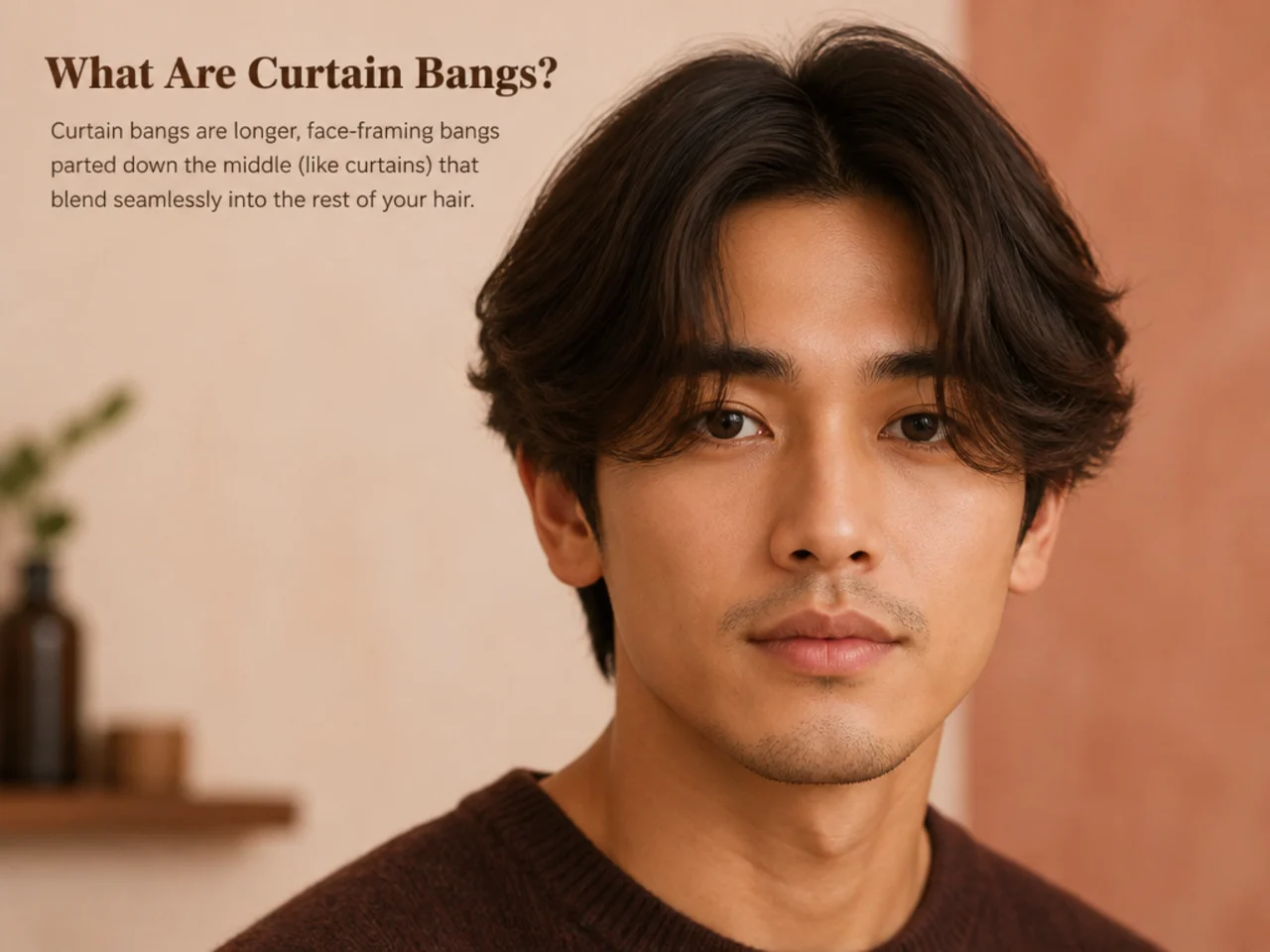
Curtain bangs are a fringe cut in two long panels that part down the middle and fall either side of the forehead. Front length runs 3 to 5 inches. Internal layering tapers each panel from shorter at the center to longer at the cheekbone so the fringe drapes forward instead of hanging as a slab. The rest of the cut can be anything — a scissor-blended top, a low taper fade, an undercut, a two-block, a mullet. The fringe is the constant.
That flexibility is why the style works on every face. Three levers do the adapting: front length (3 inches for short faces, 5 inches for long ones), weight (thin and airy or full and dense), and panel width (narrow center part or wide, more open). Match those three to your face shape and the fringe will frame the exact features you want it to.
The whole family sits inside the broader men's haircuts editorial rotation, and the fringe technique itself descends from the same middle-parted DNA as the classic middle part haircut men reach for. Curtain bangs just add the internal tapering that turns a flat middle part into a face-framing drape.
Read Your Face Shape First
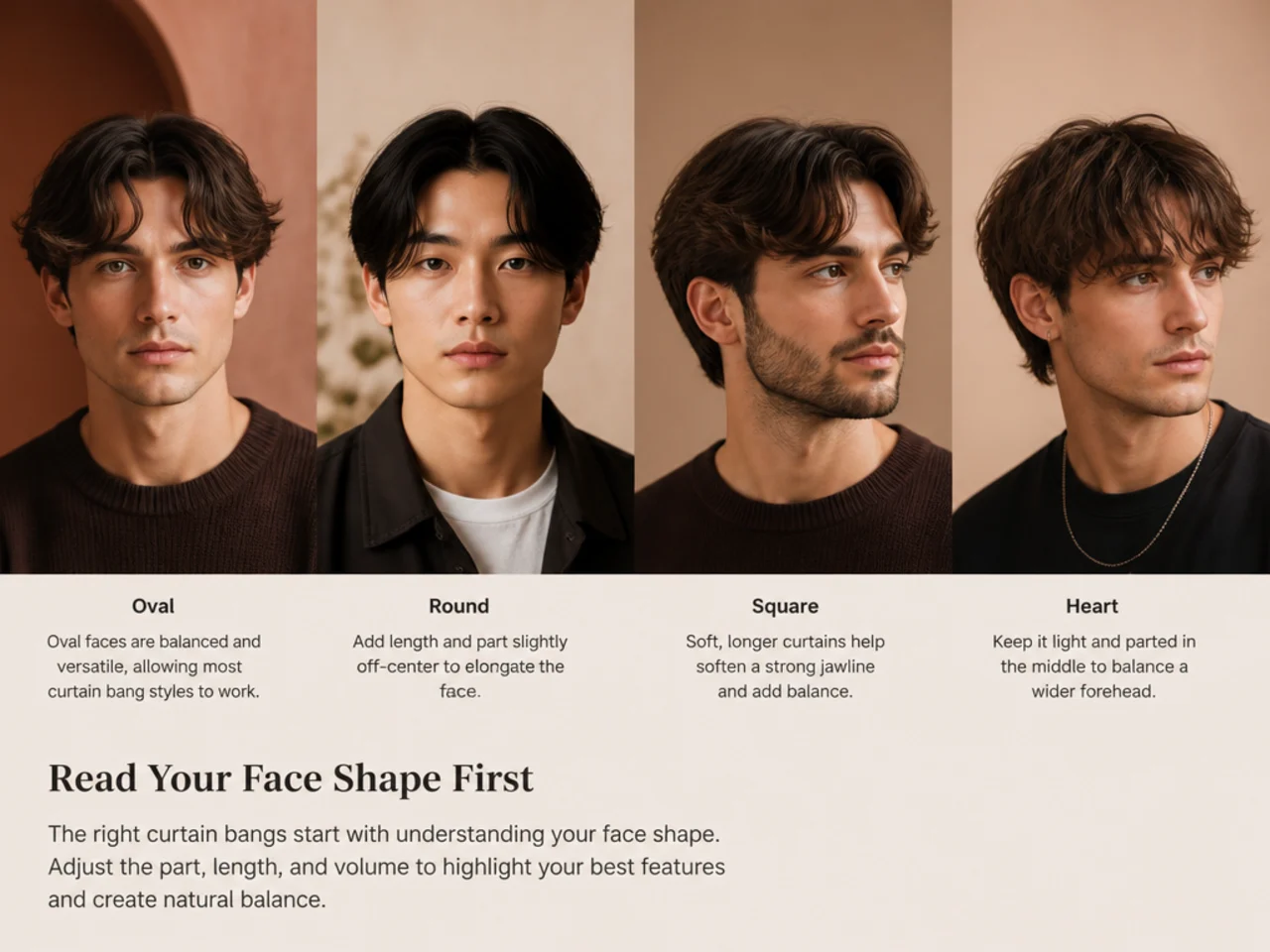
You need four measurements. Take a straight-on selfie with your hair pulled off your face, then eyeball the ratios:
- Forehead width — temple to temple at the widest point above the eyebrows.
- Cheekbone width — from the outer edge of one cheekbone to the other.
- Jaw width — from the outer edge of one jaw angle to the other.
- Face length — from the top of the forehead where the hair begins to the bottom of the chin.
Match to the six shapes: oval — face length about 1.5x width, forehead slightly wider than jaw, softly rounded chin. Round — length and width roughly equal, no strong angles. Square — length and width roughly equal, jaw and forehead the same width, sharp angles. Heart — forehead wider than jaw, chin comes to a point. Long (oblong) — length noticeably greater than width, straight cheeks. Diamond — cheekbones the widest point, narrow forehead and jaw.
If you fall between two shapes — most faces do — pick the primary shape first and borrow one styling lever from the secondary. A square-oval jaw picks a wispier oval-suited variation. A round-heart face picks a longer side-swept fringe that also adds cheek width. The best cross-check is the haircuts for square faces guide — the face-shape principles it uses translate directly to how curtain bangs sit against your jawline.
Best Curtain Bangs for Oval Faces
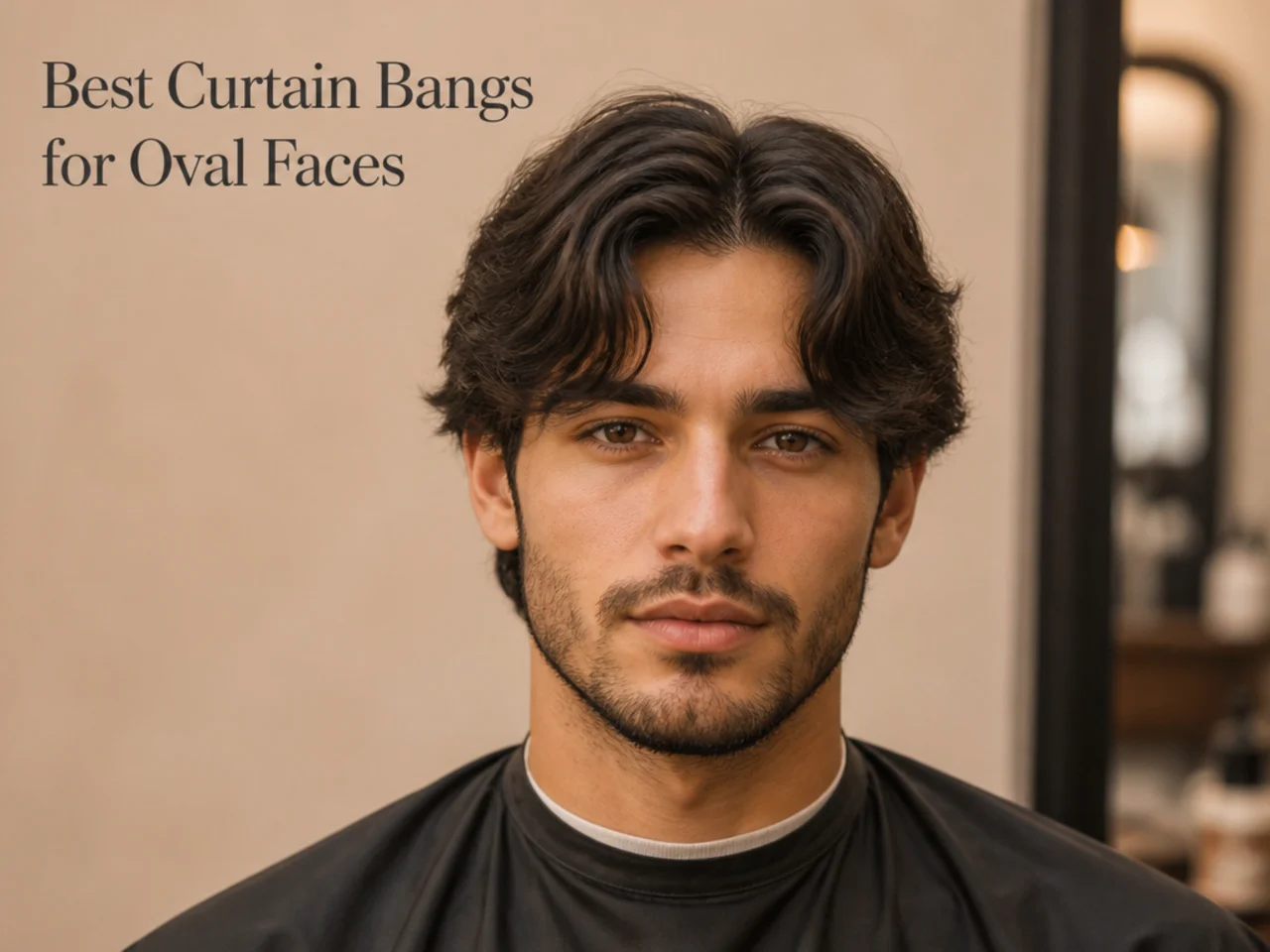
Oval is the balanced starting shape — length is about 1.5 times width, forehead sits slightly wider than the jaw, everything is soft. Any curtain bangs variation works, which means the choice comes down to how much length and daily styling you want. These three are the sharpest options.
1. Classic Four-Inch Curtain Bangs
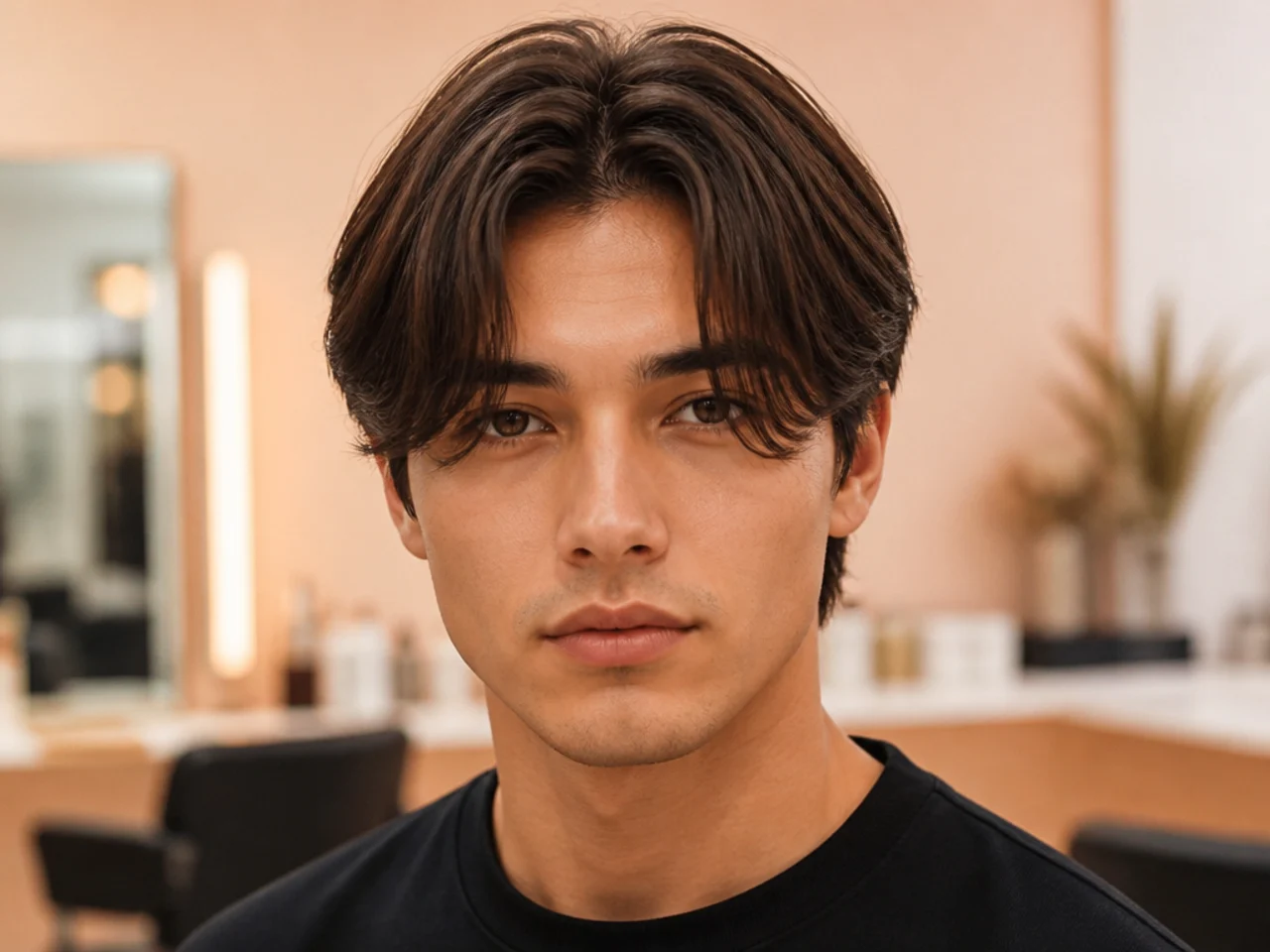
The default oval-face booking. Four inches at the front, internal layering to taper each panel diagonally toward the temple, and a three-inch scissor-cut top with short sides above the ear. The proportion sits balanced because oval already is balanced — nothing needs correcting, nothing needs hiding. Ask for "classic curtain bangs — 4 inches at the front, internal layers point-cut through the ends, center part cut in while damp, scissor blend at the sides above the ear." Style with a nickel of matte cream through damp hair, split with a wide-tooth comb, air-dry. Book this first if it's your first curtain bangs cut — the shape is the reference every other build modifies.
2. Flow-Cut Feathered Curtain Bangs
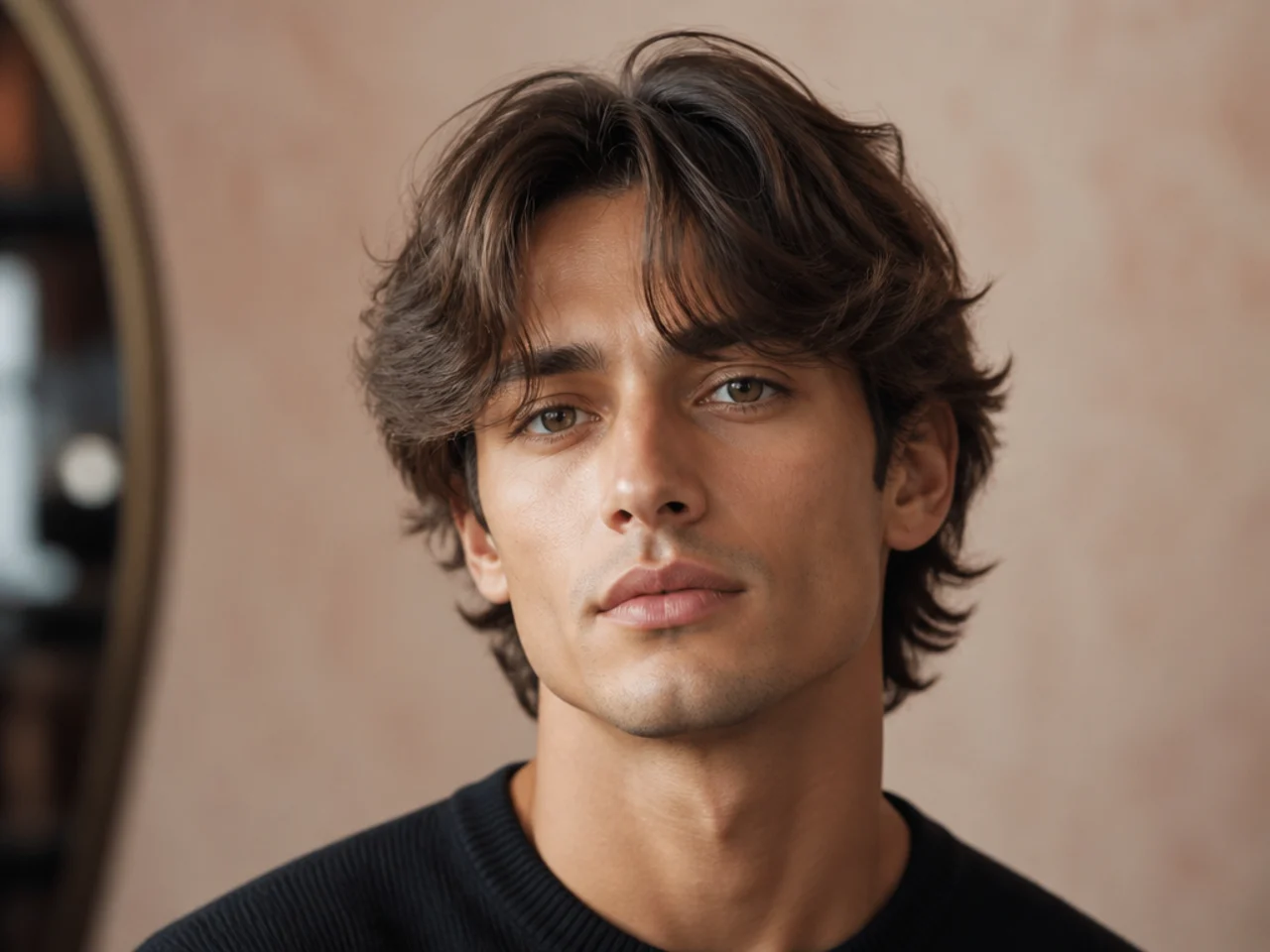
The oval face's editorial upgrade. Four to five inches at the front cut with slide-cut internal feathering so each panel has visible stacked layers, and the top runs 4 inches with matching feathering that lets the length sweep gently back rather than sit flat. Suits oval faces because the added movement plays with rather than fights the balanced proportions. Ask for "flow-cut curtain bangs — 4 to 5 inches at the front with slide-cut internal feathering, center part, matching feathering through a four-inch top that sweeps back at the sides." Style with sea-salt spray on damp hair, a pea of matte cream, split with fingers. Sits inside the broader flow haircut men silhouette if you want the length carried further back.
3. Grown-Out Long Curtain Bangs
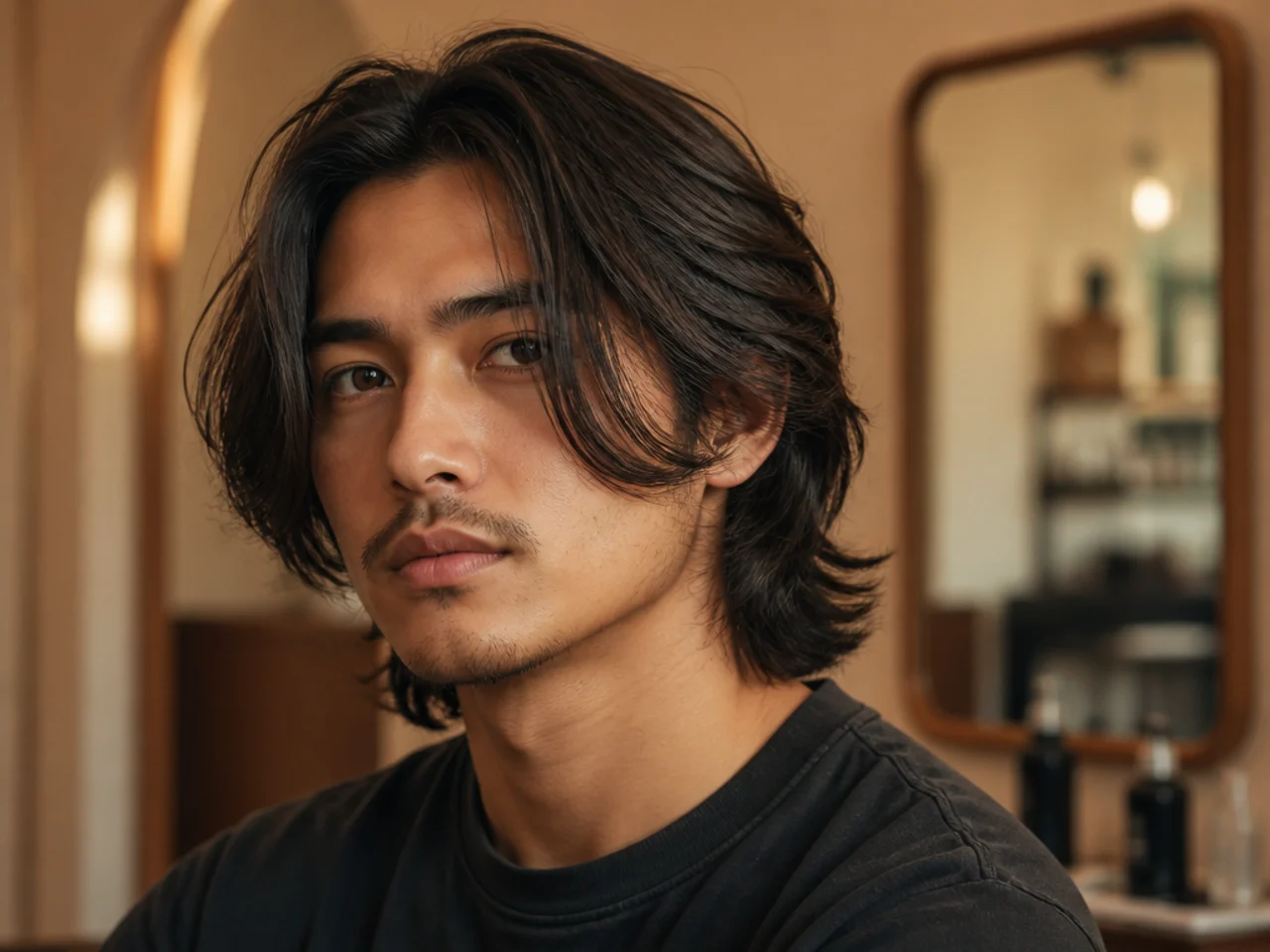
The commitment version. Bangs run 5 inches or longer at the front so the two panels reach past the cheekbones when damp. The top runs 4 to 6 inches to match, sides scissor-blended so they tuck behind the ear. Oval faces carry this length because the shape is long enough vertically to balance the added weight at the front. Ask for "long curtain bangs — 5 to 6 inches at the front reaching past the cheekbones, internal layering through the last two inches, center part, scissor-blended sides that tuck behind the ear." Style with a leave-in on wet hair, sea-salt spray as it dries, matte cream to finish. Pairs cleanly with the wider medium length hairstyles men rotation if you're growing out from a shorter cut.
Best Curtain Bangs for Round Faces
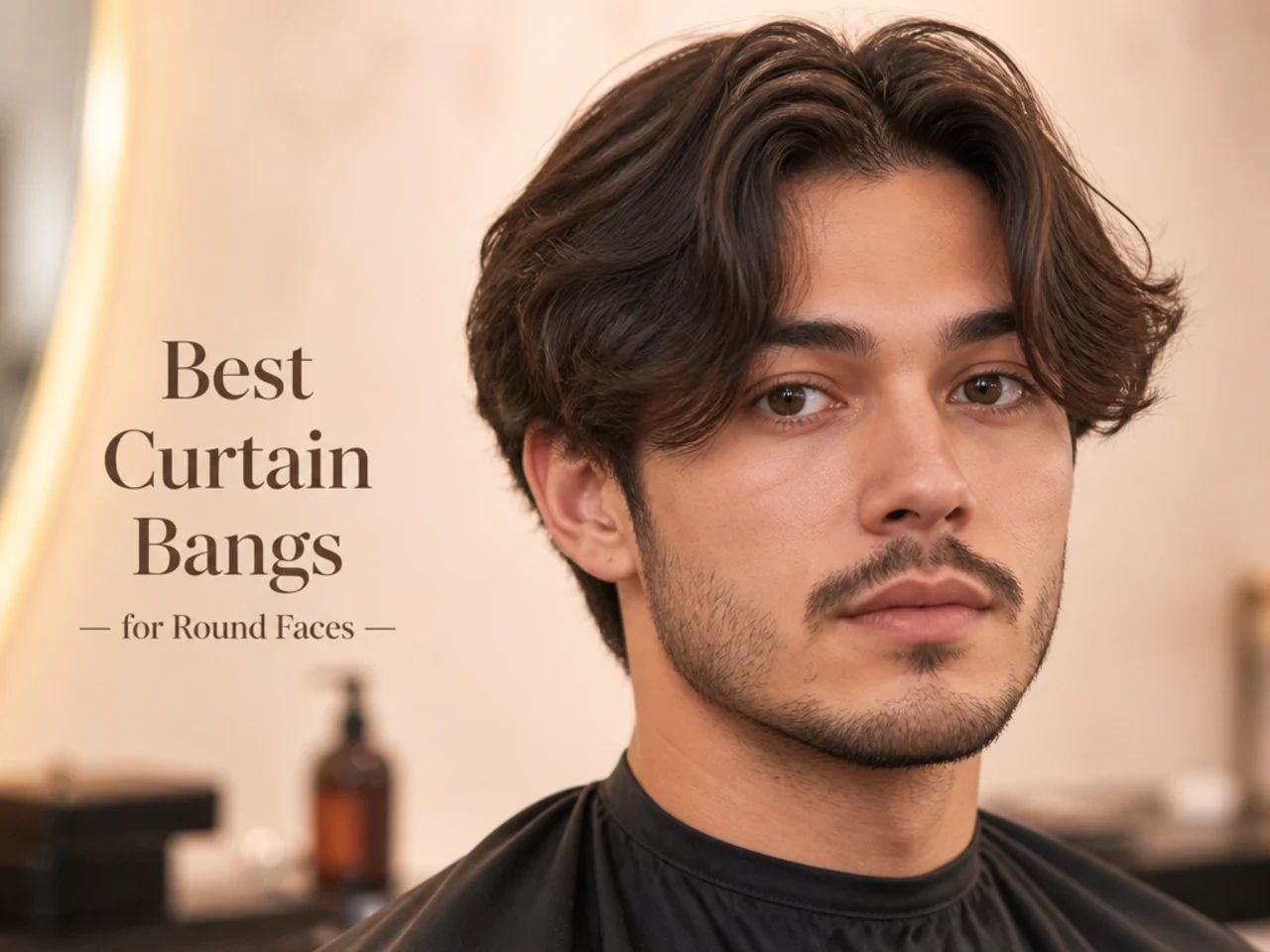
Round faces have length and width roughly equal, with no sharp angles at the jaw. The goal is vertical elongation — the fringe should draw the eye up or diagonally, not across. Skip blunt three-inch bangs; they widen the forehead and shorten the face. These three all add height or diagonal length.
4. Long Side-Swept Curtain Bangs
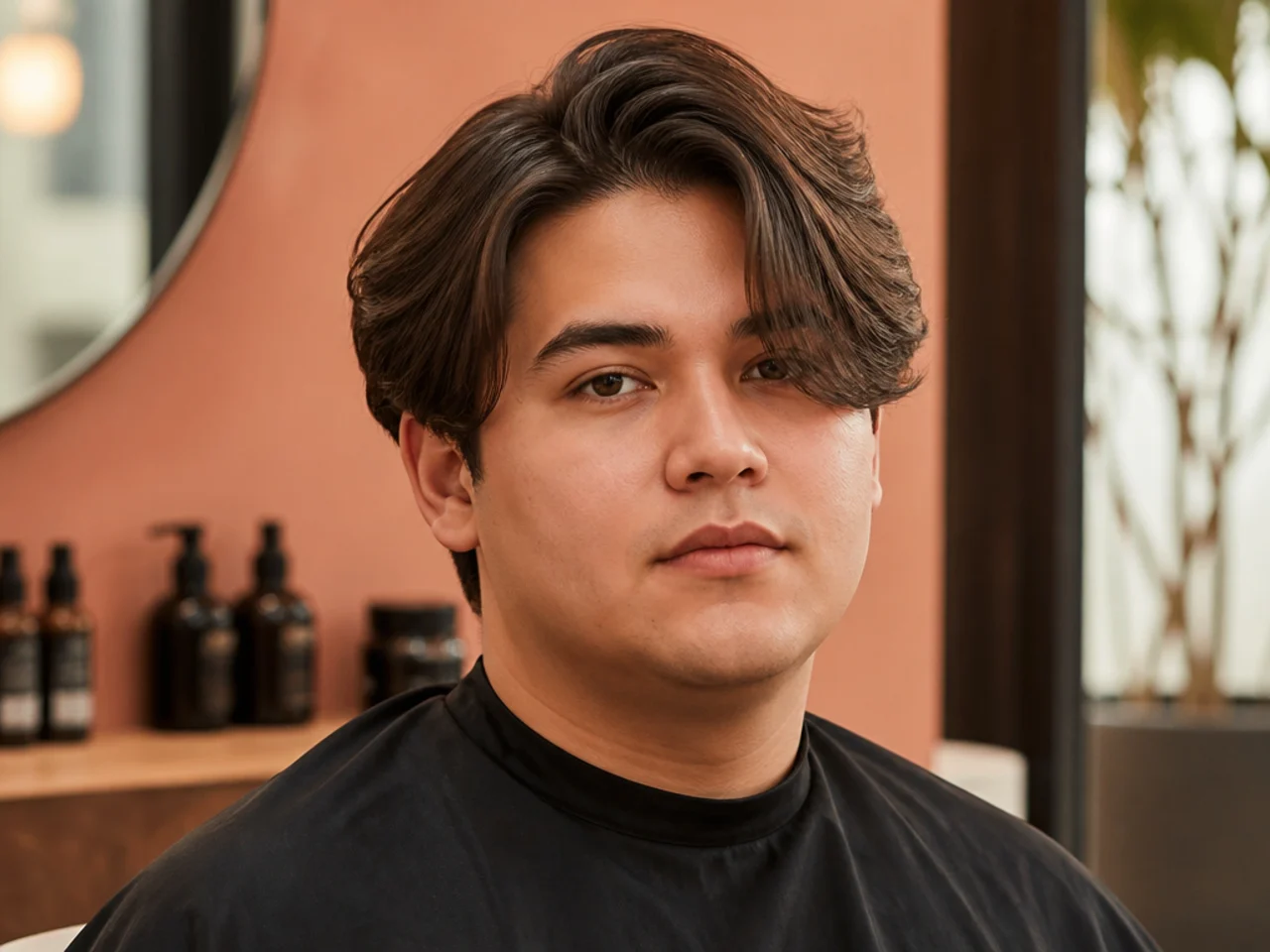
The asymmetry is the trick. Part sits an inch off-center, one panel drops 5 inches long across the forehead, the other panel drops 3 inches short across the brow — the diagonal sweep pulls the eye across and up rather than parking it at the widest point of the face. Ask for "long side-swept curtain bangs — 5 inches at the longer side, 3 inches at the shorter, part cut in an inch off-center, internal layers through both panels, scissor blend at the sides." Style with a light-hold cream, comb the sweep across the forehead, set with a light spray if the hair is fine. Round faces respond faster to this version than to any symmetric build.
5. Layered Piecey Curtain Bangs
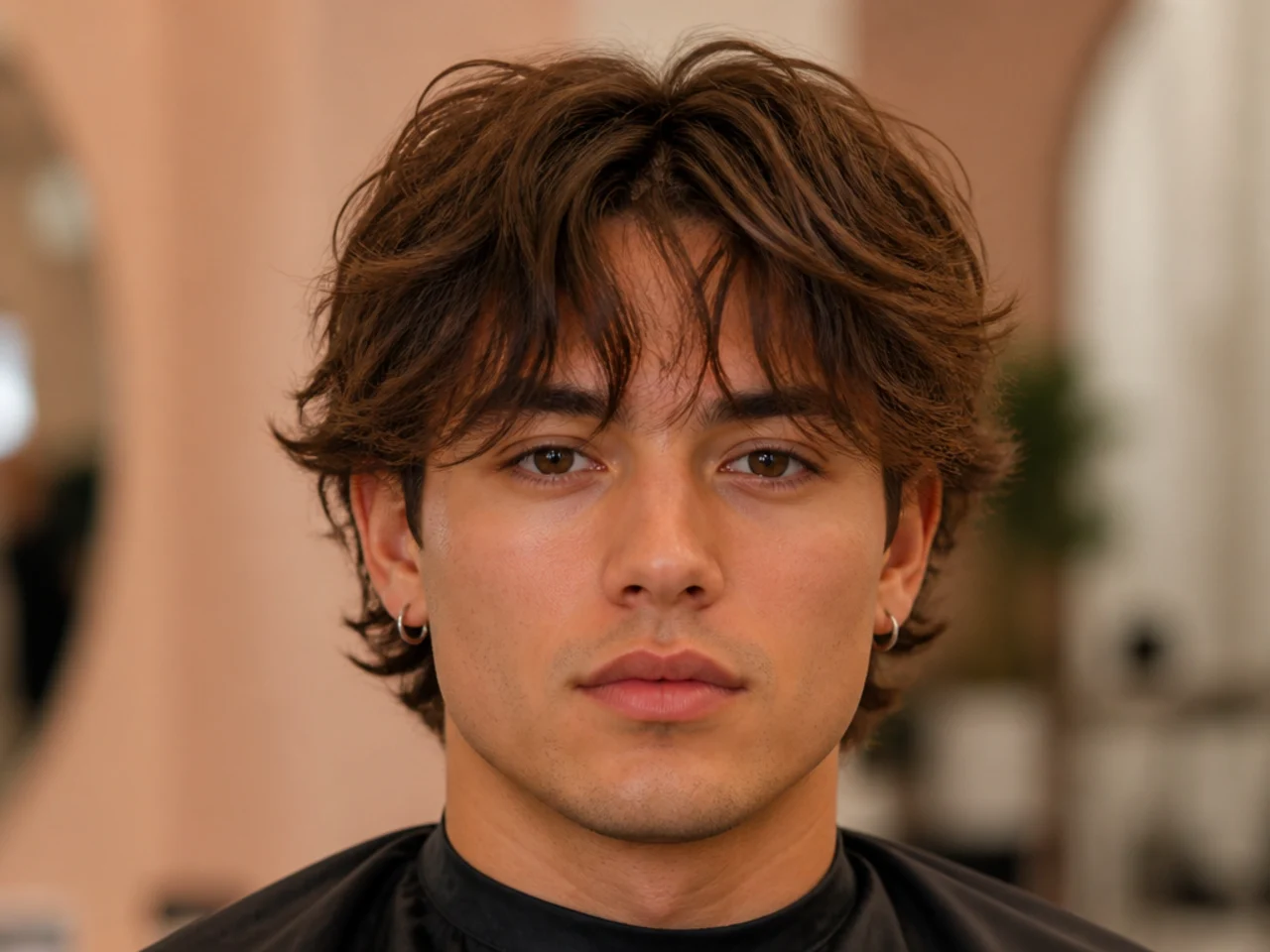
Point-cutting the fringe into defined pieces reads as vertical texture, and that vertical read is what round faces want. The barber heavy-point-cuts the ends of each panel so the two curtains separate into individual pieces, and layers the top with matching internal texture so the whole cut carries height instead of width. Suits round faces best on wavy 2A-2C hair — the wave amplifies the piecey read. Ask for "layered piecey curtain bangs — 4 to 5 inches at the front with heavy point-cutting through the ends, internal layering through the top, center part, scissor blend at the sides." Finish with sea-salt spray on damp hair and a pea of matte clay for grip. Skip creams — they mute the pieces and cancel the vertical read.
6. High-Volume Curtain Bangs with Low Fade
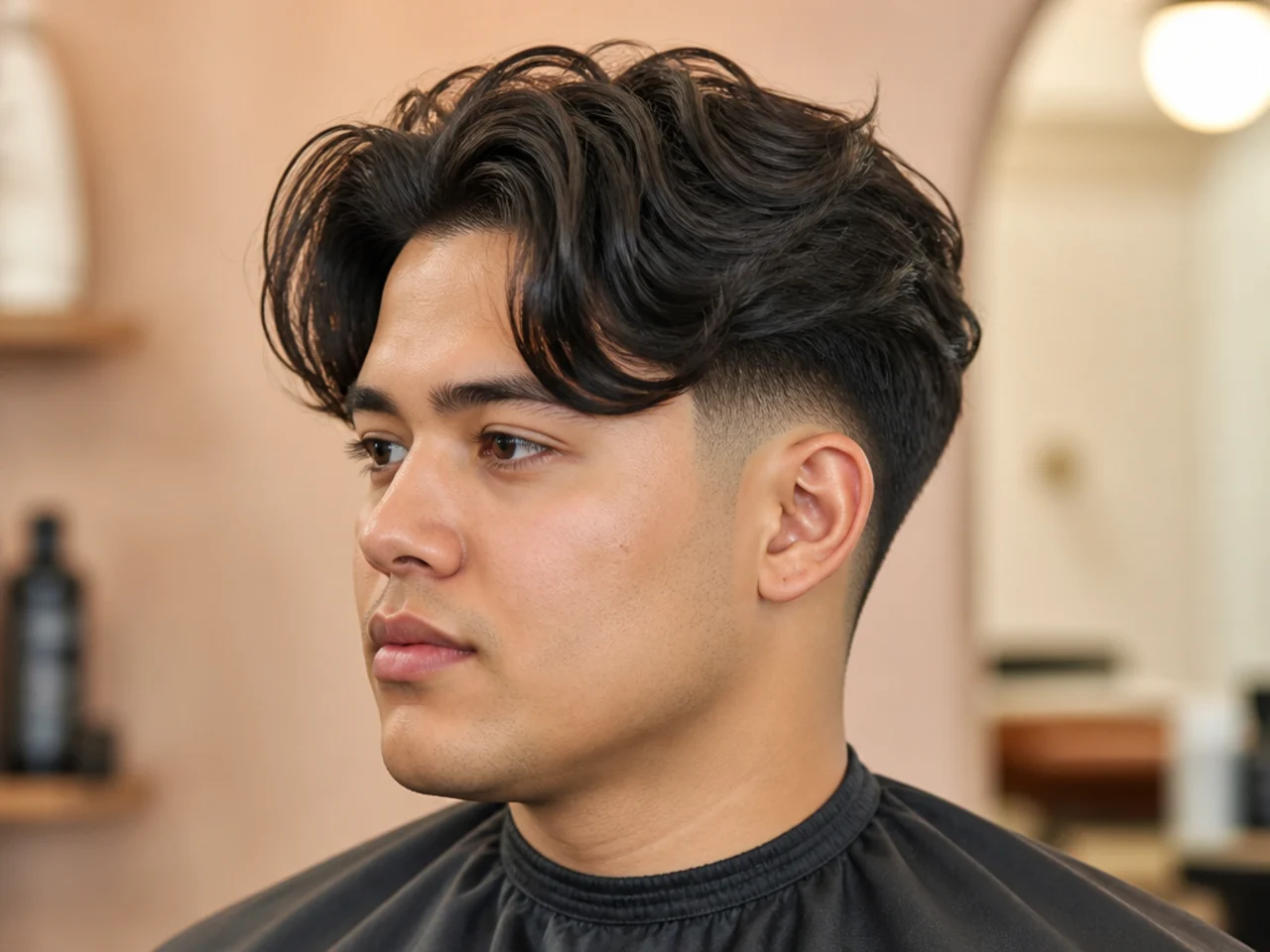
The proportion play. Root-lifted volume up top adds vertical height while a low taper fade at the sides slims the perimeter — together they push the read of the face from round toward oval. Bangs run 4 inches at the front with internal layers, the top runs 3 to 4 inches blown up from the root, and the sides fade skin-close at the sideburn. Ask for "high-volume curtain bangs with a low taper fade — 4 inches at the front, four-inch root-lifted top, low taper starting just above the ear blending to skin at the sideburn." Style with a mousse worked in at the root, blow-dry upside-down for lift, finish with a matte cream and split at the front. This is the most requested round-face booking of 2026.
Best Curtain Bangs for Square Faces
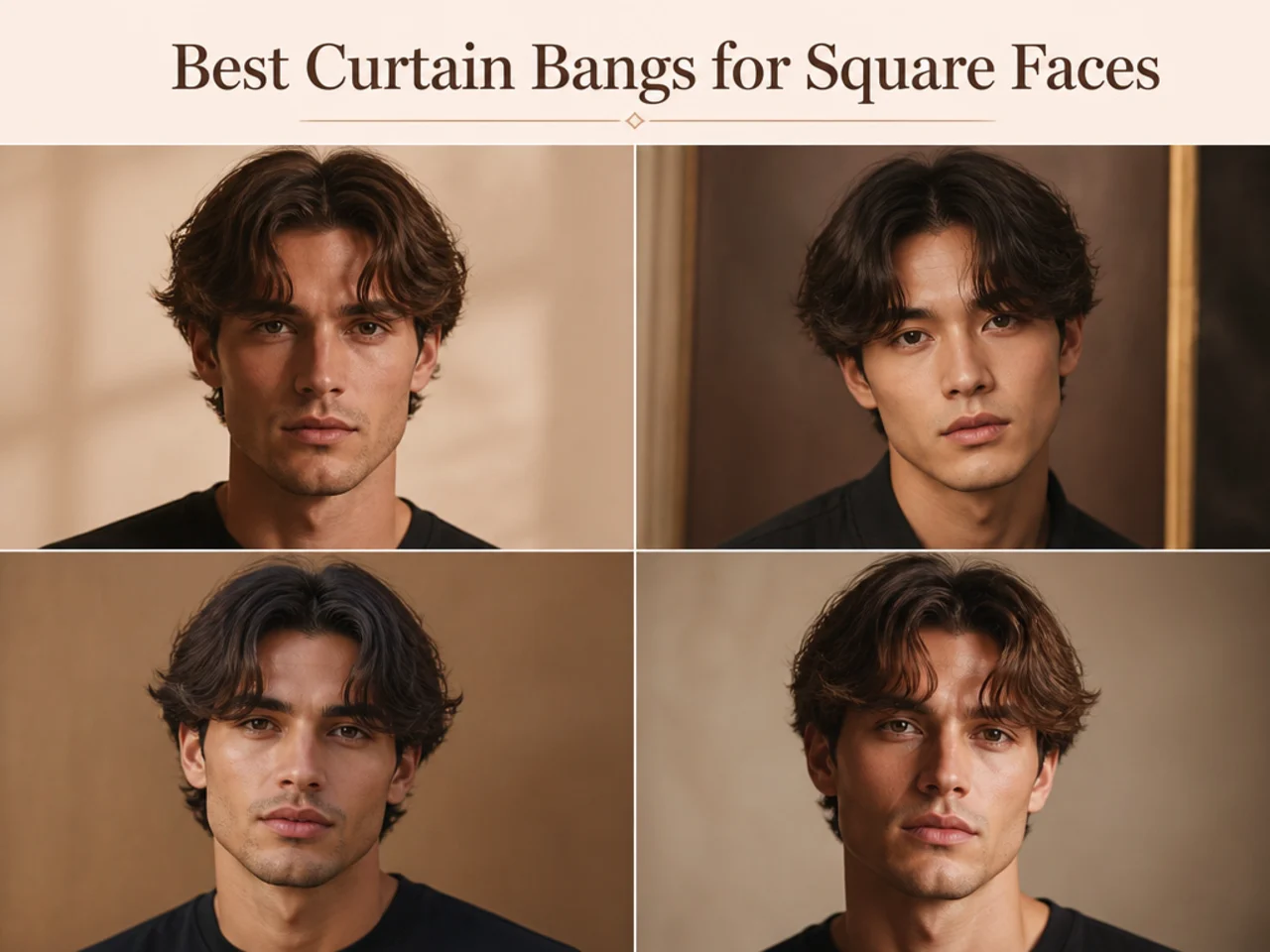
Square faces have a strong horizontal line at the jaw with forehead and jaw widths that match. The fringe should soften the top and the temples so the overall silhouette reads less blocky. Airy, feathered, and textured builds move the eye across the face gently instead of stacking sharpness. Three versions handle it cleanly.
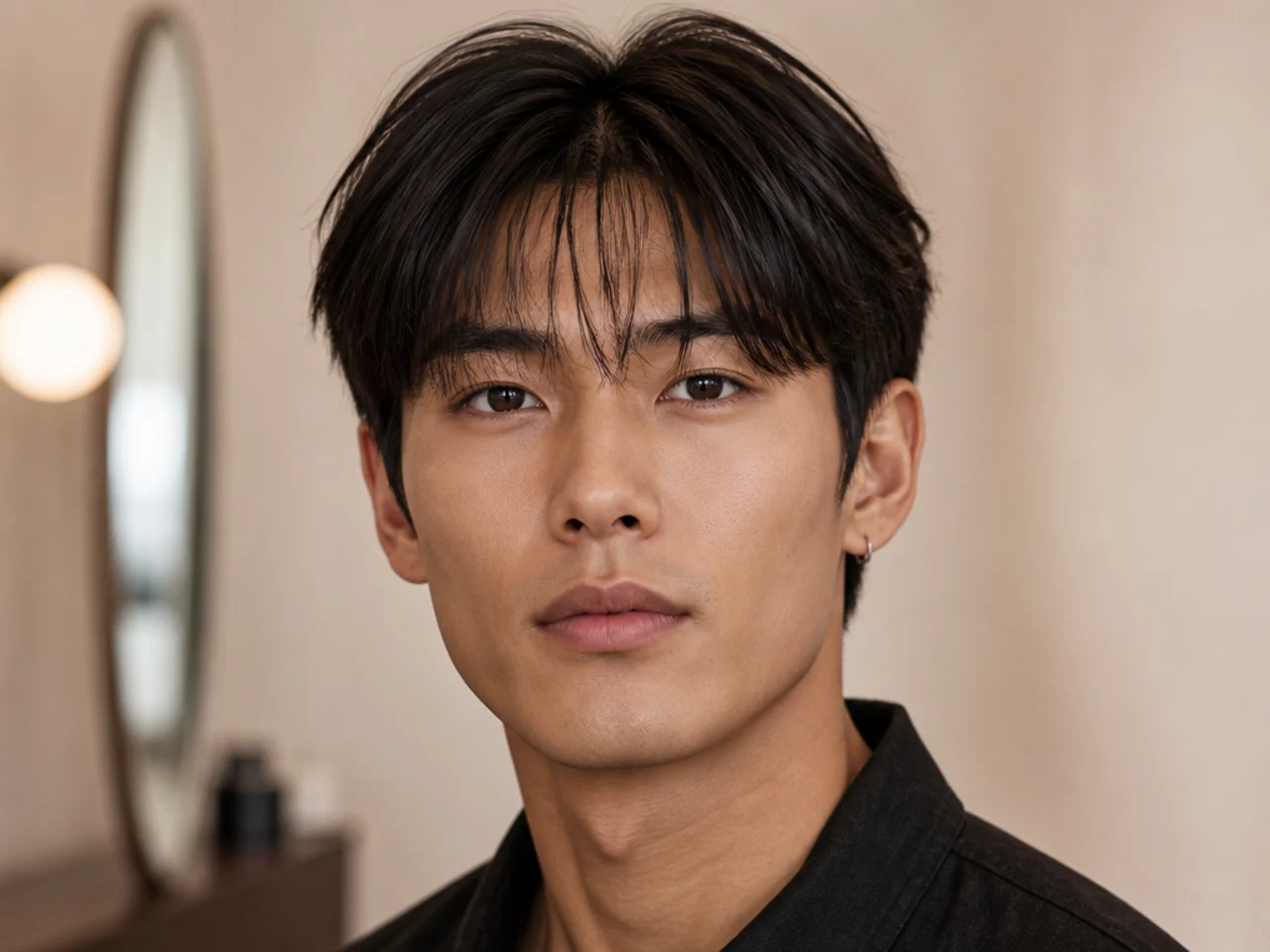
7. Wispy Razor-Cut Curtain Bangs
The softest fringe you can cut. The barber razor-thins each panel from mid-shaft to end so the two curtains fall thin and airy, with slivers of forehead showing between the strands. That see-through quality is the anti-sharp. Best on fine to medium straight or wavy hair; thick hair loses the wispy read. Ask for "wispy curtain bangs — 4 inches at the front, razor-thinned through the mid-shaft and ends for airy separation, center part, scissor-cut short sides." Style with a pea of matte cream fingertip-worked through damp hair, split with a wide-tooth comb, air-dry. Skip pomade — shine kills the airy read the razor cut paid for.
8. Soft-Feathered Curtain Bangs
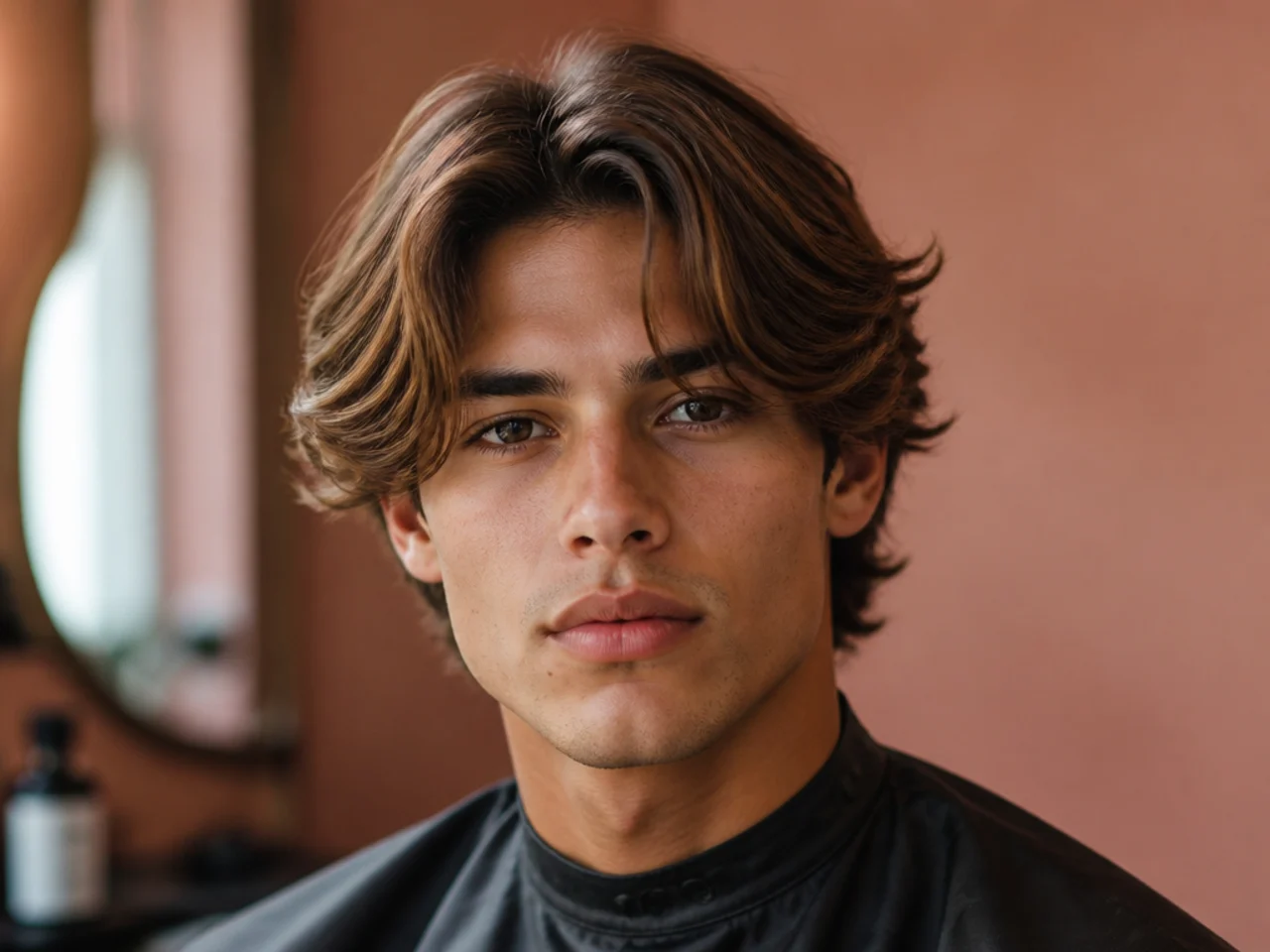
The layered version that works with rather than against a strong jaw. The barber slide-cuts each panel of the fringe so the layers stack like feathers — shorter at the top of the strand, longer toward the ends — and each panel lands at or just past the cheekbone. The soft internal movement counterbalances the horizontal jawline. Ask for "soft-feathered curtain bangs — 4 to 5 inches at the front, slide-cut through each panel for visible internal feathering, cheek-length ends, center part, scissor blend into the sides." Style with sea-salt spray on damp hair, then a pea of matte cream, split with fingers. The feathering carries the most editorial polish of any square-face-friendly build.
9. Textured Choppy Curtain Bangs
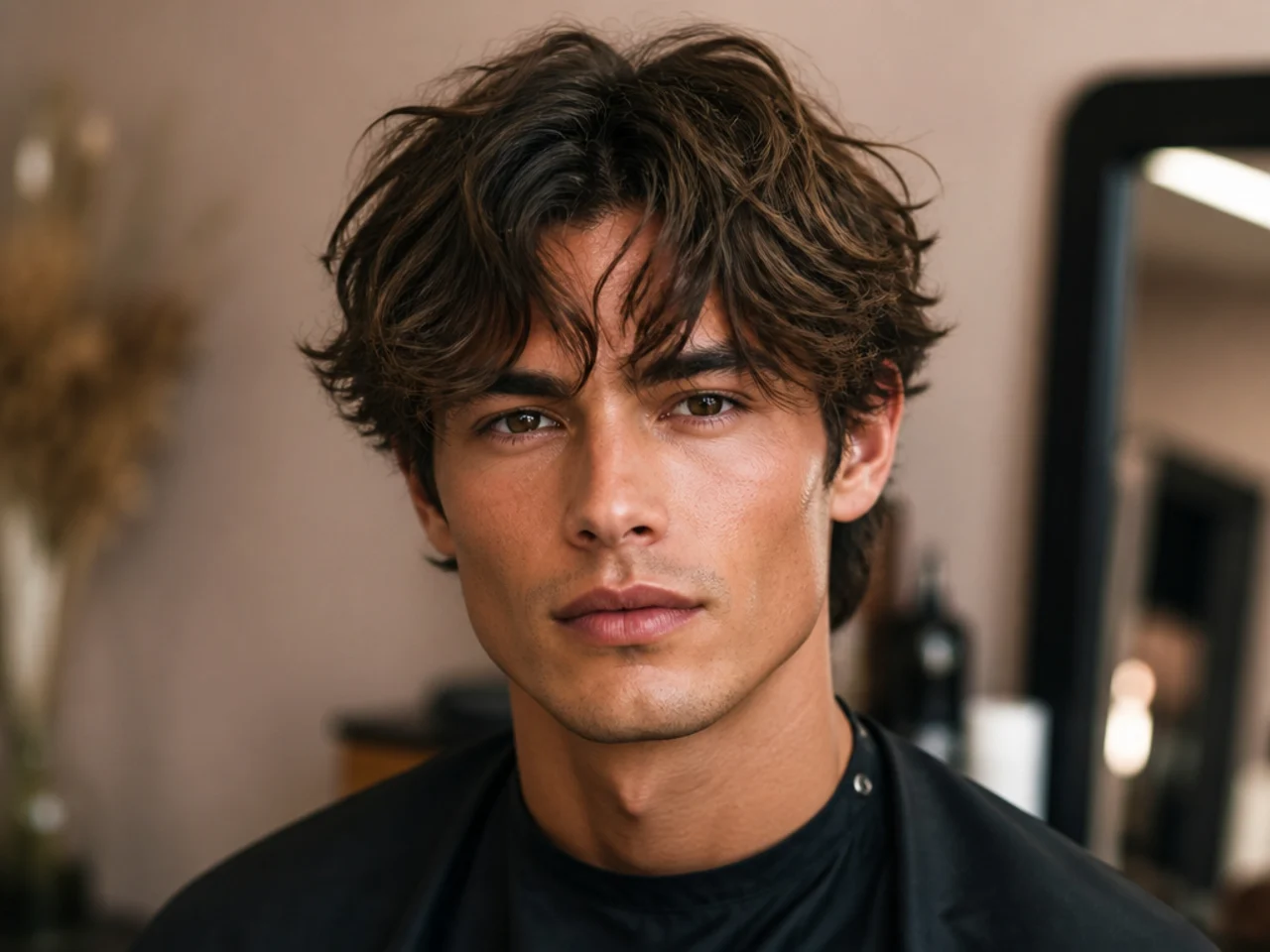
Same soft goal, more grit. The barber threads heavy point-cutting through the fringe and matching choppy internal layers through the top so the whole cut reads as one texture story — the fringe pieces mirror the length pieces above. That across-the-top texture pulls the eye up and away from the jaw. Wavy and lightly curly hair wear this best. Ask for "textured choppy curtain bangs — 4 inches at the front with heavy point-cutting, matching choppy internal layering through the top, center part, scissor blend into short sides." Finish with sea-salt spray, then a matte clay pea. Sits inside the broader textured haircuts for men family and photographs beautifully on medium-brown wavy hair.
Best Curtain Bangs for Heart Faces
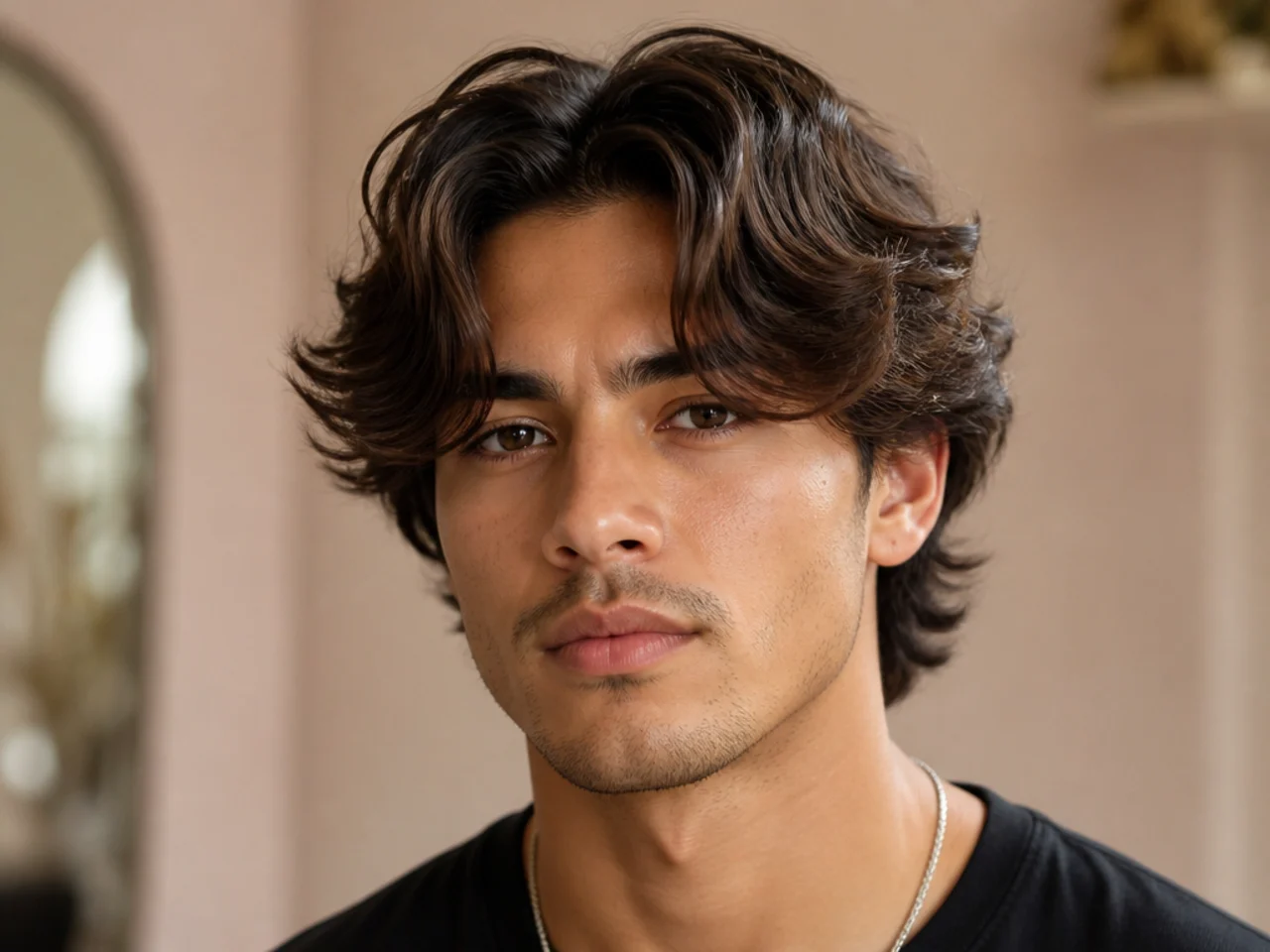
Heart faces are wider at the forehead than at the jaw, with a chin that comes to a point. The fringe should add visible width at the cheek and jaw region, not stack more volume at the already-wider top. The two variations below both drop panel length past the cheekbone to broaden the mid-face read.
10. Full Cheek-Grazing Curtain Bangs
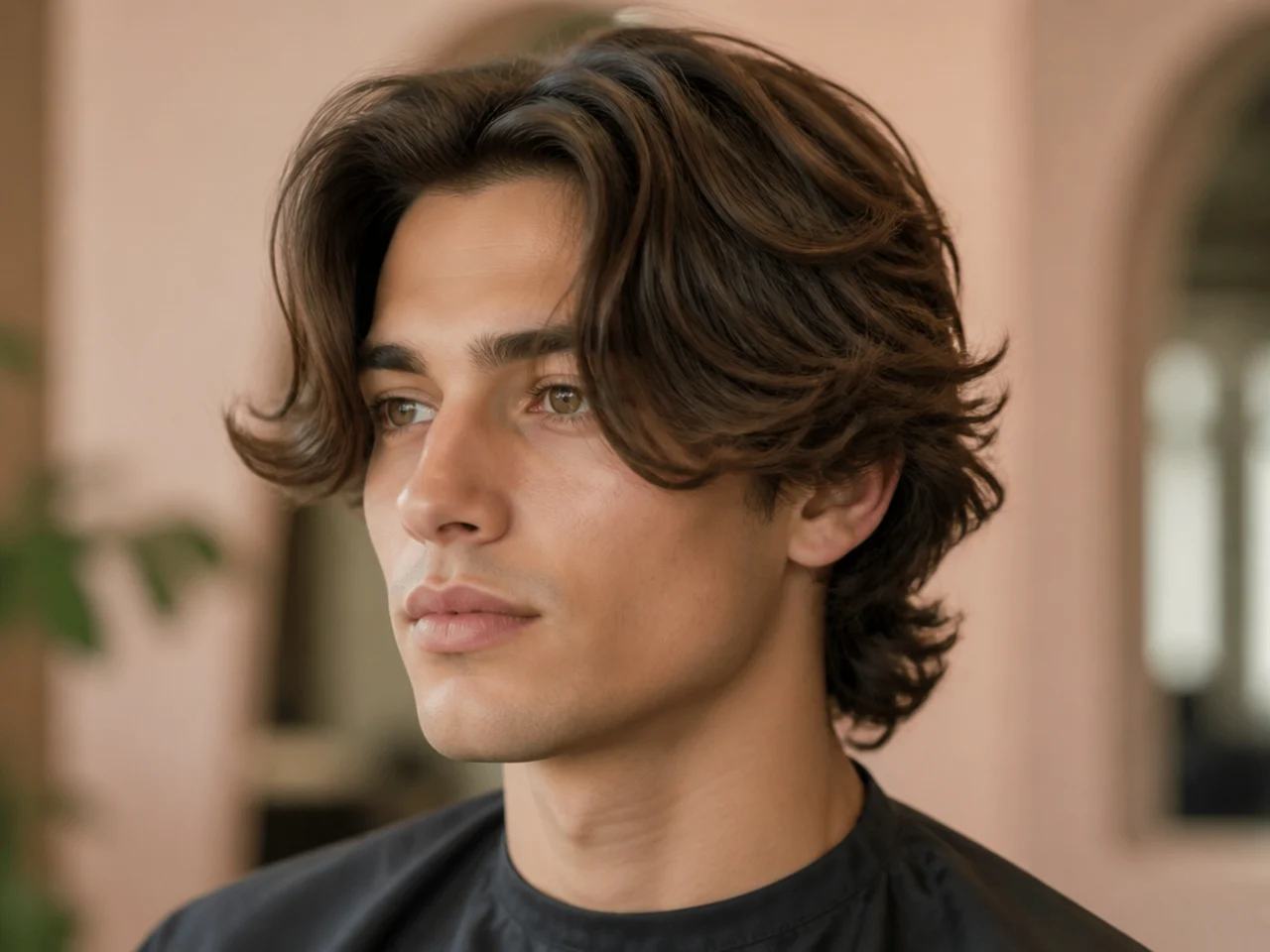
The panels do the balancing. Five inches at the front, cut denser than the classic with minimal thinning, so both panels hang solid and land squarely on the cheekbone. That cheek-level weight visually broadens the mid-face and offsets the narrower chin. Ask for "full cheek-grazing curtain bangs — 5 inches at the front, minimal internal thinning to keep density, center part, panels cut to land at the cheekbone, scissor-blended sides." Style with a light-hold cream through damp hair, split with a wide-tooth comb, air-dry. Best on medium to thick straight or wavy hair; fine hair loses the density. Heart faces get the most immediate proportion gain from this version.
11. Piecey Chin-Length Curtain Bangs
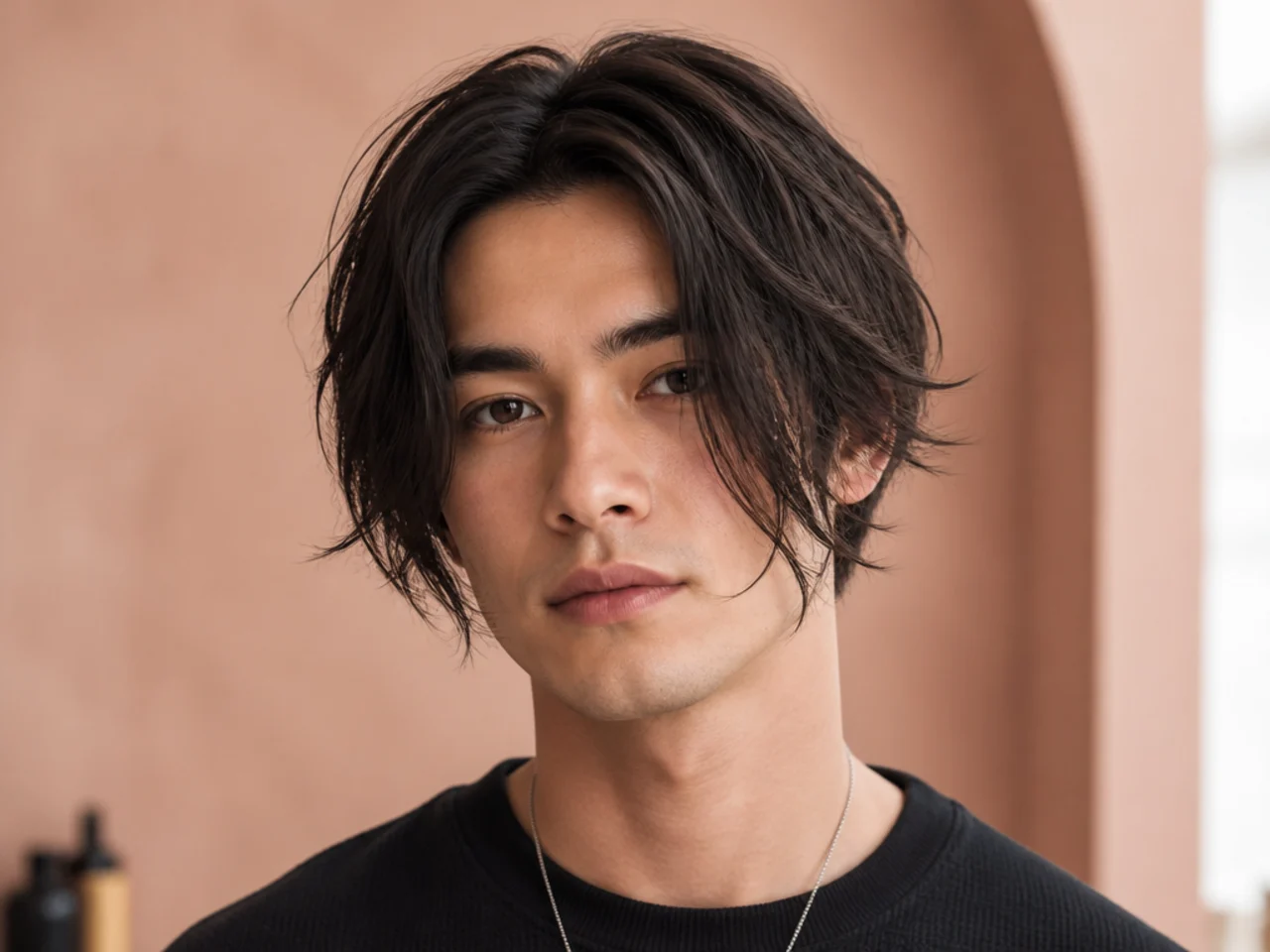
The extra-long option. Bangs run 6 inches so the panels reach the jawline itself, and the ends are heavily point-cut into defined pieces so the fringe doesn't hang as a slab. That reach softens the pointed chin and widens the visible jaw area — the two places heart faces most benefit from extra hair. Ask for "piecey chin-length curtain bangs — 6 inches at the front reaching the jaw, heavy point-cutting through the ends, internal layering through the mid-shaft, center part, scissor-blended sides tucking behind the ear." Style with sea-salt spray for the pieces, a pea of matte cream for hold. Book this only if you're comfortable with a longer overall cut — the top and sides need to match at 4 to 5 inches.
Best Curtain Bangs for Long Faces
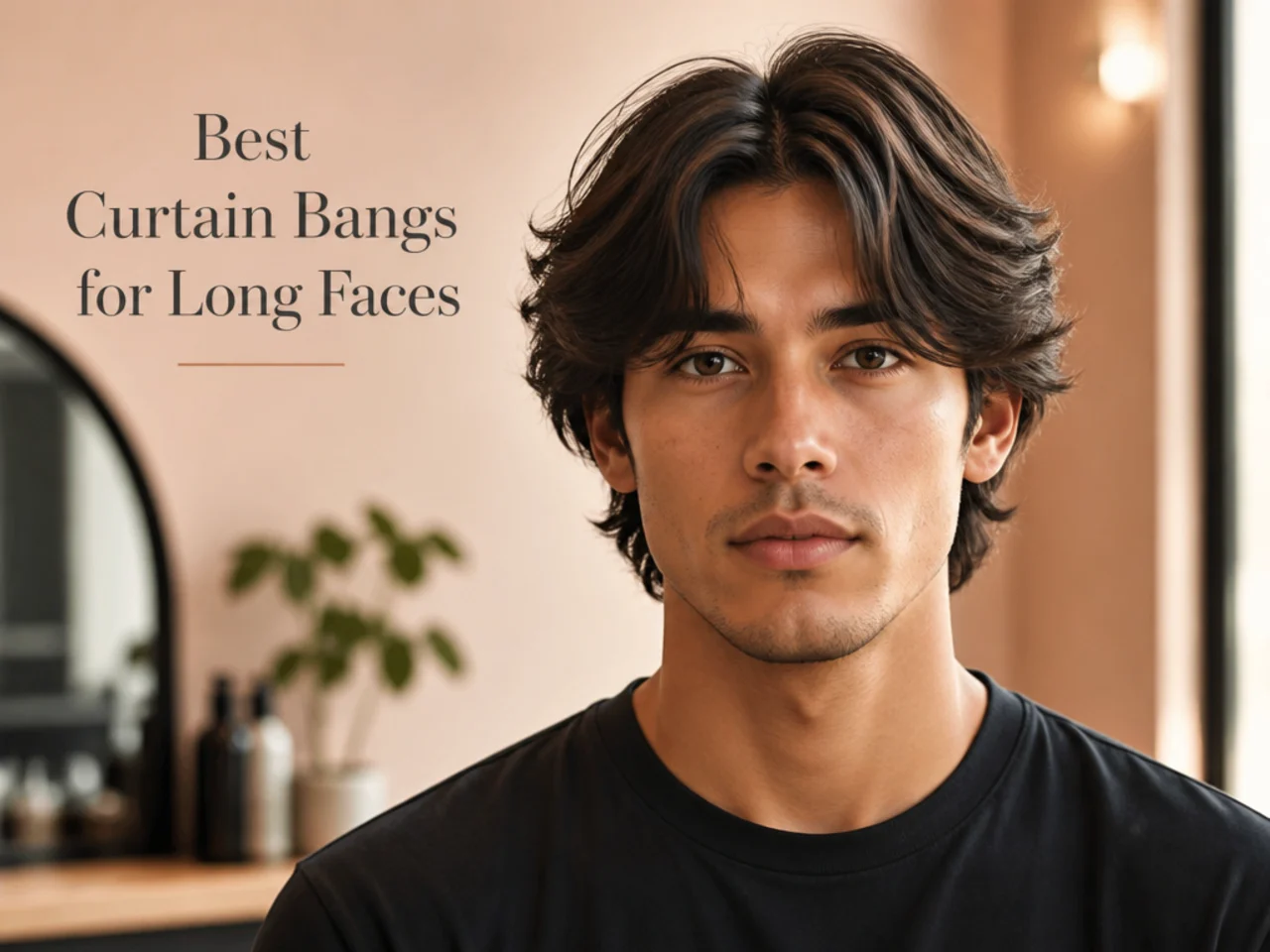
Long or oblong faces run noticeably taller than wide — face length is longer than 1.5 times width, with straight cheeks and a proportionally long forehead. The fringe should shorten the visible vertical line by covering more of the forehead. Dense builds work; airy builds make the length read even longer. Two versions do this best.
12. Full-Density Curtain Bangs
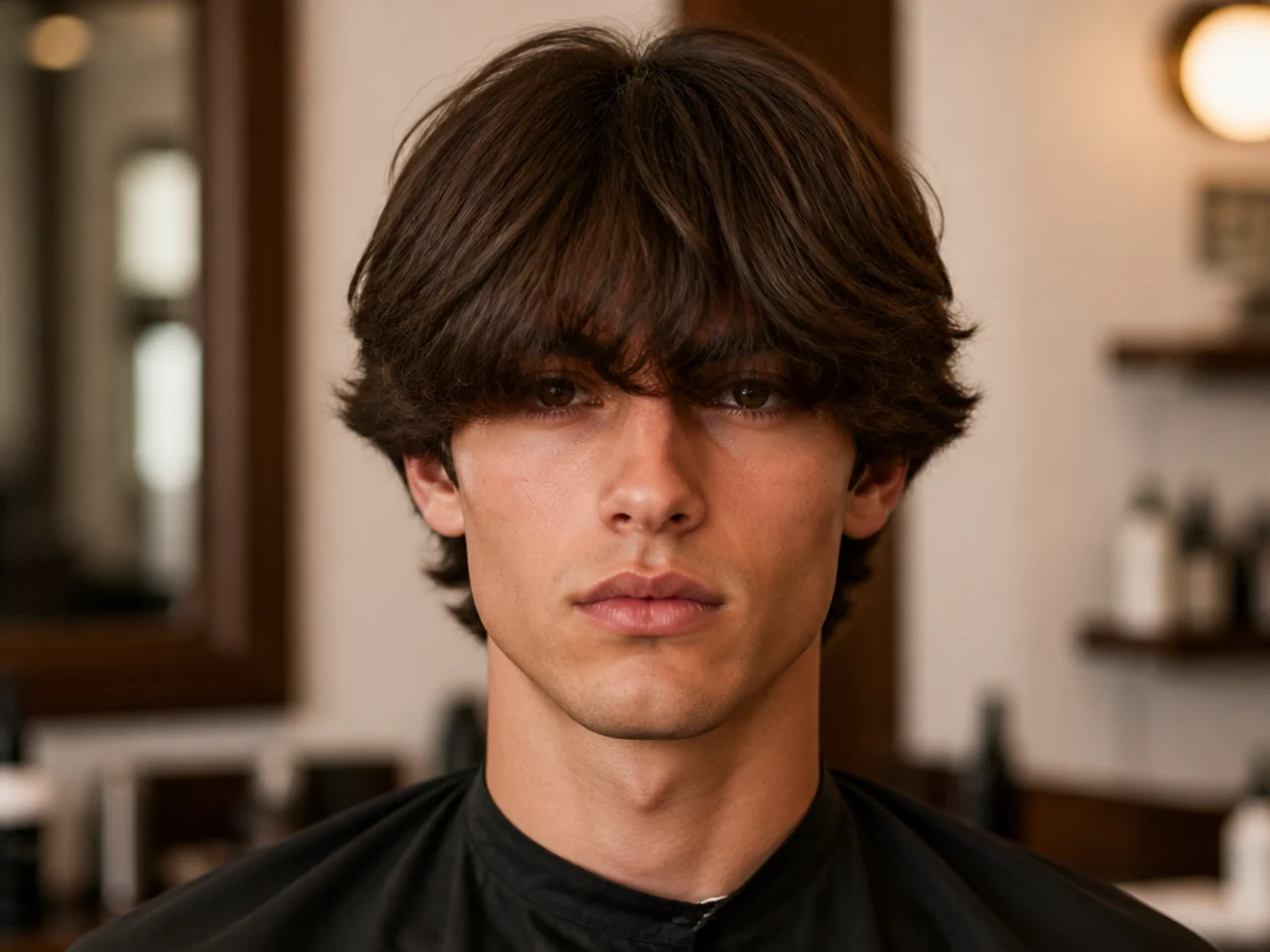
The counter-lengthening version. Four to five inches at the front, cut edge-to-edge with almost no internal thinning, so the fringe drops as a full unbroken drape from part to end. No forehead is visible past the panels. That coverage shortens the visible face length by the height of the fringe itself — an instant proportion fix. Ask for "full-density curtain bangs — 4 to 5 inches at the front, edge-to-edge density, minimal thinning, defined center part, scissor blend on the sides." Style with a light-hold cream through damp hair, split with a comb, air-dry. Best on medium to thick straight or lightly wavy hair. This is the single most transformative curtain bangs cut for a long face — book it if the proportion has always bothered you.
13. Blunt-Ended Curtain Bangs
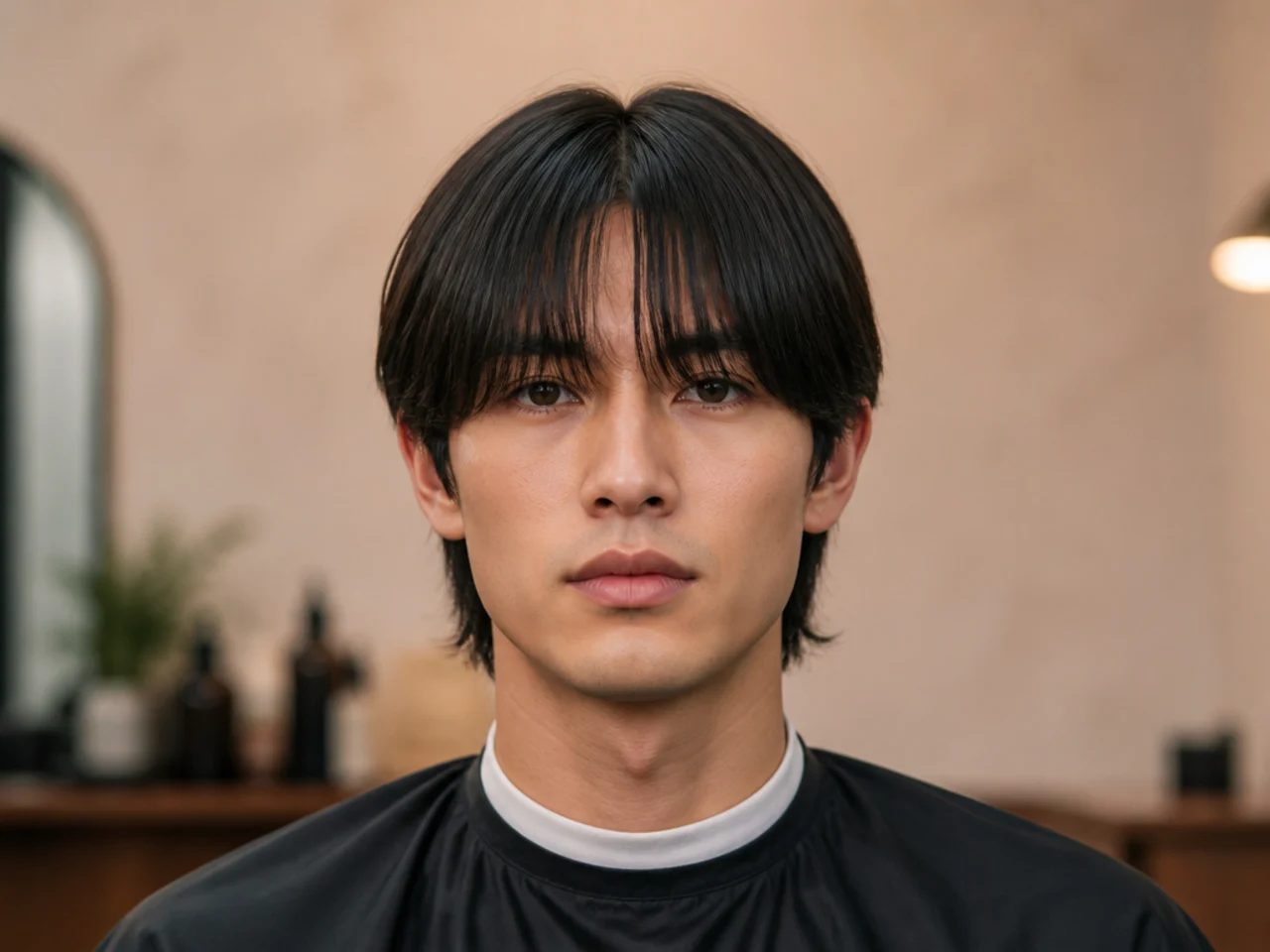
The horizontal-line variant. Instead of tapering each panel to a diagonal point at the temple, the barber cuts the ends of both panels straight across so the fringe reads as one flat horizontal line at brow level. That horizontal edge counteracts the vertical read of a long face — the eye follows the line across, not down. Ask for "blunt-ended curtain bangs — 4 inches at the front, minimal internal layering, ends cut straight across at brow level, defined center part, scissor blend at the sides." Style with a light-hold cream and a wide-tooth comb, keep it flat. Works best on straight or lightly wavy hair; heavy waves and curls fight the straight line. The horizontal read makes this the sharper choice for very long faces where full-density alone isn't enough.
Best Curtain Bangs for Diamond Faces
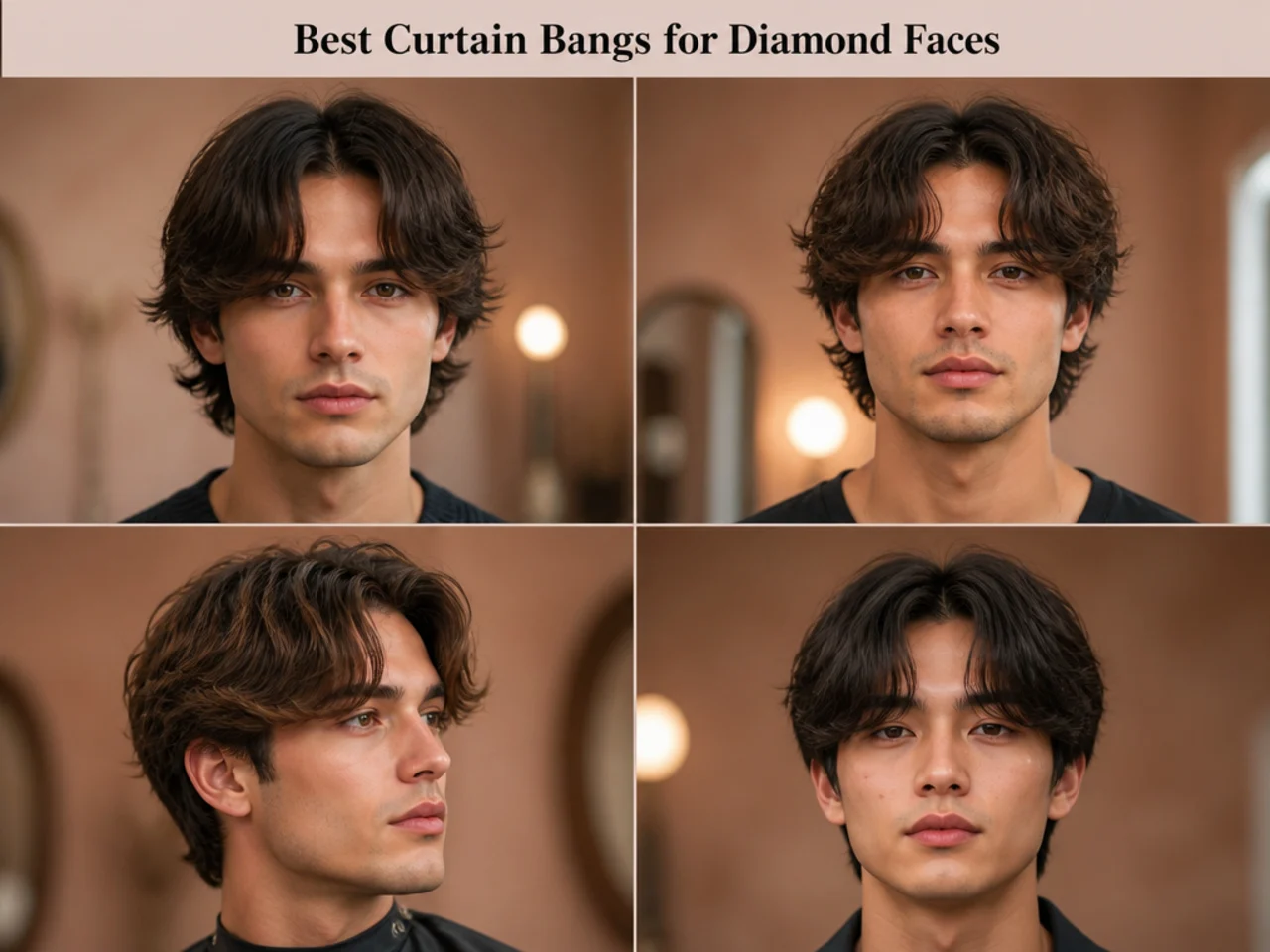
Diamond faces have wide cheekbones with a narrow forehead and narrow jaw. The fringe should add visible width up top so the forehead reads closer to the cheek in width. Airy, feathered, wide-set builds work — dense heavy fringes stack more weight on the already-narrow forehead and make it look narrower still.
14. Airy Wispy Curtain Bangs
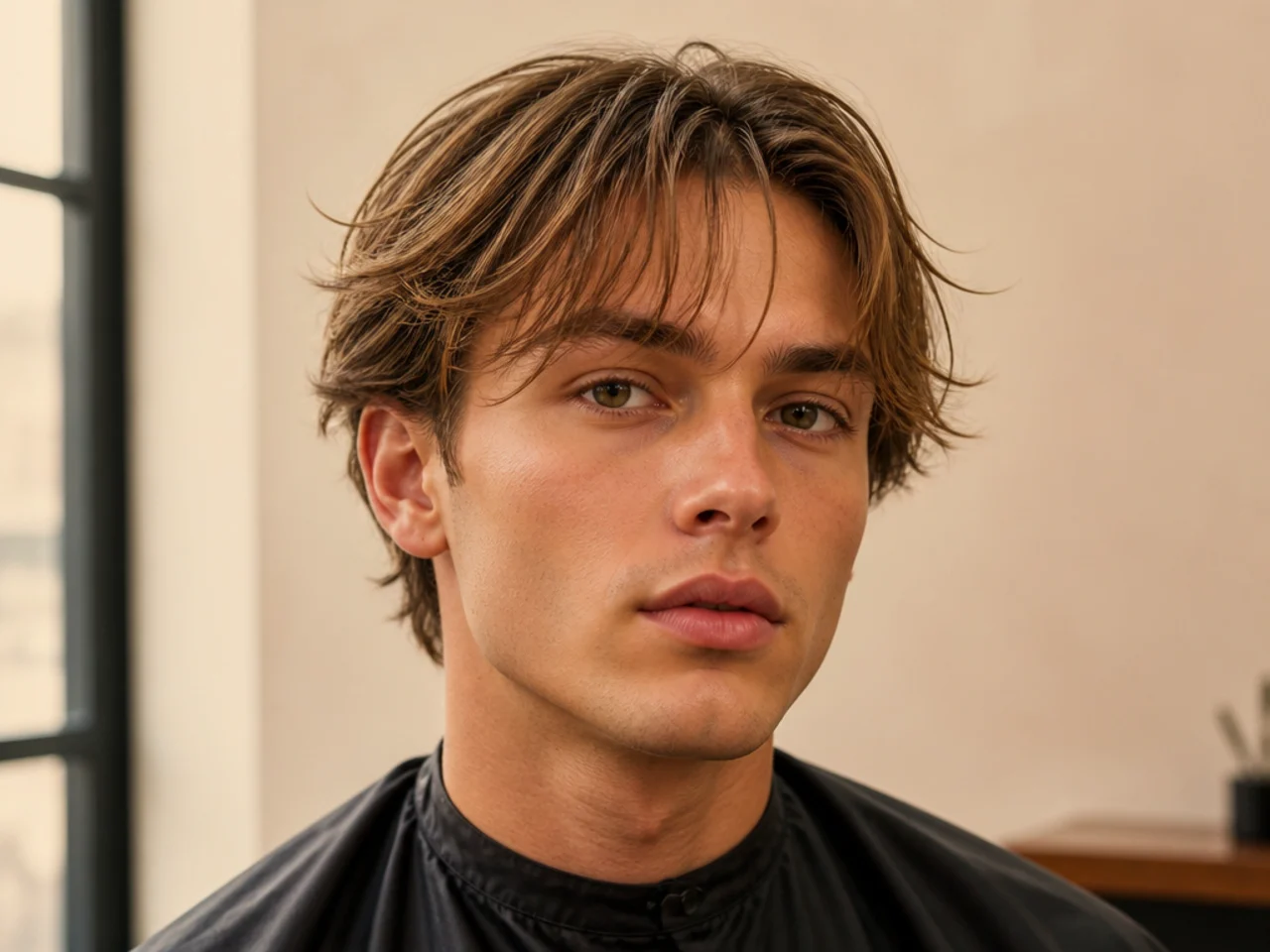
The lightest possible fringe, spread wider than a classic center part. The barber razor-thins each panel until slivers of forehead show through, and cuts the part wider so the two panels sit two inches apart at the crown instead of touching — that wider spread visually widens the forehead. Ask for "airy wispy curtain bangs — 4 inches at the front, heavily razor-thinned for airy separation, wider two-inch spread at the part, center split, scissor-cut short sides." Style with a pea of matte cream fingertip-worked through damp hair, split with a wide-tooth comb, air-dry. Best on fine to medium straight hair; anything thicker fills the panels in and cancels the airy read the razor cut bought.
15. Feathered Wide-Set Curtain Bangs
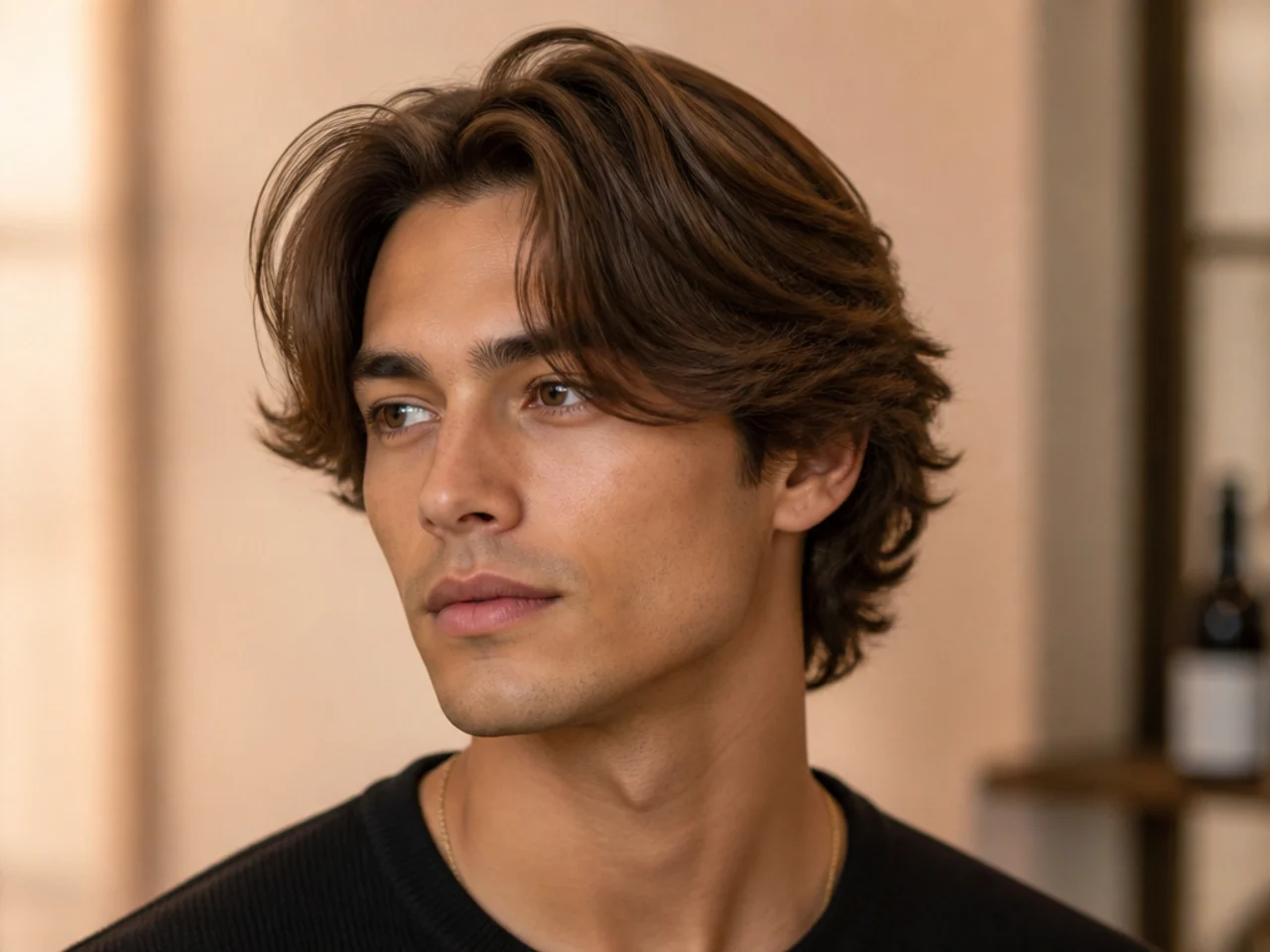
The layered take on the same widen-the-top goal. The barber slide-cuts each panel for visible internal feathering and cuts the part wider — closer to two inches across the crown — so the fringe frames a broader visible forehead. Softer than the wispy version, and works on more hair types. Ask for "feathered wide-set curtain bangs — 4 to 5 inches at the front, slide-cut internal feathering, center part cut wider at the crown, scissor blend into short sides." Style with sea-salt spray on damp hair, then a pea of matte cream, split with fingers. Best on medium-density straight or lightly wavy hair. If you want the Korean editorial finish on the same principle, the korean haircut men styling notes carry through cleanly.
How to Ask Your Barber
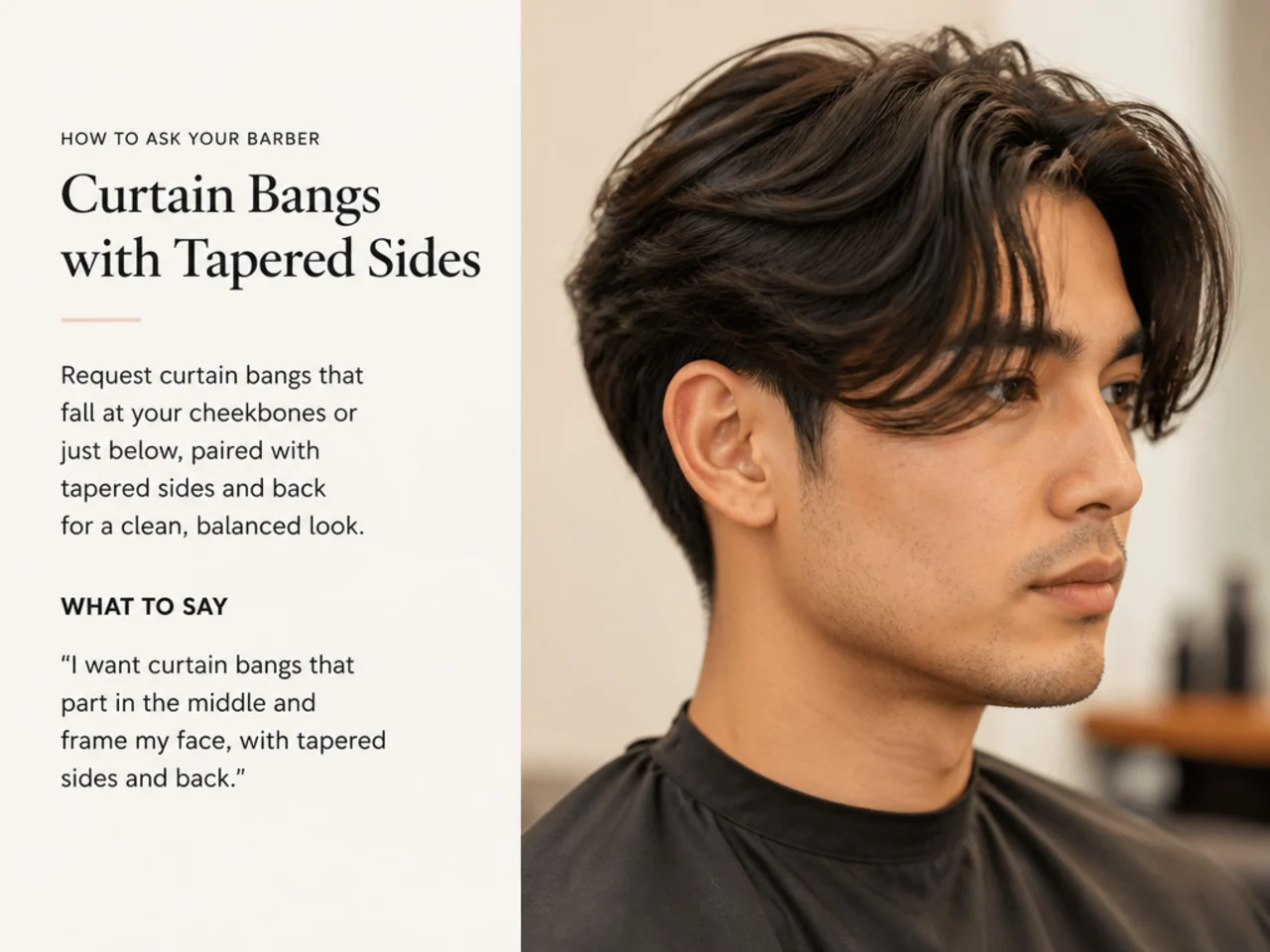
"Curtain bangs" is a fringe technique, not one cut. Give your barber all six pieces below before the cape goes on.
- Say the face shape. Oval, round, square, heart, long, or diamond. Any good barber adjusts weight, length, and part width once they know the shape — leading with it saves the whole conversation.
- Show the exact photo. Screenshot the variation from this guide that matches your face and hair type. Language differs shop to shop; the image is the anchor.
- Set the front length in inches. Three inches for short-face oval or round; four inches for the classic and most square, heart, and diamond builds; five to six inches for long-face full-density and heart-face chin-length versions.
- Ask for internal layers by name. The two words most barbers wait for are "internal layers." Without them the panels drop flat; with them they taper diagonally toward the temple.
- Name the finish. Wispy, feathered, piecey, textured, full, or blunt-ended. Each face shape above has a specific finish choice — hand over the term.
- Match the perimeter. Scissor blend, low taper, mid fade, undercut, two-block, or grown-out. Every face shape works with most perimeters — pick the one that matches your workplace and your trim cadence.
Styling and Maintenance
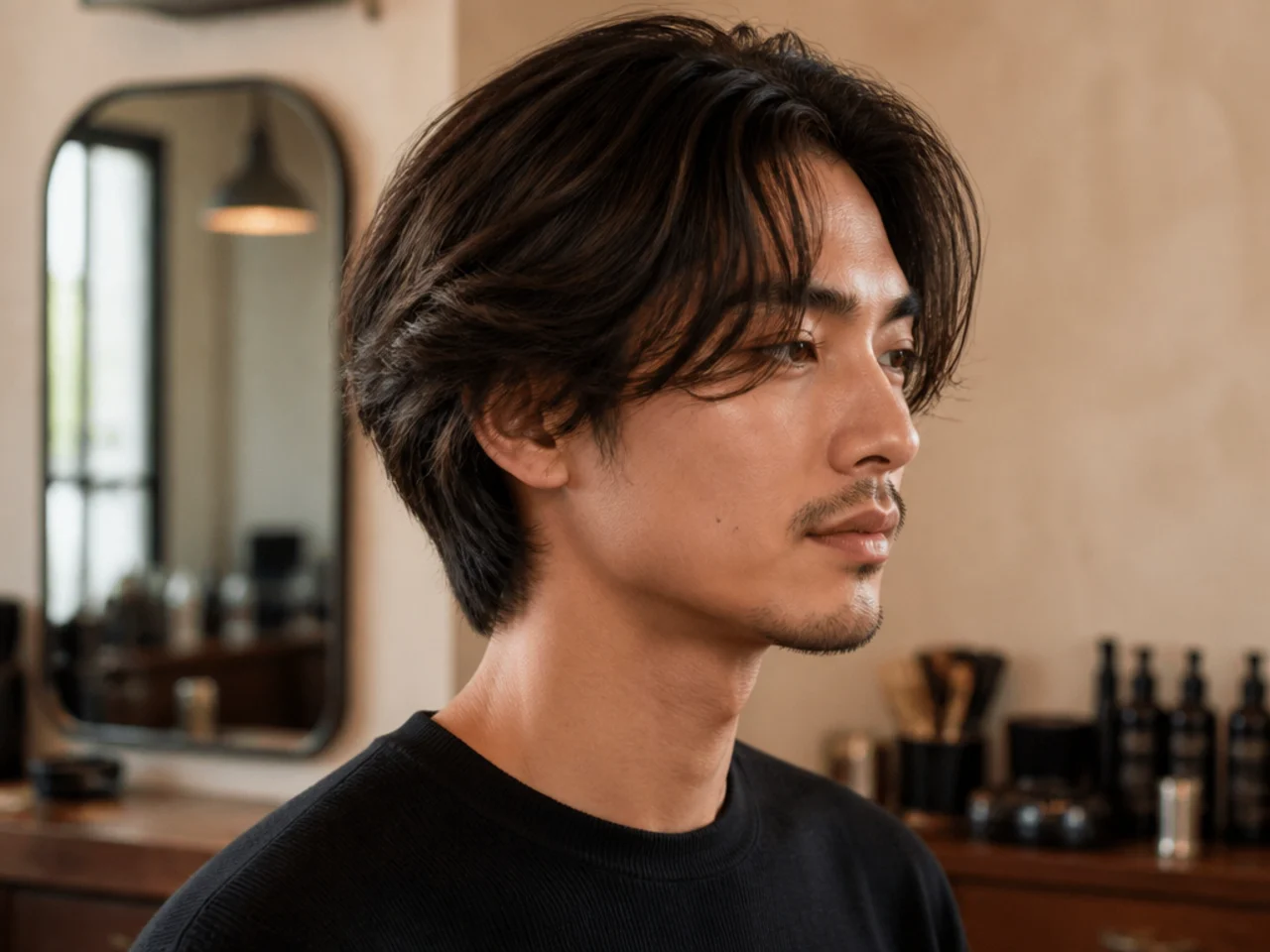
Curtain bangs style wet, set damp, hold on two or three products depending on face shape.
Wash with a sulfate-free shampoo every two to three days and condition mid-lengths and ends only — coating the roots weighs the fringe down. Towel-dry with a microfiber cloth or an old cotton T-shirt; terry towels rough up the cuticle and turn the panels frizzy by lunch. Mist sea-salt spray from four inches away, focused on the mid-shaft where the two panels form. Comb once with a wide-tooth comb straight back to set the center part. Air-dry ten minutes. When it's 80% dry, work a pea of matte cream between the palms until it disappears and rake forward through both panels of the fringe, then split at the center with the comb.
Face-shape-specific styling adjustments:
- Round faces: add a mousse at the root for the high-volume version and blow-dry upside-down for extra lift.
- Square faces: finger-style only — combs flatten the airy read that softens the jaw.
- Long faces: skip the sea-salt spray on full-density and blunt-ended builds — texture breaks the dense drape that shortens the face.
- Diamond faces: widen the part manually every morning; the fringe wants to close back to a narrower gap during the day.
Cut cadence separates a great curtain fringe from an overgrown one. Book every four to six weeks for the bangs alone — the fringe grows into the eyes within a month even when the rest of the cut still holds shape. If you paired the bangs with a fade, tighten the cycle to three to four weeks. For a wider spread of variations beyond face shape, the curtain bangs men haircut roundup covers twenty by finish and hair type. For fade-first alternatives that also organize by face shape, the 15 trendy fade haircuts for every face shape guide is the closest crossover. And if you want the whole wavy-hair styling kit for the wavy 2A-2C variations above, the best wavy hair products breakdown is the two-product shortcut that keeps the panels frizz-free.
FAQ
Which face shape suits curtain bangs least? Very small faces with low foreheads struggle most because the minimum three-inch fringe reaches past the eyebrow and can dominate the whole face. If your forehead measures under two inches from hairline to brow, ask your barber to shorten the fringe to 2.5 inches and add heavy feathering — the same wispy principles diamond faces use.
Can curtain bangs make my face look slimmer? Yes. Long side-swept and layered piecey versions add vertical read that slims a round face by up to a full shape-category worth of proportion. Full-density versions do the opposite — they shorten a face that already looks slim.
What length should curtain bangs be for a round face? Four to five inches minimum. Under four inches on a round face just widens the forehead — the two panels sit horizontal instead of diagonal, and the whole point of curtain bangs on round faces is diagonal length.
Do curtain bangs work if my forehead is small? Yes, better than many other fringes. The two panels split around the forehead rather than covering it flat, so even a two-inch forehead doesn't get overwhelmed. Ask for the classic four-inch or wispy razor-cut version and keep the panels light.
Can I switch face-shape variations later? Every four to six weeks, yes. The fringe is the same base technique — a good barber can move you from wispy to feathered, or from full to piecey, in one appointment. Length changes take a grow-out cycle — three to five months from short to full-density if you're going up two inches at the front.
Do curtain bangs make me look younger? Softer versions do — wispy, feathered, and airy builds add movement that reads younger. Full-density and blunt-ended versions read more editorial and don't lean young or old. The 90s-grunge look covered in the wider curtain bangs men haircut roundup reads the youngest of any curtain bangs style, mostly because the reference is 90s DiCaprio.