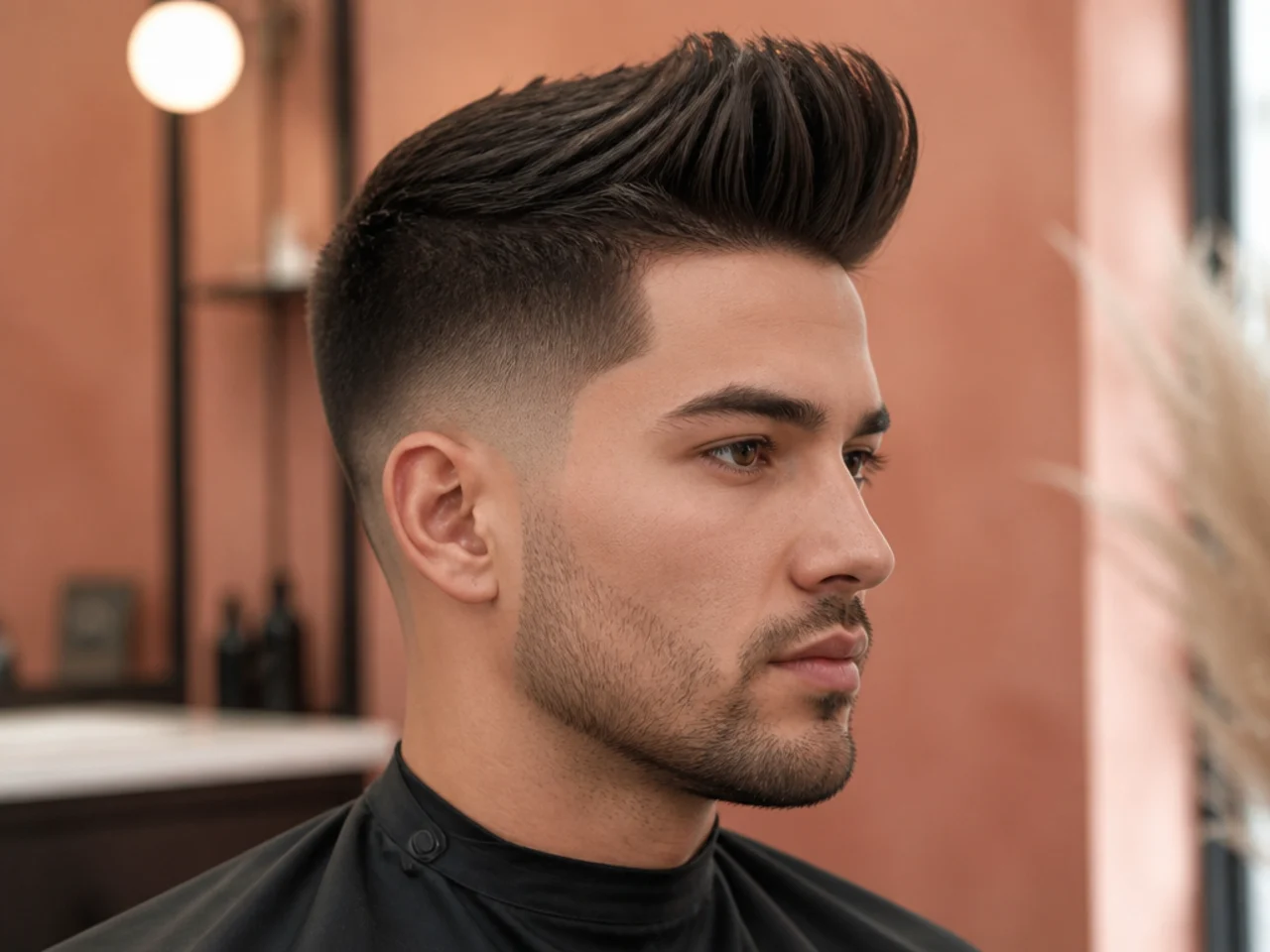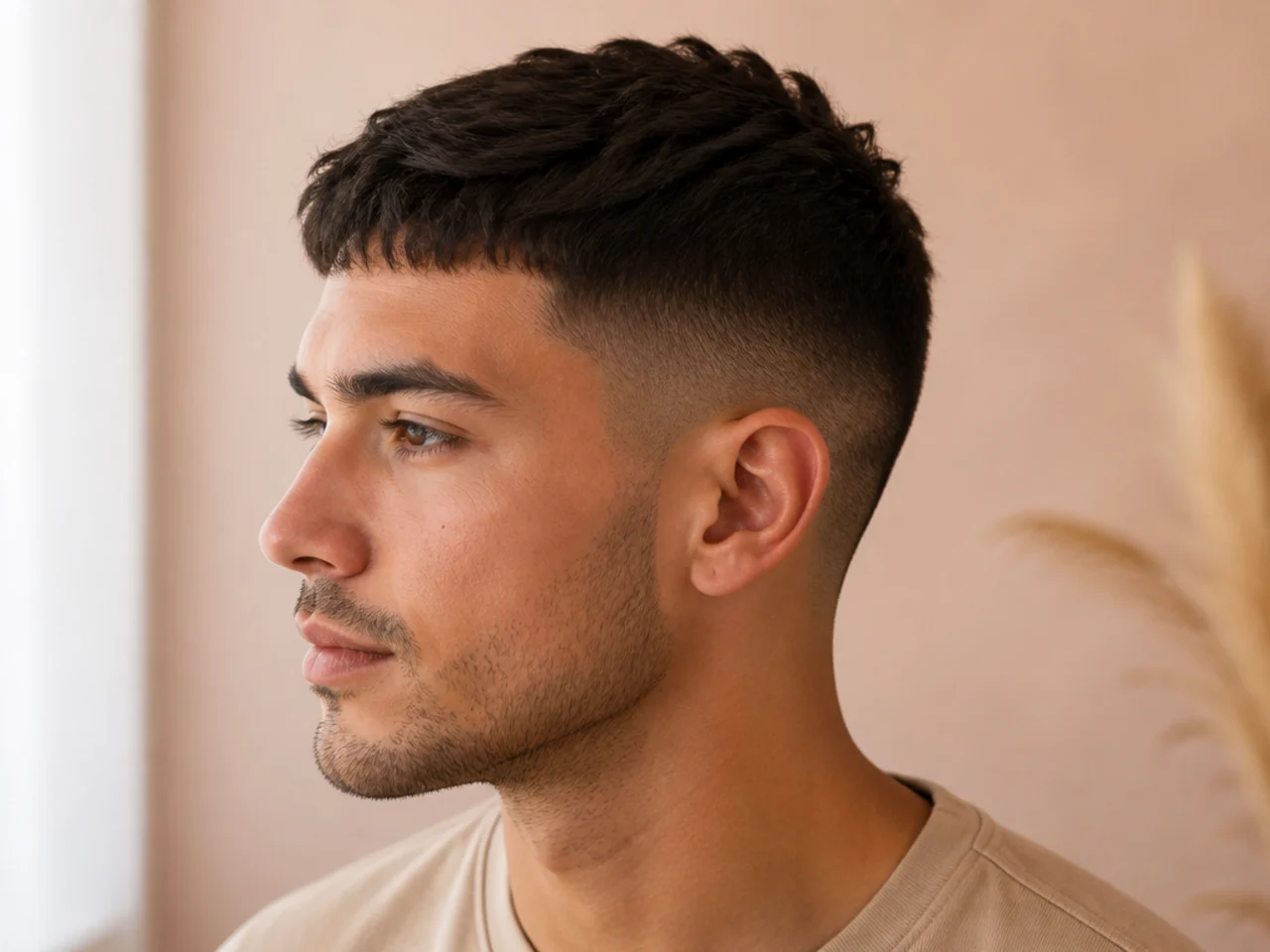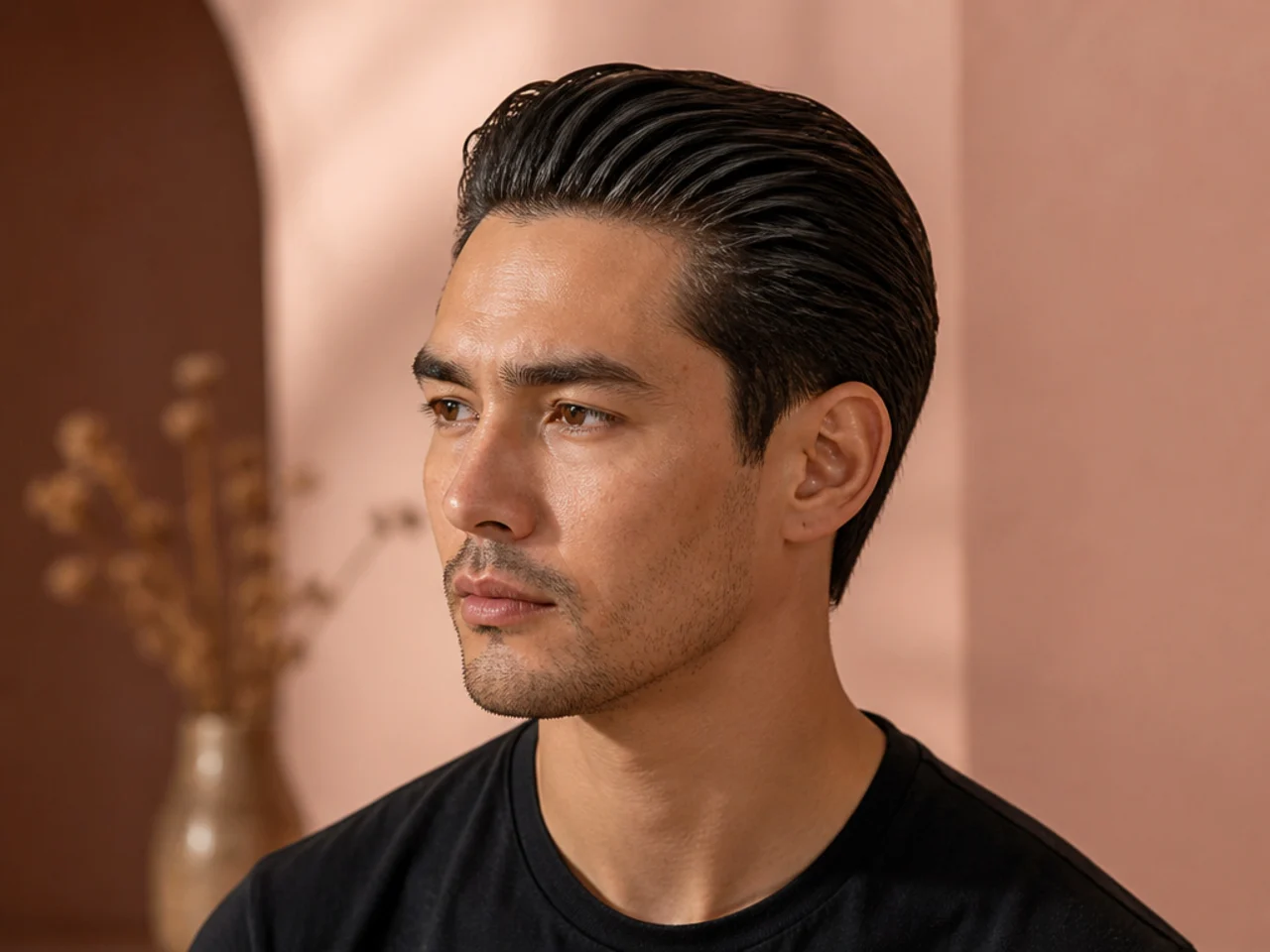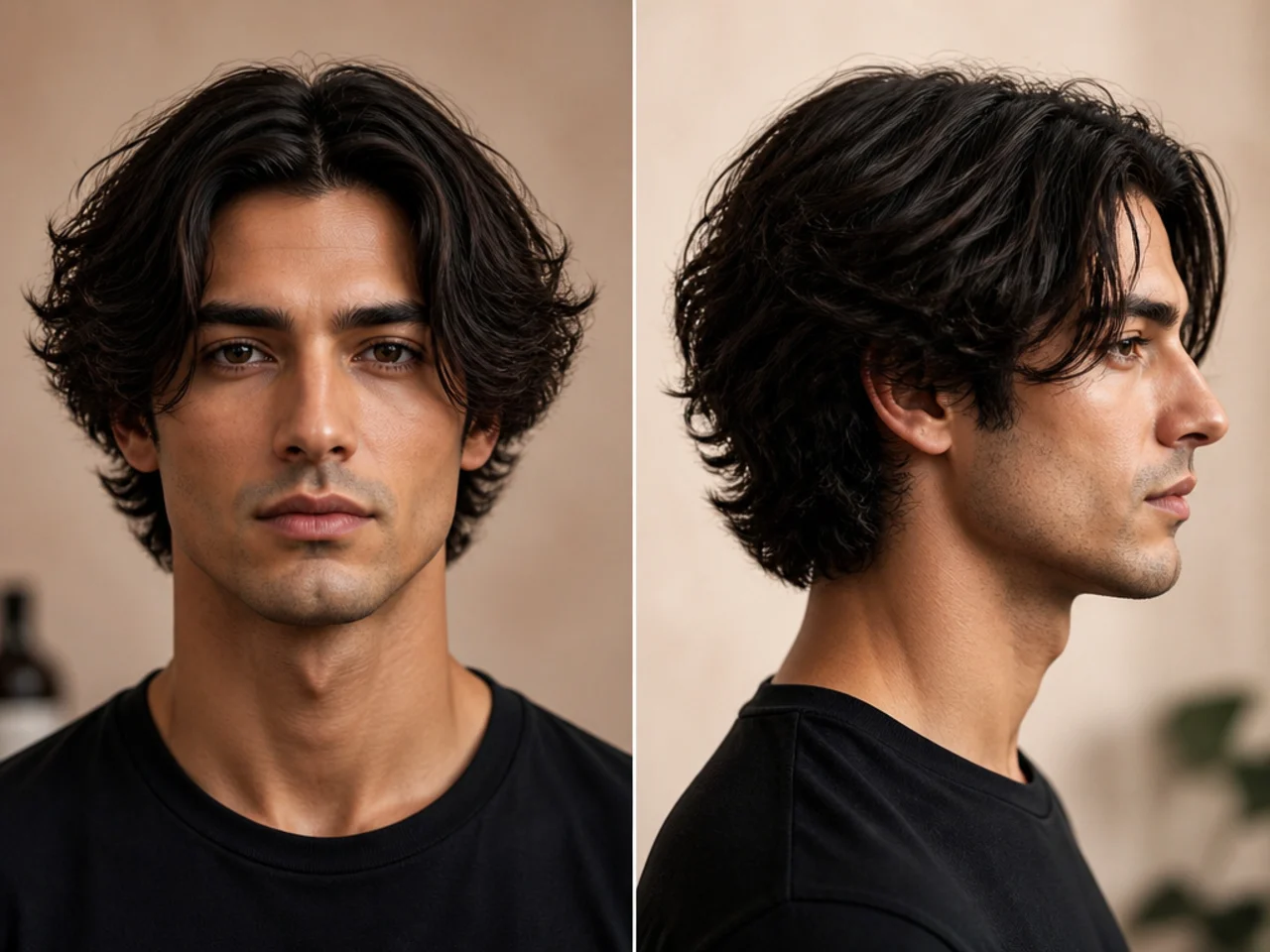
5 Reasons the Middle Part Suits Most Guys
The middle part suits men across face shapes, hair types, and calendars — five reasons the cut still lands, and how to ask for a version that fits.
In this article · 16
- The One-Line Answer
- Reason 1: It Balances Almost Any Face Shape
- Reason 2: It Reads Modern Without Feeling Trendy
- Reason 3: It Grows Out More Gracefully
- Reason 4: It Photographs Cleanly From Every Angle
- Reason 5: It Adapts To Straight, Wavy, And Curly Hair
- Middle Part vs Side Part: Side By Side
- When The Middle Part Doesn't Suit A Guy
- How To Ask Your Barber
- FAQ
- Does the middle part make your face look longer?
- Is a middle part good for a first-time cut?
- Can I wear a middle part with a beard?
- Does the middle part work on Asian hair?
- How much does a middle part cost to maintain?
- What products should I use to style it?
The middle part suits men more consistently than any other silhouette in the barbershop right now. Face shape, hair type, workplace, age — the cut adapts faster than a fade, a side part, or a fringe. Below are the five reasons this male haircut keeps landing, plus a side-by-side against its closest rival and the one case where you should walk away.
The One-Line Answer
The middle part suits men because symmetry flatters more faces than a side sweep, the base geometry works on almost every hair type, and the grow-out looks intentional at every stage. If you can commit to four inches of length on top and a two-minute morning routine, the odds are it suits you too.
If you want the family-wide view first, the middle part haircut for men hub covers 27 variations. This guide is about why the base cut works — and when it doesn't.
Reason 1: It Balances Almost Any Face Shape
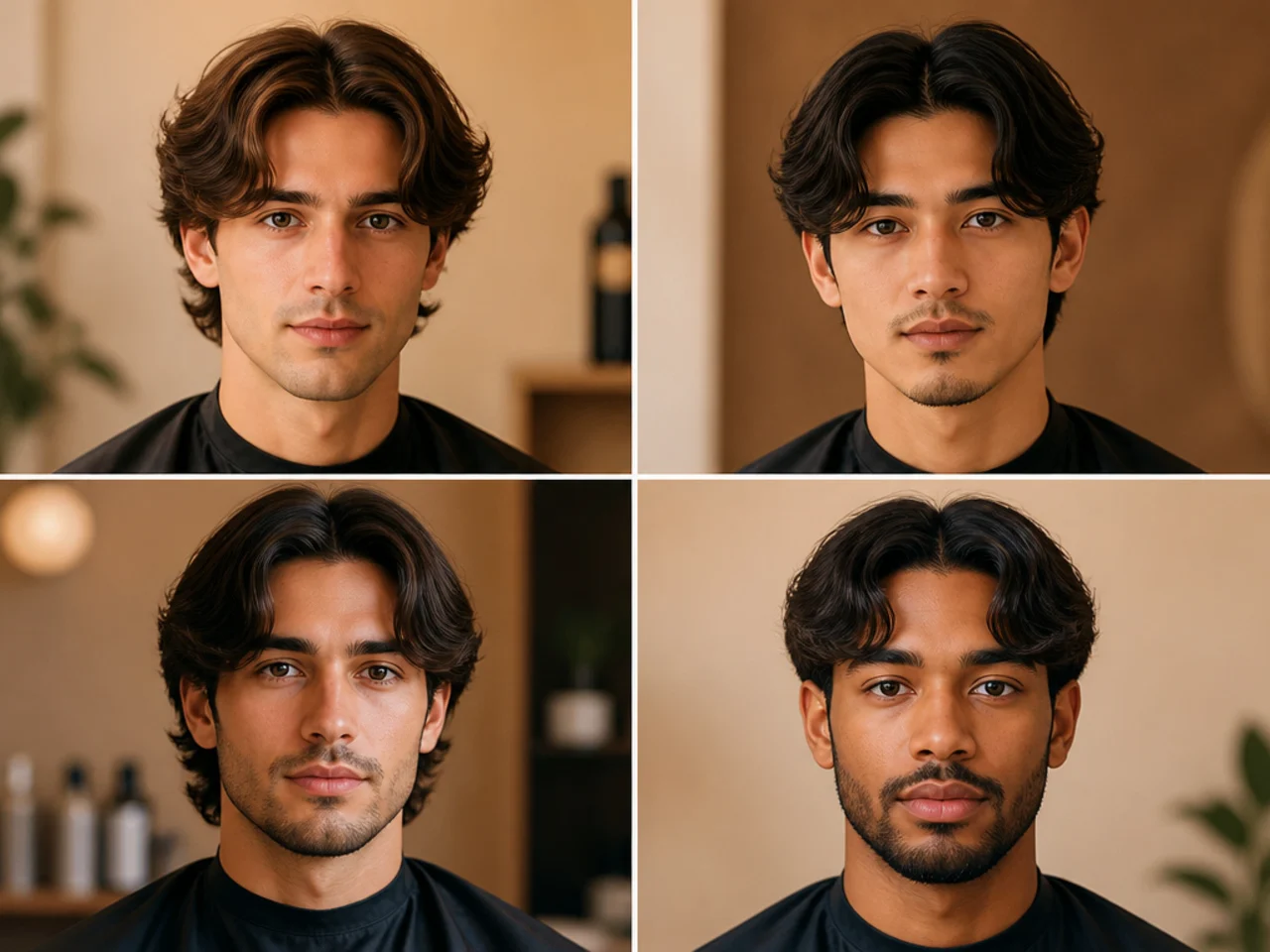
A middle part draws a straight vertical line down the center of your face. That line is the whole trick. The eye follows it top to bottom, which slims visual width, and both cheekbones get equal weight because the curtains frame them symmetrically. Most face shapes benefit from that read.
Oval, heart, and diamond faces win by default. The center split matches your existing symmetry — nothing has to be corrected. Ask for a standard 4–5 inch top with soft internal layering and let the natural fall do the work.
Round and square faces work with a longer top. Push the length to 5–6 inches so the curtains stack vertical rather than sitting flat, and skip aggressive internal thinning so the mass reads tall instead of wide. On round faces, the added height narrows the shape; on square faces, the softness at the front breaks the jawline's rigidness.
Long faces need restraint. Keep the top at 4–5 inches and ask your barber to leave the sides denser than usual — width at the temples offsets length. Avoid the shoulder-length curtain drop; anything past the jaw exaggerates a long face.
Compare that to a side part, which forces asymmetry onto whatever's already there. If your face is off-center by even a few millimeters — and most are — a side part points at it. A side part hairstyle for men can still land, but it needs a strong, straight hairline and a face shape that reads well on one side. The middle part doesn't ask for any of that.
The only face shape that consistently struggles is a very narrow, very long oblong. In that case, ask for a soft off-center split or a side-part variation instead. Everyone else is on the table.
Reason 2: It Reads Modern Without Feeling Trendy
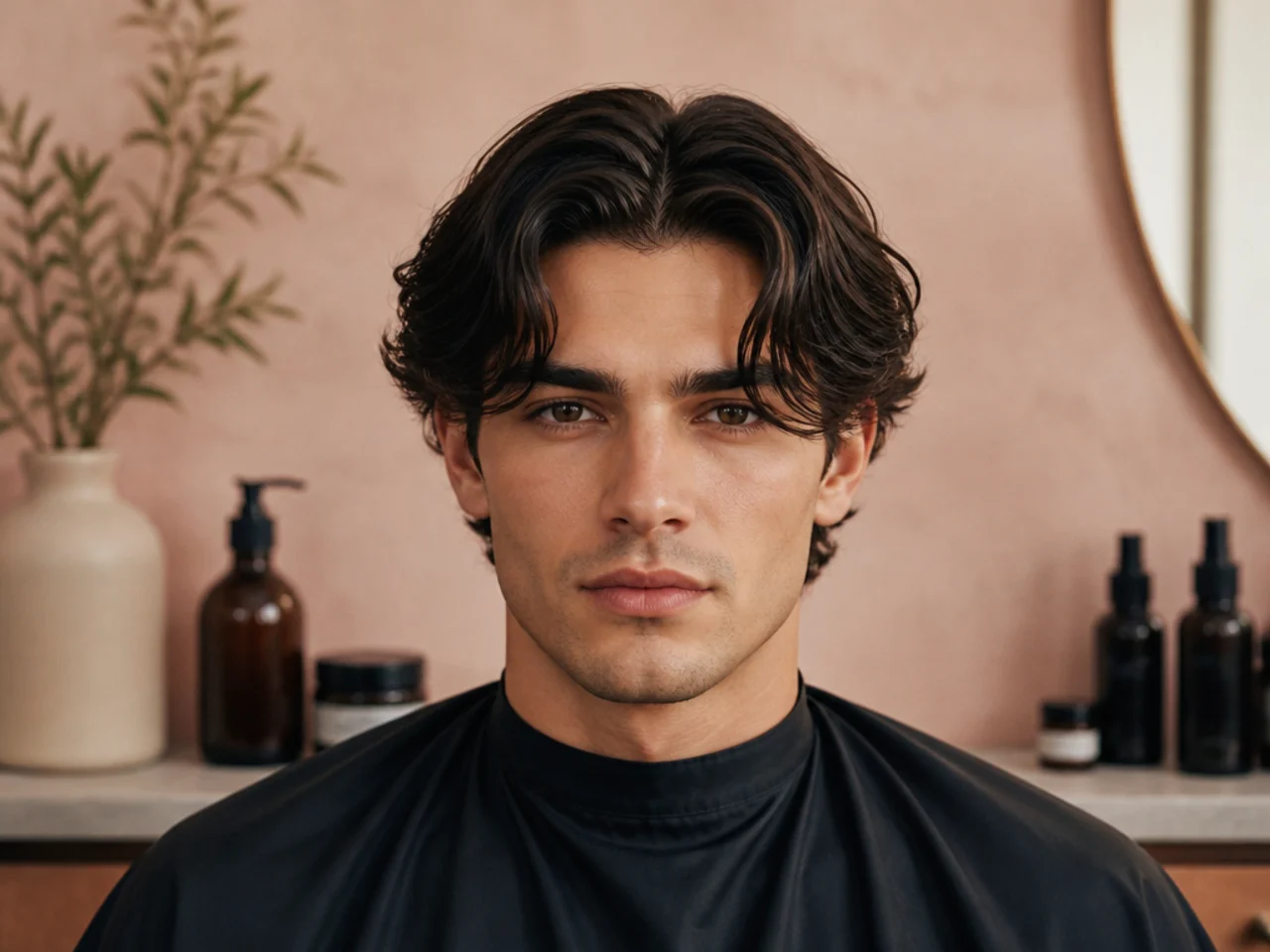
The middle part started its current run in 2020 and hasn't slowed. K-pop pushed it, TikTok scaled it, and Timothée Chalamet gave it Hollywood cover. By 2024, guys in their 30s and 40s were asking for it too. In 2026 it's outlasted the mullet revival, the wolf cut, and half the fade trends that showed up alongside it.
Staying power like that isn't accidental. The middle part is a geometry, not a look. Change the length, the side treatment, or the styling product and you land on a different aesthetic — but the base shape stays neutral. That neutrality is what keeps it reading modern in year six without ever feeling dated.
A side part hairstyle for men reads corporate. A slick-back reads old-money. A buzz cut reads athletic or military. A middle part reads current — full stop. It doesn't signal an industry, a decade, or a subculture. That's rare in a men's cut, and it's why it works from an 18-year-old in a college hoodie to a 45-year-old in a linen shirt.
Compare that to the mullet or the wolf cut. Both landed hard in 2022, both are still around, but both come with a signal — you're saying something specific about your identity when you wear one. The middle part says nothing except "I got a haircut." The middle part suits men who want their hair to be sharp without being a statement.
The age ceiling is fuzzier than most people think. Guys well into their 40s and 50s can wear the cut cleanly, especially the shorter professional hairstyle men versions with a scissor-cut top around 3–4 inches. The long curtain drop skews younger, but the base cut doesn't have an expiry date.
Reason 3: It Grows Out More Gracefully
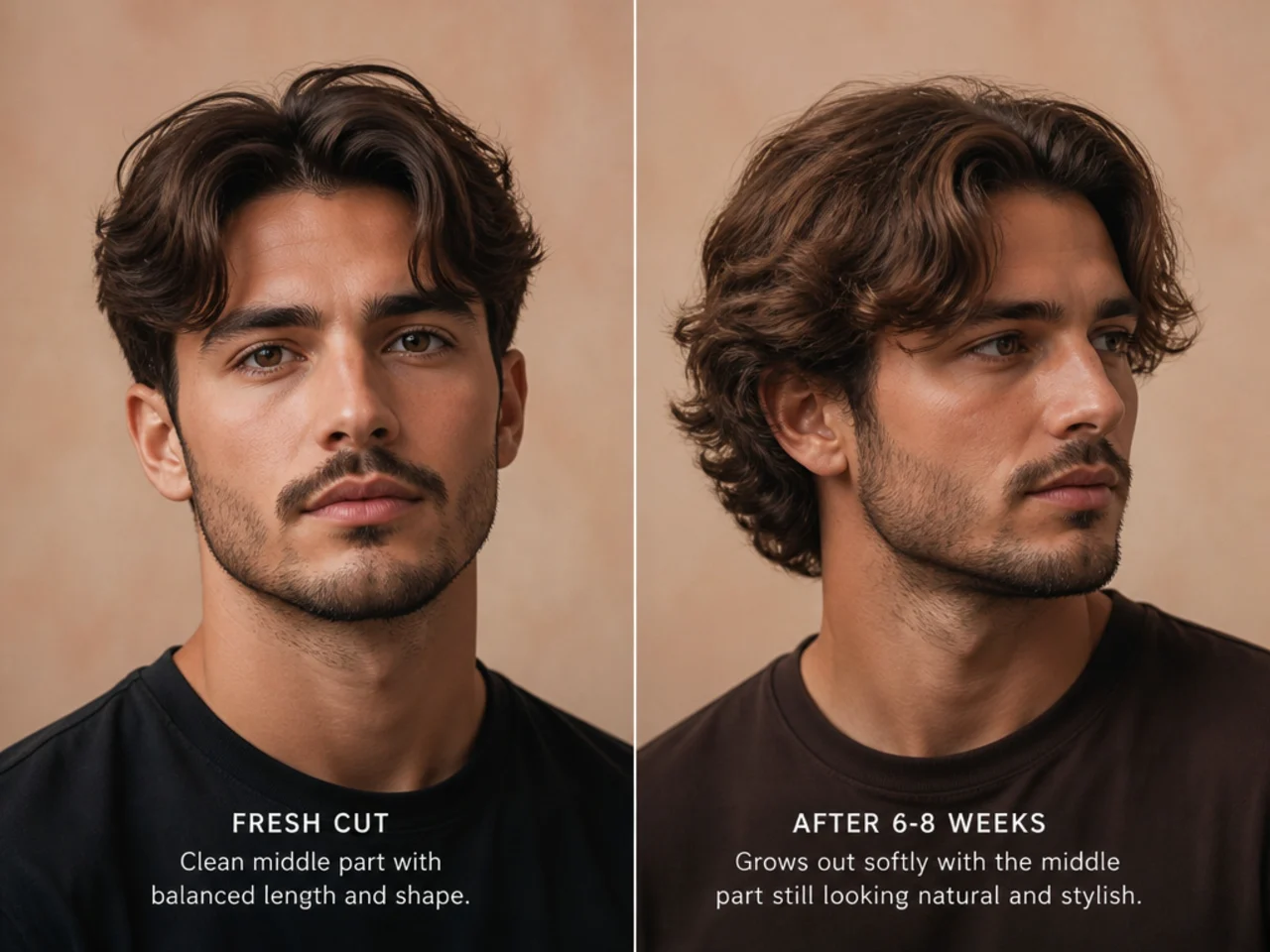
Most modern men's cuts fall apart on a schedule. A fade blurs at the transition line by day fourteen. A side part loses its edge as soon as the sides get shaggy. A textured crop drifts into a helmet by week three. The middle part doesn't do any of that — the shape softens, but the shape stays.
The reason is structural. No hard line to blur, no asymmetry to drift, no undercut disconnect to bridge — just a symmetrical silhouette that grows in every direction at the same rate. Two weeks in it looks softer. Five weeks in it looks longer. Neither reads as "needs a haircut" the way a grown-out fade does.
That matters for two reasons. First, cost. A fade wants you in the chair every 2–3 weeks. A scissor-cut middle part stretches to 5–6 weeks without visible drift. Multiply the difference by a year — you're looking at roughly ten cuts instead of twenty, and half the yearly grooming bill.
Second, flexibility. Miss a booking or lose a month of runway and the middle part covers for you — the curtains just get longer and read as a deliberate flow. A grown-out low taper fade after four weeks looks like you forgot to book. A grown-out middle part looks like you meant to grow it.
The one exception is any middle part paired with a fade. Once you commit to a mid fade haircut or higher on the sides, the fade cadence takes over — every 2–3 weeks minimum or the sharp line collapses. If low-maintenance is why you're picking the cut, keep the sides scissor-blended or lightly tapered. The middle part on top doesn't care about your booking schedule; the fade on the sides absolutely does.
Reason 4: It Photographs Cleanly From Every Angle
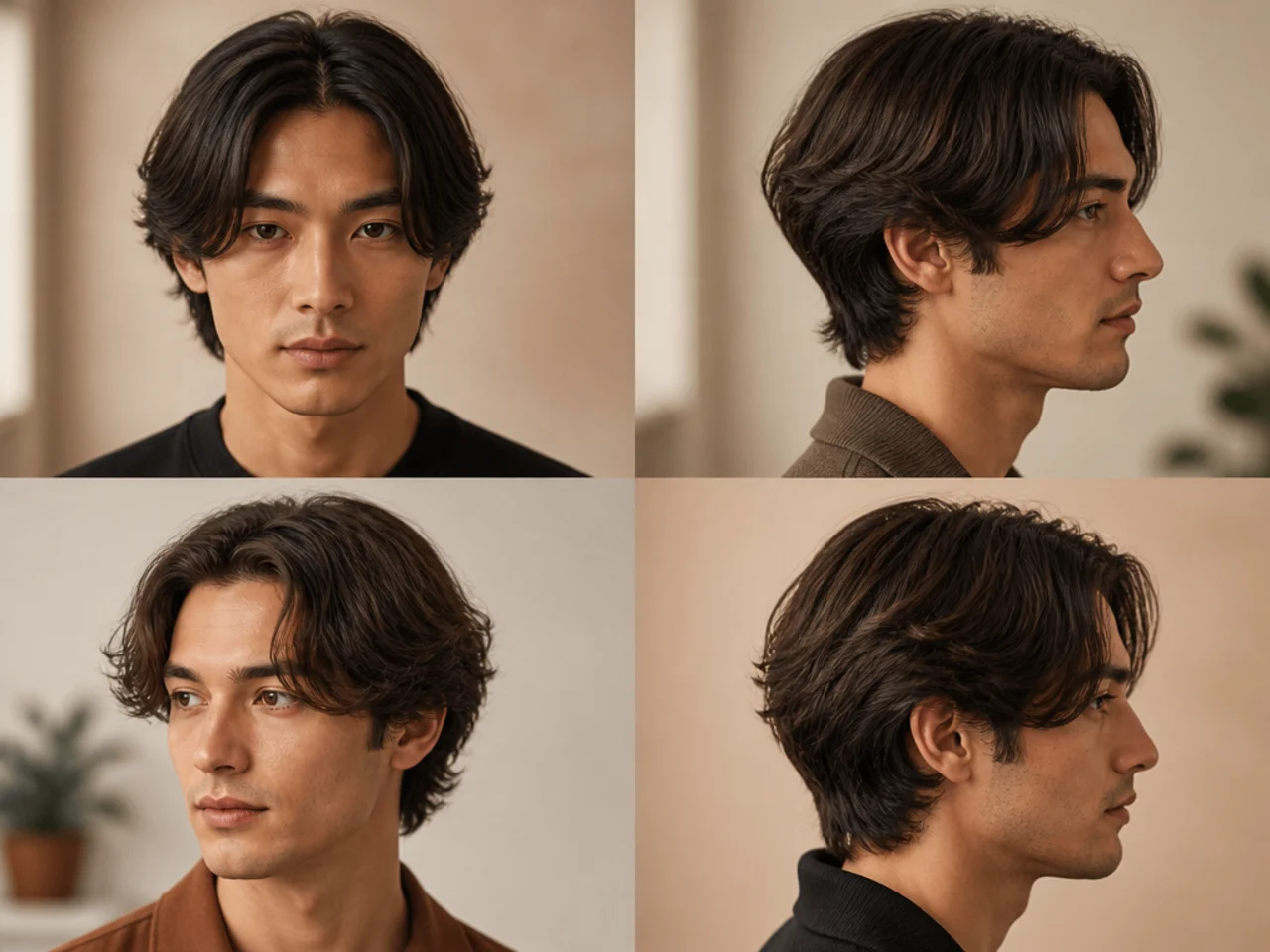
Cameras love symmetry. Every dating-app profile, every Instagram post, every LinkedIn headshot, every group selfie — the middle part sits identically across all of them because there's no correct angle to hit. Both sides read the same. A side part has a right side and a wrong side, and if you don't know which is which, half your photos come out awkward.
The middle part also matches the camera's default framing. Most portrait shots use a slight three-quarter angle, which means one temple sits closer to the lens than the other. On an asymmetric cut, that angle distorts the balance — the shorter side reads even shorter, the longer side reads even longer, and the whole silhouette tilts. On a symmetric cut, the three-quarter angle just shows the depth of the layers. Nothing tilts.
Compare that to a comb-over or a side part. Both photograph beautifully from one specific angle — the side where the volume sits — and awkwardly from the opposite side. In a wedding photo pit or a group shot, you don't get to pick your angle. The middle part means you don't have to.
That's why so many guys who wore a side part in 2018 moved to a middle part in 2022. They looked at their own photos and the numbers made the choice — a symmetric shape produced more usable images across a year of tags. Dating profiles noticed the same effect. Match rates on the middle part run higher than asymmetric cuts, mostly because the same face reads better in more of the photos.
The cut holds up under motion too. A middle part in a wind-blown selfie still reads as a middle part with wind-blown curtains. A side part in the same shot reads as a mess. If you live on-camera, that difference stacks up fast.
Reason 5: It Adapts To Straight, Wavy, And Curly Hair
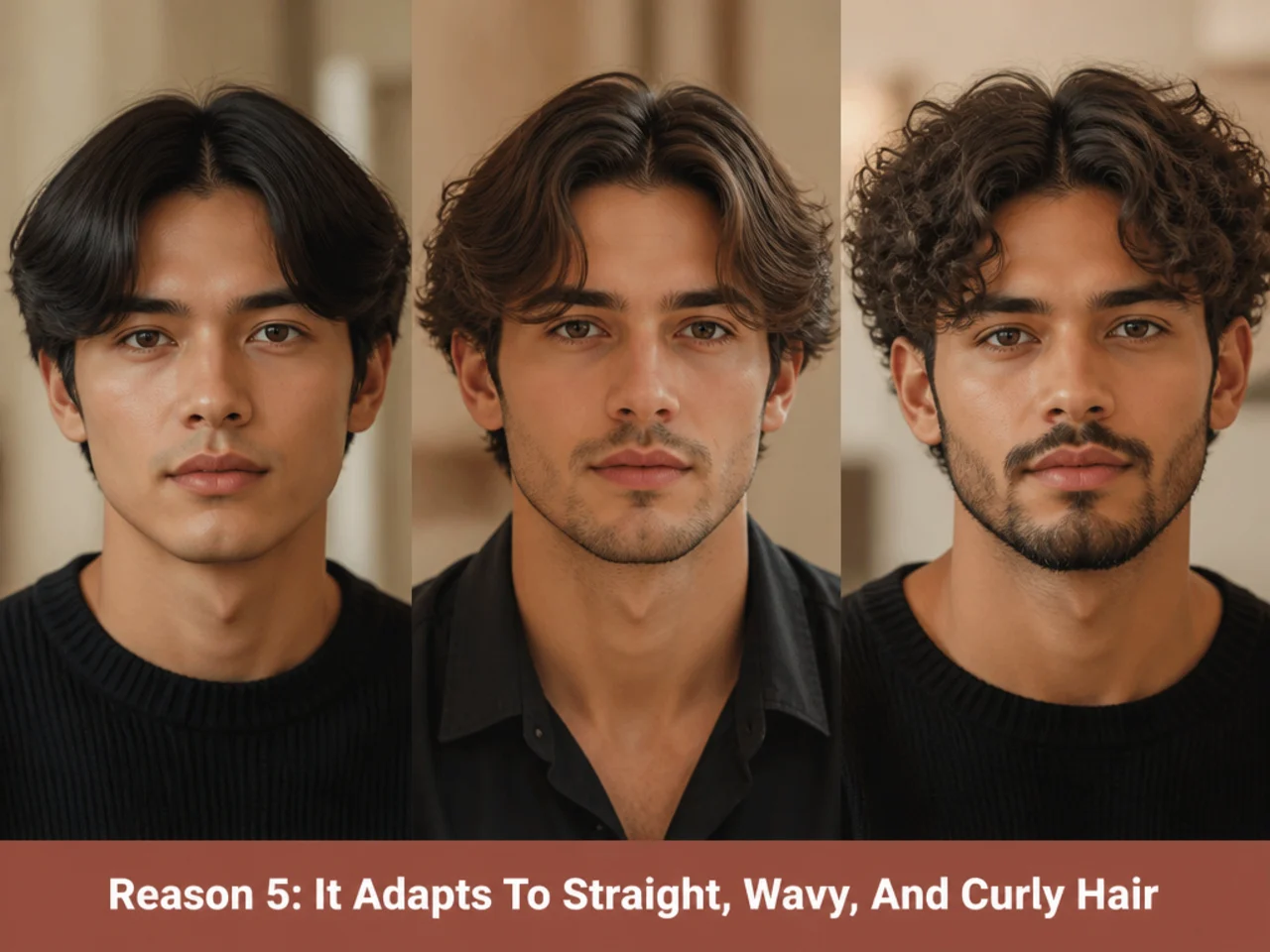
Straight hair does the middle part on defaults. Grow the top to 4 inches, blow-dry with a nozzle pointed down the shaft, and split it with a wide-tooth comb. The hair falls where you send it and stays where you leave it. Zero technique required past the second or third try.
Wavy hair does even better. The natural bend adds movement to the curtains without you having to fake it with a texture spray. Ask for real internal layering — cut with a razor if your barber offers it — and diffuse damp hair with an upward scrunch. The waves settle into the split on their own, and the shape looks lived-in from day one.
Curly hair takes work but the cut earns it. The barber's job is to cut for the pattern: keep the front third slightly longer than the sides, don't thin the density, and taper the sides so the shape doesn't ball out at ear level. A curly hairstyle for men with a center split needs curl cream on soaking-wet hair, a diffuser on low heat, and zero brushing after. Some guys get a keratin smoothing through the front third to relax the pattern enough to drop into curtains — the cheat code most Korean stylists use.
The one texture that fights the cut is very tight coily (Type 4B–4C) hair worn short. The curl pattern doesn't drop into curtains at any length shorter than about 5 inches, and even then it wants to grow up rather than fall forward. If you have this pattern, look at a comma-style crop or a fade haircut with a taper-focused top instead — both work better with the natural direction of coily growth.
Contrast that with a slick back, which needs straight or gently wavy hair to work at all, or a two block haircut, which flattens on Type 4 curls. The middle part doesn't lock out a hair type — it just asks for slightly different technique per pattern. That's why it dominates barbershops from Seoul to Lagos to Boston.
Middle Part vs Side Part: Side By Side
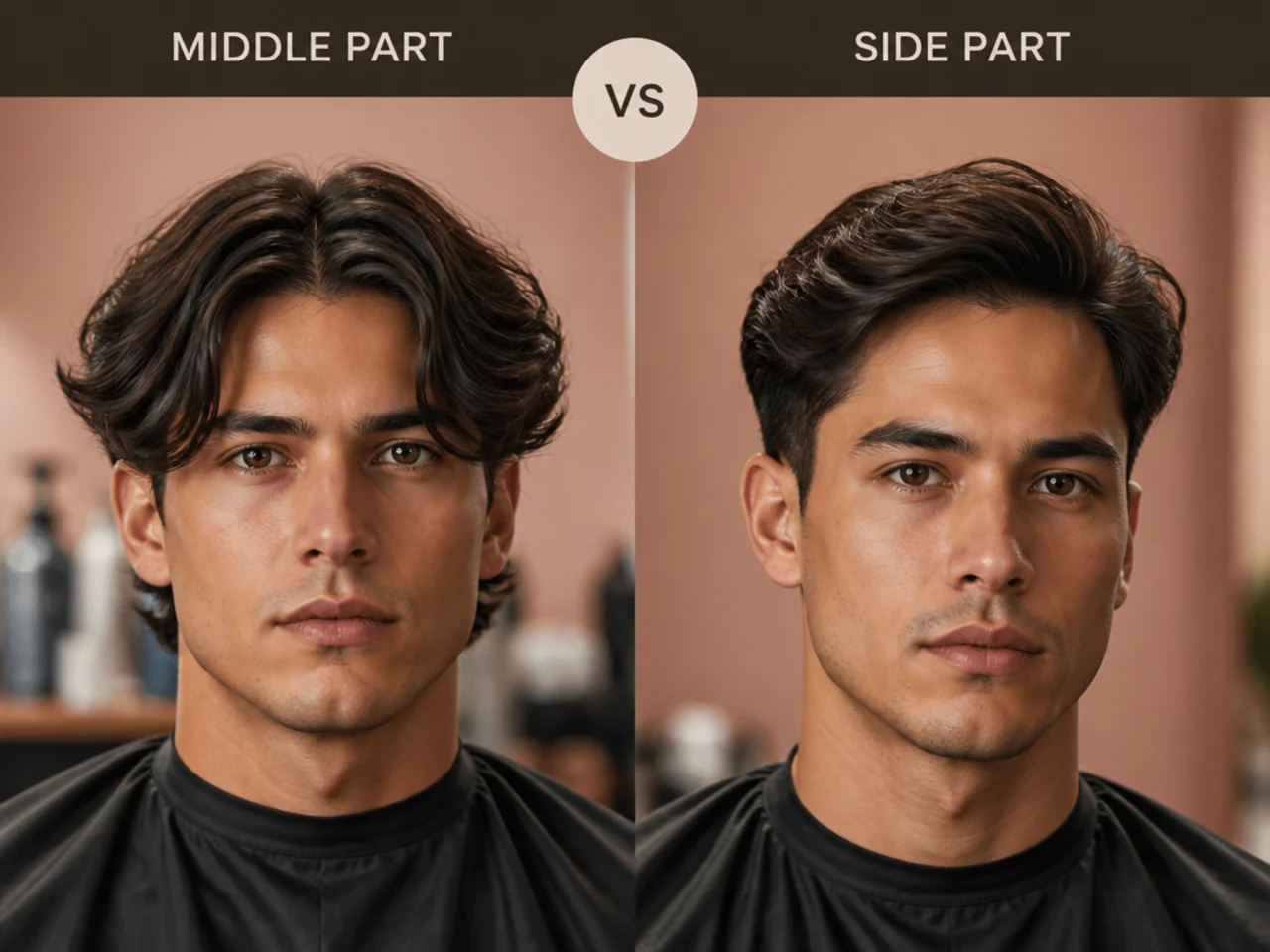
The middle part's closest rival is the side part, and the choice usually comes down to five specific trade-offs. Here they are, in order of how often they change the decision.
Two more numbers worth knowing.
Beard interaction. A strong beard reads better under a side part — the asymmetry balances the jaw's visual weight. A middle part with a full beard can look bottom-heavy unless the top curtains carry length past the cheekbone. If your beard is the point of the look, the side part wins. If your beard is trimmed close or absent, the middle part does.
Length required. A side part works on 2–3 inches of top length. A middle part needs 4 inches minimum to hold a clean split. If you're growing out from a buzz or a crop, the side part gets you back into a styled cut months sooner — the middle part asks you to wait for real length before it starts working.
When The Middle Part Doesn't Suit A Guy
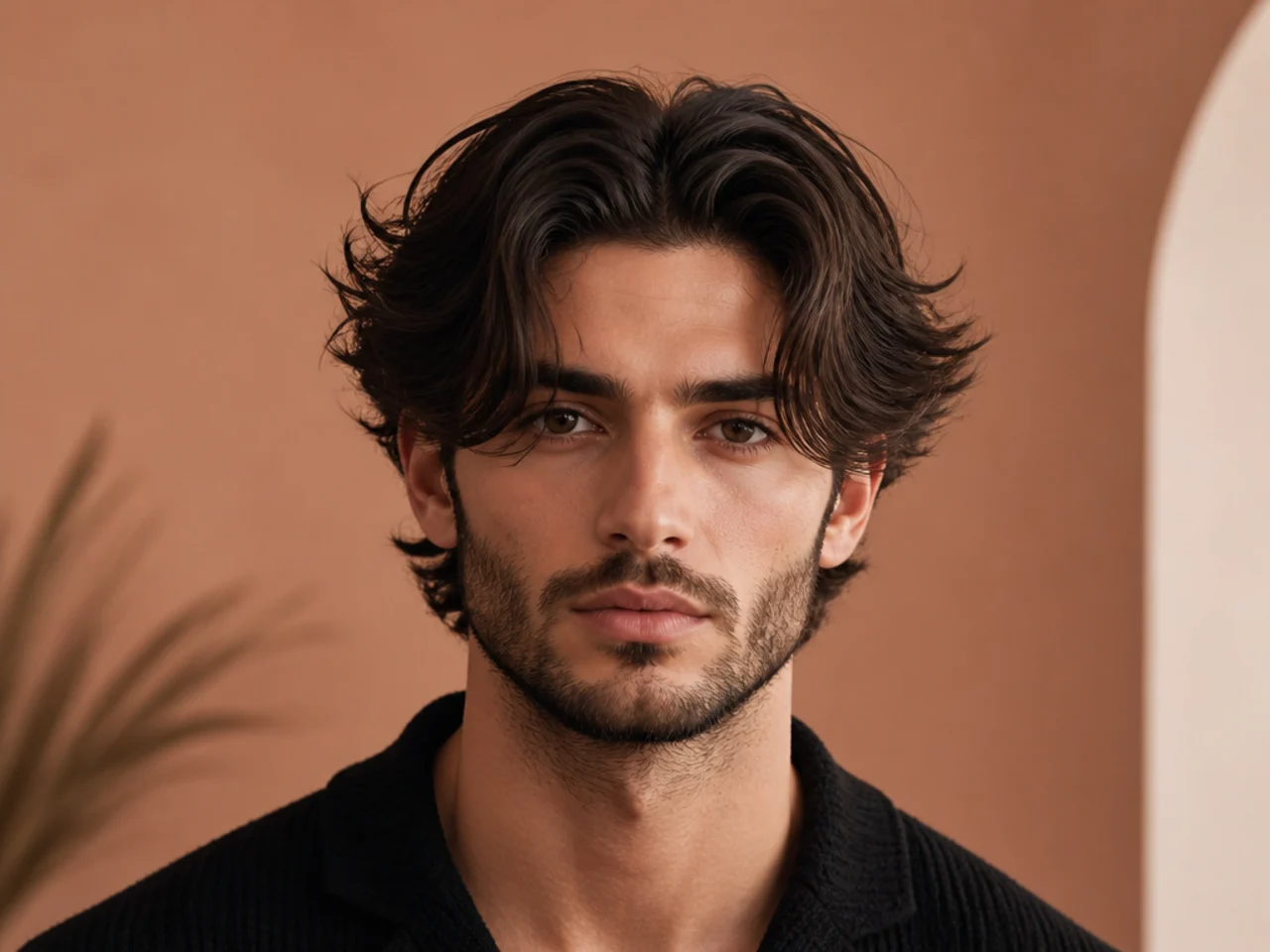
The middle part suits most guys but not every guy. Here are the four cases where you should pick something else.
Receding front hairline. The center split acts like an arrow pointing at the middle of your forehead. If your hairline is retreating from the front — especially with a defined widow's peak or a thinning central strip — the middle part draws the eye straight there. Pick a textured fringe or a forward-swept crop instead. Both hide the hairline instead of spotlighting it.
Very narrow, very long oblong face. The vertical line of the split adds visual length. On a long face, that stacks the wrong way — you look longer, not more balanced. Guys with this shape usually look better with an off-center part, a strong side sweep, or a shorter textured cut that adds width at the sides.
Very fine or very sparse hair. A middle part needs some density to hold the two curtains apart. Fine or sparse hair collapses toward the middle of the scalp and the split reads as a bald patch. If your density is on the low side, a soft off-center part with layered length gives the illusion of fullness without exposing the scalp down the center.
Workplace with a strict traditional dress code. Old-guard finance, appellate law, executive-track private banking — a few environments still read a middle part as too youthful or too casual. If you're in one of them, a shorter, tightly styled version can pass, but a full curtain drop won't. The side part or a professional hairstyle for men with a scissor-cut top reads the room better.
Everyone else is on the table. The four cases above cover roughly 15% of guys. For the other 85%, the middle part suits you.
How To Ask Your Barber
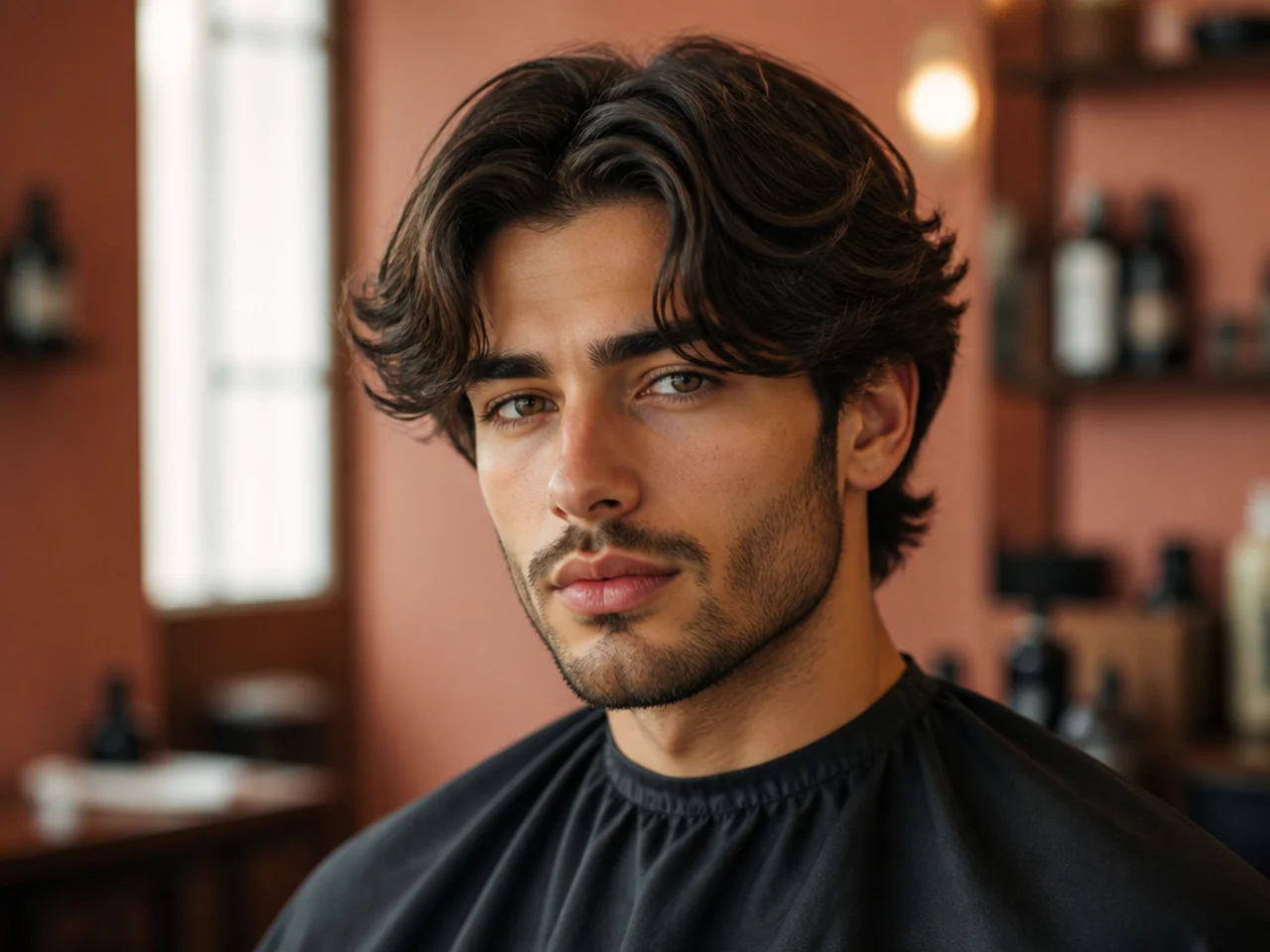
The middle part sounds simple to ask for and it usually isn't. Most barbers hear "middle part" and default to a full curtain drop, which suits some guys and overwhelms others. Say the four things below in order and the odds go up sharply.
- Bring a photo. Not one — three, if you can. Front, side, and back angles of the exact reference. Photos remove ninety percent of the miscommunication that happens with a verbal-only brief.
- Name the length in inches. Say "four inches on top" or "five inches on top" or "grow it long, keep the length" — don't leave it open. Length is the single biggest lever on how the cut sits.
- Name the side treatment. Three options: connected (classic, no fade, no undercut), scissor-tapered (soft and clean), or faded (low taper, mid fade, or higher). Pick one out loud.
- Name the layering direction. Say "layered so it splits down the middle and falls forward." That single sentence tells the barber which internal cuts to make. Skip it and you'll end up with length that hangs limp or splits sideways.
- Say your face shape. "Round" or "long" or "oval" — one word. A good barber adjusts the front length and layering angle to your face. Guys who don't say this get the barber's default.
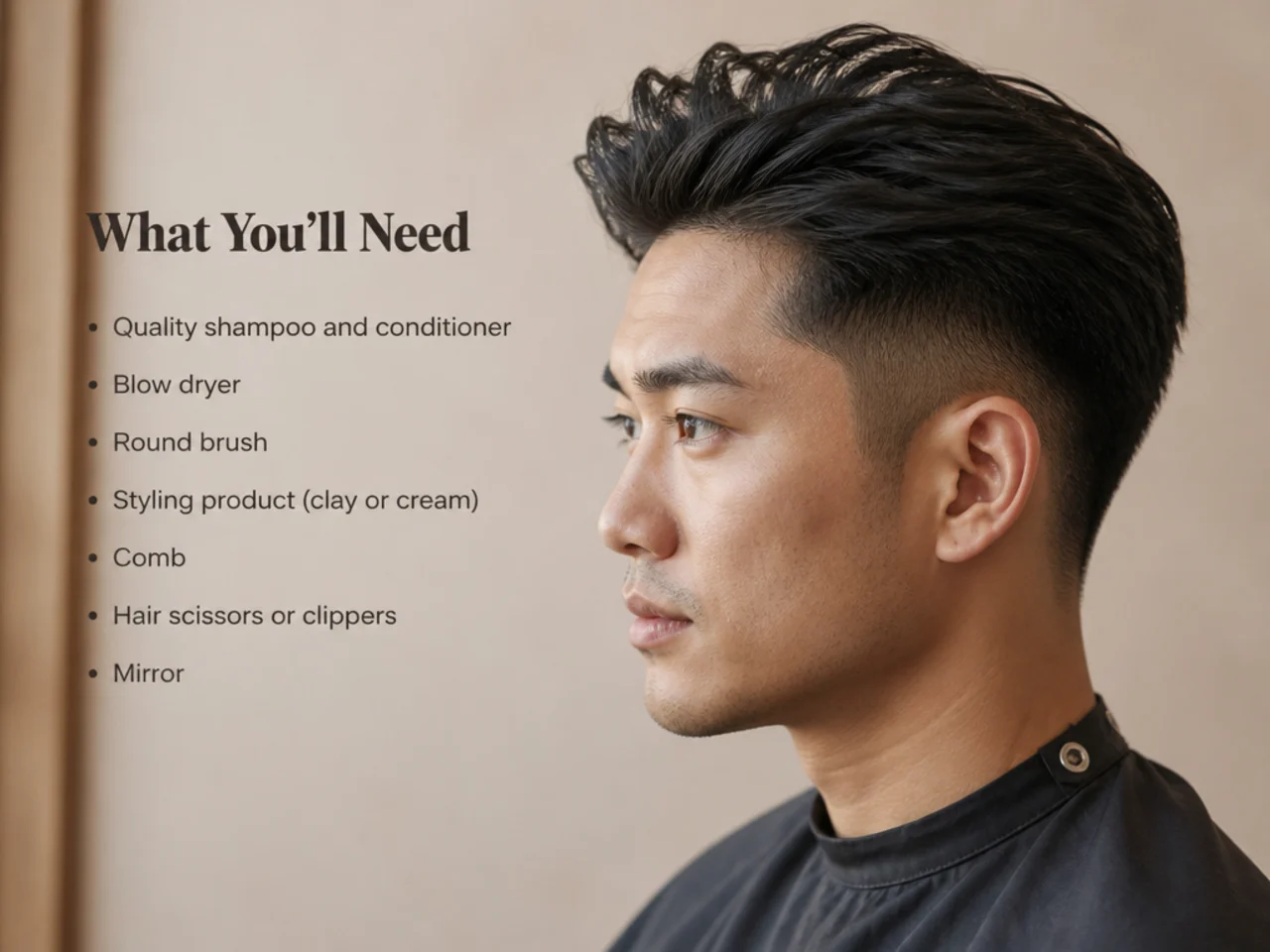
- Ask for the blow-dry demo. Watch your barber style it once with a nozzle. The angle they blow from is exactly the angle you need to replicate at home. If they use a round brush, ask which size — the difference between a 40mm and a 60mm brush changes the curtain fall.
FAQ
Does the middle part make your face look longer?
Slightly, yes. The vertical split adds visual length to any face shape. That's helpful on round or square faces and unhelpful on long or oblong faces. Adjust for it with length — round and square faces want a longer top for more vertical, long faces want a shorter top with dense sides for more width.
Is a middle part good for a first-time cut?
Yes, if you already have four inches of length. If you're coming from a buzz or a short crop, the growing-out phase is the hard part — expect 4–6 months of awkward before the cut works. Book a scissor trim every three weeks during that window to keep the sides shaped, and the transition looks intentional the whole way.
Can I wear a middle part with a beard?
Yes, but trim the beard shorter than usual. A full, thick beard under a middle part reads bottom-heavy — the vertical line of the split pulls the eye down and the beard catches it. A short beard or stubble balances better. If you wear a full beard as your signature, a side part is the more flattering pair.
Does the middle part work on Asian hair?
Very well. The middle part is the base structure behind most Korean haircuts for men and the two block haircut — both are middle-part variants originally built around straight-to-slightly-wavy East Asian hair textures. The cut developed for that hair type first, then spread outward.
How much does a middle part cost to maintain?
Less than most modern cuts. Scissor-cut sides stretch to 5–6 weeks between visits, so roughly ten cuts per year. If you add a fade, budget for 20 visits per year instead. Product-wise, a single matte clay or paste lasts 4–6 months at a pea-sized amount per morning. Total annual grooming bill lands well below any fade-plus-side-part setup.
What products should I use to style it?
Matte clay or matte paste for texture and hold. Sea salt spray for wavy hair that needs more movement. A blow-dryer with a nozzle attachment is non-negotiable — the direction of the airflow trains the curtains. Skip the round brush unless your hair is naturally very straight and needs the extra body.