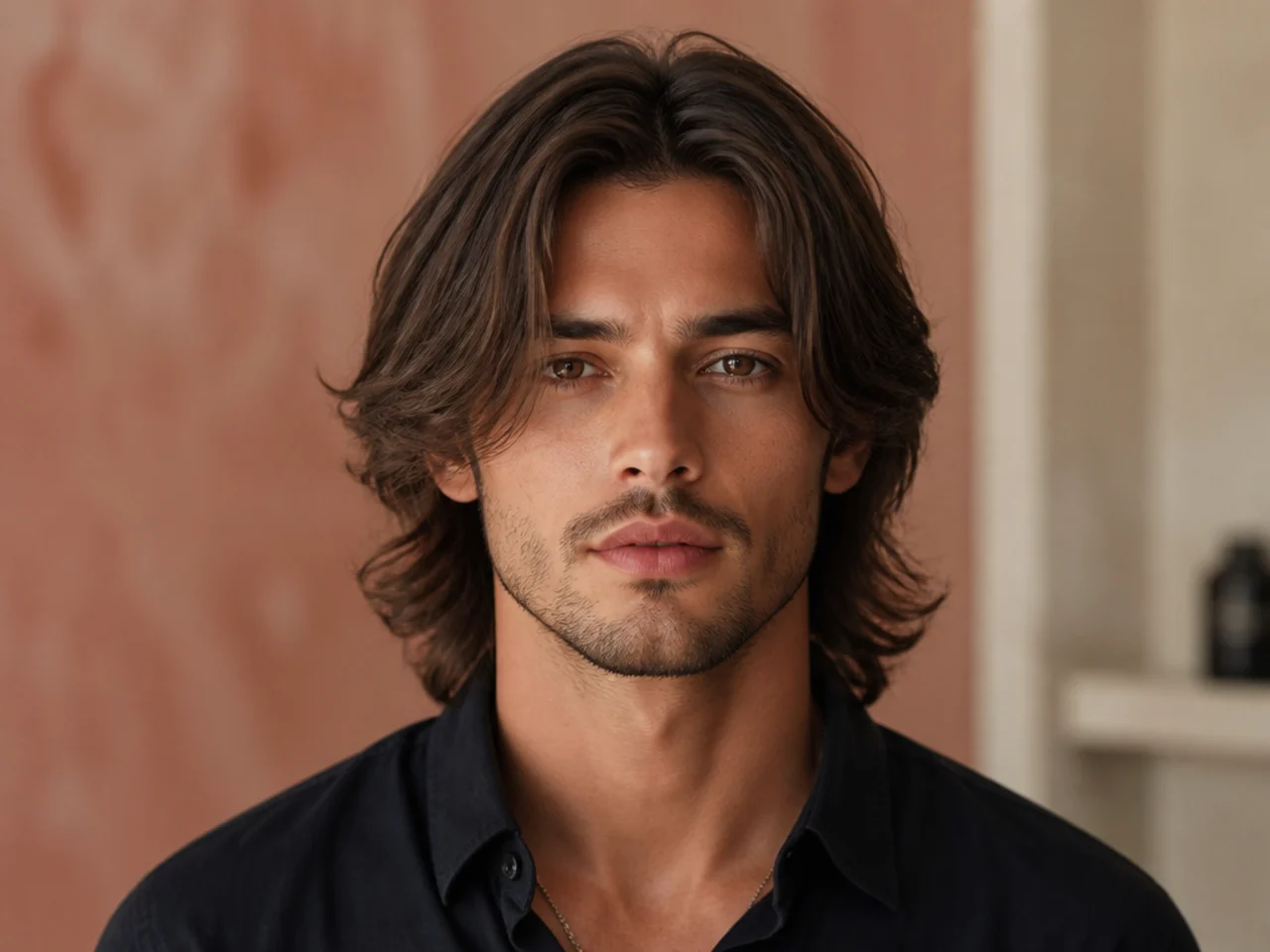
15 Layered Middle Part Haircuts for Men
The layered middle part men are asking for in 2026 — 15 variations with real curtain movement, face-shape notes, and the exact language for your barber.
In this article · 26
- What Is a Layered Middle Part?
- How to Choose Your Layered Middle Part
- 1. Classic Long-Layered Middle Part
- 2. Choppy Layered Middle Part
- 3. Layered Middle Part with Low Taper Fade
- 4. Layered Middle Part with Mid Fade
- 5. Curtain Bang Layered Middle Part
- 6. Wavy Layered Middle Part
- 7. Curly Layered Middle Part
- 8. Short Layered Middle Part
- 9. Shoulder-Length Layered Middle Part
- 10. Two-Block Layered Middle Part
- 11. Feathered Layered Middle Part
- 12. Razor-Layered Middle Part for Fine Hair
- 13. Textured Layered Middle Part with Undercut
- 14. Face-Framing Layered Middle Part
- 15. Voluminous Layered Middle Part for Thick Hair
- How to Ask Your Barber
- Styling and Maintenance
- FAQ
- What is a layered middle part haircut for men?
- How long does my hair need to be for a layered middle part?
- Does a layered middle part work on curly hair?
- Layered middle part vs. classic middle part — what's the difference?
- How often should I book my barber for a layered middle part?
- What's the best product for a layered middle part?
The layered middle part men are asking for in 2026 does what the flat curtain cut can't — it moves. Internal layers hollow out weight, lift the roots, and let each curtain fall in pieces instead of hanging as a solid slab across the forehead. Below are 15 layered middle part variations, who each one suits, and the exact language to hand your barber. For the flat, undercutted, and fade-only variations, see the middle part haircut men pillar guide.
What Is a Layered Middle Part?
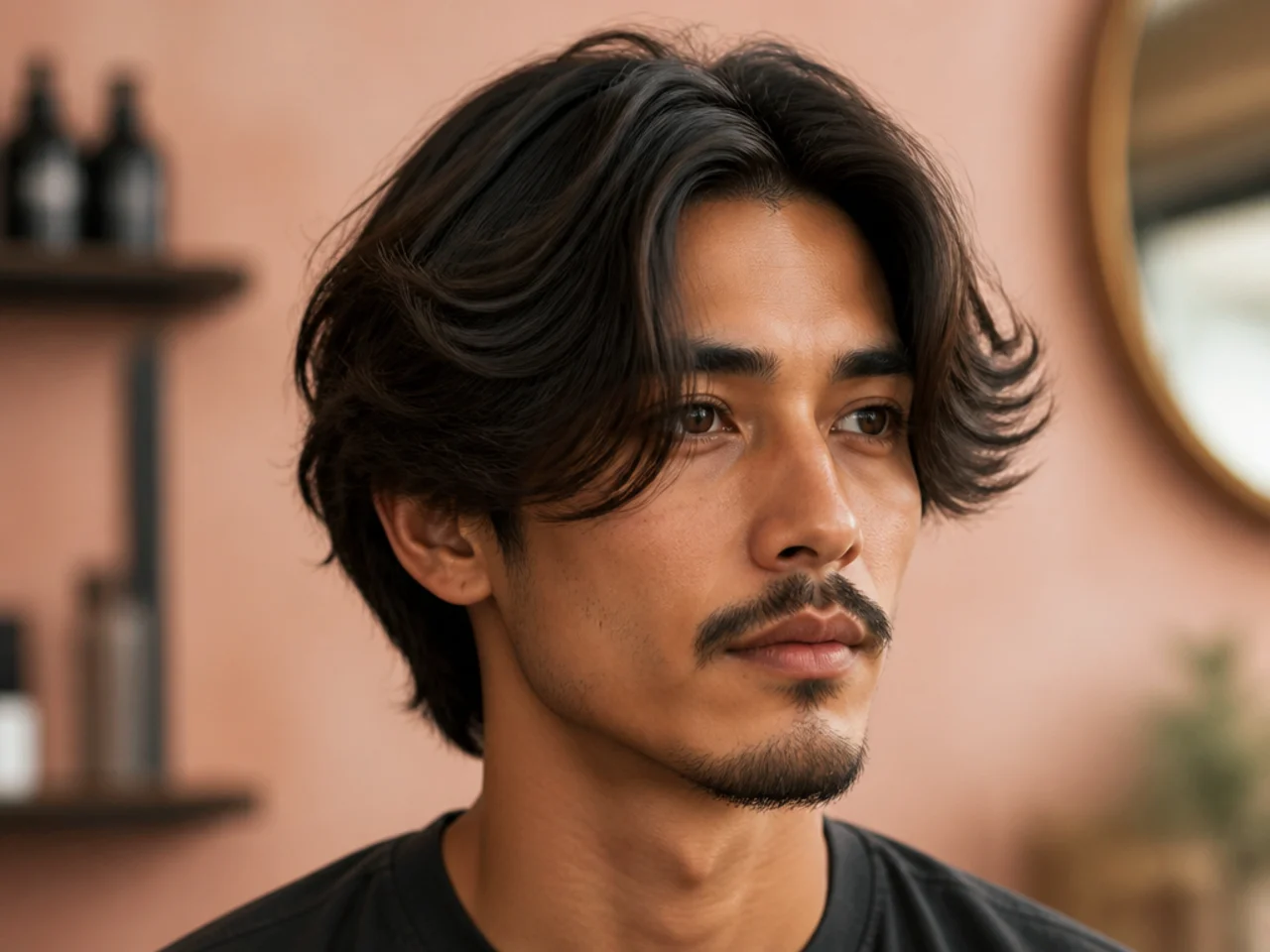
Take a standard middle part — top grown to at least 4 inches, split straight down the center, both sides falling forward as curtains. Now stack shorter sections underneath the longer top layer so weight is removed inside the shape. That's a layered middle part. The layering direction matters. Long layers running toward the ends give you the flowing, curtain-heavy look. Short internal layers under a longer top give you the piecey, textured version you see all over TikTok.
The point of layering is movement. A blunt-cut middle part sits like a helmet — heavy, flat, obvious. Layered middle parts break the mass, so the hair separates when it dries, catches light, and holds shape longer. It's the same idea behind the layered haircuts for men family — you're just applying it to a cut that splits center. Straight and wavy hair are the easy starting points. Curly hair needs specific layering techniques covered below.
How to Choose Your Layered Middle Part
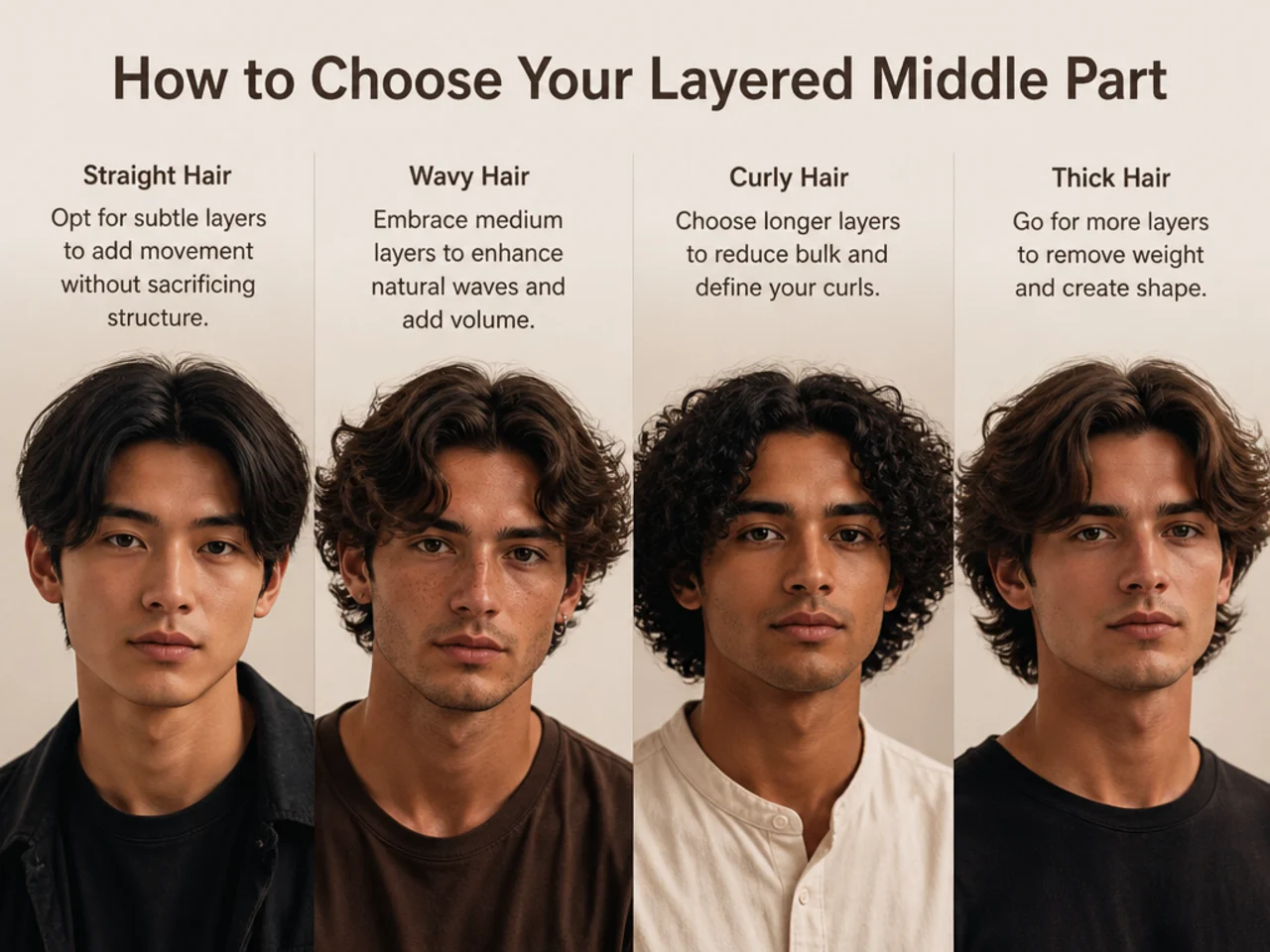
Face shape sets the length. Oval, heart, and diamond faces can wear any length — the symmetry of the center split does the heavy lifting. Round and square faces want 5 inches or longer with concentrated crown layers, so the shape reads vertical. Long faces should stay at 4 to 5 inches with dense curtain sides that add width around the jaw.
Hair type sets the layering. Fine hair wants razor-textured tips only — never internal thinning, which strips volume you can't afford to lose. Medium-thick straight and wavy hair take real internal layers and hold every variation below. Thick hair needs deep internal thinning through the mid-shaft to stop the sides from puffing outward. Curly hair needs dry-cut scissor layering at the curl's spring point, and 5 inches of length minimum. See our layered haircuts guide for the layering technique in more depth.
Side treatment sets the maintenance. Scissor-blended or connected sides hold shape for 5 to 6 weeks. Any fade — low, mid, or high — puts you back in the chair every 2 to 3 weeks. Pick based on how often you actually book.
1. Classic Long-Layered Middle Part
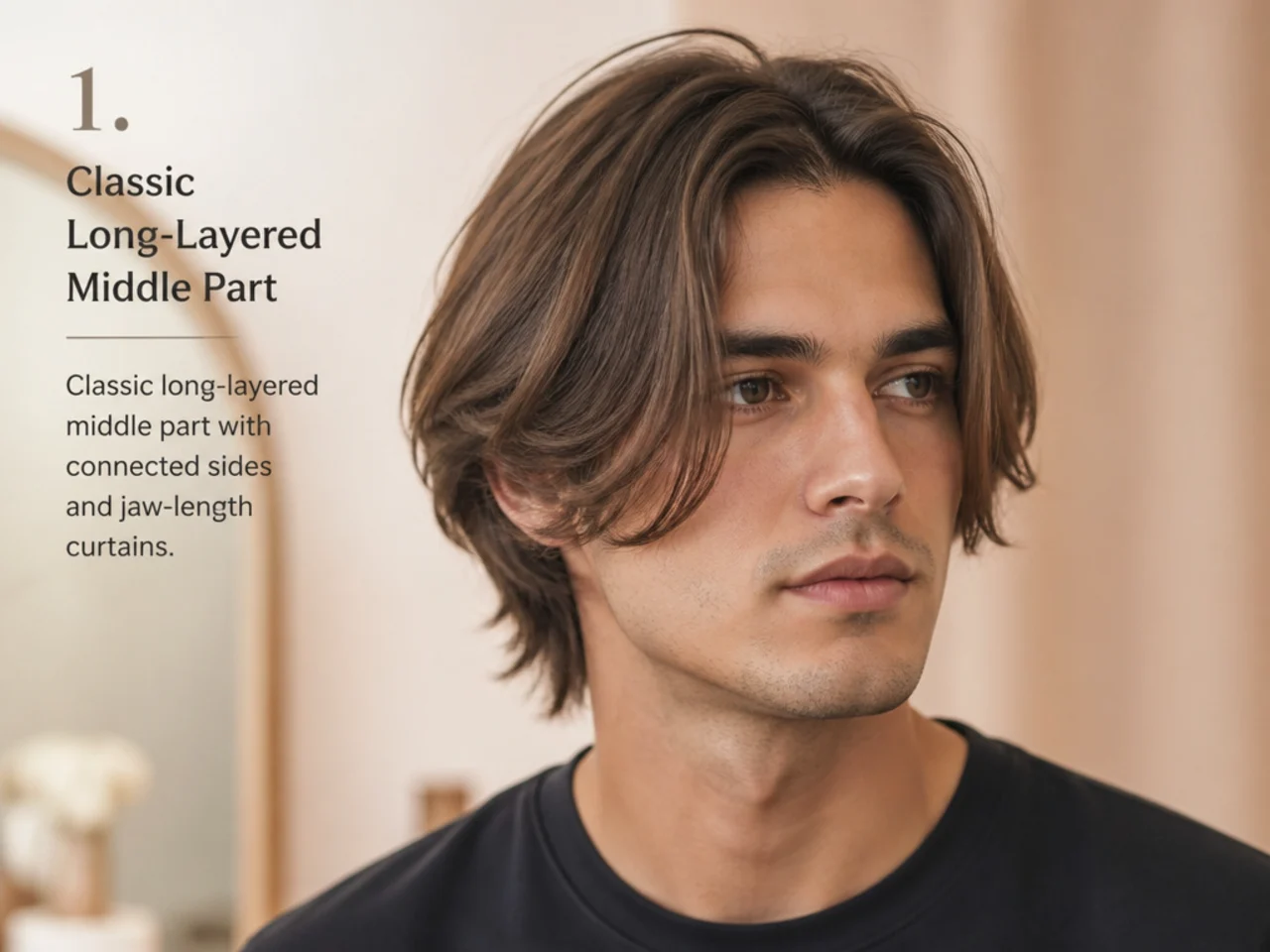
The baseline. Top runs 5 inches, cut with long soft internal layers that carry weight toward the ends and let both curtains drop past the cheekbone. No fade, no undercut — sides stay connected at the ear. Best on oval, heart, and long faces with straight to wavy medium-density hair. Ask for "five inches on top, long internal layers, sides scissor-blended and connected at the ear, cut to split down the middle." Blow-dry with the head tipped forward under a nozzle to train the drop, then finger-comb the split in and let it fall. A pea of matte cream through the ends only — never at the roots.
2. Choppy Layered Middle Part
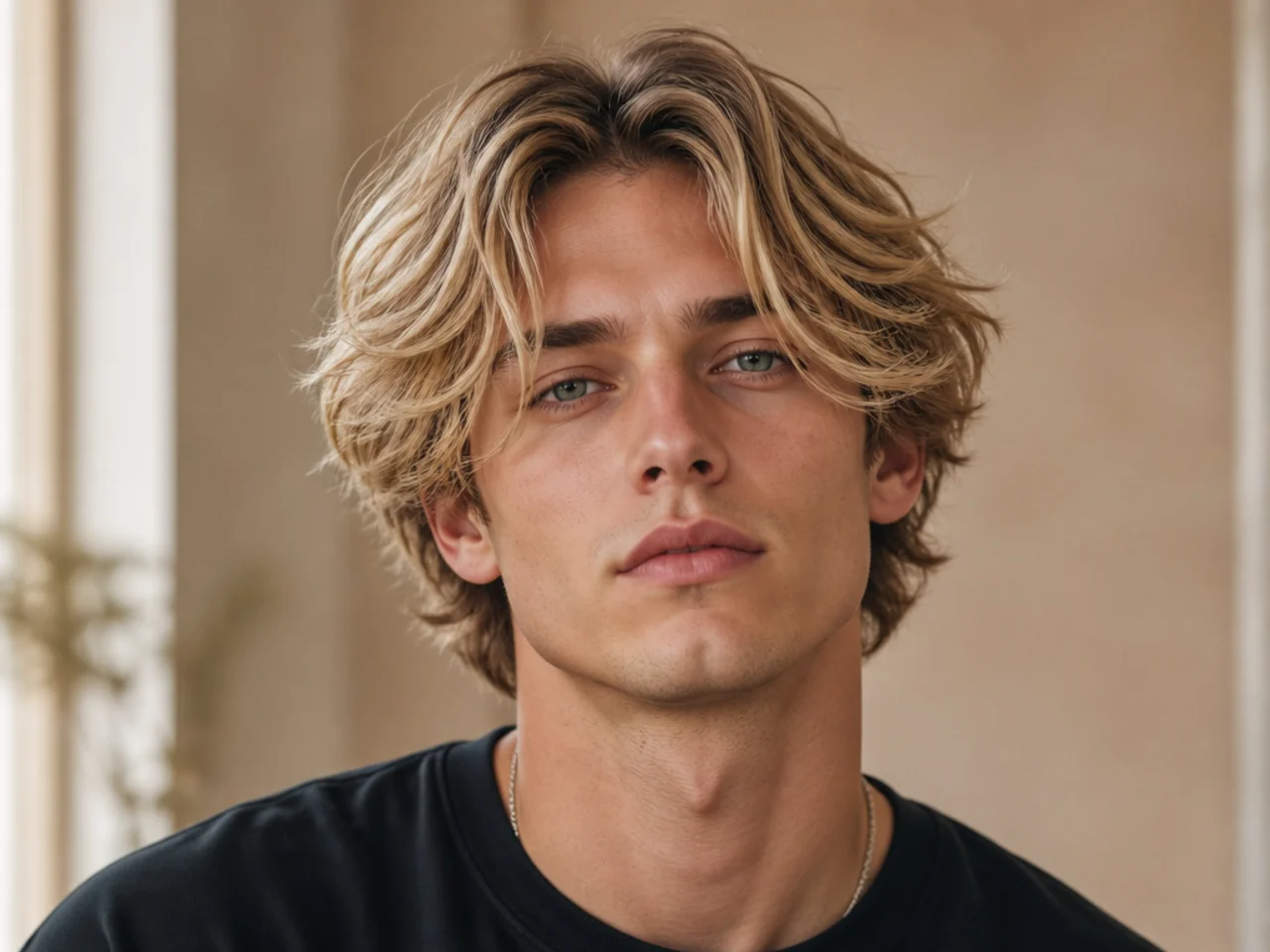
Same length as the classic but point-cut ends and shorter internal layers give it a broken, piecey finish. Suits square, diamond, and heart faces — the choppy texture softens sharp bone structure. Any hair type from straight to wavy, though fine hair wants light thinning only. Ask for "five inches on top, heavy point-cutting through the ends, short internal layers underneath, cut for a center split." Rough-dry with your fingers, work matte paste between your palms until it goes clear, and press it into the mid-lengths without combing. The messier the finish, the better it reads.
3. Layered Middle Part with Low Taper Fade
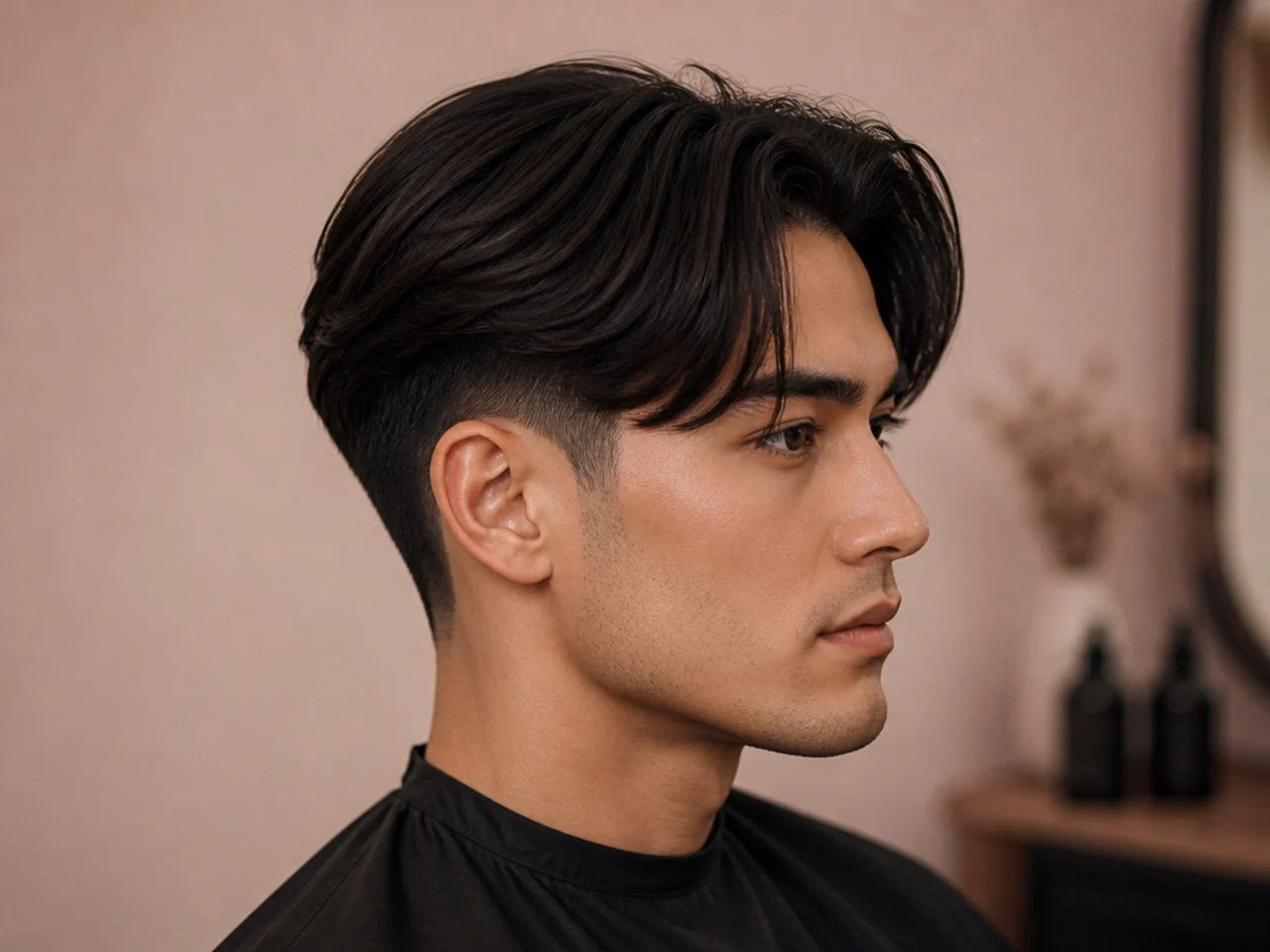
The low taper fade drops the sides cleanly around the ear while the layered top keeps its full 5-inch curtain. The taper is what stops the sides from puffing when the internal layers add lift up top. Suits square, oval, and diamond faces. Ask for "low taper fade around the ears and nape, five inches on top with long internal layers, split down the middle and layered so it falls forward." Blow-dry with a round brush angled front-forward, split with a wide-tooth comb, and lock with matte paste that has soft to medium hold.
4. Layered Middle Part with Mid Fade
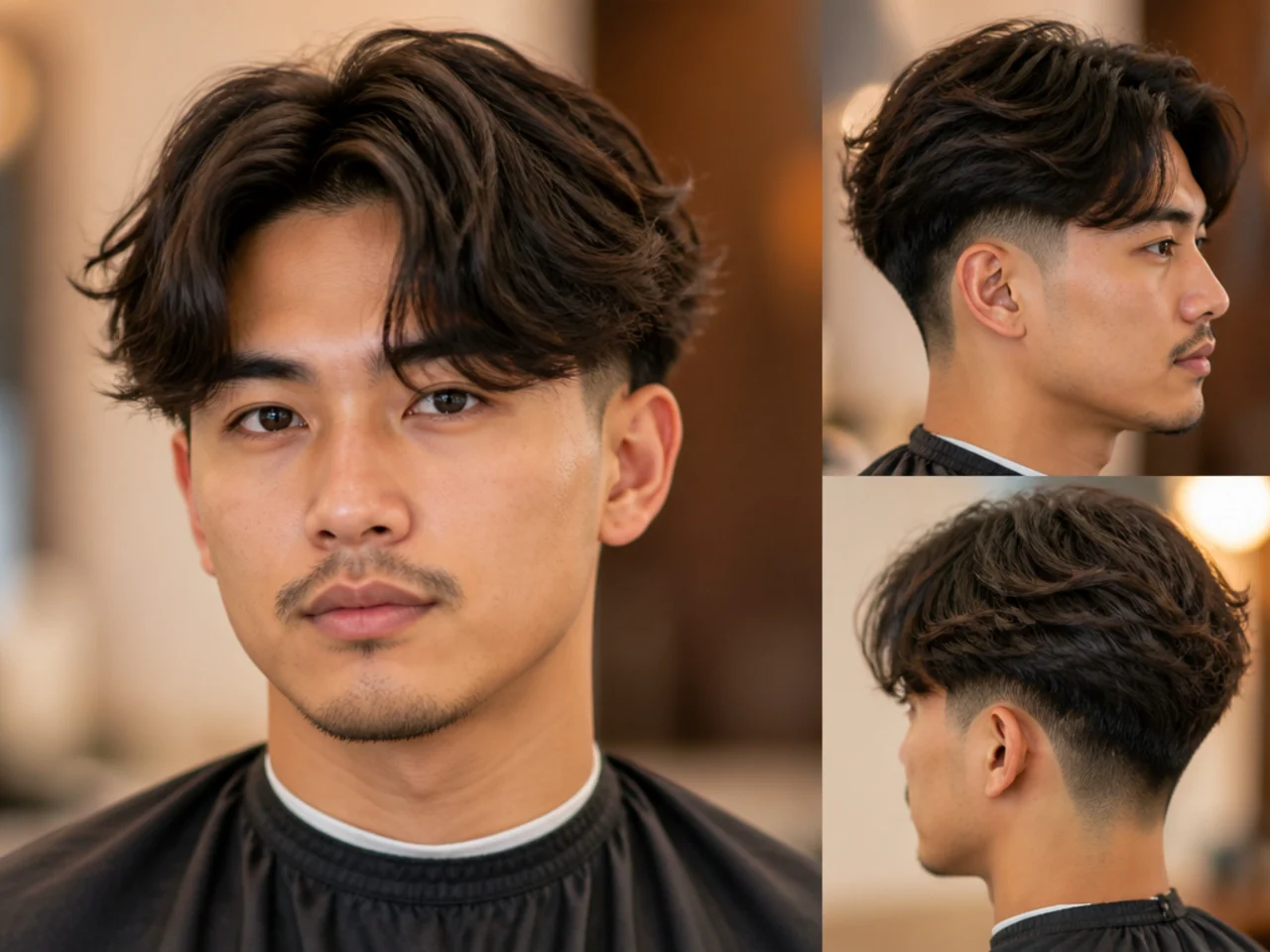
The strongest contrast in the guide short of an undercut. A mid fade hits at the temple, keeps the ears clean, and lets the layered 5-inch top do a full curtain drop with real separation. Best on oval, round, and square faces — the mid fade is the most face-shape-forgiving of the fade family. Ask for "mid fade around the temple and back, five inches on top scissor-cut with internal layers, split down the middle." Blow-dry the top front-forward with a nozzle, part it with a comb, then paste each side outward. Book the fade every 2 weeks — mid fades blur fastest.
5. Curtain Bang Layered Middle Part
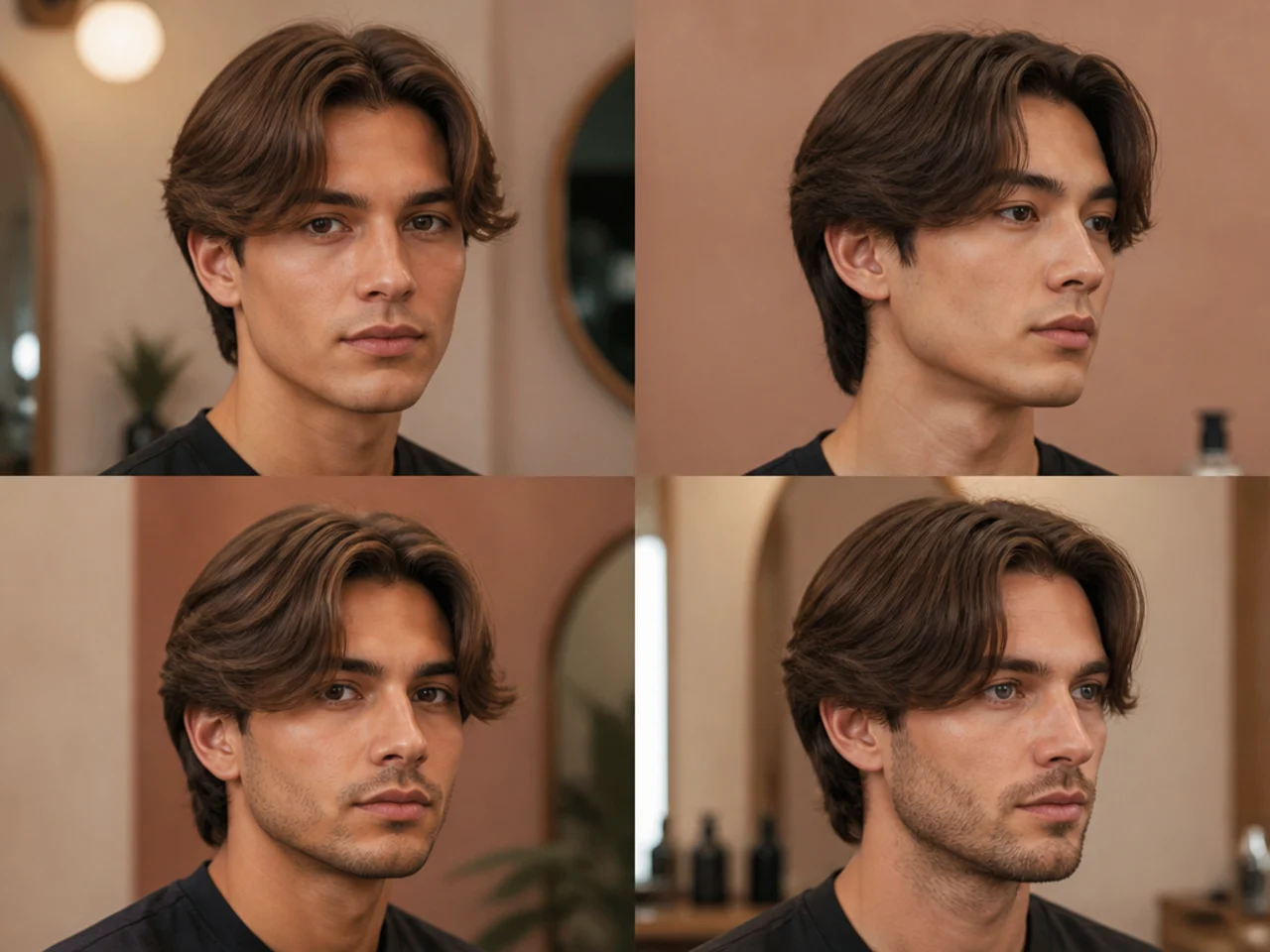
The front pieces do the heavy lifting. Two long face-framing sections start at the cheekbone and taper toward the jaw, split off a center hairline, while the rest of the top sits at 4 to 5 inches with soft internal layers. Best on oval, heart, and long faces. Straight to gently wavy hair only. Ask for "curtain bangs from the cheekbone to the jaw, four to five inches through the rest of the top, long internal layers, no fade." Blow-dry the front pieces first with a round brush pulling out and away, then feather the rest with your fingers. A wave-defining cream keeps the split without pinning the bangs flat.
6. Wavy Layered Middle Part
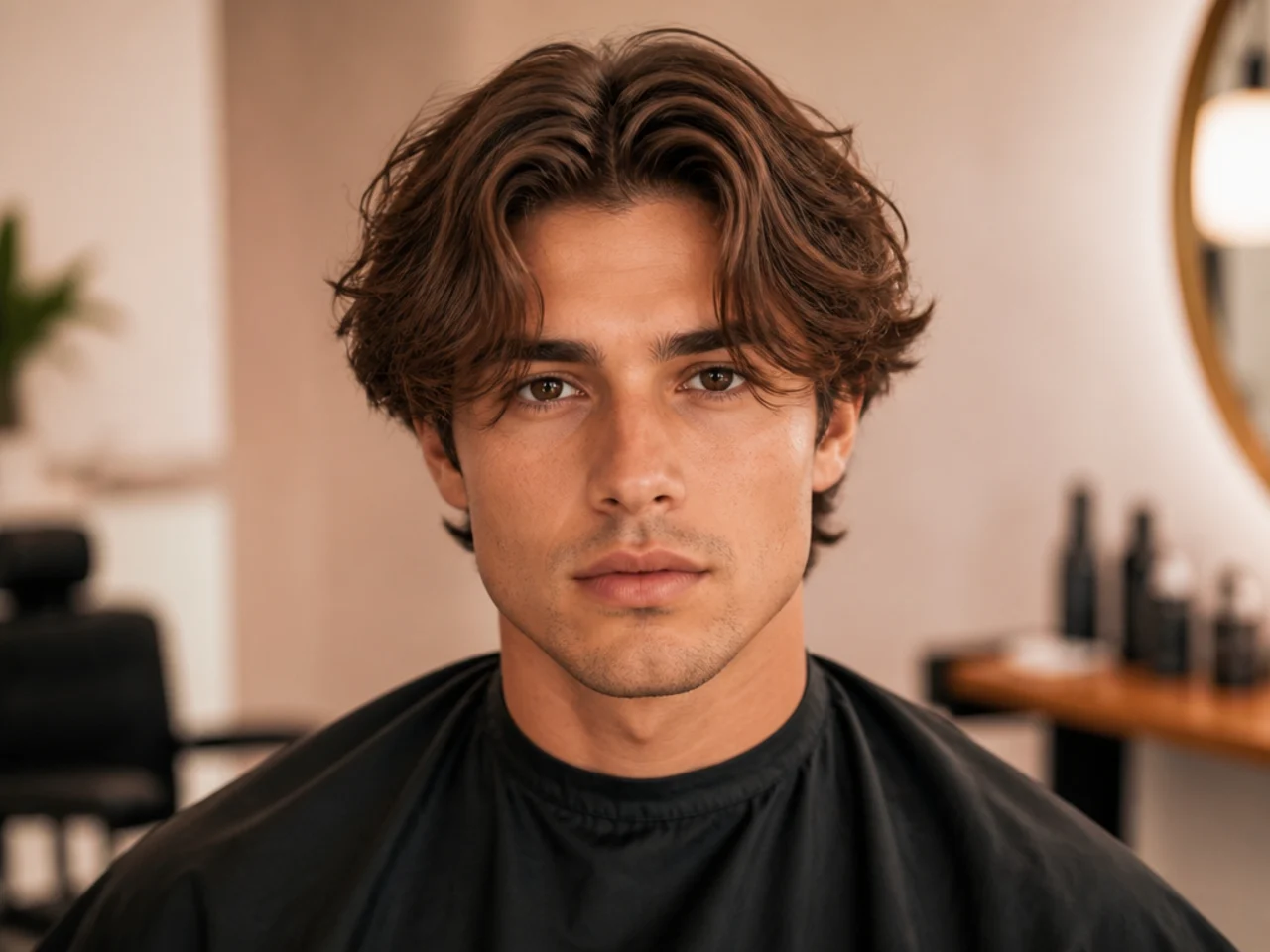
Built specifically for natural waves. Long soft layers razor-cut through the top around 5 to 6 inches, so the wave pattern falls into a natural center split without fighting the shape. Best on oval, heart, and long faces. Straight hair can't fake this look — the waves are the point. Ask for "five to six inches on top, long internal layers cut with a razor, sides connected and no fade, cut so the wave pattern parts center." Wash, apply a wave-defining cream on soaking hair, diffuse on low with an upward scrunch. No comb, no second product. It's a close cousin of the flow haircut men family — same drape, symmetrical drop.
7. Curly Layered Middle Part
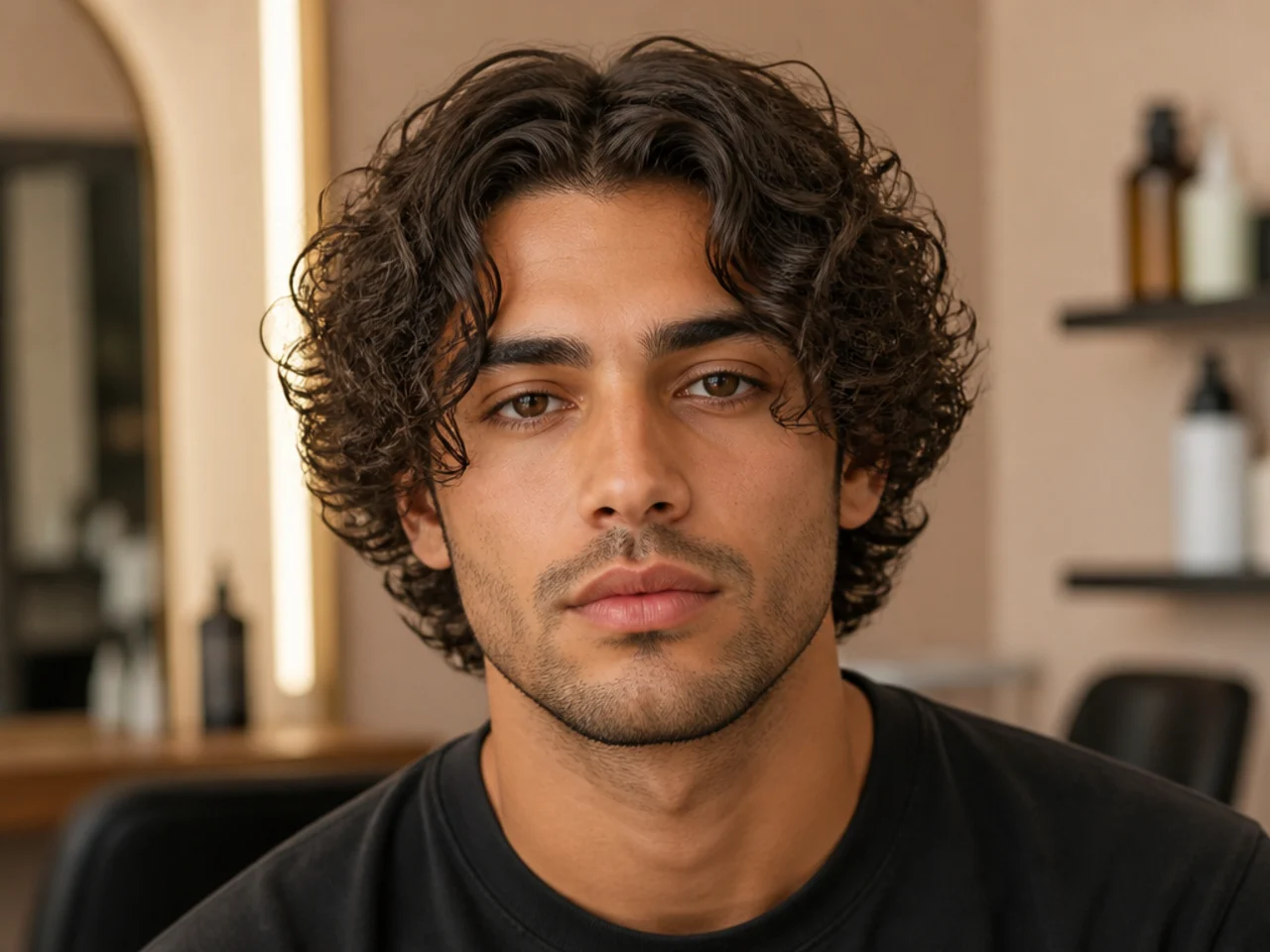
Curly hair does the split on its own once you cut for it. Length runs 5 inches through the top, scissor-only layers at each curl's natural spring point, sides tapered short so the shape doesn't balloon outward. Suits oval and heart faces. Curly to coily hair only — 2C to 3B textures hold this best. Ask for "five inches on top, dry-cut scissor layers at the spring point, tapered sides at a number two, no razor, no thinning shears." Apply curl cream on soaking hair, diffuse on low upside down, don't brush after. See our full curly hairstyles for men guide for pattern-specific product routines.
8. Short Layered Middle Part
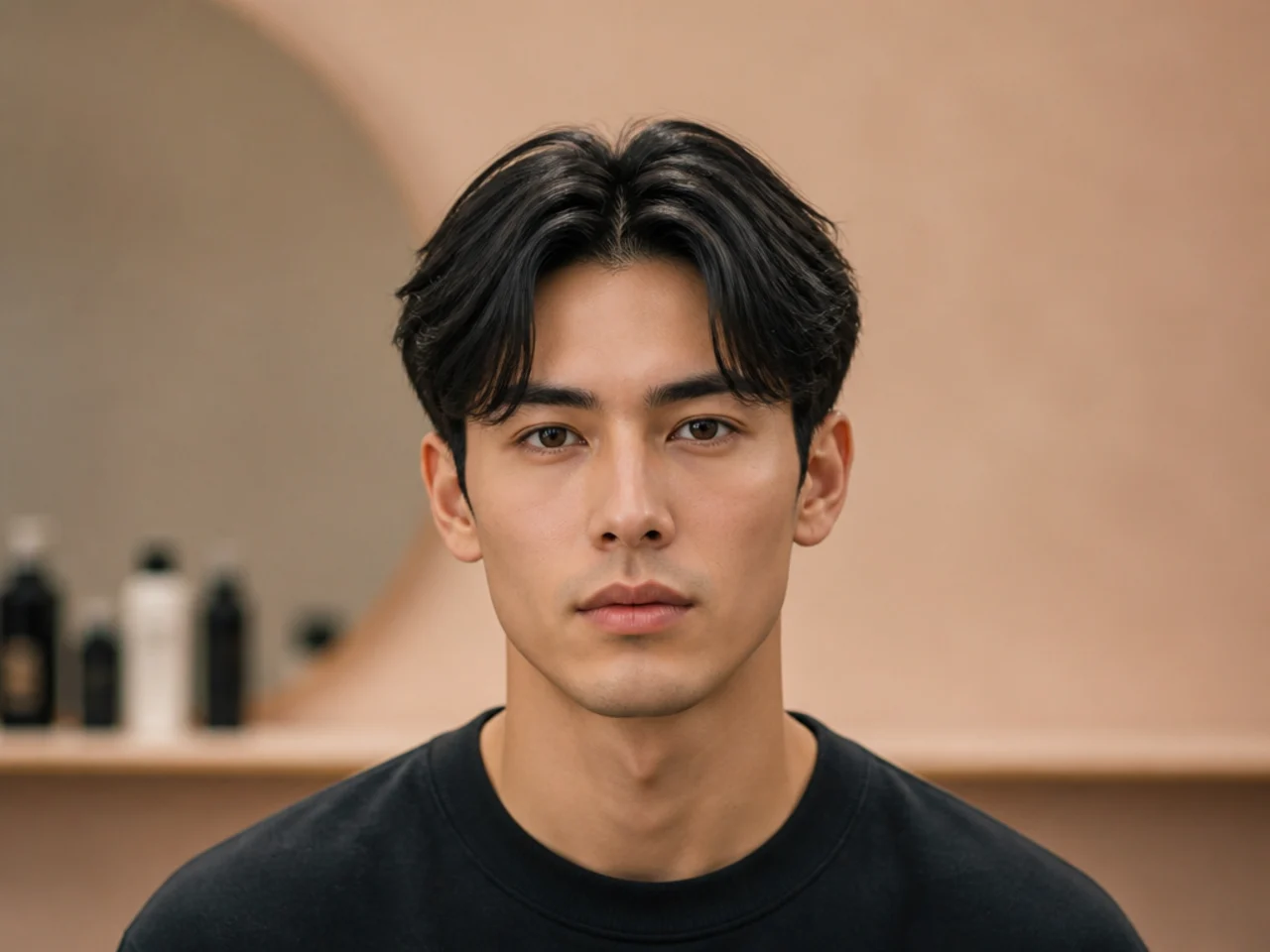
The office-legal version. Top sits at 3 to 4 inches — just long enough to hold a split, short enough to look intentional in a boardroom. Scissor-tapered sides keep the shape sharp without a fade. Internal layers stay short and shallow so the top doesn't move too much. Suits round and square faces because the shorter top adds vertical height. Ask for "three to four inches on top, scissor-tapered sides, shallow internal layers, cut to part center." Blow-dry with a wide-tooth comb splitting the hair as it dries, then set with matte clay. For more variations at this length, see our short middle part haircut guide.
9. Shoulder-Length Layered Middle Part

Real length. Hair hits the collarbone with long layers that stay heavy through the mid-shaft and lighten only in the last three inches. Sides fully connected — no fade, no undercut. Suits oval and long faces because the length narrows the shape further. Straight to wavy hair only; curly hair goes wide instead of long at this size. Ask for "shoulder-length flow, long layers only through the last three to four inches, sides connected, cut for a natural center split." Wash, deep-condition, air-dry to 80 percent, then finish with a diffuser upside down. Sea-salt spray sets the movement; heavy creams weigh it down.
10. Two-Block Layered Middle Part
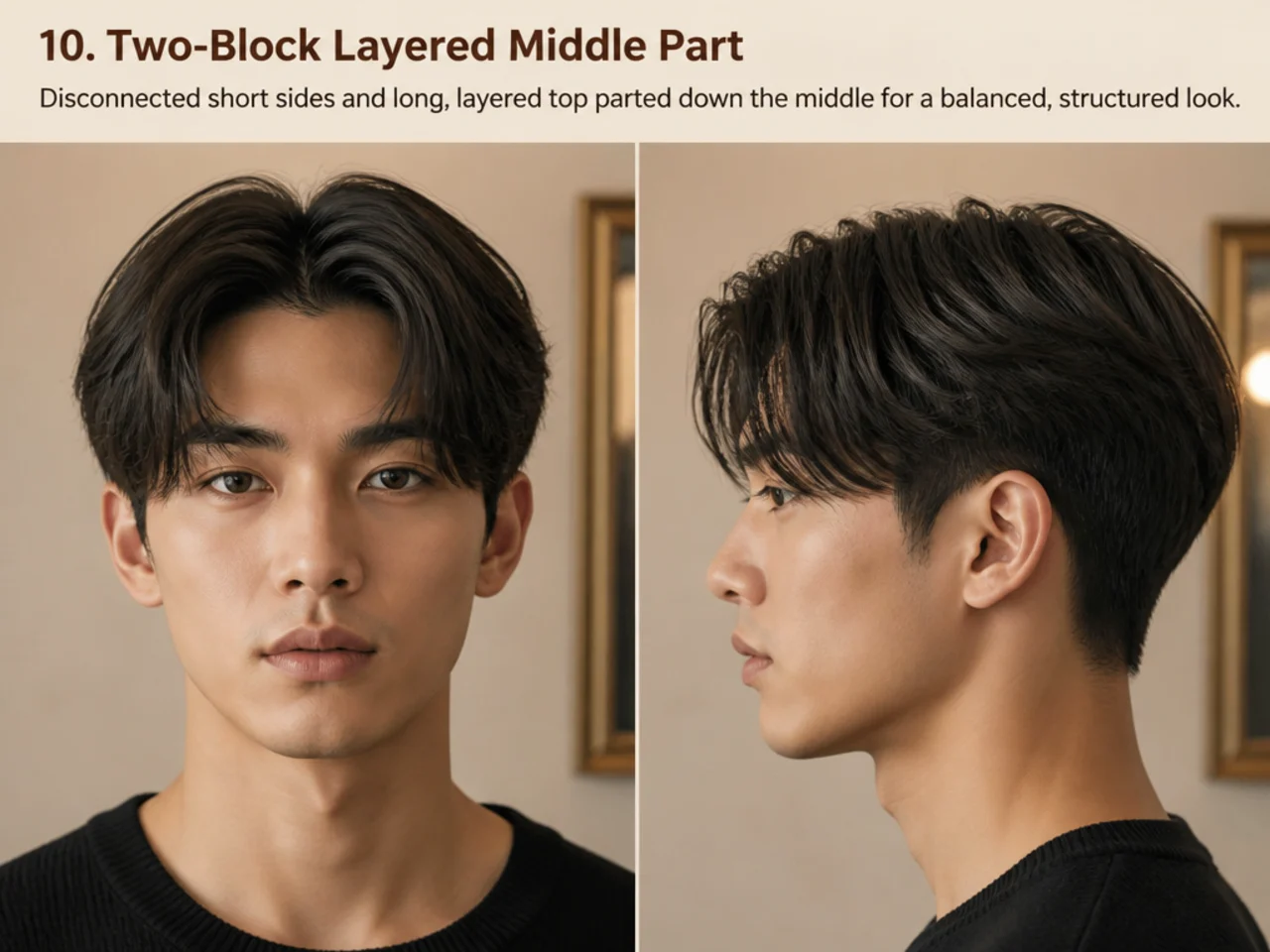
The Korean signature, layered up. Longer 5 to 6 inch top over tapered sides at a #2 clipper — the two "blocks" are the visible disconnect between the layered top and the short sides. Long internal layers give the top real fall through the split. Best on oval, heart, and long faces. Straight to gently wavy hair. Ask for "two-block cut, five to six inches on top with long internal layers, tapered sides and back to a number two, split down the middle." Blow-dry the top front-forward with a round brush, then push each side outward. Matte clay locks it. See our two block haircut guide for pairing tapers.
11. Feathered Layered Middle Part
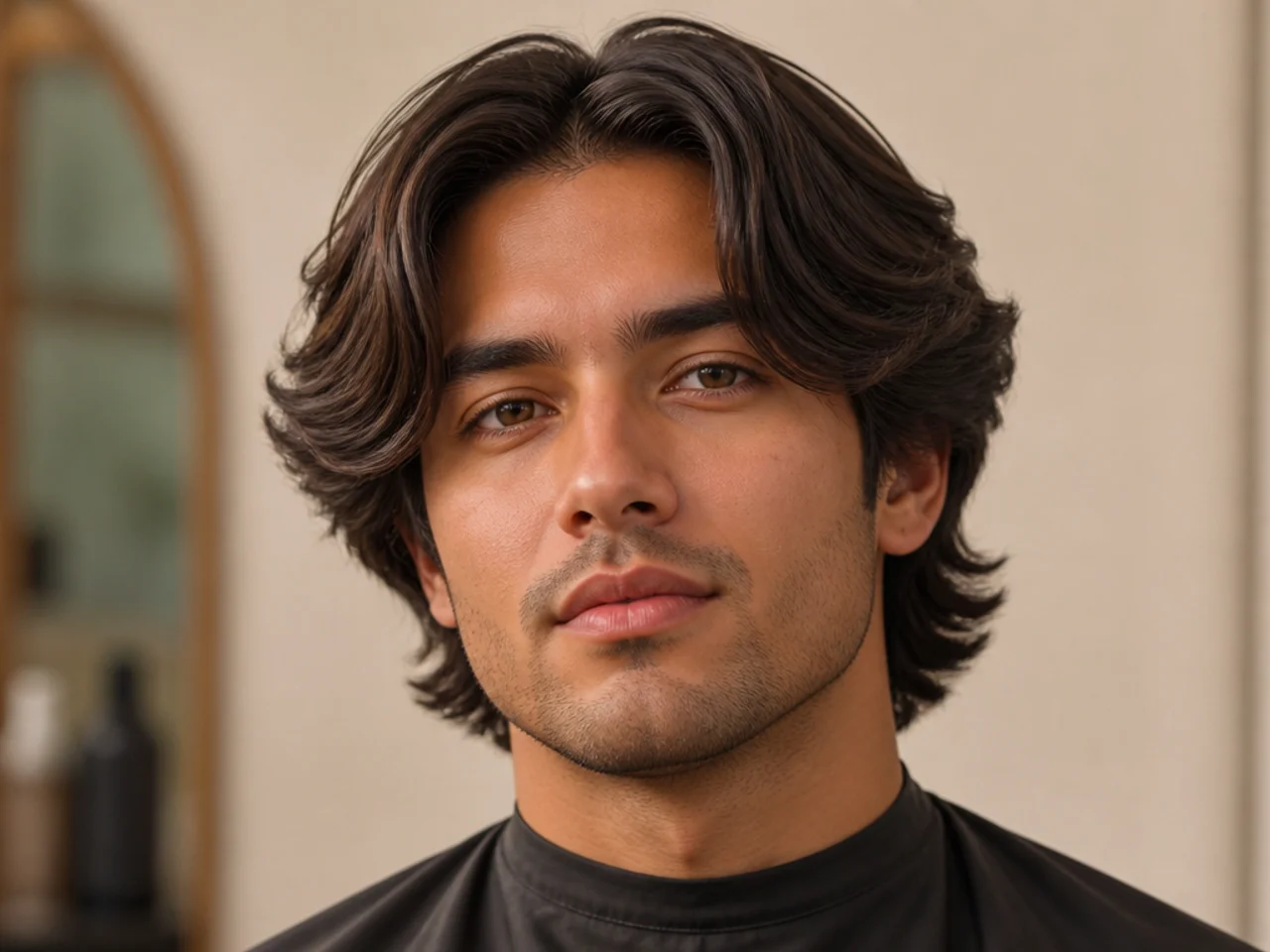
The '70s feather, updated. Layers cut in graduated steps through the sides so each curtain flicks back away from the face at the ear. Top runs 5 inches, cut with long feathered layers throughout — no blunt line anywhere. Suits oval, heart, and diamond faces. Straight to slightly wavy medium-density hair. Ask for "five inches on top, feathered layers through the top and sides, no blunt ends, sides connected and shaped to flick back at the ear." Blow-dry each side with a round brush pulling out and back, then finish with a light-hold hairspray from 12 inches away. Never freeze the movement — feathered layers should breathe.
12. Razor-Layered Middle Part for Fine Hair
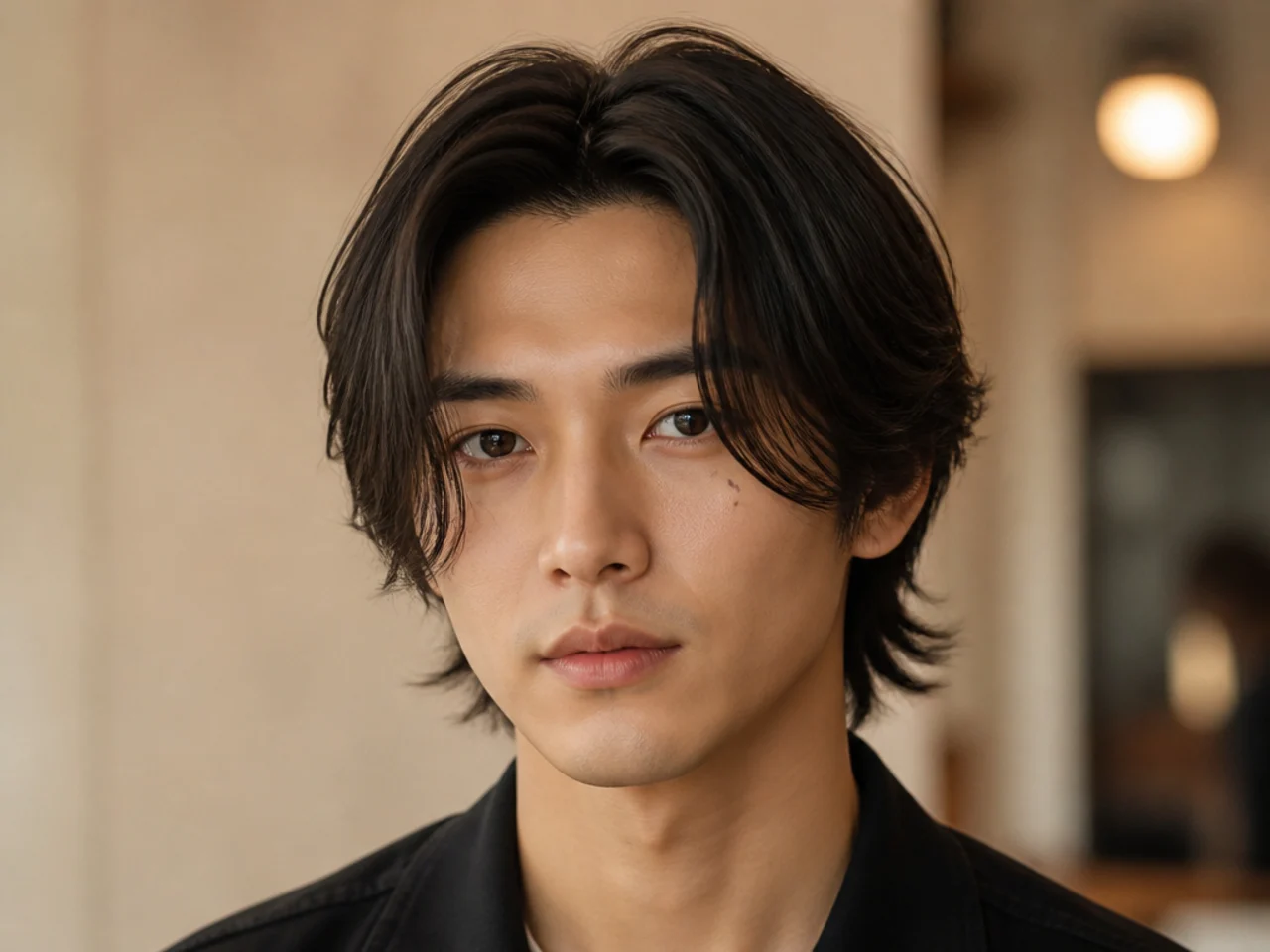
Fine hair needs specific layering — razor-cut ends only, no internal thinning shears. The razor tapers the tip of each strand so the shape looks softer without stripping volume from underneath. Top sits at 4 to 5 inches with a razor-textured finish through the last inch. Sides scissor-cut short. Suits oval, heart, and long faces with fine straight-to-wavy hair. Ask for "four to five inches on top, razor-texture through the ends only, no internal thinning, scissor sides above the ear, cut for a center split." Air-dry to damp, work in a volumizing mousse at the roots, blow-dry with your head tipped forward, then split with your fingers. A dusting of dry shampoo at the roots holds lift all day.
13. Textured Layered Middle Part with Undercut
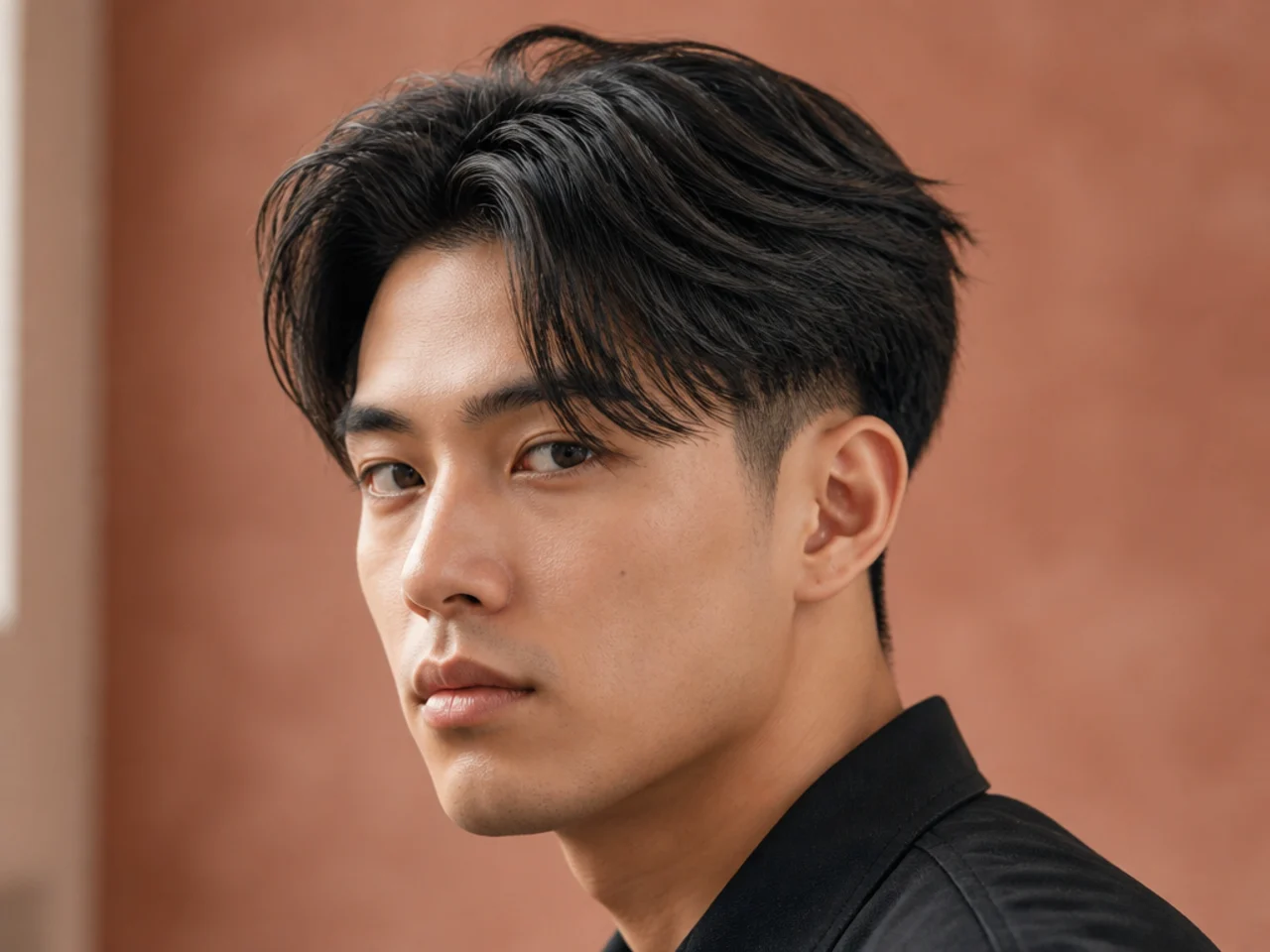
The strongest contrast in the guide. Long layered top runs 5 to 6 inches and falls in a full curtain, dropped over a shaved #2 undercut with a hard disconnected line. Suits square and diamond faces because the disconnect adds jaw definition. Any hair type, though thick straight and wavy hair hold the shape best. Ask for "disconnected undercut at a number two, five to six inches on top with long internal layers, no blending between the two, cut for a center split." Blow-dry the top front-forward with a nozzle, split it with a wide-tooth comb, and lock with a strong-hold matte paste. The undercut needs booking every 3 weeks — the disconnect blurs fast.
14. Face-Framing Layered Middle Part
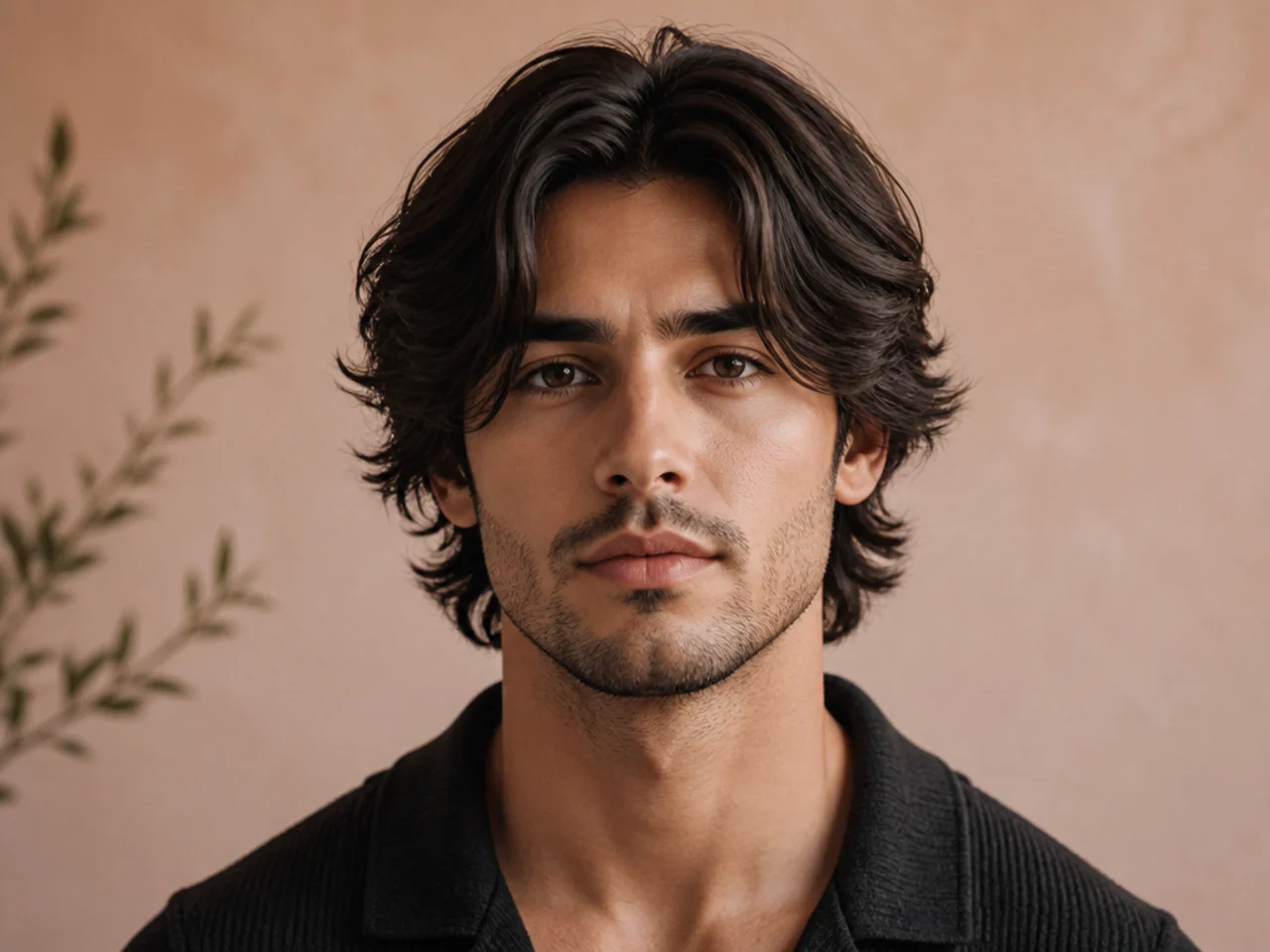
The variation where the layers get technical. Shorter face-framing pieces cut around the temple and cheekbone, feathered forward and split off a center hairline. Rest of the top stays at 5 inches with soft internal layers. The face frames narrow the visual width around the jaw and soften round or square face shapes. Suits round, square, and heart faces best. Straight to wavy medium-density hair. Ask for "five inches on top with long internal layers, shorter face-framing pieces around the temple and cheekbone, split down the middle." Blow-dry the front pieces forward first with your fingers, then split and feather. A pea of light-hold cream through the frames only.
15. Voluminous Layered Middle Part for Thick Hair
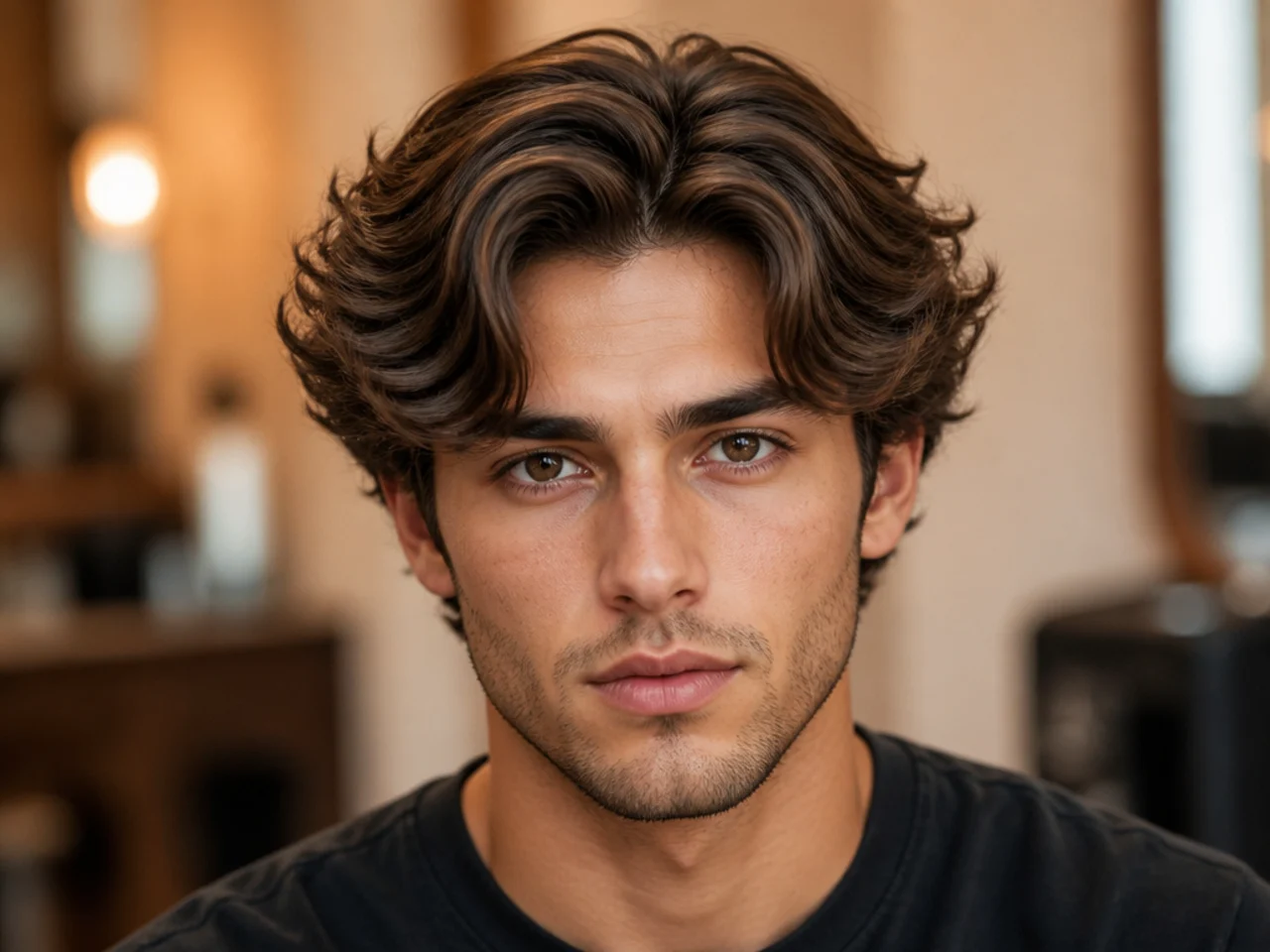
Built for guys whose hair fights every cut. Length runs 5 inches, but the layering is deep — internal thinning through the mid-shaft removes mass so the top doesn't sit like a helmet. Ends stay heavy so the shape holds. Suits square and round faces because the height adds vertical length. Thick straight or wavy hair only; fine hair can't hold the volume. Ask for "five inches on top, internal thinning through the mid-shaft, do not thin the ends, sides connected at the ear, cut for a center split." Blow-dry with a round brush lifting straight up at the roots, then split with a comb. A dusting of volume powder at the roots holds all day.
How to Ask Your Barber
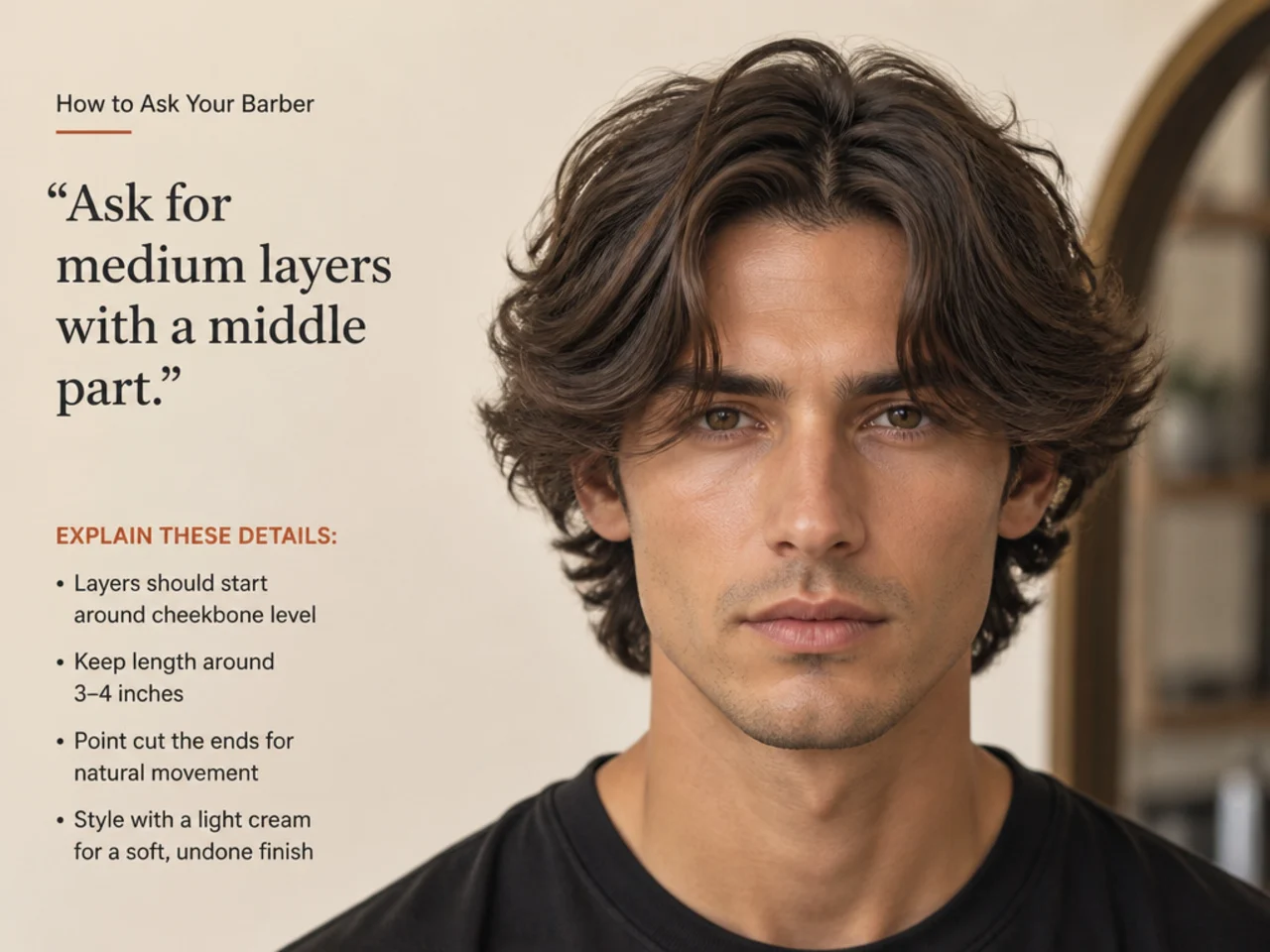
- Bring a photo. Barbers work from images faster than descriptions. Pull one of the 15 variations above on your phone and hand it to them before you sit down.
- State the top length in inches. "Four inches," "five inches," "six inches" — not "medium" or "long." Length is the first variable, and inches remove the guesswork.
- Name the layer style. "Long internal layers" for flow, "short internal layers underneath" for piecey texture, "razor-textured ends" for fine hair, "dry-cut spring-point layers" for curls.
- Specify the side treatment. Connected at the ear, scissor-tapered, low taper fade, mid fade, or disconnected undercut. Every variation above tags its ideal pairing.
- Confirm the center split. Say "cut so it splits down the middle" and "layered so both curtains fall forward" — that tells the barber to angle the internal layers correctly.
- Ask for a styling walk-through. Watch the first blow-dry. Get the direction — nozzle down the shaft, head tipped forward — locked before you leave the chair.
- Book the follow-up before you go. Fades want 2 to 3 weeks; scissor and connected sides want 5 to 6. Booking now is what stops the shape from softening past the point of easy recovery. Every silo hub on the men's haircuts page lists cuts by upkeep — worth a scan.
Styling and Maintenance
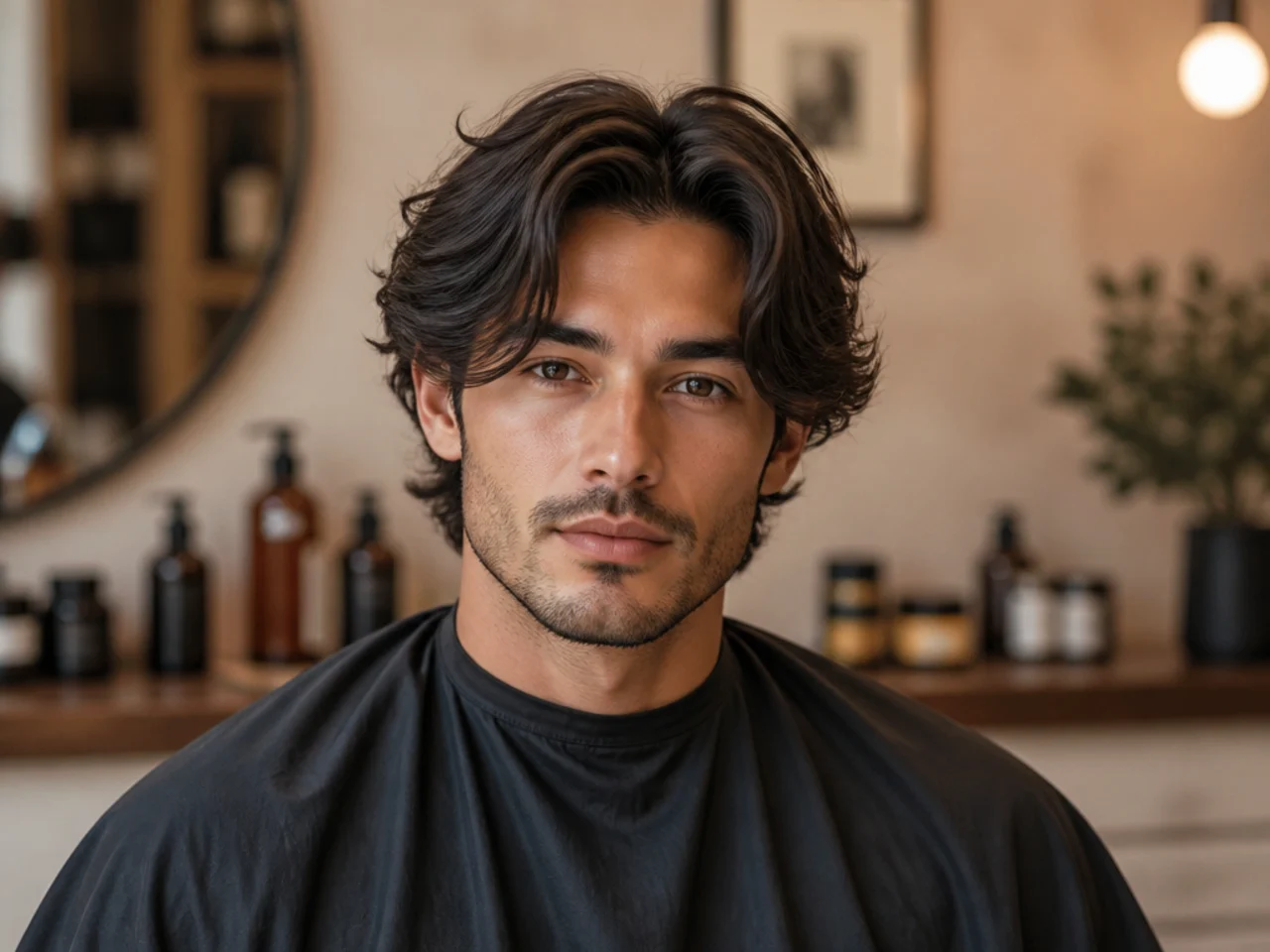
The layered middle part needs four tools and one product to hold shape every day: a blow-dryer with a nozzle attachment, a wide-tooth comb, a microfiber towel, and either a matte clay, a wave cream, or a light-hold sea-salt spray depending on your finish.
Wash and dry: Shampoo with a sulfate-free formula 2 to 3 times a week — layered hair breaks weight faster than blunt cuts, and stripping the ends makes the layers look thin. Condition every wash. Rinse cold at the end to flatten the cuticle and add shine. Rough-dry with the microfiber towel until the hair is damp but not dripping.
Set the part: Drag a wide-tooth comb from the front hairline straight back to the crown while the hair is damp. Line the split up with the middle of your nose. Curly hair uses fingers, not a comb — a comb kills the pattern.
Direct the fall: Point the dryer nozzle down the shaft, root to tip, angled front-forward. Work in sections — back, sides, top, fringe. Never blast hot air up from below. That puffs the shape and kills the drape you paid for.
Product cadence: Matte clay or paste for medium-length variations (short, classic, choppy, two-block, undercut). A wave-defining cream for wavy and curly cuts. A light sea-salt spray for flow and shoulder-length versions. One product is enough. Layering more products crushes the layers, ironically.
Cadence: Refresh with a texture spray and finger-comb at day two if you're stretching washes. Book the fade every 2 to 3 weeks if you have one; the scissor and connected sides can stretch to 5 or 6. Layered middle parts sit right in the middle of the maintenance spectrum — not high-effort, not zero-effort.
FAQ
What is a layered middle part haircut for men?
A layered middle part is a men's cut where the top is grown to at least 4 inches, split straight down the center, and cut with internal layers so each curtain moves independently instead of sitting as a solid block. The layering is what separates it from a classic blunt-cut middle part.
How long does my hair need to be for a layered middle part?
At least 4 inches on top for a full curtain drop, and 5 to 6 inches if you want real face-framing pieces or the shoulder-length flow. Anything shorter than 3 inches won't hold a clean split no matter how much internal layering you add — the weight isn't there to fall forward.
Does a layered middle part work on curly hair?
Yes, but the layers do more of the work than the split. Curly middle parts need scissor-only layering at the curl's natural spring point and enough length — 5 inches minimum — so gravity helps the curtain fall. Skip razor thinning, skip clippers on the top, and never brush the hair dry. Use your fingers or a wide-tooth pick.
Layered middle part vs. classic middle part — what's the difference?
A classic middle part keeps the ends heavy and blunt for a sharp, retro finish. A layered middle part removes internal weight so the curtains have real movement, root lift, and separation between pieces. The layered version reads modern and photographs better on-camera. The classic looks sharper in person and pairs cleaner with a suit.
How often should I book my barber for a layered middle part?
Every 4 to 6 weeks for scissor-blended and connected sides, every 2 to 3 weeks if you pair it with a low, mid, or high fade. The internal layers are what soften first as the cut grows. Once the top starts sitting flat instead of moving through the day, book the next appointment.
What's the best product for a layered middle part?
Match the product to the finish. Matte clay or paste for medium-length and textured variations. A wave-defining cream for wavy and curly cuts. A light sea-salt spray for the flow and shoulder-length versions. Skip glossy pomades — they collapse the layers into a smooth helmet, which is the exact look you're cutting layers to avoid.