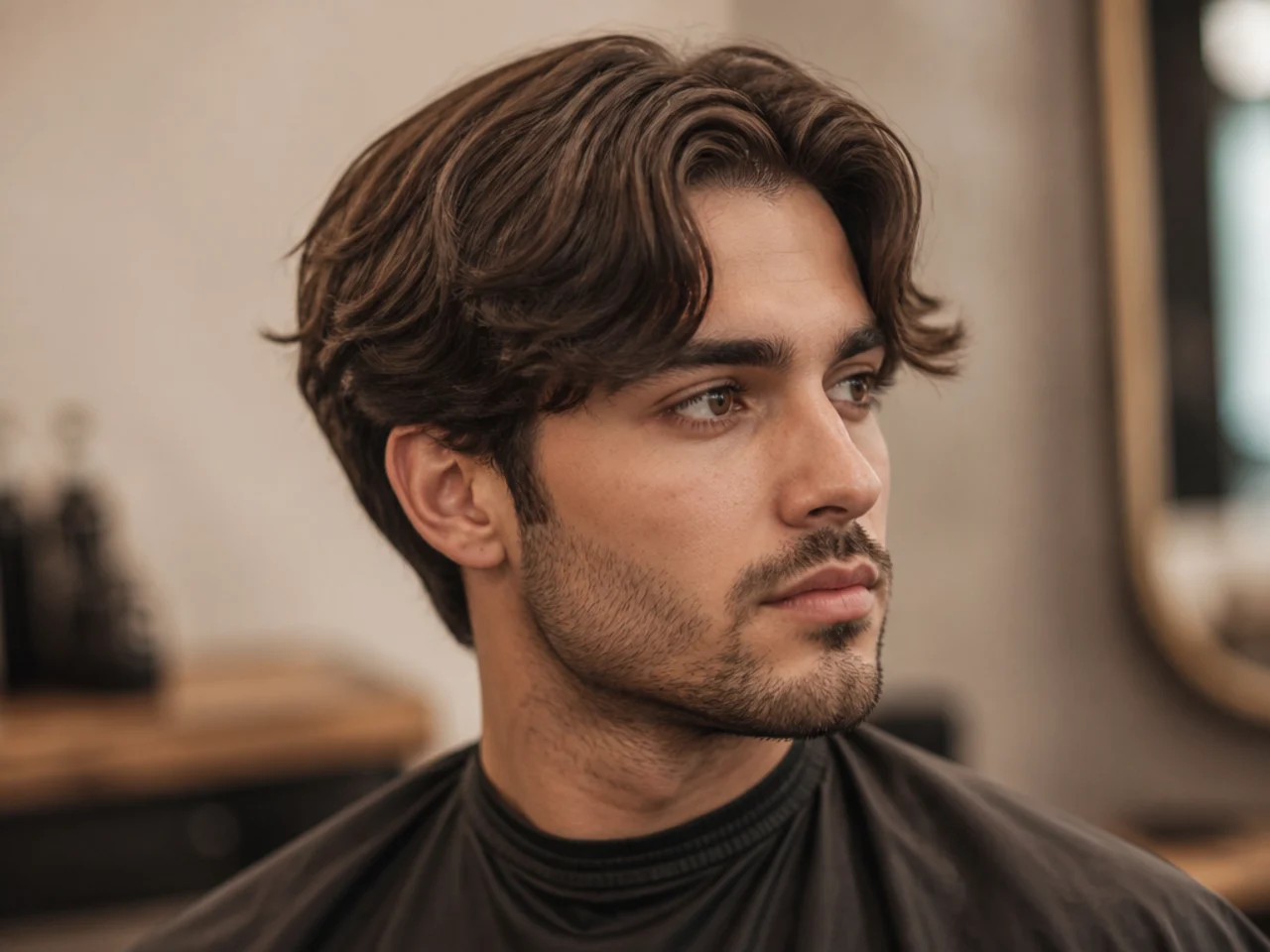
20 Curtain Bangs Haircuts for Men
20 curtain bangs men haircut ideas — wispy, full, feathered, piecey, curly, Korean, mullet and beard versions — with face-shape notes and barber language.
In this article · 26
- What Are Curtain Bangs for Men?
- How to Choose Your Curtain Bangs
- The 20 Curtain Bangs Variations
- Classic Curtain Bangs
- Wispy Curtain Bangs
- Full Curtain Bangs
- Feathered Curtain Bangs
- Piecey Curtain Bangs
- Side-Swept Curtain Bangs
- Long Curtain Bangs
- Short Curtain Bangs
- Textured Curtain Bangs
- 90s Grunge Curtain Bangs
- Curly Curtain Bangs
- Wavy Curtain Bangs
- Straight-Hair Curtain Bangs
- Curtain Bangs with Low Taper Fade
- Curtain Bangs with Undercut
- Curtain Bangs with Two-Block
- Korean-Style Curtain Bangs
- Curtain Bangs with Mullet
- Curtain Bangs with Beard
- Modern Curtain Bangs
- How to Ask Your Barber
- Styling and Maintenance
- FAQ
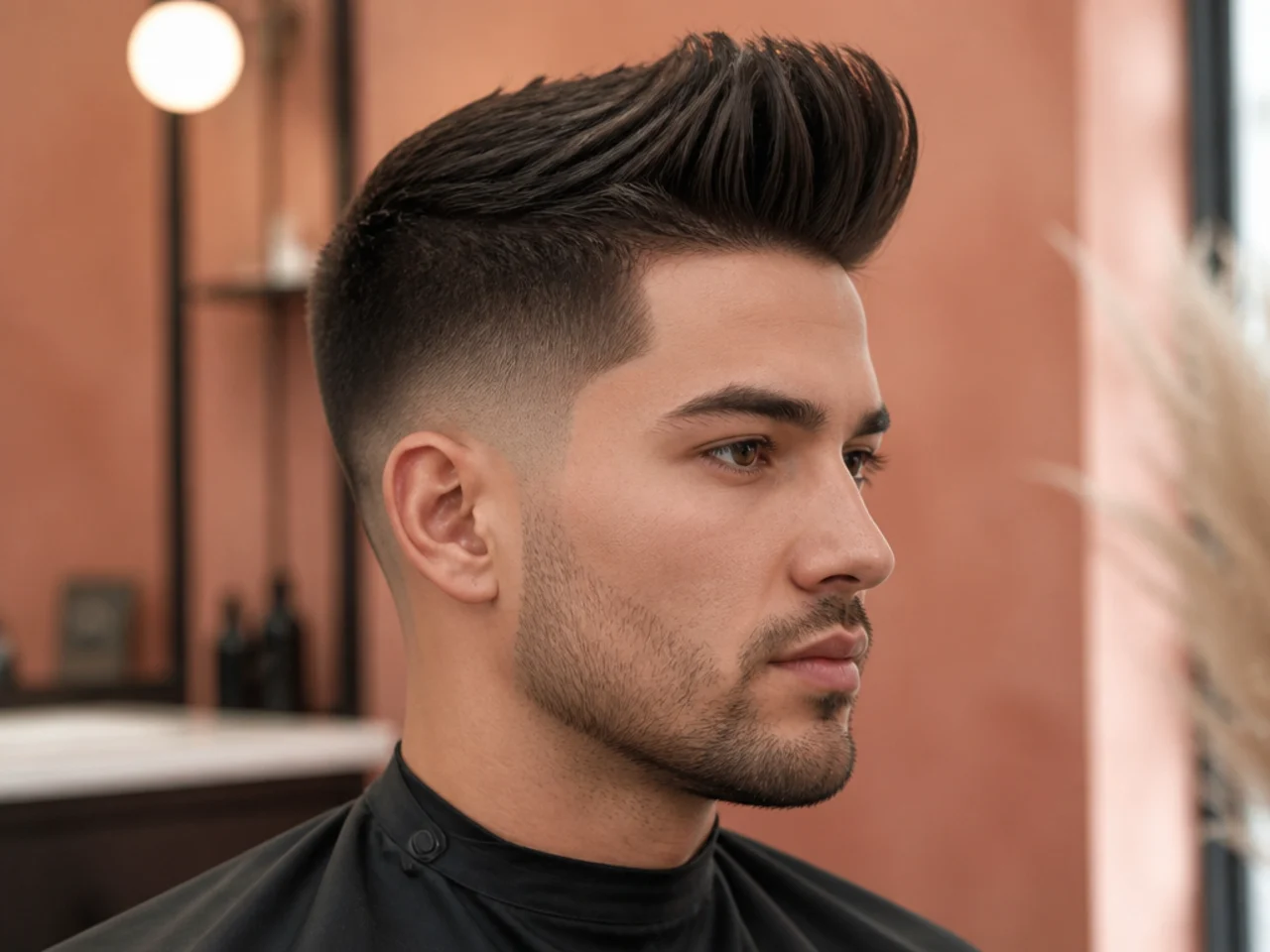
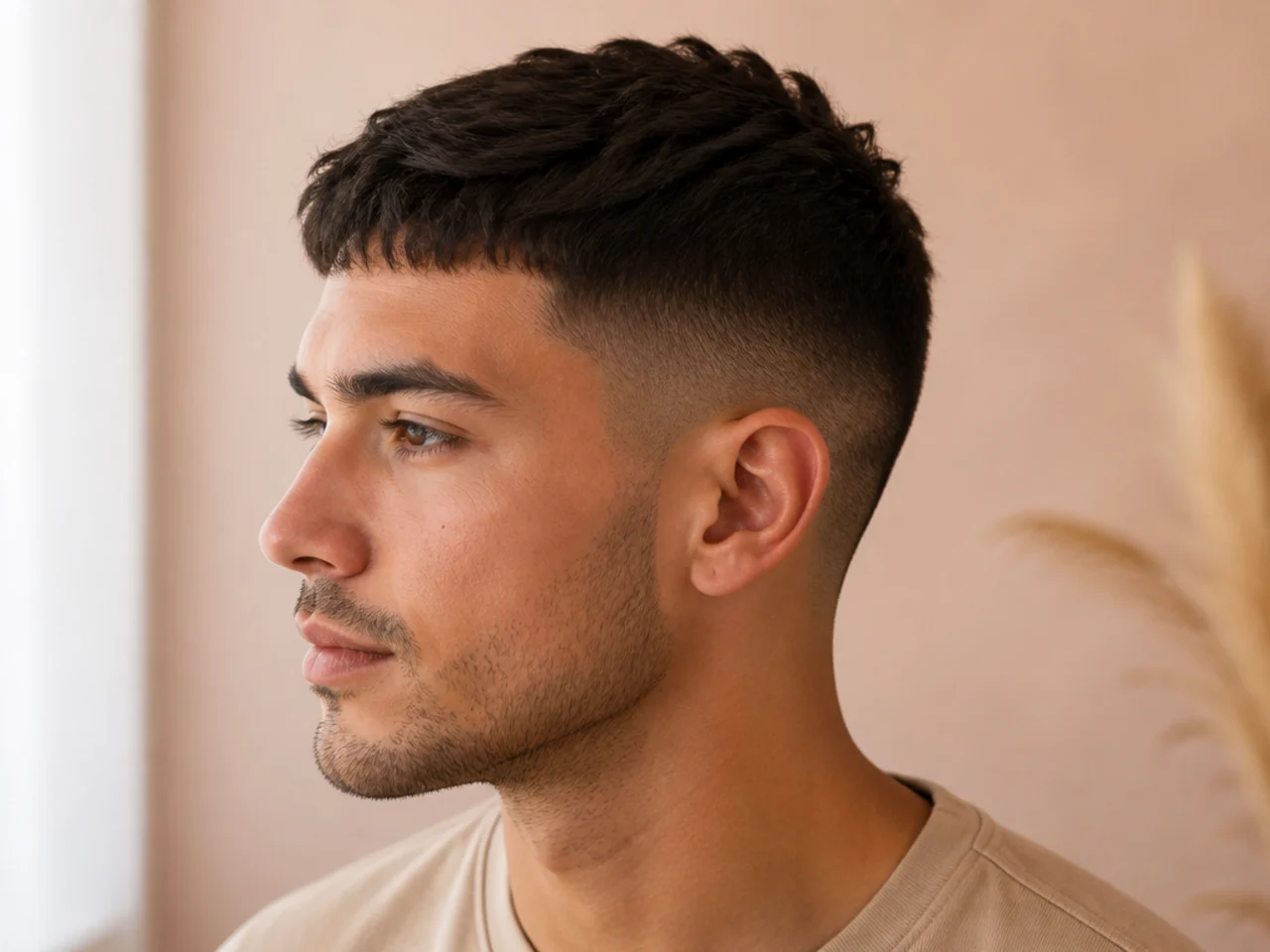
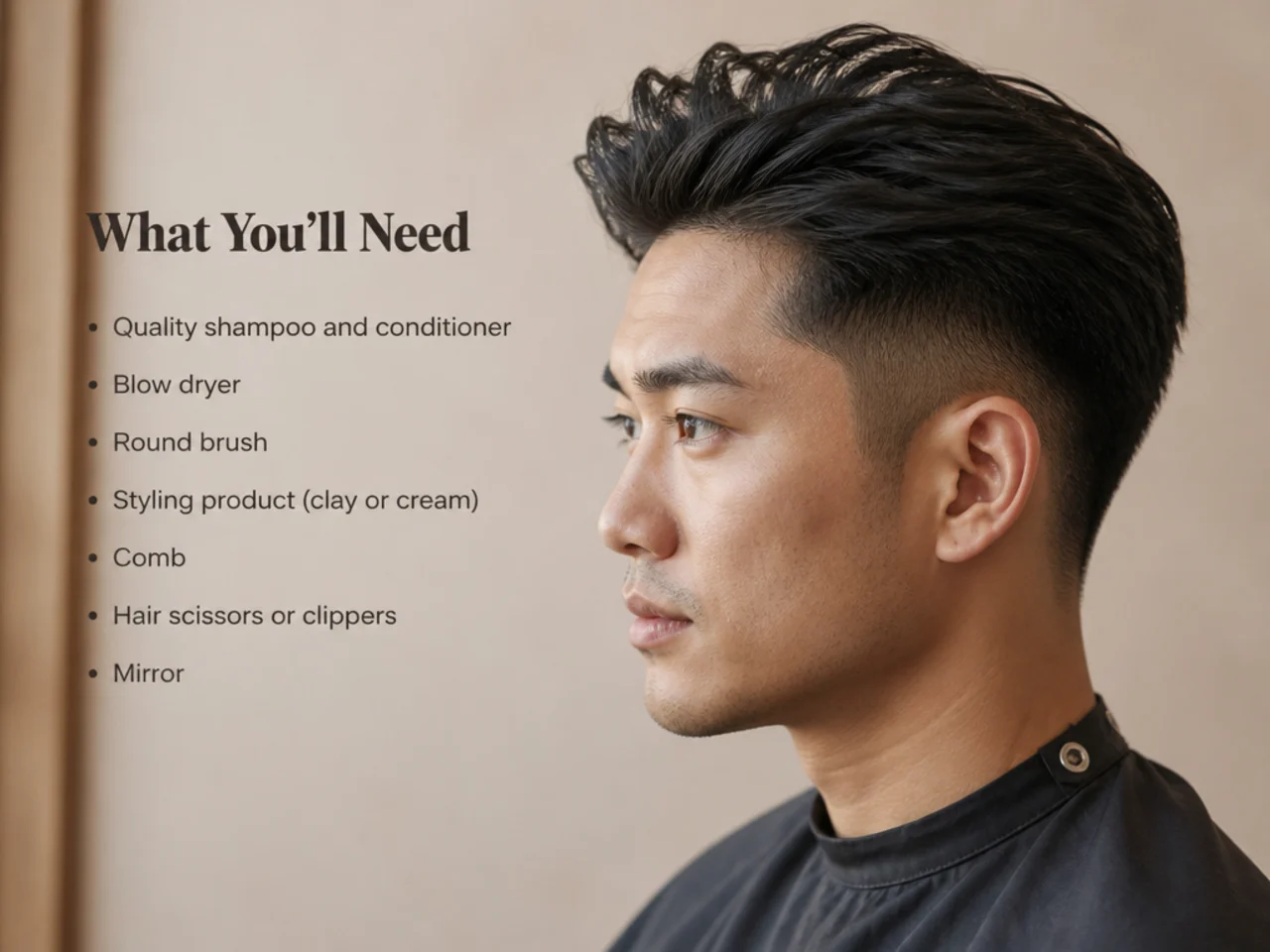
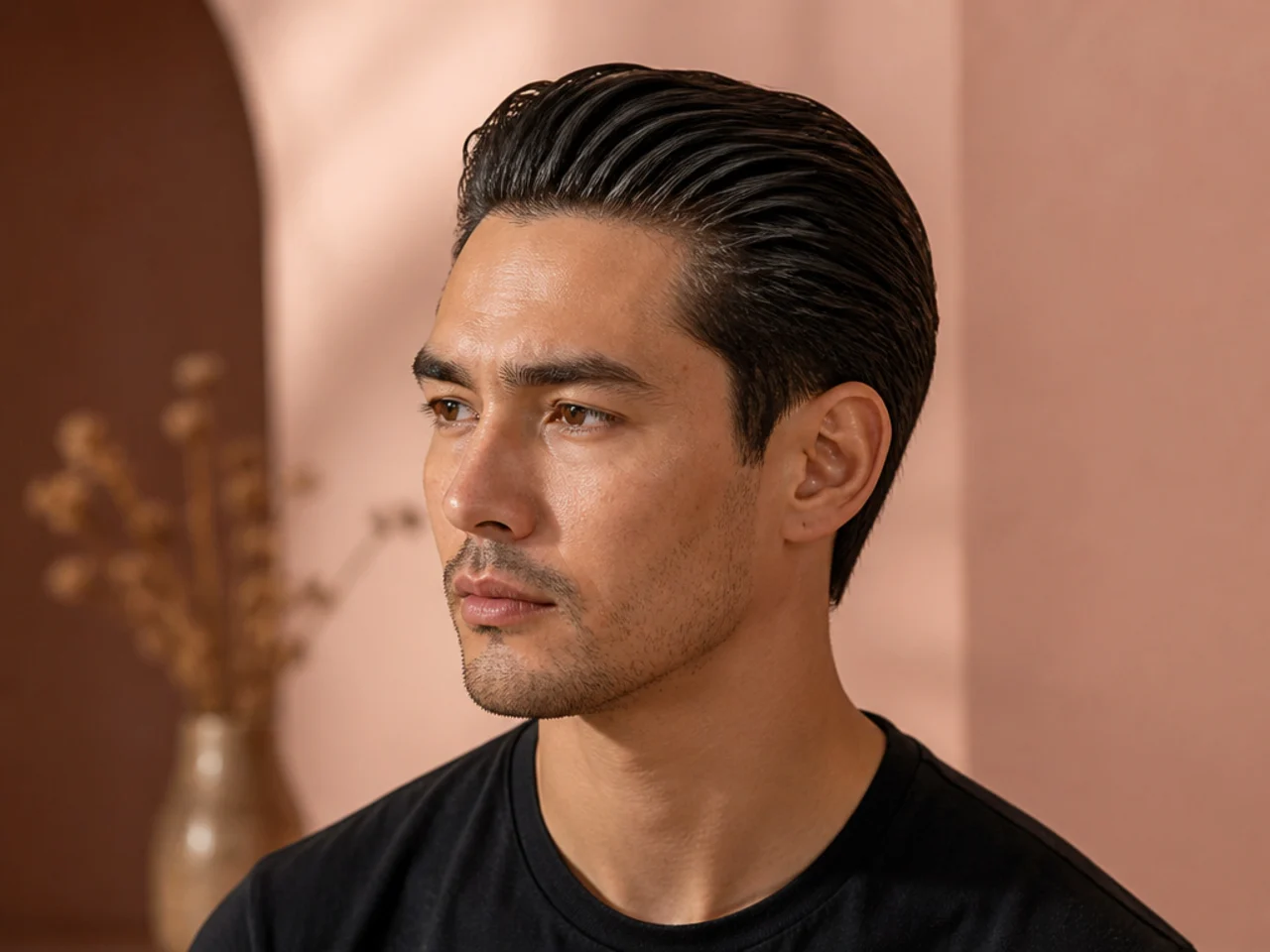
Curtain bangs are the single most-copied men's fringe of the last three years — the middle-parted, cheekbone-grazing panel of hair that made 90s Leonardo DiCaprio a haircut reference again and turned every K-drama lead into a Pinterest board. This guide covers the twenty curtain bangs men haircut variations you can actually walk into a barbershop and ask for in 2026, with photos, face-shape notes, the exact barber language, and a three-minute styling routine that holds.
What Are Curtain Bangs for Men?
Curtain bangs are a men's fringe cut in two long panels that part down the middle and fall on either side of the forehead. The name is literal — the two sides open like curtains, shorter at the nose bridge and longer at the cheekbones. Bangs run 3 to 5 inches at the front, with internal layering that lets each side taper diagonally toward the temple so the fringe frames the eyes instead of hiding them.
The cut sits inside the broader family of men's haircuts that lean editorial, center-parted, and low-shine. Curtain bangs are the fringe technique; the rest of the cut can be anything — a scissor-blended flow, a low taper fade, an undercut, a two-block, even a mullet. What changes is the perimeter. What stays constant is the two-panel fringe up front, cut with internal layers, styled with a matte finish, worn parted down the middle.
The difference between curtain bangs and a plain middle part is the layering. A middle part is one length — the fringe and the crown are cut the same. Curtain bangs are shorter through the mid-shaft and longer at the ends, tapered toward the outer edges, so the two panels drape rather than hang.
How to Choose Your Curtain Bangs
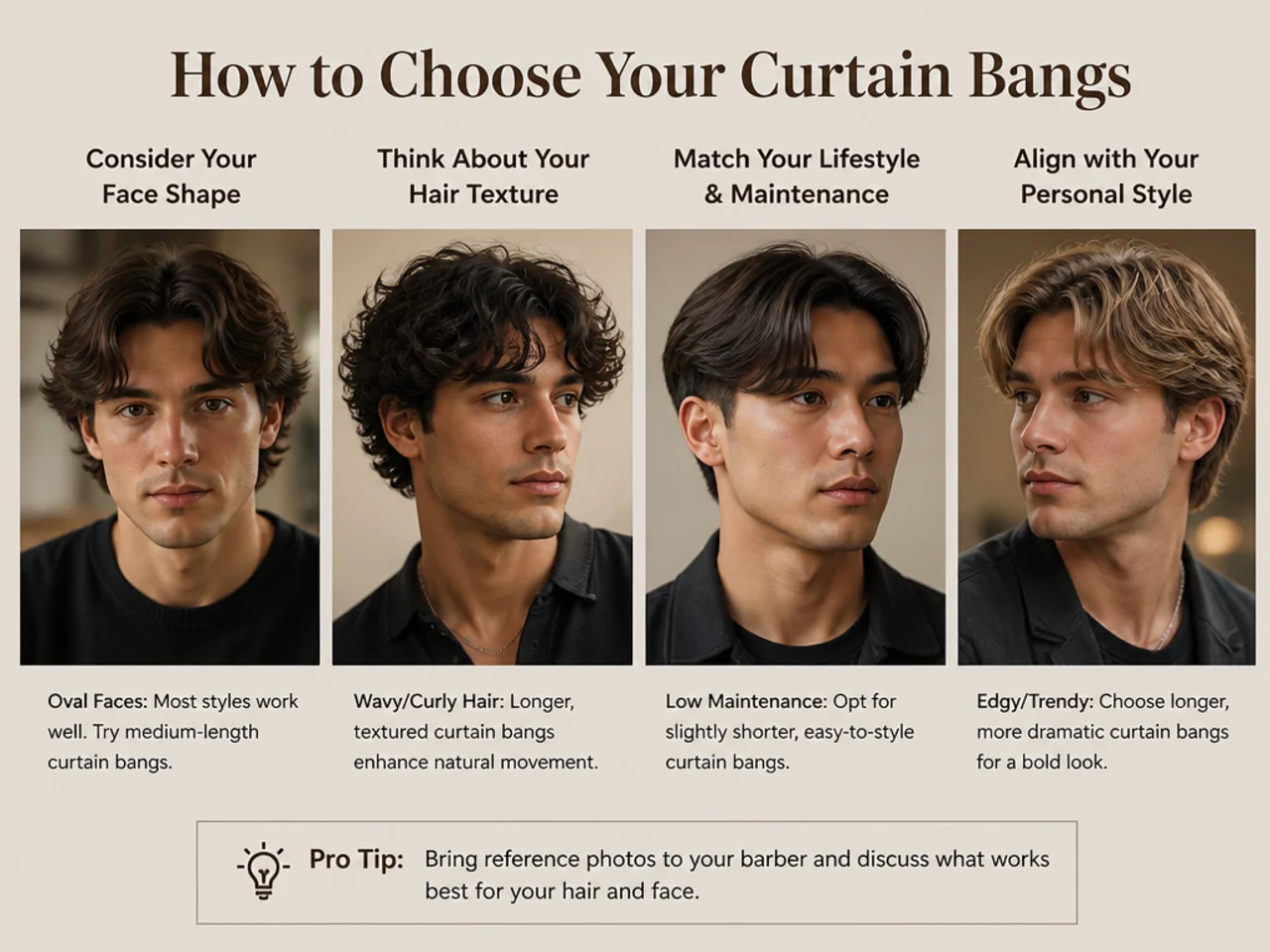
Three variables narrow the twenty versions below to yours.
Face shape sets the length of the bangs. Oval faces suit almost every version. Round faces want longer, side-swept, or feathered bangs that add vertical length and hide the temples — skip the short, blunt versions that widen the forehead. Square and diamond faces want wispy or piecey bangs that soften the jawline. Long or oblong faces want a fuller, denser fringe that shortens the visible height of the face. Heart faces suit almost every build; the natural wide-at-top, narrow-at-jaw silhouette carries any curtain shape.
Hair type sets the cut and the styling. Straight to lightly wavy hair (patterns 1A-2B) falls into a curtain shape without help — a wet cut, a wide-tooth comb, air-dry. Wave patterns 2C-3B need internal layers point-cut into the ends, a curl cream, and a diffuser to hold the panels forward. Curl types 3C and above build outward instead of curtain-forward — the Korean or textured versions read better on that texture. Thick or coarse hair wants extra thinning through the fringe so the two panels drape instead of block. If you're not sure whether your wave is a 2B or a 2C, the curly hair haircuts breakdown includes a wet-hair pattern test that decides in two minutes.
Workplace and styling appetite are the last filter. Wispy, feathered, side-swept, short, and modern versions all pass most office dress codes and style in under two minutes. Long, mullet, full, and 90s versions ask for four to six inches of movement plus a blow-dryer for the shape to read. Pick the version that fits your morning, not the version that looks cool on someone else's mirror.
The 20 Curtain Bangs Variations
Every version below starts from the same fringe rule: 3 to 5 inches at the center, internal layers cut in dry so the two panels taper diagonally toward the temple. Length, texture, and the rest of the cut are the three dials.
Classic Curtain Bangs
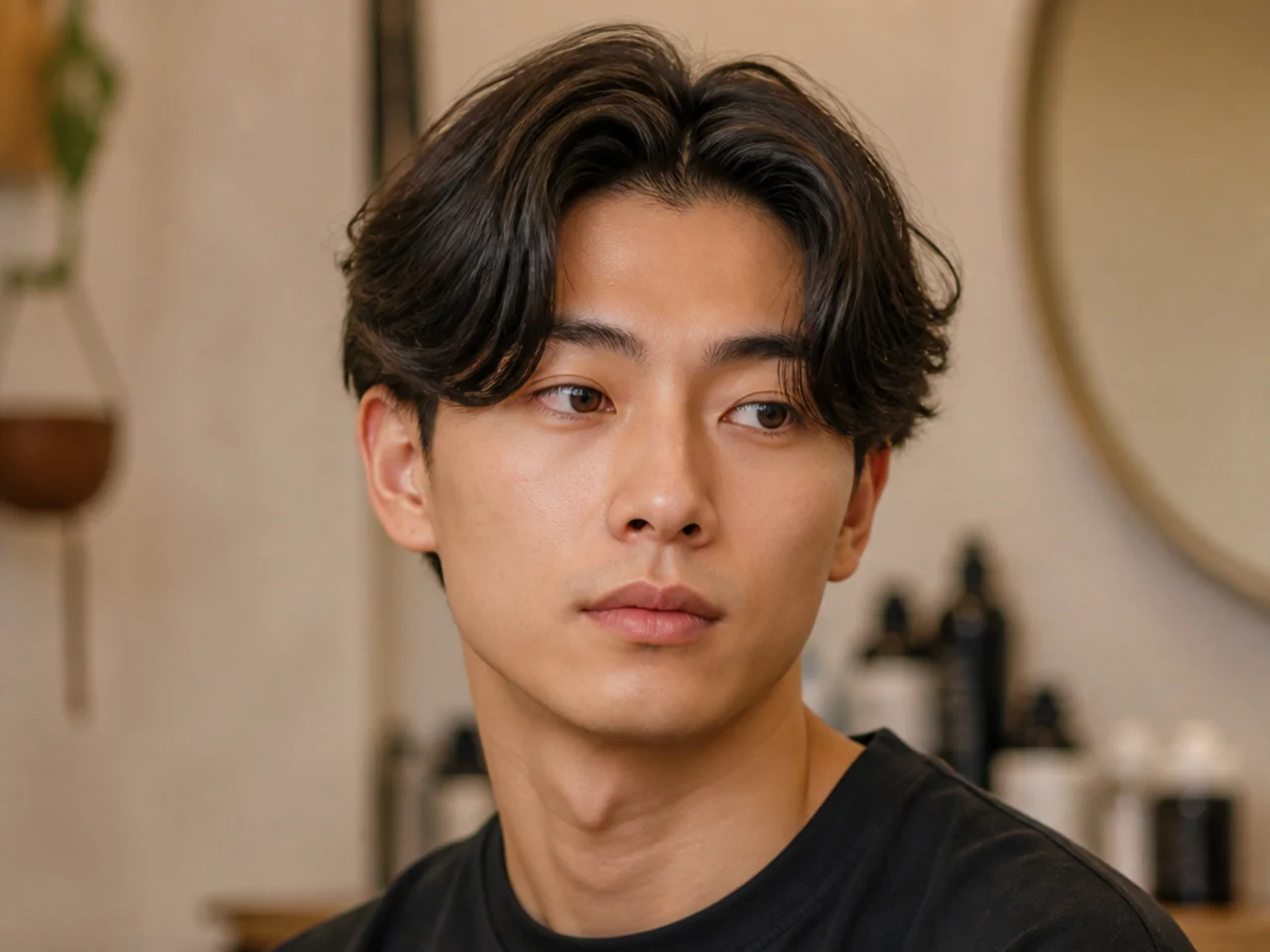
The template every other build borrows from. Four inches at the front, cut with internal layers so the two panels taper from shorter at the nose bridge to longer at the cheekbones. The rest of the top runs about three inches with scissor-blended sides that sit above the ear. Suits oval, heart, and square faces. Straight to lightly wavy hair drops into it without help. Ask for "classic curtain bangs — 4 inches at the front, internal layers point-cut through the ends, center part cut in while damp, scissor blend at the sides above the ear." Style with a nickel of matte cream through damp hair, comb the split, air-dry. This is the version to book if you're trying curtain bangs for the first time.
Wispy Curtain Bangs
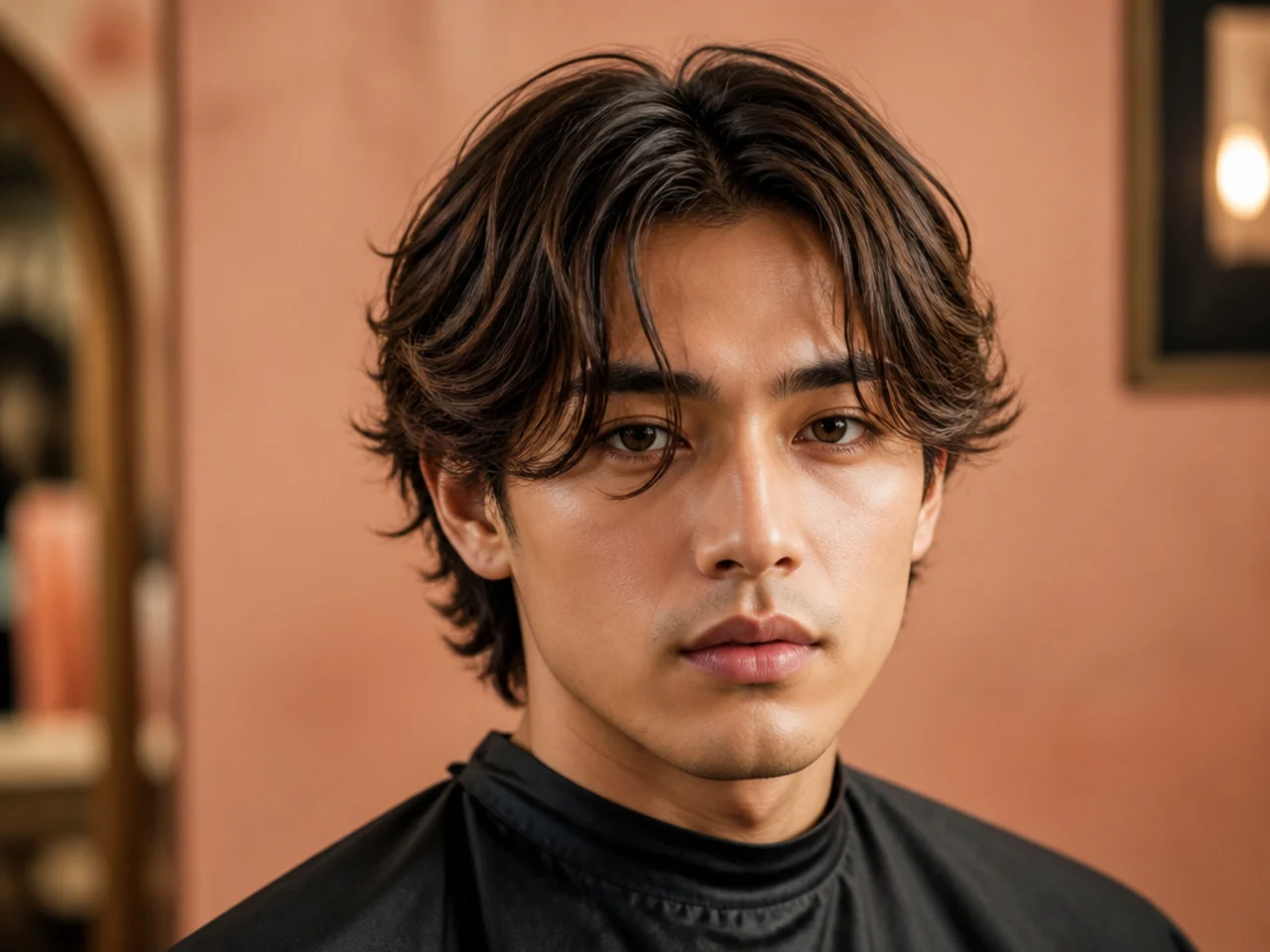
The softest version. The barber thins the fringe with a razor or texturizing shears so the two panels drape thin and airy, with slivers of forehead visible between the strands. Suits diamond, square, and heart faces because the see-through fringe reduces perceived width. Best on fine to medium straight hair — thick hair loses the wispy read. Ask for "wispy curtain bangs — 4 inches at the front, razor-thinned through the ends for airy separation, center part, keep the rest scissor-cut and short at the sides." Style with a pea of matte cream fingertip-worked through damp hair, split with a wide-tooth comb, air-dry. Skip pomade — shine kills the airy read every time. If your hair is fine, this version costs the least in daily volume.
Full Curtain Bangs
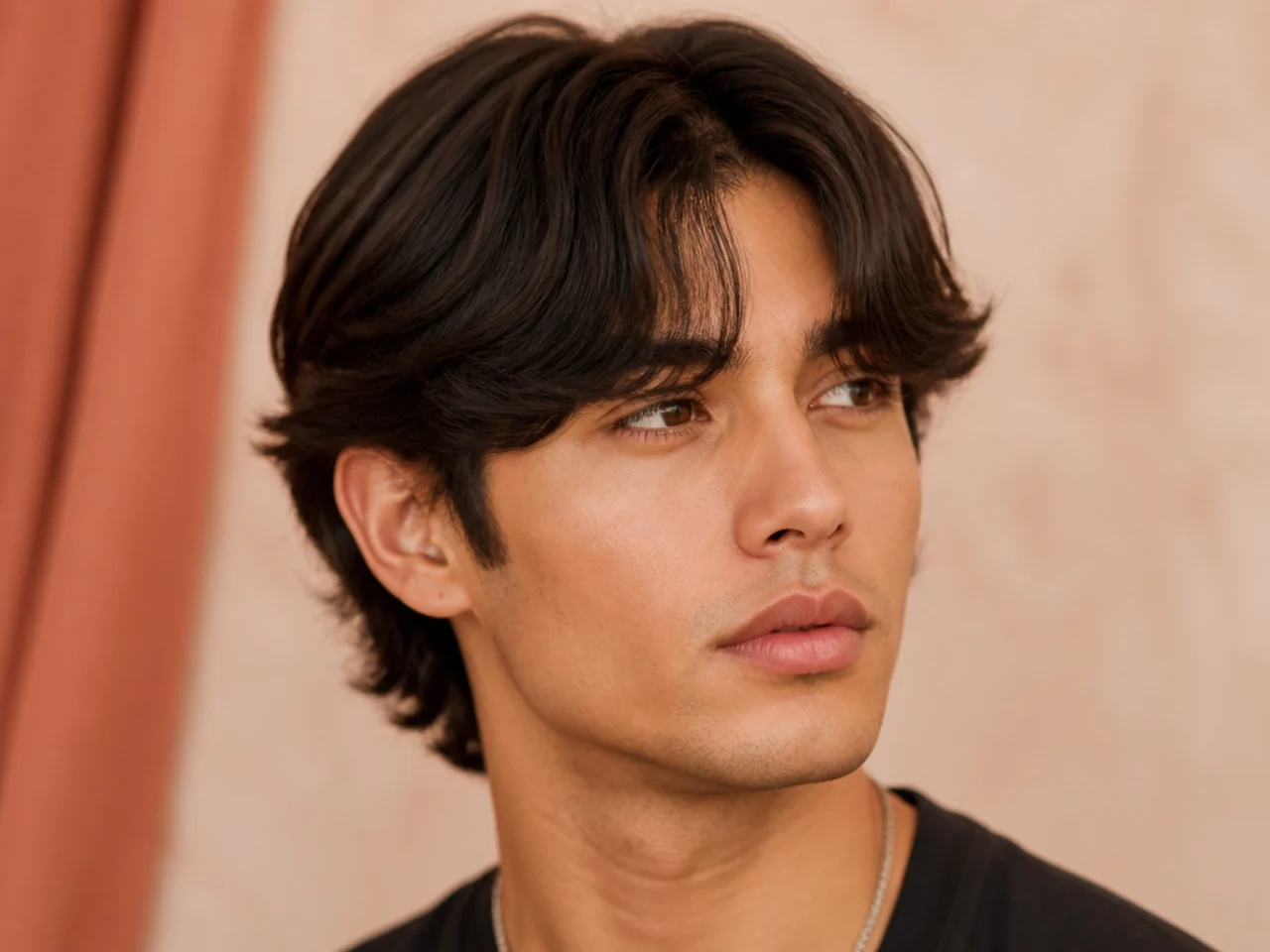
The dense, unthinned version. The full fringe hangs edge-to-edge across the forehead with the center part as the only break — no thinning, no piecey point-cutting, no wispy gaps. Suits long, oblong, and heart faces because the dense fringe shortens the visible height of the face and softens a wider top. Best on medium to thick straight or wavy hair. Ask for "full curtain bangs — 4 to 5 inches at the front, edge-to-edge density, minimal thinning, defined center part, scissor blend on the sides." Style with a light-hold cream through damp hair, split with a comb, air-dry. If your face is long, this is the version that changes the proportion most.
Feathered Curtain Bangs
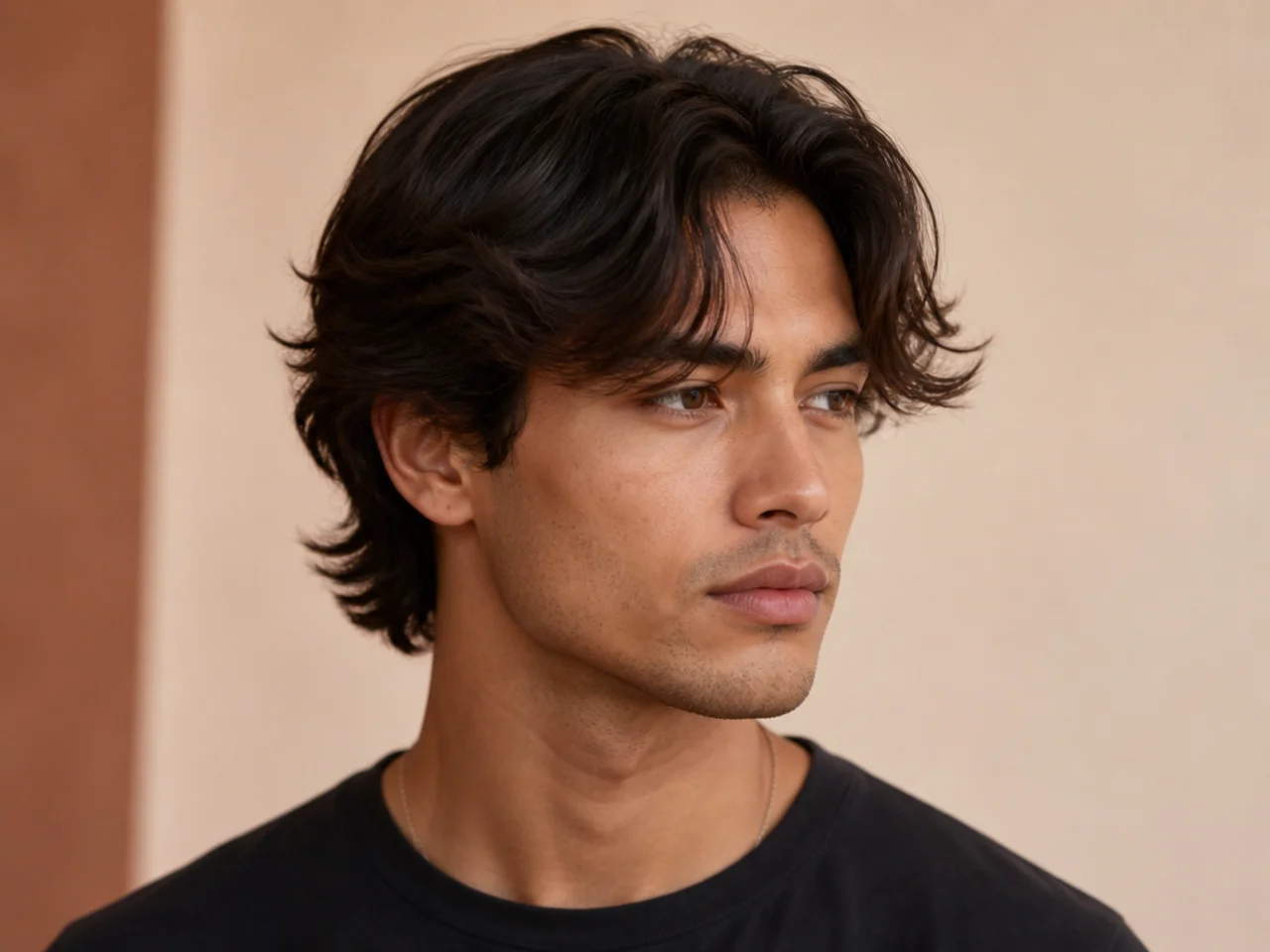
The layered version. The barber slide-cuts each panel of the fringe so the layers stack like feathers — shorter at the top, progressively longer down through the strand — and the two curtains fall with visible internal movement. Suits oval, round, and square faces. Any straight to wavy hair type. Ask for "feathered curtain bangs — 4 to 5 inches at the front, slide-cut through each panel for visible internal feathering, center part, scissor blend into the sides." Style with sea-salt spray on damp hair, then a pea of matte cream, split with fingers. The feathering photographs sharpest of any curtain bangs build and needs the least daily styling once cut in.
Piecey Curtain Bangs
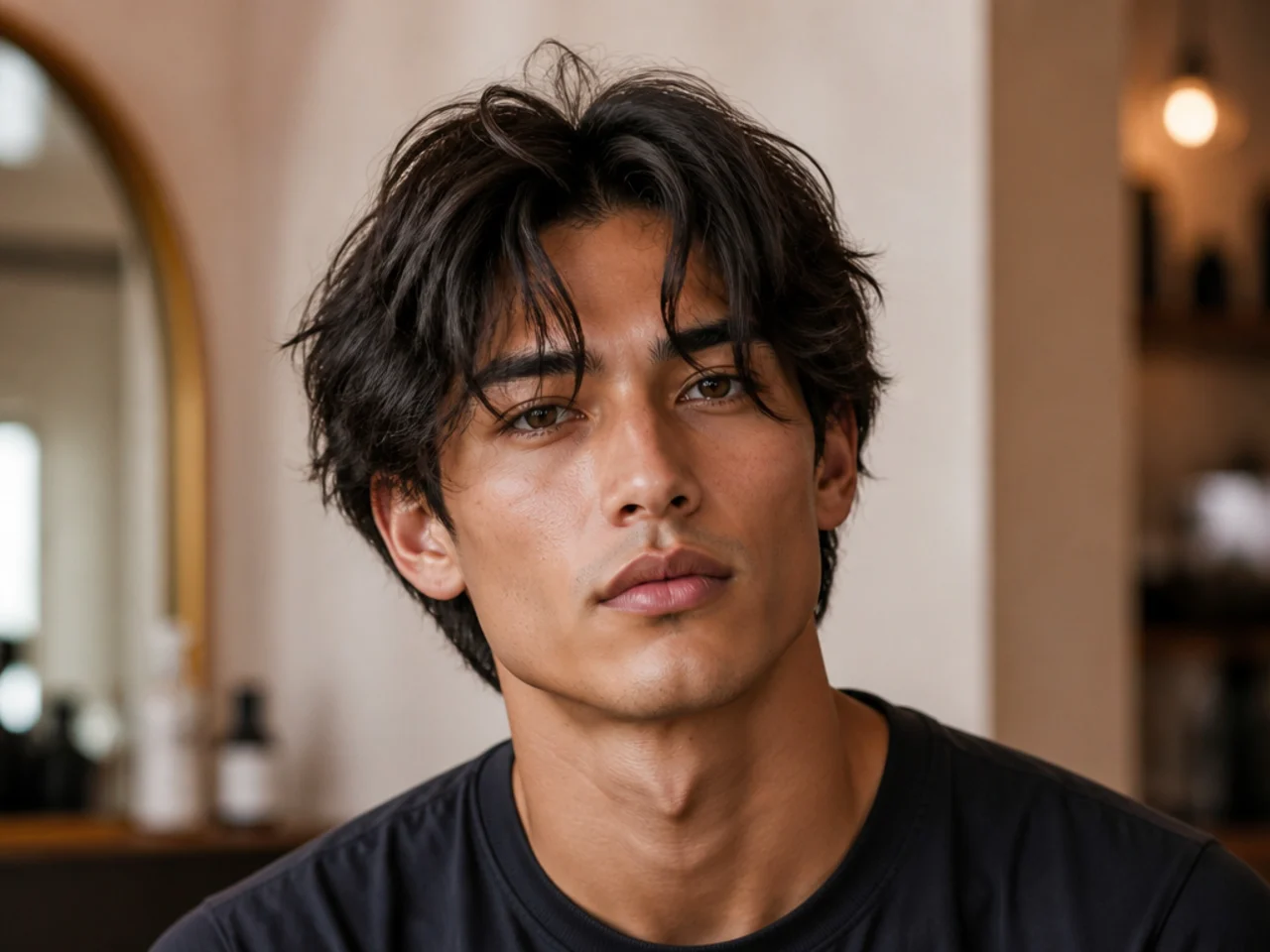
The most textured version. The barber point-cuts heavily through the ends so the fringe falls in separated pieces instead of a solid drape, with visible strand definition. Suits square, diamond, and heart faces because the broken texture eases sharp angles. Wavy and lightly curly hair wear this best; straight hair needs sea-salt spray to hold the pieces. Ask for "piecey curtain bangs — 4 inches at the front, heavy point-cutting through the ends, hidden internal layers, center part, scissor blend at the sides." Finish with sea-salt spray on damp hair and a pea of matte clay for grip. Skip creams — they mute the piece definition the point-cutting bought.
Side-Swept Curtain Bangs
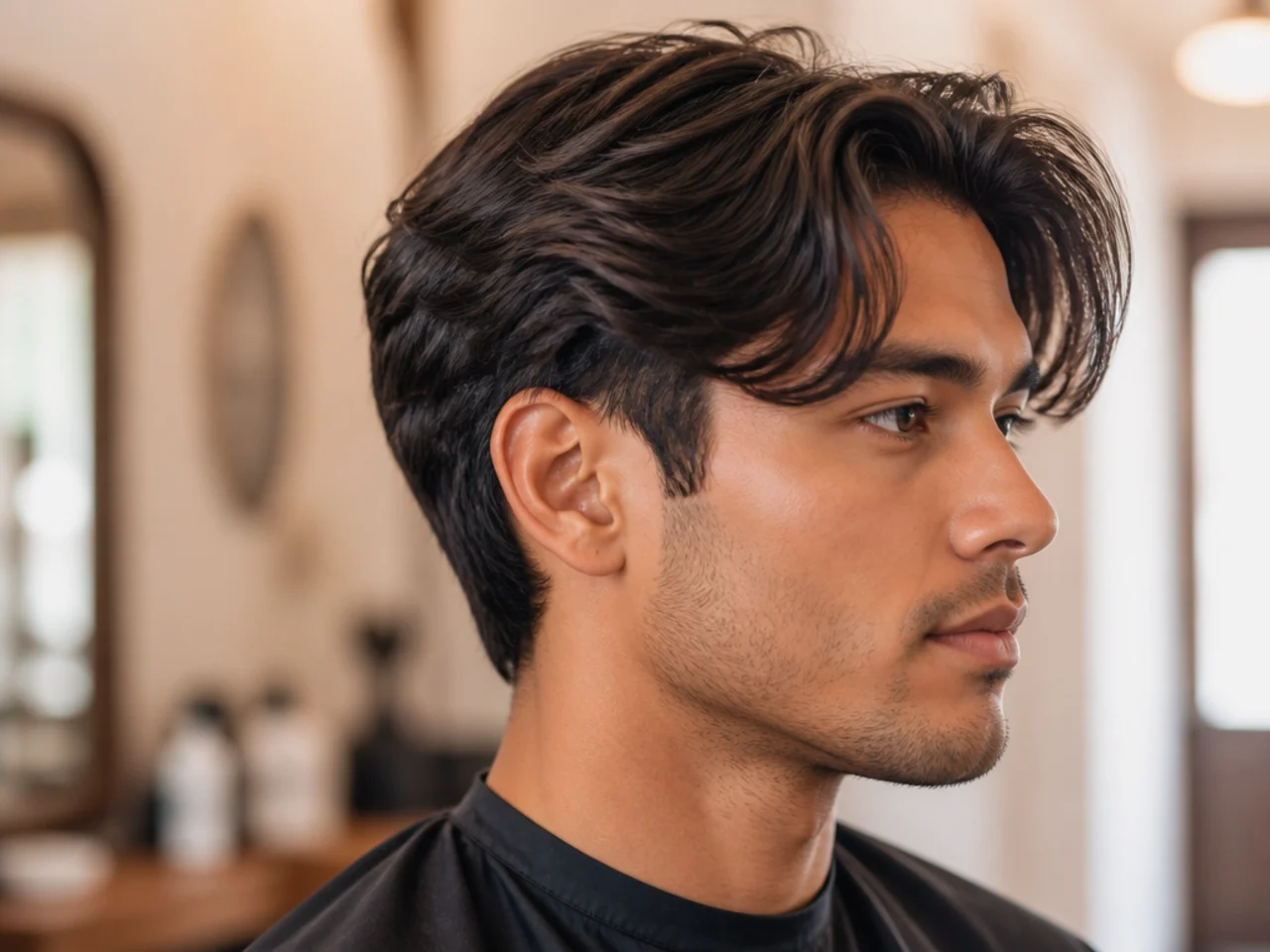
The off-center take. The bangs still fall in two panels but the part sits an inch or two off-center, so one panel drapes short across the brow and the other sweeps longer across the forehead. Suits oval, square, and round faces. Any hair type. Ask for "side-swept curtain bangs — 5 inches at the longer side and 3 inches at the shorter, part cut in an inch off-center, internal layers through both panels, scissor blend at the sides." Style with a light-hold cream, comb the sweep across, set with a light spray if the hair is fine. This is the version to book if a symmetrical middle part feels too styled for your face — the asymmetry reads more relaxed.
Long Curtain Bangs
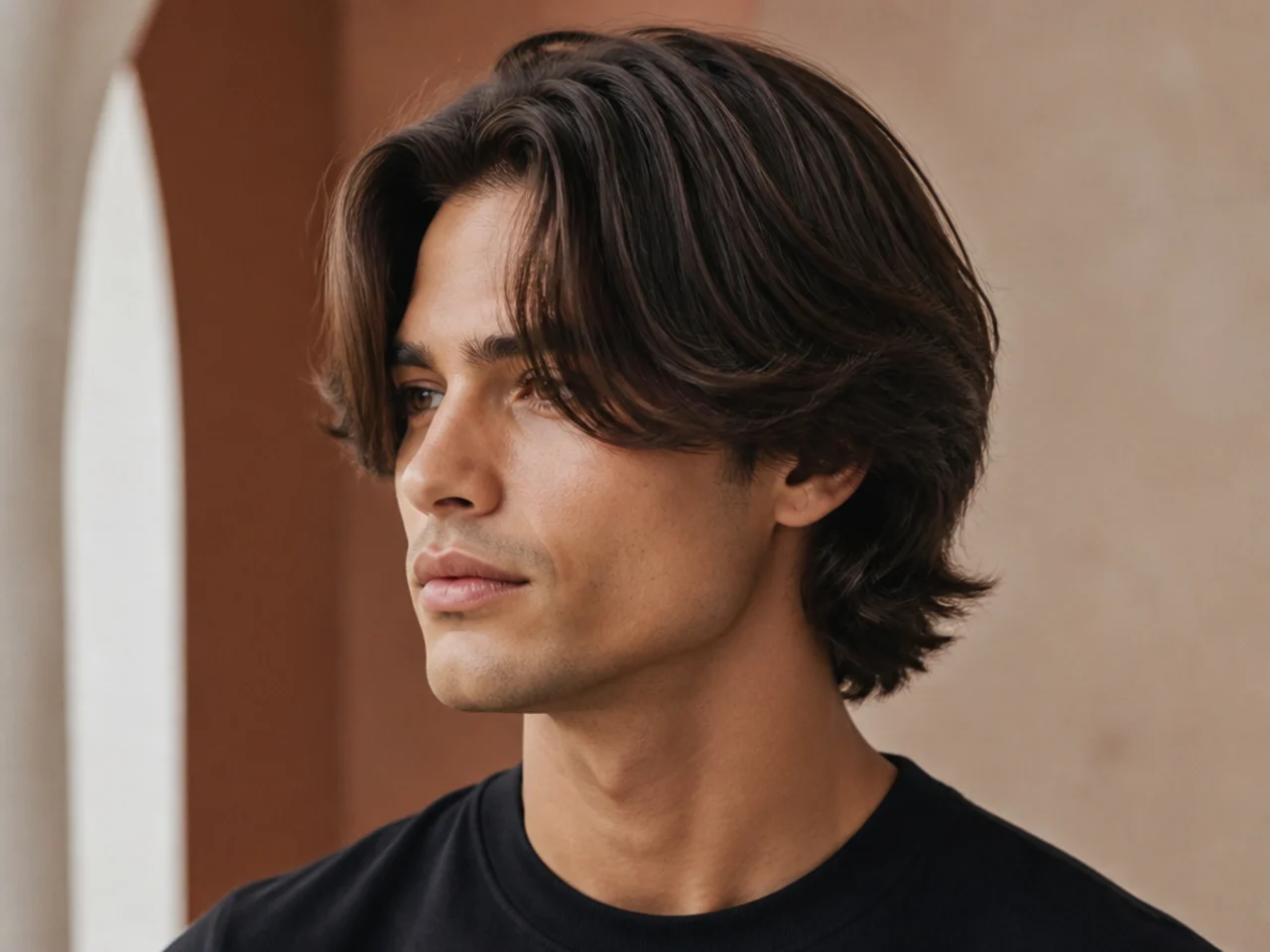
The full-length take. Bangs run 5 inches or more at the front so the two panels reach past the cheekbones when damp and past the mouth when styled forward. The rest of the top runs 4 to 6 inches to match. Suits oval, long, and heart faces best. Straight to wavy hair only — coarse or coily hair loses the drape at this length. Ask for "long curtain bangs — 5 to 6 inches at the front reaching past the cheekbones, internal layering through the last two inches for movement, center part, scissor-blended sides that tuck behind the ear." Style with a leave-in on wet hair, sea-salt spray as it dries, matte cream to finish. This is the medium length men's cut with the fringe pulled to the front and let long.
Short Curtain Bangs
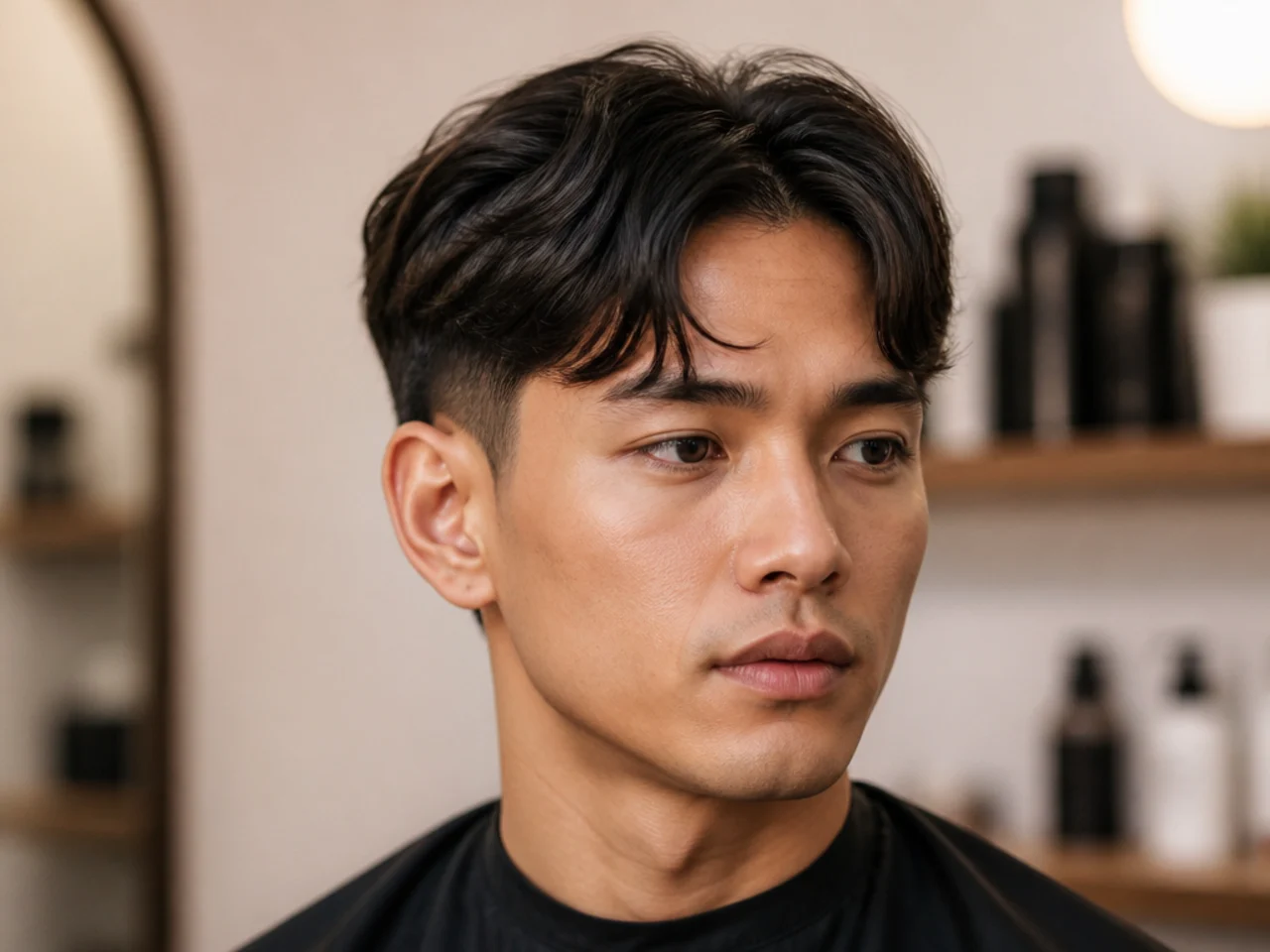
The office version. Bangs run 3 inches at the front so the two panels graze the eyebrows rather than covering them, and the rest of the top runs about 2 inches with a scissor-blended short back and sides. Suits round and heart faces because the shorter fringe balances a wider forehead. Any hair type. Ask for "short curtain bangs — 3 inches at the front just grazing the brow, center part cut in, scissor blend into a two-inch top and short sides." Style with a light-hold matte cream and a comb. Total morning time under 90 seconds. This is the version to book if you like the curtain shape but need the cut to disappear on a Zoom call.
Textured Curtain Bangs
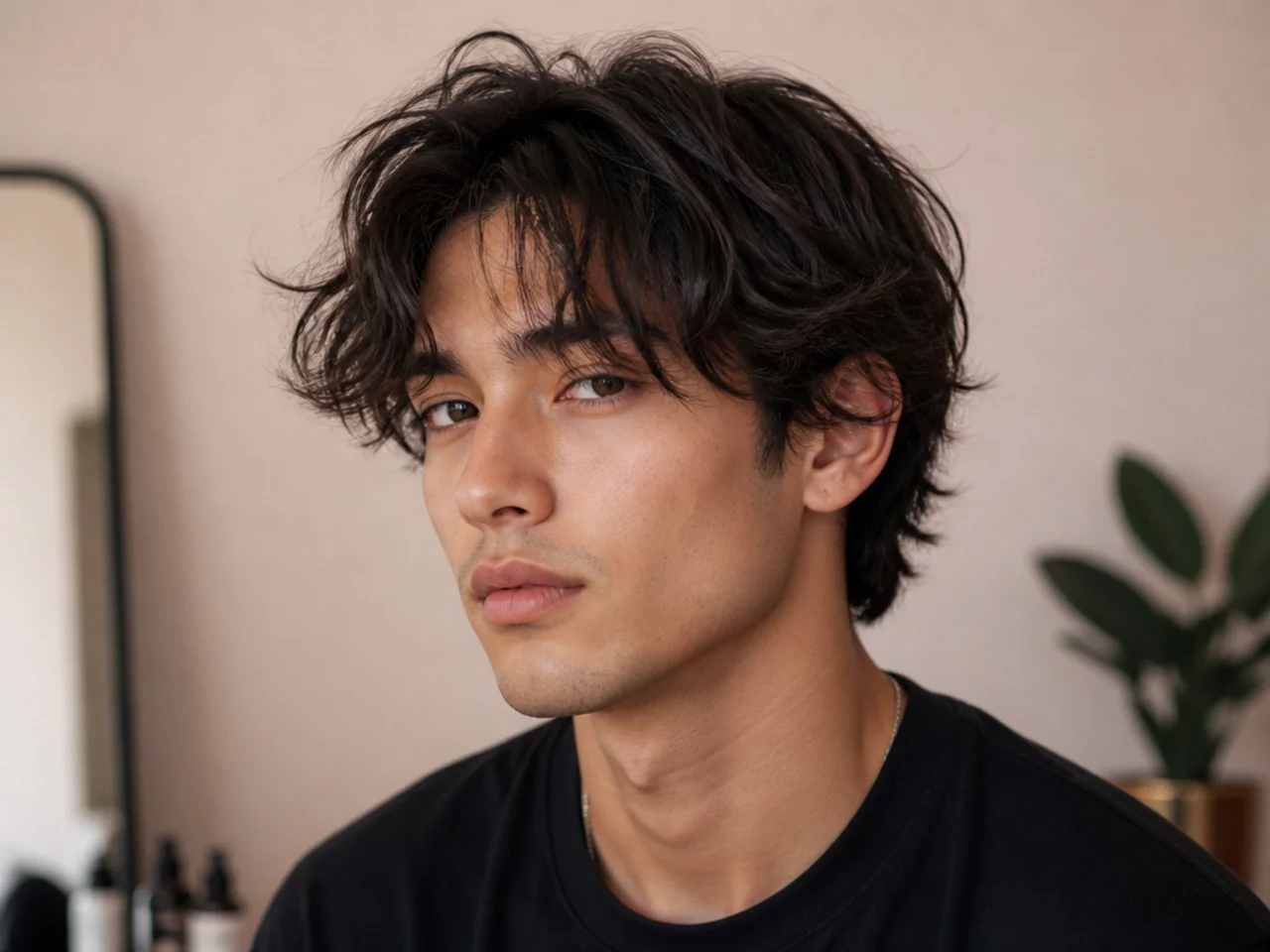
Same fringe rule, choppier finish. The barber threads heavy internal layers through the fringe and the top of the crown so the whole cut reads textured and separated — the fringe pieces match the length pieces above. Suits square, diamond, and heart faces. Wavy and lightly curly hair wear this best. Ask for "textured curtain bangs — 4 inches at the front, choppy internal layers through the fringe and matching texture through the top, hidden thinning, center part, scissor blend into short sides." Finish with sea-salt spray, then a matte clay pea. Sits inside the broader textured haircuts for men family and photographs beautifully on medium-brown wavy hair.
90s Grunge Curtain Bangs
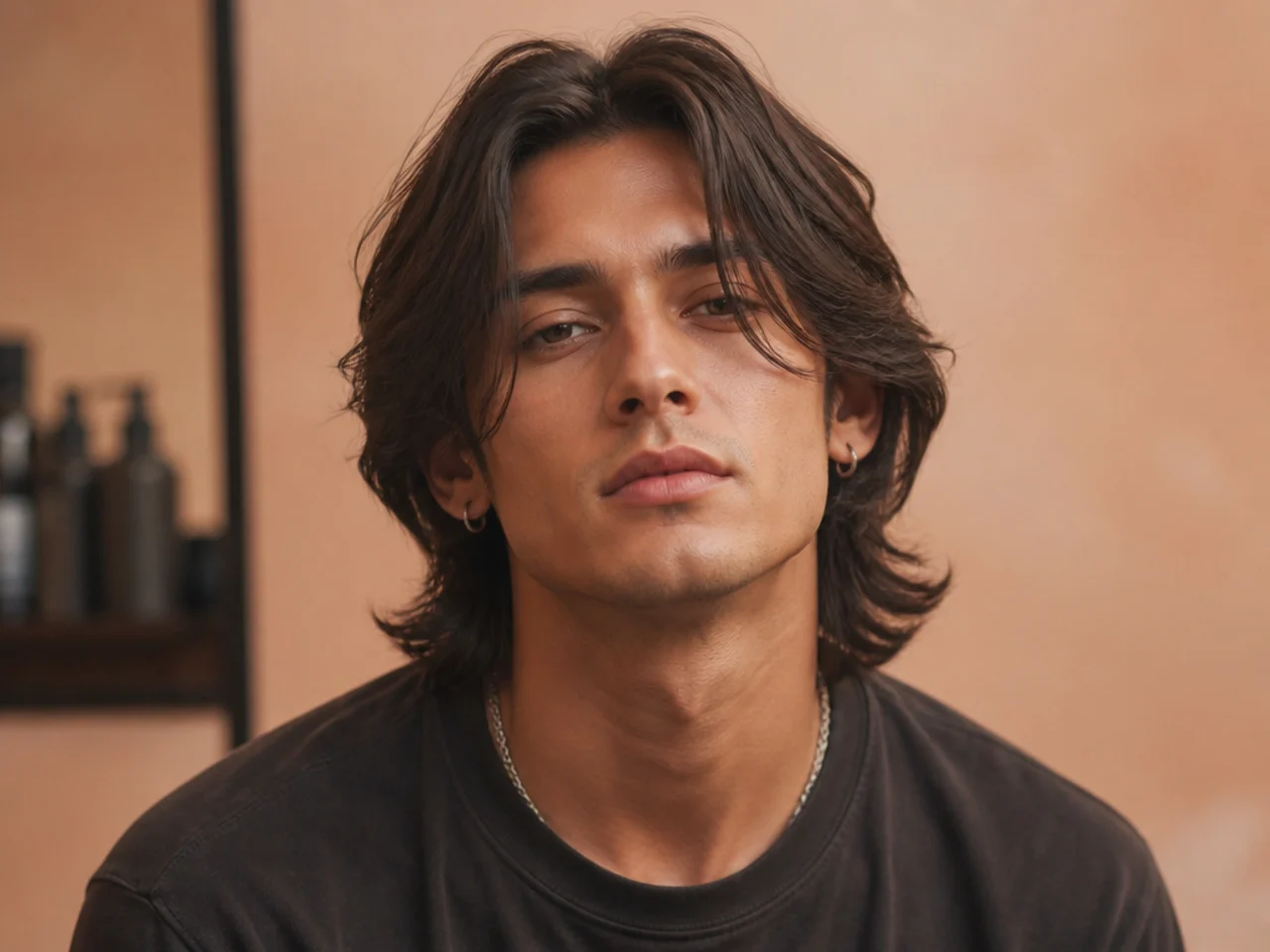
The Cobain-Reeves-DiCaprio reference version. Bangs run 5 inches and are cut heavier at the fringe with less internal layering, so the two panels sit thick and lived-in against a shag-cut top and grown-out sides. Suits oval, long, and heart faces. Straight to wavy hair only. Ask for "90s grunge curtain bangs — 5 inches at the front worn heavy and unlayered, shag-cut top and sides, no fade, no scissor blend — leave the perimeter grown out." Style with sea-salt spray on damp hair, rake with fingers, air-dry. Skip creams and combs — the whole point is the undone finish. Pairs naturally with the broader shag haircuts family if you're growing into a full 90s silhouette.
Curly Curtain Bangs
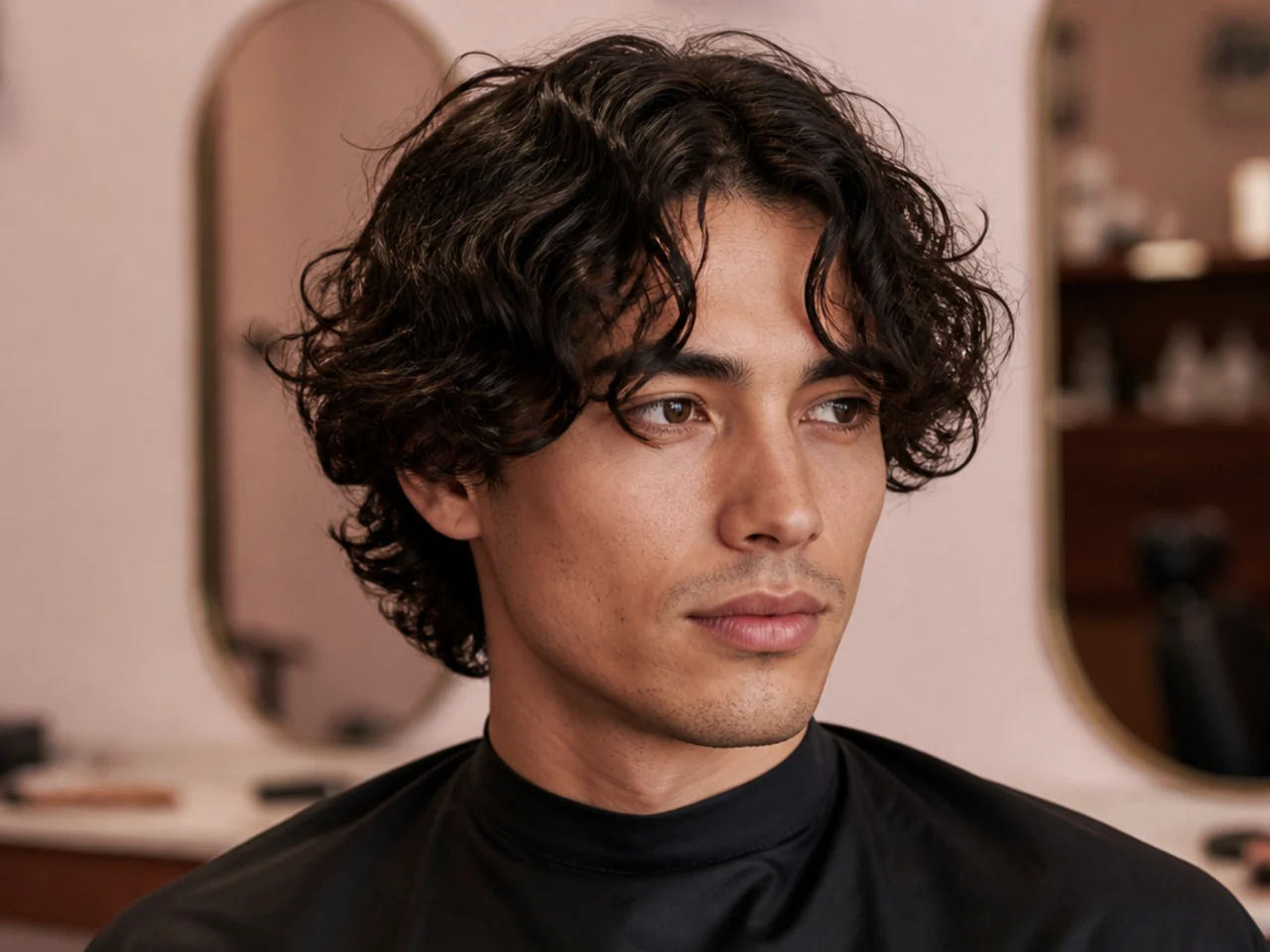
The most demanding version. Curls need extra length — 5 inches minimum at the front — to part and fall in panels rather than build outward, and the barber has to cut each spring individually with the hair dry so the curl memory holds. Sides can be short-scissored or fade-blended. Suits oval and heart faces. Best on curl types 3A-3B; 3C and tighter build into an afro shape instead of curtains. Ask for "curly curtain bangs — 5 inches at the front cut dry spring by spring, internal thinning to control the mid-shaft, center part, scissor blend at the sides." Finish with a curl cream and a diffuser on low airflow. The curly hairstyles for men guide has the product lineup that keeps curl definition through a workday.
Wavy Curtain Bangs
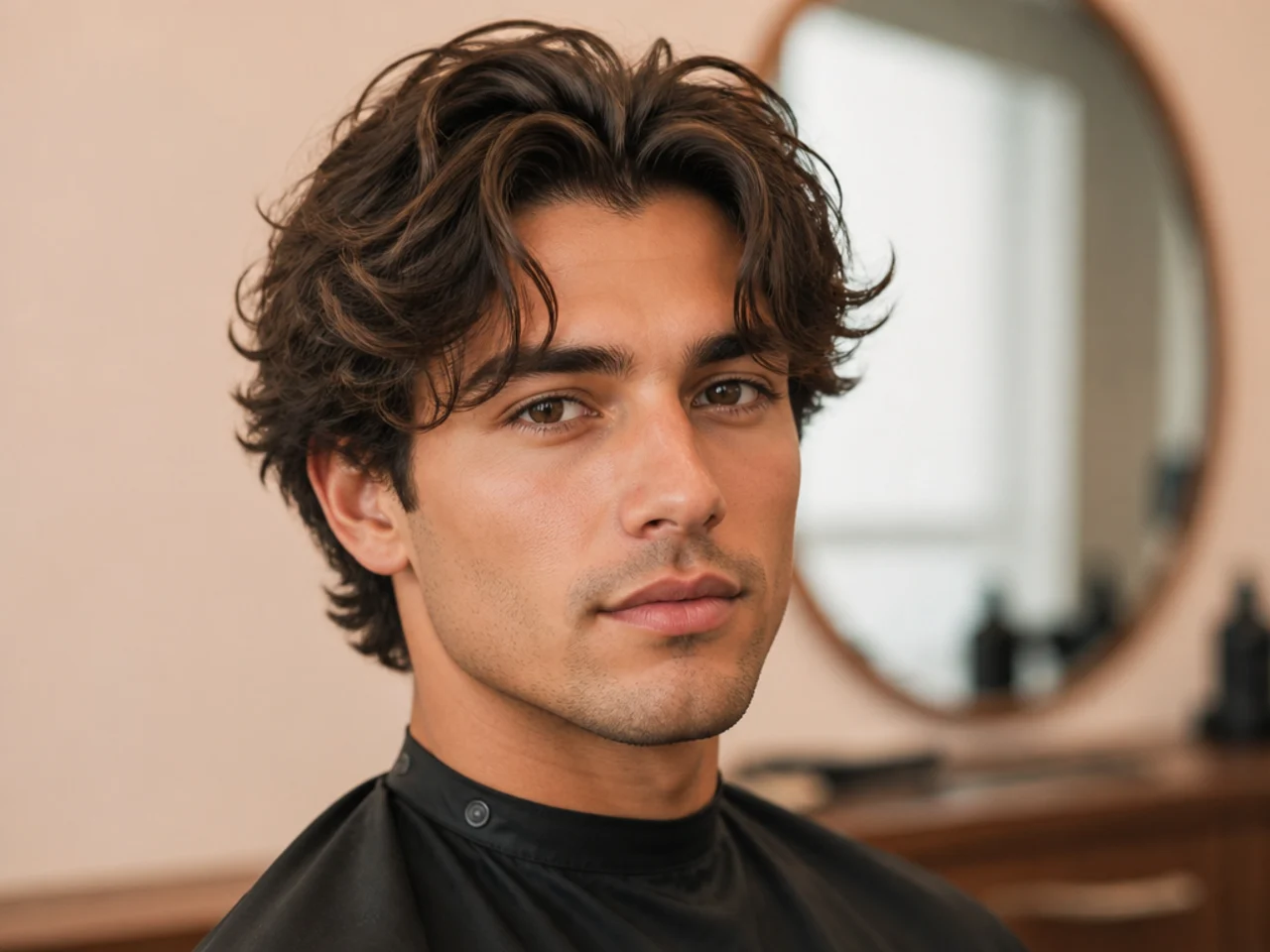
Built for the S-curve. The barber cuts internal layers so the wave falls forward at the fringe instead of poofing at the mid-shaft, then thins slightly through the ends so the panels drape rather than expand. Suits round, heart, and diamond faces because the wave breaks up the perimeter. Ideal for wave patterns 2A-2C. Ask for "wavy curtain bangs — 5 inches at the front, internal layers to control mid-shaft poof, minimal thinning at the ends, center part, scissor blend at the sides." Finish with a leave-in on wet hair, diffuse upside-down for root lift, split with fingers. The best wavy hair products breakdown is the two-product shortcut that keeps the wave from frizzing out by lunch.
Straight-Hair Curtain Bangs
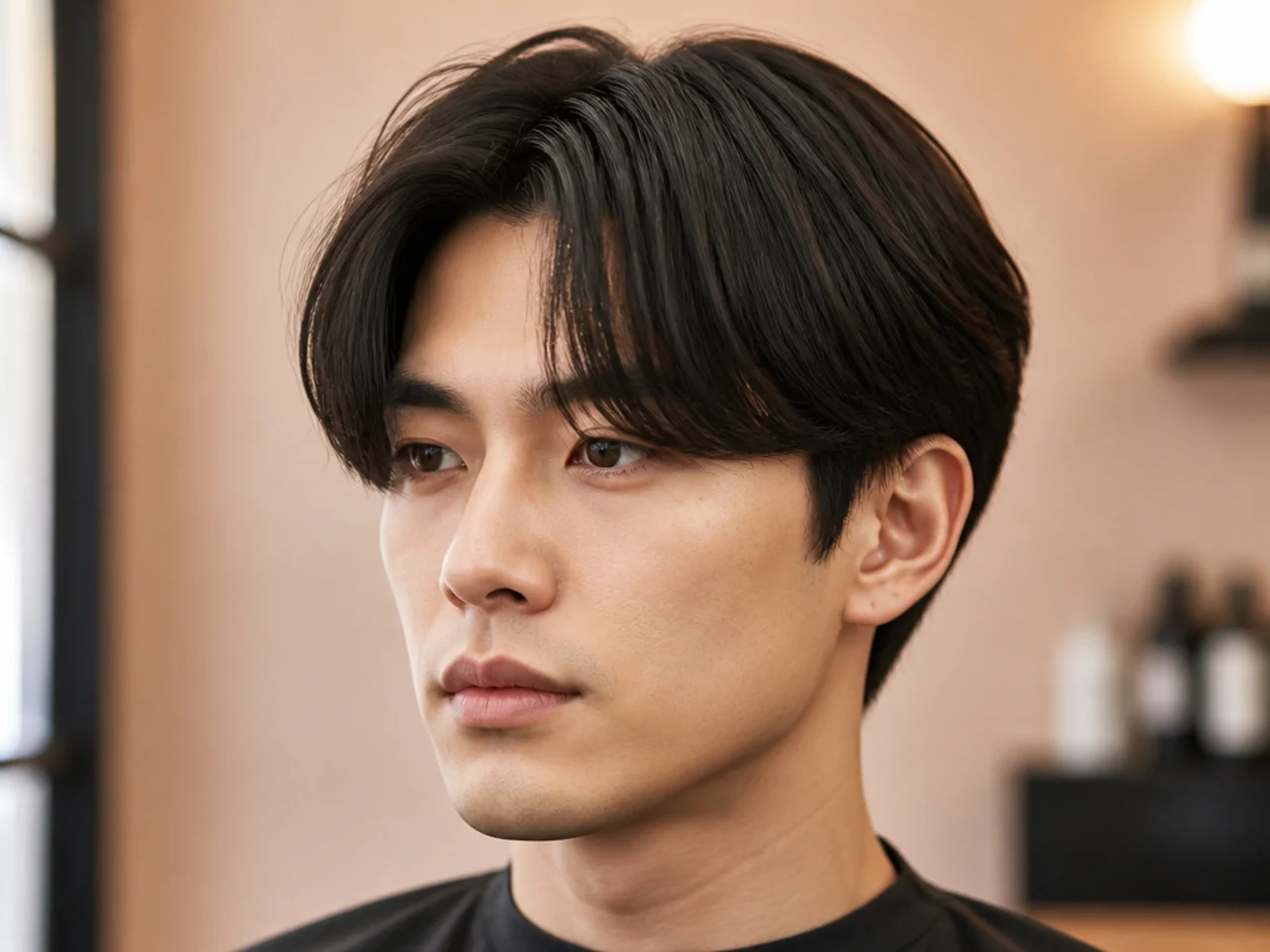
The path-of-least-resistance version. Straight hair (patterns 1A-1C) drops into a curtain shape without needing internal layering or a curl cream — the fringe just falls. Bangs run 4 to 5 inches, cut with one internal layer at the mid-shaft to prevent the panels from reading blocky, and the rest of the top runs about 3 inches with a scissor blend at the sides. Suits every face shape. Ask for "curtain bangs for straight hair — 4 inches at the front, one internal layer at the mid-shaft to soften the ends, center part cut in while damp, scissor blend on the sides." Style with a matte cream and a wide-tooth comb, done. If your hair is straight and you have five minutes total for hair in the morning, this is the version.
Curtain Bangs with Low Taper Fade
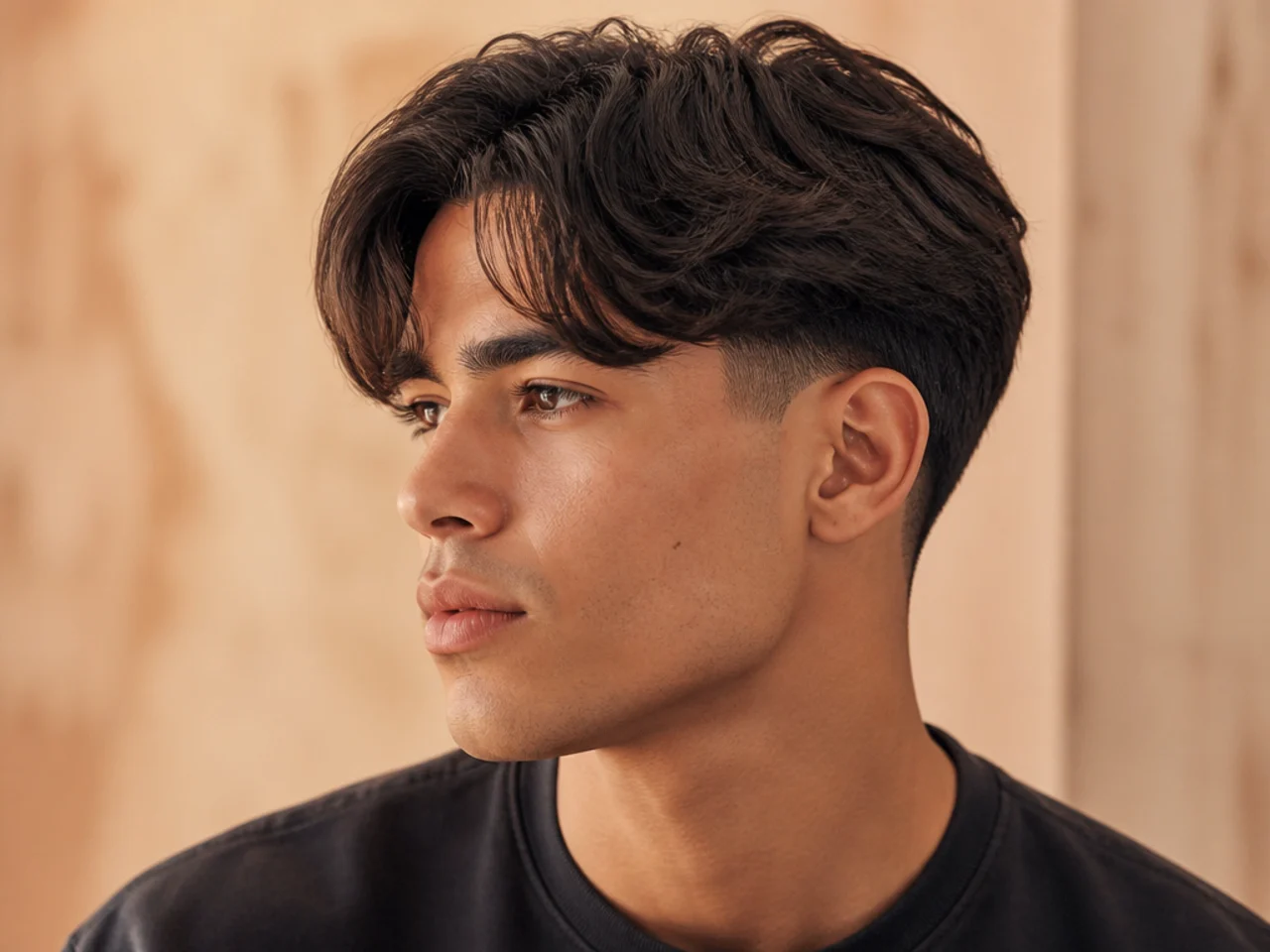
The most-booked combo of 2026. Curtain bangs sit on top, the rest of the top runs 3 inches, and the sides drop into a low taper fade starting just above the ear. Suits every face shape. Any hair type. Ask for "curtain bangs with a low taper fade — 4 inches at the front, internal layering, center part, three-inch top, low taper starting just above the ear and blending to skin at the sideburn." Style with a matte cream and a comb. The fade cleans the perimeter without shouting, so the whole cut passes both an interview on Monday and a bar on Friday. This is the safest first curtain-bangs booking if your workplace runs conservative.
Curtain Bangs with Undercut
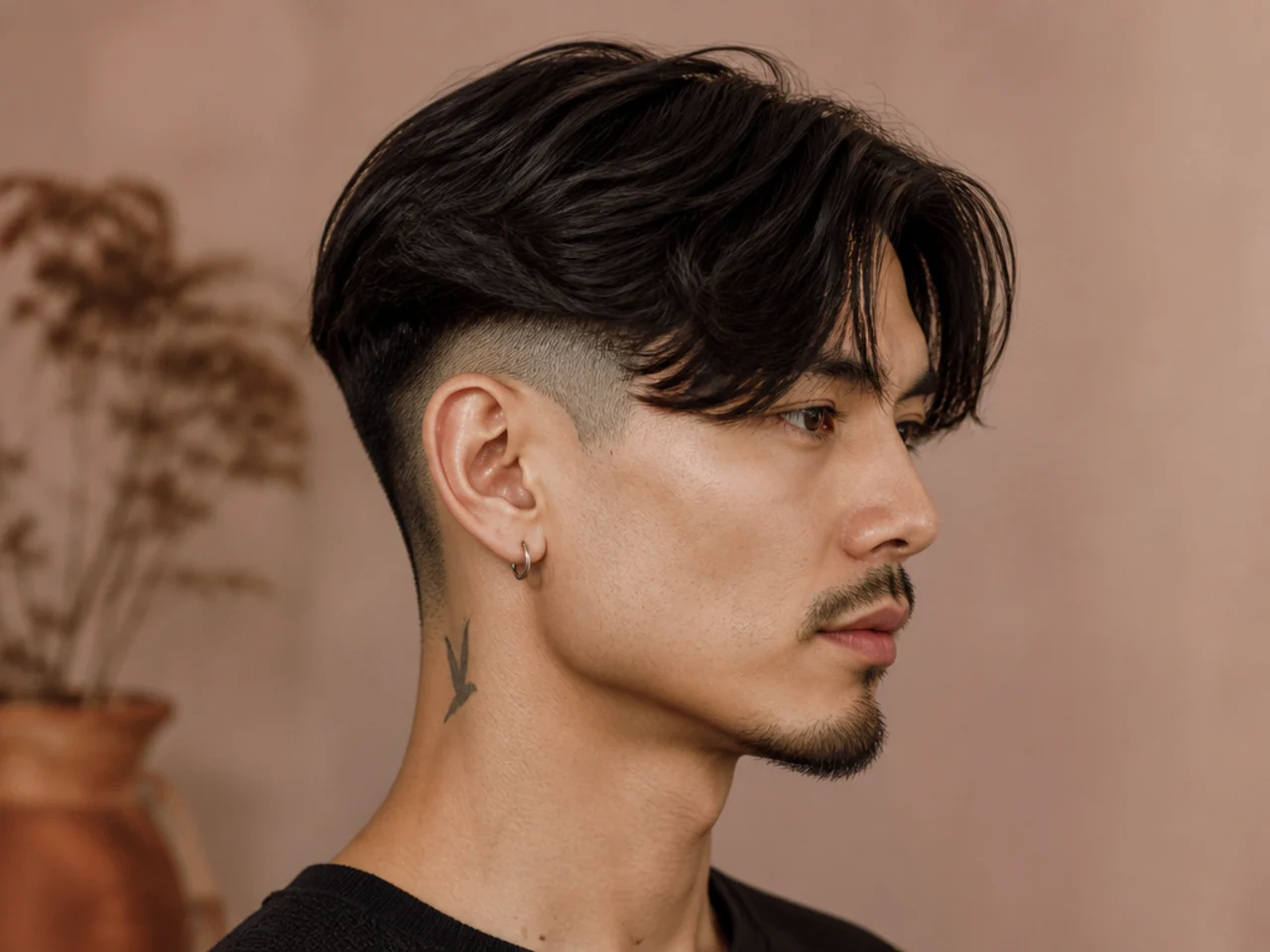
The disconnected version. Curtain bangs and a full-length top run 5 inches over sides that are buzzed to a one-guard with no fade or blend — the length just ends. Suits oval and square faces because the vertical drop narrows the head shape. Straight to wavy hair only; curls read unfinished against a disconnected line. Ask for "curtain bangs with an undercut — 5 inches at the front and top with internal layers, disconnected undercut at a one-guard on the sides, no blend, no taper." Style with a lightweight cream and finger-comb — heavy product turns the crown into a helmet by lunch. Undercuts grow out cleaner than fades if you can't commit to a three-week trim cycle.
Curtain Bangs with Two-Block
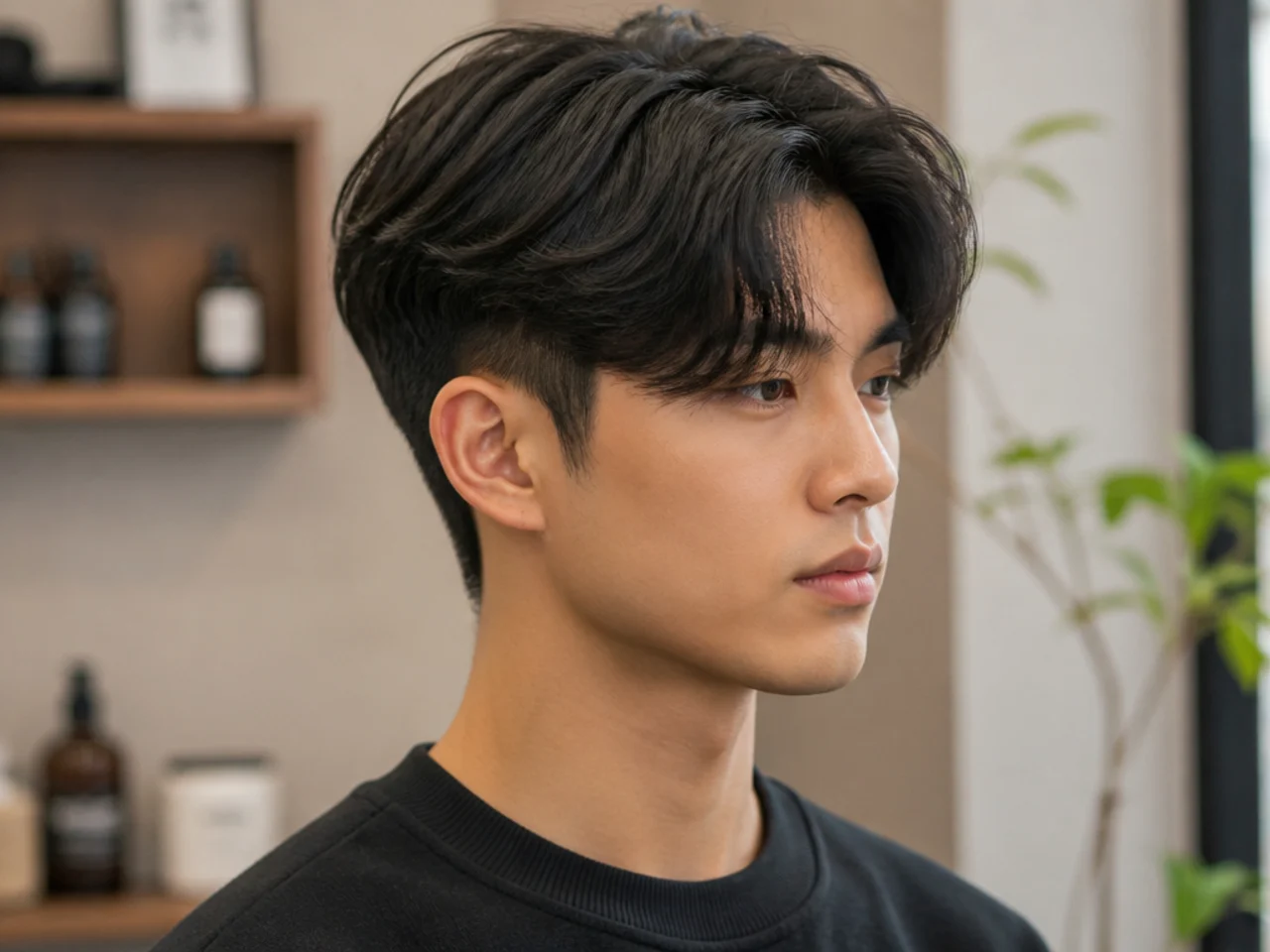
The Korean-inspired hybrid. The top is scissor-cut into a curtain shape with the classic fringe drape; the sides are buzzed short underneath at a three-guard with a longer scissor layer over the buzz that hides it until you tuck the ear-side hair back. Suits round and heart faces because the volume up top balances narrow sides. Straight and light-wave hair. Ask for "curtain bangs with a two-block cut — 5 inches at the front and top, three-guard buzz under a longer scissor layer at the sides, center part." Style with a light matte cream and a wide-tooth comb. The buzz stays hidden day-to-day and shows only when you push the sides behind the ear. Modern K-pop styling in a single haircut.
Korean-Style Curtain Bangs
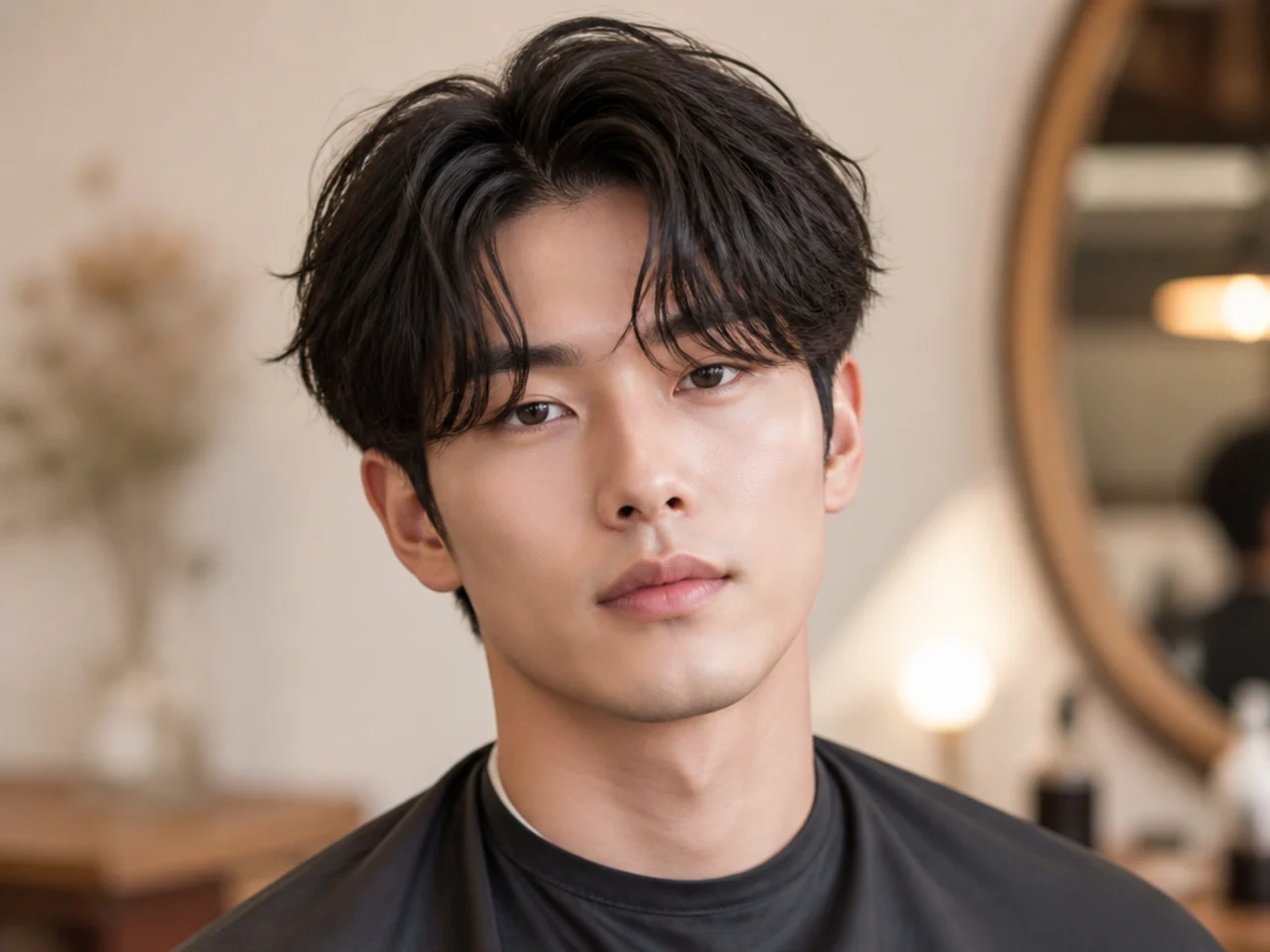
The softest scissor-only version. Bangs run 4 to 5 inches, cut with heavy internal feathering so the fringe drops in soft strand-by-strand definition, and the rest of the cut mirrors the Korean haircut for men shape — scissor-tapered sides, no fade, feathered length through the top. Suits every face shape. Best on straight to light-wave hair. Ask for "Korean-style curtain bangs — 5 inches at the front with heavy feathering, center part cut in, scissor-tapered sides, no fade, no undercut." Finish with a light matte cream or a keratin smoothing serum through the front. This version dominates Pinterest search from South Korea outward, and the editorial cleanness is why.
Curtain Bangs with Mullet
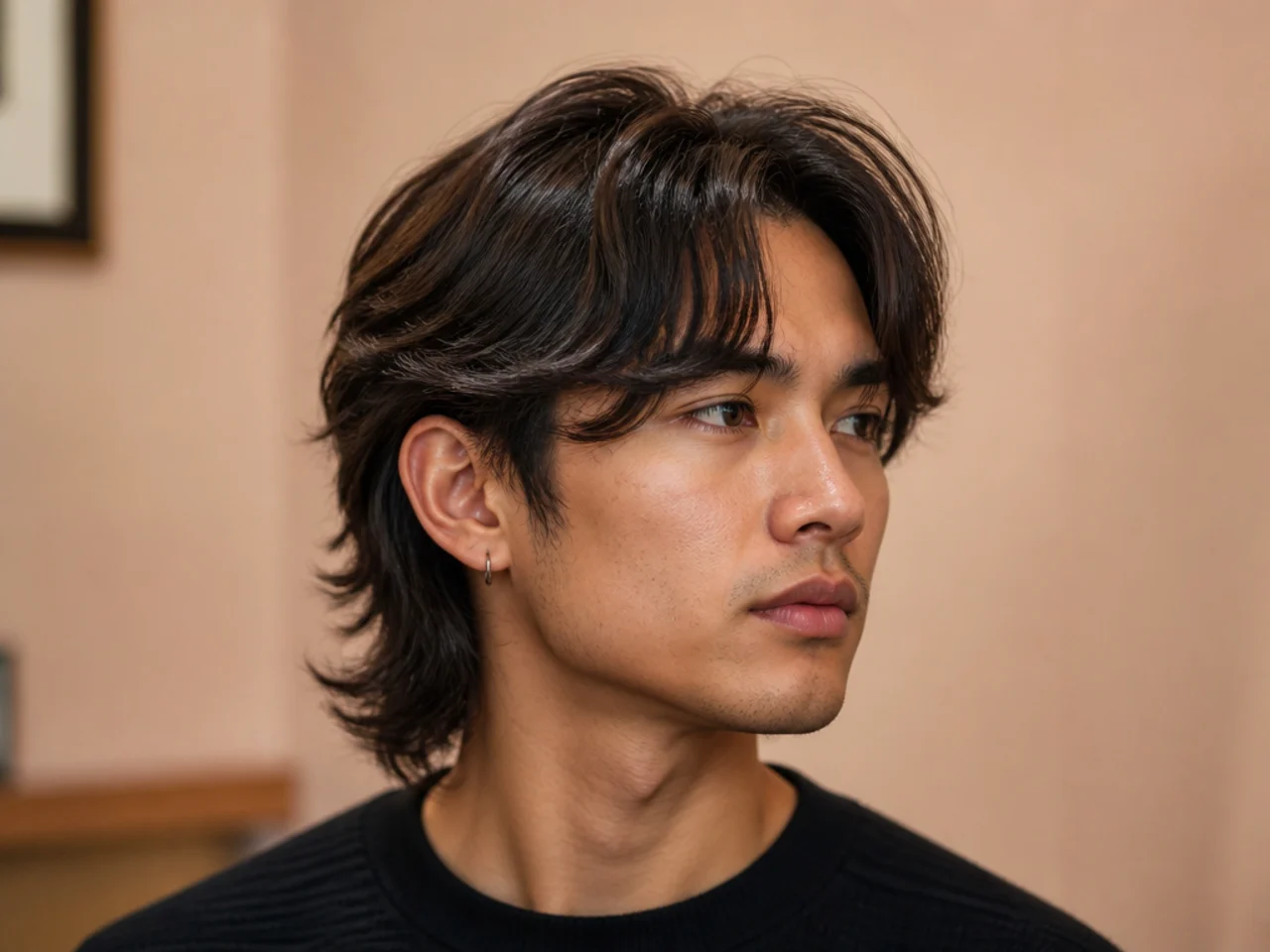
The 2020s mullet's front-of-house move. Curtain bangs sit on top, the crown and sides run medium-length, and the nape is grown out into full mullet length — the two panels frame the face, the length at the back does the rest. Suits oval, long, and heart faces. Wavy and straight hair wear this best. Ask for "curtain bangs with a mullet — 4 to 5 inches at the front with a defined center part, medium length through the crown, grown-out length at the nape, scissor blend at the sides." Style with sea-salt spray and finger-rake. Fits inside the broader modern mullet haircut men family and reads more editorial than either shape alone.
Curtain Bangs with Beard
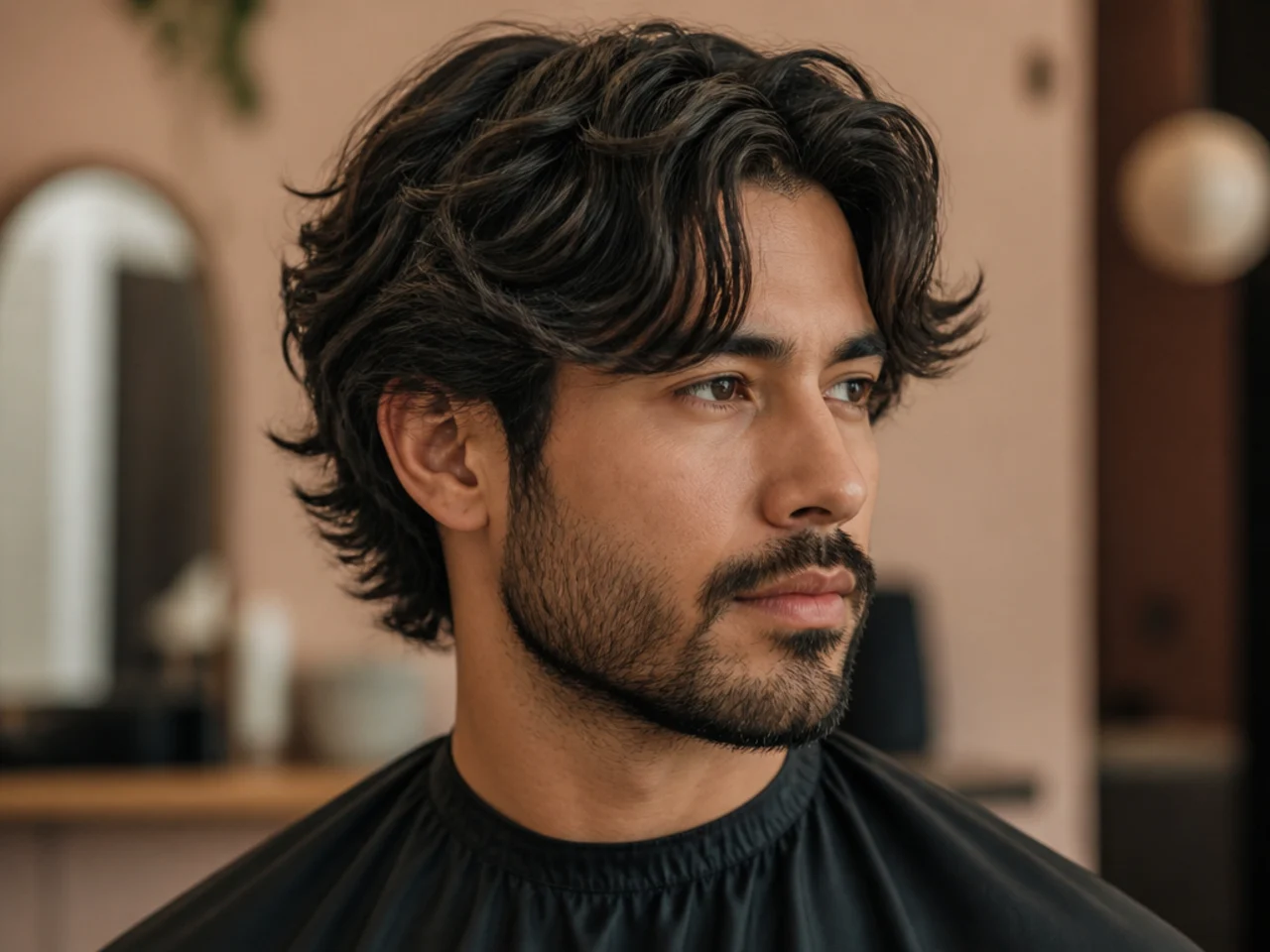
The face-framing combo. Curtain bangs drop onto the cheekbones, the sides fade or scissor-blend into the sideburn, and a short beard at a two or three-guard length picks up where the fringe ends so the whole face is framed by one continuous oval of hair. Suits square, round, and diamond faces because the beard rebalances a wide-at-top silhouette. Ask for "curtain bangs with a beard blend — 4 to 5 inches at the front with a defined center part, scissor blend or low fade at the sideburn connecting to a two-guard beard, edge lines cleaned up." Trim the beard and the fringe the same visit — a fresh beard against a three-week-old fringe reads mismatched every time.
Modern Curtain Bangs
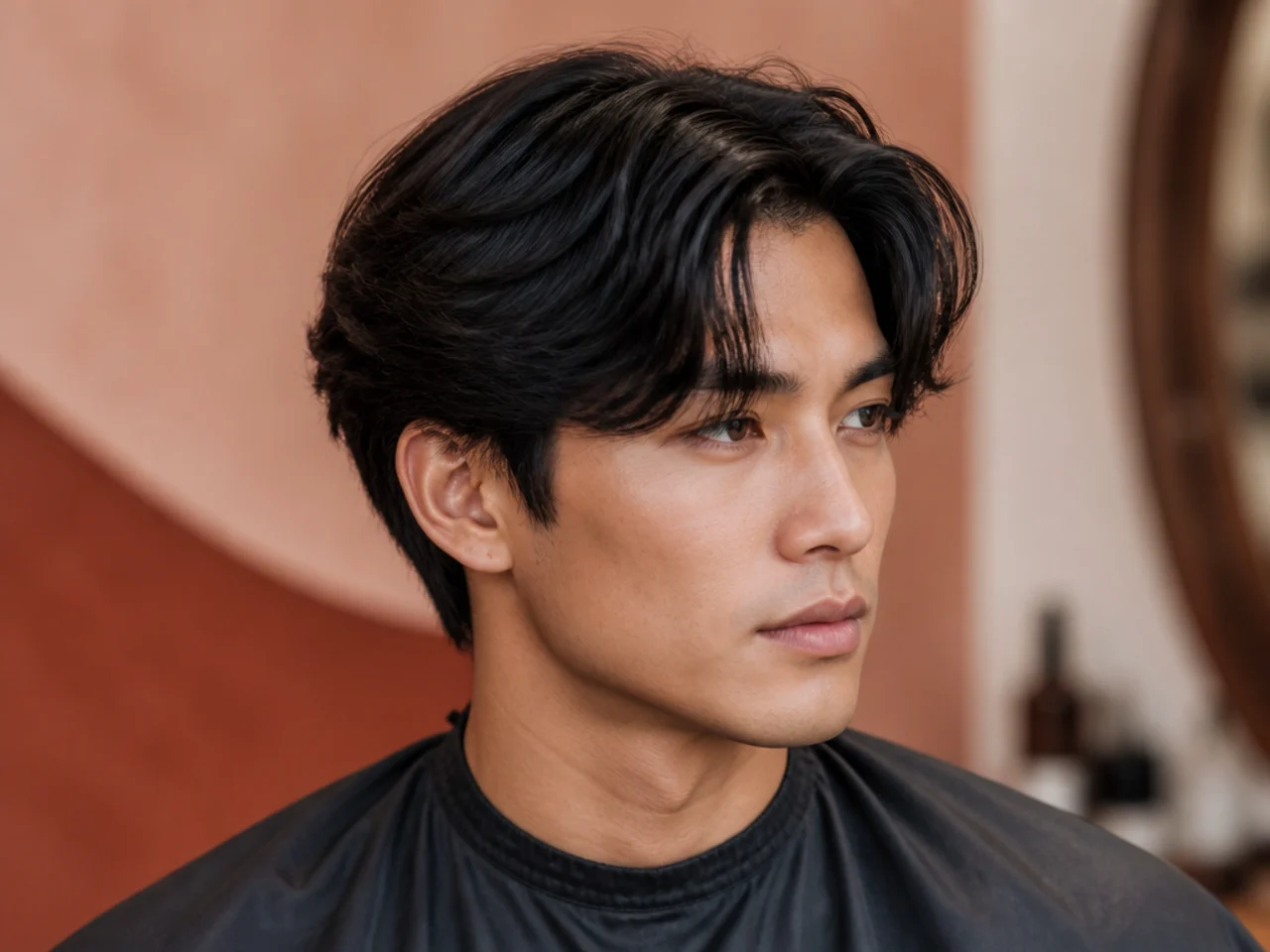
The 2026 refresh. Softer feathering through the fringe than the classic, matte finish through the top, a subtle low-mid fade that lands between a low taper and a full mid — cleaner lines, less styling, more editorial polish. Suits every face shape. Any hair type. Ask for "modern curtain bangs — 4 to 5 inches at the front with soft feathering through both panels, center part, subtle low-mid fade starting between the ear and the temple." Style with a matte cream and a natural split from your fingers — no comb line. This is the version to hand your barber when you can't choose between the classic and the fade — it splits the difference and photographs sharpest under any light.
How to Ask Your Barber
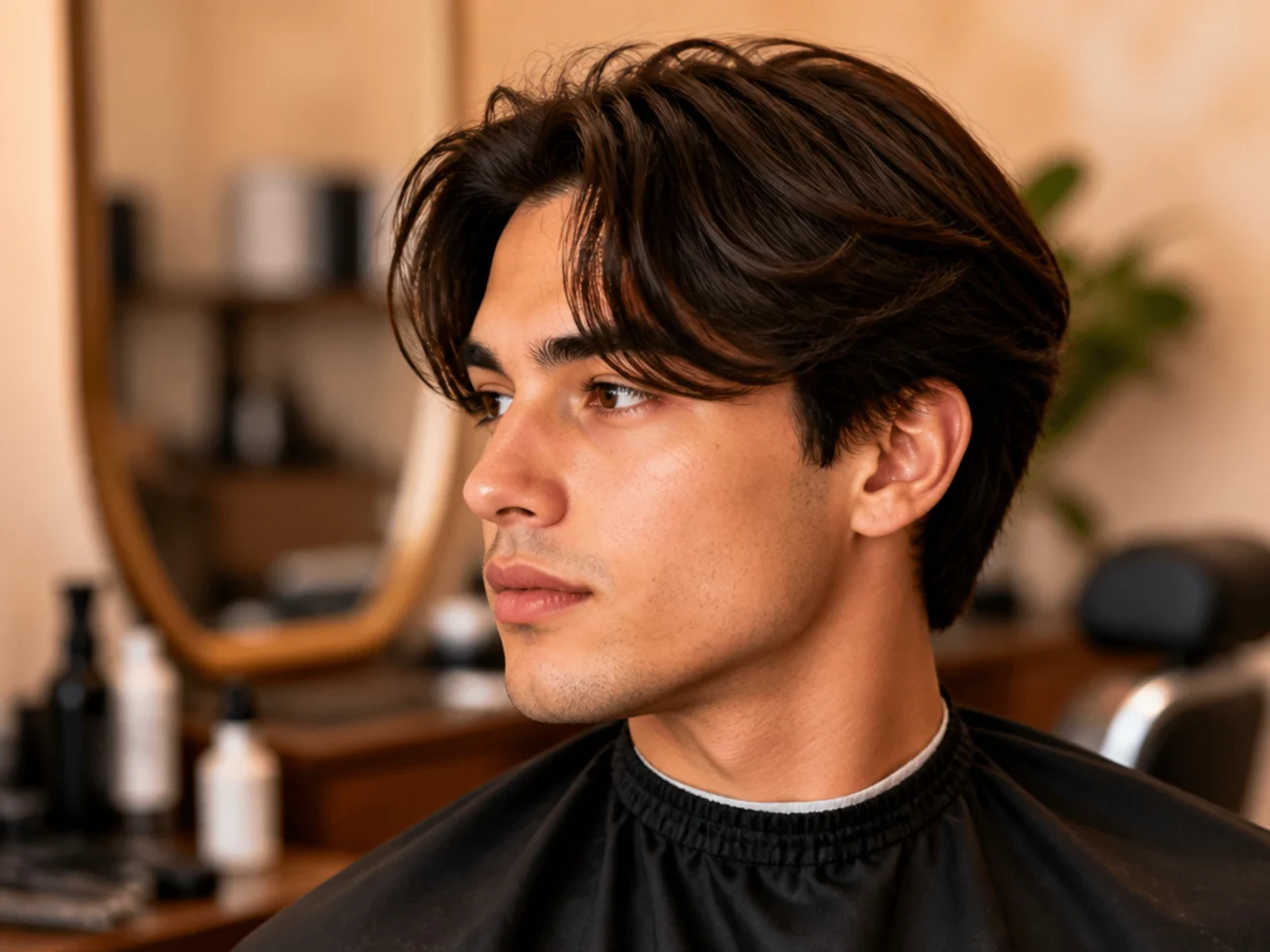
"Curtain bangs" is not one haircut — it's a fringe family that pairs with almost every men's silhouette. Give your barber all six decisions below before the cape goes on.
- Show the exact variation. Screenshot the one from this guide that matches your face and hair type. A single photo cuts the negotiation from ten minutes to thirty seconds.
- Set the front length in inches. Three inches for the short version; four for the classic and most fade combos; five for wavy, curly, mullet, long, and 90s builds. Say the number.
- Ask for internal layers by name. Two words most barbers wait for: "internal layers." Without them, the bangs drop flat as a slab. With them, the two panels taper diagonally and drape properly.
- Name the finish on the fringe. Wispy, full, feathered, piecey, textured, or blunt. Every version above uses different scissors and finishing shears — barbers hear "curtain bangs" a hundred times a day, they need the modifier.
- Cut the part in. Ask outright: "cut a center part while it's damp so it falls naturally when dry." Don't skip this — a curtain fringe without a cut-in part fights you every morning for three weeks.
- Match the perimeter. Scissor blend, low taper, mid fade, skin fade, undercut, two-block, mullet, or grown-out. Match the exact phrase from the variation you picked.
Styling and Maintenance
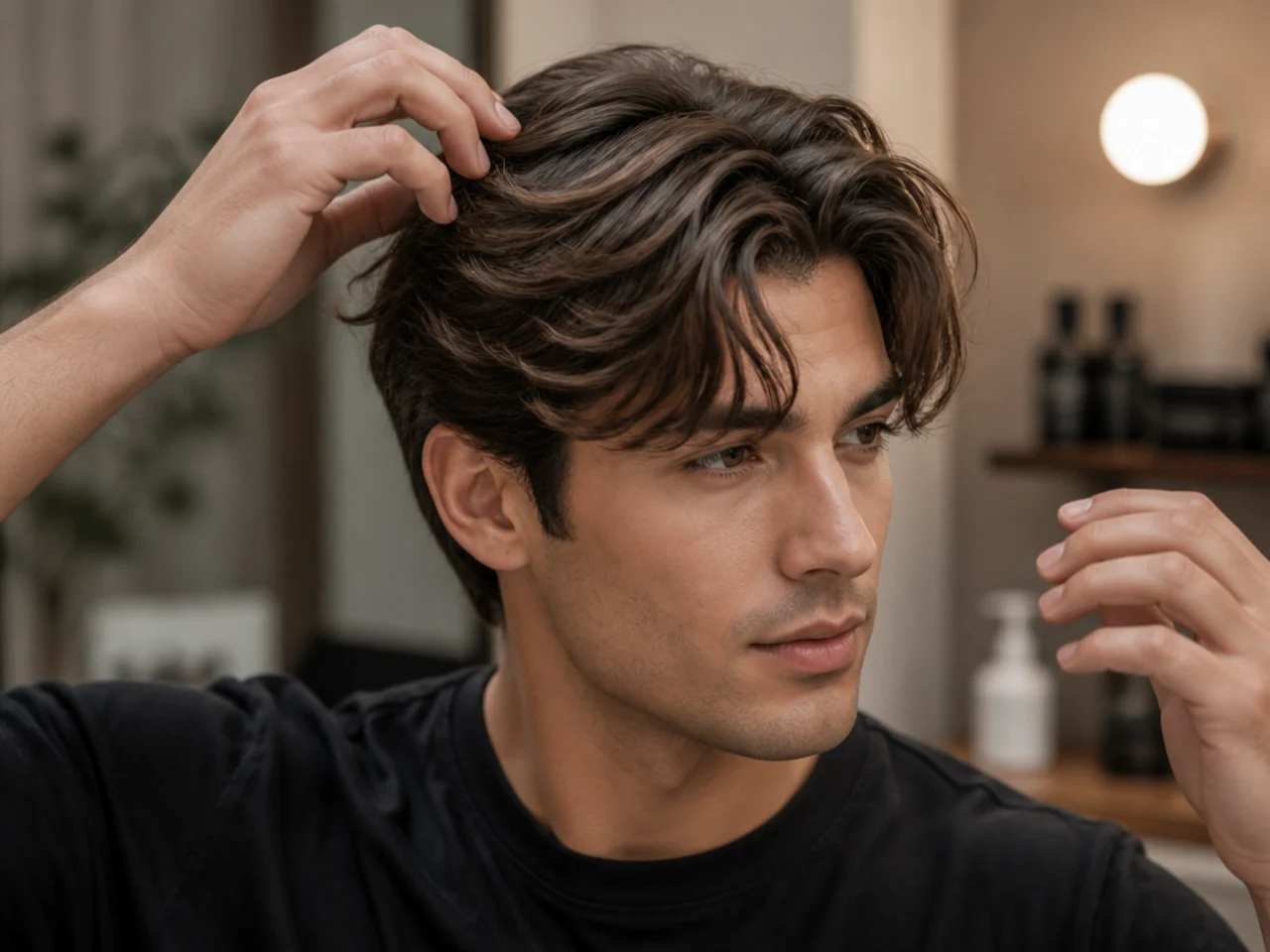
Curtain bangs style wet, set damp, and hold on two products.
Wash with a sulfate-free shampoo every two to three days and condition the mid-lengths and ends only — coating the roots weighs the fringe down. Towel-dry with a microfiber cloth or an old cotton T-shirt — terry towels rough up the cuticle and turn the panels frizzy by lunch. While hair is still damp, mist sea-salt spray from four inches away, focused on the mid-shaft where the two panels form. Comb once with a wide-tooth comb straight back to set the center part. Let it air-dry ten minutes. When it's 80% dry, work a pea of matte cream between your palms until it disappears and rake forward through both panels of the fringe with your fingers, then split at the center with the wide-tooth comb.
Product line-up: matte cream or light-hold paste is the daily driver; sea-salt spray adds the mid-shaft texture that lets the panels drape rather than clump; a curl cream handles the wavy and curly versions; a leave-in and lightweight oil are for anything past 5 inches at the front. Skip gel — it locks the drape too rigidly and cancels the movement the internal layering paid for. Skip shiny pomade — it fights every modern curtain finish and turns the fringe into a helmet.
Cut cadence is what separates a great curtain fringe from an overgrown one. Book every four to six weeks for the bangs alone — the fringe grows into your eyes within a month even when the top and sides still hold shape, and a quarter-inch too long turns the panels from drape into curtain-blackout. If you paired the bangs with a fade, tighten the cycle to three to four weeks — the perimeter is the calendar there, not the fringe. For guys with wider jaws or squarer faces, the wispy, feathered, and textured variations layer well into the broader haircuts for square faces rotation. If you're growing curtain bangs out of a shorter fringe, expect a six-week awkward stretch while the front catches up — book a shaping cut at the midpoint to keep the shape from turning into a floppy fringe.
FAQ
Are curtain bangs the same as a middle part? No. A middle part is one length — the fringe and the crown are cut the same. Curtain bangs are internally layered and tapered so the two panels drape and frame the face instead of hanging flat. Every set of curtain bangs is a middle part; not every middle part is curtain bangs. The middle part haircut men guide covers the flat-hair version.
Can I grow curtain bangs out of a short crop? Yes, but expect a four-month awkward stretch while the front catches up. Book a shaping cut every four to five weeks during the grow-out to keep the shape from turning into a floppy fringe. The flow haircut men grow-out plan covers the same window if you want the fuller back-swept look at the end.
Do curtain bangs work at a formal office? The classic, wispy, feathered, side-swept, short, straight-hair, low-taper-fade, and modern versions all pass most office dress codes. 90s, mullet, undercut, and long versions skew editorial — save them for creative workplaces or weekends.
Do I need a blow-dryer for curtain bangs? No for the classic, wispy, short, straight-hair, Korean, and modern versions — they air-dry into shape. Yes for the wavy, curly, and long versions where root lift and a smooth mid-shaft are what makes the panels drape properly.
Do curtain bangs cover a receding hairline? Yes, better than most fringe styles. The two panels drape forward and to the sides, so they hide a receding front hairline naturally without looking like you're trying to hide it. Ask for the full or feathered versions — wispy and piecey versions leave slivers of forehead visible.
How much should curtain bangs cost? Anywhere from $35 at a walk-in to $95 at a specialist barber. Pay for the scissor work at the front — the internal layering and the point-cutting through the fringe — plus the precision of the center part. Those separate a great fringe from a mediocre one, not the guard number on the sides.