Short vs Long Curtain Bangs and 15 Ways to Choose Between Them
Short and long curtain bangs are the same cut with the shortest point moved about two inches, and that two inches changes the upkeep, the face it suits and how it behaves in humidity. Fifteen situations and which one wins each.
In this article · 24
- What Short Curtain Bangs Are
- How Short Is Too Short
- Face Shape Comparison
- Styling Comparison
- Failure Modes
- Trim Cadence and Cost
- Growing Out Comparison
- The 15 Ways to Choose
- 1. Round Face
- 2. Oval Face
- 3. Heart Face
- 4. Square Jaw
- 5. Oblong Face
- 6. Fine Hair
- 7. Thick Hair
- 8. Straight Hair
- 9. Wavy Hair
- 10. Curly Hair
- 11. With a Bob
- 12. A First Fringe
- 13. Ponytails and Updos
- 14. Humidity
- 15. Growing Out
- Final Thoughts
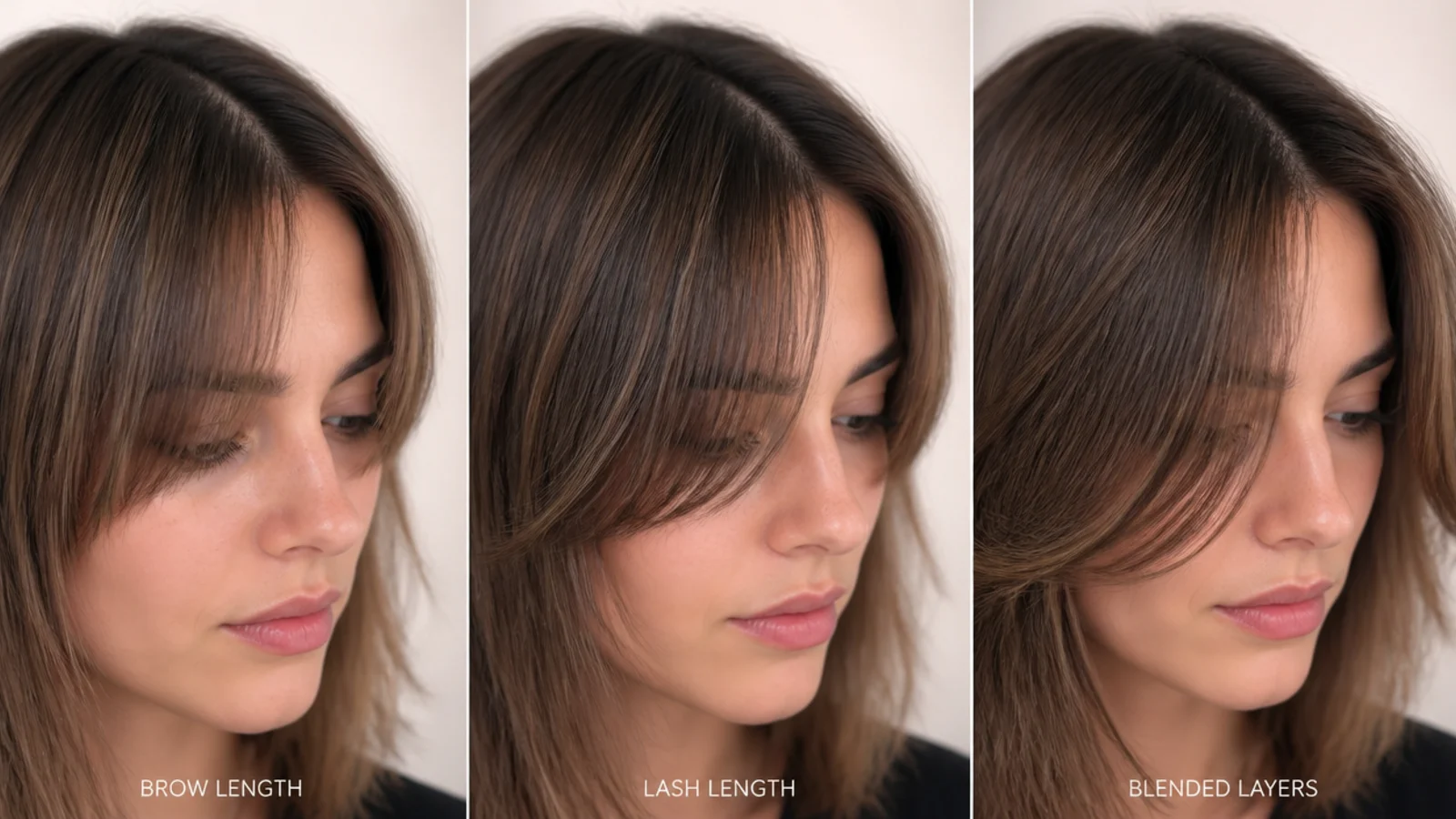
Short and long curtain bangs are not two haircuts. They are one cut with the shortest point moved about two inches.
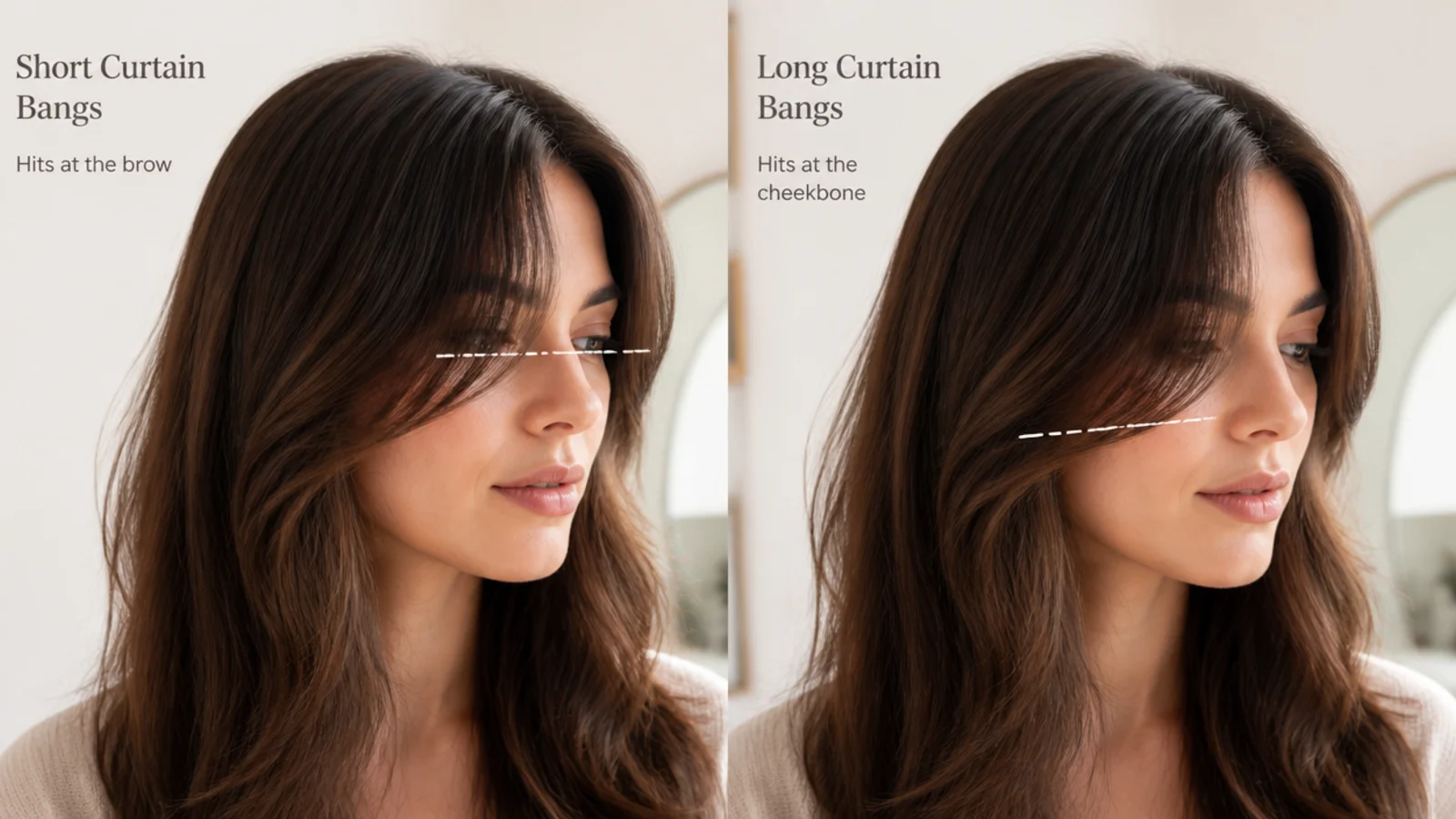
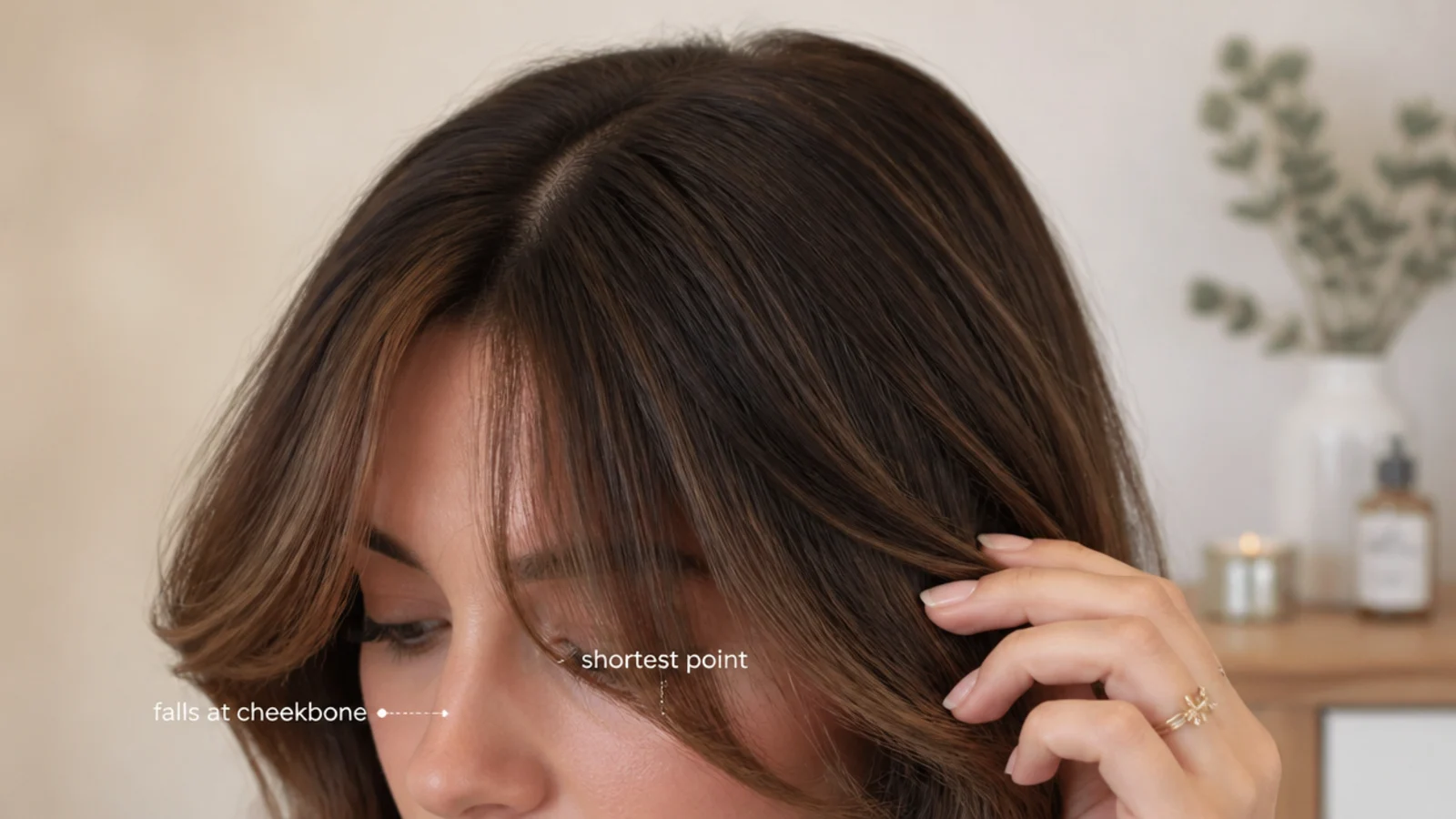
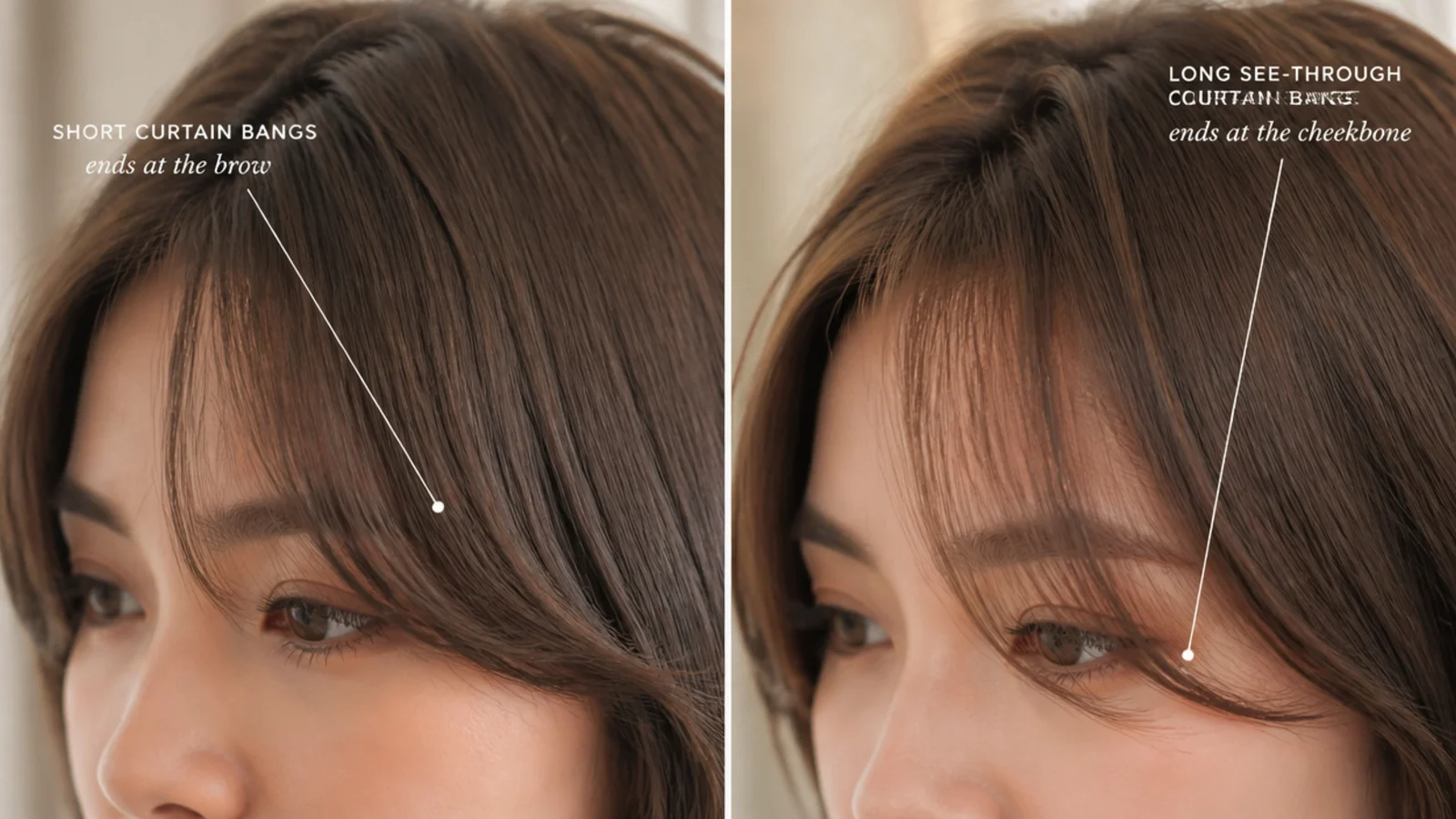
The centre point is the only variable. Brow for short, cheekbone for long, with the same graduation running out to the same place on both.
Two inches changes everything downstream. Forehead coverage, trim cadence, humidity behaviour and how the fringe survives a ponytail all follow from that single measurement.
What Short Curtain Bangs Are
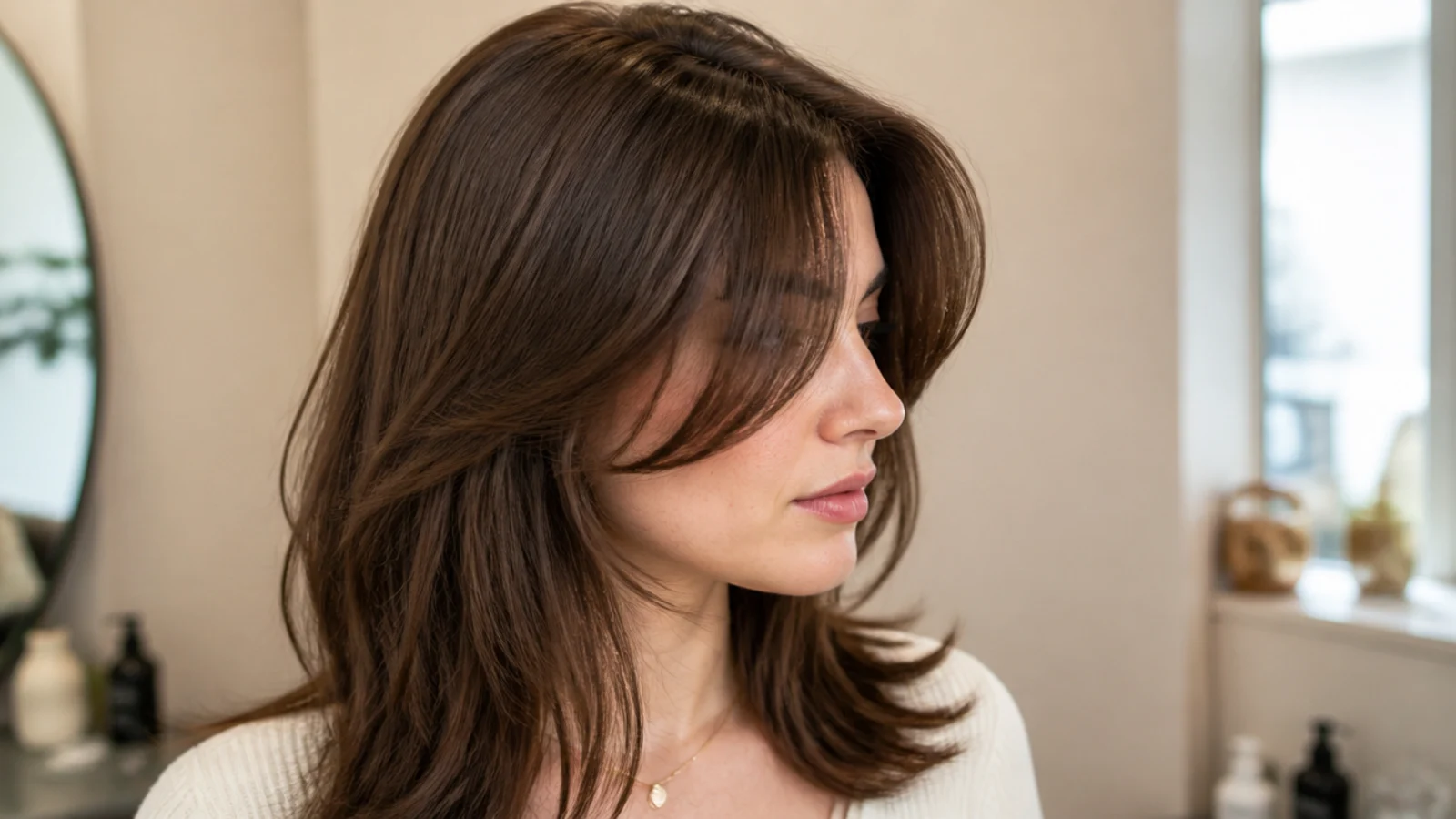
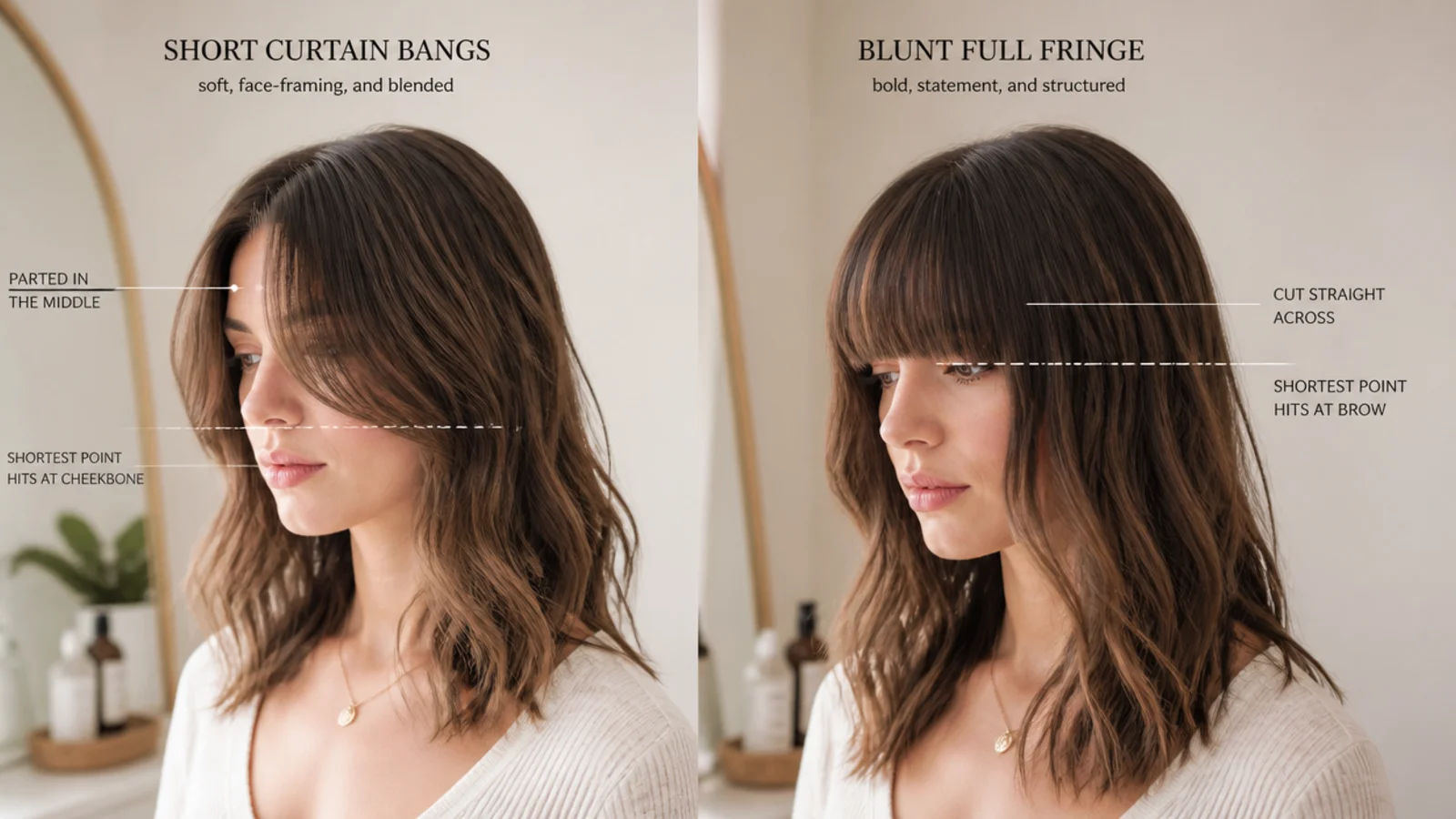
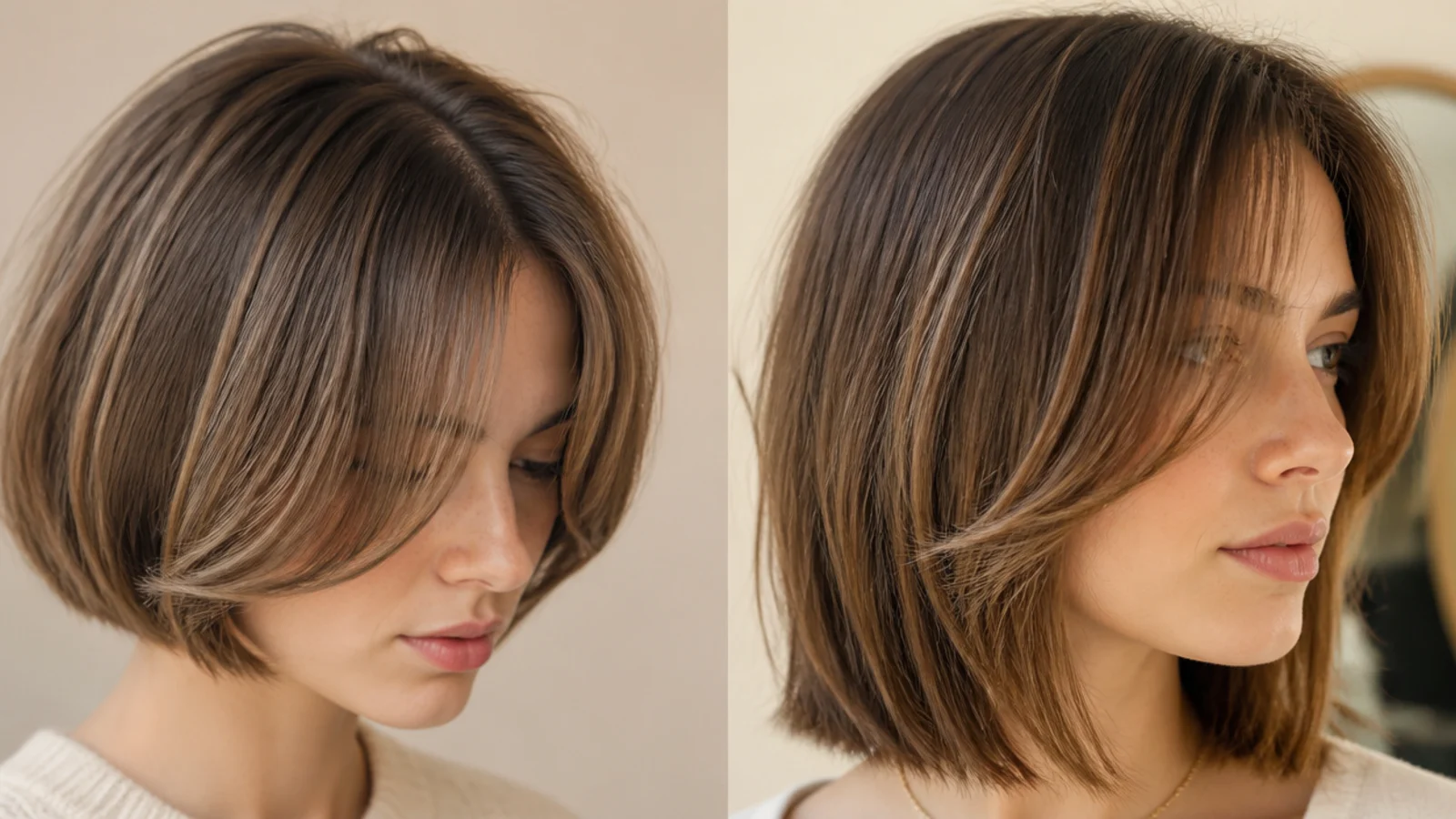
A centre split with a graduated edge. Shortest in the middle, longest at the outer ends, both halves falling away from the face.
Short puts the centre at the brow. Long puts it at the cheekbone, which is where the outer ends of a short fringe already sit.
Short covers more forehead. That is the least obvious consequence and the most useful one, because forehead coverage is what changes the apparent length of a face.
Both come from the same triangle. Section depth at the hairline sets density on either version, and that decision is independent of length.
How Short Is Too Short
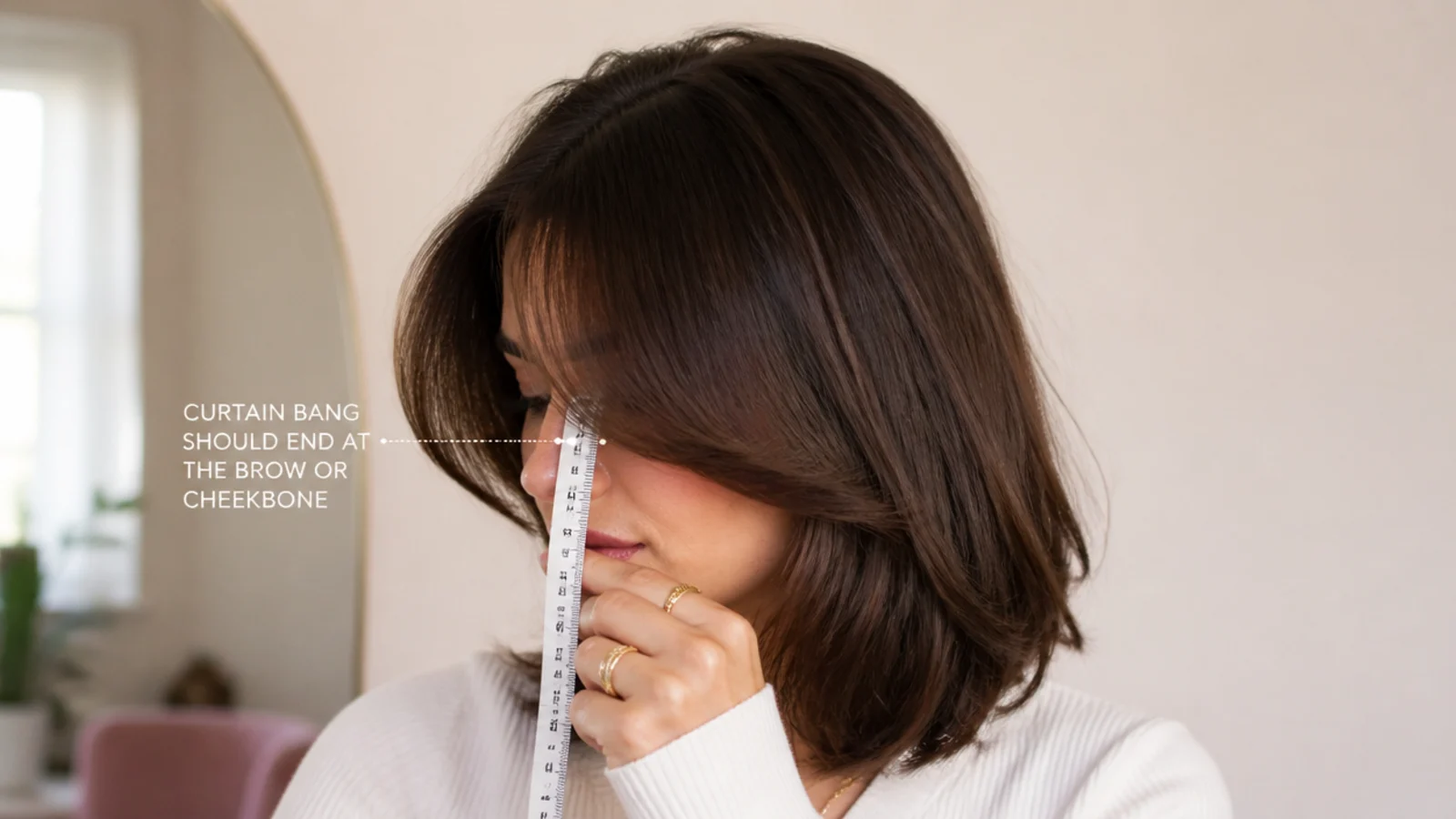
Above the brow is still workable. It exposes the strip of forehead below the fringe and reads as deliberate rather than as a mistake.
Above the hairline peak is not. Cut shorter than the natural rise of the hairline and the fringe has no weight to pull it down, so it stands away from the head permanently.
The outer ends are the true limit. Bring them above the eye and the graduation vanishes, leaving one flat band where there should be two diagonals.
Cowlicks raise the floor. Hair growing against the fringe direction springs up about half an inch, so a cowlick has to be cut that much longer to land where it was measured.
Face Shape Comparison
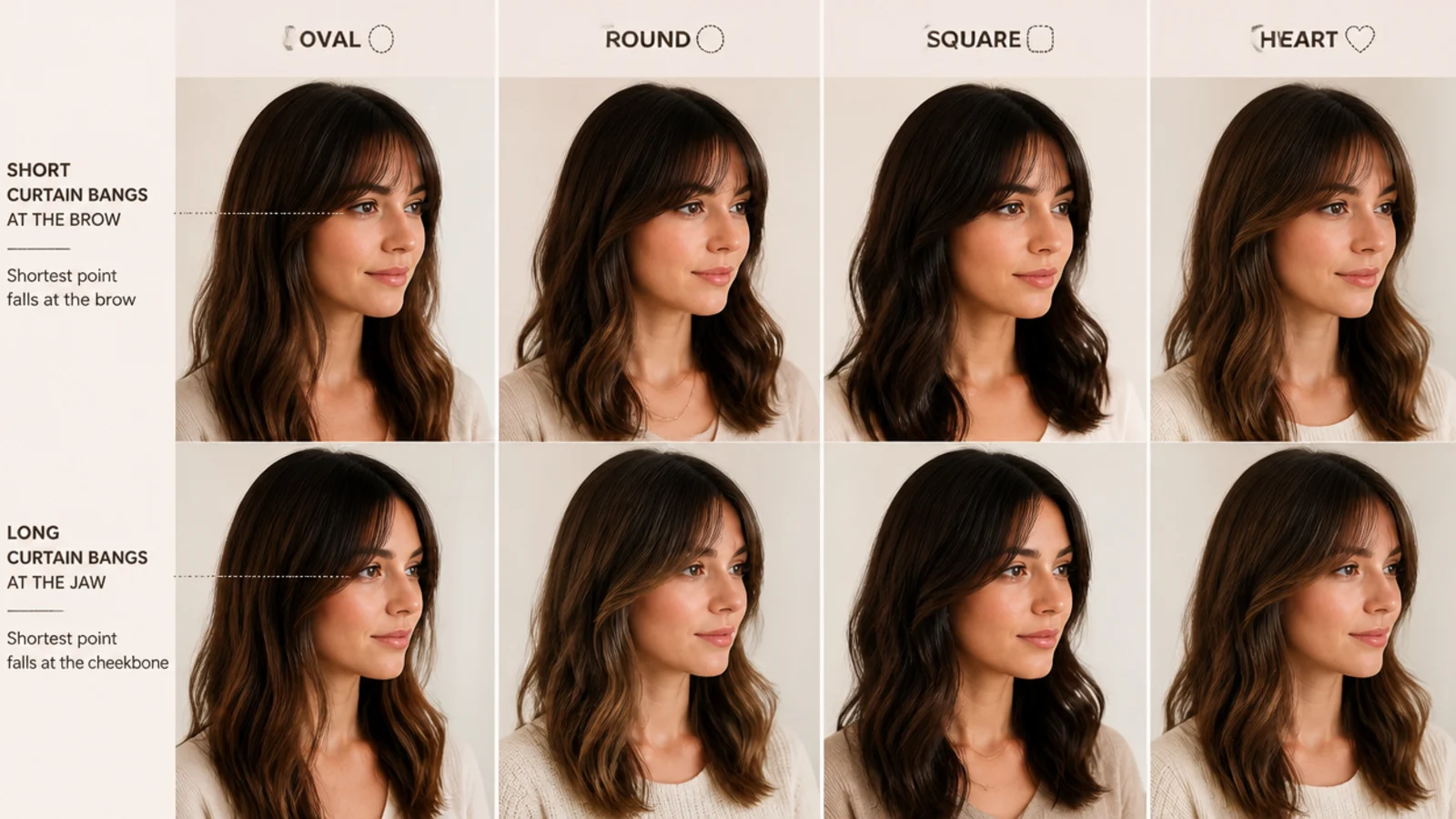
Round faces lean long. The open centre exposes more forehead and the diagonal runs further down the cheek, which is two length cues rather than one.
Long faces lean short. More coverage across the forehead shortens the visible face, and a wide open centre does the opposite.
Square jaws lean long. The ends need to reach past the corner of the jaw, and a short fringe stops well above it.
Heart shapes lean long. Width beside a narrow chin balances a broad forehead better than anything happening at brow level.
Styling Comparison
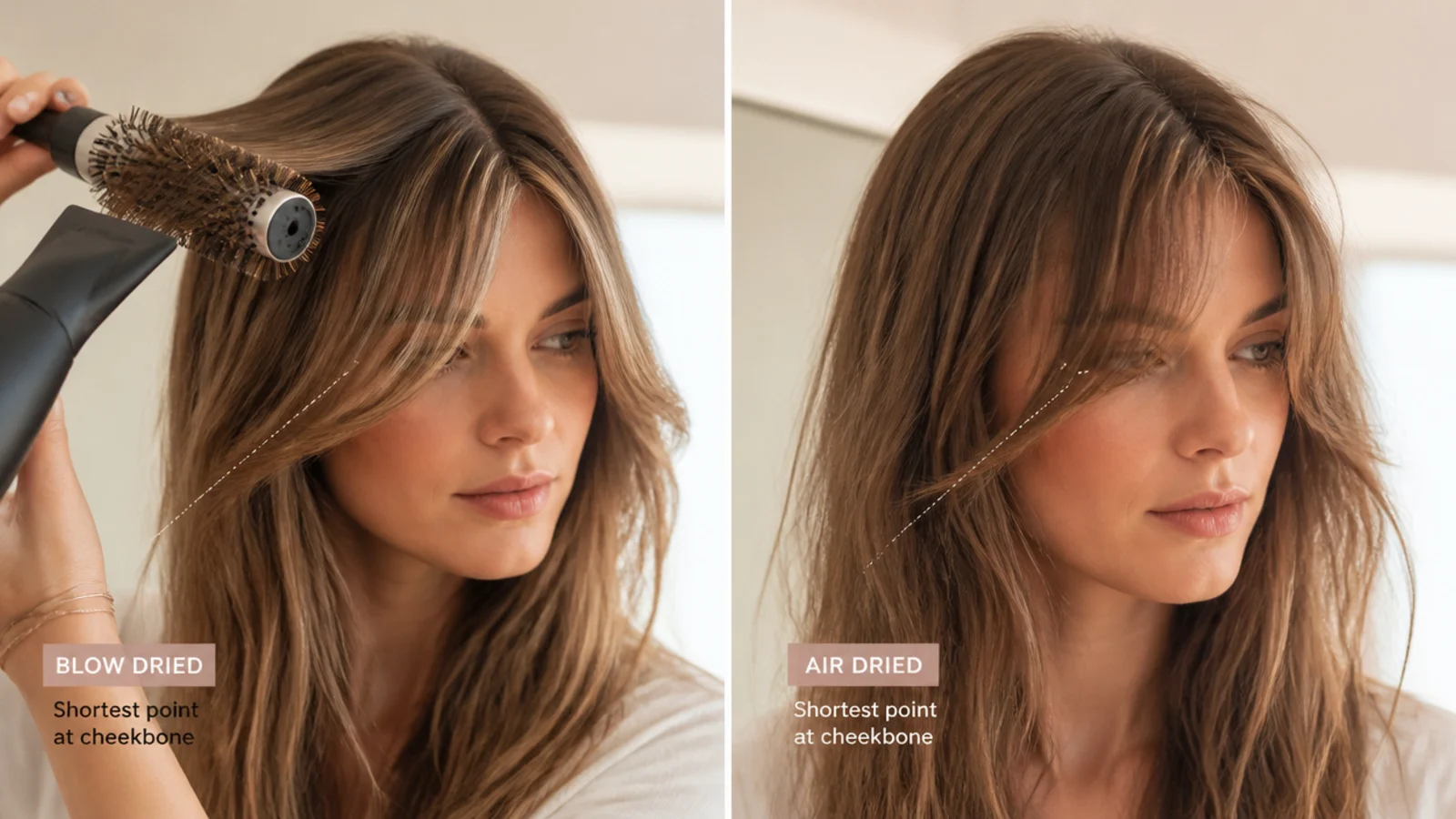
Both are set while drying. Hydrogen bonds reform as water leaves the strand, so the shape either version dries in is the shape it holds.
Short needs the root, long needs the ends. A short fringe lives or dies on root lift. A long one is carrying enough weight that the bend at the ends is what shows.
Long takes more heat. More length is more surface, and the outer pieces of a long fringe reach the same place a short one takes three months to grow to.
Short recovers faster. Damping the first inch and finger drying it resets a short fringe in a minute, where a long one has to be brushed through again.
Failure Modes
Short splits at a cowlick. There is not enough length for gravity to overcome the growth direction at the root.
Long disappears into the length. Once the ends match the layers beside them, the fringe stops being visible as a fringe at all.
Short sticks out on thick hair. Weight is what makes hair lie down, and a short dense section does not have enough of it.
Long drops flat on fine hair. The extra two inches are extra weight pulling on a root that could barely hold the shorter version up.
Trim Cadence and Cost
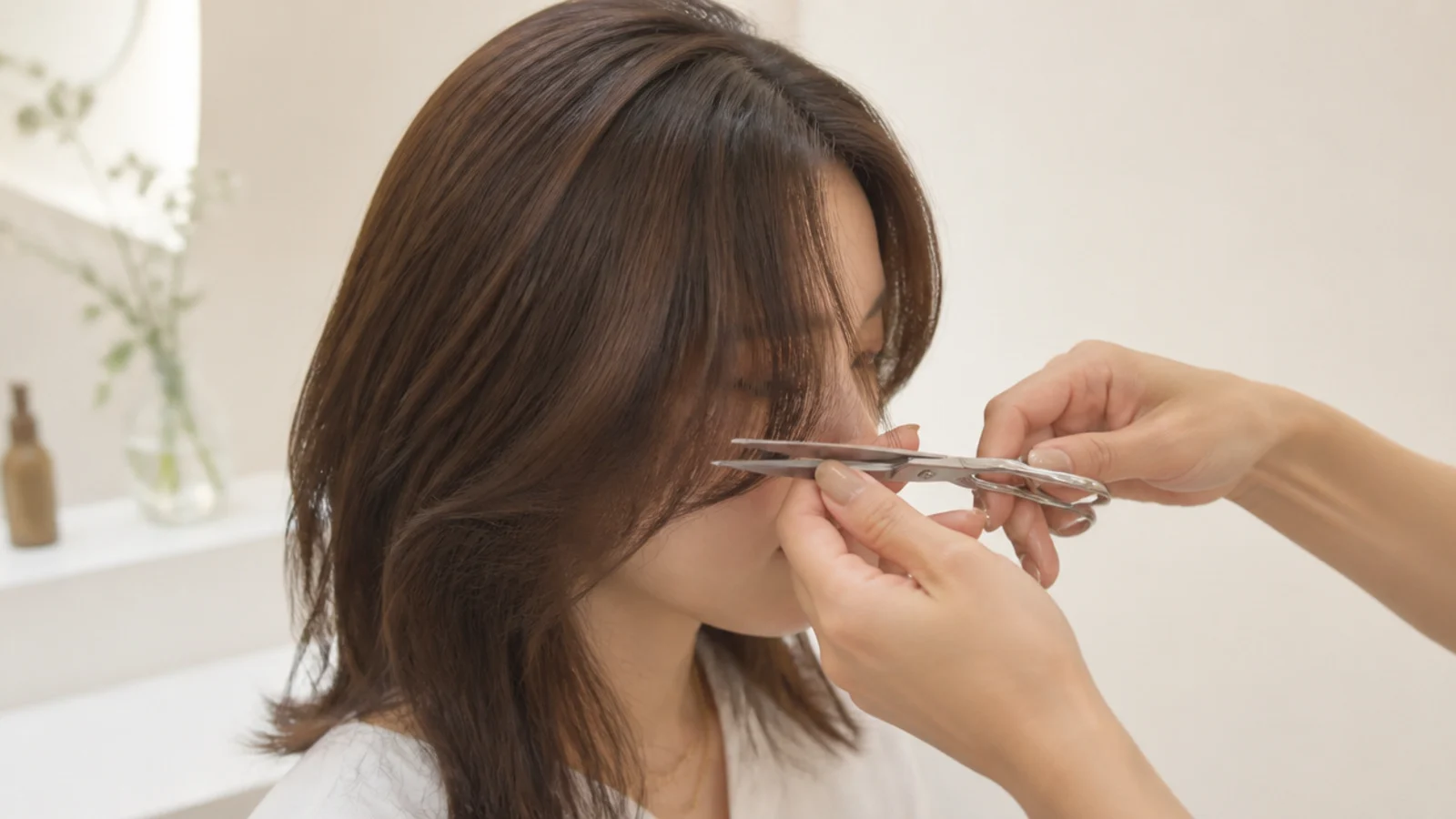
Short wants three to four weeks. Hair grows roughly half an inch a month, and at brow length half an inch is the gap between framing the eye and blocking it.
Long wants six to eight. Growth at the cheekbone just extends the graduation, which reads as intentional for far longer.
The difference is four or five trims a year. That is the honest price of the shorter version, and it is worth deciding before the first cut rather than after.
Both can be maintained at the outer ends only. Trimming the graduation is low risk on either length. Trimming the shortest centre point is not.
Growing Out Comparison
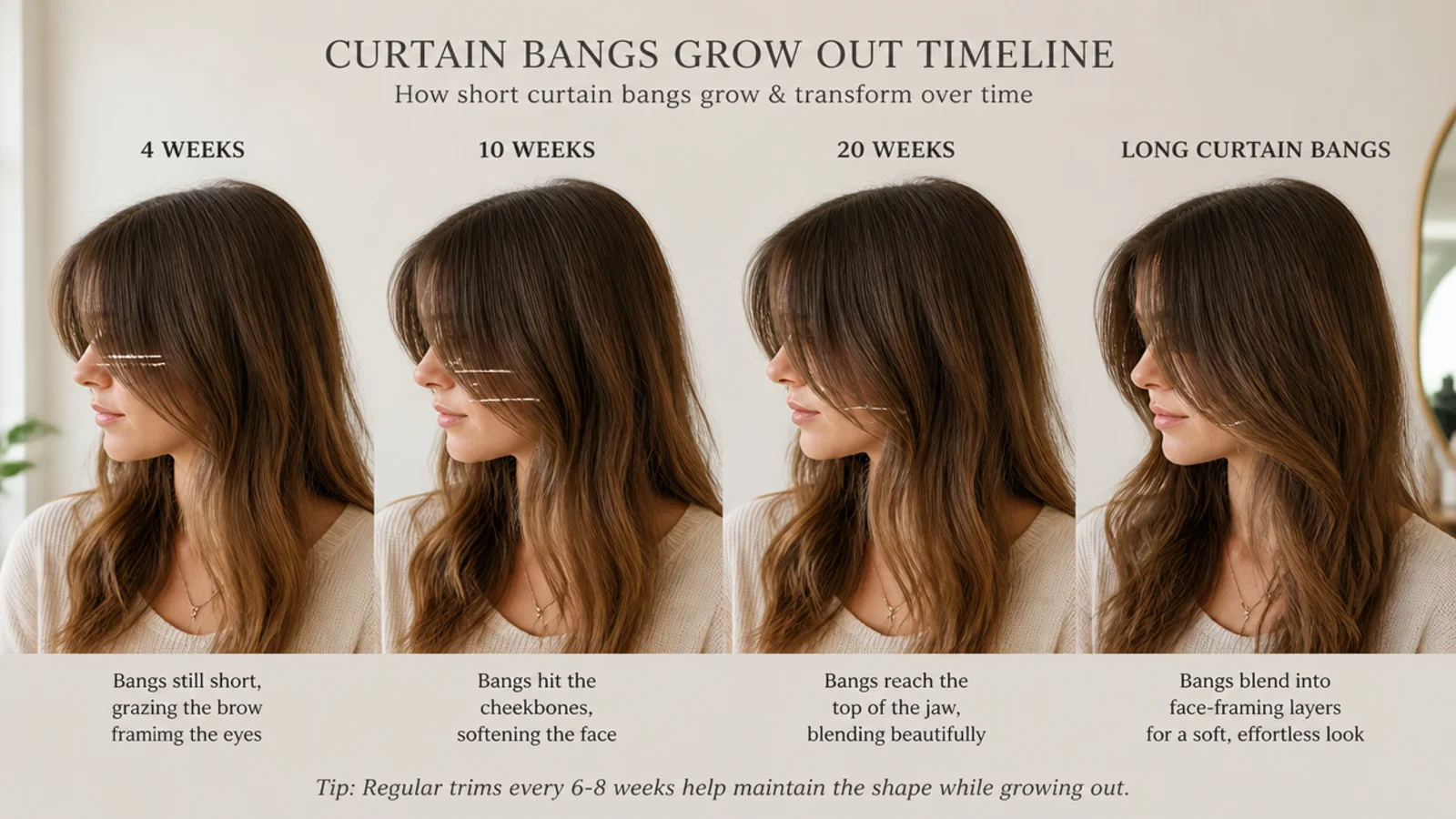
Short has an inch and a half to travel. That is about three months to cheekbone, which is the first point at which it blends.
Long is already there. A long curtain fringe merges into face framing layers within weeks of the decision to stop cutting it.
Neither should be trimmed at the centre while growing. Every corrective cut at the shortest point restarts the clock by another month.
Sweeping beats pinning on both. A side sweep keeps the fringe inside the haircut, where pinning it back leaves a hairline that reads as a grow out for the whole duration.
The 15 Ways to Choose
1. Round Face
Long is the lower risk choice, because the open centre exposes more forehead and the diagonal has further to travel across the widest part of the face. Short still works, provided the section stays see through and the outer ends genuinely reach the cheekbone.
2. Oval Face
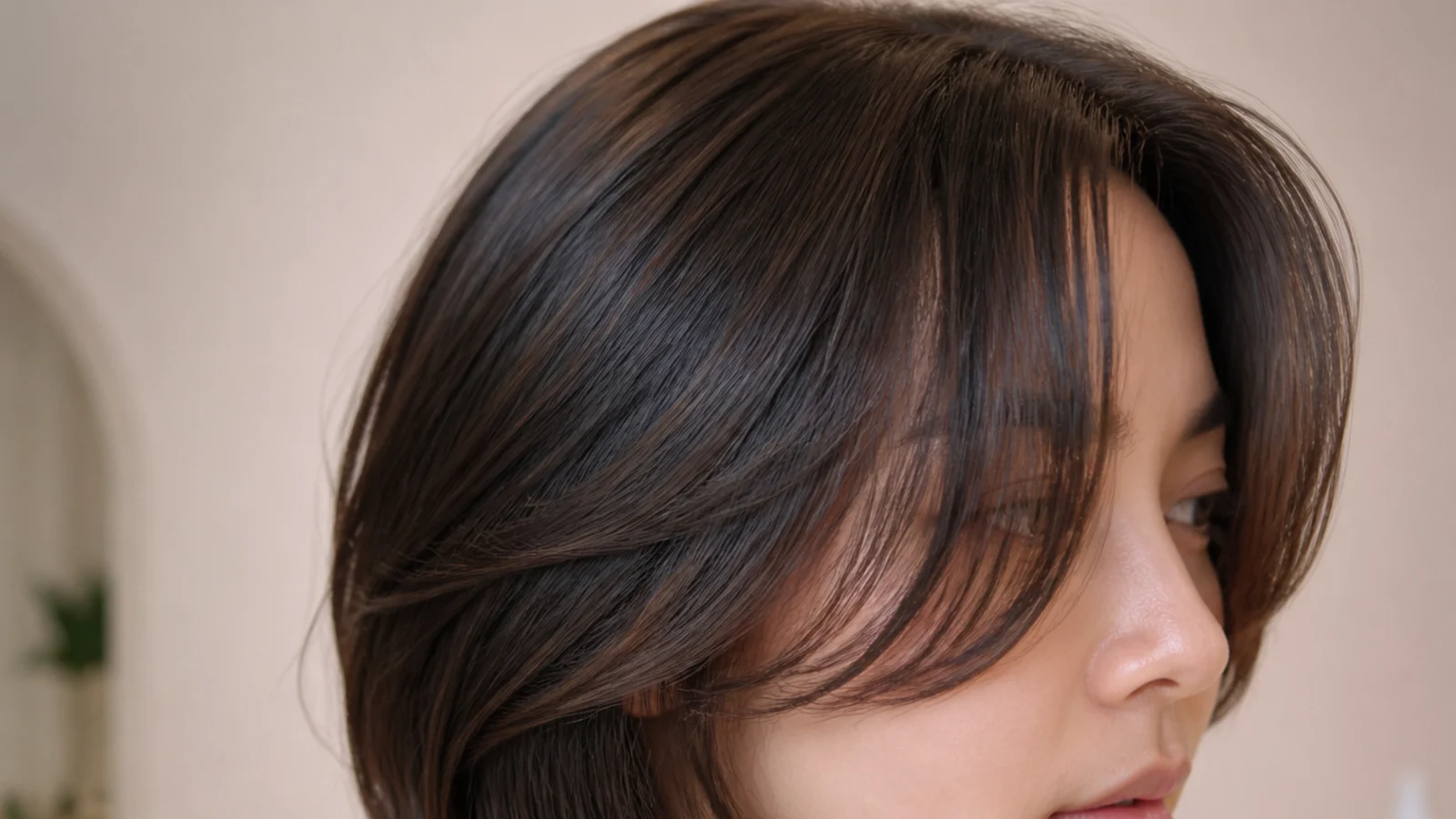
Neither length is wrong, which turns the decision into an upkeep question rather than a shape one. Short costs a trim every three weeks and long costs one every six, and that is the only difference you will actually notice over a year.

3. Heart Face
Long, because the extra two inches put hair beside the jaw where a heart shape is narrowest. A short fringe leaves all its weight at brow level, which reinforces the widest part of the face rather than balancing it.
4. Square Jaw
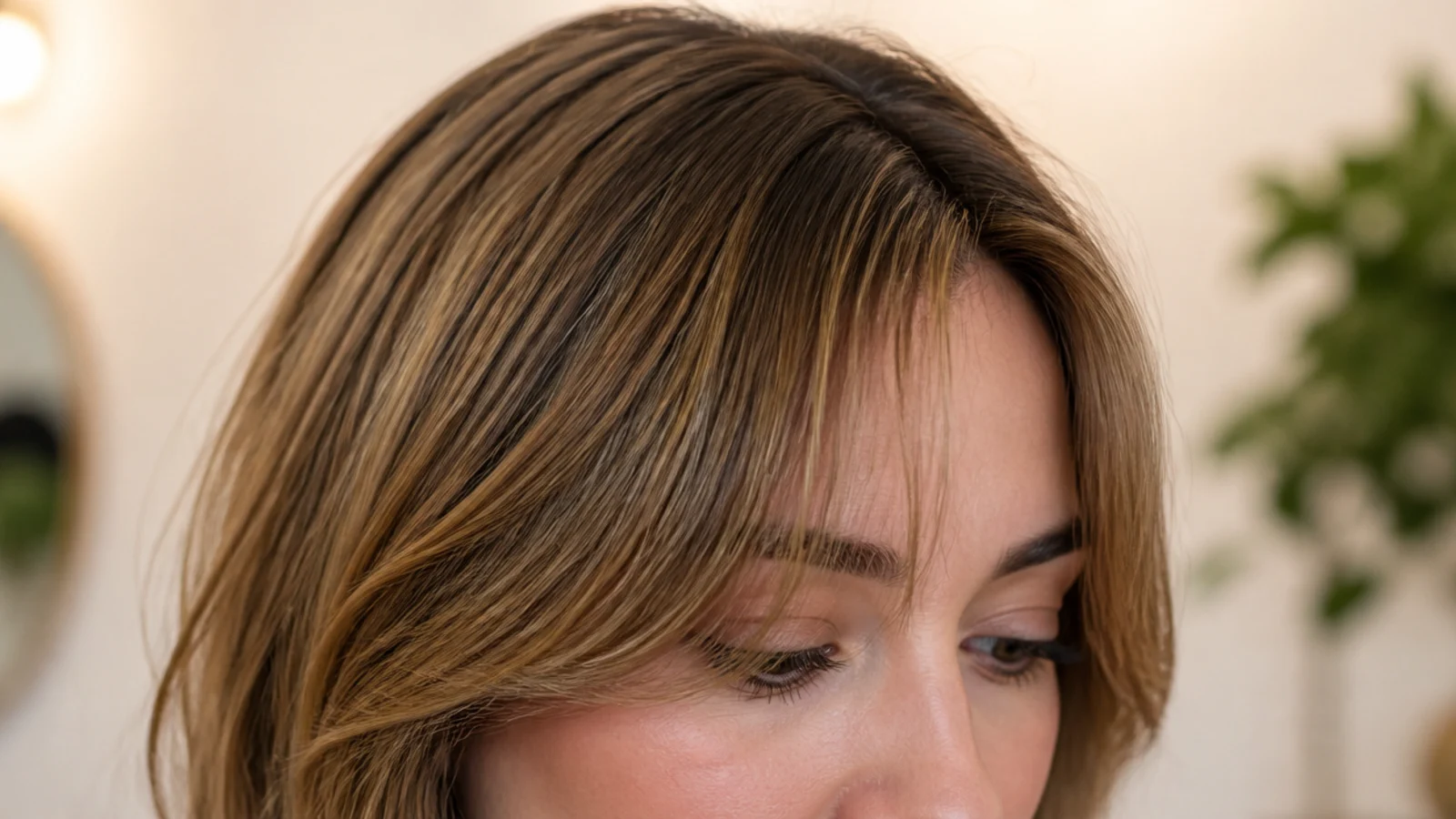
Long, and the reason is placement rather than length. The ends have to fall past the corner of the jaw to soften it, and a short fringe finishes at the cheekbone with the jaw entirely uncovered beneath a horizontal edge.
5. Oblong Face
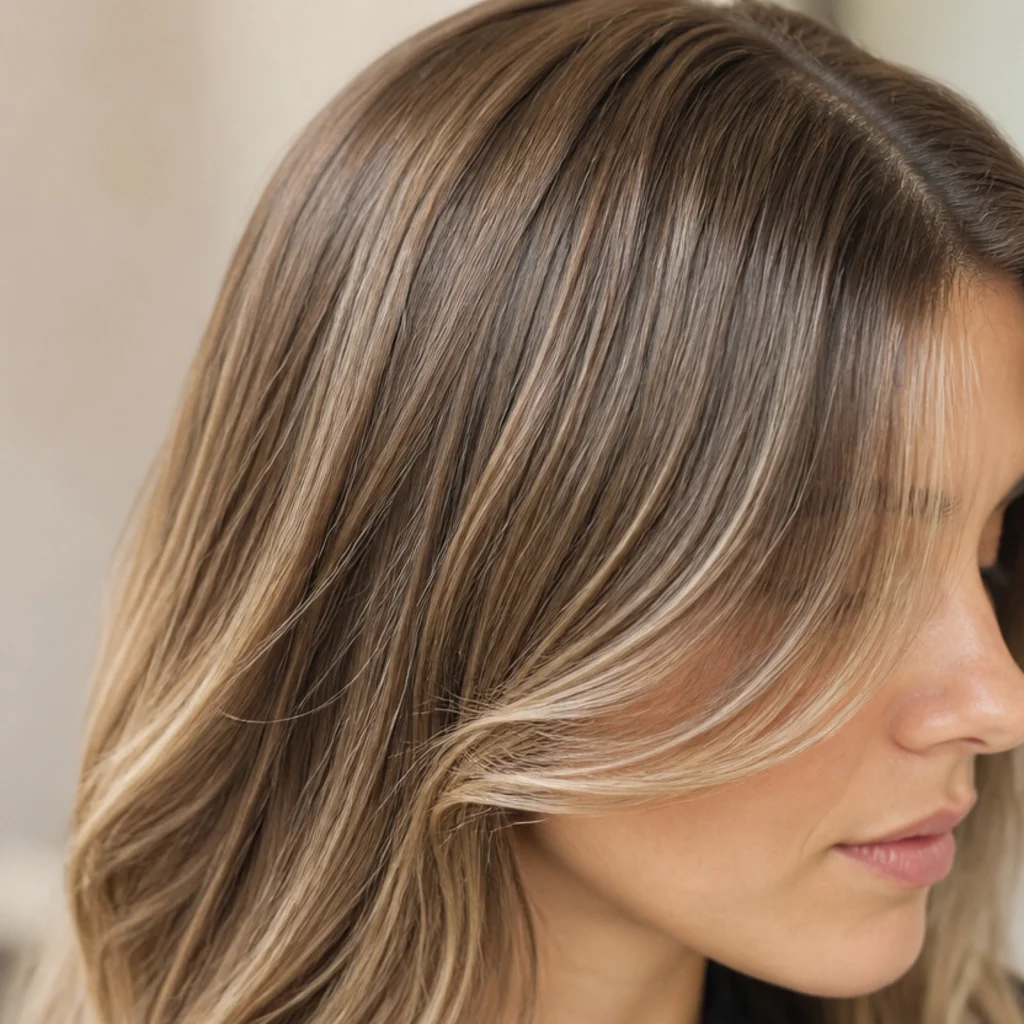
Short, because covering more of the forehead shortens the visible face. The long version opens the centre and adds vertical length to a shape that already has more of it than it wants.
6. Fine Hair
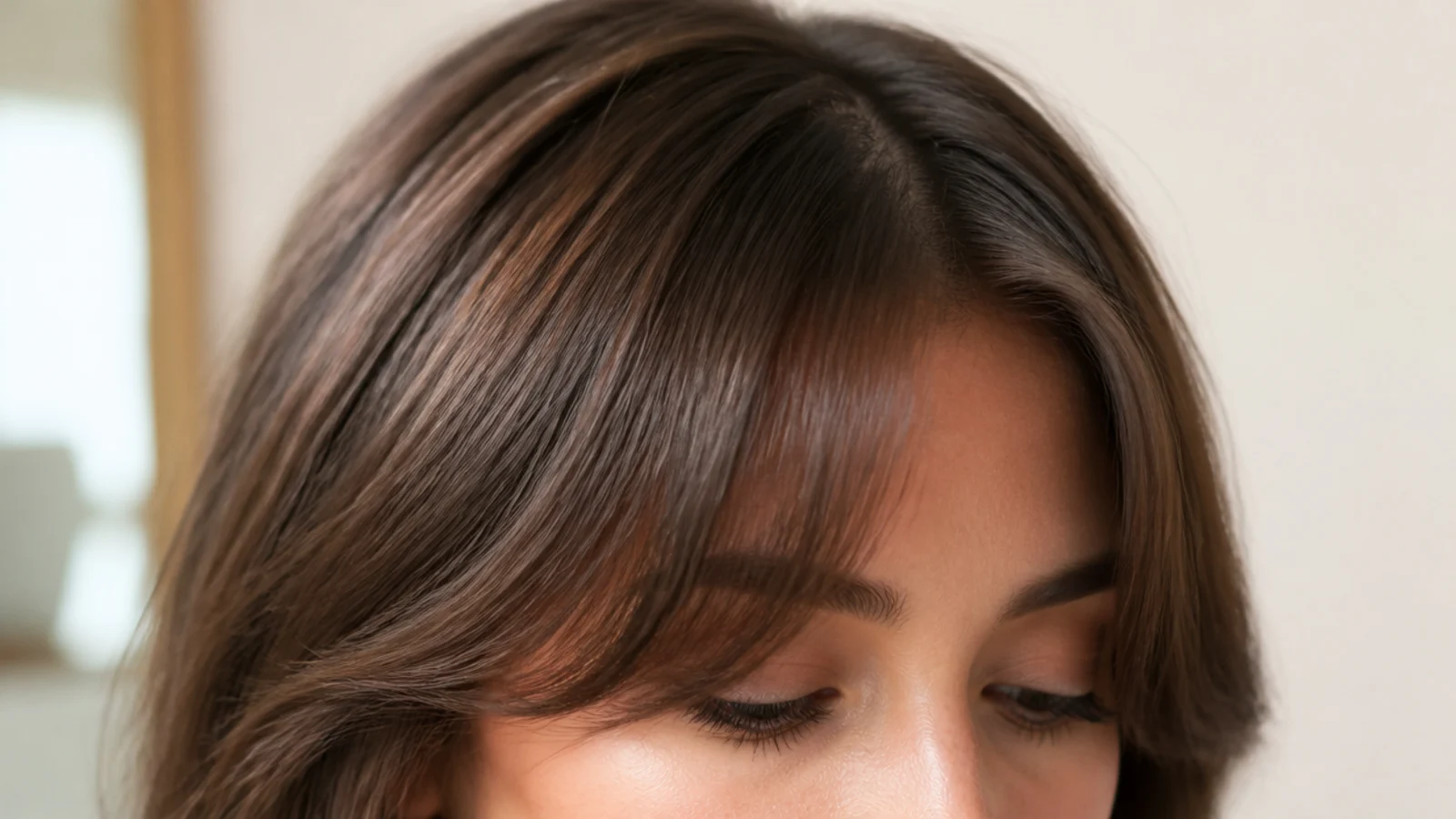
Short, kept blunt and shallow. Every extra inch of length is extra weight hanging off a root that struggles to hold anything up, so the shorter version keeps its lift for hours where the longer one drops by mid morning.
7. Thick Hair
Long, because weight is what makes hair lie down. A short dense fringe has too little length for gravity to work on, so it stands away from the forehead instead of falling against it, and no amount of styling corrects that.
8. Straight Hair
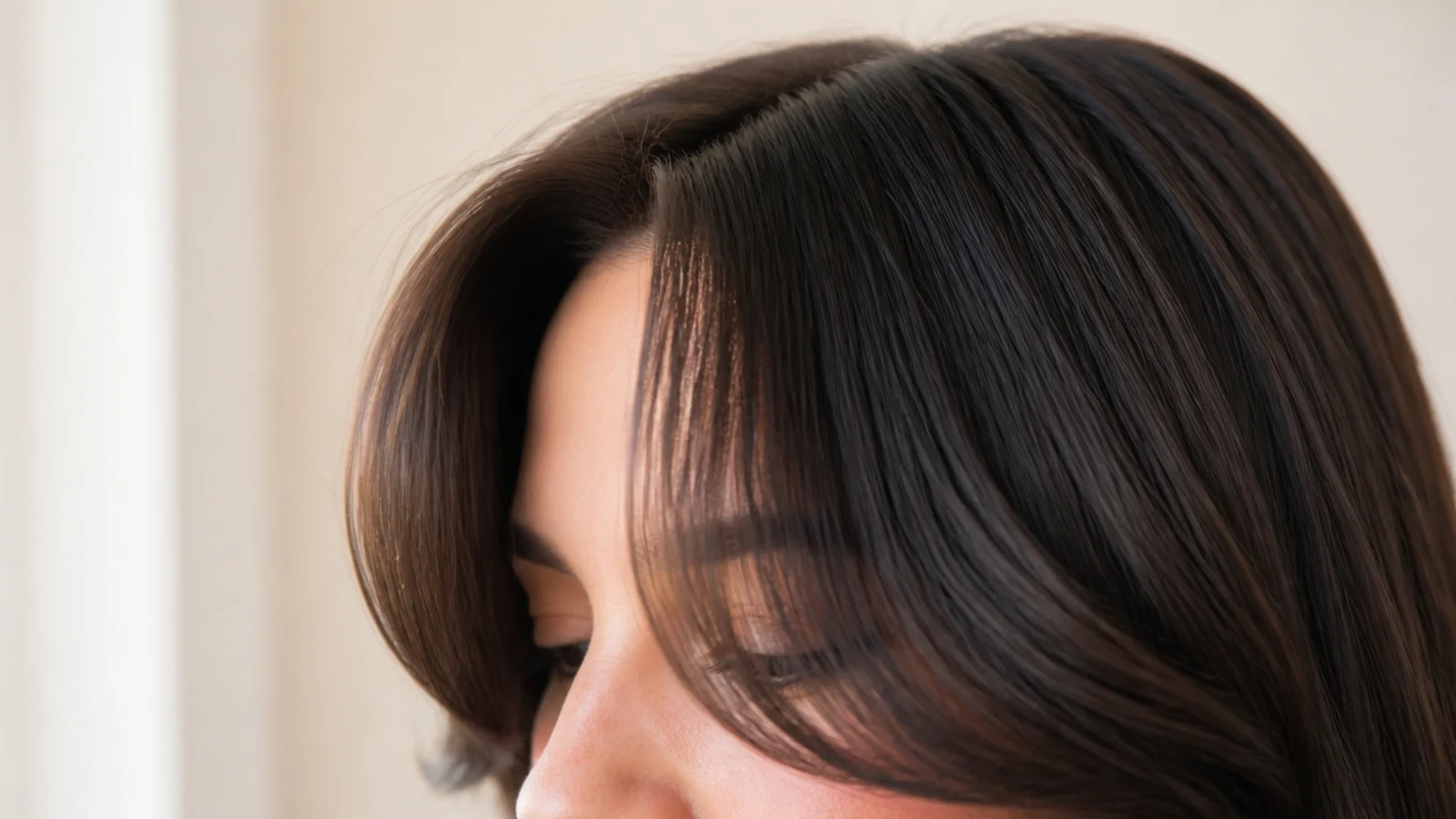
Either, but short is far less forgiving. Straight hair shows a cut line exactly as it was cut, so the graduation between the centre and the outer ends has to be even the whole way, with no bend in the texture to blur a step.
9. Wavy Hair
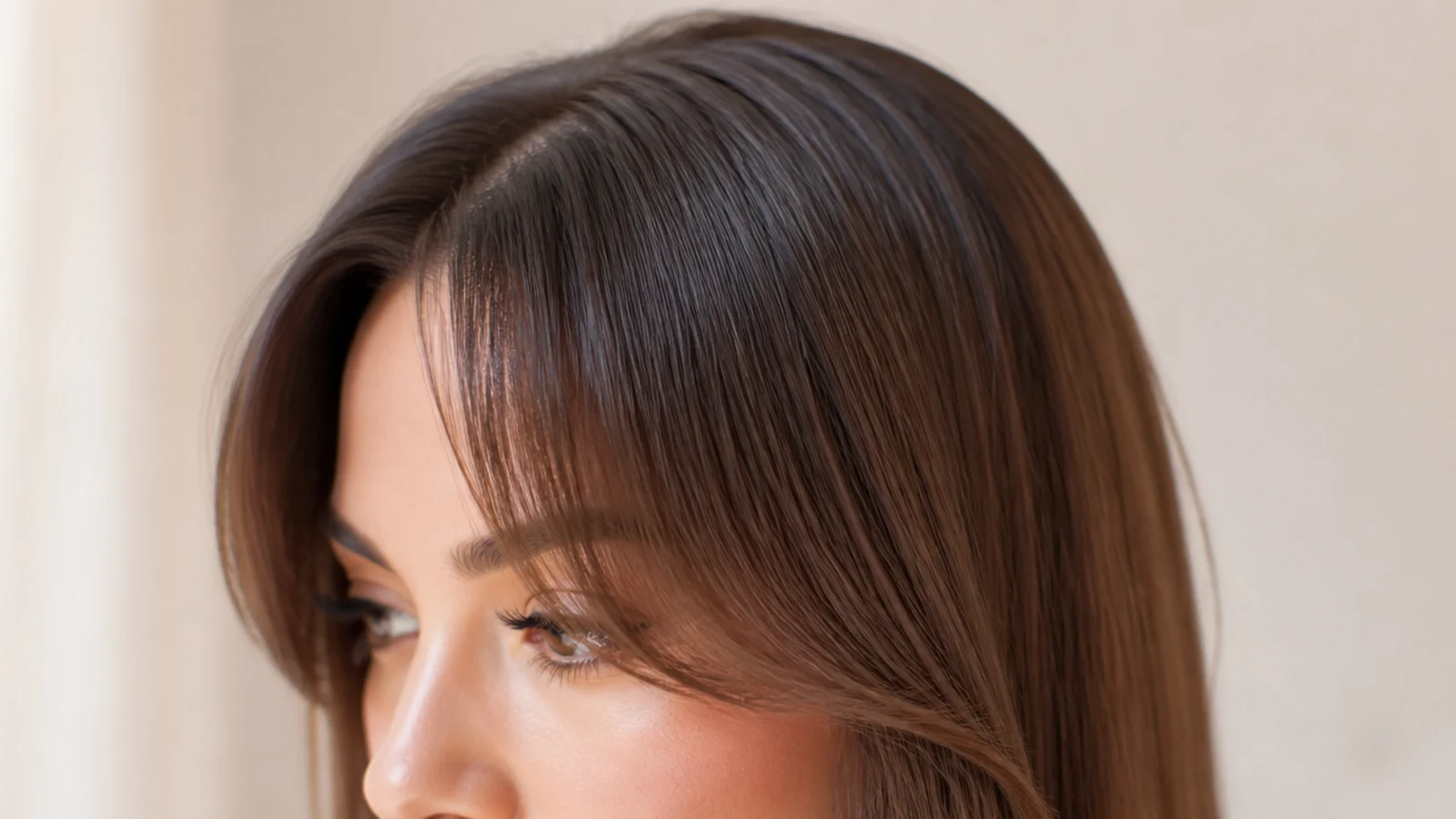
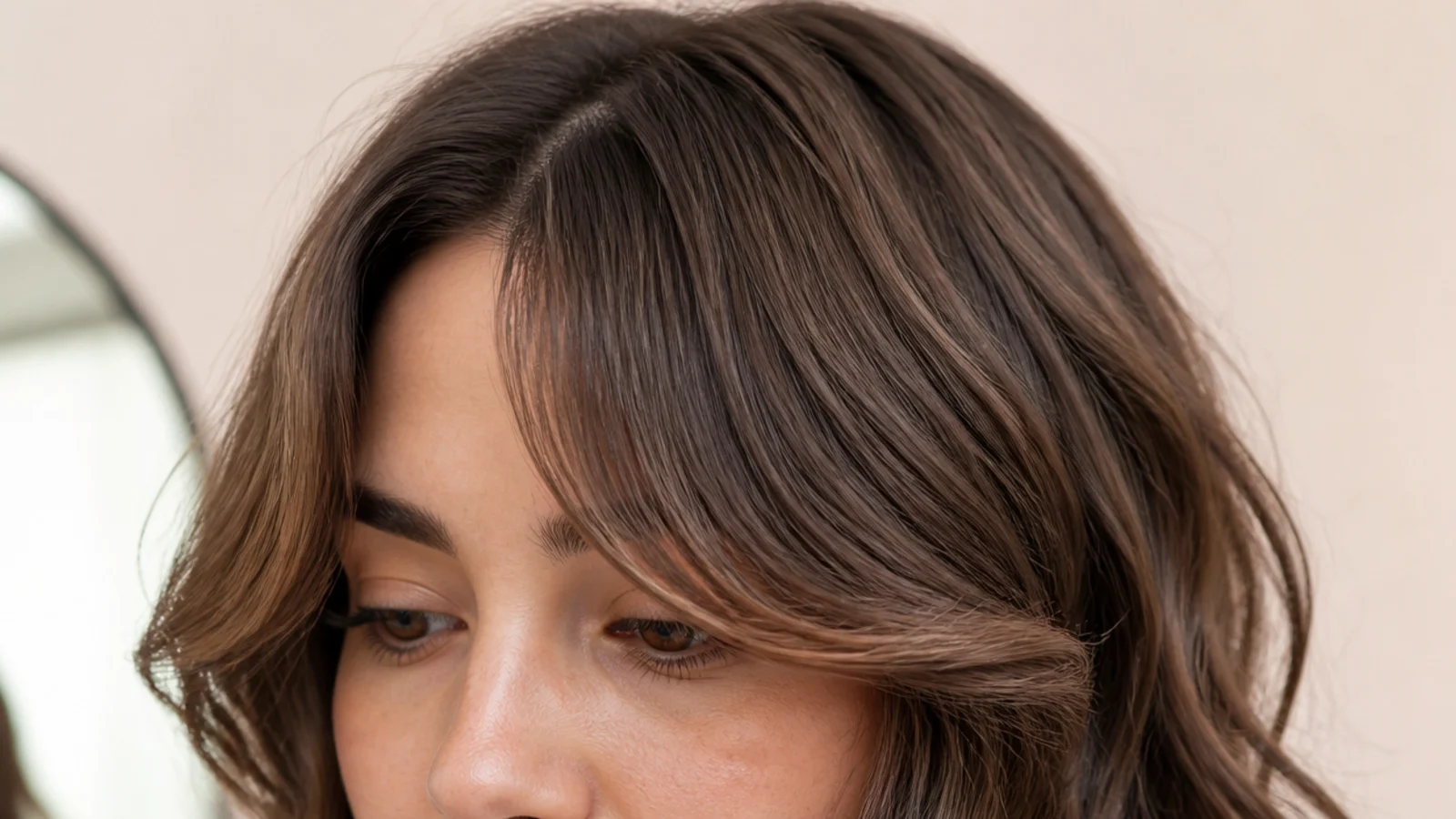
Either, with one adjustment. A wave lifts the fringe as it dries, so a short version cut wet at the brow finishes above it, and asking for a quarter inch of extra length lets the bend take it back up on its own.
10. Curly Hair
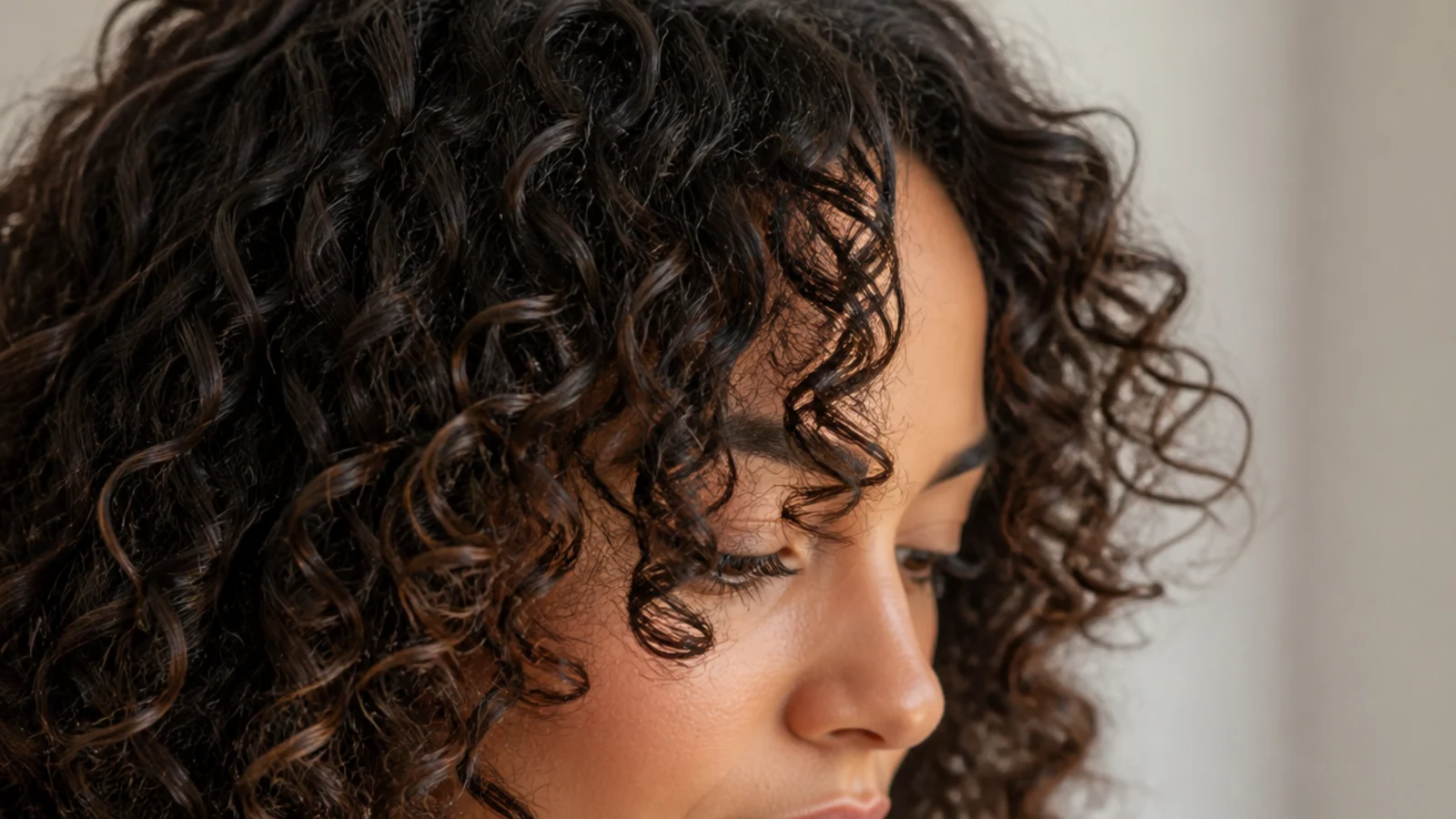
Long, decisively. A defined curl retracts by up to a third of its wet length, so a fringe measured short and cut wet ends up sitting well up the forehead, and the extra two inches of a long version absorb that shrinkage.
11. With a Bob
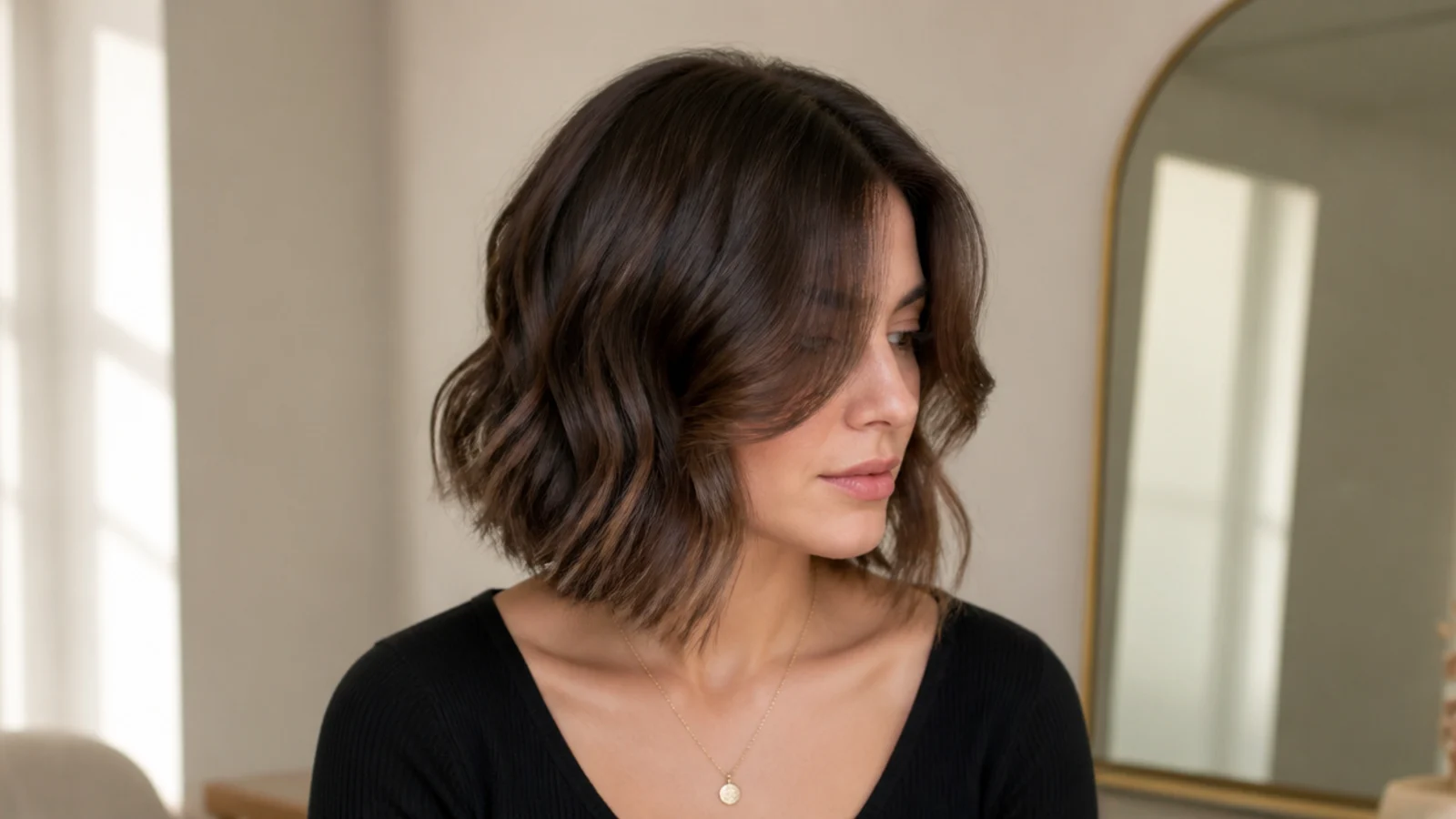
Short, because a long fringe on a short perimeter merges into the sides and stops reading as a fringe. The gap between the shortest fringe point and the shortest hair around the face is what makes both shapes legible.
12. A First Fringe
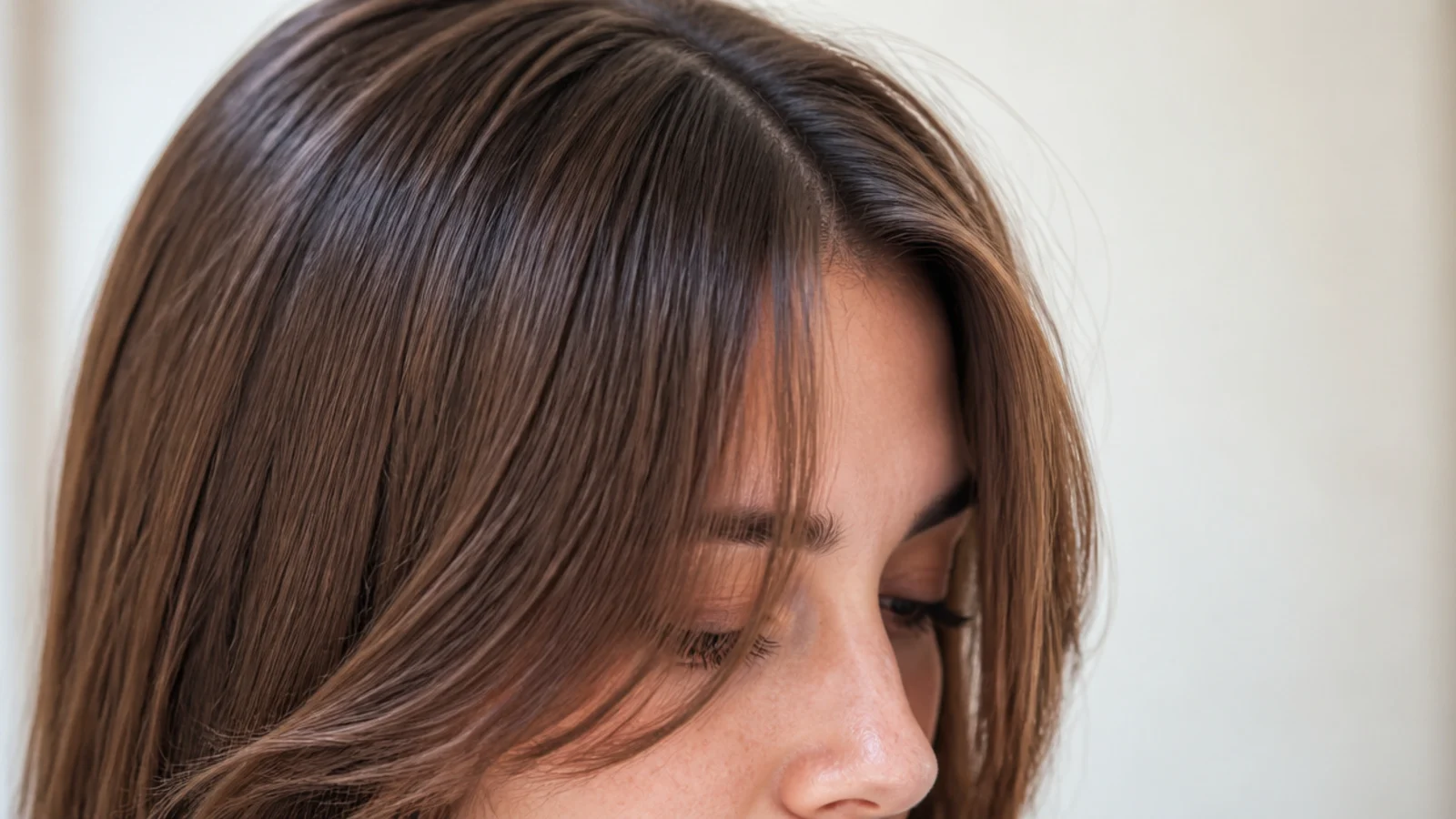
Long, every time. It reaches face framing length within weeks rather than months, so a decision you regret costs a fortnight of pinning rather than a full season of growing.
13. Ponytails and Updos
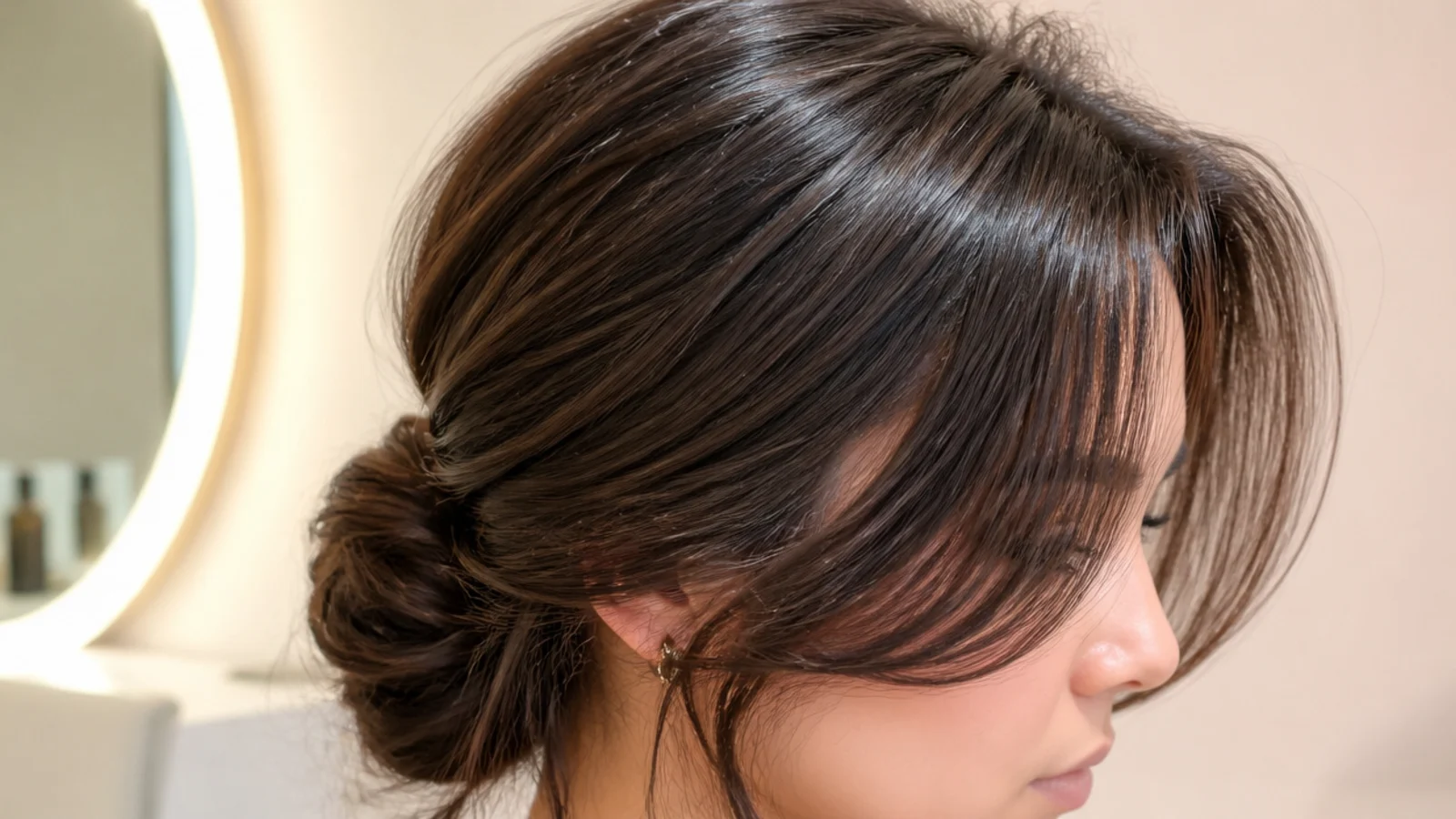
Short. Long fringe pieces are just long enough to be caught in the gather, which drags them out of position over the course of the day, while a short fringe is too short to be picked up at all and stays where it was dried.
14. Humidity
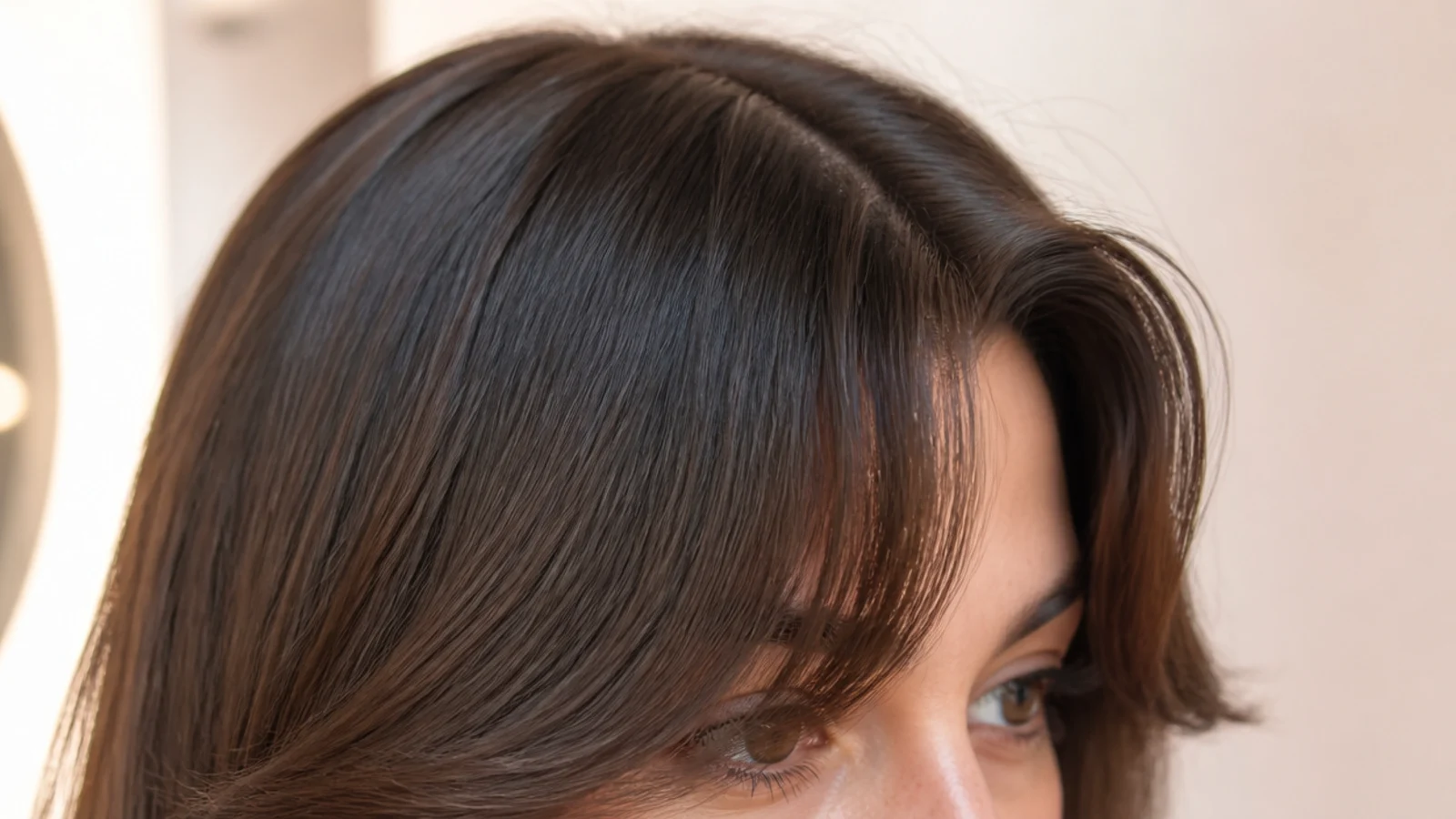
Short. Atmospheric moisture reforms the hydrogen bonds that a blow dry set, undoing the shape, and there is simply less length on a short fringe for that to happen to. It also recovers with a minute of finger drying rather than a full restyle.
15. Growing Out
Long, by three months. A short fringe has an inch and a half to travel before it blends at the cheekbone, and at half an inch a month that is a full season of pinning, sweeping and awkward middle stages.
Final Thoughts
Decide on the trim schedule first and let it pick the length. Short is three to four weeks and long is six to eight, and no amount of enthusiasm at the appointment changes what a fringe looks like in week five.
Then take the measurement rather than a description. Brow or cheekbone at the centre, cheekbone or jaw at the ends, is a specification a stylist can cut to, and it is the only thing separating the two looks. For the short version on longer hair see short curtain bangs on long hair, and for the full length version see curtain bangs on long hair. More in Bangs and Fringe.