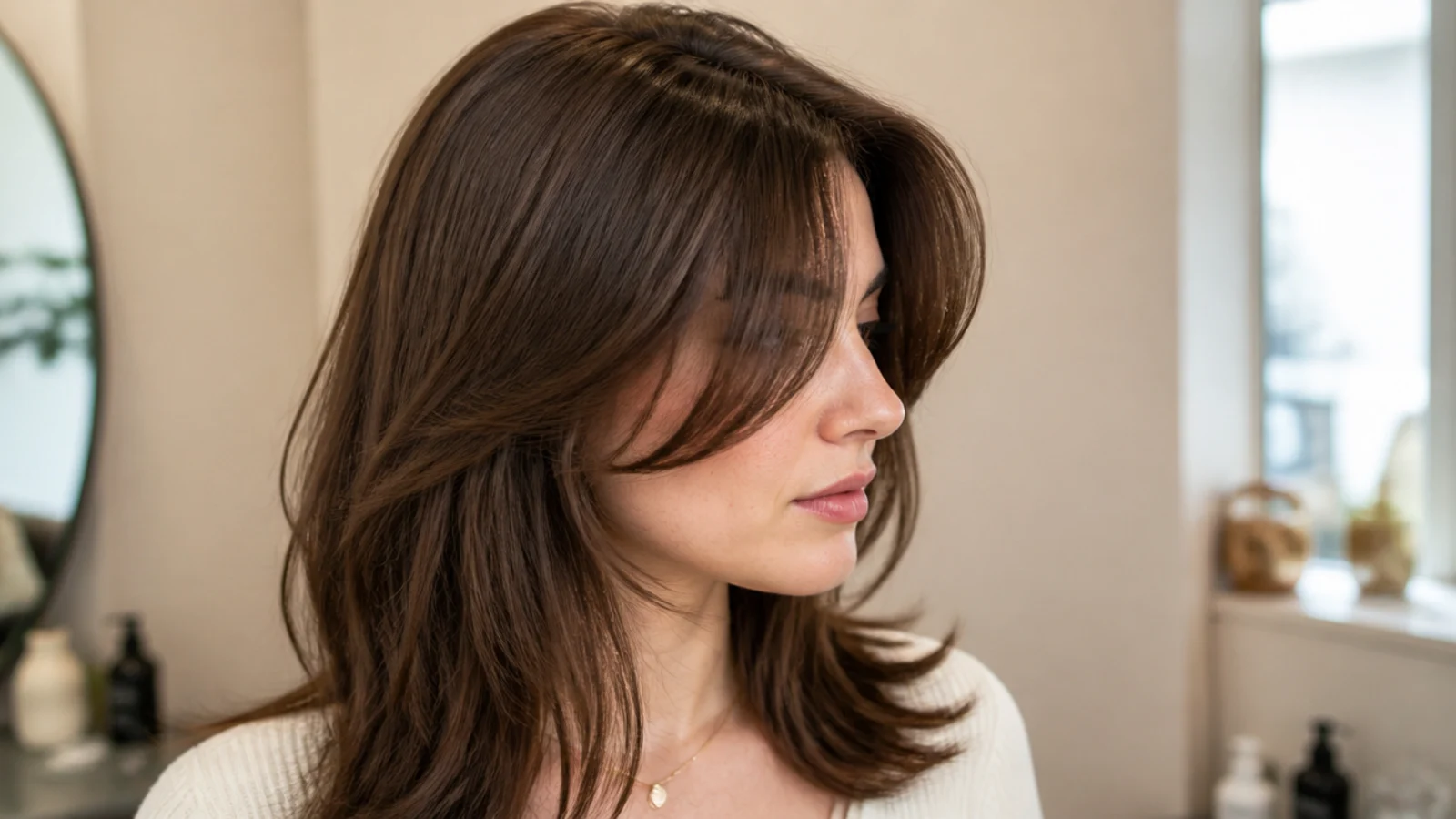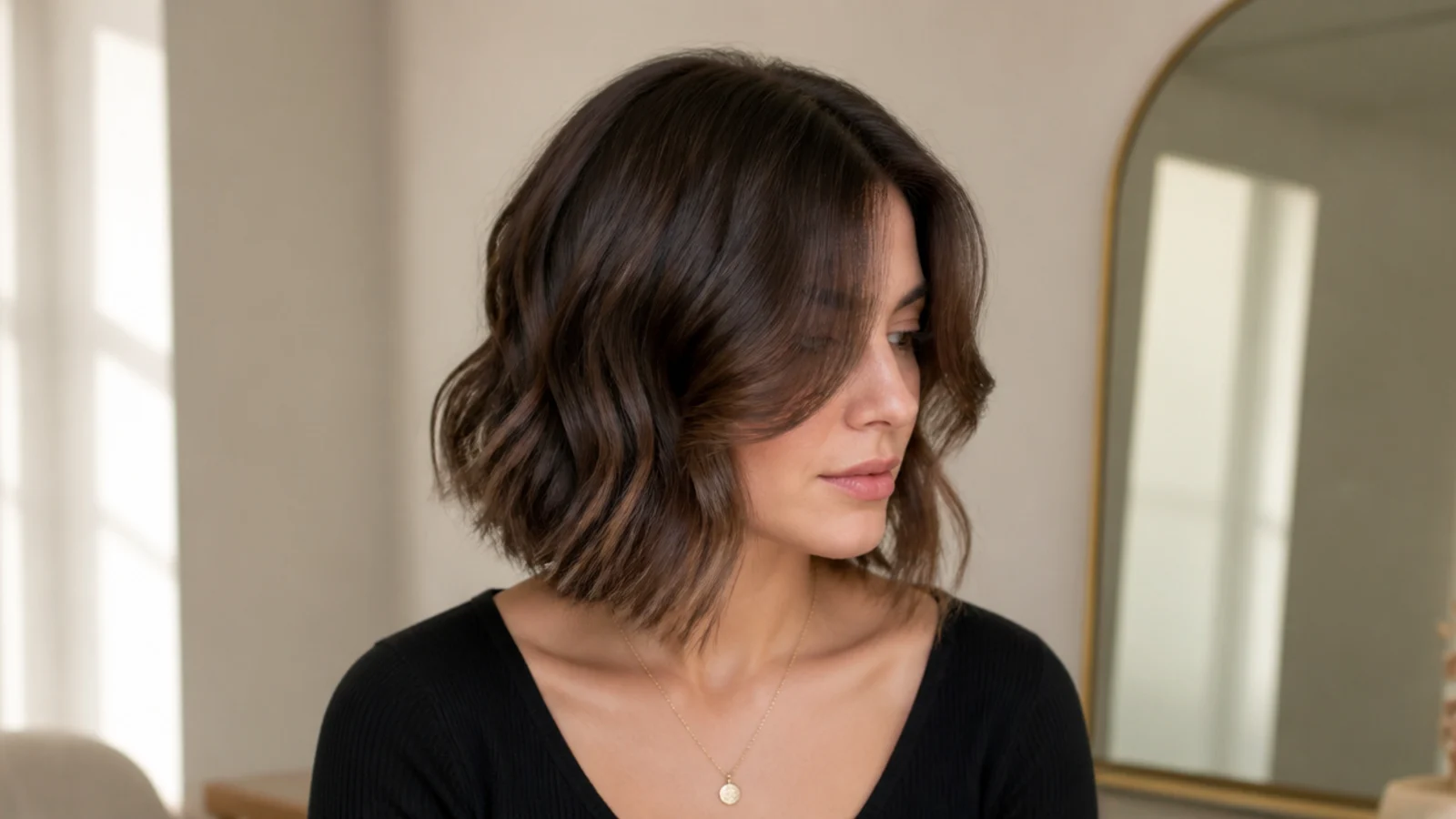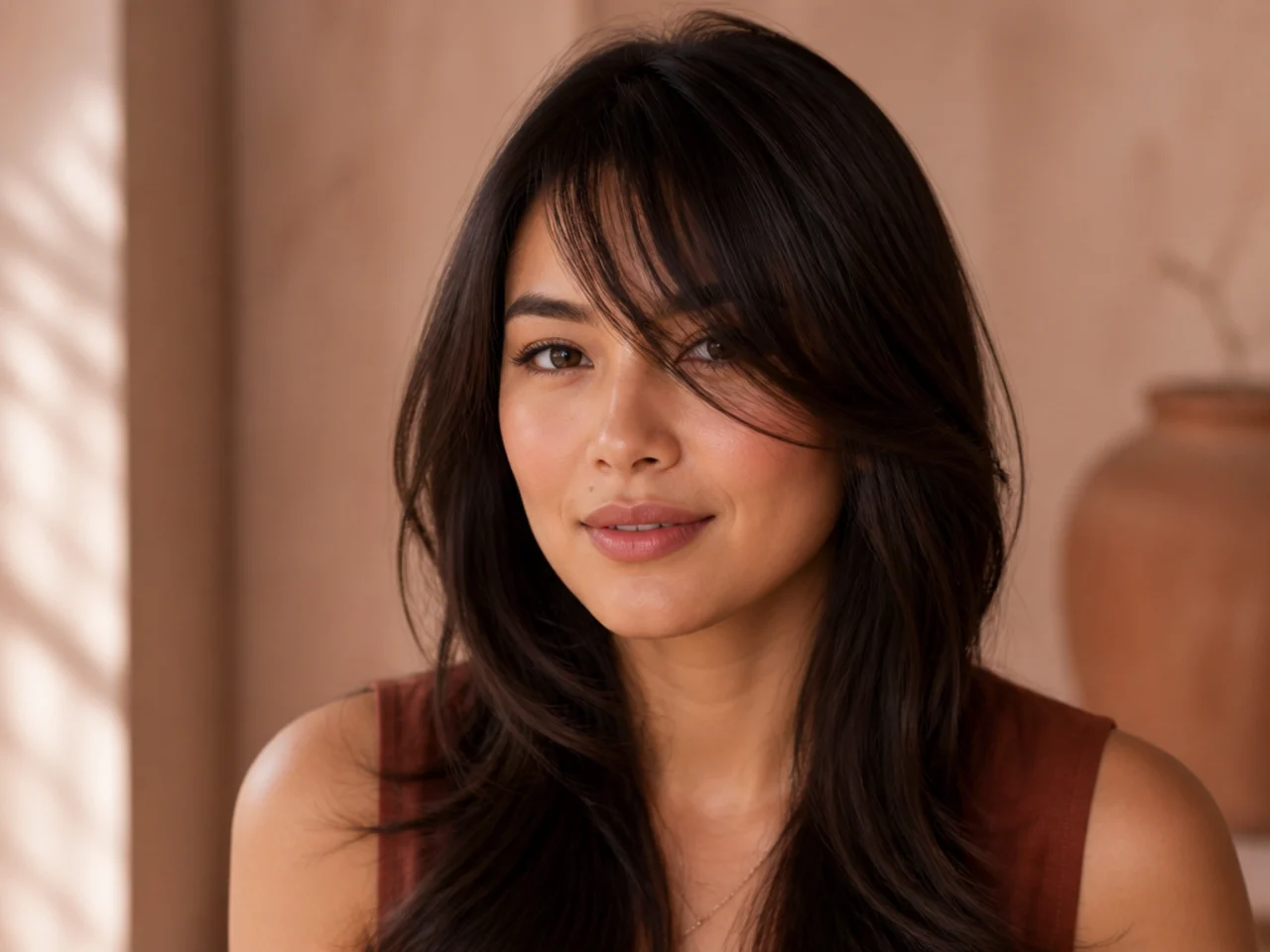
20 Short Curtain Bangs Ideas For Long Hair
A short curtain bang is defined by one measurement — where its shortest point lands. At or above the brow it stays a feature you cannot tuck away; below it behaves like a long fringe. Twenty versions, and where each one sits.
In this article · 27
- What Makes a Curtain Bang Short
- Choosing Your Shortest Point
- The 20 Short Curtain Bang Ideas
- 1. Brow Grazing Curtain Bang
- 2. Above the Brow Curtain Bang
- 3. Bottleneck Curtain Bang
- 4. Wispy Curtain Bang
- 5. Blunt Curtain Bang
- 6. Micro Curtain Bang
- 7. Curtain Bang With a Deep Side Part
- 8. Curtain Bang Split Off Centre
- 9. Curtain Bang on Straight Long Hair
- 10. Curtain Bang on Wavy Long Hair
- 11. Curly Curtain Bang
- 12. Curtain Bang for Fine Long Hair
- 13. Curtain Bang for Thick Long Hair
- 14. Curtain Bang Over a Cowlick
- 15. Curtain Bang With Long Face Framing Layers
- 16. Feathered Seventies Curtain Bang
- 17. Curtain Bang With a Money Piece
- 18. Curtain Bang on a Wolf Cut
- 19. Curtain Bang Worn Pushed Back
- 20. Curtain Bang at Six Weeks
- Styling and Upkeep
- Mistakes to Avoid
- FAQ
- Final Thoughts
Most short curtain bangs fail at one measurement — the shortest point in the middle, which decides whether the fringe is a feature or an accident.
The shortest point defines the cut. At the brow or above it, the fringe cannot be hidden behind an ear or absorbed into layers. Below the brow it is just a long fringe with a parting in it.
Depth controls weight, length controls attitude. How far back the section is taken sets how heavily the fringe hangs. How short the centre goes sets how much of the face it opens.
What Makes a Curtain Bang Short
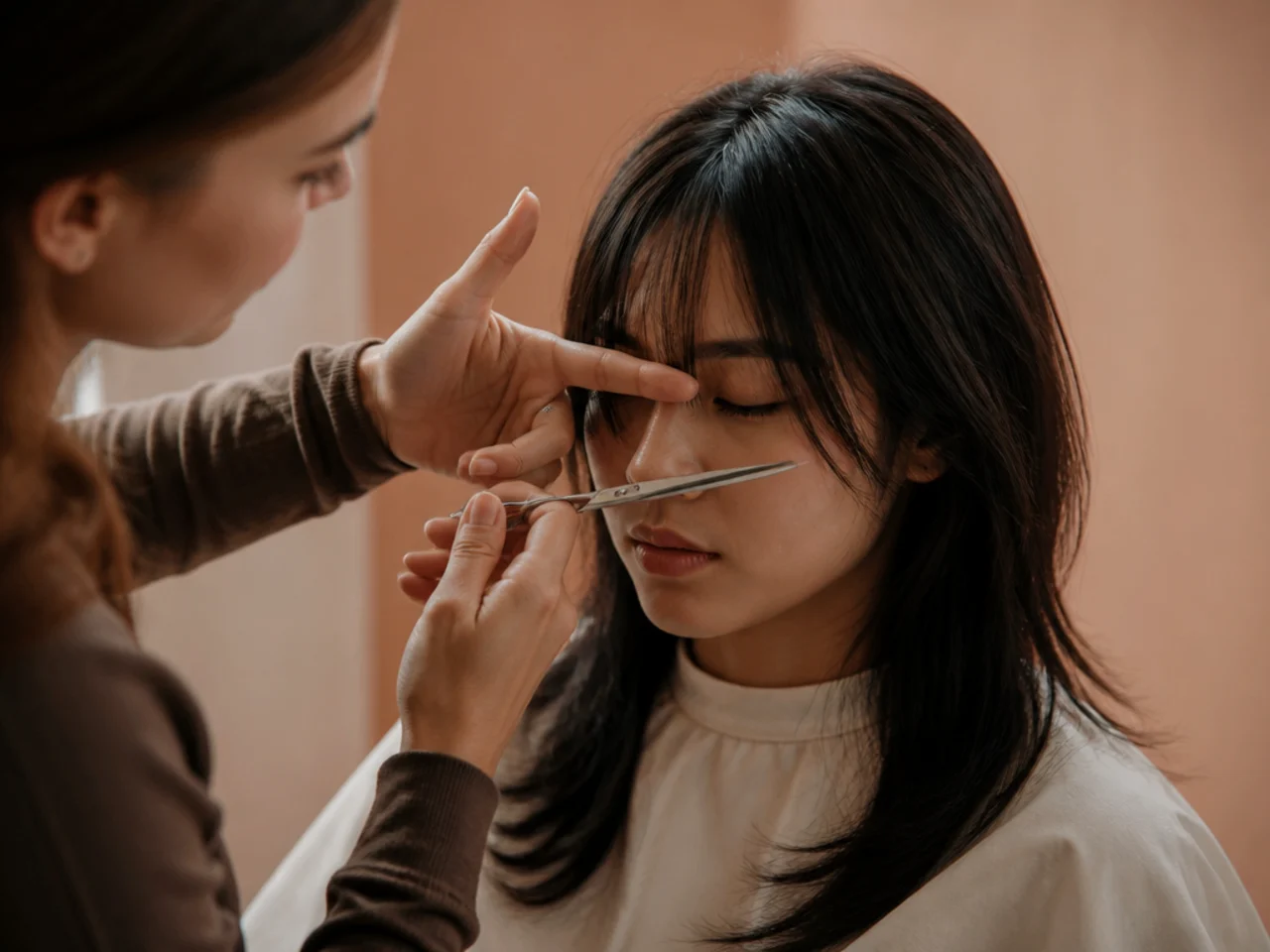
It is cut on a diagonal, not a straight line. The shortest point sits in the centre and the length increases outward toward the cheek. That angle is what makes the two halves fall apart into a curtain rather than sitting as one panel.
Above the brow is the dividing line. A fringe that clears the eyebrow always reads as a fringe. One that touches the lashes reads as a curtain that needs pushing aside, which is a different cut to live with.
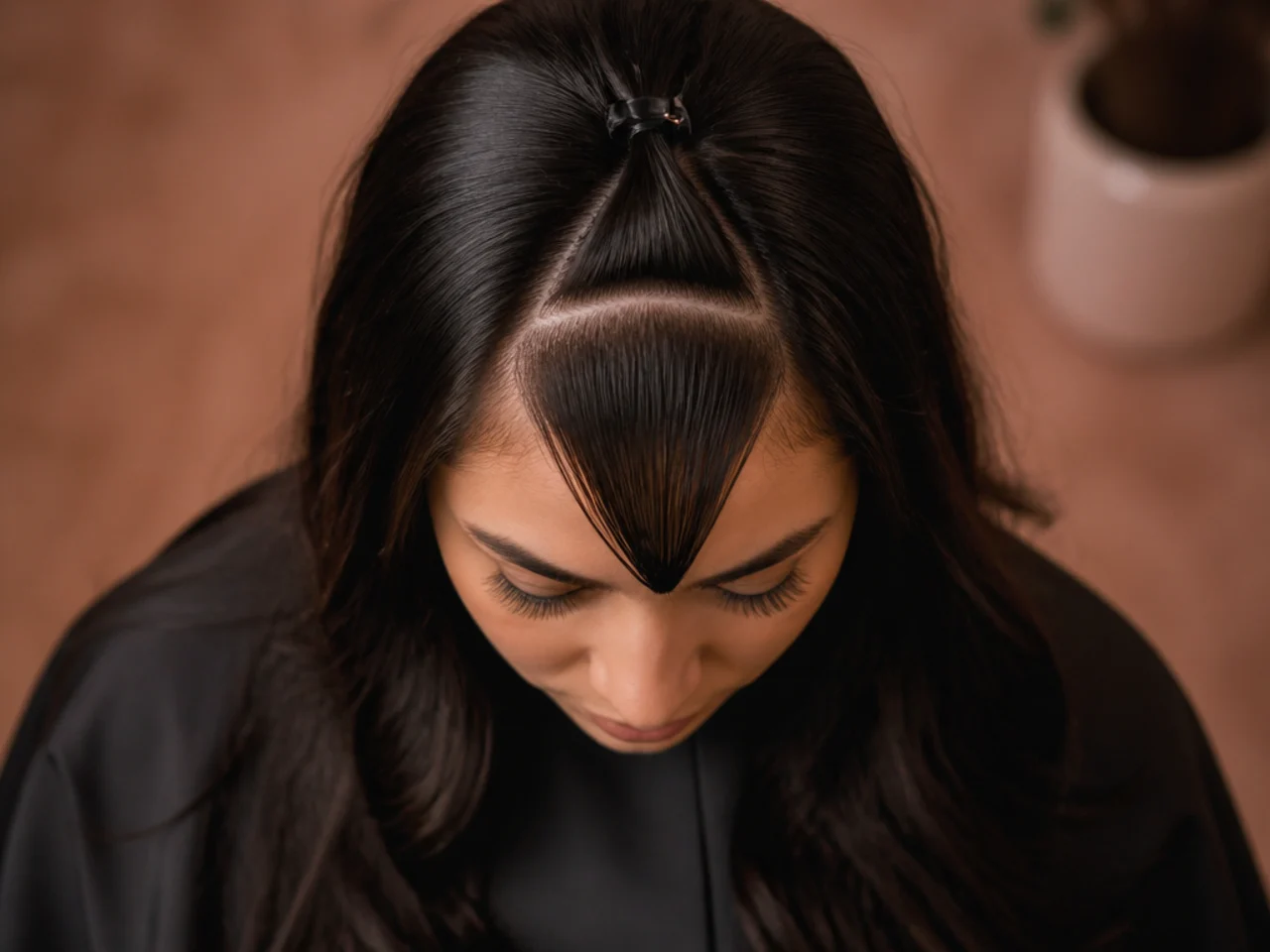
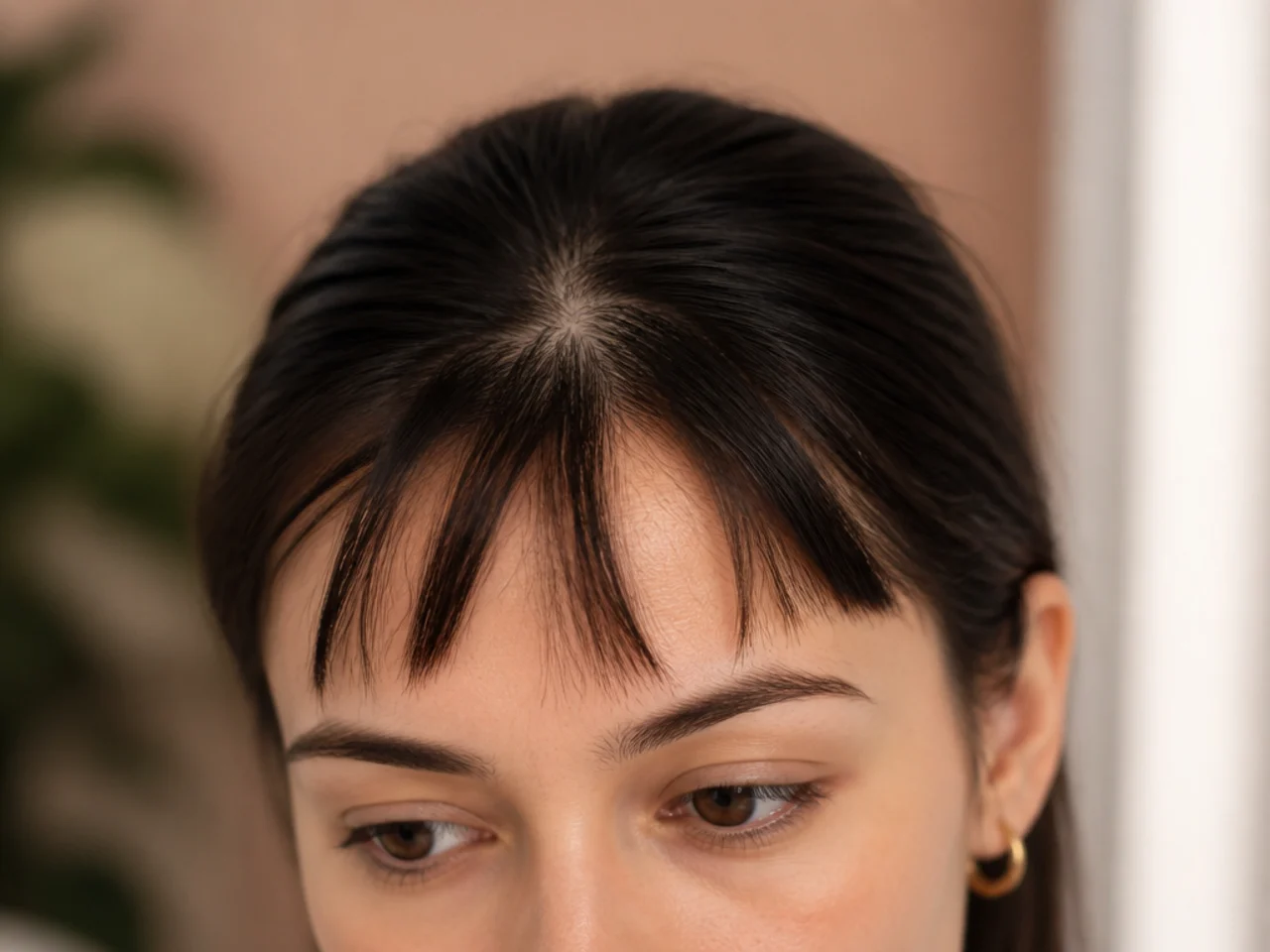
The section is a triangle, not a square. It runs from a point roughly two inches back from the hairline out to the corners of the forehead. A square section takes hair from behind the part line and leaves a visible thin strip there.
Long hair changes the proportion, not the cut. With a metre of length behind it, a short fringe is a small fraction of the total, so it registers as a deliberate frame rather than as hair that was chopped.
Choosing Your Shortest Point
Mid brow suits most faces and most hairlines. It clears the eye without exposing the whole forehead, and it is far enough from the lashes that a windy day does not turn into an irritation.
Go above the brow only if the hairline is stable. A cowlick at the front pushes the root sideways, and a fringe cut that short has no weight left to pull it back down over the swirl.
Add half an inch for wave and an inch for curl. Hair straightens under water and springs back as it dries, so the cut length and the worn length are not the same number.
Match the depth to your density. Fine hair wants a shallow section so the strip behind the fringe stays covered. Thick hair wants a slightly deeper one, or the fringe stands off the forehead instead of lying on it.
The 20 Short Curtain Bang Ideas
1. Brow Grazing Curtain Bang
The centre lands on the top edge of the eyebrow and the sides run out to the cheekbone. It is the shortest point that still reads soft, because the brow line gives the eye a horizontal to rest on rather than leaving the forehead split in half.
2. Above the Brow Curtain Bang
Cut a clear half inch above the brow so the whole eyebrow stays visible. Nothing rests on the skin, which means no oil transfer and no separating into strands by mid afternoon, but it also means the fringe has to be styled every wash.

3. Bottleneck Curtain Bang
Narrow and closed at the centre, then flaring sharply outward at the temples. The closed middle is only a few inches of hair, so the shape is carried by the flare, and it works on heads that do not have the density for a full fringe.

4. Wispy Curtain Bang
The ends point cut into fine tapered tips so light passes between them. Removing weight from the last inch lets the fringe sit against the forehead without forming a solid block, which is the difference between a soft frame and a visor.

5. Blunt Curtain Bang
Cut with a straight scissor line so every strand in the panel ends together. The stacked ends give the fringe a hard edge and much more apparent density, which is the version to ask for if the hair is fine and the fringe keeps going see through.

6. Micro Curtain Bang
The centre finishes at the top of the forehead, well clear of the brow. At that length there is no weight left to hold the panel down, so the direction the roots grow decides the shape entirely — check the hairline before committing.

7. Curtain Bang With a Deep Side Part
The parting moved two inches off centre so one panel carries more hair than the other. The heavier side hangs and the lighter side lifts, which builds asymmetry into the cut without cutting the two halves to different lengths.

8. Curtain Bang Split Off Centre
A smaller shift than a side part, about an inch. It is enough to break the symmetry that makes a centre part look severe, and it hides the fact that almost nobody has a hairline that is genuinely symmetrical.

9. Curtain Bang on Straight Long Hair
Straight hair shows the cut line exactly as it was cut, with no bend to soften it. That makes the diagonal read cleanly, and it also means every uneven millimetre is visible, so this is the texture that most needs a dry finish check.

10. Curtain Bang on Wavy Long Hair
The bend in a wave breaks up the cut line and hides small inconsistencies a straight head would expose. It also lifts the panel off the forehead on its own, so this is the texture that needs the least drying to sit right.

11. Curly Curtain Bang
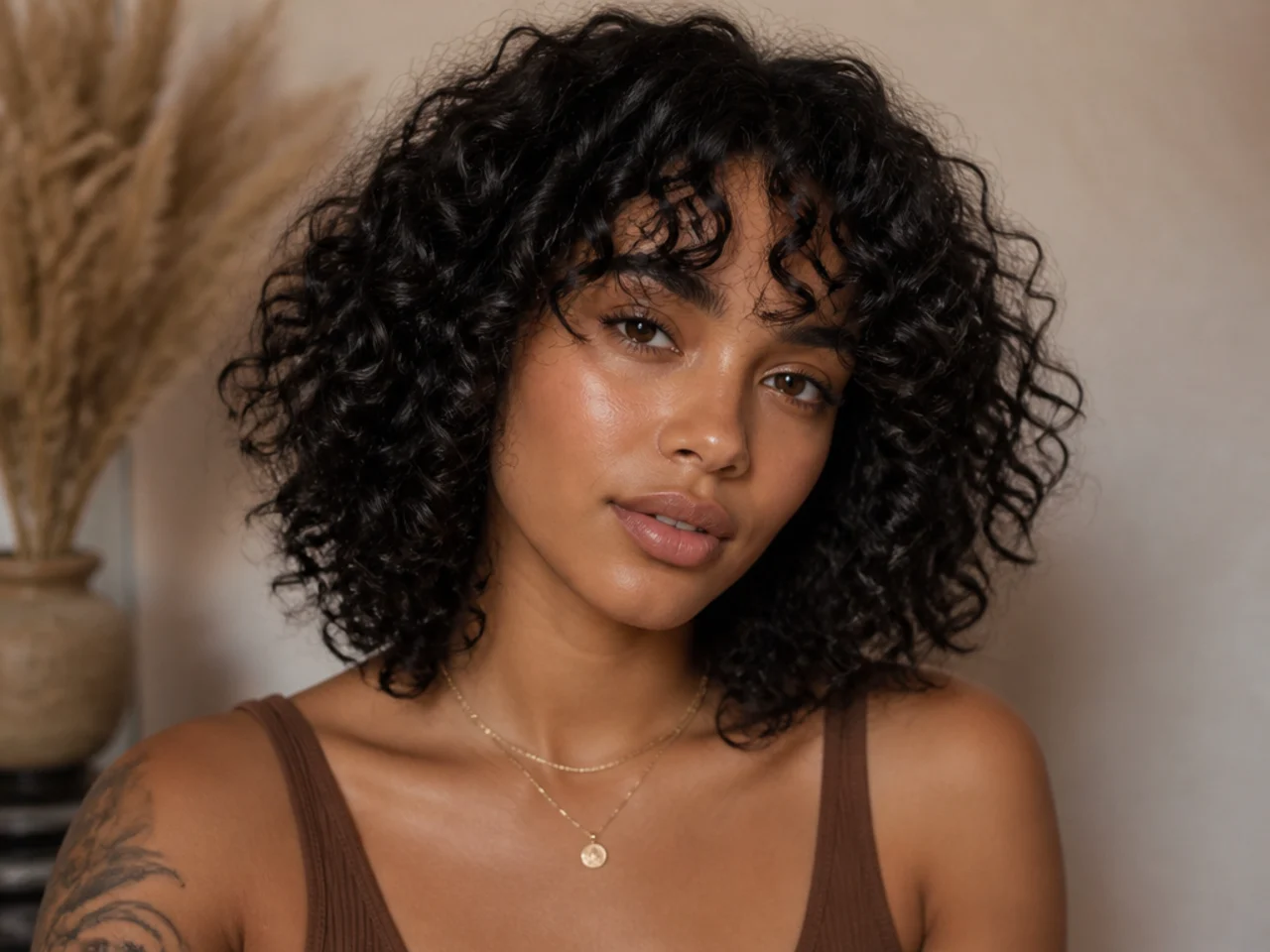
Cut dry, curl by curl, and add an inch over the length you actually want. A curl spends much of its length in the spiral, so a fringe cut wet at brow level dries somewhere above the hairline and cannot be undone.
12. Curtain Bang for Fine Long Hair
Keep the section shallow and the ends blunt. A deep section takes hair from behind the part line where fine heads have nothing spare, and a blunt edge stacks the ends so the panel keeps its density rather than going transparent.

13. Curtain Bang for Thick Long Hair
Thick hair pushes a fringe away from the forehead because the mass underneath has nowhere to go. Ask for weight removed from the underside of the panel rather than the surface, so the outline stays intact and only the bulk behind it is reduced.

14. Curtain Bang Over a Cowlick
A cowlick sends the root out sideways instead of forward, and short fringes have no weight to override it. Cut the affected side slightly longer and part the fringe on the side the swirl already pushes toward, so the growth pattern works for the shape.

15. Curtain Bang With Long Face Framing Layers
The fringe ends at the brow, then a second layer picks up at the jaw and a third at the collarbone. Spacing them apart gives the eye a continuous line down the face and keeps the fringe from looking like it was pasted onto unlayered hair.

16. Feathered Seventies Curtain Bang
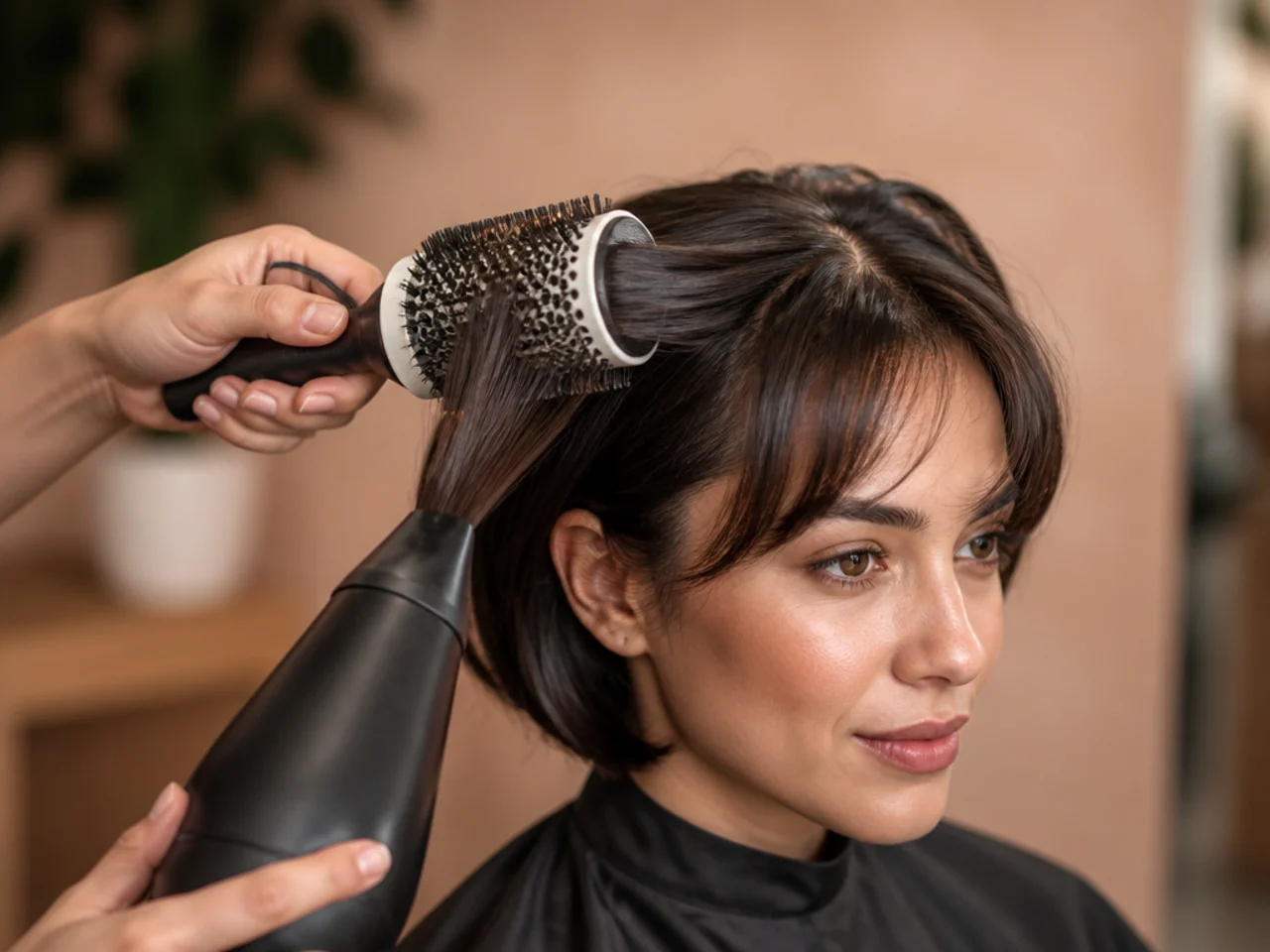
Every end bevelled outward so the panel flicks away from the face. The bend is set by drying the section over a brush and letting it cool in position, because hair takes its shape as it cools rather than while the heat is on it.

17. Curtain Bang With a Money Piece
The two fringe panels lightened several shades against the base. The contrast draws the eye to the shortest part of the cut, which is why it makes a short curtain bang read as intentional rather than as an experiment gone slightly wrong.

18. Curtain Bang on a Wolf Cut
Short curtain bangs above heavy crown layering. The fringe and the crown layers are cut as one continuous graduation, so the fringe has somewhere to blend into instead of ending against a wall of unlayered length.

19. Curtain Bang Worn Pushed Back
The same cut dried backward off the face. A short fringe pushed back leaves a raised loop at the hairline that holds all day, because a bent root cannot lie flat until it is next wetted.

20. Curtain Bang at Six Weeks
Three quarters of an inch longer, sitting on the lashes. This is the point to book a trim rather than a redesign, because the diagonal is still there and only the last inch needs taking back.

Styling and Upkeep
Dry the fringe first, straight off the shower. It sets the direction of the root before it has a chance to dry into whatever the pillow decided.
Use a round brush and let the section cool on it. The bend forms as the hair cools, so pulling the brush out while the hair is still warm undoes the shape you just made.
Trim every four to six weeks, not eight. At half an inch a month the shortest point crosses the eyeline in six weeks, and a short curtain bang is entirely defined by that shortest point.
Wash the fringe more often than the length. It sits on skin all day and picks up oil far faster than the rest of the hair, which is what makes it separate into strands.
Keep heavy product away from the panel. Anything that adds weight collapses a short fringe onto the forehead, where it stays.
Mistakes to Avoid
Cutting it wet on wavy or curly hair. The strand travels up as it dries, so the fringe lands well above the length that was measured.
Taking the section back to the crown. That hair was covering the part line, and its absence shows every time the hair is parted.
Cutting straight across instead of on a diagonal. Without the angle the two panels do not separate, and the result is a blunt fringe with a split in it.
Ignoring the hairline before going above the brow. A cowlick decides the shape at that length, and no amount of drying overrules it for a whole day.
Waiting for a full haircut to trim it. Fringe trims are quick and the shape depends entirely on the last half inch.
FAQ
How short is short? Shortest point at or above the eyebrow.
How deep a section? A shallow triangle about two inches back from the hairline.
How often trimmed? Every four to six weeks, before it reaches the lashes.

Final Thoughts
A short curtain bang is two numbers — where the centre lands and how far back the section was taken. Get those right and the styling is a round brush and two minutes. Get them wrong and no amount of product recovers it.
For the longer version of the same cut see curtain bangs on long hair, and for the blunter French shape that sits at a similar height see short French bangs. More in Bangs and Fringe.