15 Short Curtain Bangs Bob Ideas and How Short to Go
Fifteen short curtain fringe and bob pairings, and the ratio nobody mentions — the bob length sets the ceiling for the fringe, not the other way round. Cut the fringe for the wrong perimeter and the two shapes never join.
In this article · 23
- What Short Curtain Bangs Are
- Bob Length and Bang Ratio
- Face Shapes and Short Curtain Bangs
- Styling Short Curtain Bangs
- Troubleshooting Short Curtain Bangs
- Trim Cadence and Cost
- The 15 Short Curtain Bangs Bobs
- 1. Chin Length Bob
- 2. Blunt Bob at the Jaw
- 3. French Bob
- 4. Curtain Call Bob
- 5. Wavy Bob
- 6. A Line Bob
- 7. Shaggy Bob
- 8. Round Face Bob
- 9. Curly Bob
- 10. Fine Hair Bob
- 11. Sleek Straight Bob
- 12. Lob
- 13. U Shaped Fringe Bob
- 14. Money Piece Bob
- 15. Grown Out Bob
- Final Thoughts
Most short curtain fringes on a bob go wrong because they were copied from a photograph of a different length of bob.
The perimeter sets the ceiling for the fringe. A fringe has to meet the shortest hair around the face somewhere, and on a bob that meeting point is only a few inches below the brow.
Short means the shortest point sits at the brow. Not the cheekbone. Once the centre of the fringe drops past the eye, the shape stops being a fringe and becomes face framing.
What Short Curtain Bangs Are
A centre split with a graduated edge. Shortest in the middle, longest at the outside, opening away from the face on both sides.
The word short refers to the middle. Standard curtain bangs start around the cheekbone. Short ones start at or above the brow, which is a difference of two inches or more.
They are cut from a triangle at the front hairline. The depth of that triangle back from the hairline decides how dense the fringe is, and it is the single most consequential measurement in the cut.
They read as a fringe, not as layers. That is the whole reason to go short. Below the eye there is no visual difference between a curtain fringe and long face framing.

Bob Length and Bang Ratio
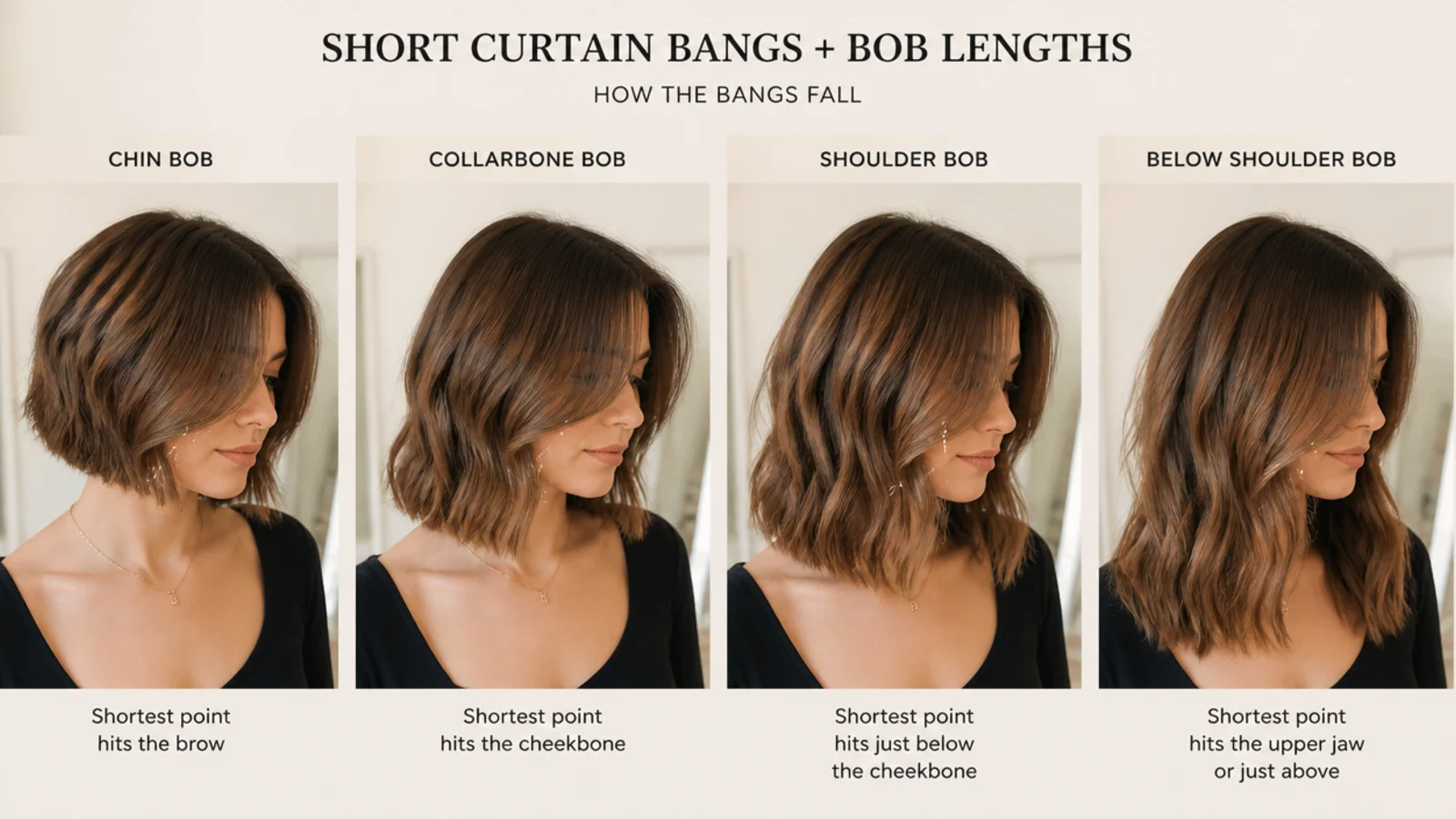
Chin bob, brow fringe. The tightest workable pairing. Both lines are short, so they belong to the same cut rather than two different ones.
Jaw bob, brow to cheekbone fringe. The most forgiving ratio, because the fringe has room to graduate before it reaches the perimeter.
Lob, and the contrast goes up. At collarbone length the fringe is the only short hair on the head, which is the appeal and also the maintenance problem.
The gap between the two lines is what you are choosing. A small gap reads as one shape. A large gap reads as a fringe worn with long hair, which is a different look entirely.
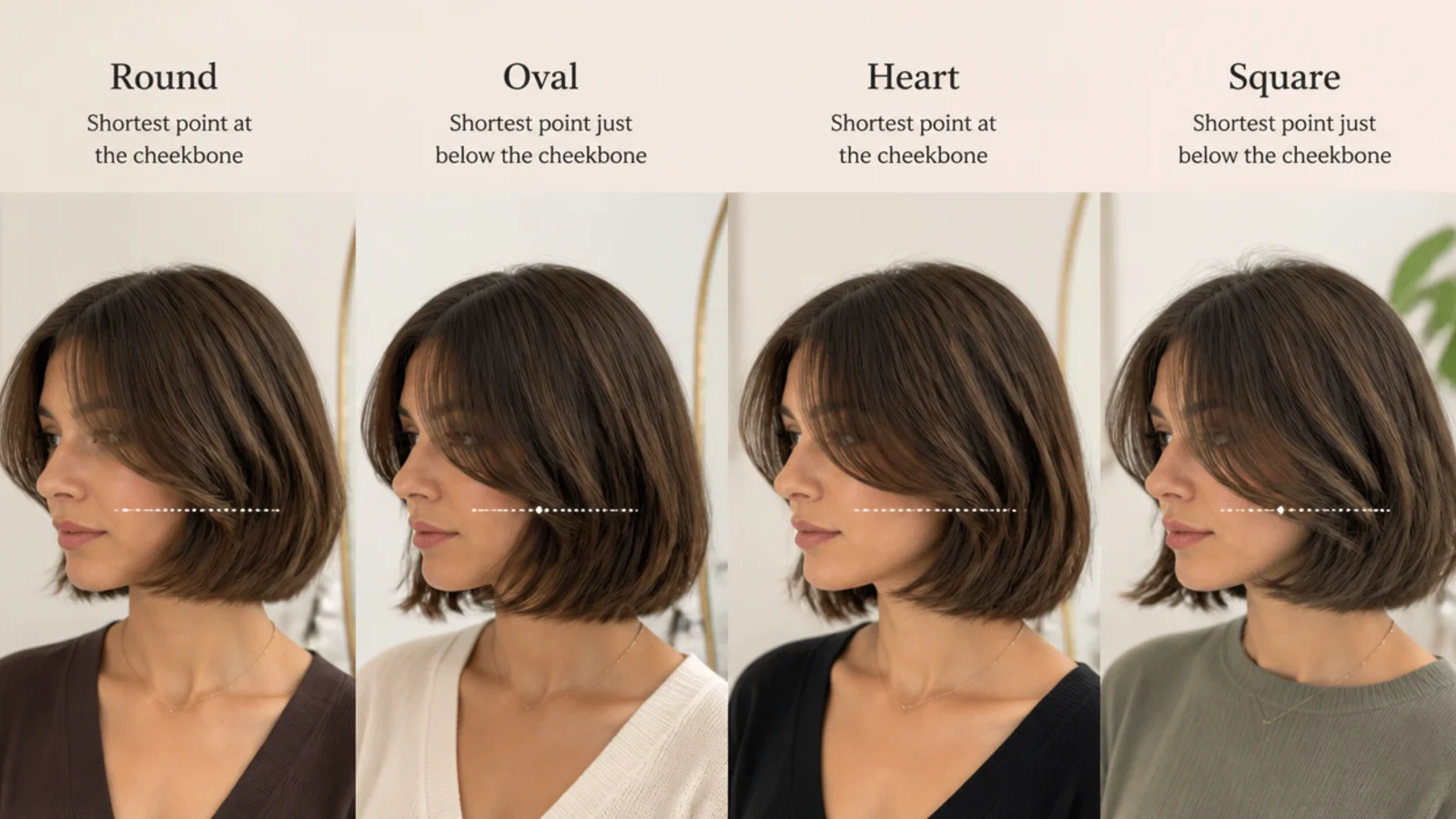
Face Shapes and Short Curtain Bangs
Round faces want a wide opening. The diagonal from the centre part to the cheek is a non horizontal line across the widest part of the face, and it takes width out.
Long faces want a shallower graduation. Keeping more length across the forehead shortens the visible face, where a steep opening lengthens it further.
Square jaws want the outer pieces past the cheekbone. Softness beside the jaw offsets a strong corner more effectively than anything done at the forehead.
Heart shapes want density at the brow. A fuller fringe balances a wide forehead against a narrow chin, so keep the triangle a little deeper.
Styling Short Curtain Bangs
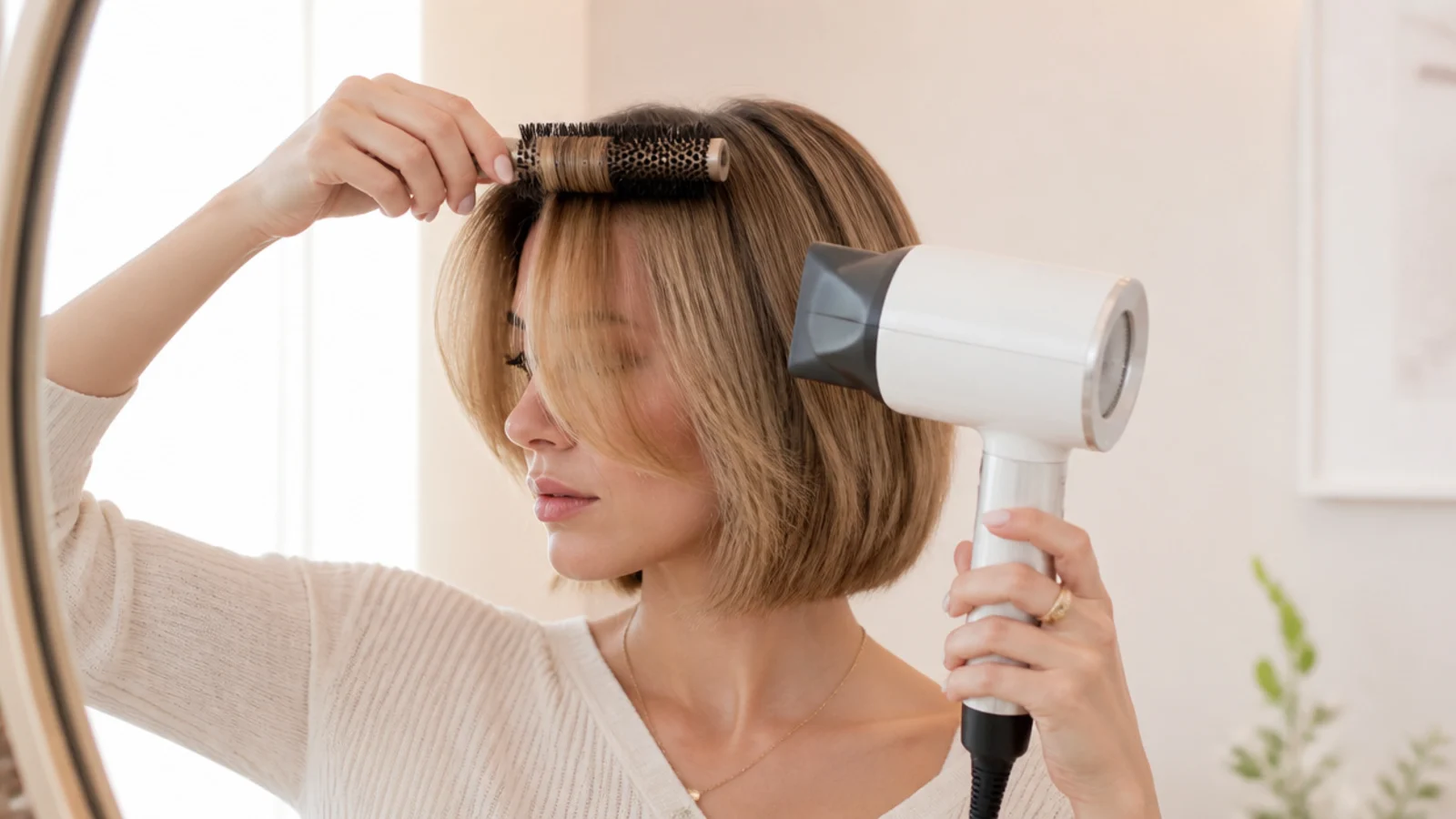
Dry it from wet, every time. Hydrogen bonds reform as water leaves the hair, so the shape you dry it in is the shape it keeps. Restyling a dry fringe fights a set that is already made.
Over direct the root away from the face. Push the fringe to the opposite side at the root while it dries, then let it fall back. That is where the lift comes from.
Finish with cool air. Hair sets as it cools, not while it is hot. A few seconds of cold locks the bend that the brush made.
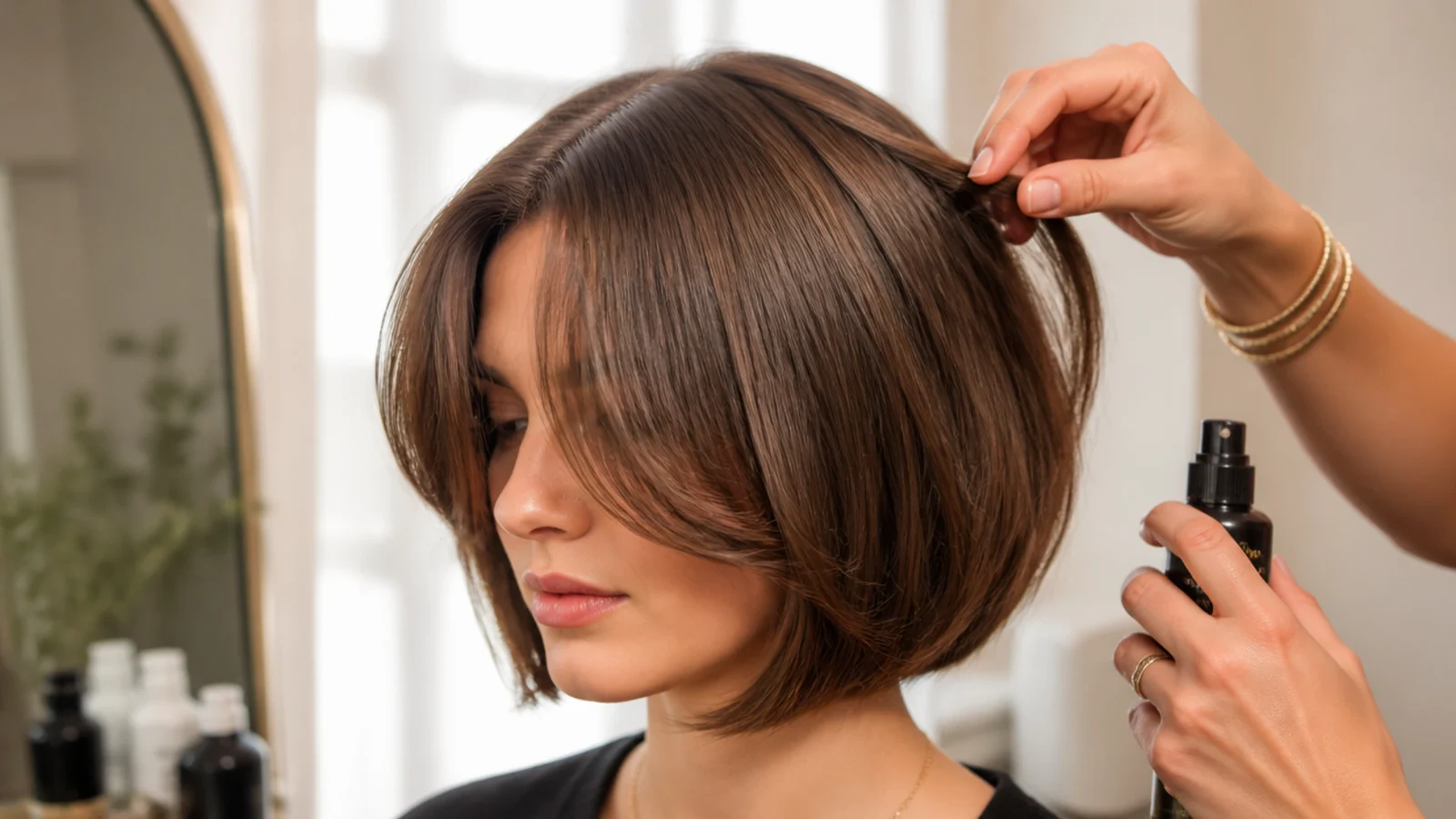
Keep product off the root. The fringe rests on the most sebaceous skin on the face, so anything heavy at the root collapses it by lunchtime.
Troubleshooting Short Curtain Bangs
Splitting in the middle. Usually a cowlick at the hairline. Wet the root, dry it flat against the growth direction, then release.
Sitting flat by afternoon. Oil transfer from the forehead. Dry shampoo at the root in the morning, before the oil arrives rather than after.
Sticking out at the sides. The graduation is too steep, so the outer pieces have nothing to lie against. A trim that softens the corner fixes it.
Looking sparse rather than see through. The triangle was taken too shallow. There is no repair except growing more hair into the section, which takes about three months.
Trim Cadence and Cost
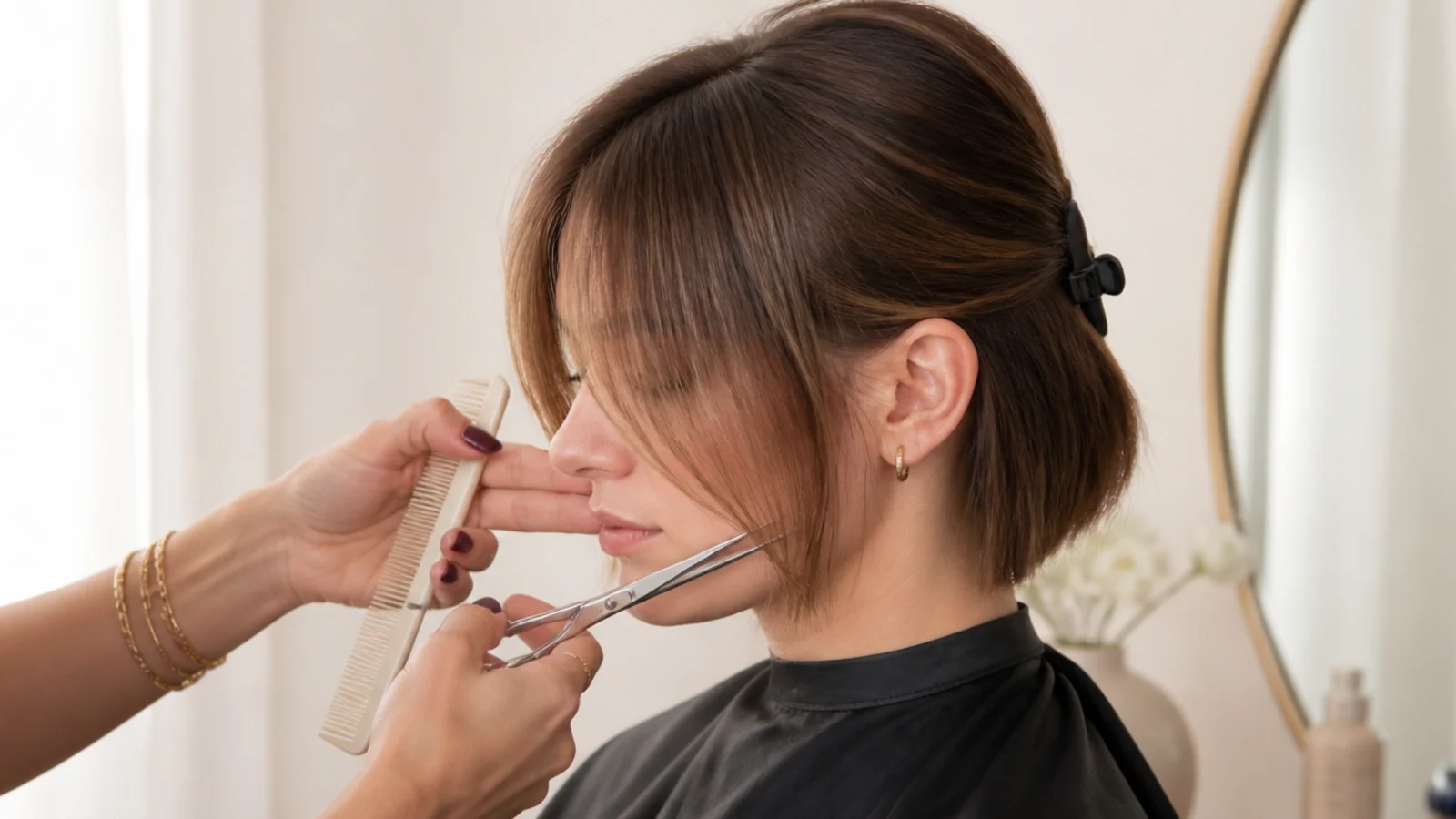
Three to four weeks on the fringe. Half an inch a month is the whole calculation. On a brow length fringe that is the gap between skimming the eyebrow and blocking the eye.
Eight weeks on the bob. The perimeter tolerates growth in a way the fringe does not, so the two schedules run separately.
Most salons trim a fringe free between cuts. Ask when you book the bob rather than turning up unannounced.
Learn to do the outer pieces yourself. Trimming the graduated ends is low risk. Trimming the shortest centre point is not, because that is the measurement the whole shape hangs on.
The 15 Short Curtain Bangs Bobs
1. Chin Length Bob
The shortest bob that still lets a fringe read as curtains rather than as a full fringe. At chin length the perimeter and the longest fringe pieces finish close enough together that the two shapes join instead of sitting as separate layers.
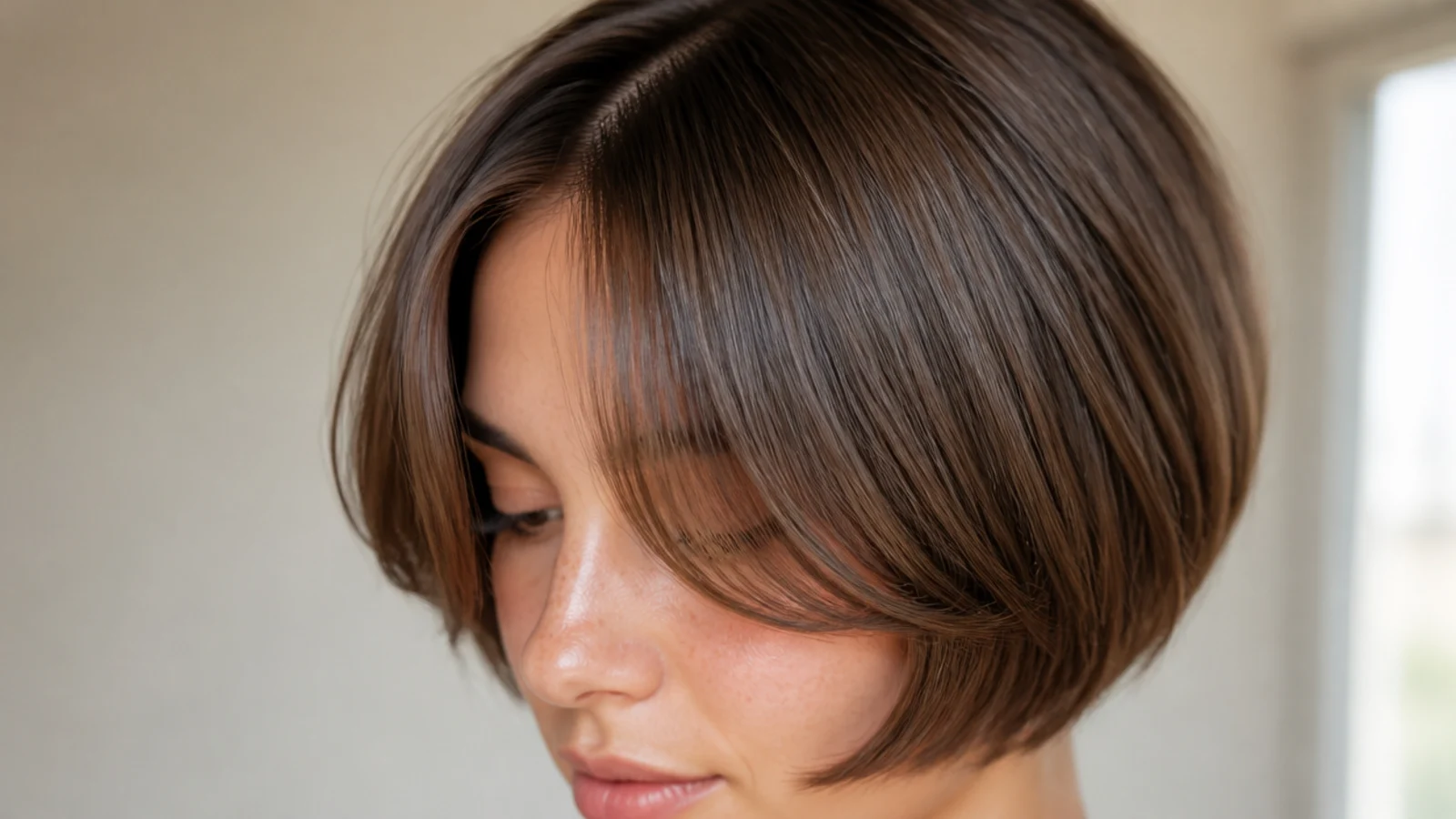
2. Blunt Bob at the Jaw
A blunt perimeter is a hard horizontal, and a fringe opening on a diagonal is the only thing stopping the cut reading as a box. The diagonal has to travel far enough, brow in the centre to cheekbone at the outside, to register against a line that strong.
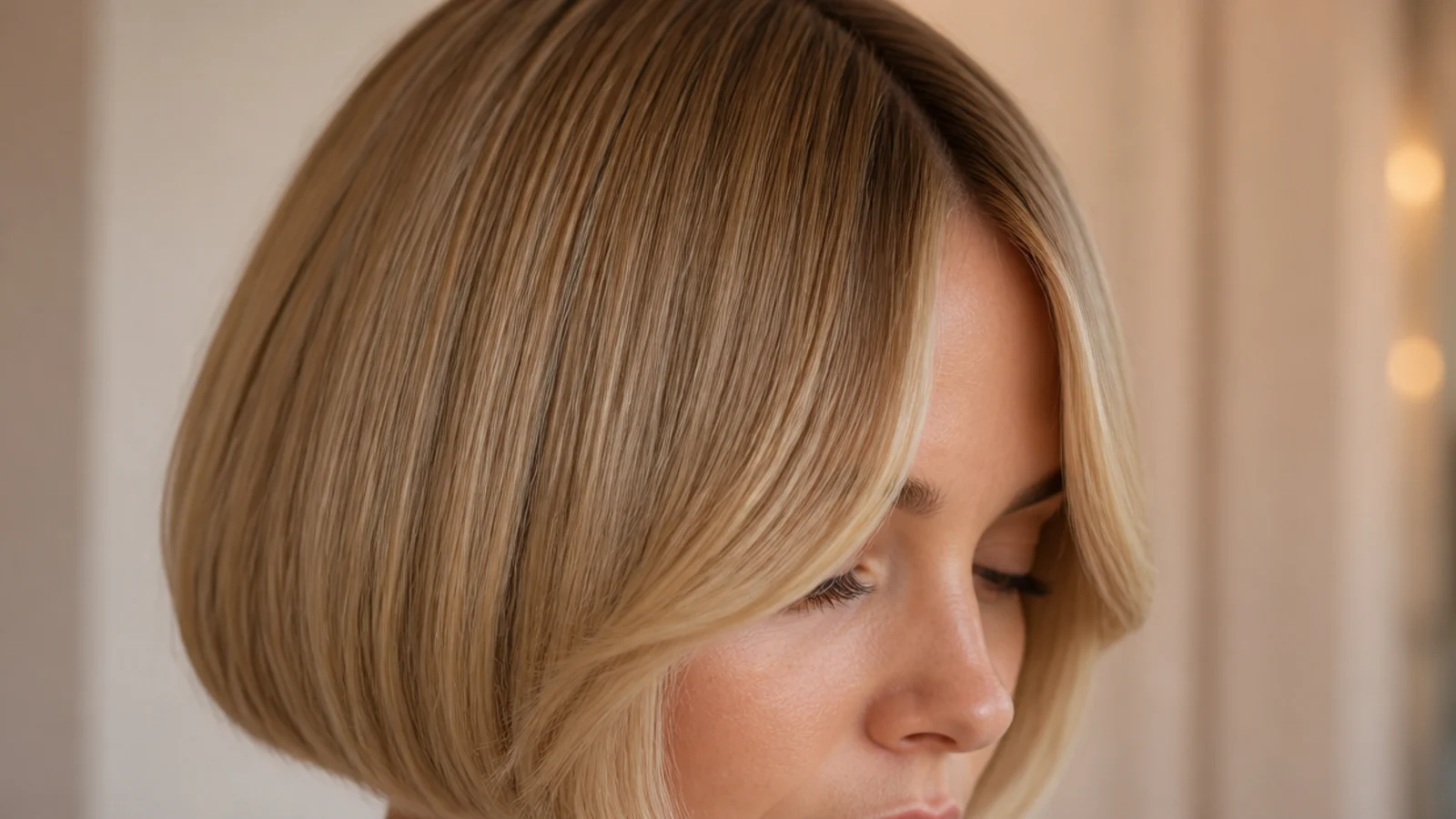
3. French Bob
Sits between chin and jaw with the fringe stopping at the brow, and the whole shape depends on the fringe being short enough to leave the eyes fully exposed. Drop it half an inch and the cut stops reading as French and starts reading as grown out.
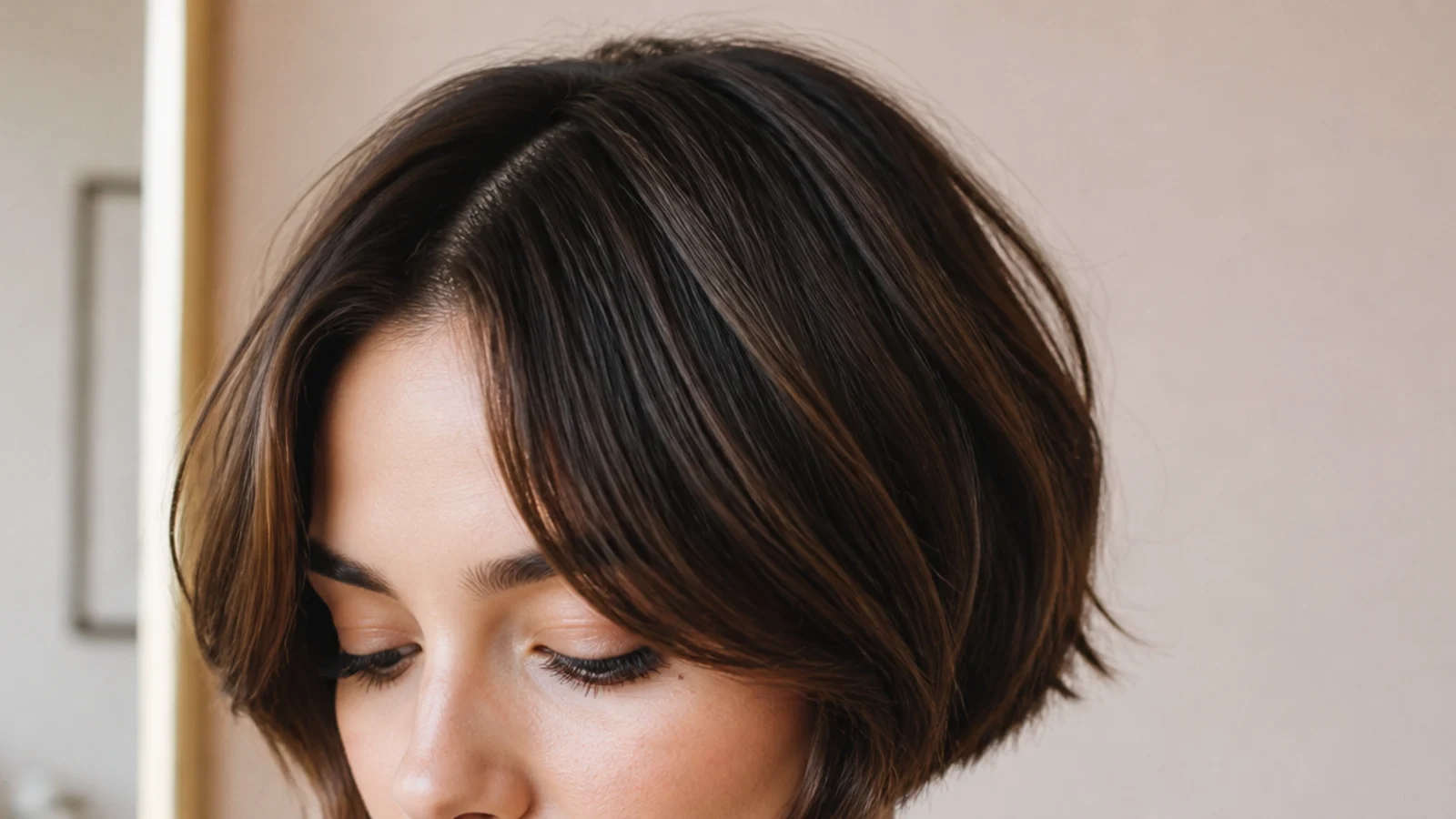
4. Curtain Call Bob
The version cut long enough at the outer edge to tuck behind one ear and leave down on the other. Cutting those outer pieces to cheekbone rather than jaw is what makes both options work, because anything longer will not stay tucked.
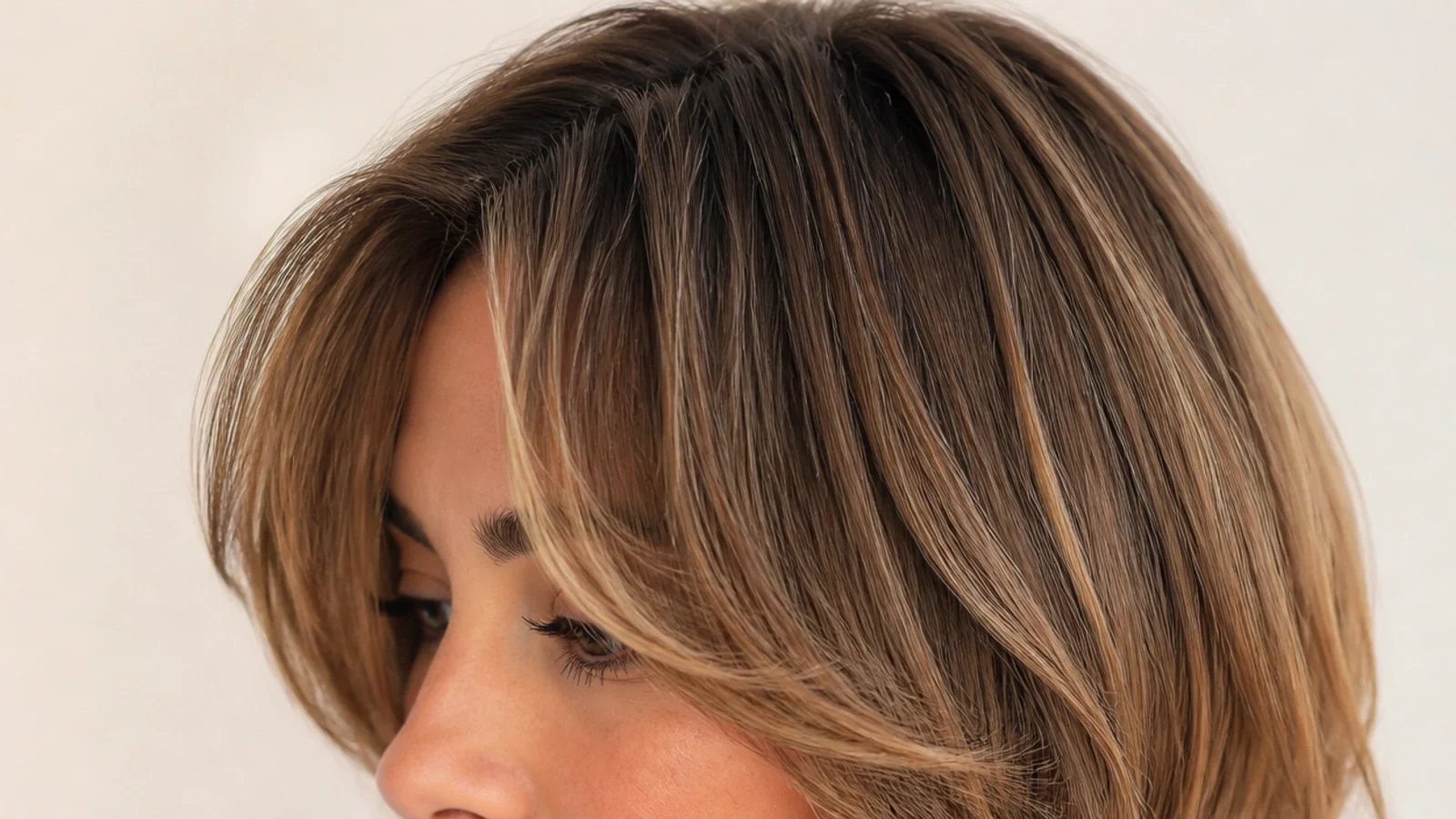
5. Wavy Bob
Wave lifts a fringe as it dries, so a curtain cut on wet wavy hair lands higher than it measured on the comb. Ask for it a quarter inch longer than the target length and let the bend take it back up on its own.

6. A Line Bob
The perimeter already runs on a diagonal with the front longer than the back, so the fringe should not add a second competing angle. Keep the opening shallow and symmetrical here and let the cut itself supply the movement.
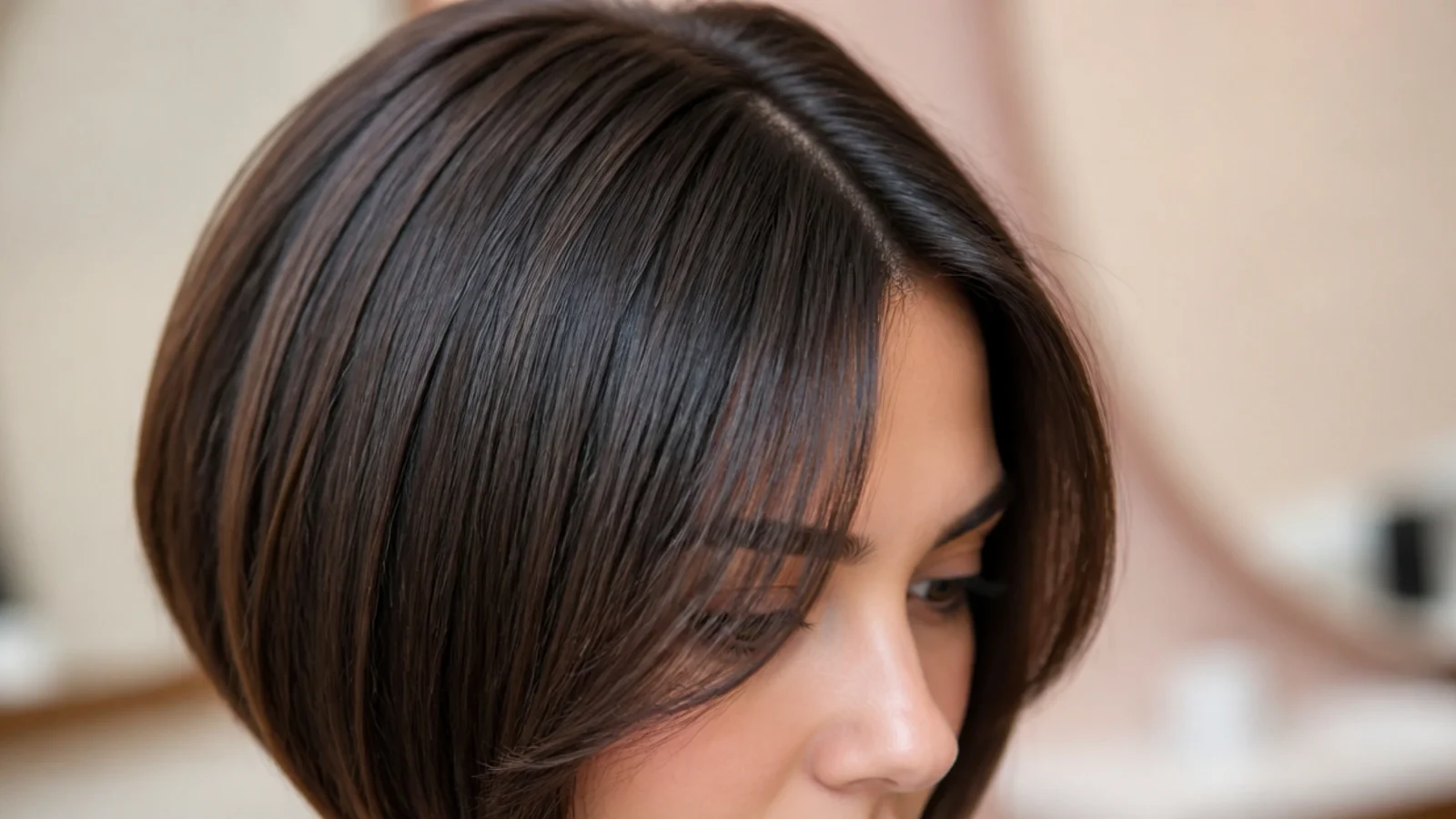
7. Shaggy Bob
Interior layers give the fringe somewhere to blend into rather than leaving it as a separate flap on the surface. A shag also hides a fringe part way through growing out, because the layer underneath is already broken and the fringe simply joins it.
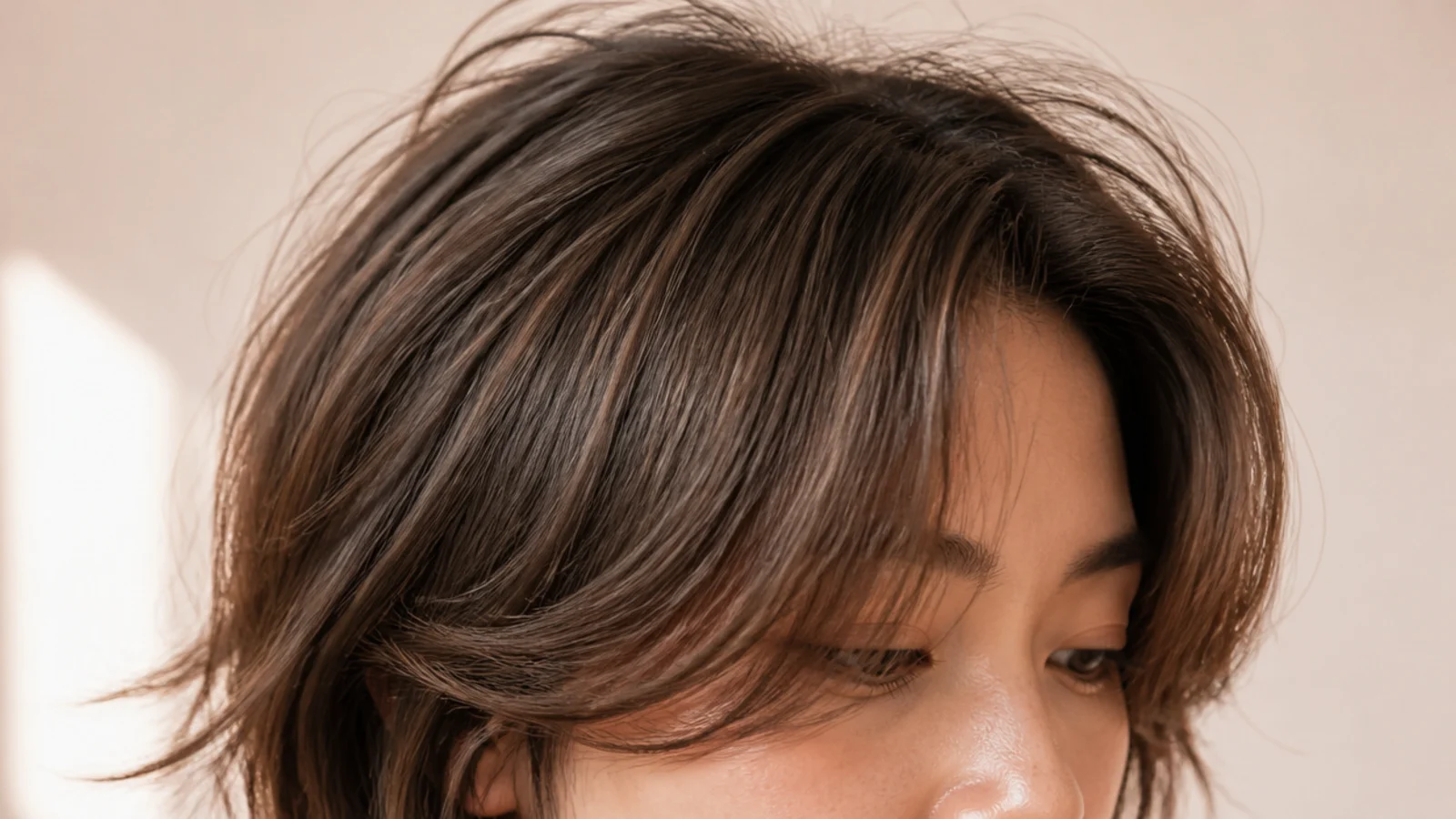
8. Round Face Bob
A round face wants diagonals rather than horizontals, so the fringe opens wide and the outer pieces land at the cheekbone. That diagonal crosses the circle at its widest point and takes width out of the middle of the face.
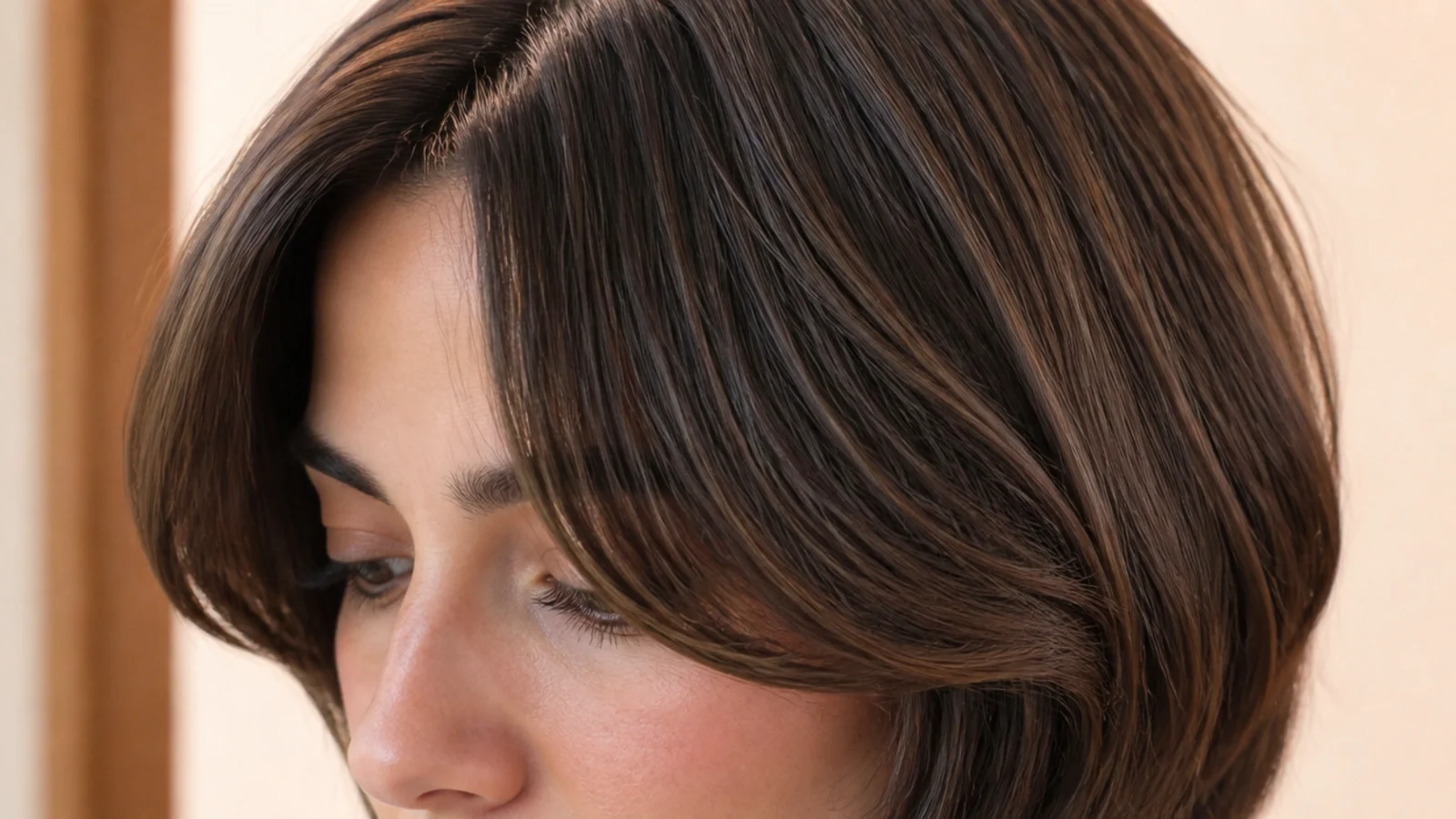
9. Curly Bob
Curl retracts as it dries, often by a third of its wet length, so a fringe cut at the brow on wet curly hair finishes well up the forehead. Cut curls dry and in their own pattern, one coil at a time, or accept a fringe two inches shorter than planned.
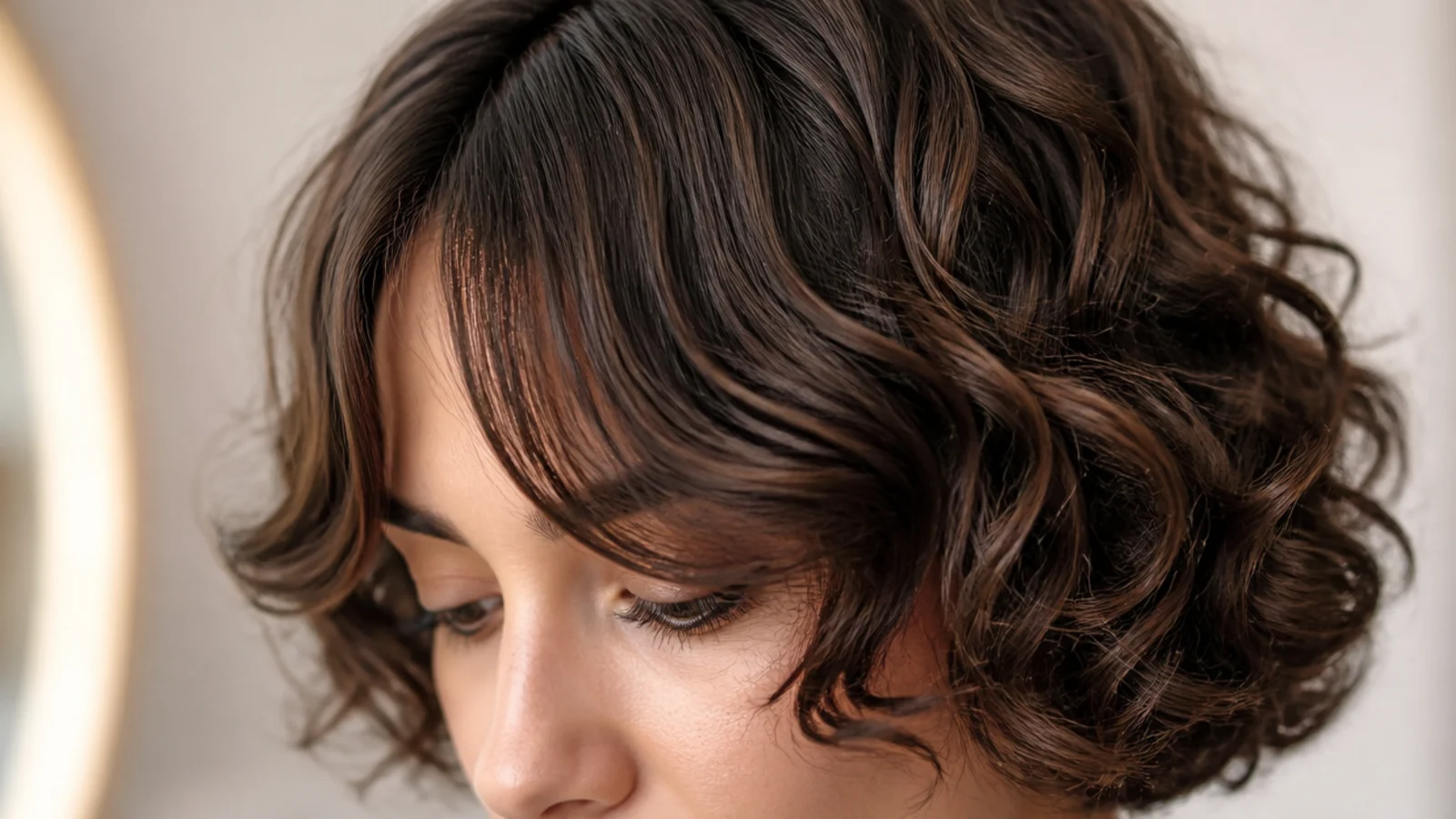
10. Fine Hair Bob
The fringe section is taken from the top of the head, so on fine hair a deep triangle thins the crown to pay for the fringe. Keep the section shallow, an inch or so back from the hairline, and the result reads as see through rather than as sparse.
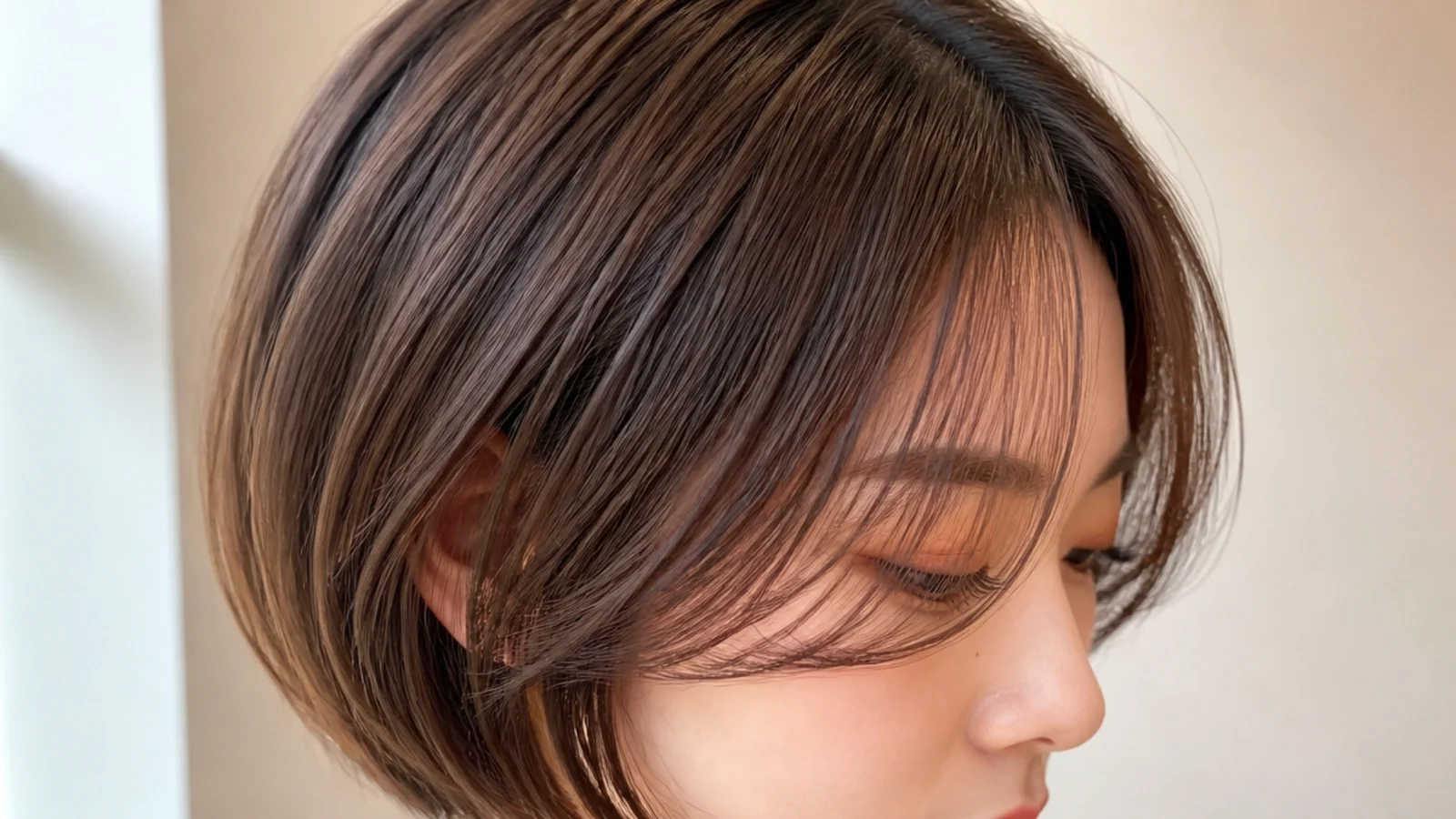
11. Sleek Straight Bob
Straight hair shows every cut line exactly as it was cut, which makes this the most exposed version of a short curtain fringe. The graduation from the centre outward has to be even to the millimetre, because nothing in the texture will hide a step.
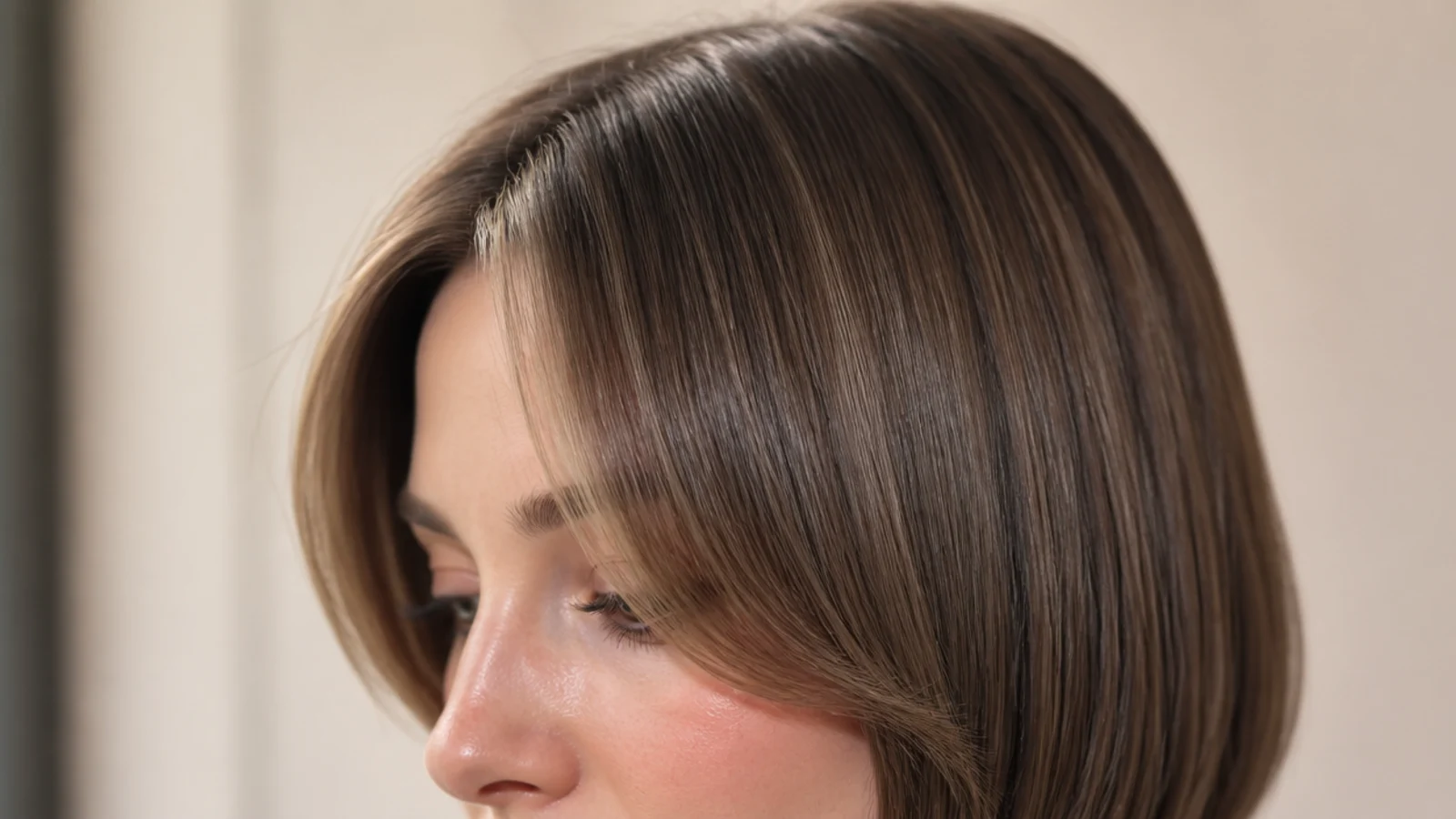
12. Lob
At collarbone length the fringe is the only short hair on the head, so the contrast between it and the perimeter is at its highest. That contrast is the appeal, and it also means the fringe falls out of proportion faster than on a shorter bob.

13. U Shaped Fringe Bob
A U shape keeps the graduation curved instead of straight, so the fringe follows the round of the face rather than falling as two flat panels. It suits a longer face because the curve holds some length across the forehead rather than opening it fully.
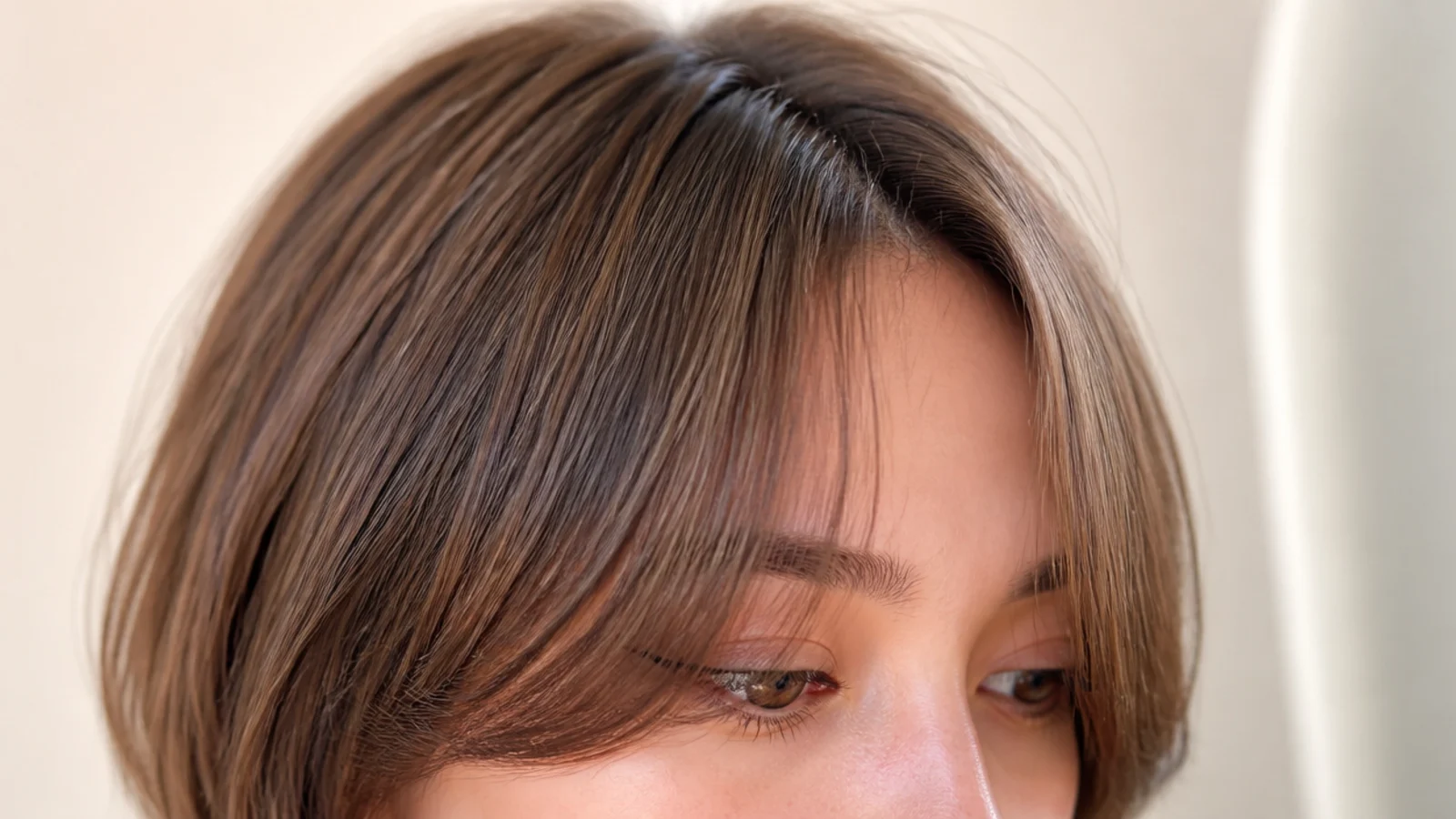
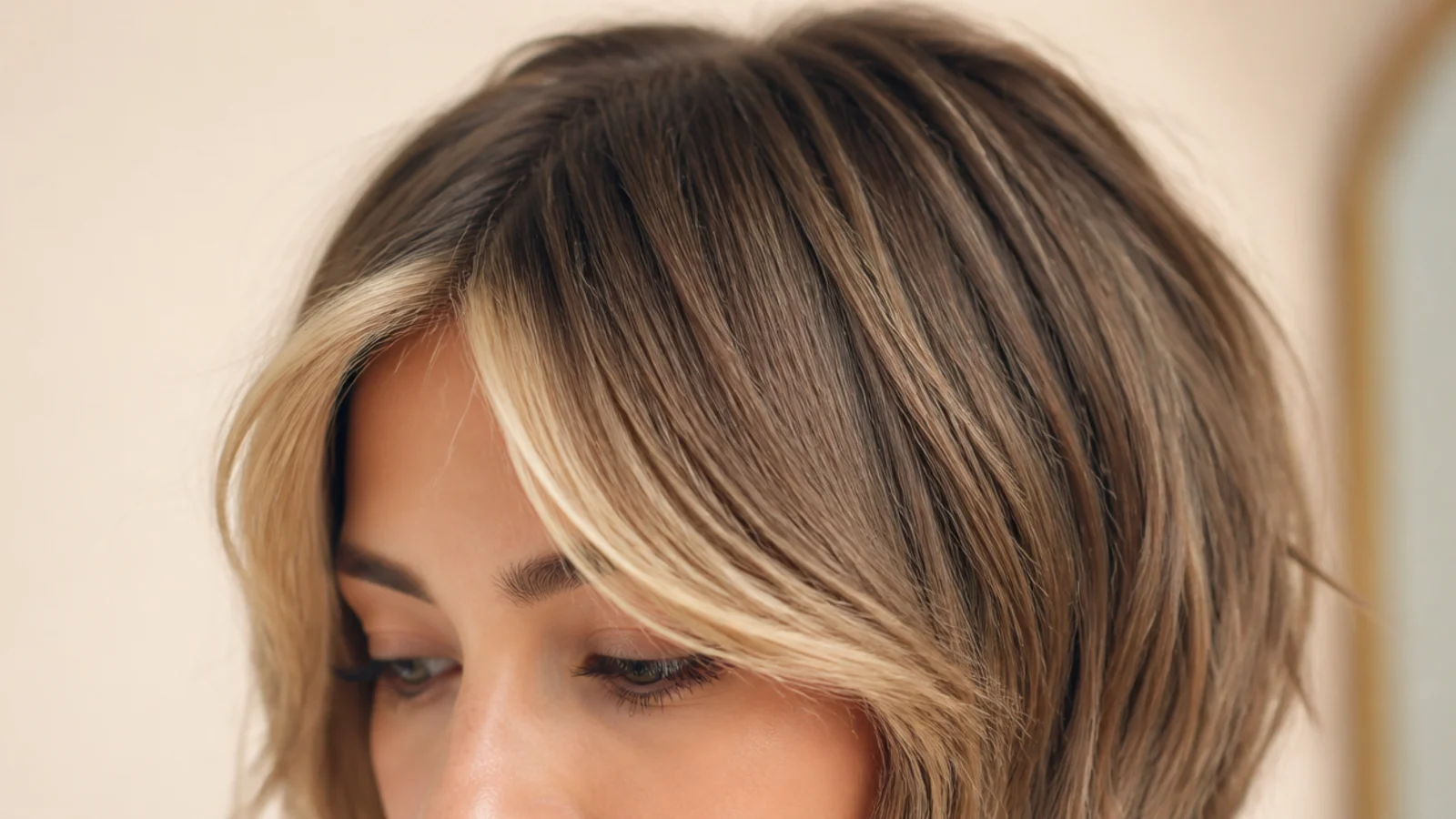
14. Money Piece Bob
Lightening only the two longest fringe pieces puts the brightest hair exactly where the eye already travels. On a bob the effect is amplified, because the perimeter is short enough that those pieces stay in view from every angle.
15. Grown Out Bob
Three months of growth moves a brow length fringe about an inch and a half, which lands at cheekbone on most faces. That is the point where it stops being a fringe and becomes face framing, and stopping there is a perfectly good decision rather than a failure.
Final Thoughts
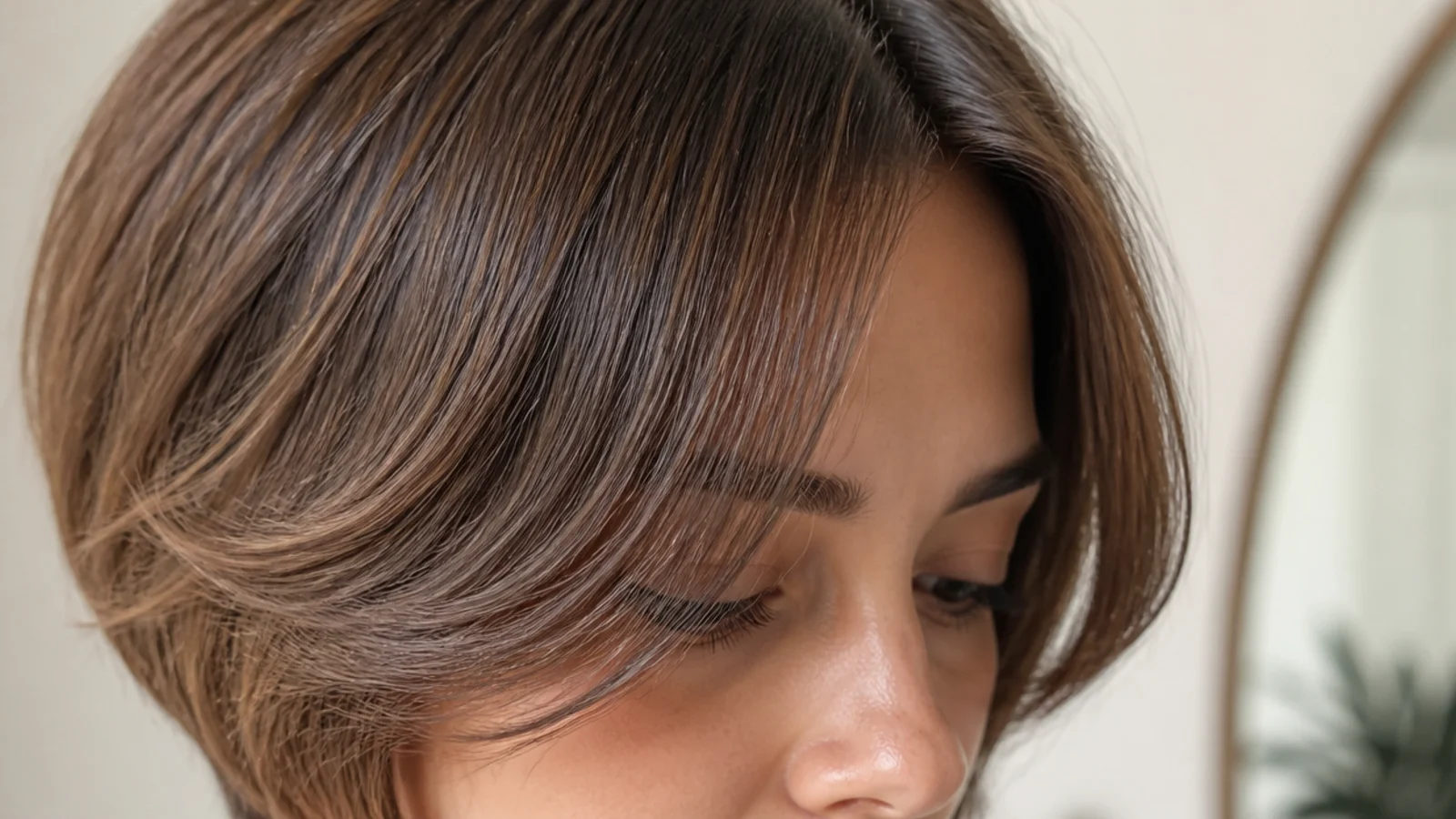
Choose the bob first and the fringe second. The perimeter is the fixed line the fringe has to answer to, and every version above is really a decision about how big a gap to leave between the shortest point of the fringe and the shortest hair around the face.
Then hold the trim schedule, because half an inch a month is the entire reason a short fringe looks different in week four than it did in week one. For the longer fringe on the same shape see curtain bangs on a bob, and for the same idea at lob length see a long bob with curtain bangs. More in Bangs and Fringe.