15 French Bangs Ideas for a Round Face
Fifteen French bangs that work on a round face, built on one rule — horizontal lines widen and diagonal ones lengthen. A round face is not a reason to skip a fringe, only a reason to avoid a flat one.
In this article · 22
- The Rule: Horizontal Widens, Diagonal Lengthens
- Length Matters Too
- The 15 Ideas
- 1. Curtain-Cornered French Bangs
- 2. Deep Side-Swept Fringe
- 3. Long Rounded Fringe
- 4. Angled Fringe to the Cheekbone
- 5. Wispy Fringe with Visible Forehead
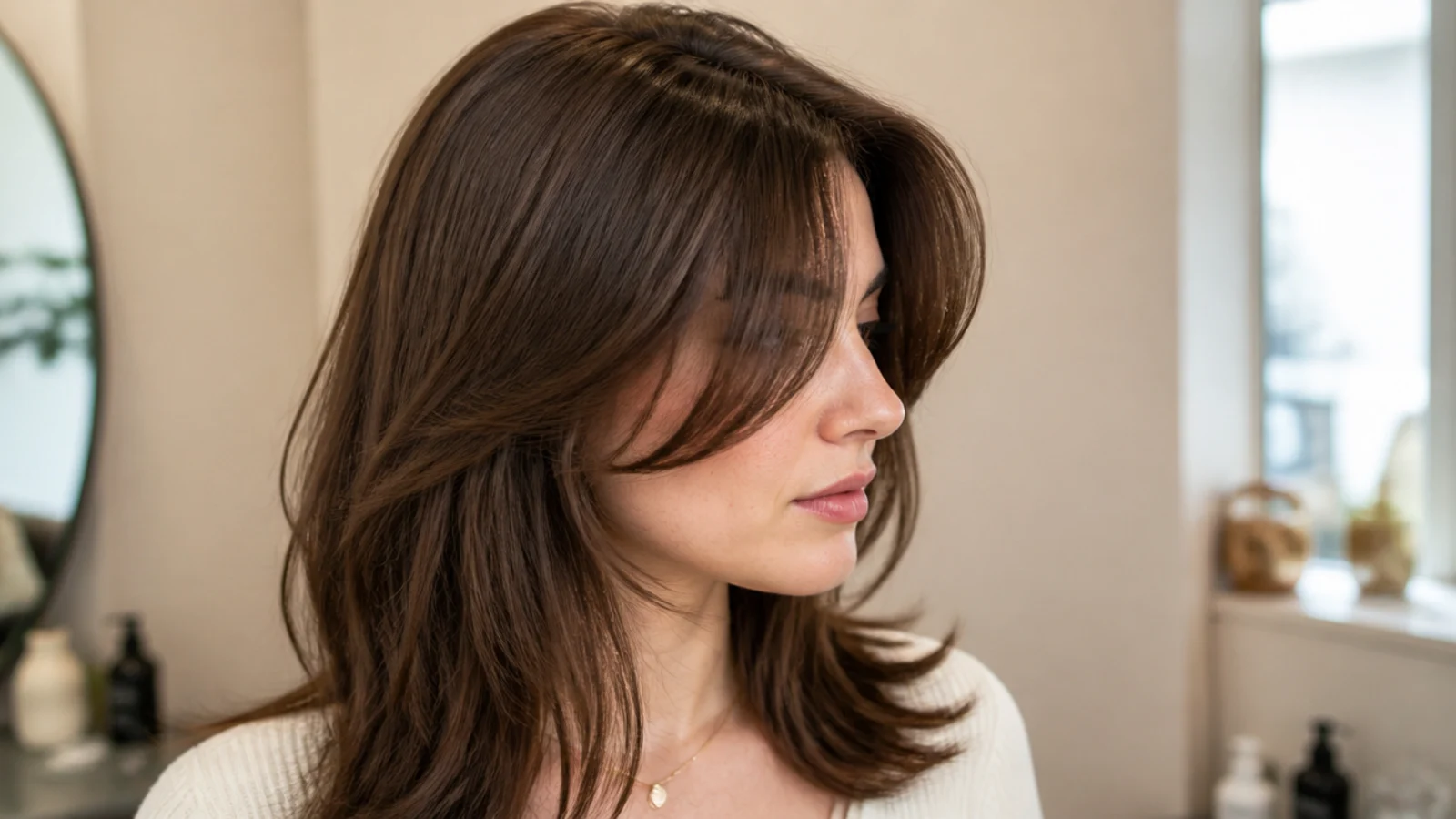
- 6. Fringe with Long Face-Framing Pieces
- 7. Middle-Split Long Fringe
- 8. Asymmetric Fringe
- 9. Fringe with a Long Bob
- 10. Fringe with Long Layers
- 11. Piecey Separated Fringe
- 12. Curly Fringe with Height
- 13. Fringe with a High Bun
- 14. Fringe with Face-Framing Highlights
- 15. Grown-Out Fringe Swept Back
- What to Ask For at the Salon
- Mistakes to Avoid
- FAQ
- Final Thoughts
The standard advice to a round face is to avoid bangs, and it is wrong. What a round face should avoid is a flat fringe — and that is one shape out of many.
The reason is simple geometry. A round face is roughly as wide as it is long, and a fringe cut straight across the forehead adds another horizontal line at exactly the point where the face is already widest. Repeat the dominant line and you emphasise it.
Change the line and everything changes with it.
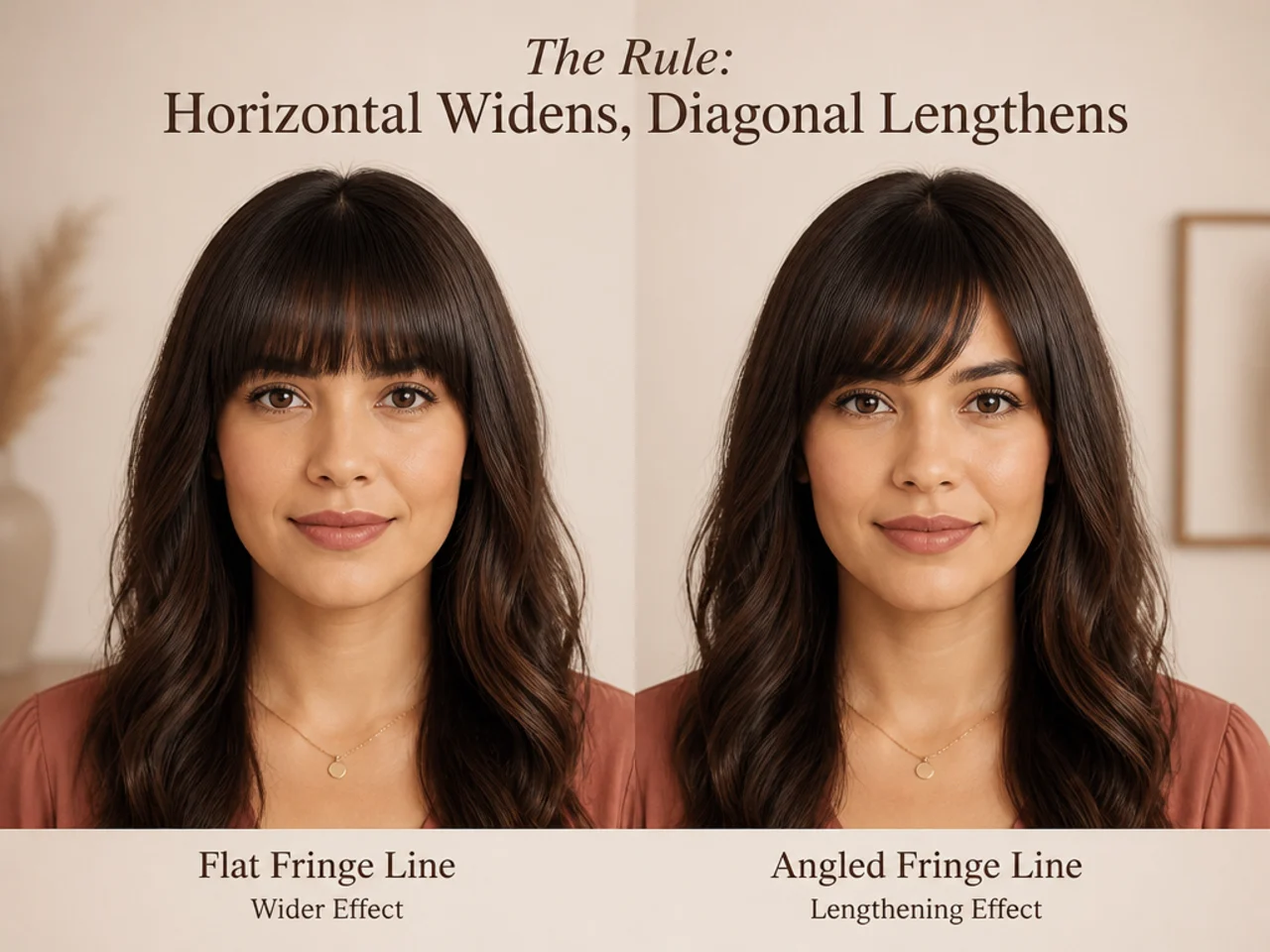
The Rule: Horizontal Widens, Diagonal Lengthens
Every fringe draws a line across your face. The only question is which direction it runs.
A flat fringe draws a horizontal line. On a round face that line sits parallel to the widest part and reinforces it, which is what makes the face read as rounder.
An angled or split fringe draws a diagonal or a vertical. The eye follows it up and down rather than side to side, and the face reads as longer.
That is the whole principle, and every one of the fifteen below is an application of it. Curtain corners create two diagonals. A side sweep creates one long one. A rounded fringe that is shorter in the centre creates a shallow curve rather than a straight edge.
You are not avoiding a fringe. You are avoiding a straight line.
Length Matters Too
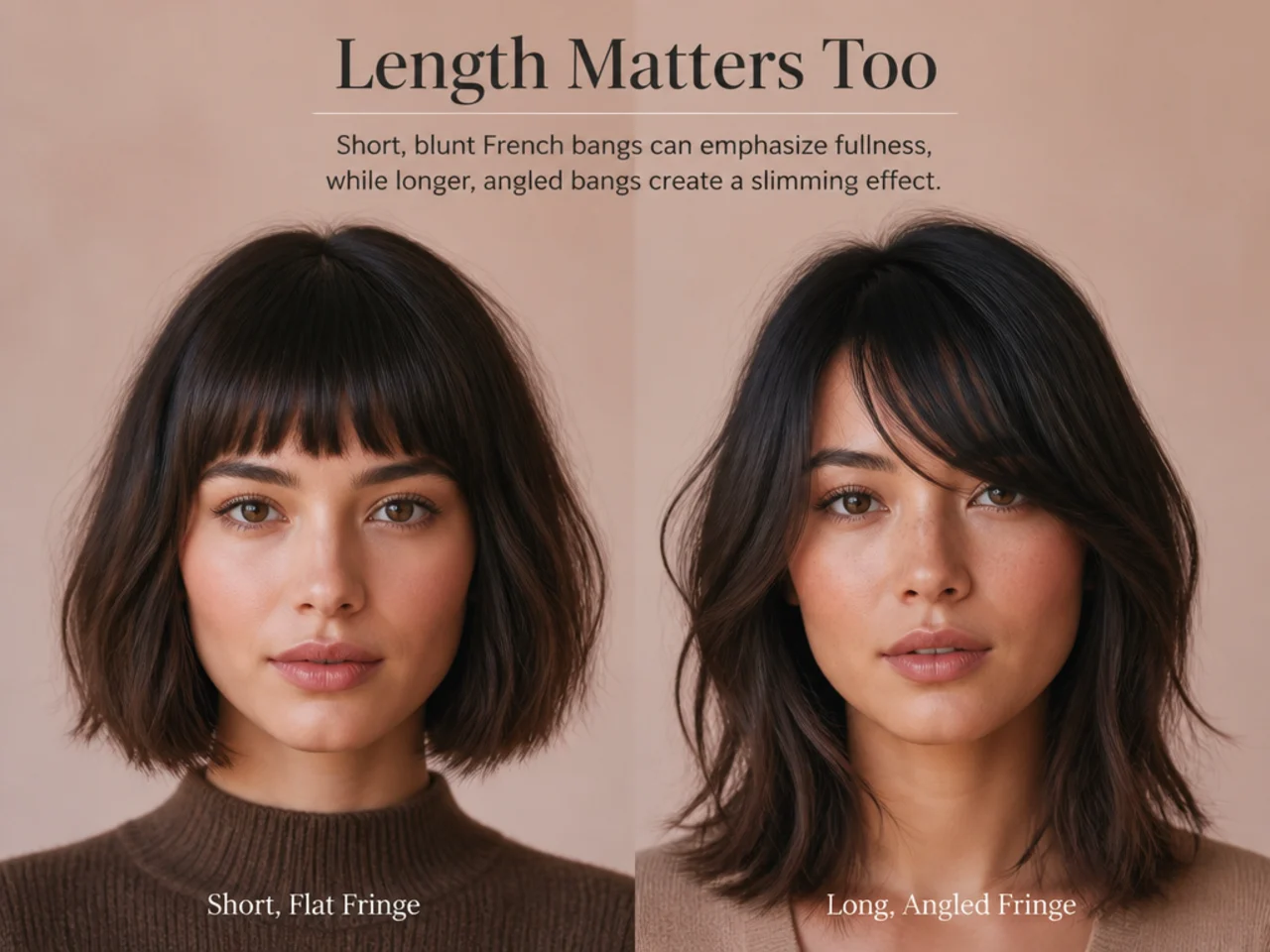
Beyond the shape, the length of the fringe changes how much face remains visible.
A short fringe raises the horizontal line to the middle of the forehead, which removes vertical distance from view and shortens the face further. This is the worst combination for a round face: short and flat.
A brow-length or longer fringe leaves more of the face's vertical run in play, and at lash length the fringe itself contributes to the vertical.
So the two levers are shape and length, and they work together. Long and angled is the strongest combination available; short and flat is the weakest.
The 15 Ideas
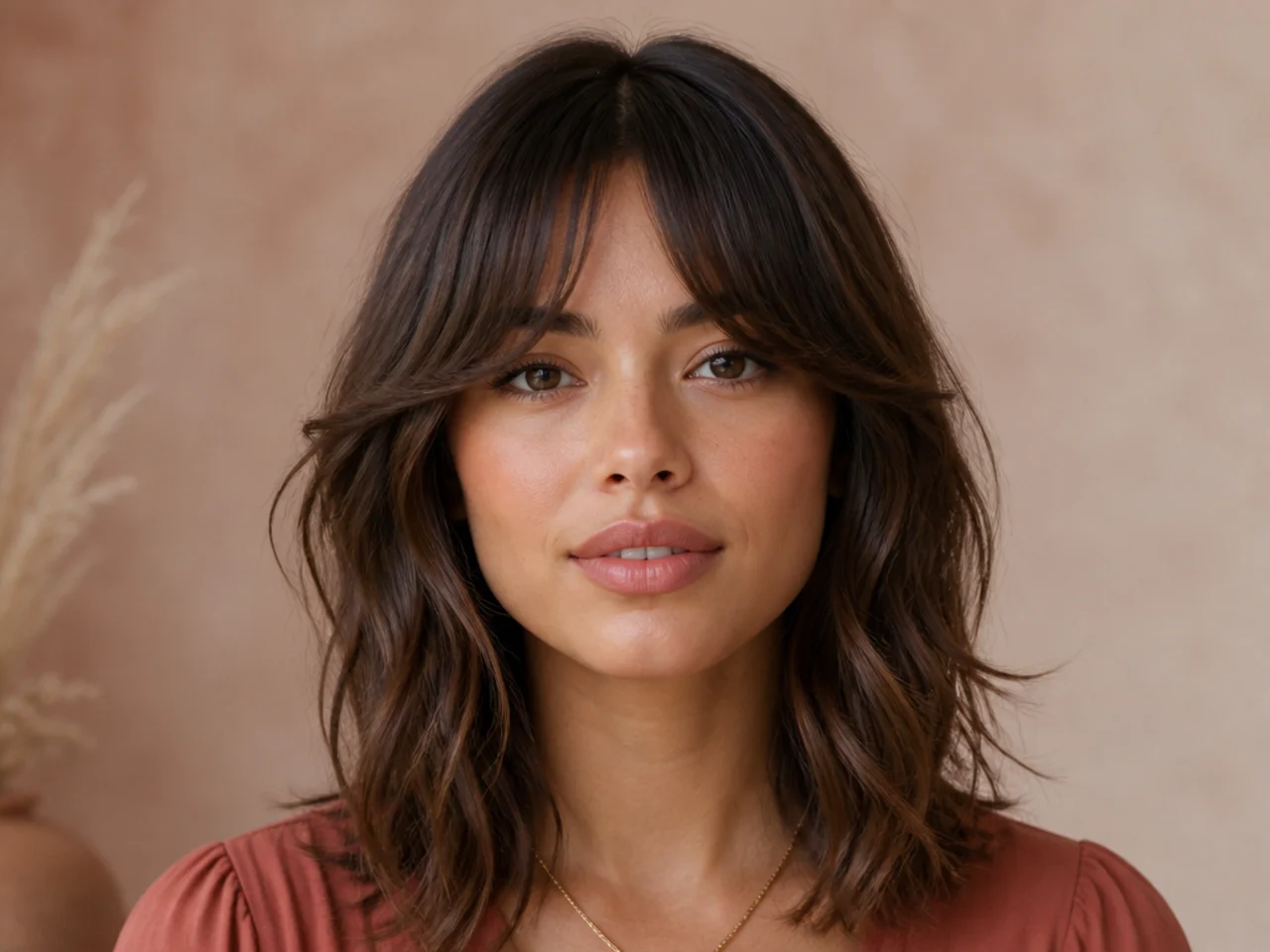
1. Curtain-Cornered French Bangs
Dense in the middle, opening diagonally at the sides. The single best option here.
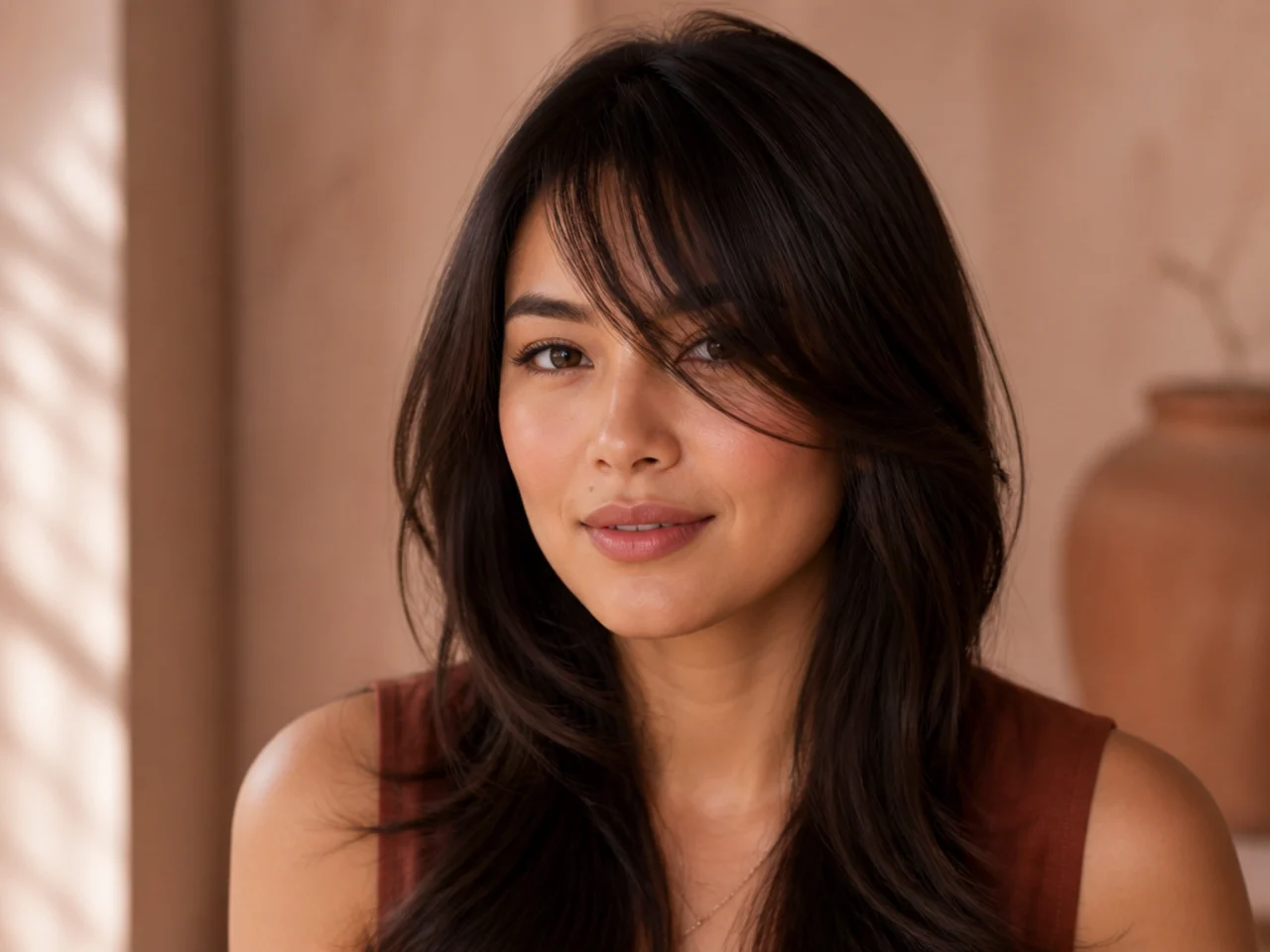
2. Deep Side-Swept Fringe
One long diagonal across the forehead. It cuts the width visually in half.
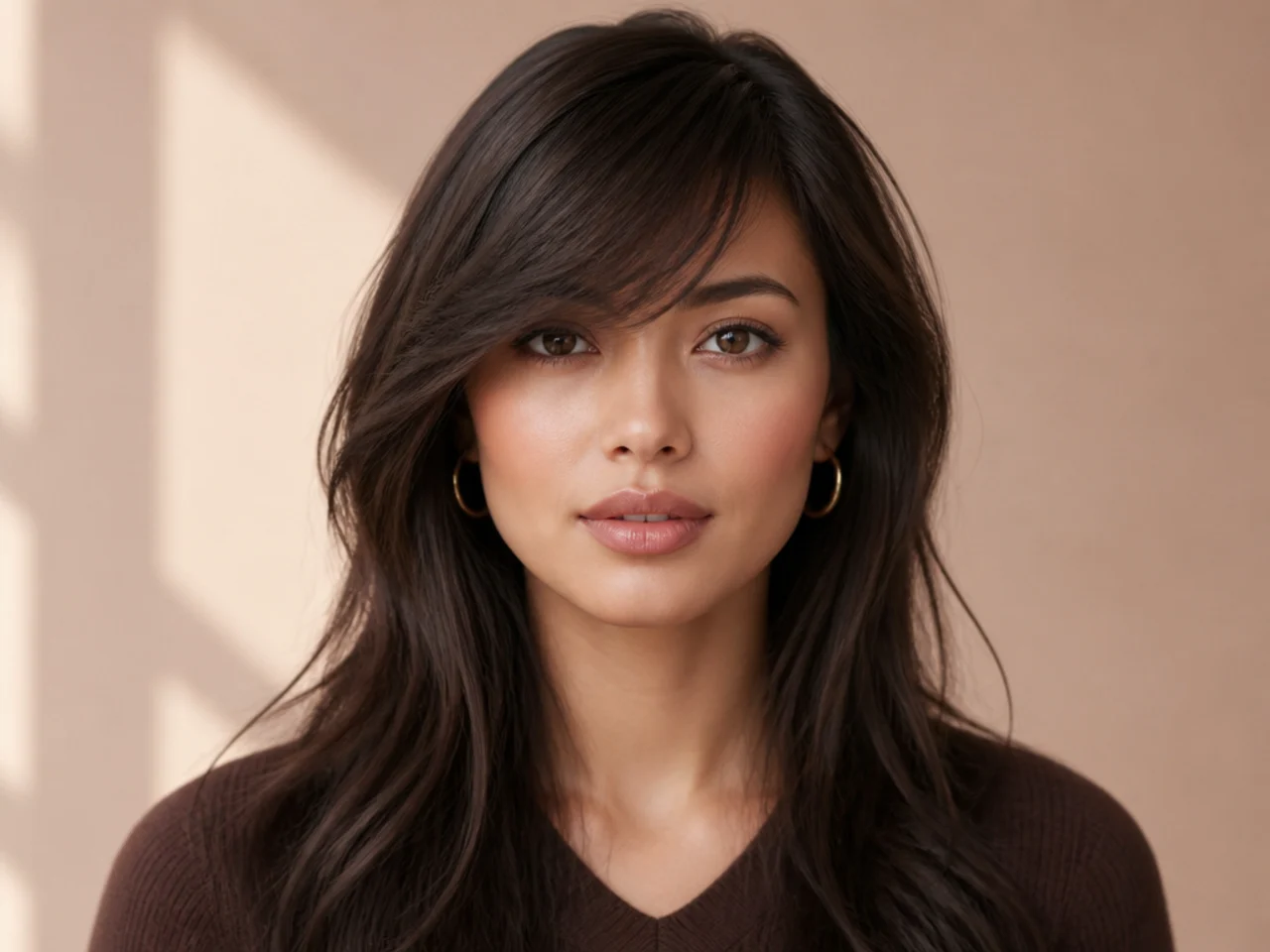
3. Long Rounded Fringe
Shorter in the centre, longer at the corners, at lash length. A curve rather than a line.

4. Angled Fringe to the Cheekbone
Cut on a slope from brow to cheekbone. Strongly lengthening.

5. Wispy Fringe with Visible Forehead
Point-cut so the forehead shows through, keeping vertical space in view.
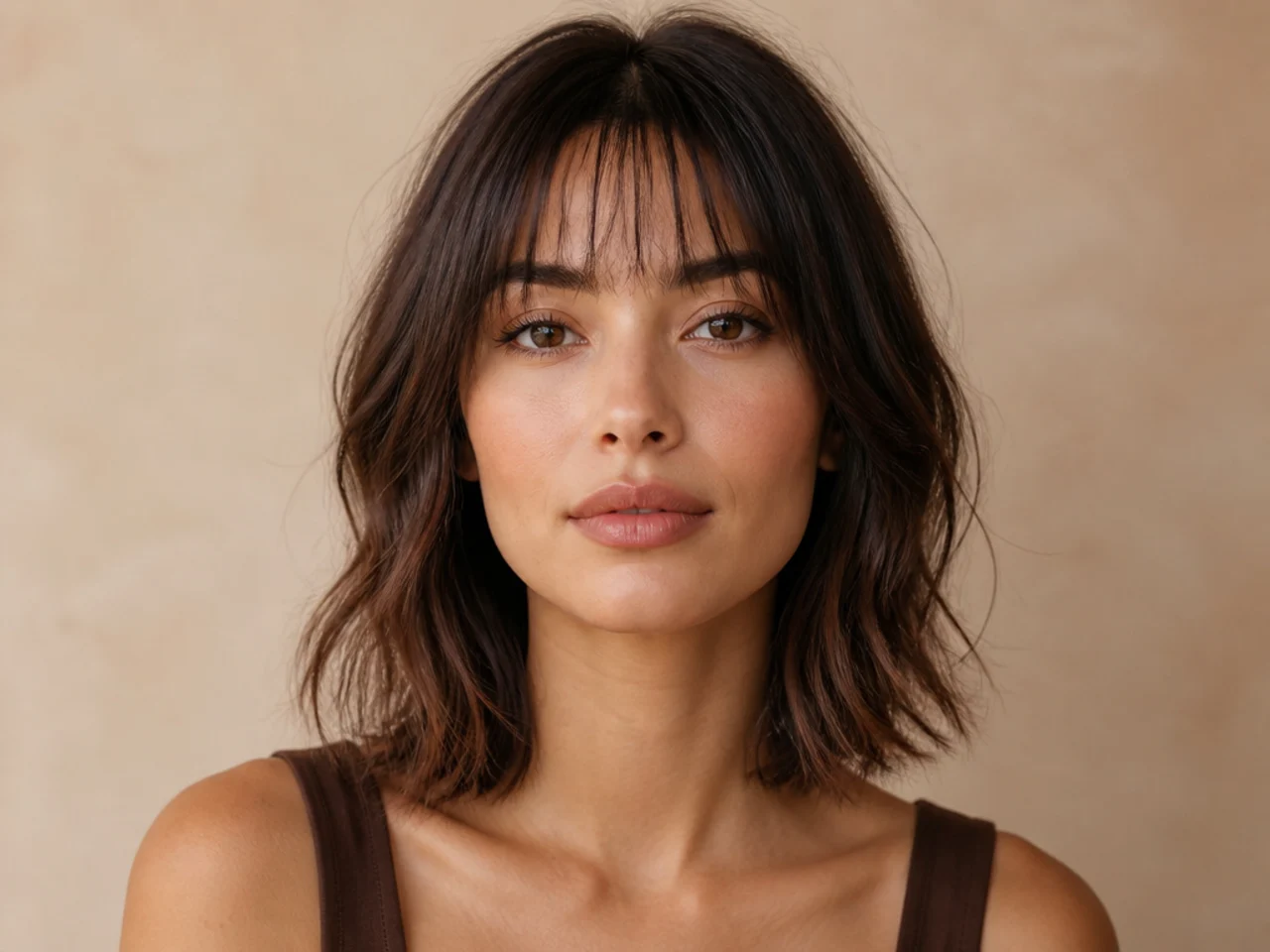
6. Fringe with Long Face-Framing Pieces
Two vertical lines running down beside the cheeks.
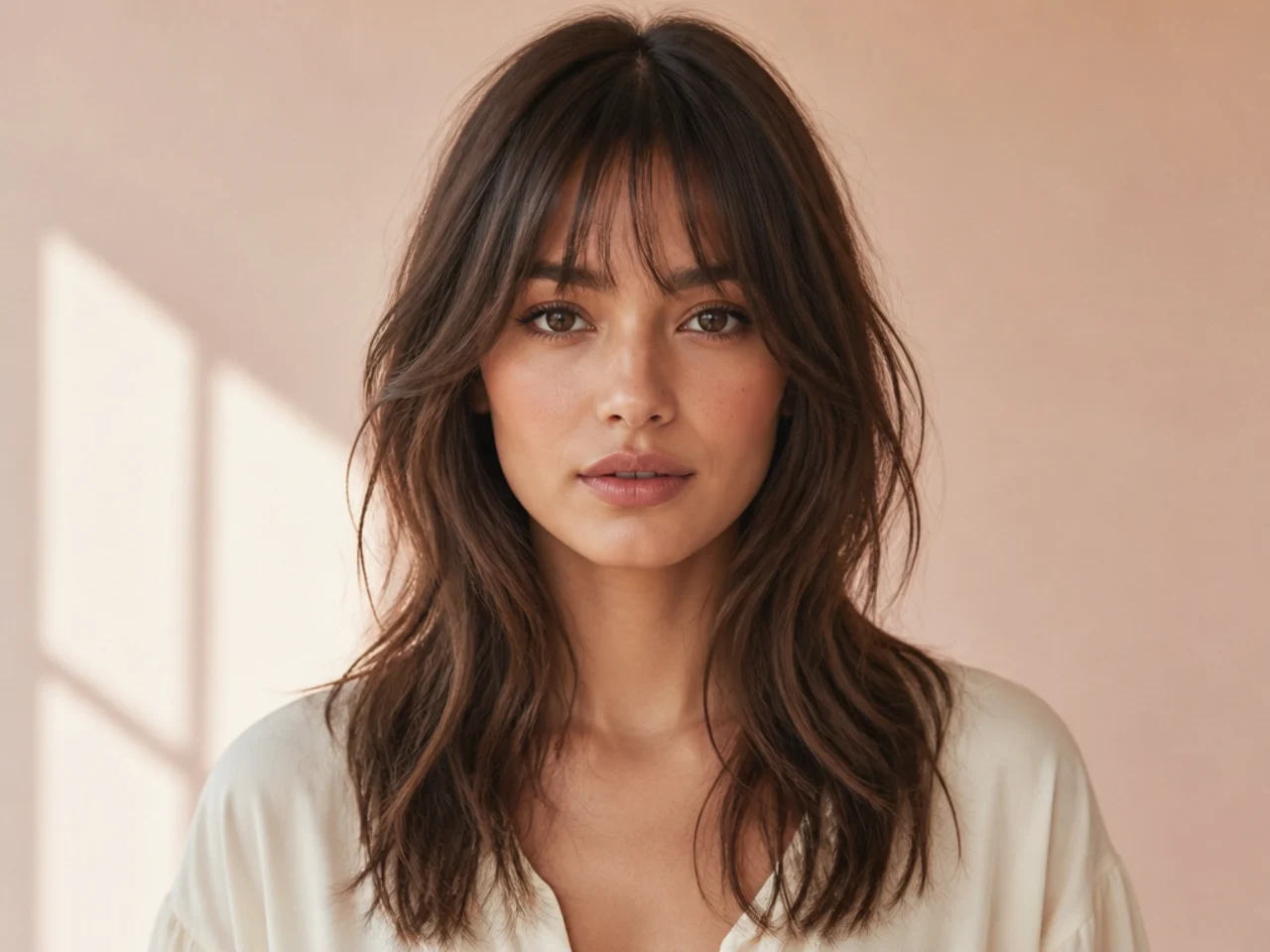
7. Middle-Split Long Fringe
Parted at the centre so a vertical line runs down the middle of the face.

8. Asymmetric Fringe
Deliberately uneven, which breaks any horizontal reading entirely.
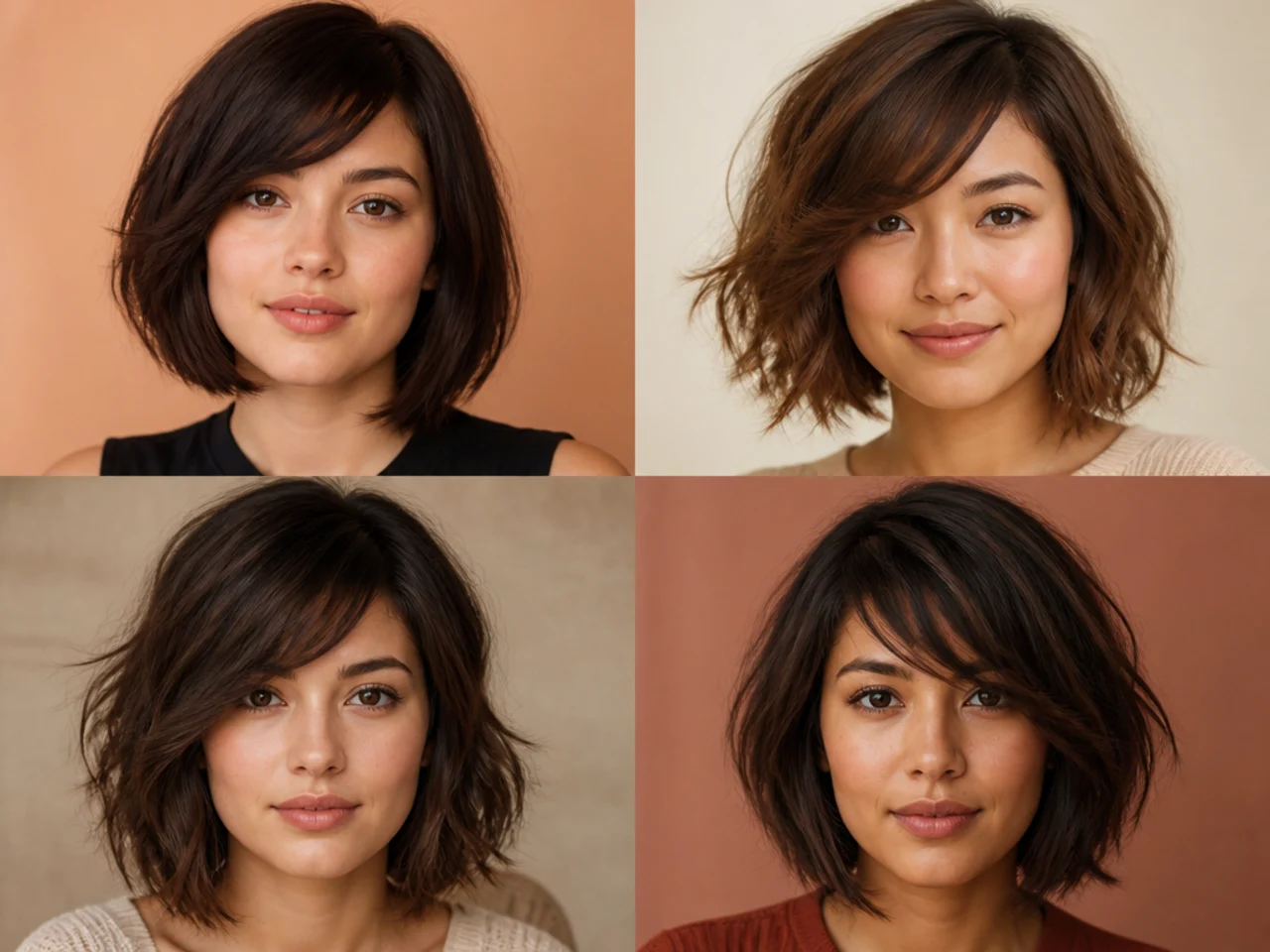
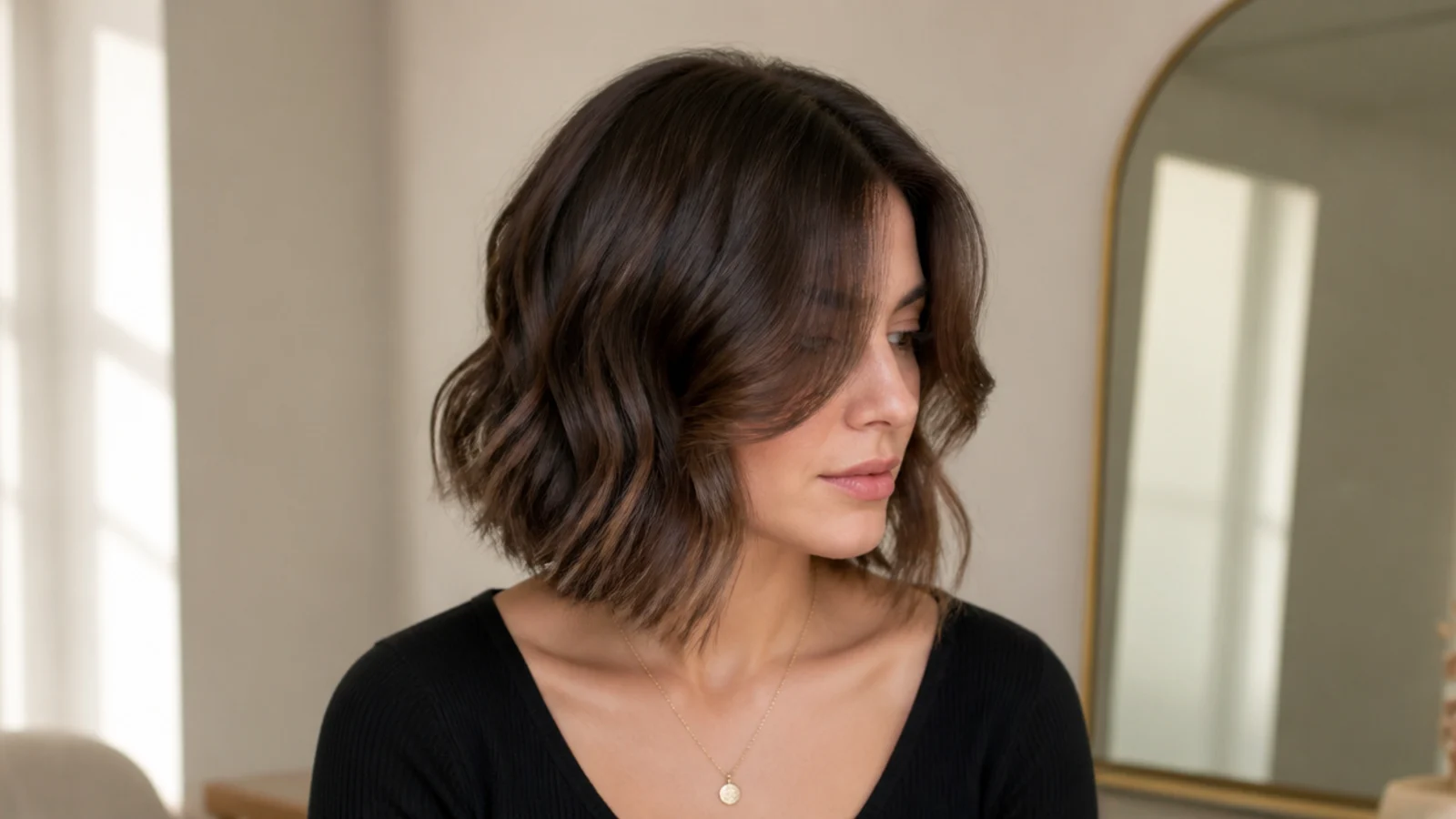
9. Fringe with a Long Bob
Length past the jaw adds vertical run below the face.

10. Fringe with Long Layers
Movement running downward rather than sitting across.
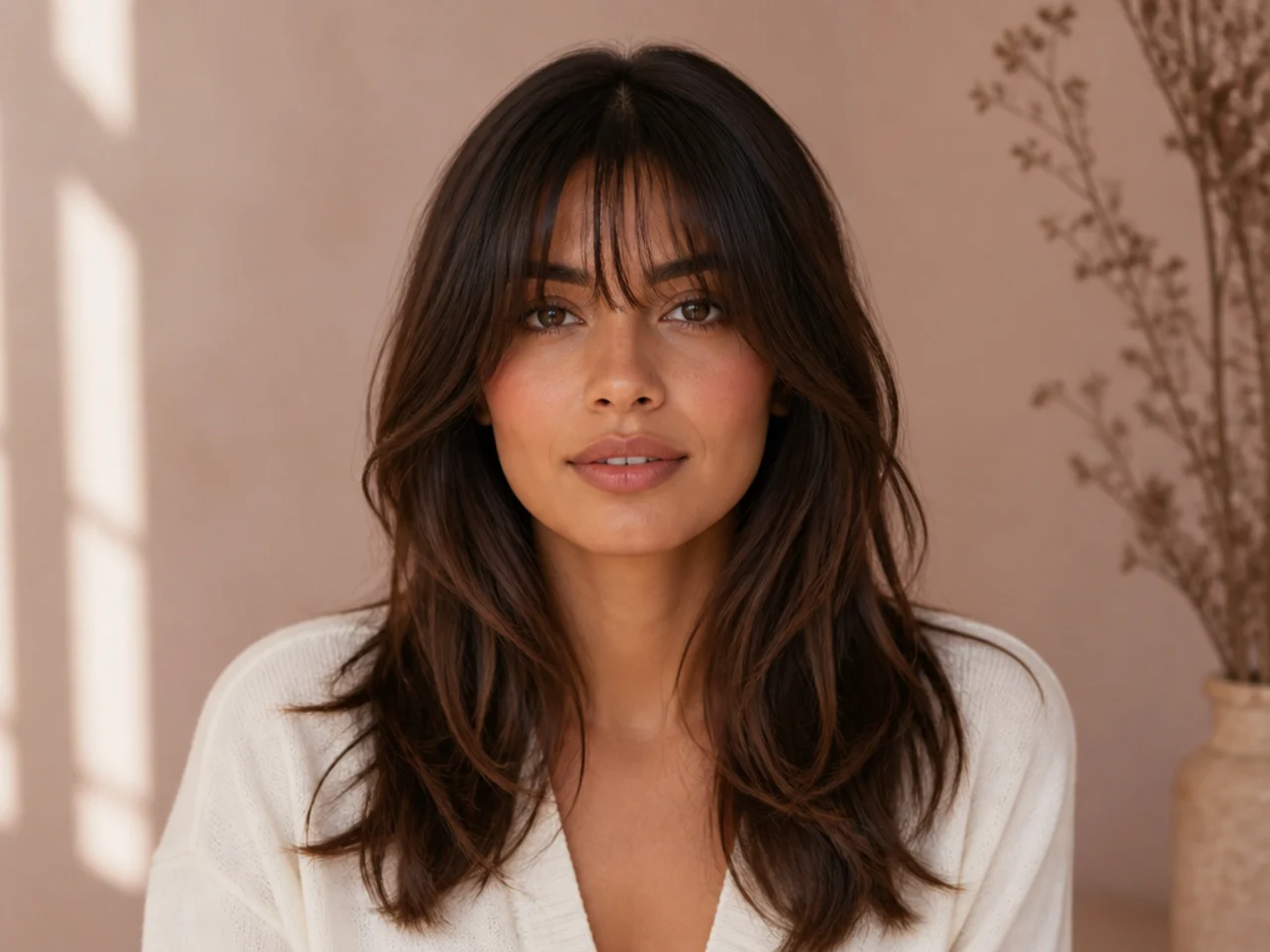
11. Piecey Separated Fringe
Wax-separated pieces create small vertical gaps instead of one solid band.
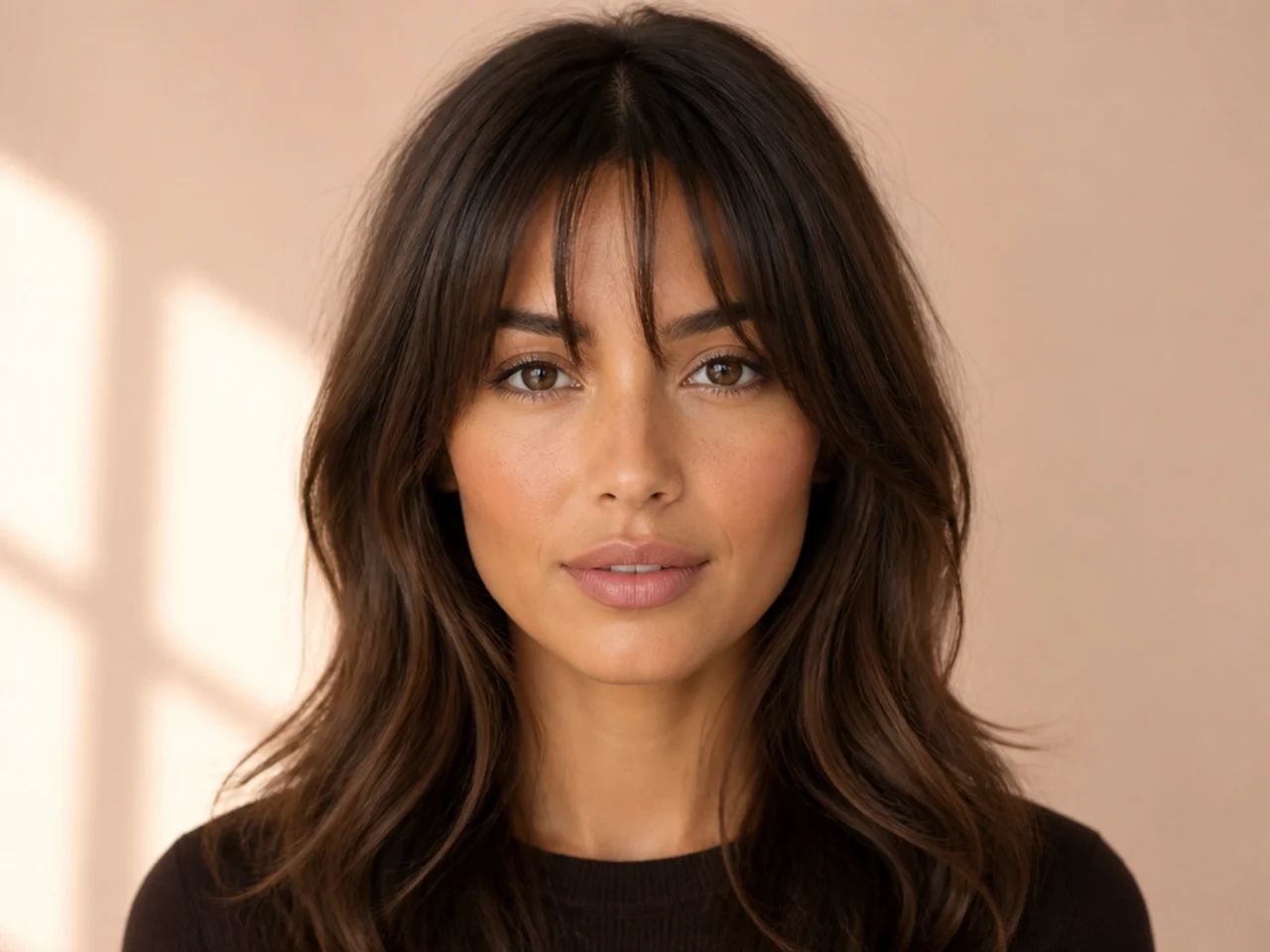
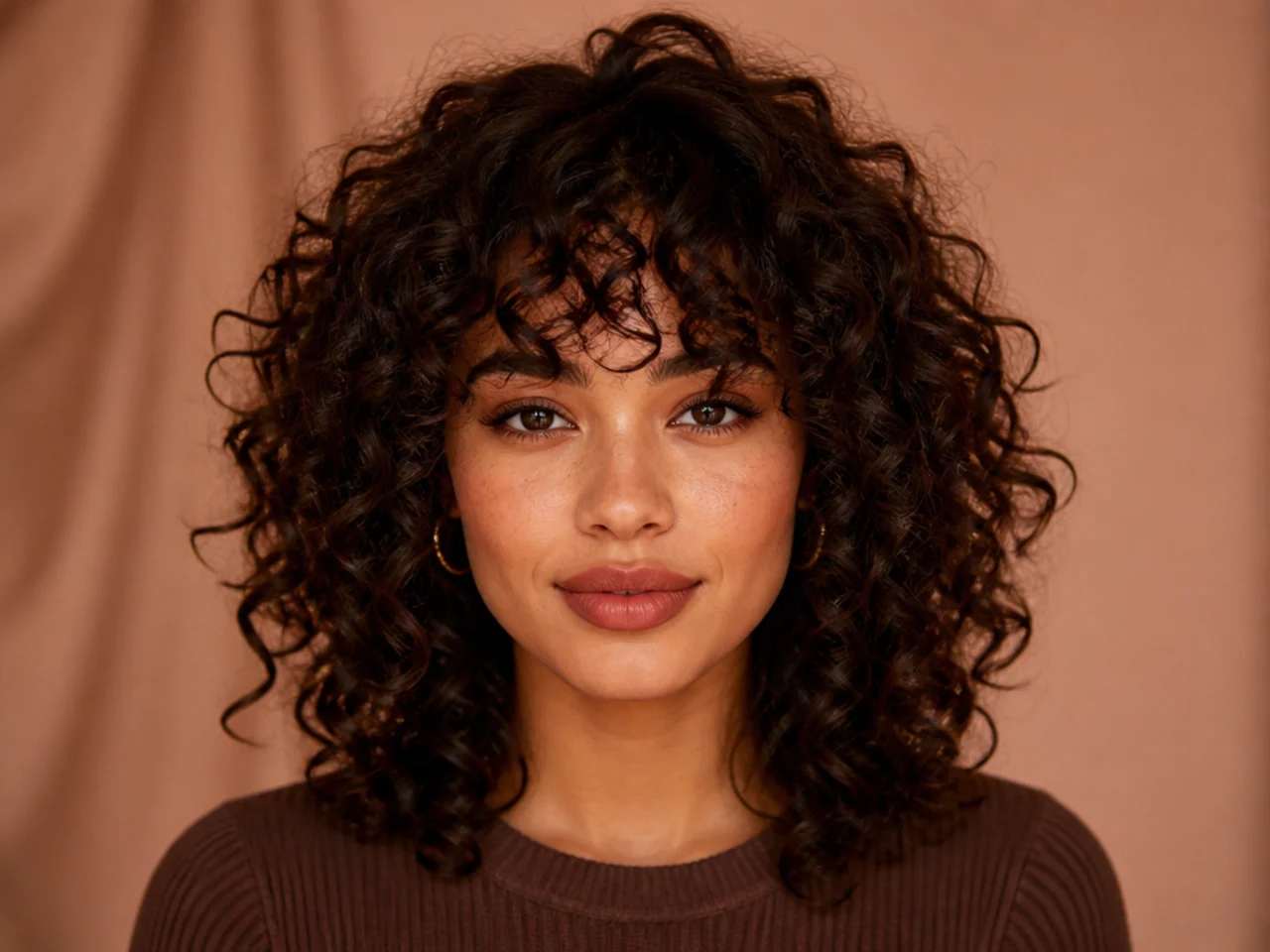
12. Curly Fringe with Height
Volume above the forehead adds length at the top of the face.
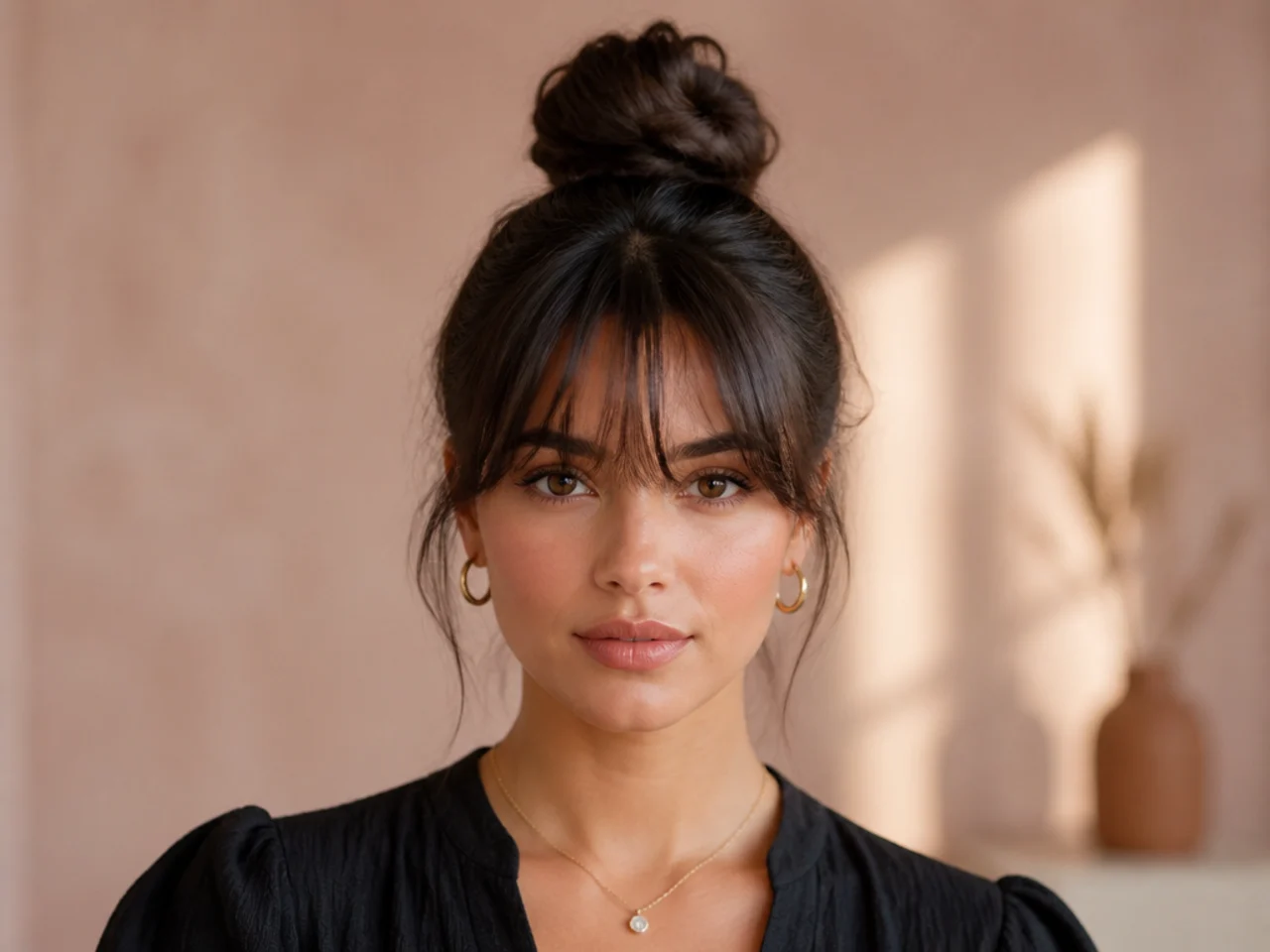
13. Fringe with a High Bun
Height above the crown lengthens the whole silhouette.
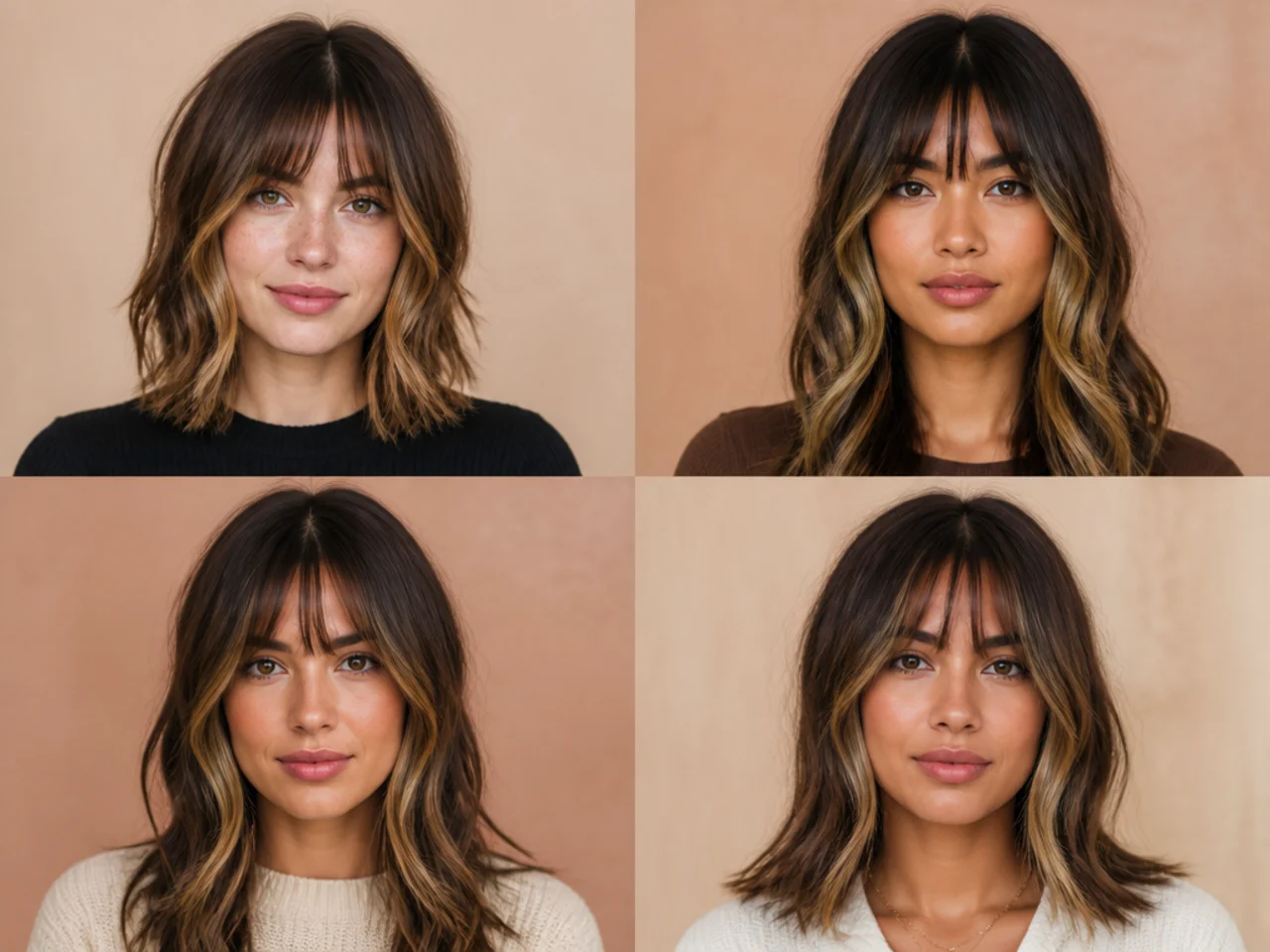
14. Fringe with Face-Framing Highlights
Lighter vertical pieces beside the cheeks draw the eye downward.
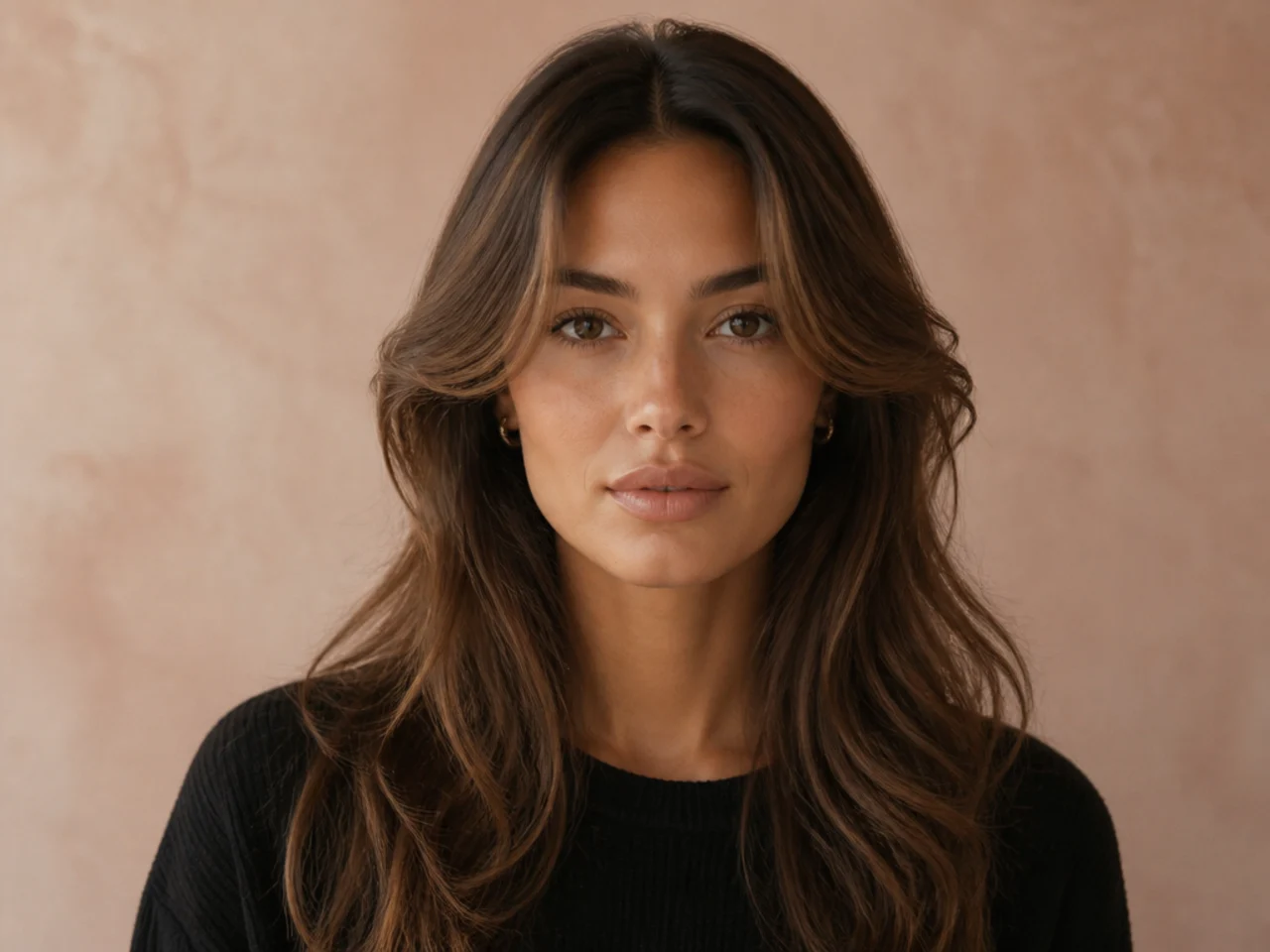
15. Grown-Out Fringe Swept Back
Two diagonals sweeping away from the centre. Often the most flattering stage of all.
What to Ask For at the Salon
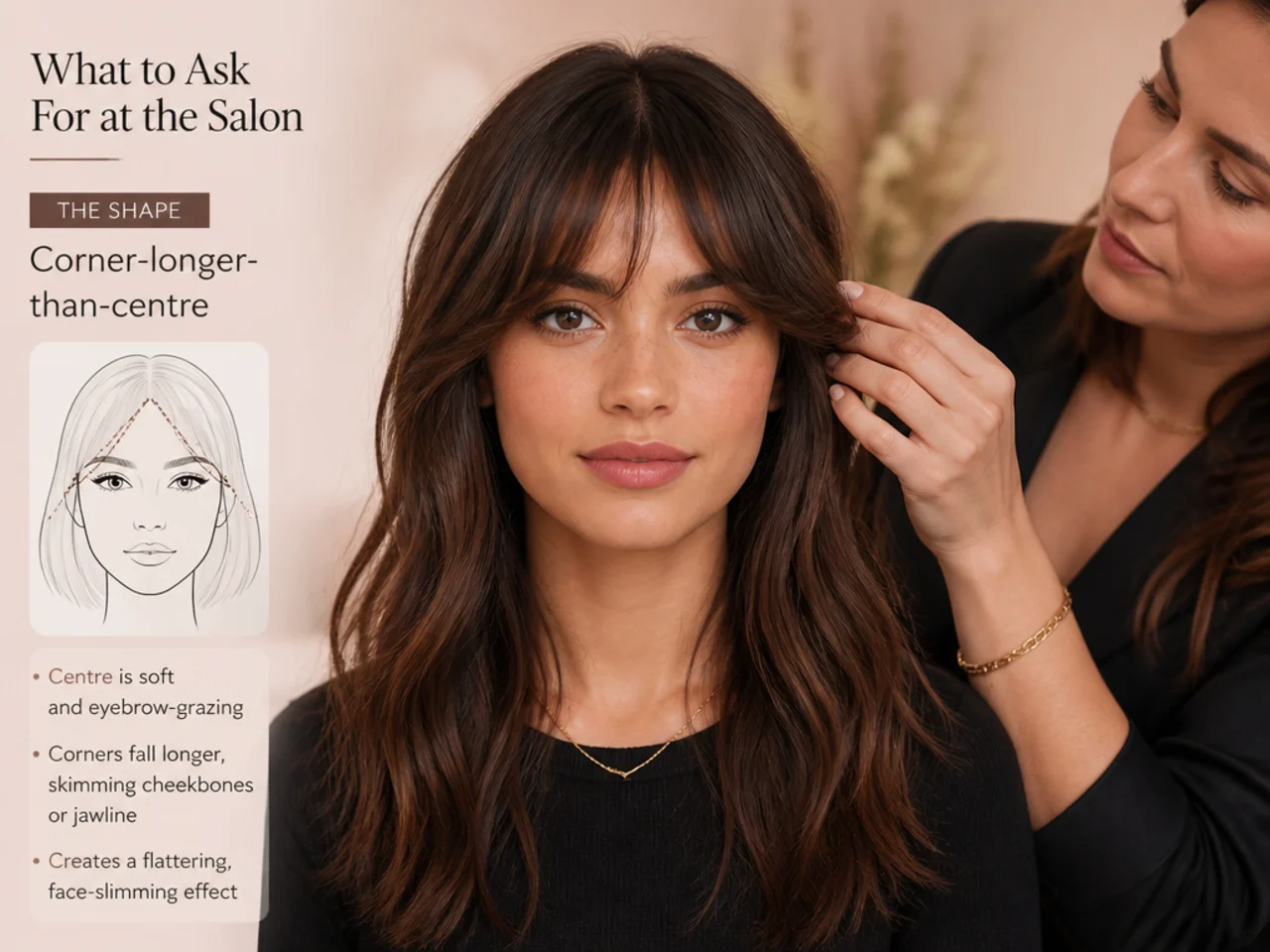
Say the shape, not the face shape. "I have a round face" invites a stylist to make an assumption; describing the cut does not.
"Longer at the corners than the centre." This one sentence produces the curve rather than the line, and it is the most useful thing you can say.
"Open at the sides." Curtain corners rather than a closed fringe.
"At my brow or below, not above." Length keeps vertical distance in view.
"Point-cut, not blunt." A broken edge reads as softer and less horizontal than a solid one.
Four sentences, and between them they rule out every version of this cut that would work against you.
Mistakes to Avoid
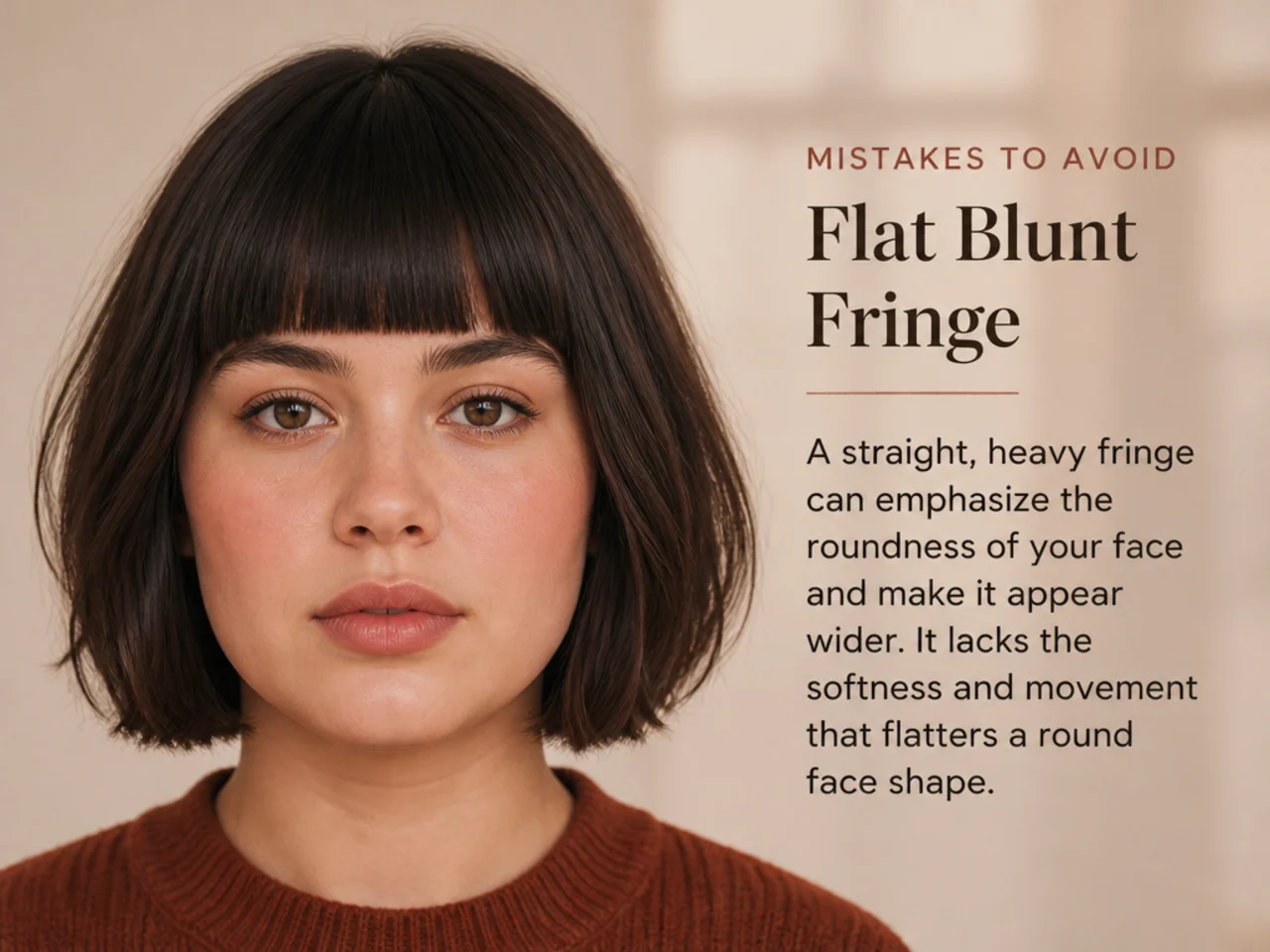
A flat blunt fringe. The one genuine mismatch, and the reason for the blanket advice.
A short fringe. It raises the horizontal line and removes vertical distance.
A fringe with no face-framing pieces. The sides are where the lengthening happens.
Very flat hair at the crown. Height above the face lengthens it; flat roots do the opposite.
Avoiding a fringe altogether. The advice is too broad, and it costs you the most transformative option available.
FAQ
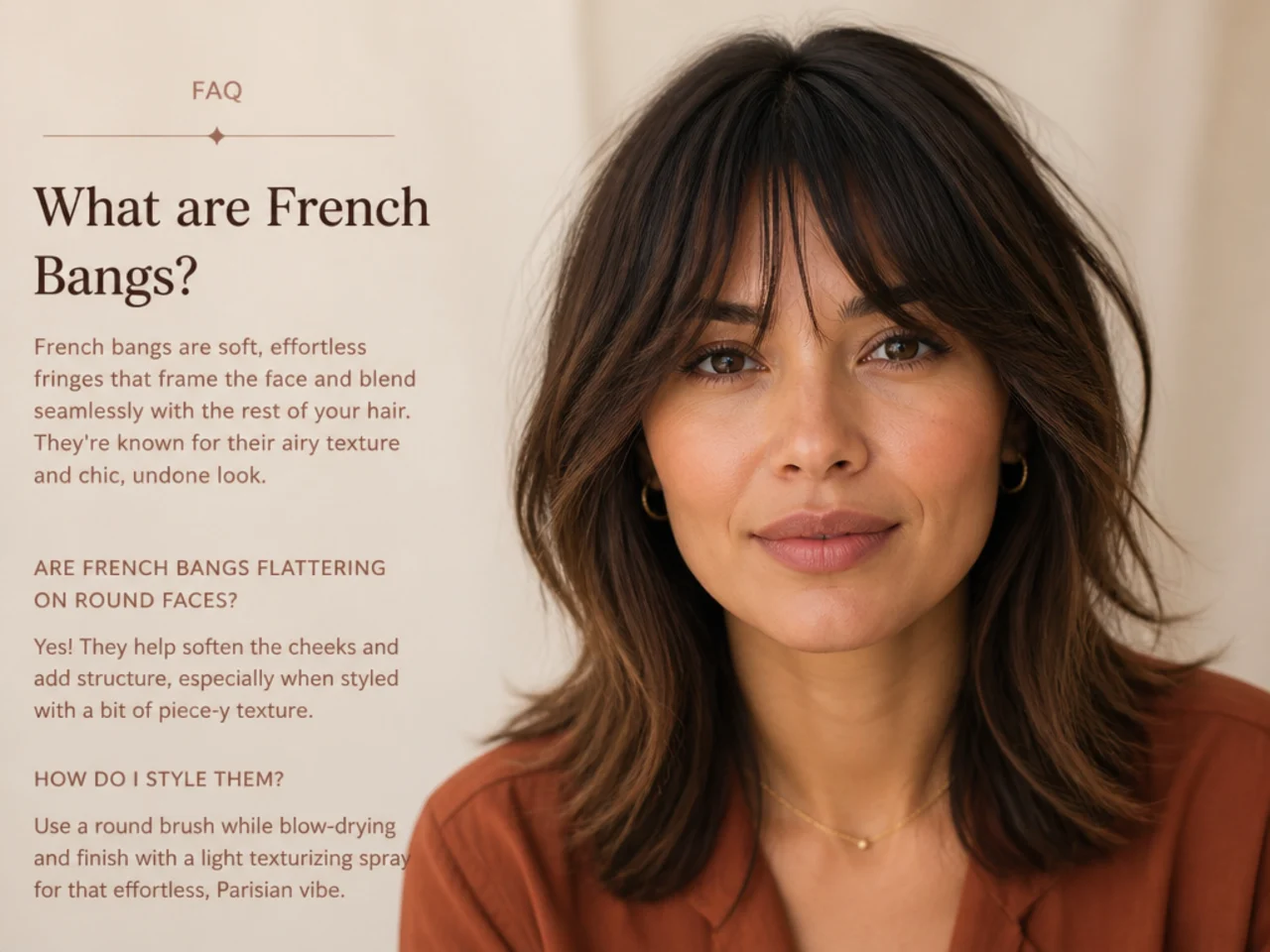
Can a round face have bangs? Yes — avoid a flat horizontal fringe, not fringes generally.
Which make a round face slimmer? Anything creating a diagonal or vertical line.
Long or short? Long. Short raises the horizontal line and shortens the face.
Final Thoughts
Ask for it longer at the corners than in the centre, and at the brow or below. Those two specifications turn the one fringe shape that works against a round face into the one that flatters it most — and they are worth more than any list of styles.
For the full range see 25 chic French bangs ideas, and for the hybrid cut see 20 French bangs with curtain layers. More in Bangs & Fringe.