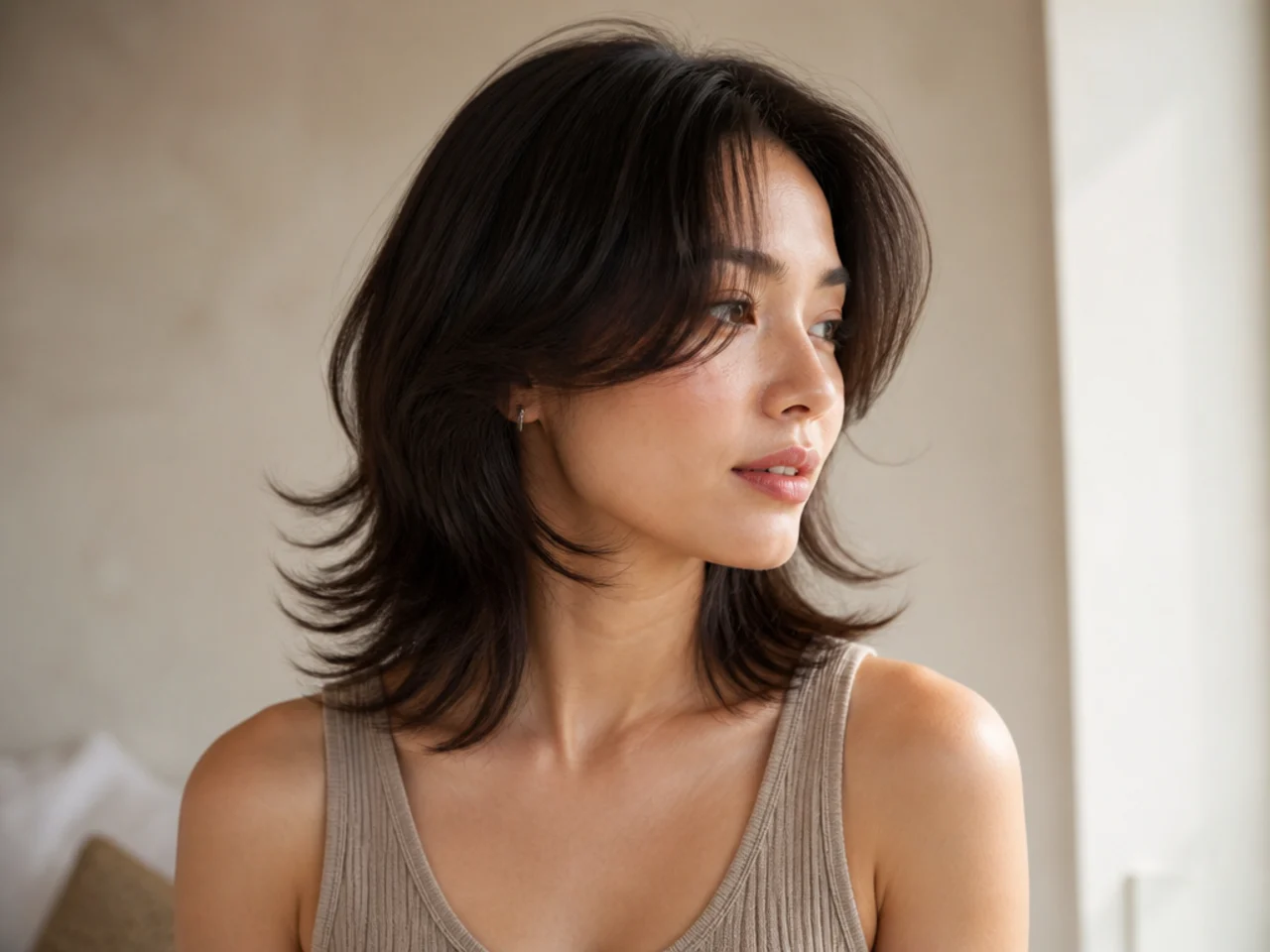
20 Short Butterfly Haircuts With Bangs To Try
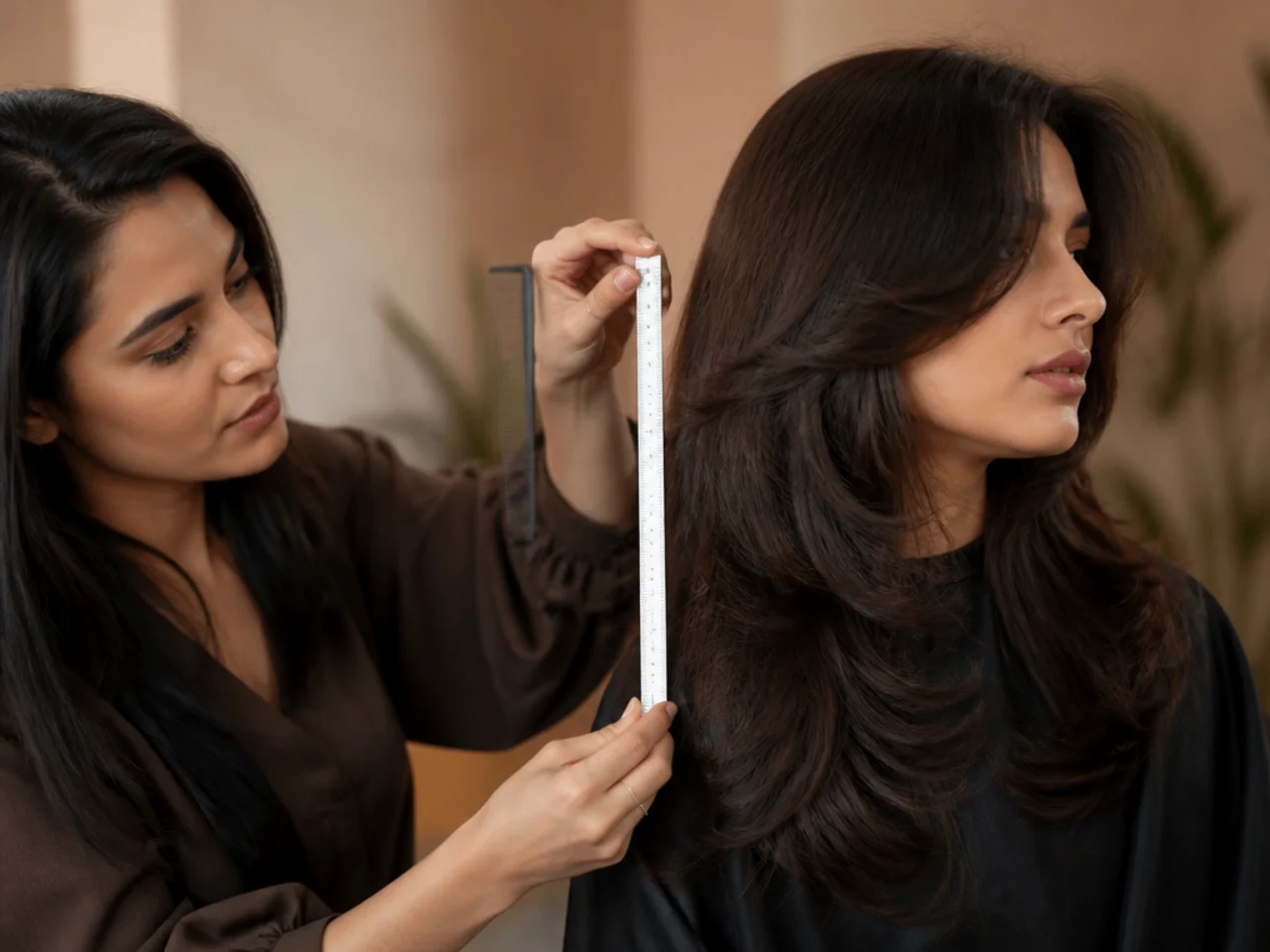
Twenty short butterfly cuts with bangs, and the measurement that decides whether the shape reads as wings or as a shelf — the gap between the short face framing layer and the long under layer. On short hair that gap has to shrink or the step becomes visible.
In this article · 27
- What Makes a Butterfly Cut
- How to Choose Your Wings and Fringe
- The 20 Short Butterfly Haircuts With Bangs
- 1. Butterfly Cut With Curtain Bangs
- 2. Butterfly Cut With Wispy Bangs
- 3. Butterfly Cut With Blunt Bangs
- 4. Butterfly Cut With Side Swept Bangs
- 5. Butterfly Cut With Micro Bangs
- 6. Butterfly Bob With Bangs
- 7. Chin Length Butterfly Cut With Bangs
- 8. Collarbone Butterfly Cut With Bangs
- 9. Butterfly Cut With Short Wings
- 10. Butterfly Cut With Long Wings
- 11. Butterfly Cut on Fine Hair
- 12. Butterfly Cut on Thick Hair
- 13. Butterfly Cut on Straight Hair
- 14. Butterfly Cut on Wavy Hair
- 15. Butterfly Cut on Curly Hair
- 16. Korean Butterfly Cut With Bangs
- 17. Butterfly Cut With a Middle Part
- 18. Butterfly Cut With a Deep Side Part
- 19. Blow Dried Butterfly Cut
- 20. Grown Out Butterfly Cut
- Styling and Upkeep
- Mistakes to Avoid
- FAQ
- Final Thoughts
A short butterfly cut either reads as wings or as a shelf, and the difference is a single measurement most people never discuss.
The gap between the two layer sets is the shape. The short face framing layer rests on the long under layer and lifts away from it, and that lift is the whole cut.
On short hair the gap has to shrink. The same difference that gives a wing on waist length hair leaves a bare step on a collarbone cut, because there is nothing underneath to soften the drop.
What Makes a Butterfly Cut
It is two layer sets, not a gradient. A short face framing set and a long under set, with a deliberate space between them rather than an even graduation.
The short layer sits on the long one. That is where the lift comes from, exactly as a short crown layer props up the one above it in any layered cut.
The wings are set by root direction. Dried away from the face at the root, they hold their curve. Dried flat, the same cut hangs as ordinary layers.
The fringe is the front of the wing, not a separate cut. Cut as one continuous diagonal, the fringe and the shortest wing layer read as a single line around the face.

How to Choose Your Wings and Fringe
Set the shortest wing by what you want the mid face to do. A wing starting at the cheekbone widens it. One starting at the jaw draws it narrower.
Keep the gap proportional to the length. Eight to twelve centimetres on a collarbone cut, less on anything shorter, or the step becomes the thing people notice.
Match the fringe to the wing. Curtain bangs blend into the shortest wing. A blunt fringe deliberately does not, and that contrast has to be intentional.
Cut it dry if there is any curl. A stretched curl returns to about two thirds of its wet length, and the short wing springs higher than the long layer, which widens the gap you just measured.
The 20 Short Butterfly Haircuts With Bangs
1. Butterfly Cut With Curtain Bangs
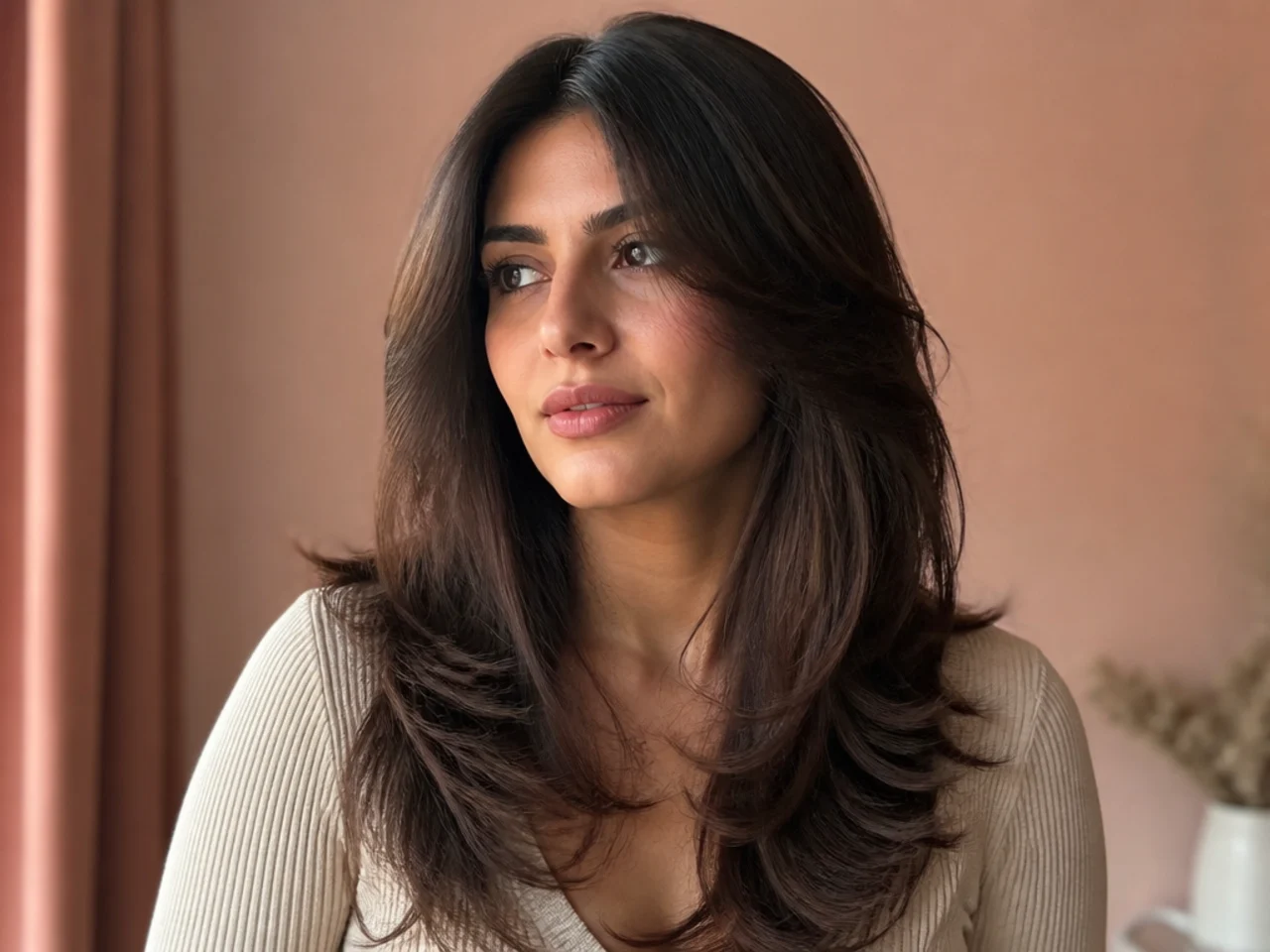
The standard pairing, because a curtain fringe is already a diagonal that lengthens outwards. Cut as one line with the shortest wing, the fringe and the wing become a single frame around the face with no step at the cheek.
2. Butterfly Cut With Wispy Bangs
A shallower fringe section, around two centimetres, so the forehead reads through it. It suits a short butterfly because the wings already carry visible weight at the cheeks, and a heavy fringe on top of that closes the face in.
3. Butterfly Cut With Blunt Bangs
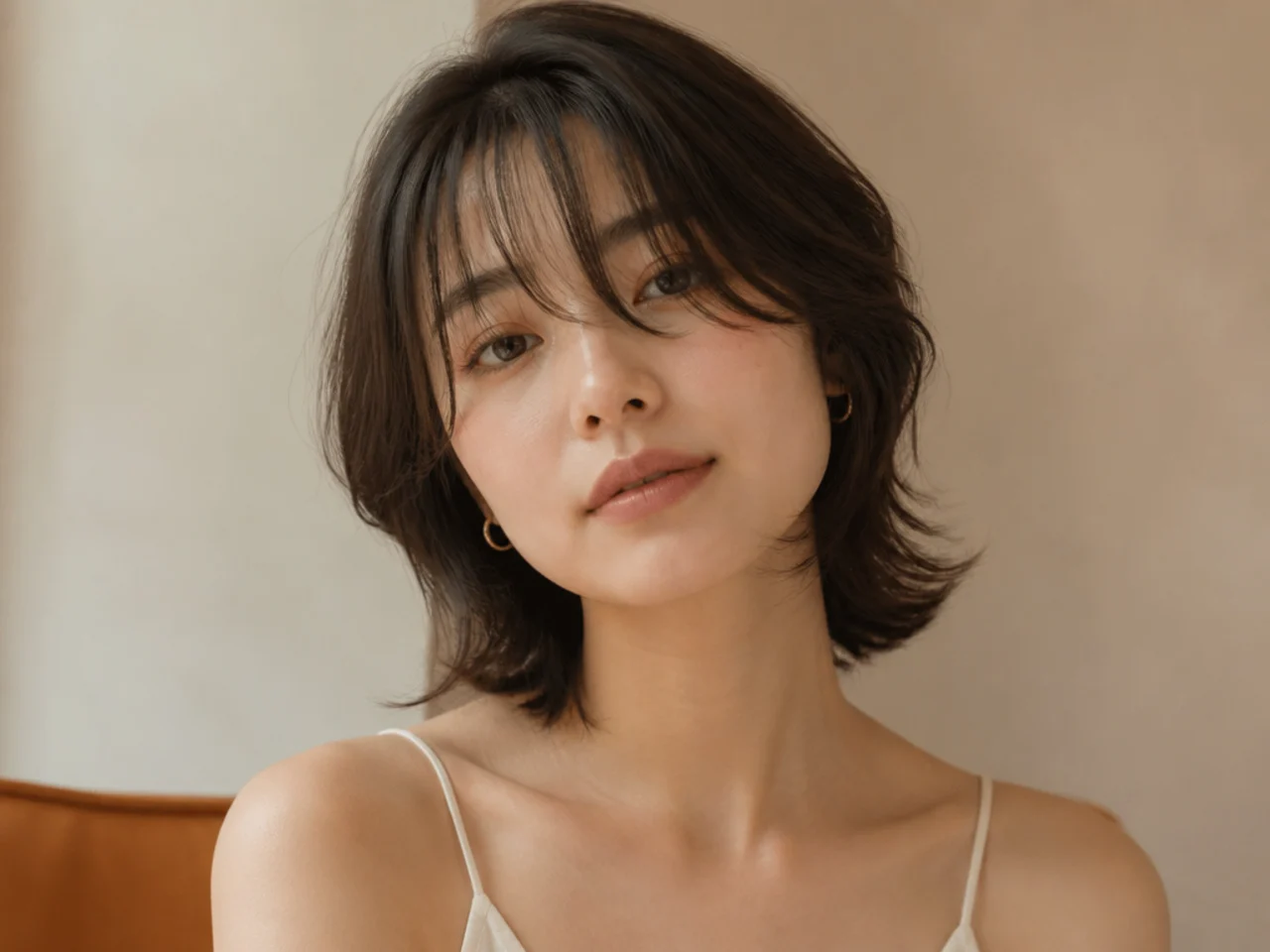
A heavy straight fringe against soft wings. The contrast is deliberate, so the fringe must not blend into the wing at all — a half blended blunt fringe reads as a mistake rather than as a choice.
4. Butterfly Cut With Side Swept Bangs
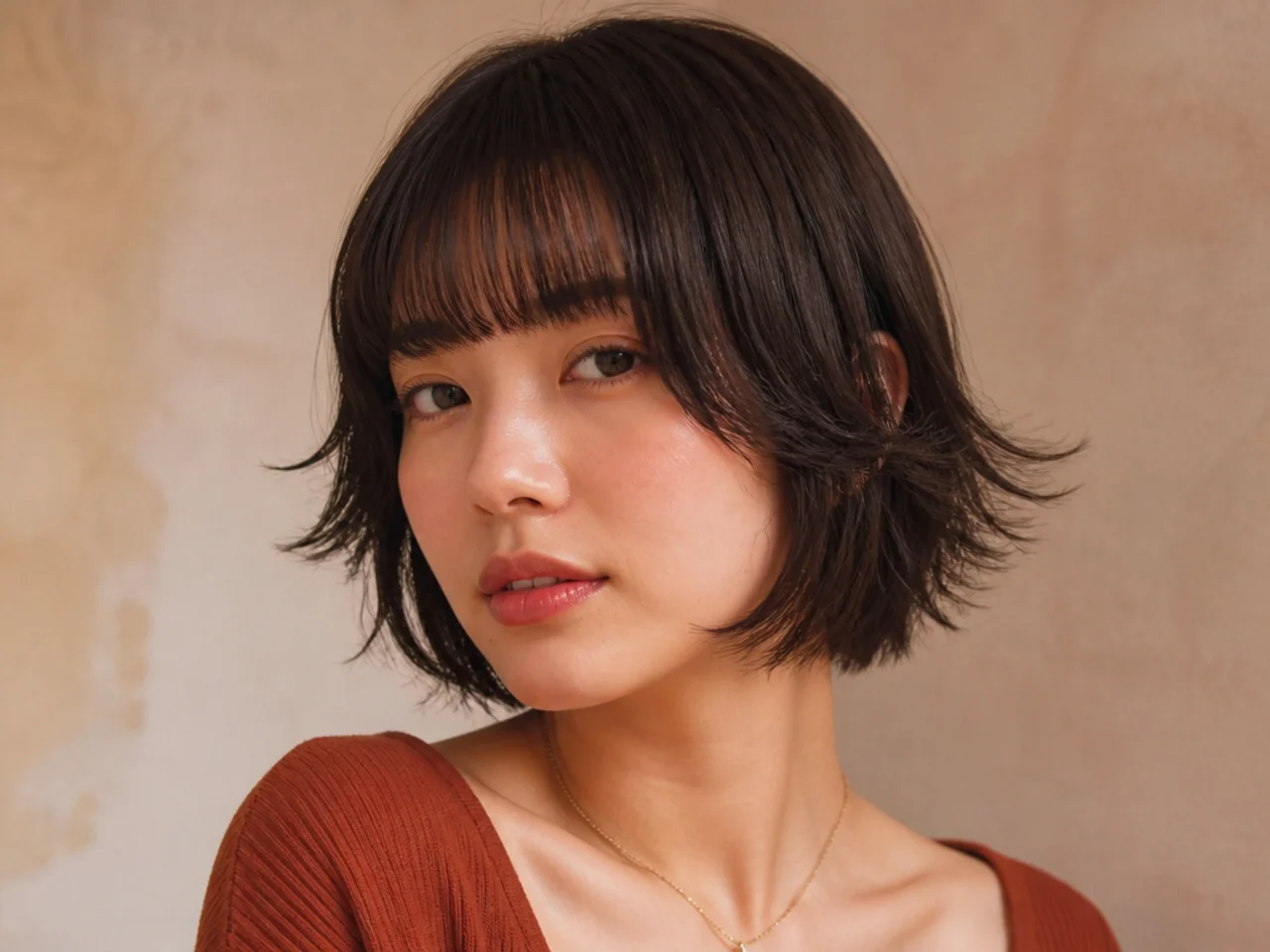
The fringe combed to one side and joined into the wing on that side only. The heavier side then carries the whole frame, so the wing beneath it needs a little more length to catch the sweep.
5. Butterfly Cut With Micro Bangs
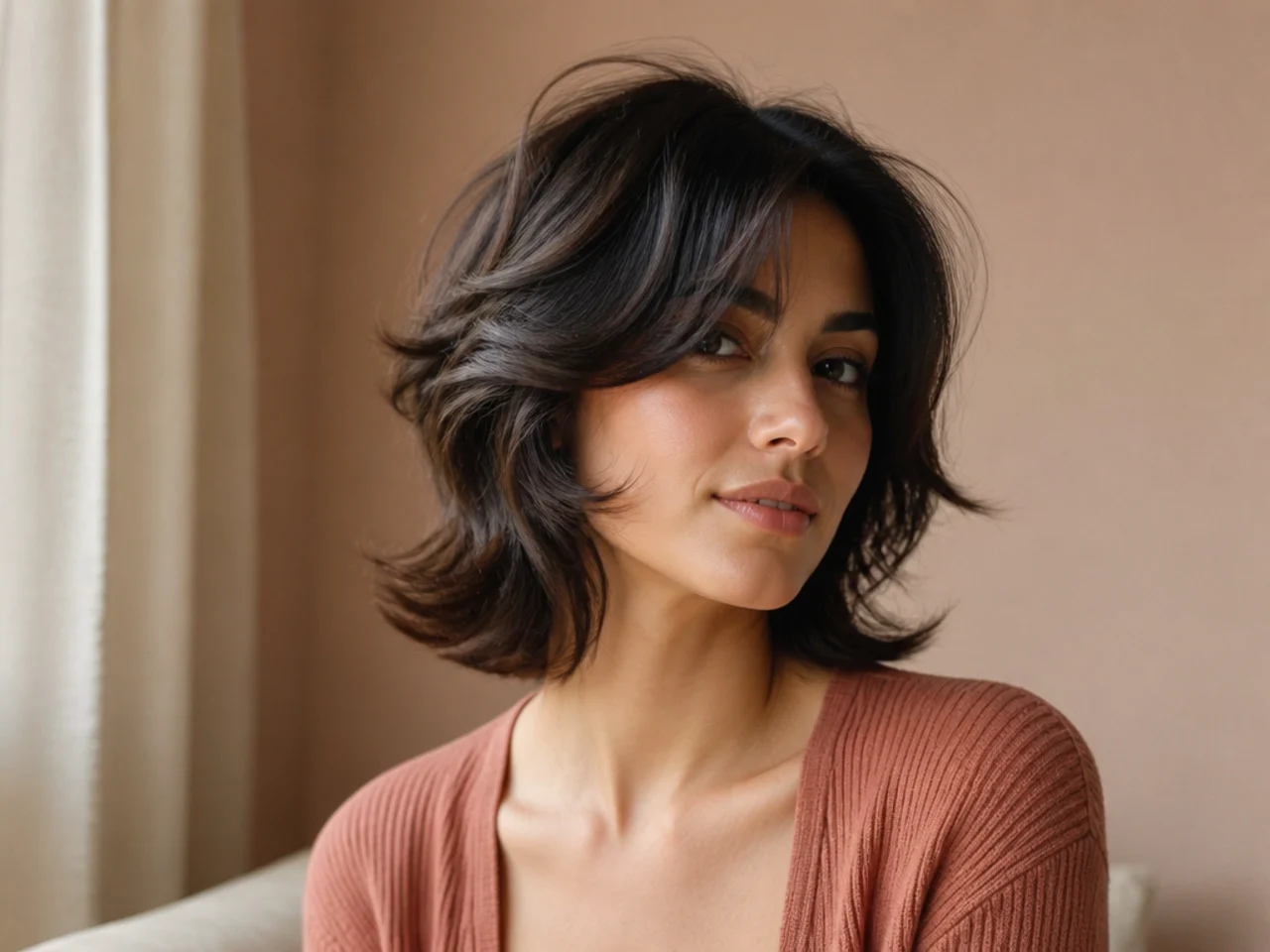
A very short fringe sitting well above the brow. It works only when the wings are long enough to counterbalance it, since a short fringe over short wings leaves nothing framing the lower half of the face.

6. Butterfly Bob With Bangs
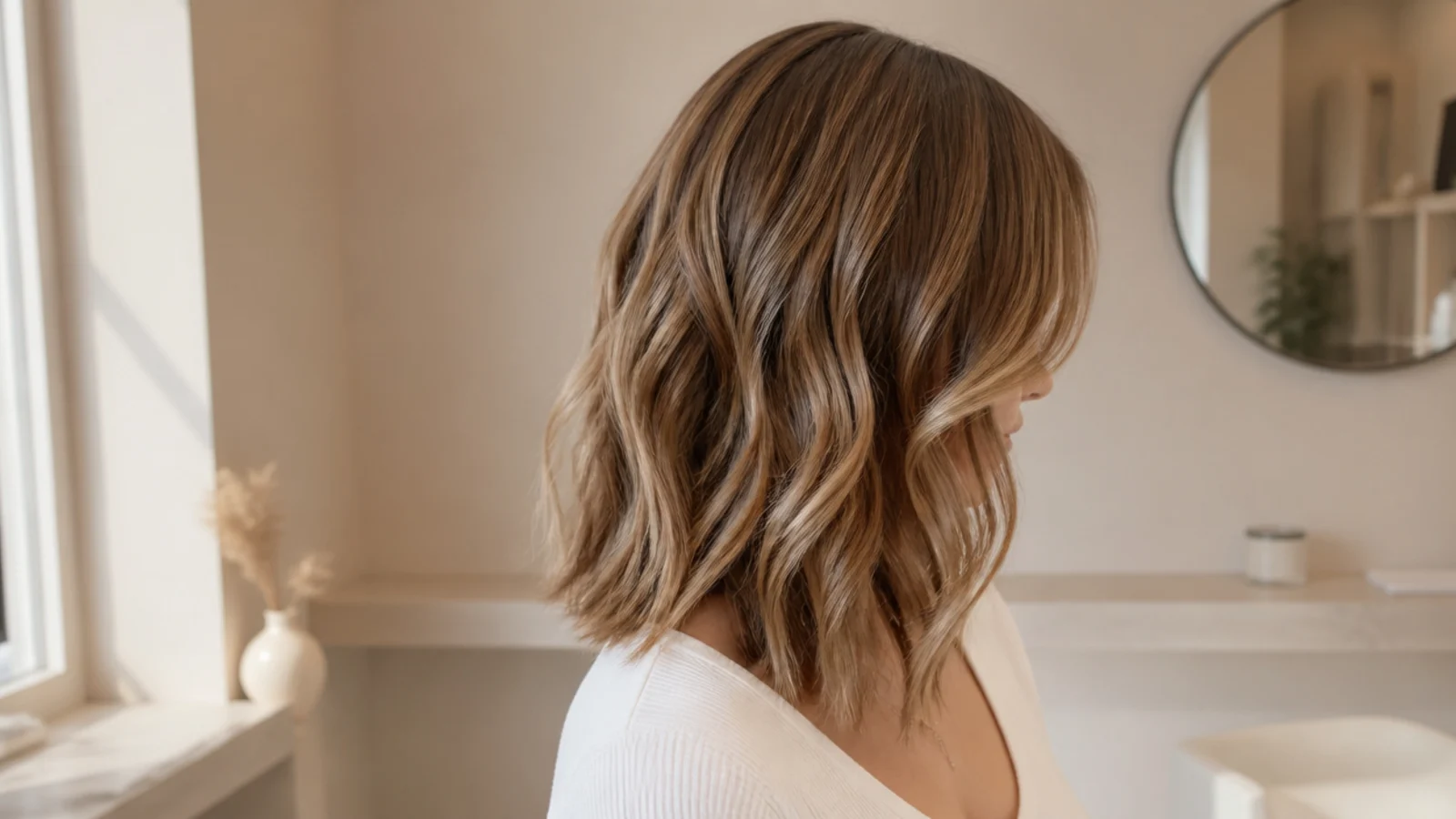
The under layer cut to the jaw, with the wing layer just above it. The gap here is only three or four centimetres, which is all a bob can carry before the wing stops resting on anything and simply sticks out.

7. Chin Length Butterfly Cut With Bangs
The shortest wing finishing at the chin, which draws the eye downwards and narrows the mid face. It is the more sculptural version, and it needs a smooth blow dry because the wing tips are the whole outline.
8. Collarbone Butterfly Cut With Bangs
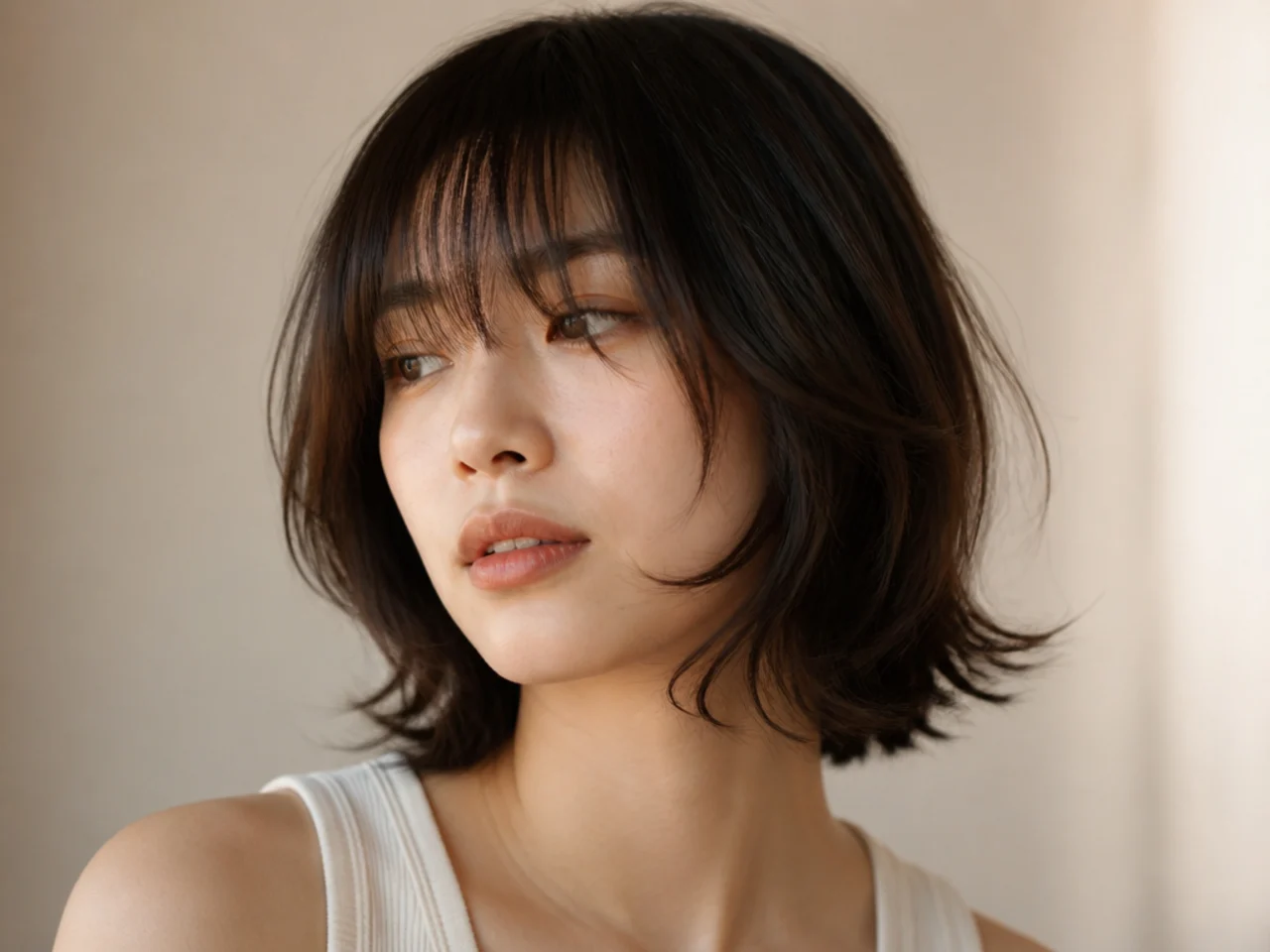
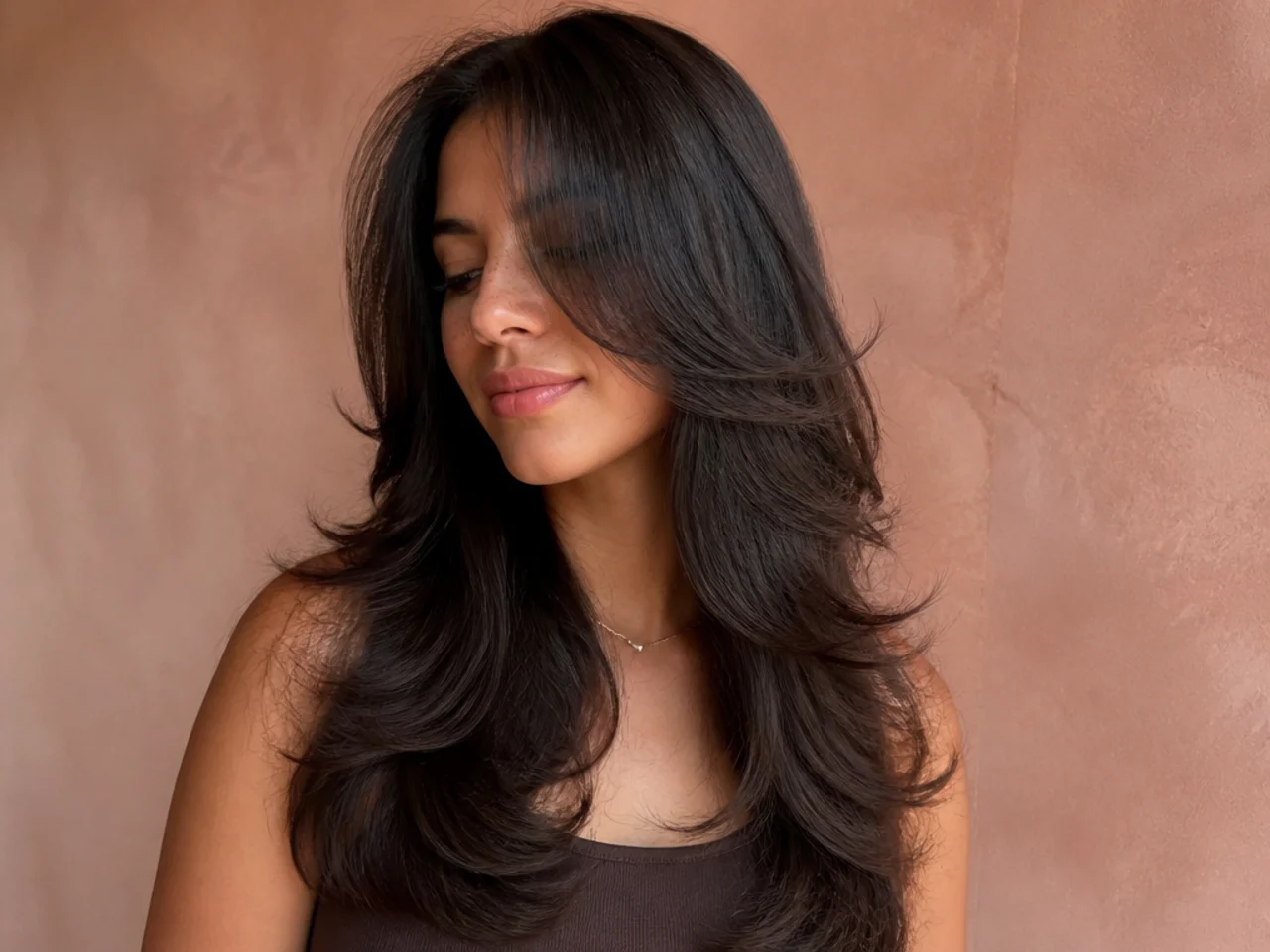
The under layer at the collarbone and the wing around the chin, giving a gap of eight to twelve centimetres. This is the proportion the shape was designed around and the easiest short version to keep looking deliberate.

9. Butterfly Cut With Short Wings
Wings starting at the cheekbone, high and light. The higher the wing starts the more it opens out the mid face, and the more it depends on root direction, because a short wing dried flat has no weight to hold a curve.
10. Butterfly Cut With Long Wings
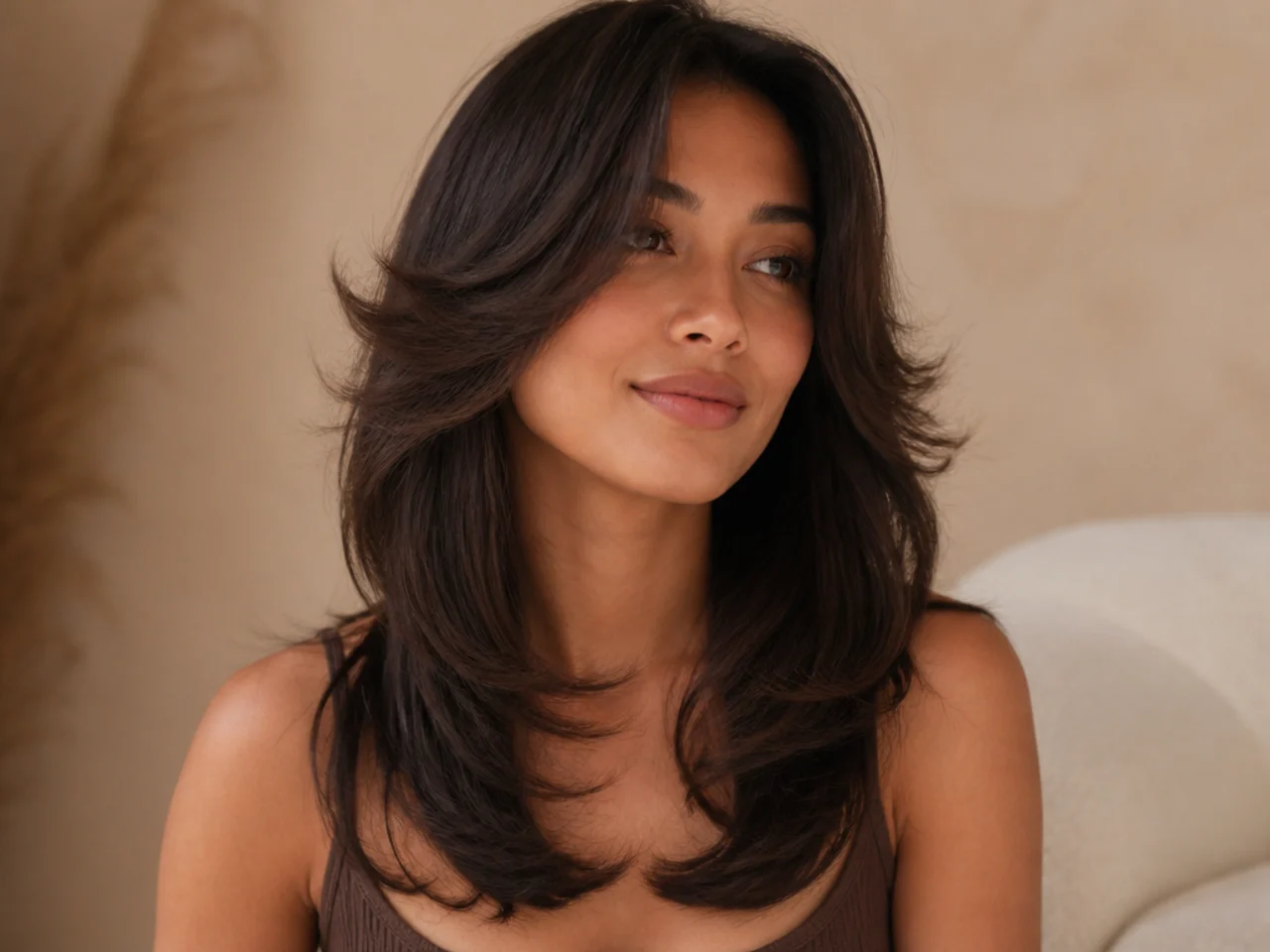
Wings dropping to the jaw or just past it. They hold their shape with almost no styling, since a longer piece carries enough weight to keep its curve, and the gap to the under layer stays small enough to read as one shape.

11. Butterfly Cut on Fine Hair
Keep the gap small and the perimeter clean. Every layer removes visible density from fine hair, and a wide gap leaves the under layer looking thin because too much of it has been lifted into the wing above.
12. Butterfly Cut on Thick Hair
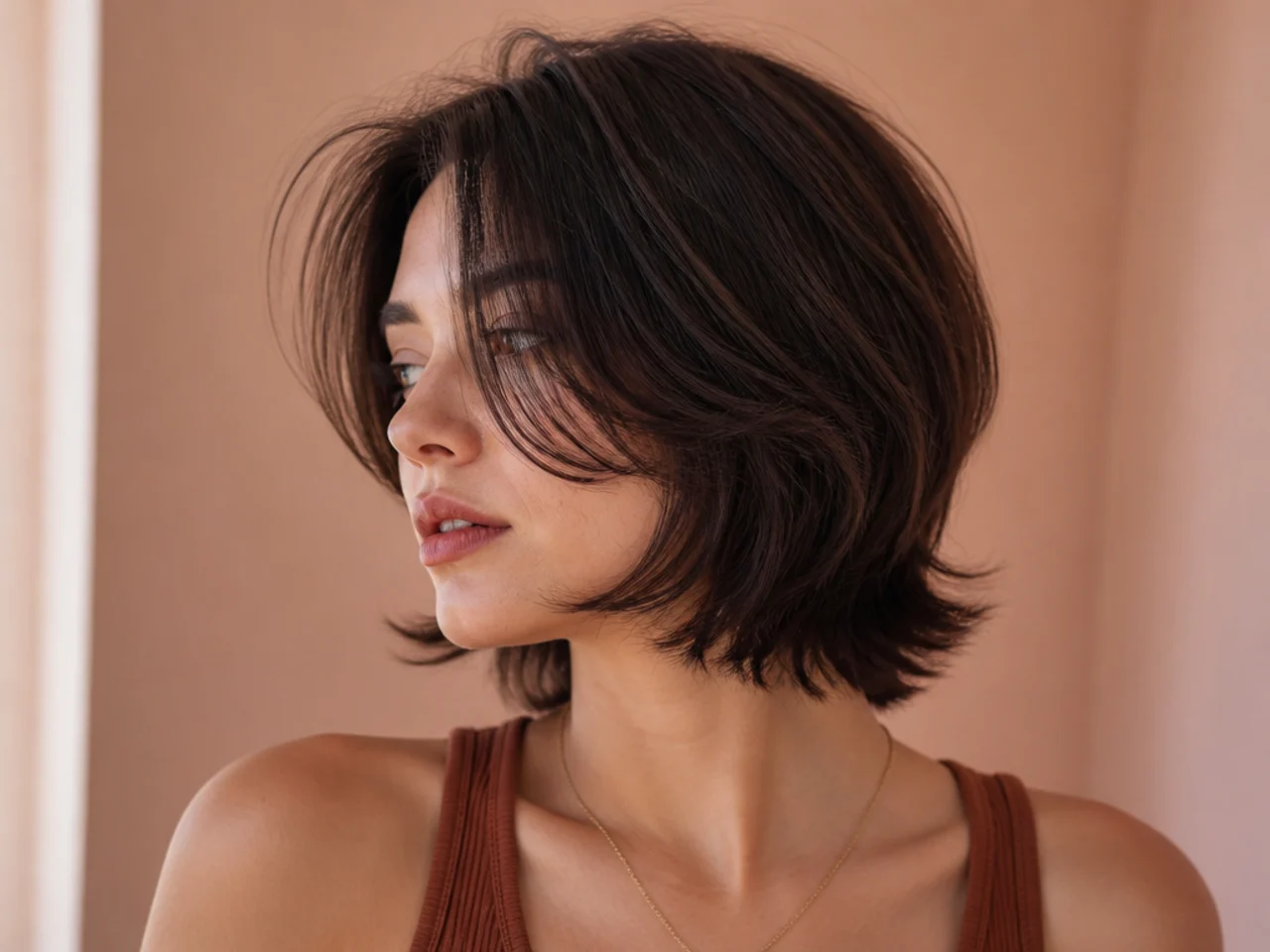
The gap can go wider and probably should. Thick hair builds outwards into a triangle unless weight is removed, and lifting a substantial wing off the top of the under layer is exactly the weight removal it needs.
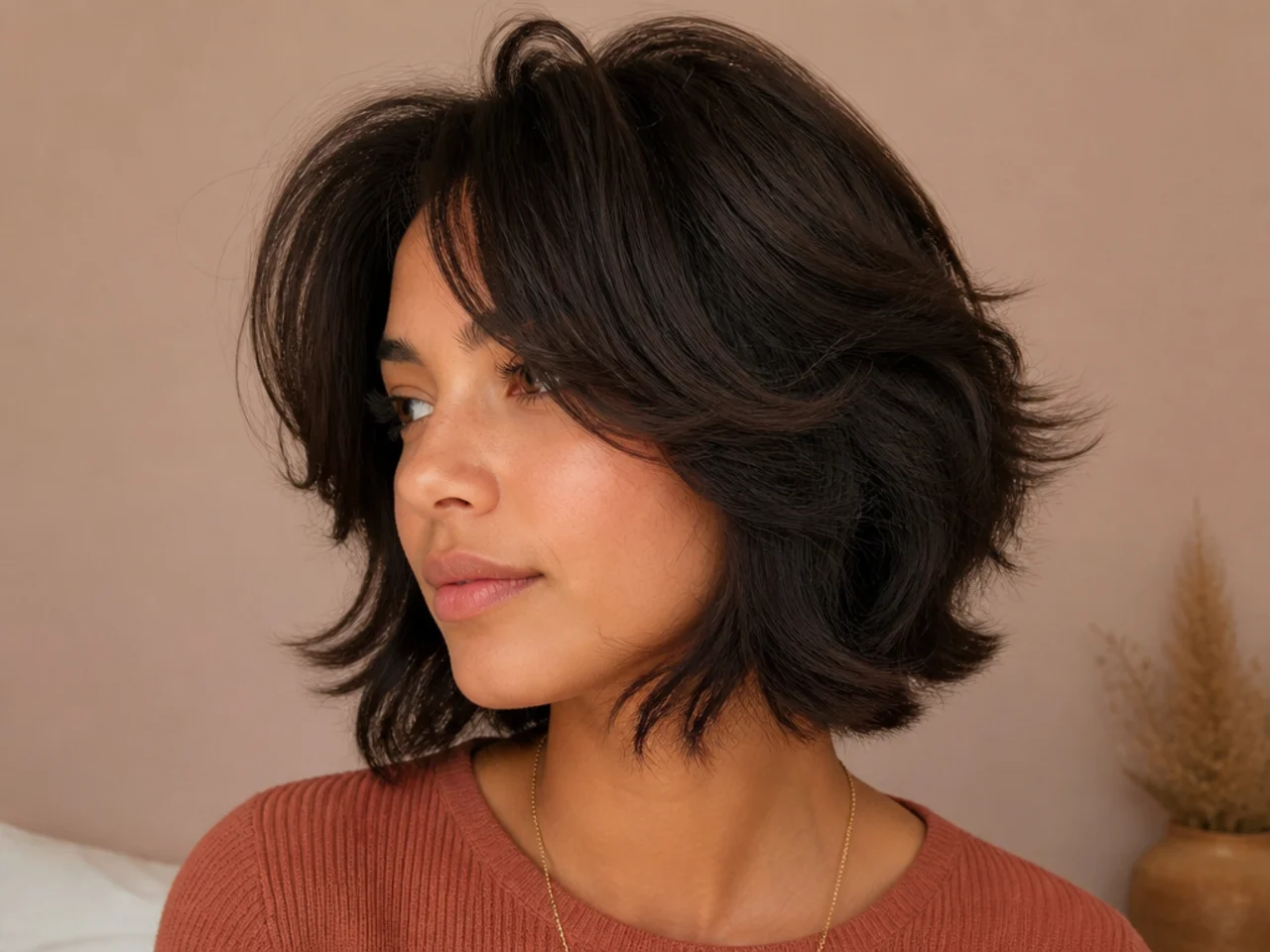
13. Butterfly Cut on Straight Hair
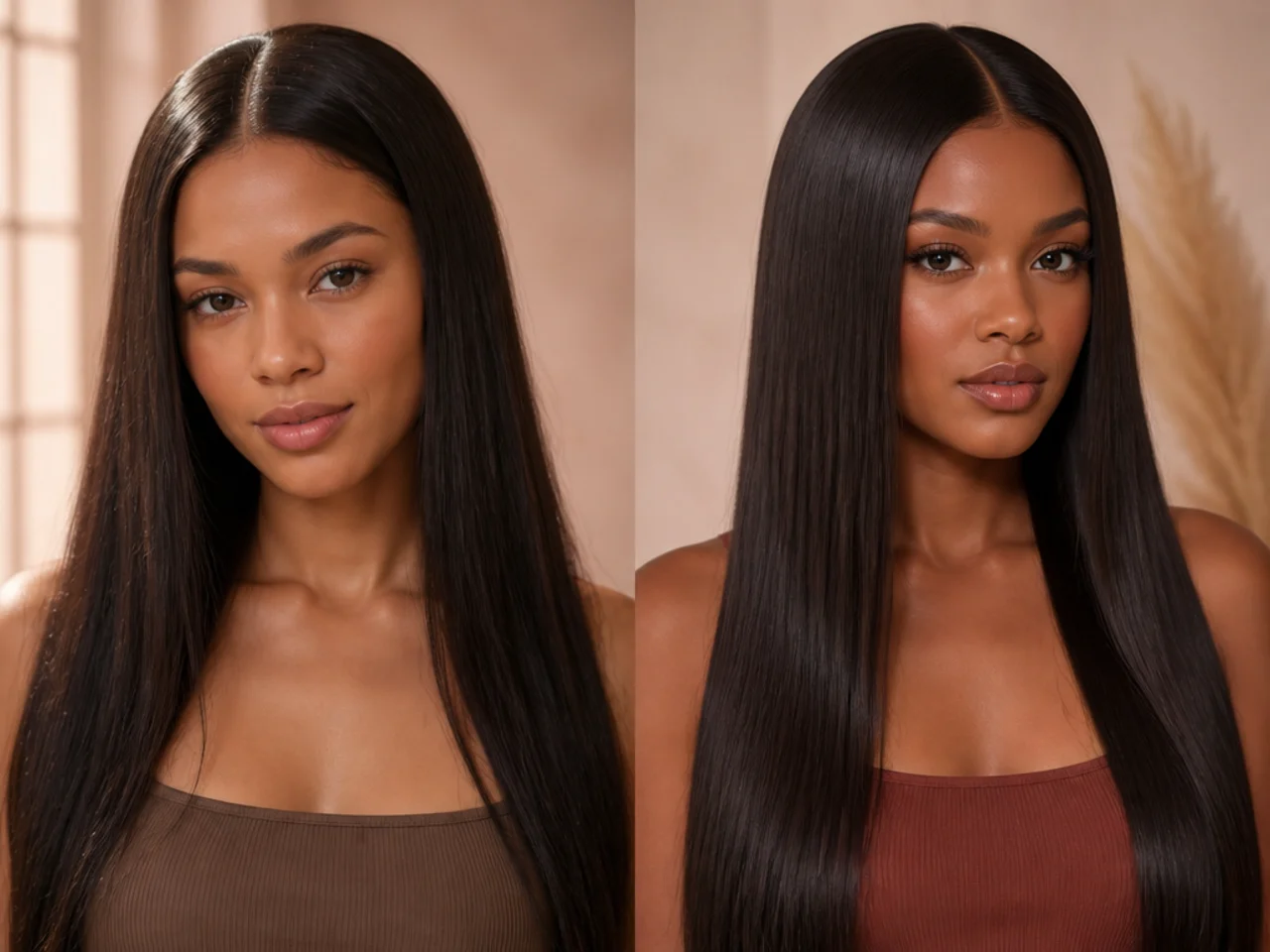
Straight hair shows the gap precisely, so the blend at the back of the wing has to be smooth. It also holds no curve of its own, which means the wing shape lives entirely in how the root was dried.

14. Butterfly Cut on Wavy Hair
The most forgiving texture for this cut. A bend scatters light in several directions, so the step between the two layer sets softens on its own and the wings hold a curve without a brush.

15. Butterfly Cut on Curly Hair
Cut dry, and cut the gap smaller than you think. The short wing springs up further than the long under layer does, so a gap measured under tension widens as soon as the curls are released.
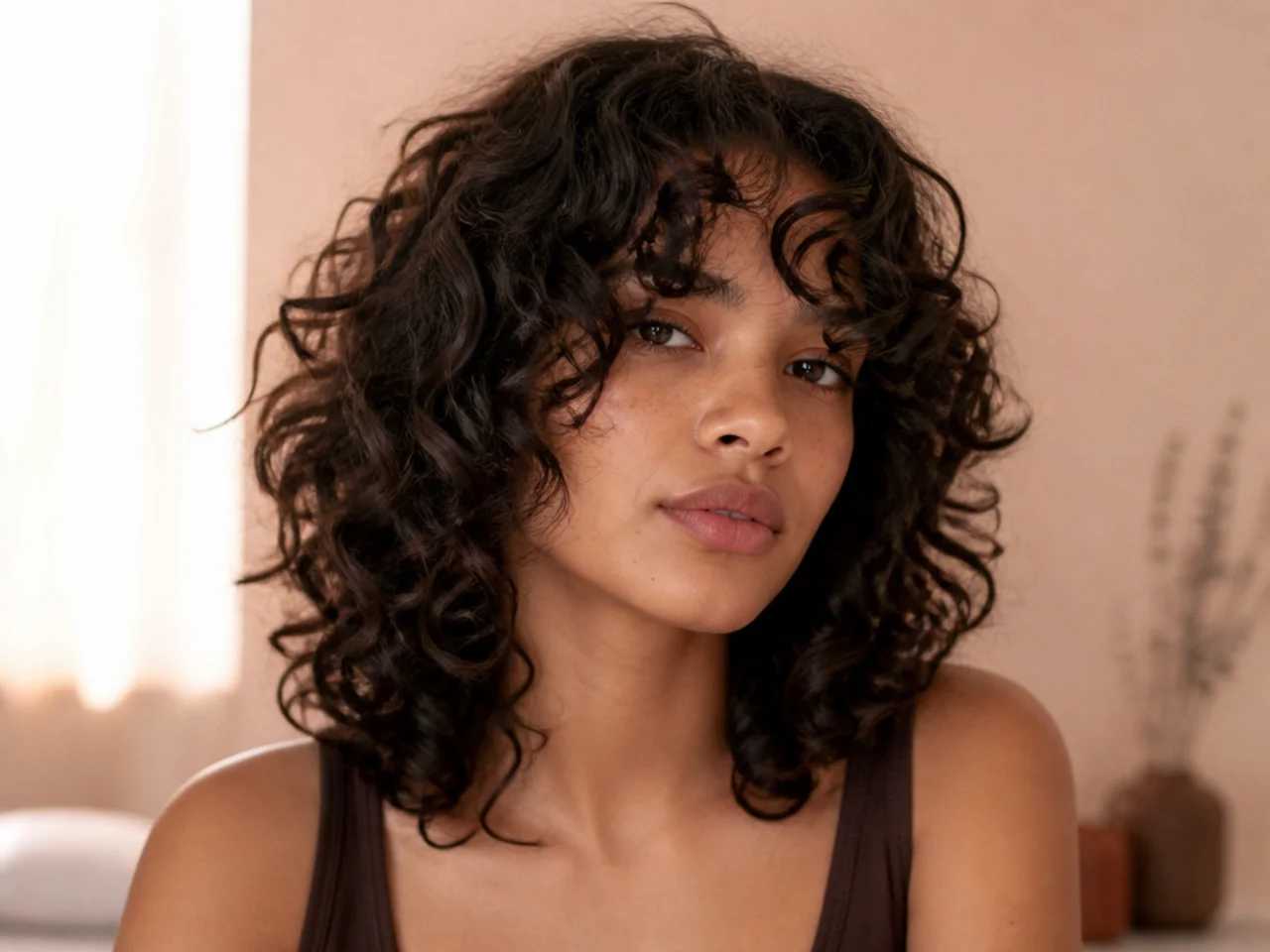
16. Korean Butterfly Cut With Bangs
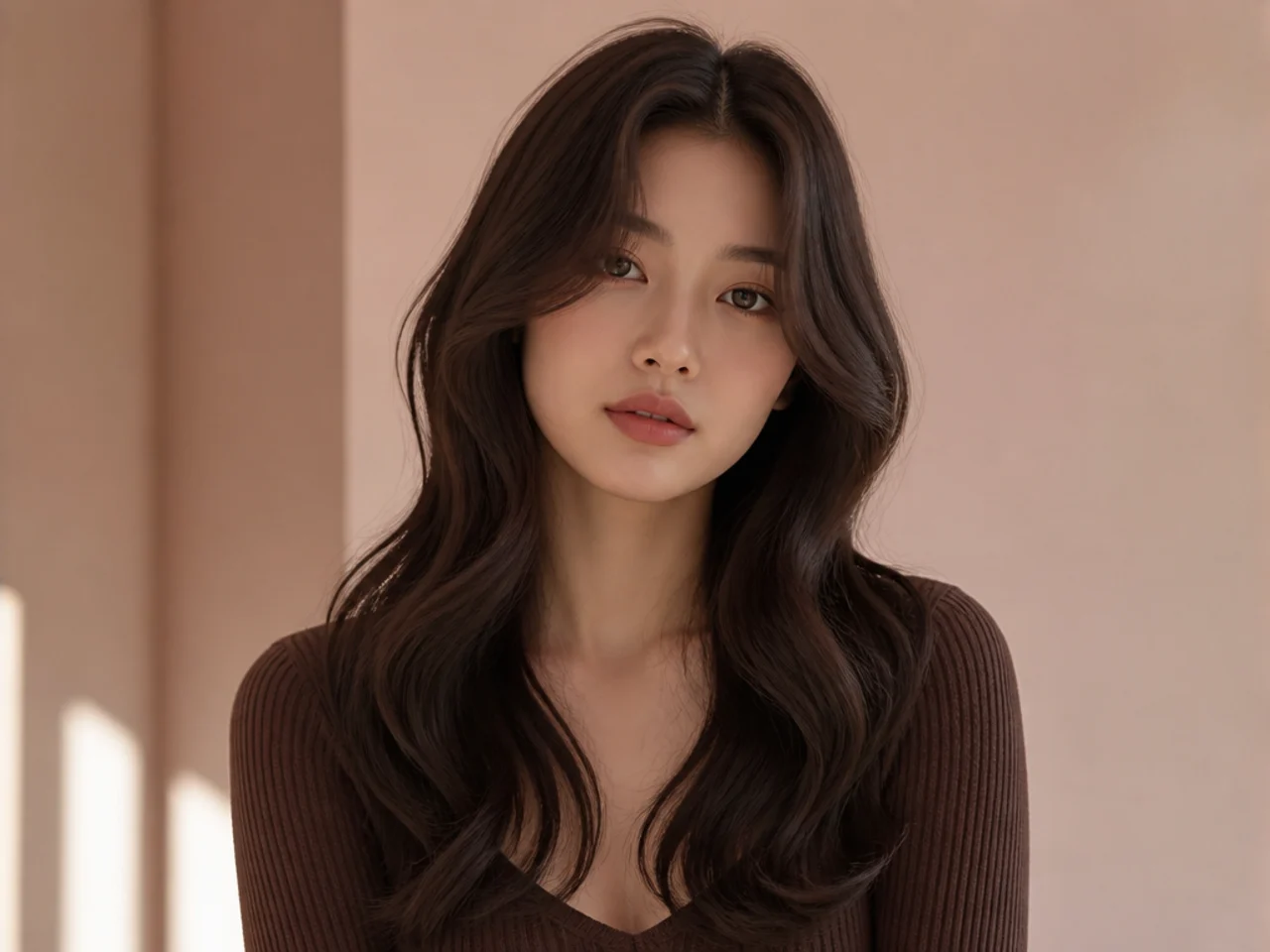
Softer wings, a lighter fringe and a rounder overall outline, closer to the Korean haircut with curtain bangs. The wings are cut with a longer diagonal so they fall against the cheek rather than standing away from it.
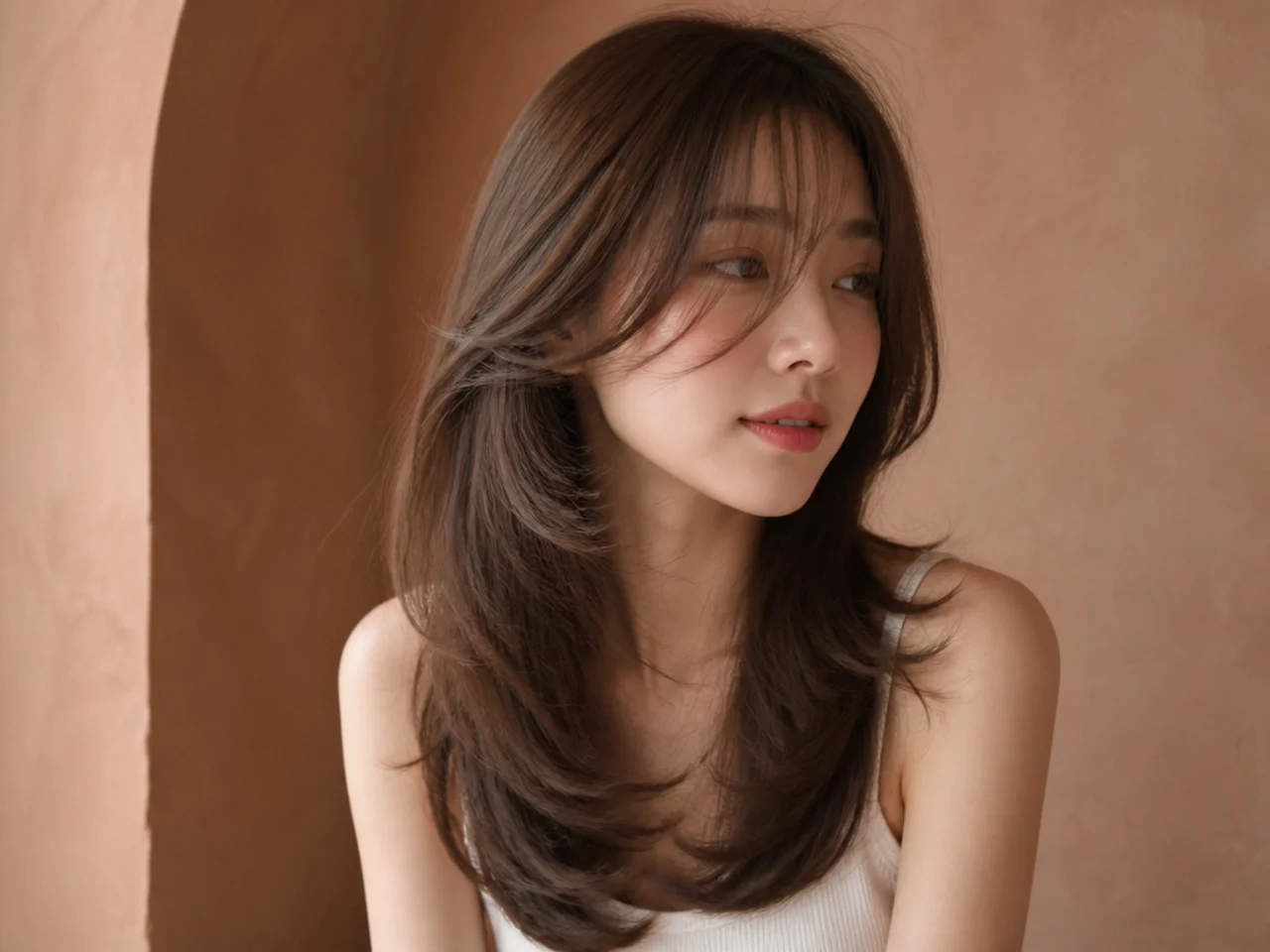
17. Butterfly Cut With a Middle Part
The parting splits the wings evenly so both sides carry the same weight. It is the most symmetrical reading of the cut, and it exposes the parting line, so the wing roots need lift to avoid a flat strip down the centre.

18. Butterfly Cut With a Deep Side Part
Piling the weight on one side creates lift at the root by volume alone. The heavy wing sweeps across the forehead and the light one frames the opposite cheek, which is a quieter shape than the symmetrical version.
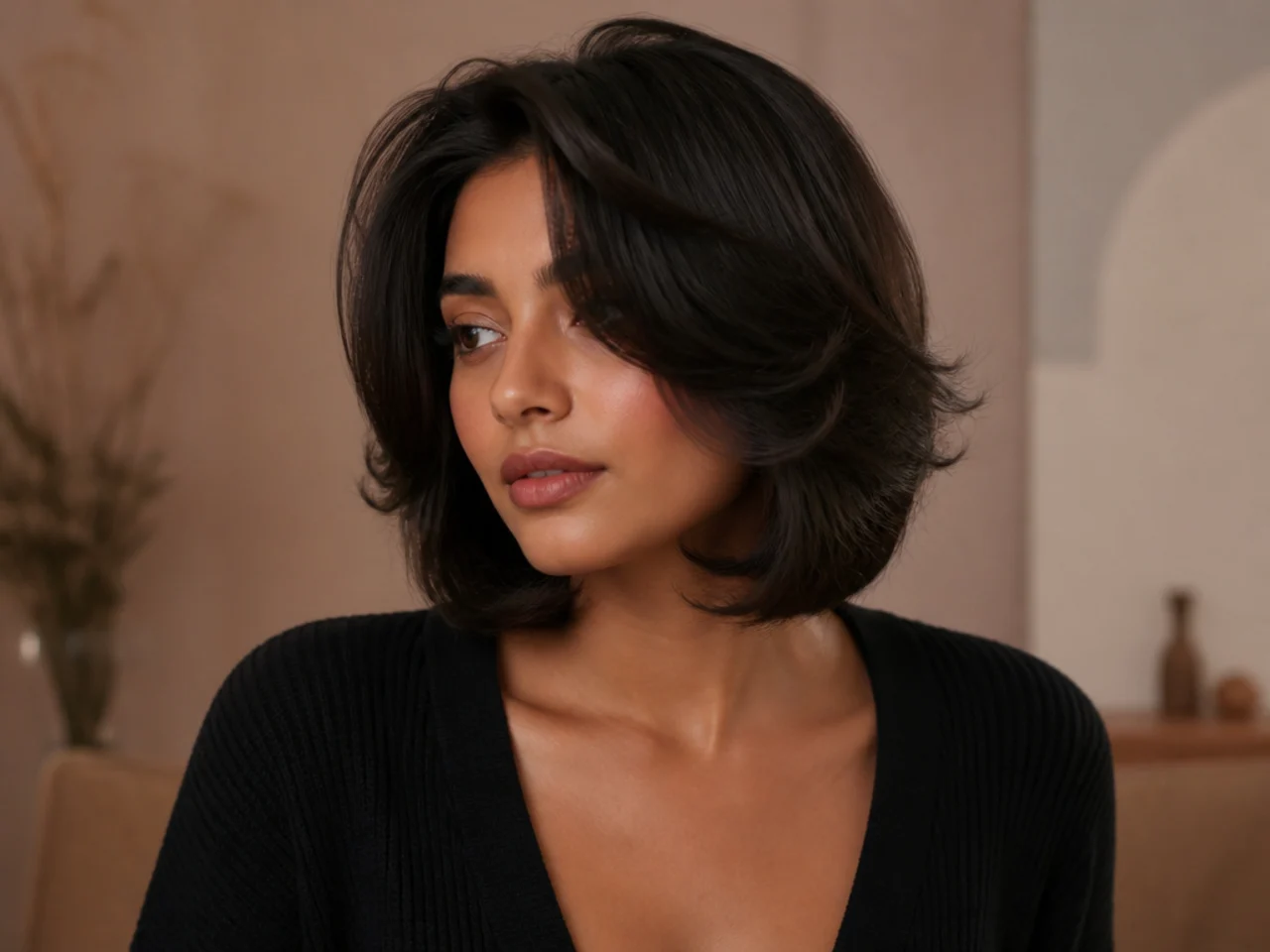
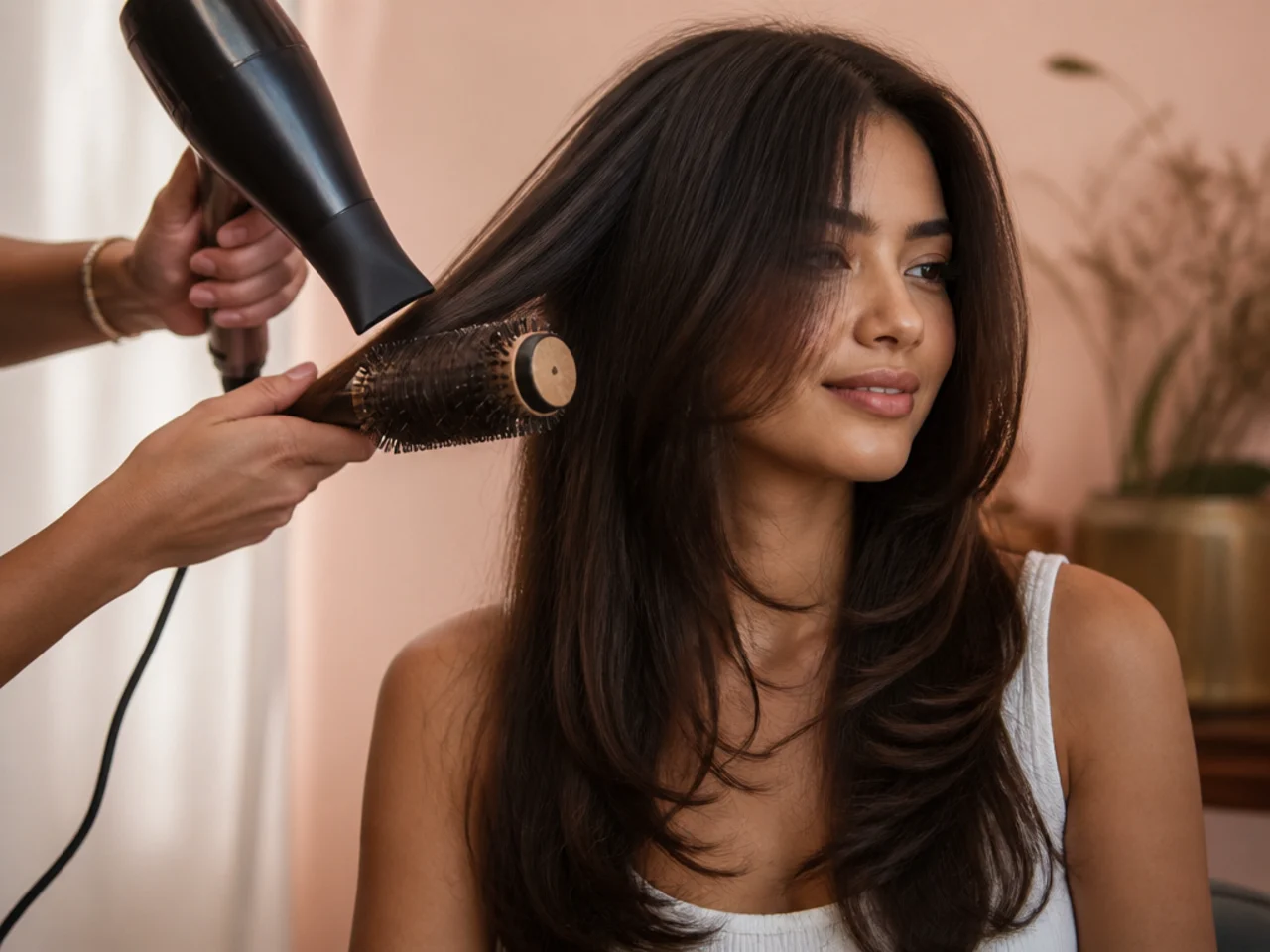
19. Blow Dried Butterfly Cut
A round brush at the wing root, angled away from the face, held until the section is cool. The curve sets as the hair cools rather than while it is hot, which is why a brush released warm gives a wing that drops within the hour.
20. Grown Out Butterfly Cut
After three or four months the gap has closed and the wings have merged into the under layer, leaving ordinary long layers. Nothing looks wrong, which is why the cut is low risk — but the lift is gone and it needs the gap re-cut, not the length trimmed.
Styling and Upkeep
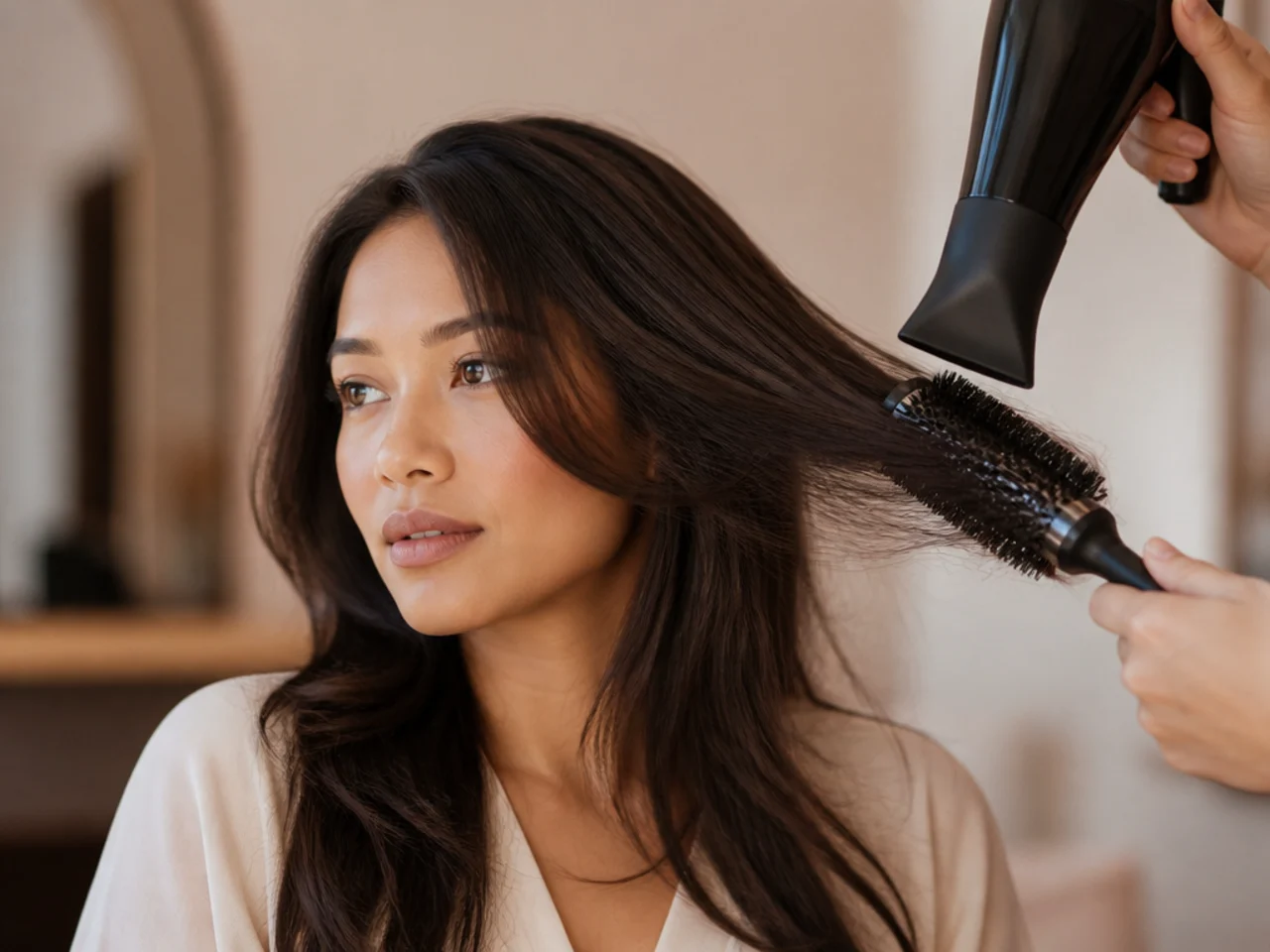
Dry the wing roots away from the face first. The curve lives in the root direction, and once that section is dry the direction is fixed.
Let each wing cool in the brush. Hair holds the shape it cools in, so a warm release undoes the set immediately.
Dry the fringe before the lengths. It is the first section to set and the hardest to correct afterwards.
Keep heavy cream off the wing roots. Weight at the root flattens the exact lift the shape depends on.
Rebook on the gap, not the length. The wings merge into the under layer long before the ends look untidy.
Mistakes to Avoid
Scaling a long hair gap onto short hair. The same difference that gives a wing at waist length gives a bare step at the collarbone.
Cutting the fringe as a separate shape. It ends against a longer piece at the cheek and the junction reads as a step.
Over layering fine hair. Lifting too much into the wing leaves the under layer looking thin from behind.
Cutting curl under tension. The short wing springs back further than the long layer, so the gap you measured is not the gap you get.
Drying the wings flat. Without root direction the cut is just layers, and no amount of product recovers the curve later.
FAQ
How big should the gap be? Eight to twelve centimetres at collarbone length, less on anything shorter.
Where do the bangs join? Cut as the front continuation of the shortest wing, in one diagonal.
How often? Re-cut the gap every three to four months, before the wings merge in.

Final Thoughts
Ask for the gap in centimetres and for the fringe to be cut as part of the wing. Those two instructions are what separate a butterfly cut from a set of layers with a step in them.
For the shape at every length see the butterfly haircut guide, and for the fringe that pairs with it most often see the Korean haircut with bangs. More in Women's Hairstyles.