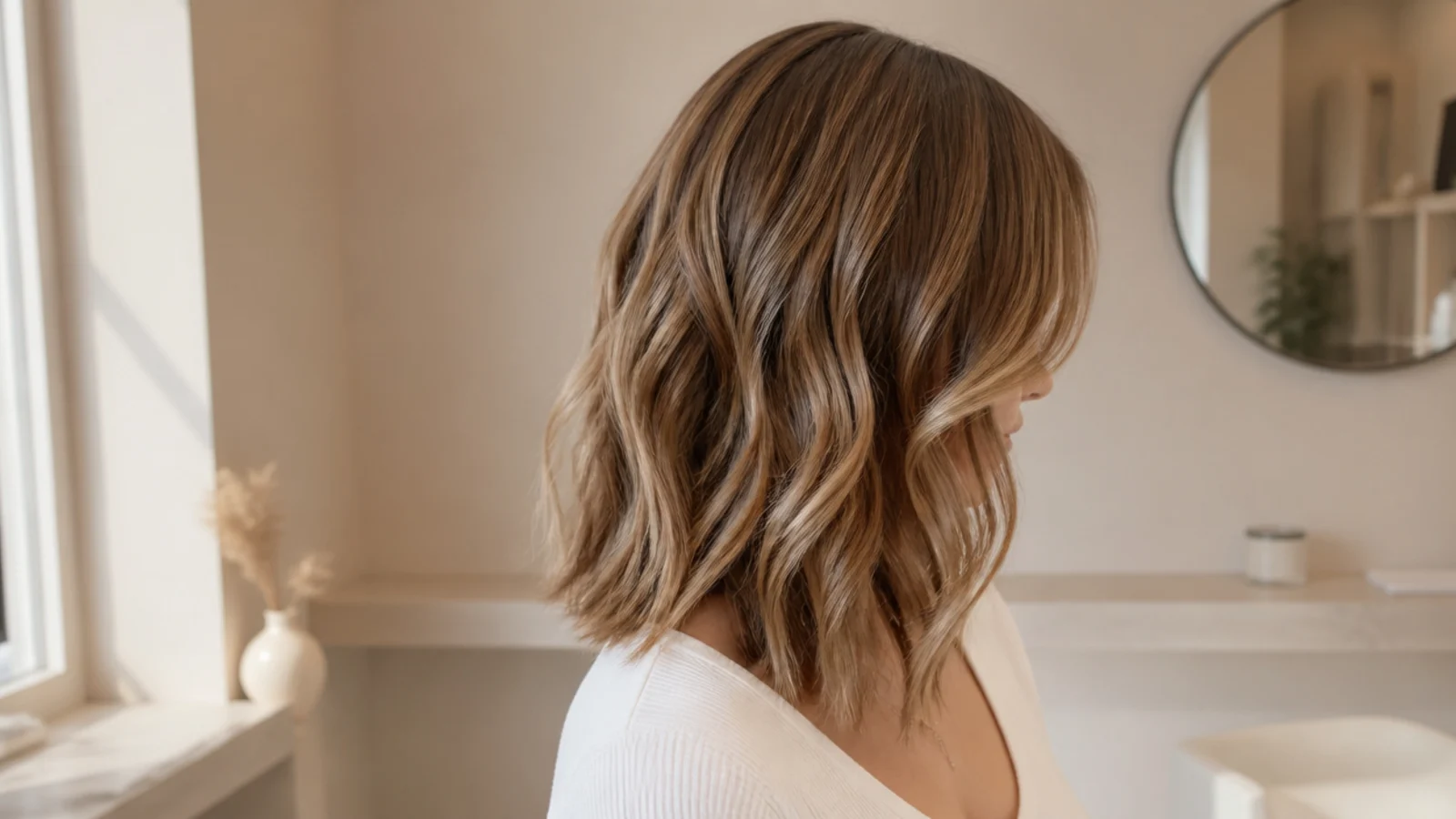
20 Curly Butterfly Haircuts For Short Bouncy Layers
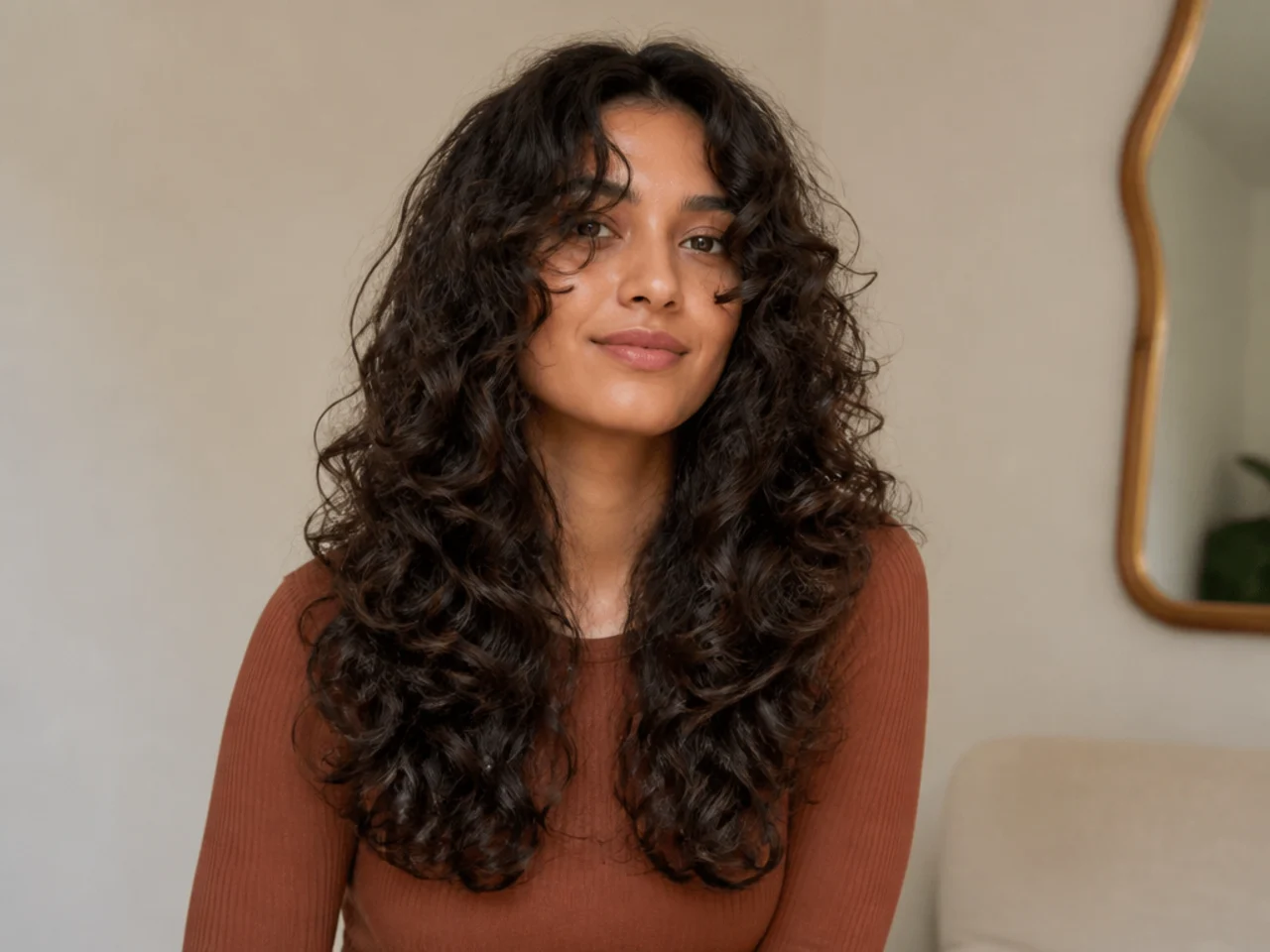
Twenty curly butterfly cuts, and the measurement that decides whether one works — the gap between the short tier and the long tier. Curl fills vertical space that straight hair leaves empty, so the same gap that reads as a wing on a blowout reads as nothing at all on a spiral.
In this article · 27
- What Makes It a Butterfly and Not a Shag
- Choosing Your Two Lengths
- The 20 Curly Butterfly Haircuts
- 1. The Short Curly Butterfly
- 2. Curly Butterfly at Bob Length
- 3. Curly Butterfly With Curtain Bangs
- 4. Curly Butterfly With a Cheekbone Layer
- 5. Curly Butterfly With a Jaw Length Layer
- 6. Curly Butterfly on Loose Waves
- 7. Curly Butterfly on Spiral Curls
- 8. Coily Butterfly on Type Four Hair
- 9. Curly Butterfly With a Wide Tier Gap
- 10. Curly Butterfly With a Narrow Tier Gap
- 11. Curly Butterfly With Internal Layers
- 12. Curly Butterfly on Fine Curls
- 13. Curly Butterfly on Dense Curls
- 14. Curly Butterfly With a Rounded Crown
- 15. Curly Butterfly With a Deep Side Part
- 16. Curly Butterfly With a Money Piece
- 17. Curly Butterfly With Balayage Ends
- 18. Diffused Curly Butterfly
- 19. Half Up Curly Butterfly
- 20. Curly Butterfly at Week Twelve
- Styling and Upkeep
- Mistakes to Avoid
- FAQ
- Final Thoughts
Most curly butterfly cuts fail because the two tiers were set the distance apart that works on a blowout, and curl closes that distance on its own.
A butterfly is two tiers with a gap between them. The shorter tier sits on top of the longer one and springs away from it. That visible separation is the whole shape.
Curl fills the gap by itself. Every curl occupies vertical space that a straight strand does not, so the tiers on textured hair have to be cut further apart to read at all.
What Makes It a Butterfly and Not a Shag
The butterfly has a step; the shag does not. A shag graduates continuously from crown to ends. A butterfly leaves a deliberate jump between a short tier and a long one.
The short tier is face framing. It starts at the fringe and ends around the cheekbone or jaw, sweeping back rather than hanging forward, which is what gives the cut its wing outline.
The long tier is untouched length. It carries the weight and the perimeter, and it is what stops the cut collapsing into a layered bob when the top tier springs up.
The gap is a measurement, not a feeling. On loose waves two or three inches is plenty. On spiral curl the same two inches disappears, because each tier expands sideways into the space between them.

Choosing Your Two Lengths
Set the short tier by where the curl lands dry. Cut at the jaw, a type three curl finishes at the cheekbone. Choose the finished position first and let shrinkage decide the cutting length.
Set the long tier below your shoulder line. A perimeter that rests on the shoulders is pushed upward all day, which flattens the wing above it and widens the outline underneath.
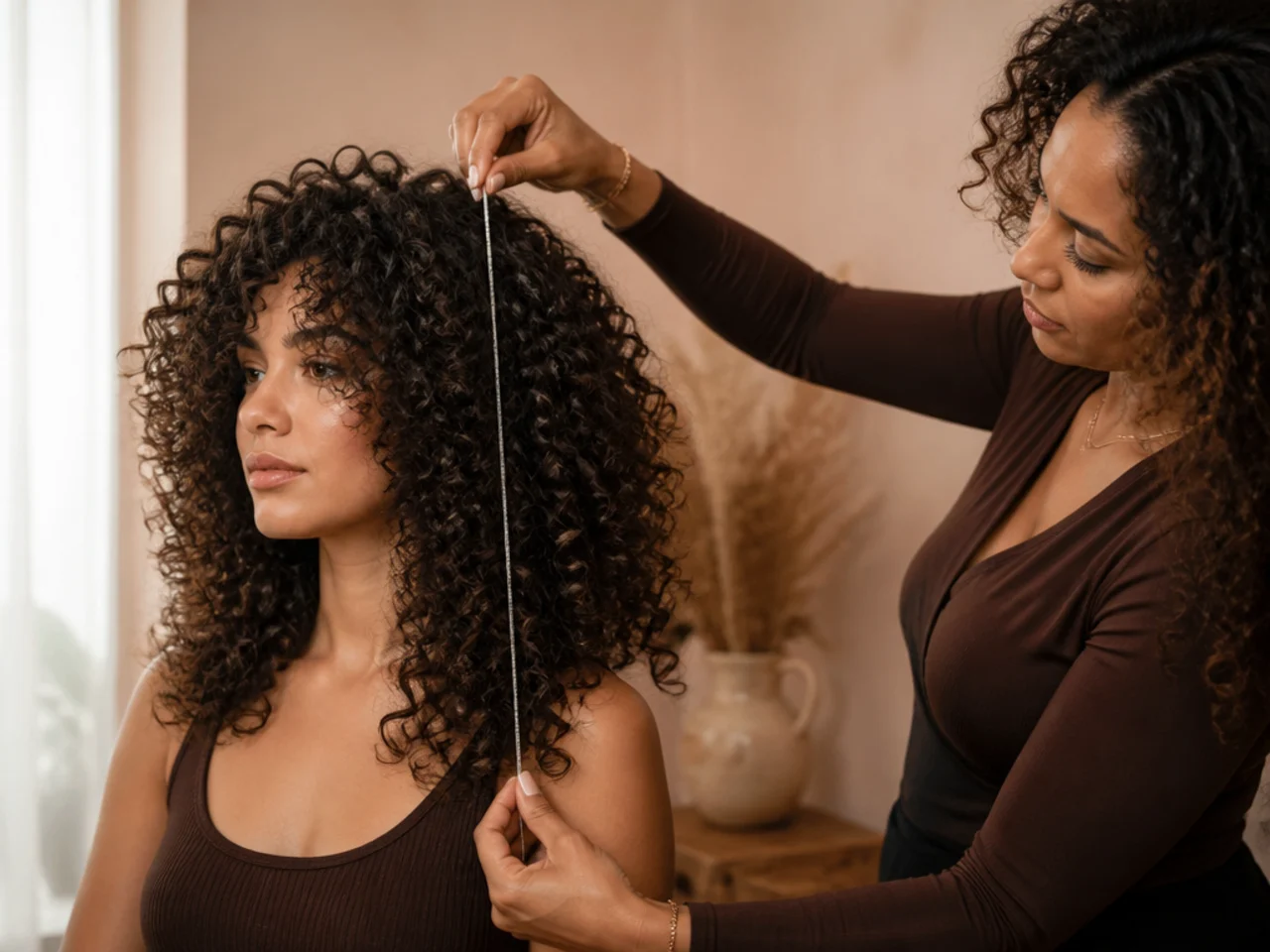
Widen the gap as your pattern tightens. Loose waves need three inches, spirals need four or more, and coils need the two tiers separated far enough that they never overlap when dry.
Judge density before layer count. Dense curl needs weight removed from the interior, not another surface layer, because a surface layer on thick hair only adds another expanding edge.
The 20 Curly Butterfly Haircuts
1. The Short Curly Butterfly
Top tier at the cheekbone, bottom tier just past the collarbone, with a clean gap between. It is the butterfly haircut built for texture, and the only change is that the gap is cut wider so the curl cannot close it.
2. Curly Butterfly at Bob Length
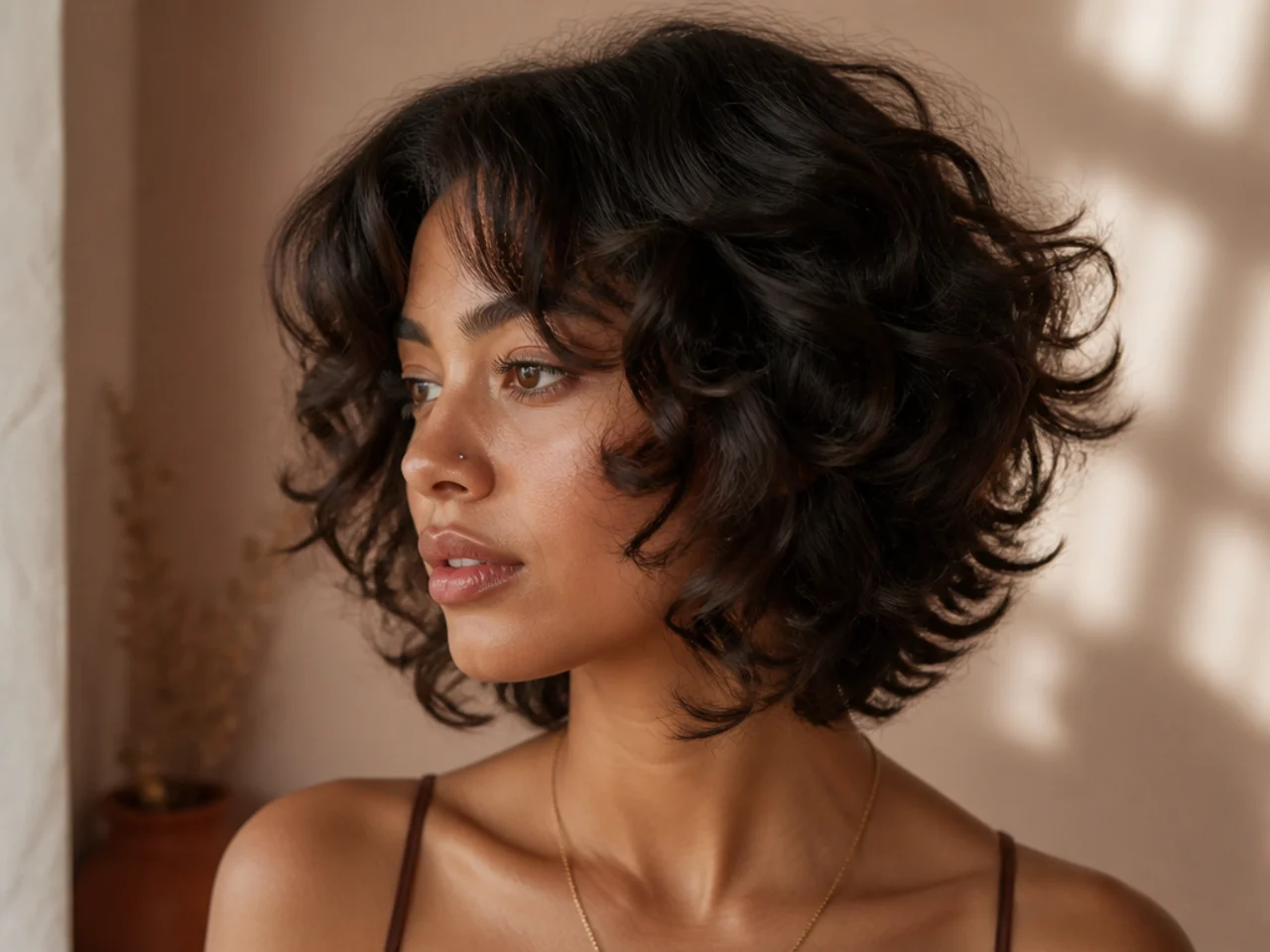
Both tiers compressed, the short one at the corner of the mouth and the long one at the jaw. This is the floor for the cut, because below it there is no vertical room left for two readable tiers.
3. Curly Butterfly With Curtain Bangs
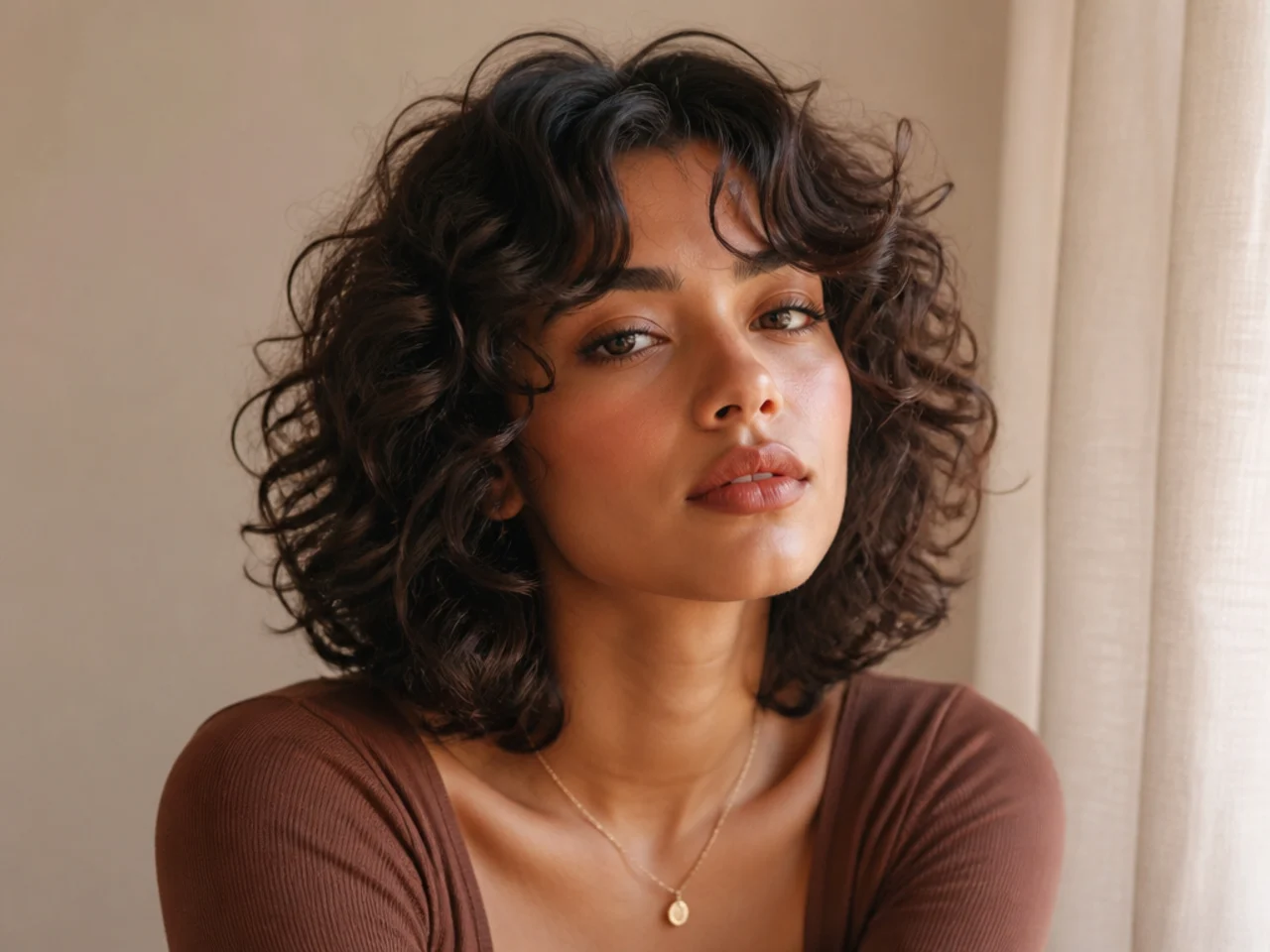
The fringe becomes the top of the short tier rather than a separate section. That removes the hard line where a fringe usually meets the layers, so the wing starts at the hairline instead of halfway down the face.
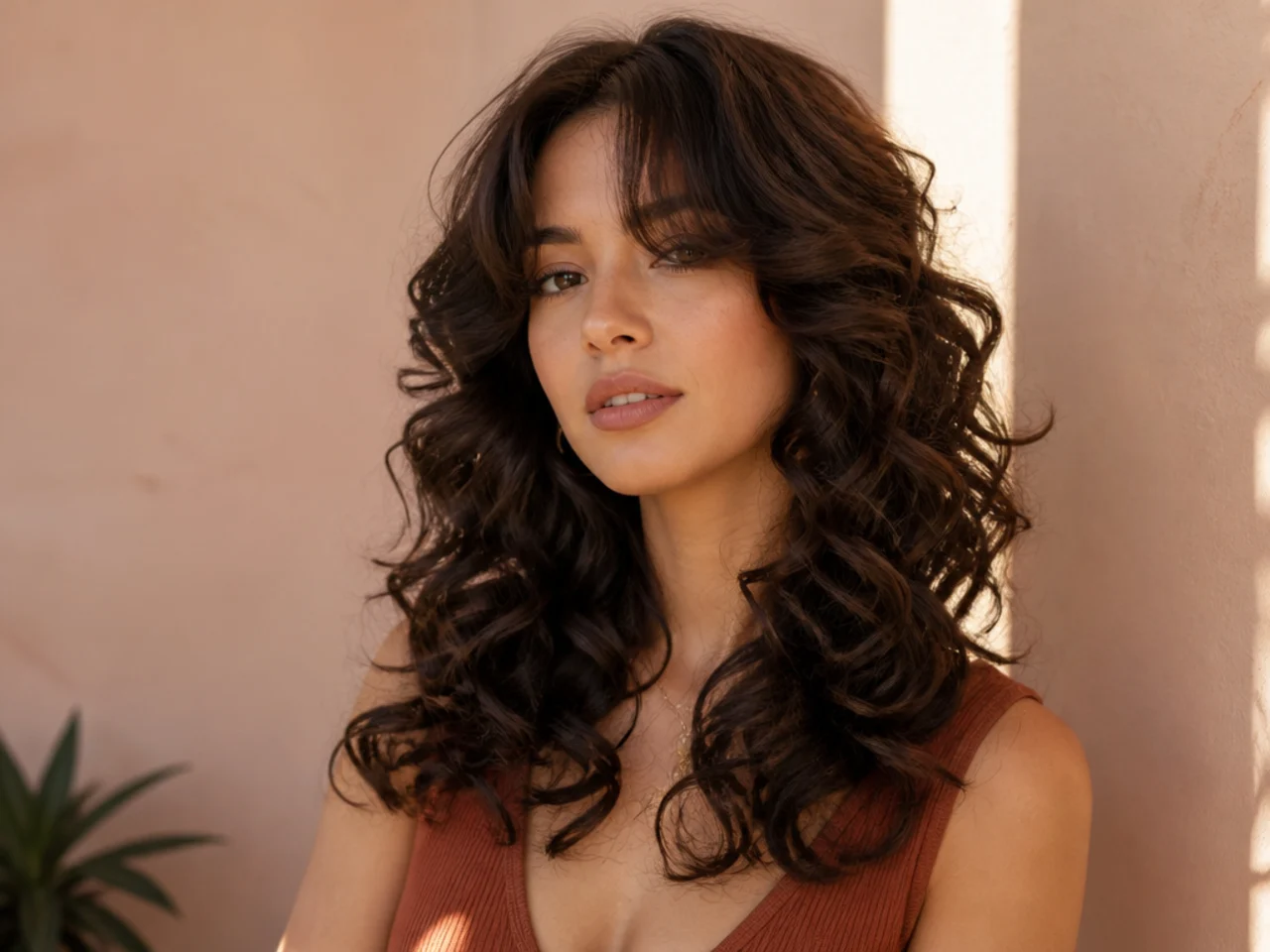
4. Curly Butterfly With a Cheekbone Layer
The shortest layer positioned so the curl springs to the top of the cheekbone. Cut at the jaw on type three hair and it finishes exactly there, which is why cutting it at the cheekbone puts it at the eye.

5. Curly Butterfly With a Jaw Length Layer
A lower short tier for anyone whose curl already sits wide at the cheekbone. Dropping the layer to the jaw moves the widest point of the shape below the face rather than beside it, which narrows the whole silhouette.

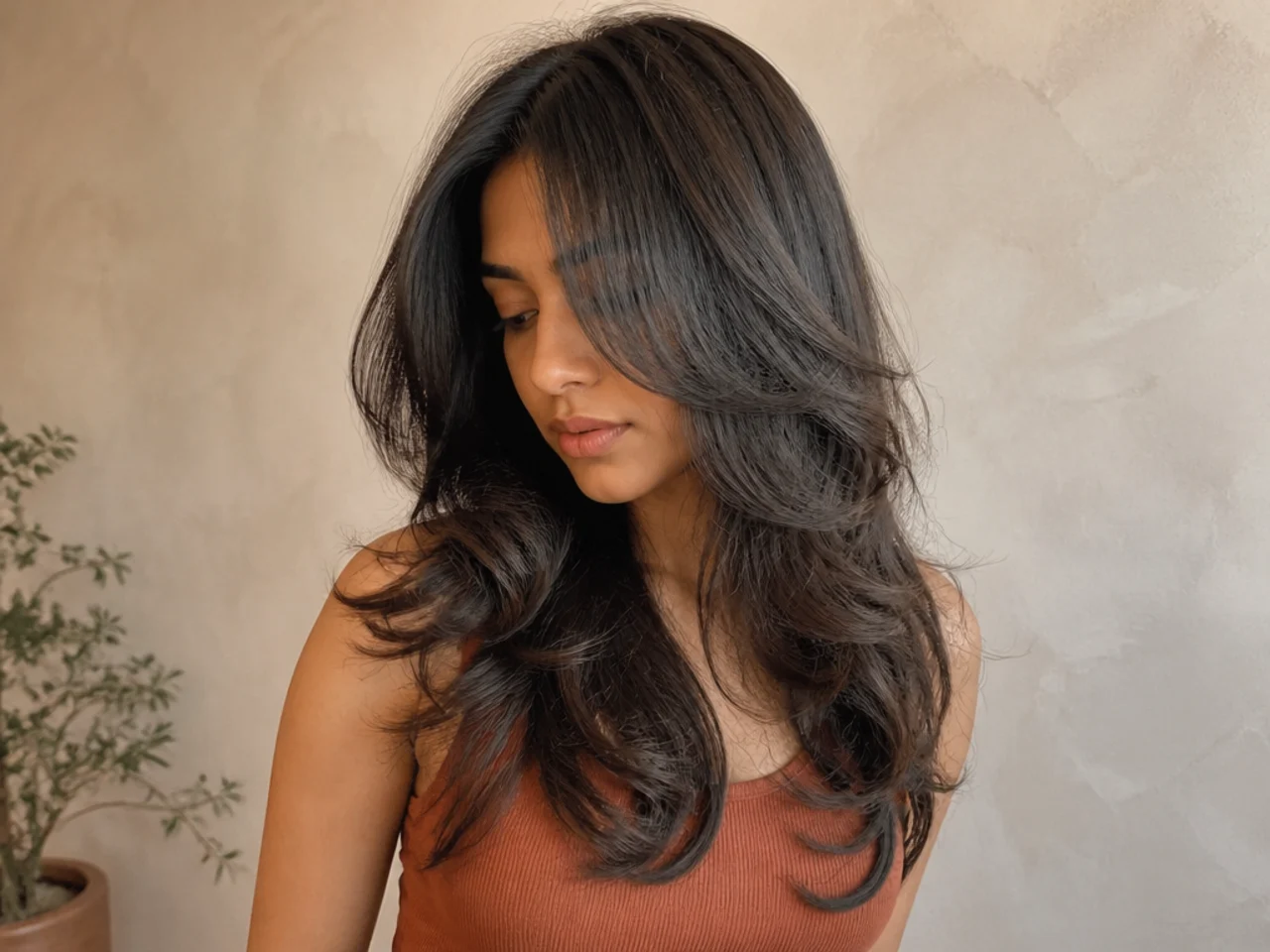
6. Curly Butterfly on Loose Waves
Type two hair barely shrinks, so both tiers land where they were cut. The catch is that a wave does not lift on its own, so the wing has to be built with a round brush at the roots of the short tier.
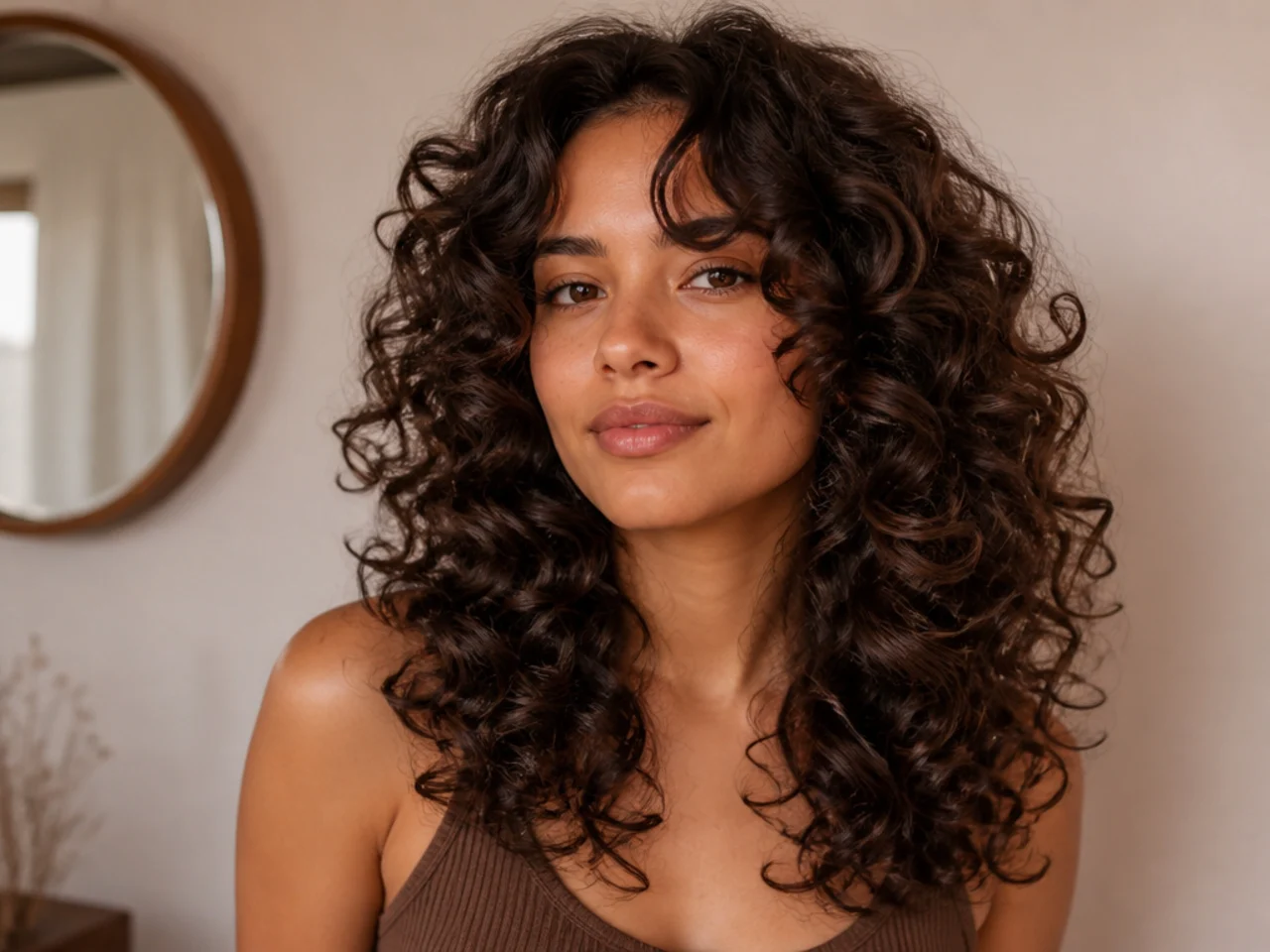
7. Curly Butterfly on Spiral Curls
Spirals lift away from the head unaided, so the wing is built into the texture. The risk runs the other way here, because tiers cut too close together merge into one round mass at the crown.
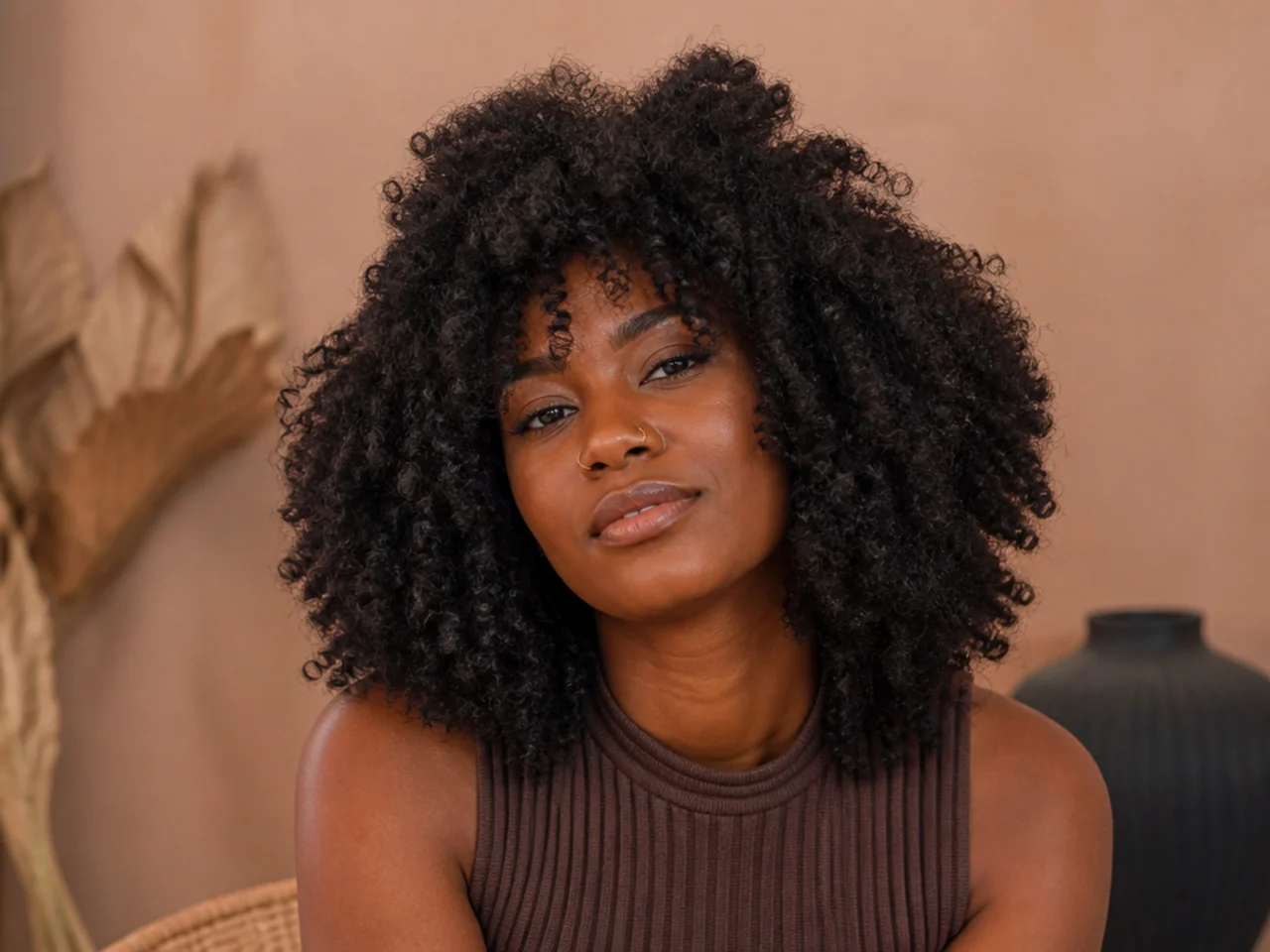
8. Coily Butterfly on Type Four Hair
Coils can lose half their length or more as they dry, so the tiers are cut far further apart than the finished picture suggests. Cut them to look right wet and the dry result has no visible gap at all.
9. Curly Butterfly With a Wide Tier Gap
Four inches or more between the tiers. The wing separates hard and reads from across a room, but the ends of the short tier have to be point cut or the gap turns into a shelf with a visible ledge.

10. Curly Butterfly With a Narrow Tier Gap
Two inches, so the cut reads as one shape with lift rather than two stacked pieces. It suits fine curl, which has too few strands to fill a wide gap and shows daylight through it instead.

11. Curly Butterfly With Internal Layers
Weight removed from underneath so the outer surface stays unbroken. On dense curl this matters because every cut surface strand becomes a frizz point, and the interior ones are hidden by the layer above them.

12. Curly Butterfly on Fine Curls
Fine curl cannot fill a gap, so a wide one just shows through. Keep the tiers close, leave the perimeter close to blunt, and let the weight at the ends hold the shape together rather than layering it away.

13. Curly Butterfly on Dense Curls
Density pushes the outline into a triangle by mid afternoon. Removing weight from the mid lengths, rather than adding a shorter tier, keeps the widest part of the shape from migrating below the ears.

14. Curly Butterfly With a Rounded Crown
Short crown layers prop up the ones beneath them and hold the top of the head round. That keeps the widest point of the outline above the ears, which is what stops a curly butterfly reading as a triangle.

15. Curly Butterfly With a Deep Side Part
Shifting the parting off centre gives one side more hair to lift and the other less, so one wing sits higher. On curl this survives the day because each clump keeps the direction it dried in.

16. Curly Butterfly With a Money Piece
Two lightened panels at the front edge of the short tier. Lightened curl is more porous and dries faster than the rest of the head, so those panels set tighter and outline the wing in a brighter tone.
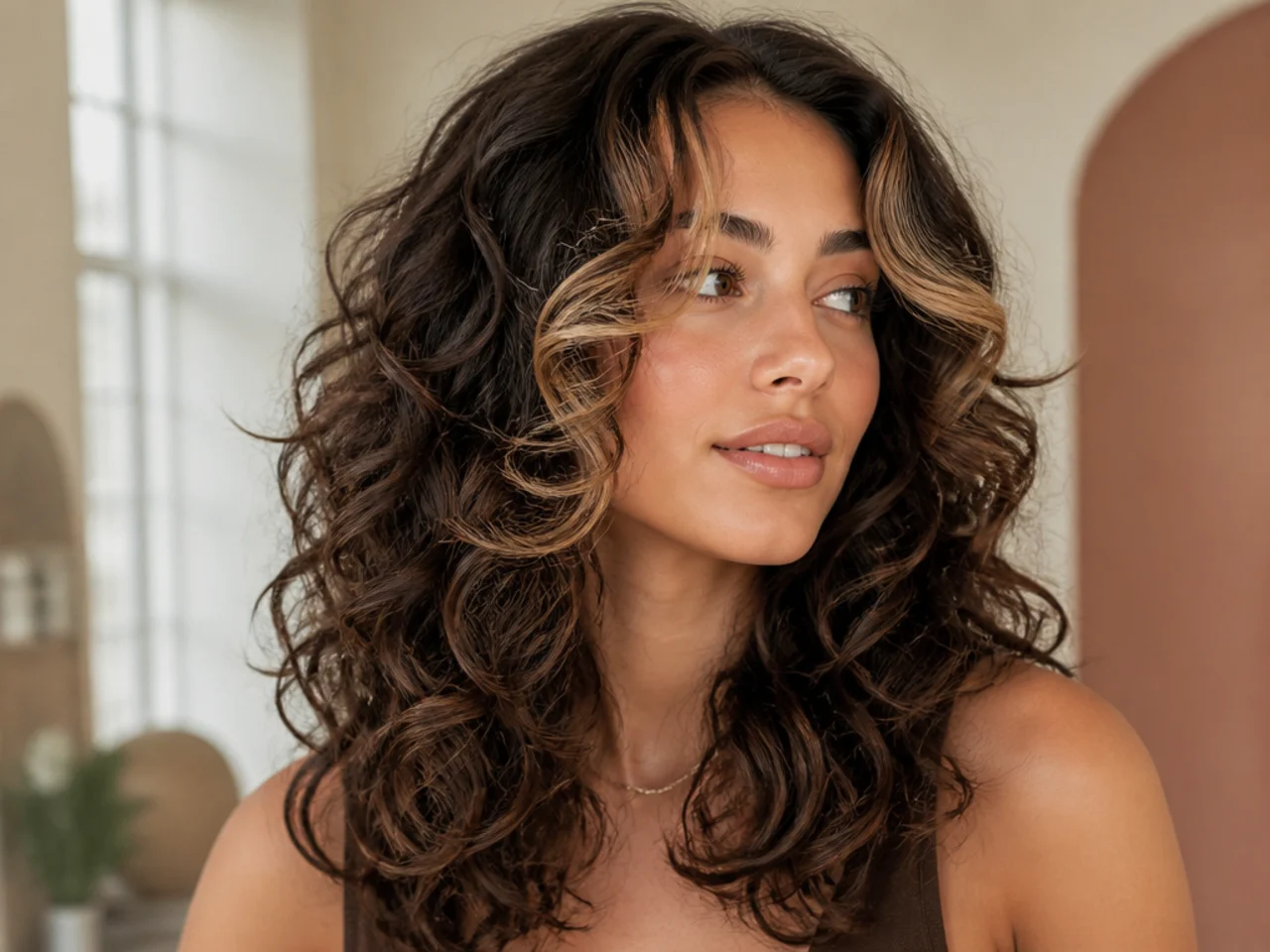
17. Curly Butterfly With Balayage Ends
Colour concentrated in the last few inches of the long tier. Because the eye follows the lightest area, putting it on the perimeter traces the outline of the cut and makes the tier separation obvious from any angle.
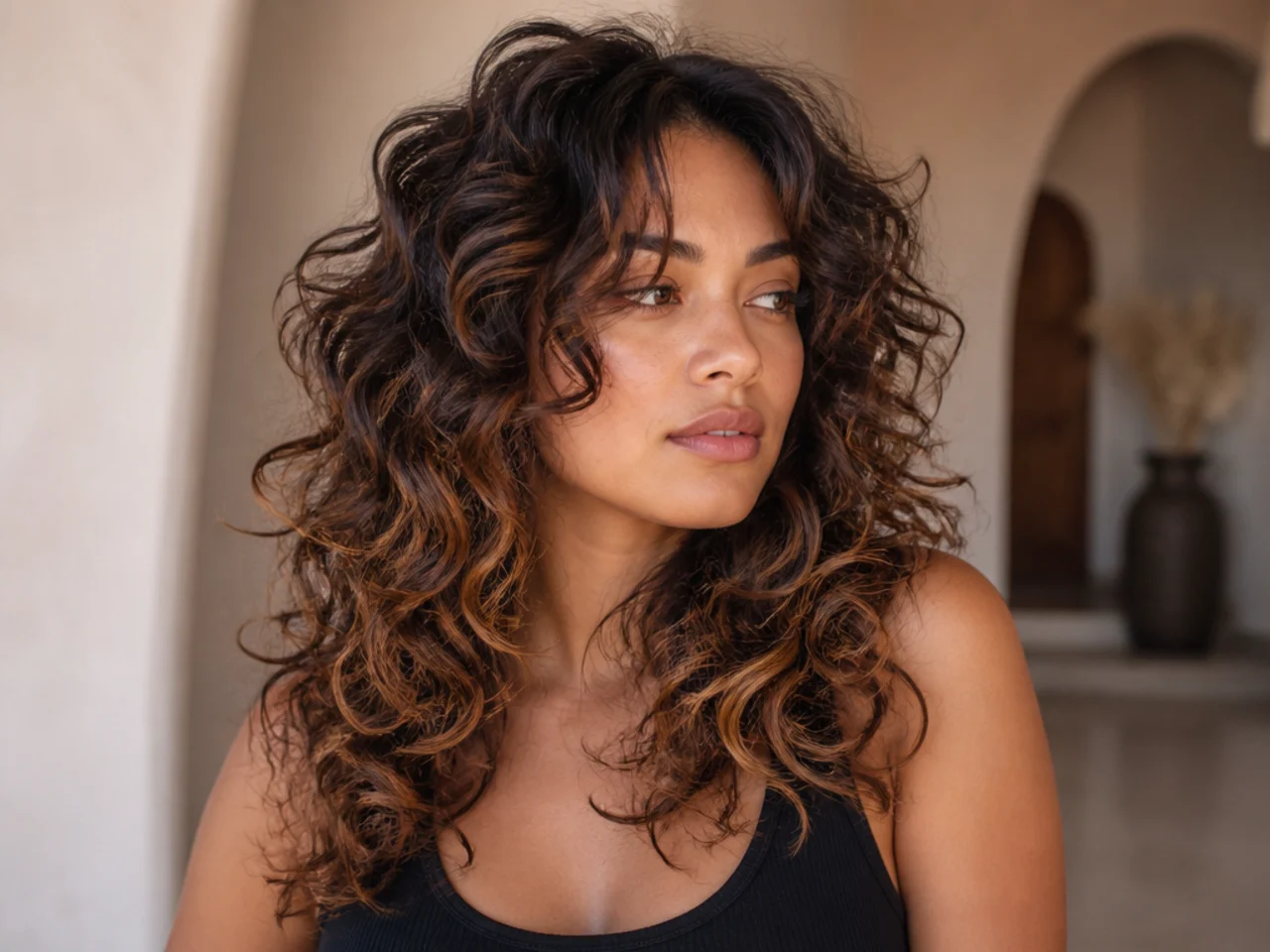
18. Diffused Curly Butterfly
Dried with the bowl cupping the short tier at the root, low speed and high heat. Speed is what breaks the clump and heat is what sets it, so a fast diffuser undoes the wing while it is still forming.
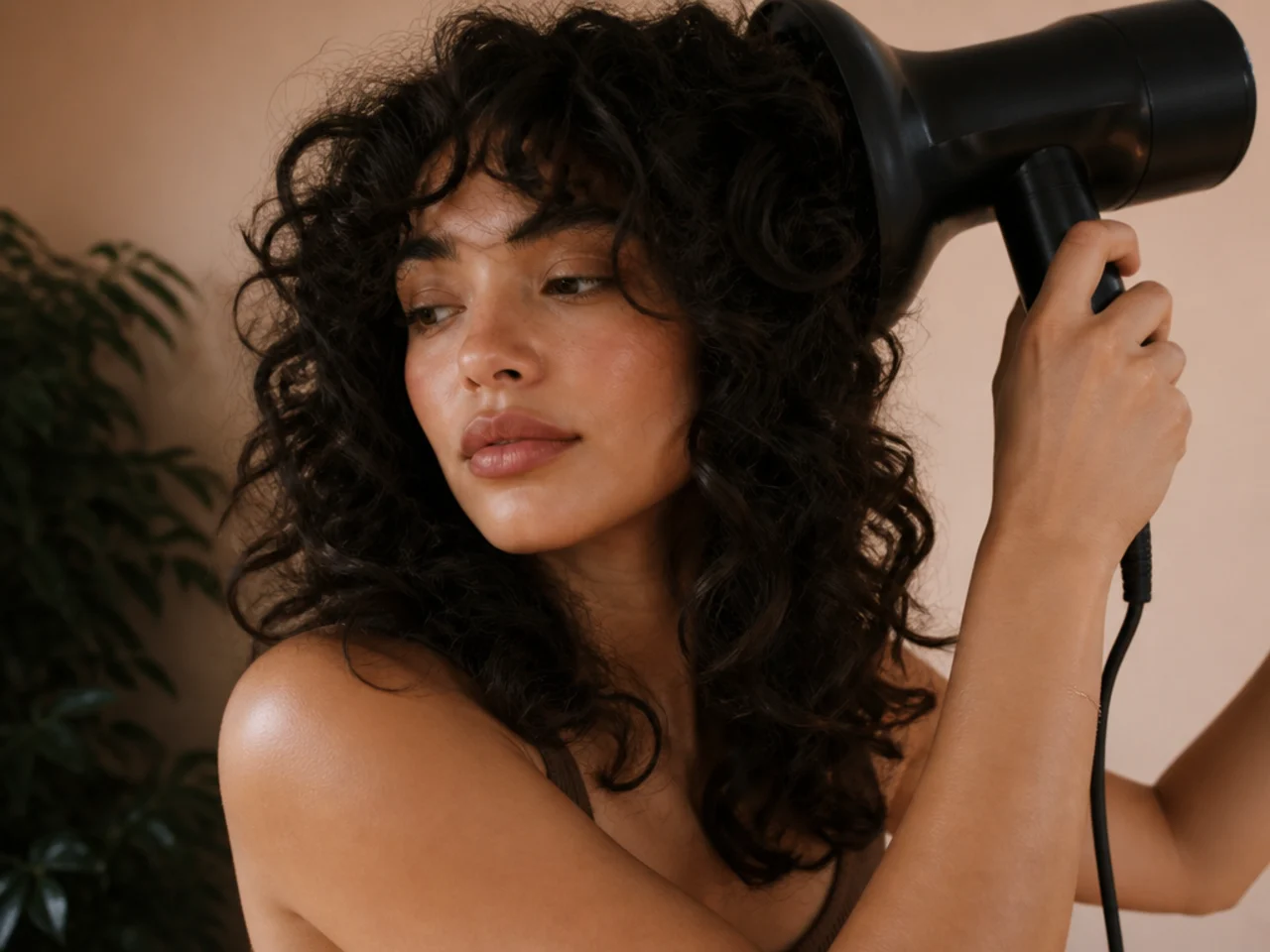
19. Half Up Curly Butterfly
The short tier gathered up and the long tier left down. Lifting the top releases roots that were flattened under their own weight, so the wing sits higher than it does loose and the perimeter is left untouched.

20. Curly Butterfly at Week Twelve
Both tiers have grown the same amount, so the gap is still there, but the short tier has dropped past the jaw. Once a layer is long enough that its own weight beats the curl, the wing lies flat.

Styling and Upkeep
Apply product to soaking hair, not damp. Gel needs water to distribute along the strand. On damp hair it sits on the outside of the clump and dries into a crust that flakes when the wing moves.
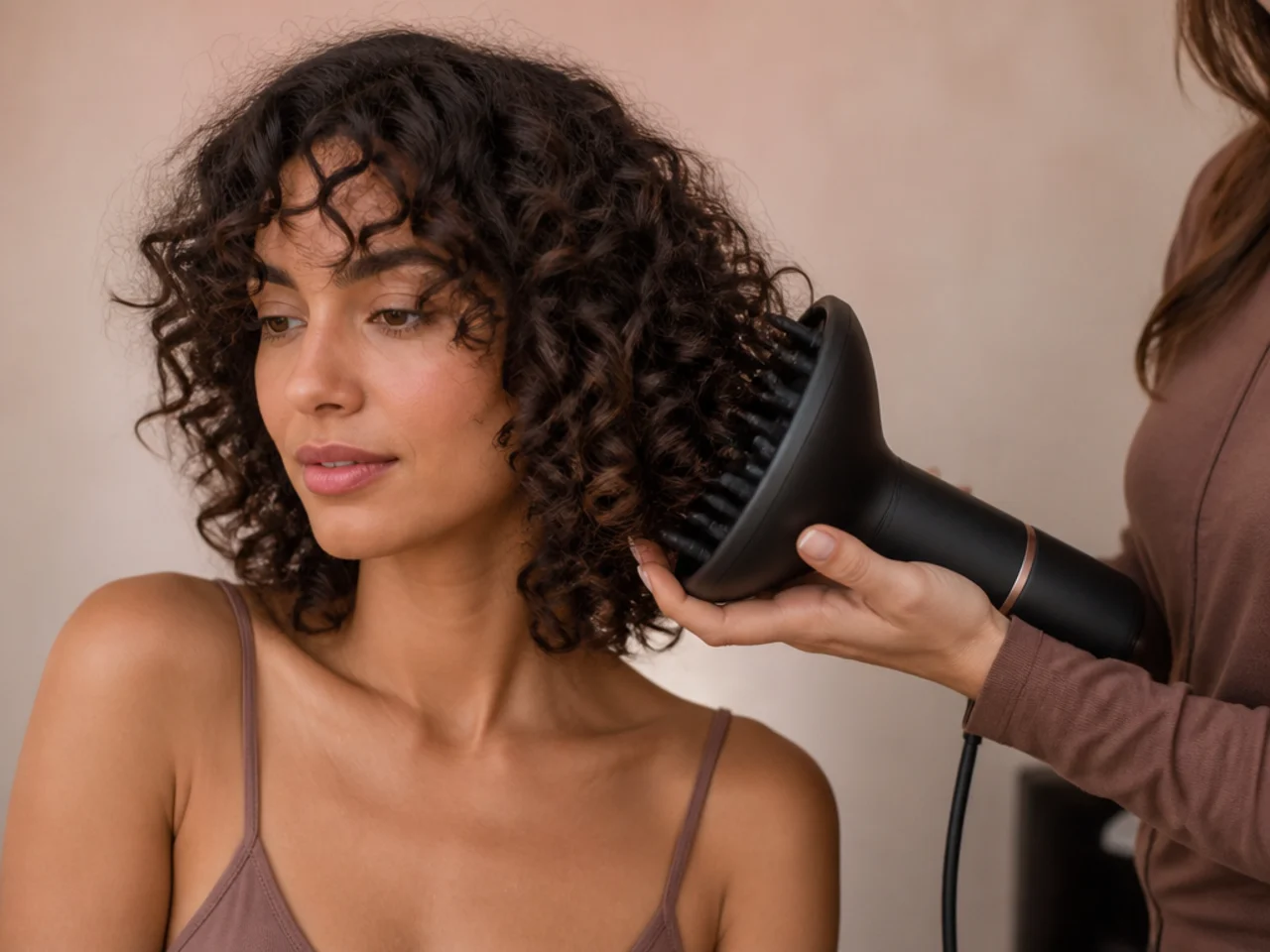
Cup and hold rather than shake. Pressing the diffuser bowl to the scalp and holding still lets the short tier dry in the lifted position, which is exactly where the wing has to set.
Scrunch the cast out only when bone dry. Breaking the gel cast early collapses the clumps that have not finished setting, and the short tier is always the last part of the head to dry.
Refresh with water before product. Water reactivates whatever is already on the strand. Fresh product over dry curl coats it without reshaping it, so the wing stays flat and gets heavier.
Trim the short tier alone at week eight. It is the only piece doing the work, and taking an inch off it restores the gap without touching the length you spent months growing.
Mistakes to Avoid
Cutting the tiers wet. Wet curl hangs near its stretched length, so a gap that looks correct at the basin closes completely once everything springs up.
Copying a straight hair butterfly. The tier positions in those photographs assume a round brush is creating the lift. On curl the same positions land two inches high and read as a bad bob.
Layering the surface of dense curl. Every cut end on the outside of the shape becomes a frizz point. Take the weight from underneath and the surface stays intact.
Leaving the perimeter blunt on thick hair. A heavy straight edge under an expanding top tier is what builds the triangle. Soften it and the outline narrows.
Waiting for the length to look bad. The wing goes first and the length still looks fine, so people rebook two months after the cut stopped working.
FAQ
How wide is the gap? Three inches on waves, four or more on spirals and coils.
Wet or dry cut? Dry, because the gap is a dry measurement.
Does it need a blow dry? No — the curl supplies the lift a round brush would.
Final Thoughts
Ask for the two finished positions, not the name. "Short tier landing at the cheekbone dry, long tier below the collarbone" tells a stylist where the wing has to sit, and it stops the cut being measured at the basin where every number is wrong.
For the original straight hair version and how the tiers were first set see the butterfly haircut. See also butterfly haircut for short hair. More in Womens Hairstyles.