25 Stunning Butterfly Haircut Ideas For Short Hair
Twenty five butterfly cuts built for short hair, where the usual proportions do not fit. On long hair the length props the short tier up. On a bob there is no length to do that, so the crown layer has to take over the job.
In this article · 32
- How a Butterfly Works on Short Hair
- How to Scale the Gap Down
- The 25 Short Butterfly Haircut Ideas
- 1. Butterfly on a Collarbone Lob
- 2. Butterfly on a Chin Length Bob
- 3. Jaw Length Face Frame
- 4. Butterfly With a Cheekbone Wing
- 5. Butterfly Bob With a Curtain Fringe
- 6. Butterfly With Micro Layers
- 7. Blunt Bob With Butterfly Layers
- 8. Butterfly With a Stacked Back
- 9. Butterfly on Fine Short Hair
- 10. Butterfly on Thick Short Hair
- 11. Butterfly on Straight Short Hair
- 12. Butterfly on Wavy Short Hair
- 13. Butterfly on Curly Short Hair
- 14. Butterfly With a Middle Part
- 15. Butterfly With a Deep Side Part
- 16. Butterfly With Flicked Ends
- 17. Butterfly With Tucked Ends
- 18. Butterfly With a Shorter Crown Layer
- 19. Butterfly With a Money Piece
- 20. Butterfly With Face Framing Highlights
- 21. Butterfly for Round Faces
- 22. Butterfly for Square Faces
- 23. Butterfly for Long Faces
- 24. Air Dried Short Butterfly
- 25. Short Butterfly at Eight Weeks
- Styling and Upkeep
- Mistakes to Avoid
- FAQ
- Final Thoughts
A butterfly cut scaled straight down to a bob loses the effect, because the gap between the two lengths was measured for hair twice as long.
On long hair the length does the propping. The short tier rests on what sits beneath it, and that support is where the volume comes from.
On short hair the crown layer takes over. With no length underneath, a shorter layer above has to lift the one below it, which is a different cut with the same silhouette.
How a Butterfly Works on Short Hair
Two visible lengths are still the requirement. The perimeter and the face framing tier have to read as separate, or the cut is just a graduated bob.
Two inches is roughly the minimum gap. Less than that and the eye reads a soft graduation rather than a deliberate step, which is the whole point of the shape.
The crown layer replaces the missing length. Cut short at the top and left to sit on the layers beneath, it props them up exactly the way long hair props up a tier.
The perimeter carries all the density. On short hair the outline is a much larger proportion of what you see, so anything removed from it registers immediately.

How to Scale the Gap Down
Measure from the perimeter upward, not from a photograph. Two to three inches above the bottom edge is where the short tier goes on a bob, whatever the reference image shows.
Add the crown layer before shortening the tier. It is the layer that produces the lift, and cutting the tier shorter to chase volume you should be getting from above ruins the proportion.
Keep the outline blunt unless your hair is thick. Fine and medium density need the weight at the bottom to hold the shape at all.
Decide the parting first. A centre part shows the gap twice and needs both sides cut identically; a side part hides one of them and forgives more.
The 25 Short Butterfly Haircut Ideas
1. Butterfly on a Collarbone Lob
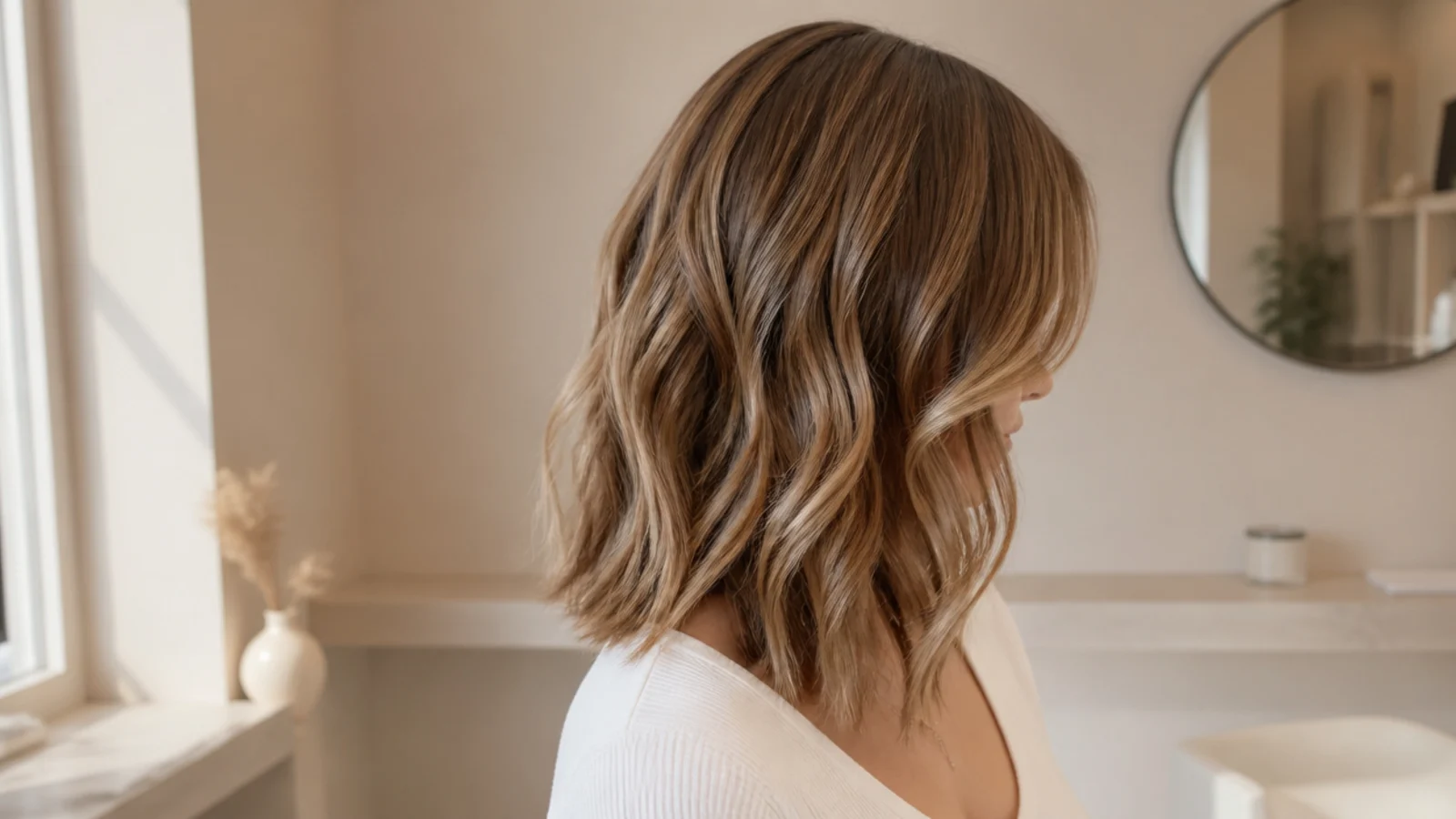
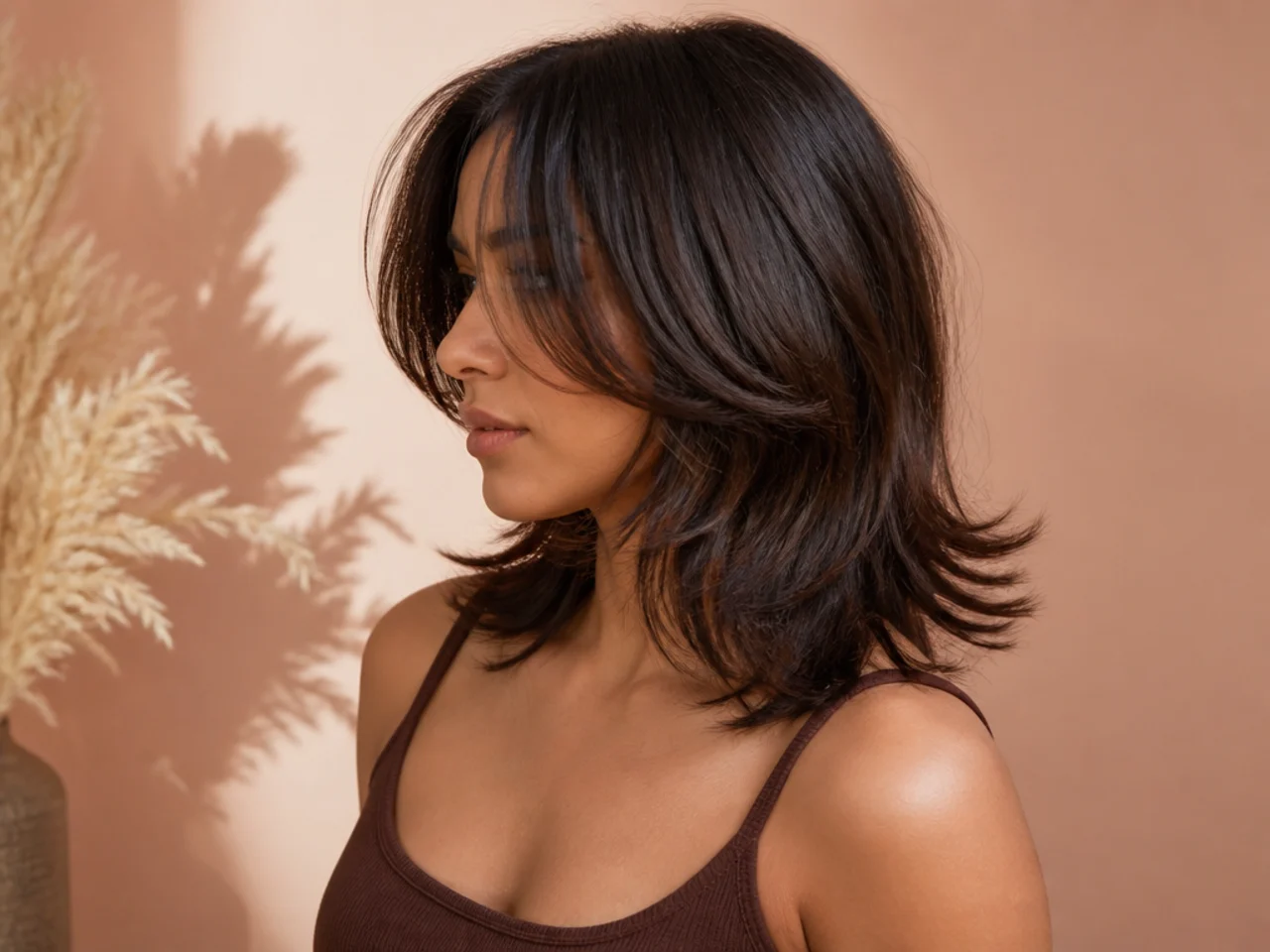
The longest version that still counts as short, and the easiest to build. There is just enough length below the tier for the traditional propping to work, so it needs no crown layer and behaves like a scaled down long butterfly.
2. Butterfly on a Chin Length Bob
The shortest workable version, with the tier cut around two inches above the perimeter. Below chin length the gap stops registering as two lengths, so this is the point where the shape reaches its limit rather than a starting point.
3. Jaw Length Face Frame
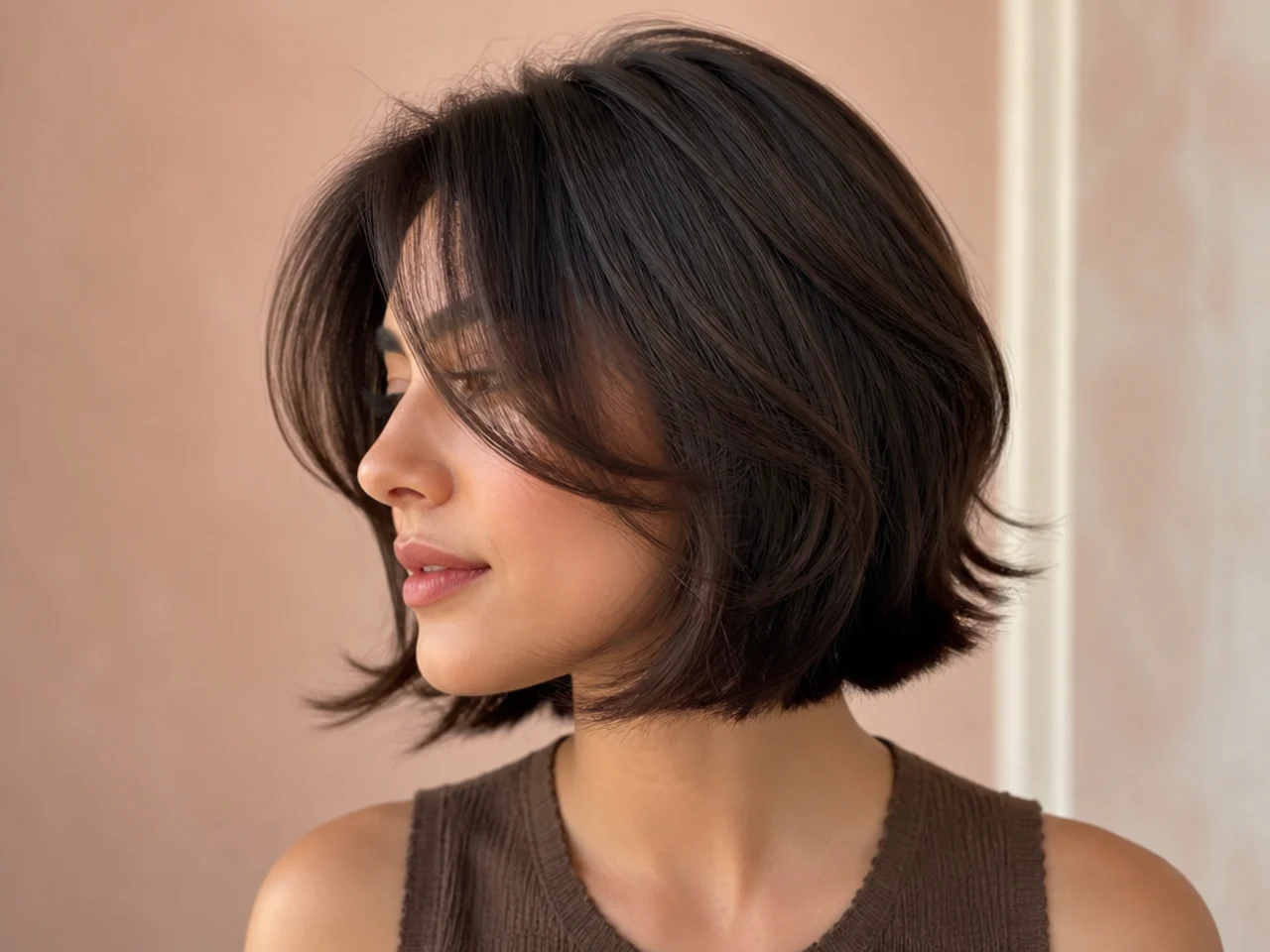
The two front sections taken to the jaw while the rest of the tier sits lower. Those pieces sit closest to the face and furthest from the shadow of the hair behind, so they read brightest and define the wing shape on their own.

4. Butterfly With a Cheekbone Wing
The front pieces taken as high as the cheekbone for maximum separation. It gives the strongest wing available on short hair, and it needs a trim every five weeks because the shortest piece has the least length to lose before it drops.
5. Butterfly Bob With a Curtain Fringe
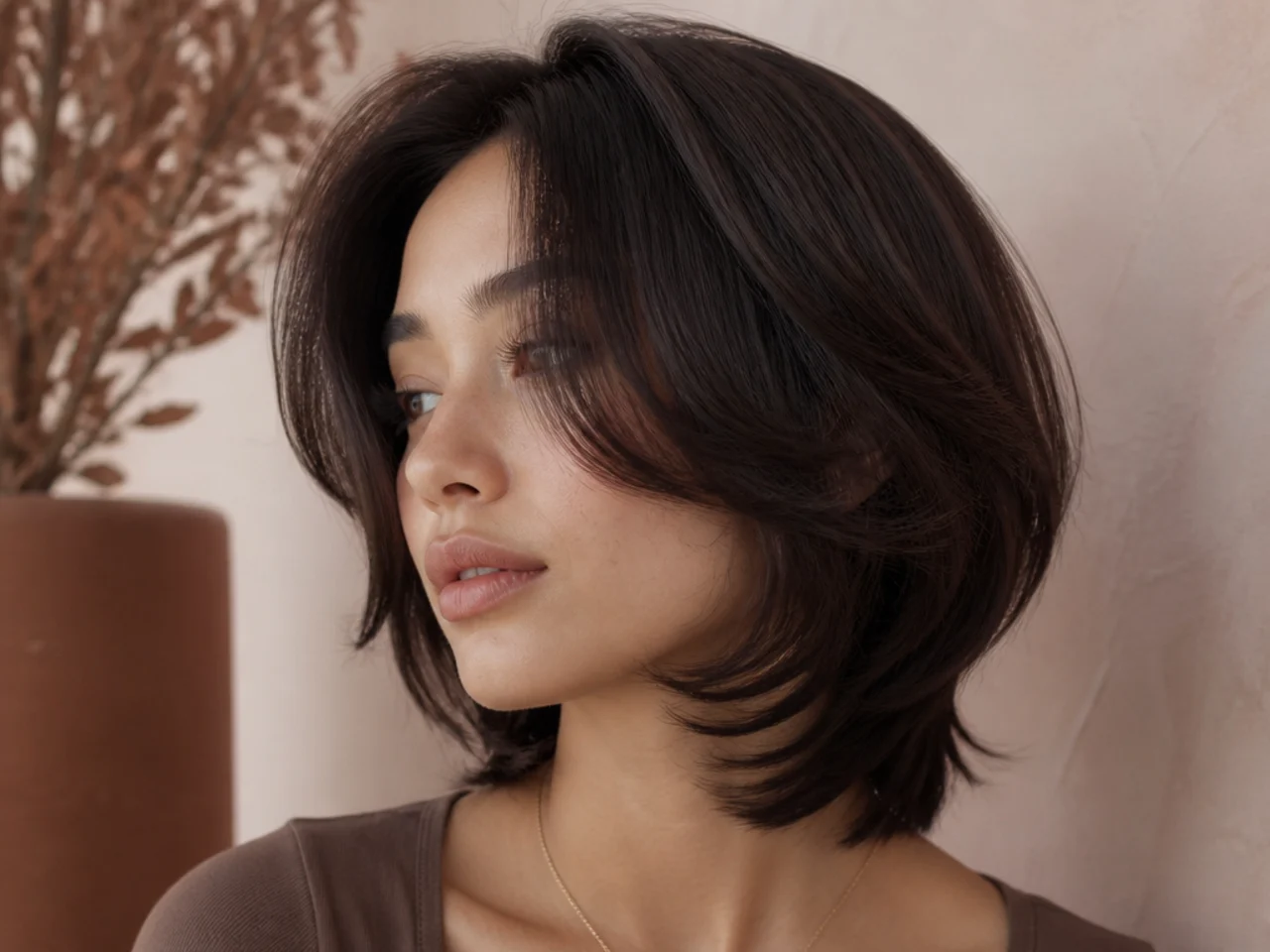
The fringe split down the centre and cut as one continuous line into the tier. Because there is no step between them, the fringe grows sideways into the face frame rather than down into the eyes, which roughly doubles the interval between fringe trims.
6. Butterfly With Micro Layers
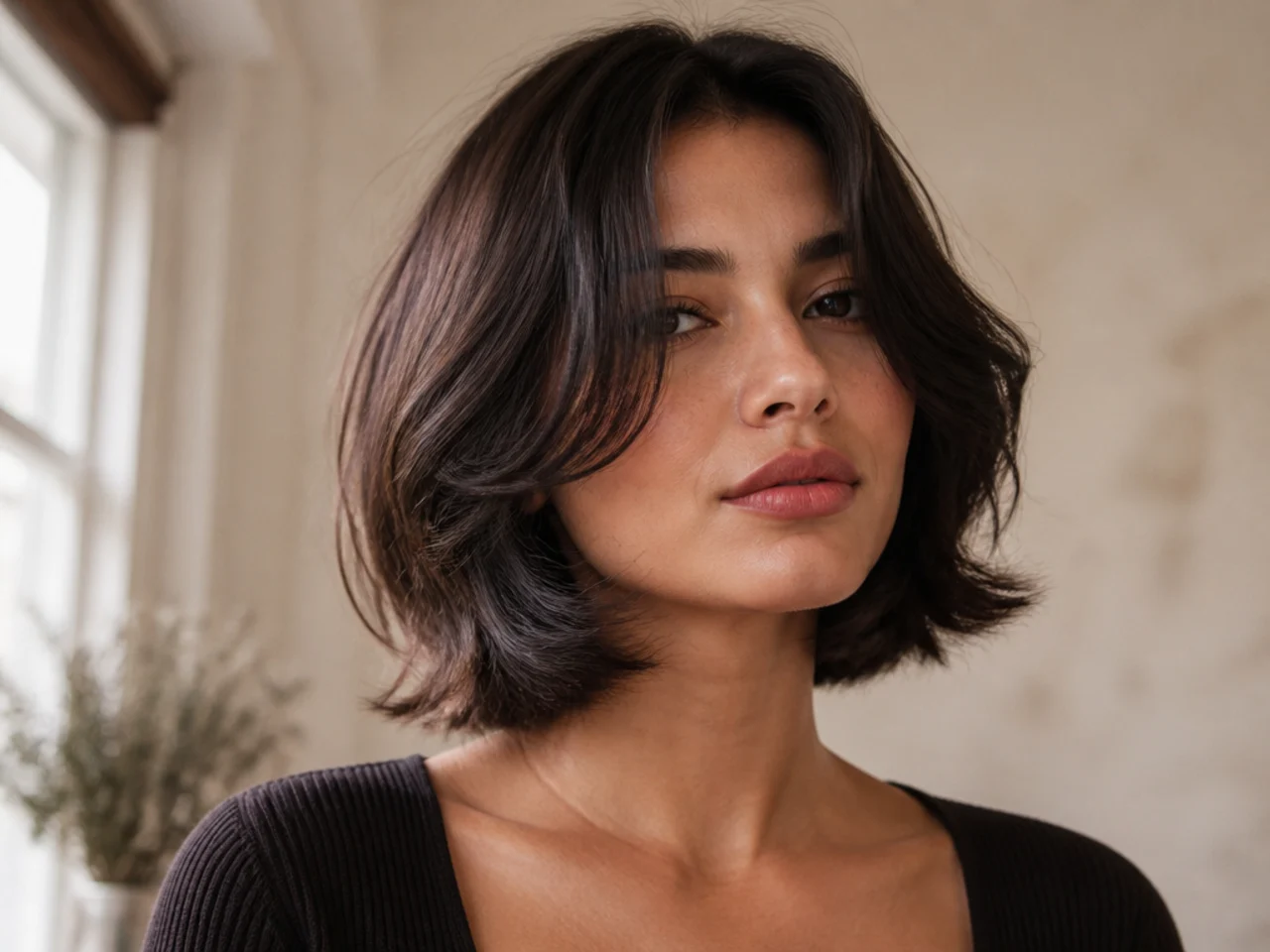
The gap cut down to an inch and a half, spread across many fine sections. It is the quietest version of the shape, giving movement without an obvious step, and it suits anyone who wants the volume without the cut announcing itself.
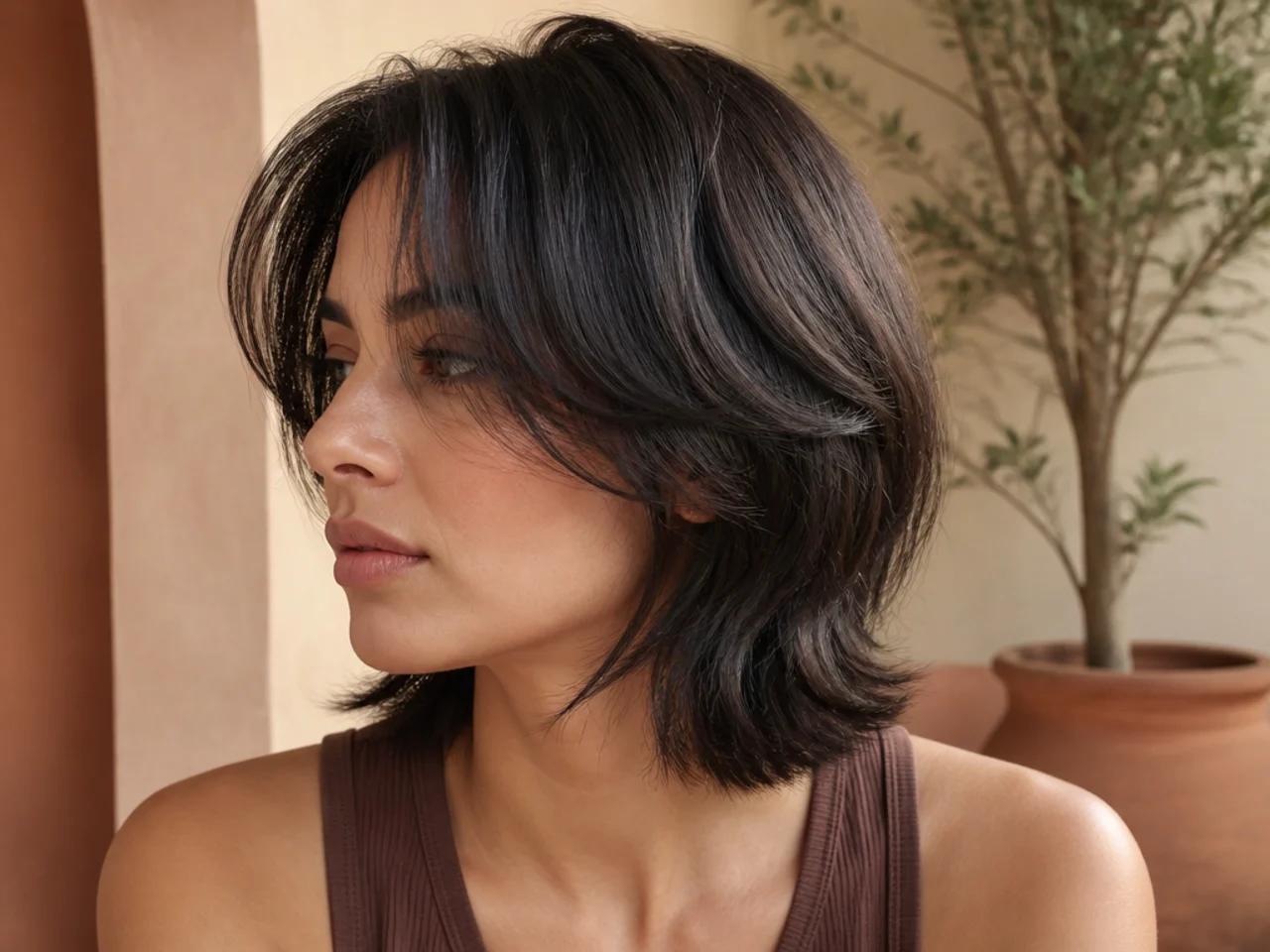
7. Blunt Bob With Butterfly Layers
The perimeter cut straight across and the layering kept entirely above it. Density registers at the outline, so a blunt edge under a layered interior gives the fullest possible bottom line while still letting the top move.

8. Butterfly With a Stacked Back
Graduation built into the back so the hair at the nape is shorter than the sides. Stacking pushes the layers above it outward, which creates a rounded silhouette from behind and stops a short butterfly hanging flat at the back.
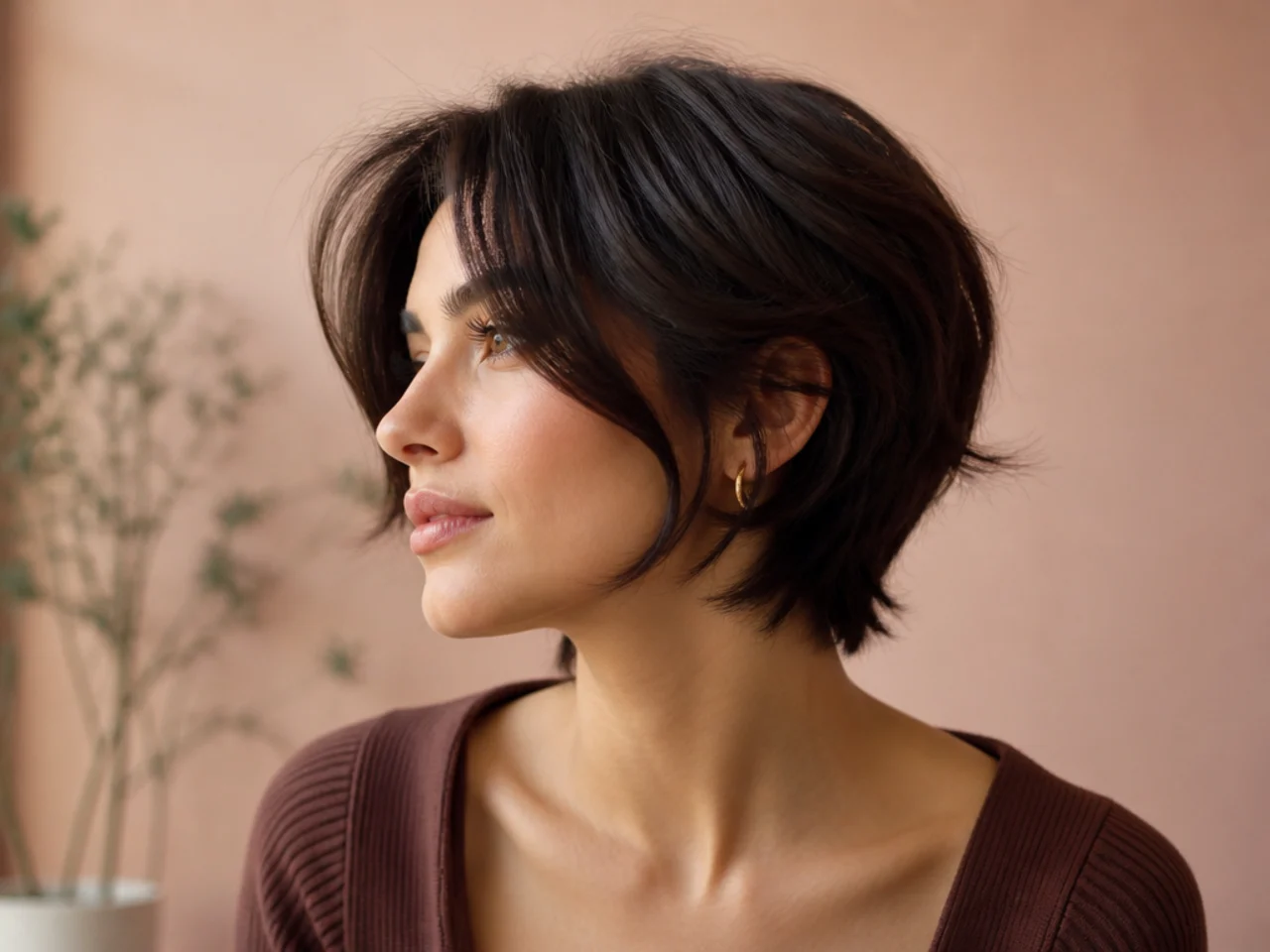
9. Butterfly on Fine Short Hair
Keep the perimeter untouched and put all the layering in the crown. Fine hair benefits most from the propping a crown layer gives, and short lengths weigh less, so the lift survives further into the day than it would on longer hair.
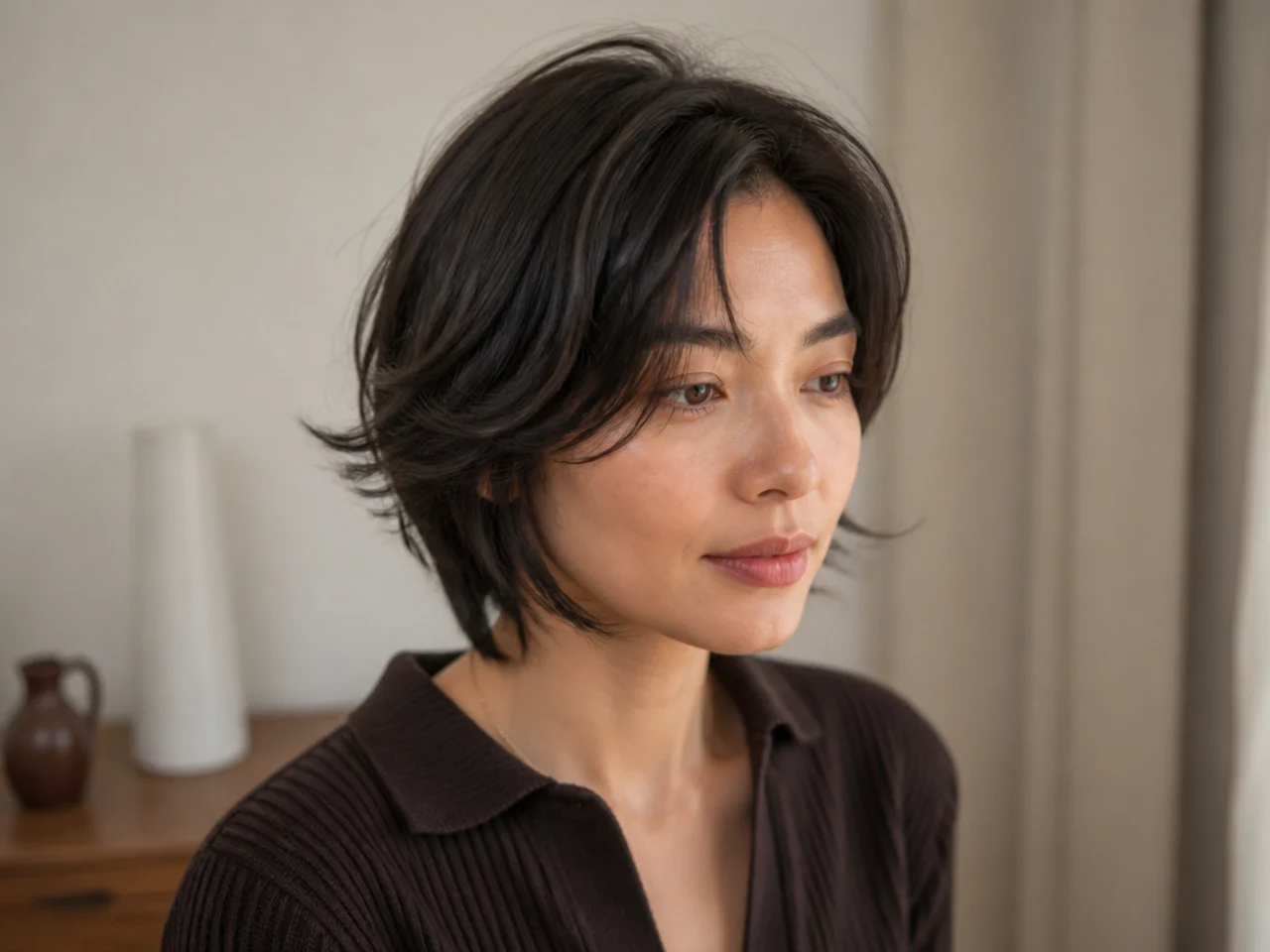
10. Butterfly on Thick Short Hair
Weight has to be removed from inside the shape or a short butterfly builds outward into a triangle. Density collects wherever a layer stops, so spreading the layer stack over more of the head keeps the outline narrow.

11. Butterfly on Straight Short Hair
The step between the two lengths is at its most visible, because a straight strand hangs in one line with no bend to soften it. That works in the cut's favour and against it, since an uneven tier shows as clearly as an even one.

12. Butterfly on Wavy Short Hair
The bend lifts the tier off the length by itself, so less drying is needed for the same height. The same bend blurs the step, which means the tier has to be cut an inch shorter than on straight hair to read as separate.

13. Butterfly on Curly Short Hair
Cut dry, curl by curl. Curl draws up by roughly half as it dries, and on short hair there is no margin for that error, so a wet cut tier can land above the ear instead of at the jaw with nothing to correct it.

14. Butterfly With a Middle Part
The tier split evenly so both wings match. The gap reads twice, once on each side, which shows the cut most clearly and also makes any difference between the two sides immediately obvious.

15. Butterfly With a Deep Side Part
The parting moved several inches over so most of the hair falls to one side. Stacking more hair in one place adds apparent volume without cutting anything, which is useful on short hair where there is little to remove.
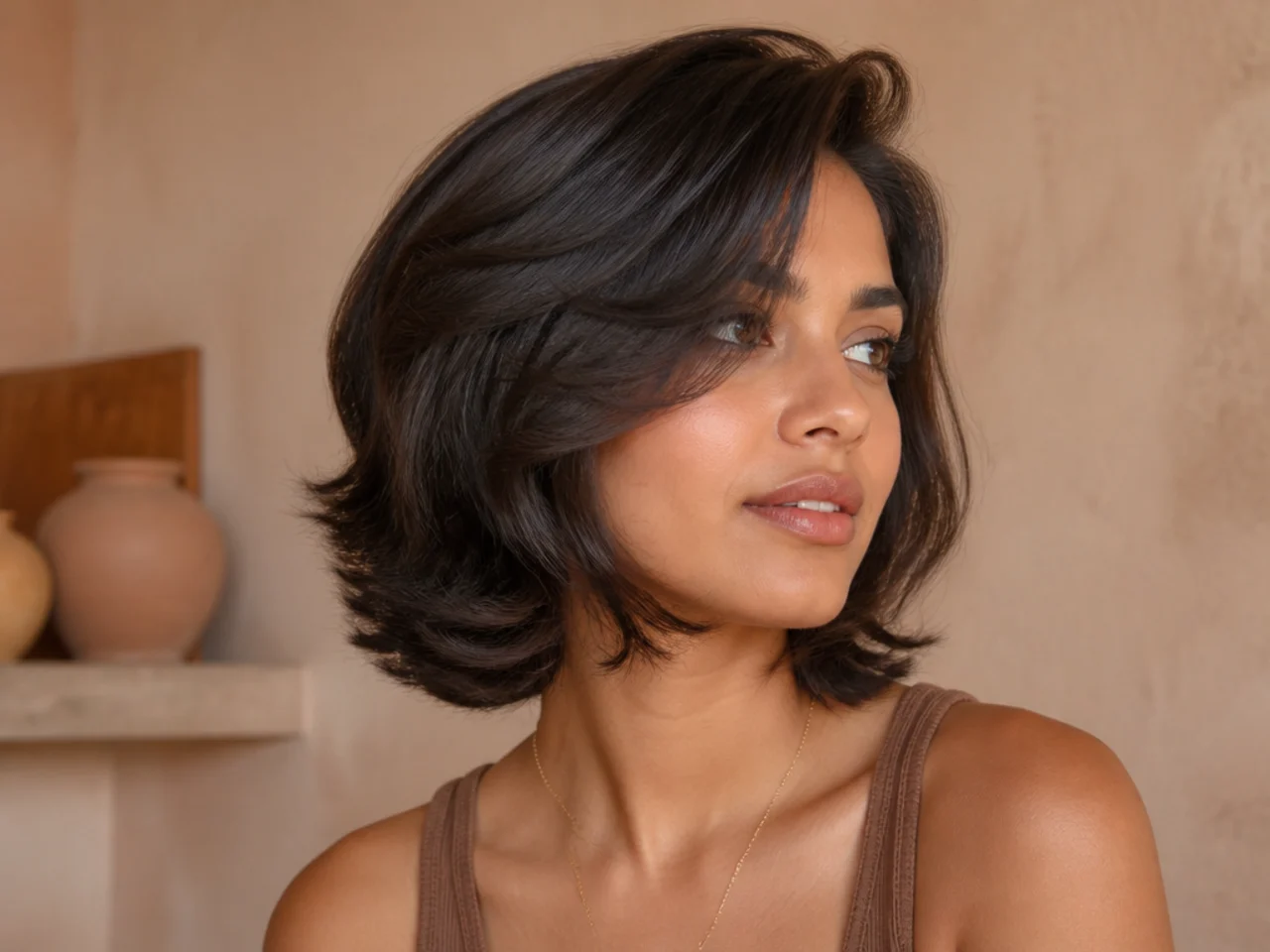
16. Butterfly With Flicked Ends
The last inch of both lengths turned outward. Ends falling straight down blur the two lengths together at the bottom, while an outward flick separates them and doubles the number of visible edges in a cut that has few to spare.

17. Butterfly With Tucked Ends
The opposite finish, with the perimeter turned under and the tier left out. Turning the bottom edge in makes the outline read as a solid line, which throws the lifted tier above it into sharper relief.

18. Butterfly With a Shorter Crown Layer
The layer that makes the whole thing work on short hair. Cut above the face framing tier, it sits on the sections beneath and holds them off the scalp, which is where the height at the top of the head comes from.
19. Butterfly With a Money Piece
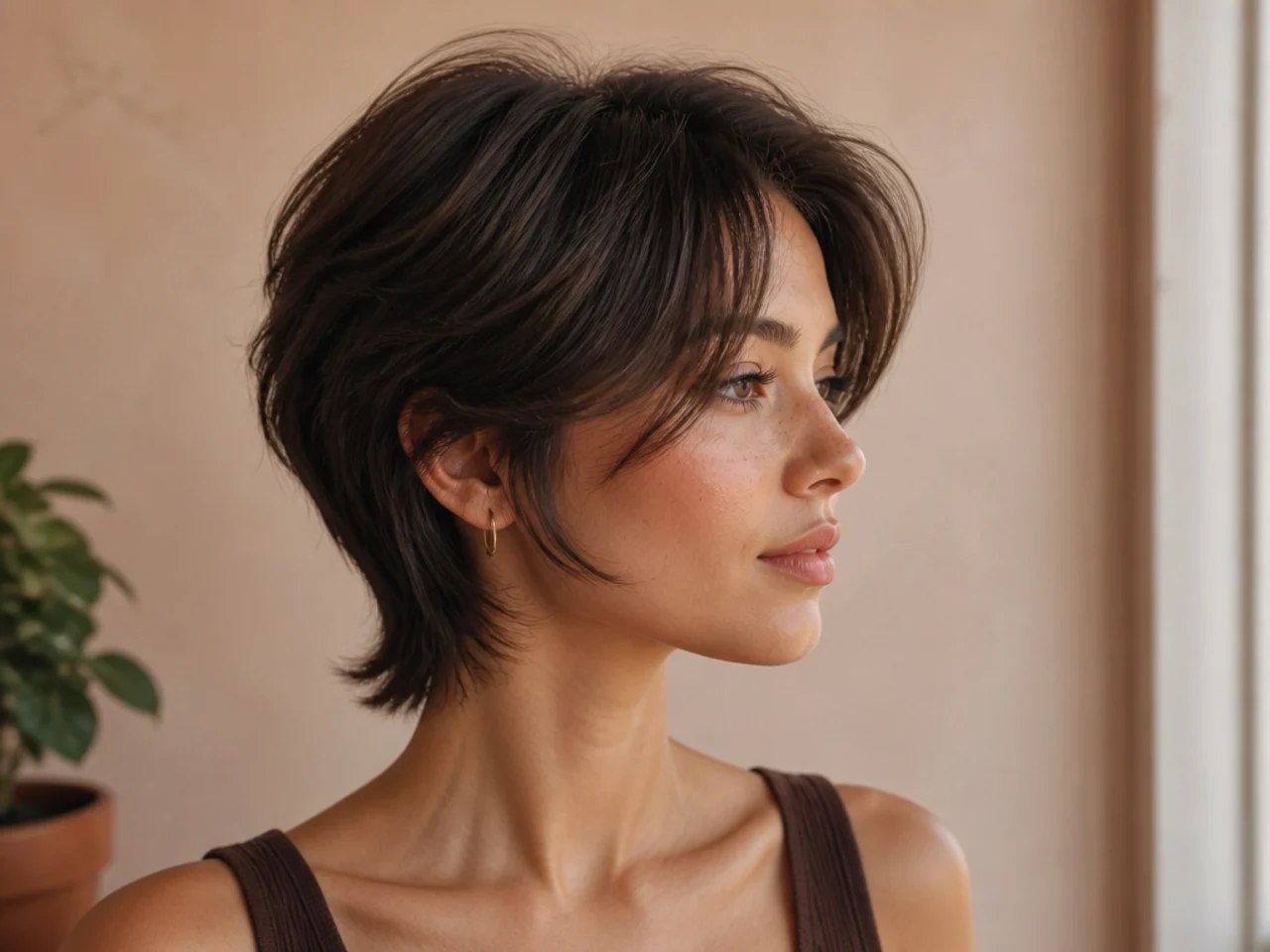
Two lightened sections at the front of the tier. Lighter tone reflects more light than the hair around it, so the eye follows the wing upward and the gap between the lengths reads stronger than it was cut.
20. Butterfly With Face Framing Highlights
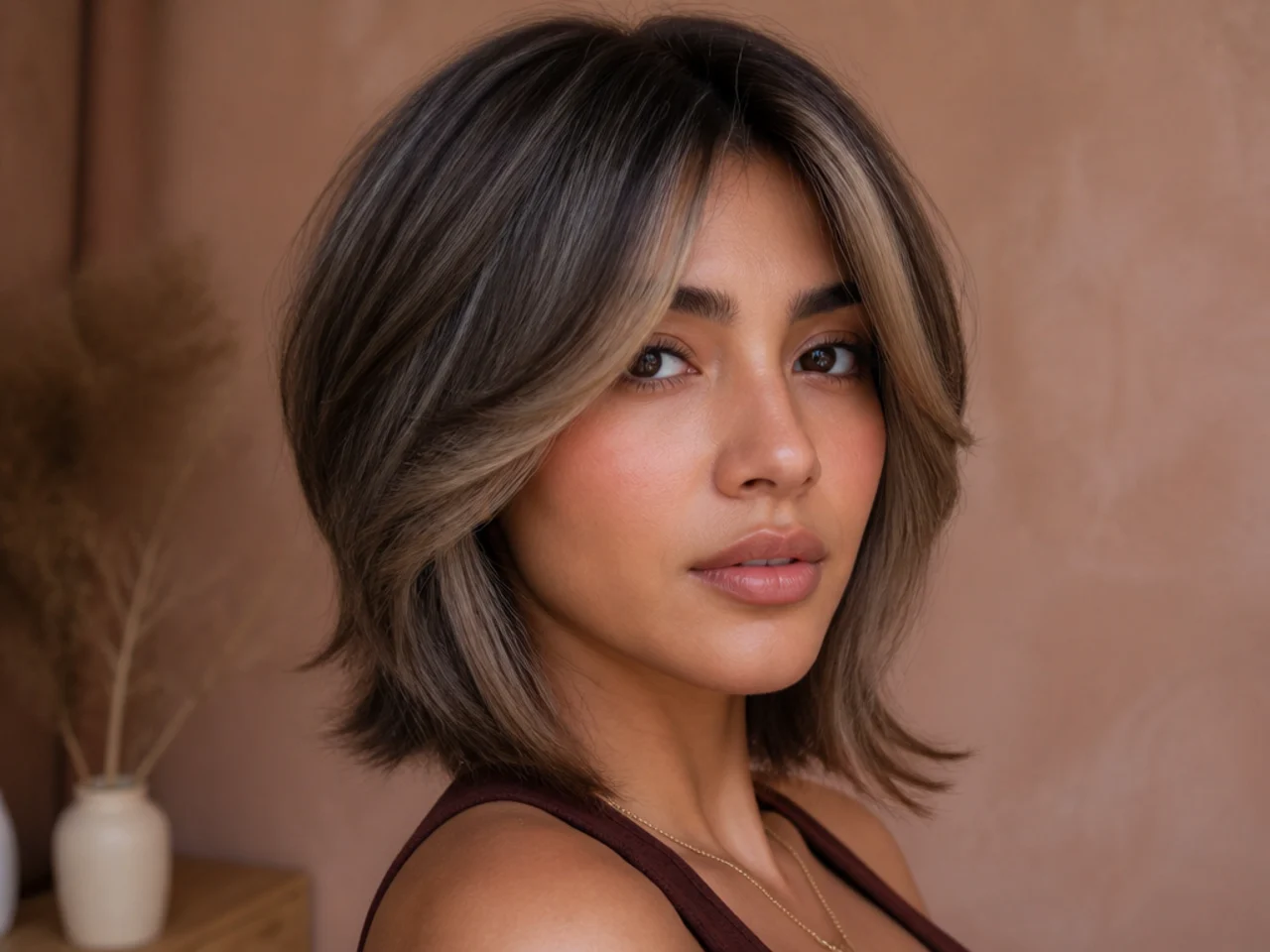
Fine lightened pieces through the front tier only, left dark at the roots. Because the tier sits on top of everything else, it takes all the highlight, so the colour and the cut are working on the same section instead of competing.
21. Butterfly for Round Faces
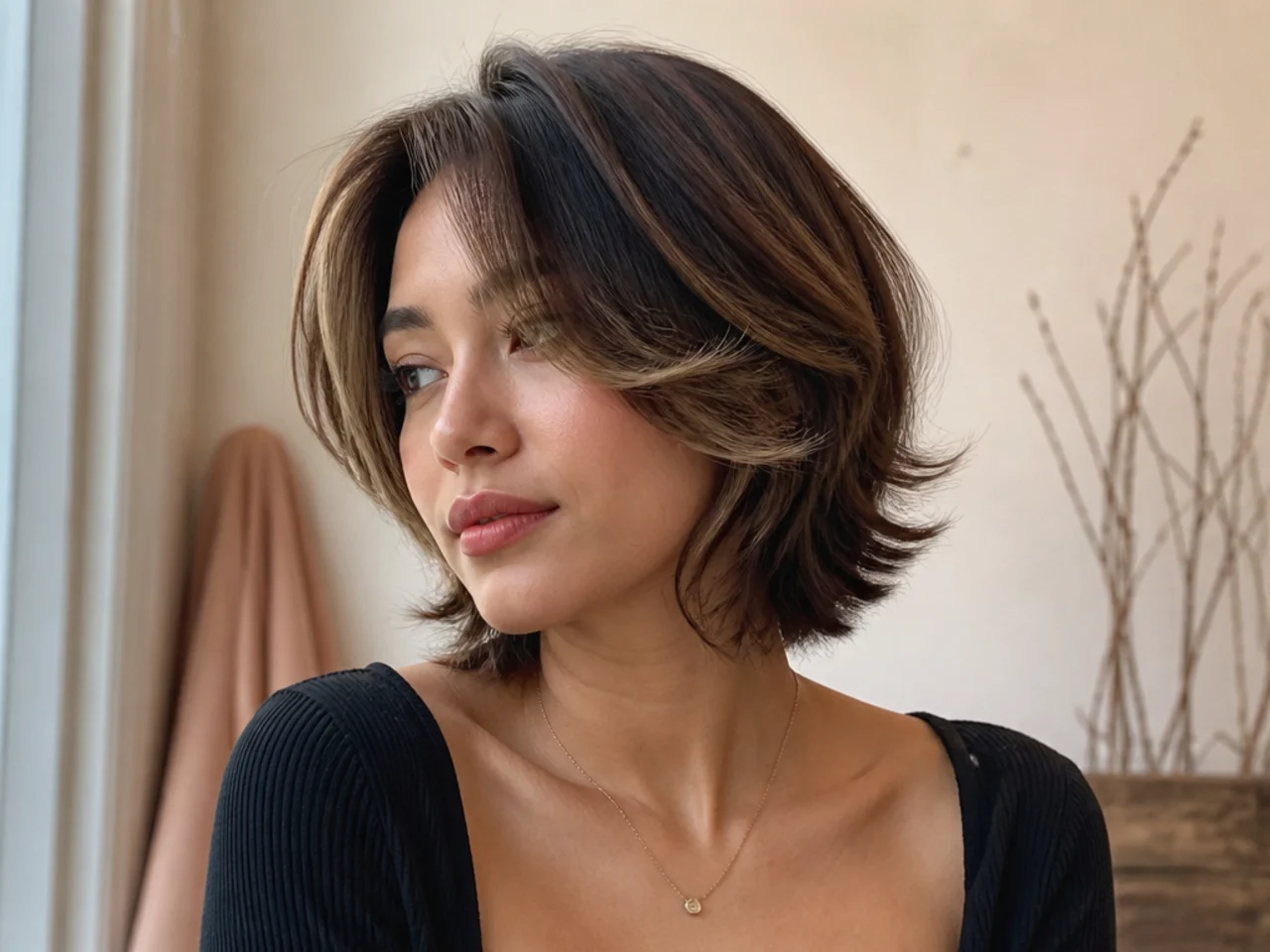
Keep the shortest front pieces below the chin and the perimeter at the collarbone. A tier stopping at the cheekbone draws a horizontal line across the widest part of the face, which adds width exactly where the cut should be removing it.

22. Butterfly for Square Faces
Curve the ends of the front tier inward at the jaw and keep them soft. A curved line beside a strong jaw reads as contrast, where a blunt tier landing at the same height repeats the jaw angle and doubles it.
23. Butterfly for Long Faces
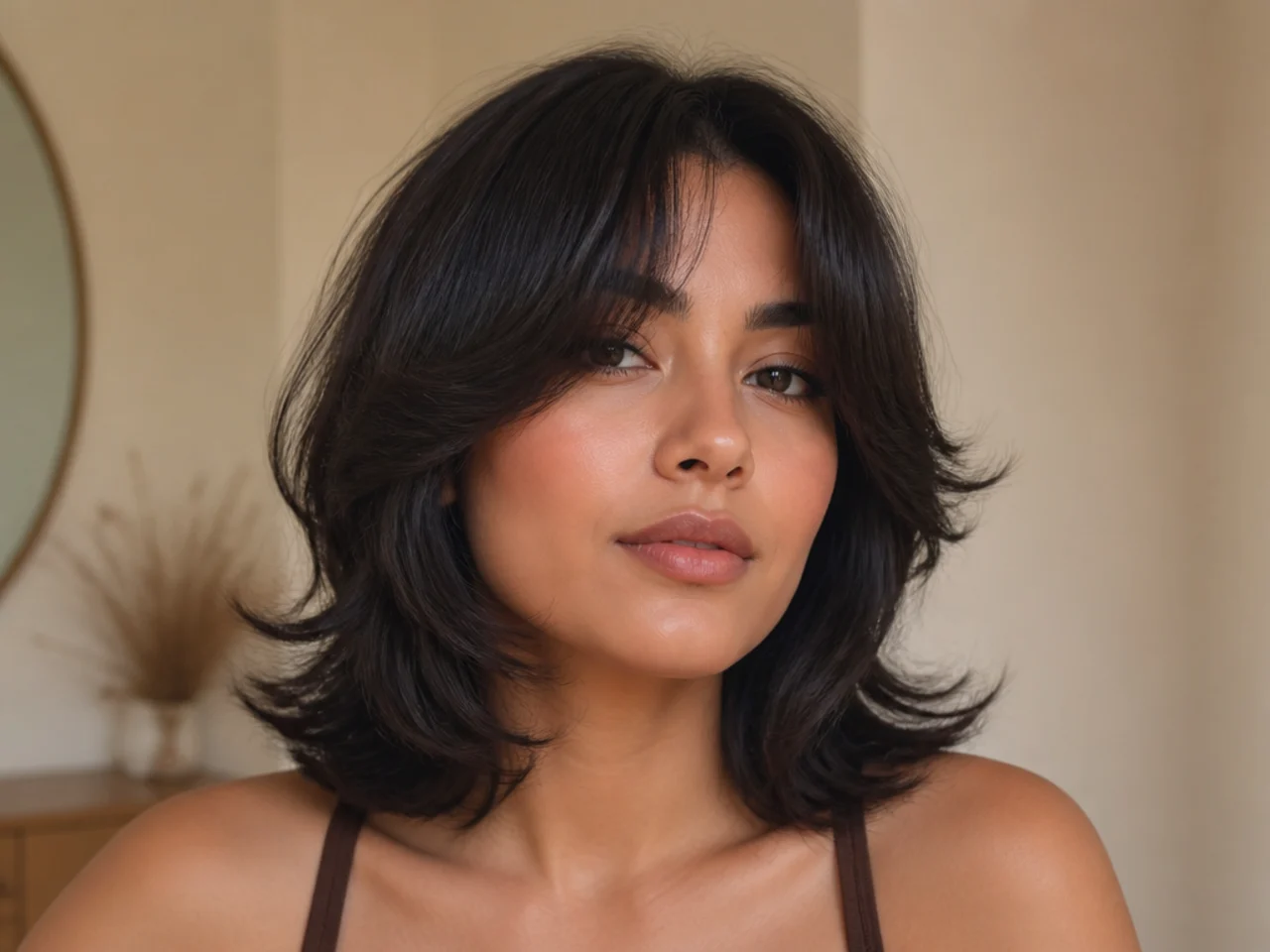
Cut the tier high and dry it outward to build width at the cheekbone. Volume at eye level shortens the apparent length of a face, where volume at the crown lengthens it, so on short hair the tier height matters more than the perimeter.
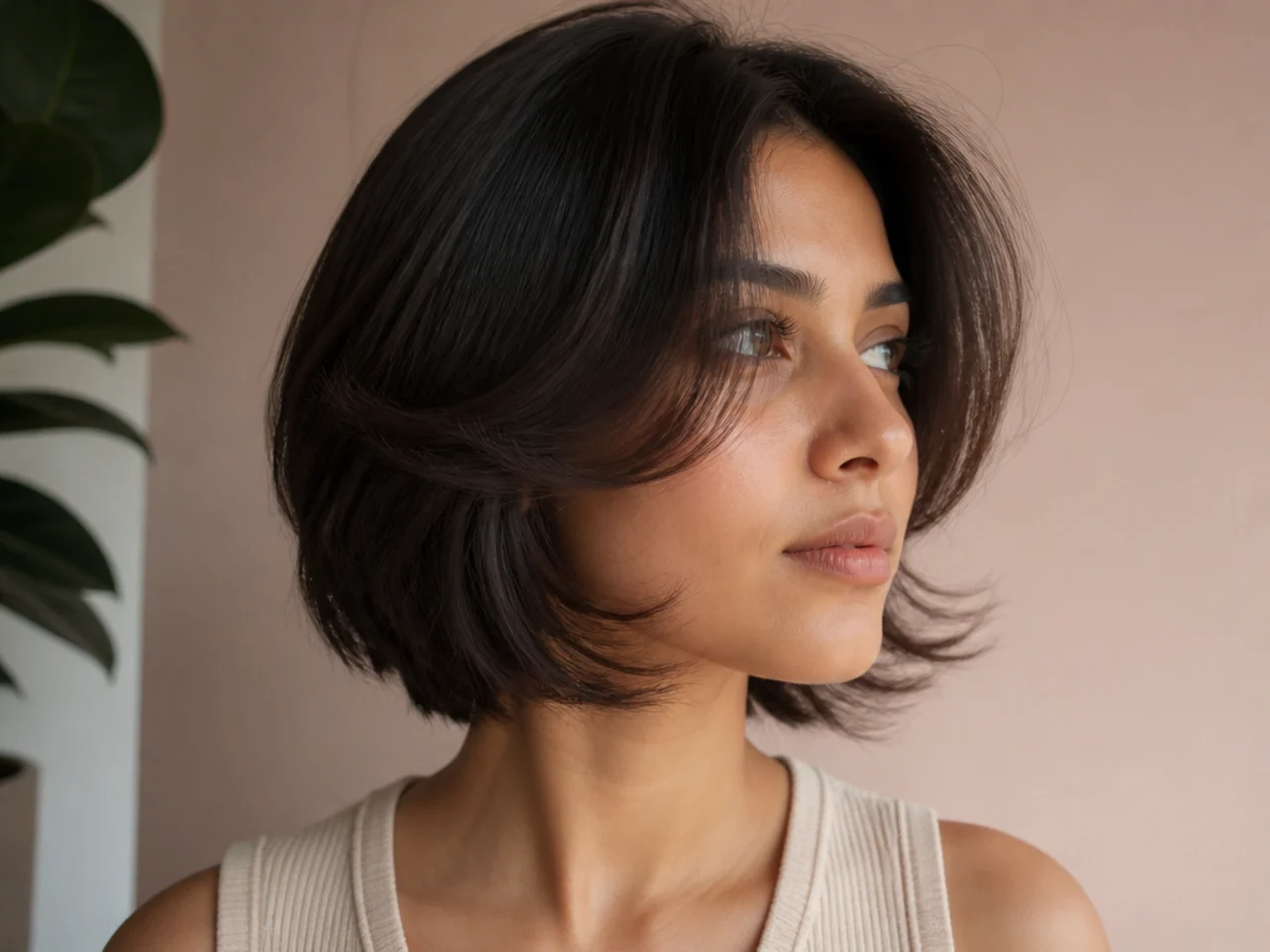
24. Air Dried Short Butterfly
Cream on the ends, nothing at the roots. Air drying lets the tier settle where it naturally falls, which costs about an inch of apparent lift, so have it cut slightly shorter than you would for a blow dried finish.

25. Short Butterfly at Eight Weeks
The tier has dropped toward the perimeter and the gap now reads as a soft graduation. On short hair this happens sooner than on long, because the same amount of growth is a much larger fraction of the distance between the two lengths.

Styling and Upkeep
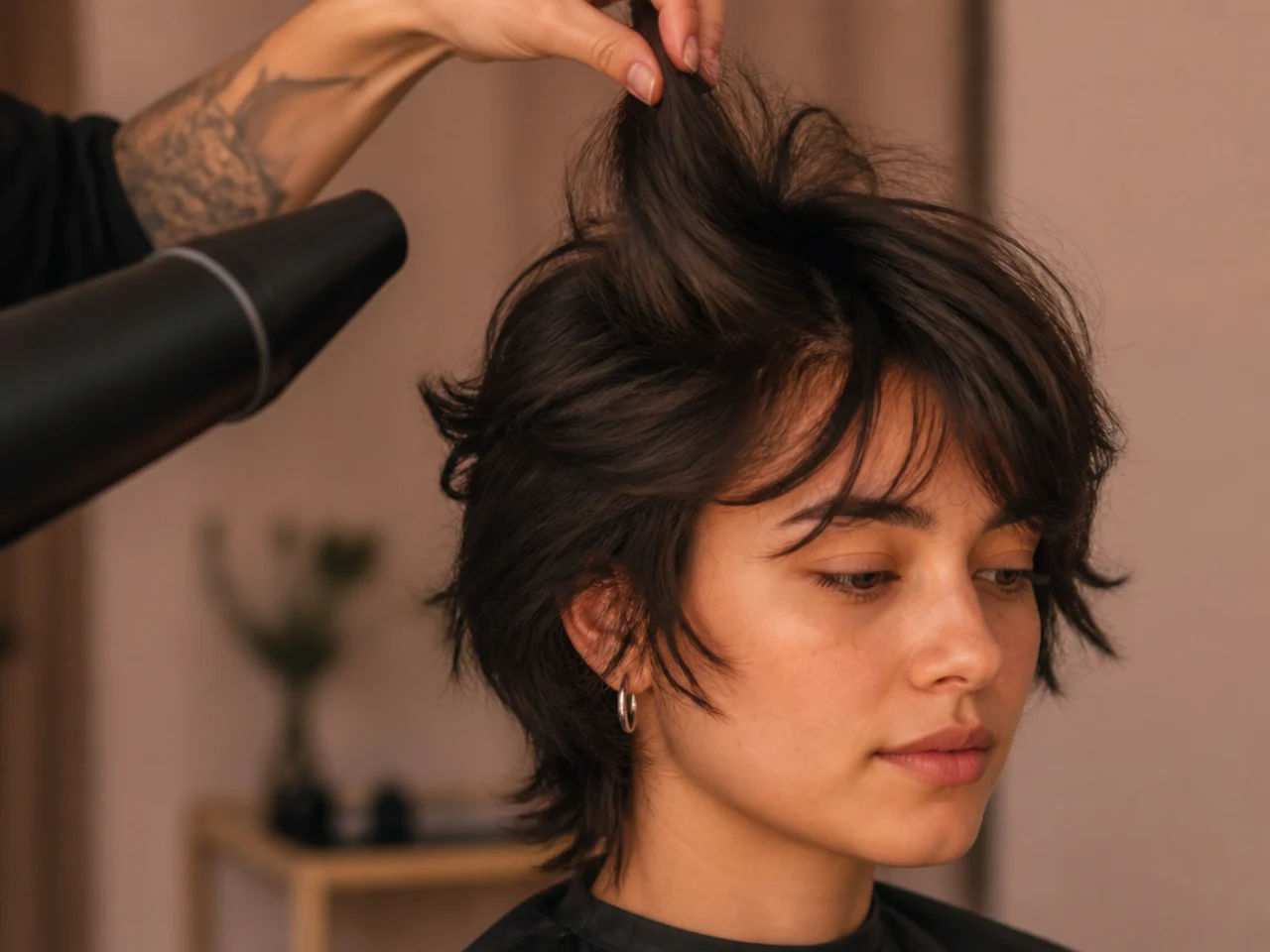
Dry the tier back and up. Hair sets in the direction it dries, and backward is the direction that makes the wing.
Lift the crown roots against their growth. That is where the height comes from on short hair, not from the tier itself.
Keep heavy product off the top. Weight at the crown cancels the propping the layer beneath is doing.
Trim on eight weeks, not twelve. The gap is a smaller distance here, so growth closes it faster than it would on long hair.
Use a medium round brush. A small barrel curls the tier under and closes the step you cut to show.
Mistakes to Avoid
Copying long hair proportions. A four inch gap does not fit on a bob and leaves nothing below the tier.
Skipping the crown layer. Without it there is no length underneath to prop the tier up and the cut sits flat.
Thinning the perimeter. The outline carries all the visible density on short hair and there is none to spare.
Cutting curly hair wet. Curl draws up by around half, and on short hair there is no length left to absorb the error.
Waiting twelve weeks between trims. The gap closes at the same rate as on long hair but it started much smaller.

FAQ
How short can it go? A chin length bob, with the tier two inches above the perimeter.
What replaces the long length? A crown layer, cut above the tier to prop it up.
How often? Every eight weeks, sooner than a long butterfly needs.
Final Thoughts
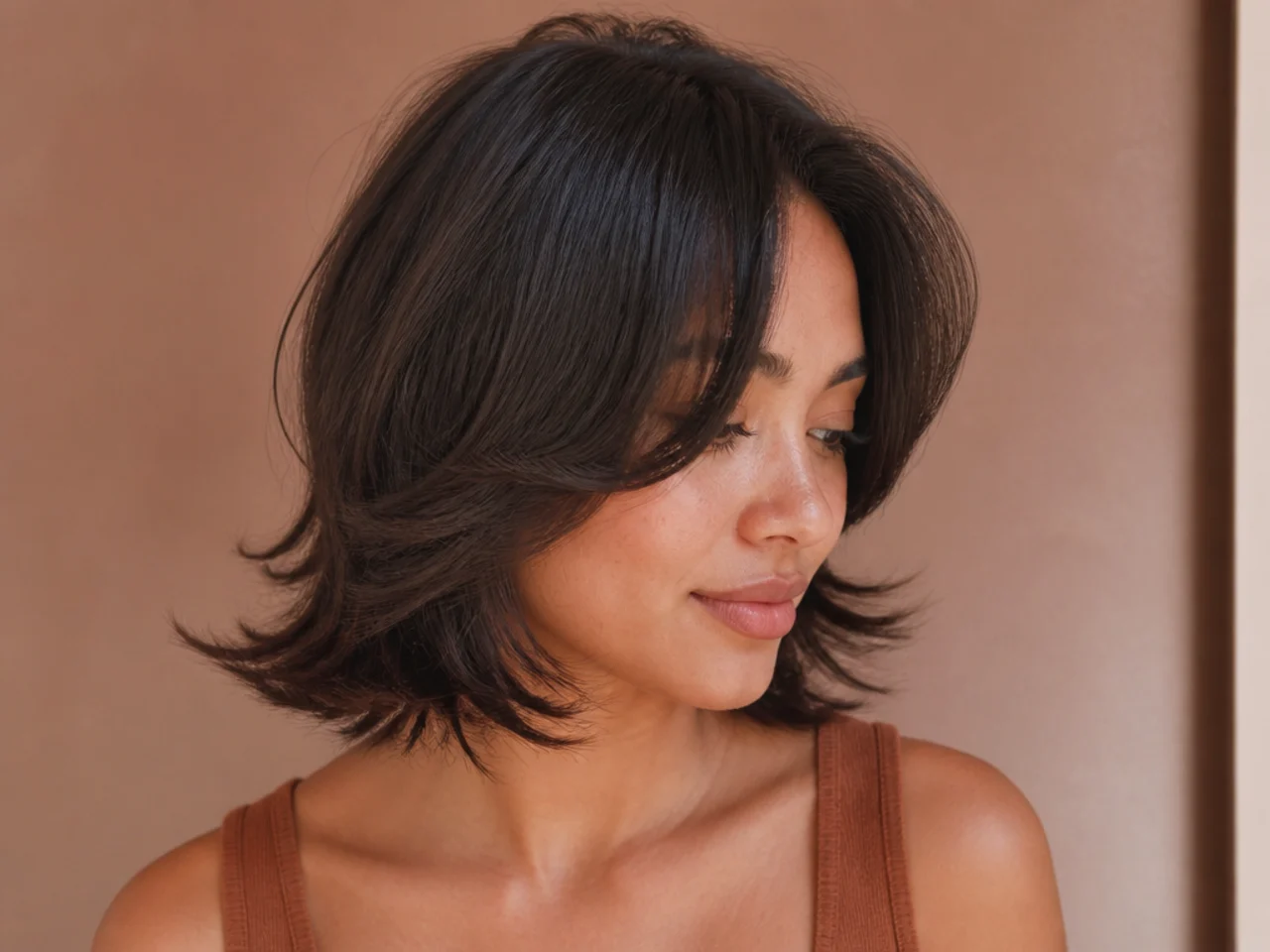
Ask for it in three measurements: where the perimeter sits, how far above it the face framing tier stops, and whether there is a crown layer above that. On short hair the third one is what separates a butterfly from a bob with layers in it.
For how the same shape is built on longer hair and where the tiers usually sit see the butterfly haircut guide. See also butterfly haircut short hair. More in Womens Hairstyles.