25 Medium Butterfly Haircut Ideas With Volume
Twenty five medium butterfly cuts, and the measurement that decides all of them — the distance between the short top tier and the long one underneath. On medium hair there is less room for that gap, so it has to be scaled down.
In this article · 32
- What a Butterfly Haircut Actually Is
- Choosing Your Two Lengths
- The 25 Medium Butterfly Haircut Ideas
- 1. Chin Length Top Layer
- 2. Cheekbone Length Face Frame
- 3. Collarbone Perimeter With a Jaw Length Wing
- 4. Curtain Fringe Butterfly
- 5. Blunt Perimeter Butterfly
- 6. Butterfly With a Deep Side Part
- 7. Butterfly With a Middle Part
- 8. Butterfly on Fine Hair
- 9. Butterfly on Thick Hair
- 10. Butterfly on Straight Hair
- 11. Butterfly on Wavy Hair
- 12. Butterfly on Curly Hair
- 13. Blowout Butterfly With a Round Brush
- 14. Butterfly With Flicked Ends
- 15. Butterfly With a Rounded Perimeter
- 16. Butterfly With Invisible Layers
- 17. Butterfly Lob
- 18. Butterfly With a Shorter Crown Layer
- 19. Butterfly With a Money Piece
- 20. Balayage Butterfly
- 21. Butterfly for Round Faces
- 22. Butterfly for Square Faces
- 23. Butterfly for Long Faces
- 24. Air Dried Butterfly
- 25. Butterfly at Ten Weeks
- Styling and Upkeep
- Mistakes to Avoid
- FAQ
- Final Thoughts
A butterfly cut on medium hair fails when it is cut to the same proportions as a long one, because the short tier has nowhere to sit.
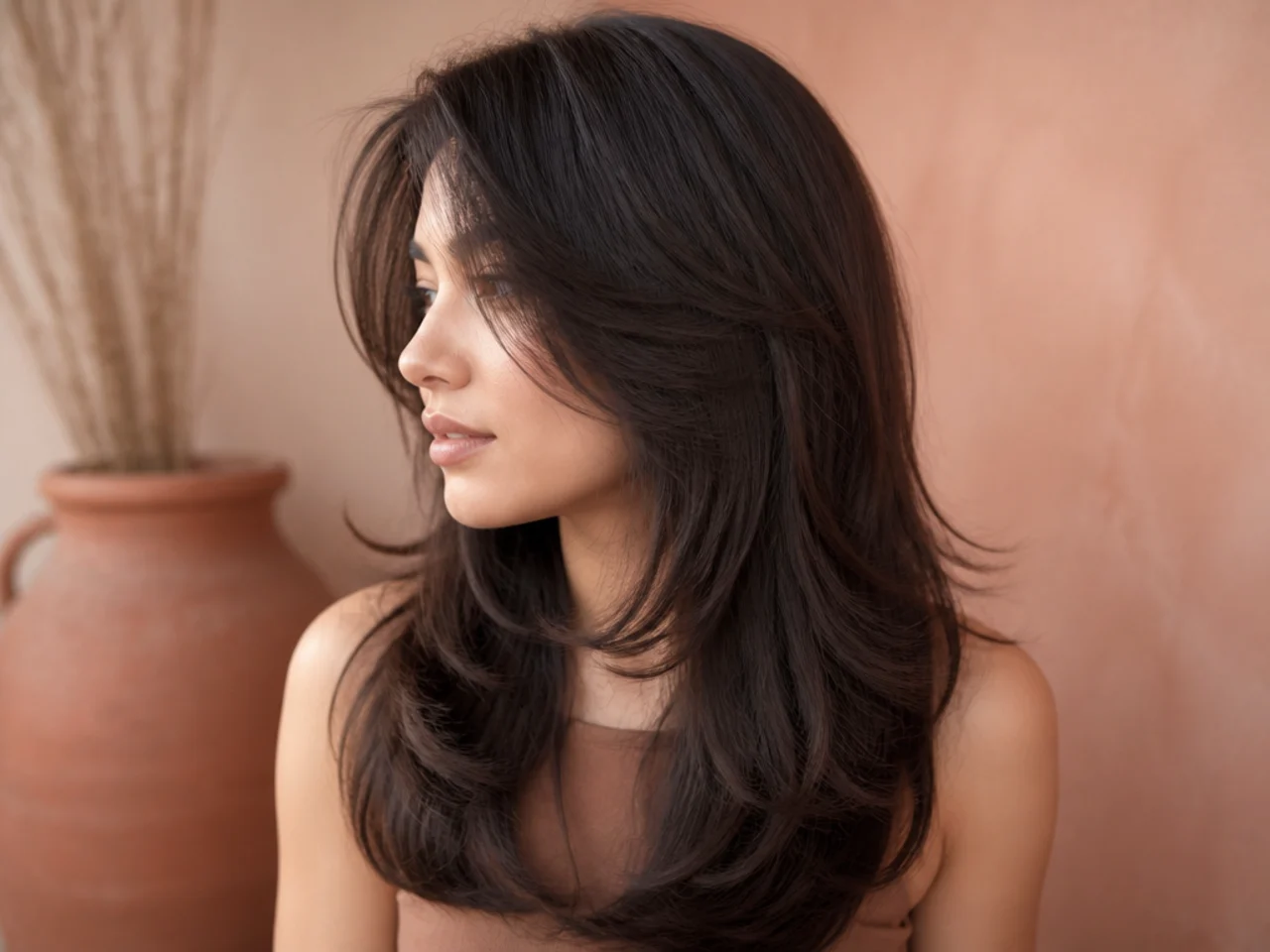
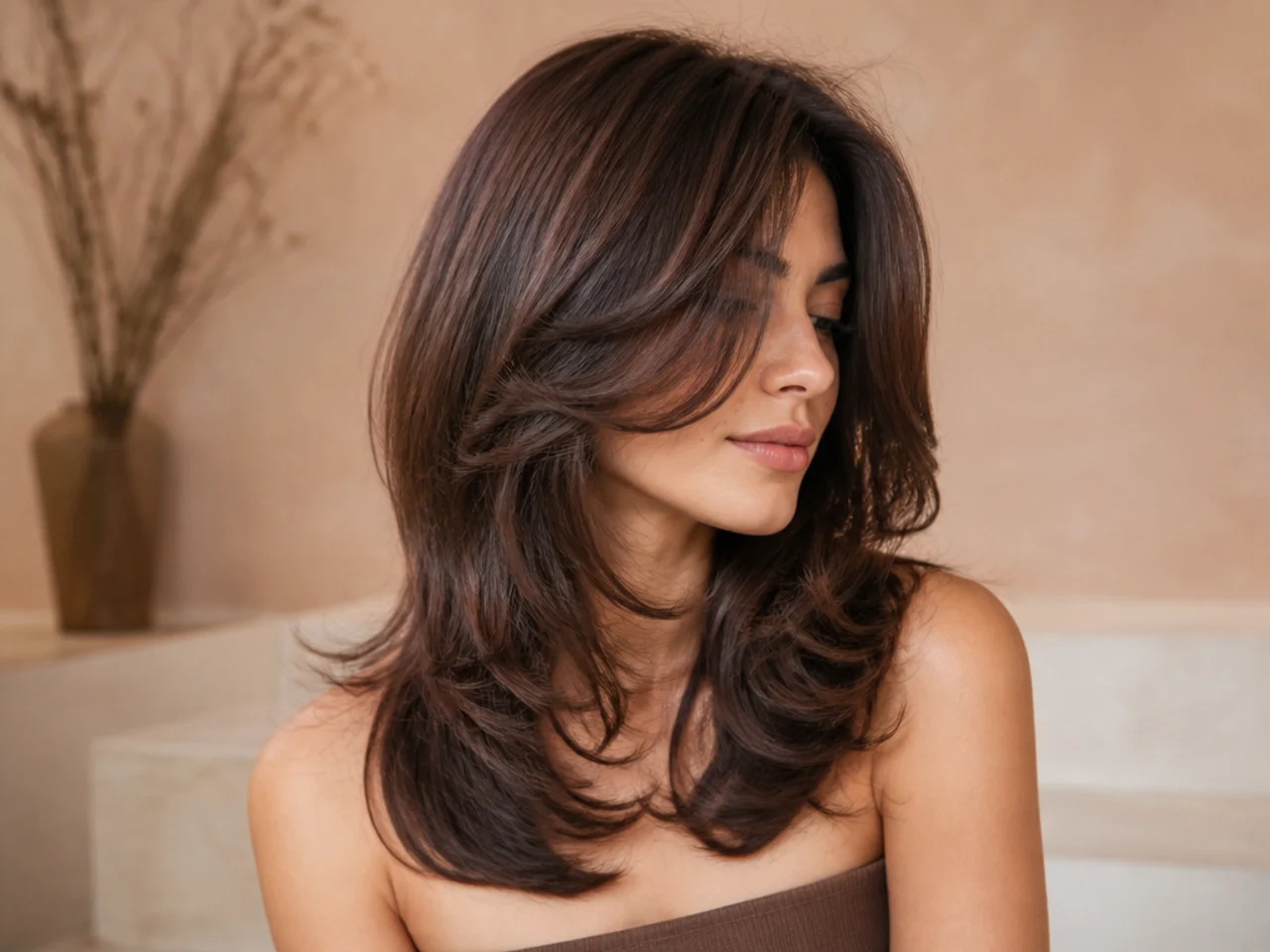
A butterfly is two lengths, not a gradient. A short face framing tier sits above the long length rather than blending into it, and the visible gap between them is the entire effect.
The volume is mechanical. The short tier rests on the length underneath instead of hanging free, so the long hair holds it up. Blend them together and the propping stops.
What a Butterfly Haircut Actually Is
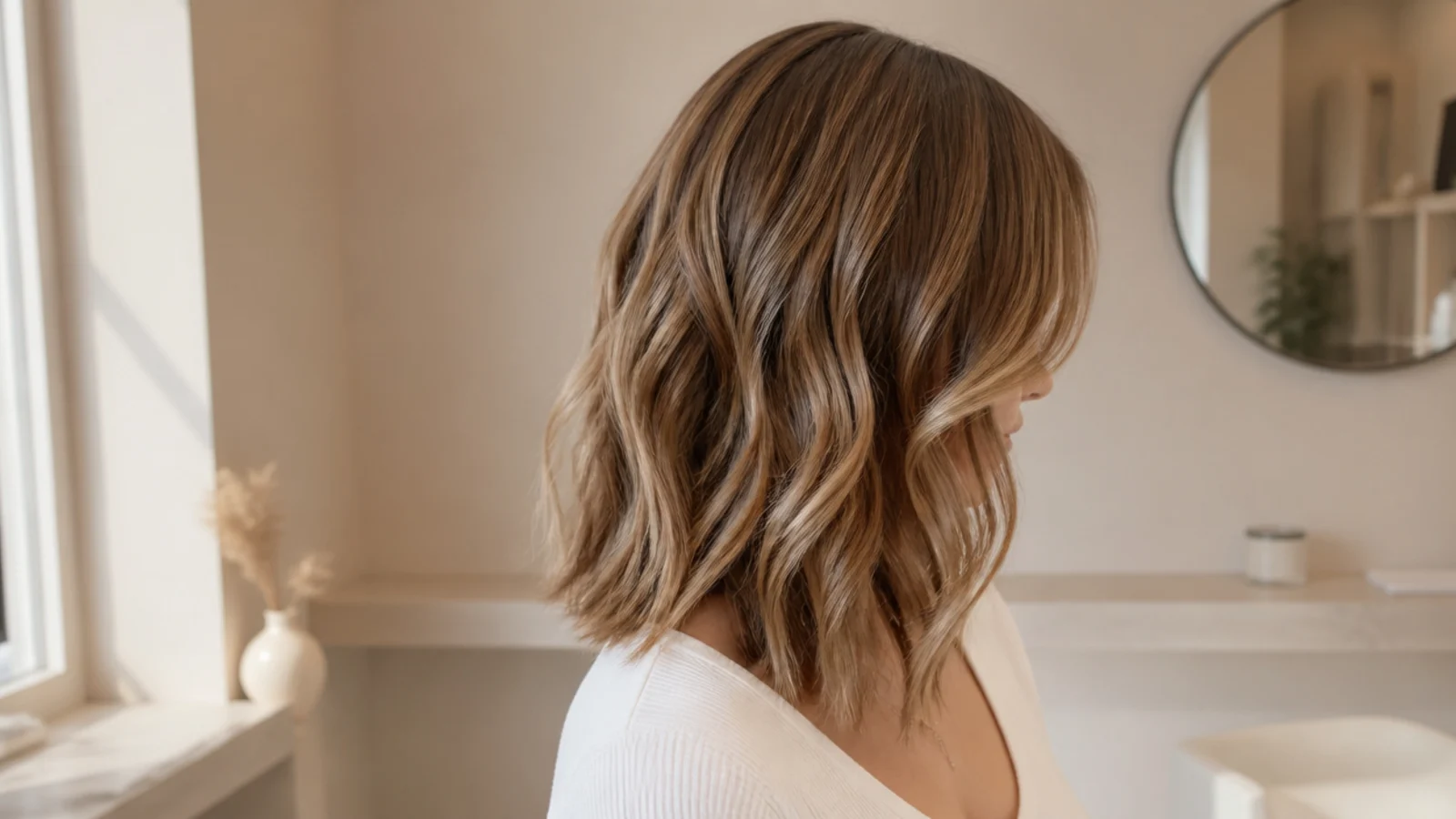
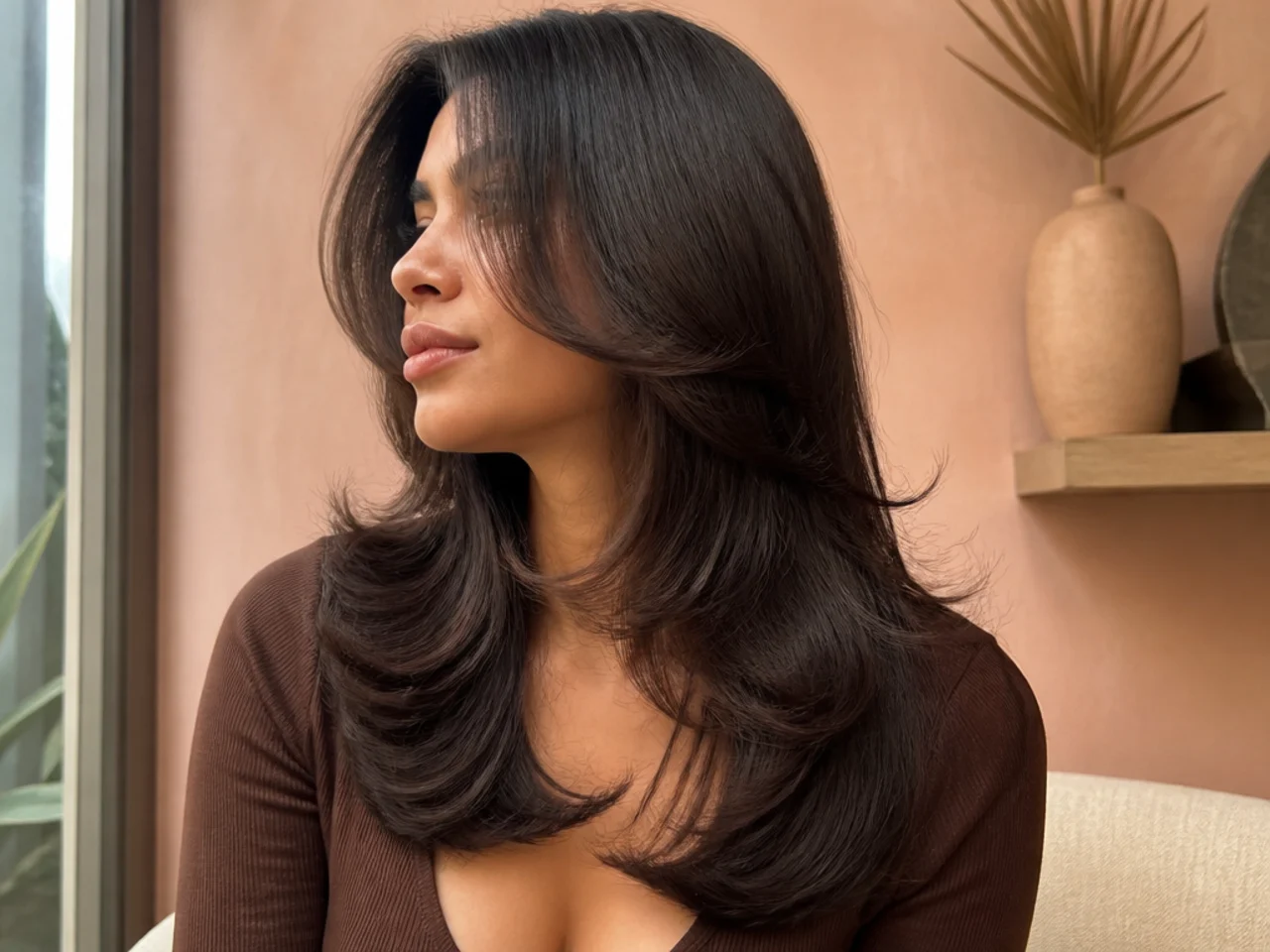
Two tiers with a deliberate gap. One stops somewhere between the cheekbone and the collarbone, the other keeps the full length, and nothing runs continuously between them.
The face framing tier does the work. It is the piece that catches the light and creates the wing shape when it is dried away from the face.
The length underneath is the support structure. Without it the short tier hangs flat, which is why a butterfly on short hair needs a different build entirely.
It is not the same as a shag. A shag layers the whole head in a continuous gradient. A butterfly leaves two distinct lengths and lets you see the join.
Choosing Your Two Lengths
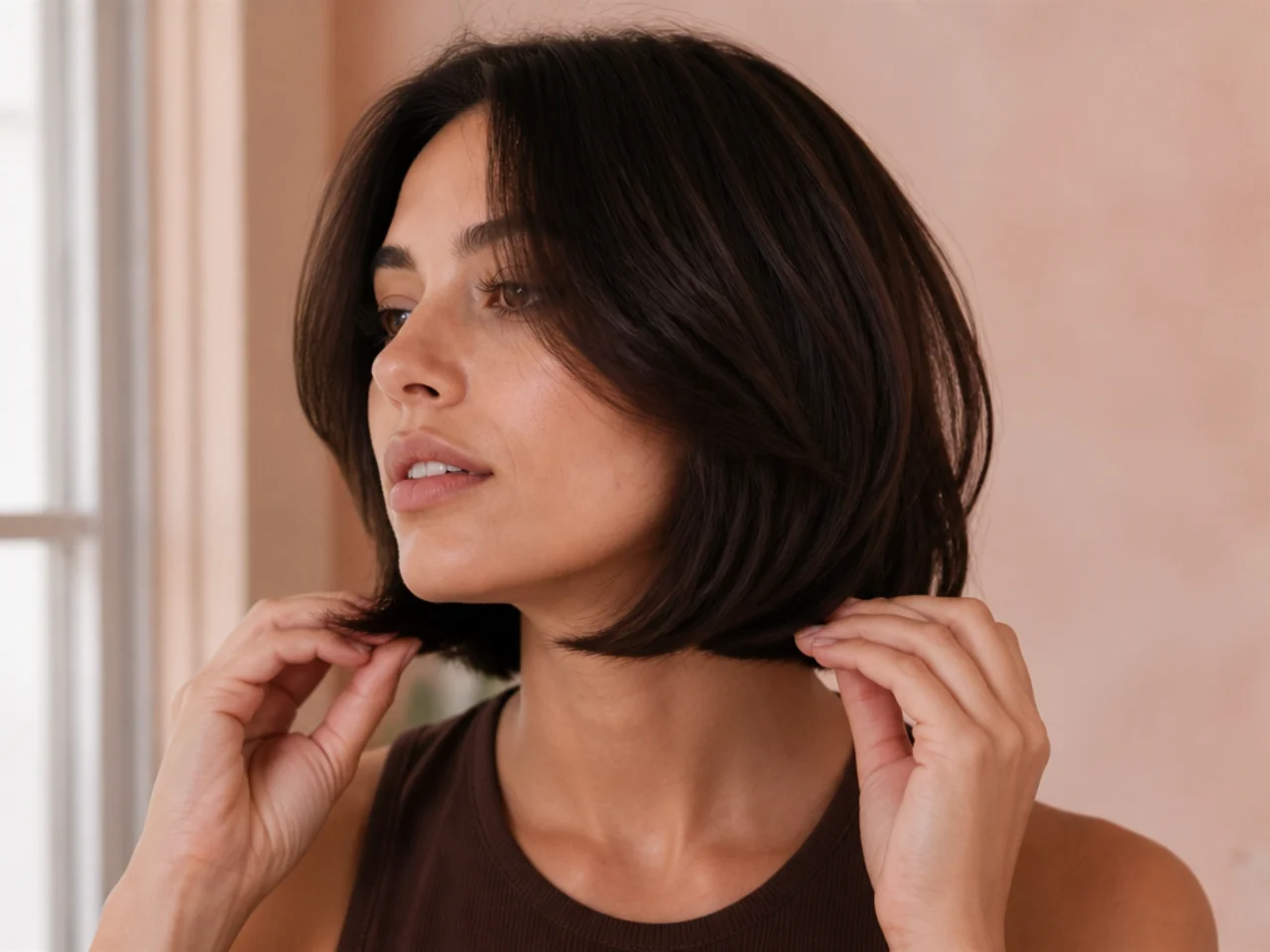
Set the short tier against your jaw, not a photograph. On medium hair a collarbone top tier leaves almost no gap, so the jaw is usually the furthest it can drop and still read.
Keep the perimeter blunt if your hair is fine. The outline is the only place density registers, and a thinned perimeter on medium hair takes the weight out of both tiers at once.
Decide where the gap sits before the first cut. Once the short tier is cut there is no adding it back, and it is the layer the whole shape is judged on.
Match the tier length to your parting. A middle part splits the short tier into two symmetrical wings; a deep side part throws most of it onto one side and needs a longer tier to balance.
The 25 Medium Butterfly Haircut Ideas
1. Chin Length Top Layer
The short tier cut level with the chin, which is the shortest it goes before the cut starts reading as a bob over long hair. At this height the tier is short enough to stand up on its own, so it needs the least blow drying of any version here.
2. Cheekbone Length Face Frame
The very front pieces taken up to the cheekbone while the rest of the short tier stays at the jaw. Those two pieces catch the most light of anything in the cut because they sit closest to the face and furthest from the shadow of the length behind.
3. Collarbone Perimeter With a Jaw Length Wing
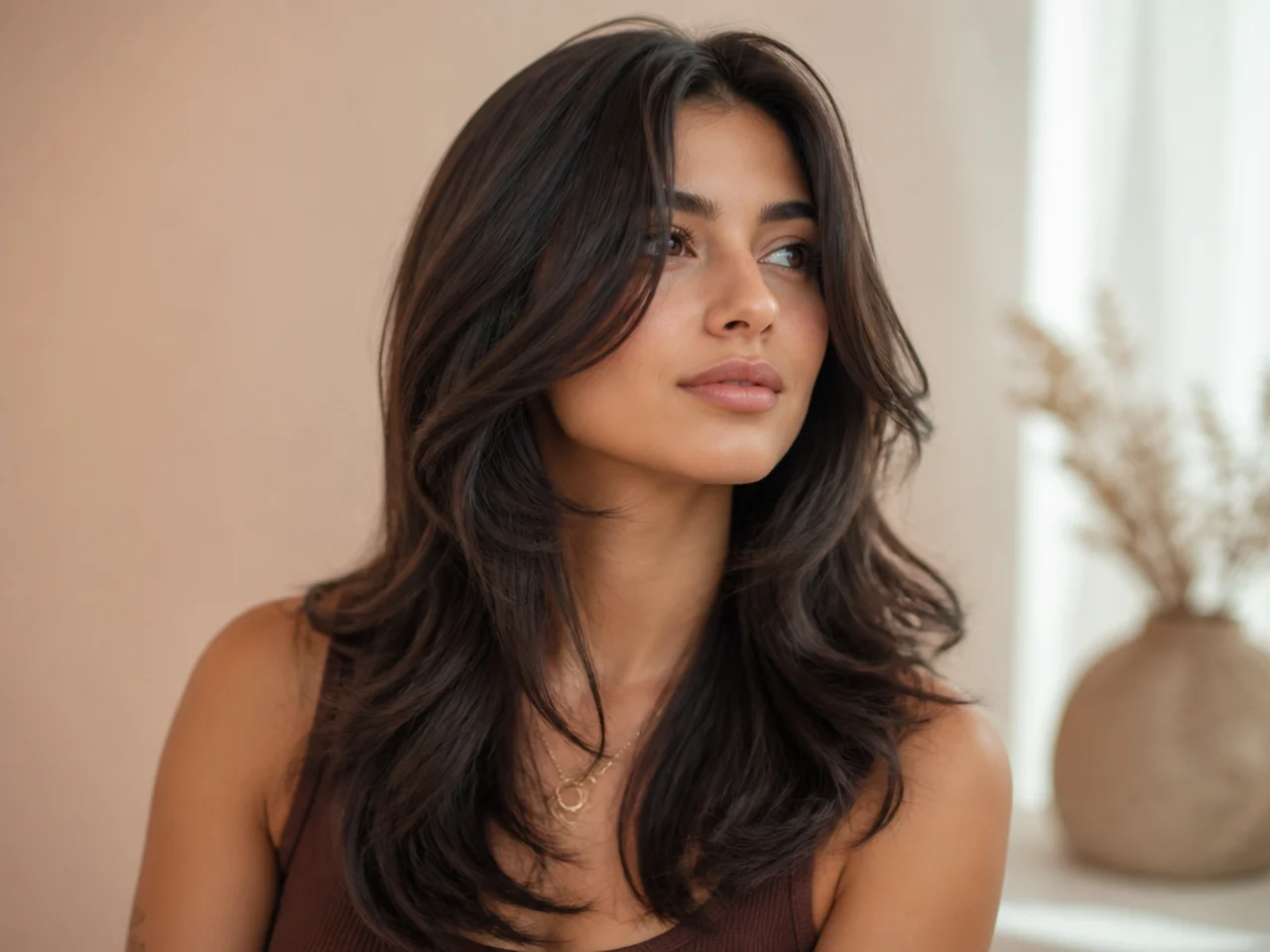
The full length at the collarbone and the short tier at the jaw, giving about four inches of separation. That is the smallest gap that still reads as two tiers on medium hair, and it is the proportion that grows out most gracefully.
4. Curtain Fringe Butterfly
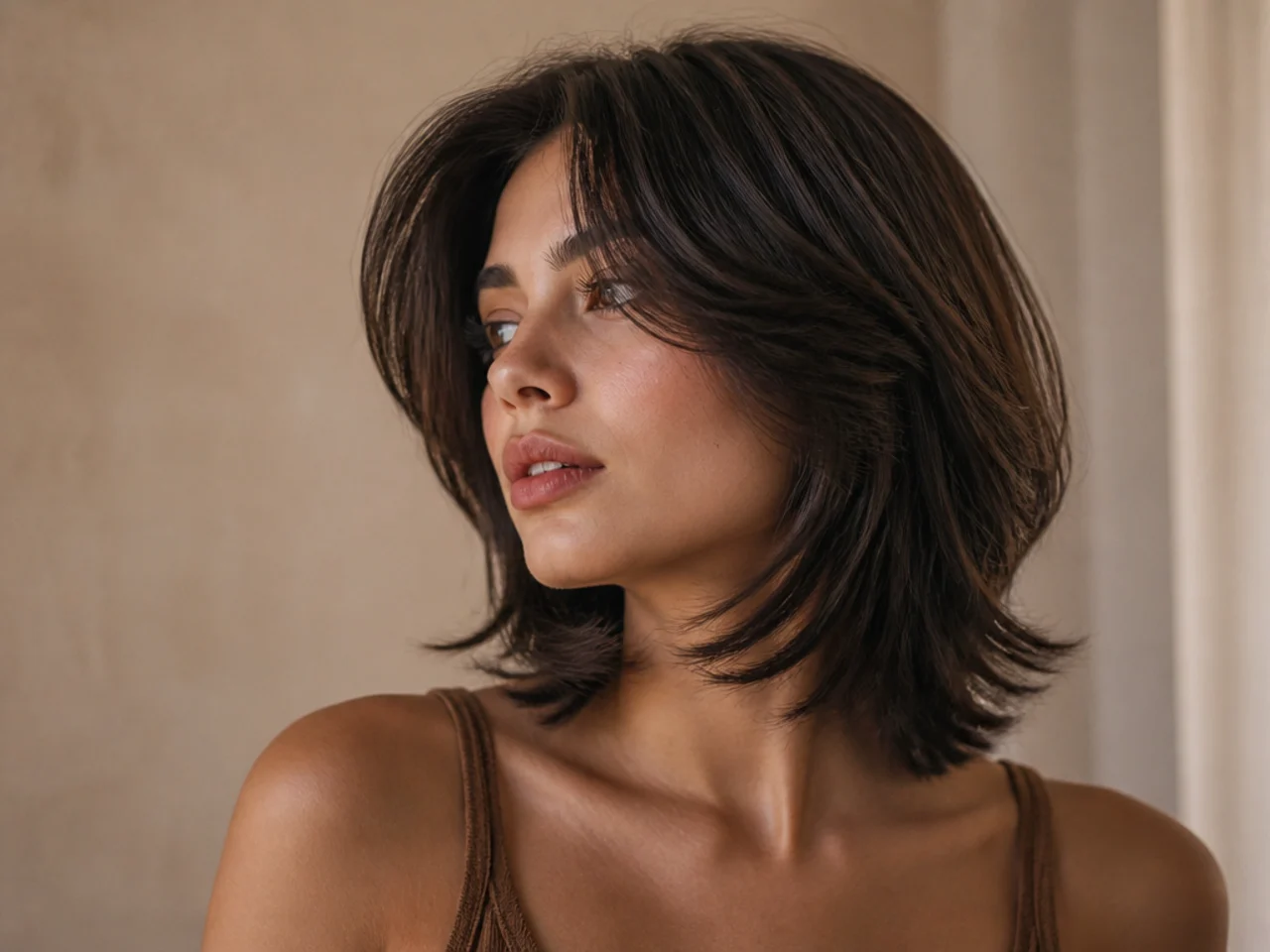
The front split down the centre and swept both ways, continuing straight into the short tier. Because the curtain and the tier are cut as one line, there is no step where they meet, and the fringe grows sideways into the frame rather than into the eyes.
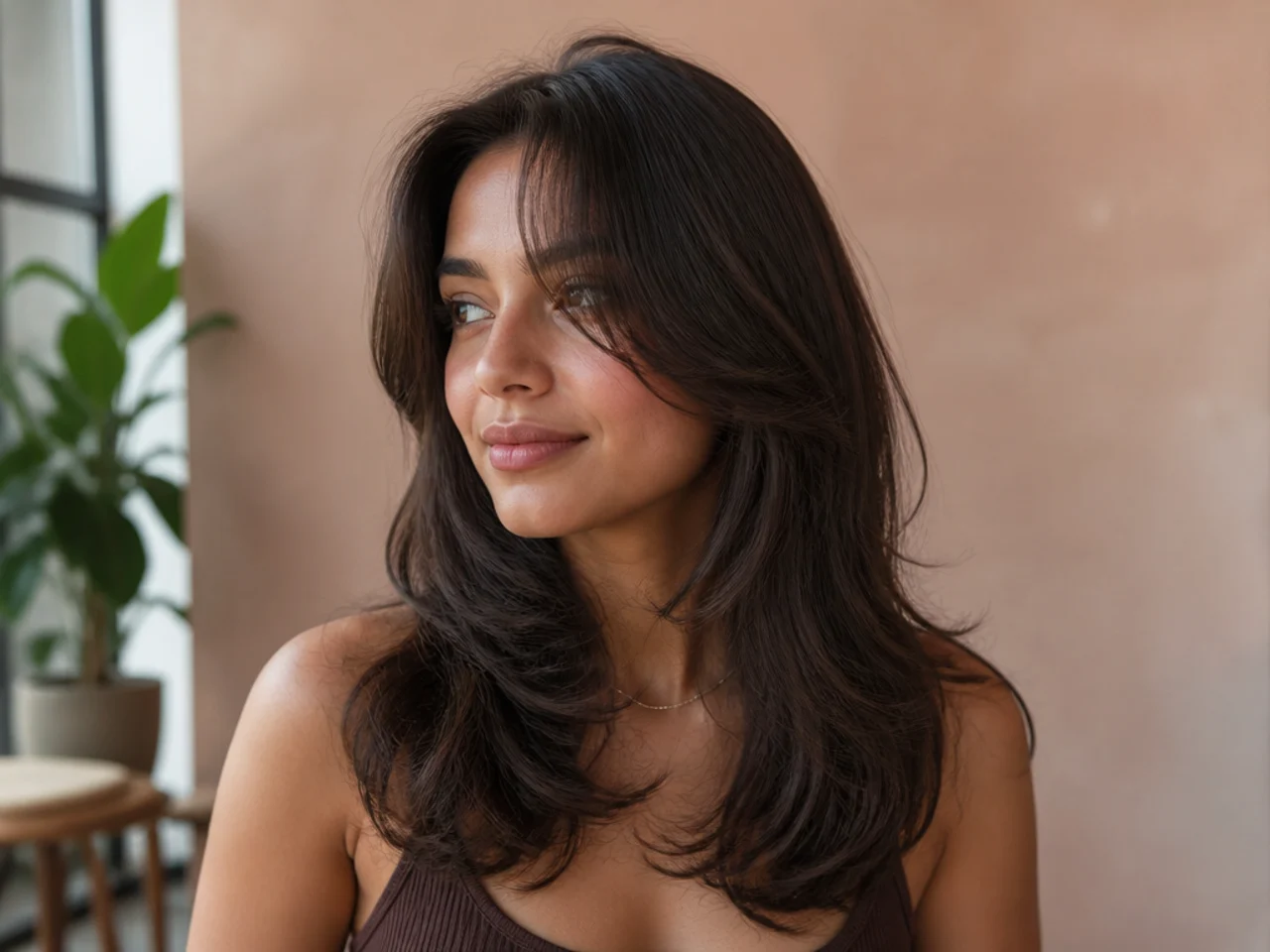
5. Blunt Perimeter Butterfly
Layers built through the top tier with the bottom edge left cut straight across. Density only registers visually at the outline, so a blunt perimeter keeps the length looking thick no matter how much weight came out above it.
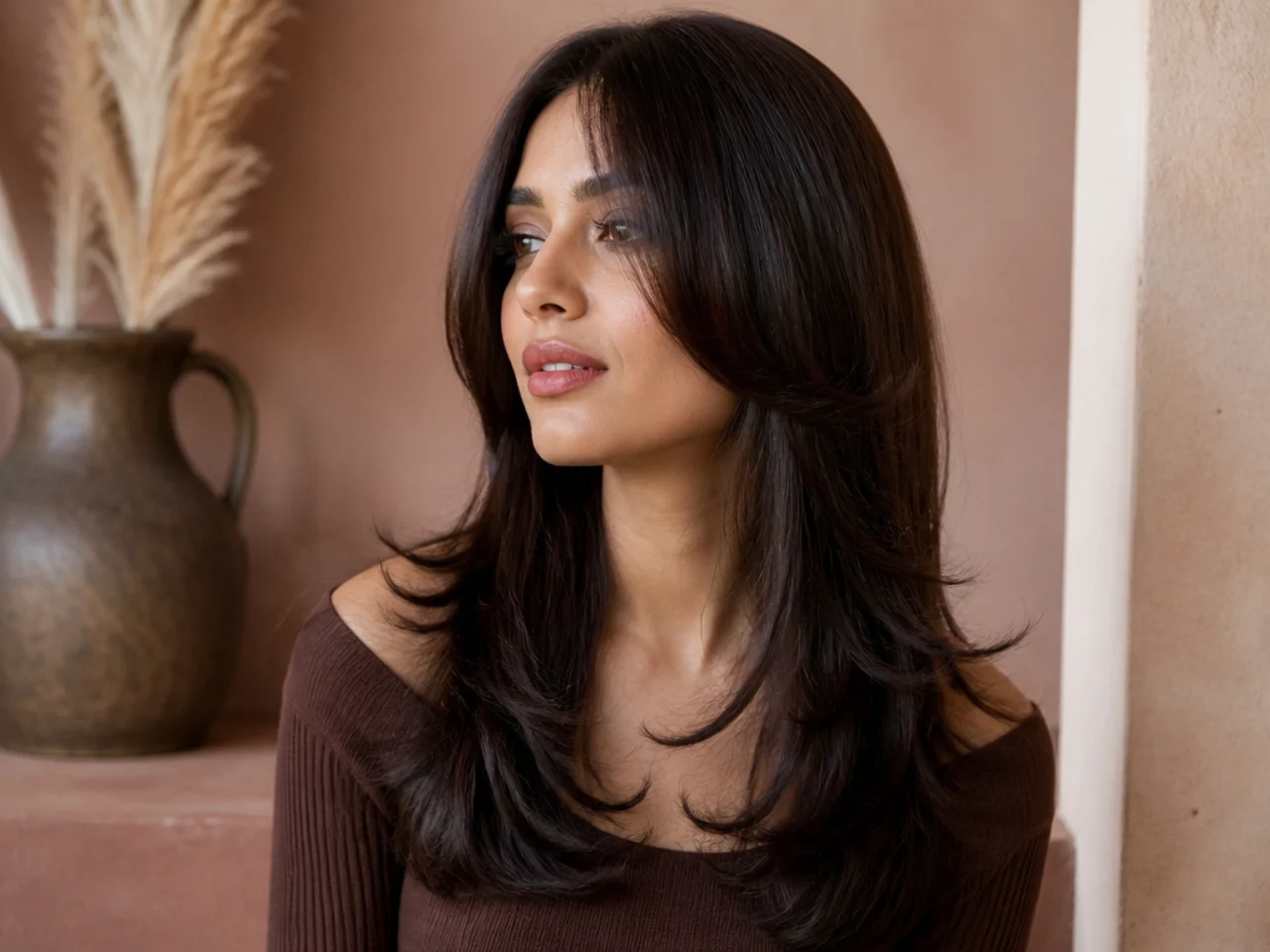
6. Butterfly With a Deep Side Part
The parting moved several inches off centre so most of the short tier falls to one side. The heavier side gains apparent volume simply because more hair is stacked in one place, which is the cheapest way to add fullness without cutting anything.
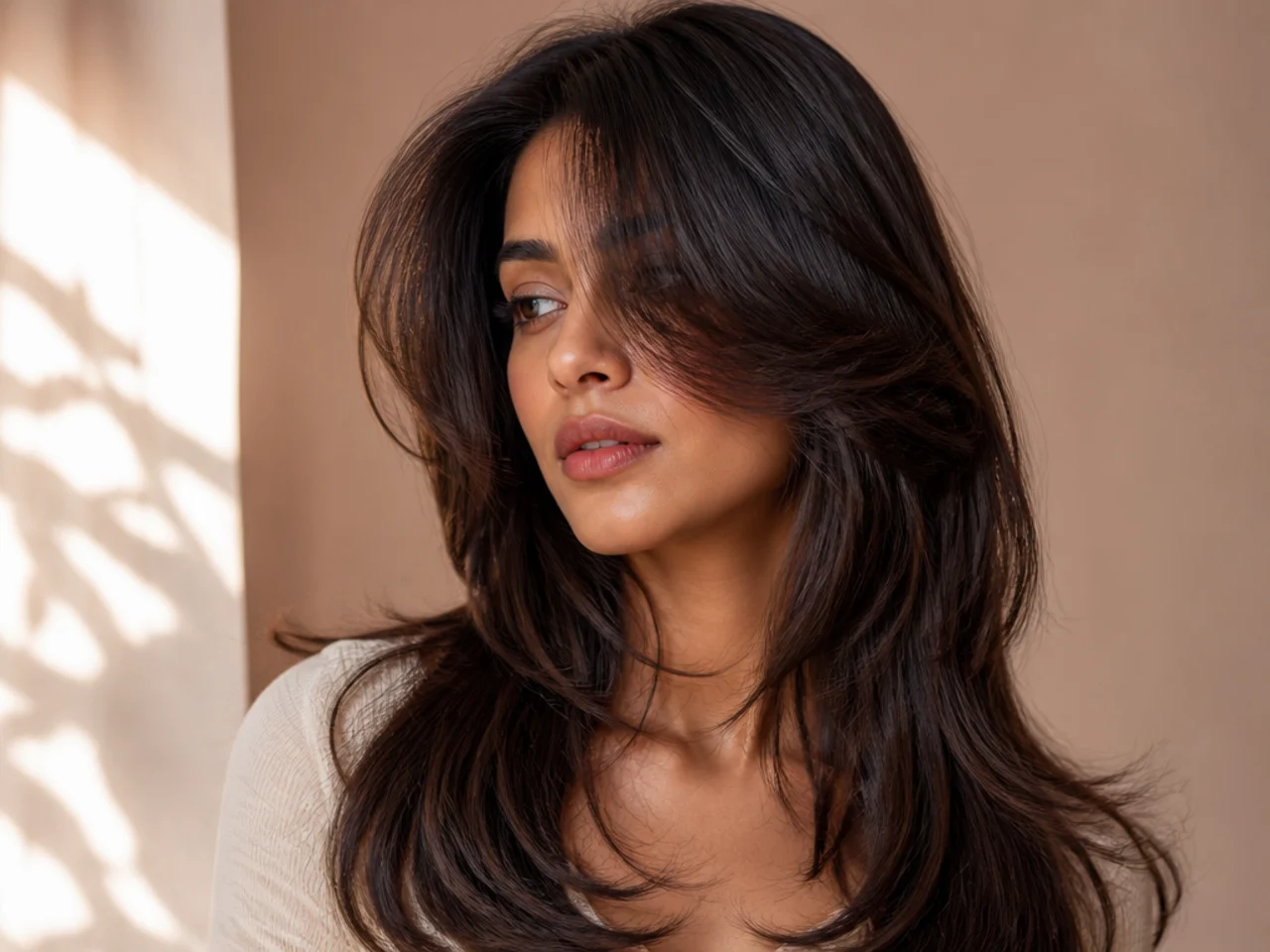
7. Butterfly With a Middle Part
The tier split evenly so both wings match. Symmetry makes the gap between the tiers read twice, once on each side, which is why a centre part shows the cut most clearly and also punishes an uneven cut most severely.
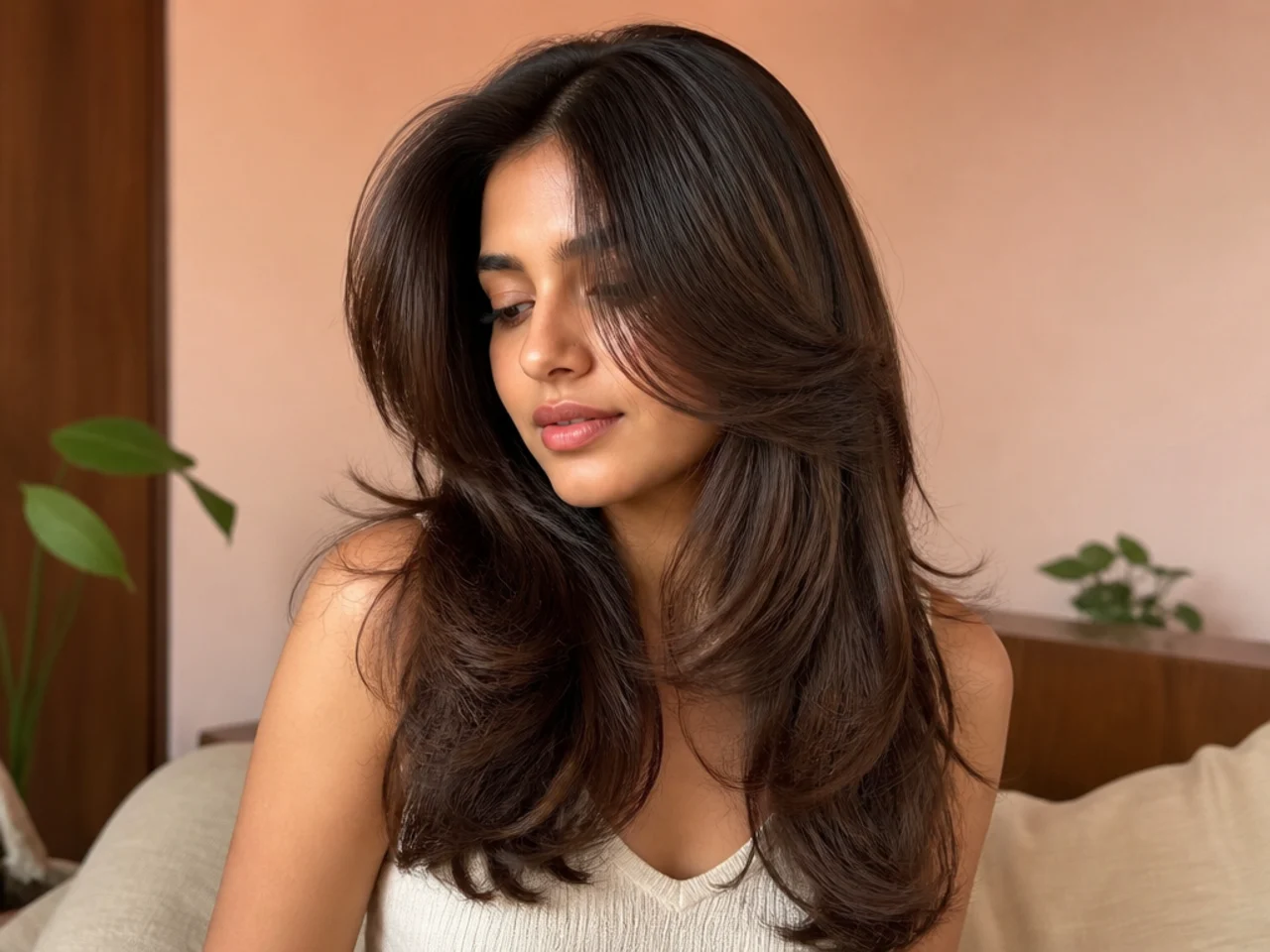
8. Butterfly on Fine Hair
Keep the short tier shallow and the perimeter untouched. Every layer removes density where it lands, and on fine hair the length underneath is already thin enough that thinning it further leaves nothing to prop the top tier up.
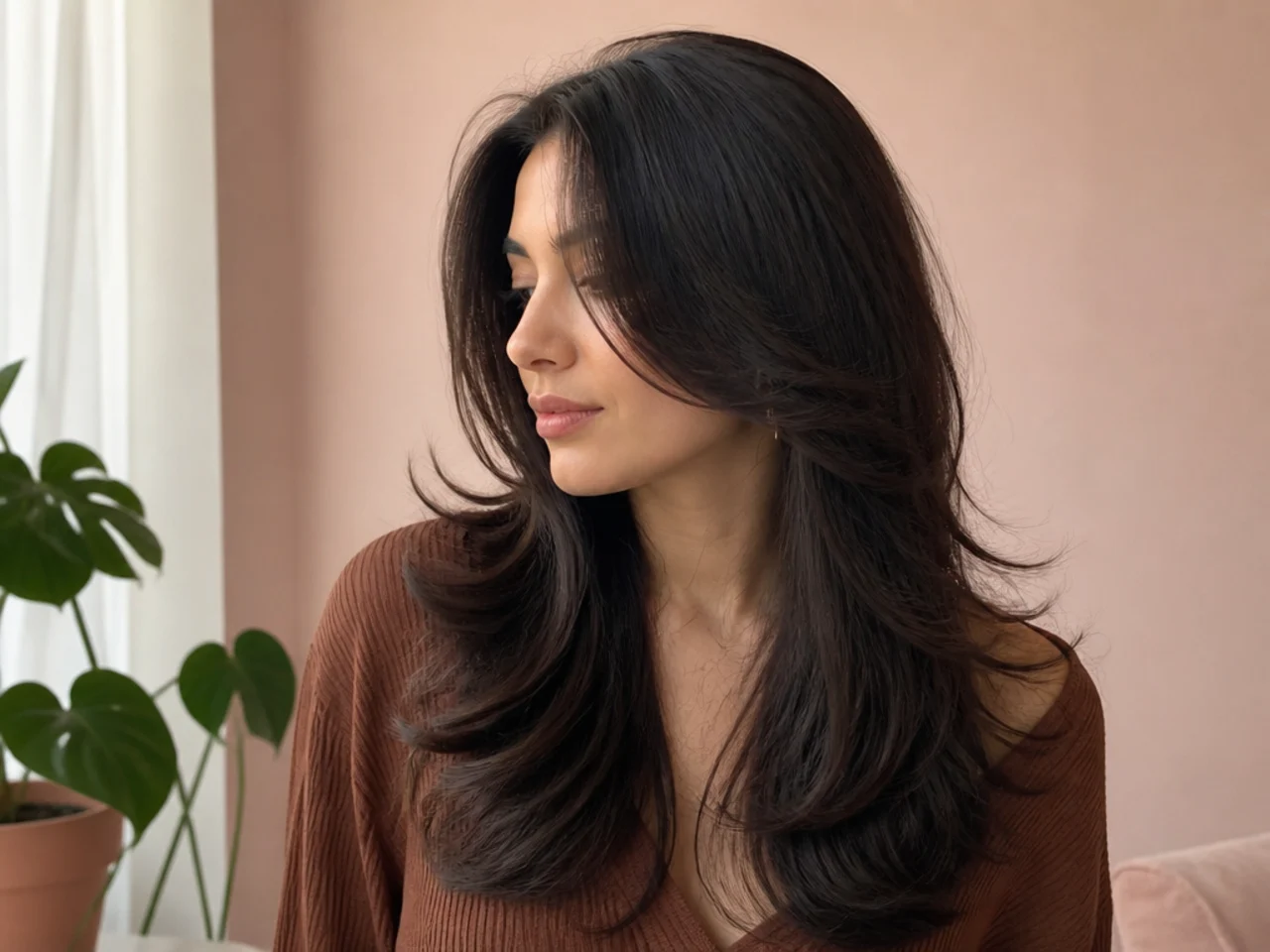
9. Butterfly on Thick Hair
Weight has to come out from inside the shape or the two tiers stack into a triangle. Removing it internally keeps the outline narrow while still letting the top tier lift, which is the opposite of what thinning the ends achieves.
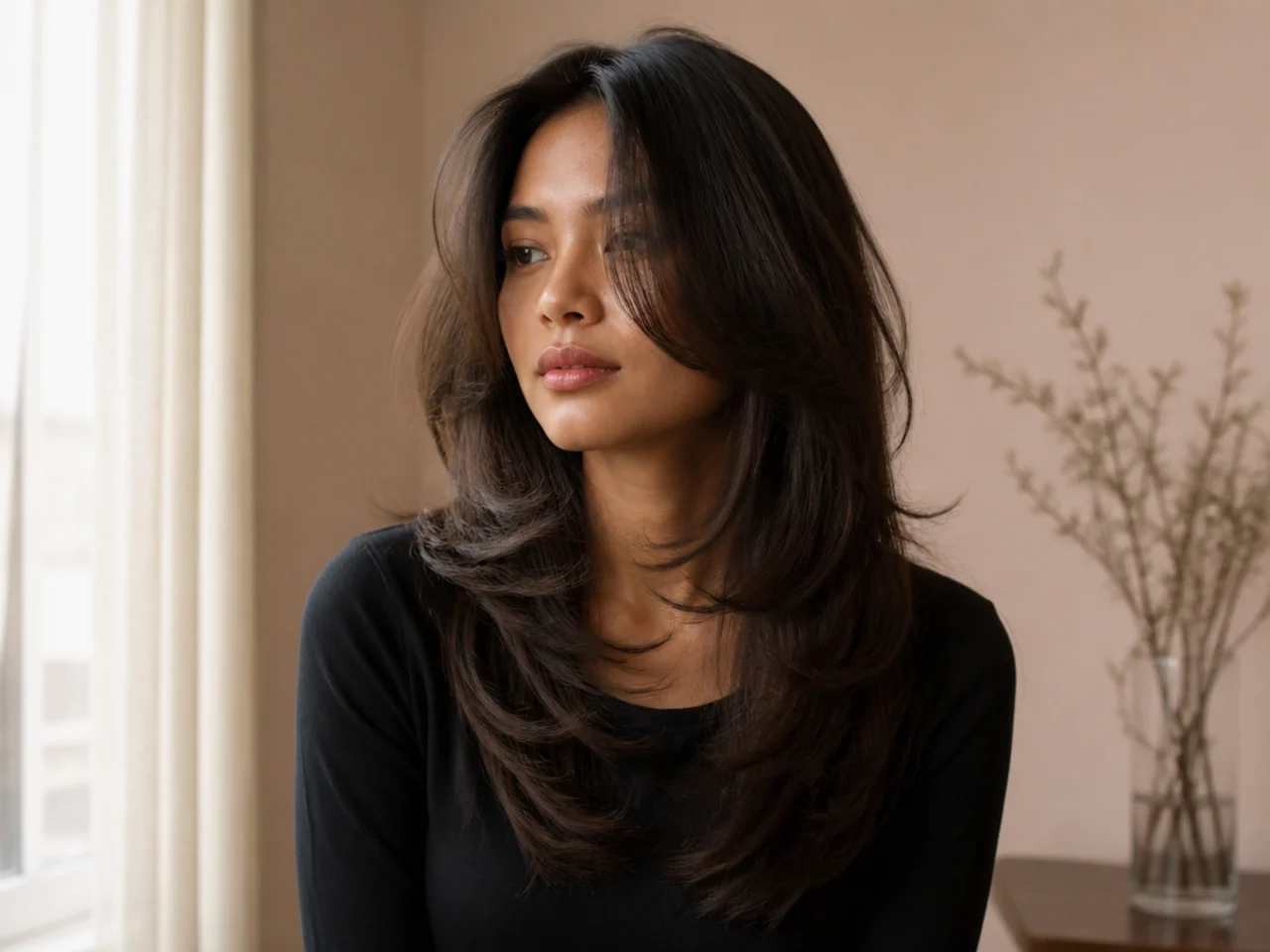
10. Butterfly on Straight Hair
The gap between the tiers is at its most visible, because a straight strand hangs in one line with no bend to soften the join. That clarity is the reason straight hair suits this cut and also why an uneven tier shows immediately.
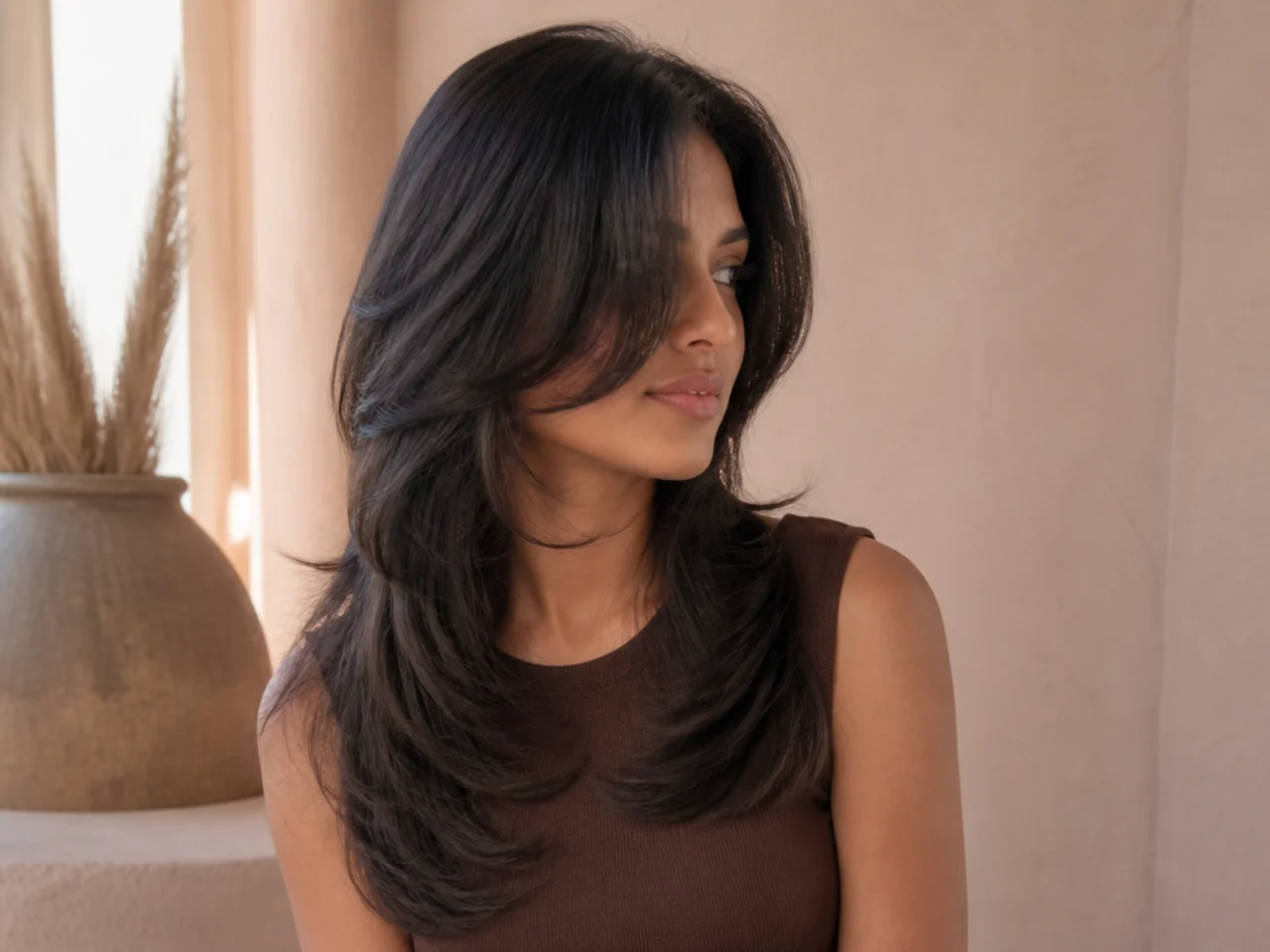
11. Butterfly on Wavy Hair
The bend lifts the short tier off the length on its own, so less blow drying is needed to get the same height. The tradeoff is that the wave blurs the join, so the tier needs cutting an inch shorter than on straight hair to read the same.
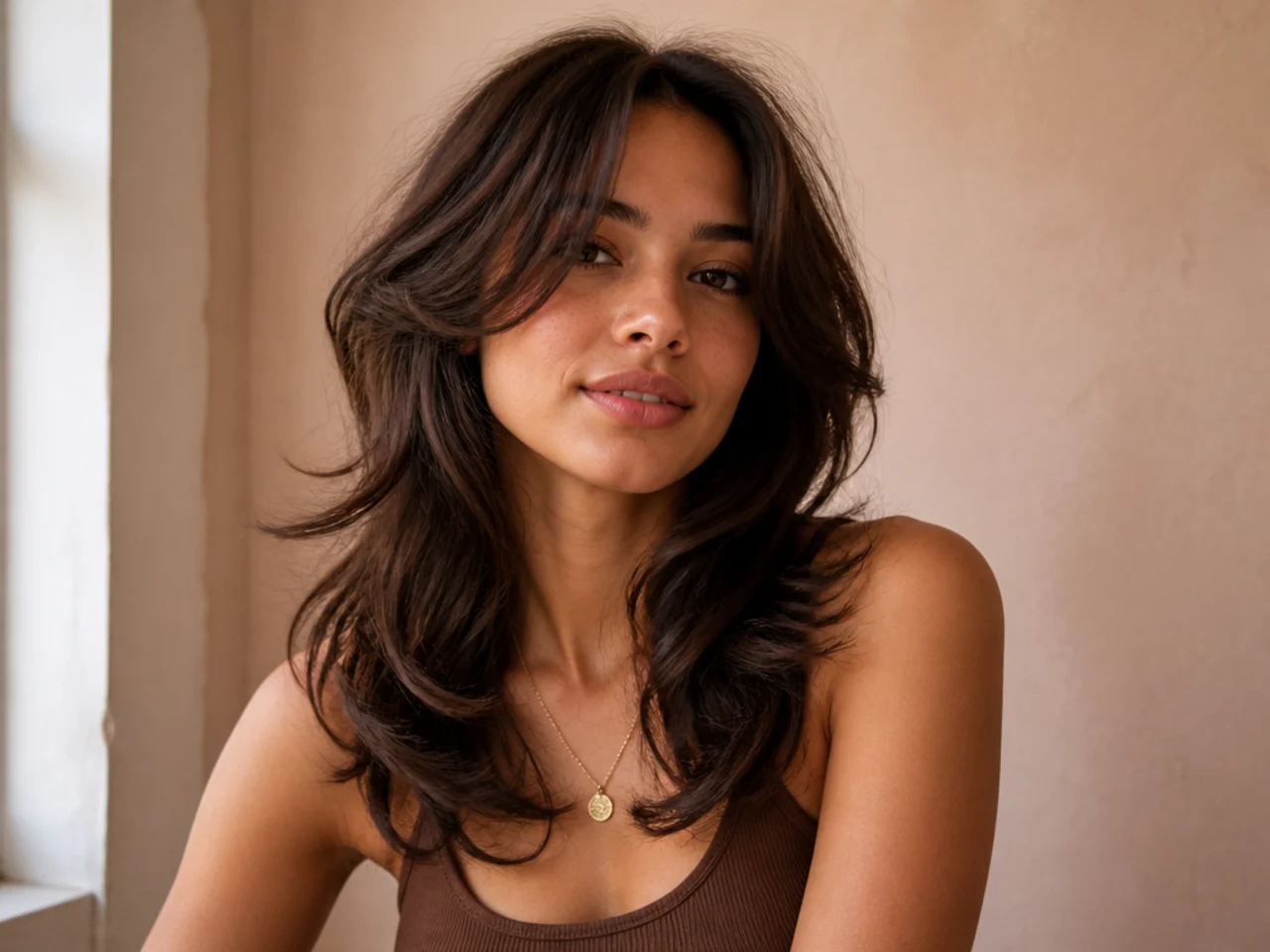
12. Butterfly on Curly Hair
Cut dry, curl by curl, because curl draws up by roughly half as it dries. A wet measurement puts the short tier at the ear rather than the jaw, and there is no way to correct a tier that has been cut too short.
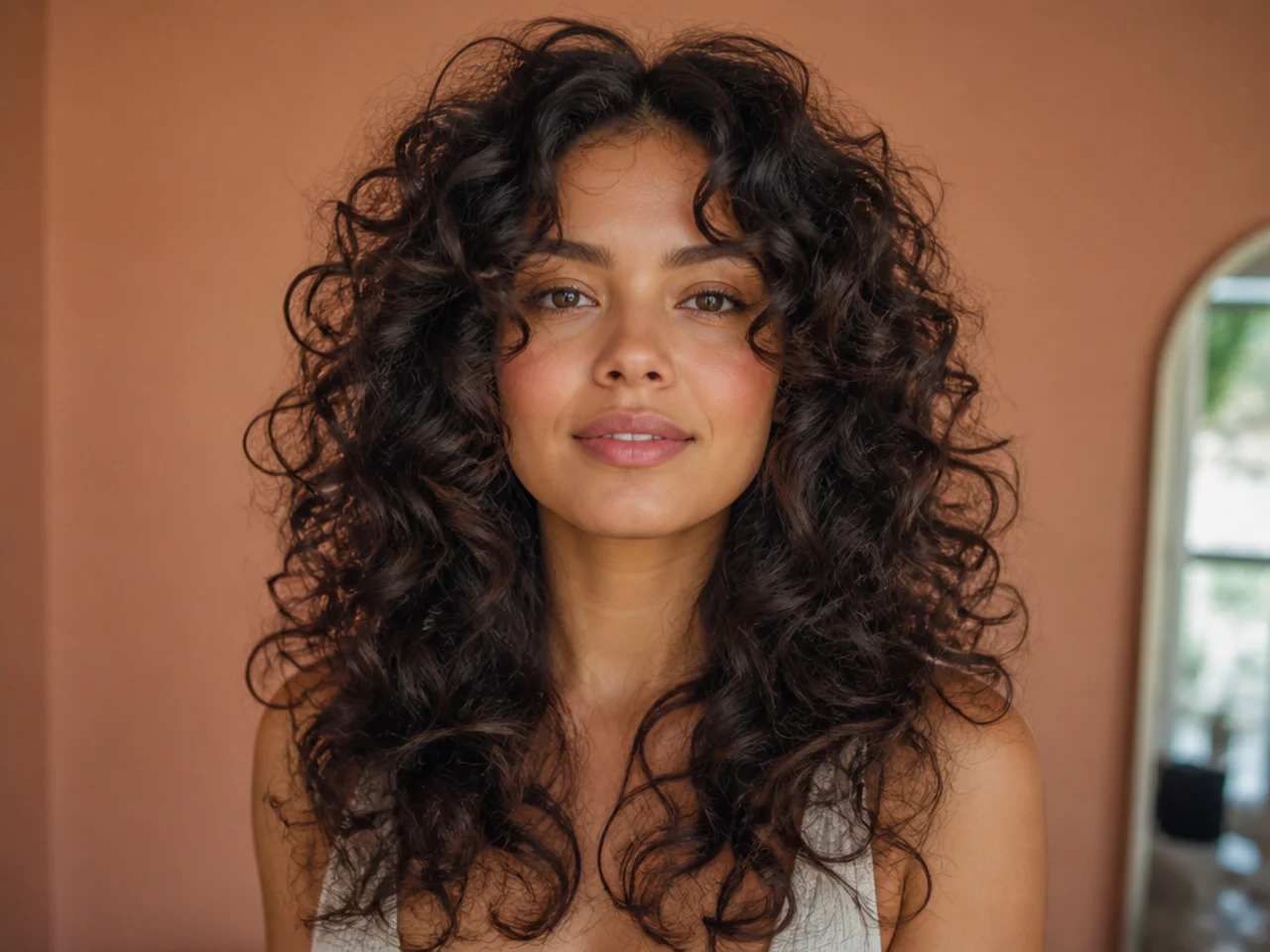
13. Blowout Butterfly With a Round Brush
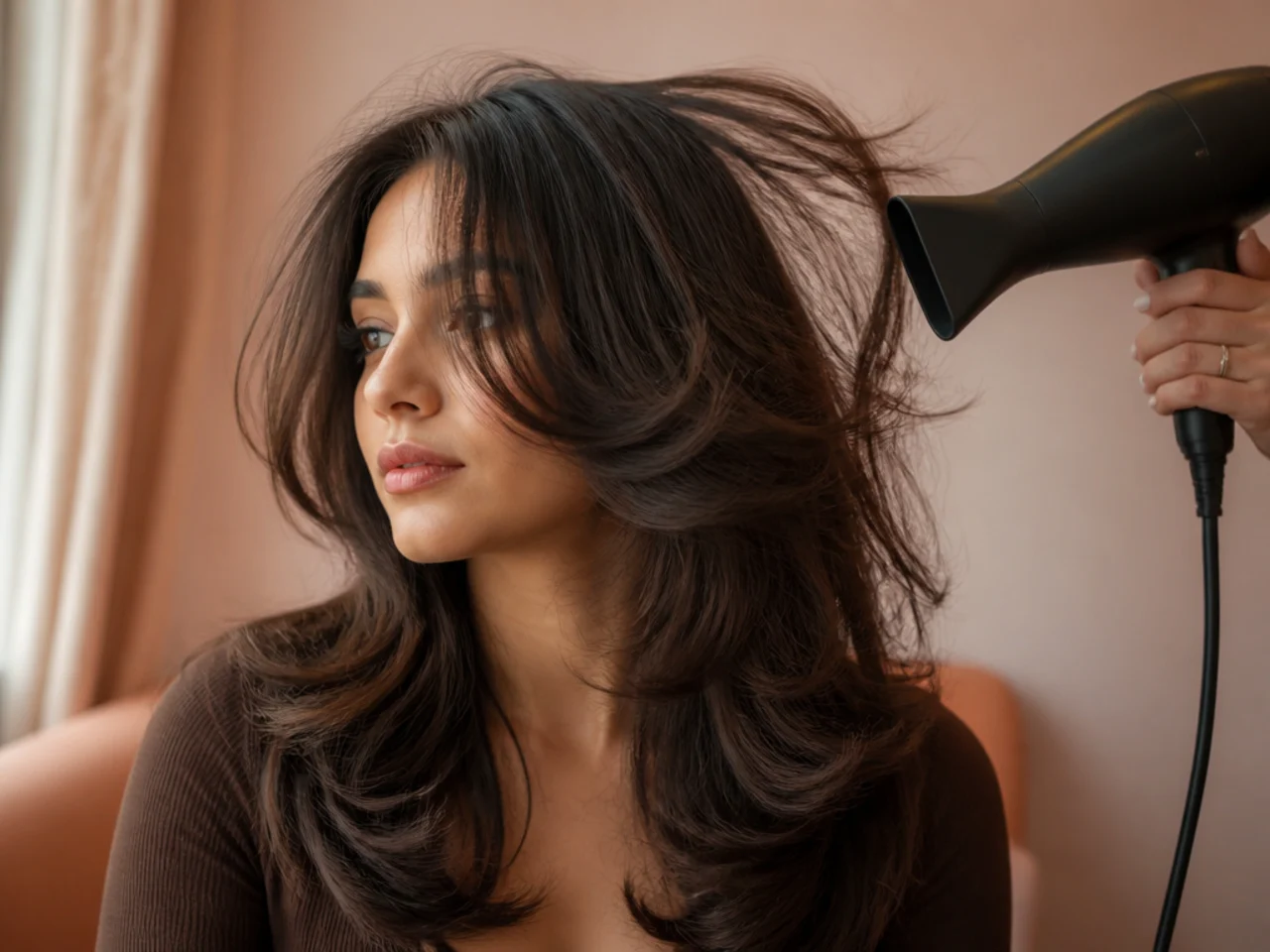
The short tier dried over a large round brush and turned away from the face. Hair sets in the direction it dries, so pulling the tier back and up as the last water leaves is what fixes the wing shape in place for the day.
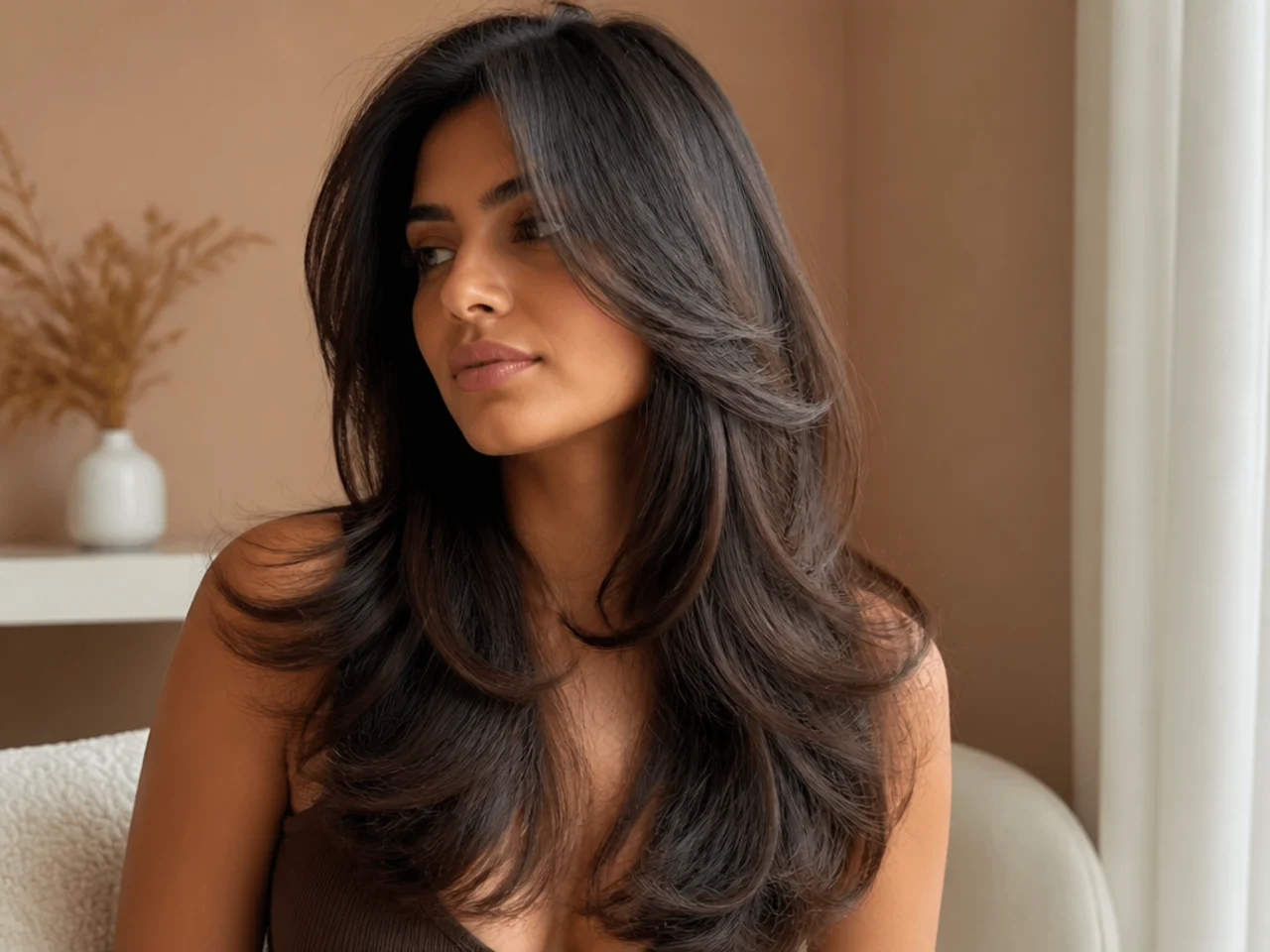
14. Butterfly With Flicked Ends
The last inch of both tiers turned outward. Ends that fall straight down make the two lengths blur together at the bottom, while an outward flick separates them visually and doubles the number of visible edges in the cut.
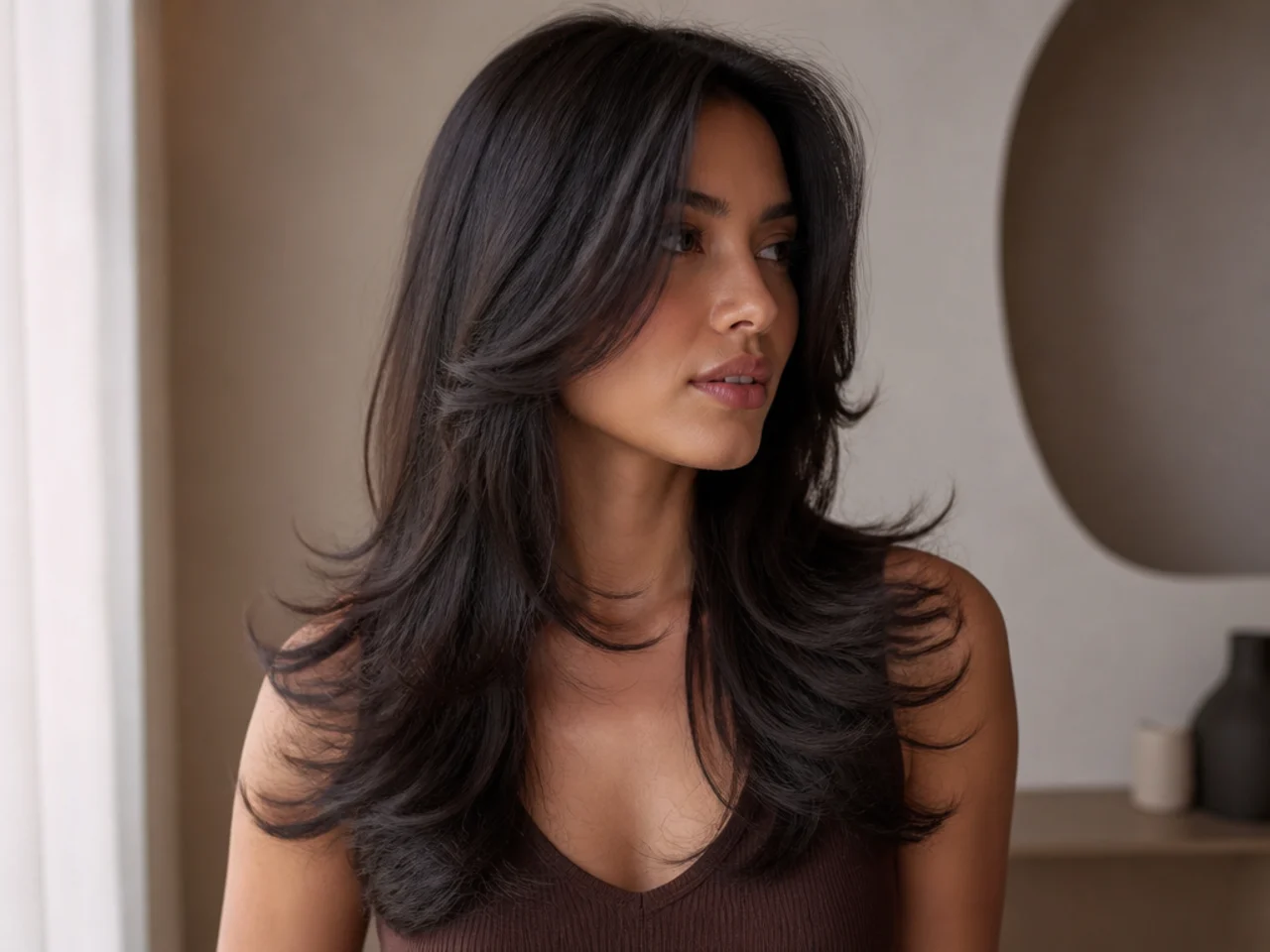
15. Butterfly With a Rounded Perimeter
The bottom edge cut shorter at the sides than the back so the outline curves. A curved perimeter follows the shape of the shoulders rather than sitting across them, which stops medium length hair kicking out where it meets fabric.
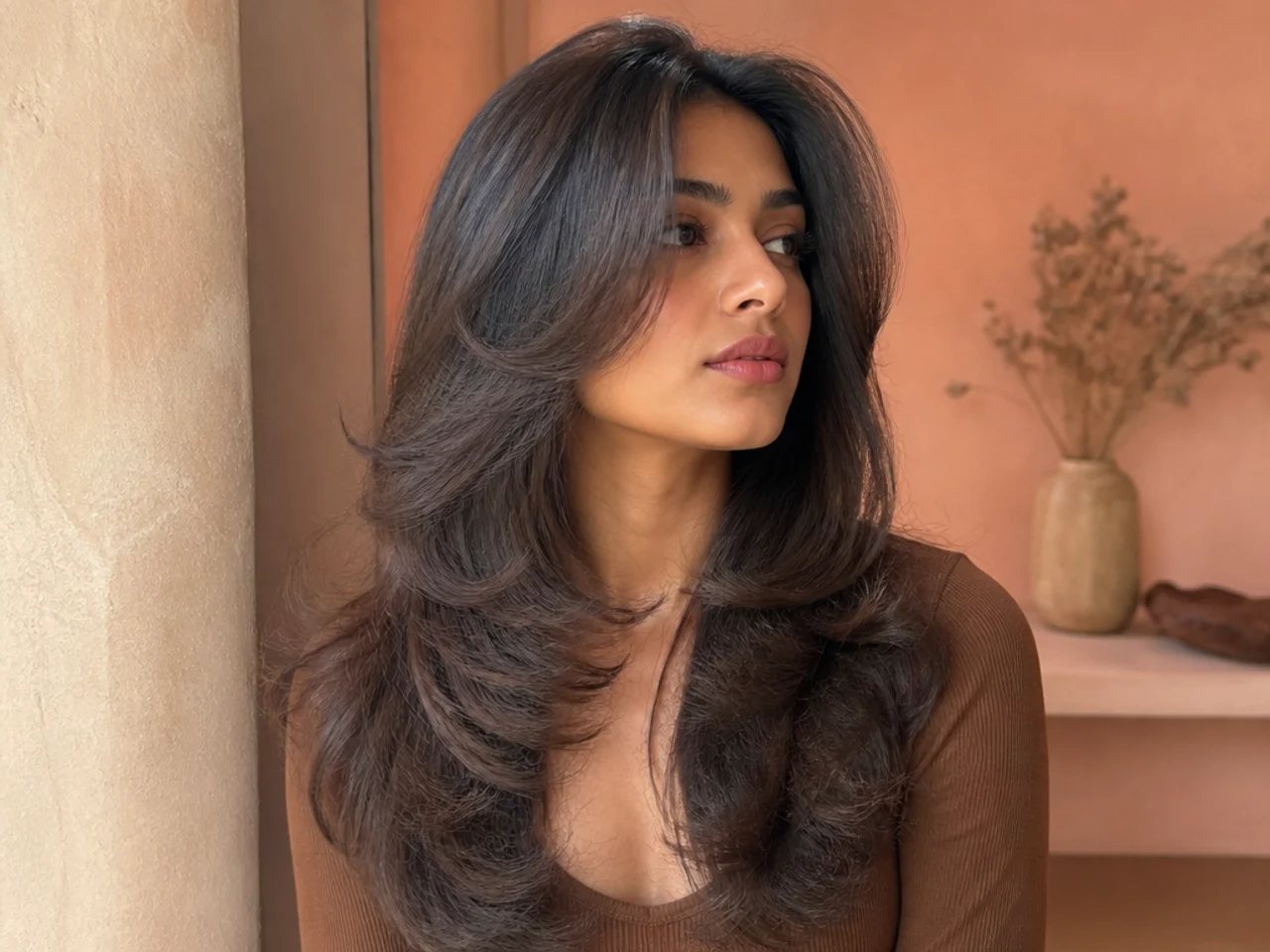
16. Butterfly With Invisible Layers
The short tier cut inside the shape so no shorter end sits on the surface. The weight is still removed and the length still moves, but nothing sticks out as it grows, which is what keeps the cut looking clean at month two.
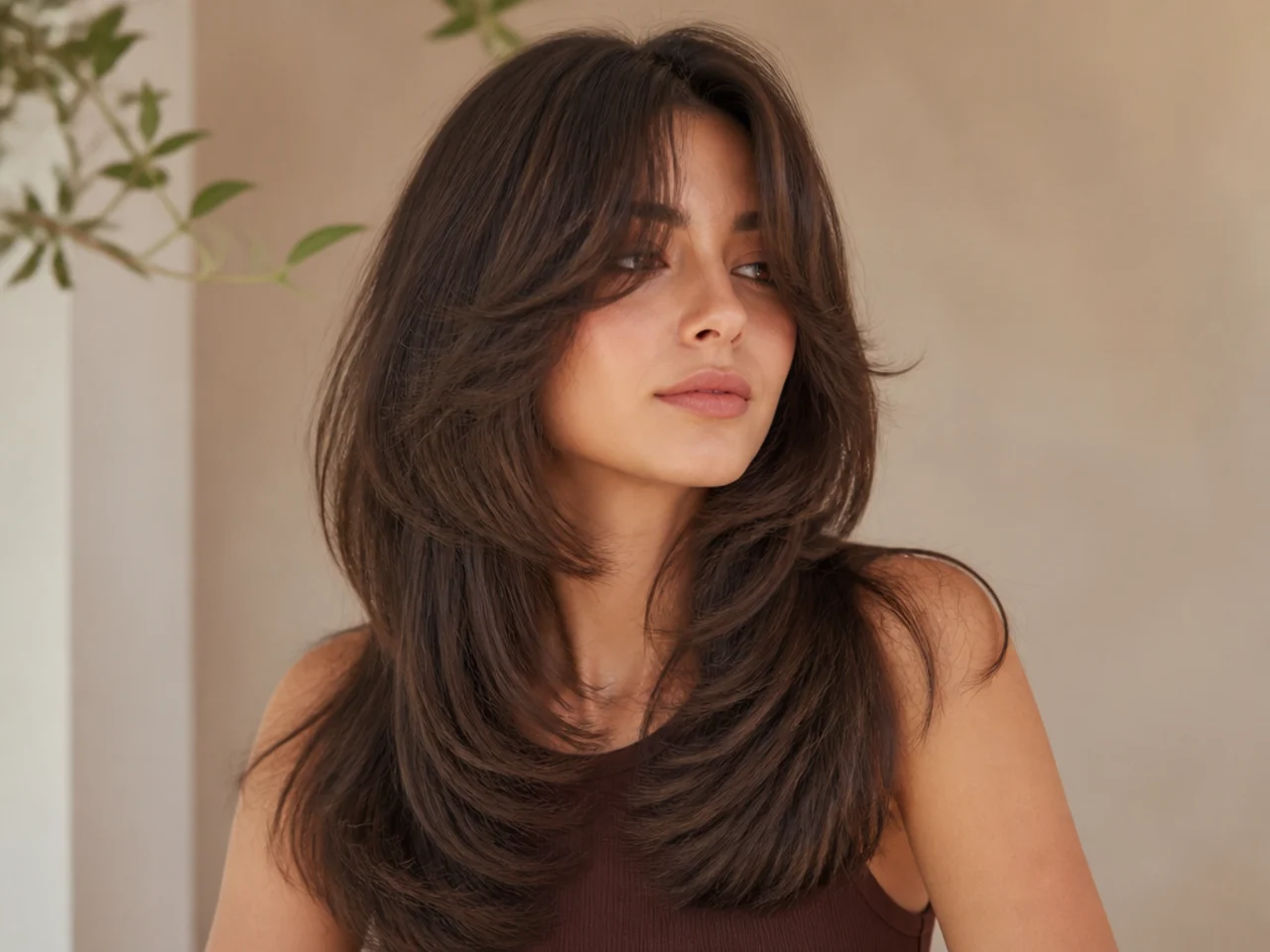
17. Butterfly Lob
The full length brought up to just below the shoulder with the tier at the jaw. It is the shortest a butterfly goes while keeping both tiers, and the reduced weight means the top tier lifts with far less drying.
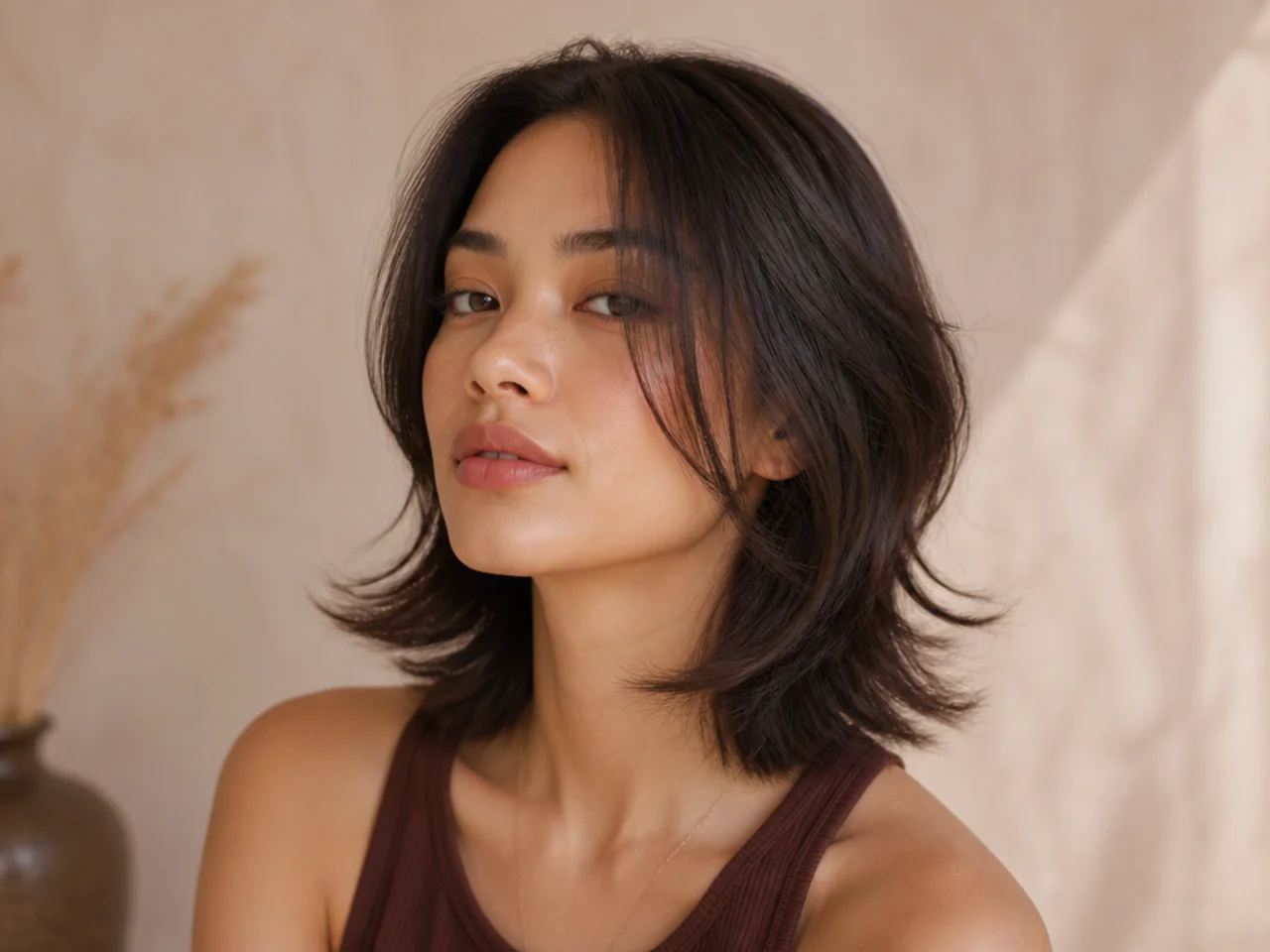
18. Butterfly With a Shorter Crown Layer
A third, shorter layer added at the crown above the face framing tier. It props up everything beneath it the same way the length props up the tier, which is where the extra height at the top of the head comes from.
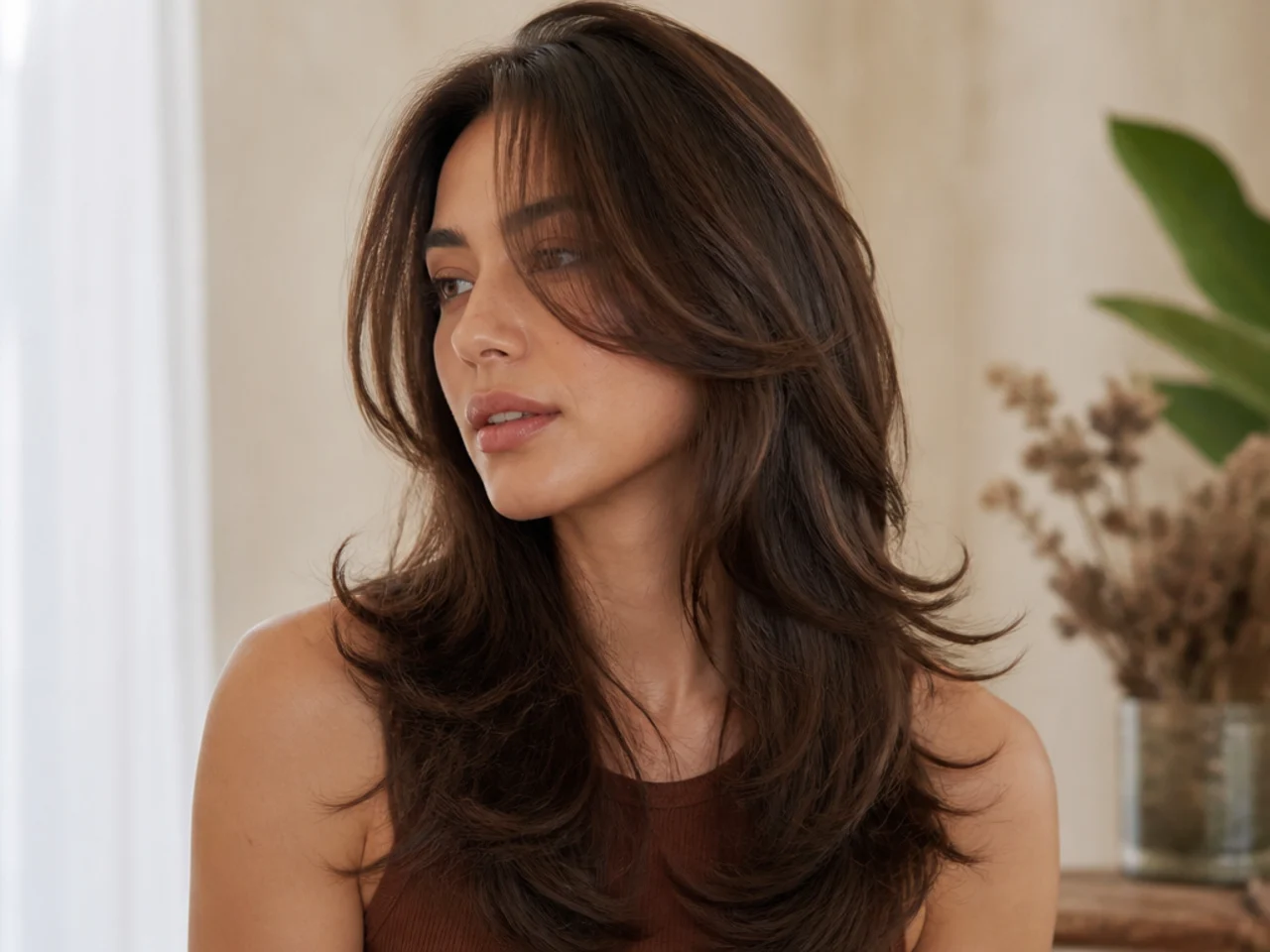
19. Butterfly With a Money Piece
Two lightened sections at the very front of the short tier. Lighter tone reflects more light than the hair around it, so the eye follows the wing shape upward and the gap between the tiers reads more strongly than it is cut.
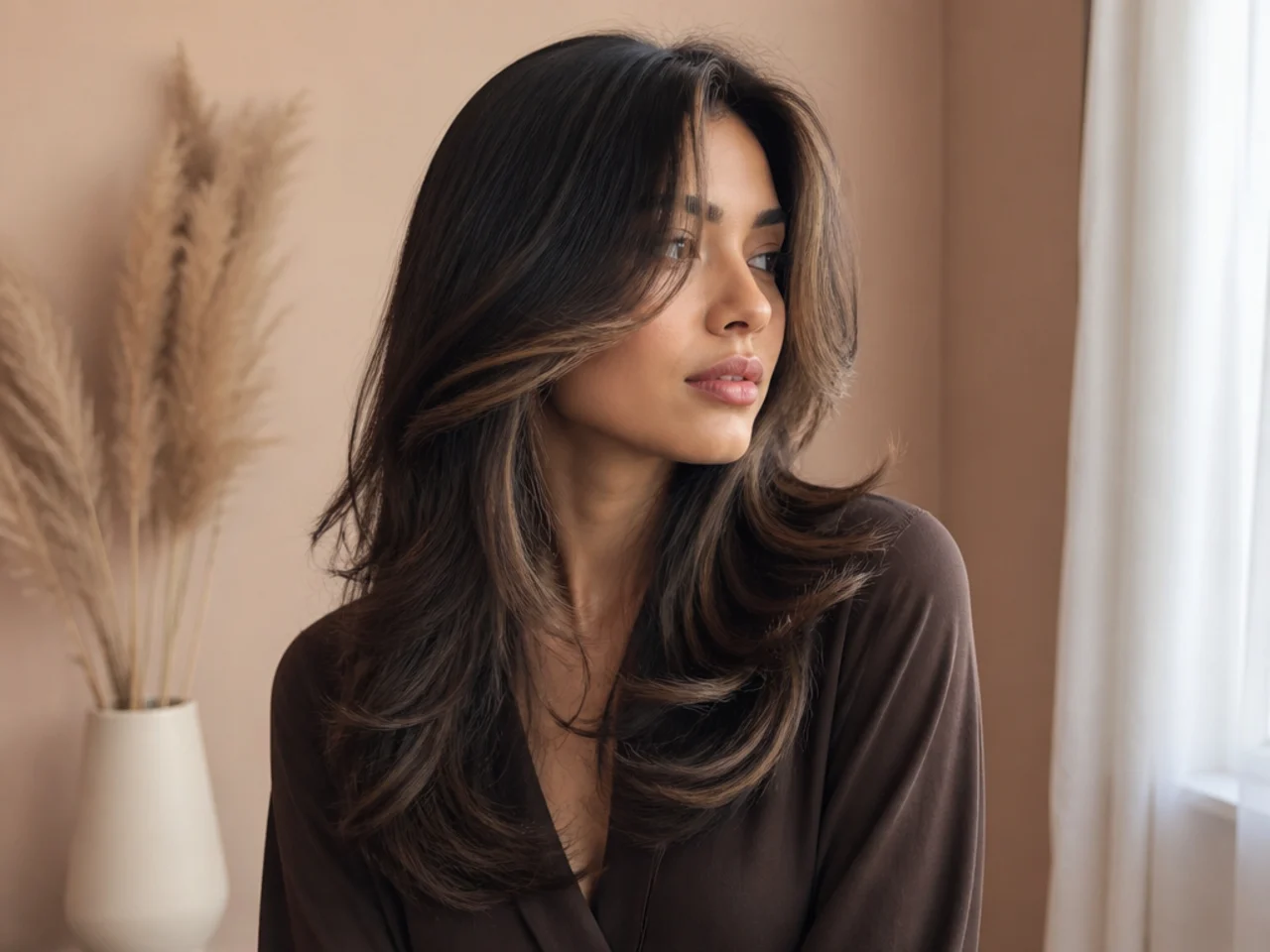
20. Balayage Butterfly
Colour painted on the surface and left dense at the roots. Because the short tier sits on top, it takes most of the lightened pieces, which means the colour and the cut are drawing attention to the same place.
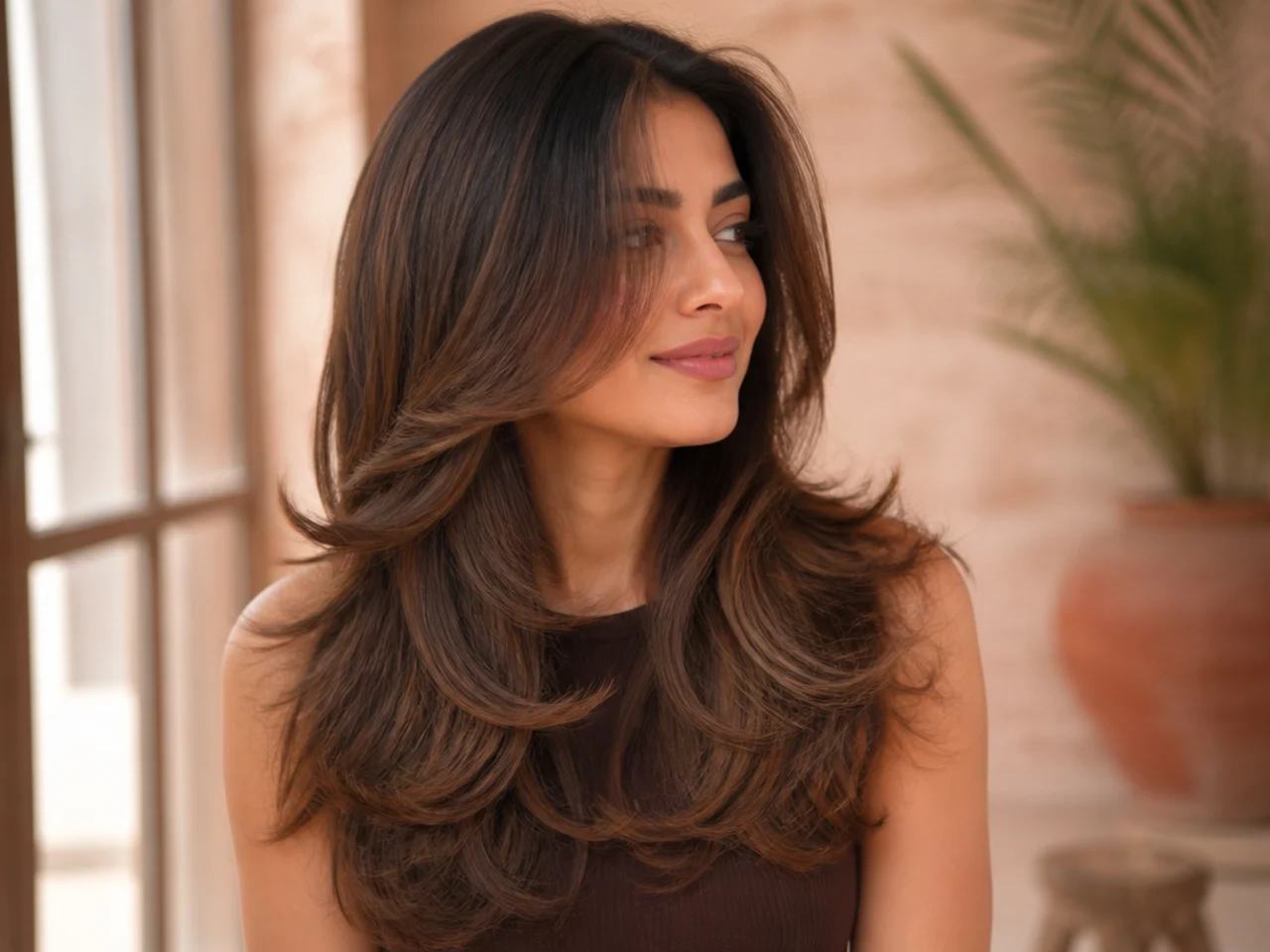
21. Butterfly for Round Faces
Drop the shortest front pieces below the chin so the vertical line continues past the widest part of the face. A tier that stops at the cheekbone draws a horizontal across the widest point and adds width rather than removing it.

22. Butterfly for Square Faces
Keep the ends of the short tier soft and the face framing pieces curved inward at the jaw. A curved line beside a strong jaw reads as a contrast rather than an echo, where a blunt tier ending at the jaw repeats the same angle twice.
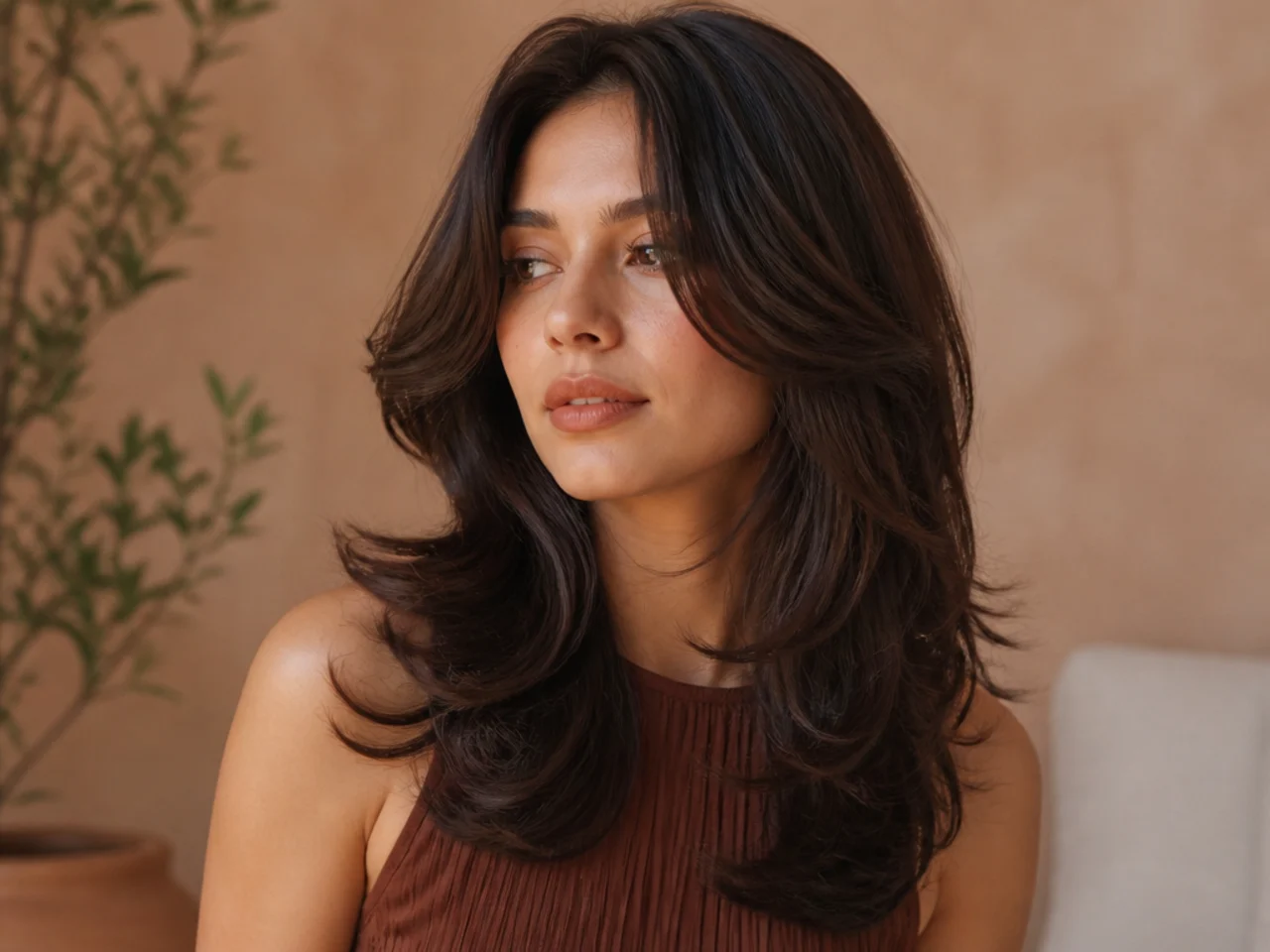
23. Butterfly for Long Faces
Build the width at the cheekbone by cutting the short tier higher and drying it outward. Volume at eye level shortens the apparent length of the face, where volume at the crown extends it, so the tier height matters more than the perimeter.
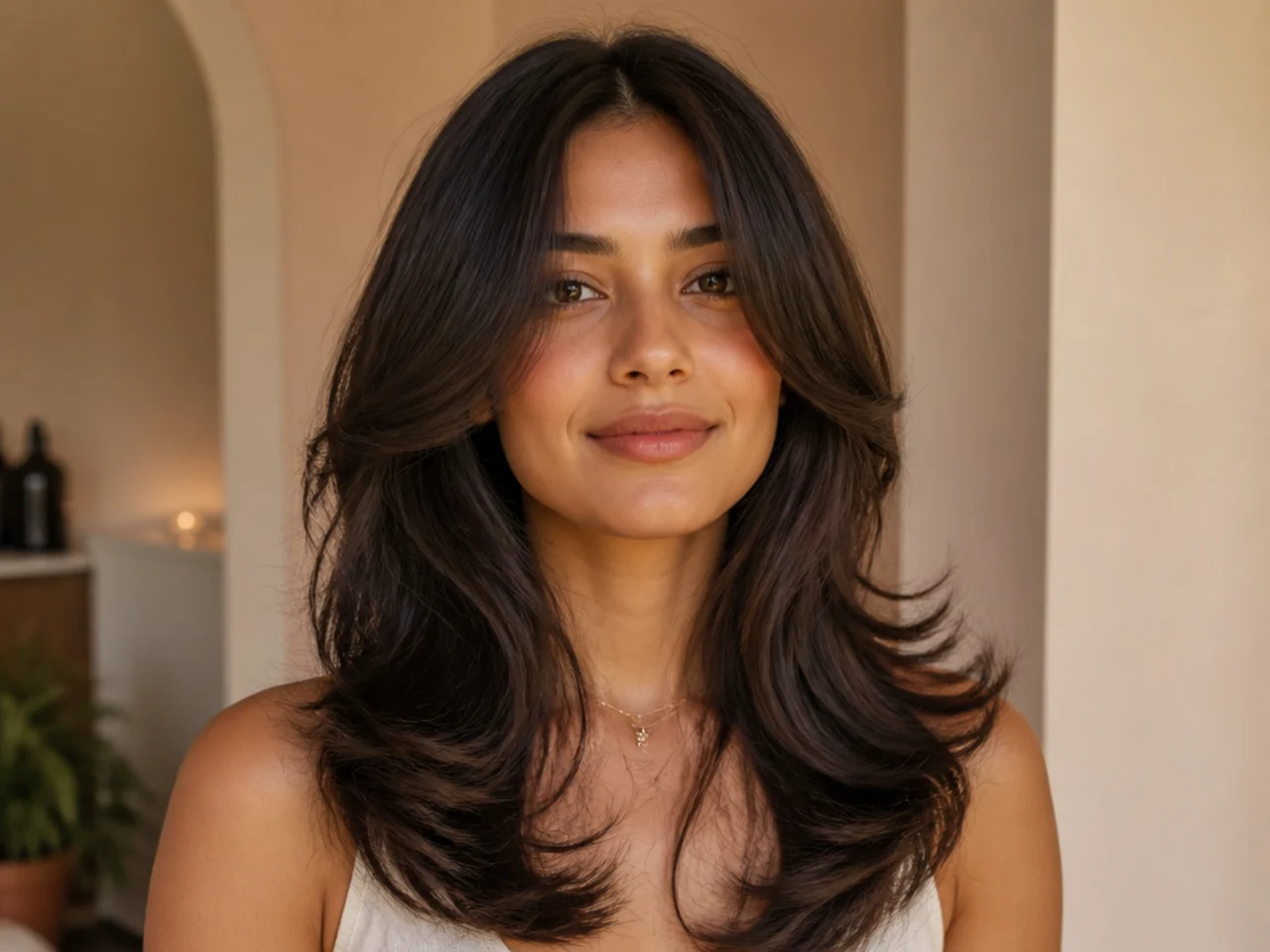
24. Air Dried Butterfly
Cream through the ends, nothing at the roots, and left alone. Air drying gives the softest version of the cut because the tier settles where it naturally falls, so ask for it cut an inch shorter to compensate for the height you lose.
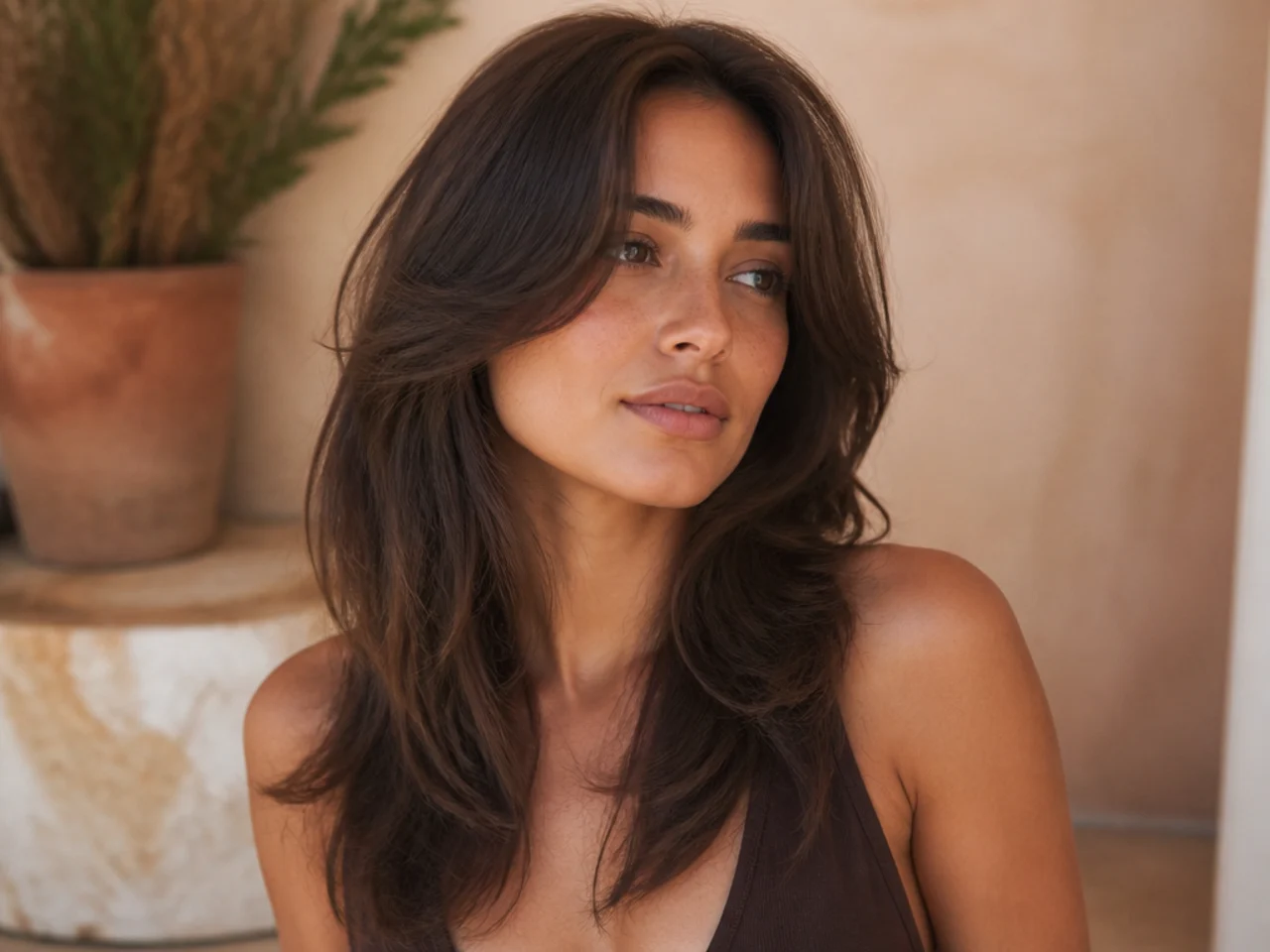
25. Butterfly at Ten Weeks
The short tier has dropped toward the length and the gap now reads as a soft layer rather than a step. Both tiers grew the same amount, but the shorter one has less length to hide it, which is why the cut looks blended before it looks long.

Styling and Upkeep
Dry the short tier away from the face. It sets in the direction it dries, and backward is the direction that makes the wing.
Keep product off the roots of the top tier. Anything heavy there cancels the propping the length underneath is doing.
Trim the tier, not the length. The gap is what fades first, and recutting the perimeter does nothing to restore it.
Use a large round brush. A small barrel curls the tier under instead of turning it back, which closes the gap you are trying to show.
Refresh with water rather than more product. Damp hair resets and redries into position; layered product only adds weight.
Mistakes to Avoid
Blending the two tiers together. That turns a butterfly into ordinary long layers and removes the propping that creates the volume.
Cutting the top tier at the collarbone on medium hair. There is not enough distance left below it for the gap to read.
Thinning the perimeter on fine hair. The outline is the only place density shows, and there is none to spare.
Cutting curly hair wet. Curl draws up by around half, so the tier lands at the ear instead of the jaw.
Drying the tier forward. It falls flat against the cheek and the wing shape never appears.
FAQ
Does it work on medium hair? Yes, with the short tier at the jaw rather than the collarbone.
Where does the volume come from? The long length physically props the short tier up.
How long does it last? Eight to ten weeks before the gap stops reading.
Final Thoughts
Two numbers make this cut repeatable: where the perimeter sits and where the short tier stops. On medium hair the second number is the one that gets cut wrong, because it is usually copied from a photograph of hair four inches longer.
For the full range of lengths and how the layers are built see the butterfly haircut guide. See also butterfly haircut for medium hair. More in Womens Hairstyles.