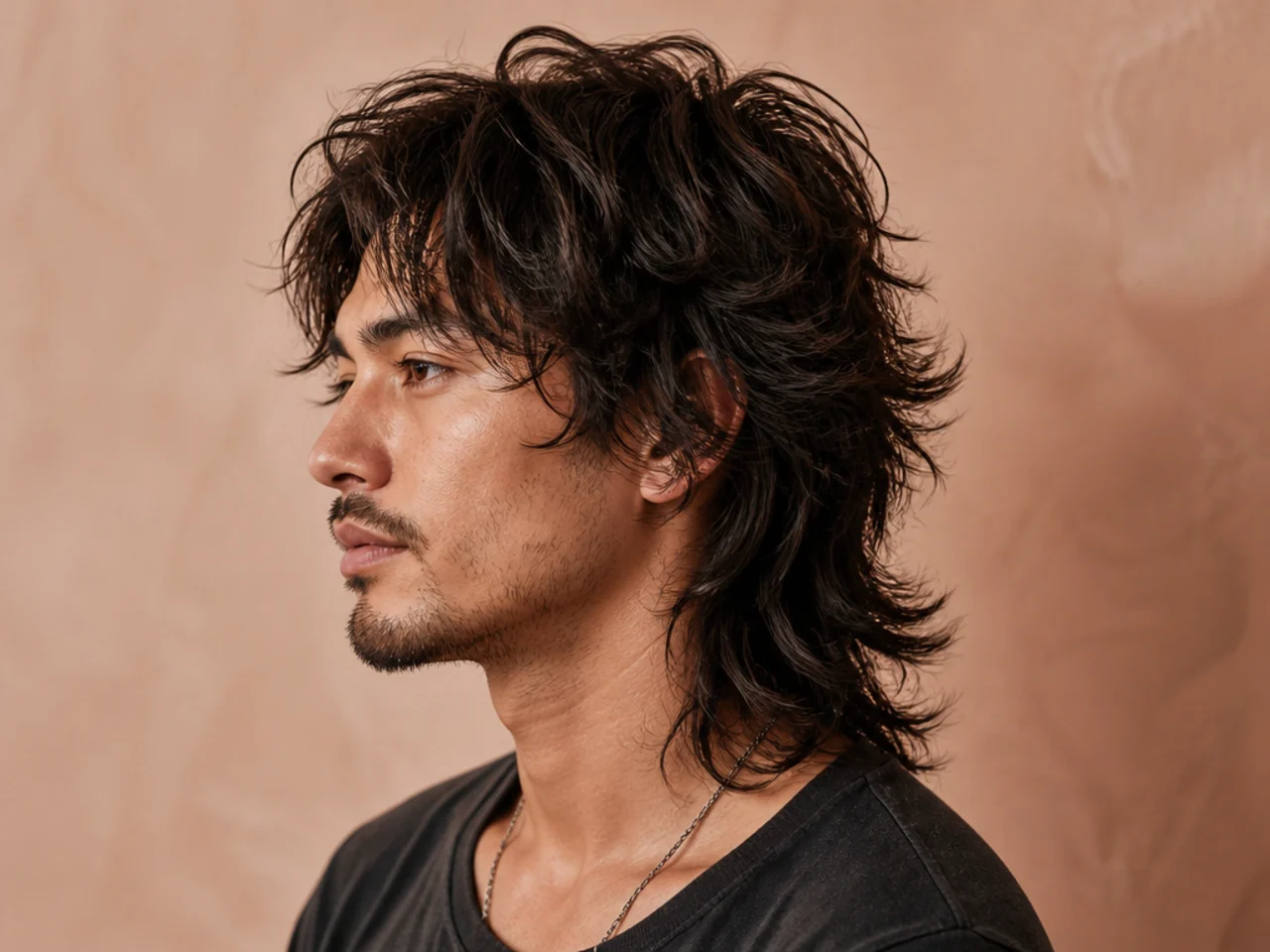
25 Short Wolf Cut Looks For Women Over 40
Twenty five short wolf cuts and the one adjustment that makes the shape work on hair that has thinned. A wolf cut is built on a disconnection, and how deep that disconnection goes is what decides whether the crown lifts or shows scalp.
In this article · 32
- What Separates a Wolf Cut From a Shag
- Choosing the Version That Suits Your Density
- The 25 Short Wolf Cut Looks
- 1. The Soft Short Wolf Cut
- 2. The Wolf Cut With Curtain Bangs
- 3. The Wolf Cut With a Blunt Fringe
- 4. The Chin Length Wolf Cut
- 5. The Collarbone Wolf Cut
- 6. The Wolf Cut on Fine Hair
- 7. The Wolf Cut on Thick Hair
- 8. The Wolf Cut on Grey Hair
- 9. The Wavy Wolf Cut
- 10. The Curly Wolf Cut
- 11. The Straight Wolf Cut
- 12. The Coily Wolf Cut
- 13. The Wolf Cut With a Shorter Crown
- 14. The Wolf Cut With a Longer Nape
- 15. The Wolf Cut With Face Framing Layers
- 16. The Wolf Cut With a Deep Side Part
- 17. The Wolf Cut With Highlights on the Top Layer
- 18. The Wolf Cut With Blended Grey
- 19. The Wolf Cut With a Tapered Nape
- 20. The Air Dried Wolf Cut
- 21. The Round Brushed Wolf Cut
- 22. The Wolf Cut With Crown Volume
- 23. The Wolf Cut Tucked Behind the Ears
- 24. The Wolf Cut at Ten Weeks
- 25. The Wolf Cut Grown Into a Shag
- Styling and Upkeep
- Mistakes to Avoid
- FAQ
- Final Thoughts
A wolf cut is not a shag with a different name, and the difference is the thing that decides whether it suits you.
A shag blends, a wolf cut disconnects. The short crown is left deliberately separate from the length below it rather than laddered into it.
That gap is what has to be measured. Too deep and the crown cannot cover the length underneath, which on thinner hair means visible scalp rather than visible volume.
What Separates a Wolf Cut From a Shag
A deliberate step, not a ladder. The crown finishes well above the length and nothing is cut to bridge the two, which is the whole visual signature.
Weight concentrated at the top. Because the crown is short and dense, it sits high and holds its own height without help.
A perimeter that stays long. The length underneath is barely touched, so the outline reads as a longer cut with a shorter one on top of it.
It grows out as a gap. A blended layer softens as it lengthens. A disconnection just moves down the head, which is why the trim schedule matters more here.

Choosing the Version That Suits Your Density
Measure the gap, not the length. Ask for the crown to finish a set distance above the perimeter. Two inches is safe on most heads; four is a commitment.
Check your parting in daylight first. If the scalp already shows along the parting, keep the crown longer so it has enough to lie over.
Let texture set the depth. Curly and coily hair fills a gap that would look bare on straight hair, so the same measurement gives two different results.
Decide how you dry it. Air drying suits a shallower disconnection. A deep one needs a brush at the crown to keep the two sections reading as one shape.
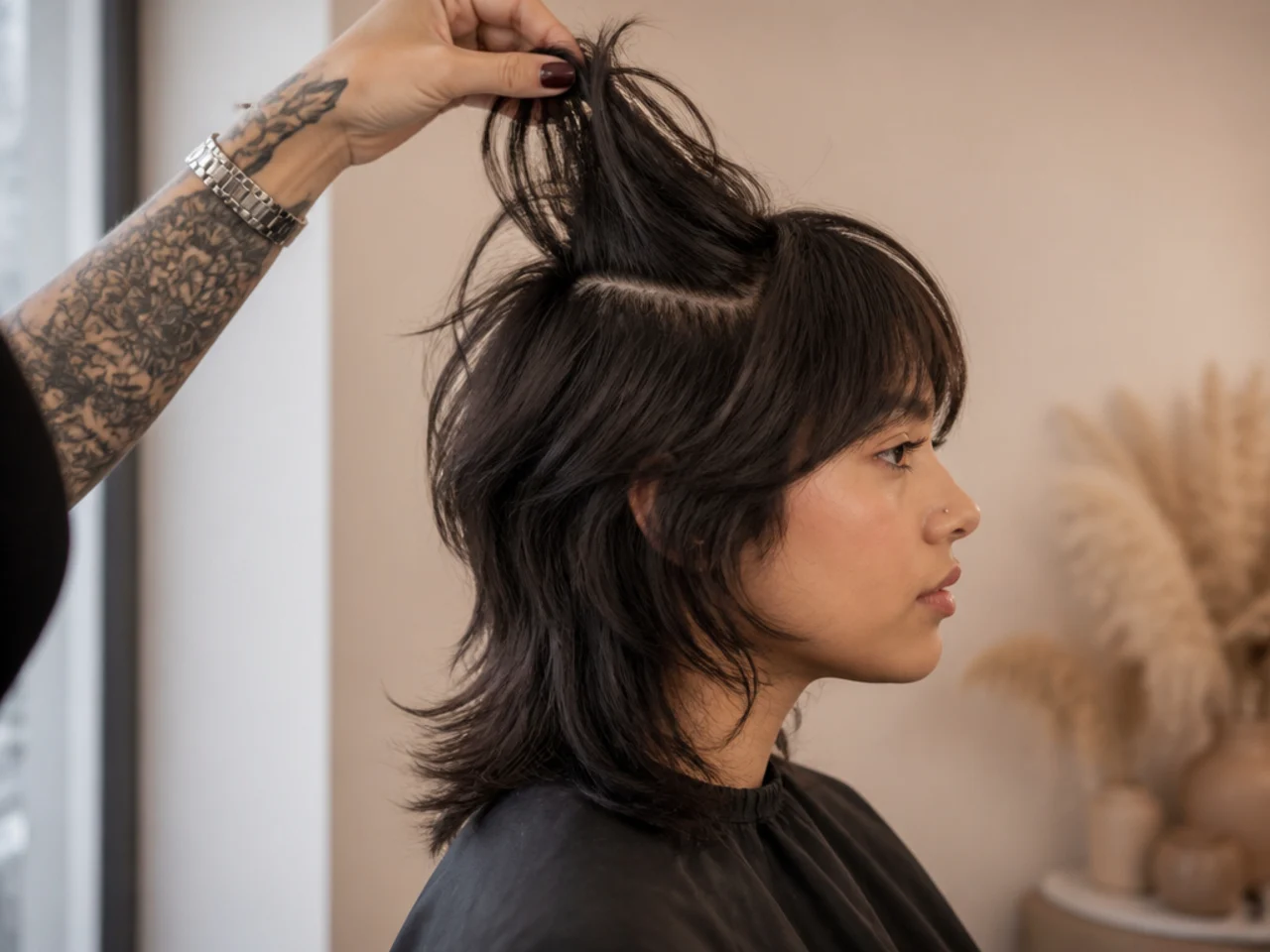
The 25 Short Wolf Cut Looks
1. The Soft Short Wolf Cut
The crown finishes about two inches above the perimeter, which is enough to read as a step without leaving a bare band between the two. It is the version that works on the widest range of densities, because the crown still has enough length to lie over the section beneath it.
2. The Wolf Cut With Curtain Bangs
The fringe splits centrally and sweeps out to meet the crown layers. Because a wolf cut already carries weight at the top, the fringe has something to sit against, and it holds its sweep for longer than the same fringe would on a one length cut.

3. The Wolf Cut With a Blunt Fringe
A heavy fringe cut level with the brows against a heavily textured crown. Keep the fringe section shallow, because a deep one removes mass from the crown, and the crown is the part of a wolf cut that is doing all the structural work.

4. The Chin Length Wolf Cut
The perimeter lands at the chin and the crown sits around the top of the ear. At this length the gap has to be shallow simply because there is not much distance available, which makes it the most forgiving short version.

5. The Collarbone Wolf Cut
The longest cut that still counts as short, with the perimeter just above the collarbone. The extra length below gives the disconnection somewhere to land, so the step can be deeper without any bare band appearing.

6. The Wolf Cut on Fine Hair
Fine strands cover less scalp per hair, so the crown is kept longer and the disconnection shallow. What fine hair gains here is root lift, since a short crown carries much less of its own weight and stops collapsing by mid morning.

7. The Wolf Cut on Thick Hair
Thick hair can carry a deep disconnection without showing anything through it, but it builds width at ear level. Removing weight from inside the length rather than the crown keeps the outline from spreading into a triangle.

8. The Wolf Cut on Grey Hair
Grey strands are often coarser and more wiry than the pigmented hair beside them, so they stand away from the head more readily. Cut slightly longer than the surrounding sections, that wiriness supplies crown height instead of flyaway.

9. The Wavy Wolf Cut
Waves bend across the disconnection and partly disguise it, which lets the gap be deeper than a straight head could carry. It is also the lowest effort version, because the shape the cut wants is close to what the hair does unaided.

10. The Curly Wolf Cut
Curls fill space, so a gap that would look bare on straight hair reads as volume here. Cut dry, because a curl stretches between one and three inches when wet and a disconnection measured wet lands somewhere else entirely.

11. The Straight Wolf Cut
Straight hair shows the step exactly as it was cut, with nothing to soften it. That makes it the sharpest looking version and the least forgiving, since an uneven disconnection is visible from across the room.

12. The Coily Wolf Cut
Coils shrink to a fraction of their stretched length, so the disconnection is planned on dry hair and shaped cluster by cluster. Combing through first would pull the coils apart, and the piece being cut would no longer be the piece that ends up sitting there.

13. The Wolf Cut With a Shorter Crown
Taking the crown higher increases the contrast without touching the length. Contrast is the ratio between the two sections, so removing an inch from the crown raises it as much as adding an inch to the perimeter would.

14. The Wolf Cut With a Longer Nape
The back perimeter is left below the rest, which is where the wolf cut borrows from the mullet. It suits a long neck and it needs the sides checked carefully, because the eye reads any imbalance between nape and side length immediately.

15. The Wolf Cut With Face Framing Layers
The front pieces start at the cheekbone and angle back into the crown. Because they are shorter than everything else at the front, they sit on top of it, so they move independently and stop the face line reading as a solid block.

16. The Wolf Cut With a Deep Side Part
A heavier bank of hair combed across lands on the shorter crown layers underneath and is held up by them. It is the cheapest volume available on this cut, and on thinner hair it also moves the parting off a line the scalp has already learned.

17. The Wolf Cut With Highlights on the Top Layer
Lift placed only on the crown, which is the section that sits above everything else and catches light first. The same amount of colour distributed through the length would be half as visible, because most of it would be underneath something.

18. The Wolf Cut With Blended Grey
Fine lightened pieces set through the mid lengths so the grey reads as a highlight rather than as regrowth. It removes the hard line at the parting, which is the part of growing out grey that people find hardest to live with.

19. The Wolf Cut With a Tapered Nape
The bottom hairline is shortened gradually rather than cut across, so it hugs the neck instead of standing away from it. A taper leaves hair the whole way down, which is why it softens as it grows rather than showing a line.

20. The Air Dried Wolf Cut
Product applied damp and the hair left alone. Hair sets in the shape it dries in, so an air dried cut holds whatever position it was left in, which is why the crown has to be pushed up and forward before you stop touching it.

21. The Round Brushed Wolf Cut
The crown is dried over a brush so the step blends visually into the length. This is the version to ask for if the disconnection is deep, because the brush is what stops the two sections reading as two separate haircuts.

22. The Wolf Cut With Crown Volume
The roots at the crown are dried against their growth direction before anything else is done. Roots dried the way they grow lie flat, and once flat they cannot be lifted afterwards without wetting them again.
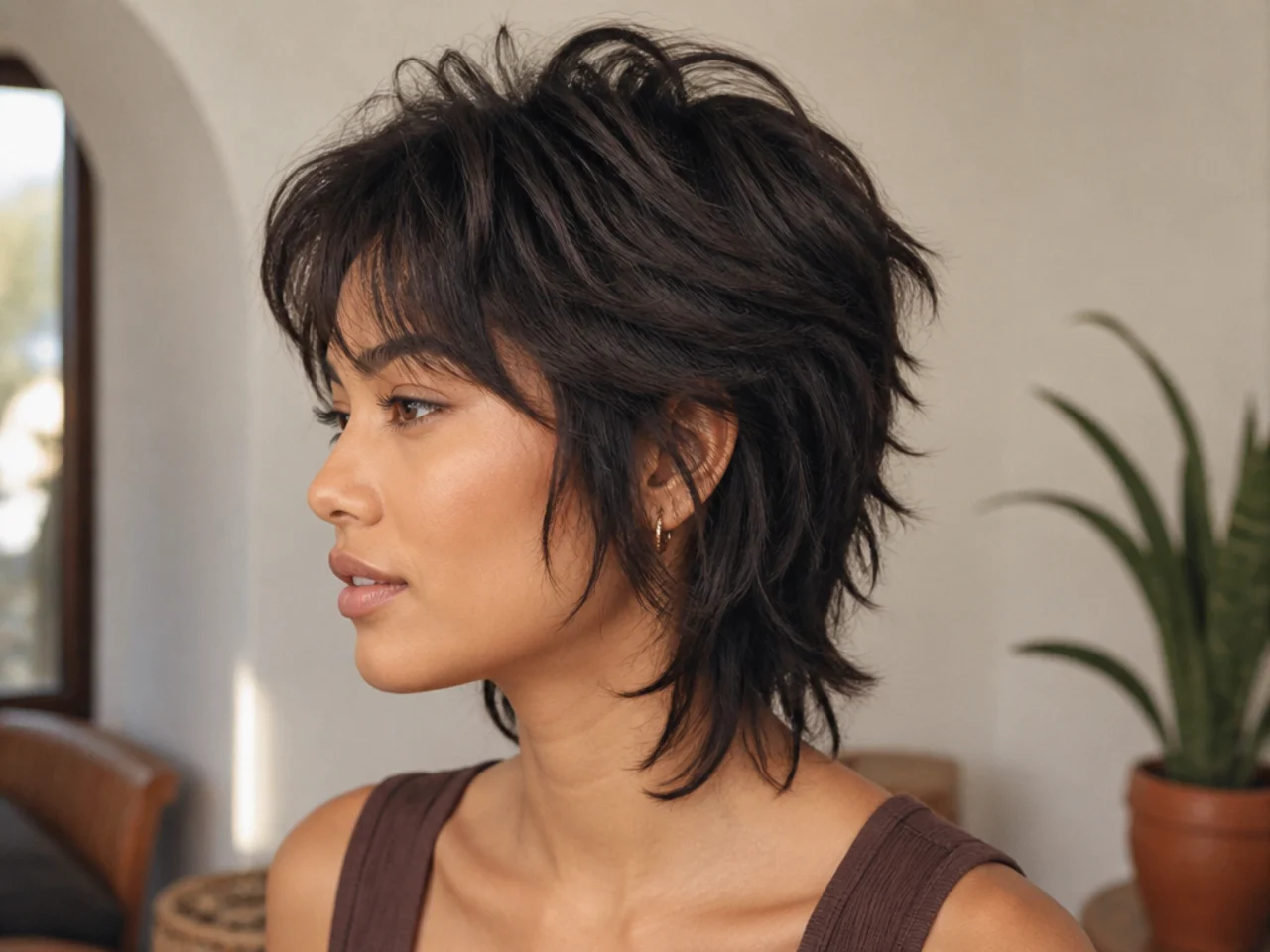
23. The Wolf Cut Tucked Behind the Ears
Cut so the shortest side pieces still reach past the earlobe, which is the minimum length that will stay tucked. Anything shorter falls forward again within minutes, and a wolf cut has plenty of short pieces near the face to catch this out.

24. The Wolf Cut at Ten Weeks
Both sections have grown by the same amount, so the gap between them is unchanged and has simply moved down the head. The shape still reads correctly, and what has actually gone is the fringe and the face framing.

25. The Wolf Cut Grown Into a Shag
Left long enough, the crown reaches far enough down that the step stops registering and the cut reads as layered instead. It is a reasonable way to exit the shape, and it is why some people book a wolf cut twice a year rather than every eight weeks.

Styling and Upkeep
Dry the crown roots first, against the growth. The crown carries the whole shape, and a flat crown cannot be corrected further down.
Use a light paste or texture spray. Creams and oils add weight to the section that is holding everything else up.
Push the crown forward as it dries. Hair sets in the direction it dries, so drying it back and combing it forward leaves the cut working against itself.
Trim the fringe and face framing between appointments. They move first and they are cheap to fix.
Book every eight to ten weeks. A disconnection does not soften as it grows, it only descends, so it needs resetting rather than tidying.

Mistakes to Avoid
A deep disconnection on thin hair. The crown then has too little length to cover what is beneath, and the gap shows as scalp rather than shape.
Cutting curls wet. A curl stretches by one to three inches under water, so the step you measured is not the step you get.
Weight taken out of the crown. Everything above the disconnection is structural. Thin it and the shape collapses onto the length.
Letting it run past twelve weeks. The gap descends until it sits at the wrong height for the head and the cut stops reading as intentional.
Judging the shape before the crown is dry. Damp hair hangs at its own weight, and the lift that defines the cut only appears once it dries.

FAQ
Wolf cut or shag? A shag blends its layers; a wolf cut leaves a gap between them.
Does it work on thin hair? Yes, with the crown kept within about two inches of the length.
How often? Eight to ten weeks. A disconnection descends rather than softening.

Final Thoughts
Book it by the measurement rather than the name. "Crown finishing two inches above the perimeter, weight left in the top, texture only in the ends" describes a cut a stylist can deliver, where the words wolf cut on their own could mean four different depths.
For the shape at other lengths and on other heads see the short wolf cut and the korean wolf cut, which handles the same disconnection with a much softer fringe. More in Mullet and Wolf Cut.