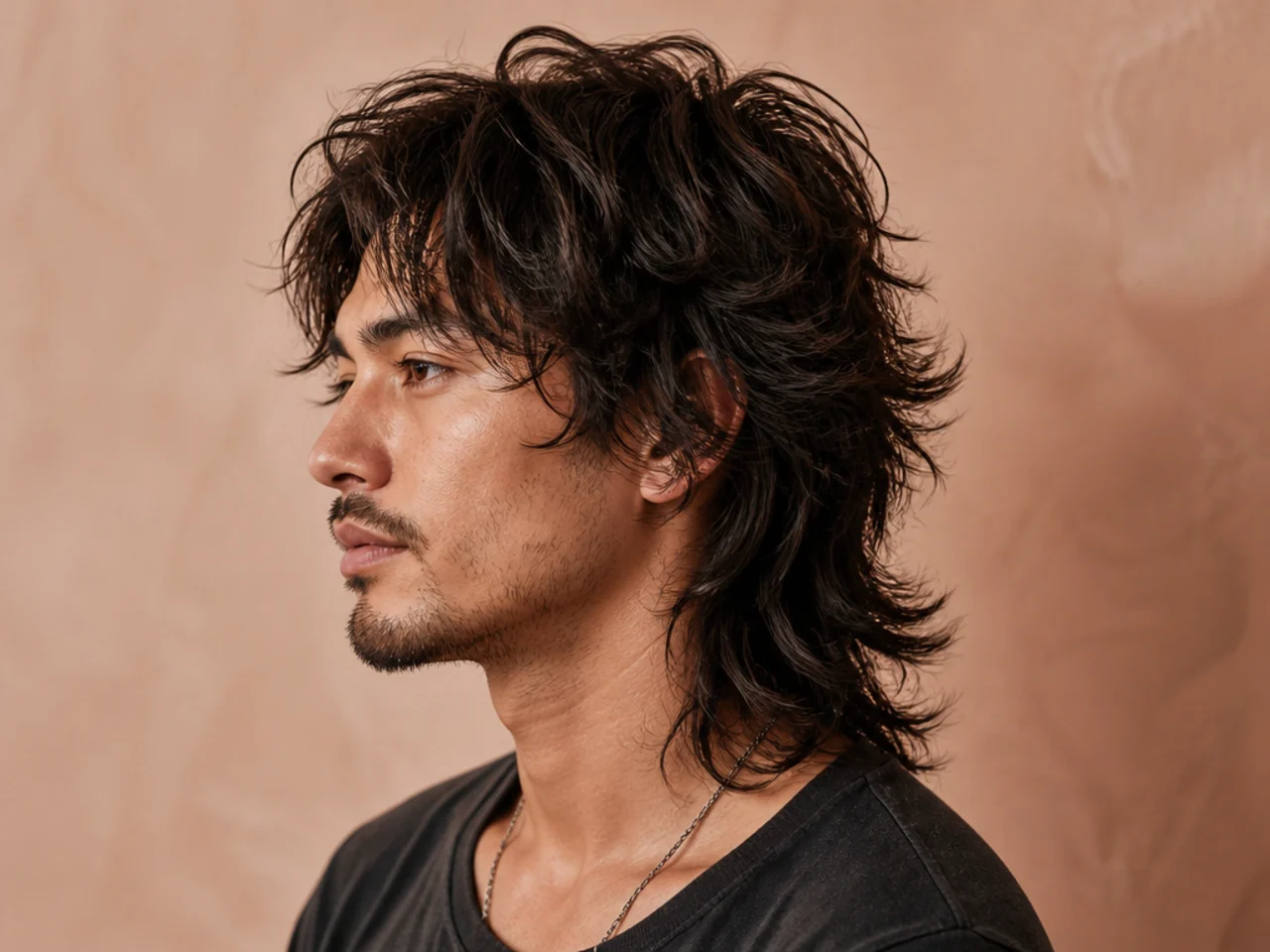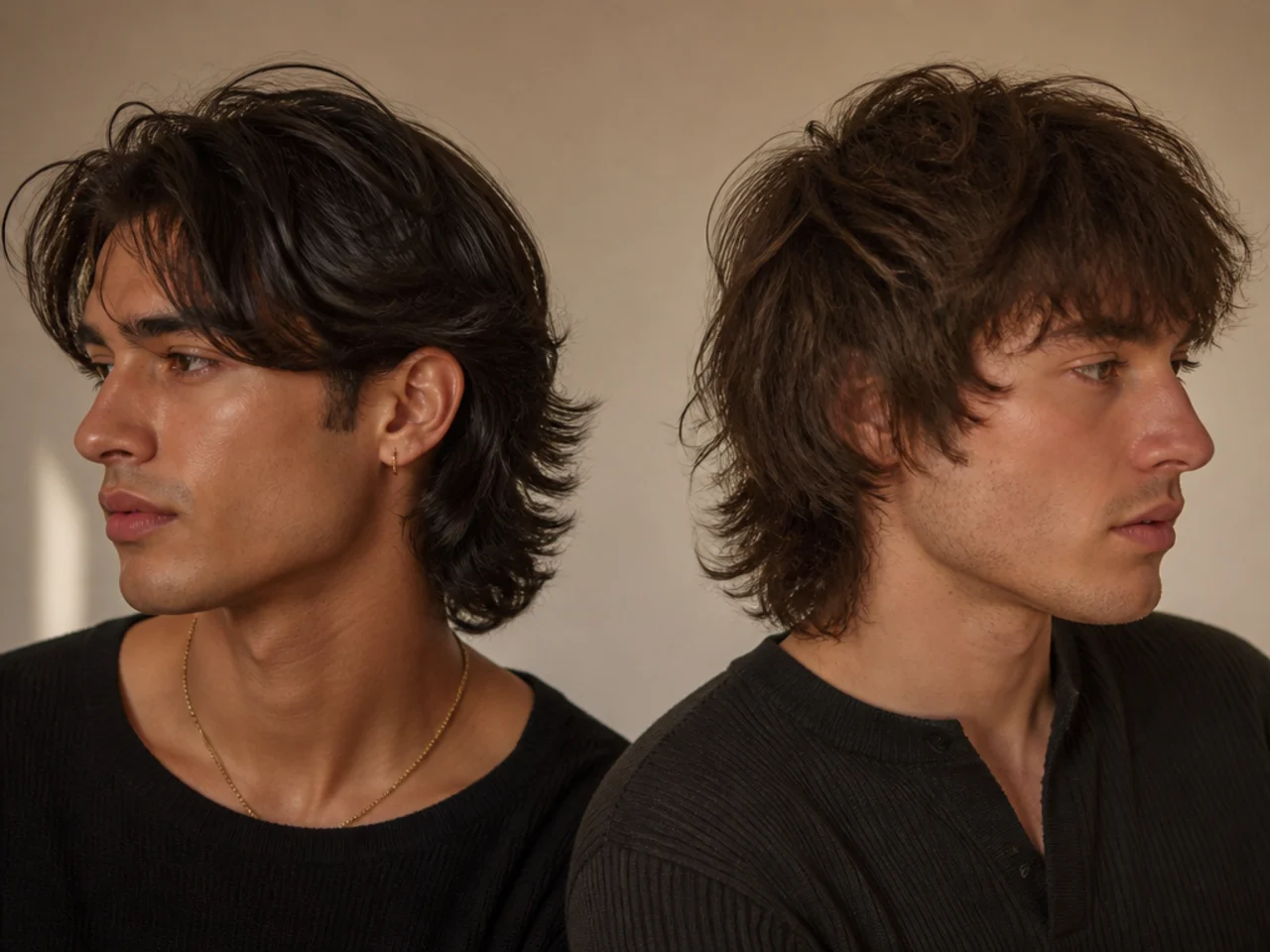
25 Short Wolf Cuts That Flatter Round Faces
Twenty five short wolf cuts for a round face, and the outline rule they all obey. A short cut that ends level with the chin closes the face into a circle, while the same length with height at the crown and a broken hemline does the opposite.
In this article · 32
- Why Short Cuts Read Wide on a Round Face
- Where to Stop the Length
- The 25 Short Wolf Cut Variations
- 1. Jaw Length Wolf Cut With Crown Height
- 2. Wolf Cut Lob at the Collarbone
- 3. Short Wolf Cut With Curtain Bangs
- 4. Short Wolf Cut With Side Swept Bangs
- 5. Short Wolf Cut With No Fringe
- 6. Short Wolf Cut With a Centre Part
- 7. Short Wolf Cut With a Deep Side Part
- 8. Short Wolf Cut With Asymmetric Front Pieces
- 9. Short Wolf Cut With a Long Nape Tail
- 10. Short Wolf Cut With a Tapered Nape
- 11. Short Wolf Cut on Straight Hair
- 12. Short Wolf Cut on Wavy Hair
- 13. Short Wolf Cut on Curly Hair
- 14. Short Wolf Cut on Fine Hair
- 15. Short Wolf Cut on Thick Hair
- 16. Short Wolf Cut With a Shaggy Crown
- 17. Short Wolf Cut With Piecey Ends
- 18. Short Wolf Cut With an Undercut
- 19. Short Wolf Cut With a Money Piece
- 20. Short Wolf Cut With Shadowed Roots
- 21. Short Wolf Cut With Framing Below the Jaw
- 22. Short Wolf Cut With Chin Length Framing
- 23. Short Wolf Cut Worn Textured and Messy
- 24. Short Wolf Cut Tucked Behind One Ear
- 25. Short Wolf Cut at Eight Weeks
- Styling and Upkeep
- Mistakes to Avoid
- FAQ
- Final Thoughts
Short haircuts get blamed for widening a round face when the real culprit is the outline: the length stopped exactly where the face is widest.
Height at the crown narrows a round face. Width at the cheek does the opposite. A round face is close to as wide as it is long, so the cut has to change that ratio rather than sit inside it.
A wolf cut is built to do this. Short disconnected layers stack volume above the ears, and a broken, uneven hemline stops the shape closing into a circle at the bottom.
Why Short Cuts Read Wide on a Round Face
The eye reads the widest point, not the length. Wherever the hair is fullest becomes the width of the head, and on most short cuts that lands somewhere between the ear and the jaw.
A level hemline closes the shape. A hard horizontal at the chin joins the two sides of the face into one continuous circle instead of leaving an escape route downward.
A round face has no hard jaw angle. Nothing in the bone structure interrupts the curve, so the haircut has to supply the straight lines and vertical direction.
Crown height is the cheapest correction available. Adding two centimetres of lift at the top changes the width to height ratio without touching the sides at all.

Where to Stop the Length
Jaw length is the floor. It is the shortest perimeter that still passes the fullest part of the cheek rather than ending on it.
Keep the front longer than the back. Front sections that fall past the jaw draw two vertical lines beside the face, which is the strongest narrowing effect any short cut has.
Break the hemline. Point cutting the ends removes the single hard horizontal and replaces it with a broken edge the eye reads as texture instead of a boundary.
Put the shortest layer at the crown. Layers cut at the temple push volume outward beside the eyes, which is width a round face has no room for.

The 25 Short Wolf Cut Variations
1. Jaw Length Wolf Cut With Crown Height
The perimeter clears the fullest part of the cheek and the shortest layer sits on top of the head. This is the shortest version that still narrows rather than widens, and every other cut on this list is a variation on the same two decisions.
2. Wolf Cut Lob at the Collarbone
The longest cut that still counts as short, and the easiest on a round face because the extra inches keep the eye travelling downward. The crown layers have to be cut higher here, since more length below means more weight pulling them flat.

3. Short Wolf Cut With Curtain Bangs
The fringe splits at the centre and sweeps outward in two diagonals, and a diagonal cuts across a circular outline where a horizontal reinforces it. The split also carries each half sideways under its own weight, so it stays clear of the eyes.

4. Short Wolf Cut With Side Swept Bangs
One long diagonal instead of two, which is the most direct interruption of a round outline available. The fringe has to start well back on the head to have the length to travel across, or it lands as a short piece sitting on the brow.

5. Short Wolf Cut With No Fringe
An open forehead adds visible vertical space above the eyes, which lengthens the face without a single cut at the front. It also leaves the face framing free to fall past the jaw, where it does the most narrowing.

6. Short Wolf Cut With a Centre Part
The parting draws a vertical line down the middle of the face and divides the front volume into two smaller masses. Two narrow shapes read as less wide than one broad one, which is the whole effect in a single styling decision.

7. Short Wolf Cut With a Deep Side Part
Moving the parting off centre stacks hair on one side, and stacked hair rises. The height is real but so is the extra width on the heavy side, so the layers there need thinning from underneath before the trade pays off.

8. Short Wolf Cut With Asymmetric Front Pieces
One side cut longer than the other so the two sides of the face are never read as a matched pair. Asymmetry defeats the symmetry that makes a round shape read as a circle, and it costs nothing in length.

9. Short Wolf Cut With a Long Nape Tail
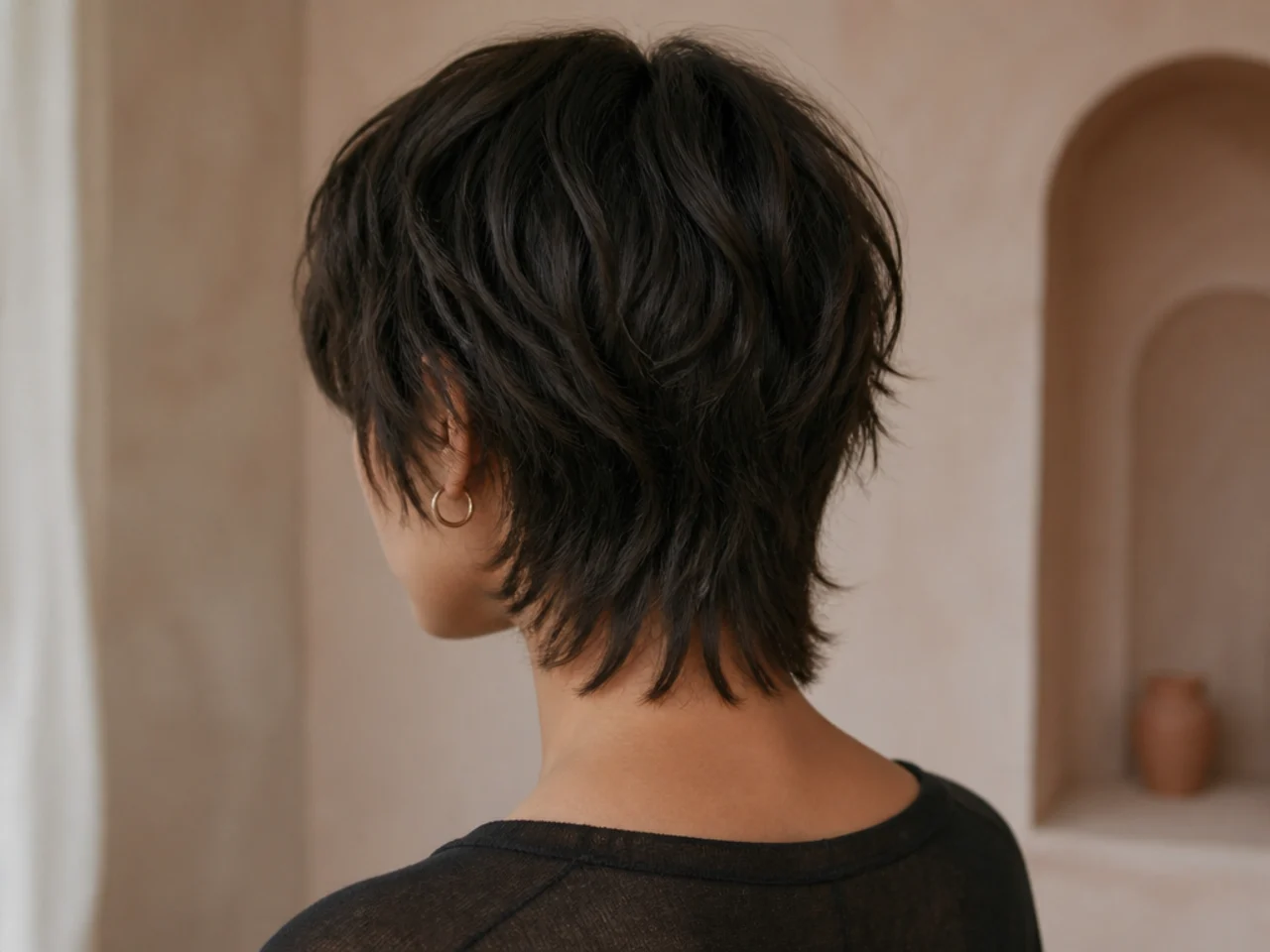
The back left longer than the sides, with a real disconnection rather than a blend. The tail pulls the outline downward at the centre back, which extends the shape vertically while the sides stay short and narrow.

10. Short Wolf Cut With a Tapered Nape
The back shortened gradually into the neck so it keeps length rather than going bare. A taper holds its shape for three to four weeks where a fade to skin blurs within one or two, which matters on a cut this short.
11. Short Wolf Cut on Straight Hair
Straight hair holds every layer edge as a visible step, so the disconnection reads sharply and the crown volume has to be created rather than assumed. It also falls to exactly the length it was cut, which makes the outline fully predictable.

12. Short Wolf Cut on Wavy Hair
The bend lifts itself off the scalp, so a shallower layer produces the height a straight head would need a much shorter one for. Waves also scatter light, which hides small inconsistencies in a short blend.

13. Short Wolf Cut on Curly Hair
Measure dry. Curl springs back up to a third shorter as it dries, so a short cut planned wet finishes far above the jaw and lands the fullest curl beside the cheek, which is the one place a round face cannot take it.

14. Short Wolf Cut on Fine Hair
Fine hair has little weight to remove, so it wants few layers cut long rather than many cut short. The height instead comes from the perimeter being kept blunt enough to hold density at the ends while the crown carries the lift.

15. Short Wolf Cut on Thick Hair
Dense hair needs weight taken out from inside the sides, not more layers added on the surface. Every surface layer ends further out than the one below it, so on a thick head extra layering widens the silhouette exactly where a round face least needs it.

16. Short Wolf Cut With a Shaggy Crown
Choppy pieces at the top that are too short to lie flat under their own weight, so they stand and hold the lengths behind them open. The effect fades around eight weeks, when those pieces grow long enough to fall.
17. Short Wolf Cut With Piecey Ends
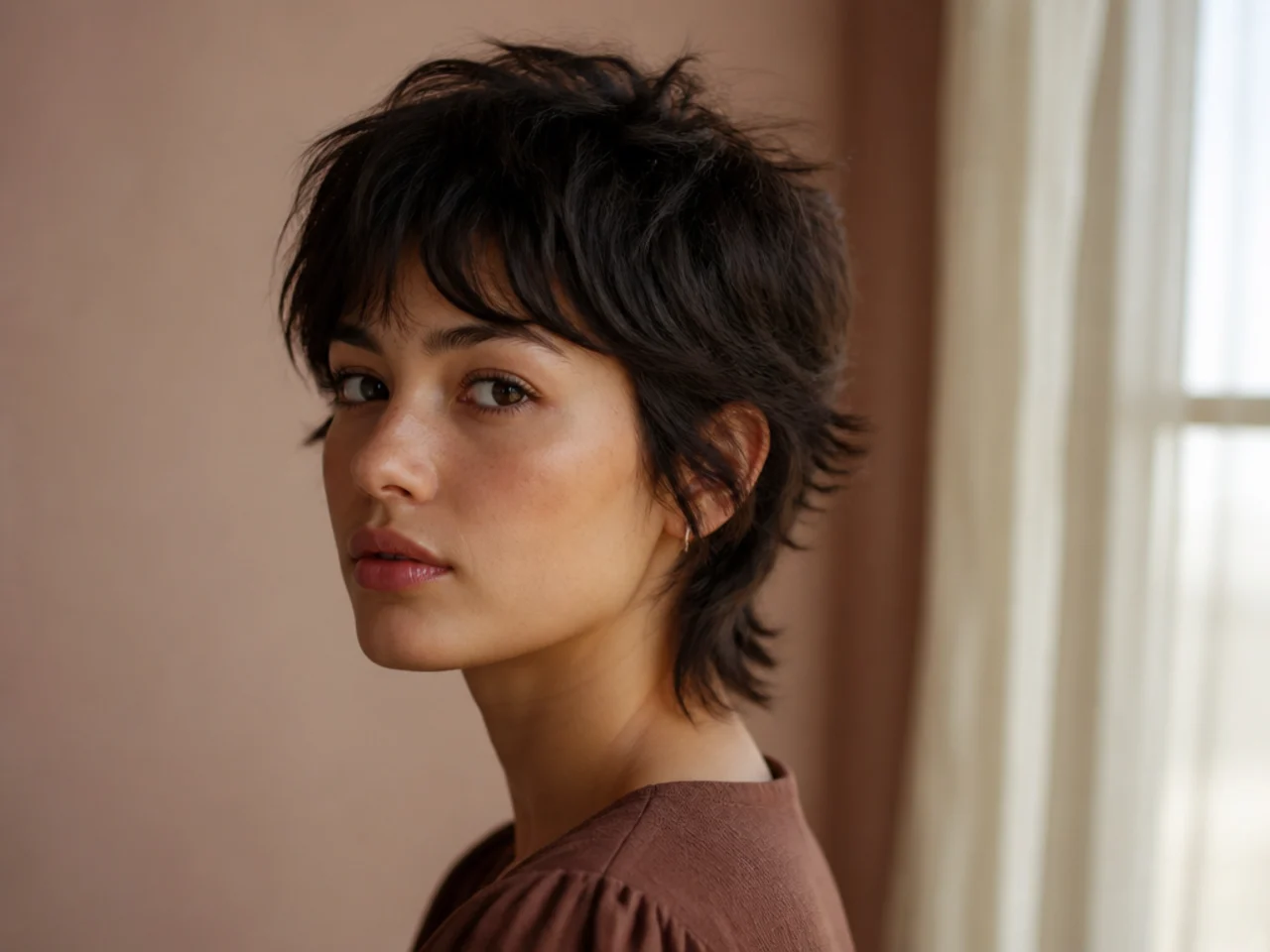
The last two centimetres point cut so the perimeter breaks into separate pieces rather than reading as one line. It removes the hard horizontal at the bottom of the cut, which is the edge that closes a round shape.

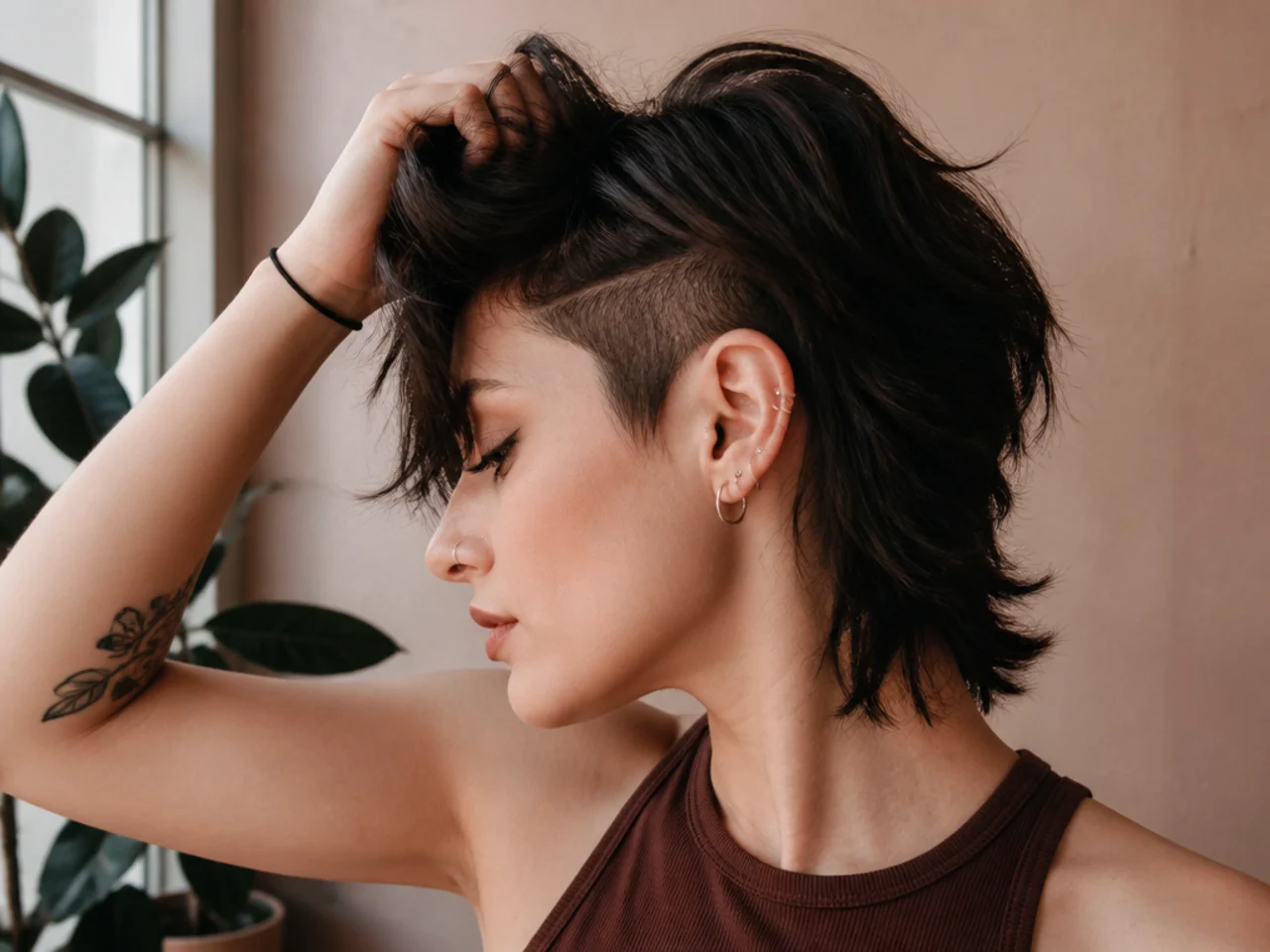
18. Short Wolf Cut With an Undercut
Weight removed from underneath at the nape and behind the ears, hidden completely when the hair is down. It narrows the sides and lightens the mass pulling the crown flat without shortening anything visible.
19. Short Wolf Cut With a Money Piece
Two lightened strips at the front, run as narrow verticals rather than broad panels. The eye follows a bright line along its length, so a vertical strip adds apparent height where a wide block beside the cheek adds width.

20. Short Wolf Cut With Shadowed Roots
Dark at the root fading lighter through the lengths sets up a vertical gradient, and the eye travels along a gradient from dark to light. On a short cut that is one of the few ways to add apparent length without adding any.

21. Short Wolf Cut With Framing Below the Jaw
The front sections left long enough to fall past the jawline while the rest of the cut stays short. Those two lengths act as vertical lines on either side of the face, which is the strongest narrowing tool a short cut has.

22. Short Wolf Cut With Chin Length Framing
The version to watch. Framing that stops at the chin ends the shape at the widest, softest part of a round face and draws attention straight to it. Dropping the same pieces two centimetres lower fixes it entirely, as the shapes in wolf cut ideas for every face show.

23. Short Wolf Cut Worn Textured and Messy
Product worked through dry hair separates the ends and lifts the roots, which raises the tallest point of the silhouette. A messy finish also breaks the outline into pieces, so there is no continuous curve for the eye to follow around.

24. Short Wolf Cut Tucked Behind One Ear
Tucking one side clears the cheek on that side and leaves the other covered, which makes the two halves of the face read differently. Uneven framing is harder for the eye to resolve into a circle than matched framing is.

25. Short Wolf Cut at Eight Weeks
The crown layers have dropped to the height the sides were cut at, the disconnection has closed and the shape has widened into the level line the cut was built to avoid. On a short cut this arrives sooner than on a long one, because the layers had less distance to fall.

Styling and Upkeep
Dry the crown upward first. The roots set in the direction they dry in, and the crown is the only section where that direction changes the silhouette.
Use a light texture spray, not a cream. Cream loads weight onto short pieces that were cut specifically to stand up under their own lack of it.
Style the front last. The framing has to be judged against the finished volume, since the same two pieces read differently once the crown is up.
Book at six to eight weeks. Short layers have less distance to fall before they meet the lengths below, so the shape closes sooner than on a long wolf cut.
Photograph the outline in week one. The tallest and widest points are the two measurements worth repeating, and both are gone by week eight.

Mistakes to Avoid
A level hemline at the chin. It draws a hard horizontal at the widest point and joins both sides of the face into one closed curve.
Layers cut at the temple. They push volume outward beside the eyes, which is width added at the height where a round face has the least room for it.
Framing that stops at the cheekbone. The fullest part of any section sits below where it was cut, so cheekbone framing peaks beside the cheek.
Cutting curl wet on a short cut. Shrinkage of up to a third turns a jaw length plan into an ear length result, and there is no length left to correct with.
Matching both sides exactly. Perfect symmetry is what lets the eye resolve the whole shape into a circle. One longer side prevents it.

FAQ
Can a round face wear it short? Yes, if the shape is tallest at the crown and narrowest at the cheeks.
How short can it go? Jaw length, with the front pieces left longer than the back.
Blunt or curtain fringe? Curtain. Two diagonals cut across a round outline.

Final Thoughts
Point at the photograph and say where you want the widest part of the hair to sit. That is the one instruction that decides whether a short cut narrows a round face or completes it, and it is not the same conversation as how many inches come off.
For the full length range of the cut see the short wolf cut, and for the same shape adapted to other face types see wolf cut hairstyles for every face. More in Mullet and Wolf Cut.