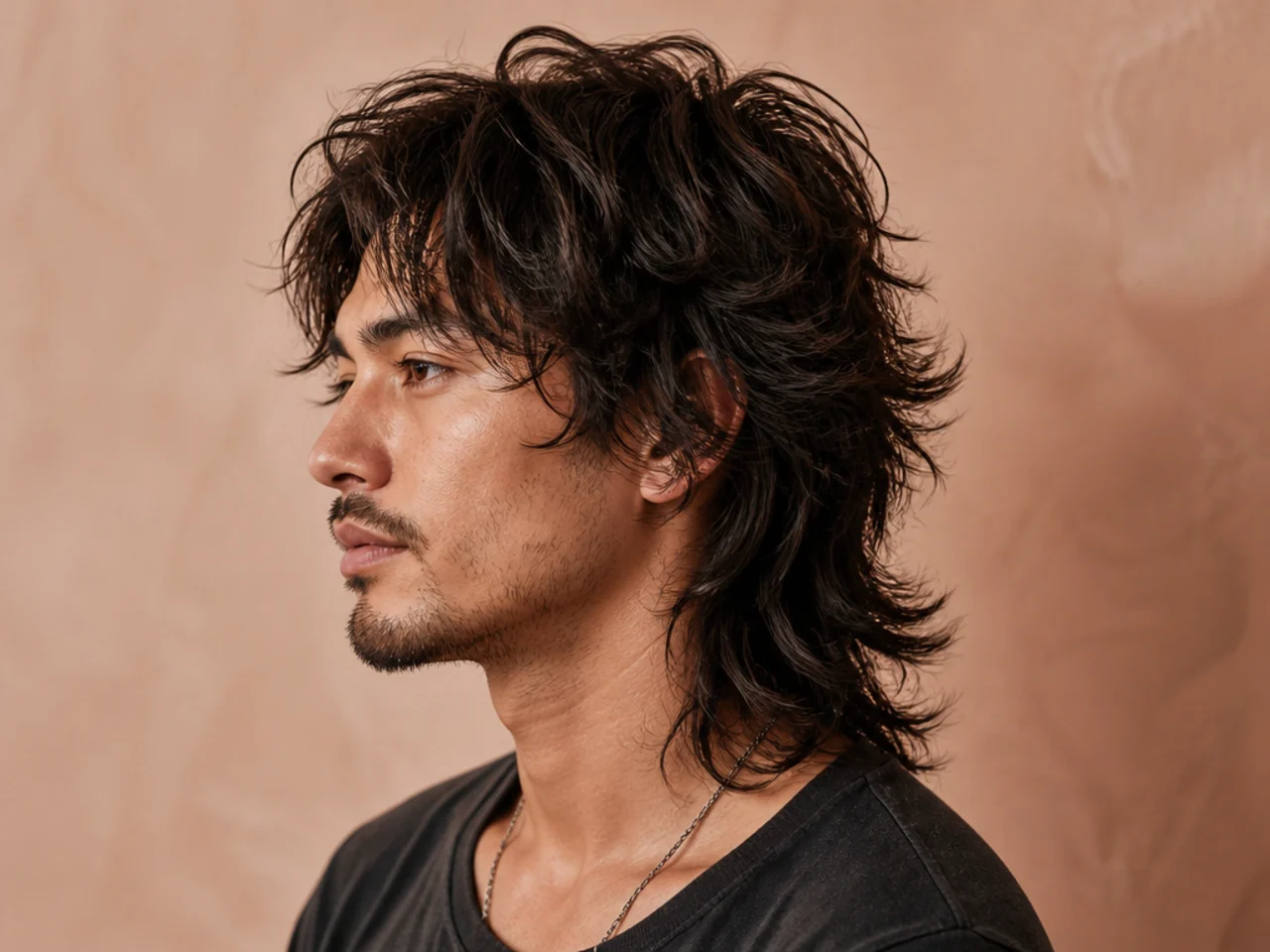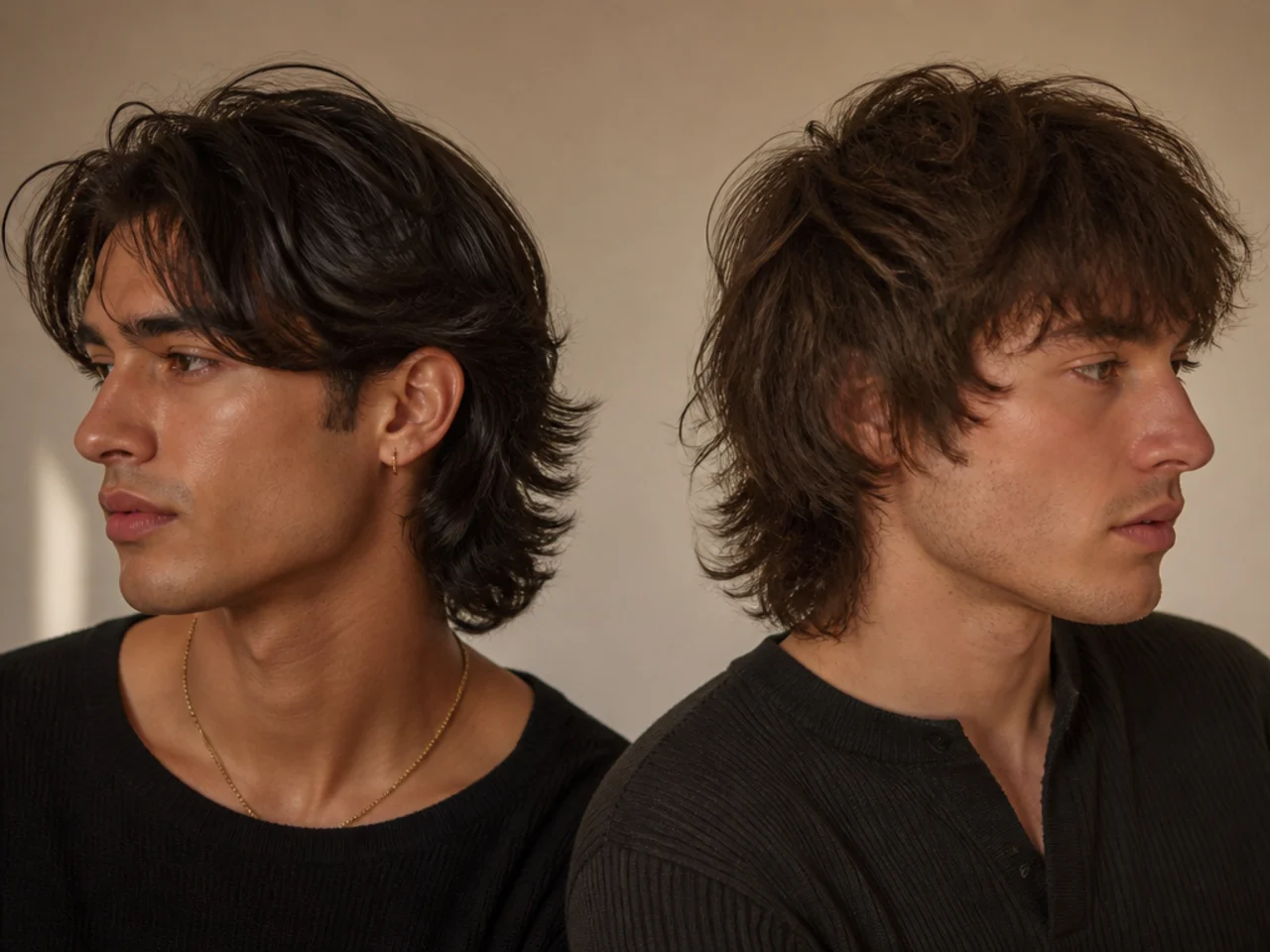
20 Curly Wolf Cuts That Flatter Round Face Shapes
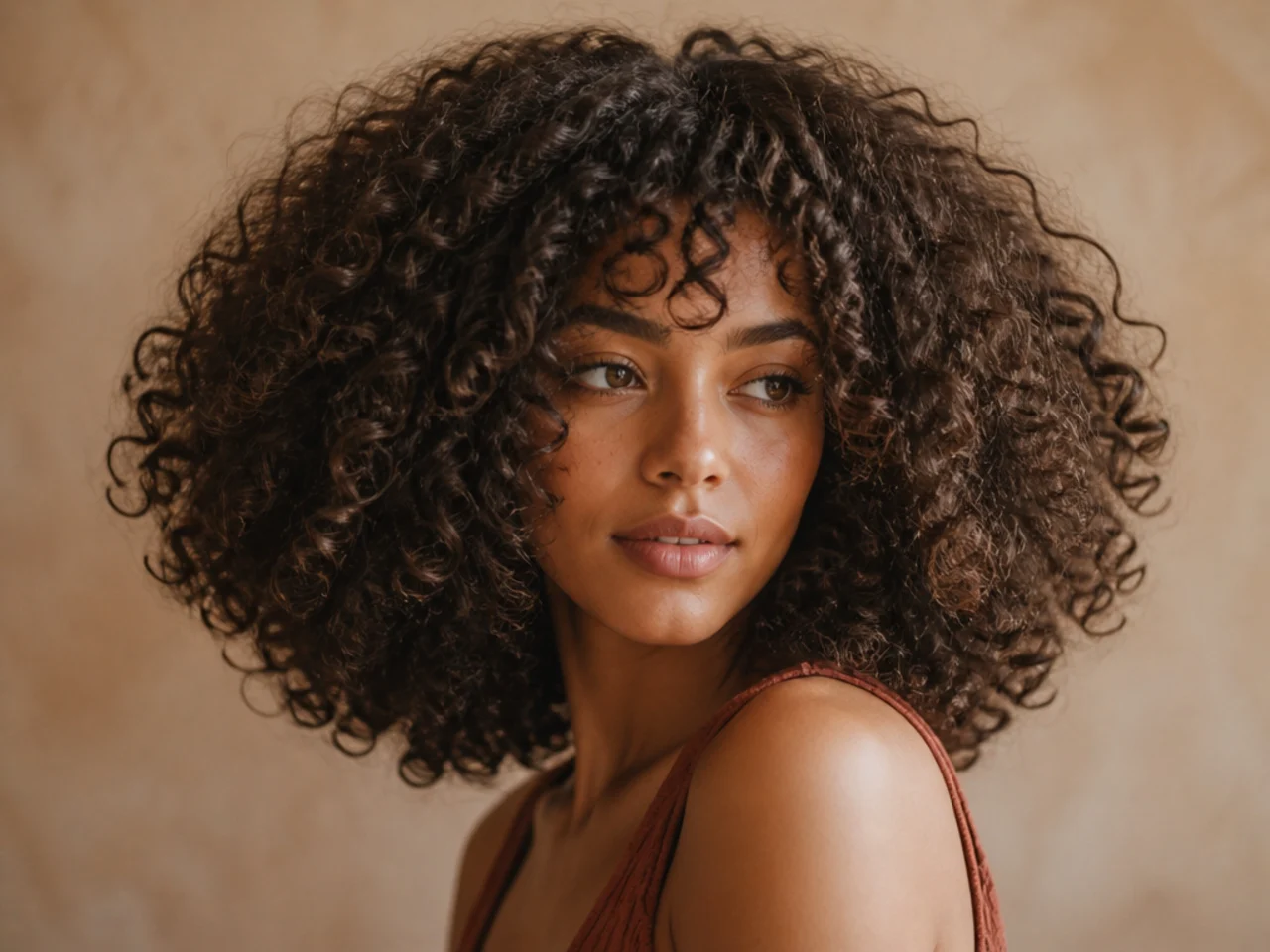
Twenty curly wolf cuts built for a round face, and the single rule they all follow — volume goes above the cheekbone and length continues below the jaw. Curl that expands level with the cheek widens the exact place a round face is already widest.
In this article · 27
- Why Curly Volume Widens a Round Face
- Choosing Your Layer Height and Length
- The 20 Curly Wolf Cut Variations
- 1. High Crown Layers With Jaw Length Framing
- 2. Curly Wolf Cut With Curtain Bangs
- 3. Curly Wolf Cut With a Centre Part
- 4. Curly Wolf Cut With a Deep Side Part
- 5. Collarbone Length Curly Wolf Cut
- 6. Curly Wolf Cut Past the Shoulder Blades
- 7. Curly Wolf Cut With Weight Removed at the Sides
- 8. Curly Wolf Cut With a Narrow Silhouette
- 9. Curly Wolf Cut on Loose Waves
- 10. Curly Wolf Cut on Tight Coils
- 11. Curly Wolf Cut on Fine Curls
- 12. Curly Wolf Cut on Dense Curls
- 13. Curly Wolf Cut With Side Swept Bangs
- 14. Curly Wolf Cut With No Fringe
- 15. Curly Wolf Cut With a Long Back Tail
- 16. Curly Wolf Cut With a Money Piece
- 17. Curly Wolf Cut With Cheekbone Framing
- 18. Curly Wolf Cut Worn Half Up
- 19. Curly Wolf Cut Styled With a Diffuser
- 20. Curly Wolf Cut at Ten Weeks
- Styling and Upkeep
- Mistakes to Avoid
- FAQ
- Final Thoughts
A curly wolf cut goes wrong on a round face for one predictable reason: the layers were placed level with the cheekbones, and curl expands sideways from wherever it starts.
Height above the cheekbone narrows the face. Width level with it does the opposite. A round face is roughly as wide as it is long, so the cut has to change that ratio rather than decorate it.
Curl adds width for free. Every coil takes up horizontal space the same hair would not use if it were straight, which means a layer plan that flatters a round face on straight hair can widen it on curly hair.
Why Curly Volume Widens a Round Face
Curl expands outward from the cut end. A layer does not stop at the length it was cut to — the curl below it springs into a shape roughly a third shorter and correspondingly wider.
The widest point of the hair sets the widest point of the head. If that lands beside the cheeks, the face inherits the width. Moved to the crown, the same volume reads as height.
A round face has a soft jaw. Nothing in the outline interrupts the curve, so the hair has to supply the vertical line the bone structure does not.
Length below the jaw is the counterweight. Anything ending at or above the chin closes the shape into a circle; anything continuing past it keeps the eye travelling downward.

Choosing Your Layer Height and Length
Put the shortest layer at the crown, not the temple. Temple layers on curly hair push volume out beside the eyes, which is the width a round face has least room for.
Keep the perimeter below the jaw. Collarbone is the shortest length that still reliably works, because shrinkage lifts every cut length after it dries.
Judge layer height on dry hair against your cheekbone. The useful test is whether the widest curl sits above that line or on it — everything else is preference.
Remove weight from the sides, not the top. Thinning the interior at the sides narrows the silhouette while leaving the crown layers with enough hair beneath them to stand on.
The 20 Curly Wolf Cut Variations
1. High Crown Layers With Jaw Length Framing
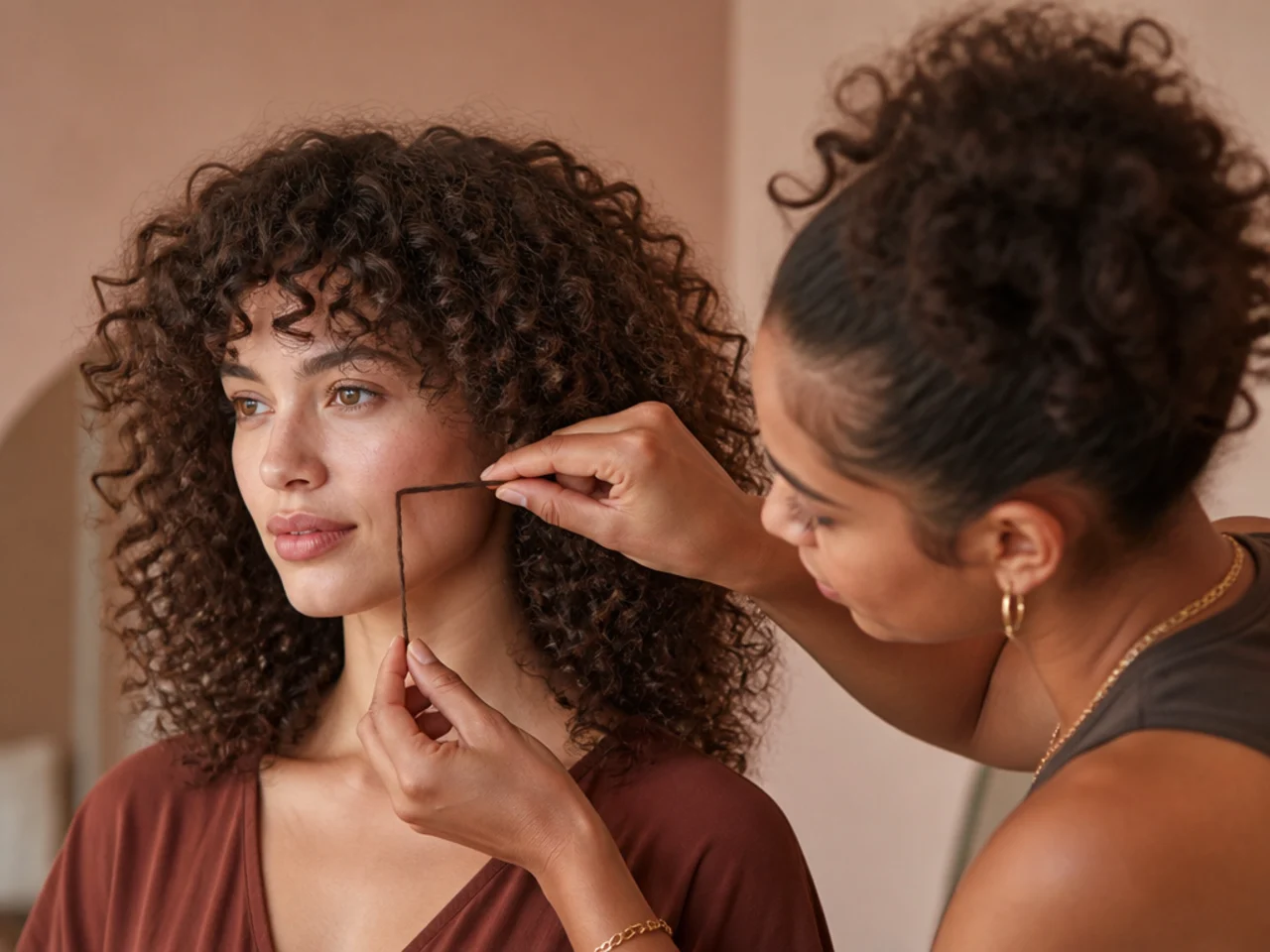
The shortest pieces sit on top of the head and the front section stops below the jaw. Height at the crown lengthens the face while framing that clears the jaw avoids stacking curl beside the cheek. This pairing is the base every other version on this list is a variation of.
2. Curly Wolf Cut With Curtain Bangs
The fringe splits at the centre and sweeps outward, drawing two diagonal lines down the face. Diagonals cut across a round outline where a straight fringe would draw a horizontal and reinforce it. On curl the split has to be cut long, since shrinkage pulls the shortest point up toward the brow.

3. Curly Wolf Cut With a Centre Part
A centre part runs a vertical line down the middle of the face and splits the front volume into two smaller masses. Two narrow shapes read as less wide than one broad one, which is why the same haircut looks slimmer parted centrally than swept to one side.

4. Curly Wolf Cut With a Deep Side Part
Moving the parting off centre stacks hair on one side, and that stack has nowhere to go but upward. The extra height is genuine, but it comes with extra width on the heavy side, so it works only when the layers there have already been thinned from underneath.
5. Collarbone Length Curly Wolf Cut
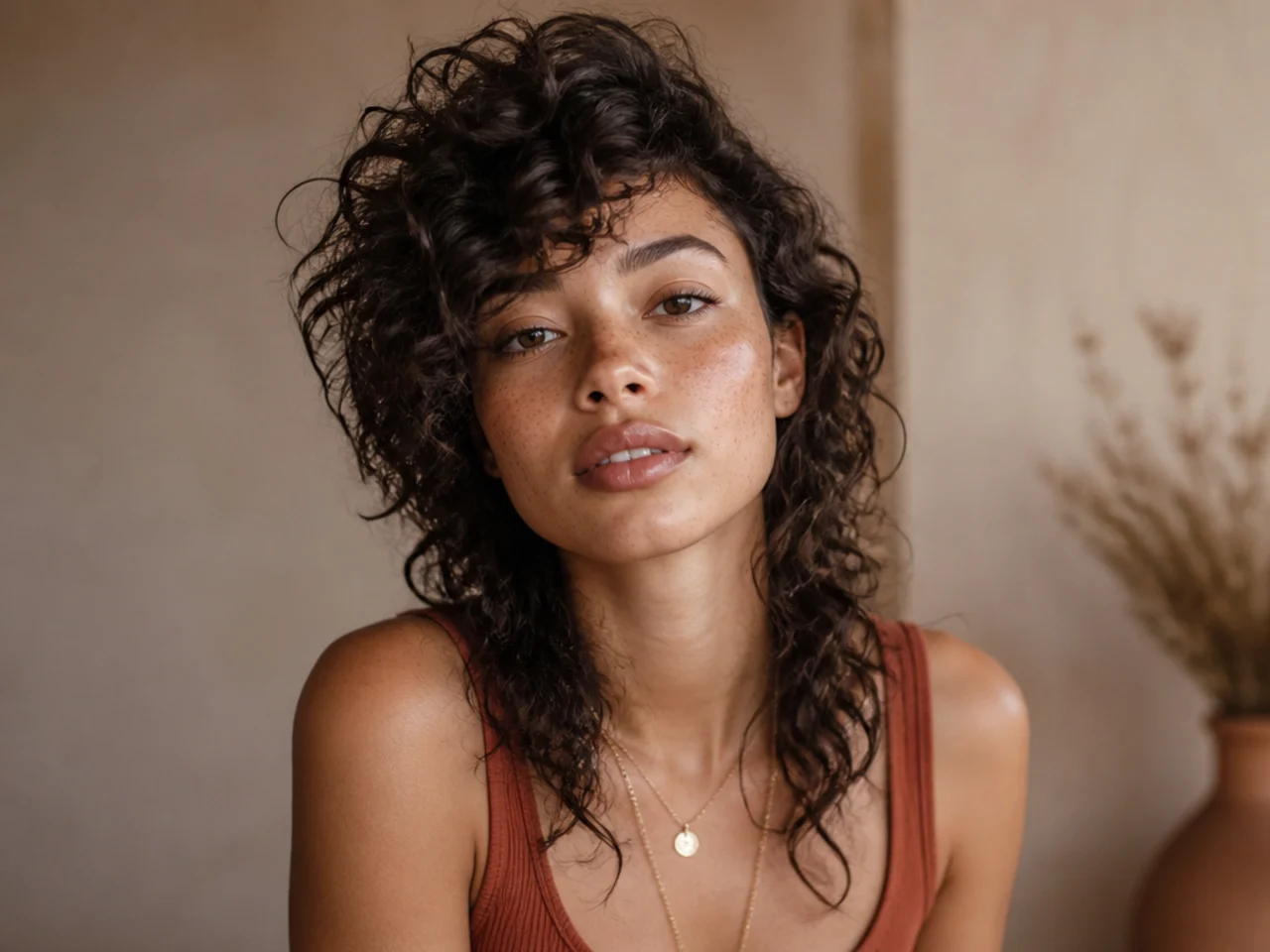
The shortest perimeter that still clears the jaw once shrinkage has happened. Cut to the collarbone wet and curl will finish nearer the chin, which is why this length is the practical floor rather than a style choice for a round face.

6. Curly Wolf Cut Past the Shoulder Blades
Long curl carries weight, and weight pulls the sides down into a narrower column. The trade is that the same weight flattens the crown, so this length needs the shortest layer cut higher than a collarbone version to keep any lift at all.
7. Curly Wolf Cut With Weight Removed at the Sides
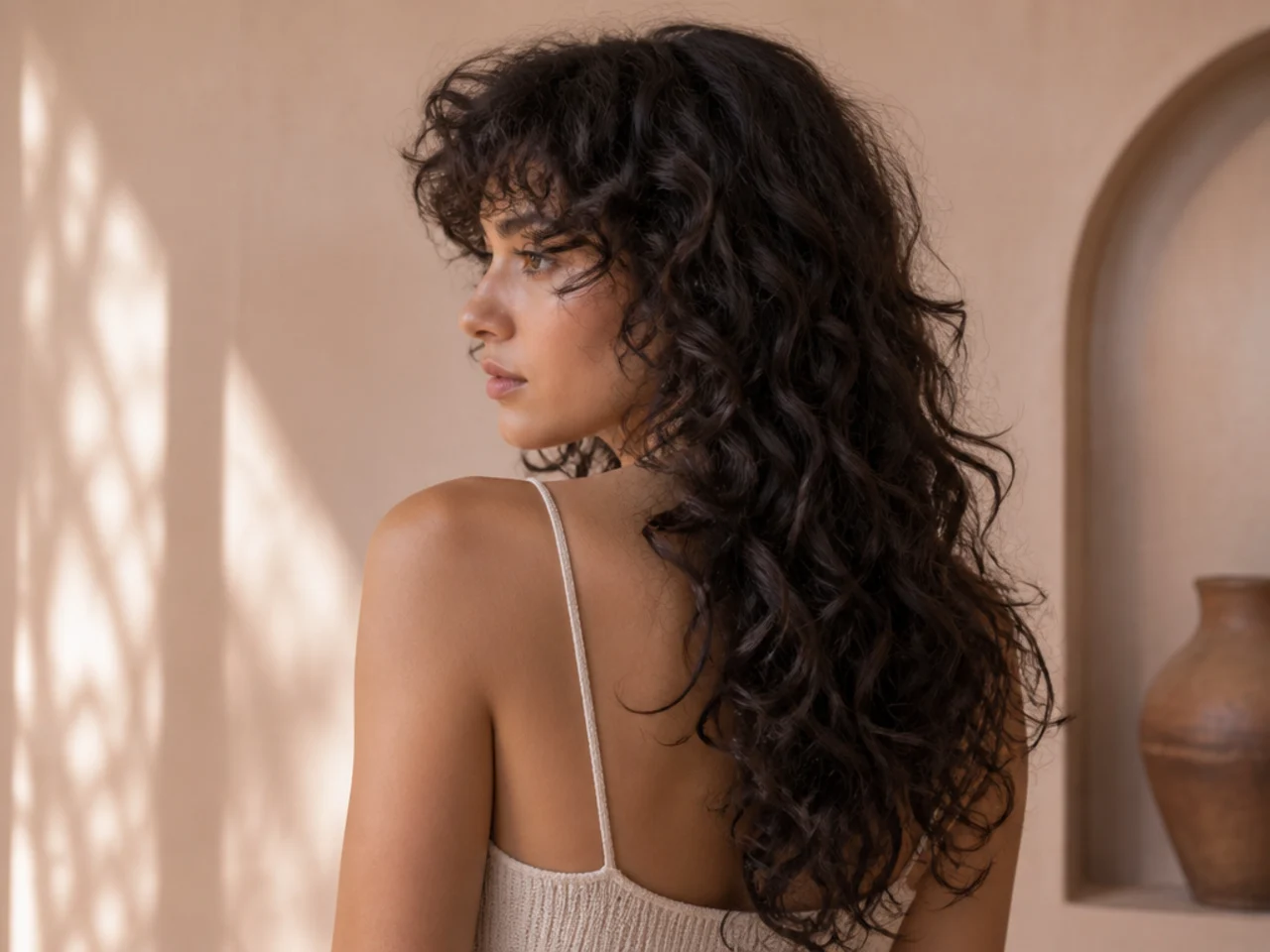
The bulk is thinned from inside the side sections where the removal never shows on the surface. It narrows the widest part of the shape without shortening anything, which is the only way to reduce width and keep length at the same time.

8. Curly Wolf Cut With a Narrow Silhouette
Cut so the outline is widest at the crown and tapers steadily to the ends, the reverse of the triangle curl produces by default. The same principle governs the shapes covered in wolf cut ideas for every face.

9. Curly Wolf Cut on Loose Waves
Loose waves shrink far less than coils, so the cut lands close to where it was measured and the layers can sit lower. The bend is shallow enough that volume stays vertical rather than expanding outward at the sides.

10. Curly Wolf Cut on Tight Coils
Tight coils shrink the most and expand the most, so every layer must be cut longer than the finished length you want. Placing the shortest layer high is not optional here, because a coil cut short at the side stands straight out from the head.
11. Curly Wolf Cut on Fine Curls
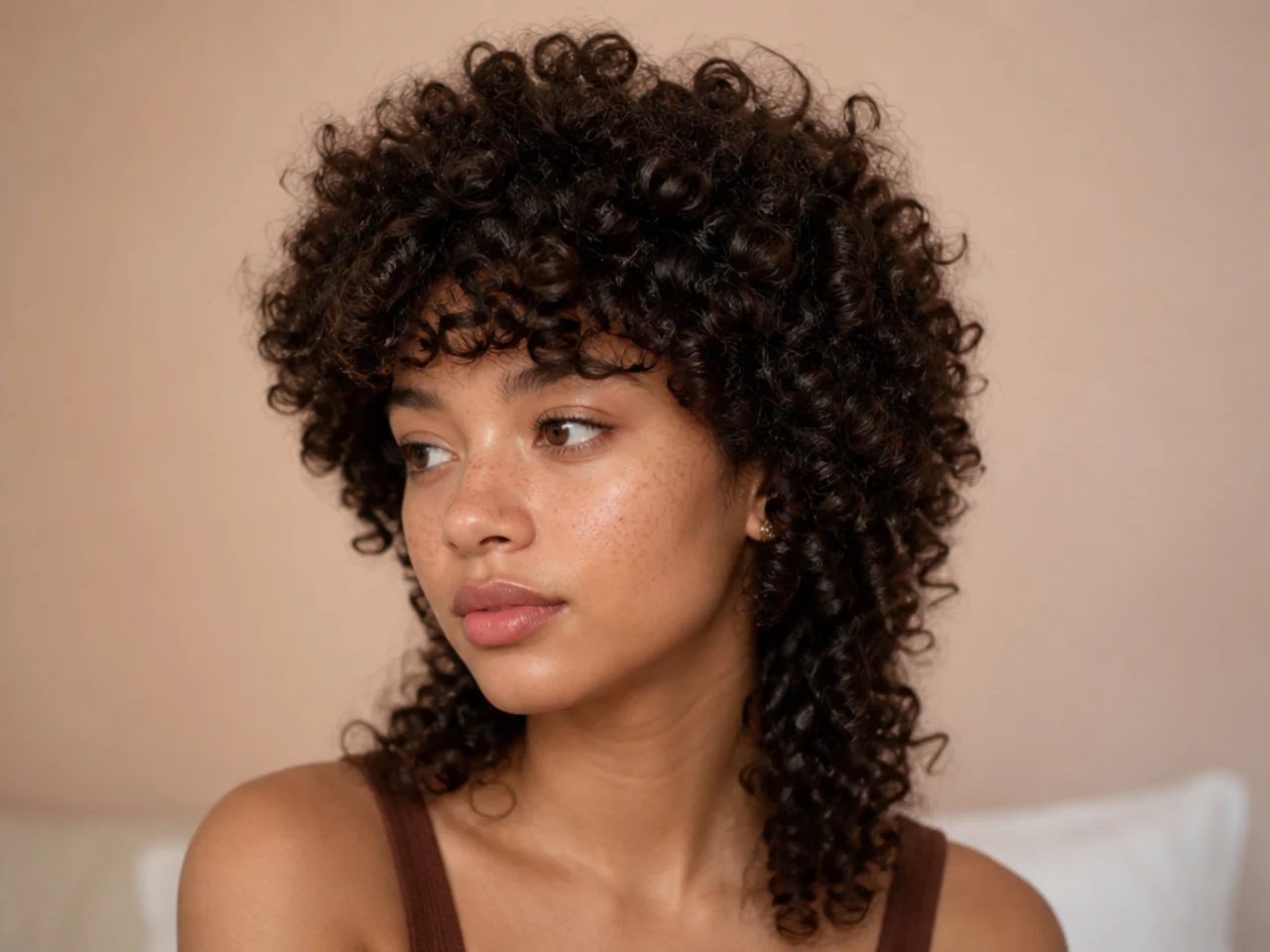
Fine curl has little weight to hold a shape, so it needs fewer layers cut longer. Each layer removes bulk there is not much of, and once too much is gone the curl collapses into separated strands with no defined pattern.

12. Curly Wolf Cut on Dense Curls
Dense curl is the case that most needs interior thinning. Left alone the mass expands in every direction at once, and adding surface layers only creates more ends that sit outward from the ones beneath them.

13. Curly Wolf Cut With Side Swept Bangs
A fringe swept across the forehead draws one long diagonal, which is the most direct way to break a circular outline. It has to start far enough back on the head to have length to travel, or the sweep turns into a short curl sitting on the brow.

14. Curly Wolf Cut With No Fringe
Leaving the forehead open adds visible vertical space above the eyes, which lengthens the face without a single cut to the front. It is also the version with the fewest bad days, since a curly fringe is the section most affected by humidity.
15. Curly Wolf Cut With a Long Back Tail
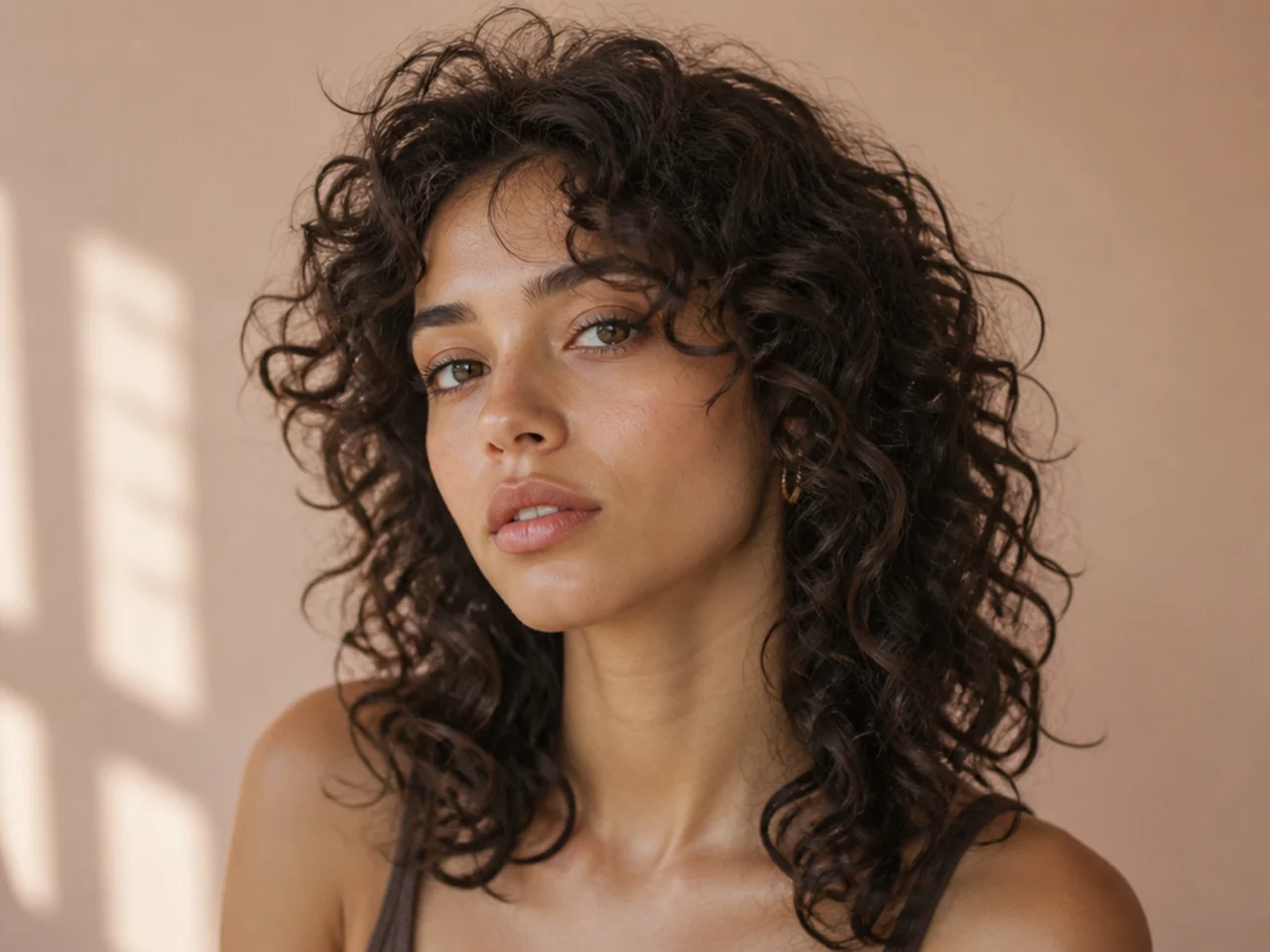
Length concentrated down the centre back rather than spread across the perimeter. Because the eye reads the longest point as the length of the whole cut, a centre tail makes the shape read longer while the sides stay narrow enough to keep width down.
16. Curly Wolf Cut With a Money Piece
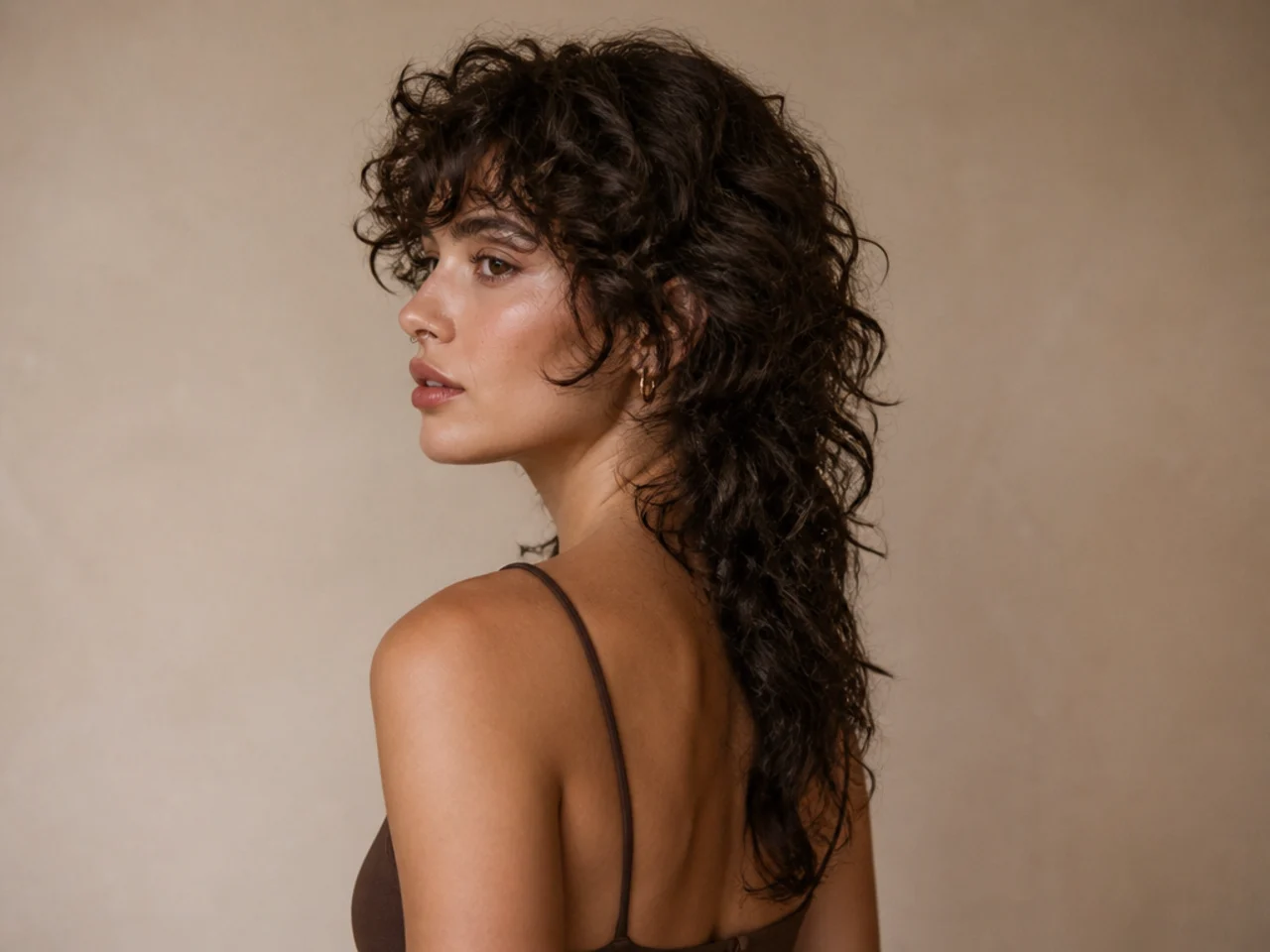
Two lightened strips at the front, run vertically rather than as a broad panel. Light travels along the strip and the eye follows it, so a narrow vertical line adds apparent length where a wide block of colour beside the cheek would add width.
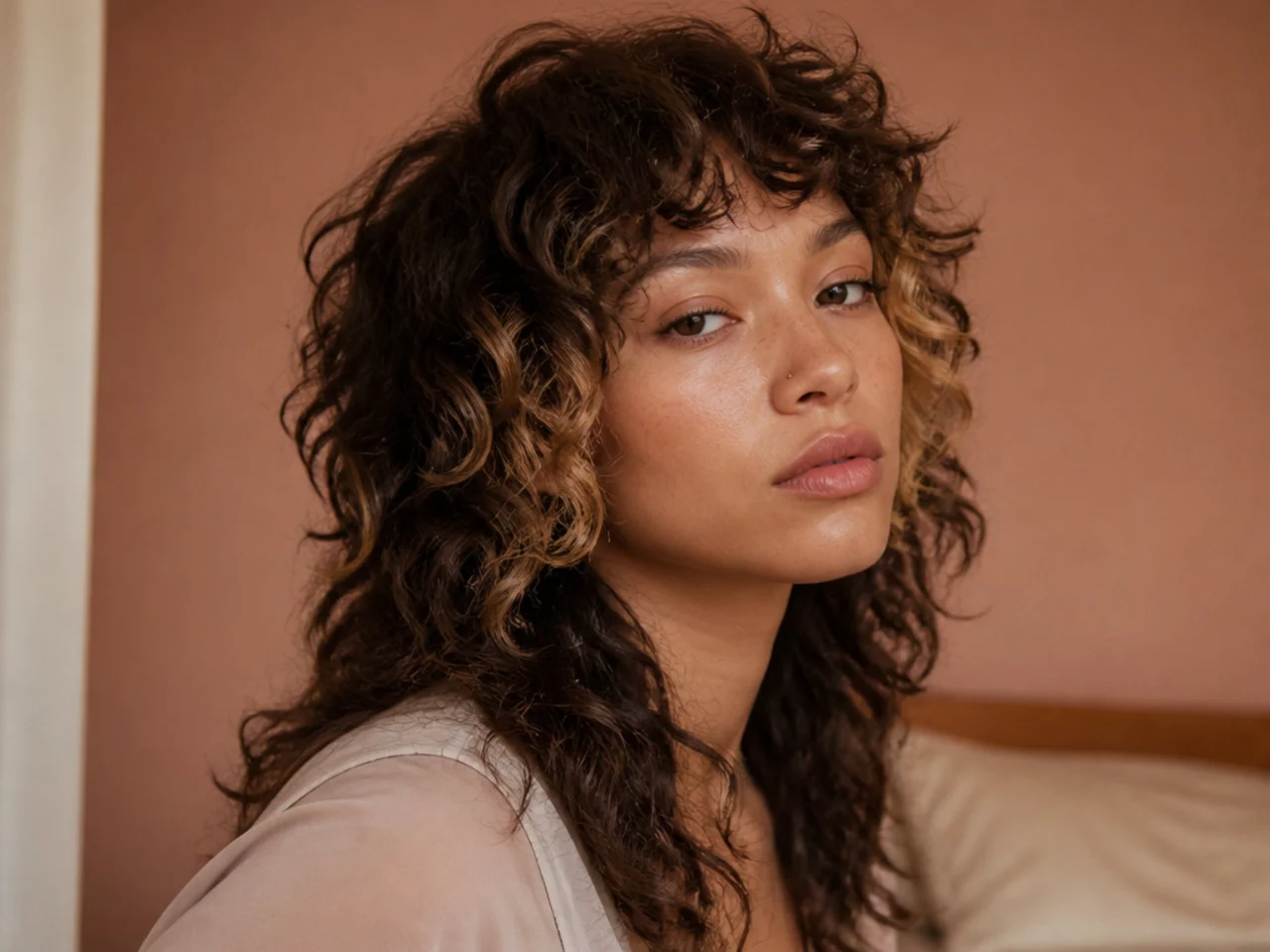
17. Curly Wolf Cut With Cheekbone Framing
The version to be careful with. Framing that stops at the cheekbone puts the fullest curl at the widest point of a round face, and curl is at its widest a couple of inches below where it was cut. Drop the framing to the jaw and the same cut works.
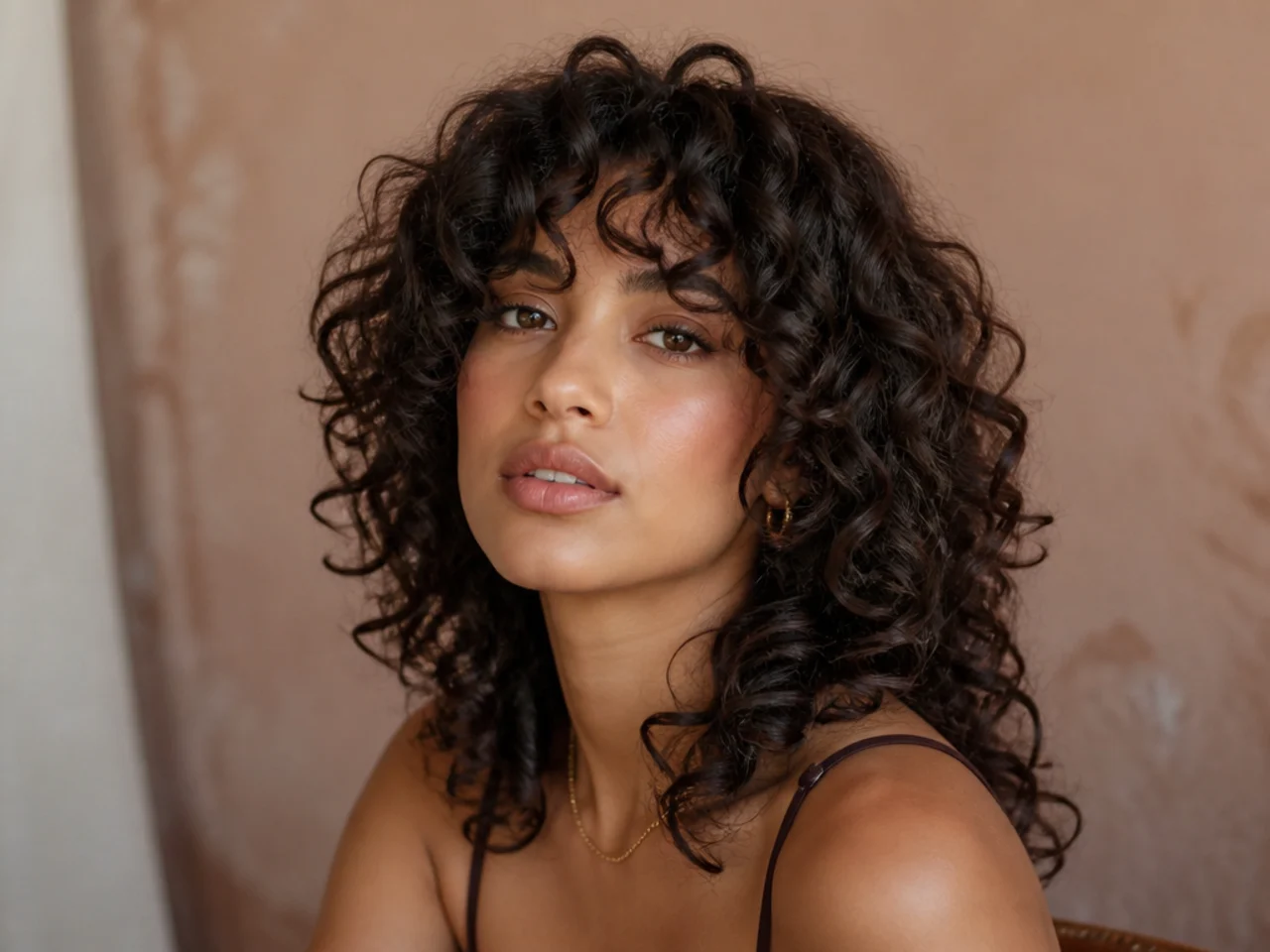
18. Curly Wolf Cut Worn Half Up
Taking the top section up moves the bulk of the volume above the ears and clears the sides of the face entirely. It is the fastest correction available on a day when the curl has expanded further than intended.

19. Curly Wolf Cut Styled With a Diffuser
Cupping the curl upward toward the scalp while it dries sets the pattern in a lifted position, and hair holds whatever shape it cooled in. Diffusing downward does the opposite and stretches the same curls into a wider, flatter fall.
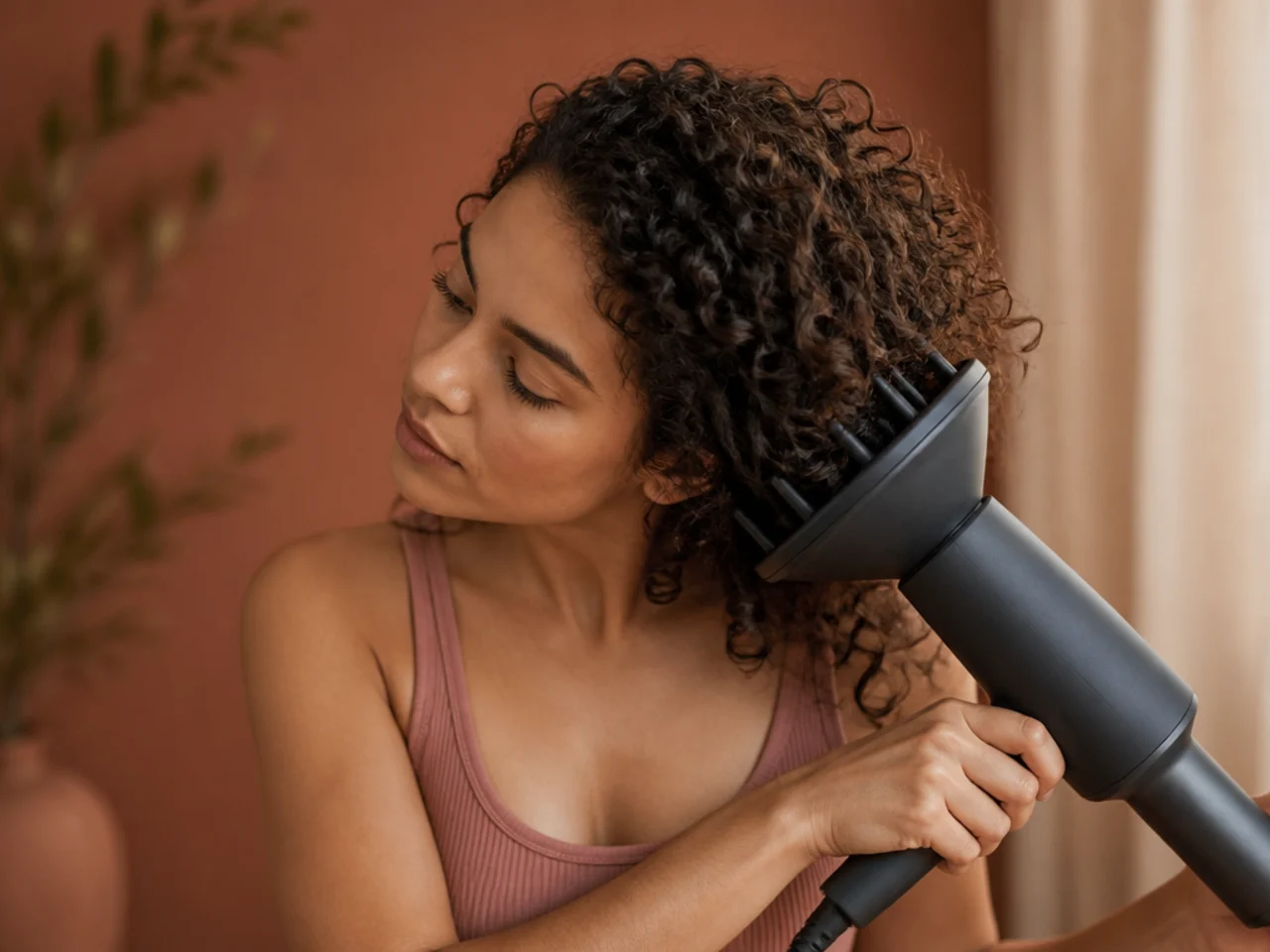
20. Curly Wolf Cut at Ten Weeks
Grown out, the crown layers have dropped level with the sides and the shape has spread into a triangle. On curly hair this happens faster than on straight hair, because every extra centimetre of length adds another coil of width to the sides.

Styling and Upkeep
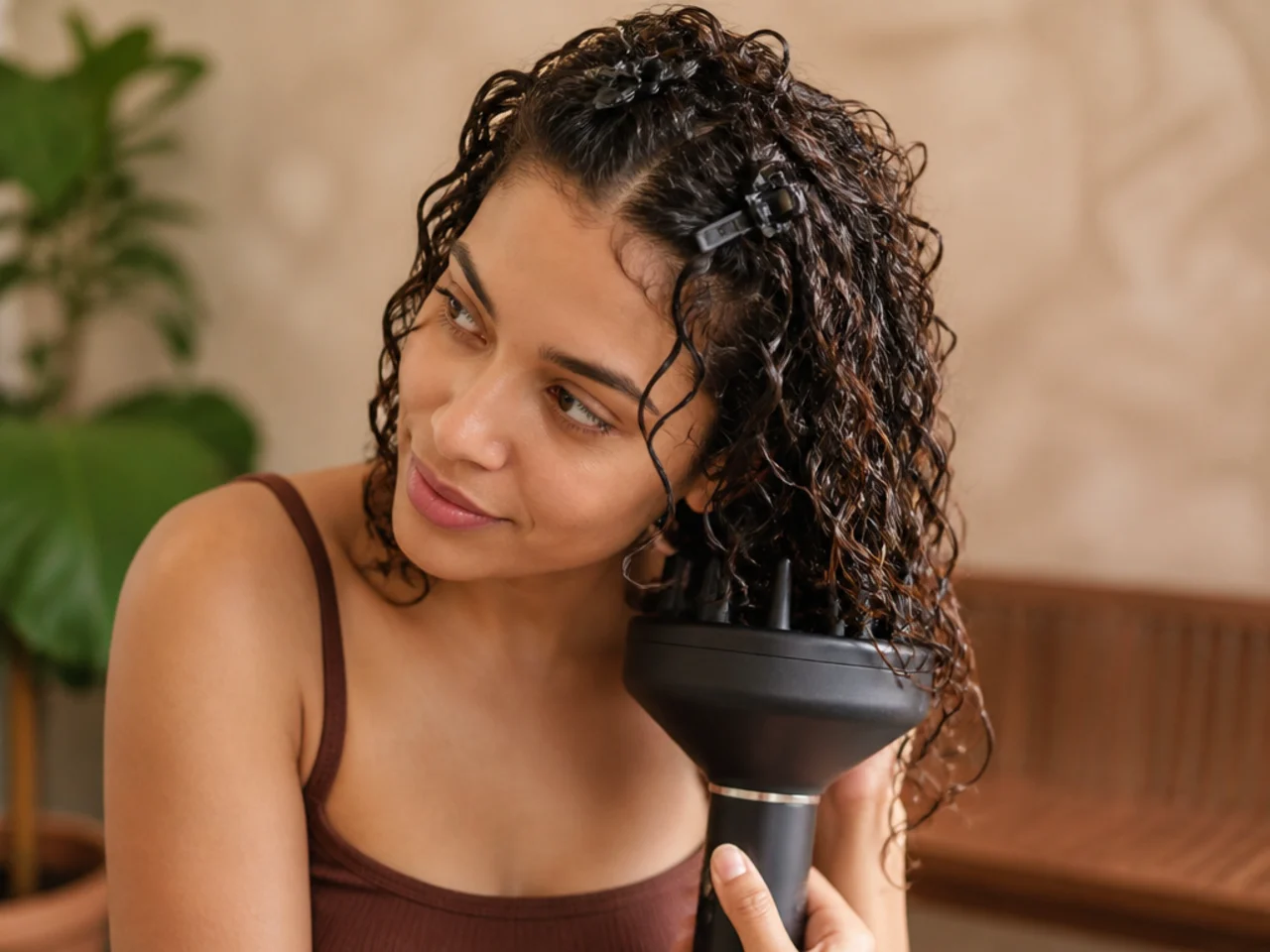
Diffuse upward, never downward. The curl sets into the position it dries in, and drying it hanging stretches it into extra width.
Clip the roots at the crown while drying. Ten minutes of a clip holding the roots up is worth more height than any product applied afterwards.
Use gel and scrunch the cast out once dry. The hardened film holds the curl in shape while it dries, then breaks into softness when it is worked.
Refresh with water, not more product. Curl reforms when the hydrogen bonds are re broken by water, which is what a spray bottle does and a cream cannot.
Book the reshape at eight to ten weeks. After that the crown layers reach the sides and the outline goes triangular.
Mistakes to Avoid
Cutting the layers wet. Curl springs up to a third shorter as it dries, so every layer lands higher than the one you agreed to.
Layering level with the cheekbone. It puts the fullest part of the curl beside the widest part of the face, which is the one placement a round shape cannot absorb.
Ending the perimeter at the chin. A length that stops at the jawline closes the outline into a circle instead of continuing past it.
Brushing curl dry. A brush pulls each coil straight and splits it into frizz, and frizz adds width without adding any definition.
Adding surface layers to dense curl. Every new layer end sits further out than the one beneath it, so the shape gets wider rather than lighter.
FAQ
Does a wolf cut suit a round face? Yes, when the widest volume sits above the cheekbones.
How short can the layers go? No shorter than one full dry curl bend at the crown.
Wet or dry cutting? Dry, curl by curl — shrinkage is a third.

Final Thoughts
Bring a photograph of the outline you want, taken from the front, and point at the place where the hair is widest. That single point is what decides whether a curly wolf cut narrows a round face or completes the circle.
For the shape sorted by face type see wolf cut hairstyles for every face, and for a shorter reading of the same cut see the short wolf cut. More in Mullet and Wolf Cut.