20 Layered Korean Haircut Ideas to Try
Twenty layered Korean haircut ideas, and the technical difference behind all of them — Western layering creates steps, Korean layering creates taper. Same intent, different edge, and it comes down to how the scissors are held.
In this article · 27
- What Slide Cutting Does
- How to Choose Yours
- The 20 Layered Ideas
- 1. Slide-Cut Long Layers
- 2. Layers with See-Through Bangs
- 3. Layers with C-Curl Framing
- 4. Wolf Cut Layering
- 5. Hush Cut Layering
- 6. Long Tapered Layers
- 7. Shoulder-Length Tapered Layers
- 8. Layered Korean Lob
- 9. Layered Korean Bob
- 10. Layers with Crown Volume
- 11. Layers on Straight Hair
- 12. Layers on Wavy Hair
- 13. Layers on Curly Hair
- 14. Layers on Fine Hair
- 15. Layers on Thick Hair
- 16. Layers with a Body Perm
- 17. Layers Air-Dried
- 18. Layers at Week Eight
- 19. Layers Grown Out Four Months
- 20. Blunt-Cut Layers for Comparison
- Styling and Upkeep
- Mistakes to Avoid
- FAQ
- Final Thoughts
Korean cuts are heavily layered and the layers rarely look like layers, which is a technique difference rather than a placement one.
Western layering creates steps. Korean layering creates taper. A layer cut straight across a section ends abruptly — there is a point where one length stops and the next begins. A layer cut by sliding the scissors down the hair fades out instead.
Same intent, completely different edge, and it comes down to how the scissors are held.
What Slide Cutting Does
The layer fades rather than ends. No point at which one length becomes another. That absence is the entire difference between the two techniques.
Weight comes out gradually. Which is what produces the airiness these cuts are known for. Weight leaves along the strand rather than all at one height.
It grows out softly. A taper simply gets longer; a step drops and stays visible.
It suits straight and lightly wavy hair best. The taper needs to be visible to be judged.

How to Choose Yours
Ask for slide cutting by name. Or "tapered layers, not blunt-cut" — either works.
Say you do not want visible steps. It is the outcome you are avoiding, and worth naming.
Combine it with face framing. The two techniques are meant to work together.
Be clear about how much weight to remove. Slide cutting takes out more than it looks like.

The 20 Layered Ideas
1. Slide-Cut Long Layers
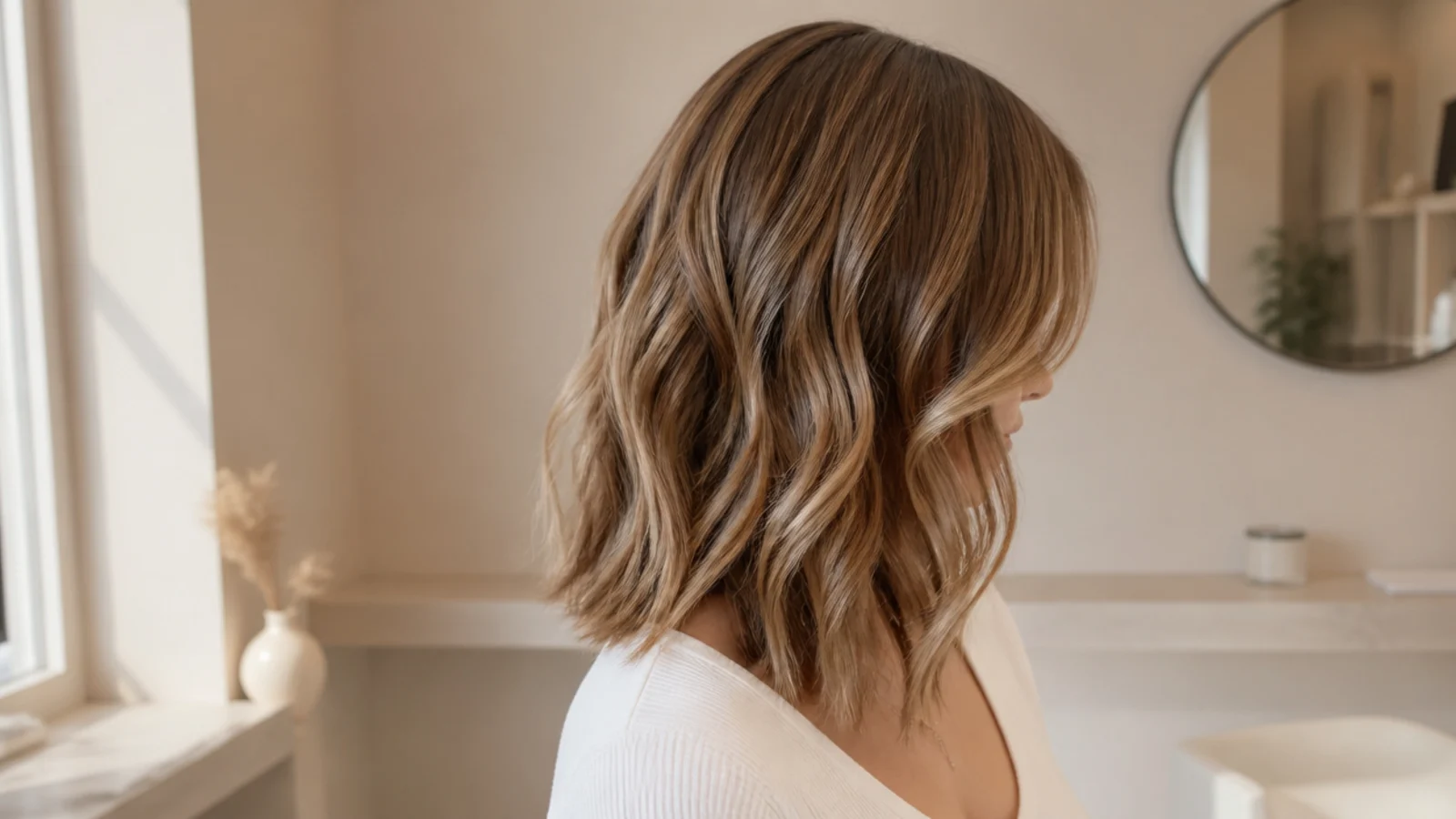
Tapered throughout, no steps anywhere. The benchmark. Slide cutting removes weight gradually along the strand rather than ending it at a point, which is why there is no step for the eye to find.
2. Layers with See-Through Bangs
The full Korean combination. Tapered layers and a sparse fringe are the two techniques the whole board rests on.

3. Layers with C-Curl Framing
Tapered layers behind, curved framing at the face. The taper handles movement and the curve handles the ends, so neither is asked to do the other's job.

4. Wolf Cut Layering
Connected and tapered through the whole length. Connected means every layer flows into the next, which is what separates a Korean wolf cut from a Western shag.

5. Hush Cut Layering
Tapered layers confined to the face. Same technique, restricted to the front, which leaves the perimeter behind completely intact.

6. Long Tapered Layers
Length kept, weight removed gradually inside it. Weight comes out along the strand rather than off the end, so the length is unchanged.

7. Shoulder-Length Tapered Layers
The most balanced version of the technique. Shoulder length gives the taper enough distance to be gradual without so much weight that it disappears.

8. Layered Korean Lob
Collarbone length with soft internal taper. A lob keeps a readable perimeter while the taper does the movement inside it.

9. Layered Korean Bob
Short, tapered, with an inward-curving perimeter. The taper and the curve are separate instructions, and a bob needs both specified.

10. Layers with Crown Volume
Taper supporting lift rather than flattening it. Weight removed near the crown lets the root stand up, where weight left there pulls it flat.

11. Layers on Straight Hair
Where the taper is most visible and most controllable. Straight hair shows exactly where weight was removed, which makes it the easiest type to slide cut and the least forgiving.

12. Layers on Wavy Hair
The bend softening the taper further. A wave interrupts the line, so any unevenness in the taper is hidden by the texture.

13. Layers on Curly Hair
Shaped in the curl rather than slid through the length. Sliding a blade down a curl stretches it straight and cuts it in the wrong place.

14. Layers on Fine Hair
Fewer passes, since slide cutting removes more than it appears to. The technique takes weight along the whole strand, so the effect on fine hair compounds faster than it looks.

15. Layers on Thick Hair
Where the technique does the most good. Thick hair has weight to spare, and removing it gradually is exactly what stops the shape expanding.

16. Layers with a Body Perm
Movement from the cut and the perm together. Two sources of movement rather than one, which is why this combination needs almost no daily styling.

17. Layers Air-Dried
Where tapered edges fall best. Air-drying lets each tapered end settle at its own length, which is the shape the cut was designed around.

18. Layers at Week Eight
Softened further, with nothing to correct. A taper has no defined edge to blur, so growth softens it rather than putting it out of proportion.

19. Layers Grown Out Four Months
A taper simply lengthens. No stepped line appears. That is the practical case for the technique — it has no maintenance deadline built into it.

20. Blunt-Cut Layers for Comparison
Visible steps where each length ends. A blunt layer ends at a point, and every point is an edge the eye can locate.

Styling and Upkeep
Air-dry to judge the layering. Tapered edges show their quality when nothing is forced.
Dry the crown up. The layering supports it; the drying creates it.
Trim every eight to ten weeks. A taper holds longer than a step does.
Ask for slide cutting at every trim. Reverting to blunt layers changes the cut over two appointments.
Skip texturising products. The cut already supplies the texture.

Mistakes to Avoid
Asking for "layers" only. You will get blunt-cut ones.
Slide cutting on very fine hair without care. It removes more weight than it looks like.
Reverting to blunt layers at a trim. The cut changes character within two appointments.
Texturising spray over a tapered cut. It separates edges that were cut to blend.
Judging it blow-dried. Air-dry to see what the layering actually does.

FAQ
What is the difference? Western layering steps; Korean layering tapers, by sliding the scissors.
What should you ask for? Slide cutting, or tapered rather than blunt-cut layers.
Does it suit every hair type? Best on straight and lightly wavy — curls are shaped rather than slid.

Final Thoughts
Ask for the technique, not the outcome. "Layers" is a request every stylist will fulfil differently; "slide cutting" is a specific thing with a specific edge, and it is the reason these cuts have movement without ever looking like they have been cut into steps.
For where the layers should sit see 15 korean hush cut haircut ideas, and for the aesthetic in full see 25 stunning korean haircut ideas. More in Women's Hairstyles.