25 Stunning Korean Haircut Ideas to Try
Twenty-five Korean haircut ideas, and the structural difference that explains all of them — these cuts are designed from the face outward, not from the perimeter inward. The outline is the least important part.
In this article · 32
- What Makes a Cut Korean
- How to Choose Yours
- The 25 Korean Haircut Ideas
- 1. Long Hair with See-Through Bangs
- 2. C-Curl Face Framing
- 3. Long Layers with Crown Volume
- 4. Korean Bob
- 5. Shoulder-Length C-Curl
- 6. Hush Cut
- 7. Korean Wolf Cut
- 8. Curtain Bangs with Long Layers
- 9. Wispy Bangs on a Bob
- 10. Long One-Length with a Fringe
- 11. Side-Parted Long Layers
- 12. Korean Perm Waves
- 13. Straight Hair with C-Curl Ends
- 14. Layered Lob with Framing
- 15. Short Layered Cut
- 16. Long Hair with a Middle Part
- 17. Bangs with Face-Framing Together
- 18. Cut on Fine Hair
- 19. Cut on Thick Hair
- 20. Cut on Wavy Hair
- 21. Half-Up with Framing Left Out
- 22. Low Ponytail with Bangs
- 23. Crown Volume Blow-Dry
- 24. Grown-Out Framing
- 25. The Same Length with No Framing
- Styling and Upkeep
- Mistakes to Avoid
- FAQ
- Final Thoughts
Korean haircuts get described by their outlines — the bob, the long layers, the wolf cut — and that is why asking for one so often produces something that is not quite it.
These cuts are designed from the face outward, not from the perimeter inward. The fringe, the face-framing pieces and the volume at the crown are the defining elements. The outline is frequently unremarkable, and deliberately so.
Which means a photograph showing you the length is showing you the least important part.
What Makes a Cut Korean
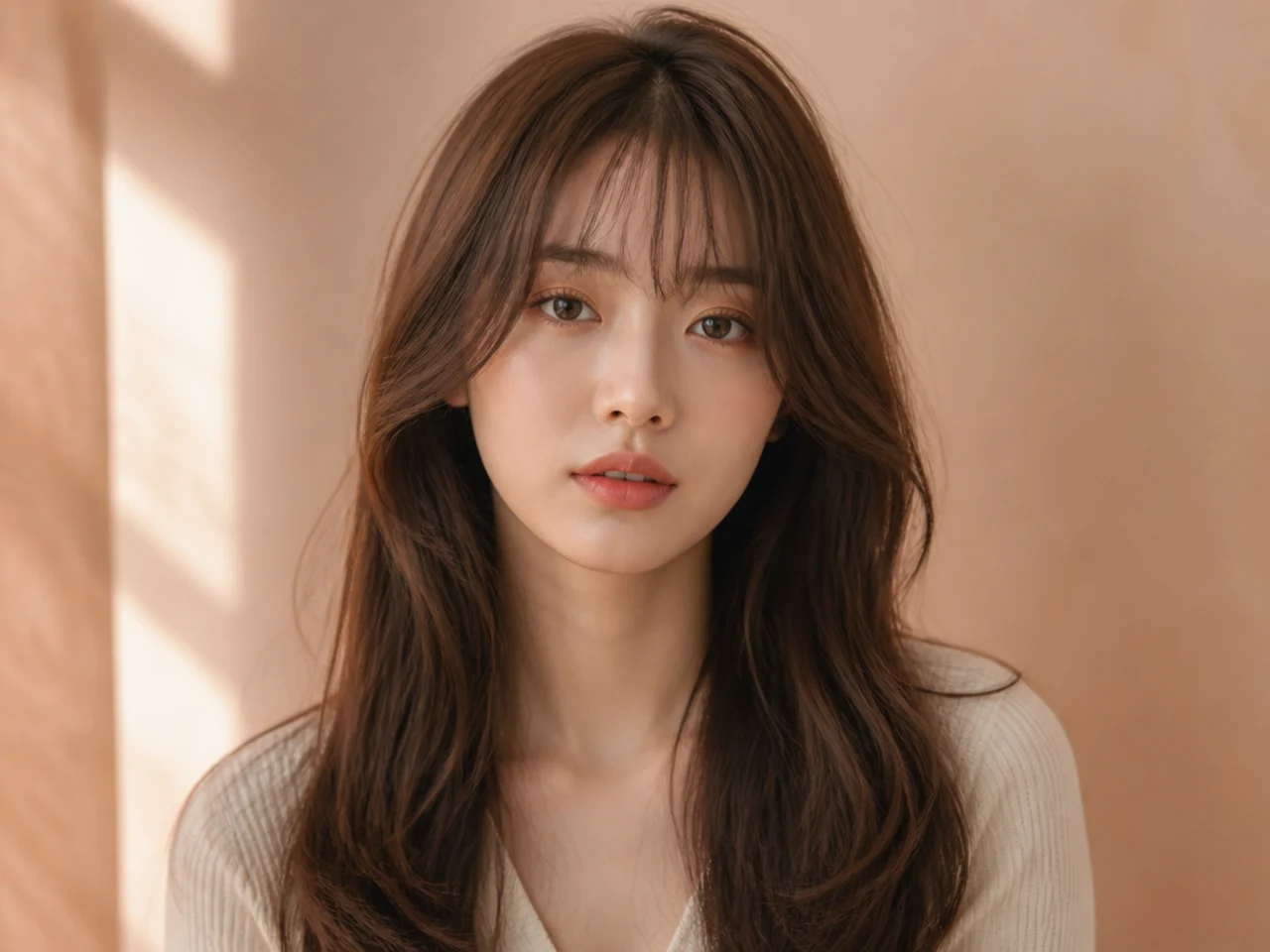
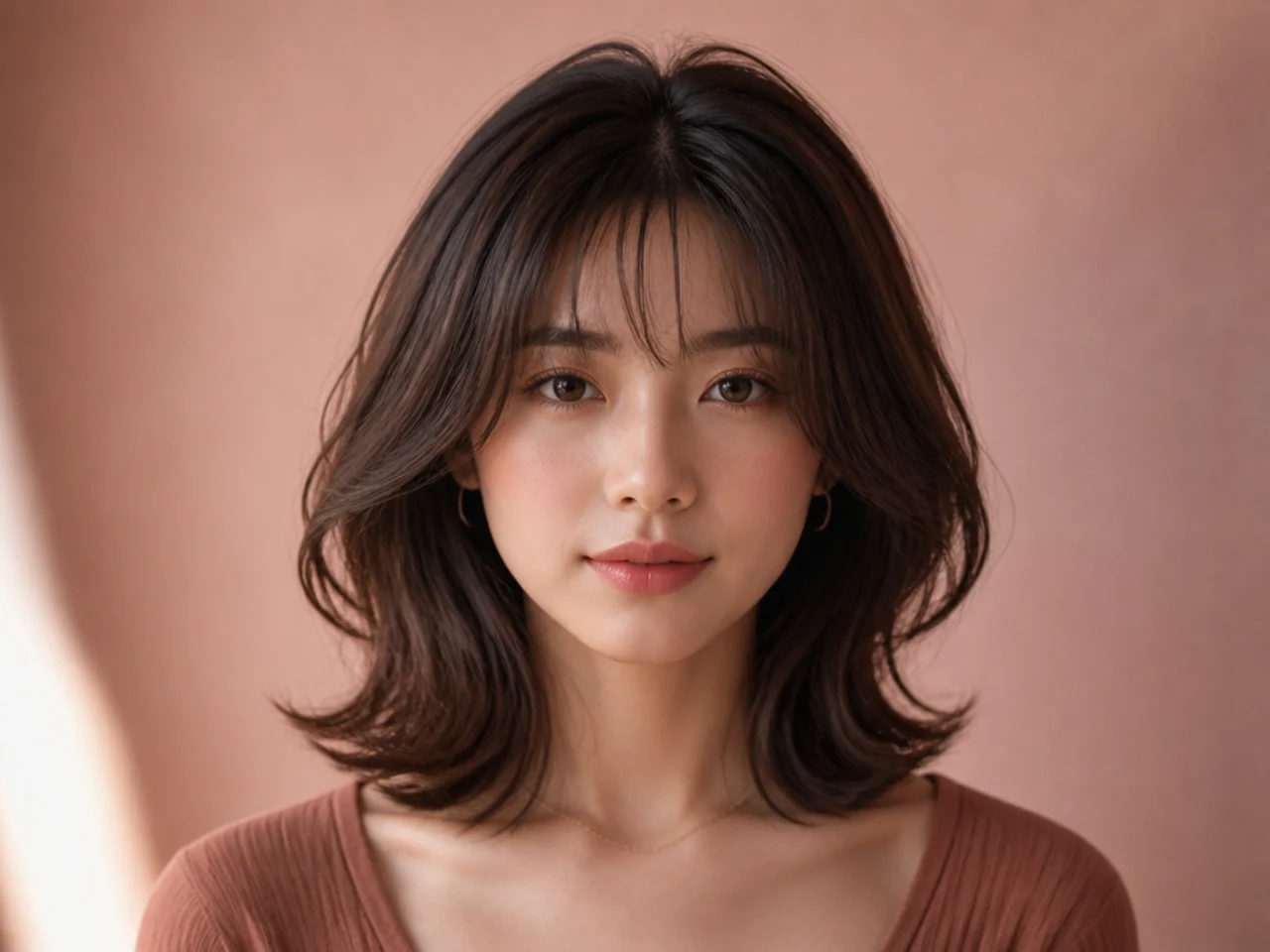
See-through bangs. A deliberately sparse fringe you can see the forehead through. Distinctly Korean, and nothing like a blunt or wispy Western fringe.
C-curl face framing. The pieces beside the face curved inward toward the jaw, which softens the whole shape.
Volume at the crown, not the sides. Height above, close at the temples. The opposite of most layered Western cuts.
An unremarkable perimeter. Often just one length. It is not where the design lives.
How to Choose Yours
Ask for the elements, not the outline. See-through bangs, C-curl framing, crown volume.
Decide about the fringe first. It changes the cut more than any length decision.
Say where you want volume. Crown rather than sides is the single most useful instruction.
Bring a photograph of the front, not the back. The front is where the cut is.
The 25 Korean Haircut Ideas
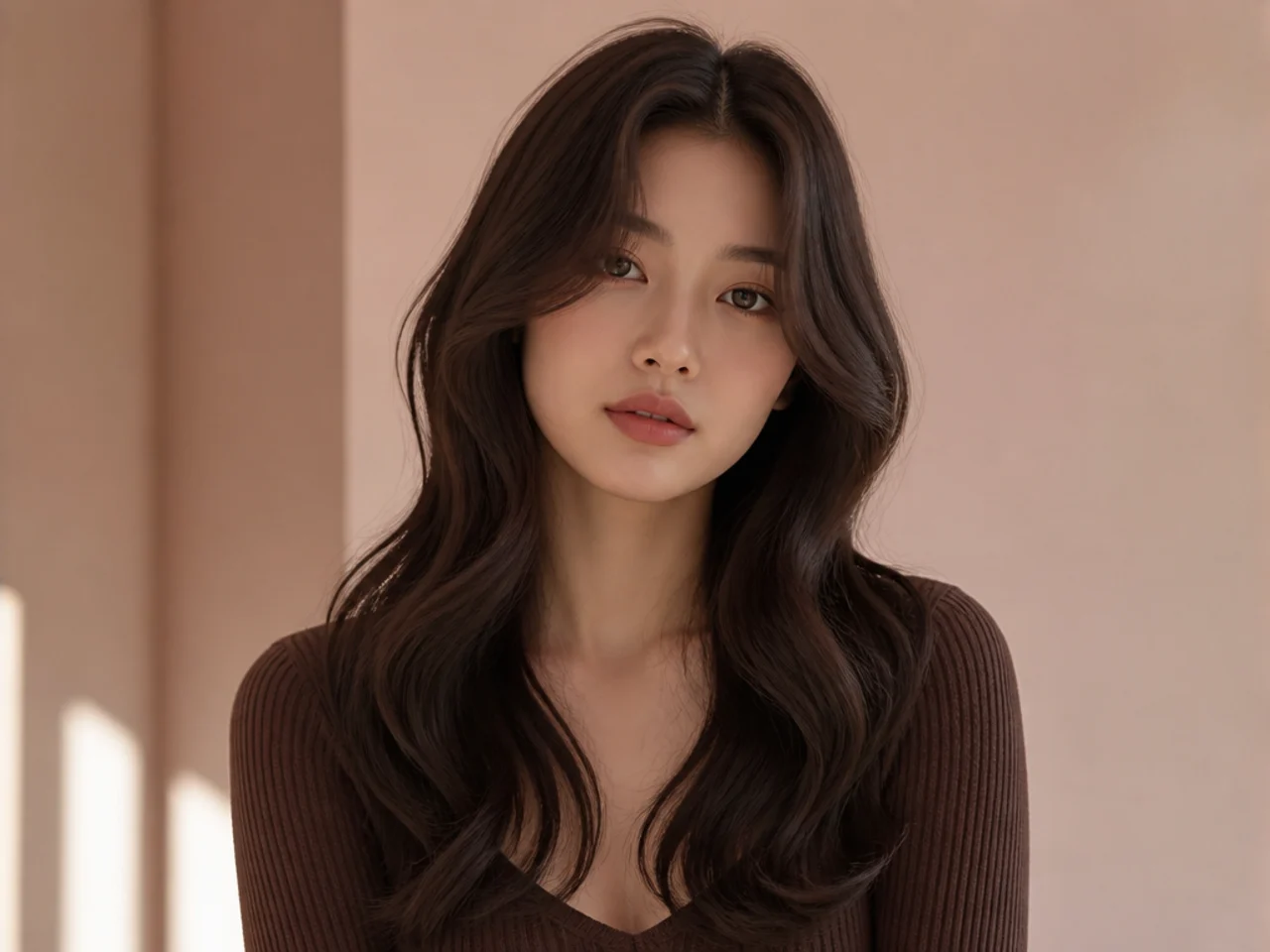
1. Long Hair with See-Through Bangs
The most recognisable combination there is. A sparse fringe against long hair is the pairing that reads as Korean before any other element registers.
2. C-Curl Face Framing
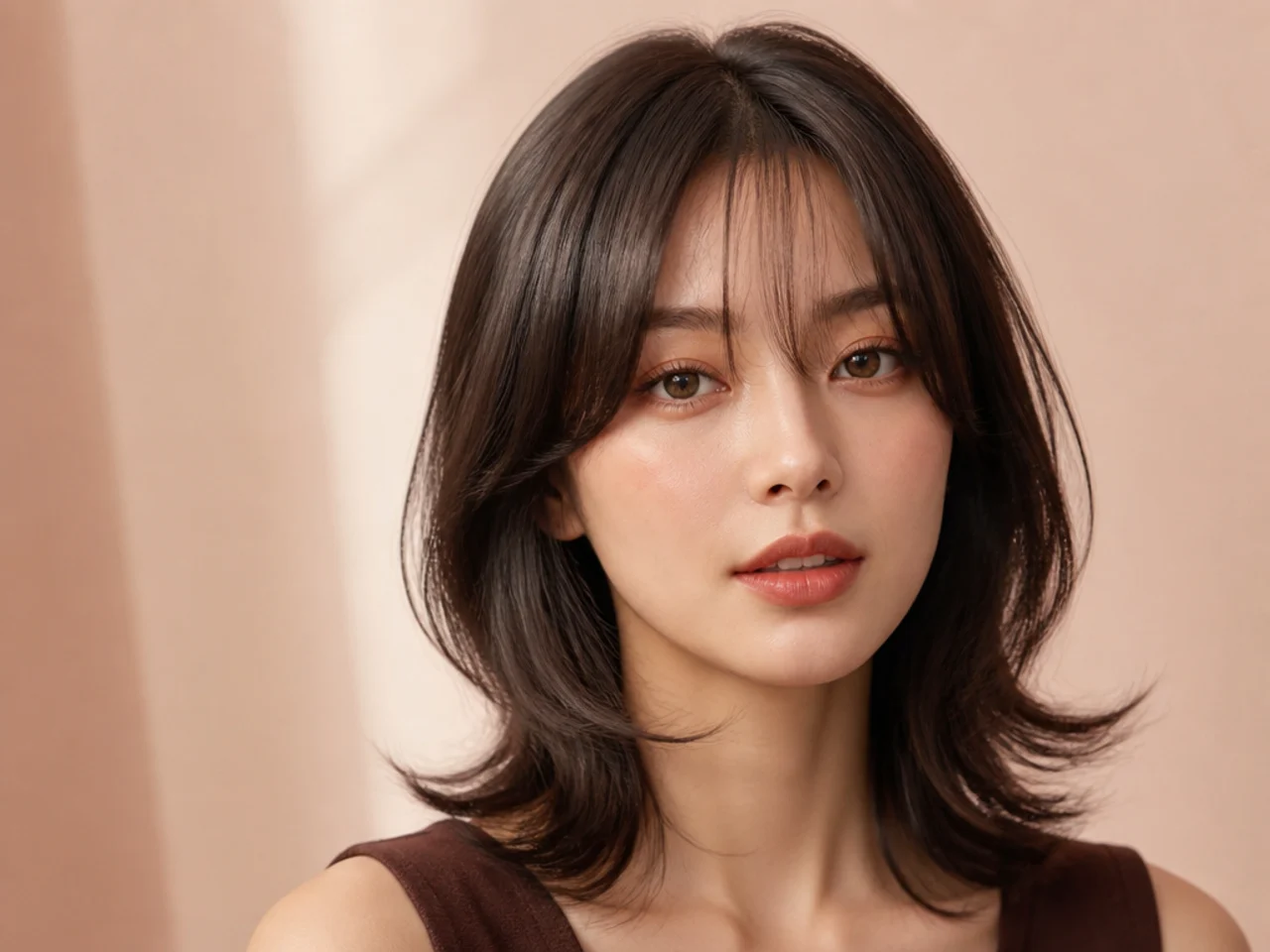
Pieces curved inward at the jaw. Softens everything. The curve is a styling instruction as much as a cutting one — it is set every time the hair is dried.
3. Long Layers with Crown Volume
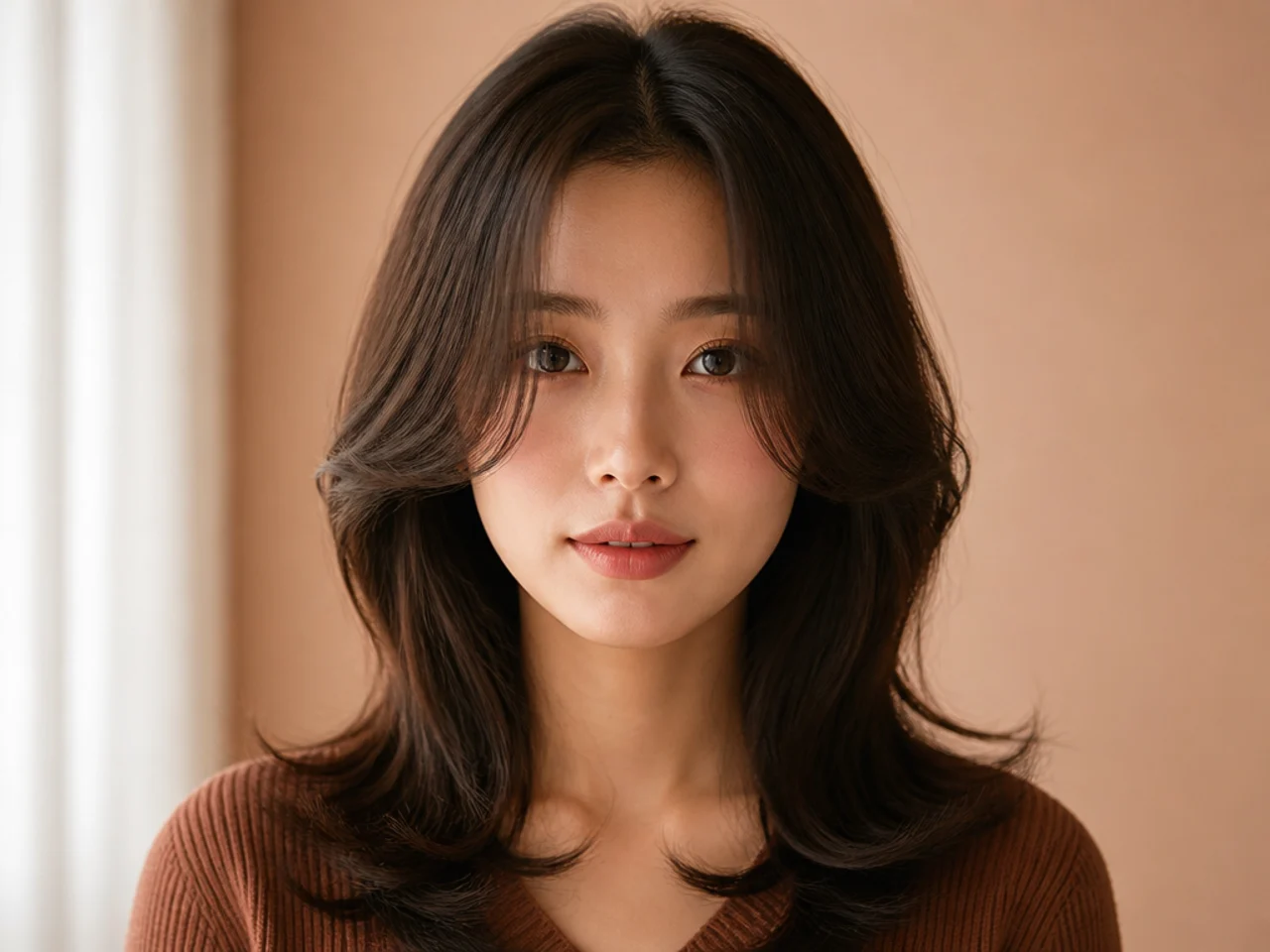
Height above, close at the sides. Volume at the crown is the one element that applies to every cut on this page regardless of length.
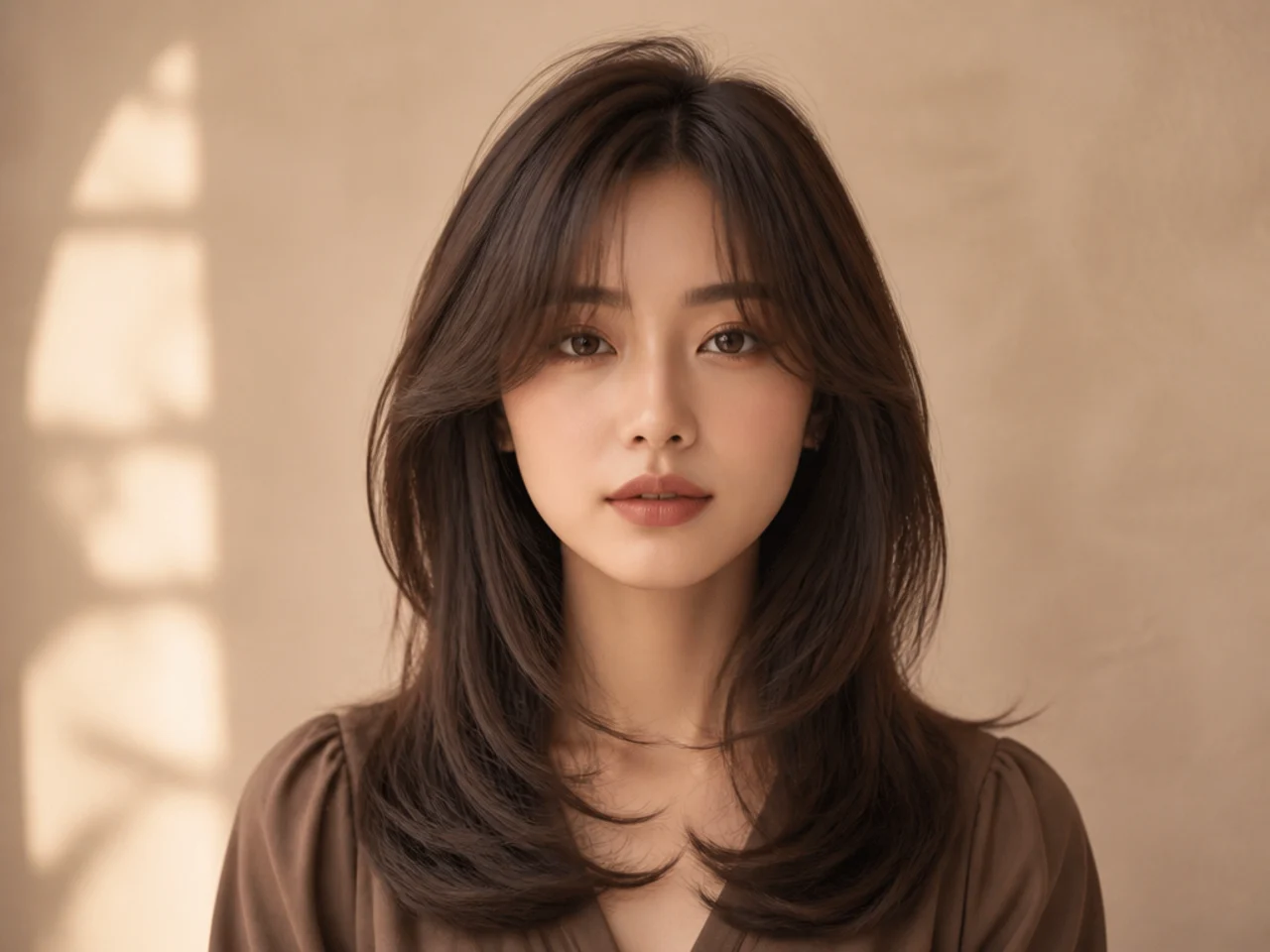
4. Korean Bob
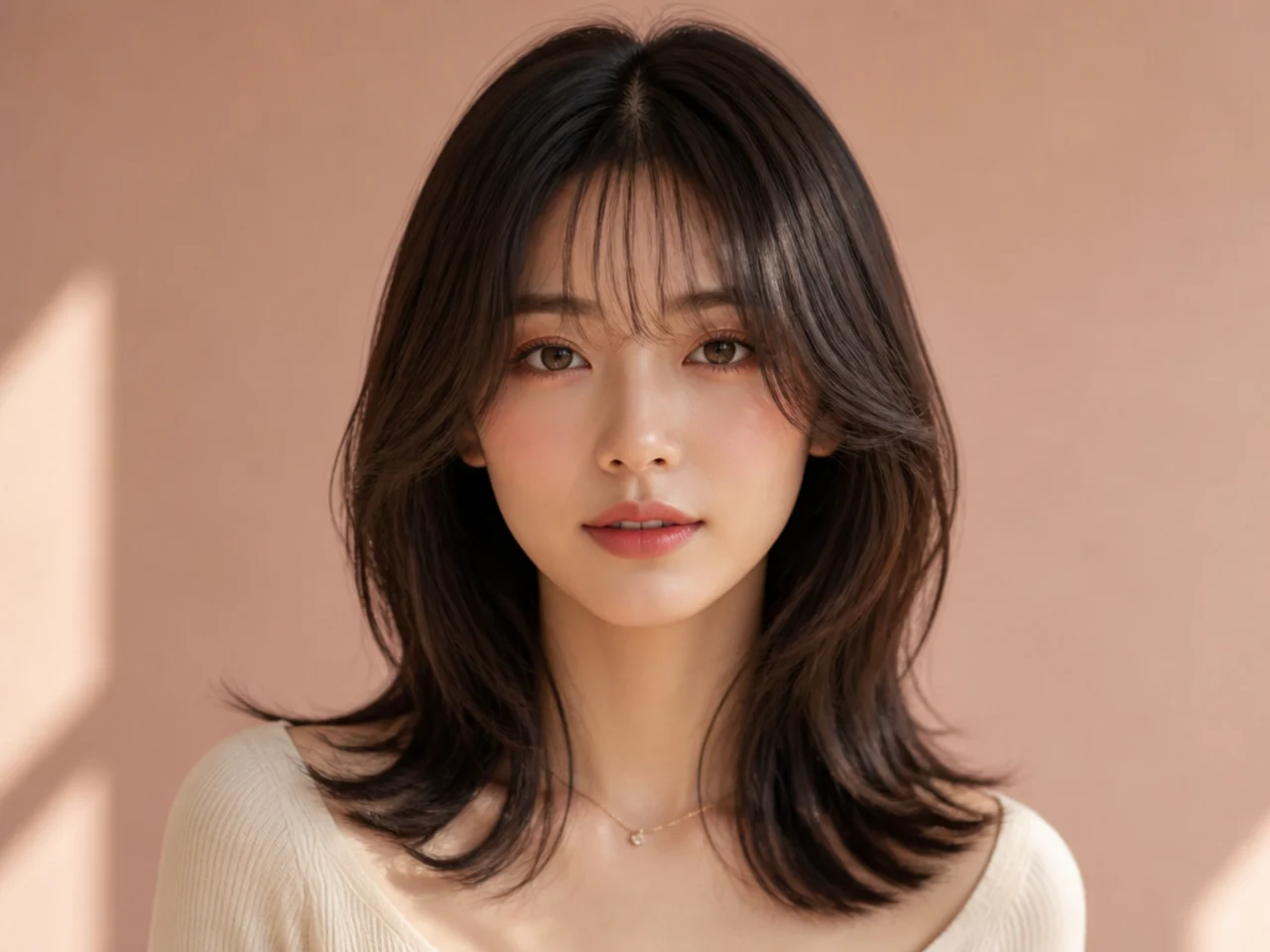
Chin length with framing that does the work. At bob length the framing becomes the perimeter, so the curve is the outline rather than a feature inside it.
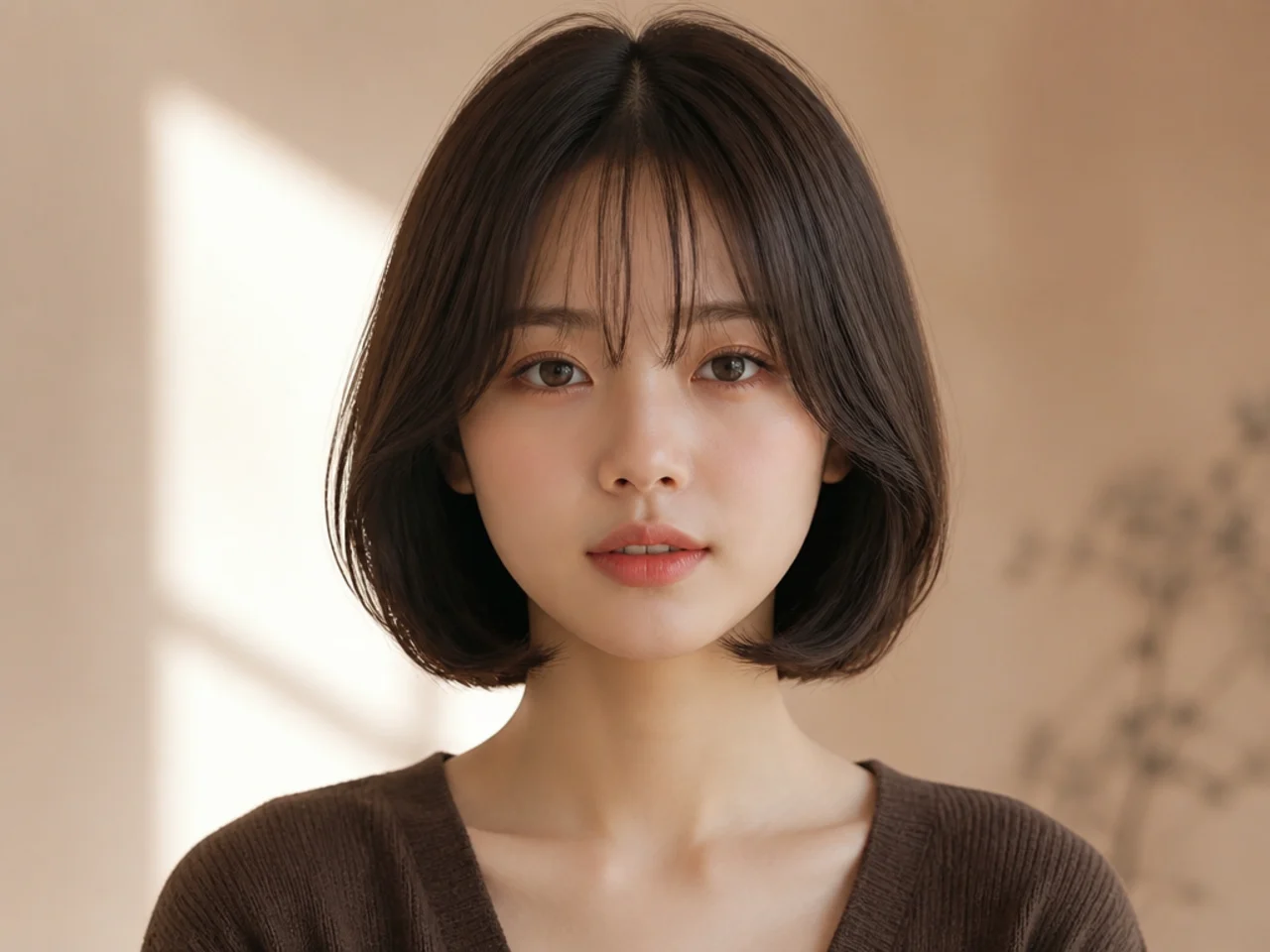
5. Shoulder-Length C-Curl
The most wearable version of the shape. Shoulder length has enough below the curve for it to read and not so much weight that it drops.
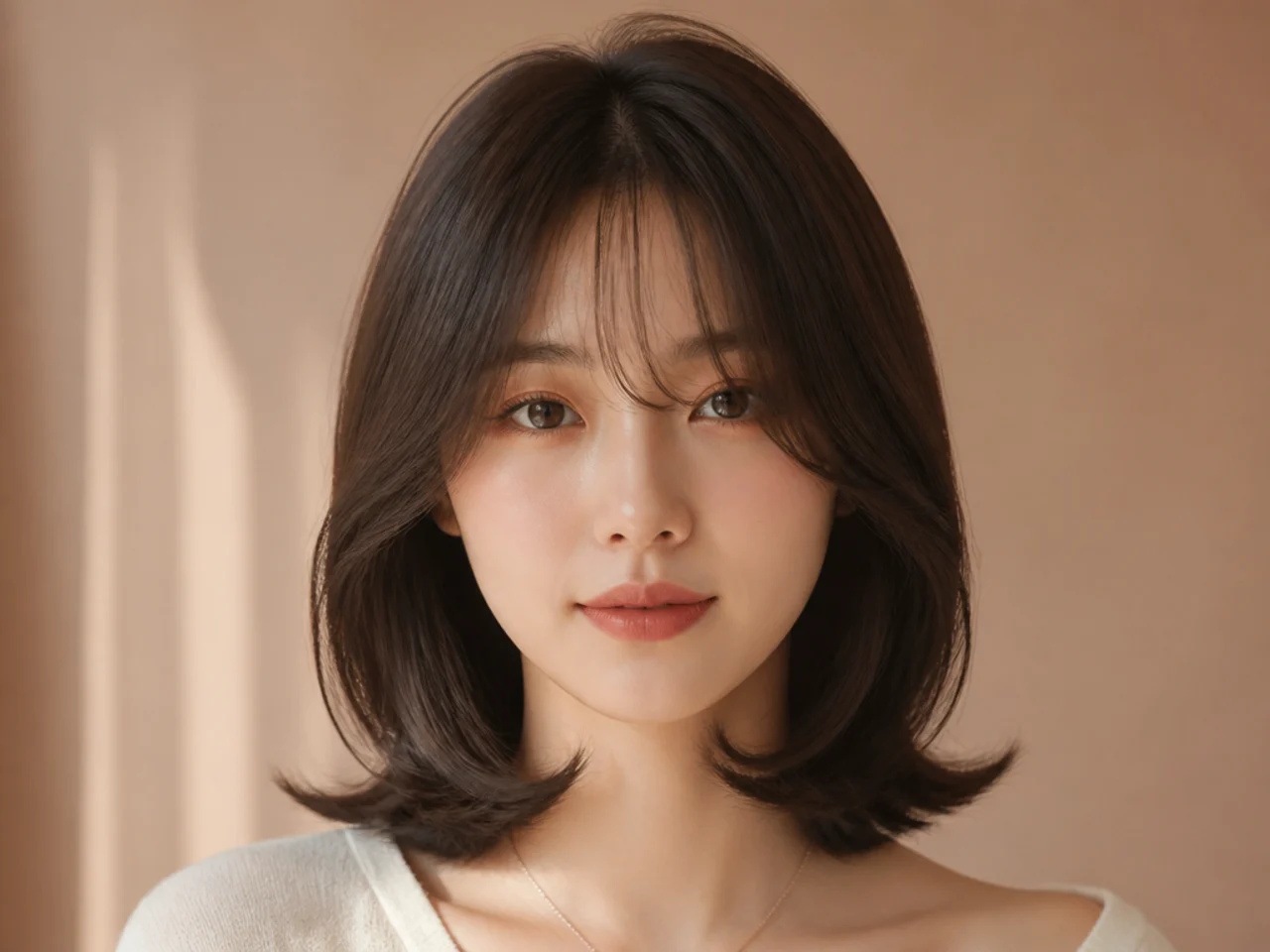
6. Hush Cut
Soft, airy layers concentrated around the face. The back stays one length, which is what separates a hush cut from a shag.
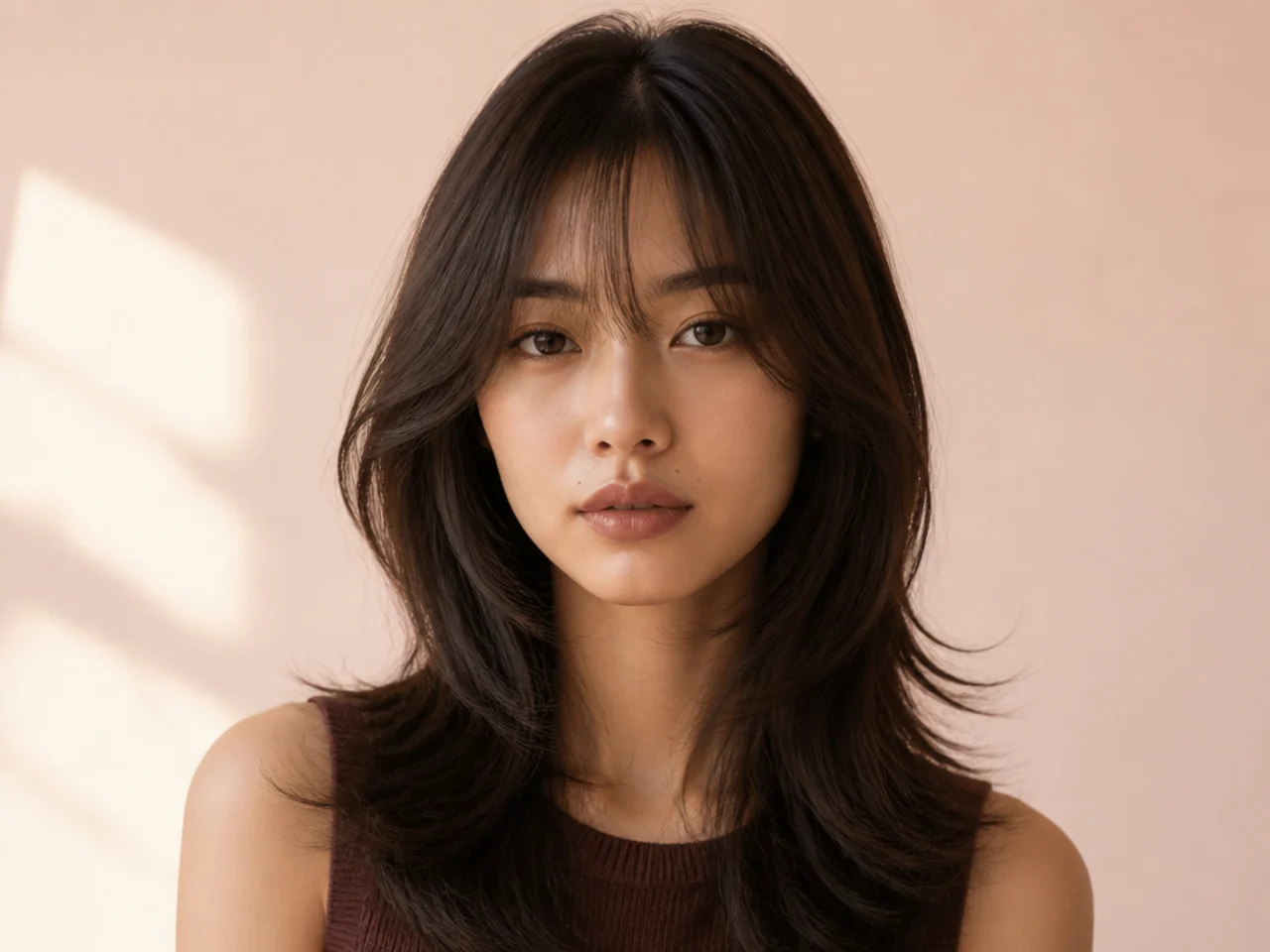
7. Korean Wolf Cut
Layered and shaggy, softer than the Western version. Connected rather than disconnected — every layer flows into the next instead of breaking against it.
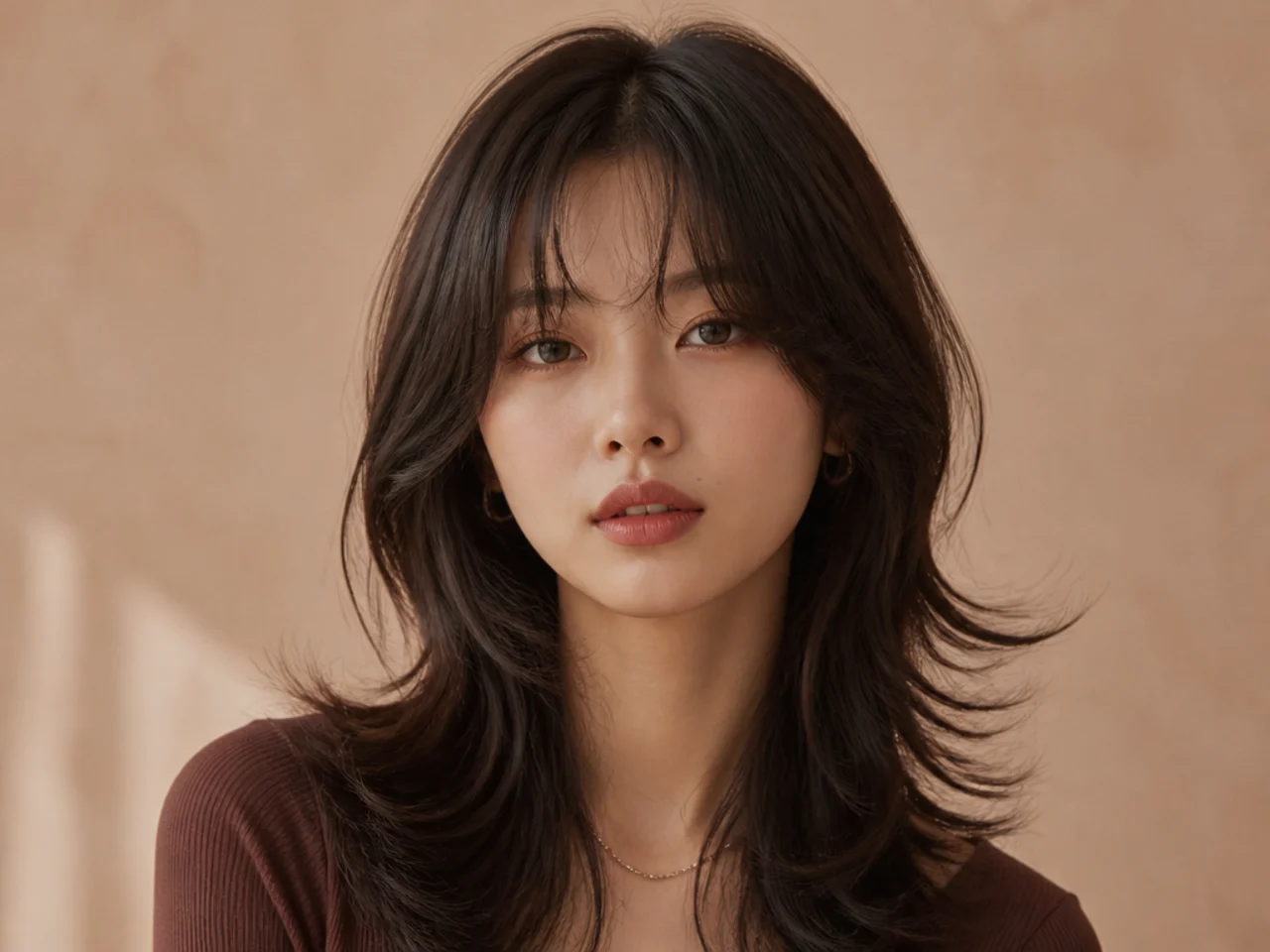
8. Curtain Bangs with Long Layers
Framing that opens away from the face. A Korean curtain is a graduation with no boundary, where a Western one is a fringe with a defined edge.
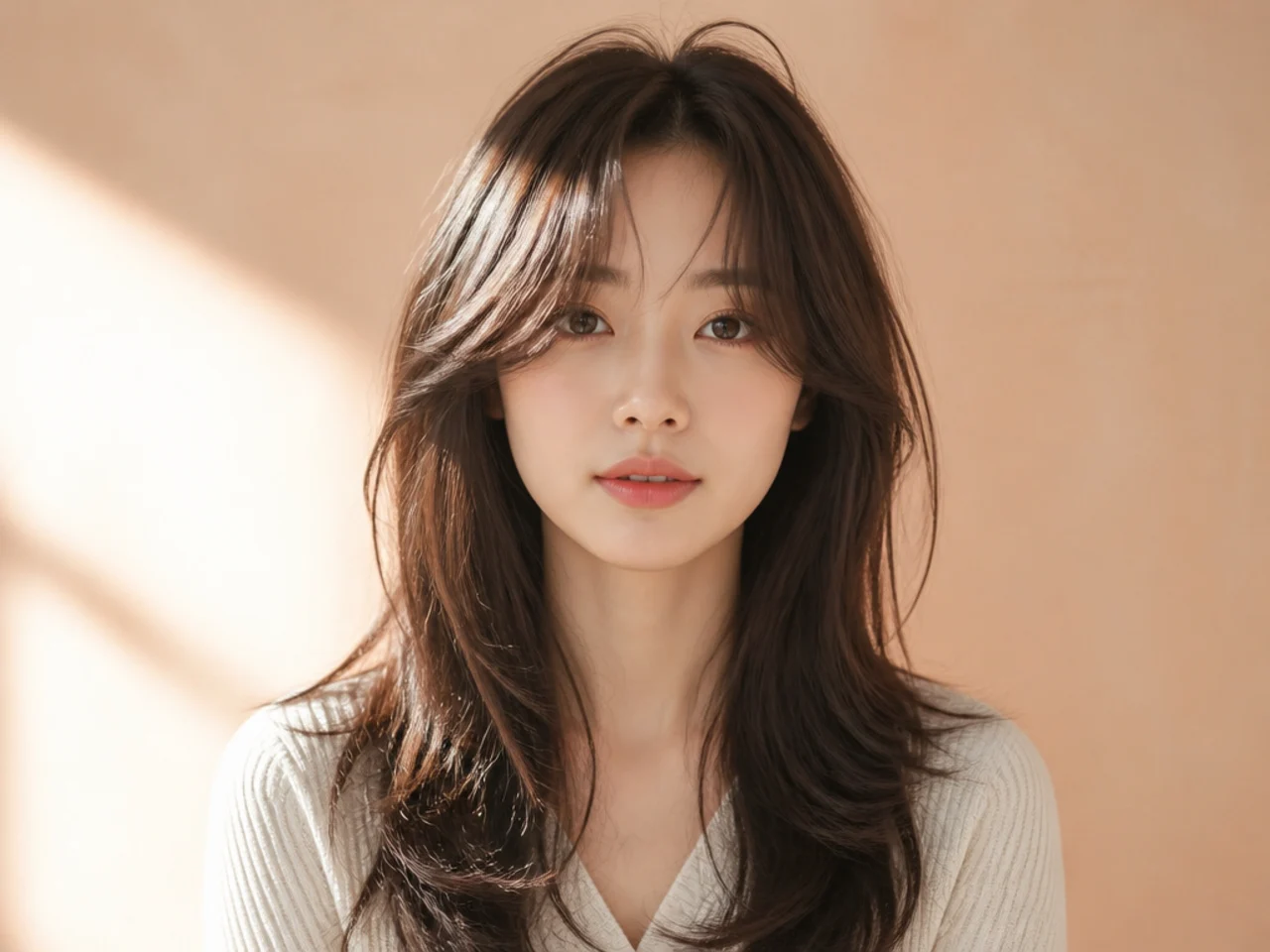
9. Wispy Bangs on a Bob
Short and sparse at the front, blunt behind. The contrast between a transparent front and a solid perimeter is the whole design.
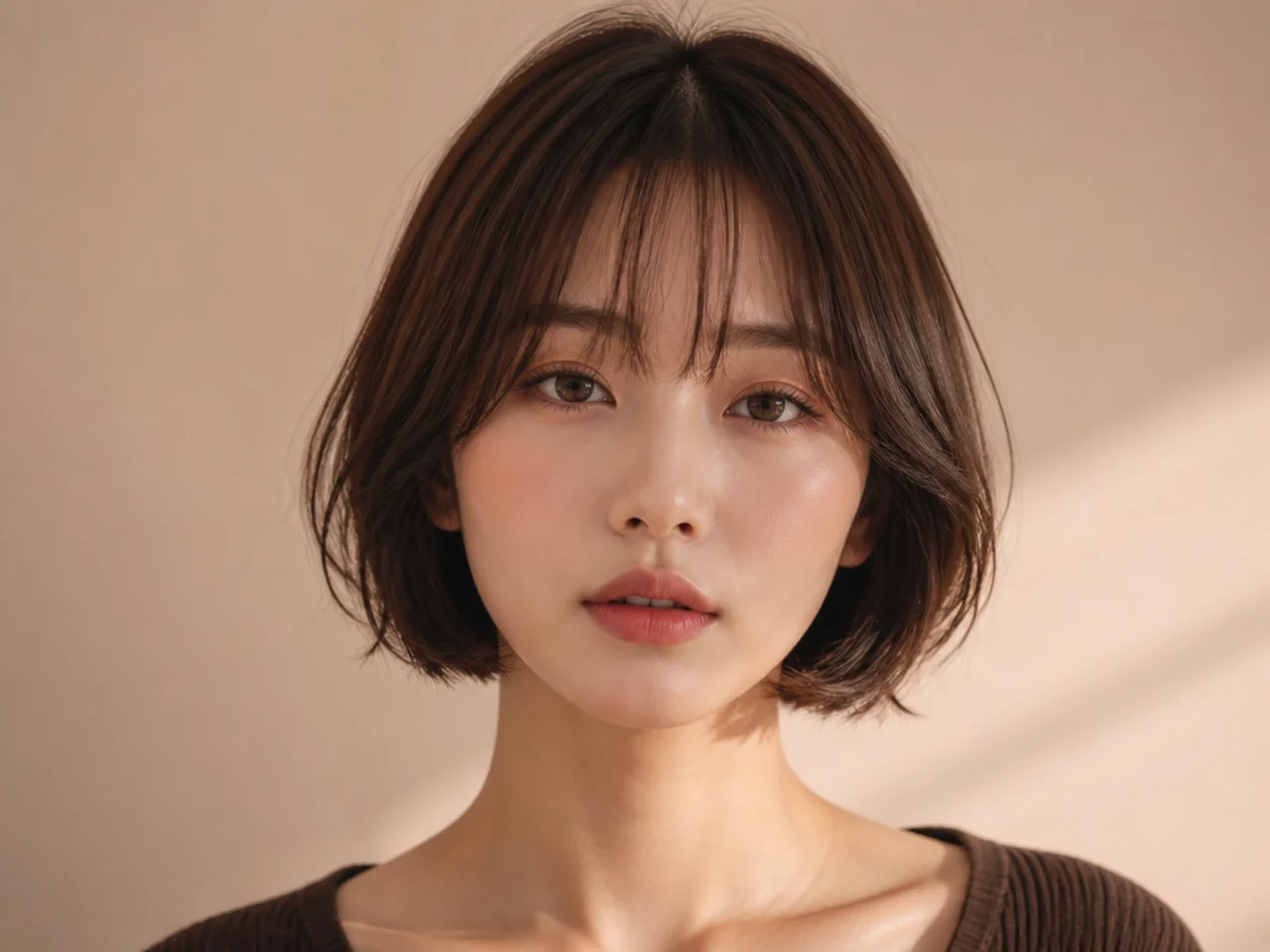
10. Long One-Length with a Fringe
Plain perimeter, all the interest at the face. A plain outline is deliberate here, because the design lives at the front rather than at the edge.
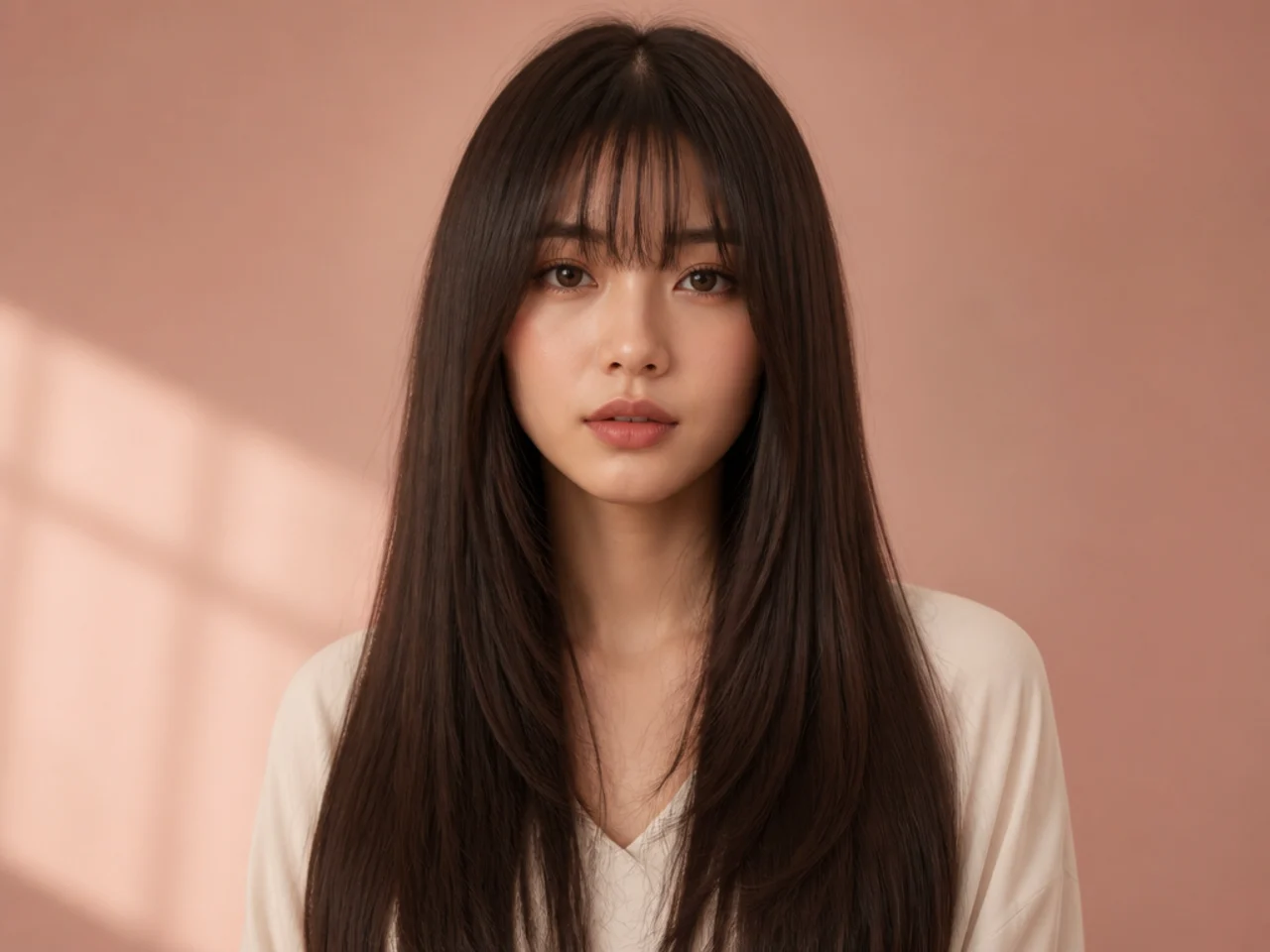
11. Side-Parted Long Layers
The asymmetric version, still framed at the jaw. The part changes the front; the framing height is unaffected either way.
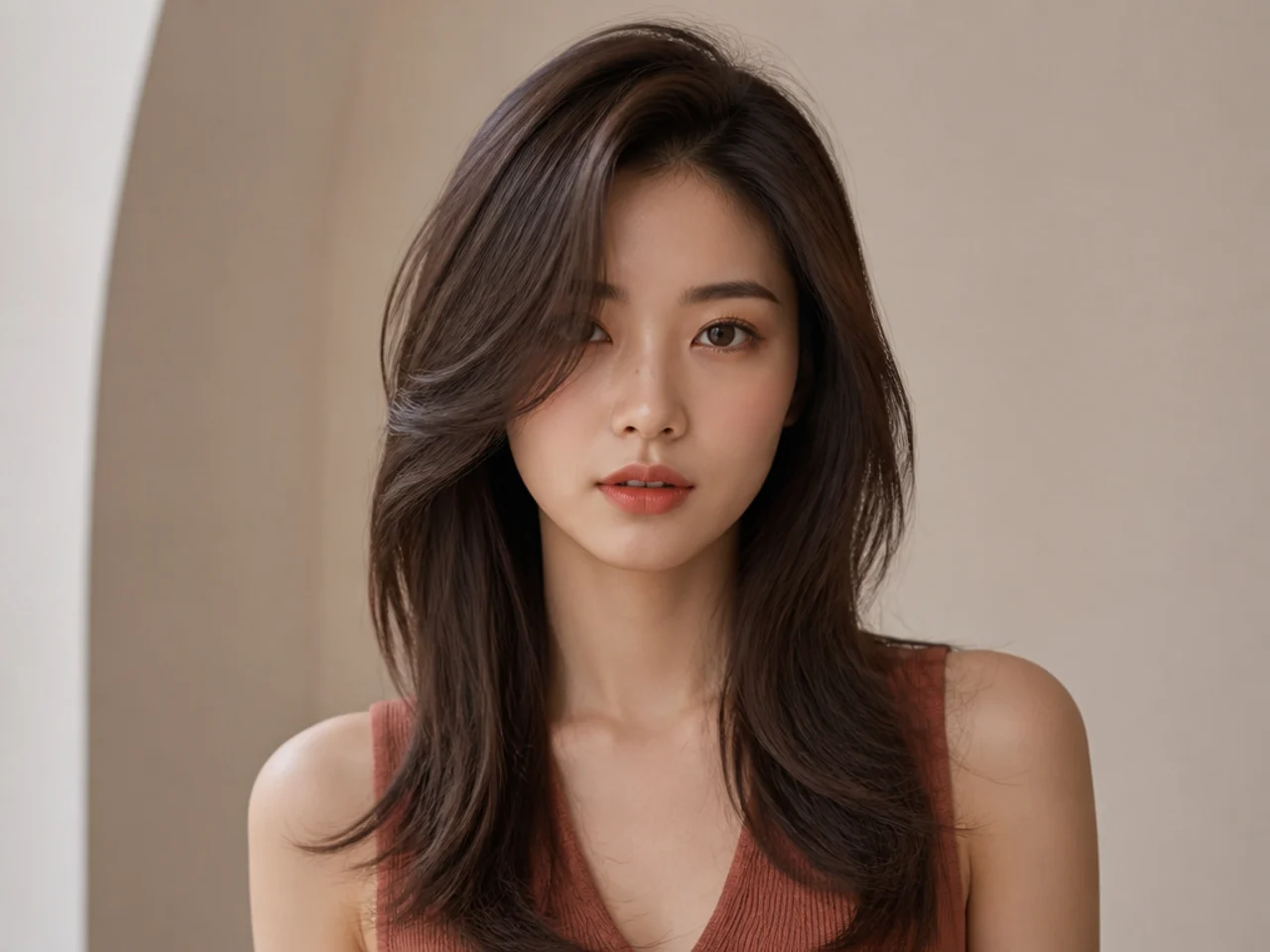
12. Korean Perm Waves
A soft body wave through the mid-lengths. Large rods produce movement rather than curl, which is why this reads as texture rather than as a perm.
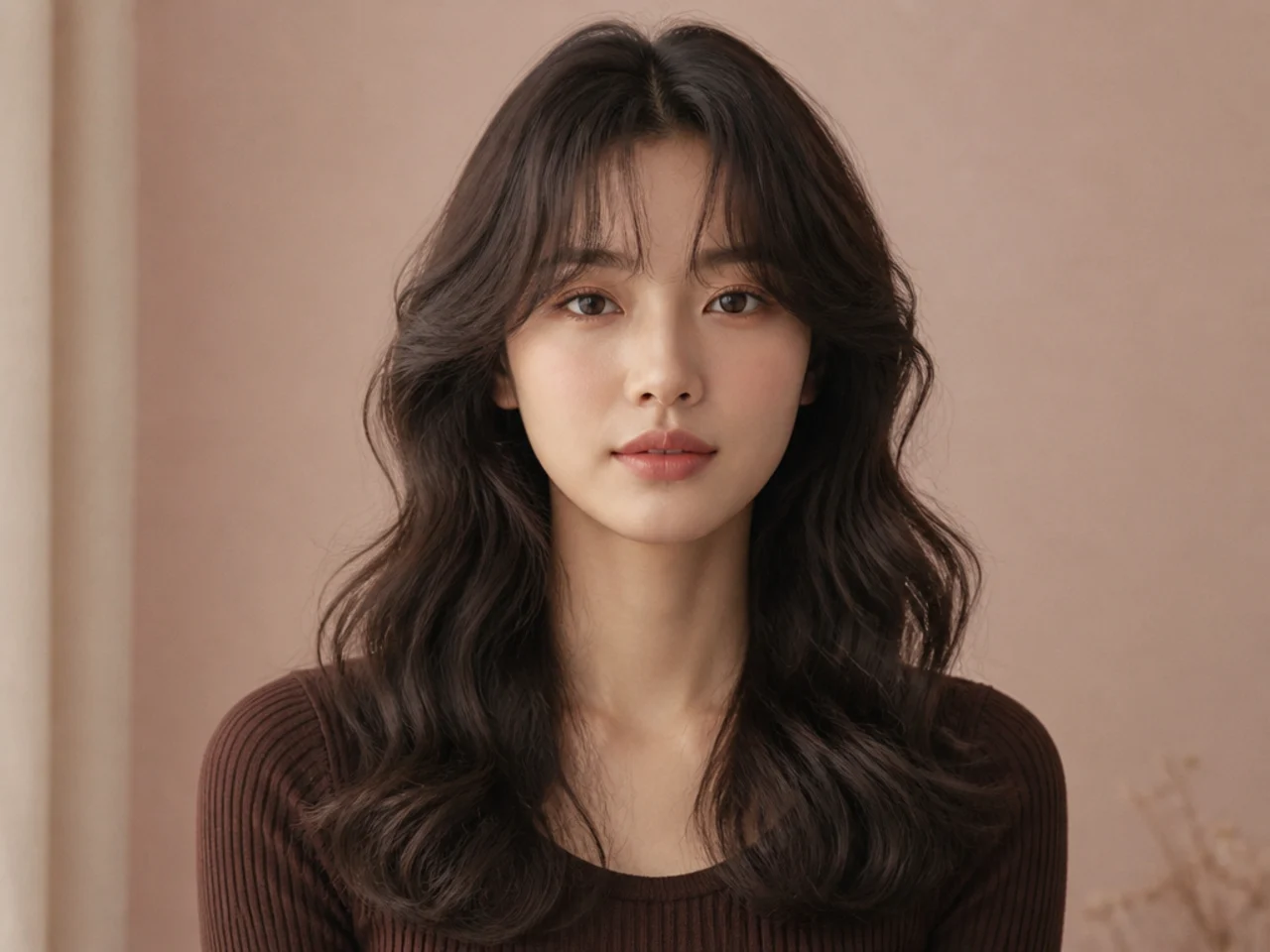
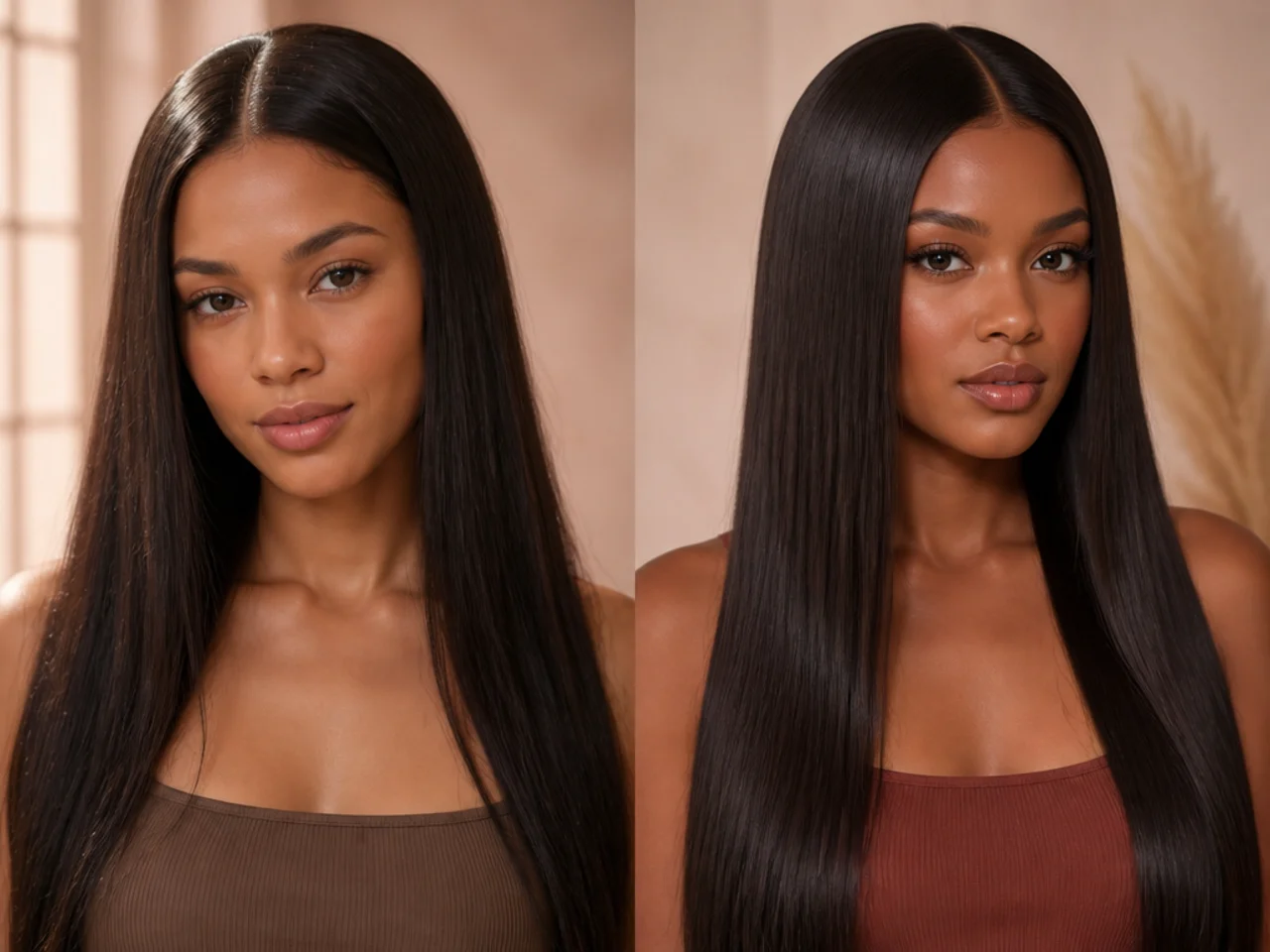
13. Straight Hair with C-Curl Ends
Straight throughout, curved only at the very ends. The minimum version — one instruction, applied to the last few inches.
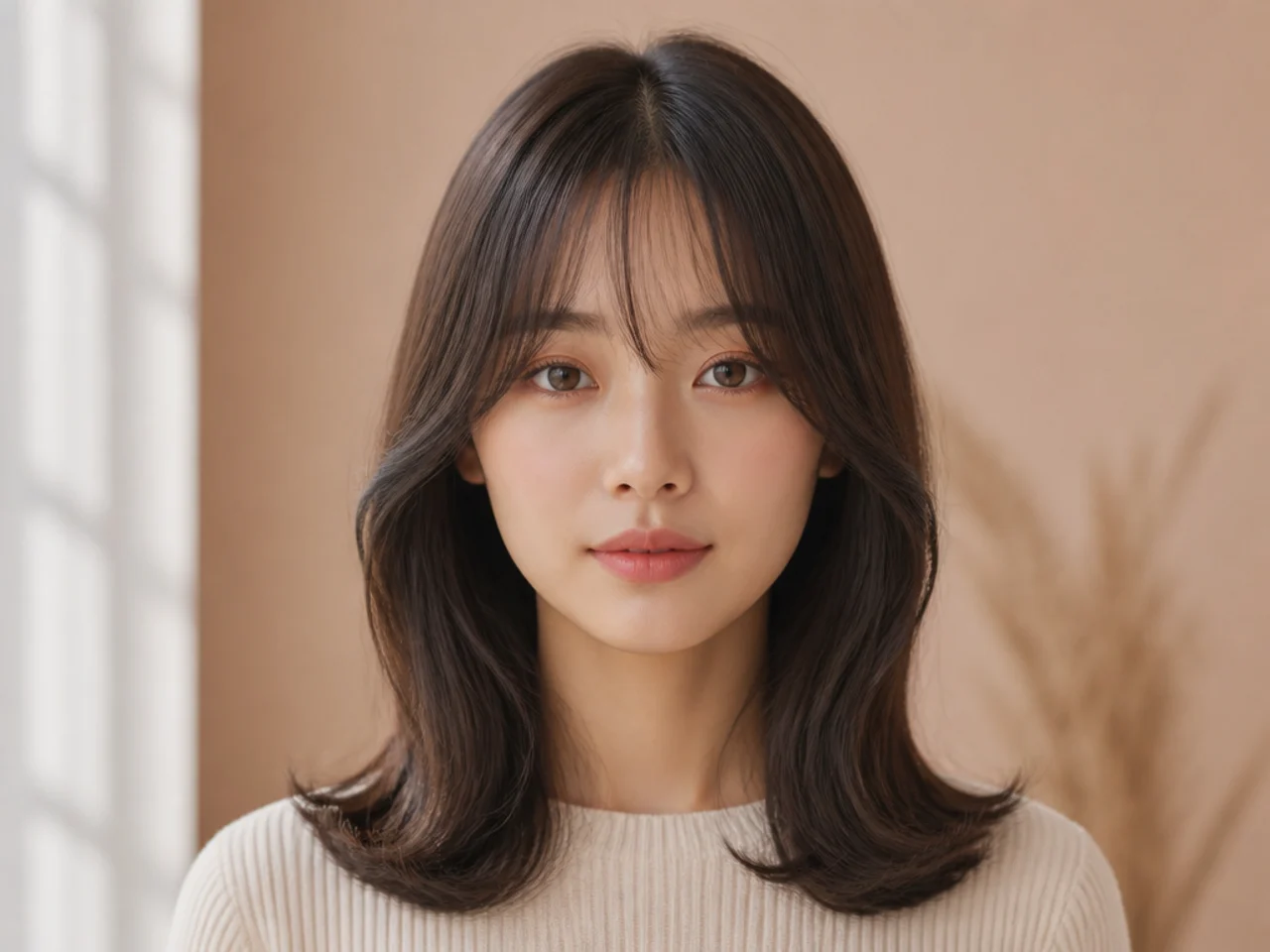
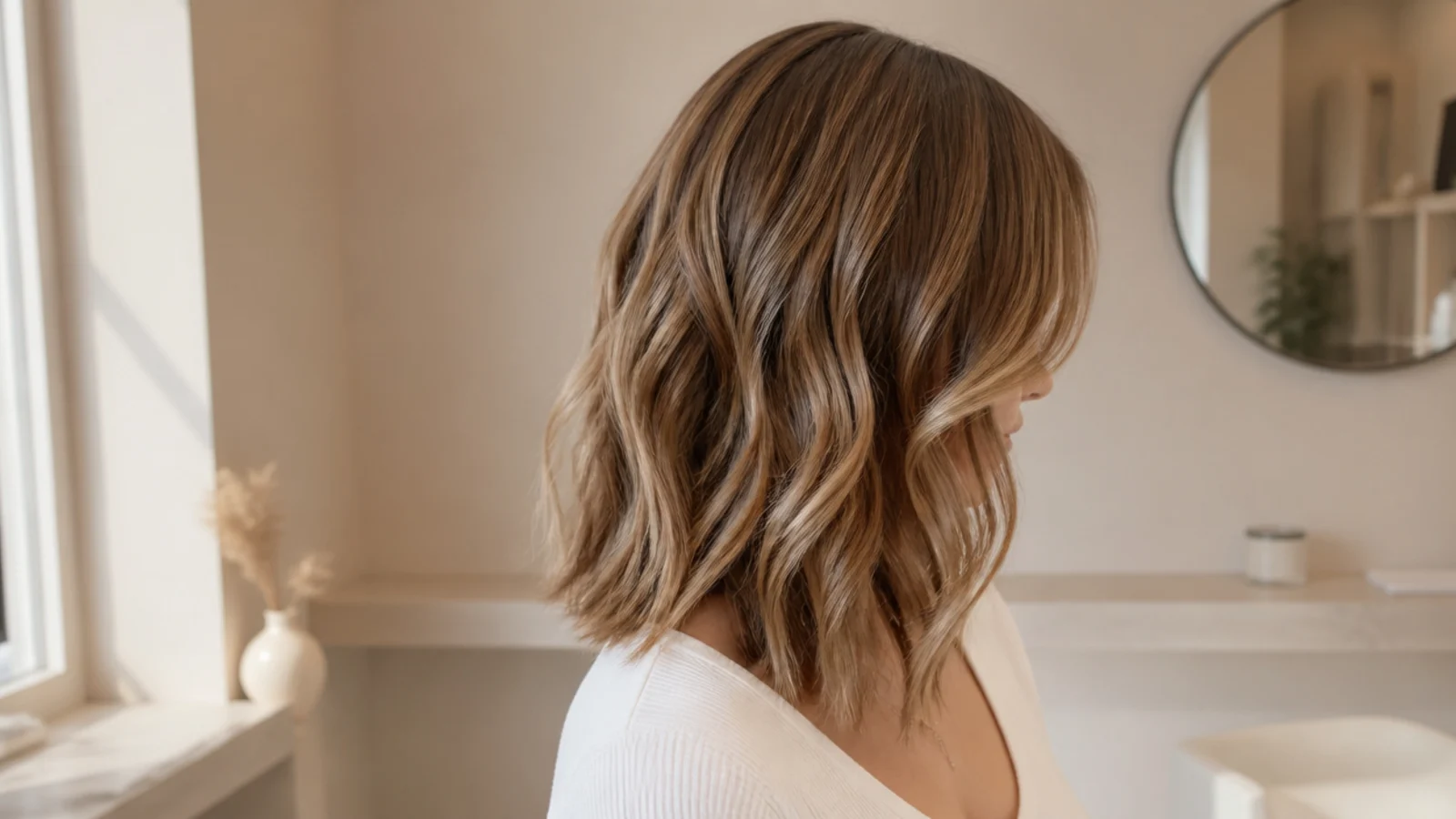
14. Layered Lob with Framing
Collarbone length, layered around the face. A lob keeps a readable perimeter while the framing does the shaping.
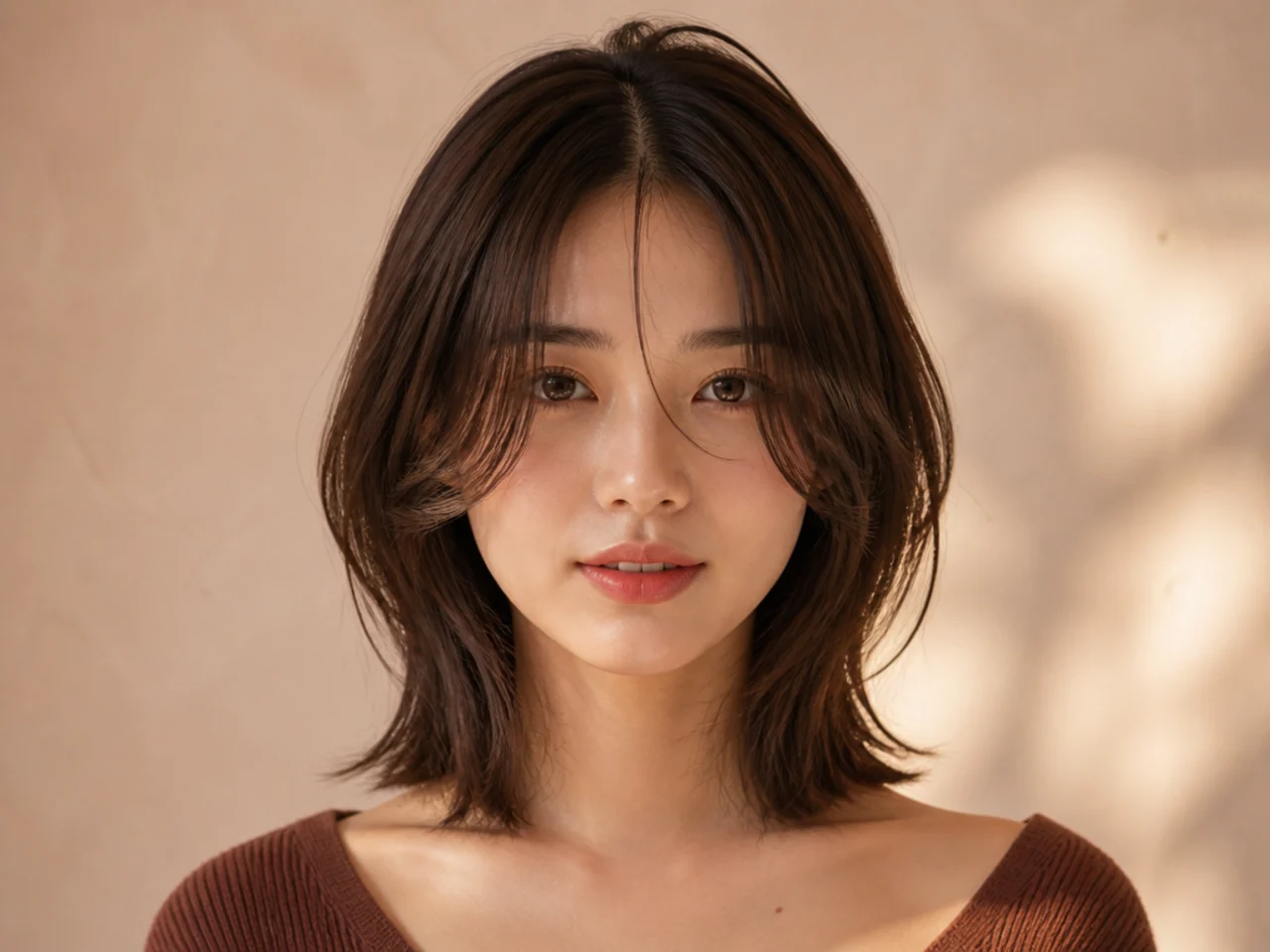
15. Short Layered Cut
Above the shoulder, with volume kept high. Less length means the crown lift carries proportionally more of the silhouette.
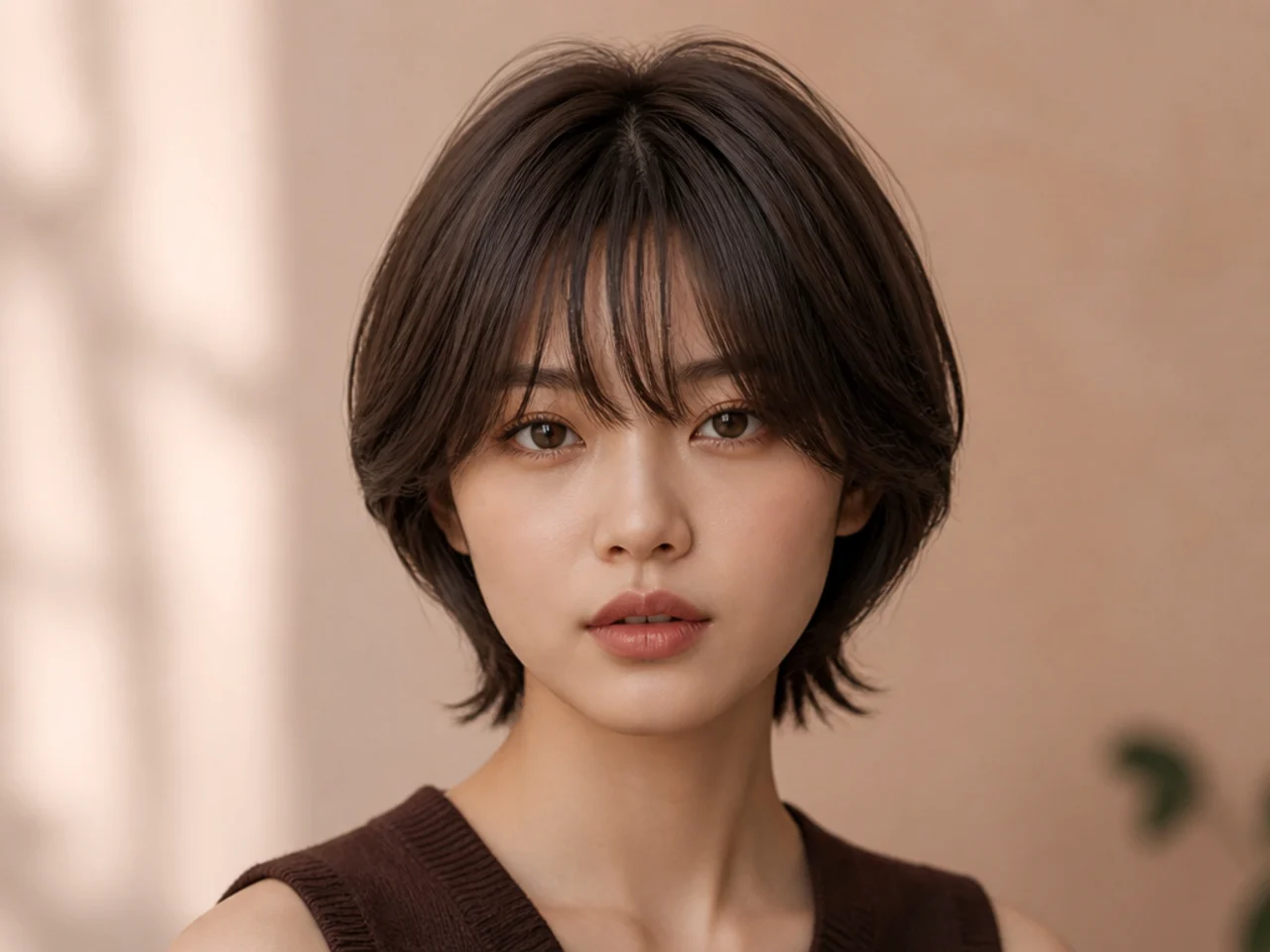
16. Long Hair with a Middle Part
No fringe, framing doing all the work. Without a fringe there is nothing on a separate trim cycle, which makes this the lowest-upkeep version.
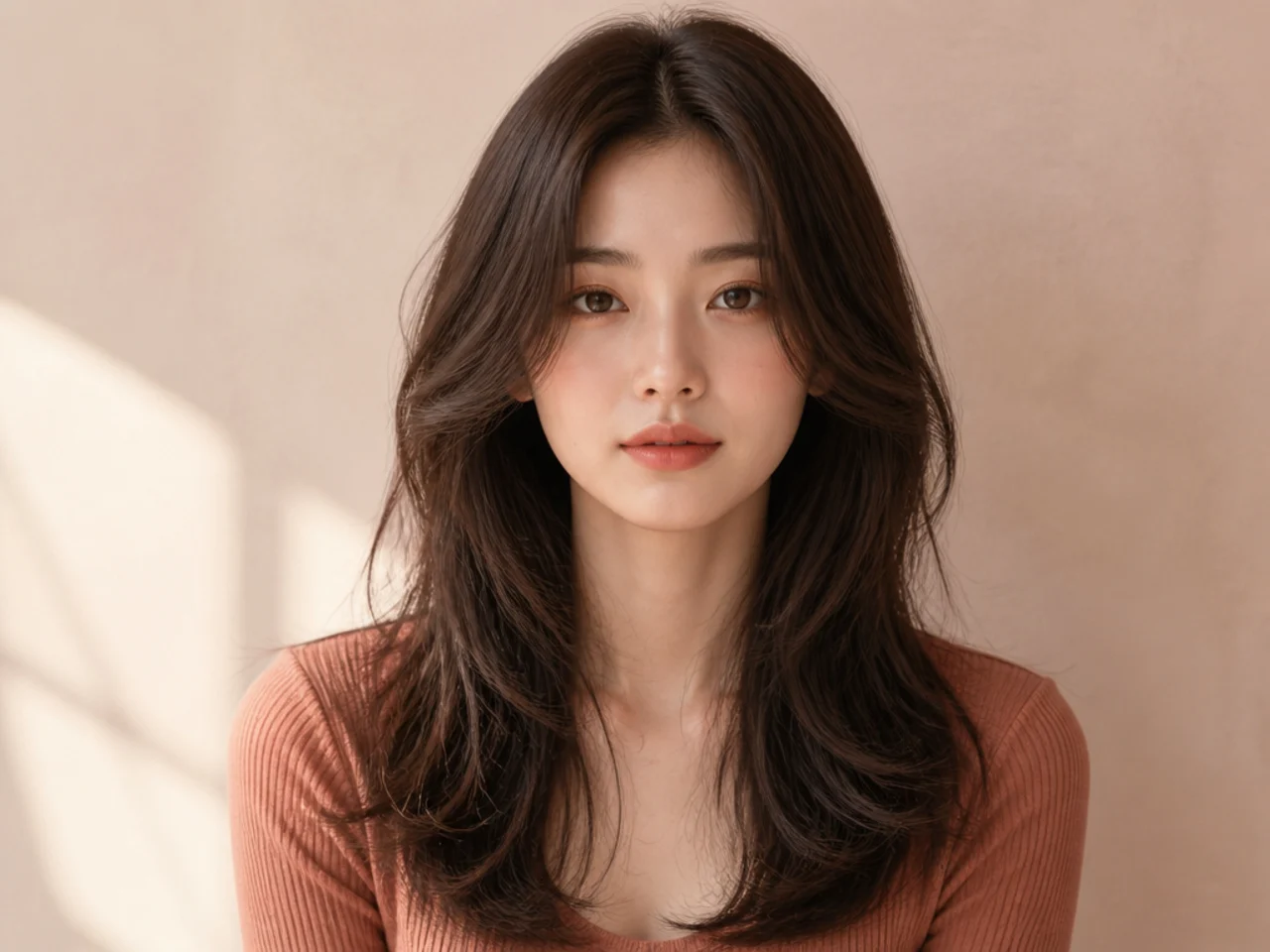
17. Bangs with Face-Framing Together
Both elements at once. The fullest version of the look. Fringe and framing both work at the front, so they have to be planned in one conversation.
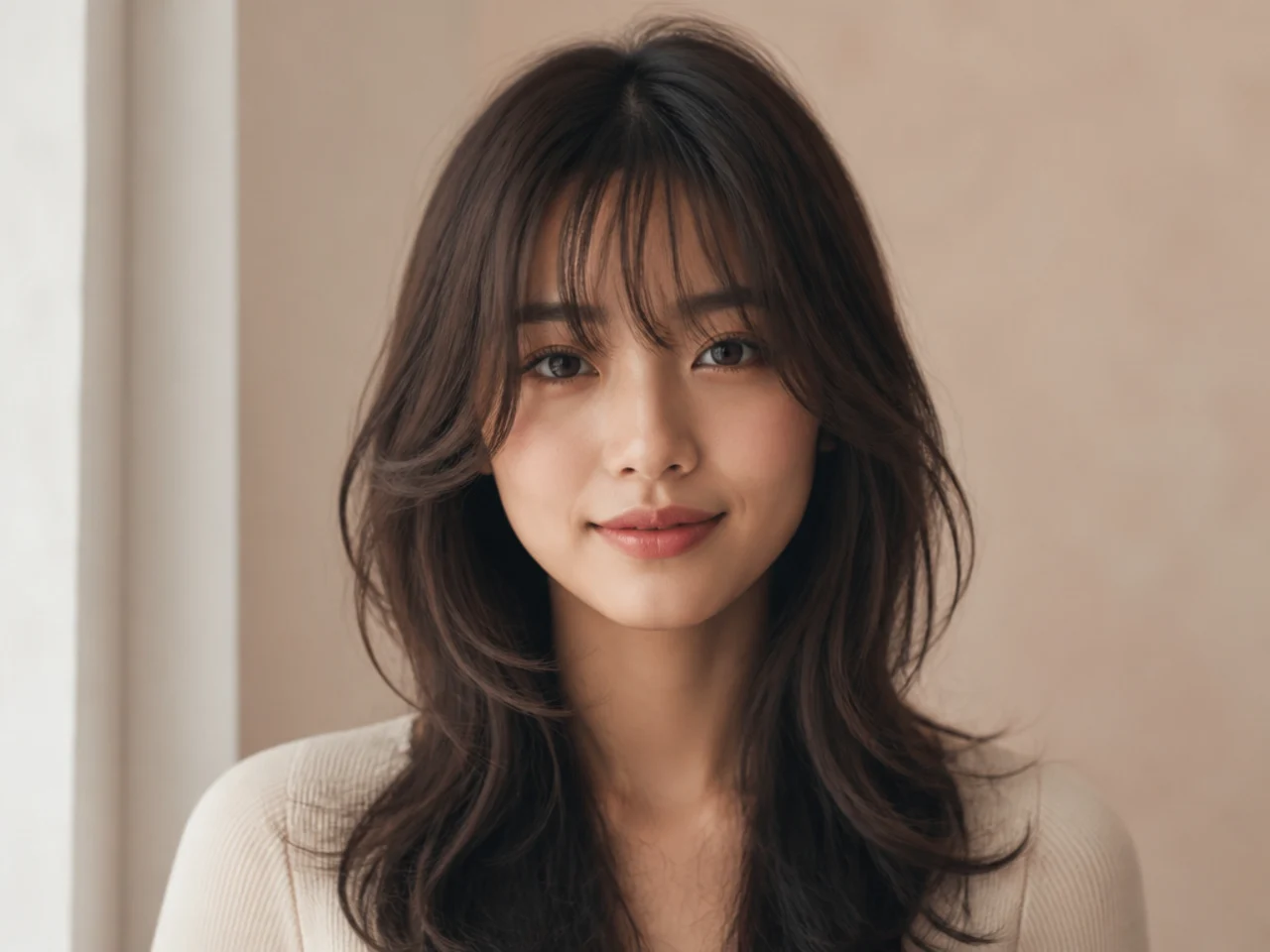
18. Cut on Fine Hair
Fewer framing pieces so density is not lost at the front. Every framing piece is one fewer in the length, and fine hair has the least to spare.
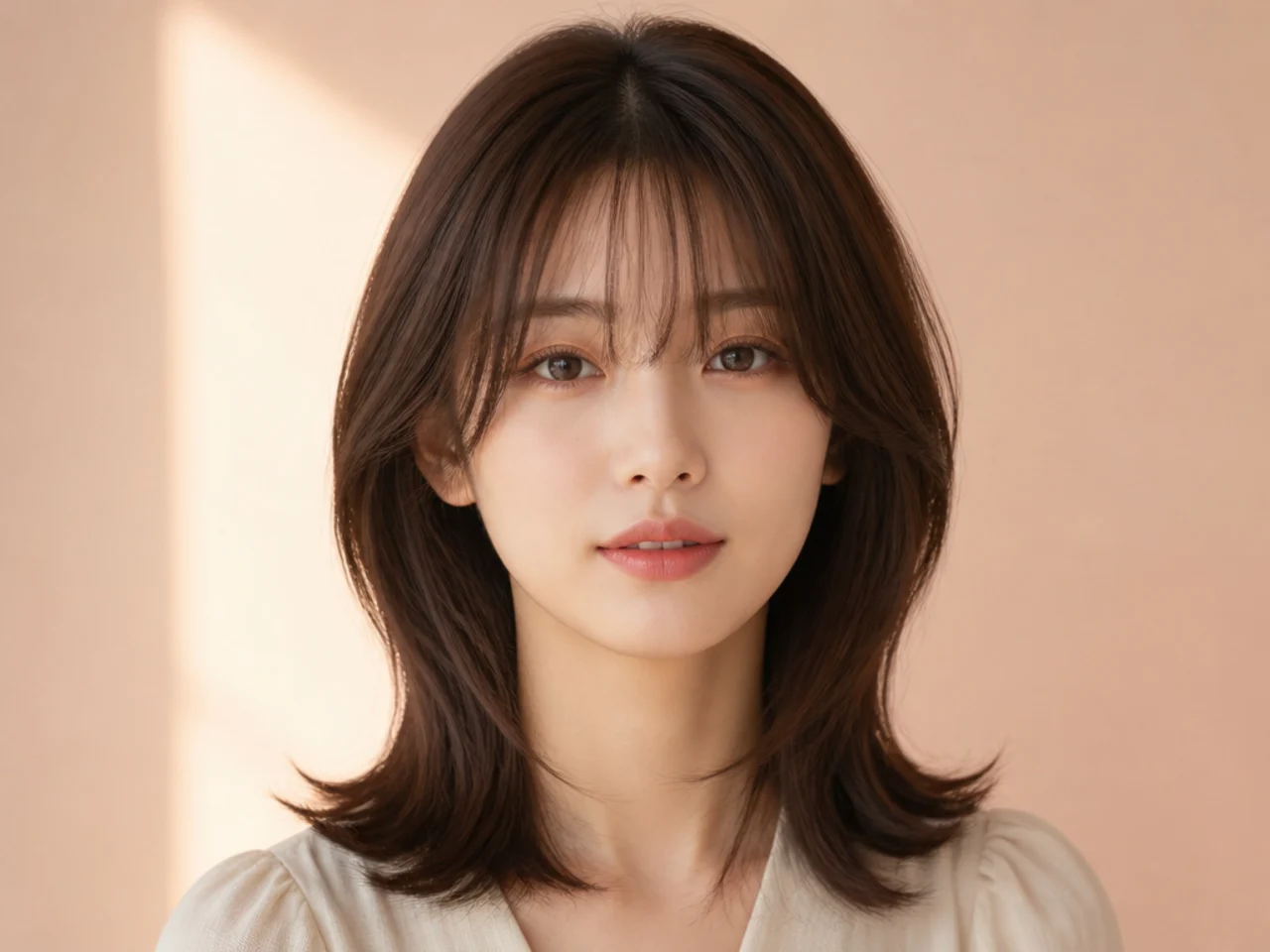
19. Cut on Thick Hair
Internal weight removed so the crown lifts rather than spreads. Thick hair expands outward under its own weight unless it is taken from underneath.
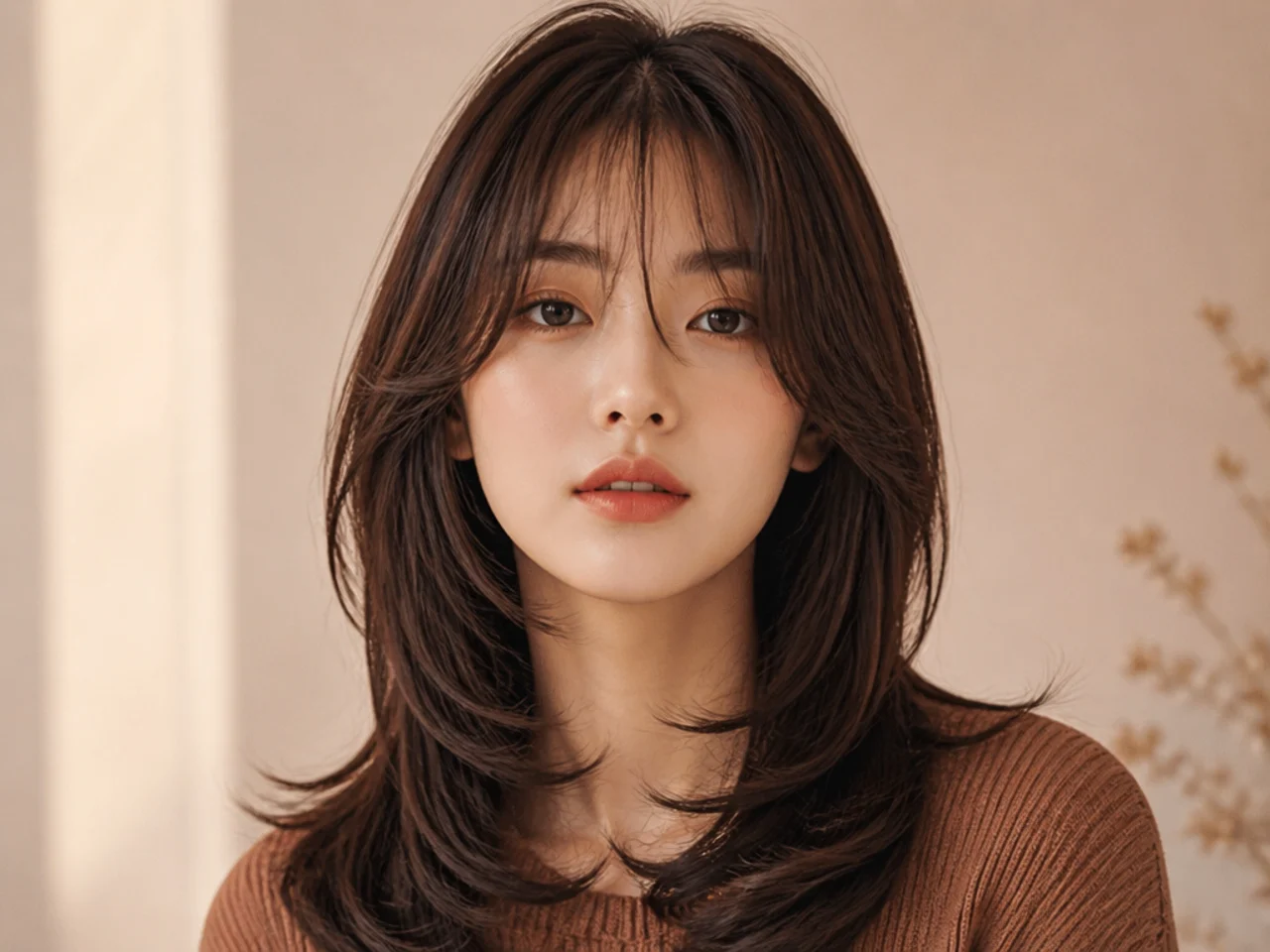
20. Cut on Wavy Hair
Framing shaped into the wave rather than against it. Cut dry, because a wave lifts as it dries and framing cut wet finishes above where it was placed.
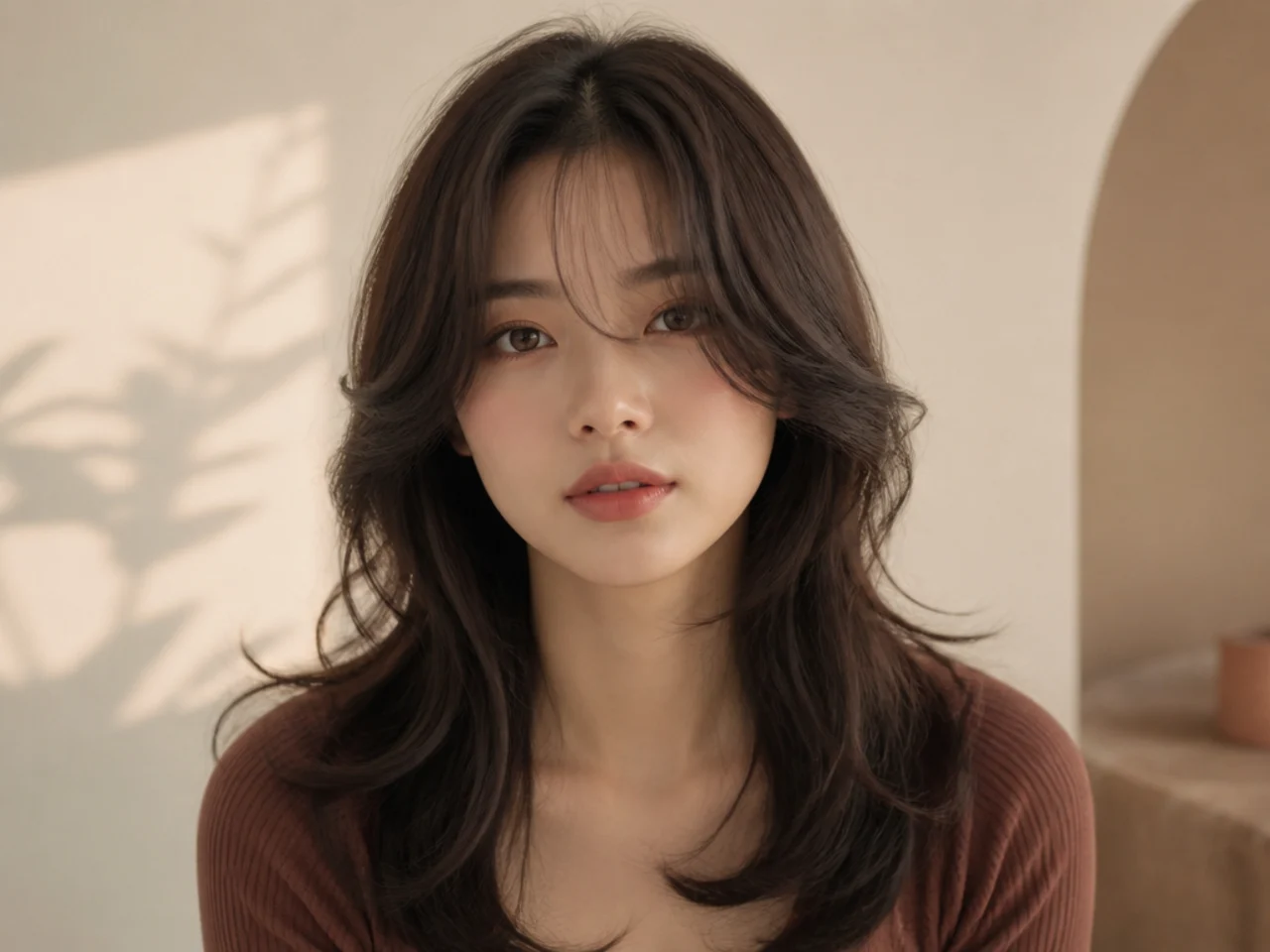
21. Half-Up with Framing Left Out
The framing pieces released from a gathered style. Gathering the top is what puts the framing on display, which is why it is worth cutting properly.
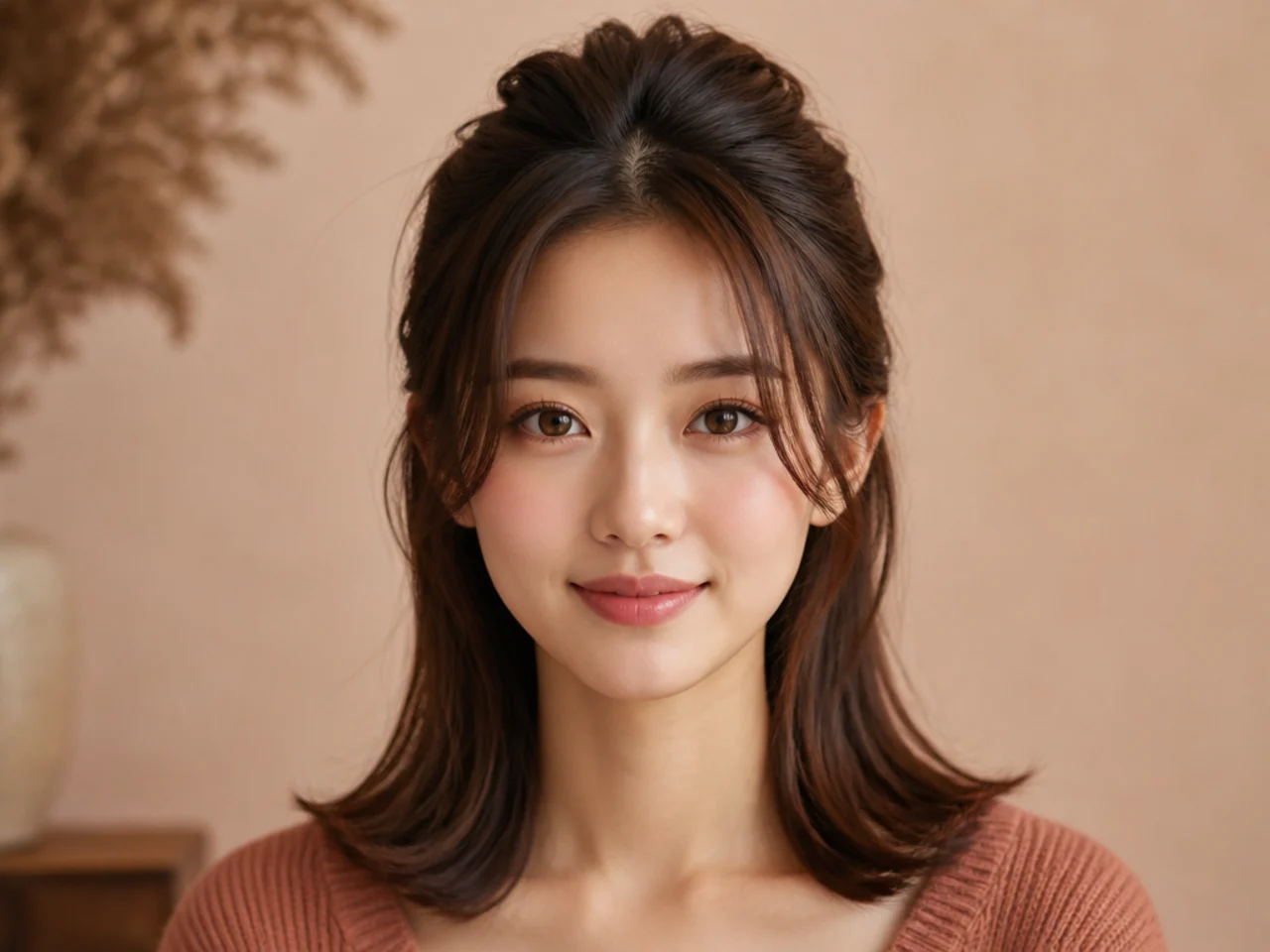
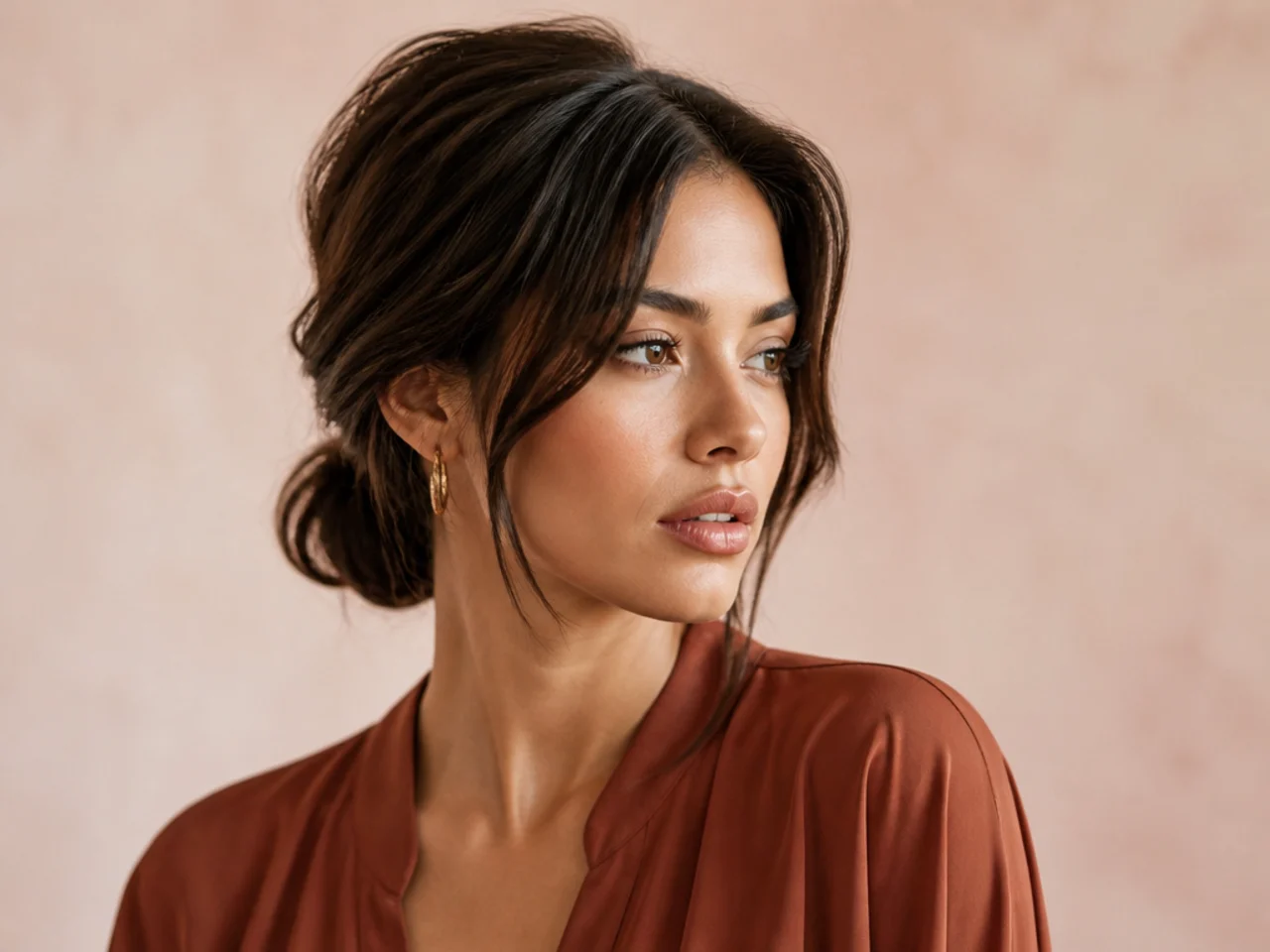
22. Low Ponytail with Bangs
Everything back, the fringe carrying the front. With the rest gathered the fringe is the only thing framing the face, so its sparseness is fully exposed.
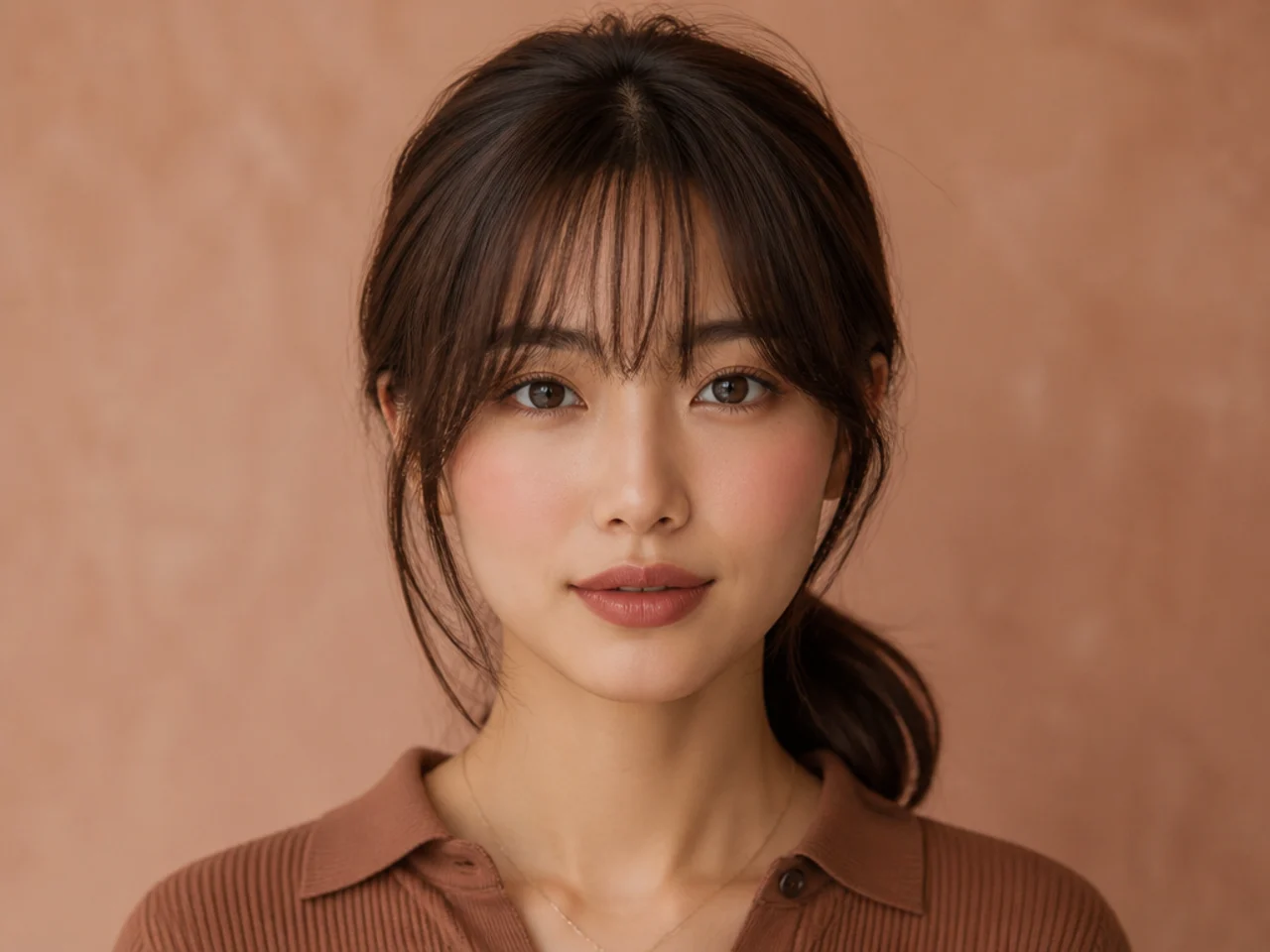
23. Crown Volume Blow-Dry
The styling that completes the cut. Set from wet, because lift added to a dry root sits on the surface and drops within the hour.
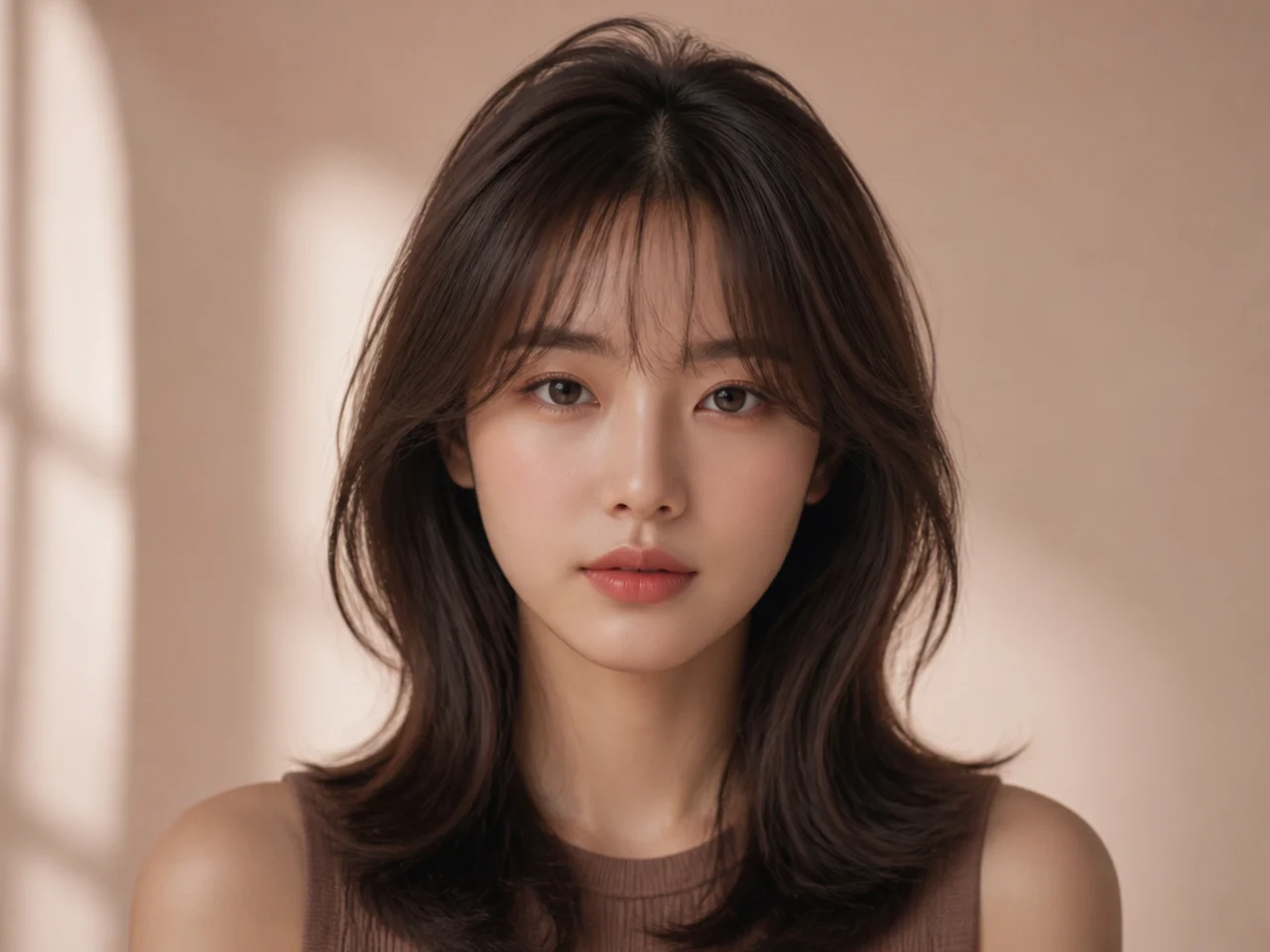
24. Grown-Out Framing
Framing that has lengthened. Still working. Framing cut well above the bulk has room to grow before it disappears into it.
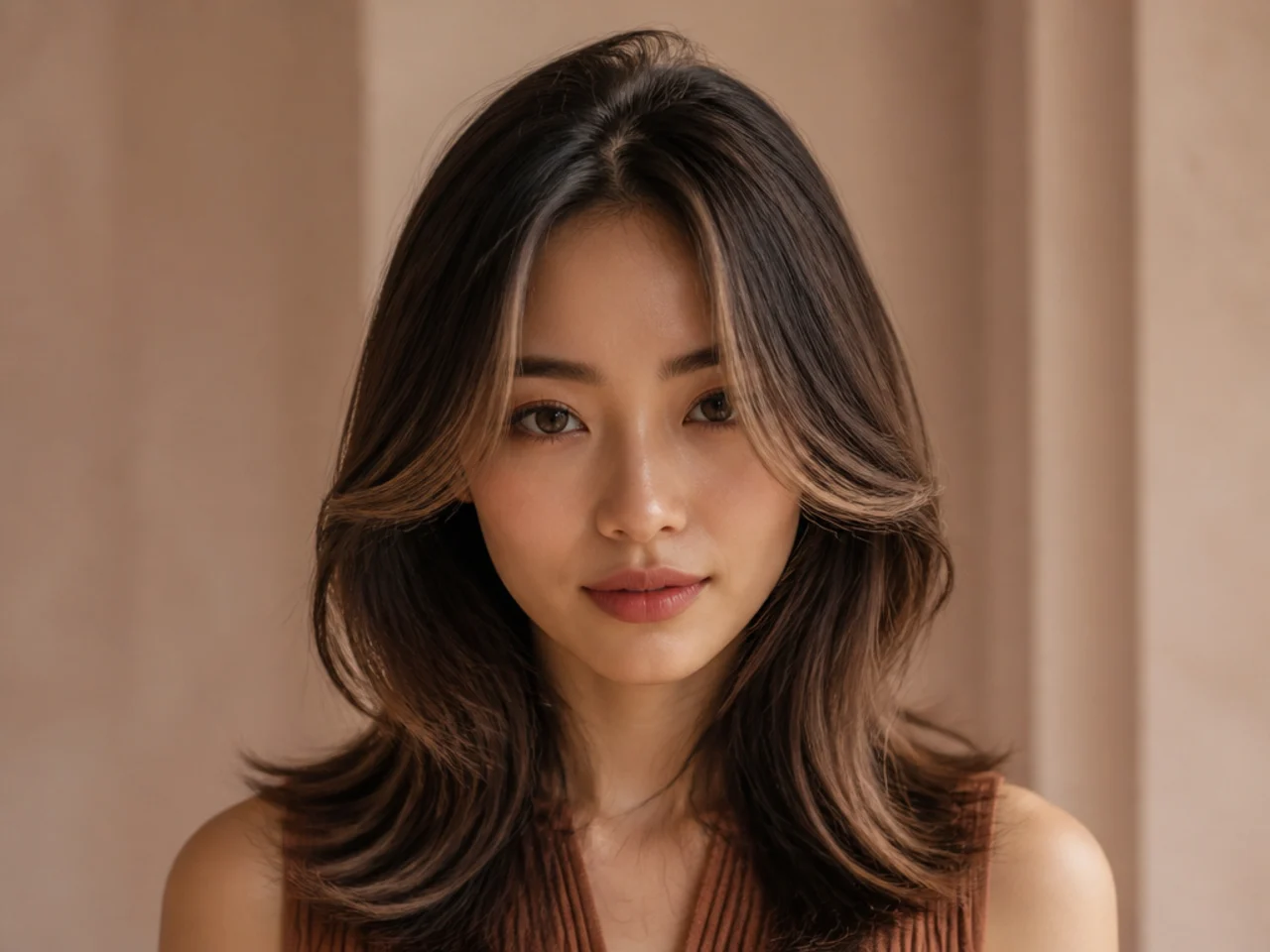
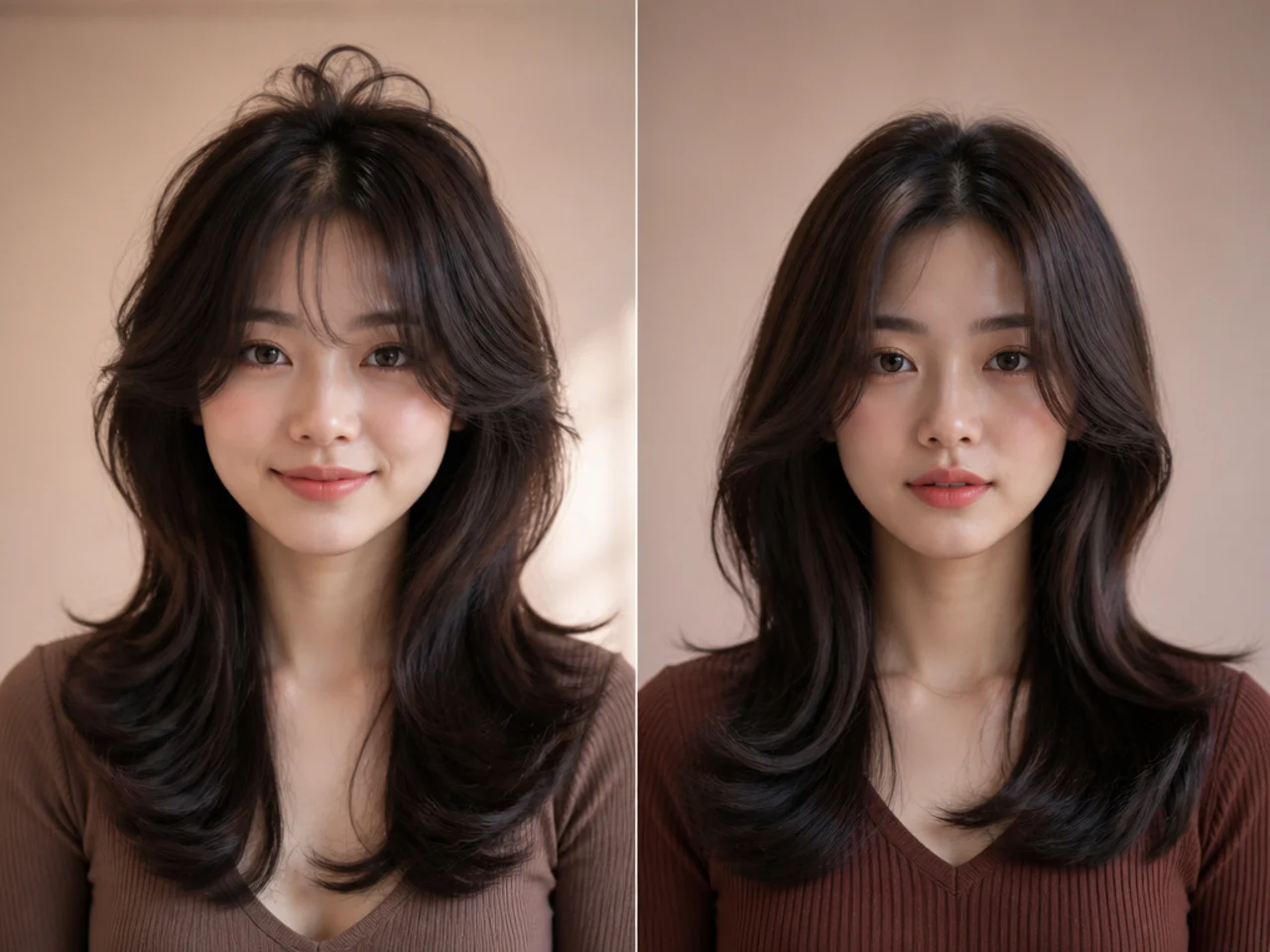
25. The Same Length with No Framing
Identical outline, none of the look. The point, demonstrated. The perimeter is the same length in both, and everything that makes it Korean happens at the face.
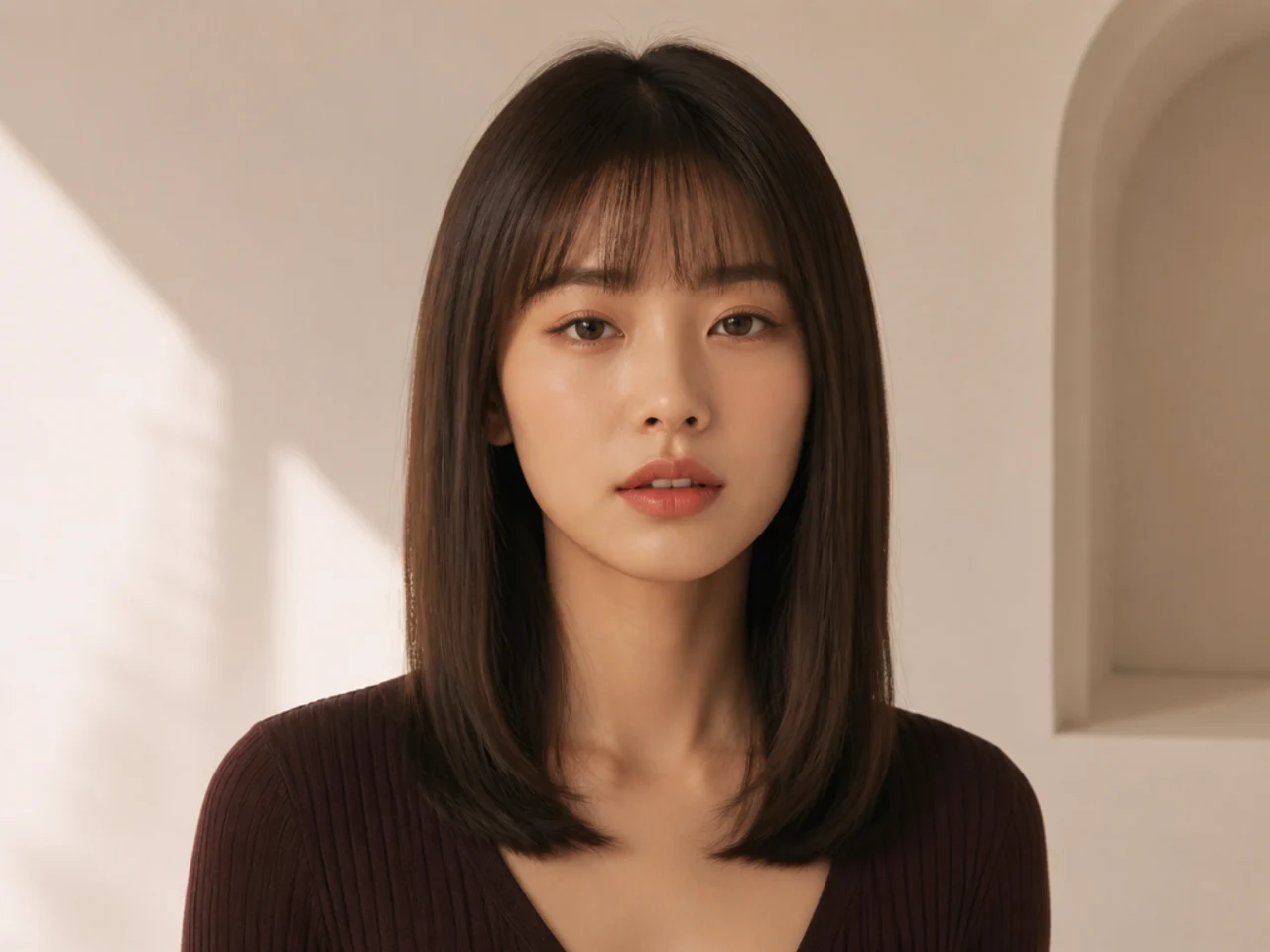
Styling and Upkeep
Dry the crown upward first. The volume placement is half the look and it is set while drying.
Curl the framing pieces inward. A C, not an S. One pass with a small iron.
Trim the framing more often than the length. It is the part that matters and the part that grows out of position.
Keep the sides close. Volume at the temples fights the shape.
Refresh the fringe separately. See-through bangs need their own light touch.
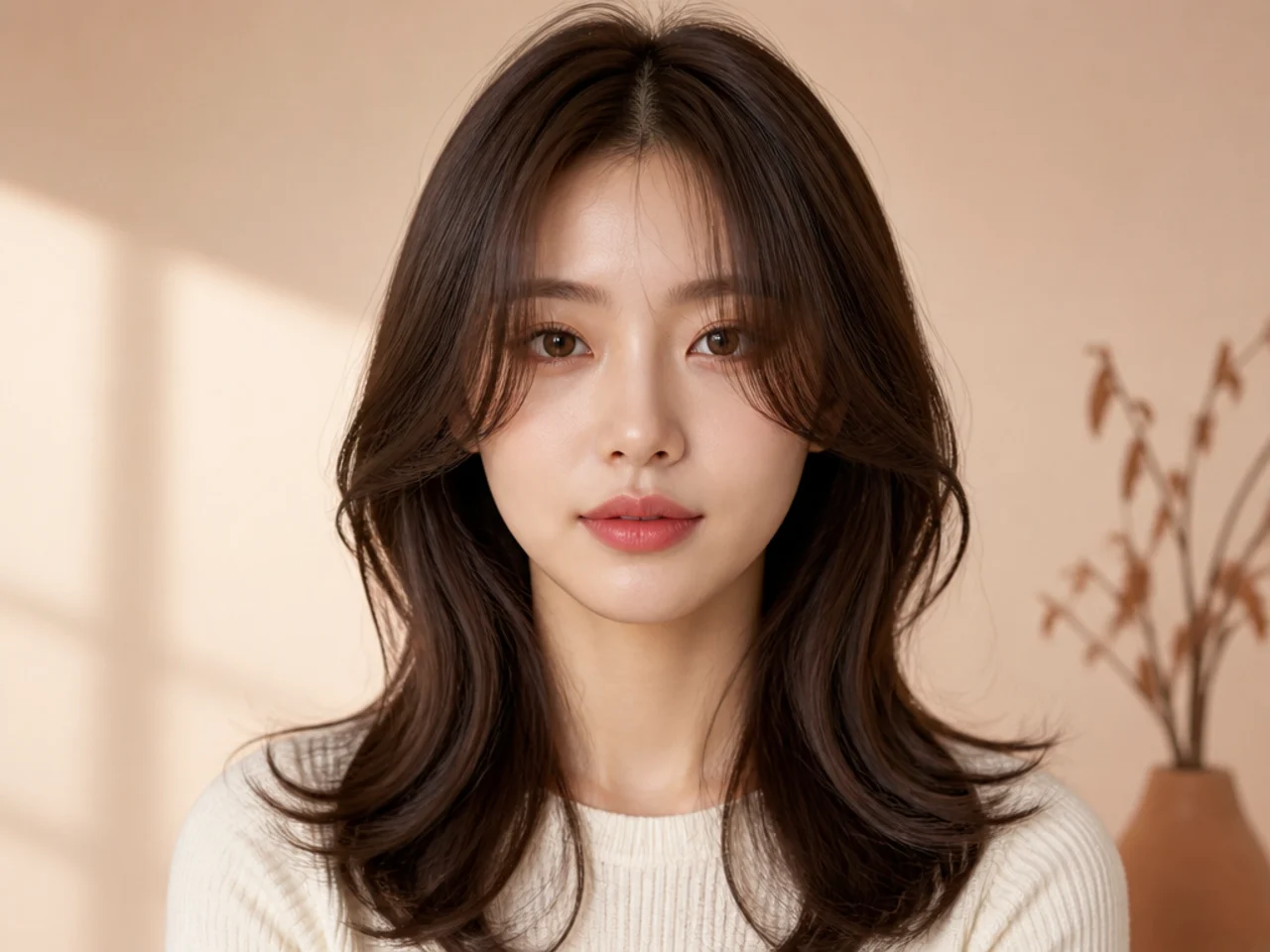
Mistakes to Avoid
Bringing a photograph of the back. The design is at the front.
Asking by length alone. You will get the outline and none of the character.
Volume at the sides. It works against the shape.
A blunt fringe instead of a see-through one. A different aesthetic entirely.
Letting the framing grow out with the length. It needs its own schedule.
FAQ
What makes it Korean? How it is designed — from the face outward rather than the perimeter inward.
Why do photographs mislead? They show the length, which is the least important part.
What should you ask for? See-through bangs, C-curl framing, crown volume.
Final Thoughts
Ask for the three elements rather than the shape. See-through bangs, C-curl framing at the jaw, volume at the crown — those three sentences will get you closer than any photograph of a length, because the length was never what made it look Korean.
For the comparison that clarifies the philosophy see 15 korean vs japanese haircut ideas compared, and for the men's version see 25 korean haircuts for men. More in Women's Hairstyles.