20 Korean Haircut Ideas With Curtain Bangs
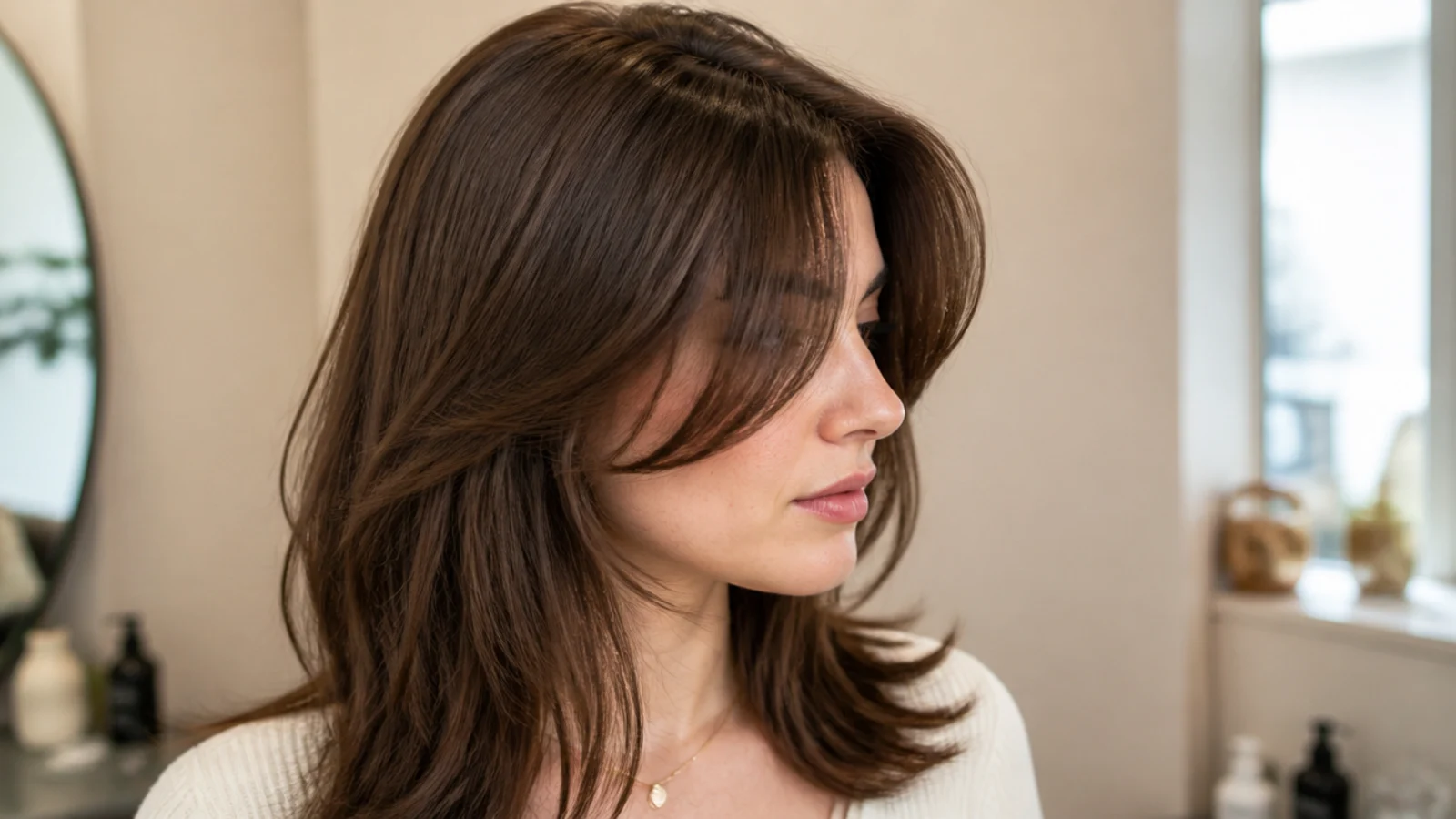
Twenty Korean curtain bang ideas, and what makes them different from the Western version — they are not a fringe. They are the top of the face-framing, which is why they start further back and never sit as a separate piece.
In this article · 27
- What Makes Them Korean
- How to Choose Yours
- The 20 Ideas
- 1. Continuous Curtain into Framing
- 2. Cheekbone-Length Curtain
- 3. Jaw-Length Curtain
- 4. Curtain with C-Curl Ends
- 5. Curtain with Long Hair
- 6. Curtain with a Hush Cut
- 7. Curtain with a Wolf Cut
- 8. Curtain on a Lob
- 9. Curtain on a Bob
- 10. Curtain with a Middle Part
- 11. Curtain with a Soft Side Part
- 12. Curtain on Fine Hair
- 13. Curtain on Thick Hair
- 14. Curtain on Wavy Hair
- 15. Curtain with Crown Volume
- 16. Curtain Tucked Behind One Ear
- 17. Curtain Worn with a Ponytail
- 18. Curtain Air-Dried
- 19. Curtain at Week Ten
- 20. A Western Curtain Fringe for Comparison
- Styling and Upkeep
- Mistakes to Avoid
- FAQ
- Final Thoughts
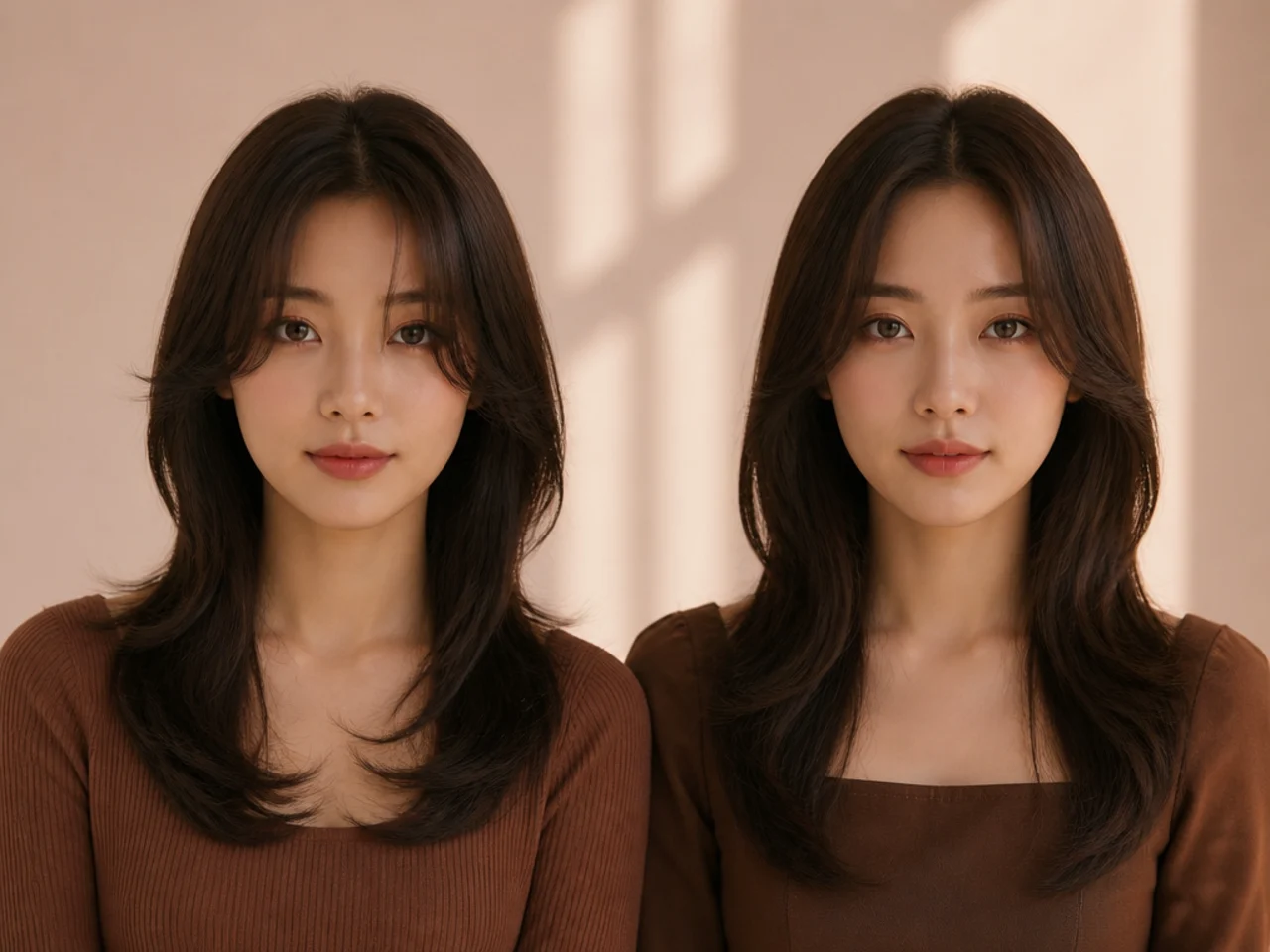
Korean curtain bangs and Western ones look similar in photographs and are cut on different logic.
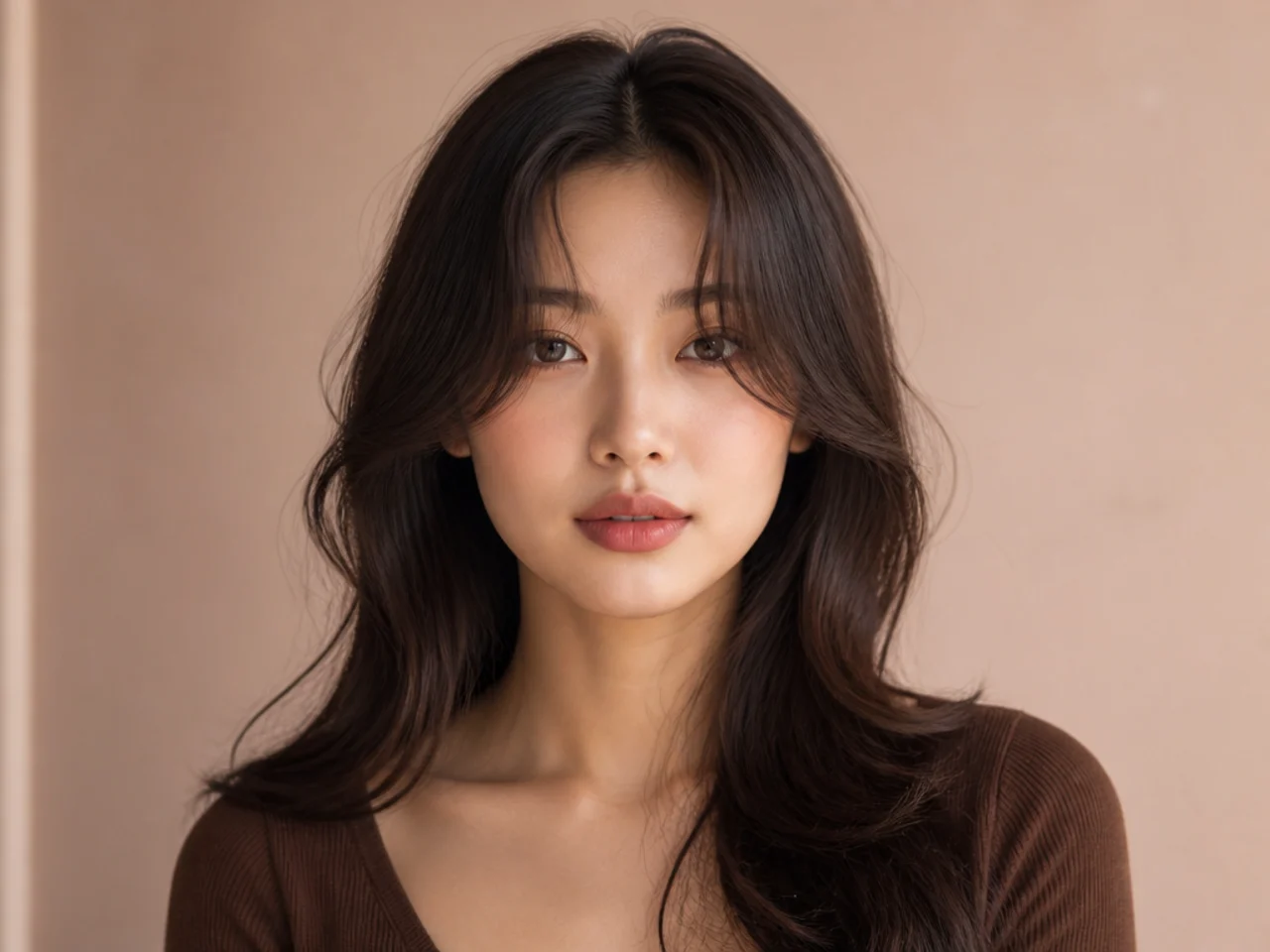
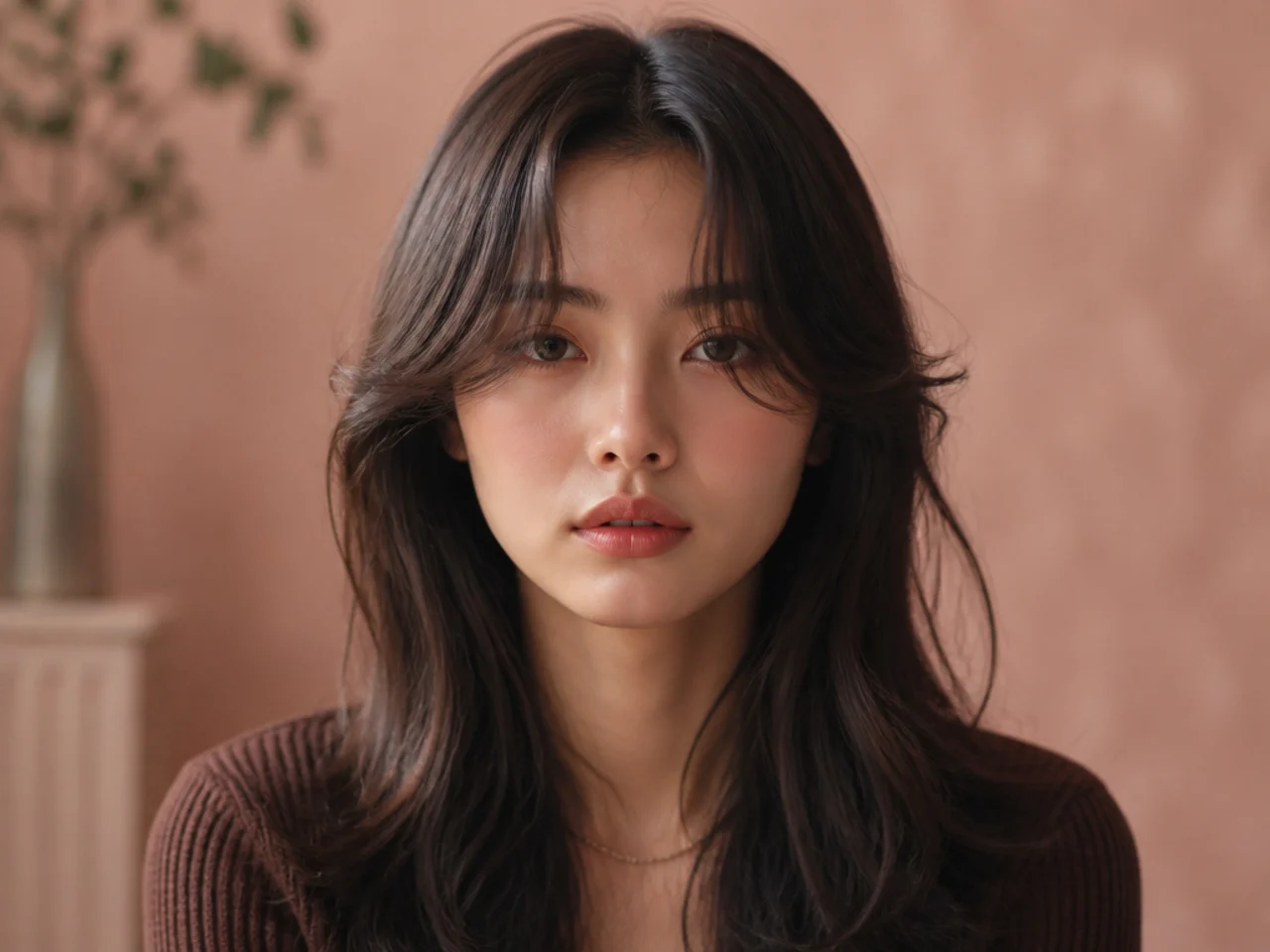
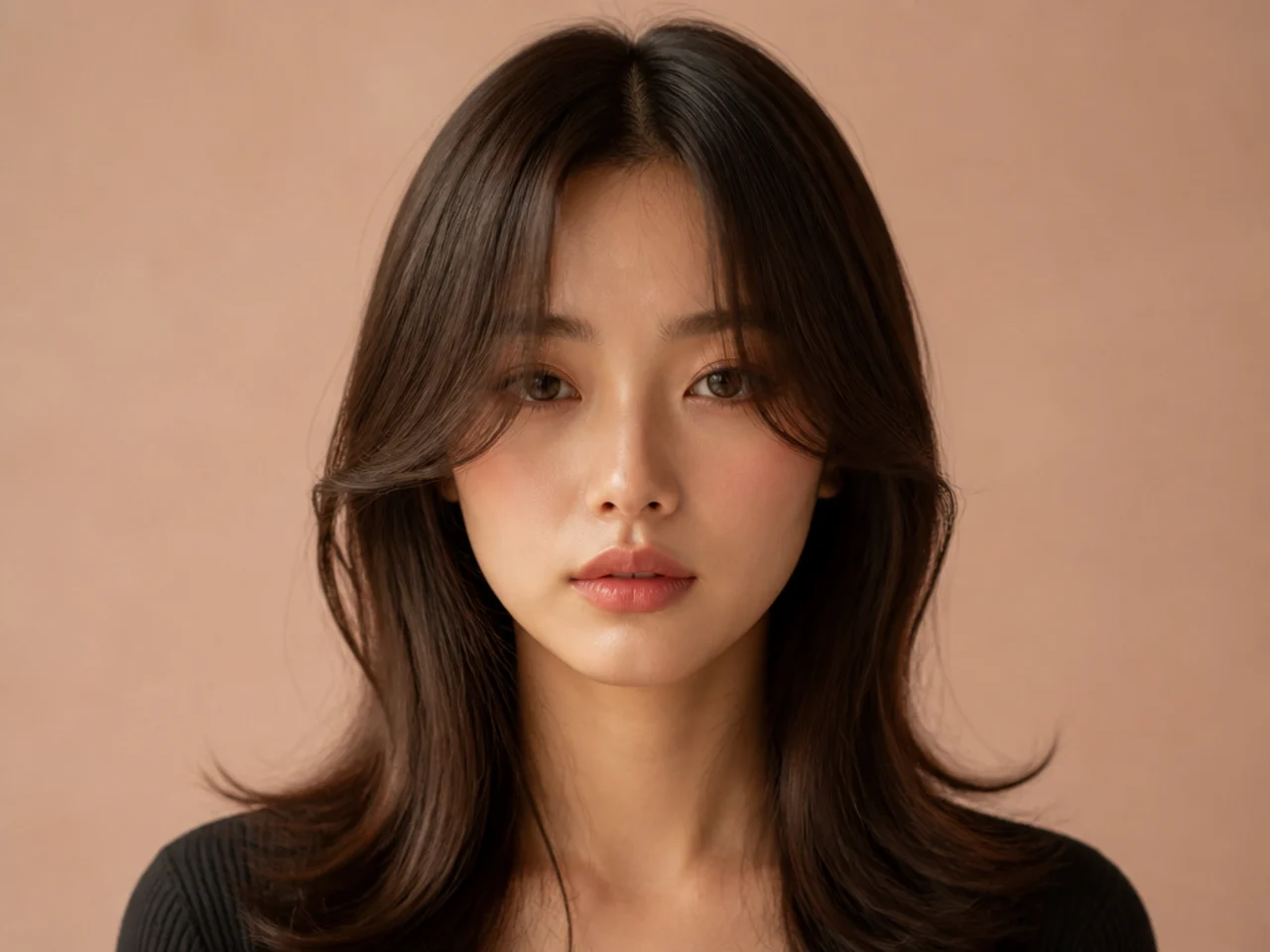
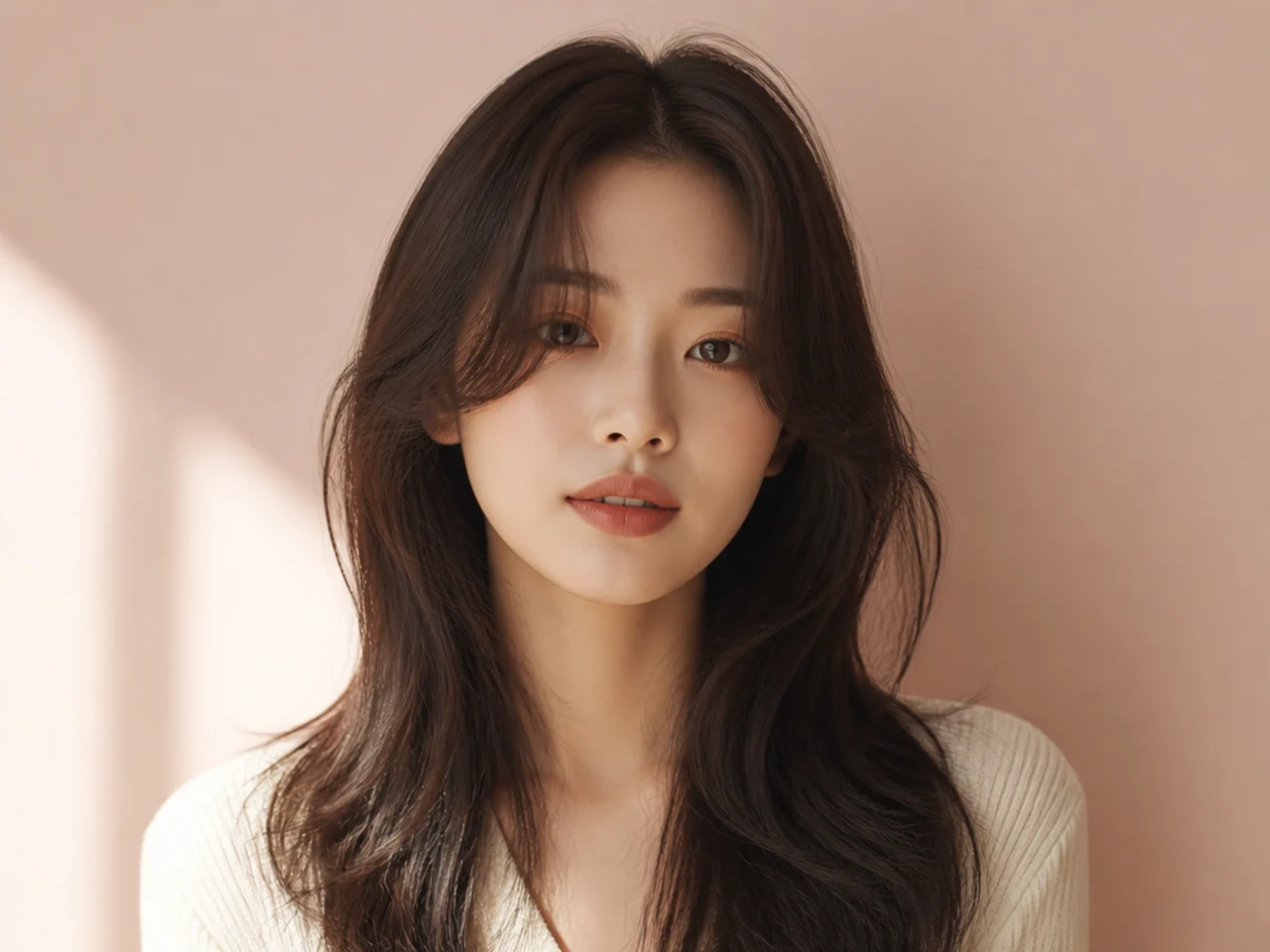
These are not a fringe. They are the top of the face-framing. A Western curtain bang is a defined piece with its own outline and a point where it ends. The Korean version starts further back and lengthens continuously into the framing, so there is no boundary at all.
That is why they blend, and why they never read as a separate decision.
What Makes Them Korean
They start further back. From behind the front hairline, so the pieces have length to travel.
They never stop. No point where the fringe ends and the length begins — it is one continuous graduation.
They connect to the C-curl. The framing curves in at the jaw and the curtain is its top end.
They are lighter than a Western curtain. Fewer pieces, because they do not need to form an outline.
How to Choose Yours
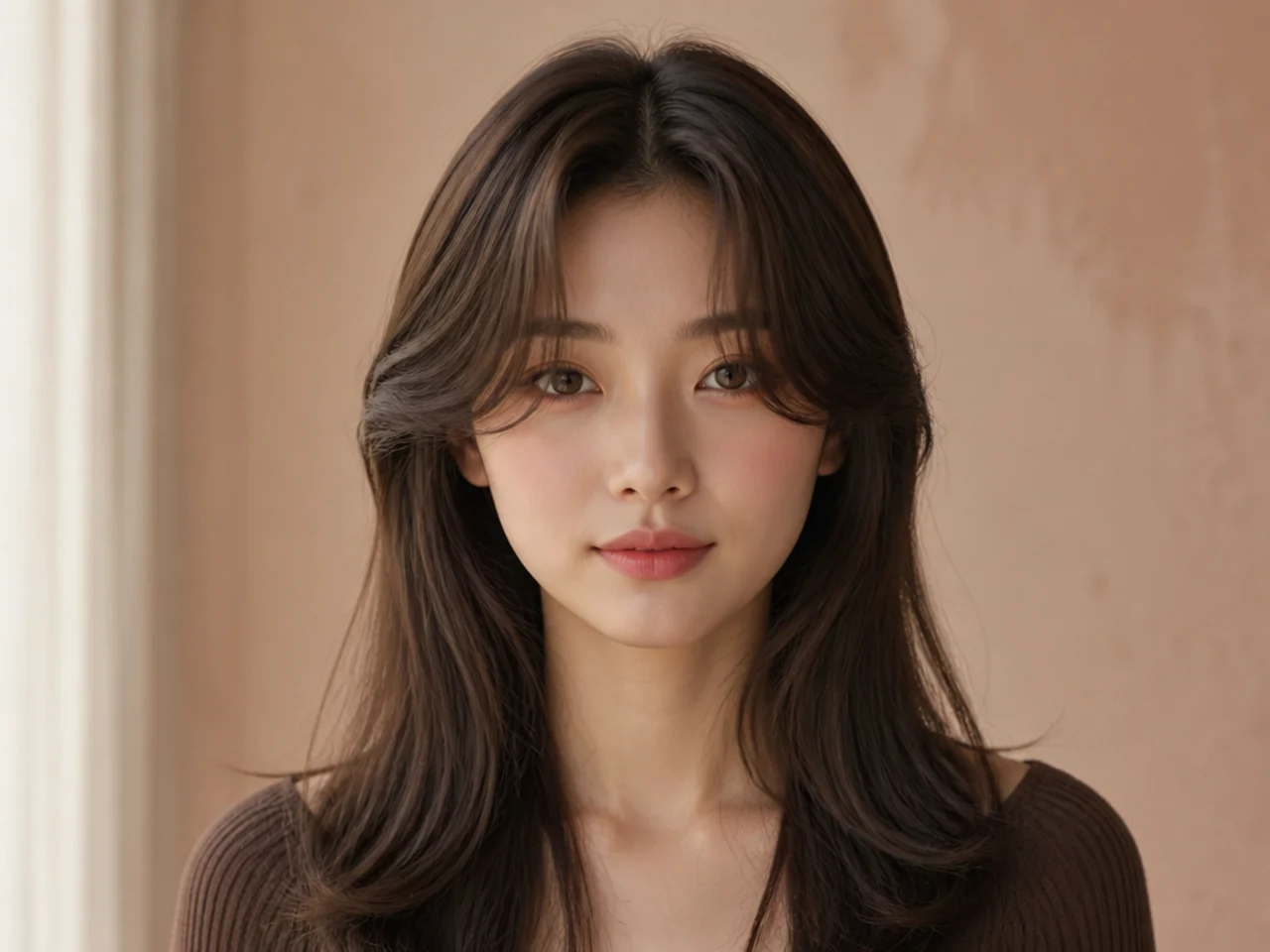
Ask for them as face framing, not as bangs. The single most useful phrasing change.
Have the section taken from further back. It is what allows the blend.
Ask for it to connect to the framing. Cut as one operation, not two.
Take fewer pieces if your hair is fine. They still read, because there is no outline to fill.
The 20 Ideas
1. Continuous Curtain into Framing
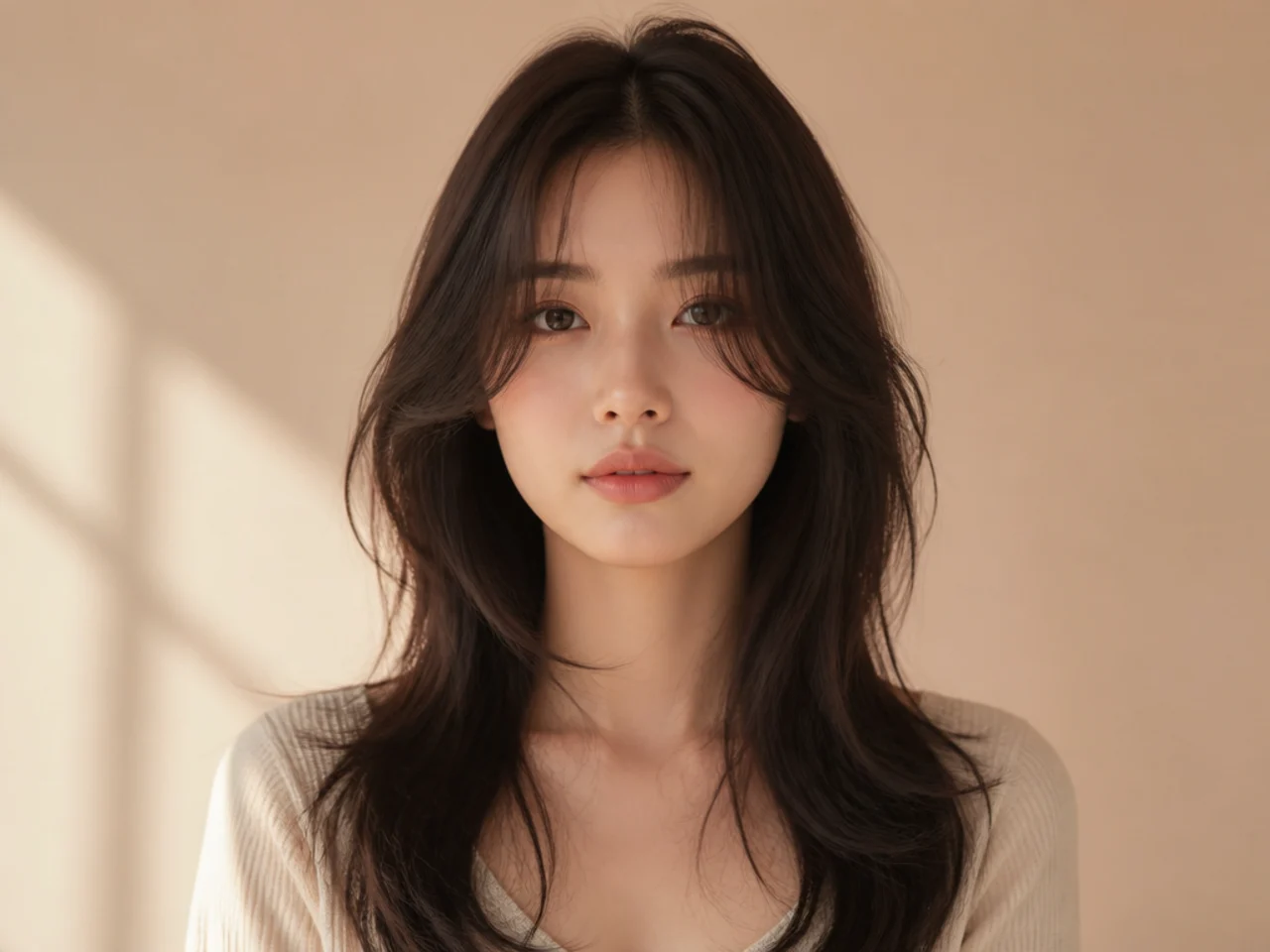
No boundary anywhere. The benchmark. The curtain and the framing are cut as one continuous graduation, so there is no point at which the fringe ends and the framing begins.
2. Cheekbone-Length Curtain
The shortest that still blends properly. Above the cheekbone the curtain stops reaching the framing, and a gap appears where the two should meet.
3. Jaw-Length Curtain
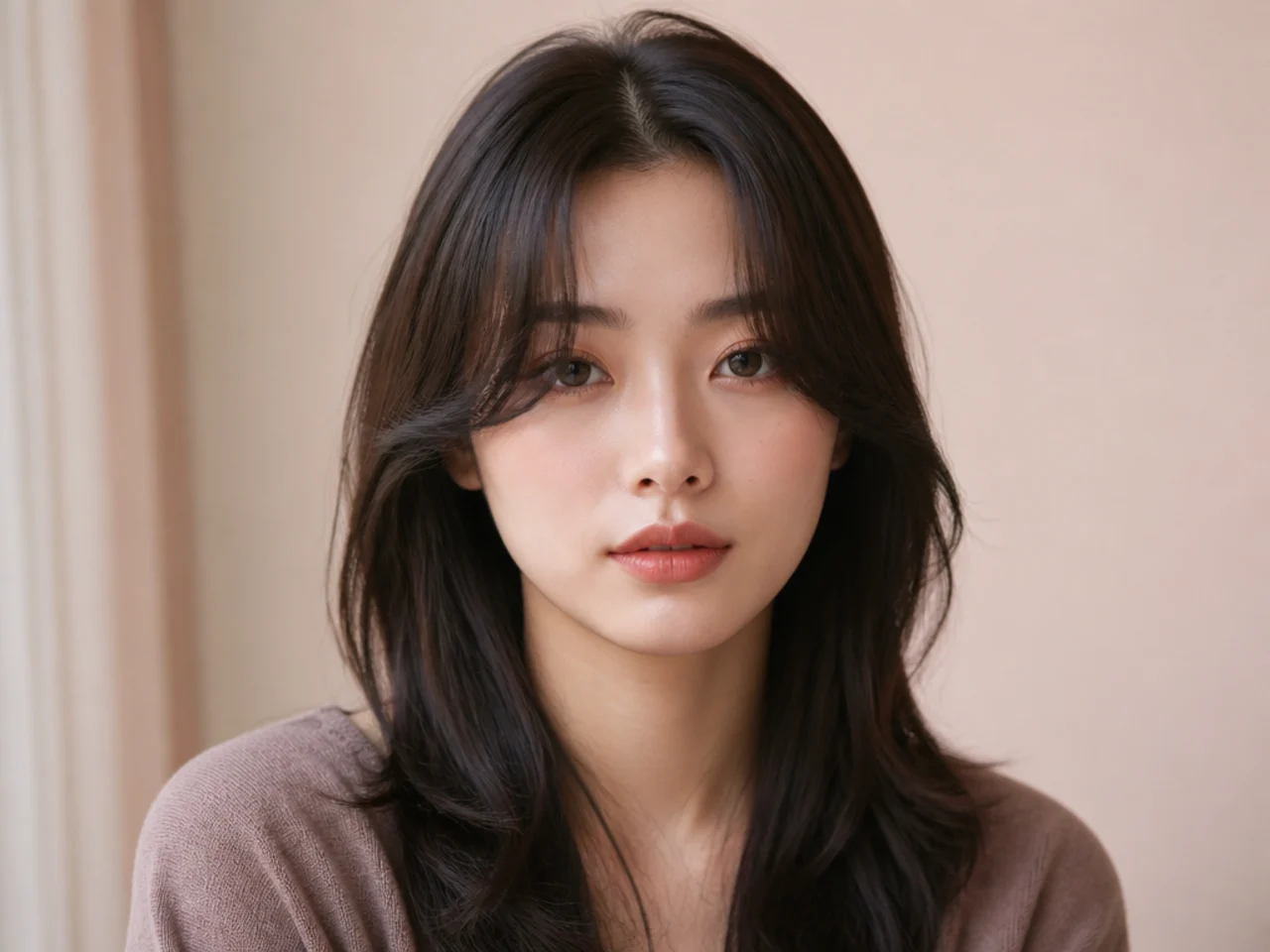
Longer, and it merges almost entirely into the framing. At jaw length it barely reads as a fringe, which is exactly why it needs no separate trim schedule.
4. Curtain with C-Curl Ends
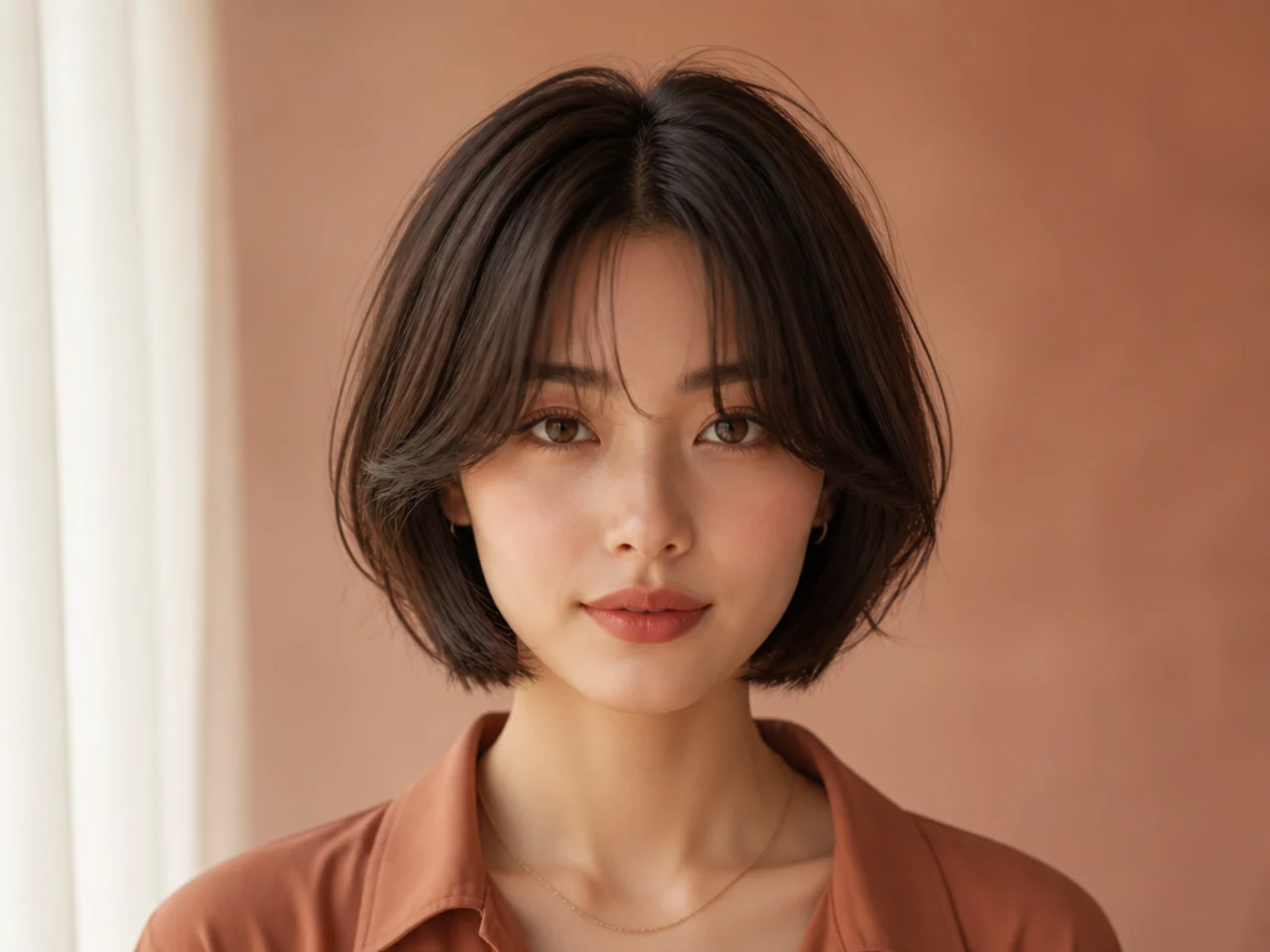
The framing curved in at the jaw, curtain at its top. The curtain sets where the graduation starts and the C-curl sets what the ends do, which are two different instructions.
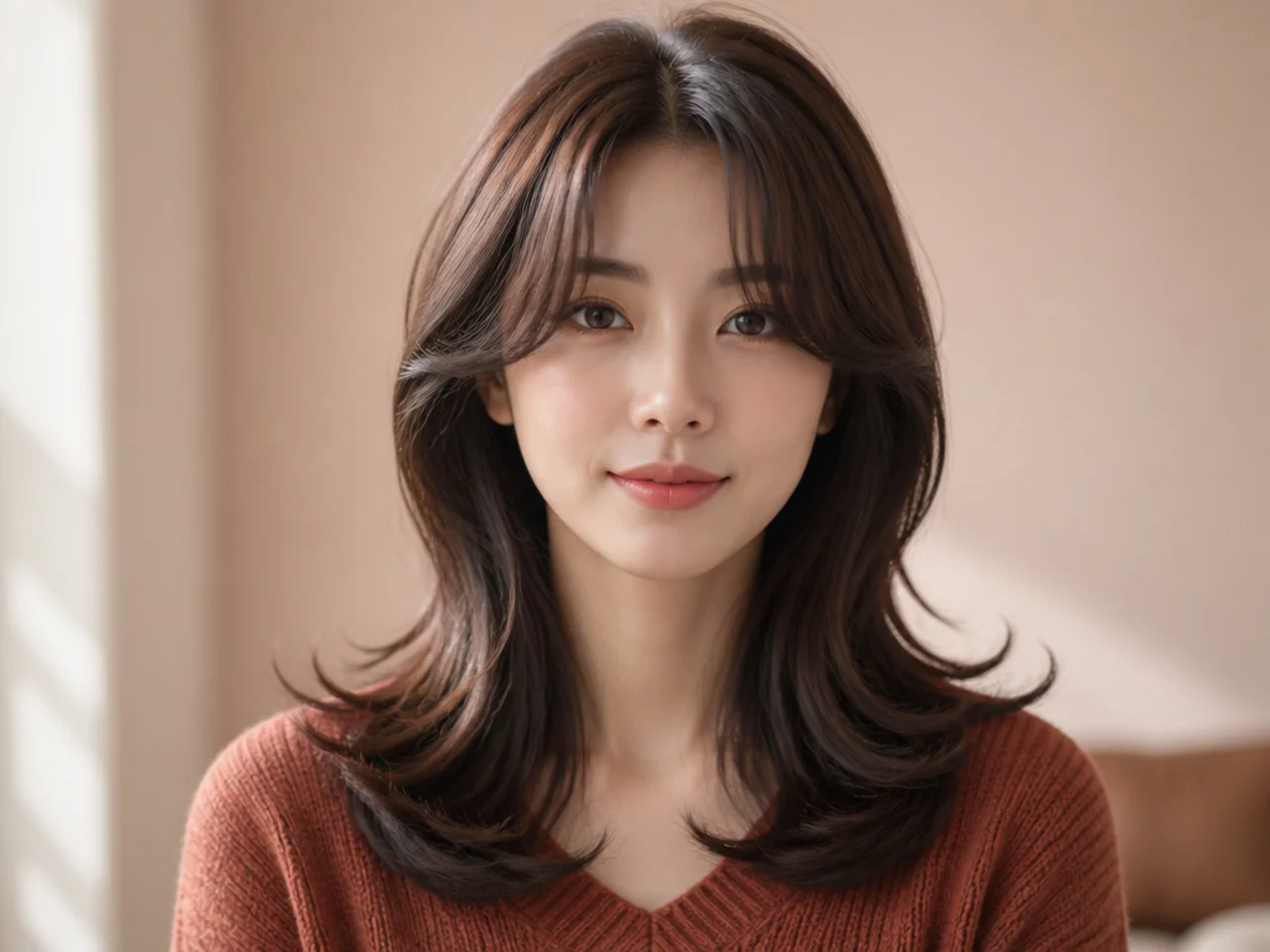
5. Curtain with Long Hair
The most common pairing at this length. Long hair gives the graduation the greatest distance to happen over, which is what makes the blend invisible.
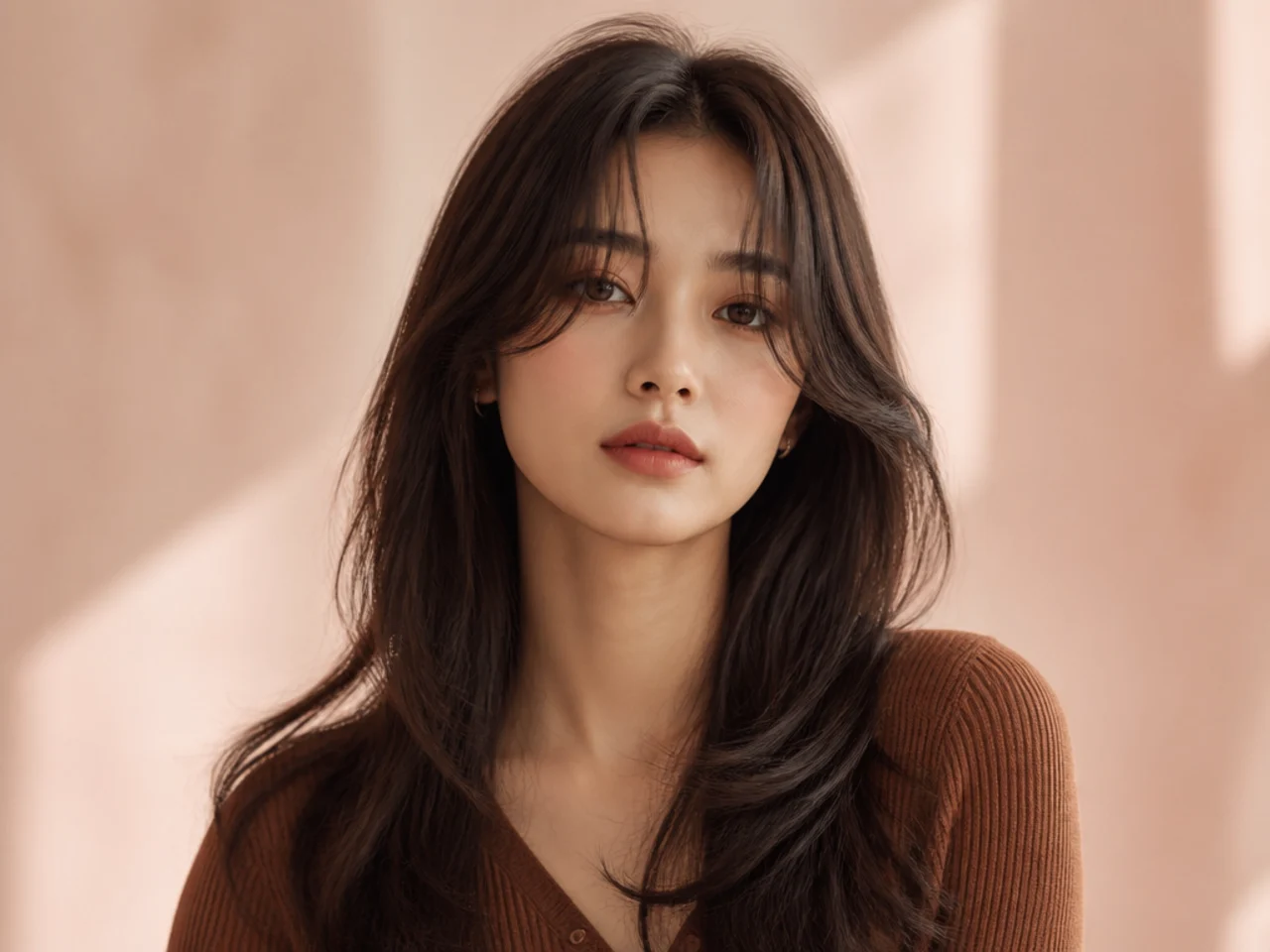
6. Curtain with a Hush Cut
The framing layers and the curtain as one continuous cut. Both techniques work at the front, so planning them together is what avoids a visible join.
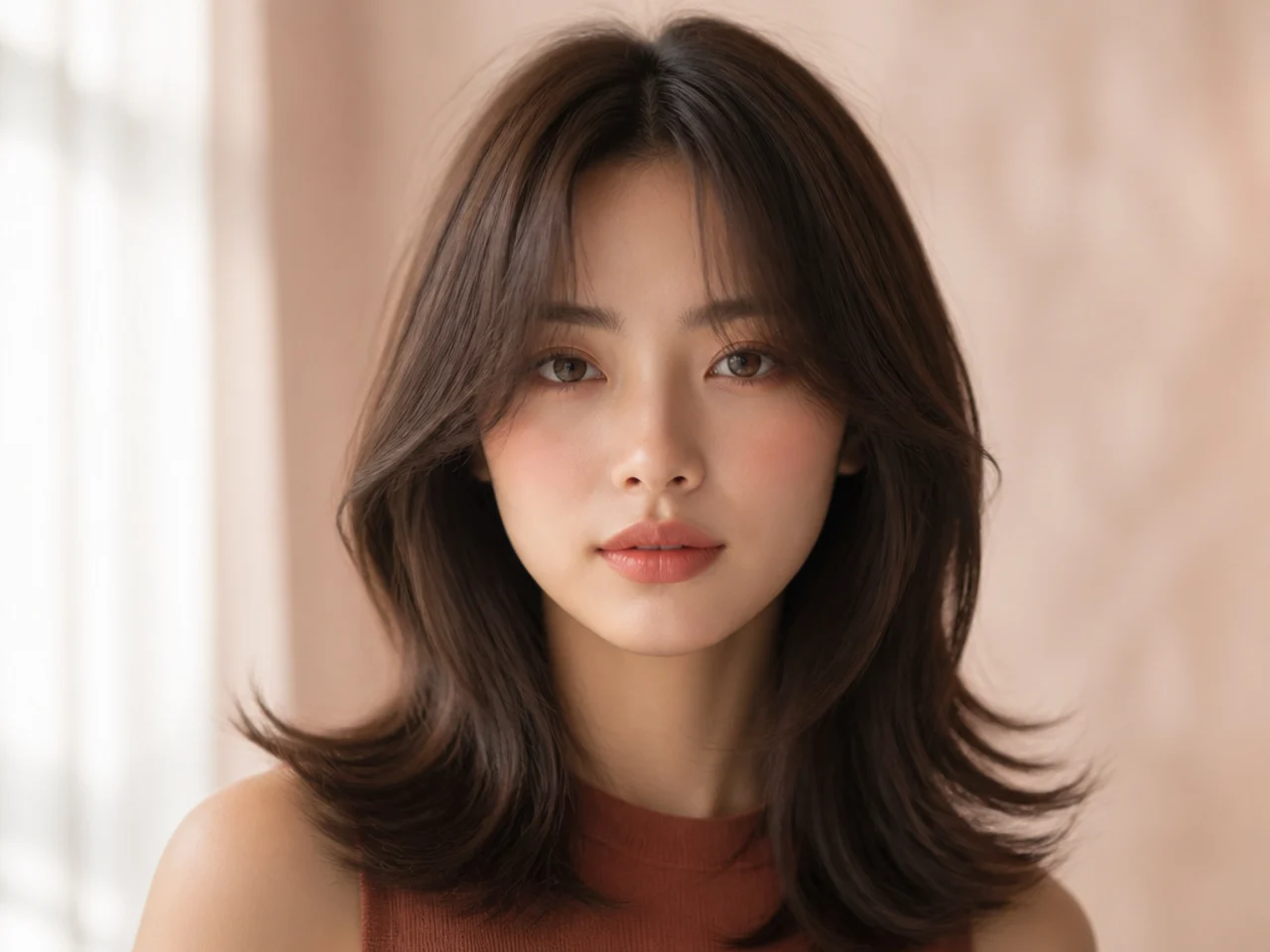
7. Curtain with a Wolf Cut
Curtain over connected layers throughout. The wolf layering runs through the whole length while the curtain handles the face, and connection is what joins them.
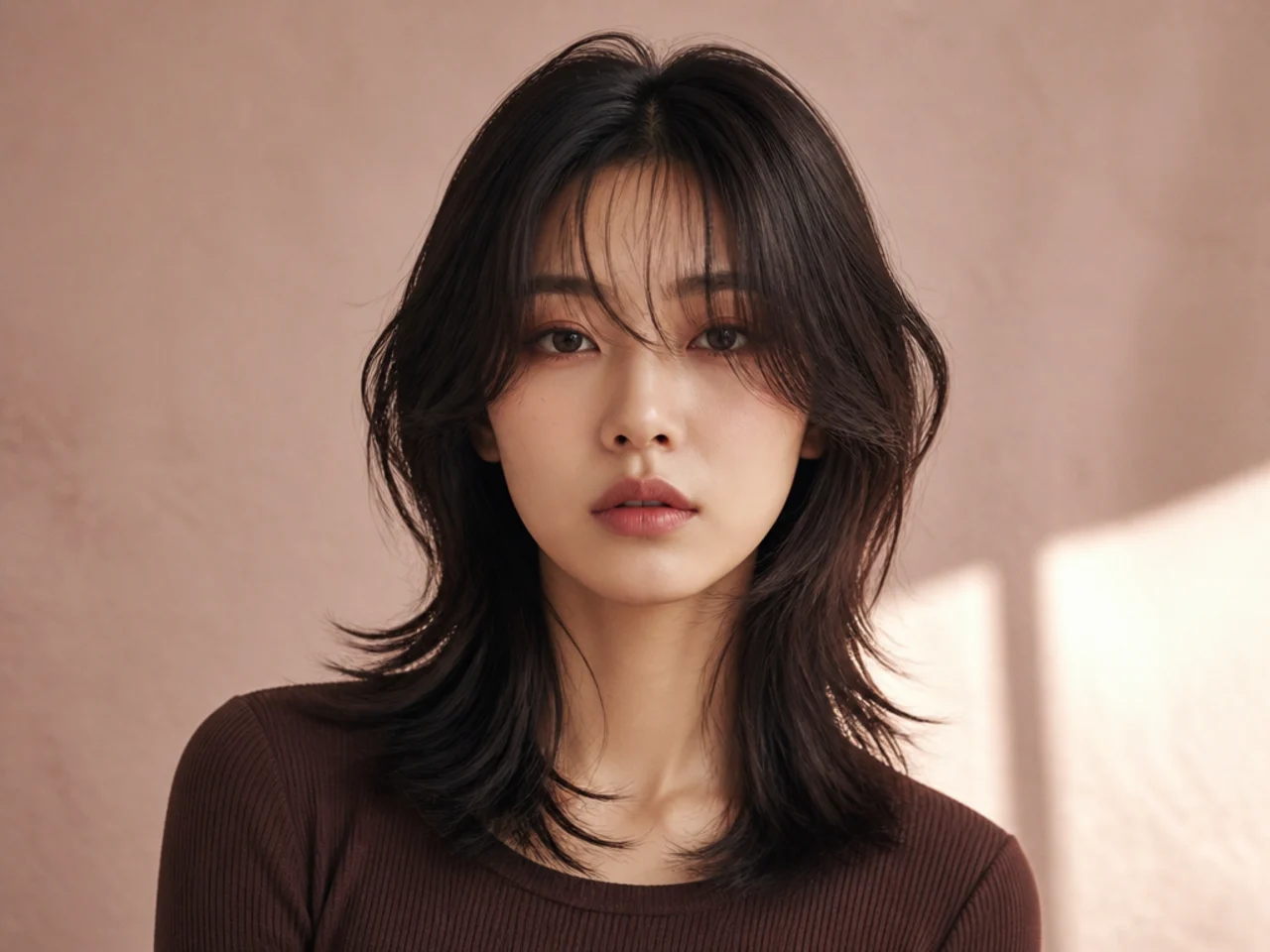
8. Curtain on a Lob
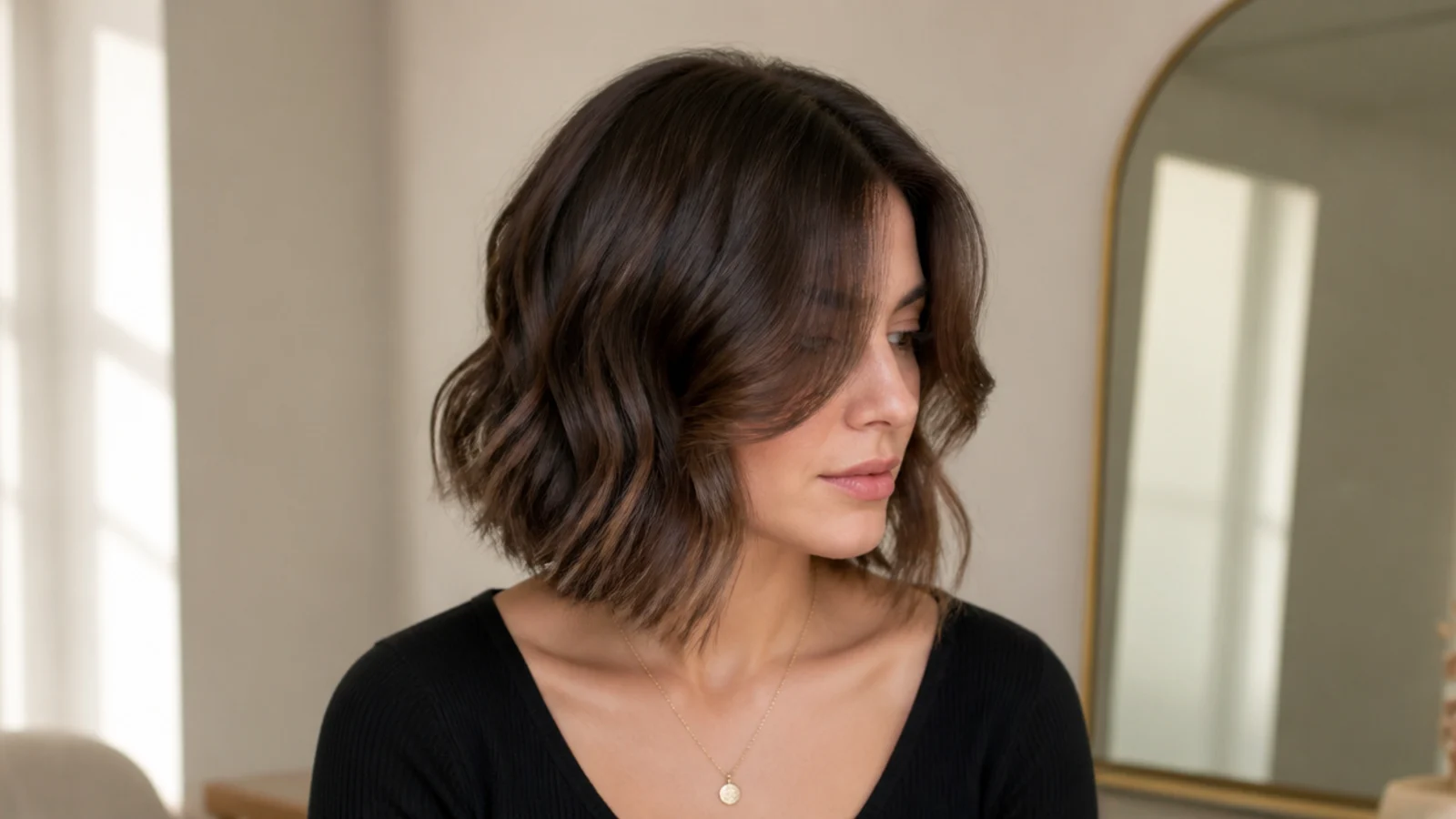
Collarbone length, framing carrying the front. A lob has enough length for the curtain to blend into without the weight that would drag it flat.
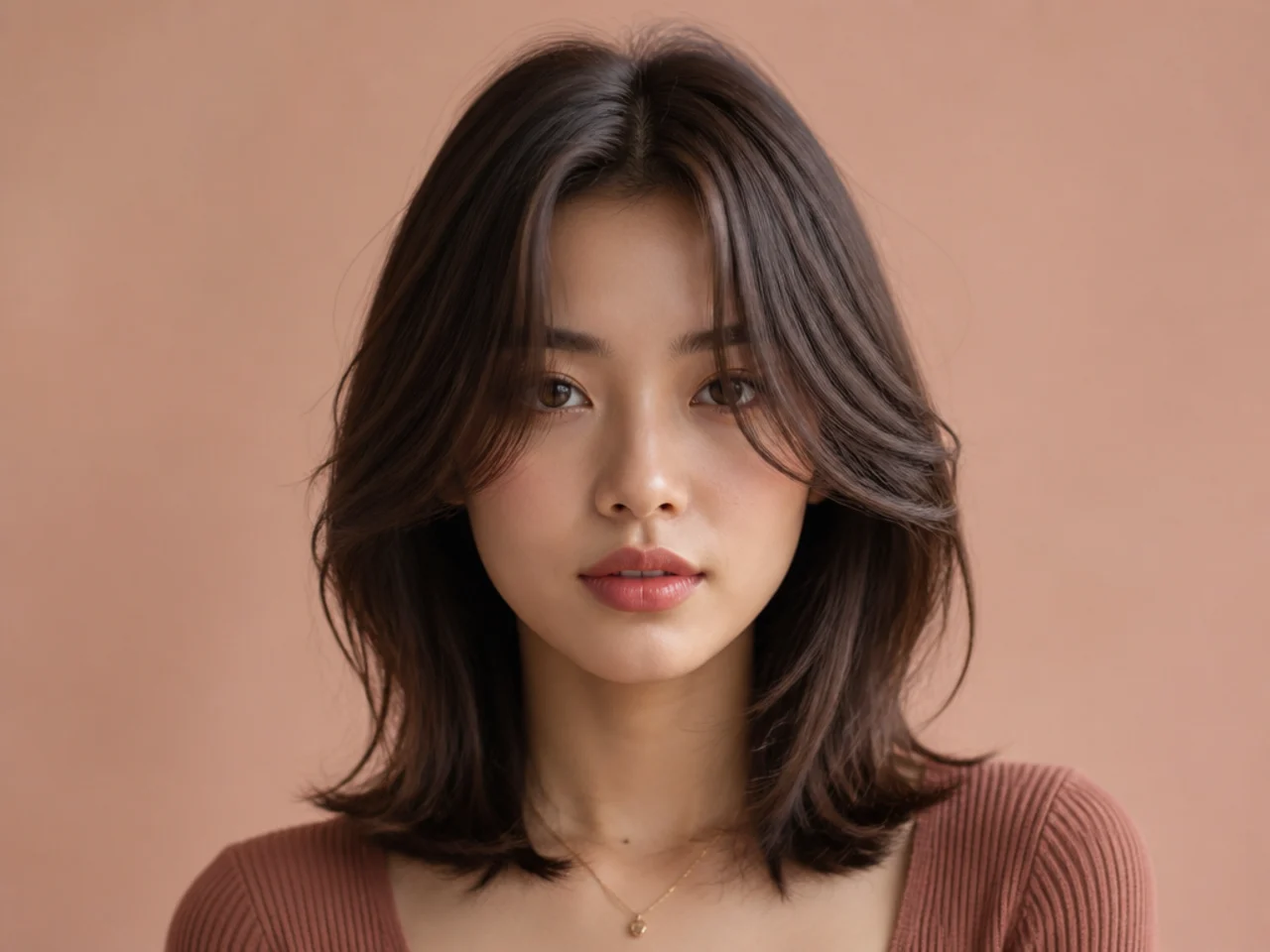
9. Curtain on a Bob
Short behind, long framing in front. The framing is longer than the perimeter here, which is the one place a curtain outlasts the cut behind it.
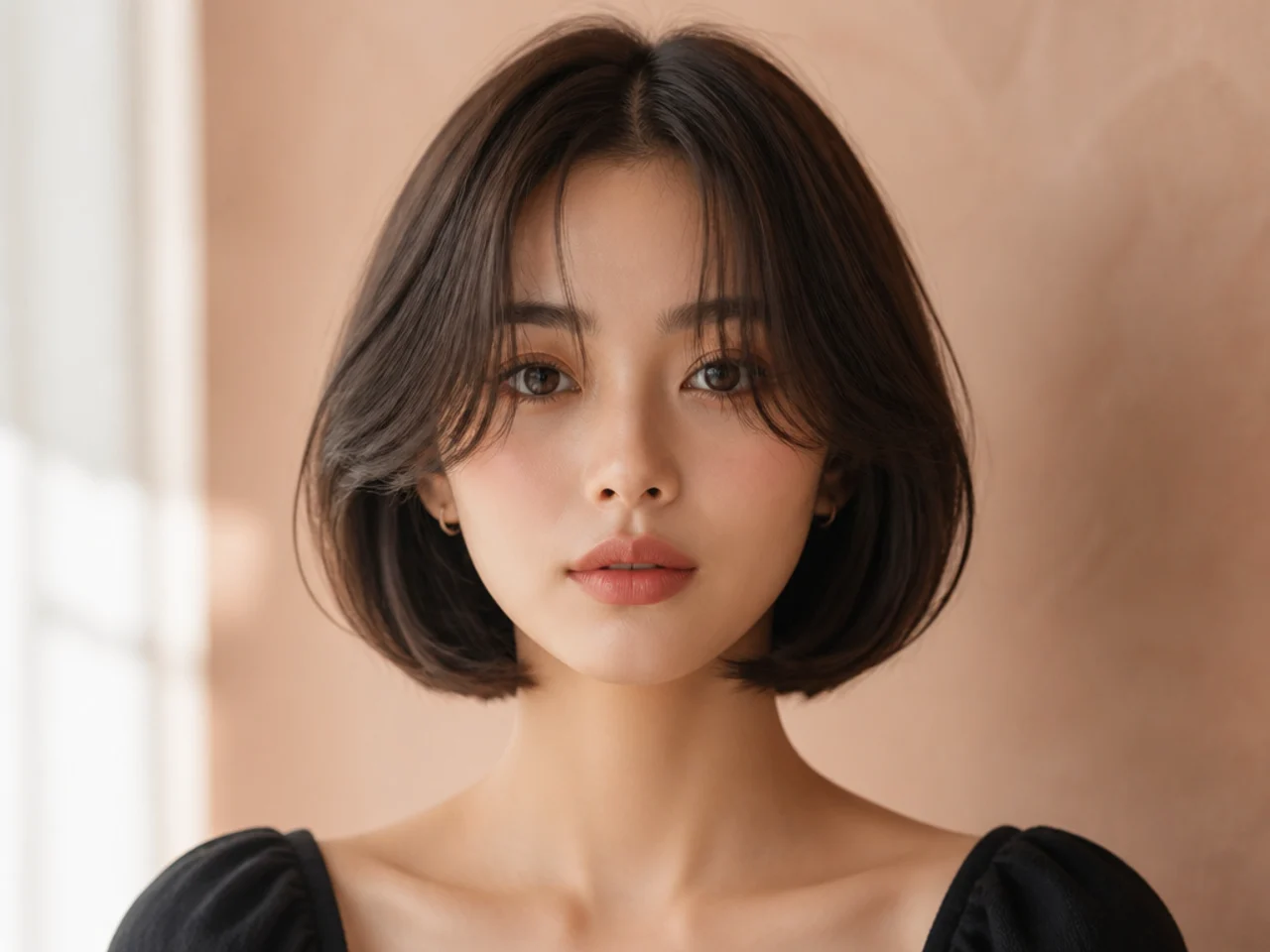
10. Curtain with a Middle Part
The standard parting for this shape. A curtain is symmetrical by construction, so a middle part is the parting it was designed around.
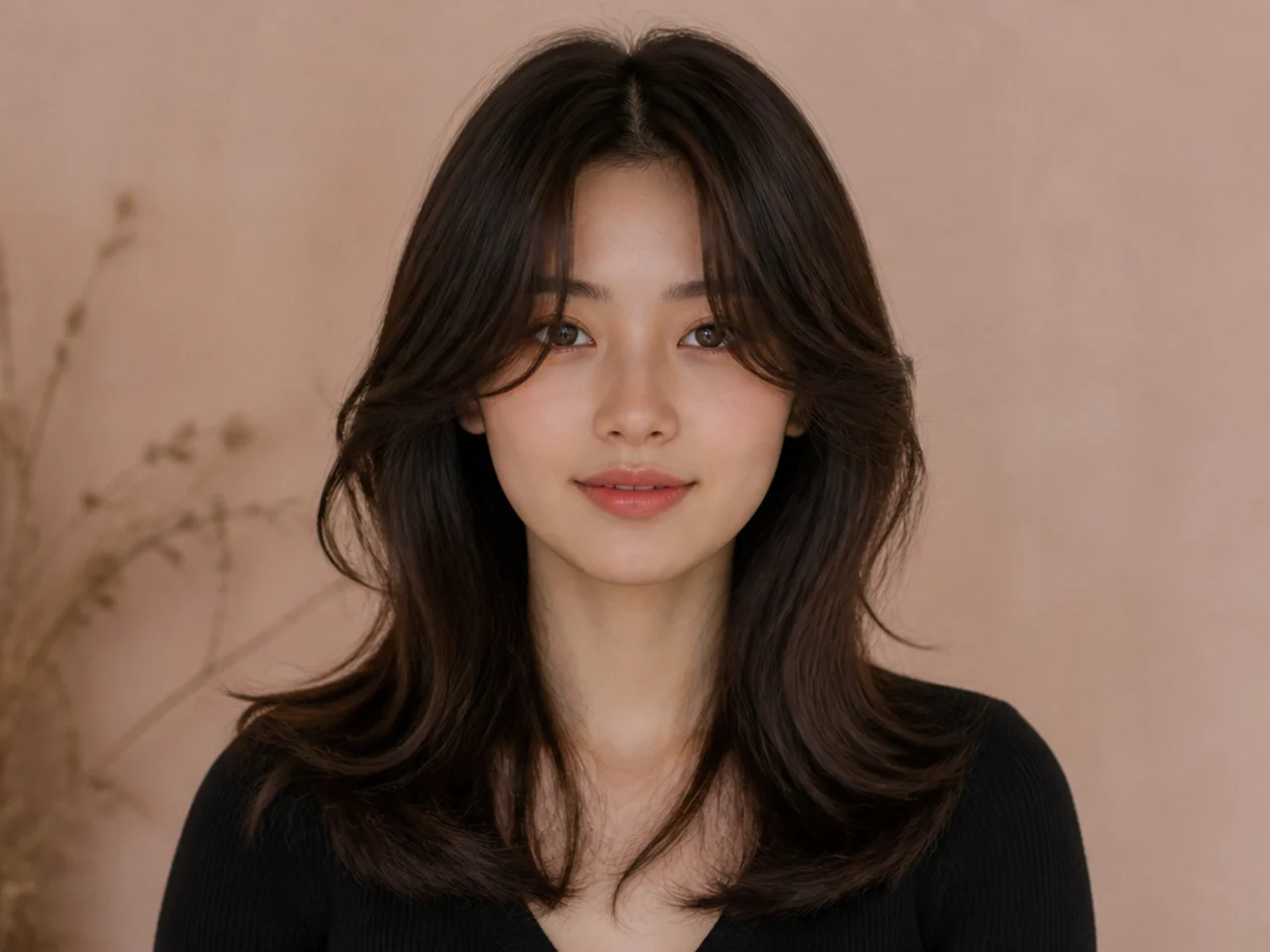
11. Curtain with a Soft Side Part
Uneven halves, which suits the continuous graduation. A side part gives one side more hair, and a graduated cut absorbs that unevenness where a blunt one would not.
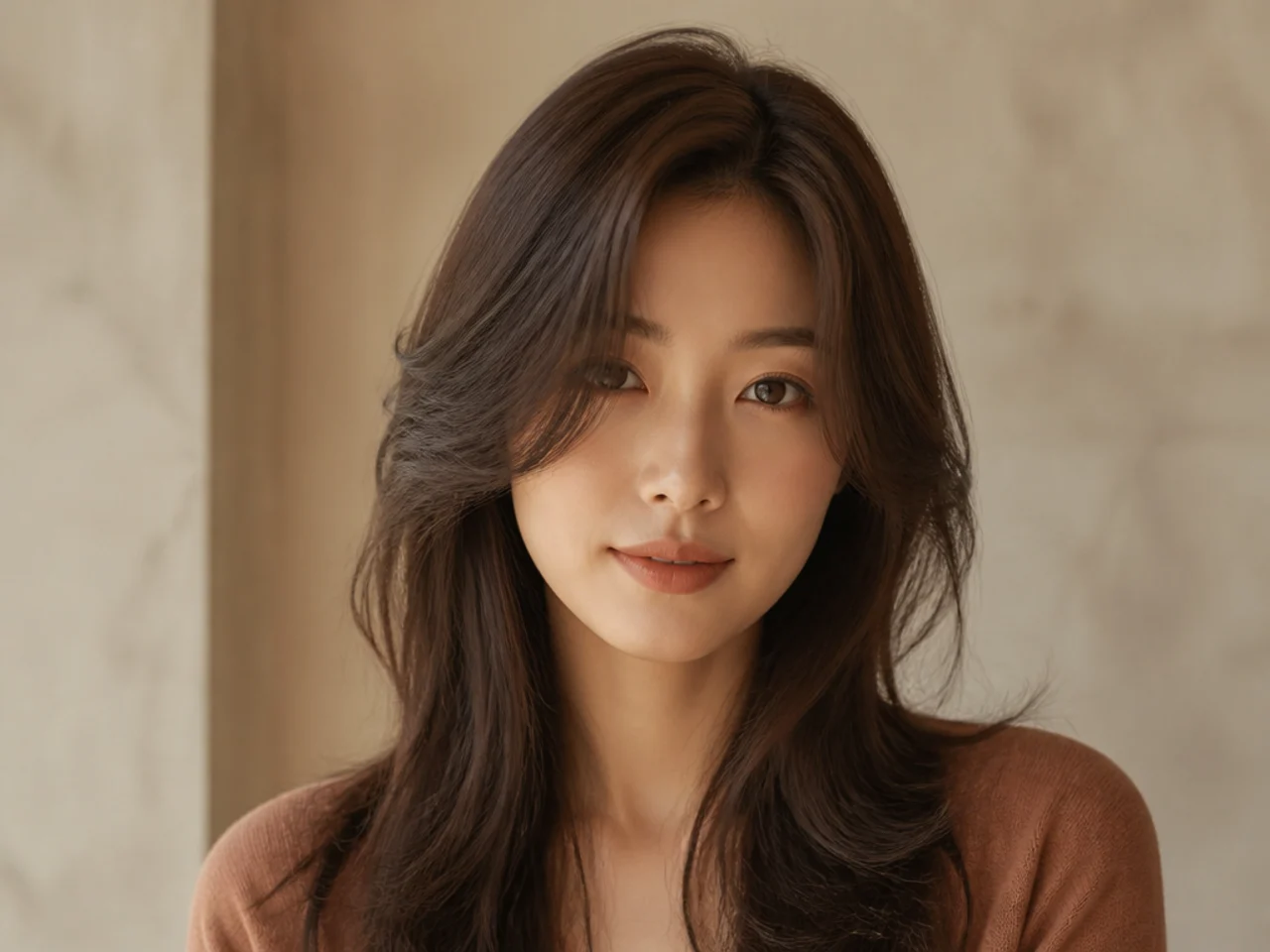
12. Curtain on Fine Hair
Fewer pieces taken, and it still reads. A curtain uses very little hair, so fine hair loses almost no density to it.
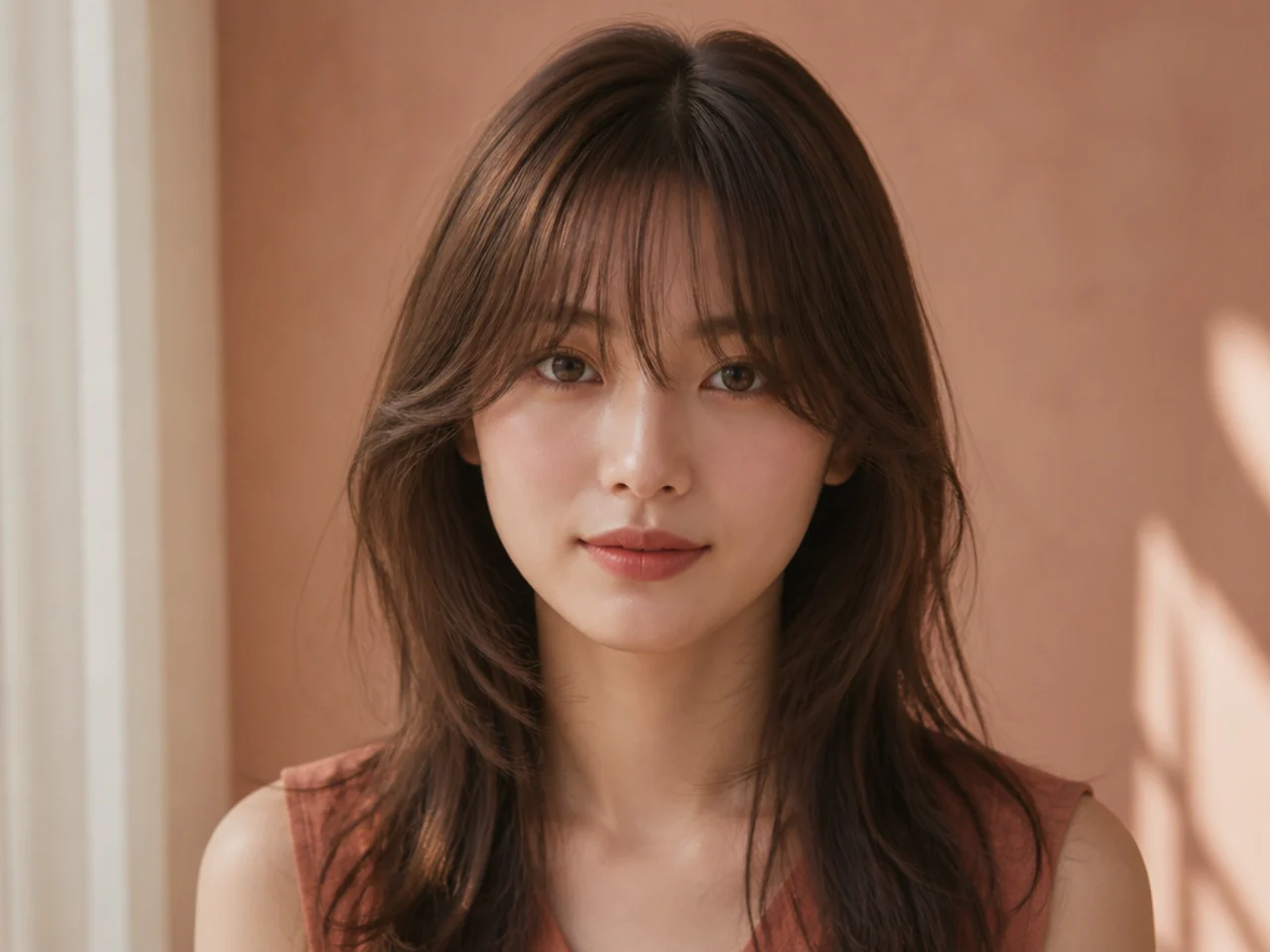
13. Curtain on Thick Hair
Internal weight removed so the framing sits rather than stands. Thick framing pieces spring away from the face unless weight comes out from underneath.
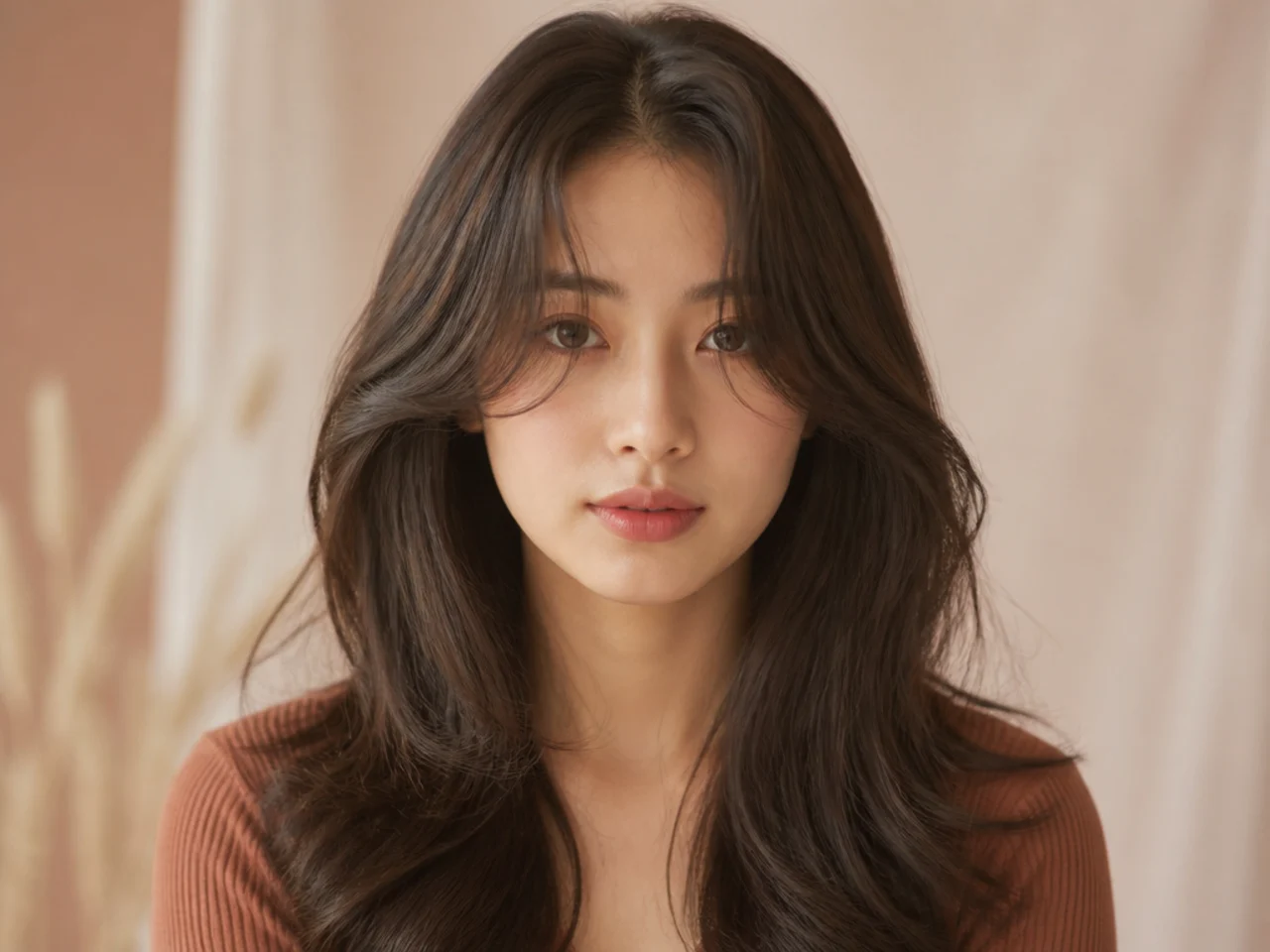
14. Curtain on Wavy Hair
Cut dry so the graduation lands correctly. A wave lifts the pieces as they dry, so a graduation cut wet finishes higher than it was placed.
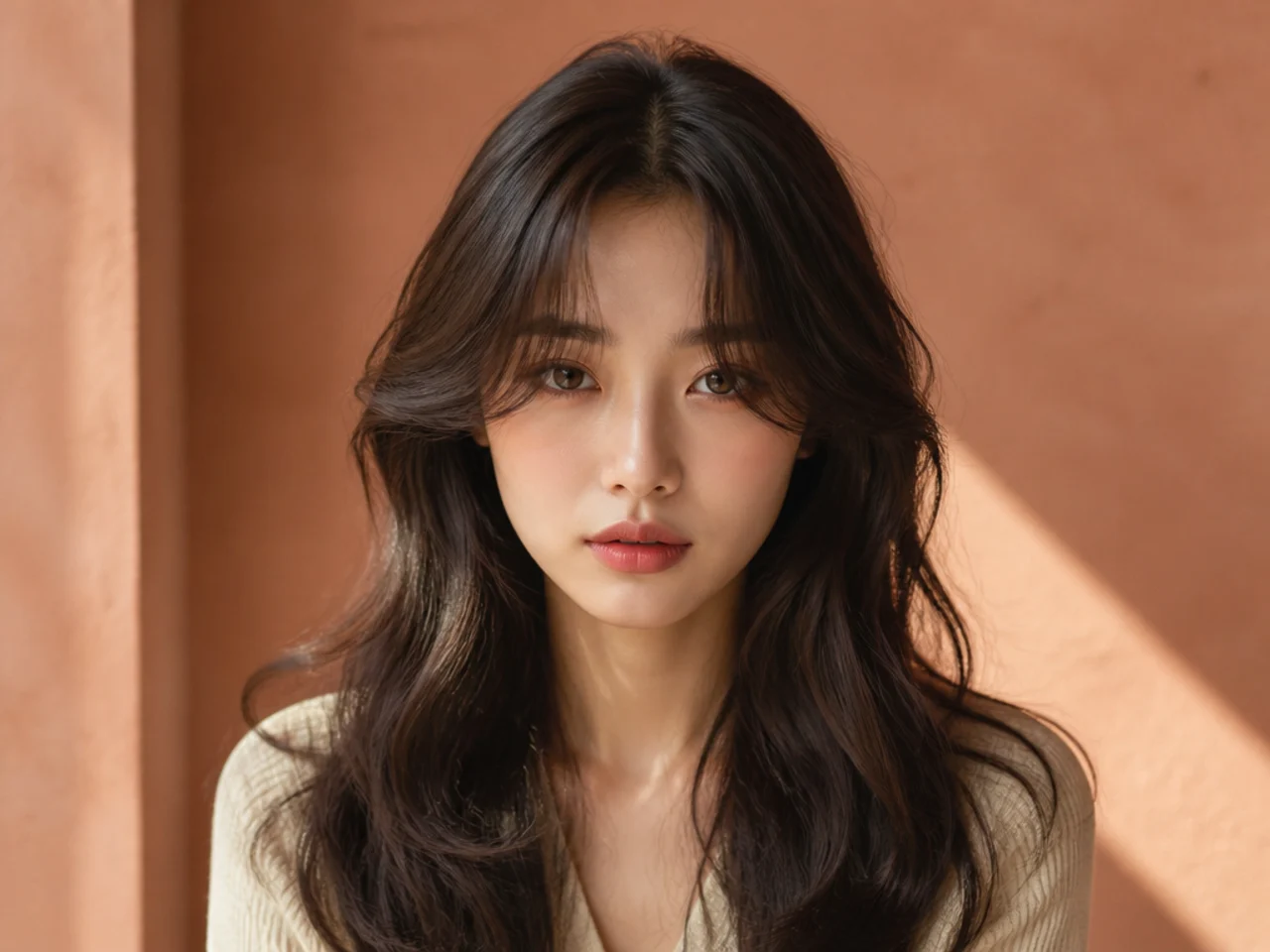
15. Curtain with Crown Volume
Lift above, framing at the sides. Two of the three Korean elements together, and the pair most people wear daily.
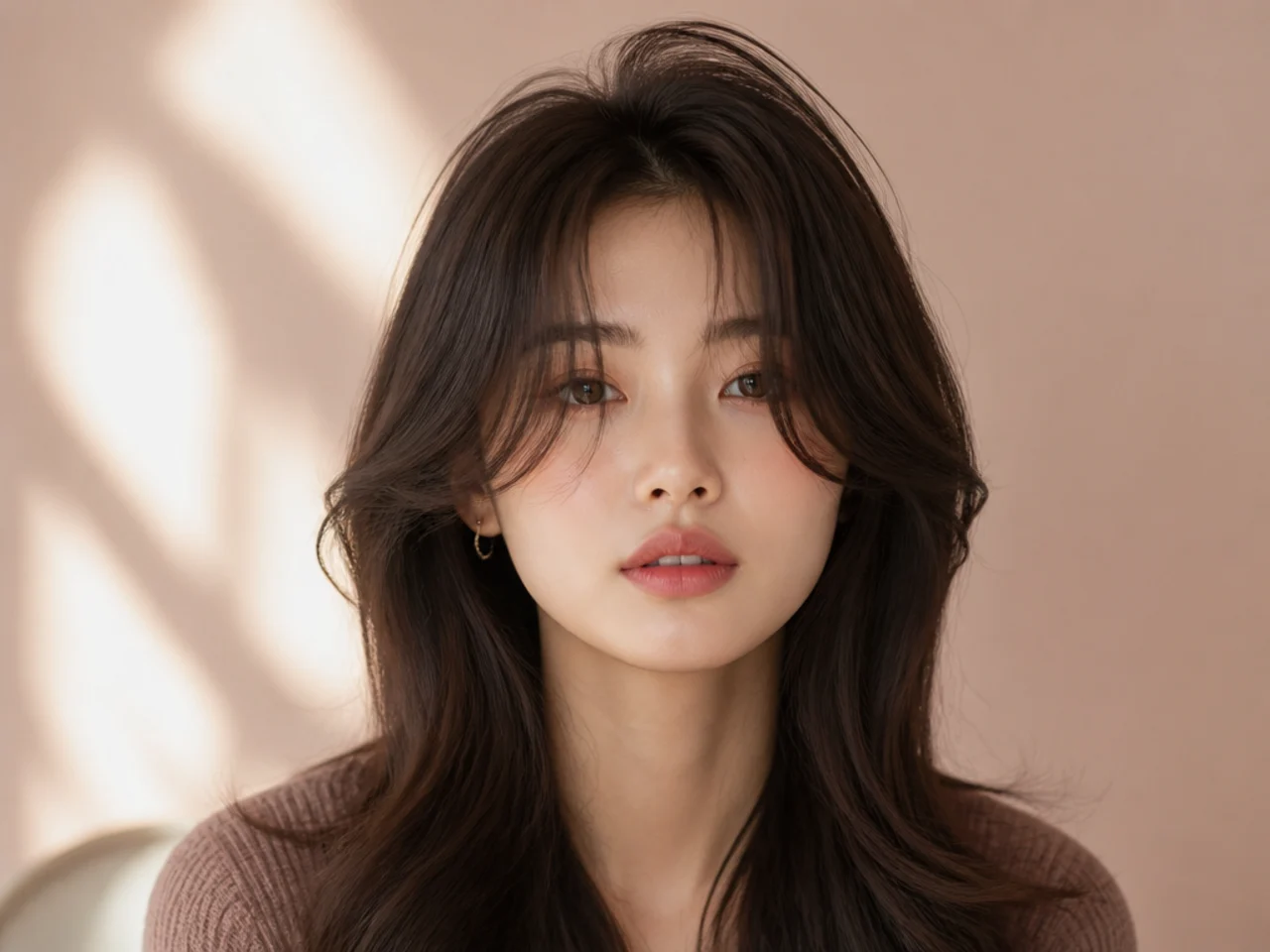
16. Curtain Tucked Behind One Ear
Possible because the pieces are long enough. A short curtain cannot be tucked, which is one more argument for the longer version.
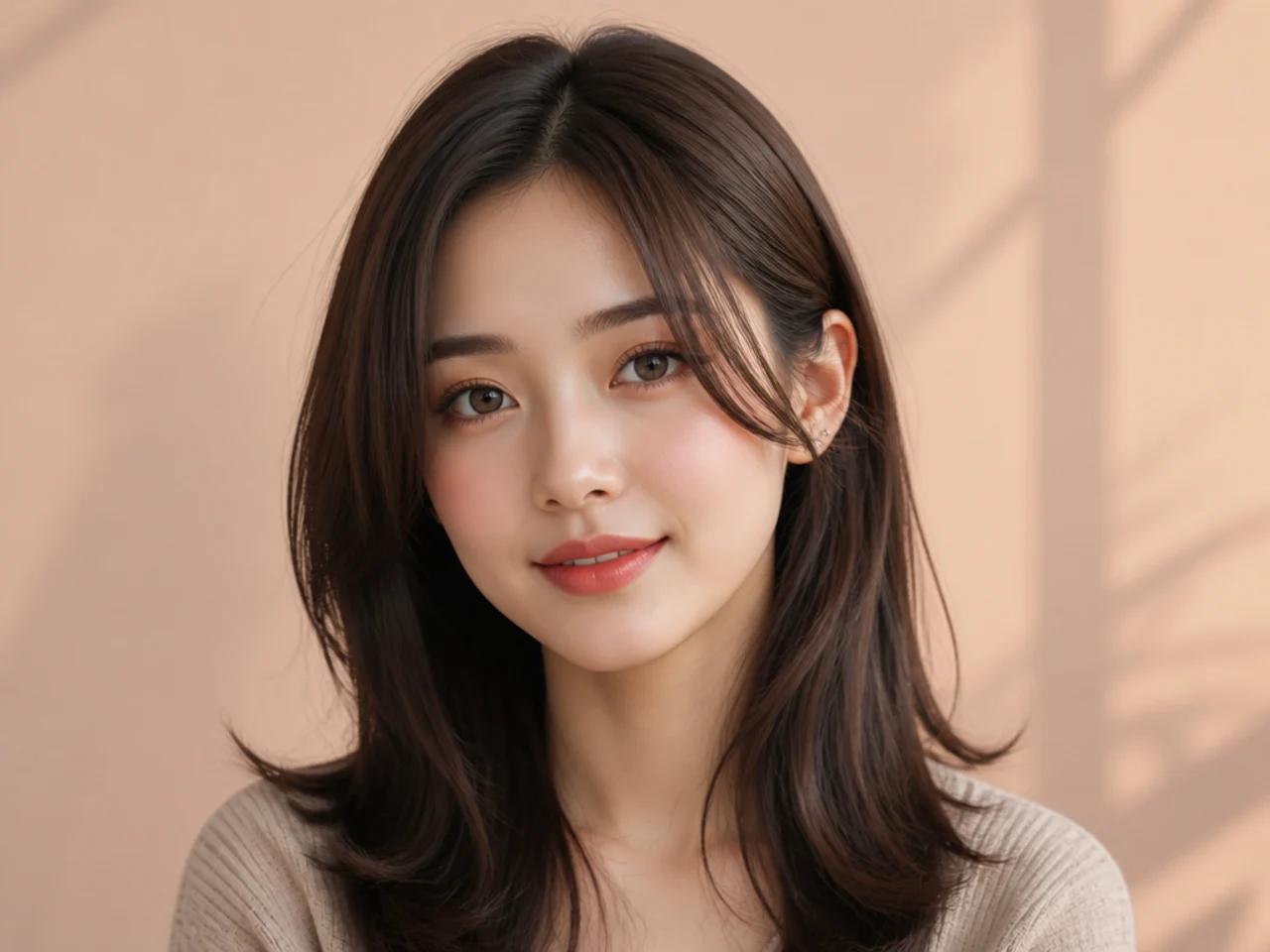
17. Curtain Worn with a Ponytail
Framing left out, everything else gathered. With the rest gathered the curtain is the only thing framing the face, so its graduation is fully on show.
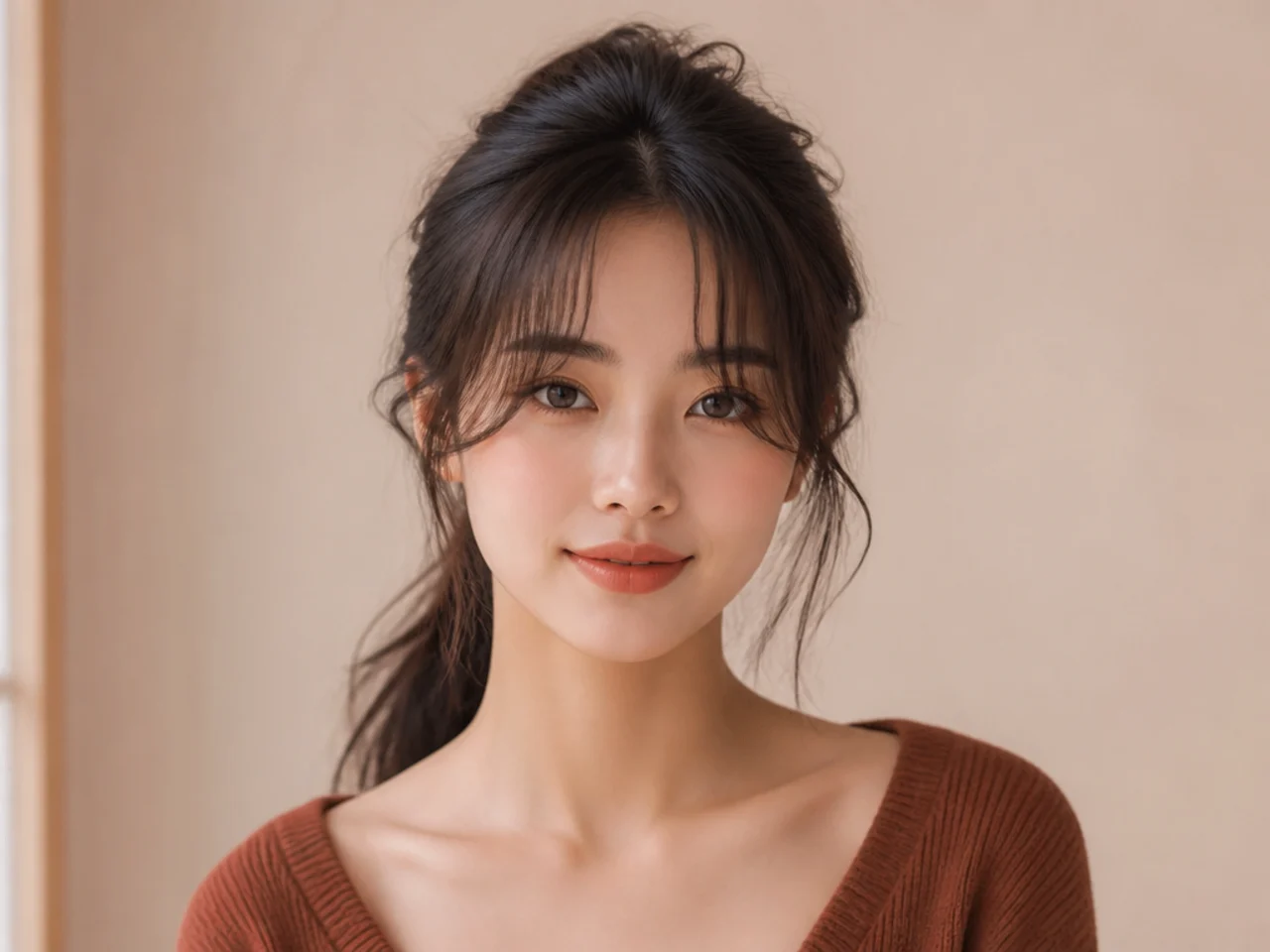
18. Curtain Air-Dried
Where continuous graduation falls best. Air-drying lets each piece settle at its own length, which is the shape the cut was designed around.
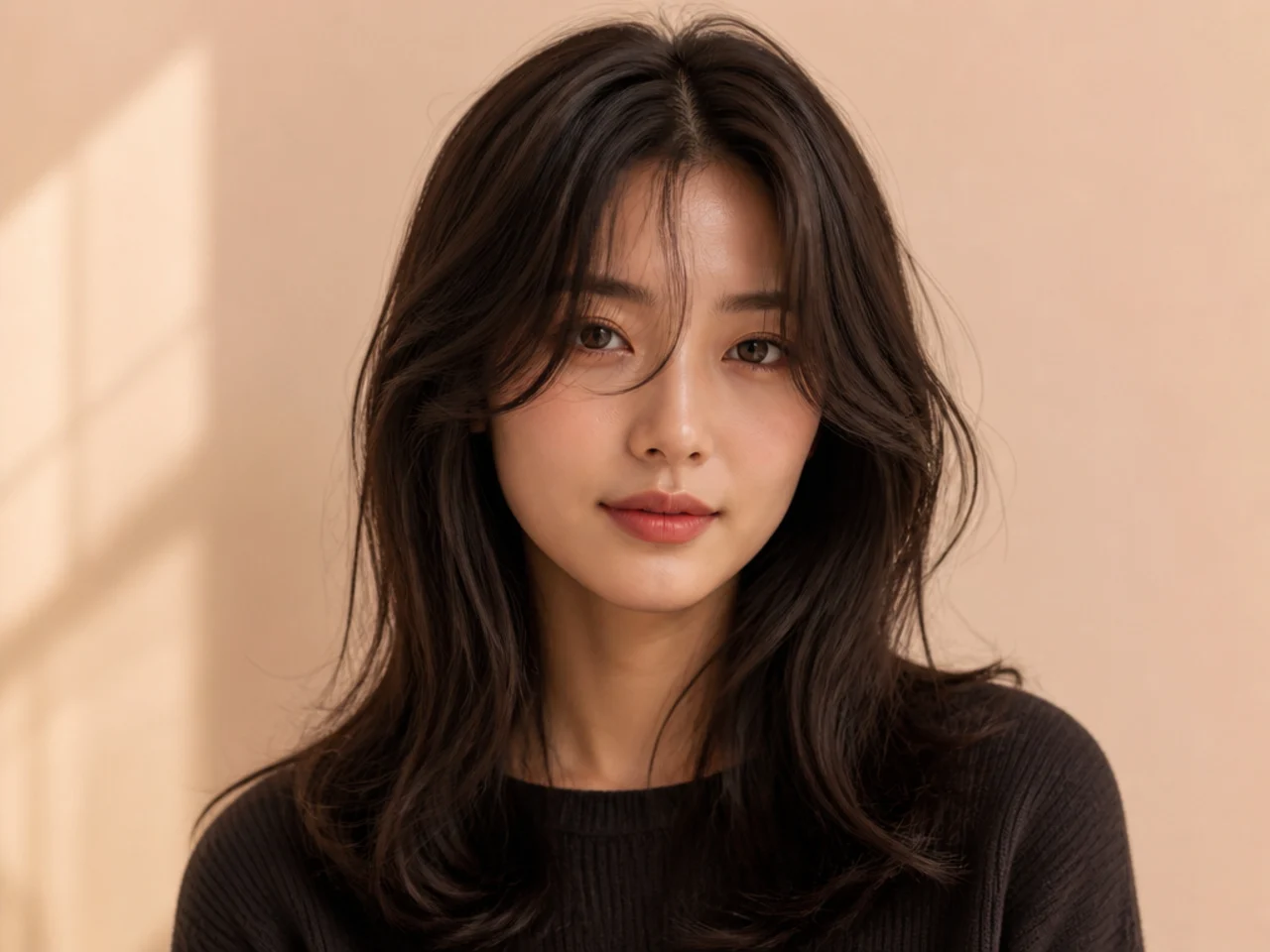
19. Curtain at Week Ten
Longer, still blended, nothing to correct. A graduated cut has no defined edge to blur, so ten weeks of growth simply lengthens it.
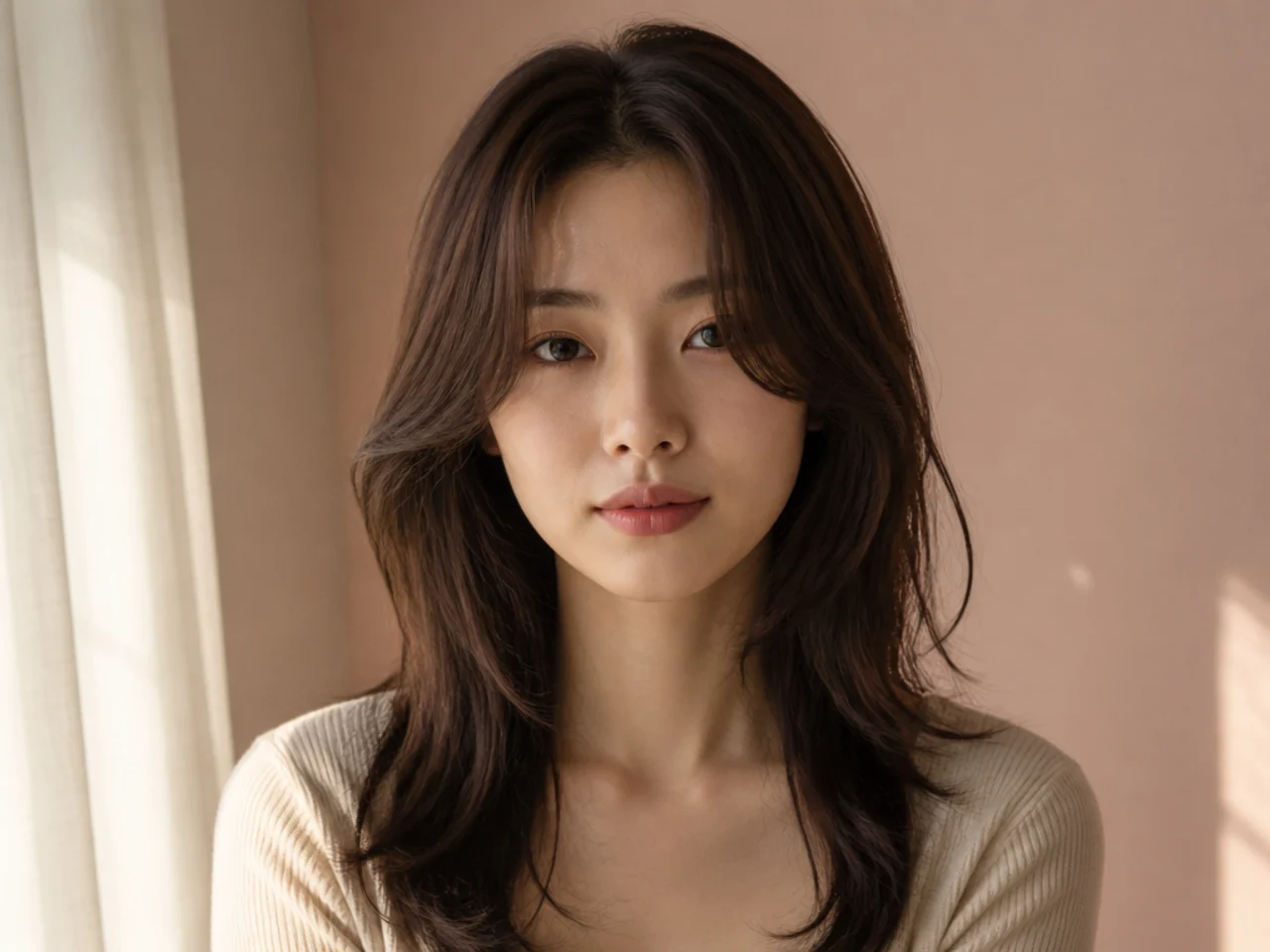
20. A Western Curtain Fringe for Comparison
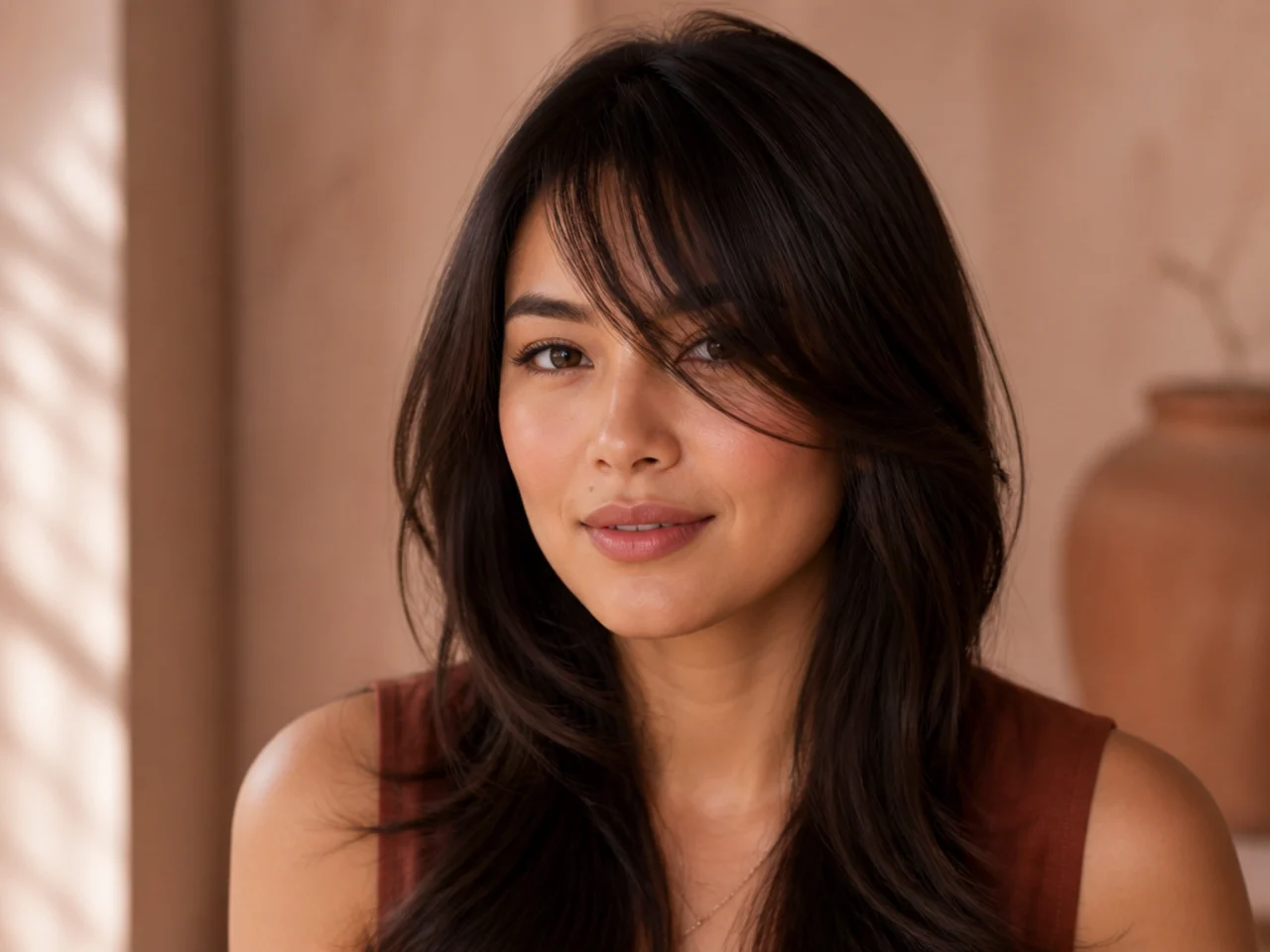
A defined piece with a clear outline and an end point. A Western curtain is a fringe with a boundary; a Korean one is a graduation with none.
Styling and Upkeep
Dry it outward and back, from the middle. Both sides away from the centre.
Curl the ends inward, not the roots. The C at the jaw is the finish.
Trim it with the framing, as one. They were cut together and should be maintained together.
Every six weeks is enough. The continuous graduation grows out gracefully.
Do not trim it as a fringe. That creates the outline you were avoiding.
Mistakes to Avoid
Asking for curtain bangs and nothing else. You will get the defined Western version.
A section taken from the front hairline. There is no room to blend.
Trimming them separately from the framing. It creates a boundary.
Too many pieces on fine hair. They do not need to fill an outline.
Cutting them short to try the look. Length is what allows the blend.
FAQ
How are they different? They are cut as the top of the face-framing, not as a separate fringe.
Where should they start? Further back, from behind the front hairline.
Do they suit fine hair? Yes, with fewer pieces — there is no outline to fill.
Final Thoughts
Ask for face framing rather than for bangs. It is the same conversation with a different noun, and it produces a fringe that never quite starts or ends — which is exactly why it reads as part of the haircut rather than as a decision you made about your forehead.
For the sparse Korean fringe see 15 korean haircut ideas with bangs, and for the Western curtain compared against a side sweep see side swept vs curtain bangs. More in Bangs & Fringe.