15 Korean Hush Cut Haircut Ideas to Try
Fifteen hush cut ideas, and the structural fact behind the name — all the layering happens around the face and none of it at the back. The back stays one length, which is why it stays quiet.
In this article · 22
- What Makes a Hush Cut Work
- How to Choose Yours
- The 15 Hush Cut Ideas
- 1. Classic Hush Cut
- 2. Hush Cut with See-Through Bangs
- 3. Hush Cut with Curtain Bangs
- 4. Hush Cut with No Fringe
- 5. Long Hush Cut
- 6. Shoulder-Length Hush Cut
- 7. Hush Cut on a Lob
- 8. Hush Cut with C-Curl Ends
- 9. Hush Cut on Fine Hair
- 10. Hush Cut on Thick Hair
- 11. Hush Cut on Straight Hair
- 12. Hush Cut on Wavy Hair
- 13. Hush Cut with Crown Volume
- 14. Hush Cut Worn Half-Up
- 15. A Wolf Cut for Comparison
- Styling and Upkeep
- Mistakes to Avoid
- FAQ
- Final Thoughts
The hush cut is often filed alongside the wolf cut as another shaggy Korean shape. Structurally it is close to the opposite.
All the layering happens around the face. None of it at the back. The back is left one length. That is the whole cut, and it is where the name comes from — it produces movement at the front without the shaggy silhouette that all-over layering creates.
Which also makes it the best Korean cut for fine hair, because the back keeps every bit of its density.
What Makes a Hush Cut Work
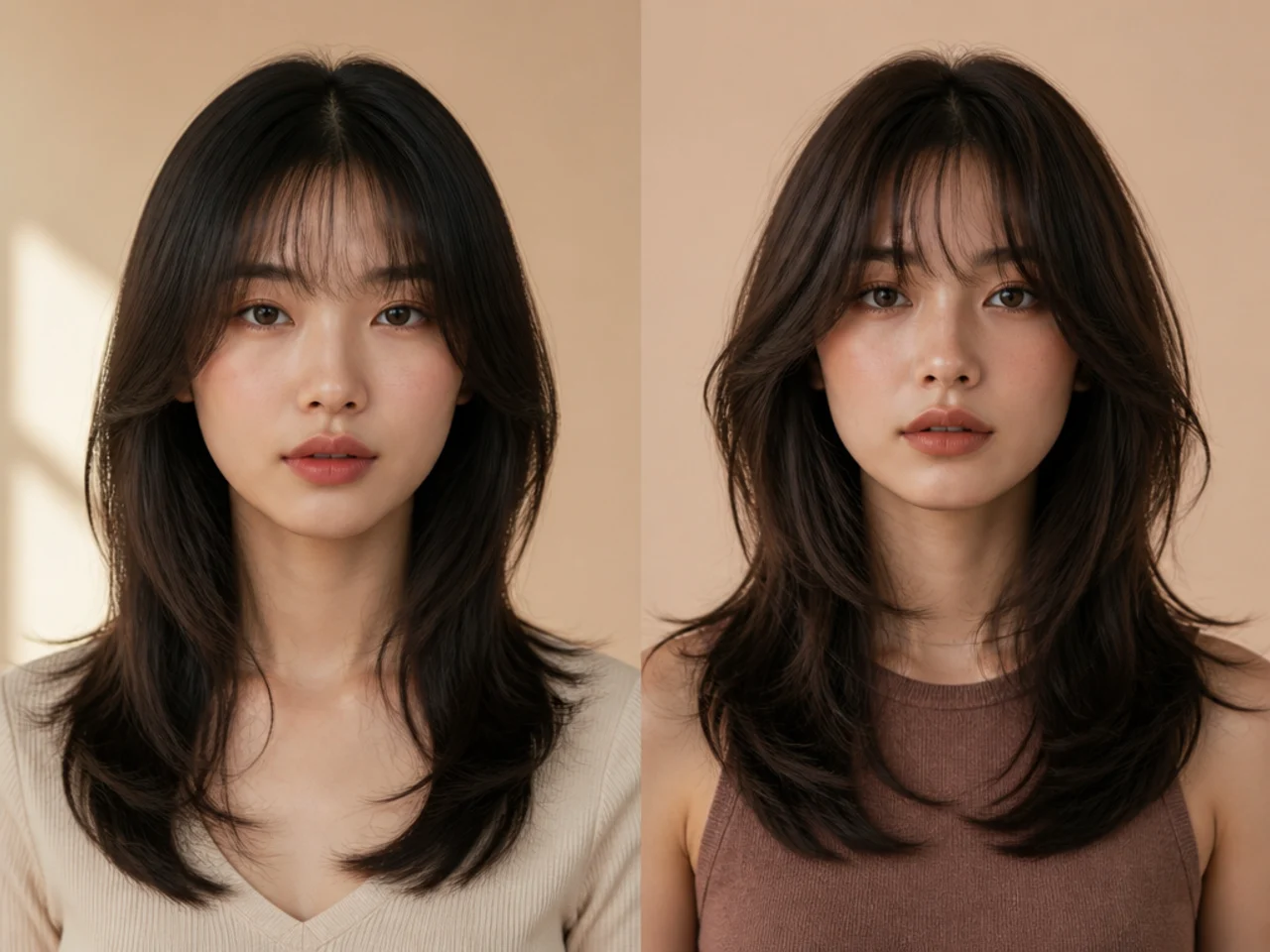
Layering confined to the face. Everything that moves is at the front. Nothing behind the ear is touched at all.
The back stays one length. No weight removed where it is holding the shape. The back is carrying the outline, and layering it is what turns this into a shag.
Volume at the crown, as always. The Korean constant. Every cut on this board wants height above and shape at the ends.
The outline survives. Unlike a wolf cut, the perimeter is still a clean line. That single difference is what separates the two cuts.
How to Choose Yours
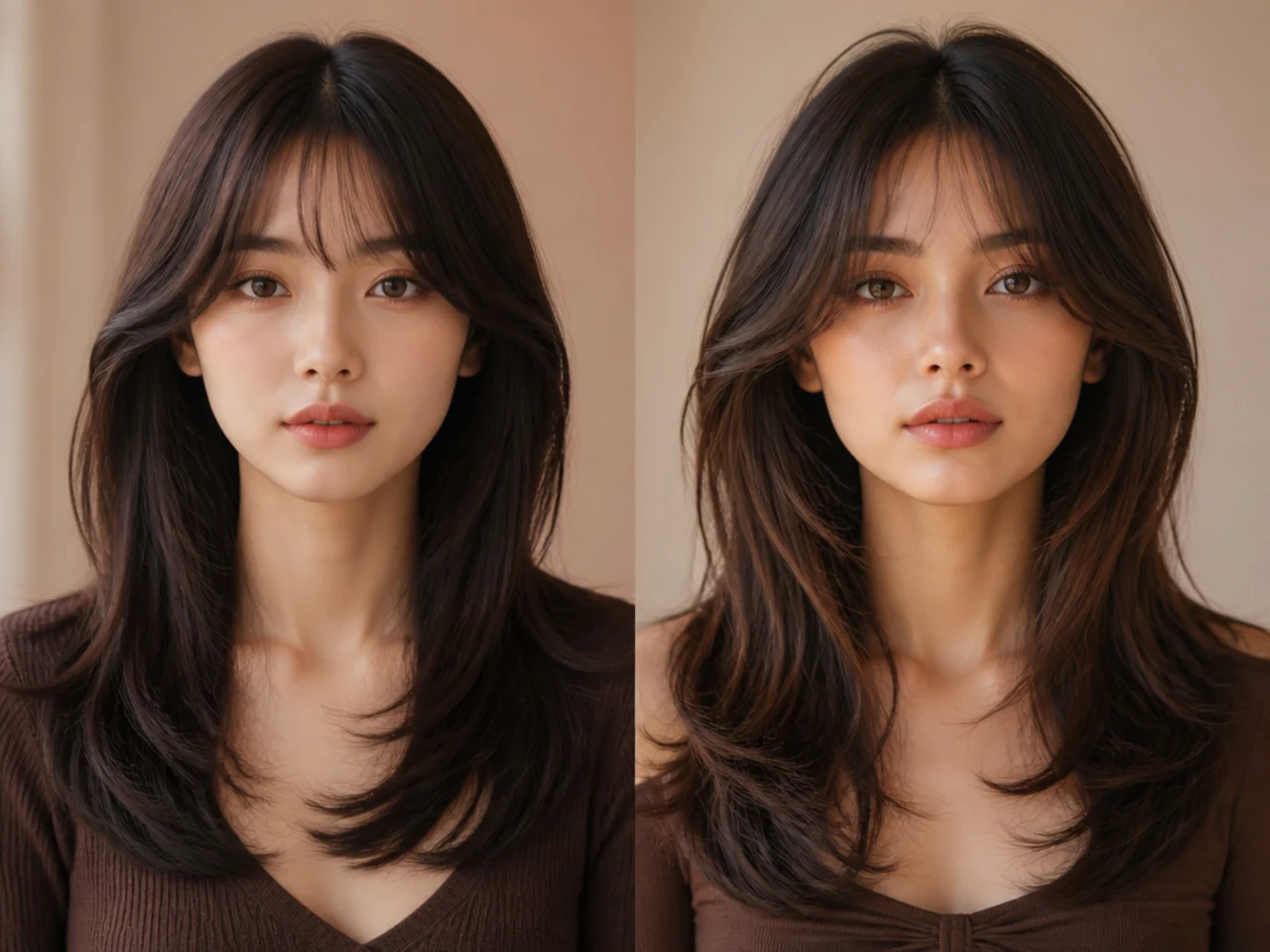
Say "layers at the face only, one length behind". The instruction in a sentence. Say it in those words rather than naming the cut, because the name travels badly.
Choose it over a wolf cut if your hair is fine. It costs you no density. Fine hair loses apparent thickness to every layer, and this one confines the loss to the front.
Decide how far back the layering goes. To the ear, or to the cheekbone — two different cuts. The further back it goes, the closer it moves to a shag.
Keep the perimeter blunt. It is doing structural work here. Softening it removes the one thing holding the back together.
The 15 Hush Cut Ideas
1. Classic Hush Cut
Face layered, back one length. The benchmark. That division is the whole cut — everything the layering does happens in front, and the back keeps its density untouched.
2. Hush Cut with See-Through Bangs
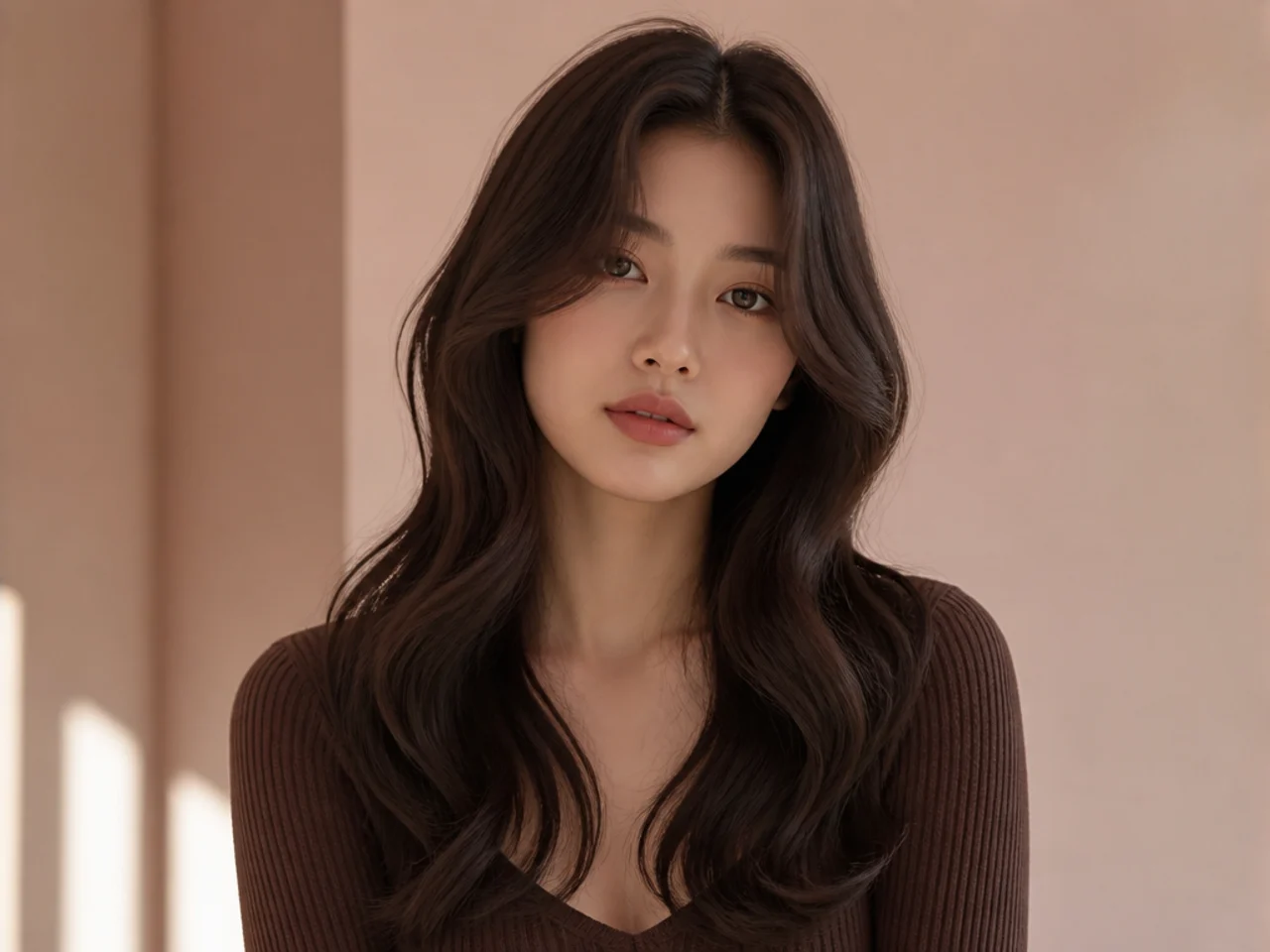
The most Korean version of the shape. See-through bangs and face-only layering are the two elements the style is built from, so together they read unmistakably.

3. Hush Cut with Curtain Bangs
Framing opening away from the face. Curtain framing continues the layered front outward rather than starting a second shape.

4. Hush Cut with No Fringe
Framing alone, which is often enough. Without a fringe there is nothing needing its own trim cycle, which makes this the lowest-upkeep version.
5. Long Hush Cut
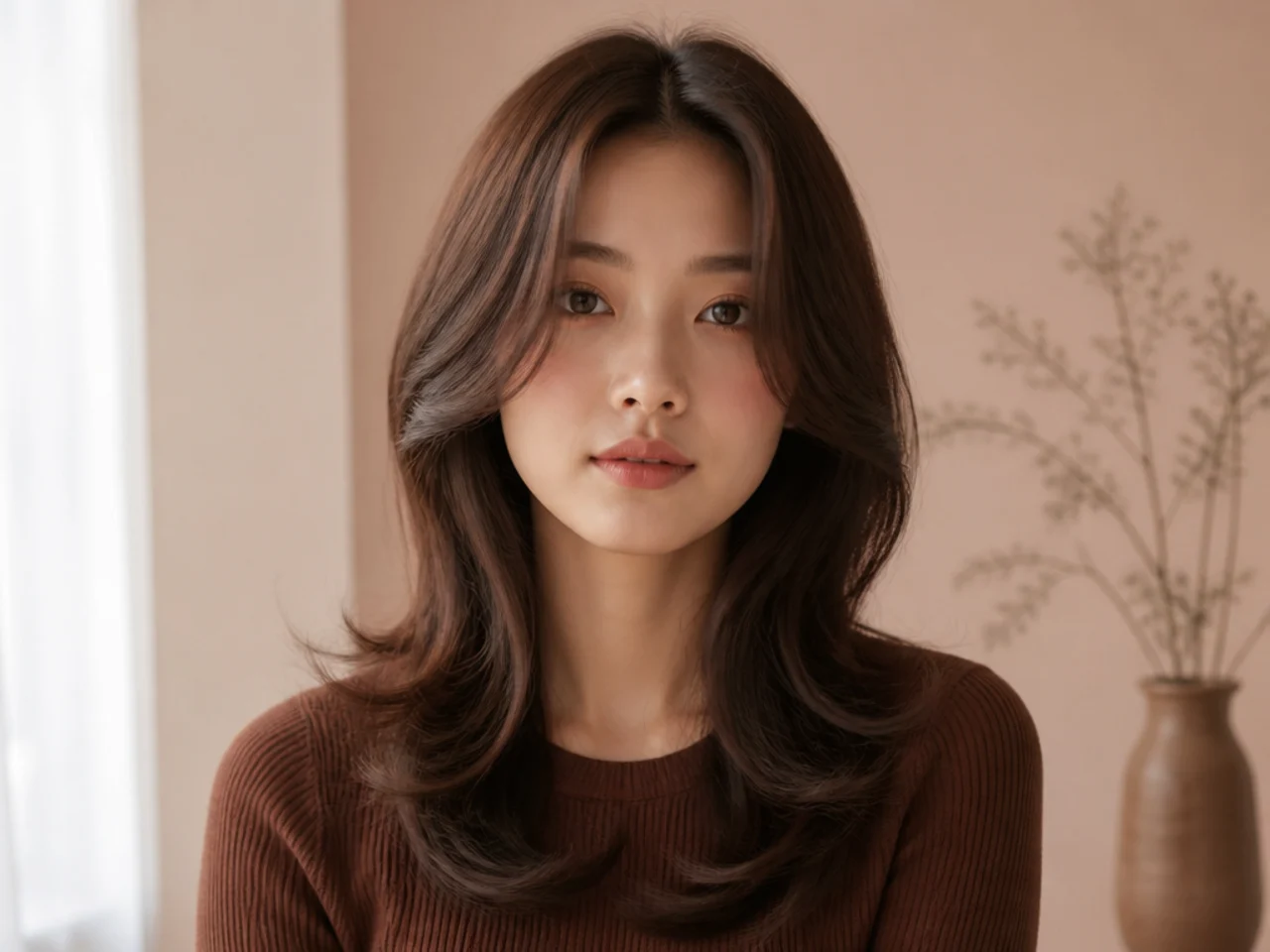
Length kept, movement confined to the front. Long hair loses nothing to this cut, because the layering never reaches the length behind.

6. Shoulder-Length Hush Cut
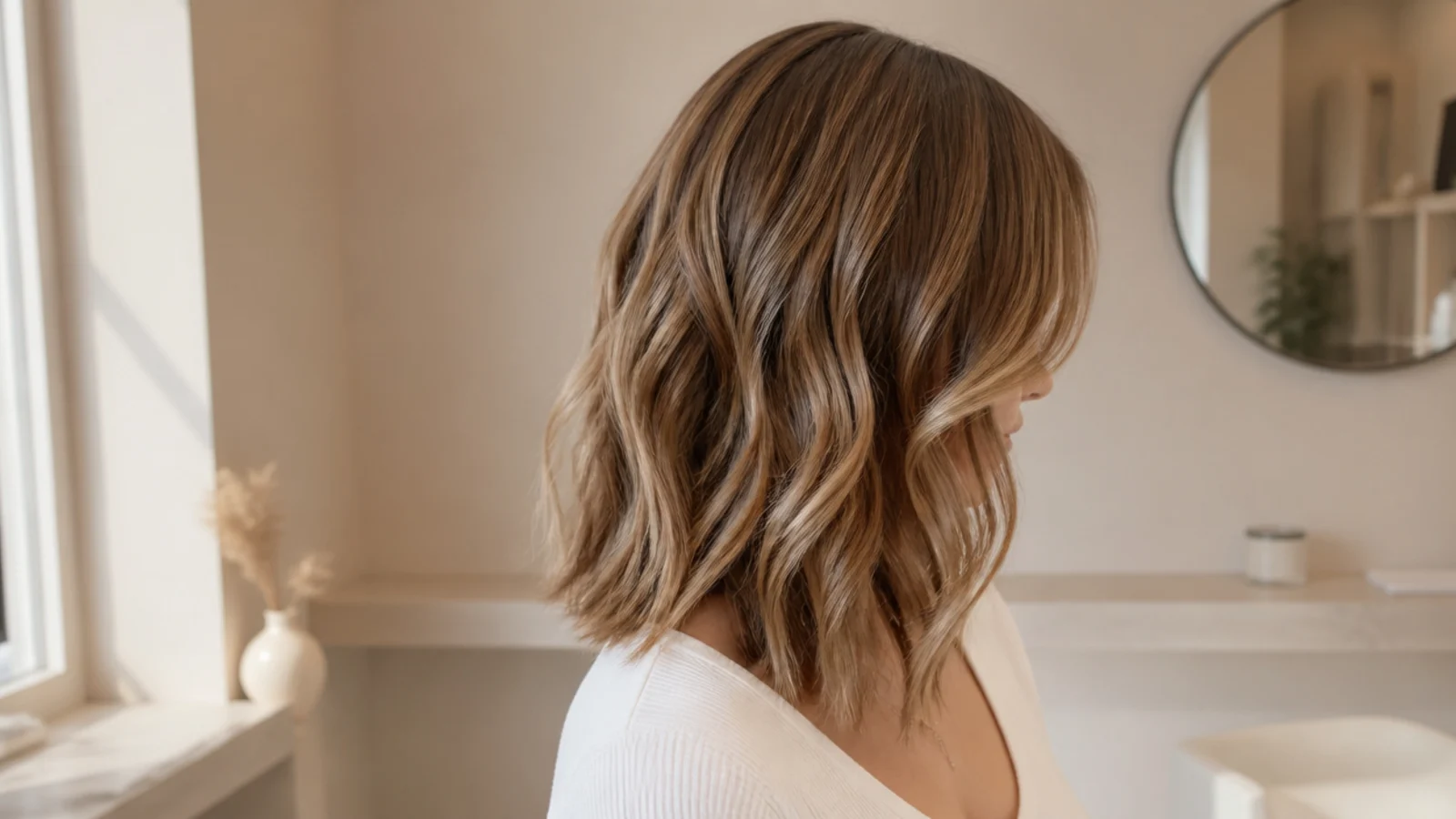
The most balanced version. Shoulder length has enough behind the framing for the contrast to register and not so much that the front disappears.

7. Hush Cut on a Lob
Collarbone length with a clean perimeter behind. The perimeter stays intact because the layering was confined to the front, which is what separates this from a shag.

8. Hush Cut with C-Curl Ends
The framing pieces curved in at the jaw. The C-curl and the hush layering do different jobs — one shapes the ends, the other sets where the layers start.

9. Hush Cut on Fine Hair
The reason to choose this cut. Density kept behind. Fine hair loses apparent thickness to every layer, and this cut confines that cost to the front where the effect is wanted.

10. Hush Cut on Thick Hair
Some internal weight removed behind, outline kept. Thick hair needs weight taken from underneath at the back, but the perimeter stays whole.

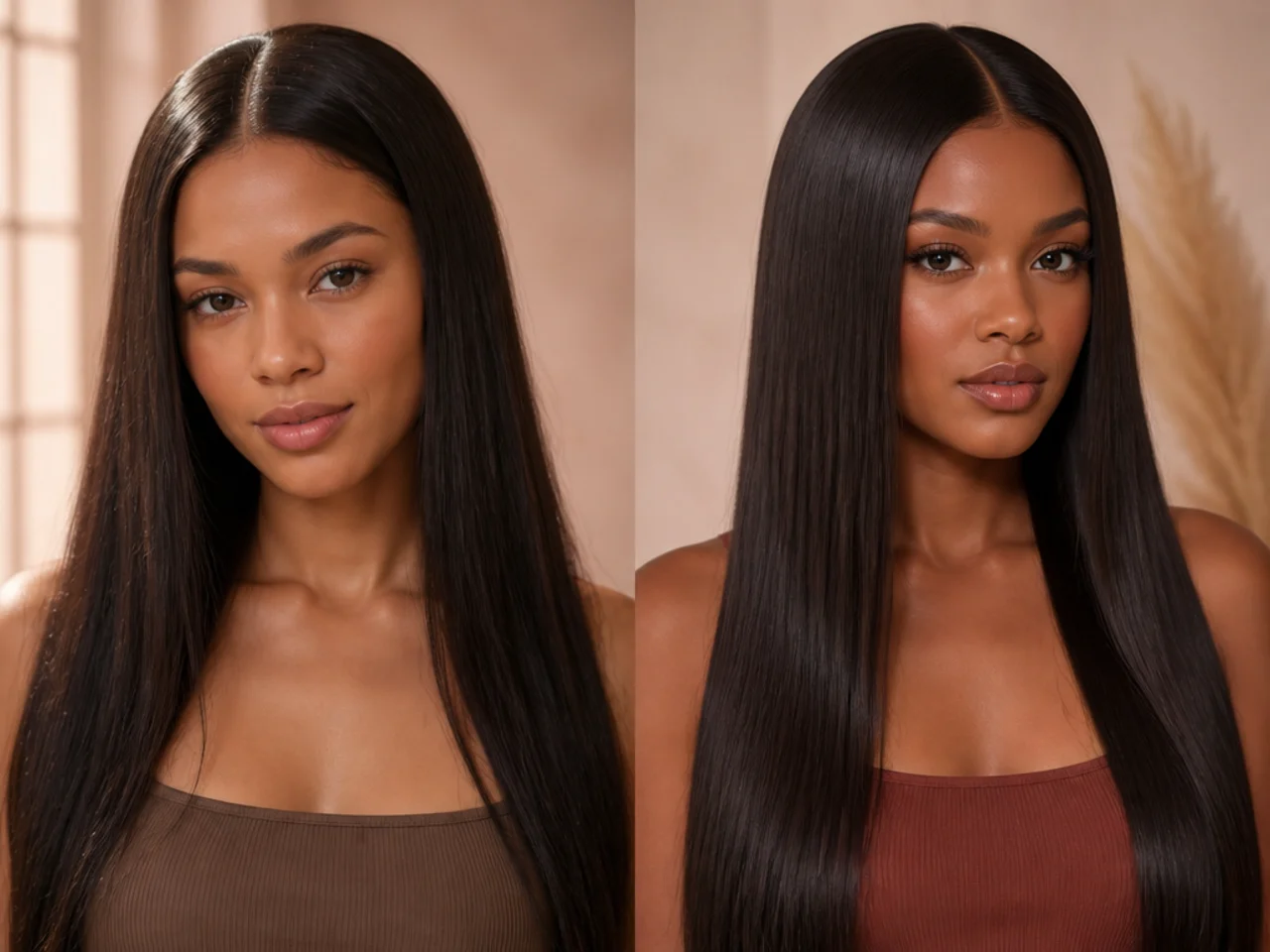
11. Hush Cut on Straight Hair
The cleanest version, where the contrast between front and back shows. Straight hair shows the boundary between layered and unlayered most clearly, which is either the point or the risk.

12. Hush Cut on Wavy Hair
The bend softening the join between layered and unlayered. A wave interrupts the line naturally, which forgives a join that straight hair would expose.

13. Hush Cut with Crown Volume
Lift above, framing at the sides, weight behind. Three separate decisions, and the cut only reads correctly when all three are specified.

14. Hush Cut Worn Half-Up
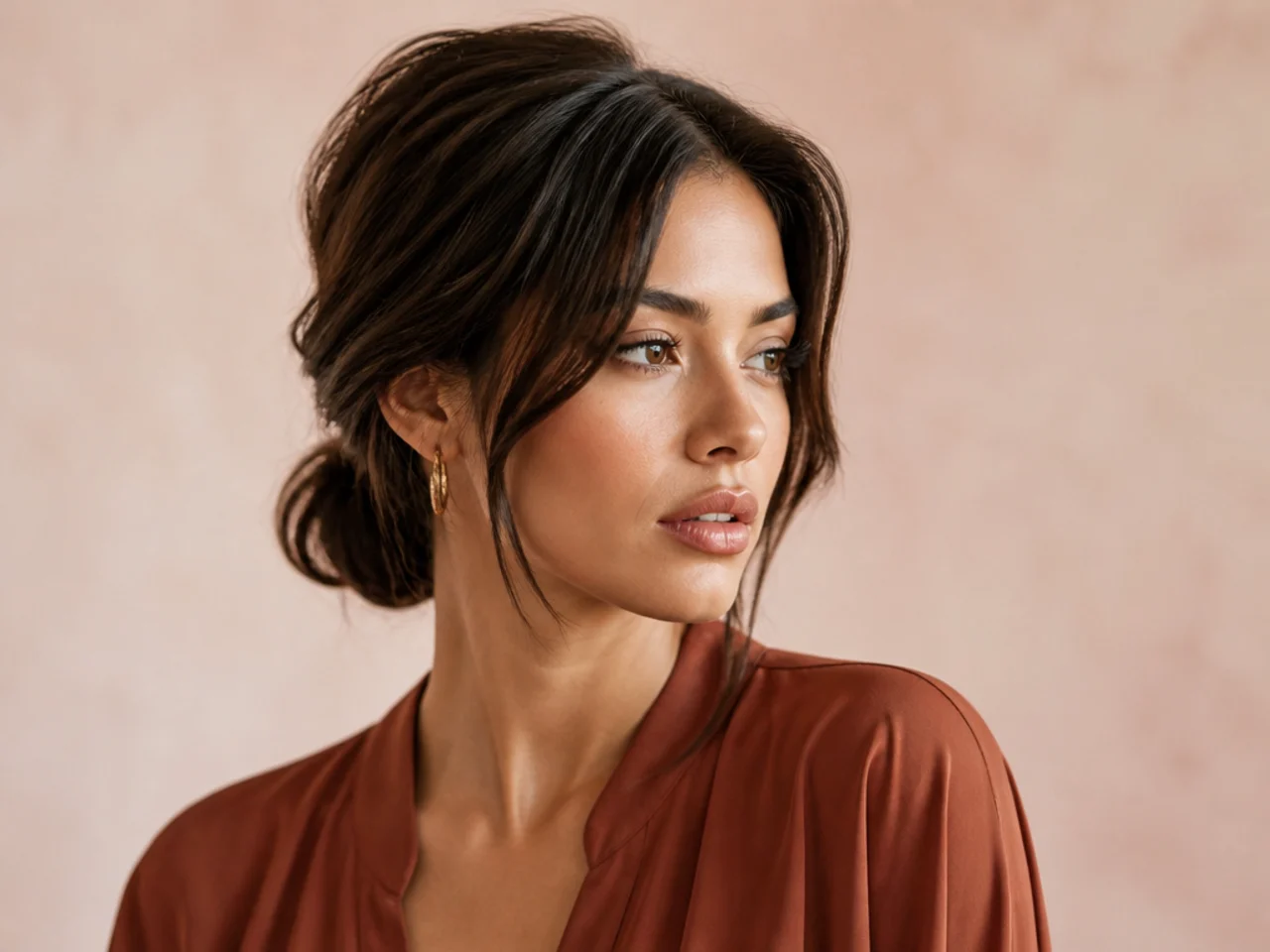
Framing left out, one-length back gathered. Gathering the back shows exactly what the cut is — untouched density behind, shaped pieces at the front.

15. A Wolf Cut for Comparison
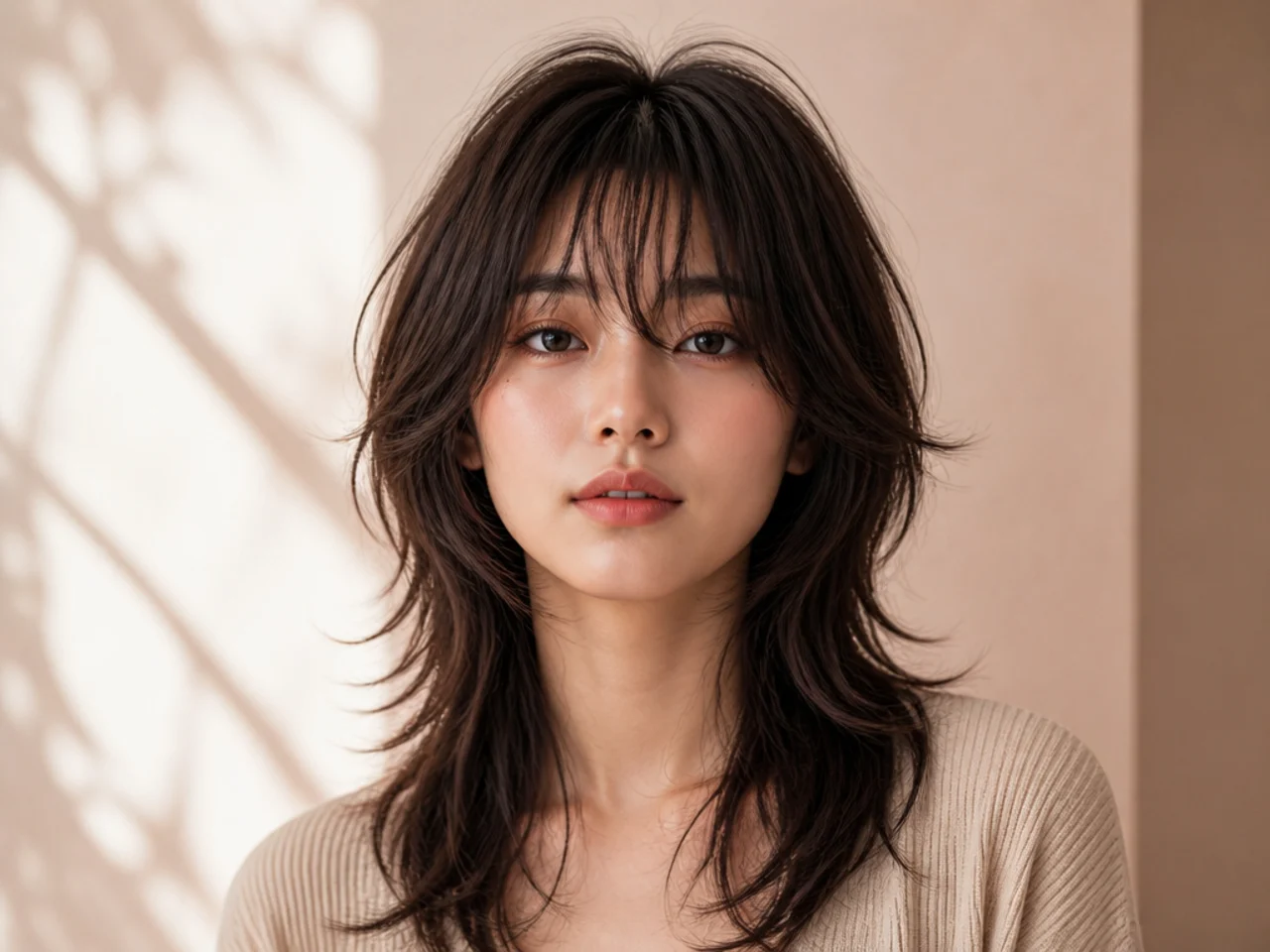
Layered all over, outline broken up. A different cut entirely. A wolf cut layers everywhere and breaks the perimeter; a hush cut layers only the front and leaves it whole.
Styling and Upkeep
Curl the framing inward, leave the back alone. The back does not need styling; that is the point. Round brush at the front, nothing behind.
Trim the framing every six weeks, the length every ten. Two different schedules for two parts of one cut. Book them together and let the length ride through every second framing trim.
Keep the perimeter blunt at every trim. It is holding the shape. Say blunt out loud each time, because softening it is a reflex.
Dry the crown up. As with every Korean cut. Height above, shape at the ends.
Do not let layering spread backward. Each trim is where it creeps.

Mistakes to Avoid
Letting the layering spread past the ear. It becomes a wolf cut over two or three appointments.
Trimming the whole cut on one schedule. The front and back need different intervals.
Softening the perimeter. It is structural here.
Choosing a wolf cut on fine hair instead. This is the cut that suits it.
Styling the back. It is meant to be the quiet part.

FAQ
What is it? A cut layered only around the face, with the back left one length.
How does it differ from a wolf cut? A wolf cut layers everywhere; a hush cut layers only the front.
Is it good for fine hair? The best of the Korean cuts for it — the back keeps its density.

Final Thoughts
Ask for layers at the face and one length behind. It is a precise instruction, it is easy to say, and it is the difference between the cut that keeps your density and the one that takes a third of it away.
For the layered-throughout version see 20 korean wolf cut haircut ideas, and for the aesthetic in full see 25 stunning korean haircut ideas. More in Women's Hairstyles.