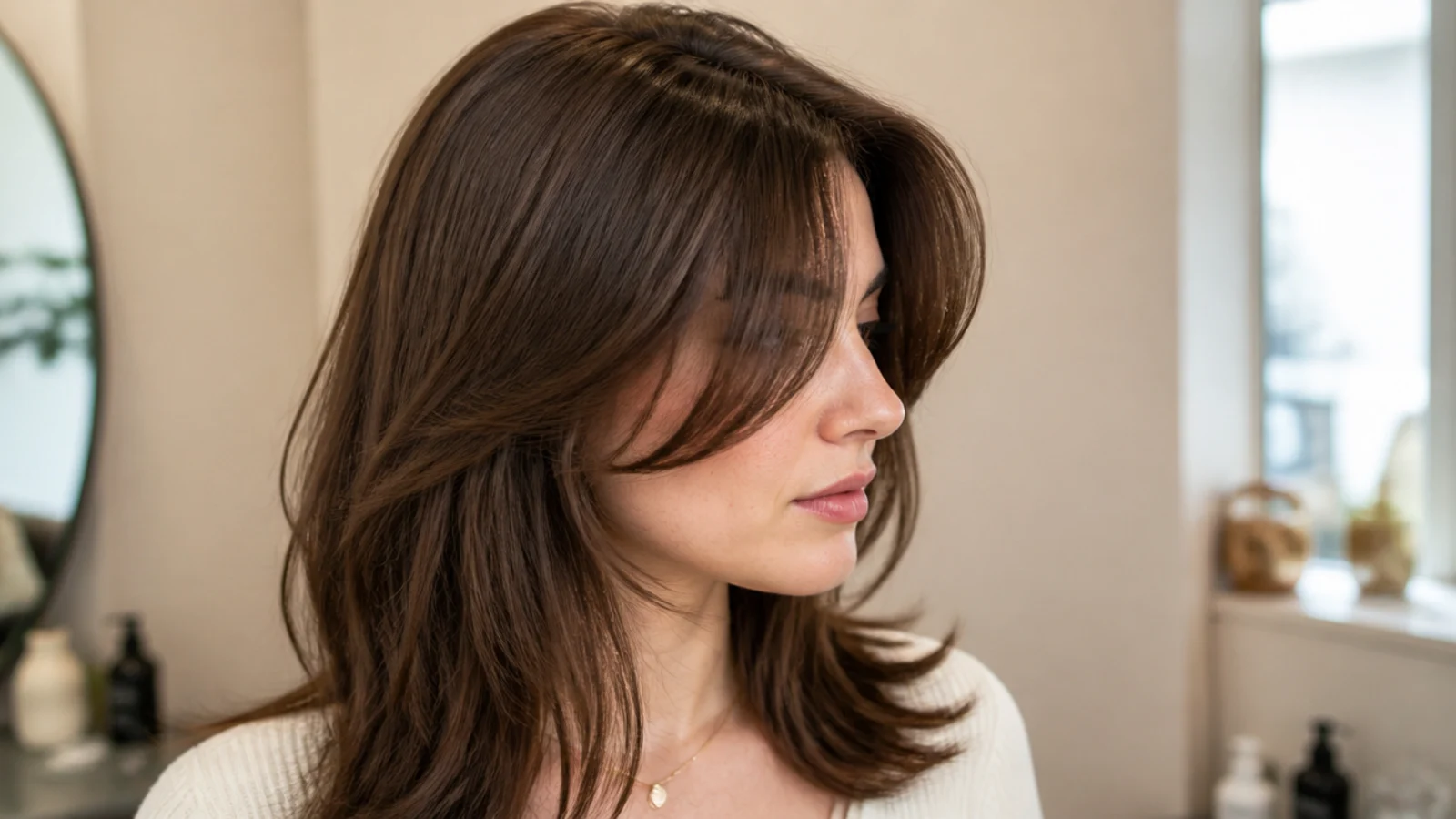
20 Curtain Bangs Ideas For Short Fine Flat Hair
Twenty curtain bangs ideas for short fine hair, sorted by the one measurement that decides whether a fringe looks full or transparent — how deep the section is taken, not how long the fringe is cut.
In this article · 27
- What Fine Hair Changes About Curtain Bangs
- Choosing Your Section Depth and Length
- The 20 Curtain Bangs Ideas for Short Fine Hair
- 1. The Deep Section Curtain Fringe
- 2. The Cheekbone Curtain Fringe
- 3. The Nose Length Curtain Fringe
- 4. The Brow Grazing Curtain Fringe
- 5. The Blunt Ended Curtain Fringe
- 6. Curtain Bangs on a Blunt Bob
- 7. Curtain Bangs on a Chin Length Bob
- 8. Curtain Bangs on a French Bob
- 9. Curtain Bangs on a Stacked Bob
- 10. Curtain Bangs on a Long Pixie
- 11. Curtain Bangs on a Lob
- 12. The Wide Curtain Fringe
- 13. The Narrow Curtain Fringe
- 14. The Off Centre Curtain Fringe
- 15. Curtain Bangs With a Shadow Root
- 16. Curtain Bangs With a Lighter Front Piece
- 17. Curtain Bangs With a Deep Side Part
- 18. Curtain Bangs Over a Cowlick
- 19. The Round Brush Curtain Fringe
- 20. The Grown Out Curtain Fringe
- Styling and Upkeep
- Mistakes to Avoid
- FAQ
- Final Thoughts
Fine hair does not fail at curtain bangs because of the length — it fails because the section was taken too shallow and the fringe is transparent.
Section depth sets density. How far back from the hairline the fringe is taken decides how many strands end up in it. Length decides only where those strands stop.
Fine flat hair gives no root lift for free. The bend at the top of a curtain fringe has to be cut and dried into place, because there is not enough body in the hair to hold a curve on its own.
What Fine Hair Changes About Curtain Bangs
Fewer strands means gaps show sooner. Fine hair carries less mass per section, so any thinning, slide cutting or over-texturising in the fringe turns straight into visible forehead.
Blunt ends read as density. A squared-off edge puts every strand at the same length, so they stack and reflect light as one line. Feathered ends scatter and the fringe looks sparser than it is.
The curtain shape needs a curve, not a straight line. The shortest point sits at the centre and the length increases outward toward the cheek. That gradient is what makes it sweep instead of sitting flat like a blunt fringe.
Short hair shortens the trade. On a bob or a crop, the hair moved into the fringe is missing from a perimeter that was already small, so the fringe has to earn its place.
Choosing Your Section Depth and Length
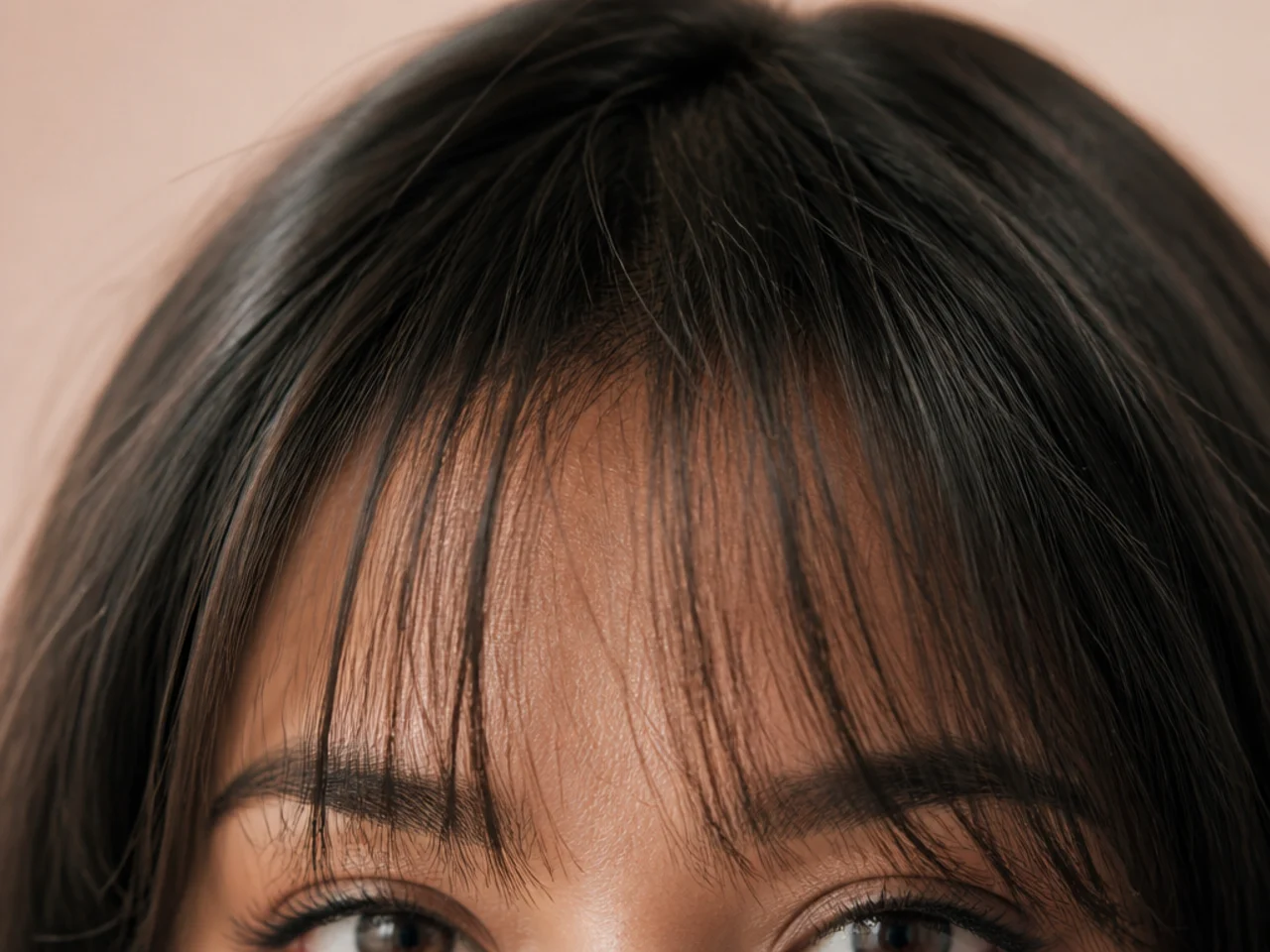
Take the section deep, not wide. Depth adds strands. Width only spreads the same strands further across the forehead, which thins the fringe out.
Keep the width inside the outer eyebrows. That is the classic curtain boundary and it stops the fringe stealing hair from the sides, where a short cut needs its weight.
Set the shortest point at the cheekbone for the safest version. It is long enough to tuck, long enough to sweep, and long enough to grow past without an awkward stage.
Cut it dry, or at minimum check it dry. Fine hair barely shrinks but it moves a lot once the water is out, and a fringe cut wet usually lands shorter than intended.
The 20 Curtain Bangs Ideas for Short Fine Hair
1. The Deep Section Curtain Fringe
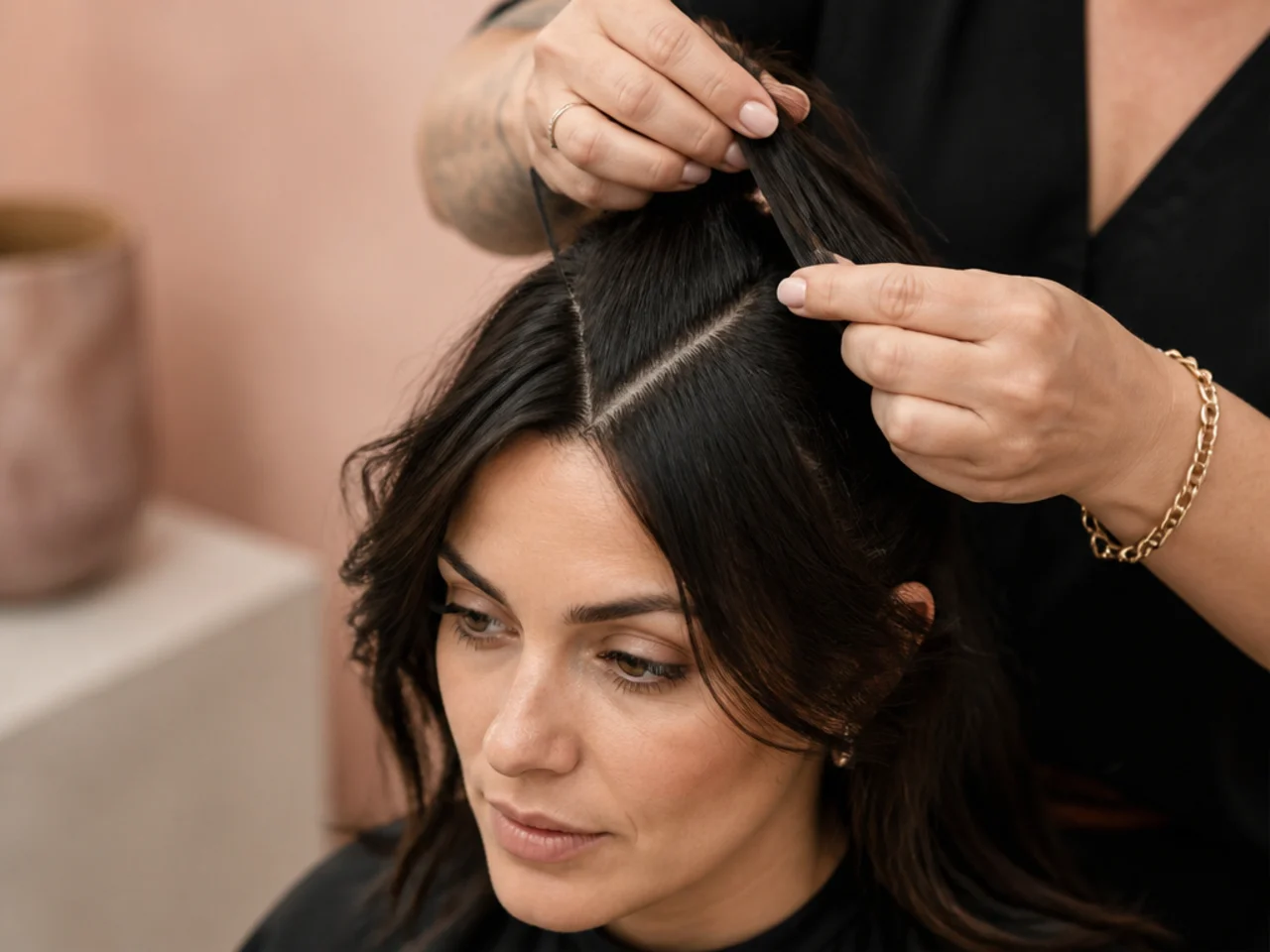
The section is taken several centimetres back from the hairline rather than just off the front edge. More strands fall forward, so the fringe covers without needing product to fake fullness. It is the single most effective change available on fine hair.
2. The Cheekbone Curtain Fringe
The shortest point lands level with the top of the cheekbone. That length gives the ends somewhere to travel sideways, which is what produces the sweep, and it is short enough to be read as a fringe rather than as face-framing layers.

3. The Nose Length Curtain Fringe
Cut to finish around the tip of the nose. Shorter than the cheekbone version, so it opens the eyes more, but it also has less weight holding it down and will lift at the root on fine hair unless it is dried forward first.

4. The Brow Grazing Curtain Fringe
The shortest centre point sits just below the eyebrow. This is the limit for fine hair, because at that length the fringe cannot be swept aside and has to be styled correctly every day or it separates into two thin panels.

5. The Blunt Ended Curtain Fringe
The ends are cut straight rather than point cut. Every strand stops at the same place, so the edge stacks into a solid line and reads as thicker hair. On fine hair this is worth more than any volumising product.

6. Curtain Bangs on a Blunt Bob
A one-length bob keeps all its weight at the perimeter, which balances the density lost to the fringe. The straight bottom line and the curved fringe line work against each other, and that contrast is what stops the shape looking flat.

7. Curtain Bangs on a Chin Length Bob
At chin length the fringe and the perimeter are close enough to read as one continuous frame around the face. Keep the fringe shortest point above the chin line or the two lengths merge and the curtain shape disappears.

8. Curtain Bangs on a French Bob
The French bob already sits high and short with a fringe built in. Cutting that fringe as a curtain instead of straight across softens the horizontal line, which suits a rounder face better than a blunt edge sitting flat on the brow.

9. Curtain Bangs on a Stacked Bob
Graduation at the back lifts the shape at the crown, which counters the flatness fine hair tends to have on top. The fringe then balances the volume at the back so the head does not read as heavy behind and empty in front.

10. Curtain Bangs on a Long Pixie
The fringe becomes the longest hair on the head, so the whole shape hangs off it. Keep the section shallow here, unusually, because a pixie has no length to spare and a deep section leaves the crown too sparse to stand up.

11. Curtain Bangs on a Lob
The extra length below the shoulder adds weight low down, which pulls the whole silhouette longer and makes the fringe the widest point of the face frame. On fine hair this is the most forgiving of the longer options.

12. The Wide Curtain Fringe
The section reaches out past the outer eyebrows toward the temples. It covers more forehead, but the same amount of hair now has to stretch further, so it only works if the section is also taken deep enough to compensate.

13. The Narrow Curtain Fringe
The section stays between the inner corners of the eyebrows. Fewer strands are asked to cover less width, so the density holds. It leaves the temples exposed, which lengthens a round face.

14. The Off Centre Curtain Fringe
The split sits slightly to one side rather than dead centre. The heavier side then carries more strands, and that concentration is what makes fine hair look fuller from the front, since density reads better gathered than spread evenly.

15. Curtain Bangs With a Shadow Root
Leaving the root a shade darker than the ends puts contrast where the hair meets the scalp. The eye reads that darker band as more hair rather than as scalp, which is the cheapest density illusion available on fine hair.

16. Curtain Bangs With a Lighter Front Piece
Two lighter strips either side of the split catch more light and draw the eye to the shape of the curtain rather than to the scalp behind it. Keep the lift gentle, since fine strands lose structure quickly at high lift levels.

17. Curtain Bangs With a Deep Side Part
Sweeping the parting well over to one side forces the hair to travel across the head before it falls, and that change of direction lifts the root. On flat fine hair a deep part is a styling tool, not just a preference.

18. Curtain Bangs Over a Cowlick
A cowlick at the front hairline pushes hair in a fixed direction that no cutting removes. Placing the curtain split where the cowlick already wants to separate turns the problem into the parting, rather than fighting it every morning.

19. The Round Brush Curtain Fringe
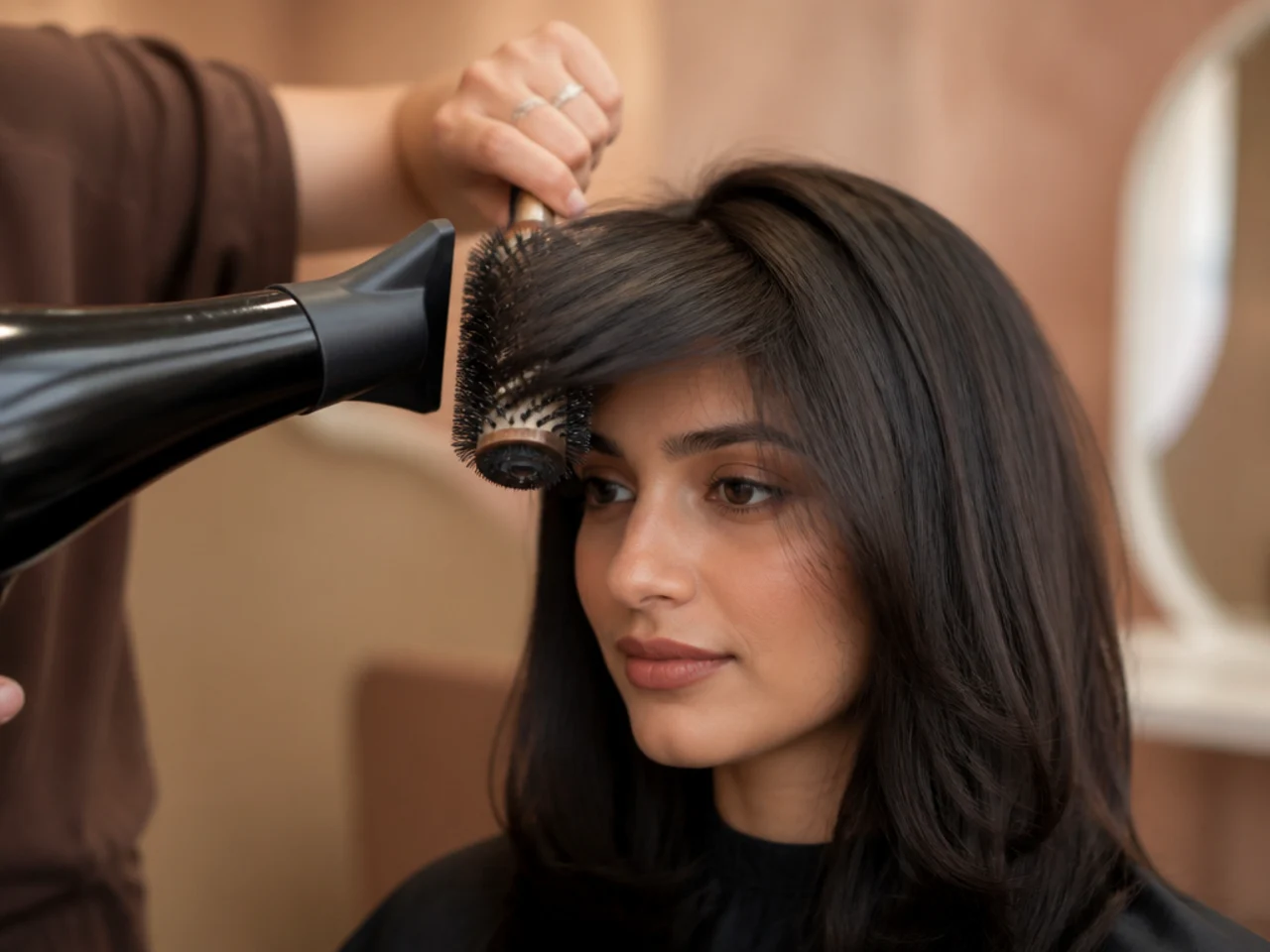
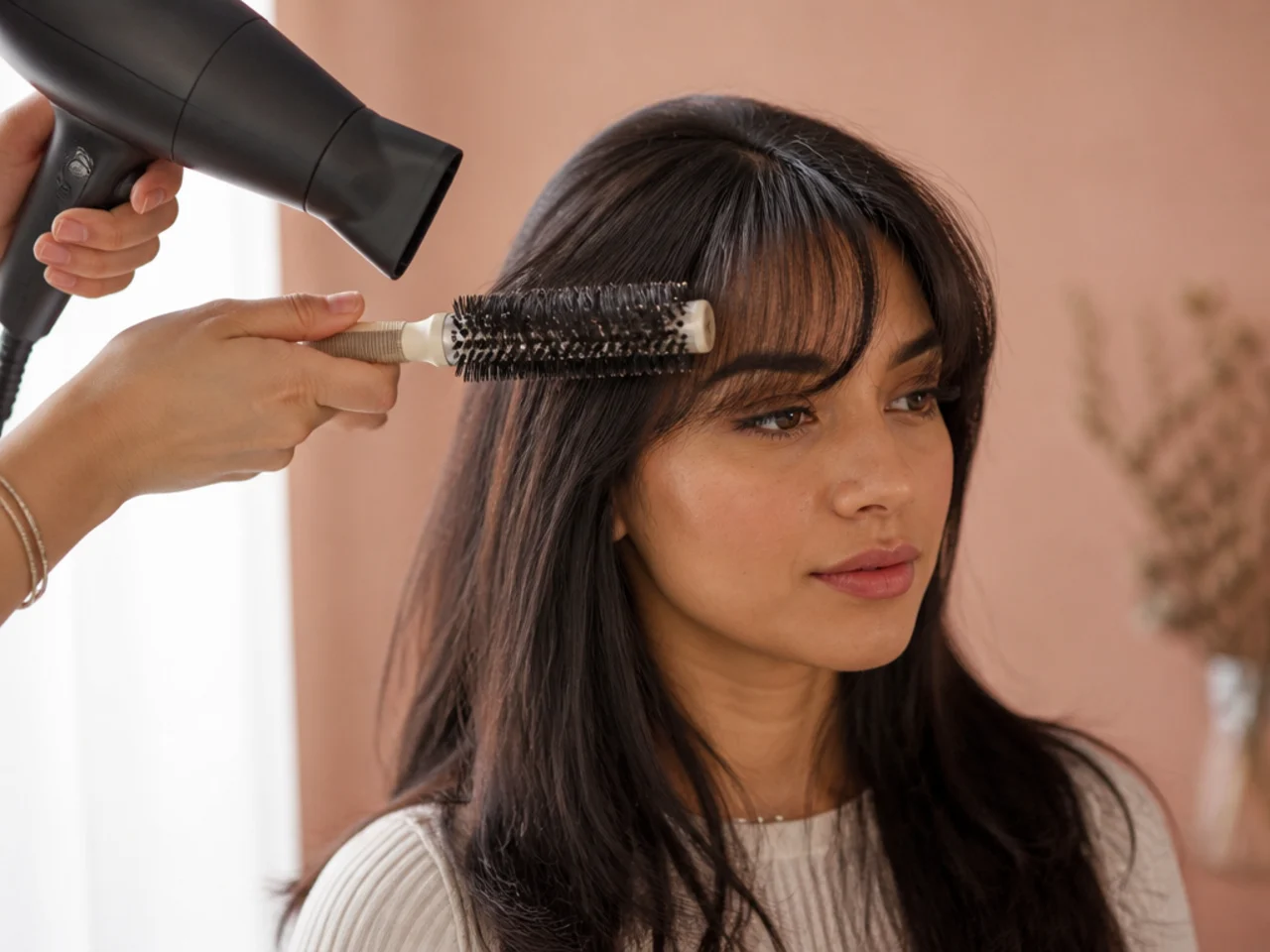
Dried over a medium round brush, first flat to one side, then flat to the other, then released. Each pass sets the root in the opposite direction to the last, and the tension between the two is what holds the bend up all day.
20. The Grown Out Curtain Fringe
Three months on, the shortest point has dropped past the cheekbone and the fringe has become face framing. This is the stage where most people cut it again, but it also blends straight into layers if you want out.

Styling and Upkeep
Dry the fringe first, wet, before anything else. Fine hair sets its root direction in the first minute of drying, and once it has dried flat nothing short of rewetting will lift it.
Dry it side to side, not straight down. Pushing the hair across the head and then back the other way builds the curve. Drying it forward and down flattens it onto the forehead.
Keep conditioner off the fringe. It is the shortest, newest hair on your head and needs no softening. Weighing it down is what makes it separate into strings by lunchtime.
Use powder at the root, not spray at the ends. Root grip holds the bend up. Product on the ends adds weight exactly where you cannot afford it.
Trim every three to four weeks. A curtain fringe grows out slowly and gracefully, but the shortest point is what defines the shape and it is the first thing to disappear.
Mistakes to Avoid
A shallow section on fine hair. It is the single most common cause of a see-through fringe, and no amount of length corrects it.
Texturising an already thin fringe. Removing strands from hair that has few to spare turns a soft fringe into a sparse one within one trim cycle.
Cutting it wet and hoping. Fine hair lifts once dry, so the wet length is not the finished length. Check dry before the last centimetre comes off.
Making it too short to sweep. Above the brow the fringe loses the ability to be moved, and a fringe that only works one way is a daily commitment.
Pinning it back constantly while it grows. Constant tension at the shortest strands is exactly where fine hair breaks, and broken ends restart the whole grow out.

FAQ
How deep should the section be? Deep enough that the fringe is opaque — depth adds strands, width does not.
How short can it go? Cheekbone is safe, nose is workable, brow is the limit on fine hair.
How often is a trim? Every three to four weeks, because the shortest point defines the shape.

Final Thoughts
The fringe that looks full in a photograph and the fringe that looks sparse on you are usually the same length. What differs is how far back the section was taken and whether the ends were left blunt.
For the same fringe on more length see curtain bangs on long hair, and for a one-sided version that keeps its weight gathered see side swept bangs for thin hair. More in Bangs & Fringe.