20 Curly Short Curtain Bangs Ideas
Twenty curly curtain fringe ideas, and the one number that decides whether yours works — curl shrinks as it dries, so a fringe cut wet at the brow ends up somewhere near the hairline.
In this article · 28
- What Curly Short Curtain Bangs Are
- Dry Cutting and Shrinkage
- How Short Is Too Short
- Face Shapes
- Styling Them at Home
- Trim Cadence and Cost
- The 20 Curly Curtain Bangs Ideas
- 1. 3A Spirals
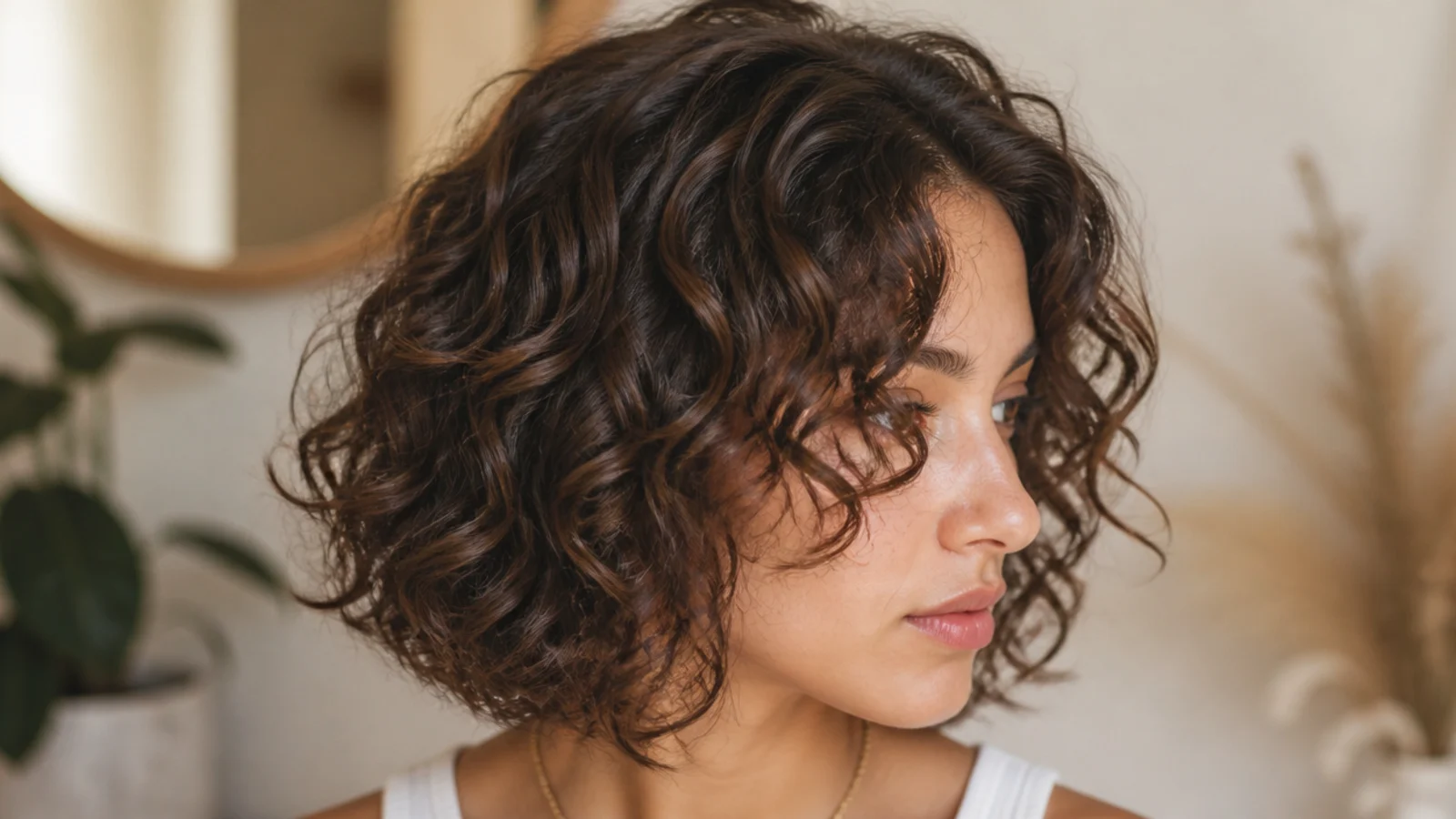
- 2. Tapered Curly Bob
- 3. 2C Waves
- 4. Curly Shag
- 5. Curly Pixie
- 6. 3B Ringlets
- 7. 3C Coils
- 8. 4A Coils
- 9. Wispy Fine Curls
- 10. Curtain Bangs on a Round Face
- 11. Curly French Bob
- 12. Face Framing Layers
- 13. Curly Wolf Cut
- 14. Copper Balayage
- 15. Dense Coarse Curls
- 16. Half Up With Curtain Bangs
- 17. Curtain Bangs on a Heart Shaped Face
- 18. Deep Centre Part
- 19. Curly Lob
- 20. The Grown Out Stage
- Final Thoughts
A curly fringe cut at the eyebrow does not land at the eyebrow. It lands wherever the curl pulls it once the water has gone, which is usually a good deal higher than anyone in the chair intended.
Curl shrinks, and the tighter it is the more it shrinks. Loose waves give back around a fifth of their wet length. Tight coils can give back half.
Which is why this fringe is cut dry, one curl at a time. Not sectioned, not combed flat, not measured against the face wet. Every one of those steps hides the number that matters.
What Curly Short Curtain Bangs Are
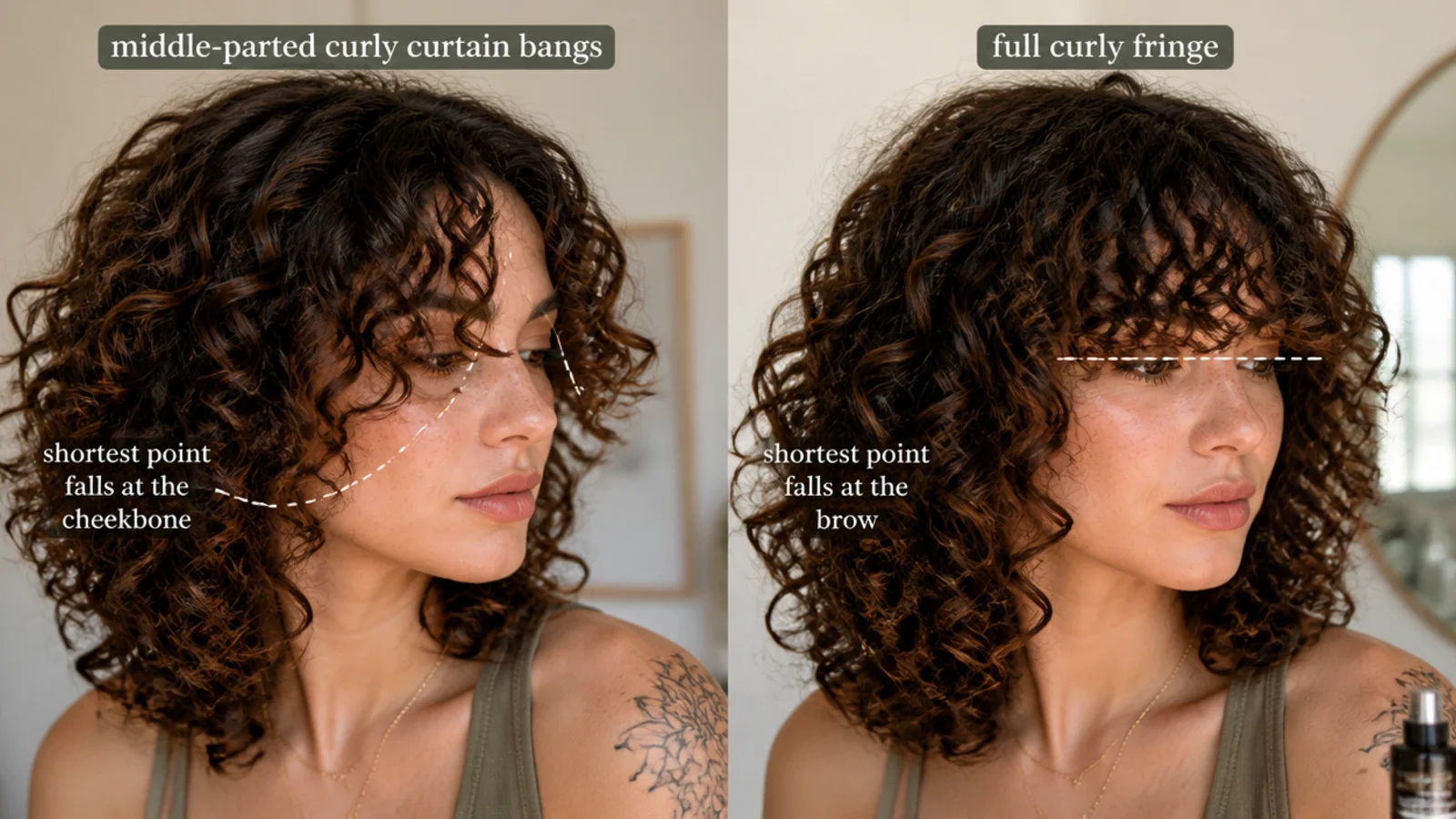
A fringe that parts in the middle and sweeps to both sides. Two soft diagonals framing the face rather than one blunt horizontal across it.
Short means brow to lash when dry. The word short describes the finished position, which on curly hair is a completely different measurement from the cut length.
They are cut in a triangle from the front hairline. The apex sits an inch or two back from the hairline, and how far back it goes decides how dense the fringe is.
The shape comes from the curl, not from the scissors. A curl already bends away from the face on its own. The cut is only deciding where that bend starts.
They are the lowest commitment change available to curly hair. Nothing behind the front triangle is touched, so if you dislike it the rest of your cut is untouched.
Dry Cutting and Shrinkage
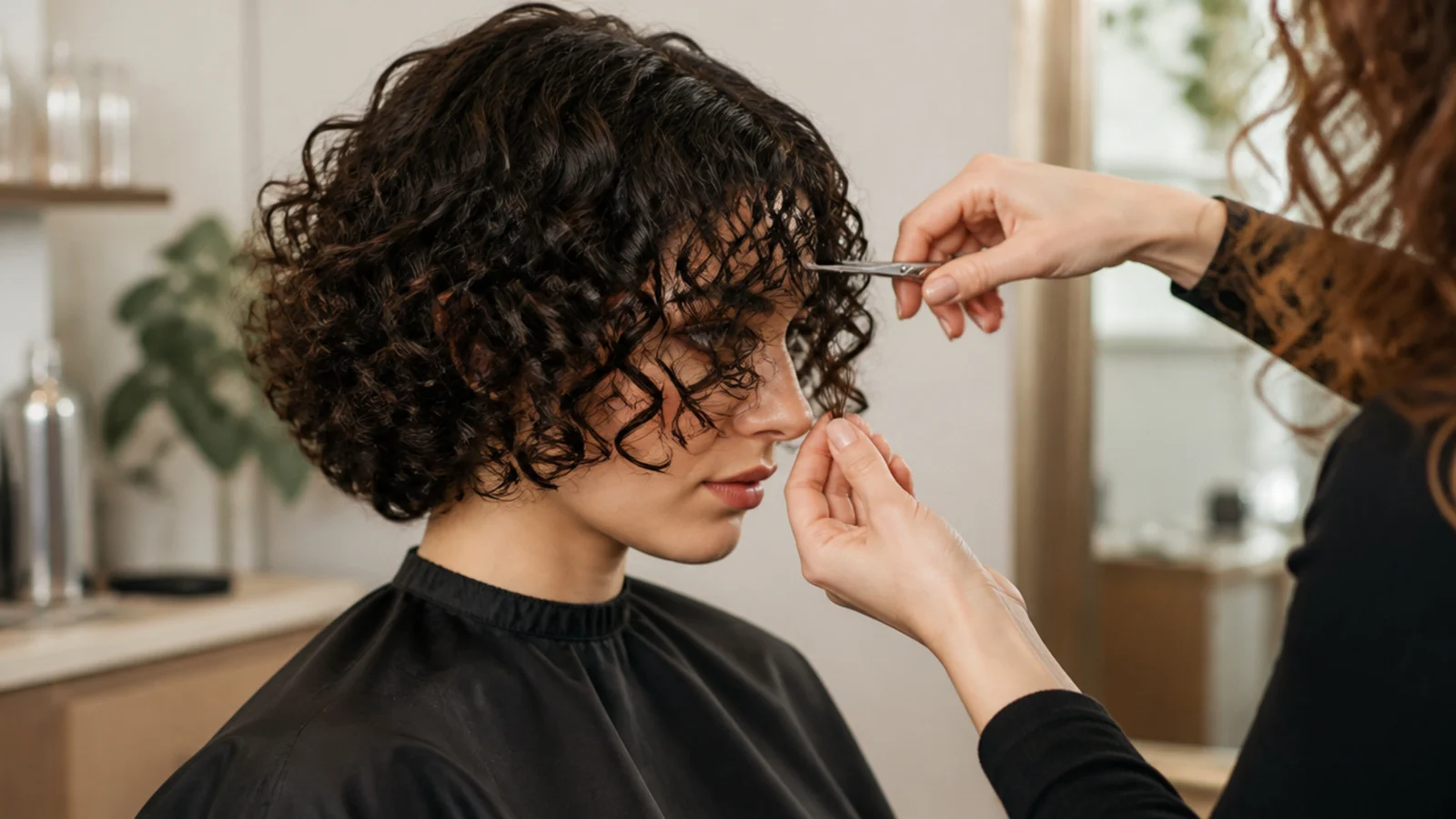
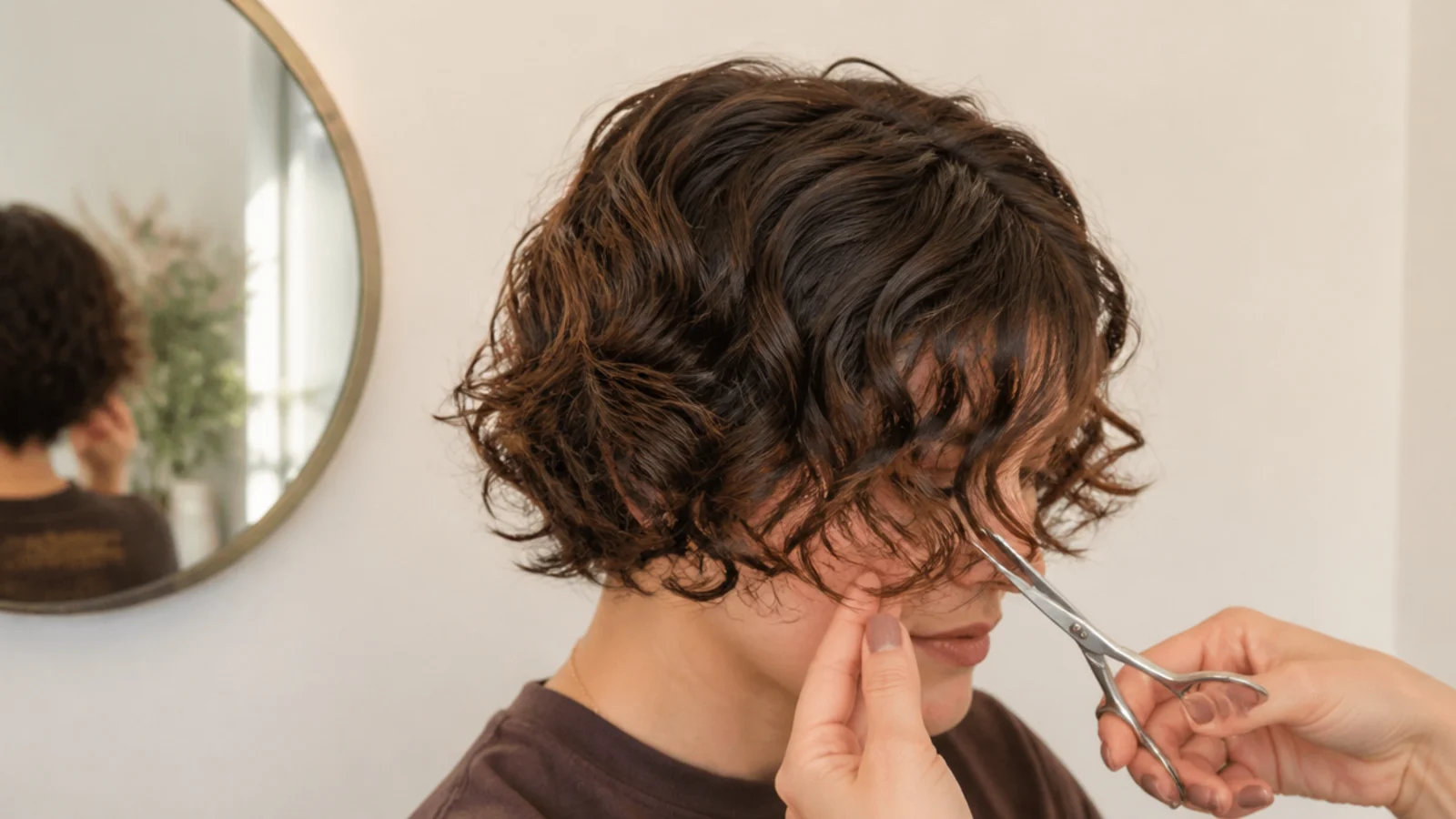
Cut dry, always. Wet curl is stretched almost straight by its own water weight, so a wet cut is a measurement of something that no longer exists ten minutes later.
Loose waves shrink about a fifth. Two C patterns barely coil, so most of the wet length survives the dry.
Tight coils shrink about a half. A four A pattern spirals tightly enough that a four inch strand can sit two inches from the scalp.
Cut curl by curl, not in a section. Curls sitting next to each other can have different diameters, and a straight line drawn across them cuts them all to different finished lengths.
Leave the first cut long deliberately. You can always take another quarter inch off. Nothing brings one back except about six weeks.
How Short Is Too Short
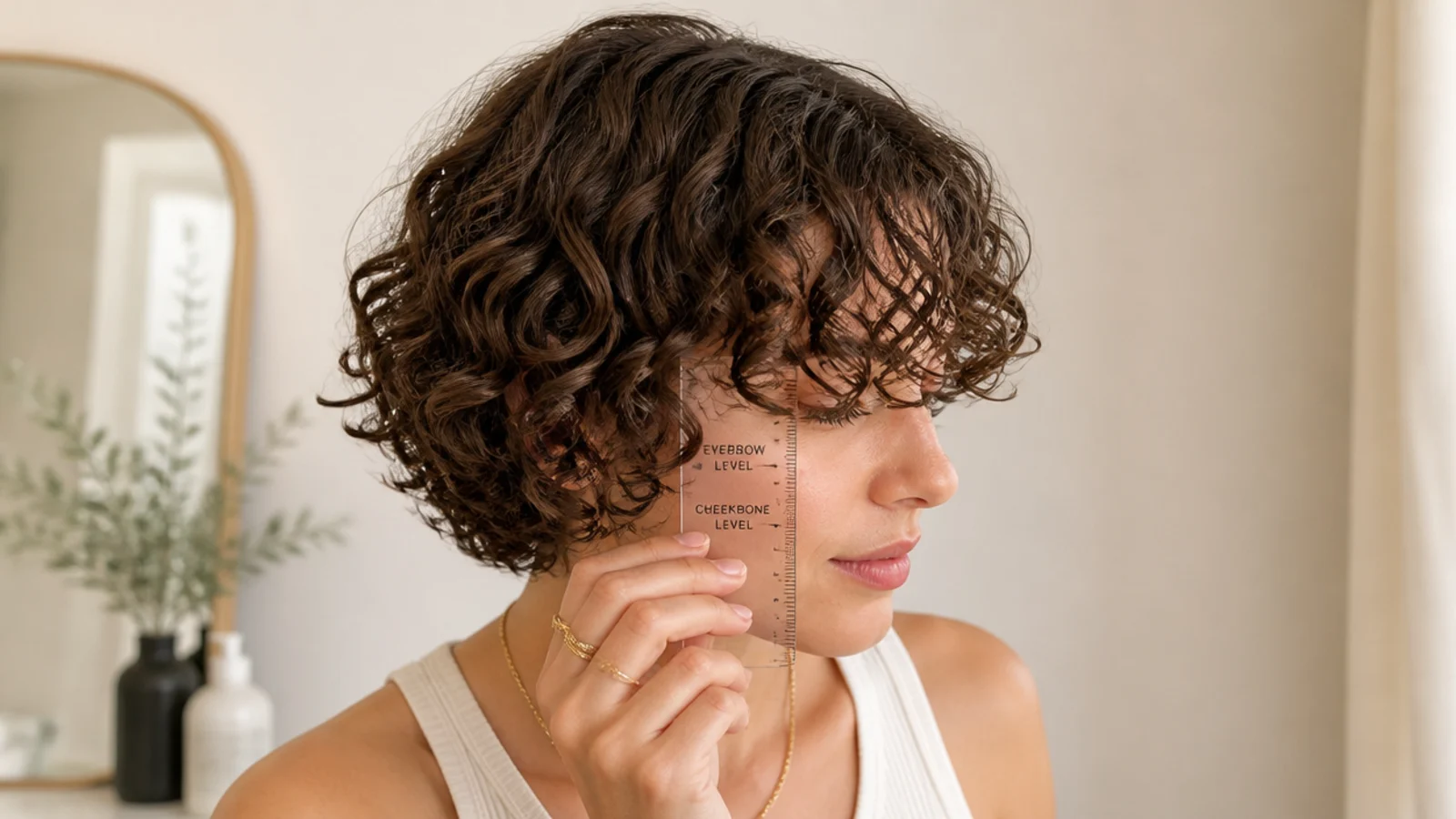
The top of the eyebrow is the practical floor. Above that the fringe runs out of weight, and weight is what makes the two halves fall open in the middle.
Cheekbone is the safest starting point. It is long enough to tuck, long enough to part and short enough to read as a fringe.
Tighter curl needs more length, not less. A tight coil uses up length in the spiral itself, so it has to be cut longer to arrive at the same finished position.
A fringe that will not part is too short. That is the diagnostic. If the two halves keep meeting in the middle they have nothing left to fall with.
Density is a length problem too. Take a deeper triangle and the fringe gets heavier, which makes it hang lower and sit further from the face.
Face Shapes
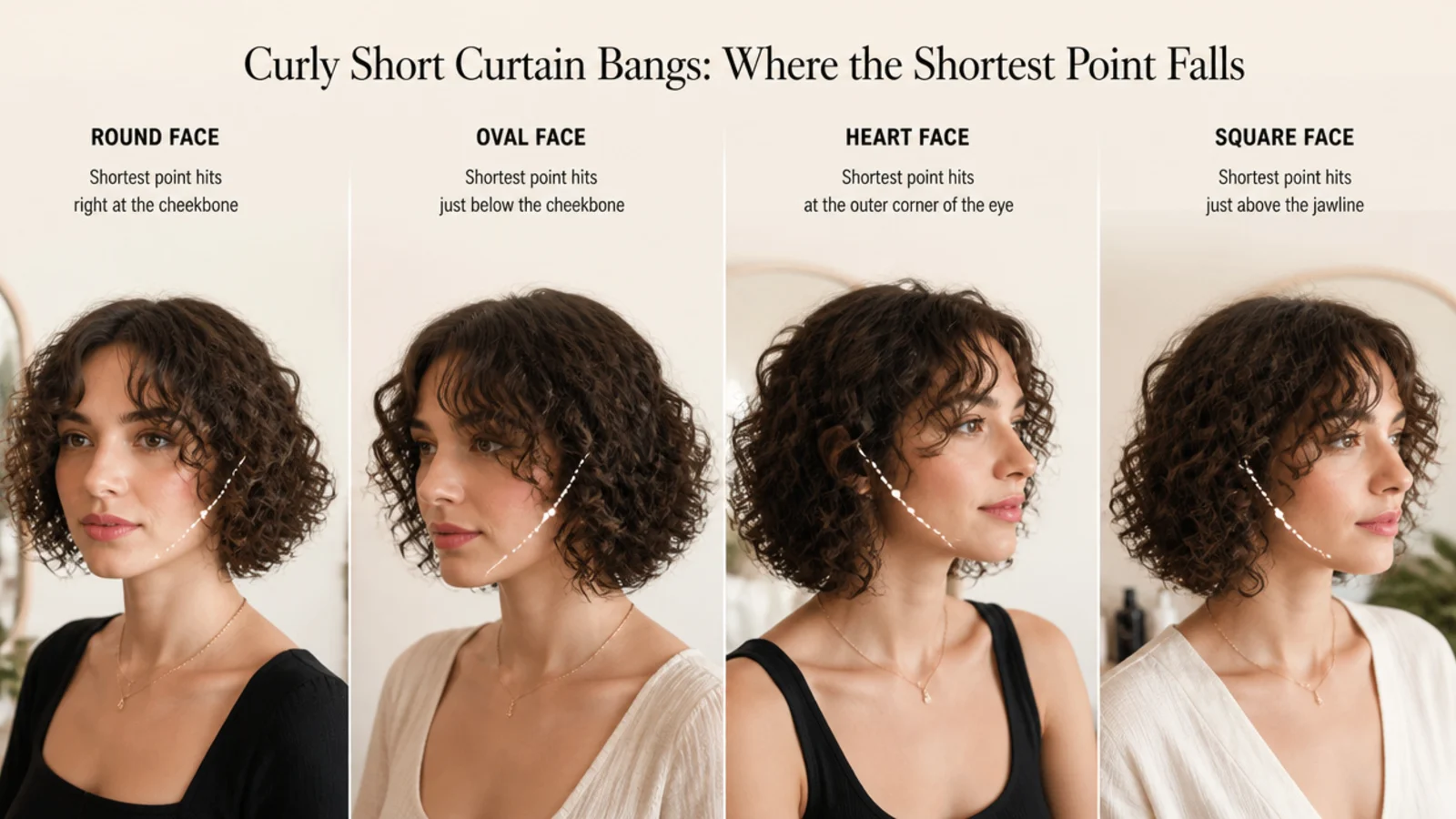
Round. Keep the fringe long at the outer corners so the two sides fall past the cheekbone. Length either side of the face lengthens it.
Heart. A wide forehead narrows under a fringe that opens rather than one that covers, so the centre parting is doing the work here.
Long. Take a slightly deeper triangle. A denser fringe adds horizontal interest, and horizontal interest is what shortens a long face.
Square. Soft diagonals against a strong jaw. Avoid a blunt edge, which sets up a second horizontal line to compete with the jawline.
Oval. Anything works, so choose by curl pattern rather than by face. Tighter patterns want a slightly longer cut in every case.
Styling Them at Home
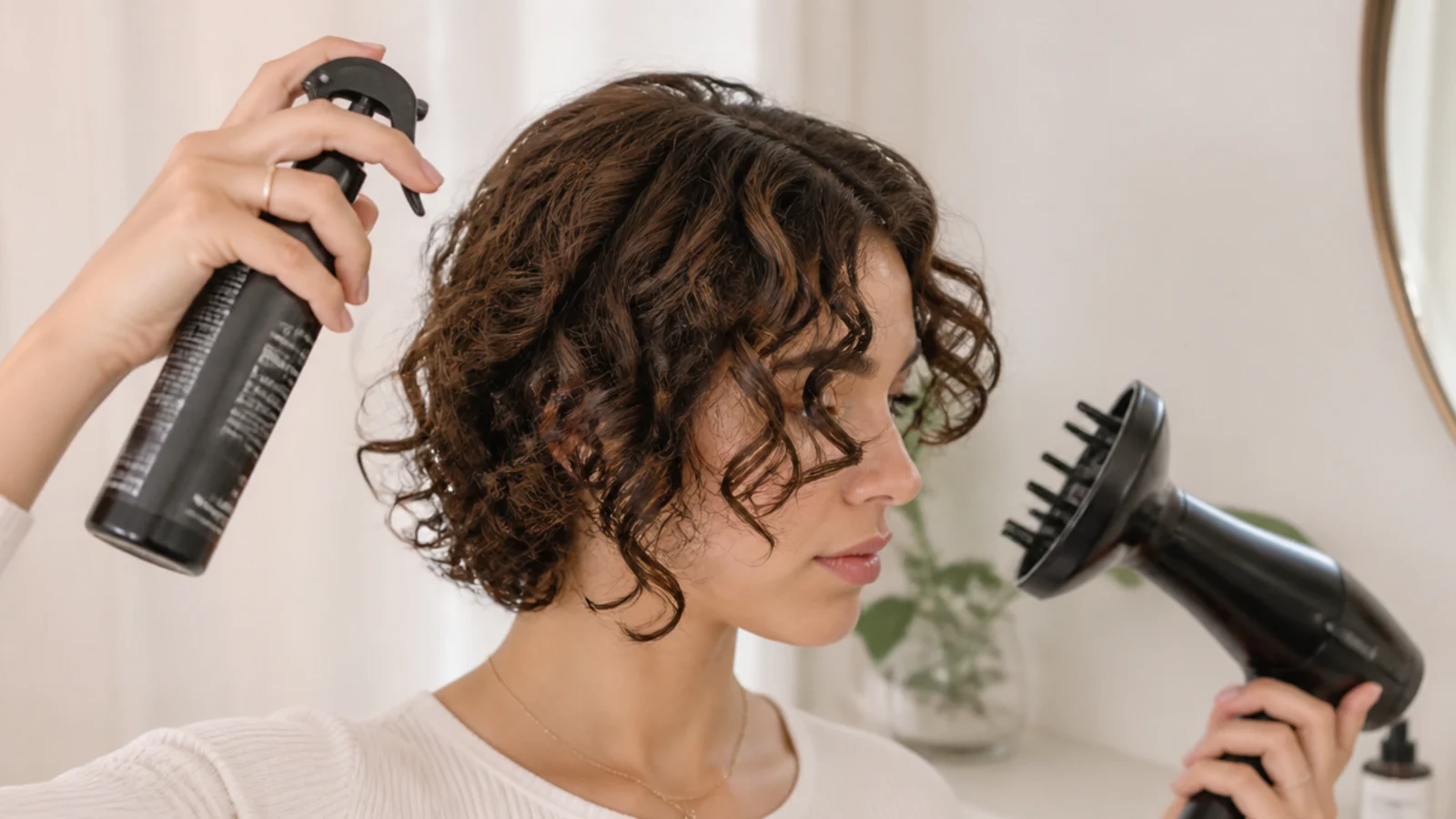
Refresh with water first, product second. Curl re-forms around moisture. A gel applied to dry hair only coats whatever shape is already there.
Rake a small amount of gel through, then scrunch. Raking sets the direction and scrunching sets the spiral, and doing them in the other order fights itself.
Diffuse on low speed and medium heat. High airflow blows the curl clumps apart before they have set, which is the single most common cause of a frizzy fringe.
Do not touch it while it dries. Every touch breaks a forming clump into separate strands, and a separated strand is what frizz actually is.
Break the cast at the very end. Scrunch the dried gel shell out with dry hands. Doing it while damp collapses the curl you just built.
Trim Cadence and Cost
Six to eight weeks, not three. Growth of half an inch a month is partly absorbed by the spiral, so a curly fringe holds its position far longer than a straight one.
It is usually a short appointment. A dry fringe trim on curly hair is fifteen minutes of careful work rather than a full cut.
Book it with a curl specialist the first time. The first cut sets the triangle and the shortest point, and both of those are what every later trim follows.
Trim between cuts if you must, one curl at a time. Dry, in daylight, taking an eighth of an inch at most from any single curl.
Budget for the grow out, not just the cut. The awkward window is around weeks six to twelve, and clips or a headband is what carries you through it.
The 20 Curly Curtain Bangs Ideas
1. 3A Spirals
A three A pattern coils to roughly the width of a piece of chalk, which is loose enough that the fringe still falls open under its own weight. Expect around a quarter of the wet length to disappear as it dries, so the cut point sits noticeably below the finished position you want.
2. Tapered Curly Bob
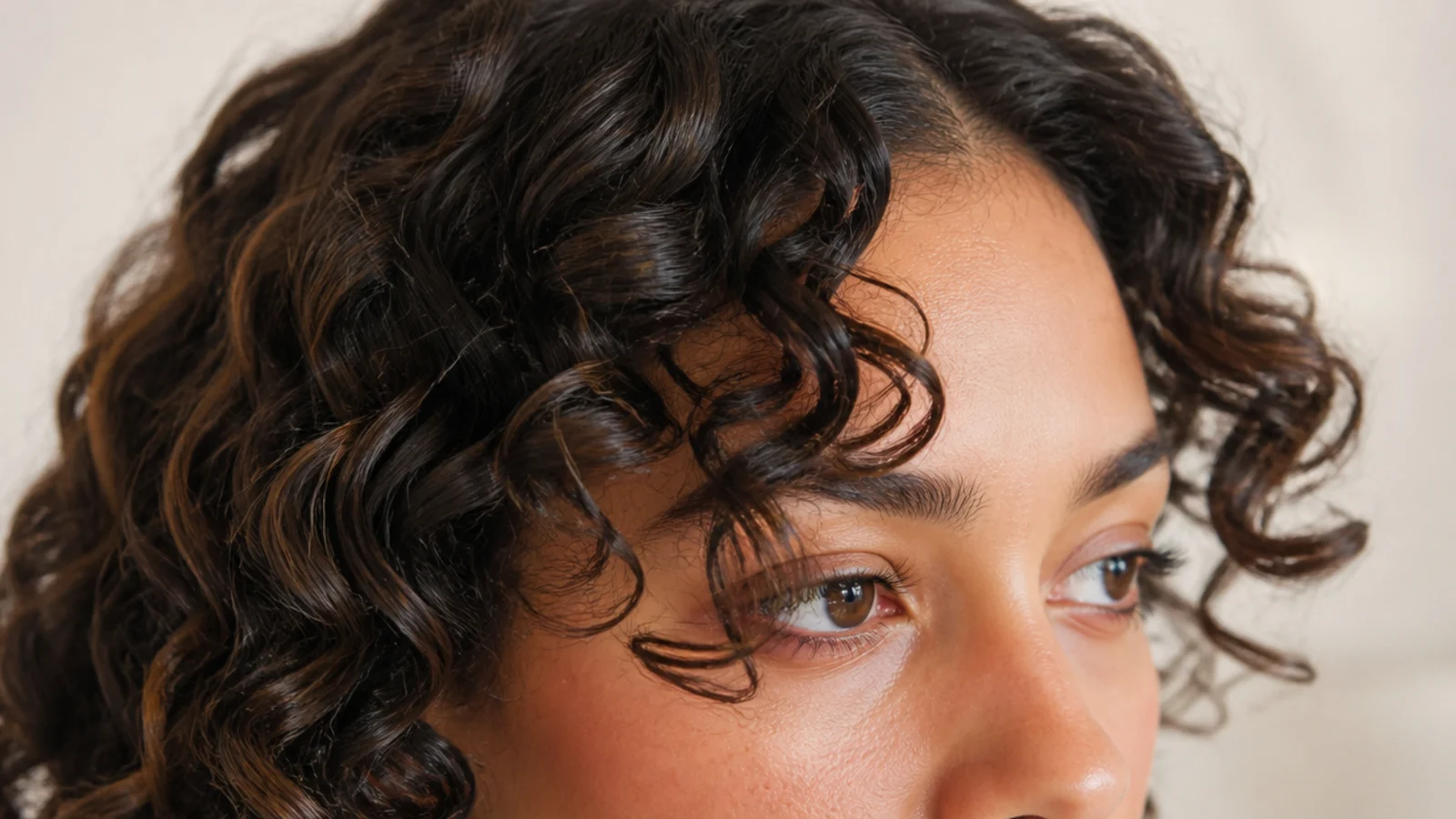
Tapering removes bulk from the corners of a curly bob so the shape stops widening below the ear, and a curtain fringe then completes the frame at the top. Without the taper the fringe sits on a triangle, because curl volume collects wherever nothing has been removed.
3. 2C Waves
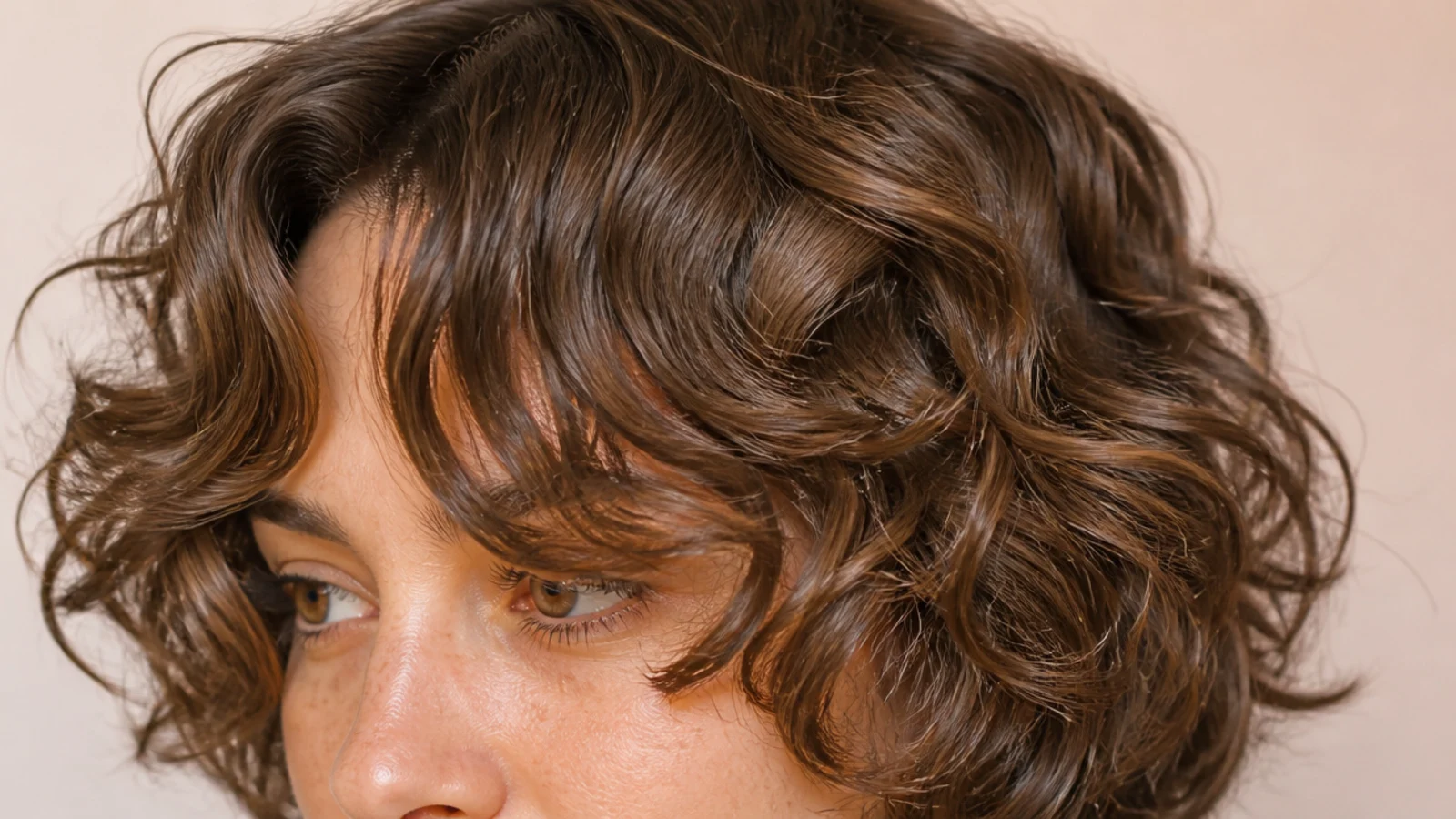
Two C is the loosest pattern that still holds a curtain shape without being set, since it bends in an S rather than a full coil. It also shrinks the least of anything here, around a fifth, which makes it the most forgiving pattern to cut this fringe into.
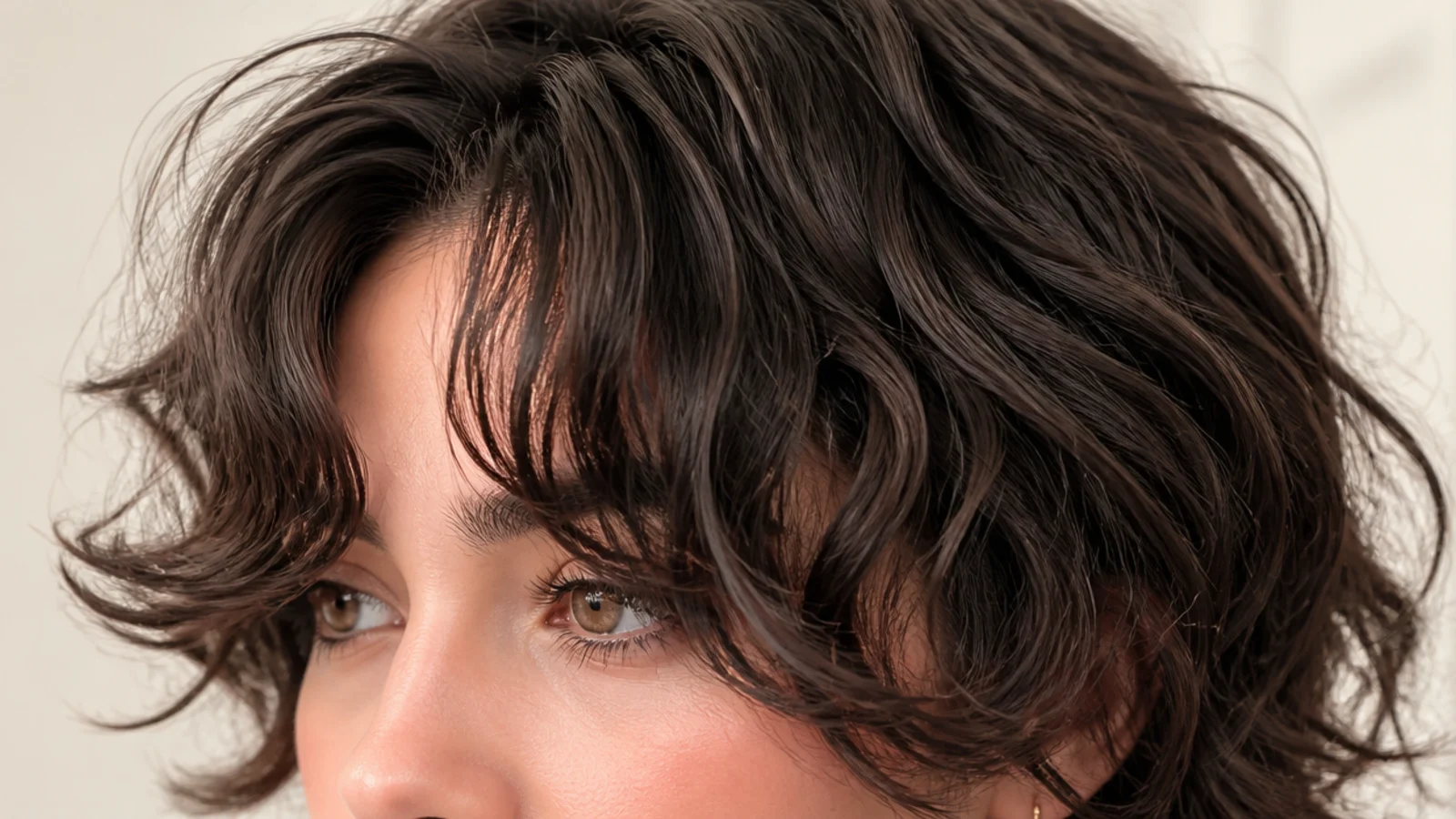
4. Curly Shag
A shag is heavily layered from the crown down, which means the curtain fringe is simply the shortest layer in an unbroken series rather than a separate piece. That continuity is why a shag grows out more gracefully than a fringe cut into an otherwise one length head.
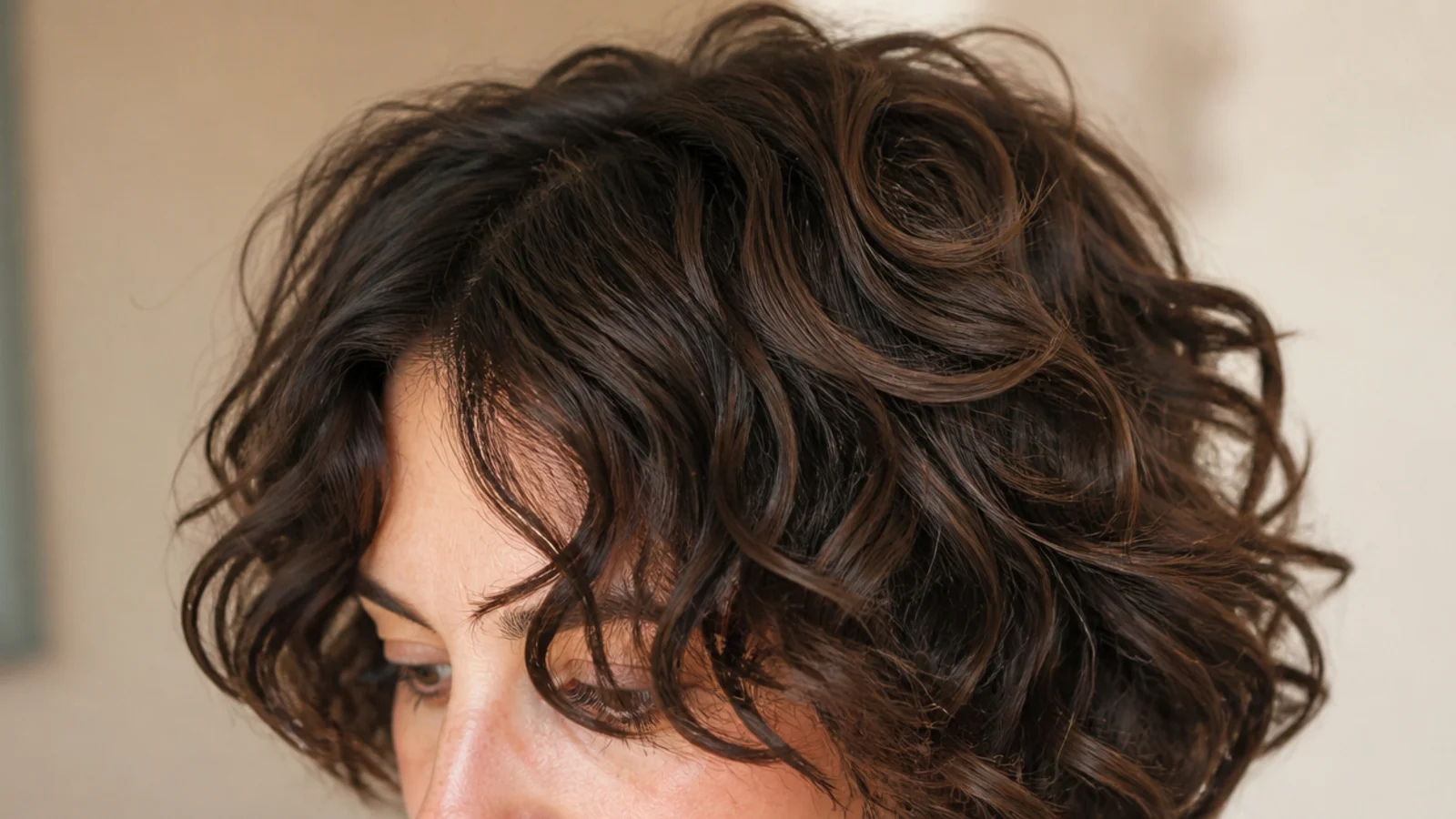
5. Curly Pixie
On a pixie the curtain fringe is the longest hair on the head, so the entire silhouette rests on where it sits. Cut it too high and there is nothing left to soften the hairline, which is the point at which a curly pixie starts reading as an outgrown crop rather than as a shape.
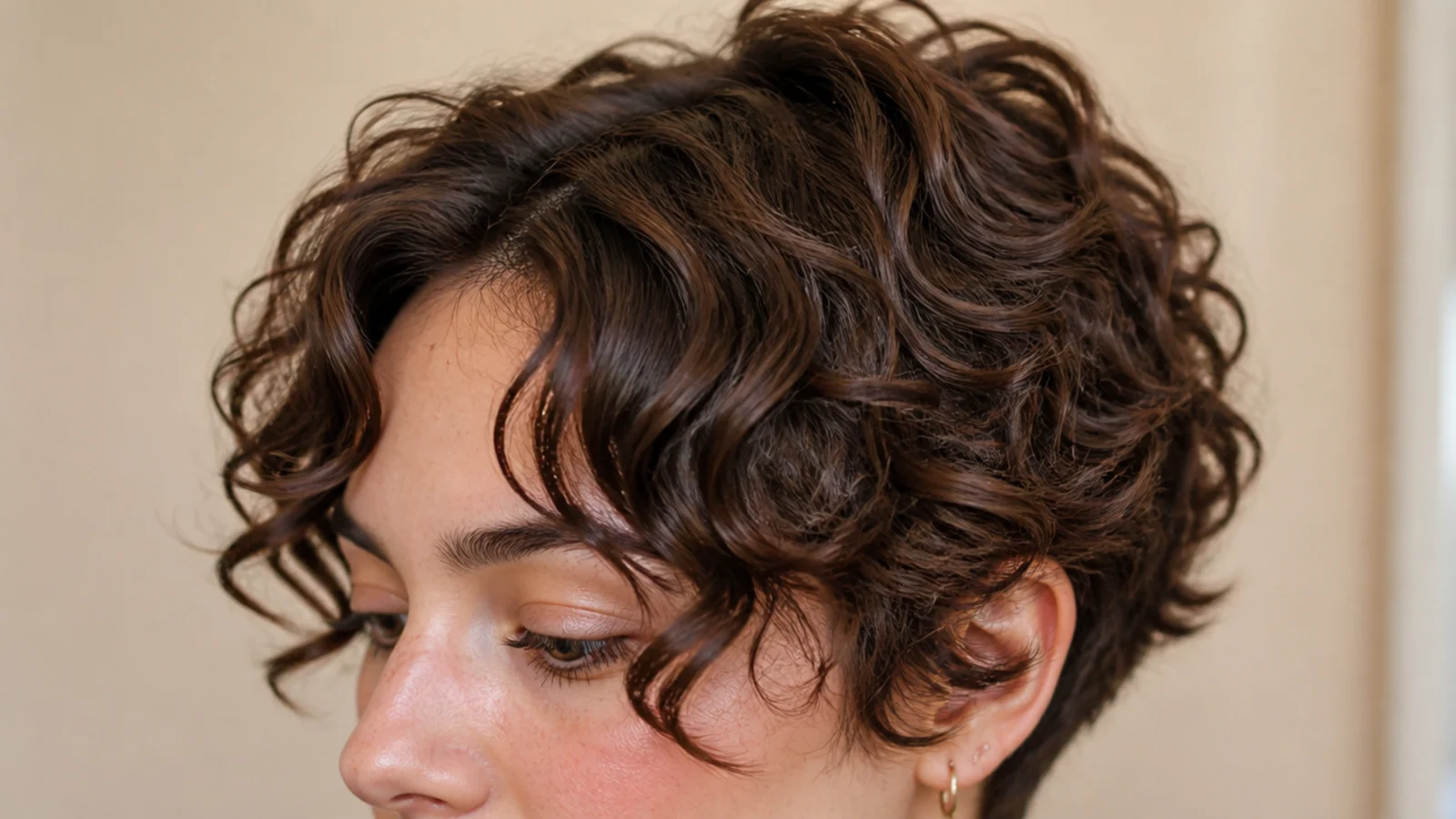
6. 3B Ringlets
A three B ringlet is about the diameter of a marker pen and springs hard, giving back roughly a third of its wet length. The tighter spring also means each curl behaves independently, so this pattern demands cutting one curl at a time more strictly than any looser one.
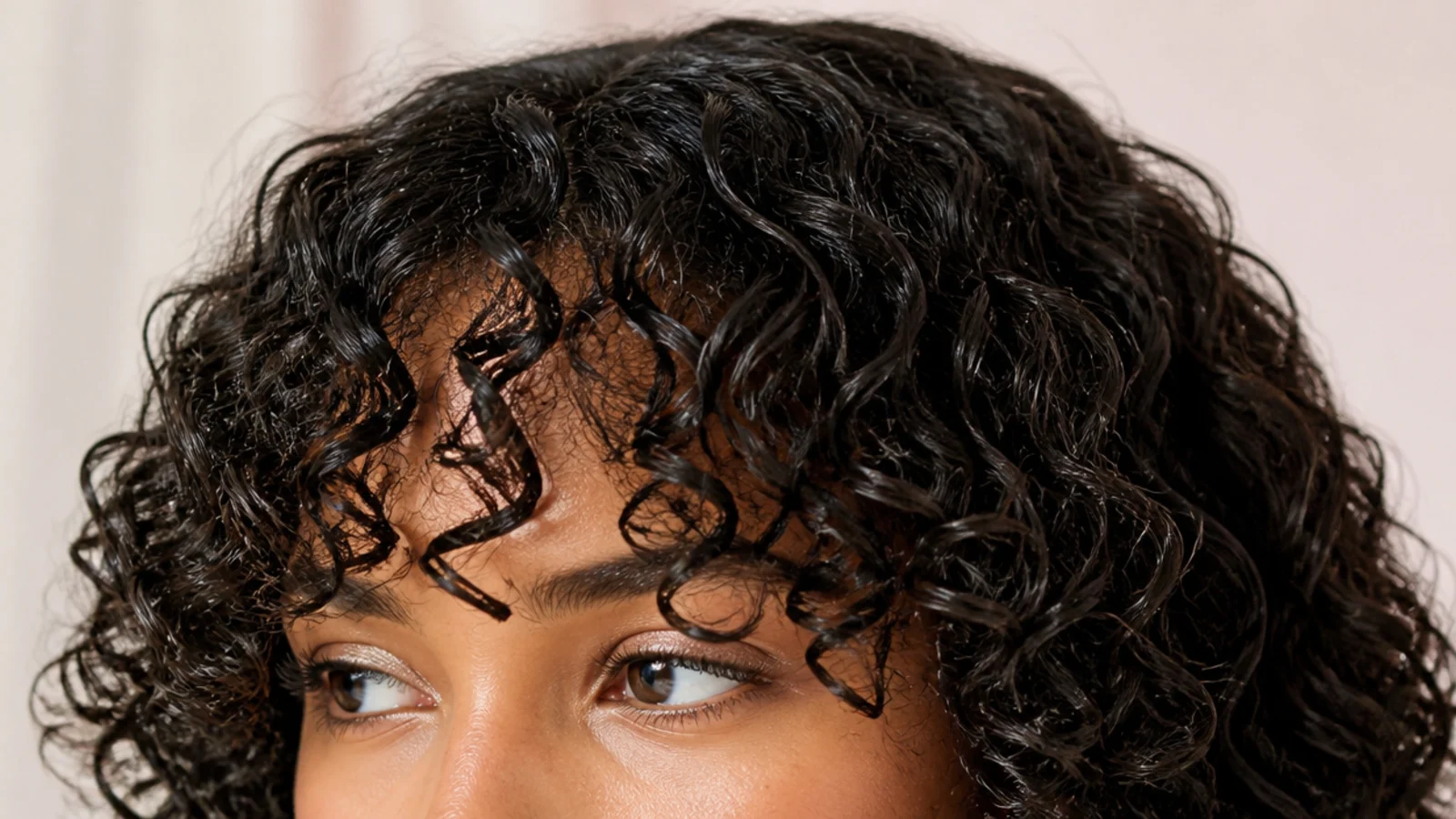
7. 3C Coils
Three C coils are pencil width and pack together densely, so the fringe reads as one soft mass rather than as separate pieces. Because so much length is consumed by the spiral, the cut length has to be judged against the coil rather than against the face.
8. 4A Coils
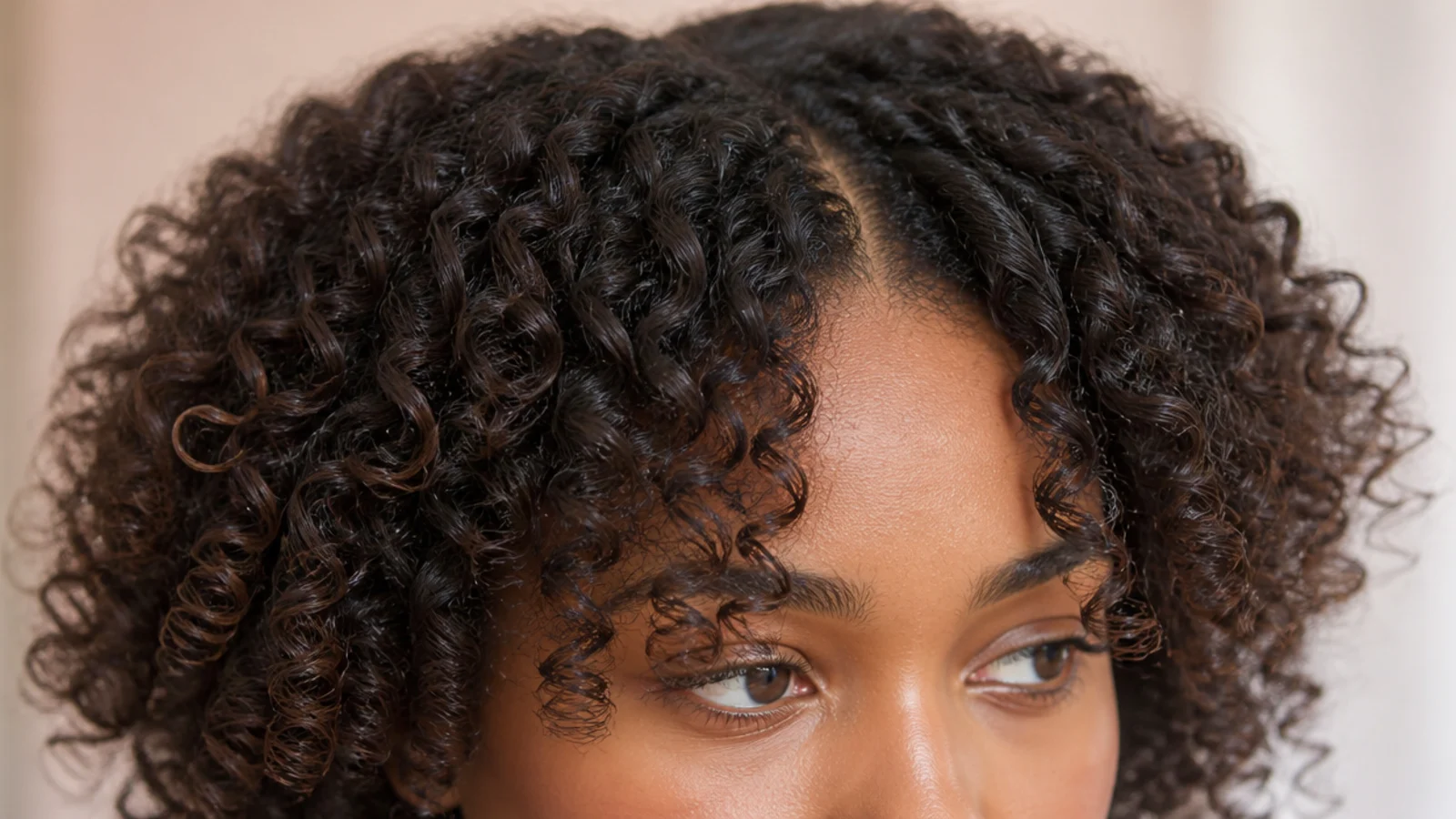
A four A coil is tight enough to lose about half its length to shrinkage, which is why this fringe is cut long and checked repeatedly as it dries. The density also means a shallow triangle is plenty, since taking too deep a section produces a fringe with no forehead left underneath it.
9. Wispy Fine Curls
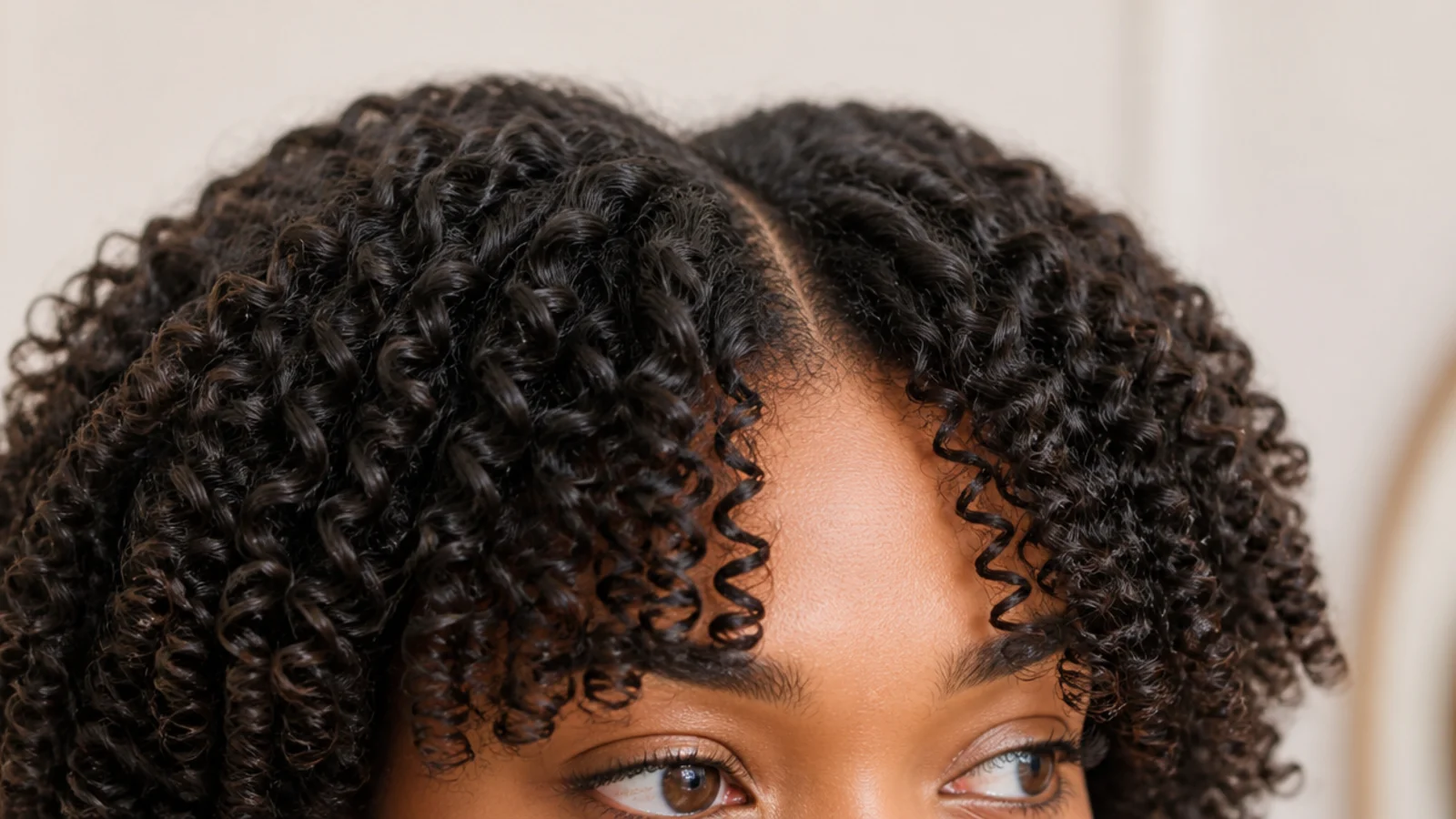
Fine curly hair has less mass per strand, so the fringe falls open easily but also collapses easily under product. Use half the gel you think you need and diffuse rather than air drying, because fine curl loses its clump the moment it is left to dry unsupported.
10. Curtain Bangs on a Round Face
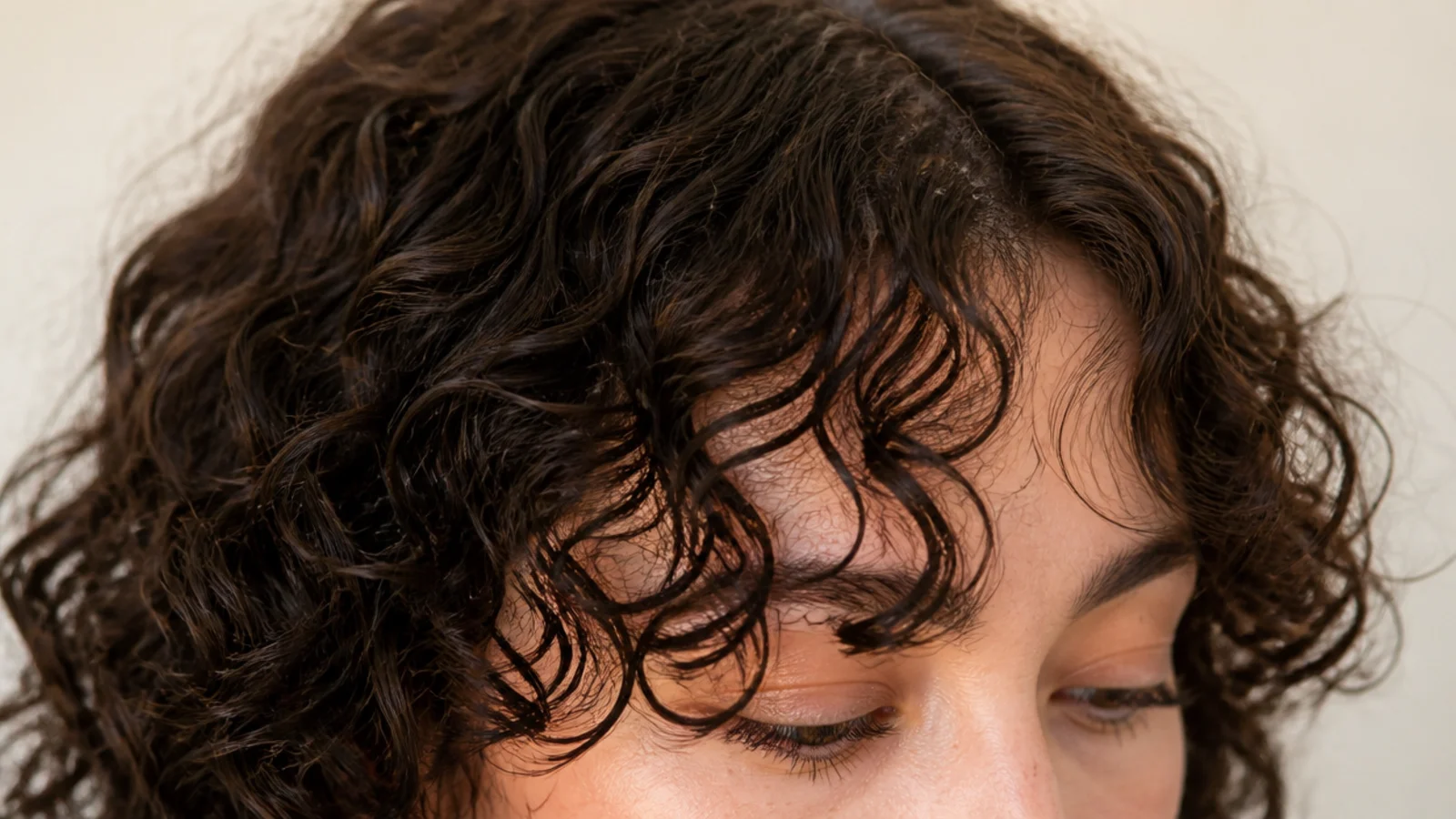
Keeping the outer corners of the fringe long enough to fall past the cheekbone introduces two vertical lines either side of the face. Vertical lines lengthen, which is exactly what a round face wants, and it is also why a short blunt fringe does the opposite.
11. Curly French Bob
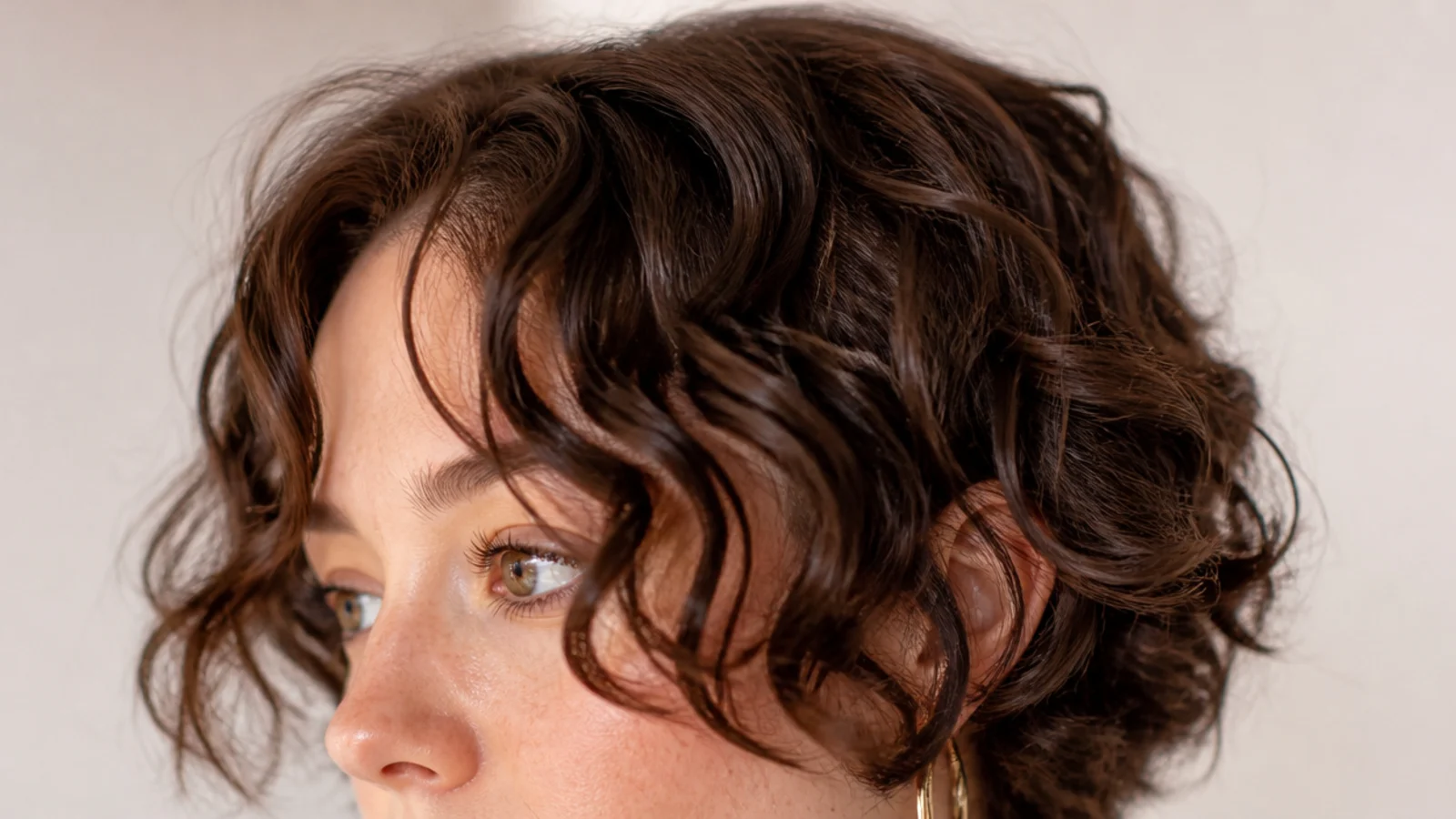
A French bob sits between the chin and the jaw, which on curly hair means cutting well below that and letting the shrinkage bring it up. The fringe and the perimeter have to be cut in the same session, because the proportion between the two is the whole shape.
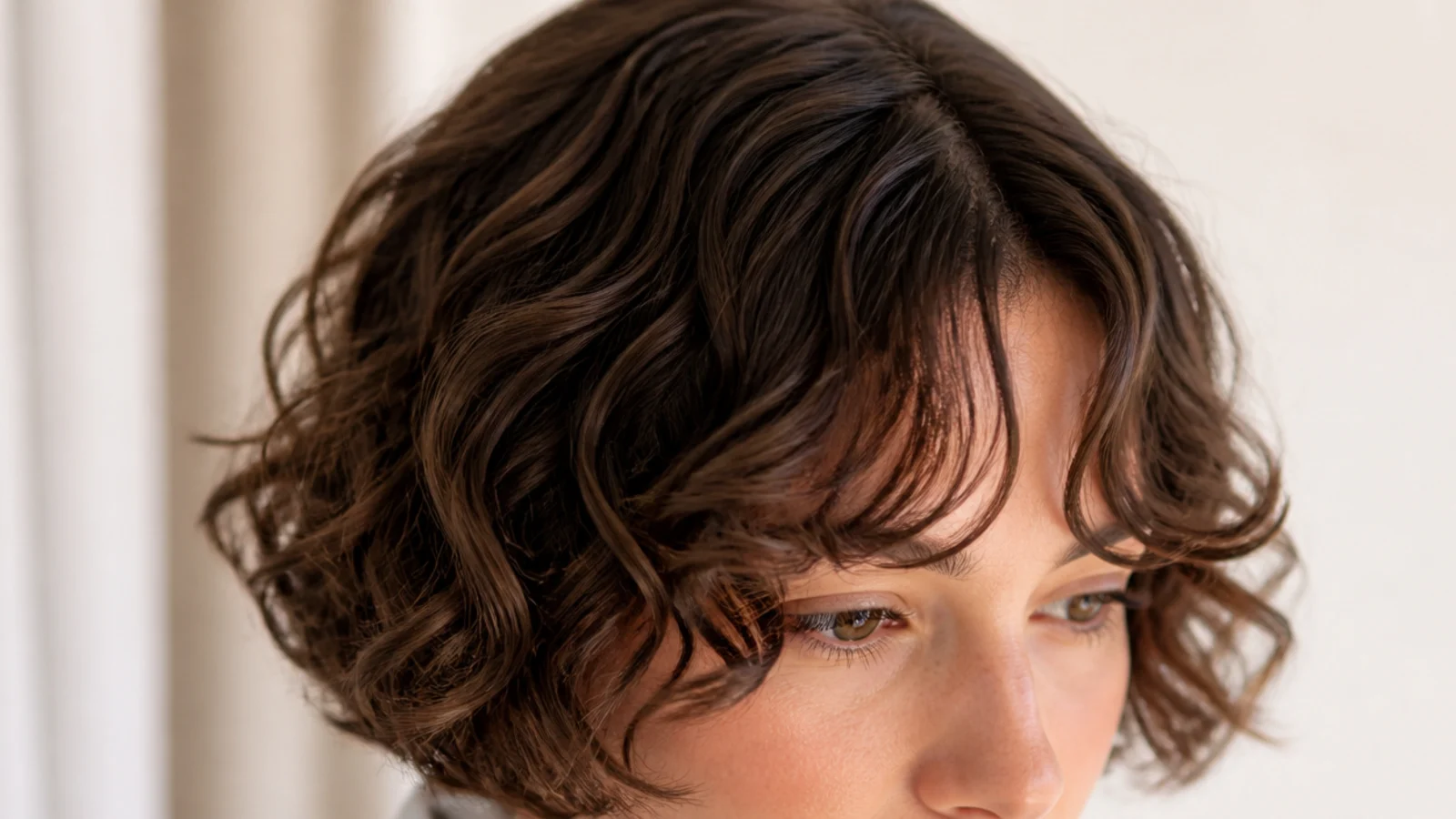
12. Face Framing Layers
Continuing the fringe into layers that run down past the jaw removes the hard stop where a fringe usually ends. The eye follows an unbroken line, so a fringe blended into face framing reads as one shape rather than as a fringe sitting on top of a haircut.
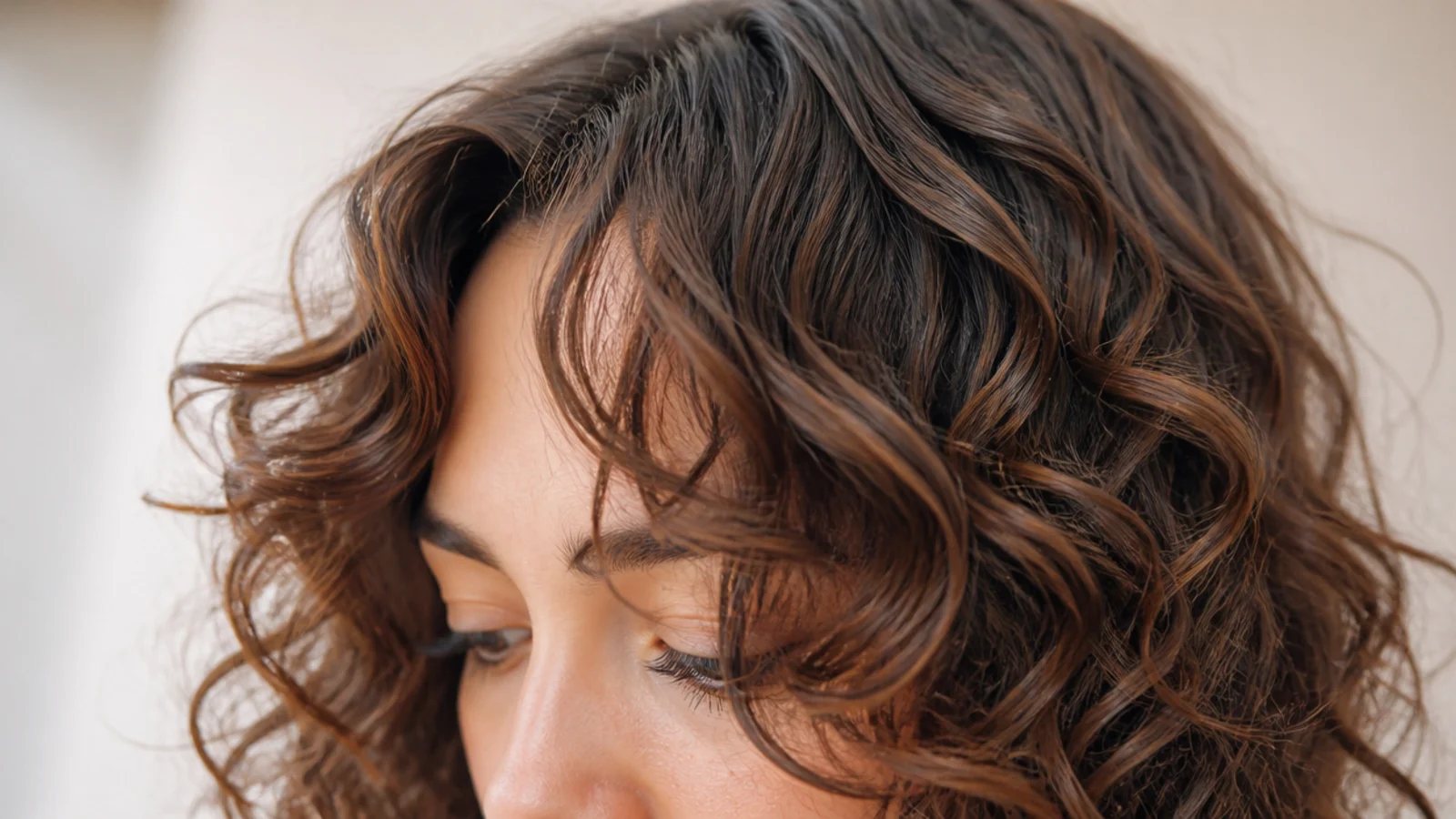
13. Curly Wolf Cut
The wolf cut stacks short layers at the crown against long ends, and on curly hair the volume difference between the two is extreme. A curtain fringe is what connects them at the front, and without it the crown volume has nowhere to resolve into.
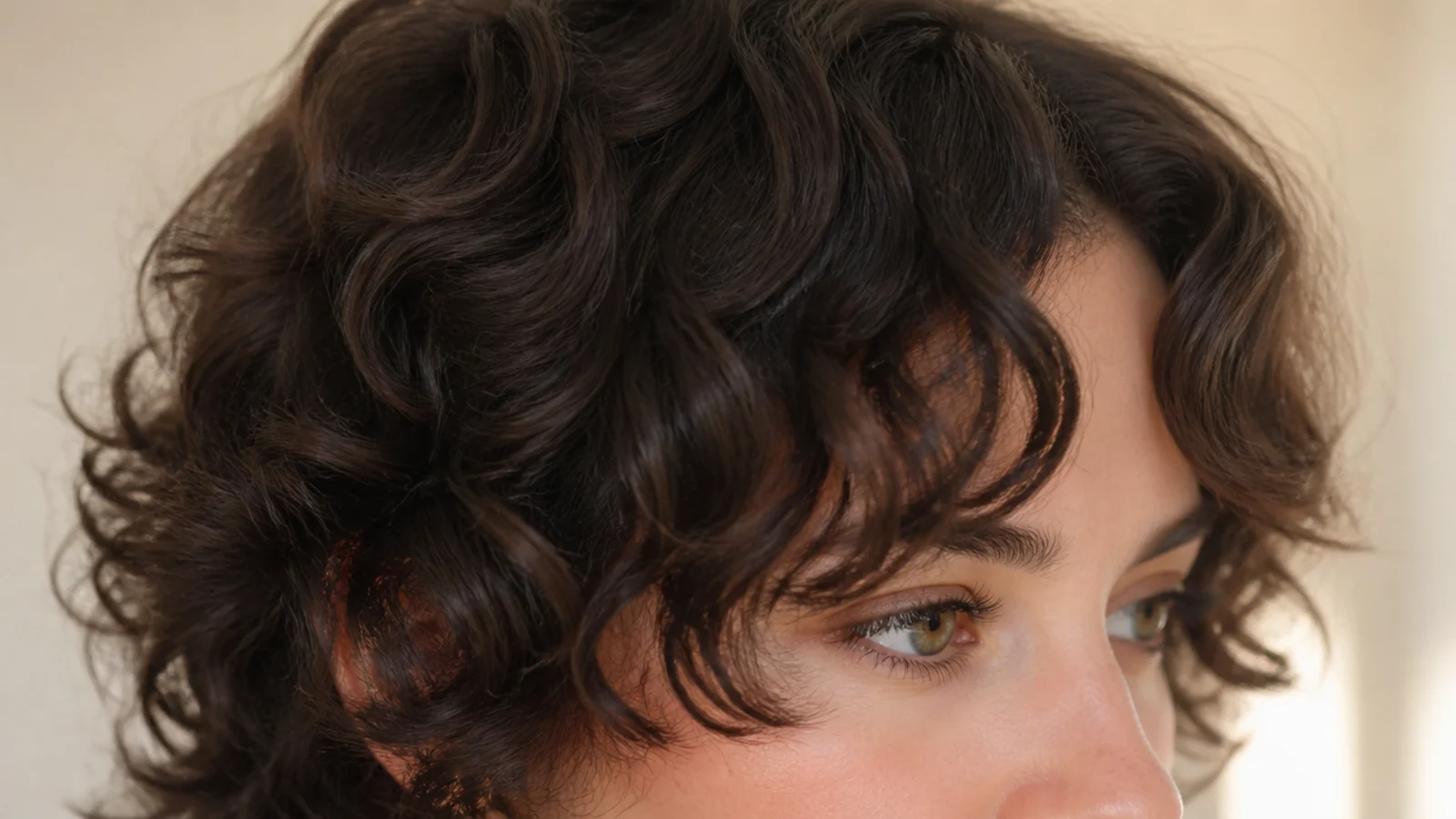
14. Copper Balayage
Copper on curly hair works because a coiled surface splits light into alternating bright and dark bands, and a warm base gives the bright bands something to glow through. Painting it onto the fringe pieces only puts the lightest hair where the face already catches light.
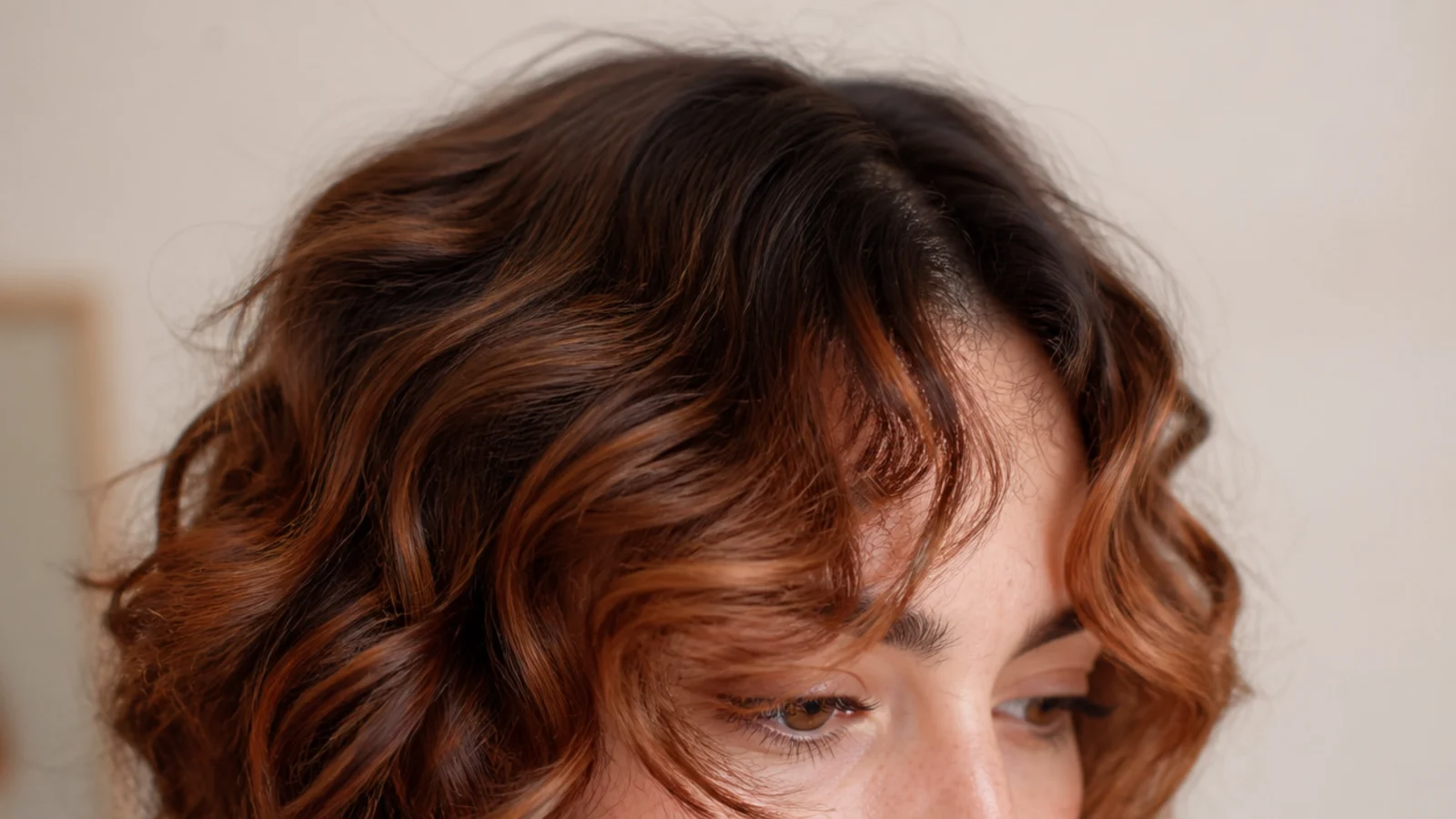
15. Dense Coarse Curls
Coarse curl is wide and strong, so a full triangle produces a fringe heavy enough to sit forward rather than sweeping open. Take a shallower section from a narrower part of the hairline, which reduces the mass without shortening anything.
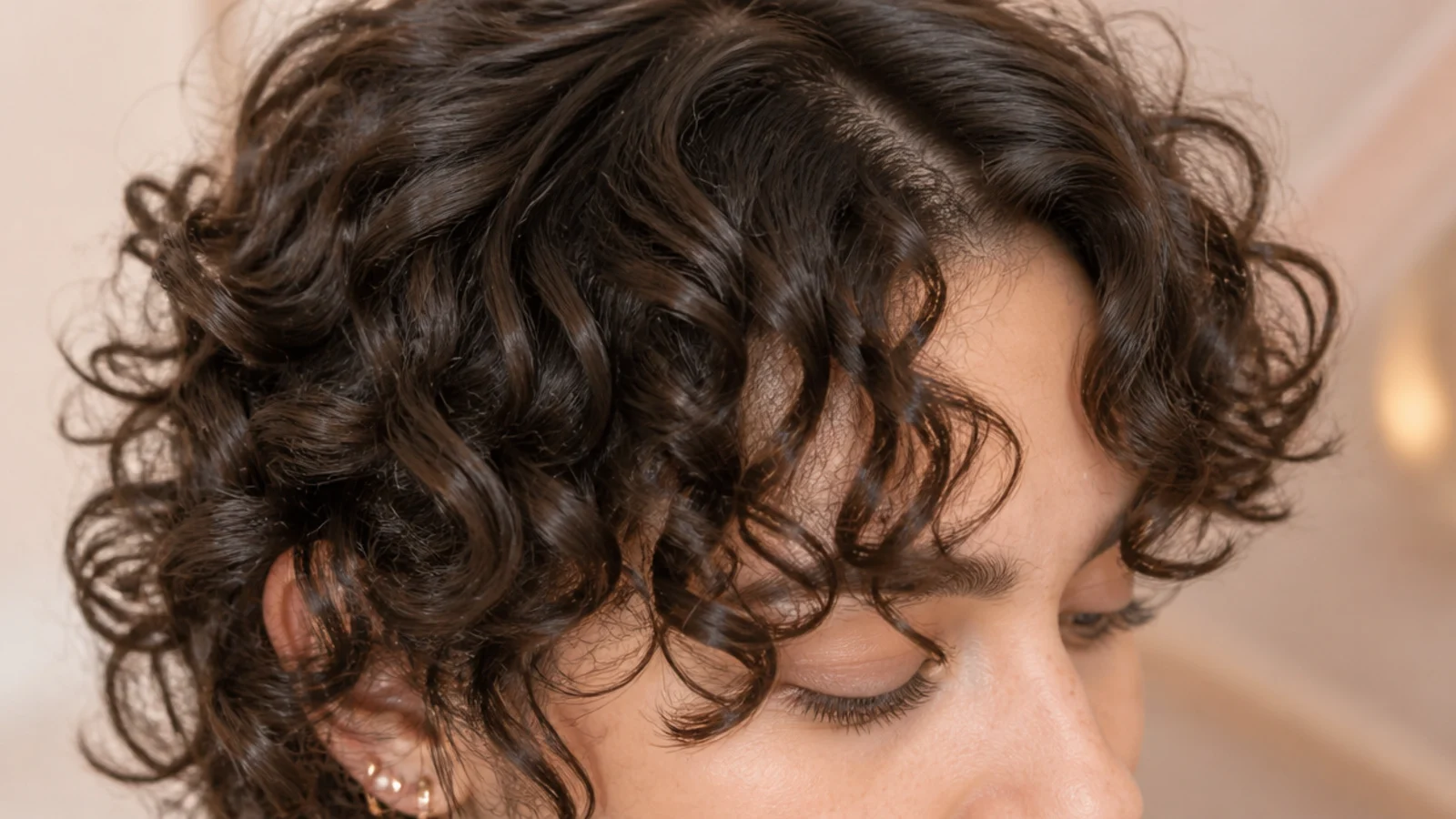
16. Half Up With Curtain Bangs
Gathering the top back leaves the fringe as the only hair around the face, which turns it from a detail into the entire front of the style. It also lifts the curls off the crown, so the fringe gets its shape from the cut rather than from the weight of everything sitting behind it.
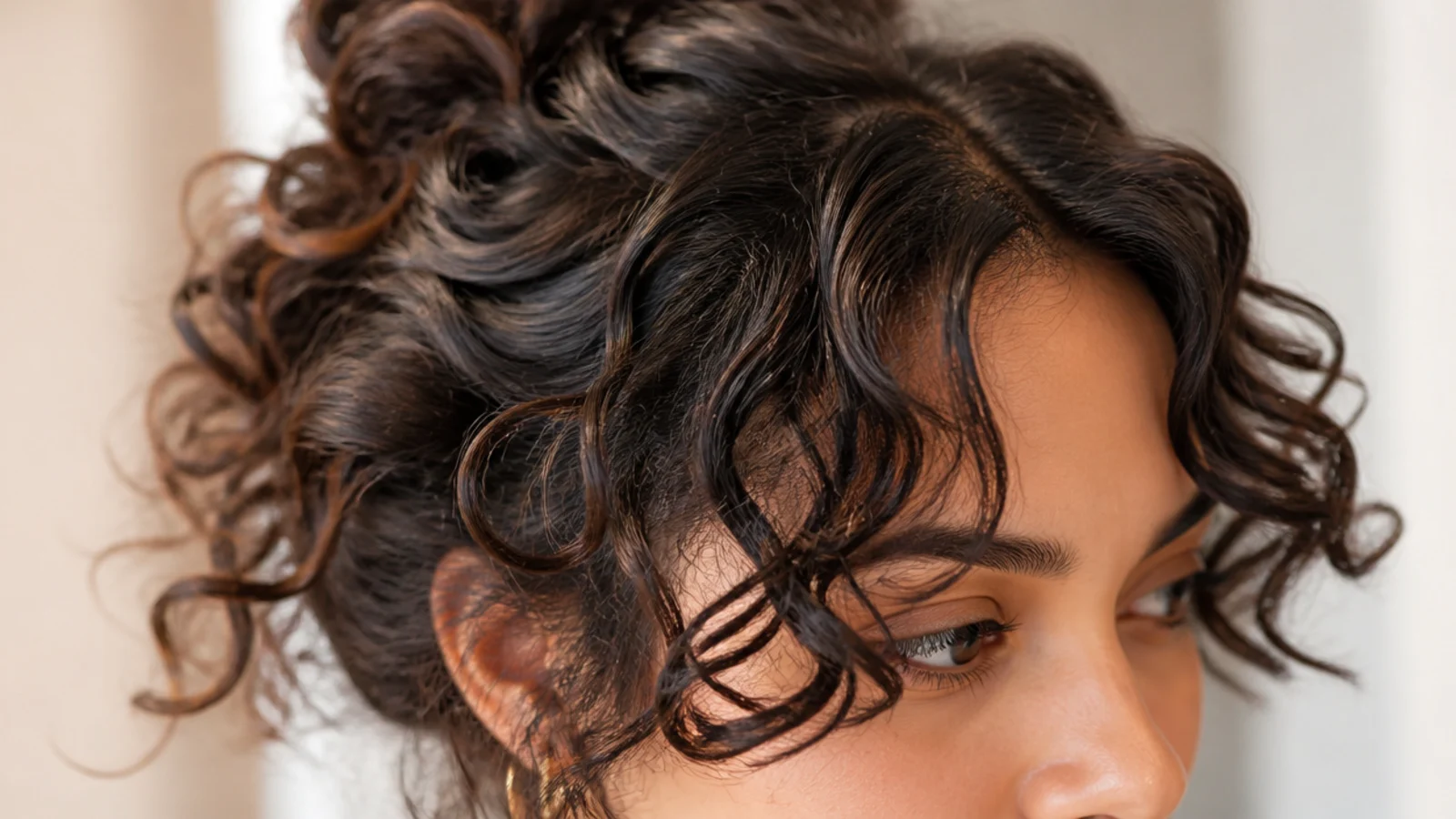
17. Curtain Bangs on a Heart Shaped Face
A heart shaped face is widest at the forehead and narrowest at the chin, so a fringe that opens outward makes the width worse. Keeping the two halves closer to the centre and the ends longer draws the eye downward and balances the two ends of the face.
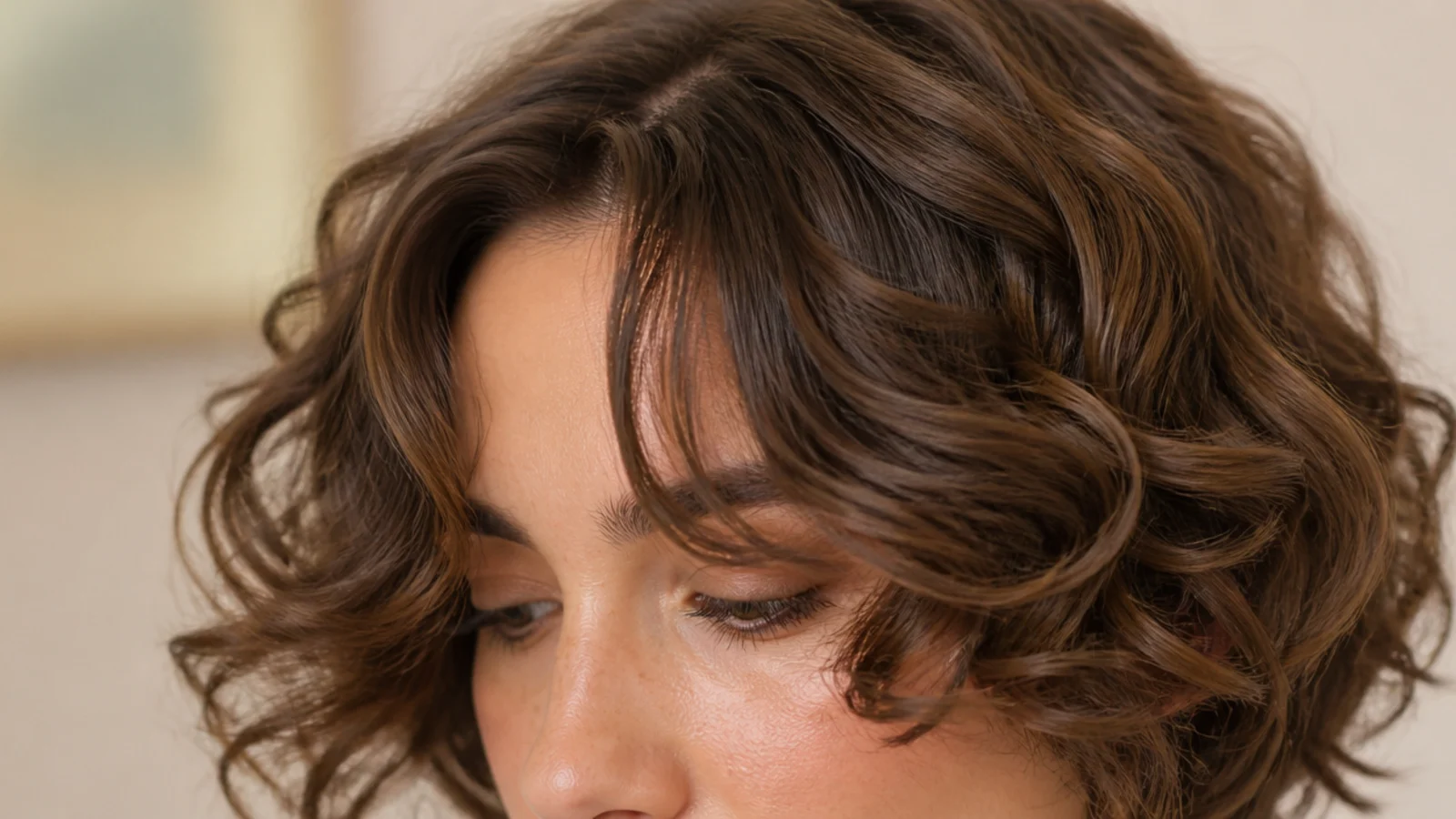
18. Deep Centre Part
A hard centre parting through curly hair forces both sides against their growth direction, so the roots lift before the curls fall. That gives a curtain fringe its split without any styling, though it only holds if the parting is set while the hair is still wet.
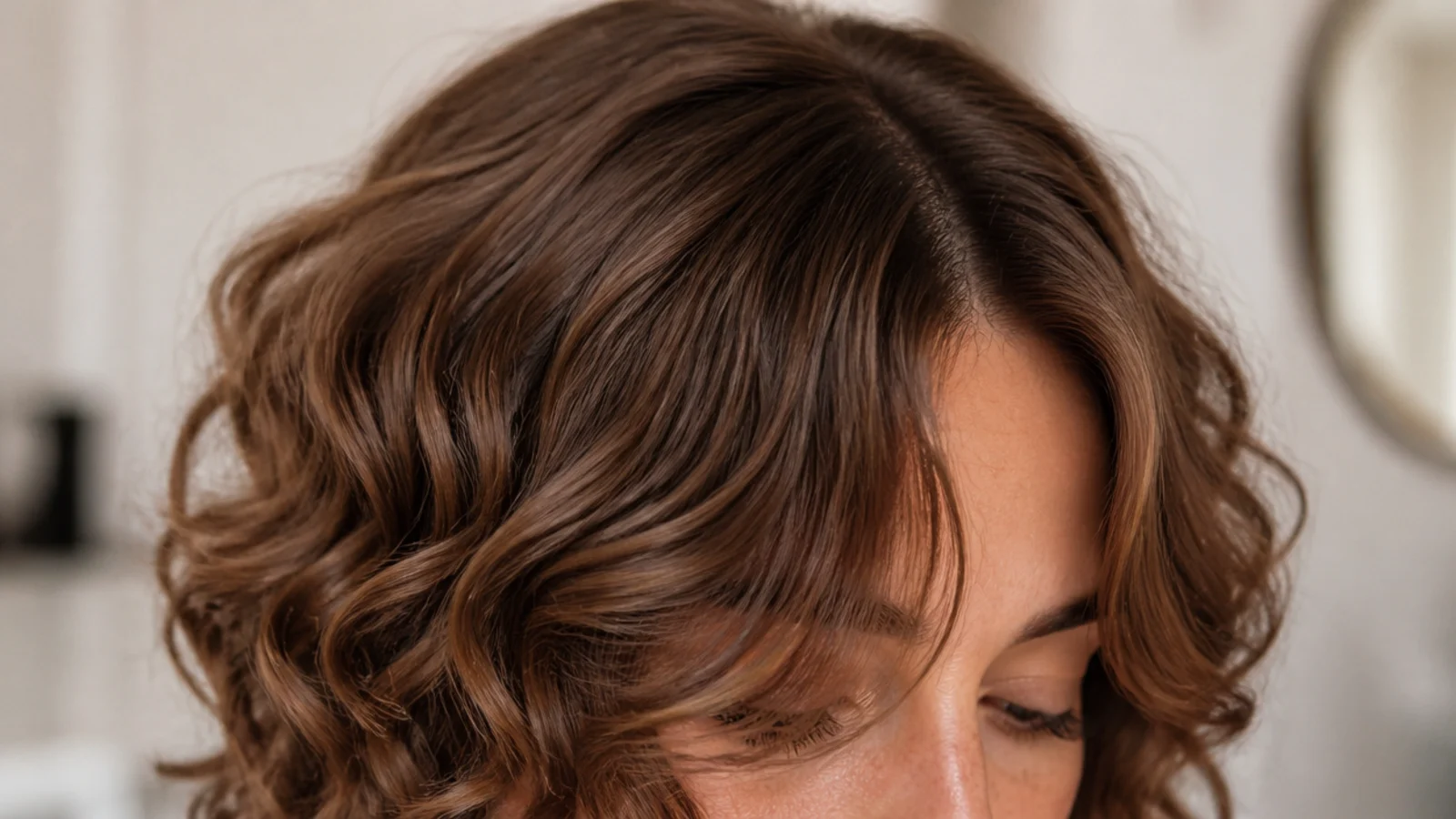
19. Curly Lob
At lob length the weight of the hair pulls the curl pattern slightly looser, which makes the contrast with a short fringe stronger than it would be on a bob. That contrast is the point, and it is why this length carries a curtain fringe better than anything past the shoulders.
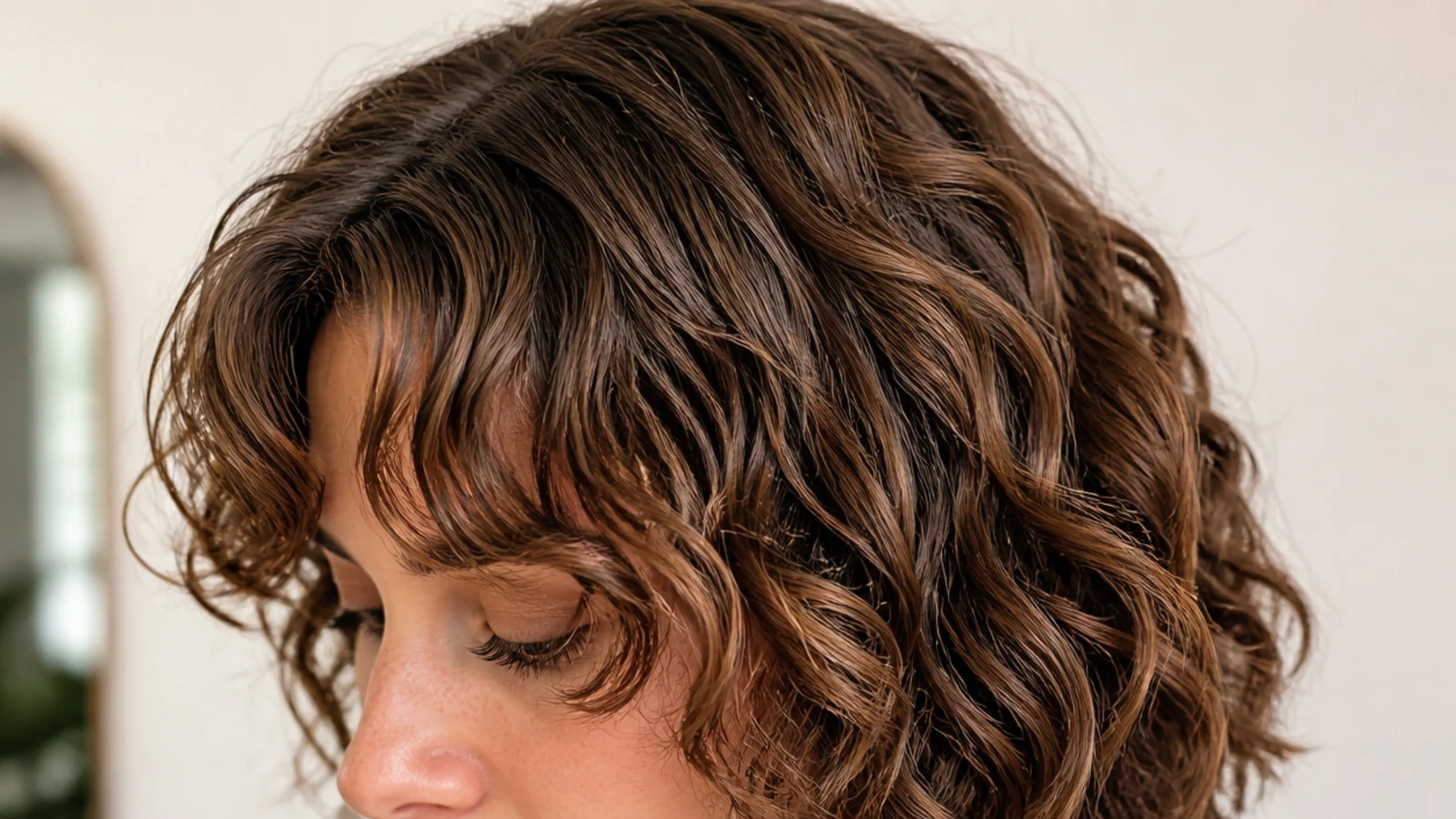
20. The Grown Out Stage
Around weeks six to twelve the fringe is too long to sit forward and too short to join the face framing layers, which is the awkward window everyone hits. Clipping the two halves back at the temples resolves it in one move, because the fringe stops being a fringe and becomes the front of a half up.
Final Thoughts
Insist on dry cutting and the rest of it follows. Every problem with a curly curtain fringe is a shrinkage problem in disguise, because a wet curl is a stretched curl and cutting one is measuring something that stops existing the moment it dries. A stylist who reaches for the water bottle before they reach for the shears is about to guess.
Then leave the first cut long. You are aiming at a target that moves by anything from a fifth to a half of the length depending on your pattern, and the only safe direction to miss in is downward. For the same fringe on a curly cut see curly short cuts with curtain bangs, and for the straight haired version see easy short curtain bangs ideas. More in Bangs and Fringe.