20 Curly Short Cuts With Dreamy Curtain Bangs
Twenty short curly cuts with curtain bangs, and the one number that decides whether they work — shrinkage. A curl cut wet at the cheekbone dries at the eyebrow, which is why curtain bangs on curls are cut dry or not at all.
In this article · 27
- What a Curtain Bang Has to Do on Curls
- Choosing Where the Centre Point Falls
- The 20 Curly Short Cuts With Curtain Bangs
- 1. Curly Bob With Curtain Bangs
- 2. Curly Pixie With Curtain Bangs
- 3. Chin Length Curly Cut
- 4. Curly Bixie With Curtain Bangs
- 5. Curly Shag With Curtain Bangs
- 6. Curly Wolf Cut With Curtain Bangs
- 7. Curly Mullet With Curtain Bangs
- 8. Loose Waves With Curtain Bangs
- 9. Springy Ringlets With Curtain Bangs
- 10. Tight Coils With Curtain Bangs
- 11. Fine Curls With Curtain Bangs
- 12. Dense Curls With Curtain Bangs
- 13. Cheekbone Curtain Bangs
- 14. Jaw Length Curtain Bangs
- 15. Curtain Bangs With a Middle Part
- 16. Curtain Bangs With an Off Centre Part
- 17. Curly Bob With a Tapered Nape
- 18. Curtain Bangs With a Money Piece
- 19. Air Dried Curtain Bangs
- 20. The Grown Out Curly Curtain
- Styling and Upkeep
- Mistakes to Avoid
- FAQ
- Final Thoughts
Curtain bangs fail on curly hair for one reason, and it is not the curl pattern — it is that they were cut wet.
A curl cut wet is a curl cut long. Water pulls a spiral almost straight, so it hangs at close to full length in the chair and then springs back by a third to a half as it dries.
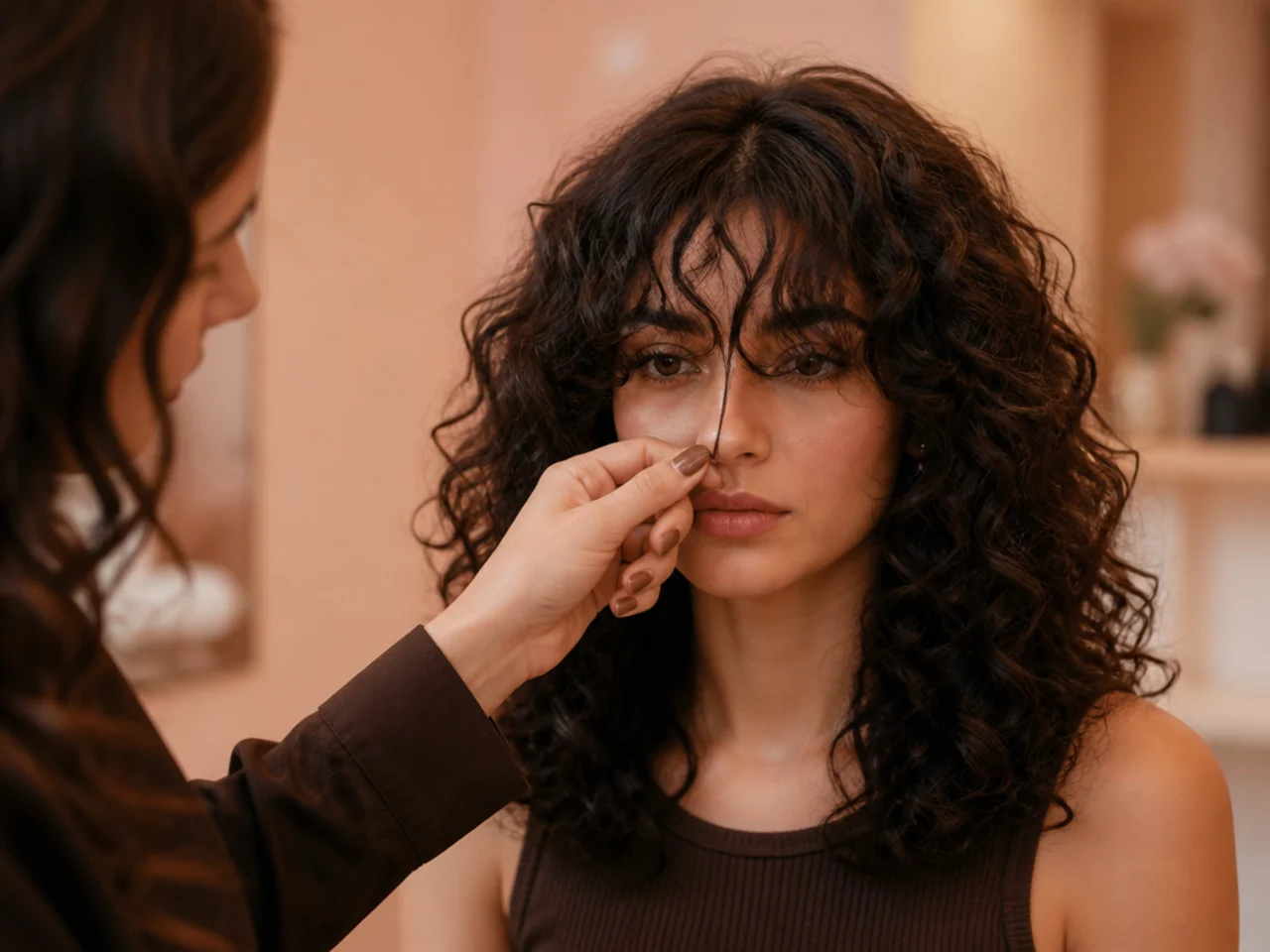
The bang has to be cut where it will sit dry. That means cutting it dry, curl by curl, or cutting it deliberately long and taking it up after the first wash.
What a Curtain Bang Has to Do on Curls
It has to slope. A curtain bang is short at the centre and longer toward the outside, and that slope is what makes the two halves fall open instead of hanging as one block.
It has to follow the curl, not the comb. Each spiral has its own end point, so the slope is built curl by curl. Combing the section flat and cutting a line across it removes the ends of every curl at once and leaves blunt stubs that frizz.
It has to come from a shallow section. Two inches back from the hairline at most. Deeper than that and the bang is borrowing density from the crown, which is what props a short curly cut up.
It has to clear the eye when dry. Not when wet, not when freshly diffused and at its springiest — on an ordinary day, three days after washing, when the curl has relaxed a little.

Choosing Where the Centre Point Falls
Bridge of the nose is the safe centre point. It leaves the eye clear and still gives the panel enough length to bend outward instead of standing up.
Cheekbone outer edges suit looser curls. A wave or a loose curl carries its weight lower down, so a shorter outer edge still falls rather than lifting.
Jaw length outer edges suit tight curls. A tight spiral needs more length to complete a full turn, and a coil cut short enough to sit above the jaw ends mid turn and points sideways.
Set the point dry and check it after one wash. The first wash tells you the real shrinkage on your hair, and it is the only measurement that matters afterwards.
The 20 Curly Short Cuts With Curtain Bangs
1. Curly Bob With Curtain Bangs
The bob sits at the jaw and the bang opens above it, which puts two horizontal weight lines on the face at different heights. Keeping the bob perimeter blunt gives the curl underneath something to stack against, so the bang reads as separate rather than as the top of one round mass.
2. Curly Pixie With Curtain Bangs
The shortest version that still works, because the bang has to be longer than everything around it to read as a curtain at all. That difference is the whole effect, so the sides need to stay close to the head or the bang loses its contrast.

3. Chin Length Curly Cut
The bang and the perimeter finish within an inch of each other, which makes the whole front of the cut move as one. It suits medium density curls, where a longer cut would sit heavy and a shorter one would leave nothing for the bang to blend into.

4. Curly Bixie With Curtain Bangs
Longer than a pixie, shorter than a bob, with the weight left through the crown and the sides cut close. The crown length is what lets the bang blend backward instead of sitting on the forehead as a separate piece.

5. Curly Shag With Curtain Bangs
Layers run through the whole cut, so the bang is simply the shortest of them rather than a separate section. That continuity is why a shag hides a mistimed bang trim better than any other short shape.
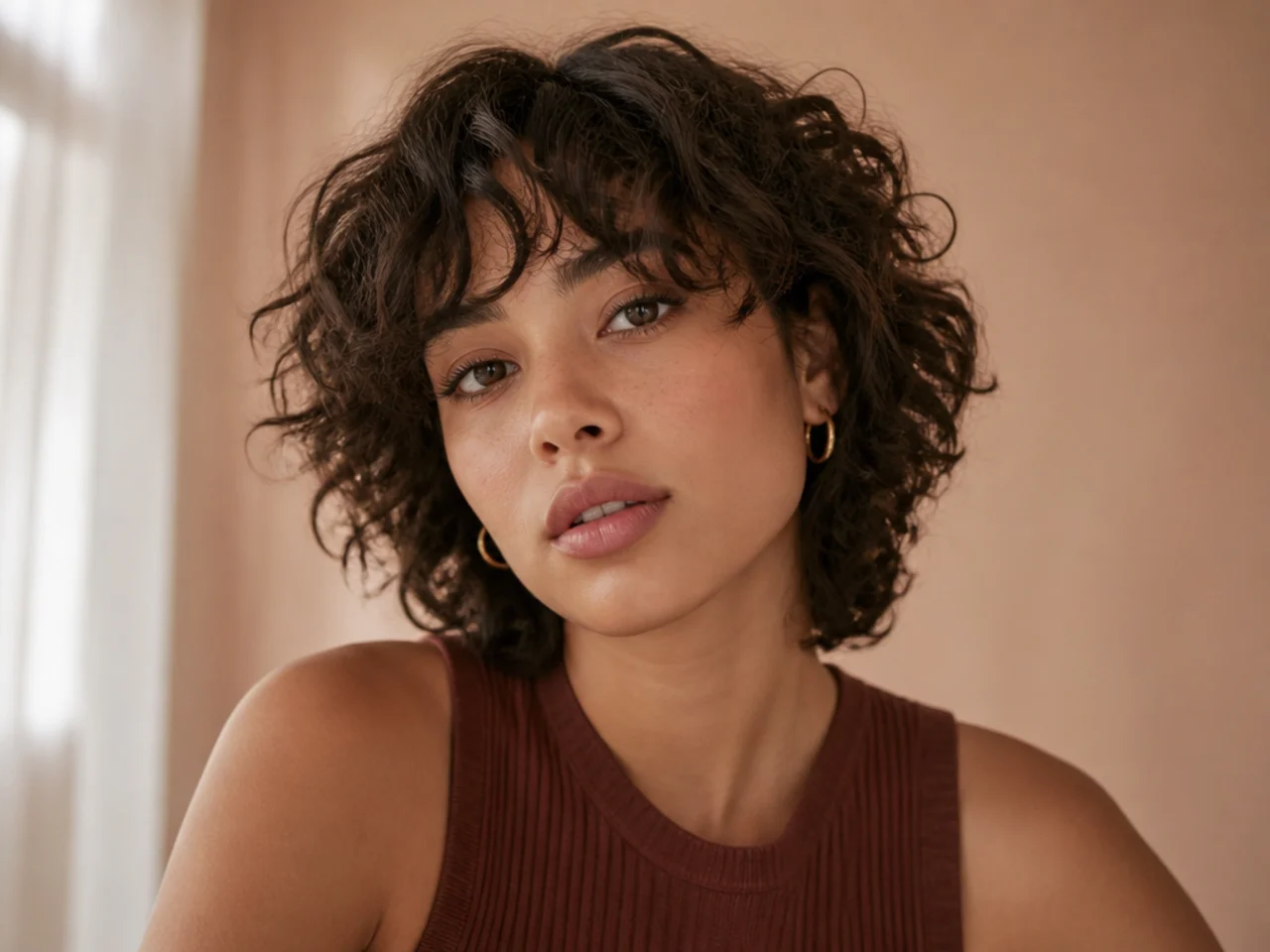
6. Curly Wolf Cut With Curtain Bangs
Short crown layers sit on top of longer ones and hold them up, which is where the height comes from. On curls that lift is worth more than on any other texture, because a curl left flat at the root spreads sideways instead of upward.

7. Curly Mullet With Curtain Bangs
Short through the top and sides with length kept at the back, and a curtain bang doing all the framing at the front. The bang matters more here than in any other version, because it is the only thing softening a shape built entirely on contrast.

8. Loose Waves With Curtain Bangs
The easiest texture of the group, because a wave bends once and then falls. One bend is enough to open the panel outward without lifting the ends, which is exactly what a curtain bang is trying to do.

9. Springy Ringlets With Curtain Bangs
A defined ringlet completes a full turn, so it needs enough length to finish that turn below the eye. Cut it short enough to end mid spiral and the ringlet points outward from the face instead of down along it.

10. Tight Coils With Curtain Bangs
Coils can shrink by as much as three quarters, so the wet length and the dry length are barely related. Cut this one dry, coil by coil, and add length rather than remove it at the second appointment.
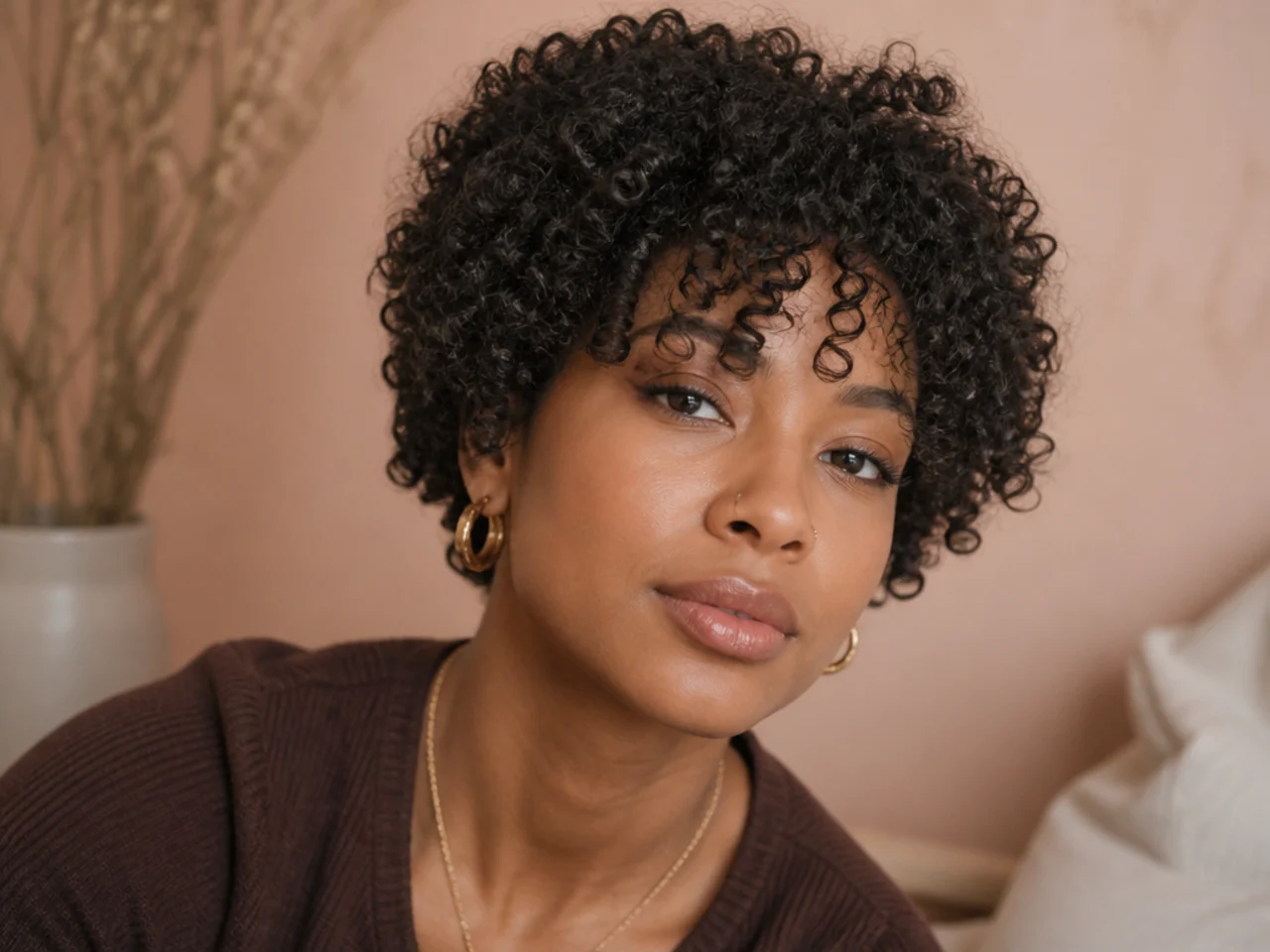
11. Fine Curls With Curtain Bangs
Fine curls have the pattern but not the weight, so the bang lifts at the root and sits away from the forehead. Keep the section shallow and the edge blunt, because every piece removed makes the panel lighter and more likely to stand.

12. Dense Curls With Curtain Bangs
The opposite problem — the panel has so much hair in it that it falls as one mass and covers the whole forehead. Weight has to be removed from inside the panel, an inch or two below the top, so the surface curls stay intact and the bulk underneath goes.

13. Cheekbone Curtain Bangs
The outer edge stops level with the top of the cheekbone. It is the shortest version that still frames, and it pulls the eye up toward the widest part of the face rather than down along it.

14. Jaw Length Curtain Bangs
The outer edge runs down to the jaw, giving the panel a long vertical that narrows the face. It also gives a tight curl the room it needs to complete its turn, which is why it is the safer choice on anything past a loose spiral.

15. Curtain Bangs With a Middle Part
A dead centre split gives both halves the same amount of hair, so they open symmetrically. The catch is that a centre part on curls only holds if the hair at the crown grows that way, and a spiral at the crown will drag it back within the hour.
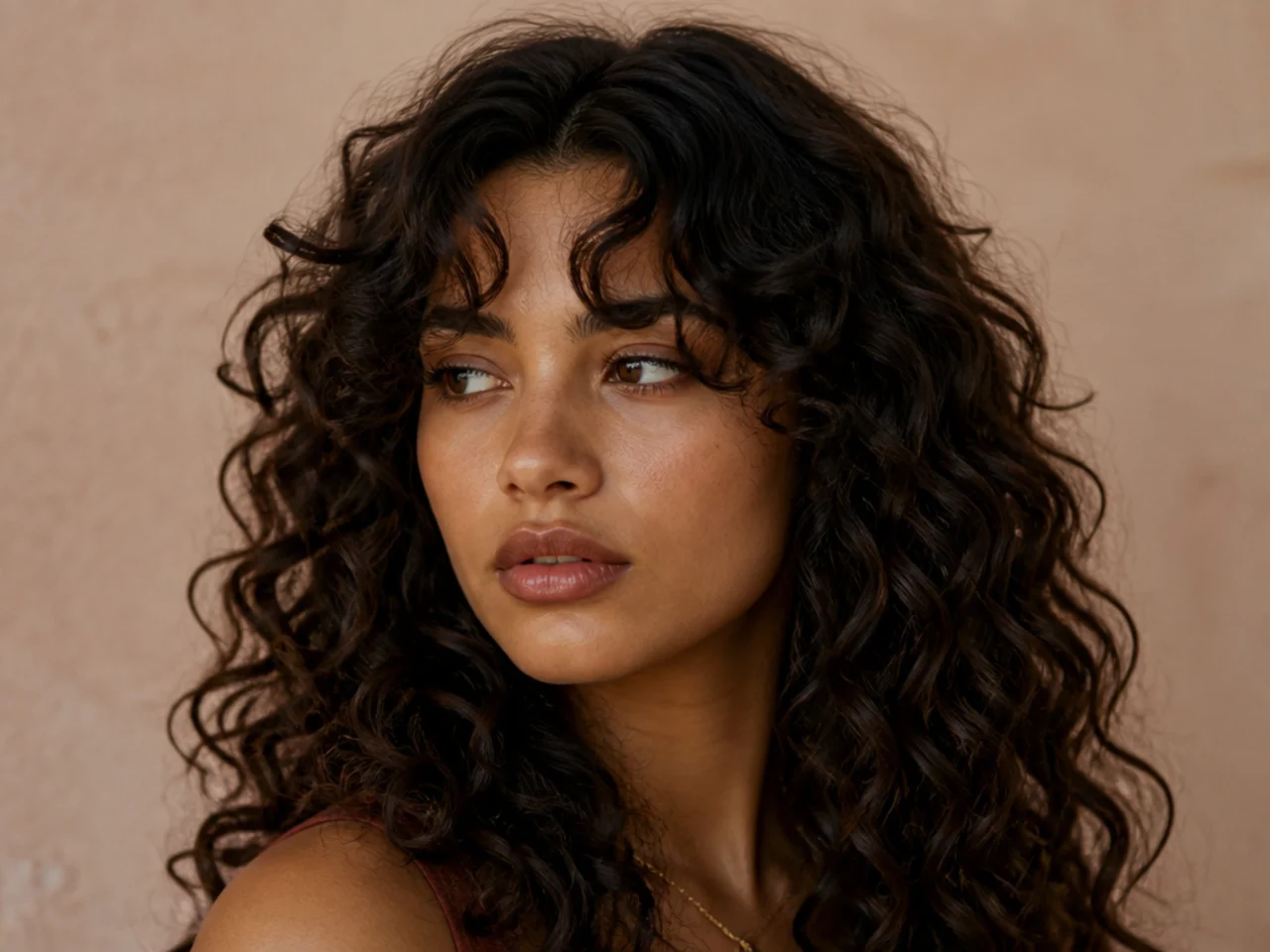
16. Curtain Bangs With an Off Centre Part
Moving the split half an inch to one side loads more hair onto the heavier half, which gives the whole front more movement. It also lets you place the part where the growth already goes, so it stays where you put it.

17. Curly Bob With a Tapered Nape
The hair under the bob shortened gradually and never taken to skin, which removes the bulk that makes a curly bob sit outward at the bottom. Because there is still length down there, the line blurs slowly and holds its shape for three to four weeks.

18. Curtain Bangs With a Money Piece
The two panels lightened a level or two against the base. Placing the lift exactly where the bang splits doubles the separation between the halves, so the curtain reads clearly even on a day the curl has dropped.
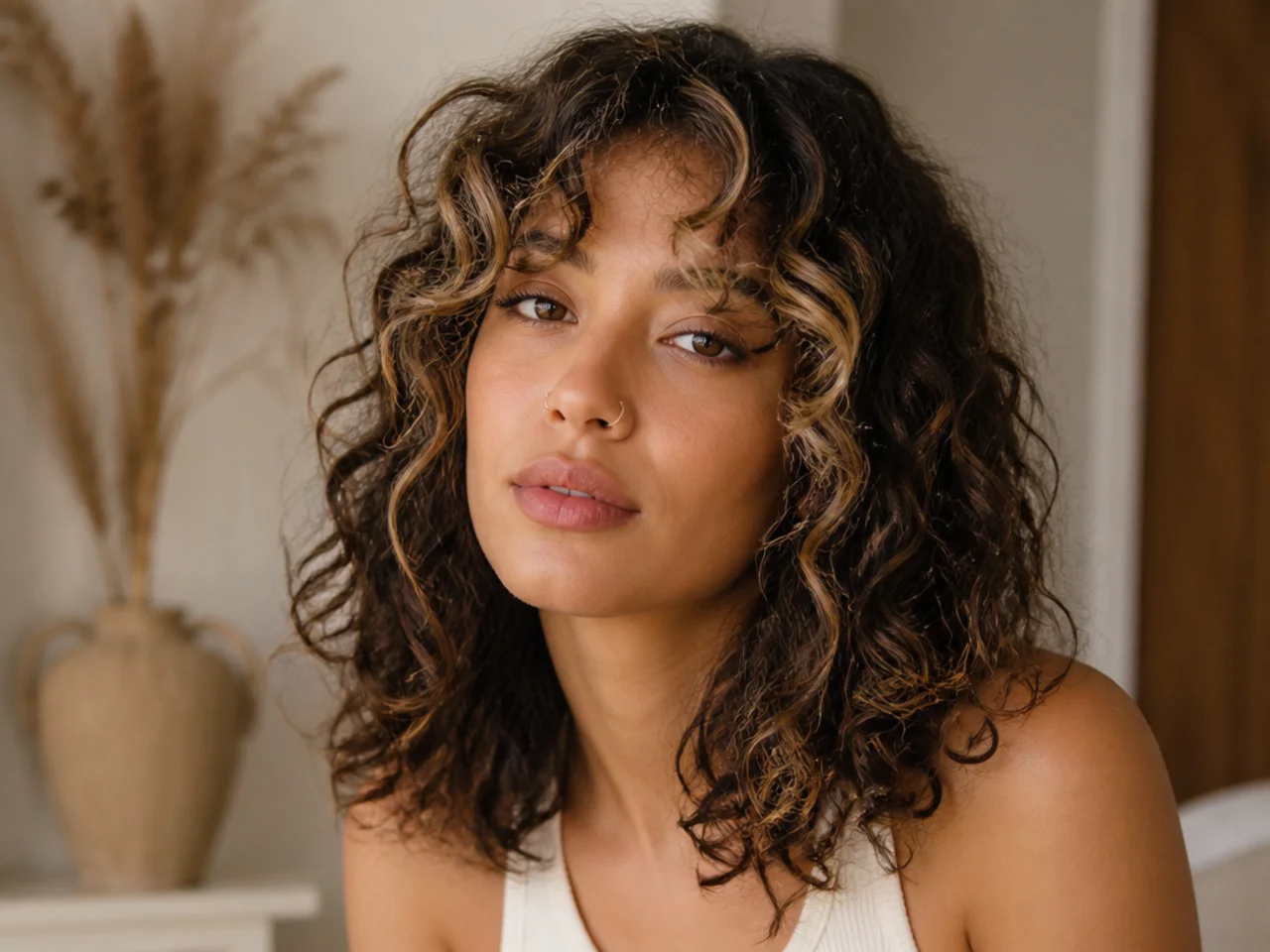
19. Air Dried Curtain Bangs
No diffuser and no brush, just product on soaking wet hair and time. Air drying sets the curl at whatever position it dried in, so the panel has to be arranged in its final split within the first few minutes or it locks in wrong.

20. The Grown Out Curly Curtain
Eight weeks on, the centre point has dropped past the eye and the slope has flattened into one length. It still works as a face framing layer, but the split has gone, and only the centre point needs recutting to bring it back.

Styling and Upkeep
Set the split while soaking wet. Curl locks in as it dries, and a panel dried on the wrong side will not move back without rewetting.
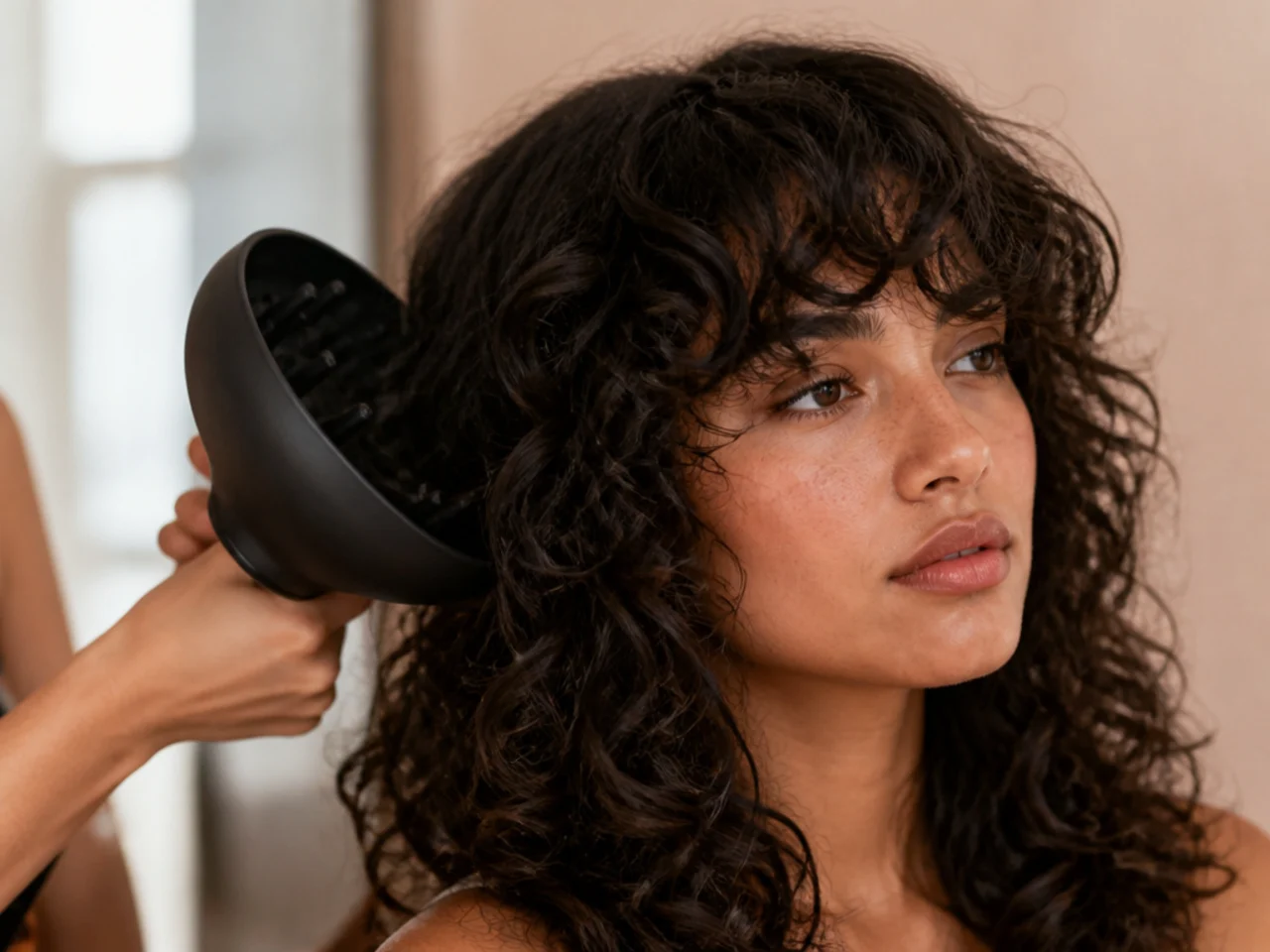
Diffuse the bang first, not last. It is the piece that decides the shape, and by the time the rest is dry the bang has already set itself.
Cut it dry, always. This is the whole article in three words. Wet length on curls is a different number from dry length.
Trim the centre point alone at six weeks. The outer edges can run to twelve. They are two different measurements with two different schedules.
Refresh with water, not more product. Product builds up in a short panel faster than anywhere else and weighs the curl straight.
Mistakes to Avoid
Cutting them wet. Every curl hangs longer under water. What looks like a cheekbone length bang in the chair is an eyebrow length one on the walk home.
Combing the section flat before cutting. It strips the curl clumps apart and cuts every spiral at the same point, which is the one thing a curl pattern cannot recover from.
Taking the section too far back. Past about two inches the bang starts eating the crown, and on a short curly cut the crown is the structure.
Thinning the panel at the ends. Removing weight from the very bottom leaves wispy tips that frizz. Take it from inside the panel instead, well above the ends.
Judging the length on wash day. The curl is at its tightest and shortest straight after washing. Look again on day three before deciding anything is wrong.

FAQ
Wet or dry? Dry, every time. Wet length and dry length are different numbers on curls.
How short at the centre? Bridge of the nose when dry, and no higher.
How often trimmed? Centre point at six weeks, outer edges at twelve.

Final Thoughts
Ask for the bang dry, name the centre point as a place on your face rather than a length in inches, and let the outer edges run longer than feels right. Shrinkage takes care of the rest, and it takes more than you expect.
For the same bang on more length see curtain bangs on long hair, for a shorter and blunter alternative see curly french bangs, and for the cuts underneath see curly hair haircuts. More in Bangs and Fringe.