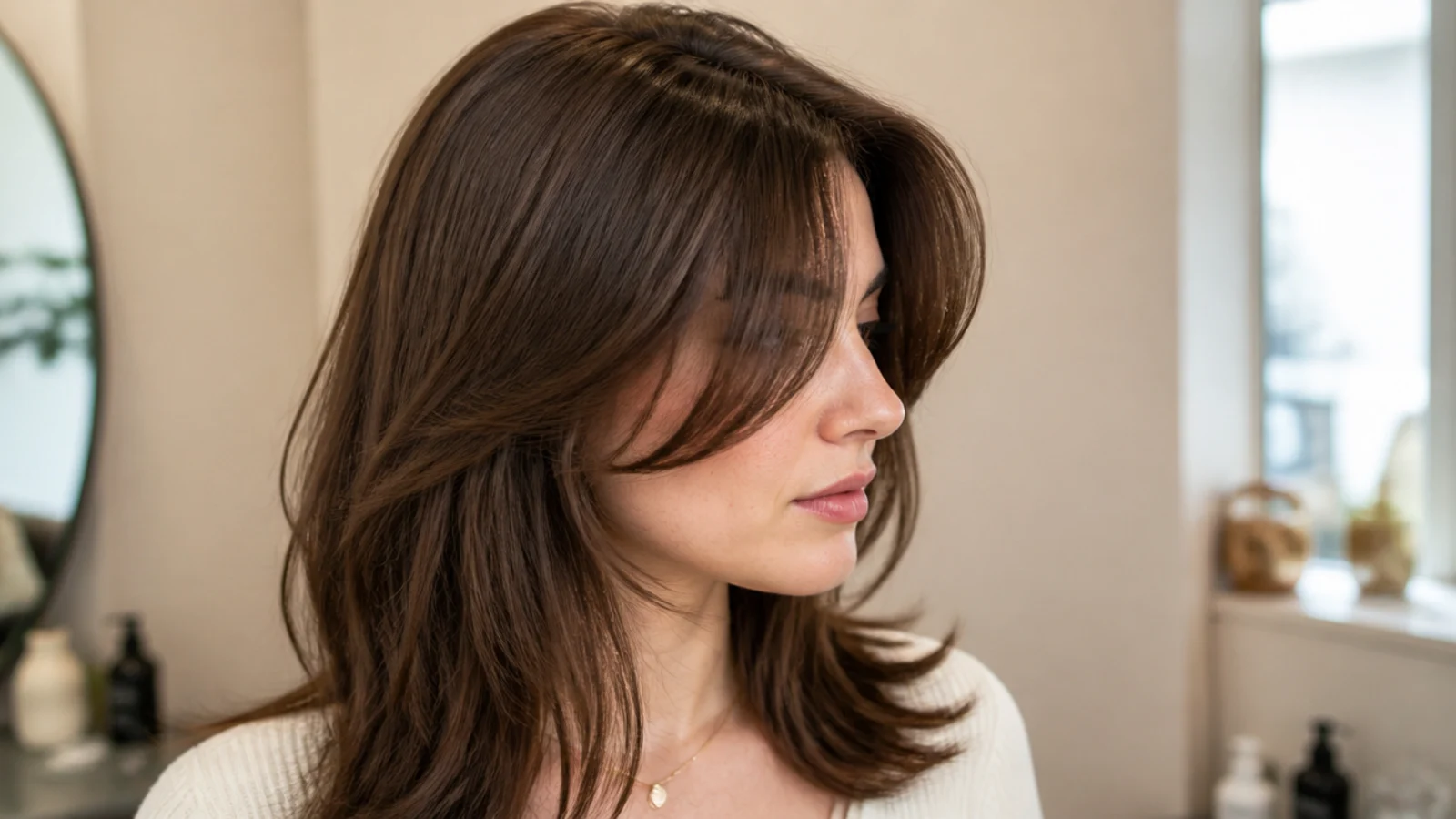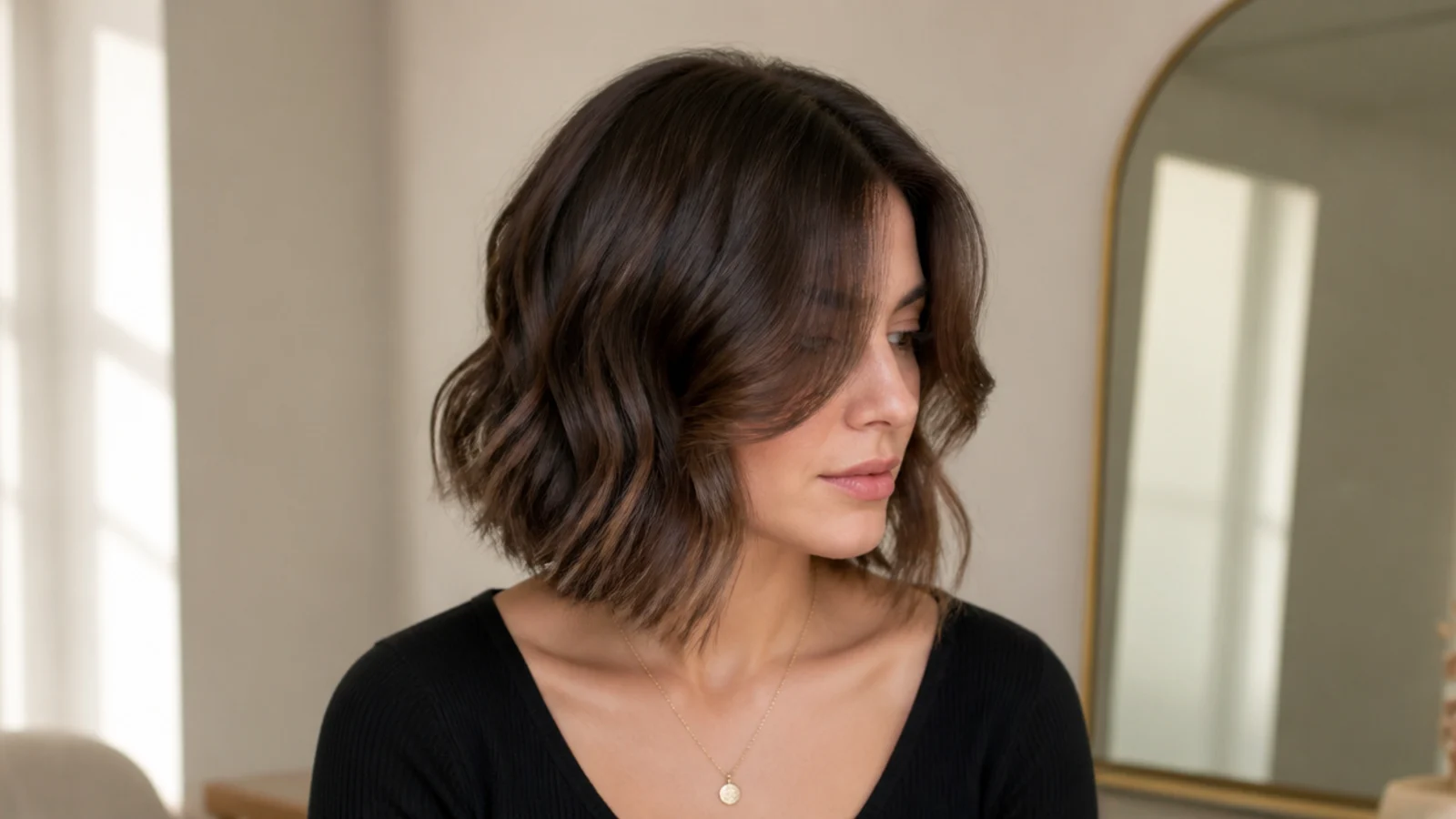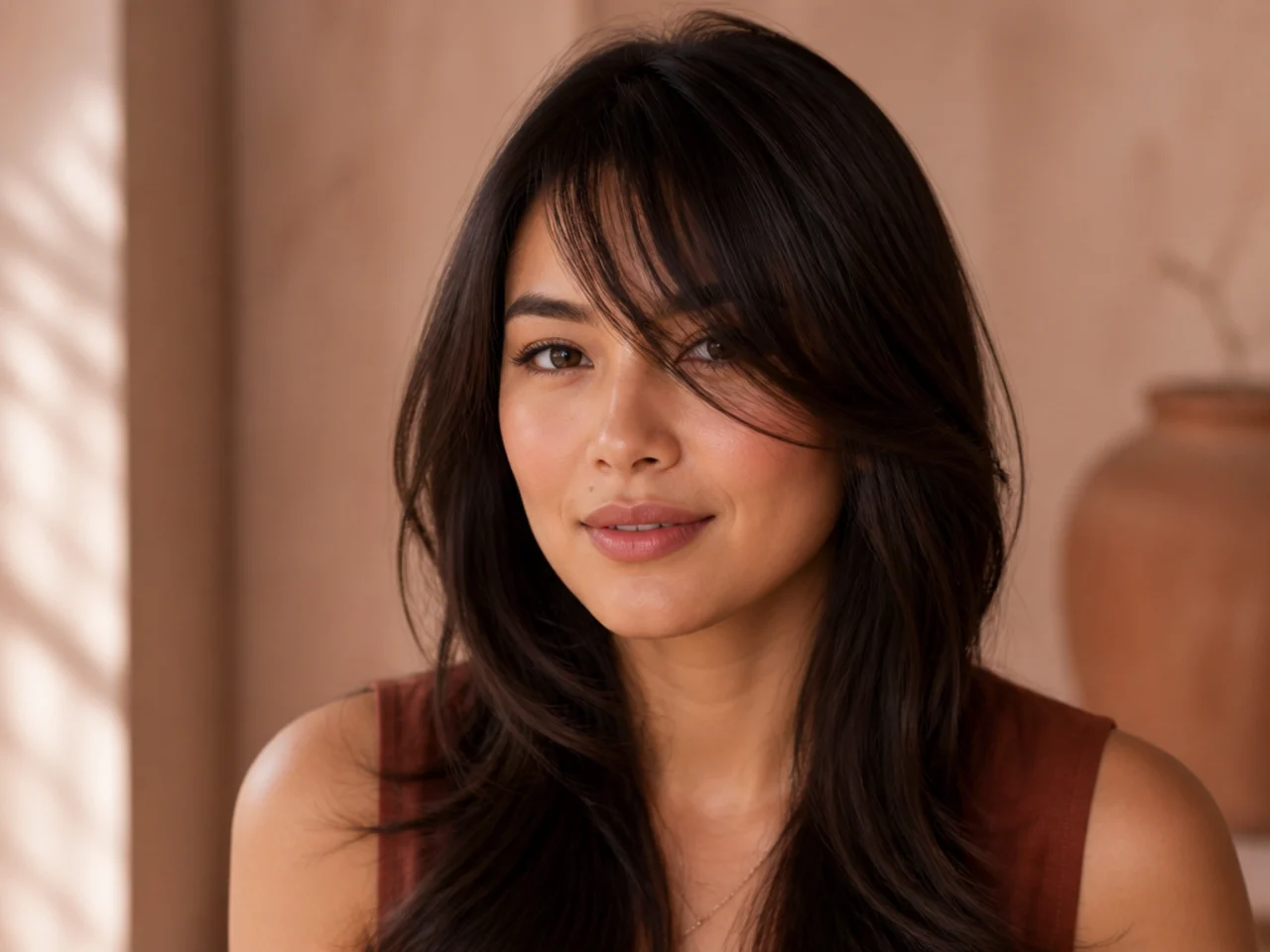
20 Cozy Curtain Bangs Hairstyles For Short Hair
Twenty ways curtain bangs sit on short hair, and the rule that decides whether they work — the longest corner of the fringe has to reach the shortest length beside it. On long hair there is always something to blend into, and on a bob or a pixie there very often is not.
In this article · 27
- What Short Hair Changes About Curtain Bangs
- Matching the Fringe to Your Cut
- The 20 Curtain Bangs Hairstyles
- 1. Curtain Bangs on a Blunt Bob
- 2. Curtain Bangs on a Shaggy Bob
- 3. Curtain Bangs on a French Bob
- 4. Curtain Bangs on a Lob
- 5. Curtain Bangs on a Pixie
- 6. Curtain Bangs on a Bixie
- 7. Curtain Bangs on a Stacked Bob
- 8. Curtain Bangs With a Short Wolf Cut
- 9. Curtain Bangs on a Curly Bob
- 10. Curtain Bangs on Wavy Short Hair
- 11. Curtain Bangs on Straight Short Hair
- 12. Curtain Bangs on Fine Short Hair
- 13. Curtain Bangs on Thick Short Hair
- 14. Short Curtain Bangs at the Cheekbone
- 15. Long Curtain Bangs at the Jaw
- 16. Curtain Bangs With a Middle Part
- 17. Curtain Bangs With a Deep Side Part
- 18. Curtain Bangs With a Money Piece
- 19. Curtain Bangs Tucked Behind the Ear
- 20. Curtain Bangs at Week Six
- Styling and Upkeep
- Mistakes to Avoid
- FAQ
- Final Thoughts
Curtain bangs go wrong on short hair for one reason, and it is not the fringe itself — it is that the longest corner has nothing beside it to blend into.
The corners have to connect. A curtain fringe ends where the length beside it begins, and on a bob or a pixie that meeting point has to be cut deliberately.
The section is shallower than on long hair. Short cuts hold less density above the ear, so a two inch deep fringe section takes visible weight out of the crown.
What Short Hair Changes About Curtain Bangs
There is less hair to blend into. On long hair the fringe corners melt into the length. On a jaw length cut the corner and the perimeter are only a couple of inches apart, so the join has to be planned.
The section depth matters more. Take too much from a short cut and you thin the top of the head, because a shallow shape has no depth of hair behind the fringe to hide the loss.
The fringe is a bigger share of the outline. On a pixie it can be a third of the visible hair, so its shape is doing far more work than the same fringe on a lob.
It grows out faster in appearance. Half an inch a month is the same everywhere, but on short hair that half inch is a much larger proportion of the length around it.

Matching the Fringe to Your Cut
Blunt cuts want a soft fringe. A heavy horizontal perimeter needs a diagonal somewhere, and the fringe is the only place a short cut has to put one.
Layered cuts want a connected fringe. If the cut already has face framing, the fringe should be cut as the top of that series rather than sectioned off separately.
Set the shortest point by the maintenance you will actually do. Cheekbone needs a trim every three weeks. Jaw length needs one every six and grows out invisibly.
Add half an inch for wave and more for curl. The fringe lifts as it dries, and on short hair there is no length below to disguise a fringe that finished too high.
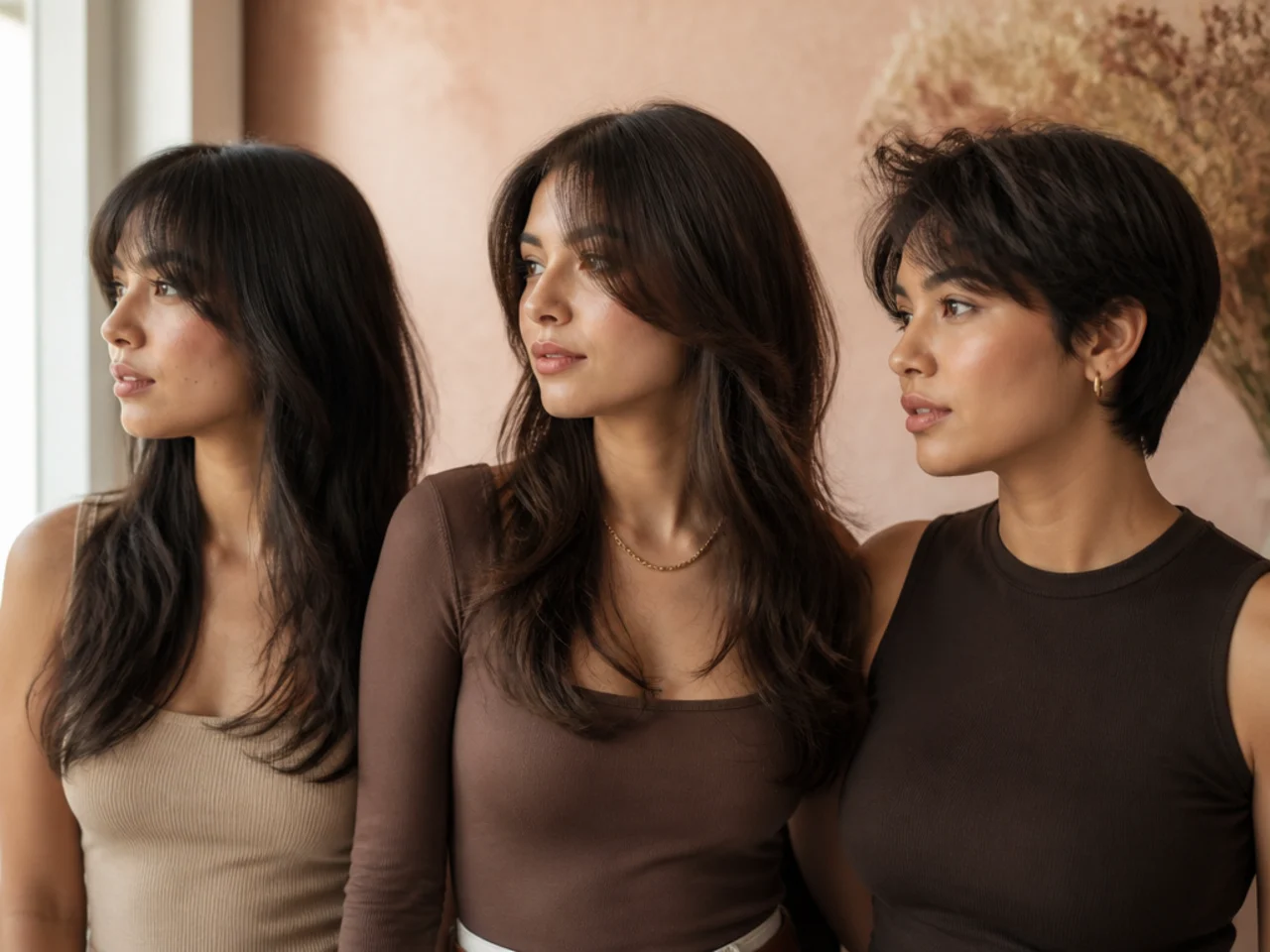
The 20 Curtain Bangs Hairstyles
1. Curtain Bangs on a Blunt Bob
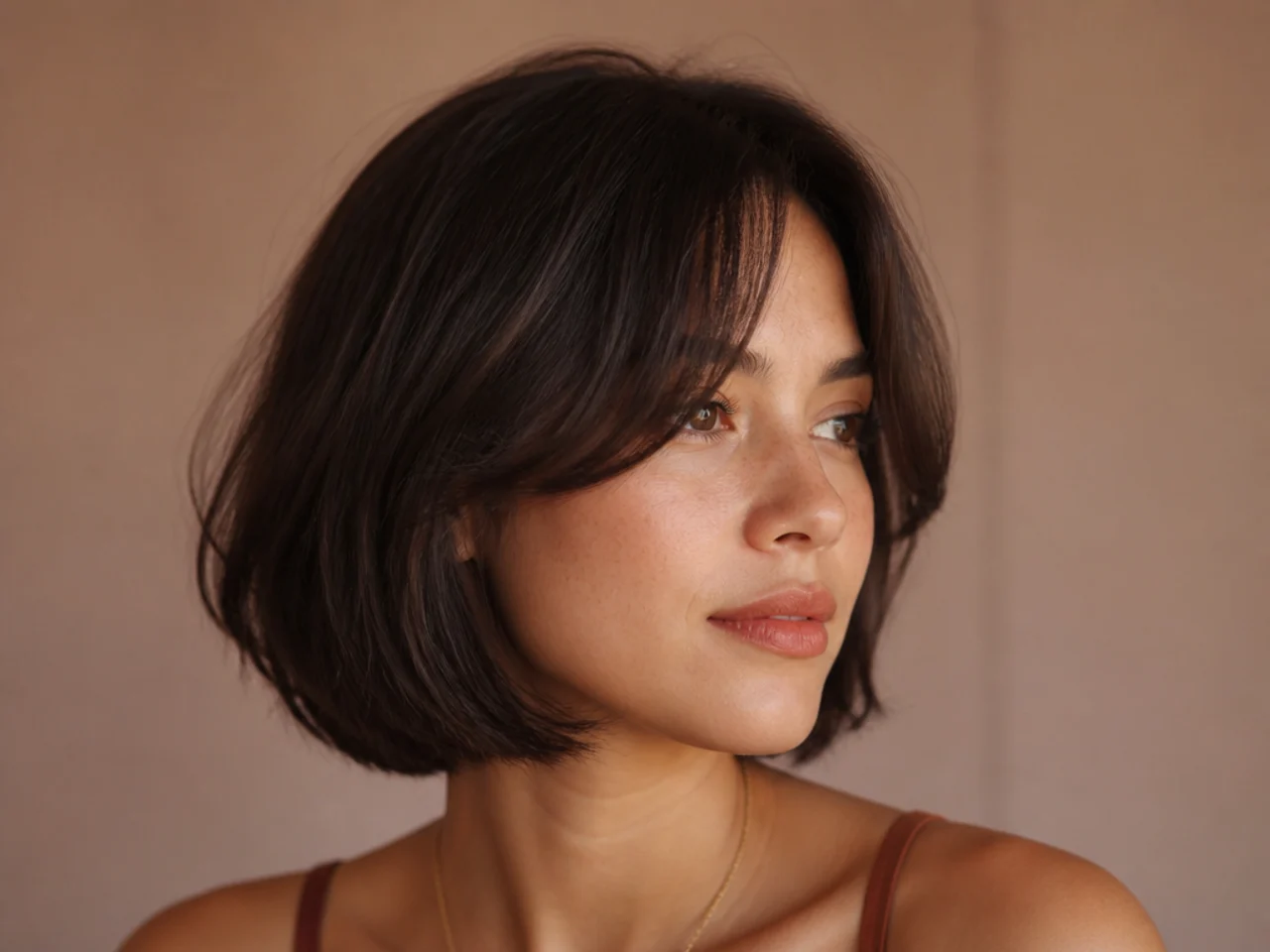
A blunt bob is two horizontals, the perimeter and the parting, and nothing else. The fringe supplies the only diagonal in the shape, which is what stops the cut reading as a helmet with a line across the bottom.
2. Curtain Bangs on a Shaggy Bob
The layers already break the outline, so the fringe should be cut as the shortest piece in that same series rather than as a separate section. Sectioning it off leaves a visible gap where the fringe stops and the layers start.

3. Curtain Bangs on a French Bob
The French bob is traditionally worn with a heavy fringe across the brow. Swapping in a curtain keeps all the density at the perimeter while opening the face, and the difference between the two is set out in french vs curtain bangs.

4. Curtain Bangs on a Lob
The longest cut that still counts as short, and the easiest to blend. The corners have several inches of length beside them to travel into, so the diagonal can be gentle and still connect cleanly.

5. Curtain Bangs on a Pixie
A pixie has almost nothing for the corners to blend into, so the fringe has to be connected into the sides above the ear. Left unconnected it hangs as a separate flap against hair that is two inches shorter.
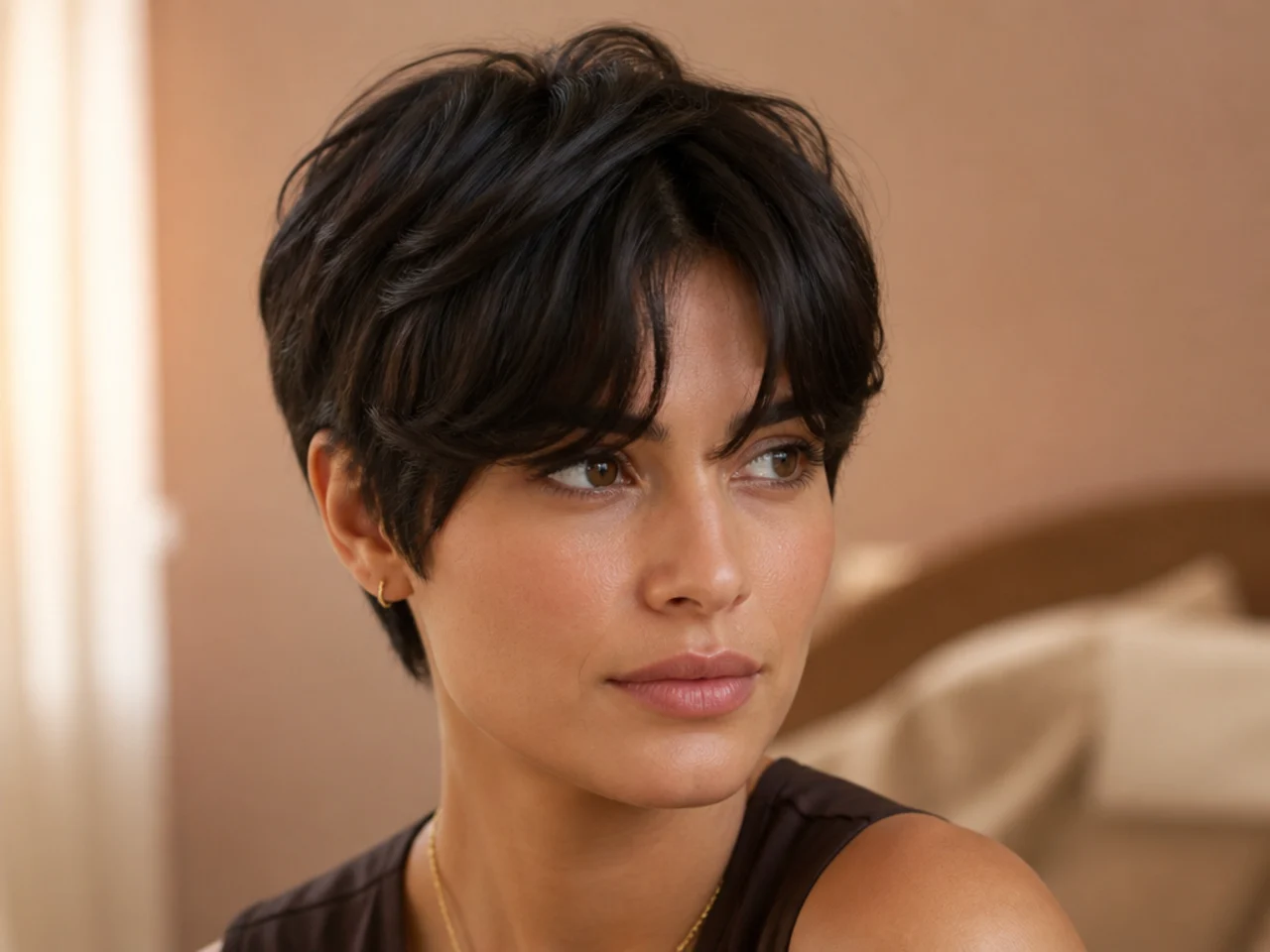
6. Curtain Bangs on a Bixie
Short through the back, longer at the front, so the fringe becomes the longest hair on the face. That reversal works because the eye reads the front as the shape and the short back simply gets out of the way.
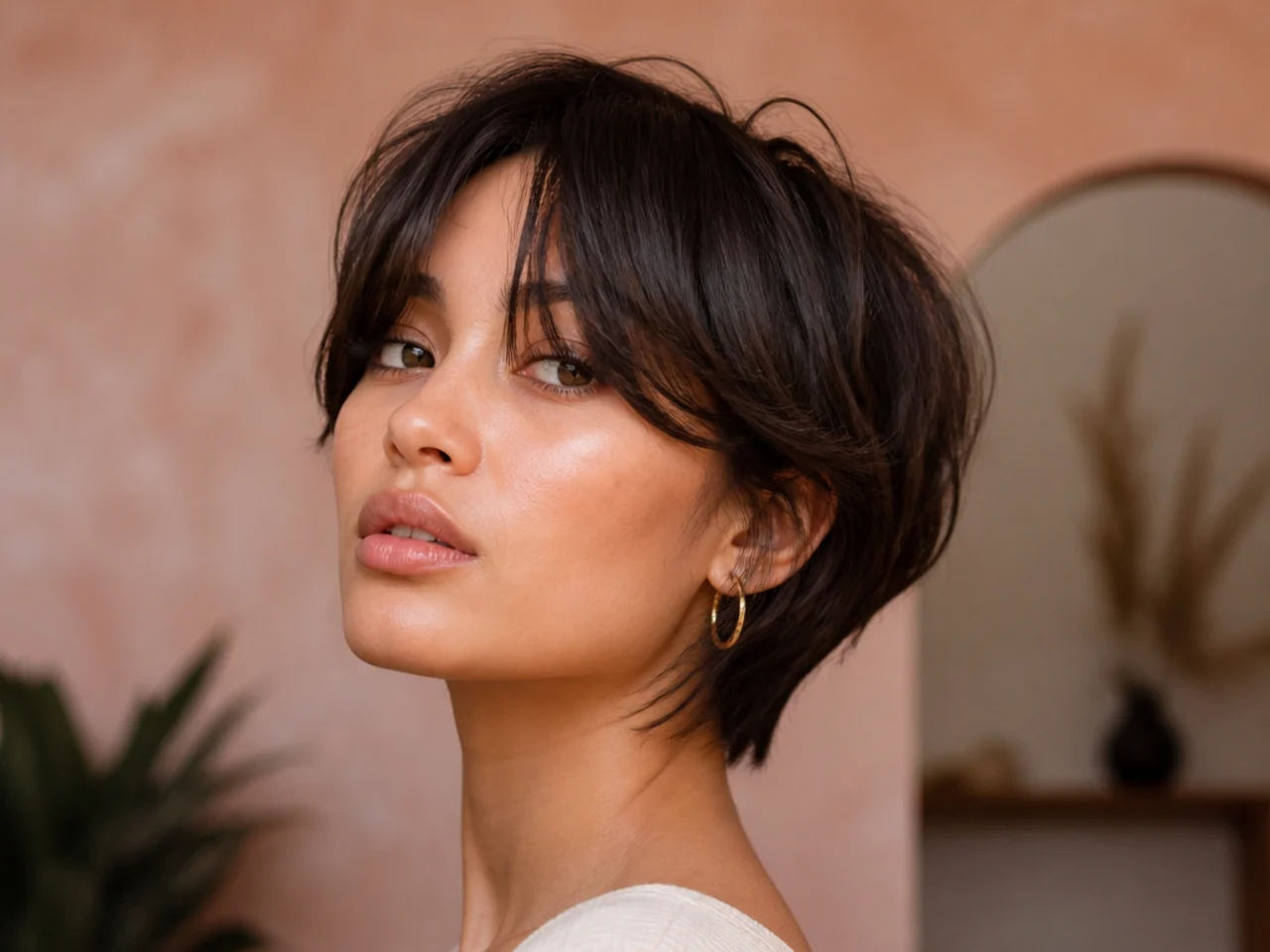
7. Curtain Bangs on a Stacked Bob
Graduation at the back already tips the whole cut forward. A curtain fringe repeats that forward diagonal at the face, so both ends of the shape point the same way instead of arguing.

8. Curtain Bangs With a Short Wolf Cut
The fringe merges into the face framing so there is no separate section at all. The softer, less structured version of this pairing is the Korean haircut with curtain bangs, where the fringe is texturized rather than cut clean.

9. Curtain Bangs on a Curly Bob
Cut this one dry, one curl at a time. Wet curl hangs near its stretched length and springs up as it dries, and on a fringe already sitting at the cheekbone there is no length below to absorb the error.

10. Curtain Bangs on Wavy Short Hair
Wave lifts the finished fringe by around half an inch, so it is cut lower than the target. The bend also scatters light along the cut edge, which hides small unevenness that straight hair would display.

11. Curtain Bangs on Straight Short Hair
The cleanest curtain and the least forgiving. A straight strand hangs in a single line with nothing to break up the cut edge, so the diagonal has to be point cut or it reads as a hard step.

12. Curtain Bangs on Fine Short Hair
Keep the section around an inch and a half deep. Fine short hair has little density to spare above the ear, and a deeper section moves enough of it forward that the crown behind the fringe starts showing scalp.
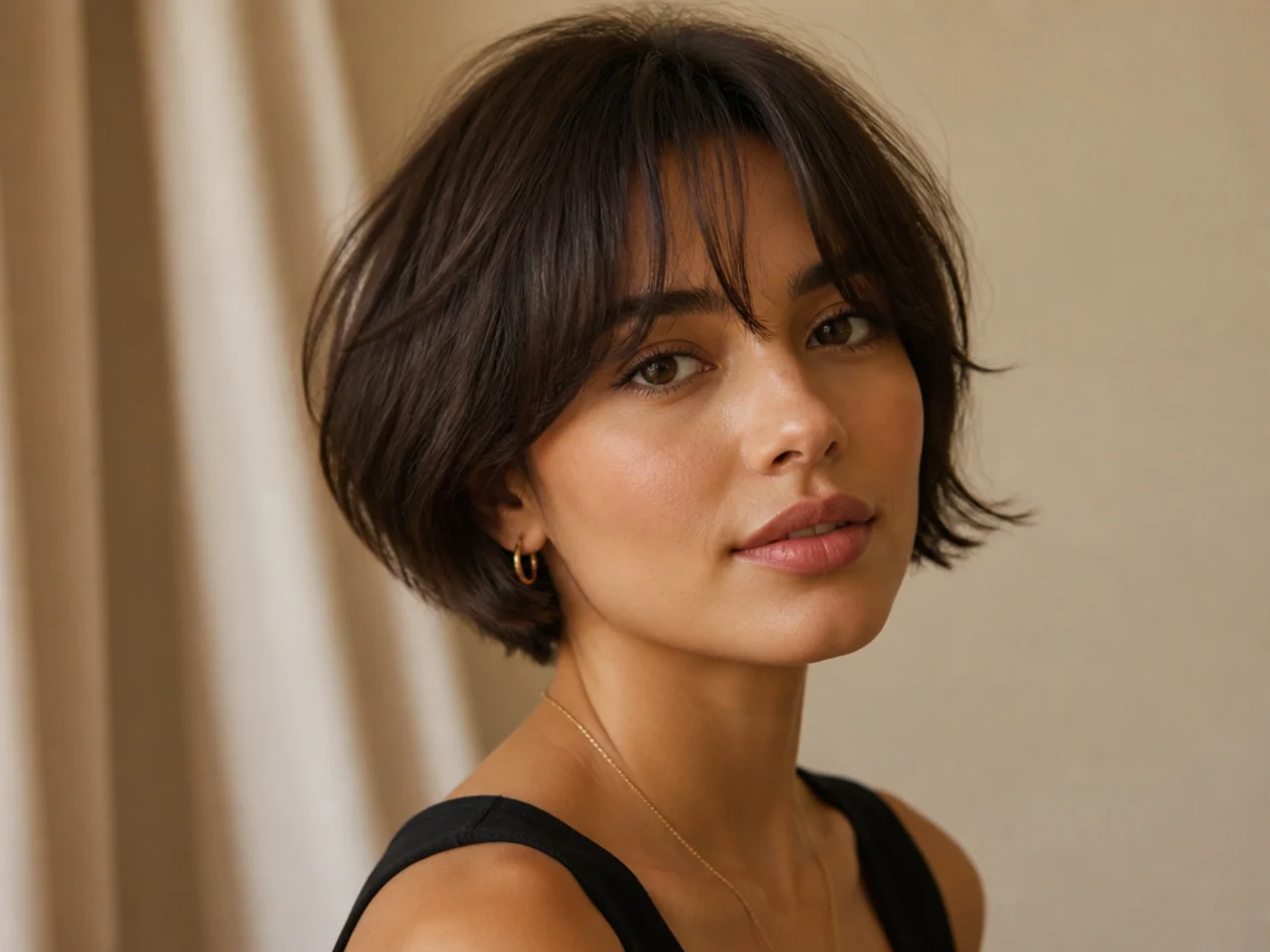
13. Curtain Bangs on Thick Short Hair
Take the section deeper, closer to two inches. A shallow section on thick hair leaves the fringe sitting on a wall of hair behind it, and that wall pushes the fringe forward into a ridge above the brow.

14. Short Curtain Bangs at the Cheekbone
The shortest point set high, leaving most of the forehead visible. It needs trimming every three weeks, because at this length half an inch of growth is the difference between framing the eye and covering it.

15. Long Curtain Bangs at the Jaw
Barely shorter than face framing layers, which is exactly the point. There is no stage in growing it out where the fringe looks stuck between lengths, so it is the low risk way to try the shape.

16. Curtain Bangs With a Middle Part
The symmetrical version, and the one that exposes any imbalance. The two halves must hold equal density, because the heavier side takes on more weight, hangs lower and dries flatter than its twin.

17. Curtain Bangs With a Deep Side Part
From an off centre parting the longer half has further to travel to reach the same point on the face, so the two sides are cut at different lengths to finish level. Cut them equal and the shape sits crooked.

18. Curtain Bangs With a Money Piece
Lightened panels running along the inner edge of each half. The eye travels to the brightest point first, so the light lands exactly where the curtain opens and the shape of the fringe becomes the first thing read.
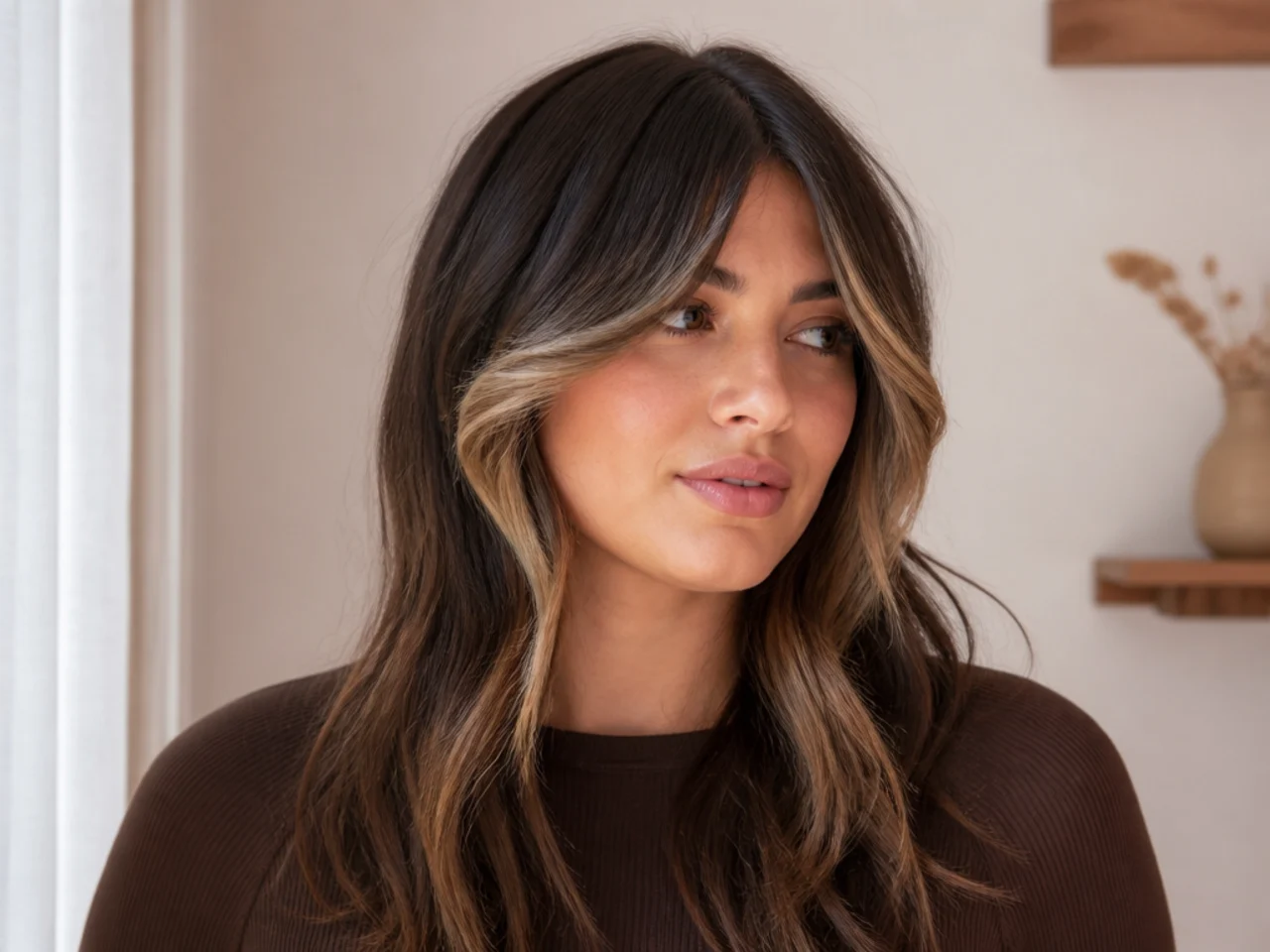
19. Curtain Bangs Tucked Behind the Ear
Tucking the long corner shifts the fringe's weight onto the side of the head and sets a bend at the root that holds for hours. It is also the only way a growing out fringe stays out of the eye.
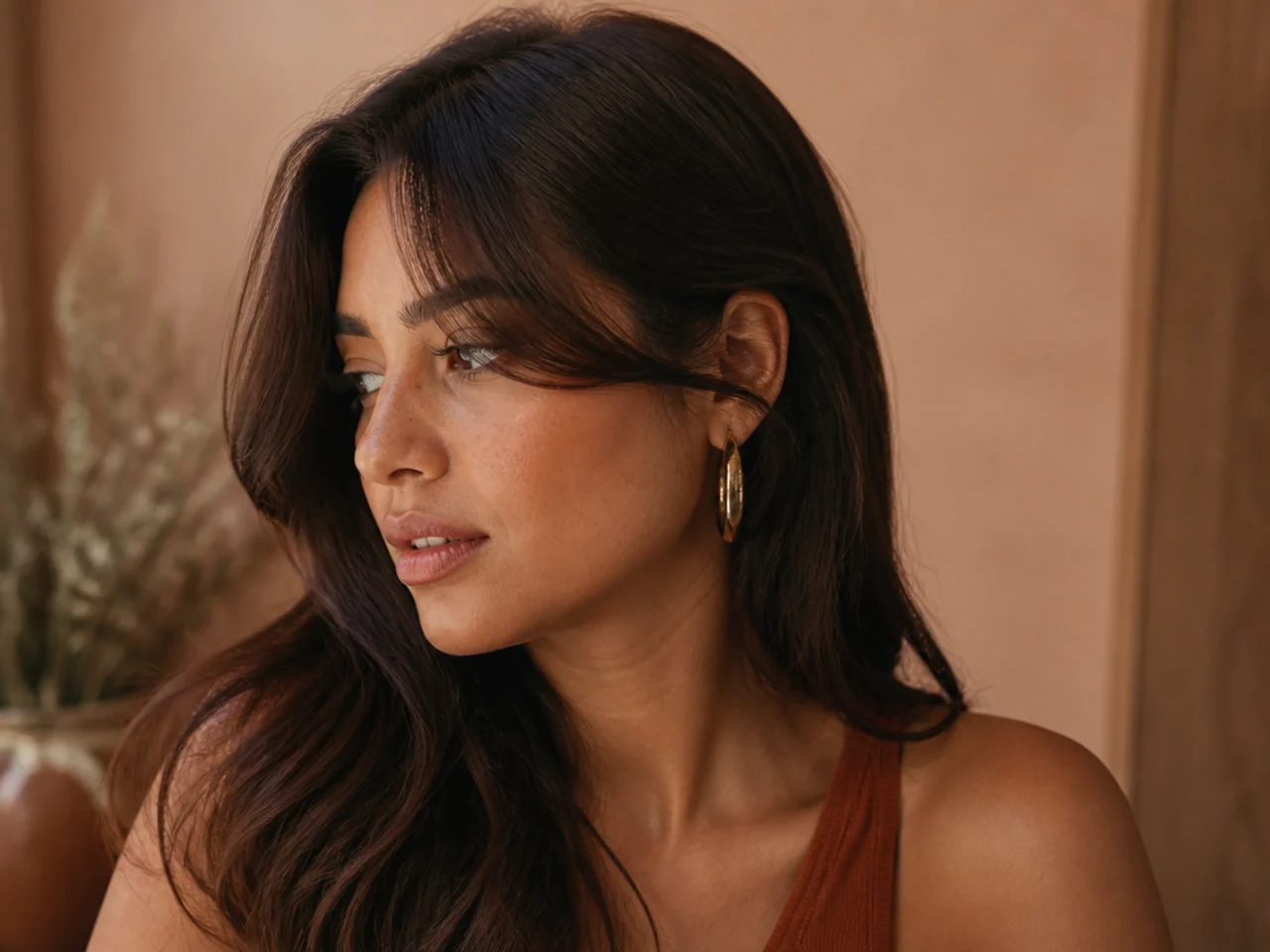
20. Curtain Bangs at Week Six
The shortest point has dropped around three quarters of an inch and the two halves no longer part cleanly. Trimming the centre alone restores the split without shortening the corners that do the blending.

Styling and Upkeep
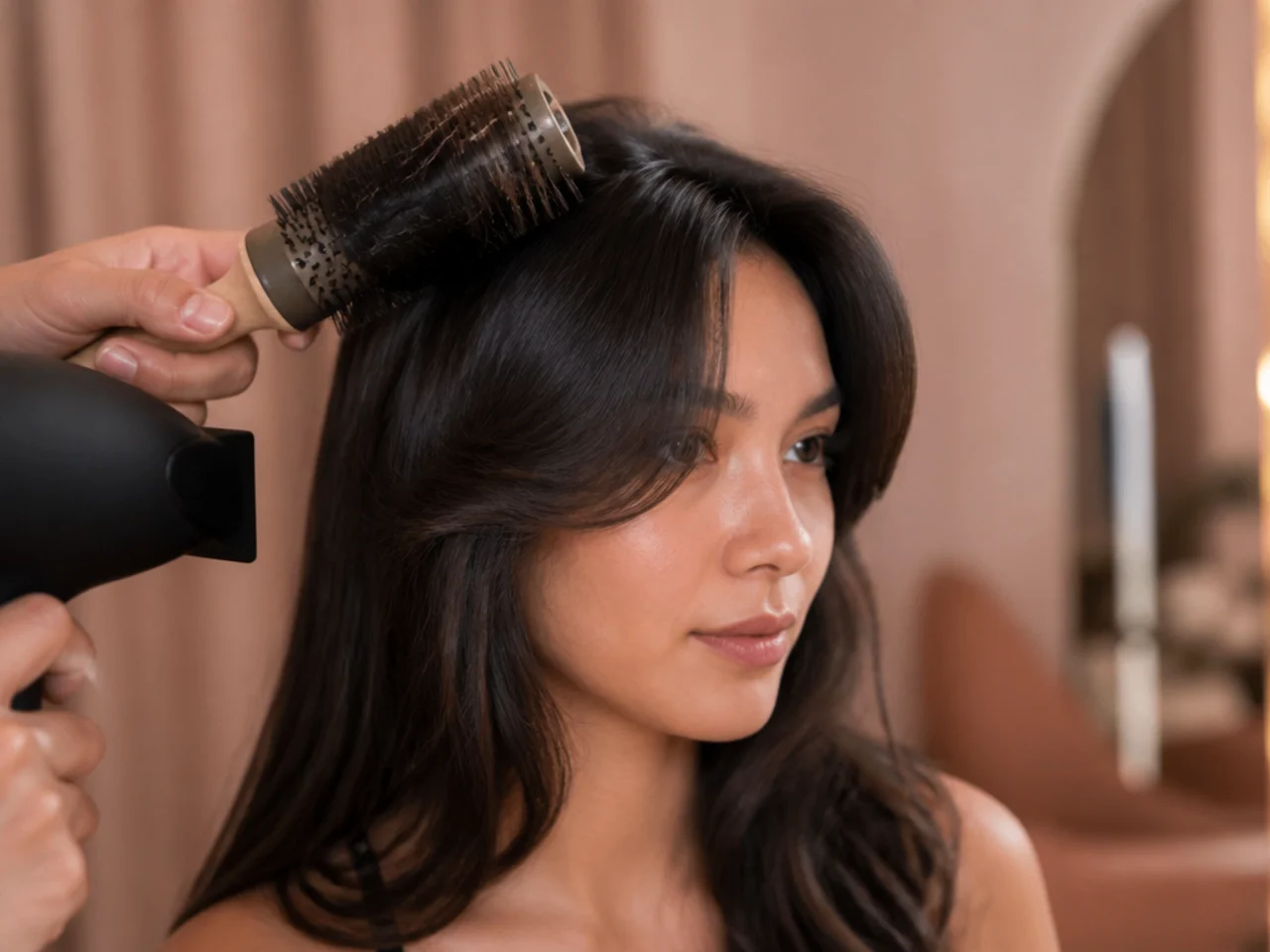
Dry the fringe first, while it is soaking. It sets its shape in the first two minutes, and once it has air dried into a position no brush will move it until the next wash.
Direct the airflow back and over. A curtain fringe holds whatever direction it was dried in, so drying it forward gives you a blunt fringe from a curtain cut.
Keep product off the roots. Anything at the root weighs the fringe onto the forehead, which flattens the bend and closes the curtain.
Dry shampoo the fringe on its own. It sits against your skin all day and gets oily well before the rest of the head, so treating it separately buys two extra days between washes.
Trim only the centre between appointments. Half an inch off the shortest point restores the parting, and leaving the corners alone keeps the connection into the sides intact.
Mistakes to Avoid
Leaving the corners unconnected. On short hair the corner has only a couple of inches to blend into, and an unblended one reads as a fringe glued to the front of the cut.
Taking the section too deep on fine hair. Every strand moved forward is a strand missing from the crown, and on a short cut there is no depth of hair to cover the gap.
Cutting it wet. Half an inch of lift as it dries, more on wave, and on a cheekbone fringe there is nothing below to absorb the error.
Pairing a heavy fringe with a blunt bob. Two hard horizontals and no diagonal anywhere makes the cut sit as a solid block. That is what the curtain shape exists to break.
Waiting for it to look bad before trimming. The parting stops holding weeks before the length looks wrong, and that is the point the fringe stopped doing its job.

FAQ
Will they work on a pixie? Yes, if the corners connect into the sides above the ear.
How deep is the section? An inch and a half on fine hair, two on thick.
How often trimmed? Every four to six weeks, centre only.
Final Thoughts
On short hair the fringe is not an accessory to the cut, it is a share of the outline. Decide where the corners land before you decide how short the centre goes, because the corners are what tie the fringe to the rest of the shape.
For how the same fringe behaves with length below it see curtain bangs on long hair, and for the alternative when you want it worn to one side see side swept vs curtain bangs. More in Bangs and Fringe.