20 Korean Haircut Ideas for Women
Twenty Korean haircut ideas sorted by face shape, because in a cut designed around the face that is the actual decision — and the variable is where the C-curl starts, not which length you pick.
In this article · 27
- What the C-Curl Placement Does
- How to Choose Yours
- The 20 Ideas by Face Shape
- 1. Round Face — C-Curl Below the Jaw
- 2. Round Face — Long Framing with Crown Volume
- 3. Round Face — See-Through Bangs with Long Framing
- 4. Round Face — Hush Cut with Low Layers
- 5. Square Face — C-Curl at the Jaw, Curving In
- 6. Square Face — Soft Layered Framing
- 7. Square Face — Curtain Bangs Blending Down
- 8. Long Face — C-Curl at the Cheekbone
- 9. Long Face — Fuller See-Through Bangs
- 10. Long Face — Framing Curving Outward
- 11. Heart Face — C-Curl at the Jaw
- 12. Heart Face — Wide See-Through Fringe
- 13. Heart Face — Layers Starting at the Chin
- 14. Oval Face — C-Curl at the Jaw
- 15. Oval Face — Any Fringe
- 16. Any Shape — Crown Volume
- 17. Any Shape — Framing Without a Fringe
- 18. Fine Hair — Fewer Framing Pieces
- 19. Thick Hair — Framing with Internal Weight Removed
- 20. A C-Curl Starting at the Wrong Height
- Styling and Upkeep
- Mistakes to Avoid
- FAQ
- Final Thoughts
Korean cutting is designed around the face, so the face-shape question is not a side note here — it is the central decision.
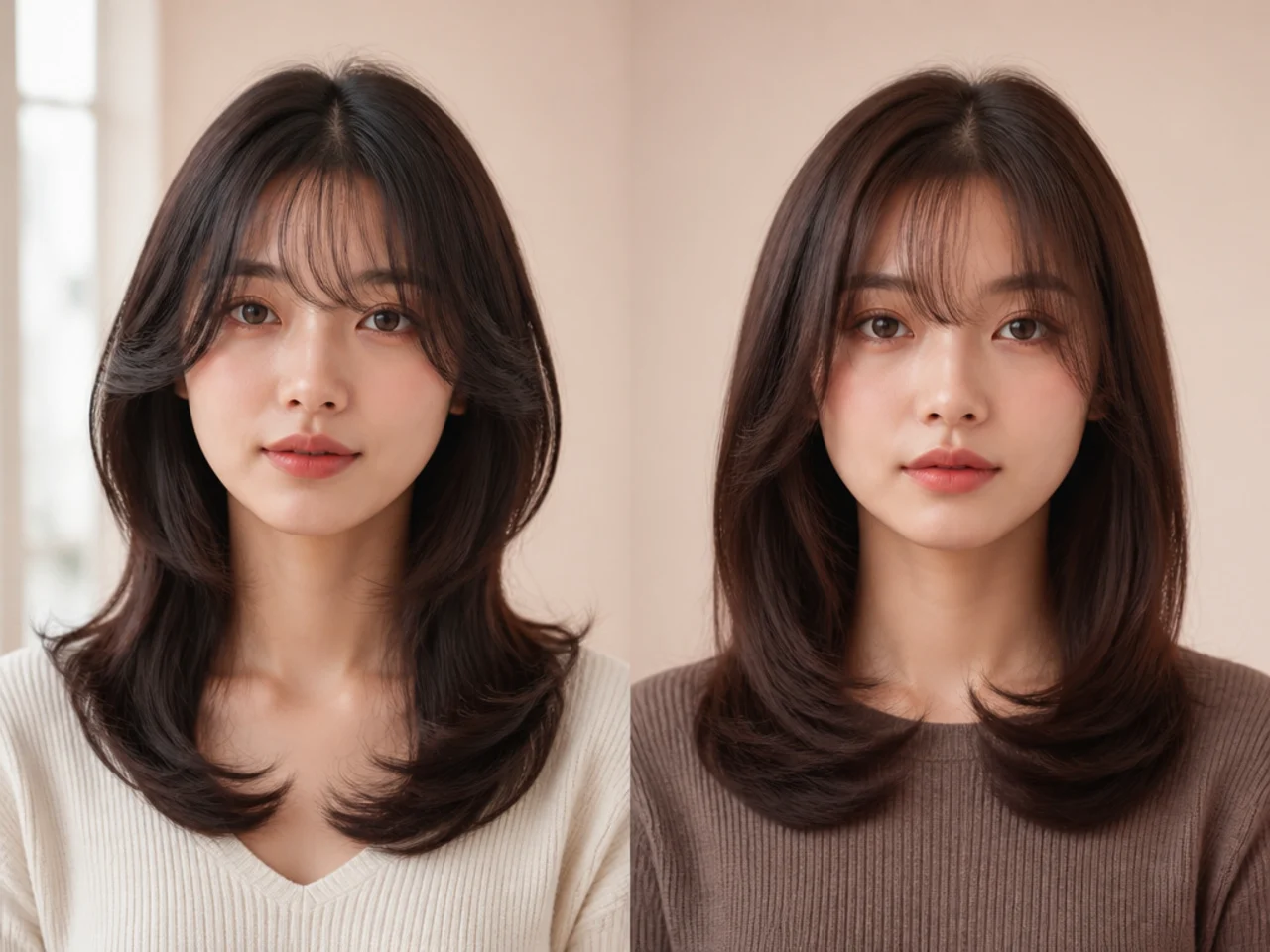
And the variable is where the C-curl starts. The face-framing curve can begin at the cheekbone, at the jaw, or below it. That single choice balances a face more than any decision about length does.
The fringe matters less than people expect. See-through bangs add so little visual weight that they suit most faces, which leaves the framing carrying the work.
What the C-Curl Placement Does
Starting at the cheekbone adds width there. Good for narrow or long faces, wrong for round ones.
Starting at the jaw echoes the jawline. Neutral, and it suits most oval faces.
Starting below the jaw lengthens. It carries the eye downward past the widest point.
The curve direction matters too. Inward softens; outward opens up the face.
How to Choose Yours
Decide the starting height first. Cheekbone, jaw, or below. Everything else follows.
Say whether you want width or length. A stylist can place the curve from that alone.
Keep the fringe decision separate. It is a smaller lever than the framing.
Ask for the curve inward unless you want width. Inward is the default for a reason.
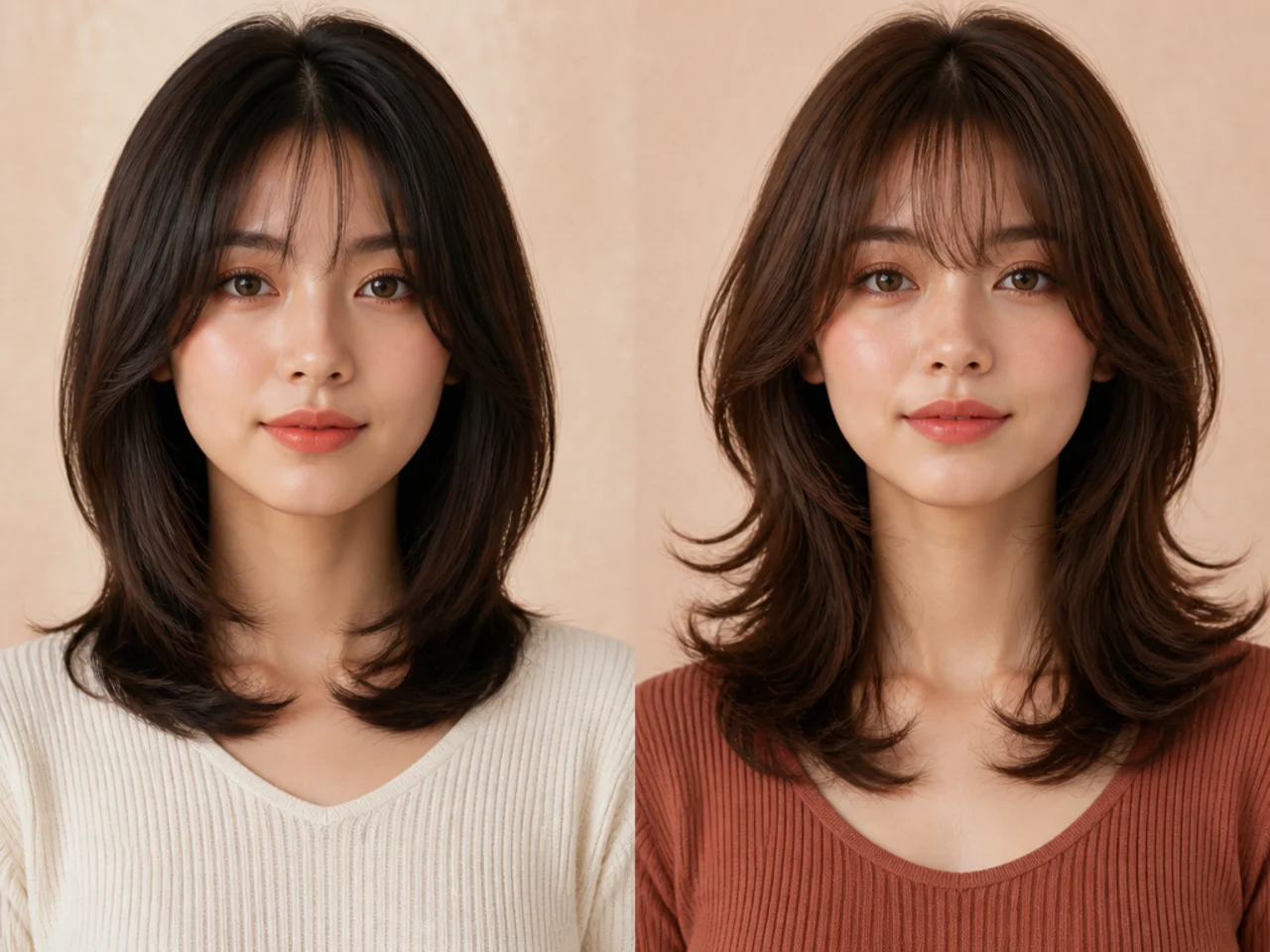
The 20 Ideas by Face Shape
1. Round Face — C-Curl Below the Jaw
Carries the eye past the widest point. A curve that starts below the jaw never draws a line across the cheeks, which is what a round face is working against.
2. Round Face — Long Framing with Crown Volume
Height above, length below. The most lengthening combination. Volume at the crown and length at the sides pull the silhouette vertical from both directions at once.

3. Round Face — See-Through Bangs with Long Framing
The fringe adds no width; the framing lengthens. A sparse fringe covers forehead without adding mass, so it interrupts height without adding breadth.

4. Round Face — Hush Cut with Low Layers
Layering kept below the cheekbone. A layer starting at the cheekbone puts volume at the widest point, which is exactly wrong here.

5. Square Face — C-Curl at the Jaw, Curving In
The curve softening the corner rather than sitting above it. A curve landing at the jaw follows the corner; one landing above it draws a second horizontal across it.

6. Square Face — Soft Layered Framing
Multiple soft pieces rather than one defined curve. A strong jaw next to a strong curve reinforces both, where several soft pieces dilute the hardness.

7. Square Face — Curtain Bangs Blending Down
Continuous graduation past the jaw. No end point means no second edge competing with the jawline.

8. Long Face — C-Curl at the Cheekbone
Width added at the widest available point. A long face wants its vertical run interrupted, and the cheekbone is the highest place width can be added.

9. Long Face — Fuller See-Through Bangs
A slightly denser fringe, which shortens the face. More coverage across the forehead removes visible length from the top third.

10. Long Face — Framing Curving Outward
Opening the face rather than narrowing it. An outward curve adds width where an inward one removes it, which reverses the usual Korean instruction.

11. Heart Face — C-Curl at the Jaw
Volume brought down to balance a narrower chin. A heart face is widest at the forehead and narrowest at the chin, so mass low is what balances it.

12. Heart Face — Wide See-Through Fringe
Coverage across a broader forehead. Width in the fringe reduces the apparent width of the forehead behind it.

13. Heart Face — Layers Starting at the Chin
Weight where the face narrows. Layers starting at the chin put fullness at the narrowest third rather than the widest.

14. Oval Face — C-Curl at the Jaw
The neutral placement, and oval takes it without adjustment. Oval is balanced in both directions, so there is no proportion the cut needs to correct.

15. Oval Face — Any Fringe
The one shape with no constraint on the fringe. Worth saying plainly — choose the fringe you want rather than the one a chart recommends.

16. Any Shape — Crown Volume
Universal, and the styling half of every Korean cut. It is the one instruction that applies regardless of face shape, density or length.

17. Any Shape — Framing Without a Fringe
The framing alone, which is often enough. No fringe means nothing on a separate trim cycle, which is the lowest-upkeep version of the look.

18. Fine Hair — Fewer Framing Pieces
Shape without losing density at the front. Every framing piece is one fewer in the length, and fine hair has the least to spare.

19. Thick Hair — Framing with Internal Weight Removed
So the curve sits rather than stands away. Thick framing pieces spring off the face unless weight comes out from underneath first.

20. A C-Curl Starting at the Wrong Height
Width added where the face was already widest. The height of the curve is the whole face-shape decision, and getting it wrong reverses the effect entirely.

Styling and Upkeep
Curl the framing inward with a small iron. One pass, at the height it was cut for.
Dry the crown upward. Universal to every version on this page.
Trim the framing every six weeks. As it grows, the curve starts lower than intended.
Re-check the placement if your face changes. It is a relationship, not a fixed measurement.
Leave the length alone between appointments. The framing is what needs attention.

Mistakes to Avoid
Choosing by length instead of by framing. The framing is the cut.
A cheekbone C-curl on a round face. Width where there is already width.
Letting the framing grow without trimming. The curve drifts downward and stops working.
Assuming the fringe is the big decision. It is the smaller lever.
Outward curve unless you want a wider face. Inward is the default.

FAQ
How do you match it to your face? By where the C-curl starts — cheekbone, jaw, or below.
Where for a round face? Below the jaw, so the eye travels past the widest point.
Does the fringe depend on face shape? Less than the framing does.

Final Thoughts
Tell your stylist where you want the curve to start, not how long you want your hair. In a cut designed around the face that is the whole decision — and it is the one instruction that makes the same haircut flattering on one person and slightly off on another.
For the aesthetic in full see 25 stunning korean haircut ideas, and for short lengths see 15 short korean haircut ideas. More in Women's Hairstyles.