15 Short Korean Haircut Ideas We Love
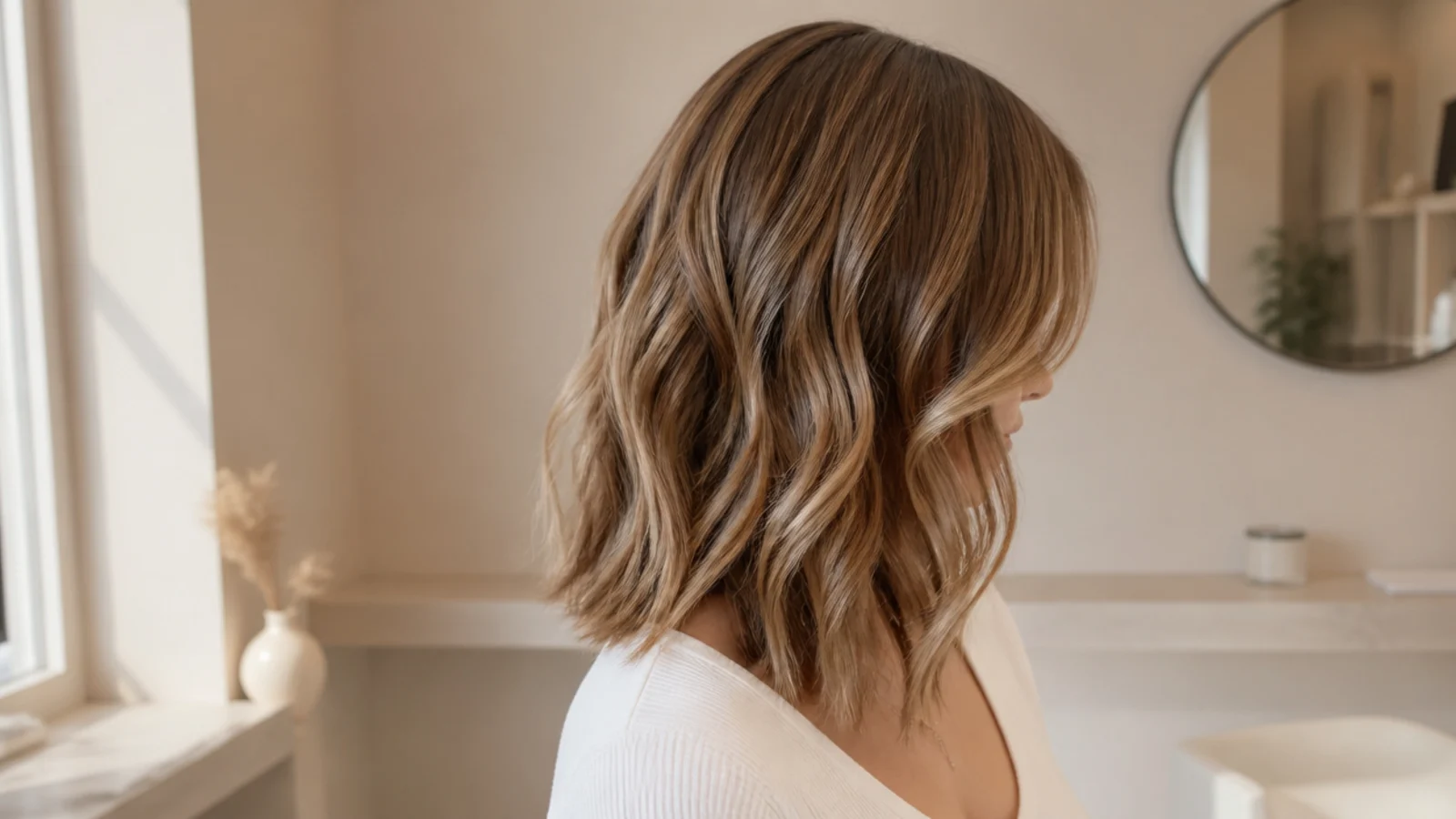
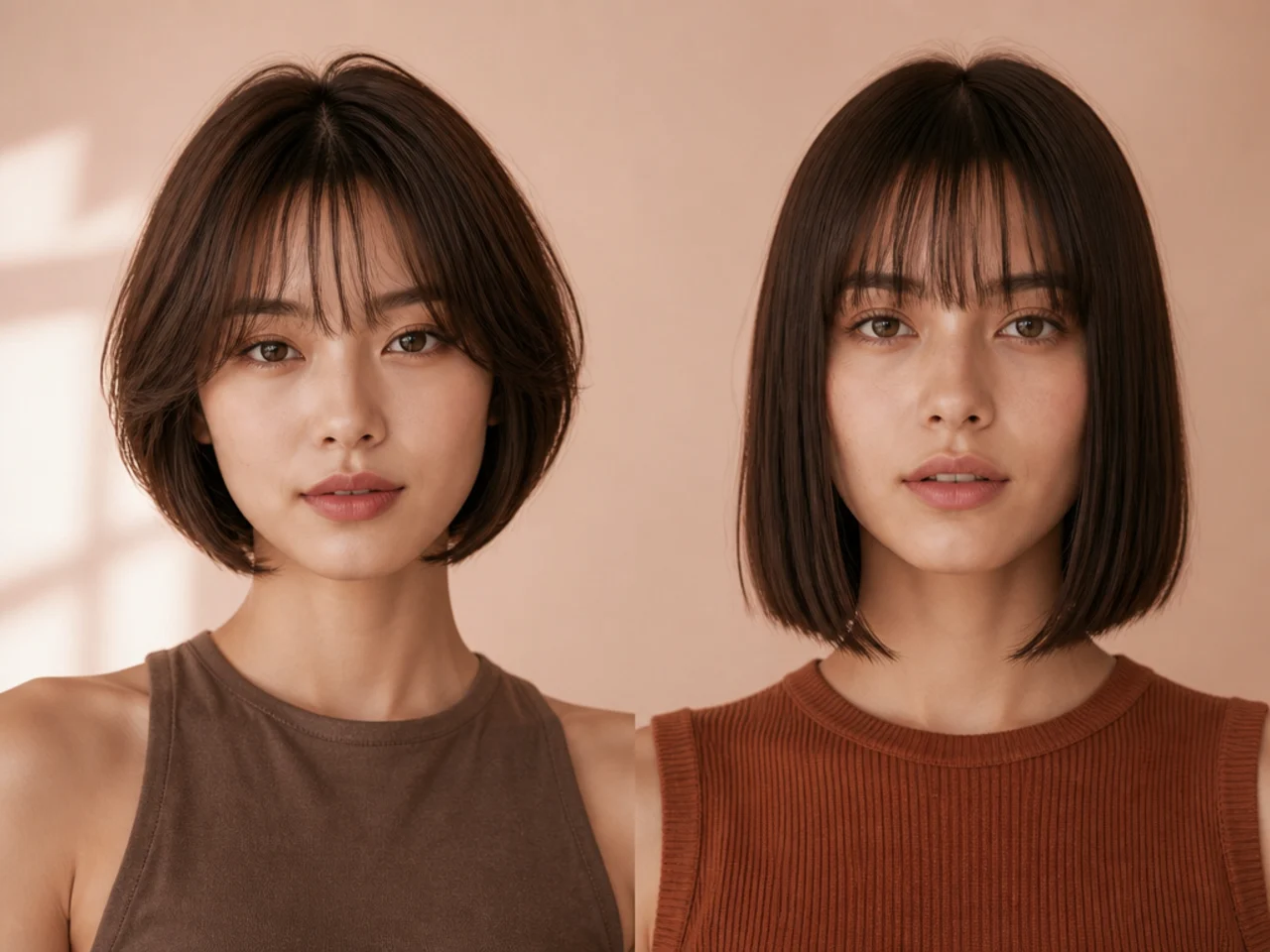
Fifteen short Korean haircut ideas, and what changes at this length — there is no room for framing inside a longer shape, so the framing becomes the shape. A Korean bob is a bob whose perimeter curves inward.
In this article · 22
- What Changes at Short Lengths
- How to Choose Yours
- The 15 Short Ideas
- 1. Classic Korean Bob
- 2. Korean Bob with See-Through Bangs
- 3. Korean Bob with Curtain Bangs
- 4. Korean Bob with No Fringe
- 5. Chin-Length Curved Bob
- 6. Jaw-Length Curved Bob
- 7. Korean Lob
- 8. Short Hush Cut
- 9. Short Wolf Cut
- 10. Korean Bob with Crown Volume
- 11. Korean Bob on Fine Hair
- 12. Korean Bob on Thick Hair
- 13. Korean Bob with a Soft Perm
- 14. Korean Bob with a Middle Part
- 15. A Blunt Bob for Comparison
- Styling and Upkeep
- Mistakes to Avoid
- FAQ
- Final Thoughts
Something changes when a Korean cut goes short, and it explains why a Korean bob is a different instruction from a bob.
At longer lengths the C-curl framing sits inside a longer shape. There is length below it for the framing to be a feature within. The framing is one element among several in a longer cut.
At bob length there is nothing below it. So the framing becomes the shape — the perimeter itself curves inward toward the jaw rather than hanging straight.
What Changes at Short Lengths
The curve is the outline. Not a feature inside the cut — the cut itself. Which is why the instruction has to change with the length.
It is a different instruction from a bob. A stylist given the word "bob" produces the straight-hanging version. It is the default reading, and it is not what you want.
Crown volume matters more. With less length, the height above does proportionally more. The same crown volume reads stronger on a shorter shape.
A curve reads fuller than a line. Which makes this a good short cut for fine hair. The turn creates a visible edge with depth behind it.
How to Choose Yours
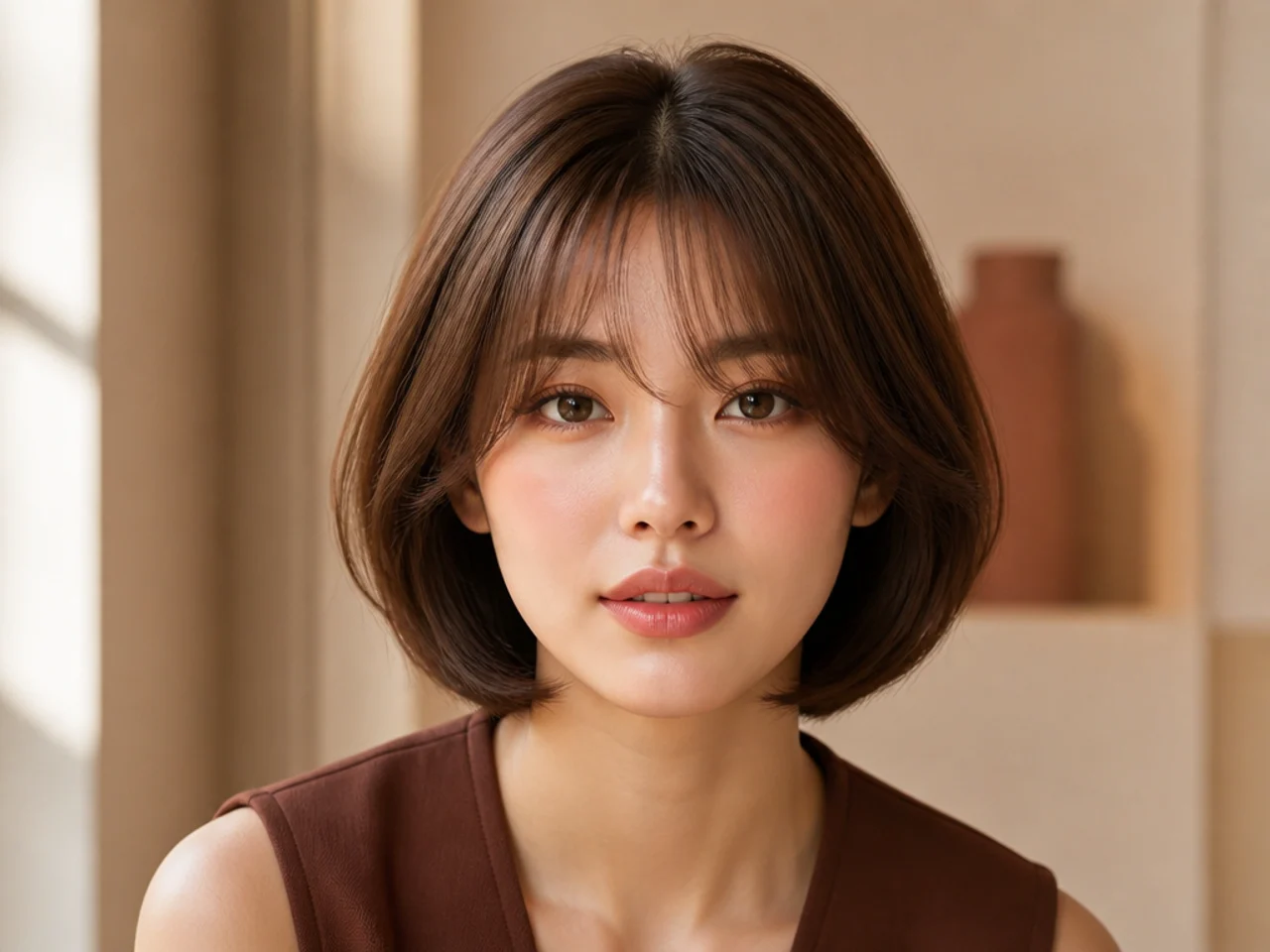
Ask for the ends to curve inward. In those words, rather than asking for a bob. Describe the behaviour of the perimeter, not the name of the cut.
Place the curve at your jaw. As with every Korean cut, the jaw is the reference. Inches do not transfer between faces; the jaw does.
Ask for crown volume in the same conversation. It carries more weight at this length. Ask for it explicitly rather than assuming it comes with the cut.
Expect a drying instruction, not just a cut. The curve is set every time you dry it. A cut alone will not produce it on a wash-and-go morning.
The 15 Short Ideas
1. Classic Korean Bob
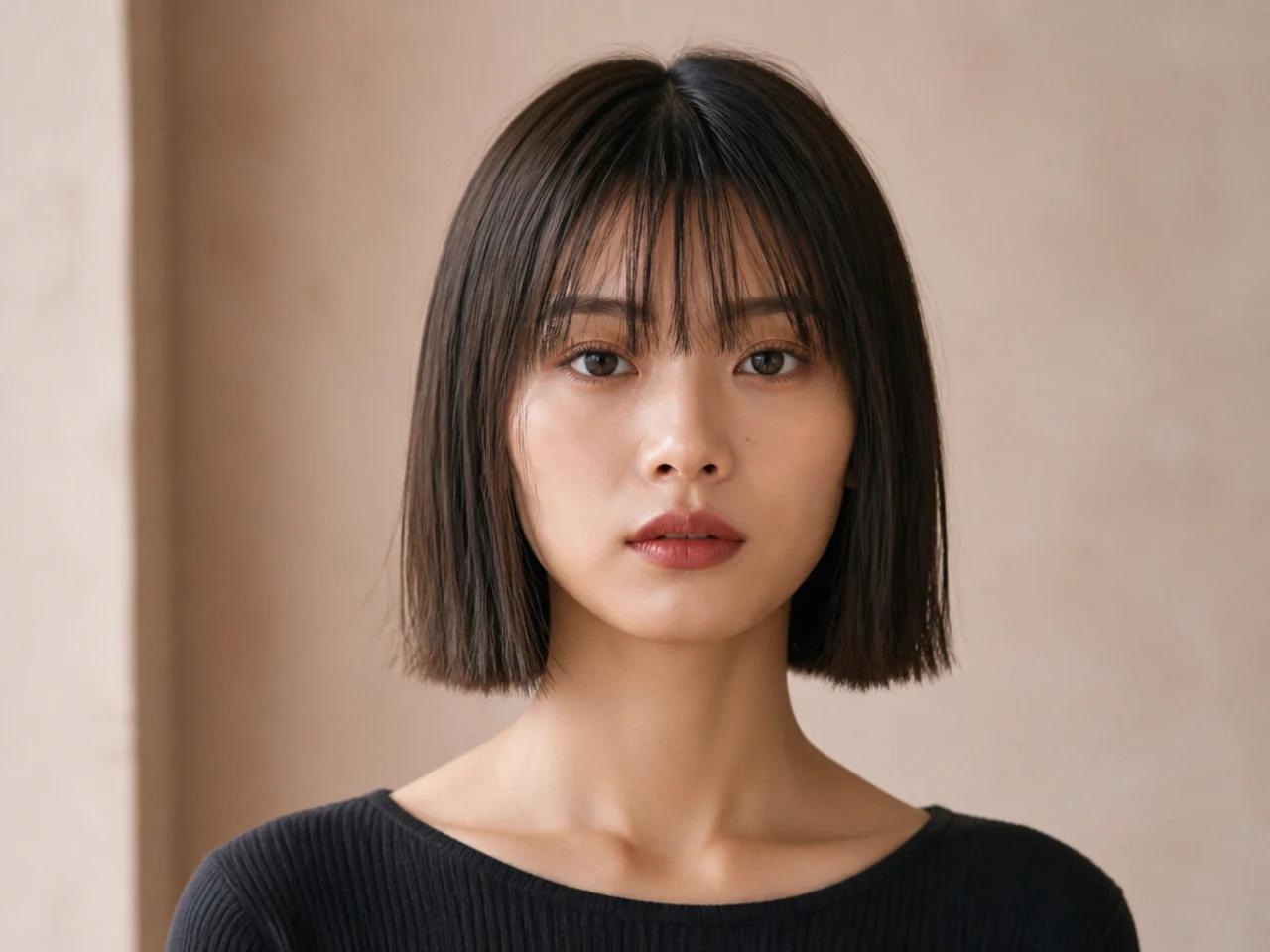
Perimeter curving in at the jaw. The benchmark. The inward turn is what separates this from a blunt bob — same length, and the perimeter behaves completely differently.
2. Korean Bob with See-Through Bangs
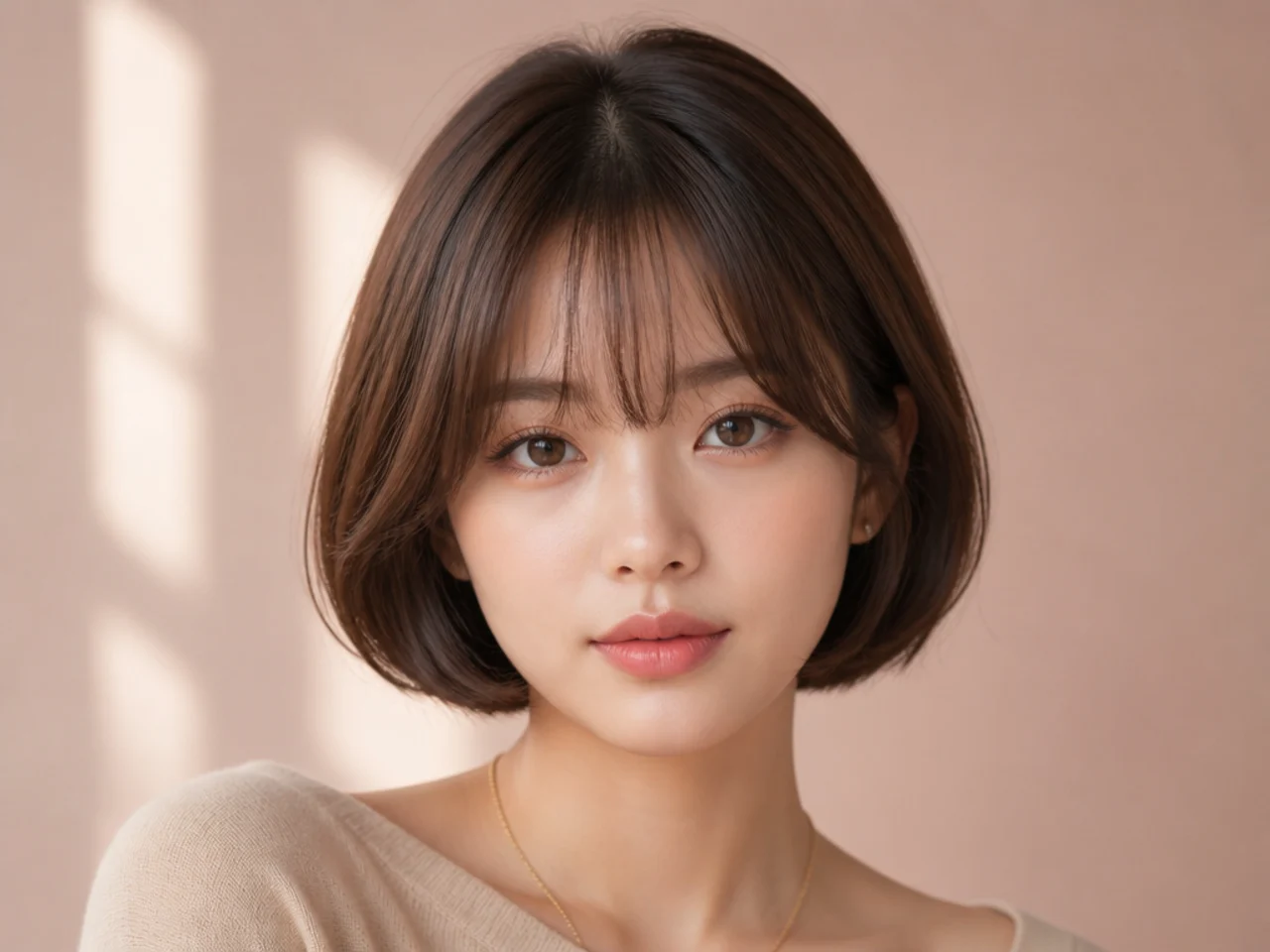
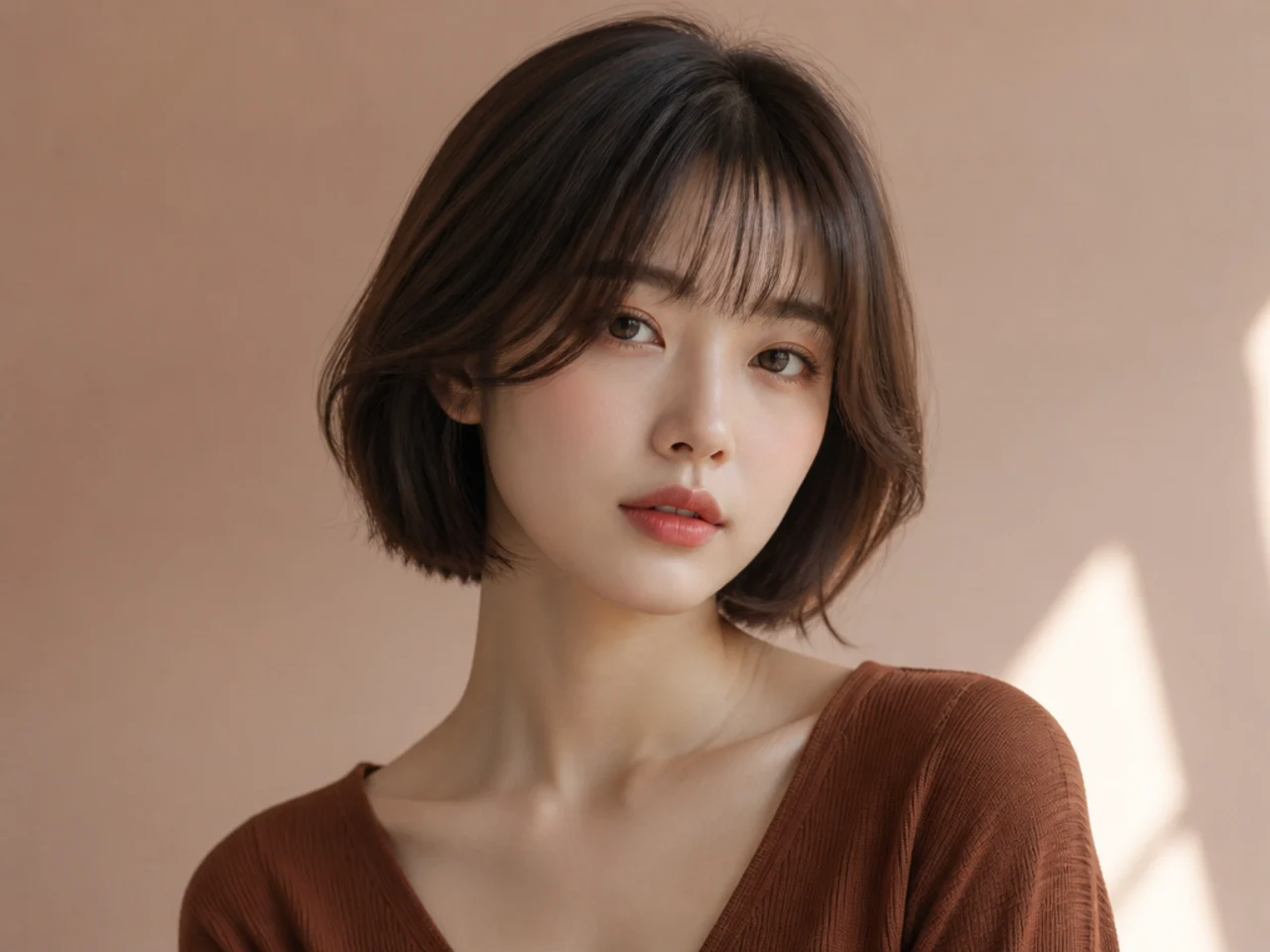
The most recognisable short combination. See-through bangs stay flat against the forehead while the perimeter turns, which is the contrast the look is built on.
3. Korean Bob with Curtain Bangs
Longer framing at the front, curved perimeter behind. Curtain framing gives the curve somewhere to begin rather than starting it abruptly at the front.
4. Korean Bob with No Fringe
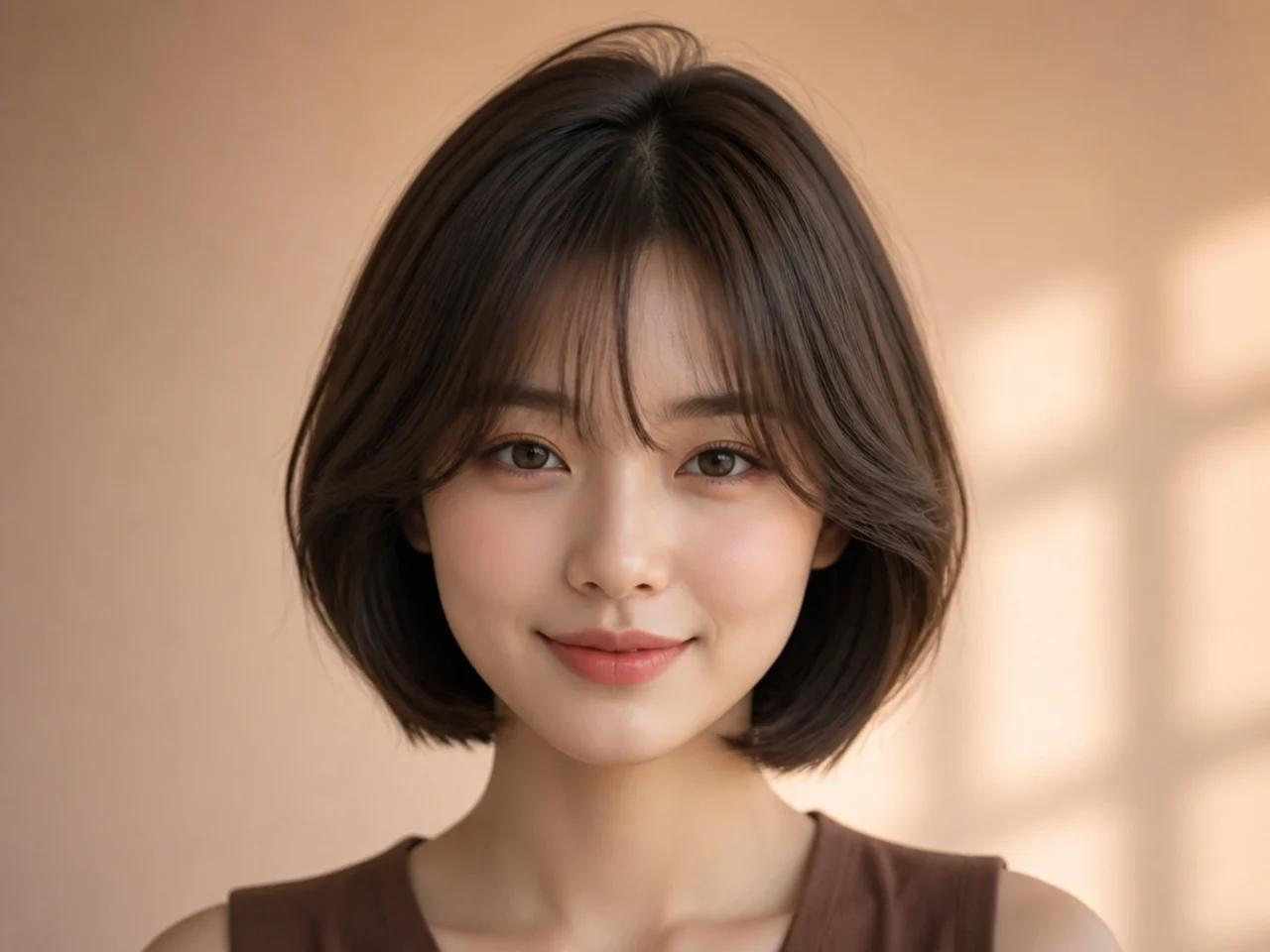
The curve carrying the whole cut. With no fringe there is one shape in the entire haircut, so the curve has to be genuinely even on both sides.
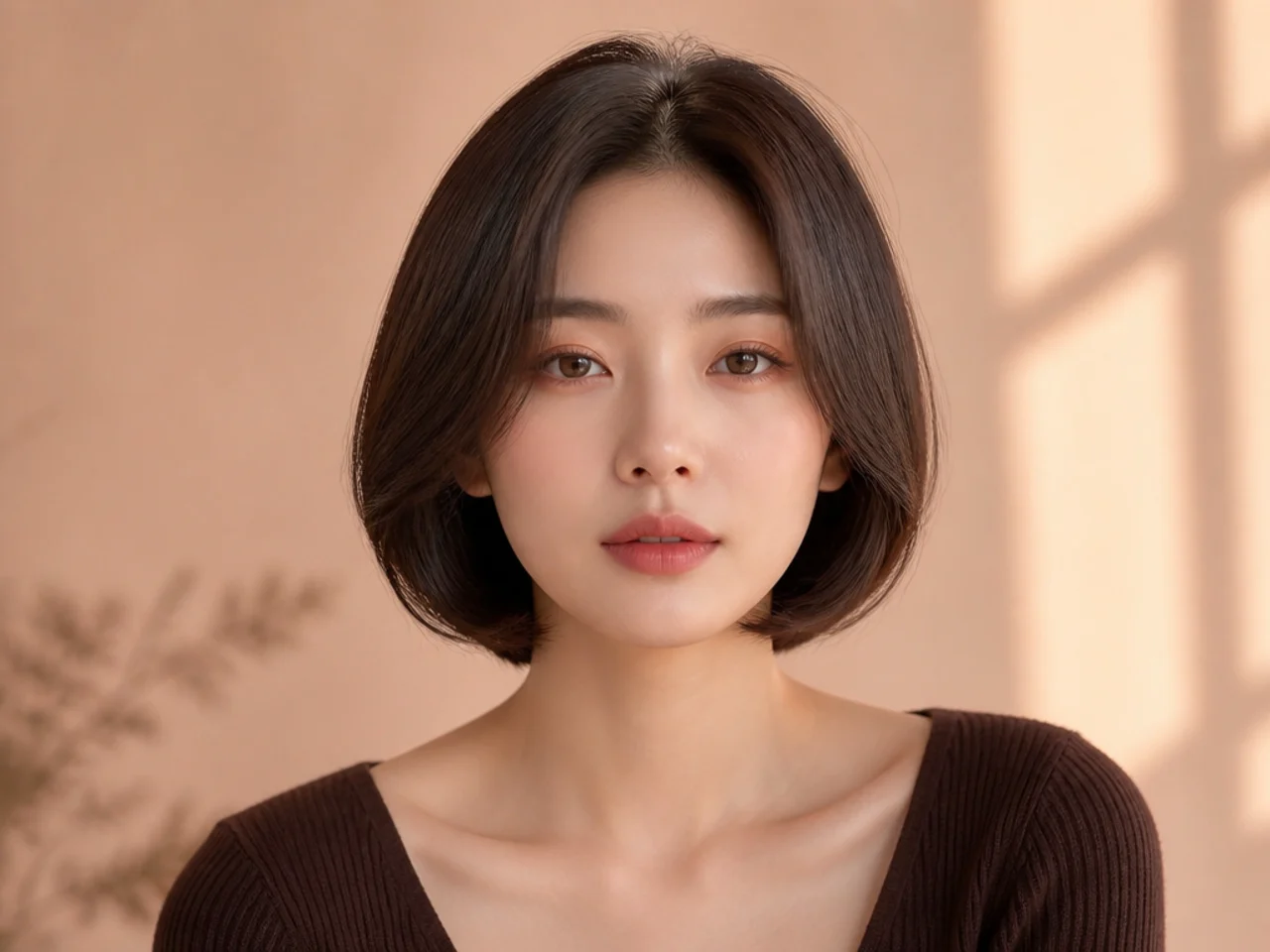
5. Chin-Length Curved Bob
The shortest version, with the curve tight at the jaw. A tight curve at the chin needs the ends in good condition, because the turn exposes every split.
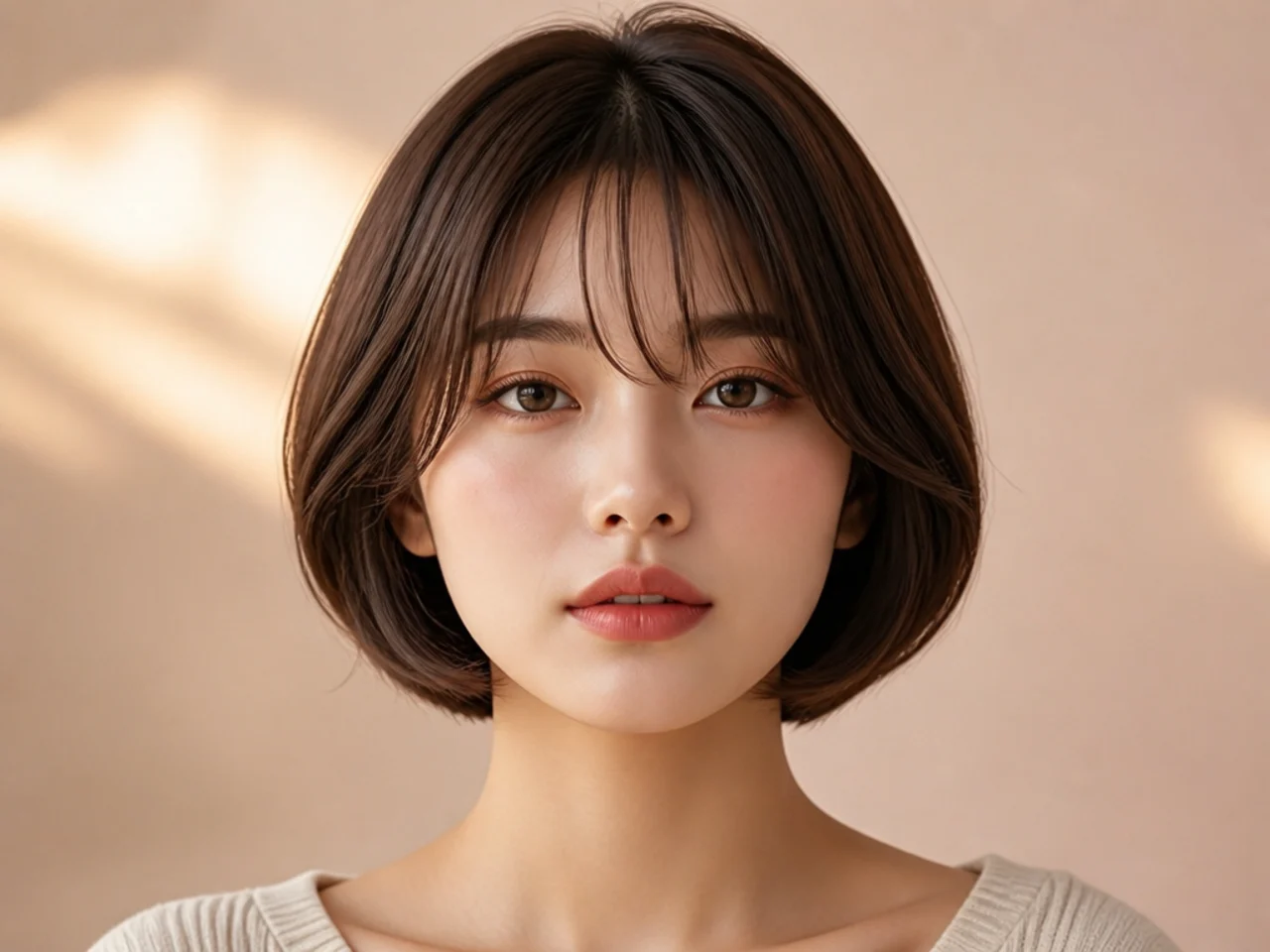
6. Jaw-Length Curved Bob
The most wearable short Korean shape. The jaw sits where the face is widest, so a curve landing there follows the face rather than fighting it.
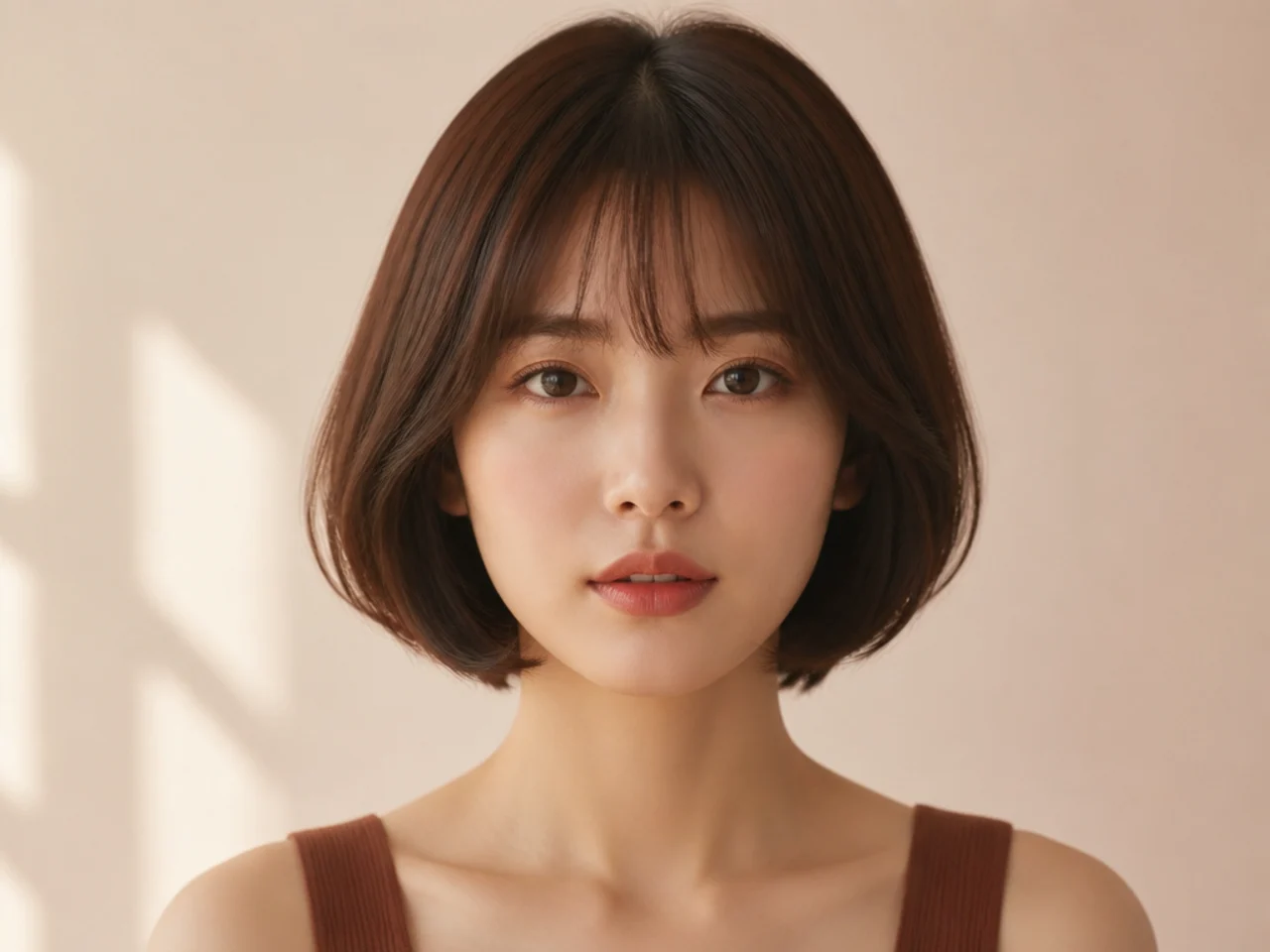
7. Korean Lob
Collarbone length with an inward-turning perimeter. Longer length means a gentler curve, because the extra weight relaxes the turn.
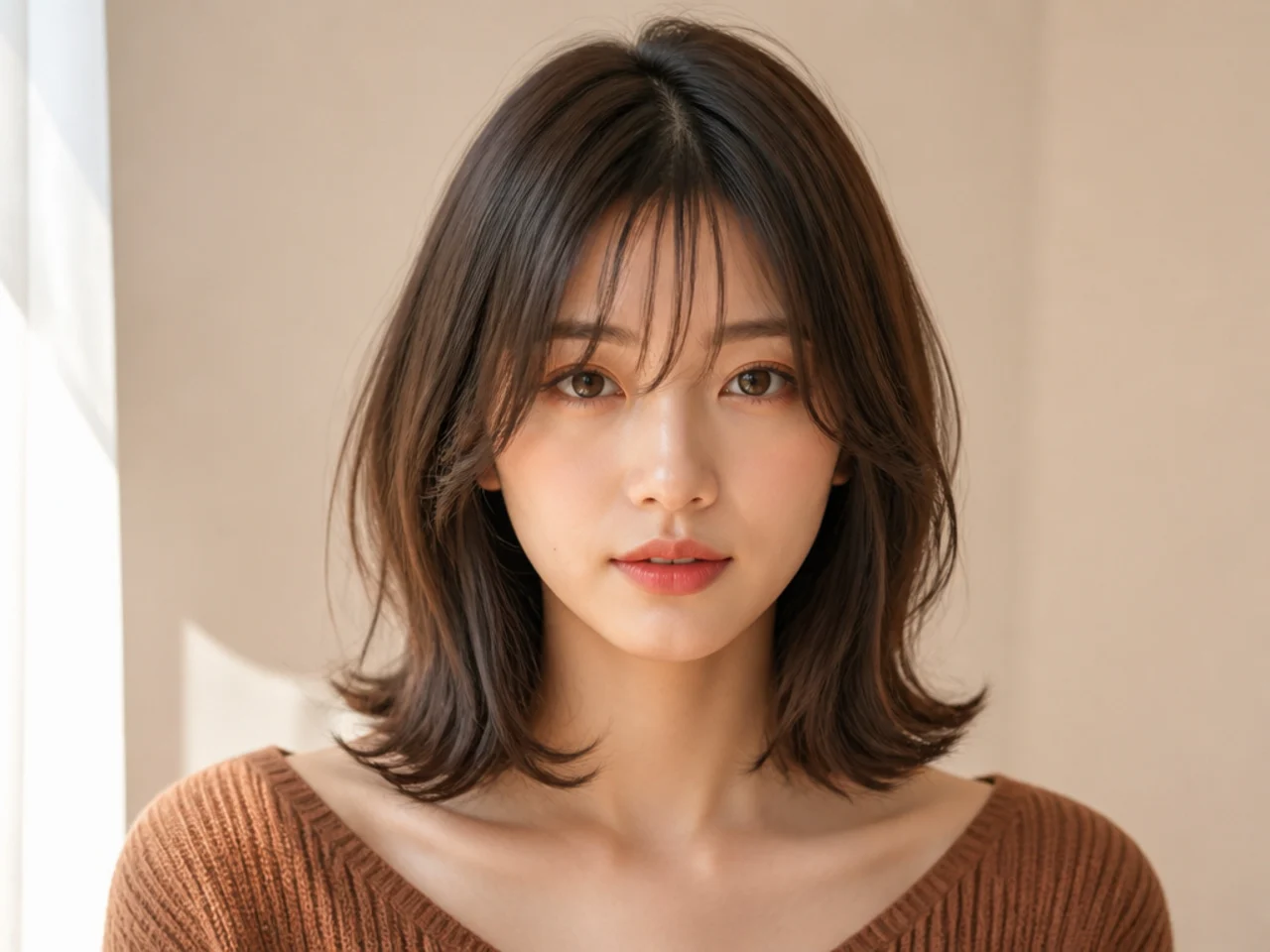
8. Short Hush Cut
Face-only layering at a short length. A hush cut layers only around the face and leaves the back one length, which is what keeps it from reading as a shag.
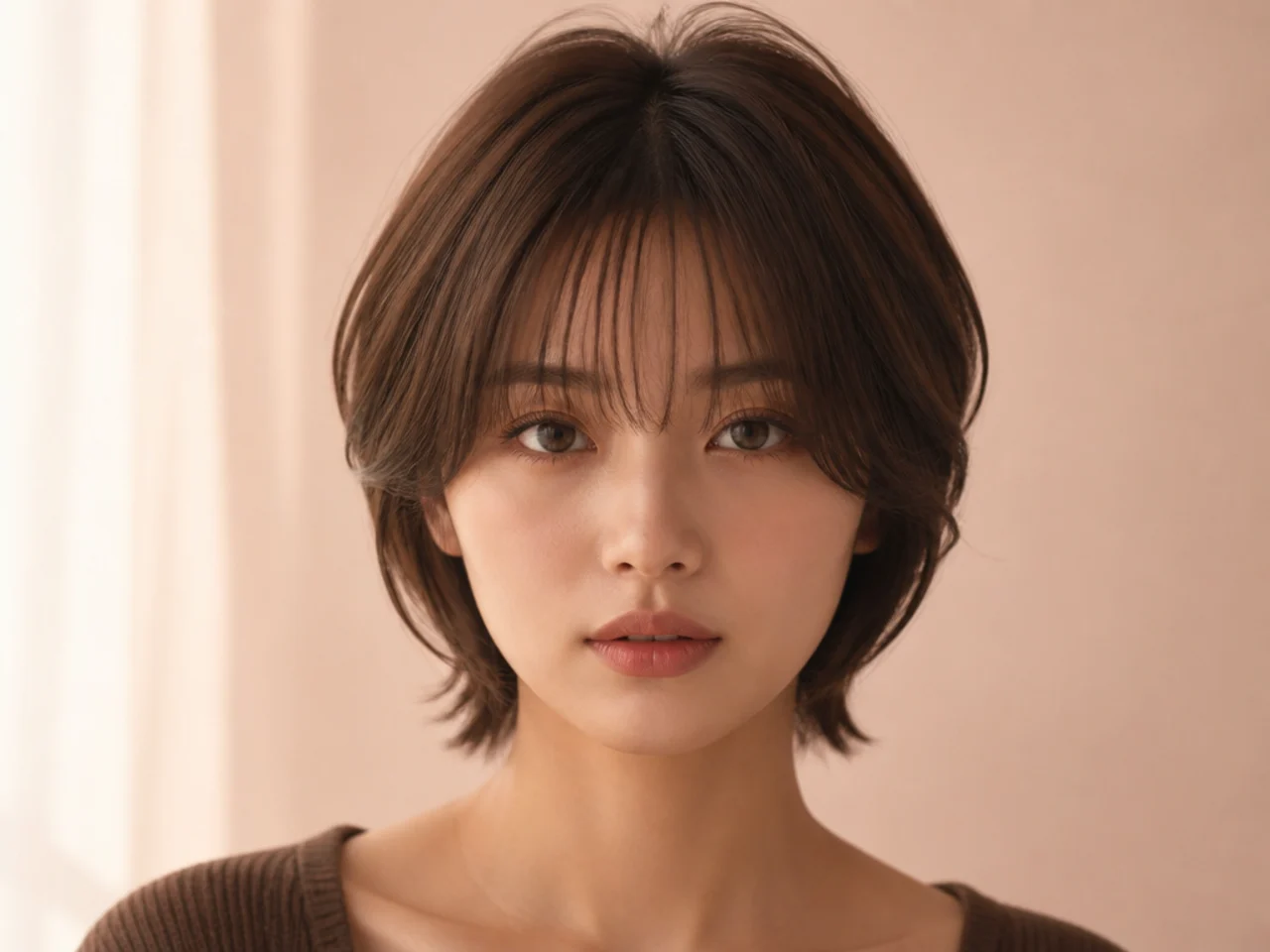
9. Short Wolf Cut
Connected layering, kept above the shoulder. A short wolf cut connects its layers rather than stacking them, which is the distinction from a Western shag.
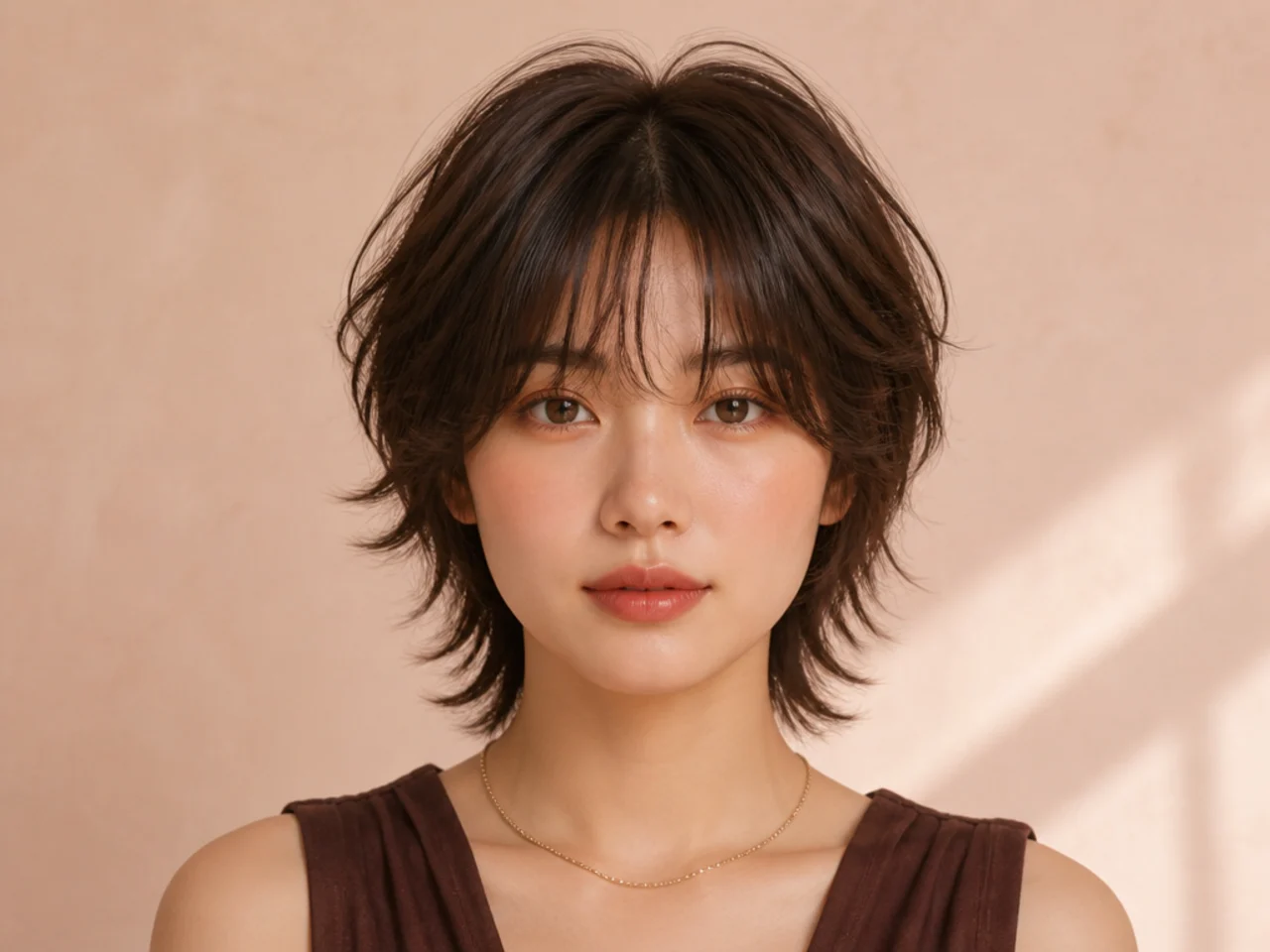
10. Korean Bob with Crown Volume
Height above a curved perimeter. The full proportion. Volume at the crown and an inward curve at the ends is the silhouette the whole board is built around.
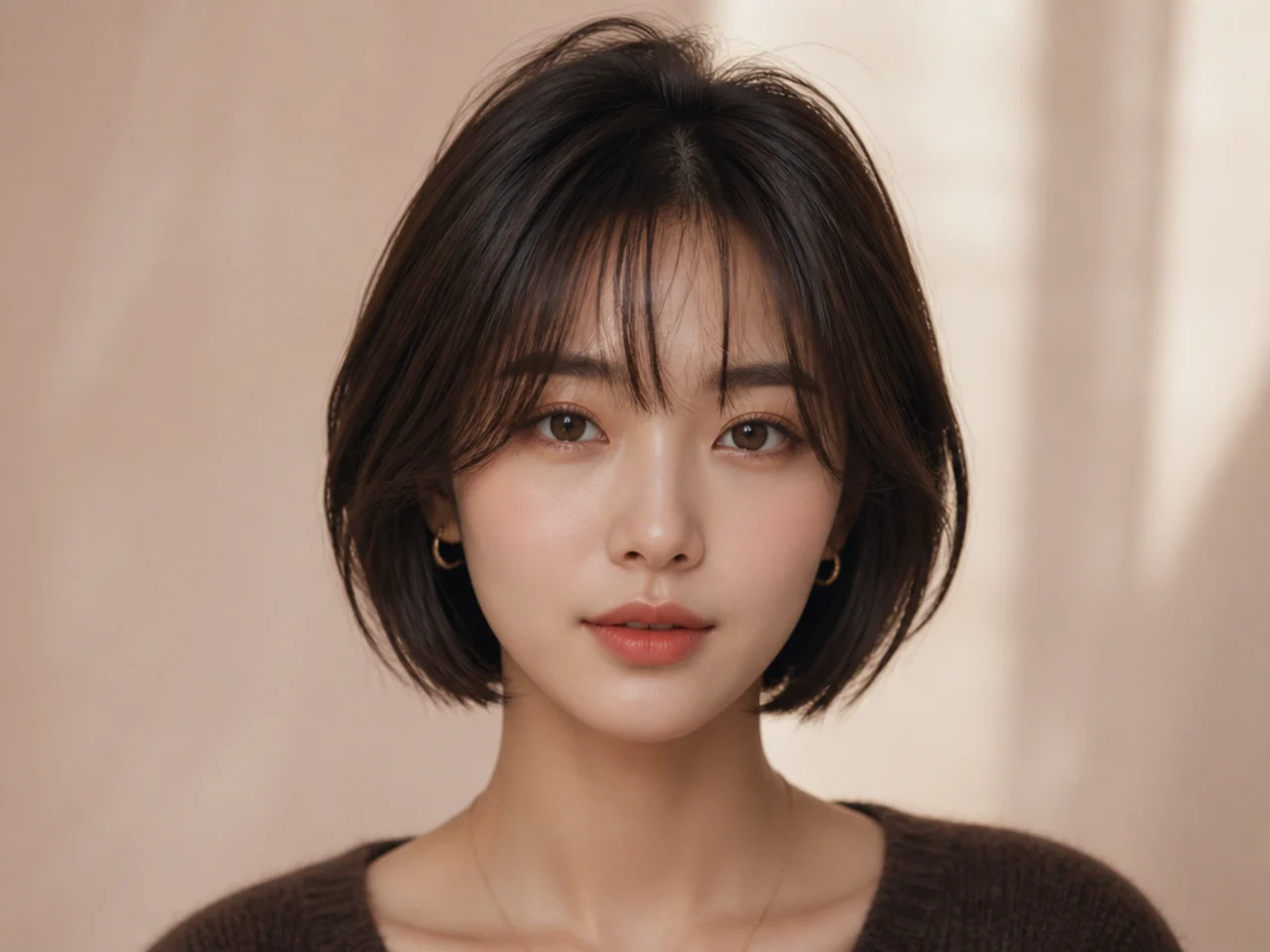
11. Korean Bob on Fine Hair
Where the inward curve does most for apparent fullness. A curved perimeter reads as more hair than a flat one, because the turn creates a visible edge with depth behind it.
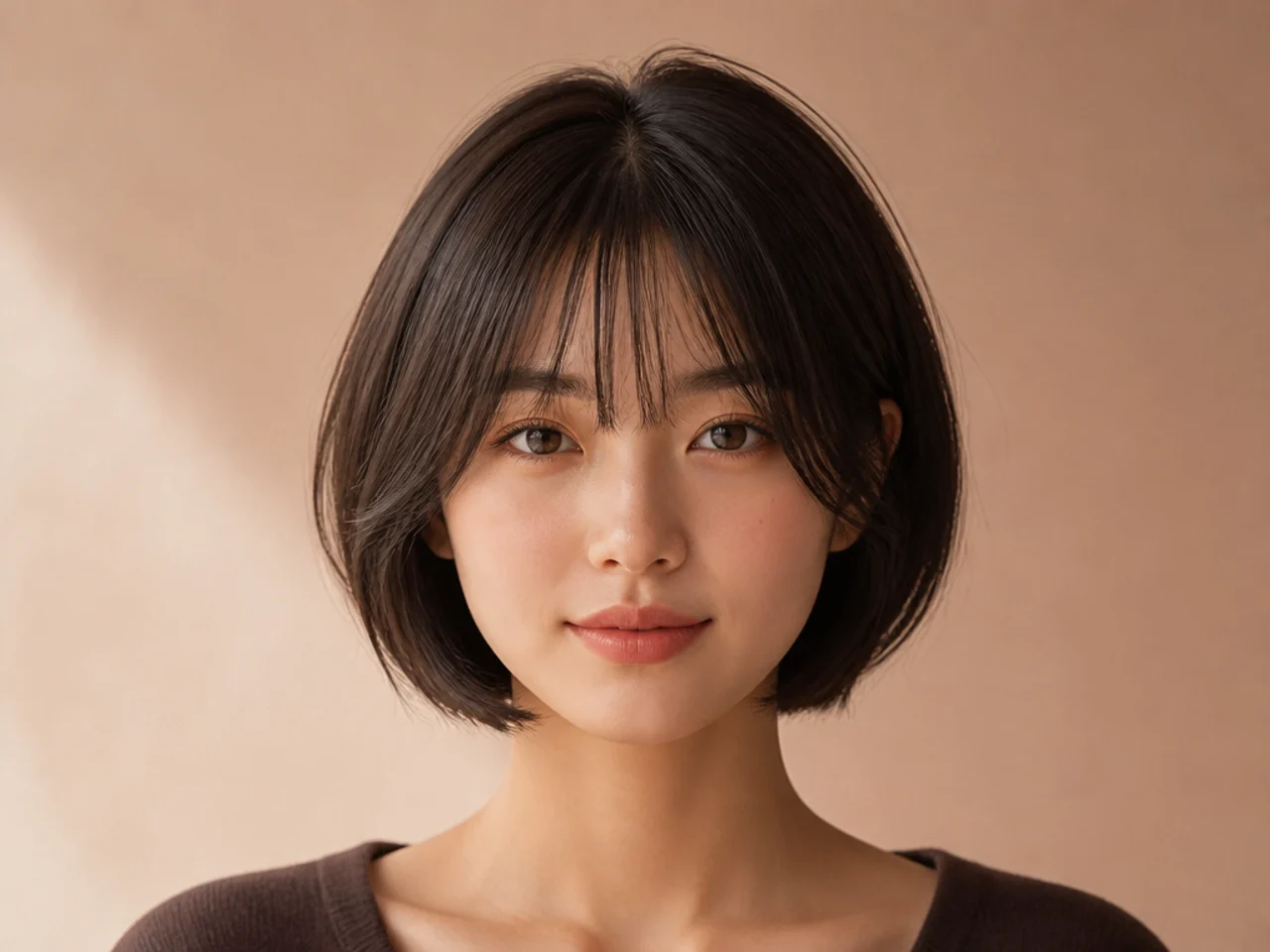
12. Korean Bob on Thick Hair
Internal weight removed so the curve turns rather than flares. Thick hair flares outward at a perimeter unless weight comes out from underneath first.
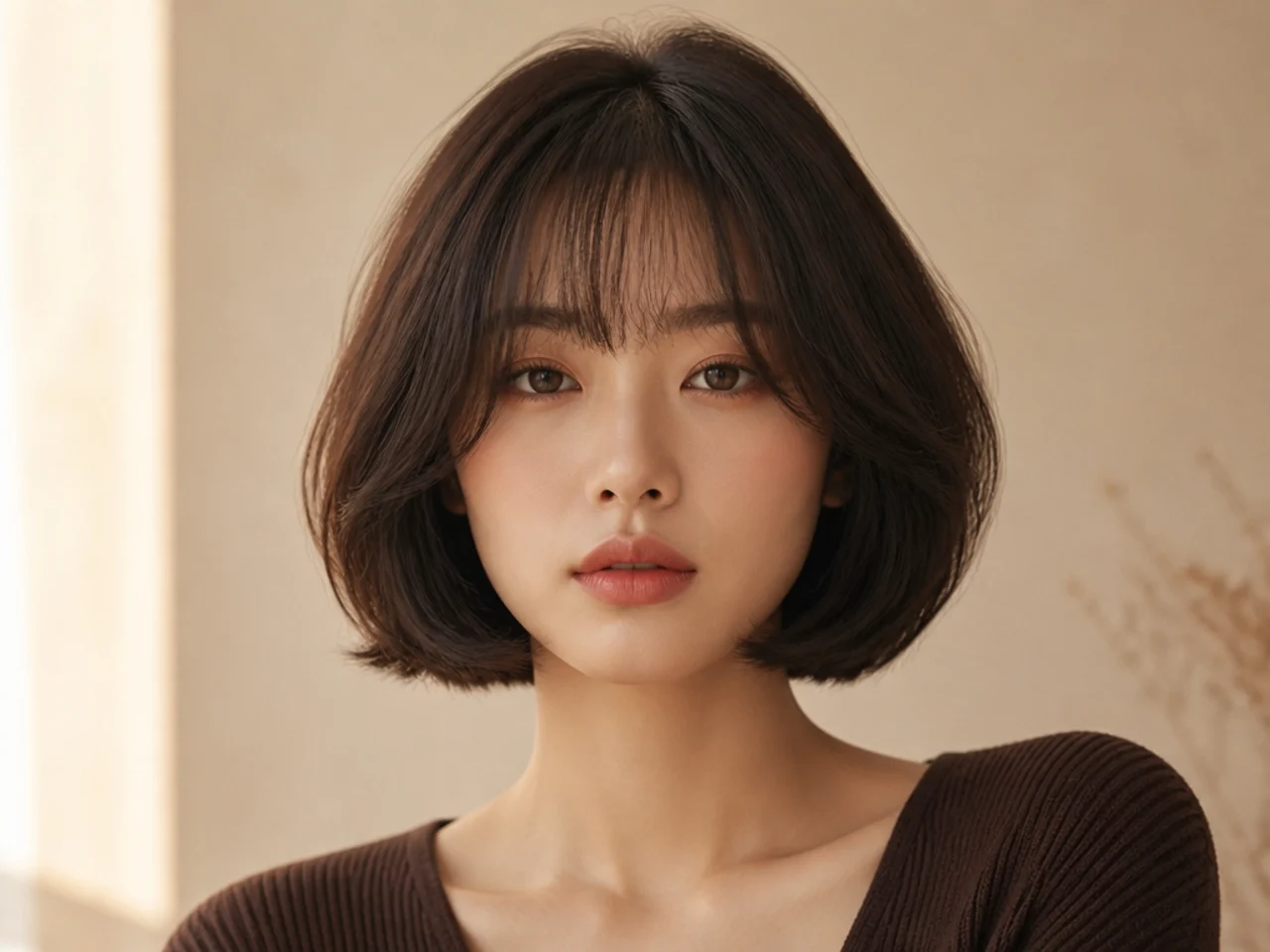
13. Korean Bob with a Soft Perm
The curve permed in rather than dried in daily. A chemically set curve survives washing, which is the difference between a style and a haircut.
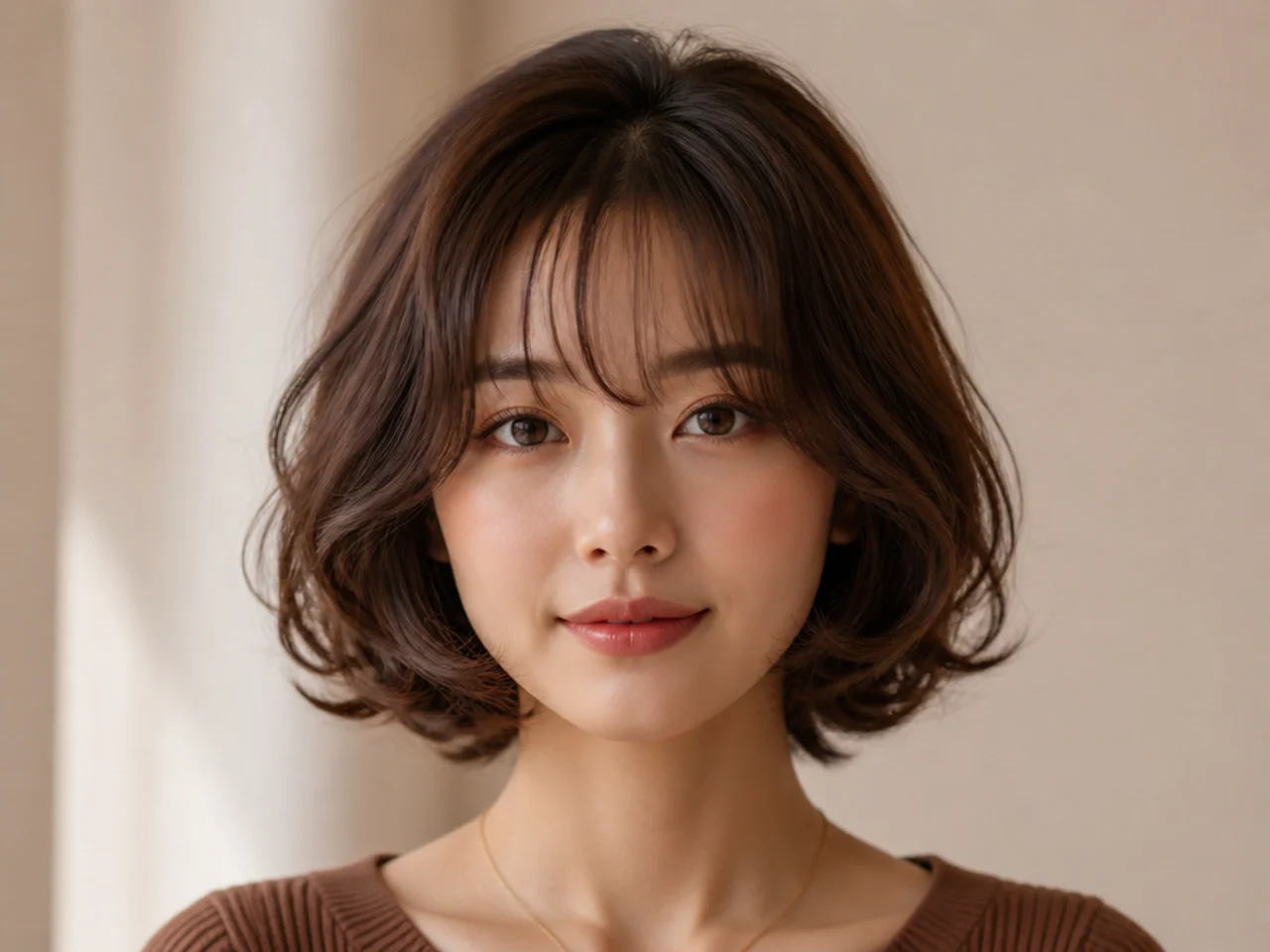
14. Korean Bob with a Middle Part
Symmetrical, with both sides curving in. A middle part means both curves are read together, so any difference between them is unmissable.
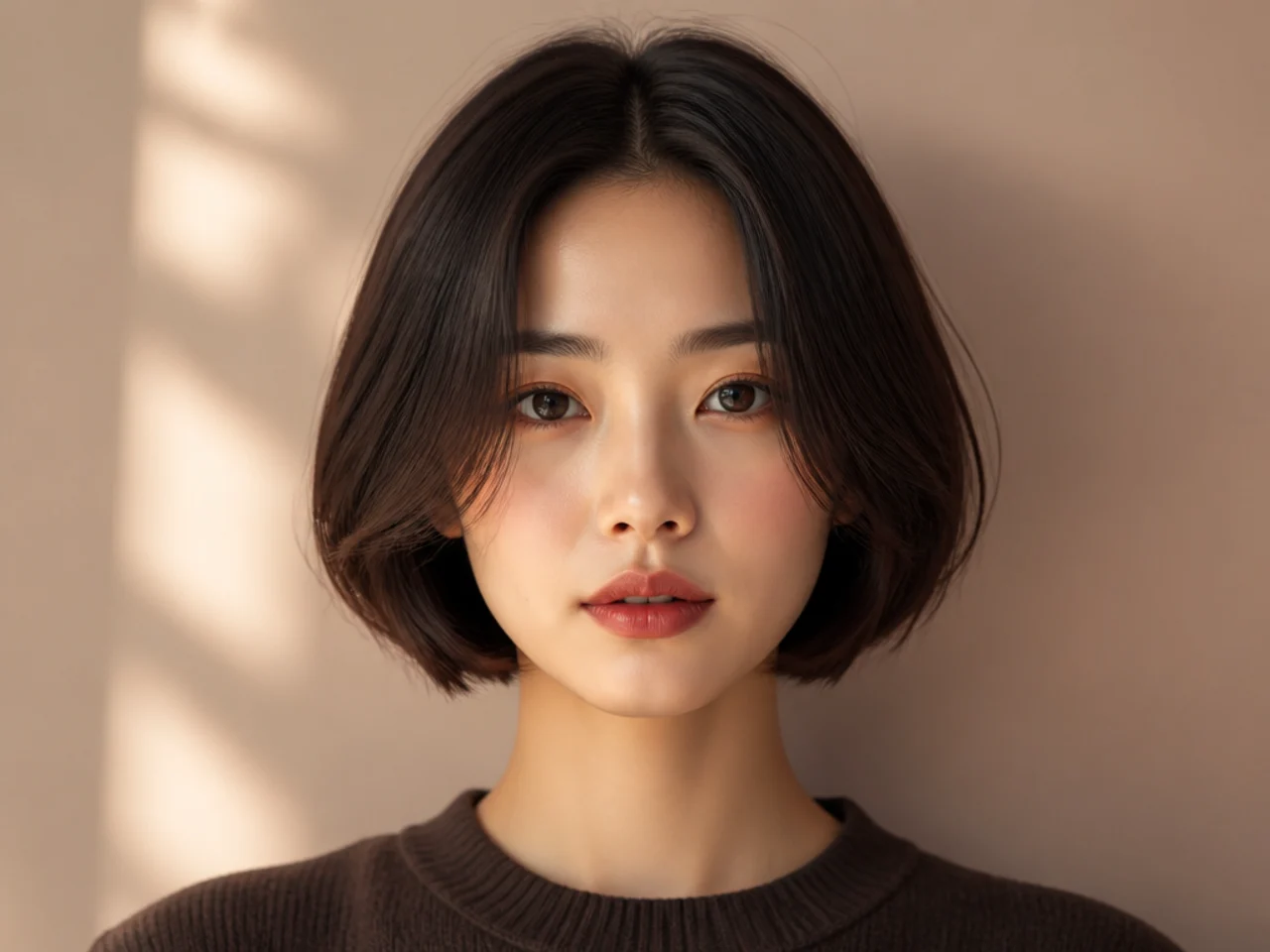
15. A Blunt Bob for Comparison
Straight-hanging perimeter. Same length, different cut. The comparison is the point — the length is identical, and only the behaviour of the perimeter changes.

Styling and Upkeep
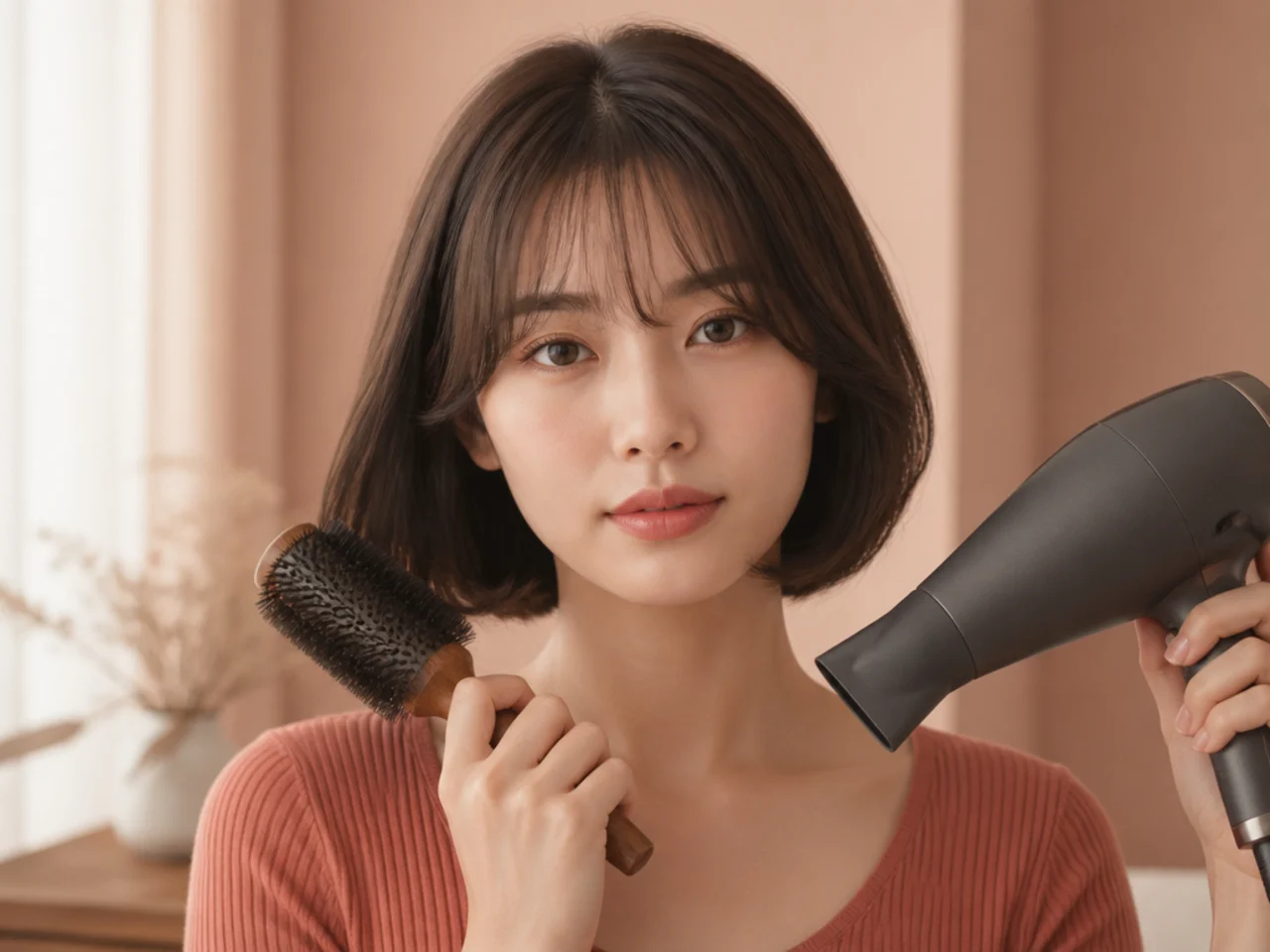
Dry the ends inward every time. The curve is a styling instruction as much as a cutting one. Round brush, ends only, turning under as the last of the moisture leaves.
Use a round brush at the ends only. Not through the length. Brushing the mid-lengths flattens the volume the crown needs.
Consider a soft perm if you dry it daily. It sets the curve permanently and saves the routine. Worth costing out against the minutes it replaces every morning.
Trim every six to eight weeks. Short shapes soften quickly.
Dry the crown up first. Then the ends in. Two movements, in that order.
Mistakes to Avoid
Asking for a bob. You will get the straight-hanging version.
Drying the ends straight. The curve has to be set each time unless it is permed.
Volume at the sides. It fights the inward turn.
A blunt perimeter instruction. This is the one Korean cut where blunt is wrong.
Skipping the crown volume. At this length it matters more, not less.
FAQ
What makes it different from a bob? The perimeter curves inward instead of hanging straight.
How do you ask for it? Ask for the ends to curve inward toward the jaw.
Does it suit fine hair? Yes — a curve reads fuller than a straight line.
Final Thoughts
Ask for a curve, not a bob. It is one word different at the appointment and it is the entire difference between the short Korean cut you saved and an ordinary good bob — because at this length the framing has nowhere to hide, so it becomes the shape itself.
For the face-only layered version see 15 korean hush cut haircut ideas, and for matching the framing to your face see 20 korean haircut ideas for women. More in Women's Hairstyles.