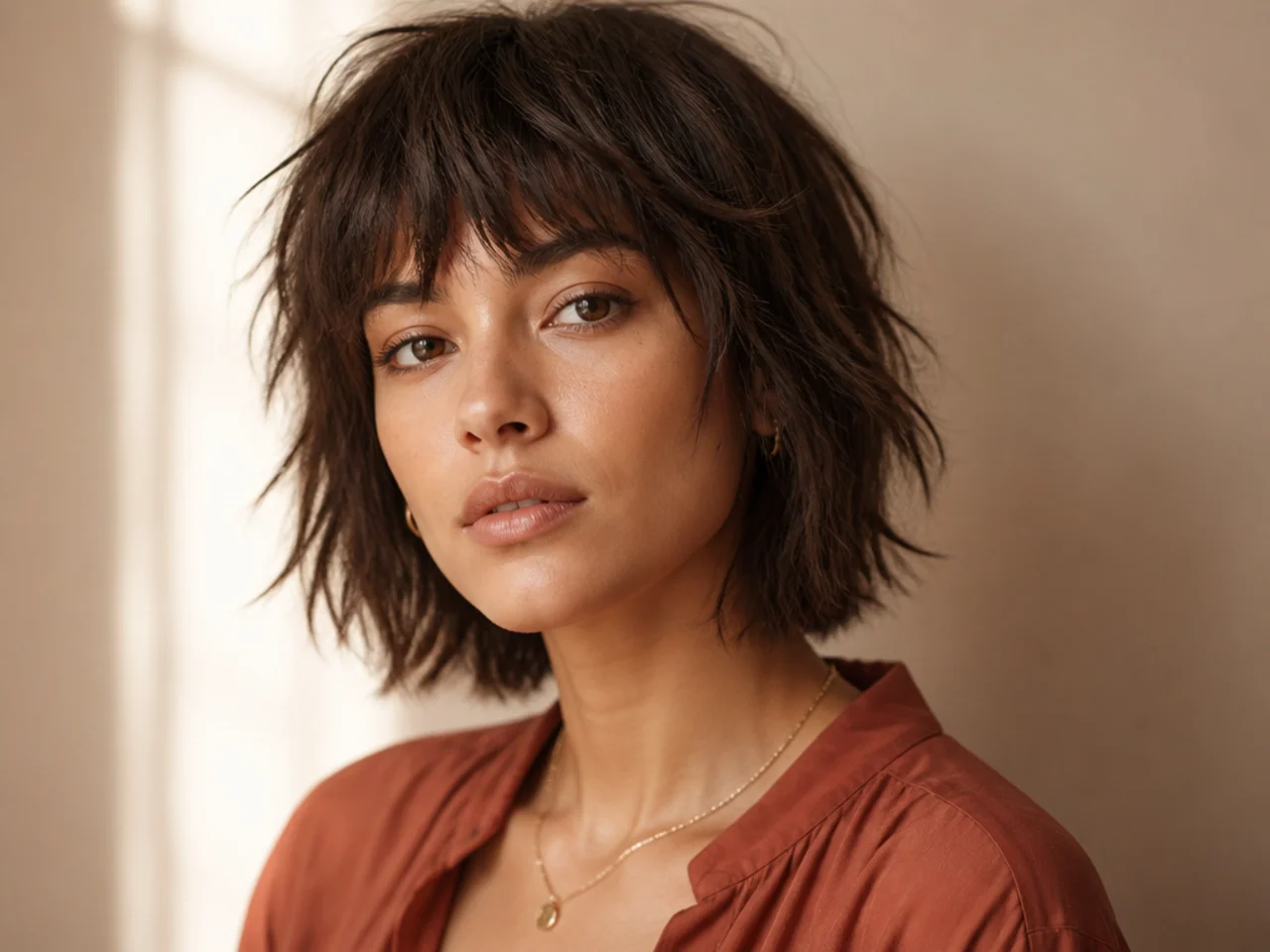
Easy 32 Layered Womans Short Hair Styles
Discover trendy layered women's short hairstyles that add volume and style. Explore chic cuts, modern looks, and easy-to-maintain ideas for every face shape.
In this article · 42
- Shaggy Layers
- Voluminous Lob: Layer Cut Hairstyle
- Wavy Lob
- Textured Lob
- Bouncy Layers
- Feathered Fringe
- Curly and Round
- Blunt Bags
- Layered Mullet
- Curly Fringe
- Dimensional Lob
- Soft Layers
- Asymmetrical Lob
- Curly Lob with Bangs
- Layered Braids
- Butterfly Layers
- Long Bangs
- Loose Waves
- Shaggy Blowout
- Vibrant Curly Lob
- Simple Waves
- Side Swept Lob
- Mid Length Bob
- Face Framing Layers
- Middle Part Lob
- Beach Waves
- Highlighted Lob
- Soft Layers
- Mullet with Bangs
- Flipped-Out Lob
- Vintage Lob
- Choppy Layers
- Conclusion: womens short hair styles
- FAQs - Layered Womans Short Hair Styles
- Which layered short hairstyle is best for thin hair?
- Can layered short hair work with curly textures?
- Are layers good for women over 40 or 50?
- How often should layered short hair be trimmed?
- What products help layered short hair look its best?
- Do layered cuts require daily styling?
- Which layered style suits round faces?
- Can I add color to enhance layers?
Short layered cuts add movement and lift that flat, one-length hair can't match. The trick is where the layers sit. Internal layers around the crown build volume at the roots. Blunt or lightly point-cut ends keep density. Thinning shears at the ends kill fine hair — skip them. Below you'll find 32 short layered hair styles for women, with how to ask, who each suits, and one styling tip per look.
Shaggy Layers
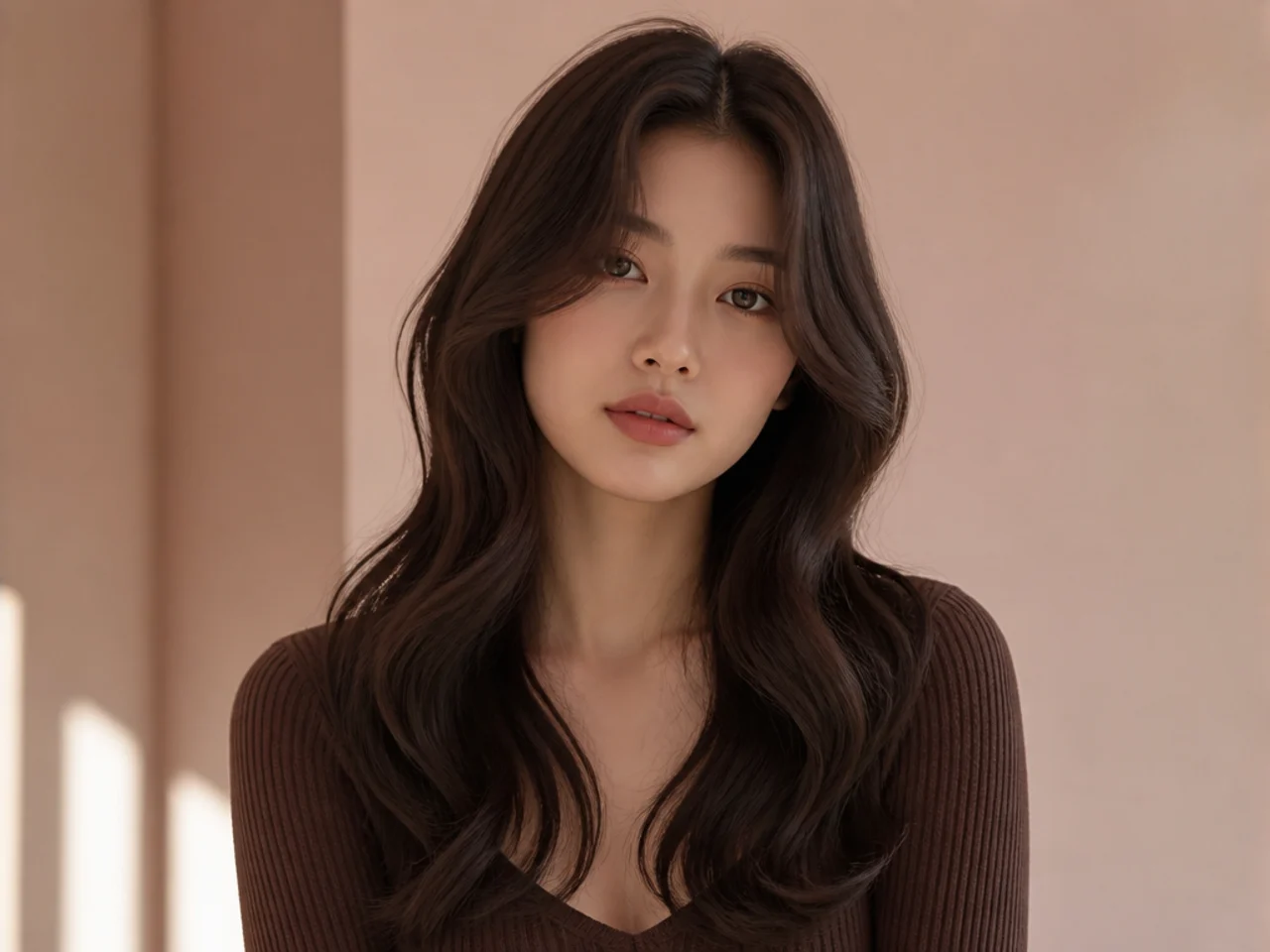
The shag lives on internal layers, not thinned ends. Short shaggy layers stack down from the crown, breaking bulk and adding lift where you want it. Medium-density hair with natural bend takes to this fastest. Poker-straight hair needs a wave assist from a wand. Ask for a chin-to-collarbone shag with internal layers for volume around the crown and a wispy curtain fringe. Round faces should keep the fringe past the brows to elongate. Styling tip: mist damp hair with sea-salt spray, rough-dry with your fingers, then twist small sections and let them cool.
Voluminous Lob: Layer Cut Hairstyle
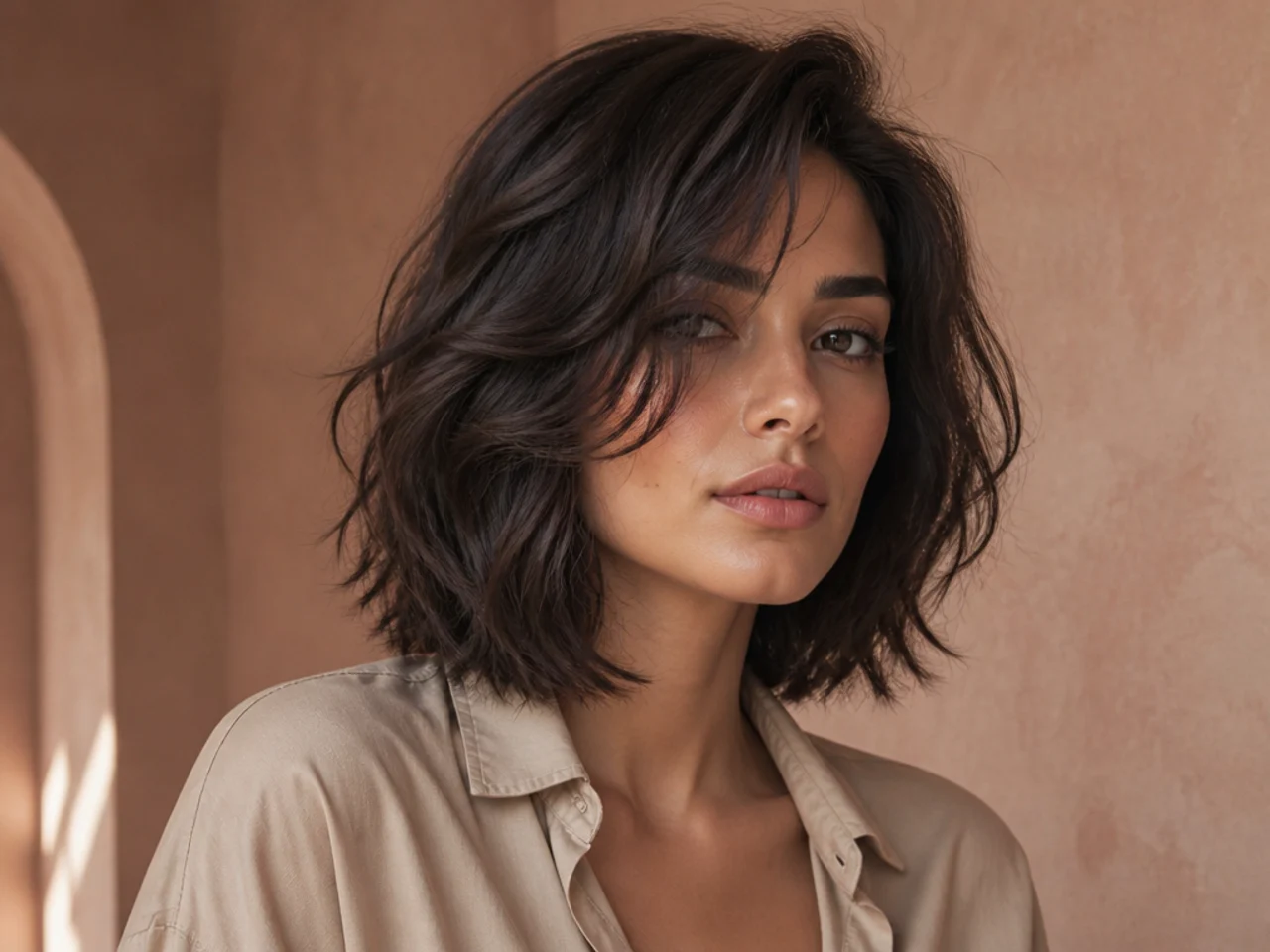
The voluminous lob (long bob) shapes soft, rounded layers through the mid-lengths for bounce. Ask for this one if your hair falls flat by lunch and you're not ready for a full pixie. Best on medium-density straight to wavy hair. Ask for a collarbone-length lob with internal layers for volume around the crown and untouched ends — end weight is what holds the shape. Long faces: add a soft brow-grazing fringe to balance. For more shape variations, browse our layered bob gallery. Styling tip: round-brush the roots up and forward, then set with cool air.
Wavy Lob
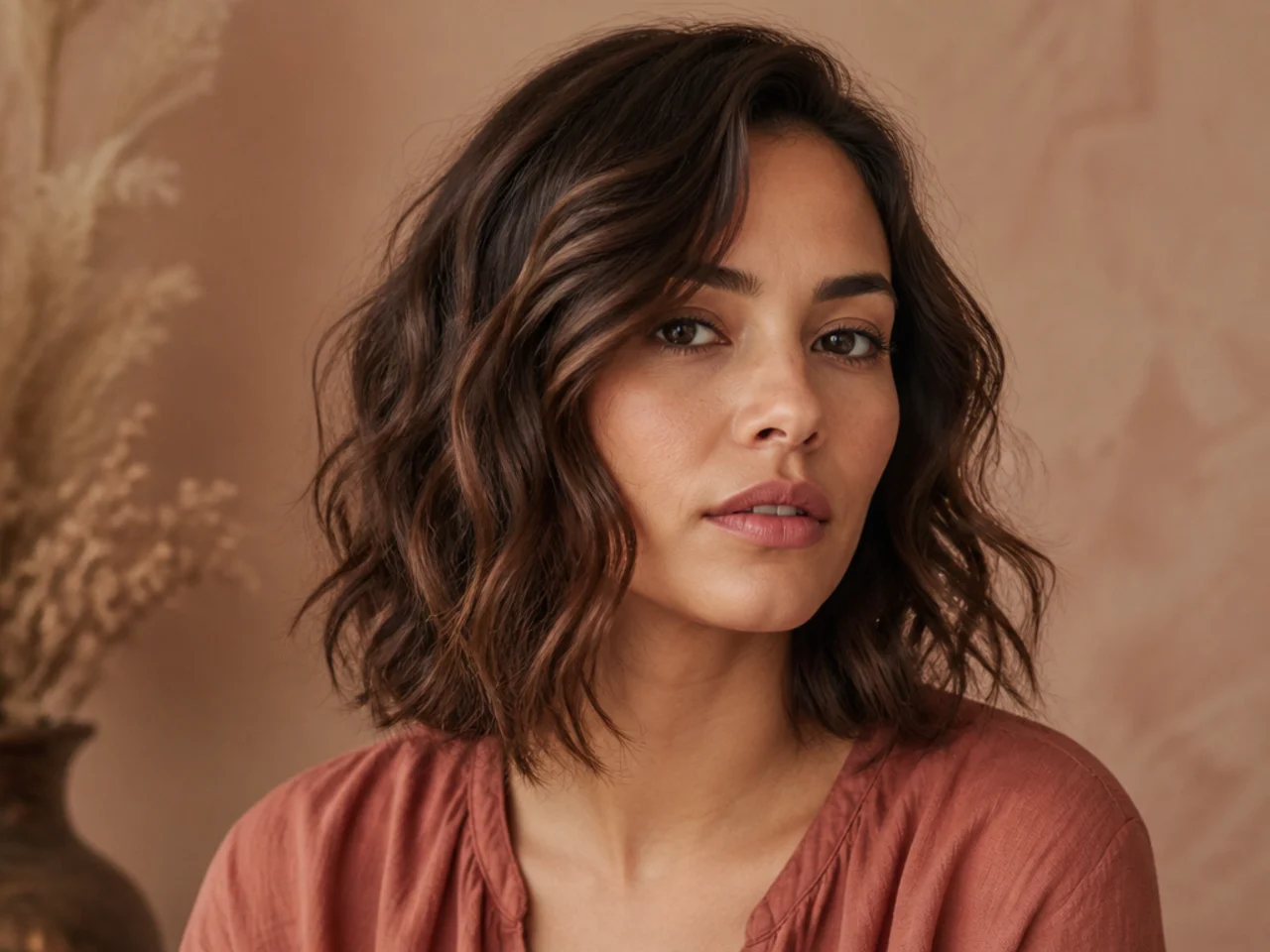
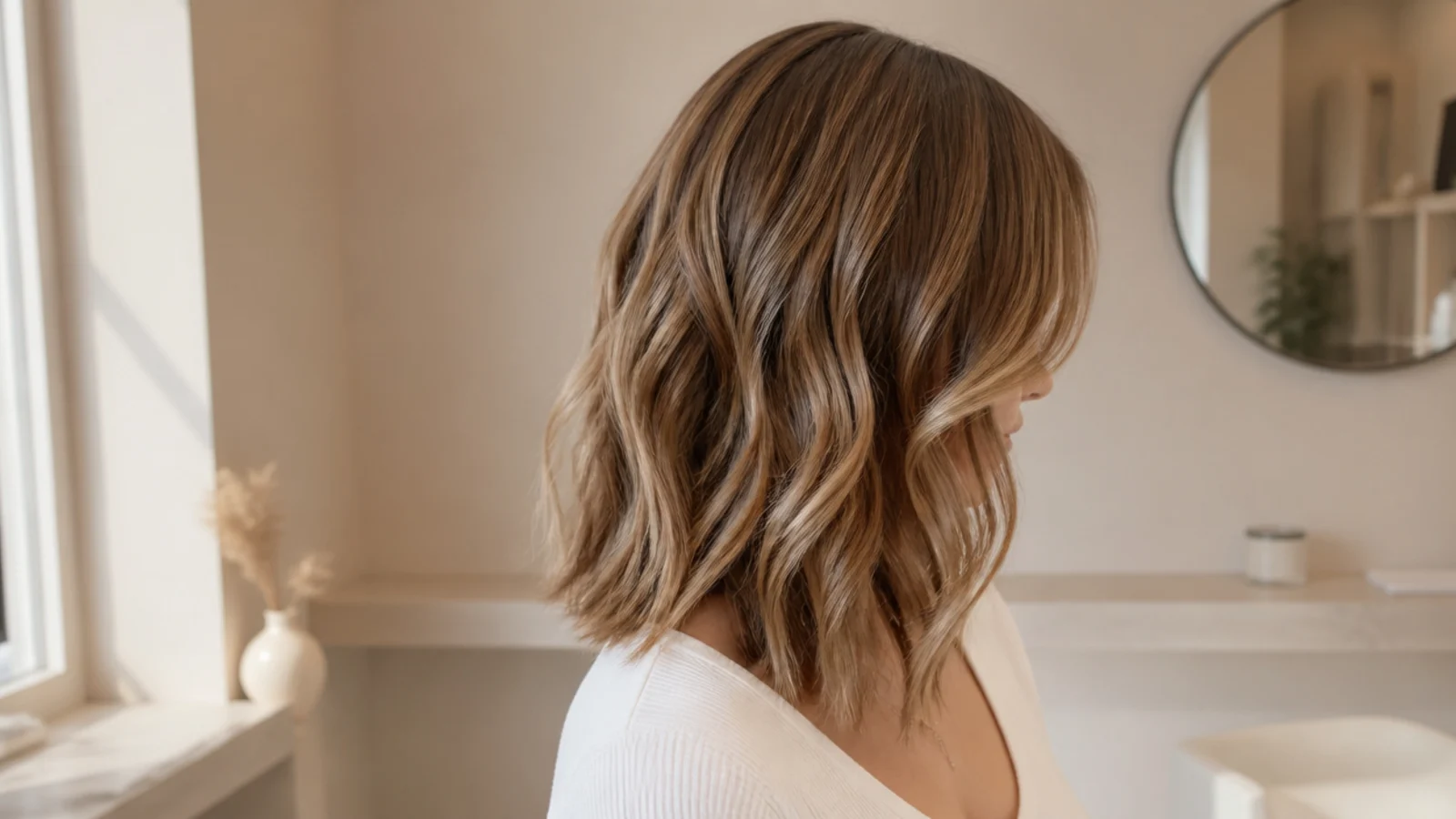
The wavy lob blends loose waves with internal layering that gives waves room to spring without frizzing out. Naturally wavy hair (2A to 2C) is the fit — straight hair needs a barrel wand for the same effect. Ask for a shoulder-length lob with internal layers for volume, point-cut (not thinned) ends, and a soft center or deep side part. Skip a heavy fringe with waves — face-framing pieces suit better. Styling tip: work a curl cream through soaking-wet hair, diffuse upside-down for two minutes, then let the rest air-dry. Highlights around the crown make waves catch more light.
Textured Lob
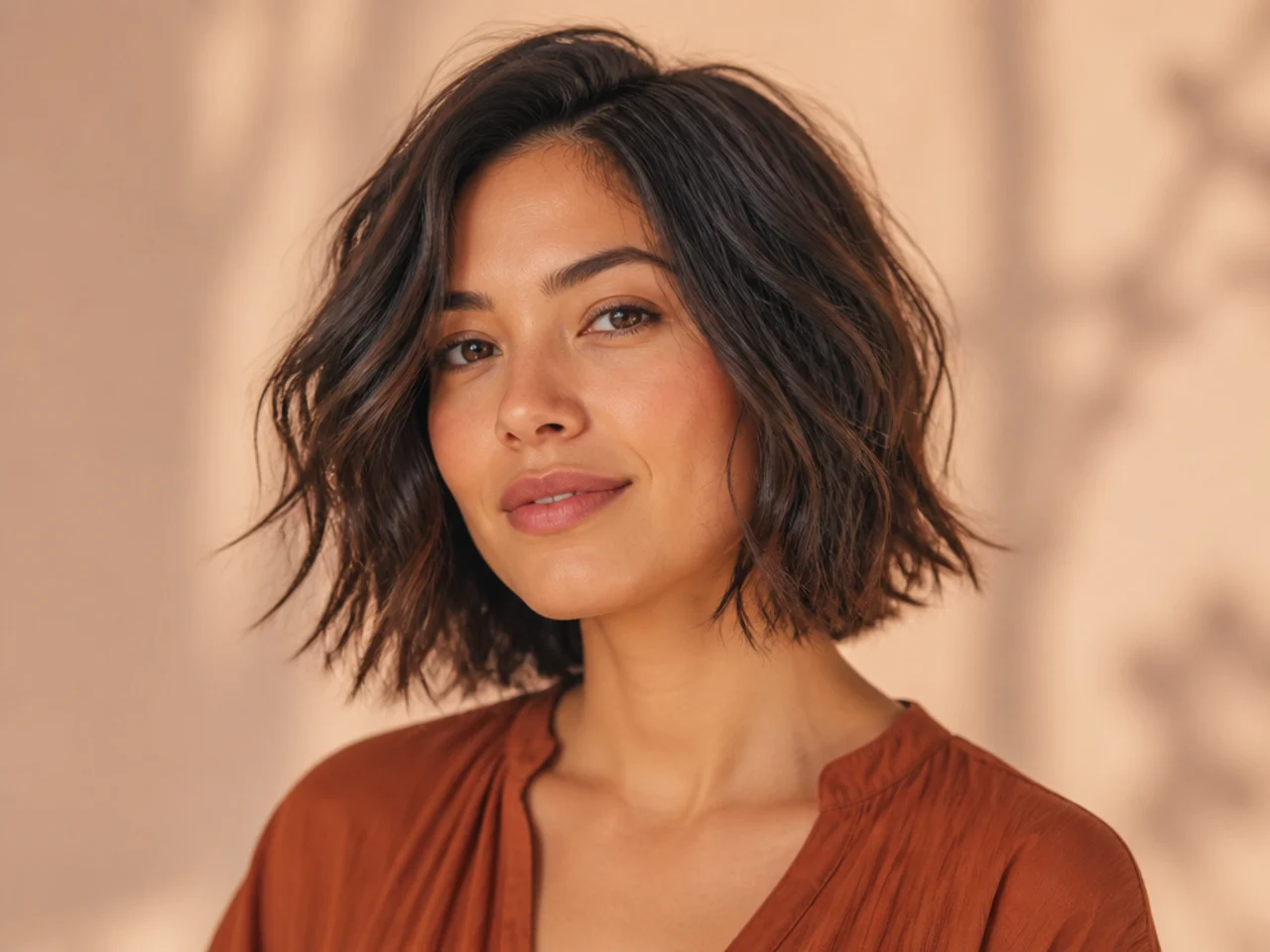
A textured lob uses choppy point-cut ends over internal layering — different from a solid blunt lob. This is the pick for fine to medium hair that reads limp with one-length cuts. Ask for a chin-to-collarbone lob with internal layers for volume, point-cut ends (never thinned), and no fringe or a wispy one. Square faces get lift from the crown texture. Styling tip: rough-dry with your fingers, then work a matte styling paste through the mid-lengths and ends. That's what gives day-two grit without needing a restyle.
Bouncy Layers
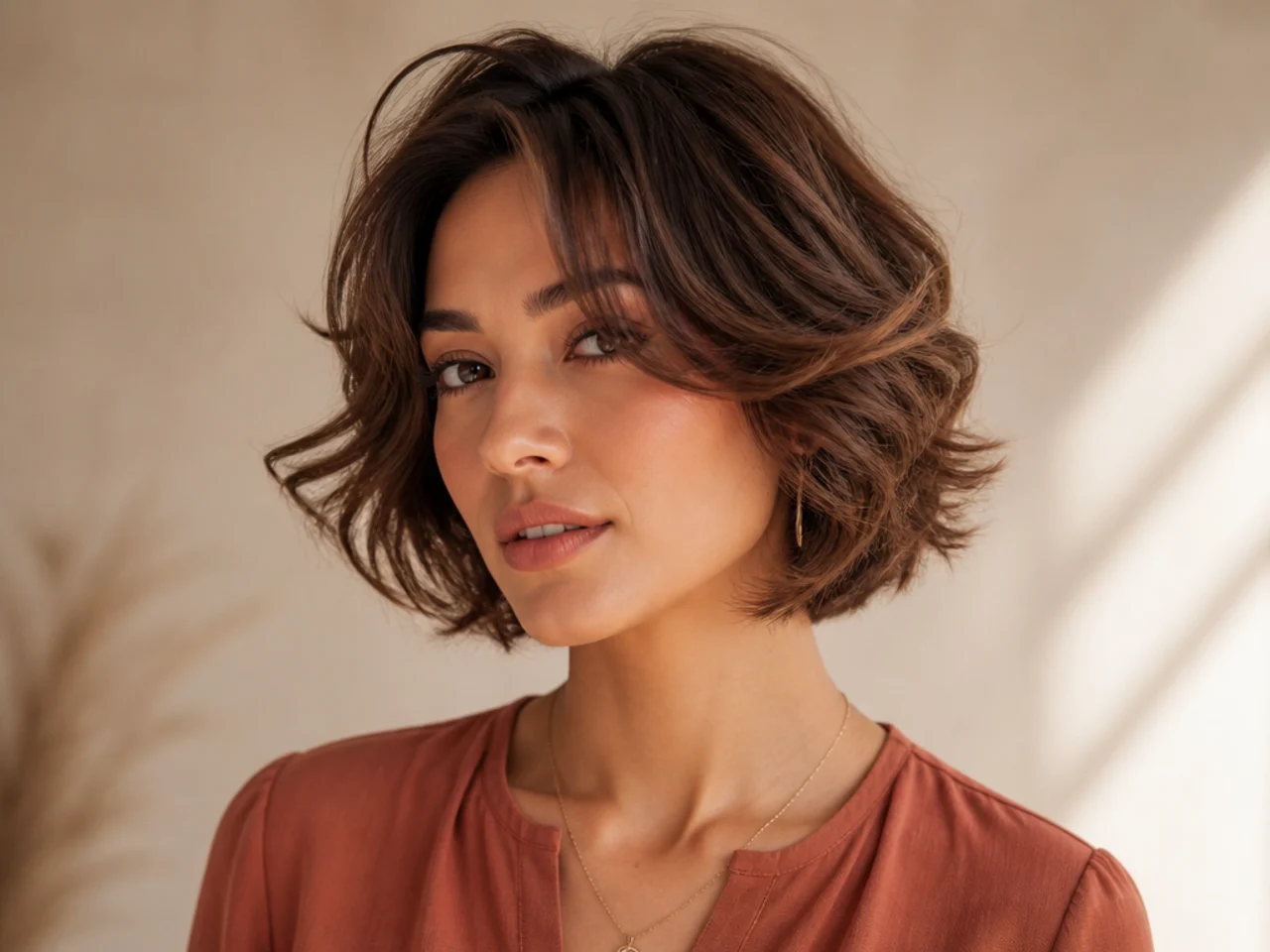
Bouncy layers live in the mid-lengths and ends — a modern take on the 90s Rachel with softer edges. This cut adds life to hair that falls without shape. Best on medium-density straight to slightly wavy hair. Ask for a chin-length or lob-length cut with internal layers for volume through the mid-shaft, rounded blunt-ish ends, and a curtain fringe. Round faces gain lift from the crown layers. Styling tip: blow-dry with a large round brush, rolling the ends under, then finish with a shine spray for polish. Skip pomades — they kill the bounce.
Feathered Fringe
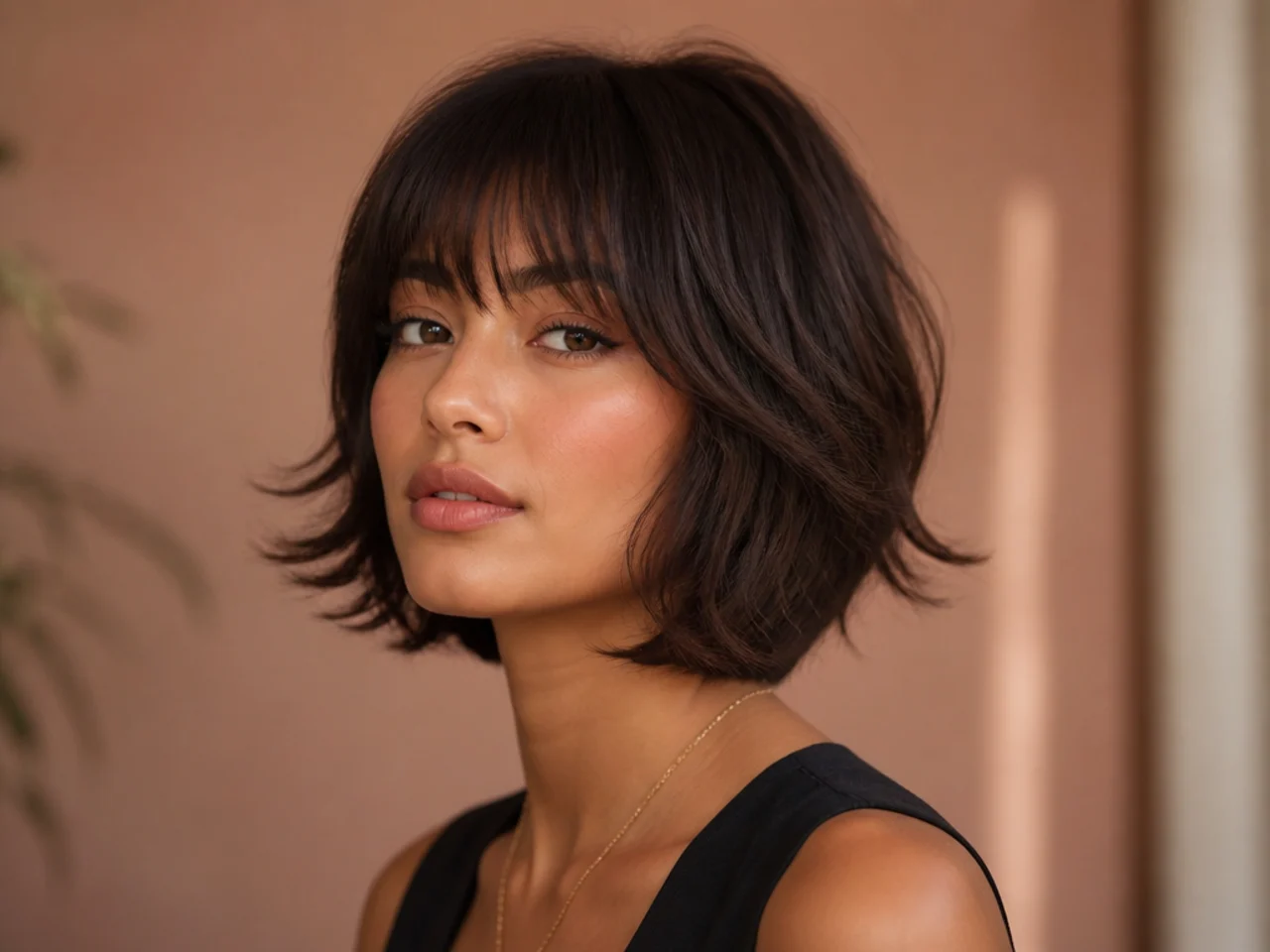
The feathered fringe is soft, wispy layering at the front that blends into the length. It softens strong bone structure and adds interest to a plain lob. Best on straight to slightly wavy hair — tight curls need a curl-specific fringe instead. Ask for a curtain-style fringe that starts at the brow and lengthens to the cheekbone, cut with a razor for feathered ends, plus internal layers for volume behind it. Styling tip: dry the fringe first, split it down the middle, then blow it back with a small round brush. Never let it air-dry first.
Curly and Round
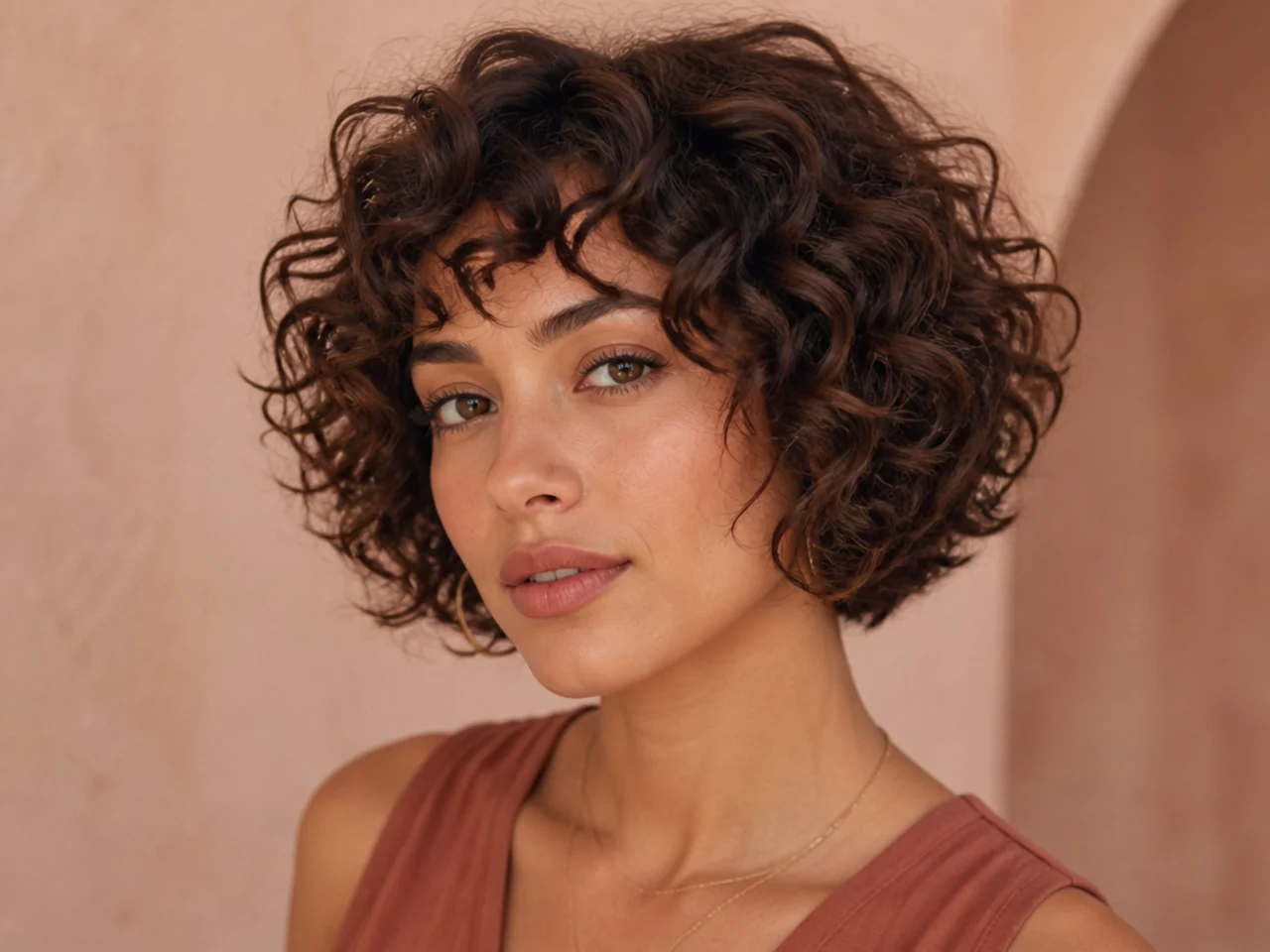
Curls need a rounded silhouette or they triangle out — wider at the bottom than the top. Internal layers around the crown build height so the shape sits like a soft dome. Best on 3A–3C curls with medium density. Ask for a dry-cut curly shape with internal layers for volume from the crown down, chin-to-collarbone length, and no fringe unless it's cut curl-by-curl. Styling tip: apply a leave-in and a defining gel to soaking-wet hair, then plop in a cotton t-shirt for 20 minutes before air-drying the rest of the way.
Blunt Bags
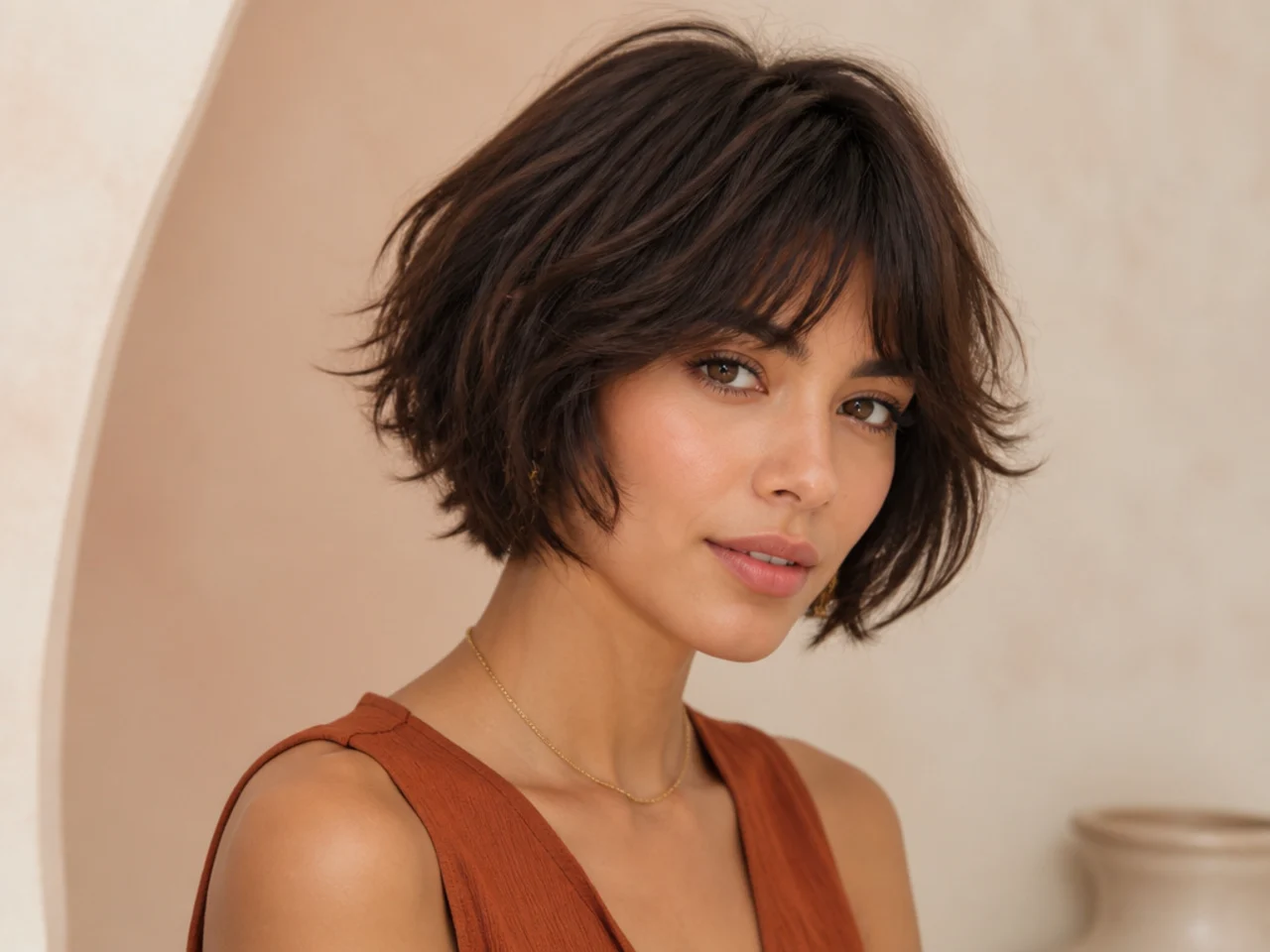
Blunt bangs sit sharp and heavy against a layered short cut for contrast. The layers move; the fringe doesn't. Best on straight, medium-density hair and strong bone structure — long or oval faces carry it best. Ask for full blunt bangs cut mid-brow, paired with a chin-length lob with internal layers for volume from the temples down. Fine hair: skip blunt and go wispy. Styling tip: blow-dry the fringe side-to-side with a flat brush before it fully dries. If you want the sharp edge without the fringe, consider a blunt haircut with layers.
Layered Mullet
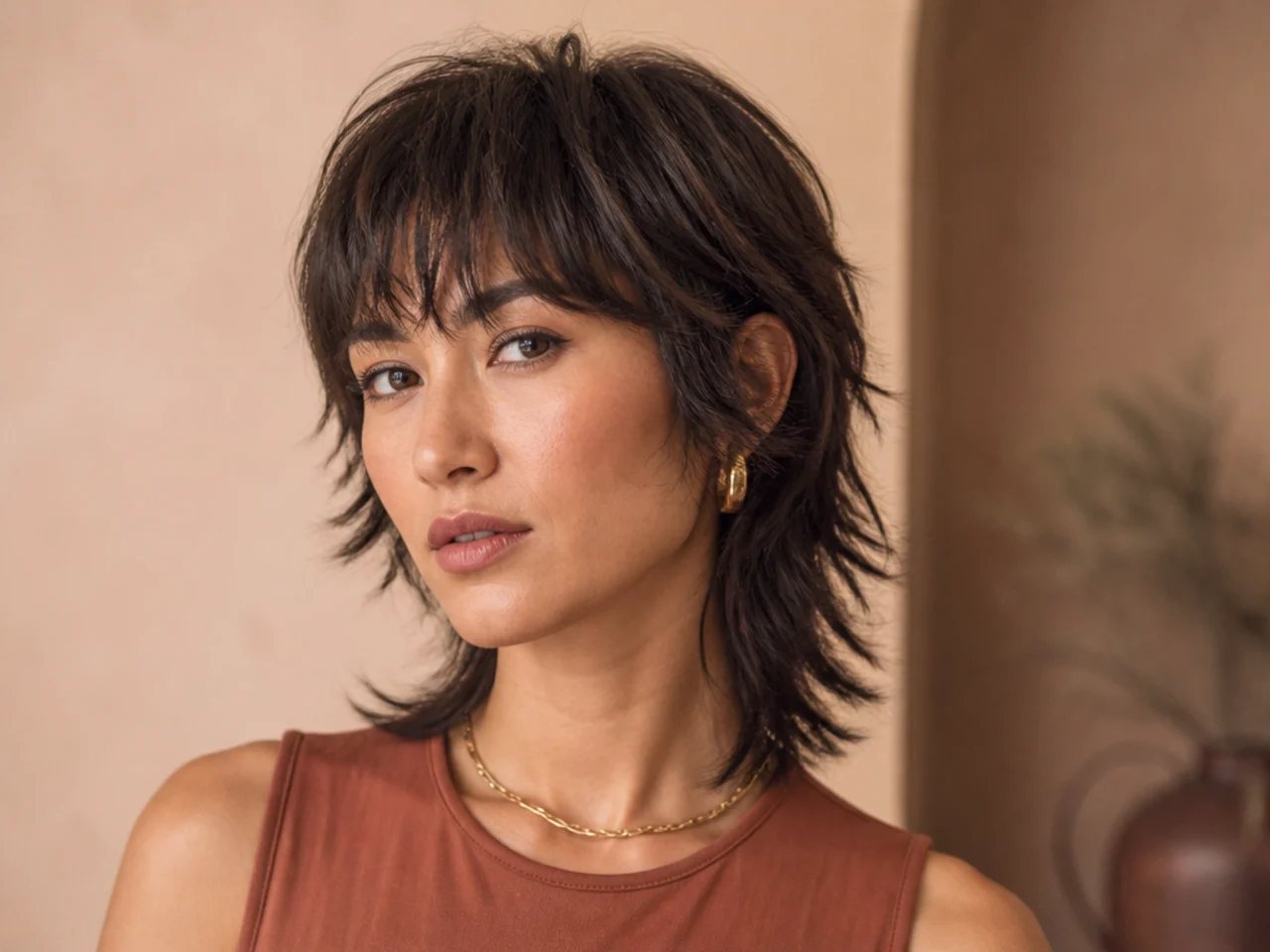
The modern layered mullet stacks short crown layers over longer nape length — soft, not spiky. This suits confident wearers with medium-density straight to wavy hair. The cut needs shape to sit right, so book with someone who does them regularly. Ask for a chin-length front, 2 to 3 inches of extra nape length, internal layers for volume through the crown, and a curtain or blunt fringe. Round faces should keep more length in the front. Styling tip: air-dry with a light cream through the ends, then finger-tousle the crown for lift. Second-day hair reads best.
Curly Fringe
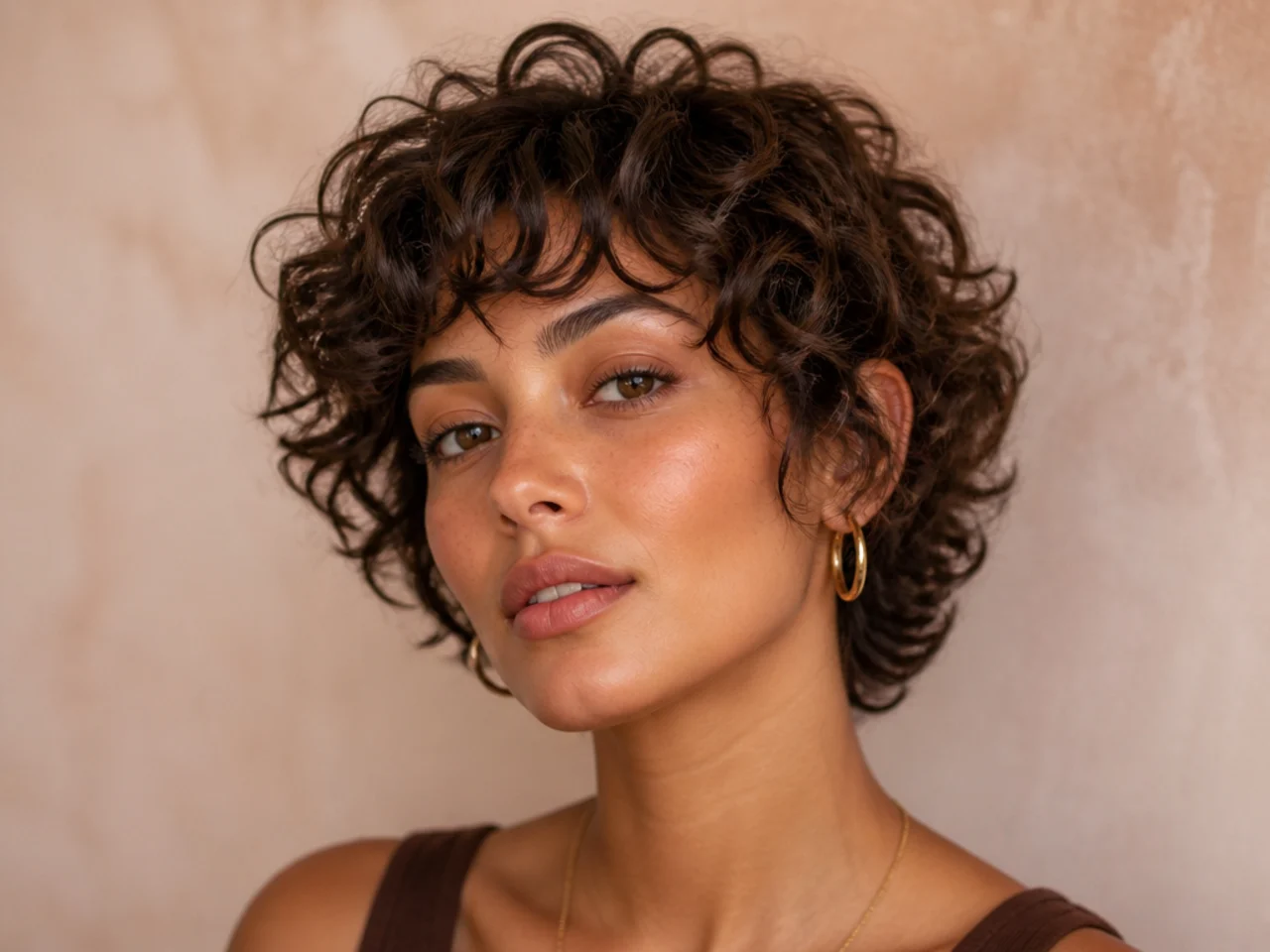
A curly fringe frames the face and softens forehead width without the daily maintenance of straight bangs. Best on 3A–3C curls that already have a consistent pattern. Ask for a dry-cut fringe that starts at the curl's spring point (usually 1 to 2 inches above the brow), paired with internal layers for volume around the crown. Skip this if your curl pattern is patchy — the fringe will look thin. Styling tip: mist the fringe with water, apply a pea-sized amount of curl cream, and pinch curls between your fingers. See our curly hair guide for related pattern-specific tips.
Dimensional Lob
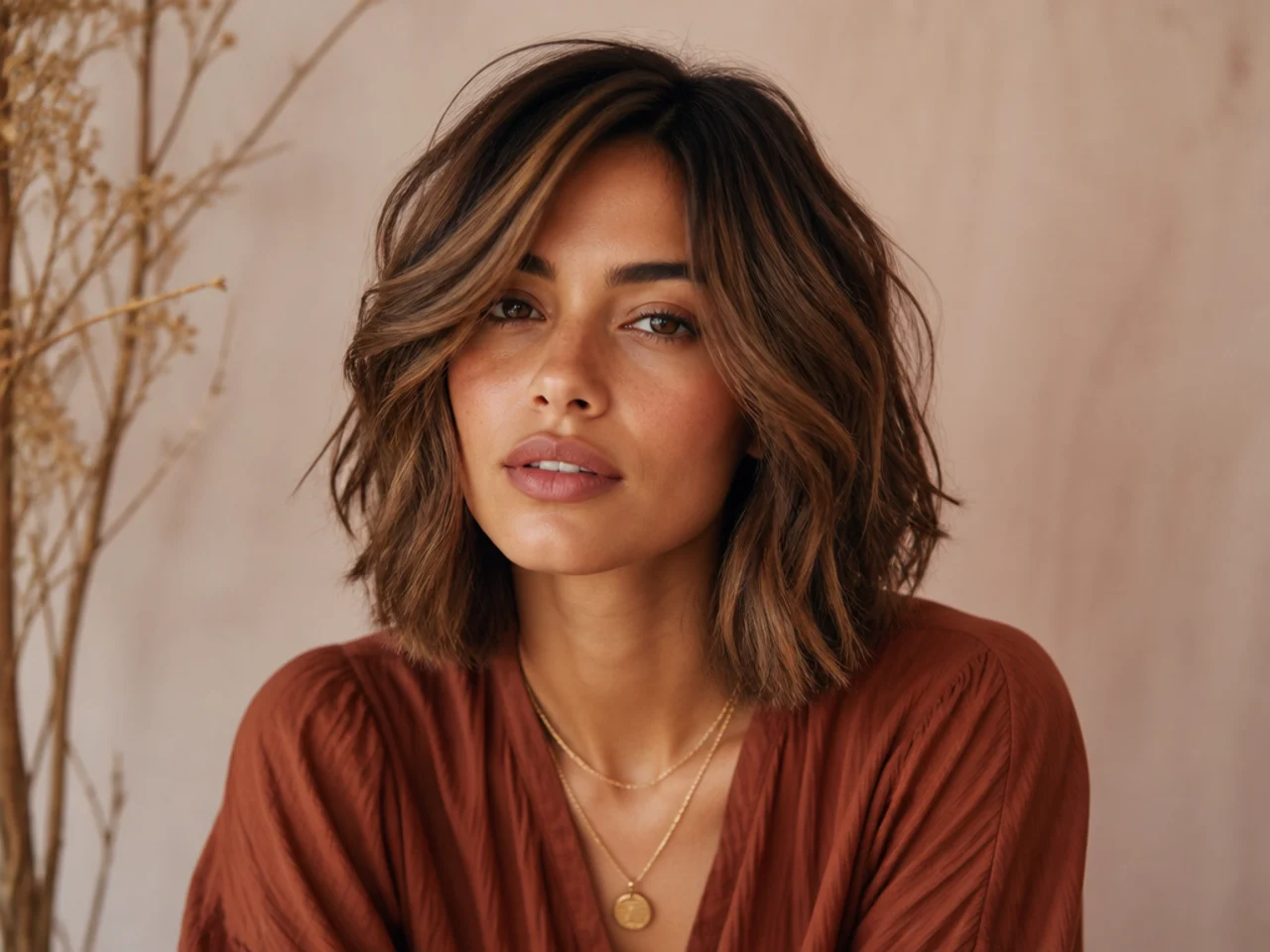
Dimensional means the layers are angled — shorter at the top of each layer, longer at the bottom — so light catches differently across the cut. Best on medium to thick hair with subtle highlights or lowlights. Ask for a collarbone-length lob with internal layers for volume cut on a soft angle from the ear down, no thinning at the ends. Fine hair: skip and go blunt instead. Styling tip: blow-dry in three sections — nape, mid, crown — with a medium round brush, then break up the surface with your fingers. Our layered haircut techniques guide covers the cutting angle in detail.
Soft Layers
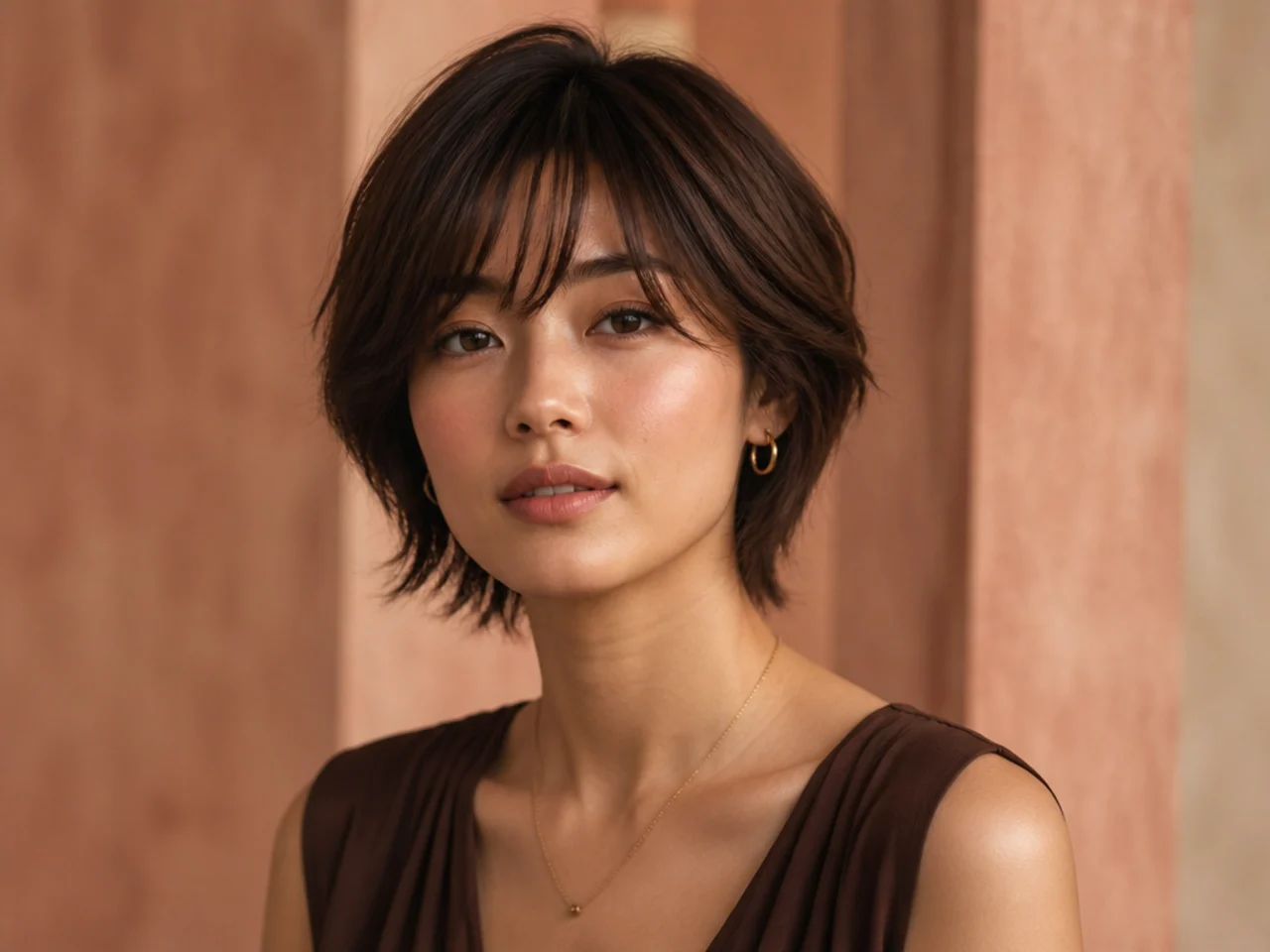
Soft layers are subtle — barely visible from the outside, but weight-removed on the inside. This is the fix for hair that feels heavy and hangs flat. Best on medium to thick straight or wavy hair. Ask for internal layers for volume through the mid-shaft only, blunt or slightly rounded ends, and your natural length (chin, collarbone, or shoulder). Fine hair needs less internal work — mention that up front. Styling tip: rough-dry with your fingers, then use a large round brush on the top layer only for polish. That trick saves you twenty minutes.
Asymmetrical Lob
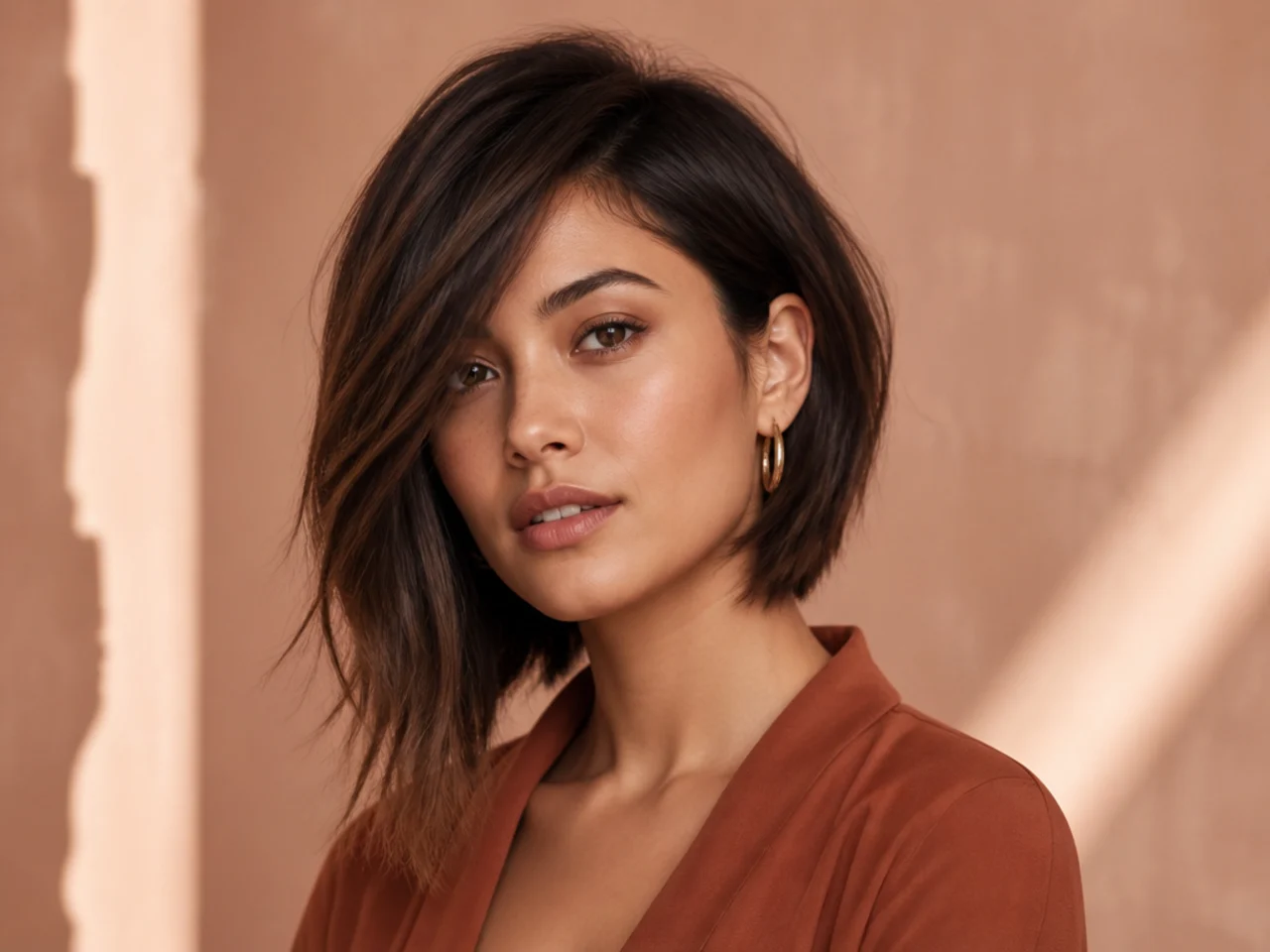
Asymmetry means one side is measurably longer than the other — usually a half-inch to two inches. It creates instant edge and slims round faces. Best on straight to slightly wavy hair; waves and curls hide the asymmetry. Ask for a lob cut one inch longer on your strong side, internal layers for volume, and no fringe or a side-swept fringe on the shorter side. Styling tip: flat-iron the longer side smooth, add a slight bend at the ends, and part deeper than usual to emphasize the shape. The deeper part is what sells the look.
Curly Lob with Bangs
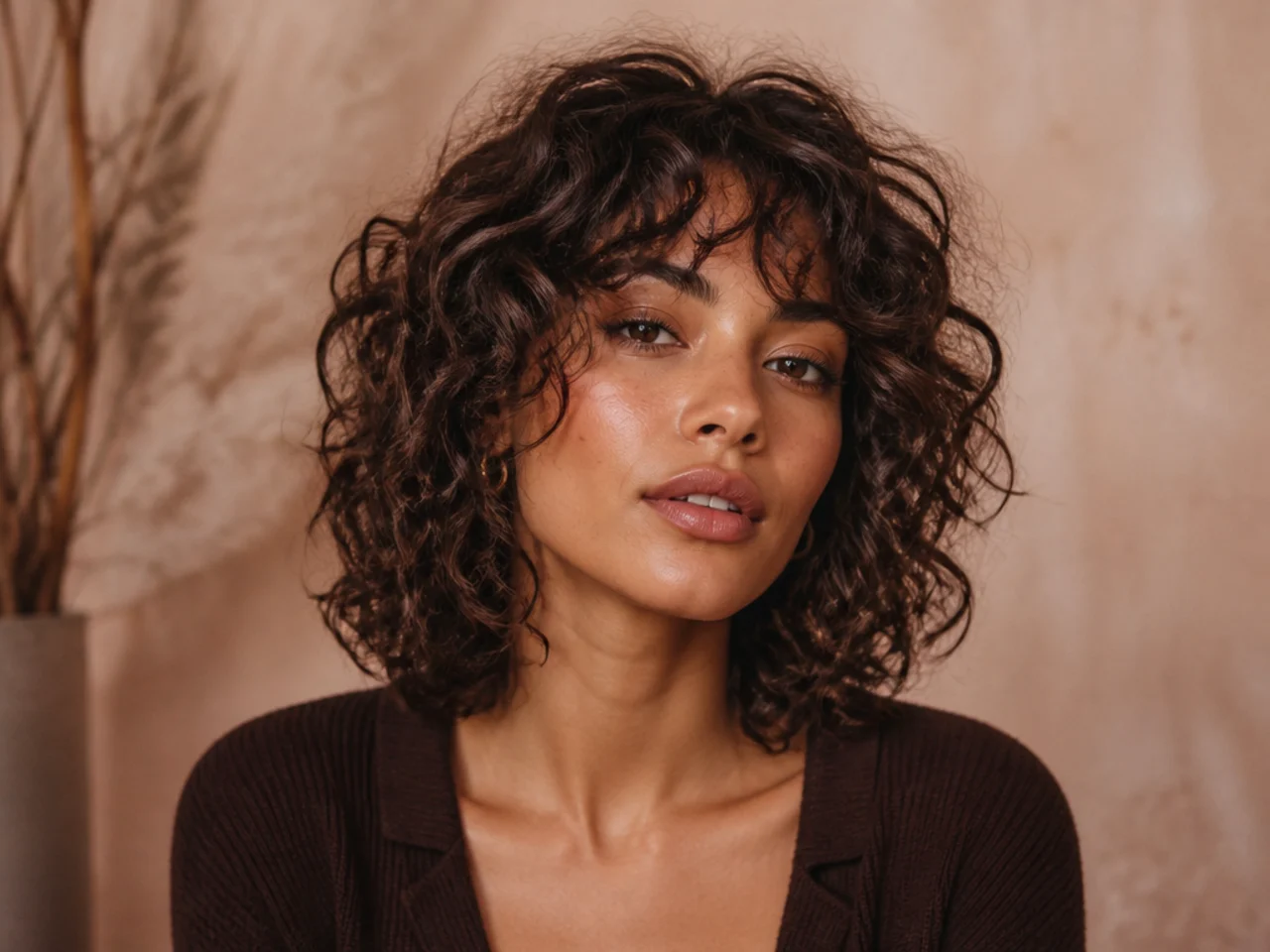
This is a chin-to-collarbone curly cut with a curl-specific fringe. Layers control bulk; bangs frame the eyes. Best on 3A–3C curls with even density around the head. Ask for a dry-cut lob with internal layers for volume shaped in a soft round, plus a fringe that sits at brow-length when dry (curls shrink 30 to 50 percent when they dry). Fine curls: skip the fringe and add face-framing pieces instead. Styling tip: refresh curls between washes with a spray of water plus a drop of leave-in, then shake out at the roots for lift.
Layered Braids
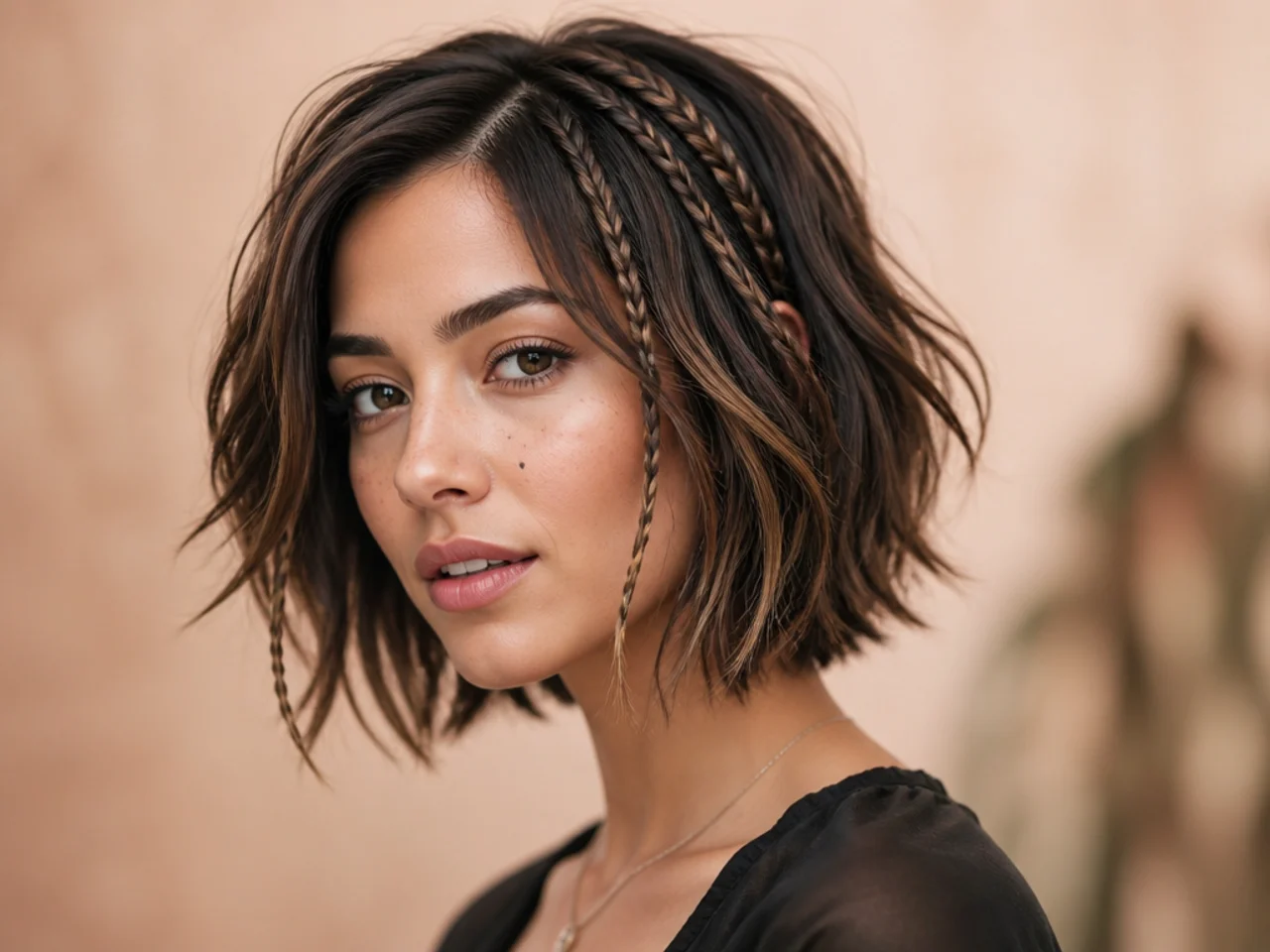
Short layered hair braids differently — the layers add texture and grip so braids don't slip out over the day. Best on shoulder-to-chin length with internal layering. Ask for a chin-to-collarbone lob with internal layers for volume and blunt ends, plus a few longer face-framing pieces around the front for softness. Straight hair: add a light texturizing spray for grip. Styling tip: braid on second-day hair with a spritz of texture spray, and pull the braid open (pancake it) after braiding for width. Loose braids show the layers best.
Butterfly Layers
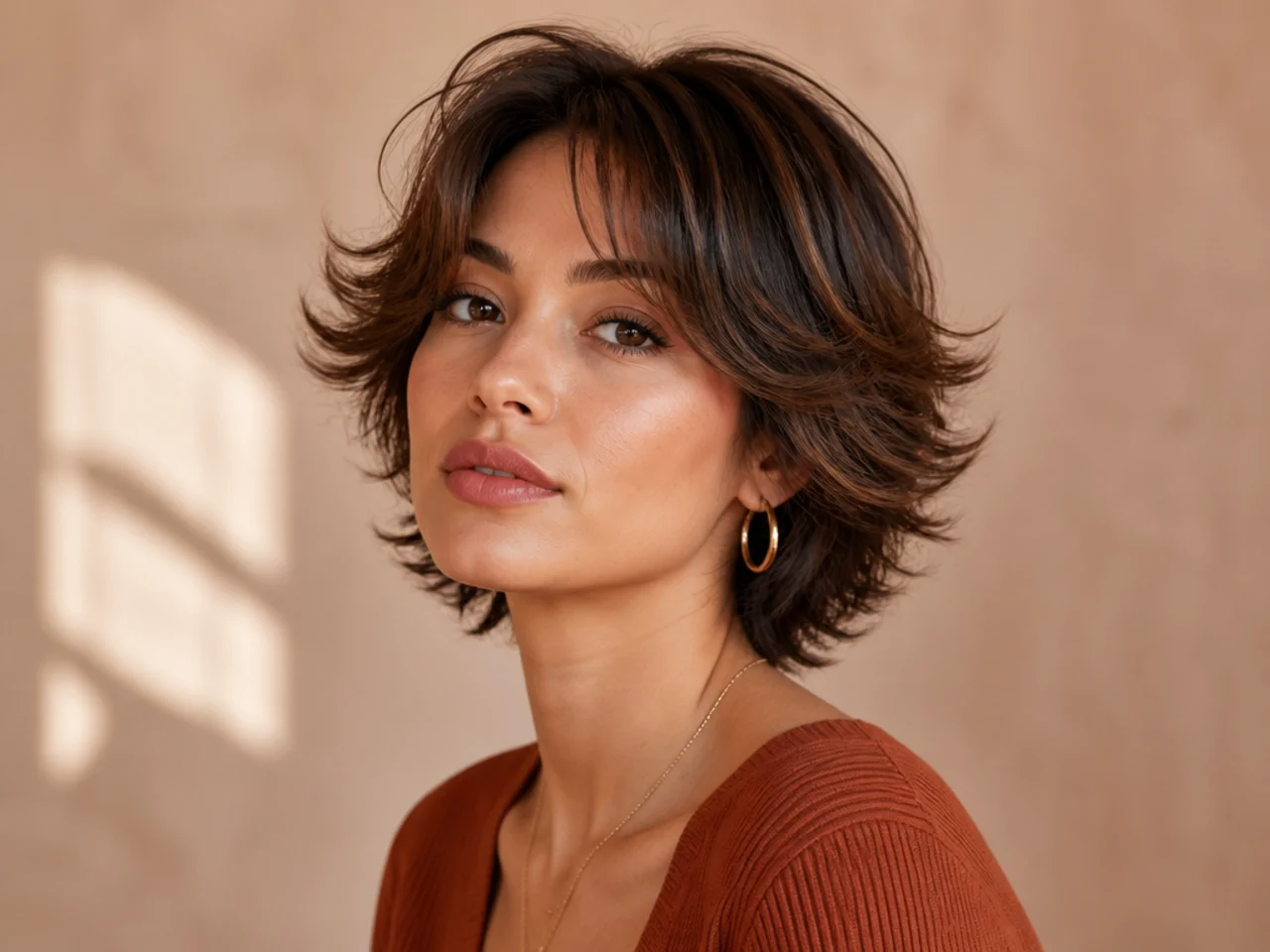
Butterfly layers are two clear tiers — a shorter top layer that "wings" out from a longer base. On short hair, this reads as face-framing shortness over a solid perimeter. Best on medium-density straight to wavy hair. Ask for a collarbone-length lob with a shorter chin-length top layer of internal layers for volume, plus a curtain fringe if you want more movement around the face. Styling tip: split-dry — top layer with a round brush flipping out, bottom layer smooth. That's what gives the two-tier effect its lift.
Long Bangs
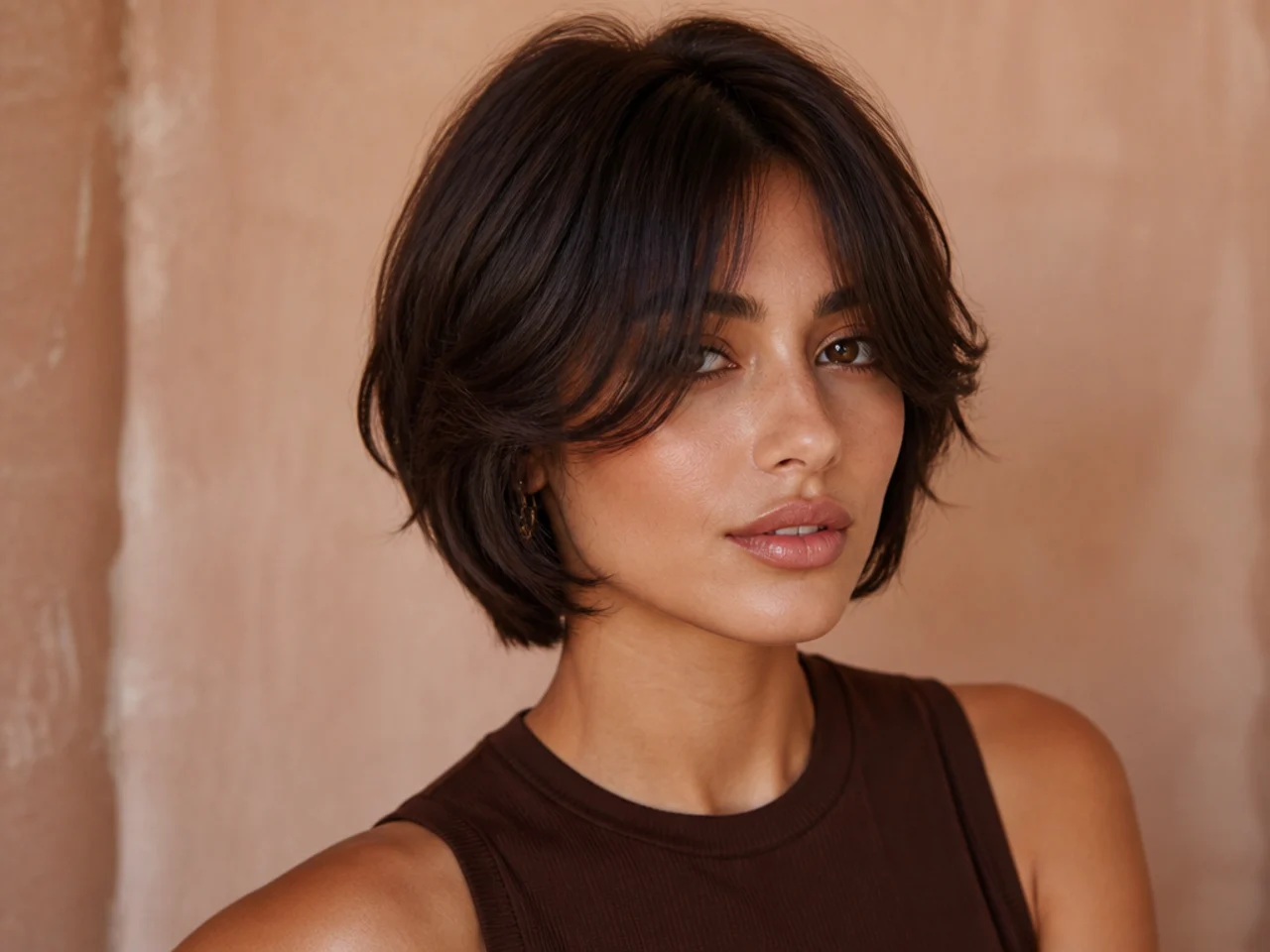
Long bangs (past the cheekbone) act like face-framing layers without committing to a shorter fringe. They work over almost any short layered cut. Best on any face shape — long faces gain balance, round faces gain length. Ask for cheekbone-to-chin bangs, either center-parted or side-swept, paired with internal layers for volume in the rest of the cut. Fine hair: request the bangs cut a hair blunter to keep density. Styling tip: dry the bangs first with a paddle brush, splitting them down the middle so they fall naturally around the cheekbones.
Loose Waves
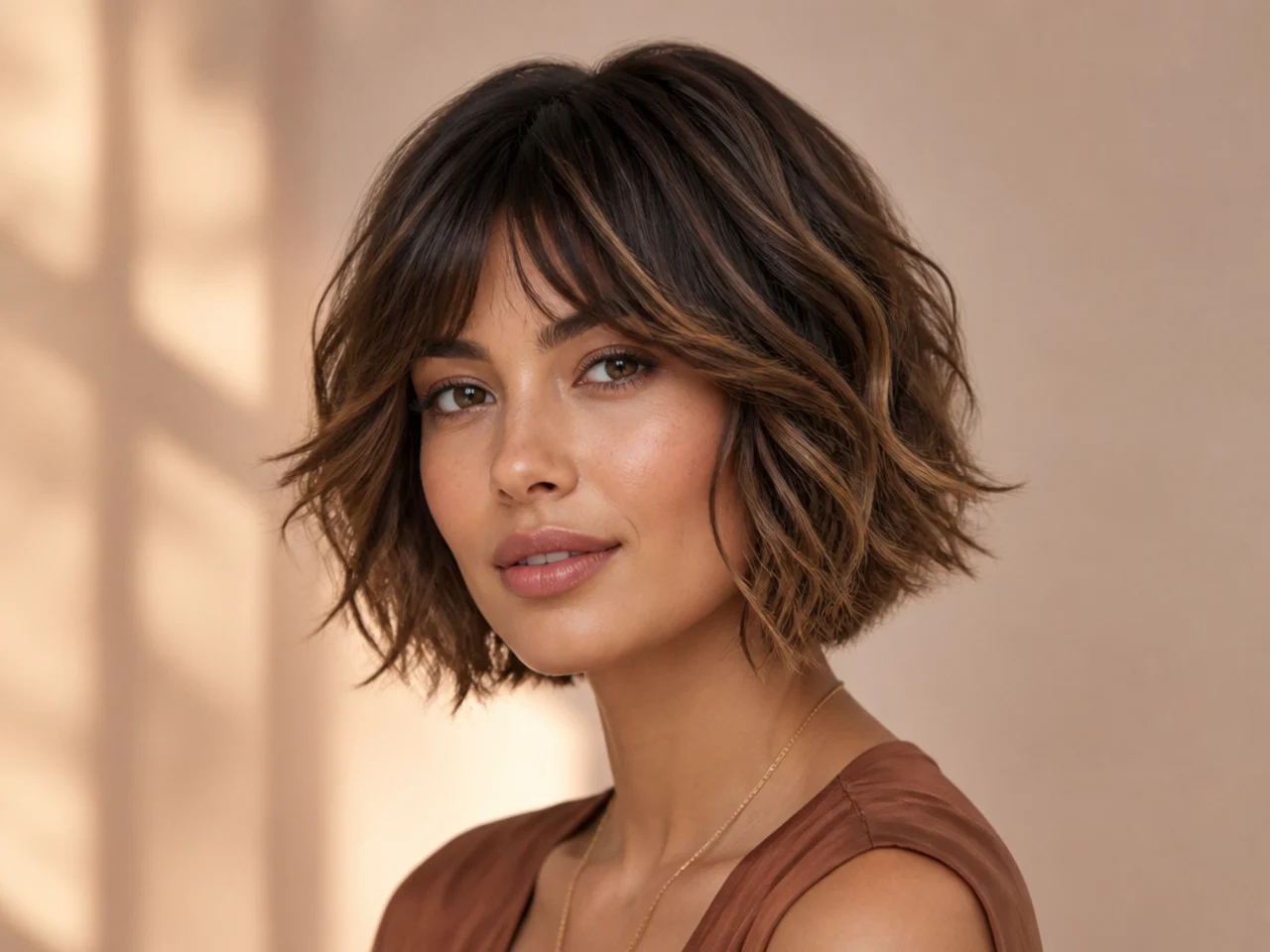
Loose waves are a styling choice, but the cut has to support them. Too-blunt ends hold curl too tight; too-thinned ends collapse. Best on straight to 2B hair with medium density. Ask for a chin-to-collarbone lob with internal layers for volume and slightly point-cut ends, no fringe or a soft curtain fringe. Styling tip: curl with a 1.5-inch wand, alternating direction each section, let the curls cool pinned to your head with clips, then brush through with a boar-bristle brush. That gives you a soft wave rather than a defined curl.
Shaggy Blowout
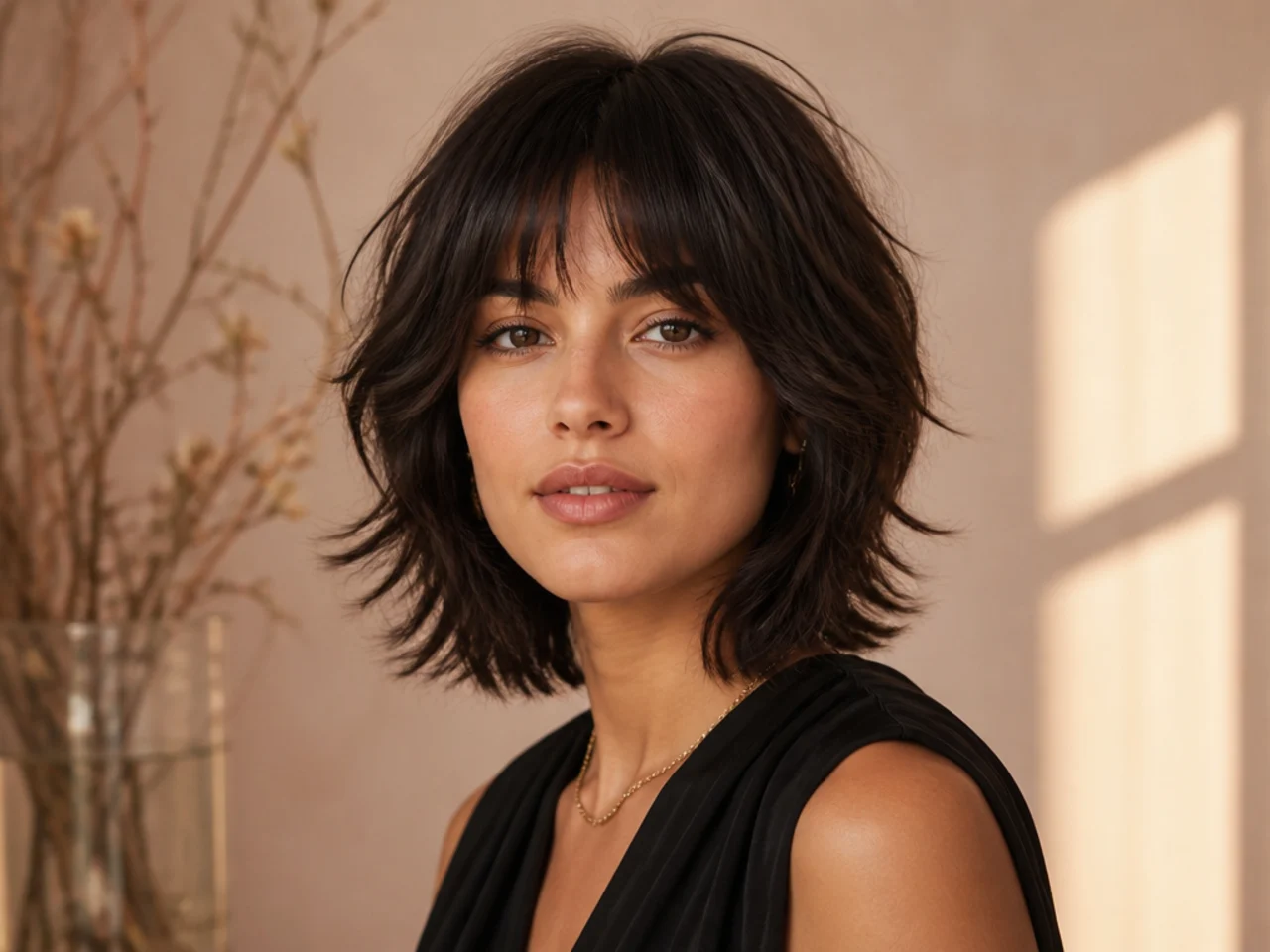
A shaggy blowout is a shag cut styled with a blow-dryer and round brush for polish on top of the texture. Best on medium-density hair with natural bend. Ask for a chin-to-shoulder shag with internal layers for volume from the crown down, a wispy fringe, and slightly point-cut ends. Styling tip: blow-dry section by section with a medium round brush, rolling forward at the crown and away from the face at the sides. Finish with a light texturizing spray so it doesn't read too styled. Undone is the goal here.
Vibrant Curly Lob
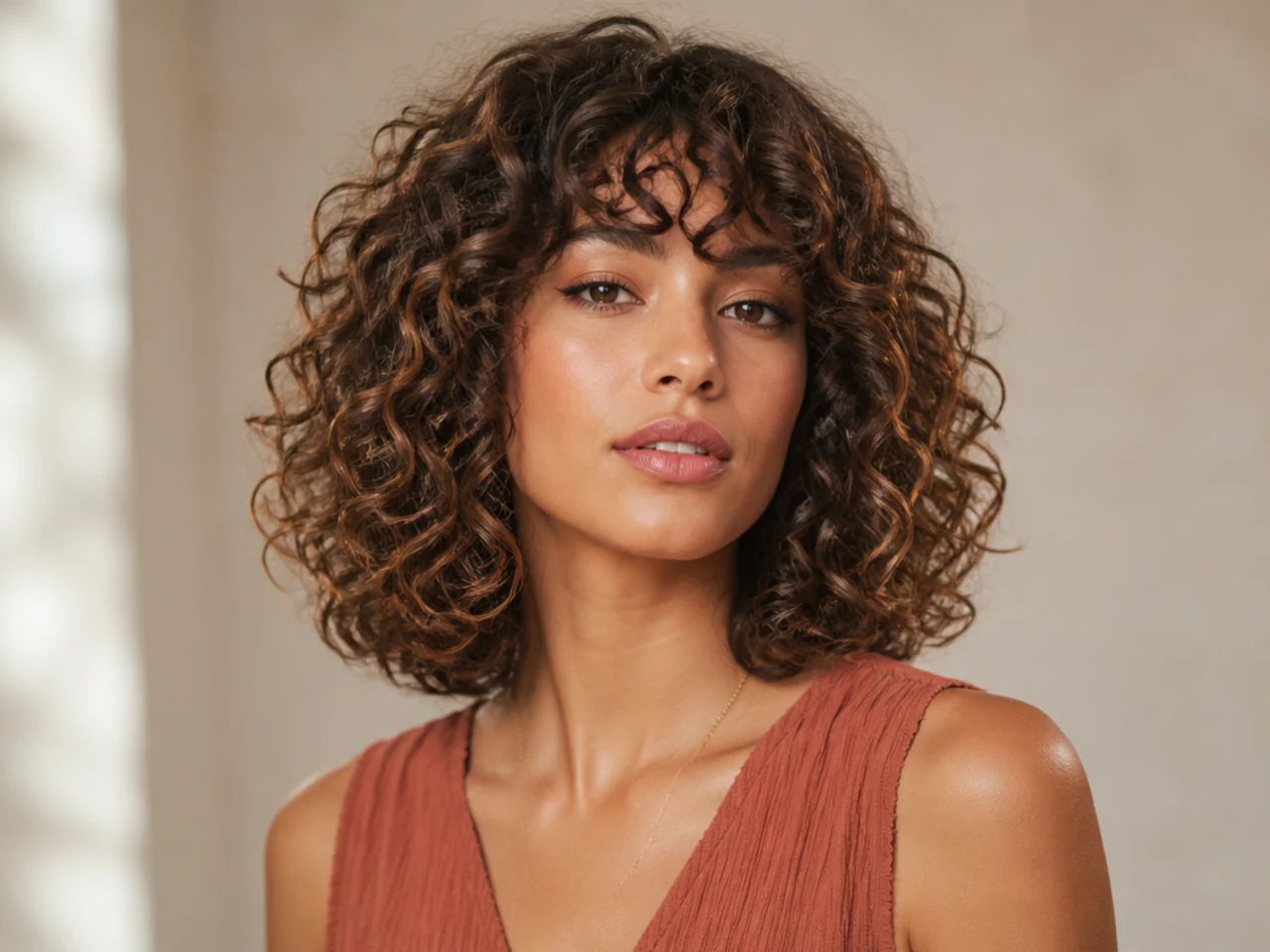
Vibrant means colored — highlights, balayage, or a lively single tone that makes the curl shape read louder. Best on 3A–3C curls with strong pattern. Ask for a dry-cut curly lob with internal layers for volume that give curls room to spring, plus color that brightens where curls turn (usually mid-shaft to ends). Fine curls need less internal work. Styling tip: apply leave-in and gel while curls are drenched, cast (dry until the surface feels crunchy), then scrunch the cast out for softness. Never touch curls while they're drying.
Simple Waves
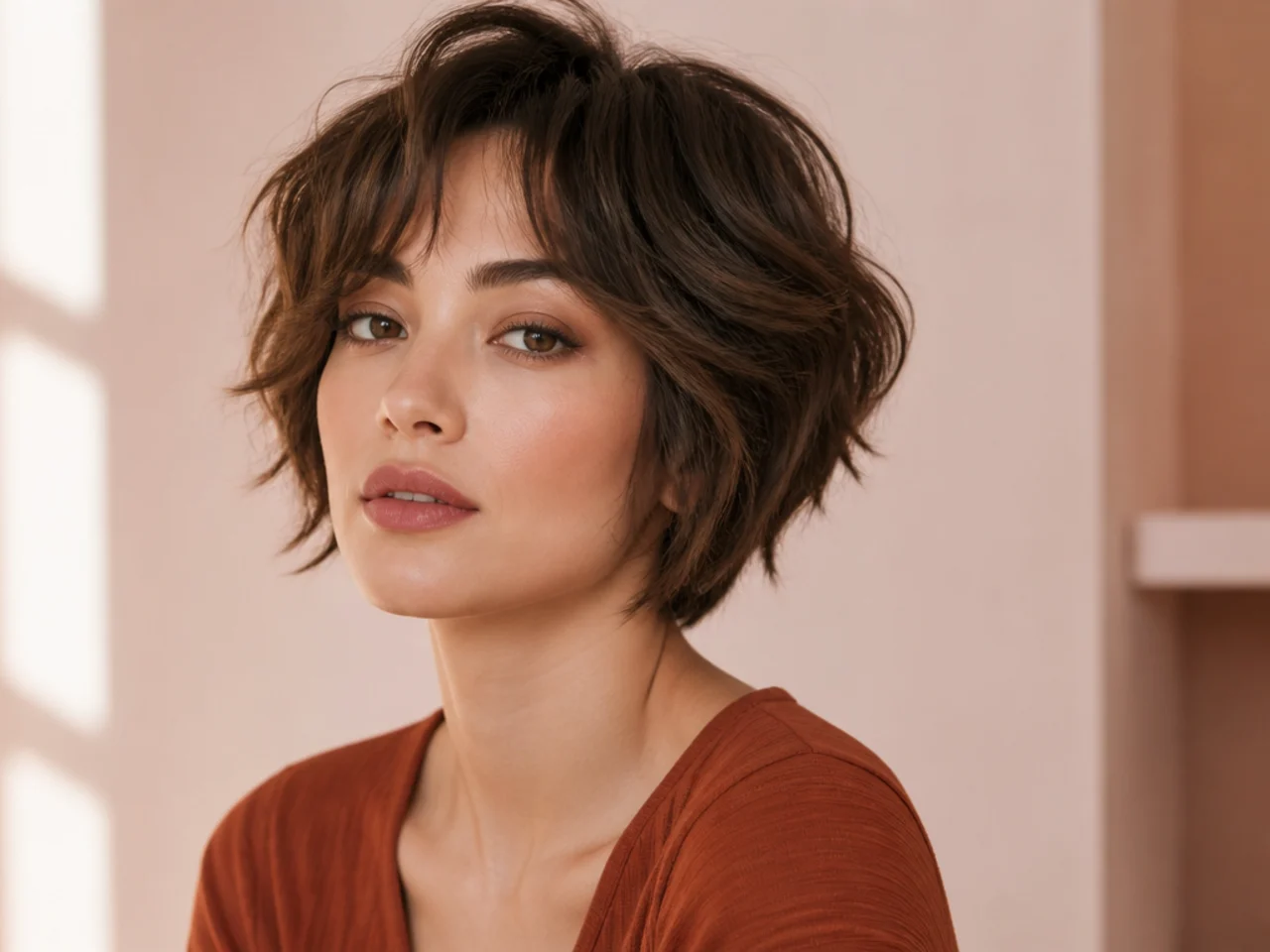
Simple waves are the low-effort styling on a straightforward layered lob. No pinning, no wand tricks — just a bend through the mid-lengths. Best on all hair types with medium density. Ask for a shoulder-length lob with internal layers for volume, blunt ends, and a soft side or center part. Styling tip: braid damp hair in two loose braids overnight, unravel in the morning, shake out. A drop of shine oil on the ends finishes it.
Side Swept Lob
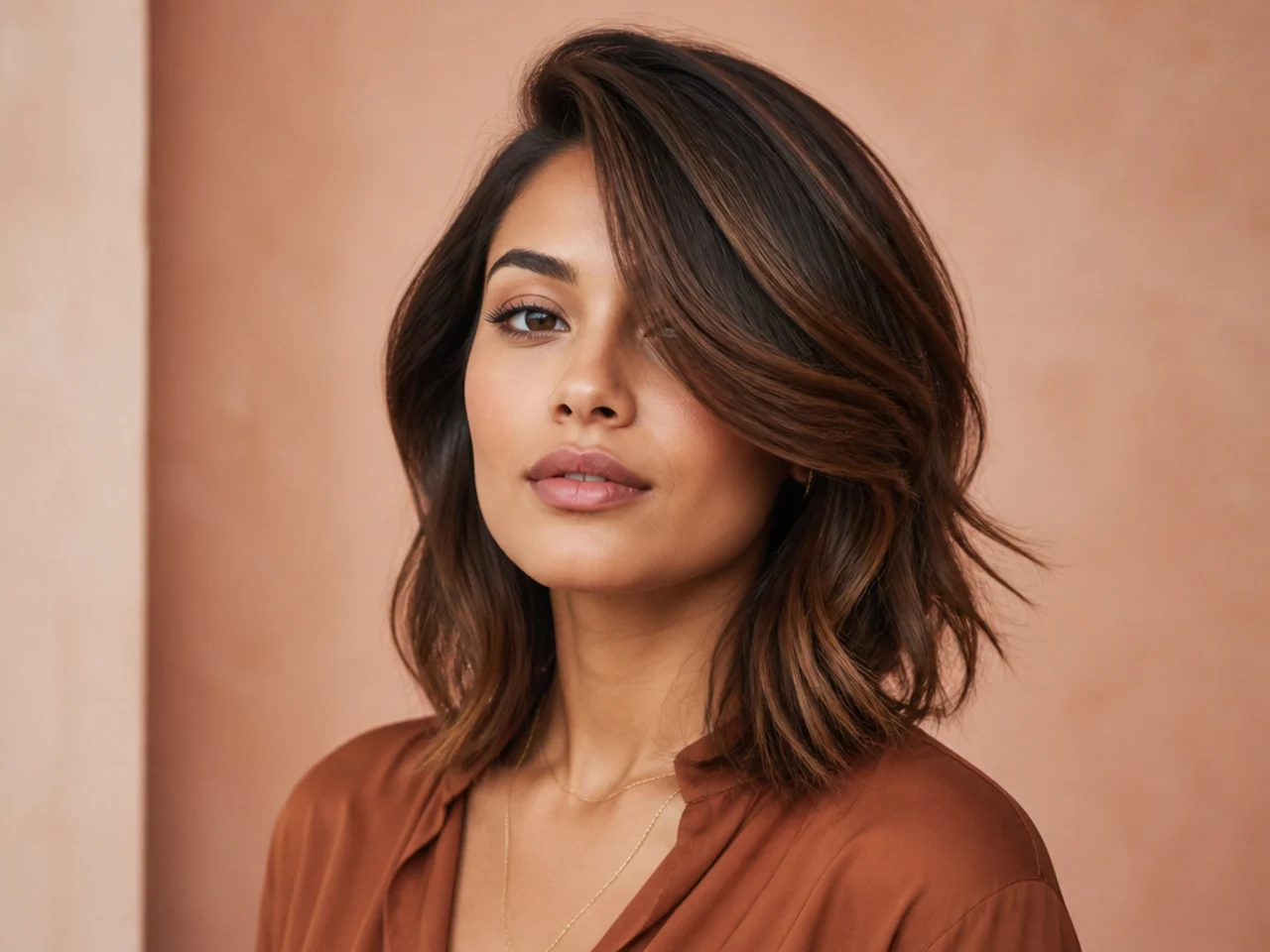
The side-swept lob wears a deep side part so the length falls dramatically across one side of the face. This slims round and square faces. Best on straight to wavy medium-density hair. Ask for a chin-to-collarbone lob with internal layers for volume, blunt ends, and a deep side part cut to fall the same way each time you wash. Styling tip: create the part when hair is damp, then blow-dry from underneath with a round brush to build lift at the roots on the heavy side. Hairspray at the part holds it in place through the day.
Mid Length Bob
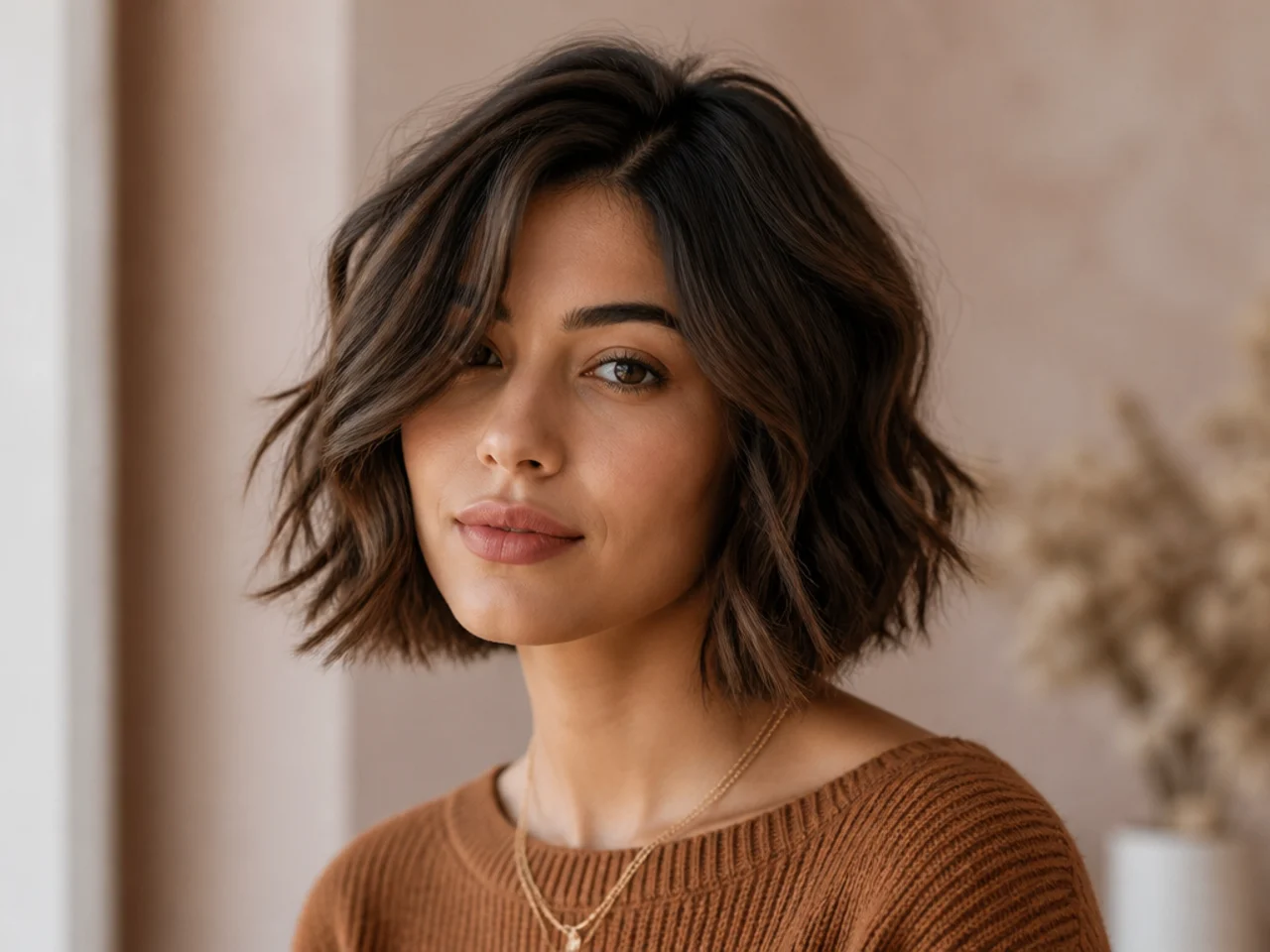
The mid-length bob sits between chin and collarbone with internal layering for softness. This is the classic — flattering, easy, growing-out-friendly. Best on all hair types. Ask for a mid-length bob with internal layers for volume through the mid-shaft, blunt-ish ends, and your natural part. For related shapes with a similar footprint, see our mid-length guide. Styling tip: blow-dry with a paddle brush for smooth, or a round brush for bounce. Ends curled toward the face read polished; away from the face reads playful.
Face Framing Layers
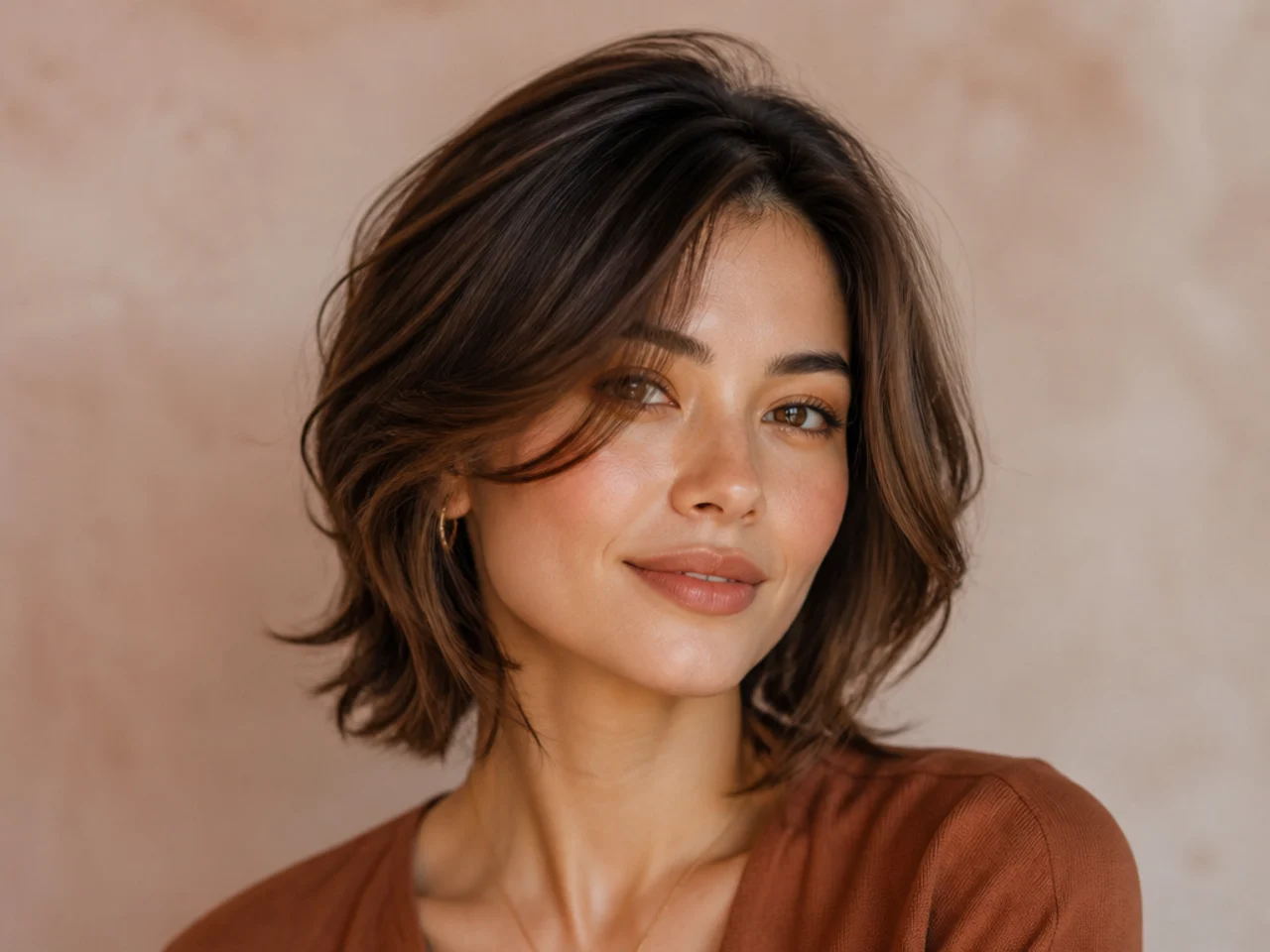
Face-framing layers are shorter pieces that start at the cheekbone or jaw and blend back into the length. They soften the face and highlight the features you want emphasized. See our full layered haircuts guide for related shapes. Best on all hair types. Ask for the shortest framing layer at your cheekbone (or wherever you want emphasis), cut on a soft angle back into internal layers for volume, and pair with your base short cut. Styling tip: curl the framing layers away from the face with a small wand for lift. Don't overdo the number — three or four pieces on each side is plenty.
Middle Part Lob
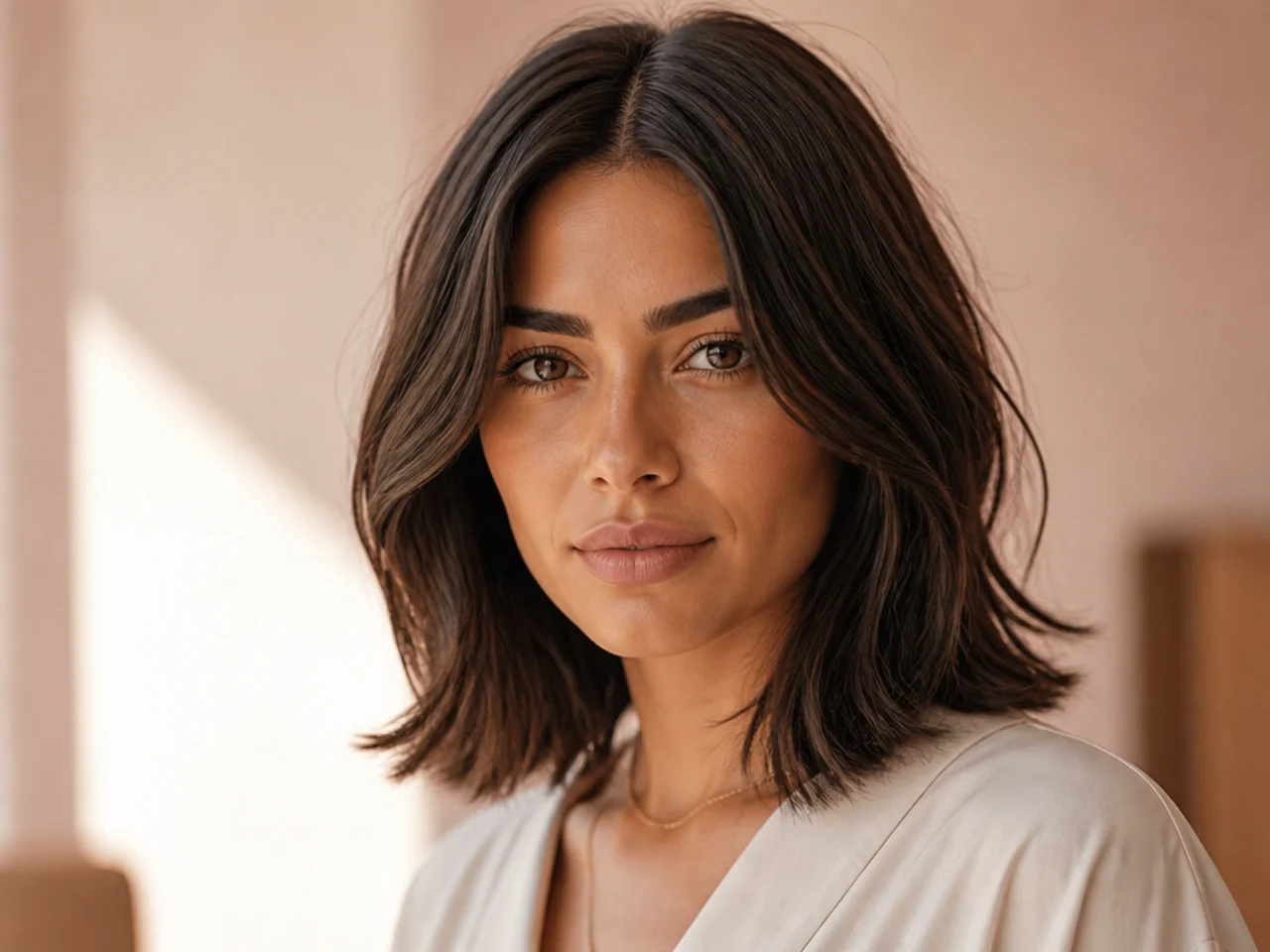
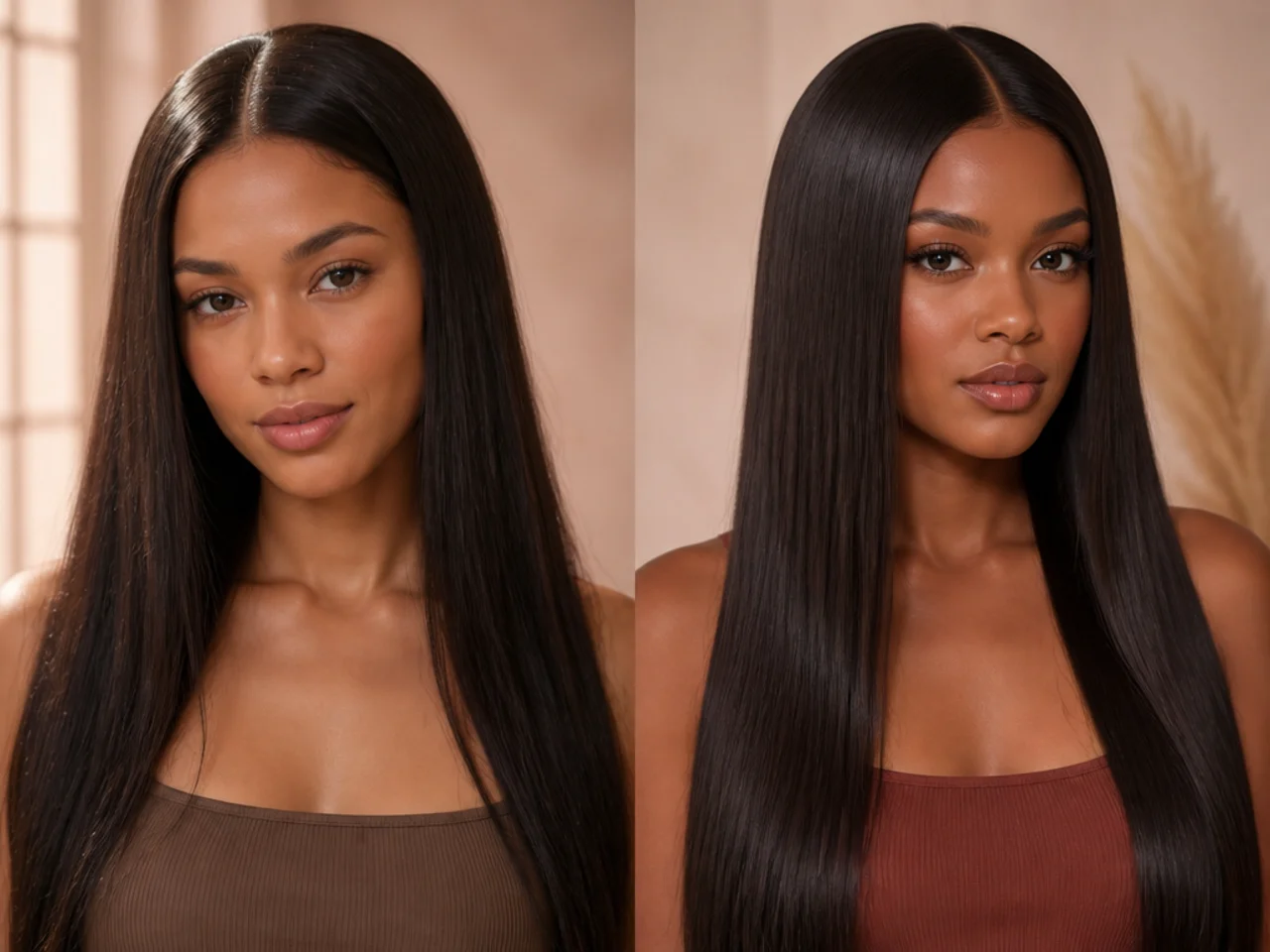
The middle part reads clean, balanced, and symmetrical. It suits oval, heart, and square faces; round faces should skip it. Best on straight to slightly wavy medium-density hair. Ask for a shoulder-length lob with internal layers for volume, blunt ends, and a razor-sharp center part. Fine hair keeps more density with blunt ends. Styling tip: apply a smoothing cream to damp hair, part while wet with the tail of a comb, and blow-dry with a paddle brush pulling straight down. A drop of oil at the ends finishes it. The part is the whole story.
Beach Waves
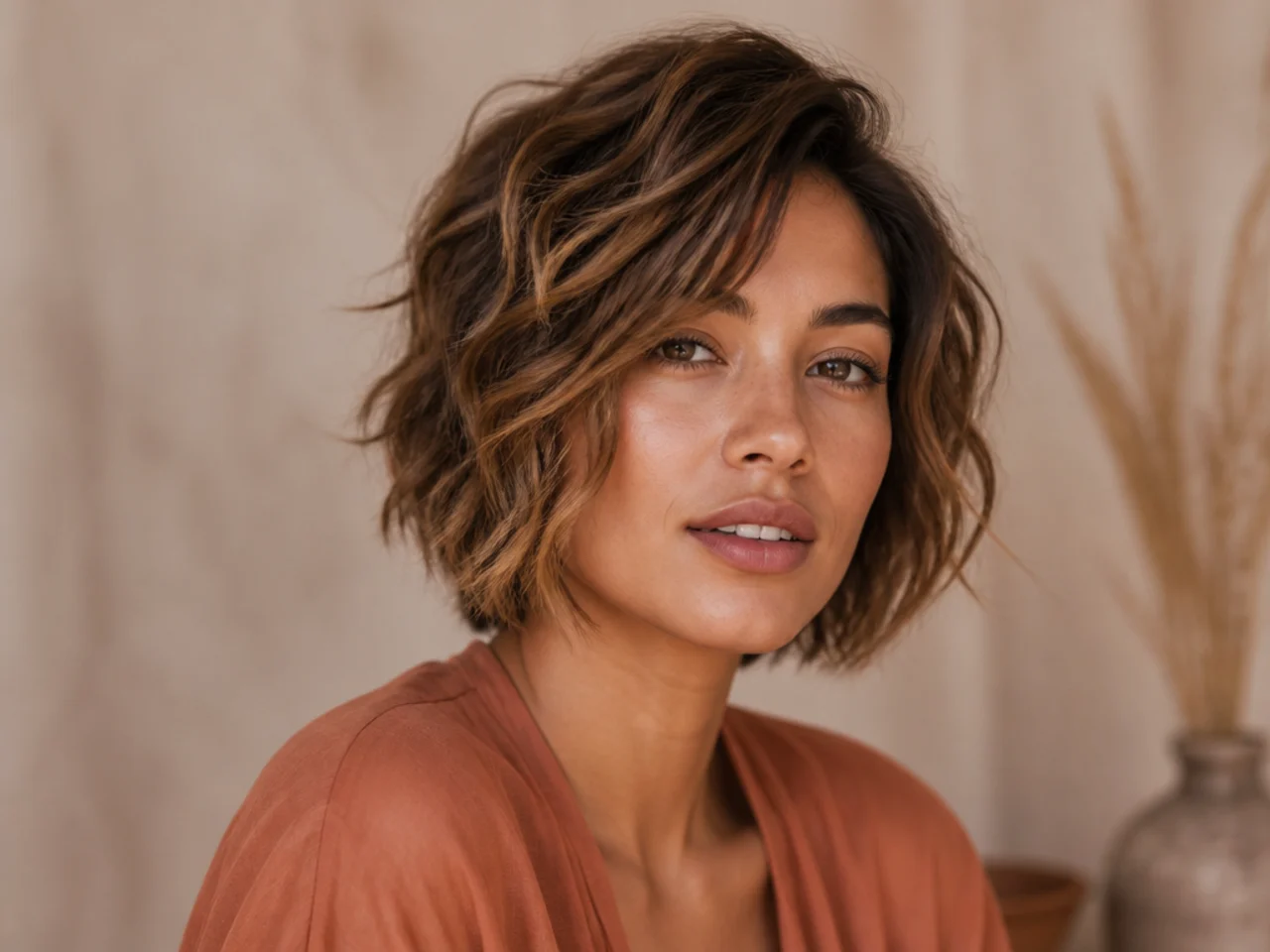
Beach waves are undone, air-dried-looking waves — bigger and looser than curl-wand waves. Best on chin-to-shoulder hair with natural bend. Ask for a lob with internal layers for volume through the mid-lengths, point-cut ends (which hold the beachy shape better than blunt), and no fringe or a soft curtain. Fine hair: keep the ends more blunt so the wave doesn't disappear. Styling tip: mist damp hair with salt spray, twist small sections away from the face, then either air-dry or diffuse on low. Break the shape up with your fingers when dry.
Highlighted Lob
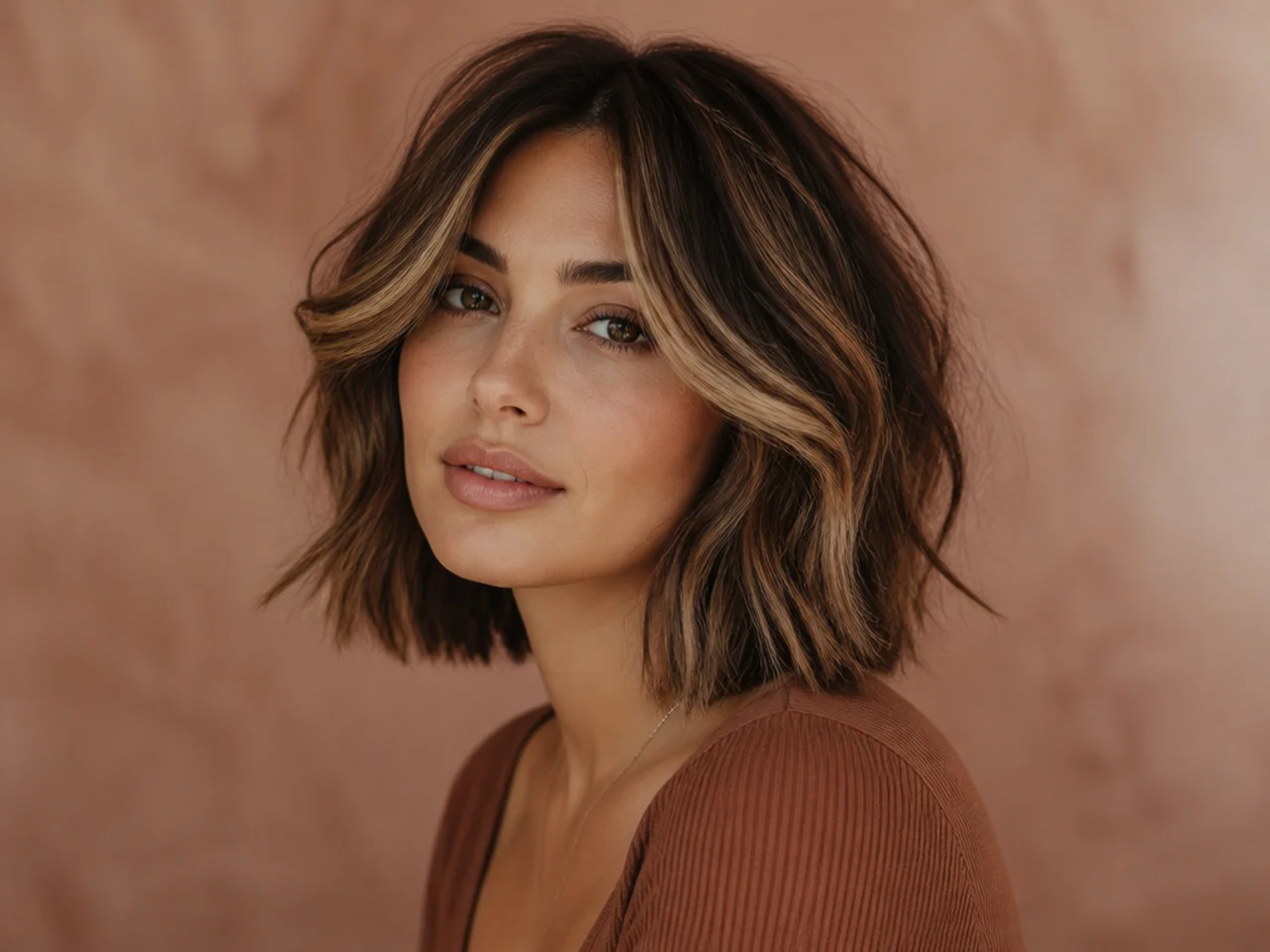
Highlights on a layered lob catch light where layers turn, making the cut read fuller. Best on medium-density hair — very fine hair can read patchy with heavy highlights. Ask for a chin-to-collarbone lob with internal layers for volume, blunt ends, and either face-framing highlights or a balayage that starts at the mid-shaft. Damaged hair: skip highlights until you've done a bond-building treatment. Styling tip: use a purple shampoo once a week to keep the tone clean, and never skip the deep-conditioning mask after color. Bleach and short layers both stress the shaft.
Soft Layers
This second look at soft layers is about grown-in movement, not the freshly cut version above. Best on hair that's already a few months post-cut and needs a refresh rather than a full re-shape. Ask for a mid-length lob with just enough internal layers for volume around the crown to add lift, blunt ends, and no other cutting work. That preserves length while restoring shape. Styling tip: air-dry with a leave-in cream, then use a flat iron only on the top layer for shine. That top-layer polish is what sells the "not styled" look.
Mullet with Bangs
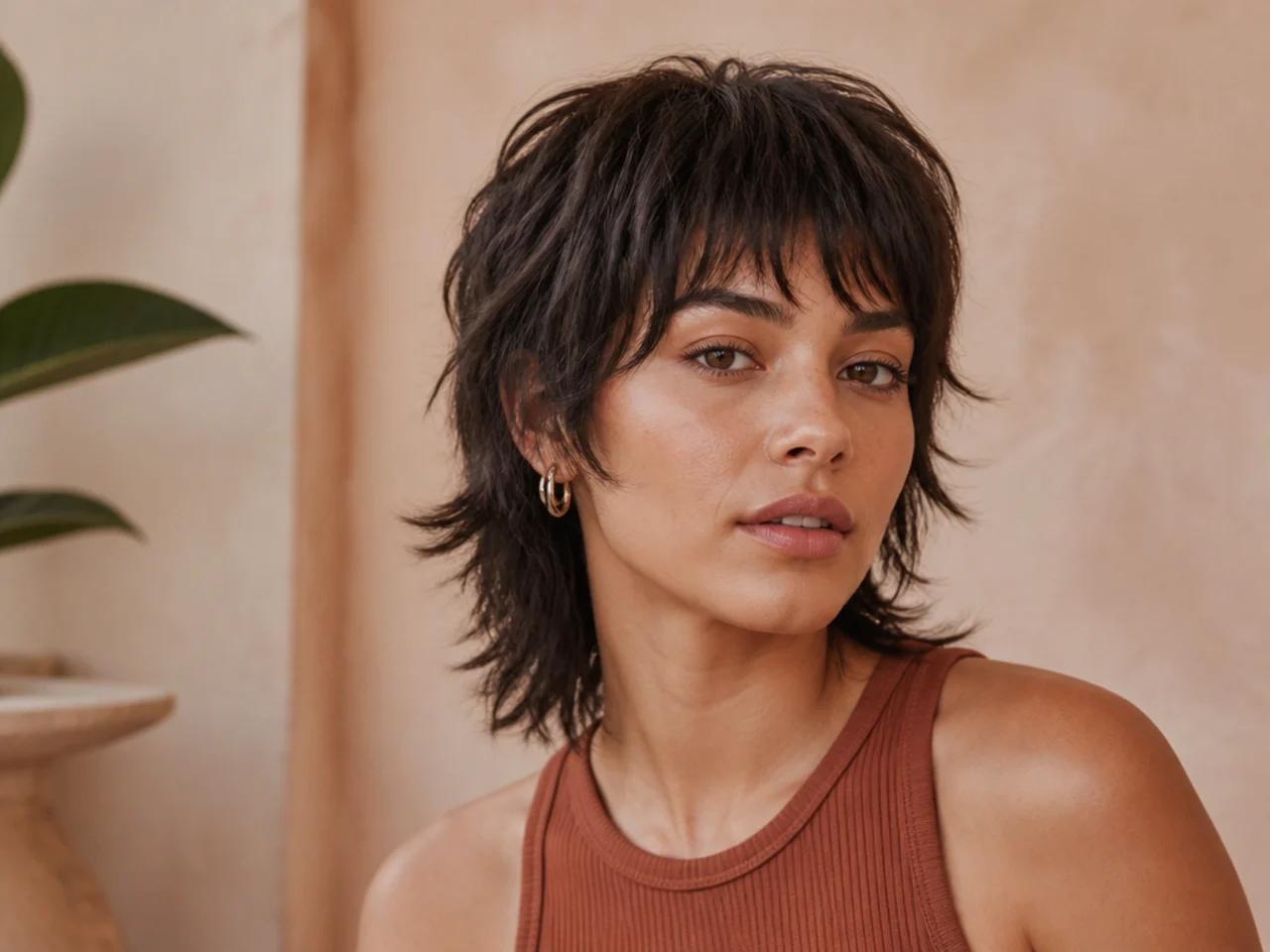
This is the mullet from earlier with a full fringe added. It reads bolder — the fringe is a strong feature on top of an already-statement cut. Best on medium-density straight to wavy hair, on faces confident carrying a strong front. Ask for a chin-length front, 2 to 3 inches of extra nape length, internal layers for volume through the crown, and a brow-grazing blunt or wispy fringe. Round faces: keep the fringe wispy, not blunt. Styling tip: dry the fringe first with a small round brush, then let the rest air-dry with texture spray worked through the lengths.
Flipped-Out Lob
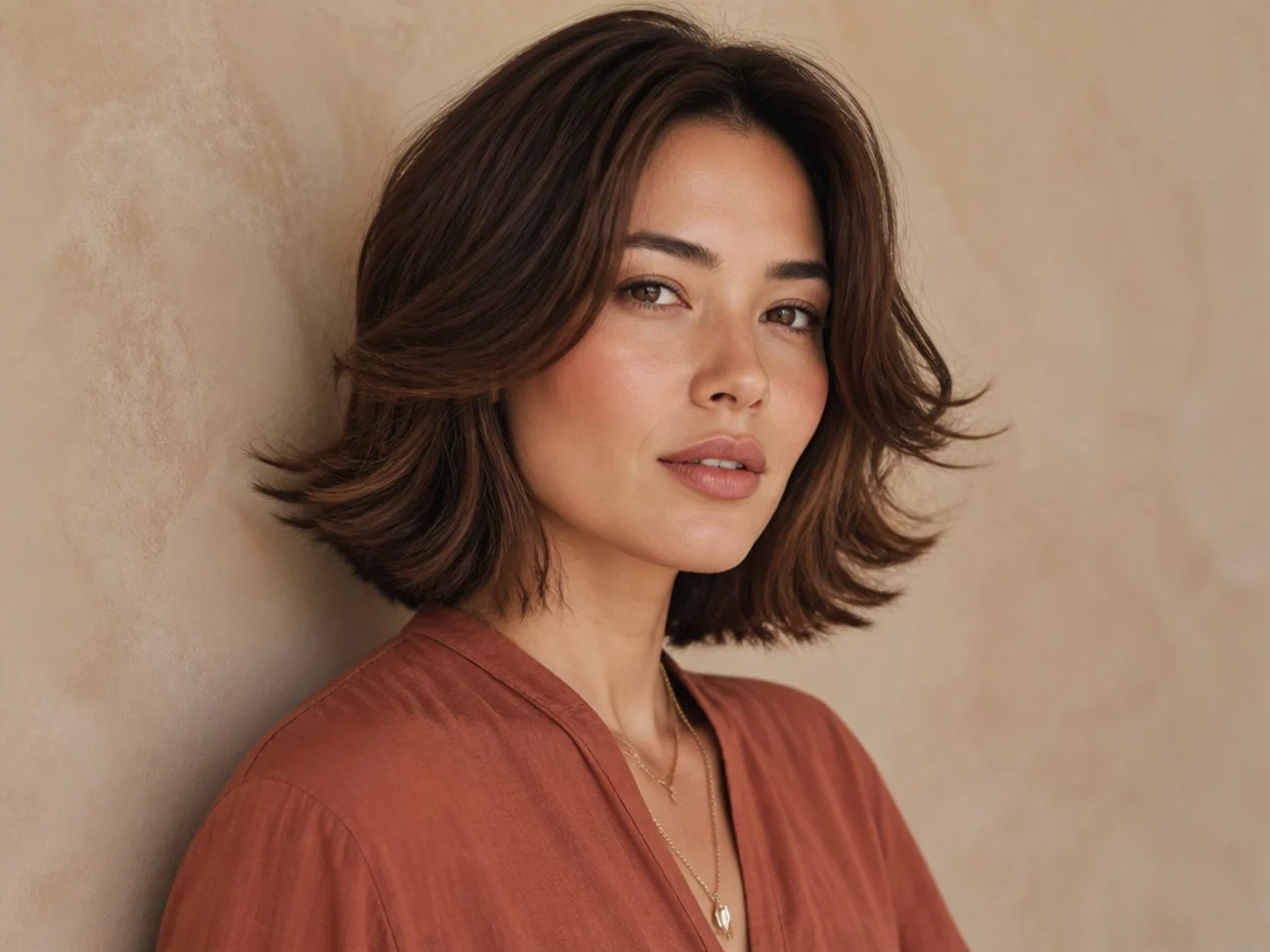
Flipped ends turn outward from the head — retro shape from the 60s and 70s. Best on chin-to-shoulder length hair with medium density. Ask for a straight lob with internal layers for volume through the mid-shaft and blunt ends, no fringe or a heavy blunt fringe. Curls: skip — the shape is straight-hair-specific. Styling tip: blow-dry smooth, then flat-iron the ends outward — press, twist your wrist away from the head, release. Set with light hairspray so the flip holds.
Vintage Lob
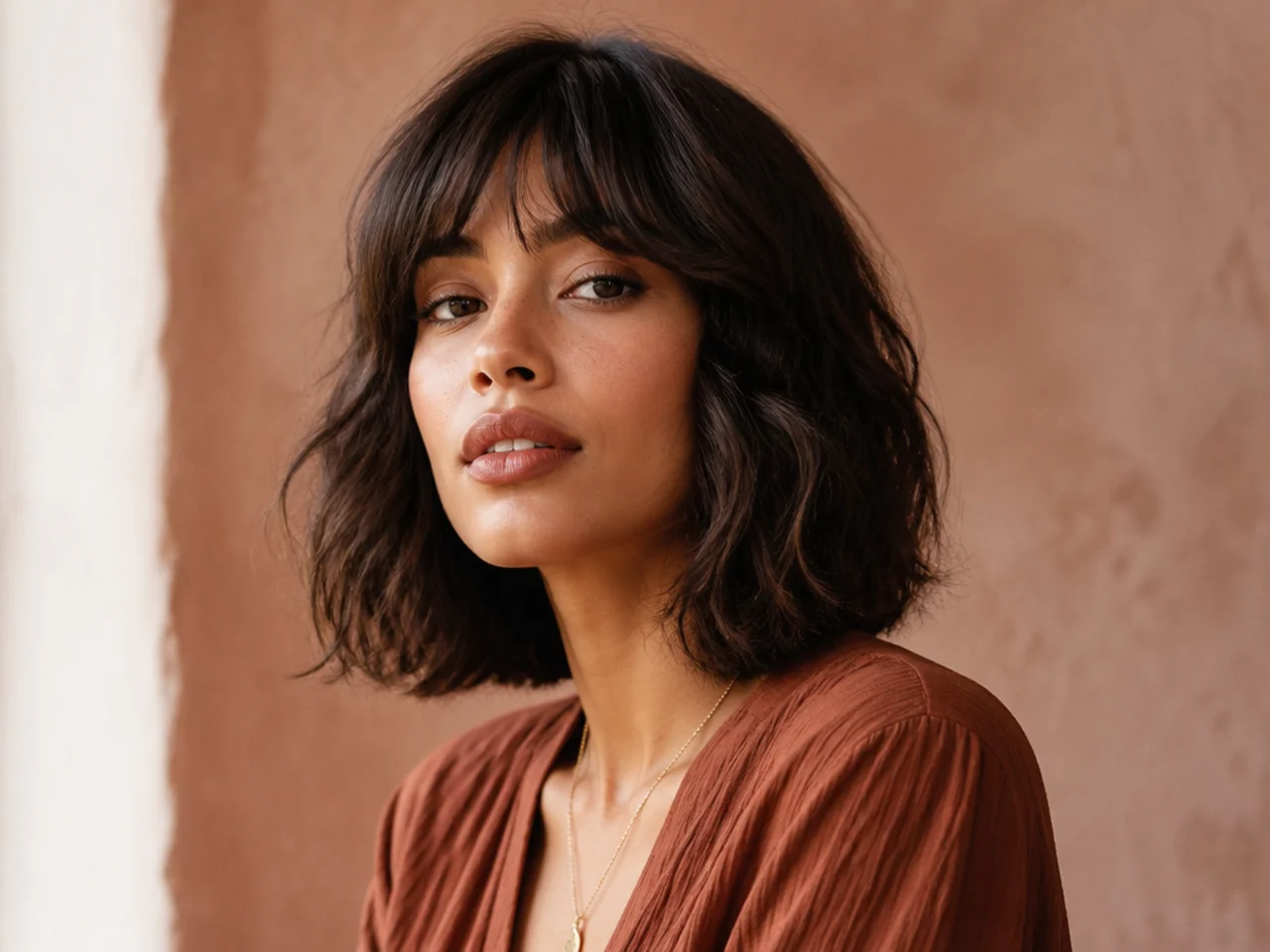
The vintage lob draws on 40s and 50s shapes — a rounded silhouette with soft waves at the ends. Elegant, timeless, works for events. Best on medium-density straight to wavy hair. Ask for a chin-to-collarbone lob with internal layers for volume, blunt-rounded ends, and a soft side part. Deep waves need setting — pin-curls overnight or a wet-set with rollers. Styling tip: shape the waves with a fine-tooth comb after setting, then mist with light-hold hairspray. A satin scarf overnight preserves the shape.
Choppy Layers
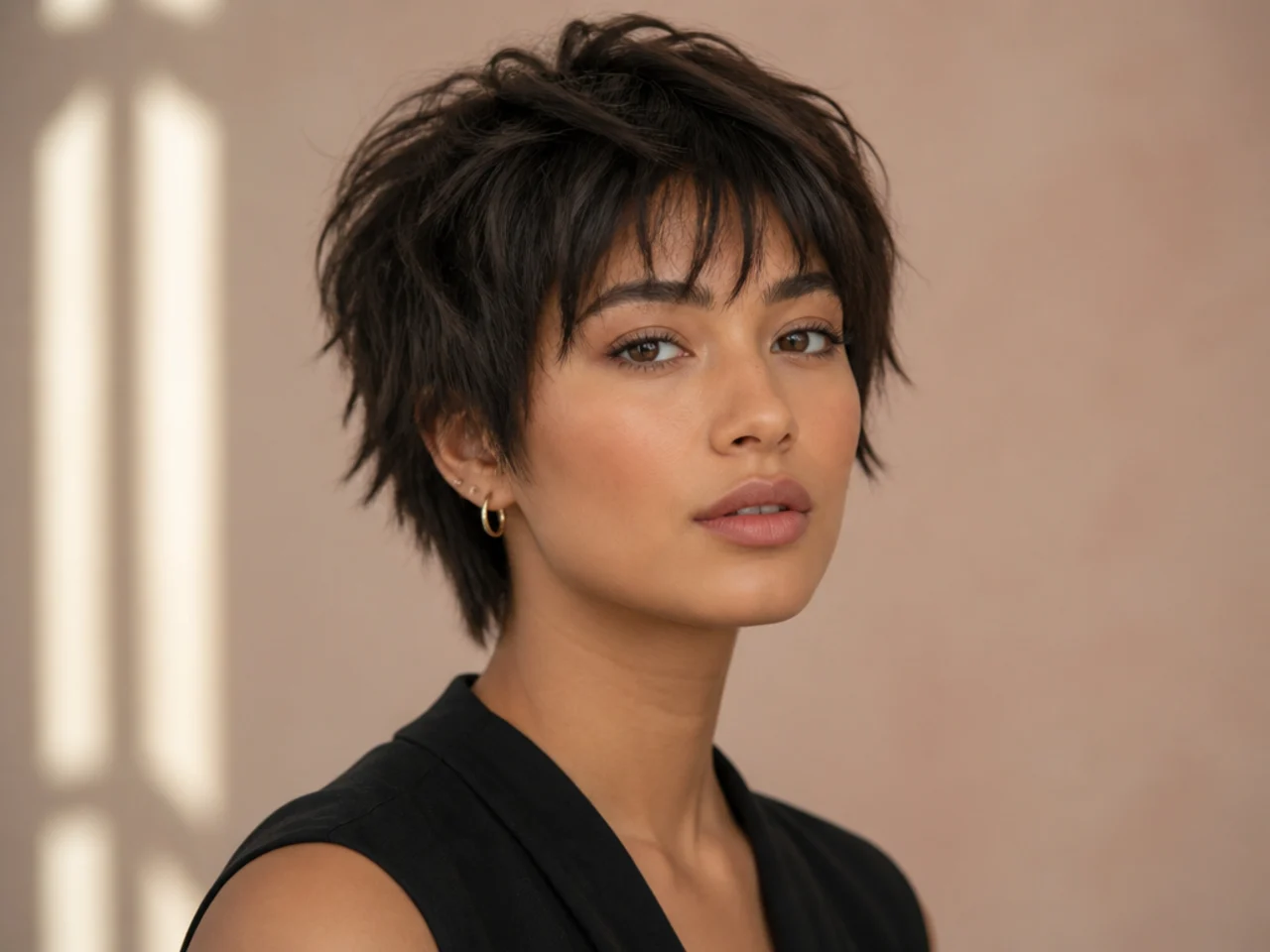
Choppy layers are point-cut and irregular — visible from the outside, unlike soft layers. Best on fine to medium hair that needs the illusion of density and grit. Ask for a chin-to-collarbone lob with visible choppy layering (real point-cut sections, not thinning shears), internal layers for volume around the crown, and no fringe or a choppy one. Thick, coarse hair: skip — this style needs to move to work. Styling tip: work a matte styling paste through dry hair, focusing on the ends, then pinch pieces between your fingers for definition. Skip anything creamy — it kills the grit.
Conclusion: womens short hair styles
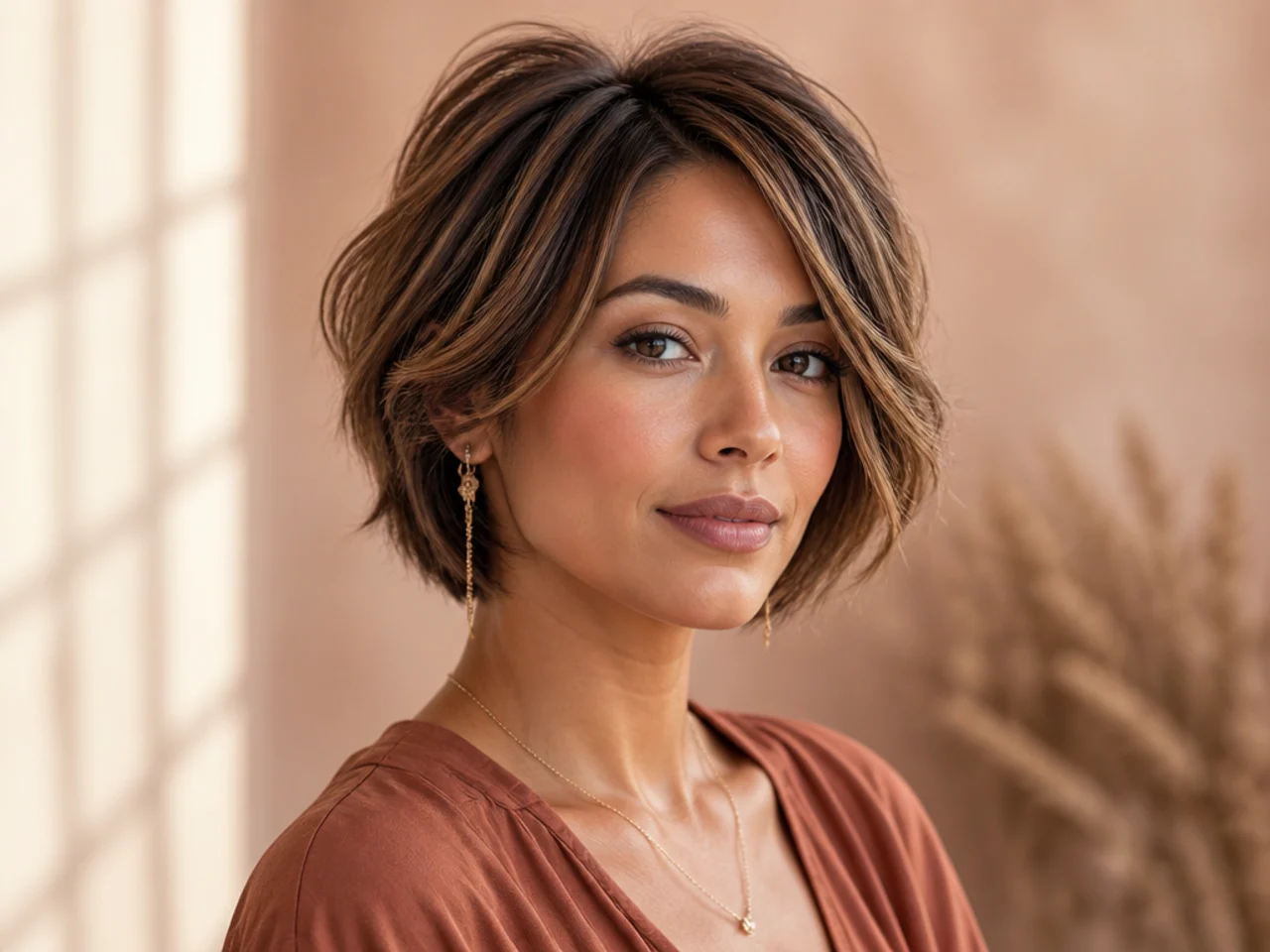
Short layered cuts win on movement and volume — but only when the layers sit in the right place. Ask for internal layers around the crown for lift, and keep the ends blunt or lightly point-cut to protect density. Bring photos (words describe cuts poorly), name the length in inches, and tell your stylist what your styling routine actually looks like. That combination is what gets the cut from photo to real life. For more short-hair ideas, browse our pixie cuts and layered bob galleries.
FAQs - Layered Womans Short Hair Styles
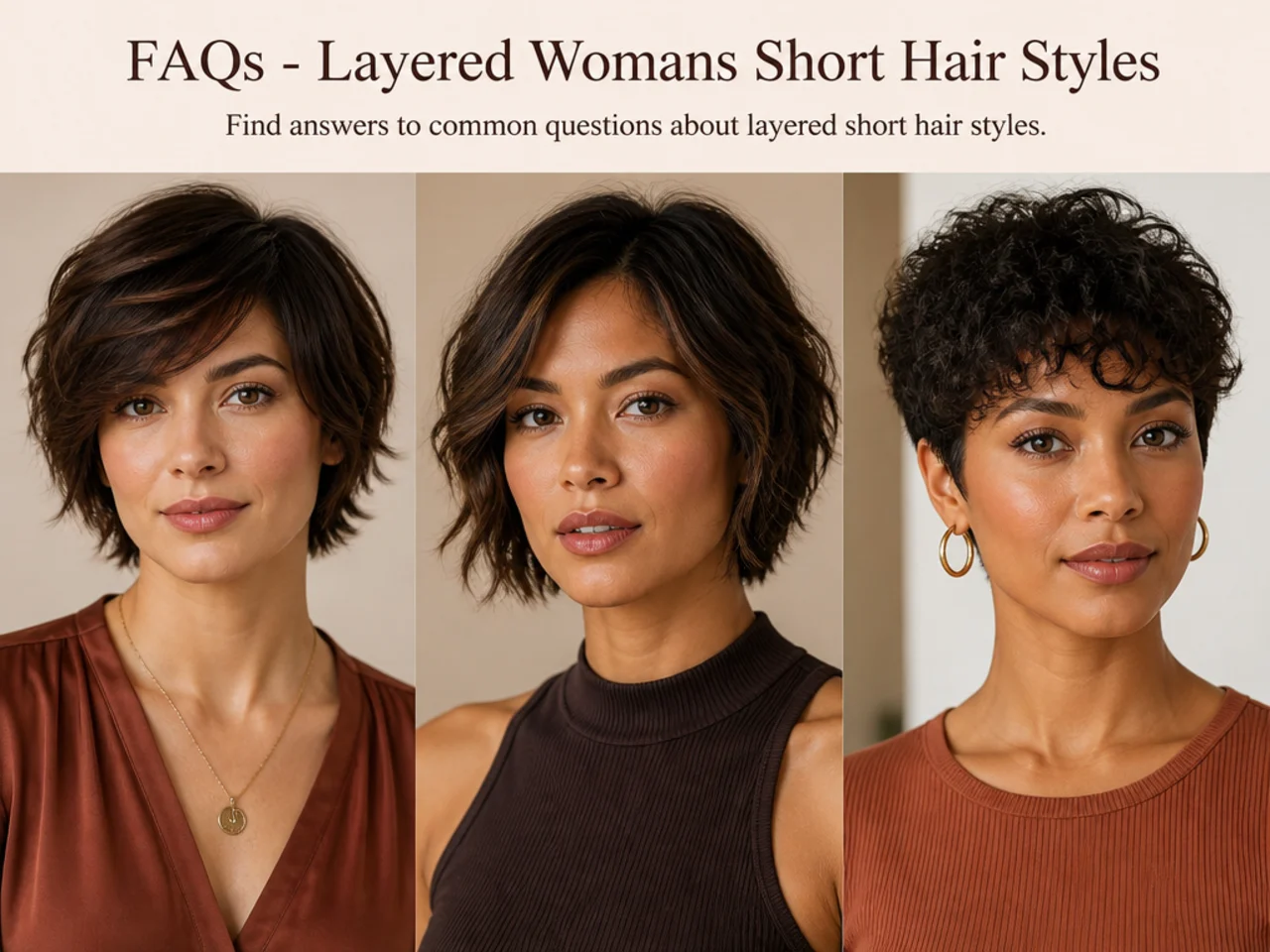
Which layered short hairstyle is best for thin hair?
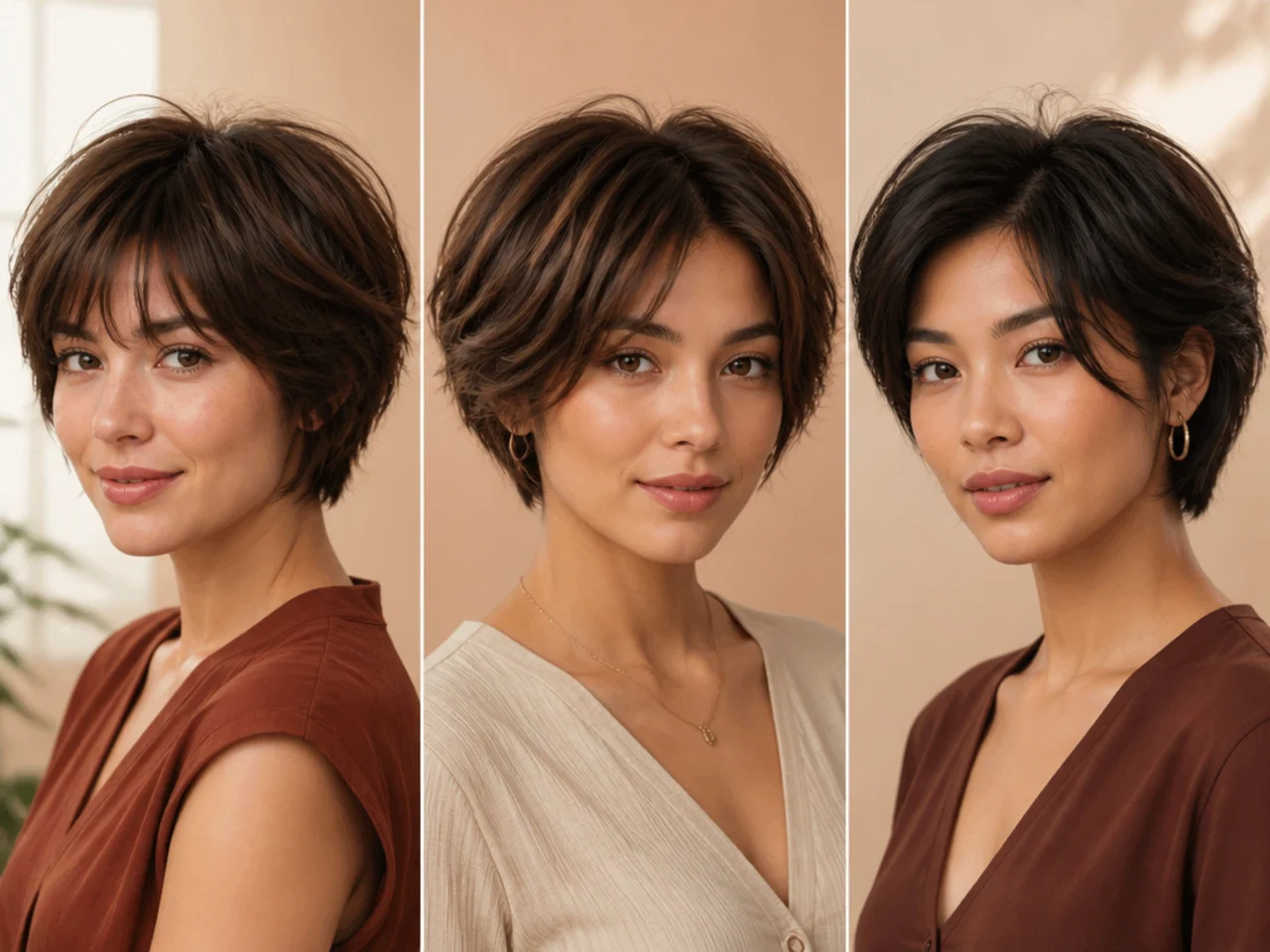
Look at choppy layers, textured lobs, and shaggy layers — all three add the illusion of density by breaking up the surface. Ask for internal layers for volume around the crown to build lift at the roots, and keep the ends blunt or lightly point-cut. Skip thinning shears at the ends — they remove weight where you actually want it. For more short cuts built specifically for fine hair, see our short bob for fine hair guide.
Can layered short hair work with curly textures?
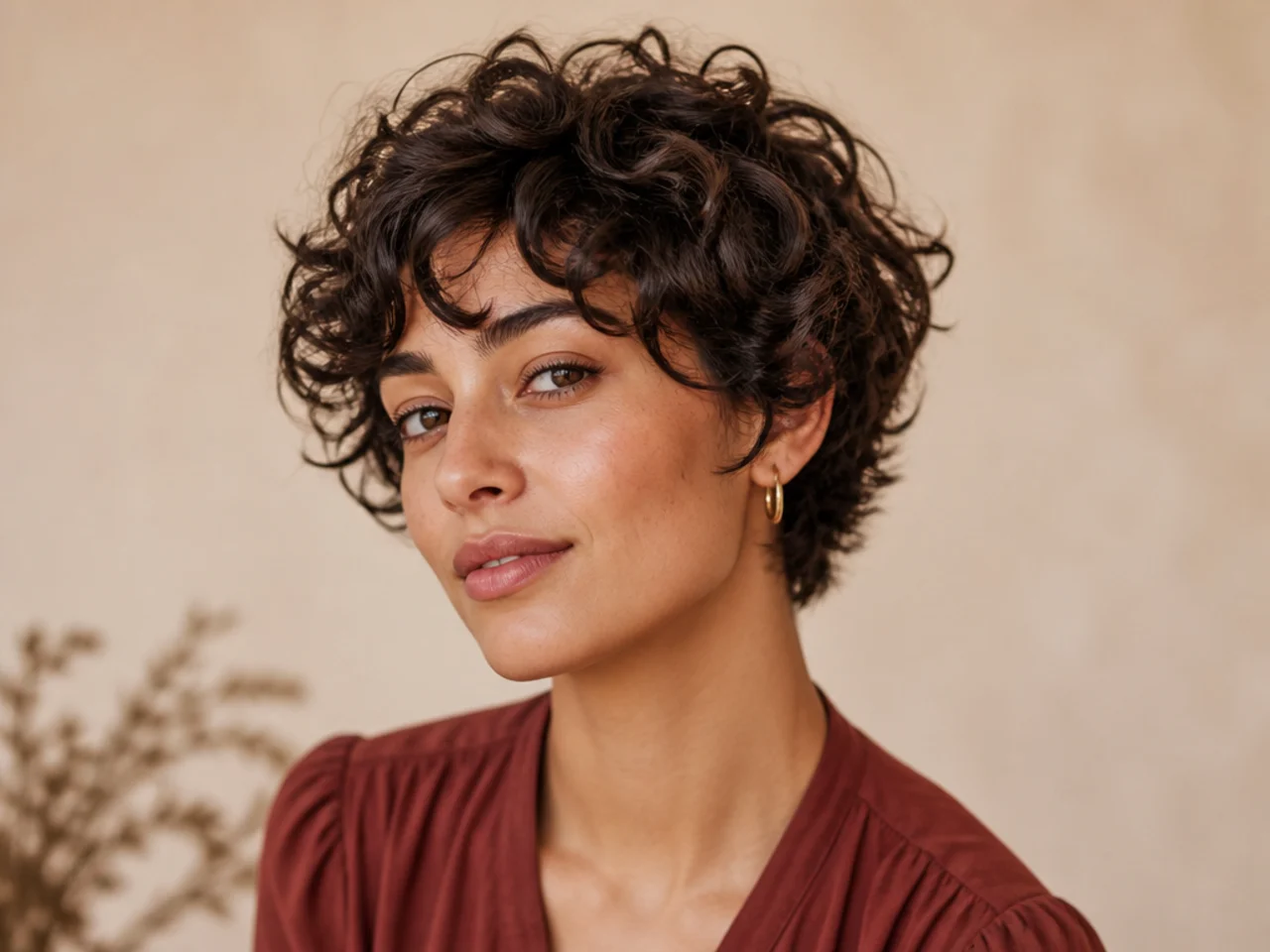
Yes — with the right cutter. Curly hair needs dry-cutting so your stylist can see how each curl falls. Ask for internal layers for volume shaped in a soft round to avoid the triangle effect. Skip a straight-hair fringe unless it's cut curl-by-curl. 3A–3C curls take to layered short cuts easiest. Tighter coils need coil-specific shaping — don't cut them the way you'd cut a 3A curl.
Are layers good for women over 40 or 50?
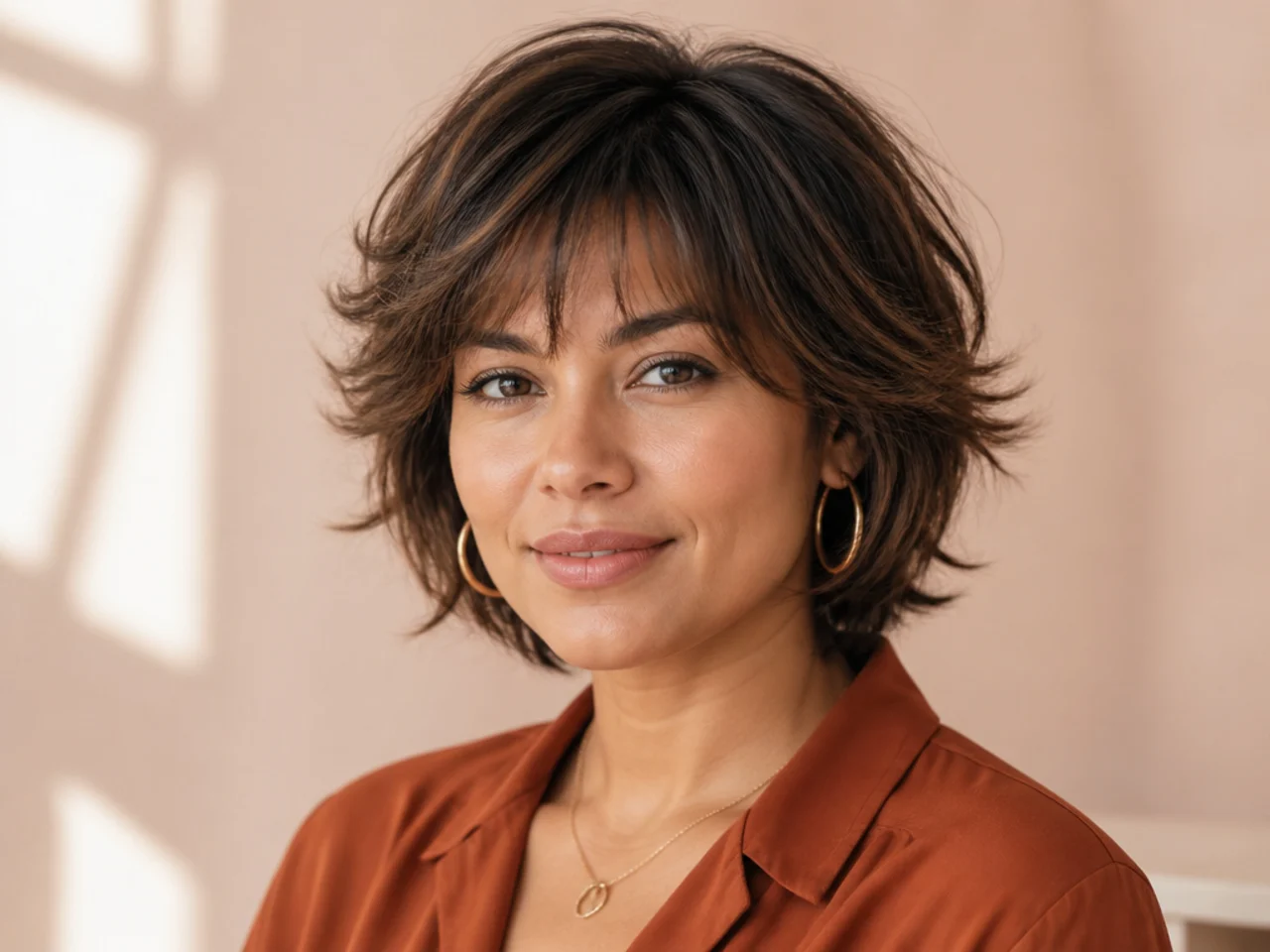
Yes, and often more flattering than one-length cuts. Face-framing layers soften bone structure that sharpens with age, and internal layers for volume at the crown lift roots that flatten over time. Ask for a chin-to-collarbone lob with soft framing and crown lift. Keep the ends blunt for density — hair thins with age, and blunt ends make it look fuller than layered ends do.
How often should layered short hair be trimmed?
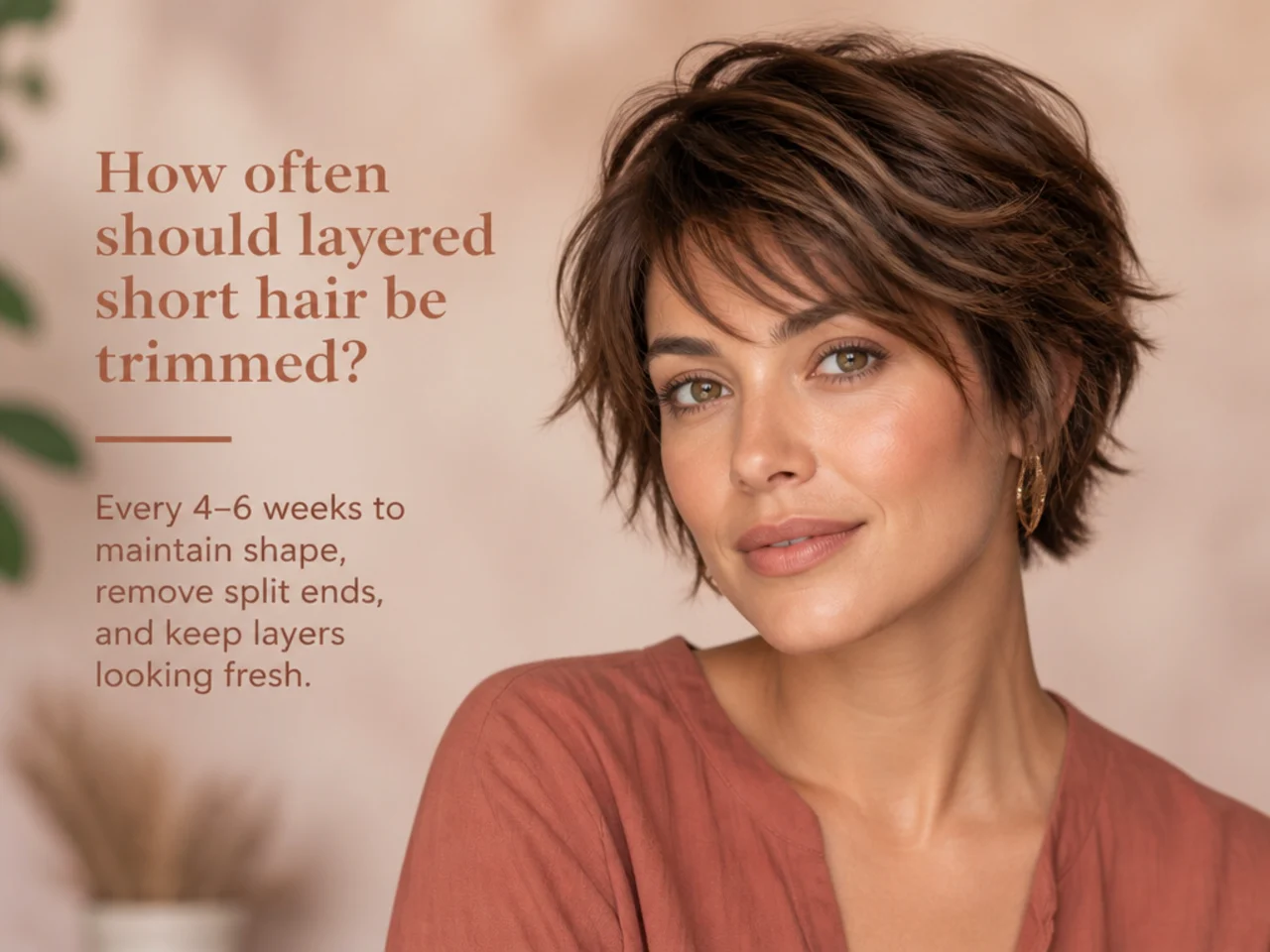
Every six to eight weeks for precision shapes (bob, blunt lob) — the perimeter starts looking uneven fast. Grown-in shag or shaggy layers stretch to 10 weeks between visits. If you're growing out a pixie or boyish cut, see your stylist every four to six weeks to blend the awkward stages between short and medium length.
What products help layered short hair look its best?
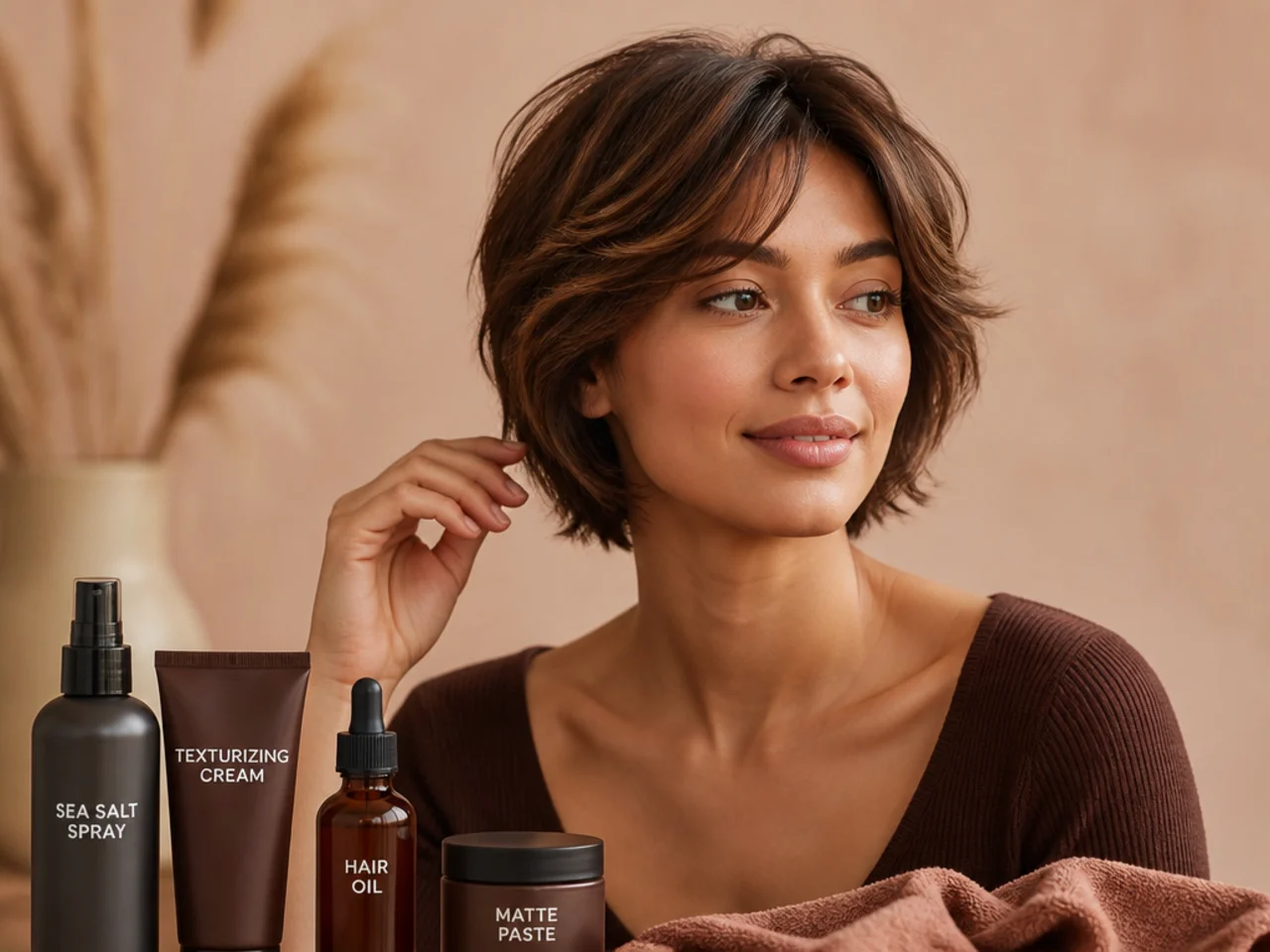
Heat protectant before any hot tool — no exceptions. A mousse or volumizing spray at the roots for lift. Sea-salt spray or a matte styling paste through the mid-lengths for texture. A light-hold hairspray to finish. Skip heavy silicone serums on short layers — they weigh the cut down and kill the shape. Fine hair does best with foam textures over creams.
Do layered cuts require daily styling?
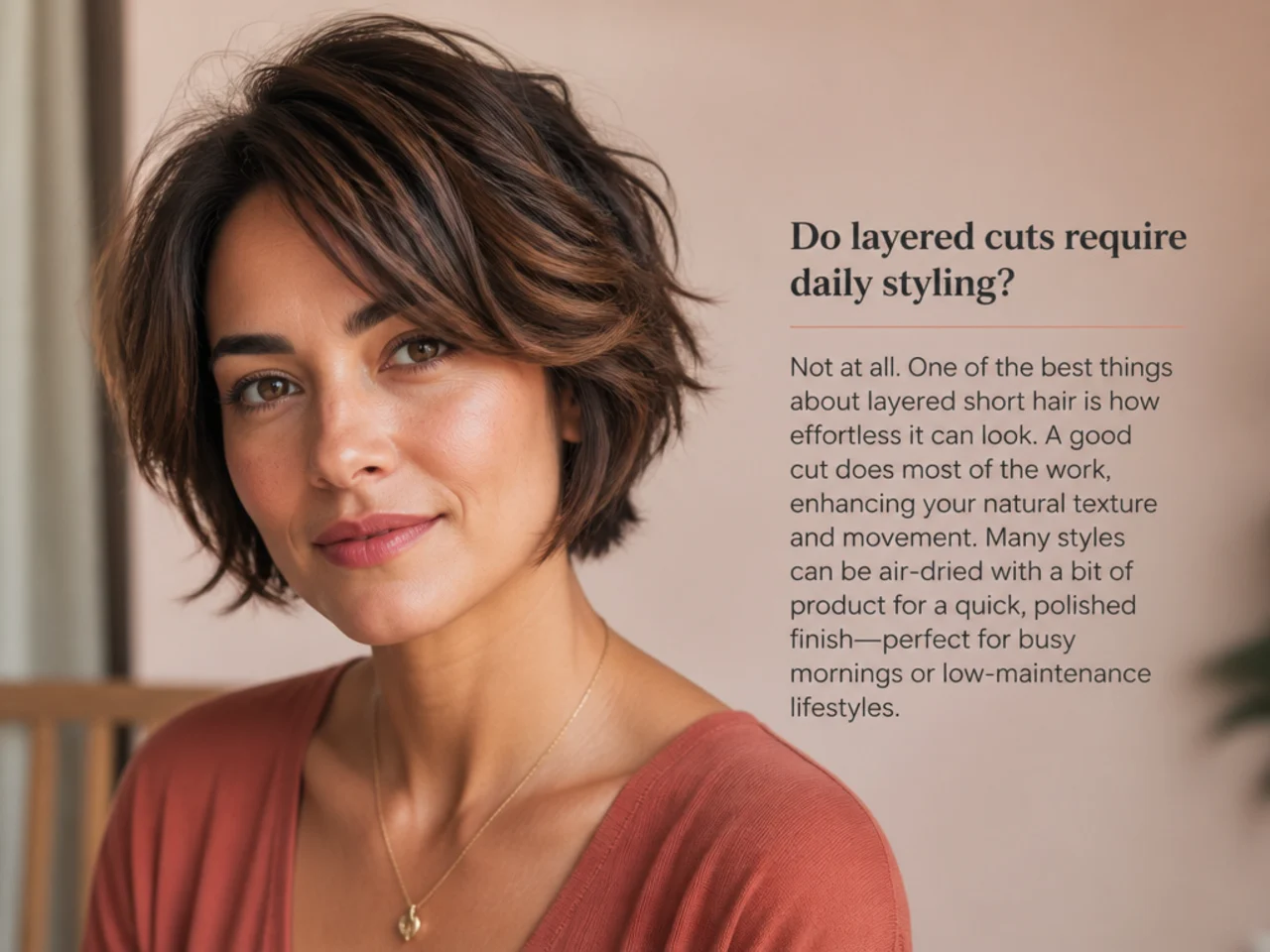
No. Most are cut to air-dry well. The trick is applying product to damp hair, not dry — a leave-in cream, curl cream, or salt spray, then let it dry. Rough up the roots with your fingers once dry. If you want more polish, a five-minute round-brush pass on the top layer only reads as done without a full blowout.
Which layered style suits round faces?
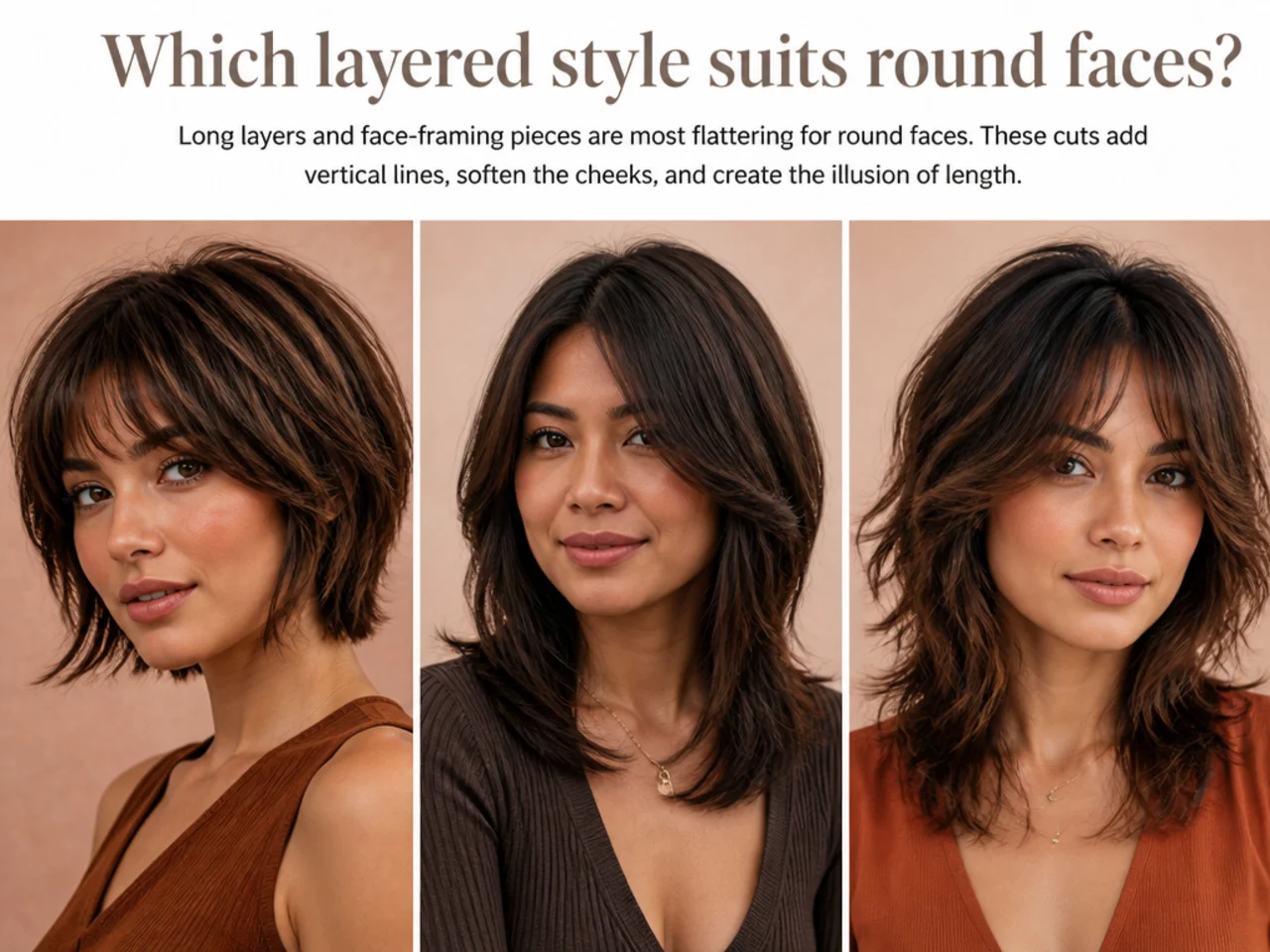
Angled lengths — an asymmetrical lob, a side-swept lob, or long face-framing layers past the chin. These pull the eye down and elongate. Avoid chin-length blunt bobs and center parts — both widen. Ask for internal layers for volume at the crown to add height (which also elongates), plus a deep side part. Long bangs help more than short bangs on round faces.
Can I add color to enhance layers?
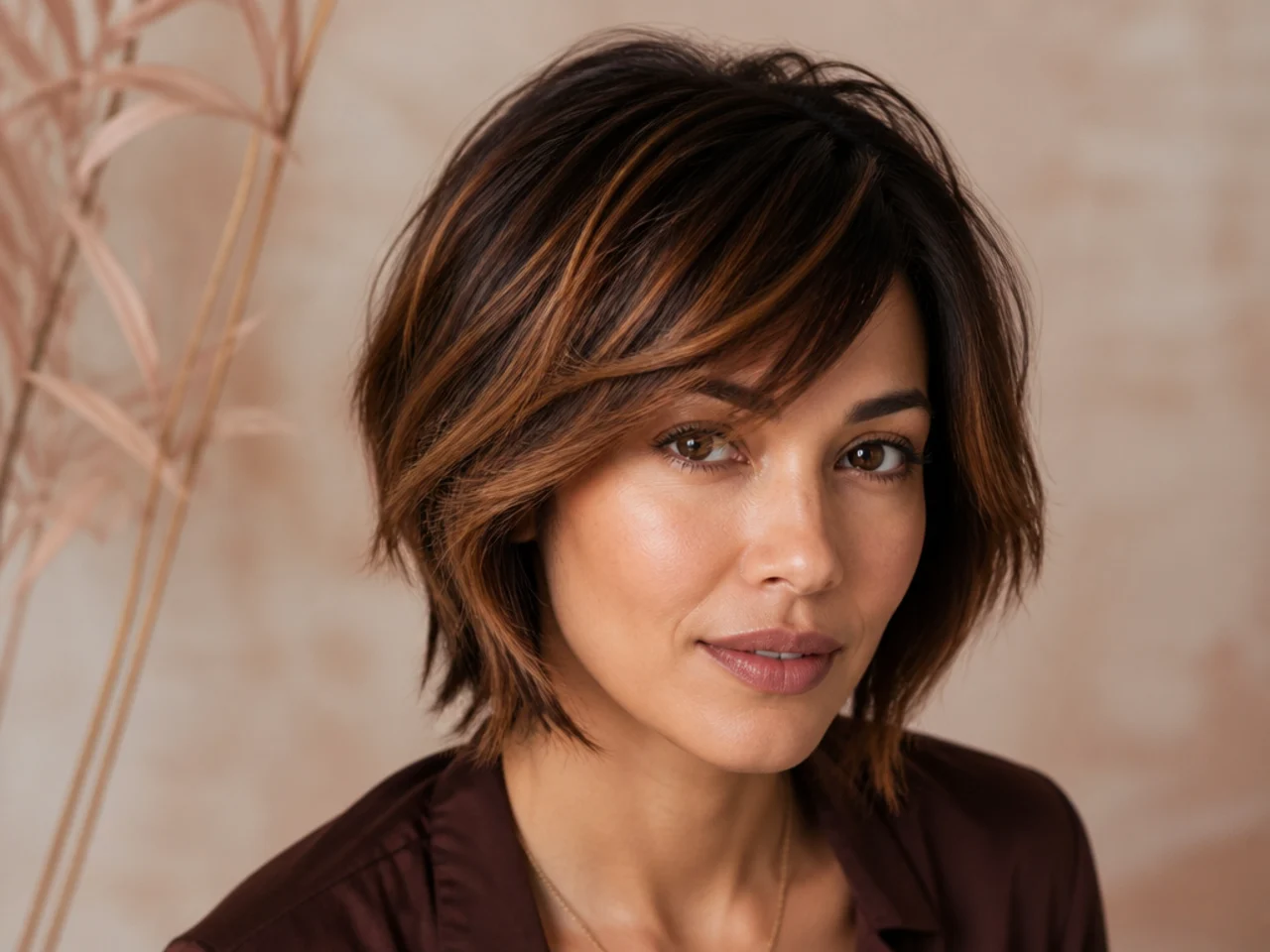
Yes — highlights and balayage make layers read fuller by adding tonal contrast where layers turn. A money-piece framing brightens the front. Skip an all-over single color on fine hair — dimension is what makes short layers pop. Ask your colorist to place brightness where the internal layers sit (mid-shaft to ends), not just at the tips.