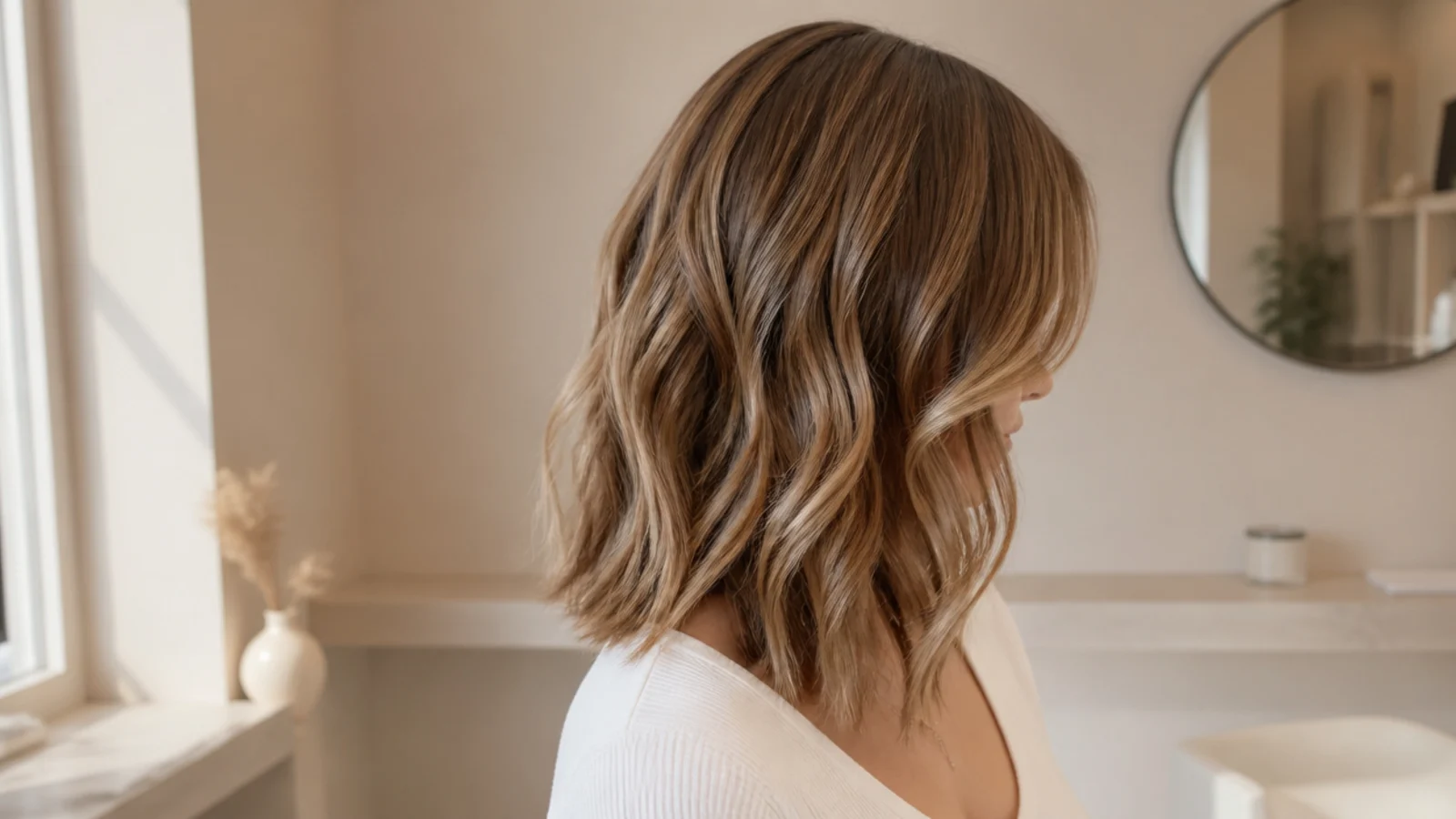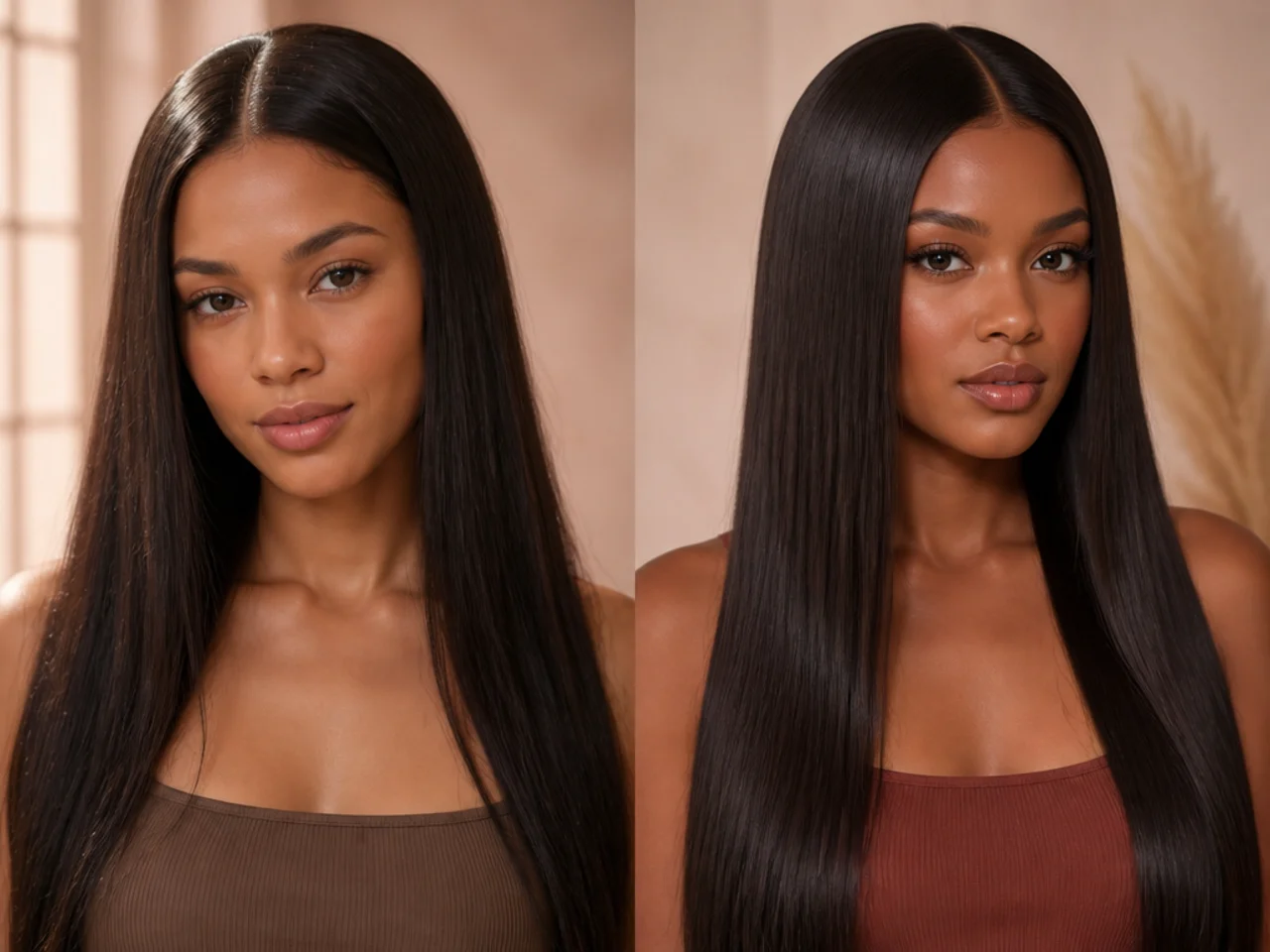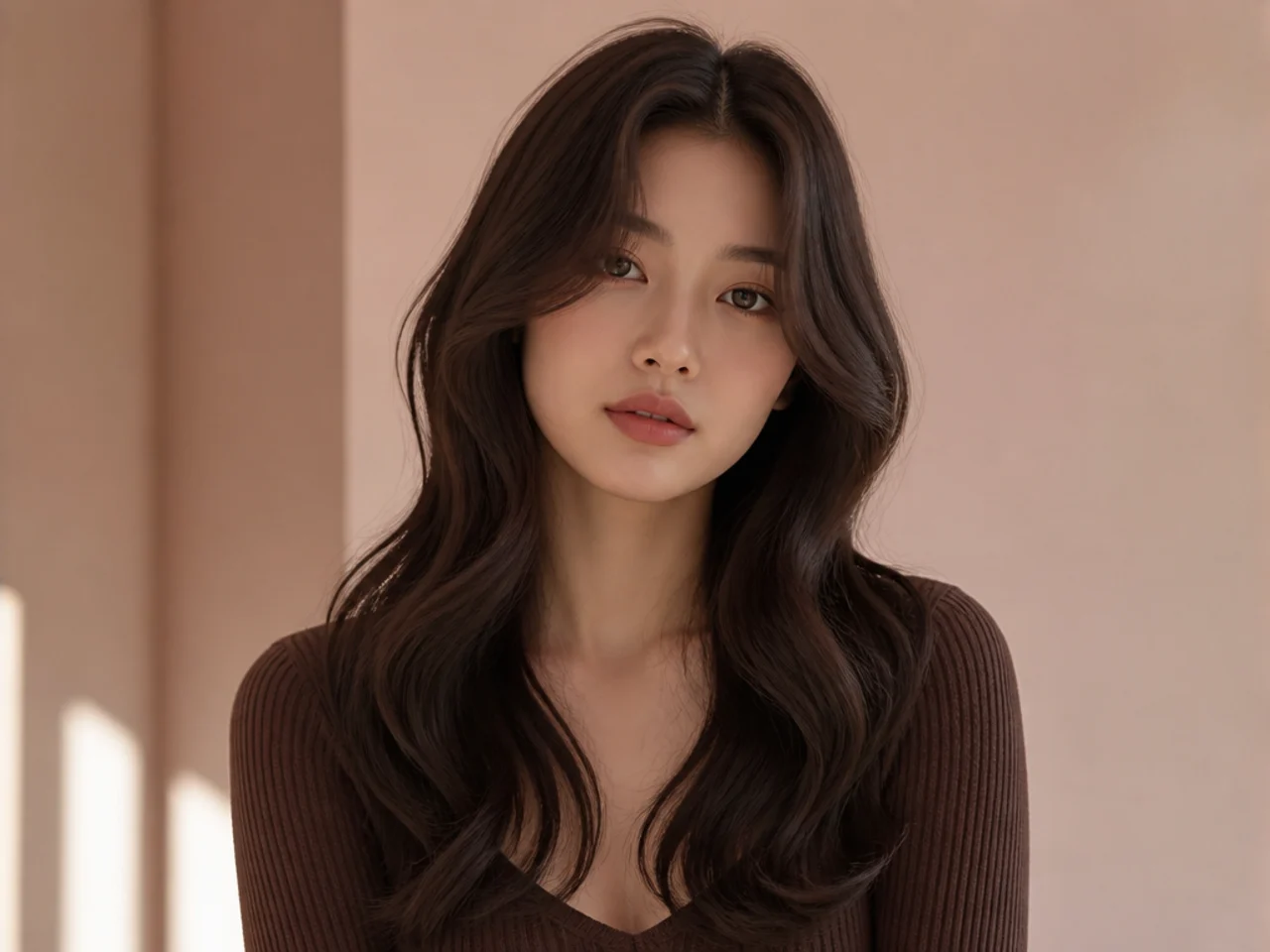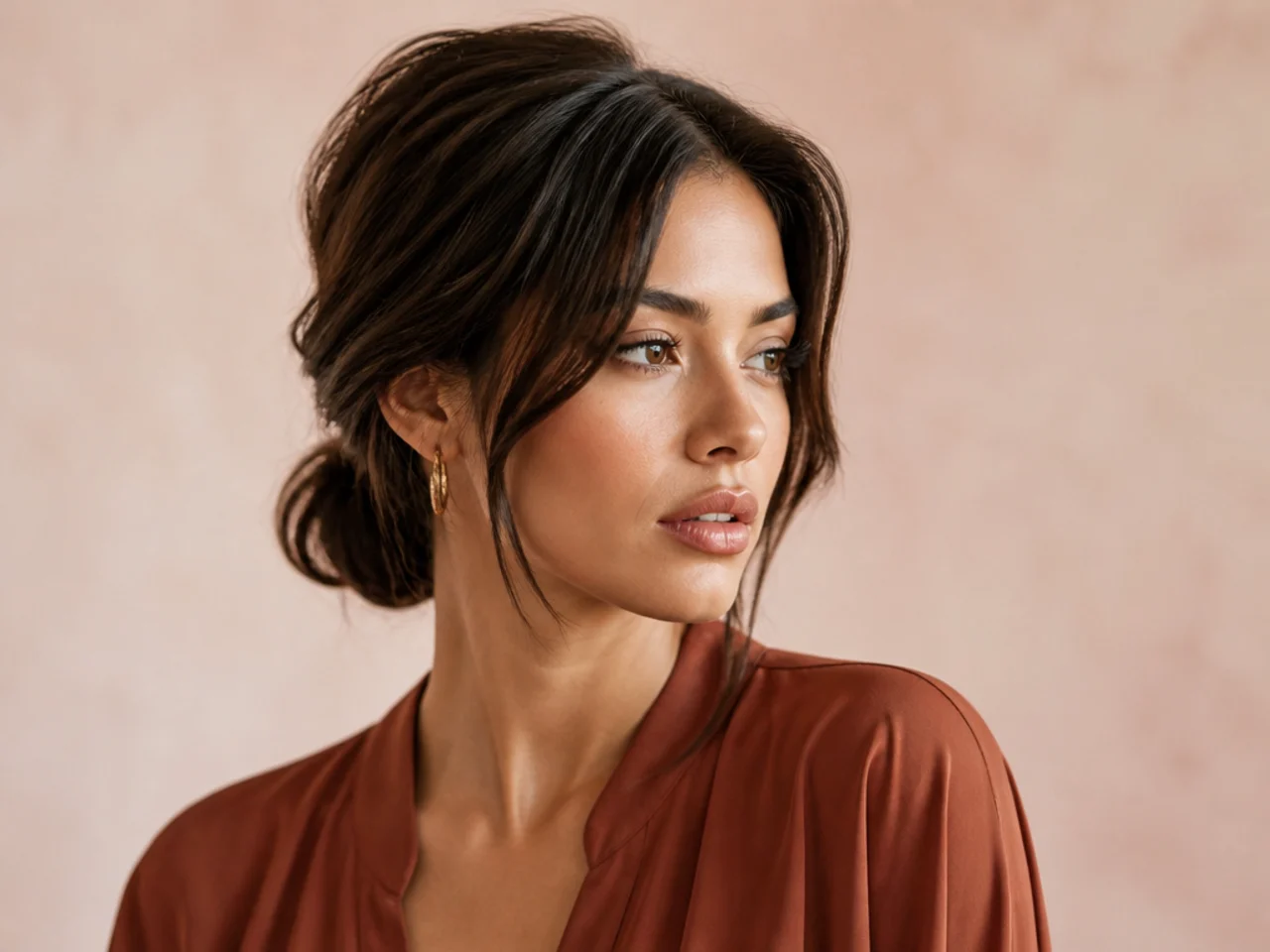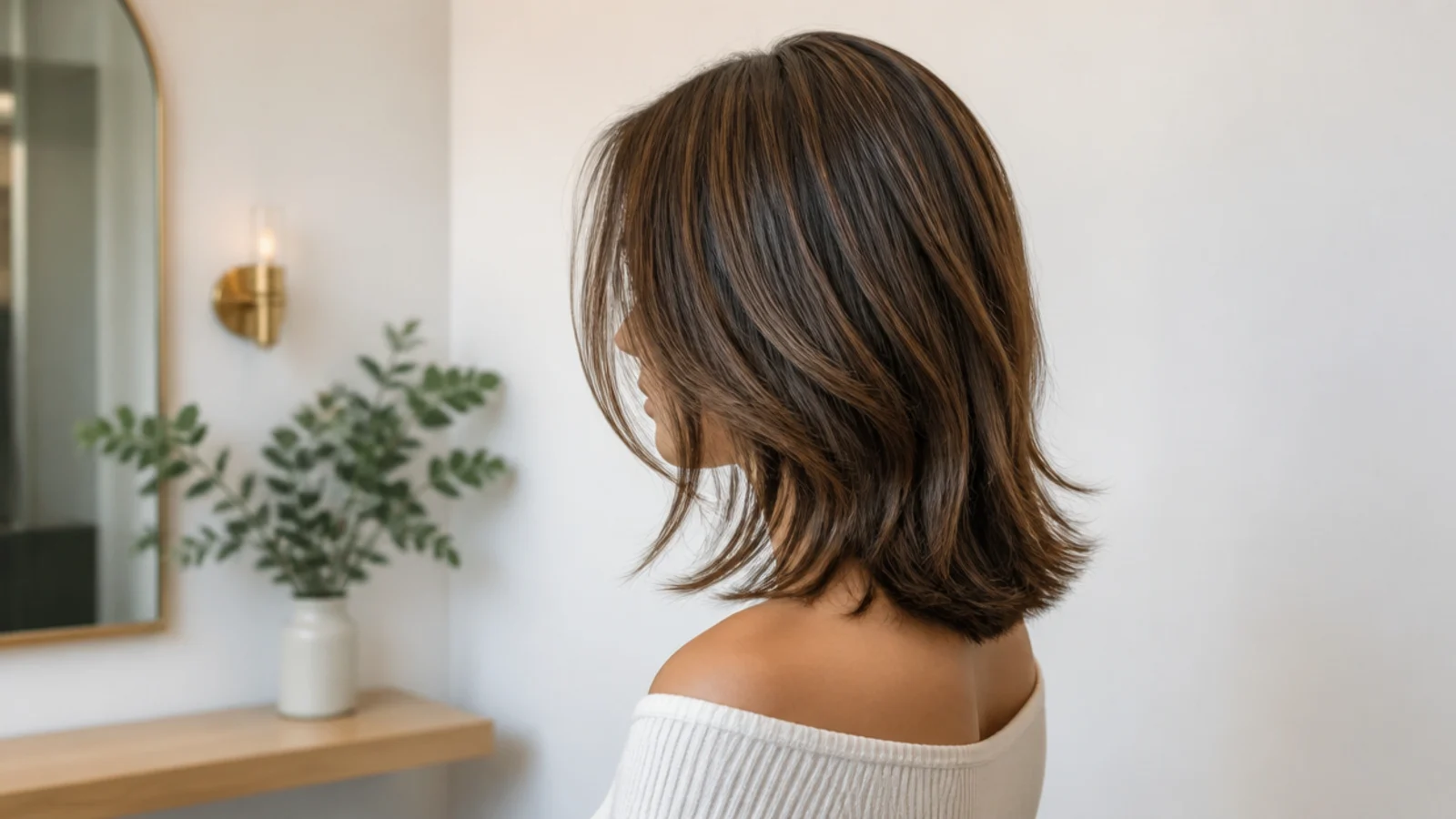
15 Face Framing Mid Length Haircut Ideas
Face framing is one decision pretending to be several. Where the shortest piece starts changes the whole face, and everything else is detail. Fifteen mid length versions, each with its start point named.
In this article · 23
- What Counts as Mid Length
- Framing Versus Bangs Versus Money Piece
- Start Point by Face Shape
- Framing on Fine Thick and Curly Hair
- How to Ask Your Stylist
- Styling and Grow Out
- The 15 Face Framing Cuts
- 1. Chin Start on a Collarbone Cut
- 2. Jaw Start for a Round Face
- 3. Cheekbone Start on an Oval Face
- 4. Collarbone Start for a Heart Face
- 5. Curtain Bangs as Framing
- 6. Bottleneck Framing for a Square Jaw
- 7. Money Piece Framing
- 8. Framing on a Blunt Lob
- 9. Butterfly Cut on Thick Hair
- 10. Curly Framing Cut Dry
- 11. Curved Framing on Wavy Hair
- 12. Invisible Layers on Fine Hair
- 13. Razored Framing on Coarse Hair
- 14. Side Swept Framing for a Long Face
- 15. Choppy Shag Framing
- Final Thoughts
Face framing is one decision dressed up as several, and almost everyone spends the consultation on the wrong parts of it.
The start point is the decision. Where the shortest piece finishes against your face changes the shape of the face itself. Everything else — how many pieces, how soft, how choppy — is detail.
Below the widest part is the rule. A layer ending level with the cheekbones adds width where most faces already have it. A layer starting at the jaw runs a line downward instead.
What Counts as Mid Length
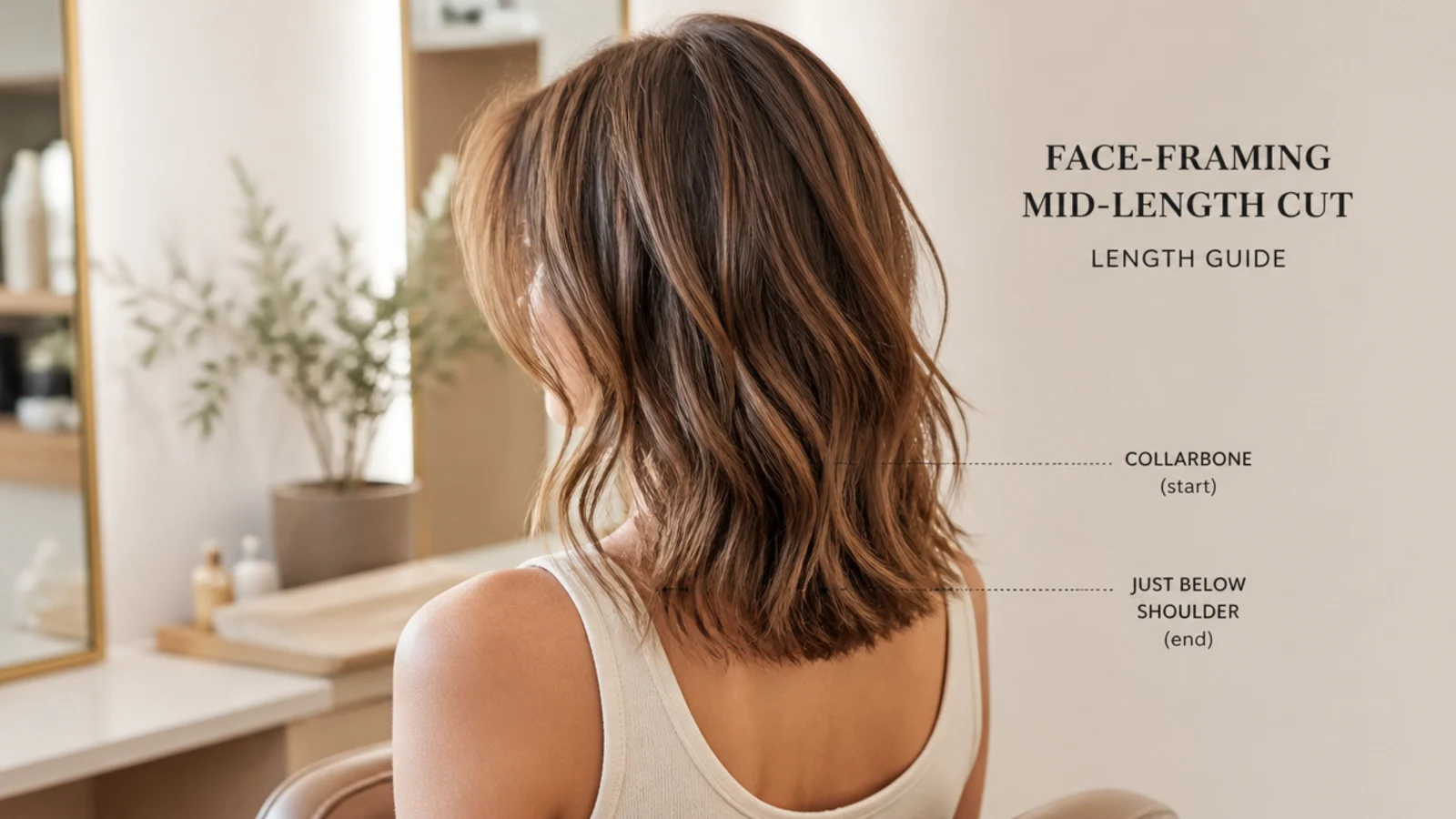
Chin to a few inches below the collarbone. The range where there is enough length behind the framing for the framing to blend back into.
Framing needs a gradient, and a gradient needs room. Four or five inches between the shortest piece and the perimeter reads as a curve. Two inches reads as a step.
Shorter than the chin and it stops being framing. At that point the front pieces are the cut rather than a feature of it.
Longer than mid length and the effect weakens. Framing on waist length hair sits so far above the perimeter that the eye reads two separate lengths.
Framing Versus Bangs Versus Money Piece
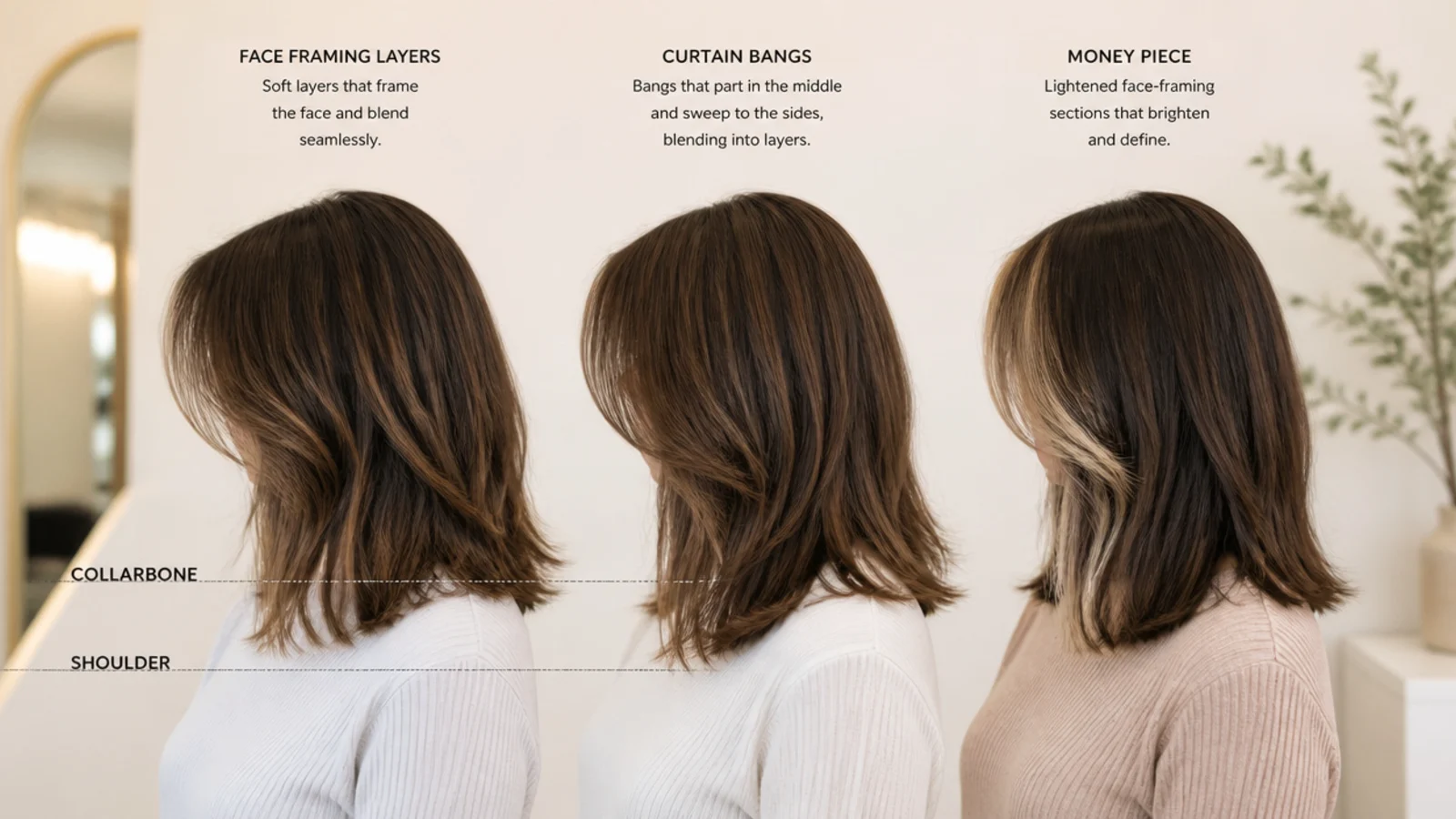
Framing starts on the face and blends back. Somewhere between the cheekbone and the collarbone, then travelling into the length behind it.
Bangs start on the forehead. Curtain bangs are framing taken all the way up and parted, which is why the two are so easily confused and so different to live with.
A money piece is colour, not cutting. Two brightened sections at the front that pull the eye forward without a single inch being removed.
They combine, but only in one order. Cut the framing, then place the colour on it. Colouring first means brightening hair you are about to shorten.
Start Point by Face Shape
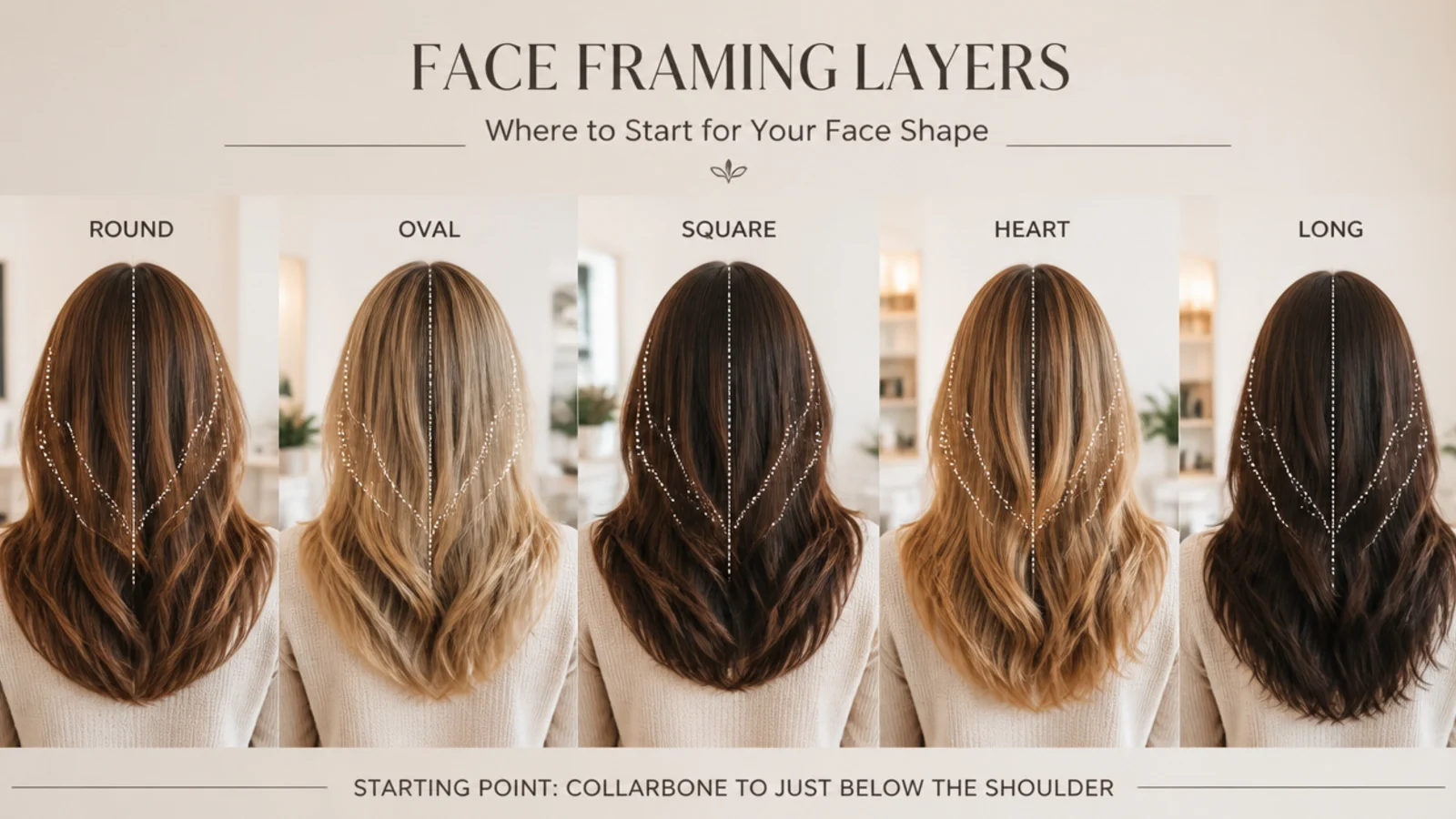
Round starts at the jaw or lower. Nothing at cheek level, because that is the widest line on a round face and framing there underlines it.
Square starts above the jaw and passes it. Breaking the outline where the jaw turns softens the corner; landing on the corner repeats it.
Long starts at the cheekbone and sweeps sideways. A horizontal across the middle of the face is the only thing that shortens a vertical one.
Heart starts low, at the collarbone. The width is at the forehead already, so fullness belongs down where the face narrows toward the chin.
Framing on Fine Thick and Curly Hair
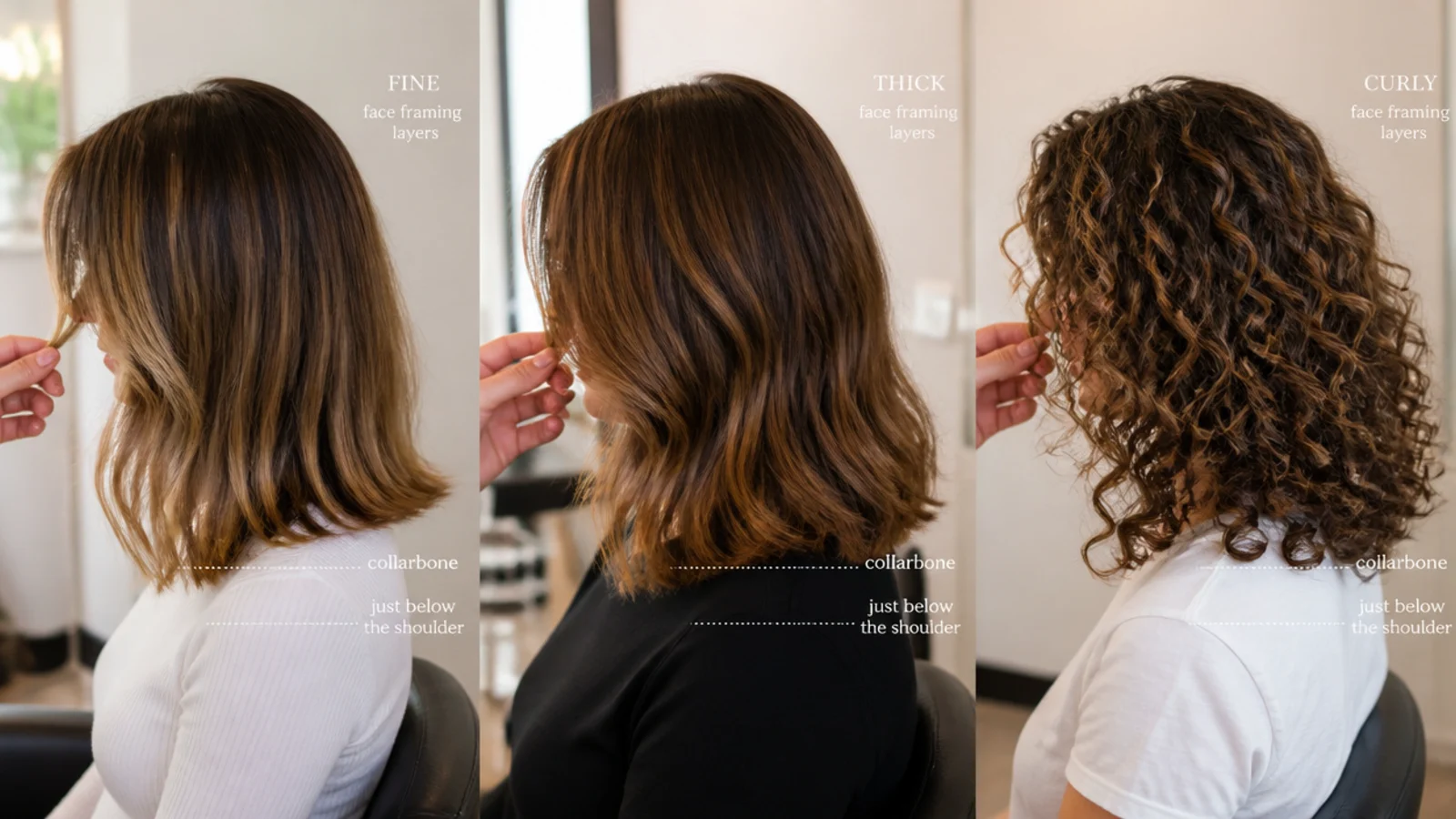
Fine hair wants the framing hidden inside. Shorter pieces underneath, perimeter untouched, so nothing reads as thinning at the outline.
Thick hair wants weight removed with the shape. Framing that only shortens the front of thick hair leaves the same bulk in a shorter piece, and it sticks straight out.
Coarse hair needs the ends tapered. A stiff strand cut bluntly stands away from the cheek instead of falling against it.
Curly hair needs the framing cut dry and cut long. A curl finishing at the jaw when wet can sit up at the cheek once it has sprung.
How to Ask Your Stylist
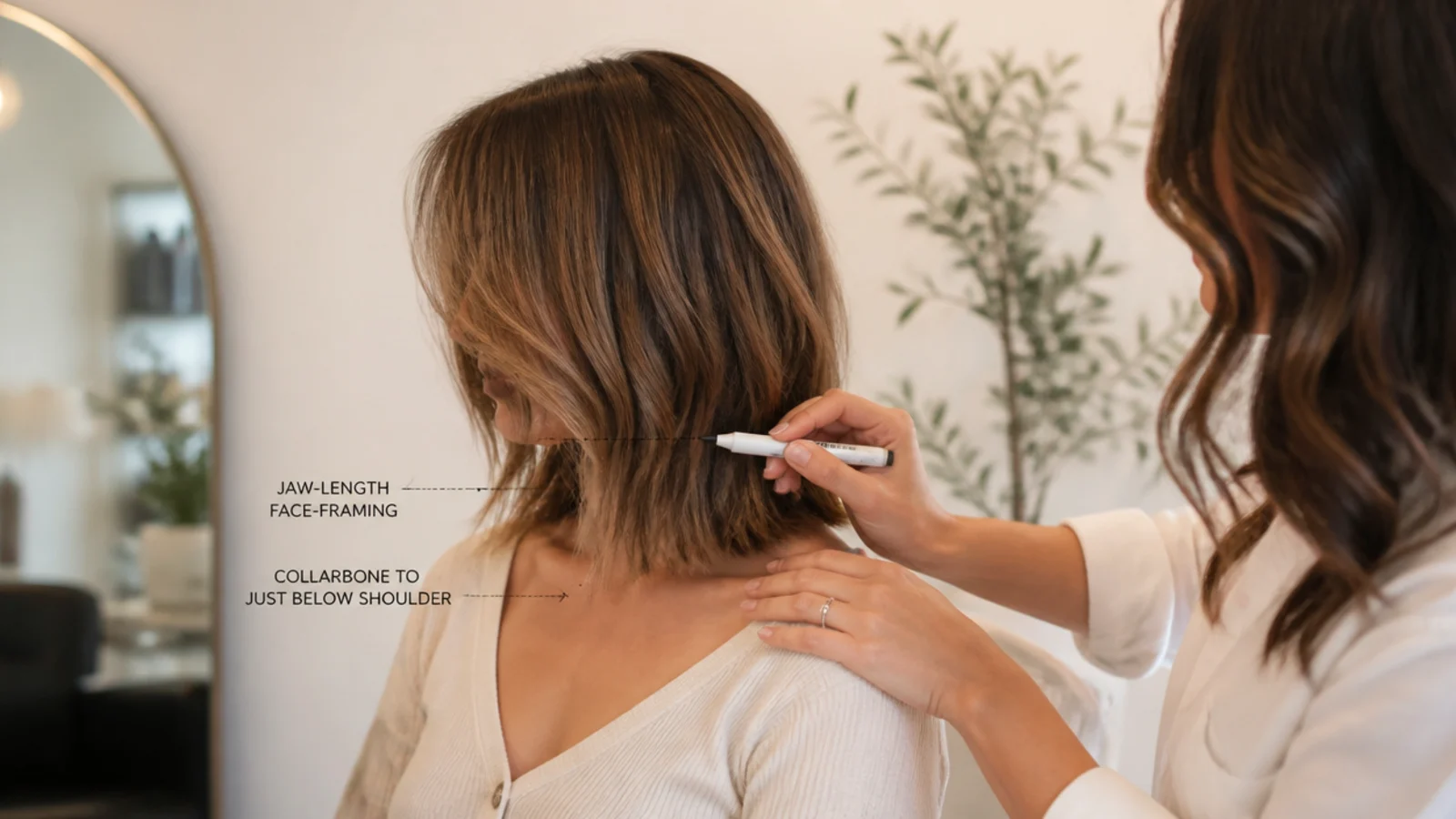
Name the start point against your own face. Chin, jaw, cheekbone, collarbone. Not inches, and not "just a bit shorter at the front".
Say whether it should sit in front of or behind the ear. This decides whether the framing shows when you tuck, and stylists split evenly on the default.
Say how many pieces you want. Two, or a graduated set running back to the ear. They look nothing alike after a week.
Bring the part you actually wear. Framing cut on a centre part sits wrong the moment you switch to a side one, because the shortest piece moves across.
Styling and Grow Out
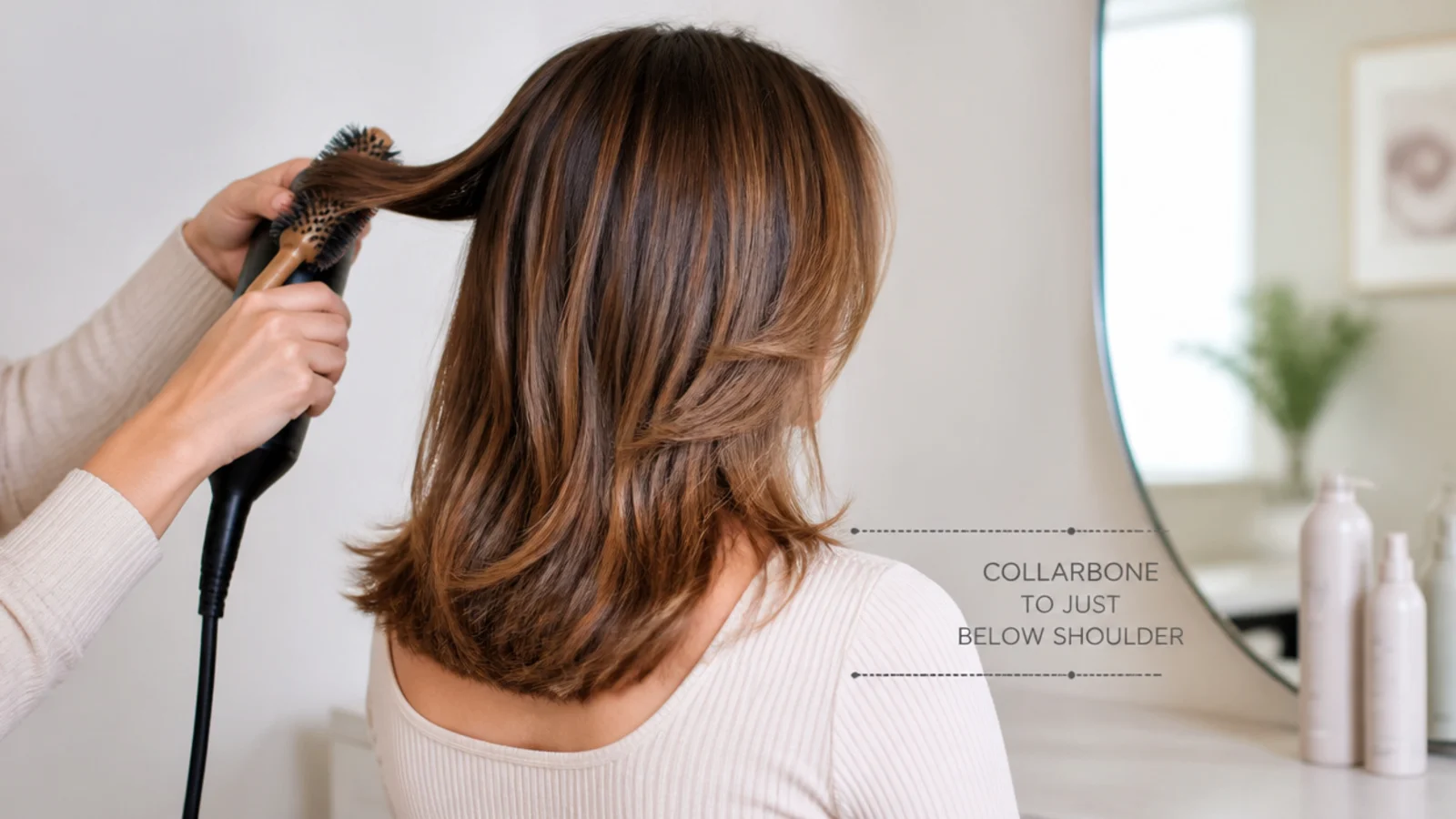
Dry the framing away from the face first. Then let it fall back. Drying it forward sets it flat against the cheek where it covers rather than frames.
A round brush at the ends is enough. One turn under, or one turn out. The framing is short enough that the shape holds from a single pass.
Expect eight months for a chin piece to rejoin a collarbone cut. Half an inch a month, and the gap is the length you asked to remove.
Tuck one side through the awkward stage. The middle of a grow out is the point at which the shortest piece is too long to curve and too short to hang.
The 15 Face Framing Cuts
1. Chin Start on a Collarbone Cut
The shortest piece at the chin and the perimeter at the collarbone gives four or five inches of gradient across the front section, which is long enough for the framing to fall as a curve. That distance is exactly why this version looks soft while a shorter gradient on the same cut reads as a step.
2. Jaw Start for a Round Face
Starting at the jaw puts the shortest piece below the cheeks, so nothing in the framing adds width at the widest line of a round face. The pieces then travel downward past the jaw, which draws a vertical the eye follows instead of the curve of the cheek.
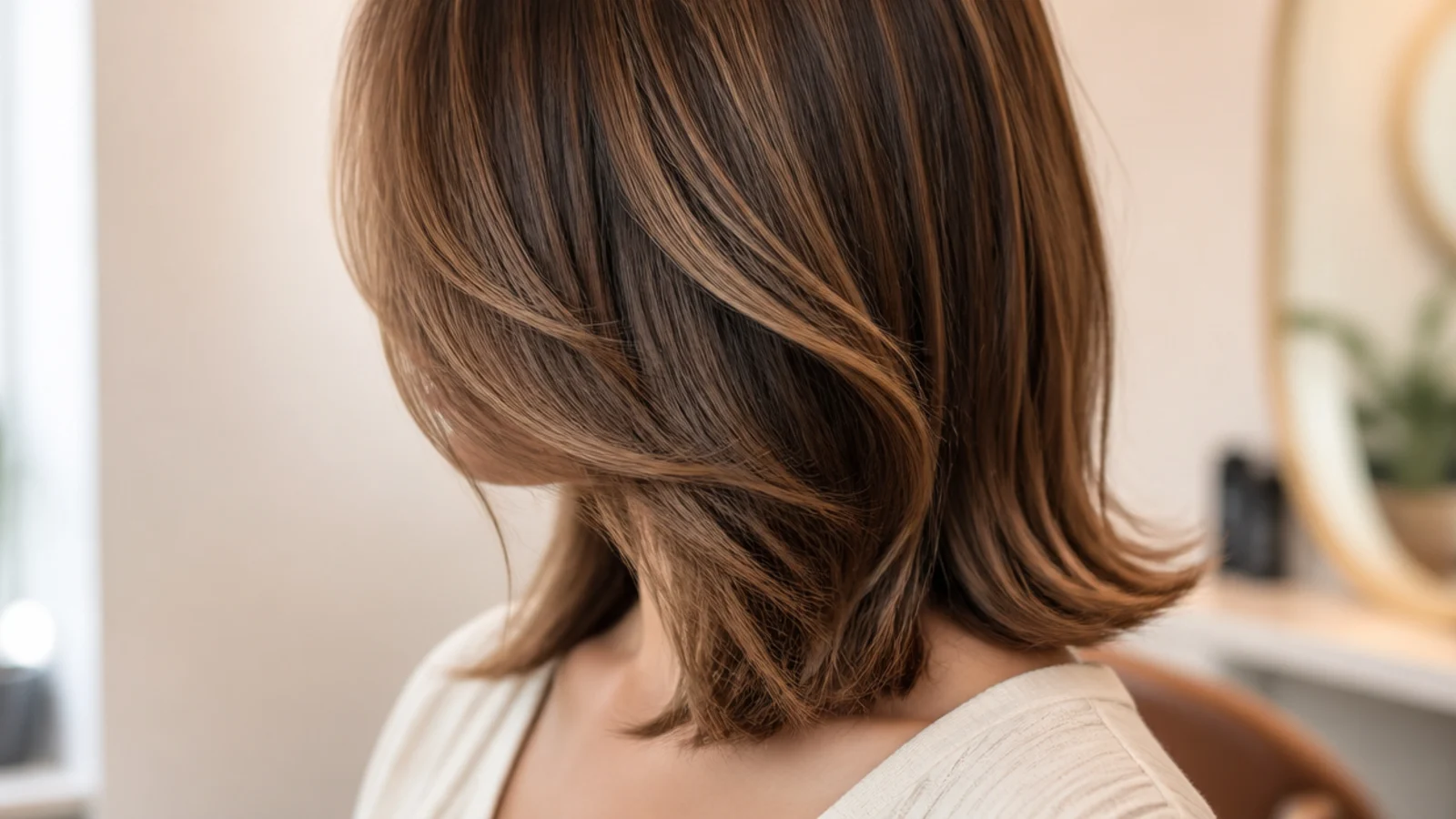
3. Cheekbone Start on an Oval Face
The cheekbone is the highest start that still reads as framing rather than as a fringe. An oval face can carry it because there is no excess width at that level to exaggerate, whereas the same start point on a round or square face adds fullness exactly where it is least wanted.
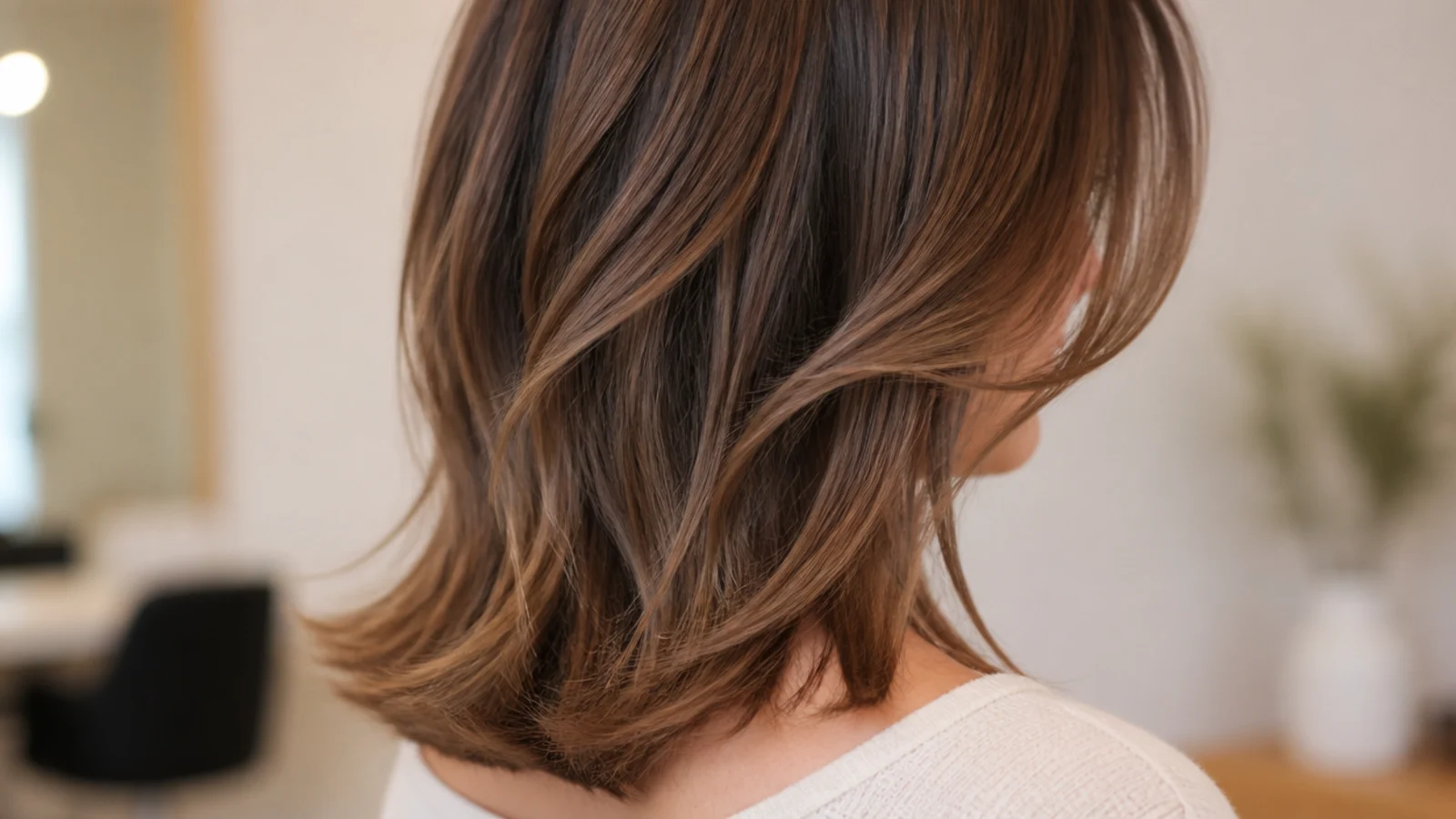
4. Collarbone Start for a Heart Face
A heart shaped face is widest at the forehead and narrowest at the chin, so framing that stays long and only begins at the collarbone leaves the fullness low where the face needs it. Anything shorter puts hair beside the forehead, which is the one place the width is already there.
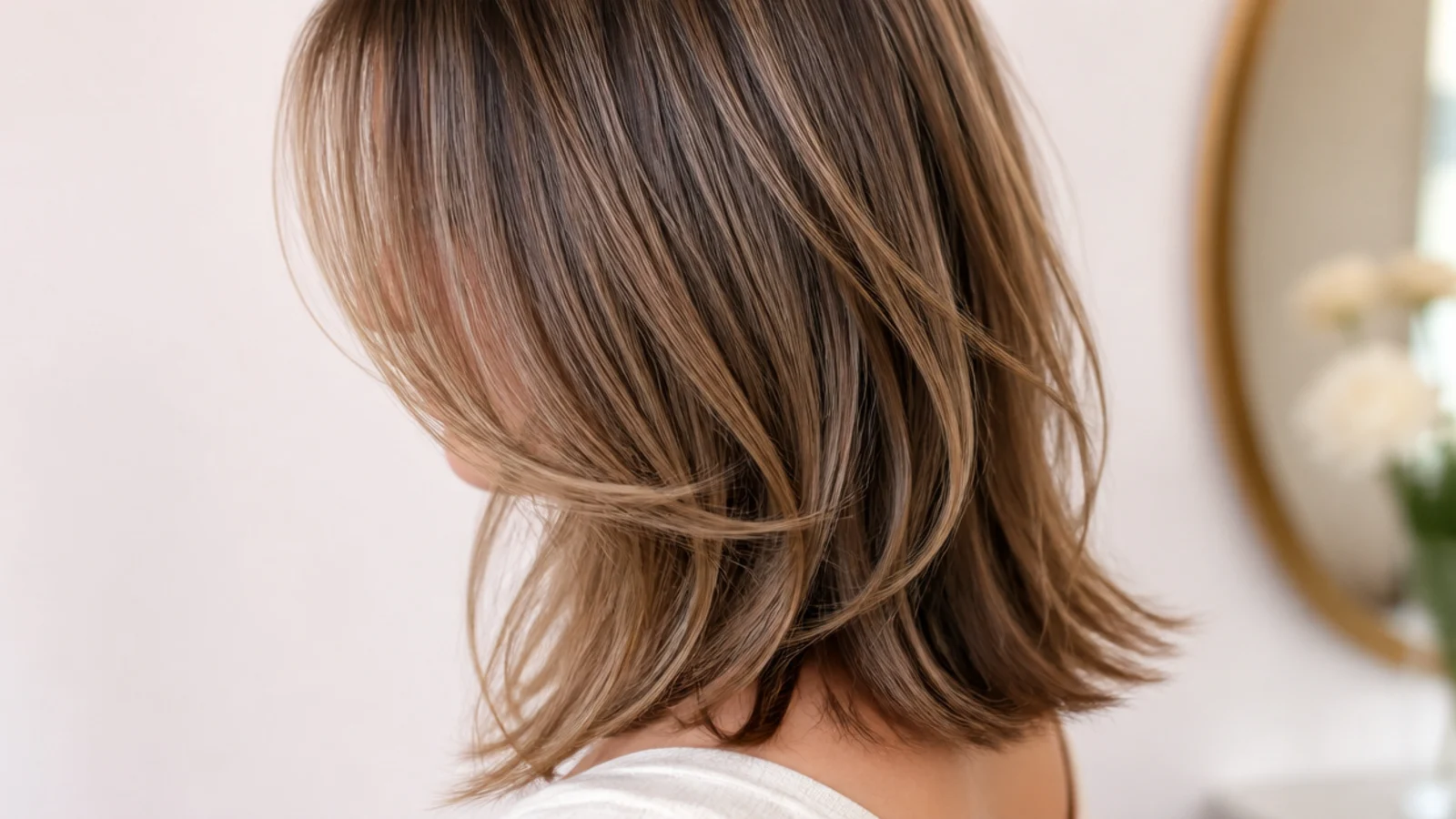
5. Curtain Bangs as Framing
A curtain fringe is framing taken all the way up to the forehead and parted down the middle so both halves sweep back toward the ears. The join between fringe and framing has to be continuous, because any gap in the gradient makes the fringe read as a short layer sitting on top of a longer cut.
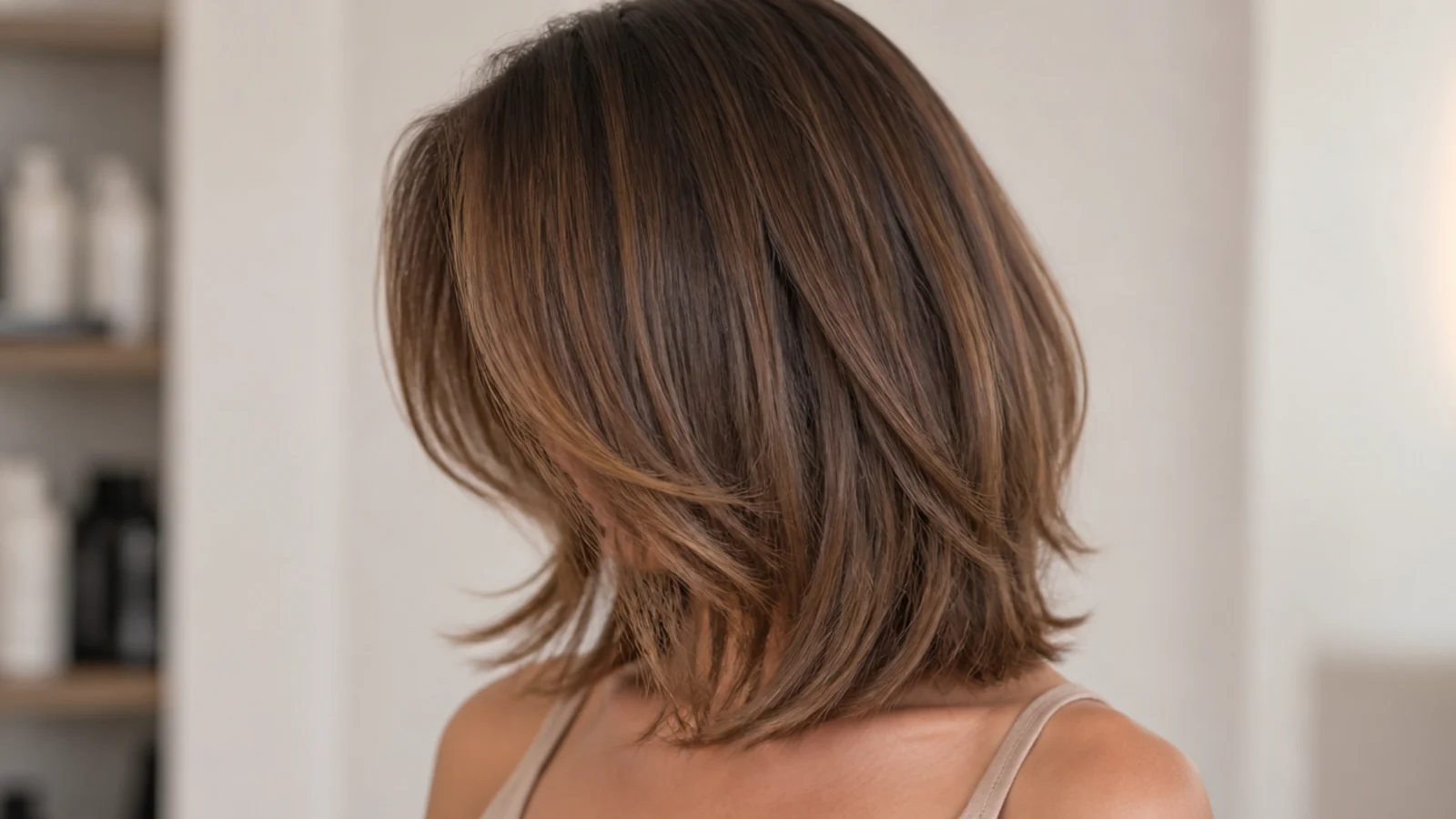
6. Bottleneck Framing for a Square Jaw
Narrow at the top like a fringe and flaring wider as it reaches the cheek, which is the bottle shape it takes its name from. On a square jaw the widest part of that flare sits above the corner of the jaw, so the eye is drawn upward before it reaches the angle.
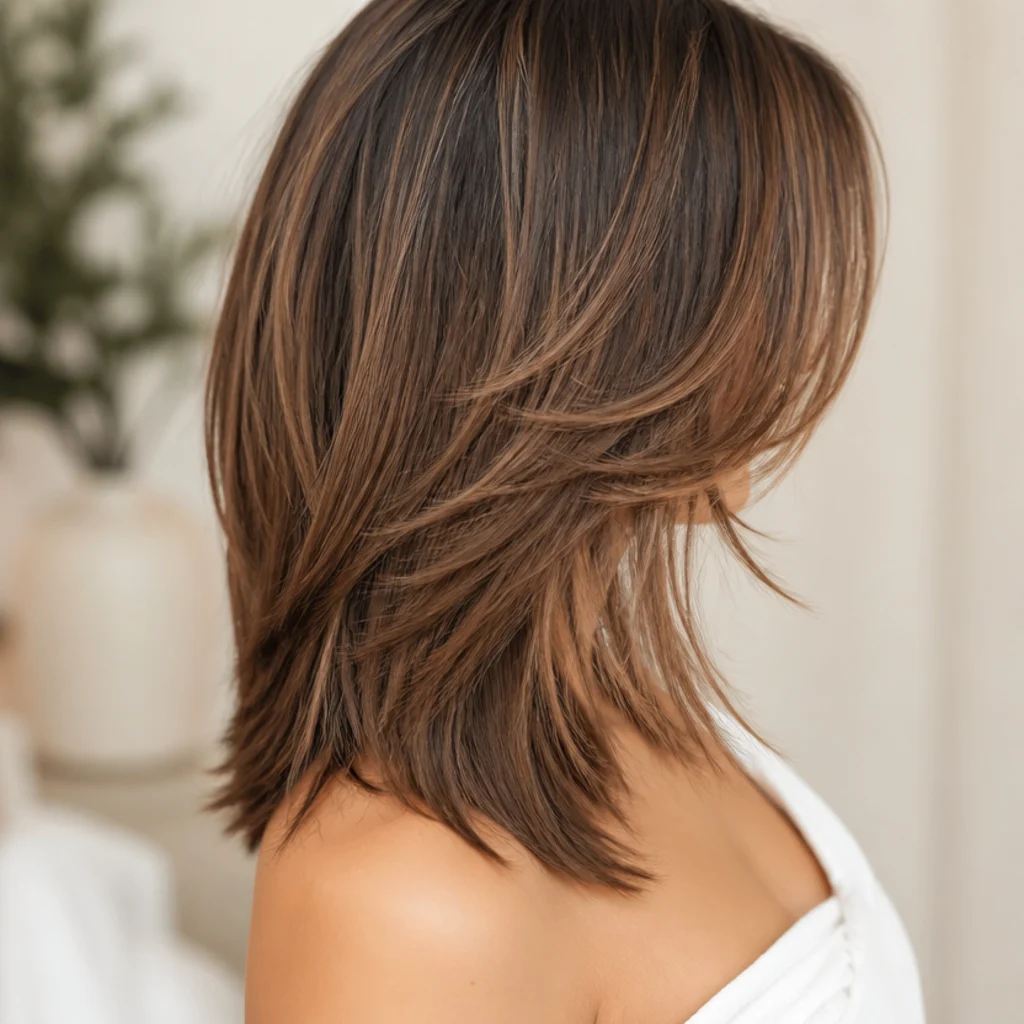
7. Money Piece Framing
Two brightened sections at the very front reflect more light than the hair behind them, which pulls the front of the cut forward without a single inch being removed. It does the job of a shorter layer on anyone who wants the effect of framing while keeping every bit of their length.
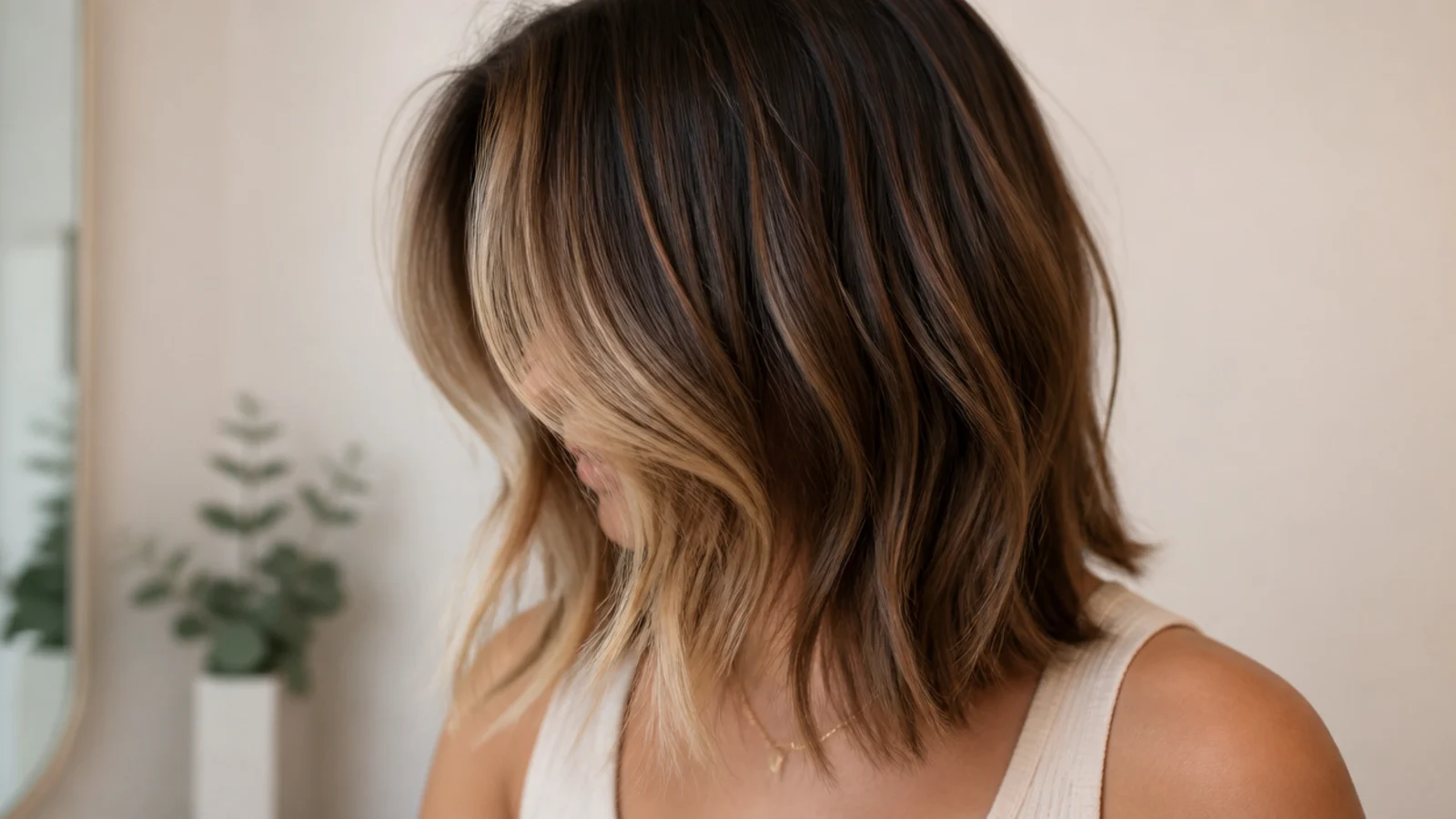
8. Framing on a Blunt Lob
The perimeter stays cut as a hard line and only the two front sections are shortened, so the cut keeps its full density and gains a curve at the face. It is the most conservative framing available, because nothing behind the ear is touched at all.
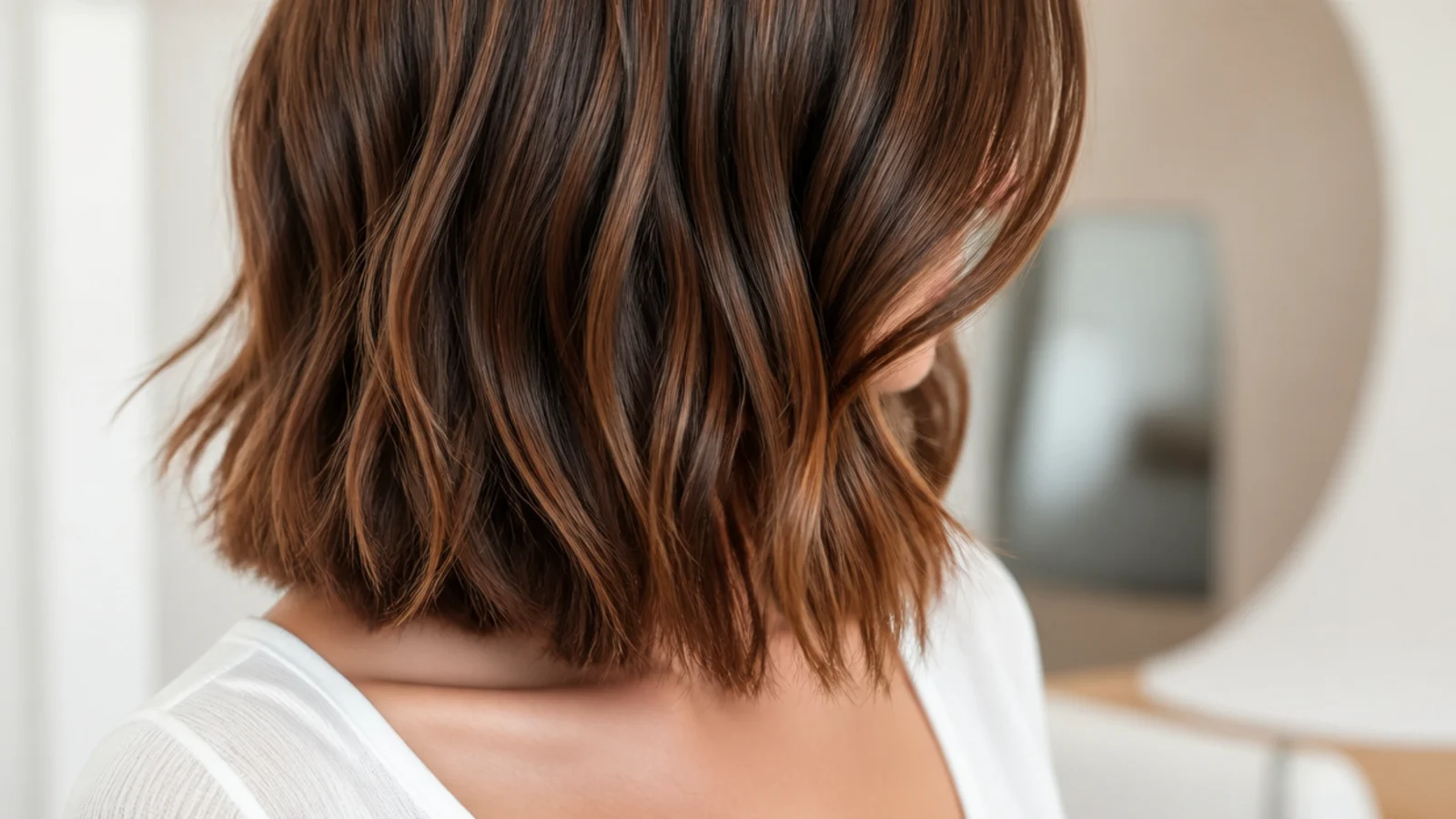
9. Butterfly Cut on Thick Hair
Face framing taken to its limit, with the front sections cut to chin level while everything behind stays long. On thick hair those short pieces also carry real weight out of the front, which is what stops thick hair hanging as a flat curtain either side of the face.

10. Curly Framing Cut Dry
A curl cut level with the jaw can shrink up to the cheek, so framing on curly hair has to be cut dry and cut longer than the target. Each front curl is placed on its own, because the two sides of a head rarely shrink by the same amount and an averaged cut lands wrong on one of them.
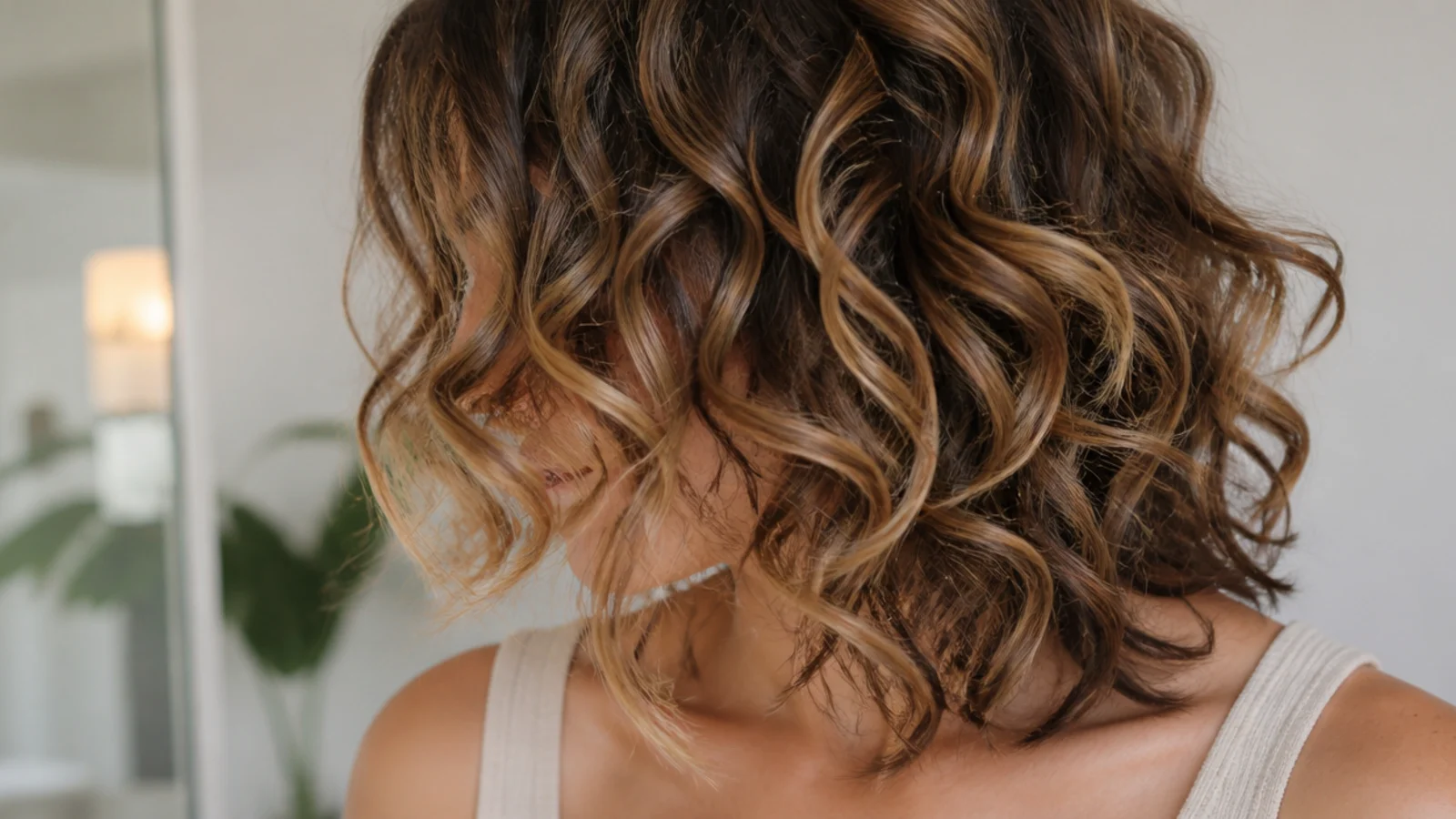
11. Curved Framing on Wavy Hair
The framing is cut as one continuous curve rather than in steps, so the wave has nowhere to break into a visible tier. Waves exaggerate any step in a layer, because the bend of the S collects at the shortest point and puts a shadow there.
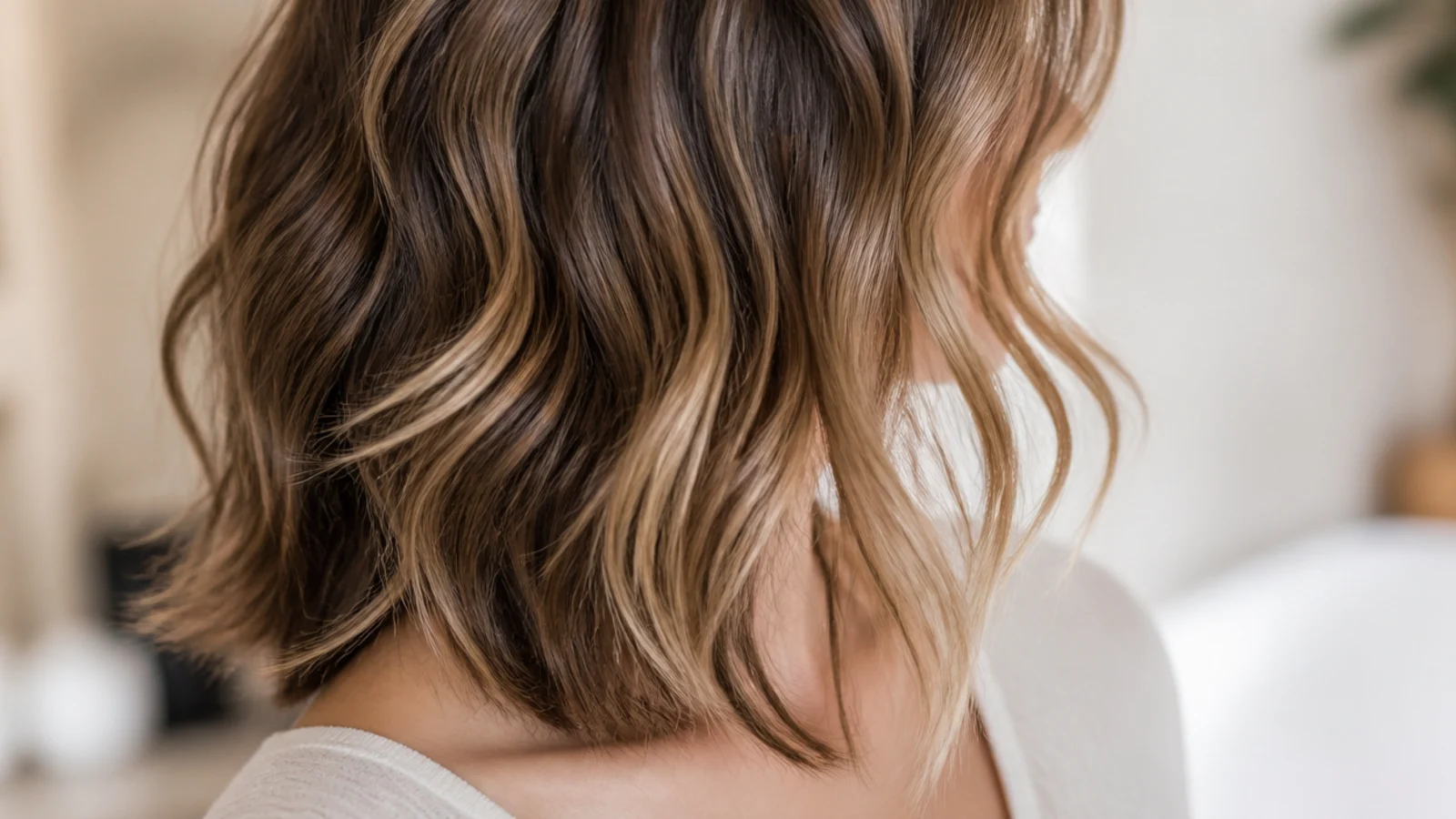
12. Invisible Layers on Fine Hair
The framing is cut inside the front section, so the shorter pieces sit underneath and lift the surface hair without ever appearing at the outline. On fine hair a visible framing layer reads as thinning rather than as shape, which is why hiding it is worth the extra time in the chair.

13. Razored Framing on Coarse Hair
Coarse hair holds a scissor line stiffly, so a bluntly cut front piece stands away from the cheek rather than falling against it. A razor tapers each strand over several inches, leaving the end finer than the root, and a finer end has too little stiffness to hold itself out.
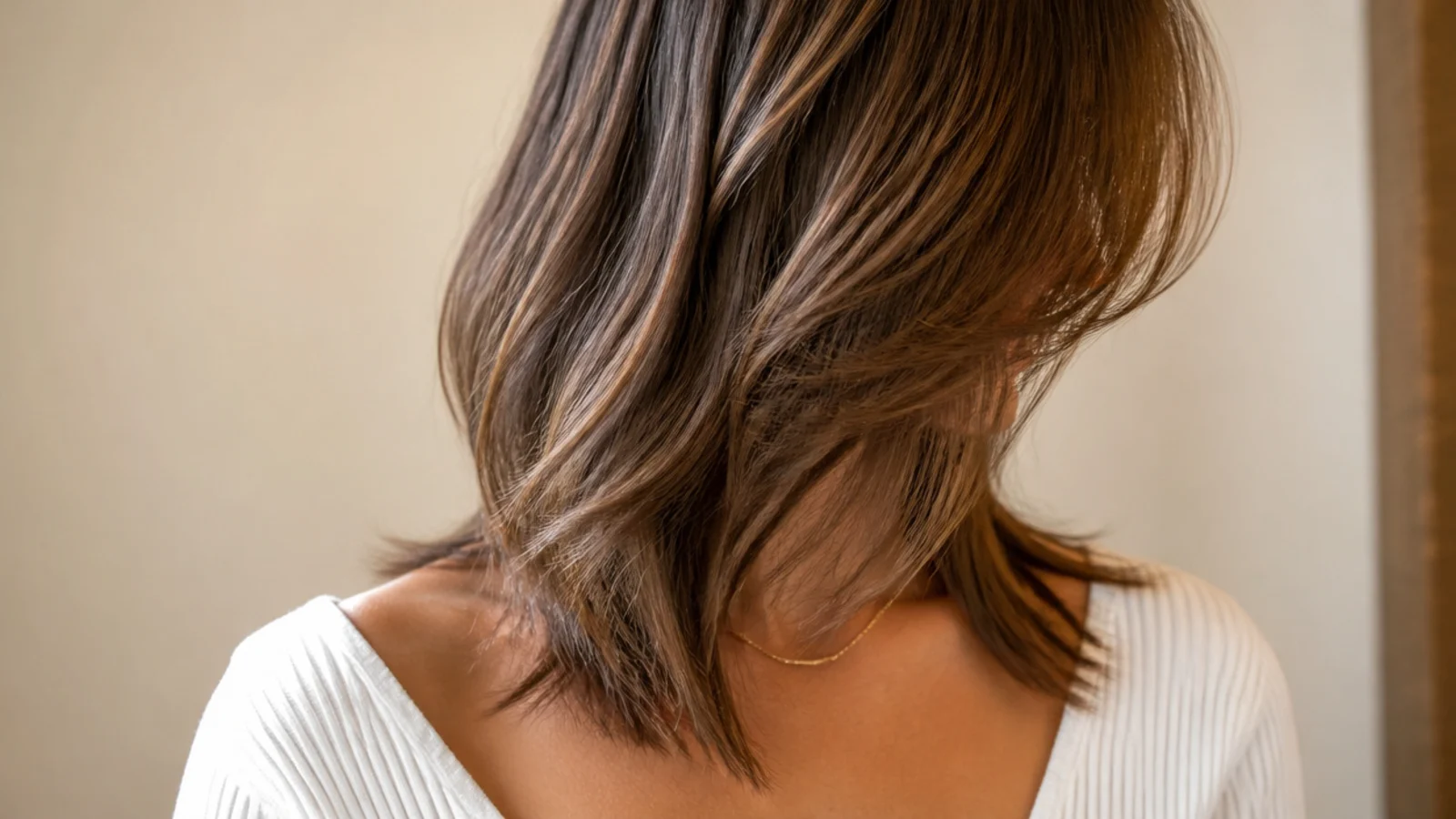
14. Side Swept Framing for a Long Face
Framing cut to travel sideways rather than hang straight down lays a horizontal line across a face that otherwise reads as vertical. The sweep has to begin above the cheekbone, because starting lower leaves the piece no distance to cross before it runs out of face.
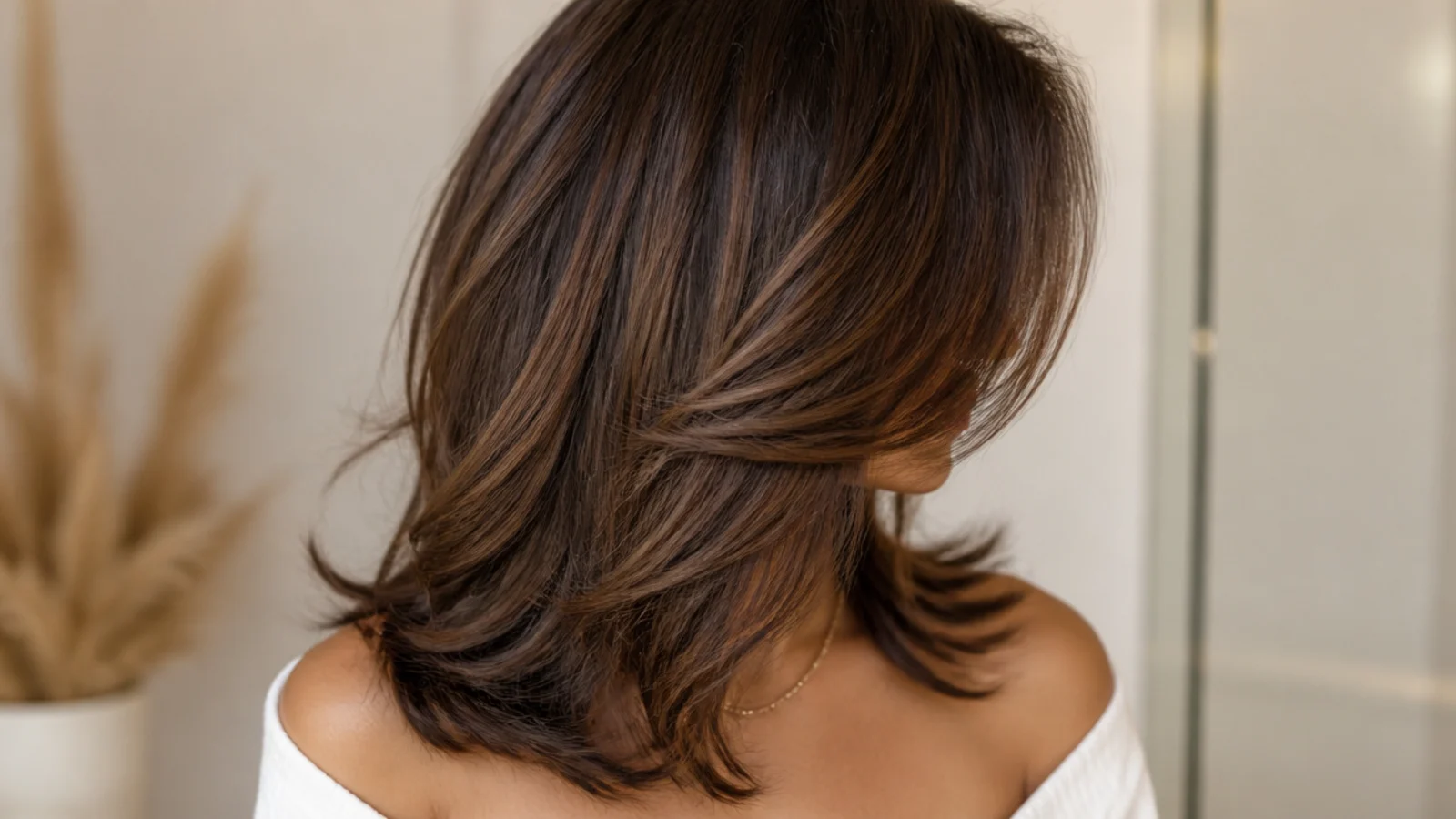
15. Choppy Shag Framing
The shortest crown layers continue forward into the face and the ends are chopped so the tiers blur into one another. It is the only framing here that is genuinely part of the layering rather than something added to the front of an otherwise separate cut.
Final Thoughts
Settle the start point before anything else and the rest of the consultation gets easy. Chin, jaw, cheekbone or collarbone is a single sentence a stylist can measure against your face, and it decides far more than the number of pieces or how soft the ends are ever will.
Then plan for the grow out at the same time. Half an inch a month means a chin length piece takes most of a year to rejoin a collarbone perimeter, and choosing a start point you can live with at every stage of that is worth more than choosing the one that looks best on day one. For the same length worn by men see how to style medium length hair for men. More in Women's Hairstyles. See also the choppy version.