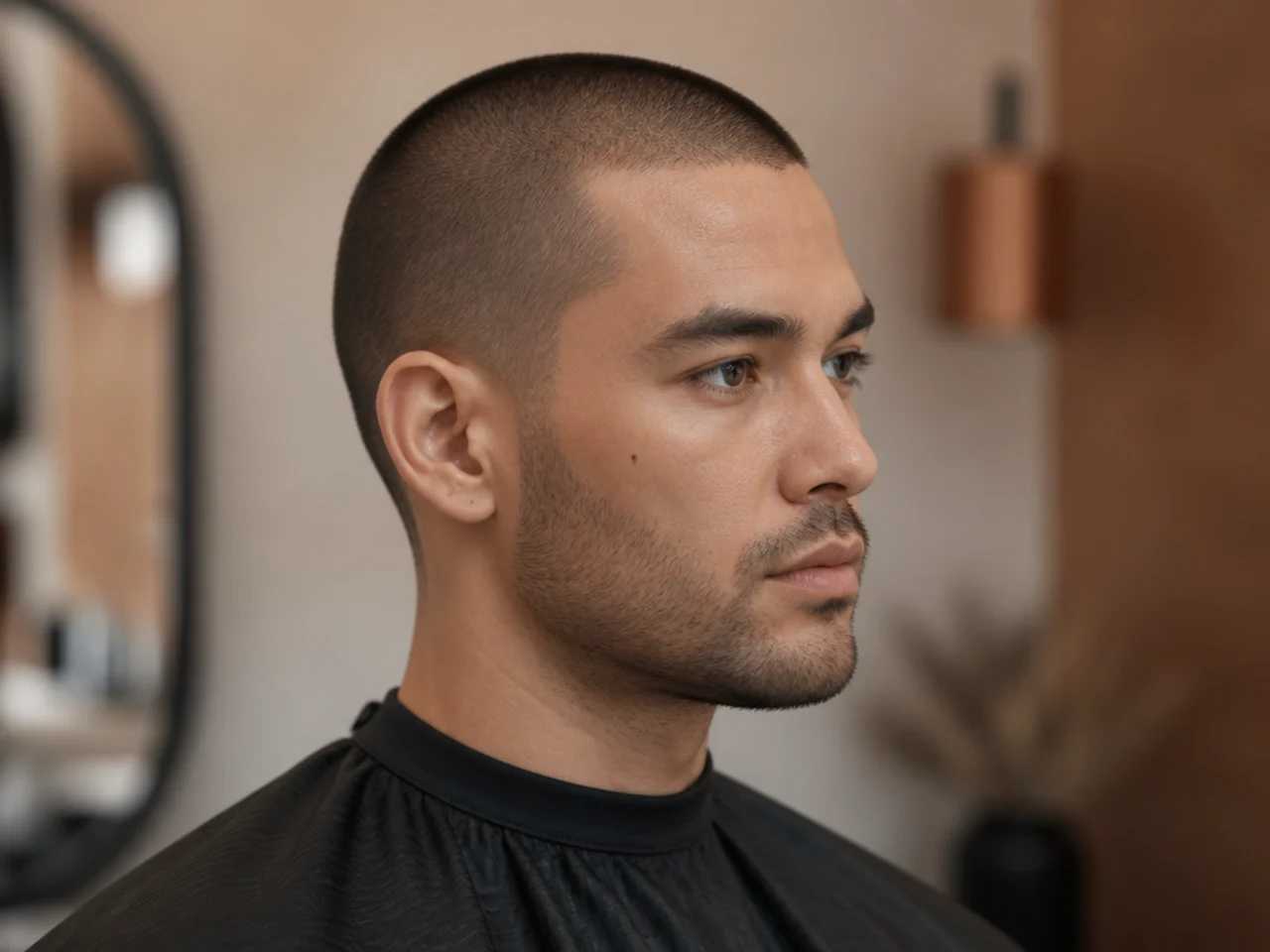
30 Haircut Ideas for Men Worth Trying
Thirty haircut ideas for men across every length, texture, and vibe — with face-shape notes, hair-type callouts, and the exact "ask for" line for each.
In this article · 46
- What Makes a Great Men's Haircut Idea?
- How to Choose Your Next Haircut
- Short & Sharp
- 1. Buzz Cut
- 2. Crew Cut
- 3. Ivy League
- 4. French Crop
- 5. Caesar Cut
- 6. Butch Cut
- Fresh Fades
- 7. Low Taper Fade with Textured Top
- 8. Mid Fade with Volume on Top
- 9. High Skin Fade with a Blocky Top
- 10. Drop Fade
- 11. Burst Fade with a Short Top
- 12. Bald Fade with a Sharp Line-Up
- Textured & Modern
- 13. Textured Crop
- 14. Modern Quiff
- 15. Comma Cut
- 16. Edgar Cut
- 17. Two-Block Haircut
- 18. Curtain Fringe
- Grown-Out & Flowy
- 19. Middle Part
- 20. Surfer Flow
- 21. Broccoli Cut (Curly Top)
- 22. Medium Slick Back
- 23. Layered Medium Cut
- 24. Comb-Over with a Soft Fade
- Statement Styles
- 25. Modern Mullet
- 26. Wolf Cut
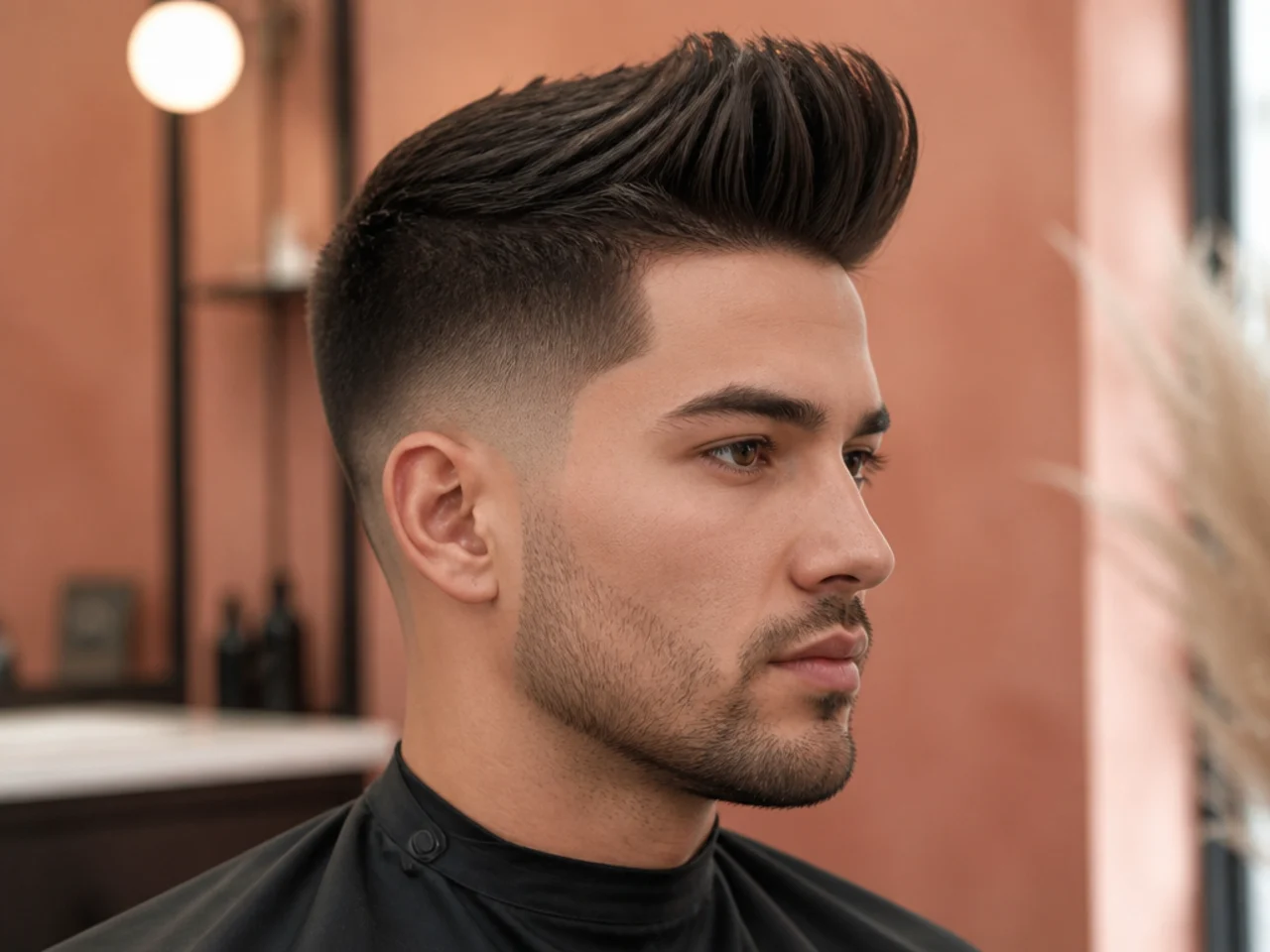
- 27. Classic Pompadour
- 28. Long Layered Flow
- 29. Disconnected Undercut
- 30. Long Top Knot
- How to Ask Your Barber
- Styling & Maintenance
- FAQ
- What haircut idea suits every face shape?
- Which haircut ideas are lowest maintenance?
- How do I know which haircut idea will actually suit me?
- How many reference photos should I bring to the barber?
- How often should I get a haircut in 2026?
- What's the most trending haircut idea for men right now?
Scrolling for a cut and nothing's landing? Thirty haircut ideas below, split across five vibes — short and sharp, fresh fades, textured and modern, grown-out and flowy, and full-statement. Each one has a face-shape and hair-type tag plus the exact language to hand your barber. Save three, book the one you keep coming back to.
What Makes a Great Men's Haircut Idea?
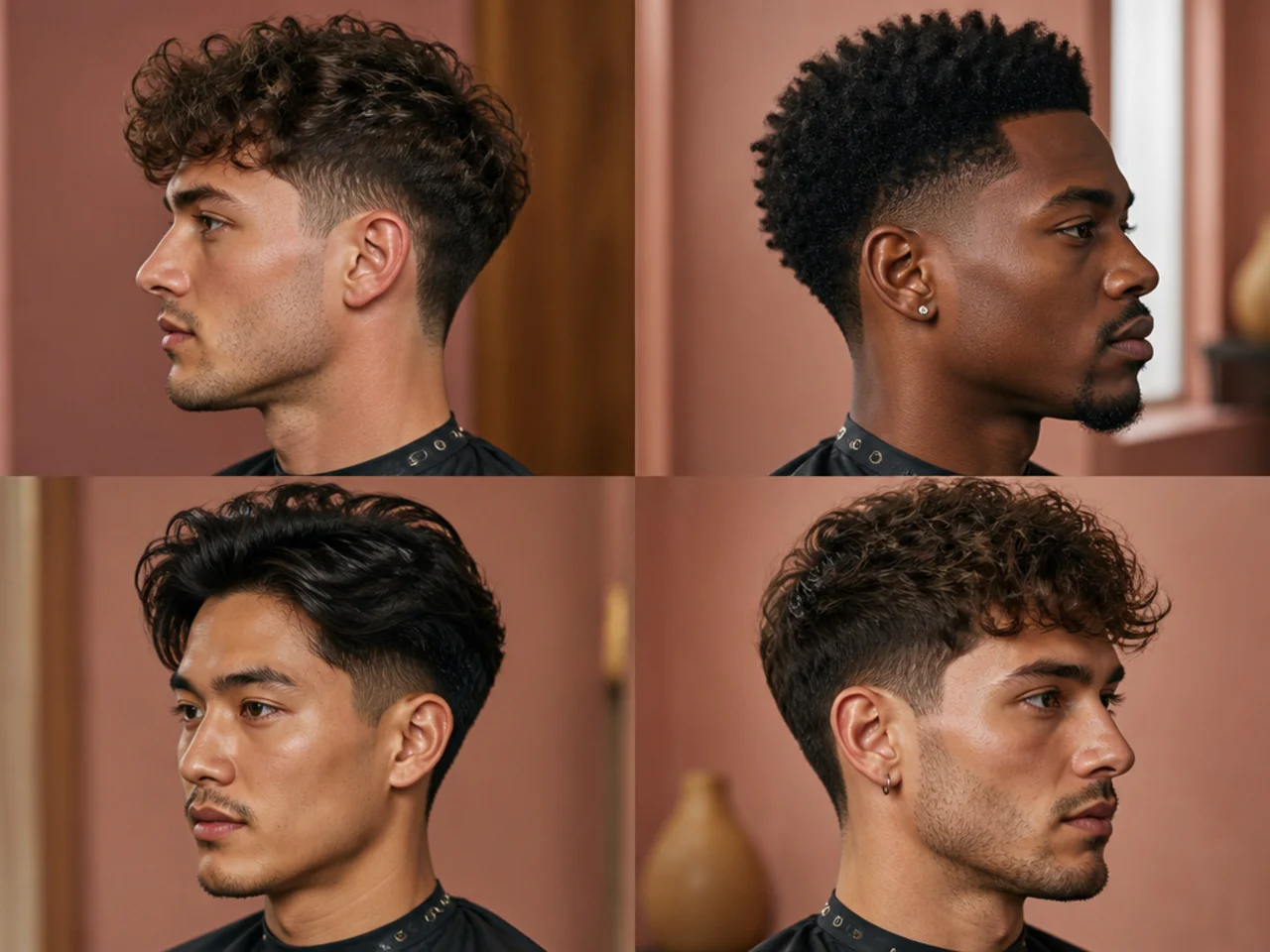
A great haircut idea isn't just a Pinterest save — it's one that fits your face, your hair, and how much time you'll actually spend at the mirror. Every cut has three moving parts: top length, side treatment, and finish. Length is measured in inches or clipper-guard numbers. Sides run fade, taper, undercut, or scissor blend. Finish is matte and textured, or sleek and shiny.
Get those three parts right and any of the full men's haircut menu works. Get one wrong and the same cut reads dated. That's the whole game — pick the version that matches you, not the celebrity in the photo.
How to Choose Your Next Haircut
Three questions narrow thirty ideas to two or three worth booking.
What's your face shape? Round faces want vertical lift and shorter sides. Square faces suit texture and softer edges. Long faces need width — low fades, medium tops, forward fringes. Oval faces wear almost anything. Heart and diamond faces do well with medium tops and defined sides. Every variation below flags its best match.
What's your hair actually doing? Fine hair loses shape at length — pick short-to-medium cuts. Thick hair carries anything but needs point-cutting and layering to stop from turning into a helmet. Straight hair holds every shape sharpest. Wavy hair reads best in textured and flow cuts. Curly and coily hair transform whichever silhouette you pick, so plan for the shrinkage.
How much mirror time will you actually give it? Buzz, crew, and Ivy League ask for nothing. Fades and textured crops want a rebook every three to four weeks. Flow, curtains, and long layered read best when you commit to a leave-in cream and a paddle brush. Match the cut to your calendar — not the other way around.
Short & Sharp
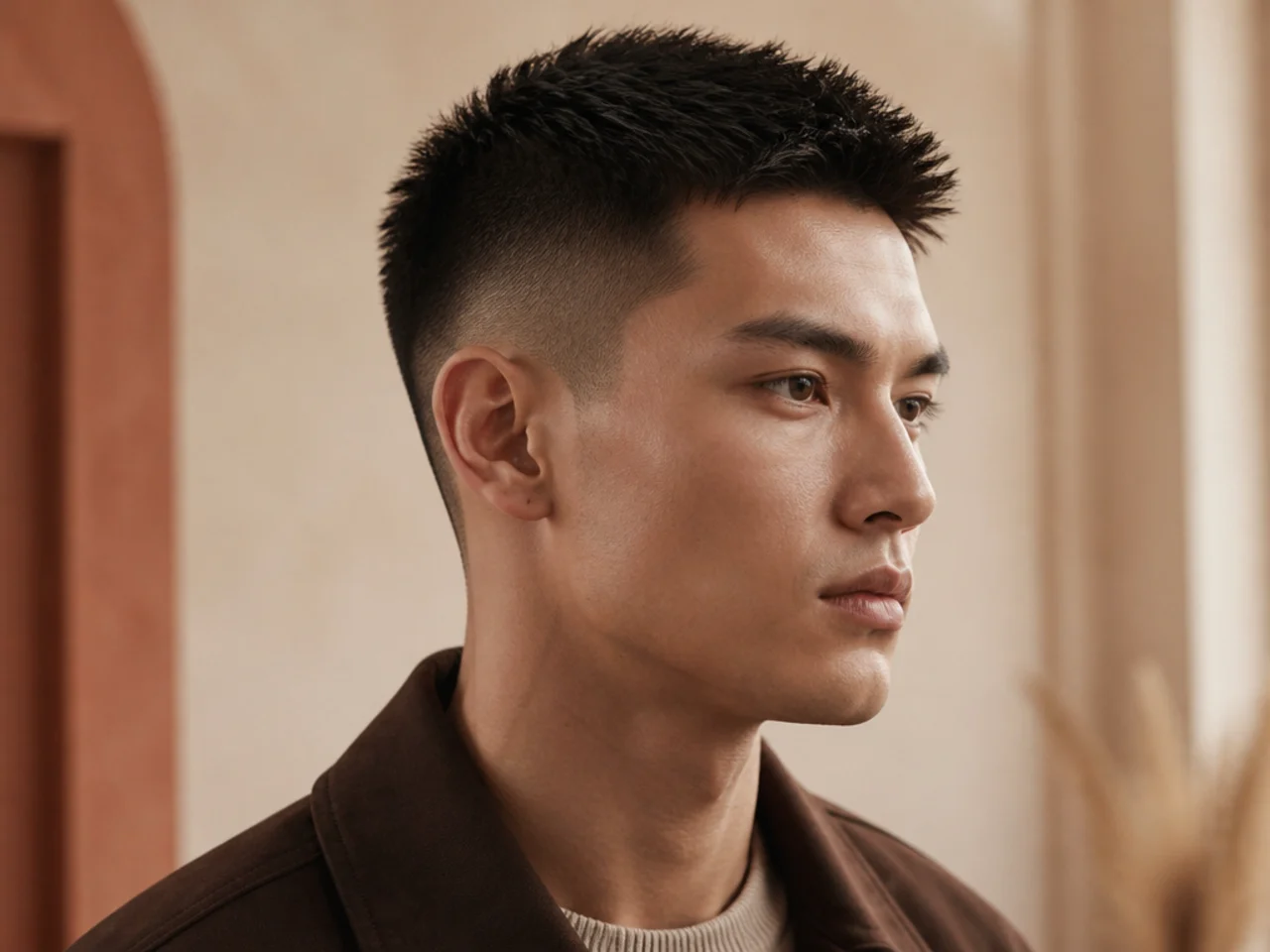
Short-and-sharp cuts run from a #1 buzz to a two-inch Ivy League. Zero to ninety seconds of styling, maximum readability, and enough visual weight that a strong hairline and jaw carry the whole look. Six ideas that never date.
1. Buzz Cut
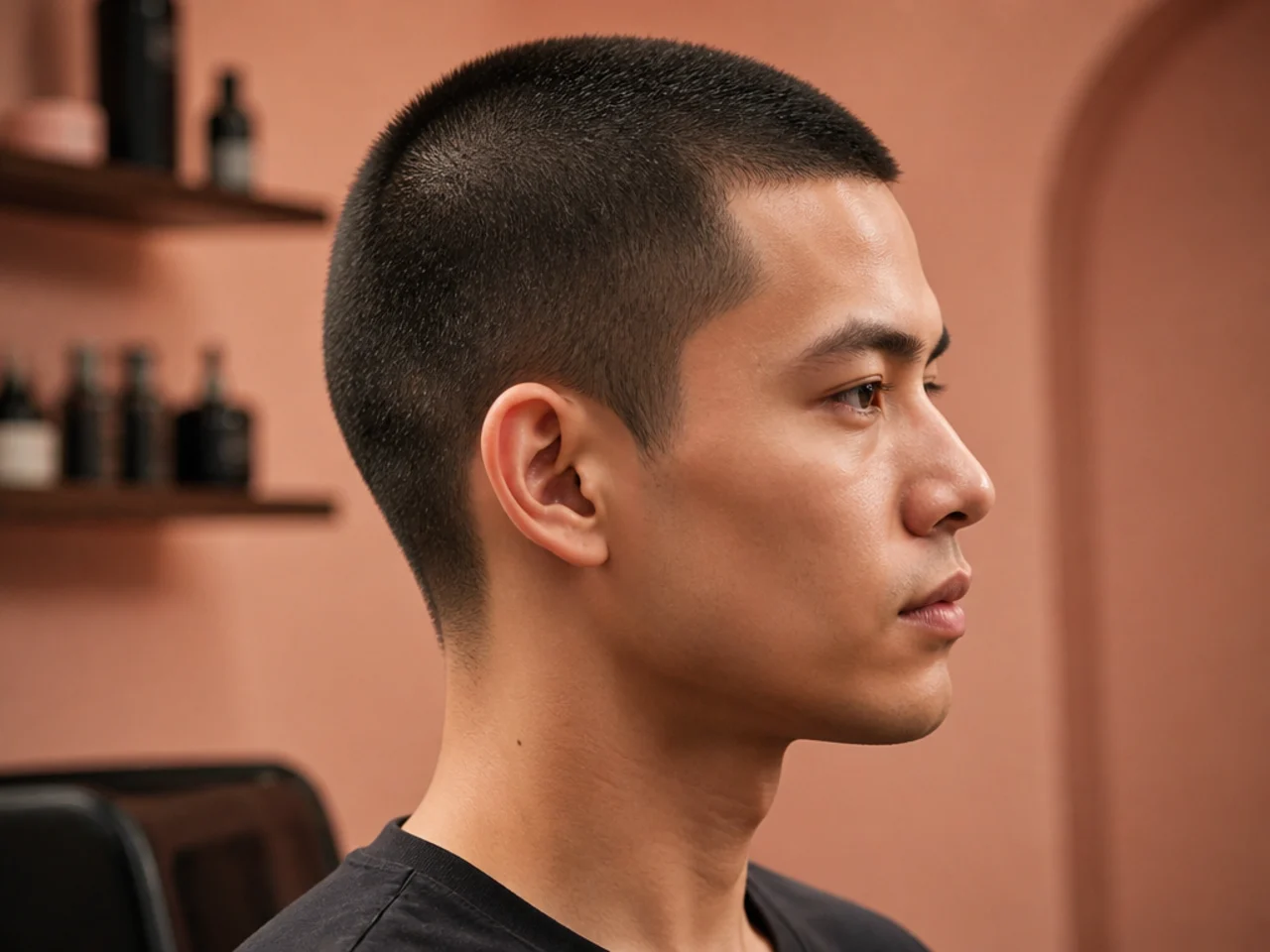
The buzz is one length all over — usually a #1, #2, or #3 guard — and the shortest route to a finished head of hair. There's nowhere for a soft hairline or a lumpy scalp to hide, so bring an even hairline and a strong jaw to the chair. Best on any hair type; density matters less when length is uniform. Round faces should stay at a #2 or higher to avoid emphasizing width; square and oval faces wear any length. Rebook every three weeks — the buzz softens fast.
Best for: oval and square faces, any hair type with a clean hairline.
Ask for: "Number 2 all over, blended into the neckline, sharp perimeter."
2. Crew Cut
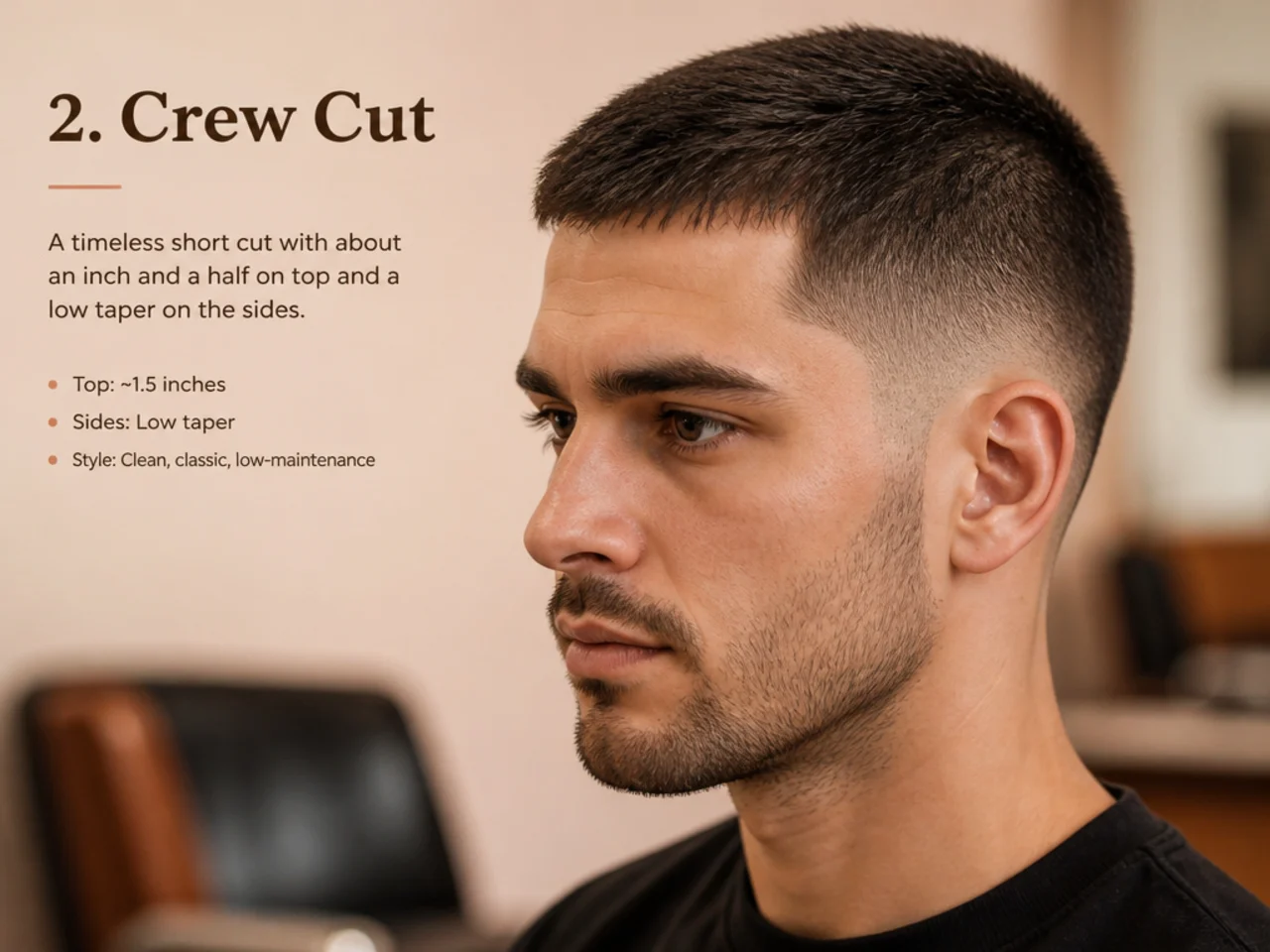
The crew cut keeps roughly an inch to an inch and a half on top with tapered or faded sides — the workhorse of every barbershop for a reason. It flatters every face shape, works on straight, wavy, and mildly curly hair, and looks right in a suit or in Carhartt. Style with a fingertip of matte clay, one comb through, done in under sixty seconds.
Best for: every face shape, straight-to-wavy hair with medium density.
Ask for: "Crew cut, inch and a half on top, low taper on the sides, front a touch longer than the crown."
3. Ivy League
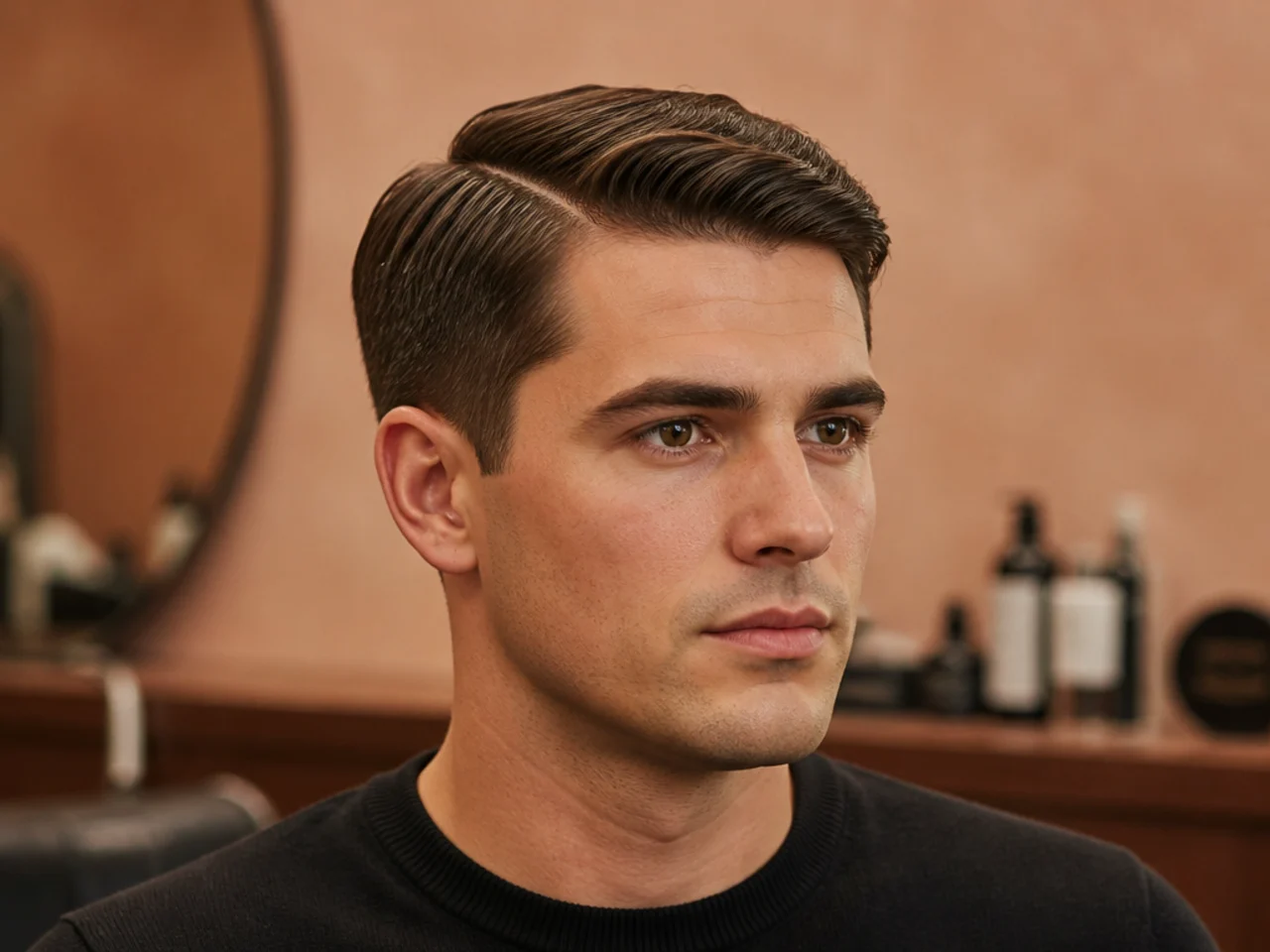
The Ivy League is a crew cut with an extra half inch on top — enough length to build a clean side part and comb it flat. It reads preppy without reading like a corporate clone, and lands equally well in a boardroom and on a Saturday coffee run. Straight and wavy hair holds the part sharpest. Round faces get vertical length from the parted front; long faces should keep the top flat instead of piled.
Best for: oval, round, square faces with straight or wavy hair.
Ask for: "Ivy League, two inches on top, tapered sides, and a natural part on my left."
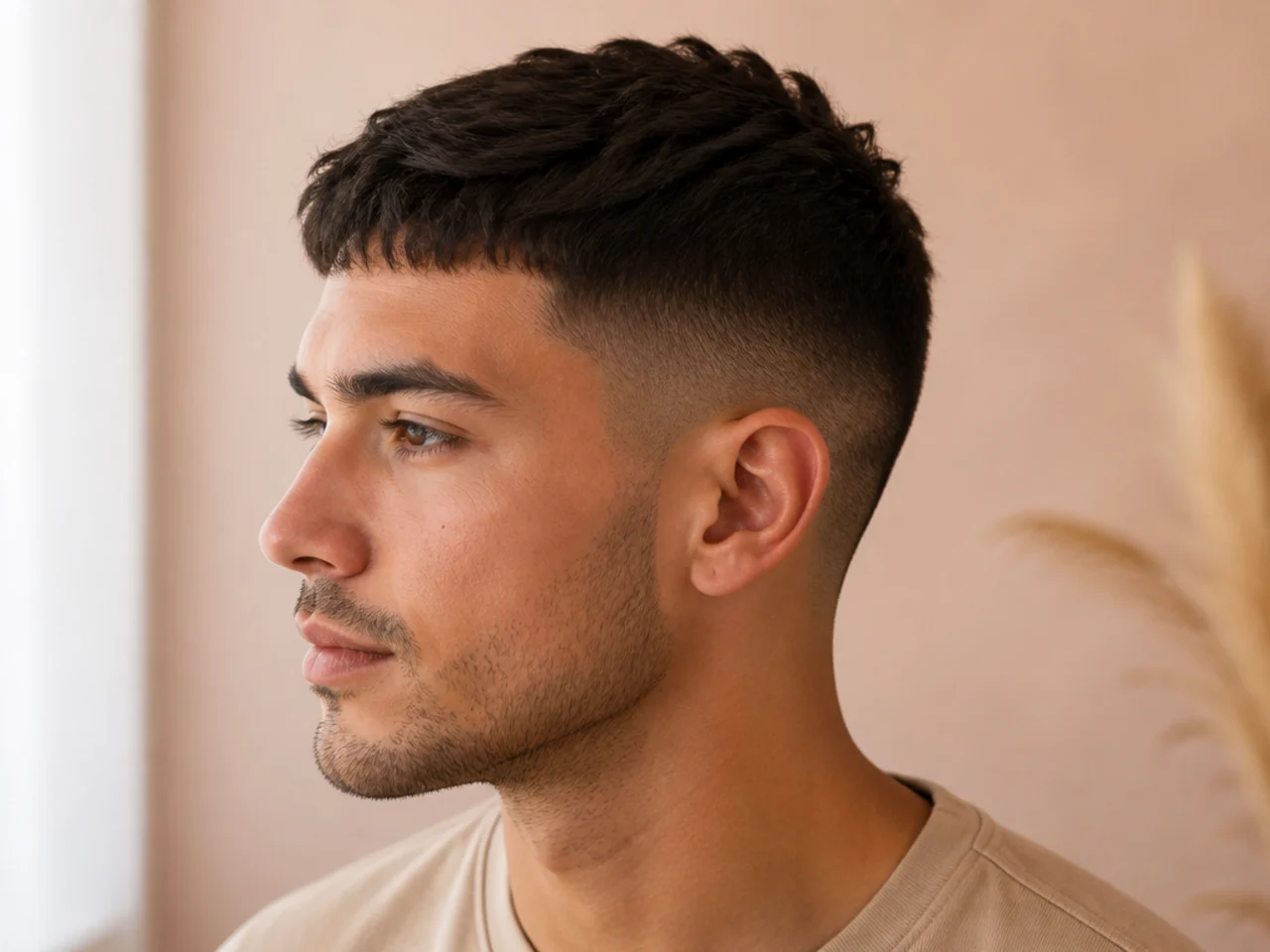
4. French Crop
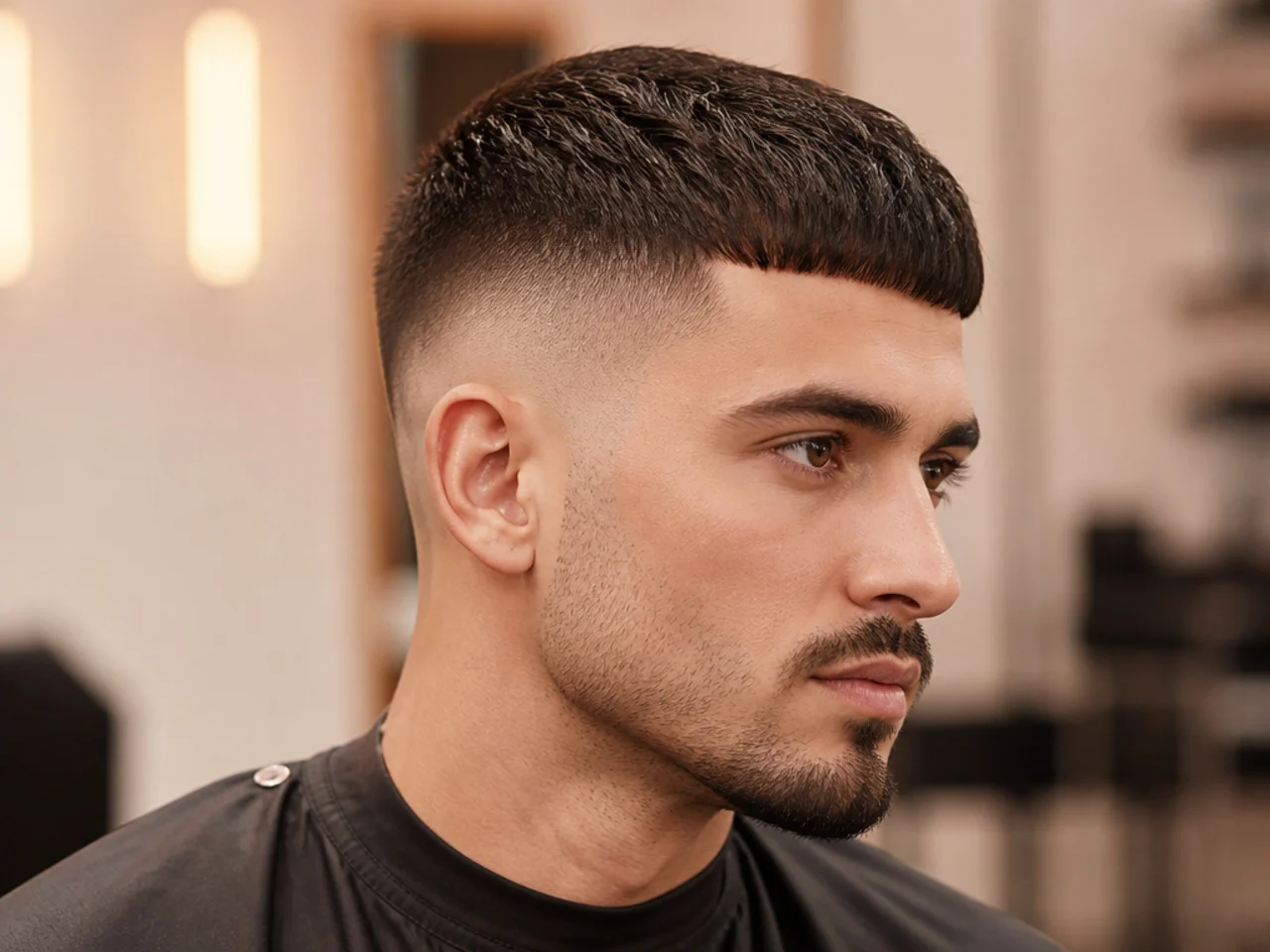
The French crop is a textured crop with a straight, blunt fringe cut horizontally across the forehead. Top runs an inch to two inches, sides fade to skin. The short blunt fringe balances fuller faces and adds structure to soft jawlines. Best on straight hair — wavy hair fights the blunt front. A fingertip of matte clay pushed forward, no comb, and you're out the door. Rebook every three weeks — the shape softens fastest of any short cut in this guide.
Best for: round, square, and heart faces with straight hair.
Ask for: "French crop, inch and a half on top, tight skin fade, blunt fringe cut horizontally at my forehead."
5. Caesar Cut
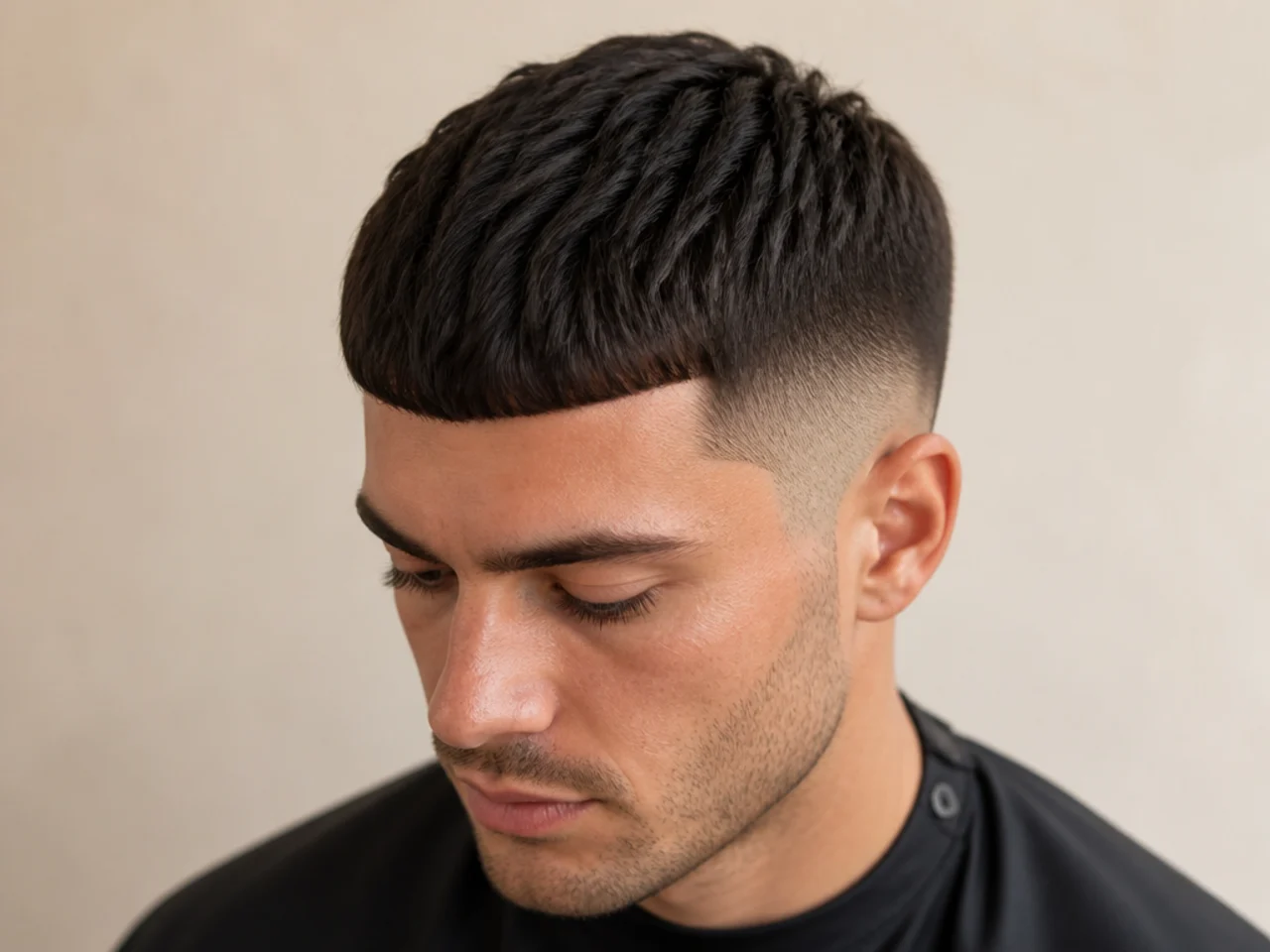
The Caesar is the French crop's older cousin — same short, forward-swept front, but softer edges and a slightly rounded fringe instead of a hard horizontal line. Top runs one to two inches, sides scissor-tapered or lightly faded. Reads classical rather than trend-driven, which is exactly why it never leaves the barber's book. Straight and wavy hair hold it best; the softer edges also flatter receding temples.
Best for: round, oval, and heart faces with straight or wavy hair; friendly to receding hairlines.
Ask for: "Caesar cut, an inch and a half on top, short forward fringe with soft edges, low taper on the sides."
6. Butch Cut
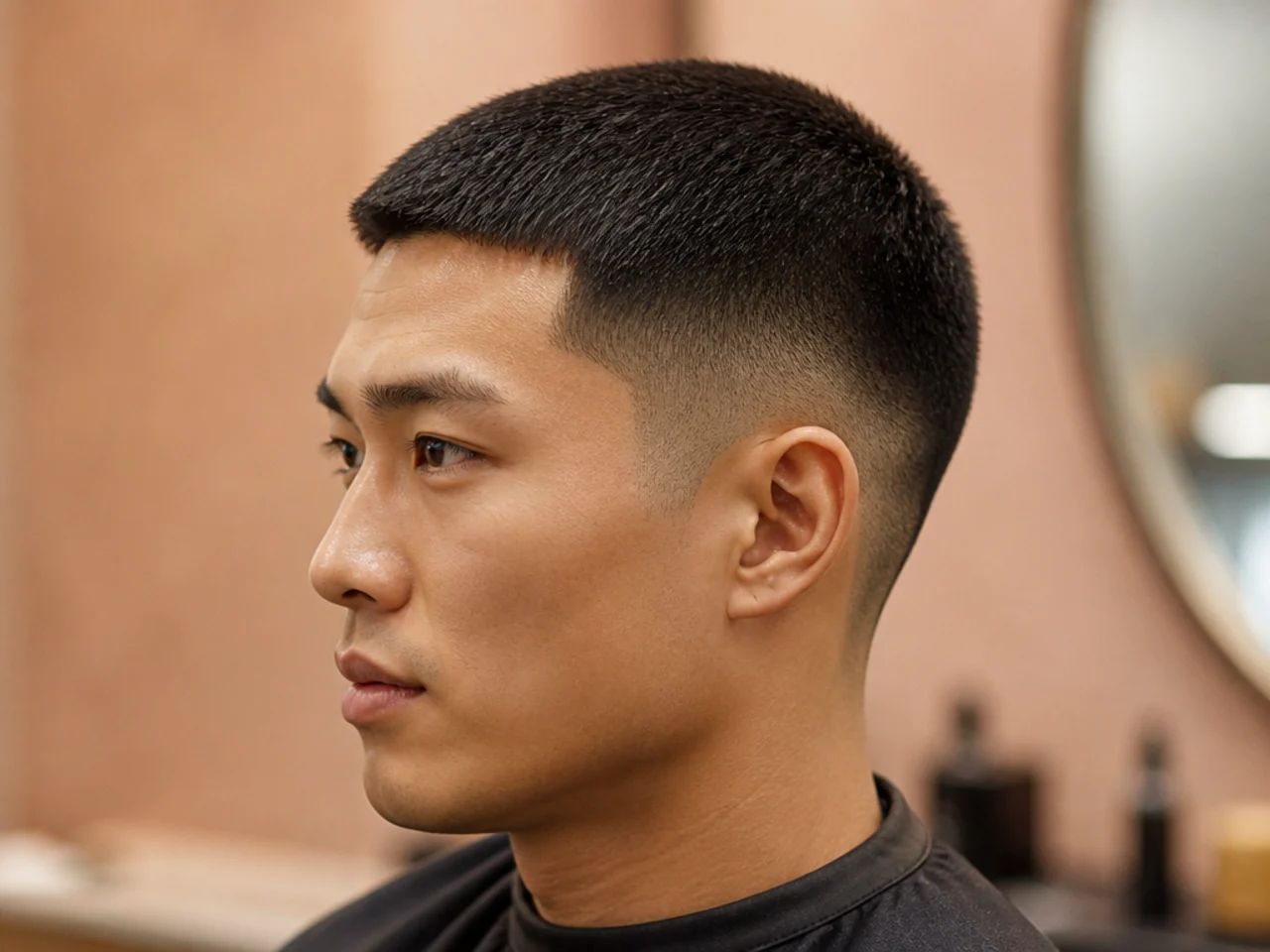
The butch is a step above a buzz — half an inch to three-quarters on top, uniform across the crown, with a low taper or faded neckline. Almost no styling required, but enough length to soften the edges of a pure buzz. It's the low-maintenance pick for guys who want more presence than a #2 without needing product. Any hair type works; thick hair looks especially clean at this length.
Best for: oval, square, and diamond faces with any hair type.
Ask for: "Butch cut, half inch on top with a low taper down to the neckline, keep it uniform across the crown."
Fresh Fades
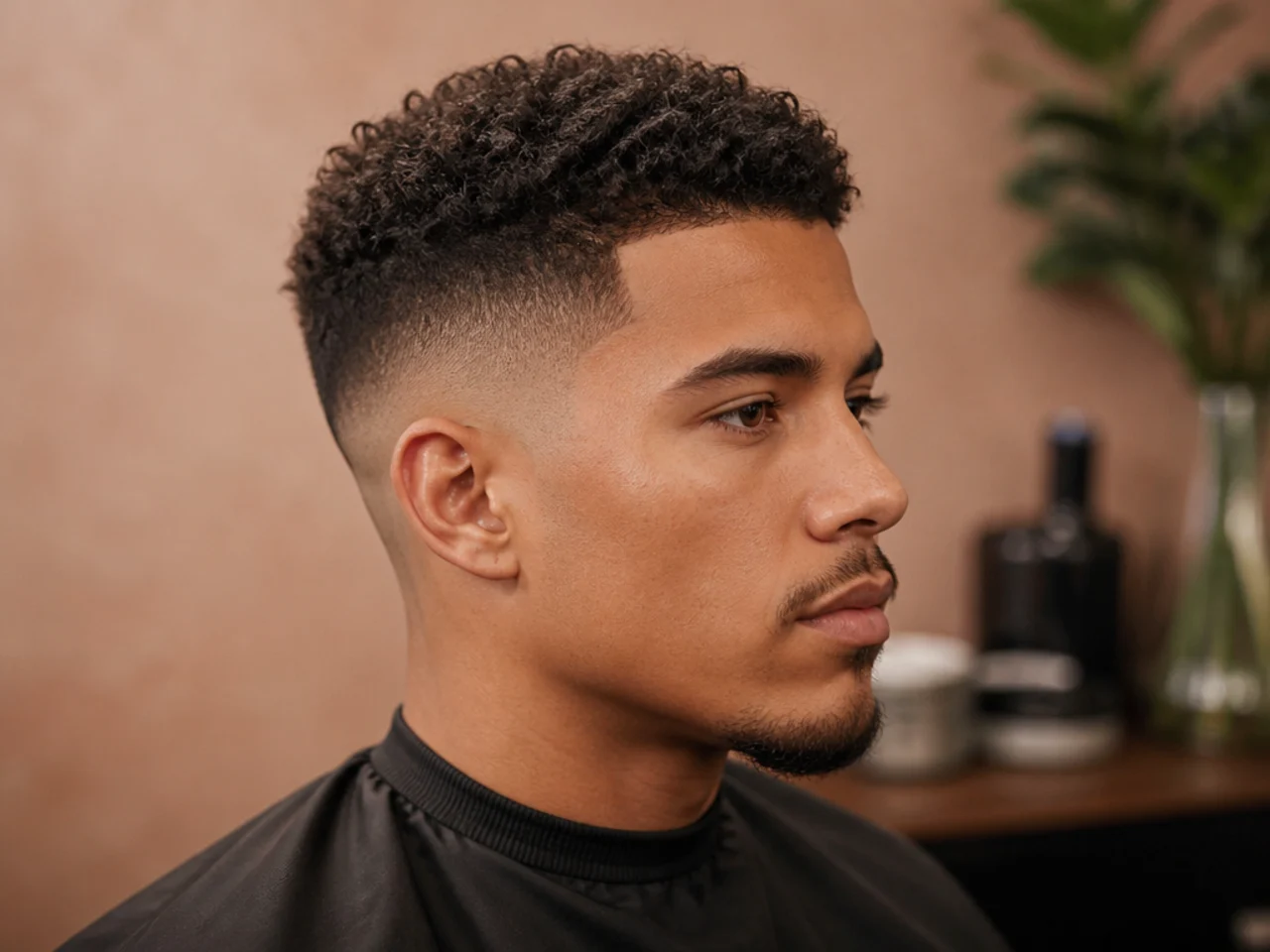
The fade family sits under about seventy percent of modern men's cuts. What changes is the height, the geometry, and how sharp the top-to-side transition reads. Six fresh fade ideas to pair with any of the top lengths above or below.
7. Low Taper Fade with Textured Top
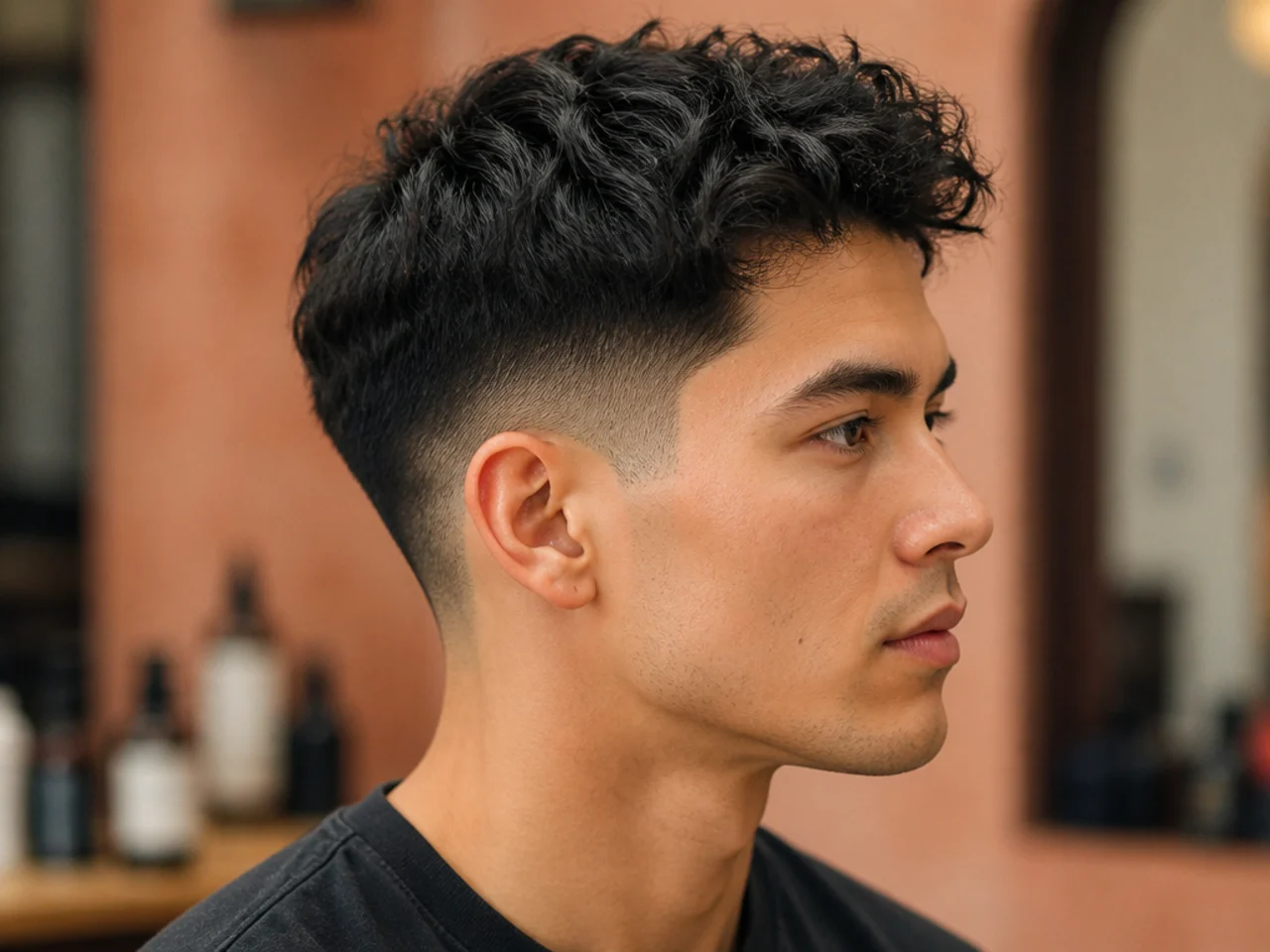
The low taper fade blends only around the ears and neckline — sides stay scissor-length above. Pair it with a two-inch textured top and you get the most job-flexible fade going: sharp enough to read modern, subtle enough for conservative offices. Works on any face shape and any hair type. Rebook every five to six weeks, which is more forgiving than a full fade.
Best for: every face shape, straight-to-wavy or curly hair.
Ask for: "Low taper fade around my ears and neckline only, scissor-length above, and two inches of textured top."
8. Mid Fade with Volume on Top
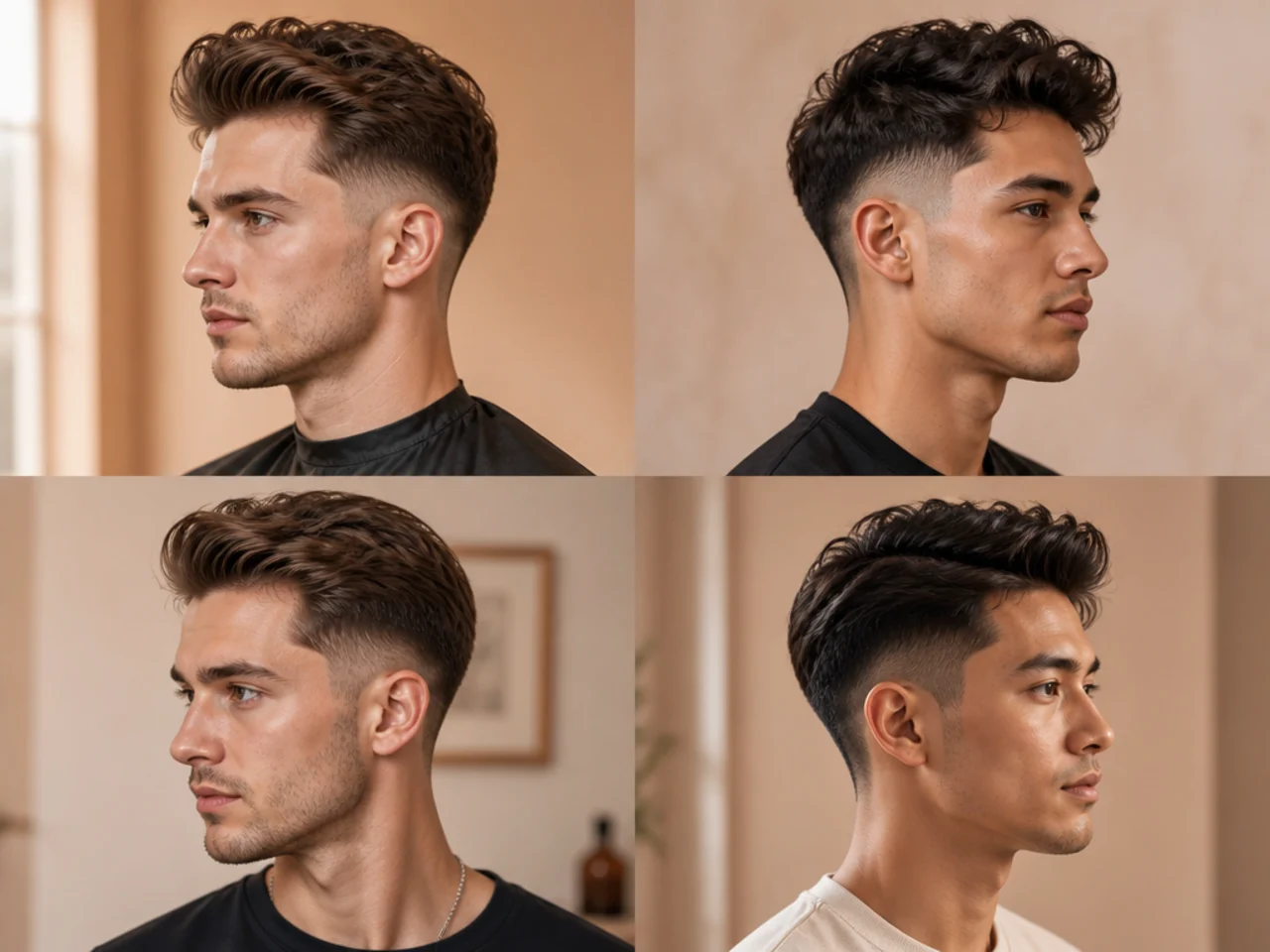
The mid fade starts around the temple and blends down to skin near the ear — visibly higher than a low fade but not near the crown. It's the default for anyone who wants a defined fade line without going aggressive. Pair with three inches on top and a soft side sweep for volume that reads modern-classic. Suits every face shape; round faces get extra vertical length from the higher blend.
Best for: every face shape with straight, wavy, or curly hair.
Ask for: "Mid fade to skin starting at my temple, three inches on top, soft side sweep."
9. High Skin Fade with a Blocky Top
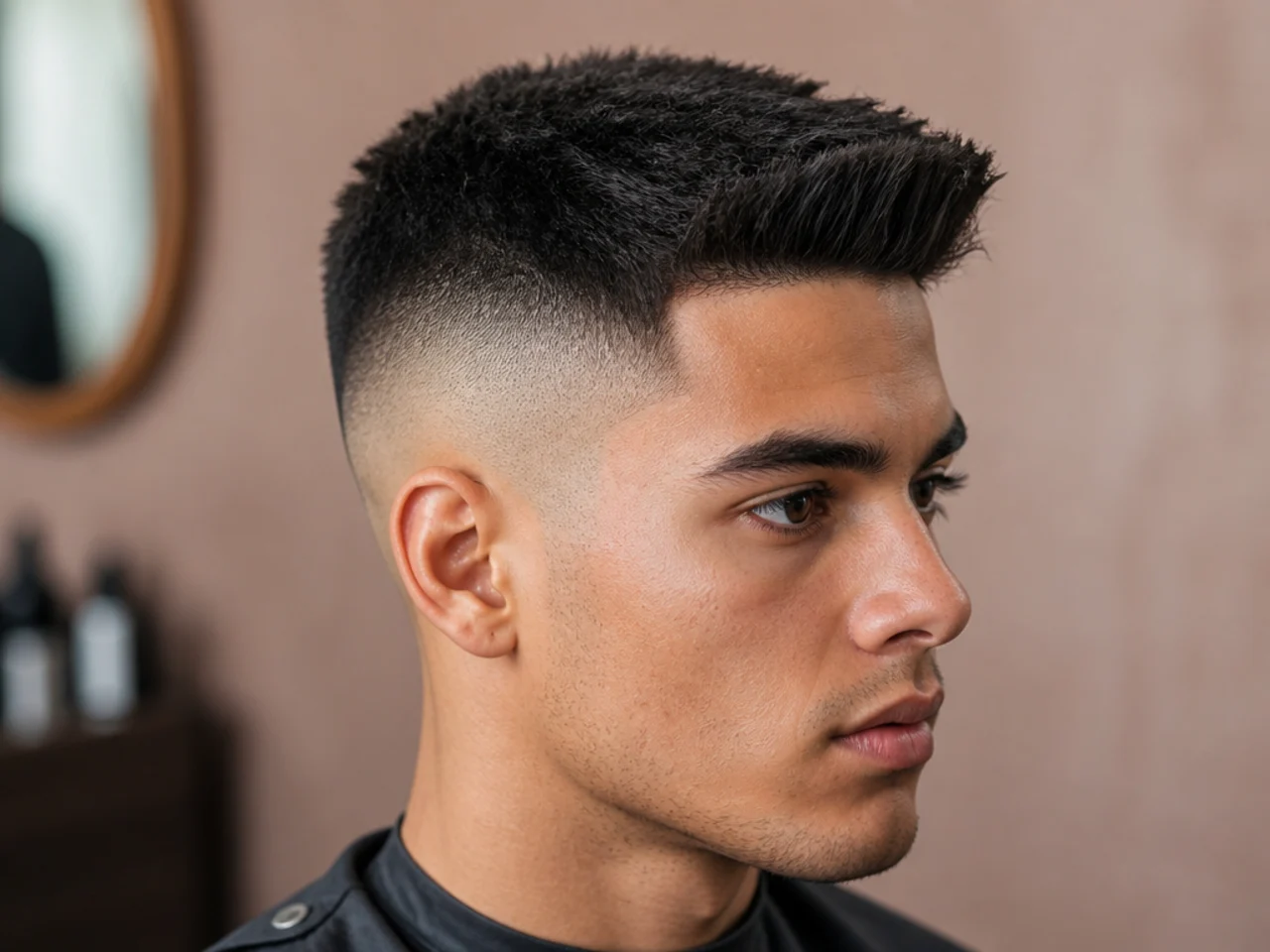
The high skin fade takes the blend to the parietal ridge — the widest point on the sides of the head. Maximum contrast between top and sides. Pair it with a two-to-three-inch blocky top pushed forward and you have the boldest fade combo on the menu. Reads athletic and modern; not for softer or long faces, which get stretched by the vertical contrast.
Best for: oval, square, and round faces with medium-thick straight or wavy hair.
Ask for: "High skin fade to my parietal ridge, three inches of blocky top, push forward."
10. Drop Fade
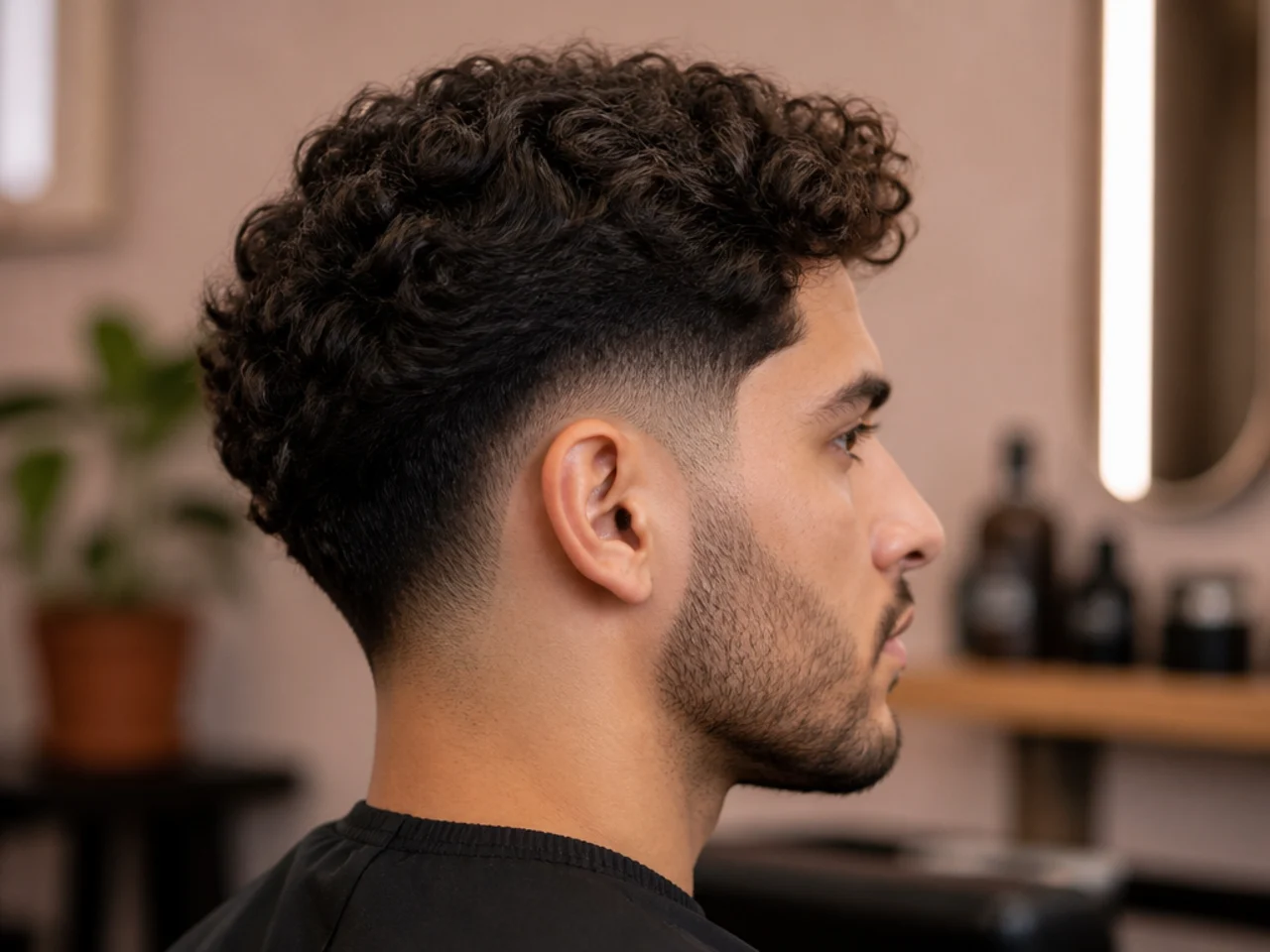
The drop fade arcs the fade line downward behind the ear instead of running straight around the head. The curve follows the shape of the skull and reads more sculpted than a standard flat fade. Works at any height — low, mid, high — and pairs especially well with curly or coily tops that need a shape complement on the sides. Bring a reference photo the first time; not every barber cuts a clean drop by default.
Best for: oval, round, and diamond faces with wavy, curly, or coily hair.
Ask for: "Mid drop fade arcing down behind my ear, three inches on top."
11. Burst Fade with a Short Top
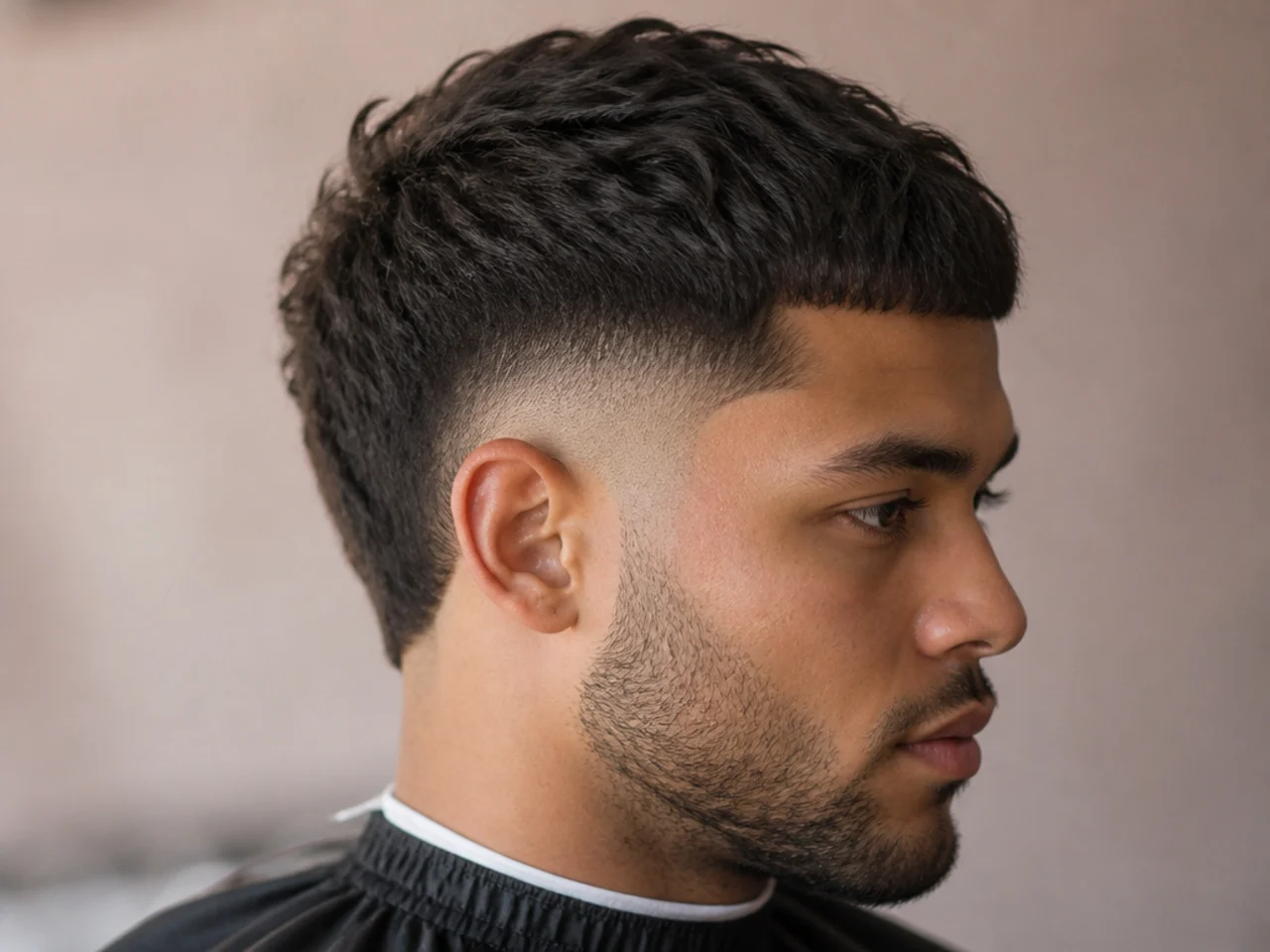
The burst fade radiates around the ear in a curved shape rather than dropping straight down the neckline. The fade sits longest at the back centre and shortest around the ear — a shape that lends itself to short tops, mullets, and mohawks. Pair with a short textured top and you get an athletic, modern silhouette that reads younger than a standard low fade.
Best for: oval, round, and heart faces with straight, wavy, or curly hair.
Ask for: "Burst fade to skin around each ear, keep length at the back neckline, short textured top."
12. Bald Fade with a Sharp Line-Up
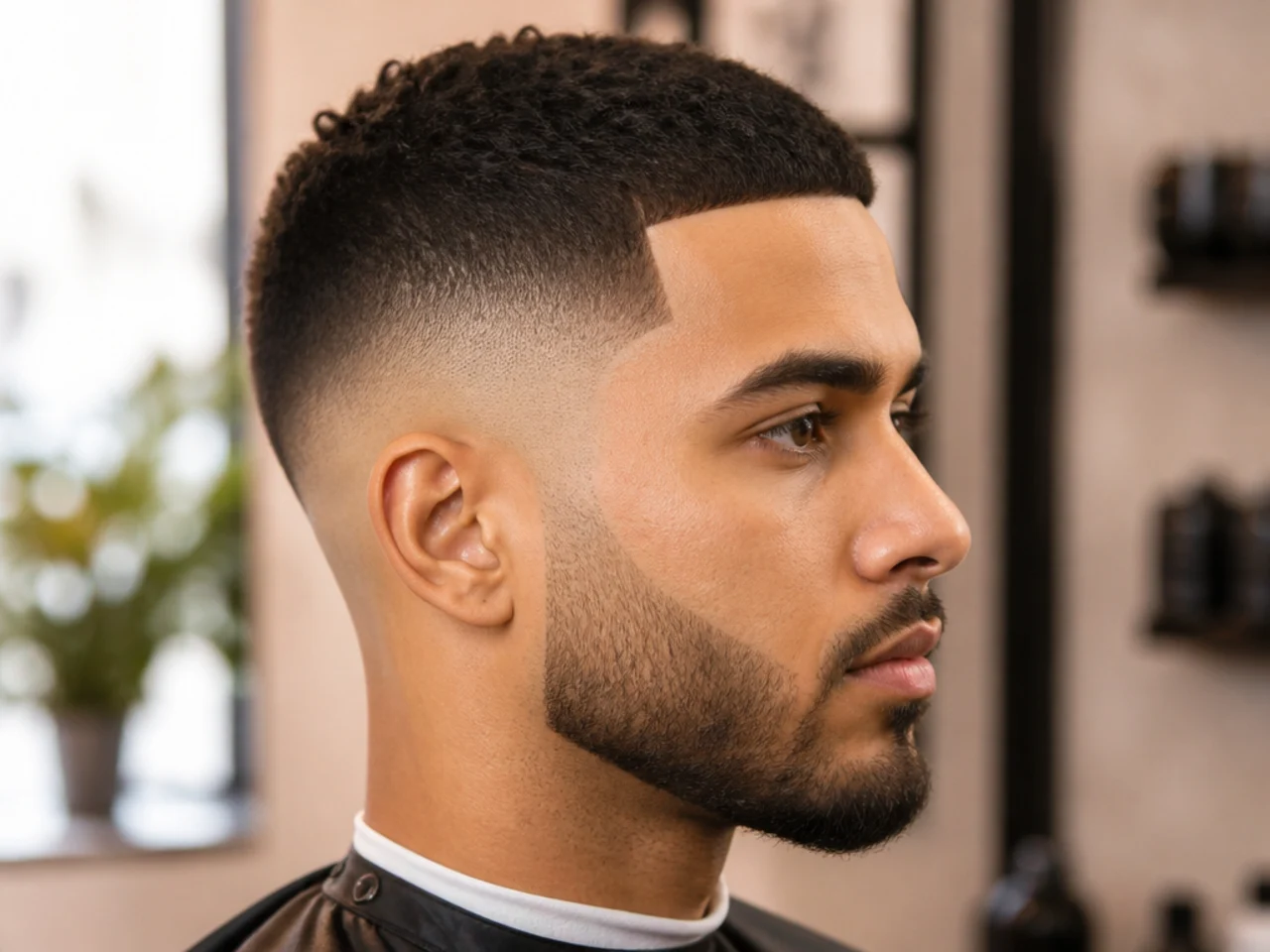
The bald fade drops the sides all the way to bare scalp and is finished with a razor line-up along the temples, forehead, and sideburns. Every edge is a hard geometry. Pair it with any top length — a short textured crop, a quiff, or a slick back — and the fade does the visual work. Rebook every ten to fourteen days; a bald fade fuzzes visibly faster than every other version.
Best for: oval, square, and diamond faces with a clean hairline.
Ask for: "Bald skin fade with a razor line-up on the temples and forehead."
Textured & Modern
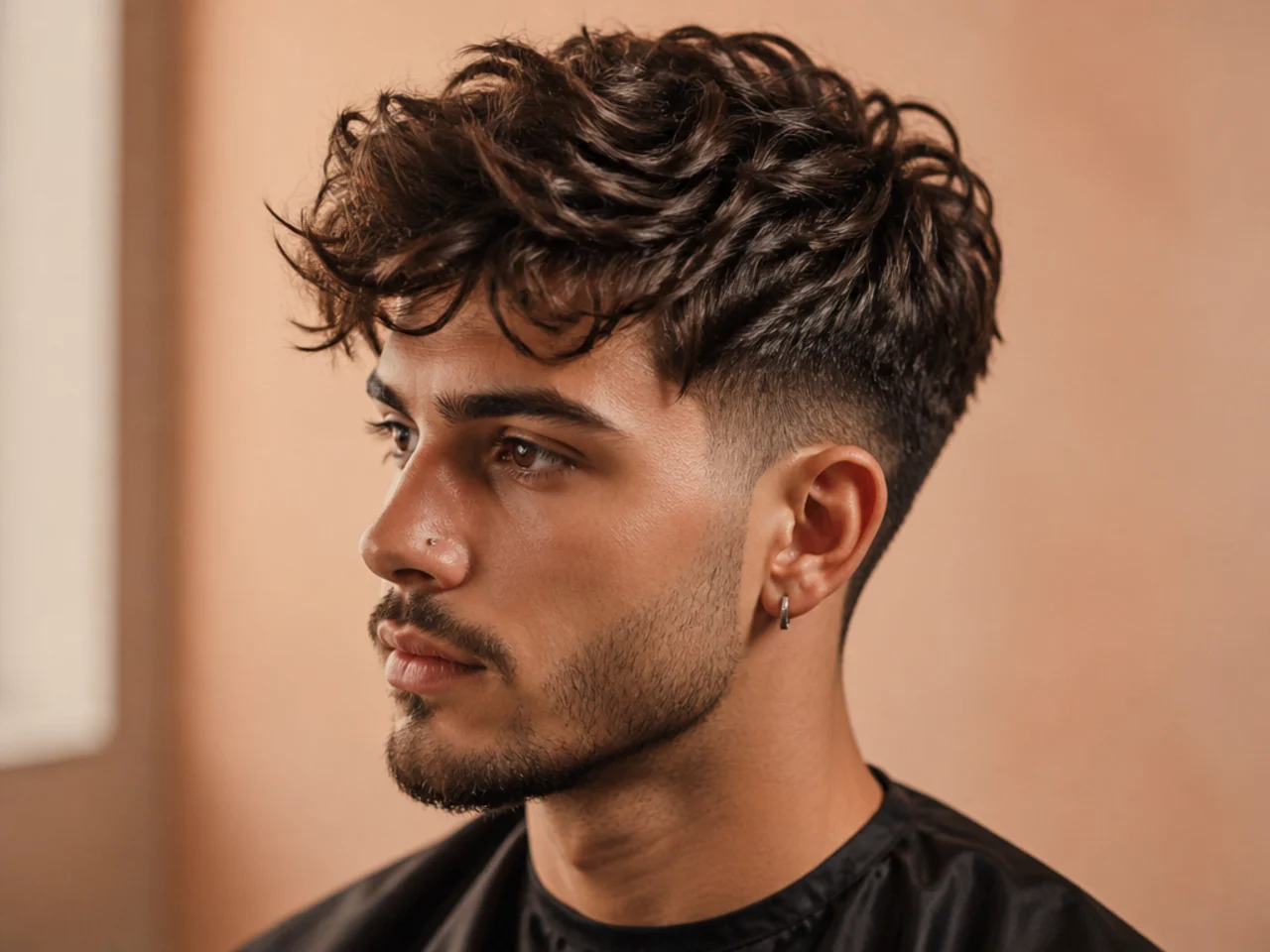
The current default at every modern shop — short-to-medium tops with heavy point-cutting for movement, paired with fades or hard undercuts. Trend-driven but built to last a full season. Six modern ideas dominating barbershop chairs right now.
13. Textured Crop
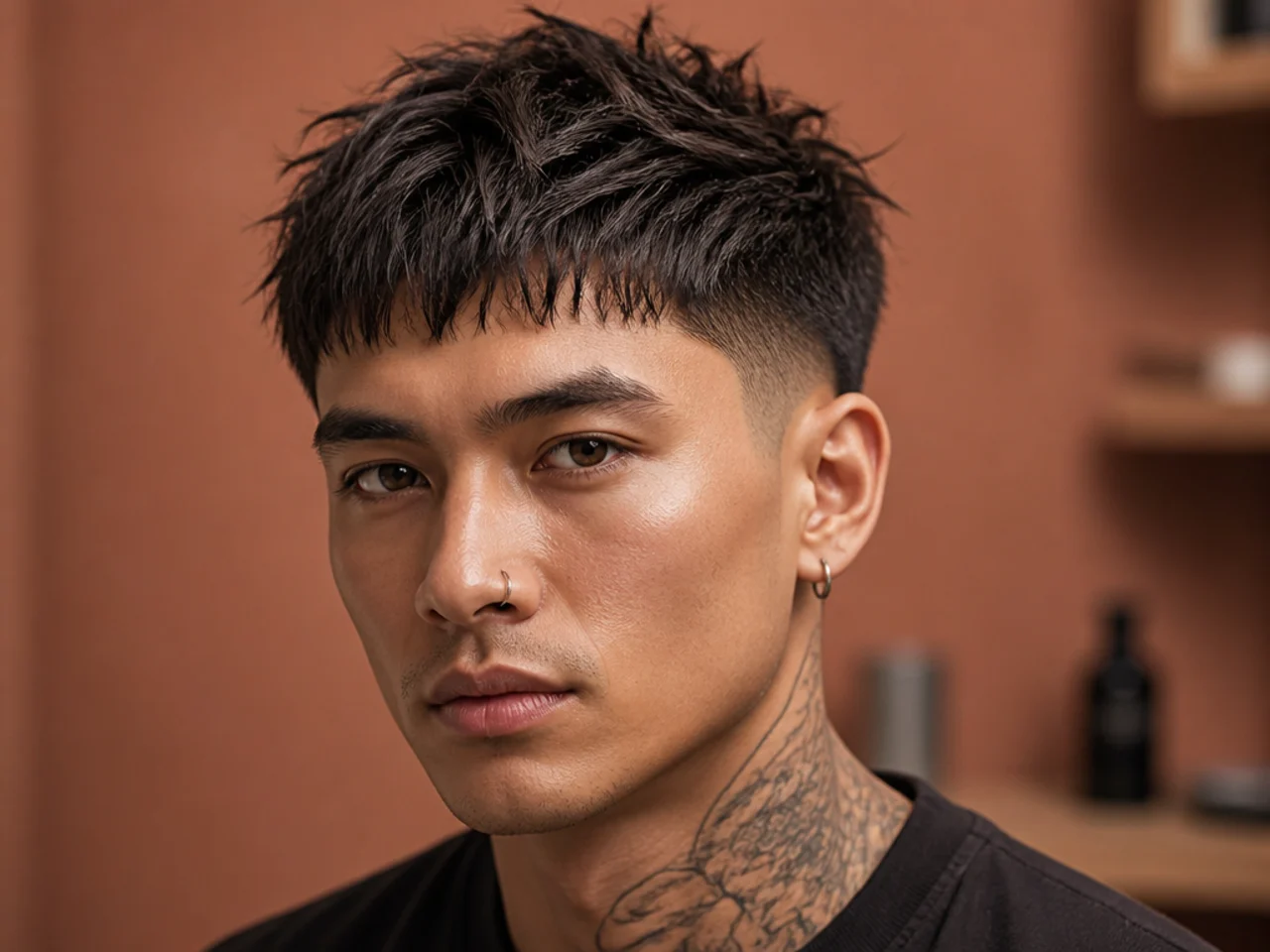
The textured crop is the most-requested cut at modern shops. Two inches on top with heavy point-cutting throughout for visible separation, plus a short fringe combed forward across the forehead. Reads younger and more European than a classic crew cut. Best on straight and wavy hair with medium density; fine hair looks scattered instead of textured. Suits round, oval, and heart faces. Long faces should skip it — the forward fringe stretches the forehead.
Best for: round, oval, and heart faces with straight or wavy hair.
Ask for: "Textured crop, two inches on top with heavy point-cutting, low or mid fade, fringe long enough to reach my brows."
14. Modern Quiff
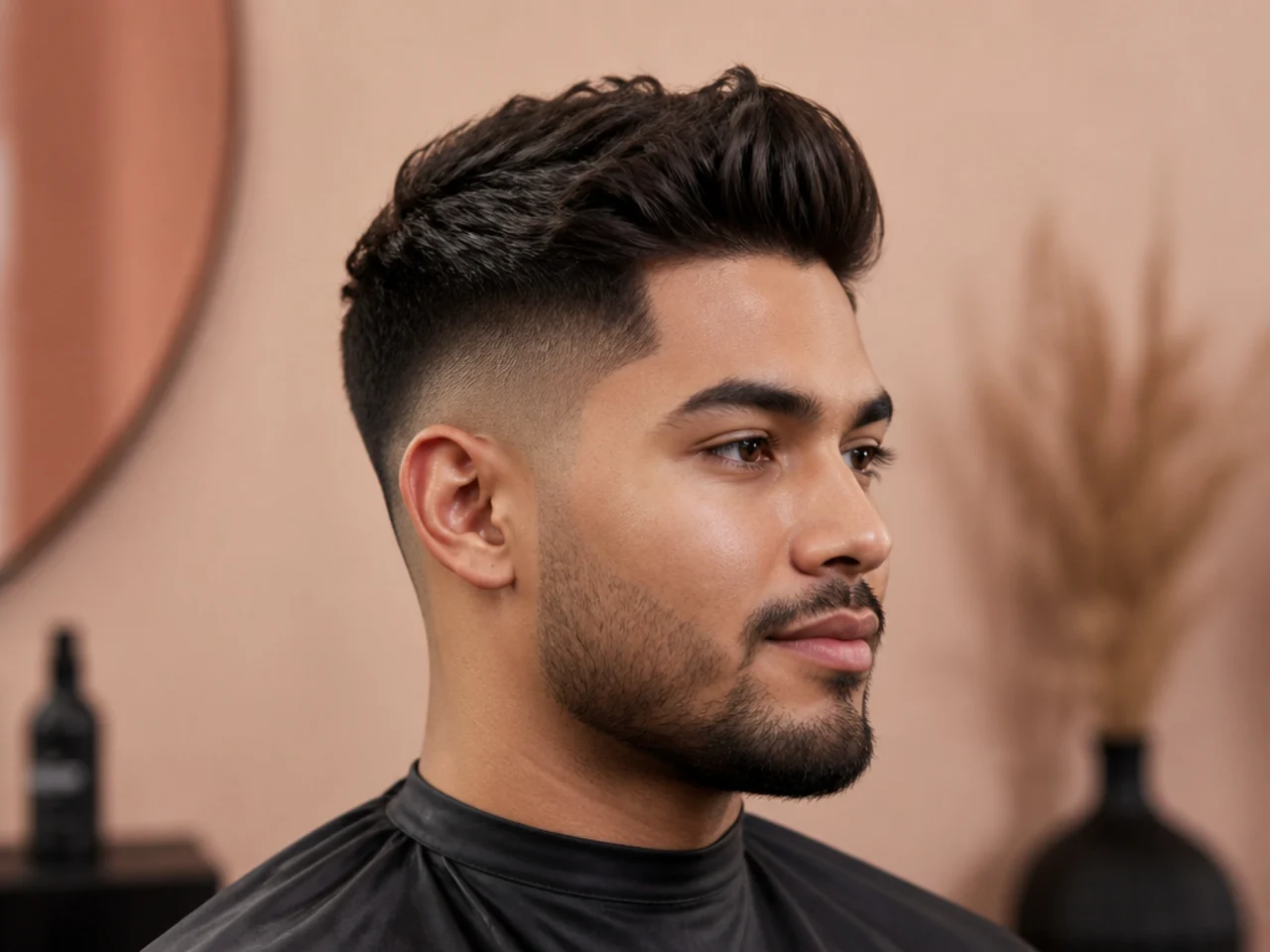
The modern quiff sweeps the front up and slightly back — same lift as a pompadour, less pile. Top runs three to five inches with a matte finish (not the 1950s shine). Sides stay tight, usually faded. Works on straight, wavy, and even curly hair with a bit of pre-styling. Suits nearly every face shape; long faces should keep the front low. A round brush and matte clay do the whole job in about three minutes.
Best for: every face shape except long, straight-to-wavy hair with medium-thick density.
Ask for: "Modern quiff, four inches on top, low or mid fade on the sides, matte finish."
15. Comma Cut
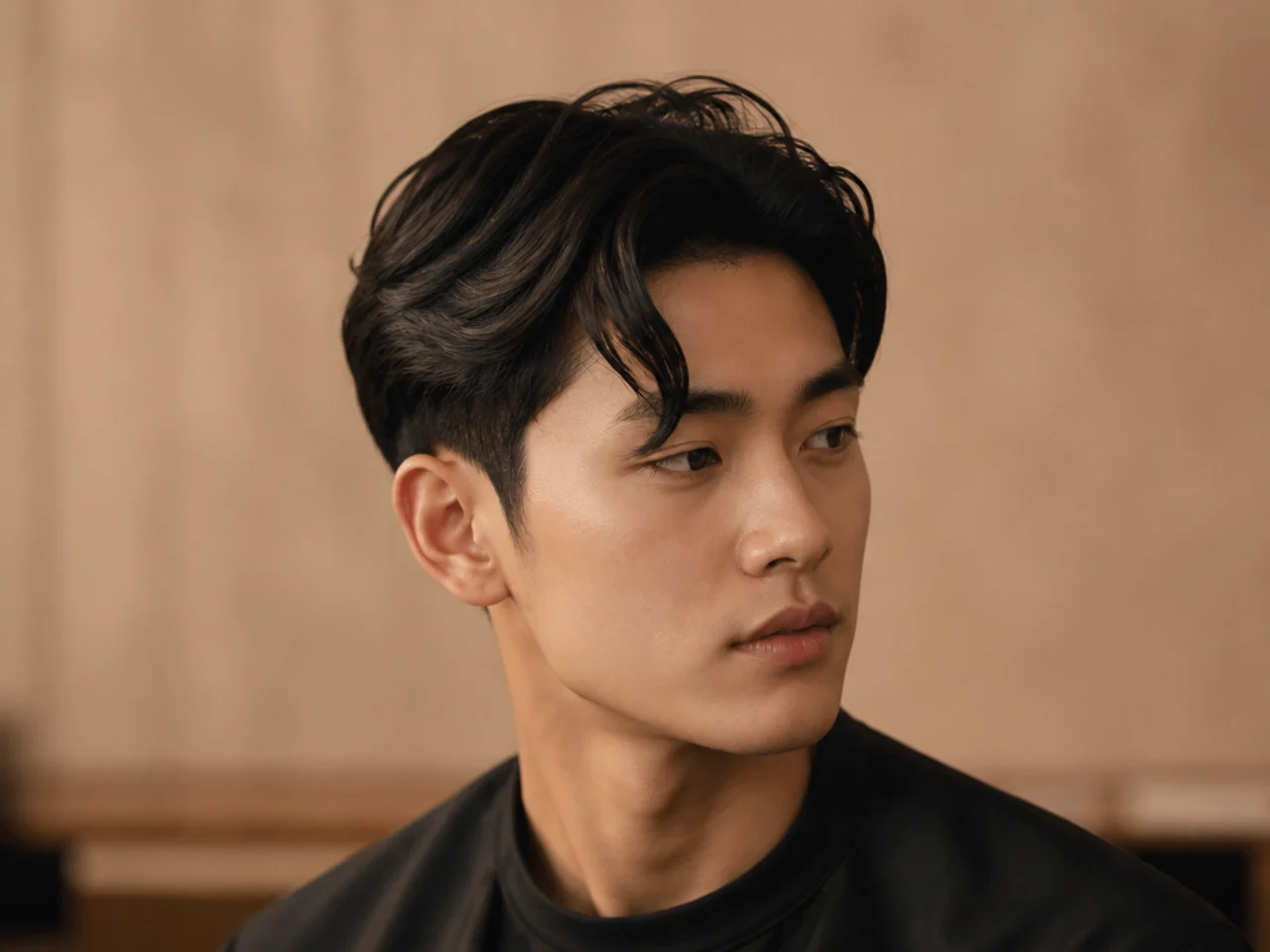
The comma cut is the K-pop cut — a single curled front lock forms a punctuation-comma shape against the forehead. Top runs three to five inches with a low fade, taper, or two-block finish on the sides. Straight-to-wavy hair with medium density holds the comma sharpest; curly hair needs longer front layers or a light relaxer to sit in a directional curve.
Best for: oval, round, and heart faces with straight or wavy hair.
Ask for: "Comma cut, four inches on top, low fade on the sides, enough length up front to hold a curl toward my dominant eye."
16. Edgar Cut
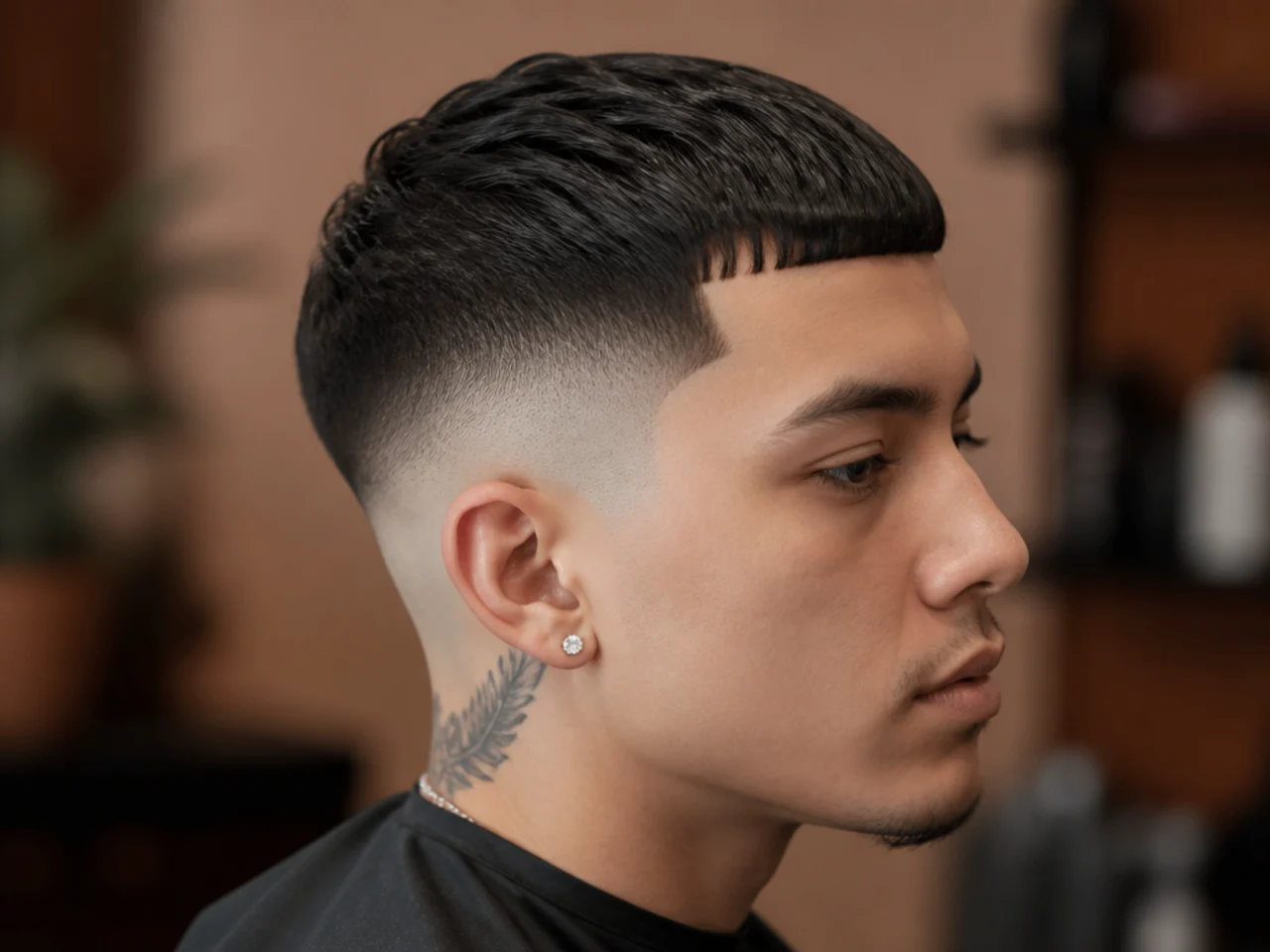
The Edgar trades any curve for a hard, straight-across line cut blunt at the forehead. That razor-sharp horizontal edge is the whole point. Top runs short — an inch to two inches — with a fade or skin fade on the sides. Straight hair with medium density holds the line best. Round, square, and diamond faces suit it directly; heart and long faces should look elsewhere or ask for an angled version.
Best for: round, square, and diamond faces with straight hair.
Ask for: "Edgar cut, inch and a half on top, skin fade on the sides, hard straight fringe line at my forehead."
17. Two-Block Haircut
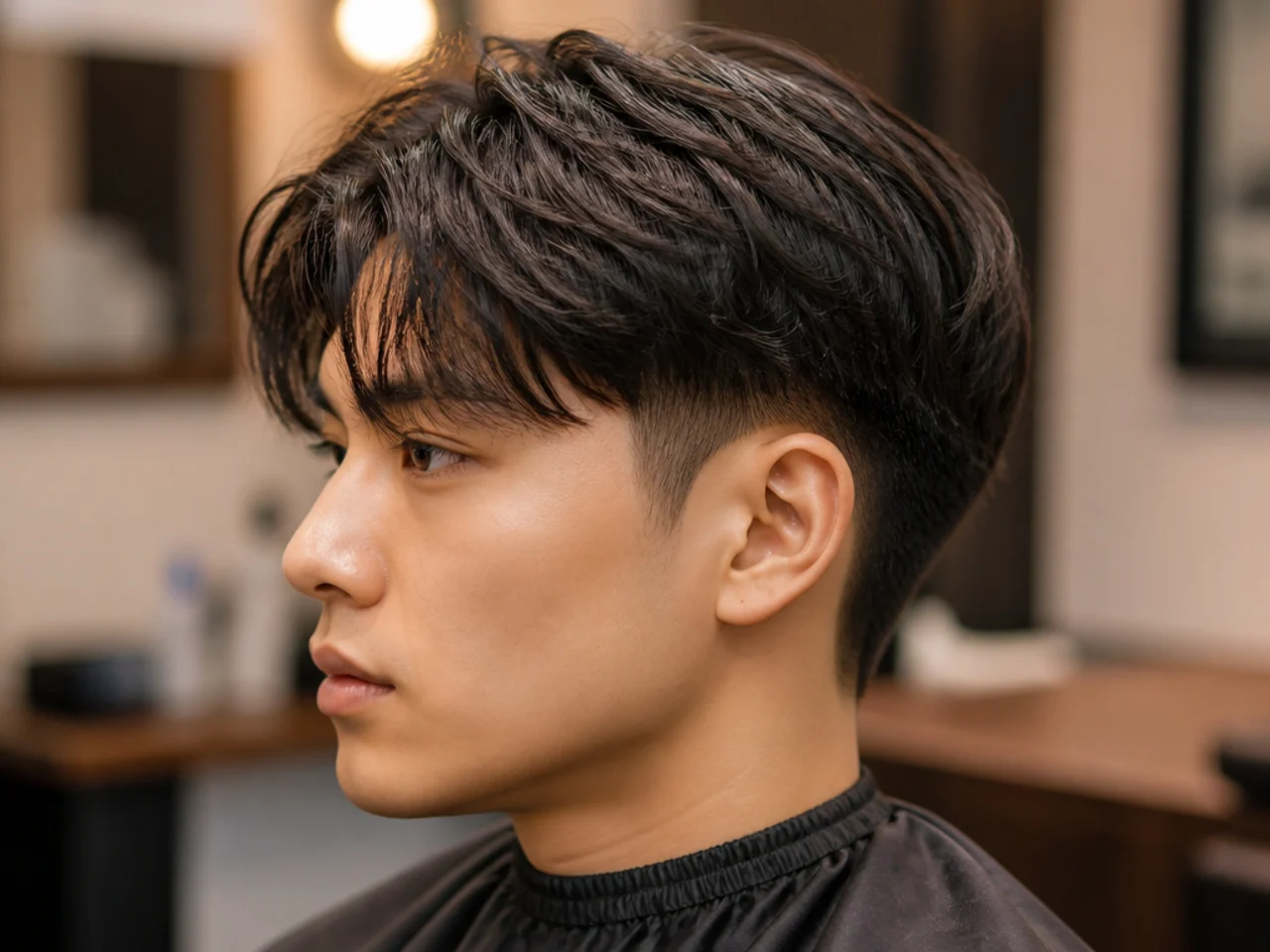
The two-block is a shape, not a styled finish. Short back and sides at one uniform clipper length — usually a #2 or #3 — meet a long top with no gradient. Just a hard ledge where the two lengths meet. Top runs three to five inches and can be worn as a comma, curtain, middle part, or slicked back. Best on straight hair with medium density; the ledge collapses on thin or curly hair.
Best for: oval, round, and square faces with straight hair.
Ask for: "Two-block, number 2 on the sides and back, four inches on top, hard ledge at my temple."
18. Curtain Fringe
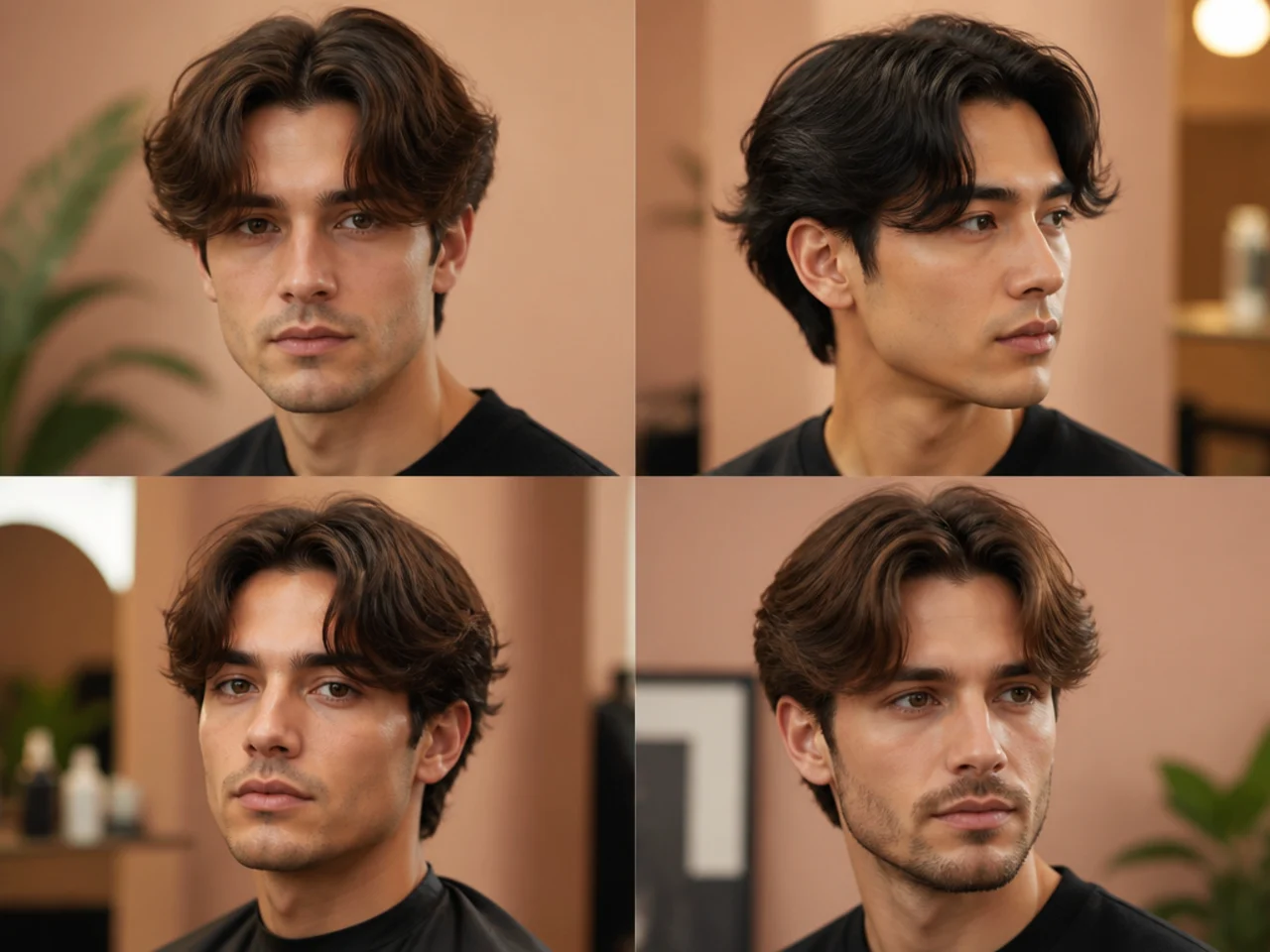
The curtain fringe splits the front section down the middle and lets both sides sweep outward toward the ears. Top runs five to six inches to hold the flow. Sides run short — usually a taper or a low fade. Best on straight-to-wavy hair with medium-to-thick density. Suits oval, round, and heart faces. Long faces should keep the top volume low. A leave-in cream and a round brush per side.
Best for: oval, round, and heart faces with straight or wavy hair.
Ask for: "Curtain fringe, five to six inches on top, low fade or scissor taper on the sides, front cut to sweep forward from a center part."
Grown-Out & Flowy
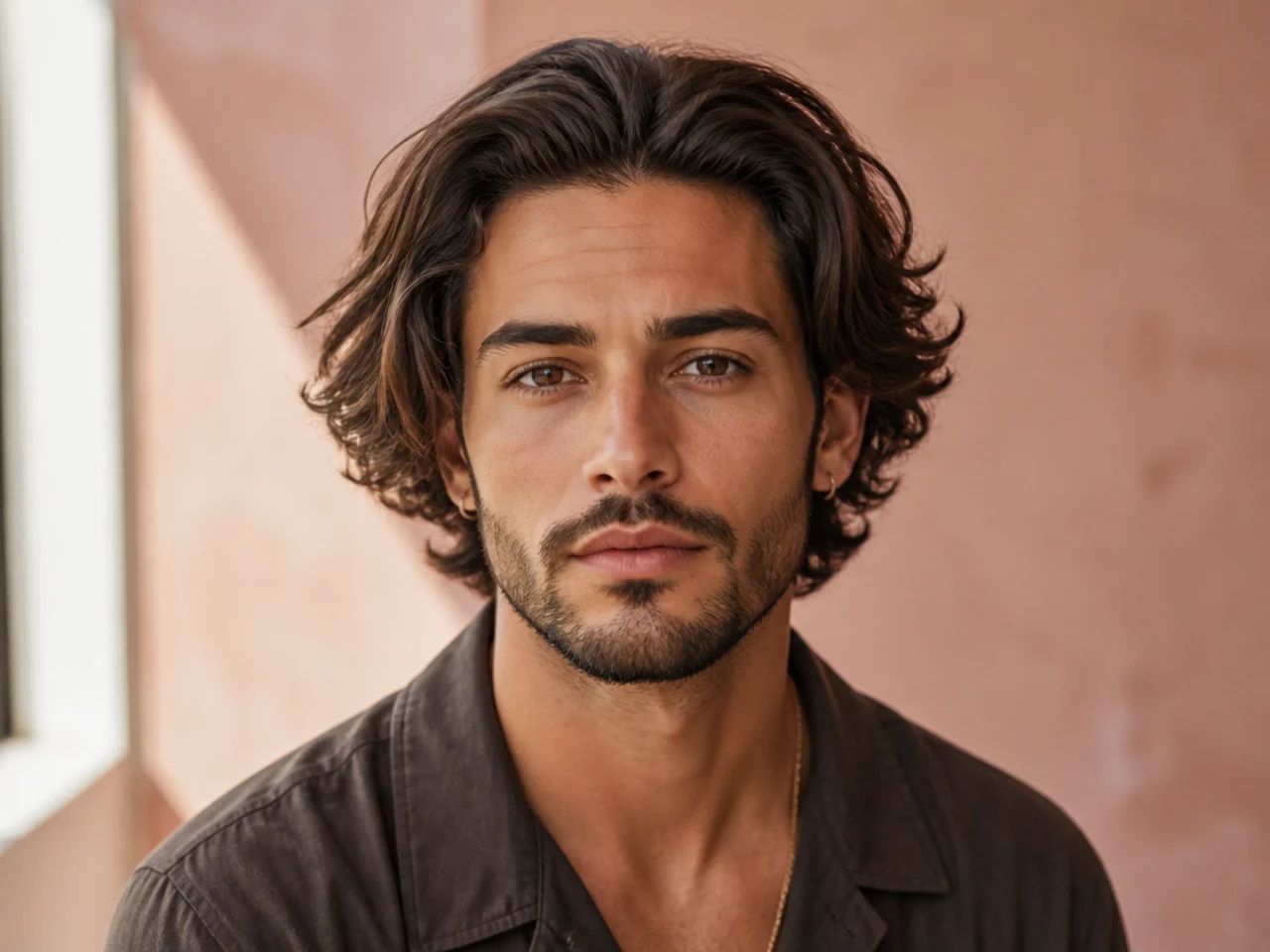
Medium-length ideas that trade crisp geometry for softness and movement. Rebook every five to eight weeks, keep a leave-in cream and a paddle brush in the drawer, and let the shape do the work. See the full medium-length menu for related silhouettes.
19. Middle Part
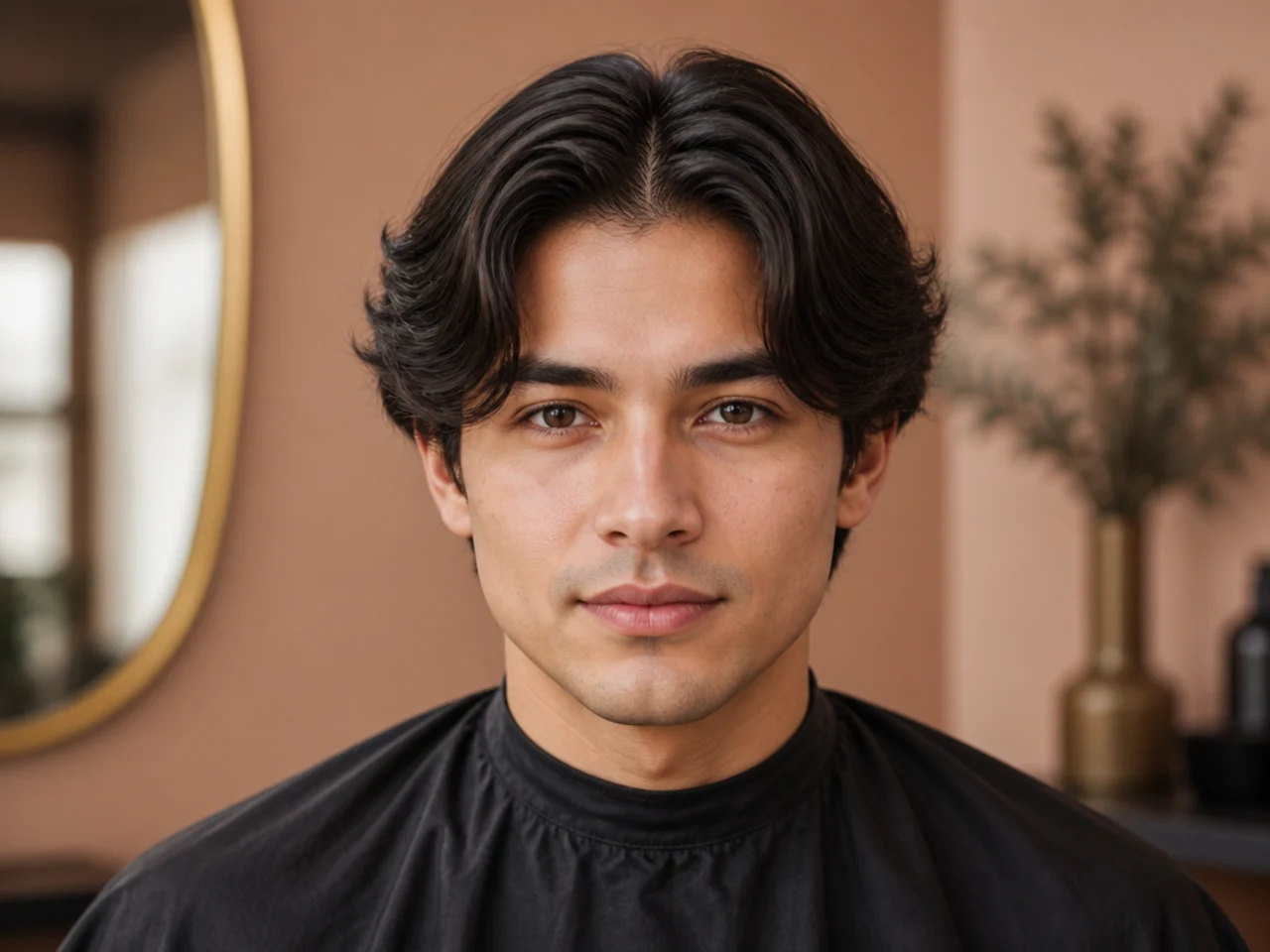
The middle part splits the top down the centre and lets both sides flow outward. Top runs four to six inches. Sides can fade for contrast or match the top length for a fuller flow. Best on straight-to-wavy hair with medium density; fine hair loses shape at this length. Oval and square faces wear it directly; round faces should lengthen the top for vertical balance.
Best for: oval and square faces with straight or wavy hair.
Ask for: "Middle part, five inches on top, low fade or scissor-blended sides, natural centre part."
20. Surfer Flow
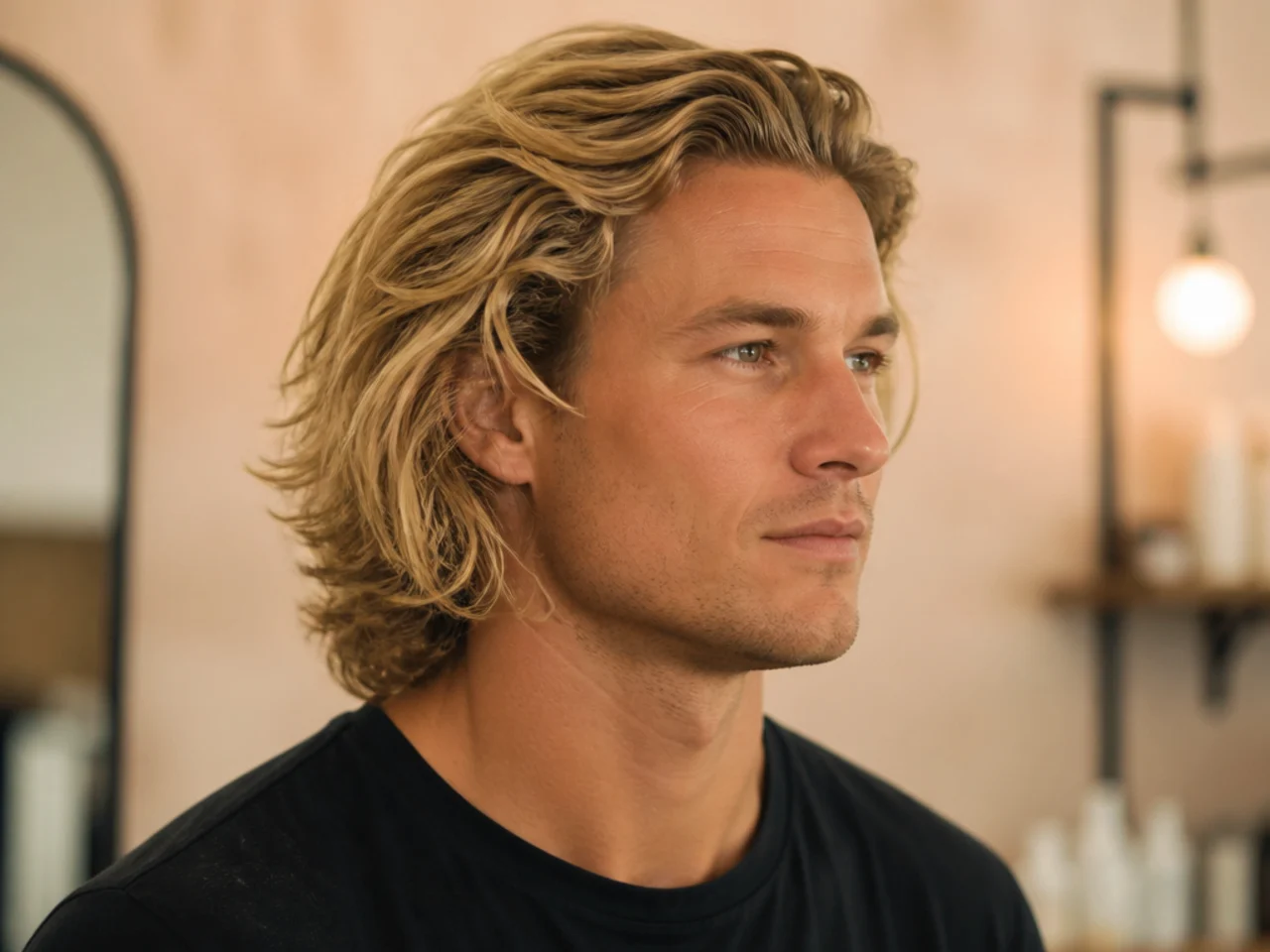
Flow — often called surfer hair — is medium-length hair worn loose and pushed back off the forehead. Usually five to seven inches on top, grown out to at least the ear on the sides. No fade required. Reads relaxed and slightly rebellious against corporate norms. Straight and wavy hair with medium-to-thick density suits it best; a sea-salt spray and air-dry finish the whole routine.
Best for: oval, square, and heart faces with straight or wavy hair.
Ask for: "Flow haircut, keep the top and sides long, six inches on top, ear-length sides, scissor-blend everything."
21. Broccoli Cut (Curly Top)
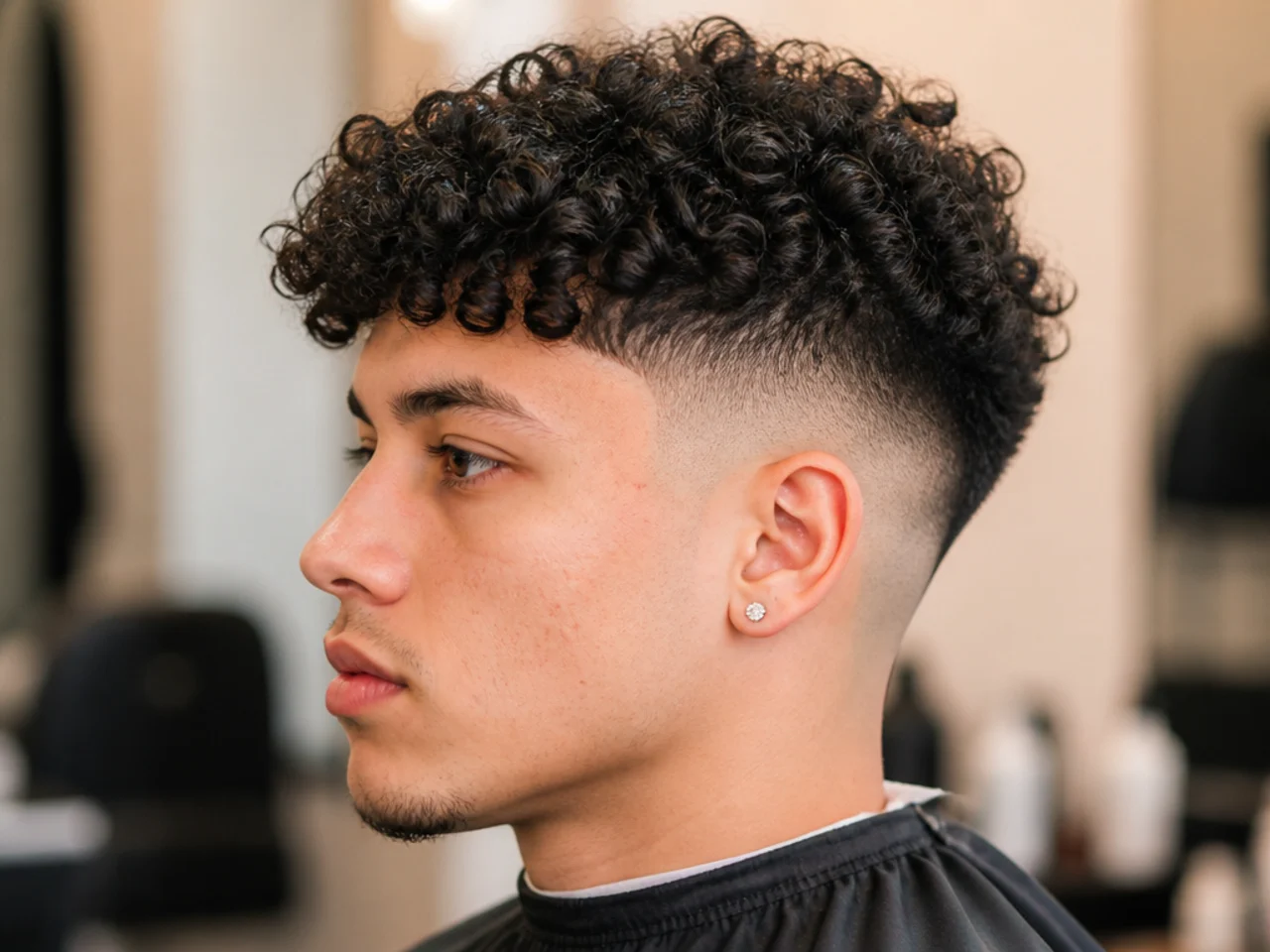
The broccoli cut stacks a mass of tight curls on top of a high skin fade. Top runs two to four inches, natural or lightly permed. Reads teen-and-twenty-something first and softens to look more grown-up when you pair it with a mid fade instead of a high. Best on 3A-3C curls; if you have wavy hair, see the curly hair for men guide for permed alternatives.
Best for: oval, round, and heart faces with 3A-3C curls.
Ask for: "Broccoli cut, three inches of curls on top, high skin fade on the sides, defined line where the two meet."
22. Medium Slick Back
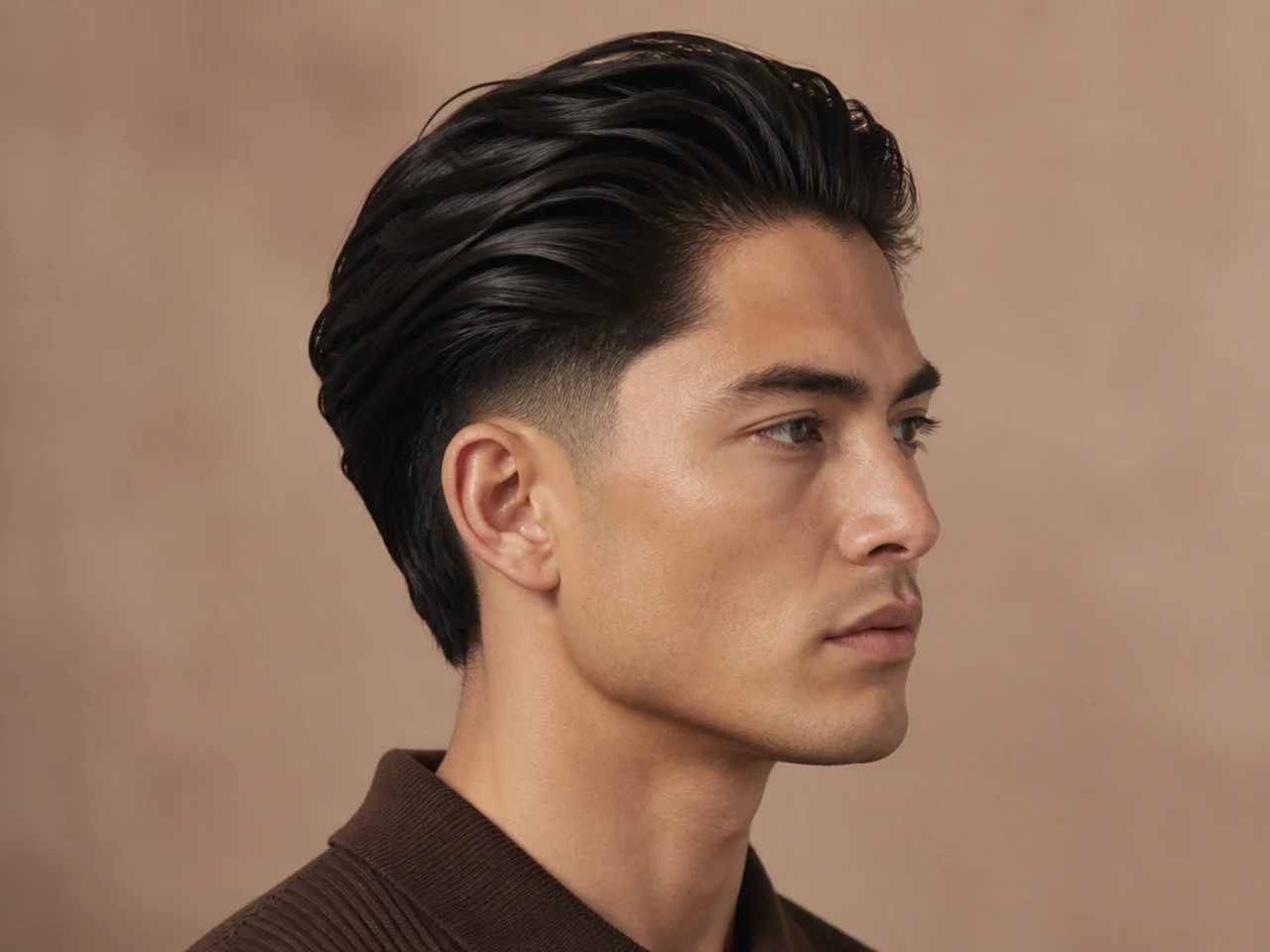
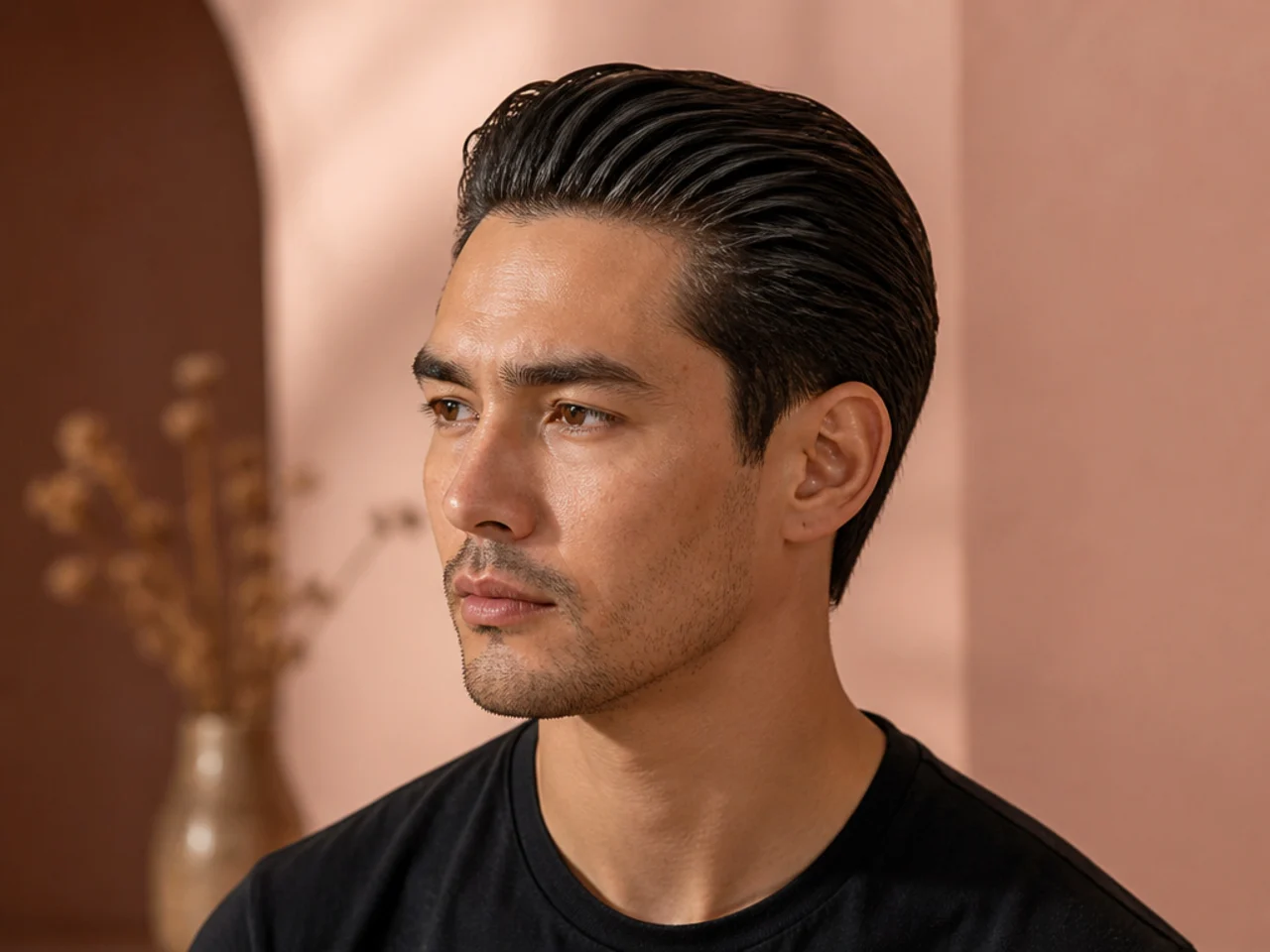
The medium slick back trades a comb-over's hard part for a smooth sweep straight back off the forehead. Top runs three to five inches — enough length to hold the shape after a comb-through. Modern versions swap high-shine pomade for a matte cream, which reads current instead of costume. Best on straight-to-wavy hair with medium density.
Best for: oval, square, and diamond faces with straight or wavy hair.
Ask for: "Slick back, four inches on top, low or mid fade on the sides, matte finish."
23. Layered Medium Cut
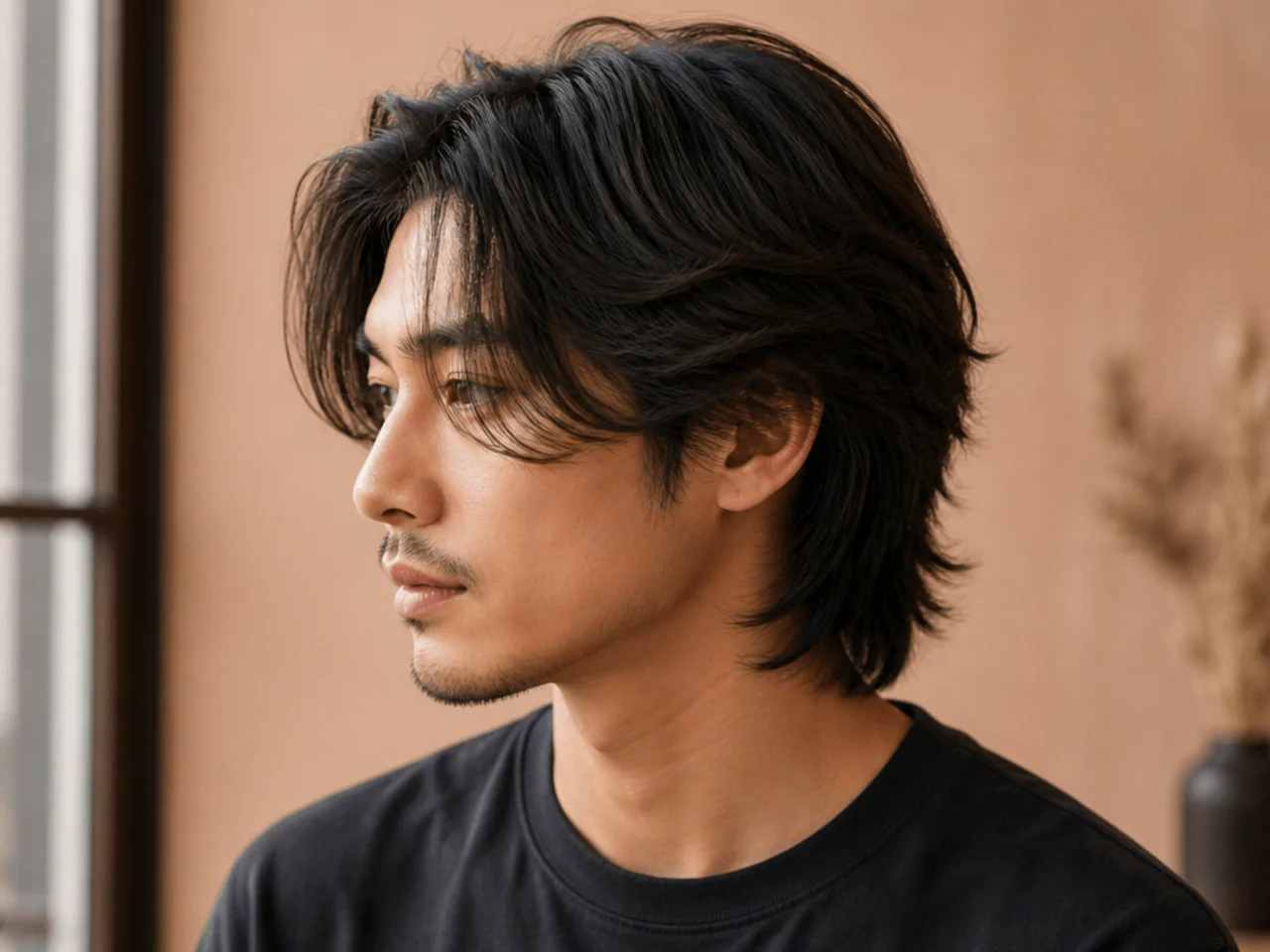
A layered medium cut runs four to six inches with soft internal layers that keep the shape from turning into a heavy curtain. Sides scissor-blended, no fade required. Reads relaxed and grown-up at once — the go-to for guys who want length without looking unkempt. Straight, wavy, and curly hair all suit it, though curly needs longer layers to keep the shrinkage from flattening the shape.
Best for: oval, square, and heart faces with straight-to-wavy or curly hair.
Ask for: "Layered medium cut, five inches on top with soft internal layers, scissor-blended sides longer than my ear."
24. Comb-Over with a Soft Fade
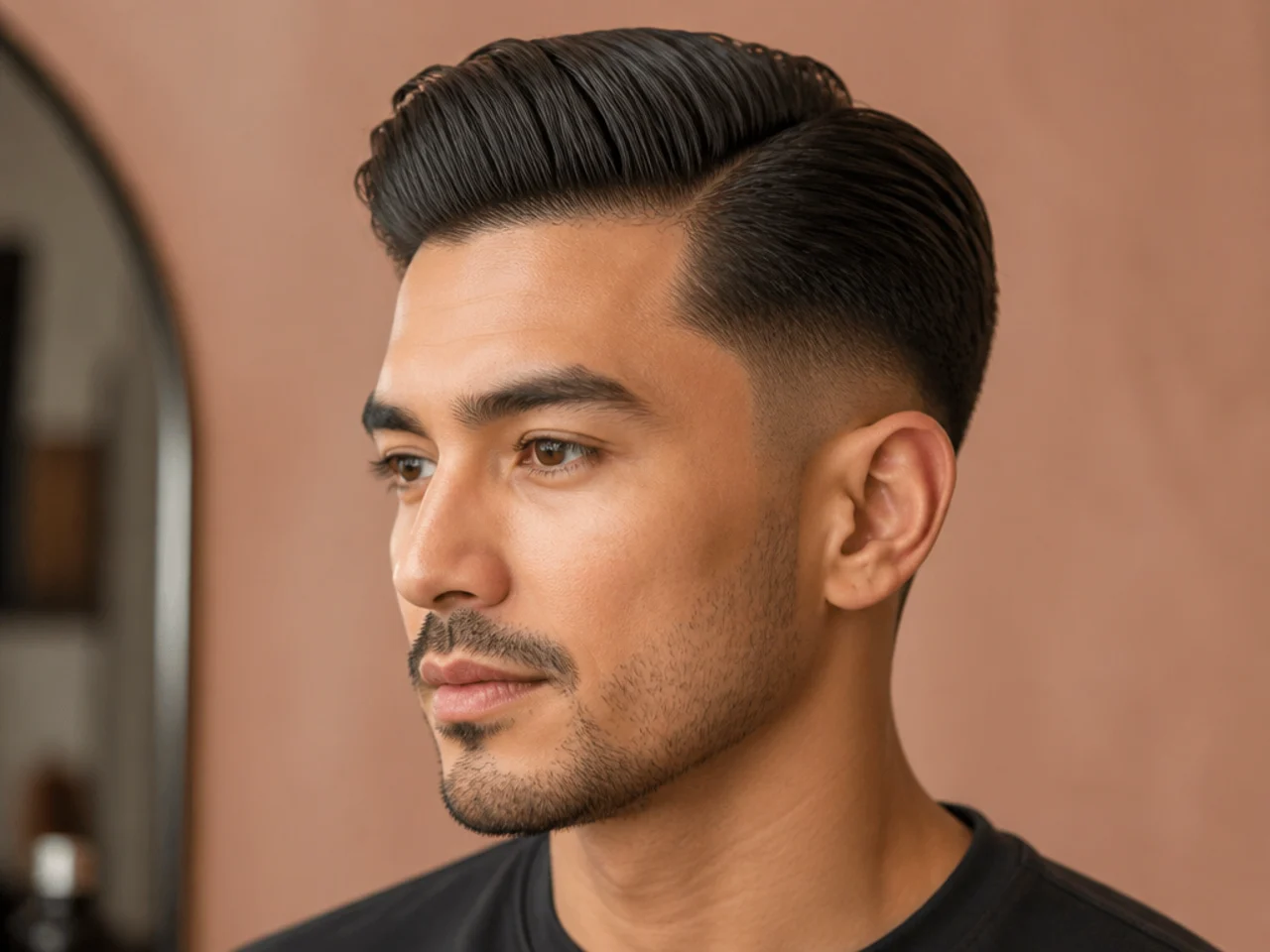
The comb-over is the side part's dressier, longer cousin. Top runs three to four inches and combs hard across the head from a defined part. The soft-fade version blends the sides low with a natural taper — less aggressive than a full mid or high fade, more forgiving as it grows out. Straight-to-wavy hair carries the sweep sharpest.
Best for: oval, square, and diamond faces with straight or wavy hair.
Ask for: "Comb-over with a soft low fade, three to four inches on top, hard part cut in on my heavier side."
Statement Styles
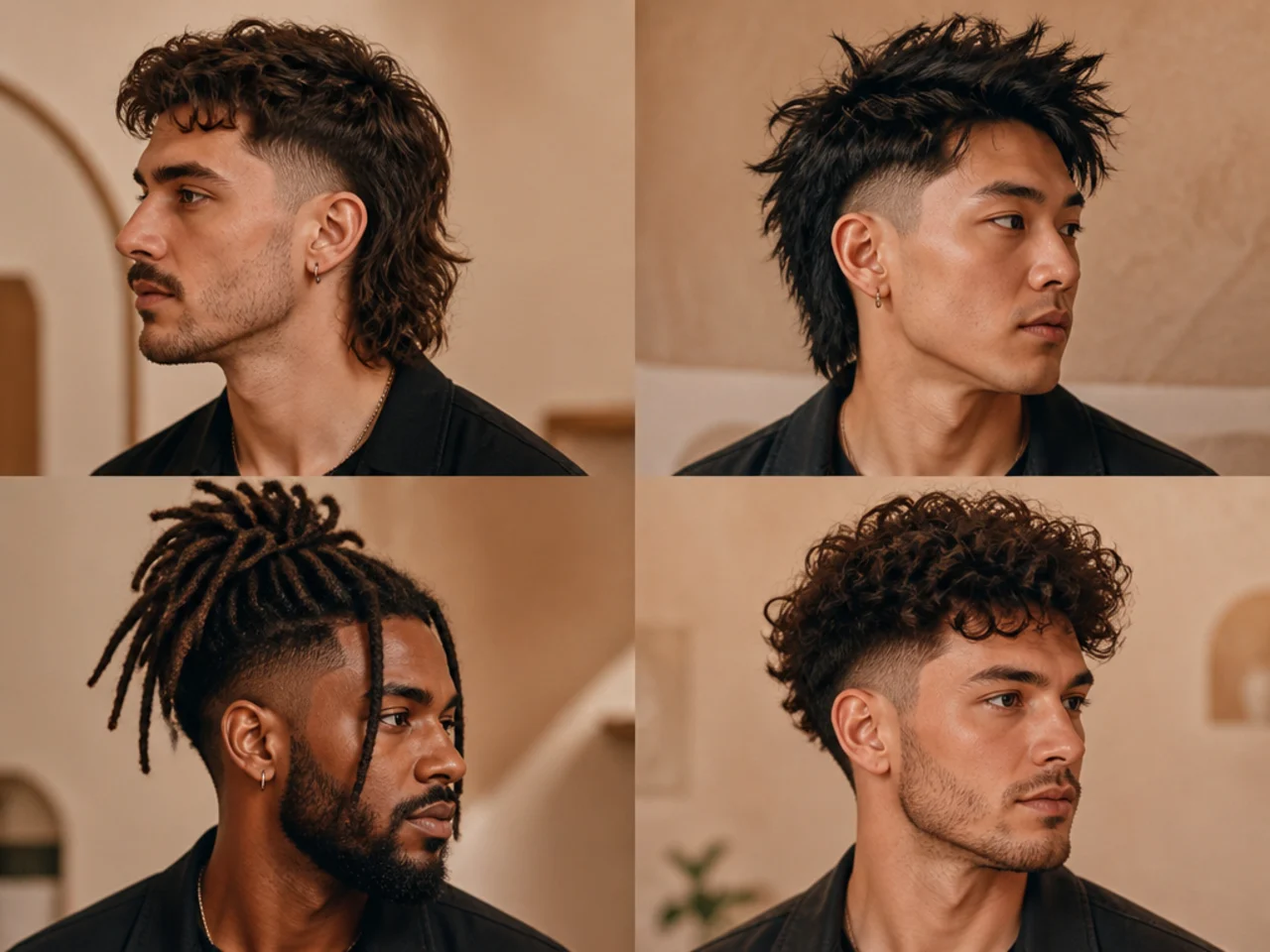
Cuts that make a point of themselves. Longer commitment, bigger silhouettes, and more mirror time — but you leave the shop feeling like you booked the right chair. Six bolder ideas for guys who want something the room notices.
25. Modern Mullet
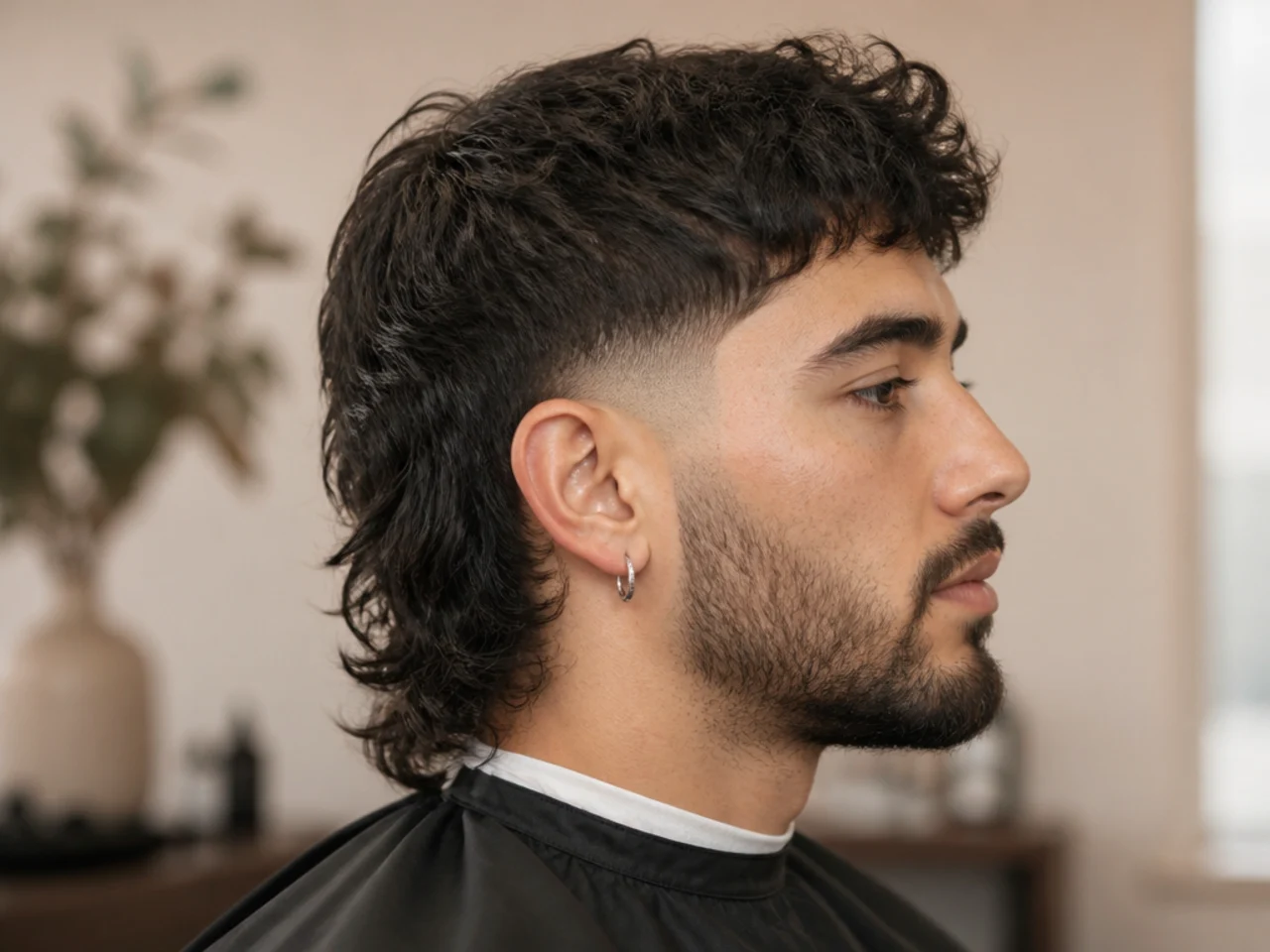
The modern mullet is a stealth revival of the 1980s cut. Short on top and sides — sometimes with a fade — and length preserved at the nape that flows to the collar or slightly below. Reads intentional instead of ironic. Straight-to-wavy hair with medium density carries the shape best. Fine hair loses definition at the back; curly hair needs longer top layers to balance the length below.
Best for: oval, square, and diamond faces with straight or wavy hair.
Ask for: "Modern mullet, three inches on top, low fade or scissor-blended sides, length preserved from the crown to the nape only."
26. Wolf Cut
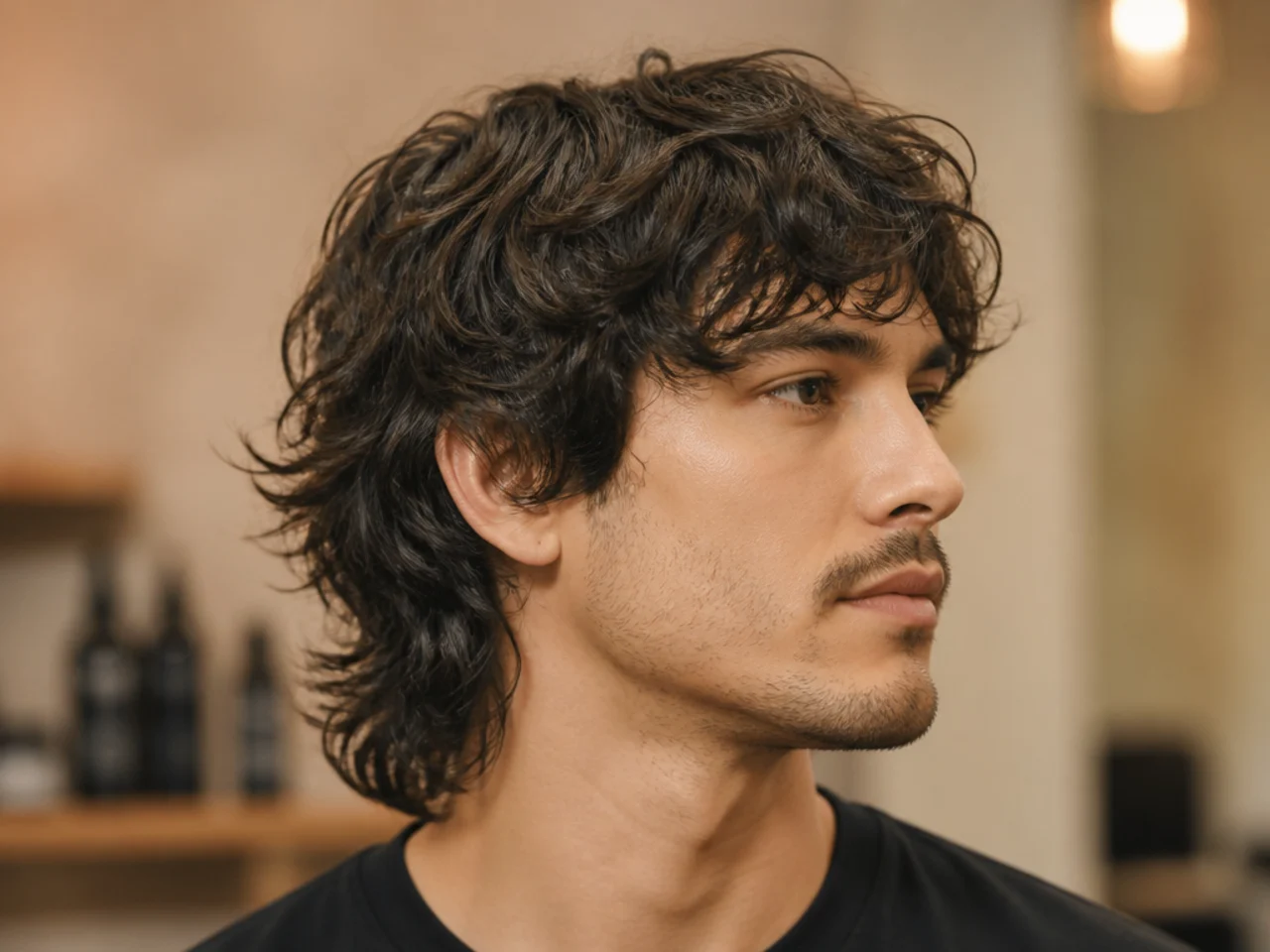
The wolf cut is a modern shag — choppy layers all over, longer at the nape than at the crown, texture pushed through the entire top. Reads mullet-adjacent but softer and more layered. Top runs four to six inches with heavy point-cutting. Sides can fade, taper, or blend into the layers. Straight-to-wavy hair with strong density holds the shape sharpest. Suits oval, square, and long faces.
Best for: oval, square, and long faces with straight-to-wavy or curly hair.
Ask for: "Wolf cut, medium-length layers throughout, shortest at the crown and longest at the nape, low fade or scissor-blended sides."
27. Classic Pompadour
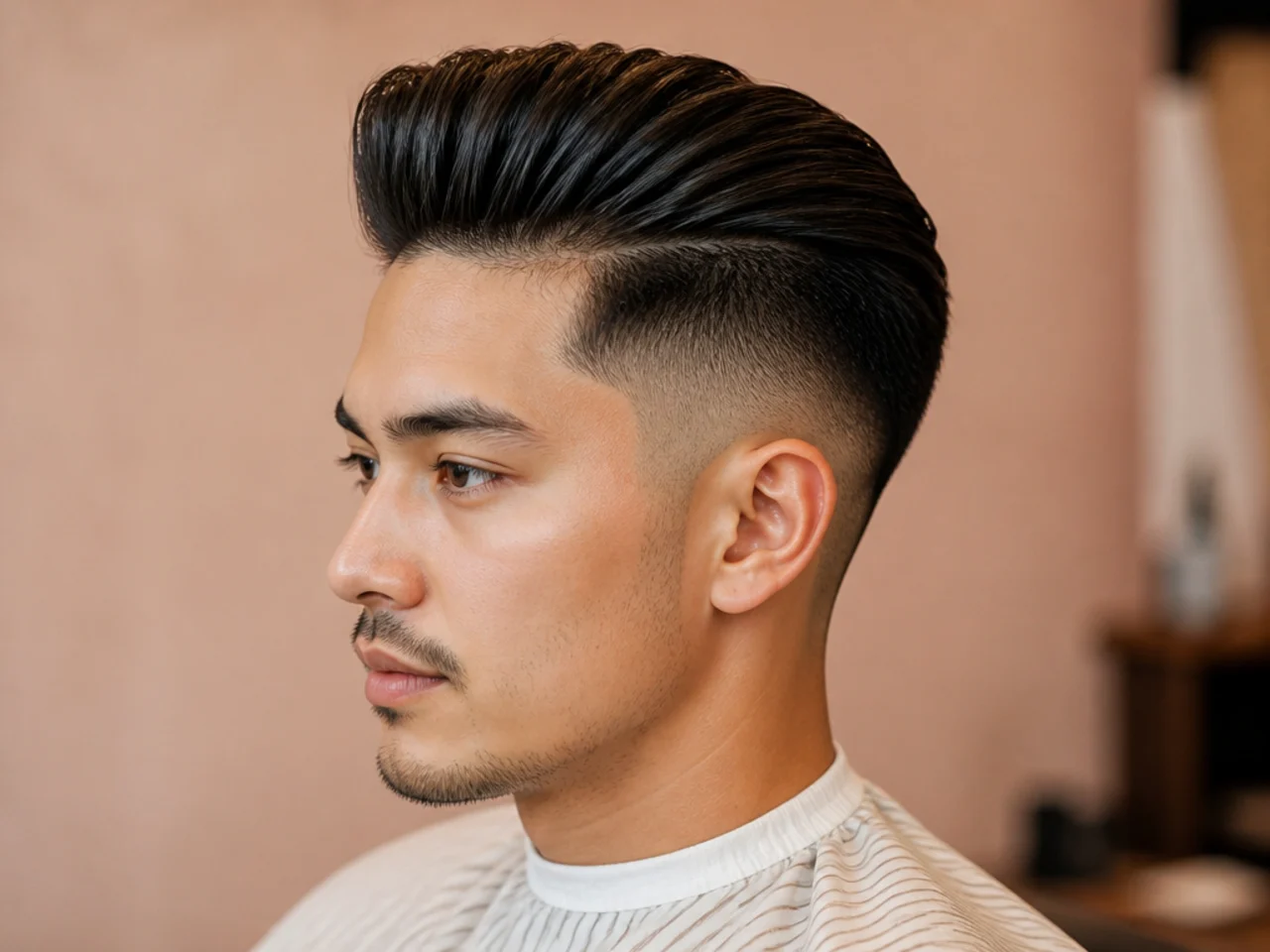
The pompadour piles the front up and back into a defined pouf, then keeps the sides tight. Top runs four to six inches. The classic 1950s silhouette, updated with a matte finish and a fade instead of a hard undercut. Straight-to-wavy hair with strong density carries the weight; fine hair collapses at this length. Round and heart faces get vertical length from the pouf; long faces should stay away or lower the front.
Best for: round, heart, and diamond faces with straight or wavy hair.
Ask for: "Classic pompadour, five inches on top, low or mid fade on the sides, matte finish, enough length up front to build height."
28. Long Layered Flow
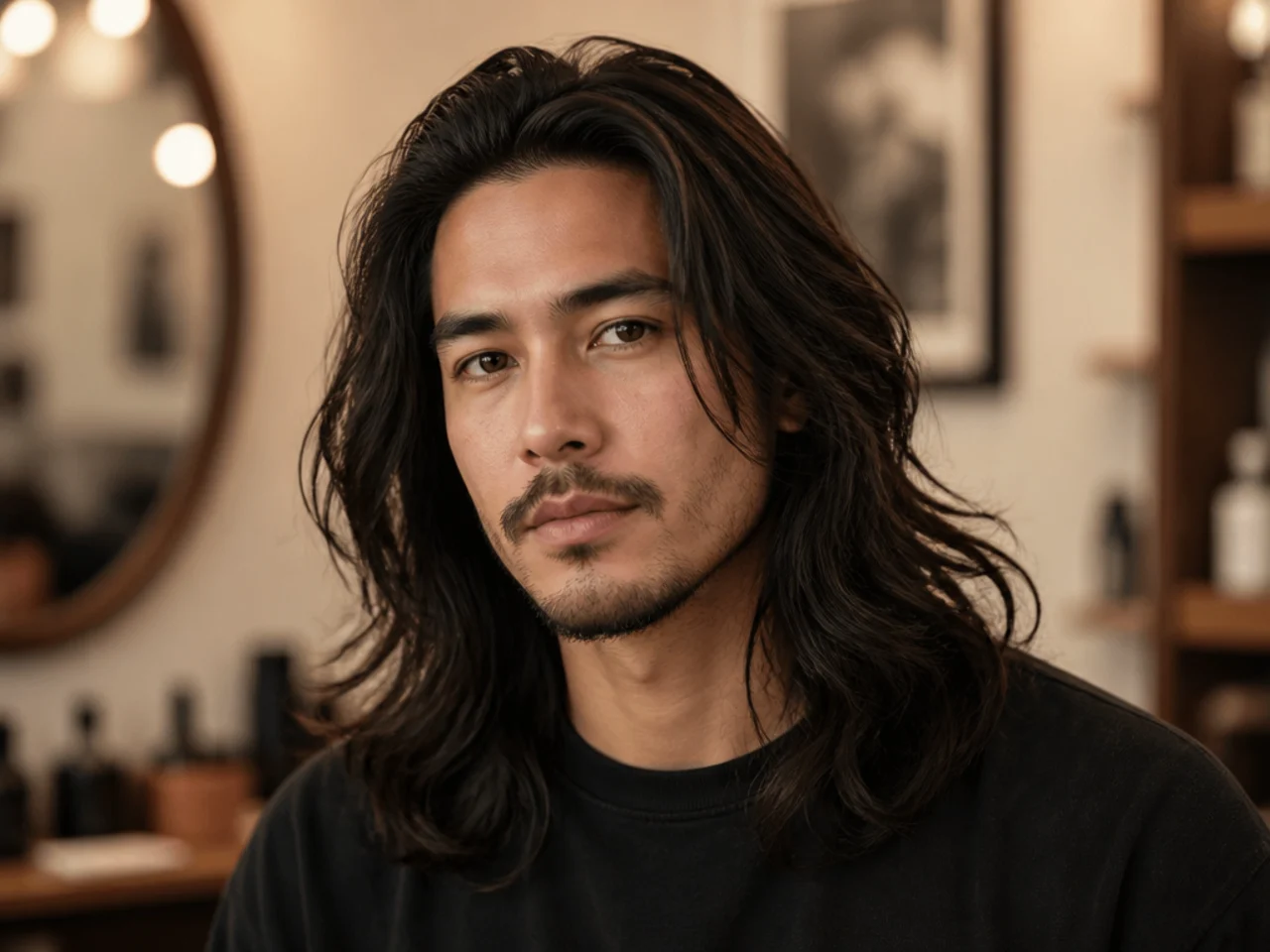
Long layered flow runs six inches or past — sometimes to the shoulder or below. Internal layers keep the shape from becoming a flat curtain and give the whole cut visible movement. Sides sit longer than the ear. Straight-to-wavy hair with medium-to-strong density holds the layers cleanly. Curly hair transforms into a full mane and needs longer front layers to frame the face rather than hide it.
Best for: oval, square, and long faces with straight-to-wavy or curly hair.
Ask for: "Long layered flow, at least eight inches on top with layers dropping to shoulder length, scissor-blended sides longer than my ear."
29. Disconnected Undercut
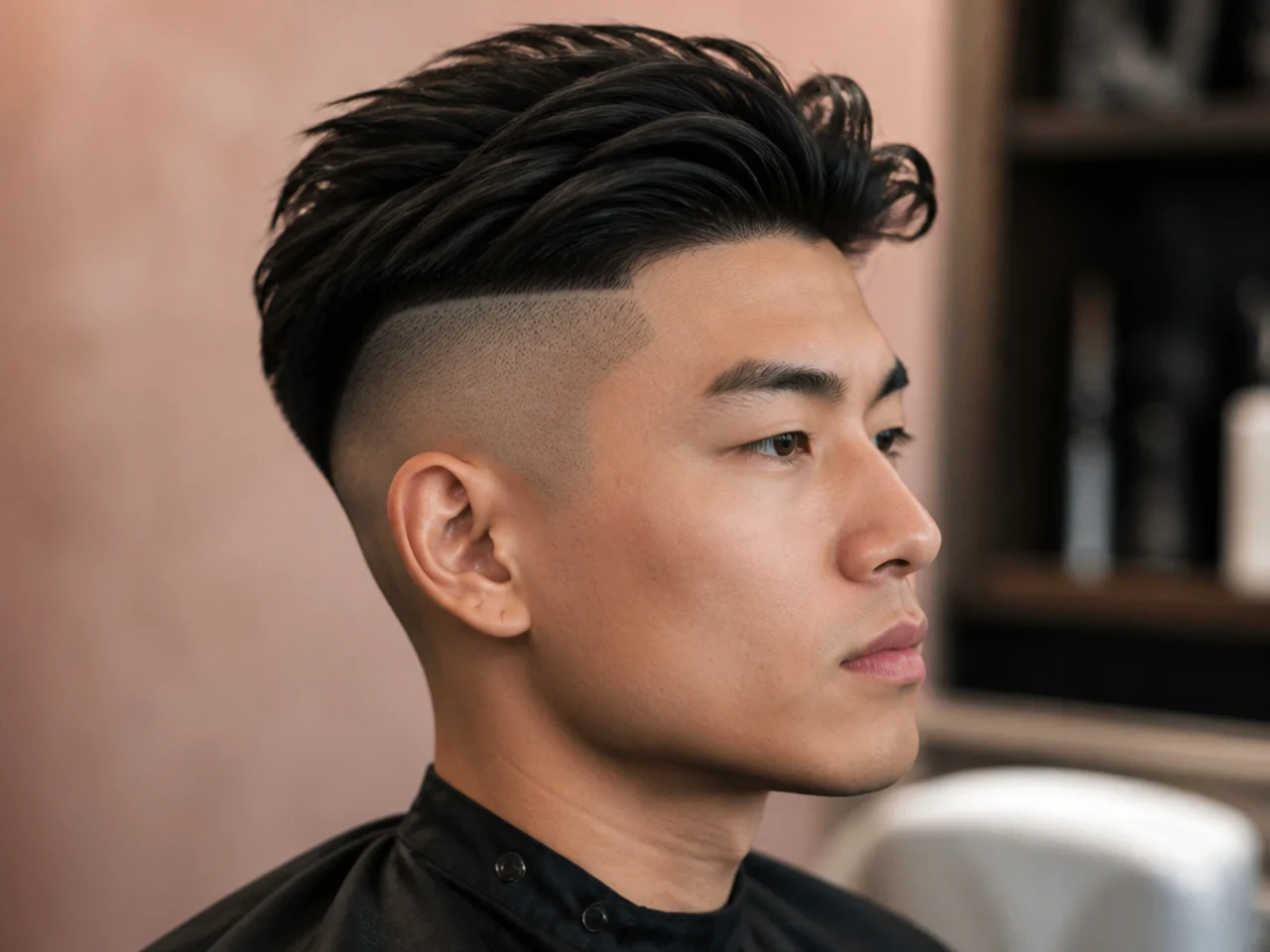
The disconnected undercut runs the sides and back one uniform short length — a #1, #0, or skin — and stops at a hard disconnect line with no blend into the top. The long top sits on that short shelf with dramatic contrast. Bold and requires commitment. Best on straight-to-wavy hair with medium-to-thick density. Oval, square, and diamond faces suit it directly; round faces should stay away — the hard line amplifies roundness.
Best for: oval, square, and diamond faces with straight or wavy hair.
Ask for: "Disconnected undercut, skin or number one on the sides, hard disconnect line at my temple, four inches on top."
30. Long Top Knot
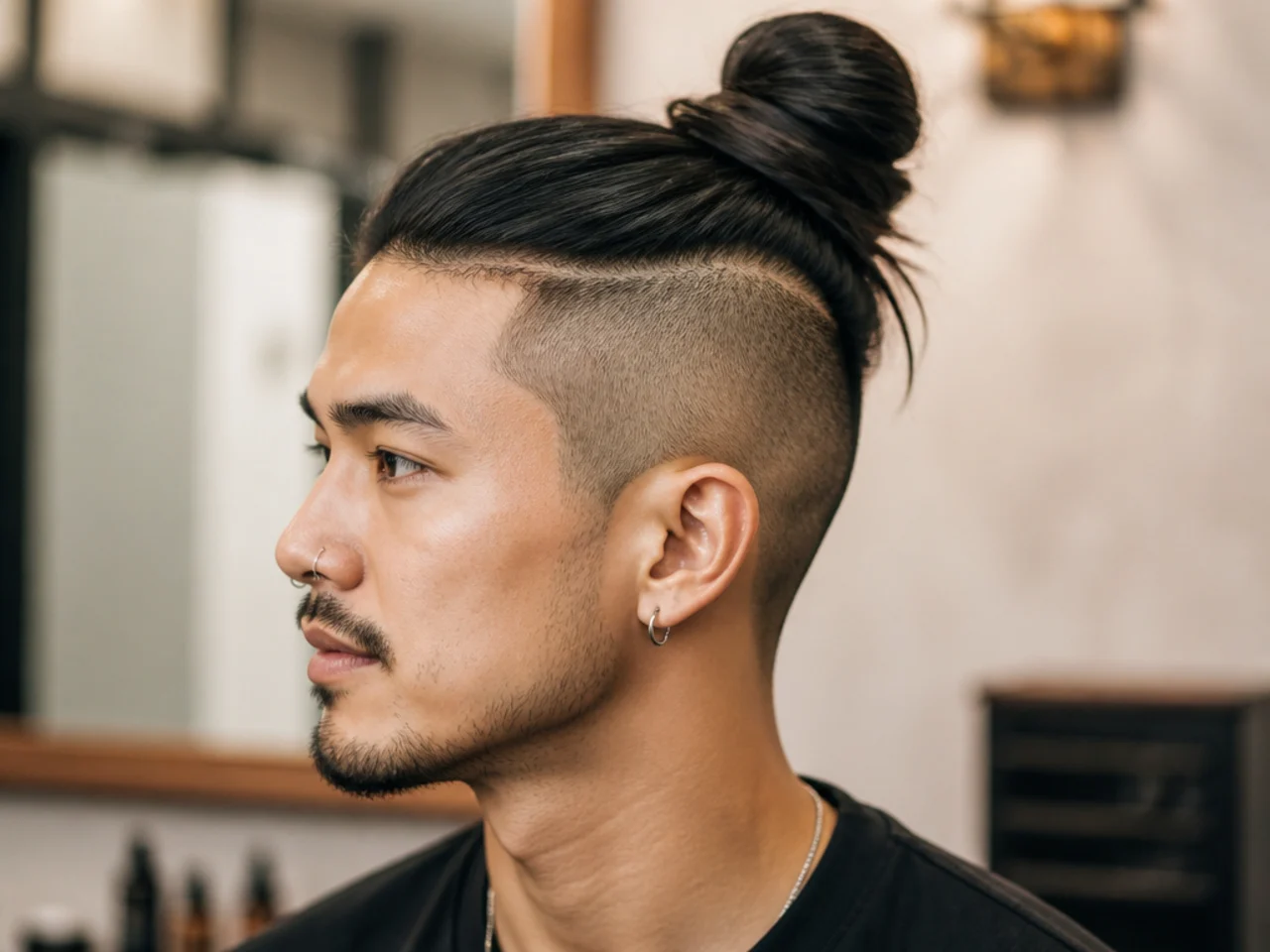
The long top knot pulls the top hair up into a small tied knot at the crown, over shaved or heavily faded sides. Requires eight-plus inches on top to tie cleanly. Reads statement — no way around it. Straight-to-wavy hair holds a tight knot; thick, curly hair often needs a light front-only relaxer to keep the knot from puffing out. Not for softer or long faces, which get stretched by the vertical mass at the crown.
Best for: oval, square, and diamond faces with straight or wavy hair.
Ask for: "Long top knot, keep eight inches on top, skin fade or number one on the sides, tie point at the crown."
How to Ask Your Barber
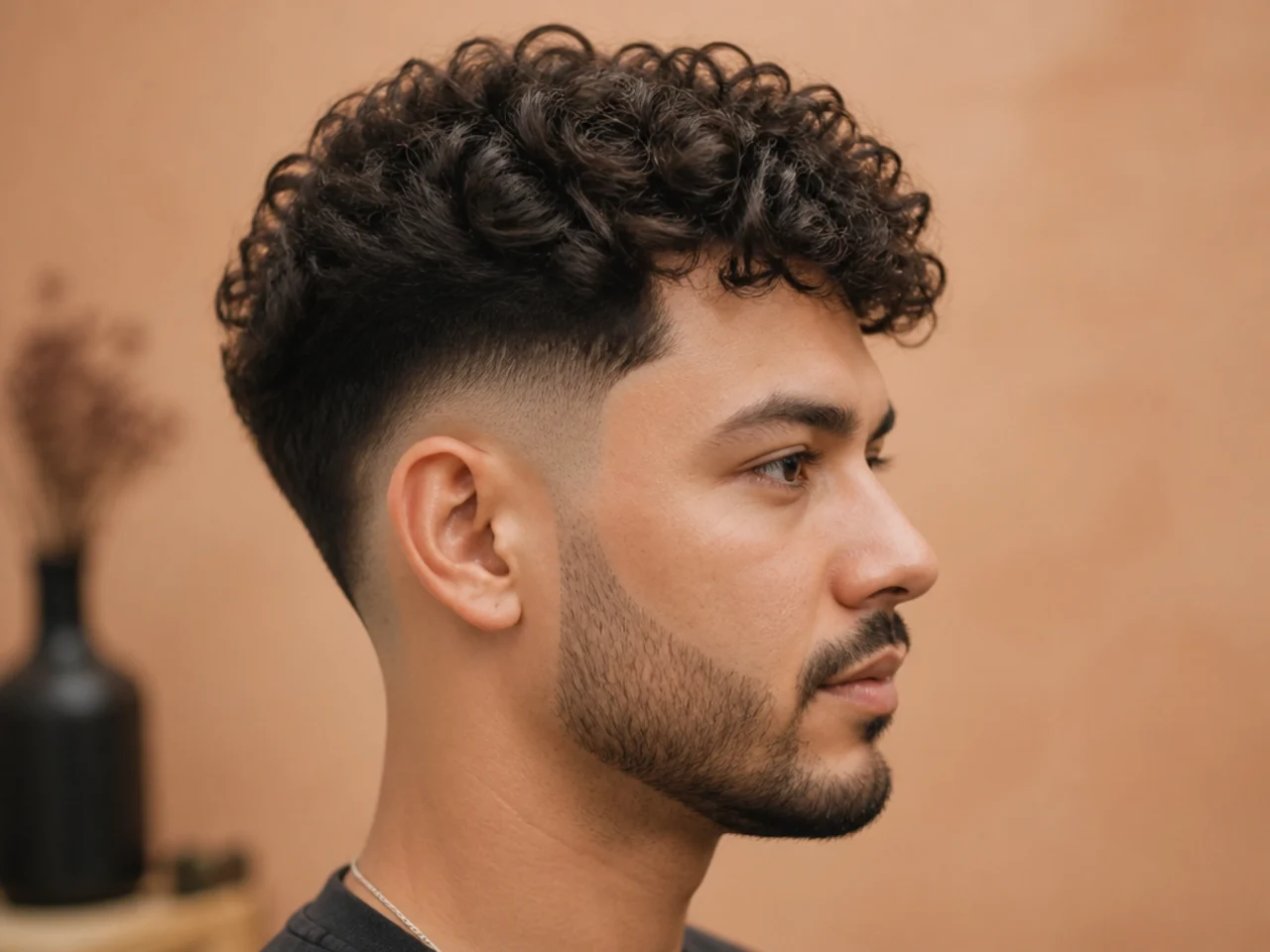
Any of the thirty ideas above becomes the wrong cut if you ask for it in the wrong words. Six specifics keep everyone on the same page.
- Bring two or three photos of the same cut. One front, one side, one back. Real photos beat descriptions every time — and one cut from three angles beats five different ideas on one mood board.
- Give the three specifics up front. Top length in inches (or clipper number), side treatment (fade height, taper, or scissor blend), and finish (matte or sleek). "Four inches on top, low fade to skin on the sides, matte finish" is a complete ask.
- Point to where you want the fade or fringe line to sit. "Low fade" starts above the ear. "Mid fade" starts at the temple. "High fade" runs to the parietal ridge. A finger on your temple beats any word.
- Confirm the neckline shape. Blocked (sharp horizontal), tapered (soft gradient), or rounded. Each grows out differently and reads different against a collar.
- Say what you don't want. "No razor lines," "no hard part," "no product needed." Guardrails help a barber more than a wall of positive direction does.
- Speak up while it's happening, not after. Once inches are on the floor, they're not going back. If the fringe is dropping shorter than you pictured, say so mid-cut — not at the mirror check.
Styling & Maintenance
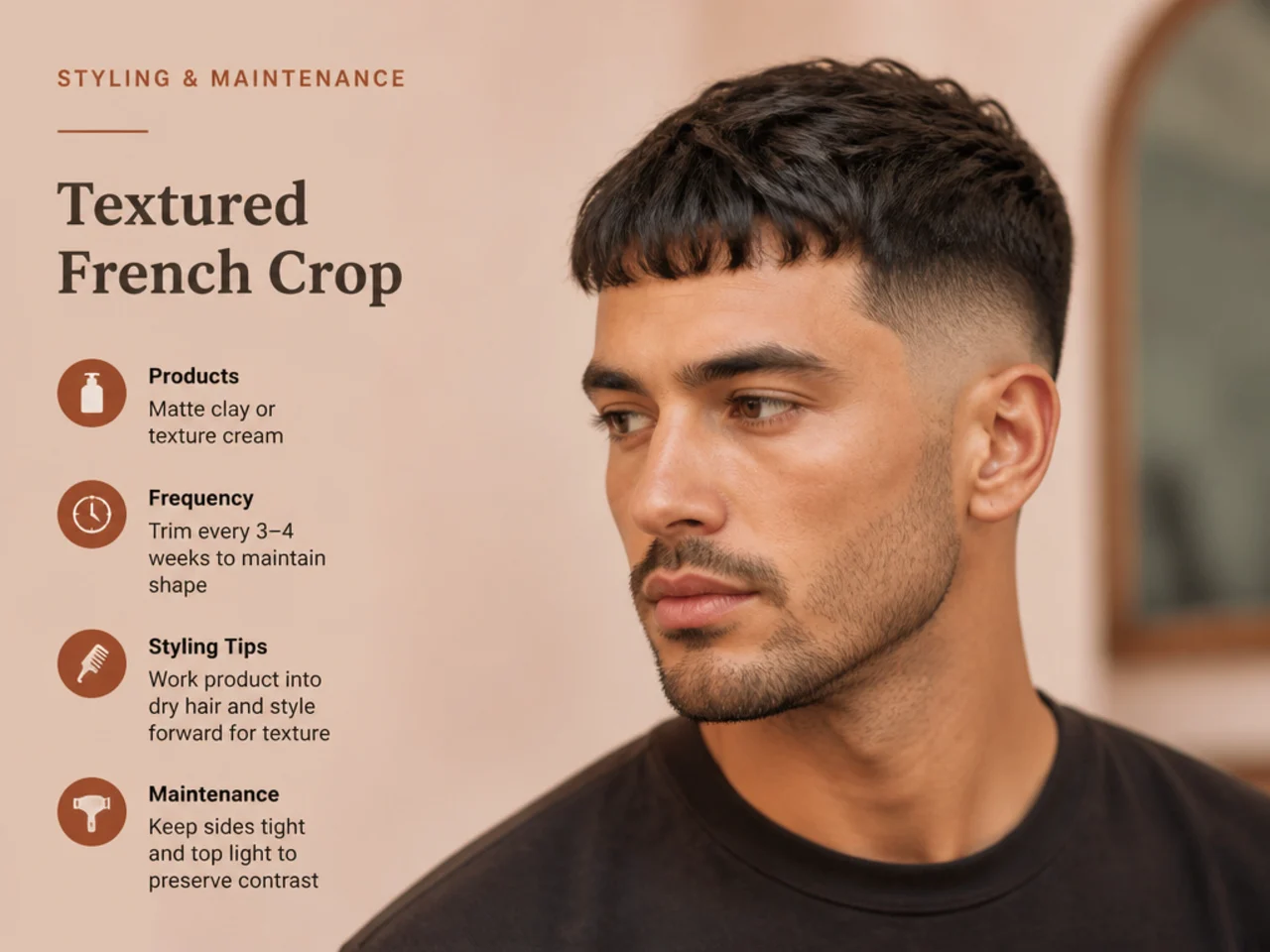
Every cut in this guide lands in one of four product buckets. Get the bucket right and one product does the whole job.
Matte and textured cuts — Edgar, French crop, textured crop, buzz, crew, butch — want matte clay or paste. A fingertip's worth between the palms, worked through dry or damp hair, no comb. If the cut is more defined (Ivy League, side part), a light matte cream gives control without adding shine.
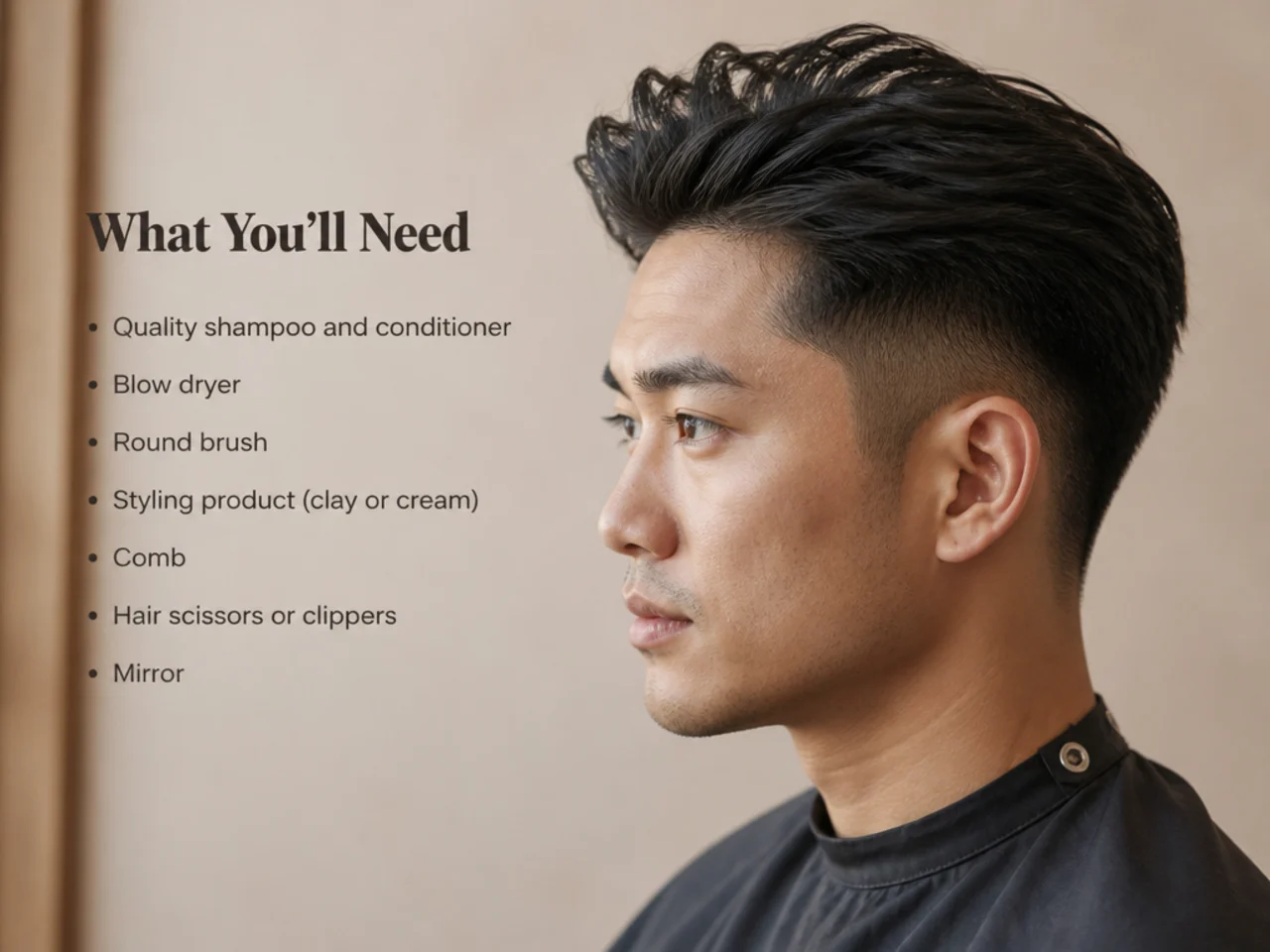
Volume-forward cuts — quiff, pompadour, medium slick back — need a blow-dryer, a round brush, and a medium-hold styling product. Blow-dry the front in the direction you want the shape to sit, then work matte paste through with your fingers. A light setting spray held eight inches away locks it.
Flow, curtains, and long layered cuts want as little product as possible. Use a leave-in cream while damp, air-dry with your fingers, and let the layers do the work. A drop of lightweight hair oil through the ends every few days keeps them from going straw-like. Skip heavy waxes and daily dry shampoo — both flatten shape and dull shine.
Curly and coily variations — broccoli, curly medium, curly layered — want curl cream on damp hair, scrunched in with your hands, air-dried or diffused on low heat. Never brush a dry curl; you'll break the pattern and add frizz.
Rebook cadence sits at three to four weeks for anything faded, five weeks for tapers and scissor blends, six to eight weeks for medium flow and long layered. Book the moment the shape softens — not the moment it looks overgrown. For more short-cut care specifics, see the short men's haircuts guide.
FAQ
What haircut idea suits every face shape?
A short crew cut with a low taper is the safest cross-face-shape pick — it flatters oval, square, round, heart, and diamond faces without much adjustment. For a bolder option, a mid fade with a textured crop reads modern on almost every guy who walks in.
Which haircut ideas are lowest maintenance?
The buzz cut, crew cut, butch cut, and Ivy League need the least mirror time — a fingertip of matte cream and thirty seconds finishes any of them. Longer flow and layered cuts also skip daily styling, though they need more shampoo and conditioner work than short cuts do.
How do I know which haircut idea will actually suit me?
Match three things: your face shape (each idea above tags its best match), your hair type (fine, thick, straight, wavy, curly, coily), and your styling appetite. Two out of three yes on any variation is a green light to book it.
How many reference photos should I bring to the barber?
Two to three photos of the same cut from different angles — front, side, and back — beat five photos of five different cuts. Barbers read one target more accurately than they average across a mood board.
How often should I get a haircut in 2026?
Every three to four weeks for anything faded, five to six weeks for tapers and scissor blends, six to eight weeks for medium and long styles. Book the moment the shape softens — not the moment it looks overgrown.
What's the most trending haircut idea for men right now?
The textured crop with a mid fade, the modern comma cut, and the low taper with a middle part are the three most-requested ideas at modern barbershops going into 2026. Fades of every height show up on nearly every walk-in.